RIVERSTREET MANOR

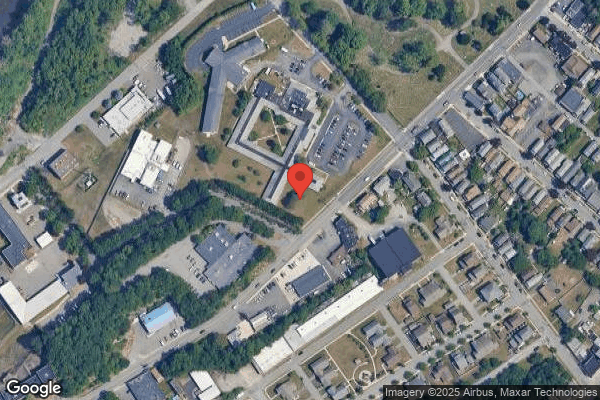
440 NORTH RIVER STREET, WILKES-BARRE, PA 18702 (570) 825-5611
For profit - Corporation 122 Beds Independent Data: November 2025
Trust Grade
50/100
#484 of 653 in PA
Last Inspection: June 2025

Inspected within the last 6 months. Data reflects current conditions.

Overview

Riverstreet Manor in Wilkes-Barre, Pennsylvania, has a Trust Grade of C, indicating it is average and in the middle of the pack compared to other facilities. It ranks #484 out of 653 in the state, placing it in the bottom half, and #16 out of 22 in Luzerne County, meaning only a few local options are better. The facility is improving, with issues decreasing from 22 in 2024 to 11 in 2025. Staffing is considered a strength, with a 3-star rating and a turnover rate of 41%, which is lower than the state average of 46%. While there have been no fines, there are some concerning incidents, such as improper food storage that could lead to contamination and residents not consistently receiving necessary personal hygiene assistance. Additionally, there were failures to develop individualized pain management plans for some residents, which indicates room for improvement in care quality.

Trust Score
C
50/100
In Pennsylvania
#484/653
Bottom 26%
Safety Record
Low Risk
No red flags
Inspections
Getting Better
22 → 11 violations
Staff Stability
○ Average
41% turnover. Near Pennsylvania's 48% average. Typical for the industry.
Penalties
✓ Good
No fines on record. Clean compliance history, better than most Pennsylvania facilities.
Skilled Nurses
✓ Good
Each resident gets 44 minutes of Registered Nurse (RN) attention daily — more than average for Pennsylvania. RNs are trained to catch health problems early.
Violations
⚠ Watch
47 deficiencies on record. Higher than average. Multiple issues found across inspections.
★★☆☆☆
2.0
Overall Rating
★★★☆☆
3.0
Staff Levels
★★★☆☆
3.0
Care Quality
★★☆☆☆
2.0
Inspection Score
Stable
2024: 22 issues
2025: 11 issues

The Good

  • Full Sprinkler Coverage · Fire safety systems throughout facility
  • No fines on record
  • Staff turnover below average (41%)

    7 points below Pennsylvania average of 48%

Facility shows strength in fire safety.

The Bad

2-Star Overall Rating

Below Pennsylvania average (3.0)

Below average - review inspection findings carefully

Staff Turnover: 41%

Near Pennsylvania avg (46%)

Typical for the industry

The Ugly 47 deficiencies on record

Jun 2025 11 deficiencies
CONCERN (D)

Potential for Harm - no one hurt, but risky conditions existed

Deficiency F0658 (Tag F0658)

Could have caused harm · This affected 1 resident

Based on observation, clinical record review, facility policy review, and staff interviews, it was determined the facility failed to ensure that licensed nurses provided nursing services in accordance...

Read full inspector narrative →
Based on observation, clinical record review, facility policy review, and staff interviews, it was determined the facility failed to ensure that licensed nurses provided nursing services in accordance with professional standards of practice by not adhering to medication administration standards for 4 of 4 residents observed during the administration of medications. (Resident 30, 31, 37, and 44). Findings included: According to the Pennsylvania Code, Title 49, Chapter 21, Professional and Vocational Standards, State Board of Nursing, 21.11 (a)(1)(2)(4) indicates the registered nurse was to carry out nursing care actions that promote, maintain, and restore the well-being of individuals. The Pennsylvania Code, Title 49, Professional and Vocational Standards, State Board of Nursing, Chapter 21 section 21.11 Responsibilities of the Registered Nurse (RN) (a) The RN assesses human responses and plans, implements and evaluates nursing care for individuals or families for whom the nurse is responsible. In carrying out this responsibility, (4) the registered nurse carries out nursing care actions which promote, maintain and restore the well-being of individuals. (B) The registered nurse is fully responsible for all actions as a licensed nurse and is accountable to clients for the quality of care delivered. The Pennsylvania Code, Title 49, Professional and Vocation Standards, State Board of Nursing, Chapter 21, section 21.24 Administration of drugs. (a) A licensed registered nurse may administer a drug ordered for a patient in the dosage and manner prescribed. A review of facility policy entitled: Medication Administration last reviewed by the facility on May 2, 2025, indicated the individual administering the medication checks the label THREE (3) times to verify the right resident, right medication, right dosage, right time and right method of administration before giving the medication. The policy further specifies it is the expectation of the nurse administering medications to keep the medication cart closed and locked when out of sight of the medication nurse and no medications are to be kept on top of the cart. The policy further specified it is the standard for staff to follow established facility infection control procedures which include handwashing, antiseptic technique, and gloves for the administration of medications. An observation of the medication pass conducted on Pine Hall medication cart with Employee 2, registered nurse (RN), revealed employee 2 administered medication to a total of 4 residents (Resident 30, 31, 37, 44) and multiple deviations from the policy requirements were observed: Employee 2 administered medications to four residents (Residents 30, 31, 37, and 44) without performing hand hygiene between each resident. Employee 2 wore elongated acrylic nails and did not wear gloves while preparing medications, using her bare fingers and nails during the process. During the medication pass, Employee 2 dropped two medication pills onto the top of the cart, then picked them up with bare hands and placed them into the medication cup before administering them to Resident 37. Employee 2 prepared medications for two residents (Residents 30 and 44) located in the same room at the same time, labeling each medication cup only with the resident's bed number. The RN handed Resident 44 the medication cup intended for Resident 30. Resident 44 questioned the contents, stating, What is this new pill, it looks like potassium. I do not take potassium pills. The RN then exchanged the cups without verifying Resident 44's name, date of birth , or ensuring the correct medication was provided. Employee 2 left a cup containing a narcotic medication on top of the medication cart and entered the medication room with the door closed, leaving the narcotic medication accessible to other residents or staff. Employee 2 left the medication cart unlocked while leaving the general area of the cart on two separate occasions during the medication pass. The above observations were reviewed with the Director of Nursing on June 25, 2025, at approximately 10:30 AM and confirmed it is the expectation of nursing staff to prepare and administer medications according to the facility policy according to professional standards of practice. 28 Pa. Code 211.12 (c)(d)(1)(3)(5) Nursing Services.
CONCERN (D)

Potential for Harm - no one hurt, but risky conditions existed

Quality of Care (Tag F0684)

Could have caused harm · This affected 1 resident

**NOTE- TERMS IN BRACKETS HAVE BEEN EDITED TO PROTECT CONFIDENTIALITY** Based on a review of clinical records and resident and staff interviews, it was determined the facility failed to provide nursin...

Read full inspector narrative →
**NOTE- TERMS IN BRACKETS HAVE BEEN EDITED TO PROTECT CONFIDENTIALITY** Based on a review of clinical records and resident and staff interviews, it was determined the facility failed to provide nursing services consistent with professional standards of practice by failing to follow physician orders for the prescribed bowel protocol intended to promote normal bowel activity for one of 24 sampled residents (Resident 49). Findings include: According to the American Academy of Family Physicians (The American Academy of Family Physicians is one of the largest medical organizations in the US founded to promote the science and art of family medicine) the primary goal of constipation management should be symptom improvement, and the secondary goal should be the passage of soft, formed stool without straining at least three times per week. The facility was unable to provide a written policy regarding bowel elimination management. A review of the clinical record revealed that Resident 49 was admitted to the facility on [DATE], with diagnoses to include congestive heart failure (weakness of the heart that leads to build-up of fluid in the lungs and surrounding body tissues), chronic obstructive disease (lung disease that blocks airflow and makes it difficult to breathe), and Type 2 diabetes (body has trouble controlling blood sugar and using it for energy). Physician orders dated April 26, 2025, outlined the following bowel regimen for Resident 49: Milk of Magnesia 400 MG/5 ML. Give 30 ml by mouth as needed for constipation. Administer if no BM (bowel movement) by the third day or 9 shifts. Document effectiveness. Dulcolax Suppository (Bisacodyl). Insert 1 suppository rectally as needed for constipation. For no bowel movement within 24 hours after administration of Milk of Magnesia. Fleet Enema 7-19 GM/118 ML (Sodium Phosphates). Insert 1 applicatorful rectally as needed for constipation. For no bowel movement by the end of the following shift after administration of suppository. Notify MD if ineffective. During an interview on June 24, 2025, at 10:48 AM, Resident 49 reported frequent constipation and described a recent episode involving significant straining that resulted in the development of hemorrhoids and rectal bleeding. A review of Resident 49's report of bowel activity from the Documentation Survey Report v2 for June 2025, revealed the resident's last bowel movement was on June 2, 2025, at 1:22 AM. The resident did not have any additional bowel movement on June 3, 2025, nor did he have any bowel movement on June 4, 5, and 6, 2025 (four consecutive days/11 shifts). Review of Resident 49's Medication Administration Record (MAR) for June 2025, revealed no documented evidence that nursing administered the prescribed bowel protocol during the time period without a bowel movement to promote bowel activity. During an interview with the Director of Nursing (DON) on June 26, 2025, at 9:50 AM, the above findings were discussed and the DON confirmed that staff failed to carry out the physician ordered bowel protocol prescribed for Resident 49. 28 Pa. Code 211.12 (c)(d)(1)(5) Nursing services.
CONCERN (D)

Potential for Harm - no one hurt, but risky conditions existed

Deficiency F0691 (Tag F0691)

Could have caused harm · This affected 1 resident

**NOTE- TERMS IN BRACKETS HAVE BEEN EDITED TO PROTECT CONFIDENTIALITY** Based on a review of clinical records, facility policy, and resident and staff interviews, it was determined the facility failed...

Read full inspector narrative →
**NOTE- TERMS IN BRACKETS HAVE BEEN EDITED TO PROTECT CONFIDENTIALITY** Based on a review of clinical records, facility policy, and resident and staff interviews, it was determined the facility failed to provide colostomy care and services consistent with professional standards of practice for one of 24 sampled residents (Resident 81). Findings include: Review of the facility Colostomy/Ileostomy Care Policy last reviewed May 2, 2025, indicated it is the policy of the facility to ensure that residents who require colostomy services receive care consistent with professional standards of practice, and to provide guidelines that will aid in preventing exposure of the resident's skin to fecal matter. A review of Resident 81's clinical record revealed the resident was admitted to the facility on [DATE], with diagnoses which included peritoneal abscess (a localization of pus or infected material within the peritoneal cavity) Chronic Kidney Stage 5(also known as end stage renal failure when the kidneys are no longer functional to support the body's needs) , Dependence on Renal dialysis ( a treatment to replace the filtering function of the kidneys) and a colostomy ( a surgical procedure that creates an opening for the colon in the abdominal wall for stool to exit the body). A quarterly Minimum Data Set Assessment (MDS a federally mandated standardized assessment conducted at specific intervals to plan resident care) dated April 19, 2025, revealed the resident was cognitively intact with a BIMS score of 14 (Brief Interview for Mental Status a tool to assess the resident's attention, orientation, and ability to register and recall new information, a score of 13-15 equates to being cognitively intact) and a colostomy was present. A review of the clinical record revealed a physician's order dated April 15, 2025, for a colostomy appliance change every three days on the evening shift and as needed. A review of Resident 81's care plan, initially dated April 2, 2025, revealed the facility failed to develop a care plan for the resident's colostomy needs. The care plan failed to address the type of appliance, the size of the appliance or wafer, and the type of collection bag required for colostomy maintenance. An interview with Resident 81 on June 24, 2025, at approximately 1:20 PM confirmed that he had a colostomy. Resident 81 stated he had not had an appliance or bag on his colostomy in weeks and that although he requested an appliance or bag be applied before leaving for dialysis, this was not done. The resident further stated he is sent to dialysis in an adult brief, without a bag, and the colostomy drains directly into the brief. An interview with the Director of Nursing on June 25, 2025, revealed Resident 81 frequently refused to have the colostomy appliance changed as ordered; however, a review of the clinical record showed no documented evidence that Resident 81 refused colostomy care. An interview with the Nursing Home Administrator on June 26, 2025, at approximately 10:00 AM was conducted to review the above findings related to the failure to provide colostomy care and services consistent with professional standards of practice and facility policy for Resident 81. 28 Pa. Code: 211.10(c) Resident care policies. 28 Pa. Code:211.12(d)(1)(3)(5) Nursing services.
CONCERN (D)

Potential for Harm - no one hurt, but risky conditions existed

Deficiency F0699 (Tag F0699)

Could have caused harm · This affected 1 resident

**NOTE- TERMS IN BRACKETS HAVE BEEN EDITED TO PROTECT CONFIDENTIALITY** Based on a review of clinical records and staff interview, it was determined the facility failed to develop and implement an ind...

Read full inspector narrative →
**NOTE- TERMS IN BRACKETS HAVE BEEN EDITED TO PROTECT CONFIDENTIALITY** Based on a review of clinical records and staff interview, it was determined the facility failed to develop and implement an individualized person-centered plan to render trauma informed care to a resident with a diagnosis of Post-Traumatic Stress Disorder for one out of 24 residents reviewed (Resident 50). Findings include: A review of Resident 50's clinical record revealed the resident was admitted to the facility on [DATE], with diagnoses that included major depressive disorder, anxiety, malignant neoplasm of lung (cancerous tumors that form in lung tissue) and post-traumatic stress disorder (PTSD a mental health condition that's caused by an extremely stressful or terrifying event, either being part of it or witnessing it. Symptoms may include flashbacks, nightmares, severe anxiety, and uncontrollable thoughts about the event). The resident's current care plan, in effect at the time of review on June 24, 2025, did not identify the resident's PTSD triggers related to this diagnosis and resident specific interventions to meet the resident's needs for minimizing triggers and/or re-traumatization. The facility failed to develop and implement an individualized person-centered plan to address, this resident's diagnosis of PTSD according to standards of practice to promote the resident's emotional well-being and safety. Interview with the Nursing Home Administrator (NHA) on June 26, 2025, at 1:00 PM, confirmed the facility was unable to demonstrate the facility provided culturally competent, trauma-informed care in accordance with professional standards of practice and accounting for resident's experiences and preferences to eliminate or mitigate triggers that may cause re-traumatization of the resident. 28 Pa Code 211.12 (d)(3)(5) Nursing services.
CONCERN (D)

Potential for Harm - no one hurt, but risky conditions existed

Deficiency F0711 (Tag F0711)

Could have caused harm · This affected 1 resident

**NOTE- TERMS IN BRACKETS HAVE BEEN EDITED TO PROTECT CONFIDENTIALITY** Based on review of clinical records and select facility policy, and staff interviews, it was determined the facility failed to e...

Read full inspector narrative →
**NOTE- TERMS IN BRACKETS HAVE BEEN EDITED TO PROTECT CONFIDENTIALITY** Based on review of clinical records and select facility policy, and staff interviews, it was determined the facility failed to ensure that the physician medication orders were signed in a timely manner, resulting in medication administration delays for one resident out of 24 reviewed (Resident 46). Findings include: Review of the facility policy titled Physician Services last reviewed by the facility on May 2, 2025, indicated that the medical care of each resident is supervised by a licensed physician. Supervising the medical care of resident incudes providing consultation or treatment when called by the facility, prescribing medications and therapy, and overseeing a relevant plan of care for the resident. A review of the clinical record revealed that Resident 46 was admitted to the facility on [DATE], with diagnoses to include polyneuropathy (medical condition where multiple peripheral nerves throughout the body become damaged or dysfunctional, resulting in numbness, tingling, burning sensations, weakness, and pain), and congestive heart failure (weakness of the heart that leads to build-up of fluid in the lungs and surrounding body tissues). Review of a physician's order dated May 30, 2025, revealed on order for Pregabalin oral capsule 100 MG (also known as Lyrica, a medication used to treat neuropathic pain a chronic pain condition that results from nerve damage caused by injury or disease). Give one capsule by mouth three times a day for neuropathy. Review of Resident 46's Medication Administration Record (record of the medication administered, time and date of administration, and staff administering the medication) for June 2025, identified that the resident missed 8 doses of Pregabalin on the following dates and times: June 14, 2025 at 2:00 PM June 14, 2025 at 10:00 PM June 15, 2025 at 6:00 AM June 15, 2025 at 2:00 PM June 15, 2025 at 10:00 PM June 16, 2025 at 6:00 AM June 16, 2025 at 2:00 PM June 16, 2025 at 10:00 PM Interview with the Director of Nursing on June 26, 2025, at 1:45 PM revealed the physician failed to sign the refill prescription for Pregabalin timely. She reported that staff called the physician's office and were informed the physician would come to the facility to sign the order, but he did not appear as expected. The unit manager ultimately drove to the physician's office to obtain the signed prescription. Interview with the Employee 5 (Licensed Practical Nurse and Unit Manager) on June 26, 2025, at 2:20 PM revealed the original prescription for Pregabalin, issued at admission, included 45 capsules with no refills. Because refills were not authorized, the physician needed to issue a new order for continued therapy. The facility contacted the physician's office multiple times; despite assurances, the physician did not come to the facility to sign the new order. On June 16, 2025, Employee 5 personally delivered the unsigned prescription to the physician's office, obtained the signed order, and returned it to the facility. Pharmacy was then contacted to refill the medication. Review of the signed prescription dated June 16, 2025, confirmed it was for 45 capsules of Pregabalin with no refills authorized. The facility failed to ensure timely physician signature on medication orders, resulting in missed doses of prescribed medication and a delay in Resident 46's treatment. 28 Pa. Code 201.14(a) Responsibility of licensee. 28 Pa. Code 201.18(b)(1)(3) Management. 28 Pa. Code 211.5(f)(i) Medical records.
CONCERN (D)

Potential for Harm - no one hurt, but risky conditions existed

Pharmacy Services (Tag F0755)

Could have caused harm · This affected 1 resident

**NOTE- TERMS IN BRACKETS HAVE BEEN EDITED TO PROTECT CONFIDENTIALITY** Based on clinical record reviews and resident and staff interviews, it was determined the facility failed to ensure the provisio...

Read full inspector narrative →
**NOTE- TERMS IN BRACKETS HAVE BEEN EDITED TO PROTECT CONFIDENTIALITY** Based on clinical record reviews and resident and staff interviews, it was determined the facility failed to ensure the provision of pharmacy services to assure the timely receipt and administration of physician-prescribed medications for one resident of 24 reviewed (Resident 49). Findings include: A review of the clinical record revealed that Resident 49 was admitted to the facility on [DATE], with diagnoses to include congestive heart failure (weakness of the heart that leads to build-up of fluid in the lungs and surrounding body tissues), chronic obstructive disease (lung disease that blocks airflow and makes it difficult to breathe), and Type 2 diabetes (body has trouble controlling blood sugar and using it for energy). During an interview on June 24, 2025, at 10:48 AM, Resident 49 reported ongoing constipation and described a recent incident of significant straining that led to the development of hemorrhoids and rectal bleeding. The resident stated, They're supposed to do suppositories or cream or something for my hemorrhoids. They keep saying they're going to do something, but they never do. He further reported, My bottom burns so bad. Nursing documentation dated June 21, 2025, at 2:21 PM noted the resident had rectal bleeding and the presence of small hemorrhoids. A physician order dated June 23, 2025, directed the use of Preparation H External Cream 1% (hydrocortisone) (cream used to relieve symptoms associated with hemorrhoids). Apply to hemorrhoids topically two times a day for hemorrhoids (hemorrhoids are swollen blood vessels in the rectal area that can cause discomfort, itching, pain, and sometimes bleeding). A review of the June 2025 Medication Administration Record (MAR) revealed that medication was not administered as prescribed to Resident 49 on the following dates/times due to awaiting pharmacy delivery: June 23, 2025, at 9:00 PM June 24, 2025 at 9:00 AM June 24, 2025 at 9:00 PM June 25, 2025 at 9:00 AM An interview with the Director of Nursing on June 26, 2025, at 9:30 AM confirmed that Preparation H is not a stock item stored at the facility and was not available at the facility due to a delay in pharmacy delivery. The facility failed to ensure that pharmaceutical services were provided in a manner that met the resident's needs by not securing timely access to a prescribed medication. 28 Pa. Code 211.9 (a)(l)(d)(k) Pharmacy Services. 28 Pa. Code 211.12 (d)(1)(3)(5) Nursing Services.
CONCERN (D)

Potential for Harm - no one hurt, but risky conditions existed

Deficiency F0761 (Tag F0761)

Could have caused harm · This affected 1 resident

Based on observation, review of select facility policy, clinical records, and staff interviews, it was determined the facility failed to store and label multi-dose medications in accordance with profe...

Read full inspector narrative →
Based on observation, review of select facility policy, clinical records, and staff interviews, it was determined the facility failed to store and label multi-dose medications in accordance with professional standards of practice and manufacturer instructions for one of three medication carts observed (Pine Hall). Findings Include: Review of the facility policy titled Storage of Medications last reviewed by the facility May 2,2025, indicated that multi-use medication vials/bottles are labeled accordingly. The policy further revealed it is the nursing staff responsibility to maintain medication storage including proper labeling. An observation of the medication cart located on the Pine Hall unit, conducted on June 25, 2025, at 8:22 AM in the presence of Employee 2 (Registered Nurse), revealed one multi-dose insulin pen of Insulin Lispro (a fast-acting insulin medication used to lower blood sugar) and three multi-dose insulin pens of Insulin Glargine (a long-acting insulin medication used to lower blood sugar) that were opened and available for use but were not labeled with the date they were initially opened. Further observation revealed one multi-dose insulin pen of Insulin Glargine with a date written on the cap indicating it had been opened on April 16, 2025. Review of manufacturer safety information revealed that multi-dose pens of Insulin Lispro and Insulin Glargine are to be discarded 28 days after opening. Based on this guidance, the Insulin Glargine pen dated April 16, 2025, should have been discarded by May 14, 2025. An interview with Employee 2 (Registered Nurse) on June 25, 2025, at 8:24 AM confirmed that all four multi-dose insulin pens (one Insulin Lispro and three Insulin Glargine) had been opened, were available for use, were currently being used for administration, and had not been dated when opened, with one Insulin Glargine pen being used beyond the manufacturer-recommended discard date. An interview with the Nursing Home Administrator on June 26, 2025, at approximately 11:00 AM confirmed that multi-dose pens are to be labeled with the date of opening and discarded in accordance with manufacturer recommendations. 28 Pa. Code 211.9(a)(1)(k) Pharmacy services. 28 Pa. Code 211.12(c)(d)(1)(5) Nursing services.
CONCERN (E) 📢 Someone Reported This

A family member, employee, or ombudsman was alarmed enough to file a formal complaint

Potential for Harm - no one hurt, but risky conditions existed

ADL Care (Tag F0677)

Could have caused harm · This affected multiple residents

**NOTE- TERMS IN BRACKETS HAVE BEEN EDITED TO PROTECT CONFIDENTIALITY** Based on a review of clinical records, resident and staff interviews, and facility documentation, it was determined the facility...

Read full inspector narrative →
**NOTE- TERMS IN BRACKETS HAVE BEEN EDITED TO PROTECT CONFIDENTIALITY** Based on a review of clinical records, resident and staff interviews, and facility documentation, it was determined the facility failed to ensure that residents who were dependent on staff for assistance with activities of daily living (ADLs) consistently received necessary care and services to maintain personal hygiene and dignity for two residents out of 24 sampled residents (Residents 25 and 60). Findings include: A review of Resident 25's clinical record revealed the resident was admitted to the facility on [DATE], with diagnoses to include Parkinson's Disease (a movement disorder of the nervous system that cause symptoms of tremors, rigidity, and postural instability), and muscle weakness. A quarterly Minimum Data Set Assessment (MDS - a federally mandated standardized assessment conducted at specific intervals to plan resident care) dated May 12, 2025, indicated the resident required substantial/maximal assistance from staff for showering/bathing. The resident was cognitively intact with a BIMS score of 14 (brief interview for mental status, a tool to assess the residents' attention, orientation, and ability to register and recall new information, a score of 13-15 indicates the resident is cognitively intact). During an interview with Resident 25 on June 25, 2025, at 9:59 AM, the resident reported that staff were not consistent with providing showers on scheduled days, stating, Mondays and Fridays are my shower days, usually at night. I got one this week, but I have gone almost three weeks sometimes without getting a shower. A review of Resident 25's Kardex (a quick-reference summary for staff to guide delivery of care) documented that Resident 25 was scheduled to receive showers on Mondays and Fridays during the evening shift. A review of the Documentation Survey Report v2 for May 2025 revealed that on multiple scheduled shower dates (May 5, May 9, May 12, May 19, May 23, May 26, and May 30, 2025), showers were either not documented as provided or coded as not done (code 09) or not attempted due to medical condition (code 88). There was no supporting documentation indicating a change in condition that would have precluded showering. Similarly, a review of the Documentation Survey Report v2 for June 2025 revealed continued inconsistencies in shower provision and documentation for Resident 25. On June 2, 2025, the log recorded a code of 07 indicating the resident refused the shower. For June 6, 2025, the log recorded a code of 88, indicating the shower was not attempted due to a medical condition or safety concerns; however, there was no documentation showing any change in condition that would have prevented the resident from receiving a shower. Further review showed no documentation for June 13, 2025, to confirm that a shower was provided. The log for June 16, 2025, showed NA (not applicable), and there was no documentation to show that a shower was provided on June 20, 2025, as scheduled. During an interview with the Nursing Home Administrator (NHA) on June 26, 2025, at approximately 11:00 AM, the NHA acknowledged that Resident 25 was scheduled to receive showers on Mondays and Fridays and confirmed that showers should have been provided as scheduled. The NHA could not explain why showers were not consistently provided or documented. A review of Resident 60's clinical record revealed the resident was admitted to the facility on [DATE], with diagnoses to include paralytic syndrome (a term for complete loss of strength in an affected limb or muscle group. It can be caused by damage to the brain, spinal cord, or peripheral nerves), hydrocephalus (the buildup of fluid in cavities called ventricles deep within the brain. The excess fluid increases the size of the ventricles and puts pressure on the brain), and muscle weakness. A review of Resident 60's comprehensive resident centered plan of care initiated on August 2, 2023, identified urinary incontinence and included goals to maintain the resident in as clean and dry as possible. Planned interventions required staff to provide toileting assistance at established times and to perform timely incontinence checks and changes, remind resident that it was time to use toilet, adjust toileting times to meet the resident's needs, and place urinal/bedpan within reach. A quarterly Minimum Data Set Assessment (MDS - a federally mandated standardized assessment conducted at specific intervals to plan resident care) dated May 3, 2025, indicated the resident required extensive assistance of two-plus staff for bed mobility, transfers, and toilet use. Additionally, the MDS indicated the resident was always of incontinent of urine and bowel without a toileting plan. During an interview with Resident 60 on June 24, 2025, at 9:54 AM, the resident reported that after dinner on Saturday, June 21, 2025, he made requests for his soiled incontinence brief to be changed after dinner but was not changed until 6:00 AM on June 22, 2025. Also, the resident stated he often had to wait long periods of time for staff to change his soiled briefs. A review of the resident's task survey report (an electronic report that summarizes care activities completed by nurses 'aides) dated June 2025, revealed that on Saturday June 21, 2025, staff recorded NA (not applicable) at 6:59 AM on 11PM-7AM shift, a blank (no documentation) on 7AM-3PM shift, and was incontinent of urine and changed at 10:59 PM on 3PM-11PM shift and on Sunday June 22, 2025, the resident was record to have been incontinent at 1:38 PM and no further record of incontinence care recorded by staff. During an interview with the Director of Nursing (DON) on June 26, 2025, at approximately 11:30 AM, the DON confirmed Resident 60 should have been on a every two-hour check and change program due to urinary and bowel incontinence and staff were required to record completion of these tasks in the electronic record. The facility could not provide documented evidence that Resident 60's plan of care addressed his individualized incontinence needs or documentation of staff consistently completing incontinence checks on each shift in efforts to keep the resident's skin clean and dry. The above findings were reviewed in an interview with the DON on June 6, 2025, at approximately 2:00 PM. The facility could not provide documented evidence that Resident 60's incontinence needs were assessed, and care planned to meet his individualized needs or that he received timely care and services to manage his incontinence 28 Pa. Code 211.12 (c)(d)(5) Nursing services.
CONCERN (E)

Potential for Harm - no one hurt, but risky conditions existed

Deficiency F0697 (Tag F0697)

Could have caused harm · This affected multiple residents

**NOTE- TERMS IN BRACKETS HAVE BEEN EDITED TO PROTECT CONFIDENTIALITY** Based on review of clinical records, select facility policy and staff interviews it was determined the facility failed to develo...

Read full inspector narrative →
**NOTE- TERMS IN BRACKETS HAVE BEEN EDITED TO PROTECT CONFIDENTIALITY** Based on review of clinical records, select facility policy and staff interviews it was determined the facility failed to develop and implement individualized pain management programs, consistent with professional standards of practice, to meet the pain management needs and attempt non-pharmacological interventions to alleviate pain prior to the administration of a narcotic pain medication prescribed on an as needed basis for two residents out of 24 reviewed (Resident 37 and Resident 98). Findings include: According to the US Department of Health and Human Services, Interagency Task Force, Executive Summary Draft Final Report May 6, 2021, for Pain Management Best Practices the development of an effective pain treatment plan after proper evaluation to establish a diagnosis with measurable outcomes that focus on improvements including quality of life (QOL), improved functionality, and Activities of Daily Living (ADLs). Achieving excellence in acute and chronic pain care depends on the following: An emphasis on an individualized patient-centered approach for diagnosis and treatment of pain is essential to establishing a therapeutic alliance between patient and clinician. Acute pain can be caused by a variety of different conditions such as trauma, burn, musculoskeletal injury, neural injury, as well as pain due to surgery/procedures in the perioperative period. A multi-modal approach that includes medications, nerve blocks, physical therapy and other modalities should be considered for acute pain conditions. A multidisciplinary approach for chronic pain across various disciplines, utilizing one or more treatment modalities, is encouraged when clinically indicated to improve outcomes. A review of a facility policy last reviewed by the facility on May 2, 2025, revealed the physician will order appropriate non-pharmacologic and medication interventions to address a resident's pain. The policy further revealed staff will provide the elements of a comforting environment and appropriate physical and complementary interventions including heat or ice, repositioning, massages, and the opportunity to discuss their management of chronic pain. A review of Resident 98's clinical record revealed the resident was admitted to the facility on [DATE], with diagnoses, which included Parkinson's Disease (a progressive neurological disorder that primarily affects movement, causing tremors, stiffness, and balance difficulty), and chronic pain. A review of a physician order initially dated March 28, 2025, revealed the resident was ordered Oxycodone (a narcotic pain medication) 10MG give 1 tablet via PEG-Tube (a tube inserted into the stomach to administer nutrition and medication) every 6 hours as needed for a pain level of 4 to 10 (0 indicates no pain and 10 indicates the worst pain) with Non-Pharmacological Interventions (healthcare strategies that don't involve medication but instead focus on other approaches to improve health and well-being) including 1. Reposition 2. Back rub 3. Music 4. Warm/cool compress 5. Diversional activity. A review of the resident's March 2025 Medication Administration Record (MAR) revealed staff administered the as needed Oxycodone 5 times for the month of March. Of the five doses given, 5 doses were administered with no non-pharmacological interventions attempted prior to giving the pain medication, despite the order indicating the need for the non-pharmacological interventions. A review of the residents May 2025 MAR revealed staff administered the as needed Oxycodone on May 2, 2025, for a pain scale of 0, indicating the resident was not experiencing any pain, revealing the pain medication was administered outside of the physician order indicating the as needed medication is to be administered for pain severity on a scale of 4 to 10. A review of the residents June 2025 MAR revealed staff administered the as needed Oxycodone 42 times in the month of June. Of the 42 doses administered, 42 doses were administered with no non-pharmacological interventions attempted prior to giving the pain medication. A review of Resident 37's clinical record revealed the resident was admitted to the facility on [DATE], with diagnoses to include Parkinson's Disease and osteoarthritis (a degenerative joint disease characterized by the breakdown of cartilage, this breakdown causes pain). A review of a physician order initially dated June 12, 2025, revealed the resident was ordered Tramadol 50mg every 8 hours as needed for pain for 14 days. A review of the resident's June MAR revealed staff administered the as needed tramadol 15 times with no non-pharmacological interventions attempted prior to each administration of the medication. An interview with the Director of Nursing on June 26, 2025, at approximately 10:00AM revealed the facility was unable to supply supporting documentation that nonpharmacological interventions were attempted prior to the administration of the as needed pain medication for resident 98 and resident 37. 28 Pa. Code 211.12 (d)(1)(3)(5) Nursing services.
CONCERN (E)

Potential for Harm - no one hurt, but risky conditions existed

Deficiency F0809 (Tag F0809)

Could have caused harm · This affected multiple residents

Based on a review of the facility's scheduled mealtimes, select facility policy, and resident and staff interviews, it was determined the facility failed to consistently provide snacks as desired by r...

Read full inspector narrative →
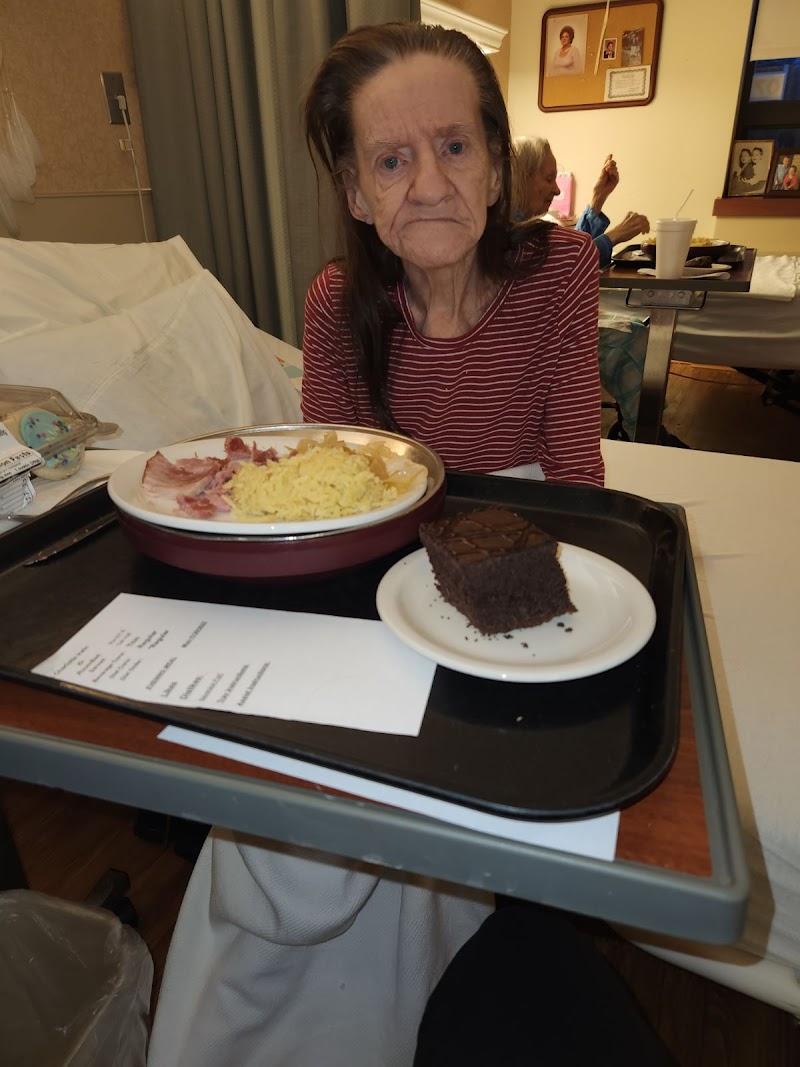
Based on a review of the facility's scheduled mealtimes, select facility policy, and resident and staff interviews, it was determined the facility failed to consistently provide snacks as desired by residents, including experiences reported by seven of seven residents participating in a group interview (Residents 8, 11, 80, 67, 37, 44, and 50). Findings include: A review of facility policy titled Snacks, last reviewed by the facility on May 2, 2025, revealed it is the facility policy that snacks and beverages will be provided as identified in residents' individual plans of care. Bedtime (HS- hour of sleep) snacks will be provided for all residents. Additional snacks and beverages will be available upon request for all residents who want to eat at non-traditional times. Nursing services is responsible for delivering the individual snacks to the identified residents and for offering evening snacks to all other residents. During a resident group interview conducted on June 25, 2025, at 10:00 AM, seven residents in attendance (Residents 8, 11, 80, 67, 37, 44, and 50) stated that snacks are not routinely offered to them in the evenings, and they would like to receive an evening or bedtime snack. Residents 11 and 67 reported that, in the past, a kitchen staff member would come around to offer snacks in the evening; however, currently, the snack cart is delivered to the nurses' station and nursing aides are responsible for delivering snacks. Resident 11 reported, the aides don't have time to do that; we have to come to the station if we want a snack. Resident 73 expressed disappointment that staff only allow residents to take one snack, stating, it's sometimes not enough. The bag of chips you get is small and only gives you a couple in it. During an interview on June 26, 2025, at approximately 1:30 PM, the Nursing Home Administrator (NHA) was unable to explain why residents were not consistently offered snacks as desired. The NHA acknowledged awareness of the issue and stated that residents should be provided a snack at bedtime. These findings were reviewed with the Nursing Home Administrator on June 26, 2025. 28 Pa. Code 211.12 (d)(3)(5) Nursing services.
CONCERN (E)

Potential for Harm - no one hurt, but risky conditions existed

Infection Control (Tag F0880)

Could have caused harm · This affected multiple residents

**NOTE- TERMS IN BRACKETS HAVE BEEN EDITED TO PROTECT CONFIDENTIALITY** Based on a review of clinical records, select facility policy, observations, and resident and staff interviews, it was determine...

Read full inspector narrative →
**NOTE- TERMS IN BRACKETS HAVE BEEN EDITED TO PROTECT CONFIDENTIALITY** Based on a review of clinical records, select facility policy, observations, and resident and staff interviews, it was determined that the facility failed to implement enhanced barrier infection control procedures and failed to ensure the proper use of personal protective equipment (PPE) for one resident out of 23 residents sampled (Resident 93). Findings include: A review of facility policy titled Enhanced Barrier Precautions, last reviewed by the facility on May 2, 2025, revealed it is the facility policy to expand the use of personal protective equipment and refer to the use of gowns and gloves during high-contact resident care activities when contact precautions do not otherwise apply. The policy indicated gown and gloves are applied prior to performing the high contact resident care activity. A clinical record review revealed Resident 93 was admitted to the facility on [DATE], with diagnoses including chronic kidney disease (a condition in which the kidneys are damaged and cannot effectively filter waste and excess fluid from the blood) and peripheral vascular disease (a circulatory condition where blood vessels outside the heart and brain narrow, block, or spasm). A physician's order for Resident 93 to have enhanced barrier precautions (interventions implemented to reduce the risk of spreading healthcare-associated infections) was initiated on May 29, 2025, for a wound of the sacrum. An observation of Resident 93's room on June 25, 2025, at approximately 9:00 AM, revealed staff members entering the room to provide care following a fall experienced by Resident 93. The group of staff members was observed applying hospital gowns instead of designated reusable gowns intended for enhanced barrier precautions. A review of the CDC recommendations revealed reusable (washable) gowns are typically made of polyester-cotton fabrics, Gowns must be safely laundered after each use according to routine procedures. Further review indicates a facility must implement a system to routinely inspect, maintain, replace, and store laundered gowns. An interview with the Director of Nursing (DON) conducted on June 25, 2025, at approximately 1:00 PM confirmed that the facility utilizes reusable gowns for enhanced barrier precautions and that staff are expected to use the green-colored gowns for this purpose. The DON acknowledged it was not proper practice to utilize resident hospital gowns, rendering the precautions ineffective for Resident 93 for enhanced barrier precautions. An interview with Employee 1 (Licensed Practical Nurse) on June 26, 2025, at 10:13 AM revealed the nurse believed that any gown could be worn for enhanced barrier precautions and that no specific education regarding the designated color or proper gown selection had been provided to staff. The facility failed to ensure proper practice of applying enhanced barrier precautions by implementing a system for laundering of gowns used, educating staff on proper use of PPE, and ensuring the protection of the residents. Based on a review of clinical records, select facility policy, observations, and resident and staff interviews, it was determined the facility failed to implement enhanced barrier infection control procedures for one resident out of the 23 residents sampled (Resident 93) and failed to properly use PPE for enhanced barrier precautions. The above findings were reviewed with the Nursing Home Administrator on June 26, 2025. 28 Pa. Code 211.10(d) Resident care policies. 28 Pa code 211.12 (d)(1)(5) Nursing services.
Sept 2024 12 deficiencies
CONCERN (D)

Potential for Harm - no one hurt, but risky conditions existed

Deficiency F0559 (Tag F0559)

Could have caused harm · This affected 1 resident

**NOTE- TERMS IN BRACKETS HAVE BEEN EDITED TO PROTECT CONFIDENTIALITY** Based on clinical record review and resident interview and staff interview, it was determined the facility failed to ensure that...

Read full inspector narrative →
**NOTE- TERMS IN BRACKETS HAVE BEEN EDITED TO PROTECT CONFIDENTIALITY** Based on clinical record review and resident interview and staff interview, it was determined the facility failed to ensure that in preparation for room change, a resident and resident representative received written notice, including the reason for the change, before the resident's room was changed for one of 27 residents reviewed (Resident 62). Findings Include: Federal regulatory guidelines note that moving to a new room or changing roommates is challenging for residents. A resident's preferences should be taken into account when considering such changes. When a resident is being moved at the request of facility staff, the resident, family, and/or resident representative must receive an explanation in writing of why the move is required. The resident should be provided the opportunity to see the new location, meet the new roommate, and ask questions about the move. Review of the clinical record of Resident 62 revealed the resident was admitted to the facility on [DATE], with diagnoses to include cerebral infarction (stroke- damage to tissues in the brain due to loss of oxygen to the area) with right side hemiparesis (partial paralysis on one side of the body). Resident 62 had been residing in room [ROOM NUMBER]-A (window bed) and was moved to room [ROOM NUMBER]-A (window bed) on August 28, 2024. A social services note dated August 28, 2024, at 1:19 PM noted the resident was asked if she would move to room [ROOM NUMBER]-A and the resident agreed. A nurses note dated August 28, 2024, at 4:18 PM noted the resident was moved into room [ROOM NUMBER]-A and oriented to new room. Resident with no concerns at this time. Resident representative aware. Further review of Resident 62's clinical record revealed no evidence that written notice, including reason for the room change had been provided to Resident 62 and Resident 62's resident representative. Interview with Resident 62, a cognitively intact resident, on September 4, 2024, at 12:45 PM revealed the resident's room was recently changed. Resident 62 noted that she was okay with the new room but noted that she was only given a few hour notice before her room was changed. Resident 62 noted she did not receive a written notice of the reason for the room change. Interview with the social services director on September 4, 2024, at 1:30 PM confirmed there was no documented evidence the facility provided written notice with an explanation for the reason for the room change, to the resident and/or the resident's responsible party. 28 Pa Code 201.29 (a) Resident Rights
CONCERN (D)

Potential for Harm - no one hurt, but risky conditions existed

Deficiency F0578 (Tag F0578)

Could have caused harm · This affected 1 resident

**NOTE- TERMS IN BRACKETS HAVE BEEN EDITED TO PROTECT CONFIDENTIALITY** Based on clinical record review, resident interview, and staff interview it was determined the facility failed to accurately ide...

Read full inspector narrative →
**NOTE- TERMS IN BRACKETS HAVE BEEN EDITED TO PROTECT CONFIDENTIALITY** Based on clinical record review, resident interview, and staff interview it was determined the facility failed to accurately identify a resident's wishes for future health care and advance directives (a written instruction such as a living will or durable power of attorney for health care for when the individual is incapacitated) as evidenced by one resident (Resident 62) out of 27 residents sampled. Findings include: A review of the clinical record of Resident 62, revealed the resident was cognitively intact and admitted to the facility on [DATE], with diagnoses that included cerebral infarction (stroke- damage to tissues in the brain due to loss of oxygen to the area) with right side hemiparesis (partial paralysis on one side of the body). A POLST a medical order signed by a doctor (Pennsylvania Orders for Life-Sustaining Treatment- is not intended to replace an advance health care directive document or other medical orders. The POLST process and health care decision-making works best when the person has appointed a health care agent to speak for them when they become unable to speak for themselves. A health care agent can only be appointed through an advance health care directive or a health care power of attorney), form signed by the physician extender on [DATE], indicated the resident desired to have CPR (cardiopulmonary resuscitation) if found to have no pulse and is not breathing. However, further review of the POLST form revealed no documented evidence the POLST form was signed by the resident or surrogate as required to indicate the resident wished to have CPR if the resident's heart were to stop beating or the resident stopped breathing. Review of the resident's Social History form dated [DATE], indicated that the resident had a Living Will in place and was offered to formulate an Advance Directives; and that information on Advance Directives was provided. Further review revealed no documented evidence of an Advance Directive in the resident's clinical record. During interview with Resident 62 on [DATE], at 11:45 AM the resident revealed she did not want to receive chest compressions (CPR) to attempt to restart her heart if her heart stopped. Resident 62 denied the facility ever having this discussion with her since she has been at the facility to ensure her wishes are honored. Resident 62 stated that she did not have a Living Will but was sure that she did not want CPR. The facility failed to provide documented evidence related to the periodic review of the resident's Advanced Directive to ensure the resident's wishes are honored. Interview with the director of nursing on [DATE], at approximately 12:30 PM confirmed the resident's POLST form was not signed by the resident as required and did not accurately reflect the resident's wishes if she were to become incapacitated 28 Pa. Code 211.5 (f) Clinical records. 28 Pa. Code 201.29(a) Resident rights
CONCERN (D)

Potential for Harm - no one hurt, but risky conditions existed

Investigate Abuse (Tag F0610)

Could have caused harm · This affected 1 resident

Based on a review of clinical records, the facility's abuse prohibition policy, select facility incident reports, and resident and staff interviews, it was determined the facility failed to timely and...

Read full inspector narrative →
Based on a review of clinical records, the facility's abuse prohibition policy, select facility incident reports, and resident and staff interviews, it was determined the facility failed to timely and thoroughly investigate an incident to rule out neglect and identify planned fall interventions not in place which resulted in a resident who requires the assistance of two staff for bed mobility and transfers to sustain a fall with a minor injury for one of 27 residents sampled (Resident 10). The findings include: A review of the facility's Abuse Prohibition Policy last revised May 1, 2021, and last reviewed August 2024, indicated the facility will do all that is within their control to prevent occurrences of abuse, mistreatment, neglect, misappropriation of resident property, and exploitation for all residents. Abuse is defined as the willful infliction of injury, unreasonable confinement, intimidation, or punishment with resulting physical harm, pain or mental anguish. Abuse also includes the deprivation by an individual, including a caretaker, of goods or services that are necessary to attain or maintain physical, mental, and psychosocial well-being. Instances of abuse of all residents, irrespective of any mental or physical condition, cause physical harm, pain or mental anguish. It includes verbal abuse, sexual abuse, physical abuse, and mental abuse including abuse facilitated or enabled through the use of technology. Willful, as used in the definition of abuse, means the individual must have acted deliberately, not that the individual must have intended to inflict injury or harm. Mistreatment is defined as inappropriate treatment or exploitation of a resident. Neglect is defined as the failure of the facility, its employees, or service providers to provide goods and services to a resident that are necessary to avoid physical harm, mental anguish, or emotional distress. The facility will initiate an investigation within 24 hours of an allegation of abuse/neglect that focuses on whether abuse or neglect occurred and to what extent; clinical examination for signs of injuries, if indicated; causative factors; and interventions to prevent further injury. The investigation will be thoroughly documented. Ensure that documentation of witnessed interviews is included. A review of Resident 10's clinical record revealed the resident was admitted to the facility March 10, 2017, with diagnoses to include anxiety and spinal stenosis (narrowing of the spine which puts pressure on the spinal cord and nerves and can cause pain), and polyarthritis (at least five joints are affected with arthritis). Review of Resident 10's quarterly Minimum Data Set (MDS - federally mandated standardized assessment process completed periodically to plan resident care), dated February 23, 2024, indicated the resident was cognitively intact with a BIMS (Brief Interview for Mental Status) score of 14 (a score of 13-15 indicates cognitively intact), and required two plus person physical assistance for bed mobility (how resident moves to and from lying position, turns side to side, and positions body while in bed) and transfers (how resident moves between surfaces including to or from bed, chair, wheelchair, standing position). Review of a physician order initially dated October 31, 2023,for Resident 10, noted an order for assistance requires with two staff for all transfers, with sit to stand lift with standard sized sling. During interview with Resident 10 on September 5, 2024, at 1:00 PM the resident noted she recalled an incident (could not remember the date) when a nurse aide was putting her in bed with the sit to stand lift (mechanical device designed to assist residents from moving from a sitting to standing position) and only remembers one staff being there. When she got to bed she started to fall and went forward before aide could stop her from falling and she bumped her head on the dresser. Nursing documentation dated April 13, 2024, at 8:58 PM revealed the nurse was called to resident's room by the nurse aide, the resident was found on the floor lying on her left side in no acute distress. The resident had a witnessed fall. The nurse aide stated the resident slid while taking off her heel Medix boots (help to relieve pressure off heels). Body audit completed and small circular skin tear noted to resident's upper left forehead. Nurse aide and resident stated she did not hit her head during the fall, but resident was lying on her left side on the floor while waiting for assistance to get off the floor. No decrease range of motion, shortening, rotation, pain, or other skin alterations noted. Resident assisted back into bed. Physician and resident representative notified. Review of the resident's care plan initially dated August 21, 2021, indicated the resident had a self-care deficit related to physical limitations. Planned interventions included the assist of two staff for bed mobility and assist times two staff via sit to stand lift for all transfers. Review of Resident 10's Documentation Survey Report for April 2024 revealed that on April 13, 2024, on the 3:00 PM shift to 11:00 PM shift the resident required the assistance of two staff for bed mobility and transfers. Review of the facility incident report dated April 13, 2024, indicated the resident was observed on the floor on her left side. At the time of the incident the resident stated that she slid off the mattress while the nurse aide was helping her get ready for bed. A skin integrity report dated April 13, 2024, noted a skin tear to the resident's left forehead which measured 0.7 cm by 1.0 cm. Neurochecks were initiated and completed following the incident. Review of an Incident/Accident statement by employee 5 (nurse aide) who witnessed the fall noted that the resident was sitting on the side of the bed and as employee 5 (nurse aide) was taking her boots off the resident started sliding and employee 5 (nurse aide) tried to guide the resident slowly to the floor and then notified the nurse. Review of a statement by Employee 7 (registered nurse) indicated she did not witness the incident. Employee 7 (registered nurse) noted she observed the resident lying on the floor in between the bed and the nightstand on her left side. The resident had a small skin tear to her left forehead that was visible when assessing the resident; other than that no visible injuries were noted. Employee 7 (registered nurse) noted the resident stated the mattress started sliding. Employee 7 (registered nurse) noted she last saw the resident in her wheelchair ten minutes prior to this fall. Further review of the investigation at the time of the incident revealed no indication the facility determined if the resident was assisted with the assistance of two staff members as careplanned for transfer with the mechanical and with assistance for bed mobility. There were no other witness statements at the time of the incident. The notes section of the Incident Report dated April 15, 2024, noted the interdisciplinary team reviewed the incident. The resident was sitting at the edge of her bed and slid. Physical therapy is being completed to assess transfers and cognitive status/awareness/safety. The facility failed to implement its established procedures in response to a fall with minor injury by failing to conduct a thorough investigation to rule out potential abuse, neglect, or mistreatment of the resident as a potential cause of the fall with minor injury. There was no indication that the facility identified at the time of the incident there was only one nurse aide,employee 5 (nurse aide), present during the incident despite employee 5 (nurse aide) signing off on the Resident's Documentation Survey Report that two staff were present. After surveyor inquiry about the incident on September 6, 2024, at approximately 11:00 AM the director of nursing stated to surveyor that additional witness statements were obtained regarding the incident on April 13, 2024. The facility provided the surveyor a statement written by employee 6 (nurse aide) dated September 6, 2024, noted that she was also present during the incident with Resident 10 and that Resident 10 slid off the bed to the floor while providing care. This statement was not obtained at the time of the incident in April. During interview with employee 6 (nurse aide) on September 6, 2024, at approximately 11:15 AM employee 6 (nurse aide) was unable to provide a detailed description of the incident and was unable to explain why the resident's heel boots would be removed while the resident was sitting on the side of the bed. Employee 6 (nurse aide) noted that it was difficult to remember an incident which had happened months before. An interview with the director of nursing on September 6, 2024, at approximately 1:00 PM confirmed the facility could not provide documented evidence the facility fully investigated to rule out potential neglect following Resident 10's fall with minor injury. The facility failed to identify planned interventions were not in place and/or implemented in a manner to ensure the resident's safety to prevent the fall and prevent future reoccurrence to the extent possible. 28 Pa. Code 201.14 (a)(c) Responsibility of licensee 28 Pa. Code 201.18(e)(1) Management 28 Pa. Code 201.29 (a)(c) Resident Rights 28 Pa. Code 211.12 (c)Nursing Services
CONCERN (D)

Potential for Harm - no one hurt, but risky conditions existed

Quality of Care (Tag F0684)

Could have caused harm · This affected 1 resident

**NOTE- TERMS IN BRACKETS HAVE BEEN EDITED TO PROTECT CONFIDENTIALITY** Based on observations, a review of clinical records and staff interviews it was determined the facility failed to provide nursin...

Read full inspector narrative →
**NOTE- TERMS IN BRACKETS HAVE BEEN EDITED TO PROTECT CONFIDENTIALITY** Based on observations, a review of clinical records and staff interviews it was determined the facility failed to provide nursing services consistent with professional standards of practice by failing to follow physician orders for the consistent application of prescribed therapeutic devices and or preventative measures, neck positioning pillow, when in bed and chair, for one resident out of 27 sampled (Resident 69) to assure the provision of person-centered care. Findings include: A review of the clinical record revealed that Resident 69 was admitted to the facility on [DATE], with diagnoses to include traumatic subdural hemorrhage (blood collects between the layers of tissue that surround the brain) with loss of consciousness, lack of coordination, abnormal posture, muscle disorder, and fracture of the base of the skull and occiput (flat bone that forms the back of the skull). A quarterly Minimum Data Set assessment (MDS-standardized assessment completed at specific intervals to identify specific resident care needs) dated August 7, 2024, revealed the resident has functional limitations on both sides (left and right) in range of motion in his upper and lower extremities, and was dependent on staff for eating, oral hygiene, toileting, upper and lower body dressing, personal hygiene, rolling to the left and to the right, and and transfers from a chair to the bed. The resident's care plan initiated August 5, 2020. indicated he is at risk for decreased ability to perform activities of daily living (ADLS) related to limited mobility, and that he is at risk for skin breakdown related to decreased activity, due to frail and fragile skin. Interventions included to use a neck positioning pillow when in bed and chair to position his neck in neutral position date, initiated on August 13, 2022, and assistance of 2 staff members for bed mobility,initiated May 17, 2024. A review of current physician orders dated August 10, 2022, indicated, use neck positioning pillow when in bed and chair to position the neck in a neutral position (positioned directly between the shoulders). An observation on September 4, 2024, at approximately 10:55 AM, found the resident lying on his back in bed, with his neck laterally flexed (bending the neck sideways) towards his left shoulder without a neck positioning pillow, as ordered by the physician. A second observation on September 4, 2024, at approximately 2:30 PM, found the resident lying on his back in bed, with his neck laterally flexed towards his left shoulder without a neck positioning pillow, as ordered by the physician. A third observation on September 5, 2024, at approximately 8:05 AM, found the resident lying on his back in bed, with his neck laterally flexed towards his left shoulder without a neck positioning pillow, as ordered by the physician. A fourth observation on September 5, 2024, at approximately 8:20 AM, in the presence of Employee 1, Licensed Practical Nurse (LPN), found the resident lying on his back in bed, with his neck laterally flexed towards his left shoulder without a neck positioning pillow, as ordered by the physician. During an interview on September 5, 2024, at approximately 8:22 AM, with Employee 1, (LPN), confirmed the observation that resident 69 was lying in bed with his neck laterally flexed towards his left shoulder without a neck positioning pillow as ordered by the physician. During an interview with the Director of Nursing (DON) on September 5, 2024, at approximately 10:10 AM, the DON was made aware of the observations on September 4, and September 5, 2024 regarding the resident's neck pillow. At this time, documentation was requested from the facility to provide evidence the resident's prescribed therapeutic devices were in place as ordered. During an interview with the DON on September 5, 2024, at approximately 1:35 PM, the DON could not provide documented evidence the resident was provided the neck pillow as ordered. The faiclity failed to follow physician orders for this resident's therapeutic device. 28 Pa. Code 211.12 (d)(1)(3)(5) Nursing services 28 Pa. Code 211.5(f) Medical records
CONCERN (D)

Potential for Harm - no one hurt, but risky conditions existed

Deficiency F0694 (Tag F0694)

Could have caused harm · This affected 1 resident

**NOTE- TERMS IN BRACKETS HAVE BEEN EDITED TO PROTECT CONFIDENTIALITY** Based on observations, review of clinical records and staff interviews it was determined the facility failed to provide person-c...

Read full inspector narrative →
**NOTE- TERMS IN BRACKETS HAVE BEEN EDITED TO PROTECT CONFIDENTIALITY** Based on observations, review of clinical records and staff interviews it was determined the facility failed to provide person-centered care as prescribed to meet the current clinical needs, failed to ensure the ready availability of prescribed emergency supplies, and failed to follow physician orders for management of a midline catheter (long, thin, flexible tube that is inserted into a large vein in the upper arm. It is used to deliver medications or fluid into the bloodstream) for one resident out of 27 sampled (Resident 100). Findings include: A review of clinical records revealed Resident 100 was admitted to the facility on [DATE], with diagnoses to include urinary tract infection, and Extended Spectrum Beta Lactamase Resistance (ESBL- a bacteria resistant to most antibiotics) in the urine. Review of Resident 100's hospital record Peripherally Inserted Central Catheter (PICC) Midline Insertion Documentation dated August 1, 2024, revealed the resident underwent a procedure for a single lumen midline catheter (thin, soft tube that is placed into a vein, usually in the arm. The catheter is then moved through the vein until the tip sits at the level of the armpit and away from the shoulder, used to administer medications) in his left arm. The catheter (tubing) total length was 15 cm with an external catheter length of 0 cm. A review of physician's order dated August 1, 2024, revealed an order to change the catheter site with Transparent dressing, indicate the external catheter length and upper arm circumference (10 cm above the antecubital area which is the bend of the elbow) and notify the practitioner if the external length of the catheter has changed since the last measurement indicating a potential problem with the midline. Review of Resident 100's Medication Administration Record (MAR) for August 7, 2024, revealed that nursing staff documented an upper arm circumference of 28.5 cm and an external catheter length of 10 cm. There was no documented evidence the physician was notified of the significant change in the measurement of the external catheter length from 0 cm on August 1, 2024, to 10 cm on August 7, 2024. After completion of the ordered antibiotic,a physician's order dated August 13, 2024 at 3:15 PM revealed an order for the RN (registered nurse) to remove the midline catheter. A nurses note dated August 13, 2024, at 7:29 PM indicated that the left upper arm midline catheter was removed. Midline catheter was completely intact, and 15 cm was removed. A nurses noted dated August 14, 2024 at 1:16 PM revealed Resident 100 was being transferred to the hospital due to the resident dislodging his nephrostomy tube (a tube that drains urine from the kidney). A review of nursing documentation dated August 17, 2024, indicated Resident 100 was readmitted to the facility and the resident required an IV antibiotic. The resident is known to be a hard stick (someone whose veins are difficult to locate) and normally pulls out his IVs due to not being situationally aware. Order received for midline catheter placement. A review of the Procedure Note: New Midline dated August 18, 2024, revealed the resident underwent a procedure for a single lumen midline catheter in his right upper arm. Catheter length was 15 cm with external catheter length 0 cm. A review of a physician's order dated August 21, 2024, revealed an order to change the catheter site with transparent dressing, indicate the external catheter length and upper arm circumference (10 cm above the antecubital). Notify practitioner if the external length has changed since last measurement. Review of Resident 100's MAR for August 21, 2024, revealed that nursing staff documented an upper arm circumference of 17 cm and an external catheter length of 10 cm. Review of the MAR for September 4, 2024, revealed nursing staff documented an upper arm circumference of 30.5 cm and an external catheter length of 10 cm. There was no documented evidence that the physician was notified of the significant change in the measurement of the external catheter length from 0 cm on August 18, 2024, to 10 cm on August 21, 2024 and September 4, 2024. Interview with Employee 4 (registered nurse) on September 5, 2024, at 12:15 PM, verified that external measurements of a midline catheter are obtained as per the physician's order. During an observation of Resident 100 on September 5, 2024, at 12:20 PM, Employee 4 measured the external catheter length of the resident's midline catheter and indicated it was 0 cm. Interview with the Director of Nursing on September 6, 2024, at approximately 9:30 AM confirmed there was no documented evidence the physician was notified of the change in the external catheter length documented on August 7, 2024, August 21, 2024, and September 4, 2024, and that the nurse documentation of the external catheter length in the MAR was inaccurate. A review of physician orders dated August 21, 2024, revealed an order to maintain an emergency kit at bedside to include a clamp, gauze, occlusive dressing, and tape for Resident 100's midline catheter. Observation conducted on September 5, 2024, at 10:20 AM revealed no emergency kit available in the resident's room. Interview with Employee 3 (licensed practical nurse) on September 5, 2024, at the time of the observation, verified that Resident 100 had a physician's order for an emergency kit at bedside and confirmed that there was no emergency kit available in Resident 100's room. 28 Pa. Code 211.12 (c)(d)(1)(3)(5) Nursing services.
CONCERN (D)

Potential for Harm - no one hurt, but risky conditions existed

Deficiency F0697 (Tag F0697)

Could have caused harm · This affected 1 resident

**NOTE- TERMS IN BRACKETS HAVE BEEN EDITED TO PROTECT CONFIDENTIALITY** Based on observations, review of clinical records, select facility policy, staff, and resident interviews, it was determined tha...

Read full inspector narrative →
**NOTE- TERMS IN BRACKETS HAVE BEEN EDITED TO PROTECT CONFIDENTIALITY** Based on observations, review of clinical records, select facility policy, staff, and resident interviews, it was determined that facility failed to implement pain management interventions when a resident suffered pain without relief for one resident out of 27 sampled (Resident 92). Findings include: A review of the policy title Pain-Clinical Protocol, last reviewed by the facility on August 1, 2024, revealed the physician and staff will identify individuals who have pain or who are at risk for having pain. This includes reviewing known diagnoses and conditions that commonly cause pain. It also includes a review of any treatments that the resident is currently receiving for pain, including pharmacological and non-pharmacological treatments. The policy also indicates staff will identify any situations or interventions where an increase in the resident's pain may be anticipated. With input from the resident to the extent possible, the physician and staff will establish goals for pain treatment. A clinical record review revealed that Resident 92 was admitted to the facility on [DATE], with diagnoses that included dementia (a condition characterized by the loss of cognitive functioning such as thinking, remembering, and reasoning, to such an extent that it interferes with a person's daily life and activities) and aftercare following a fractured femur. A review of a quarterly Minimum Data Set assessment (MDS - a federally mandated standardized assessment process conducted periodically to plan resident care) dated June 18, 2024 revealed that Resident 92 is moderately cognitively impaired with a BIMS score of 12 (Brief Interview for Mental Status- a tool within the Cognitive Section of the MDS that is used to assess the resident's attention, orientation, and ability to register and recall new information; a score of 8-12 indicates moderate impairment). A care plan, initiated on September 2, 2024, indicated that Resident 92 has pain related to osteoporosis (a medical condition in which the bones become brittle and fragile from loss of tissue). Interventions include administering pain medication per physician's orders and reporting nonverbal expressions of pain such as moaning or grimacing. A community hospital discharge summary revealed Resident 92 was admitted to the community hospital on August 26, 2024, with an acute closed intertrochanteric fracture of her right femur (broken hip) and underwent surgical repair. She was re-admitted to the facility on [DATE], with instructions to follow-up with an orthopedic consult in two weeks and Acetaminophen 325 mg for pain management. A physician's order for Resident 92 to be administered Acetaminophen oral tablet 325 mg with instructions to give 650 mg by mouth every 6 hours as need for pain 1-3 (mild pain) and instructions for non-pharmacological interventions for pain management initiated on August 29, 2024. A Resident Observation admission Form dated September 2, 2024, indicated Resident 92 is able to identify the location of her pain. She describes the characteristic of her pain as aching, hurting all over, and tingling, and numerically evaluated her pain as 0 out of 10. The assessment indicated the resident is not able to identify factors that aggravate her pain. The assessment indicated she is not able to determine the effectiveness of different interventions on pain management. There was no response indicated if Resident 92 is able to identify factors that alleviate her pain. A Brief Interview for Mental Status Evaluation (a tool within the Cognitive Section of the MDS that is used to assess the resident's attention, orientation, and ability to register and recall new information) dated September 4, 2024, revealed Resident 92 has moderate cognitive impairment with a score of 8 (a score of 8-12 indicates moderate impairment). A physical therapy evaluation and plan of treatment evaluation, dated September 3, 2024, indicated that Resident 92 had complaints of minimal pain in her right thigh and knee at rest, which increases with activity. She was unable to provide a specific rating. The document indicated the caregiver goals are to improve mobility and transfers, improve ambulation, and decrease pain. A physical therapy treatment encounter note dated September 3, 2024, at 12:09 PM revealed Resident 92 had complaints of increased pain in her right lower extremity following treatment. There was no documented evidence that Resident 92 was provided pharmacological or non-pharmacological interventions for her pain in anticipation of her pain prior to her therapy session or following her therapy session on September 3, 2024. During an interview on September 4, 2024, at 10:45 AM, Resident 92 indicated she fell last week. She was observed rubbing her right thigh and knee. She indicated it was sore. Resident 92 was unable to indicate what interventions helped her pain or what the facility was implementing to help alleviate her pain. An occupational therapy treatment encounter note dated September 4, 2024, at 2:26 PM revealed that Resident 92 had complaints of right knee pain and was not willing to stand with a mobility device. A physical therapy treatment encounter note dated September 4, 2024, at 2:54 PM revealed Resident 92 screamed with pain in her knee when attempting to stand. There was no documented evidence that Resident 92 was provided pharmacological or non-pharmacological interventions for her pain in anticipation of her pain prior to her therapy session or following her therapy sessions on this date. During an interview on September 5, 2024, at 12:45 PM, Resident 92 indicated her leg was very sore. She was not able to explain what interventions alleviated the soreness and did not respond when asked what her pain level was on a scale of 1 to 10 (numeric pain scale indicating 0-no pain, 1-3 mild pain, 4-6 moderate pain and 7-10 severe pain). Resident 92 was observed rubbing her right leg near her knee. A review of the medication administration record for September 2024 revealed that Resident 92 experienced mild pain on the following dates: On September 2, 2024, Resident 92 experienced 1 out of 10 level of pain during the night shift. On September 3, 2024, Resident 92 experienced 1 out of 10 level of pain during the day shift. On September 3, 2024, Resident 92 experienced 2 out of 10 level of pain during the night shift. On September 4, 2024, Resident 92 experienced 1 out of 10 level of pain during the day shift. On September 4, 2024, Resident 92 experienced 1 out of 10 level of pain during the evening shift. A clinical record review revealed no documented evidence that Resident 92 was offered any pharmacological or non-pharmacological interventions for her pain on the above shifts with recorded experiences of her mild pain. Furthermore, there was no documented evidence from her re-admission to the facility on September 2, 2024, through September 5, 2024, that Resident 92 was provided interventions for her experienced pain. During an interview on September 6, 2024, at approximately 9:30 AM, the Director of Nursing (DON) was unable to provide documented evidence that Resident 92 received or was offered any interventions for pain management from September 2, 2024, through September 5, 2024, despite indicators and evaluations that the resident was experiencing mild pain. The DON confirmed it is the facility's responsibility to ensure pain management is provided to residents who require such services. 28 Pa. Code 211.12 (d)(1)(3)(5) Nursing services.
CONCERN (D)

Potential for Harm - no one hurt, but risky conditions existed

Deficiency F0745 (Tag F0745)

Could have caused harm · This affected 1 resident

**NOTE- TERMS IN BRACKETS HAVE BEEN EDITED TO PROTECT CONFIDENTIALITY** Based on review of clinical records and staff interview, it was determined the facility failed to provide therapeutic social ser...

Read full inspector narrative →
**NOTE- TERMS IN BRACKETS HAVE BEEN EDITED TO PROTECT CONFIDENTIALITY** Based on review of clinical records and staff interview, it was determined the facility failed to provide therapeutic social services to promote the mental and psychosocial well-being of one resident out of 27 sampled (Resident 69) Findings include: A review of the clinical record revealed that Resident 69 was admitted to the facility on [DATE], with diagnoses to include major depressive disorder, and intermittent explosive disorder. The resident's care plan, initiated August 5, 2020, indicated he is at risk for distressed/fluctuating mood symptoms related to anxiety. A review of a nursing note dated April 9, 2024, at 1445 at 2:45 PM indicated the nurse entered the residents' room to give Prednisone (a medication that reduces inflammation and suppresses the immune system) and to start his J tube feeding (a soft, plastic tube placed through the skin of the abdomen into the midsection of the small intestine used to administer liquid nutrition). Resident 69 refused, and an attempt was made by a different nurse without success. In questioning why the refusal of medication and nutrition (feedings), Resident 69 relayed he no longer wanted to live and began to cry. The nurse provided emotional support to the resident and notified the physician. A review of the resident's care plan failed to identify and include interventions after the residents expressed he no longer wanted to live. There was no documentation in Resident 69's clinical record that therapeutic Social Services were provided to the resident in response to the residents statement expressed on April 9, 2024. Interview with Employee 2, Social Service Director, on September 4, 2024, at approximately 2:00 PM revealed she had not followed up, or conversed with Resident 69 in response to the April 9, 2024, resident's comments that he no longer wanted to live. The resident's care plan was not updated to address the resident's statement that he no longer wanted to live. Interview with the Nursing Home Administrator (NHA) on September 5, 2024, at approximately 10:10 AM, confirmed that there was no documented evidence of the provision of therapeutic social services provided to Resident 69 following his statement of desire to die. 28 Pa. Code 201.29 (a) Resident rights. 28 Pa. Code 211.16 (a) Social Services.
CONCERN (D)

Potential for Harm - no one hurt, but risky conditions existed

Pharmacy Services (Tag F0755)

Could have caused harm · This affected 1 resident

Based on review of facility policy, clinical records and controlled medication records, and staff interview, it was determined the facility failed to implement procedures to promote accurate accountin...

Read full inspector narrative →
Based on review of facility policy, clinical records and controlled medication records, and staff interview, it was determined the facility failed to implement procedures to promote accurate accounting and administration of controlled medications and maintenance of accurate controlled substance records as evidenced by one resident of 27 sampled (Resident 99). Finding include: A review of the clinical record revealed that Resident 99 had a physician order initially dated June 24, 2024, at 4:15 PM for Oxycodone HCl oral tablet 5 MG (an opioid pain medication used to treat moderate to severe pain), give 5 mg by mouth every 6 hours as needed for pain 4-10 (numeric pain scale 1-10, 1 least pain, 10 most pain). A review of the Controlled Drug Administration Record accounting for the above narcotic medication revealed that on the following dates nursing staff signed for the removal of a dose from the resident's supply of Oxycodone 5 mg: August 21, 2024, at 6:00 PM, August 25, 2024, (time illegible), August (date illegible) at 11:45 PM, and August 28, 2024, at 8:00 PM, However, the administration of the controlled drug to the resident was not recorded on the resident's Medication Administration Record (MAR) on those dates and times. A physician order dated August 28, 2024, at 8:20 PM was noted for Oxycodone HCl tablet 10 MG, give one tablet by mouth every 6 hours as needed for moderate to severe pain (4-10). A review of the Controlled Drug Administration Recordaccounting for the above narcotic medication revealed that on nursing staff signed out a dose of the resident's supply of Oxycodone 5 MG the following dates; August 31, 2024, at 5:00 AM, September 2, 2024 at 5:00 AM, September 3, 2024, at 5:00 AM and September 4, 2024, at 4:30 PM The medication administration record revealed no evidence of the administration of the controlled drug to the resident on those dates and times. During an interview on September 6, 2024, at 11:24 AM, the Director of Nursing confirmed the inconsistencies in the accounting and administration of the opioid pain medication for Resident 99. A review of facility policy titled Administering Medications last reviewed August 2024, indicated that medications are administered in accordance with the prescriber orders. The individual administering the medication checks the label THREE (3) times to verify the right resident, right medication, right dosage, right time, and right method (route) of administration before giving the medication, A physician order dated June 24, 2024 and revised August 5, 2024, August 6, 2024, and August 12, 2024, was noted for Oxycodone HCl oral tablet 5 MG, give 5 mg by mouth every 6 hours as needed for pain 4-10. This medication was discontinued on August 26, 2024. On August 28, 2024, the physician reordered Oxycodone HCl but increased the dose to 10 MG. The order was revised on August 29, 2024, and remained current for Oxycodone HCl 10 MG, give one tablet by mouth every 6 hours as needed for moderate to severe pain (4-10) at the time of the survey ending September 6, 2024. A review of Resident 99's Controlled Drug Administration Record revealed on July 25, 2024, the facility received 30 doses of Oxycodone HCl 5 MG for Resident 99. Further review of the Controlled Drug Administration Record revealed that from August 29, 2024, through September 4, 2024, Resident 99 received fifteen (15) doses of Oxycodone HCl 5 MG instead of the physician ordered Oxycodone HCl 10 MG dose. Interview with the Nursing Home Administrator on September 9, 2024, at approximately 2:00 PM confirmed that nursing staff failed to follow the facility's policy by not checking the medication label to verify the right dose and confirmed the facility failed to follow physician's orders for administration of pain medication. 28 Pa Code 211.12 (c)(d)(1)(3)(5) Nursing services. 28 Pa Code 211.9(a)(1)(k)Pharmacy services. 28 Pa Code 211.5 (f) Medical records
CONCERN (D)

Potential for Harm - no one hurt, but risky conditions existed

Medication Errors (Tag F0758)

Could have caused harm · This affected 1 resident

**NOTE- TERMS IN BRACKETS HAVE BEEN EDITED TO PROTECT CONFIDENTIALITY** Based on clinical record review and staff interviews, it was determined the facility failed to ensure the presence of current do...

Read full inspector narrative →
**NOTE- TERMS IN BRACKETS HAVE BEEN EDITED TO PROTECT CONFIDENTIALITY** Based on clinical record review and staff interviews, it was determined the facility failed to ensure the presence of current documented clinical necessity for use of an antipsychotic medication for one of five residents reviewed for unnecessary medications (Resident 68). Findings include: A clinical record review revealed Resident 68 was admitted to the facility on [DATE], with diagnoses that included dementia (a condition characterized by the loss of cognitive functioning such as thinking, remembering, and reasoning, to such an extent that it interferes with a person's daily life and activities). A review of a quarterly Minimum Data Set assessment (MDS - a federally mandated standardized assessment process conducted periodically to plan resident care) dated August 8, 2024, revealed that Resident 68 is moderately cognitively impaired with a BIMS score of 8 (Brief Interview for Mental Status- a tool within the Cognitive Section of the MDS that is used to assess the resident's attention, orientation, and ability to register and recall new information; a score of 8-12 indicates moderate cognitive impairment). Physician's order dated June 24, 2024 revealed, discontinue Buspar (an anti-anxiety medication) and start Seroquel 12.5 oral tablet mg (Quetiapine Fumarate- an antipsychotic medication) at bedtime for agitation. Resident 68 must eat at the same time as roommate and be in bed at 8:00 PM. There was no corresponding physicians documentation indicating the clinical need for the initiation of the antipsychotic medication. A medication administration record for June 2024 revealed staff indicated Resident 68 did not display anxiety or anxious behaviors (feeling nervous, continuous worrying, difficulty relaxing, restlessness, easily annoyed, irritable, or fearful) from June 1, 2024, through June 26, 2024. The monitoring for these behaviors was discontinued on June 26, 2024. Resident 68's medication administration record review revealed staff indicated Resident 68 did not display insomnia or sleepless behaviors (sleeplessness, difficulty falling asleep, difficulty staying asleep, restlessness, disruption in sleep pattern) from June 1, 2024, through September 5, 2024. Resident 68's medication administration record revealed a monitor was initiated on June 26, 2024, for staff to indicate Resident 68's socially inappropriate or disruptive behavior (self-injury, scratching, hitting, pacing, wandering, screaming, yelling, agitation). No behaviors were indicated from June 26, 2024, through September 5, 2024. A review of the medication administration record indicated Resident 68 has been receiving Seroquel oral tablet 12.5 mg (Quetiapine Fumarate- an antipsychotic medication) since prescribed on June 24, 2024. During an interview on September 6, 2024, at approximately 9:00 AM, the Director of Nursing (DON) could not provide documented evidence of the clinical rationale for the initiation of the physician order for Seroquel, an antipsychotic medication. The DON confirmed it is the facility's responsibility to ensure that antipsychotic drugs are not administered to residents who have not previously used them unless the medication is necessary to treat a diagnosed condition, as documented in the clinical record. 28 Pa Code 211.2(d)(3) Medical director. 28 Pa. Code 211.5 (ix) Clinical records 28 Pa. Code 211.9(a)(1)(k) Pharmacy services.
CONCERN (E)

Potential for Harm - no one hurt, but risky conditions existed

Resident Rights (Tag F0550)

Could have caused harm · This affected multiple residents

**NOTE- TERMS IN BRACKETS HAVE BEEN EDITED TO PROTECT CONFIDENTIALITY** Based on a review of clinical records, resident council meeting minutes, and resident and staff interviews, it was determined th...

Read full inspector narrative →
**NOTE- TERMS IN BRACKETS HAVE BEEN EDITED TO PROTECT CONFIDENTIALITY** Based on a review of clinical records, resident council meeting minutes, and resident and staff interviews, it was determined the facility failed to provide care in a manner that promotes each resident's quality of life by failing to respond timely to residents' requests for assistance, including experiences reported by two out of the 27 residents sampled (Residents 97 and 159) and experiences reported by five out of the seven residents during a resident group interview (Residents 38, 49, 53, 91, and 94). Findings include: A review of the clinical record revealed that Resident 97 was admitted to the facility on [DATE], with diagnoses to include hypertension and lymphedema (swelling caused by a build-up of lymph fluid in the body, usually in an arm or leg). An admission Minimum Data Set assessment (MDS- standardized assessment completed at specific intervals to plan care) dated, August 21, 2024, indicated the resident had a BIMS score of 11 (Brief Interview for Mental Status-a tool to assess the resident's attention, orientation, and the ability to register and recall new information, a score of 8-12 equates to moderate cognitive impairment). During interview with Resident 97, on September 4, 2024, at 1:00 PM the resident noted that at times he waits a long time for the call bell to be answered. Resident 97 noted that when he rings the call bell it is often for ice water which he enjoys drinking with his meals. Resident 97 noted that at breakfast today he was in need of ice water and waited for 20 minutes for the call bell to be answered and staff to provide him with ice water to have during his breakfast. A review of the clinical record revealed that Resident 159 was admitted to the facility on [DATE], for short-term rehabilitation with diagnoses to include diabetes. During interview with Resident 159, a cognitively intact resident, on September 4, 2024, at 11:00 AM the resident revealed that on September 3, 2024, around 7:00 PM he waited for approximately 20 minutes for the call bell to be answered. Resident 159 stated that when staff finally answered the call bell the response to why it took so long was that staff were busy. A review of Resident Council meeting minutes dated June 3, 2024, revealed that residents in attendance had concerns regarding nurse staffing. Residents in attendance indicated that a reasonable amount of time to wait for care is 15 minutes. Staff at the meeting explained that efforts were being made to hire additional facility employees, including licensed nurses and nurse aides. A review of Resident Council meeting minutes dated July 1, 2024, revealed that residents in attendance had concerns regarding call bell wait times for care. A review of Resident Council meeting minutes dated August 5, 2024, revealed that residents in attendance had concerns with staff assisting residents to bed and nurse staffing related to staff calling off from work. During a group interview with alert and oriented residents on September 5, 2024, at 10:00 AM, five out of the seven residents interviewed indicated that they rely on staff for care (Residents 38, 49, 53, 91, and 94). Residents 38, 49, 53, 91, and 94 explained they experience long wait times for staff assistance. The residents in attendance indicated that concerns with staffing have been brought up during Resident Council meetings over the past few months, but the long wait times for care remain a problem at the facility. Resident 38 indicated that she sometimes waits 30 minutes for care when the facility is short on staffing. She explained that the evening shift (3:00 PM to 11:00 PM) is often short on nurse aides. Resident 38 indicated that when one or two nurse aides are assigned to her area, there is not enough to take care of all the residents that need assistance. She explained that when this happens, the residents end up waiting a long time for care. Resident 49 indicated that he sometimes waits 30 minutes for care when the facility is short staffed. He explained that his nursing unit was short staffed earlier this week. Resident 49 indicated it took staff about 30 minutes to provide him care after he rang his call bell for assistance. Resident 49 indicated that when the staff are short, they are stressed and not in a good mood. He explained that when they are stressed, they rush, and it affects me and the other residents. Resident 94 indicated that she experiences long wait times for care, but was unsure how long it takes for staff to respond after she rings her call bell for assistance. Resident 94 expressed that she is frustrated because there is not enough staff to take care of the residents at the facility. She explained that short staffing and long wait times for care have been an ongoing problem at the facility. Resident 91 indicated that she often waits one to three hours for staff to respond to her call bell rings for assistance on the evening shift and night shift. She explained that she is independent for most of her care but is unable to perform personal hygiene after she goes to the bathroom. Resident 91 indicated that night shift nursing staff will tell her she is independent and respond very slowly to her rings for assistance. She explained that she often waits until someone from the dayshift arrives to help her get cleaned up. Resident 91 expressed that she is angry and frustrated about her care. Resident 53 indicated that he experiences long wait times for care. He explained that staff sometimes ask him if he could wait five minutes so they could take care of another resident. He indicated that he is afraid to tell them yes anymore because he would end up waiting 30 minutes to an hour before they would come back to check on him. Resident 53 explained that he waits 30 minutes or longer when he needs staff assistance for care. He expressed that he feels bad the residents need help with care, but there does not seem to be enough staff to provide it. During an interview on September 6, 2024, at approximately 9:30 AM, the Nursing Home Administrator (NHA) and Director of Nursing (DON) verified all residents at the facility should be treated with dignity and respect. The NHA and DON were unable to explain why residents are reporting untimely staff responses to residents' requests for assistance and care which is negatively affecting their quality of life in the facility. 28 Pa. Code 201.18 (e)(1) Management 28 Pa. Code 201.29 (a) Resident Rights 28 Pa. Code 211.12 (c)(d)(4)(5) Nursing Services.
CONCERN (E)

Potential for Harm - no one hurt, but risky conditions existed

Deficiency F0657 (Tag F0657)

Could have caused harm · This affected multiple residents

**NOTE- TERMS IN BRACKETS HAVE BEEN EDITED TO PROTECT CONFIDENTIALITY** Based on clinical record review, select facility policy, and resident and staff interviews, it was determined the facility faile...

Read full inspector narrative →
**NOTE- TERMS IN BRACKETS HAVE BEEN EDITED TO PROTECT CONFIDENTIALITY** Based on clinical record review, select facility policy, and resident and staff interviews, it was determined the facility failed to ensure comprehensive care plans were developed and revised with the participation of the resident and the resident's representative for two residents out of 27 residents sampled (Residents 62 and 79) and five out of seven residents during a resident council interview (38, 49, 94, 91, and 53). Findings include: A review of facility policy titled Care Plans, Comprehensive Person-Centered, last reviewed by the facility on August 1, 2024, revealed that a comprehensive, person-centered care plan that includes measurable objectives and timetables to meet the resident's physical, psychosocial, and functional needs is developed and implemented for each resident. The policy indicates that residents are informed of their right to participate in his or her treatment and provided advance notice of care planning conferences. Also, the policy indicates if the participation of the resident and his/her resident representative in developing the resident's care plan is determined to not be practicable, an explanation is documented in the resident's medical record. The explanation should include what steps were taken to include the resident or representative in the process. A clinical record review revealed Resident 62 was admitted to the facility on [DATE], with diagnoses that included cerebral infarction (stroke- damage to tissues in the brain due to loss of oxygen to the area) with right side hemiparesis (partial paralysis on one side of the body). A review of a quarterly Minimum Data Set assessment (MDS - a federally mandated standardized assessment process conducted periodically to plan resident care) dated August 21, 2024, revealed that Resident 62 is cognitively intact with a BIMS score of 15 (Brief Interview for Mental Status- a tool within the Cognitive Section of the MDS that is used to assess the resident's attention, orientation, and ability to register and recall new information; a score of 13-15 indicates cognition is intact). During an interview on September 4, 2024, at 12:45 PM, Resident 62 indicated that she has not participated in any care plan meetings. She was not able to recall being invited to participate in the development or revision of her care plan. Resident 62 indicated that she was staying long-term at the facility. A clinical record review revealed Resident 38 was admitted to the facility on [DATE]. A review of Resident 38's clinical record revealed no evidence Resident 38 or her representative were invited to participate or participated in the development of her person-centered care plan. A clinical record review revealed Resident 94 was admitted to the facility on [DATE]. A review of Resident 94's clinical record revealed no evidence Resident 94 or her representative were invited to participate or participated in the development of her person-centered care plan. A clinical record review revealed Resident 53 was admitted to the facility on [DATE]. A review of Resident 53's clinical record revealed no evidence Resident 53 or his representative were invited to participate or participated in the development of his person-centered care plan. A clinical record review revealed Resident 49 was admitted to the facility on [DATE]. A review of Resident 49's clinical record revealed no evidence Resident 49 or his representative were invited to participate or participated in the development of his person-centered care plan. A clinical record review revealed Resident 91 was admitted to the facility on [DATE]. A review of Resident 91's clinical record revealed no evidence Resident 91 or her representative were invited to participate or participated in the development of her person-centered care plan. A clinical record review revealed Resident 79 was admitted to the facility on [DATE]. A review of Resident 79's clinical record revealed no evidence Resident 79 or her representative were invited to participate or participated in the development of her person-centered care plan. During a group interview with alert and oriented residents on September 5, 2024, at 10:00 AM, Residents 38, 49, 94, 91, and 53 indicated that they had not been invited to participate in care conference meetings. The residents indicated that they have not been invited to participate in the development of their person-centered care plan. During a resident interview on September 5, 2024, at 12:45 PM, Resident 79 indicated that she has not been invited to participate in the development of her person-centered care plan. During an interview on September 5, 2024, at approximately 1:30 PM, Employee 2, Social Services Director, indicated that care planning conferences were not occurring quarterly for each resident. Employee 2 was not able to provide evidence that residents and resident representatives were being provided the opportunity to participate in the development and revision of comprehensive resident-centered care plans. During an interview on September 6, 2024, at approximately 11:00 AM, the Nursing Home Administrator (NHA) confirmed it is the facility's responsibility to ensure comprehensive care plans are developed and revised with the participation of the resident and the resident's representative. The NHA was unable to provide documented evidence that residents were being provided an opportunity to participate in the development and revision of comprehensive resident-centered care plans. During an interview on September 6, 2024, at approximately 9:30 AM, the Director of Nursing (DON) and Nursing Home Administrator (NHA) confirmed that it is the facility's responsibility to ensure that residents are provided an opportunity to participate in development and revisions of their comprehensive care plans. The NHA and DON confirmed the interdisciplinary team meets quarterly to discuss, revise, and develop each resident's plan of care. The DON and NHA were unable to provide documented evidence that Residents 38, 49, 53, 62, 79, 91, or 9, were offered the opportunity to participate in care conference meetings or the development and revision of their comprehensive resident-centered care plans. The DON and NHA confirmed the facility must include residents in the development and revision of their care plans to the greatest extent possible. 28 Pa. Code 201.29(a) Resident rights. 28 Pa Code 211.12(d)(3) Nursing services.
CONCERN (E)

Potential for Harm - no one hurt, but risky conditions existed

Food Safety (Tag F0812)

Could have caused harm · This affected multiple residents

Based on observation and staff interview, it was determined the facility failed to maintain acceptable practices for the storage and service of food to prevent the potential for contamination and micr...

Read full inspector narrative →
Based on observation and staff interview, it was determined the facility failed to maintain acceptable practices for the storage and service of food to prevent the potential for contamination and microbial growth in food, which increased the risk of food-borne illness in two of two resident pantries (Station 1 and Station 2). Findings include: Food safety and inspection standards for safe food handling indicate that everything that comes in contact with food must be kept clean, and food that is mishandled can lead to foodborne illness. Safe steps in food handling, cooking, and storage are essential in preventing foodborne illness. You cannot always see, smell, or taste harmful bacteria that may cause illness, according to the USDA (The United States Department of Agriculture, also known as the Agriculture Department, is the U.S. federal executive department responsible for developing and executing federal laws related to food). Observation of the Station One resident pantry on September 4, 2024, at 12:00 PM and September 5, 2024, at 1:45 PM revealed the interior of the microwave was soiled with dried on food ,splatters and the back interior of the microwave was pitted and rust colored. Observation revealed the interior surface of an upright, long-handled dustpan stored next to the counter in the pantry was heavily soiled with a buildup of dirt and debris. Observation of the ice machine revealed the surface and end of the condensation hose (the hose is connected to the back of the ice machine and collects water that empties from the ice machine) were covered with a thick layer of a black mold-like substance. The end of the condensation hose leading from the ice machine to the floor drain had a heavy buildup of a black-colored substance on the end of the hose. The condensation hose was not placed above the floor sewer drain to allow for an air gap (space that separates the ice machine's condensation hose from the sewer drain to prevent contamination of the ice machine in the case of a sewer drain back-up). Observation of Station 2 resident pantry on September 5, 2024, at 10:40 AM revealed a freezer with food substance stains, discolorations, and tan food debris scattered across the base. A cabinet containing resident snacks had food debris on the shelving. Additionally, the microwave was observed with stains and discolorations on the exterior surfaces, while the interior was marked by food debris and stains on the walls, door base, and ceiling. Observation of Station 2 resident pantry ice machine on September 5, 2024, at 1:30 PM revealed the surface and end of the condensation hose were covered with a thick layer of a black mold-like substance. Interview with the nursing home administrator on September 5, 2024, at 2:00 PM confirmed that sanitary practices for food and ice storage should be maintained in the resident pantries. 28 Pa. Code 201.18 (e)(2.1) Management
Aug 2024 5 deficiencies
CONCERN (D) 📢 Someone Reported This

A family member, employee, or ombudsman was alarmed enough to file a formal complaint

Potential for Harm - no one hurt, but risky conditions existed

Deficiency F0678 (Tag F0678)

Could have caused harm · This affected 1 resident

**NOTE- TERMS IN BRACKETS HAVE BEEN EDITED TO PROTECT CONFIDENTIALITY** Based on a review of clinical records and select facility policy and staff interviews it was determined that the facility failed...

Read full inspector narrative →
**NOTE- TERMS IN BRACKETS HAVE BEEN EDITED TO PROTECT CONFIDENTIALITY** Based on a review of clinical records and select facility policy and staff interviews it was determined that the facility failed to provide emergency care consistent with a resident's advanced directives for one resident out of 14 residents reviewed (Resident CR1). Findings include: According to the national library of medicine, irreversible death is classified as a person having the following: rigor mortis (stiffening of the joints and muscles of a body a few hours after death), dependent lividity (pooling of blood to dependent areas resulting in a red/purple coloration), decapitation (total separation of the head from the body), transection (cut in half), and decomposition (the state or process of rotting) A review of Resident CR1's clinical record revealed admission to the facility on [DATE], with multiple diagnoses including cancer of the right lung, type 2 diabetes, heart disease, and anxiety. A review of Resident CR1's clinical record revealed a physician order dated [DATE], identifying the resident was to receive CPR (cardio pulmonary resuscitation-emergency lifesaving procedure performed when the heart stops beating or if the resident stops breathing. Immediate CPR can double or triple chances of survival after cardiac arrest) in the event of cardiac or pulmonary arrest. A nurse's note dated [DATE], at 11:15 AM, completed by Employee 3 (LPN), indicated that Resident CR1 was declining while in wheelchair, transferred to bed. Physician Assistant (PA) notified and at bed side. Resident expired. Resident pronounced by Physician assistant. A review of the PA's progress note dated [DATE], it revealed she was called to the room to see Resident CR1. The resident had been in the dayroom asking to go back to his room. He was wheeled back to his room and according to the PA's documentation he took his last breath while being placed back in bed. The progress note indicated the resident was found lying in bed, and unresponsive to verbal or noxious (painful) stimuli. The resident's pupils were fixed and dilated (when the pupil, round black part of the eye does not respond to light or fixed, indicating the brain is not responding to send a signal back to the eye to constrict, the pupil- fixed and dilated pupils are a sign if brain death) and his heart sounds could not be heard. The resident was without a pulse or respirations. Although the resident's physician's orders indicated that if the resident were to suffer a cardiac or respiratory event the facility was to perform CPR in order to attempt to save the resident during a cardiac arrest, the facility failed to implement CPR as ordered. The facility failed to provide cardio-pulmonary resuscitation (CPR) to a resident who had requested this emergency care and was identified as a full code status (designation that means to intercede if a patient's heart stops beating or if the patient stops breathing). Interview with the Director of Nursing and Nursing Home Administrator on [DATE], at approximately 4:00 PM, confirmed that nursing staff failed to provide CPR according to the resident's wishes according to his advanced directive ( legal document that provide instructions for medical care and only go into effect if the resident's wishes could not be communicated) and physician order. 28 Pa. Code 211.12 (d)(1)(3)(5) Nursing services. 28 Pa. Code 201.18(e)(1) Management.
CONCERN (D) 📢 Someone Reported This

A family member, employee, or ombudsman was alarmed enough to file a formal complaint

Potential for Harm - no one hurt, but risky conditions existed

Accident Prevention (Tag F0689)

Could have caused harm · This affected 1 resident

Based on observation and staff interview, it was determined the facility failed to maintain an environment free of potential accident hazards and obstacles for safe mobility and use of mobility assist...

Read full inspector narrative →
Based on observation and staff interview, it was determined the facility failed to maintain an environment free of potential accident hazards and obstacles for safe mobility and use of mobility assistance devices on one of two resident units (Station 2). Findings include: An observation on August 11, 2024, at 8:50 AM of the hallway leading to the therapy department from the main entrance of the facility revealed 4 large reclining/wheelchairs lined up against the right-hand side of the wall. The hallway leading down the resident care area revealed multiple high back chairs setting outside of resident rooms, causing congestion in the hallways. These items obstructed continued access to the handrails which are to be used for resident ambulation or mobility assistance and did not create a homelike environment. During an interview August 11, 2024, the Nursing Home Administrator stated that resident care areas should be maintained in a clean and orderly manner. 28 Pa. Code 201.18 (e)(2.1) Management 28 Pa. Code 205.9 (c) Corridors
CONCERN (D) 📢 Someone Reported This

A family member, employee, or ombudsman was alarmed enough to file a formal complaint

Potential for Harm - no one hurt, but risky conditions existed

Deficiency F0761 (Tag F0761)

Could have caused harm · This affected 1 resident

Based on observation, review of select facility policy and staff interview, it was determined the facility failed to implement procedures to ensure acceptable storage for medications on one of two nur...

Read full inspector narrative →
Based on observation, review of select facility policy and staff interview, it was determined the facility failed to implement procedures to ensure acceptable storage for medications on one of two nursing units observed (Station 1). Findings include: A review of facility policy titled Discontinued Medications, provided by the facility on August 11, 2024, revealed that discontinued medications are destroyed or returned to the issuing pharmacy in accordance with facility policy and state regulations. This policy refers to the policy entitled Discarding and Destroying Medications. A review of facility policy titled Discarding and Destroying Medications provided by the facility on August 11, 2024, revealed that individual resident medications supplied in sealed unopened containers may be returned to the issuing pharmacy for disposition provided that all such medications are identified as to lot or control number and the receiving pharmacist and a registered nurse employed by the facility sign a separate log that lists the resident's name; the name, strength, prescription number, and amount of the medication returned; and the date the medication was returned. The medication disposition record contains, at a minimum, the following information: resident's name, name and strength of the medication, the prescription number, the name of the dispensing pharmacy, date medications destroyed, the quantity destroyed, method of destruction, reason for destruction, and signature of witnesses. Observation of the Station One medication room on August 11, 2024, at 8:53 AM, in the presence of Employee 2, a licensed practical nurse (LPN), revealed a mauve wash basin on the counter labeled Return to Rx [pharmacy]. The basin contained 16 medication cards that needed to be returned to the pharmacy. Interview with Employee 2 indicated that it is the responsibility of the registered nurse supervisor to inventory the medications, complete disposition paperwork, and return the medications to pharmacy. Employee 2 stated the medication nurse removes any medications from their cart that are no longer in use due to a resident's discharge, death, or discontinuation. The medications are removed from the cart and placed in the bin in the medication room. The medication nurse does not complete disposition of medication paperwork when the medication is removed from the cart. Observation of the basin revealed that medications prescribed for Resident CR4 who was discharged on August 5, 2024, remained in the medication room, awaiting return to the pharmacy. There was no evidence that a medication disposition form had been completed at time of survey ending August 11, 2024. Observation of an unlocked drawer located at the nurse's station on August 11, 2024, at 9:00 AM, in the presence of Employee 2, LPN, revealed a blue zipper pouch filled with numerous single use vials of medications. The zipper pouch contained; (17) 2ml vials of Methylprednisolone 20mg, (7) 2ml vials of Lidocaine 1%, (3) vials of Methylprednisolone 40mg, (1) vial of Vancomycin 1 gm labeled for intravenous use only, and (2) vials of Piperacillin & Tazobactam 4.5 gm labeled for intravenous use only. None of the medications within the zipper pouch were labeled as prescribed for any resident residing in the facility. Further review of the drawer revealed; (1) bottle of SPS (Sodium polystyrene sulfonate) 15 gm/60 mL suspension (medication to treat high potassium in blood stream). The medication label indicated it was prescribed for Resident 19, (5) single pill packets of Fluconazole 150mg prescribed for Resident 11, (3) full tubes of Santyl ointment prescribed for Resident 10, a box containing a full tube of Triamcinolone 0.5% cream prescribed for Resident 13, (3) boxes of Narcan nasal spray 4mg, and (1)box of Scopolamine transdermal patches. Employee 2 confirmed at time of observation the medications were not stored properly. Employee 2 stated the Station 1 registered nurse unit manager keeps the medications on hand in the event pharmacy can't deliver timely and that some medications the unit manager keeps due to theft. According to Employee 2, the drawer at the nurse's station is usually locked. Interview with the Nursing Home Administrator and Director of Nursing on August 11, 2024, at approximately 10:00 AM confirmed the medications at the nurse's station were not stored accordingly, labeled accordingly, and/or returned to pharmacy according to policy. 28 Pa. Code 211.9 (a)(1)(j.1)(1)(2)(3)(4)(5)(k) Pharmacy Services 28 Pa. Code 211.12 (d)(3)(5) Nursing services
CONCERN (D) 📢 Someone Reported This

A family member, employee, or ombudsman was alarmed enough to file a formal complaint

Potential for Harm - no one hurt, but risky conditions existed

Medical Records (Tag F0842)

Could have caused harm · This affected 1 resident

Based on review of clinical records, observation and staff interview it was determined the facility failed to maintain accurate and complete clinical records for three out of 14 residents reviewed. (R...

Read full inspector narrative →
Based on review of clinical records, observation and staff interview it was determined the facility failed to maintain accurate and complete clinical records for three out of 14 residents reviewed. (Residents 7, 11, and 14) Findings included: The Pennsylvania Code, Title 49, Professional and Vocational Standards, State Board of Nursing, 21.145 Functions of the Licensed Practical Nurse (LPN) (a) The LPN is prepared to function as a member of the health-care team by exercising sound judgement based on preparation, knowledge, skills, understandings, and past experiences in nursing situations. The LPN participates in the planning, implementation, and evaluation of nursing care in settings where nursing takes place. 21.148 Standards of nursing conduct (a) A licensed practical nurse shall: (5) Document and maintain accurate records. According to the American Nurses Association Principles for Nursing Documentation, nurses document their work and outcomes and provide an integrated, real-time method of informing the health care team about the patient status. Timely documentation of the following types of information should be made and maintained in a patient's EHR (electronic health record) to support the ability of the health care team to ensure informed decisions and high-quality care in the continuity of patient care: · Assessments · Clinical problems · Communications with other health care professionals regarding the patient · Communication with and education of the patient, family, and the patient ' s designated support person and other third parties. A review of Resident 7's clinical record revealed that on July 18, 2024, treatments scheduled for the 3:00 PM to 11:00 PM shift were signed out as completed by Employee 4, the facility's licensed practical nurse who functioned as a unit secretary. According to the treatment record, Employee 4 documented that she completed the following scheduled treatments for Resident 7 at 2:50 PM: Tabs alarm (resident safety alarm to notify staff of a resident fall) checked on the resident's chair and ensure placement and function on every shift, Tabs alarm on the resident's bed, ensure placement and function every shift, check placement of dressing to left buttock every shift, and , check inflation and settings every shift of the mattress. A review of Resident 11's clinical record revealed that on July 18, 2024, the following treatments scheduled for the 3:00 PM to 11:00 PM shift were signed out as completed by Employee 4 at 3:01 PM: apply zinc oxide to scabbed MASD (moisture associated skin damage) of the left buttock and cover with foam dressing every evening shift, check placement of dressing to left buttock every shift, apply skin prep to bilateral heels and ensure that heels are off loaded, monitor skin for any changes every shift, check dialysis access site dressing every shift and reinforce as needed, notify physician as needed, and dialysis on hold until further notice. A review of Resident 14's clinical record revealed that on July 18, 2024, the following treatments scheduled for the 3:00 PM to 11:00 PM shift were signed out as completed by Employee 4 at 2:47 PM: apply skin prep to bilateral heels and ensure that heels are off loaded every shift, apply skin prep to Stage 1 pressure ulcers and bilateral heels every shift, apply zinc oxide barrier cream for MASD to bilateral groins/scrotum cleanse with soap and water and pat dry, check placement of dressing to right medial malleolus (inner ankle) every shift, keep heels off of bed with heels up device every shift, apply skin prep to stage 1 pressure ulcer right lateral foot beneath 5th toe every shift, apply zinc oxide to MASD on sacrum every shift, apply zinc oxide to MASD left buttock every shift, Tabs alarm to bed, check placement and function every shift, and Tabs alarm to wheelchair, check placement and function every shift. Review of nurse staffing schedule for July 18, 2024, failed to provide evidence that Employee 4 was scheduled to work as an assigned nurse in the facility on that date. Interview with the Nursing Home Administrator (NHA) and Director of Nursing (DON) on August 11, 2024, at approximately 12:00 PM revealed that Employee 4 is hired as an LPN Unit Secretary and will at times assist on the floor with duties of the LPN in addition to secretarial duties. The NHA and DON confirmed there was no evidence that Employee 4 was scheduled to work as an LPN on July 18, 2024 therefore there was no reason as to why Employee 4 documented that she completed the aformentioned treatments for the residents . The NHA and DON further confirmed the treatments signed out as completed by Employee 4 were signed out prior to the start of the 3:00 PM to 11:00 PM shift. 28 Pa. Code 211.12 (c)(d)(1)(5) Nursing Services 28 Pa. Code 211.5 (f) Medical records
MINOR (C) 📢 Someone Reported This

A family member, employee, or ombudsman was alarmed enough to file a formal complaint

Minor Issue - procedural, no safety impact

Staffing Information (Tag F0732)

Minor procedural issue · This affected most or all residents

Based on observation and staff interview, it was determined that the facility failed to post nurse staffing information. Findings include: During an observation on August 11, 2024, at approximately 8:...

Read full inspector narrative →
Based on observation and staff interview, it was determined that the facility failed to post nurse staffing information. Findings include: During an observation on August 11, 2024, at approximately 8:15 AM the facility's current posted nursing hours were not observed. Interview with Employee 1, a registered nurse supervisor, on August 11, 2024, at 8:46 AM, indicated she did not know what posted nursing time was. Interview with the facility's Assistant Director of Nursing on August 11, 2024, at approximately 9:45 AM confirmed the facility failed to post the daily nurse staffing data as required 28 Pa. Code 211.12 (d)(1)(3)(5) Nursing services 28 Pa. Code 201.18 (b)(1)(3) Management
Apr 2024 3 deficiencies
CONCERN (E) 📢 Someone Reported This

A family member, employee, or ombudsman was alarmed enough to file a formal complaint

Potential for Harm - no one hurt, but risky conditions existed

Resident Rights (Tag F0550)

Could have caused harm · This affected multiple residents

Based on review clinical records and resident and staff interviews it was determined that the facility failed to provide care in a manner and environment, which promotes each resident's quality of lif...

Read full inspector narrative →
Based on review clinical records and resident and staff interviews it was determined that the facility failed to provide care in a manner and environment, which promotes each resident's quality of life by failing to respond timely to residents' requests for assistance, as evidenced by experiences reported by six residents out of 15 interviewed (Residents 2, 40, 54, 69, 89, and 92). Findings include: A review of resident clinical records, and a facility provided BIMS (brief interview mental status - to assess cognitive status) report, and random interviews conducted on April 24, 2024, with 15 alert and oriented residents, to include six residents residing on nursing station 1, and nine residents residing on the nursing station 2, revealed that 6 residents' interviewed expressed complaints regarding staff's failure to respond to their requests for assistance and provide requested and needed care and services in a timely manner. During the random interviews, the residents stated that they feel the facility is not adequately staffed because they wait extended periods of time for staff to respond to their requests for assistance, including untimely responses to their requests via the nurse call bell system. Of those residents interviewed, 4 of 6 residents residing on nursing station 1, and 2 of 9 residents residing on nursing station 2, expressed concerns with untimely staff response to their requests and needs as described above. Interview with Resident 2 on April 24, 2024, at approximately 11:06 AM, revealed that she waits 30 minutes, or more for staff assistance when requested. The resident stated that the extended waits occur daily, and happen at any time of day, including all three shifts, day, evening, or night shift, and that there have been times she has soiled herself while waiting for staff to answer her call bell. Interview with Resident 54 on April 24, 2024, at approximately 11:10 AM, revealed she waits 30 minutes for staff to answer her call bell, and these waits occur weekly, often two or three times each week. The resident stated that these waits occur on 2nd shift (evening shift) of nursing duty. Interview with Resident 89 on April 24, 2024, at approximately 11:15 AM, revealed that she waits up to an hour for someone to answer her call bell, and these waits that long have occurred two or three times in the last month. The resident stated that there have been times she has soiled herself while waiting for staff to answer her call bell for assistance with toileting needs Interview with Resident 40 on April 24, 2024, at approximately 11:26 AM, revealed that she waits 30 minutes for staff to answer her call bell, and these waits occur daily. The resident stated that these waits occur mostly on 3rd (night shift) of nursing duty. The resident revealed that there have been times she has soiled herself while waiting for staff to answer her call bell when she needs toileting assistance. Interview with Resident 69 on April 24, 2024, at approximately 11:48 AM, revealed that she has waited greater than 1 hour, at least once a week, for staff to answer her call bell. The resident stated that these waits occur mostly on 2nd shift (evening shift) of nursing duty, and that there have been times she has soiled herself while waiting for the call bell to be answered to provide assistance with toileting. Interview with Resident 92 on April 24, 2024, at approximately 11:54 AM, revealed that she can wait 1 hour, weekly, for staff to answer her call bell. The resident stated that these waits occur mostly on 2nd shift (evening shift) of nursing duty. Interview on April 24, 2024, at approximately 2:10 PM with the Nursing Home Administrator (NHA) verified that it is her expectation that all residents be treated with dignity and respect. The NHA was unable to explain why multiple residents are reporting untimely staff response times to their requests for care and assistance, resulting in the residents' feelings that the facility is not adequately staffed, which was negatively affecting the residents' quality of life in the facility. 28 Pa. Code 201.18 (e)(1) Management. 28 Pa. Code 201.29 (a) Resident rights. 28 Pa Code 211.12 (c)(d)(5) Nursing services
CONCERN (E) 📢 Someone Reported This

A family member, employee, or ombudsman was alarmed enough to file a formal complaint

Potential for Harm - no one hurt, but risky conditions existed

Respiratory Care (Tag F0695)

Could have caused harm · This affected multiple residents

**NOTE- TERMS IN BRACKETS HAVE BEEN EDITED TO PROTECT CONFIDENTIALITY** Based on observations, a review of clinical records and select grievances/complaints lodged with the facility, resident, and sta...

Read full inspector narrative →
**NOTE- TERMS IN BRACKETS HAVE BEEN EDITED TO PROTECT CONFIDENTIALITY** Based on observations, a review of clinical records and select grievances/complaints lodged with the facility, resident, and staff interviews it was determined that the facility failed to consistently administer oxygen as ordered and maintain sanitary oxygen delivery systems for two out of five sampled residents (Residents 59, and 72). Findings included: According to the American Thoracic Society, oxygen is a medication that requires a prescription from a healthcare provider. The provider will prescribe your oxygen at a specific flow rate and a specific number of hours per day. It is very important that oxygen is used as prescribed. Using too little oxygen may put a strain on the heart and brain, causing heart failure, fatigue, or memory loss. Using too much oxygen can also be a problem. For some patients, using too much oxygen can cause them to slow their breathing to dangerously low levels. It is important to wear oxygen as your provider ordered it. If the patient starts to experience headaches, confusion, or increased sleepiness after using supplemental oxygen, the patient may be getting too much. A review of a grievance lodged with the facility dated March 21, 2024, revealed that Resident 83's son called the facility reporting that on Wednesday, the resident's brother at the facility visiting with the resident in the resident's room and observed that the resident's portable oxygen tank was empty. The facility immediately monitored the resident's oxygen saturation and updated the order to check the resident's oxygen tank and provide in-service education of staff on placing resident back on concentrator when back in room. A review grievance lodged with the facility dated April 12, 2024, indicated that Resident 83's son called the facility to report that his uncle was in the facility visiting the resident last evening around 6:00 PM and observed the resident's oxygen concentrator was off and her nasal canula was upside down. He said her pulse Ox was in the 80's when obtained. The facility called the resident's brother and confirmed that the resident's oxygen was off and he obtained her pulse ox with the one he brought in and she was 85%. The resident's brother stated that he got the supervisor, she went right down to check the resident. The grievance resolution was that the resident's oxygen was being checked hourly. A review of clinical record revealed Resident 59 was admitted to the facility on [DATE], with diagnoses to include chronic obstructive pulmonary disease ([COPD] chronic obstructive pulmonary disease- chronic inflammatory lung disease that causes obstructed airflow from the lungs), dependence on supplemental oxygen, and a solitary pulmonary nodule (small, round, or oval growth in the lung). A review of a current physician order dated April 12, 2024, for continuous oxygen 2 L/min via nasal canula (NC). A review of an admission MDS (minimum data set- a federally mandated standardized assessment conducted at specific intervals to plan resident care) dated April 17, 2024, indicated the resident was severely cognitively impaired and required assistance with activities of daily living Resident 59's plan of care dated April 17, 2024, and revised April 22, 2024, revealed that the resident was resistive/noncompliant with treatment/care. It was noted that the resident was refusing oxygen (O2) and disconnecting wound vac, refusing breathing treatments. The interventions included to a allow for flexibility in ADL routine to accommodate mood, preferences and customary routine, elicit family input for best approaches, provide non-care related conversation proactively before attempting ADLs. An observation on April 24, 2024, at approximately 9:15 AM, and at 9:55 AM, revealed Resident 59 sitting in bed, with his oxygen tubing, including the nasal canula lying observed on the floor next to the bed. Another observation in the presence of Employee 1, Licensed Practical Nurse (LPN), on April 24, 2024, at approximately 10:05 AM, revealed Resident 59 sitting in bed at which time, Employee 1 confirmed the observation of the resident's oxygen tubing, including the nasal canula laying on the floor next to the bed, and that the resident was not receiving the oxygen as ordered. Resident 59 stated he can reach it (the nasal cannula). Employee 1 (LPN), picked up the oxygen tubing and nasal canula from the floor and placed it on the resident's lap without cleaning, or replacing the set up. Resident 59 was then observed to place the nasal cannula that had been on the floor, in his nose. Interview with Employee 1, LPN on April 24, 2024, at approximately 10:22 AM, confirmed that the resident was not receiving the oxygen as physician ordered, and that he had not adhered to infection control procedures, by picking up the oxygen tubing, including the nasal canula that was lying on the floor, and placing it on the resident's lap without cleaning, or replacing it. Following surveyor observations and interviews with staff, the facility obtained a physician order dated April 24, 2024, for staff to monitor Resident 59's oxygen (02) and wound vac on properly, every hour, and document compliance. A review of clinical record revealed Resident 72 was most recently admitted to the facility on [DATE], with diagnoses to include chronic obstructive pulmonary disease (COPD), obstructive sleep apnea, acute and chronic respiratory failure with hypoxia, hypertensive heart and chronic kidney disease with heart failure, congestive heart failure (CHF), and morbid (severe) obesity due to excess calories. A review of a quarterly MDS assessment dated [DATE], indicated that the resident was cognitively intact. A review of Resident 72's plan of care, dated January 17, 2024, revealed that the resident requires use of Oxygen to maintain oxygenation with interventions to check the filter and clean weekly, check oxygen tubing length and placement to avoid tripping hazard, humidifier as indicated, monitor for skin breakdown related to oxygen tubing contact with skin, oxygen therapy per physician's order and weekly change of oxygen tubing date. The resident's care plan, dated December 4, 2023, revealed that the resident was resistive/noncompliant with treatment/care interventions to allow for flexibility in ADL routine to accommodate mood, preferences and customary routine, if resisting care, leave (if safe to do so) and return later, physician to explain/reinforce need for treatment as necessary, provide education about risks of not complying with therapeutic regimen, provide non-care related conversation proactively before attempting ADLs, and psych consult as ordered. The resident had a current physician order dated January 17, 2024, for continuous oxygen 2 L/min via nasal canula (NC), and to check the oxygen saturation every (Q) shift and as needed. (Oxygen [02] saturation is the percentage of 02 in a person's blood, normal 02 saturation levels are between 95 % and 100 %, and levels below 90% are considered low and may indicate hypoxemia, which is an abnormally low level of oxygen in the blood that could be a life - threatening condition). Observations on April 24, 2024, at approximately 9:21 AM, and at 9:58 AM, revealed Resident 72 sitting in bed, without the nasal cannula on delivering continuous oxygen as ordered. The oxygen concentrator was turned on, but the nasal cannula was observed on the resident's lap, under her bedding (sheets/blanket). A third observation in the presence of Employee 2, Licensed Practical Nurse (LPN), on April 24, 2024, at approximately 10:13 AM, revealed Resident 72 sitting in bed. Employee 2, LPN, confirmed that the resident's nasal cannula located was her lap, under her sheets and blankets and the resident was not not receiving the oxygen as ordered by the physician. In response, the resident stated, I was told I can remove it (the oxygen). On April 24, 2024, at approximately 10:25 AM, Resident 72's oxygen saturation was measured by Employee 1, LPN and read 85 %, while wearing the oxygen nasal canula. Interview with Resident 72 on April 24, 2024, at approximately 12:10 PM, revealed this was not the first time she had removed the nasal canula. The resident stated that she removes her oxygen daily, and that facility staff are aware. The resident stated that staff had told her she could remove it, but the resident was unable to identify which staff member had told her that. The facility failed to consistently monitor Resident 72's compliance with oxygen use and oxygen saturation levels to timely identify the resident's oxygenation status and potential need for intervention. Interview with the Nursing Home Administrator (NHA) on April 24, 2024, at approximately 2:10 PM, confirmed that the physician's order for supplemental oxygen was not consistently followed for Resident 59, and 72, and oxygen equipment is to be kept clean, and maintained in a sanitary manner. 28 Pa. Code 211.12 (c)(d)(1)(5) Nursing services
CONCERN (E) 📢 Someone Reported This

A family member, employee, or ombudsman was alarmed enough to file a formal complaint

Potential for Harm - no one hurt, but risky conditions existed

Deficiency F0806 (Tag F0806)

Could have caused harm · This affected multiple residents

**NOTE- TERMS IN BRACKETS HAVE BEEN EDITED TO PROTECT CONFIDENTIALITY** Based on observations, a review of the the minutes from Residents' Council meetings and grievances lodged with the facility, res...

Read full inspector narrative →
**NOTE- TERMS IN BRACKETS HAVE BEEN EDITED TO PROTECT CONFIDENTIALITY** Based on observations, a review of the the minutes from Residents' Council meetings and grievances lodged with the facility, resident and staff interviews it was determined that the facility failed to provide food that accommodates resident preferences for 26 residents of 26 resident meal trays observed and as reported by nine residents out of 15 interviewed (Residents 1, 72, 73, 87, 88, 89, 91, 92, and 94). Findings include: A review of the minutes from the Resident Council meeting dated March 4, 2024, revealed that Resident 93 voiced concern that there has not been a good variety of food being offered at meals. A review of the minutes from the Resident Council meeting dated April 1, 2024, revealed that Resident 27 complained that the rice is always hard. Resident 93 voiced concern that the meat served during the St. Patrick's Day meal was tough and food is often hard or under cooked. A review of facility grievance dated February 23, 2024, indicated that Resident 44 complained that the scrambled eggs were burnt. The facility's response to that grievance was that the employee that was cooking had resigned and other cooks will be educated regarding proper cooking procedures. A review of facility provided BIMS (brief interview mental status - to assess cognitive status) report, and random interviews conducted on April 24, 2024, with 15 alert and oriented residents, to include six residents residing on nursing station 1, and nine residents residing on the nursing station 2, revealed that 9 residents interviewed expressed complaints/concerns regarding the preparation of the food, selection of food, and taste of food served at the facility Of those residents interviewed, 3 of 6 residents residing on nursing station 1, and 6 of 9 residents residing on nursing station 2, expressed concerns as described above. Interview with Resident 89 on April 24, 2024, at approximately 11:15 AM, revealed that it is her experience that the food is over cooked a lot. According to the resident, she has made this known to the kitchen/dietary staff. Interview with Resident 88 on April 24, 2024, at approximately 11:18 AM, revealed that the food tastes lousy, and is over cooked quite a bit. Interview with Resident 94 on April 24, 2024, at approximately 11:24 AM, revealed that it is his experience that the food served does not taste good, and that additional items like condiments and butter, are missing from his meal tray. The resident stated you never get it (butter and condiments). During an interview with Resident 87 on April 24, 2024, at approximately 11:51 AM, the resident stated that she is not happy with some of the meals served and that her preferences are not accommodated. She stated that dietary staff documented her dislikes and preferences, but then she is not offered the food she likes, such as tacos and spaghetti. The resident stated that she has expressed this complaint to the facility's dietary staff in the recent past, without any changes in food service. Interview with Resident 92 on April 24, 2024, at approximately 11:54 AM, revealed that it is her experience that sometimes the food is good, but mostly not. Interview with Resident 73 on April 24, 2024, at approximately 11:57 AM, revealed that the food is not edible. Interview with Resident 1 on April 24, 2024, at approximately 12:07 PM, revealed that the food served is bland, and that additional items, like condiments and butter, are missing from her meal tray. The resident stated that butter is very scarce. Interview with Resident 72 on April 24, 2024, at approximately 12:10 PM, revealed that the food served is often salty, and that the vegetables are frequently overcooked. Interview with Resident 91 on April 24, 2024, at approximately 12:15 PM, revealed that it is her experience that the food is not too good. An observation of the lunch meal in the presence of Employee 3, Registered Nurse (RN) Unit Manager, on April 24, 2024, at approximately 12:31 PM, on nursing station 2, revealed 17 of 17 food trays observed had no butter on the resident meal trays (resident room [ROOM NUMBER] A/B, 58 B, 42 B, 43 A, 56 A/B, 44 A, 54 B, 53 B, 46 A, 47 A, 52 A, 48 B, 49 A/B, and 50 A), as confirmed by Employee 3 RN, Unit Manager. An observation of the lunch meal trays in the presence of Employee 1, Licensed Practical Nurse (LPN), on April 24, 2024, at approximately 12:40 PM, nursing station 1, revealed 13 of 13 food trays observed had no butter (resident room P 3, 17 A/B, 4, 5 A, 6 A, 7 B, 10 A, 15 A, 29 B, 28 A, 27 B, and 24 B), as confirmed by Employee 1 LPN. During an observation of the kitchen, on April 24, 2024, at approximately 12:50 PM, in the presence of the Employee 4, Dietary Manager, revealed 1 box of whipped spread, 900 count of individual packets, located in the walk-in cooler. A further observation of the box revealed it open and half empty. Employee 4, Dietary Manager stated there was approximately 500 individual packets left. The facility census on April 24, 2024, was 101. Employee 4, Dietary Manager acknowledged there were no butter packets on the resident food trays at today's lunch meal, and stated that butter (whipped spread) are only provided with certain food items such as dinner rolls, baked potatoes. Employee 4 stated that should a resident request butter, the staff would need to contact the kitchen and one packet would be provided because the butter packets (whipped spread) stay in the cooler at all times. Interview with the Nursing Home Administrator (NHA) on April 24, 2024, at approximately 2:05 PM, indicated the reason for the lack of butter observed was because today's meal did not call for butter, but when asked who decides whether a meal or food items calls for butter, the NHA responded the resident. Interview with the NHA on April 24, 2024, at approximately 2:10 PM, confirmed the facility failed to consider individual food preferences, to increase resident satisfaction with meals, and failed to accommodate individual food preferences, to the extent possible, to increase resident satisfaction with meals. 28 Pa. Code 211.6 (a) Dietary services 28 Pa. Code 201.18 (a) Resident rights
Jan 2024 2 deficiencies
CONCERN (D) 📢 Someone Reported This

A family member, employee, or ombudsman was alarmed enough to file a formal complaint

Potential for Harm - no one hurt, but risky conditions existed

Quality of Care (Tag F0684)

Could have caused harm · This affected 1 resident

**NOTE- TERMS IN BRACKETS HAVE BEEN EDITED TO PROTECT CONFIDENTIALITY** Based on review of select facility policies and clinical records it was determined that the facility failed to provide nursing s...

Read full inspector narrative →
**NOTE- TERMS IN BRACKETS HAVE BEEN EDITED TO PROTECT CONFIDENTIALITY** Based on review of select facility policies and clinical records it was determined that the facility failed to provide nursing services consistent with professional standards of quality by failing to demonstrate that licensed nurses evaluated and recorded the provision of necessary nursing care for a change in condition for one resident out of six sampled residents (Resident 1). Findings included: According to the Title 49, Professional and Vocational Standards, Department of State, Chapter 21 State Board of Nursing Subsection 21.11 (a) The register nurse assesses human responses and plans, implements and evaluates nursing care for individuals or families for whom the nurse is responsible. In carrying out this responsibility, the nurse performs all of following functions: (4) Carries out nursing care actions which promote, maintain, and restore the well-being of individuals (6)(b) The registered nurse is fully responsible for all actions as a licensed nurse and is accountable to clients for the quality of care delivered and Subsection 21.18. (a)(5) document and maintain accurate records. The Pennsylvania Code, Title 49, Professional and Vocational Standards, State Board of Nursing, 21.145 Functions of the Licensed Practical Nurse (LPN) (a) The LPN is prepared to function as a member of the health-care team by exercising sound judgement based on preparation, knowledge, skills, understandings and past experiences in nursing situations. The LPN participates in the planning, implementation and evaluation of nursing care in settings where nursing takes place. 21.148 Standards of nursing conduct (a) A licensed practical nurse shall: (5) Document and maintain accurate records. According to the American Nurses Association Principles for Nursing Documentation, nurses document their work and outcomes and provide an integrated, real-time method of informing the health care team about the patient status. Timely documentation of the following types of information should be made and maintained in a patient's EHR (electronic health record) to support the ability of the health care team to ensure informed decisions and high-quality care in the continuity of patient care: · Assessments · Clinical problems · Communications with other health care professionals regarding the patient · Communication with and education of the patient, family, and the patient ' s designated support person and other third parties. Clinical record review revealed that Resident 1 was admitted to the facility on [DATE], with diagnoses to include kidney stones, acute kidney failure, and diabetes. The resident was noted to be cognitively intact. Nursing documentation dated December 20, 2023, at 11:57 AM revealed that the new orders were received from the resident's physician for Ondansetron HCL 4 mg (brand name Zofran) every six hours, as needed, for nausea/vomiting. Review of the resident's clinical record revealed no evidence that the resident was experiencing nausea/vomiting at that time. Review of Resident 1's Medication Administration Record (MAR) dated December 2023 revealed that Ondansetron HCL 4 mg was administered at 12:05 PM on December 21, 2023, for complaints of nausea which was effective. There was no documentation of any further nursing assessment or evaluation completed at that time. A physician progress note dated December 20, 2023, revealed that the resident was examined in the resident's room. According to the progress note, the resident's daughter felt that the resident needed to be tested for COVID, influenza, a full respiratory panel. The physician documented that during the assessment, Resident 1 had mild congestion, denied headache, sore throat, shortness of breath, chest pain, or changes in bowel and bladder. The physician stated that the resident's congestion would be treated symptomatically and that there was no reason to test the resident's for COVID, Flu or complete a full respiratory panel noting that if symptoms worsen, we can discuss further. She has had no cough needing medication. There was no mention of Resident 1 experiencing nausea or vomiting during the physician's assessment in the physician progress note. Nursing documentation dated December 27, 2023, at 1:28 PM indicated that Resident 1 had complaints of a cough and a physician ordered received for geri-tussin (cough medicine) 5 mL every six hours as needed for cough for 5 days. There was no documented nursing assessment at that time to reflect the presence of any other symptoms or nursing evaluation for changes in condition. According to the December 2023 MAR, nursing did not administer the cough medicine to the resident until until 8:25 PM on December 27, 2023, at which time it was effective. There was no documented evidence that nursing staff had consulted with the physician regarding the resident's new respiratory/cold symptom to ascertain if testing was desired to rule out COVID, flu or RSV as requested by the resident's family during discussion with the physician on December 20, 2023. The resident's MAR revealed that on December 29, 2023, at 12:30 AM nursing administered Ondansetron for complaints of nausea, and Tylenol for complaints of a headache. There was no documented nursing assessment to reflect the presence of any other symptoms or a nursing evaluation of the resident's changes in condition in response to the resident's continued complaints of nausea, and the additional complaint of a headache. At 3:18 AM on December 29, 2023, Resident 1 experienced an unwitnessed fall. According to the clinical record, staff found the resident on the floor in the resident's room by the bathroom door. The resident complained of back pain. The resident stated that she became unsteady on her feet getting up to use bathroom with walker. The resident also stated that she was nauseous and had vomited once on the previous shift. At time of fall assessment, the resident's temperature was 99.1, Farenheit, heart rate was 99, respiratory rate was 17, and blood pressure was 128/77. When reviewed during the survey ending January 18, 2024, the last documented evidence of the resident's vital signs was completed on November 12, 2023. There was no documented evidence that between November 12, 2023, and December 29, 2023, that nursing staff had obtained the resident's vital signs as part of an evaluation of the resident while she was experiencing symptoms and displaying changes in condition. At 6:45 AM on December 29, 2023, the resident was medicated again with Ondansetron for complaints of nausea, and Tylenol for complaints of pain which were effective. Nursing documentation dated December 29, 2023, at 12:02 PM indicated that new orders were received from the physician for bloodwork and a urinalysis with culture and sensitivity to be completed on January 2, 2024. Review of physician progress note date December 28, 2023, revealed that the resident was seen and examined in her room, resting in bed. According to the note, the resident was still having upper respiratory symptoms but denied chills and sweats and she had no related GI (gastrointestinal) symptoms. There was no evidence that her increased use of the medication, Zofran, for nausea and vomiting was evaluated when assessing the presence of the GI symptoms. On December 29, 2023, at 2:32 PM, additional orders were obtained from alternate physician for blood work to be completed on December 30, 2023, instead of waiting until January 2, 2024. On December 29, 2023, at 7:41 PM, Resident 1 was observed ambulating in the hall, stumbling while grey in color, hanging onto the rail in a vomit-soaked gown. According to the nursing documentation, the resident was confused and disoriented, her temperature was elevated at 101.2, Farenheit, heart rate was 64, respiratory rate was 20, blood pressure was 138/50, and her oxygen saturation level was 84%. A physician order was received to send the resident to the emergency room for evaluation and treatment. Interview with the Director of Nursing (DON) on January 18, 2024, at 3:00 PM, confirmed the facility's licensed and professional nursing staff failed to record complete and accurate assessment of the resident's change in condition in the resident's clinical record and demonstrate timely and consistent consultation with physician services regarding the resident's changes in condition and ongoing symptoms. 28 Pa. Code 211.12 (c)(d)(1)(3)(5) Nursing services 28 Pa. Code 211.5 (f) Medical records
CONCERN (F) 📢 Someone Reported This

A family member, employee, or ombudsman was alarmed enough to file a formal complaint

Potential for Harm - no one hurt, but risky conditions existed

Food Safety (Tag F0812)

Could have caused harm · This affected most or all residents

**NOTE- TERMS IN BRACKETS HAVE BEEN EDITED TO PROTECT CONFIDENTIALITY** Based on observation and staff interview, it was determined that the facility failed to maintain acceptable practices for the st...

Read full inspector narrative →
**NOTE- TERMS IN BRACKETS HAVE BEEN EDITED TO PROTECT CONFIDENTIALITY** Based on observation and staff interview, it was determined that the facility failed to maintain acceptable practices for the storage and service of food to prevent the potential for contamination and microbial growth in food, which increased the risk of food-borne illness in two of two resident pantries. (Station 1 and Station 2) Findings include: Food safety and inspection standards for safe food handling indicate that everything that comes in contact with food must be kept clean and food that is mishandled can lead to foodborne illness. Safe steps in food handling, cooking, and storage are essential in preventing foodborne illness. You cannot always see, smell, or taste harmful bacteria that may cause illness according to the USDA (The United States Department of Agriculture, also known as the Agriculture Department, is the U.S. federal executive department responsible for developing and executing federal laws related to food). Observation of Station 2 resident pantry refrigerator on January 18, 2024, at approximately 10:30 AM revealed the top of the refrigerator was soiled with debris, brown stains, and coated with a a sticky substance. Observation inside the freezer revealed a plastic grocery bag, which contained frozen hamburger patties, a Blue Bunny ice cream cup, and a large plastic fountain drink cup with a straw that was ¾ full of a pink frozen liquid. The items were not labeled to identify to whom they belonged or dated when they were placed in the freezer. Observation of the refrigerator revealed a resealable clear bag that contained cut celery, another re-sealable clear bag with cheese slices and sleeve of crackers, two large Styrofoam cups on the door filled with a tan liquid that resembled chocolate milk, an opened half gallon of 2% milk, a grocery bag, which contained a whole chocolate cream pie. None of the items were labeled and/or dated. In the bottom left-hand drawer, there was an insulated personal lunch bag, and the bottom of the drawer was heavily soiled with food debris and a pink sticky substance. Further observation of the Station 2 resident pantry revealed that in the cabinet above the microwave there were 2 brown plastic bowls filled with raisin bran, and 2 brown plastic bowls filled with cheerios. Each bowl was covered with plastic wrap but not dated to indicate when they were dispensed. In the cabinet below the microwave there was an opened 2-liter plastic bottle of lemon lime soda ½ full that was not labeled and/or dated to indicate when it was opened. Observation of the Station 1 resident pantry on January 18, 2024, at approximately 10:50 AM, revealed that the clear plastic ice scoop was placed in the scoop holder on the wall to the left of the ice machine. Further observation of the holder revealed that the bottom of the ice scoop was resting in water, and on the inside of the holder there was a small area of a black mold-like substance observed just below the water line. Observation of the refrigerator revealed a clear plastic container with a red lid which contained a yellow liquid substance that resembled soup. The item was labeled with room [ROOM NUMBER] and was dated December 29, 2023. A ceramic container with flowers and clear lid was not labeled or dated, a sandwich labeled with room [ROOM NUMBER]W dated December 31, 2023, a white plate with two large slices of dried pepperoni pizza labeled room [ROOM NUMBER]D was not dated to indicate when it was placed in the refrigerator, and a personal lunch bag containing a bottle of water, sandwich, and plastic container of food was on the refrigerator door. In the cabinet above the microwave there were 2 brown bowls filled with cheerios, and 1 bowl of raisin bran. Each bowl was covered with plastic wrap and were not labeled and/or dated. The doors to the cabinet below the microwave were not properly functioning. The door on the left's bottom hinge was broken, and the door on the right was heavily soiled with a sticky substance which caused resistance when attempting to open the door. The cabinet below the sink was heavily soiled with dirt and debris and had evidence of heavy water damage. Interview with the Nursing Home Administrator and Director of Nursing on January 18, 2024, at 2:30 PM confirmed that sanitary practices for food storage should be maintained in the resident pantry refrigerator. 28 Pa. Code 201.18 (e)(2.1) Management
Aug 2023 7 deficiencies
CONCERN (D)

Potential for Harm - no one hurt, but risky conditions existed

Deficiency F0676 (Tag F0676)

Could have caused harm · This affected 1 resident

**NOTE- TERMS IN BRACKETS HAVE BEEN EDITED TO PROTECT CONFIDENTIALITY** Based on a review of clinical records, and staff interviews, it was determined that the facility failed to provide services nece...

Read full inspector narrative →
**NOTE- TERMS IN BRACKETS HAVE BEEN EDITED TO PROTECT CONFIDENTIALITY** Based on a review of clinical records, and staff interviews, it was determined that the facility failed to provide services necessary to maintain and prevent decline in activities of daily living for one of one resident reviewed for ADL decline (Resident 5). Findings include: Review of Resident 5's clinical record indicated that the resident was re-admitted to the facility July 22, 2019, and had diagnoses, that included dementia and generalized osteoarthritis (a common condition that affects the joints, causing pain, stiffness and reduced movement). A review of the resident's quarterly Minimum Data Set Assessment (MDS - a federally mandated standardized assessment process conducted periodically to plan resident care) dated December 6, 2022, indicated that the resident was moderately cognitively impaired, and required staff assistance for activities of daily living (ADLs - the tasks of everyday life, walking, toileting, grooming, etc.). The MDS Assessment also indicated that the resident needed extensive assistance of two plus people with transfers (how resident moves between surfaces including to or from: bed, chair, wheelchair, standing position, resident involved in activity; staff provide weight-bearing support) and extensive assistance of one person with personal hygiene (how resident maintains personal hygiene, including combing hair, brushing teeth, shaving, applying makeup, washing/drying face and hands). Review of Resident 5's quarterly MDS assessment dated [DATE], revealed that the resident's transfer ability had declined to total dependence (full staff performance every time during entire 7-day period) and a Two+ persons physical assist for transfer, and personal hygiene to extensive assistance and a Two+ persons physical assist. There was no indication that the facility acted upon the resident's decline in transfer ability and ability to participate in personal hygiene and implemented measures to maintain, improve or prevent further decline in the resident's abilities to perform activities of daily of living, which was confirmed during interview with the interview with the Administrator on August 3, 2023 at 1:45 p.m. 28. Pa Code 211.12 (d)(3)(5) Nursing Services.
CONCERN (D)

Potential for Harm - no one hurt, but risky conditions existed

Deficiency F0692 (Tag F0692)

Could have caused harm · This affected 1 resident

**NOTE- TERMS IN BRACKETS HAVE BEEN EDITED TO PROTECT CONFIDENTIALITY** Based on review of clinical records and select facility policy and staff interview, it was determined that the facility failed t...

Read full inspector narrative →
**NOTE- TERMS IN BRACKETS HAVE BEEN EDITED TO PROTECT CONFIDENTIALITY** Based on review of clinical records and select facility policy and staff interview, it was determined that the facility failed to consistently monitor resident weights to timely identify weight loss and ensure acceptable nutritional parameters for one resident out of 22 sampled (Resident 64). Findings include: Review of facility policy entitled Weight Assessment and Interventions, last reviewed June 16, 2023, revealed that the nursing staff will measure resident weights on admission, the next day, and weekly for four weeks thereafter. If no weight concerns are noted at this point, weights will be measured monthly thereafter. Monthly weights will be completed no later than the 7th day of the month. Any weight change of 5% or more since the last weight assessment will be retaken the next day for confirmation. If the weight is verified, nursing will notify the dietician in writing. Review of clinical record revealed that Resident 64 was admitted to the facility on [DATE], with diagnoses, which included congestive heart failure, diabetes, and dysphagia (difficulty swallowing). A review of the resident's weight record revealed that on March 20, 2023, the resident's weight was 194 pounds. On May 9, 2023, the resident's weight was 178 pounds, reflecting 16 lb, 8.2% loss of body weight in approximately two months. There was no evidence that a reweight was obtained to confirm the weight loss on May 9, 2023. There was no monthly weight for April 2023, as indicated in facility policy, to identify the resident's weight status between March 2023 and the weight loss noted on May 9, 2023. Review of Nutrition Evaluation dated May 14, 2023, indicated that the resident's weight was noted to be stable at present time, and that the resident's weights and intakes would be monitored as needed. The resident's meal intakes were reviewed with no significant changes identified by dietician. Review of Nutrition Note dated May 17, 2023, indicated that the resident had a significant, unplanned weight loss. Weekly weights x 4, then monthly were implemented to assess for any further weight changes. Interview with the Nursing Home Administrator on August 3, 2023, at 11:30 a.m. confirmed that the resident's weight status was not consistently monitored to timely identify declines in nutritional paramaters. 28 Pa Code 211.10 (c) Resident care policies. 28 Pa Code 211.12 (d)(3)(5) Nursing services.
CONCERN (D)

Potential for Harm - no one hurt, but risky conditions existed

Deficiency F0694 (Tag F0694)

Could have caused harm · This affected 1 resident

**NOTE- TERMS IN BRACKETS HAVE BEEN EDITED TO PROTECT CONFIDENTIALITY** Based on review of clinical records and select facility policy, and staff interview it was determined that the facility to ensur...

Read full inspector narrative →
**NOTE- TERMS IN BRACKETS HAVE BEEN EDITED TO PROTECT CONFIDENTIALITY** Based on review of clinical records and select facility policy, and staff interview it was determined that the facility to ensure an intravenous access site was assessed and person-centered care was provided consistent with professional standards of quality for physician ordered intravenous antibiotics via a PICC line [(Percutaneously Inserted Central Catheter) is a medical device that is placed into a vein to allow access to the bloodstream. A type of vascular access device that allows fluids and medications to be given to a patient] for one resident out of 22 residents sampled (Resident 89). Findings include: Review of Resident 89's clinical record revealed that the resident was admitted to the facility on [DATE], with diagnoses which included acute osteomyelitis (inflammation of bone caused by infection) of the left hand. A physician order dated July 18, 2023, was noted for nursing staff to change catheter site (PICC) transparent dressing. The order further instructed nursing staff to indicate external catheter length and upper arm circumference. Notify practitioner if the external length has changed since last measurement every Tuesday. Review of the resident's Treatment Administration Record dated July 2023, revealed no evidence that care was performed as ordered to the resident's PICC line on July 18, 2023, July 25, 2023, or August 1, 2023. Interview with the Nursing Home Administrator on August 4, 2023, at 2:30 p.m. confirmed that there was no evidence that the facility provided care and maintenance to Resident 89's PICC line as ordered by the physician. 28 Pa. Code 211.12 (c)(d)(1)(5) Nursing Services 28 Pa. Code 211.5 (f) Medical records
CONCERN (E)

Potential for Harm - no one hurt, but risky conditions existed

Deficiency F0698 (Tag F0698)

Could have caused harm · This affected multiple residents

**NOTE- TERMS IN BRACKETS HAVE BEEN EDITED TO PROTECT CONFIDENTIALITY** Based on review of clinical records and staff interview it was determined the facility failed to develop plans for emergency car...

Read full inspector narrative →
**NOTE- TERMS IN BRACKETS HAVE BEEN EDITED TO PROTECT CONFIDENTIALITY** Based on review of clinical records and staff interview it was determined the facility failed to develop plans for emergency care of dialysis access sites for two of two residents sampled. (Residents 23 and 93). Findings include: According to the National Kidney Foundation patients receiving hemodialysis should keep emergency care supplies on hand. A review of the clinical record revealed that Resident 23 was admitted to the facility on [DATE], with a diagnosis of end stage renal disease and was receiving hemodialysis (medical procedure to remove fluid and waste products from the blood and to correct electrolyte imbalances; accomplished using a machine and a dialyzer, also referred to as an artificial kidney used to treat both acute {temporary} and chronic {permanent} kidney failure). The resident had a dialysis catheter double lumen IJ (An IJ dialysis catheter is a type of central venous catheter that is inserted in the internal jugular vein, and contains two lumens: venous and arterial) and an order for hemodialysis on Mondays, Wednesdays and Fridays. Review of the resident's current care plan in effect at the time of the survey ending August 4, 2023, revealed that the care plan failed to address emergency care for the resident's double lumen IJ catheter. A review of the clinical record revealed that Resident 93 was admitted to the facility on [DATE], with a diagnosis of end stage renal disease and was receiving hemodialysis. The resident had a left arm AV fistula (an arteriovenous fistula is an abnormal connection or passageway between an artery and a vein, surgically created for hemodialysis treatments) and an order for hemodialysis on Mondays, Wednesdays and Fridays. Review of the resident's current care plan in effect at the time of the survey ending August 16, 2023, did not include emergency care for the resident's left arm AV fistula. Interview with the Administrator on August 3, 2023, at approximately 11:00 a.m. confirmed that residents care plans failed to identify the care necessary in the event of an emergency with the dialysis access sites. 28 Pa. Code 211.12 (d)(3)(5) Nursing services.
CONCERN (E)

Potential for Harm - no one hurt, but risky conditions existed

Pharmacy Services (Tag F0755)

Could have caused harm · This affected multiple residents

**NOTE- TERMS IN BRACKETS HAVE BEEN EDITED TO PROTECT CONFIDENTIALITY** Based on a review of clinical records, and staff interview, it was determined that the facility failed to implement pharmacy pro...

Read full inspector narrative →
**NOTE- TERMS IN BRACKETS HAVE BEEN EDITED TO PROTECT CONFIDENTIALITY** Based on a review of clinical records, and staff interview, it was determined that the facility failed to implement pharmacy procedures to ensure timely acquiring of prescribed medications for one resident (Resident 41) out of 22 sampled and to promote accurate controlled drug records on three of four medication carts. Finding include: A review of the clinical record revealed that Resident 41 was admitted to the facility on [DATE], with diagnoses of dementia, anxiety, and chronic pain syndrome. The resident had a physician order, dated July 26, 2023, for Tobramycin Ophthalmic Solution 0.3 % [(Tobramycin (Ophth) is an antibiotic that fights bacteria] instill 2 drops in both eyes six times a day for conjunctivitis for five days. A review of Resident 41's Medication Administration Record [(MAR) an commonly referred to as a drug chart, is the report that serves as a legal record of the drugs administered to a patient at a facility by a health care professional] dated July 2023, revealed that five doses of Tobramycin were not administered as prescribed. A review of the resident's clinical record revealed progress note Orders - Administration Note dated July 27, 2023, at 11:12 AM, revealed that Tobramycin Ophthalmic Solution 0.3 % instill 2 drop in both eyes six times a day for conjunctivitis for 5-days was not administered due to awaiting delivery from pharmacy. Review of a progress note Orders - Administration Note dated July 27, 2023, at 6:31 PM, revealed that the antibiotic eye drops were not administered due to awaiting delivery from pharmacy. It was also noted that pharmacy stated drops were delivered on July 26, 2023, at 9:38 PM. However, the facility was still unable to locate the medication, and that pharmacy would send another bottle. Review of an Orders - Administration Note dated July 27, 2023, at 9:09 PM, revealed that the eye antibiotic was still awaiting delivery. Further review of an Orders - Administration Note dated July 28, 2023, at 6:58 AM, and at 10:45 AM, revealed that the antibiotic eye drops were not administered and were awaiting delivery. Review of a nursing progress noted dated July 28, 2023, at 10:46 AM, revealed that PA-C (Certified Physician Assistant) was made aware of missed antibiotic eye drop doses and that the order was updated for the resident to receive a full course of treatment. The facility failed to ensure that a physician prescribed treatment was timely administered to Resident 41 and failed to timely inform the physician of the delayed treatment. During an interview with the Director of Nursing (DON), August 4, 2023, at 9:30 AM, confirmed that the facility failed to ensure timely availability of a physician prescribed treatment, antibiotic eye drops, and failed to ensure that the attending physician timely notified that the treatment was unavailable and delayed treatment. A review of the Shift Verification of Controlled Substances Count form for the Oak Hall medication cart on August 3, 2023, at approximately 9:19 a.m., revealed that the on-coming nurse and/or off-going nurse failed to sign the sheets during the various shifts on the following dates to verify counts of controlled drugs in the respective medication cart: July 23, 24, 27, and 28, 2023 August 1, 2, and 3, 2023 A review of the Shift Verification of Controlled Substances Count form for the Oak/Willow Spilt Hall medication cart on August 3, 2023, at approximately 9:20 a.m., revealed that the on-coming nurse and/or off-going nurse failed to sign the sheets during the various shifts on the following dates to verify counts of controlled drugs in the respective medication carts: July 23, 24, 25, 26, 28, 29, and 31, 2023 August 2, and 3, 2023 A review of the Shift Verification of Controlled Substances Count form for the [NAME] Hall medication cart on August 3, 2023, at approximately 9:22 a.m., revealed that the on-coming nurse and/or off-going nurse failed to sign the sheets during the various shifts on the following dates to verify counts of controlled drugs in the respective medication cart: July 24, and 25, 2023 August 1, 2, and 3, 2023 Interview with the Nursing Home Administrator and Director of Nursing on August 4, 2023, at approximately 1:30 p.m. confirmed that there were no nursing staff signatures on the dates noted above to demonstrate consistent implementation of facility procedures for promoting accurate controlled substance drug records. 28 Pa. Code 211.9 (a)(1)(d)(k) Pharmacy Services 28 Pa. Code 211.12 (d)(3)(5) Nursing Services
CONCERN (E)

Potential for Harm - no one hurt, but risky conditions existed

Drug Regimen Review (Tag F0756)

Could have caused harm · This affected multiple residents

**NOTE- TERMS IN BRACKETS HAVE BEEN EDITED TO PROTECT CONFIDENTIALITY** Based on a review of clinical records and staff interview it was determined that the physician failed to timely act upon drug ir...

Read full inspector narrative →
**NOTE- TERMS IN BRACKETS HAVE BEEN EDITED TO PROTECT CONFIDENTIALITY** Based on a review of clinical records and staff interview it was determined that the physician failed to timely act upon drug irregularity reports for one resident (Resident 94) and the pharmacist failed to identify irregularities in the drug regimen of one resident (Resident 2) out of five residents sampled. Findings include: A review of the clinical record revealed that Resident 2 was admitted to the facility on [DATE], with diagnoses that included repeated falls, major depressive disorder [is a mental health disorder having episodes of psychological depression], and dementia without behavioral disturbances [is a general term that describes the deterioration of memory, language, and other thinking abilities]. A review of Resident 2's clinical record revealed a physician's order dated February 2, 2023, for Seroquel oral tablet 25 mg [(Quetiapine Fumarate) is an antipsychotic medicine used to manage schizophrenia and bipolar disorder], give 25 mg by mouth at bedtime for MDD (major depressive disorder). A medication regimen review (MRR) Consultant Pharmacist Recommendation to Prescriber dated June 15, 2023, identified that the resident had been prescribed an antipsychotic drug, Seroquel, for a diagnosis of depression, which was not an adequate indicator for use. A pharmacist recommendation dated June 28, 2023, identified that the resident had been prescribed an antipsychotic drug, Seroquel, for a diagnosis of depression. The attending physician acknowledged the recommendation on July 7, 2023, and responded agree but failed to provide clinical justification for continued use or discontinue the resident's use of Seroquel, an antipsychotic. A physician's/prescriber response from the attending physician dated August 1, 2023, revealed that the physician now noted disagree and to continue Seroquel, no GDR. The physician failed to provide resident specific clinical rationale for the resident's use and continued need for the current dose of the antipsychotic drug prescribed for major depressive disorder. Review of Resident 94's clinical record revealed that the resident was admitted to the facility on [DATE], with diagnoses to have included dementia with behavioral disturbances [is a general term that describes the deterioration of memory, language, and other thinking abilities and can be accompanied by behavioral and psychological symptoms such as agitation, anxiety, and psychosis] and major depressive disorder. A physician's order dated June 8, 2023, 1:42 PM, was noted for Effexor XR Oral Capsule Extended Release 24 Hour 150 mg [(Venlafaxine HCl) is an antidepressant belonging to a group of drugs called selective serotonin and norepinephrine reuptake inhibitors (SSNRIs) that affects chemicals in the brain that may be unbalanced in people with depression and can be used to treat anxiety, panic attacks, and social anxiety disorder (social phobia)], give 1 capsule by mouth one time a day for diagnosis of depression administer with 75 mg capsule to equal 225 mg po daily. A physician order dated June 8, 2023, at 6:00 PM, was noted for mirtazapine oral tablet 15 MG [an antidepressant used to treat depression], give 1 tablet by mouth in the evening for as ordered related to diagnosis of unspecified depression. The resident's clinical record revealed that the resident's medication regimen included duplicate therapy of antidepressants prescribed by the physician to treat depression without physician documentation of the clinical necessity of the duplicate drug therapy. Through the survey ending August 4, 2023, the pharmacist failed to identify the drug irregularity of the duplicate antidepressant drug therapy without supporting physician rationale. During an interview with the Director of Nursing (DON) on August 4, 2023, at 9:35 AM, confirmed that Resident 2's attending physician failed to act upon the identified irregularity related to the use of Seroquel, an antipsychotic, and failed to provide documented evidence that justified not attempting a GDR of the antipsychotic. The DON also verified that the pharmacist failed to identify the use of duplicate antidepressant therapy (Effexor XR and mirtazapine) that was prescribed by Resident 94's physician to treat her diagnosis of depression without supporting individualized documented rationale for the need for duplicate therapy for depression. 28 Pa. Code 211.5 (f) Medical records 28 Pa. Code 211.9 (k) Pharmacy Services 28 Pa. Code 211.2 (d)(3) Medical director
MINOR (B)

Minor Issue - procedural, no safety impact

Assessment Accuracy (Tag F0641)

Minor procedural issue · This affected multiple residents

**NOTE- TERMS IN BRACKETS HAVE BEEN EDITED TO PROTECT CONFIDENTIALITY** Based on a review of clinical records and the Resident Assessment Instrument and staff interviews, it was determined the facilit...

Read full inspector narrative →
**NOTE- TERMS IN BRACKETS HAVE BEEN EDITED TO PROTECT CONFIDENTIALITY** Based on a review of clinical records and the Resident Assessment Instrument and staff interviews, it was determined the facility failed to ensure the Minimum Data Set Assessments (MDS - a federally mandated standardized assessment conducted at specific intervals to plan resident care) accurately reflected the status of one resident out of 22 sampled (Resident 101). Findings include: A review of a discharge note in Resident 101's clinical record dated July 7, 2023, at 12:08 PM and 12:10 PM indicated that the resident was discharged to another skilled nursing facility. A review of the resident's Discharge Return Not Anticipated MDS dated [DATE], revealed Section A 2100, Discharge status, was coded a 03, indicating Resident 101 was discharged to an acute hospital. Interview with the Administrator on August 4, 2023, at approximately 9:50 a.m., confirmed that the resident was discharged to another skilled nursing facility, and that the MDS assessment dated [DATE], was inaccurate, with respect to completion of Section A 2100 related to the discharge location. 28 Pa. Code 211.12(c) Nursing services
Jun 2023 4 deficiencies
CONCERN (D) 📢 Someone Reported This

A family member, employee, or ombudsman was alarmed enough to file a formal complaint

Potential for Harm - no one hurt, but risky conditions existed

Notification of Changes (Tag F0580)

Could have caused harm · This affected 1 resident

**NOTE- TERMS IN BRACKETS HAVE BEEN EDITED TO PROTECT CONFIDENTIALITY** Based on a review of clinical records and medication error reports and staff interview, it was determined that the facility fail...

Read full inspector narrative →
**NOTE- TERMS IN BRACKETS HAVE BEEN EDITED TO PROTECT CONFIDENTIALITY** Based on a review of clinical records and medication error reports and staff interview, it was determined that the facility failed to timely consult with a resident's physcian and notify the resident's interested representative of the potential need to alter treatment due to a significant medication error for one out of seven residents sampled (Resident CR1). Findings include: A review of the clinical record revealed that Resident CR1 was admitted to the facility on [DATE], for respite care (short term relief for primary caregivers providing care at home), acute and chronic respiratory failure and a history of sudden cardiac failure. The resident had a physician order, dated May 25, 2023, for Morphine Sulfate ( a narcotic pain medication with high risk for addiction and dependence. Can cause respiratory distress and death when taken in high doses) Concentrate Oral Solution 100 MG/5 ML, Give 5 mg by mouth every 3 hours for pain. A review of the resident's individual narcotic log, maintained by the facility to account for the supply of morphine sulfate solution dispensed for administration to the resident, dated May 25, 2023, revealed that a vial containing 15 mls of the medication was taken out of the CUBEX system for administration to the resident. The log indicated that Employee 1, LPN administered 5 mls of morphine sulfate concentrate solution to the resident at 7 PM and a second dose at 11 PM on that date. According to the physician order Employee 1 should have administered 5 mg or .25 ml of morphine to the resident and not 5 ml. The resident's May 2023 medication administration record revealed that Resident CR1 received 5 mg of morphine oral solution, 100 mg/5 ml at 5 PM and again at 11 PM on May 25, 2023. A review of a facility medication error report dated May 25, 2023 at 10 PM, revealed, Employee 1 (LPN) gave the wrong dose of morphine to Resident CR1 as the physician order was to administer 5 mg/.25 ml, but 5 ml was given in error. There was no documented evidence a the time of the survey ending June 20, 2023, that the resident's physician was timely consulted regarding the significant medication error and potential need for follow-up care and no evidence that the resident's representative was notified. This failure to consult with the physician regarding the potential need to alter treatment and failure to notify the resident's representative of the significant medication error was confirmed during interview with the DON on June 20, 2023, at 1 PM Refer F760 28 Pa. Code 211.12 (a)(c)(d)(1)(3)(5) Nursing services 28 Pa. Code 201.29 (l)(2) Resident rights
CONCERN (E) 📢 Someone Reported This

A family member, employee, or ombudsman was alarmed enough to file a formal complaint

Potential for Harm - no one hurt, but risky conditions existed

Quality of Care (Tag F0684)

Could have caused harm · This affected multiple residents

**NOTE- TERMS IN BRACKETS HAVE BEEN EDITED TO PROTECT CONFIDENTIALITY** Based on clinical records and medication error reports and staff interviews it was determined that the facility failed to provid...

Read full inspector narrative →
**NOTE- TERMS IN BRACKETS HAVE BEEN EDITED TO PROTECT CONFIDENTIALITY** Based on clinical records and medication error reports and staff interviews it was determined that the facility failed to provide nursing services consistent with professional standards of practice by failing to demonstrate timely assessment and monitoring of resident following a signifcant medication error and failing to accurately administer medications as ordered for two residents out of seven sampled (Residents CR1 and 3). Findings include: A review of the clinical record revealed that Resident CR1 was admitted to the facility on [DATE], for respite care (short term relief for primary caregivers providing care at home), acute and chronic respiratory failure and a history of sudden cardiac failure. The resident had a physician order, dated May 25, 2023, for Morphine Sulfate ( a narcotic pain medication with high risk for addiction and dependence. Can cause respiratory distress and death when taken in high doses) Concentrate Oral Solution 100 MG/5 ML, Give 5 mg by mouth every 3 hours for pain. A review of the resident's individual narcotic log, maintained by the facility to account for the supply of morphine sulfate solution dispensed for administration to the resident, dated May 25, 2023, a vial containing 15 mls of the medication was taken out of the CUBEX system for administration to the resident. The log indicated that Employee 1, LPN administered 5 mls of morphine sulfate concentrate solution to the resident at 7 PM and a second dose at 11 PM on that date. According to the physician order Employee 1 should have administered 5 mg or .25 ml of morphine to the resident and not 5 ml. The resident's May 2023 medication administration record revealed that Resident CR1 received 5 mg of morphine oral solution, 100 mg/5 ml at 5 PM and again at 11 PM on May 25, 2023. A review of a facility medication error report dated May 25, 2023 at 10 PM, revealed, Employee 1 (LPN) gave the wrong dose of morphine to Resident CR1 as the physician order was to administer 5 mg/.25 ml, but 5 ml was given in error. At the time of the survey ending June 20, 2023, there was no documented evidence of that licensed and professional nursing staff had fully assessed the resident's physical status and condition in response to the significant medication error and had monitored the resident after the increased dose of morphine was erroneously administered to the resident. A review of a nurses note dated May 25, 2023, at 11:03 PM revealed that Resident CR1 complained of pain and had not received her pain medication because it was in transit from the pharmacy. It was noted that nursing called pharmacy for an emergency override to take the medication from the Omnicell (electronic medication dispensing system). Nursing noted that the resident's pain medication was able to be administered and resident has no further complaints. The above noted nursing entry dated May 25, 2023, at 11:03 PM was the only nurses note in the resident's clinical record regarding the administration of the resident's pain medication. There was no documentation of any nursing monitoring of Resident CR1's condition, including vital signs or any nursing assessment after the noted administration of the excessive doses of morphine administered to the resident erroneously. Clinical record revealed that Resident 3 was admitted to the facility on [DATE] with diagnosis to include depression. The resident had a physician order dated May 6, 2022 for Citalopram Hydrobromide (name [NAME] Celexa, an antidepressant medication) 20 mg, by mouth daily for depression. A psychiatry consult dated May 18, 2023, indicated that Resident 3 was noted with increased depression for the past 2 weeks. The resident stated that she gets anxious and feels like she can't control it. The consult indicated that the intervention plan was that the resident's attending physician was to increase the resident's dose of Celexa from 20 mg daily to 40 mg by mouth daily. A physician order was noted on June 1, 2023, for Celexa oral tablet, 40 mg by mouth daily for depression. A review of the resident's June 2023 MAR revealed that Resident 3 received both the 20 mg dose and the 40 mg dose of Celexa on June 1, 2023, and June 2, 2023. A review of a facility medication error report dated June 1, 2023 at 11 AM revealed that Resident 3 had new a new physician order received on May 31, 2023, for Celexa 40 mg by mouth daily. Nursing staff entered the new order correctly, but failed to discontinue the previous order for Celexa 20 mg. As a result, both doses were given to the resident on June 1st and June 2nd The resident received both the 20 mg and the 40 mg doses of Celexa at the 9 AM medication pass for a total of 60 mg on those two dates. Employee 3, RN, made both the transcription error and medication administration error During an interview June 20, 2023 at 1 P.M., the Director of Nursing confirmed the medication transcription and administration errors. The DON was also unable to explain the delay in carrying out the recommendations from the psych consult, from May 18, 2023 to May 31, 2023, 13 days later to increase the dosage of Resident 3's antidepressant medication. 28 Pa. Code 211.12 (a)(c)(d)(1)(3)(5) Nursing services 28 Pa. Code 211.5 (f)(g)(h) Clinical records
CONCERN (E) 📢 Someone Reported This

A family member, employee, or ombudsman was alarmed enough to file a formal complaint

Potential for Harm - no one hurt, but risky conditions existed

Pharmacy Services (Tag F0755)

Could have caused harm · This affected multiple residents

**NOTE- TERMS IN BRACKETS HAVE BEEN EDITED TO PROTECT CONFIDENTIALITY** Based on review of controlled drug records and select facility policy and staff interview, it was determined that the facility f...

Read full inspector narrative →
**NOTE- TERMS IN BRACKETS HAVE BEEN EDITED TO PROTECT CONFIDENTIALITY** Based on review of controlled drug records and select facility policy and staff interview, it was determined that the facility failed to implement procedures to assure accurate administration, accounting and disposition of controlled drugs to one of seven residents sampled (Resident CR1) . Finding include: A review of the clinical record revealed that Resident CR1 was admitted to the facility on [DATE], for respite care (short term relief for primary caregivers providing care at home), acute and chronic respiratory failure and a history of sudden cardiac failure. The resident had a physician order, dated May 25, 2023, for Morphine Sulfate ( a narcotic pain medication with high risk for addiction and dependence. Can cause respiratory distress and death when taken in high doses) Concentrate Oral Solution 100 MG/5 ML, Give 5 mg by mouth every 3 hours for pain. A review of the resident's individual narcotic log, maintained by the facility to account for the supply of morphine sulfate solution dispensed for administration to the resident, dated May 25, 2023, revealed a vial containing 15 mls of the medication was taken out of the CUBEX system for administration to the resident. The log indicated that Employee 1, LPN administered 5 mls of morphine sulfate concentrate solution to the resident at 7 PM and a second dose at 11 PM on that date. According to the physician order Employee 1 should have administered 5 mg or .25 ml of morphine to the resident and not 5 ml. The individual narcotic log form indicated that on the following dates the incorrect dose of Morphine solution was administered to Resident CR1 on the same date and time: May 25, 2023 at no time noted Morphine 5 ml instead of 5 mg (0.25 ml) May 25, 2023 at 9 PM Morphine 5 ml instead of 5 mg (0.25 ml) May 25, 2023 at 11 PM Morphine 5 ml instead of 5 mg (lined out on the individual narcotic log) The resident's May 2023 MAR revealed that Resident CR1 received 5 mg of morphine oral solution, 100 mg/5 ml on twice on May 25, 2023. The individual narcotic log failed to identify the disposition of the remaining morphine sulfate at the time of the resident's discharge and the amount of morphine concentrate, if any, that had been sent home with Resident CR1 upon discharge on [DATE]. During an interview, June 20, 2023, at approximately 1 PM the Director of Nursing confirmed that the facility failed to implement procedures to promote accurate administration, accounting and disposition of controlled drugs. 28 Pa. Code 211.12 (a)(c)(d)(1)(3)(5) Nursing Services. 28 Pa. Code 211.9 (a)(1)(j)(k) Pharmacy Services
CONCERN (E) 📢 Someone Reported This

A family member, employee, or ombudsman was alarmed enough to file a formal complaint

Potential for Harm - no one hurt, but risky conditions existed

Deficiency F0760 (Tag F0760)

Could have caused harm · This affected multiple residents

**NOTE- TERMS IN BRACKETS HAVE BEEN EDITED TO PROTECT CONFIDENTIALITY** Based on review of resident clinical records, select facility policy and medication error reports and staff interview it was rev...

Read full inspector narrative →
**NOTE- TERMS IN BRACKETS HAVE BEEN EDITED TO PROTECT CONFIDENTIALITY** Based on review of resident clinical records, select facility policy and medication error reports and staff interview it was revealed that the facility failed to assure that two of seven residents reviewed were free of significant medication errors (Resident CR1 and 2). Findings include: A review of a current facility pharmacy policy, dated as reviewed August 2020 revealed that the facility will utilize a CUBEX electronic box to provide an interim supply of medications for use in emergency and non-emergency doing for nursing facility residents until the provider pharmacy is able to provide a regular supply of medication to the nursing facility resident. The provider pharmacy's Pharmacy Manager will be responsible for the oversite of the operation and maintenance of a CUBEX electronic interim box installed at the nursing facility. Nursing personnel responsibility to include: -Authorized nursing personnel will verify each item removed from a CUBEX electronic interim box and compare each item to a valid medication order/prescription authorized by a prescribing practioner. -Upon removal do any doses from a CUBEX electronic interim box, the authorized nurse must document/note/identify a specific resident for each dose being withdrawn from the electronic interim box. -Upon withdrawal of a controlled substance medication from a CUBEX electronic interim box, an authorized nurse will be prompted by the CUBEX electronic interim box to preform a blind cutback feature and obtain a mandatory second nurse witness to verify and electronically document the controlled substance withdrawal amount. A review of the clinical record revealed that Resident CR1 was admitted to the facility on [DATE], for respite care (short term relief for primary caregivers providing care at home), acute and chronic respiratory failure and a history of sudden cardiac failure. The resident had a physician order, dated May 25, 2023, for Morphine Sulfate ( a narcotic pain medication with high risk for addiction and dependence. Can cause respiratory distress and death when taken in high doses) Concentrate Oral Solution 100 MG/5 ML, Give 5 mg by mouth every 3 hours for pain. A review of the resident's individual narcotic log, maintained by the facility to account for the supply of morphine sulfate solution dispensed for administration to the resident, dated May 25, 2023, revealed that a vial containing 15 mls of the medication was taken out of the CUBEX system for administration to the resident. The log indicated that Employee 1, LPN administered 5 mls of morphine sulfate concentrate solution to the resident at 7 PM and a second dose at 11 PM on that date. According to the physician order Employee 1 should have administered 5 mg or .25 ml of morphine solution to the resident and not 5 ml. The resident's May 2023 medication administration record revealed that Resident CR1 received 5 mg of morphine oral solution, 100 mg/5 ml at 5 PM and again at 11 PM on May 25, 2023. A review of a facility medication error report dated May 25, 2023 at 10 PM, revealed, Employee 1 (LPN) gave the wrong dose of morphine to Resident CR1 as the physician order was to administer 5 mg/.25 ml, but 5 ml was given in error on two occassions on May 25, 2023. Employee 1 administered 100 mg of morphine sulfate instead of 5 mg. Clinical record review revealed that Resident 2 was admitted to the facility on [DATE] with diagnosis to include atrial fibrillation. A physician order dated May 12, 2023, was noted for Coumadin ( a blood thinning medication) 2 mg every Sunday and Wednesday and Coumadin 3 mg all other days ( Monday, Tuesday, Thursday, Friday and Saturday). A review of Resident 2's May 2023 MAR revealed that nursing administered Coumadin 3 mg instead of 2 mg on Sunday May 14, 2023, according to the physician order. A review of a facility medication error report dated May 14, 2023 at 5 P.M. revealed that Employee 2, LPN, transcribed the resident's Coumadin order incorrectly resulting in the incorrect dose being given to Resident 2 on May 14, 2023. During an interview June 20, 2023 at 1 P.M., the Director of Nursing confirmed that Employee 1 (LPN) administered two doses of morphine incorrectly to Resident CR1 on May 25, 2023. Resident 2 also received the incorrect dose of Coumadin on May 14, 2023. The DON stated that the Morphine Sulfate medication error for Resident CR1 was discovered during the 3 PM to 11 PM shift change narcotic reconciliation count. 28 Pa. Code 211.10(a)(c)(d) Resident care policies 28 Pa. Code 211.12 (a)(c)(d)(1)(3)(5) Nursing Services. 28 Pa. Code 211.9 (a)(1)(k) Pharmacy Services.
May 2023 1 deficiency
MINOR (B) 📢 Someone Reported This

A family member, employee, or ombudsman was alarmed enough to file a formal complaint

Minor Issue - procedural, no safety impact

Transfer Notice (Tag F0623)

Minor procedural issue · This affected multiple residents

Based on review of clinical records and staff interview it was determined the facility failed to provide copies of written notices of facility - initiated transfers to the hospital to a representative...

Read full inspector narrative →
Based on review of clinical records and staff interview it was determined the facility failed to provide copies of written notices of facility - initiated transfers to the hospital to a representative of the Office of the State Ombudsman for three out of three residents reviewed for hospitalizations (Residents CR 1, CR 2, and CR 3). Findings include: Regulatory requirements indicate that before a facility transfers or discharges a resident, the facility must, notify the resident and the resident's representative(s) of the transfer or discharge and the reasons for the move in writing and in a language and manner they understand. The facility must send a copy of the notice to a representative of the Office of the State Long-Term Care Ombudsman. A review of the clinical record revealed that Resident CR 1 was transferred to the hospital on January 28, 2023, and returned to the facility on February 3, 2023. A review of the clinical record revealed that Resident CR 2 was transferred to the hospital on February 8, 2023, and returned to the facility on February 10, 2023. A review of the clinical record revealed that Resident CR 3 was transferred to the hospital on January 6, 2023, and returned to the facility on January 10, 2023. At the time of the survey ending May 31, 2023, the facility was unable to provide evidence that a copy of the written notices of facility - initiated transfers to the hospital for the above residents had been sent to a representative of the Office of the State Long-Term Care Ombudsman. Interview with the Nursing Home Administrator (NHA), on May 31, 2023, at approximately 11:05 AM, confirmed that there was no documentation that a copy of the notice of facility - initiated transfers to the hospital were sent to a representative of the Office of the State Long-Term Care Ombudsman. 28 Pa. Code 201.29(i) Resident rights 28 Pa. Code 201.14(a) Responsibility of Licensee
May 2023 1 deficiency
CONCERN (D) 📢 Someone Reported This

A family member, employee, or ombudsman was alarmed enough to file a formal complaint

Potential for Harm - no one hurt, but risky conditions existed

Deficiency F0660 (Tag F0660)

Could have caused harm · This affected 1 resident

**NOTE- TERMS IN BRACKETS HAVE BEEN EDITED TO PROTECT CONFIDENTIALITY** Based on a review of clinical records and staff interview it was determined that the facility failed to develop and implement an...

Read full inspector narrative →
**NOTE- TERMS IN BRACKETS HAVE BEEN EDITED TO PROTECT CONFIDENTIALITY** Based on a review of clinical records and staff interview it was determined that the facility failed to develop and implement an individualized discharge plan for one of seven residents reviewed (CR1). Findings Include: A review of Resident CR1's clinical record revealed admission to the facility on March 8, 2023, with diagnoses, which included thrombocytopenia (deficiency of platelets in the blood. This causes bleeding into the tissues, bruising, and slow blood clotting after injury) and anemia (a condition in which the body does not have enough healthy red blood cells). A review of a social services assessment dated [DATE], revealed that the resident was to have a short-term placement. It was not indicated if her discharge plan was to return to home after her short-term stay. A review of the resident's plan of care initially dated March 8, 2023, revealed that the facility failed to identify the resident's specific discharge goals and potential location the resident wished to return following her short term stay at the skilled nursing facility and interventions to meet those goals. A review of a Notice of Medicare Non-Coverage form revealed that the resident's Medicare provider was no longer going to cover the resident's skilled nursing services after March 20, 2023. A review of the clinical record failed to identify the resident's plans for discharge or long term placement following her last day covered by Medicare on March 20, 2023. A review of facility documentation dated March 21, 2023, indicated that Employee 1, Business Office staff, spoke with the resident's son about the resident's safety and not being able to return home at that time. The resident's son stated that he would like to have his mother placed in an assisted living facility. According to this documentation, social services staff would work on placing the resident in assisted living facility as her son requested. At the time of the survey ending May 10, 2023, there was no documented evidence that the social service staff had mad referrals or inquires regarding the resident's discharge to an assisted living facility. There was no documented evidence that the resident's discharge plan was updated with new goals and interventions for the resident to be discharged to an assisted living facility. An interview with Employee 2, Social Services, on May 10, 2023, revealed that the resident was to return to home on March 21, 2023, but due to a fall the resident's safety was a concern and she was not discharged to home. Employee 2 stated that the resident's family made him aware after the fall that they would like the resident to be discharged to an assisted living facility. However, Employee 2 stated that he was busy during that time and didn't send out referrals to assisted living facilities on the resident's behalf to facilitate the resident's discharge to an assisted living facility. During an interview on May 10, 2023, at approximately 2:00 PM the Nursing Home Administrator confirmed that an individualized discharge plan had not been developed, reviewed and revised as needed for this resident with interventions to meet the resident's discharge goals and needs to ensure a smooth and safe transition from the facility to the post-discharge setting. 28 Pa. Code (a)(b) Social Services 28 Pa. Code 201.25 Discharge policy
Apr 2023 1 deficiency
CONCERN (D) 📢 Someone Reported This

A family member, employee, or ombudsman was alarmed enough to file a formal complaint

Potential for Harm - no one hurt, but risky conditions existed

Quality of Care (Tag F0684)

Could have caused harm · This affected 1 resident

**NOTE- TERMS IN BRACKETS HAVE BEEN EDITED TO PROTECT CONFIDENTIALITY** Based on a review of clinical records and select facility policy and staff interview, it was determined that the facility failed...

Read full inspector narrative →
**NOTE- TERMS IN BRACKETS HAVE BEEN EDITED TO PROTECT CONFIDENTIALITY** Based on a review of clinical records and select facility policy and staff interview, it was determined that the facility failed to provide nursing services consistent with professional standards of practice by failing to conduct a ongoing nursing assessment and monitoring of resident's neurological status at planned frequency after unwitnessed falls for one resident out of four sampled (Resident CR 4). Findings include: According to the American Nurses Association Principles for Nursing Documentation, nurses document their work and outcomes and provide an integrated, real-time method of informing the health care team about the patient status. Timely documentation of the following types of information should be made and maintained in a patient's EHR (electronic health record) to support the ability of the health care team to ensure informed decisions and high quality care in the continuity of patient care: · Assessments · Clinical problems · Communications with other health care professionals regarding the patient · Communication with and education of the patient, family, and the patient ' s designated support person and other third parties. A review of facility policy entitled Neurological Assessment, last reviewed by the facility in January 2023, states that neurological assessments are indicated following an unwitnessed fall, and when assessing neurological status, always include frequent vital signs. During the documentation, the following information should be recorded in the resident's medical record, the date and time the procedure was performed, and all assessment data obtained during the procedure. Review of facility Neurological Evaluation Flow Sheet indicated that after the initial evaluation, the next assessment is to be completed every 15 minutes for first 2 hours, then every 30 minutes for 2 hours, then every 1 hour for the next 4 hours, and then every 8 hours for at least 64 additional hours (full evaluation, excluding initial evaluation, should total no less than 72 hours). A review of the clinical record revealed that Resident CR 4 was admitted to the facility on [DATE], with diagnoses that included cerebral infarction (stroke), diabetes, atrial fibrillation (irregular heart rate), rib fracture, and alcohol abuse. A review of an admission Minimum Data Set assessment (MDS - a federally mandated standardized assessment process conducted periodically to plan resident care) dated January 3, 2023, indicated that the resident was moderately cognitively impaired with a BIMS (brief interview to assess cognitive status) score of 11 (8 - 12 represents moderate cognitive impairment) and required extensive assist of 1 staff member for bed mobility, transfers, dressing, toileting, and personal hygiene (combing hair, brushing teeth) and was total dependent with bathing, and with functional range of motion (ROM), has both upper and lower extremity impairment on one side. An SBAR summary (situation background assessment recommendation - a health care team communication tool) dated December 28, 2022, at 7:40 PM, indicated that staff found the resident on bedroom floor with non-slid socks on both feet. When staff asked the resident what he was trying to do, he stated he didn't know. No injuries were noted at the time staff found the resident on the floor. A review of facility provided incident report (IR) entitled un-witnessed dated December 28, 2022, 7:40 PM, indicated that the nurse responded to the resident's TABS alarm sounding and found the resident on the floor on the window side of the bed. The resident was unable to give description of the fall. The incident report noted that nursing assessed the resident immediately and neurological checks were initiated, MD/responsible party (RP) notified. A review of facility provided Neurological Evaluation Flow Sheet dated December 28, (no year documented) revealed that nursing failed to document the neurochecks scheduled for completion on on December 30, at 3:41 AM, 11:41 AM, 7:41 PM, and on December 31, at 11:41 AM after the resident's unwitnessed fall. A nursing note dated March 8, 2023, at 5:55 PM, revealed that the staff responded to the resident's alarm and found that the resident had slid to his knees on the floor of his room. e The resident sustained a 1 cm abraded area on left knee, area cleansed and left open to air no bleeding noted. Dr and family aware. Resident assisted self back in bed. A review of facility provided incident report (IR) entitled un-witnessed, dated March 8, 2023, at 5:18 PM, indicated resident slid to knees from bed, 1 cm abraded area noted left front knee. Resident stated I slid. RN assessment completed, MD, RP notified. There was no documented evidence that nursing staff had conducted the Neurological Evaluation in response to this unwitnessed fall. A nursing note dated March 9, 2023, timed at 3:21 PM, indicated that at 1:30 PM, staff returned the resident to bed for a nap. At 2:15 PM staff found the resident lying on his back on floor. When asked what happened, I don't know. Vital Signs Stable (VSS). No new skin issues noted. Resident has no complaints of pain, discomfort. Non-skid footwear on. Alarm was in place and hooked up but not sounding. Supervisor, Physician Assistant, RP notified. Resident placed in wheelchair with alarm in place and functioning and brought to nursing station 2 for monitoring. A review of facility provided incident report (IR) entitled un-witnessed dated March 9, 2023, at 3:00 PM, indicated that staff found the resident on the floor of the resident's room lying on his back. Resident stated I don't know what happened. RN assessment completed, MD, RP notified. There was no documented evidence that nursing staff had conducted the Neurological Evaluation in response to this unwitnessed fall. At the time of the survey ending April 5, 2023, the facility failed to provide documented evidence that nursing staff completed the Neurological Evaluations for the unwitnessed falls on occurring March 8, and March 9, 2023. During an interview on April 5, 2023, at approximately 1:30 PM, with the Nursing Home Administrator (NHA), she confirmed that nursing staff failed to conduct the ongoing nursing assessments (Neurologic Assessments) after the resident's unwitnessed falls and that the facility had failed to provide nursing services consistent with professional standards of practice for conducting neurochecks of residents for an established period of time and frequency after unwitnessed falls. 28 Pa. Code 211.12 (a)(c)(d)(1)(3)(5) Nursing Services 28 Pa. Code 211.5 (f)(g)(h) Clinical Records 28 Pa. Code 211.10 (a)(c)(d) Resident care policies
Understanding Severity Codes (click to expand)
Life-Threatening (Immediate Jeopardy)
J - Isolated K - Pattern L - Widespread
Actual Harm
G - Isolated H - Pattern I - Widespread
Potential for Harm
D - Isolated E - Pattern F - Widespread
No Harm (Minor)
A - Isolated B - Pattern C - Widespread

Questions to Ask on Your Visit

  • "Can I speak with families of current residents?"
  • "What's your RN coverage like on weekends and overnight?"

Our Honest Assessment

Strengths
  • • No major safety red flags. No abuse findings, life-threatening violations, or SFF status.
  • • No fines on record. Clean compliance history, better than most Pennsylvania facilities.
  • • 41% turnover. Below Pennsylvania's 48% average. Good staff retention means consistent care.
Concerns
  • • 47 deficiencies on record. Higher than average. Multiple issues found across inspections.
  • • Grade C (50/100). Below average facility with significant concerns.
Bottom line: Mixed indicators with Trust Score of 50/100. Visit in person and ask pointed questions.

About This Facility

What is Riverstreet Manor's CMS Rating?

CMS assigns RIVERSTREET MANOR an overall rating of 2 out of 5 stars, which is considered below average nationally. Within Pennsylvania, this rating places the facility higher than 0% of the state's 100 nursing homes. A rating at this level reflects concerns identified through health inspections, staffing assessments, or quality measures that families should carefully consider.

How is Riverstreet Manor Staffed?

CMS rates RIVERSTREET MANOR's staffing level at 3 out of 5 stars, which is average compared to other nursing homes. Staff turnover is 41%, compared to the Pennsylvania average of 46%. This relatively stable workforce can support continuity of care.

What Have Inspectors Found at Riverstreet Manor?

State health inspectors documented 47 deficiencies at RIVERSTREET MANOR during 2023 to 2025. These included: 44 with potential for harm and 3 minor or isolated issues.

Who Owns and Operates Riverstreet Manor?

RIVERSTREET MANOR is owned by a for-profit company. For-profit facilities operate as businesses with obligations to shareholders or private owners. The facility operates independently rather than as part of a larger chain. With 122 certified beds and approximately 104 residents (about 85% occupancy), it is a mid-sized facility located in WILKES-BARRE, Pennsylvania.

How Does Riverstreet Manor Compare to Other Pennsylvania Nursing Homes?

Compared to the 100 nursing homes in Pennsylvania, RIVERSTREET MANOR's overall rating (2 stars) is below the state average of 3.0, staff turnover (41%) is near the state average of 46%, and health inspection rating (2 stars) is below the national benchmark.

What Should Families Ask When Visiting Riverstreet Manor?

Based on this facility's data, families visiting should ask: "Can I visit during a mealtime to observe dining assistance and food quality?" "How do you handle medical emergencies, and what is your hospital transfer rate?" "Can I speak with family members of current residents about their experience?"

Is Riverstreet Manor Safe?

Based on CMS inspection data, RIVERSTREET MANOR has a clean safety record: no substantiated abuse findings (meaning no confirmed cases of resident harm), no Immediate Jeopardy citations (the most serious violation level indicating risk of serious injury or death), and is not on the Special Focus Facility watch list (a federal program monitoring the lowest-performing 1% of nursing homes). The facility has a 2-star overall rating and ranks #100 of 100 nursing homes in Pennsylvania. While no facility is perfect, families should still ask about staff-to-resident ratios and recent inspection results during their visit.

Do Nurses at Riverstreet Manor Stick Around?

RIVERSTREET MANOR has a staff turnover rate of 41%, which is about average for Pennsylvania nursing homes (state average: 46%). Moderate turnover is common in nursing homes, but families should still ask about staff tenure and how the facility maintains care continuity when employees leave.

Was Riverstreet Manor Ever Fined?

RIVERSTREET MANOR has no federal fines on record. CMS issues fines when nursing homes fail to meet care standards or don't correct problems found during inspections. The absence of fines suggests the facility has either maintained compliance or corrected any issues before penalties were assessed. This is a positive indicator, though families should still review recent inspection reports for the full picture.

Is Riverstreet Manor on Any Federal Watch List?

RIVERSTREET MANOR is not on any federal watch list. The most significant is the Special Focus Facility (SFF) program, which identifies the bottom 1% of nursing homes nationally based on persistent, serious quality problems. Not being on this list means the facility has avoided the pattern of deficiencies that triggers enhanced federal oversight. This is a positive indicator, though families should still review the facility's inspection history directly.