Cedar Crest Nursing Centre Inc
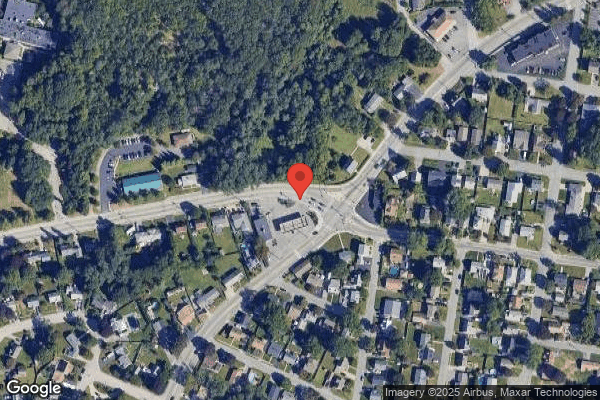

125 Scituate Avenue, Cranston, RI 02920 (401) 944-8500
For profit - Corporation 156 Beds Independent Data: November 2025 3 Immediate Jeopardy citations
Trust Grade
35/100
#12 of 72 in RI
Last Inspection: September 2024

Within standard 12-15 month inspection cycle. Federal law requires annual inspections.

Overview

Cedar Crest Nursing Centre Inc has a Trust Grade of F, which indicates significant concerns about the quality of care provided. They rank #12 out of 72 nursing homes in Rhode Island, placing them in the top half of facilities in the state, while ranking #6 out of 41 in Providence County, meaning only five local options are better. The facility is improving; issues decreased from 11 in 2023 to 9 in 2024. Staffing is a strong point, with a 5/5 star rating and a turnover rate of 30%, well below the state average, suggesting that staff are experienced and familiar with the residents. However, there have been critical incidents where the facility failed to develop proper care plans for residents and did not prevent accidents, leading to injuries such as burns from a radiator. Overall, while there are strengths in staffing, the concerning Trust Grade and critical incidents highlight significant areas for improvement.

Trust Score
F
35/100
In Rhode Island
#12/72
Top 16%
Safety Record
High Risk
Review needed
Inspections
Getting Better
11 → 9 violations
Staff Stability
✓ Good
30% annual turnover. Excellent stability, 18 points below Rhode Island's 48% average. Staff who stay learn residents' needs.
Penalties
✓ Good
$14,433 in fines. Lower than most Rhode Island facilities. Relatively clean record.
Skilled Nurses
✓ Good
Each resident gets 44 minutes of Registered Nurse (RN) attention daily — more than average for Rhode Island. RNs are trained to catch health problems early.
Violations
⚠ Watch
27 deficiencies on record. Higher than average. Multiple issues found across inspections.
★★★★☆
4.0
Overall Rating
★★★★★
5.0
Staff Levels
★★★☆☆
3.0
Care Quality
★★★☆☆
3.0
Inspection Score
Stable
2023: 11 issues
2024: 9 issues

The Good

  • 5-Star Staffing Rating · Excellent nurse staffing levels
  • Low Staff Turnover (30%) · Staff stability means consistent care
  • Full Sprinkler Coverage · Fire safety systems throughout facility
  • No fines on record
  • Staff turnover is low (30%)

    18 points below Rhode Island average of 48%

Facility shows strength in staffing levels, staff retention, fire safety.

The Bad

Federal Fines: $14,433

Below median ($33,413)

Minor penalties assessed

The Ugly 27 deficiencies on record

3 life-threatening
Sept 2024 6 deficiencies
CONCERN (D)

Potential for Harm - no one hurt, but risky conditions existed

Pharmacy Services (Tag F0755)

Could have caused harm · This affected 1 resident

Based on record review and staff interview, it has been determined that the facility failed to provide pharmaceutical services, including procedures that assure the administration of all drugs to meet...

Read full inspector narrative →
Based on record review and staff interview, it has been determined that the facility failed to provide pharmaceutical services, including procedures that assure the administration of all drugs to meet the needs of each resident, relative to a diuretic (a medication used to treat fluid retention) medication for 1 of 1 resident reviewed, Resident ID #95. Findings are as follows: Record review revealed Resident ID #95 was re-admitted to the facility in March of 2024 with diagnoses including, but not limited to, acute on chronic congestive heart failure (a syndrome that results in fluid buildup in the lungs, abdomen, feet, and arms) and chronic kidney disease (mild to moderate damage to the kidneys with symptoms that may include fluid retention). Record review revealed a physician's order dated 6/20/2024 for furosemide (a diuretic medication) 40 milligram (mg) twice a day. Record review of the August 2024 Medication Administration Record revealed the above-mentioned medication was refused on the following dates and times: -8/1- PM dose -8/3- PM dose -8/4- PM dose -8/5- PM dose -8/6- PM dose -8/7- PM dose -8/8- PM dose -8/9- AM and PM dose -8/10- PM dose -8/12- PM dose -8/13- PM dose -8/14- PM dose -8/16- PM dose -8/17- PM dose -8/18- PM dose -8/19- PM dose -8/20- PM dose -8/21- PM dose -8/22- AM dose -8/23- AM dose -8/24- AM and PM dose -8/25- PM dose -8/26- PM dose Record review of the MD [Medical Doctor] Recommendation form dated 8/27/2024 authored by the Pharmacy Consultant revealed a Medication Regimen Review was completed and failed to reveal evidence that the above-mentioned refusals were identified by the pharmacist. During a surveyor interview on 9/19/2024 at approximately 2:45 PM with the Director of Nursing Services (DNS), she was unable to provide evidence the above-mentioned medication refusals were identified during the pharmacist medication review on 8/27/2024.
CONCERN (D) 📢 Someone Reported This

A family member, employee, or ombudsman was alarmed enough to file a formal complaint

Potential for Harm - no one hurt, but risky conditions existed

Deficiency F0761 (Tag F0761)

Could have caused harm · This affected 1 resident

**NOTE- TERMS IN BRACKETS HAVE BEEN EDITED TO PROTECT CONFIDENTIALITY** Based on surveyor observation and staff interview, it has been determined that the facility failed to store drugs and biological...

Read full inspector narrative →
**NOTE- TERMS IN BRACKETS HAVE BEEN EDITED TO PROTECT CONFIDENTIALITY** Based on surveyor observation and staff interview, it has been determined that the facility failed to store drugs and biologicals in accordance with currently accepted professional principles relative to 1 of 1 resident observed with medications at the bedside, Resident ID #57. Findings are as follows: Review of the facility's policy titled Medication Storage dated January 2024 which states in part, .Procedures 3. In order to limit access to prescription medications, only licensed nurses, pharmacy staff, and those lawfully authorized to administer medications (such as medication aides) are allowed access to medication .medication supplies should remain locked when not in use or attended by persons with authorized access . Record review revealed Resident ID #57 was admitted to the facility in March of 2023 with diagnoses including, but are not limited to, vascular dementia and recurrent depressive disorder. Record review of a Minimum Data Set (MDS) assessment dated [DATE] revealed a Brief Interview for Mental Status score of 4 of 15, indicating severe cognitive impairment. During a continuous surveyor observation on 9/17/2024 from 9:24 AM to 9:37 AM of Resident ID #57's bedside table, a plastic medication cup containing 4 tablets that were unattended and left on the resident's bedside table while the resident was asleep was revealed. During a surveyor interview on 9/17/2024 at approximately 9:38 AM with Licensed Practical Nurse, Staff F, she acknowledged the medications were left unattended on the resident's bedside table and should not have been. During a surveyor interview on 9/19/2024 at 9:56 AM with the Director of Nursing Services (DNS), she indicated that she would not expect medications to be left unattended at the resident's bedside. Additionally, the DNS indicated that staff administering medications are to remain with the resident until all medications are administered.
CONCERN (D)

Potential for Harm - no one hurt, but risky conditions existed

Deficiency F0805 (Tag F0805)

Could have caused harm · This affected 1 resident

**NOTE- TERMS IN BRACKETS HAVE BEEN EDITED TO PROTECT CONFIDENTIALITY** Based on surveyor observation, record review, and staff interview, it has been determined that the facility failed to provide an...

Read full inspector narrative →
**NOTE- TERMS IN BRACKETS HAVE BEEN EDITED TO PROTECT CONFIDENTIALITY** Based on surveyor observation, record review, and staff interview, it has been determined that the facility failed to provide and prepare food in a form designed to meet individual needs for 2 of 2 residents reviewed with a pureed diet, Resident ID #s 1 and 71. Findings are as follows: Record review revealed the facility is utilizing the Becky [NAME], Diet and Nutrition Care Manual, Simplified Edition. Additional record review of the Diet and Nutrition Care Manual revealed .IDDSI [International Dysphagia Diet Standardization Initiative, a national guideline for texture modified diets] Level 4: Pureed Diet .All foods are pureed .eliminating the chewing phase. Further review of the manual states in part, Protein Foods (i.e .eggs .) Pureed consistency foods only .Sample Daily Meal Plan .Level 4: Pureed Diet .Breakfast .1 serving Pureed Egg . 1. Record review revealed Resident ID #1 was admitted to the facility in March of 2021 with diagnoses including, but not limited to, severe vascular dementia and dysphagia, oropharyngeal phase (difficulty with passing food from the mouth to the esophagus during swallowing). Record review revealed a physician's diet order dated 5/5/2023 for House .Pureed. A surveyor observation of the breakfast meal on 9/18/2024 at 8:42 AM revealed s/he received his/her breakfast meal including scrambled eggs, which were not pureed. Record review of his/her diet ticket on the tray stated in part, .House, Puree .scrambled eggs . 2. Record review revealed Resident ID #71 was re-admitted to the facility in October of 2020 with a diagnosis including, but not limited to, Alzheimer's Disease. Record review revealed a physician's diet order dated 5/29/2024 for House .Pureed. During a surveyor observation of the breakfast meal on 9/18/2024 at 8:44 AM revealed the resident received his/her breakfast meal, including scrambled eggs, which were not pureed. Record review of his/her diet ticket on the tray states in part .House, Puree .scrambled eggs . During a surveyor interview immediately following the above observations with Registered Nurse, Staff G, she indicated that the facility considers scrambled eggs as a pureed food. During a surveyor interview on 9/18/2024 at 9:20 AM with Nursing Assistant, Staff H, she revealed that both residents consumed 100% of their breakfast meal. During a surveyor interview on 9/18/2024 at approximately 9:30 AM with the Food Service Director, she acknowledged that the facility does serve scrambled eggs for the residents with pureed diets. During a surveyor interview on 9/18/2024 at approximately 2:30 PM with the Registered Dietitian, Staff I, she revealed the diet manual is used to create their menus and for a reference for mechanically altered diets relative to what a resident can or cannot be served. Staff I further revealed that it has been the facility's practice to serve scrambled eggs to residents with pureed diet orders. Additionally, she indicated that an addendum to the manual should have been created to include scrambled eggs for pureed diets though she was unable to provide evidence that an addendum was created.
CONCERN (D)

Potential for Harm - no one hurt, but risky conditions existed

Infection Control (Tag F0880)

Could have caused harm · This affected 1 resident

Based on surveyor observation, record review, and staff interview, it has been determined that the facility failed to maintain Enhanced Barrier Precautions (EBP; an infection control intervention desi...

Read full inspector narrative →
Based on surveyor observation, record review, and staff interview, it has been determined that the facility failed to maintain Enhanced Barrier Precautions (EBP; an infection control intervention designed to reduce transmission of multidrug-resistant organisms in nursing homes) for 1 of 2 residents reviewed with EBP related to Extended-Spectrum Beta-Lactamase (ESBL, an enzyme produced by some bacteria that can make them resistant to certain antibiotics) in the urine, Resident ID #19. Additionally, the facility failed to maintain an infection prevention and control program to help prevent the transmission of communicable diseases and infections relative to 1 of 1 resident reviewed for wound care, Resident ID #27. 1. Review of the Center for Disease Control and Prevention document titled Implementation of Personal Protective Equipment (PPE) Use in Nursing Homes to Prevent Spread of Multidrug-Resistant Organisms (MDROs) Last Reviewed: August 1, 2023, states in part, Enhanced Barrier Precautions expand the use of PPE and refer to the use of gown and gloves during high-contact resident care activities that provide opportunities for transfer of MDROs to staff hands and clothing .MDROs may be indirectly transferred from resident-to-resident during these high-contact care activities .The use of gown and gloves for high-contact resident care activities is indicated, when Contact Precautions do not otherwise apply, for nursing home residents .with MDRO infection or colonization. Examples of high-contact resident care activities requiring gown and glove use for Enhanced Barrier Precautions include .Transferring . Record review revealed Resident ID #19 was admitted to the facility in October of 2022 with a diagnosis including, but not limited to, urinary tract infection. Record review of a physician's order dated 9/15/2024 revealed an order for EBP relative to ESBL in the urine. Surveyor observation of signage posted on the resident's door on 9/18/2024 at approximately 9:38 AM revealed in part, Enhanced Barrier Precautions .Providers and Staff Must Also: Wear gloves and a gown for the following High-Contact Resident Care Activities .Transferring . During a surveyor observation on 9/18/2024 at 9:40 AM, Nursing Assistant (NA), Staff J, was observed in the resident's room transferring the resident to a scale to obtain his/her weight without wearing a gown. During a surveyor interview on 9/18/2024 at 9:50 AM with Staff J, she acknowledged that she failed to wear a gown while assisting the resident with a transfer to the scale to obtain his/her weight. During a surveyor interview on 9/18/2024 at 1:03 PM with the Assistant Director of Nursing and Infection Preventionist, she acknowledged the resident is on EBP and would expect the staff to wear a gown when transferring the resident, as required. 2. According to Infection Control Assessment and Response (ICAR) Tool for General Infection Prevention and Control (IPC) Across Settings .Wound Care Facilitator Guide from the Centers for Disease Control and Prevention last revised on 1/27/2023, states in part, .Maintain separation between clean and soiled equipment to prevent cross contamination .Any unused disposable supplies that enter the patient/resident's care area should remain dedicated to that patient/resident or be discarded. They should not be returned to the clean supply area. If supplies are dedicated to an individual patient/resident, they should be properly labeled and stored in a manner to prevent cross-contamination or use on another patient/resident (e.g., in a designated cabinet in the patient/resident's room) .Containers entering patient/resident care areas should be dedicated for single-patient /resident use or discarded after use . Record review revealed that Resident ID #27 was re-admitted to the facility in August of 2024 with diagnoses including, but not limited to, acquired partial absence of right hand second digit and history of gangrene (death of body tissue due to lack of blood flow or a serious bacterial infection) of the right hand, second digit. Record review revealed a physician's order dated 7/10/2024 to cleanse the lateral right lower extremity and right shin stasis ulcer (open wound around the ankle or leg) with normal saline followed by Santyl (topical enzyme medication to remove dead tissue), calcium alginate (highly absorbent wound dressing), cover with absorbent dressing, rolled gauze, and elastic tubular bandage. During a surveyor observation of the resident's wound care on 9/18/2024 at 10:25 AM revealed, Registered Nurse, Staff B, was observed to cut the resident's soiled dressing from his/her stasis ulcer wound with bandage scissors and failed to clean the scissors, prior to cutting the calcium alginate. She then placed the remaining portion of the calcium alginate back into the opened packaging. Additionally, she was observed measuring the wound with a paper wound measurement strip which was directly in contact with the wound. At the completion of the wound care, Staff B placed the used wound measurement strip onto the treatment cart and placed the package of calcium alginate into the treatment cart for multi-resident use. During a surveyor interview on 9/18/2024 immediately following the above surveyor observation and on 9/19/2024 at 9:04 AM, Staff B acknowledged the above-mentioned observations. During a surveyor interview on 9/19/2024 at approximately 10:00 AM, with the Director of Nursing Services, she revealed that she would have expected Staff B to clean the scissors after cutting a soiled dressing, designate the calcium alginate to Resident ID #27 and not return it to the multiuse section of the treatment cart. Additionally, she would have expected the wound measurement strips to have been discarded after use.
CONCERN (E)

Potential for Harm - no one hurt, but risky conditions existed

Deficiency F0658 (Tag F0658)

Could have caused harm · This affected multiple residents

**NOTE- TERMS IN BRACKETS HAVE BEEN EDITED TO PROTECT CONFIDENTIALITY** Based on surveyor observation, record review, and staff interview, it has been determined that the facility failed to ensure tha...

Read full inspector narrative →
**NOTE- TERMS IN BRACKETS HAVE BEEN EDITED TO PROTECT CONFIDENTIALITY** Based on surveyor observation, record review, and staff interview, it has been determined that the facility failed to ensure that residents receive treatment and care in accordance with professional standards of practice relative to following physician's orders for 1 of 1 resident reviewed for edema, Resident ID #95 and 1 of 1 resident reviewed for aspiration precautions, Resident ID #242. Findings are as follows: According to Mosby's 4th Edition, Fundamentals of Nursing page 314, which states in part, The physician is responsible for directing medical treatment. Nurses are obligated to follow physician's orders unless they believe the orders are in error or would harm the clients. 1. Review of the facility policy titled Medication Administration General Guidelines which states in part, If a dose of a regularly scheduled medication is .refused .An explanatory note is entered .If two consecutive doses of a vital medication are withheld or refused, the physician is notified . Record review revealed Resident ID #95 was re-admitted to the facility in March of 2024 with diagnoses including, but not limited to, acute on chronic congestive heart failure (a syndrome that results in fluid buildup in the lungs, abdomen, feet, and arms) and chronic kidney disease (mild to moderate damage to the kidneys with symptoms that may include fluid retention). Record review revealed a physician's order dated 6/20/2024 for furosemide (a medication used to treat fluid retention) 40 mg (milligrams) twice a day. Record review of the August and September 2024 Medication Administration Records revealed the above medication was refused on the following dates and times: -8/1- PM dose -8/3- PM dose -8/4- PM dose -8/5- PM dose -8/6- PM dose -8/7- PM dose -8/8- PM dose -8/9- AM and PM dose -8/10- PM dose -8/12- PM dose -8/13- PM dose -8/14- PM dose -8/16- PM dose -8/17- PM dose -8/18- PM dose -8/19- PM dose -8/20- PM dose -8/21- PM dose -8/22- AM dose -8/23- AM dose -8/24- AM and PM dose -8/25- PM dose -8/26- PM dose -8/27- AM and PM dose -8/28- PM dose -8/29- PM dose -8/30- AM and PM dose -8/31- PM dose -9/2- PM dose -9/3- PM dose -9/6- AM dose -9/7- PM dose -9/9- PM dose -9/10- PM dose -9/13- PM dose -9/16- PM dose -9/17- PM dose -9/18- PM dose Record review failed to reveal evidence that the physician was notified that the furosemide was refused on the above-mentioned dates. During a surveyor interview on 9/19/2024 at 9:43 AM with Medication Aide, Staff A, she acknowledged that the resident frequently refuses the above-mentioned medication. She indicated that she typically writes the resident's refusal of the medication on a piece of paper and gives it to the nurse. During a surveyor interview on 9/19/2024 at 9:46 AM with Registered Nurse (RN), Staff B, she indicated that she was unaware that the resident had refused the medication on the above-mentioned dates. Additionally, she was unable to provide evidence that the physician was notified of the medication refusals mentioned above. During a surveyor interview on 9/19/2024 at 12:22 PM with the Director of Nursing Services (DNS), she indicated that she would expect the physician to be notified if a medication is refused more than a couple of times, per the facility policy. 2. Record review revealed Resident ID #242 was readmitted to the facility in September of 2024 with diagnoses including, but not limited to, pneumonitis due to inhalation of food (a lung infection that occurs when food or liquid is inhaled into the lungs instead of being swallowed) and dementia. Record review of a physician's order dated 9/16/2024 states in part, Aspiration Precaution [a set of guidelines set to prevent food or liquid from entering the airway], NO STRAWS . Record review of an admission Minimum Data Set (MDS) assessment dated [DATE] revealed a Brief Interview for Mental Status score of 8 out of 15, indicating moderate cognitive impairment. During surveyor observations, on the following dates and times the resident was observed using a straw to drink water from a Styrofoam cup, -9/18/2024 at 11:05 AM, 11:14 AM, and 11:29 AM -9/19/2024 at 8:53 AM and at 9:05 AM During a surveyor observation and interview on 9/19/2024 at 9:24 AM with Nursing Assistants, Staff C and Staff D, they acknowledged that they had provided the resident with the straw and were unaware of the above-mentioned order. During a subsequent observation and interview on 9/19/2024 at 9:24 AM with Licensed Practical Nurse, Staff E, he acknowledged that the resident had a straw in his/her cup of water and has an order to not use a straw related to his/her diagnosis of aspiration pneumonia. During a surveyor interview on 9/19/2024 at 9:53 AM with the DNS, she acknowledged that the resident should not have had a straw, as ordered, related to his/her recent aspiration pneumonia.
CONCERN (F)

Potential for Harm - no one hurt, but risky conditions existed

Food Safety (Tag F0812)

Could have caused harm · This affected most or all residents

**NOTE- TERMS IN BRACKETS HAVE BEEN EDITED TO PROTECT CONFIDENTIALITY** Based on surveyor observation, record review, and staff interview, it has been determined that the facility failed to ensure tha...

Read full inspector narrative →
**NOTE- TERMS IN BRACKETS HAVE BEEN EDITED TO PROTECT CONFIDENTIALITY** Based on surveyor observation, record review, and staff interview, it has been determined that the facility failed to ensure that food is stored, distributed, and served in accordance with professional standards for food safety, relative to the main kitchen and 1 of 1 unit kitchenettes reviewed. Findings are as follows: 1. The Rhode Island Food Code 2018 Edition 2-402.11 states in part, .food employees shall wear hair restraints, beard restraints that are designed and worn to effectively keep their hair from contacting exposed food . During a surveyor observation on 9/16/2024 from 8:50 AM through 9:30 AM and at 11:20 AM of the main kitchen revealed the following: -Dietary Cook, Staff K and Dietary Aide, Staff L, with facial hair and not wearing a hair/beard restraint. -Dietary Cook, Staff K preparing a meat mixture for stuffed peppers not wearing a hair/beard restraint -Dietary Aide, Staff M with facial hair and not wearing a beard/hair restraint -Dietary Staff, Staff N with facial hair and not wearing a hair/beard restraint During a surveyor observation of the lunch meal on 9/16/2024 at approximately 12:00 PM in the rotunda dining room, Staff M and Staff N were serving in the lunch meal service without wearing a beard/hair restraint. During a surveyor observation on 9/16/2024 at approximately 2:20 PM revealed Dietary Aide, Staff O, in the dish room with facial hair and not wearing a beard/hair restraint. 2. The Rhode Island Food Code 2018 Edition 4-601.11 states in part, .Non food contact surfaces shall be kept free of an accumulation of dirt, dust, food residue and other debris . During a surveyor observation of the main kitchen on 9/16/2024 between 8:50 AM and 9:30 AM revealed the following: -corners of the convection oven with a significant amount of grease and grime buildup -a 3 tiered utility cart, that holds dirty dishes with a significant amount of black substance on the top shelf and sides with significant amounts of brown colored staining -1 floor fan adjacent to the dish machine, with a significant amount of dust accumulation on the grate and blades -North 1 unit kitchenette refrigerator with a purple colored sticky substance on the shelf of the door and brown spills on the back of refrigerator -North 1 unit kitchenette freezer with a heavy accumulation of ice 3. The [NAME] Food Code 2018 Edition 4-501.12 states in part, .Surfaces that are subject to scratching and scoring shall be .discarded if they can no longer be effectively cleaned and sanitized . During a surveyor observation on 9/16/2024 between 8:50 AM and 9:30 AM, five cutting boards, that were stored under a worktable had significant scoring and scratches. During a surveyor interview on 9/16/2024 at approximately 3:00 PM with the Food Service Director, she was unable to provide evidence the dietary staff were beard/hair restraints and that the convection oven, floor fan, kitchenette refrigerator/freezer, and utility cart had been cleaned. Additionally, she was unable to provide evidence of cutting boards without scoring and scratching.
Aug 2024 1 deficiency
CONCERN (D) 📢 Someone Reported This

A family member, employee, or ombudsman was alarmed enough to file a formal complaint

Potential for Harm - no one hurt, but risky conditions existed

Deficiency F0761 (Tag F0761)

Could have caused harm · This affected 1 resident

Based on record review and staff interview, it has been determined that the facility failed to store drugs and biological's in accordance with currently accepted professional principles for 1 of 1 med...

Read full inspector narrative →
Based on record review and staff interview, it has been determined that the facility failed to store drugs and biological's in accordance with currently accepted professional principles for 1 of 1 medication cart reviewed. Findings are as follows: Record review of a facility reported incident submitted to the Rhode Island Department of Health on 7/19/2024 revealed that Resident ID #1 was unable to receive his/her 10:00 PM dose of Lyrica (a controlled medication used to treat pain) 25 milligrams (mg) on July 18, 2024, because the facility was unable to locate the 16 pills that were documented as available in the narcotic book. Record review of a facility policy titled, Controlled Medication storage revealed in part, Medications included in the Drug Enforcement Administration (DEA) classification as controlled substances are subject to special handling, storage, disposal, and record keeping in the nursing care center in accordance with federal, state, and other applicable laws and regulations .Only authorized licensed nursing and pharmacy personnel have access to controlled medication. The medication nurse on duty maintains possession of the key to controlled medication storage areas .At each shift change or when keys are surrendered, a physical inventory of all Schedule II, including refrigerated items, is conducted by two licensed nurses or per state regulation and is documented on the controlled substances accountability record or verification of controlled substances count report. The nursing care center may elect to count all controlled medications at shift change. Record review revealed Resident ID #1 was admitted to the facility in August of 2023, with diagnoses including, but not limited to, rheumatoid arthritis severe with contractures (permanent shortening and tightening of muscle fibers), age related osteoporosis (condition that weakens bones) without current pathological fracture, wedge compression fracture (occurs when one side of a vertebra collapses, creating a wedge shape) of T11-T12 vertebra, and wedge compression fracture of second lumbar vertebra. Record review revealed a physician's order for Lyrica 25 mg three times daily at 6:00 AM, 2:00 PM, and 10:00 PM, for pain management. Record review of the narcotic book for Resident ID #1 revealed that after his/her 2:00 PM dose was administered on 7/18/2024 s/he had 16 Lyrica 25 mg pills remaining. Writing on the bottom of the narcotic book page, written by the Director of Nursing Services (DNS) stated 7/18/24 removed from count. During a surveyor interview on 8/5/2024 at 12:48 PM with Licensed Practical Nurse, Staff A, she revealed that she gave the resident the scheduled Lyrica at 2:00 PM. She further revealed that at change of shift she completed the narcotic count with the oncoming shift nurse. She revealed that during count she read the resident names and the number of pills they should have, and the oncoming nurse checked the pill card to ensure the number of pills matched. She said at no time during the count was she notified of a missing card. She stated after the count was completed, she signed the narcotic book, gave the oncoming nurse the keys to the medication cart, and left for the day. During a surveyor interview on 8/5/2024 at approximately 2:30 PM with Licensed Practical Nurse, Staff B, she revealed that during the narcotic count at change of shift, the day nurse never said Resident ID #1's name and so the Lyrica was not counted. Additionally, she stated she didn't realize that the resident's Lyrica was missing until later in the shift. During a surveyor interview on 8/5/2024 at 2:22 PM, with the DNS, she revealed that the Lyrica may have been thrown away by accident. She states that she documented 7/18/24 removed from count in the narcotic book, because the 16 pills were not found. Additionally, she was unable to provide evidence that the Lyrica was stored in accordance with currently accepted professional principles. Upon further interview with the DNS, she indicated that after the above incident the following interventions were put into place at the facility: a) Both nurses that were involved in the narcotic count on 7/18/2024 were provided one on one education regarding the narcotic count procedure. b) An in-service was held for all nurses to educate them on the proper narcotic count procedures. c) Audits were conducted, and will continue to be conducted for 3 months, of the narcotic count procedure. d) Results of the audits will be discussed at Quality Assurance Performance Improvement meetings.
Mar 2024 2 deficiencies 1 IJ
CRITICAL (J) 📢 Someone Reported This

A family member, employee, or ombudsman was alarmed enough to file a formal complaint

Immediate Jeopardy (IJ) - the most serious Medicare violation

Accident Prevention (Tag F0689)

Someone could have died · This affected 1 resident

**NOTE- TERMS IN BRACKETS HAVE BEEN EDITED TO PROTECT CONFIDENTIALITY** Based on surveyor observations, record review, and staff interview it has been determined that the facility failed to ensure tha...

Read full inspector narrative →
**NOTE- TERMS IN BRACKETS HAVE BEEN EDITED TO PROTECT CONFIDENTIALITY** Based on surveyor observations, record review, and staff interview it has been determined that the facility failed to ensure that the residents' environment remains as free from accident hazards as possible, for 1 of 1 resident reviewed who sustained a burn from a radiator, Resident ID #1. Findings are as follows: Review of a facility reported complaint submitted to the Rhode Island Department of Health on [DATE] revealed Resident ID #1 was found with half of his/her body out of the bed with his/her legs against the radiator. Further review revealed the resident sustained burns on his/her knees and legs. Review of the Brava Stelpro Electric Baseboard heating system owner's manual revealed in part, Important Instructions .This heater is hot when in use. To avoid burns, do not let bare skin touch hot surfaces . Record review revealed the resident was admitted to the facility in July of 2021 with diagnoses including, but not limited to, dementia, vision loss of the left eye, anxiety, and a history of falling. Additionally, the record reveals that the resident is a centenarian (a person who is between 100 and [AGE] years of age). Review of the Quarterly Minimum Data Set Assessment (MDS) dated [DATE], revealed a Brief Interview for Mental Status Score of 5 out of 15, indicating his/her cognition was severely impaired. Further review revealed the resident is dependent on staff for transfers and suffers from impairments of mobility with his/her upper and lower extremities. Record review of a progress note dated [DATE] at 5:40 AM revealed the resident was found with the bottom half of his/her body by the heating radiator with burns noted to both legs. Record review of a Wound Management Detail Report dated [DATE] revealed the resident sustained the following 3 burns with Partial thickness: redness, blistered, moist, painful: - Left knee measuring 20 centimeters (cm) in length by 16 cm in width - Right knee measuring 25 cm in length by 5 cm in width - Right ankle measuring 1.8 cm in length by 3 cm in width Record review revealed a physician's order dated [DATE] for Silvadene cream 1% (an antibacterial wound ointment typically used on second and third degree burns) to be applied to the wounds twice a day. Further review revealed the following physician's orders dated [DATE]: -Morphine Concentrate (a narcotic used to reduce severe pain) 100 mg/5 ml (milligrams per milliliter), give 0.25 ml orally every 4 hours and premedicate 30 minutes prior to dressing changes and every 1 hour as needed for pain. Record review revealed the resident received the above medication as ordered and several times as needed for severe pain. Record review revealed the resident was admitted to hospice care on [DATE]. Further review revealed the resident had not required the use of morphine for severe pain prior to the incident resulting in multiple burns to his/her lower extremities. Additional review revealed the resident expired at the facility on [DATE]. Surveyor observations of radiators in the facility on [DATE] revealed that they were very hot to touch and were painful if touched for more than a couple of seconds. Temperatures taken of the exposed top portion of the radiators on [DATE] at approximately 10:30 AM in the presence of the Environmental Director and the Administrator, revealed temperature readings of 133.5-153 degrees Fahrenheit. These temperatures were obtained using a laser thermometer provided by the facility. During a surveyor interview on [DATE] at approximately 10:00 AM with the facility's Environmental Director, he revealed that the heat in the facility has worked like this since he has been there, approximately 34 years. Additionally, he revealed that the electric radiators are used to heat most of the facility and resident rooms. During a surveyor interview on [DATE] at approximately 10:30 AM with the Administrator, he was unable to provide evidence of any safety measures in place to prevent residents from being burned by the radiators throughout most of the facility. Additionally, he was unable to provide evidence that the facility ensured the residents' environment remains as free from accident hazards as possible.
CONCERN (D) 📢 Someone Reported This

A family member, employee, or ombudsman was alarmed enough to file a formal complaint

Potential for Harm - no one hurt, but risky conditions existed

Deficiency F0726 (Tag F0726)

Could have caused harm · This affected 1 resident

**NOTE- TERMS IN BRACKETS HAVE BEEN EDITED TO PROTECT CONFIDENTIALITY** Based on record review and staff interview, it has been determined that the facility failed to ensure that licensed nurses have ...

Read full inspector narrative →
**NOTE- TERMS IN BRACKETS HAVE BEEN EDITED TO PROTECT CONFIDENTIALITY** Based on record review and staff interview, it has been determined that the facility failed to ensure that licensed nurses have the specific skill sets necessary to care for residents' needs for 1 of 1 resident reviewed relative to the need for a non-rebreather oxygen mask, Resident ID #1. Findings are as follows: According to the ScienceDirect Journal article, titled Emergency Oxygen Administration, dated 2008, states in part, .Non-Rebreather Mask 1. The non-rebreather mask is the first choice when considering constant flow supplemental O2 [oxygen] in an acute medical emergency. It consists of a mask, reservoir bag, and two or three one-way valves, one separating the reservoir from the mask and the other one or two on the sides of the mask. Oxygen flows into the reservoir bag so that when the victim inhales, he or she inhales O2 from the reservoir. The one-way valves on the sides of the mask keep air from coming into the mask and diluting the O2. When the victim exhales, expired air goes out of the mask through the one or two valves on the face and is prevented from entering the reservoir .3. To use the mask, it is attached to the O2 supply at a flow rate of 10 to 15 L[liters]/minute . According to an article published by Osmosis from Elsevier titled, Non-Rebreather Mask, What Is It, When Is It Used, and More, states in part, .A non-rebreather mask requires a sufficient oxygen flow rate to ensure that the oxygen reservoir bag does not collapse when the individual inspires .Therefore, a flow rate of 12-15 liters per minute is generally recommended .The mask is connected to an oxygen tank via tubes .The minimal flow rate of non-rebreather masks is typically 12 liters per minute to prevent collapse of the bag upon inhalation . Record review revealed the resident was admitted to the facility in July of 2021 with diagnoses including, but not limited to, dementia, anxiety, a history of falling, and pneumonia. Additionally, the record reveals that the resident is a centenarian (a person who is between 100 and [AGE] years of age). Record review revealed the resident was admitted to hospice care on [DATE] for end of life care. Record review revealed the following progress notes: - [DATE] 10:13 PM- .assessed resident and POX [pulse oximetry- a measurement of blood oxygen level] 47% [normal range 95-100%] R [respiratory rate] 22 [normal 16-20]. Oxygen applied via non-rebreather mask at 5l [liters]; POX raised to 85% . - [DATE] 1:08 AM- .noted to have no pulse or b/p [blood pressure]. Resident was pronounced & had expired @ 12:25 A.M During a surveyor interview on [DATE] at 9:10 AM with Registered Nurse (RN), Staff A, she indicated that she was unsure of the appropriate oxygen liter flow required for a non-rebreather mask, however, she thought it might be 5-6 liters. During a surveyor interview on [DATE] at 9:13 AM with RN and Admissions Director, Staff B, she revealed that she oversees the units. She further revealed that she would expect a non-rebreather mask to be applied to a resident with a 5L oxygen flow. During a surveyor interview on [DATE] at 9:22 AM with the Director of Nursing Services, she indicated that she would expect a non-rebreather mask to be applied to a resident with an 8-10 liter flow. Additionally, she acknowledged that staff had not been educated on the use of non-rebreathers and was unable to provide evidence that licensed nursing staff have the appropriate competencies and skill sets needed to care for residents who require oxygen non-rebreather masks.
Oct 2023 10 deficiencies
CONCERN (D)

Potential for Harm - no one hurt, but risky conditions existed

Deficiency F0604 (Tag F0604)

Could have caused harm · This affected 1 resident

**NOTE- TERMS IN BRACKETS HAVE BEEN EDITED TO PROTECT CONFIDENTIALITY** Based on surveyor observation, record review, and staff interview, it has been determined that the facility failed to ensure res...

Read full inspector narrative →
**NOTE- TERMS IN BRACKETS HAVE BEEN EDITED TO PROTECT CONFIDENTIALITY** Based on surveyor observation, record review, and staff interview, it has been determined that the facility failed to ensure residents have the right to be free from any physical restraint not required to treat the resident's medical symptoms for 1 of 2 residents reviewed, Resident ID #41. Findings are as follows: According to the State Operations Manual Appendix PP - Guidance to Surveyors for Long Term Care Facilities last revised on 2/03/2023 revealed in part, As described under Definitions, a physical restraint is any manual method, physical or mechanical device/equipment or material that limits a resident's freedom of movement and cannot be removed by the resident in the same manner as it was applied by staff. The resident's physical condition and his/her cognitive status may be contributing factors in determining whether the resident has the ability to remove it. Examples of facility practices that meet the definition of a physical restraint include, but are not limited to: .Placing a resident in a chair, such as a beanbag or recliner, that prevents a resident from rising independently .Psychosocial impact related to the use of physical restraints may include one or more of the following: Agitation, aggression, anxiety, or development of delirium .Panic, feeling threatened or fearful . Record review revealed the resident was admitted to the facility in May of 2023 with diagnoses that include, but are not limited to, dementia and anxiety disorder. Review of a quarterly Minimum Data Set assessment dated [DATE] revealed the resident is ambulatory and utilizes a walker. The assessment further revealed that the resident is able to stabilize him/herself without staff assistance when walking. Review of a document titled Point of Care History from 10/1/2023 through 10/5/2023 revealed documentation that indicated the resident ambulated in the corridor independently with limited assistance. Review of a physician's order dated 6/23/2023 transcribed into the record by the Director of Nursing Services (DNS), revealed the resident utilizes a recliner chair (Geri Chair) with gripper pad when out of bed without legs elevated. Review of a Therapy Screen dated 6/27/2023 following a fall, revealed Continue current intervention of geri chair to promote comfort [with] positional changes and non-skid dycem [anti-slip mats and pads that provide a secure surface and anchors items] to seat to prevent sliding or attempts at [independent] mobility. Review of the resident's progress notes revealed the following entries: -7/16/2023 at 8:18 PM In recliner in supervised activity tv area early shift. 1:1 at times. Toileting, snacks,activities offered. 4pm Resident scooted to footrest of recliner and slid to floor on [his/her] butx [buttocks] as staff attempt to prevent fall . -8/01/2023 at 6:28 AM Resident very restless, agitated, weepy, yelling out and banging the table with hands, multiple attempts to jump out recliner. move [his/her] clothes, Non-stop talking, unable to redirect, prn [as needed] trazodone [medication that can be used to treat behavioral disturbances] . -8/06/2023 at 2:49 PM monthly summary .resident can be very restless/unable to sleep/weepy/yelling out/banging hands on table .[his/her] hs [bedtime] trazodone was increase to 75mg [milligrams] at hs. [s/he] had a fall on 7/16/23 and 7/23/23 with no injuries. [s/he] is [out of bed] daily to recliner . -8/11/2023 at 7:43 AM Resident extremely agitated, banging and pushing the table, yelling out, Wouldn't sit on the chair or stay in the recliner, 1:1 for a while, offered seafood salad that family brought eat well, and drink well, toileted, Prn [as needed] Trazodone given . -8/26/2023 at 6:40 AM Resident increase of restless this shift, banging recliner armchair, attempting to jump out chair, hitting/spitting, yelling out, extremely fearful easily startle when some come closed to [him/her], asking to stay away from [him/her]. 1:1, prn Risperdal [antipsychotic medication] with no effect, calm down around 4am. currently fast asleep at supervised area. -9/12/2023 at 10:45 PM resident noted to be attempting to jump out of recliner and ambulate on own. several attempts to re-direct, unsuccessful. prn Risperdal administered with pending effect. -9/18/2023 at 10:01 PM behavioral most of shift, difficult to redirect despite prn Risperdal admin. continuously ambulating/climbing out of [NAME] [sic] chair. out to nurses station for supervision. -9/26/2023 at 10:37 AM [ambulated] to dining room with staff denies any pain discomfort sitting talking watching tv with others. No behavioral issues at this time . During a surveyor interview with Registered Nurse (RN), Staff A, on 10/05/23 at 9:40 AM she revealed that the resident can ambulate but with assistance for safety. Surveyor observations on 10/5/2023 revealed the following: - 9:40 AM the resident was sitting in the common area next to a table in a Geri Chair with the footrest down with his/her feet resting on the floor. - 9:44 AM the resident stood up from the Geri Chair and started to furniture walk (the act of using furniture, walls, and anything else to help with balance while walking) around the table. - 9:45 AM Staff A then brought the resident back to the Geri Chair and reclined the resident back in the chair and raised the footrest by using the foot lever located on the back of the chair. The chair was reclined in a locked position and the resident was unable to reach the foot lever as it is located behind the chair. - 9:46 AM the resident was sitting up in the Geri Chair yelling with his/her feet still in a reclined position with his/her feet elevated. The resident was unable to reach the foot lever to release the chair as the lever is located behind the chair. - 9:47 AM the resident was scooting his/her body forward to the elevated footrest of the Geri Chair attempting to get out of the Geri Chair, Nursing Assistant (NA), Staff B, told the resident to sit back. - 9:58 AM the resident was scooting toward the elevated footrest of the Geri Chair attempting to get out of the chair and the housekeeper told him/her to sit back. - 10:04 AM the resident was sitting up swinging his/her legs off of the side of the reclined Geri Chair and attempting to stand up and the housekeeper told the resident to sit back in his/her seat. - 10:08 AM the resident was sitting on the elevated footrest of the reclined Geri Chair trying to get up and ambulate. - 10:09 AM the resident's feet were hanging off of the edge of the reclined Geri Chair attempting to stand up resulting in the resident pushing the Geri Chair back with his/her feet. - 10:10 AM NA, Staff C, was trying to help the resident sit back and lifted his/her legs onto the elevated footrest of the Geri Chair and encouraged the resident to sit back in his/her chair. During a surveyor interview on 10/5/2023 at 10:11 AM with the resident s/he was unable to comprehend the questions asked by the surveyor. During a surveyor interview on 10/5/2023 at 10:12 AM with Staff C, she revealed that the resident normally sits in a reclined Geri Chair with his/her feet elevated. During a surveyor interview on 10/5/2023 at 12:00 PM with the Director of Nursing Services, she revealed the resident can walk but that the use of the reclined Geri Chair is to prevent the resident from falling. Additionally, the DNS was unable to provide evidence that the facility kept Resident ID #41 free from physical restraints.
CONCERN (D)

Potential for Harm - no one hurt, but risky conditions existed

Deficiency F0657 (Tag F0657)

Could have caused harm · This affected 1 resident

Based on record review and staff interview, it has been determined that the facility failed to ensure that the comprehensive care plan was revised and updated after a hospital stay for 1 of 1 resident...

Read full inspector narrative →
Based on record review and staff interview, it has been determined that the facility failed to ensure that the comprehensive care plan was revised and updated after a hospital stay for 1 of 1 resident reviewed, Resident ID #45. Findings are as follows: Record review revealed the resident was readmitted to the facility in September 2023. S/he has diagnoses to include, but are not limited to, chronic obstructive pulmonary disease, acute kidney failure, and congestive heart failure. Review of the resident's medical record revealed that s/he was sent to the hospital following a fall on 9/18/2023 and returned to the facility on 9/26/2023. Review of a physician's order dated 9/27/2023 revealed a Hoyer lift (a mechanical lift used for lifting patients from the floor, bed or chair. The lift also can assist in other surface-to-surface patient transfers, such as moving from a bed to a bath or chair) was to be used for transfers three times a day. Review of a progress note dated 10/2/2023 revealed .On exam today [the resident] is physically weak d/t [due to] time spent in hospital bed. Hoyer for transfers . Review of the resident's care plan failed to reveal evidence of an update or revision for transfers as stated in the physician's order and progress note. During a surveyor interview on 10/3/2023 at 2:11 PM with Registered Nurse (RN), Staff D, she revealed that the resident was walking independently with his/her walker prior to his/her last hospitalization. She further indicated that staff are currently using a Hoyer lift to transfer the resident. Additionally, Staff D acknowledged that they failed to update the resident's care plan to reflect his/her present transfer status. During a surveyor interview on 10/4/2023 at approximately 2:00 PM with the Director of Nursing Services, she indicated that the resident's care plan should be updated after a 24 hour hospital stay. Additionally, she was unable to explain why the care plan was not updated before it was brought to the staff attention by the surveyor.
CONCERN (D)

Potential for Harm - no one hurt, but risky conditions existed

Deficiency F0679 (Tag F0679)

Could have caused harm · This affected 1 resident

**NOTE- TERMS IN BRACKETS HAVE BEEN EDITED TO PROTECT CONFIDENTIALITY** Based on surveyor observation, record review, and staff interview, it has been determined that the facility failed to provide an...

Read full inspector narrative →
**NOTE- TERMS IN BRACKETS HAVE BEEN EDITED TO PROTECT CONFIDENTIALITY** Based on surveyor observation, record review, and staff interview, it has been determined that the facility failed to provide an ongoing program to support a resident in their choice of activities designed to meet the interests of and support the well-being of each resident, based on the comprehensive assessment, care plan and preferences for 1 of 1 resident reviewed for activities, Resident ID #31. Findings are as follows: Record review of a document titled, Generations' Special Care Program, states in part, Generations, the Special Care Neighborhood offered by Cedar Crest Nursing Centre, exists to provide optimal care and services to individuals and their families confronting Alzheimer's disease and other dementia .the mission is to provide person-centered care and specializing programming for each resident within a safe, structured environment thereby enhancing quality of life .Activity Program: activity programming is designed to maximize independence while focusing on resident strengths and abilities .programs include one-on-one activities .group activities also provided to promote socialization and sense of belonging. Record review revealed the resident was admitted to the facility in December of 2018 with diagnoses including, but not limited to, Alzheimer's disease, cerebral infarction (stroke), aphasia (a language disorder that affects a person's ability to communicate), hemiplegia and hemiparesis (paralysis) of the right side, and depression. Review of a Minimum Data Set (MDS) assessment dated [DATE], revealed the resident is totally dependent on staff for all care needs. Additional record review revealed the resident is non-verbal, and has severely impaired cognition. Review of a care plan for Activities dated 5/31/2023, and last revised on 8/8/2023, states in part, potential for Activities deficit and social isolation .[resident] will receive in room sensory and social stimulation and attend activities when able .escort to activities on SCU [special care unit] for stimulation . Review of a Activity Department Quarterly Review progress note dated 8/7/2023, authored by Staff J, states in part, requires one on one stimulation .we will continue to provide any desired comfort measured activities and one on one stimulation . Surveyor observations on multiple occasions of group activities being conducted from 10/2/2023 through 10/5/2023, revealed the resident was not in attendance. Additionally, the resident was not observed to receive any in room visits with one on one stimulation by the activity staff as indicated in his/her care plan. Throughout the survey, the resident was observed to be in his/her room, sleeping in bed most of the time with the lights off and a radio on. However, the Nursing Assistant (NA) did get the resident out of bed on two days during the survey for approximately 1-2 hours. Of note, during those times the resident did not attend group activities as none were being offered during those times. During a surveyor interview on 10/3/2023 at approximately 10:09 AM with Registered Nurse, Staff A, she could not provide evidence that the resident had been involved in any group activities or that s/he received one-on-one visits during 10/2/2023 through 10/5/2023. During a surveyor interview on 10/5/2023 with NA, Staff K, she revealed that she has been caring for the resident since she began working at the facility approximately 1 year ago. She further revealed that the resident does not usually attend group activities. Additionally, she also was unable to provide evidence that the resident receives one-on-one visits, in room sensory and social stimulation, attends or that she has escorted the resident to activities as indicated in his/her care plan. During a surveyor interview on 10/04/2023 at 3:31 PM with the Staff J, he revealed the resident enjoys going to group activities that have music or live entertainment. Additionally, he was unable to provide evidence that the resident had participated in his/her preferred activities or had received in room sensory stimulation as indicated in the care plan. When questioned about activity staff providing the resident with in room sensory stimulation, he revealed the one-on-one visits are primarily the responsibility of the NAs.
CONCERN (D)

Potential for Harm - no one hurt, but risky conditions existed

Quality of Care (Tag F0684)

Could have caused harm · This affected 1 resident

**NOTE- TERMS IN BRACKETS HAVE BEEN EDITED TO PROTECT CONFIDENTIALITY** Based on surveyor observations, record review, resident and staff interview, it has been determined that the facility failed to ...

Read full inspector narrative →
**NOTE- TERMS IN BRACKETS HAVE BEEN EDITED TO PROTECT CONFIDENTIALITY** Based on surveyor observations, record review, resident and staff interview, it has been determined that the facility failed to ensure that a resident received treatment and care in accordance with professional standards of practice for 1 of 2 residents observed for assessments and documentation relative to wound care, Resident ID #395, and 1 of 1 resident reviewed for free floating of heels, Resident ID #45. Findings are as follows: 1. According to Wound Care Education Institute, 2020, Wound care documentation should be carried out weekly including type of wound, measurements, type of tissue, symptoms of infection, presence of drainage, wound edges, pain, and current treatment. According to the National Pressure Ulcer Advisory Panel, February 2007, a pressure ulcer is a localized injury to the skin and/or underlying tissue usually over a bony prominence, as a result of pressure, or in combination with shear and/or friction. Record review of a facility policy titled, Skin Care Protocol states in part, POLICY: [facility] will follow appropriate standards of care as they relate to residents' skin care; identification of those at risk, weekly skin checks, and appropriate interventions and documentation .7. Documentation: When a pressure ulcer does exist, there must be daily monitoring. Weekly Documentation of wound status shall include .With each dressing change or at least weekly, the following documentation must be present: Location and staging .Size, depth .Exudate [drainage] .pain .wound bed .description of wound edges and surrounding tissue . Record review revealed Resident ID #395 was readmitted to the facility in September of 2023 with a diagnosis including, but not limited to, pneumonia. Record review revealed a progress note dated 9/20/2023 at 10:45 PM that states in part, .Pt [patient] has no skin issue but multiple bruising to BUE [bilateral upper extremities], and a very small opening to [his/her] left upper back, about 0.5 x 0.5cm [centimeters] . Record review of a Weekly Body Check Assessment dated 9/21/2023 revealed that the resident had open areas and his/her left scapula (shoulder blade, bony prominence) had a red, dry area. Record review revealed a physician's order dated 9/20/2023 to cleanse the resident's back wound with normal saline and apply a dry protective dressing once a day. Additionally, the wound dressing order was still active as of 10/5/2023. Record review revealed the following progress notes relative to the resident's back wound: - 9/21/2023 at 2:14 PM the left scapula treatment was completed with no drainage noted. - 9/22/2023 at 2:14 PM the upper back treatment was completed as ordered and indicated the wound had a small amount of serosanguineous drainage (a type of wound drainage secreted by an open wound in response to tissue damage). - 9/25/2023 at 2:21 PM the upper back treatment was completed as ordered and indicated the wound had a small amount of serosanguineous drainage. - 9/27/2023 at 2:33 PM the back abrasion was noted with a scant amount of serosanguineous drainage. - 9/30/2023 at 2:44 PM the upper back area was noted with a scant amount of serosanguineous drainage. - 10/1/2023 at 1:14 PM the dressing to the back area was noted with a scant amount of serosanguineous drainage. - 10/2/2023 at 1:28 PM the dressing to the back wound was changed without any noted drainage. Record review failed to reveal evidence that the documentation of the resident's back wound included all of the following as per the standard of practice for wounds and was documented at least weekly: type of wound, measurements, type of tissue, symptoms of infection, presence of drainage, wound edges, pain, and current treatment. Record review of the Wound Management section of the Electronic Medical Record as of 10/5/2023 revealed that the resident had no active or healed wounds including, but not limited to, abrasions and pressure ulcers. During a surveyor interview on 10/5/2023 at 1:17 PM with the Director of Nursing Services (DNS), she revealed that the resident currently has an abrasion to his/her back. She further revealed that she is the wound nurse for the facility, and she does not always conduct weekly wound rounds unless the wound is worsening. Additionally, she indicated that she has not assessed the wound (therefore she would be unable to determine the wound type). Furthermore, she revealed that she does not measure wounds unless they are pressure. She was unable to provide evidence that the facility provided treatment and care in accordance with professional standards of practice relative to wound care. 2. Record review revealed Resident ID #45 was readmitted to the facility in September 2023 with diagnoses including, but not limited to, chronic obstructive pulmonary disease, acute kidney failure, and congestive heart failure. Record review of a quarterly Minimum Data Set assessment dated [DATE] revealed a Brief Interview for Mental Status score of 15 out of 15 indicating intact cognition. Record review of a care plan focus area initiated on 6/4/2021 revealed the resident is at risk for skin breakdown related to decreased mobility/function with an intervention including, but not limited to, encourage the resident to free float his/her heels in bed as able. Record review of a physician's order dated 9/26/2023 revealed skin prep to bilateral heels every shift. During multiple surveyor observations on following dates and times revealed the resident in bed with his/her feet resting directly on the mattress: - 10/2/2023 at 10:30 AM, 12:16 PM, 2:00 PM, 2:32 PM - 10/3/2023 at 8:45 AM, 10:00 AM, 11:15 AM, 12:01 PM, 2:00 PM, 2:34 PM - 10/4/2023 at 9:03 AM, 9:45 AM, 10:40 AM, 12:32 PM, 2:14 PM - 10/5/2023 at 9:00 AM, 9:40 AM, 10:30 AM During a surveyor interview on 10/3/2023 at approximately 11:00 AM, and again on 10/5/2023 at 9:00 AM with the resident, s/he revealed that s/he never refuses to free float his/her heels. S/he further indicated that s/he was not provided anything to free float his/her heels. During a surveyor interview on 10/5/2023 at approximately 9:30 AM with Nursing Assistant (NA), Staff L, she revealed that she is the resident's primary caregiver on the 7:00 AM - 3:00 PM shift. She further revealed that she has not encouraged the resident to free float his/her heels as indicated in the care plan. Additionally, she revealed that she expects the resident to ask for it. During a surveyor interview on 10/5/2023 at 10:47 AM with the DNS, she revealed that the NA should encourage the resident to free float his/her heels as per the resident's care plan. She further revealed that staff should not be waiting for the resident to request having his/her heels to be free-floated.
CONCERN (D)

Potential for Harm - no one hurt, but risky conditions existed

Accident Prevention (Tag F0689)

Could have caused harm · This affected 1 resident

**NOTE- TERMS IN BRACKETS HAVE BEEN EDITED TO PROTECT CONFIDENTIALITY** Based on surveyor observation, record review, and staff interview, it has been determined that the facility failed to ensure tha...

Read full inspector narrative →
**NOTE- TERMS IN BRACKETS HAVE BEEN EDITED TO PROTECT CONFIDENTIALITY** Based on surveyor observation, record review, and staff interview, it has been determined that the facility failed to ensure that the resident environment remains as free of accident hazards as is possible related to falls for 1 of 4 residents reviewed that sustained a fall from a reclined Geri Chair, Resident ID #41. Findings are as follows: Record review revealed the resident was admitted to the facility in May of 2023 with diagnoses that include, but are not limited to, dementia and anxiety disorder. Review of a quarterly Minimum Data Set assessment dated [DATE] revealed the resident is ambulatory and utilizes a walker. The assessment further revealed that the resident is able to stabilize him/herself without staff assistance when walking. Record review of a Resident Incident Report dated 7/16/2023 revealed the resident had a fall in the supervised television area. The resident was in the Geri Chair (recliner chair) with the footrest elevated and s/he scooted to the end of the footrest and fell to the floor. Review of a physician's order dated 6/23/2023 transcribed into the record by the Director of Nursing Services (DNS) revealed the resident utilizes a Geri Chair with a gripper pad when out of bed without the footrest elevated. Review of a care plan related to falls last revised on 8/15/2023 revealed the resident had a fall on 6/23/2023 with interventions which include, but are not limited to, .Utilize recliner chair with gripper pad-may sit up to a seated position without legs elevated . Review of a Therapy Screen dated 6/27/2023 following a fall revealed, Continue current intervention of geri chair to promote comfort [with] positional changes and non-skid dycem [anti-slip mats and pads that are used to provide a secure surface that anchors items] to seat to prevent sliding or attempts at [independent] mobility. During a surveyor interview with Registered Nurse (RN), Staff A, on 10/05/23 at 9:40 AM she revealed that the resident can ambulate but with assistance of staff for safety. Surveyor observations on 10/5/2023 revealed the following: - 9:40 AM the resident was sitting in the common area next to a table in a Geri Chair with the footrest down with his/her feet resting on the floor. - 9:44 AM the resident stood up from the Geri Chair and started to furniture walk (the act of using furniture, walls, and anything else to help with balance while walking) around the table. - 9:45 AM Staff A then brought the resident back to the Geri Chair and reclined the resident back in the chair and raised the footrest by using the foot lever located on the back of the chair. The chair was reclined in a locked position and the resident was unable to reach the foot lever as it is located behind the chair. - 9:46 AM the resident was sitting up in the Geri Chair yelling with his/her feet still in a reclined position with his/her feet elevated. The resident was unable to reach the foot lever to release the chair as the lever is located behind the chair. - 9:47 AM the resident was scooting his/her body forward to the elevated footrest of the Geri Chair attempting to get out of the Geri Chair, Nursing Assistant (NA), Staff B, told the resident to sit back. - 9:58 AM the resident was scooting toward the elevated footrest of the Geri Chair attempting to get out of the chair and the housekeeper told him/her to sit back. - 10:04 AM the resident was sitting up swinging his/her legs off of the side of the reclined Geri Chair and attempting to stand up and the housekeeper told the resident to sit back in his/her seat. - 10:08 AM the resident was sitting on the elevated footrest of the reclined Geri Chair trying to get up and ambulate. - 10:09 AM the resident's feet were hanging off of the edge of the reclined Geri Chair attempting to stand up resulting in the resident pushing the Geri Chair back with his/her feet. - 10:10 AM NA, Staff C, was trying to help the resident sit back and lifted his/her legs onto the elevated footrest of the Geri Chair and encouraged the resident to sit back in his/her chair. During a surveyor interview on 10/5/2023 at 10:11 AM with the resident s/he was unable to comprehend the questions asked by the surveyor. During a surveyor interview on 10/5/2023 at 10:12 AM with Staff C, she revealed that the resident normally sits in a Geri Chair with his/her feet elevated. During a surveyor interview on 10/5/2023 at 12:00 PM with the Director of Nursing Services (DNS), she revealed the resident can walk but that the use of the Geri Chair reclined back is to prevent the resident from falling. Additionally, the DNS acknowledged the resident had a fall in July 2023 while in a reclined Geri Chair from scooting to the footrest as observed on 10/5/2023. Furthermore, the DNS was unable to provide evidence that the facility ensures that Resident ID #41's environment remains as free of accident hazards as possible, as the facility's staff continues to place the resident in a reclined Geri Chair with the footrest elevated.
CONCERN (D)

Potential for Harm - no one hurt, but risky conditions existed

Deficiency F0694 (Tag F0694)

Could have caused harm · This affected 1 resident

Based on surveyor observation, record review, and staff interview it has been determined that the facility failed to meet professional standards of practice for care related to a peripherally inserted...

Read full inspector narrative →
Based on surveyor observation, record review, and staff interview it has been determined that the facility failed to meet professional standards of practice for care related to a peripherally inserted central catheter (PICC) for 2 of 2 residents reviewed for PICCs, Resident ID #s 345 and 349. Findings are as follows: a. Review of a facility provided document titled, Administration of IV Fluids and Medications states in part, .to correctly and aseptically set up the primary IV [intravenous] bag and tubing .perform hand hygiene .attach primed IV tubing to the needleless connector . Record review revealed Resident ID #349 was admitted to the facility in September of 2023 with diagnoses including, but not limited to, osteoporosis with current pathological fracture and infection of intervertebral disc. Review of a physician's order dated 9/29/2023 revealed Cefepime (medication to treat infection) in sodium chloride 0.9% piggyback 2 gram/50 ml (milliliter); amount 2 grams for 14 days for bone and joint infection every 8 hours. During a surveyor observation on 10/5/2023 at approximately 1:00 PM during the Medication Administration task with Licensed Practical Nurse (LPN), Staff M, Resident ID #349 was observed to have a single lumen PICC line on his/her right upper arm. The nurse was observed dropping an alcohol swab on the floor which she picked up with her gloved right hand. She then proceeded to touch the dressing with her dirty gloved hand. Additionally, the nurse was observed dropping the IV tubing on the floor, she picked it up then proceeded to attach it to needleless connector after she removed the cap without cleaning or disinfecting it. During a surveyor interview following the observation, Staff M acknowledged that she failed to change her gloves during the medication administration. She further acknowledged that she should have changed her gloves after she picked both items up from the floor. During a surveyor interview on 10/5/2023 at approximately 2:00 PM with the Director of Nursing Services, she indicated that Staff M should have changed her gloves and washed her hands after she dropped the alcohol swap and the IV line on the floor. b. Review of a facility provided document titled, Vascular Access Devices and Infusion Therapy Procedures states in part, .Midline and Central Venous Access Device Dressing Change Procedure . 4. Assess site for: . Erythema. [redness] . Induration. Swelling . Drainage ' Sutures . Measure external length of catheter. Review of Resident ID #345 revealed s/he was readmitted to the facility in September of 2023 with diagnoses including but not limited to, infection and inflammatory reaction due to internal right knee prosthesis. Review of Resident ID #345's care plan dated 1/24/2023 revealed in part Alteration in ADL [activities of daily living] Function related to status post hospitalization from 1/9 to 1/13/23 with right knee septic prepatellar bursitis [inflammation of the fluid-filled sac that is in front of your kneecap] 1/9/23 had I+D [incision and drainage] with bursectomy [surgical removal of a bursa or bursae. Bursas are small fluid-filled sac within joints that reduces friction and enables the free movement of bone], washout of knee and revision of right tibial polyethylene, long term IV antibiotic via PICC line . During a surveyor observation on 10/2/2023 at 10:02 AM of the resident's PICC line insertion site, revealed some redness with dry crusty and yellow drainage noted underneath of the tegaderm (occlusive transparent) dressing. During an additional surveyor observation on 10/4/2023 at 8:35 AM, the PICC line insertion site was observed to be red with some yellow liquid drainage and the dressing was peeling off on the right corner. During a surveyor interview on 10/4/2023 at 8:43 AM with LPN, Staff M, she acknowledged that the PICC line insertion site was red with drainage. She further stated that she would report it to the physician. Review of a progress note dated 10/4/2023 at 1:49 PM authored by Staff M, .upon inspection, patient's RUE [right upper extremity] single lumen picc line was noted to be red at insertion site with visible purulent drainage under tegaderm dressing . Additional record review revealed the resident was transferred to the hospital for an evaluation of his/her PICC line. During a surveyor interview on 10/05/2023 at 11:55 AM with the Director of Nursing Services, she was unable to provide evidence that the staff reported the redness and drainage from the PICC site until it was brought to the attention of the facility by the surveyor on 10/4/2023.
CONCERN (D)

Potential for Harm - no one hurt, but risky conditions existed

Infection Control (Tag F0880)

Could have caused harm · This affected 1 resident

Based on surveyor observation, record review, and staff interview, it has been determined that the facility failed to maintain an infection prevention and control program to help prevent the transmiss...

Read full inspector narrative →
Based on surveyor observation, record review, and staff interview, it has been determined that the facility failed to maintain an infection prevention and control program to help prevent the transmission of communicable diseases and infections relative to staff wearing appropriate personal protective equipment (PPE) for 2 of 2 residents in isolation for COVID-19 (SARS-CoV-2), Resident ID #'s 41 and 125, and 1 of 1 resident reviewed for Peripherally Inserted Central Catheter (PICC) line medication administration, Resident ID #349. Findings are as follows: 1. According to the Centers for Disease Control and Prevention guidance updated on May 8, 2023, the recommended infection prevention and control (IPC) practices when caring for a patient with suspected or confirmed SARS-CoV-2 infection include the following: .Personal Protective Equipment Health Care Personnel who enter the room of a patient with suspected or confirmed SARS-CoV-2 infection should adhere to Standard Precautions and use a NIOSH-approved N95 or equivalent or higher-level respirator, gown, gloves, and eye protection (i.e., goggles or a face shield that covers the front and sides of the face) . Record review of the facility policy titled Masking Requirements- INTERIM GUIDANCE DURING LOW-MODERATE TRANSMISSIBILITY RATES updated 8/24/2023 states in part, .Full PPE (N95, eye protection, gowns and gloves) is required to be worn by any and all staff members when caring for a COVID- positive resident . Review of a document titled Actions to Take Now for Effective COVID-19 Responses states in part, .KN95 masks can be used as substitutes for surgical masks not when N95 Masks are required. Surveyor observation of Resident ID #41's room, who is positive for COVID-19, on 10/2/2023 at 10:52 AM, revealed signage outside of the room for droplet isolation precautions which indicated to wear a mask, gown, gloves, and goggles (PPE) when entering the room. Additionally, bins were located outside of the rooms with PPE. The PPE bin lacked face shields or goggles. Surveyor observation on 10/2/2023 at 12:07 PM revealed Nursing Assistant (NA), Staff K enter Resident ID #41's room with his/her lunch tray wearing only a gown. She failed to don gloves or eye protection prior to entering the room. During a surveyor observation of 2 of 2 rooms positive for COVID-19 on 10/3/2023 at 8:33 AM and 8:38 AM revealed signage outside of the rooms for droplet isolation precautions which indicated to wear mask, gown, gloves, and goggles (PPE) when entering the room. Additionally, bins were located outside of the rooms with PPE. Both bins lacked face shields or goggles. During a surveyor observation on 10/3/2023 at 8:33 AM revealed NA, Staff K enter Resident ID #41's room with his/her breakfast tray wearing only a gown and gloves. She failed to don eye protection prior to entering the room. During a surveyor observation on 10/3/2023 at 8:40 AM revealed NA, Staff N entered Resident ID #125's room wearing only a gown and gloves. She failed to don eye protection prior to entering the room. During a surveyor observation on 10/4/2023 at 11:02 AM revealed Staff N performing a Hoyer lift transfer for Resident ID #125 who is positive for COVID-19. She was observed wearing a KN95 mask. She failed to don a N95 mask prior to entering the resident's room. During a surveyor interview on 10/4/2023 at 1:32 PM with the Infection Preventionist, she revealed that she would have expected the staff to wear the appropriate PPE per the signage posted outside of COVID-19 positive rooms and per CDC guidance. Additionally, she revealed she would have expected the staff to wear a N95 mask and not a KN95 mask for care of a COVID-19 positive resident. 2. Record review revealed Resident ID #349 was admitted to the facility in September of 2023 with diagnoses including, but not limited to, infection of intervertebral disc and diabetes mellitus. Review of a physician's order dated 9/29/2023 revealed Cefepime (medication to treat infection) in sodium chloride 0.9% piggyback 2 gram/50 ml (milliliter); amount 2 grams for 14 days for bone and joint infection every 8 hours. Surveyor observation on 10/5/2023 at approximately 1:00 PM of LPN, Staff M, administering Resident ID #349's intravenous (IV) medication revealed the resident had a single lumen PICC line placed in his/her right upper arm. Staff M was observed dropping an alcohol swab on the floor. She then picked up the alcohol swab with her gloved right hand and proceeded to touch the dressing with her gloved hand that touched the ground. Additionally, the Staff M was observed to then drop the IV tubing and the connector on the floor. She proceeded to pick up the IV tubing, remove the cap, and then attach it to the needleless connector without cleaning or disinfecting the tubing or performing hand hygiene and changing her gloves. During a surveyor interview following the observation, Staff M acknowledged that she failed to change her gloves during the IV medication administration. She further acknowledged that she should have changed her gloves after she picked both items up from the floor. During a surveyor interview on 10/5/2023 at approximately 2:00 PM with the Director of Nursing Services, she indicated that she would expect Staff M to wash her hands and change her gloves after dropping the alcohol swab and the IV line on the floor.
CONCERN (E)

Potential for Harm - no one hurt, but risky conditions existed

Deficiency F0658 (Tag F0658)

Could have caused harm · This affected multiple residents

Based on surveyor observation, record review, and staff interview, it has been determined that the facility failed to meet professional standards of quality relative to physician's orders for 1 of 1 r...

Read full inspector narrative →
Based on surveyor observation, record review, and staff interview, it has been determined that the facility failed to meet professional standards of quality relative to physician's orders for 1 of 1 resident reviewed for suctioning, Resident ID #31, 1 of 1 resident reviewed for wheelchair equipment, Resident ID #9, 1 of 6 residents reviewed for psychiatry recommendations, Resident ID #29, 1 of 2 residents reviewed for restraints, Resident ID #22 and 1 of 1 residents reviewed for the use of a Geri Chair, Resident ID #41. Findings are as follows: 1. Record review revealed Resident ID #31 was admitted to the facility in December of 2018 with diagnoses including, but not limited to, stroke, history of aspiration (ingesting food or liquid into an airway), and dysphagia (difficulty swallowing foods or liquids). Surveyor observations on the following dates and times, revealed a suctioning machine in the resident's room: - 10/2/2023 at 9:15 AM - 10/3/2023 at 11:45 AM - 10/4/2023 at 1:35 PM - 10/5/2023 at 10:30 AM Review of a physician order summary document failed to reveal evidence of an active order for suctioning the resident. Further review of the physician orders revealed that an order for suctioning was discontinued on 8/2/2023. Record review revealed a progress note dated 9/15/2023 at 1:08 PM authored by Registered Nurse, Staff E, states in part, .nurse suction so stop G-T [gastrostomy tube] feeding at 10 AM .no SOB [shortness of breath] or resp [respiratory] distress .continues to monitor . Further review revealed a progress note dated 8/31/2023 at 7:50 PM authored by Speech Licensed Therapist, Staff F, and states in part, .heard coughing from another room .arrived to check on pt [patient] .pt coughing and gagging .nursing notified, and oral suctioning was discussed . During a surveyor interview on 10/3/2023 at approximately 12:15 PM with Registered Nurse, Staff A, she revealed that nursing suctions the resident as needed secondary to his/her history of aspiration. During a surveyor interview on 10/4/2023 at 3:51 PM with Licensed Practical Nurse (LPN), Staff G, when questioned about the suctioning machine in the resident's room, she revealed that due to his/her history of aspiration, the resident requires suctioning. Additionally, when asked about the physician order for suctioning, the nurse revealed there is no order in place and indicated that she would call the physician to obtain an order. During a surveyor interview on 10/5/2023 at approximately 11:30 AM with the Director of Nursing Services (DNS), she acknowledged the resident has a history of aspiration and requires suctioning as needed. Additionally, the DNS revealed there was an order in place for suctioning that was discontinued on 8/2/2023 upon the resident's discharge to the hospital. She was unable to provide evidence that an order to suction the resident was in place prior to being brought to the facility's attention by the surveyor. 2. Review of Resident ID #9's record revealed s/he was admitted to the facility in October of 2021 with diagnoses including, but not limited to, traumatic subdural hemorrhage (brain bleed) with loss of consciousness and history of falling. Record review revealed a physician's order dated 8/29/2022 for W/C [wheelchair] buddy [a flat, padded board that rests on the footrest of the wheelchair that prevents the resident's legs from being caught beneath the wheelchair] in place for w/c legs while oob [out of bed] Three Times A Day . Surveyor observations on the following dates and times revealed the resident was in his/her wheelchair without the wheelchair buddy in place: - 10/2/2023 at 11:21 AM - 10/3/2023 at 10:23 AM and 2:39 PM During a surveyor interview on 10/3/2023 at 2:39 PM with LPN, Staff H, she revealed that she didn't know what a wheelchair buddy was. During a surveyor interview on 10/4/2023 at 2:46 PM with the DNS, she revealed that if an order is in place for a wheelchair buddy, she would expect it to be applied to the resident's wheelchair. 3. Review of Resident ID #29's record revealed s/he was admitted to the facility in June of 2023 with diagnoses including, but not limited to, major depressive disorder, anxiety disorder, and bipolar disorder. Record review revealed a physician's order dated 9/8/2023 for gabapentin (a medication used in conjunction with anti-anxiety medications) 100 milligrams (mg), twice daily (BID) as needed (PRN) for agitation, yelling, and aggression. Record review of a progress note dated 9/8/2023 revealed the following, Optum psych saw pt [patient] with new recommendations to increase Gabapentin from 100mg bid prn to 200mg bid prn for increased agitation [physician name redacted] notified and agreed to order. Additional record review failed to reveal evidence that the above-mentioned order was transcribed. During a surveyor interview with the DNS on 10/5/2023 at 12:54 PM, she was unable to provide evidence that the order to increase the resident's PRN gabapentin was put into place as ordered by the physician. 4. Review of Resident ID #22's record revealed s/he was re-admitted to the facility in July of 2014 with diagnoses including, but not limited to quadriplegia (paralysis of all four limbs), traumatic brain injury, and muscle spasms. Surveyor observations on the following dates and times revealed that the resident was in his/her wheelchair with a seat belt fastened in place around his/her waist: - 10/3/2023 at 9:04 AM - 10/4/2023 at 10:45 AM and 3:30 PM Record review revealed a physician's order dated 2/20/2020 for an annual restraint/adaptive equipment use assessment, on the 20th of every 12th month. Record review of the February 2023 Treatment Administration Record revealed that the above assessment was signed off as completed on 2/20/2023 by LPN, Staff I. Additional record review failed to reveal evidence that the above assessment was completed as ordered on 2/20/2023. During a surveyor interview on 10/4/2023 at 12:10 PM with the DNS, she acknowledged that the above-mentioned assessment was not completed as ordered and would expect it to have been completed. During a surveyor interview on 10/4/2023 at 3:46 PM with Staff I, she acknowledged that she signed off the order as completed but was unable to provide evidence that the assessment was completed. 5. Review of Resident ID #41's record revealed s/he was admitted to the facility in May of 2023 with diagnoses that include, but are not limited to, dementia and anxiety disorder. Review of a progress note dated 7/16/2023 at 8:18 PM states in part, In recliner in supervised activity tv area early shift. 1:1 at times. Toileting, snacks,activities offered. 4pm Resident scooted to footrest of recliner and slid to floor on [his/her] butx [buttocks] as staff attempt to prevent fall . Review of a physician's order dated 6/23/2023 transcribed into the record by the Director of Nursing Services (DNS), revealed the resident utilizes a recliner chair (Geri Chair) with gripper pad when out of bed without legs elevated. Surveyor observations of Resident ID #41 on 10/5/2023 revealed the following: - 9:40 AM the resident was sitting in the common area next to a table in a Geri Chair with the footrest down with his/her feet resting on the floor. - 9:44 AM the resident stood up from the Geri Chair and started to furniture walk (the act of using furniture, walls, and anything else to help with balance while walking) around the table. - 9:45 AM Staff A then brought the resident back to the Geri Chair and Staff A reclined the resident back in the chair with the foot rest elevated using the foot lever located on the back of the chair. The chair was reclined in a locked position and the resident was unable to reach the foot lever as it is located behind the chair. - 9:46 AM the resident was sitting up in the Geri Chair yelling with his/her feet still in a reclined position with his/her feet elevated. The resident was unable to reach the foot lever to release the chair as the lever is located behind the chair. - 9:47 AM the resident was scooting his/her body forward to the elevated footrest of the Geri Chair attempting to get out of the Geri Chair, Nursing Assistant (NA), Staff B, told the resident to sit back. - 9:58 AM the resident was scooting toward the elevated footrest of the Geri Chair attempting to get out of the chair and the housekeeper told him/her to sit back. - 10:04 AM the resident was sitting up swinging his/her legs off of the side of the reclined Geri Chair and attempting to stand up and the housekeeper told the resident to sit back in his/her seat. - 10:08 AM the resident was sitting on the elevated footrest of the reclined Geri Chair trying to get up and ambulate. - 10:09 AM the resident's feet were hanging off of the edge of the reclined Geri Chair attempting to stand up resulting in the resident pushing the Geri Chair back with his/her feet. - 10:10 AM Nursing Assistant Staff C, was trying to help the resident sit back and lifted his/her legs onto the elevated footrest of the Geri Chair and encouraged the resident to sit back in the chair. During a surveyor interview on 10/5/2023 at 10:12 AM with Staff C, she revealed that the resident normally sits in a Geri Chair with his/her feet elevated. During a surveyor interview on 10/5/2023 at 12:00 PM with the Director of Nursing Services, she revealed that the use of the reclined Geri Chair is to prevent the resident from falling. When the physician's order to utilize a Geri Chair without the footrest being elevated, that she had transcribed was reviewed with her, she responded by saying, The resident is a fall risk.
CONCERN (E)

Potential for Harm - no one hurt, but risky conditions existed

Medical Records (Tag F0842)

Could have caused harm · This affected multiple residents

**NOTE- TERMS IN BRACKETS HAVE BEEN EDITED TO PROTECT CONFIDENTIALITY** Based on surveyor observations, record review, and staff interview, it has been determined that the facility failed to maintain ...

Read full inspector narrative →
**NOTE- TERMS IN BRACKETS HAVE BEEN EDITED TO PROTECT CONFIDENTIALITY** Based on surveyor observations, record review, and staff interview, it has been determined that the facility failed to maintain medical records that are accurately documented in accordance with professional standards and practices for 1 of 2 residents reviewed for wounds, Resident ID #395; 1 of 1 resident reviewed for restraint/adaptive equipment assessments, Resident ID #22 and 1 of 5 residents reviewed for adaptive wheelchair equipment, Resident ID #9. Findings are as follows: 1. Record review of a facility policy titled, Skin Care Protocol states in part, POLICY: [facility] will follow appropriate standards of care as they relate to residents' skin care; identification of those at risk, weekly skin checks, and appropriate interventions and documentation. Record review revealed Resident ID #395 was admitted to the facility in September of 2023 with a diagnosis including, but not limited to, pneumonia. Record review revealed a progress note dated, 9/20/2023 at 10:45 PM that states in part, .Pt [patient] has no skin issue but multiple bruising to BUE [bilateral upper extremities], and a very small opening to [his/her] left upper back, about 0.5 x 0.5cm [centimeters] . Record review revealed a physician's order dated 9/20/2023 to cleanse the resident's back wound with normal saline and apply a dry protective dressing once a day. Additionally, the wound dressing order was still active as of 10/5/2023. Record review of an admission assessment dated [DATE] revealed that the resident had no skin integrity issues anywhere on his/her body. Record review of the Wound Management section of the electronic medical record as of 10/5/2023 revealed that the resident had no active or healed wounds including, but not limited to, abrasions and pressure ulcers. During a surveyor interview on 10/5/2023 at 1:17 PM with the Director of Nursing Services (DNS), she revealed that the resident currently has an abrasion to his/her back. She further revealed that she would expect the facility's documentation to accurately reflect the resident's current skin condition and acknowledged that it does not. 2. Record review revealed Resident ID #22 was admitted to the facility in May of 2008 with a diagnosis including, but not limited to, quadriplegia (a symptom of paralysis that affects a person's limbs and body from the neck down). Record review of a care plan problem area dated 8/24/2023 indicated that the resident is at risk for injury with an intervention to include, applying a safety seatbelt while in his/her wheelchair as ordered. Record review revealed a physician's order dated 2/20/2020 for a restraint/adaptive equipment use assessment to be completed annually. Record review of the February 2023 Treatment Administration Record (TAR) revealed that the above-mentioned assessment was documented as completed on 2/20/2023 by Licensed Practical Nurse (LPN), Staff I. Record review failed to reveal evidence that the above-mentioned assessment was completed as ordered. During a surveyor interview on 10/4/2023 at 3:46 PM with Staff I, she revealed that she documented the above-mentioned assessment for the resident as being completed on 2/20/2023. She acknowledged there was no evidence that the assessment for the resident was ever completed and she could not recall doing the assessment. 3. Record review revealed Resident ID #9 was readmitted to the facility in August of 2022 with a diagnosis including, but not limited to, traumatic subdural hemorrhage (brain bleed) with loss of consciousness. Record review of a physician's order dated 8/29/2022 revealed a wheelchair buddy (a flat, padded board that rests on the footrest of the wheelchair that prevents the resident's legs from being caught beneath the wheelchair) to be in place while the resident is in the wheelchair every shift. Surveyor observations on the following dates and times revealed the resident in his/her wheelchair without the wheelchair buddy in place: - 10/2/2023 at 11:21 AM - 10/3/2023 at 10:23 AM and 2:39 PM Record review of the October 2023 Medication Administration Record revealed that the order for the wheelchair buddy was documented as completed on the above-mentioned dates and times. During a surveyor interview on 10/4/2023 at 2:46 PM with the Director of Nursing Services in the presence of the Administrator, she revealed that she would expect that staff would be applying the wheelchair buddy as ordered if they were documenting the order as completed. She was unable to provide evidence that the facility maintained medical records that are accurately documented for the above-mentioned residents.
CONCERN (F)

Potential for Harm - no one hurt, but risky conditions existed

Food Safety (Tag F0812)

Could have caused harm · This affected most or all residents

Based on surveyor observation, record review, and staff interview, it has been determined that the facility failed to ensure that food is stored and distributed in accordance with professional standar...

Read full inspector narrative →
Based on surveyor observation, record review, and staff interview, it has been determined that the facility failed to ensure that food is stored and distributed in accordance with professional standards for food service safety, relative to the main kitchen and 1 of 2 kitchenettes observed. Findings are as follows: 1. Record review of Rhode Island Food Code, 2018 Edition, Section 3-501.17 states in part, .READY -TO-EAT-TIME/TEMPERATURE CONTROL FOR SAFETY FOOD prepared and help in a FOOD ESTABLISHMENT for more than 24 hours shall be clearly marked to indicate the date or day by which the FOOD shall be consumed on the premises, sold, or discarded when held at a temperature of 5 degrees Celsius or 41 degrees Fahrenheit or bless for a maximum of 7 days. The day of preparation shall be counted as Day 1 . During the initial tour of the kitchen in the presence of the Food Service Director (FSD), on 10/2/2023 at 8:55 AM, the following was observed in the walk-in refrigerator: - A 1.5 quart pan of liquefied strawberries dated 9/1 - A half-size hotel pan covered in plastic wrap labeled Diet Jello 9/22 with a third of the contents gone - A full-size hotel pan covered in plastic wrap labeled Jello 9/22 with half of the contents gone - A large, plastic container of salad mix undated 2. Record review of The Rhode Island Food Code 2018 Edition 4.601.11 reads in part, .(A) equipment food contact surfaces .shall be clean to sight . Surveyor observation of the ice machine in the main kitchen during the initial tour on 10/2/2023 at approximately 9:05 AM, revealed black matter on the inside and underside of the white shield where ice is dispensed. During a surveyor interview with the FSD immediately following the above observations, she acknowledged the pans of strawberries and Jello should have been thrown away after 7 days and that the salad should have been dated. Additionally, she acknowledged that the ice machine was dirty and needed to be cleaned. 3. Record review of the Rhode Island Food Code, 2018 Edition, section 4-601.11 states in part, .(B) The FOOD-CONTACT SURFACES of cooking EQUIPMENT .shall be kept free of encrusted grease deposits and other soil accumulations. (C) NON-FOOD CONTACT SURFACES of EQUIPMENT shall be kept free of an accumulation of dust, dirt, FOOD residue, and other debris . During a surveyor observation of the East 1 kitchenette on 10/4/2023 at 11:07 AM, the following was observed: - A toaster oven with visible, caked on, black food debris - A microwave that was noted to have splattered dried food particles, orange and red in color on the inside of the door window along with spots of dried food debris on the glass rotating dish During a surveyor interview with the FSD immediately following the above observation, she acknowledged that the toaster and microwave were dirty and needed to be cleaned.
Sept 2023 1 deficiency
CONCERN (D) 📢 Someone Reported This

A family member, employee, or ombudsman was alarmed enough to file a formal complaint

Potential for Harm - no one hurt, but risky conditions existed

Investigate Abuse (Tag F0610)

Could have caused harm · This affected 1 resident

**NOTE- TERMS IN BRACKETS HAVE BEEN EDITED TO PROTECT CONFIDENTIALITY** Based on record review and staff interview it has been determined that the facility failed to provide evidence that all alleged ...

Read full inspector narrative →
**NOTE- TERMS IN BRACKETS HAVE BEEN EDITED TO PROTECT CONFIDENTIALITY** Based on record review and staff interview it has been determined that the facility failed to provide evidence that all alleged violations were thoroughly investigated for 1 of 2 residents reviewed for an allegation of abuse, Resident ID #2. Findings are as follows: Record review of a facility reported incident submitted to the Rhode Island Department of Health on 8/3/2023 alleges the resident stated that a Nursing Assistant (Staff A) was rough and threw him/her in bed. The report also alleges that the resident stated the incident was witnessed by a Licensed Practical Nurse (Staff B). Record review of the facility policy titled, Abuse Prohibition, indicates that it is the Director of Nursing Services (DNS) or designee's responsibility to act immediately to begin the initial investigation. The policy further indicates that it is the DNS's responsibility to ensure that the investigation is comprehensive, timely, and documented appropriately. Furthermore, the policy indicates that immediate response to allegations may include examination of the victim for physical and psychosocial injury. According to the State Operation Manual Appendix PP- Guidance to Surveyors for Long Term Care Facilities, last revised 2/3/2023 states in part, .it is expected that the investigation would include, but is not limited to: Conducting observations of the alleged victim, including identification of any injuries as appropriate .Conducting interviews with, as appropriate, the alleged victim . Record review revealed that the resident was admitted to the facility in June of 2023. S/he has medical diagnoses that include but are not limited to, hemiplegia and hemiparesis (paralysis) following cerebral infarction (stroke), subluxation (dislocation) of the right shoulder, and insomnia. Record review of an admission Minimum Data Set assessment dated [DATE] revealed a Brief Interview for Mental Status score of 15 out of 15, indicating intact cognition. Record review revealed of a progress note dated 8/3/2023 at 4:17 AM which indicates that the resident was agitated at 10:55 PM and yelling at Nursing Assistant Staff A. During a surveyor interview on 9/6/2023 at 9:25 AM, with the DNS, she indicated that the resident reported that Staff A threw him/her on the bed. Record review of the facility's investigation report revealed a written statement dated 8/5/2023 authored by Staff B. The document indicates that during the shift change between the 3:00 PM - 11:00 PM and 11:00 PM - 7:00 AM shifts on 8/2/2023 - 8/3/2023, Staff A reported that the resident became increasingly agitated and needed to be seen by a nurse. The document further indicates that Staff B observed the resident to be lying in bed with his/her head resting on the side rail and legs hanging out of bed. Furthermore, the document indicates that at that time the resident alleged that Staff A threw him/her down on the bed. Further record review failed to reveal evidence that the resident was interviewed or assessed for injury following the above-mentioned allegation of staff to resident abuse. During a surveyor interview on 9/6/2023 at 11:56 AM with the DNS, she indicated that the resident's assessment for injury would be documented in the 5-day investigation report. Record review of the 5-day investigation report failed to reveal evidence that the resident was assessed for injury. During the interview on 9/6/2023 at 11:56 with the DNS she was unable to provide evidence that the resident was interviewed or assessed for injury.
Aug 2022 7 deficiencies 2 IJ (2 affecting multiple)
CRITICAL (K)

Immediate Jeopardy (IJ) - the most serious Medicare violation

Deficiency F0655 (Tag F0655)

Someone could have died · This affected multiple residents

**NOTE- TERMS IN BRACKETS HAVE BEEN EDITED TO PROTECT CONFIDENTIALITY** Based on record review and staff interview, it has been determined the facility failed to develop and implement a baseline care ...

Read full inspector narrative →
**NOTE- TERMS IN BRACKETS HAVE BEEN EDITED TO PROTECT CONFIDENTIALITY** Based on record review and staff interview, it has been determined the facility failed to develop and implement a baseline care plan for each resident within 48 hours of a resident's admission, that includes the instructions needed to provide effective and person-centered care of the resident that meets professional standards of quality care for 4 of 8 residents reviewed relative to falls, Resident ID #s 243, 244, 433, and 126. Findings are as follows: Record review of a facility policy and procedure titled, Baseline Care Plan dated [DATE] states in part .POLICY: It is the policy of this facility to ensure that baseline care plans are developed and implemented within 48 hours of admission. The care plan is to be person centered and include instructions to provide effective care that meets professional standards of care . PROCEDURE: 4. Once the initial needs have been determined professional standards of care will be utilized to address the identified issues . 6. The base line care plan is to be completed within 48 hours of admission. 7. A summary of the base line care plan will include (but not limited to) .any services being provided to the resident either by the facility or other acting on behalf of the facility . Record review of a facility policy and procedure entitled: Fall Prevention Program dated [DATE] states in part; Policy: It is the policy of this facility to assess all residents upon admission and at least quarterly thereafter for the risk of falling: to establish a care plan that identifies the risk factors exhibited by the resident and which directs staff re: measures to be taken to mitigate or eliminate those risk factors . Procedure: . 2. Whenever a resident has a history of falls and/or scores high on the fall risk assessment, a care plan is to be developed which establishes preventative measures or interventions to be taken to lower or eliminate the risk . 5. All fall prevention interventions are to be added to the resident's care plan or baseline care plan if the comprehensive CP [care plan] is not established yet . During a surveyor interview with the Director of Nursing Services (DNS) on [DATE] at 10:20 AM, she revealed they provide 20 minute safety checks for 24 hours for all residents who are admitted to the facility to monitor the residents activity or behaviors. 1. Record review revealed Resident ID #243 was admitted from the hospital (Hospital A) on [DATE] with diagnoses to include, but are not limited to, falls, syncope (loss of consciousness resulting from insufficient blood flow to the brain; faint), metastatic cancer, and orthostatic hypotension (a sudden drop in blood pressure caused by a change in posture, such as when standing up from sitting or lying down). Additional record review of the hospital record Final Report dated [DATE], under History of Present Illness states in part, .presents to the hospital due to recurrent falls over the last 3 weeks. Estimates that [s/he] .fallen 6 times over this timeframe . Review of the CTA(Computed Tomography Angiography) of the brain during this hospitalization revealed that no significant abnormalities of the brain were present. Review of a Fall Risk assessment dated [DATE] reveals this resident had a score of 12, which indicates that s/he is at high risk for falls. The assessment indicates that the resident had a history of falls, balance problems while standing and required the use of assistive devices (i.e., cane, walker). Review of the Baseline Care Plan dated [DATE] indicates that s/he had a history of falls at home and required the assistance of 1 staff member for transfers, walking, toileting, locomotion, bathing and required the use of an assistive device. Record review revealed that the 20 minute safety checks were completed for 24 hours after admission, however the Baseline Care Plan failed to provide evidence of any additional interventions to prevent this resident from falling. Review of the Nursing Kardex revealed the resident has a primary diagnosis of falls and under precautions it states falls. Record review of the progress notes revealed the following; - [DATE] at 11:56 PM: .with intermittent confusion .is able to ambulate with 1 assist with walker . - [DATE] at 12:27 PM: .vc [verbal cues] to increase BOS [base of support] .unsteady at times .demonstrated confusion .demonstrated poor safety and poor carryover - [DATE] at 12:08 PM: .demonstrates poor safety and poor carryover - [DATE] at 11:31 AM: .Difficulty with following 2 step instructions - [DATE] at 1:16 PM: .intermittent confusion .gait unsteady . Record review of a nursing progress note dated [DATE] documented at 11:41 AM revealed .[resident] had a fall in shower at 10am. CNA [Certified Nursing Assistant] left room to get towels and patient stood up without assist. [S/he] sustained a 2inch superficial laceration to back of head. blood noted on floor .sent to [Emergency Department] for eval [evaluation] via 911 at 1020am . Review a document from the Emergency Department (Hospital A), titled Final Report dated [DATE] revealed the resident presented after a fall with a 3 cm (centimeter) superficial laceration to the back of the resident's head, repaired with staples. Further record review revealed a CT scan was obtained and showed bilateral subarachnoid hemorrhages (bleeding in the space surrounding the brain that can be caused by head trauma) and the resident was transferred to Hospital B, which is the Level 1 trauma center for Southern New England. Review of the Hospital B Discharge summary dated [DATE] revealed that the resident was transferred from Hospital A on [DATE] for neurosurgery evaluation. The record indicates .[resident] had an episode of vomiting and reports photophobia [extreme sensitivity to light]. Repeat CT scan [brain] with increased contusions [bruise] .[resident] was admitted to NCCU [neurological critical care unit] for close Neurological monitoring. On [DATE] [his/her] family opted to transition [him/her] to comfort measures only . Further record review revealed that the resident was discharged to an inpatient hospice facility on [DATE] with a diagnosis of traumatic brain injury, for end of life care, and s/he later expired on [DATE]. During a surveyor interview with Nursing Assistant, Staff A on [DATE] at 1:21 PM, she revealed that she assisted Resident ID #243 with a shower the morning of [DATE]. She indicated that this was the first time she had been assigned to provide care to the resident. She stated that during morning report she was not informed that the resident was at risk for falls. She further revealed that she gave a basin to Resident ID #243's roommate when she saw Resident ID #243 stand up. The NA indicated that the resident wanted to take a shower, so she followed him/her to the shower. She indicated that she assisted him/her with the shower and that after the shower was completed, she needed more towels. She further indicated that she told the resident to sit and wait while she went to get the towels from the linen closet. Staff A further indicated that while she was at the linen closet, she heard a loud bang. When she came back to the room the resident was on the floor of the shower bleeding from his/her head. Additionally, Staff A stated, if I knew [the resident] was at risk for falls, I would not have left [him/her] alone. 2. Record review revealed that Resident ID #244 was admitted to the facility for respite care (provides short term relief for primary caregivers) in July of 2022 with diagnoses which include, but are not limited to, heart failure and muscle weakness. Review of a Fall Risk assessment dated [DATE] revealed the resident had a score of 11, which indicated that s/he was at a high risk for falls. The Fall Risk Assessment also indicated that the resident had intermittent confusion and required the use of an assistive device. Review of the Baseline Care Plan dated [DATE] indicated that s/he was forgetful and had a memory decline in the last 2 weeks. The Baseline Care Plan also indicated that the resident required assistance of 1 staff member for bed mobility, transfers, walking, toileting, locomotion, grooming/hygiene, and bathing. Further record review failed to reveal that the 20 minute safety checks were completed for 24 hours after his/her admission. The record also failed to reveal evidence that the Baseline Care Plan had any interventions relative to fall prevention for this resident. Record review of the nursing progress notes revealed the following: - [DATE] at 10:07 PM: .RESIDENT WAS FOUND ON THE FLOOR, AT ABOUT 730PM, ABRASION LEFT INNER ELBOW . - [DATE] at 2:47 AM: .attempting to get up without calling for help, sliding down out of bed, staff .help to sit .down to the floor . - [DATE] at 11:07 PM: .sent out via rescue to [hospital] at 1040pm .found [resident] on the floor bleeding profusely from posterior head and top of head . Record review revealed a hospital document titled, ED [Emergency Department] Provider Notes, dated [DATE] and [DATE] which revealed that the resident required laceration repair and .remains in severe back pain, requiring multiple rounds of narcotic pain control . Additional record review revealed that the resident was hospitalized until [DATE] until s/he returned to the facility for long term placement, initiation of hospice services and pain management. Additionally, the record revealed that s/he expired on [DATE] at 5:11 PM. 3. Record review revealed that Resident ID #433 was admitted to the facility from the hospital in August of 2022 with a diagnosis to include, but not limited to, status post fall with brain injury. Review of a physician's progress note dated [DATE] revealed that prior to admission to the facility, the resident was found unresponsive at home and sent to the hospital. The note further revealed CT brain scan showed ICH [Intracerebral hemorrhage, when blood suddenly bursts into brain tissue, causing damage to the brain] and SDH [A subdural hemorrhage, bleeding in the area between the brain and the skull]. Review of the Fall Risk assessment dated [DATE] revealed the resident had a score of 10 which indicated s/he is at high risk for falls. The Fall Risk Assessment also indicates the resident has balance problems while standing, decreased muscular coordination, jerking or instability when making turns and requires the use of an assistive device. Record review failed to reveal evidence that the 20 minute safety checks for 24 hours after admission were completed on [DATE] between 7:00 AM and 2:00 PM. Review of the Baseline Care Plan dated [DATE] indicates that s/he has a history of falls with injury and requires the assistance of 1 staff member for bed mobility, transfers, walking, toileting, locomotion, grooming/hygiene and bathing and requires the use of an assistive device. The Baseline Care Plan failed to provide evidence of any interventions to prevent this resident from falls. During a surveyor interview with the DNS on [DATE] at 1:45 PM, she was unable to provide evidence that the Baseline Care Plans included interventions to prevent Resident ID #'s 243, 244, and 433 from falls. 4. Record review revealed that Resident ID #126 was admitted from the hospital in July of 2022 with diagnoses which include, but are not limited to, hip surgery and arthritis. Review of the Fall Risk assessment dated [DATE], revealed the resident had a score of 16 which indicates s/he is at a high risk for falls. The Fall Risk Assessment also indicates the resident has had a history of 1-2 falls in past 3 months, has balance problem while standing, decreased muscular coordination, jerking or instability while making turns and requires the use of an assistive device. Review of the Baseline Care Plan dated [DATE] indicates that s/he has a history of fall related injury (right hip dislocation). The Baseline Care Plan also indicates the resident requires assistance of 1 staff member for bed mobility, transfers, walking, toileting, locomotion, grooming/hygiene, bathing and requires the use of a walker. Record review revealed that the 20 minute safety checks for 24 hours after admission were completed, however the Baseline Care Plan failed to provide evidence of additional interventions to prevent this resident from falling. During a surveyor interview with the DNS on [DATE] at approximately 12:00 PM, she was unable to provide evidence that the Baseline Care Plan included the instructions needed to provide effective and person centered care for Resident ID #126. As a result of the facility's failure to develop and implement a Baseline Care Plan for each resident within 48 hours of the resident's admission, that includes instructions needed to provide effective and person-centered care of the resident that meets professional standards of quality care, Resident ID #243 sustained a fall and had a laceration to the back of his/her head with severe brain injury and subsequently expired. Resident ID #244 sustained a fall and had a laceration to the back of his/her head, with severe back pain and subsequently expired.
CRITICAL (K)

Immediate Jeopardy (IJ) - the most serious Medicare violation

Accident Prevention (Tag F0689)

Someone could have died · This affected multiple residents

**NOTE- TERMS IN BRACKETS HAVE BEEN EDITED TO PROTECT CONFIDENTIALITY** Based on surveyor observation, record review and staff interview, it has been determined that the facility failed to provide ade...

Read full inspector narrative →
**NOTE- TERMS IN BRACKETS HAVE BEEN EDITED TO PROTECT CONFIDENTIALITY** Based on surveyor observation, record review and staff interview, it has been determined that the facility failed to provide adequate supervision to prevent accidents for 6 of 11 residents reviewed for falls, Resident ID #'s 243, 244, 431, 233, 482 and 107. Findings are as follows: Record review of a facility policy and procedure titled Safe Resident Handling dated [DATE] states in part; .POLICY: It is the policy of this facility to ensure that our residents are cared for safely, while maintaining a safe work environment for our employees .Direct resident care staff members are to assess all resident handling tasks in advance to determine the safest way to accomplish them. Additionally, mechanical lifting equipment and/or other approved resident handling aids are to be used to prevent manual lifting and handling of residents except when medically contraindicated or in medical emergency . Record review of a community reported complaint sent to The [NAME] Department of Health on [DATE] alleges that Resident ID #243 was sent to the hospital after s/he sustained a fall in the shower after being left unattended. The resident had a large laceration and is receiving care at the Neuro Critical Care Unit. During a surveyor interview on [DATE] at approximately 1:15 PM with Registered Nurse, Staff V she indicated that when giving verbal daily report to the Nursing Assistant's (NA) the nurses utilize the Nursing [NAME], the Safe Patient Handling Assessment and the Treatment Administration Record. Staff V indicated that the nurse should communicate to the NA's the resident's ambulatory, fall risk, continence and skin status. 1. Record review revealed that Resident ID #243 was admitted to the facility in July of 2022 with diagnoses to include, but are not limited to; falls, syncope (loss of consciousness resulting from insufficient blood flow to the brain; faint), metastatic cancer, and orthostatic hypotension (a sudden drop in blood pressure caused by a change in posture, such as when standing up from sitting or lying down). Additional record review of the hospital record Final Report dated [DATE], under History of Present Illness states in part, .presents to the hospital due to recurrent falls over the last 3 weeks. Estimates that [s/he] .fallen 6 times over this timeframe . Review of the CTA (Computed Tomography Angiography) of the brain during this hospitalization revealed that no significant abnormalities of the brain were present. Review of the Fall Risk assessment dated [DATE] revealed the resident had a score of 12, which indicated that s/he is at a high risk for falls. The assessment indicated that the resident had a history of falls, balance problems while standing and required the use of assistive devices (i.e., cane, walker). Record review of a document titled, ASSESSMENT CRITERIA AND CARE PLAN FOR SAFE PATIENT HANDLING AND MOVEMENT revealed that the assessment was incomplete relative to equipment/assistive devices and the number of staff members required for transfers and repositioning. Further record review revealed that the 20-minute safety checks for 24 hours after admission were completed, however the record failed to provide evidence of any further interventions in place to prevent this resident from falls after 24 hours of admission. Review of the documents titled, NURSING [NAME] and the Treatment Administration Records for July and [DATE], failed to reveal evidence of interventions for fall prevention. Record review of the progress notes revealed the following: - [DATE] at 11:56 PM: .intermittent confusion .is able to ambulate with 1 assist with walker . - [DATE] at 12:27 PM: .unsteady at times .demonstrated confusion .demonstrated poor safety and poor carryover. - [DATE] at 2:15 PM: .increased confusion this date .difficulty following commands at times and poor safety . - [DATE] at 11:31 AM: .Difficulty following 2 step instructions. - [DATE] at 1:16 PM: .intermittent confusion .Gait unsteady . Record review of a nursing progress note dated [DATE] at 11:41 AM states in part, Patient had a fall in shower at 10am. CNA [Certified Nursing Assistant] left room to get towels and patient stood up without assist. [S/he] sustained a 2inch superficial laceration to back of head. blood noted on floor .sent to [emergency room, Hospital A] for eval via 911 at 1020am . During a surveyor interview with Nursing Assistant, Staff A on [DATE] at 1:21 PM, she revealed that she assisted Resident ID #243 with a shower the morning of [DATE]. She indicated that this was the first time she had been assigned to provide care to the resident. She stated that during morning report she was not informed that the resident was at risk for falls. She further revealed that she gave a basin to Resident ID #243's roommate when she saw Resident ID #243 stand up. The NA indicated that the resident wanted to take a shower, so she followed him/her to the shower. She indicated that she assisted him/her with the shower and that after the shower was completed, she needed more towels. She further indicated that she told the resident to sit and wait while she went to get the towels from the linen closet. Staff A further indicated that while she was at the linen closet, she heard a loud bang. When she came back to the room the resident was on the floor of the shower bleeding from his/her head. Additionally, Staff A stated, if I knew [the resident] was at risk for falls, I would not have left [him/her] alone. During a surveyor interview with Licensed Practical Nurse, Staff I on [DATE] at 10:07 AM, she revealed that she was the nurse on the unit the day of Resident ID #243's fall. She indicated that when she entered the room the resident was on the floor bleeding from a laceration to the back of his/her head. It appeared to Staff I that the resident stood up and fell. She indicated that there was a radiator in the bathroom in close proximity to the shower that had blood on it. She indicated she assessed the resident and sent him/her out to the hospital via rescue. She further revealed the resident was admitted to the facility with change of mental status, syncope and falls. She stated, [s/he] fell 6 times at home and 1 time at the hospital. Additionally, Staff I indicated the resident's family informed her of safety concerns at home relative to the resident's poor safety decisions. She also revealed that the resident would call for assist at times and other times would not and that s/he had an unsteady gait. Review of the Emergency Physician's Final Report (Hospital A) following the resident's fall on the morning of [DATE] revealed the resident presented after a fall with a 3 cm (centimeter) superficial laceration to the back of the resident's head and that was repaired with staples. Further record review revealed a head CT scan was obtained and showed bilateral subarachnoid hemorrhages (a life-threatening stroke caused by bleeding in the space surrounding the brain that can be caused by head trauma) and the resident was transferred to Hospital B, a level one trauma center for Southern New England. Review of the Hospital B Discharge summary dated [DATE] revealed that the resident was transferred from Hospital A on [DATE] for a neurosurgery evaluation. The record revealed a discharge summary which states in part, .[resident] had an episode of vomiting and reports photophobia. Repeat CT scan with increased contusions .[resident] was admitted to NCCU [Neurological Critical Care Unit] for close Neurological monitoring. On [DATE] [his/her] family opted to transition [him/her] to comfort measures only . Further record review of the above-mentioned discharge summary revealed that the resident's discharge diagnoses included but we not limited to; traumatic brain injury, cerebral hemorrhage (bleeding within the brain), cerebral edema (brain swelling), and compression of the brain. The resident was discharged from Hospital B to an inpatient hospice facility on [DATE] for end-of-life care where s/he later expired on [DATE]. During a surveyor interview with the Director of Nursing (DNS) on [DATE] at 1:45 PM, she was unable to provide evidence that the facility communicated the resident's daily needs to the NA and that Resident ID #243 was not provided with adequate supervision to prevent a fall. As a result of the facility's failure to communicate Resident ID #243's daily needs to the NA's s/he failed to have adequate supervision while in the shower sustaining a laceration to the back of his/her head with severe brain injury and subsequently expired. 2. Record review revealed that Resident ID #244 was admitted to the facility for respite care (a form of short-term substitute care that provides temporary relief for caregivers) in July of 2022 with diagnoses to include but are not limited to, heart failure, atrial fibrillation (irregular or quivering heartbeat), and hypertension. Review of the Fall Risk assessment dated [DATE] revealed the resident had a score of 11, which indicates a high risk for falls. The assessment indicates that the resident had intermittent confusion and required the use of an assistive device. Review of a Baseline Care Plan dated [DATE] indicated s/he had a history of falls and required the assistance of 1 staff member for bed mobility, transfers, walking and toileting. Additionally, the Baseline Care Plan revealed that the resident was forgetful and had a memory decline over the last two weeks. Additional record review failed to reveal evidence that a Safe Patient Handling Assessment or that the 20-minute safety checks for 24 hours after admission were completed. Record review failed to reveal evidence that a Nursing [NAME] existed for this resident prior to [DATE]. Review of the nursing progress notes revealed the following: - [DATE] at 10:07 PM: .RESIDENT WAS FOUND ON THE FLOOR .ABRASION LEFT INNER ELBOW . - [DATE] at 2:47 AM: .attempting to get up without calling for help, sliding down out of bed .help to sit [him/her] down to the floor . - [DATE] at 11:07 PM: .sent out via rescue to [hospital] at 1040pm .had an unwitnessed fall in bedroom .found [resident] on the floor bleeding profusely from posterior head and top of head .laceration . Record review revealed a hospital document titled ED [Emergency Department] Provider Notes, dated [DATE] and [DATE] which revealed that the resident required laceration repair and remains in severe back pain, requiring multiple rounds of narcotic pain control . Additional record review revealed that the resident returned to the facility on [DATE] for long term placement, hospice services and pain management. Additionally, the record revealed that s/he expired on [DATE] at 5:11 PM. During a surveyor interview with the DNS on [DATE] at 1:45 PM, she was unable to provide evidence that Resident ID #244 was provided with adequate supervision to prevent a fall. 3. Record review for Resident ID #431 revealed that s/he was admitted to the facility in July of 2022 with diagnoses to include but are not limited to, cognitive impairment, insomnia, and cerebral infarction (stroke). Review of a Falls Risk Assessment completed [DATE] revealed the resident had a score of 16 indicating s/he was a high risk for falls. The assessment indicates the resident has intermittent confusion, balance problems while walking and requires the use of an assistive device. Additional record review revealed that the Safe Patient Handling Assessment was not completed. Although the resident had a history of falls and scored high on the Fall Risk Assessment, record review failed to reveal evidence that interventions were developed as preventative measures taken to lower or eliminate the risk of falling for this resident. During a surveyor interview with the DNS on [DATE] at approximately 2:54 PM, she was unable to provide evidence of interventions in place to prevent this resident from falls. 4. Record review of a facility document titled Assessment/Algorithm Document, revised on [DATE], states in part Algorithm 1: Transfer to and From: Bed to Chair .During any patient transferring task, if any caregiver is required to lift more than 35 lbs. [pounds] of a patient's weight, then the patient should be considered to be fully dependent and assistive devices should be used for the transfer. Record review for Resident ID #233 revealed that s/he was an emergency admission to shelter in place. S/he was admitted in July of 2022 with diagnoses to include, but are not limited to, dementia, seizures, and cancer (breast, bladder and kidney). Record review of the admission assessment dated [DATE] revealed that the resident's weight was 133.6 pounds. Record review of the Fall Risk Assessment completed [DATE] revealed the resident had a score of 17 which indicates s/he is at high risk for falls. Additionally, the assessment indicates the resident is disoriented times three at all times, has decreased muscular coordination, and had two or more falls in the past three months. Review of a nursing progress note dated [DATE] at 11:54 AM states in part, spoke with .nurse from .hospice regarding resident ambulation and transfer status stated resident has not ambulated in approx 2 months assist of 2 transfers. Further record review failed to reveal evidence that the Safe Patient Handling Assessment or 20 minute safety checks for 24 hours after admission were completed. During a surveyor observation on [DATE] at 9:54 AM revealed Registered Nurse Staff J and NA, Staff K, transfer Resident ID #233 from bed to chair. The staff members were observed lifting the resident from the bed to the chair while holding the resident under his/her arms while simultaneously pulling the resident by the back of his/her pants. Additionally, the observation revealed that the resident was unable to bear weight and staff did not utilize a gait belt or mechanical device during the transfer. During a surveyor interview with the Physical Therapist, Staff L, on [DATE] at 10:51 AM, he revealed that a gait belt should be used if a resident requires minimum or maximum assistance of one to two staff members and is able to bear weight. Additionally, he revealed that a mechanical device should be used if staff are required to lift greater than 30 pounds during a transfer. During a surveyor interview with the DNS on [DATE] at 11:03 AM, she revealed that she was unaware that Resident ID #233 was unable to bear weight. She further revealed that the resident was assessed in the afternoon on [DATE] and it was decided at that time a mechanical device should be used for the resident for all transfers. Additionally, she revealed that staff are expected to use a gait belt for residents who require assistance with transfers. During a surveyor interview with Staff J on [DATE] at 11:35 AM, she acknowledged that the gait belt should have been used during the resident's transfer on [DATE] in the morning. During a surveyor interview with Staff K on [DATE] at 11:40 AM, she revealed that she has been taking care of the resident since his/her admission to the facility. Additionally, she revealed the resident has been transferring in and out of bed with the assistance of two staff members and and no gait belt is being used. 5. Record review for Resident ID #482 revealed that s/he was an emergency admission to shelter in place. S/he was admitted in July of 2022 with diagnoses to include, but are not limited to, diagnoses which include, but are not limited to, Alzheimer's disease, and CVA (stroke). Review of the Fall Risk Assessment completed on [DATE] revealed the resident had a score of 19 which indicates the resident is at high risk for falls. The assessment further indicates the resident has intermittent confusion, balance problem while standing, decreased muscular coordination and requires the use of an assistive device. Review of the progress notes revealed the following: - [DATE] at 5:08 PM: .found on [his/her] back .on the floor . - [DATE] at 4:33 AM: .found .lying on the ground with brief on and blanket over [him/her] . - [DATE] at 5:04 AM .calling out on and off . - [DATE] at 10:58 AM: .had unwitnessed fall in [his/her] room .small scratch on [his/her] back . Although the resident had a history of falls and scored high on the Fall Risk Assessment, record review failed to reveal evidence that interventions were implemented as preventative measures taken to lower or eliminate the risk of falling prior to the resident's falls on [DATE], [DATE] and [DATE]. During a surveyor interview with the DNS on [DATE] at 11:15 AM, she was unable to provide evidence that Resident ID #243 was provided with adequate supervision to prevent a fall. 6. Record review for Resident ID #107 revealed that s/he was admitted from the hospital in July of 2022 with diagnoses which include but are not limited to, abdominal pain, urinary tract infection, and right ankle surgery. Review of the Fall Risk Assessment completed [DATE] revealed the resident had a score of 12 which indicates high risk for falls. The assessment further indicated the resident had intermittent confusion, balance problems while standing and required the use of an assistive device. Review of the Baseline Careplan revealed the resident had history of falls, diagnosis of hallucinations and delirium in the hospital. Additionally, the Baseline Careplan revealed the resident required assistance of 2 staff members for bed mobility, total dependence for transfers and locomotion. Review of the progress notes revealed the following: - [DATE] at 3:47 AM: .calling out .found .legs out of bed leaning right . During a surveyor interview with the DNS on [DATE] at 11:15 AM, revealed she was unable to provide evidence that interventions were implemented to prevent the resident from falls. Although the resident had a history of falls and scored high on the Fall Risk Assessment, record review failed to reveal that interventions were developed as preventative measures taken to lower or eliminate the risk of falling for this resident.
CONCERN (D)

Potential for Harm - no one hurt, but risky conditions existed

Deficiency F0657 (Tag F0657)

Could have caused harm · This affected 1 resident

**NOTE- TERMS IN BRACKETS HAVE BEEN EDITED TO PROTECT CONFIDENTIALITY** Based on record review and staff interview, it has been determined that the facility failed to ensure the comprehensive care pla...

Read full inspector narrative →
**NOTE- TERMS IN BRACKETS HAVE BEEN EDITED TO PROTECT CONFIDENTIALITY** Based on record review and staff interview, it has been determined that the facility failed to ensure the comprehensive care plan was reviewed and revised relative to 1 of 1 resident reviewed for suicidal ideations, Resident ID #89. Findings are as follows: Record review revealed the resident was admitted to the facility in January of 2022 with diagnoses including, but not limited to, hemiplegia (paralysis of one side of the body) following cerebral infarction (damage to tissues in the brain due to loss of oxygen) and anxiety disorder. Record review of the admission Minimum Data Set assessment dated [DATE] revealed a Brief Interview for Mental Status Assessment with a score of 14 out of 15 indicating intact cognition. Record review of the nursing progress note dated 7/28/2022 at 10:44 AM states in part, Dtr [daughter] called stated [resident] having rough week extremely depressed verbalizing suicidal tendencies bring me a gun, some pills anything to end it . Further record review revealed that the resident was sent out to the hospital for a psychiatric evaluation on 7/28/2022 and returned to the facility the same day. Record review of a physician's progress note dated 7/30/2022 at 3:13 PM states in part, .Depression, expressing suicidal thoughts had ER [emergency room] visit felt [safe] for dc [discharge] and feels [resident] is having a hard [time] accepting [resident] limitations after [resident] cva [cerebrovascular accident - happens when a blood flow to a part of the brain stopped either by blockage or rupture of a blood vessel] . Record review of the resident's care plan failed to reveal evidence of a plan of care including interventions for suicidal ideation. During a surveyor interview on 8/17/2022 at 1:55 PM with Registered Nurse, Staff B who was taking care of the resident, revealed that she was unaware of the resident's recent episode of suicidal ideation. During a surveyor interview on 8/17/2022 at 3:13 PM with the Social Worker, Staff C, she was unable to provide evidence that a plan of care related to suicidal ideation was developed and acknowledged that a care plan should have been completed.
CONCERN (D)

Potential for Harm - no one hurt, but risky conditions existed

Deficiency F0658 (Tag F0658)

Could have caused harm · This affected 1 resident

Based on record review and staff interview, it has been determined that the facility failed to ensure that services provided by the facility meet professional standards of quality relative to PICC (pe...

Read full inspector narrative →
Based on record review and staff interview, it has been determined that the facility failed to ensure that services provided by the facility meet professional standards of quality relative to PICC (peripherally inserted central catheter) line care for 1 of 1 resident with a PICC line, Resident ID #126. Findings are as follows: According to Mosby's 4th Edition, Fundamentals of Nursing, page 314 states, The physician is responsible for directing medical treatment, Nurses are obligated to follow physician's orders unless they believe the orders are in error or would harm the clients. Record review revealed the resident was admitted to the facility in July of 2022 with a PICC line for intravenous (via the vein) antibiotic therapy. The resident had diagnoses including, but not limited to, infection to right hip joint, idiopathic aseptic necrosis (death of bone tissue due to poor blood supply) of right femur and sepsis (the systemic response to an infection). Record review revealed a physician's order dated 8/6/2022 for Weekly central line/PICC care Once A Day on Sat [Saturday] 1) Change central line/PICC dressing 2) Change securement device 3) Change needless [sic] cap 4) Measure and document external cath [catheter] length 5) Measure arm circumference . Record review of the August 2022 Medication Administration Record (MAR) failed to reveal evidence of the external catheter and arm circumference measurements for 8/13/2022 as ordered. During a surveyor interview on 8/17/2022 at 1:22 PM with Registered Nurse Staff D, she revealed the arm circumference and external length of catheter should be measured with every dressing change. Additionally, she was unable to provide evidence that the measurements were obtained on 8/13/2022. During a surveyor interview on 8/17/2022 at 3:31 PM with the Director of Nursing Services, she revealed she would expect both the external catheter and arm circumference measurements to be obtained as ordered.
CONCERN (D)

Potential for Harm - no one hurt, but risky conditions existed

Quality of Care (Tag F0684)

Could have caused harm · This affected 1 resident

Based on surveyor observation, record review, and staff and resident interview, it has been determined that the facility failed to ensure that residents receive treatment and care in accordance with p...

Read full inspector narrative →
Based on surveyor observation, record review, and staff and resident interview, it has been determined that the facility failed to ensure that residents receive treatment and care in accordance with professional standards of practice relative to 1 of 1 resident reviewed for dietary recommendations, Resident ID #96. Findings are as follows: Record review revealed that the resident was admitted to the facility in April of 2022 with a diagnosis that includes, but is not limited to, chronic kidney disease. Record review of a physician's order with a start date of 7/1/2022 revealed the resident was receiving a NAS (No added salt) HCC(House consistent carbohydrate) diet. Review of a continuity of care form dated 7/26/2022 from the resident's nephrologist revealed a recommendation for a low potassium diet. During a surveyor interview with Nurse Staff E on 8/17/2022 at 11:05 AM, she was unable to provide evidence that the resident's physician was made aware of this recommendation or that a low potassium diet was implemented. Further record review failed to reveal evidence that an order was obtained for a low potassium diet. During a surveyor interview with the physician on 8/17/2022 at 11:51 AM, he revealed he wasn't aware of the nephrologist recommendation for the low potassium diet. Additionally, he acknowledged he would have ordered a low potassium diet if he had been notified. During a surveyor interview with Registered Dietitian, Staff H on 8/17/2022 at 12:41 PM, she acknowledged the resident did not have an order for a low potassium diet. During a surveyor interview with the DNS on 8/17/2022 at 1:18 PM she was unable to provide evidence that a low potassium diet was ever implemented for the resident.
CONCERN (E)

Potential for Harm - no one hurt, but risky conditions existed

Laboratory Services (Tag F0770)

Could have caused harm · This affected multiple residents

Based on record review and staff interview, it has been determined that the facility failed to obtain laboratory services to meet the needs of its residents for 1 of 4 residents reviewed for labs, Res...

Read full inspector narrative →
Based on record review and staff interview, it has been determined that the facility failed to obtain laboratory services to meet the needs of its residents for 1 of 4 residents reviewed for labs, Resident ID #24. Findings are as follows: Record review revealed the resident was admitted to the facility in December of 2018, with a diagnosis that include, but is not limited to, type 2 diabetes mellitus. Record review of the pharmacy documents titled MD RECOMMENDATIONS revealed the following recommendations: 5/26/2021- Please consider quarterly HgbA1c [A1C is a blood test that measures your average blood sugar levels over the past 3 months] to monitor this resident's diabetic therapy. The physician checked agree, and signed the document on 5/29/2021. 5/19/2022- This resident is receiving medications which need routine lab work. [S/he] is currently receiving Lantus, Lasix and Losartan and has not had labs since 1/2021. Please check all that you would like ordered: The physician checked BMP [A basic metabolic panel- is a blood test that provides information about your body's chemical balance and metabolism], A1c and CBC [A complete blood count is a blood test used to evaluate your overall health and detect a wide range of disorders] and signed the document on 6/5/2022. Record review of the physician's orders revealed the following orders: 6/8/2021- Other Test [hgba1c] Once- One Time ;11-7 6/6/2022- Basic Metabolic Panel (SMA 7); CBC with Diff; Other Test [a1c] Once-One Time;11-7 Record review revealed that the resident had an A1c drawn on 6/8/2021 which resulted in a reading of 6.1(a reading of 5.7- 6.4 indicates an increased risk of diabetes per the lab slip.) Further review of the record failed to reveal evidence of an A1c being drawn after 6/8/2021. During a surveyor interview on 8/16/2022 at 4:03 PM with Nurse Staff M, she was unable to provide evidence from the resident's medical record or the laboratory website that an A1c was completed for the resident since 6/8/2021. During surveyor interviews on 8/17/2022 at approximately 8:00 AM and 11:30 AM with the Director of Nursing Services, she failed to provide evidence that the above lab work was completed per the physician's instructions on the pharmacy recommendations. Further, she was unable to explain why the order dated 6/8/2021 was entered as a one-time order as opposed to quarterly as approved by the physician on the pharmacy recommendation.
CONCERN (F)

Potential for Harm - no one hurt, but risky conditions existed

Deficiency F0741 (Tag F0741)

Could have caused harm · This affected most or all residents

Based on record review and staff interview it has been determined that the facility failed to have sufficient staff who provide direct services to residents with the appropriate competencies and skill...

Read full inspector narrative →
Based on record review and staff interview it has been determined that the facility failed to have sufficient staff who provide direct services to residents with the appropriate competencies and skill sets to provide nursing and related services to assure resident safety and attain or maintain the highest practicable physical, mental and psychosocial well-being of each resident, including training on caring for residents with mental and psychosocial disorders as well as residents with a history of trauma and/or post-traumatic stress disorder. Findings are as follows: Record review for the following staff members failed to reveal evidence of trauma informed in-service training: - Nurse Aide, Staff P- hired on 6/20/2022 - Nurse Aide, Staff Q- hired on 8/2/2022 - Nurse Aide, Staff R- hired on 7/8/2022 - Licensed Practical Nurse, Staff S- hired on 6/6/2022 - Staff T- hired on 6/14/2022 - Registered Nurse, Staff U- hired on 8/2/2022 Further record review failed to reveal evidence of Trauma Informed Care in-service training completed for any staff member. During a surveyor interview with the Director of Nursing Services on 8/16/2022 at 4:31 PM, she acknowledged that the Trauma Informed Care in-service was not completed since 2019.
Understanding Severity Codes (click to expand)
Life-Threatening (Immediate Jeopardy)
J - Isolated K - Pattern L - Widespread
Actual Harm
G - Isolated H - Pattern I - Widespread
Potential for Harm
D - Isolated E - Pattern F - Widespread
No Harm (Minor)
A - Isolated B - Pattern C - Widespread

Questions to Ask on Your Visit

  • "What changes have you made since the serious inspection findings?"
  • "Can I speak with families of current residents?"
  • "What's your RN coverage like on weekends and overnight?"

Our Honest Assessment

Strengths
  • • 30% annual turnover. Excellent stability, 18 points below Rhode Island's 48% average. Staff who stay learn residents' needs.
Concerns
  • • Multiple safety concerns identified: 3 life-threatening violation(s). Review inspection reports carefully.
  • • 27 deficiencies on record, including 3 critical (life-threatening) violations. These warrant careful review before choosing this facility.
  • • $14,433 in fines. Above average for Rhode Island. Some compliance problems on record.
  • • Grade F (35/100). Below average facility with significant concerns.
Bottom line: This facility has 3 Immediate Jeopardy findings. Serious concerns require careful evaluation.

About This Facility

What is Cedar Crest Nursing Centre Inc's CMS Rating?

CMS assigns Cedar Crest Nursing Centre Inc an overall rating of 4 out of 5 stars, which is considered above average nationally. Within Rhode Island, this rating places the facility higher than 99% of the state's 100 nursing homes. This rating reflects solid performance across the metrics CMS uses to evaluate nursing home quality.

How is Cedar Crest Nursing Centre Inc Staffed?

CMS rates Cedar Crest Nursing Centre Inc's staffing level at 5 out of 5 stars, which is much above average compared to other nursing homes. Staff turnover is 30%, compared to the Rhode Island average of 46%. This relatively stable workforce can support continuity of care.

What Have Inspectors Found at Cedar Crest Nursing Centre Inc?

State health inspectors documented 27 deficiencies at Cedar Crest Nursing Centre Inc during 2022 to 2024. These included: 3 Immediate Jeopardy (the most serious level, indicating potential for serious harm or death) and 24 with potential for harm. Immediate Jeopardy findings are rare and represent the most serious regulatory concerns. They require immediate corrective action.

Who Owns and Operates Cedar Crest Nursing Centre Inc?

Cedar Crest Nursing Centre Inc is owned by a for-profit company. For-profit facilities operate as businesses with obligations to shareholders or private owners. The facility operates independently rather than as part of a larger chain. With 156 certified beds and approximately 149 residents (about 96% occupancy), it is a mid-sized facility located in Cranston, Rhode Island.

How Does Cedar Crest Nursing Centre Inc Compare to Other Rhode Island Nursing Homes?

Compared to the 100 nursing homes in Rhode Island, Cedar Crest Nursing Centre Inc's overall rating (4 stars) is above the state average of 3.1, staff turnover (30%) is significantly lower than the state average of 46%, and health inspection rating (3 stars) is at the national benchmark.

What Should Families Ask When Visiting Cedar Crest Nursing Centre Inc?

Based on this facility's data, families visiting should ask: "What changes have been made since the serious inspection findings, and how are you preventing similar issues?" "Can I visit during a mealtime to observe dining assistance and food quality?" "How do you handle medical emergencies, and what is your hospital transfer rate?" "Can I speak with family members of current residents about their experience?" These questions are particularly relevant given the facility's Immediate Jeopardy citations.

Is Cedar Crest Nursing Centre Inc Safe?

Based on CMS inspection data, Cedar Crest Nursing Centre Inc has documented safety concerns. Inspectors have issued 3 Immediate Jeopardy citations (the most serious violation level indicating risk of serious injury or death). The facility has a 4-star overall rating and ranks #1 of 100 nursing homes in Rhode Island. Families considering this facility should ask detailed questions about what corrective actions have been taken since these incidents.

Do Nurses at Cedar Crest Nursing Centre Inc Stick Around?

Staff at Cedar Crest Nursing Centre Inc tend to stick around. With a turnover rate of 30%, the facility is 16 percentage points below the Rhode Island average of 46%. Low turnover is a positive sign. It means caregivers have time to learn each resident's needs, medications, and personal preferences. Consistent staff also notice subtle changes in a resident's condition more quickly. Registered Nurse turnover is also low at 21%, meaning experienced RNs are available to handle complex medical needs.

Was Cedar Crest Nursing Centre Inc Ever Fined?

Cedar Crest Nursing Centre Inc has been fined $14,433 across 1 penalty action. This is below the Rhode Island average of $33,223. While any fine indicates a compliance issue, fines under $50,000 are relatively common and typically reflect isolated problems that were subsequently corrected. Families should ask what specific issues led to these fines and confirm they've been resolved.

Is Cedar Crest Nursing Centre Inc on Any Federal Watch List?

Cedar Crest Nursing Centre Inc is not on any federal watch list. The most significant is the Special Focus Facility (SFF) program, which identifies the bottom 1% of nursing homes nationally based on persistent, serious quality problems. Not being on this list means the facility has avoided the pattern of deficiencies that triggers enhanced federal oversight. This is a positive indicator, though families should still review the facility's inspection history directly.