Harris Health Center LLC
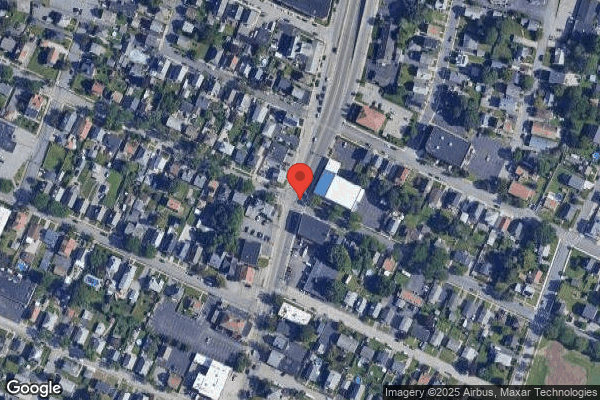
833 Broadway, East Providence, RI 02914 (401) 434-7404
For profit - Limited Liability company 31 Beds Independent Data: November 2025 1 Immediate Jeopardy citation
Trust Grade
56/100
#19 of 72 in RI
Last Inspection: October 2024

Within standard 12-15 month inspection cycle. Federal law requires annual inspections.

Overview

Harris Health Center LLC has a Trust Grade of C, which means it is average compared to other facilities. It ranks #19 out of 72 nursing homes in Rhode Island, placing it in the top half statewide, and #12 out of 41 in Providence County, indicating only one local option is better. The facility is improving, with the number of issues decreasing from six in 2024 to one in 2025. Staffing is rated 3 out of 5 stars, with a 43% turnover rate, which is about average; however, the facility has good RN coverage, exceeding 85% of state facilities. On the downside, they faced $10,276 in fines, which is concerning, and recent inspections highlighted serious issues, including improper cleaning of glucometers that could lead to infections and unsafe smoking practices on the property.

Trust Score
C
56/100
In Rhode Island
#19/72
Top 26%
Safety Record
High Risk
Review needed
Inspections
Getting Better
6 → 1 violations
Staff Stability
○ Average
43% turnover. Near Rhode Island's 48% average. Typical for the industry.
Penalties
⚠ Watch
$10,276 in fines. Higher than 84% of Rhode Island facilities, suggesting repeated compliance issues.
Skilled Nurses
✓ Good
Each resident gets 62 minutes of Registered Nurse (RN) attention daily — more than 97% of Rhode Island nursing homes. RNs are the most trained staff who catch health problems before they become serious.
Violations
⚠ Watch
29 deficiencies on record. Higher than average. Multiple issues found across inspections.
★★★★☆
4.0
Overall Rating
★★★☆☆
3.0
Staff Levels
★★★★★
5.0
Care Quality
★★★☆☆
3.0
Inspection Score
Stable
2024: 6 issues
2025: 1 issues

The Good

  • 5-Star Quality Measures · Strong clinical quality outcomes
  • Full Sprinkler Coverage · Fire safety systems throughout facility
  • No fines on record
  • Staff turnover below average (43%)

    5 points below Rhode Island average of 48%

Facility shows strength in quality measures, fire safety.

The Bad

Staff Turnover: 43%

Near Rhode Island avg (46%)

Typical for the industry

Federal Fines: $10,276

Below median ($33,413)

Minor penalties assessed

The Ugly 29 deficiencies on record

1 life-threatening
Sept 2025 1 deficiency
CONCERN (D) 📢 Someone Reported This

A family member, employee, or ombudsman was alarmed enough to file a formal complaint

Potential for Harm - no one hurt, but risky conditions existed

Accident Prevention (Tag F0689)

Could have caused harm · This affected 1 resident

**NOTE- TERMS IN BRACKETS HAVE BEEN EDITED TO PROTECT CONFIDENTIALITY** Based on surveyor observation, record review, staff, and resident interviews, it has been determined that the facility failed to...

Read full inspector narrative →
**NOTE- TERMS IN BRACKETS HAVE BEEN EDITED TO PROTECT CONFIDENTIALITY** Based on surveyor observation, record review, staff, and resident interviews, it has been determined that the facility failed to ensure that a resident received adequate supervision to prevent an elopement for 1 of 3 residents reviewed Resident ID #1.Findings are as follows:Review of a facility reported incident submitted to the Rhode Island Department of Health on 9/14/2025 reveals that Resident ID #1 left the facility without following the leave of absence policy and procedure. Record review revealed the resident was admitted to the facility in March of 2023 with diagnoses including, not limited to, bipolar disorder and epilepsy (a neurological disorder characterized by recurrent, unprovoked seizures).Record review of a Quarterly Minimum Data Set (MDS) assessment dated [DATE] revealed a Brief Interview of Mental Status score of 14 out of 15 indicating the resident's cognition is intact. Additional review of the MDS revealed the resident ambulates independently.Record review revealed a progress note dated 9/13/2025 at 10:38 PM, revealed the resident left the facility and went to the hospital to visit with his/her relative. Record review of a care plan revised on 9/13/2025 after the resident retuned to the facility from visiting his/her relative, revealed the resident is at risk for elopement and staff interventions including, but not limited to, ensuring staff awareness of the resident's wander risk and ensuring that the LOA policy and procedure is being followed. Record review revealed the following nursing progress notes from 9/14/2025, the day after the resident left the facility without following the LOA policy: 9:00 AM- the facility received a call from a police department that was approximately 12 miles from the facility across the state line. The police indicated to the facility that Resident ID #1 was at their station, and they would be accompanying him/her back to the facility.11:53 AM, revealed the resident left the facility without following the LOA policy and procedure, s/he returned to the facility accompanied by the police on 9/14/2025 at approximately 9:20 AM, and the resident was sent to a local hospital for evaluation.A surveyor observation on 9/17/2025 at 10:28 AM of the staff desk area adjacent to the front door revealed a key attached to a wooden pad visible on a shelf that was accessible to the residents. During a simultaneous surveyor observation and interview on 9/17/2025 at 12:45 PM with Staff A, she acknowledged the key on the shelf and that the key is accessible to the residents. She indicated it was the key for the rear door on the first floor. Additionally, she revealed that the key for the rear door is kept either in the desk drawer, at the staff desk, or on the shelf as observed. Staff A revealed that the last time she had seen the resident ambulating in the hall was on 9/15/2025 at approximately 7:50 AM and indicated that this may have been the key the resident used on 9/14/2025 to exit the facility and that the location of the key had not changed since the resident eloped from the facility on 9/14/2025. During a surveyor interview with the resident on 9/17/2025 at 10:40 AM, s/he revealed that on 9/13/2025 s/he had signed the LOA log to go out to see his/her relative at a hospital accompanied by a family member. S/he revealed that they returned to the facility on the night of 9/13/2025 and s/he did not call the facility to notify them that s/he would be out for an extended period. The resident revealed that on 9/14/2025 at approximately 8:10 AM, s/he removed the key from the staff desk, unlocked the rear door, and left the facility via a bus to see his/her relative at the hospital. S/he indicated that after visiting with his/her relative, s/he went to the police station that was approximately a block from the hospital and asked for a ride back to the facility. The resident indicated that s/he was out of the facility for less than two hours and returned to the facility accompanied by the police and is aware that s/he did not follow the facility's LOA policy. Additionally, the resident indicated that since this incident, s/he is not allowed to leave the facility without being accompanied by a family or staff member.During a surveyor interview on 9/17/2025 at 11:00 AM with Registered Nurse, Staff B, she acknowledged that the above-mentioned LOA log entries were not completed in its entirety, as required. Additionally, Staff B acknowledged that the LOA log should have been signed off by the nurse on duty prior to the resident leaving the facility and upon his/her return.Surveyor review of the facility's video surveillance footage on 9/17/2025 at 1:25 PM in the presence of the Administrator, revealed the resident was walking toward the staff desk area adjacent to the front entrance on 9/14/2025 at 8:12 AM and walked back with the key in his/her hand. The resident then opened the exit door at the rear end of the hall on the first floor, left the key in the door, and exited the facility on 9/14/2025 at 8:14 AM. During a surveyor interview on 9/17/2025 at 1:35 PM with the Director of Nursing Services (DNS), she indicated that the resident had been made aware on the evening of 9/13/2025 that s/he was no longer allowed to leave the facility unaccompanied because of his/her non-compliance to the facility's LOA policy. The DNS indicated that on 9/14/2025 the resident left the facility unknown to the staff until they were notified by the police department. She indicated that the resident had used the key that was at the staff desk area to unlock the door. The DNS acknowledged that the location of the key had not been changed after this incident and that it remained at the same location where the resident had removed it on the date of the incident.
Oct 2024 5 deficiencies
CONCERN (D)

Potential for Harm - no one hurt, but risky conditions existed

Comprehensive Care Plan (Tag F0656)

Could have caused harm · This affected 1 resident

Based on record review and staff interview, it has been determined that the facility failed to develop and implement a comprehensive person-centered care plan for falls for 1 of 1 resident reviewed wh...

Read full inspector narrative →
Based on record review and staff interview, it has been determined that the facility failed to develop and implement a comprehensive person-centered care plan for falls for 1 of 1 resident reviewed who had actual falls, Resident ID #16. Findings are as follows: Record review revealed the resident was readmitted to the facility in December of 2023 with a diagnosis including, but not limited to, schizoaffective disorder. Record review of a facility document titled, Fall Prevention Program last revised 12/2010, states in part, .Fall risk assessments are performed as a part of the admission assessment, as part of the quarterly review, and as an annual and/or significant change of condition process of care plan review .Whenever a resident has a history of falls and/or scores high on the fall risk assessment form, or actually has a fall their record is to be reviewed .and a careplan is to be developed which establishes preventative measures or interventions to be taken to lower or eliminate the risk .any and all immediate fall prevention interventions are to be added to the resident's care plan at that time . Review of the resident's progress notes, dated 7/1/2024 through 10/3/2024, revealed that the resident had experienced falls on the following dates: -7/9/2024 -8/14/2024 Further record review failed to reveal evidence of a fall related care plan that identifies preventative measures or interventions to be implemented relative to the above falls. During a surveyor interview on 10/3/2024 at 1:11 PM with Registered Nurse, Staff A, she acknowledged that the resident did not have a care plan in place related to falls. During a surveyor interview on 8/21/2024 at approximately 3:00 PM, with the Director of Nursing Services, she was unable to provide evidence that a comprehensive person-centered care plan was developed and implemented to address the resident's falls.
CONCERN (D)

Potential for Harm - no one hurt, but risky conditions existed

Deficiency F0658 (Tag F0658)

Could have caused harm · This affected 1 resident

Based on record review and staff interview, it has been determined that the facility failed to ensure that residents receive treatment and care in accordance with professional standards of practice fo...

Read full inspector narrative →
Based on record review and staff interview, it has been determined that the facility failed to ensure that residents receive treatment and care in accordance with professional standards of practice for 2 of 2 residents reviewed with physician orders for quarterly fall assessments, Resident ID #s 7 and 9, and 2 of 5 residents reviewed with psychiatric recommendations, Resident ID #s 9 and 21. Findings are as follows: According to Mosby's 4th Edition, Fundamentals of Nursing page 314, states in part, The physician is responsible for directing medical treatment. Nurses are obligated to follow physician's orders unless they believe the orders are in error or would harm the clients. 1a. Record review revealed Resident ID #9 was admitted to the facility in December of 2011 with diagnoses including, but not limited to, dementia with mood disturbance and major depressive disorder. Review of a physician's order dated 1/30/2024 revealed an order for fall assessments to be completed quarterly and documented in the resident's record. Record review failed to reveal evidence that fall assessments had been completed quarterly as ordered, the last fall assessment was documented on 12/26/2023. 1b. Record review revealed Resident ID #7 was admitted to the facility in March of 2024 with diagnoses including, but not limited to, polyarthritis (arthritis in five or more joints at the same time), fibromyalgia (a chronic condition that causes widespread pain and tenderness in the body), muscle weakness, and a history of falling. Review of a physician's order dated 3/13/2024 revealed an order for fall assessments to be completed quarterly and documented in the resident's record. Record review revealed that a fall assessment was completed on admission in March of 2024. Additional record review failed to reveal evidence that a quarterly fall assessment was completed in June 2024, as ordered. 2a. Review of a document titled, Psychiatric Evaluation & Consultation dated 9/11/2024 revealed, Resident ID #9 was seen by a practitioner on this date for a follow up visit related to agitation and behavioral disturbance. Additional review of this consultation revealed a recommendation to restart Quetiapine (an antipsychotic medication that is used to treat mental and mood disorders) 25 milligrams (mg) daily, as needed for agitation, for 14 days. Record review failed to reveal evidence the physician was notified of the psychiatric recommendation to restart the resident on Quetiapine 25 mg daily, as needed. 2b. Record review revealed Resident ID #21 was readmitted to the facility in August of 2023 with diagnoses including, but not limited to, schizophrenia and generalized anxiety disorder. Review of a document titled, Psychiatric Evaluation & Consultation dated 9/2/2024 revealed, Resident ID #21 was seen by a practitioner on this date for a follow up and routine psychiatric evaluation related to complaints of depression. Additional review of this consultation revealed a recommendation for melatonin (a medication used to treat insomnia). Record review failed to reveal evidence the physician was notified of the psychiatric recommendation for melatonin. During a surveyor interview on 10/4/2024 at 1:58 PM with the residents' primary care physician, he indicated that he would expect the staff to notify him of any psychiatric recommendations. He further stated, I have no recollection of these recommendations. Additionally, he indicated that he would expect Resident ID #9's quarterly fall assessments to be completed, as ordered. During a surveyor interview on 10/4/2024 at 2:18 PM with a Psychiatric Nurse Practitioner, Staff B, he indicated that he made the above-mentioned psychiatric recommendations after his visit with Resident ID #'s 9 and 21. Staff B indicated that after his visits with the residents, he notifies the staff of all recommendations including medication recommendations. Those recommendations are then uploaded into the electronic medical record within 48 hours of his visit. Additionally, Staff B indicated that the staff has access to his recommendations that are uploaded in the residents' electronic medical records. During a surveyor interview on 10/4/2024 at approximately 1:15 PM and a subsequent interview on 10/4/2024 at approximately 2:50 PM with the Director of Nursing Services (DNS), she acknowledged that Resident ID #7 did not have a quarterly fall assessment completed as ordered, in June of 2024. Additionally, she acknowledged that Resident ID #9 did not have a fall assessment completed quarterly as ordered, since 12/26/2023. Furthermore, the DNS could not provide evidence the physician was notified of the psychiatric recommendations for Resident ID #s 9 and 21 after Staff B assessed the residents.
CONCERN (D)

Potential for Harm - no one hurt, but risky conditions existed

Deficiency F0761 (Tag F0761)

Could have caused harm · This affected 1 resident

**NOTE- TERMS IN BRACKETS HAVE BEEN EDITED TO PROTECT CONFIDENTIALITY** Based on surveyor observation and staff interview, it has been determined that the facility failed to store and label drugs and ...

Read full inspector narrative →
**NOTE- TERMS IN BRACKETS HAVE BEEN EDITED TO PROTECT CONFIDENTIALITY** Based on surveyor observation and staff interview, it has been determined that the facility failed to store and label drugs and biological's in accordance with currently accepted professional principles for 1 of 2 medication storage rooms, and 1 of 2 medication carts observed. Findings are as follows: Review of a facility policy titled, .Storage and expiration dating of medication and biological's last revised on [DATE] states in part, .Facility should ensure that medications and biological's that .have an expired date on the label .have been retained longer than recommended by manufacturer or supplier guidelines .are stored separate from other medications until destroyed or returned to the pharmacy or supplier .Once any medication or biological package is opened, facility should follow manufacturer/supplier guidelines with respect to expiration dates for opened medications. Facility staff should record the date opened on the primary medication container .when the medication has a shortened expiration date once opened . 1. During a surveyor observation of the 1st floor medication storage room on [DATE] at 9:10 AM, in the presence of Registered Nurse, Staff A, the following was revealed: - A 10 dose box of Fluzone (a flu vaccination) vaccine; with 5 doses remaining in the box, with a manufacturer's expiration date of 6/2024 - A 10 dose box of High Dose Fluzone vaccine; with 5 doses remaining in the box, with a manufacturer's expiration date of 6/2024 During a surveyor interview immediately following the observation with Staff A, she acknowledged that the above-mentioned vaccinations were expired. 2. During a surveyor observation of the 1st floor Certified Medication Technician medication cart on [DATE] at 1:30 PM, in the presence of Staff A, the following was revealed: -2 bottles of Latanoprost Solution (an eye drop used to treat glaucoma) 0.005% opened and undated. Manufacturer's instructions indicate to discard the eye drops 6 weeks after opening. -1 Wixela (an inhaler used to treat asthma)100-50 micrograms (mcg), opened (not in a foil pouch) and undated. Manufacturer's instructions indicated to discard 1 month after removal from the foil pouch. -2 Trelegy Ellipta (an inhaler used to treat asthma) 100/62.5 mcg inhalers, opened and undated. Manufacturer's instructions indicate to discard 6 weeks after opening. During a surveyor interview immediately following the above observations with Staff A, she acknowledged that the above-mentioned medications were opened and undated and that they should be dated when opened. During a surveyor interview on [DATE] at 1:52 PM with the Director of Nursing Services, she acknowledged that the Fluzone vaccines were expired. She further revealed that she would expect the staff to date medications when opening them and discard them appropriately based on the manufacturer's instructions.
CONCERN (E)

Potential for Harm - no one hurt, but risky conditions existed

Deficiency F0692 (Tag F0692)

Could have caused harm · This affected multiple residents

Based on record review and staff interview, it has been determined that the facility failed to ensure that residents maintain acceptable parameters of nutritional status, such as usual body weight for...

Read full inspector narrative →
Based on record review and staff interview, it has been determined that the facility failed to ensure that residents maintain acceptable parameters of nutritional status, such as usual body weight for 1 of 4 residents reviewed for significant weight loss and/or gain, Resident ID #9. Findings are as follows: Record review of the facility's policy titled, Weight Monitoring and Weight Loss/Gain Protocol states in part, .Procedure: Residents who are at risk for a nutritional decline are to be weighed weekly .How to weigh the resident .6. Weights that are + [plus] or minus 3 pounds from the last reading must be reported to the nurse who will then be required to supervise an immediate re-weigh to double check the accuracy of the reading. The nurse is to initial the supervised reading to verify accuracy .a significant weight loss/gain is defined as a difference of 3 pounds or more in one week (if resident on weekly weights); a loss/gain of 5% or greater within one month .WHEN A SIGNIFICANT WEIGHT LOSS IS NOTED, THE FOLLOWING INTERVENTIONS MUST OCCUR:1 Reweigh the residents who are reported to have a significant weight loss in order to assess the accuracy of the weight. The reweight shall be done within 24 hours .If the re-weigh is accurate and there has been a significant weight loss/gain, nursing must notify: physician, dietician, DNS [Director of Nursing Services] . Record review revealed the resident was admitted to the facility in December of 2011 with diagnoses including, but not limited to, diabetes (a chronic disease that occurs when the body has too much glucose, or blood sugar, in the blood) and dementia. Review of a care plan dated 12/6/2023 revealed, the resident is a nutritional risk due to dysphagia (difficulty in swallowing) and requires a mechanical soft diet. Staff interventions include, but are not limited to, monitoring the resident's weights as ordered. Review of a physician's order dated 7/12/2024 revealed an order to obtain weekly weights on Tuesdays and if the weight is plus or minus 3 pounds (lbs.) from their previous weight, the resident should be re-weighed. Review of a document titled Vital signs: Weight revealed the following weights were obtained: - 8/20/2024: 166 lbs. - 8/27/2024: 150 lbs. - 9/3/2024: 166 lbs. - 9/10/2024: 183 lbs. - 9/17/2024: 164 lbs. Record review revealed the resident had the following documented significant weight losses: - 8/20/2024 to 8/27/2024: 16 lb. weight loss, which is 9.64% in one week. - 9/10/2024 to 9/17/2024: 19 lb. weight loss, which is 10.38% in one week. Record review revealed the resident had the following documented significant weight gains: - 8/27/2024 to 9/3/2024: 16 lb. weight gain, which is 9.64% in one week. - 9/3/2024 to 9/10/2024: 17 lb. weight gain, which is 10.24% in one week. Record review failed to reveal evidence the resident was re-weighed within 24 hours of the above-mentioned dates when s/he had a documented significant weight loss or weight gain, as indicated in the facility's policy and per the physician's order. Record review revealed the resident was last evaluated by the dietician on 7/15/2024 and has not been revaluated since the above weight discrepancies . Additional record review failed to reveal evidence that the physician, the dietician, and the Director of Nursing Services (DNS) were notified of the significant weight losses or weight gains, as indicated in the facility's policy. During a surveyor interview on 10/3/2024 at 1:29 PM with the primary physician, he acknowledged the weights documented were indicative of significant weight loss and weight gain. However, he could not provide evidence of being notified by the staff of the resident's significant weight losses or gains. The physician further indicated that he would expect the nurse to re-weigh the resident to ensure the weights were accurate. During a surveyor interview on 10/3/2024 at 1:42 PM with the DNS, she indicated that she would expect the staff to re-weigh the resident if the weights were up or down 3 lbs. from the previous weight obtained. Additionally, the DNS could not provide evidence that the physician was notified of the documented significant weight losses or gains, as indicated in the facility's policy. During a subsequent interview on 10/3/2024 at 1:50 PM with the Registered Dietician, she acknowledged that she was not aware of the resident's significant weight losses or weight gains. Additionally, the dietician further indicated that she has recently been hired and has not assessed this resident since she began working at the facility.
CONCERN (E)

Potential for Harm - no one hurt, but risky conditions existed

Deficiency F0909 (Tag F0909)

Could have caused harm · This affected multiple residents

Based on surveyor observation, record review, and staff interview, it has been determined that the facility failed to conduct regular inspections of all bed frames, mattresses, and bed rails as part o...

Read full inspector narrative →
Based on surveyor observation, record review, and staff interview, it has been determined that the facility failed to conduct regular inspections of all bed frames, mattresses, and bed rails as part of a regular maintenance program to identify areas of possible entrapment for 3 of 4 residents reviewed for side rails, Resident ID #s 11, 21, and 25. Findings are as follows: Review of the State Operations Manual Appendix PP - Guidance to Surveyors for Long Term Care Facilities Last revised 8/8/2024, states in part, .Regardless of mattress width, length, and/or depth, the bed frame, bed rail and mattress should leave no gap wide enough to entrap a resident's head or body .Facilities must also conduct routine preventive maintenance of beds and bed rails to ensure they meet current safety standards and are not in need of repair . 1. Record review revealed that Resident ID #11 was admitted to the facility in May of 2023 with diagnoses including, but not limited to, osteoarthritis, and joint disorders. During surveyor observations on the following dates and times the resident was observed with 2 half side rails on his/her bed: -10/1/2024 at 9:59 AM -10/2/2024 at 11:05 AM -10/3/2024 at 8:45 AM 2. Record review revealed that Resident ID #21 was readmitted to the facility in August of 2023 with diagnoses including, but not limited to, hemiplegia (one sided paralysis or weakness) affecting the right dominant side. During surveyor observations on the following dates and times the resident was observed with 2 half side rails on his/her bed: 10/1/2024 at 8:48 AM and 11:40 AM 10/2/2024 at 9:49 AM 10/3/2024 at 9:26 AM 3. Record review revealed that Resident ID #25 was readmitted to the facility in August of 2024 with diagnoses including, but not limited to, spinal stenosis (narrowing of the space inside of the spinal column) and a burst fracture (a serious spinal injury that occurs when a vertebra breaks into multiple pieces after being crushed by a strong force) of T9-T10 vertebrae. During surveyor observations on the following dates and times the resident was observed with 2 half side rails on his/her bed: 10/1/2024 at 8:40 AM and 10:44 AM 10/3/2024 at 8:47 AM, 9:12 AM and 11:59 AM During a surveyor interview with the resident on 10/1/2024 at 10:44 AM, s/he revealed that s/he uses the bed rails for turning and repositioning in bed. Record review failed to reveal evidence that entrapment assessments were completed for the above-mentioned residents. During a surveyor interview on 10/3/2024 at 1:38 PM with the Director of Nursing Services, she could not provide evidence that the entrapment assessments were completed.
Feb 2024 1 deficiency
CONCERN (F) 📢 Someone Reported This

A family member, employee, or ombudsman was alarmed enough to file a formal complaint

Potential for Harm - no one hurt, but risky conditions existed

Safe Environment (Tag F0921)

Could have caused harm · This affected most or all residents

Based on surveyor observation, record review, and staff interview, it has been determined that the facility failed to provide a safe environment relative to smoking, smoking areas, and smoking safety....

Read full inspector narrative →
Based on surveyor observation, record review, and staff interview, it has been determined that the facility failed to provide a safe environment relative to smoking, smoking areas, and smoking safety. Findings are as follows: Record review of a community reported complaint submitted to the Rhode Island Department of Health, on 2/27/2024 alleges that smoking has been observed outside of the door of the nursing facility. There have been observations of cigarette butts littered all over the property and a smoldering ashtray. Review of a policy and procedure titled Smoking Policy states in part, .residents that wish to smoke must be in a designated area and may be limited to specific times . During a surveyor observation on arrival at the facility on 2/28/2024 at approximately 8:05 AM revealed the following: -Approximately 100 cigarette butts littered on the ground at the North and East entrances - An ashtray tower leaning against the North exterior wall of the facility with folding chairs - An ashtray observed in the mulch at the South bulkhead entrance; 5 feet from building During a surveyor observation on 2/28/2024 at 11:00 AM, Resident ID #4 was in a wheelchair and was observed smoking approximately 10 feet from the door near the handicapped ramp. During a surveyor interview on 2/28/2024 at 11:02 AM with Resident ID #4, s/he revealed that s/he always smokes in this spot. During a surveyor observation of the outside areas of the facility in the presence of the Administrator on 2/28/2024 at 12:45 PM, he acknowledged that the facility had an ashtray leaning against the exterior of the building, another ashtray on the ground in the mulch and had multiple cigarette butts littered on the ground. Additionally, he indicated that he would expect the staff and residents who smoke to follow policy and state law.
Nov 2023 12 deficiencies 1 IJ
CRITICAL (J)

Immediate Jeopardy (IJ) - the most serious Medicare violation

Infection Control (Tag F0880)

Someone could have died · This affected 1 resident

**NOTE- TERMS IN BRACKETS HAVE BEEN EDITED TO PROTECT CONFIDENTIALITY** Based on surveyor observations, record review, and staff interview, it has been determined that the facility failed to provide a...

Read full inspector narrative →
**NOTE- TERMS IN BRACKETS HAVE BEEN EDITED TO PROTECT CONFIDENTIALITY** Based on surveyor observations, record review, and staff interview, it has been determined that the facility failed to provide a safe and sanitary environment to help prevent the transmission of infections relative to disinfecting glucometers (a device used to monitor blood glucose) for 3 of 3 residents observed who require blood glucose monitoring, Resident ID #s 8, 9, and 14; and 2 of 2 residents reviewed relative to contact precautions, Resident ID #s 14 and 18; and the handling of soiled linen for 1 of 1 laundry room observed. Findings are as follows: 1. According to the facility's policy last revised March of 2015 titled, diabetes - care of equipment states in part, .5. If a glucometer is to be used for one resident and then reused for another, the device must be cleaned and disinfected between uses .Follow the glucometer manufacturer's recommendations for cleaning . Review of the glucometer manufacturer's QA/QC (Quality Assurance/Quality Control) Reference Manual titled, ASSURE PLATINUM BLOOD GLUCOSE MONITORING SYSTEM, states in part, GUIDELINES FOR CLEANING AND DISINFECTING THE ASSURE PLATINUM METER. To minimize the risk of transmitting blood-borne pathogens, the cleaning and disinfecting procedure should be performed as recommended in the instructions below .The meter should be cleaned and disinfected after use on each patient. The cleaning procedure is needed to clean dirt, blood and other bodily fluids off the exterior of the meter before performing the disinfecting procedure. The disinfecting procedure is needed to prevent the transmission of blood-borne pathogens .Clean and disinfect the meter following step-by-step instructions .Option 1 Obtain a commercially available EPA [Environmental Protection Agency]-registered disinfectant detergent or germicide wipe .CLEANING AND DISINFECTING PROCEDURES. NOTE Two disposable wipes are needed for each cleaning and disinfecting procedure; one wipe for cleaning and a second wipe for disinfecting .CLEANING .Step 3 Wipe surface of the meter to clean blood and other body fluids .Step 4 Dispose of the used towelette in a trash bin. The meter should be cleaned prior to each disinfection step. DISINFECTING STEP 5 Pull out 1 new towelette and wipe the entire surface of the meter horizontally and vertically to remove bloodborne pathogens . Review of a document dated 8/18/2023 addressed from the EPA to a Clorox representative regarding the Clorox product with EPA Registration Number 5813-79, states in part, .DIRECTIONS FOR USE .TO CLEAN [HARD, NONPOROUS SURFACES] .Wipe surface clean with this product. Let air dry .TO DISINFECT .[Use to disinfect] hard, nonporous surfaces: For visibly soiled surfaces, clean first .Special instructions for Use Against .HCV [Hepatitis C Virus] .This product kills HCV .on a precleaned hard, nonporous surfaces/objects previously soiled with blood/body fluids in health care settings .Cleaning Procedure: Blood and other bodily fluids must be thoroughly cleaned from surfaces and other objects before applying this product . a) Record review revealed Resident ID #14 was readmitted to the facility in September of 2023 with diagnoses including, but not limited to, chronic viral hepatitis C and type II diabetes. Additionally, his/her blood sugars are monitored four times a day. b) Record review revealed Resident ID #8 was readmitted to the facility in February of 2022 with a diagnosis including, but not limited to, type II diabetes. Additionally, his/her blood sugars are monitored four times a day. c) Record review revealed Resident ID #9 was admitted to the facility in September of 2023 with a diagnosis including, but not limited to, type II diabetes. Additionally, his/her blood sugars are monitored four times a day. During surveyor observations on 11/9/2023 at 11:39 AM during the medication administration task with Registered Nurse (RN), Staff B, the following observations were made: - Staff B obtained Resident ID #9's blood sugar. Staff B then used one Clorox wipe to clean the glucometer. Staff B did not utilize a second Clorox wipe to disinfect the glucometer as per the manufacturer's guidelines, prior to proceeding to the next resident. - Staff B obtained Resident ID #8's blood sugar with the same glucometer used for Resident ID #9. Staff B was observed using his gloved hands to remove the used test strip, which was contaminated with blood, from the glucometer. At this point, the surveyor informed Staff B, that there was a test strip release button on the glucometer that allows the strip to be ejected without having to manually remove it. Staff B returned to the nursing cart located at the nurses' station and proceeded to use one Clorox wipe to clean the glucometer. Staff B did not utilize a second Clorox wipe to disinfect the glucometer as per the manufacturer's guidelines and proceeded to the next resident. - Staff B obtained Resident ID #14's blood sugar using the same glucometer that was previously used on Resident ID #s 8 and 9. Staff B exited the room, and was noted to be holding the uncleaned, non-disinfected glucometer with the contaminated test strip still in the glucometer, which was observed to be in direct contact with the clean, unused blood glucose monitoring supplies which were contained in a small basket used for multiple residents. Staff B proceeded to walk through the facility passing the common area and dining room with several residents present, until he returned to the nurses' station where he placed the basket atop the nursing cart. Again, it was noted the glucometer and contaminated test strip were in direct contact with the basket of clean blood glucose monitoring supplies. With a gloved hand, he manually removed the contaminated test strip from the glucometer and disposed of it in the sharps container. Without changing gloves, he grabbed the Clorox wipes cannister and removed a wipe, and proceeded to wipe the glucometer with the now contaminated wipe using the same gloves that were used to manually remove the contaminated test strip, which had just been used to obtain a blood sugar from Resident ID #14, who is positive for Hepatitis C. After using the one contaminated Clorox wipe, he set down the glucometer. Staff B was not observed to utilize a second Clorox wipe to disinfect the glucometer as per the manufacturer's guidelines. Additionally, a surveyor observation on 11/9/2023 at 1:37 PM revealed the glucometer that was used to assess the above-mentioned resident's blood sugars, after having already been cleaned with one Clorox wipe, revealed an accumulation of dark colored debris in 4 separate areas of the battery cover latch. During a surveyor interview on 11/9/2023 at 1:54 PM with the Director of Nursing Services (DNS), in the presence of 3 additional surveyors, she revealed that Staff B had used the wrong wipes for cleaning and disinfecting the glucometer. She further revealed that PDI wipes, which contain bleach, should've been used. Additionally, she was unsure if the Clorox wipes used by Staff B are effective at killing blood borne pathogens. During a surveyor interview on 11/9/2023 at 2:52 PM with Staff B, he acknowledged that he manually removed the contaminated test strip from the glucometer and without changing his gloves, proceeded to use a Clorox wipe to clean the glucometer. He further revealed he was unsure if the Clorox product was effective at killing blood borne pathogens. Additionally, he revealed he had utilized the same Clorox product to wipe the glucometer when assessing multiple resident's blood sugars earlier that day. During a follow up surveyor interview on 11/10/2023 at 1:59 PM with the DNS, she revealed that test strips should be disposed of immediately after use and that dirty items should not be mixed with clean supplies. She was unable to provide evidence that staff provided a safe and sanitary environment to help prevent the transmission of infection and blood borne pathogens. As a result of the facility's failure to follow its own diabetic equipment cleaning and disinfection policy relative to glucometers, and more specifically, the glucometer's reference manual specific to the cleaning and disinfection process, placed all residents who require blood glucose monitoring at increased risk for the transmission of blood borne pathogens. Furthermore, Staff B's multiple failures including improperly cleaning and disinfecting the multi-use glucometer by not utilizing two wipes as indicated, mixing dirty and clean supplies, and utilizing a contaminated wipe to clean and disinfect the glucometer, placed these residents at increased risk for contracting blood borne pathogens. 2. Review of a facility policy titled, guideline for Management of MDROs [Multidrug resistant organism] dated 1/18, states in part, .discontinuing Contact Precautions [wear a gown and gloves for all interactions that may involve contact with the resident or the resident's environment] .Contact Precautions should be used for the duration of the stay in the setting in which they were first implemented .In general it is reasonable to discontinue contact precautions when three or more surveillance cultures for the target MDRO are repeatedly negative over the course of week or two in a patient who has not received antimicrobial therapy for several week . Further review of the facility policy titled, guidelines for Management of MDROs states in part, .MRSA [Methicillin resistant Staphylococcus aureus infection; an infection is caused by a type of staph bacteria that's become resistant to many of the antibiotics] - RIDOH [Rhode Island Department of Health] recommends that Contact precautions may be discontinued when: There is documentation of 2 consecutive negative MRSA screens from previously positive sites .Screens are to be obtained no sooner than 72 hours after the completion of decolonization and/or treatment has been completed . a. Record review revealed Resident ID #18 was admitted to the facility in March of 2023 with a diagnosis including, but not limited to, MRSA. Review of a hospital Discharge summary dated [DATE] revealed the resident was positive for MRSA in a right lower extremity wound and was being treated with Bactrim (antibiotic). Review of a progress note dated 3/14/2023 states in part, .also, resident tested positive for MRSA of the nares while in the hospital and treatment was not offered/completed. Dr [doctor] .aware and resident with new order for Bactroban [a medication to treat/decolonize a resident with MRSA in the nares or decolonized MRSA] to nares BID [twice daily] topically for 5 days . Review of a care plan dated 3/8/2023 and updated 6/27/2023 revealed the resident has MRSA in the nares with interventions that include, but are not limited to, standard universal precautions in place. Review of the March 2023 Medication Administration Record revealed the following orders: - Bactrim, twice daily, with a start date of 3/8/2023 and an end date of 3/11/2023. - Bactroban, apply to nares two times daily, for 5 days, with a start date of 3/15/2023 and an end date of 3/19/2023. Record review failed to reveal evidence that at least two negative MRSA screens were obtained for the nares. Record review failed to reveal evidence that at least two negative MRSA screens were obtained for the right lower extremity wound. During surveyor observations on the following dates and times revealed the resident had no signage posted outside his/her room indicating s/he was on contact precautions and did not have an isolation bin containing personal protective equipment (PPE) supplies outside his/her room: - 11/7/2023 at 9:13 AM - 11/8/2023 at 8:07 AM - 11/9/2023 at 10:42 AM Review of the CENTER FOR EPIDEMIOLOGY & INFECTIOUS DISEASES Guidelines for the Management of Methicillin Resistant Staphylococcus Aureus in Rhode Island Long-Term-Care Facilities (2007) revealed that routine decolonization for MRSA in the nares is not recommended for long term care facility residents. It further revealed that decolonization attempts would be appropriate for residents admitted from the hospital with decolonization procedures already underway. Additionally, to remove a resident from contact precaution following decolonization would require the following criteria to be met: Contact precautions may be discontinued when there is documentation of two (2) consecutive negative MRSA screens from previously positive sites. Screens should be obtained no sooner than 72 hours after completion of decolonization and/or treatment of infection and screens should be at least five days apart. During a surveyor interview on 11/10/2023 at 11:17 AM with the DNS, she acknowledged that the resident's lower extremity wound, and nares were not re-cultured following the completion of the antibiotic treatment, per facility policy and Center for Epidemiology and Infectious Disease guidelines. Further, she was unable to provide evidence that the resident's lower leg extremity wound, or nares were re-cultured following the completion of antibiotic treatment. b. Review of a facility policy titled, Isolation states in part, .Contact precautions .use Contact Precautions for residents known or suspected to be infected with microorganism that can be easily transmitted by direct or indirect contact .The above includes organisms such as MRSA .Contact Precaution Procedure .require the use of appropriate PPE [Personal Protective Equipment], including a gown and gloves upon entering the contact precaution room . Record review revealed Resident ID #14 was readmitted to the facility in September of 2023 with a diagnosis including, but not limited to, non-pressure chronic ulcer of the right foot. Record review of a progress note dated 10/9/2023 at 10:56 AM revealed in part that the resident's right foot wound was cultured and tested positive for MRSA and s/he was placed on contact precautions. Record review revealed the following physician orders: - 10/9/2023 contact precautions every shift due to MRSA of the right foot wound. - 11/2/2023 cleanse right foot wound with Dakins (wound cleanser), pat dry, apply a thin layer of Silver Silvadene (antimicrobial wound cream) to the wound bed followed by calcium alginate (wound treatment), and apply a clean dressing and wrap with kling once a day. Multiple surveyor observations from 11/7/2023 through 11/8/2023 revealed that the resident had no signage posted outside his/her room indicating s/he was on contact precautions and did not have an isolation bin containing PPE supplies outside his/her room. Multiple observations on these dates were made of staff entering and exiting the resident's room without wearing the required PPE, which includes gloves and a gown. During an additional surveyor observation on 11/7/2023 at 12:17 PM of RN, Staff A, she was observed completing the above-mentioned treatment to the resident's right foot wound. Staff A completed the wound treatment without having donned a gown. Additionally, the wound was observed to be opened and was noted to have a scant amount of sanguineous (bloody) drainage on the existing dressing. During a surveyor interview immediately following the above observation with Staff A, she revealed Resident ID #14 was not on any isolation precautions. When informed by the surveyor of the active physician order for contact precautions, she revealed only gloves would be required for contact precautions. During a surveyor interview on 11/8/2023 at 3:08 PM with the DNS, she was unaware that Resident ID #14 had an order to be on contact precautions for MRSA in his/her right foot wound. She further revealed that a resident on contact precautions would have signage posted outside the door as well as a bin of PPE. Furthermore, she indicated that after the resident completed his/her antibiotic course, s/he was removed from contact precautions. She was unable to provide evidence that the wound was re-cultured as per policy prior to discontinuing the contact precautions. 3. Review of a facility policy titled Laundry Guidelines dated 10/18 states in part, POLICY: It is the policy of this facility to handle, store, process, and transport linen so as to prevent the spread of infection .Laundry Handling .All laundry will be handled as if it is potentially infectious and/or capable of transmitting infectious disease . According to the State Operations Manual Appendix PP - Guidance to Surveyors for Long Term Care Facilities, revised 2/3/2023 states in part, .Handling Laundry .The facility staff should handle all used laundry as potentially contaminated and use standard precautions (e.g., gloves, gowns when sorting and rinsing) . During a surveyor observation on 11/9/2023 at 11:56 AM with the DNS, a walk through of the laundry room was completed. No PPE, e.g gowns, was observed. During a surveyor observation on 11/10/2023 at 8:49 AM with Nursing Assistant, Staff D, she was observed in the laundry room loading the washing machine wearing only gloves. She failed to don a gown when sorting and loading the soiled laundry. When Staff D was asked to show the surveyor how laundry is processed, Staff D proceeded to open the door to the clean side of the laundry room with the same pair of dirty gloves on, she then opened the dryer, removed the lint trap, and then replaced it. She then opened the cleaned stored linen rack still wearing the same pair of dirty gloves and pushed the cleaned linen back in to the storage rack. During a surveyor interview on 11/10/2023 at 11:18 AM with the DNS she was unable to provide evidence that the facility stored, process and transported linen to prevent the spread of infection.
CONCERN (D)

Potential for Harm - no one hurt, but risky conditions existed

Deficiency F0658 (Tag F0658)

Could have caused harm · This affected 1 resident

Based on record review and staff interview, it has been determined that the facility failed to ensure that services provided meet professional standards of quality relative to following a physician's ...

Read full inspector narrative →
Based on record review and staff interview, it has been determined that the facility failed to ensure that services provided meet professional standards of quality relative to following a physician's order for laboratory testing for 1 of 3 residents reviewed, Resident ID #8. Findings are as follows: Mosby's 4th Edition, Fundamentals of Nursing, page 314 states: The physician is responsible for directing medical treatment. Nurses are obligated to follow physician's orders unless they believe the orders are in error or would harm the clients. Record review revealed the resident was re-admitted to the facility in February of 2022 with diagnoses which include, but are not limited to, diabetes mellitus and peripheral vascular disease. Record review revealed a physician order dated 9/6/2023 entered by the Director of Nursing Services (DNS), to obtain the following labs: - Complete blood count (CBC, a blood test used to look at overall health and find a wide range of conditions). - Hemoglobin A1C (a blood test that measures the average blood sugar level over the past two to three months). - Basic metabolic panel (BMP, a blood test that measures eight different substances in the blood and provides helpful information about the body's chemical balance and metabolism). Record review failed to reveal evidence the above-mentioned labs were obtained as ordered. Review of a progress note dated 9/7/2023 at 1:28 PM authored by the DNS, states in part, .labs to be done in am A1c, CBC w diff [differential] and bmp. During a surveyor interview on 11/10/2023 at 9:36 AM with Registered Nurse, Staff A, she revealed that the order was transcribed incorrectly and did not generate on the lab report to be obtained and that's why the labs were missed. During a surveyor interview with the Medical Director on 11/10/2023 at 12:10 PM, he revealed that he would have expected the facility to follow the physician's order. During a surveyor interview on 11/10/2023 at 11:18 AM with the DNS, she was unable to provide evidence the facility followed the physician's 9/6/3023 order related to obtaining labs.
CONCERN (D)

Potential for Harm - no one hurt, but risky conditions existed

Deficiency F0805 (Tag F0805)

Could have caused harm · This affected 1 resident

Based on surveyor observation, record review, and staff interview, it has been determined that the facility failed to ensure that residents receive and consume food in the appropriate form for 2 of 3 ...

Read full inspector narrative →
Based on surveyor observation, record review, and staff interview, it has been determined that the facility failed to ensure that residents receive and consume food in the appropriate form for 2 of 3 residents reviewed for modified diet textures, Resident ID #s 1 and 7. Findings are as follows: A. Record review revealed a physician's order for Resident ID #1 which revealed s/he was to receive a pureed diet. Record review revealed a physician's order for Resident ID #7 which revealed s/he was to receive a NAS (No Added Salt) diet with pureed texture. Record review of the facility menu for Thursday, 11/9/2023, stated that the pureed diet textures were to receive pureed ham, mashed potatoes, and pureed carrots. During a surveyor observation on 11/9/2023 at approximately 11:20 AM, Resident ID #s 1 and 7 were served whole kernel corn which was not pureed. During a surveyor interview on 11/9/2023 at approximately 11:25 AM with a Dietary Cook, Staff C, regarding the diet textures for Resident ID #s 1 and 7, she revealed they were incorrect and should not have been served the whole kernel corn.
CONCERN (E)

Potential for Harm - no one hurt, but risky conditions existed

Deficiency F0657 (Tag F0657)

Could have caused harm · This affected multiple residents

**NOTE- TERMS IN BRACKETS HAVE BEEN EDITED TO PROTECT CONFIDENTIALITY** Based on record review and staff interview, it has been determined that the facility failed to review and revise the resident's ...

Read full inspector narrative →
**NOTE- TERMS IN BRACKETS HAVE BEEN EDITED TO PROTECT CONFIDENTIALITY** Based on record review and staff interview, it has been determined that the facility failed to review and revise the resident's care plan, for 1 of 3 residents reviewed for a wound, Resident ID #14 and 1 of 1 resident reviewed for intentional weight loss, Resident ID #20. Findings are as follows: Review of The State Operations Manual Appendix PP-Guidance to Surveyors for Long Term Care Facilities, last revised on 2/3/2023, states in part, .care planning drives the type of care and services that a resident receives .the intent is that each resident will have a person-centered comprehensive care plan developed and implemented to meet his/her other preferences and goals and address the resident's medical needs .facilities are required to develop care plans that describe the resident's medical, nursing, and physical needs . 1. Record review revealed Resident ID #14 was readmitted to the facility in September of 2023 with a diagnosis including, but not limited to, non-pressure chronic ulcer of the right foot. Record review of a comprehensive assessment dated [DATE] revealed s/he has an ulcer to his/her foot. Record review of an admission Minimum Data Set Assessment, Section V, the Care Area Assessment (CAA) summary dated 10/8/2023, indicated that the resident has 2 existing pressure areas and stated the following, .[Resident ID #14] has pressure ulcers at this time that requires tx [treatment] and monitoring. Will proceed to plan of care . Record review of progress notes revealed a note dated 11/1/2023 which states in part, .has wounds to his/her .foot which Dr [Doctor] .recommended a culture to be obtained. The culture grew out Proteus [a type of bacteria] and MRSA [Methicillin resistant Staphylococcus aureus infection, an infection is caused by a type of staph bacteria that's become resistant to many of the antibiotics] . Further review of progress notes revealed a note dated 11/9/2023 which revealed the resident was seen by the wound physician for the wound on his/her right foot. Record review failed to reveal evidence that the resident's comprehensive care plan reflected his/her wound to the right foot or that the wound tested positive for MRSA. During a surveyor interview on 11/10/2023 at 1:59 PM with the Director of Nursing Services (DNS), she revealed that she would expect the resident's foot wound to be addressed in the care plan. Further, she was unable to provide evidence that the resident's right foot wound and positive MRSA culture were reflected in the resident's care plan. 2. Record review revealed Resident ID #20 was admitted to the facility in October of 2019 with a diagnosis including, but not limited to, dysphagia (a condition with difficulty in swallowing food or liquid). Review of a progress note, authored by the Registered Dietitian (RD), dated 10/16/2023 states in part, [Resident] was seen for nutrition quarterly. 11% wt [weight] loss x 5 months - significant. Resident reports wt loss is intentional, however there is a concern of rapid weight loss and inadequate PO [by mouth] intake . Review of the resident's recorded weights revealed the resident had a documented weight of 227 pounds (lbs.) on 5/3/2023 and had a documented weight of 201 lbs. on 11/8/2023, which is a weight loss of 26 lbs., indicating a significant weight loss of 11.45% over a 6-month period. Record review failed to reveal evidence that the resident's comprehensive care plan including the resident's intentional weight loss. During a surveyor interview on 11/10/2023 at 12:29 PM with the RD, she revealed she was unaware that there was not a care plan focused on nutrition. Further she revealed that a nutritional focus area should be included in the resident's care plan, especially significant that the resident's weight loss is desired and intentional. During a surveyor interview on 11/10/2023 at 1:59 PM with the DNS, she revealed that she would expect the resident's care plan to address the resident's desired weight loss.
CONCERN (E)

Potential for Harm - no one hurt, but risky conditions existed

Quality of Care (Tag F0684)

Could have caused harm · This affected multiple residents

Based on record review and resident and staff interviews, it has been determined that the facility failed to ensure that a resident received treatment and care in accordance with professional standard...

Read full inspector narrative →
Based on record review and resident and staff interviews, it has been determined that the facility failed to ensure that a resident received treatment and care in accordance with professional standards of practice for 1 of 3 residents observed for assessments and documentation relative to wound care, Resident ID #25. Findings are as follows: According to Wound Care Education Institute, 2020, wound care documentation should be carried out weekly including type of wound, measurements, type of tissue, symptoms of infection, presence of drainage, wound edges, pain, and current treatment. Review of a facility policy titled Clean Dressing Technique dated 1/2018, states in part, .15. Observe the wound for size, color, drainage, appearance, and amount of drainage. This is the best time to measure the area, before any medication is applied . Record review revealed Resident ID #25 was readmitted to the facility in August of 2023 with a diagnosis including, but not limited to, malignant neoplasm of overlapping sites of rectum, anus, and anal canal. Review of a physician's order dated 9/29/2023, which is still active, revealed to apply a damp-to-dry dressing to the sacral flap and to remove packing from the left lateral wound, cleanse the wound with normal saline or Vashe wash (wound cleanser), replace with a damp gauze (only one piece), and cover with a dry gauze and tape daily. Record review failed to reveal evidence that the documentation of the resident's surgical anal wound included all of the following per the standard of practice for wounds as denoted above and was documented at least weekly including: the type of wound, measurements, type of tissue, symptoms of infection, presence of drainage, wound edges, pain, and current treatment. During a surveyor interview on 11/7/2023 at 10:16 AM with the resident, s/he revealed s/he has a wound to his/her buttocks and is followed as an outpatient by a plastic surgeon approximately once a month. During a surveyor interview on 11/10/2023 at 11:27 AM with Registered Nurse, Staff A, she revealed that the resident is not followed by the wound physician that comes to the facility weekly. She further revealed the resident receives a daily wound dressing to his/her anal wound, but indicated it is not her practice to assess and document on characteristics of the wound including, but not limited to, wound measurements, type of tissue, symptoms of infection, presence of drainage, wound edges, pain, and current treatment. During a surveyor interview on 11/10/2023 at 1:59 PM with the Director of Nursing Services, she was unable to provide evidence that the resident received treatment and care in accordance with professional standards of practice relative to wound care.
CONCERN (E)

Potential for Harm - no one hurt, but risky conditions existed

Deficiency F0692 (Tag F0692)

Could have caused harm · This affected multiple residents

Based on record review and staff interview, it has been determined that the facility failed to address the nutritional needs of every resident, including but not limited to, a resident at risk or alre...

Read full inspector narrative →
Based on record review and staff interview, it has been determined that the facility failed to address the nutritional needs of every resident, including but not limited to, a resident at risk or already experiencing impaired nutrition for 1 of 2 residents reviewed with a severe weight loss, Resident ID #1. Findings are as follows: Record review of a facility policy titled, Weight Loss/Gain Protocol states in part: .Policy .to assess for underlying causes of weight loss or gain and to intervene accordingly .rule out medical reasons for weight loss .review for depression .review for change in behavior .review medications .report all findings to physicians, if weight loss/gain desirable, document in care plan . Record review revealed the resident was admitted to the facility in November of 2013 with diagnoses which includes, but is not limited to, dysphagia (difficulty swallowing), chronic obstructive pulmonary disease (lung disease that blocks air flow), and hemiplegia (paralysis of one side of the body). Review of the weight summary report revealed the following: - 5/8/2023 weight (wt) 179.1 pound (lbs) - 8/7/2023 wt. 167 lbs. - 10/6/2023 wt. 166 lbs. - 11/2/2023 wt. 152 lbs. This indicates that the resident experienced a severe weight loss of 14 pounds or a 8.4% weight loss in approximately one month from 10/6 to 11/2/2023, a 15 pound or a 9.0% severe weight loss in approximately three months from 8/7 to 11/2/2023, and a 27 pound or a 15.1% severe weight loss in approximately 6 months from 5/8 to 11/2/2023. Record review revealed a physician's order was initiated on 10/30/2023 for Ensure Plus three times a day with meals. Record review of a progress note dated 11/6/2023 authored by the Registered Dietitian (RD) states in part, .8.4% wt. Loss x 1 month significant. PO [by mouth] intakes mostly 0-25% Refuses ensure will d/c ensure . Record review failed to reveal evidence that from 5/8/2023 through 10/30/2023 any nutritional interventions were initiated for the residents's severe weight loss. Additionally, the record failed to reveal evidence that after 11/6/2023 further interventions were initiated after the ensure was discontinued. These failures resulted in the resident experiencing a severe loss in one month, three months and six months. During a surveyor interview on 11/10/2023 at approximately 3:30 PM with the Director of Nursing Services, she was unable to provide evidence that any nutritional interventions were initiated from 5/8/2023 through 10/30/2023 or after 11/6/2023 when the Ensure Plus order was discontinued.
CONCERN (E)

Potential for Harm - no one hurt, but risky conditions existed

Deficiency F0761 (Tag F0761)

Could have caused harm · This affected multiple residents

Based on surveyor observation, record review and staff interview, it has been determined that the facility failed to store and label drugs and biological's in accordance with currently accepted profes...

Read full inspector narrative →
Based on surveyor observation, record review and staff interview, it has been determined that the facility failed to store and label drugs and biological's in accordance with currently accepted professional principles for 1 of 1 medication storage rooms observed and 2 of 2 medication carts observed. Findings are as follows: A. Record review of a facility policy titled, Storage and Expiration of Medications, Biological's, Syringes, and Needles last revised 1/1/2013, states in part, .Facility should ensure that medication and biological's: 4.1 Have an Expiration Date on the label; 4.2 Have not been retained longer than recommended by manufacturer or supplier guidelines .Once any medication or biological package is opened, Facility should follow manufacturer/supplier guidelines with respect to expiration dates for opened medication. Facility staff should record the date opened on the medication container when the medication has a shortened expiration date when opened . During a surveyor observation of the nurse medication and treatment cart on 11/9/2023 at approximately 9:51 AM, in the presence of Registered Nurse (RN), Staff B, revealed the following: -Levemir (long-acting insulin), open and undated. Review of a document titled Medication Storage Guidelines created by Omnicare revealed Levemir, once opened, should be discarded after 42 days. During a surveyor observation of the medication room on 11/9/2023 at approximately 10:00 AM, in the presence of Staff B, revealed the following: -PPD (Tuberculin Purified Protein Derivative) solution, open and undated. Further review of a document titled Medication Storage Guidelines created by Omnicare revealed PPD solution, once opened, should be discarded after 30 days. During a surveyor observation of the Certified Medication Technician (CMT) cart on 11/9/2023 at approximately 10:30 AM, in the presence of Staff B, revealed the following: - 2 Albuterol inhalers, open and undated - DuoNeb Solution for Nebulization, open and dated 5/2 Additional review of a document titled Medication Storage Guidelines created by Omnicare revealed the following: - Albuterol inhalers should be dated when opened. - DuoNeb Solution for Nebulization should be discarded 14 days after opening. During a surveyor interview immediately following the above observations, Staff B acknowledged the above mentioned opened, undated, and expired medications and indicated they should be discarded. B. Record review of a facility policy titled, Storage and Expiration of Medications, Biologicals, Syringes, and Needles last revised 1/1/2013, states in part, .Facility should store Schedule II controlled substances and other medications deemed by Facility to be at risk for abuse or diversion in a separate compartment within the locked medication carts and should have a different key or access device. Review of The State Operations Manual Appendix PP-Guidance to Surveyors for Long Term Care Facilities, last revised on 2/3/2023, states in part, . Schedule II-V medications must be maintained in separately locked, permanently affixed compartments. The access system (e.g. key, security codes) used to lock Schedule II-V medications and other medications subject to abuse, cannot be the same access system used to obtain the non-scheduled medications. The facility must have a system to limit who has security access and when access is used . According to the DEA (Drug Enforcement Administration) controlled substance secure storage requirements which states in part, .All controlled substances must be stored behind at least two differently keyed locks at all times . During a surveyor observation of the medication room on 11/9/2023 at approximately 10:00 AM, in the presence of Staff B, revealed the medication room door was noted to have a key pad locking system, that was not functional. It further revealed a medication refrigerator, containing both controlled and uncontrolled medications, utilizing the same locking mechanism. During an additional surveyor observation on 11/10/2023 at 10:54 AM, in the presence of RN, Staff A, the medication room door was noted to have a key pad locking system, that was not functional. During a surveyor interview immediately following the above observation, Staff A acknowledged that the medication room's locking mechanism was not functional and revealed it has not been functional for approximately two weeks. During a surveyor interview on 11/10/2023 at approximately 2:00 PM, with the Director of Nursing Services, she revealed that medications stored in the facility should be labeled with a date and discarded per the manufacturer guidelines. Additionally, she revealed that all stored controlled substances should have two locking mechanisms.
CONCERN (E)

Potential for Harm - no one hurt, but risky conditions existed

Deficiency F0883 (Tag F0883)

Could have caused harm · This affected multiple residents

**NOTE- TERMS IN BRACKETS HAVE BEEN EDITED TO PROTECT CONFIDENTIALITY** Based on record review and staff interview, it has been determined that the facility failed to ensure the resident's medical rec...

Read full inspector narrative →
**NOTE- TERMS IN BRACKETS HAVE BEEN EDITED TO PROTECT CONFIDENTIALITY** Based on record review and staff interview, it has been determined that the facility failed to ensure the resident's medical record includes documentation that the resident either received the pneumococcal vaccination or did not receive the vaccination due to medical contraindications or refusal, for 8 of 8 residents reviewed, Residents ID #s 1, 2, 12, 13, 14, 19 and 20. Findings are follows: According to the State Operations Manual Appendix PP - Guidance to Surveyors for Long Term Care Facilities, Revised 2/3/2023 states in part, .The resident's medical record includes documentation that indicates, at a minimum, the following: .That the resident either received the pneumococcal immunization or did not receive the pneumococcal immunization due to medical contraindication or refusal . According to the Centers for Disease Control and Prevention (CDC), pneumococcal vaccination for all adults 19 through [AGE] years old who have certain chronic medical conditions or 65 years or older who have only received PPSV23 [23 vaccination], the PVC15 [type of pneumococcal conjugate vaccine] or PVC20 [type of pneumococcal conjugate vaccine] dose should be administered at least one year after the most recent PPSV23 vaccination. For adults 19 through [AGE] years old who have certain chronic medical indications who have only received PVC13 [type of pneumococcal conjugate vaccine], give 1 dose of the PCV20 at least 1 year after PCV13 or give 1 dose of PPSV23 at least 8 weeks after PCV13. For adults 65 years or older who have only received PVC13, give PPSV23 or PCV20 as previously recommended. 1. Record review for Resident ID #1 revealed the resident was admitted to the facility in November of 2013. Record review of the resident's immunization records failed to reveal evidence that the PPSV23 or PCV20 was offered, received, or declined. 2. Record review for Resident ID #2 revealed the resident was admitted to the facility in November of 2011. Record review of the resident's immunization records failed to reveal evidence that the PPSV23 or PCV20 was offered, received, or declined. 3. Record review for Resident ID #12 revealed the resident was admitted to the facility in February of 2022. Record review of the resident's immunization records failed to reveal evidence that the PVC13, PCV15, PPSV23, or PCV20 was offered, received, or declined. 4. Record review for Resident ID #13 revealed the resident was admitted to the facility in February of 2021. Record review of the resident's immunization records failed to reveal evidence that the PVC13, PCV15, PPSV23 or PCV20 was offered, received, or declined. 5. Record review for Resident ID #14 revealed the resident was admitted to the facility in May of 2022. Record review of the resident's immunization records failed to reveal evidence that the PVC13, PCV15, PPSV23 or PCV20 was offered, received, or declined. 6. Record review for Resident ID #19 revealed the resident was admitted to the facility in June of 2022. Record review of the resident's immunization records failed to reveal evidence that the PVC13, PCV15, PPSV23 or PCV20 was offered, received, or declined. 7. Record review for Resident ID #20 revealed the resident was admitted to the facility in October of 2019. Record review of the resident's immunization records failed to reveal evidence that the PVC13, PCV15, PPSV23 or PCV20 was offered, received, or declined. During an interview on 11/10/2023 at 11:18 AM , with the Director of Nursing Services, she was unable to provide evidence that Residents ID #'s 1, 2, 12, 13, 14, 19, and 20 medical records included documentation that indicates, at a minimum, if the residents either received the pneumococcal immunization or did not receive the pneumococcal immunization due to medical contraindication or refusal until brought to the attention of the facility by the surveyor.
CONCERN (F)

Potential for Harm - no one hurt, but risky conditions existed

Food Safety (Tag F0812)

Could have caused harm · This affected most or all residents

Based on surveyor observation, record review, and staff interview, it has been determined that the facility failed to ensure that food is stored and distributed, in accordance with professional standa...

Read full inspector narrative →
Based on surveyor observation, record review, and staff interview, it has been determined that the facility failed to ensure that food is stored and distributed, in accordance with professional standards for food service safety, relative to the main kitchen. Findings are as follows: 1. The Rhode Island Food Code 2018 Edition 3-501.16 reads in part, Time/Temperature Control for Safety Food, Hot and Cold Holding .food shall be maintained .57 degrees C(135 degrees Fahrenheit) .at 5 degrees C (41 degrees Fahrenheit) . During a surveyor observation of the lunch meal in the main kitchen on 11/9/2023 at approximately 11:45 AM, the baked chicken had a hot holding temperature of 130 degrees Fahrenheit. 2. The Rhode Island Food Code 2018 Edition 4.601.11(A) reads in part, .(A) equipment food contact surfaces .shall be clean to sight and touch . During a surveyor observation on 11/7/2023 at approximately 9:15 AM the following observations were made of equipment not being clean to sight: - The spray holes of the juice dispensing gun had a red debris accumulation and the cup holder that the juice dispensing gun sits in had pooled gray fluid. - Bins lined with parchment paper that stored dry goods of opened containers had crumbs and debris under the parchment paper liners. 3. The Rhode Island Food Code 2018 Edition 4-601.11(C)2.11 states in part, .nonfood contact equipment shall be kept free of an accumulation of dust, grease and dirt . During a surveyor observation on 11/7/2023 at approximately 9:15 AM, the following observations were made: - The range hood had grease accumulation along the inner rim and the screens in the hood had dust and grease accumulation. - The air conditioning unit located in a window above a fryolator had an accumulation of a black substance in the grates and the window that the unit was placed in had debris on the sill. - The air conditioning unit located in a window above a bin of black soup bowls had an accumulation of a black substance in the grates. 4. The Rhode Island Food Code 2018 Edition 2-301.14, states in part, When to Wash .food employees shall clean their hands .(I) after engaging in other activities that contaminate the hands . During a surveyor observation on 11/9/2023 between 11:15 AM and 11:30 AM, Dietary Cook, Staff C, was observed carrying three prepared meal trays to the nursing unit and returning to the kitchen without washing her hands to begin serving other residents' meal trays. During a surveyor interview on 11/10/2023 at approximately 1:00 PM with the Food Service Director (FSD), she acknowledged the juice dispensing gun, the rim under the hood of the stove along with the grates, food storage bins, and that the air conditioning units were in need of cleaning. Additionally, she was unable to provide evidence that the baked chicken was served at the appropriate hot holding temperature of 135 degrees Fahrenheit or higher and that Staff C had practiced appropriate hand hygiene while serving food.
CONCERN (F)

Potential for Harm - no one hurt, but risky conditions existed

QAPI Program (Tag F0867)

Could have caused harm · This affected most or all residents

Based on record review and staff interview, it has been determined that the facility failed to measure success and track performance of Quality Assurance and Performance Improvement (QAPI) actions to ...

Read full inspector narrative →
Based on record review and staff interview, it has been determined that the facility failed to measure success and track performance of Quality Assurance and Performance Improvement (QAPI) actions to ensure that problem areas are identified, and good faith efforts for improvements are achieved and sustained demonstrated by measurable objectives with statistical data documented. Findings are as follows: Review of the facility QAPI/QAA 2023 schedule and committee attendance sheet identified that QAPI/QAA meetings were held on the following dates: - January 23, 2023 - April 17, 2023 - July 24, 2023 - October 23, 2023 During a surveyor interview on 11/10/2023 at approximately 12:30 PM with the Director of Nursing Services (DNS) in the presence of the Administrator, she revealed the following focus areas that are actively being followed by the QAPI committee: - Facility reported incidents - Falls - Wounds - Medication errors - Elopement - Safety - Psychotropic medications - Covid vaccinations - Influenza vaccinations - Psychiatric services - Social services Record review revealed Resident ID #25 has a wound to his/her buttocks and has an order for a daily wound dressing. Record review revealed Resident ID #14 has a wound to his/her right foot and has an order for a daily wound dressing. Record review of the QAPI documentation failed to reveal evidence that the QAPI/QAA committee identified the two residents listed above, who currently have wounds, as part of the QAPI process relative to the focus on wounds. Additionally, further review failed to reveal evidence that the facility reviewed, analyzed, and acted on the available data to make improvements on all identified problem areas listed above. During a subsequent surveyor interview on 11/10/2023 at approximately 12:45 PM with the DNS in the presence of the Administrator, she revealed that the committee's meeting minutes are not tracked. She was unable to provide evidence that the concerns brought to the QAPI meetings by individual departments were currently being monitored, tracked, or measured for performance, and that data had been investigated and analyzed to monitor the effectiveness of corrective actions to determine underlying causes.
CONCERN (F)

Potential for Harm - no one hurt, but risky conditions existed

Antibiotic Stewardship (Tag F0881)

Could have caused harm · This affected most or all residents

Based on record review and staff interview, it has been determined that the facility failed to establish an Infection Prevention and Control Program (IPCP) that must include, at a minimum, an antibiot...

Read full inspector narrative →
Based on record review and staff interview, it has been determined that the facility failed to establish an Infection Prevention and Control Program (IPCP) that must include, at a minimum, an antibiotic stewardship program which includes antibiotic use protocols and a system to monitor antibiotic use to ensure that residents who require an antibiotic, are prescribed the appropriate antibiotic for 6 of 10 months reviewed. Findings are as follows: Review of the facility policy titled Antibiotic Stewardship Program states in part, .This facility recognizes the need to monitor antibiotics use in order to optimize the treatment of infections while reducing the adverse events associated with antibiotic use. The antibiotic stewardship program is directed towards the correct use of antibiotics- the five D's -right diagnosis, the right medication, the right dose, the right duration, and the right deceleration . Review of the antibiotic stewardship monthly records during the Infection Control Task on 11/9/2023 failed to reveal evidence of complete documentation of tracking information for the months of May, June, July, August, September, and October of 2023. The records failed to include diagnostic tests including, but not limited to, x-ray and other diagnostics test to ensure the appropriate antibiotics are prescribed. Record review revealed Resident ID #5 is currently prescribed an antibiotic, however the facility was unable to providence evidence that that the designated individual responsible for antibiotic stewardship was actively monitoring and tracking the antibiotic use or developed and implemented a system for doing so. Additional review failed to reveal a system for monitoring or reviewing each resident's response to antibiotics. Further review revealed the antibiotics list that was provided for each month listed above was generated on 11/9/2023, The same day as the task was being completed. During a surveyor interview on 11/9/2023 at 11:47 AM, with the Director of Nursing Services, she acknowledged that the antibiotics list that was provided for each month listed above was generated on 11/9/2023 prior to the task. Additionally, she was unable to provide evidence that the antibiotic stewardship tracking system was completed to its entirety, per regulation.
CONCERN (F)

Potential for Harm - no one hurt, but risky conditions existed

Deficiency F0882 (Tag F0882)

Could have caused harm · This affected most or all residents

Based on staff interview, it has been determined that the facility failed to ensure that the Infection Preventionist completed specialized training in infection prevention and control. Findings are as...

Read full inspector narrative →
Based on staff interview, it has been determined that the facility failed to ensure that the Infection Preventionist completed specialized training in infection prevention and control. Findings are as follows: During the Infection Control Task with the Director of Nursing Services (DNS) on 11/9/2023 at 11:48 AM, she revealed that the facility does not have a certified infection preventionist (IP) on staff and indicated she was the designated individual who assumed the responsibilities of the IP, however she is not certified. She further revealed that the facility hired an infection preventionist, but they have not completed their certification or required education. During a surveyor interview on 11/10/2023 at approximately 11:18 AM with the DNS, she was unable provide evidence of an Infection Preventionist in the facility that has completed specialized training in infection prevention and control prior to the completion of the survey.
Oct 2023 1 deficiency
CONCERN (D) 📢 Someone Reported This

A family member, employee, or ombudsman was alarmed enough to file a formal complaint

Potential for Harm - no one hurt, but risky conditions existed

Accident Prevention (Tag F0689)

Could have caused harm · This affected 1 resident

**NOTE- TERMS IN BRACKETS HAVE BEEN EDITED TO PROTECT CONFIDENTIALITY** Based on surveyor observation, record review, and staff interview, it has been determined that the facility failed to provide ad...

Read full inspector narrative →
**NOTE- TERMS IN BRACKETS HAVE BEEN EDITED TO PROTECT CONFIDENTIALITY** Based on surveyor observation, record review, and staff interview, it has been determined that the facility failed to provide adequate supervision to prevent an accident hazard for 1 of 3 residents reviewed for elopement, Resident ID #1. Findings are as follows: Record review of a facility reported incident sent to the Rhode Island Department of Health on 10/16/2023 alleges in part, .resident of [facility name] left facility and did not return. This writer, NHA [Administrator], and [police department] have been notified of the incident . Review of a facility policy titled, Elopement Procedure, last revised on 9/1/2023, states in part, .It is the policy of this facility to provide a safe and secure environment for all residents. In order to achieve this goal, residents are to be monitored at all times. Their presence within (or absence from) the facility is to be accounted for. The charge nurse is responsible to know the whereabouts of the residents on his/her unit . Review of the resident's record revealed s/he was admitted to the facility in June of 2022 with diagnoses including, but not limited to, schizoaffective disorder, encephalopathy, psychoactive substance abuse, and post-traumatic stress disorder. Record review of a Minimum Data Set Assessment (MDS) dated [DATE] revealed a Brief Interview for Mental Status score of 12, indicating s/he has moderate cognitive impairment. Further review of the MDS revealed s/he requires supervision while off the unit. Additional record review of a Smoking Evaluation dated 9/7/2023 revealed the resident is safe to smoke independently and without supervision. Record review of an Elopement Risk Observation dated 9/8/2023 revealed the resident is not at risk for elopement. Record review of a progress note dated 10/15/2023, authored by Registered Nurse, Staff B, revealed that when he went to administer the resident's nighttime medications at approximately 9:30 PM, s/he was unable to be located within the facility. The note indicated that the resident was last seen by Staff B at approximately 5:30 PM. Additional review of the progress notes dated 10/16/2023, authored by the Director of Nursing Services (DNS), revealed the elopement protocol was initiated after the resident was unable to be located in his/her room. After a systemic search of the facility, his/her physician and the local police department were notified. Additionally, the resident was not located by police until approximately 6:00 AM on 10/16/2023. The resident refused to go to the hospital for evaluation, however, s/he was evaluated by the rescue team and was medically cleared to return to the facility. Further review of the record revealed the resident was found approximately 10 miles away by the local police, two towns over. Surveyor review of a facility security video revealed that on 10/15/2023 at 6:11 PM, Nursing Assistant, Staff A, unlocked the side door to let the resident out to go smoke. The resident proceeded to walk down the ramp to the smoking area adjacent to the parking lot. S/he was observed pacing the parking lot while smoking a cigarette. At approximately 6:25 PM, the resident exited the parking lot and attempted to open a car door. After trying to open up a second car door, s/he walked down the street and was observed turning right onto another busy, high traffic road and disappeared from view at approximately 6:40 PM. During a surveyor interview with Staff A on 10/17/2023 at 11:59 AM, she revealed she had last seen the resident at approximately 6:15 PM when she unlocked the door for him/her to go out to smoke. She also revealed that she had not seen the resident after she had let him/her out of the building. Staff A indicated that she usually observes the smokers from the window when they are outside but on the evening of 10/15/2023 there were only 2 Nursing Assistants instead of 3. She indicated she was watching for a brief time and then got called to care for a resident. During a surveyor interview with Staff B on 10/18/2023 at 12:48 PM, he revealed he was the charge nurse on duty on 10/15/2023 during second shift. He acknowledged he had last seen the resident at approximately 5:30 PM to 6:00 PM when s/he had requested his/her evening medications at the nurses' station. He did not notice s/he was not in the facility until he made bedtime medication rounds at approximately 9:30 PM, 3 hours after s/he had eloped from the facility. During a surveyor interview with the Director of Nursing Services on 10/18/2023 at 3:05 PM, she revealed she would expect the charge nurse to monitor the whereabouts of the residents per the facility policy. Additionally, she acknowledged that Resident ID #1's whereabouts were unaccounted for for three hours on the evening of 10/15/2023 when s/he eloped from the facility at approximately 6:30 PM. Furthermore, she was unable to provide evidence that all residents received adequate supervision to prevent accident hazards per the regulation.
Aug 2023 1 deficiency
CONCERN (D) 📢 Someone Reported This

A family member, employee, or ombudsman was alarmed enough to file a formal complaint

Potential for Harm - no one hurt, but risky conditions existed

Accident Prevention (Tag F0689)

Could have caused harm · This affected 1 resident

Based on surveyor observation, record review, and staff interview, it has been determined that the facility failed to provide adequate supervision to prevent an accident hazard for 1 of 3 residents re...

Read full inspector narrative →
Based on surveyor observation, record review, and staff interview, it has been determined that the facility failed to provide adequate supervision to prevent an accident hazard for 1 of 3 residents reviewed for elopement, Resident ID #1. Findings are as follows: Review of the facility policy titled, Leave of Absence Policy states in part, .Leaves of Absences will be approved by physician order .The Leave of Absence log is to be filled out in the presence of a staff member . Record review of a facility reported incident sent to the Rhode Island Department of Health on 8/1/2023 indicates that Resident ID #1 left the facility in his/her wheelchair, was approached by the local police 0.2 miles away from the facility, and was transported to the hospital for evaluation. Record review revealed that Resident ID #1 was admitted to the facility in April of 2023, with diagnoses including, but not limited to, major depressive disorder, paralytic syndrome following a cerebral infarction (stroke) affecting the left side, and transient alteration in awareness. Record review of the Minimum Data Set (MDS) assessment, dated 7/9/2023, revealed the resident had a Brief Interview for Mental Status (BIMS) score of 15/15, indicating s/he was cognitively intact. Additionally, the MDS revealed that the resident required supervision with locomotion off of the unit. Review of a facility security video revealed that on 8/1/2023 at approximately 4:22 PM, the resident left the facility property while outside unsupervised in his/her wheelchair. Further review revealed a Nursing Assistant (NA), Staff A, was outside of the facility with other residents at the time that the resident left the property. Additional review revealed the resident left the property while in the view of the NA who was outside. Record review revealed Staff A did not alert anyone that the resident had eloped from the facility. Further review revealed the Unit Nurse, Staff D, received a phone call from the police at approximately 4:44 PM, approximately 20 minutes after the resident left the facility, informing the nurse the resident was found on a nearby street. Additional review revealed the Unit Nurse asked Staff A, who had not intervened when the resident left the facility property, to go retrieve the resident from the police; however, the NA did not. The NA waited approximately 6 minutes to tell another NA, Staff B, that the resident was found on a nearby street, at which time Staff B left the facility to go retrieve the resident. Record review of the RI EMS [Emergency Medical Services] Patient Care Report revealed, .According to police on scene pt (patient) was wandering through traffic in [his/her] wheelchair after escaping [facility name redacted] .Pt states at times [s/he] has SI (Suicidal Ideations) .transported to [hospital name redacted] ED (emergency department) for evaluation . Further review revealed the resident's Primary Symptom was SI. Record review revealed the resident did not return to the facility from the hospital until 8/3/2023. Record review failed to reveal evidence the resident had a physician's order for a leave of absence, per facility policy. Review of the facility's leave of absence log failed to reveal the resident signed out of the facility on 8/1/2023, per facility policy. During a surveyor interview on 8/2/2023 at 4:08 PM with the facility's former MDS Coordinator, Staff C, she revealed that she completed the resident's MDS assessment on 7/9/2023. She further revealed that she completes the resident's functional assessments and the resident required supervision with locomotion off of the unit due to his/her functional status for safety. During a surveyor interview on 8/2/2023 at 1:08 PM and on 8/3/2023 at 2:57 PM, the Director of Nursing Services acknowledged that Staff A observed the resident leave the property and self-propel down the sidewalk; however, she did not attempt to redirect him/her or alert any other staff that the resident had left. She indicated that she felt Staff A should have attempted to intervene and that the NA was neglectful. Additionally, she could not provide evidence that the resident had a physician's order to leave the facility or that the facility provided adequate supervision to prevent an accident hazard for the resident.
Sept 2022 8 deficiencies
CONCERN (D)

Potential for Harm - no one hurt, but risky conditions existed

Quality of Care (Tag F0684)

Could have caused harm · This affected 1 resident

Based on record review, and staff interview, it has been determined that the facility failed to provide necessary treatment and care in accordance with professional standards of practice, the comprehe...

Read full inspector narrative →
Based on record review, and staff interview, it has been determined that the facility failed to provide necessary treatment and care in accordance with professional standards of practice, the comprehensive person-centered care plan to promote wound healing for 1 of 1 resident reviewed with non-pressure ulcers, Resident ID #19. Findings are as follows: Record review revealed the resident was re-admitted to the facility in December of 2021. The resident has chronic non-pressure wounds to both his/her right ankles. Additionally, his/her medical diagnosis included, but is not limited to, peripheral vascular disease (a circulatory condition in which narrowed blood vessels reduce blood flow to the limbs). Record review of the Wound Evaluation & Management Summary report dated 6/28/2022 revealed a wound to the right lateral ankle identified as a full-thickness (subcutaneous fat may be visible) wound with measurements including 0.8 centimeters (cm) in length (L) x 1.2 cm in width (W) x 0.1 cm in depth (D). Further review described the wound with 50% slough (non-viable yellow, tan, gray, green or brown tissue), 20% granulation (red tissue with bumpy appearance) and 30% viable tissue without drainage. Additionally, the report revealed a wound to the left lateral ankle also identified as a full thickness wound with measurements including 0.9 cm in L x 0.3 cm in W x 0 cm in D. Further review described the wound with 50% granulation and 50% viable tissue without drainage. Additional record review of the Wound Evaluation & Management Summary reports dated 6/28/2022, 7/5/2022, 7/12/2022, 7/25/2022, 8/3/20/22, 8/17/2022 and 8/24/2022 revealed Santyl was included as a recommended treatment for the above mentioned wounds. Record review of the physician orders dated 6/28/2022 and discontinued on 8/21/2022 for the resident's right and left ankle wounds revealed the following treatments: -Cleanse left lateral ankle wound with NS (Normal Saline) mix collagen powder with medi-honey and cover with island bordered gauze daily on 11 PM-7 AM. -Cleanse right lateral ankle wound with NS mix collagen powder with medi-honey and cover with island bordered gauze daily on 11 PM-7 AM. Record review of the physician orders revealed subsequent orders dated 8/21/2022 for the resident's right and left ankle wounds revealed the following: -Cleanse left lateral ankle wound with NS mix collagen powder with medi-honey and cover with island bordered gauze daily on 11 PM-7 AM. -Cleanse right lateral ankle wound with NS mix collagen powder with medi-honey and cover with island bordered gauze daily on 11 PM-7 AM. Record review of the July and August 2022 MAR and TAR failed to reveal evidence that Santyl was ever implemented to treat the resident's wounds as recommended by the Wound Physician. During a surveyor interview on 9/1/2022 at approximately 3:30 PM with the Director of Nursing Services, she acknowledged the recommendations made included Santyl for treatment of the resident's wounds. Additionally, she was unable to explain why the recommendations given by the Wound Physician were not implemented. During a surveyor interview on 9/6/2022 at 12:45 PM with the resident's physician, he revealed that the nurses will call him with wound treatment recommendations given by the Wound Physician and those recommendations would be approved and implemented.
CONCERN (D)

Potential for Harm - no one hurt, but risky conditions existed

Respiratory Care (Tag F0695)

Could have caused harm · This affected 1 resident

Based on surveyor observation, record review, and staff interview, it has been determined that the facility failed to provide respiratory care consistent with professional standards of practice for 1 ...

Read full inspector narrative →
Based on surveyor observation, record review, and staff interview, it has been determined that the facility failed to provide respiratory care consistent with professional standards of practice for 1 of 1 resident reviewed for oxygen therapy, Resident ID #4. Findings are as follows: According to Brunner and Sudarth's textbook, Medical and Surgical Nursing, 7th Edition, 1992, p.524, as with other medications, oxygen is administered with care, and its effects on each patient are carefully assessed. Oxygen is a drug and except in emergency situations is prescribed by a physician. According to Fundamentals of Nursing, Concepts, Process, and Practice, Sixth Edition, 2000, the five guidelines to ensure safe drug administration include the right drug, the right dose, the right client, the right route and the right time. According to Basic Nursing, Mosby's, 3rd edition: after administering a drug, the nurse records it immediately on the appropriate record form. Recording the drug includes .exact time of administration. Record review for the resident revealed s/he was re-admitted to the facility in June of 2022 with the following medical diagnoses including, but not limited to dependence on supplemental oxygen, emphysema (a disorder affecting the tiny air sacs of the lungs), chronic obstructive pulmonary disease (a condition involving constriction of the airways and difficulty or discomfort in breathing), and chronic respiratory failure with hypoxia (a condition that results in the inability to effectively exchange carbon dioxide and oxygen). During surveyor observations on 8/30/2022 at 10:17 AM and 9/1/2022 at 9:15 AM revealed the resident was receiving oxygen at 2 liters per minute via nasal cannula. During a surveyor observation on 9/1/2022 at 9:27 AM in the presence of Staff Nurse A, the resident was observed receiving oxygen therapy at 2 liters per minute via nasal cannula. Record review revealed a physician's order dated 6/8/2022 for Oxygen via NC [nasal cannula] as needed for SOB [shortness of breath] to keep SPO2 [oxygen saturation levels] greater than 91%. Further review of the above order failed to reveal evidence that the order indicated an oxygen flow rate. Record review of the August 2022 Medication Administration Record (MAR) failed to reveal evidence that the oxygen was signed off as administered on 8/30/2021 and 9/1/2022. Additionally, the record failed to reveal evidence of oxygen saturation levels for 8/30/2022 and 9/1/2022. During a surveyor interview on 9/1/2022 at 1:35 PM with the Director of Nursing Services, she indicated the oxygen order was written as needed for shortness of breath and acknowledged that the order did not indicate an oxygen flow rate. Additionally, she was unable to explain why the oxygen was not signed off as administered on the MAR or why the oxygen saturation levels were not documented for the above-mentioned dates.
CONCERN (D)

Potential for Harm - no one hurt, but risky conditions existed

Unnecessary Medications (Tag F0759)

Could have caused harm · This affected 1 resident

Based on surveyor observation, record review, and staff interview, it has been determined that the facility failed to ensure that each resident's medication regimen is free from medication error rate ...

Read full inspector narrative →
Based on surveyor observation, record review, and staff interview, it has been determined that the facility failed to ensure that each resident's medication regimen is free from medication error rate of 5% or greater. Based on 26 opportunities for errors observed during the medication administration task, there were 3 errors resulting in an error rate of 11.54%, involving Resident ID #18. Findings are as follows: Record review revealed the resident had the following physician's orders: -Aspirin Low Dose 81 mg (milligram) delayed release/enteric coated (DR/EC) tablet once daily. The manufacturer's instructions state in part, Do not chew, crush, or cut this medication . -Metoprolol Succinate (a medication to treat elevated blood pressure and elevated pulse rate) 25 mg extended release 24-hour tablet once daily, with instructions on the medication blister pack which states in part, .not to be chewed or crushed . -Omeprazole 20 mg DR once daily. The manufacturer's instructions state in part, Swallow whole. Do not crush or chew tablet . During the medication administration task on 8/31/2022 at 9:04 AM with Medication Technician, Staff B, she was observed crushing the above-mentioned medications to administer to Resident ID #18. During a surveyor interview at the time of the above observation with Staff B, she acknowledged that the above-mentioned medications should not have been crushed that she intended to administer to the resident. During a surveyor interview on 8/31/2022 at 10:15 AM with the Director of Nursing Services, she indicated that she would not expect extended or delayed released medications to be administered crushed.
CONCERN (E)

Potential for Harm - no one hurt, but risky conditions existed

Accident Prevention (Tag F0689)

Could have caused harm · This affected multiple residents

Based on surveyor observations, record review, resident, and staff interview, it has been determined that the facility failed to ensure that each resident receives adequate supervision to prevent acci...

Read full inspector narrative →
Based on surveyor observations, record review, resident, and staff interview, it has been determined that the facility failed to ensure that each resident receives adequate supervision to prevent accidents relative to smoking hazards for 1 of 2 residents reviewed, Resident ID #23. Findings are as follows: Review of the facility policy titled, Smoking, states in part, .All residents will be supervised while smoking by a member of the staff according to their smoking assessment .will take place under the supervision of a staff member . Record review for the resident revealed s/he was admitted to the facility in July of 2019 with diagnoses including, but not limited to, unspecified paraplegia (paralysis of the legs and lower body), diabetes (a disease in which the body ' s ability to produce or respond to the hormone insulin is impaired), stroke and major depressive disorder. Record review revealed a physician's order dated 1/23/2021 for a smoking assessment to be completed quarterly, on the second day of January, April, July and October. Review of the smoking assessments failed to reveal evidence that a smoking assessment was completed for the months of January 2022 and April 2022 per the physician's order. Further record review revealed a Smoking Evaluation, dated 7/2/2022 indicating the resident is safe to smoke with supervision. The assessment indicated the following: - impaired decision making. - physical diagnosis that is currently effecting the resident to smoke safely - hand dexterity problem which effects the ability to smoke safely. Record review of the current care plan dated 11/12/2021 failed to reveal evidence that interventions were updated to reflect that the resident requires supervision while smoking. During surveyor observations on the following dates and times revealed the resident was outside smoking unsupervised . -8/30/2022 at 10:35 AM -8/31/2022 at 11:39 AM During a surveyor interview with the resident on 8/30/2022 at 11:00 AM s/he indicated that s/he goes outside to smoke on a daily basis, unsupervised. During a surveyor interview on 8/31/2022 at 2:30 PM with Staff Nurse A, she acknowledged that the resident should be supervised while smoking according to the most recent smoking evaluation. Additionally, she was unable to provide a smoking evaluation completed for January or April 2022. During an interview with the Director of Nursing Services on 8/31/2022 at 4:45 PM, she acknowledged that the resident should be supervised while smoking.
CONCERN (E)

Potential for Harm - no one hurt, but risky conditions existed

Deficiency F0710 (Tag F0710)

Could have caused harm · This affected multiple residents

Based on record review and staff interview, it has been determined that the facility failed to ensure the medical care of each resident is supervised by a physician for 2 of 6 residents reviewed for u...

Read full inspector narrative →
Based on record review and staff interview, it has been determined that the facility failed to ensure the medical care of each resident is supervised by a physician for 2 of 6 residents reviewed for unnecessary medications, Resident ID #'s 10 and 14. Findings are as follows: 1. Record review for Resident ID #10 revealed s/he was admitted to the facility in May of 2022 with diagnoses including but not limited to chronic viral hepatitis, paraplegia (paralysis of the legs and lower body), and major depressive disorder. Record review of the resident's Brief Interview for Mental Status score dated 7/8/2022 revealed a score of 15 out of 15 indicating the resident is cognitively intact. Record review revealed a consultation note from the facility's psychiatric nurse practitioner (NP) on 8/8/2022, with a recommendation to increase the amount of Zoloft (medication to treat depression) to 200 milligrams (mg) daily. Record review of the August 2022 Medication Administration Record (MAR) revealed the resident is currently receiving Zoloft 150 mg daily. During a surveyor interview with Staff Nurse A on 8/31/2022 at 2:30 PM, she revealed she was unaware of the recommendation given from the Psychiatric Nurse Practitioner to increase the Zoloft to 200 mg daily. During a surveyor interview with the Director of Nursing Services (DNS) on 9/1/2022 at 10:25 AM, she indicated that she was unaware of the recommendation to increase the resident's Zoloft. Additionally, she revealed the physician had not been contacted regarding the medication recommendation. Lastly, she revealed it is her expectation that the Psychiatric NP should inform the unit nurse of any recommendations if the DNS is not present, and the resident's physician should be notified. Record review of a nursing progress note, authored by the DNS, dated 9/1/2022 at 1:33 PM, states in part, This writer was notified that [name redacted] RNP [Registered Nurse Practitioner] recommended Zoloft dosage to be increased to 200 mg orally daily. Dr. [name redacted] was called and asked if he feels recommendation to increase Zoloft to 200 mg would be approved by him .Dr. [name redacted] approved order . 2. Record review for Resident ID #14 revealed s/he was admitted to the facility in November of 2011 with diagnoses to include, but not limited to dementia with behavioral disturbance, Schizoaffective disorder (mental disorder characterized by abnormal thought processes and an unstable mood) and major depressive disorder. Record review revealed the resident has a physician's order dated 9/30/2016 for mirtazapine [medication to treat depression] tablet; 15 mg; amt [amount] one; oral At Bedtime . Review of the consultation note from the facility's psychiatric nurse practitioner note dated 7/8/2022 (late entry on 7/11/2022] indicates, Assessment & Plan Recommended: Major Depressive Disorder; low mood, weight gain; decrease Remeron [Mirtazapine] to 7.5 mg QHS [at bedtime] Record review of the July and August 2022 MAR revealed the resident is currently receiving Remeron 15 mg at bedtime. During a surveyor interview with Staff Nurse A on 8/31/2022 at 11:13 AM, she revealed she was unaware of the recommendation made by the NP to decrease the mirtazapine medication dose. During a surveyor telephone interview with the NP on 8/31/2022 at 2:21 PM, she revealed that she will usually review the recommendations with the unit nurse. Further revealing, she would expect the nurses to implement the order after the physician is notified of the recommendations. During a surveyor interview with the DNS on 8/31/2022 at 2:37 PM, she revealed that she was unaware of the recommendation to decrease the mirtazapine dose. Additionally, she was unable to provide evidence that the resident's primary care physician was notified of the above recommendation. During a telephone interview with the resident's primary care physician on 8/31/2022 at 3:37 PM, he revealed he did not recall whether or not he was notified of the recommendations made by the NP.
CONCERN (F)

Potential for Harm - no one hurt, but risky conditions existed

Food Safety (Tag F0812)

Could have caused harm · This affected most or all residents

Based on surveyor observation and staff interview, it has been determined that the facility failed to monitor the functioning of the dish washer machine for the main kitchen. Findings are as follows:...

Read full inspector narrative →
Based on surveyor observation and staff interview, it has been determined that the facility failed to monitor the functioning of the dish washer machine for the main kitchen. Findings are as follows: During a surveyor observation of the main kitchen on 9/1/2022 at approximately 1:00 PM, Staff C, the cook, was observed using the dish washer. When questioned, she was unable to answer how to monitor the machine to ensure that it is functioning properly. She further revealed she has been working in the kitchen for the last several months and she has not observed anyone checking the functioning of the dish washing machine. During a surveyor interview with the Food Service Director, on 9/1/2022 at approximately 2:00 PM, he revealed the facility has a low temperature dishwasher (chemical sanitization). Additionally, he was unable to provide evidence that the dish washer has been checked/monitored at least once per shift to ensure that it is functioning properly or evidence of the dish washer chemical monitoring log.
CONCERN (F)

Potential for Harm - no one hurt, but risky conditions existed

Deficiency F0838 (Tag F0838)

Could have caused harm · This affected most or all residents

Based on record review and staff interview, it has been determined that the facility failed to document a facility-wide assessment to fully determine what resources are necessary to care for its resid...

Read full inspector narrative →
Based on record review and staff interview, it has been determined that the facility failed to document a facility-wide assessment to fully determine what resources are necessary to care for its residents competently during both day-to-day operations and emergencies which must be reviewed and updated as necessary, and at least annually. Findings are as follows: Record review revealed an undated document titled, Facility Assessment. The document failed to reveal a facility plan to address any changes that would require a substantial modification to any part of this assessment and failed to address and update the following: -The number of residents -The care required by the resident population considering the overall acuity -The staff competencies that are necessary to provide the level and types of care needed for the resident population -Any ethnic, cultural, or religious factors that may potentially affect the care provided by the facility, including, but not limited to, activities and food and nutrition services -The facility's resources, including but not limited to, all personnel, including managers, staff (both employees and those who provide services under contract), and volunteers, as well as their education and/or training and any competencies related to resident care During a surveyor interview on 9/1/2022 at 12:04 PM with the Director of Nursing Services and the Facility Consultant, they were unable to provide evidence of a facility assessment that reflected the above-mentioned requirements of the facility. Additionally, they could not provide evidence that this assessment was updated at least yearly.
MINOR (C)

Minor Issue - procedural, no safety impact

Deficiency F0577 (Tag F0577)

Minor procedural issue · This affected most or all residents

Based on surveyor observation, record review, resident and staff interview, it has been determined that the facility failed to post the results of the most recent survey of the facility conducted by F...

Read full inspector narrative →
Based on surveyor observation, record review, resident and staff interview, it has been determined that the facility failed to post the results of the most recent survey of the facility conducted by Federal or State surveyors. Findings are as follows: During a resident council meeting with 4 residents, Resident ID #'s 3, 12, 13 and 22, on 8/31/2022 1:12 PM, the resident's revealed that they were unaware the facility is required to post the result of the most recent survey of the facility. Surveyor observation on 8/31/2022 at 1:44 PM, revealed a survey binder, displayed near the back door entrance containing the facility survey results dated 11/24/2020. Record review revealved the most recent Recertification Survey occurred on 6/14/2021 - 6/17/2021 and a Complaint/Incident Investigation Survey was conducted on 8/3/2022. During a surveyor interview with the Director of Nursing Services on 8/31/2022 at 3:57 PM, she acknowledged that the facility failed to post the results of the most recent survey.
Understanding Severity Codes (click to expand)
Life-Threatening (Immediate Jeopardy)
J - Isolated K - Pattern L - Widespread
Actual Harm
G - Isolated H - Pattern I - Widespread
Potential for Harm
D - Isolated E - Pattern F - Widespread
No Harm (Minor)
A - Isolated B - Pattern C - Widespread

Questions to Ask on Your Visit

  • "What changes have you made since the serious inspection findings?"
  • "Can I speak with families of current residents?"
  • "What's your RN coverage like on weekends and overnight?"

Our Honest Assessment

Strengths
  • • 43% turnover. Below Rhode Island's 48% average. Good staff retention means consistent care.
Concerns
  • • Multiple safety concerns identified: 1 life-threatening violation(s), Payment denial on record. Review inspection reports carefully.
  • • 29 deficiencies on record, including 1 critical (life-threatening) violation. These warrant careful review before choosing this facility.
  • • $10,276 in fines. Above average for Rhode Island. Some compliance problems on record.
  • • Grade C (56/100). Below average facility with significant concerns.
Bottom line: Mixed indicators with Trust Score of 56/100. Visit in person and ask pointed questions.

About This Facility

What is Harris Health Center Llc's CMS Rating?

CMS assigns Harris Health Center LLC an overall rating of 4 out of 5 stars, which is considered above average nationally. Within Rhode Island, this rating places the facility higher than 99% of the state's 100 nursing homes. This rating reflects solid performance across the metrics CMS uses to evaluate nursing home quality.

How is Harris Health Center Llc Staffed?

CMS rates Harris Health Center LLC's staffing level at 3 out of 5 stars, which is average compared to other nursing homes. Staff turnover is 43%, compared to the Rhode Island average of 46%. This relatively stable workforce can support continuity of care.

What Have Inspectors Found at Harris Health Center Llc?

State health inspectors documented 29 deficiencies at Harris Health Center LLC during 2022 to 2025. These included: 1 Immediate Jeopardy (the most serious level, indicating potential for serious harm or death), 27 with potential for harm, and 1 minor or isolated issues. Immediate Jeopardy findings are rare and represent the most serious regulatory concerns. They require immediate corrective action.

Who Owns and Operates Harris Health Center Llc?

Harris Health Center LLC is owned by a for-profit company. For-profit facilities operate as businesses with obligations to shareholders or private owners. The facility operates independently rather than as part of a larger chain. With 31 certified beds and approximately 27 residents (about 87% occupancy), it is a smaller facility located in East Providence, Rhode Island.

How Does Harris Health Center Llc Compare to Other Rhode Island Nursing Homes?

Compared to the 100 nursing homes in Rhode Island, Harris Health Center LLC's overall rating (4 stars) is above the state average of 3.1, staff turnover (43%) is near the state average of 46%, and health inspection rating (3 stars) is at the national benchmark.

What Should Families Ask When Visiting Harris Health Center Llc?

Based on this facility's data, families visiting should ask: "What changes have been made since the serious inspection findings, and how are you preventing similar issues?" "Can I visit during a mealtime to observe dining assistance and food quality?" "How do you handle medical emergencies, and what is your hospital transfer rate?" "Can I speak with family members of current residents about their experience?" These questions are particularly relevant given the facility's Immediate Jeopardy citations.

Is Harris Health Center Llc Safe?

Based on CMS inspection data, Harris Health Center LLC has documented safety concerns. Inspectors have issued 1 Immediate Jeopardy citation (the most serious violation level indicating risk of serious injury or death). The facility has a 4-star overall rating and ranks #1 of 100 nursing homes in Rhode Island. Families considering this facility should ask detailed questions about what corrective actions have been taken since these incidents.

Do Nurses at Harris Health Center Llc Stick Around?

Harris Health Center LLC has a staff turnover rate of 43%, which is about average for Rhode Island nursing homes (state average: 46%). Moderate turnover is common in nursing homes, but families should still ask about staff tenure and how the facility maintains care continuity when employees leave.

Was Harris Health Center Llc Ever Fined?

Harris Health Center LLC has been fined $10,276 across 1 penalty action. This is below the Rhode Island average of $33,182. While any fine indicates a compliance issue, fines under $50,000 are relatively common and typically reflect isolated problems that were subsequently corrected. Families should ask what specific issues led to these fines and confirm they've been resolved.

Is Harris Health Center Llc on Any Federal Watch List?

Harris Health Center LLC is not on any federal watch list. The most significant is the Special Focus Facility (SFF) program, which identifies the bottom 1% of nursing homes nationally based on persistent, serious quality problems. Not being on this list means the facility has avoided the pattern of deficiencies that triggers enhanced federal oversight. This is a positive indicator, though families should still review the facility's inspection history directly.