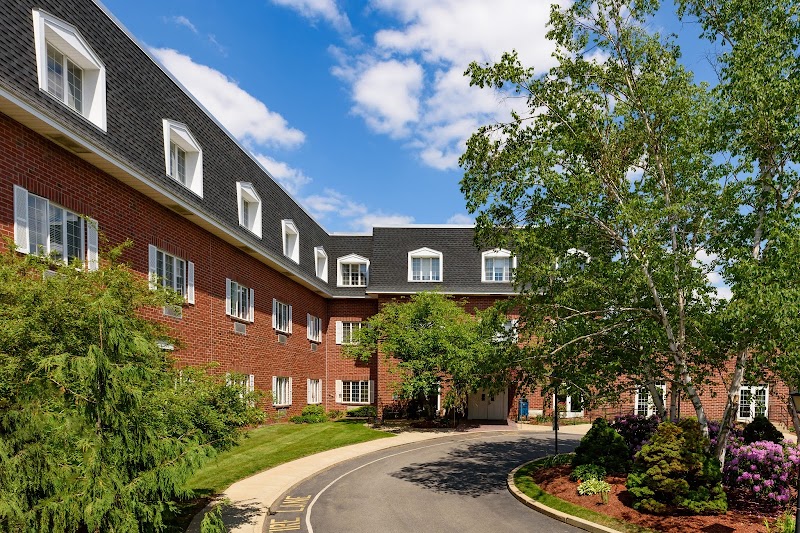
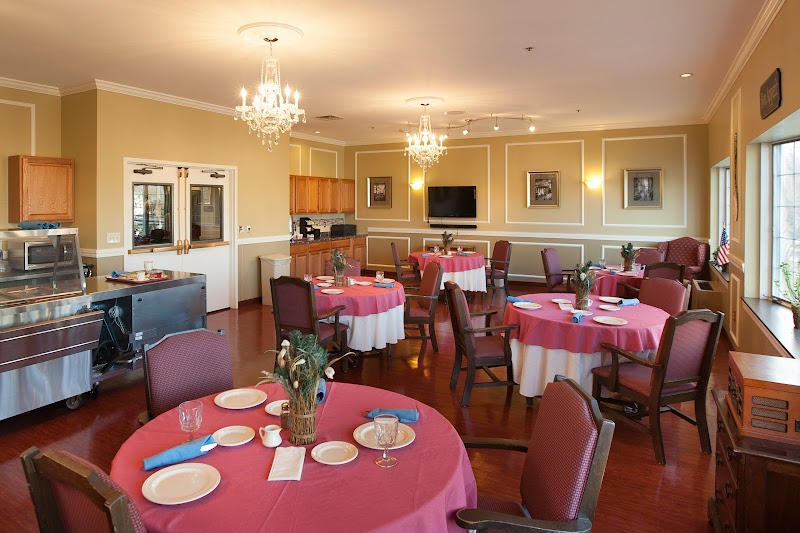
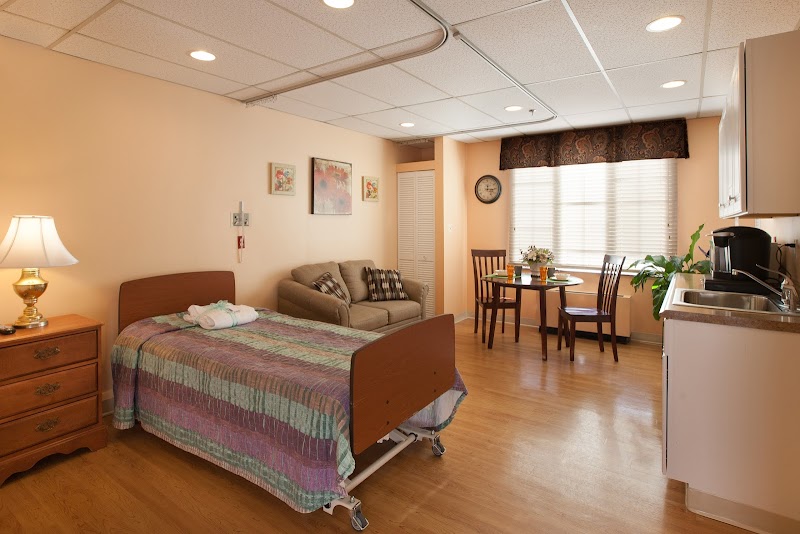
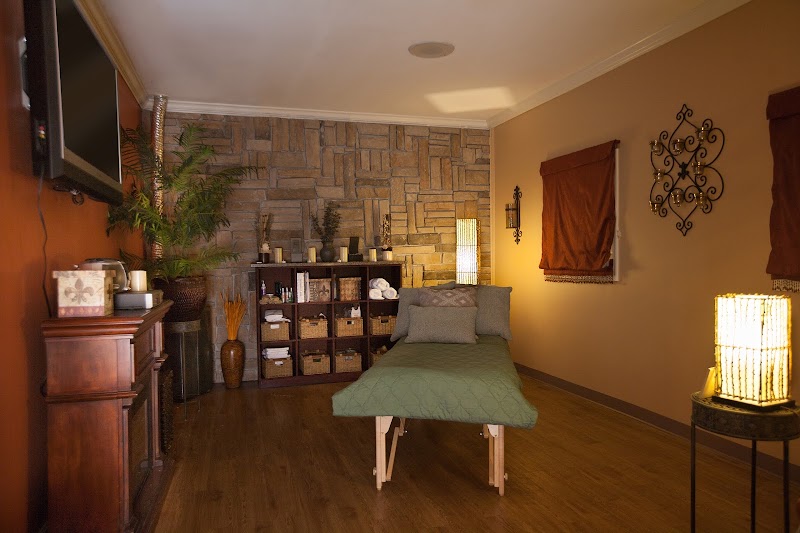
Cherry Hill Manor

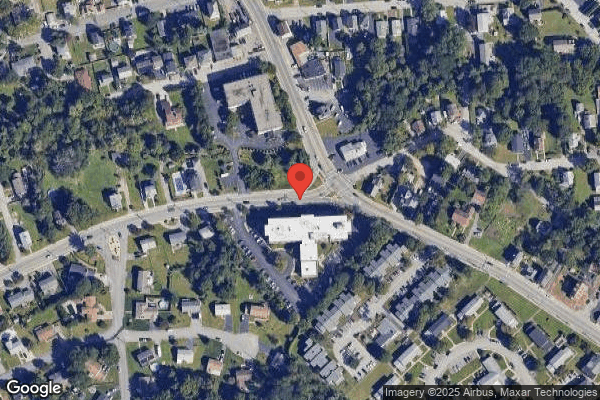
2 Cherry Hill Road, Johnston, RI 02919 (401) 231-3102
For profit - Corporation 171 Beds LIFE CARE CENTERS OF AMERICA Data: November 2025
Trust Grade
83/100
#3 of 72 in RI
Last Inspection: October 2024

Within standard 12-15 month inspection cycle. Federal law requires annual inspections.

Overview

Cherry Hill Manor in Johnston, Rhode Island, has a Trust Grade of B+, indicating it is above average and recommended for families considering long-term care options. With a state rank of #3 out of 72 facilities, they are well-placed in the top tier of Rhode Island nursing homes, and they rank #2 out of 41 in Providence County, meaning only one local option is better. However, the facility's trend is concerning as the number of issues has tripled from 1 in 2024 to 3 in 2025. Staffing is generally a strength, with a rating of 4 out of 5 stars and a turnover rate of 37%, which is better than the state average. On the downside, the facility has faced $6,201 in fines, which is lower than many others in Rhode Island, but still indicates some compliance problems. There have been specific incidents that raised concerns, such as failing to provide the necessary assistive devices for safe transfers, which could lead to accidents. Additionally, there was a failure to maintain proper infection control practices, highlighted by issues with hygiene during high-contact care. Lastly, the facility did not ensure regular and accurate skin assessments for some residents, potentially putting them at risk for pressure injuries. Overall, while Cherry Hill Manor boasts strong staffing and is highly rated, families should be aware of these critical areas needing improvement.

Trust Score
B+
83/100
In Rhode Island
#3/72
Top 4%
Safety Record
Low Risk
No red flags
Inspections
Getting Worse
1 → 3 violations
Staff Stability
○ Average
37% turnover. Near Rhode Island's 48% average. Typical for the industry.
Penalties
✓ Good
$6,201 in fines. Lower than most Rhode Island facilities. Relatively clean record.
Skilled Nurses
○ Average
Each resident gets 39 minutes of Registered Nurse (RN) attention daily — about average for Rhode Island. RNs are the most trained staff who monitor for health changes.
Violations
⚠ Watch
15 deficiencies on record. Higher than average. Multiple issues found across inspections.
★★★★★
5.0
Overall Rating
★★★★☆
4.0
Staff Levels
★★★★★
5.0
Care Quality
★★★★★
5.0
Inspection Score
Stable
2024: 1 issues
2025: 3 issues

The Good

  • 4-Star Staffing Rating · Above-average nurse staffing levels
  • 5-Star Quality Measures · Strong clinical quality outcomes
  • Full Sprinkler Coverage · Fire safety systems throughout facility
  • No fines on record
  • Staff turnover below average (37%)

    11 points below Rhode Island average of 48%

Facility shows strength in staffing levels, quality measures, fire safety.

The Bad

Staff Turnover: 37%

Near Rhode Island avg (46%)

Typical for the industry

Federal Fines: $6,201

Below median ($33,413)

Minor penalties assessed

Chain: LIFE CARE CENTERS OF AMERICA

Part of a multi-facility chain

Ask about local staffing decisions and management

The Ugly 15 deficiencies on record

Apr 2025 3 deficiencies
CONCERN (D) 📢 Someone Reported This

A family member, employee, or ombudsman was alarmed enough to file a formal complaint

Potential for Harm - no one hurt, but risky conditions existed

Deficiency F0655 (Tag F0655)

Could have caused harm · This affected 1 resident

Based on record review and staff interview, it has been determined that the facility failed to develop and implement a baseline care plan for each resident within 48 hours of a resident's admission, t...

Read full inspector narrative →
Based on record review and staff interview, it has been determined that the facility failed to develop and implement a baseline care plan for each resident within 48 hours of a resident's admission, that includes the instructions needed to provide effective and person-centered care for the resident, that meets professional standards of quality relative to a surgical wound and the use of a Hemovac drain (a device that is used to remove fluids that build up in an area of your body after surgery. The Hemovac drain removes fluid by creating suction in the tube. The circular device is squeezed flat and expands as it fills with fluid) for 1 of 1 resident reviewed for baseline care plans, Resident ID #1. Findings are as follows: Review of a community reported complaint submitted to the Rhode Island Department of Health on 4/22/2025, revealed, Resident ID #1 recently underwent surgery and was discharged from the hospital to the skilled nursing facility (SNF). On his/her post operative visit s/he came from the facility and on exam s/he presented as not alert, babbling, lethargic, and altered. Labs that were taken at the SNF demonstrated elevated white blood cells (indicating an infection) and s/he was sent to the emergency room. Resident ID #1 was found to have multiple medical concerns and subsequently admitted to the hospital for care. Record review revealed that Resident ID #1 was admitted to the facility in March of 2025 with diagnoses including, but not limited to, fusion of the spine and orthopedic aftercare. Record review of a facility document titled, .Admission/readmission Collection Tool - V 6 dated 3/28/2025 at 4:57 PM states in part, .Surgical dressing intact to posterior back, drain connected to HV (Hemovac) to back, serosanguineous drainage (a type of fluid discharge that is a combination of serous (clear) fluid and blood, typically appearing as a light pink, thin, and watery fluid) noted . Record review of the baseline care plan initiated on 3/28/2025 failed to reveal evidence of a care plan related to the surgical wound or the Hemovac drain which includes treatment or interventions required. During a surveyor interview on 4/24/2025 at 9:40 AM with the Director of Nursing Services and the Assistant Director of Nursing Services, they acknowledged that the resident had a surgical wound and a Hemovac drain on admission. Additionally, they were unable to provide evidence that the baseline care plan included instructions needed to provide effective and person-centered care relative to the use of a Hemovac drain for Resident ID #1.
CONCERN (D) 📢 Someone Reported This

A family member, employee, or ombudsman was alarmed enough to file a formal complaint

Potential for Harm - no one hurt, but risky conditions existed

Deficiency F0658 (Tag F0658)

Could have caused harm · This affected 1 resident

Based on surveyor observation, record review and staff interview, it has been determined that the facility failed to ensure that services provided meet professional standards of quality relative to a ...

Read full inspector narrative →
Based on surveyor observation, record review and staff interview, it has been determined that the facility failed to ensure that services provided meet professional standards of quality relative to a Hemovac drain (a device that is used to remove fluids that build up in an area of your body after surgery. The Hemovac drain removes fluid by creating suction in the tube. The circular device is squeezed flat and expands as it fills with fluid) for 1 of 1 resident reviewed, Resident ID #1. Findings are as follows Review of a community reported complaint submitted to the Rhode Island Department of Health on 4/22/2025, revealed, Resident ID #1 recently underwent surgery and was discharged from the hospital to the skilled nursing facility (SNF). On his/her post operative visit s/he came from the facility and on exam s/he presented as not alert, babbling, lethargic, and altered. Labs that were taken at the SNF demonstrated elevated white blood cells (indicating an infection) and s/he was sent to the emergency room. Resident ID #1 was found to have multiple medical concerns and was subsequently admitted to the hospital for care. Record review of the policy titled Treatment of Surgical Wounds with an issue date of 7/9/2024, revealed in part, Closed-wound drains are typically inserted during surgery in anticipation of substantial postoperative drainage .A closed-wound drain .prevents exudate (liquid produced by the body in response to tissue damage and wound healing) from accumulating at the wound site .Hemovac closed drainage systems are most commonly used. These drains are considered vacuum drains that use low negative pressure. The collection chamber expands as it collects the draining fluid by exchanging negative pressure for fluid .The drain should be emptied and its contents measured every 4 to 8 hours or more often according to the patient's condition, the amount of drainage, and the practitioner's orders. Removing excess drainage maintains maximum suction and avoids straining the drain's suture line . Record review revealed the resident was admitted to the facility in March of 2025 with diagnosis including, but not limited to, fusion of the spine of the thoracic vertebrae 11-12. Record review of a facility document titled, .Admission/readmission Collection Tool - V 6 dated 3/28/2025 at 4:57 PM, authored by Licensed Practical Nurse (LPN), Staff A, states in part, .Surgical dressing intact to posterior back, drain connected to HV (Hemovac) to back, serosanguineous drainage (a type of fluid discharge that is a combination of serous (clear) fluid and blood, typically appearing as a light pink, thin, and watery fluid) noted . Further record review failed to reveal evidence of the Hemovac drain's output measurement per the facility policy. During a surveyor interview on 4/23/2025 at 1:50 PM with Staff A, she acknowledged that the resident had a Hemovac drain on his/her back. Additionally, she revealed that she could not remember if there was an order to measure the amount of drainage. She was unable to provide evidence that the drain was emptied and its contents measured every 4 to 8 hours per the facility policy. Record review of the physician's orders failed to reveal an order to empty the Hemovac drain's contents, the frequency, amount and description of the drainage per the facility policy. Additionally, the record failed to have an order for monitoring the Hemovac drain's function from 3/28/2025 through 3/30/2025. During a surveyor interview on 4/23/2025 at approximately 3:00 PM with the Assistant Director of Nursing Services, she was unable to provide documentation of Hemovac drain's output monitoring during the resident's stay from 3/28/2025 through 3/31/2025. Additionally, she was unable to provide evidence of a physician's order to monitor the Hemovac drain's function from 3/28/2025 through 3/30/2025. During a surveyor interview on 4/23/2025 at 3:50 PM with the resident's facility physician, he revealed that for residents who have a Hemovac, the general rule is to have a physician's order to monitor how much drainage is coming out of the drain, ensure of proper functioning, monitor for signs and symptoms of infection, and to have a follow up appointment scheduled with the surgeon. During a surveyor interview on 4/24/2025 at 10:23 AM with the surgeon's physician assistant, he revealed that during the resident's follow-up appointment, the facility failed to provide documentation of the resident's Hemovac drain's output. He added that he would expect the facility to monitor and document the Hemovac drain's output at least two times daily, decompressing it to empty the drainage and compressing it again to reset the drain to ensure that negative pressure is in place. During a surveyor interview on 4/24/2025 at 9:40 AM with the Director of Nursing Services, she was unable to provide evidence of an order to empty the Hemovac drain's contents, its frequency, amount and description of the drainage per the facility policy. Additionally, she was unable to provide evidence of a physician's order to monitor that the Hemovac drain was properly functioning from 3/28/2025 through 3/30/2025, per the facility policy. Cross Reference F 726
CONCERN (D) 📢 Someone Reported This

A family member, employee, or ombudsman was alarmed enough to file a formal complaint

Potential for Harm - no one hurt, but risky conditions existed

Deficiency F0726 (Tag F0726)

Could have caused harm · This affected 1 resident

Based on record review and staff interview, it has been determined that the facility failed to ensure that nursing staff have the appropriate competencies and skill sets to provide nursing and related...

Read full inspector narrative →
Based on record review and staff interview, it has been determined that the facility failed to ensure that nursing staff have the appropriate competencies and skill sets to provide nursing and related services to assure resident safety to attain or maintain the highest practicable physical, mental, and psychosocial wellbeing of each resident, as determined by resident assessments, and considering the number, acuity and diagnoses of the facility's resident population in accordance with the facility assessment as required for 2 of 5 staff reviewed, Licensed Practical Nurses (LPNs) Staff A and B. Findings are as follows: Record review of the facility assessment states that the resident population may have a diagnosis that includes surgical wounds. Further review revealed nurse competencies should be completed during orientation, annually, and as dictated by the care needs of the residents. Record review of the policy titled Treatment of Surgical Wounds with an issue date of 7/9/2024, revealed in part, Closed-wound drains are typically inserted during surgery in anticipation of substantial postoperative drainage .A closed-wound drain .prevents exudate (liquid produced by the body in response to tissue damage and wound healing) from accumulating at the wound site .Hemovac closed drainage systems are most commonly used. These drains are considered vacuum drains that use low negative pressure. The collection chamber expands as it collects the draining fluid by exchanging negative pressure for fluid .The drain should be emptied and its contents measured every 4 to 8 hours or more often according to the patient's condition, the amount of drainage, and the practitioner's orders. Removing excess drainage maintains maximum suction and avoids straining the drain's suture line . Record review revealed the resident was admitted to the facility in March of 2025 with diagnosis including, but not limited to, fusion of the spine of the thoracic vertebrae 11-12. Record review of a facility document titled, .Admission/readmission Collection Tool - V 6 dated 3/28/2025 at 4:57 PM, authored by LPN, Staff A, states in part, .Surgical dressing intact to posterior back, drain connected to HV (Hemovac) to back, serosanguineous drainage (a type of fluid discharge that is a combination of serous (clear) fluid and blood, typically appearing as a light pink, thin, and watery fluid( noted . During a surveyor interview on 4/24/2025 at 11:14 AM with Staff A, she revealed that she did not recall receiving a training specific to the care of a Hemovac drain from the facility prior to caring for Resident ID #1. During a surveyor interview on 4/24/2025 at 11:18 AM with LPN, Staff B, she revealed that she cared for Resident ID #1 and she did not receive any training specific to the care of a Hemovac drain from the facility prior to caring for the resident. During a surveyor interview on 4/24/2025 at 7:58 AM with the Director of Nursing Services, after the surveyor requested the competencies for Staff A and B, she revealed that the facility does not provide education or competencies specifically related to Hemovac drain care for any of their nursing staff. Cross reference- F 658
Dec 2024 1 deficiency
CONCERN (E) 📢 Someone Reported This

A family member, employee, or ombudsman was alarmed enough to file a formal complaint

Potential for Harm - no one hurt, but risky conditions existed

Infection Control (Tag F0880)

Could have caused harm · This affected multiple residents

Based on surveyor observation, record review, and staff interview, it has been determined that the facility failed to maintain an infection prevention and control program to help prevent the transmiss...

Read full inspector narrative →
Based on surveyor observation, record review, and staff interview, it has been determined that the facility failed to maintain an infection prevention and control program to help prevent the transmission of communicable diseases and infections, relative to Enhanced Barrier Precautions (EBP; involves using gown and gloves during high-contact resident care activities) for 1 of 1 resident observed for high-contact resident care activities, Resident ID #1. Findings are as follows: Review of a community reported complaint submitted to the Rhode Island Department of Health on 12/3/2024, alleged concerns with proper hygiene care and proper sanitization before seeing a resident. Review of a facility policy titled Enhanced Barrier Precautions states in part, The facility should use Enhanced Barrier Precautions (EBP) as an additional MDRO [multidrug resistant organism] mitigation strategy for residents that meet the following criteria, during high-contact resident care activities .EBP are indicated for residents with .Wounds .Wounds generally include chronic wounds, not shorter lasting wounds, such as skin breaks or skin tears covered with an adhesive bandage (e.g., Band-Aid) or similar dressing .Examples of resident care activities requiring gown and glove use for Enhanced Barrier Precautions include: Dressing .Transferring .Wound Care: any skin opening requiring a dressing . Record review revealed Resident ID #1 was admitted to the facility in July of 2024 with a diagnosis that includes, but is not limited to, assistance with personal care. Record review of the October 2024 Treatment Administration Record (TAR) revealed the resident required the following wound treatments: - Cleanse wound with normal saline followed by Prisma (collagen) and a foam dressing to the coccyx, every 3 days, with a start date of 10/29/2024 and an end date of 11/12/2024. Record review of the November 2024 TAR revealed the resident required the following wound treatments: - Cleanse wound with normal saline followed by Prisma and a foam dressing to the coccyx every 3 days with a start date of 10/29/2024 and an end date of 11/12/2024. - Cleanse wound with normal saline followed by honey (a treatment with antibacterial properties that provides autolytic debridement and a moist wound healing environment) and maxorb (a dressing that needs to be cut to size that is made of calcium alginate with superior absorption of fluid, ideal for moderate to heavy draining wounds and aids in autolytic debridement) and a foam dressing to the coccyx, every day with a start date of 11/12/2024 and an end date of 12/02/2024. Record review of the December 2024 TAR revealed the resident required the following wound treatments: - Cleanse wound with Daskins (broad-spectrum antimicrobial cleanser that is effective against some multidrug resistant organisms and bacteria, viruses, molds, fungi, and yeast. Also used for odor control), ¼ strength wash, followed by Santyl (prescription medicine that removes dead tissue from wounds so they can start to heal) and maxorb and a foam dressing to the coccyx ,every day with a start date of 12/3/2024 and an end date of 12/10/2024. - Cleanse wound with Daskins 1/2 strength wash followed by Santyl and maxorb and a foam dressing to the coccyx every day with a start date of 12/10/2024. A surveyor observation on 12/10/2024 at 11:05 AM, of Resident ID # 1's room revealed signage posted at the resident's door which indicated that staff are to wear a gown during high contact care activities, such as dressing and transferring a resident. Additional observation revealed Nursing Assistants (NA), Staff A and B were in the resident's room, pulling up his/her pants over his/her brief and wound dressing, which is located on his/her coccyx, in preparation to transfer the resident via Hoyer Lift. Further observation revealed Staff A and B were not wearing a gown, as required for a resident who has a wound that requires a dressing. Further observation on 12/10/2024 at 11:09 AM, revealed Licensed Practical Nurse (LPN), Staff C entered the resident's room and assisted Staff A with transferring the resident from his/her bed, without wearing a gown or gloves. During a surveyor interview on 12/10/2024 at 11:16 AM, with Staff A, she acknowledged the signage posted at the resident's door and revealed that the signage was new. She further acknowledged that she should have been wearing a gown when providing care to and transferring the resident. During a surveyor interview on 12/10/2024 at 11:19 AM, with LPNs, Staff C and D, they revealed that they would expect staff to wear both gloves and gowns for high contact care activities such as helping someone get dressed. When questioned if they should wear gowns and gloves during a transfer, they revealed that didn't believe so but would have to check with the Director of Nursing [DNS]. During a subsequent interview on 12/10/2024 at 11:21 AM with Staff C, she revealed that yes, gowns and gloves should have been worn during the transfer with Resident ID #1, per the signage posted at the door. Additional record review failed to reveal evidence that the resident was placed on EBP prior to 12/10/2024, although they developed a skin opening that required a dressing on 10/29/2024. During a surveyor interview on 12/10/2024 at 12:08 PM, with the Infection Preventionist, she revealed that she would expect staff to follow the EBP signage, and wear a gown and gloves during high contact care activities for a resident on EBP. During a surveyor interview with the DNS, the Assistant Director of Nursing, and the Infection Preventionist on 12/10/2024 at 12:40 PM, they were unable to provide evidence that the facility followed EBP per the facility policy and the posted signage found outside of Resident ID #1's room.
Dec 2023 2 deficiencies
CONCERN (D)

Potential for Harm - no one hurt, but risky conditions existed

Infection Control (Tag F0880)

Could have caused harm · This affected 1 resident

**NOTE- TERMS IN BRACKETS HAVE BEEN EDITED TO PROTECT CONFIDENTIALITY** Based on surveyor observation, record review, and staff interview, it has been determined that the facility failed to maintain a...

Read full inspector narrative →
**NOTE- TERMS IN BRACKETS HAVE BEEN EDITED TO PROTECT CONFIDENTIALITY** Based on surveyor observation, record review, and staff interview, it has been determined that the facility failed to maintain an infection prevention and control program to help prevent the transmission of communicable diseases and infections relative to staff wearing appropriate personal protective equipment (PPE) for 1 of 1 units observed experiencing a COVID-19 (SARS-CoV-2) outbreak, 4th floor. Findings are as follows: Review a document titled, COVID-19 Information for Nursing Homes last updated 6/15/2023 states in part, .Facilities should implement broad use* of respirators and eye protection by HCP [Healthcare Personnel] during patient care encounters when COVID-19 .is increasing .and outbreaks in long-term care settings .*Facilities may implement universal use of NIOSH [National Institute for Occupational Safety & Health]-approved particulate respirators with N95 filters of higher for HCP during all patient care encounters or in specific units or areas of the facility at higher risk for COVID-19 transmission . During the entrance conference on 12/4/2023 at 9:18 AM, with the Administrator and the Assistant Director of Nursing Services (ADNS) / Infection Preventionist (IP), they revealed the facility had one COVID-19 positive resident on the 4th floor unit and indicated an N-95 mask must be worn by staff at all times on that unit. They further revealed a surgical mask was required to be worn by staff on all additional units. During surveyor observations, on all days of the survey, revealed signage posted on the 4th floor which states, ATTENTION N95 ARE REQUIRED FOR ALL EMPLOYEES AT ALL TIMES ON THIS UNIT! THANK YOU. During a surveyor interview on 12/6/2023 at 10:34 AM with the IP, during the infection control task, she revealed another resident on the 4th floor tested positive for COVID-19, totaling two residents, and indicated multiple staff, who only worked on the 4th floor, were also positive for COVID-19. A. During surveyor observations on 12/7/2023 from 8:33 AM to 8:43 AM of the Administrator on the 4th floor unit, revealed the following: - 8:33 AM, observed to be wearing only a surgical mask - 8:35 AM, observed entering room [ROOM NUMBER], left and entered room [ROOM NUMBER], collecting a meal tray - 8:36 AM, observed entering room [ROOM NUMBER], collected a meal tray and left the room - 8:37 AM, observed in the dining room speaking with residents - 8:39 AM, observed entering room [ROOM NUMBER] - 8:40 AM, observed sticking her head into room [ROOM NUMBER], which was a COVID-19 positive room, left and entered room [ROOM NUMBER], and removed a meal tray. - 8:41 AM, observed pulling down her surgical mask, wiped her nose with a tissue, and pulled the mask back up. She then proceeded to open the door to room [ROOM NUMBER] - 8:42 AM, observed opening the door to room [ROOM NUMBER] During a surveyor interview, immediately following the above observations, with the Administrator, she acknowledged an N-95 mask was required to be worn when on the 4th floor and was unable to explain why she was wearing only a surgical mask. B. During a surveyor observation on 12/7/2023 at 8:43 AM, revealed Registered Nurse, Staff F, wearing only a surgical mask, while working on the 4th floor. During a surveyor interview on 12/7/2023 at 8:45 AM with Staff F, she acknowledged that she was only wearing a surgical mask on the 4th floor and indicated that she only wears a N-95 mask in COVID-19 positive rooms because she cannot tolerate wearing an N-95 mask due to having asthma. Further, she revealed she was a per diem nurse at the facility. During a surveyor interview on 12/7/2023 at 9:21 AM, with the ADNS/IP, she acknowledged the Administrator was only wearing a surgical mask on the 4th floor and indicated she should have been wearing an N-95 mask. She further revealed Staff F was only wearing a surgical mask and indicated it was a risk she can take. Further, she was unable to explain why Staff F was assigned to work on a floor requiring the use of an N-95 mask at all times, when there were additional floors that only required the use of a surgical mask.
CONCERN (F)

Potential for Harm - no one hurt, but risky conditions existed

Accident Prevention (Tag F0689)

Could have caused harm · This affected most or all residents

**NOTE- TERMS IN BRACKETS HAVE BEEN EDITED TO PROTECT CONFIDENTIALITY** Based on surveyor observation, record review, and staff interview, it has been determined that the facility failed to ensure tha...

Read full inspector narrative →
**NOTE- TERMS IN BRACKETS HAVE BEEN EDITED TO PROTECT CONFIDENTIALITY** Based on surveyor observation, record review, and staff interview, it has been determined that the facility failed to ensure that each resident has the appropriate assistive device to prevent accident hazards for 3 of 3 units reviewed for relative to Hoyer's (Mechanical lift/assistive device) transfers, Resident ID #s 1, 22, 42, 59, 61, 73, 82, 94, 121, 127, and 130. Findings are as follows: According to the State Operations Manual Appendix PP - Guidance to Surveyors for Long Term Care Facilities last revised on 2/3/2023, states in part, .Assistive devices also can help to prevent accidents. Assistive devices and equipment can help residents move with increased independence, transfer with greater comfort, and feel physically more secure. However, there are risks associated with the use of such devices and equipment, particularly if or when they are not properly maintained, and these risks need to be balanced with the benefits gained from their use. Training of staff .on the proper use of assistive devices/equipment is crucial to prevent accidents. It is also important to communicate clearly the approaches identified in the care plan to all staff, including temporary staff. It is important to train staff regarding resident assessment, safe transfer techniques, and the proper use of mechanical lifts including device weight limitations .Personal Fit and Device Condition. Devices can pose a hazard if not fitted and/or maintained properly .Personal fit, or how well the assistive device meets the individual needs of the resident, may influence the likelihood of an avoidable accident; and .Additionally, staff needs to ensure assistive devises properly fit the resident and the resident has received proper training in the use of the assistive device . Review of the facility policy titled Limited Lift Program (Safe Patient Handling) last revised 8/9/2023, states in part, .the facility will assess the resident to determine transfer status .This information will be captured in the medical record and communicated through the care plan .2. If a lifting device is required, the manufacture guidelines will be used to determine the type and size of sling that should be utilized . Review of an education document provided by the facility dated 11/13/2023 titled Safe Hoyer Use states in part, .1) Ensure you are using the right size Hoyer pad. There is a list of everyone's sizes in the CNA [Certified Nursing Assistant] folder if you are questioning some ones [sic] size. Size is determined based on weight . Record review of a facility document titled Hoyer Pad Sizes indicates the following for determining Hoyer pad sizes: - orange = small - grey = medium slim - yellow = medium - blue = large - black = extra large - white = extra extra large - grey mesh = shower 1. Record review revealed that Resident ID #94 sustained a fall during a Hoyer lift transfer on 11/12/2023, Hoyer machine and Hoyer pad were inspected for safety with no issues found and education was provided to the nursing staff on proper Hoyer and Hoyer pad use. During a surveyor observation on 12/7/2023 at 9:00 AM with Staff A, Resident ID #94's whiteboard failed to reveal what size Hoyer pad to utilize. Staff A revealed she uses a medium or large pad when transferring the resident as s/he is tall. She further acknowledged that the white board does not list what size Hoyer pad to use. During a surveyor observation on 12/7/2023 at 10:30 AM with Nursing Assistant (NA), Staff C and NA Staff A during a transfer of the resident, revealed the use of a yellow striped pad, indicating a medium pad was utilized. Review of the fourth floor master list of Hoyer pads, revealed that Resident ID #94 uses a Grey pad for transfers. During a surveyor interview on 12/7/2023 at 10:34 AM with the 4th floor Unit Manager, she revealed that the resident is listed as using a grey hoyer pad as it is the unit managers preference. 2. Record review of Resident ID #1's [NAME] (type of index card system used to relate relative resident care needs to staff) states in part, Transferring .Transfer via Hoyer lift (small pad) with two assists- matrix cushion between [the resident] and Hoyer pad with the transfer. Record review of the special instructions on care plan states in part .Hoyer lift 2 assist (small Hoyer pad) with matrix cushion inside Hoyer lift during the transfer . Review of the facility provided 3rd floor master list titled Hoyer & Resident Hoyer Pad Sizes revealed the resident is listed as using a medium pad. During a surveyor interview on 12/7/2023 at 10:58 AM with the third floor Unit Manager, she acknowledged the discrepancies in the documentation. 3. Record review of Resident ID #22's [NAME] states in part, Transferring .TRANSFER: Hoyer lift with 2 assists . Record review of the residents care plan revealed the following intervention, .2-Assist Hoyer for transfers . Record review of the special instructions on the care plan states in part, .2-Assist Hoyer for transfers .ENSURE WHEN UTILIZING HOYER NOT TO CROSS STRAPS IN BETWEEN LEGS. During a surveyor observation on 12/7/2023 at 10:31 AM revealed a white board located in his/her room which states in part, 2 assist Hoyer. Further review of the white board failed to reveal evidence of a Hoyer pad size. Record review failed to reveal evidence of documentation in the resident's medical record or plan of care relative to which size Hoyer pad the resident should use. During a surveyor interview on 12/7/2023 at 10:58 AM with the third floor Unit Manager, she acknowledged the white board and care plan did not identify which size hoyer pad to utilize for this resident. 4. Record review of Resident ID #42's special instruction on the care plan revealed s/he utilizes a Hoyer for transfer with two assists. Review of the resident white board in his/her room revealed the resident utilizes a Hoyer but failed to reveal evidence of which size Hoyer pad to utilize with the resident. During a surveyor interview on 12/7/2023 at 8:50 AM with Nursing Assistant (NA), Staff A, she revealed that you can identify what size pad each resident needs based on what Hoyer pad is either in their room or bagged outside their room. She further revealed that her assignment does not list the resident Hoyer pad size. When asked how she could identify what size Hoyer pad was needed for a resident, Staff A revealed she would review the resident care plan and white board. Additionally, she acknowledged the white board and care plan failed to identify the size of Hoyer pad required. She further revealed that she would only find the Hoyer pad size specific to each resident on the care plan and the white board. 5. Review of Resident ID #59's special instructions on the care plan states in part, .Transfers with 2 assists with Hoyer lift . Review of Resident ID #59 white board revealed the resident transfers with a medium Hoyer pad. Review of the resident weights revealed s/he should utilize a large hoyer pad for transfers. During a surveyor interview on 12/7/2023 at 10:58 AM with the 3rd floor Unit Manager, she acknowledged that Resident ID #59 has a medium sized hoyer pad listed on the white board. She further acknowledged that according the manufactures weight chart the resident should be in a large hoyer pad. 6. Record review of Resident ID #61's special instructions on the care plan indicates to utilize a large Hoyer pad. Record review of the resident care plan revealed the resident is documented as requiring a medium pad for Hoyer transfers. Review of the fourth floor master list for hoyer pad sizes identified Resident ID #61 as utilizing a large hoyer pad. During a surveyor observation on 12/7/2023 at 1:04 PM of the resident's white board failed to reveal what size Hoyer pad to utilize during a transfer. During a surveyor interview on 12/7/2023 at 1:06 PM with NA, Staff B, she acknowledged that the white board doesn't specify what size Hoyer pad to utilize. During a subsequent observation and interview on 12/7/2023 with Staff B about Resident ID #61, she revealed that the resident is currently sitting on a green strap Hoyer pad and further revealed that indicated it was an extra large Hoyer pad related to his/her height. Review of a document titled Hoyer Pad Sizes failed to list a green strap Hoyer pad with a corresponding size. 7. During a surveyor observation on 12/7/2023 at 10:09 AM of Resident ID #73 revealed, s/he was sitting in the dining room in a wheelchair on a Hoyer pad. Record review of Resident ID #73 revealed s/he utilizes a Hoyer pad for transfers. Record review of the care plan and special instructions failed to reveal what size Hoyer pad to utilize for the resident. Review of the resident's white board in his/her room failed to reveal evidence of what size Hoyer pad to utilize during his/her transfer. During a surveyor interview and observation on 12/7/2023 at 10:12 AM with the 4th floor unit manager, she acknowledged that the white board, care plan and special instructions failed to reveal what size Hoyer pad should be utilized for transfers. She further revealed that there is a master list at the nurse's station. Immediately following the above interview and observation with the 4th floor unit manager, the fourth floor master Hoyer list was reviewed with the unit manager and failed to identify Resident ID #73 documented as a Hoyer lift transfer with the corresponding Hoyer pad size. The 4th floor unit manager acknowledged that the resident was not listed on the Hoyer lift list with the corresponding size. 8. Record review for Resident ID #82 revealed that s/he utilizes a large Hoyer pad for transfers. During surveyor observations on 12/7/2023 at 9:00 AM and 1:14 PM revealed the white board in Resident ID #82's room documented as requiring a medium Hoyer lift pad. Review of the 4th floor master list of residents revealed the resident utilizes a large, blue Hoyer pad. During a surveyor interview and observation on 12/7/2023 at 1:15 PM with Staff B, she revealed the resident uses a large (blue stripe) Hoyer lift for the resident. She further acknowledged the white board indicates that the resident utilizes a medium hoyer pad. Additionally, she revealed she uses own judgment to determine pad size for each resident. 9. Record review for Resident ID #121's special instructions revealed that s/he requires a Hoyer for transfers. Record review of the resident's care plan revealed s/he utilizes a Hoyer lift for transfers. Further record review failed to identify what size Hoyer pad to utilize during his/her Hoyer transfer. During a surveyor observation on 12/7/2023 at 11:03 AM of the resident's white board failed to reveal what size Hoyer lift pad to utilize for transfers. During a surveyor interview on 12/7/2023 at approximately 11:30 AM with NA, Staff D, she revealed that the NA's look at the resident and decide on the appropriate size. She further revealed that the NA's are expected to use their professional judgement and common sense to determine their Hoyer pad size. During a surveyor interview on 12/7/2023 at approximately 1:00 PM with the second floor Unit Manger she revealed that she does not have a master list of Hoyer pad sizes on the second floor. Additionally, she was unable to provide evidence of where to find the appropriate size hoyer pad for this residents. 10. Record review of Resident ID #127's [NAME] states in part, .Transferring .TRANSFER: Hoyer lift with 2 assists . Record review of the resident care plan revealed the following intervention, .TRANSFER: Hoyer lift with 2 assists into Broda chair . Record review of the special instructions on care plan states in part, .1 assist with adls [activities of daily living], 2 for Hoyer transfer . During a surveyor observation on 12/7/2023 at 10:31 AM revealed a white board located in his/her room which states in part, 2 assist Hoyer Further review of the white board failed to reveal a Hoyer pad size. During a surveyor interview on 12/7/2023 at 10:58 AM with the third floor Unit Manager, she acknowledged that this resident uses a hoyer for transfer. Additionally she acknowledged that the white board does not identify the appropriate size hoyer pad for transfers. 11. Record review of Resident ID #130's special instructions revealed that the resident requires a Hoyer lift for transfers. Review of the resident's white board revealed the resident utilizes a Hoyer lift for transfers. Record review failed to reveal evidence of what size Hoyer lift pad to utilize for transfers. During a surveyor interview on 12/7/2023 at 8:50 AM with Staff A, she revealed that her assignment does not list the resident Hoyer pad size. When asked how she could identify what size Hoyer pad was needed for a resident, Staff A revealed she would review the resident care plan and white board. Additionally, she acknowledged the white board and care plan failed to identify the size of Hoyer pad required. She further revealed that she would only find the Hoyer pad size specific to each resident on the care plan and the white board. During a surveyor interview on 12/7/2023 at 9:57 AM, with Licensed Practical Nurse, Staff E, she acknowledged the Hoyer pad size is not listed on the care plan or the white board in the residents room. During a surveyor interview on 12/7/2023 at 12:38 PM with the Director of Nursing Services, the Assistant Director of Nursing Services, the Administrator and the Unit Managers from the 2nd, 3rd and 4th floor revealed, that initially, therapy assess if the Hoyer is needed then the nurse determines the size based on the weight. They further revealed that they had a master list and the master list on each unit has the correct sizes. They were unable to provide evidence of an updated list for unit 4 and a complete list for unit 2. They further, were unable to provide evidence of an effective system in place that communicates with the direct care staff on which size Hoyer pad to utilize with each resident to prevent accident hazards.
Oct 2022 9 deficiencies
CONCERN (D)

Potential for Harm - no one hurt, but risky conditions existed

ADL Care (Tag F0677)

Could have caused harm · This affected 1 resident

**NOTE- TERMS IN BRACKETS HAVE BEEN EDITED TO PROTECT CONFIDENTIALITY** Based on record review, resident's family, and staff interview, it has been determined that the facility failed to provide the n...

Read full inspector narrative →
**NOTE- TERMS IN BRACKETS HAVE BEEN EDITED TO PROTECT CONFIDENTIALITY** Based on record review, resident's family, and staff interview, it has been determined that the facility failed to provide the necessary services to residents who are unable to carry out activities of daily living (ADL) relative to showers for 1 of 6 residents reviewed, Resident ID #135. Findings are as follows: Record review of a facility policy titled, Activities of Daily Living (ADLs) last reviewed on 8/22/2022, states in part, Policy The resident will receive assistance as needed to complete activities of daily Living (ADLs) .Procedure .Bathing Frequency- Tub baths or showers will be scheduled at least two (2) times per week based on resident preference. Staff will encourage residents to complete a minimum of one (1) tub bath, shower, or bed bath per week . Record review revealed the resident was admitted to the facility in September of 2022 with diagnoses including, but not limited to, traumatic subarachnoid hemorrhage (bleeding in the brain), muscle weakness and Alzheimer's Disease. Record review of an admission Minimum Data Set assessment dated [DATE], revealed the resident is totally dependent with bathing and showering and requires the assistance of one staff member to complete this task. Review of a care plan for ADL assistance dated 9/16/2022 revealed an intervention for, .One assist with ADLs . During a surveyor interview during the initial tour on 10/3/2022 at approximately 9:00 AM, the resident's family revealed the resident does not get showers as scheduled. S/he further revealed that since the resident was admitted to the facility s/he had only 2 showers. The resident was supposed to get a shower on the first shift last Wednesday, but s/he did not get it. The family member revealed that last Wednesday, the resident's hair was greasy, and s/he had to ask the second shift staff to give him/her a shower. Record review of the Unit Shower Schedule indicates the resident is to receive a shower on Wednesday and Sunday on the 7:00 AM-3:00 PM shift. Record review of the nursing assistant (NA) task titled POC [point of care] Response History from 9/11/2022 through 10/4/2022 failed to reveal evidence that the resident received showers twice weekly as per the shower schedule and/or that s/he had refused a shower. During a surveyor interview on 10/4/2022 at 12:09 PM with the Unit Manager Staff A, she revealed the NAs document in the record (under the task section) if they provide either a shower, a tub bath, or bed bath to their residents. NAs are to report to the nurse if their residents refuse a shower, tub bath or bed bath and the unit nurse will document in a nursing progress note. Additionally, Staff A was unable to provide evidence that the resident received showers twice weekly or that s/he was offered and refused a shower as per the shower schedule. During a surveyor telephone interview on 10/4/2022 at 2:27 PM with NA Staff C, he revealed he had taken care of the resident on multiple occasions on both the 7-3 and 3-11 shifts. Staff C revealed he worked during the 3:00 PM-11:00 PM on last Wednesday and gave a shower to the resident because the resident's family requested it. When questioned, Staff C revealed he documents in the record (task section) if he provided showers to a resident, or the resident refused. Additionally, Staff C revealed he would inform the unit nurse of resident's a refusal.
CONCERN (D)

Potential for Harm - no one hurt, but risky conditions existed

Quality of Care (Tag F0684)

Could have caused harm · This affected 1 resident

Based on surveyor observation, record review, resident and staff interview, it has been determined that the facility failed to ensure that residents receive treatment and care in accordance with profe...

Read full inspector narrative →
Based on surveyor observation, record review, resident and staff interview, it has been determined that the facility failed to ensure that residents receive treatment and care in accordance with professional standards of practice for 1 of 5 residents observed relative to skin conditions, Resident ID #113. Findings are as follows: Record review of the facility policy titled, Skin Integrity & Pressure Ulcer/Injury Prevention and Management, last reviewed on 4/19/2022, states in part, .A skin assessment/inspection occurs on admission/readmission. Skin observations also occur throughout points of care provided by CNAs [certified nursing assistants] during ADL [Activities of Daily Living] care (bathing, .incontinent care, etc). Any change or open areas are reported to the nurse. CNAs will also report to nurse if topical dressing is identified as soiled, saturated, or dislodged. Nurse will complete further inspection/assessment and provide treatment if needed .skin cleansing with appropriate cleanser at the time of soiling and at routine intervals . Record review revealed the resident was admitted to the facility in August of 2022 with diagnoses including, but not limited to, left leg above the knee amputation and peripheral vascular disease (low and progressive blood circulation disorder). Review of the admission Minimum Data Set assessment dated revealed a Brief Interview for Mental Status (BIMS) score of 13 out of 15, indicating no cognitive impairment. During surveyor observations of the resident revealed a non-adhesive dressing without a date and a small amount of dark brown drainage noted through the dressing on the following dates and times: -10/3/2022 at approximately 10:00 AM -10/4/2022 at 4:26 PM Record review of the physician's orders failed to reveal evidence that a treatment was in place for his/her right forearm wound. Additionally, record review failed to reveal evidence that there was documentation of the wound's location, size, origin, and/or treatment. Further observation on 10/4/2022 at 4:38 PM revealed a wound on the resident's right forearm (approximately 1.25 centimeter (cm) in length and 1.25 cm in width). During a simultaneous interview with the resident at the time of the observation, s/he revealed that s/he has had the open area for a while and that staff applied the dressing to it. The resident further revealed s/he took the dressing off because it was dirty. Duting surveyor observation and interview on 10/5/2022 at 9:16 AM, with the Unit Manager, Staff A, revealed an open area on the resident's right forearm with dark red drainage. Staff A revealed she was unaware that the resident had an open area to his/her right forearm. Additionally, Staff A acknowledged there was no documentation or treatment in place for the resident's right forearm wound.
CONCERN (D)

Potential for Harm - no one hurt, but risky conditions existed

Pressure Ulcer Prevention (Tag F0686)

Could have caused harm · This affected 1 resident

Based on surveyor observation, record review, and staff interview, it has been determined that the facility failed to provide necessary treatment and services, consistent with professional standards o...

Read full inspector narrative →
Based on surveyor observation, record review, and staff interview, it has been determined that the facility failed to provide necessary treatment and services, consistent with professional standards of practice, to promote wound healing and prevent new ulcers from developing for 1 of 3 residents reviewed who have actual pressure ulcers, Resident ID #203. Findings are as follows: Review of the facility's Policy and Procedure titled, Skin Integrity & Pressure Ulcer/Injury Prevention and Management dated 4/19/2022 states in part, .1. A Comprehensive skin inspection/assessment on admission and . Review of the facility's Policy and Procedure titled, Wound Care Management Program dated 4/19/2022 states in part .A resident with pressure ulcers receives necessary treatment and services, consistent with professional standard of practice, to promote healing, prevent infection and prevent new ulcers from developing . Record review for the resident revealed s/he was admitted to the facility in September of 2022 with diagnoses including, but not limited to, cognitive communication deficit, diabetes mellitus (high blood sugar), muscle weakness, and pressure ulcers. Review of the BRADEN SCALE - For Predicting Pressure Sore Risk and Risk Factors dated 9/30/2022 revealed the resident was coded as MILD RISK for developing pressure ulcers. Review of the Continuity of Care Discharge/Transfer of Patient Form from the transferring facility dated 9/30/2022 indicated two stage III pressure ulcers (full thickness of the skin loss), one to his/her coccyx and one to his/her right buttock. Review of the Admission/readmission Collection Tool dated 9/30/2022 revealed wound/red on the following areas: -sacrum (base of spine) -right buttock -coccyx Further record review of the admission nursing progress note dated 9/30/2022 revealed the resident has .left heel dark blister . Record review failed to reveal evidence of the measurements or descriptions of the wounds to the coccyx, right buttock, sacrum, and left heel when the wounds were first identified, which was upon admission. Further record review failed to reveal a description or measurements of the right buttock and coccyx pressure ulcers until 10/4/2022, which was 4 days after his/her admission. Review of the Wound Observation documentation dated 10/4/2022 revealed the following: -a stage III to the right buttock, 2 centimeter (cm) in length x 2 cm in width x 0.1 cm in depth -a stage III to the coccyx, 3 cm in length x 1 cm in width x 0.1 cm in depth Further record review of the Wound Observation document dated 10/4/2022 failed to reveal evidence of the sacral wound or left heel wound. Additionally, the record failed to reveal evidence of a description or measurement obtained of the left heel pressure ulcer, until it was brought to the facility's attention on 10/5/2022, which was 5 days after the resident was admitted to the facility. Record review revealed physician orders dated 9/30/2022 to cleanse wound to coccyx with NS [normal saline] followed by medihoney . and skin prep to bilateral heels every day and evening shift. Record review failed to reveal evidence that a physician's order for treatments to the right buttock and sacral pressure ulcers were obtained upon admission. Review of a care plan initiated on 9/30/2022 indicated the resident only has a pressure ulcer to his/her coccyx. Further review failed to reveal that a care plan was developed to address the right buttock, sacrum, and blister to the left heel until it was brought to the facility's attention by the surveyor on 10/5/2022. Surveyor observations on the following dates and times revealed that the resident's heels were resting directly on the mattress: -10/3/2022 at 10:00 AM until 10:20 AM and 12:59 PM -10/4/2022 at 12:52 PM and approximately 2:00 PM During a surveyor interview on 10/5/2022 at 10:35 AM with the Unit Manager, Staff A, she was unable to provide evidence of treatment orders for the right buttock or sacrum, when the wounds were identified on admission. During a surveyor observation with the Wound Nurse on 10/5/2022 at 10:40 AM revealed the resident with the following wounds: -left heel with black area, measuring 5.8 cm in length x 4.8 cm in width -coccyx stage 3 measuring 1.5 cm in length x 0.75 cm in width -right buttock stage 3, measuring 1 cm in length x 1 cm in width -right ischium (lower back of hip bone), measuring 0.7 cm in length x 0.3 cm in width During an interview at the time of the observation with the Wound Nurse, she was unable to provide evidence that measurements and/or a description of the wounds to the coccyx, right buttock, left heel, and sacrum were obtained upon admission. She further revealed that on 10/4/2022, she measured the wound to the coccyx and the wound to the buttock but did not measure the sacral wound because it was healed. The Wound Nurse acknowledged that there were no orders for a treatment to the right buttock until it was brought to the facility's attention by the surveyor on 10/5/2022. Additionally, the Wound Nurse revealed she was unaware of the pressure ulcer to the resident's left heel, and it was not measured until it was brought to her attention by the surveyor on 10/5/2022. Lastly, the Wound Nurse revealed she will add interventions to the care plan (including but not limited to repositioning and offloading heels) as well as provide education to the nurses to make sure the admission wound assessments are completed upon admission.
CONCERN (D)

Potential for Harm - no one hurt, but risky conditions existed

Respiratory Care (Tag F0695)

Could have caused harm · This affected 1 resident

Based on surveyor observation, record review, and staff interview, it has been determined that the facility failed to provide respiratory care consistent with professional standards of practice for 1 ...

Read full inspector narrative →
Based on surveyor observation, record review, and staff interview, it has been determined that the facility failed to provide respiratory care consistent with professional standards of practice for 1 of 1 resident reviewed for oxygen therapy, Resident ID #19. Findings are as follows: According to Brunner and Sudarth's textbook, Medical and Surgical Nursing, 7th Edition, 1992, p.524, as with other medications, oxygen is administered with care, and its effects on each patient are carefully assessed. Oxygen is a drug and except in emergency situations is prescribed by a physician. Record review revealed the resident was admitted to the facility in August of 2018 with diagnoses including, but not limited to hypertensive heart disease, chronic kidney disease, and anemia. Record review revealed the following physician orders: O2 [oxygen] 2L [liters] during all meals as tolerated by resident before meals for to prevent sob [shortness of breath] and choking during meals dated 6/23/2022 Oxygen at 2 liters/minute for comfort every shift dated 1/21/2022 Surveyor observations on the following dates and times revealed the resident was observed receiving 3 liters of oxygen via nasal cannula and not 2 liters as prescribed: -10/3/2022 at approximately 11:00 AM -10/3/2022 at 4:19 PM -10/4/2022 at 8:52 AM -10/4/2022 at 10:55 AM -10/5/2022 at 12:11 PM During a surveyor observation on 10/5/2022 at 3:08 PM revealed the oxygen concentrator was turned off and the resident did not have the oxygen tubing in place. During a surveyor interview and subsequent observation on 10/5/2022 at approximately 3:15 PM with Licensed Practical Nurse, Staff E, she revealed the resident has an order for 2 liters of oxygen. Additionally, she could not explain why the concentrator was off. Further, when Staff E turned the oxygen concentrator back on, she acknowledged that the oxygen flow rate was on 3 liters.
CONCERN (E)

Potential for Harm - no one hurt, but risky conditions existed

Assessment Accuracy (Tag F0641)

Could have caused harm · This affected multiple residents

**NOTE- TERMS IN BRACKETS HAVE BEEN EDITED TO PROTECT CONFIDENTIALITY** Based on surveyor observation, record review, and staff interview, it has been determined that the facility failed to ensure acc...

Read full inspector narrative →
**NOTE- TERMS IN BRACKETS HAVE BEEN EDITED TO PROTECT CONFIDENTIALITY** Based on surveyor observation, record review, and staff interview, it has been determined that the facility failed to ensure accurate assessments reflecting the residents' status for 3 of 5 residents reviewed relative to weekly skin assessments, Resident ID #s 46, 113, and 200 and 1 of 5 residents reviewed relative to pain, Resident ID #202. Findings are as follows: Record review of a facility policy titled, Skin Integrity & Pressure Ulcer/Injury Prevention and Management last reviewed on 4/19/2022 states in part, .1. A comprehensive skin inspection/assessment on admission and re-admission to the center may identify pre-existing signs of possible deep tissue damage already present .3. A skin assessment/inspection should be performed weekly . 1. Record review revealed Resident ID #46 was admitted to the facility in September of 2018 with diagnoses including, but not limited to, type two diabetes mellitus and squamous cell carcinoma of the skin. During a surveyor observation on 10/5/2022 at 12:54 PM of the resident in the presence of the Assistant Director of Nursing (ADON), revealed the resident has a red rash to both feet and ankles. Record review of the physician orders revealed an order dated 9/26/2022 for Triamcinolone Acetonide Cream 0.1% Apply to ankles and feet topically every day and evening shift for rash. Record review of the Weekly Skin Integrity Data Collection revealed the following: 9/27/2022- 1. Skin Intact a.Yes .2. New finding (s): No .3 .Description scattered bruising r/t[related to] insulin administration on abdomen and thighs/back arms 10/4/2022- 1. Skin Intact a.Yes 2. New findings b. No . Further review of the document failed to reveal a site or description of the skin impairment. During a surveyor interview on 10/5/2022 at approximately 12:54 PM with the ADON, she acknowledged that the resident's skin assessments on 9/27/2022 and 10/4/2022 were inaccurate. During a surveyor interview on 10/5/2022 at 2:53 PM with the Director of Nursing Services, she revealed that she would expect the resident's rash on his/her feet to be documented on both skin assessments mentioned above. 2. Record review revealed Resident ID #113 was admitted to the facility in August of 2022 with diagnoses including, but not limited to, left leg above the knee amputation, and peripheral vascular disease (low and progressive blood circulation disorder). Record review of the Weekly Skin Integrity Data Collection revealed the following: -10/4/2022: Chest open area, Left knee (front) LAKA [left above knee amputation] surgical incision, open area, Right lower leg (front) open area from scratching. During surveyor observations on 10/3/2022 at approximately 10:00 AM and 10/4/2022 at 4:26 PM revealed an undated dressing to the resident's right forearm with a small amount of drainage observed on the exterior dressing. During a surveyor observation on 10/4/2022 at 4:38 PM revealed an open area with dark red drainage to the left forearm (approximately 1.25 centimeter (cm) in length and 1.25 cm in width). During a surveyor observation on 10/5/2022 at 9:16 AM in the presence of the Unit Manager, Staff A, revealed the following open areas: - right forearm with dark red drainage (approximately 1.25 cm x 1.25 cm). - left forearm (approximately 0.5 cm x 0.5 cm) - 2 scabs on the left elbow (approximately 1.25 cm x 1.25 cm and 0.75 cm x 0.75 cm) During a surveyor interview on 10/5/2022 at 9:22 AM with Staff A, she acknowledged the resident's skin assessment on 10/4/2022 was inaccurate. 3. Record review revealed Resident ID #200 was admitted to the facility in August of 2022 with diagnoses including, but not limited to, non-pressure chronic ulcer of other part of the right foot and peripheral vascular disease. Record review of the Weekly Skin Integrity Data Collection revealed the following: - 9/22/2022: Open area/wound - 9/30/2022: Open area/wound Review of the above documents failed to reveal a site, description or measurements for the above open areas noted. Additional review of the physician orders revealed an order dated 8/19/2022 which states in part, Betadine to right toes and cover with CDD [clean dry dressing] . Record review of the Wound Observation Tool dated 9/27/2022 revealed a wound to the resident's right foot (great toe, second toe and 5th toe), and right plantar. During a surveyor interview on 10/5/2022 at 2:38 PM with the Wound Nurse, she acknowledged the resident's skin assessments on 9/22/2022 and 9/30/2022 were incomplete. Review of the facility policy with a revised date of 9/8/2022 states in part, .All residents will be assessed for pain indicators upon admission/readmission . 4. Record review revealed Resident ID #202 was admitted to the facility in September of 2022 with diagnoses including, but not limited to, pain in the left knee and spinal stenosis (narrowing of the spinal column). Record review of an admission Minimum Data Set assessment dated [DATE] revealed the resident's Brief Interview for Mental Status (BIMS) score was a 15 out of 15, indicating s/he is cognitively intact. Record review of the Admission/readmission Collection Tool dated 9/22/2022 revealed the resident's pain level indicated 4 out of 10. Further review of this document failed to reveal details including Location .What makes the pain worse .What makes the pain better .Pharmacological methods for alleviating pain . During a surveyor interview on 10/5/2022 at 9:00 AM with the Unit Manager, Staff A, she acknowledged that the resident's admission pain assessment was incomplete. During a surveyor interview on 10/5/2022 at 9:11 AM with Licensed Practical Nurse, Staff B, she revealed she completed the admission assessment and revealed during the assessment the resident stated she did not have pain, but s/he had reported pain earlier that day.
CONCERN (E)

Potential for Harm - no one hurt, but risky conditions existed

Deficiency F0698 (Tag F0698)

Could have caused harm · This affected multiple residents

Based on surveyor observation, record review and staff interview, it has been determined that the facility failed to ensure that residents who require dialysis receive services consistent with profess...

Read full inspector narrative →
Based on surveyor observation, record review and staff interview, it has been determined that the facility failed to ensure that residents who require dialysis receive services consistent with professional standards of practice, for 2 of 2 residents reviewed for dialysis, Resident ID #s 36 and 69. Findings are as follows: According to the Illustrated Manual of Nursing Practice, 2nd, 1994, .after completion of hemo-dialysis, monitor the access device for bleeding .Assess circulation at the access site at least four times daily by auscultating for bruit [audible vascular sound associated with turbulent blood flow] and palpating for thrill [vibration felt of blood flow]. Lack of bruit may indicate a blood clot, requiring immediate surgical attention . According to the facility policy titled Dialysis with a revised date of 8/18/2022 states in part, .Ongoing assessment of the resident's condition and monitoring for complications before and after dialysis treatments received at a certified dialysis facility .The vascular access site shall be checked daily with physician notification for any known or suspected problem .Assess vascular access site for signs of clotting or bleeding every shift . 1. Record review revealed Resident ID #36 was admitted to the facility in June of 2022 with a diagnosis of end stage renal disease. S/he is dependent on renal dialysis. Review of the resident's record revealed a physician's order Dialysis Resident: Assess bruit/thrill upon return from dialysis every evening shift every Tue, Thu, Sat Order Date-06/08/2022 . Record review of the September and October 2022 Medication Administration Record revealed the resident's bruit and thrill was only assessed once each Tuesday, Thursday, and Saturday post dialysis. Further record review failed to reveal evidence that the resident's bruit and thrill was assessed according to the facility policy or the standard of practice. During an interview with the Director of Nursing Services on 10/5/2022 at 4:16 PM, she could not explain why the resident's bruit and thrill were not assessed per the facility policy or standard of practice. According to the manufacturer's instructions for Renvela which states in part, .1 INDICATIONS AND USAGE Renvela (sevelamer carbonate) is indicated for the control of serum phosphorus in adults .with chronic kidney disease (CKD) on dialysis. 2 DOSAGE AND ADMINISTRATION .taken orally with meals . 2. Record review revealed Resident ID #69 was admitted to the facility in June of 2022 with a diagnosis of end stage renal disease. S/he is dependent on renal dialysis. Record review of a facility document titled Pre/Post Dialysis Communication dated 9/19/2022 revealed recommendations from the dialysis center to give Renvela with meals. Review of the resident's record revealed the following physician's order: Renvela Tablet 800 MG (Sevelamer Carbonate) Give 2 tablet by mouth three times a day every Mon, Wed, Fri for Renal -Order Date-04/06/2022 . Review of the September and October 2022 Medication Administration Record revealed the scheduled administration times for Renvela on Monday, Wednesday, and Friday were 5:00 AM, 1:00 PM and 9:00 PM, indicating the 9:00 PM dose is not administered with meals. Record review of the progress note dated 9/19/2022 authored by the Registered Dietitian (RD) states in part, .Lab Review with RD at Dialysis. Reports elevated Potassium and Phosphorous . During a surveyor interview on 10/5/2022 at 3:53 PM with the RD, she revealed the resident has elevated phosphorus levels. Additionally, she was unaware the resident's Renvela was scheduled to be administered at 9:00 PM on Monday, Wednesday and Friday and she further acknowledged Renvela is to be given with meals and 9:00 PM was not a good time for the medication to be administered. During a surveyor interview with the resident on 10/5/2022 at 4:02 PM s/he is aware of the medication's indication for use and that it needs to be given with food. The resident acknowledged refusing Renvela at times, when it is not administered with food.
CONCERN (E)

Potential for Harm - no one hurt, but risky conditions existed

Deficiency F0757 (Tag F0757)

Could have caused harm · This affected multiple residents

Based on record review and staff interview, it has been determined that the facility failed to ensure a resident's drug regimen is free from unnecessary drugs for 1 of 6 residents reviewed for unneces...

Read full inspector narrative →
Based on record review and staff interview, it has been determined that the facility failed to ensure a resident's drug regimen is free from unnecessary drugs for 1 of 6 residents reviewed for unnecessary medications, Resident ID #59. Findings are as follows: Record review revealed the resident was admitted to the facility in February of 2022 with diagnoses including, but not limited to, neuromuscular dysfunction of the bladder (lack of bladder control due to a brain, spinal cord, or nerve problem), obstructive and reflux uropathy (a problem when urine can't flow through the urinary tract partially or completely), and chronic kidney disease stage 2. Record review of the document titled Continuity of Care Consultation and Referral Form from the resident's urologist dated 8/29/2022 revealed the following consultation note: .May D/C [discontinue] .Flomax [medication used to treat an enlarged prostate] . Record review of a nursing progress note authored by Nurse Staff X dated 8/29/2022 at 2:48 PM revealed the following: Resident returned from urology with new recommds [recommendations]:may d/c .flomax .DR. [doctor] [name redacted] notified and in agreement with recommendation. Record review of the physician orders revealed an order dated 3/28/2022 for Tamsulosin HCl [generic form for Flomax] Capsule 0.4 MG Give 1 capsule by mouth one time a day for urinary retention. Record review of the resident's August, September and October 2022 Medication Administration Record revealed Flomax was administered daily from 8/30/2022 to 10/3/2022 and not discontinued. During a surveyor interview with Staff F on 10/4/2022 at approximately 11:55 AM, she was unable to explain why the Flomax order was not discontinued. During a surveyor interview with the 3rd floor Unit Manager, Staff G, on 10/4/2022 at 3:18 PM, she revealed she would expect that the urologists' recommendations would be followed once the recommendations were approved by the resident's physician.
CONCERN (E)

Potential for Harm - no one hurt, but risky conditions existed

Deficiency F0760 (Tag F0760)

Could have caused harm · This affected multiple residents

Based on record review and staff interview, it has been determined that the facility failed to ensure that residents are free from any significant medication errors for 1 of 6 residents reviewed, Resi...

Read full inspector narrative →
Based on record review and staff interview, it has been determined that the facility failed to ensure that residents are free from any significant medication errors for 1 of 6 residents reviewed, Resident ID #59. Findings are as follows: Record review revealed the resident was admitted to the facility in February of 2022 with diagnoses including, but not limited to, neuromuscular dysfunction of bladder (lack of bladder control due to a brain, spinal cord, or nerve problems), obstructive and reflux uropathy (a problem when urine can't flow through urinary tract partially or completely), and chronic kidney disease stage 2. Record review revealed THE ORDER Record review of the document titled Continuity of Care Consultation and Referral Form from the resident's urologist dated 8/29/2022 revealed the following consultation note: .should continue Trospium [medication used to treat an overactive bladder] 20mg [milligrams] BID [two times daily] . Record review of a nursing progress note authored by Nurse Staff X dated 8/29/2022 at 2:48 PM revealed the following: Resident returned from urology with new recommds [recommendations]: to continue with trospium 20mg bid .DR. [doctor] [name redacted] notified and in agreement with recommendation. Record review of the resident's physician orders failed to reveal evidence of an order for trospium 20mg BID. Additional record review of the physician orders revealed the order for trospium 20mg BID was discontinued on 8/29/2022. During a surveyor interview with Nurse Staff F on 10/4/2022 at approximately 11:55 AM, she was unable to explain why the trospium order was discontinued on 8/29/2022. During a surveyor interview with the 3rd floor Unit Manager, Staff G, on 10/4/2022 at 3:18 PM, she revealed she would expect the urologists' recommendations would be followed once the recommendations were approved by the resident's physician.
CONCERN (E)

Potential for Harm - no one hurt, but risky conditions existed

Infection Control (Tag F0880)

Could have caused harm · This affected multiple residents

**NOTE- TERMS IN BRACKETS HAVE BEEN EDITED TO PROTECT CONFIDENTIALITY** Based on surveyor observation, record review, and staff interview, it has been determined that the facility failed to establish ...

Read full inspector narrative →
**NOTE- TERMS IN BRACKETS HAVE BEEN EDITED TO PROTECT CONFIDENTIALITY** Based on surveyor observation, record review, and staff interview, it has been determined that the facility failed to establish and maintain an infection prevention and control program designed to provide a safe, sanitary, and comfortable environment and to help prevent the development and transmission of communicable diseases and infections for 1 of 3 units observed, Unit 2, including Resident ID #s 36, 42, 114 and 500. Findings are as follows: Review of the facility policy titled, Dialysis, revised 8/18/2022, states in part: .Arrangement for safe transportation to and from the dialysis facility .Additionally, communication should be maintained with the local ambulance and other contracted providers that transport residents between the dialysis facility and the nursing facility to ensure appropriate infection precautions are followed. Review of the facility's contract titled, Ambulance Service Agreement, dated 7/15/2016, signed by a representative of the facility and of [name redacted] ambulance company revealed in part, .The Service will provide medical transportation services for employees, patients, and visitors .The Service will comply with all applicable federal and state laws and regulations in connection with its provision of Services hereunder . According to the Centers for Disease Control and Prevention (CDC), healthcare personnel (HCP) are defined as .all paid and unpaid persons serving in healthcare settings who have the potential for direct or indirect exposure to patients .HCP include, but are not limited to .contractual staff not employed by the healthcare facility . During the survey teams' initial entry to the facility on [DATE] at approximately 7:45 AM, the team was instructed to wear N-95 respirators (a particulate-filtering mask that provides enhanced protection versus a surgical mask) due to COVID-19 positive residents residing in the building. During an interview on 10/3/2022 at approximately 8:00 AM with Director of Nursing Services (DNS) she revealed they were in a COVID outbreak and several residents had tested positive. During an interview on 10/5/2022 at 8:24 AM with the Infection Preventionist Nurse (IP) revealed there are 22 residents and 9 staff that tested positive for COVID-19. 1. Record review revealed Resident ID #36 was readmitted to the facility in June of 2022 with diagnoses including, but not limited to, end stage renal disease, dependence on renal dialysis and chronic obstructive pulmonary disease (chronic inflammatory lung disease that causes obstructed airflow from the lungs). During a surveyor observation on 10/4/2022 at 2:45 PM revealed two contracted ambulance employees both wearing surgical masks while transporting the resident in the facility. Both ambulance employees acknowledged they were only wearing regular masks [surgical mask] to transport the resident. During a surveyor interview with the Director of Nursing Services (DNS) on 10/4/2022 at 2:53 PM, she indicated that the contracted ambulance employees are considered visitors and are not required to wear N-95 masks. During an additional surveyor interview on 10/4/2022 at 4:00 PM with Nurse Staff H, he would expect that transport ambulance personnel to wear an N-95 respirator. During a surveyor telephone interview with the ambulance company manager on 10/5/2022 at 12:10 PM, he revealed that the ambulance employees' conduct is situationally appropriate, and the company complies to the facility's recommendations. 2. Record review revealed Resident ID #42 was readmitted to the facility in May of 2022 with diagnoses including, but not limited to, Clostridium Difficile (C-Diff, a contagious infection that can be transmitted from person to person by contact). Record review revealed a physician's order dated 7/22/2022 for Isolation: Contact and Droplet Precautions Diagnosis: C-Diff every shift . During a surveyor observation on 10/3/2022 at 9:46 AM, revealed a sign displayed outside the resident's room indicating the resident was on contact precautions and instructing those entering his/her room to wear a gown and gloves. Further surveyor observation at this time revealed the Unit Secretary, Staff I, entering the resident's room wearing only an N-95 respirator. She was observed talking to the resident at the foot of his/her bed with her clothing touching the bed and then opening the bureau drawers. Staff I was then observed exiting the resident's room without performing hand hygiene. She then entered a supply room to obtain items and re-entered the resident's room without a gown or gloves and without performing hand hygiene. During a surveyor interview on 10/5/2022 at 11:00 AM with Staff I, she revealed she went to give items to the resident and she revealed she was unaware that the resident was on contact precautions. Additionally, she did not know the required PPE (personal protective equipment) to wear when entering the resident's room. During an additional surveyor interview on 10/5/2022 at 12:19 PM with the IP regarding the above observations, she stated, that is a violation of our policy and indicated that she would expect the staff to wear the appropriate PPE as indicated on the signage at the resident's doorway. 3. Record review revealed Resident ID #114 was admitted to the facility in September of 2022 with diagnoses including, but not limited to, encounter for surgical aftercare following surgery on the digestive system, and encounter for attention to gastrostomy (tube inserted into the stomach for nutrition, hydration, or medication) tube. Record review revealed a physician's order dated 9/23/2022 for Isolation: Enhanced Barrier Precautions Diagnosis: G [gastrostomy]-tube. During a surveyor observation on 10/3/2022 at 11:47 AM, revealed a sign displayed outside the resident's room which states in part, ENHANCED BARRIER PRECAUTIONS EVERYONE MUST: Clean their hands, including before entering and when leaving the room. PROVIDERS AND STAFF MUST ALSO: Wear gloves and a gown for the following High-Contact Resident Care Activities .Changing Linens Providing Hygiene .Device care or use: central line, urinary catheter, feeding tube . Additional surveyor observation on 10/3/2022 at 11:47 AM revealed Registered Nurse. Staff J, adjusting the resident's linen without wearing a gown or gloves. She was then observed to have a pair of gloves in her hand and approached the bed without a gown and proceeded behind the privacy curtain. During a surveyor interview on 10/3/2022 at 11:57 AM with Staff J, she revealed she went into the resident's room to flush the g-tube. During a surveyor interview on 10/5/2022 at 12:19 PM with the IP, she revealed she would expect Staff J to have worn a gown when flushing the resident's g-tube. 4. Surveyor observation on 10/5/2022 at 12:08 PM revealed two contracted ambulance employees, both wearing surgical masks while transporting Resident ID #500 to his/her room. During a surveyor interview on 10/5/2022 at 12:18 PM, both ambulance employees revealed they wear surgical masks to transport residents and that they wear N-95 masks only for residents who test positive for COVID-19. During a surveyor interview on 10/5/2022 at approximately 12:30 PM, with the unit manager, Staff A, she revealed the ambulance employees are just dropping off a new admission. She acknowledged the ambulance employees were only wearing surgical masks.
Understanding Severity Codes (click to expand)
Life-Threatening (Immediate Jeopardy)
J - Isolated K - Pattern L - Widespread
Actual Harm
G - Isolated H - Pattern I - Widespread
Potential for Harm
D - Isolated E - Pattern F - Widespread
No Harm (Minor)
A - Isolated B - Pattern C - Widespread

Questions to Ask on Your Visit

  • "Can I speak with families of current residents?"
  • "What's your RN coverage like on weekends and overnight?"

Our Honest Assessment

Strengths
  • • Grade B+ (83/100). Above average facility, better than most options in Rhode Island.
  • • No major safety red flags. No abuse findings, life-threatening violations, or SFF status.
  • • 37% turnover. Below Rhode Island's 48% average. Good staff retention means consistent care.
Concerns
  • • 15 deficiencies on record. Higher than average. Multiple issues found across inspections.
Bottom line: Generally positive indicators. Standard due diligence and a personal visit recommended.

About This Facility

What is Cherry Hill Manor's CMS Rating?

CMS assigns Cherry Hill Manor an overall rating of 5 out of 5 stars, which is considered much above average nationally. Within Rhode Island, this rating places the facility higher than 99% of the state's 100 nursing homes. This rating reflects solid performance across the metrics CMS uses to evaluate nursing home quality.

How is Cherry Hill Manor Staffed?

CMS rates Cherry Hill Manor's staffing level at 4 out of 5 stars, which is above average compared to other nursing homes. Staff turnover is 37%, compared to the Rhode Island average of 46%. This relatively stable workforce can support continuity of care.

What Have Inspectors Found at Cherry Hill Manor?

State health inspectors documented 15 deficiencies at Cherry Hill Manor during 2022 to 2025. These included: 15 with potential for harm.

Who Owns and Operates Cherry Hill Manor?

Cherry Hill Manor is owned by a for-profit company. For-profit facilities operate as businesses with obligations to shareholders or private owners. The facility is operated by LIFE CARE CENTERS OF AMERICA, a chain that manages multiple nursing homes. With 171 certified beds and approximately 157 residents (about 92% occupancy), it is a mid-sized facility located in Johnston, Rhode Island.

How Does Cherry Hill Manor Compare to Other Rhode Island Nursing Homes?

Compared to the 100 nursing homes in Rhode Island, Cherry Hill Manor's overall rating (5 stars) is above the state average of 3.1, staff turnover (37%) is near the state average of 46%, and health inspection rating (5 stars) is much above the national benchmark.

What Should Families Ask When Visiting Cherry Hill Manor?

Based on this facility's data, families visiting should ask: "Can I visit during a mealtime to observe dining assistance and food quality?" "How do you handle medical emergencies, and what is your hospital transfer rate?" "Can I speak with family members of current residents about their experience?"

Is Cherry Hill Manor Safe?

Based on CMS inspection data, Cherry Hill Manor has a clean safety record: no substantiated abuse findings (meaning no confirmed cases of resident harm), no Immediate Jeopardy citations (the most serious violation level indicating risk of serious injury or death), and is not on the Special Focus Facility watch list (a federal program monitoring the lowest-performing 1% of nursing homes). The facility has a 5-star overall rating and ranks #1 of 100 nursing homes in Rhode Island. While no facility is perfect, families should still ask about staff-to-resident ratios and recent inspection results during their visit.

Do Nurses at Cherry Hill Manor Stick Around?

Cherry Hill Manor has a staff turnover rate of 37%, which is about average for Rhode Island nursing homes (state average: 46%). Moderate turnover is common in nursing homes, but families should still ask about staff tenure and how the facility maintains care continuity when employees leave.

Was Cherry Hill Manor Ever Fined?

Cherry Hill Manor has been fined $6,201 across 1 penalty action. This is below the Rhode Island average of $33,141. While any fine indicates a compliance issue, fines under $50,000 are relatively common and typically reflect isolated problems that were subsequently corrected. Families should ask what specific issues led to these fines and confirm they've been resolved.

Is Cherry Hill Manor on Any Federal Watch List?

Cherry Hill Manor is not on any federal watch list. The most significant is the Special Focus Facility (SFF) program, which identifies the bottom 1% of nursing homes nationally based on persistent, serious quality problems. Not being on this list means the facility has avoided the pattern of deficiencies that triggers enhanced federal oversight. This is a positive indicator, though families should still review the facility's inspection history directly.