Village House Nursing & Rehabilitation Center
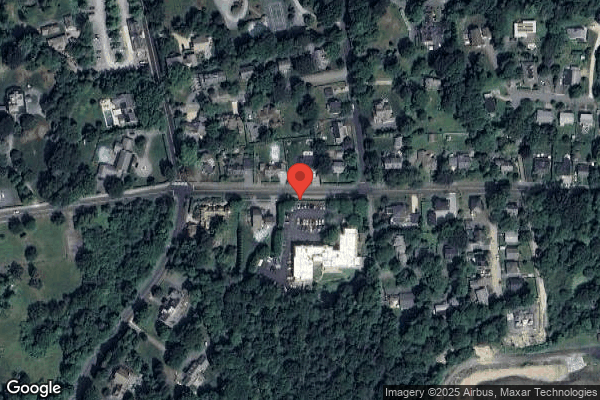

70 Harrison Avenue, Newport, RI 02840 (401) 849-5222
For profit - Corporation 95 Beds HEALTH CONCEPTS, LTD. Data: November 2025
Trust Grade
76/100
#32 of 72 in RI
Last Inspection: January 2025

Within standard 12-15 month inspection cycle. Federal law requires annual inspections.

Overview

Village House Nursing & Rehabilitation Center has a Trust Grade of B, indicating it is a good option for families, as it is a solid choice but may not be the top tier. It ranks #32 out of 72 facilities in Rhode Island, placing it in the top half, and #3 of 6 in Newport County, meaning there are only a couple of local facilities that perform better. The facility's performance is stable, with three issues reported in both 2024 and 2025, and it has a good staffing rating of 4 out of 5 stars, with a low turnover rate of 26%, which is significantly better than the state average of 41%. However, there are some concerns; the facility has incurred $8,018 in fines, which is average, and there were serious incidents, including one resident who sustained a fracture due to inadequate safety measures and multiple instances of food safety violations in the kitchen. Overall, while the facility has strengths in staffing and ranking, families should be aware of the safety issues that have been identified.

Trust Score
B
76/100
In Rhode Island
#32/72
Top 44%
Safety Record
Moderate
Needs review
Inspections
Holding Steady
3 → 3 violations
Staff Stability
✓ Good
26% annual turnover. Excellent stability, 22 points below Rhode Island's 48% average. Staff who stay learn residents' needs.
Penalties
○ Average
$8,018 in fines. Higher than 62% of Rhode Island facilities. Some compliance issues.
Skilled Nurses
✓ Good
Each resident gets 52 minutes of Registered Nurse (RN) attention daily — more than average for Rhode Island. RNs are trained to catch health problems early.
Violations
○ Average
9 deficiencies on record. Average for a facility this size. Mostly minor or procedural issues.
★★★★☆
4.0
Overall Rating
★★★★☆
4.0
Staff Levels
★★★☆☆
3.0
Care Quality
★★★★☆
4.0
Inspection Score
Stable
2024: 3 issues
2025: 3 issues

The Good

  • 4-Star Staffing Rating · Above-average nurse staffing levels
  • Low Staff Turnover (26%) · Staff stability means consistent care
  • Full Sprinkler Coverage · Fire safety systems throughout facility
  • No fines on record
  • Staff turnover is low (26%)

    22 points below Rhode Island average of 48%

Facility shows strength in staffing levels, staff retention, fire safety.

The Bad

Federal Fines: $8,018

Below median ($33,413)

Minor penalties assessed

Chain: HEALTH CONCEPTS, LTD.

Part of a multi-facility chain

Ask about local staffing decisions and management

The Ugly 9 deficiencies on record

1 actual harm
Jan 2025 3 deficiencies
CONCERN (D)

Potential for Harm - no one hurt, but risky conditions existed

Comprehensive Care Plan (Tag F0656)

Could have caused harm · This affected 1 resident

Based on record review and staff interview, it has been determined that the facility failed to implement comprehensive person-centered care plans for each resident, for 2 of 2 residents reviewed with ...

Read full inspector narrative →
Based on record review and staff interview, it has been determined that the facility failed to implement comprehensive person-centered care plans for each resident, for 2 of 2 residents reviewed with indwelling urinary catheters (a flexible tube that collects urine from the bladder and leads to a drainage bag), Resident ID #s 33 and 38. Findings are as follows: 1. Record review revealed Resident ID #38 was admitted to the facility in October of 2024 with a diagnosis including, but not limited to, cutaneous vesicostomy (an opening is created in the belly, through which urine can continuously pass). Record review revealed the resident has a supra pubic catheter (a thin tube used to drain urine from the bladder). Review of the resident's care plan dated 11/21/2024, revealed the resident requires an indwelling urinary catheter due to obstructive uropathy and neurogenic bladder (bladder dysfunction caused by damage to the nervous system) with interventions including, but not limited to, monitor urinary output and report abnormal findings. Further record review failed to reveal evidence that the urinary output for Resident ID #38 was monitored on the following dates and times: 12/21/2024 7:00 AM to 3:00 PM 12/23/2024 11:00 PM to 7:00 AM 12/24/2024 11:00 PM to 7:00 AM 12/25/2024 3:00 PM to 11:00 PM 12/28/2024 7:00 AM to 3:00 PM 12/28/2024 3:00 PM to 11:00 PM 12/28/2024 11:00 PM to 7:00 AM 12/29/2024 7:00 AM to 3:00 PM 12/29/2024 3:00 PM to 11:00 PM 12/29/2024 11:00 PM to 7:00 AM 1/1/2025 7:00 AM to 3:00 PM 1/1/2025 11:00 PM to 7:00 AM 1/2/2025 7:00 AM to 3:00 PM 1/4/2025 7:00 AM to 3:00 PM 1/7/2025 7:00 AM to 3:00 PM During a surveyor interview on 1/8/2025 at 2:56 PM with License Practical Nurse, Staff A, she was unable to provide evidence that Residents ID #38's output was monitored on the above-mentioned dates and times. 2. Record review revealed Resident ID #33 was admitted to the facility in October of 2024 with a diagnosis including, but not limited to, urinary retention. Review of the resident's care plan dated 8/7/2024, revealed the resident requires an indwelling urinary catheter due to obstructive uropathy (a condition where a blockage hinders urine flow through the urinary system) with interventions including, but not limited to, monitor urinary output and report abnormal findings. Further record review failed to reveal evidence that the urinary output for Resident ID #33 was monitored on the following dates and times: 1/4/2025 7:00 AM to 3:00 PM 1/4/2025 3:00 PM to 11:00 PM 1/4/2025 11:00 PM to 7:00 AM 1/5/2025 11:00 PM to 7:00 AM 1/6/2025 11:00 PM to 7:00 AM 1/7/2025 7:00 AM to 3:00 PM 1/8/2025 7:00 AM to 3:00 PM During surveyor interviews on 1/8/2025 at 3:18 PM and on 1/9/2025 at 10:18 AM with the Director of Nursing Services, she was unable to provide evidence that Resident ID #s 33 and 38 care plans were implemented related to monitoring urinary output.
CONCERN (D)

Potential for Harm - no one hurt, but risky conditions existed

Infection Control (Tag F0880)

Could have caused harm · This affected 1 resident

Based on surveyor observation, record review, and staff interview, it has been determined that the facility failed to maintain an infection prevention and control program to help prevent the transmiss...

Read full inspector narrative →
Based on surveyor observation, record review, and staff interview, it has been determined that the facility failed to maintain an infection prevention and control program to help prevent the transmission of communicable diseases and infections, relative to Enhanced Barrier Precautions (EBP; involves using a gown and gloves during high-contact resident care activities), for 1 of 2 wound treatments observed, involving Resident ID #38. Findings are as follows: Review of a facility policy titled, Guidelines for Management of MDROs [Multidrug Resistant Organism] states in part, .Enhanced Barrier Precautions - it has been determined by the CDC [Centers for Disease Control and Prevention] that focusing on residents with active infection fails to address the continued risk of transmission from residents with MDRO colonization, which can persist for long periods of time (e.g., months) and result in the silent spread of MDROs. Enhanced Barrier Precautions .requires gown and gloves for certain residents (those with existing MDROs, colonization of MDROs or those residents in close physical vicinity of those residents) during specific high contact care activities that have been found to increase the risk for MDRO transmission .Caring for a Resident with a MDRO .Enhanced Barrier Precautions expand the use of PPE [personal protective equipment] beyond situations in which exposure to blood and body fluids is anticipated and refers to gown and glove use during high contact with high risk residents for resident care activities that provide opportunities for transfer of MDROs to staff hands and clothing. Examples of resident care activities requiring gown and glove use for Enhanced Barrier Precautions include .Device care or use .Wound care: any skin opening requiring a dressing . Record review revealed the resident was admitted to the facility in October of 2024 with a diagnosis including, but not limited to, cutaneous vesicostomy (an opening is created in the belly, through which urine can continuously pass). Record review revealed a physician order dated 10/28/2024 for EBP relative to the resident's suprapubic catheter (SPC; a flexible plastic tube inserted into the bladder via a surgical opening in the abdomen). Further record review revealed a physician order dated 12/31/2024 to apply optifoam (a foam dressing used for wound care) to the resident's buttocks, once daily, every three days, related to moisture associated skin damage. During a surveyor observation on 1/9/2025 at 9:25 AM, Registered Nurse, Staff B and Licensed Practical Nurse, Staff A, were observed providing wound care to the resident without wearing a gown. During a surveyor interview on 1/9/2025 at 9:30 AM, with Staff A and B, they acknowledged that they did not wear a gown during the resident's dressing change and indicated a gown is only necessary when touching the resident's SPC. During a surveyor interview with the Director of Nursing Services on 1/9/2025 at 9:30 AM, she revealed that she would expect staff to wear gloves and a gown when providing wound care to a resident who is on EBP.
CONCERN (F)

Potential for Harm - no one hurt, but risky conditions existed

Food Safety (Tag F0812)

Could have caused harm · This affected most or all residents

**NOTE- TERMS IN BRACKETS HAVE BEEN EDITED TO PROTECT CONFIDENTIALITY** Based on surveyor observation, record review, and staff interview, it has been determined that the facility failed to prepare, s...

Read full inspector narrative →
**NOTE- TERMS IN BRACKETS HAVE BEEN EDITED TO PROTECT CONFIDENTIALITY** Based on surveyor observation, record review, and staff interview, it has been determined that the facility failed to prepare, store, and distribute food according to professional standards of food service safety, relative to the main kitchen and 1 of 2 nourishment areas observed. Findings are as follows: 1. Review of the Rhode Island Food Code, 2018 Edition, section 3-501.17 states in part, .(B) .refrigerated, ready-to-eat time/temperature control for safety food .shall be clearly marked, at the time the original container is opened in a food establishment .and: (1) the day the original container is opened in the food establishment shall be counted as Day 1; and (2) The day or date marked by the food establishment may not exceed a manufacturer's use-by date . During the initial tour of the main kitchen on 1/6/2025 at approximately 9:00 AM, in the presence of the Food Service Director (FSD), the dry storage area of the kitchen contained the following: -One bottle of Hershey's syrup opened and undated. Manufacturer's instructions on the bottle state to refrigerate after opening. During the initial tour of the main kitchen on 1/6/2025 at approximately 9:00 AM, in the presence of the FSD, the walk-in freezer contained the following: -One box of fish cakes with both the box and the inside bag open and undated, exposing approximately 8 fish cakes. During a surveyor interview on 1/6/2025 with the FSD at the time of the above observation, she acknowledged that the open bottle of Hershey's Syrup should have been stored in the refrigerator. She further revealed that the fish cakes should have been resealed and dated when opened. 2. Record review of the Rhode Island Food Code, 2018 Edition, section 4-601.11 states in part, .(B) The FOOD-CONTACT SURFACES of cooking EQUIPMENT .shall be kept free of encrusted grease deposits and other soil accumulations. (C) NON-FOOD CONTACT SURFACES of EQUIPMENT shall be kept free of an accumulation of dust, dirt, FOOD residue, and other debris . During the initial tour of the main kitchen on 1/6/2025 at approximately 9:00 AM, in the presence of the FSD, the walk-in freezer contained the following: -The fan unit inside of the freezer had frozen drips of ice hanging down. -One box of grilled chicken breast, that was positioned under the fan unit had an accumulation of ice on the top of the box. -One box of turkey breast roasts, was being stored directly on the floor of the freezer. -One box of [NAME] frozen baked golden buttermilk biscuits, was being stored directly on the floor of the freezer. During a surveyor interview on 1/6/2025 with the FSD at the time of the above observations, she acknowledged that the fan unit and the box of grilled chicken breast had an accumulation of ice. She further acknowledged that the box of turkey breast roasts and the box of biscuits should not have been stored directly on the floor of the freezer. During a surveyor observation of the second-floor nourishment area in the presence of the FSD on 1/8/2025 at approximately 10:45 AM, the following was observed: -The microwave was noted to have a moderate accumulation of dried orange and yellow matter on the glass turntable. During a surveyor interview with the FSD immediately following the above observation, she acknowledged that the microwave was dirty and needed to be cleaned. 3. The Rhode Island Food Code 2018 Edition 3-501.17 states in part, food shall be discarded .and may not exceed a manufacturer's use by date . During a surveyor observation of the second-floor nourishment area in the presence of the FSD on 1/8/2025 at approximately 10:45 AM, revealed five 8-ounce bottles of Ensure high protein nutritional shakes with expiration dates of June of 2024. During a surveyor interview with the FSD, at the time of the above observation, she acknowledged that the bottles of Ensure were expired and should have been discarded.
Aug 2024 1 deficiency 1 Harm
SERIOUS (G) 📢 Someone Reported This

A family member, employee, or ombudsman was alarmed enough to file a formal complaint

Actual Harm - a resident was hurt due to facility failures

Accident Prevention (Tag F0689)

A resident was harmed · This affected 1 resident

**NOTE- TERMS IN BRACKETS HAVE BEEN EDITED TO PROTECT CONFIDENTIALITY** Based on record review and staff interview, it has been determined that the facility failed to ensure that the resident's enviro...

Read full inspector narrative →
**NOTE- TERMS IN BRACKETS HAVE BEEN EDITED TO PROTECT CONFIDENTIALITY** Based on record review and staff interview, it has been determined that the facility failed to ensure that the resident's environment remains as free from accident hazards as possible, relative to the implementation of an intervention indicated on the Safe Resident Handling document, for 1 of 2 residents reviewed who had sustained a fracture while in the facility, Resident ID #1. Findings are as follows: According to an article published by STATPEARLS found in the National Library of Medicine National Center for Biotechnology Information titled, Avulsion Fractures, last updated on 8/7/2023, states in part, .Pathophysiology .An avulsion fracture occurs when a ligament or other soft tissue attachment to bone overcomes the stress capacity of the bony attachment and tears off a portion of the bone. This usually occurs with forces applied from trauma . Record review of a facility reported incident received by the Rhode Island Department of Health on 7/28/2024, revealed in part, .x-ray returned of left femur with positive fracture . Review of a written statement dated 7/29/2024, authored by NA, Staff B, stated after putting [the resident] to bed, I found [him/her] in the crack of the bed between the wall and the bed. I moved [him/her] to the center of the bed and left for the night. (Reported the resident was found between the wall and the bed to the nurse) Record review of a document titled Safe Resident Handling dated 6/11/2024, the safety and quality tool revealed the resident requires substantial/maximum assistance to roll left to right and right to left in bed, transition from sitting to lying in bed and from lying in bed to a sitting position on the edge of the bed, assistance needed to aid in transitions from a sitting position to standing and transfers. The document further indicated, that based on the resident's required assistance calculated using the safety and quality tool found on the Safe Resident Handling document, the amount of care giver assistance necessary to perform the above-mentioned tasks, which includes bed mobility, for this resident is the Assist of 2. Record review of a document provided to Nursing Assistants (NAs) that indicates each residents' necessary level of assistance required for care, titled 1st FLOOR/LIST 2/ CARE PLAN, dated 7/26/2024, fails to address how the residents are able to move in bed, the level of assistance needed, or the required number of staff needed for assistance with bed mobility for 14 of the 15 residents that reside on Resident ID #1's unit, including Resident ID #1. During a surveyor interview on 8/6/2024 at 12:10 PM with the Administrator, she acknowledged that Staff B was not assisted by another staff member when she had repositioned the resident after finding him/her wedged between the bed and the wall. Additionally, she was unable to provide evidence that the injury was not a result of this incident. Record review revealed Resident ID #1 was admitted to the facility in November 2021 with diagnoses including, but not limited to, Alzheimer's disease, vitamin D deficiency, and heart failure. Record review of a Quarterly Minimum Data Set (MDS) assessment dated [DATE] revealed the resident requires Substantial [and/or] maximal assistance - Helper does MORE THAN HALF the effort. Helper lifts or holds trunk or limbs and provides more than half the effort for rolling left and right in bed, sitting up from the lying position, and for sitting on the side of the bed to lying down flat on the bed. Record review of a care plan dated 9/28/2023 reveals a focused care area for activities of daily living (ADL) indicating the resident is not independent with care due to advancing Alzheimer's disease, impaired mobility, and strength, with an approach that includes s/he is to be extensively assisted with bed mobility. Record review of the progress notes revealed the following: - 7/26/2024 at 4:54 PM, the resident complained of discomfort in his/her left leg and hip, left leg was noted with internal rotation and difficulty noted with straightening leg, and pain noted with palpitations. The resident was also noted with several new bruises that were reported by a Nursing Assistant (NA), on 7/25/2024. Bruising and a skin tear were noted on his/her left hand, a bruise on his/her left forearm, a faint bruise noted on his/her left cheek and a black and blueish bruise on the back of his/her left knee and upper leg. -7/27/2024 at 11:20 AM, an x-ray was performed at the facility on 7/26/2024 and the results showed that the resident had an acute fracture of the proximal left femur with avulsion of the lesser trochanter. Additionally, the note indicates that the resident was found on evening rounds on 7/24/2024 to be positioned with the left side of his/her body wedged between the bed and the wall. The NA,Staff B, indicated that she alone repositioned the resident back to the center of the bed at that time. -7/27/2024 at 12:50 PM, the resident's son was informed of the x-ray results and indicated he did not want the resident to be sent to the hospital. He requested for Resident ID #1 to remain in the facility and receive pain management there. A new order was obtained for Roxanol (Morphine; an opioid medication used to relieve moderate to severe pain) 20 milligrams (mg) per milliLiter (mL), give 0.25 mL every four hours as needed for pain was ordered. -7/27/2024 at 6:47 PM, the first dose of morphine was obtained from the emergency kit and given to the resident for his/her comfort. -7/28/2024 at 6:09 AM, the resident did not display any non-verbal signs of pain. Morphine was administered for comfort and pain control. The resident was responsive to verbal and physical stimuli and was speaking in word salad (a jumble of extremely incoherent speech), as is his/her baseline. -7/28/2024 at 4:51 PM, the resident continues to speak in word salad, received morphine twice for non-verbal signs and symptoms of pain. S/he was moaning, grimacing and restless. Pain medication was effective. -7/28/2024 at 7:49 PM, the resident refused all food, drinks and supplements. Morphine was given with good effect. -7/29/2024- no documented progress notes found in the resident's record for this date. -7/30/2024 at 4:38 AM, the resident was in bed noted to be grimacing during the night. Morphine was administered with good effect. Resident is responsive to verbal and physical stimuli. -7/30/2024 at 10:25 AM, the resident was noted with congestion and coughing. S/he had frothy sputum on his/her chest and bedding. His/her diet order was downgraded to puree, was previously on a mechanical soft diet, for breakfast and only took two bites. Morphine was administered. -7/31/2024 at 5:54 AM, the resident was in bed and wide awake all night. When s/he was asked if s/he was in pain s/he would respond with Yup and continue speaking in word salad per his/her baseline. Morphine was administered with good effect. -8/1/2024 at 12:16 AM, the resident displayed facial grimacing and received morphine for pain management. -8/1/2024 at 4:39 AM, the resident was administered morphine for comfort as facial grimacing was observed. -8/1/2024 at 2:40 PM, the resident did not eat breakfast and had only 20 mLs of a supplement for lunch. Noted to grimace occasionally and morphine was administered. -8/2/2024 at 10:11 PM, the resident was alert and speaking in word salad most of the time, but when receiving care, s/he was in a lot of pain, grimacing and yelling out. The physician was notified and an order to increase the resident's morphine from every 4 hours to every 2 hours was obtained. -8/3/2024 6:03 AM, the resident displayed facial grimacing and groaning. Morphine was administered three times. The surveyor attempted to interview Staff B on 8/6/2024 at 10:07 AM via a telephone call, a voicemail was left, and a return phone call has not been received as of 8/16/2024.
Jul 2024 1 deficiency
CONCERN (D) 📢 Someone Reported This

A family member, employee, or ombudsman was alarmed enough to file a formal complaint

Potential for Harm - no one hurt, but risky conditions existed

Deficiency F0692 (Tag F0692)

Could have caused harm · This affected 1 resident

**NOTE- TERMS IN BRACKETS HAVE BEEN EDITED TO PROTECT CONFIDENTIALITY** Based on record review and staff interview, it has been determined that the facility failed to ensure that residents maintain ac...

Read full inspector narrative →
**NOTE- TERMS IN BRACKETS HAVE BEEN EDITED TO PROTECT CONFIDENTIALITY** Based on record review and staff interview, it has been determined that the facility failed to ensure that residents maintain acceptable parameters of nutritional status, such as usual body weight or desirable body weight range for 1 of 3 residents reviewed, Resident ID #1. Findings are as follows: Record review of a community reported complaint received by the Rhode Island Department of Health on 7/11/2024 alleges, Resident ID #1 lost 20 pounds in 5 weeks while a resident at the facility. Review of the facility's policy titled, Weight Loss/ Gain Protocol and Heights states in part, .All residents are to be weighed upon admission and at least monthly; so as to monitor for weight loss or gain, to assess for underlying causes of weight loss or gain, to intervene accordingly and timely to allow for an optimal level of well-being .For purpose of this policy, a significant weight discrepancy is defined as .A weight change of 3 pounds or more in one week (if resident on weekly weights) .A loss/gain of 5% or greater within one month .When a significant weight loss/gain is noted (as defined above), the following interventions may be considered .Reweigh all residents who are reported to have a significant weight discrepancy in order to assess the accuracy of the weight. The reweigh shall be done within 2 days of the initial weight .If the re-weigh is accurate and there has been a significant weight loss/gain, nursing must notify the: Physician .Dietician .DNS (Director of Nursing Services) . Record review revealed Resident ID #1 was admitted to the facility in April of 2024 with diagnoses including, but not limited to, Parkinson's disease without dyskinesia (uncontrolled, involuntary movements of the face, arms, or leg), bacterial infections of unspecified site, type 2 diabetes mellitus, urinary tract infection, and acute prostatitis bacterial, and dementia with agitation. Review of the admission Minimum Data Set (MDS) Assessment, dated 7/10/2024, revealed a Brief Interview of Mental Status score of 5 out of 15, indicating the resident has severe cognitive impairment. Record review of the care plan, initiated 4/7/2024, revealed, .is at risk for Dehydration/alteration in Nutrition on therp [therapeutic] diet d/t [diabetes mellitus], Has Parkinson's and dementia with potential for decline with disease process, significant [weight] loss, increased nutrient needs for healing . Interventions include but are not limited to, .dietary consult as indicated . Record review of a document titled Vital Signs: Weight revealed the following documented weights: 4/7/2024- 282.8 pounds 4/8/2024- 282.2 pounds 4/9/2024- 282.2 pounds 4/29/2024- 285.6 pounds 5/6/2024- 285 pounds 6/3/2024- 285.5 pounds Record review of a progress note dated 6/18/2024 revealed the resident weighed 273.6 pounds via Hoyer Lift. The note further revealed that the Nursing Assistant was to re-weigh the resident the next day. This weight loss represents an 11.9 pound, or 4.17% weight loss in 15 days. Further record review failed to reveal evidence that a re-weigh was obtained or that the dietician or the provider were notified of the weight loss. Additionally, the record failed to reveal evidence that any interventions were implemented to mitigate the resident's weight loss. Additional record review of the document titled, Vital Signs: Weight revealed the next documented weights were as follows: 7/1/2024- 266.3 pounds 7/2/2024- 263.3 pounds This indicated an additional 10-pound weight loss. Weight loss from 6/3/2024 until 7/2/2024 now totaled 22.2 pounds or 7.78%. Record review of a Nutritional Evaluation assessment dated [DATE] revealed in part, .type of assessment .significant change in status .7/3/2024 at 3:52 PM .Continues on [therapeutic] diet [as ordered] which given significant [weight] loss and decline in appetite may be too restrictive at this time .Suggest add 220 mg [milligrams] Zinc Sulfate x [times] 14 days. Suggest 500 mg Vit C [Vitamin C] x 30 days. Suggest increase med pass 2.0 (a nutritional shake) to 90 ml [milliliters] BID [twice a day] Suggest add 30 ml liquid protein (protein supplement) BID until healed .Suggest change diet to: House-No Salt Packet . The assessment failed to reveal evidence that the dietician was aware of the weight of 273.6 that was obtained on 6/18/2024. Record review revealed the following orders with a start date of 7/8/2024: -30 ml Sugar free active protein twice daily -offer 90 ml of Med pass supplement twice daily -Vitamin C 500 mg once daily -Zinc Sulfate 50 mg once daily During a surveyor interview on 7/18/2024 at 9:58 AM with the resident's Primary Care Physician, he revealed that he would have expected a re-weigh to have been completed after the 6/18/2024 weight loss. He further revealed that he would have expected the dietician to have been notified. During a surveyor interview on 7/18/2024 at 10:17 AM with the Dietician, she revealed that she looks at the Vital Signs: Weight section of the electronic medical record to review weights. She revealed that she wasn't made aware of the weight obtained on 6/18/2024. She indicated that the expectation is that the resident would be re-weighed within 2 days. She acknowledged that the weight loss was notable and she would have expected it to have been reported. She further revealed that she was unaware of the 11.9 pound weight loss identified on 6/18/2024 as it was not documented in the Vital Signs: Weight section of the electronic medical record. She indicated that if she was notified of this initial weight loss, she would have implemented interventions rather than waiting for the resident to continue with weight loss. During a surveyor interview on 7/18/2024 at approximately 12:38 PM with the Director of Nursing and the Administrator, they acknowledged that Resident ID #1 experienced a weight loss of 11.9 pounds identified on 6/18/2024. Additionally, they were unable to provide evidence that a re-weigh was obtained or that the dietician was aware.
May 2024 1 deficiency
CONCERN (D) 📢 Someone Reported This

A family member, employee, or ombudsman was alarmed enough to file a formal complaint

Potential for Harm - no one hurt, but risky conditions existed

Deficiency F0661 (Tag F0661)

Could have caused harm · This affected 1 resident

Based on record review, resident representative interview, and staff interview it has been determined that the facility failed to complete a discharge summary that includes, but is not limited to, a f...

Read full inspector narrative →
Based on record review, resident representative interview, and staff interview it has been determined that the facility failed to complete a discharge summary that includes, but is not limited to, a final summary of the resident's status at discharge and a reconciliation of the resident's medications for 1 of 2 discharged residents reviewed, Resident ID #2. Findings are as follows: Record review of a facility policy titled, Medication Reconciliation Process states in part, It is the policy of this facility to perform medication reconciliation for every resident upon admission, transfer or discharge .when a resident is discharged /transferred, a listing of all medications is to be provided as part of the discharge process utilizing the inter-agency transfer form .the nurse is to give a copy of the transfer form to the resident/resident representative for their records . Record review of a facility reported incident submitted to the Rhode Island Department of Health on 4/25/2024 indicates that Resident ID #2's family is alleging that s/he was neglected during his/her respite stay at the facility in April of 2024. Record review for Resident ID #2 revealed s/he was admitted to the facility in April of 2024 with diagnoses including, but not limited to, type 2 diabetes mellitus, chronic systolic heart failure (a condition in which the left ventricle of your heart is weak and can't pump blood efficiently), and chronic kidney disease. Record record failed to reveal evidence that an inter-agency transfer form was completed by the facility when the resident was discharged . During a surveyor interview with Resident ID #2's representative on 5/15/2024 at 1:22 PM, they revealed that they were not made aware of any medication changes for the resident when s/he was discharged from the facility. The resident's representative further indicated that during the discharge process on 4/18/2024 they were handed a bag containing only medications and were told they were all set. Record review reveals that Resident ID #2 was prescribed the following medications at the time of his/her admission to the facility: - Metoprolol succinate (medication used to treat high blood pressure) Extended release 50 milligrams (MG) tablet extended release 24 hour - Morphine concentrate 20 per milliliter (ML) administer 0.5 ML by mouth every 3 hours, as needed for severe pain - Senna Plus 8.6 MG-50 MG capsule, three capsule every 12 hours, as needed Record review of the resident's progress notes revealed the following: - 4/4/2024 all medications reviewed with the doctor changes made as follows, Morphine was decreased to 0.25 ML every three hours, as needed - 4/4/2024 Senna plus was changed to two capsules twice daily, scheduled - 4/5/2024 Metoprolol was increased to 75 mg, daily During a surveyor interview with Registered Nurse, Staff A, on 5/15/2024 at approximately 2:30 PM, she acknowledged that she did not review any medications with Resident ID #2 or their representative prior to his/her discharge and that there were changes made to the resident's medication by the physcian. She further acknoledged that she failed to provide them an inter-agency transfer form, per the facility policy. During a surveyor interview with the Director of Nursing Services on 5/16/2024 at approximately 1:30 PM, she revealed that she would expect the nurse to have reviewed the resident's medications and any changes in the physician's orders with the resident and/or the resident's representative at the time of discharge. Additionally, she was unable to provide evidence that the resident or resident's representative was provided with an inter-agency transfer form, per the facility policy.
Dec 2022 3 deficiencies
CONCERN (D) 📢 Someone Reported This

A family member, employee, or ombudsman was alarmed enough to file a formal complaint

Potential for Harm - no one hurt, but risky conditions existed

Deficiency F0692 (Tag F0692)

Could have caused harm · This affected 1 resident

Based on surveyor observation, record review and staff interview, it has been determined that the facility failed to address the resident's needs including but not limited to, residents at risk for al...

Read full inspector narrative →
Based on surveyor observation, record review and staff interview, it has been determined that the facility failed to address the resident's needs including but not limited to, residents at risk for alteration in nutrition. The facility also failed to follow their policy related to nutritional supplements for 1 of 6 residents reviewed, Resident ID #18. Findings are as follows: The facility's policy for Nutrition/hydration intake monitoring states in part, .In order to assure that each resident is receiving his/her optimum level of nutrition/hydration it is the policy of this facility to monitor each resident's nutrition/hydration status on a daily basis in order to: assist in the ongoing process of evaluating the resident's clinical condition and nutritional risk factors; define and implement interventions that are consistent with the resident's needs, goals, and recognized standards of practice; monitor and evaluate the impact of the interventions; or revise the interventions as appropriate . The policy procedure states in part, .All residents who are capable of oral intake are to have their nutritional/fluid intake monitored on a daily basis if or when the resident eats less than 50% of a meal, a house nutritional supplement is to be offered by nursing. House supplements are to be documented in the electronic medical record . Record review revealed the resident was admitted to the facility in June 2021 with diagnoses including, but not limited to, dementia and Transient Cerebral Ischemic Attack (mini stroke). Record review revealed the resident has a care plan dated 6/23/2022 for Nutritional Status, which indicates the resident is at risk for alteration in Nutrition secondary to: Alzheimer's dementia with potential for decline with disease process. This care plan includes interventions which were started on 6/23/2022 indicating .Monitor and record meal intakes and .Provide additional foods/supplements prn [as needed] per protocol . Additionally, the resident has a care plan dated 6/9/2022 for ADL (Activities of Daily Living) functional/Rehabilitation which indicates the resident is unable to be independent with Self Care related to: Dementia with bd [behavioral disturbances]. The care plan has an intervention that specifies, .provide cueing/assist as needed. Abilities to feed self-fluctuate . Surveyor observations revealed the resident trying to drink independently with a two handled sippy cup. S/he was unable to consistently drink successfully. Staff was observed in the dining room and failed to offer or provide the resident with cueing or assistance in accordance to his/her plan of care on the following dates and times: -12/12/2022 during the lunch meal at 12:02 PM until approximately 1:00 PM -12/13/2022 during the breakfast meal from 9:04 AM until approximately 10:00 AM and during the lunch meal from 12:00 PM to approximately 1:00 PM. -12/14/2022 during the lunch meal from 12:00 PM until approximately 1:00 PM. Additionally, surveyor observations revealed that the resident did not eat the percentage of meal consumption that was documented in his/her meal consumption record on the following dates and times: -12/12/2022 lunch meal consumption documented that the resident consumed 76-100% of his/her meal. Surveyors observed the residents lunch meal and only a few bites were noted to have been consumed. -12/13/2022 breakfast meal consumption documented that the resident consumed 51-75% of his/her meal. Surveyors observed the resident eating only a few bites of bacon and a few bites of muffin for the breakfast meal. -12/13/2022 lunch meal consumption documented that the resident consumed 76-100% of his/her meal. Surveyors observed the resident eating less than a half of the meal served. -12/14/2022 revealed breakfast meal consumption was documented twice. The documentation was inconsistent as one was documented as 51-75% of his/her meal consumed and the other was documented as 76-100% of his/her meal consumed. -12/14/2022 lunch meal consumption documented that the resident consumed 1-25% of his/her meal. Surveyors observed the resident eating almost 50% of the meal served. Record review failed to reveal any evidence that a nutritional supplement was offered when s/he ate less than 50% of a meal as per the facility policy. Additionally, record review failed to reveal evidence that the resident was offered or had refused a supplement. During a surveyor interview with Registered Nurse, Staff A on 12/14/2022 at 2:59 PM, she revealed she worked during the first shifts on 12/13/2022 and 12/14/2022, and she was not informed of resident's meal consumption being less than 50%. She further acknowledged that she did not provide or offer the resident a nutritional supplement during her shifts. During a surveyor interview with the Assistant Director of Nurses on 12/14/2022 at 3:31 PM, she was unable to provide evidence that the facility policy for a nutritional supplement was followed. Additionally, she was unable to explain why the staff was documenting the resident's meal consumption inaccurately.
CONCERN (D) 📢 Someone Reported This

A family member, employee, or ombudsman was alarmed enough to file a formal complaint

Potential for Harm - no one hurt, but risky conditions existed

Deficiency F0810 (Tag F0810)

Could have caused harm · This affected 1 resident

Based on surveyor observation, record review and staff interview, it has been determined that the facility failed to provide special adaptive equipment for residents who require assistive devices when...

Read full inspector narrative →
Based on surveyor observation, record review and staff interview, it has been determined that the facility failed to provide special adaptive equipment for residents who require assistive devices when drinking for 1 of 1 residents reviewed, Resident ID #18. Findings are as follows: Record review revealed the resident was admitted to the facility in June of 2021 with diagnoses including, but not limited to, dementia and Transient Cerebral Ischemic Attack (mini stroke). Record review revealed a physician's order dated 9/23/2021 for .House, Thin Liquids .Special Instructions: Blue mug with lid . During surveyor observations the resident failed to have a blue mug with a lid during meals on the following dates and times: -12/12/2022 during the lunch meal at 12:02 PM until approximately 1:00 PM when the staff cleared his/her meal -12/13/2022 at the breakfast meal from 9:04 AM until approximately 10:00 AM when the staff cleared his/her meal and during the lunch meal from 12:00 PM to approximately 1:00 PM when the staff cleared his/her meal -12/14/2022 during the lunch meal from 12:00 PM until approximately 1:00 PM when the staff cleared his/her meal During a surveyor interview with Registered Nurse, Staff A on 12/14/2022 at 2:59 PM, she acknowledged the resident did not have the blue mug with a lid during the above observations. Staff A further stated, sometimes we do not have the blue mug with lid. During an interview with the Assistant Director of Nurses on 12/14/2022 at 3:31 PM, she was unable to provide evidence that the resident was provided with a blue mug with a lid as ordered by the physician.
CONCERN (F) 📢 Someone Reported This

A family member, employee, or ombudsman was alarmed enough to file a formal complaint

Potential for Harm - no one hurt, but risky conditions existed

Food Safety (Tag F0812)

Could have caused harm · This affected most or all residents

Based on surveyor observation, record review, and staff interview, it has been determined that the facility failed to store, prepare, distribute, and serve food in accordance with professional standar...

Read full inspector narrative →
Based on surveyor observation, record review, and staff interview, it has been determined that the facility failed to store, prepare, distribute, and serve food in accordance with professional standards for food service safety relative to the main kitchen. Findings are as follows: Review of The State of Rhode Island Food Code 2018 edition, titled 4-601.11 Equipment, Food-Contact Surfaces, Non-Food-Contact Surfaces, and Utensils states in part, .(C) Nonfood-contact surfaces of equipment shall be kept free of an accumulation of dust . Review of the facility's policy titled, Food Storage states in part, .Leftover food is used within 3 days or discarded .All refrigerator units are kept clean .at all times .All foods should be .labeled and dated. All foods will be checked to assure that foods (including leftovers) will be consumed by their safe use by date .or discarded . An initial tour of the main kitchen on 12/12/2022 at 8:45 AM in the presence of the Food Service Director (FSD), revealed the following observations: - A large plastic container of peeled and diced potatoes in water labeled with a date of 12/5. - One bag/pouch of whipped cream opened and not dated. During a surveyor interview with the FSD immediately following the above-mentioned observations he acknowledged the findings and indicated that his expectation is that the potatoes would be discarded 3-5 days after the date on the label. He further indicated that the opened whipped cream had a 2-week shelf life and acknowledged that it was not labeled with a date. Additionally, he was unable to provide evidence of a safe use by date. During a follow up surveyor observation of the main kitchen on 12/13/2022 at 8:03 AM in the presence of the FSD revealed the following observations: - One 1-gallon jar of Ken's Mayonnaise opened with a manufacturer's date of 11/18/2022 stamped on the jar but no visible expiration date. - One opened package of deli sliced bologna labeled with a date of 12/4. - One container of cooked ground sausage labeled with date a of 12/9 - The main refrigerator was observed to have two interior fans with a thick accumulation of dust. The surveyor was able to wipe some of the dust with a paper towel. Review of a facility provided document titled KEN'S revealed that the mayonnaise has a shelf life of 120 days/4 months after the manufacture date. Additionally, the document states in part, .Opened product stored under proper refrigeration and in our original container will remain good and wholesome for 14 days . During a surveyor interview with the FSD immediately following the above-mentioned observations, he acknowledged the findings and was unable to provide evidence of a date when the 1-gallon jar of mayonnaise was opened. Additionally, he indicated that he would expect that the bologna would have been discarded on 12/10/2022 and the cooked ground sausage discarded after 3 days. Additionally, the FSD acknowledged the dust accumulation on the interior refrigerator fans and indicated that the Environmental Services Director (ESD), is responsible for cleaning the fans. During a surveyor interview with the ESD on 12/13/2022 at 9:41 AM, he indicated that he is responsible for cleaning the fans and acknowledged the observation of the dust accumulation on the interior fans of the main kitchen refrigerator. During a surveyor interview with the Administrator on 12/14/2022 at 9:37 AM, she was unable to provide evidence that the facility stored, prepared, distributed, and served food in accordance with professional standards for food service.
Understanding Severity Codes (click to expand)
Life-Threatening (Immediate Jeopardy)
J - Isolated K - Pattern L - Widespread
Actual Harm
G - Isolated H - Pattern I - Widespread
Potential for Harm
D - Isolated E - Pattern F - Widespread
No Harm (Minor)
A - Isolated B - Pattern C - Widespread

Questions to Ask on Your Visit

  • "Can I speak with families of current residents?"
  • "What's your RN coverage like on weekends and overnight?"

Our Honest Assessment

Strengths
  • • 26% annual turnover. Excellent stability, 22 points below Rhode Island's 48% average. Staff who stay learn residents' needs.
Concerns
  • • 9 deficiencies on record, including 1 serious (caused harm) violation. Ask about corrective actions taken.
Bottom line: Generally positive indicators. Standard due diligence and a personal visit recommended.

About This Facility

What is Village House Nursing & Rehabilitation Center's CMS Rating?

CMS assigns Village House Nursing & Rehabilitation Center an overall rating of 4 out of 5 stars, which is considered above average nationally. Within Rhode Island, this rating places the facility higher than 99% of the state's 100 nursing homes. This rating reflects solid performance across the metrics CMS uses to evaluate nursing home quality.

How is Village House Nursing & Rehabilitation Center Staffed?

CMS rates Village House Nursing & Rehabilitation Center's staffing level at 4 out of 5 stars, which is above average compared to other nursing homes. Staff turnover is 26%, compared to the Rhode Island average of 46%. This relatively stable workforce can support continuity of care.

What Have Inspectors Found at Village House Nursing & Rehabilitation Center?

State health inspectors documented 9 deficiencies at Village House Nursing & Rehabilitation Center during 2022 to 2025. These included: 1 that caused actual resident harm and 8 with potential for harm. Deficiencies causing actual harm indicate documented cases where residents experienced negative health consequences.

Who Owns and Operates Village House Nursing & Rehabilitation Center?

Village House Nursing & Rehabilitation Center is owned by a for-profit company. For-profit facilities operate as businesses with obligations to shareholders or private owners. The facility is operated by HEALTH CONCEPTS, LTD., a chain that manages multiple nursing homes. With 95 certified beds and approximately 86 residents (about 91% occupancy), it is a smaller facility located in Newport, Rhode Island.

How Does Village House Nursing & Rehabilitation Center Compare to Other Rhode Island Nursing Homes?

Compared to the 100 nursing homes in Rhode Island, Village House Nursing & Rehabilitation Center's overall rating (4 stars) is above the state average of 3.1, staff turnover (26%) is significantly lower than the state average of 46%, and health inspection rating (4 stars) is above the national benchmark.

What Should Families Ask When Visiting Village House Nursing & Rehabilitation Center?

Based on this facility's data, families visiting should ask: "Can I visit during a mealtime to observe dining assistance and food quality?" "How do you handle medical emergencies, and what is your hospital transfer rate?" "Can I speak with family members of current residents about their experience?"

Is Village House Nursing & Rehabilitation Center Safe?

Based on CMS inspection data, Village House Nursing & Rehabilitation Center has a clean safety record: no substantiated abuse findings (meaning no confirmed cases of resident harm), no Immediate Jeopardy citations (the most serious violation level indicating risk of serious injury or death), and is not on the Special Focus Facility watch list (a federal program monitoring the lowest-performing 1% of nursing homes). The facility has a 4-star overall rating and ranks #1 of 100 nursing homes in Rhode Island. While no facility is perfect, families should still ask about staff-to-resident ratios and recent inspection results during their visit.

Do Nurses at Village House Nursing & Rehabilitation Center Stick Around?

Staff at Village House Nursing & Rehabilitation Center tend to stick around. With a turnover rate of 26%, the facility is 20 percentage points below the Rhode Island average of 46%. Low turnover is a positive sign. It means caregivers have time to learn each resident's needs, medications, and personal preferences. Consistent staff also notice subtle changes in a resident's condition more quickly. Registered Nurse turnover is also low at 22%, meaning experienced RNs are available to handle complex medical needs.

Was Village House Nursing & Rehabilitation Center Ever Fined?

Village House Nursing & Rehabilitation Center has been fined $8,018 across 1 penalty action. This is below the Rhode Island average of $33,159. While any fine indicates a compliance issue, fines under $50,000 are relatively common and typically reflect isolated problems that were subsequently corrected. Families should ask what specific issues led to these fines and confirm they've been resolved.

Is Village House Nursing & Rehabilitation Center on Any Federal Watch List?

Village House Nursing & Rehabilitation Center is not on any federal watch list. The most significant is the Special Focus Facility (SFF) program, which identifies the bottom 1% of nursing homes nationally based on persistent, serious quality problems. Not being on this list means the facility has avoided the pattern of deficiencies that triggers enhanced federal oversight. This is a positive indicator, though families should still review the facility's inspection history directly.