Lincolnwood Rehabilitation and Healthcare Center
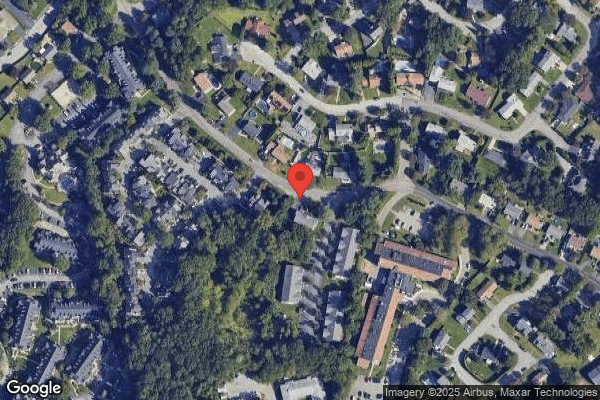

610 Smithfield Road, North Providence, RI 02904 (401) 353-6300
For profit - Corporation 200 Beds MARQUIS HEALTH SERVICES Data: November 2025 4 Immediate Jeopardy citations
Trust Grade
0/100
#65 of 72 in RI
Last Inspection: January 2025

Within standard 12-15 month inspection cycle. Federal law requires annual inspections.

Overview

Lincolnwood Rehabilitation and Healthcare Center has received a Trust Grade of F, indicating poor performance with significant concerns regarding resident care. They rank #65 out of 72 facilities in Rhode Island, placing them in the bottom half of all nursing homes in the state, and #36 out of 41 in Providence County, meaning there are better local options available. While the facility is showing signs of improvement, with issues decreasing from 22 in 2024 to 13 in 2025, it still has a concerning staffing rating of 2 out of 5 stars and less RN coverage than 95% of Rhode Island facilities, which can affect the quality of care. Families should be aware of serious incidents, including a critical medication error where a resident received the wrong medication 18 times, leading to a hospitalization for emergency treatment, and failures in maintaining sanitary conditions for blood glucose monitoring, increasing the risk of infection. Overall, while there are some positive trends, the facility has significant weaknesses that families should consider carefully.
Trust Score
F
0/100
In Rhode Island
#65/72
Bottom 10%
Safety Record
High Risk
Review needed
Inspections
Getting Better
22 → 13 violations
Staff Stability
○ Average
42% turnover. Near Rhode Island's 48% average. Typical for the industry.
Penalties
✓ Good
$107,099 in fines. Lower than most Rhode Island facilities. Relatively clean record.
Skilled Nurses
⚠ Watch
Each resident gets only 22 minutes of Registered Nurse (RN) attention daily — below average for Rhode Island. Fewer RN minutes means fewer trained eyes watching for problems.
Violations
⚠ Watch
63 deficiencies on record. Higher than average. Multiple issues found across inspections.
★☆☆☆☆
1.0
Overall Rating
★★☆☆☆
2.0
Staff Levels
★★★★☆
4.0
Care Quality
★☆☆☆☆
1.0
Inspection Score
Stable
2024: 22 issues
2025: 13 issues

The Good

  • 4-Star Quality Measures · Strong clinical quality outcomes
  • Full Sprinkler Coverage · Fire safety systems throughout facility
  • No fines on record
  • Staff turnover below average (42%)

    6 points below Rhode Island average of 48%

Facility shows strength in quality measures, fire safety.

The Bad

1-Star Overall Rating

Below Rhode Island average (3.0)

Significant quality concerns identified by CMS

Staff Turnover: 42%

Near Rhode Island avg (46%)

Typical for the industry

Federal Fines: $107,099

Well above median ($33,413)

Significant penalties indicating serious issues

Chain: MARQUIS HEALTH SERVICES

Part of a multi-facility chain

Ask about local staffing decisions and management

The Ugly 63 deficiencies on record

4 life-threatening 7 actual harm
Jul 2025 4 deficiencies 2 IJ (1 affecting multiple)
CRITICAL (J) 📢 Someone Reported This

A family member, employee, or ombudsman was alarmed enough to file a formal complaint

Immediate Jeopardy (IJ) - the most serious Medicare violation

Deficiency F0710 (Tag F0710)

Someone could have died · This affected 1 resident

**NOTE- TERMS IN BRACKETS HAVE BEEN EDITED TO PROTECT CONFIDENTIALITY** Based on record review and staff interview, it has been determined that the facility failed to ensure that the resident's physic...

Read full inspector narrative →
**NOTE- TERMS IN BRACKETS HAVE BEEN EDITED TO PROTECT CONFIDENTIALITY** Based on record review and staff interview, it has been determined that the facility failed to ensure that the resident's physician completed a medication reconciliation upon admission, failing to identify a medication transcription error, resulting in the resident receiving Dilantin (a medication prescribed to treat seizures) in error on 18 occasions without a diagnosis of a seizure disorder, instead of receiving the intended medication, Diltiazem (a medication prescribed to treat high blood pressure) which was not transcribed. Additionally, the resident was transferred to the hospital where s/he received emergent hemodialysis (a medical treatment to remove waste and excess fluids that the kidneys are unable to perform this function adequately) for the Dilantin use, Resident ID #1.Findings are as follows:Record review of a community reported complaint submitted to the Rhode Island Department of Health on [DATE] alleges that Resident ID #1 was administered the medication Dilantin, instead of the prescribed medication Diltiazem for his/her heart condition, after recovering from a cardiac stent surgery. Additionally, the complainant indicated that the resident's condition was getting worse, believing that the Dilantin caused his/her death.Record review revealed the resident was readmitted to the facility following a hospital admission in December of 2024 with diagnoses including, but not limited to, hypertension (high blood pressure), heart failure and post-cardiac surgery. Additional review of the record failed to reveal evidence that the resident had a diagnosis of a seizure disorder. Record review of the hospital continuity of care (COC) document dated [DATE] revealed a physician's order to continue the medication Diltiazem 30 milligrams (mg) by mouth three times a day. Additional review of the COC failed to reveal evidence of a physician's order for Dilantin.Review of the facility's admission orders revealed a physician's order dated [DATE] for Dilantin 30 mg three times daily, noted as being prescribed for atherosclerosis of native arteries of extremities with rest pain, right leg. This diagnosis does not constitute an appropriate indication for the use of Dilantin.Record review of a progress note dated [DATE], authored by the resident's physician, Staff E, revealed he personally reviewed the resident's records including the acute care hospital, the skilled nursing facility and the therapy records. Additional review of the progress note failed to reveal evidence that the physician identified that the Dilantin was ordered in error.During a surveyor interview on [DATE] 1:55 PM with the resident's physician, he acknowledged that he assessed the resident on [DATE], the day after his/her readmission to the facility. He indicated that he reviewed the resident's hospital discharge summary document, including the medication orders. Additionally, he acknowledged that he failed to review the resident's medication orders that were transcribed into the facility system upon his/her admission, and he failed to reconcile the facility's orders with the hospital's discharge orders. Furthermore, he revealed that he did not identify that the medication Dilantin was transcribed instead of the ordered Diltiazem.Record review of the [DATE] and [DATE] Medication Administration Records (MARs) revealed the resident mistakenly received the medication Dilantin instead of the ordered Diltiazem 18 times since his/her admission. Additional review of the [DATE] and [DATE] MARs revealed that the resident was administered Dilantin on multiple dates by eight different nurses. Dilantin is prescribed to treat seizure disorders, yet the documented diagnosis was atherosclerosis of native arteries. In contrast, the resident had a cardiac diagnosis that would have more appropriately aligned with the use of Diltiazem, highlighting a clear mismatch between the prescribed medication and the resident's clinical condition. This indicates multiple missed opportunities including the physician to identify and correct the medication error.Record review of a progress note dated [DATE] at 11:02 AM authored by the Unit Manager, Staff D, revealed that the resident's medication Diltiazem 30 mg three times a day was incorrectly transcribed as Dilantin 30 mg three times a day.Record review of a nursing progress note dated [DATE] indicates that Resident ID #1 presented with a change in mental status, weakness and was hypotensive (low blood pressure) and s/he was transferred and admitted to the hospital. During a surveyor interview with the Director of Nursing Services on [DATE] at 2:24 PM, she was unable to provide evidence that the resident's physician completed a medication reconciliation upon his/her admission to the facility. Record review of the hospital paperwork revealed the resident was admitted to the intensive care unit, received emergent hemodialysis for phenytoin [Dilantin] use. The resident coded on [DATE] and was provided high quality cardiopulmonary resuscitation and s/he subsequently expired on [DATE] at 12:38 PM. As a result of this survey, it was determined that Resident ID #1 was placed at risk for serious harm, injury, impairment, or death due to the facility's failure to ensure the resident's physician completed a medication reconciliation upon admission which contributed to a transcription error going undetected, as Staff D failed to accurately transcribe the physician-ordered medication Diltiazem. Consequently, the resident was erroneously administered Dilantin, a medication not prescribed for his/her condition and did not receive the ordered Diltiazem. This medication error may have contributed to the resident's subsequent hospital transfer and ICU admission, where s/he later required emergent hemodialysis and later expired.Cross Reference: F 760.
CRITICAL (K) 📢 Someone Reported This

A family member, employee, or ombudsman was alarmed enough to file a formal complaint

Immediate Jeopardy (IJ) - the most serious Medicare violation

Deficiency F0760 (Tag F0760)

Someone could have died · This affected multiple residents

**NOTE- TERMS IN BRACKETS HAVE BEEN EDITED TO PROTECT CONFIDENTIALITY** Based on record review and staff interview, it has been determined that the facility failed to ensure that residents are free of...

Read full inspector narrative →
**NOTE- TERMS IN BRACKETS HAVE BEEN EDITED TO PROTECT CONFIDENTIALITY** Based on record review and staff interview, it has been determined that the facility failed to ensure that residents are free of any significant medication errors for 1 of 1 resident reviewed who received Dilantin (a medication prescribed to treat seizures) in error on 18 occasions without a diagnosis of a seizure disorder, instead of receiving the intended medication, Diltiazem (a medication prescribed to treat high blood pressure) which was not transcribed. Additionally, the resident was transferred to the hospital where s/he received emergent hemodialysis (a medical treatment to remove waste and excess fluids that the kidneys are unable to perform this function adequately) for the Dilantin use, Resident ID #1.Findings are as follows:Record review of a community reported complaint submitted to the Rhode Island Department of Health on [DATE] alleges that Resident ID #1 was administered the medication Dilantin instead of the prescribed medication Diltiazem for his/her heart condition after recovering from a cardiac stent surgery. Additionally, the complainant indicated that the resident's condition was getting worse, believing that the Dilantin caused his/her death.Review of a facility document titled Administering Medications stated in part, Medications are administered in a safe and timely manner.medications are administered in accordance with the prescriber's orders.Record review revealed Resident ID #1 was readmitted to the facility following a hospital admission in December of 2024 with diagnoses including, but not limited to, hypertension (high blood pressure), heart failure and post-cardiac surgery. Additional review of the record failed to reveal evidence that the resident had a diagnosis of a seizure disorder.Record review of his/her admission Minimum Data Set assessment dated [DATE] revealed a Brief Interview for Mental Status score of 15 out of 15, indicating the resident has intact cognition.Record review of the hospital continuity of care (COC) document dated [DATE] revealed a physician's order to continue the medication Diltiazem 30 milligrams (mg) by mouth three times a day. Additional review of the COC failed to reveal evidence of a physician's order for Dilantin.Review of the facility's admission orders revealed a physician's order dated [DATE] for Dilantin 30 mg three times daily, noted as being prescribed for atherosclerosis of native arteries of extremities with rest pain, right leg. This diagnosis does not constitute an appropriate indication for the use of Dilantin.Additional review of the [DATE] and [DATE] MARs revealed that the resident was administered Dilantin on multiple dates by eight different nurses. Dilantin is prescribed to treat seizure disorders, yet the documented diagnosis was atherosclerosis of native arteries. In contrast, the resident had a cardiac diagnosis that would have more appropriately aligned with the use of Diltiazem, highlighting a clear mismatch between the prescribed medication and the resident's clinical condition. This indicates multiple missed opportunities including the physician to identify and correct the medication error.Review of the Medication Administration Records for [DATE] and [DATE] revealed that the resident received Dilantin on multiple dates, administered by eight different nurses. This suggests there were numerous opportunities to recognize and address the medication error: - [DATE] - 3 times - [DATE] - 1 time - [DATE] - 3 times - [DATE] - 2 times - [DATE] - 3 times - [DATE] - 3 times - [DATE] - 3 timesRecord review revealed the resident received the medication Dilantin in error instead of the ordered Diltiazem, indicating the resident received the incorrect medication 18 times since his/her admission to the facility.Additional record review failed to reveal evidence that the resident received his/her Diltiazem as ordered. Record review of a nursing progress note dated [DATE] at 11:02 AM, authored by the Unit Manager, Staff D, revealed the resident's ordered medication, Diltiazem 30 mg three times a day, was incorrectly transcribed as Dilantin 30 mg three times a day.Record review of a nursing progress note dated [DATE] indicates that Resident ID #1 presented with a change in mental status, weakness and was hypotensive (low blood pressure) and was transferred and admitted to the hospital. During a surveyor interview on [DATE] at 1:34 PM with Staff D, she revealed that she transcribed an order for Dilantin 30 mg instead of the ordered Diltiazem 30 mg in error, on the day of his/her admission to the facility. Additionally, she acknowledged that while she was transcribing the admission orders, she failed to verify that the correct medication, Diltiazem, was transcribed as ordered. During a surveyor interview on [DATE] at 1:55 PM with the resident's physician, he acknowledged that he assessed the resident on [DATE], the day after his/her readmission to the facility. He indicated that he reviewed the resident's hospital discharge summary document, including the medication orders. Additionally, he acknowledged that he failed to review the resident's medication orders that were transcribed into the facility system upon his/her admission, and he failed to reconcile the facility's orders with the hospital's discharge orders. Furthermore, he revealed that he did not identify that the medication Dilantin was transcribed instead of the ordered Diltiazem.During a surveyor interview with the Director of Nursing Services (DNS) on [DATE] at 2:24 PM, she revealed that the transcription error was identified when the nurse approached the resident to reorder his/her Dilantin and the resident informed the nurse that s/he has never been prescribed Dilantin. The DNS was unable to provide evidence that Resident ID #1 was kept free from significant medication error as s/he received Dilantin in error and did not receive his/her prescribed Diltiazem as ordered.Record review of the hospital paperwork revealed the resident was admitted to the intensive care unit, received emergent hemodialysis for phenytoin [Dilantin] use. The resident coded on [DATE] and was provided high quality cardiopulmonary resuscitation and s/he subsequently expired on [DATE] at 12:38 PM. As a result of this survey, it was determined that Resident ID #1 was placed at risk for serious harm, injury, impairment, or death due to Staff D's failure to accurately transcribe the physician-ordered medication Diltiazem. Consequently, the resident was erroneously administered Dilantin, a medication not prescribed for his/her condition and did not receive the ordered Diltiazem. This medication error may have contributed to the resident's subsequent hospital transfer and ICU admission, where s/he later required emergent hemodialysis and later expired.Upon further interview with the Director of Nursing Services, she indicated that the following interventions were put into place after the incident:a) The facility completed an ad hoc Quality Assurance and Performance Improvement Plan to review the incident and identify areas of improvement.b) Education was provided to all licensed nursing staff on the Medication Administration policy and Reconciliation of Medications on admission policy.c) An audit was completed for all residents that had the potential to have been affected by this error These interventions were completed by the facility on [DATE] and reviewed by the surveyor on [DATE]. Therefore, this citation is considered past noncompliance. Cross reference F 710.
CONCERN (D) 📢 Someone Reported This

A family member, employee, or ombudsman was alarmed enough to file a formal complaint

Potential for Harm - no one hurt, but risky conditions existed

Deficiency F0658 (Tag F0658)

Could have caused harm · This affected 1 resident

Based on record review, resident and staff interview, it has been determined that the facility failed to ensure that services being provided meet professional standards of practice relative to followi...

Read full inspector narrative →
Based on record review, resident and staff interview, it has been determined that the facility failed to ensure that services being provided meet professional standards of practice relative to following physician's orders for 1 of 2 residents recently admitted to the facility, Resident ID #3. Findings are as follows:Record review revealed the resident was admitted to the facility in June of 2025 with diagnoses including, but not limited to, end stage renal disease, dependence on renal dialysis (a medical treatment to remove waste and fluids from the blood when the kidneys do not function properly) and constipation.Record review of the July 2025 admission Minimum Data Set Assessment revealed a Brief Interview for Mental Status score of 15 out of 15, indicating the resident is cognitively intact.Record review of the admission Transfer/Discharge Report dated 6/26/2025 revealed an order for Polyethylene Glycol 3350 (Miralax; a medication prescribed to treat constipation) 17 grams (gm) by mouth every 24 hours as needed (PRN) for constipation, hold for loose stools.Record review of the physician's orders revealed an order with a start date of 6/27/2025 for Miralax 17 gm, give one packet by mouth every morning, hold for loose stools. Record review of the June and July 2025 Medication Administration Records (MARs) revealed the resident was administered Miralax every morning instead of PRN since his/her admission.Record review of the physician's orders revealed that the above-mentioned order for Miralax was discontinued on 7/16/2025.During a surveyor interview on 7/17/2025 at 2:54 PM with Licensed Practical Nurse (LPN), Staff A, when asked why the Miralax order had been discontinued on 7/16/2025, Staff A revealed that she had changed the order from daily to PRN after the resident had requested it to be ordered PRN. Additionally, she acknowledged that the Miralax was initially supposed to be transcribed as PRN but was transcribed as daily instead.During a surveyor interview on 7/17/2025 at 2:58 PM with the nurse that transcribed the admission order for the Miralax, LPN, Staff B, she revealed that after reviewing the admission orders, she inaccurately transcribed the Miralax order as daily, and it should have been transcribed as PRN.During a surveyor interview on 7/18/2025 at 12:58 PM with the resident, s/he revealed that after being admitted to the facility, s/he received Miralax daily. The resident further revealed that s/he recently requested that the medication be made PRN as s/he never receives this medication daily prior to his/her admission to the facility and only has taken it PRN. Additionally, the resident denied that s/he had ever requested for the medication order to be changed to daily upon admission. Record review of the progress notes failed to reveal evidence that the admission order for Miralax PRN was ever changed by the provide upon admission to the facility to daily. During a surveyor interview on 7/18/2025 at approximately 2:00 PM with the Regional Clinical Director and the Director of Nursing Services, they were unable to provide evidence that the resident received the Miralax medication as ordered from 6/27/2025 to 7/16/2025.
CONCERN (D) 📢 Someone Reported This

A family member, employee, or ombudsman was alarmed enough to file a formal complaint

Potential for Harm - no one hurt, but risky conditions existed

Deficiency F0698 (Tag F0698)

Could have caused harm · This affected 1 resident

Based on record review and staff interview, it has been determined that the facility failed to ensure that residents who require dialysis (a medical treatment that removes waste and fluids from the bl...

Read full inspector narrative →
Based on record review and staff interview, it has been determined that the facility failed to ensure that residents who require dialysis (a medical treatment that removes waste and fluids from the blood when the kidneys do not function properly) receive such services, consistent with professional standards of practice relative to following the physician's orders for a fluid restriction and medication administration for 1 of 3 residents reviewed, Resident ID #2. Findings are as follows: Record review revealed the resident was admitted to the facility in July of 2025 with diagnoses including, but not limited to, end stage renal disease, dependence on renal dialysis and fluid overload. Record review revealed the resident receives dialysis weekly every Tuesday, Thursday, and Saturday. 1a. Record review revealed a physician's order dated 7/7/2025 for a 1000 milliliter (ml) fluid restriction, indicating to provide the allowed fluid intake per the physician's order and document the total amount consumed every shift. Additionally, the order revealed a breakdown of fluids to include a total of 280 ml daily from nursing, with 120 ml from the first and second shifts and 40 ml from the third shift and a breakdown of fluids from dietary to include 720 ml daily, with 240 ml at each meal. Record review of the July 2025 Medication Administration Record (MAR) failed to reveal evidence that the resident's total daily fluid intake was documented from 7/7/2025 to 7/17/2025. Further review of the record revealed that only the nursing fluid intake was documented. During a surveyor interview on 7/18/2025 at 9:43 AM with Licensed Practical Nurse (LPN), Staff C, she was unable to provide evidence of the resident's total daily fluid intake. During a surveyor interview on 7/18/2025 at 9:55 AM with the Unit Manager, Staff D, she revealed that they do not document intake and output. Additionally, she was unable to provide evidence of the resident's total daily fluid intake. 1b. Record review revealed a physician's order dated 7/3/2025 for Sevelamer Carbonate (a medication prescribed to lower high blood phosphorus levels by binding to dietary phosphate in the digestive tract, preventing its absorption) 800 milligrams (mg) three times daily with meals. Record review of the July 2025 MAR revealed that on 7/5, 7/8, 7/10, 7/12 and 7/15/2025 the resident was not administered the prescribed Sevelamer Carbonate on his/her dialysis days at 11:30 AM. Additionally, the MAR had a code of 3 documented for those dates and times, which indicated that the medication was not administered due to the resident being Absent from facility. Record review of the electronic medication administration record, under resident details, indicated the resident was not administered the Sevelamer Carbonate on the above-mentioned dates. Record review of the progress notes failed to reveal evidence that a provider was notified that the resident did not receive Sevelamer Carbonate as ordered on the above-mentioned dates. During a surveyor interview on 7/18/2025 at 9:43 AM and 10:35 AM with LPN, Staff C, she acknowledged that the resident did not receive the Sevelamer Carbonate on the above-mentioned dates and times, as the resident receives dialysis at that time and s/he eats his/her meal after dialysis at approximately 4:00 PM, which is too close to the next dose. Additionally, she revealed that she did not inform the provider that the medication was not administered by her on 7/8, 7/10, or 7/12/2025. During a surveyor interview on 7/18/2025 at approximately 2:00 PM with the Regional Clinical Director and the Director of Nursing Services, they were unable to provide evidence that Resident ID #2's fluid restriction of 1000 ml daily was followed and that the resident received his/her Sevelamer Carbonate as ordered.
Apr 2025 1 deficiency 1 Harm
SERIOUS (G) 📢 Someone Reported This

A family member, employee, or ombudsman was alarmed enough to file a formal complaint

Actual Harm - a resident was hurt due to facility failures

Accident Prevention (Tag F0689)

A resident was harmed · This affected 1 resident

**NOTE- TERMS IN BRACKETS HAVE BEEN EDITED TO PROTECT CONFIDENTIALITY** Based on record review, staff and resident interviews, it has been determined that the facility failed to ensure that the reside...

Read full inspector narrative →
**NOTE- TERMS IN BRACKETS HAVE BEEN EDITED TO PROTECT CONFIDENTIALITY** Based on record review, staff and resident interviews, it has been determined that the facility failed to ensure that the resident's environment remained as free of accident hazards as possible for 1 of 1 resident reviewed who sustained a fall from an improperly secured mechanical lift (hoyer lift) which resulted in broken bones, hospitalization, and surgical intervention, Resident ID #1. Findings are as follows: Review of a facility reported incident submitted to the Rhode Island Department of Health on 4/16/2025 revealed the resident was being transferred with a mechanical lift and s/he started to slide out of the sling that was attached to the mechanical lift. The resident's leg hit the mechanical lift, and s/he was transferred to an acute care hospital and diagnosed with a left femur fracture (broken thigh bone). Review of a facility policy titled, Lifting Machine, using a Mechanical states in part, Attach sling straps to sling bar, according to manufacturer's instructions. Make sure the sling is securely attached to the clips and that it is properly balanced .before resident is lifted, double check the security of the sling attached . Record review revealed the resident was admitted to the facility in January of 2025 with diagnosis including, but not limited to paraplegia (a type of paralysis that affects the lower half of the body including the legs, making it impossible to stand or walk). Record review of an admission Minimum Data Set (MDS) assessment dated [DATE], revealed a Brief Interview for Mental Status score of 15 out of 15. This score indicates the resident's cognition is intact. Further review of the MDS Assessment revealed the resident requires extensive assistance with bed mobility and is dependent on two staff for transfers. Record review of a care plan dated 2/26/2025 revealed the resident is at risk for falls related to paraplegia and limited mobility. Additionally, the care plan revealed the resident has selfcare deficits and requires a mechanical lift with two staff for transfers. Record review revealed a progress note dated 4/15/2025 at 11:47 AM, which states in part, Pt [patient] seen this AM [morning] after fall from a height while in Hoyer lift .Pt hoisted [raised] above floor, when one strap either slipped off hook or broke . Record review of a nursing progress note dated 4/15/2025 at 12:04 PM, authored by Licensed Practical Nurse, Staff A, revealed the resident had a fall from the Hoyer lift landing on his/her left side and the left hip/thigh was noted to be swollen. Further review of this progress note revealed that as the resident adjusted him/herself while in the Hoyer lift, the strap slipped off, and the resident slid out of the Hoyer lift. Record review of a Continuity of Care Consultation and Referral Form completed by the facility and sent with the resident to the emergency room (ER) dated 4/15/2025, states in part, .Reason for transfer: S/P [status post] fall .Description of Problem: Fall from Hoyer lift to left side . Record review of a hospital document titled Triage Assessment dated 4/15/2025, states in part, .staff was using a portable Hoyer lift to get pt [patient] to [his/her] wheelchair when the strap reportedly broke/malfunctioned, and [s/he] fell to the ground . Further review of a Computed Tomography (CT scan, a medical imaging technique that uses X-rays and a computer to create detailed cross sectional images of the body) radiology report dated 4/15/2025 revealed the resident was diagnosed with a left femur fracture (a fracture in the middle of the femur, near the hip) and a nondisplaced left sacral alar fracture (a break in the wing of the bone in the pelvis). Record review of a facility's document titled Incident Statement Form dated 4/15/2025 that was obtained from Nursing Assistant, Staff B, revealed that when the resident was being transferred with the Hoyer lift, the loop on the Hoyer pad slipped off and the resident fell. During a surveyor interview on 4/18/2025 at 7:57 AM with Staff B, she acknowledged that on 4/15/2025 at approximately 10:30 AM, she assisted Nursing Assistant, Staff C to transfer the resident using a Hoyer lift from the bed to the wheelchair. Staff B indicated that one of the loops on the left side of the Hoyer pad slipped off, and the resident fell. During a surveyor interview on 4/18/2025 at 9:23 AM with Staff A, she indicated that on the morning of 4/15/2025 she heard a commotion coming from the resident's room and upon entering the room, she observed the resident on the floor in the presence of Staff B and Staff C. She indicated that she was told by Staff B that one of the Hoyer lift straps had slipped off during the transfer causing the resident to fall. During a surveyor interview on 4/21/2025 at 9:51 AM with the resident, s/he indicated that on 4/15/2025 while being transferred with a Hoyer lift from the bed to the wheelchair, one of the straps from the left side of the Hoyer lift came off and s/he fell to the floor hitting his/her leg on a foot piece of the Hoyer lift. The resident acknowledged that s/he was not lowered to the floor by the staff as alleged by the facility. Additionally, the resident indicated that when Staff A came to assess him/her after this incident on 4/15/2025, s/he informed Staff A that s/he had fallen out of the Hoyer lift because one of the straps on the Hoyer lift became unattached during the transfer. During surveyor interviews on 4/18/2025 at 9:50 AM and at 11:00 AM with the Director of Nursing Services (DNS) in the presence of the Administrator, the DNS indicated that the resident did not fall out of the Hoyer lift when s/he was transferred. The DNS and the Administrator acknowledged that they were not present during this incident was unable to provide evidence that the resident was safely transferred from the bed to the wheelchair by Staff B and C. Both the DNS and the Administrator were unable to provide evidence that the resident had been interviewed to obtain a statement of an exact account of what had happened during the transfer which led to the resident sustaining a major injury. Upon further interview with the DNS, she indicated that the following interventions were put into place after the accident and before the survey team entered the facility therefore this citation will be cited as past non-compliance: a) Investigate the incident-obtain statements from staff that transferred the resident, create a timeline of events. b) Validate that the Nursing Assistant (NA) who transferred the resident to the wheelchair from the bed have competencies in place. If so, complete disciplinary action as necessary. c) Conduct an Ad-Hoc Meeting to review the situation and develop a Root Cause Analysis. d) Complete a house audit of all residents' safe patient handling assessments for residents requiring a total lift (mechanical lift) to ensure that recommendations have been carried over to the care plan. e) Complete a house audit of all residents that require total assistance of two for transfers with a total lift to assure that care plan and [NAME] are accurate. f) Re-educate the NAs and nurses on how to transfer residents using a total lift. g) Complete competency tests of all NAs and nurses on how to complete total lift transfers and how to appropriately determine sling size for residents. h) Randomly observe transfers of residents that require two-persons total lift transfers to ensure that care plans are being followed. Audits will occur weekly for four weeks then monthly for two months, and until substantial compliance is met. i) Housekeeping to assess all Hoyer pads to ensure they are in good condition, that is, no rips, tears, and missing pieces. j) Laundry to label all lift pads with size so it can be easily identified. k) Hoyer books to be created for each unit. Book will include resident's room number and copy of [NAME] which shows sling size. l) The administrator will have overall responsibility for this plan.
Jan 2025 8 deficiencies
CONCERN (D)

Potential for Harm - no one hurt, but risky conditions existed

Deficiency F0658 (Tag F0658)

Could have caused harm · This affected 1 resident

Based on surveyor observation, record review, and staff interview, it has been determined that the facility failed to ensure that residents receive treatment and care in accordance with professional s...

Read full inspector narrative →
Based on surveyor observation, record review, and staff interview, it has been determined that the facility failed to ensure that residents receive treatment and care in accordance with professional standards of practice, relative to care of a peripherally inserted central catheter (PICC line, a long thin tube that is inserted through a vein in the arm and passed through to the larger veins in the heart) for 1 of 1 resident reviewed with a PICC line, Resident ID #416. Findings are as follows: According to Lippincott Nursing Procedures, Ninth Edition page 653, states in part, .Make sure to follow evidence-based infection-prevention techniques, such as performing hand hygiene, using maximal barrier precautions, following sterile technique, and properly preparing the insertion site, to reduce the risk of vascular catheter-associated infections. Review of a facility policy titled, Peripheral and Midline IV [intravenous] Dressing Changes dated March 2022 states in part, .Maintain sterile dressing (transparent semi-permeable membrane [TSM] dressing or sterile gauze) for all peripheral catheter sites . Record review revealed that the resident was admitted to the facility in January of 2025 with diagnoses including, but not limited to, osteomyelitis (bone infection) and gangrene (dead tissue caused by an infection or lack of blood flow). During a surveyor observation on 1/14/2025 at 12:05 PM the resident was noted with a PICC line IV dressing to his/her right arm. The dressing was dated 1/14/2025 with gauze under the transparent dressing covering the insertion site. During a surveyor interview and observation on 1/14/2025 at 12:17 PM of Licensed Practical Nurse (LPN), Staff A, she acknowledged that the IV insertion site was covered with gauze making it difficult to assess for signs and symptoms of infection. Staff A immediately began to remove the PICC line dressing from the resident's arm with soiled gloves on. Staff A stopped attempting to remove the PICC line dressing after being instructed by the surveyor. Additionally, Staff A was observed to remove her gloves and attempt to re-secure the dressing with ungloved hands. During a surveyor interview on 1/14/2025 at 12:34 PM with Staff A, she acknowledged that changing a PICC line dressing is a sterile procedure, and she did not have a sterile field or sterile gloves on. Additionally, Staff A acknowledged that she should not have attempted to remove the dressing and should not have touched the dressing without gloves on, due to the risk of infection. During a surveyor interview on 1/14/2025 at 12:55 PM with the Director of Nursing Services, she acknowledged that Staff A should not have attempted to remove the resident's PICC line dressing with soiled gloves or without wearing gloves.
CONCERN (D)

Potential for Harm - no one hurt, but risky conditions existed

Quality of Care (Tag F0684)

Could have caused harm · This affected 1 resident

Based on record review and staff interview, it has been determined that the facility failed to ensure that residents receive treatment and care in accordance with professional standards of practice, r...

Read full inspector narrative →
Based on record review and staff interview, it has been determined that the facility failed to ensure that residents receive treatment and care in accordance with professional standards of practice, relative to following physician orders for 1 of 1 resident reviewed with a skin tear, Resident ID #79. Findings are as follows: According to Mosby's 4th Edition, Fundamentals of Nursing page 314, states in part, The physician is responsible for directing medical treatment. Nurses are obligated to follow physicians' orders unless they believe the orders are in error or would harm the clients. Record review revealed Resident ID #79 was readmitted to the facility in September of 2024 with diagnoses including, but not limited to, Alzheimer's disease and adult failure to thrive. During a surveyor observation on 1/13/2025 at 9:09 AM, of the resident s/he was observed with a wound dressing to the back of his/her right hand dated 1/7/2025. Further observation revealed the dressing had visible dark soilage underneath. Record review of a physician's order dated 1/7/2025 revealed to cleanse the wound on the back of the right hand with wound cleanser, skin prep the surrounding area and cover with a dry clean dressing daily until resolved. Record review of the January 2025 Treatment Administration Record (TAR), revealed the above-mentioned treatment was documented as being completed on 1/8, 1/9, 1/10, 1/11, and 1/12/2025, during the evening shift. During a surveyor interview on 1/13/2025 at 2:01 PM, with Licensed Practical Nurse (LPN), Staff B, she acknowledged that the wound dressing appeared soiled and was dated 1/7/2025. Additionally, she indicated that the physician's order is scheduled daily and was to be completed on the evening shift. During a surveyor observation on 1/13/2025 at 2:39 PM, with Staff B, she was observed changing the wound dressing. Underneath the Allevyn dressing (a foam dressing) there was a buildup of dry crusted dark black and yellow drainage. Additionally, there was a second dressing underneath the Allevyn that was embedded into the wound bed, requiring the nurse to soak and slowly remove the dressing from the open skin. During a surveyor interview on 1/13/2025 at 3:11 PM with the Director of Nursing Services, she revealed that it would be her expectation that the physician's order would be followed. She further revealed that the TAR should not be signed off as completed if the treatment was not completed. During a surveyor interview on 1/15/2025 at approximately 10:30 AM with Nurse Practitioner, Staff C, she revealed that it would be her expectation that the treatment would be completed as ordered until healed. Cross reference F 842
CONCERN (D)

Potential for Harm - no one hurt, but risky conditions existed

Pressure Ulcer Prevention (Tag F0686)

Could have caused harm · This affected 1 resident

**NOTE- TERMS IN BRACKETS HAVE BEEN EDITED TO PROTECT CONFIDENTIALITY** Based on surveyor observation, record review, and staff interview, it has been determined that the facility failed to ensure tha...

Read full inspector narrative →
**NOTE- TERMS IN BRACKETS HAVE BEEN EDITED TO PROTECT CONFIDENTIALITY** Based on surveyor observation, record review, and staff interview, it has been determined that the facility failed to ensure that residents with pressure ulcers receive the necessary treatment and services, consistent with professional standards of practice, to promote healing, prevent infection and prevent new ulcers from developing for 1 of 1 resident reviewed who was admitted with a pressure ulcer, Resident ID #415. Findings are as follows: Record review revealed that Resident ID #415 was admitted to the facility in January of 2025 with diagnoses including, but not limited to, hemiparesis (one sided muscle weakness because of disruption to the brain or spinal cord) and hemiplegia (total or nearly complete paralysis on one side of the body). Record review of an admission assessment dated [DATE] revealed the resident has a pressure ulcer to his/her coccyx. Further review failed to reveal measurements or a description of the wound to include staging (classifying wounds based on their depth and severity), exudate (a mass of cells and fluid that has seeped out of blood vessels or an organ, especially in inflammation), pain, wound bed or edges. Review of the resident's admission care plan dated 1/3/2025 revealed the resident has an unstageable (a type of pressure ulcer that develops from long-lasting pressure on the skin where the full depth of the wound cannot be measured due to the presence of necrotic [death of the tissue due to lack of oxygen or blood flow] tissue such as eschar [a scab-like covering of dead tissue]), pressure ulcer of the coccyx and has the potential for pressure ulcer development related to immobility. Further record review revealed interventions including, but not limited to, measure length, width and depth, assess and document status of wound perimeter, wound bed and healing progress. Review of a Weekly Wound Progress Report dated 1/10/2025 revealed the resident has an unstageable pressure ulcer of the coccyx measuring 2 centimeters (cm) by 3 cm. The documentation failed to reveal measurements or a description of the wound until 7 days following admission. During a surveyor interview on 1/15/2025 at 1:22 PM with the Director of Nursing Services, she was unable to provide evidence that the coccyx wound was measured and described upon admission or until 1/10/2025, 7 days following admission.
CONCERN (D)

Potential for Harm - no one hurt, but risky conditions existed

Deficiency F0692 (Tag F0692)

Could have caused harm · This affected 1 resident

**NOTE- TERMS IN BRACKETS HAVE BEEN EDITED TO PROTECT CONFIDENTIALITY** Based on record review and staff interview, it has been determined that the facility failed to ensure that residents maintain ac...

Read full inspector narrative →
**NOTE- TERMS IN BRACKETS HAVE BEEN EDITED TO PROTECT CONFIDENTIALITY** Based on record review and staff interview, it has been determined that the facility failed to ensure that residents maintain acceptable parameters of nutritional status, such as usual body weight for 1 of 2 residents reviewed for significant weight loss, Resident ID #30. Findings are as follows: Record review of a facility policy titled, Weight Assessment and Intervention, with a revision date of March 2022, states in part, .Any weight change of 5% or more since the last weight assessment is retaken the next day for confirmation .if the weight is verified, nursing will immediately notify the dietician in writing .The threshold for significant unplanned and undesired weight loss will be based on the following criteria .a. 1 month - 5% weight loss is significant; greater than 5% is severe. b 3 months - 7.5% weight loss is significant; greater than 7.5% is severe. c. 6 months - 10% weight loss is significant; greater than 10% is severe .Undesirable weight change is evaluated by the treatment team whether or not the criteria for significant weight change has been met . Record review revealed the resident was re-admitted to the facility in September of 2024, with diagnoses including, but not limited to, dementia and vitamin D deficiency. Review of a care plan dated 8/18/2023 revealed, the resident has a potential nutritional problem related to a fracture, advanced age and cognition. Staff interventions include, monitor, record and report as needed significant weight loss: 3 pounds (lbs) in 1 week, greater than 5% in 1 month, greater than 7.5% in 3 months, greater than 10% in 6 months. Review of a Minimum Data Set assessment dated [DATE], section K, titled, Swallowing and Nutritional Status had a recorded weight of 151 pounds (lbs.) with no or unknown: weight loss in the last 6 months. Review of a document titled Vital signs: Weight revealed the following weights were obtained: -7/3/2024 151.4 lbs. -8/3/2024 147.8 lbs. -9/27/2024 158.4 lbs. -10/1/2024 158.3 lbs. -11/5/2024 157.0 lbs. -1/9/2025 132.9 lbs. -1/16/2025 135.8 lbs. Record review failed to reveal a monthly weight was obtained in December of 2024. Record review revealed the resident had the following documented severe weight losses: - 11/5/2024 to 1/9/2025: 21.1 lb. weight loss, which is 15.35% in 2 months. - 10/1/2024 to 1/9/2025: 19.5 lb. weight loss, which is 14.27% in 3 months. -7/3/2024 to 1/9/2025: 18.5 lb. weight loss, which is 12.22% in 6 months. Record review failed to reveal evidence the resident was re-weighed the next day for confirmation when s/he had a documented severe weight loss, as indicated in the facility's policy. The re-weight obtained on 1/16/2025 was completed after it was brought to the facility's attention by the surveyor. Further record review failed to reveal evidence that any interventions were implemented after 1/9/2025, when the resident experienced severe weight loss of 19.5 lbs. (14.27%). Record review revealed the resident was last evaluated by the Dietician on 10/7/2024 and had not been revaluated since the above weight discrepancies. During a surveyor interview on 1/16/2025 at 9:06 AM with Registered Nurse, Staff D, she acknowledged that the resident should have been re-weighed after a weight change was identified of greater than 5% and the Dietician and provider should have been notified to implement interventions. During a surveyor interview on 1/16/2025 at 2:06 PM with the Director of Nursing Services (DNS) she revealed that she would have expected the staff to re-weigh the resident after his/her weight was obtained on 1/9/2025. Additionally, the DNS could not provide evidence that the Dietitian was notified or that interventions were put in place for the resident's severe weight loss, as indicated in the facility's policy.
CONCERN (D)

Potential for Harm - no one hurt, but risky conditions existed

Tube Feeding (Tag F0693)

Could have caused harm · This affected 1 resident

Based on surveyor observation, record review, and staff interview, it has been determined that the facility failed to ensure that residents who are fed by a feeding tube receive the appropriate treatm...

Read full inspector narrative →
Based on surveyor observation, record review, and staff interview, it has been determined that the facility failed to ensure that residents who are fed by a feeding tube receive the appropriate treatment and services to prevent complications for 1 of 2 residents reviewed who require continuous feeding via a gastrostomy tube (G-tube, a surgically placed device used to give direct access to the stomach for supplemental feeding, hydration or medicine), Resident ID #144. Findings are as follows: Review of a policy titled Enteral Nutrition dated November 2018 states in part, .Risk of aspiration [inhaling a substance into the lungs that may lead to coughing and infection] may be affected by .improper positioning of the resident during feeding . Record review revealed the resident was admitted to the facility in March of 2024 with diagnoses including, but not limited to, dysphagia (difficulty swallowing) and cognitive communication deficit. Review of a care plan dated 8/30/2024, revealed the resident required enteral tube feeding with a goal to remain free from complications including, but not limited to, aspiration. Record review revealed a physician's order dated 9/6/2024 to receive continuous enteral feeding via pump set at 60 milliliters (ml) per hour, for a total volume of 1440 ml, with a 300 ml free water flush every 6 hours. Further record review revealed a physician's order dated 9/13/2024 to elevate the head of the resident's bed to the position of 30-45 degrees at all times during enteral feeding, flushing, and medication administration for the prevention of aspiration. During a surveyor observation on 1/14/2025 at 9:13 AM, the resident's enteral feeding was running and the head of his/her bed was not elevated to a position of 30-45 degrees. During a surveyor interview on 1/14/2025 at 9:15 AM with Speech Therapist, Staff E, she acknowledged that the head of the bed was not elevated to at least 30 degrees and immediately raised the head of the bed. During an additional surveyor observation on 1/15/2025 at 11:02 AM, in the presence of Nursing Assistant (NA), Staff F, the resident's enteral feeding was running and the head of the bed was not elevated to at least 30 degrees. Additionally, the resident was observed to be coughing. During a surveyor interview during the above mentioned observation with Staff F, she acknowledged that she had completed providing care for the resident and should have elevated the head of the bed higher. During a surveyor interview on 1/15/2025 at 11:06 AM with Licensed Practical Nurse, Staff G, she indicated that the head of the resident's bed should be elevated to at least 30 degrees while the feeding is running to prevent aspiration. During a surveyor interview on 1/15/2025 at 1:18 PM with the Director of Nursing Services, she indicated that the head of the resident's bed should have been elevated to the position of 30 degrees while the enteral feeding was running.
CONCERN (D)

Potential for Harm - no one hurt, but risky conditions existed

Medical Records (Tag F0842)

Could have caused harm · This affected 1 resident

Based on record review and staff interview it has been determined that the facility failed to maintain the resident's medical record in accordance with accepted professional standards and practices, f...

Read full inspector narrative →
Based on record review and staff interview it has been determined that the facility failed to maintain the resident's medical record in accordance with accepted professional standards and practices, for 1 of 1 resident reviewed with a skin tear, Resident ID #79. Findings are as follows: Record review revealed Resident ID #79 was readmitted to the facility in September of 2024 with diagnoses including, but not limited to, Alzheimer's disease and adult failure to thrive. During a surveyor observation on 1/13/2025 at 9:09 AM, of the resident s/he was observed with a wound dressing to the back of his/her right hand dated 1/7/2025. Further observation revealed the dressing had visible dark soilage underneath. Record review of a physician's order dated 1/7/2025 revealed to cleanse the wound on the back of the right hand with wound cleanser, skin prep surrounding area and cover with a dry clean dressing daily until resolved. During a surveyor interview on 1/13/2025 at 2:01 PM, with Licensed Practical Nurse (LPN), Staff B, she acknowledged that the wound dressing appeared soiled and was dated 1/7/2025. Additionally, she indicated that the physician's order is scheduled daily and was to be completed on the evening shift. Record review of the January 2025 Treatment Administration Record (TAR) revealed the above-mentioned wound treatment was signed off as completed by LPN, Staff H, on 1/9/2025. Further record review of the January 2025 TAR revealed the above-mentioned wound treatment was signed off as completed by LPN, Staff I on 1/8, 1/10, 1/11 and 1/12/2025. During a surveyor interview on 1/13/2025 at 2:56 PM with Staff H, she was unable to recall why she signed off the wound treatment as completed when she did not complete the wound treatment on 1/9/2025. She further revealed she was unaware the dressing was dated 1/7/2025. During a surveyor interview on 1/13/2025 at 3:02 PM with Staff I, she was unable to recall why she signed off the wound treatment as completed when she did not complete the wound treatment on 1/8, 1/10, 1/11 and 1/12/2025. She further revealed she was unaware the dressing was dated 1/7/2025. During a surveyor interview on 1/13/2025 at 3:11 PM with the Director of Nursing Services, revealed that the TAR should not be signed off as completed if they did not complete the treatment. Cross reference F 684
CONCERN (E)

Potential for Harm - no one hurt, but risky conditions existed

Infection Control (Tag F0880)

Could have caused harm · This affected multiple residents

Based on surveyor observation, record review, and staff interview, it has been determined that the facility failed to maintain an infection prevention and control program to help prevent the transmiss...

Read full inspector narrative →
Based on surveyor observation, record review, and staff interview, it has been determined that the facility failed to maintain an infection prevention and control program to help prevent the transmission of communicable diseases and infections for 4 out of 5 residents reviewed for droplet precautions, Resident ID #s 5, 29, 106, and 107 and for 1 of 1 resident reviewed with a peripherally inserted central catheter (PICC line, a long thin tube that is inserted through a vein in the arm and passed through to the larger veins in the heart), Resident ID #416. Findings are as follows: 1a) Record review revealed Resident ID #5 was readmitted to the facility in June of 2024 with a diagnosis including, but not limited to, end stage renal disease. Record review revealed a physician's order dated 1/8/2025 for isolation precautions; droplet precautions until 1/15/2025, due to testing positive for Flu A. Review of the signage posted outside of the resident's room from 1/13/2025 through 1/15/2025 revealed the resident was on special contact/droplet precautions which indicated to wear a gown, gloves, eye protection, and an N-95 mask, prior to room entry. During a surveyor observation on 1/14/2025 at 8:34 AM, Nursing Assistant (NA), Staff J, entered the resident's room, delivered a meal tray, and was speaking with the resident, without wearing a gown, gloves, or eye protection. During a surveyor interview on 1/14/2025, immediately following the above observation, Staff J acknowledged the special contact/droplet precaution signage posted outside the resident's room and revealed the resident was Flu positive. Additionally, she acknowledged that she was not wearing a gown, gloves, or eye protection, as indicated on the posted signage. During a surveyor interview on 1/14/2025 at 10:32 AM with Unit Manager, Staff K, she revealed that she would expect staff to wear the appropriate personal protective equipment (PPE) listed on the special contact/droplet precaution signage posted outside the resident's door. 1b) Record review revealed Resident ID #29 was admitted to the facility in December of 2022 with a diagnosis including, but not limited to, dementia. Record review revealed a physician order dated 1/13/2025 for isolation precautions; droplet precautions until 1/18/2025, due to testing positive for Influenza A (Flu A). Review of the signage posted outside of the resident's room from 1/13/2025 through 1/16/2025 revealed the resident was on special contact/droplet precautions which indicated to wear a gown, gloves, eye protection, and an N-95 mask, prior to room entry. During a surveyor observation on 1/16/2025 at 9:40 AM, NA, Staff L, entered Resident ID # 29's room to deliver a meal tray, without wearing eye protection. During a surveyor interview on 1/16/2025 at 10:25 AM, Staff L acknowledged the special contact/droplet precaution signage posted at the resident's door and indicated that the resident had the Flu. She revealed that a gown, gloves, and eye protection should be worn in the resident's room but indicated that she did not have to wear eye protection, as she was wearing eyeglasses. During a surveyor interview on 1/16/2025 at 9:50 AM, with Licensed Practical Nurse (LPN), Staff M, she revealed that Resident ID #29 was on special contact/droplet precautions due to being positive for Flu A. She revealed that for a resident who is on special contact/droplet precautions, staff should be wearing a gown, gloves, N-95 mask, and either goggles or a face shield. She further revealed that normal wear eyeglasses do not count as eye protection, indicating they are not meant for protection. During a surveyor observation on 1/16/2025 at 10:10 AM, Certified Medication Technician, Staff N, entered Resident ID # 29's room to administer medication, without wearing a gown, gloves, or eye protection. During a surveyor interview on 1/16/2025 at 10:11 AM with Staff N, she revealed that the resident was on special contact/droplet precautions due to being positive for the Flu and acknowledged the signage posted at the resident's door. She revealed that a gown, gloves, N-95 mask, and eye protection should be worn in the resident's room and acknowledged that she was not wearing a gown, gloves, or eye protection, as indicated on the posted signage. 1c) Record review revealed Resident ID #106 was readmitted in November of 2024 with a diagnosis including, but not limited to, end stage renal disease. Review of a progress note dated 1/8/2025 revealed the resident tested positive for COVID-19. It further revealed contact and droplet precautions were initiated. Review of the signage posted outside of the resident's room from 1/13/2025 through 1/16/2025 revealed the resident was on special contact/droplet precautions which indicated to wear a gown, gloves, eye protection, and an N-95 mask, prior to room entry. During a surveyor observation on 1/13/2025 at 10:10 AM, NA, Staff O, was observed entering the resident's room without wearing eye protection. During a surveyor interview on 1/13/2025 at 10:31 AM, with Staff O, she indicated that only a gown and gloves were needed to enter the resident's room. Further, she acknowledged the signage posted at the resident's door and that she should have been wearing eye protection. During a surveyor observation on 1/15/2025 at 10:20 AM, NA, Staff P, was observed entering the resident's room to provide care, without wearing eye protection. At 10:44 AM, Staff P exited the resident's room, without removing her gown and gloves, walked approximately six feet down the hallway, and obtained clean linens off of the multi-use clean linen cart. Staff P then removed her gown, brought a dirty linen bin from the hallway, and moved it to the resident's doorway. At this time, Staff P, picked up dirty linen from the floor of Resident ID #106's room and put it in the dirty linen bin, without wearing a gown. During a surveyor interview on 1/15/2025 at 10:44 AM with Staff P, she acknowledged the signage posted outside the resident's room and that she was not wearing eye protection when she entered the resident's room, as indicated by the signage posted outside the resident's room. Additionally, she acknowledged that she did not remove her gown and gloves before exiting the room and that she picked up dirty linen's without wearing a gown. During a surveyor interview on 1/15/2025 at 10:51 AM, with Registered Nurse, Staff Q, she acknowledged that Resident ID #106 was on special contact/droplet precautions for COVID-19 and indicated that all staff should wear eye protection when entering the resident's room. She further revealed that staff should not exit the room with PPE still on or touch clean linen carts with dirty gloves. 1d) Record review revealed Resident ID #107 was readmitted to the facility in December of 2024 with a diagnosis including, but not limited to, COVID-19. Review of a progress note dated 1/7/2025 revealed the resident tested positive for COVID-19. It further revealed contact and droplet precautions were initiated. Review of the signage posted outside of the resident's room from 1/13/2025 through 1/16/2025 revealed the resident was on special contact/droplet precautions which indicated to wear a gown, gloves, eye protection, and an N-95 mask, prior to room entry. During a surveyor observation on 1/13/2025 at 10:15 AM, a Hospice provider, Staff R, was observed in the resident's room, at his/her bedside, and was not wearing a gown or eye protection. During a surveyor interview on 1/13/2025 at 10:19 AM with Staff R, she acknowledged that she was not wearing a gown or eye protection, as instructed in the special contact/droplet precaution signage and indicated that she was unaware of the precautions. During a surveyor interview on 1/13/2025 at approximately 10:20 AM, with RN, Staff Q, she revealed that Resident ID #107 was on special contact/droplet precautions due to being COVID positive and acknowledged that staff should follow the signage posted at the resident's door. During a surveyor interview on 1/15/2025 at 10:32 AM, with the Infection Preventionist, she revealed that she would expect staff to wear the appropriate PPE, as indicated on the special contact/droplet precaution signage posted outside the resident rooms. During a surveyor interview on 1/15/2025 at 1:18 PM, with the Director of Nursing Services (DNS), she revealed that staff should be following the directions on the special contact/droplet precaution signage and wear the appropriate PPE. She further revealed that staff should remove the PPE prior to exiting resident rooms. 2. Record review revealed Resident ID #416 was admitted to the facility in January of 2025 with diagnoses including, but not limited to, osteomyelitis (bone infection) and gangrene (dead tissue caused by an infection or lack of blood flow). Record review revealed a physician's order dated 1/12/2025 for enhanced barrier precautions due to wounds. Review of the signage posted outside of Resident ID #416's room revealed that staff must wear a gown and gloves during device care or use of a central intravenous (IV) line. During a surveyor observation on 1/14/2025 at 12:05 PM the resident was noted with a PICC line IV to his/her right arm. During a surveyor observation on 1/14/2025 at approximately 12:30 PM, Licensed Practical Nurse, Staff A was touching the PICC line dressing with ungloved hands. During a surveyor interview on 1/14/2025 at 12:34 PM with Staff A, she acknowledged that the resident is on enhanced barrier precautions, and she should not have touched his/her PICC line dressing without gloves on. During a surveyor interview on 1/14/2025 at 12:55 PM with the DNS she acknowledged that Staff A, should not have been touching Resident ID #416's PICC line dressing without gloves on due to the resident being on enhanced barrier precautions.
CONCERN (E)

Potential for Harm - no one hurt, but risky conditions existed

Antibiotic Stewardship (Tag F0881)

Could have caused harm · This affected multiple residents

Based on record review and staff interview, it has been determined that the facility failed to establish an Infection Prevention and Control Program (IPCP) that must include, at a minimum, an antibiot...

Read full inspector narrative →
Based on record review and staff interview, it has been determined that the facility failed to establish an Infection Prevention and Control Program (IPCP) that must include, at a minimum, an antibiotic stewardship program which includes antibiotic use protocols and a system to monitor antibiotic use to ensure that residents who require an antibiotic, are prescribed the appropriate antibiotic for 3 of 3 residents reviewed for antibiotic use, Resident ID #s 15, 32, and 53. Findings are as follows: According to the Centers for Disease Control and Prevention (CDC) document titled, The Core Elements of Antibiotic Stewardship for Nursing Homes states in part, Standardize the practices which should be applied during the care of any resident suspected of an infection or started on an antibiotic. These practices include improving the evaluation and communication of clinical signs and symptoms when a resident is first suspected of having an infection, optimizing the use of diagnostic testing, and implementing an antibiotic review process, also known as an antibiotic time-out, for all antibiotics prescribed in your facility. Antibiotic reviews provide clinicians with an opportunity to reassess the ongoing need for and choice of an antibiotic when the clinical picture is clearer and more information is available .Track the amount of antibiotic used in your nursing home to review patterns of use and determine the impact of new stewardship interventions .Interventions designed to shorten the duration of antibiotic courses, or discontinue antibiotics based on post-prescription review (i.e., antibiotic time-out), may not necessarily change the rate of antibiotic starts, but would decrease the antibiotic DOT [days of therapy] . 1. Record review revealed that Resident ID #15 was readmitted to the facility in July of 2024 with diagnoses including, but not limited to, chronic obstructive pulmonary disorder and type II diabetes mellitus. Record review revealed a physician's order for Levaquin (an antibiotic) 750 milligrams (MG) by mouth once daily for 6 days for a cough with a start date of 1/14/2025 and an end date of 1/20/2025. Record review failed to reveal evidence of an antibiotic review or an antibiotic time out. 2. Record review revealed that Resident ID #32 was readmitted to the facility in January of 2024 with diagnoses including, but not limited to, chronic kidney disease and bipolar disorder. Record review revealed a physician's order for Amoxicillin (an antibiotic) 500 MG by mouth twice daily for a dental infection with a start date of 1/10/2025 and an end date of 1/20/2025. Record review failed to reveal evidence of an antibiotic review or an antibiotic time out. 3. Record review revealed that Resident ID #53 was admitted to the facility in October of 2024 with diagnoses including, but not limited to, Parkinson's disease and dementia. Record review revealed a physician's order for Cephtriaxone (an antibiotic) 1 gram daily for 5 days for pneumonia with a start date of 1/10/2025 and an end date of 1/14/2025. Record review failed to reveal evidence of an antibiotic review or an antibiotic time out. During a surveyor interview on 1/15/2025 at 10:27 AM with the Infection Preventionist, she acknowledged that antibiotic time outs had not been completed for the above-mentioned residents receiving antibiotics. Additionally, she acknowledged that the facility is not completing antibiotic time outs for any residents that are prescribed antibiotics.
Nov 2024 2 deficiencies 1 IJ
CRITICAL (J) 📢 Someone Reported This

A family member, employee, or ombudsman was alarmed enough to file a formal complaint

Immediate Jeopardy (IJ) - the most serious Medicare violation

Deficiency F0661 (Tag F0661)

Someone could have died · This affected 1 resident

**NOTE- TERMS IN BRACKETS HAVE BEEN EDITED TO PROTECT CONFIDENTIALITY** Based on record review and staff interview, it has been determined that the facility failed to reconcile all pre-discharge medic...

Read full inspector narrative →
**NOTE- TERMS IN BRACKETS HAVE BEEN EDITED TO PROTECT CONFIDENTIALITY** Based on record review and staff interview, it has been determined that the facility failed to reconcile all pre-discharge medications with the resident's post-discharge medications, for 1 of 3 residents reviewed who were discharged from the facility, Resident ID #1. Findings are as follows: Record review of a community reported complaint received by the Rhode Island Department of Health on 11/19/2024, alleges that Resident ID #1 was discharged home with Resident ID #2's medications. This resulted in one of the medications being taken by Resident ID #1 on two separate dates following his/her discharge. Record review for Resident ID #1 revealed s/he was admitted to the facility in October of 2024 with diagnoses including, but not limited to, liver cell carcinoma, end stage renal disease and dependence on renal dialysis (a procedure that removes waste and excess fluid from the blood when the kidneys are no longer functioning properly). Further review revealed the resident was discharged to his/her home on [DATE]. Record review revealed Resident ID #2 was re-admitted to the facility in November of 2024 with diagnoses including, but not limited to, hyperlipidemia (high cholesterol) and hypertension (high blood pressure). Record review of Resident ID #2's physician orders revealed a current order for Atorvastatin (a medication prescribed to treat high cholesterol) 40 milligrams (mg) daily and two other medications that were discontinued on 11/6/2024, Lisinopril 40 mg and Amlodipine 2.5 mg (medications prescribed to treat high blood pressure). During a surveyor interview on 11/20/2024 at 11:48 AM with the complainant, s/he revealed that when the admitting nurse from the home care agency was reviewing Resident ID #1's medications, s/he noted 3 medications, Atorvastatin, Lisinopril and Amlodipine, included with Resident ID #1's medications, belonging to Resident ID #2. Additionally, s/he revealed that Resident ID #1 self administered the Atorvastatin 40 mg, to himself/herself on 11/11/2024 and 11/12/2024. During a surveyor interview on 11/20/2024 at 10:37 AM with Licensed Practical Nurse, Staff A, she revealed that she was part of Resident ID #1's discharge on [DATE]. Staff A revealed that the resident's medications were already placed in a bag prior to his/her discharge on [DATE]. Staff A was unsure who placed the medications in the bag prior to the resident's discharge. She acknowledged that she did not reconcile the medications that were included in the bag to ensure the resident had the correct medications. Staff A further revealed that she did not provide instructions for the medications to Resident ID #1 or his/her family member at the time of the discharge. Additionally, she revealed she placed the discharge paperwork in the bag with the resident's medications before taking the resident out to his/her car. Record review of the Discharge/Transfer of Patient form for Resident ID #1 revealed a discharge date of 11/10/2024. Further review of the document failed to reveal evidence of any medication orders listed or any evidence that discharge medication instructions were provided to either the resident or his/her family member. Record review of the nursing progress notes failed to reveal evidence that the resident was discharged on 11/10/2024 or that any medication teaching or instructions were provided to the resident or the resident's family member upon the resident's discharge. During a surveyor interview with the Director of Nursing Services on 11/20/2024 at approximately 11:15 AM, she was unable to explain why a medication reconciliation of all pre-discharge medications with the resident's post-discharge medications was not completed and that discharge instructions for each medication were not provided to either Resident ID #1 or his/her family member upon discharge from the facility. This facility's failure to complete medication reconciliation and provide discharge medications instructions to residents being discharged places the facility's residents at risk for serious harm, serious impairment, serious injury or death.
CONCERN (D) 📢 Someone Reported This

A family member, employee, or ombudsman was alarmed enough to file a formal complaint

Potential for Harm - no one hurt, but risky conditions existed

Deficiency F0658 (Tag F0658)

Could have caused harm · This affected 1 resident

Based on record review and staff interview, it has been determined that the facility failed to ensure that services provided by the facility meet professional standards of quality relative to followin...

Read full inspector narrative →
Based on record review and staff interview, it has been determined that the facility failed to ensure that services provided by the facility meet professional standards of quality relative to following physician's orders for 1 of 4 residents reviewed, Resident ID #3. Findings are as follows: According to Mosby's 4th Edition, Fundamentals of Nursing, page 314 states, The physician is responsible for directing medical treatment. Nurses are obligated to follow physician's orders unless they believe the orders are in error or would harm the clients. Record review revealed Resident ID #3 was admitted to the facility in October of 2024 with diagnoses including, but not limited to, atrial fibrillation (an irregular heartbeat often causing inadequate blood flow through the heart) and pneumonia. Record review of the hospital Continuity of Care document dated 10/31/2024 revealed a physician's order to start Cefpodoxime (a medication prescribed to treat various infections) 200 milligrams(mg) twice a day for 3 days, with a stop date of 11/3/2024. Record review of the November 2024 Medication Administration Record revealed that the Cefpodoxime was not administered as ordered on 11/1/2024, for both the morning and evening doses, and on 11/3/2024 for the evening dose, indicating that the resident missed 3 doses of the medication. During a surveyor interview on 11/20/2024 at 4:10 PM with the Unit Manager, Licensed Practical Nurse, Staff B, she was unable to explain why the resident did not receive the medication as ordered. She further revealed that there is an in house pyxis (an automated medication dispensing system) machine that contained Cefpodoxime. During a surveyor interview on 11/21/2024 at 10:38 AM with Licensed Practical Nurse, Staff C, she revealed that she was the nurse caring for the resident on 11/1/2024 and she acknowledged that she did not administer the morning or the evening doses of the Cefpodoxime to the resident, and that she did not notify the provider of the missed doses. During a surveyor interview at 11/21/2024 at approximately 12:30 PM with the Director of Nursing Services, she was unable to explain why the resident was not administered the Cefpodoxime, as ordered. During a surveyor interview on 11/21/2024 at approximately 1:30 PM with the resident's physician, he acknowledged that he was not made aware of the missed doses of the Cefpodoxime. He further revealed that he would expect if a medication was not administered that the nurse would notify the provider of the missed dose.
Oct 2024 1 deficiency 1 Harm
SERIOUS (G) 📢 Someone Reported This

A family member, employee, or ombudsman was alarmed enough to file a formal complaint

Actual Harm - a resident was hurt due to facility failures

Accident Prevention (Tag F0689)

A resident was harmed · This affected 1 resident

**NOTE- TERMS IN BRACKETS HAVE BEEN EDITED TO PROTECT CONFIDENTIALITY** Based on surveyor observation, record review, and staff interview, it has been determined that the facility failed to ensure tha...

Read full inspector narrative →
**NOTE- TERMS IN BRACKETS HAVE BEEN EDITED TO PROTECT CONFIDENTIALITY** Based on surveyor observation, record review, and staff interview, it has been determined that the facility failed to ensure that the residents environment remains free of accident hazards relative to falls for 1 of 3 residents reviewed, Resident ID #1. Findings are as follows: Review of a community reported compliant submitted to the Rhode Island Department of Health on 10/14/2024 revealed that the resident had a witnessed fall in his/her room and was transferred to the hospital via 911 with head lacerations. Record review revealed that the resident was readmitted to the facility in October of 2024 with a diagnosis including, but is not limited to, dementia. Review of the Fall Risk Evaluation, dated 10/8/2024, revealed the resident is at high risk for falls. Review of a Functional Abilities & Goals (Admission) assessment dated [DATE] revealed that the resident is dependent on staff for rolling to the left and right. It further revealed an intervention which included, but is not limited to, the resident is dependent on two staff while utilizing a sheet for turning and repositioning. Review of the resident's care plan revealed a problem start date of 10/10/2024 that the resident has an Activity of Daily Living self-care performance deficit related to dementia. Further review revealed an intervention which includes, but is not limited to, the resident is dependent on two staff and a sheet for turning and repositioning. Review of the resident's [NAME] (a tool used by the direct care staff to provide pertinent information to guide resident care) from 10/10/2024 revealed that the resident is dependent on two staff while utilizing a sheet for turning and repositioning. Review of a progress note dated 10/14/2024 at 11:39 AM, revealed the nurse was called to the resident's room by a Certified Nursing Assistant (NA). Upon entering the resident's room, the resident was noted to be lying on the floor on his/her back. The resident was observed to be bleeding from his/her head. Further assessment revealed that the resident was noted with a laceration to his/her forehead and was bleeding from the back of his/her head. The note further revealed that the NA turned the resident onto his/her side and then turned away from the resident to pick up some wipes. The resident rolled over and hit his/her face on the bed side chair and then fell onto the floor landing on his/her back. The resident was transported to the hospital via 911. Record review revealed a nursing note dated 10/15/2024 indicated that the resident returned from the emergency room at 12:15 AM. S/he had dissolvable sutures to the laceration above the right eye and a dressing covering the laceration to the back of the head. During a surveyor interview with NA, Staff A on 10/17/2024 at approximately 9:12 AM she indicated that she was in the room alone providing care to the resident. She indicated that when she rolled the resident over to provide incontinence care, the resident jerked a little and fell down face first. The resident's face then hit the arm of the bed side chair where the resident then did a 360 and ultimately landed on his/her back. Staff A revealed that the facility uses an online [NAME] and care plan to identify what care and assistance each resident requires. She further indicated that she was unaware that the resident required two staff members to assist with bed mobility and turning in bed. During a surveyor interview with Licensed Practical Nurse, Staff B, on 10/17/2024 at 10:11 AM, she revealed that the facility utilizes a [NAME] to communicate the residents needs to the staff. Staff B reviewed the [NAME] with the surveyor and acknowledged that the resident requires two staff members to assist with bed mobility and turning in bed and acknowledged that there was only one staff member present at the time of the fall. During a surveyor interview with the Director of Nursing Services on 10/17/2024 at approximately 11:49 AM, she revealed that the resident should have been a one assist with care, although she acknowledged that the facility assessed the resident as a two assist with care. She further stated that the formal assessment tool titled Functional Abilities & Goals (Admission) which triggered the resident require a two assist with bed mobility and turning, was in error. She further acknowledged that the [NAME] and the care plan that two staff members are required to provide care and assistance with bed mobility and turning to the resident at the time s/he fell out of bed and sustained a laceration to his/her forehead and the back of his/her head was also in error. It is to be noted that this injury to the resident resulted in one staff member assisting with care and not the two staff as required based upon the results of the assessment tool.
Sept 2024 2 deficiencies
CONCERN (D) 📢 Someone Reported This

A family member, employee, or ombudsman was alarmed enough to file a formal complaint

Potential for Harm - no one hurt, but risky conditions existed

Notification of Changes (Tag F0580)

Could have caused harm · This affected 1 resident

Based on record review and staff interview, it has been determined that the facility failed to immediately inform the resident's representative relative to the decision to transfer a resident to an ac...

Read full inspector narrative →
Based on record review and staff interview, it has been determined that the facility failed to immediately inform the resident's representative relative to the decision to transfer a resident to an acute care hospital for one of one resident reviewed, Resident ID #3. Findings are as follows: Record review of a community reported complaint submitted to the Rhode Island Department of Health, dated 9/12/2024 alleges that the resident was transferred to an acute care hospital and his/her family was not notified. Record review revealed the resident was readmitted to the facility in August of 2024 with diagnoses including, but not limited to, urinary tract infection, anemia, and Methicillin-Resistant Staphylococcus Aureus (MRSA). Review of a nursing progress note authored by Licensed Practical Nurse, Staff A, revealed that on 8/23/2024 at 9:00 PM the resident was noted to not have any urinary output from his/her suprapubic catheter (a medical device that helps drain urine from your bladder). Additionally, the note indicated that the resident was complaining of abdominal pain so s/he was sent to the hospital per the provider's order. Further review of the note failed to reveal evidence that the family was made aware that the resident was sent to the hospital. Review of a nursing progress note dated 8/24/2024 at 4:32 PM, the day after the resident was transferred to the hospital, authored by Registered Nurse, Staff B indicated that after receiving the resident's positive MRSA results from the laboratory, Staff B called Resident ID #3's daughter, Child #1, to notify her of the positive test results. Additionally, the note indicated that it was during this conversation that Child #1 learned that their parent, Resident ID #3 had been transferred and admitted to the hospital the day before and was not at the facility. Furthermore, the note revealed that Child #1 was upset because she was not made aware of the resident's transfer to the hospital ahead of time. During a surveyor interview on 9/18/2024 at 9:58 AM with the Social Worker, Staff C, she revealed that she had placed a call to Resident ID #3's son, Child #2, on 8/28/2024, five days after the resident was transferred to the hospital, regarding holding the resident's bed while s/he was in the hospital. Child #2 indicated to Staff C that he had never been notified that the resident was transferred to the hospital and was no longer at the facility. Additionally, Staff C indicated that anytime there is a change of condition of a resident, or a resident is transferred to the hospital, nursing staff are supposed to inform the family. A surveyor interview with Staff A was attempted on 9/18/2024 at approximately 11:00 AM, the nurse who obtained the order to transfer the resident to the hospital. Staff A was unable to be reached and the surveyor left a message, a return call was not received. During a surveyor interview on 9/18/2024 at 3:10 PM with the Director of Nursing Services (DNS), the Administrator, and the Regional Nurse, the surveyor stated to them that she was unable to complete this investigation as Staff A was unable to be reached for an interview. At this time the DNS left the conference room and returned indicating that they had Staff A on the phone. During this interview with Staff A, he indicated that he called Resident ID #3's son, Child #2 on 8/23/2024 and informed him that the resident was being transferred to the hospital. At this time the surveyor indicated that Child #2 was not made aware that his parent was no longer at the facility and Staff A stated, then I must have spoken to the daughter. Staff A was informed that the daughter, Child #1 was not made aware that their parent was no longer at the facility either, and he stated, I don't remember who I spoke to. Furthermore, during this interview, The DNS, the Administrator, nor the Regional Nurse were able to provide evidence that the resident's children were notified of their parent's transfer to the hospital on 8/23/2024.
CONCERN (E) 📢 Someone Reported This

A family member, employee, or ombudsman was alarmed enough to file a formal complaint

Potential for Harm - no one hurt, but risky conditions existed

Quality of Care (Tag F0684)

Could have caused harm · This affected multiple residents

**NOTE- TERMS IN BRACKETS HAVE BEEN EDITED TO PROTECT CONFIDENTIALITY** Based on record review and staff interview, it has been determined that the facility failed to ensure that a resident receives t...

Read full inspector narrative →
**NOTE- TERMS IN BRACKETS HAVE BEEN EDITED TO PROTECT CONFIDENTIALITY** Based on record review and staff interview, it has been determined that the facility failed to ensure that a resident receives treatment and care in accordance with professional standards of practice for 1 of 1 resident reviewed for a suprapubic catheter (a medical device that helps drain urine from your bladder into a collection bag outside of your body when you can't urinate on your own), Resident ID #3 and for 1 of 1 resident reviewed with an indwelling foley catheter (a device that drains urine from your urinary bladder into a collection bag outside of your body when you can't urinate on your own), Resident ID #4. Findings are as follows: According to [NAME] CoursePoint Enhanced for Taylor's Fundamentals of Nursing, 9th Edition the following are important nursing measures used to care for patients with an indwelling catheter: .make sure that the patient maintains a generous fluid intake, unless contraindicated by other health concerns. This helps prevent infection and irrigates the catheter naturally by increasing urine output .note and record the amount of urine on the patient's intake-and-output record every 8 hours . 1. Record review revealed Resident ID #3 was readmitted to the facility in August of 2024 with diagnoses including, but not limited to, urinary tract infection, anemia, and Methicillin-Resistant Staphylococcus Aureus (MRSA). Record review of Resident ID #3's care plan reveals that s/he has a suprapubic catheter with interventions to include but are limited to, Monitor/record/report PRN [as needed] .no output .urinary frequency . Record review failed to reveal evidence that the facility was noting and recording Resident ID #3's intake and output every 8 hours per the nursing professional standard of practice. Additional record review failed to reveal evidence that the resident's urinary frequency was being monitored per the care plan. During a surveyor interview on 9/18/2024 at 10:30 AM with Director of Nursing Services (DNS), she acknowledged that Resident ID #3 has a suprapubic catheter. Additionally, she revealed that nursing staff does not note or record the resident's intake or output. 2. Record review revealed Resident ID #4 was readmitted to the facility in July of 2022 with diagnoses including, but not limited to, chronic kidney disease and dementia. Record review of Resident ID #4's care plan reveals that s/he has a foley catheter with interventions to include but are limited to, Monitor/record/report to MD [medical doctor] for no output .urinary frequency . Record review failed to reveal evidence that the facility was noting recording Resident ID #4's intake and output every 8 hours per the nursing professional standard of practice. Additional record review failed to reveal evidence that the resident's urinary frequency was being monitored per the care plan. During a surveyor interview on 9/18/2024 at approximately 3:00 PM with the DNS in presence of the Administrator and the Regional Nurse, she was unable to explain why the facility was not noting or recording the intake and output for Residents ID #s 3 and 4.
Aug 2024 3 deficiencies 1 Harm
SERIOUS (G) 📢 Someone Reported This

A family member, employee, or ombudsman was alarmed enough to file a formal complaint

Actual Harm - a resident was hurt due to facility failures

Deficiency F0760 (Tag F0760)

A resident was harmed · This affected 1 resident

Based on record review and staff interview it has been determined that the facility failed to ensure that all residents are free from significant medication errors relative to the administration of me...

Read full inspector narrative →
Based on record review and staff interview it has been determined that the facility failed to ensure that all residents are free from significant medication errors relative to the administration of medications to the incorrect resident, for 1 of 1 resident reviewed, Resident ID #5. Findings are as follows: Review of a community reported complaint received by the Rhode Island Department of Health on 8/21/2024 alleged that Resident ID #5 received another resident's medications on 8/13/2024. Record review revealed that the resident was admitted to the facility in August of 2024 with diagnoses including, but not limited to, pneumonia and abnormal weight loss. Review of a progress note dated 8/9/2024 revealed the resident received his/her roommates' medications and it was reported to the nurse practitioner with new orders to monitor the resident for low blood pressure. Review of a facility document titled Full QA Report dated 8/9/2024, states in part, .received roommates' medication today .nurse did not perform 5 checks .wrong resident . Additionally, the document revealed that the resident received hydralazine 50 milligrams (mg) and labetalol 200 mg (medications used to treat high blood pressure). Additionally, review of an addendum to the document above dated 8/28/2024 authored by the Director of Nursing Services, states in part, .resident became hypotensive [blood pressure was low] but was asymptomatic .new order obtained to give the resident IV [intravenous] fluids . During a surveyor interview on 8/28/2024 at approximately 2:50 PM with the Director of Nursing Services she acknowledged that the resident received his/her roommate's medications, which resulted in him/her experiencing low blood pressure and requiring IV fluids.
CONCERN (D) 📢 Someone Reported This

A family member, employee, or ombudsman was alarmed enough to file a formal complaint

Potential for Harm - no one hurt, but risky conditions existed

Deficiency F0625 (Tag F0625)

Could have caused harm · This affected 1 resident

**NOTE- TERMS IN BRACKETS HAVE BEEN EDITED TO PROTECT CONFIDENTIALITY** Based on record review and staff interview, it has been determined that the facility failed to provide written notice of the bed...

Read full inspector narrative →
**NOTE- TERMS IN BRACKETS HAVE BEEN EDITED TO PROTECT CONFIDENTIALITY** Based on record review and staff interview, it has been determined that the facility failed to provide written notice of the bed-hold policy to the resident or resident representative, prior to the transfer of the resident to the hospital, for 1 of 3 residents reviewed, Resident ID #1. Findings are as follows: Record review of a community reported complaint submitted to the Rhode Island Department of Health on 8/23/2024 alleges that, Resident ID #1 was discharged from the facility to the hospital on 8/8/2024. On 8/16/2024, the hospital case manager was informed by the facility that the resident was a short-term resident (the resident had been residing in the facility for 2 years), and the facility no longer had any available beds. Record review revealed that Resident ID #1 was admitted to the facility in August of 2022 with a diagnosis including, but not limited to, Alzheimer's disease. Review of a Minimum Data Set assessment dated [DATE] revealed a Brief Interview for Mental Status score of 00 out of 15, indicating severe cognitive impairment. Record review of a progress note dated 8/8/2024, revealed that the resident woke up at 4:00 AM and was wandering and became aggressive with staff, hitting a nursing assistant on the back of his head as he was walking away. The physician was notified and gave an order to send the resident to the hospital related to aggressive behaviors. Record review of a progress note dated 8/22/2024 authored by the Administrator revealed that she spoke with the resident's daughter after receiving her letter. The Administrator informed the daughter that the resident's room had been packed up and stored because there was no bed hold in place. During a surveyor interview on 8/26/2024 at approximately 4:00 PM with the resident's daughter, she revealed that she was not contacted by the facility or offered a bed hold verbally or in writing during the resident's hospitalization. Review of the resident's hospital record revealed Case Management notes dated 8/16/2024, indicating that the facility was contacted to coordinate the discharge of the resident back to the facility that s/he had been living in for 2 years. The facility did not respond to the online care management system relative to accepting the resident's return. Additionally, the Case Manager called the facility and left a message for the Director of Nursing Services (DNS) and a response was not received. The case manager also reached out to the Long-Term Care Ombudsman office for assistance. The notes further revealed that the resident's daughter was upset that the facility would not allow her parent to return to their home and could not understand why. During a surveyor interview on 8/28/2024 at approximately 12:20 PM, with the DNS, she revealed that she spoke with the resident's daughter the day after the resident was sent to the hospital let the daughter know that someone from Admissions or Social Services would contact her to discuss the bed hold policy. She further acknowledged that she did not discuss the bed hold policy with the resident's daughter because she does not know the actual cost of a bed hold. During a surveyor interview on 8/28/2024 at approximately 1:00 PM with the Admissions Director, she acknowledged that she did not provide Resident ID #1 with a bed hold policy in writing with the required information prior to the resident being transferred to the hospital on 8/8/2024. Additionally, she was unaware if anyone from the facility contacted the resident's daughter to discuss the bed hold after s/he was sent to the hospital. During a surveyor interview with the Administrator on 8/28/2024 at approximately 1:20 PM, she was unable to provide evidence that a written notice of the facility's bed hold policy was given to the resident when s/he was transferred to the hospital on 8/8/2024 and was unaware if anyone from the facility contacted the resident's daughter. She further revealed that the facility did not have any beds available for this resident.
CONCERN (D) 📢 Someone Reported This

A family member, employee, or ombudsman was alarmed enough to file a formal complaint

Potential for Harm - no one hurt, but risky conditions existed

Quality of Care (Tag F0684)

Could have caused harm · This affected 1 resident

**NOTE- TERMS IN BRACKETS HAVE BEEN EDITED TO PROTECT CONFIDENTIALITY** Based on record review and staff interview it has been determined that the facility failed to ensure that residents receive trea...

Read full inspector narrative →
**NOTE- TERMS IN BRACKETS HAVE BEEN EDITED TO PROTECT CONFIDENTIALITY** Based on record review and staff interview it has been determined that the facility failed to ensure that residents receive treatment and care in accordance with professional standards of practice relative to following physician orders for obtaining appointments with specialists for 1 of 3 residents reviewed, Resident ID #2. Findings are as follows: Record review of a community reported complaint submitted to the Rhode Island Department of Health on 8/19/2024 alleges that Resident ID #2 was admitted to the facility in July of 2024 with several follow-up appointments scheduled for August 2024, including a cardiology follow-up appointment. Additionally, the complaint alleges that the facility was aware of these appointments and failed to obtain transportation for the resident to get to his/her appointments. Record review revealed that Resident #2 was admitted to the facility in July of 2024 with diagnoses including, but not limited to, heart failure, end stage renal disease and diabetes. Review of a hospital Discharge summary dated [DATE] states in part, .You were seen at [hospital name] for worsening heart failure .and newly diagnosed heart arrhythmia [a heartbeat that can be too fast, too slow, or irregular] . Additionally, the report revealed a follow-up appointment with a cardiologist was scheduled for 8/20/2024 at 2:00 PM. Record review of a laboratory document dated 8/12/2024 revealed bloodwork titled, B-type Natriuretic Peptide (BNP, a test that measures the levels of a hormone in your blood. Higher levels can be a sign of heart failure or other serious heart problems.) BNP result of greater than 70,000.00 PG/ML (picograms per milliliter; the normal reference range is 0 - 300.00 PG/ML). Record review of a progress note dated 8/13/2024 authored by the Nurse Practitioner (NP), Staff A, following her review of the resident's critical BNP level, revealed she wrote new orders for the resident to have follow-up appointments with cardiology and hematology, and to obtain a Gastroenterologist (GI) consult. Further record review failed to reveal evidence that an appointment for hematology or a GI consult were scheduled. During a surveyor interview on 8/28/2024 at approximately 9:30 AM with the Patient Scheduler from the resident's cardiology office, he revealed that the resident had an appointment booked for 8/20/2024 and did not show up. He further revealed that the office has tried to contact the facility twice, because the cardiologist wants to see the patient as soon as possible, and left messages but no one has returned either call to schedule an appointment. During a surveyor interview on 8/28/2024 at 12:09 PM, with the Staff A, she acknowledged that she gave an order on 8/13/2024 for the resident to be seen by hematology, GI and cardiology and would have expected those appointments to have already been scheduled and for the resident to have attended the cardiologist appointment that s/he had on 8/20/2024 and stated, This appointment is critical. During a surveyor interview on 8/28/2024 at approximately 12:20 PM, with the Director of Nursing Services, she was unable to provide evidence that the above mentioned appointments were scheduled or attempted to be scheduled with hematology or GI per the physician's order on 8/13/2024. Additionally, she was unable to explain why the resident missed his/her cardiology appointment on 8/20/2024.
Aug 2024 2 deficiencies
CONCERN (D) 📢 Someone Reported This

A family member, employee, or ombudsman was alarmed enough to file a formal complaint

Potential for Harm - no one hurt, but risky conditions existed

Pharmacy Services (Tag F0755)

Could have caused harm · This affected 1 resident

**NOTE- TERMS IN BRACKETS HAVE BEEN EDITED TO PROTECT CONFIDENTIALITY** Based on record review and staff interview, it has been determined that the facility failed to provide pharmaceutical services, ...

Read full inspector narrative →
**NOTE- TERMS IN BRACKETS HAVE BEEN EDITED TO PROTECT CONFIDENTIALITY** Based on record review and staff interview, it has been determined that the facility failed to provide pharmaceutical services, including procedures that assure the accurate administration of all drugs, relative to chemotherapy medication for 1 of 3 residents reviewed, Resident ID #1. Findings are as follows: Review of a community reported complaint received by the Rhode Island Department of Health on 8/13/2024 alleged that Resident ID #1 did not receive the correct dosage of his/her chemotherapy medication. Record review revealed that the resident was admitted to the facility in June of 2024 with diagnoses including, but not limited to, malignant neoplasm of the brain (brain cancer) and bipolar disorder. Review of the July 2024 Medication Administration Record (MAR) revealed that the resident received Temozolomide (chemotherapy agent) 125 milligrams (mg) daily from 7/11 until 7/21/2024. Review of a progress note dated 7/22/2024 authored by Nurse Practitioner (NP), Staff A, revealed the resident was transferred to the hospital. Review of a hospital Discharge summary dated [DATE] revealed to continue taking the following medications: -Temozolomide 5 mg capsule, take one by mouth once daily for 21 days -Temozolomide 20 mg capsule, take one by mouth once daily for 21 days -Temozolomide 100 mg capsule, take one by mouth once daily for 21 days Review of the July and August 2024 MAR revealed that the resident received Temozolomide 5 mg daily from 7/26/2024 until 8/7/2024 and not the 125 mg as ordered. During a surveyor interview on 8/15/2024 at 11:08 AM via telephone with Licensed Practical Nurse, Staff B, she revealed that she transcribed the Temozolomide order inaccurately as a taper instead of each order to equal 125 mg. Additionally, she revealed that she did not reconcile the medication orders from the hospital with the facility MAR prior to the resident's hospitalization. Review of a progress note dated 7/31/2024 authored by the Pharmacy Consultant revealed a Medication Regimen Review was completed and no recommendations were made to the facility. During a surveyor interview on 8/15/2024 at 11:00 AM via telephone with the Pharmacy Consultant, she revealed that she performed a Medication Regimen Review on 7/31/2024, and did not note any discrepancy with the resident's new orders and his/her orders prior to his/her hospitalization. While conducting the interview the Pharmacy Consultant reviewed the hospital paperwork and acknowledged that the resident should have been on 125 mg of Temozolomide daily. Additionally, she indicated that she failed to identify this discrepancy when she completed the resident's Medication Regimen Review on 7/31/2024.
CONCERN (D) 📢 Someone Reported This

A family member, employee, or ombudsman was alarmed enough to file a formal complaint

Potential for Harm - no one hurt, but risky conditions existed

Deficiency F0760 (Tag F0760)

Could have caused harm · This affected 1 resident

**NOTE- TERMS IN BRACKETS HAVE BEEN EDITED TO PROTECT CONFIDENTIALITY** Based on record review and staff interview it has been determined that the facility failed to ensure that all residents are free...

Read full inspector narrative →
**NOTE- TERMS IN BRACKETS HAVE BEEN EDITED TO PROTECT CONFIDENTIALITY** Based on record review and staff interview it has been determined that the facility failed to ensure that all residents are free from significant medication errors relative to administering the correct dosage and medication in the correct form for 1 of 3 residents reviewed for chemotherapy medication, Resident ID #1. Findings are as follows: A. Review of a facility policy titled, Reconciliation of Medications on Admission last revised in July 2017 states in part, The purpose of this procedure is to ensure medication safety by accurately accounting for the resident's medications, routes and dosages upon admission or readmission to the facility .Using an approved medication reconciliation form or other record, list all medications from the medication history, the discharge summary, the previous MAR [Medication Administration Record], and the admitting orders .Review the list carefully to determine if there are discrepancies/conflicts. For example: a. The dosage on the discharge summary does not match the dosage from the resident's previous MAR .If there is a discrepancy or conflict in the medications, dose .determine the most appropriate action to resolve the discrepancy. For example .Contact the resident's secondary physician in the community . Review of a community reported complaint received by the Rhode Island Department of Health on 8/13/2024 alleged that Resident ID #1 did not receive the correct dosage of his/her chemotherapy medication. Record review revealed that the resident was admitted to the facility in June of 2024 with diagnoses including, but not limited to, malignant neoplasm of the brain (brain cancer) and bipolar disorder. Review of the July 2024 MAR revealed that the resident received Temozolomide (chemotherapy agent) 125 milligrams (mg) daily from 7/11 until 7/21/2024. Review of a progress note dated 7/22/2024 authored by Nurse Practitioner (NP), Staff A, revealed the resident was transferred to the hospital. Review of a hospital Discharge summary dated [DATE] revealed to continue taking the following medications: -Temozolomide 5 mg capsule, take one by mouth once daily for 21 days -Temozolomide 20 mg capsule, take one by mouth once daily for 21 days -Temozolomide 100 mg capsule, take one by mouth once daily for 21 days Review of the July and August 2024 MAR revealed that the resident received Temozolomide 5 mg daily from 7/26/2024 until 8/7/2024 and not the 125 mg as ordered. During a surveyor interview on 8/15/2024 at 11:08 AM via telephone with Licensed Practical Nurse (LPN), Staff B, she revealed that she transcribed the Temozolomide order inaccurately as a taper instead of a combined dose to equal 125 mg. Additionally, she revealed that she did not reconcile the medication orders from the hospital with the facility MAR prior to the resident's hospitalization. During a surveyor interview on 8/15/2024 at 12:37 PM with NP, Staff A, she acknowledged that the 5 mg of Temozolomide was a medication error and that the order should have been for 125 mg daily for a total of 21 days. During a surveyor interview on 8/15/2024 at approximately 10:50 AM with the Director of Nursing Services (DNS) she revealed that Staff B, should have reconciled the medication from the hospital discharge summary with the previous order found on the resident's MAR before s/he was hospitalized . Additionally, she acknowledged that the resident received 5 mg of Temozolomide instead of 125 mg as ordered. The DNS was unable to provide evidence that the facility followed their policy for medication reconciliation upon readmission and that they kept Resident ID #1 free from significant medication errors relative to the dose of this medication. B. Review of a community reported complaint received by the Rhode Island Department of Health on 8/13/2024 alleged that Resident ID #1 was having difficulty swallowing and that the facility was crushing or opening his/her chemotherapy medication to administer it. Review of the Highlights of Prescribing Information for TAMADOR (Temozolomide) section 2.2 states in part, .capsules should not be opened or chewed. They should be swallowed whole with a glass of water. If capsules are accidentally opened or damaged, precautions should be taken to avoid inhalation or contact with skin or mucous membranes . Record review revealed that the resident requires pureed food and his/her medications are to be crushed. During a surveyor interview on 8/15/2024 at 9:56 AM with Registered Nurse, Staff C, she revealed that she was very familiar with this resident, and that s/he takes his/her medications crushed. When asked how the resident's chemotherapy medication was administered Staff C revealed that it is a capsule and she opens it to administer it to the resident. During a surveyor interview on 8/15/2024 at 11:08 AM via telephone with LPN, Staff B, she revealed that the resident takes his/her medications crushed. During a surveyor interview on 8/15/2024 at 12:37 PM with NP, Staff A, she revealed that the staff should not open the capsules of Temozolomide. Additionally, she revealed that the medication must be taken whole.
Jun 2024 1 deficiency 1 Harm
SERIOUS (G) 📢 Someone Reported This

A family member, employee, or ombudsman was alarmed enough to file a formal complaint

Actual Harm - a resident was hurt due to facility failures

Free from Abuse/Neglect (Tag F0600)

A resident was harmed · This affected 1 resident

**NOTE- TERMS IN BRACKETS HAVE BEEN EDITED TO PROTECT CONFIDENTIALITY** Based on record review and staff interview it has been determined that the facility failed to protect and keep residents free fr...

Read full inspector narrative →
**NOTE- TERMS IN BRACKETS HAVE BEEN EDITED TO PROTECT CONFIDENTIALITY** Based on record review and staff interview it has been determined that the facility failed to protect and keep residents free from physical abuse relative to an incident that occurred between Resident ID #1 and Resident ID #2, resulting in significant injury of Resident ID #1. Findings are as follows: Record review of the facility policy titled Abuse, Neglect, Exploitation and Misappropriation Prevention Program states in part, Residents have the right to be free from abuse .The .prevention program consists of a facility wide commitment and resource allocation to support the following objectives .Protect residents from abuse .by anyone including .other residents . According to State Operations Manual, Appendix PP - Guidance to Surveyors for Long Term Care Facilities, last revised 02/2023, .Abuse is the willful infliction of injury .with resulting physical harm, pain or mental anguish .Instances of abuse of all residents, irrespective of any mental or physical condition, cause physical harm, pain .Willful, as used in this definition of abuse, means the individual must have acted deliberately, not that the individual must have intended to inflict injury or harm . Resident to Resident Abuse of Any Type A resident to resident altercation should be reviewed as a potential situation of abuse .Also, when investigating an allegation of abuse between residents, the surveyor should not automatically assume that abuse did not occur, especially in cases where either or both residents have a cognitive impairment or mental disorder. Having a mental disorder or cognitive impairment does not automatically preclude a resident from engaging in deliberate or non-accidental actions. In determining whether F 600-Free from Abuse and Neglect should be cited in these situations, it is important to remember that abuse includes the term willful. The word willful means that the individual's action was deliberate (not inadvertent or accidental), regardless of whether the individual intended to inflict injury or harm. An example of a deliberate (willful) action would be a cognitively impaired resident who strikes out at a resident within his/her reach .The facility may provide evidence that it completed a resident assessment and provided care planning interventions to address a resident's distressed behaviors such as physical, sexual or verbal aggression. However, based on the presence of resident to resident altercations, if the facility did not evaluate the effectiveness of the interventions and staff did not provide immediate interventions to assure the safety of residents, then the facility did not provide sufficient protection to prevent resident to resident abuse. For example, redirection alone is not a sufficiently protective response to a resident who will not be deterred from targeting other residents for abuse once he/she has been redirected . Record review of a community reported complaint submitted to the Rhode Island Department of Health on [DATE] alleges in part Staff lied about the death of a patient [Resident ID #1] was succumbed by [his/her] injuries that [s/he] received by a very aggressive patient . Record review revealed Resident ID #1, the alleged victim, was admitted to the facility in April of 2024 with diagnoses including, but not limited to Parkinson's disease and lack of coordination. Record review of a Quarterly Minimum Data Set (MDS) assessment dated [DATE] revealed a Brief Interview for Mental Status was completed with a score of 14 out of 15 indicating intact cognition. Further review revealed s/he required extensive assistance of one staff for transfers and ambulation. Record review of Resident ID #1's progress notes revealed the following: -[DATE] at 11:16 AM: Resident sustained an unwitnessed fall. Upon arrival to the room the resident was observed on his/her left side between both beds and his/her head was under the bedside table. S/he was bleeding from the back of the head. The resident was unable to move his/her right leg and complained of right hip pain. S/he stated the black old [gender] walked into my room and was going through my belongings, when I asked [him/her] to stop and get out [s/he] pushed me and I fell. Resident ID #2 was observed in the resident's room at the time of this incident. Resident ID #1 sent to the hospital via 911. -[DATE] at 3:55 AM: Resident ID #1 returned to facility at 3:35 AM. While at the hospital the resident was diagnosed with a right proximal femoral fracture with intertrochanteric and subtrochanteric involvement (hip fracture). Record review of a hospital document dated [DATE] titled emergency room Visit Notes states in part, .presenting from [facility] for evaluation after an unwitnessed fall. Another resident of the facility apparently pushed [him/her] causing [him/her] to fall .[s/he] appears uncomfortable .discussed given the extent of the hip fracture that this will likely require surgery. Declined proceeding with surgery .[s/he] will be discharged back with P.O. [by mouth] Morphine . Record review revealed the following new physician orders: -Morphine Sulfate 7.5 MG (milligrams) by mouth every 6 hours as needed -Morphine Sulfate 15 MG give two times daily for pain Record review of a Pain Level Summary revealed the resident experienced moderate pain (pain rated, 4 to 6 of 10) to severe pain (pain rated, 7 to 10 of 10) on the following dates and times: -[DATE] at 2:04 PM, 5 out of 10- Resident received the PRN dose of Morphine -[DATE] at 7:19 PM, 10 out of 10 -[DATE] at 8:24 PM, 5 out of 10 -[DATE] at 7:46 AM, 7 out of 10 Further record review of the resident's progress notes revealed the following: -[DATE] at 12:00 AM: Resident seen today with family at beside. Resident stating to this writer, my pain is 7/10 and the family member stated s/he has been in increased pain after falling. Hospice was declined by the resident. -[DATE] at 11:31 AM: Resident seen by Psychiatric Nurse Practitioner for follow up after altercation with another resident. No new recommendations. -[DATE] at 9:30 PM: The Registered Nurse was called to the room and the resident was found to be unresponsive without respirations or a pulse. His/her heart sounds were absent, and his/her pupils were fixed and dilated. The resident was declared deceased at 9:07 PM. -[DATE] at 10:25 PM: The Medical Examiner was contacted to report Resident ID #1's death. The Nurse Practitioner gave an order to release the body. Record review of a psychiatric evaluation and consultation note for Resident ID #1 dated [DATE], states in part, .being seen today a follow up after resident to resident. The patient was reportedly pushed by another resident .and [s/he] fell, which required hospitalization leading to multiple lower body fractures .Endorses pain throughout the day . Record review for Resident ID #2 (alleged perpetrator) revealed s/he was admitted to the facility in March of 2022, with diagnoses including, but not limited to, Alzheimer's disease, dementia, and adjustment disorder. Record review of Resident ID #2's admission MDS assessment dated [DATE] revealed a Brief Interview for Mental Status was completed with a score of 0 out of 15, indicating severe cognitive impairment. Record review of Resident ID #2's care plan revealed the following focus care areas: -[DATE] states in part, I have a behavioral problem r/t [related to] Dementia with behaviors: Disruptive behavior: wandering, lack of impulse control, aggression, and refusal of care with interventions including, but not limited to, intervene as necessary to protect rights and safety of others. Monitor behavior episodes and attempt to determine underlying cause. -[DATE] and revised [DATE] states in part, I am/have the potential to demonstrate physical behaviors related to dementia, decreased impulse control with interventions including, but not limited to, When I become agitated, staff will intervene before agitation escalates; guide away from source of distress; engage calmly in conversation; if response is aggression staff to walk away calmly, and approach later and monitor/document/report to MD of danger to self or others, ([DATE])- 1:1 with staff until interdisciplinary team determines this is no longer necessary. -[DATE] states in part, I have the potential for psychosocial well being problem r/t negative interaction with another resident with interventions including, but not limited to, administer medications as ordered and consult psychiatry as needed. Record review for Resident ID #2 revealed the following: -[DATE] at 1:52 PM- Resident exhibiting disruptive behaviors at 4:00 PM. S/he was putting socks and bra in the sink and flooded the room. S/he was upsetting another resident with his/her intrusive behaviors. S/he was difficult to redirect and when staff attempted to redirect him/her, s/he became physically aggressive. -[DATE] at 1:31 PM- Resident exhibiting agitation and aggressive behaviors. S/he was angry when redirected to step aside. S/he started screaming and hitting staff. Record review of the [DATE] documentation Behavior monitoring report revealed on [DATE] during the day shift (7:00 AM - 3:00 PM) the resident was documented as physically aggressive toward others, expresses frustration and anger at others, making disruptive sounds, entering other resident's rooms or personal space and rummaging through their things. -[DATE] at 4:15 PM- Resident refusing all ADL's -[DATE] at 11:25 AM- Resident got into a physical altercation with another resident. -[DATE] at 10:08 PM- It was reported to this writer when the floor nurse called the family to report the transfer to the hospital after the altercation with another resident the family stated they were going to go to the hospital to make sure [s/he] does not get admitted . Upon the resident [return] from the hospital the [family member] was with [him/her]. -[DATE] at 10:47 PM- The resident returned to the facility and was placed on 15-minute checks. -[DATE] at 1:10 AM- Resident refused to stay in bed. S/he was going through drawers belonging to his/her roommate. Verbal redirection was provided without effect and one on one supervision (one staff member to one resident supervision) was provided. -[DATE] at 1:11 PM- Resident was observed going through the trash. When the staff attempted to redirect the resident s/he became aggressive and yelling out you are the devil. -[DATE] at 2:12 PM- Increased agitation noted. The resident was kicking, pushing and was unable to be redirected. -[DATE] at 8:17 AM- The resident was sent out for a Geri psych evaluation. Record review of a staff witness statement authored by the Nursing Assistant assigned to Resident ID #1 revealed that on [DATE] she was in the dining room when she heard a loud thump. She revealed she observed Resident ID #2 in Resident ID #1's room touching his/her personal items. Additionally, she revealed that Resident ID #1 was on the floor and bleeding badly. Record review of a 5-day investigation report submitted to the Rhode Island Department of Health on [DATE] by the facility reveals in part, [Resident ID #1's] account of the event remained consistent upon transfer to the hospital. Upon return from the hospital [Resident ID #1] was interviewed by the Administrator. When asked if the resident remember the incident [s/he] stated Yes, [Resident ID #2] came to my room and was going through my drawer. When I explained to [him/her] this was a [gender] room [s/he] went to hit me, but then I put my arms out as they are longer than [his/hers] to avoid it. Next thing I remember was being on the floor, and I yelled for help .[Resident ID #2] is monitored for behaviors of intrusive wandering and can be resistive to staff with care and redirection .and does have a remote history of behaviors aimed towards other residents .[Resident ID #1] returned to the facility that evening was diagnosed with a right hip fracture without surgical intervention due to comorbidities and the [family's] wishes .[Resident ID #1] has since expired . During a surveyor interview on [DATE] at approximately 3:35 PM with the Director of Nursing Services, she acknowledged that prior to the incident Resident ID #2 had exhibited physical aggression towards staff with redirection. Additionally, she was unable to provide evidence that Resident ID #1 was kept free from resident-to-resident abuse. Upon further interview with the Director of Nursing Services, she indicated that the following interventions were put into place after the incident: a) The facility completed a Quality Assurance and Performance Improvement Plan to review the incident and identify areas of improvement. b) The facility completed an audit of current residents that exhibit aggressive behaviors, and they identified if the appropriate treatment is in place, that the provider is aware of the behaviors and that the family is in agreement with the plan of care. c) Education was provided to all staff on how to manage residents that exhibit aggressive behaviors. d) The perpetrator in this incident was placed on a 1:1 status. S/he will remain on a 1:1 until the interdisciplinary team reassesses the efficacy of the interventions.
May 2024 1 deficiency
CONCERN (D) 📢 Someone Reported This

A family member, employee, or ombudsman was alarmed enough to file a formal complaint

Potential for Harm - no one hurt, but risky conditions existed

Resident Rights (Tag F0550)

Could have caused harm · This affected 1 resident

**NOTE- TERMS IN BRACKETS HAVE BEEN EDITED TO PROTECT CONFIDENTIALITY** Based on record review, staff, and resident interview, it has been determined that the facility failed to ensure a resident's di...

Read full inspector narrative →
**NOTE- TERMS IN BRACKETS HAVE BEEN EDITED TO PROTECT CONFIDENTIALITY** Based on record review, staff, and resident interview, it has been determined that the facility failed to ensure a resident's dignity was maintained for 1 of 3 residents reviewed, Resident ID #4. Findings are as follows: Review of a facility reported incident submitted to the Rhode Island Department of Health on 4/25/2024 revealed that Nursing Assistant (NA), Staff A, allegedly called Resident ID #4 a cripple, while providing care to the resident. Review of a facility policy titled Dignity states in part, .Staff speak respectfully to residents at all times, including addressing the resident by his or her name of choice and not labeling or referring to the resident by his or her .diagnosis, or care needs. Record review revealed that the resident was admitted to the facility in December of 2023 with diagnoses including, but not limited to, myopathy (a condition that affects the muscles connecting to your bones that control voluntary movements in the body), chronic pain syndrome, and anxiety. Record review of the resident's Quarterly Minimum Data Set (MDS) assessment dated [DATE], revealed a Brief Interview for Mental Status score of 15 out of 15, indicating that the resident is cognitively intact. During a surveyor interview on 5/9/2024 at 3:11 PM with the resident, s/he revealed that when NA, Staff A was caring for him/her on 4/24/2024 she said oh, I forgot you're a cripple and snickered, indicating that it made him/her feel awful, angry, helpless, and degraded. Additionally, the resident was visibly upset when talking about this incident and indicated that Staff A should not be allowed in his/her room. Furthermore, s/he revealed that Staff A came into his/her room twice after the incident, once to pass a meal tray and another time to answer his/her call light to let the resident know that his/her NA was busy. During a surveyor interview on 5/9/2024 at 3:22 PM with the resident's roommate, Resident ID #5, s/he revealed that s/he heard a staff member call the resident a cripple while providing care to his/her roommate. During a surveyor interview on 5/9/2024 at 3:26 PM with NA, Staff B, she revealed that she was providing care for to Resident ID #4 with Staff A on 4/24/2024. Staff A asked the resident to lift his/her arm, in which s/he had difficulty moving and Staff A replied, I didn't know you were cripple, and laughed it off. Staff B further revealed she went back later to see the resident to see how s/he was doing, and the resident appeared visibly upset. She revealed that the resident wanted his/her snack at night but had asked if someone other than NA, Staff A that called him/her a cripple to assist him/her. Additionally, she revealed the resident likes to talk but was very quiet that night. During a surveyor interview on 5/10/2024 at 8:23 AM with Registered Nurse, Staff C, she revealed that when she was given report, she was informed that Staff A was not allowed to go into the resident's room, and the resident informed her that s/he does not want Staff A in his/her room. She further revealed that Staff A went into the resident's room after the incident had occurred. During a surveyor interview on 5/10/2024 at 12:50 PM, with the Director of Nursing Services, she revealed that Staff A was not to be involved with the resident's care following the incident but was unable to provide evidence that Staff A did not go into the resident's room after the incident occurred. Additionally, she was unable to provide evidence that the dignity of Resident ID #4 was maintained.
Feb 2024 7 deficiencies
CONCERN (D) 📢 Someone Reported This

A family member, employee, or ombudsman was alarmed enough to file a formal complaint

Potential for Harm - no one hurt, but risky conditions existed

Free from Abuse/Neglect (Tag F0600)

Could have caused harm · This affected 1 resident

Based on record review and staff interview, it has been determined that the facility failed to protect the residents' right to be free from neglect for 1 of 2 residents reviewed, Resident ID #236. Fin...

Read full inspector narrative →
Based on record review and staff interview, it has been determined that the facility failed to protect the residents' right to be free from neglect for 1 of 2 residents reviewed, Resident ID #236. Findings are as follows: Record review of a facility reported incident submitted the Rhode Island Department of Health on 1/25/2024 indicated that Resident ID # 236 stated that his/her call light was removed and put out of reach, and the Nursing Assistant (NA), (later identified as Staff A) acknowledged removing the call light from the resident's reach. Record review revealed that the resident was admitted to the facility in January of 2024 with diagnoses including, but not limited to, acute respiratory failure, end stage renal disease requiring dialysis, gastrostomy status (tube feeding), cognitive communication deficit, and insomnia. Record review of a care plan initiated on 1/23/2024 revealed a focus area for activities of daily living with an intervention in place to encourage the use of the call bell for assistance. Additional review revealed interventions in place for anti-anxiety therapy, pain management, as well as the need of extensive assistance of one person for activities of daily living. Record review of a signed statement authored by Unit Supervisor, Licensed Practical Nurse (LPN), Staff B, dated 1/25/2024, revealed the resident's call bell was not properly functioning and she had replaced it with a handheld bell. Further review revealed the resident was educated on how to utilize the handheld bell. Additionally, the statement revealed that the resident's family member along with the resident, confirmed that the bell was moved out of his/her reach by the 11:00 PM - 7:00 AM NA, Staff A, due to the resident ringing too much. Record review of a document titled, Employee Performance Improvement Notification dated 1/25/2024, which was signed by Staff A on 1/30/2024, stated in part, .Removed call bell from resident because [s/he] kept using it. Record review of a written statement dated 1/24/2024 authored by Staff A, states in part .after leaving the room the patient [pt] rang the bell, so I went back pt needed more help, I explained to the patient I needed to care for other patients not just room .Patient rang 2 or 3 more times after just to say hello. I put the bell out of reach meaning only a moment but got sidetracked. During a surveyor interview via telephone on 2/1/2024 at 12:32 PM in the presence of several surveyors, with Staff A, she revealed that the resident had been recently admitted to the facility, s/he was anxious, calling all night, and didn't want to be alone. Additionally, she was unable to recall how long the resident was without a call bell and acknowledged that she should not have removed the call bell. During a surveyor interview with the Director of Nursing Services on 2/1/2024 at 12:14 PM, she acknowledged that Staff A removed the call bell out of the resident's reach and this is not an acceptable practice.
CONCERN (D)

Potential for Harm - no one hurt, but risky conditions existed

Incontinence Care (Tag F0690)

Could have caused harm · This affected 1 resident

**NOTE- TERMS IN BRACKETS HAVE BEEN EDITED TO PROTECT CONFIDENTIALITY** Based on record review and staff interview, it has been determined that the facility failed to provide appropriate treatment and...

Read full inspector narrative →
**NOTE- TERMS IN BRACKETS HAVE BEEN EDITED TO PROTECT CONFIDENTIALITY** Based on record review and staff interview, it has been determined that the facility failed to provide appropriate treatment and services for 1 of 2 residents reviewed with foley catheters relative to a urinary tract infection (UTI), Resident ID #170. Findings are as follows: Review of a facility policy titled, Catheter Care, Urinary states in part, .The purpose of this procedure is to prevent urinary catheter-associated complications, including urinary tract infections .observe the resident's urine level for noticeable increases or decreases .follow the facility procedure for measuring and documenting input and output . Record review revealed Resident ID #170 was admitted to the facility in December of 2023 with a diagnosis including, but not limited to, neuromuscular dysfunction of bladder. Review of a Minimum Data Set assessment dated [DATE] revealed a Brief Interview for Mental Status score of 15 out of 15, indicating intact cognition. Review of the care plan revealed a focus area dated 12/6/2023 indicating that the resident has an indwelling urinary catheter with interventions that include to monitor and report signs and symptoms of a UTI including, but not limited to, no urinary output, blood-tinged urine, deepening of urine color, changes in behavior, and altered mental status. Further review of the care plan revealed a focus area dated 1/2/2024 indicating that the resident has a UTI with interventions that include in part, administer medications and to obtain labs and diagnostics as ordered. Review of progress notes dated 1/2/2024 revealed that the resident's urine was positive for Vancomycin Resistant Enterococci (VRE), a multi-drug resistant organism (bacteria resistant to several types of antibiotics). Additionally, the Nurse Practitioner ordered the following: - Pyridium 200 milligrams (mg) twice daily for 4 days for UTI - Zyvox 600 mg for 14 days for UTI (did not indicate frequency) - Monitor urinary output - Follow up with Infectious Disease Record review failed to reveal evidence that the facility obtained an Infectious Disease consult as of 2/2/2024. Review of the January 2024 Medication Administration Record (MAR) revealed that the Zyvox 600 mg order dated 1/3/2024 was transcribed to be given every 12 hours for a duration of only 10 days, and not for 14 days as indicated above. Additionally, the order ended on 1/12/2024. Additional review of the January 2024 MAR revealed that the resident was not administered his/her Zyvox for the morning dose on 1/3/2024. Additionally, the resident refused the 8:00 AM dose of the Zyvox on 1/6, 1/7, and 1/11 as well as his/her morning dose of Pyridium on 1/6. Record review failed to reveal evidence that the provider was notified that the resident did not receive the above-mentioned medications relative to his/her UTI on the dates listed above. During a surveyor interview on 2/2/2024 at 11:55 AM with the Nurse Practitioner (NP), she revealed that she was unable to provide evidence that the facility notified her of the refusals. She further revealed that she would expect the facility to be monitoring the resident's urinary output each shift. Additionally, she confirmed that she ordered Zyvox 600 mg twice daily for 14 days. When questioned as to why the duration of the Zyvox order was transcribed for only 10 days (stop date 1/12/2024), she then told the surveyor it was twice a day for 10 days to see how the resident was tolerating it and since the resident was being assessed for UTI symptoms and was asymptomatic, she felt the resident did not need to continue the Zyvox for the full 14 day duration. Although record review revealed that the resident was showing signs and symptoms of a urinary tract infection on 1/12 and 1/13/2024 the record failed to reveal evidence that an assessment was completed relative to how the resident was tolerating the Zoyox during or after the 10 days. Further record review revealed the following progress notes: - 1/12/2024 at 4:29 PM: Resident noted with increased confusion . - 1/13/2024 at 11:08 PM: .[resident] attempted getting out of bed several times . Further record review revealed the resident tested positive for another UTI on 1/14/2024 and was treated with another course of antibiotics from 1/17 through 1/24/2024. Additional record review failed to reveal evidence that the resident's urinary output was documented on each shift on the following dates: 1/11, 1/13, 1/14, 1/15, 1/17, 1/18, 1/19, 1/21, 1/22, 1/25, 1/26, 1/28, 1/31, and 2/1/2024. During a surveyor interview on 2/2/2024 at 1:03 PM with the Regional Nurse, she revealed that she would have expected the Infectious Disease consult to have been obtained, the urinary output documented as indicated, and evidence that the provider was notified of the medications not being administered. Additionally, she was unable to provide evidence that the facility provided appropriate treatment and services relative to a UTI and foley catheter. Cross reference F 880
CONCERN (D)

Potential for Harm - no one hurt, but risky conditions existed

Medical Records (Tag F0842)

Could have caused harm · This affected 1 resident

Based on record review and staff interview it has been determined that the facility failed to maintain medical records on each resident that are accurately documented for 1 of 1 resident reviewed for ...

Read full inspector narrative →
Based on record review and staff interview it has been determined that the facility failed to maintain medical records on each resident that are accurately documented for 1 of 1 resident reviewed for as needed (PRN) medication for blood pressure, Resident ID #157; and for 1 of 2 residents with foley catheters reviewed for antibiotic treatment for urinary tract infections (UTI), Resident ID #170. Findings are as follows: According to Mosby's 4th Edition, Fundamentals of Nursing, page 314 states, The physician is responsible for directing medical treatment. Nurses are obligated to follow the physician's orders unless they believe the orders are in error or would harm the clients. Review of a facility policy titled, Administering Medications states in part, .Medications are administered in accordance with prescriber orders . 1) Record review revealed Resident ID #157 was admitted to the facility in July of 2023 with diagnoses including, but not limited to, end stage renal disease and hypotension (low blood pressure, generally a blood pressure reading lower than 90 millimeters of mercury [mm Hg] for the top number [systolic, or SBP] or 60 mm Hg for the bottom number [diastolic]). Review of a care plan focus area dated 8/8/2023 revealed s/he has the potential for hypotension related to dialysis with an intervention to give medications as ordered. Record review revealed the resident goes to dialysis on Mondays, Wednesdays, and Fridays. Record review revealed the following physician's orders: - 10/10/2023 revealed to check blood pressure and administer PRN Midodrine if the SBP is below 90 mm Hg three times daily for hypotension on non-dialysis days. - 11/16/2023 revealed to give Midodrine 7.5 milligrams (mg) every eight hours PRN for hypotension. Further review of the order revealed special instructions to hold the medication if the SBP is below 90 mm Hg (the medication is indicated to be administered and not held when the SBP is below 90 mm Hg). During a surveyor interview on 2/2/2024 at approximately 9:00 AM with Registered Nurse, Staff C, she acknowledged that the Midodrine order special instruction component is incorrect. She further acknowledged that Midodrine should be administered if the resident's SBP is less than 90 mm Hg and not held as the special instructions incorrectly indicate in the above physician's order. During a surveyor interview on 2/2/2024 at 9:49 AM with the Director of Nursing Services, she acknowledged that the special instructions to hold the Midodrine for a SBP of less than 90 mm Hg was entered incorrectly. 2) Record review revealed Resident ID #170 was admitted to the facility in December of 2023 with a diagnosis including, but not limited to, neuromuscular dysfunction of bladder. Review of progress notes dated 1/2/2024 revealed that the resident's urine was positive for a UTI. Additionally, the Nurse Practitioner (NP) ordered an antibiotic, Zyvox 600 mg for 14 days beginning on 1/3/2024. Further review of the note failed to reveal a frequency for the medication. Review of the January 2024 Medication Administration Record revealed that the Zyvox 600 mg order dated 1/3/2024 was entered to be given every 12 hours for a duration of only 10 days, and not for 14 days as indicated above. Additionally, the order ended on 1/12/2024. During a surveyor interview on 2/2/2024 at 11:55 AM with the NP, she confirmed that she ordered Zyvox 600 mg twice daily for 14 days. During a surveyor interview on 2/2/2024 at 1:03 PM with the Regional Nurse, she was unable to provide evidence that the facility maintained accurately documented medical records for the above-mentioned residents. Cross reference F 690
CONCERN (E)

Potential for Harm - no one hurt, but risky conditions existed

Deficiency F0698 (Tag F0698)

Could have caused harm · This affected multiple residents

Based on record review and staff interview, it has been determined that the facility failed to ensure that residents who require dialysis receive such services, consistent with professional standards ...

Read full inspector narrative →
Based on record review and staff interview, it has been determined that the facility failed to ensure that residents who require dialysis receive such services, consistent with professional standards of practice relative to the assessment of the resident before dialysis treatments and ongoing communication and collaboration with the dialysis facility for 3 of 3 residents reviewed, Resident ID #s 75, 157, and 381. Findings are as follows: Review of the State Operations Manual Appendix PP-Guidance for Surveyors for Long Term Care Facilities revised 2/3/2023 states in part, .the facility assures that each resident receives ongoing assessment of the resident's condition and monitoring for complications before .dialysis treatments received at a certified dialysis facility .Ongoing communication and collaboration with the dialysis facility . Review of the facility policy titled, End-Stage Renal Disease, Care of a Resident with, states in part, .Agreements between this facility and the contracted ESRD [end stage renal disease] facility include .how information will be exchanged between facilities . Review of the dialysis contract titled, Home Hemodialysis Coordination Agreement states in part, .NF [nursing facility] staff will provide ongoing assessment .including vital signs, level of consciousness . 1. Record review revealed Resident ID #75 revealed s/he was admitted to the facility in November of 2023 with a diagnosis including, but not limited to, end stage renal disease (when your kidneys can no longer support your body's needs). Further record review revealed s/he attends dialysis on Tuesday, Thursdays, and Saturdays. Review of a document titled, [Dialysis facility name redacted] SNF [Skilled Nursing Facility] Dialysis Services Communication Form, revealed the pre-treatment report/SNF nurse section of this record was either not completed or only partially completed by the facility nurse on 1/25/2024. Further review failed to reveal evidence that the SNF nurse pre-treatment report was completed on 1/18/2024, 1/16/2024, 1/9/2024, and 1/6/2024. 2. Record review revealed Resident ID #157 revealed s/he was admitted to the facility in July of 2023 with a diagnosis including, but not limited to, end stage renal disease. Further record review revealed s/he attends dialysis on Mondays, Wednesdays, and Fridays. Review of the SNF Dialysis Services Communication Form, revealed it was partially completed by the facility nurse on 2/2/2024. Further review failed to reveal evidence that the SNF nurse pre-treatment report was completed on 1/24/2024, 1/15/2024, 1/12/2024, 1/10/2024, and 1/3/2024. During a surveyor interview on 2/2/2024 at 11:01 AM with Registered Nurse (RN), Staff C, she indicated that the facility nurses are expected to do an assessment of the dialysis residents and complete the pre-treatment report section of the dialysis services communication form prior to sending the resident to dialysis services and was unable to explain why the above-mentioned forms were either not completed at all or only partially completed. 3. Record review revealed Resident ID #381 was admitted to the facility in January of 2024 with a diagnosis including, but not limited to, end stage renal disease. Review of a care plan focus area dated 1/26/2024 revealed that the resident requires hemodialysis with interventions that include in part, s/he receives dialysis on Mondays, Wednesdays, and Fridays. Review of the resident's dialysis binder containing several documents titled, [Dialysis Center name redacted] SNF [Skilled Nursing Facility] Dialysis Services Communication Form revealed that the resident received dialysis on 1/29/2024, 1/31/2024, and 2/2/2024. Further review revealed that the left column of the document titled, PRE-TREATMENT REPORT/SNF Nurse, that includes in part, pertinent resident information such as, medications administered prior to dialysis, vital signs, nutritional considerations, and isolation precautions, was incomplete for all the above-mentioned dates. During a surveyor interview on 2/2/2024 at 11:31 AM with the Dialysis Nurse, RN, Staff E, she revealed that the Resident ID #381 arrived at his/her dialysis appointment on 2/2/2024 without any paperwork. She further revealed that the facility is expected to send the dialysis communication document with the resident to his/her dialysis appointment, and the pre-treatment report portion is to be completed by the facility. During a surveyor interview on 2/2/2024 at 11:41 AM with Licensed Practical Nurse, Staff D, he revealed that the pre-treatment report portion is to be completed by the facility nurse and should go with the resident to his/her dialysis appointment. He was unable to explain why the resident was sent to his/her dialysis appointment on 2/2/2024 without any paperwork. During a surveyor interview on 2/2/2024 at 1:15 PM with the Director of Nursing Services, she was unable to provide evidence that the facility ensured that dialysis residents receive services consistent with professional standards of practice, including an assessment of the resident before dialysis treatment and ongoing communication and collaboration between the facility and the dialysis center.
CONCERN (E)

Potential for Harm - no one hurt, but risky conditions existed

Infection Control (Tag F0880)

Could have caused harm · This affected multiple residents

Based on surveyor observation, record review, and staff interview, it has been determined that the facility failed to maintain an infection prevention and control program to help prevent the transmiss...

Read full inspector narrative →
Based on surveyor observation, record review, and staff interview, it has been determined that the facility failed to maintain an infection prevention and control program to help prevent the transmission of communicable diseases and infections for 2 of 3 resident's reviewed for Multidrug-resistant Organisms (MDRO), Resident ID #s 6 and 170. Findings are as follows: Review of the CDC's (Centers for Disease Control and Prevention) document titled, Multidrug-resistant organisms management states in part, .For ill residents (e.g., those totally dependent upon healthcare personnel for healthcare and activities of daily living .use Contact Precautions [use of gown and gloves when entering a resident's room] in addition to Standard Precautions .For MDRO colonized or infected patients without draining wounds, diarrhea, or uncontrolled secretions, establish ranges of permitted ambulation, socialization, and use of common areas based on their risk to other patients and on the ability of the colonized or infected patients . Review of the CDC's document titled, Infection Control . states in part, .discontinue Contact Precautions when three or more surveillance cultures for the target MDRO are repeatedly negative over the course of a week or two in a patient who has not received antimicrobial therapy for several weeks . Review of a facility policy titled, Isolation-Categories of Transmission-Based Precautions states in part, .Transmission-bases precautions are initiated when a resident develops signs and symptoms of a transmissible infection; arrives for admission with symptoms of an infection; or has a laboratory confirmed infection; and is at risk of transmitting the infection to other residents .Droplet Precautions are implemented for an individual documented or suspected to be infected with microorganisms transmitted by droplets .that can be generated by the individual coughing, sneezing, talking .masks are worn when entering the room .gloves, gown and goggles are worn if there is a risk if spraying respiratory secretions .a mask is placed in the resident during transport from his or her room . 1. Record review revealed that Resident ID #6 was re-admitted to the facility in May of 2022 with diagnoses including, but not limited to, pneumonia and dementia. Record review revealed a sputum culture was obtained on 7/28/2023. Further review revealed the results of the culture were positive for Extended Spectrum Beta Lactamase (ESBL - an infection that is resistant to antibiotics) and the results were reported to the facility on 7/31/2023. Record review revealed a physician's order for Droplet Precautions for ESBL in sputum every shift with a start date of 8/1/2023. Further review revealed the order was discontinued on 8/9/2023. Additionally, the resident did not have an order in place for precautions related to ESBL in the sputum from 8/9/2023 until 1/29/2024, after the survey process had begun. Record review failed to reveal a follow up sputum culture was obtained until 1/31/2024. During surveyor observations the resident was out of his/her room without a mask covering his/her mouth and nose and was coughing on the following dates and times: - 1/29/2024 at 2:15 PM - 1/30/2024 at approximately 12:00 PM and 2:40 PM - 1/31/2024 at 4:00 PM During a surveyor interview on 1/31/2024 at approximately 11:30 AM with the Infection Preventionist (IP), she revealed that the resident was put on droplet precautions on 1/29/2024 because the resident had a cough for several months. Additionally, she could not explain why the droplet precautions were discontinued on 8/9/2023 and not in place until 1/29/2024. During a surveyor interview on 2/1/2024 at approximately 3:00 PM with the Director of Nursing Services she was unable to explain why the resident was not on droplet precautions to prevent the spread of a respiratory infection from 8/9/2023 until 1/29/2024. 2. Record review revealed that Resident ID #170 was admitted to the facility in December of 2023 with a diagnosis including, but not limited to, neuromuscular dysfunction of the bladder. Review of a care plan dated 1/2/2024 revealed the resident had an active/colonized MDRO related to VRE (vancomycin-resistant enterococcus) in the urine. Further review revealed s/he required enhanced barrier precautions related to VRE which included the use of a gown and gloves during high contact resident care activities to reduce the risk of spreading the infection. Record review revealed a physician's order dated 1/2/2024 for Enhanced Barrier Precautions for + [positive] VRE in urine. Wear contact precautions PPE [personal protective equipment] when assessing foley or urine .for 7 Days. Further review revealed this order was discontinued on 1/8/2024. Additional review revealed the resident did not have an order in place for precautions related to VRE from 1/9/2024 until 1/28/2024, after the survey process had begun. During a surveyor interview on 2/2/2024 at 12:17 PM with the IP she acknowledged that the resident should have continued on enhanced barrier precautions for VRE in his/her urine to prevent the spread of infection. During a surveyor interview on 2/2/2024 at 1:03 PM with the Regional Nurse, she indicated that she would expect the resident to have remained on enhanced barrier precautions. Additionally, she could not provide evidence that the appropriate precautions were in place to prevent the spread of infection. Cross reference to F 690
CONCERN (F)

Potential for Harm - no one hurt, but risky conditions existed

Food Safety (Tag F0812)

Could have caused harm · This affected most or all residents

Based on surveyor observation, record review, and staff interview, it has been determined that the facility failed to ensure that food is stored, served and distributed, in accordance with professiona...

Read full inspector narrative →
Based on surveyor observation, record review, and staff interview, it has been determined that the facility failed to ensure that food is stored, served and distributed, in accordance with professional standards for food service safety, relative to the main kitchen and the South 2 Nursing Unit kitchenette. Findings are as follows: 1. The Rhode Island Food Code 2018 Edition 5-202.13 reads in part, .an airgap between the water supply inlet and the flood level rim of the plumbing fixture equipment .shall be at least twice the diameter of the water supply inlet and may not be less than 25mm (1 inch) . During a surveyor observation on 1/28/2024 during the initial tour of the main kitchen, the ice machine in the dietary department did not have an air gap. During a surveyor observation on 1/28/2024 at approximately 10:00 AM, the ice machine located on the South 2 Nursing Unit kitchenette did not have an air gap. During a surveyor interview on 1/28/2024 at approximately 11:10 AM with the Regional Director of Maintenance, he acknowledged the ice machine for the main kitchen did not have an air gap. During a surveyor observation and simultaneous interview on 1/28/2024 at 11:20 AM of the South 2 Nursing Unit kitchenette ice machine with Nursing Assistant, Staff F, she acknowledged there was no air gap. 2. The Rhode Island Food Code 4.601.11 reads in part, .the non-food contact surfaces of equipment shall be kept free of an accumulation of .residue . During surveyor observations on 1/30/2024 and 1/31/2024 of the main kitchen, the 6 door reach in refrigerator had an accumulation of black substance in the crevices of the gaskets as well as the tops and sides of the doors. During a surveyor interview on 2/2/2024 at approximately 11:15 AM with the Food Service Director (FSD) she acknowledged the above mentioned surveyor observations. 3. The Rhode Island Food Code 2018 Edition 3-501.19 states in part, .the food shall have an initial temperature of 5 degrees Celsius (41 degrees Fahrenheit) or less when removed from cold holding temperature control . During a surveyor observation of the lunch meal on 2/2/2024 at approximately 11:35 AM, glasses of Lactaid milk were observed on the tray line. At approximately 11:55 AM in the presence of the Regional Food Service Manager, the surveyor asked for a temperature to be taken of the Lactaid milk and the milk had a reading of 47.1 degrees Fahrenheit. 4. The Rhode Island Food Code 2018 Edition 6-305.11 states in part, .lockers or other suitable facilities shall be provided for the orderly storage of employees clothing and other possessions . During a surveyor observation on 1/28/2024 during the initial tour of the main kitchen, a sweatshirt belonging to a cook on duty was being stored with the pots and pans. During a surveyor observation of the main kitchen on 1/30/2024 at approximately 10:15 AM revealed a watch and a pair of ear pods were being stored on a rack with dishes. During a surveyor observation of the main kitchen on 2/1/2024 at approximately 10:30 AM revealed a cell phone being stored in a plastic bowl. During a surveyor interview on 2/2/2024 at approximately 12:30 PM with the FSD, she acknowledged the employee's personal items were being stored in the main kitchen and revealed they should not be there.
CONCERN (F)

Potential for Harm - no one hurt, but risky conditions existed

Garbage Disposal (Tag F0814)

Could have caused harm · This affected most or all residents

Based on surveyor observations and staff interview, it has been determined that the facility failed to dispose of garbage and refuse properly relative to 1 of 1 dumpster and the surrounding area. Fin...

Read full inspector narrative →
Based on surveyor observations and staff interview, it has been determined that the facility failed to dispose of garbage and refuse properly relative to 1 of 1 dumpster and the surrounding area. Findings are as follows: During surveyor observations on the following dates and times revealed a recliner, 5 oxygen concentrators, multiple white trash bags, empty cigarette cartons, and broken cardboard boxes surrounding the outside of the dumpster: - 1/31/2024 at approximately 2:00 PM - 2/1/2024 at approximately 2:30 PM - 2/2/2024 at approximately 2:30 PM Additionally, an uncovered Rubbermaid tilt truck (a utility cart that can be dumped by one person) was observed overflowing with disposable gloves and Styrofoam cups sitting atop ice in the truck. During a surveyor interview on 2/2/2024 at approximately 2:45 PM with the Regional Director of Maintenance, he acknowledged the dumpster area was in need of cleaning.
Jan 2024 3 deficiencies
CONCERN (D) 📢 Someone Reported This

A family member, employee, or ombudsman was alarmed enough to file a formal complaint

Potential for Harm - no one hurt, but risky conditions existed

Deficiency F0687 (Tag F0687)

Could have caused harm · This affected 1 resident

Based on record review and staff interview it has been determined that the facility failed to ensure that residents receive proper treatment and care to maintain mobility and good foot health, for 1 o...

Read full inspector narrative →
Based on record review and staff interview it has been determined that the facility failed to ensure that residents receive proper treatment and care to maintain mobility and good foot health, for 1 of 2 residents reviewed, Resident ID #4. Findings are as follows: Record review of a community reported complaint received by the Rhode Island Department of Health on 1/17/2024, alleges, concerns with Resident ID #4 not being seen by the podiatrist. According to the State Operations Manual Appendix PP - Guidance to Surveyors for Long Term Care Facilities last revised 2/3/2023 states in part, .Facilities are responsible for providing the necessary treatment and foot care to residents. Treatment also includes preventive care to avoid podiatric complications in residents with diabetes and circulatory disorders who are prone to developing foot problems. Foot care that is provided in the facility, such as toe nail clipping for residents without complicating disease processes, should be provided by staff who have received education and training to provide this service. Foot care and treatment must be provided within professional standards of practice and state scope of practice, as applicable. Residents requiring foot care who have complicating disease processes must be referred to qualified professionals . Record review revealed that Resident ID #4 was admitted to the facility in August of 2022 with diagnoses including, but not limited to, atherosclerotic heart disease of the native coronary artery (buildup of fats, cholesterol and other substances in and on the artery walls. This buildup is called plaque. The plaque can cause arteries to narrow, blocking blood flow and circulation) and atrial fibrillation (irregular and often very rapid heart rhythm that can lead to blood clots, stroke, heart failure and other complications). Review of the resident's admission packet signed in August of 2022 states in part, .Ancillary. In accordance with the Resident's plan of care, the Facility will arrange for ancillary services which may include rehabilitation, podiatry, ophthalmology, audiology, dental, psychiatric or psychological treatment, laboratory and diagnostic, hospice and/or pharmacy services . iii.) Podiatry. The Resident consents to use a podiatrist, with which the Facility has a contract . Record review failed to reveal evidence that the resident was provided foot care from the facility podiatrist from August of 2022 until January of 2024. Record review revealed the resident was seen by his/her dermatologist on 12/28/2023 with the following recommendations: [ .patient] should also be evaluated by a podiatrist for dystrophic (deformed, thickened, discolored) [and] possible toenail infection . Record review revealed that the resident was seen by the podiatrist on 1/3/2024 with the following documentation: Right foot toes were dystrophic (toenails that are deformed, thickened or discolored). Left foot, all toenails were elongated, dystrophic, discolored, mycotic (fungal infection), thick, yellow, with subungual debris (the nails thicken and yellow, and debris accumulate distally and underneath, and the nail separates from the nail bed). The document further revealed that the thickness of the resident's nails was documented at 5 millimeters (mm). Additional documentation revealed that following, .Nursing concerned with possible infection of the right third toe .the nail was largely missing .there was macerated tissue .podiatric diagnosis(es) scabies; atherosclerosis of the extremities; onychomycosis [infection of the nail caused by various fungal organisms] .Recommend New Orders: Yes Recc, betadine to right third toe, twice daily x 7 days and cover with non-constrictive bandage .nails debrided and reduced in length and thickness to 3 mm. During a surveyor interview with the Director of Nursing Services on 1/17/2024 at 11:58 AM, she was unable to provide evidence that the resident was seen for podiatry care prior to 1/3/2024. She indicated that after it was brought to her attention that the resident had not seen a podiatrist, she ensured that this resident is now on the schedule for routine podiatry treatments.
CONCERN (D) 📢 Someone Reported This

A family member, employee, or ombudsman was alarmed enough to file a formal complaint

Potential for Harm - no one hurt, but risky conditions existed

Dental Services (Tag F0791)

Could have caused harm · This affected 1 resident

Based on record review and staff interview it has been determined that the facility failed to ensure that residents receive routine dental services for 1 of 2 residents reviewed, Resident ID #4. Find...

Read full inspector narrative →
Based on record review and staff interview it has been determined that the facility failed to ensure that residents receive routine dental services for 1 of 2 residents reviewed, Resident ID #4. Findings are as follows: Record review of a community reported complaint received by the Rhode Island Department of Health on 1/17/2024, alleges, concerns with Resident ID #4 being seen by the dentist. According to the State Operations Manual Appendix PP - Guidance to Surveyors for Long Term Care Facilities last revised 2/3/2023 states in part, .Routine dental services .means an annual [yearly] inspection of the oral cavity for signs of disease, diagnosis of dental disease, dental radiographs as needed, dental cleaning, fillings (new and repairs), minor partial or full denture adjustments, smoothing of broken teeth, and limited prosthodontic procedures, e.g., taking impressions for dentures and fitting dentures . Record review revealed that Resident ID #4 was admitted to the facility in August of 2022 with diagnoses including, but not limited to, vascular dementia and atrial fibrillation (irregular and often very rapid heart rhythm that can lead to blood clots, stroke, heart failure and other complications). Review of the residents admission packet signed in August of 2022 states in part, .Ancillary. In accordance with the Resident's plan of care, the Facility will arrange for ancillary services which may include rehabilitation, podiatry, ophthalmology, audiology, dental, psychiatric or psychological treatment, laboratory and diagnostic, hospice and/or pharmacy services . ii.) Dentist. The Resident consents to participate in the Facility's dental program . Record review failed to reveal evidence that the resident was seen annually, per the regulation from August of 2022 to September of 2023. Record review revealed the resident was seen by a dentist on 11/10/2023 with the following treatment notes: no further treatment necessary beyond Annual Exam and Prophy .food and plaque removal reveals multiple areas of decay/abrasion/recession which would benefit from restorative work to decrease [SIC] sen and reduce possibility of fracture at gumline and as a potential plaque trap . The document further reveals restorative work was completed for tooth number 7, the front second tooth. During a surveyor interview with the Director of Nursing Services (DNS) on 1/17/2024 at 11:58 AM, she was unable to provide evidence that the resident was seen annually for dental care until 11/10/2023. The DNS indicated that after she made aware that the resident had not seen a dentist she ensured that the resident is now on the schedule for routine treatments. She revealed that the facility identified the resident needing an annual appointment with the dentist and that the resident had their initial exam from the dentist on 11/10/2023 approximately 15 months after admission to the facility, she further revealed that s/he has since been seen by a hygienist on 12/12/2023 as well. The issue has since been resolved and the resident is now scheduled for routine and adult maintenance treatments for 2024.
CONCERN (E) 📢 Someone Reported This

A family member, employee, or ombudsman was alarmed enough to file a formal complaint

Potential for Harm - no one hurt, but risky conditions existed

Deficiency F0760 (Tag F0760)

Could have caused harm · This affected multiple residents

Based on record review and staff interview it has been determined that the facility failed to ensure that the residents are free from significant medication errors for 4 of 6 resident's reviewed for m...

Read full inspector narrative →
Based on record review and staff interview it has been determined that the facility failed to ensure that the residents are free from significant medication errors for 4 of 6 resident's reviewed for medication administration, Resident ID #s 4, 2, 1, and 3. Findings are as follows: Review of a community reported complaint submitted to the Rhode Island Department of Health on 1/11/2024 alleges in part that residents do not receive their medications on time. 1a. Record review revealed that Resident ID #4 was admitted to the facility in August of 2022 with diagnoses including, but not limited to, vascular dementia and atrial fibrillation (irregular and often very rapid heart rhythm that can lead to blood clots, stroke, heart failure and other complications). Record review revealed the resident attended a dermatology appointment on 12/6/2024 related to scabies and was ordered the following medications: -Ivermectin 3 milligrams (MG) by mouth, take 5 tablets today and repeat in 2 weeks. -Permethrin 5% topical cream, apply to the entire body neck down to feet overnight for 8 hours, wash off in the morning and repeat in 2 weeks. Review of the December 2023 Medication Administration Record (MAR) revealed the resident received the initial doses of both the Ivermectin on 12/8/2023 and Permethrin cream on 12/7/2023. Further record review failed to reveal evidence that the resident received the second dose of the above-mentioned medications 2 weeks after the initial doses were ordered. During a surveyor interview on 1/17/2024 at 1:43 PM with the Director of Nursing Services (DNS), she acknowledged that the resident did not receive the second doses of the Ivermectin and Permethrin cream as ordered. 2. According to Mosby's 4th Edition, Fundamentals of Nursing, page 314 states, The physician is responsible for directing medical treatment, Nurses are obligated to follow physician's orders unless they believe the orders are in error or would harm the clients. 2a. Record review revealed that Resident ID #4 was admitted to the facility in August of 2022 with diagnoses including, but not limited to, vascular dementia and atrial fibrillation. Record review revealed a physician's order dated 9/7/2022 for Xarelto Tablet 20 MG Give 1 tablet by mouth in the evening. Review of the January 2024 MAR revealed on 1/6/2024 the resident is documented as not receiving his/her Xarelto. Review of the facility's medication supply list of the emergency kit revealed that the facility had 7 Xarelto 10 MG tablets available for use. Record review failed to reveal evidence that the facility utilized the emergency supply to administer the medication. 2b. Record review reveals Resident ID #2 was admitted to the facility in April of 2023 with diagnoses including, but not limited to, diabetes and encephalopathy. Record review revealed a physician's order for GlipiZIDE Tablet 10 MG, give 1 tablet by mouth two times a day for diabetes. Record review revealed the above-mentioned medication was not administered on the morning of 1/15/2024. Review of the facility's medication supply list of the emergency kit revealed that the facility had 8 Glipizide 5 MG tablets available for use. Record review failed to reveal evidence that the facility utilized the emergency supply to administer the medication. Record review failed to reveal evidence the Doctor or Nurse Practitioner were notified that the resident did not receive his/her dose of glipizide on the morning of 1/15/2024 until after it was brought to the facility's attention by the surveyor. 2c. Record review revealed that Resident ID #1 was admitted to the facility in November of 2021 with diagnoses including, but not limited to, epilepsy with status epilepticus and adjustment disorder. Record review revealed a physician's order for Lacosamide Oral Tablet 100 MG Give 1 tablet orally two times a day related to epilepsy with status epilepticus. Review of the December 2023 MAR failed to reveal evidence that the resident received his/her evening dose of Lacosamide on 12/29/2023. Record review failed to reveal evidence the Doctor or Nurse Practitioner were notified that the resident did not receive his/her evening dose of Lacosamide on 12/29/2023. Record review revealed a physician's order for lamoTRIgine Oral Tablet (Lamotrigine) Give 50 mg by mouth two times a day for seizure. Review of the December 2023 MAR revealed the resident did not receive his/her morning dose of lamoTRIgine on 12/13/2023 and 12/18/2023. Review of the facility's medication supply list of the emergency kit revealed that the facility had 10 lamoTRIgine 25 MG tablets available for use. Record review failed to reveal evidence that the facility utilized the emergency supply to administer the medication. Record review failed to reveal evidence the Doctor or Nurse Practitioner were notified that the resident did not receive his/her morning dose of lamoTRIgine on 12/13/2023 and 12/18/2023 until after it was brought to the facility's attention by the surveyor. 2d. Record review reveals Resident ID #3 was admitted to the facility in June of 2023 with diagnoses including, but not limited to, chronic kidney disease stage 2 and diabetes mellitus. Record review reveals a progress note dated 12/22/2023 which states in part, .Hypokalemia [low potassium] .KCL [potassium chloride] 30meq [Milliequivalent] increased to 40meQ/day . Record review revealed the following orders for potassium chloride: - Potassium Chloride ER Tablet Extended Release 10 MEQ Give 1 tablet by mouth three times a day for hypokalemia . - Potassium Chloride ER Oral Tablet Extended Release (Potassium Chloride) Give 10 mEq orally in the evening for Hypokalemia . with a start date of 12/23/2023. Review of the December 2023 MAR revealed the Potassium Chloride 10 mEq tablet in the evening was held on 12/23/2023 and 12/24/2023. Review of the administration note for 12/23/2023 revealed the medication was held due to the order being a Duplicate order and not house stock. Reported to nurse. Review of the administration note for 12/24/2023 revealed the medication was held due to the order being a Duplicate order . Review of the facility's medication supply list of the emergency kit revealed that the facility had 10 potassium chloride 10 mEq tablets available for use. Record review failed to reveal evidence that the facility utilized the emergency supply to administer the medications. Record review failed to reveal evidence the Doctor or Nurse Practitioner were notified that the resident did not receive his/her evening dose of potassium chloride 10 mEq on 12/23 and 12/24/2023 until after it was brought to the facility's attention by the surveyor. During a surveyor interview on 1/17/2024 at approximately 2:30 PM with the DNS, she was unable to provide evidence that the resident's was kept free from significant medication errors or that the facility utilized their emergency supply to prevent an error from occurring for the above-mentioned medications.
Dec 2023 1 deficiency
CONCERN (F) 📢 Someone Reported This

A family member, employee, or ombudsman was alarmed enough to file a formal complaint

Potential for Harm - no one hurt, but risky conditions existed

Safe Environment (Tag F0584)

Could have caused harm · This affected most or all residents

**NOTE- TERMS IN BRACKETS HAVE BEEN EDITED TO PROTECT CONFIDENTIALITY** Based on surveyor observation, record review, resident and staff interviews, it has been determined that the facility failed to ...

Read full inspector narrative →
**NOTE- TERMS IN BRACKETS HAVE BEEN EDITED TO PROTECT CONFIDENTIALITY** Based on surveyor observation, record review, resident and staff interviews, it has been determined that the facility failed to provide a comfortable and homelike environment relative to cold water temperatures in shower rooms and resident room sinks for 2 of 2 floors observed. Findings are as follows: Record review of two anonymous community reported complaints submitted to the Rhode Island Department of Health on 12/12/2023, alleged that there is no hot water in the facility and residents are being bathed with cold water. During surveyor observations on 12/13/2023 of the 1st floor shower room and resident room sinks revealed the following: - 10:40 AM, the shower room's first shower stall's water had a temperature reading of 92.0 degrees Fahrenheit (F) and a second shower stall had a water temperature reading of 91.7 degrees F - 10:45 AM, resident room [ROOM NUMBER], had a sink water temperature reading of 94.3 degrees F - 10:50 AM, resident room [ROOM NUMBER], had a sink water temperature reading of 91.9 degrees F - 10:55 AM, resident room [ROOM NUMBER], had a sink water temperature reading of 86.9 degrees F - 11:00 AM, resident room [ROOM NUMBER], had a sink water temperature reading of 93.4 degrees F During surveyor observations on 12/13/2023 of the 2nd floor sink water temperatures revealed the following: - 11:05 AM, the shower room's first and second shower stall temperatures fluctuated between 91- 95 degrees F. Continuous surveyor observation revealed that the shower water temperature suddenly plummeted to 80 degrees F, resulting in a resident who was being showered in a third shower stall yelling out, It's cold! - 11:10 AM, dialysis den had a sink water temperature reading of 91.4 degrees F - 11:15 AM, resident room [ROOM NUMBER] had a sink water temperature reading of 91.9 degrees F - 11:20 AM, resident room [ROOM NUMBER] had a sink water temperature reading of 94.0 degrees F - 11:25 AM, resident room [ROOM NUMBER] had a sink water temperature reading of 91.4 degrees F During a surveyor interview on 12/13/2023 at 10:45 AM with Resident ID #1, s/he indicated that the water is always cold. During a surveyor interview on 12/13/2023 at 11:00 AM with Resident ID #2, s/he indicated the water does not get hot. During a surveyor interview on 12/13/2023 at 11:15 AM with Resident ID #3, s/he indicated the water is always cold. During a surveyor interview on 12/13/2023 at 11:20 AM with Resident ID #4, s/he indicated the showers are not hot. During a surveyor interview on 12/13/2023 at 11:25 with Resident ID #5, s/he indicated that the water is always cold. During a surveyor interview with the Director of Nursing Services (DNS) on 12/13/2023 at approximately 11:30 AM, she indicated that she was unaware of the water temperature issue and she would call the Maintenance Director to make him aware of the situation. During a surveyor observation on 12/13/2023 at approximately 11:45 AM, in the presence of the Maintenance Director, he acknowledged that the water temperature of the mixing valve was set to 120 degrees F, but was reading a temperature of only 91 degrees F. Additionally, he indicated that he was going to call a plumber for assistance. During a surveyor interview on 12/15/2023 at 8:21 AM, with the Regional Director of Maintenance he revealed that on 12/14/2023 boiler technicians came to the facility and found that two of the four of the facility's water heaters were partially restricted due to sediment which is what was causing the low water temperatures.
Nov 2023 1 deficiency
CONCERN (D) 📢 Someone Reported This

A family member, employee, or ombudsman was alarmed enough to file a formal complaint

Potential for Harm - no one hurt, but risky conditions existed

Pressure Ulcer Prevention (Tag F0686)

Could have caused harm · This affected 1 resident

**NOTE- TERMS IN BRACKETS HAVE BEEN EDITED TO PROTECT CONFIDENTIALITY** Based on record review, and staff interview, it has been determined that the facility failed to provide necessary treatment and ...

Read full inspector narrative →
**NOTE- TERMS IN BRACKETS HAVE BEEN EDITED TO PROTECT CONFIDENTIALITY** Based on record review, and staff interview, it has been determined that the facility failed to provide necessary treatment and services, consistent with professional standards of practice, to promote wound healing and prevent new ulcers from developing for 1 of 1 resident who has an actual pressure injury (localized damage to the skin and/or underlying soft tissue usually over a bony prominence), Resident ID #2. Findings are as follows: Review of The State Operations Manual Appendix PP-Guidance to Surveyors for Long Term Care Facilities, last revised on 2/3/2023, states in part, .Assessment and Treatment of Pressure Ulcer [PU]/Injury[PI] It is important that each existing PU/PI be identified, whether present on admission or developed after admission .the potential for development of additional PU/PIs or the deterioration of the PU/PIs be recognized, assessed and addressed .When assessing the PU/PI itself, it is important that documentation addresses: -The type of injury (pressure-related versus non-pressure-related) because interventions may vary depending on the specific type of injury . -location and staging; -size, depth, and the presence, location . -exudate, if present; type, color, odor, and approximate amount; -pain, if present . -wound bed: color and type of tissue/character including evidence of healing (i.e. granulation, red tissue with cobblestone or bumpy appearance) or necrosis (slough or eschar) . Record review revealed the resident was admitted to the facility in October of 2023 with diagnoses including, but not limited to, end stage renal disease (condition in which a person's kidneys cease functioning on a permanent basis), dependence on renal dialysis (a treatment for people whose kidneys are failing) and difficulty in walking. Record review of a nursing admission progress note dated 10/17/2023, states in part, .skin open area sacrum [triangular bone in the lower back] . Record review of the admission Minimum Data assessment dated [DATE] revealed the resident is coded as having a stage 3 (full thickness tissue loss, slough may be present but does not obscure the depth of tissue loss) pressure injury upon admission. Record review revealed the admission skin assessment completed and dated 10/16/2023 by the admitting nurse, identified the resident had a pressure injury to his/her coccyx. Further review of the document failed to reveal any description or measurements of the resident's coccyx pressure injury. Record review of the Wound Physician Consult document dated 10/18/2023 revealed in part, a Stage 3 pressure injury to his/her coccyx, indicating the duration of the wound is greater than 5 days. Further description of the pressure injury indicated the wound measurements as 1.7 cm (centimeters) in length (L) x 0.5 cm in Width (W) x 0.1 cm in Depth (D). Additionally, the document further revealed a Dressing Treatment Plan to include a daily application of skin prep to the peri wound and silver sulfadiazine to the wound bed followed by a bordered gauze island dressing. Record review of the facility Skin Check initiated 10/19/2023 and completed on 10/22/2023, by the Assistant Director of Nursing Services, indicated the resident has a Stage 3 pressure injury to his/her coccyx. Record review of the physician's orders failed to reveal evidence that a treatment order was implemented for the resident's coccyx pressure injury until 10/22/2023, which was 7 days after the wound was identified by the facility. During a surveyor interview on 11/8/2023 at 4:12 PM with the Registered Nurse Practitioner (RNP), she revealed that she verified the admission orders for Resident ID #2 with the admitting nurse. The RNP further revealed the admitting nurse never told her about the resident's pressure injury upon admission. During a surveyor interview with the Director of Nursing Services on 11/8/2023 at approximately 3:00 PM, she was unable to provide evidence that a treatment order for the resident's coccyx pressure injury was implemented when the wound was first identified by the admitting nurse on 10/16/2023 or that the treatment plan by the Wound Physician was implemented until 10/22/2023.
Oct 2023 1 deficiency
CONCERN (D) 📢 Someone Reported This

A family member, employee, or ombudsman was alarmed enough to file a formal complaint

Potential for Harm - no one hurt, but risky conditions existed

Deficiency F0805 (Tag F0805)

Could have caused harm · This affected 1 resident

Based on surveyor observation, record review, and staff interview, it has been determined that the facility failed to provide fluids and medications prepared in a form designed to meet the individual ...

Read full inspector narrative →
Based on surveyor observation, record review, and staff interview, it has been determined that the facility failed to provide fluids and medications prepared in a form designed to meet the individual needs of the resident for 1 of 1 resident reviewed who was ordered pudding thick consistency liquids, Resident ID #1. Findings are as follows: Review of a community reported complaint allegation submitted to the Rhode Island Department of Health on 10/25/2023 states in part, .the rn [Registered Nurse] just gave pt [patient, Resident ID #1] pills and water and walked away. Per this pts health records, [s/he] needs to have all fluids thickened . 1a) Record review revealed the resident was admitted to the facility in October of 2023 with diagnoses including, but not limited to, Parkinson's disease (a neurological disorder) and dysphagia (a condition with difficulty swallowing food or liquid). Review of a physician's diet order dated 10/12/2023 revealed in part, pureed texture, and pudding consistency liquids. Review of a care plan initiated on 10/12/2023 states in part, I have a nutritional problem or potential nutritional problem r/t [related to] Altered consistency diet .Swallowing problem . with an intervention dated 10/12/2023 that includes, but is not limited to, Provide and serve diet as ordered .puree diet with pudding thick liquids. Review of the resident's breakfast slip dated 10/26/2023 stated in part, Thick Liq [liquids] PUDDING-THICK .Beverages Hot Tea, Lactaid Milk . During a surveyor observation and simultaneous interview on 10/26/2023 at 9:06 AM of the resident's breakfast meal, Nursing Assistant (NA), Staff A, was observed adding a packet of thickener to 8 oz (ounces) of tea and stirring with a spoon. Staff A revealed that the resident requires pudding thick liquids. She further revealed that the beverages are served from the kitchen without being thickened, and it is the responsibility of the nursing staff to thicken the liquids. Furthermore, she revealed she was finished thickening the resident's beverages at 9:10 AM, 4 minutes after she added the thickener to the beverages, which included 4 oz of Lactaid milk and 8 oz of tea. She indicated 1.5 packets of Thick-It .mildly thick nectar consistency . were added to the 4 oz of Lactaid milk and 2 packets of THICK & EASY .3 MODERATELY THICK .4 EXTREMELY THICK .HONEY CONSISTENCY . were added to the 8 oz of tea. During a subsequent surveyor observation on 10/26/2023 at 9:10 AM of the resident's breakfast meal, revealed that the milk and tea appeared runny and not pudding thick as ordered. The resident was observed reaching for the 8 oz of tea to drink but was stopped by the surveyor. At this time, the surveyor requested that Registered Nurse (RN), Staff B, confirm that both beverages were at the accurate pudding thick consistency prior to the resident consuming them. Staff B revealed that both the milk and tea were not pudding thick consistency as ordered. Record review revealed the following thickening instructions for both thickening packets: - Thick-It .mildly thick nectar consistency . states in part, .Pour 4 fl oz [fluid ounces] of cold or hot liquid into a glass .add thickener .Stir briskly .Before serving .Let milk and supplements stand for 5-10 minutes . - THICK & EASY .3 MODERATELY THICK .4 EXTREMELY THICK .HONEY CONSISTENCY . states in part, .Add 1 packet .to 4 fl. oz. of liquid .Spoon-like Consistency [pudding thick consistency]: Add two packets to 4 fl. oz. of liquid . During a surveyor interview on 10/26/2023 at 10:10 AM with the Dietician, she revealed that she would not use Thick-It .mildly thick nectar consistency . packets for thickening liquids to achieve pudding thick consistency. She further revealed that based on the directions, 4 packets of THICK & EASY .3 MODERATELY THICK .4 EXTREMELY THICK .HONEY CONSISTENCY . should have been used to thicken the 8 oz of tea to achieve the desired pudding thick consistency. 1b) Record review revealed Resident ID #1 required his/her medications to be crushed in pudding. Review of a physician's order dated 10/7/2023 revealed Miralax give 17 grams by mouth in the morning for constipation and to be administered mixed with 4-8 ounces of pudding thick liquids. During a surveyor observation and simultaneous interview on 10/26/2023 at 10:21 AM of Certified Medication Technician, Staff C, preparing the resident's Miralax medication, she was observed taking two spoonfuls of chocolate pudding and mixing in 17 grams of the Miralax powder, which caused the pudding to become thin and runny. Staff C, turned to the surveyor and stated, look what it did to the pudding acknowledging the pudding and Miralax solution was now a thin consistency, and no longer pudding thick consistency. Staff C was then observed attempting to administer the Miralax solution to the resident until stopped by the surveyor, and again, the surveyor requested the nurse, Staff B, to confirm if the Miralax solution was a pudding thick consistency as ordered. When Staff B was asked by the surveyor if the Miralax solution required thickening, she responded, Absolutely. During a subsequent surveyor observation and simultaneous interview on 10/26/2023 at 10:26 AM, Staff C was observed adding a packet of thickener to the Miralax solution, stirred it, and returned to the resident's room to administer it. Again, Staff C was stopped by the surveyor prior to administering the medication to the resident and the surveyor asked that Staff C ensure with the nurse, Staff B, that the Miralax solution was a pudding thick consistency as ordered. Staff B revealed it was still not pudding thick consistency and required further thickening. During a surveyor interview on 10/26/2023 at 3:19 PM with the Director of Nursing Services, she acknowledged that her expectation is that the resident receives the appropriate consistency for fluids and medications as ordered. She was unable to explain why the resident was not served fluids and medications prepared in a form designed to meet the resident's individual needs.
Aug 2023 3 deficiencies
CONCERN (D) 📢 Someone Reported This

A family member, employee, or ombudsman was alarmed enough to file a formal complaint

Potential for Harm - no one hurt, but risky conditions existed

Deficiency F0658 (Tag F0658)

Could have caused harm · This affected 1 resident

**NOTE- TERMS IN BRACKETS HAVE BEEN EDITED TO PROTECT CONFIDENTIALITY** Based on record review and staff interview it has been determined that the facility failed to provide the necessary treatment an...

Read full inspector narrative →
**NOTE- TERMS IN BRACKETS HAVE BEEN EDITED TO PROTECT CONFIDENTIALITY** Based on record review and staff interview it has been determined that the facility failed to provide the necessary treatment and care in accordance with professional standards of practice relative to following physician's orders for 1 of 1 resident reviewed with an ileostomy (a surgical procedure that brings one end of the intestine out through an opening or stoma made in the abdominal wall for stool elimination into a colostomy bag), Resident ID #3. Findings are as follows: Record review of a community reported complaint submitted to the Rhode Island Department of Health on 8/15/2023 alleges that the complainant is concerned for the overall care provided by the facility. Record review revealed the resident was readmitted to the facility in February of 2023 with a diagnosis including, but not limited to, volvulus (a condition when a loop of intestine twists around itself and causing a bowel obstruction). Record review of an admission Minimum Data Set assessment dated [DATE] revealed a Brief Interview for Mental Status score of 14 out of 15, indicating intact cognition. Record review revealed the following physician's orders: - 3/16/2023, colostomy size 2 ¼ wafer and bag - 6/8/2023, Schedule appointment for follow up from ileostomy with [doctor's name redacted] .per discharge instruction . Record review revealed a nurse practitioner progress note dated 6/27/2023 at 12:00 PM which indicates that the resident reported staff do not have the correct supplies for his/her ileostomy and states in part, .F/u [follow up] with GI [gastrointestinal] as ordered . Further record review failed to reveal evidence that the above-mentioned follow up appointment was scheduled after the order was entered on 6/8/2023 or after the nurse practitioner saw the resident on 6/27/2023. During a surveyor interview on 8/16/2023 at approximately 2:45 PM with the resident, s/he indicated that remaining in bed is his/her preference because s/he is afraid that his/her colostomy bag will leak because the facility does not have the correct colostomy bag size. S/he also indicated that the facility does not always have colostomy supplies available and indicated that when the supplies were out, s/he had to utilize an incontinence brief and towel to cover his/her colostomy site. Additionally, when asked, the resident indicated that s/he had not gone out for a follow up appointment with his/her gastrointestinal doctor regarding the ileostomy and indicated s/he would like an appointment. During a surveyor interview on 8/16/2023 at approximately 3:00 PM, with Licensed Practical Nurse (LPN)/Unit Manager, Staff A, she acknowledged that the resident has had the order for a follow up appointment to be scheduled related to his/her ileostomy. Additionally, she was unable to provide evidence that the appointment was scheduled since the order was entered on 6/8/2023. During a surveyor interview on 8/16/2023 at 3:23 PM, with the Assistant Director of Nursing Services, she was unable to provide evidence that the appointment had been scheduled after 6/8/2023 per the physician's order.
CONCERN (D) 📢 Someone Reported This

A family member, employee, or ombudsman was alarmed enough to file a formal complaint

Potential for Harm - no one hurt, but risky conditions existed

Deficiency F0692 (Tag F0692)

Could have caused harm · This affected 1 resident

**NOTE- TERMS IN BRACKETS HAVE BEEN EDITED TO PROTECT CONFIDENTIALITY** Based on surveyor observation, record review, resident and staff interview, it has been determined that the facility failed to e...

Read full inspector narrative →
**NOTE- TERMS IN BRACKETS HAVE BEEN EDITED TO PROTECT CONFIDENTIALITY** Based on surveyor observation, record review, resident and staff interview, it has been determined that the facility failed to ensure that a resident is offered a therapeutic diet when there is a nutritional problem and the health care provider orders a therapeutic diet for 1 of 1 resident reviewed for fluid restrictions, Resident ID #1. Findings are as follows: Record review of a community reported complaint submitted to the Rhode Island Department of Health on 8/15/2023 alleges a concern regarding the resident's overall quality of care at the facility. Record review revealed that the resident was admitted to the facility in August of 2023 with diagnoses including, but not limited to, chronic kidney disease and arteriosclerotic heart disease (a condition where the arteries become narrowed and hardened due to fat buildup in the artery wall). Record review of an admission Minimum Data Set assessment dated [DATE], revealed a Brief Interview for Mental Status score of 15 out of 15, indicating intact cognition. Record review revealed a physician's order dated 8/11/2023, which indicates the resident is to receive a regular texture, no added salt diet, with thin liquids, and 1500 milliliters (mL) per day fluid restriction, relative to his/her diagnosis of arteriosclerotic heart disease. Additional record review failed to reveal evidence that the above-mentioned order included the amount of fluids the resident should receive from nursing and dietary daily to ensure s/he receives no more than 1500 mL per day as ordered. During a surveyor observation in the presence of the Registered Dietitian (RD), on 8/16/2023 at 1:14 PM, of the resident's lunch meal tray revealed the meal ticket indicated that s/he should receive 240 mL during lunch. The tray contained a carton of milk approximately 240 mL and a coffee mug which contained approximately 360 mL. During a surveyor interview on 8/16/2023 at 1:24 PM, with the RD, she acknowledged the above-mentioned findings and indicated that although the resident only consumed the 240 mL of milk, she would not expect staff to serve him/her additional fluids which would exceed the recommended amount of 240 mL for his/her lunch meal. Additionally, she acknowledged that the order for the fluid restrictions did not include the specific amount of fluids the resident should receive from nursing and dietary to not exceed 1500 mL per day as ordered. Additional record review revealed that the following physician's order was entered after it was brought to the attention of the facility by the surveyor: - 8/16/2023 at 3:00 PM, which indicates the total amount of fluid the resident is to receive from nursing is 300 mL per day: 100 mL on the 7:00 AM - 3:00 PM, 3:00 PM - 11:00 PM, and 11:00 PM - 7:00 AM shifts. Additionally, the order indicates that the dietary department will provide 720 mL at breakfast, 240 mL at lunch, and 240 mL at dinner to equal 1500 mL of fluids per day as ordered. During a surveyor interview on 8/16/2023 at 12:16 PM, with the Assistant Director of Nursing, she was unable to provide evidence that the resident's fluid restriction was being followed.
CONCERN (D) 📢 Someone Reported This

A family member, employee, or ombudsman was alarmed enough to file a formal complaint

Potential for Harm - no one hurt, but risky conditions existed

Deficiency F0760 (Tag F0760)

Could have caused harm · This affected 1 resident

Based on record review and staff interview it has been determined that the facility failed to ensure that residents are free from significant medication errors for 1 of 2 residents reviewed who missed...

Read full inspector narrative →
Based on record review and staff interview it has been determined that the facility failed to ensure that residents are free from significant medication errors for 1 of 2 residents reviewed who missed a dose of a prescribed antibiotic medication, Resident ID #1. Findings are as follows: Record review of a community reported complaint submitted to the Rhode Island Department of Health on 8/15/2023 alleges in part, .concerned about the overall care .and that [his/her] infection will worsen . Record review revealed that the resident was admitted to the facility from an acute care hospital in August of 2023, with diagnoses including, but not limited to, sepsis (also referred to as blood poisoning, a potentially life-threatening condition that arises when the body's response to an infection causes injury to its own tissues and organs) and cellulitis (a bacterial infection involving the inner layers of the skin). Record review revealed a physician's order with a start date of 8/12/2023 for cephalexin (antibiotic medication) 250 milligrams (mg), two capsules to be administered by mouth three times a day for 5 days, related to sepsis. Record review of the August 2023 Medication Administration Record revealed that the resident did not receive the morning dose of cephalexin on 8/12/2023. Further record review of a progress note dated 8/12/2023 at 1:22 PM indicates that the resident did not receive the morning dose of cephalexin on 8/12/2023 because the medication was unavailable. Additional record review failed to reveal evidence that the pyxis (medication dispensing machine) was utilized, or that the physician or pharmacy were notified. Review of an undated and untitled facility document revealed a list of the medication available in the pyxis machine. Additionally, the document revealed that cephalexin 250 mg capsules is stocked in the pyxis. During a surveyor interview on 8/16/2023 at 12:16 PM, with the Assistant Director of Nursing, she was unable to provide evidence the resident received his/her dose of cephalexin on the morning of 8/12/2023 to treat sepsis. Additionally, she was unable to provide evidence that the pharmacy or physician were notified. Furthermore, she indicated that she would expect staff to retrieve the medication from the pyxis, contact the pharmacy and physician, and document in the resident's medical record.
Jul 2023 1 deficiency
CONCERN (D) 📢 Someone Reported This

A family member, employee, or ombudsman was alarmed enough to file a formal complaint

Potential for Harm - no one hurt, but risky conditions existed

Comprehensive Care Plan (Tag F0656)

Could have caused harm · This affected 1 resident

**NOTE- TERMS IN BRACKETS HAVE BEEN EDITED TO PROTECT CONFIDENTIALITY** Based on surveyor observation, record review, and staff interview, it has been determined that the facility failed to implement ...

Read full inspector narrative →
**NOTE- TERMS IN BRACKETS HAVE BEEN EDITED TO PROTECT CONFIDENTIALITY** Based on surveyor observation, record review, and staff interview, it has been determined that the facility failed to implement a comprehensive person-centered care plan for 1 of 3 residents reviewed relative to fall risk, Resident ID #2. Findings are as follows: Record review revealed the resident was admitted to the facility in January of 2021 with diagnoses including, but not limited to, Parkinson's Disease, transient cerebral ischemic attack (occurs when blood supply to the brain is briefly interrupted) and unspecified radiculopathy (damage to the nerve where it leaves the spine). Record review of the Minimum Data Set assessment dated [DATE] revealed a Brief Interview for Mental Status score of 11 out of 15, indicating the resident's cognition is moderately impaired. Record review of a Fall Risk Evaluation completed on 5/19/2023 revealed the resident to be in the high-risk category for falls. Record review of the resident's care plan dated 11/18/2022 revealed the resident is at risk of falls. An intervention includes, but is not limited to, ensure call bell is within reach. During surveyor observations on 7/3/2023 at 12:27 PM and 1:32 PM, the resident was observed to be seated in his/her reclining chair, feet elevated, with a rolling bedside table placed in front of him/her. His/her call bell was out of his/her reach as it was attached to the opposite side of the resident's bed. During a surveyor interview on 7/3/2023 at 1:30 PM with the resident, s/he acknowledged that his/her call bell was out of reach. S/he revealed that s/he does use the call bell for assistance. During a surveyor interview on 7/3/2023 at 1:35 PM with Licensed Practical Nurse, Staff A, in the resident's room, she acknowledged that his/her call bell was out of reach. Following the interview, she moved the call bell to his/her chair so that it was within his/her reach. During a surveyor interview with the Director of Nursing Services on 7/3/2023 at 1:50 PM, she indicated that she would expect the call bell to be within reach per the resident's plan of care.
Jul 2023 1 deficiency 1 Harm
SERIOUS (G) 📢 Someone Reported This

A family member, employee, or ombudsman was alarmed enough to file a formal complaint

Actual Harm - a resident was hurt due to facility failures

Deficiency F0760 (Tag F0760)

A resident was harmed · This affected 1 resident

Based on record review and staff interview it has been determined that the facility failed to ensure that the residents were free from significant medication errors for 1 of 4 residents reviewed, Resi...

Read full inspector narrative →
Based on record review and staff interview it has been determined that the facility failed to ensure that the residents were free from significant medication errors for 1 of 4 residents reviewed, Resident ID #2. Findings are as follows: Record review of a community reported complaint sent to the Rhode Island Department of Health on 6/23/2023 alleges that Resident ID #2 was neglected at the nursing home where s/he resides for short term rehabilitation. Record review revealed the resident was admitted to the facility in June of 2023 with diagnoses including, but not limited to, hypotension (low blood pressure) and enterocolitis (inflammation of both the small intestine and the colon) due to clostridium difficile (C-Diff- a bacterial infection that cause watery or bloody diarrhea). 1. Review of a progress note dated 6/14/2023 at 7:34 PM authored by Nurse Practioner, Staff B, states reviewed labs- K (Potassium) critically low @ [at] 2.9 [normal potassium level is 3.6 to 5.2 millimoles per liter] .orders placed stat [immediately] in PCC [point click care] PO [by mouth] potassium 80 Meq (milliequivalent) potassium ER [extended released] over the next 4 hrs [hours] . An additional progress note dated 6/15/2023 at 3:21 AM, authored by Staff B, indicates to give potassium 40 mEq stat followed by potassium 20 mEq times two doses given one hour apart. Record review of the June 2023 Medication Administration Record (MAR) failed to reveal evidence that the resident received the two doses of Potassium 20 mEq one hour apart as ordered, after receiving the initial 40 mEq of Potassium. During a surveyor interview on 6/30/2023 at 11:46 AM with Staff B, she acknowledged prescribing the Potassium as the resident had a critically low Potassium value of 2.9. She indicated that she originally ordered the Potassium on 6/14/2023 and the facility called to clarify her order, which was the order written on 6/15/2023 at 3:21 AM. She further revealed that she was not made aware that the resident did not receive the two doses of Potassium 20 mEq one hour apart as ordered, after receiving the initial 40 mEq of Potassium. 2. Record review of a progress note dated 6/15/2023 at 12:46 PM authored by Nurse Practioner, Staff C, states .hx of CDIFF-likely reoccurring CDIFF- this would be patient's first reoccurrence to CDIFF- Treat with course of oral Vanco for first reoccurrence according to guidelines . Record review of the June 2023 MAR revealed an order for Vancomycin HCI oral suspension (antibiotic used to treat an infection) give 125 MG (milligram) by mouth every 6 hours for recurring c-diff for 10 days. Further review of the June 2023 MAR revealed that the resident missed 7 of 9 opportunities to receive the Vancomycin (there are two doses that are signed off as administered, although one of the doses that was signed as administered the resident was not in the facility as s/he was in the emergency room). Record review of a progress note dated 6/16/2023 at 9:48 PM revealed that the resident continues, to have diarrhea, B/P [Blood pressure] this shift was low with a repeat of 71/55 mmHg . Additional record review reveals the resident was sent to the hospital on 6/17/2023 at 11:56 PM for evaluation. S/he was admitted to ICU (intensive care unit) at the hospital to rule out sepsis. The resident was found to be hypokalemic (low potassium) with potassium level of 2.2, hypotensive and was started on Norepinephrine (a medication used to treat hypotension). During a surveyor interview on 6/30/2023 at 11:18 AM with the Assistant Director of Nursing, she revealed that the Vancomycin was not administered to the resident because they had difficulty getting it from the pharmacy. During a surveyor interview on 6/30/2023 at 12:56 PM with Staff C, she acknowledged prescribing the Vancomycin on 6/15/2023 as the resident's white blood count was elevated. She further revealed that she was not made aware that the ordered Vancomycin was not being administered to the resident as ordered. During a surveyor interview on 6/30/2023 at approximately 1:00 PM with the Director of Nursing Services and the Regional Nurse, they were unable to provide evidence as to why the Vancomycin and the potassium were not given to the resident as ordered. During a surveyor interview on 7/3/2023 at 10:00 AM and at 10:28 AM, with the pharmacy technician and his supervisor, they revealed that they called the facility multiple times on 6/15/2023 regarding the Vancomycin order. They further indicated that the facility failed to return the call or to check on the medication delivery status until 6/17/2023, two days after the medication was ordered. They indicated that the Vancomycin was delivered to the facility on 6/17/2023 at 6:00 PM.
Jun 2023 1 deficiency
CONCERN (F) 📢 Someone Reported This

A family member, employee, or ombudsman was alarmed enough to file a formal complaint

Potential for Harm - no one hurt, but risky conditions existed

Deficiency F0740 (Tag F0740)

Could have caused harm · This affected most or all residents

**NOTE- TERMS IN BRACKETS HAVE BEEN EDITED TO PROTECT CONFIDENTIALITY** Based on record review and staff interview, it has been determined that the facility failed to ensure each resident receives the...

Read full inspector narrative →
**NOTE- TERMS IN BRACKETS HAVE BEEN EDITED TO PROTECT CONFIDENTIALITY** Based on record review and staff interview, it has been determined that the facility failed to ensure each resident receives the necessary behavioral health care and services to attain or maintain the highest practicable physical, mental, and psychosocial well-being, in accordance with the comprehensive assessment and plan of care for 3 of 3 sample residents, Resident ID#s 1, 2 and 3. Findings are as follows: Record review of facility policy titled, Behavioral Assessment, Intervention and Monitoring, states in part, .1. The facility will provide and residents will receive behavioral health services as needed to attain or maintain the highest practicable physical, mental and psychosocial well-being in accordance with the comprehensive assessment and plan of care 2. Behavioral symptoms will be identified using the facility-approved behavioral screening tools and the comprehensive assessment . 1. Record review of a community reported complaint submitted to the Rhode Island Department of Health on 6/9/2023 alleges, Patient called the DOH [Department of Health] and reported that [s/he] has been on Zoloft [antidepressant medication] [his/her] entire life. They [facility] have taken [him/her] off of it and [s/he] is very depressed but nobody is helping [him/her]. [S/he] called and was crying and said that [s/he] needed someone sent out right away . Record review revealed Resident ID #1 was admitted to the facility in January of 2023. S/he has diagnoses, including but not limited to, anxiety disorder, depression, and adjustment disorder. Review of a Minimum Data Set (MDS) assessment dated [DATE] revealed a Brief Interview for Mental Status (BIMS) score of 12 of 15, indicating that the resident has moderate cognitive impairment. Additionally, the MDS revealed a mood interview score of 18, indicating moderately severe depression. Review of a care plan dated 12/19/2022 indicated the resident is at risk for self-harm related to history of suicidal thoughts/ideation. Interventions include but not limited to, psychiatry evaluation and follow up as ordered and psychology evaluation and follow-up as ordered. Additional record review for Resident ID #1 revealed a psychiatric evaluation consultation note dated 3/31/2023 which states in part, .follow up at the request of nursing related to behaviors .history of chronic depression .Current Assessment/Plan .Anxiety add anxiety dx [diagnosis] increase Klonopin to 1.0mg BID [twice a day] .GDR: [gradual dose reduction lower dosage of prescribed medication] .not indicated .pt is unstable on current psychiatric medications .patient would benefit from continued behavioral health . Review of a psychological services supportive care progress note dated 4/13/2023 which states in part, Symptoms .psychological: delusions (Fixed, false conviction in something that is not real), anxiety, depression .results of psychotherapy: functional improvement noted improved: calm, responsiveness .reduced: anxiety, depression Disposition/rationale for continued treatment: Symptoms require more attention .Summarize progress and plan .will continue to follow as needed to monitor symptoms. Review of Resident ID #1's progress notes revealed the following: -4/19/2023 at 10:36 AM .Resident had reported that [s/he] was unable to reach a book in [his/her] room and that [s/he] was not receiving meals .writer noted that books/newspapers were thrown on the floor scattered about the room .resident stated that [s/he] sometimes throws [his/her] books when [s/he] gets mad . -5/2/2023 at 1:23 PM .res. Going to [hospital] for an eval. Stated [s/he] was going to kill a [nursing assistant], plans on shooting her and stated [s/he] has called people outside to send in guns. -5/7/2023 at 2:05 PM .screaming at staff . Further record review failed to reveal evidence that the resident received a follow up appointment by psychology after s/he was seen on 4/13/2023, despite continuing behaviors that were documented in his/her record as evidenced by the above-mentioned progress notes. During a surveyor interview on 6/9/2023 at approximately 4:00 PM with the Director of Nursing she acknowledged that the last visit documented by contracted psychiatric services was 3/31/2023 and 4/13/2023 for psychology for Resident ID #1. Additionally, she was unable to provide evidence that Resident ID #1 received any follow up visits for behavioral health care and services since 4/13/2023. During a surveyor interview on 6/9/23 at 4:35 PM with the Psych Nurse Practitioner he acknowledged that he authored psychiatric consultation note dated 3/31/2023 that indicated Resident ID #1 would benefit from continued behavioral health services. Additionally, he could not provide evidence that the patient had been seen by psychology since the 4/13/2023 visit. 2. Record review of a facility reported incident submitted to the Rhode Island Department of Health on 6/6/2023 states in part, Victim [Resident ID #2] .reported that abuser [Resident ID #3] came into [his/her] room while [s/he] was laying down and [s/he] got up and asked abuser to leave [his/her] apartment. Victim stated that the abuser then struck [him/her] in the face & chest and twisted [his/her] arms. Both residents reside on dementia unit. Residents had already separated themselves before victim reported incident. Record review revealed Resident ID #2 was admitted to the facility in April of 2023 with diagnoses including but limited to depression, dementia with other behavioral disturbance, post-traumatic stress disorder (PTSD) and anxiety. Record review of Resident ID #2's MDS assessment dated [DATE] revealed a BIMS score of 3 of 15, indicating that the resident has severe cognitive impairment. Record review of Resident ID #2's care plan dated 4/14/2023 revealed I have a history of PTSD .I will express my feelings and identify triggers and coping mechanisms .I will be able to identify the triggers that cause me to experience anxiety, trauma, and flashbacks and learn coping mechanisms to mitigate their impact on my well-being .consult psychiatry/psychology as needed. Record review for Resident ID #2 revealed a physician's order dated 4/18/2023 for a psych consult to be obtained. Further record review failed to reveal evidence of any psychiatry/psychology visits for Resident ID #2. During a surveyor interview on 6/9/2023 at approximately 4:00 PM with the Director of Nursing, she was unable to provide evidence that Resident ID #2 had received a psych consult as ordered. A surveyor interview on 6/9/2023 at 4:35 PM with the Psych Nurse Practitioner, he revealed that he had not evaluated Resident ID #2 as ordered by the provider on 4/18/2023. Record review revealed Resident ID #3 was admitted to the facility in April of 2022 with diagnoses including but not limited to dementia with other behavioral disturbance and anxiety. Record Review of Resident ID #3's MDS assessment dated [DATE] revealed a BIMS was unable to be completed due to his/her severe cognitive impairment. Record review of Resident ID #3's care plan dated 12/19/2022 revealed I am/have potential to demonstrate physical behaviors related to dementia, poor impulse control .I will demonstrate effective coping skills through the review date .Monitor and document observed behavior and attempted interventions in behavior log. Review of Resident ID #3's progress notes from 3/13/2023 to 6/9/2023 revealed the following: -3/13/2023 at 2:55 PM .resident noted with agitation and aggression .NP notified no new orders but may follow up with psych NP . -3/14/2023 at 1:01 AM .asked to see by nursing for change in behavior .spoke with psych APRN who will see patient for any recommendations after speaking with daughter .Continue to monitor for any changes in mood and behavior . Authored by the Nurse Practitioner. -3/14/2023 at 7:35 AM .was aggressive when being redirected. raising fist and punching swinging arm multiple times, unable to redirect, unable to be toileted . -3/14/2023 at 1:51 PM .resident noted with increased agitation and aggression towards staff, verbally abusive and going after med tech after she verbally tried to redirect [him/her] . -3/15/2023 at 1:01 AM .asked to be seen by nursing for change in behavior, psych recommendations .Nursing reports has been more agitated with more aggression recently .spoke with psych APRN who will see patient for recommendations after speaking with daughter .Psych APRN spoke with family who wanted patient to have a UA [urinalysis]and labs prior to any medication adjustment . 3/15/2023 at 5:09 AM .Resident refusing to be toileted, UTO [unable to obtain] UA C&S this shift. 3/15/2023 at 3:48 PM .labs reviewed. No new orders. 3/15/2023 at 9:45 PM .unable to obtain urine tonight, resident is non-compliant. 3/23/2023 at 2:34 PM urine result reviewed NNO [no new orders] 3/24/2023 at 1:01 AM .asked to see by nursing for change in behavior .longterm patient seen today for change in behavior per nursing. Nursing reports patient has been more agitated with more aggression recently .Recently seen by psych APRN who recommended medical work up of labs and UA which were both negative for acute cause. Nursing reports patient has been more agitated at evening time and night time .assessment and plan .continue to monitor for changes in mood and behavior .add prn Zyprexa [antispychotic medication] x 3 days . 3/24/2023 at 12:27 AM Resident noted with increased pacing agitation with difficulty to redirect. NP notified of resident behavior no new orders at this time but come to unit to assess resident. 4/4/2023 at 1:01 AM .Monthly medical management .Continue to monitor for changes in mood and behavior .F/u with psych . 4/24/23 at 5:44 AM Resident incontinent of feces and urine, 3 attempts made to care for resident. On 3rd attempt 3 staff members needed to assist due to resident became extremely combative after pant and brief removed. This patient punched 2 staff members in the face . 4/28/2023 at 6:11 AM Resident awake until about 2AM then ambulating in hallways going in other resident's room, turning lights on and waking other residents up. When resident redirected by staff member, this resident punched her in the shoulder, almost punched her in the face. Staff member started walking away for this resident and this resident kept following her punching her in the back . 5/9/2023 at 2:22 PM A nursing note indicated a visitor came to the nurses station and reported 2 residents were fighting. It was noted that Resident ID #3 entered another resident's room and started going through his/her things, urinated on the floor and attempted to defecate and when s/he asked Resident ID #3 to stop, that's when the physical altercation began. The NP was notified and Resident ID #3 was sent to an acute care hospital to have a geri psych evaluation. 5/10/2023 at 1:05 AM resident arrive to facility @ 1am, alert confused at baseline. On psyche evaluation no new order/ recommendations .will continue to monitor 5/11/2023 at 12:35 AM authored by the social worker Visit with [resident] today .[S/he] was able to recall incident with another resident noted yesterday but was unable to recall details regarding the event . 6/6/2023 at 12:04 AM Patient was the aggressor involved in a resident to resident [Resident ID #2] is going out to Geri psych . 6/8/2023 at 8:42 AM Patient admitted with change in behavior/ increased behavior/ combativeness. Additional record review failed to reveal evidence that the above documented behaviors were monitored and documented on a facility-approved behavioral screening tool. During a surveyor interview with the Unit Manager, on 6/9/2023 at approximately 3:00 PM, she acknowledged Resident ID #3 did not have a behavior log per plan of care. During a surveyor interview with the Nurse Practitioner on 6/12/2023 at approximately 10:40 AM she revealed she would expect to see behavior documentation for Resident ID #3 at least daily. During a surveyor interview on 6/12/2023 at 11:26 AM, with the Director of Nursing, she was unable to provide evidence that Resident ID #3's behavioral symptoms were documented on a facility-approved behavioral screening tool per the facility's policy or in accordance with care plan.
Jun 2023 1 deficiency
CONCERN (D) 📢 Someone Reported This

A family member, employee, or ombudsman was alarmed enough to file a formal complaint

Potential for Harm - no one hurt, but risky conditions existed

Deficiency F0697 (Tag F0697)

Could have caused harm · This affected 1 resident

Based on surveyor observation, record review, and staff interview, it has been determined that the facility failed to ensure that residents receive treatment and care in accordance with professional s...

Read full inspector narrative →
Based on surveyor observation, record review, and staff interview, it has been determined that the facility failed to ensure that residents receive treatment and care in accordance with professional standards of practice relative to pain management, for 1 of 3 residents reviewed, Resident ID #1. Findings are as follows: Record review of a community reported complaint submitted to the Rhode Island Department of Health on 5/31/2023 states in part, Patient came to [hospital] on 5/30/23 from [nursing facility] .[s/he] arrived there on Sunday 5/28 .after hip surgery .[s/he] was in severe pain the entire time and received pain medication well over 4 hours after asking for it .[his/her] daughter ended up calling EMS [Emergency Medical Services] herself . Record review of facility policy titled, Pain-Clinical Protocol, states in part, .Staff will use a consistent approach and a standardized pain assessment instrument appropriate to the resident's cognitive level .1. The staff will reassess the individual's pain and related consequences at regular intervals; at least each shift for acute pain . Record review revealed that the resident was admitted to the facility in May of 2023 with diagnoses including, but not limited to, left femur fracture, presence of right artificial knee joint, pain in the right hip, right knee, and left hip. Record review of the resident's progress notes revealed the following: - 5/28/2023 at 10:25 PM revealed the resident was admitted to facility following surgical repair for a left hip fracture. - 5/29/2023 at 5:55 PM authored by the Nurse Practitioner states in part, Primary Chief Complaint: Acute Pain .contacted by nurse for pain medication .Current pain is 10/10 .unable to manage pain control .Diagnosis .acute postprocedural pain .Oxycodone 5[milligrams] mg take one tab .for moderate pain .take two tabs .for severe pain q [every] 4 hours prn [as needed] .The patient's condition is worsening . - 5/29/2023 at 10:56 PM revealed oxycodone 5 mg was administered to the resident for a pain level of 1-5. - 5/30/2023 at 1:24 AM revealed the oxycodone was ineffective for pain relief and the resident's follow up pain level was rated a 7 out of 10. - 5/30/2023 at 6:16 AM revealed the resident complained of lower abdominal pain and refused to allow staff to obtain a urine specimen due to pain. - 5/30/2023 at 2:59 PM revealed the resident's daughter phoned 911 and had the resident transferred from the facility. Record review of a care plan dated 5/28/2023 revealed a focus area relative to pain related to post-surgical left hip repair with interventions including, but not limited to, administer pain medication as ordered and monitor/record the presence of pain every shift. Record review failed to reveal evidence that the facility monitored and assessed the resident's pain at least each shift per policy and as stated in the care plan. Record review of a hospital continuity of care form dated 5/28/2023 revealed physician's orders for pain management as follows: - Meloxicam 7.5 mg give 1 tablet daily for 14 days. - Oxycodone 5 mg give 1-2 tablets every 4-6 hours as needed for pain, give 1 tablet for moderate pain, give two tablets for severe pain. - Lyrica give 300 mg by mouth at bedtime. - Acetaminophen give 1000 mg every six hours for 14 days. Record review of the May 2023 Medication Administration Record (MAR) failed to reveal evidence that the resident received the Meloxicam or Lyrica on 5/29/2023. Record review of a physician order form dated 5/29/2023 revealed an order for oxycodone 5 mg give one tab by mouth for moderate pain every four hours as needed or give two tablets by mouth for severe pain every four hours as needed. Record review of the May 2023 MAR revealed that the order was not transcribed as written, indicating to administer the oxycodone as needed every six hours instead of every four hours as ordered. Additional review of the May 2023 MAR revealed the following orders for oxycodone give a 5 mg tablet for a pain level of 1-5 and to give two 5 mg tablets for a pain level of 6-10. Further review of the May 2023 MAR revealed the resident received only one tablet of oxycodone instead of receiving two tablets as ordered based on the resident's pain level on the following dates: - 5/29/2023 at 10:56 PM 10 of 10 - 5/30/2023 at 12:09 PM 7 of 10 Record review of the hospital documentation dated 5/30/2023 revealed that the resident presented to the Emergency department with acute pain and was subsequently admitted . During a surveyor interview on 6/1/2023 at 1:55 PM with the Assistant Director of Nursing Services, she revealed that the resident was requesting transfer to a hospital relative to pain management. She acknowledged that the resident should have had a pain assessment completed every shift as per policy and the care plan. She further acknowledged that the resident should have received two tablets of oxycodone instead of one tablet for both medication administrations. Additionally, she was unable to provide evidence that the resident received his/her lyrica and meloxicam on 5/29/2023. Furthermore, she was unable to provide evidence that the oxycodone medication was transcribed as ordered.
May 2023 1 deficiency
CONCERN (D) 📢 Someone Reported This

A family member, employee, or ombudsman was alarmed enough to file a formal complaint

Potential for Harm - no one hurt, but risky conditions existed

Deficiency F0692 (Tag F0692)

Could have caused harm · This affected 1 resident

**NOTE- TERMS IN BRACKETS HAVE BEEN EDITED TO PROTECT CONFIDENTIALITY** Based on record review and staff interview, it has been determined that the facility failed to ensure that residents maintain ac...

Read full inspector narrative →
**NOTE- TERMS IN BRACKETS HAVE BEEN EDITED TO PROTECT CONFIDENTIALITY** Based on record review and staff interview, it has been determined that the facility failed to ensure that residents maintain acceptable parameters of nutritional status for 1 of 1 resident reviewed for weight loss, Resident ID #5. Findings are as follows: Record review of a community reported complaint submitted to the Rhode Island Department of Health on 5/22/2023 alleging that the resident's diabetic dietary needs are not being monitored and s/he is not being provided adequate fluid intake. Review of the facility policy titled, Weight Assessment and Intervention states in part, .Resident weights are monitored for undesirable or unintended weight loss .1. Residents are weighed upon admission and at intervals established by the interdisciplinary team and/or as ordered by the physician .3. Any weight change of 5% or more since the last weight assessment is retaken for confirmation .nursing will immediately notify the dietitian .The threshold for significant unplanned and undesirable weight loss will be based on the following criteria .1 month-5% weight loss is significant; greater than 5% is severe . Record review revealed the resident was admitted to the facility on [DATE] with diagnosis including, but not limited to, cerebral infarction (stroke), dementia, type 1 diabetes mellitus with diabetic neuropathy (nerve damage), type 2 diabetes with diabetic peripheral angiopathy (blood vessel disease) and dysphagia (difficulty swallowing). Record review of a progress note dated 4/14/2023 authored by the facility Family Nurse Practitioner (FNP), Staff A, states in part, .Weight:180 Lbs (pounds) (04/14/2023 11:54 am) . Record review of a care plan initiated 4/18/2023 with a focus of a nutritional problem including, but not limited to, abnormal nutrition-related labs, altered consistency diet and chewing problem. Further review of the interventions include, but are not limited to, Registered Dietitian (RD) to evaluate nutritional status and make recommendations as applicable PRN (as needed) and monitor/record/report significant weight loss of 3 lbs (pounds) in 1 week, > (greater than) 5 % in 1 month. Record review of the Initial Nutritional Review progress note dated 4/18/2023, authored by the RD revealed the resident's weight documented was 180 lbs. at the time of his/her admission. Further record review revealed the following documented weights: 4/13/2023-183 Lbs. (resident's weight documented on hospital Continuity of Care form) 4/14/2023- 180 Lbs. This weight was entered on 4/14/2023 and stricken from the record with a notation of incorrect documentation on 4/28/2023 by License Practical Nurse (LPN), Staff B. 4/28/2023- 172 Lbs. 5/1/2023 -173 Lbs. 5/8/2023-168 Lbs. 5/8/2023- 167 Lbs. This weight was entered on 5/8/2023 and stricken from the record with a notation of Data entry error on 5/16/2023 by the RD. 5/8/2023- 168 Lbs. 5/15/2023- 167 Lbs. (Weight obtained by the RD) Record review of the above-mentioned weights from 4/14/2023 through 5/15/2023 indicated a severe weight loss of 13 Lbs (7.2%). During a surveyor interview on 5/23/2023 at 10:40 AM with the RD, she indicated that the resident's weight was 180 lbs. when she completed her initial assessment. She further acknowledged that she had obtained the resident's weight on 5/15/2023 and his/her weight was 167 lbs. Additionally, she revealed that she failed to implement any additional intervention(s) for the resident's severe weight loss of 7.2%. During a surveyor interview on 5/23/2023 at approximately 12:30 PM with the Director of Nursing Services (DNS) in the presence of the Regional Nurse, she was unable to provide evidence that the RD was notified of the resident's weight loss from his/her admission weight of 180 lbs. to 172 lbs. During a surveyor interview on 5/30/2023 at 11:30 AM with Staff B, she revealed that on 4/28/2023 she was the nurse that struck out the resident's admission weight that was documented on 4/14/2023. Additionally, she documented that the weight was Incorrect Documentation and she could not explain why she failed to obtain a subsequent weight. During the exit interview on 5/30/2023 at approximately 3:00 PM with the DNS and the Administrator, they were unable to explain why the RD failed to implement any additional nutritional interventions after the RD obtained the resident's weight on 5/15/2023, with had indicated a severe weight loss.
Feb 2023 2 deficiencies 1 Harm
SERIOUS (G) 📢 Someone Reported This

A family member, employee, or ombudsman was alarmed enough to file a formal complaint

Actual Harm - a resident was hurt due to facility failures

Deficiency F0805 (Tag F0805)

A resident was harmed · This affected 1 resident

**NOTE- TERMS IN BRACKETS HAVE BEEN EDITED TO PROTECT CONFIDENTIALITY** Based on record review and staff interview, it has been determined that the facility failed to ensure that residents receive and...

Read full inspector narrative →
**NOTE- TERMS IN BRACKETS HAVE BEEN EDITED TO PROTECT CONFIDENTIALITY** Based on record review and staff interview, it has been determined that the facility failed to ensure that residents receive and consume food in the appropriate form for 1 of 4 residents observed, Resident ID #1. Findings are as follows: Record review of a community reported complaint submitted to the Rhode Island Department of Health on 2/13/2023 alleges in part, .almost choked on a pizza .does not have teeth .dentures were lost by the facility. Record review of a progress note dated 2/9/2023 at 10:36 PM states in part, .slice of pizza was given to resident by activities staff member .Res [resident] .showing visible sign of distress .started abdominal thrusts known as Helmlich [Sic] .a piece of pizza came out of [his/her] mouth . Record review revealed the resident was admitted to the facility in February of 2018 with diagnoses including, but not limited to, multiple sclerosis (a chronic, progressive disease of the central nervous system that can cause muscle weakness), dementia, anxiety, and mild cognitive impairment. Record review of a quarterly Minimum Data Set (MDS) assessment dated [DATE] revealed a Brief Interview for Mental Status score of 8 out of 15, indicating mild cognitive impairment. Record review of a Speech Therapy document dated 2/10/2023 states in part, referred for ST [Speech Therapy] evaluation .choking episode with pizza .Pt's [patient] is edentulous [without natural teeth] .waiting for new dentures . Record review revealed a dietary order dated 1/6/2023 for .Mechanical Soft [foods that are easy to chew and swallow] texture . Record review of a document titled, NDD [National Dysphagia (difficulty swallowing) Diet] DYSPHAGIA ADVANCED (LEVEL 3) states in part, .Mechanical Soft Diet .Foods still need to be moist and in bite size pieces. Use this diet when Mechanical Soft is ordered .Foods to Avoid .Pizza . During a surveyor interview on 2/17/2023 at 12:20 PM with the Food Service Director, she provided the above-mentioned document and revealed those are the guidelines for the mechanical soft diet followed for the resident. During a surveyor interview on 2/17/2023 at 9:19 AM with the Speech Language Pathologist, she revealed the pizza consumed by the resident was not appropriate for a mechanical soft texture diet. During a surveyor interview on 2/16/2023 at 2:42 PM with the Activities Director, she revealed on the day the choking incident occurred, the facility was celebrating National Pizza Day and had pizza delivered to the facility for the residents. She further revealed the Activity Aides know what the residents can and cannot have relative to their diet order because they know the residents. Furthermore, she revealed the Activity Aides would ask the nurse if they were unsure of a resident's diet order. Additionally, she revealed she was able to access the resident's diet orders in the Electronic Medical Record, but acknowledged the slips are not provided to the Activity Aides for reference prior to any snack or drink distributions. She was unable to provide evidence that a system is in place for the Activity Aides to follow and understand resident specific diet orders. During a surveyor interview on 2/17/2023 at 9:08 AM with the Activity Aide, Staff C, she revealed staff were passing out pizza at approximately 3:45 PM on the day of the choking incident. She further revealed she noted the resident was turning red and ran to get the nurse. Additionally, she revealed the pizza was a triangular slice of pizza and was not cut up. Furthermore, she indicated if she is unsure of a resident's diet, she then would ask the nurse. A subsequent interview on 2/17/2023 at 2:15 PM with Staff C, she revealed she is unaware what a mechanical soft diet is and acknowledged she is not provided with a list of resident's diets prior to any snack or drink distributions. During a surveyor interview on 2/17/2023 at 9:25 AM with the Activity Aide, Staff D, she revealed that she was had given the resident the slice of pizza that s/he choked on. She further revealed she did not ask the nurse about his/her dietary restrictions prior to giving the resident pizza because I know the residents. During a subsequent interview on 2/17/2023 at 1:52 PM with Staff D, she was unable to explain what a mechanical soft diet is and acknowledged she is not provided with a list of resident's diets prior to any snack or drink distributions. Additionally, she revealed she would only ask the nurse what the resident's diet is if she didn't know the resident. During an interview with the Director of Nursing Services on 2/20/2023 at 2:30 PM, it was indicated that her expectation would be that the resident would receive a mechanical soft diet as ordered.
CONCERN (D) 📢 Someone Reported This

A family member, employee, or ombudsman was alarmed enough to file a formal complaint

Potential for Harm - no one hurt, but risky conditions existed

Accident Prevention (Tag F0689)

Could have caused harm · This affected 1 resident

**NOTE- TERMS IN BRACKETS HAVE BEEN EDITED TO PROTECT CONFIDENTIALITY** Based on surveyor observation, record review, and staff interview, it has been determined that the facility failed to ensure tha...

Read full inspector narrative →
**NOTE- TERMS IN BRACKETS HAVE BEEN EDITED TO PROTECT CONFIDENTIALITY** Based on surveyor observation, record review, and staff interview, it has been determined that the facility failed to ensure that residents receive adequate supervision to prevent accidents relative to supervision while eating for 1 of 3 residents observed, Resident ID #1. Findings are as follows: Record review of a community reported complaint submitted to the Rhode Island Department of Health on 2/13/2023 alleges in part, .almost choked on a pizza .does not have teeth .dentures were lost by the facility. Record review revealed s/he was admitted to the facility in February of 2018 with diagnoses including, but not limited to, multiple sclerosis (MS) (a chronic, progressive disease of the central nervous system that can cause muscle weakness), dementia, anxiety, and mild cognitive impairment. Record review of a quarterly Minimum Data Set (MDS) assessment dated [DATE] revealed a Brief Interview for Mental Status score of 8 out of 15, indicating mild cognitive impairment. Further review of the MDS Assessment revealed the resident is a setup assist for eating and can eat independently. Record review of a care plan focus area dated 2/15/2023 states, I have a choking problem r/t [related to] disease process with the following interventions including, but not limited to: - Alternate small bites and sips - Instruct and remind me to eat in an upright position, to eat slowly, and to chew each bite thoroughly - Speech Therapy as ordered Record review of a Speech Therapy document dated 2/10/2023 states in part, referred for ST [Speech Therapy] evaluation .choking episode with pizza .has difficulty self feeding .FAILED the 3 oz [ounce] swallow test .Recommend .1:1 to reduce risk of aspiration and increased safety .plan of care includes pt [patient]/staff education .NP [Nurse Practitioner] was alerted of results and recommendations .Recommendations .Supervision for Oral Intake = Close supervision . During a surveyor telephone interview on 2/20/2023 at 2:00 PM with the Nurse Practitioner (NP), Staff A, she revealed she was aware of the new recommendations from the Speech Therapy evaluation and agreed with them. Review of the [NAME] (a tool used for direct care staff to guide resident centered care) Report dated 2/20/2023 states in part, Eating .Monitor/report to nurse/physician if chewing/swallowing problems are noted . Further review of the record revealed 1 out of 27 times the resident received continuous supervision with eating between 2/11/2023 through 2/19/2023. Additionally, 24 out of 27 times it was documented the resident received no help or oversight provided at any time with meals. During a surveyor observation of the resident during the lunch meal on 2/17/2023 at 1:41 PM, his/her lunch tray was delivered and placed on the bedside table by a staff member who immediately left the room and continued distributing lunch trays. The resident was observed seated upright at his/her bedside and proceeded to eat independently without staff assistance or supervision. S/he was visibly shaking experiencing upper extremity tremors and was observed to drop a utensil on the floor. At 1:52 PM, a staff member was observed entering the room, approached the roommate and drew the curtain, thus not having a direct visual of Resident ID #1. At approximately 2:00 PM, Resident ID #1 finished his/her lunch without having received any assistance or supervision for the duration of the lunch meal. During a surveyor interview on 2/20/2023 at 10:08 AM with Nursing Assistant, Staff B, he revealed the resident is a setup for eating and does not require assistance or supervision. During a surveyor interview on 2/20/2023 at 11:28 AM with the Speech Language Pathologist (SLP), she revealed nursing and staff are aware of the 1:1, close supervision recommendation for Resident ID #1 and confirmed she informed the NP, Staff A, of her recommendations. During a subsequent interview with the SLP on 2/20/2023 at 12:56 PM, after the surveyor made observations of the resident eating independently without supervision and brought it to the attention of the facility, the SLP then revealed the recommendation for 1:1, close supervision was transcribed incorrectly for this resident. She indicated the level of supervision required for this resident should be distant supervision. Additionally, she revealed the resident's diet order was downgraded to a pureed consistency on 2/20/2023 related to increased anxiety and tremors secondary to the progression of MS. During an interview with the Director of Nursing Services on 2/20/2023 at 2:30 PM, she was unable to provide evidence that the resident was receiving at each meal, 1:1, close or distant supervision per the speech therapy recommendations to ensure resident safety while eating.
Jan 2023 1 deficiency
CONCERN (E) 📢 Someone Reported This

A family member, employee, or ombudsman was alarmed enough to file a formal complaint

Potential for Harm - no one hurt, but risky conditions existed

Deficiency F0655 (Tag F0655)

Could have caused harm · This affected multiple residents

**NOTE- TERMS IN BRACKETS HAVE BEEN EDITED TO PROTECT CONFIDENTIALITY** Based on record review and staff interview, it has been determined that the facility failed to develop and implement a baseline ...

Read full inspector narrative →
**NOTE- TERMS IN BRACKETS HAVE BEEN EDITED TO PROTECT CONFIDENTIALITY** Based on record review and staff interview, it has been determined that the facility failed to develop and implement a baseline care plan that includes the instructions needed to provide effective and person-centered care, for 6 of 6 new admissions reviewed for baseline care plans relative to Activities of Daily Living (ADL), Resident ID #'s 4,5,6,7,8 and 9. Findings are as follows: Review of a community reported complaint submitted to the Rhode Island Department of Health on 1/27/2023 alleges in part, .I received a phone call on Tuesday that [Resident ID #7] was being transported to [hospital] for a broken clavicle. I then spoke with the doctor there that told me [s/he] had a broken clavicula [SIC] and shoulder and bruises on [his/her] body. When I asked the doctor if this was negligence, [s/he] said this was abuse. I m not sending [him/her] back to [facility] . 1. Record review revealed Resident ID #7 was admitted to the facility in January of 2023 with diagnoses including, but not limited to, lack of coordination, muscle wasting and atrophy (loss of muscle leading to its shrinking and weakening), and difficulty walking. Record review of the Occupational Therapy Evaluation dated 1/22/2023, revealed the resident's range of motion to his/her left upper extremity were within functional levels. Record review revealed a progress note dated 1/24/2023 at 12:01 AM, from the Nurse Practitioner (NP), that revealed on 1/23/2023 at approximately 3:00 PM, the NP went in the resident's room for an examination and the patient complained of left shoulder pain. Additionally, the progress note revealed in part, .Left Shoulder - acute left distal clavicle fracture - examined again today. - again, no edema noted, no mass or bulge near the shoulder .sending patient for ED[emergency room] / ortho[orthopedic] evaluation . with an addendum added on 1/26/2023 which states, [name redacted] did mention rolling caused pain Saturday or Friday . Review of the baseline care plan stated in part I have an ADL Self Care Performance Deficit r/t with interventions which include encourage me to use call bell for assistance, PT/OT evaluation and treatment as ordered, Monitor/record/report PRN changes in ADL ability, potential for improvement, and/or inability to perform ADLs. Encourage me to participate in ADLs to the fullest extent possible . Additional review of the baseline care plan for Resident ID #7 failed to reveal the information needed to provide effective and person-centered care for the resident related to ADL care including, but not limited to, transferring or repositioning the resident and the number of supportive staff needed. Review of Resident ID #7's [NAME] (a tool used to provide staff an overview of each resident and how to care for them) failed to reveal evidence on how to provide ADL care including, but not limited to, transferring or repositioning the resident including the number of supportive staff needed. 2. Record review revealed Resident ID #4 was admitted to the facility in January of 2023 with diagnoses including, but not limited to, lack of coordination and difficulty walking. Review of the baseline care plan stated in part I have an ADL Self Care Performance Deficit r/t with interventions which include encourage me to use call bell for assistance .PT/OT evaluation and treatment as ordered, Monitor/record/report PRN changes in ADL ability, potential for improvement, and/or inability to perform ADLs. Encourage me to participate in ADLs to the fullest extent possible . Additional review of the baseline care plan for Resident ID #4 failed to reveal the information needed to provide effective and person-centered care for the resident related to ADL care including, but not limited to, transferring the resident and the number of supportive staff needed. Review of Resident ID #4's [NAME] failed to reveal evidence on how to provide ADL care including, but not limited to, transferring the resident including the number of supportive staff needed. 3. Record review revealed Resident ID #5 was admitted to the facility in January of 2023 with diagnoses including, but not limited to lack of coordination, muscle wasting and atrophy, and difficulty walking. Review of the baseline care plan stated in part I have an ADL Self Care Performance Deficit r/t with interventions which include encourage me to use call bell for assistance .PT/OT evaluation and treatment as ordered, Monitor/record/report PRN changes in ADL ability, potential for improvement, and/or inability to perform ADLs. Encourage me to participate in ADLs to the fullest extent possible . Additional review of the baseline care plan for Resident ID #5 failed to reveal the information needed to provide effective and person-centered care for the resident related to ADL care including, but not limited to, transferring the resident and the number of supportive staff needed. Review of Resident ID #5's [NAME] failed to reveal evidence on how to provide ADL care including, but not limited to, transferring the resident including the number of supportive staff needed. 4. Record review revealed Resident ID #6 was admitted to the facility in January of 2023 with diagnoses including, but not limited to, lack of coordination, cognitive communication deficit, and difficulty walking. Review of the baseline care plan stated in part I have an ADL Self Care Performance Deficit r/t with interventions which include encourage me to use call bell for assistance .PT/OT evaluation and treatment as ordered, Monitor/record/report PRN changes in ADL ability, potential for improvement, and/or inability to perform ADLs. Encourage me to participate in ADLs to the fullest extent possible . Additional review of the baseline care plan for Resident ID #6 failed to reveal the information needed to provide effective and person-centered care for the resident related to ADL care including, but not limited to, transferring the resident and the number of supportive staff needed. Review of Resident ID #6's [NAME] failed to reveal evidence on how to provide ADL care including, but not limited to, transferring the resident including the number of supportive staff needed. 5. Record review revealed Resident ID #8 was admitted to the facility in January of 2023 with diagnoses including, but not limited to, lack of coordination, cognitive communication deficit, and difficulty walking. Review of the baseline care plan stated in part I have an ADL Self Care Performance Deficit r/t with interventions which include encourage me to use call bell for assistance .PT/OT evaluation and treatment as ordered, Monitor/record/report PRN changes in ADL ability, potential for improvement, and/or inability to perform ADLs. Encourage me to participate in ADLs to the fullest extent possible . Additional review of the baseline care plan for Resident ID #8 failed to reveal the information needed to provide effective and person-centered care for the resident related to ADL care including, but not limited to, transferring the resident and the number of supportive staff needed. Review of Resident ID #8's [NAME] failed to reveal evidence on how to provide ADL care including, but not limited to, transferring the resident including the number of supportive staff needed. 6. Record review revealed Resident ID #9 was admitted to the facility in January of 2023 with diagnosis including, but not limited to, lack of coordination, muscle wasting and atrophy and difficulty walking. Review of the baseline care plan stated in part I have an ADL Self Care Performance Deficit r/t with interventions which include encourage me to use call bell for assistance .PT/OT evaluation and treatment as ordered, Monitor/record/report PRN changes in ADL ability, potential for improvement, and/or inability to perform ADLs. Encourage me to participate in ADLs to the fullest extent possible . Additional review of the baseline care plan for Resident ID #9 failed to reveal the information needed to provide effective and person-centered care for the resident related to how to provide ADL care including, but not limited to, transferring the resident including the number of supportive staff needed. Review Resident ID #9's [NAME] failed to reveal evidence on how to provide ADL care including, but not limited to, transferring the resident including the number of supportive staff needed. During a surveyor interview on 1/31/2023 at 9:37 AM, with Certified Nursing Assistant, Staff A, she revealed she would check the resident plan of care or [NAME] for specific care related needs such as transfers. Furthermore, she acknowledged the care plan and [NAME] for Resident ID #9 failed to reveal information needed to provide effective and person-centered care for the resident related to ADL care including, but not limited to, transferring the resident and the number of supportive staff needed. She was unable to provide evidence that the nursing assistant assignments had instructions related to the level of care needed for the resident and the number of supportive staff needed. During a surveyor interview with the Director of Nursing Services on 1/31/2023 at approximately 12:27 PM, she acknowledged that the baseline care plan for the residents failed to include instructions needed to provide effective and person-centered care.
Jan 2023 13 deficiencies 1 IJ (1 affecting multiple)
CRITICAL (K)

Immediate Jeopardy (IJ) - the most serious Medicare violation

Infection Control (Tag F0880)

Someone could have died · This affected multiple residents

Based on surveyor observation record review and staff interview, it has been determined that the facility failed to provide a safe and sanitary environment to help prevent the transmission of infectio...

Read full inspector narrative →
Based on surveyor observation record review and staff interview, it has been determined that the facility failed to provide a safe and sanitary environment to help prevent the transmission of infections related to disinfecting blood glucose meters (a device used to monitor blood glucose) for 2 of 2 residents observed, Resident ID #s 14 and 367 and 1 of 2 residents observed during a wound treatment, Resident ID #75. Findings are as follows: According to the facility's policy revised October 2019, titled, Blood Glucose Meter Cleaning, Disinfecting and Storage states in part, Blood Glucose Meter must be appropriately cleaned and disinfected between uses .4. After use, the blood glucose meter must [be] cleaned and disinfected per manufacturer guidelines .6. Appropriate wipes are indicated in the manufacturer guidelines . According to the EVENCARE G3 Blood Glucose Monitoring System User's Guide, under Cleaning and Disinfecting Procedure for the Meter .the following products have been approved for cleaning and disinfecting the EVENCARE G3 Meter: -Dispatch ®Hospital Cleaner Disinfectant Towels with Bleach (EPA Registration Number: 56392-8) -Medline Micro-Kill+ (Trademark)Disinfecting, Deodorizing, Cleaning Wipes with Alcohol (EPA Registration Number: 59894-10) -Clorox Healthcare ® Bleach Germicidal and Disinfectant Wipes (EPA Registration Number: 67619-12) -Medline Micro-Kill (Trademark)Bleach Germicidal Bleach Wipes (EPA Registration Number: 37549-1) . Other EPA registered wipes may be used for disinfecting the EVENCARE G3 system, however, these wipes have not been validated and could affect the performance of your meter . 1. Surveyor observation on 1/4/2023 at 11:34 AM during the medication pass on the South 1 Unit with Licensed Practical Nurse, Staff A revealed the following: Staff A failed to disinfect the blood glucose meter before obtaining Resident ID #14's blood sugar. After obtaining the resident's blood sugar, Staff A then placed the blood glucose meter on the medication cart without disinfecting it. At 11:42 AM, Staff A was observed obtaining Resident ID #367's blood sugar with an additional blood glucose meter. Staff A failed to disinfect that blood glucose meter prior to obtaining his/her blood sugar. After obtaining the resident's blood sugar, she placed the blood glucose meter next to the other blood glucose meter on the medication cart. Additionally, after Staff A obtained both residents' blood sugars, she entered the medication room at approximately 12:00 PM, which is behind the nurse's station, to retrieve the Spectrum Hand Sanitizer Wipes and proceeded to clean each blood glucose meter with the hand sanitizer wipes. During a surveyor interview immediately following the observations with Staff A, she revealed, We used to use bleach wipes to disinfect the blood glucose monitor, but the battery was losing charge too quickly with those wipes, so we use the Spectrum Hand Sanitizer wipes. Further review of the manufacturer's instructions on the container of the Spectrum Hand Sanitizer wipes revealed the wipes are used to decrease bacteria on the skin .warning for external use only on hands .hand sanitizer wipe (70%) alcohol . During a surveyor interview on 1/4/2023 at 12:26 PM with the Infection Preventionist (IP), after reviewing the facility policy and procedure for disinfecting the blood glucose meters and the manufacturer's instructions for the Spectrum Hand Sanitizer wipes, she acknowledged these were not the appropriate wipes to disinfect the blood glucose meter. During a subsequent surveyor interview with both the IP and Staff A on 1/4/2023 at 12:33 PM, Staff A revealed she just used the Spectrum Hand Sanitizer wipes today, further revealing that they didn't have the bleach wipes available on the unit. The IP then revealed that she would provide the bleach wipes to Staff A. Record review of additional resident's blood sugars obtained by Staff A on 1/4/2023 revealed the following: -Resident ID #3 at 8:35 AM and 11:30 AM -Resident ID #52 at 8:06 AM and 11:28 AM -Resident ID #108 at 8:00 AM -Resident ID #14 at 8:40 AM and 11:36 AM -Resident ID #17 at 8:19 AM -Resident ID #219 at 8:15 AM During a surveyor telephone interview on 1/6/2023 at 12:20 PM with Staff A, she revealed she worked at the facility full time, often working double shifts, on all units, but usually the South 1 Unit. Additionally, she revealed when she is working, she obtains all residents' blood sugars, as she is the sole nurse on the unit. Further, she revealed she usually uses bleach wipes to disinfect the blood glucose meters, but that day on 1/4/2023, she used the Spectrum Hand Sanitizer wipes because the bleach wipes were not available on the unit. Lastly, she revealed she was unaware that she could not use the hand sanitizer wipes to disinfect the blood glucose meter. During an interview on 1/4/2023 at 3:34 PM with the Director Nursing Services (DNS), she acknowledged Staff A failed to follow the policy and manufacturer's guidelines for disinfecting blood glucose meters. The DNS further revealed there is a resident in the facility, Resident ID #148, that has a history of Hepatitis B infection. Record review revealed Resident ID #148 was admitted to the facility in June of 2022 with diagnoses including, but not limited to, Hepatitis B infection (bloodborne pathogen disease that is commonly spread by exposure to infected bodily fluids, i.e. blood) and diabetes mellitus. Additionally, record review revealed Resident ID #148 has the following orders dated 9/22/2022: -Glucagon 1 mg (milligram), inject 1 ml (milliliter) intramuscularly as needed for Blood Sugars less than 60 and unconscious . -Glucose gel 40% Give 1 application by mouth as needed for Blood Sugars less than 60 and conscious, recheck blood sugar in 15 minutes . Further record review revealed Resident ID #148 had his/her blood sugar checked on 12/4/2022 and 12/17/2022. Staff A failed to clean and disinfect blood glucose meters per device and disinfectant manufacturer's instructions for use. They are used for more than one resident, and there is a resident with a known bloodborne pathogen in the facility which potentially places other residents at risk for exposure to bloodborne pathogens. 2. Record review of the facility policy titled, Dressings, Dry/Clean states in part, .Steps in the Procedure 3. Use disposable cloth .to establish a clean field on the resident's overbed table. 4. Prepare supplies on the clean field using clean technique .6. Prepare a plastic bag or wastebasket for discarded materials .8. Perform hand hygiene and put on clean gloves. Remove soiled dressing and discard into designated container. 10. Remove gloves and perform hand hygiene. Put on clean gloves .18. Discard disposable items into designated container. Remove gloves and discard. Perform hand hygiene . Record review for Resident ID #75 revealed s/he was admitted to the facility in September of 2022 with diagnoses including, but not limited to, pressure ulcer (a localized injury to the skin or underlying tissue due to pressure) of the sacral region, stage 4 (full thickness tissue loss with exposed bone, tendon, or muscle) and osteomyelitis (infection of the bone) of vertebra, sacral, and sacrococcygeal region. During a surveyor observation on 1/5/2023 at 10:40 AM of Licensed Practical Nurse, Staff J completing the resident's dressing change, she was observed removing the old dressing from the resident's sacral ulcer, which was saturated with exudate (drainage from wound). Staff J then placed the saturated soiled dressing adjacent to the clean dressing on the bedside table, failing to maintain a clean field. Staff J failed to remove her dirty gloves and perform hand hygiene after removing the soiled dressing as per the policy. With the soiled gloves, she continued to complete the resident's dressing change. After the dressing change was completed, Staff J removed one dirty glove from her hand, placed sanitizer in the ungloved hand, then with the gloved hand, she picked up the soiled dressing and carried it out to the hallway to discard it, instead of using the designated container in the room, as per the policy. During a surveyor interview immediately following the above observation with Staff J, she could not explain why she did not follow the procedure for the wound dressing change. During a surveyor interview on 1/5/2023 at 12:14 PM with the DNS, she acknowledged Staff J did not follow the policy for dressing changes.
SERIOUS (G)

Actual Harm - a resident was hurt due to facility failures

Deficiency F0760 (Tag F0760)

A resident was harmed · This affected 1 resident

**NOTE- TERMS IN BRACKETS HAVE BEEN EDITED TO PROTECT CONFIDENTIALITY** Based on record review and staff interview, it has been determined that the facility failed to ensure a resident's drug regimen ...

Read full inspector narrative →
**NOTE- TERMS IN BRACKETS HAVE BEEN EDITED TO PROTECT CONFIDENTIALITY** Based on record review and staff interview, it has been determined that the facility failed to ensure a resident's drug regimen is free from significant medication errors for 1 of 2 resident's closed records reviewed for medication administration, Resident ID #164, and 1 of 2 residents observed relative to intravenous (IV) medication administration, Resident ID #375. Findings are as follows: 1. Record review revealed Resident ID #164 was admitted to the facility in September of 2022 with diagnoses including, but not limited to, heart-valve replacement, atrial fibrillation (AFIB, rapid and irregular heartbeat), hypertension (high blood pressure), congestive heart failure (CHF-a condition where your heart is not strong enough to pump adequately) and chronic kidney disease. Record review revealed the following physician's orders for anticoagulant (blood thinner) medications: - 9/27/2022, start date 9/27/2022, Coumadin (Warfarin Sodium) Give 1 mg [milligram] orally in the evening every Mon, Tue, Thu, Sat for [heart] valve & AFIB INR [international normalized ratio, blood test used to determine the clotting tendency of blood] goal 2.5 -3.5 . -9/27/2022, start date 9/28/2022, Coumadin .Give 2 mg orally in the evening every Wed, Fri, Sun . Record review revealed a physician's order dated 10/5/2022 for, INR in the morning . Review of the Lab Results Report dated 10/6/2022, revealed the blood was drawn on 10/6/2022 at 6:49 AM and the results were reported to the facility on [DATE] at 12:24 PM. The lab report results indicated an, INR 5.2 HH [high value]. Further review of the 10/6/2022 Lab Results Report revealed that the lab results were reviewed by Licensed Practical Nurse, Staff I on 10/6/2022 at 2:25 PM. Record review of a provider progress note authored by the Registered Nurse Practitioner (RNP), Staff F, states in part, Date of Services: 2022-10-06 .Chief Complaint: Abnormal Labs .PT [patient] seen today for abnormal labs, INR 5.2 .Assessment and Plan: .Supratherapeutic [an amount of the drug above the therapeutic level] INR : Hold Coumadin, Give Vitamin K [to decrease INR level] 5 mgPO [by mouth] x 1 . Further record review failed to reveal evidence of an order to hold Coumadin on 10/6/2022. Additional record review revealed a physician's order dated 10/6/2022 at 2:26 PM and entered into the system by the RNP, Staff F, for Warfarin Sodium Tablet 5 MG Give 1 tablet by mouth in the evening for treating/preventing blood clots for 1 day . Record review of the October 2022 Medication Administration Record (MAR) indicated the Warfarin 5 mg was administered on 10/6/2022 at 5:11 PM. Additional record review of the Lab Results Report revealed that an INR was obtained on 10/7/2022 at 6:40 AM with a documented result of 6.4. An additional INR was obtained on 10/8/2022 at 10:52 AM with a documented result of 6.5. During an interview with the Director of Nursing Services (DNS) on 1/6/2023 at 11:53 AM and again at 12:13 PM, she acknowledged the INR results obtained on 10/6/2022 were supratherapeutic and that the resident received Coumadin 5 mg on 10/6/2022. During a surveyor interview on 1/9/2023 at 1:28 PM with the RNP, Staff F, she was unable to explain why the Warfarin 5 mg was ordered on 10/6/2022 at 2:26 PM and administered at 5:11 PM, following the supratherapeutic INR results of 5.2. She further revealed that the Date of Services on her provider progress note indicates the date of the orders. 2. Record review for Resident ID #375 revealed s/he was admitted to the facility in December of 2022 with a diagnosis including, but not limited to, endocarditis (infection of the inner lining of the heart). Record review revealed a physician's order dated 1/3/2023 with a start date of 1/4/2023 for Ceftriaxone Sodium Solution [antibiotic] Reconstituted [the process of adding a liquid diluent to a dry ingredient] Use 2 gm [grams] intravenously [via the vein] in the morning for endocarditis . Review of the medication administration instructions on the Ceftriaxone intravenous [IV] bag indicated to mix the medication in 50 ML (milliliters) of normal Saline and infuse over 30 minutes. During a surveyor observation on 1/9/2023 at 8:58 AM revealed Registered Nurse, Staff K, attempting to administer Ceftriaxone intravenously as ordered. However, in an attempt to prime (run IV fluid through the IV tubing, from the IV bag, to remove all air prior to attaching the IV tubing to the patient) the IV bag for administration, a large amount of the IV medication was allowed by Staff K to run through the IV tubing and into the trash can. Additionally, Staff K continued to attempt to administer the medication, even though the medication IV bag was empty and the IV pump would not start the infusion. During a subsequent observation on 1/9/2023 at approximately 9:17 AM, the Assistant Director of Nursing Services (ADNS) entered the resident's room and acknowledged that there was not enough fluid in the medication bag and a new medication bag was needed. During a surveyor observation on 1/9/2023 at 9:26 AM, Staff K attempted to administer the new bag of IV medication and again while priming the IV tubing, allowed the IV medication to run into the trash, having wasted almost all of the IV medication in the IV bag. Additionally, the observation of the IV medication infusion began at 9:33 AM. During a surveyor observation on 1/9/2023 at 9:42 AM, the IV pump began alarming. During a surveyor interview on 1/9/2023 at 9:48 AM and 12:38 PM with Staff K, she revealed the medication had finished infusing when the pump began alarming. Additionally, she acknowledged the medication had not been infused over 30 minutes as per instructions on the IV medication bag. During a surveyor interview on 1/9/2023 at approximately 2:30 PM with the DNS, she could not provide evidence that the medication was infused per the instructions on the IV bag.
CONCERN (D)

Potential for Harm - no one hurt, but risky conditions existed

Deficiency F0554 (Tag F0554)

Could have caused harm · This affected 1 resident

**NOTE- TERMS IN BRACKETS HAVE BEEN EDITED TO PROTECT CONFIDENTIALITY** Based on surveyor observation, record review, and staff interview, it has been determined that the facility failed to determine ...

Read full inspector narrative →
**NOTE- TERMS IN BRACKETS HAVE BEEN EDITED TO PROTECT CONFIDENTIALITY** Based on surveyor observation, record review, and staff interview, it has been determined that the facility failed to determine if self-administration of medications was clinically appropriate for 1 of 1 residents observed with medications at the bedside, Resident ID #87. Findings are as follows: Record review of a policy titled, Self-Administration of Medications states in part, Policy Interpretation and Implementation .1. Residents who prefer to be able to self-administer medications may request to do so .3. If it is deemed safe and appropriate for a resident to self-administer medications, this is documented in the medical record and the care plan. The decision that a resident can safely self-administer medications is re-assessed periodically based on changes in the resident's medical and/or decision-making status . Record review revealed the resident was admitted to the facility in March of 2018 with diagnoses including, but not limited to, multiple sclerosis (chronic progressive disease involving damage to nerve cells in the brain and spinal cord), asthma, and vitamin D deficiency. Record review of a quarterly Minimum Data Set assessment dated [DATE] revealed s/he has a Brief Interview for Mental Status score of 15, indicating s/he is cognitively intact. During surveyor observations on 1/3/2023 at 1:00 PM, 1/6/2023 at 9:43 AM and at 3:30 PM, the resident was observed to have the following medications at the bedside: an albuterol sulfate inhaler, fluticasone propionate nasal spray, and ergocalciferol oral solution drops. During a surveyor interview with the resident on 1/3/2023 at 1:00 PM, s/he revealed that s/he administers these medications independently. Record review of a care plan dated 11/25/2022, revealed interventions in place for self-administration of medications which include, but are not limited to, .Complete a Medication Self-Administration assessment prior to allowing self-administration, quarterly . Record review failed to reveal evidence that a medication self-administration assessments for the albuterol sulfate inhaler, fluticasone propionate nasal spray, and the ergocalciferol oral solution drops were completed. During a surveyor interview with Licensed Practical Nurse, Staff E, on 1/6/2023 at 9:50 AM, she revealed that residents who prefer to self-administer medications must be assessed to determine if it is safe for them to do so. Additionally, she indicated that assessments are done quarterly. Further, she was unable to provide evidence that a medication self-administration assessment was completed for the above-mentioned medications. During a surveyor interview with the Director of Nursing Services on 1/6/2023 at 11:55 AM, she was unable to provide evidence that medication self-administration assessments for the above-mentioned medications were completed.
CONCERN (D)

Potential for Harm - no one hurt, but risky conditions existed

Deficiency F0658 (Tag F0658)

Could have caused harm · This affected 1 resident

Based on record review and staff interview, it has been determined that the facility failed to ensure that services provided by the facility meet professional standards of quality relative to followin...

Read full inspector narrative →
Based on record review and staff interview, it has been determined that the facility failed to ensure that services provided by the facility meet professional standards of quality relative to following physician's orders for 1 of 1 residents observed for thickened liquids, Resident ID #26. Findings are as follows: Mosby's 4th Edition, Fundamentals of Nursing, page 314 states, The physician is responsible for directing medical treatment. Nurses are obligated to follow physician's orders unless they believe the orders are in error or would harm the clients. Record review revealed Resident ID #26 was admitted to the facility in January of 2018 with diagnoses including, but not limited to, protein-calorie malnutrition and dysphagia (difficulty swallowing). Record review of the resident's physician's orders revealed an order dated 11/11/2022, Dietary House Supplement three times a day give 8 oz [ounces] by mouth TID [3 times a day] *NECTAR THICK**. Review of the Thick it (an instant food and drink thickening powder) instructions indicate that to thicken supplements to a nectar thick consistency, mix 4 to 4 ½ teaspoons (tsp) for 4 ounces of supplement. During a surveyor observation on 1/5/2023 at 9:13 AM, the Certified Medication Technician (CMT) Staff G mixed 8 oz of Ensure Plus (dietary supplement) with only 1 tablespoon (equivalent to 3 teaspoons) of Thick It. During a surveyor interview with Staff G immediately following the above observation, she acknowledged she did not thicken the supplement to nectar thick consistency as ordered until after being brought to her attention by the surveyor. During a surveyor interview on 1/6/2023 at 11:29 AM with the DNS, she acknowledged Staff G did not follow the physician's order.
CONCERN (D)

Potential for Harm - no one hurt, but risky conditions existed

Respiratory Care (Tag F0695)

Could have caused harm · This affected 1 resident

**NOTE- TERMS IN BRACKETS HAVE BEEN EDITED TO PROTECT CONFIDENTIALITY** Based on surveyor observation, record review, and staff interview, it has been determined that the facility failed to provide re...

Read full inspector narrative →
**NOTE- TERMS IN BRACKETS HAVE BEEN EDITED TO PROTECT CONFIDENTIALITY** Based on surveyor observation, record review, and staff interview, it has been determined that the facility failed to provide respiratory care consistent with professional standards of practice for 1 of 6 residents reviewed for respiratory care, Resident ID #15. Findings are as follows: According to Brunner and Sudarth's textbook, Medical and Surgical Nursing, 7th Edition, 1992, p. 524, as with other medications, oxygen is administered with care, and its effects on each patient are carefully assessed. Oxygen is a drug and except in emergency situations is prescribed by a physician. Record review revealed the resident was re-admitted to the facility in February of 2021 with diagnoses including, but not limited to, chronic obstructive pulmonary disease and heart failure. Surveyor observations of the resident revealed s/he was receiving oxygen therapy via nasal cannula at 2 liters per minute on the following dates and times: - 1/3/2023 at 11:25 AM - 1/5/2023 at 11:20 AM - 1/6/2023 at 11:30 AM Record review failed to reveal evidence of a physician's order and care plan for oxygen therapy. Further record review of the Minimum Data Set (MDS) assessment dated [DATE] revealed the resident is coded as receiving oxygen therapy. During a surveyor interview on 1/9/2023 at 10:20 AM with Licensed Practical Nurse, Staff E, she revealed that the resident uses oxygen therapy as needed. Additionally, she was unable to provide evidence of a physician's order for oxygen. During a surveyor interview on 1/9/2023 at 11:19 AM with the Director of Nursing Services, she was unable to explain why the resident did not have an order for oxygen therapy.
CONCERN (D)

Potential for Harm - no one hurt, but risky conditions existed

Deficiency F0726 (Tag F0726)

Could have caused harm · This affected 1 resident

Based on surveyor observation, record review, and staff interview, it has been determined that the facility failed to ensure nursing staff have the appropriate competencies and skill sets to provide n...

Read full inspector narrative →
Based on surveyor observation, record review, and staff interview, it has been determined that the facility failed to ensure nursing staff have the appropriate competencies and skill sets to provide nursing and related services to assure resident safety as identified in the plan of care for 1 of 1 nurses observed performing blood glucose testing, and for 1 of 2 nurses observed performing a dressing change. Findings are as follows: Record review of the document initially received from the facility titled, Lincolnwood Rehabilitation & Healthcare Center Facility Assessment revealed in part, .Staff Education and Competency .Department specific training and competencies are completed with staff throughout employment to ensure that they can safely and competently provide the levels and types of care required by our resident population .In addition to the required annual education and competencies, the facility identifies educational opportunities based upon the specific resident population and care needs. Education specific to the individual employee is conducted as opportunities for individual staff growth are identified and as determined through performance reviews . 1) Record review of the EvenCare G3 Blood Glucose Monitoring System Users Guide revealed, .Intended Use .indicated to be used for multiple patients in a clinical setting by healthcare professionals .IMPORTANT .Users need to adhere to standard precautions when handling or using this device. All parts of the glucose monitoring system should be considered potentially infectious and are capable of transmitting blood-borne pathogens between patients and healthcare professionals .Cleaning and Disinfecting Procedures for the Meter .should be cleaned and disinfected between each patient. The meter is validated to withstand a cleaning and disinfection cycle of ten times per day for an average period of three years. The following products have been approved for cleaning and disinfecting the Evencare G3 Meter .Dispatch Hospital Cleaner Disinfectant Towels with Bleach .Medline Micro-Kill+Disinfecting, Deodorizing,Cleaning Wipes with Alcohol .Clorox Healthcare Bleach Germicidal and Disinfectant Wipes .Medline Micro-Kill Bleach Germicidal Bleach Wipes . During a surveyor observation on 1/4/2023 at 11:34 AM of Licensed Practical Nurse (LPN), Staff A, she took Resident ID #14's blood sugar via an EvenCare G3 blood glucose monitoring system. Upon completion of taking the blood sugar the nurse cleaned the glucometer with Spectrum Hand Sanitizer Wipes. The drug facts on the container states in part, .uses to decrease bacteria on skin .Warnings For external use only hands . During a surveyor observation on 1/4/2023 at 11:42 AM of Staff A, she took Resident ID #367's blood sugar via another EvenCare G3 blood glucose monitoring system. Upon completion of taking the blood sugar, the nurse cleaned the glucometer with Spectrum Hand Sanitizer Wipes. The drug facts on the container states in part, .uses to decrease bacteria on skin .Warnings For external use only hands . During a surveyor interview on 1/4/2023 at approximately 12:00 PM, she acknowledged cleansing the two glucometers with Spectrum Hand Sanitizing Wipes. She further revealed that they formerly used the bleach wipes to clean the glucometer, but the battery would run out so fast so now they use the Spectrum Hand Sanitizer Wipes instead. During a surveyor interview on 1/4/2023 at 12:26 PM with the Infection Preventionist, she failed to reveal evidence that Staff A was competent to properly cleanse and disinfect the glucometer. She further reviewed the Evencare G3 user's guide and revealed that the Spectrum Hand Sanitizer was not appropriate to cleanse and disinfect the glucometer per the manufacturer's instructions. 2) Record review of the policy titled, Wound Care revealed in part, .Steps in the Procedure .6. Prepare a plastic bag or wastebasket for discarded materials .9. Remove soiled dressing and discard into designated container .10. Remove gloves and perform hand hygiene .11. Put on clean gloves .13. Cleanse the wound with ordered cleanser. If using gauze, use clean gauze for each cleansing stroke .15. Apply dressing as ordered .18. Discard disposable items into appropriate receptacle. Remove gloves and discard . Record review revealed a current physician's order for Resident ID #75's stage 4 coccyx wound (full thickness skin loss with damage to muscle and bone) to Cleanse with normal saline/dermal cleanser, then pat dry, skin prep to peri wound (surrounding the wound) followed by Iodosorb gel 0.9% (absorbs fluids, removing exudate, slough and debris and forming a gel over the wound surface) daily until area is resolved. During a surveyor observation on 1/5/2023 at 10:40 AM, of LPN, Staff J completing the resident's dressing change, she was observed removing the old dressing from the resident's sacral ulcer, which was saturated with exudate (drainage from wound). Staff J then placed the saturated soiled dressing adjacent to the clean dressing on the bedside table, failing to maintain a clean field. Staff J failed to remove her soiled gloves and perform hand hygiene after removing the soiled dressing as per the policy. With the soiled gloves, she continued to complete the resident's dressing change. After the dressing change was completed, Staff J removed one soiled glove to her hand, placed sanitizer in the ungloved hand, then with the gloved hand, she picked up the soiled dressing and carried it out to the hallway to discard it, instead of using the designated container in the room, as per the policy. During a surveyor interview immediately following the observation, Staff J acknowledged that she did not follow the wound dressing change procedure as per the policy. During surveyor interviews on 1/5/2023 at 12:14 PM and 1/9/2023 at 3:50 PM, with the Director of Nursing Services she revealed that her concerns were that Staff J did not change her gloves during the dressing change and that she put the dirty dressing on the bedside table directly next to the clean dressing. She failed to reveal evidence that Staff J was competent to perform the above dressing change. Additionally, she could not provide evidence that the staff members yearly performance review was completed to determine if additional training was required.
CONCERN (D)

Potential for Harm - no one hurt, but risky conditions existed

Deficiency F0887 (Tag F0887)

Could have caused harm · This affected 1 resident

Based on record review and staff interview, it has been determined that the facility failed to ensure that each resident's medical record includes documentation that indicates that each dose of COVID-...

Read full inspector narrative →
Based on record review and staff interview, it has been determined that the facility failed to ensure that each resident's medical record includes documentation that indicates that each dose of COVID-19 vaccine was administered to the resident and if the resident did not receive the COVID-19 vaccine due to medical contraindications or refusal for 2 of 10 residents reviewed for COVID-19 vaccinations, Resident ID #'s 129 and 267. Findings are as follows: 1. Record review for Resident ID #129 revealed the resident was admitted to the facility in April of 2022. Record review of the resident's immunization records failed to reveal evidence that the resident received or declined the COVID-19 bivalent booster vaccine. 2. Record review for Resident ID #267 revealed the resident was admitted to the facility in November of 2022. Record review of the resident's immunization records failed to reveal evidence that the resident received or declined the COVID-19 bivalent booster vaccine. During a surveyor interview with the Director of Nursing on 1/9/2023 at approximately 2:30 PM, she was unable to provide evidence that Resident ID #'s 129 and 267 had received or declined their COVID-19 booster vaccinations.
CONCERN (E)

Potential for Harm - no one hurt, but risky conditions existed

Pressure Ulcer Prevention (Tag F0686)

Could have caused harm · This affected multiple residents

Based on surveyor observation, record review, and staff interview, it has been determined that the facility failed to provide necessary treatment and services, consistent with professional standards o...

Read full inspector narrative →
Based on surveyor observation, record review, and staff interview, it has been determined that the facility failed to provide necessary treatment and services, consistent with professional standards of practice, to promote wound healing and prevent new ulcers from developing for 2 of 6 residents reviewed for pressure ulcers (a localized injury to the skin or underlying tissue due to pressure), Resident ID #s 108 and 157. Findings are as follows: 1. Record review for Resident ID #108 revealed s/he was admitted to the facility in November of 2022 with diagnoses including, but not limited to, diabetes mellitus (high blood sugar), and pressure ulcers to the coccyx (tail bone), right and left hips, right and left heels, and right and left feet. Review of a care plan initiated on 11/22/2022 indicated, I have impaired skin integrity .Upon admission: Stage 4 coccyx, right hip and .followed by wound care . with interventions including, but not limited to, .Administer treatments as ordered . Record review revealed a physician's order dated 11/24/2022 for Santyl Ointment [medication to remove dead tissue] 250 UNIT/GM [gram] Apply to left heel topically every day shift for wound care Cleanse left heel with NS [normal saline], pat dry, skin prep peri wound [surrounding the wound] .and cover with gauze island dressing . During a surveyor observation of a dressing change on 1/5/2023 at 11:14 AM with Licensed Practical Nurse (LPN), Staff H, she failed to apply the skin prep to the peri wound during the left heel dressing change as ordered. Additionally, the wound bed was yellow in color and the peri wound was observed to be red. Review of the WOUND EVALUATION & MANAGEMENT SUMMARY under the Focused Wound EXAM and DRESSING TREATMENT PLAN recommended by the wound physician revealed the following: -12/19/2022 STAGE 4 PRESSURE WOUND [full thickness tissue loss with exposed bone, tendon, or muscle] OF RIGHT HIP .DRESSING TREATMENT PLAN .Sodium hypochlorite solution (dakins) apply once daily and as needed for 9 days: wash wound with 1/2 strength kerlix during dressing changes.; Alginate calcium [type of wound dressing] [with] silver apply once daily for 30 days . STAGE 4 PRESSURE WOUND COCCYX .DRESSING TREATMENT PLAN .Alginate calcium w/silver apply once daily for 30 days . -12/26/2022 STAGE 4 PRESSURE WOUND OF RIGHT HIP .DRESSING TREATMENT PLAN .Sodium hypochlorite solution (dakins) apply once daily and as needed for 30 days: wash wound with 1/2 strength kerlix during dressing changes.; Alginate calcium w/silver apply once daily for 23 days . STAGE 4 PRESSURE WOUND COCCYX .DRESSING TREATMENT PLAN Alginate calcium w/silver apply once daily for 23 days . -1/2/2023 STAGE 4 PRESSURE WOUND OF RIGHT HIP .DRESSING TREATMENT PLAN .Sodium hypochlorite solution (dakins) apply once daily and as needed for 23 days: wash wound with 1/2 strength kerlix during dressing changes.; Alginate calcium w/silver apply once daily for 16 days .STAGE 4 PRESSURE WOUND COCCYX .DRESSING TREATMENT PLAN .Alginate calcium w/silver apply once daily for 16 days . Record review revealed the most recent wound measurements dated 1/2/2023 which indicate the following: -Stage 4 pressure wound of the right hip: 13.1 cm (centimeters) L (length) x 3.1 cm W (width) x 0.6 cm D (depth) with surface area 40.61 cm (squared), with moderate serous (thin clear or yellow drainage) -Stage 4 pressure wound of the coccyx: 7.4 cm L x 5 cm W x 1.2 cm D, surface area 37 cm squared with moderate serous drainage -Stage 4 pressure wound of the left heel: 5 cm L x 4.1 cm W x 0.3 cm D, surface area 20.50 cm squared with moderate serous. Additional record review revealed the following orders: - 11/24/2022 for Wound: Coccyx: cleanse the wound, pat dry,apply skin prep to peri wound, moisten kerlix with 1/2 strength Dakin .then pack into wound cover with ABD (extra thick dressing) pad and secure with tape. as needed for if dressing become soiled or dislodged AND every evening shift . -11/24/2022 for Wound: Right Hip: Cleanse with Dakin .moisten kerlix with 1/2 strength Dakin .and then pack into the wound, cover with ABD pad use tape to secure. as needed for if dressing becomes dislodged or soiled AND every evening shift for Right hip wound . Record review failed to reveal evidence that the above physician's orders include the recommendations by the wound physician. During a surveyor interview on 1/5/2023 at 1:54 PM, with Staff H, she revealed she was unaware of the wound recommendations dated 12/19/2022, 12/26/2022 and 1/2/2023 and acknowledged that she failed to apply the skin prep to the left heel per the physician order. During an interview on 1/5/2023 at 2:07 PM with Registered Nurse Practitioner, Staff F, she revealed that she usually agrees with the wound specialist's recommendations. She further revealed she was unaware of the wound consult recommendations on the above mentioned dates. During a surveyor interview on 1/5/2023 at 4:38 PM with Unit Manager, LPN, Staff I, she revealed that the provider is typically notified of new recommendations and she would expect that the verification of recommendations by the provider would be documented. During a surveyor interview on 1/6/2023 at 2:06 PM with the Director of Nursing Services (DNS), she indicated that she would expect the physician's orders to be followed. She further indicated that she would expect the physician to be notified of wound recommendations. 2. Record review for Resident ID #157 revealed s/he was admitted to the facility in November of 2022 with diagnoses including, but not limited to, heart disease and chronic kidney disease. Record review revealed a care plan dated 11/10/2022, I have skin breakdown and/or potential for skin breakdown r/t [related to] decreased mobility . with interventions including, but not limited to, .Administer treatment as ordered . Record review of the WOUND EVALUATION & MANAGEMENT SUMMARY, for STAGE 3 PRESSURE WOUND [full thickness skin loss] OF THE LEFT HEEL .DRESSING TREATMENT PLAN revealed the following recommendations by the wound physician: -12/12/2022 .Peri Wound Treatment Skin prep apply once daily for 23 days . -12/19/2022 .Peri Wound Treatment Skin prep apply once daily for 16 days . -12/26/2022 .Peri Wound Treatment Skin prep apply once daily for 9 days . -1/2/2023 .Peri Wound Treatment Skin prep apply once daily for 30 days . Record review revealed the most recent wound measurements dated 1/2/2023 indicates the stage 3 pressure wound of the left heel was 1.7 cm L x 2.5 cm W x 0.1 cm D, surface area 4.25 cm squared with light colored drainage. Record review revealed a physician's order dated 12/6/2022 with a start date of 12/7/2022 for Santyl Ointment 250 UNIT/GM .Apply to Left heel topically every evening shift for Wound Care Cleanse, pat dry, apply Santyl, alginate calcium w/silver f/b [followed by] gauze border dressing . Record review of the January 2023 Treatment Administration Record (TAR) failed to reveal evidence that the treatment was completed as ordered on 1/5/2023. Record review failed to reveal evidence that the above physician's orders included skin prep to the left heel peri wound as per the recommendations by the wound specialist. During an interview on 1/9/2023 at 11:23 AM with Staff I, she acknowledged the wound recommendations had not been implemented. Following this interview, an order was obtained to include skin prep to the peri wound as per the wound recommendations. During an interview on 1/9/2023 at approximately 12:00 PM with Staff F she revealed that she usually follows the recommendations made by the wound specialist. During a surveyor interview on 1/9/2023 at approximately 2:00 PM with the DNS, she was unable to provide evidence the treatment was provided to the resident on 1/5/2023 and indicated that she would expect the physician's orders to be followed. She further indicated that she would expect the physician to be notified of any wound recommendations.
CONCERN (E)

Potential for Harm - no one hurt, but risky conditions existed

Deficiency F0761 (Tag F0761)

Could have caused harm · This affected multiple residents

Based on surveyor observation and staff interview, it has been determined that the facility failed to store drugs and biologicals in accordance with currently accepted professional principles for medi...

Read full inspector narrative →
Based on surveyor observation and staff interview, it has been determined that the facility failed to store drugs and biologicals in accordance with currently accepted professional principles for medications kept at the bedside for 1 of 1 residents, Resident ID #87 and for 2 of 2 unit safety carts observed. Findings are as follows: Review of the policy titled, Storage of Medications revealed, 1. Drugs and biologicals used in the facility are stored in locked compartments .6. Compartments (including, but not limited to, drawers, cabinets, rooms, refrigerators, carts, and boxes) containing drugs and biologicals are locked when not in use. 1. Resident ID #87 was admitted to the facility in March of 2018 with diagnoses including, but not limited to, multiple sclerosis (chronic progressive disease involving damage to nerve cells in the brain and spinal cord), mild persistent asthma and vitamin D deficiency. Review of the resident's care plan revealed interventions dated 11/25/2022 and 1/3/2023 including, Assure that all medications are safely stored when not in use .Provide resident with a locked drawer to safely secure medications kept at bedside. During surveyor observations on 1/3/2023 at 1:00 PM, 1/6/2023 at 9:43 AM, and 1/6/2023 at 10:04 AM, revealed the following medications were at the resident's bedside and not safely secured: - Albuterol Sulfate 90 mcg (microgram) inhaler - Ergocalciferol oral solution 10 mcg (Vitamin D supplement) - Fluticasone Nasal Spray 50 mcg spray (Flonase) - Flovent Inhaler During a surveyor interview on 1/6/2023 at 10:04 AM with Licensed Practical Nurse (LPN), Staff E, she acknowledged the medications were at the resident's bedside and not safely stored. 2. During surveyor observations on 1/4/2023 at 1:15 PM and 1:56 PM, the safety cart on the North 2 Unit and the South 2 Unit respectively, were unlocked and contained the following medications: -2 Naloxone injections (0.4 mg/ml) -2 Naloxone nasal sprays -1 Glucagon 1 mg During a surveyor interview on 1/4/2023 at 2:14 PM with the Regional Director of Clinical Services, she acknowledged that medications should be locked as outlined in the facility's policy. 3. During a surveyor observation in the presence of the facility's Infection Preventionist, on 1/4/2023 at 12:12 PM of the refrigerator in the Infection Preventionist's office, revealed five syringes of pneumonia 13-valent conjugate vaccine with the expiration date of September 2022. During a surveyor interview with the Infection Preventionist immediately following the above observation, she acknowledged the five vaccine syringes were past expiration. During a surveyor observation of the North 2 Unit medication room on 1/4/2023 at 12:44 PM, revealed one pneumonia vaccine syringe with the expiration date of 10/15/2022. During a surveyor interview on 1/4/2023 at 1:04 PM with LPN, Staff L, she acknowledged the pneumonia vaccine syringe was past expiration.
CONCERN (E)

Potential for Harm - no one hurt, but risky conditions existed

Deficiency F0849 (Tag F0849)

Could have caused harm · This affected multiple residents

Based on record review and staff interview, it has been determined that the facility failed to ensure that hospice services meet professional standards of principles that apply to individuals providin...

Read full inspector narrative →
Based on record review and staff interview, it has been determined that the facility failed to ensure that hospice services meet professional standards of principles that apply to individuals providing services in the facility for 2 of 3 sample residents reviewed who are receiving hospice service, Resident ID #19 and 24. Findings are as follows: 1. Record review revealed that Resident ID #19 was admitted to the facility in January of 2019 with diagnoses which include, but are not limited to, Alzheimer's disease, Parkinson's disease, chronic and kidney disease. Record review revealed the resident started with hospice services on 12/6/2022. Record review of the resident electronic and paper medical record failed to reveal evidence of the hospice plan of care for the resident which includes information related to the disciplines and the frequency of visits provided by hospice. During a surveyor interview on 1/9/2023 at 4:24 PM with Registered Nurse, Staff C, she acknowledged that the resident's paper/electronic medical record failed to contain the plan of care for the resident and was unable to explain the coordination of care between facility and hospice staff. She further revealed she was unaware of the frequency of visits provided by the hospice staff. 2. Record review revealed that Resident ID #24 was admitted to the facility in July of 2021 with diagnoses which include, multiple sclerosis, and Alzheimer's disease. Record review revealed an order dated 9/9/2022 to admit the resident to hospice. Record review of the resident electronic and paper medical record failed to reveal evidence of the hospice plan of care for the resident which includes information related to the disciplines and the frequency of visits provided by hospice. During a surveyor interview on 1/9/2023 at 1:50 PM with Registered Nurse, Staff O, she acknowledged that she was unable to locate the hospice plan of care in the resident's paper/ electronic medical record or in his/her hospice binder. Additionally, she was unable to find evidence of documentation of the types and frequency of the hospice visits. Surveyor observation on 1/9/2023 at 1:59 PM revealed Staff O contacted the hospice provider to ask them about frequency of visits for the resident. During surveyor interviews on 1/9/2023 at 2:35 PM and 3:29 PM with Staff O, she acknowledged that the facility did not have the information in the resident's medical record where it is accessible. During a surveyor interview on 1/9/2023 at 3:45 PM with the Director of Nursing Services, she revealed that her expectation would be for the hospice notes and hospice plan of care to be scanned into her/his chart or accessible to the nurses at the desk. She acknowledged that the medical records staff member was unaware that hospice had to be scanned into the chart.
CONCERN (E)

Potential for Harm - no one hurt, but risky conditions existed

Deficiency F0883 (Tag F0883)

Could have caused harm · This affected multiple residents

Based on surveyor observation, record review, and staff interview, it has been determined that the facility failed to ensure the resident's medical record includes documentation that the resident or t...

Read full inspector narrative →
Based on surveyor observation, record review, and staff interview, it has been determined that the facility failed to ensure the resident's medical record includes documentation that the resident or their representative received education relative to the influenza vaccinations and that the resident has either received or declined the vaccinations due to medical contraindications or refusal, for 2 of 10 residents reviewed, Residents ID #'s 50 and 129. Findings are follows: Review of the facility policy titled, Influenza Vaccine states in part, All residents and employees who have no medical contraindications to the vaccine will be offered the influenza vaccine annually to encourage and promote the benefits associated with vaccinations . .Prior to the vaccination, the resident [or residents' legal representative] or employee will be provided information and education regarding the benefits and potential side effects of the influenza vaccine . For those who receive the vaccine, the date of vaccination, lot number, expiration date, person administering, and the site of vaccination will be documented in the resident's/employee's medical record . A resident's refusal of the vaccine shall be documented on the informed consent for influenza vaccine and placed in the residents' medical record . The Infection Preventionist will maintain surveillance data on influenza vaccine coverage and report rates of influenza among residents and staff . 1. Record review for Resident ID #50 revealed s/he was admitted to the facility in May of 2016. Record review of the resident's immunization records failed to reveal evidence that the influenza vaccine was received or declined. 2. Record review for Resident ID #129 revealed s/he was admitted to the facility in April of 2022. Record review of the resident's immunization records failed to reveal evidence that the influenza vaccine was received or declined. During a surveyor interview with the Director of Nursing on 1/9/2023 at approximately 2:30 PM, she revealed the consent forms for influenza vaccinations were mailed out to families in October of 2022 but could not provide evidence that Resident ID #'s 50 and 129 had received or declined their influenza vaccinations.
CONCERN (F)

Potential for Harm - no one hurt, but risky conditions existed

Food Safety (Tag F0812)

Could have caused harm · This affected most or all residents

Based on surveyor observation, record review, and staff interview, it has been determined that the facility failed to ensure that the facility stores, distributes, and serves food in accordance with p...

Read full inspector narrative →
Based on surveyor observation, record review, and staff interview, it has been determined that the facility failed to ensure that the facility stores, distributes, and serves food in accordance with professional standards for food safety relative to the main kitchen and 3 of 4 unit kitchenettes. Findings are as follows: 1. Record review of the Rhode Island Food Code 2018, section 2-301.14 states in part, .FOOD EMPLOYEES shall clean their hands and exposed portions of their arms .immediately before engaging in FOOD preparation including working with exposed FOOD, clean EQUIPMENT and UTENSILS, and .(E) After handling soiled EQUIPMENT or UTENSILS . During a surveyor observation during the initial tour of the main kitchen on 1/3/2023 at 8:55 AM, Dietary Aide, Staff M, was observed rinsing food debris off of steam table pans without using gloves. She then put them through the dishwasher, and then removed the clean pans without performing hand hygiene. Next, she rinsed brown food debris off of dinnerware without using gloves, placed them through the dishwasher, and then removed the clean dinnerware without conducting hand hygiene. During a surveyor interview with Staff M immediately following the above observation, she acknowledged that she did not perform hand hygiene after handling dirty dinnerware and before handling clean dinnerware while washing dishes. 2. Record review of the Rhode Island Food Code 2018, section 3-501.17 states in part, .(B) Except as specified paragraphs (E)-(G) of this section, refrigerated, READY-TO-EAT TIME/TEMPERATURE CONTROL FOR SAFETY FOOD prepared and PACKAGED by a FOOD PROCESSING PLANT shall be clearly marked, at the time the original container is opened in a FOOD ESTABLISHMENT and if the FOOD is held for more than 24 hours, to indicate the date or day by which the FOOD shall be consumed on the PREMISES, sold, or discarded, based on the temperature and time combination specified in paragraph (A) of this section and: (1) The day the original container is opened and the FOOD ESTABLISHMENT shall be counted as Day 1; and (2) The day or date marked by the FOOD ESTABLISHMENT may not exceed a manufacturers use-by date if the manufacturer determined the use-by date based on FOOD SAFETY . During a surveyor observation during the initial tour of the main kitchen on 1/3/2023 at 8:55 AM, there was an opened, five-pound container of cottage cheese in a two door reach-in refrigerator with a receiving date labeled in black marker as 10/31. The manufacturer's label had a use-by date of 12/1/2022. 3. Record review of the Rhode Island Food Code 2018, section 3-304.12 states in part, .During pauses and food preparation or dispensing, food preparation and dispensing utensils shall be stored . (B) In FOOD that is NOT TIME/TEMPERATURE CONTROL FOR SAFETY FOOD with their handles above the top of the food within containers or equipment that could be closed, such as bins of sugar, flour, or cinnamon . During a surveyor observation of the initial tour of the main kitchen on 1/3/2023 at approximately 9:10 AM, the following was observed in the dry food storage space: - A large white covered bin labeled, Flour. Upon opening the lid, there was a clear plastic scoop inside the bag of flour with the handle touching the flour. - A clear storage container of an opened bag of white flour and a clear plastic scoop inside with the handle touching the flour. During a surveyor interview immediately following the above observations with Cook, Staff N, he revealed that the cottage cheese is opened past its use-by date and should have been thrown out. Additionally, he acknowledged that the handles of the scoops should not be touching flour directly. 4. Record review of the Rhode Island Food Code 2018, section 4-602.11 states in part,(A) EQUIPMENT FOOD-CONTACT SURFACES and UTENSILS shall be cleaned . (5) At any time during the operation when contamination may have occurred . During a surveyor observation of the lunch meal temperatures on 1/5/2023 at 11:40 AM, the following was observed: - Staff N was observed taking the holding temperature of pureed meatballs. He inserted the thermometer probe into the food until the base of the thermometer was touching the pureed meatballs. He then sanitized the probe with an alcohol wipe. However, the base of the thermometer was observed to have food debris. Without cleaning the base, he then proceeded to take the temperature of pureed green beans with the base of the thermometer touching the food. During a surveyor interview with Staff N immediately following the above observation, he acknowledged that there was food debris on the base of the thermometer which was not cleaned prior to taking the temperature of the pureed green beans. 5. Record review of the Rhode Island Food Code 2018, section 3-501.11 states in part, Stored frozen foods shall be maintained frozen . During multiple surveyor observations of the unit kitchenettes, the following was observed: - On 1/4/2023 at 12:36 PM, the temperature of the South 2 unit freezer was 20 degrees. There were nine 4-ounce cups of vanilla ice cream and one half-gallon of Lactaid ice cream in the freezer, all of which were not frozen solid. - On 1/4/2023 at 12:53 PM, the temperature of the South 1 unit freezer was 8 degrees. There was one half-gallon of orange sherbet, opened in the freezer. The sherbet was not frozen solid. - On 1/5/2023 at 11:18 AM, the temperature of the South 3 unit freezer was 8 degrees. There were four 4-ounce raspberry sherbets, all of which were not frozen solid. During a surveyor interview with the Food Service Director on 1/3/2023 at approximately 9:20 AM and on 1/5/2023 at 11:56 AM, she acknowledged the above findings.
CONCERN (F)

Potential for Harm - no one hurt, but risky conditions existed

Deficiency F0838 (Tag F0838)

Could have caused harm · This affected most or all residents

Based on record review and staff interview, it has been determined that the facility failed to provide restorative nursing care per their facility assessment. Additionally, the facility failed to addr...

Read full inspector narrative →
Based on record review and staff interview, it has been determined that the facility failed to provide restorative nursing care per their facility assessment. Additionally, the facility failed to address the equipment, supplies, number of staff, and that the staff has competencies that are necessary to provide the level and types of care needed for the resident population at risk and/or have limited range of motion (ROM). Findings are as follows: Review of the Facility Assessment with a review date of 11/30/2022, revealed under Services Provided, that the facility provides restorative nursing. The facility assessment also indicates that the diagnoses of the residents at the facility include but are not limited to: -Cerebrovascular accident (occurs when something blocks blood supply to part of the brain or when a blood vessel in the brain bursts. In either case, parts of the brain become damaged or die. A stroke can cause lasting brain damage and/or long-term disability), hemiparesis (paralysis on one side of the body), and hemiplegia (another term for hemiparesis) -Multiple sclerosis (a potentially disabling disease of the brain and spinal cord), paraplegia (paralysis of all or part of your trunk, legs, and pelvic organs), Parkinson's Disease (a progressive disorder that affects the nervous system and the parts of the body controlled by the nerves) quadriplegia (incomplete or complete weakness of both the arms and legs) are common resident diagnoses. Further record review failed to address the facility resources including supplies and equipment needed to care for the residents. Further record review failed to reveal evidence that the facility developed or implemented a restorative nursing plan for residents who are at risk and/or have a diagnosis of limited ROM. Additionally, the Facility Assessment with a review date of 11/30/2022, failed to address the facility resources including supplies and medical and non-medical equipment needed to care for the residents, or the overall number of facility staff needed to ensure resident's needs are met and the competencies that are necessary to provide the level and types of care needed for the care of the facilities population. During a surveyor interview on 1/6/2023 at 3:45 PM with the Director of Nursing Services, she revealed that the facility does not have a restorative nursing program. During a surveyor interview on 1/9/2023 at 10:02 AM with the Administrator he could not provide evidence that the initial facility assessment provided by the facility addressed the facility resources including supplies and equipment, the overall number of facility staff needed to ensure resident's needs are met and the competencies that are necessary to provide the level and types of care needed for the care of the facilities population. The survey team was provided with a new, undated facility assessment after bringing the above concerns to the attention of the facility .
Nov 2022 1 deficiency
CONCERN (D) 📢 Someone Reported This

A family member, employee, or ombudsman was alarmed enough to file a formal complaint

Potential for Harm - no one hurt, but risky conditions existed

Deficiency F0692 (Tag F0692)

Could have caused harm · This affected 1 resident

Based on record review and staff interview, it has been determined that the facility failed to ensure that residents maintain acceptable parameters of nutritional status for 1 of 1 residents reviewed,...

Read full inspector narrative →
Based on record review and staff interview, it has been determined that the facility failed to ensure that residents maintain acceptable parameters of nutritional status for 1 of 1 residents reviewed, Resident ID #2. Findings are as follows: Record review of a community reported complaint submitted to the State Agency on 10/28/2022 revealed allegations concerning weight loss over the past year for Resident ID #2. Review of the facility's policy titled, Weight Assessment and Intervention states in part, .Residents are weighed .as ordered by the physician .Weights are recorded .in the individual's medical record .Any weight change of 5% or more since last weight assessment is retaken for confirmation .nursing will immediately notify the dietitian .Interventions for undesirable weight loss are .the use of supplementation . Record review revealed the resident was readmitted to the facility in August of 2018 with diagnoses including but not limited to, multiple sclerosis (a disease affecting the brain and spinal cord), dementia, and dysphagia (difficulty swallowing). Additional record review revealed a care plan initiated on 7/16/2021 indicating that s/he has a nutritional problem related to poor appetite, prescribed diet, and his/her medical diagnoses. Interventions include resident will be weighed as ordered, monitor/record/report to MD as needed for s/s of malnutrition such as .weight loss . Additional record review of a physician's order dated 4/8/2021 revealed an order for the resident's weight to be obtained monthly. Further record review revealed the following documented weights: - 10/11/2022 128.8 pounds (lbs.) - 9/14/2022 128.0 lbs. - 8/15/2022 131.0 lbs. - 8/10/2022 132.1 lbs. - 6/10/2022 137.4 lbs. - 3/8/2022 144.6 lbs. Further record review failed to reveal evidence that the resident's weight was obtained in April, May, and July of 2022 per the physician's order. Record review of a progress note dated 6/13/2022 revealed a physician's order for Ensure daily supplement three times a day. Additional record review revealed a healthcare provider's comprehensive visit note dated 7/19/2022 authored by Nurse Practitioner, Staff A, which states in part, .Moderate protein-calorie malnutrition .continue ensure 120 ml [milliliters] TID [three times a day] .Continue routine monitoring of weights . Record review of progress notes dated 6/13/2022 through 9/30/2022 revealed the resident refused Ensure on the following dates: - 6/22 at 5:26 PM - 6/24 at 1:55 PM - 7/15 at 11:24 AM - 7/16 at 7:25 AM and 11:05 AM - 7/19 at 7:31 AM and 1:33 PM - 7/20 at 7:16 AM - 8/19 at 11:02 AM - 8/22 at 11:13 AM - 9/1 at 10:59 AM - 9/2 at 10:56 AM - 9/6 at 11:02 AM - 9/22 at 11:08 AM - 9/28 at 11:15 AM and 1:19 PM - 9/29 at 7:14 AM and 11:01 AM Additional, record review of a Nutrition Note dated 9/26/2022 states in part, Currently on no supplements- willing to try Ensure . despite the order for Ensure that was started on 6/13/2022. Further record review revealed the resident's refusal of Ensure was not addressed by the Registered Dietitian (RD) until 9/30/2022. Additionally, the Nutrition Note indicates the order for Ensure was changed to Magic Cup (a nutritional supplement) despite the resident's weight not being obtained in July 2022 per the physician's order. Review of the October 2022 Medication Administration Record (MAR) for Magic Cup, revealed s/he accepted and consumed 6 out of 62 opportunities for administration. Further review of the November 2022 MAR for Magic Cup revealed s/he accepted and consumed 1 out of 6 opportunities for administration. During a surveyor interview with the RD on 11/3/2022 at 12:23 PM, she indicated that she was unaware of the resident's refusal of Magic Cup prior to the surveyor interview. Additionally, she indicated she would expect the nurse to notify her of the resident's refusals because s/he continues to have nutritional problems such as poor appetite. During a surveyor interview with Staff A on 11/4/2022 at 12:15 PM, she indicated she was not aware the resident refused health supplements as stated above. Additionally, she indicated she would expect the nurse to notify her and the RD of the resident's refusal of health supplements. During a surveyor interview with the Director of Nursing Services (DNS) on 11/4/2022 at 11:27 AM, she was unable to provide evidence that the resident's weights were obtained as ordered as stated above. Additionally, she acknowledged that the resident received 6 out of 62 opportunities for nutritional supplement in October of 2022 and 1 of 6 in November. The DNS further indicated that she would expect the nurse to notify the MD and the RD for new recommendations as the resident's meal consumption's are low at times and s/he remains at nutritional risk.
Understanding Severity Codes (click to expand)
Life-Threatening (Immediate Jeopardy)
J - Isolated K - Pattern L - Widespread
Actual Harm
G - Isolated H - Pattern I - Widespread
Potential for Harm
D - Isolated E - Pattern F - Widespread
No Harm (Minor)
A - Isolated B - Pattern C - Widespread

Questions to Ask on Your Visit

  • "What changes have you made since the serious inspection findings?"
  • "Can I speak with families of current residents?"
  • "What's your RN coverage like on weekends and overnight?"

Our Honest Assessment

Strengths
  • • 42% turnover. Below Rhode Island's 48% average. Good staff retention means consistent care.
Concerns
  • • Multiple safety concerns identified: 4 life-threatening violation(s), Special Focus Facility, 7 harm violation(s), $107,099 in fines. Review inspection reports carefully.
  • • 63 deficiencies on record, including 4 critical (life-threatening) violations. These warrant careful review before choosing this facility.
  • • $107,099 in fines. Extremely high, among the most fined facilities in Rhode Island. Major compliance failures.
  • • Grade F (0/100). Below average facility with significant concerns.
Bottom line: This facility is on CMS's Special Focus list for poor performance. Consider alternatives strongly.

About This Facility

What is Lincolnwood Rehabilitation And Healthcare Center's CMS Rating?

CMS assigns Lincolnwood Rehabilitation and Healthcare Center an overall rating of 1 out of 5 stars, which is considered much below average nationally. Within Rhode Island, this rating places the facility higher than 0% of the state's 100 nursing homes. A rating at this level reflects concerns identified through health inspections, staffing assessments, or quality measures that families should carefully consider.

How is Lincolnwood Rehabilitation And Healthcare Center Staffed?

CMS rates Lincolnwood Rehabilitation and Healthcare Center's staffing level at 2 out of 5 stars, which is below average compared to other nursing homes. Staff turnover is 42%, compared to the Rhode Island average of 46%. This relatively stable workforce can support continuity of care.

What Have Inspectors Found at Lincolnwood Rehabilitation And Healthcare Center?

State health inspectors documented 63 deficiencies at Lincolnwood Rehabilitation and Healthcare Center during 2022 to 2025. These included: 4 Immediate Jeopardy (the most serious level, indicating potential for serious harm or death), 7 that caused actual resident harm, and 52 with potential for harm. Immediate Jeopardy findings are rare and represent the most serious regulatory concerns. They require immediate corrective action.
Who Owns and Operates Lincolnwood Rehabilitation And Healthcare Center?

Lincolnwood Rehabilitation and Healthcare Center is owned by a for-profit company. For-profit facilities operate as businesses with obligations to shareholders or private owners. The facility is operated by MARQUIS HEALTH SERVICES, a chain that manages multiple nursing homes. With 200 certified beds and approximately 168 residents (about 84% occupancy), it is a large facility located in North Providence, Rhode Island.

How Does Lincolnwood Rehabilitation And Healthcare Center Compare to Other Rhode Island Nursing Homes?

Compared to the 100 nursing homes in Rhode Island, Lincolnwood Rehabilitation and Healthcare Center's overall rating (1 stars) is below the state average of 3.0, staff turnover (42%) is near the state average of 46%, and health inspection rating (1 stars) is much below the national benchmark.

What Should Families Ask When Visiting Lincolnwood Rehabilitation And Healthcare Center?

Based on this facility's data, families visiting should ask: "What changes have been made since the serious inspection findings, and how are you preventing similar issues?" "Can you walk me through typical staffing levels on day, evening, and night shifts?" "Can I visit during a mealtime to observe dining assistance and food quality?" "How do you handle medical emergencies, and what is your hospital transfer rate?" These questions are particularly relevant given the facility's Immediate Jeopardy citations and the below-average staffing rating.

Is Lincolnwood Rehabilitation And Healthcare Center Safe?

Based on CMS inspection data, Lincolnwood Rehabilitation and Healthcare Center has documented safety concerns. Inspectors have issued 4 Immediate Jeopardy citations (the most serious violation level indicating risk of serious injury or death). The facility is currently on the Special Focus Facility watch list (a federal program monitoring the lowest-performing 1% of nursing homes nationwide). The facility has a 1-star overall rating and ranks #100 of 100 nursing homes in Rhode Island. Families considering this facility should ask detailed questions about what corrective actions have been taken since these incidents.

Do Nurses at Lincolnwood Rehabilitation And Healthcare Center Stick Around?

Lincolnwood Rehabilitation and Healthcare Center has a staff turnover rate of 42%, which is about average for Rhode Island nursing homes (state average: 46%). Moderate turnover is common in nursing homes, but families should still ask about staff tenure and how the facility maintains care continuity when employees leave.

Was Lincolnwood Rehabilitation And Healthcare Center Ever Fined?

Lincolnwood Rehabilitation and Healthcare Center has been fined $107,099 across 8 penalty actions. This is 3.1x the Rhode Island average of $34,150. Fines at this level are uncommon and typically indicate a pattern of serious deficiencies, repeated violations, or failure to correct problems promptly. CMS reserves penalties of this magnitude for facilities that pose significant, documented risk to resident health or safety. Families should request specific documentation of what issues led to these fines and what systemic changes have been implemented.

Is Lincolnwood Rehabilitation And Healthcare Center on Any Federal Watch List?

Lincolnwood Rehabilitation and Healthcare Center is currently an SFF Candidate, meaning CMS has identified it as potentially qualifying for the Special Focus Facility watch list. SFF Candidates have a history of serious deficiencies but haven't yet reached the threshold for full SFF designation. The facility is being monitored more closely — if problems continue, it may be added to the official watch list. Families should ask what the facility is doing to address the issues that led to this status.