Elmhurst Rehabilitation and Healthcare Center
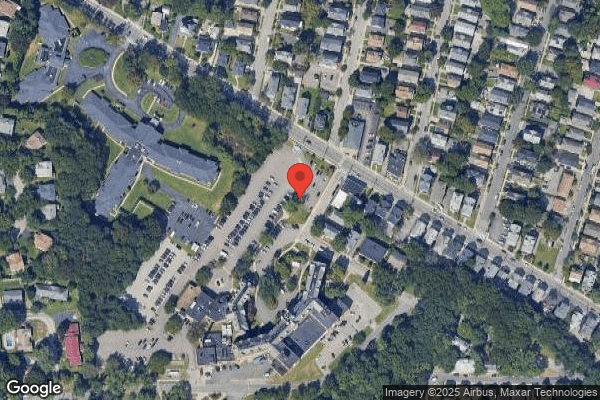
50 Maude Street, Providence, RI 02908 (401) 456-2600
For profit - Limited Liability company 206 Beds MARQUIS HEALTH SERVICES Data: November 2025 6 Immediate Jeopardy citations
Trust Grade
0/100
Last Inspection: July 2025

Inspected within the last 6 months. Data reflects current conditions.

Overview

Elmhurst Rehabilitation and Healthcare Center has received an F grade, indicating poor performance with significant concerns regarding care quality. It does not rank within the top facilities in Rhode Island or Providence County, highlighting a lack of competitive options. The facility's situation is worsening, with reported issues increasing from 11 in 2024 to 24 in 2025, raising serious red flags for potential residents. Staffing is a concern as well, with a low rating and high turnover at 49%, which is above the state average; additionally, RN coverage is lacking compared to 88% of facilities in Rhode Island. Specific incidents include critical medication errors where a cancer medication was administered to the wrong resident for 14 days and failures to provide adequate treatment for diabetic ulcers, both of which could lead to serious health consequences.

Trust Score
F
0/100
In Rhode Island
#112/223
Top 50%
Safety Record
High Risk
Review needed
Inspections
Getting Worse
11 → 24 violations
Staff Stability
⚠ Watch
49% turnover. Above average. Higher turnover means staff may not know residents' routines.
Penalties
○ Average
$706,464 in fines. Higher than 74% of Rhode Island facilities. Some compliance issues.
Skilled Nurses
○ Average
Each resident gets 31 minutes of Registered Nurse (RN) attention daily — about average for Rhode Island. RNs are the most trained staff who monitor for health changes.
Violations
⚠ Watch
59 deficiencies on record. Higher than average. Multiple issues found across inspections.
☆☆☆☆☆
0.0
Overall Rating
☆☆☆☆☆
0.0
Staff Levels
☆☆☆☆☆
0.0
Care Quality
☆☆☆☆☆
0.0
Inspection Score
Stable
2024: 11 issues
2025: 24 issues

The Good

  • Full Sprinkler Coverage · Fire safety systems throughout facility
  • No fines on record

Facility shows strength in fire safety.

The Bad

Staff Turnover: 49%

Near Rhode Island avg (46%)

Higher turnover may affect care consistency

Federal Fines: $706,464

Well above median ($33,413)

Significant penalties indicating serious issues

Chain: MARQUIS HEALTH SERVICES

Part of a multi-facility chain

Ask about local staffing decisions and management

The Ugly 59 deficiencies on record

6 life-threatening 7 actual harm
Jul 2025 6 deficiencies
CONCERN (D)

Potential for Harm - no one hurt, but risky conditions existed

Resident Rights (Tag F0550)

Could have caused harm · This affected 1 resident

**NOTE- TERMS IN BRACKETS HAVE BEEN EDITED TO PROTECT CONFIDENTIALITY** Based on surveyor observation, record review, staff, and resident representative interview, it has been determined that the faci...

Read full inspector narrative →
**NOTE- TERMS IN BRACKETS HAVE BEEN EDITED TO PROTECT CONFIDENTIALITY** Based on surveyor observation, record review, staff, and resident representative interview, it has been determined that the facility failed to treat each resident with respect and dignity for 1 of 1 resident reviewed relative to incontinence care prior to a leave of absence (LOA), Resident ID #18. Findings are as follows:Review of a facility policy titled, Resident Rights last revised February 2021 states in part, .Employees shall treat all residents with kindness, respect and dignity.Federal and state laws guarantee certain basic rights to all residents of the facility. These rights include the resident's right to.a dignified existence .Record review revealed the resident was admitted to the facility in June of 2025 with a diagnosis including, but not limited to, Alzheimer's disease.Record review of the Minimum Data Set (MDS) assessment dated [DATE] revealed s/he had a Brief Interview for Mental Status score of 3 out of 15, indicating severely impaired cognition. Additional review of the MDS revealed the resident was incontinent of bowel and dependent on staff for toileting and hygiene.Review of his/her care plan revealed a focus area dated 6/21/2025 indicating that the resident is incontinent of bowel related to advanced dementia. During a surveyor observation on 7/29/2025 at 8:42 AM, Certified Medication Technician, Staff A, was seen escorting the resident from the elevator. A strong odor of fecal incontinence was immediately noticeable through a surgical mask. Further observation showed Staff A, continuing to lead the resident toward the lobby, ultimately escorting the resident out through the main entrance to a family member before promptly walking away. The resident's family member immediately returned to the door, urgently calling for staff assistance. When this surveyor approached the family member and resident, it was observed that the resident had loose stool running down the resident's pants, into his/her shoes and dripping onto the floor. At this time the receptionist was asked to call for staff to come assist.During a surveyor interview on 7/29/2025 immediately following the above observation with the resident representative, s/he revealed that s/he called the facility earlier to have the resident ready to go to the hospital to visit with his/her dying spouse. S/he was extremely upset, crying and stated, Why would they give [the resident] to me like that?During a surveyor interview on 7/29/2025 at approximately 9:30 AM with Staff A, she acknowledged that she transported the resident from the unit to the main lobby to go on a LOA with his/her family. She would not acknowledge that the resident was incontinent of bowels. During a surveyor interview with the Director of Nursing Services on 7/29/2025 at 11:57 AM, she revealed that the resident had two episodes of loose stool and may not be feeling well. She further revealed that it would be the expectation that a resident is clean, and that incontinence care would have been provided prior to leaving the facility. Additionally, she was unable to provide evidence that the resident was treated with respect and dignity.
CONCERN (D)

Potential for Harm - no one hurt, but risky conditions existed

Deficiency F0658 (Tag F0658)

Could have caused harm · This affected 1 resident

Based on surveyor observation, record review, and staff interview, it has been determined that the facility failed to ensure that residents receive treatment and care in accordance with professional s...

Read full inspector narrative →
Based on surveyor observation, record review, and staff interview, it has been determined that the facility failed to ensure that residents receive treatment and care in accordance with professional standards of practice, relative to 1 of 1 resident reviewed for a urology consult, Resident ID #1, and for 1 of 1 resident reviewed for dietary restrictions, Resident ID #103.Findings are as follows:According to Mosby's 4th Edition, Fundamentals of Nursing, page 314 states in part, The physician is responsible for directing medical treatment. Nurses are obligated to follow physician's orders unless they believe that the orders are in error or would harm the clients.1) Record review revealed Resident ID #1 was readmitted to the facility in May of 2025 with a diagnosis including, but not limited to, fibromyalgia (chronic pain syndrome).Review of a Continuity of Care (COC) form dated 7/25/2025 revealed the resident attended a urology consult and returned with a recommendation including, but not limited to, increase fluid intake.Record review failed to reveal evidence of a physician's order to encourage fluids.During a surveyor interview on 7/31/2025 at 8:43 AM, with Unit Manager, Licensed Practical Nurse, Staff B, she revealed that if a resident requires extra fluids, it should be documented on the Medication Administration Record as a task. She acknowledged that there was not a current physician's order in place to encourage fluids and indicated that there should be. Record review revealed a physician's order dated 7/31/2025 at 8:48 AM, entered by Staff B, to encourage an extra 240 milliliters (ml) of fluid, per shift. This order was entered after the surveyor interviewed Staff B. During a surveyor interview on 7/31/2025 at 10:47 AM, with Nurse Practitioner (NP), Staff C, she revealed that she was aware of the urology recommendation from 7/25/2025 and revealed that she would not approve the recommendation, due to the resident's current sodium levels. Additionally, when asked about the physician's order entered by Staff B, she revealed that she did not give the order to encourage 240 ml of fluid every shift.During a surveyor interview on 7/31/2025 at 11:05 AM, with Staff B, she acknowledged that she entered the above-mentioned physician's order without speaking to the resident's provider, Staff C.During a surveyor interview on 7/31/2025 at 11:41 AM, with the Director of Nursing Services (DNS) she revealed that she would expect staff to speak with the resident's provider prior to entering any orders. Further, she revealed the order has been discontinued, as it was not approved by Staff C.2) Record review revealed Resident ID #103 was admitted to the facility in August of 2024 with a diagnosis including, but not limited to, dysphagia (difficulty swallowing).Record review revealed a physician's order dated 8/3/2024 for a regular diet with special instructions that state, NO PAPER PRODUCTS ON TRAY-REMOVE MENU, TRAY MAT, NAPKIN.Record review revealed a progress note dated 8/20/2024 which states in part, Resident noticed to be biting into [his/her] paper ticket at breakfast this morning.Removed tray ticket and napkin from tray. Resident redirected back to food.Nursing, NP and Dietary Department notified. Tray ticket modified to include instructions for no paper products on tray. Care plan updated.During a surveyor observation on 7/28/2025 at 12:24 PM, Resident ID #103 was noted to be in his/her room eating lunch, with the tray ticket, tray mat, and napkin in front of him/her on the table.During a surveyor interview on 7/28/2025 at 1:10 PM, with Nursing Assistant, Staff D, she acknowledged the special instructions on the resident's meal ticket and acknowledged the resident still had the ticket, mat and napkin in front of him/her. Additionally, she revealed that she was unsure why the resident's meal ticket included removing the ticket, mat, and napkin.During a surveyor interview on 7/29/2025 at 8:19 AM, with Registered Nurse, Staff E, she acknowledged that the diet order instructions specified to remove paper products from the meal tray.During a surveyor interview on 7/29/2025 at 1:18 PM, with the DNS, she revealed that she would expect nursing to review a resident's meal ticket prior to distributing their meal. Further, she revealed that she would have expected Resident ID #103 to not have received any paper products, per the physician's order.
CONCERN (D)

Potential for Harm - no one hurt, but risky conditions existed

Quality of Care (Tag F0684)

Could have caused harm · This affected 1 resident

Based on record review and staff interview, it has been determined that the facility failed to ensure that residents receive treatment and care in accordance with professional standards of practice an...

Read full inspector narrative →
Based on record review and staff interview, it has been determined that the facility failed to ensure that residents receive treatment and care in accordance with professional standards of practice and the comprehensive person-centered care plan for 1 of 1 resident reviewed for daily weights, Resident ID #192. Findings are as follows:Record review revealed that the resident was admitted to the facility in May of 2025 with a diagnosis including, but not limited to, congestive heart failure (CHF, a condition where the heart struggles to pump blood effectively, leading to excess fluid in the body). Additionally, the record revealed that s/he was transferred to an acute care hospital on 6/3/2025 due to an exacerbation of CHF.Record review of a care plan that was initiated on 5/12/2025, revealed a focus area for CHF. Interventions included to monitor for signs and symptoms of CHF, such as weight gain unrelated to meal intake.Record review of the hospital Continuity of Care documents which were received upon admission to the facility on 5/11/2025, revealed the following physician's order:- Weigh daily, call the provider if weight is greater than 3 pounds (lbs.) in a day or 5 lbs. in a week.Further record review failed to reveal evidence that the above physician's order was accepted or declined by a facility provider.Record review of a progress note dated 5/23/2025, authored by Nurse Practitioner, Staff F, states in part, .Patient's weight has continued to increase. Patient should be receiving daily weights.Additional record review revealed that a physician's order for daily weights to be obtained, was implemented on 5/28/2025, 17 days after the resident was admitted to the facility.Additionally, the record failed to reveal evidence that the resident's weights were documented daily on the following dates:5/14, 5/16, 5/17, 5/18, 5/21, 5/22, 5/24, 5/25, 5/26, 5/27, and 5/31/2025 which indicates his/her weight was not obtained for 11 out of 24 opportunities. During a surveyor interview on 7/31/2025 at 2:12 PM, Nurse Practitioner, Staff F declined to confirm whether the order for daily weights should have been implemented on 5/11/2025, despite documentation in her previously noted progress note entry.During a surveyor interview on 7/31/2025 at 11:41 AM with the Director of Nursing Services, she was unable to provide evidence that the resident's weight was monitored daily since his/her admission to the facility on 5/11/2025.
CONCERN (D)

Potential for Harm - no one hurt, but risky conditions existed

Unnecessary Medications (Tag F0759)

Could have caused harm · This affected 1 resident

Based on surveyor observation, record review, and staff interview, it has been determined that the facility failed to ensure that each resident's medication regimen is free from medication error rates...

Read full inspector narrative →
Based on surveyor observation, record review, and staff interview, it has been determined that the facility failed to ensure that each resident's medication regimen is free from medication error rates of 5% or greater. Based on 28 opportunities for error observed during the medication administration task, there were 3 errors resulting in a 10.71% error rate involving Resident ID #s 24 and 135.Findings are as follows:Review of the facility's policy titled, Administering Medications states the following in part, .Medications are administered in accordance with prescriber orders.Residents may self-administer their own medications only if the attending physician, in conjunction with the interdisciplinary care planning team, has determined that they have the decision-making capacity to do so safely.1. Record review revealed Resident ID #24 had a physician's order with start date of 7/28/2025 for Keppra oral tablet give 1250 milligrams (mg) by mouth two times a day to treat epilepsy (seizure disorder).During a surveyor observation of the medication administration task on 7/30/2025 at 8:27 AM, with Licensed Practical Nurse (LPN), Staff H, she retrieved a bottle of liquid Keppra oral liquid solution 100 mg/milliliters (mL) from the medication cart and poured an unmeasured amount of the medication into a 30 mL medicine cup that lacked a 12.5 mL measurement mark. The liquid medication was observed to be between the 10 mL and 15 mL measurement marks.During a surveyor interview with Staff H, immediately following the above-mentioned observation, she acknowledged that she was ready to administer the medication to Resident ID #24. Additionally, she stated that she poured the medication above the 10 mL and below the 15 mL marks. She then acknowledged that the medication should be measured accurately. Additionally, Staff H confirmed that the order was for a tablet, but she was administering the medication in liquid form. 2. Record review revealed Resident ID #135 had the following physician's orders:A. An order dated 7/28/2025, for GlycoLax Powder give 17 grams by mouth two times a day for constipation, mix powder in 6 ounces (oz) of fluid of choice.During a surveyor observation of the medication administration task on 7/31/2025 at 8:28 AM, with LPN, Staff I, she was observed mixing the 17 grams of GlycoLax powder into a 120 mL cup (approximately 4 oz) of water. Additionally, Staff I did not measure or provide 6 oz of fluid as prescribed.During a surveyor interview with Staff I, immediately following the above observation, she stated she was ready to administer the medication to Resident ID #135. When the surveyor asked her how much water was in the cup, she stated it was about 6 oz. She then proceeded to calculate using her cellphone and showed the surveyor that 6 oz is approximately 177 mL but acknowledged that she did not measure 6 oz. She then proceeded to get a second 120 mL cup and poured and unmeasured amount of water into that cup. Staff I proceeded to transfer the fluids back and forth from the first cup into the second cup several times. The surveyor then asked again if she was ready to administer the medication which Staff I stated yes. The surveyor then asked if the facility had a different size cup to which Staff I indicated that she would get a larger cup and proceeded to start the preparation over.B. An order dated 7/23/2025, for Fluticasone Propionate Nasal Suspension 50 micrograms/activated one spray in both nostrils two times a day for allergies.During a surveyor observation on 7/31/2025 at approximately 8:52 AM, Staff I handed the Fluticasone nasal spray to Resident ID #135 without asking the resident if s/he wanted to self-administer. Additionally, the resident was observed to administer two sprays in each nostril instead of one, as ordered.During a surveyor interview with Resident ID #135 immediately following the above observation, s/he indicated that s/he always administers two sprays in each nostril.Further record review failed to reveal evidence of an order for the resident to self-administer medications.During a surveyor interview with Staff I, immediately following the above observation, she acknowledged that the resident self-administered two sprays and not one per the physician's order. Additionally, Staff I acknowledged that the order does not indicate self-administration and indicated she would notify the provider.During a surveyor interview with Director of Nursing Services (DNS) on 7/31/2025 at approximately 9:07 AM, the DNS indicated that she would expect the nurses to administer medications according to the physician's order and allow a resident to self-administer if the order and an assessment indicates such.
CONCERN (E)

Potential for Harm - no one hurt, but risky conditions existed

Deficiency F0919 (Tag F0919)

Could have caused harm · This affected multiple residents

**NOTE- TERMS IN BRACKETS HAVE BEEN EDITED TO PROTECT CONFIDENTIALITY** Based on surveyor observation, record review, resident, and staff interview, it has been determined that the facility failed to ...

Read full inspector narrative →
**NOTE- TERMS IN BRACKETS HAVE BEEN EDITED TO PROTECT CONFIDENTIALITY** Based on surveyor observation, record review, resident, and staff interview, it has been determined that the facility failed to allow residents to call for staff assistance through a communication system which relays the call directly to a staff member or to a centralized staff work area for 4 of 4 residents observed with their call lights out of reach who were requesting staff assistance, Resident ID #s 1, 105, 162, and 175.Findings are as follows:Review of a facility policy titled, Call System, Resident dated September 2022, states in part, .Each resident is provided with a means to call staff directly for assistance from his/her bed, from toileting/bathing facilities, and from the floor.1) Record review revealed Resident ID #162 was readmitted to the facility in February of 2024 with diagnoses including, but not limited to, dementia and muscle weakness.Review of a care plan focus area dated 5/12/2025 revealed s/he has Activities of Daily Living (ADL) self-care performance deficits related to physical limitations and medical co-morbidities with an intervention to encourage him/her to use his/her call light for assistance.Surveyor observations revealed the resident's call light was placed out of the resident's reach on the following dates and times:-7/28/2025 at 11:37 AM: The resident was observed in a recliner in the center of his/her room while the call light was noted to be on his/her bed.-7/29/2025 at 12:03 PM: The resident was observed in a recliner in the center of his/her room while the call light was noted to be on the foot of his/her bed.-7/30/2025 at 10:03 AM: The resident was observed in a recliner in the center of his/her room while the call light was noted lying to be lying across the bed and resting on the floor.During a surveyor interview immediately following the above observation on 7/30/2025 with Activity Aide, Staff J, she acknowledged that the resident's call light was out of the resident's reach.During an additional surveyor observation on 7/30/2025 at 10:34 AM, the resident was observed in a recliner in the center of his/her room while the call light was noted lto be [NAME] across the bed and resting on the floor, out the resident's reach.During a surveyor interview immediately following the above observation with Licensed Practical Nurse, Staff B, she acknowledged that the resident's call light was out of the resident's reach.2) Record review revealed Resident ID #105 was readmitted to the facility in April of 2024 with diagnoses including, but not limited to, history of falling and muscle weakness.Review of the care plan revealed s/he has ADL self-care performance deficits and is at risk for falls with interventions that include to ensure his/her call light is within reach and to encourage him/her to use his/her call light for assistance.Surveyor observations revealed the resident's call light was placed out of the resident's reach on the following dates and times:-7/28/2025 at 11:08 AM: The resident was observed in his/her bed while the call light cord was noted to be tied to the bedrail with the call light dangling off the side of the bed.-7/29/2025 at 12:09 PM: The resident was observed in his/her bed while the call light cord was noted to be tied to the bedrail with the call light dangling off the side of the bed.-7/30/2025 at 10:00 AM: The resident was observed in his/her bed while the call light was resting on the floor.During a surveyor interview immediately following the above observation on 7/30/2025 with Nursing Assistant, Staff K, she acknowledged that the resident's call light was on the floor and was out of the resident's reach.3) Record review revealed Resident ID #175 was readmitted to the facility in November of 2022 with diagnoses including, but not limited to, repeated falls and unsteadiness on feet.Review of the care plan revealed s/he has ADL self-care performance deficits and is at risk for falls with interventions that include to ensure his/her call light is within reach and to encourage him/her to use his/her call light for assistance.During a surveyor observation on 7/28/2025 at 10:50 AM, the resident was observed in his/her bed while the call light was noted to be resting on the floor behind the headboard of his/her bed, out of the resident's reach.4) Record review revealed Resident ID #1 was readmitted to the facility in May of 2025 with diagnoses including, but not limited to, muscle weakness and history of falling.Review of a Minimum Data Set assessment dated [DATE] revealed a Brief Interview for Mental Status score of 15 out of 15, indicating intact cognition.Review of the care plan revealed s/he has ADL self-care performance deficits and is at risk for falls with interventions that include to ensure his/her call light is within reach and to encourage him/her to use his/her call light for assistance.During a surveyor observation and simultaneous interview on 7/31/2025 at 8:26 AM with Resident ID #1, s/he was observed in his/her bed eating breakfast. S/he revealed that s/he would like sugar packets for his/her cereal but cannot reach his/her call light. Additionally, his/her call light was noted to be resting on his/her nightstand by the foot of his/her bed, out of his/her reach. Further, s/he revealed that the call light is often on the nightstand, and s/he is unable to reach it.During a surveyor interview immediately following the above observation with Staff B, she acknowledged that the resident's call light was out of the resident's reach.During a surveyor interview on 7/30/2025 at 12:52 PM with the Director of Nursing Services, she revealed that she would expect the residents' call lights to be within reach and accessible to the resident.
CONCERN (F)

Potential for Harm - no one hurt, but risky conditions existed

Food Safety (Tag F0812)

Could have caused harm · This affected most or all residents

Based on surveyor observation and staff interview, it has been determined that the facility failed to ensure that food is stored and distributed in accordance with professional standards for food serv...

Read full inspector narrative →
Based on surveyor observation and staff interview, it has been determined that the facility failed to ensure that food is stored and distributed in accordance with professional standards for food service safety, relative to the main kitchen. Findings are as follows:1) Record review of the manufacturer's label for a Vital Cuisine Mighty Shake states in part, .use within 14 days of thawing.During a surveyor observation on 7/28/2025 at 8:53 AM, of the main kitchen, revealed thirty-four Vital Cuisine Mighty Shakes in the walk-in refrigerator, without a use-by date to identify when the product was thawed.During a surveyor interview immediately following the above observation with the Food Service Director (FSD), he acknowledged the Mighty Shakes were not dated and revealed that they are dated when they are delivered to the unit.2) Record review of The Rhode Island Food Code 2022 Edition 4.601.11 reads in part, .(A) equipment food contact surfaces .shall be clean to sight .During a surveyor observation on 7/28/2025 at 8:53 AM of the ice machine located in the main kitchen, revealed an accumulation of a pink wipeable substance located on the ice dispenser shield.During a surveyor interview immediately following the above observation with the Regional FSD, she acknowledged the pink wipeable substance in the ice machine and revealed it had been professionally cleaned three weeks prior.During a follow up surveyor observation of the main kitchen on 7/30/2025 at 9:42 AM, after the above concerns were identified by the surveyor, the ice machine was cleaned, and all of the Mighty Shakes were dated when thawed.
Jun 2025 5 deficiencies 1 Harm
SERIOUS (G) 📢 Someone Reported This

A family member, employee, or ombudsman was alarmed enough to file a formal complaint

Actual Harm - a resident was hurt due to facility failures

Free from Abuse/Neglect (Tag F0600)

A resident was harmed · This affected 1 resident

**NOTE- TERMS IN BRACKETS HAVE BEEN EDITED TO PROTECT CONFIDENTIALITY** Based on record review and staff interview, it has been determined that the facility failed to keep a resident free from physica...

Read full inspector narrative →
**NOTE- TERMS IN BRACKETS HAVE BEEN EDITED TO PROTECT CONFIDENTIALITY** Based on record review and staff interview, it has been determined that the facility failed to keep a resident free from physical abuse for 1 of 3 residents reviewed, Resident ID #2. Findings are as follows: Review of a facility reported incident submitted to the Rhode Island Department of Health on 6/9/2025 revealed that staff over heard Resident ID #3, the perpetrator, yelling from his/her room. Resident ID #2, the victim, had wandered into Resident ID #3's room and was found lying on the floor next to Resident ID #3's bed. The report further revealed that when staff assisted Resident ID #2 off of the floor, Resident ID #3 struck Resident ID #2 in the face, causing a bloody nose. Review of a policy titled, Abuse, Neglect, Exploitation, and Misappropriation Prevention Program last revised in April of 2021 states in part, .Residents have the right to be free from abuse .the resident abuse .prevention program consists of a facility-wide commitment and resource allocation to support the following objectives: Protect residents from abuse .by anyone including .other residents . Record review revealed Resident ID #2, the victim, was admitted to the facility in April of 2021 with diagnoses including, but not limited to, dementia, age-related physical debility, and fractures of the nasal bones. Record review of a Minimum Data Set (MDS) assessment dated [DATE] revealed a Brief Interview for Mental Status (BIMS) score of 0 out of 15, indicating the resident has severely impaired cognition. Further review revealed the resident was able to ambulate independently. Record review revealed a progress note dated 6/8/2025 indicating that Resident ID #2 was found on the floor in Resident ID #3's room. Further review revealed while the nurse was helping the resident off of the floor, the other resident struck Resident ID #2 in the face causing a bloody nose. Record review of an MQS: Interim Pain Evaluation completed after the above incident revealed the resident exhibited pain non-verbally through facial expressions, sounds, actions or behaviors. Record review revealed that Resident ID #3, the perpetrator, was admitted to the facility in May of 2020 with a diagnosis including, but not limited to, traumatic brain injury and mood disorder. Review of a MDS assessment dated [DATE] revealed a BIMS score of 7 out of 15, indicating the resident has severely impaired cognition. Further review revealed the resident is independent with transfers and mobility in his/her wheelchair. Record review of a care plan dated 5/7/2025 revealed that Resident ID #3 does not like people entering his/her room or personal space and can become combative and agitated when such instances occur. Record review revealed the following progress notes involving Resident ID #3 and altercations related to resident's wandering into his/her room. -5/13/2025- resident became verbally upset related to a resident entering his/her room and went into the hallway yelling and cursing. Another resident told Resident ID #3 not to speak that way, but Resident ID #3 continued to yell and move his/her hands around. The other resident touched Resident ID #3's wrist and staff intervened. No injuries were noted. -6/1/2025- Resident had an episode of yelling and cursing related to another resident entering his/her room. Record review failed to reveal evidence that new interventions had been put into place in an attempt to prevent a resident-to-resident altercation until after the third incident, which resulted in injuries to Resident ID #2. Record review revealed a stop sign was placed on Resident ID #3's door and then his/her room was moved to another unit on 6/10/2025. Further record review revealed a social service note dated 6/11/2025 indicating that the social worker spoke with the resident's mother regarding .looking into a group home or a facility that has a behavioral unit . Further review revealed the resident's mother was .in agreement to look into these options . During a surveyor observation on 6/11/2025 at approximately 1:40 PM, Resident ID #2 was observed with a bruise which was blue and yellow in color under the resident's left eye, and a dark bruise to the right side of his/her lower lip. During a surveyor interview following the above observation with Licensed Practical Nurse, Staff A, she acknowledged the bruising to the resident's face was a result of the resident-to-resident physical altercation between Resident ID #s 2 and 3. During a surveyor interview on 6/11/2025 at 1:54 PM with the Director of Nursing Services, she indicated that Resident ID #3 has behaviors related to his/her traumatic brain injury. She acknowledged that the resident had verbal altercations related to other residents entering his/her room on 5/13/2025 and 6/1/2025. She further acknowledged that no new interventions were put into place following those two incidents. Additionally, she acknowledged that Resident ID #3 hit Resident ID #2 in the face with his/her hand out of anger, resulting in Resident ID #2 sustaining a bloody nose. The facility's failure to implement interventions on 5/13 and 6/1/2025 after two witnessed incidences of Resident ID #3 becoming upset at other residents entering his/her room placed Resident ID #2 at risk for physical abuse. This abuse resulted in Resident ID #2 sustaining a bloody nose and facial bruising.
CONCERN (D) 📢 Someone Reported This

A family member, employee, or ombudsman was alarmed enough to file a formal complaint

Potential for Harm - no one hurt, but risky conditions existed

Deficiency F0627 (Tag F0627)

Could have caused harm · This affected 1 resident

Based on record review and staff interview it has been determined that the facility failed to provide and document sufficient preparation and orientation to residents to ensure a safe and orderly disc...

Read full inspector narrative →
Based on record review and staff interview it has been determined that the facility failed to provide and document sufficient preparation and orientation to residents to ensure a safe and orderly discharge from the facility for 1 of 1 resident reviewed who left the facility, Resident ID #1. Findings are as follows: Review of a community reported complaint submitted to the Rhode Island Department of Health on 6/5/2025 alleged that a resident had gone missing from the facility the week prior, and the facility's management did not take appropriate action. The complaint further alleged that the resident said s/he wanted to go home, and it took hours for the facility to find him/her. Review of a facility policy titled, Discharging a Resident Without a Physician's Approval states in part, .Regardless of the resident or resident's representative's request to leave the facility against medical advice, the facility will provide a Notice of Discharge, discharge orientation, and a Discharge Summary .before the resident leaves the facility. Record review revealed Resident ID #1 was admitted to the facility in May of 2025 with diagnoses including, but not limited to, aftercare following a hip replacement, post-traumatic stress disorder, and osteoarthritis. Review of a Brief Interview for Mental Status evaluation dated 5/25/2025 revealed a score of 14 out of 15, indicating intact cognition. Review of a Nurse Practitioner's (NP) note with a service date of 5/29/2025 at 9:45 AM revealed the resident informed the NP that s/he is leaving the facility today and had discussed leaving against medical advice. Further review revealed the NP wrote that the resident is safe and medically cleared for discharge home. Record review failed to reveal evidence of a physician's order for the discharge from the facility, a discharge plan involving the interdisciplinary team, a notice of discharge, a discharge summary, or a medication reconciliation. During a surveyor interview via telephone on 6/11/2025 at 11:34 AM with the resident, s/he indicated that s/he told staff that s/he wanted to leave the facility and they had asked him/her to wait so s/he agreed to stay, but s/he left the facility around 11:00 AM on 5/29/2025 with his/her friend. Additionally, the resident indicated that s/he was not given any paperwork, medications, or a referral to home care services. During a surveyor interview on 6/11/2025 at 9:45 AM with Licensed Practical Nurse, Staff B, she indicated that she was the unit nurse on 5/29/2025 when the resident left the facility. She further acknowledged that she did not complete any discharge planning, complete a discharge summary, or conduct a medication reconciliation for the resident. During a surveyor interview on 6/11/2025 at approximately 10:04 AM with the Assistant Director of Nursing Services, she indicated that the unit nurse is responsible for starting the discharge summary and the discharge process. Additionally, she could not provide evidence that the resident received an appropriate discharge. Cross reference F-684
CONCERN (D) 📢 Someone Reported This

A family member, employee, or ombudsman was alarmed enough to file a formal complaint

Potential for Harm - no one hurt, but risky conditions existed

Quality of Care (Tag F0684)

Could have caused harm · This affected 1 resident

**NOTE- TERMS IN BRACKETS HAVE BEEN EDITED TO PROTECT CONFIDENTIALITY** Based on record review and staff interview, it has been determined that the facility failed to ensure that residents receive ade...

Read full inspector narrative →
**NOTE- TERMS IN BRACKETS HAVE BEEN EDITED TO PROTECT CONFIDENTIALITY** Based on record review and staff interview, it has been determined that the facility failed to ensure that residents receive adequate supervision to ensure the safety of 1 of 1 resident reviewed who left the facility, Resident ID #1. Findings are as follows: Review of a community reported complaint submitted to the Rhode Island Department of Health on 6/5/2025 alleges that a resident had gone missing from the facility the week prior, and the facility's management did not take appropriate action. The complaint further alleged that the resident said s/he wanted to go home and it took hours for the facility to find him/her. Review of the facility policy titled, Wandering and Elopements states in part, .If a resident is missing, initiate the elopement/missing resident emergency procedure .If the resident is not located, notify .law enforcement officials . Record review revealed Resident ID #1 was admitted to the facility in May of 2025 with diagnoses including, but not limited to, aftercare following a hip replacement, post-traumatic stress disorder, and osteoarthritis. Review of a Brief Interview for Mental Status evaluation dated 5/25/2025 revealed a score of 14 out of 15, indicating intact cognition. Review of a Nurse Practitioner's (NP) note with a service date of 5/29/2025 at 9:45 AM revealed the resident informed the NP that s/he is leaving the facility today and had discussed leaving against medical advice. Further review revealed the NP wrote that the resident is safe and medically cleared for discharge home. Record review revealed the following progress notes: - 5/29/2025 at 10:21 AM- authored by the Minimum Data Set (MDS) assessment Nurse, Staff C, the resident is not available for quality of life rounds. - 5/29/2025 at 12:19 PM- social worker and case manager went to see the resident to discuss his/her wishes to discharge, resident was not in his/her room at the time of the visit today. Will follow up. - 5/29/2025 at 6:11 PM- Resident is alert oriented x3 and expressed desire to discharge to home today. Resident met with NP who stated she would sign off on discharge if resident insisted on going home. Resident encouraged by staff to speak to social services and wait for discharge plan to be put into place. Resident had a friend visiting at the time. Resident stated to nurse [s/he] would stay until discharge could be set up but that [s/he] was leaving. Activity aid went into room and resident told activity aid [s/he] was leaving today and was observed packing [his/her] room. Resident also stated to activities [s/he] had a ride arranged today to go home and [s/he] told [his/her] friend in the room to go get [him/her] a wheelchair. Resident stated to staff [s/he] was going to go outside with [his/her] friend for 'air' Social services went into see resident in [his/her] room but [s/he] was not in room. Resident's wheelchair found left outside rehab gym. All resident's belongings were not in room. Resident did not wait for discharge paperwork or sign AMA (against medical advice) form. Message left for resident to call facility to obtain paperwork and medications needed for discharge. MD (medical doctor) made aware. Record review failed to reveal a physician's order for the resident's discharge from the facility. Record review failed to reveal evidence of signed AMA paperwork, a discharge summary or a medication reconciliation. Record review failed to reveal evidence that the police were notified of an elopement. During a surveyor interview on 6/10/2025 at 12:43 PM with the MDS assessment Nurse, Staff C, she revealed that she entered the resident's room for a routine interview on 5/29/2025 at approximately 11:00 AM and the resident was not in his/her room at that time. She further indicated that she thought the resident was being discharged later that week and had planned to return later to complete the MDS interview. Additionally, she indicated that during the facility's end of day meeting, around 3:30 PM, it was realized that the resident hadn't been seen in the building for a while and an Elopement Code was announced over the intercom. Furthermore, she indicated that the staff searched the building for the resident and when s/he was not located, staff assumed s/he left AMA. During a surveyor interview on 6/10/2025 at 12:53 PM with the Social Worker, Staff D, she indicated that the resident had said that s/he wanted to go home and she went to speak with the resident about discharge on [DATE] around 12:00 PM. She indicated that the resident was not in his/her room at that time; however, she believed his/her belongings were still in the room, so she planned to follow up later that day. She further indicated that an Elopement Code was called at approximately 3:00 PM and a search of the facility was conducted. Additionally, she indicated that when the resident wasn't located, s/he was called multiple times with no return phone call received. Furthermore, she indicated that she spoke with the resident via telephone the following day, 5/30/2025 to offer to set up outside services; however, the resident indicated that s/he would do it him/herself. During a surveyor interview on 6/11/2025 at 10:04 AM with the Assistant Director of Nursing Services, she indicated that it was brought to her attention during her morning meeting that the resident wanted to leave so she went to speak with him/her around 8:00-9:00 AM. She further indicated that the resident told her that s/he wanted to leave; however, s/he would stay until s/he saw social services, physical therapy (PT), and the provider. Additionally, she indicated that during the afternoon meeting it was discussed that the resident hadn't been seen in his/her room and when they realized s/he was not with PT, an Elopement Code was called, and the facility was searched. Furthermore, she indicated that she called the resident, did not receive a response, and did not notify the police. During a surveyor interview on 6/10/2025 at approximately 1:15 PM with the Director of Nursing Services, she indicated that the resident had said that s/he wanted to go home on 5/29/2025 and was evaluated by the NP who indicated that she would sign off if s/he really wanted to go home. She further indicated that throughout the day some staff thought s/he was at an appointment however s/he was not. Additionally, she indicated that an unknown staff member called an Elopement Code during the afternoon meeting around 3:30 PM but when the resident was not located, the code was cleared, and it was assumed s/he had gone home with a friend. Furthermore, she could not identify when the resident left the facility or where s/he went until the resident returned her phone call on 5/30/2025, the day after s/he unknowingly left the facility. During a surveyor interview on 6/11/2025 at 10:41 AM with the Administrator, she indicated that she was told that the resident wanted to leave on 5/29/2025 and when she heard the Elopement Code over the facility's over head paging system, she cleared the code because she thought the resident had been discharged from the facility earlier that day. She further indicated that she called the resident a couple of times with no answer and had assumed that s/he went home with a friend. Additionally, she was unable to provide evidence that the resident had been discharged from the facility, left AMA, or that the police were notified of an elopement per the facility policy. During a surveyor interview on 6/11/2025 at 11:34 AM with Residnet ID #1, s/he stated that his/her stay at the facility was awful, s/he didn't feel safe, and that s/he had escaped. The resident indicated that s/he told staff that s/he wanted to leave the facility and they had asked him/her to wait so s/he agreed to stay. The resident indicated s/he left the facility around 11:00 AM on 5/29/2025 with his/her friend. Additionally, the resident indicated that s/he was not given any paperwork, medications, or a referal to homecare services. Cross reference F-627
CONCERN (D) 📢 Someone Reported This

A family member, employee, or ombudsman was alarmed enough to file a formal complaint

Potential for Harm - no one hurt, but risky conditions existed

Administration (Tag F0835)

Could have caused harm · This affected 1 resident

Based on record review and staff interview it has been determined that the facility failed to be administered in a manner that enables it to use its resources effectively and efficiently to attain or ...

Read full inspector narrative →
Based on record review and staff interview it has been determined that the facility failed to be administered in a manner that enables it to use its resources effectively and efficiently to attain or maintain the highest practicable physical, mental, and psychosocial well-being of each resident relative to 1 of 1 resident reviewed who left the facility, Resident ID #1. Findings are as follows: Review of a community reported complaint submitted to the Rhode Island Department of Health on 6/5/2025 alleges that a resident had gone missing from the facility the week prior, and the facility's management did not take appropriate action. The complaint further alleged that the resident said s/he wanted to go home and it took hours for the facility to find him/her. Record review revealed Resident ID #1 left the facility at an unknown time on 5/29/2025. During a surveyor interview via telephone on 6/11/2025 at 11:34 AM with the resident, s/he stated that s/he left the facility around 11:00 AM on 5/29/2025 with his/her friend. Additionally, the resident indicated that s/he was not given any paperwork, medications, or had any homecare services set up. During a surveyor interview on 6/10/2025 at approximately 3:00 PM with the Director of Nursing Services, she indicated that an Elopement Code was called around 3:30 PM when staff realized the resident had not been seen for a while at the facility. She further indicated that because the resident had said that s/he wanted to go home that morning and because his/her belongings were not in the resident's room, staff assumed that s/he left the facility to go home and the Elopement Code was cleared. Additionally, she could not indicate when the resident left the facility and could not be sure where the resident went because the resident did not return the multiple phone calls from the facility until the next morning. During a surveyor interview on 6/11/2025 at 10:41 AM with the Administrator, she indicated that she was told that the resident was being discharged that day so when she heard the Elopement Code, she assumed that the resident had been discharged and cleared the code. Additionally, she could not indicate when the resident left and could not provide evidence that the resident was safely discharged from the facility on 5/29/2025. Cross reference F 684 & 627
CONCERN (D) 📢 Someone Reported This

A family member, employee, or ombudsman was alarmed enough to file a formal complaint

Potential for Harm - no one hurt, but risky conditions existed

Medical Records (Tag F0842)

Could have caused harm · This affected 1 resident

Based on record review and staff interview, it has been determined that the facility failed to ensure that resident records are complete and accurately documented, relative to medication administratio...

Read full inspector narrative →
Based on record review and staff interview, it has been determined that the facility failed to ensure that resident records are complete and accurately documented, relative to medication administration, for 1 of 1 resident reviewed who left the facility, Resident ID #1. Findings are as follows: Record review revealed Resident ID #1 was admitted to the facility in May of 2025 with diagnoses including, but not limited to, aftercare following a hip replacement, post-traumatic stress disorder, and osteoarthritis. Review of a Brief Interview for Mental Status evaluation dated 5/25/2025 revealed a score of 14 out of 15, indicating intact cognition. Record review revealed a physician's order dated 5/23/2025 for Acetaminophen 325 milligrams (mg) give two tablets three times a day. Record review of the May 2025 Medication Administration Record (MAR) revealed the Acetaminophen dose scheduled for 2:00 PM was documented as administered on 5/29/2025 by Licensed Practical Nurse (LPN), Staff B. During a surveyor interview via telephone on 6/11/2025 at 11:34 AM with the resident, s/he indicated that s/he left the facility around 11:00 AM on 5/29/2025 with his/her friend and did not return to the facility again. During a surveyor interview on 6/11/2025 at 9:45 AM with LPN, Staff B, she indicated that she thought that she last saw the resident in his/her room around 2:00 PM on 5/29/2025. She further indicated that she thought the resident ate lunch in his/her room that day because the Nursing Assistants didn't tell her that the resident didn't eat. During a subsequent interview on 6/11/2025 at 12:29 PM with Staff B, she indicated that she was unaware that the resident had left the facility around 11:00 AM on 5/29/2025. She further acknowledged that she documented that she administered the resident's 2:00 PM Acetaminophen; however, this was inaccurate since the resident was not in the facility. During a surveyor interview on 6/11/2025 at 12:38 PM with the Director of Nursing Services, she indicated that she would expect that a medication is only documented as administered if it was administered. Additionally, she could not explain the 2:00 PM dose of Acetaminophen being documented as administered when the resident had left the facility hours prior. Cross reference F 627 and 684
Feb 2025 9 deficiencies 1 Harm
SERIOUS (G)

Actual Harm - a resident was hurt due to facility failures

Deficiency F0658 (Tag F0658)

A resident was harmed · This affected 1 resident

Based on surveyor observation, record review, resident and staff interviews, it has been determined that the facility failed to ensure that services provided meet professional standards of quality rel...

Read full inspector narrative →
Based on surveyor observation, record review, resident and staff interviews, it has been determined that the facility failed to ensure that services provided meet professional standards of quality relative to 1 of 1 resident reviewed for use of a baclofen pump (a small device that is placed under the skin on one side of the abdomen near the hip bone. It is used to deliver baclofen, a medication prescribed to treat muscle spasms, directly into the spinal canal), Resident ID #35, and for 2 of 2 residents reviewed for medications with parameters, Resident ID #s 71 and 137, and for 1 of 5 residents reviewed for antibiotic use, Resident ID #76. Findings are as follows: 1a. Record review revealed Resident ID #35 was readmitted to the facility in January of 2025 with diagnoses including, but not limited to, chronic pain syndrome and anoxic brain injury (a brain injury that occurs when the brain lacks a supply of oxygen). Review of hospital discharge paperwork dated 1/3/2025 revealed that the resident had his/her baclofen pump replaced and has a surgical incision to the left side of his/her abdomen that is covered with a dressing that is to remain in place until his/her surgical follow up appointment. Review of a progress note dated 1/10/2025 authored by Unit Manager, Staff A, revealed that the resident was seen for a surgical follow up appointment for his/her baclofen pump replacement and returned without any dressing orders for the surgical wound. Review of a progress note dated 1/14/2025 authored by Nurse Practitioner (NP), Staff B, states in part, .Patient seen for removal of surgical dressing on the abdomen following baclofen pump replacement. Incision with staples intact, no erythema [redness] or evidence of infection noted. Site is healing well. Plan: Nursing to change dressing daily with dry sterile dressing and apply bacitracin [a topical ointment that helps prevent infection] to the suture line. Will monitor the site closely . Record review failed to reveal evidence that the above-mentioned orders for close monitoring of the surgical site, bacitracin, and a daily dressing change had been transcribed as ordered by the NP, Staff B. Record review failed to reveal evidence that a dressing was applied to the surgical site or that the site had been closely monitored from 1/14/2025 until 2/5/2025, a total of 22 days. During a surveyor interview with the resident and simultaneous observation on 2/5/2025 at 12:26 PM, s/he revealed that s/he has a baclofen pump and lifted his/her shirt to show the surveyor the incision site. The incision site was noted to be red. Review of a progress note dated 2/5/2025 authored by Staff B, states in part, .Patient seen for possible surgical site infection following recent baclofen pump replacement in the left lower quadrant of the abdomen. Surgical site shows erythema [a common sign of inflammation] with scant amount of pus draining from lateral [the side of something] edge of incision .Physical exam reveals well-healed incision with 1 pinpoint opening on lateral edge, mild amount of pus draining actively, and blanching erythema surrounding lateral portion of incision .1) Wound culture sent. 2) Started on clindamycin [antibiotic] .4) Consulted with pain clinic regarding antibiotic therapy; they will determine if patient needs to be seen or requires longer duration of antibiotics given underlying hardware. Additionally, they state the patient's planned procedure for tomorrow will have to be rescheduled given active infection . During a surveyor interview on 2/5/2025 at 12:31 PM with Staff A, she acknowledged that the resident does not have an order for a dressing to the surgical wound to his/her left abdomen. Additionally, Staff A, revealed that the resident would be starting on an antibiotic due to a possible infection at the surgical site. During a surveyor interview on 2/5/2025 at 2:26 PM with the Interim Director of Nursing Services (DNS) she was unable to provide evidence that an order had been transcribed for wound care for the resident's surgical site. During a surveyor interview on 2/6/2025 at 10:36 AM with NP, Staff B, she revealed that she gave a verbal order for wound care to the nursing staff on 1/14/2025. Additionally, Staff B revealed that she would expect the staff to transcribe the order she provided, complete the wound care daily, and monitor the incision site for infection. 1b. According to SynchroMed II Drug Infusion Pump SELECT WARNINGS AND PRECAUTIONS, states in part, .It is mandatory that all patients, caregivers, and treating physicians receive adequate information regarding the risks of the mode of treatment. Instruction Abrupt discontinuation of intrathecal [route of medication administration by injection directly into the spinal canal] baclofen, regardless of the cause, has resulted in sequelae [consequence of a previous disease or injury] that include high fever, altered mental status, exaggerated rebound spasticity, and muscle rigidity, that in rare cases has advanced to multiple organ-system failure and death. Prevention of abrupt discontinuation of intrathecal baclofen requires careful attention to programming and monitoring of the infusion system, refill scheduling and procedures, and pump alarms. Patients and caregivers should be advised of the importance of keeping scheduled refill visits and should be educated on the early symptoms of baclofen withdrawal. Special attention should be given to patients at apparent risk (e.g. spinal cord injuries at T-6 or above, communication difficulties, history of withdrawal symptoms from oral or intrathecal baclofen) . Record review of the physician's orders failed to reveal documentation of the pump or what the facility does relative to the management of the pump. Review of the care plan failed to reveal evidence that the resident has a baclofen pump or what interventions the facility is providing to mitigate the risks such as symptoms of baclofen withdrawal, monitoring for alarms, or what to do if an alarm was to sound per the manufacturer's guidance. During a surveyor interview on 2/5/2025 at 12:31 PM with Unit Manager, Staff A, she acknowledged that the resident has a baclofen pump without a physician's order in place or a care plan. Additionally, Staff A, was unaware of what an alarm would mean if it was sounding. Furthermore, she indicated that she did not know the signs and symptoms of a baclofen overdose. During a surveyor interview on 2/5/2025 at 2:36 PM with the Interim DNS she acknowledged that the resident does not have orders or a care plan in place for his/her baclofen pump to include; symptoms of baclofen withdrawal, monitoring for alarms, or what to do if an alarm was to sound per the manufacturer's guidance. Additionally, the Interim DNS was unaware that the baclofen pump alarms to alert to a complication. 2a. Review of a facility policy titled, Administering Medication states in part, Medications are administered in a safe and timely manner and as prescribed .Medications are administered in accordance with prescriber orders .The following information is checked/verified for each resident prior to administering medications .vital signs if necessary . Record review revealed Resident ID #71 was readmitted to the facility with a diagnosis including, but not limited to, takotsubo cardiomyopathy (a sudden stress induced heart condition that weakens the left ventricle and can cause heart attack like symptoms). Review of a physician's order dated 1/22/2025 for Metoprolol Succinate Oral Tablet Extended Release 25 milligrams (mg). Give 12.5 mg by mouth, one time a day for takotsubo cardiomyopathy, hold if apical pulse (a pulse point on your chest at the bottom tip (apex) of your heart) is less than 60. Review of the January and February 2025 Medication Administration Records (MAR) revealed the Metoprolol Succinate was signed off as administered daily from 1/22/2025 through 2/4/2025. Additional review failed to reveal evidence that an apical pulse had been obtained to correspond with the medication administration. During a surveyor interview on 2/5/2025 at 8:27 AM with Certified Medication Technician, Staff C, she acknowledged that there was no documented heart rate for the medication administration. During a surveyor interview on 2/5/2025 at 8:30 AM with Licensed Practical Nurse, Staff D, she acknowledged that the medication parameters are not being followed and that there are no documented apical pulse readings for the resident. 2b. Record review revealed that Resident ID #137 was readmitted to the facility with diagnoses including, but not limited to, type II diabetes and Parkinson's. Review of a physician's order dated 1/30/2025 for Humalog (insulin) to administer 7 units for type II diabetes and to hold for a blood glucose reading below 100 milligrams per deciliter (mg/dL). Review of the February 2025 MAR revealed that the insulin was administered when the residents blood glucose reading was below 100mg/dL on the following dates: - 2/1/2025 - 98 mg/dL - 2/3/2025 - 71 mg/dL During a surveyor interview on 2/5/2025 at 3:40 PM with the Interim DNS in the presence of the Administrator and a second surveyor, she acknowledged that the insulin was administered on the above dates when it should have been held per the physician's order. 3. Review of a facility policy titled, Administering Medication states in part, Medications are administered in a safe and timely manner and as prescribed .Medications are administered in accordance with prescriber orders . Record review revealed Resident ID #76 was readmitted to the facility in January of 2025 with diagnoses including, but not limited to, muscle weakness and acute kidney injury. Review of a physician's order dated 1/9/2025 for Bactrim DS (antibiotic) tablet 800-160 mg, two times daily to treat a urinary tract infection for 7 days. Review of the January 2025 MAR revealed that two doses of the Bactrim DS were not administered on 1/13/2025. Record review failed to reveal evidence that the provider was made aware of the missed doses of antibiotics. During a surveyor interview on 2/5/2025 at 11:21 AM with NP, Staff B, she revealed that the facility staff did not report that Resident ID #76 missed two missed doses of Bactrim. During a surveyor interview on 2/5/2025 at 11:54 AM with the Interim DNS, she acknowledged the resident missed two doses of Bactrim. Additionally, she could not provide evidence the NP was notified of the missed doses of medication.
CONCERN (D)

Potential for Harm - no one hurt, but risky conditions existed

Resident Rights (Tag F0550)

Could have caused harm · This affected 1 resident

**NOTE- TERMS IN BRACKETS HAVE BEEN EDITED TO PROTECT CONFIDENTIALITY** Based on record review, resident and staff interview, it has been determined that the facility failed to ensure that a resident'...

Read full inspector narrative →
**NOTE- TERMS IN BRACKETS HAVE BEEN EDITED TO PROTECT CONFIDENTIALITY** Based on record review, resident and staff interview, it has been determined that the facility failed to ensure that a resident's right to communication and access to persons and services inside and outside the facility to promote a dignified existence was promoted for 1 of 2 residents reviewed for reviewed for communication, Resident ID #333. Findings are as follows: Record review revealed that Resident ID #333 was admitted to the facility on [DATE] with a diagnosis including, but not limited to, hearing loss. During a surveyor interview with the Administrator on 2/3/2025 at approximately 8:15 AM, she revealed that there is respiratory illness on the floor where Resident ID #333 resides. Additionally, she revealed that the facility is requiring masks to be worn on that floor until further notice. Review of a document titled, Rhode Island Department of Human Services Level I Identification for MI [Mental Illness] and DD [Developmental Disability] (PASARR) dated 1/28/2025 revealed that the resident is hard of hearing, wears bilateral hearing aids, and his/her means of communication is lip reading. During a surveyor interview on 2/3/2025 at 9:29 AM with the resident, s/he stated that s/he reads lips to communicate and indicated that s/he could not understand the surveyor because she was wearing a mask. Review of the resident's care plan failed to identify that this resident is hearing impaired or that the resident reads lips as his/her primary means of communication. During a surveyor interview on 2/3/2025 at approximately 9:29 AM with the Assistant Administrator, he revealed that to communicate with Resident ID #333, the facility uses an American Sign Language (ASL) interpreter. He indicated that he would set up a time for the surveyor to meet with an interpreter over a video call to translate ASL for the resident. During a surveyor interview on 2/3/2025 at approximately 12:10 PM with the Speech Therapist, he revealed that the resident is hard of hearing and that s/he does not know ASL. He further indicated that therapy had just evaluated the resident and had a difficult time communicating with him/her. He further revealed that after the communication concern was identified by the surveyor due to the facility's mask mandate, a communication board was provided to the resident. Further review of the resident's care plan revealed a focus area for hearing impairment dated 2/3/2025 was added after the communication concern was brought to the facility's attention by the surveyor. Additionally, it indicated that s/he is hard of hearing with a goal to communicate effectively and with dignity, and to have his/her needs met by providing the resident with appropriate writing materials and that s/he utilizes a dry erase board. Additionally, an interpreter video call was never set up for the surveyor as the resident does not utilize ASL as a means for communication, as indicated by the Assistant Administrator. During a surveyor interview on 2/5/2025 at 11:55 AM with the Interim Director of Nursing Services, she indicated that she would expect that if a resident needed an additional way to communicate with the staff, that those means of communication would be known to the staff. Cross Reference F 655
CONCERN (D)

Potential for Harm - no one hurt, but risky conditions existed

Deficiency F0655 (Tag F0655)

Could have caused harm · This affected 1 resident

**NOTE- TERMS IN BRACKETS HAVE BEEN EDITED TO PROTECT CONFIDENTIALITY** Based on record review, resident and staff interview, it has been determined that the facility failed to ensure that each baseli...

Read full inspector narrative →
**NOTE- TERMS IN BRACKETS HAVE BEEN EDITED TO PROTECT CONFIDENTIALITY** Based on record review, resident and staff interview, it has been determined that the facility failed to ensure that each baseline care plan included PASARR recommendations for 1 of 2 residents reviewed for Preadmission Screening and Resident Review (PASARR), Resident ID #333. Findings are as follows: Review of a facility policy titled, Care Plans-Baseline, last revised March 2022, states in part, .A base line plan of care to meet the resident's immediate health and safety needs is developed for each resident within forty-eight (48) hours of admission .The baseline care plan includes instructions needed to provide effective, person-centered care of the resident that meet professional standards of quality care and must include the minimum healthcare information necessary to properly care for the resident including, but not limited to the following .initial goals based on admission orders and discussion with the resident/representative .PASARR recommendations, if applicable . Record review revealed that Resident ID #333 was admitted to the facility on [DATE] with a diagnosis including, but not limited to, hearing loss. Review of a document titled, Rhode Island Department of Human Services Level I Identification for MI [Mental Illness] and DD [Developmental Disability] (PASARR) dated 1/28/2025 revealed that the resident is hard of hearing and his/her means of communication is lip reading. During a surveyor interview with the Administrator on 2/3/2025 at approximately 8:15 AM, she revealed that there is respiratory illness on the floor where Resident ID #333 resides. Additionally, she revealed that the facility is requiring masks to be worn on that floor. During a surveyor interview on 2/3/2025 at 9:29 AM, with the resident, s/he stated that s/he reads lips to communicate and indicated that s/he could not understand the surveyor because she was wearing a mask. Review of the resident's base line care plan failed to identify that the resident's means of communication is lip reading per his/her PASARR. During a surveyor interview on 2/3/2025 at approximately 12:10 PM, with the Speech Therapist, he revealed that the resident is hard of hearing. He further indicated that therapy had just evaluated the resident and had a hard time communicating with him/her. He further revealed that a communication board was provided to the resident after the communication concern was brought to the facility's attention by the surveyor. During a surveyor interview on 2/5/2025 at 11:55 AM with the Interim Director of Nursing Services, she indicated that she would expect that if a resident has a need for an alternative means of communication that this would be identified in his/her baseline care plan. Further review of the resident's care plan revealed a focus area for hearing impairment dated 2/3/2025 was added after the communication concern was brought to the facility's attention by the surveyor. Additionally, it indicated that s/he is hard of hearing with a goal to communicate effectively and with dignity, and to have his/her needs met by providing the resident with appropriate writing materials and that s/he utilizes a dry erase board. Cross Reference F 550
CONCERN (D)

Potential for Harm - no one hurt, but risky conditions existed

Deficiency F0698 (Tag F0698)

Could have caused harm · This affected 1 resident

Based on record review and staff interview, it has been determined that the facility failed to ensure that residents who require dialysis (a treatment that removes excess fluid, waste, and toxins from...

Read full inspector narrative →
Based on record review and staff interview, it has been determined that the facility failed to ensure that residents who require dialysis (a treatment that removes excess fluid, waste, and toxins from the blood when the kidneys are no longer functioning properly) receive such services, consistent with professional standards of practice for 1 of 1 resident reviewed for dialysis, Resident ID #43. Findings are as follows: Record review revealed Resident ID #43 was readmitted to the facility with diagnoses including, but not limited to, end stage renal disease and the dependence on renal dialysis. Record review revealed the resident receives hemodialysis three times a week, Tuesdays, Thursdays, and Saturdays. Record review of a nursing progress note dated 1/9/2025 revealed the resident returned from dialysis with a bottle of Velphoro 500 milligrams (mg) (a phosphate binder indicated for the control of serum phosphorus levels for patients with chronic kidney disease on dialysis). It further included instructions from the dialysis center that another pharmacy will be shipping the prescription directly to the facility. Record review revealed a physician's order dated 1/12/2025 for Velphoro 500 mg, twice daily, at 8:00 AM and 4:00 PM. Record review of the Medication Administration Records for January 2025 and February 2025 revealed on the following dates and times the Velphoro was recorded as 22= Drug / Treatment Not Administered. -1/25/2025 4:00 PM -1/26/2025 8:00 AM and 4:00 PM -1/27/2025 8:00 AM and 4:00 PM -1/28/2025 8:00 AM -1/29/2025 8:00 AM -1/30/2025 8:00 AM and 4:00 PM -1/31/2025 8:00 AM -2/1/2025 8:00 AM and 4:00 PM -2/2/2025 8:00 AM and 4:00 PM -2/3/2025 8:00 AM and 4:00 PM Record review failed to reveal evidence that the physician or dialysis center were notified regarding the above missed doses of Velphoro. During a surveyor interview on 2/5/2025 at 9:41 AM with the Dietician from the dialysis center, she revealed that there has been no recent communication with the facility regarding the above missed doses of Velphoro. She further revealed the facility should have received a 90-day supply that was delivered to the facility on 1/17/2025. Additionally, she revealed that the dialysis center could have provided the medication until the prescription was received. During a surveyor interview on 2/5/2025 at 10:02 AM with the Unit Manager, Staff A, she indicated that it should have been reported to the physician and the dialysis center that the medication was not available. She further revealed that she reported it to the Nurse Practitioner on 2/4/2025 and received an order to hold the medication until it was delivered and notified the dialysis center. During a surveyor interview on 2/5/2025 at 11:47 AM with the Nurse Practitioner, Staff H, she revealed that she would have expected the facility to notify the dialysis center regarding the missed doses of Velphoro. She further revealed that she was updated on 2/4/2025 by the facility and was told that the prescription was mailed to an incorrect address. During a surveyor interview on 2/5/2025 at 2:37 PM with the Interim Director of Nursing Services, she was unable to provide evidence that the facility effectively communicated with the dialysis center or the resident's provider that the Velphoro was not being administered per the physician's order prior to 2/4/2025. Cross Reference F 755
CONCERN (D)

Potential for Harm - no one hurt, but risky conditions existed

Pharmacy Services (Tag F0755)

Could have caused harm · This affected 1 resident

Based on record review and staff interview, it has been determined that the facility failed to provide pharmaceutical services (including procedures that assure the accurate acquiring, receiving, disp...

Read full inspector narrative →
Based on record review and staff interview, it has been determined that the facility failed to provide pharmaceutical services (including procedures that assure the accurate acquiring, receiving, dispensing, and administering of all drugs and biological's) to meet the needs of each resident for 1 of 1 resident reviewed for dialysis (a treatment that removes excess fluid, waste, and toxins from the blood when the kidneys are no longer functioning properly), Resident ID #43. Record review revealed Resident ID #43 was readmitted to the facility with diagnoses including, but not limited to, end stage renal disease and the dependence on renal dialysis. Record review of a nursing progress note dated 1/9/2025 revealed, the resident returned from dialysis with a bottle of Velphoro 500 milligrams: (mg- a phosphate binder prescribed to control phosphorus levels in the blood for patients with chronic kidney disease who receive on dialysis). It further included instructions from the dialysis center that another pharmacy will be shipping the prescription directly to the facility going forward. Record review revealed a physician's order dated 1/12/2025 for Velphoro 500 mg, twice daily, at 8:00 AM and 4:00 PM. Record review of the Medication Administration Records for January and February 2025 revealed on the following dates and times the above medication was recorded as 22= Drug / Treatment Not Administered. -1/25/2025 4:00 PM -1/26/2025 8:00 AM and 4:00 PM -1/27/2025 8:00 AM and 4:00 PM -1/28/2025 8:00 AM -1/29/2025 8:00 AM -1/30/2025 8:00 AM and 4:00 PM -1/31/2025 8:00 AM -2/1/2025 8:00 AM and 4:00 PM -2/2/2025 8:00 AM and 4:00 PM -2/3/2025 8:00 AM and 4:00 PM During a surveyor interview on 2/5/2025 at 9:41 AM with the Dietician from the dialysis center, she revealed that the facility should have received a 90-day supply of Velphoro as it was delivered to the facility on 1/17/2025. Additionally, she revealed that the dialysis center was not notified that this medication was not received by the facility until 2/4/2025. During a surveyor interview on 2/5/2025 at 10:02 AM with the Unit Manager, Staff A, she acknowledged that the resident was not receiving his/her Velphoro, due to the pharmacy not delivering it. Additionally, she could not provide evidence that the facility communicated with the pharmacy or the dialysis center to either obtain the medication or to inform them that the medication had not been delivered. During a surveyor interview on 2/5/2025 at 2:37 PM with the Interim Director of Nursing Services, she could not provide evidence that the facility effectively communicated with the dialysis center or the pharmacy regarding the above medication until 2/4/2025. Cross Reference F 698
CONCERN (D)

Potential for Harm - no one hurt, but risky conditions existed

Deficiency F0810 (Tag F0810)

Could have caused harm · This affected 1 resident

Based on surveyor observation, record review, and staff interview, it has been determined that the facility failed to provide a scoop plate (a plate with raised, curved edges that helps guide food ont...

Read full inspector narrative →
Based on surveyor observation, record review, and staff interview, it has been determined that the facility failed to provide a scoop plate (a plate with raised, curved edges that helps guide food onto a utensil) for 1 of 1 resident reviewed who requires adaptive eating equipment, Resident ID #4. Findings are as follows: Record review revealed the resident was admitted to the facility with diagnoses including, but not limited to, dementia, muscle weakness, and legal blindness. Review of the care plan revealed a focus area indicating that the resident has a nutritional problem related to his/her dementia progression, blindness, and requires more staff assistance with eating. Further review revealed an intervention for a scoop plate with all meals. Additionally, it indicates that his/her weight has decreased. Review of physician's diet order dated 4/1/2024 indicated that the resident is to have a scoop plate with all meals. Record review of the resident's lunch meal diet slip dated 2/3/2025 revealed the resident uses a scoop plate. During a continuous surveyor observation of the lunch meal on 2/3/2025 between 12:08 PM and 12:33 PM, the resident without a scoop plate for his/her lunch meal. Additionally, s/he was observed spilling food several times onto the table while s/he attempted to eat. During a surveyor observation of the resident and simultaneous interview on 2/3/2025 at 12:33 PM with Nursing Assistant, Staff J, she indicated that she was unaware if the resident required a scoop plate. She acknowledged that the resident was spilling his/her food onto the table while trying to eat and that the diet slip indicated that the resident requires a scoop plate with meals. During a surveyor interview on 2/4/2024 at 3:17 PM with the Interim Director of Nursing Services in the presence of a second surveyor, she revealed that she would expect the resident to be provided with a scoop plate with all meals, as ordered.
CONCERN (E)

Potential for Harm - no one hurt, but risky conditions existed

Quality of Care (Tag F0684)

Could have caused harm · This affected multiple residents

Based on record review and staff interview, it has been determined that the facility failed to ensure that each resident receives the necessary care and services to attain or maintain the highest prac...

Read full inspector narrative →
Based on record review and staff interview, it has been determined that the facility failed to ensure that each resident receives the necessary care and services to attain or maintain the highest practicable physical well-being for 4 of 5 residents reviewed relative to follow up appointments, Resident ID #s 71, 111, 117, and 19, and for 1 of 2 residents reviewed for non-pressure wounds, Resident ID #135. Findings are as follows: 1a. Record review revealed Resident ID #117 was admitted to the facility with a diagnosis including, but not limited to, dementia. Review of the progress notes revealed the following: - 10/2/2024: .skin area to L [left] nipple resolved . - 12/2/2024 at 10:00 AM: .seen today following reports of left nipple redness and swelling . - 12/2/2024 at 3:16 PM: .noted to have redness and discharge from L nipple .recommendations to monitor and a Mammogram consult . - 12/13/2024 at 6:32 AM: .left nipple area pink .scant amt [amount] dried yellow drainage at site . Record review revealed the following physician's orders: - 12/2/2024: Mammogram consultation of the left breast due to redness and discharge. - 12/2/2024: Monitor the left nipple for redness and drainage, document any changes, and notify the provider. During a surveyor interview on 2/4/2025 at 10:58 AM with Unit Manager (UM), Staff E, she revealed that once a consultation is ordered, an appointment is scheduled, and the information is entered into the resident's electronic progress notes. Further review of the progress notes failed to reveal evidence that a mammogram had been scheduled prior to 2/6/2024, after it was brought to the facility's attention by the surveyor. 1b. Record review revealed Resident ID #111 was readmitted to the facility with diagnoses including, but not limited to, chronic kidney disease, abnormal findings in blood chemistry, and dementia. Review of the progress notes revealed the following: - 12/17/2024 at 1:30 PM: .seen for follow up exam following recent hospitalization for acute kidney injury and urinary tract infection . - 12/20/2024 at 8:15 AM: .seen for follow up exam related to leukocytosis [a condition characterized by an abnormally high number of white blood cells in the bloodstream] white blood count remain elevated as 15.5 as of 12/19/2024 .if labs are negative will consider hematology consult . - 12/23/2024 at 9:00 AM: .Hematology consult to be offered; family is agreeable . Review of a physician's order dated 12/27/2024 revealed to obtain a hematology consult. Record review failed to reveal evidence that a hematology consult had been scheduled prior to 2/5/2024, after it was brought to the facility's attention by the surveyor. During a surveyor interview on 2/5/2025 at 12:09 PM with Nurse Practitioner (NP), Staff F, she revealed it was her expectation that Resident ID #117's mammogram and Resident ID #111's hematology consult would have been scheduled as ordered. 1c. Record review revealed Resident ID #19 was admitted to the facility with diagnoses including, but not limited to, duodenal ulcer (a sore on the lining of your stomach or the first part of your small intestine) and gastro-esophageal reflux disease (a chronic condition where stomach contents flow back up into the esophagus, causing irritation and inflammation). Record review revealed the following physician's orders: - 3/8/2024: Referral to a gastrointestinal (GI) provider for an endoscopy (a medical procedure that allows a doctor to see inside of the body using a long, flexible tube called an endoscope) related to a duodenal ulcer. - 3/8/2024: Endoscopy - 3/13/2024: GI consult for an outpatient endoscopy as soon as possible and to discontinue the order once obtained. - 9/24/2024: GI consult due to his/her history of a duodenal ulcer. Review of the January 2025 Medication Administration Record (MAR) revealed the order to obtain the outpatient endoscopy had been signed off as completed for 31 days. Record review failed to reveal evidence that a GI consult had been scheduled since it was initially ordered on 3/8/2024. During a surveyor interview on 2/5/2025 at 8:12 AM with the UM, Staff A, she revealed that she was unaware if the resident had his/her GI consult. Subsequently, she was unable to provide evidence that the resident had his/her GI consult for his/her endoscopy as ordered, as of 2/5/2025. During a surveyor interview on 2/6/2025 at 10:40 AM with NP, Staff B, she revealed that she would have expected the resident to have had his/her GI consult and endoscopy. 1d. Record review revealed Resident ID #71 was admitted to the facility with a diagnosis including, but not limited to, Multiple Sclerosis (MS; a chronic neurological disorder). Review of a document titled, Continuity of Care Consultation and Referral Form dated 4/25/2024, indicated the resident had ear wax removed from both ears, and a recommendation was made for a follow up appointment for him/her to return in 6 months. Additionally, s/he was to use debrox (drops to remove ear wax), one week prior to attending the follow up appointment. Record review revealed the following physician's orders: - 9/16/2024: Audiology consult and treatment, as needed. - 9/16/2024: ENT (ears, nose, and throat) consult and treatment, as needed. - 1/3/2025: Please schedule the ENT follow up appointment and follow up with his/her outpatient neurologist for MS three times a day and to discontinue the order once the appointment is made. Record review failed to reveal evidence that a follow up ENT appointment had been scheduled as ordered. During a surveyor interview on 2/5/2025 at 11:03 AM with NP, Staff C, she was unable to provide evidence that the resident had his/her ENT follow up or that an appointment was scheduled. 2a. Review of a facility policy titled, Wound Care dated August 2021, states in part, .Documentation .The following information should be recorded in the residents medical record .All assessment data [i.e. wound bed color, size, drainage, etc.] obtained when inspecting the wound . Record review revealed Resident ID #135 was admitted to the facility with diagnoses including, but not limited to, emphysema (a long-term lung condition that causes shortness of breath) and chronic respiratory failure. Record review of his/her care plan revealed a focus care area for enhanced barrier precautions (EBP) related to his/her wounds, initiated on 1/31/2025. Record review revealed the following physician's orders: - 11/8/2024: Consult wound care services, as needed - 12/2/2024: Cleanse the top of his/her right foot with wound cleanser, pat dry, sure prep (creates a barrier film) to the peri-wound (perimeter of the wound), apply medi honey (wound treatment) followed by a dry, clean dressing daily and as needed - 12/23/2024: Cleanse open areas on both lower extremities with wound cleanser, pat dry, apply medi honey to wound beds followed by an ABD pad (wound dressing) and kling (wound bandage), and to change daily and as needed - 1/30/2025: Cleanse his/her left outer shin with wound cleanser, apply oil emulsion (a wound treatment) cut to size, cover with bordered gauze/foam (a wound dressing), and to change daily and as needed - 1/31/2025: EBP related to his/her wounds. Review of the progress notes revealed the following pertaining to his/her wounds: - 11/18/2024: The resident has persistent small scattered open wounds to bilateral lower extremities with no evidence of infection - 11/21/2024: .We will follow-up after wound care visit today for any updated recommendations for superficial wounds to bilateral lower extremities . Review of multiple skin assessments on the following dates revealed the following pertaining to his/her wounds: - 11/25/2024: His/her left and right lower legs had 2+ pitting weeping edema (indentation in the skin that disappears within 15 seconds of pressing on the affected area with excess fluid builds up) with several scabbed areas on both lower legs. - 12/9/2024: His/her right shin was noted with small, scabbed areas, and had treatments in place. His/her left middle toe was noted with a scabbed area and had a treatment in place. The top of his/her left foot was noted with scabbed areas and had a treatment in place. His/her left shin had a large, scabbed area, and had a treatment in place. Additionally, s/he was followed by the wound team. - 12/16/2024: S/he had unidentified type of skin impairments noted on the front of his/her right lower leg, left shin, top of left foot, left third toe, and is followed by the wound team. - 12/19/2024: S/he had multiple scabbed areas noted on his/her toes and feet with 2+ pitting edema and is s/he is followed by the wound team. - 12/23/2024: S/he has open areas on his/her left and right lower extremities and the top of his/her right foot. Additionally, s/he is followed by the wound team. The skin impairments were described to be abrasions. - 12/30/2024: S/he has skin impairments to the top of his/her left and right foot with open areas, and scabbed areas on his/her right lower leg with treatments in place. Additionally, the skin impairments were described to be abrasions. - 1/6/2025: S/he has scabbed areas to both shins and the top of both feet with open areas. Additionally, treatments are in place, changed as ordered, and s/he is followed by the wound team. - 1/13/2025: S/he has scabbing noted on his/her right and left lower legs and to the top of both feet. Additionally, the skin impairments were described to be abrasions. - 1/20/2025: Both shins noted with abrasions and the tops of both of feet noted with a small, open area. Additionally, dressings are in place, changed as ordered, and s/he is followed by the wound team. - 1/27/2025: Abrasions noted on both lower shins and to the top of both feet. - 2/3/2025: Abrasions noted to both shins and the top of both feet. Record review failed to reveal evidence of wound documentation for the resident's multiple wounds between 11/25/2024 and 2/3/2025 that include, but not limited to, the size of the wound, description of the wound edges, wound bed, the shape, and the condition of the surrounding tissue as per the regulation and facility policy. During a surveyor interview on 2/5/2025 at 10:39 AM with Registered Nurse, Staff G, she acknowledged that there is no documentation of wound measurements or descriptions of the wounds found in the resident's record. During a surveyor interview on 2/5/2025 at 11:13 AM with the UM, Staff N, she was unable to provide evidence of the required documentation of the resident's wounds. During a surveyor interview on 2/5/2025 at 11:47 AM with the Interim Director of Nursing Services, she indicated that Resident ID #135 did not have any wounds, but only had abrasions, despite the documentation that the resident continues to receive treatments for his/her lower extremity wounds, is followed by the wound team, and is currently on EBP for his/her wounds.
CONCERN (E)

Potential for Harm - no one hurt, but risky conditions existed

Deficiency F0700 (Tag F0700)

Could have caused harm · This affected multiple residents

Based on surveyor observation, record review, and staff interview, it has been determined that the facility failed to complete resident assessments and entrapment assessments (an assessment which dete...

Read full inspector narrative →
Based on surveyor observation, record review, and staff interview, it has been determined that the facility failed to complete resident assessments and entrapment assessments (an assessment which determines the risk of a resident being caught, trapped, or entangled in the space in or around the bed/side rail) in their entirety for 3 of 3 floors affecting Resident ID #s 4, 20, 23, 25, 40, 43, 48, 50, 55, 57, 61, 65, 71, 73, 87, 93, 105, 109, 111, 114, 117, 120, 129, 137, 156, 157, 178, 333, and 387. Findings are as follows: Review of a facility policy titled Bed Safety and Bed Rails last revised in August of 2022, states in part, Residents beds meet the safety specifications established by the Hospital Bed Safety Workgroup. The use of bed rails is prohibited unless the criteria for use of bed rails have been met .Maintenance staff routinely inspect all beds and related equipment to identify risks and problems including potential entrapment risks .Bed rails are properly installed and used according to the manufacturer's instructions, specifications and other pertinent safety guidance to ensure proper fit .the use of bed rails or side rails (including temporarily raising the side rails for episodic use during care) is prohibited unless criteria for use of bed rails have been met, including attempts to use alternatives, interdisciplinary evaluation, resident assessment and informed consent .Prior to the installation or use of a side or bed rail, alternatives to the use of side or bed rails are attempted. Alternatives may include: .roll guards .foam bumpers .lowering the bed .use of concave mattress to reduce rolling of the bed .If attempted alternatives do not adequately meet the resident's needs the resident may be evaluated for the use of bed rails. This interdisciplinary evaluation includes: .an evaluation of the alternatives to bed rails that were attempted and how these alternatives failed to meet the resident's needs .the resident's risk associated with the use of bed rails .input from the resident and/or representative .and consultation with the attending physician .the resident assessment to determine risk of entrapment includes, but is not limited to: medical diagnoses, conditions, symptoms, and/or behavioral symptoms .ability to toilet self .cognition .communication .mobility .risk of falling .the resident assessment also determines potential risk to the resident associated with the use of bed rails, including the following .accident hazards .a resident or part of his/her body could be caught between rails, the openings of the rails, or between the bed rails and mattress .Restricted mobility .hinders residents from independently getting out of bed thereby confining them to their beds .psychosocial outcomes .contributes to feeling of isolation Before using bed rails for any reason, the staff shall inform the resident or representative about the benefits and potential hazards associated with bed rails and obtain informed consent. The following information will be included in the consent .the assessed medical needs that will be addressed with the use of bed rails .the resident's risk from the use of bed rails and how these will be mitigated .the alternatives that were attempted but failed to meet the resident's needs .the alternatives that were considered but not attempted and the reason. 1. Record review revealed that Resident ID #4 was admitted to the facility with diagnoses including, but not limited to, dementia and violent behaviors. During surveyor observations on 2/3, 2/4, 2/5, and 2/6/2025 revealed the resident has bilateral bed rails. Review of the resident's record failed to reveal evidence that the following required components for bed rail use per the federal regulation and bed rail policy were completed: - the benefits of bed rails use - the potential risks of bed rails use - if and what alternatives were attempted prior to the installation of the bed rails - if the resident does or does not want bed rails - informed consent 2. Record review revealed that Resident ID #20 was readmitted to the facility with diagnoses including, but not limited to, difficulty walking and lack of coordination. During surveyor observations on 2/3, 2/4, 2/5, and 2/6/2025 revealed the resident has bilateral bed rails. Review of the resident's record failed to reveal evidence that the following required components for bed rail use per the federal regulation and bed rail policy were completed: - the potential risks of bed rails use - if and what alternatives were attempted prior to the installation of the bed rails - the frequency of the bed rail use - a resident or representative signature consenting to the side rails 3. Record review revealed that Resident ID #23 was readmitted to the facility with diagnoses including, but not limited to, muscle wasting and pain in right wrist. During surveyor observations on 2/3, 2/4, 2/5, and 2/6/2025 revealed the resident has bilateral bed rails. Review of the resident's record failed to reveal evidence that the following required components for bed rail use per the federal regulation and bed rail policy were completed: - the resident assessment of medical needs - the benefits of bed rails use - if and what alternatives were attempted prior to the installation of the bed rails - the potential risks of bed rails use - the frequency of the bed rail use - if the resident does or does not want bed rails - a signature from a facility representative 4. Record review revealed that Resident ID #25 was admitted to the facility with diagnoses including, but not limited to, dementia and lack of coordination. During surveyor observations on 2/3, 2/4, 2/5, and 2/6/2025 revealed the resident has bilateral bed rails. Review of the resident's record failed to reveal evidence that the following required components for bed rail use per the federal regulation and bed rail policy were completed: - the potential risks of bed rails use - if and what alternatives were attempted prior to the installation of the bed rails - the frequency of the bed rail use 5. Record review revealed that Resident ID #40 was admitted to the facility with diagnoses including, but not limited to, history of falling and muscle wasting. During surveyor observations on 2/3, 2/4, 2/5, and 2/6/2025 revealed the resident has bilateral bed rails. Review of the resident's record failed to reveal evidence that the following required components for bed rail use per the federal regulation and bed rail policy were completed: - the benefits of bed rails use - the potential risks of bed rails use - if and what alternatives were attempted prior to the installation of the bed rails - the frequency of the bed rail use - a signature from a facility representative Record review failed to reveal a physician's order for side rails, or a care plan developed by the interdisciplinary team for side rails. Review of Side Rail Assessment binders for the months of November and December 2024 and January 2025 failed to reveal that assessments were completed for entrapment for Resident ID #40. 6. Record review revealed that Resident ID #43 was readmitted to the facility with diagnoses including, but not limited to, epilepsy and muscle wasting. During surveyor observation on 2/3, 2/4, 2/5, and 2/6/2025 revealed the resident has bilateral bed rails. Review of the resident's record failed to reveal evidence that the following required components for bed rail use per the federal regulation and bed rail policy were completed:: - the potential risks of bed rails use - if and what alternatives were attempted prior to the installation of the bed rails - the frequency of the bed rail use 7. Record review revealed that Resident ID #48 was admitted to the facility in August of 2014 with diagnoses including, but not limited to, dementia and history of falling. During surveyor observations on 2/3, 2/4, 2/5, and 2/6/2025 revealed the resident has bilateral bed rails. Review of the resident's record failed to reveal evidence that the following required components for bed rail use per the federal regulation and bed rail policy were completed:: - the benefits of bed rails use - the potential risks of bed rails use - if and what alternatives were attempted prior to the installation of the bed rails Review of a Quarterly Bed Rail Evaluation dated 7/25/2024 revealed that the use of bed rails acts as a physical restraint for this resident, impeding movement or limiting their daily activities. It further revealed that bed rails are not indicated at this time. 8. Record review revealed that Resident ID #50 was admitted to the facility with diagnoses including, but not limited to, disorientation and delusional disorder. During surveyor observations on 2/3, 2/4, 2/5, and 2/6/2025 revealed the resident has bilateral bed rails. Review of the resident's record failed to reveal evidence that the following required components for bed rail use per the federal regulation and bed rail policy were completed:: - the benefits of bed rails use - the potential risks of bed rails use - if and what alternatives were attempted prior to the installation of the bed rails - the frequency of the bed rail use 9. Record review revealed that Resident ID #55 was readmitted to the facility with diagnoses including, but not limited to, hemiplegia (paralysis on one side of the body) and hemiparesis (weakness on one side of the body) and seizure disorder. During surveyor observations on 2/3, 2/4, 2/5, and 2/6/2025 revealed the resident has bilateral bed rails. Review of the resident's record failed to reveal evidence that the following required components for bed rail use per the federal regulation and bed rail policy were completed: - the benefits of bed rails use - the potential risks of bed rails use - if and what alternatives were attempted prior to the installation of the bed rails 10. Record review revealed that Resident ID #57 was readmitted to the facility with diagnoses including, but not limited to, adjustment disorder and major depressive disorder. During surveyor observations on 2/3, 2/4, 2/5, and 2/6/2025 revealed the resident has bilateral bed rails. Review of the resident's record failed to reveal evidence that the following required components for bed rail use per the federal regulation and bed rail policy were completed: - the potential risks of bed rails use - if and what alternatives were attempted prior to the installation of the bed rails - a resident or representative signature consenting to the side rails 11. Record review revealed that Resident ID #61 was admitted to the facility with diagnoses including, but not limited to, dementia and adjustment disorder. During surveyor observations on 2/3, 2/4, 2/5, and 2/6/2025 revealed the resident has bilateral bed rails. Review of the resident's record failed to reveal evidence that the following required components for bed rail use per the federal regulation and bed rail policy were completed: - the potential risks of bed rails use - if and what alternatives were attempted prior to the installation of the bed rails - the frequency of the bed rail use - if the resident does or does not want bed rails - a signature from a facility representative Review of a Quarterly Bed Rail Evaluation dated 12/3/2024 revealed that the use of bed rails act as a physical restraint for this resident, impeding movement or limiting their daily activities. It further revealed that bed rails are not indicated at this time. 12. Record review revealed that Resident ID #65 was admitted to the facility with diagnoses including, but not limited to, dementia and muscle weakness. During surveyor observations on 2/3, 2/4, 2/5, and 2/6/2025 revealed the resident has bilateral bed rails. Review of the resident's record failed to reveal evidence that the following required components for bed rail use per the federal regulation and bed rail policy were completed: - the potential risks of bed rails use - if and what alternatives were attempted prior to the installation of the bed rails - the frequency of the bed rail use - if the resident does or does not want bed rails - a signature from a facility representative 13. Record review revealed that Resident ID #71 was readmitted to the facility with diagnoses including, but not limited to, multiple sclerosis and need for assistance with personal care. During surveyor observations on 2/3, 2/4, 2/5, and 2/6/2025 revealed the resident has bilateral bed rails. Review of the resident's record failed to reveal evidence that the following required components for bed rail use per the federal regulation and bed rail policy were completed: - the potential risks of bed rails use - if and what alternatives were attempted prior to the installation of the bed rails Further record review failed to reveal a physician's order for the use of bilateral side rails. 14. Record review revealed that Resident ID #73 was readmitted to the facility with diagnoses including, but not limited to, muscle weakness and fracture of the neck. During surveyor observations on 2/3, 2/4, 2/5, and 2/6/2025 revealed the resident has bilateral bed rails. Review of the resident's record failed to reveal evidence that the following required components for bed rail use per the federal regulation and bed rail policy were completed: - the potential risks of bed rails use - if and what alternatives were attempted prior to the installation of the bed rails - the frequency of the bed rail use 15. Record review revealed that Resident ID #87 was readmitted to the facility with diagnoses including, but not limited to, lack of coordination and Asperger's syndrome. During surveyor observations on 2/3, 2/4, 2/5, and 2/6/2025 revealed the resident has bilateral bed rails. Review of the resident's record failed to reveal evidence that the following required components for bed rail use per the federal regulation and bed rail policy were completed: - the resident assessment of medical needs - the benefits of bed rails use - the potential risks of bed rails use - if and what alternatives were attempted prior to the installation of the bed rails - the frequency of the bed rail use - if the resident does or does not want bed rails - a signature from a facility representative Review of a Quarterly Bed Rail Evaluation dated 7/24/2024 failed to reveal the use of side rails or an assessment of the use of side rails was completed. 16. Record review revealed that Resident ID #93 was readmitted to the facility with diagnoses including, but not limited to, hemiplegia and hemiparesis and seizure disorder. During surveyor observations on 2/3, 2/4, 2/5, and 2/6/2025 revealed the resident has bilateral bed rails. Review of the resident's record failed to reveal evidence that the following required components for bed rail use per the federal regulation and bed rail policy were completed: - the potential risks of bed rails use - if and what alternatives were attempted prior to the installation of the bed rails 17. Record review revealed that Resident ID #105 was readmitted to the facility with diagnoses including, but not limited to, need for assistance with personal care and adjustment disorder with anxiety. During surveyor observations on 2/3, 2/4, 2/5, and 2/6/2025 revealed the resident has bilateral bed rails. Review of the resident's record failed to reveal evidence that the following required components for bed rail use per the federal regulation and bed rail policy were completed: - the resident assessment of medical needs - the benefits of bed rails use - the potential risks of bed rails use - if and what alternatives were attempted prior to the installation of the bed rails - the frequency of the bed rail use Review of a Bed Rail Evaluation dated 12/24/2024 revealed that Resident ID # 105 does not need bed rails for the use of bed mobility or transfers. It further revealed that further therapy evaluation is recommended for the use of side rails. 18. Record review revealed that Resident ID #109 was readmitted to the facility with diagnoses including, but not limited to, history of falling and difficulty walking. During surveyor observations on 2/3, 2/4, 2/5, and 2/6/2025 revealed the resident has bilateral bed rails. Review of the resident's record failed to reveal evidence that the following required components for bed rail use per the federal regulation and bed rail policy were completed: - the potential risks of bed rails use - if and what alternatives were attempted prior to the installation of the bed rails - the frequency of the bed rail use 19. Record review revealed that Resident ID #111 was readmitted to the facility with diagnoses including, but not limited to, dementia and anxiety disorder. During surveyor observations on 2/3, 2/4, 2/5, and 2/6/2025 revealed the resident has bilateral bed rails. Review of the resident's record failed to reveal evidence that the following required components for bed rail use per the federal regulation and bed rail policy were completed: - the benefits of bed rails use - the potential risks of bed rails use - if and what alternatives were attempted prior to the installation of the bed rails Review of a Bed Rail Evaluation dated 12/4/2024 revealed that Resident ID #111 does not need bed rails for the use of bed mobility or transfers. It further revealed that the use of bed rails act as a physical restraint for this resident, impeding movement or limiting their daily activities but that bed rails are recommended from this evaluation. 20. Record review revealed that Resident ID #114 was readmitted to the facility with diagnoses including, but not limited to, history of falling and anxiety disorder. During surveyor observations on 2/3, 2/4, 2/5, and 2/6/2025 revealed the resident has bilateral bed rails. Review of the resident's record failed to reveal evidence that the following required components for bed rail use per the federal regulation and bed rail policy were completed: - the benefits of bed rails use - the potential risks of bed rails use - if and what alternatives were attempted prior to the installation of the bed rails Review of a Bed Rail Evaluation dated 11/26/2024 revealed that Resident ID #114 does not need bed rails for the use of bed mobility or transfers. It further revealed that bed rails are not indicated at this time. 21. Record review revealed that Resident ID #117 was readmitted to the facility in January of 2024 with diagnoses including, but not limited to, dementia and muscle weakness. During surveyor observations on 2/3, 2/4, 2/5, and 2/6/2025 revealed the resident has bilateral bed rails. Review of the resident's record failed to reveal evidence that the following required components for bed rail use per the federal regulation and bed rail policy were completed: - the benefits of bed rails use - the potential risks of bed rails use - if and what alternatives were attempted prior to the installation of the bed rails Review of a Bed Rail Evaluation dated 11/8/2024 revealed that Resident ID #117 that the use of bed rails act as a physical restraint for this resident, impeding movement or limiting their daily activities but that bed rails are recommended from this evaluation. 22. Record review revealed that Resident ID #120 was admitted to the facility with diagnoses including, but not limited to, muscle weakness and Alzheimer's disease. During surveyor observations on 2/3, 2/4, 2/5, and 2/6/2025 revealed the resident has bilateral bed rails. Review of the resident's record failed to reveal evidence that the following required components for bed rail use per the federal regulation and bed rail policy were completed: - the benefits of bed rails use - the potential risks of bed rails use - if and what alternatives were attempted prior to the installation of the bed rails - the frequency of the bed rail use 23. Record review revealed that Resident ID #129 was admitted to the facility with diagnoses including, but not limited to, Alzheimer's disease and psychotic disorder with delusions. During surveyor observations on 2/3, 2/4, 2/5, and 2/6/2025 revealed the resident has bilateral bed rails. Review of the resident's record failed to reveal evidence that the following required components for bed rail use per the federal regulation and bed rail policy were completed: - the benefits of bed rails use - the potential risks of bed rails use - if and what alternatives were attempted prior to the installation of the bed rails Review of a Bed Rail Evaluation dated 12/27/2024 revealed that Resident ID #129 does not need bed rails for the use of bed mobility or transfers. It further revealed that the use of bed rails act as a physical restraint for this resident, impeding movement or limiting their daily activities and that bed rails are not indicated at this time. 24. Record review revealed that Resident ID #137 was readmitted to the facility with diagnoses including, but not limited to, repeated falls and epilepsy. During surveyor observations on 2/3, 2/4, 2/5, and 2/6/2025 revealed the resident has bilateral bed rails. Review of the resident's record failed to reveal evidence that the following required components for bed rail use per the federal regulation and bed rail policy were completed: - the benefits of bed rails use - the potential risks of bed rails use - if and what alternatives were attempted prior to the installation of the bed rails 25. Record review revealed that Resident ID #156 was readmitted to the facility with diagnoses including, but not limited to, contractures of left hand and muscle wasting. During surveyor observations on 2/3, 2/4, 2/5, and 2/6/2025 revealed the resident has bilateral bed rails. Review of the resident's record failed to reveal evidence that the following required components for bed rail use per the federal regulation and bed rail policy were completed: - the benefits of bed rails use - the potential risks of bed rails use - if and what alternatives were attempted prior to the installation of the bed rails - the frequency of the bed rail use - if the resident does or does not want bed rails 26. Record review revealed that Resident ID #157 was readmitted to the facility with diagnoses including, but not limited to, secondary Parkinsonism and cramps and spasms. During surveyor observations on 2/3, 2/4, 2/5, and 2/6/2025 revealed the resident has bilateral bed rails. Review of the resident's record failed to reveal evidence that the following required components for bed rail use per the federal regulation and bed rail policy were completed: - the benefits of bed rails use - the potential risks of bed rails use - if and what alternatives were attempted prior to the installation of the bed rails 27. Record review revealed that Resident ID #178 was readmitted to the facility with diagnoses including, but not limited to, muscle wasting and difficulty walking. During surveyor observations on 2/3, 2/4, 2/5, and 2/6/2025 revealed the resident has bilateral bed rails. Review of the resident's record failed to reveal evidence that the following required components for bed rail use per the federal regulation and bed rail policy were completed: - the resident assessment of medical needs - the benefits of bed rails use - the potential risks of bed rails use - if and what alternatives were attempted prior to the installation of the bed rails - the frequency of the bed rail use Record review failed to reveal a physician's order for side rails, or a care plan developed by the interdisciplinary team for side rails. 28. Record review revealed that Resident ID #333 was readmitted to the facility with a diagnosis including, but not limited to, major depressive disorder. During surveyor observations on 2/3, 2/4, 2/5, and 2/6/2025 revealed the resident has bilateral bed rails. Review of the resident's record failed to reveal evidence that the following required components for bed rail use per the federal regulation and bed rail policy were completed: - the benefits of bed rails use - the potential risks of bed rails use - if and what alternatives were attempted prior to the installation of the bed rails - the frequency of the bed rail use - if the resident does or does not want bed rails Review of a Bed Rail Evaluation dated 1/30/2025 revealed that Resident ID #333 does not need bed rails for the use of bed mobility or transfers. It further revealed that bed rails are not indicated at this time. 29. Record review revealed that Resident ID #387 was readmitted to the facility with a diagnosis including, but not limited to, multiple fractures of ribs. During surveyor observations on 2/3, 2/4, 2/5, and 2/6/2025 revealed the resident has bilateral bed rails. Review of the resident's record failed to reveal evidence that the following required components for bed rail use per the federal regulation and bed rail policy were completed: - the benefits of bed rails use - the potential risks of bed rails use - if and what alternatives were attempted prior to the installation of the bed rails - the frequency of the bed rail use - if the resident does or does not want bed rails Review of a Bed Rail Evaluation dated 1/31/2025 revealed that Resident ID #387 does not need bed rails for the use of bed mobility or transfers. It further revealed that a therapy evaluation is recommended. Review of a Side Rail Assessment (an assessment utilized to assess a bed and bed rails for entrapment) completed in January 2025 for Resident ID #'s 4, 20, 23, 25, 43, 48, 50, 55, 57, 61, 65, 71, 73, 87, 93, 105, 109, 111, 114, 117, 120, 129, 137, 156, 157, 178, 333, and 387 failed to identify the manufacturer, model, and serial numbers of the bed and bed rails. Therefore, the facility is unable to determine if the bed and the bed rails are compatible to mitigate the risk for entrapment. Additional review of the Side Rail Assessment binder for January 2025 for the entire facility failed to identify the manufacturer, model, and serial numbers of the bed and bed rails that the facility has in house. Therefore, the facility is unable to determine if the bed and the bed rails are compatible to mitigate the risks for entrapment. During a surveyor interview on 2/5/2025 at 11:33 AM, with Licensed Practical Nurse, Staff I, she revealed that each resident who has side rails should have a physician's order and care plan in place. During a surveyor interview on 2/5/2025 at 2:55 PM, with the Regional Maintenance Director, the facility Maintenance Director, and the Assistant Administrator, they revealed that Bed Rail Evaluations are completed when there is a new admission, a change in the physical bed, and monthly. During a surveyor interview on 2/6/2025 at 10:04 AM, with the Administrator, the Interim Director of Nursing Services (DNS), and the Assistant Administrator, they acknowledge that the informed consents for side rails and side rail assessments were not being completed in their entirety to meet the federal regulation and in accordance with the facility policy as mentioned for Resident ID #s 4, 20, 23, 25, 40, 43, 48, 50, 55, 57, 61, 65, 71, 73, 87, 93, 105, 109, 111, 114,117, 120, 129, 137, 156, 157, 178, 333, and 387. Additionally, the Interim DNS acknowledged that each resident should also have a physician's order and a care plan in place for the use of the side rails. During a surveyor interview on 2/6/2025 at 1:28 PM, with the Assistant Administrator, he acknowledged that the bed rail evaluations for the above mentioned residents were not completed in it their entirety.
CONCERN (E)

Potential for Harm - no one hurt, but risky conditions existed

Infection Control (Tag F0880)

Could have caused harm · This affected multiple residents

Based on surveyor observation, record review, and staff interview, it has been determined that the facility failed to maintain an infection prevention and control program to help prevent the transmiss...

Read full inspector narrative →
Based on surveyor observation, record review, and staff interview, it has been determined that the facility failed to maintain an infection prevention and control program to help prevent the transmission of communicable diseases and infections, relative to contact precautions (utilized when a resident is known or suspected to be infected with a Multidrug Resistant Organism [MDRO] that can be transmitted by direct contact with the resident or indirect contact with environmental surfaces in the resident's room, and for Respiratory Syncytial Virus [RSV; a common virus that infects the lungs and respiratory tract]) for 2 of 5 residents reviewed on contact precautions, Resident ID #s 120 and 148, and for 1 of 1 resident reviewed with a known history of Extended Spectrum Beta-Lactamase (ESBL an MDRO) observed without any isolation precautions (contact precautions or enhanced barrier precautions [EBP]) in place when it requires such, Resident ID #19. Findings are as follows: Review of a facility policy titled, Isolation-Categories of Transmission-Based Precautions states in part, .Contact precautions .staff and visitors wear gloves (clean, non-sterile) when entering the room .Staff and visitors wear a disposable gown upon entering the room and remove before leaving the room and avoid touching potentially contaminated surfaces with clothing after gown is removed . 1a. Record review revealed that Resident ID #148 was actively on contact precautions for ESBL. During multiple surveyor observations throughout the survey process from 2/3 through 2/6/2025 revealed, Resident ID #148 had signage posted on his/her door indicating that s/he was on contact precautions and indicated for staff/visitors to wear a gown and gloves prior to room entry. Surveyor observation on 2/3/2025 at approximately 10:03 AM revealed the Podiatrist, Staff K, in Resident ID #148's room without a gown. During a surveyor interview immediately following the above observation with Staff K, she acknowledged the signage posted on his/her door and that she failed to wear a gown prior to room entry. Surveyor observation on 2/3/2025 at approximately at 9:41 AM revealed Certified Medication Technician (CMT), Staff C, enter Resident ID #148's room without wearing a gown or gloves. During a surveyor interview with Staff C immediately following this observation, she acknowledged the signage posted on his/her door and that she failed to wear a gown and gloves prior to room entry. Surveyor observation on 2/5/2025 at approximately at 8:22 AM revealed Nursing Assistant (NA), Staff L, enter Resident ID #148's room without wearing a gown or gloves. During a surveyor interview with Staff L immediately following this observation, she acknowledged the signage posted on his/her door and that she failed to wear a gown and gloves prior to room entry. During a surveyor interview on 2/5/2025 at 12:00 PM with the Interim Director of Nursing Services (DNS), she revealed that she would expect all staff to follow the signage posted outside of the residents' rooms. 1b. Review of a facility policy titled, Respiratory Syncytial Virus (RSV) Prevention states in part, .Residents diagnosed with RSV are placed on contact precautions for the duration of their illness . Record review revealed that Resident ID #120 tested positive for RSV on 1/31/2025 and was actively on contact precautions as a result. Additionally, s/he shared a room with another resident. During multiple surveyor observations throughout the survey process from 2/3 through 2/6/2025 revealed, Resident ID #120 had signage posted on his/her door indicating that s/he was on contact precautions and indicated for staff/visitors to wear a gown and gloves prior to room entry. During a surveyor observation on 2/3/2025 at 12:17 PM, NA, Staff M, was observed entering Resident ID #120's room to deliver a lunch tray to his/her roommate without wearing a gown or gloves. During a surveyor interview on 2/5/2025 at 10:01 AM with the Infection Preventionist (IP), she revealed that all personal protective equipment (PPE; includes, but not limited to, gown and gloves) should be put on prior to room entry for a resident and his/her roommate regardless of who is positive relative to contact precautions. Additionally, she revealed that she would expect staff to follow the signage posted outside of the room. During a surveyor interview on 2/5/2025 at 12:00 PM with the Interim DNS, she revealed that she would expect all staff to be wearing PPE as indicated prior to entering the room. 2) Review of the Center for Disease Control and Prevention (CDC) document titled, Implementation of Personal Protective Equipment (PPE) Use in Nursing Homes to Prevent Spread of Multidrug-Resistant Organisms (MDROs) last reviewed 8/1/2023, states in part, Enhanced Barrier Precautions expand the use of PPE and refer to the use of gown and gloves during high-contact resident care activities that provide opportunities for transfer of MDROs to staff hands and clothing .MDROs may be indirectly transferred from resident-to-resident during these high-contact care activities .The use of gown and gloves for high-contact resident care activities is indicated, when Contact Precautions do not otherwise apply, for nursing home residents .with MDRO infection or colonization [means germs are present but do not make you sick] . Review of a facility policy titled, Enhanced Barrier Precautions [EBP] . states in part, .Enhanced barrier precautions (EBPs) are utilized to prevent the spread of multi-drug resistant organisms (MDROs) to residents .MDRO Management .Indications for EBPs (when contact precautions do not otherwise apply) include residents infected or colonized with the following .ESBL . Record review revealed that Resident ID #19 was admitted to the facility with a diagnosis including, but not limited to, dementia. Review of the care plan revealed a focus area dated 8/28/2024 indicating that s/he has an active/colonized MDRO due to a history of ESBL. Record review failed to reveal evidence that the resident was on contact precautions or EBP due to his/her history of ESBL. Additional record review failed to reveal evidence of any negative testing to determine if s/he was still infected or colonized with ESBL. During multiple surveyor observations throughout the survey process from 2/3 through 2/6/2025 failed to reveal evidence that signage was posted by his/her room or PPE available for staff/visitors that would indicate that s/he requires contact precautions or EBP due to his/her history of ESBL. During a surveyor interview on 2/5/2025 at 9:17 AM with the IP, she revealed that she does not keep a resident on contact precautions or place them on EBP after a resident completes treatment for ESBL. Additionally, she was unable to provide evidence that the facility followed the CDC guidance for MDROs.
Jan 2025 4 deficiencies 2 IJ (1 affecting multiple)
CRITICAL (J) 📢 Someone Reported This

A family member, employee, or ombudsman was alarmed enough to file a formal complaint

Immediate Jeopardy (IJ) - the most serious Medicare violation

Drug Regimen Review (Tag F0756)

Someone could have died · This affected 1 resident

Based on record review and staff interview, it has been determined the facility failed to ensure that medication irregularities were identified by the pharmacist during the monthly drug regimen review...

Read full inspector narrative →
Based on record review and staff interview, it has been determined the facility failed to ensure that medication irregularities were identified by the pharmacist during the monthly drug regimen review for 1 of 4 residents reviewed, Resident ID # 1. Findings are as follows: Review of the facility policy titled, Medication Regimen Review and Reporting revised 1/2023, revealed Medication Regimen Review (MRR) or Drug Regimen Review is a thorough evaluation of the medication regimen of a resident, with the goal of promoting positive outcomes and minimizing adverse consequences and potential risk associated with medications. The MRR includes a review of the medical record in order to prevent, identify, report, and resolve medication-related problems, medication errors, or other irregularities. Additional, review of the facility's policy revealed that the pharmacy consultant reviews the medication regimen and medical chart of each resident at least monthly to appropriately monitor the medication regimen and ensure that the medications each resident receives are clinically indicated. According to the document released by the Food and Drug Administration, revised 8/2021, indicates Abiraterone Acetate in combination with prednisone is indicated for the treatment of patients with metastatic prostate cancer. For patients with baseline moderate hepatic (liver) impairment, reduce the recommended dose of Abiraterone Acetate to 250 mg once daily and to monitor liver function tests prior to the start of the medication and weekly for the first month. Patients with severe hepatic impairment, this medication is to be avoided. Abiraterone Acetate may cause high blood pressure, low potassium levels and fluid retention. Additional review revealed adverse reactions of this medication includes, but are not limited to, fatigue, high blood pressure, nausea, vomiting, swelling, low potassium levels, diarrhea and upper respiratory infections. 1. Record review revealed Resident ID #1 has a diagnosis including, but not limited to, liver cancer. Additionally, the record failed to reveal evidence that Resident ID #1 has a diagnosis of prostate cancer. Record review revealed a physician's order dated 12/20/2024 for Abiraterone Acetate (a medication prescribed to treat prostate cancer), 1000 milligrams (mg) daily. Further record review revealed that the Abiraterone Acetate was incorrectly transcribed into Resident ID #1's medical record, as it was intended for another resident. Review of the December 2024 and January 2025 Medication Administration Records revealed Resident ID #1 received Abiraterone Acetate from 12/21/2024 through 1/2/2025, for a total of 13 days. Further record review revealed that the pharmacy monthly medication review was completed for Resident ID #1 on 12/28/2024 and the pharmacist failed to identify any irregularities. During a surveyor interview on 1/22/2025 at 10:13 AM with the Pharmacy Consultant, she revealed that she completed the MRR for Resident ID #1 on 12/28/2024. She further revealed that the Abiraterone Acetate is typically ordered for a diagnosis of prostate cancer. Additionally, she revealed that she should have verified if Resident ID #1 had a diagnosis of prostate cancer and acknowledged that she failed to identify the irregularity when completing the MRR. During a surveyor interview on 1/23/2025 at 2:06 PM with the Oncologist, he revealed that the medication Abiraterone Acetate is only prescribed for an individual with a diagnosis of prostate cancer. The facility's failure to review Resident ID #1's medical chart to confirm that the medications s/he was receiving were appropriate when completing his/her MRR on 12/28/2024, resulted in him/her continuing to receive Abiraterone Acetate, a medication intended for another resident. This placed Resident ID #1 at risk for serious injury, serious harm, serious impairment, or death. During a surveyor interview on 1/24/2025 at approximately 11:37 AM with the Administrator and the [NAME] President of Clinical Operations, they acknowledged that the Pharmacy Consultant failed to identify the irregularities during the MMR review for Resident ID # 1. Cross reference F-757 and F-842
CRITICAL (K) 📢 Someone Reported This

A family member, employee, or ombudsman was alarmed enough to file a formal complaint

Immediate Jeopardy (IJ) - the most serious Medicare violation

Deficiency F0757 (Tag F0757)

Someone could have died · This affected multiple residents

Based on record review and staff interview, it has been determined that the facility failed to ensure that residents are free from unnecessary medications for 1 of 2 residents reviewed who have cancer...

Read full inspector narrative →
Based on record review and staff interview, it has been determined that the facility failed to ensure that residents are free from unnecessary medications for 1 of 2 residents reviewed who have cancer diagnoses, Resident ID #1. Findings are as follows: Review of a community reported complaint dated 1/17/2025 alleged that a cancer medication was given to the wrong resident for 14 days. During a surveyor interview on 1/21/2025 at 9:35 AM with Registered Nurse, Staff A, she indicated that she mistakenly transcribed Resident ID #2's Abiraterone Acetate into Resident ID #1's medical record. Staff A acknowledged that Resident ID #1 received Abiraterone Acetate 1000 mg daily from 12/21/2024 through 1/2/2025 in error, for a total of 13 days. She further revealed that the prescription bottle for Abiraterone Acetate was delivered from the cancer center and labeled with Resident ID #2's name. According to the document released by the Food and Drug Administration, revised 8/2021, indicates Abiraterone Acetate in combination with prednisone is indicated for the treatment of patients with metastatic prostate cancer. For patients with baseline moderate hepatic (liver) impairment, reduce the recommended dose of Abiraterone Acetate to 250 mg once daily and to monitor liver function tests prior to the start of the medication and weekly for the first month. Patients with severe hepatic impairment, this medication is to be avoided. Abiraterone Acetate may cause high blood pressure, low potassium level and fluid retention. Additional review revealed adverse reactions of this medication includes, but are not limited to, fatigue, high blood pressure, nausea, vomiting, swelling, low potassium levels, diarrhea and upper respiratory infections. Review of the facility policy titled, Administering Medications revised 4/2019, revealed the individual administering medications verifies the resident's identity before giving his/her medications. Additionally, the facility's policy revealed that the individual administering the medication, is to check the label 3 times to verify the right resident, right medication, right dosage, right time, and right method (route) of administration before administering the medication. Additionally, the policy indicates medications ordered for a particular resident may not be administered to another resident. Record review revealed Resident ID #1 was admitted to the facility with a diagnosis including, but not limited to, liver cancer and Resident ID #2 was admitted to the facility with a diagnosis including, but not limited to, prostate cancer. Review of a Cancer Center document for Resident ID #2 dated 12/11/2024, revealed a recommendation to restart Abiraterone Acetate. Additional review of the Cancer Center document revealed the recommendation was approved by the Nurse Practitioner (NP), Staff G, on 12/20/2024 for Resident ID #2 to receive Abiraterone Acetate 1000 milligrams (mg) daily. Further record review revealed the order for Abiraterone Acetate was mistakenly transcribed into Resident ID #1's medical record, instead of Resident ID #2's record, for whom the medication was intended. Further record review of Resident ID #1's physician orders revealed that the same NP, Staff G, signed off approval for the order of Abiraterone Acetate on 12/21/2024 and failed to identify that Resident ID #1 was not the same resident that Staff G had approved the Abiraterone Acetate recommendation for on 12/11/2024. During a surveyor interview on 1/22/2025 at 11:40 AM with Staff G, she revealed that she did not recall being contacted by the facility regarding the resident's Abiraterone Acetate order or that she had any knowledge that Abiraterone Acetate was recommended by the Cancer Center for either resident until the medication error was identified. Record review of Resident ID #1's provider progress notes, revealed two notes authored by another NP, Staff H, with the dates of 12/23/2024 and 12/31/2024, revealed that she documented in each progress note that the resident has an order for Abiraterone Acetate 1000 mg daily and that she had completed her medication reconciliation (the process of comparing the medication orders to the medications that the resident has been taking in order to prevent and/or identify any errors or irregularities). Additional review of the progress notes by Staff H, failed to reveal evidence that she identified that this medication is prescribed to treat prostate cancer, and that Resident ID #1 did not have a diagnosis of prostate cancer. Furthermore, record review of the Consultant Pharmacist's progress note revealed a monthly medication regimen review was completed on 12/28/2024 for Resident ID #1 and with no recommendations noted. The pharmacist failed to identify that Abiraterone Acetate is prescribed to treat prostate cancer, and that Resident ID #1 did not have a diagnosis of prostate cancer. During a surveyor interview on 1/22/2025 at 10:13 AM with the Consultant Pharmacist, she revealed that she completed the MRR for Resident ID #1 on 12/28/2024. She further revealed that the Abiraterone Acetate is typically ordered for an individual with a diagnosis of prostate cancer. Additionally, she revealed that she should have verified if Resident ID #1 had a diagnosis of prostate cancer and she acknowledged that she failed to identify the irregularity when completing the MRR. Record review of the December 2024 and January 2025 Medication Administration Records (MARs) revealed Resident ID #1 received Abiraterone Acetate 1000 mg daily at 6:00 AM from 12/21/2024 through 1/2/2025, in error. Further review of the December 2024 and January 2025 MARs revealed the following staff members administered the medication to Resident ID #1 on the following dates: -Licensed Practical Nurse (LPN), Staff B, 12/21/2024 -LPN, Staff C, 12/24/2024, 12/27/2024, 12/28/2024 and 1/1/2025 -LPN, Staff D, 12/22/2024 -Registered Nurse, Staff E, 12/23/2024, 12/25/2024, 12/29/2024, 12/30/2024, 12/31/2024 and 1/2/2025 -Medication Technician, Staff F, 12/26/2024 During a surveyor interview on 1/21/2025 at 2:00 PM, with LPN, Staff B, she revealed that she had administered the Abiraterone Acetate to Resident ID #1 in error, and failed to verify the resident's name on the prescription bottle. During a surveyor interview on 1/21/2025 at 2:39 PM with LPN, Staff C, he revealed that he had administered the Abiraterone Acetate to Resident ID #1 in error, and failed to verify the resident's name on the prescription bottle. During a surveyor interview on 1/21/2025 at 2:50 PM with with LPN, Staff D, he revealed that he had administered the Abiraterone Acetate to Resident ID #1 in error, and failed to verify the resident's name on the prescription bottle. During surveyor interviews on 1/21/2025 at approximately 4:00 PM and 1/24/2025 at approximately 11:30 AM with the Administrator and the Acting Director of Nursing Services, they acknowledged that Staff A transcribed Resident ID #2's Abiraterone Acetate order into Resident ID #1's medical record, in error. Additionally, they acknowledged that the above-mentioned staff, who administered the medication, failed to follow the facility's policy for medication administration. Furthermore, they acknowledged that the two NPs failed to identify that Resident ID #1 had an order for a medication to treat prostate cancer when s/he did not have a diagnosis of prostate cancer. During a surveyor interview on 1/23/2025 at 2:06 PM with the Oncologist, he revealed that the Abiraterone Acetate is only prescribed for an individual with a diagnosis of prostate cancer. The failure of the facility to transcribe this medication into the correct resident's medical record resulted in Resident ID #1 receiving thirteen doses of a medication that s/he received unnecessarily. Additional failures included two NPs and a Consultant Pharmacist failing to identify that Resident ID #1 was being administered a drug without an adequate indication for its use. Furthermore, Staff B, C, D, E and F administered this medication to Resident ID #1 when the medication bottle had Resident ID #2's name on it. The above-mentioned facility failures placed Resident ID #1 at risk for serious injury, serious harm, serious impairment, or death. Cross reference F-756 and F-842
CONCERN (D) 📢 Someone Reported This

A family member, employee, or ombudsman was alarmed enough to file a formal complaint

Potential for Harm - no one hurt, but risky conditions existed

Medical Records (Tag F0842)

Could have caused harm · This affected 1 resident

Based on record review and staff interview, it has been determined that the facility failed to ensure that the resident records are complete and accurately documented, relative to medication transcrip...

Read full inspector narrative →
Based on record review and staff interview, it has been determined that the facility failed to ensure that the resident records are complete and accurately documented, relative to medication transcription errors, for 1 of 4 residents reviewed, Resident ID # 1. Findings are as follows: 1. According to the document released by the Food and Drug Administration, revised 8/2021, Abiraterone Acetate in combination with prednisone is indicated for the treatment of patients with metastatic prostate cancer. Additionally, for patients with baseline moderate hepatic (liver) impairment, reduce the recommended dose of Abiraterone Acetate to 250 mg once daily and to monitor liver function tests prior to the start of the medication and weekly for the first month. In patients with severe hepatic impairment, this medication is to be avoided. Abiraterone Acetate may cause high blood pressure, low potassium level and fluid retention. Additional review of the document revealed an adverse reaction of this medication includes, but is not limited to fatigue, high blood pressure, nausea, vomiting, swelling, low potassium levels, diarrhea and upper respiratory infections. Record review revealed Resident ID #1 has a diagnosis including, but not limited to, liver cancer. Additional record review failed to reveal evidence that the resident has a diagnosis of prostate cancer. Record review revealed that Resident ID #2 was admitted to the facility with a diagnosis including, but not limited to, prostate cancer. Review of the Cancer Center document dated 12/11/2024 for Resident ID #2 revealed a recommendation to restart Abiraterone Acetate 250 milligrams (mg) to give four tablets (1000 mg) daily. Additional review of the Cancer Center document revealed the recommendation was approved by the Nurse Practitioner (NP), Staff G, on 12/20/2024 for Resident ID #2. However, record review revealed the order for Abiraterone Acetate was mistakenly transcribed into Resident ID #1's medical record, instead of Resident ID #2, for whom the medication was intended. Further record review of Resident ID #1's physician's orders revealed that the same NP, Staff G, signed off approval for the order for Abiraterone Acetate on 12/21/2024 and failed to identify that Resident ID #1 was not the same resident that the NP had approved the recommendation for. Review of a physician's order dated 12/20/2024 revealed Abiraterone Acetate 250 mg, give four tablets (1000 mg) daily, was incorrectly transcribed into Resident ID #1's medical record and not Resident ID #2. Record review of the December 2024 and January 2025 Medication Administration Records (MARs) revealed Resident ID #1 received Abiraterone Acetate 1000 mg daily at 6:00 AM from 12/21/2024 through 1/2/2025, in error for a total of 13 days. Further review of the MARs revealed the following staff members administered the medication to Resident ID #1 on the following dates: -Licensed Practical Nurse (LPN), Staff B, 12/21/2024 -LPN, Staff C, 12/24/2024, 12/27/2024, 12/28/2024 and 1/1/2025 -LPN, Staff D, 12/22/2024 -Registered Nurse, Staff E, 12/23/2024, 12/25/2024, 12/29/2024, 12/30/2024, 12/31/2024 and 1/2/2025 -Medication Technician, Staff F, 12/26/2024 During an interview on 1/21/2025 at 9:35 AM with Registered Nurse, Staff A, she revealed that she transcribed the Abiraterone Acetate intended for Resident ID #2, into Resident ID #1's medical record in error. During a surveyor interview on 1/21/2025 at approximately 4:00 PM with the Administrator and the Acting Director of Nursing Services, they acknowledged that Staff A transcribed Abiraterone Acetate into the wrong resident's record, resulting in Resident ID #1 receiving the medication in error. This transcription error resulted in a resident who has a diagnosis of liver cancer, Resident ID #1, receiving a hepatotoxic medication not intended for him/her, which put the resident at risk for serious injury, serious harm, serious impairment, and/or death. Cross reference F-756 and F-757
CONCERN (E) 📢 Someone Reported This

A family member, employee, or ombudsman was alarmed enough to file a formal complaint

Potential for Harm - no one hurt, but risky conditions existed

Deficiency F0865 (Tag F0865)

Could have caused harm · This affected multiple residents

Based on record review and staff interview, it has been determined that the facility failed to implement and maintain an effective Quality Assurance and Performance Improvement (QAPI) program with a f...

Read full inspector narrative →
Based on record review and staff interview, it has been determined that the facility failed to implement and maintain an effective Quality Assurance and Performance Improvement (QAPI) program with a focus related to medication administration. Additionally, the facility failed to provide evidence that new orders were audited per their QAPI plan. Findings are as follows: Review of a document titled, Quality Assurance and Performance Improvement Plan revealed a focus area on ensuring residents are free from unnecessary medications with interventions including, but not limited to, auditing all new medications routinely with a start date of 9/24/2024 and a goal date of 12/24/2024. Additional review of the QAPI document revealed that the goal date for the above-mentioned focus area was extended to 3/24/2025 as a result of a medication error that was identified by the facility on 1/2/2025. Further review revealed an additional QAPI document dated 1/3/2025 with a focus area for medication errors, due to a medication transcription error that was identified on 1/2/2025. The interventions included, but were not limited to, continue to review orders for all new medications during their morning meetings. During a surveyor interview on 1/24/2025 at 9:30 AM with the Administrator and the [NAME] President of Clinical Operations, they revealed that as part of the QAPI plan, one of the interventions is to audit all new orders daily. however they were unable to provide evidence that medication auditing for all new orders were completed, per the QAPI plan. Record review failed to reveal evidence that all new orders were audited daily. As a result of the facility's failure to implement their QAPI for daily auditing of new medication orders, the following medication errors were not identified: 1. Record review revealed Resident ID #1 was admitted to the facility with a diagnosis including, but not limited to, liver cancer and Resident ID #2 was admitted to the facility with a diagnosis including, but not limited to, prostate cancer. Review of a Cancer Center document for Resident ID #2 dated 12/11/2024, revealed a recommendation to restart Abiraterone Acetate (a medication prescribed to treat prostate cancer). Additional review of the Cancer Center document revealed the recommendation was approved by Resident ID #2's Nurse Practitioner on 12/20/2024 for him/her to receive Abiraterone Acetate 1000 milligrams (mg) daily. Record review revealed the order for Abiraterone Acetate was mistakenly transcribed into Resident ID #1's medical record, instead of Resident ID #2, for whom the medication was intended. Review of the December 2024 and January 2025 Medication Administration Records (MARs) revealed that Resident ID #1 received Abiraterone Acetate 1000 mg daily from 12/21/2024 through 1/2/2025 in error. During a surveyor interview on 1/21/2025 at 9:35 AM with Registered Nurse, Staff A, she indicated that she mistakenly transcribed Resident ID #2's order for Abiraterone Acetate into Resident ID #1's medical record. Staff A acknowledged that Resident ID #1 received Abiraterone Acetate 1000 mg daily from 12/21/2024 through 1/2/2025, for a total of 13 days in error. During a surveyor interview on 1/24/2025 at 11:30 AM with the Administrator, the Acting Director of Nursing and the [NAME] President of Clinical Operations, they were unable to provide evidence that medication auditing for all new orders were completed, per the QAPI plan. Cross reference F-757
Dec 2024 1 deficiency
CONCERN (D) 📢 Someone Reported This

A family member, employee, or ombudsman was alarmed enough to file a formal complaint

Potential for Harm - no one hurt, but risky conditions existed

Deficiency F0725 (Tag F0725)

Could have caused harm · This affected 1 resident

Based on surveyor observation, resident and staff interview, it has been determined that the facility failed have sufficient nursing staff to assure resident safety for 1 of 2 residents reviewed relat...

Read full inspector narrative →
Based on surveyor observation, resident and staff interview, it has been determined that the facility failed have sufficient nursing staff to assure resident safety for 1 of 2 residents reviewed related to call light response, Resident ID #4. Findings are as follows: Record review of a complaint submitted to the Rhode Island Department of Health on 12/17/2024 alleges that Resident ID #2 failed to receive care for 24 hours. During a surveyor interview on 12/26/2024 at 11:20 AM with Resident ID #4, Resident ID #2's roommate, s/he revealed that at times, staff takes 30 minutes to 1 hour to respond to his/her call light. Further surveyor interview with Resident ID #4 revealed that s/he would like to have a glass of water and this surveyor recommended that the resident use the call light system for assistance. The resident asked the surveyor to press the call light for him/her at 11:28 AM and was not answered by staff until 12:04 PM, 36 minutes later. During a surveyor interview on 12/26/2024 at 12:05 PM with Licensed Practical Nurse, Staff A, she acknowledged that it took her awhile to answer the call light and would expect it to be answered within 15 minutes. During a surveyor interview with the Administrator at approximately 2:00 PM, she was unable to provide evidence that the call light was answered in a timely manner.
Aug 2024 8 deficiencies 1 IJ
CRITICAL (J)

Immediate Jeopardy (IJ) - the most serious Medicare violation

Quality of Care (Tag F0684)

Someone could have died · This affected 1 resident

**NOTE- TERMS IN BRACKETS HAVE BEEN EDITED TO PROTECT CONFIDENTIALITY** Based on record review and staff interview, it has been determined that the facility failed to provide treatment and care in acc...

Read full inspector narrative →
**NOTE- TERMS IN BRACKETS HAVE BEEN EDITED TO PROTECT CONFIDENTIALITY** Based on record review and staff interview, it has been determined that the facility failed to provide treatment and care in accordance with professional standards of practice for 1 of 2 residents reviewed for diabetic ulcers, Resident ID #94. Findings are as follows: According to the American Diabetes Association - 2017, Volume 35, Number 1, .Foot complications, specifically ulcers and amputations, are the number one reason for hospitalization in patients with diabetes .Thus, early recognition and proper management of patients at risk for developing foot ulcers and lower-extremity amputations are crucial. Performing regular foot exams on patients with diabetes in the primary care setting should be a high priority . Record review revealed Resident ID #94 was admitted to the facility in June of 2024 with diagnoses including, but not limited to, diabetes mellitus, atopic dermatitis (a chronic skin condition that causes dry, itchy, and inflamed skin), and peripheral vascular disease (a condition that affects blood flow to the limbs). Additionally the record revealed that the resident previously had a right foot transmetatarsal amputation (TMA, a partial foot amputation). Review of a Minimum Data Set (MDS) assessment dated [DATE] revealed a Brief Interview for Mental Status score of 14 out of 15, indicating intact cognition. Additionally, it revealed that the resident was at risk for developing pressure ulcers and did not have any infections to his/her feet, diabetic foot ulcers, or open lesions on his/her feet at that time. Further review of the MDS revealed that the resident required supervision or touching assistance with lower body dressing, putting on or taking off footwear, and personal hygiene. Lastly, the MDS revealed that the resident required substantial/maximum assistance with showers or bathing. Review of the care plan revealed a focus area dated 6/26/2024 which indicated the resident requires supervision with activities of daily living (ADLs) with an intervention for staff to provide skin inspections daily during care, and to observe for redness, open areas, scratches, cuts, bruises, and to report changes to the nurse. Additional review of the care plan revealed a focus area dated 7/1/2024, indicating an intervention for daily proper foot care and to promptly report any redness, blistering, and/or open areas to the provider. Record review failed to reveal evidence that daily foot care for the resident was being performed per the plan of care. Review of facility documents titled, Interim Skin Check with the dates of 7/25/2024, 7/27/2024, and 7/29/2024 revealed that the resident did not have any skin impairments noted during these comprehensive head to toe skin assessments. Record review revealed that the resident was followed by an offsite foot and ankle specialist (podiatrist) and had a routine appointment scheduled on 7/29/2024 at 9:45 AM. Record review revealed that the resident did not return to the facility from the above-mentioned appointment, as the podiatrist requested that the resident be transferred to an acute care hospital by rescue for an evaluation related to the appearance of cellulitis (a skin infection) and open ulcerations to both his/her feet and legs. Record review of a hospital admission physician's note electronically signed on 7/29/2024 at 8:21 PM, revealed that the resident arrived at the hospital via Emergency Medical Services from his/her podiatrist appointment after the resident was found to have infected foot ulcers to both feet. Further, the note indicates that the resident reported having foot problems over the past two weeks. Additionally, the physician noted that the resident's right foot TMA was covered with a dressing, his/her left toe was covered with a band-aid, s/he had mild swelling and warmth to his/her right foot and ankle, and multiple superficial excoriations (superficial wounds or scratches) and scales on both of his/her legs and feet. Lastly, the physician recommended that the resident be admitted to receive intravenous antibiotics for left and right foot cellulitis (a bacterial skin infection that can spread rapidly and cause serious complications if left untreated) with non-healing eschar (dry, thick, leathery, and dead tissue that forms over a wound as a result of tissue death). Further review of the hospital admission document revealed that the resident had a wound on his/her left foot measuring 1.5 centimeters (cm) by 1.5 cm and a wound on his/her right TMA site measuring 5 cm by 5 cm. Review of the podiatrist's visit note dated 7/29/2024 revealed that .at this point given the patient's weakness and inability to walk or transfer without assistance as well as the appearance of cellulitis and open ulcerations to both legs and feet, we did call the rescue service to transport the patient to the hospital for further evaluation and treatment of the feet and legs. I did perform a gentle gauze wrap to both feet and legs before [s/he] left . During a surveyor interview on 8/9/2024 at 10:09 AM with Registered Nurse (RN), Staff H, she revealed that the last time she remembered seeing the resident's feet was around the 3rd week of July. Review of the July Medication Administration Record revealed that on 7/29/2024 RN, Staff H, applied Aquaphor External Ointment (Emollient) to the resident's arms, legs, and back as ordered. Further review revealed that the order did not indicate to apply ointment to the resident's feet. During a surveyor interview on 8/9/2024 at 10:14 AM with Nursing Assistant, Staff I, she revealed that the resident can only assist with ADLs on the upper half of his/her body and requires staff assistance to complete ADLs for his/her lower half. During a surveyor interview on 8/9/2024 at 10:26 AM with Nurse Practitioner (NP), Staff D, she revealed that she was unaware of any ulcers on the resident's feet and would expect that the resident's skin assessments would accurately reflect his/her current condition. Further record review revealed that the resident was readmitted to the facility on [DATE] following his/her hospitalization related to foot cellulitis with ulcer. Record review of the hospital discharge document dated 8/2/2024 indicated the facility was to follow up with a vascular surgeon due to vessels in the resident's leg that were found to have partial blockages. Record review revealed evidence a follow up appointment with the vascular surgeon was scheduled on 8/19/2024, 17 days after the resident returned to the facility, when the vascular surgeon's office called to schedule the appointment for 8/26/2024. Record review revealed multiple documents titled, Skin and Wound Evaluation dated 8/7/2024, that revealed the resident had the following skin impairments: - Diabetic ulcer on the bottom of the left foot, measurements were not documented for this wound. - Diabetic ulcer on the top of the left foot, measuring 4.8 centimeters (cm) by 1.1 cm - Diabetic ulcer on the inner left foot, measuring 0.5 cm by 0.5 cm - Diabetic ulcer on the top of the right foot, measuring 3.8 cm by 2.4 cm - Diabetic ulcer on the bottom of the right foot, measurements were not documented for this wound. Review of a hospital document titled, Continuity of Care Form dated 8/2/2024, revealed that the resident was to start the following two antibiotics upon return to the facility: Augmentin 500 milligrams (mg)/125mg three times daily and Doxycycline 100mg twice daily. Record review of the August 2024 Medication Administration Record failed to reveal evidence that the resident received his/her Augmentin and Doxycycline per the hospital discharge instructions on 8/2, 8/3, 8/4, and 8/5; he/she received partial doses on 8/6/2024. Additional record review revealed that the above-mentioned antibiotics were not transcribed into the resident's record or initiated until 8/6/2024. During a surveyor interview on 8/9/2024 at 10:26 AM with NP, Staff D, she revealed that she would have expected the resident to have received the antibiotics, as ordered from the hospital discharge, and acknowledged she had ordered them after realizing that the antibiotics were never transcribed to be administered to the resident since 8/2/2024. Additionally, she acknowledged that the resident's white blood cell count (cells that fight infection; an elevated count may indicate an infection) had increased after s/he had not received the antibiotics as intended. Record review of an Integrated Wound Care initial progress note, dated 8/12/2024, revealed the following skin impairments and measurements: 1. Diabetic ulcer on the Left Great toe - 3 cm by 2 cm with 100% eschar 2. Unspecified wound on the Left foot, plantar- 1.5 cm by 1 cm with 100% eschar 3. Pressure ulcer on the Left heel, unstageable (a wound that is caused by prolonged pressure on a specific area of the skin, which can lead to a lack of blood flow and oxygen to the tissue. This type of wound is covered by a layer of dead tissue, that makes it difficult to determine its severity or stage as the depth of the wound cannot be observed to be measured) - 5 cm by 2 cm with 100% eschar 4. Surgical site- 1 cm by 1 cm by 0.2 cm 5. Unspecified wound on the Right foot, plantar- 4 cm by 4 cm with 100% eschar 6. Pressure ulcer on the Right heel, unstageable- 3 cm by 3 cm by 0.2 cm with 100% slough (tan, yellow, or white dead tissue) Record review revealed the resident was sent to the emergency department on 8/16/2024 related to a hypotensive (low blood pressure) event. Record review of the hospital documentation dated 8/16/2024 indicated that the hospital was going to admit the resident, have him/her evaluated by a vascular surgeon, and administer intravenous antibiotics. The resident decided to leave the hospital and return to the facility against medical advice. Record review of a provider noted dated 8/19/2024 indicated that necrosis was noted to the left toes and a risk was present for the resident to lose those toes secondary to the wounds. Record review of an Integrated Wound Care progress note, dated 8/20/2024, revealed the following skin impairments and measurements: 1. Diabetic ulcer on the Left Great toe - 3 cm by 2 cm with 100% eschar 2. Unspecified wound on the Left foot, plantar- 1.7 cm by 1.3 cm with 100% eschar 3. Pressure ulcer on the Left heel, unstageable- 3 cm by 5 cm with 100% eschar 4. Surgical site- 1 cm by 1 cm by 0.2 cm 5. Unspecified wound on the Right foot, plantar- 4 cm by 3 cm by 0.5 cm with 100% eschar 6. Pressure ulcer on the Right heel, unstageable- 3 cm by 3 cm by 0.1 cm Further review of the above document revealed additional wounds were identified including scattered areas of 50% eschar on toes 2-5 of the left foot without measurements and an unspecified wound on the left lateral foot measuring 1 cm by 1 cm with 100% eschar. During a surveyor observation on 8/20/2024 at 10:55 AM, NP, Staff L, was evaluating the resident's wounds and was picking and peeling thick pieces of skin off of the resident's feet and legs with her gloved hands and measuring the wounds. During a surveyor interview on 8/21/2024 at 10:03 AM with the resident's podiatrist, she indicated that she did not observe any wounds to the resident's heels or toes 2-5 on 7/29/2024. She further indicated that per her examination note, she observed a large escharized area on the right healed incision site, the plantar aspect of the right foot, and the distal aspect of the left great toe. Additionally, she indicated she was concerned that the resident's present condition is worsening and s/he should be evaluated by a vascular surgeon as soon as possible. Furthermore, she indicated that the resident is at risk for amputation related to the new wounds that have been identified on the resident's heels and toes, since the resident's podiatry evaluation on 7/29/2024. During a surveyor interview on 8/9/2024 at 10:43 AM and 8/21/2024 at 11:19 AM with the Director of Nursing Services, she indicated that she would have expected an appointment to be scheduled for the resident to be seen by a vascular surgeon. Additionally, she was unable to provide evidence that the facility provided treatment and care in accordance with professional standards of practice for a resident with diabetic ulcers. The facility's failure to accurately assess and monitor the skin of a resident's feet in order to identify impairments/wounds and implement antibiotics timely for a resident who had been hospitalized and was at risk for skin impairments as evidenced by the MDS Assessment, a diagnoses of diabetes mellitus, a diagnoses peripheral vascular disease, and a history of a right transmetatarsal amputation placed him/her at risk for serious harm, serious injury, impairment or death.
SERIOUS (G) 📢 Someone Reported This

A family member, employee, or ombudsman was alarmed enough to file a formal complaint

Actual Harm - a resident was hurt due to facility failures

Deficiency F0578 (Tag F0578)

A resident was harmed · This affected 1 resident

Based on surveyor observation, record review, and staff interview, it has been determined that the facility failed to honor a resident's right to refuse treatment, for 1 of 1 resident reviewed, Reside...

Read full inspector narrative →
Based on surveyor observation, record review, and staff interview, it has been determined that the facility failed to honor a resident's right to refuse treatment, for 1 of 1 resident reviewed, Resident ID #39. Findings are as follows: Review of a community reported complaint received by the Rhode Island Department of Health on 8/19/2024 alleges that Resident ID #39 received a medication for 3 days, without his/her consent. Record review revealed the resident was admitted to the facility in June of 2023 with diagnoses including, but not limited to, cervical disc degeneration, morbid obesity, and hypertensive kidney disease. Review of a Brief Interview for Mental Status Assessment completed on 6/5/2024 revealed a score of 15 out of 15, indicating s/he is cognitively intact. Record review revealed an order dated 8/15/2024 for Trazodone (an antidepressant medication) 50 milligrams (mg) with instructions to Give 0.5 tablet by mouth three times a day for Anger and Irritability until 8/28/2024 AS Needed Only for Anger and Irritability. Record review of the August 2024 Medication Administration Record (MAR) revealed the resident received Trazodone scheduled (routinely, not as needed) on the following dates and times: 8/15/2024 at 5:00 PM 8/16/2024 at 9:00 AM, 1:00 PM, and 5:00 PM 8/17/2024 at 9:00 AM, 1:00 PM, and 5:00 PM 8/18/2024 at 9:00 AM, 1:00 PM 8/19/2024 at 9:00 AM Further review of the August 2024 MAR revealed the resident was documented as refusing his/her dose of Trazodone on 8/18/2024 at 5:00 PM. Additionally, the Trazodone order was discontinued on 8/19/2024. During a surveyor interview on 8/22/2024 at approximately 12:40 PM, with Registered Nurse, Staff J, she revealed that the resident blew up because s/he received the wrong food and that a Nursing Assistant rolled their eyes at him/her, causing the resident to throw his/her food across his/her room. She further revealed that the psychiatric provider was contacted and came to the facility to assess the resident, which is when the Trazodone was ordered. During a surveyor interview on 8/22/2024 at approximately 12:45 PM, with the resident, s/he indicated that s/he recently became frustrated when s/he was served the incorrect meal while recovering from COVID and was kept in isolation in his/her room. The resident revealed that s/he had thrown a meal tray and a cell phone across the room on 8/12/2024. Following this incident, s/he revealed that a Nurse Practitioner (NP) came in to speak with him/her regarding his/her behaviors and indicated she was going to prescribe him/her Trazodone (a medication that is prescribed to treat depression and to help stabilize mood) to help with his/her anger. The resident revealed that s/he told the NP that s/he did not want to take Trazodone and the NP ordered Trazodone anyway. The resident further revealed that despite him/her stating that s/he did not want the medication, it was given to him/her for three days without his/her knowledge. Additionally, the resident revealed that it was on 8/18/2024 when s/he was noticed a pill that s/he did not recognize and asked the nurse what it was, that is when s/he found out that s/he had been receiving Trazodone for three times a day for three days, which made sense to him/her as s/he was unable to go outside and enjoy the sunshine due to being too sleepy and lethargic during that time. During a surveyor interview on 8/22/2024 at approximately 12:45 PM, with NP, Staff K, she revealed that when she saw the resident on 8/15/2024, the resident became angry when she discussed placing him/her on Trazodone, so she left the resident's room and did not return to further discuss prescribing him/her the medication. Additionally, she revealed that she prescribed the Trazodone to be administered as needed and not to be administered to the resident as a scheduled medication three times daily. Furthermore, she acknowledged that she had entered the order for Trazodone herself into the resident's electronic medical record. During a surveyor interview on 8/22/2024 at approximately 1:20 PM with the Director of Nursing Services, she revealed that the expectation is that the resident would have been educated and informed of the medication s/he was being prescribed and administered. She further revealed it is the resident's right to know and consent to treatment.
SERIOUS (G)

Actual Harm - a resident was hurt due to facility failures

Pressure Ulcer Prevention (Tag F0686)

A resident was harmed · This affected 1 resident

Based on record review and staff interview, it has been determined that the facility failed to ensure that a resident who is at risk for pressure ulcers receives the necessary treatment and services, ...

Read full inspector narrative →
Based on record review and staff interview, it has been determined that the facility failed to ensure that a resident who is at risk for pressure ulcers receives the necessary treatment and services, consistent with professional standards of practice, to promote healing, prevent infection, and prevent new ulcers from developing for 1 of 4 residents reviewed with actual pressure ulcers, Resident ID #94. Findings are as follows: Record review revealed Resident ID #94 was admitted to the facility in June of 2024 with diagnoses including, but not limited to, diabetes mellitus, atopic dermatitis (a chronic skin condition that causes dry, itchy, and inflamed skin), and peripheral vascular disease (a condition that affects blood flow to the limbs). Additionally the record revealed that the resident previously had a right foot transmetatarsal amputation (TMA, a partial foot amputation). Review of a Minimum Data Set (MDS) Assessment, dated 7/4/2024, revealed a Brief Interview for Mental Status score of 14 out of 15, indicating intact cognition. Additionally, it revealed that the resident was at risk for developing pressure ulcers and did not have any pressure ulcers, or open lesions, on his/her feet at that time. Review of the care plan revealed a focus area dated 7/1/2024, indicating an intervention for daily proper foot care and to promptly report any redness, blistering, and/or open areas to the provider. Review of facility document titled, Interim Skin Check, dated 8/4/2024, revealed that the resident was noted to have bruises to the left side of his/her face and a small skin tear on the scalp. Further review revealed no other skin impairments were noted. Review of a Skin and Wound Evaluation, dated 8/7/2024, revealed a stage 1 pressure ulcer (Initial stage of skin damage due to prolonged pressure) to the resident's right foot that was .Non-blanchable erythema [a type of pressure ulcer that appears as a red or reddish-blue area of skin that does not turn white when pressed] of intact skin . was noted to the resident's right heel measuring 4.9 centimeters (cm) by 2.1 cm. Further review revealed this was an In-House Acquired wound. Record review failed to reveal evidence that an intervention was put into place when this pressure ulcer was identified on 8/7/2024. Additional record review revealed the resident's care plan was updated on 8/12/2024 to include off loading the feet related to an actual or risk of a pressure ulcer. Record review of a document titled, Integrated Wound Care, initial progress note dated 8/12/2024 included, but was not limited to, the following skin impairments and measurements: - Pressure ulcer on the Right heel, unstageable (a wound that is caused by prolonged pressure on a specific area of the skin, which can lead to a lack of blood flow and oxygen to the tissue. This type of wound is covered by a layer of dead tissue, that makes it difficult to determine its severity or stage as the depth of the wound cannot be observed to be measured)- 3 cm by 3 cm by 0.2 cm with 100% slough (dead tissue within the wound that can impede the healing process) Additional review of the above document revealed a new pressure ulcer was identified to the resident's left heel that was described as: - Pressure ulcer on the Left heel, unstageable - 5 cm by 2 cm with 100% eschar (dry, thick, leathery, and dead tissue that forms over a wound as a result of tissue death) Further review of the above document revealed wound care instructions to wash with mild soap and water, pat dry, then apply medihoney to eschar and cover with dry dressing daily and as needed. Additionally, the Plan to Address Factors Affecting Wound Healing included, but was not limited to, offloading pressure. Record review revealed the wound care orders for the left and right pressure wounds were not put into place and completed until 8/14/2024, two days after they were assessed by the wound care provider. Record review revealed an order dated 8/12/2024 for off loading booties to bilateral feet when in bed as tolerated every shift and to document if the resident refuses. During surveyor observations on the following date and times the resident's heels were not offloaded and were resting directly on the mattress: -8/20/2024 at 9:29 AM -8/20/2024 at 11:55 AM -8/20/2024 at 12:55 PM Further record review failed to reveal evidence that the resident refused the offloading booties during the above observations. During a surveyor interview on 8/20/2024 at 12:55 PM with the resident, s/he indicated that s/he would like his/her feet offloaded if it would help with wound healing. During a surveyor interview on 8/20/2024 at approximately 1:00 PM with Registered Nurse, Staff M, she acknowledged that the resident has an order for his/her feet to be offloaded and they were directly on the mattress at that time. She placed the resident's offloading booties on his/her feet. Record review revealed Staff M documented that the resident removed the offloading boots at 2:25 PM on 8/20/2024. During a surveyor interview on 8/20/2024 at approximately 3:00 PM with the resident, s/he indicated that s/he removed the boots to urinate. During a surveyor observation on 8/20/2024 at approximately 10:55 AM, Nurse Practitioner (NP), Staff L, was evaluating the resident's wounds and picking and peeling pieces of skin off of the resident's feet and legs with her gloved hands and measuring the wounds. Record review of an Integrated Wound Care progress note dated 8/20/2024 included, but was not limited to, the following skin impairments and measurements: -Pressure ulcer on the Left heel, unstageable- 3 cm by 5 cm with 100% eschar -Pressure ulcer on the Right heel, unstageable- 3 cm by 3 cm by 0.1 cm Additional surveyor observations on the following dates and times revealed the resident's heels were not offloaded and were resting directly on the mattress, after it was brought to the facility's attention: -8/21/2024 at approximately 9:20 AM -8/22/2024 at approximately 9:30 AM During a surveyor interview on 8/21/2024 at 11:19 AM with the Director of Nursing Services, she could not provide evidence that the resident received the necessary treatment and services to promote healing and prevent new pressure ulcers from developing.
SERIOUS (G)

Actual Harm - a resident was hurt due to facility failures

Deficiency F0697 (Tag F0697)

A resident was harmed · This affected 1 resident

Based on surveyor observation, record review, staff, and resident interview, it has been determined that the facility failed to ensure that pain management was provided to a resident who required such...

Read full inspector narrative →
Based on surveyor observation, record review, staff, and resident interview, it has been determined that the facility failed to ensure that pain management was provided to a resident who required such services, consistent with professional standards of practice, the comprehensive person-centered care plan, and the resident's goals and preferences for 1 of 2 residents reviewed for pain, Resident ID #539. Findings are as follows: Record review revealed the Resident was admitted to the facility in 8/2/2024 with a diagnosis including, but not limited to, left knee arthroplasty (a surgical procedure to resurface a knee damaged by arthritis). Review of a care plan focus area dated 8/2/2024 revealed the resident has an alteration in musculoskeletal status related to knee surgery with interventions to give pain medications as ordered by the physician. Record review of a physician's order dated 8/2/2024 revealed an order for 5 milligrams (mg) of oxycodone (an opioid medication used to treat moderate to severe pain) as needed for pain every 6 hours. Review of a progress note dated 8/6/2024 authored by Nurse Practitioner,Staff D, revealed that the resident reported experiencing a pain level of 7 out of 10 to his/her left knee and s/he is to continue using oxycodone for pain, and that the prescription had been sent to the pharmacy. Additionally, she indicated that staff is to obtain the oxycodone from the pyxis (computerized medication management system that provides immediate access to medications that have not been filled by the facility's pharmacy). During a surveyor interview on 8/7/2024 at 9:18 AM, with the resident s/he revealed that s/he was in pain related to having recent left knee surgery as well as burning pain when s/he urinates. S/he reported having increased pain when moving and when participating with therapy. Additionally, s/he revealed that s/he reported the pain to the nurse and was told that they do not have his/her oxycodone available, as the pharmacy has not delivered it to the facility. During a surveyor interview on 8/7/2024 at 10:43 AM, with Licensed Practical Nurse, Staff C, she revealed that on 8/6/2024 the resident informed her that the pain medication has not been available for him/her since his/her admission. Additionally, she revealed that she had contacted the physician to have the prescription sent to the pharmacy and was able to administer the oxycodone to the resident as ordered, at approximately 10:00 AM on 8/7/2024. Review of the August 2024 Medication Administration Record revealed that s/he was administered 5 mg of oxycodone for pain twice on 8/7 and twice on 8/8/2024. During a surveyor interview on 8/7/2024 at 10:53 AM, with the Director of Nursing Services, she indicated that she would expect the resident to be medicated for pain as ordered. She further revealed that she would have expected the nurse to utilize the pyxis to obtain the resident's oxycodone until it was delivered by the pharmacy.
SERIOUS (G)

Actual Harm - a resident was hurt due to facility failures

Medication Errors (Tag F0758)

A resident was harmed · This affected 1 resident

Based on record review and staff and resident interview, it has been determined that the facility failed to ensure a resident's drug regimen is free from unnecessary psychotropic drugs, for 1 of 6 res...

Read full inspector narrative →
Based on record review and staff and resident interview, it has been determined that the facility failed to ensure a resident's drug regimen is free from unnecessary psychotropic drugs, for 1 of 6 residents reviewed, Resident ID #39. Additionally, the facility failed to ensure that a resident receives a gradual dose reduction (GDR; a process of slowly tapering off a medication to determine if symptoms, conditions, or risks can be managed with a lower dose or if the medication can be discontinued altogether) unless clinically contraindicated for 1 of 3 residents reviewed, Resident ID #45. Findings are as follows: 1. Record review revealed Resident ID #39 was admitted to the facility in June of 2023 with diagnoses including, but not limited to, cervical disc degeneration, morbid obesity, and hypertensive kidney disease. Record review of a Brief Interview for Mental Status Assessment was completed on 6/5/2024 with a score of 15 out of 15, which indicates that the resident's cognition is intact. Record review of a document titled, Order Details authored by Nurse Practitioner (NP), Staff K, dated 8/15/2024, revealed an order for Trazodone (an antidepressant medication) 50 milligrams (mg) with instructions to Give 0.5 tablet by mouth three times a day for Anger and Irritability until 8/28/2024 AS Needed Only for Anger and Irritability. Record review of the August 2024 Medication Administration Record (MAR) revealed the resident received Trazodone scheduled (routinely, not as needed) on the following dates and times: -8/15/2024 at 5:00 PM -8/16/2024 at 9:00 AM, 1:00 PM, and 5:00 PM -8/17/2024 at 9:00 AM, 1:00 PM, and 5:00 PM -8/18/2024 at 9:00 AM, 1:00 PM -8/19/2024 at 9:00 AM Further review of the August 2024 MAR revealed the resident was documented as refusing his/her dose of Trazodone on 8/18/2024 at 5:00 PM. Additionally, the Trazodone order was discontinued on 8/19/2024. During a surveyor interview on 8/22/2024 at approximately 12:40 PM, with Registered Nurse, Staff J, she revealed that the Trazodone order should have been administered as needed, but it was administered as a scheduled order. Additionally, she acknowledged that the Trazodone order was not transcribed or administered as it should have been. During a surveyor interview on 8/22/2024 at approximately 12:45 PM, with NP, Staff K, she revealed that when she saw the resident on 8/15/2024, the resident became angry when she discussed placing him/her on Trazodone, so she left the resident's room and did not return to further discuss prescribing him/her the medication. Additionally, she revealed that she prescribed the Trazodone to be administered as needed and not to be administered to the resident as a scheduled medication three times daily. Furthermore, she acknowledged that she had entered the order for Trazodone herself into the resident's electronic medical record. During a surveyor interview on 8/22/2024 at approximately 1:20 PM with the Director of Nursing Services (DNS), she revealed that the NP should have been contacted to verify the order and indicated that the Trazodone order should have been clarified, as the order read three times a day as needed only. 2. Record review revealed the resident was readmitted to the facility in June of 2024 with diagnoses including, but not limited to, unspecified mood affective disorder and obsessive-compulsive disorder. Record review revealed a physician order dated 6/24/2024 for Risperidone (an antipsychotic medication), with instructions to administer 1 mg twice daily at 9:00 AM and 5:00 PM, related to unspecified mood affective disorder. Review of a psychiatric evaluation and consultation dated 7/12/2024 revealed a medication recommendation to consider a GDR of Risperidone from 1 mg twice daily to 0.5 MG in the morning and 1 mg in the evening. Review of the July and August 2024 MAR revealed, Risperidone 1 mg was administered twice daily from July 13th through August 6th, indicating the resident did not receive his/her reduced dose for 25 days. Record review failed to reveal evidence that the GDR recommendation for Risperidone from 7/12/2024 was implemented until another GDR recommendation for Risperidone was made on 8/5/2024. During a surveyor interview on 8/7/2024 at 11:59 AM with the DNS, she revealed that after psychiatric services makes a recommendation, the Nurse Practitioner or Physician will be notified to review the recommendation. Further, she was unable to provide evidence that the recommendation from 7/12/2024 to GDR the resident's Risperidone was addressed, approved, or denied by the Nurse Practitioner or Physician. During a surveyor interview on 8/9/2024 at 11:26 AM, the resident's physician revealed that he was unaware of the psychiatric evaluation and consultation recommendation made on 7/12/2024 for the resident's Risperidone to be reduced. Additionally, he revealed that he would have approved the GDR recommendation had he been made aware of it.
CONCERN (D)

Potential for Harm - no one hurt, but risky conditions existed

Deficiency F0658 (Tag F0658)

Could have caused harm · This affected 1 resident

Based on record review and staff interview, it has been determined that the facility failed to ensure that residents receive treatment and care in accordance with professional standards of practice re...

Read full inspector narrative →
Based on record review and staff interview, it has been determined that the facility failed to ensure that residents receive treatment and care in accordance with professional standards of practice relative to following physician's orders for 3 of 4 residents reviewed for labs, Resident ID #s 10, 157, and 539. Additionally, the facility failed to implement a gradual dose reduction (GDR; a process of slowly tapering off a medication to determine if symptoms, conditions, or risks can be managed with a lower dose or if the medication can be discontinued altogether) for 1 of 2 residents reviewed, Resident ID #45. Findings are as follows: According to Mosby's 4th Edition, Fundamentals of Nursing page 314, The physician is responsible for directing medical treatment. Nurses are obligated to follow physician's orders unless they believe the orders are in error or would harm the clients. 1a. Record review revealed Resident ID #10 was readmitted to the facility in February of 2024 with a diagnosis including, but not limited to, diabetes mellitus. Review of the weights and vitals summary report revealed a documented blood sugar (BS) of 511 milligrams per deciliter (mg/dL; a normal fasting BS should be between 70 to 99 mg/dL and normal BS levels after meals generally do not exceed 130 mg/dL) on 8/5/2024 at 11:27 AM. Review of a provider note dated 8/5/2024 revealed the resident was seen by Nurse Practitioner (NP), Staff A, due to his/her elevated BS of 511 mg/dL with an order to administer 14 units of Lispro (insulin) one time and reassess his/her BS in one hour. Review of the August 2024 Medication Administration Record (MAR) failed to reveal evidence of the order for lispro, 14 units one time on 8/5/2024. Further review of the weights and vitals summary report failed to reveal evidence that the resident's BS was rechecked after one hour, as ordered by the NP. During a surveyor interview on 8/9/2024 at 11:39 AM with Staff A, she acknowledged that there was not an order to administer 14 units of lispro on 8/5/2024. She further revealed that she would expect staff to follow the physician's orders. During a surveyor interview on 8/9/2024 at 11:52 AM, with the Director of Nursing Services (DNS), she revealed that she would expect staff to follow the physician's orders and indicated the administration of the 14 units of lispro on 8/5/2024, should be in the resident's medical record. 1b. Record review revealed a physician order dated 6/1/2023 to check the resident's glycohemoglobin (HBA1C; a blood test that measures a person's average blood sugar levels for the previous three months) every three months, with instructions to be completed on the first day of the month. Record review of the laboratory results from 2024 revealed that the last time the resident's HBA1C was checked was 2/28/2024. Further record review failed to reveal evidence that the resident's HBA1C was checked on 5/1/2024 and 8/1/2024, as ordered. During a surveyor interview on 8/9/2024 at 11:39 AM with NP Staff A, she acknowledged that the resident's HBA1C was not checked on 5/1/2024 and 8/1/2024, as ordered. Additionally, she revealed that she would have expected the order to check the resident's HBA1C, every 3 months, to be followed. During a surveyor interview on 8/9/2024 at 11:52 AM with the DNS, she revealed that she would have expect the resident's HBA1C to be checked, every 3 months as ordered. 2. Record review revealed Resident ID #157 was admitted to the facility in March of 2024 with a diagnosis including, but not limited to, cerebral infarction (stroke). Review of a progress note dated 7/29/2024, revealed that during care, staff observed blood in the resident's stool and a new order was received from the NP, Staff A, to obtain a fecal occult blood test (FOBT; a test used to check for blood in the stool) and a urinalysis (UA; a test that examines a urine sample for its physical properties, cells, and chemical composition) that day. Additional record review failed to reveal evidence that a FOBT or UA was obtained on 7/29/2024, as ordered by the Nurse Practitioner. Further record review failed to reveal evidence of a physician's order to obtain a FOBT or UA, until it was brought to the facility's attention by the surveyor on 8/7/2024. During a surveyor interview on 8/7/2024 at 1:52 PM with the DNS, she was unable to provide evidence that a FOBT and UA were obtained on 7/29/2024, as ordered. 3. Record review revealed Resident ID #539 was admitted to the facility in August of 2024 with a diagnosis including, but not limited to, chronic kidney disease. Review of a progress note dated 8/5/2024 revealed that Physician, Staff B, was in the facility to see the resident, when s/he complained of burning during urination and felt that s/he had a urinary tract infection (UTI), indicating s/he has had a UTI before. Record review revealed a physician's order dated 8/5/2024 to obtain a UA, and to discontinue the order when completed. During a surveyor interview on 8/7/2024 at approximately 12:30 PM, with Resident ID #539, s/he revealed that s/he was in a lot of pain and indicated that it burns when s/he urinates and thinks it is a UTI. S/he further revealed that s/he was concerned that the facility still had not obtained a sample of his/her urine. During a surveyor interview on 8/7/2024 at 1:43 PM, with Licensed Practical Nurse, Staff C, she revealed that she was unaware of the physician's order to obtain a UA and indicated that it should have been obtained when the order was received. During a surveyor interview on 8/7/2024 at approximately 2:00 PM with the DNS, she revealed that expectation would be for the UA to be obtained as soon as possible. Further record review revealed that a UA was obtained, as ordered, after it was brought to the facility's attention by the surveyor, on 8/7/2024. 4. Record review revealed Resident ID #45 was readmitted to the facility in June of 2024 with diagnoses including, but not limited to, unspecified mood affective disorder and obsessive-compulsive disorder. Review of physician orders revealed an order with a start date of 6/24/2024 and an end date of 8/6/2024 for risperidone (an antipsychotic medication), with instructions to administer 1 milligram (mg) twice daily at 9:00 AM and 5:00 PM. Review of a document titled, SupportiveCare PROVIDER ORDERS & RECOMMENDATIONS dated 8/5/2024 revealed a recommendation from psychiatric services to discontinue risperidone, 1 mg twice a day and start a new order for risperidone 1 mg at bedtime only. Further review revealed NP, Staff D approved the recommendation. Record review failed to reveal evidence that a new order for risperidone 1 mg at bedtime was implemented, following the discontinuation of the original order. Review of the August 2024 MAR failed to reveal evidence that the resident received his/her evening dose of risperidone on 8/6/2024. Further review failed to reveal evidence that the new order for risperidone 1 mg at bedtime was transcribed. During a surveyor interview on 8/7/2024 at 12:26 PM and 1:06 PM with the DNS, she revealed that she would expect nurses to follow the physician's orders and indicated that the risperidone 1 mg at bedtime was transcribed into the resident's record, after it was brought to her attention by the surveyor. During a surveyor interview on 8/7/2024 at 1:19 PM, with NP, Staff D, she revealed that she approved the recommendation from 8/5/2024 to GDR the resident's risperidone and was unaware that a new order was not transcribed, until the surveyor had brought it to the facility's attention.
CONCERN (E) 📢 Someone Reported This

A family member, employee, or ombudsman was alarmed enough to file a formal complaint

Potential for Harm - no one hurt, but risky conditions existed

Incontinence Care (Tag F0690)

Could have caused harm · This affected multiple residents

Based on surveyor observation, record review, staff, and resident interview, it has been determined that the facility failed to ensure that a resident who is continent of bladder and bowel on admissio...

Read full inspector narrative →
Based on surveyor observation, record review, staff, and resident interview, it has been determined that the facility failed to ensure that a resident who is continent of bladder and bowel on admission receives services and assistance to maintain continence and prevent a urinary tract infection (UTI), for 1 of 1 resident reviewed for continence, Resident ID #539. The facility further failed to provide appropriate treatment and services for 2 of 3 resident's reviewed with a suprapubic catheter (SP catheter - a device inserted through the abdomen into the bladder to drain urine), Resident ID #s 10 and 68. Findings are as follows: 1a. Record review revealed that Resident ID #539 was admitted to the facility in August of 2024 with a diagnosis including, but not limited to, left knee arthroplasty (a surgical procedure to resurface a knee damaged by arthritis). Record review of a facility policy titled, Urinary Incontinence- Clinical Protocol last revised April 2018 states in part, .As part of the initial assessment, the physician will help identify individuals with impaired urinary continence, i.e., reduced ability to maintain urine in a socially appropriate manner .The staff will identify environmental interventions and assistive devices (e.g., grab bars, raised toilet seats, bedside commodes, urinals, bed rails, restraints, and/or walkers) that facilitate toileting . Record review of a facility assessment titled, PDPM [Patient Driven Payment Model] Nursing Daily SKILLED Pathway-V4 dated 8/2/2024, revealed that the resident was continent of bladder and bowel and utilized the toilet, bed pan, pads and a brief. Record review of a hospital document dated 8/2/2024, titled General Discharge Instructions, revealed the resident was continent of bladder and bowel. During a surveyor observation on 8/7/2024 at approximately 12:30 PM of the resident's room revealed that there was not a commode or bed pan available for the resident to use in his/her room. During a surveyor interview immediately following the above observation with the resident, s/he revealed that s/he was not incontinent prior to being admitted to the facility. S/he further revealed that s/he would require two staff for assistance and a bedside commode or bedpan due to his/her recent left knee surgery. During a surveyor interview with Licensed Practical Nurse (LPN), Staff C, on 8/7/2024 at 1:43 PM, she revealed that the resident was continent, and she would now get a commode for the resident's room. During a surveyor interview with the Director of Nursing Services (DNS) on 8/7/2024 at approximately 2:00 PM, she acknowledged that the resident was continent per the assessment completed on 8/2/2024. 1b. Record review of a progress dated 8/5/2024 authored by the facility's physician, Staff B, states in part, .has burning on urination that is new after leaving the hospital. Will check UA [urine analysis; a test that examines a urine sample for its physical properties, cells, and chemical composition] and culture . Record review of a physician's order dated 8/5/2024, revealed an order to obtain UA and a culture. Record review of the August Treatment Administration Record revealed that the above order was signed off by the facility's staff on 8/5 and 8/6/2024. Further record review failed to reveal evidence that the UA was obtained. During a surveyor interview with the resident on 8/7/2024 at approximately 12:30 PM, s/he revealed that s/he was in a lot of pain. S/he described that it burns when s/he urinates and thinks it is a UTI and was concerned that the facility had not obtained a urine sample. During a surveyor interview with, LPN, Staff C, on 8/7/2024 at 1:43 PM, she revealed that she was unaware that the UA was not obtained. She further revealed that she would have to get a commode and a urinary collection device to obtain the urine. During a surveyor interview on 8/7/2024 at approximately 2:00 PM with the DNS, she revealed that the nurse who receives the order for the UA should enter it into the resident's record and obtain the UA as soon as possible. Additionally, she was unable to explain why it was signed off and not obtained. During a surveyor interview on 8/9/2024 at 12:02 PM with the facility's Laboratory Service Technician, she revealed that the results from the UA that were obtained on 8/7/2024 were positive for a UTI. 2. Record review revealed Resident ID #10 was admitted to the facility in June of 2020 with diagnoses including, but not limited to, urinary retention and neuromuscular dysfunction of the bladder (a condition that affects bladder function due to neurological injury or disease). Additionally, the resident was readmitted to the facility in February of 2024 following a hospitalization for sepsis (a life-threatening condition in which your body improperly responds to an infection) due to a UTI. Review of the care plan revealed a focus area dated 5/14/2023 that indicated the resident has an SP catheter related to urinary retention and neurogenic bladder (urinary bladder problems due to disease or injury). Review of document titled, Continuity of Care Consultation and Referral Form dated 8/1/2023 revealed that the resident was seen by his/her urologist with orders to follow up in 1 year. During a surveyor interview on 8/9/2024 at 9:16 AM with the Unit Manager, LPN, Staff E, she revealed that she was unaware when the resident had last followed up with his/her urologist. Further, in the presence of the surveyor, Staff E contacted the resident's urology office and was informed that the resident had missed his/her annual urology appointment which was on 8/2/2024. Additionally, Staff E revealed that she was unaware that the resident had an appointment on 8/2/2024. During a surveyor interview on 8/9/2024 at 9:39 AM with the Scheduler, Staff F, she revealed that she was unaware that the resident had an appointment scheduled on 8/2/2024. She further revealed that it is the nurse's responsibility to communicate to her when a resident has an appointment, so she can arrange transportation. During a surveyor interview on 8/9/2024 at 11:52 AM with the DNS, she revealed that she would have expected that the resident would have gone to his/her urology appointment and was unable to explain why the resident missed his/her appointment on 8/2/2024. 3. Record review revealed that Resident ID #68 was readmitted to the facility in November of 2022 with a diagnosis including, but not limited to, benign prostatic hyperplasia (a condition in which the flow of urine is blocked due to the enlargement of the prostate gland). Record review of a physician's order dated 11/17/2023 revealed an order for a SP catheter. Review of a care plan focus area dated 11/18/2023 revealed that the resident requires an SP catheter, with an intervention to change the catheter as indicated and as ordered. Review of a document titled, Continuity of Care Consultation and Referral Form dated 5/2/2024 revealed that the resident was seen by his/her urologist with orders to change catheter every 4 weeks. Record review of the Physician's orders failed to reveal evidence of the order to change the resident SP catheter every 4 weeks, was transcribed. Further record review failed to reveal evidence that the resident has had his/her catheter changed per the urologist's order until July 2024, when the resident had pulled out the catheter, requiring him/her to be sent to the hospital. During a surveyor interview on 8/9/2024 at 8:21 AM with the DNS, she was unable to provide evidence that the catheter was changed every 4 weeks per the urologist's orders.
CONCERN (E)

Potential for Harm - no one hurt, but risky conditions existed

Dental Services (Tag F0791)

Could have caused harm · This affected multiple residents

**NOTE- TERMS IN BRACKETS HAVE BEEN EDITED TO PROTECT CONFIDENTIALITY** Based on record review, and staff and resident interview, it has been determined that the facility failed to assist residents in...

Read full inspector narrative →
**NOTE- TERMS IN BRACKETS HAVE BEEN EDITED TO PROTECT CONFIDENTIALITY** Based on record review, and staff and resident interview, it has been determined that the facility failed to assist residents in obtaining dental services for 1 of 1 resident reviewed, Resident ID #69. Findings are as follows: Review of an undated facility policy titled, Dental Services states in part, .Routine and emergency dental services are available to meet the resident's oral health services in accordance with the resident's assessment and plan of care .Routine and 24-hour emergency dental services are provided to our residents through .referral to other health care organizations that provide dental services . Record review revealed the resident was admitted to the facility in March of 2021 with diagnoses including, but not limited to, protein-calorie malnutrition and anxiety disorder. Review of a Minimum Data Set assessment dated [DATE] revealed a Brief Interview for Mental Status score of 14 out of 15 indicating intact cognition. Review of the care plan includes a focus area dated 4/12/2023 indicating that the resident has oral/dental health problems due to broken natural teeth with an intervention to coordinate arrangements for dental care. Review of a progress note dated 8/23/2023 at 12:53 PM authored by the resident's physician states in part, .dental consult pending for dentures . Review of the following inpatient dental service provider's documents revealed the following: - 9/27/2023 .Recommend ext [extraction] evaluation at outside oral surgeon .prior to partial upper and lower [denture] fabrication . - 4/10/2024 .Patient requesting all remaining teeth be extracted and full upper and lower dentures fabricated. Would need to see outside oral surgeon for evaluation. REFER TO AN OUTSIDE ORAL SURGEON FOR EVALUATION FOR EXTRACTION . - 6/10/2024 .Patient wants dentures. Reminded patient of dentist referral to oral surgeon for extractions. Then dentures can be made . Record review failed to reveal evidence that an oral surgeon consult was obtained or that the facility attempted to obtain an oral surgeon consult for the resident. During a surveyor interview on 8/6/2024 at 10:03 AM with the resident, s/he revealed that s/he wants dentures and has been requesting dentures for a while. During a surveyor interview on 8/7/2024 at approximately 10:50 AM with Registered Nurse, Staff G, she acknowledged that an oral surgeon consult had not been obtained. During a surveyor interview on 8/7/2024 at 11:02 AM with the Director of Nursing Services (DNS), she indicated that she was unsure if any oral surgeon consult had been obtained and would follow up with the scheduler. Additional surveyor interview with the DNS on 8/7/2024 at approximately 1:00 PM, she indicated that the resident has an appointment with an outpatient dental provider on 8/13/2024 at 11:30 AM for a possible extraction. During a surveyor interview on 8/7/2024 at approximately 2:00 PM with the outpatient dental provider's receptionist, she revealed that she had received the phone call to schedule the resident's dental appointment and indicated that the facility had scheduled the appointment earlier that day at approximately 11:00 AM. During a surveyor interview on 8/7/2024 at 2:10 PM with the scheduler, she revealed that the appointment had been scheduled earlier that day on 8/7/2024. During a surveyor interview on 8/9/2024 at 11:52 AM with the DNS, she revealed that the facility should have scheduled the oral surgeon consult within 30 days of the initial recommendation and was unable to provide evidence that the appointment was scheduled before the surveyor brought this concern to the facility's attention.
May 2024 2 deficiencies
CONCERN (D) 📢 Someone Reported This

A family member, employee, or ombudsman was alarmed enough to file a formal complaint

Potential for Harm - no one hurt, but risky conditions existed

Deficiency F0726 (Tag F0726)

Could have caused harm · This affected 1 resident

Based on surveyor observation, record review, and staff interview, it has been determined that the facility failed to ensure that nursing staff have the appropriate skill sets to provide nursing and r...

Read full inspector narrative →
Based on surveyor observation, record review, and staff interview, it has been determined that the facility failed to ensure that nursing staff have the appropriate skill sets to provide nursing and related services to assure resident safety and attain or maintain the highest practicable physical well-being of each resident, as determined by resident assessments and individual plans of care, relative to intravenous (IV) administration of fluids, for 2 of 4 staff reviewed, Staff A and B. Findings are as follows: During a surveyor interview on 5/21/2024 at approximately 9:25 AM with Resident ID #2, s/he indicated that s/he felt that the nursing staff at the facility did not know how to properly care for his/her IV. Record review revealed Resident ID #2 was admitted to the facility in May of 2024 with diagnoses including, but not limited to, candidiasis (fungal infection) and an abscess of the lung. Record review revealed the resident had a peripherally inserted central catheter (PICC line- a long, flexible tube that's inserted into a vein in the upper arm and guided into a large vein above the right side of the heart). Record review revealed the resident was receiving antibiotics via the PICC line every 6 hours. Record review revealed the resident was sent to the hospital on 5/18/2024, due to the PICC line being occluded (obstructed). Review of the facility assessment, last revised on 2/5/2024, revealed the facility provides nurse competencies on IV administration of fluids and electrolytes. Record review failed to reveal evidence that the following staff completed the mandatory IV competency: - Licensed Practical Nurse (LPN), Staff A, agency staff - LPN, Staff B, date of hire 4/16/2024 Record review revealed the above nurses administered fluids and medications to the resident via his/her PICC line multiple times during his/her admission to the facility. During a surveyor interview on 5/20/2024 at 11:40 AM, with the Director of Nursing Services, she indicated that all nurses receive competency education regarding IV fluid administration and IV care. Additionally, she was unable to provide evidence that the IV competency was completed for the above-mentioned staff.
CONCERN (D) 📢 Someone Reported This

A family member, employee, or ombudsman was alarmed enough to file a formal complaint

Potential for Harm - no one hurt, but risky conditions existed

Infection Control (Tag F0880)

Could have caused harm · This affected 1 resident

**NOTE- TERMS IN BRACKETS HAVE BEEN EDITED TO PROTECT CONFIDENTIALITY** Based on surveyor observation, record review, and staff interview, it has been determined that the facility failed to maintain a...

Read full inspector narrative →
**NOTE- TERMS IN BRACKETS HAVE BEEN EDITED TO PROTECT CONFIDENTIALITY** Based on surveyor observation, record review, and staff interview, it has been determined that the facility failed to maintain an infection prevention and control program to help prevent the transmission of communicable diseases and infections for 1 of 1 resident reviewed for the Multidrug-resistant Organism (MDRO), Methicillin-resistant Staphylococcus aureus (MRSA), Resident ID #1. Findings are as follows: Review of a facility policy titled, Multidrug-Resistant Organisms states in part, .the following strategies are adopted from the Centers for Disease Control and Prevention and provide current recommendations for MDRO prevention and control .implement contact precautions routinely for all residents colonized or infected with a target MDRO .because environmental surfaces and medical equipment, especially those in close proximity to the resident, may be contaminated, don gowns and gloves before or upon entry to the resident's room . 1. Record review revealed that Resident ID #1 was re-admitted to the facility in May of 2024 with diagnoses including, but not limited to, bronchopneumonia and repeated falls. Review of the hospital discharge documentation dated 5/17/2024, revealed the resident was tested for MRSA in the nares (nose) on 5/15/2024 with a positive result on 5/16/2024. Review of the Printable Discharge Form, revealed the resident was on contact precautions while at the hospital related to MRSA in the nares. A surveyor observation of the resident and his/her room [ROOM NUMBER]/20/2024 at approximately 1:10 PM, failed to reveal evidence that s/he was on contact precautions. During a surveyor interview with the resident at the time of the above-mentioned observation, the resident indicated that s/he was positive for MRSA while in the hospital and the hospital transferred him/her to a private room. The resident further indicated that s/he had not been tested since his/her return to the facility. Record review failed to reveal evidence that the resident was on contact precautions. During a surveyor interview on 5/20/2024 at 1:20 PM with the Assistant Director of Nursing Services, she revealed that was unaware the resident had tested positive for MRSA in the nares. Additionally, she acknowledged that the resident had not been placed on contact precautions. During a surveyor interview on 5/20/2024 at 2:13 PM with the Infection Preventionist, she indicated that a resident who is positive for MRSA in the nares should be on contact precautions, a sign should be placed on the door indicating the type of precaution, a bin containing personal protective equipement (PPE) should be placed at the door, and a physician's order should be transcribed in the medical record. She further indicated that she was unaware that the resident was positive for MRSA in the nares. Additionally, she acknowledged that the resident had not been placed on contact precautions. During a surveyor interview on 5/20/2024 at approximately 3:00 PM with the Director of Nursing Services (DNS), she acknowledged that the resident was positive for MRSA in the nares and had not been placed on contact precautions as outlined in the facility policy. Additionally, she could not provide evidence that the appropriate precautions were in place to prevent the spread of an infection. 2. Additional record review of Resident ID # 1's physician's orders revealed an order dated 5/20/2024 for Contact precautions related to MRSA in the nares, after it was brought to the facility's attention by the surveyor. During a surveyor observation on 5/21/2024 at approximately 9:10 AM, signage for contact precautions and bins with PPE were in place outside of Resident ID #1's room. During a surveyor observation on 5/21/2024 at approximately 9:16 AM, Registered Nurse, Staff C, entered the resident's room without donning (putting on) PPE. During a surveyor interview on 5/21/2024 at approximately 9:21 AM with Staff C, she indicated that she was unaware that the resident was on contact precautions for MRSA in the nares. Additionally, she acknowledged that she entered the resident's room without donning a gown or gloves. Furthermore, she acknowledged that the resident had a physician's order dated 5/20/2024 for contact precautions related to MRSA in the nares. During a surveyor interview on 5/21/2024 at 9:40 AM with the DNS, she indicated that a physician's order was put in place for contact precautions related to MRSA in the nares after it was brought to the facility's attention by the surveyor. She further indicated that she would expect staff to don PPE prior to entering Resident ID #1's room.
Nov 2023 1 deficiency
CONCERN (E) 📢 Someone Reported This

A family member, employee, or ombudsman was alarmed enough to file a formal complaint

Potential for Harm - no one hurt, but risky conditions existed

Deficiency F0699 (Tag F0699)

Could have caused harm · This affected multiple residents

**NOTE- TERMS IN BRACKETS HAVE BEEN EDITED TO PROTECT CONFIDENTIALITY** Based on surveyor observation, record review, and resident and staff interview, it has been determined that the facility failed ...

Read full inspector narrative →
**NOTE- TERMS IN BRACKETS HAVE BEEN EDITED TO PROTECT CONFIDENTIALITY** Based on surveyor observation, record review, and resident and staff interview, it has been determined that the facility failed to ensure that residents who are trauma survivors, receive culturally competent, trauma-informed care in accordance with professional standards of practice and accounting for residents experiences, and preferences, in order to eliminate, or mitigate triggers that may cause re-traumatization of the resident for 1 of 3 residents reviewed for Trauma-informed care, Resident ID #3. Findings are as follows: According to, Centers for Medicare and Medicaid Services, State Operations Manual, Appendix PP Guidance to Surveyors for Long Term Care Facilities last revised 2/3/2023, states in part, .'Trauma' results from an event, series of events, or set of circumstances that is experienced by an individual as physically or emotionally harmful or life threatening and that has lasting adverse effects on the individual's functioning and mental, physical, social, emotional, or spiritual well-being . 'Trauma-informed care' is an approach to delivering care that involves understanding, recognizing and responding to the effects of all types of trauma. A trauma-informed approach to care delivery recognizes the widespread impact and signs and symptoms of trauma in residents, and incorporates knowledge about trauma into care plans, policies, procedures and practices to avoid re-traumatization . Record review revealed Resident ID #3 was admitted to the facility in April of 2021 with a diagnosis including, but not limited to, post-traumatic stress disorder (PTSD). Review of the following comprehensive assessments failed to identify the resident's PTSD diagnosis: - 4/14/2022 - 4/15/2023 Review of a quarterly Minimum Data Set assessment dated [DATE] revealed that the resident has an active PTSD diagnosis. Review of the care plan failed to address trauma informed care including interventions to eliminate or mitigate triggers that may cause re-traumatization of the resident. During a surveyor observation and simultaneous interview on 11/21/2023 at 1:16 PM with the resident, s/he was engaged in conversation, but fell silent and placed his/her head down. S/he revealed as a child, s/he witnessed her mother's boyfriend place a butter knife to her mother's hip. S/he further revealed that her mother's boyfriend was physically abusive towards him/her. Additionally, s/he revealed s/he still thinks about it. During a surveyor interview on 11/21/2023 at 2:56 PM with Director of Social Services, she revealed that resident's care plans are reviewed quarterly and updated on an as needed basis. She further revealed that she would expect a resident with a history of trauma to have a care plan developed that includes trauma-informed care. During a surveyor interview on 11/21/2023 at 3:14 PM, with the Regional Director of Clinical Services in the presence of the Director of Nursing Services, she acknowledged that the resident's care plan should address trauma-informed care including interventions to eliminate or mitigate triggers that may cause re-traumatization of the resident. She further acknowledged that the resident's care plan did not address trauma-informed care, however she updated the resident's care plan to include trauma-informed care after being brought to the facility's attention by the surveyor. She was unable to provide evidence that the resident, who is a trauma survivor, receives culturally competent, trauma-informed care in accordance with professional standards of practice.
Nov 2023 2 deficiencies 1 IJ
CRITICAL (J) 📢 Someone Reported This

A family member, employee, or ombudsman was alarmed enough to file a formal complaint

Immediate Jeopardy (IJ) - the most serious Medicare violation

Deficiency F0760 (Tag F0760)

Someone could have died · This affected 1 resident

**NOTE- TERMS IN BRACKETS HAVE BEEN EDITED TO PROTECT CONFIDENTIALITY** Based on record review, resident and staff interview it has been determined that the facility failed to ensure that residents ar...

Read full inspector narrative →
**NOTE- TERMS IN BRACKETS HAVE BEEN EDITED TO PROTECT CONFIDENTIALITY** Based on record review, resident and staff interview it has been determined that the facility failed to ensure that residents are free from significant medication errors for 1 of 2 residents reviewed who exhibited symptoms of an opioid overdose which required hospitalization in the critical care unit after being administered medication, methadone 60 mg, intended for another resident, Resident ID #1; and for 1 of 2 residents who missed a dose of medication and was not assessed for opiate withdrawal, Resident ID #2. Findings are as follows: According to the 2022 Ferri's Clinical Advisor, page 1090 states in part, Opioid Overdose .PHYSICAL FINDINGS & CLINICAL PRESENTATION Patients with opioid overdose classically present with the triad of altered mental status, pinpoint pupils, and respiratory depression .WORKUP .Obtain an ECG [electrocardiogram medical test that measures the hearts electrical activity] in the following scenarios: Use of methadone .to screen for QTc prolongation [an irregular heart rhythm] .The principal goals of treatment for opioid overdose are support of ventilation [breathing] and reversal of the drug .Administer naloxone [Narcan, a medication used in an emergency to treat an opioid overdose] . Review of the online January 2021 [NAME] Drug Guide for Nurses states in part, methadone .High Alert .Adverse Reactions .confusion, sedation .hypotension [low blood pressure] .QT interval prolongation .RESPIRATROY DEPRESSION .signs of overdose (difficult or shallow breathing, extreme tiredness or sleepiness, blurred vision, inability to think, talk, or walk normally, and feelings of faintness, dizziness, or confusion) .Methadone has a prolonged action causing increased risk of overdose . According to the article titled, Medications for Opioid Use Disorder: For Healthcare and Addiction Professionals, Policymakers, Patients, and Families Updated 2021, found in the National Library of Medicine's National Center for Biotechnology Information: .Precautions and Warnings Respiratory depression Methadone can cause respiratory depression, particularly during initial dosing and dose titration .Patients who are older or .who have chronic obstructive pulmonary disease are more susceptible to respiratory depression and should be treated cautiously with lower doses . Record review of a facility reported incident submitted to the Rhode Island Department of Health (RIDOH) on 11/8/2023 indicates Resident ID #1 was transferred to the hospital after sustaining an unwitnessed fall and was noted to have .potential opioid like sedation . Additional record review of a community reported complaint submitted to the RIDOH on 11/10/2023, alleges Resident ID #1 was inadvertently administered his/her roommate's dose of methadone. Record review of a facility policy revised April 2019 titled, Administering Mediations, states in part, .Medications are administered in a safe and timely manner, and as prescribed . 1. Record review revealed Resident ID #1 was re-admitted to the facility in November of 2023 with diagnoses including, but not limited to, alcoholic liver cirrhosis (condition that affects how the liver functions, making it hard to filter medications or drugs), chronic obstructive pulmonary disease (COPD, a term used to describe a chronic lung disease), obstructive sleep apnea (a disorder in which a person frequently stops breathing during sleep), and hepatic encephalopathy (a nervous system disorder brought on by severe liver disease). Record review revealed a significant change Minimum Data Set (MDS) assessment dated [DATE] was completed after s/he was admitted to hospice services for end of life care. Additionally, the MDS revealed a Brief Interview for Mental Status (BIMS) score of 14 out of 15, indicating intact cognition. During a surveyor observation and interview with the resident on 11/10/2023 at 8:59 AM, s/he was observed lying in bed with his/her eyes closed. When the surveyor called his/her name, the resident opened his/her eyes briefly before closing them. S/he was unable to participate in the interview. During a surveyor interview on 11/10/2023 at 10:15 AM, with Resident ID #1's family member, revealed the following. S/he indicated that on 11/6/2023 some time after 11:00 AM, a facility staff member called to notify him/her that the resident was given narcan and being transported to the hospital due to a fall. Additionally, s/he asked the staff member why the resident was given narcan when s/he had not started taking morphine. The staff member told him/her a float nurse gave Resident ID #1 the wrong medication: his/her roommate's methadone. During a surveyor telephone interview on 11/10/2023 at 2:00 PM, with the hospice Registered Nurse, revealed she was notified that on 11/6/2023, Resident ID #1 was transferred to the hospital due to falling and possibly being administered his/her roommate's methadone. Additionally, she revealed that the resident was declining prior to the incident and was alert and oriented to him/herself only, therefore s/he would not question if someone gave him/her something to drink, s/he would just drink it. Record review of the resident's progress notes revealed the following entries: - 11/06/2023 11:40 AM, authored by Unit Manager, Registered Nurse (RN), Staff A - .This writer was informed by the floor nurse around 1030 that resident [ID #1] was on the floor at 1020. Upon entry to residents room it was noted that [s/he] was on the floor on the right side of the bed kneeling in front of [his/her] commode. This writer along with the floor nurse and CNA [nursing assistant] attempted to transfer resident back into the bed with a gait belt but [s/he] was unable to assist. Resident was placed on a hoyer [mechanical lift] bed then transferred back into bed. [S/he] was noticed with AMS [altered mental status]/ pinpoint pupils also with changes to respiratory rate/ breathing. [His/her] arms and hands were very rigid as well. Resident responded each time when [his/her] name was called but [s/he] was unable to remain alert. The floor nurse made this writer aware that the residents roommate [Resident ID #2] was adamant about not receiving [his/her] 0600 dose of Methadone 60mg [milligrams]. VS [vital signs] .spo2 [blood oxygen level]95%ra [room air] .[Resident ID #1] was placed on 2L [liters] of O2[oxygen] .for comfort due to [his/her] current breathing pattern .NP [Nurse Practitioner, Staff C] .was made aware of the resident possibly receiving the Methadone accidentally . The note further indicates that his/her vital signs were documented as heart rate 120 [normal resting heart rate should be between 60 to 100 beats per minute], respirations 15 breaths per minute and blood pressure was documented as 82/60 [normal blood pressure is 120/80]. Additionally, the note states in part, .NP [NP, Staff D] then walked in the room to see resident. Resident desated to 83% [normal oxygenation percentage is greater than 95%] on 2L O2, [his/her] HR [heart rate] decreased to 54, and respirations decreased to 11. NP ordered this writer to get the Narcan, a non rebreather mask [type of oxygen mask], and to call 911. The mask was placed on resident with 25L O2 .Narcan was administered to the left nostril at 1038 with minimal response so at 1043 [s/he] received Narcan to the right nostril. Resident became more alert and responsive but had some confusion. [His/her] pupils became 3mm [millimeters]. [S/he] was informed that rescue was called to transfer [him/her] to [the hospital] for further evaluation secondary to AMS . - 11/6/2023 3:28 PM, authored by Licensed Practical Nurse (LPN), Staff B - .Resident found on floor at 1015am on knees At bedside .Resident .eating breakfast 945am. Responses appeared slower than [his/her] baseline .Nurse practitioner in to assess PT [patient] .recommended to be sent to Acute care for evaluation . - 11/6/2023 8:08 PM, authored by the Administrator, This writer made the NP aware that the resident is going to be admitted to [the hospital name redacted] . - 11/7/2023 3:54 PM, authored by Nurse Practitioner, Staff D - .Chief Complaint: Fall and suspected OD [over dose] .Pt [patient] went to be evaluated after sustaining an unwitnessed fall. When pt returned to bed pt noted have a low snoring respiratory rate. Pt unable to follow commands, pupils pinpoint. Pt tachycardic [increased heart rate] and desaturating [low blood oxygen level]. Suspected pt with potential OD on narcotic .911 activated, and narcan x 2 administered. After 1 dose of narcan, pt saturations improved and pt more coherent but not to [his/her] baseline. After 2nd dose of narcan pt back to baseline MS [mental status] but remained slightly lethargic .HR [heart rate] normalized when EMS [emergency medical services] arrived. Pt sent to ED [emergency department] for further evaluation and management .Pharmacy called to ensure narcan was antidote for said narcotic . During a surveyor interview on 11/10/2023 at 9:26 AM, with Staff A, she revealed that on the morning of 11/6/2023 at approximately 10:00 AM she was notified by Staff B that the resident was found on the floor and upon her entry to the room she observed him/her with a change of condition. She indicated that the resident's blood oxygen level decreased to 83% on room air, his/her heart rate decreased and his/her pupils were pinpoint. She further indicated that at that time Staff B reported Resident ID #1's roommate, Resident ID #2, was adamant that s/he did not receive his/her morning dose of methadone. Staff A then indicated that she informed the NP, Staff D, who ordered Narcan to be administered and for the resident to be transferred to the emergency department. Additionally, Staff A indicated that Resident ID #1 received the first dose of Narcan at 10:38 AM with minimal effect, however after a second dose was administered s/he became alert. Staff A further indicated that the 11/5-11/6/2023 overnight shift was the first shift that the agency nurse, who administered the 6:00 AM medications on the morning of 11/6/2023, worked in the facility. She further indicated that the residents' beds are assigned as A and B beds and indicated that agency staff have had confusion with the bed setup in the past. During a surveyor telephone interview on 11/14/2023 at 3:42 PM, with Staff B, she revealed that she is an agency nurse who was the nurse assigned to Resident ID #'s 1 and 2 on 11/6/2023 during the 7:00 AM - 3:00 PM shift. She indicated that she saw Resident ID #1 during the breakfast meal as s/he was sitting on the edge of the bed. She further indicated that she had provided care to him/her once prior to 11/6/2023 and indicated that Resident ID #1 did not seem like him/herself. Staff B indicated that when she asked the resident questions s/he did not answer verbally but would nod his/her head in response. Furthermore, Staff B indicated that while she was exiting the room, Resident ID #2 reported that s/he did not receive his/her 11/6/2023 6:00 AM dose of methadone 60 mg. Staff B indicated that she left the resident's room to check on the administration record and upon return, Resident ID #1 was found on the floor with a change in mental status. Staff B indicated she reported the roommate's allegation to the unit manager at that time and indicated they felt that Resident ID #1 possibly received Resident ID #2's dose of methadone and s/he was subsequently transferred to the hospital. During a surveyor interview on 11/14/2023 at 11:50 AM, with NP, Staff C, she revealed that she assessed Resident ID #1 on the morning of 11/6/2023 after the nurse alerted her to his/her unwitnessed fall, change of condition, and possible opioid ingestion. She indicated that she went off of the information the nurse provided to her, that the resident may have been given his/her roommate's methadone and Resident ID #1's presentation and s/he was administered narcan at the facility with improvement in his/her status prior to transfer to the hospital. Record review revealed the following physician's orders for Resident ID #1: - 8/13/2023, Morphine Sulfate (opioid pain medication) .Solution 20 MG/ML [milliliters] .Give 5 mg by mouth every 4 hours as needed for Pain/SOB [shortness of breath] . - 9/6/2023, Citalopram (Selective serotonin reuptake inhibitors, SSRIs, medication to treat depression) 40 mg tablet one time a day at 10:00 AM for depression - 9/13/2023, Lorazepam (benzodiazepine medication used to treat anxiety) 0.5 milligrams tablet Give one tablet by mouth two times a day for anxiety at 9:00 AM and 5:00 PM - 11/4/2023, Morphine Sulfate .Oral Solution 20 MG/ML .Give 0.25 ml by mouth every 1 hours as needed for pain/discomfort/SOB . - 11/6/2023, Naloxone HCl Liquid 4 MG/0.1ML 0.4 mg Alternating nostrils as needed for Unresponsiveness Give 1 spray in nostril for unresponsiveness and/or respiratory depression related to opioid ingestion; May repeat every 2-3 minutes in alternating nostrils as needed until resident is responsive, or emergency medical assistance arrives. Record review of the November 2023 Medication Administration Record (MAR) and narcotic log book failed to reveal evidence that s/he was administered morphine. Additionally, the MAR revealed Resident ID #1 was administered his/her morning doses of medication on 11/6/2023 which included lorazepam and citalopram. Furthermore, the MAR revealed Naloxone was administered to the resident on 11/6/2023 at 10:38 AM and 10:43 AM. Additional record review revealed s/he received Lorazepam 0.5 mg as ordered on 11/1-11/5/2023 with no evidence of respiratory distress or altered mental status. Additional review of the article titled, Medications for Opioid Use Disorder: For Healthcare and Addiction Professionals, Policymakers, Patients, and Families Updated 2021, found in the National Library of Medicine's National Center for Biotechnology Information reveals, methadone medication administered along with benzodiazepines may increase sedation and respiratory depression. Additionally, administration along with antidepressant medications (SSRIS) may increase methadone levels. Furthermore, the article indicates that methadone peaks (reaches its highest level in the blood stream) 2-3 hours after it is taken. Additional record review revealed the resident was transferred to an acute care hospital on [DATE]. Record review of the hospital document titled, HISTORY & PHYSICAL, dated 11/6/2023 at 4:09 PM, revealed the following in part, .Chief Complaint Methadone Overdose .Per EMS, patient had been given 60 mg of methadone by his nurse, which was meant for the patient's roommate, along with [his/her] scheduled morning medications .Emergency Department [ED] Course In the ED patient was noted to be lethargic .was noted to have pinpoint pupils .Patient was given an additional 2 mg of naloxone [narcan] IV [intravenous]. Patient was admitted .for further management and observation of unintentional opioid overdose .Etiology the patient's presentation is likely secondary to the methadone [s/he] received . Further record review of the hospital document dated 11/6/2023 4:19 PM titled, emergency room VISIT NOTES, revealed a head scan was completed which indicated there was no evidence of an acute stroke, brain bleed or mass. The document further indicates that the hospital provider was informed by the nursing facility that the resident was accidentally given methadone 60 mg. Furthermore, the document states in part, .Accidental opioid overdose methadone 60 mg in a patient from nursing home. Patient will be admitted to critical care unit to be monitored more closely .Patient was closely monitored EKGs . Furthermore, the document indicates the that the resident was noted to have a prolonged QT [measurement that represents the total time from ventricular depolarization to complete repolarization] interval upon initial assessment at the hospital. Additionally, the document indicates that due to his/her underlying liver disease, the methadone will take more time to be cleared from the resident's system. During a surveyor interview on 11/10/2023 at 1:53 PM, with the Medical Director, he indicated that he was informed of Resident ID #1's change in condition on 11/6/2023 which was thought to be related to him/her ingesting an opioid. He further indicated that the resident was administered Narcan and his/her status was improving. When asked, he indicated that Narcan would not change the resident's status if s/he had not ingested an opioid. 2. Record review revealed Resident ID #2 was admitted to the facility on [DATE] with diagnoses including, but not limited to, opiate dependence and depression. Record review of an admission MDS assessment dated [DATE], revealed a BIMS score of 15 out of 15, indicating intact cognition. Additional record review revealed the following physician's orders for a split daily dose (dividing the dose of methadone in two daily doses, taken 10-12 hours apart, rather than a single daily dose) of methadone for Resident ID #2: - 11/2/2023, Methadone 10 MG [milligrams]/ML [milliliters] give 60 mg by mouth one time a day at 6:00 AM related to opioid dependence - 11/2/2023, Methadone 10 MG/ML give 15 mg by mouth in the evening 6:00 PM related to opioid dependence Record review of the November 2023 Medication Administration Record revealed that the above-mentioned order for 60 mg of methadone was documented as administered on 11/6/2023 at 6:00 AM by an agency nurse, Staff E. Record review revealed a nursing progress note dated 11/6/2023 at 1:26 PM, authored by Staff A, which indicates a provider was notified that Resident ID #2 missed his/her morning dose of methadone 60 mg and indicated that s/he refused to work with therapy. Record review revealed a document dated 11/6/2023 at 1:52 PM, titled, Physical Therapy Treatment Encounter Note(s), which states in part, .pt [patient] approached for therapy and upon arrival pt .in bed, pt stated [s/he] wasn't going anywhere or doing anything today as [s/he] wasn't feeling well . During surveyor interviews on 11/10/2023 at 9:36 am and 4:02 PM, with Resident ID #2, s/he revealed that on the morning of 11/6/2023 an agency nurse, Staff E, entered his/her room at approximately 5:30 AM and obtained his/her blood pressure, however, did not return to administer his/her 6:00 AM dose of methadone 60 mg. Additionally, s/he indicated that after approximately two hours had passed and the nurse had not administered the methadone, s/he called for assistance. The resident indicated that the 7:00 AM - 3:00 PM nurse responded to his/her call and when s/he asked for his/her methadone, the nurse indicated that the medication was already administered. The resident indicated that s/he told the staff member that s/he did not receive his/her dose of methadone 60 mg. Additionally, Resident ID #2 indicated that s/he experienced methadone withdrawal symptoms because s/he had missed his/her 6:00 am dose of methadone on 11/6/2023. The resident further indicated that his/her symptoms included anxiety and indicated that s/he could not participate in therapy on 11/6/2023 because s/he did not feel well due to not receiving his/her 6:00 AM dose of methadone that day. Further record review failed to reveal evidence that Resident ID #2 was assessed for opiate withdrawal relative to him/her not being administered the 6:00 AM dose of methadone on 11/6/2023, such as pupil size, gastrointestinal upset, gooseflesh skin, sweating, yawning, tremors, runny nose or restlessness. During a surveyor interview on 11/10/2023 at 4:09 PM, with the Regional Clinical Director and the Director of Nursing Services (DNS) in the presence of the Administrator, they indicated that the facility's investigation finds the incident unsubstantiated because there is no evidence Resident ID #2 missed his/her dose. Additionally, the DNS indicated that the resident did not have signs or symptoms of pain therefore there was no evidence that s/he was not administered his/her 6:00 AM dose of methadone. Furthermore, the surveyor brought to their attention that Resident ID #2 complained of not feeling well and refused physical therapy on the afternoon of 11/6/2023 due to his/her missed dose of methadone at 6:00 AM. They were unable to answer or provide evidence that s/he was assessed for symptoms of methadone withdrawal. Further record review revealed a provider was notified of Resident ID #2's missed methadone administration; however, the record failed to reveal evidence that s/he was assessed for withdrawal symptoms. Additional record review failed to reveal evidence that Resident ID #2 exhibited any drug seeking behaviors. During a surveyor interview on 11/10/2023 at 9:41 AM and 2:21 PM with the Administrator, she indicated that she interviewed Resident ID #2 on 11/6/2023 sometime after the incident occurred with Resident ID #1. She indicated that Resident ID #2 reported s/he did not receive his/her morning dose of methadone 60 mg that day. Additionally, the Administrator indicated that the NP was the one who mentioned that this incident could possibly be an opioid overdose. However, she indicated the agency nurse, Sgtaff E, signed off that he administered the methadone to the correct resident and that this investigation was inconclusive as there was not any lab testing completed for Resident ID #1 to confirm that s/he actually received methadone. As a result of this survey, it has been determined that Resident ID #1 was placed at risk for serious harm or death; Resident ID #2, a cognitively intact individual, stated repeatedly to staff that s/he had not received his/her 6:00 AM dose of 60 mg of Methadone and experienced signs and symptoms of withdrawals causing him/her to refuse physical therapy on that day. Resident ID #1, the roommate of Resident ID #2, began exhibiting signs and symptoms of an opioid overdose, approximately four hours after it would have been inadvertently administered to him/her, which correlates with the peak onset of the effects of that medication. Additionally, it was noted that the symptoms Resident ID #1 was exhibiting when s/he was found on the floor such as, the inability to walk or speak normally, confusion, and respiratory depression, improved after s/he received two administrations of Narcan. It is more likely than not that s/he received his/her roommate's methadone on the morning of 11/6/2023. Furthermore, review of the hospital documentation indicates that they were informed by the facility staff that the resident received his/her roommate's methadone and reiterates that the resident presented with symptoms of an opioid overdose, such as a prolonged QT interval upon initial assessment, and was treated with an additional administration of Narcan to reverse the effects of an opioid overdose, which again improved the clinical condition of Resident ID #1.
CONCERN (F) 📢 Someone Reported This

A family member, employee, or ombudsman was alarmed enough to file a formal complaint

Potential for Harm - no one hurt, but risky conditions existed

Administration (Tag F0835)

Could have caused harm · This affected most or all residents

**NOTE- TERMS IN BRACKETS HAVE BEEN EDITED TO PROTECT CONFIDENTIALITY** Based on record review and resident and staff interviews, it has been determined that the facility failed to be administered in ...

Read full inspector narrative →
**NOTE- TERMS IN BRACKETS HAVE BEEN EDITED TO PROTECT CONFIDENTIALITY** Based on record review and resident and staff interviews, it has been determined that the facility failed to be administered in a manner that enabled it to use its resources effectively and efficiently to attain the highest practicable physical, mental, and psychosocial well-being of each resident for 1 of 1 resident reviewed who exhibited symptoms of an opioid overdose, which required a hospitalization in the critical care unit after being administered medication, methadone [an opioid pain medication used to treat substance abuse] 60 mg [milligrams], intended for another resident, Resident ID #1, and for 1 of 1 resident who missed a dose of medication, causing the resident to experience symptoms of opiate withdrawal, Resident ID #2. Findings are as follows: Record review of a facility reported incident relative to accident resulting in hospital admission, that was submitted to the Rhode Island Department of Health (RIDOH) on 11/8/2023, states in part, Resident is a 70-year [old] .with a BIMS [Brief Interview for Mental Status (a cognition assessment)] of 14/15 [indicating intact cognition]. Resident was admitted to the facility on [DATE]. Dx [diagnoses] includes but is not limited to acute cholecystitis, hemiplegia and hemiparesis following cerebral infarction affecting left non-dominant side, chronic obstructive pulmonary disease [a group of diseases that cause airflow blockage and breathing-related problems], major depressive disorder, and hepatic encephalopathy [the loss of brain function when a damaged liver doesn't remove toxins from the blood]. The resident is alert and oriented but has been noted with increased confusion and is currently receiving hospice services. On 11/6/23 at approximately 10am the resident was observed kneeling on the floor next to [his/her] bed. The resident was unable to state what [s/he] was trying to do. Vitals and neuro were assessed, and resident was noted to have elevated heart rate and decreased blood pressure. Upon further assessment of the resident was noted to have increased lethargy, decreased respiration and low pox [oxygen saturation in the blood]. NP [nurse practitioner] was in the house and assessed the resident. The resident presented with signs of potential opioid like sedation. Narcan [medication that is given to reverse the effects of an opiate] administered x2 with fair results. NP with order for ER [emergency room] transfer for Post fall evaluation and rule out of opioid side effects. The resident was sent out to .Hospital and was admitted . Pending return back to facility. Additional review revealed that on 11/8/2023 at approximately 11:00 AM, the RIDOH triage nurse, who is also a certified surveyor, reached out to the facility for additional information and spoke with the Director of Nursing Services (DNS), the Registered Nurse (RN), and the [NAME] President who all indicated that Resident ID #1 was transferred to the hospital on [DATE] due to a fall and .possible overdose . Additionally, they indicated that Resident ID #1 receives hospice services, .takes Ativan [medication to treat anxiety] and Morphine [opioid pain medication] . Furthermore, they indicated that the Morphine was not administered to the resident and that s/he was still at the hospital. During a surveyor interview with the Administrator on 11/9/2023 at approximately 11:00 AM, during the complaint survey entrance conference, she was informed that the surveyor would be looking into several facility reported incidents. The Administrator failed to provide any additional information to the surveyor regarding this incident, at that time. Additional record review revealed RIDOH received a community reported complaint on 11/10/2023, after the surveyor exited the facility, that indicated the facility was aware that Resident ID #1 was administered his/her roommate's (Resident ID #2) methadone. During a surveyor interview with the Administrator on 11/10/2023 at approximately 8:45 AM, when questioned why she did not disclose that Resident ID #1 received Resident ID #2's methadone to the surveyor that was at the facility the previous day, she stated, Methadone? and indicated that the facility's report indicated the resident exhibited opioid like sedation, however failed to identify in the initial report that they suspected Resident ID #1 received Resident ID #2's methadone. Review of the facility's Quality Assurance Performance Improvement (QAPI) program revealed on 11/6/2023, the facility initiated a new QAPI Problem for, Change of Condition Investigation to r/o [rule out] Potential Medication Error. Review of the facility's Root Cause Analysis for this incident reveals that the facility identified that the potential medication error may have occurred due to: -The 11:00 PM - 7:00 AM agency nurse not being familiar with the facility as he had not worked in the building before. -There was a potential for confusion in distinguishing between A and B beds. -Unsure if the 5 rights of medication administration and acceptable standards and policies for medication administration were followed including patient identification. Review of the facility's staff medication competencies revealed that the facility initiated education to its nursing staff on 11/9/2023. Additionally, it was determined that the facility implemented a new identification system to distinguish A and B beds more clearly as W for window and D for door. Additional review of the competencies revealed that the education for medication competencies was completed for all nursing staff on 11/10/2023. During the same interview with the Administrator on 11/10/2023, after informing her of the anonymous community reported complaint that indicated the facility was aware that Resident ID #1 received Resident ID #2's 60 mg of methadone, she responded, Well, the information is in the file and refers to a possible opioid overdose. Record review of the EMS (Emergency Medical Services) run report revealed that the first responders arrived at the facility on 11/6/2023 at approximately 11:08 AM and for an Emergent .Call Type: Overdose/Poisoning/Ingestion. Record review of the Continuity of Care Form dated 11/6/2023, sent with Resident ID #1 to the hospital upon his/her transfer, which was authored by a facility staff member, indicates that the resident was transferred to the hospital for, possible drug OD [overdose]. The document further indicates that Resident found on the floor on [his/her] knees [with] AMS [altered mental status] pinpoint pupil [with] respiratory rate/breathing. Hands and arms are rigid spo2[oxygen saturation in the blood] 95% [normal rate is greater than 95%] but [decreased] to 83% r/a [room air] non-rebreather [a type of mask that allows for the delivery of higher concentrations of oxygen] placed [with] 25L [liters] O2 [oxygen] SPO2 [increased] 99%. Narcan [used to treat a narcotic overdose in an emergency situation]. L [left] nose at 10:30 [AM], R [right] nose at 10:43 [AM]. Resident became more alert and responsive . Record review of Resident ID #1 revealed a significant change Minimum Data Set (MDS) assessment dated [DATE], that was completed after s/he was admitted to hospice services for end-of-life care. Additionally, the MDS revealed a Brief Interview for Mental Status (BIMS) score of 14 out of 15, indicating intact cognition. During a surveyor observation and interview with Resident ID #1 on 11/10/2023 at 8:59 AM, s/he was observed lying in bed with his/her eyes closed. When the surveyor called his/her name, the resident opened his/her eyes briefly before closing them. S/he was unable to participate in the interview. Record revealed Resident ID #2 was admitted to the facility on [DATE] with diagnoses including, but not limited to, opiate dependence and depression. Record review of an admission MDS assessment dated [DATE], revealed a BIMS score of 15 out of 15, indicating intact cognition. During surveyor interviews on 11/10/2023 at 9:36 AM and 4:02 PM, with Resident ID #2, s/he revealed that on the morning of 11/6/2023 an agency nurse entered his/her room at approximately 5:30 AM and obtained his/her blood pressure; however, did not return to administer his/her 6:00 AM dose of methadone 60 mg. Additionally, s/he indicated that after approximately 2 hours had passed still without receiving his/her methadone, s/he then called for assistance. The resident indicated that the 7:00 AM - 3:00 PM nurse responded to his/her call and when s/he asked for his/her methadone, the nurse indicated that the medication was already administered. The resident indicated that s/he told the staff member that s/he did not receive his/her dose of methadone 60 mg. Additionally, Resident ID #2 indicated that s/he experienced methadone withdrawal symptoms because s/he had missed his/her 6:00 AM dose of methadone on 11/6/2023. The resident further indicated that s/he felt anxious and was unable to participate in therapy on 11/6/2023 because s/he did not feel well due to not receiving his/her 6:00 AM dose of methadone 60 mg that day. During surveyor interviews on 11/10/2023 at 9:41 AM and 2:21 PM with the Administrator, she indicated that she interviewed Resident ID #2 on 11/6/2023 sometime after the incident occurred. She indicated that Resident ID #2 reported that s/he did not receive his/her morning dose of methadone 60 mg that day. Additionally, the Administrator indicated that the NP was the one who mentioned that Resident ID #1's clinical presentation could possibly be a result of an opioid overdose. The Administrator further revealed that the agency nurse signed off that he administered the methadone 60 mg to the correct resident and that this investigation was deemed inconclusive by the facility as there was not any lab testing completed to confirm that Resident ID #1 actually received the 60 mg of methadone that was intended for Resident ID #2. Additionally, the Administrator was unable to provide evidence that the facility was being administrated in a manner to ensure the highest practicable physical, mental, and psychosocial well-being of each resident was maintained. See citation F760
Sept 2023 9 deficiencies
CONCERN (D) 📢 Someone Reported This

A family member, employee, or ombudsman was alarmed enough to file a formal complaint

Potential for Harm - no one hurt, but risky conditions existed

Deficiency F0658 (Tag F0658)

Could have caused harm · This affected 1 resident

Based on record review and staff interview, it has been determined that the facility failed to ensure that services being provided meet professional standards of quality relative to following physicia...

Read full inspector narrative →
Based on record review and staff interview, it has been determined that the facility failed to ensure that services being provided meet professional standards of quality relative to following physician's orders, for 1 of 1 resident reviewed relative to medications administered via a gastrostomy tube (a surgically placed device used to give direct access the stomach for supplemental feeding, hydration or medicine), Resident ID #23. Findings are as follows: Record review of the facility policy titled, Administering Medications,states in part, .Medications are administered in accordance with prescriber orders, including any required time frame .administered within one (1) hour of their prescribed time, unless otherwise specified (for example, before and after meal orders) . An attempt was made to observe the gastrostomy tube medication administration for Resident ID #23 with Licensed Practical Nurse, Staff A on 9/8/2023 at 7:41 AM, however she indicated that she had administered all the resident's medications earlier in the shift. Record review of the resident revealed s/he was admitted to the facility in March of 2022 with diagnoses including, but not limited to, gastrostomy and disorders of electrolyte and fluid balance. Review of the order summary report revealed a 1/9/2023 physician's order for Sodium Chloride, 1 gram tablet, to be administered enterally (by means of the intestine) every 12 hours for hyponatremia (when the sodium level in the blood is below normal). Review of the September 2023 Medication Administration Record revealed administration times of 9:00 AM and 9:00 PM for the sodium chloride medication. Review of the medication administration documentation revealed Staff A administered one tablet of sodium chloride on 9/8/2023 at 7:16 AM. During a follow up surveyor interview on 9/8/2023 at 12:14 PM with Staff A, she acknowledged not following the physician's order and indicated that she can only administer medications up to one hour prior to the ordered administration time. Furthermore, she was unable to explain why she administered the gastrostomy tube medication to the resident early but did not document the administration time until 9:00 AM. During an interview with the DNS and the Regional Director of Clinical Services, on 9/8/2023 at 1:37 PM, it was indicated that their expectation would be that the nurse would follow the facility's policy and the physician's order when administering medications via the gastrostomy tube.
CONCERN (D) 📢 Someone Reported This

A family member, employee, or ombudsman was alarmed enough to file a formal complaint

Potential for Harm - no one hurt, but risky conditions existed

Pressure Ulcer Prevention (Tag F0686)

Could have caused harm · This affected 1 resident

**NOTE- TERMS IN BRACKETS HAVE BEEN EDITED TO PROTECT CONFIDENTIALITY** Based on surveyor observation, record review, and staff interview, it has been determined that the facility failed to provide ne...

Read full inspector narrative →
**NOTE- TERMS IN BRACKETS HAVE BEEN EDITED TO PROTECT CONFIDENTIALITY** Based on surveyor observation, record review, and staff interview, it has been determined that the facility failed to provide necessary treatment and services, consistent with professional standards of practice to promote wound healing and prevent new ulcers from developing for 1 of 7 residents reviewed for pressure ulcers (a localized injury to the skin or the underlying tissue due to pressure), Resident ID #135. Findings are as follows: According to the State Operation Manual Appendix PP- Guidance to Surveyors for Long Term Care Facilities, last revised 2/3/2023 states in part, .With each dressing change or at least weekly (and more often when indicated by wound complications or changes in wound characteristics), an evaluation of the [pressure ulcer/pressure injury] PU/PI should be documented. At a minimum, documentation should include the date observed and: ·Location and staging; ·Size (perpendicular measurements of the greatest extent of length and width of the PU/PI), depth; and the presence, location and extent of any undermining or tunneling/sinus tract; ·Exudate, if present: type (such as purulent/serous), color, odor and approximate amount; ·Pain, if present: nature and frequency (e.g., whether episodic or continuous); Wound bed: Color and type of tissue/character including evidence of healing (e.g., granulation tissue), or necrosis (slough or eschar); and ·Description of wound edges and surrounding tissue (e.g., rolled edges, redness, hardness/induration, maceration) as appropriate . Review of a facility provided policy titled, Pressure Ulcers/Skin Breakdown-Clinical Protocol revealed in part, .the nurse shall describe and document/report the following .Full assessment of pressure sore including location, stage, length, width and depth, presence of exudates[wound drainage] or necrotic tissue[dead tissue] .Pain assessment . Record review of Resident ID #135 revealed s/he was admitted to the facility in May 2023 and readmitted to the facility on [DATE]. S/he has diagnoses including but not limited to, adult failure to thrive, muscle wasting, and atrophy (degeneration of cells). Review of the Minimum Data Set (MDS) assessment dated [DATE] revealed a Brief Interview for Mental Status (BIMS) score of 00 indicating severe cognitive impairment. The assessment failed to reveal any pressure ulcers. Record review of a care plan initiated on 8/7/2023 revealed a focus area of, The resident has potential for pressure ulcer development [related to] immobility and fragile skin. stage 2 of sacrum [triangular bone situated on the lower back between the two hip bones] reopened . Interventions include but are not limited to, Administer treatments as ordered and monitor for effectiveness .Follow facility policies/ protocols for the prevention and treatment of skin breakdown . Monitor and document changes in skin status such as: appearance, color, wound healing, [signs and symptoms] of infection, changes in wound size or stage, to physician or designee as clinically indicated .Monitor and document wound healing. Measure length, width, and depth (where possible). Assess and document status of wound perimeter, wound bed, and healing progress. Report changes in wound to physician or designee as clinically indicated . Record review of a document titled, .Admission/readmission Screener . dated 8/17/2023, revealed the resident has a stage 2 pressure ulcer (partial thickness loss of dermis presenting as a shallow open ulcer) on his/her sacrum. No measurements or description were present on the document. Record review of documents titled Weekly Skin Check revealed the following: 8/17/2023- revealed a stage 2 pressure injury on the resident's sacrum. No measurements or description were present. 8/29/2023 revealed pressure injury to left gluteal fold. No stage, measurements or description were present. 9/5/2023 revealed pressure injury to left gluteal fold. No stage, measurements or description were present. 9/6/2023 revealed there are skin impairments noted. No further information present. Record review of the progress notes revealed the following: 8/17/2023 -revealed the resident was re-admitted with a stage 2 sacral wound measuring 3.2 x 3.4 x 4 cm (centimeters). There was no documentation of the exudate, pain, and description of the wound bed and wound edges. 9/4/2023- revealed there was a coccyx wound measuring 2 x 3 cm. There was no documentation of the exudate, pain, and description of the wound bed and wound edges. During a surveyor observation on 9/7/2023 at 10:43 AM of the resident's pressure ulcer with Licensed Practical Nurse, Staff A, the dressing was changed as ordered but the nurse failed to measure the wound. Record review of a wound progress report dated 9/7/2023 completed by Staff A revealed the resident has a stage 2 pressure injury measuring 0.5 cm x 0.5 cm. During a surveyor interview on 9/7/2023 at 12:16 PM with Staff A, when the nurse was questioned about the wound size by this surveyor, she acknowledged that she hadn't measured the wound during our observation. She further indicated that she had used her finger afterward to estimate the measurements. Additionally, she was unable to provide evidence of complete weekly wound assessments from 8/17/2023 through 9/6/2023. During a surveyor observation on 9/7/2023 at 2:20 PM with Staff A, the wound on the sacrum was measured with an actual measurement of 2 cm x 1.5 cm. During a surveyor interview on 9/7/2023 at 2:31 PM with Staff A, she acknowledged that her prior assessment was inaccurate because she failed to measure the wound prior to completing the wound progress report dated 9/7/2023. During a surveyor interview on 9/7/2023 at 3:02 PM with the Director of Nursing Services and the Regional Director of Clinical Services, they revealed that they would expect full wound assessments for pressure areas to be completed weekly. They were unable to provide evidence that these weekly wound assessments were completed during the period of 8/17/2023 through 9/6/2023.
CONCERN (D) 📢 Someone Reported This

A family member, employee, or ombudsman was alarmed enough to file a formal complaint

Potential for Harm - no one hurt, but risky conditions existed

Accident Prevention (Tag F0689)

Could have caused harm · This affected 1 resident

**NOTE- TERMS IN BRACKETS HAVE BEEN EDITED TO PROTECT CONFIDENTIALITY** Based on record review and staff interview, it has been determined that the facility failed to ensure that a resident's environm...

Read full inspector narrative →
**NOTE- TERMS IN BRACKETS HAVE BEEN EDITED TO PROTECT CONFIDENTIALITY** Based on record review and staff interview, it has been determined that the facility failed to ensure that a resident's environment remains as free of accident hazards as possible for 1 of 6 residents reviewed for falls, Resident ID #23 and 1 of 1 residents reviewed for supervision with meals, Resident ID #55. Findings are as follows: 1) Record review reveals that Resident ID #23 was admitted to the facility in March of 2022, with diagnoses to include, but not limited to muscle wasting and atrophy, protein calorie malnutrition and contractures of the left knee, right upper arm, and left upper arm. Review of the Minimum Data Set (MDS) assessment dated [DATE] revealed a Brief Interview for Mental Status (BIMS) score of 99 indicating that the resident was unable to complete the interview due to cognitive status. It further revealed that the resident requires 2+ person assist for bed mobility, including turning side to side in bed, and positioning while in bed. Record review of the resident's care plan, initiated on 1/27/2023 revealed the focus area, I have an ADL [Activities of Daily Living] Self Care Performance Deficit [related to] Impaired Mobility, Impaired ROM [Range of Motion.] Interventions include but are not limited to, BED MOBILITY: I require 2 staff assist with turning and repositioning . Further review of the resident's care plan, initiated on 3/31/2023 revealed the focus area, I have a nutritional problem or potential nutritional problem [related to] enteral nutrition [a special liquid food mixture containing protein, carbohydrates, fats, vitamins and minerals given through a tube into the stomach], PMHx [Past Medical History], advance age . Interventions include but are not limited to, .Provide enteral nutrition as ordered . Review of a document titled, Safe Patient Handling Assessment dated 6/9/2023 revealed in part, .Dependent-Patient requires nurse to lift more than 35lbs of the patient .Reposition in bed: side to side, up in bed .Patient /Resident cannot assist. Use full body sling and 2 or more caregivers . Review of a document titled, Fall Risk Assessment dated 6/29/2023 revealed the resident had no history of falls within the last 6 months. Record review of an SBAR (Situation, Background, Assessment, Recommendation) note dated 7/4/2023 revealed in part, Situation: Fall/fell to floor during personal care while turning resident, and changing soiled sheets .Recommendation: Have minimum two people for assistance, especially turning, repositioning .Response: Elder calm, no distress at present. [Health Care Provider Service] notified, and new order: Place foley catheter into [gastrostomy tube- a tube inserted through the belly that brings nutrition directly to the stomach] Gtube. Send out to Hospital for re-insert of Gtube . Review of a health status note dated 7/13/2023 revealed in part, .Resident is being followed by risk [related to status post] Roll out of bed on 7/4/23. G tube became dislodged, sent out for reinsertion . During a telephone interview on 9/8/2023 at approximately 12:45 PM, with Nursing Assistant (NA), Staff B, she revealed that on 7/4/2023 the resident had a fall when she was changing him/her and making his/her bed. She further revealed that she was providing care alone, turning the resident toward her in bed, and the resident fell between her and the bed causing his/her G-tube to become dislodged. During a surveyor interview on 9/8/2023 at approximately 1:15 PM with the Director of Nursing Services and the Regional Director of Clinical Services, they revealed that they would expect the plan of care to be followed. They could not provide evidence that the plan of care was followed related to 2 staff assist with turning and repositioning the resident in bed. During a surveyor interview on 9/11/2023 at 8:32 AM with Registered Nurse, Staff C, she revealed that she was the nurse on duty when the resident fell on 7/4/2023. During the fall the G-tube became dislodged so an order was obtained to put a foley catheter in the G-tube's place to prevent the sinus tract (the opening on the belly that allows the g-tube to enter into the stomach and provide nourishment) from closing. She stated that she attached a drainage bag to the foley but acknowledged that she should have clamped the foley instead to prevent stomach contents from draining into the foley bag. Additionally, she stated that usually one NA assists the resident with bed mobility on her shift and was not aware that 2 staff members were required to turn and reposition the resident in bed. Record review of the hospital emergency room visit notes dated 7/4/2023 revealed in part, Patient was evaluated in the emergency department. Foley catheter [used in this instance to replace the Gtube and keep the sinus tract open] is partially dislodged .It was taken out It was in the sinus tract .Additional Instructions: Please flush the G-tube after giving patient's medications. Do not attach to a Foley bag patient will drain all the stomach contents and fluids . 2) According to the State Operation Manual Appendix PP- Guidance to Surveyors for Long Term Care Facilities, last revised 2/3/2023 states in part, .Supervision is an intervention and a means of mitigating accident risk. Facilities are obligated to provide adequate supervision to prevent accidents. Adequacy of supervision is defined by type and frequency, based on the individual resident's assessed needs, and identified hazards . Record review revealed that Resident ID #55 was admitted to the facility in May of 2020 with diagnoses including, but not limited to, dysphagia (difficulty in swallowing food or liquid) and Parkinson's disease. Review of a Quarterly Minimum Data Set assessment dated [DATE] revealed that s/he requires supervision of one staff member for eating. Record review revealed a physician's order dated 2/14/2023 that states, Supervise patient during all meals. Record review of a care plan intervention dated 4/25/2023 states, Supervise with all meals as tolerated. Review of a Speech Therapy Progress Report, for the dates of service from 7/25/2023 through 8/15/2023, revealed the resident's diet was recently upgraded from honey thick liquids to thin liquids. Additionally, it revealed a short-term goal for the resident to demonstrate safety and tolerance of thin liquids by having no signs and symptoms of aspiration (when contents such as food, drink, saliva or vomit enters the lungs). During a surveyor observation on 9/5/2023 at 11:46 AM, the resident was observed in the third-floor dining room drinking a thin liquid. The resident was noted to be drinking without supervision and was coughing. During a surveyor observation on 9/6/2023 at 9:26 AM, the resident was observed to be sitting in bed with a drink on his/her bedside table without any supervision. During a surveyor observation on 9/7/2023 at 8:39 AM, the resident was observed to be sitting in the third-floor dining room drinking a thin liquid. The resident was noted to be drinking without supervision and coughing. During a surveyor interview on 9/7/2023 at 10:00 AM with the Speech Language Pathologist (SLP), Staff D, she revealed that the resident requires supervision while drinking fluid due to the recent upgrade from honey thick liquids to thin liquids. During a subsequent interview on 9/7/2023 at 2:17 PM with the SLP in the presence of the Director of Nursing Services and the Regional Director of Clinical Services, she revealed that the resident requires supervision with drinking fluids during meals and was unaware that drinks were being given to the resident prior to him/her receiving his/her food. Additionally, the SLP changed the resident's orders to include supervision with all PO (by mouth) intake. Additionally, the Director of Nursing Services and the Regional Director of Clinical Services were unable to provide evidence that the facility provided adequate supervision to prevent accidents per the physician's order, care plan and speech therapy notes.
CONCERN (D) 📢 Someone Reported This

A family member, employee, or ombudsman was alarmed enough to file a formal complaint

Potential for Harm - no one hurt, but risky conditions existed

Deficiency F0761 (Tag F0761)

Could have caused harm · This affected 1 resident

Based on surveyor observation, record review, and staff interview, it has been determined that the facility failed to store and label drugs and biological's in accordance with currently accepted profe...

Read full inspector narrative →
Based on surveyor observation, record review, and staff interview, it has been determined that the facility failed to store and label drugs and biological's in accordance with currently accepted professional principles, for 2 of 4 medication storage rooms and 1 of 6 medication carts observed. Findings are as follows: Review of the facility policy titled, Medication Labeling and Storage, states in part, .If the facility has discontinued, outdated or deteriorated medications or biologicals, the dispensing pharmacy is contacted for instructions regarding returning or destroying these items . 1. Surveyor observation of the Unit 6 [NAME] Bend South medication storage room, in the presence of Registered Nurse, Staff E during the medication storage task on 9/7/2023 at approximately 8:11 AM, revealed one 1,000 milliliters (mL) intravenous bag of 5% Dextrose and 0.9% Sodium Chloride (provides electrolytes and calories and are a source of water for hydration) solution that was stored in the pharmacy emergency supply kit with an expiration date of 6/2023. During an interview with Staff E, immediately following the above observation, she acknowledged the intravenous medication was expired and indicated that it should not be kept in the storage room. 2. Surveyor observation of the Unit 3 Maple Springs South medication cart, in the presence of Licensed Practical Nurse (LPN), Staff A, during the medication storage task on 9/7/2023 at 8:42 AM, revealed one bottle of enteric coated aspirin 81 milligrams (mg) with an expiration date of 8/2023. During an interview with Staff A, immediately following the above observation, she acknowledged that the medication was expired and indicated that it should not be stored in the cart. 3. Surveyor observation of the Unit 2 Cedar South medication storage room, in the presence of LPN, Staff F during the medication storage task on 9/7/2023 at 12:06 PM, revealed three 5 mL bottles of Lidocaine 1% Hydrochloride (a local anesthetic used to cause numbness or loss of feeling for patients having certain medical procedures) injection with an expiration date of 7/2023. During an interview with Staff F, immediately following the above-mentioned observation, she acknowledged that the medication was expired and indicated that it should not be kept in the storage room. During an interview with the Director of Nursing Services and the Regional Director of Clinical Services on 9/7/2023 at 3:05 PM, it was indicated that their expectation would be that the nursing staff would have removed the above mentioned expired medications from storage.
CONCERN (D) 📢 Someone Reported This

A family member, employee, or ombudsman was alarmed enough to file a formal complaint

Potential for Harm - no one hurt, but risky conditions existed

Medical Records (Tag F0842)

Could have caused harm · This affected 1 resident

Based on record review and staff interview, it has been determined that the facility failed to maintain medical records in accordance with professional standards and practices for 1 of 2 residents rev...

Read full inspector narrative →
Based on record review and staff interview, it has been determined that the facility failed to maintain medical records in accordance with professional standards and practices for 1 of 2 residents reviewed relative to the controlled substances record, Resident ID #247. Findings are as follows: Review of a facility policy titled, Controlled Substances states in part, .Controlled substance inventory is monitored and reconciled to identify loss or potential diversion in a manner that minimizes the time between loss/diversion and detection/follow-up .waste and/or disposal of controlled medication are done in the presence of the nurse and a witness who also signs the disposition sheet . Record review revealed the resident was admitted to the facility in April of 2022 with diagnoses including, but not limited to, seizures, contractures of the right and left ankles, and spinal stenosis (narrowing that can cause pressure on the spinal cord or the nerves that go from your spinal cord to your muscles). Record review revealed the following physician's orders: - 7/6/2023, Lorazepam Oral Concentrate 2 milligrams (mg)/milliliter (mL), give 0.25 mL by mouth every four hours and give 0.25 mL by mouth every four hours as needed for 14 days for seizures or agitation - 6/1/2023, Morphine Sulfate Concentrate oral solution 20 mg/mL, give 0.25 mL sublingually (under the tongue) four times daily for pain & 0.25 mL by mouth every four hours as needed for shortness of breath or pain Review of the controlled substance record revealed the following: 1. On 7/7/2023 at 4:00 PM Licensed Practical Nurse (LPN), Staff K, documented that 27.25 mL of Lorazepam Oral Concentrate was left on count. On 7/7/2023 at 9:00 PM, she retrieved 0.25 mL from the amount on hand and documented the remaining amount left was 26 mL. 2. On 7/8/2023 at 4:00 PM LPN, Staff L, documented 25 mL of Lorazepam Oral Concentrate was left on count. She further documented that she spilled 17 mL and documented 8 mL were remaining. Further review of the record failed to reveal evidence that the disposal of the medication was done in the presence of another nurse and that a second witness signature was obtained. 3. On 7/14/2023 at 8:00 PM the amount left of Morphine Sulfate Concentrate was 4 mL. On 7/26/2023 Registered Nurse, Staff M, documented a count correction for the Morphine Sulfate Concentrate of 11.50 mL. Further review of the record failed to reveal evidence that the count correction was done in the presence of another nurse and that a second witness signature was obtained. During a surveyor interview with the Director of Nursing (DNS) and the Regional Director of Clinical Services, on 9/8/2023 at 1:39 PM, it was indicated that two nurses are expected to sign the record for all discrepancies with controlled substances.
CONCERN (E) 📢 Someone Reported This

A family member, employee, or ombudsman was alarmed enough to file a formal complaint

Potential for Harm - no one hurt, but risky conditions existed

Drug Regimen Review (Tag F0756)

Could have caused harm · This affected multiple residents

Based on record review and staff interview, it has been determined that the facility failed to ensure that the residents' drug regimens were reviewed and acted upon when irregularities were identified...

Read full inspector narrative →
Based on record review and staff interview, it has been determined that the facility failed to ensure that the residents' drug regimens were reviewed and acted upon when irregularities were identified during the monthly pharmacist Medication Regimen Review (MRR) for 2 of 5 residents reviewed, Resident ID #s 62 and 105. Findings are as follows: Record review of a facility policy titled, Medication Monitoring Medication Regimen Review and Reporting dated 1/2023 states in part, .2. The consultant pharmacist reviews the medication regimen and medical chart of each resident at least monthly .Recommendations shall be acted upon within 30 calendar days .If prescriber intervention is required, facility staff will ensure proper communication is provided to the attending physician, nurse practitioner or physician's assistant to ensure resolution by midnight of the next calendar day . 1) Record review revealed Resident ID #105 was admitted to the facility in June of 2021 and readmitted in August of 2023 with diagnoses including, but not limited to, Alzheimer's disease and depression. Record review of the monthly MRR dated 8/22/2023 states in part, .Please clarify the following order discrepancy comparing facility orders to hospital orders: Facility order: Trazodone [antidepressant medication] 50 mg [milligrams] TID [three times a day] Hospital order: Trazodone 50mg QD [once a day] . Record review failed to reveal evidence that the above mentioned MRR was reviewed and acted upon by the attending physician. During a surveyor interview on 9/8/2023 at 12:33 PM with the resident's physician, he acknowledged that the above-mentioned MRR should have been addressed. During a surveyor interview on 9/8/2023 at 12:57 PM with the Regional Director of Clinical Services in the presence of the Director of Nursing Services (DNS), she revealed that the Trazodone discrepancy identified in the August MRR should have been addressed within 48 hours. She was unable to provide evidence that the August MRR was reviewed and acted upon by the attending physician. 2) Record review revealed Resident ID #62 was admitted to the facility in August of 2021 with a diagnosis including, but not limited to, type 2 diabetes. Record review of the monthly MRR dated 5/23/2023 states in part, .Potassium supplements (solid or liquid dosage forms) should be administered with or after meals with a full glass (e.g., approximately 4 - 8 ounces of water or fruit juice). This will minimize the possibility of gastrointestinal irritation and saline cathartic effect [emptying of the bowels] . Record review failed to reveal evidence that the above-mentioned MRR was reviewed and acted upon for approximately 3.5 months. During a surveyor interview on 9/8/2023 at 11:54 AM with Unit Manager she acknowledged that the resident's order for the potassium supplement did not include special instructions as indicated in the above-mentioned MRR. During a surveyor interview on 9/8/2023 at 12:36 PM with the Regional Director of Clinical Services in the presence of the DNS, they were unable to provide evidence that the recommendation for the potassium supplement was acted upon by the attending physician.
CONCERN (E) 📢 Someone Reported This

A family member, employee, or ombudsman was alarmed enough to file a formal complaint

Potential for Harm - no one hurt, but risky conditions existed

Menu Adequacy (Tag F0803)

Could have caused harm · This affected multiple residents

Deficiency Text Not Available

Read full inspector narrative →
Deficiency Text Not Available
CONCERN (E) 📢 Someone Reported This

A family member, employee, or ombudsman was alarmed enough to file a formal complaint

Potential for Harm - no one hurt, but risky conditions existed

Infection Control (Tag F0880)

Could have caused harm · This affected multiple residents

Based on surveyor observation, record review, and staff interview, it has been determined that the facility failed to maintain an infection prevention and control program to help prevent the transmiss...

Read full inspector narrative →
Based on surveyor observation, record review, and staff interview, it has been determined that the facility failed to maintain an infection prevention and control program to help prevent the transmission of communicable diseases and infections relative to staff wearing appropriate personal protective equipment (PPE) for COVID-19 (SARS-CoV-2) for 3 of 4 Covid-19 positive residents observed, Resident ID #s 22, 395, and 399. Findings are as follows: According to the Centers for Disease Control and Prevention guidance updated on May 8, 2023, the recommended infection prevention and control (IPC) practices when caring for a patient with suspected or confirmed SARS-CoV-2 infection include the following: Personal Protective Equipment Health care personal who enter the room of a patient with suspected or confirmed SARS-CoV-2 infection should adhere to Standard Precautions and use a NIOSH Approved particulate respirator with N95 filters or higher, gown, gloves, and eye protection (i.e., goggles or a face shield that covers the front and sides of the face). 1. Record review revealed Resident ID #395 was positive for Covid 19. During a surveyor observation on 9/5/2023 at 12:08 PM, it was revealed Nursing Assistant (NA), Staff N, entering Resident ID #395's room, with a lunch tray. She failed to don an N95 mask, goggles or a face shield when entering the room. Additionally, the resident had signage outside of the room with a storage bin containing N95 masks, goggles, and face shields. During a surveyor interview on 9/5/2023 immediately following the above observation with Staff N, she revealed the resident was Covid positive and on precautions. Surveyor observation on 9/6/2023 at 8:35 AM revealed NA, Staff O, entering Resident ID #395's room to deliver breakfast. She failed to don an N95 mask, gloves, goggles or a face shield when entering the room. Additionally, the resident had signage outside of the room with a storage bin containing N95 masks, gloves, goggles goggles, and face shields. During a surveyor interview on 9/6/2023 at 8:37 AM with the Infection Preventionist in front of the resident's room, she revealed the resident was on precautions for testing positive for Covid-19. She further revealed that staff should wear an N95 mask, gloves, gown, goggles, and/or a face shield. At this time the surveyor notified the infection preventionist related to what Staff O was wearing and she provided Staff O with the appropriate PPE. 2. Record review revealed Resident ID #22 was positive for Covid 19. A surveyor observation on 9/6/2023 at 8:41 AM revealed NA, Staff N, entering Resident ID #22's room. She was observed entering the room with an N95 mask over her surgical mask. She also failed to don eye protection. Additionally, the resident had signage outside of the room with a storage bin containing N95 masks, goggles, and face shields. During a surveyor interview with the Infection Preventionist immediately following the above-mentioned observation she revealed that the Staff N should not have worn a surgical mask under her N95 mask and that she should be wearing eye protection. 3. Record review revealed Resident ID #399 was positive for Covid 19. A surveyor observation on 9/8/2023 at 8:52 AM revealed the Unit Clerk entering Resident ID #399's room with a surgical mask on. She failed to don an N95 mask prior to entering the resident's room. Additionally, the resident had signage outside of the room with a storage bin containing N95 masks, goggles, and face shields. During a surveyor interview on 9/8/2023 at 8:56 AM with the Unit Manger she acknowledged the Unit Clerk was not wearing an N95 mask and provided her with one. During a surveyor interview with the Director of Nursing Services on 9/8/2023 at 12:04 PM, she acknowledged that all staff entering the Covid-19 positive room should wear appropriate PPE.
CONCERN (F) 📢 Someone Reported This

A family member, employee, or ombudsman was alarmed enough to file a formal complaint

Potential for Harm - no one hurt, but risky conditions existed

Food Safety (Tag F0812)

Could have caused harm · This affected most or all residents

Based on surveyor observation, record review, and staff interview, it has been determined that the facility failed to ensure that food is stored, served and distributed, in accordance with professiona...

Read full inspector narrative →
Based on surveyor observation, record review, and staff interview, it has been determined that the facility failed to ensure that food is stored, served and distributed, in accordance with professional standards for food service safety, relative to the main kitchen. Findings are as follows: 1) The Rhode Island Food Code 2018 Edition 4-601.11 states in part, .nonfood contact surfaces of equipment shall be kept free of an accumulation of dirt .and other debris . During surveyor observations on 9/5/2023 at approximately 9:30 AM, 9/6/2023 at approximately 11:00 AM, and 9/7/2023 at approximately 9:15 AM, a fan in a window that was directly above the dishmachine was observed with a high dust accumulation. The fan was blowing in the direction of clean dishes. 2) The Rhode Island Food Code 2018 Edition 2-402.11 reveals in part, .food employees shall wear hair restraints, beard restraints that are designed and worn to effectively keep their hair from contacting exposed food . During a surveyor observation on the initial walk through of the main kitchen on 9/5/2023 at approximately 9:43 AM, the Food Service Director (FSD) and two dietary cooks, Staff G and Staff H were without beard restraints. Further surveyor observations on 9/7/2023 at approximately 9:15 AM revealed the Regional Food Service Director wearing a hair restraint that did not fully cover her hair. A dietary cook, Staff G, was observed without a beard restraint and a dietary aide, Staff I, was observed without a beard restraint. Further surveyor observation on 9/7/2023 at approximately 2:15 PM, revealed dietary aide, Staff J, without a beard restraint. During a surveyor interview on 9/7/2023 at approximately 2:00 PM with the FSD he acknowledged the beard and hair restraints were not in place or worn properly. Additionally, he acknowledged the fan had a high dust accumulation, and was blowing in the direction of clean dishes.
Aug 2023 2 deficiencies
CONCERN (D) 📢 Someone Reported This

A family member, employee, or ombudsman was alarmed enough to file a formal complaint

Potential for Harm - no one hurt, but risky conditions existed

Deficiency F0757 (Tag F0757)

Could have caused harm · This affected 1 resident

Based on record review and staff interview, it has been determined that the facility failed to ensure a resident's drug regimen is free from unnecessary drugs, for 1 of 3 residents reviewed for readmi...

Read full inspector narrative →
Based on record review and staff interview, it has been determined that the facility failed to ensure a resident's drug regimen is free from unnecessary drugs, for 1 of 3 residents reviewed for readmission, Resident ID #1. Findings are as follows: Record review revealed the resident was readmitted to the facility in August of 2023 and returned with a diagnosis including, but not limited to, bleeding of the stomach and intestines. Review of the hospital discharge paperwork revealed an order for pantoprazole (used to treat certain stomach and esophagus conditions), 40 milligrams (mg), twice a day for eight weeks. Review of the residents August 2023 Medication Administration Record (MAR) revealed the following orders: - Pantoprazole 40 mg to be administered at 8:00 AM, with a start date of 4/1/2023 - Protonix (pantoprazole sodium), 40 mg by mouth, twice daily at 7:30 AM and 4:00 PM, with a start date of 8/12/2023 Further review of the August MAR revealed both orders were signed off as being administered, for a total dose of 80 mg in the morning, on the following dates: - 8/12/2023 - 8/13/2023 - 8/14/2023 - 8/15/2023 During a surveyor interview on 8/16/2023 at 2:00 PM, with the Administrator and Director of Nursing Services, they were unable to provide evidence that the resident received the appropriate dose of 40 mg of pantoprazole in the morning, per physician order.
CONCERN (D) 📢 Someone Reported This

A family member, employee, or ombudsman was alarmed enough to file a formal complaint

Potential for Harm - no one hurt, but risky conditions existed

Deficiency F0760 (Tag F0760)

Could have caused harm · This affected 1 resident

Based on record review and staff and resident interviews, it has been determined that the facility failed to ensure that the residents are free from significant medication errors for 3 of 8 residents ...

Read full inspector narrative →
Based on record review and staff and resident interviews, it has been determined that the facility failed to ensure that the residents are free from significant medication errors for 3 of 8 residents reviewed for medication administration, Resident ID #s 1, 2, and 3. Findings are as follows: 1a. Review of a community reported complaint submitted to the Rhode Island Department of Health, alleges that Resident ID #2's family supplies the resident's medication and is not told in advance that the resident needs a refill of his/her medication until the resident is out of his/her medication. This results in the resident missing his/her medications. Record review revealed Resident ID #2 was admitted to the facility in May of 2023 with diagnoses including, but not limited to, human immunodeficiency virus (HIV), acute respiratory failure with hypoxia, and chronic obstructive pulmonary disease (COPD). Review of the July 2023 Medication Administration Record (MAR) revealed the resident receives Raltegravir Potassium (medication used for HIV) 400 milligrams (mg) every 12 hours. Further review failed to reveal evidence that the resident received his/her Raltegravir on 7/11 and 7/28/2023 as it was documented as being unavailable. Review of the July 2023 MAR revealed the resident receives Breztri Aerosphere Inhalation Aerosol 1 inhalation inhale orally one time a day for COPD. Further review failed to reveal evidence that the resident received his/her Breztri inhaler on 7/26, 7/27 and 7/29/2023 as it was documented as being unavailable. During a surveyor interview on 8/15/2023 at 8:33 AM with the resident, s/he revealed that s/he does not receive his/her medication all the time or timely. During a surveyor interview on 8/16/2023 at 10:52 AM with Licensed Practical Nurse, Staff A, she revealed that she would expect the facility to notify the family when the resident's medication supply is down to 5 days. She was unable to provide evidence of documentation alerting the staff that the family provides the medication and when to alert the family when the medication needs to be refilled. During a surveyor interview on 8/16/2023 at 1:51 PM with the Director of Nursing Services (DNS) she was unable to provide evidence that the resident received his/her medications as ordered. 1b. Record review revealed Resident ID #2 was readmitted in July of 2023 following a rehospitalization for COPD and Acute Respiratory failure with hypoxia. Record review of the resident's discharge summary revealed the following prednisone taper (medication used to manage COPD symptoms by reducing inflammation in the lungs and airways): 7/26/2023 40 mg 7/27/2023 40 mg 7/28/2023 30 mg 7/29/2023 30 mg 7/30/2023 20 mg 7/31/2023 20 mg 8/1/2023 10 mg 8/2/2023 10 mg then discontinue. Review of the July and August 2023 MARs revealed the following prednisone administrations: 7/26/2023 10 mg 7/27/2023 40 mg 7/28/2023 30 mg at 8:00 AM and 6:57 PM for a total of 60 mg 7/29/2023 no evidence of administration 7/30/2023 30 mg 7/31/2023 20 mg 8/1/2023 documented as unavailable 8/2/2023 10 mg 8/3/2023 10 mg Record review failed to reveal evidence that the resident received the prednisone taper as ordered. During a surveyor interview on 8/16/2023 at 1:51 PM with the DNS she was unable to provide evidence that the resident received his/her prednisone taper as ordered. 2. Record review revealed Resident ID #1 was readmitted in August of 2023 with a diagnosis including, but not limited to, hypertension and congestive heart failure. Record review of the discharge medication list revealed to review Metoprolol succinate (TOPROL-XR, a medication used to for elevated blood pressures) 50 mg take one tablet by mouth once a day with the provider. Record review of the August 2023 MAR failed to reveal evidence that the resident was receiving Metoprolol from 8/11/2023 through 8/16/2023 until it was brought to the facilities attention by the surveyor. During a surveyor interview on 8/16/2023 at 1:57 PM with the DNS she acknowledged the Metoprolol was not administered from 8/11/2023 through 8/15/2023. Additionally, she acknowledged that the order for Metoprolol was reinstated after the surveyor brought this omission to the facility's attention. 3. According to Mosby's 4th Edition, Fundamentals of Nursing, page 314 states: The physician is responsible for directing medical treatment. Nurses are obligated to follow physician's orders unless they believe the orders are in error or would harm the clients. Record review revealed Resident ID #3 was admitted to the facility in June of 2023 with a diagnoses including, but not limited to, kidney transplant and repeated falls. Record review of August 2023 administration summary report revealed the resident was scheduled to receive his/her midodrine HCL (a medication used to treat low blood pressure (hypotension) that causes severe dizziness or a light-headed feeling, like you might pass out) at 9:00 AM, 1:00 PM and 5:00 PM. Review of the Midodrine administration details revealed on 8/2/2023 it is documented that the resident received his/her 9:00 AM dose at 12:05 PM and his/her 1:00 PM dose at 12:06 PM, one minute apart from each other. Record review failed to reveal evidence the physician's order was followed for the above-mentioned medication. During a surveyor interview on 8/16/2023 at approximately 1:59 PM with the DNS she acknowledged the order for Midodrine was documented as being administered one minute apart. Additionally, she was unable to provide evidence the resident's Midodrine order was followed.
Jul 2023 1 deficiency
CONCERN (D) 📢 Someone Reported This

A family member, employee, or ombudsman was alarmed enough to file a formal complaint

Potential for Harm - no one hurt, but risky conditions existed

Resident Rights (Tag F0550)

Could have caused harm · This affected 1 resident

**NOTE- TERMS IN BRACKETS HAVE BEEN EDITED TO PROTECT CONFIDENTIALITY** Based on record review, resident, staff, and resident representative interview, it has been determined that the facility failed ...

Read full inspector narrative →
**NOTE- TERMS IN BRACKETS HAVE BEEN EDITED TO PROTECT CONFIDENTIALITY** Based on record review, resident, staff, and resident representative interview, it has been determined that the facility failed to treat each resident with respect and dignity for 1 of 4 resident reviewed, Resident ID #3. Findings are as follows: Review of a facility reported incident received by the Rhode Island Department of Health (RIDOH) on 7/16/2023 states in part, .[Family member] reports Nurse supervisor this AM that resident reported [his/her] CNA [certified nursing assistant] instructed [him/her] to urinate in [his/her] brief. Review of a community reported complaint submitted to RIDOH by Resident ID #3's family member on 7/18/2023 alleges that the resident had to call him/her because s/he was deprived of water and bathroom by the overnight nurse. Additionally, the complaint alleges, I have begged [the facility's] staff to ensure that [s/he] has care when we can't be there . Record review revealed the resident was admitted to the facility in July of 2023 with diagnoses including, but not limited to, malignant neoplasm (cancer) of brain, surgical aftercare following surgery on the nervous system, and hypertension (high blood pressure). Record review of the Minimum Data Set assessment dated [DATE] revealed s/he had a Brief Interview for Mental Status score of 14 out of 15, indicating intact cognition. During a surveyor interview with the resident on 7/18/2023 at 1:20 PM, s/he revealed that s/he asked CNA, Staff A, for a bedpan during the overnight shift of July 15th into the morning of July 16,2023, and Staff A told him/her to urinate in his/her brief. Additionally, s/he reported that s/he took offense to that and called his/her [family member] for help to talk to the nurse about this incident. Record review of a statement dated 7/17/2023 authored by Staff A relative to the above incident states in part, [Resident ID #3] rang [his/her] bell .[S/he] said that [s/he] needed a bedpan. I told [him/her] to go inside [his/her] brief . During a surveyor interview with the resident's family member on 7/18/2023 at 3:07 PM, s/he indicated that Resident ID #3 called him/her and was very upset when the staff told him/her to urinate in his/her brief. S/he stated that s/he had to call the nurse to get help for the resident. During a surveyor interview with the Regional Director of Nursing Services on 7/18/2023 at approximately 2:00 PM, in the presence of the Director of Nursing Services (DNS), Assistant DNS, and Administrator, she acknowledged that instructing a resident to urinate in his/her brief is not the facility's accepted practice. Additionally, she was unable to provide evidence that the resident was treated with respect and dignity.
Jun 2023 4 deficiencies 2 IJ
CRITICAL (J) 📢 Someone Reported This

A family member, employee, or ombudsman was alarmed enough to file a formal complaint

Immediate Jeopardy (IJ) - the most serious Medicare violation

Deficiency F0726 (Tag F0726)

Someone could have died · This affected 1 resident

**NOTE- TERMS IN BRACKETS HAVE BEEN EDITED TO PROTECT CONFIDENTIALITY** Based on record review and staff interview, it has been determined that the facility failed to ensure that licensed nurses have ...

Read full inspector narrative →
**NOTE- TERMS IN BRACKETS HAVE BEEN EDITED TO PROTECT CONFIDENTIALITY** Based on record review and staff interview, it has been determined that the facility failed to ensure that licensed nurses have the specific skill sets necessary to care for residents' needs for 1 of 8 residents reviewed, Resident ID #1 relative to (1a) the failure to obtain a physician's order for Nitroglycerin (a medication that is used for the treatment of chest pain) prior to the administration, (1b) providing Nitroglycerin to a resident whose vital signs contraindicated its use and (2) improper positioning of a resident in the anticipation of providing Cardiopulmonary Resuscitation (CPR). Findings are as follows: 1a) According to Mosby's Fundamentals of Nursing, 4th Edition, 1997 page 804 states, the physician prescribes medications. Review of a facility reported incident submitted to the Rhode Island Department of Health on [DATE] reveals in part, on [DATE] the resident became diaphoretic (sweaty) while sitting in his/her wheelchair and had a loss of bowels. When assisting the resident back to bed with a sit to stand lift the resident had a syncopal (loss of consciousness) episode and was assisted by staff back to bed. S/he was then transported to the hospital. Record review revealed the resident was admitted to the facility in January of 2022 with diagnoses including, but not limited to, cerebral infarction (stroke) and atrial fibrillation (abnormal heartbeat). Record review of the Emergency Medical Services (EMS) Run Report indicates that the facility called 911 on [DATE] at 7:32 PM as Resident ID #1 was having an unresponsive incident. The rescue was in route at 7:37 PM and arrived to the resident at 7:44 PM. When EMS arrived, the resident was responsive and sitting up in bed and was complaining of arm pain. Record review of a progress note entered into the resident's record on [DATE] at 11:35 AM with an effective date of [DATE] at 7:34 PM (6 days after the incident occurred), authored by Licensed Practical Nurse (LPN), Staff A, states, Nitro given x 1 for c/o [complaint of] chest pain radiating to left arm. 911 called and EMS arrived to transport resident to hospital for evaluation. Resident transferred in stable condition. Additional record review revealed that Staff A entered an order for Nitroglycerin Tablet Sublingual- Give 1 tablet sublingually every 5 minutes as needed for chest pain X 3 doses. If no relief, call MD, on [DATE] at 7:58 PM. Additional review reveals this order was written without permission from a physician (see physician's interview and progress note). Record review of a progress note dated [DATE] at 7:50 PM (6:50 Central Time) authored by Third Eye Health [TEH], Telehealth Medical Doctor, Staff C, states in part, Exam findings per nurse and video observation Physical Exam-Notes: gen: somnolent and ill .CV [cardiovascular] [NAME] irreg. [slow irregular heartbeat] .Hypotension .near arrest .The patient's condition is critical .this is a new acute problem .transfer pt [patient] to ED via 911 EMS .notify TEH if pt returns with new orders . Record review of a progress note dated [DATE] at 7:56 PM authored by LPN, Staff G, states in part, .Chief Complaint unresponsive .c/o [complained of] left arm pain then got diaphoretic [sweaty] and nurse gave ntg. [Nitroglycerin] .then became unresponsive . Record review of a progress note dated [DATE] at 9:11 PM, authored by LPN, Staff B indicates that the resident was noted to be unresponsive during care, became very flaccid, diaphoretic, pale, unable to speak and non-responsive to stimuli. The resident was able to open his/her eyes, speaking in a very low voice stating, I have pain in my left arm is moving up and down. The resident then became unresponsive again. His/her legs were elevated, and s/he was place on oxygen via nasal cannula. Sternal rub Was done resident started moaning and holding left arm. TEH MD was contacted and ordered the resident to be sent out for an evaluation at the hospital. Review of the hospital inpatient paperwork dated [DATE] revealed the resident's left arm pain was due to a left humeral (left upper arm) fracture and not related to a cardiac event. During a surveyor interview on [DATE] at approximately 1:45 PM with Staff A in the presence of two surveyors, she acknowledged that she administered the Nitroglycerin to Resident ID #1. Additionally, she revealed that she did not directly receive the order to administer the Nitroglycerin, although she was the nurse that transcribed the Nitroglycerin into the record. She indicated that Staff B received the order from TEH to administer the Nitroglycerin. During a surveyor interview on [DATE] at 3:39 PM with Staff B, in the presence of 3 surveyors, she revealed that she was the nurse that administered the Nitroglycerin on [DATE]. She said that another nurse (she could not remember who) handed her the Nitroglycerin and she just administered it to the resident. She also indicated to the surveyors that she did not obtain the order for the Nitroglycerin from the physician. She could not recall what nurse indicated they obtained the order. Record review of the [DATE] Medication Administration Record reveals that an order for Nitroglycerin Tablet Sublingual- Give 1 tablet sublingually every 5 minutes as needed for chest pain X 3 doses. If no relief, call MD was transcribed on [DATE]. This medication was never signed off by Staff A or B. Therefore, record review failed to reveal evidence on who gave the Nitroglycerin or how many times the Nitroglycerin was administered as both Staff A and B indicated that they gave the resident Nitroglycerin on [DATE]. During a surveyor telephone interview on [DATE] at 10:08 AM with Staff C, in the presence of two surveyors, she revealed that the staff in the facility called her and reported that the resident had a low blood pressure, was unresponsive, and complained of left arm pain on [DATE] and they already given him/her Nitroglycerin. She indicated she absolutely did not give an order for them to administer the Nitroglycerin. The only order she provided to the facility was to send the resident out via 911 and to call TEH if the resident returns. 1b) Review of the Nitroglycerin Sublingual Tablet Prescribing Information Package insert reveals in part, Warnings and Precautions Severe hypotension (low Blood Pressure less than 90/60) may occur with small doses of nitroglycerin particularly in patients who may be volume-depleted or are already have a low blood pressure. Hypotension induced by nitroglycerin may be accompanied by paradoxical bradycardia (Low heart rate less than 60). Symptoms of severe hypotension (nausea, vomiting, weakness, pallor, perspiration, and collapse/syncope). Review of a facility reported incident submitted to the Rhode Island Department of Health on [DATE] reveals in part, on [DATE] the resident became diaphoretic (sweaty) while sitting in his/her wheelchair and had a loss of bowels. When assisting the resident back to bed with a sit to stand lift the resident had a syncopal (loss of consciousness) episode and was assisted by staff back to bed. S/he was then transported to the hospital. Record review of the Emergency Medical Services (EMS) Run Report indicates that the facility called 911 on [DATE] at 7:32 PM as Resident ID #1 was having an unresponsive incident. The rescue was in route at 7:37 PM and arrived at the resident at 7:44 PM. When EMS arrived, the resident was responsive and sitting up in bed and was complaining of arm pain. Record review of a progress note entered into the resident's record on [DATE] at 11:35 AM with an effective date of [DATE] at 7:34 PM (6 days after the incident occurred), authored by Licensed Practical Nurse (LPN), Staff A, states, Nitro given x 1 for c/o [complaint of] chest pain radiating to left arm. 911 called and EMS arrived to transport resident to hospital for evaluation. Resident transferred in stable condition. Additional record review revealed that Staff A entered an order for Nitroglycerin Tablet Sublingual- Give 1 tablet sublingually every 5 minutes as needed for chest pain X 3 doses. If no relief, call MD, on [DATE] at 7:58 PM. Record review of a progress note dated [DATE] at 7:50 PM (6:50 Central Time) authored by Third Eye Health [TEH], Telehealth Medical Doctor, Staff C, states in part, Exam findings per nurse and video observation Physical Exam-Notes: gen: somnolent and ill .CV [cardiovascular] [NAME] irreg. [slow irregular heartbeat] .Hypotension .near arrest .The patient's condition is critical .this is a new acute problem .SBP [systolic blood pressure] 60s HR 30s [normal adult blood pressure 120/80 and normal adult heart rate is 60-100 beats per minute]. pulse ox [measurement of oxygen circulation in the blood] 70s [normal oxygen saturation is above 95%] .transfer pt [patient] to ED via 911 EMS .notify TEH if pt returns with new orders . Record review of a progress note dated [DATE] at 7:56 PM authored by LPN, Staff G, states in part, .Chief Complaint unresponsive .c/o [complained of] left arm pain then got diaphoretic [sweaty] and nurse gave ntg. [Nitroglycerin] .then became unresponsive . Record review of a progress note dated [DATE] at 9:11 PM, authored by LPN, Staff B indicates that the resident was noted to be unresponsive during care, became very flaccid, diaphoretic, pale, unable to speak and non-responsive to stimuli. The resident was able to open his/her eyes, speaking in a very low voice stating, I have pain in my left arm is moving up and down. The resident then became unresponsive again. His/her legs were elevated, and s/he was place on oxygen via nasal cannula. Sternal rub Was done resident started moaning and holding left arm. TEH MD was contacted and ordered the resident to be sent out for an evaluation at the hospital. Record review of the resident's blood pressure summary document for [DATE] revealed his/her blood pressure was 60/30 at 7:46 and 7:47 PM. This blood pressure was recorded in the resident's record by the Director of Nursing Services (DNS) when s/he was not present for the incident (see DNS interview). Review of the hospital inpatient paperwork dated [DATE] revealed the resident's left arm pain was due to a left humeral (left upper arm) fracture and not related to a cardiac event. During a surveyor interview on [DATE] at approximately 1:45 PM with Staff A, in the presence of two surveyors, she acknowledged that she administered the Nitroglycerin to Resident ID #1. During a surveyor interview on [DATE] at 3:39 PM with Staff B, in the presence of 3 surveyors, she revealed that she was the nurse that administered the Nitroglycerin on [DATE]. During a subsequent surveyor interview on [DATE] at approximately 1:45 PM with Staff A, in the presence of two surveyors, she indicated that she did not take the resident's vital signs on [DATE] and she was unable to recall which staff member obtained the resident's vital signs or when they were obtained. Additionally, she was unable to provide evidence if the vital signs,specifically the blood pressure, was taken before or after the Nitroglycerin was administered. During a subsequent interview with Staff B on [DATE] at 3:39 PM in the presence of three surveyors, she revealed that she had no idea who obtained the resident's blood pressure but did state she remembered it was all over the place. Additionally, she was unable to provide evidence if the blood pressure was taken before or after the Nitroglycerin was administered. During an interview on [DATE] at approximately 1:25 PM with the Director of Nursing Services in the presence of three surveyors, she revealed that she was not present at the time of the incident. Additionally, she revealed that she had entered the resident's blood pressure into his/her electronic medical record and that Staff B had provided her with the reading. Although, Staff B indicated to the surveyors on [DATE] that she had no idea who obtained the resident's blood pressure or what the blood pressure readings were. 2) According to the American Red Cross Adult First Aid/CPR/AED reveals in part that chest compressions to be effective should be performed at a depth of 5-6 centimeters. Additionally, it reveals that CPR is unlikely to be effective if performed in a bed. Furthermore, a first aider should move the victim to the floor to perform chest compressions. Review of a facility reported incident submitted to the Rhode Island Department of Health on [DATE] reveals in part, on [DATE] the resident became diaphoretic (sweaty) while sitting in his/her wheelchair and had a loss of bowels. When assisting the resident back to bed with a sit to stand lift the resident had a syncopal (loss of consciousness) episode and was assisted by staff back to bed. S/he was then transported to the hospital. Record review of the facility 5-day Investigation dated [DATE] revealed that the resident was slouched down in his/her wheelchair with vital signs but not responding to the staff. The document further reveals that staff transferred the resident back to bed anticipating having to perform CPR. Further record review reveals that Licensed Practical Nurses, Staff A, B, G were present for the above incident. During a surveyor interview on [DATE] at 8:29 AM with Staff B, she revealed that the staff anticipated that they would need to perform CPR and the resident was then transferred back to bed. During a surveyor interview on [DATE] at 9:29 AM with LPN Staff G, she was unable to explain why the staff transferred the resident to the bed and not to the floor to provide CPR as anticipated. During a surveyor interview on [DATE] at approximately 1:40 PM with the Director of Nursing Services, she was unable to provide evidence that the staff transferred the resident to a location that would be conducive for the performance of effective CPR for Resident ID #1. The following facility failures placed Resident ID #1 at risk for serious harm, impairment or death: -Administering Nitroglycerin without a physician's order -Administering Nitroglycerin a medication that lowers one's blood pressure, to a resident who as the physician documented, was already presenting bradycardic, hypotensive, and near arrest. -Failing to properly assess the root cause of the resident's pain -Failing to document in-real time as evidenced by the progress note that was written on [DATE] and back dated as a late entry for [DATE] and staff entering crucial information into the resident's record when they were not present for the incident, such as his/her blood pressures. -Failing to document who was responsible for what, and at what times the events of the incident occurred, such as; when the resident's blood pressure was taken, when or who administered the Nitroglycerin to the resident. -Failing to properly position the resident when staff were anticipating the need to perform CPR Please refer to F 757
CRITICAL (J) 📢 Someone Reported This

A family member, employee, or ombudsman was alarmed enough to file a formal complaint

Immediate Jeopardy (IJ) - the most serious Medicare violation

Deficiency F0757 (Tag F0757)

Someone could have died · This affected 1 resident

**NOTE- TERMS IN BRACKETS HAVE BEEN EDITED TO PROTECT CONFIDENTIALITY** Based on record review and staff interview it has been determined that the facility failed to ensure each resident's drug regime...

Read full inspector narrative →
**NOTE- TERMS IN BRACKETS HAVE BEEN EDITED TO PROTECT CONFIDENTIALITY** Based on record review and staff interview it has been determined that the facility failed to ensure each resident's drug regimen is free from unnecessary drugs for 1 of 1 resident reviewed who received Nitroglycerin (a medication used to relieve chest pain) (1a) without a physician's order and (1b) without an adequate indication for its use for, Resident ID #1. Findings are as follows: 1(a) Review of a facility policy titled Administering Medication states in part, Medications are administered in a safe and timely manner, and as prescribed .4. Medications are administered in accordance with prescriber orders .the following information is checked/verified for each resident prior to administering medications .b. vital signs if necessary . Review of a facility reported incident submitted to the Rhode Island Department of Health on 5/30/2023 reveals in part, on 5/28/2023 the resident became diaphoretic (sweaty) while sitting in his/her wheelchair and had a loss of bowels. When assisting the resident back to bed with a sit to stand lift the resident had a syncopal (loss of consciousness) episode and was assisted by staff back to bed. S/he was then transported to the hospital. Record review revealed that the resident was admitted to the facility in January of 2022 with diagnoses including, but not limited to, type II diabetes mellitus and atrial fibrillation (abnormal heart rhythm). Record review of the Emergency Medical Services (EMS) Run Report indicates that the facility called 911 on 5/28/2023 at 7:32 PM as Resident ID #1 was having an unresponsive incident. The rescue was in route at 7:37 PM and arrived to the resident at 7:44 PM. When EMS arrived, the resident was responsive and sitting up in bed and was complaining of arm pain. Record review of a progress note entered into the resident's record on 6/5/2023 at 11:35 AM with an effective date of 5/28/2023 at 7:34 PM (6 days after the incident occurred), authored by Licensed Practical Nurse (LPN), Staff A, which states Nitro given x 1 for c/o [complaint of] chest pain radiating to left arm. 911 called and EMS arrived to transport resident to hospital for evaluation. Resident transferred in stable condition. Additional record review revealed that Staff A entered an order for Nitroglycerin Tablet Sublingual- Give 1 tablet sublingually every 5 minutes as needed for chest pain X 3 doses. If no relief, call MD, on 5/28/2023 at 7:58 PM. Additional review reveals this order was written without permission from a physician (see physician's interview and progress note). Record review of a progress note dated 5/28/2023 at 7:50 PM (6:50 Central Time) authored by Third Eye Health [TEH], Telehealth Medical Doctor, Staff C, states in part, Exam findings per nurse and video observation Physical Exam-Notes: gen: somnolent and ill .CV [cardiovascular] [NAME] irreg. [slow irregular heartbeat] .Hypotension .near arrest .The patient's condition is critical .this is a new acute problem .transfer pt [patient] to ED via 911 EMS .notify TEH if pt returns with new orders . Record review of a progress note dated 05/28/2023 at 7:56 PM authored by LPN, Staff G, states in part, .Chief Complaint unresponsive .c/o [complained of] left arm pain then got diaphoretic [sweaty] and nurse gave ntg. [Nitroglycerin] .then became unresponsive Record review of a progress note dated 05/28/2023 at 9:11 PM, authored by LPN, Staff B indicates that the resident was noted to be unresponsive during care, became very flaccid, diaphoretic, pale, unable to speak and non-responsive to stimuli. The resident was able to open his/her eyes, speaking in a very low voice stating, I have pain in my left arm is moving up and down. The resident then became unresponsive again. His/her legs were elevated, and s/he was place on oxygen via nasal cannula. Sternal rub Was done resident started moaning and holding left arm. Third Eye MD was contacted and ordered the resident to be sent out for an evaluation at the hospital. Review of the hospital inpatient paperwork dated 5/30/2023 revealed the resident's left arm pain was due to a left humeral (left upper arm) fracture and not related to a cardiac event. During a surveyor interview on 6/7/2023 at approximately 1:45 PM with Staff A, in the presence of two surveyors, she acknowledged that she administered the Nitroglycerin to Resident ID #1. Additionally, she revealed that she did not directly receive the order to administer the Nitroglycerin, although she was the nurse that transcribed the Nitroglycerin into the record. She indicated that Staff B received the order from TEH to administer the Nitroglycerin. During a surveyor interview on 6/14/2023 at 3:39 PM with Staff B, in the presence of 3 surveyors, she revealed that she was the nurse that administered the Nitroglycerin on 5/28/2023. She said that another nurse (she could not remember who) handed her the Nitroglycerin and she just administered it to the resident. She also indicated to the surveyors that she did not obtain the order for the Nitroglycerin from the physician. She could not recall what nurse indicated they obtained the order. Record review of the Medication Administration Record reveals that an order for Nitroglycerin Tablet Sublingual- Give 1 tablet sublingually every 5 minutes as needed for chest pain X 3 doses. If no relief, call MD was transcribed on 5/28/2023 but was never signed off by Staff A or B. Therefore, record review failed to reveal evidence on who administered the Nitroglycerin or how many times the Nitroglycerin was administered as both Staff A and B indicated that they gave the Nitroglycerin. During a surveyor telephone interview on 6/8/2023 at 10:08 AM with Staff C, in the presence of two surveyors, she revealed that the staff in the facility called her and reported that the resident had a low blood pressure, was unresponsive, and complained of left arm pain on 5/28/2023 and they already given him/her Nitroglycerin. She indicated she absolutely did not give an order for them to administer the Nitroglycerin. The only order she provided to the facility was to send the resident out via 911 and to call TEH if the resident returns. 1(b) Review of the Nitroglycerin Sublingual Tablet Prescribing Information Package insert reveals in part, Warnings and Precautions Severe hypotension (low Blood Pressure less than 90/60) may occur with small doses of nitroglycerin particularly in patients who may be volume-depleted or are already have a low blood pressure. Hypotension induced by nitroglycerin may be accompanied by paradoxical bradycardia (Low heart rate less than 60). Symptoms of severe hypotension (nausea, vomiting, weakness, pallor, perspiration, and collapse/syncope). Review of a facility reported incident submitted to the Rhode Island Department of Health on 5/30/2023 reveals in part, on 5/28/2023 the resident became diaphoretic (sweaty) while sitting in his/her wheelchair and had a loss of bowels. When assisting the resident back to bed with a sit to stand lift the resident had a syncopal (loss of consciousness) episode and was assisted by staff back to bed. S/he was then transported to the hospital. Record review of the Emergency Medical Services (EMS) Run Report indicates that the facility called 911 on 5/28/2023 at 7:32 PM as Resident ID #1 was having an unresponsive incident. The rescue was in route at 7:37 PM and arrived at the resident at 7:44 PM. When EMS arrived, the resident was responsive and sitting up in bed and was complaining of arm pain. Record review of a progress note entered into the resident's record on 6/5/2023 at 11:35 AM with an effective date of 5/28/2023 at 7:34 PM (6 days after the incident occurred), authored by Licensed Practical Nurse (LPN), Staff A, that states Nitro given x 1 for c/o [complaint of] chest pain radiating to left arm. 911 called and EMS arrived to transport resident to hospital for evaluation. Resident transferred in stable condition. Additional record review revealed that Staff A entered an order for Nitroglycerin Tablet Sublingual- Give 1 tablet sublingually every 5 minutes as needed for chest pain X 3 doses. If no relief, call MD, on 5/28/2023 at 7:58 PM. Record review of a progress note dated 5/28/2023 at 7:50 PM (6:50 Central Time) authored by Third Eye Health [TEH], Telehealth Medical Doctor, Staff C, states in part, Exam findings per nurse and video observation Physical Exam-Notes: gen: somnolent and ill .CV [cardiovascular] [NAME] irreg. [slow irregular heartbeat] .Hypotension .near arrest .The patient's condition is critical .this is a new acute problem . SBP [systolic blood pressure] 60s HR 30s [normal adult blood pressure 120/80 and normal adult heart rate is 60-100 beats per minute]. pulse ox [measurement of oxygen circulation in the blood] 70s [normal oxygen saturation is above 95%] .transfer pt [patient] to ED via 911 EMS .notify TEH if pt returns with new orders . Record review of a progress note dated 05/28/2023 at 7:56 PM authored by LPN, Staff G, states in part, .Chief Complaint unresponsive .c/o [complained of] left arm pain then got diaphoretic [sweaty] and nurse gave ntg. [Nitroglycerin] .then became unresponsive . Record review of a progress note dated 05/28/2023 at 9:11 PM, authored by LPN, Staff B indicates that the resident was noted to be unresponsive during care, became very flaccid, diaphoretic, pale, unable to speak and non-responsive to stimuli. The resident was able to open his/her eyes, speaking in a very low voice stating, I have pain in my left arm is moving up and down. The resident then became unresponsive again. His/her legs were elevated, and s/he was place on oxygen via nasal cannula. Sternal rub Was done resident started moaning and holding left arm. TEH MD was contacted and ordered the resident to be sent out for an evaluation at the hospital. Record review of the resident's blood pressure summary document for 5/28/2023 revealed his/her blood pressure was 60/30 at 7:46 and 7:47 PM. This blood pressure was recorded in the resident's record by the Director of Nursing Services (DNS) when s/he was not present for the incident (see DNS interview). Review of the hospital inpatient paperwork dated 5/30/2023 revealed the resident's left arm pain was due to a left humeral (left upper arm) fracture and not related to a cardiac event. During a surveyor interview on 6/7/2023 at approximately 1:45 PM with Staff A, in the presence of two surveyors, she acknowledged that she administered the Nitroglycerin to Resident ID #1. During a surveyor interview on 6/14/2023 at 3:39 PM with Staff B, in the presence of 3 surveyors, she revealed that she was the nurse that administered the Nitroglycerin on 5/28/2023. During a subsequent surveyor interview on 6/7/2023 at approximately 1:45 PM with Staff A, in the presence of two surveyors, she indicated that she did not take the resident's vital signs on 5/28/2023 and she was unable to recall which staff member obtained the resident's vital signs or when they were obtained. Additionally, she was unable to provide evidence if the vital signs,specifically the blood pressure, was taken before or after the Nitroglycerin was administered. During a subsequent interview with Staff B on 6/14/2023 at 3:39 PM in the presence of three surveyors, she revealed that she had no idea who obtained the resident's blood pressure but did state she remembered it was all over the place. Additionally, she was unable to provide evidence if the blood pressure was taken before or after the Nitroglycerin was administered. During an interview on 6/15/2023 at approximately 1:25 PM with the DNS in the presence of three surveyors, she revealed that she was not present at the time of the incident. Additionally, she revealed that she had entered the resident's blood pressure into his/her electronic medical record and that Staff B had provided her with the reading. Although, Staff B indicated to the surveyors on 6/14/2023 that she had no idea who obtained the resident's blood pressure or what the blood pressure readings were. The following facility failures placed Resident ID #1 at risk for serious harm, impairment or death: -Administering Nitroglycerin without a physician's order -Administering Nitroglycerin a medication that lowers one's blood pressure, to a resident who as the physician documented, was already presenting bradycardic, hypotensive, and near arrest. -Failing to properly assess the root cause of the resident's pain -Failing to document in-real time as evidenced by the progress note that was written on 6/5/2023 and back dated as a late entry for 5/28/2023 and staff entering crucial information into the resident's record when they were not present for the incident, such as his/her blood pressures. -Failing to document who was responsible for what, and at what times the events of the incident occurred, such as; when the resident's blood pressure was taken, when or who administered the Nitroglycerin to the resident. Please refer to F 726
CONCERN (D) 📢 Someone Reported This

A family member, employee, or ombudsman was alarmed enough to file a formal complaint

Potential for Harm - no one hurt, but risky conditions existed

Accident Prevention (Tag F0689)

Could have caused harm · This affected 1 resident

**NOTE- TERMS IN BRACKETS HAVE BEEN EDITED TO PROTECT CONFIDENTIALITY** Based on surveyor observation, record review, resident and staff interview, it has been determined that the facility failed to e...

Read full inspector narrative →
**NOTE- TERMS IN BRACKETS HAVE BEEN EDITED TO PROTECT CONFIDENTIALITY** Based on surveyor observation, record review, resident and staff interview, it has been determined that the facility failed to ensure the residents' environment remains as free of accident hazards as possible relative to an improper transfer resulting in a left arm fracture for 1 of 4 residents reviewed for transfer status, Resident ID #1. Additionally, the facility failed to provide adequate supervision to prevent an accident relative to used insulin syringes for 1 of 2 treatment carts observed. Findings are as follows: 1. According to Drugs. com, to Move the person safely .Lift with your legs, not with your back. The person's arms should be crossed over his or her chest before a move. This will help protect you and prevent the person's arm from becoming trapped beneath him or her .Do not pull the person by the arms .Move the person smoothly, without sudden movements. Quick changes in position can cause falls, injuries, or pain. You can also tear the person's skin if a movement is too quick or forceful (Source www.drugs.com/cg/how-to-transfer-a-person-safely.html). Review of a facility reported incident resulting in hospitalization received by the Rhode Island Department of Health on 5/30/2023 revealed, On 5/28/23 resident became diaphoretic [sweaty] while sitting in wheelchair and had loss of bowels. When assisting resident back to bed with (S) [sit to stand lift], resident had syncopal/ unresponsive episode and was assisted by staff back to bed. Resident placed in non rebreather [mask to deliver oxygen] and sternal rub. EMS [emergency medical services] arrived and transported resident to hospital for evaluation. Record review revealed that the resident was admitted to the facility in January of 2022 with diagnoses including, but not limited to, type II diabetes mellitus and atrial fibrillation (abnormal heart rhythm). Review of a Minimum Data Set assessment dated [DATE] revealed a Brief Interview for Mental Status score of 15 out of 15 indicating the resident is cognitively intact. Additionally, it revealed that the resident requires an extensive assist of 2 or more staff members to transfer from wheelchair to bed. Review of a care plan dated 5/16/2023 revealed the resident utilizes the [NAME] lift (sit to stand lift) with 2 care givers for to transfer. During a surveyor interview on 6/7/2023 at 11:58 AM with the resident s/he revealed that s/he has a fracture of his/her left arm and has significant pain. Review of a progress note dated 5/28/2023 revealed the resident was transferred to the hospital with left arm pain. Review of the hospital inpatient paperwork dated 5/30/2023 revealed that the resident was admitted with a diagnosis of a left humeral (upper arm bone) fracture. During a surveyor interview on 6/7/2023 at approximately 1:45 PM with Licensed Practical Nurse (LPN), Staff A, she revealed that when she entered the resident's room on 5/28/2023 the resident was slumped forward in his/her wheelchair and minimally responsive following a sternal rub. Additionally, she revealed that 4 or 5 staff members assisted in transferring the resident back to bed by each lifting a limb. She also revealed that once the resident was back in bed s/he immediately began complaining of left arm pain. During a surveyor interview on 6/8/2023 at approximately 8:30 AM with LPN, Staff B, she indicated that 4 staff members lifted the resident from the wheelchair to the bed. Additionally, she revealed that the resident complained of pain to his/her left arm once in bed. During a surveyor interview on 6/8/2023 at approximately 9:15 AM with Nursing Assistant (NA), Staff D, she revealed that she was with another staff member when attempting to transfer the resident with the sit to stand lift. While in the sit to stand lift the resident had a large bowel movement and his/her head fell forward and s/he appeared to be passed out. She then revealed that she lowered the resident down to his/her wheelchair and got help from nurses on the unit. Additionally, she revealed that they each grabbed a foot and a hand to lift him/her out of the wheelchair and back into the bed. Furthermore, Staff D stated that the resident did not complain of pain to his/her left arm until after s/he was transferred back to the bed. Review of the Emergency Medical Services Run Report states in part, Pt [patient] is denying chest pain now but keeps complaining of the arm pain. Pt is also denying sob[shortness of breath]/dizziness,but keeps saying [s/he] 'feels like s*it'. When asked for [him/her] to elaborate [s/he] is unable to .No recent falls/trauma. Pt has no recollection of the event. During a surveyor interview on 6/8/2023 at 10:38 AM with NA, Staff E, she revealed that the resident was transferred back to bed by the staff and that each person grabbed a limb and lifted him/her into the bed. Additionally, she revealed that the resident did not complain of pain to his/her left arm until after s/he was transferred back to bed. During a surveyor interview with the Director of Nursing Services on 6/8/2023 at approximately 1:35 PM she acknowledged that the resident sustained a fracture to his/her left arm. She would not acknowledge that the resident sustained a fracture to his/her left arm from the improper transfer technique used to move the resident from his/her wheelchair to the bed. She was unable to provide evidence on how the resident sustained a fracture. 2. Review of a facility policy titled, Sharps Disposal states in part, 1. Whoever uses contaminated sharps will discard them immediately or as soon as feasible into designated containers . During a surveyor observation on 6/7/2023 at approximately 12:10 PM on the 3rd floor revealed 3 used insulin syringes were observed on top of a treatment cart. There were no staff within eyesight of the treatment cart. During a surveyor interview directly following the above observation with LPN, Staff F, she acknowledged that she placed the used syringes on top of the treatment cart and then entered a resident's room and had the door closed. Additionally, she acknowledged that she should have discarded the used syringes immediately after use. During a surveyor interview on 6/8/2023 at approximately 1:30 PM with the Director of Nursing Services she revealed that her expectation is that a nurse should discard used syringes immediately after use and they should never be out of the line of site of the nurse.
CONCERN (D) 📢 Someone Reported This

A family member, employee, or ombudsman was alarmed enough to file a formal complaint

Potential for Harm - no one hurt, but risky conditions existed

Incontinence Care (Tag F0690)

Could have caused harm · This affected 1 resident

Based on surveyor observation, record review, resident and staff interview, it has been determined that the facility failed to ensure that a resident who requires catheterization receives appropriate ...

Read full inspector narrative →
Based on surveyor observation, record review, resident and staff interview, it has been determined that the facility failed to ensure that a resident who requires catheterization receives appropriate treatment and services for 1 of 1 residents reviewed relative to an indwelling catheter, Resident ID #8. Findings are as follows: Record review revealed that the resident was admitted to the facility in June of 2023 with a physician's order dated 6/13/2023 for 3 way Foley Catheter 22 [French] WITH 32 ML [milliliters] balloon. Record review of a care plan last revised on 6/13/2023 revealed that the resident requires an indwelling catheter related to urinary obstruction/retention. Further record review revealed interventions dated 6/13/2023, which indicates to keep the catheter bag below the level of the bladder and observe catheter tubing for possible kinks/crimps during episodes of care. During a surveyor observation on 6/15/2023 at approximately 1:00 PM the resident was observed sitting in his/her room. The catheter tubing was looped upwards and protruding out of the top of the resident's waist band of his/her pants, thus obstructing the urine flow by not allowing it to drain to gravity. Additionally, the catheter bag was resting directly on the floor. During a surveyor interview with Registered Nurse, Staff H, on 6/15/2023 at 11:30 AM, she acknowledged that the resident's catheter tubing was looped up and protruding out of the top of the resident's waist band of his/her pants. Additionally, she acknowledged the catheter bag was resting directly on the floor. During a surveyor interview with the resident on 6/15/2023 at approximately 11:40 AM, s/he indicated that staff had just completed his/her care and put it like that. During a surveyor interview with the Director of Nursing Services on 6/15/2023 1:25 PM, she was unable to explain why the residnet's catheter bag was resting directly on the floor or why the catheter tubing was looped up and protruding out of the top of the resident's waist band of his/her pants.
Mar 2023 2 deficiencies 1 Harm
SERIOUS (H) 📢 Someone Reported This

A family member, employee, or ombudsman was alarmed enough to file a formal complaint

Actual Harm - a resident was hurt due to facility failures

Deficiency F0760 (Tag F0760)

A resident was harmed · This affected multiple residents

**NOTE- TERMS IN BRACKETS HAVE BEEN EDITED TO PROTECT CONFIDENTIALITY** Based on record review and staff interview it has been determined that the facility failed to ensure that its residents are kep...

Read full inspector narrative →
**NOTE- TERMS IN BRACKETS HAVE BEEN EDITED TO PROTECT CONFIDENTIALITY** Based on record review and staff interview it has been determined that the facility failed to ensure that its residents are kept free from significant medication errors for 1 of 1 residents reviewed for ear drops, Resident ID #150, 1 of 4 residents reviewed for antibiotic use, Resident ID #176 and 1 of 8 residents reviewed for hospitalization and medication reconciliation, Resident ID #291. Findings are as follows: 1. Review of a facility policy titled, Administering Medication states in part, Medications are administered in a safe and timely manner, and as prescribed . Record review revealed Resident ID #150 was admitted to the facility in May of 2022 with diagnoses including, but not limited to, Alzheimer's disease and hearing loss. Review of a complaint received by the Rhode Island Department of Health on 3/10/2023 alleges in part, On 3/7/23 while visiting .a nurse came in to give nightly meds [medication] and ear drops. The nurse put the ear drops in [his/her] eyes. [The resident] immediately began to scream that it hurt .I yelled stop, are those [his/her] ear drops, she stopped and looked at me .I put a cold face cloth on [the resident's] eye and waited for help . Record review revealed the resident had an order for Debrox Solution 6.5% (Carbamide Peroxide, a medication used to treat earwax buildup) Instill 5 drops in both ears two times a day for hearing loss. Record review of the Medication Administration Record (MAR) for March 2023 indicated the medication was signed off as administered on 3/7/2023 by Registered Nurse (RN), Staff J. Review of a progress note dated 3/7/2023 at 8:24 PM revealed a telehealth note that stated in part, .complaining of left eye irritation after accidental administration of carbide peroxide otic gtt [ear drops] was instilled in eye. Eye is irritated. Review of a progress note dated 3/7/2023 at 11:43 PM revealed that a nurse had made a medication error and administered ear drops in the left eye instead of the left ear. The progress note further revealed that the resident was in pain following the administration of the ear drops into the left eye and it was flushed with sterile water and a syringe. Review of a progress note dated 3/8/2023 at 8:00 AM revealed the resident's left eye remained red. During a surveyor interview on 3/13/2023 at 12:14 PM with the resident's family member she revealed that she was visiting the resident on 3/7/2023 and witnessed a nurse administer ear drops into the resident's left eye. Additionally, she revealed the resident was screaming in pain and shaking following the medication administration. The resident's family revealed that she applied a cold compress to the resident's left eye and it took the staff greater than 10 minutes to return to the room. During a surveyor interview on 3/13/2023 at 1:47 PM with Staff J she acknowledged that she administered the medication prescribed for the ears into the resident's left eye. Additionally, she revealed the resident was yelling, stop that hurts. She further revealed that she immediately left the room and did not return. During a surveyor interview on 3/13/2023 at 1:57 PM with Licensed Practical Nurse (LPN), Staff K he revealed that he was the nurse working with Staff J and that they prepared the medication outside of the room and that he was not present when she administered the medication incorrectly but that she reported it to him. Additionally, he revealed the resident was in pain when he entered the room and was complaining there is something in his/her eye. Record review revealed an order dated 3/7/2023 for prednisoLONE Acetate Ophthalmic Suspension 1% (a medication used to treat certain eye conditions due to inflammation or injury) Instill 1 drop in left eye two times a day for Irritation. During a surveyor interview with two surveyors on 3/14/2023 at 1:54 PM with the Director of Nursing Services in the presence of the Administrator they acknowledged that the medication error had occurred. 2. Record review revealed Resident ID #176 was admitted to the facility in January of 2023 with diagnoses including, but not limited to, bacteremia (the presence of bacteria in the blood) and osteomyelitis (an infection of the bone) of the spine. Record review revealed a Continuity of Care Consultation and Referral Form dated 3/7/2023 from the Infectious Disease Nurse Practitioner [specialist that treats infections disease] that states in part, continue levofloxacin [antibiotic] 750 daily .call regarding end date of antibiotics . Review of the MAR for February 2023 revealed an order for Levofloxacin 750 mg (milligrams) with the last administration dated 2/21/2023. Review of the MAR for March 2023 failed to reveal evidence that the resident was administered Levofloxacin. During a surveyor interview on 3/8/2023 at 11:02 AM with the Infectious Disease Nurse Practitioner he revealed that the resident was last seen at his office on 2/21/2023 and the resident was to continue taking the Levofloxacin 750 mg from 2/21/2023 until 3/8/2023. Additionally, he revealed that he was unaware the resident had not received the antibiotic as ordered from 2/22/2023 until 3/8/2023 which was brought to his attention by the surveyor. During a surveyor interview on 3/9/2023 at 8:47 AM with Unit Manager, Registered Nurse, Staff E she acknowledged that the resident was not on the antibiotic from 2/22/2023 until 3/8/2023 as ordered by Infectious Disease Nurse Practitioner. During a surveyor interview with two surveyors present on 3/10/2023 at 11:39 AM with the Director of Nursing Services she was unable to provide evidence that the resident received the Levofloxacin as ordered. 3. Record review revealed that Resident ID #291 was admitted to the facility in March of 2023 and has diagnoses including, but not limited to, acute respiratory failure with hypoxia (when your lungs cannot release enough oxygen into your blood, which prevents your organs from properly functioning) and end stage renal disease (when your kidneys can no longer support your body's needs). Additional record review reveals this resident receives hemodialysis (a type of treatment that helps your body remove extra fluid and waste products from your blood when the kidneys are not able to) three times a week. Review of a hospital Discharge summary dated [DATE] revealed Further review of the hospital Discharge Summary states in part, Discharge Medication Current Discharge Medication List .CONTINUE these medications which have NOT CHANGED .albuterol [is used to treat wheezing and shortness of breath caused by breathing problems] .90 mcg [micrograms] .inhaler inhale 2 (two) puffs by mouth every 6 (six) hours. Record review of the March 2023 MAR revealed an order dated 3/1/2023 which states in part, .(Albuterol Sulfate) 2 puff inhale orally every 12 hours as needed for SOB [shortness of breath] separate puffs by at least 1 minute. Further record review failed to reveal evidence that the resident's albuterol was transcribed as ordered per the Discharge Summary or that the physician at the facility modified the order. This indicates the resident did not receive his/her ordered inhaler for approximately 20 out of 22 opportunities, as s/he received two as needed doses on 3/6/2023 at 5:32 AM and 3/8/2023 at 6:10 AM. Additional record review of the March 2023 MAR revealed that on 3/3/2023 the resident was not administered the following medications: 1. Alogliptin Benzoate tablet 6.25 MG (Milligram), medication for diabetes 2. amlodipine Besylate tablet 10 MG, medication for hypertension 3. Aspirin tablet 81 MG, medication used as a preventive for blood clots 4. Bactrim DS tablet 800-160 MG, antibiotic medication 5. Calcitriol capsule 0.25 MG, calcium supplement 6. Ferrous Sulfate tablet 325 MG, iron supplement 7. GlycoLax Powder 17 Gram, Medication used for constipation 8. Isosorbide Mononitrate ER tablet 60 MG, medication used to prevent chest pain 9. Omperazole DR 20 MG Capsule, medication used heartburn 10. PrediSONE tablet 20 MG used for respiratory failure 11. Semglee (insulin) 26 Units medication for diabetes 12. Sertraline Tablet 100 MG medication used for depression 13. Toprol XL Oral Tablet 60 Mg medication used to treat chest pain, heart failure, and high blood pressure 14. Icosapent Ethyl Capsule 1 gram, medication used for cholesterol 15. hydrALAZINE HCl Oral Tablet 50 MG used to treat hypertension 16. NovoLOG Injection Solution medication to help with high blood sugar During a surveyor interview in the presence of an additional surveyor on 3/15/2023 at 10:41 AM with Unit Manager, Registered Nurse, Staff E, she was unable to provide evidence the Albuterol was administered to the resident every six hours as ordered. Additionally, she was unable to provide evidence that the Nurse Practitioner (NP), Staff F, was notified of the missed doses of the above-mentioned medications on 3/3/2023. During a surveyor interview in the presence of an additional surveyor on 3/14/2023 at 2:43 PM with Staff F she revealed that she would have implemented the discharge orders from the hospital including the orders for standing albuterol. Additionally, she revealed she would expect to be notified when a resident misses their scheduled medication. During a surveyor interview in the presence of an additional surveyor on 3/14/2023 at approximately 2:00 PM with the Director of Nursing Services and the Regional Nurse, they were unable to provide evidence that the resident's albuterol inhaler was implemented per the discharge summary. Additionally, she was unable to provide evidence the NP or physician were notified the resident missed the previously mentioned medications on 3/3/2023.
CONCERN (D) 📢 Someone Reported This

A family member, employee, or ombudsman was alarmed enough to file a formal complaint

Potential for Harm - no one hurt, but risky conditions existed

Deficiency F0711 (Tag F0711)

Could have caused harm · This affected 1 resident

Based on record review and staff interview, it has been determined that the facility failed to ensure a physician reviewed the resident's total program of care, including medications and treatments, a...

Read full inspector narrative →
Based on record review and staff interview, it has been determined that the facility failed to ensure a physician reviewed the resident's total program of care, including medications and treatments, at each visit, for 1 of 5 residents reviewed, Resident ID #147. Findings are as follows: Record review revealed that Resident ID #147 was re-admitted to the facility in February of 2023 and has diagnoses including, but not limited to, chronic kidney disease stage 4 (when your kidneys can no longer support your body's needs), dependence on renal dialysis, and acute on chronic diastolic (congestive) heart failure. Review of an order received by a covering Physician (from a contracted provider) dated 2/24/2023 at 8:56 PM, revealed in part, .orders and medications approved until patient is evaluated by primary team. Obtain and review all acute care documentation/orders with primary team when available .Daily weights. Low sodium diet. 2 Liter Fluid Restriction .Recommend that primary team review medication and eliminate unnecessary medications . The order was signed by the Physician on 2/24/2023 at 9:04 PM. Review of the resident's orders failed to reveal that the orders for daily weights and a 2 liter fluid restriction were implemented or discontinued. Review of the Medication Administration/Treatment Administration Record failed to reveal that the above orders were implemented. Record review of the Weights and Vitals summary failed to reveal that daily weights were obtained. Review of a History & Physical note dated 2/25/2023 at 2:03 PM by the resident's attending physician revealed in part, .Pt is seen today for an initial visit and management of medical conditions .Assessment and Plan .ESRD [end stage renal disease] on HD [hemodialysis] .Chronic HF [heart failure] .Cont [continue] diuretics .on non HD days. Fluid restriction. Follow daily wts. [weights] . Review of progress notes signed on 3/7/2023 at 9:17 PM, and 3/15/2023 at 10:02 PM and 12:02 AM by Nurse Practitioner, Staff F, revealed in part, .Assessment and Plan .continue present diuretics. Follow daily weights .Chronic kidney disease .Encourage fluids . During a surveyor telephone interview on 3/21/2023 at approximately 10:30 AM with the attending physician, he could not explain why the covering physician's order for fluid restriction was not transcribed or why his note indicated a fluid restriction and daily weights were in place when they were not. During a surveyor interview on 3/21/2023 at 12:18 PM with Nurse Practitioner, Staff F, she could not explain why her notes dated 3/7 and 3/15/2023 indicated that the resident was on daily weights when s/he was not. During a surveyor interview on 3/22/2023 at approximately 2:00 PM with the Director of Nursing Services and the Administrator, they were unable to provide evidence that the physician and [Nurse Practitioner] reviewed the resident's total program of care. When asked if it was expected that a physician's note would accurately reflect the current plan of care for the resident, they acknowledged that they would.
Feb 2023 1 deficiency
CONCERN (D) 📢 Someone Reported This

A family member, employee, or ombudsman was alarmed enough to file a formal complaint

Potential for Harm - no one hurt, but risky conditions existed

Respiratory Care (Tag F0695)

Could have caused harm · This affected 1 resident

Based on record review and staff interview, it has been determined that the facility failed to ensure that each resident receives necessary respiratory care and services that is in accordance with pro...

Read full inspector narrative →
Based on record review and staff interview, it has been determined that the facility failed to ensure that each resident receives necessary respiratory care and services that is in accordance with professional standards of practice for 1 of 3 residents reviewed for BiPAP therapy, and 1 of 4 residents reviewed for oxygen therapy, Resident ID #1. Findings are as follows: Record review of a community reported complaint submitted to the Rhode Island Department of Health on 2/22/2023, alleges that Resident ID #1 was re-hospitalized due to respiratory failure which was exacerbated secondary to the lack of BiPAP (a type of ventilator that assists with breathing and provides bilevel positive airway pressure) availability while at the skilled nursing facility. Record review revealed the resident was admitted to the facility in February of 2023 with diagnoses including, but not limited to, COPD (chronic obstructive pulmonary disease which is a disease that blocks air flow to the lungs making it difficult to breathe), acute respiratory failure with hypercapnia (elevation in the arterial carbon dioxide tension) and obstructive sleep apnea (a condition which causes inability to breathe normally due to upper airway obstruction). 1. Record review of the facility policy titled .BIPAP Support states in part, .3. Review the physician's order to determine the oxygen concentration and flow, and the PEEP [Positive end-expiratory pressure; the pressure in the lungs above atmospheric pressure that exists at the end of expiration] pressure .for the machine. Record review of the resident's hospital discharge documents revealed a physician progress note dated 2/15/2023 that states in part, .continue BiPAP at night, and with naps . Record review failed to reveal evidence of a physician's order for BiPAP therapy with the appropriate settings including oxygen concentration, oyygen flow and the PEEP. Additional record review revealed an O2 Sats [saturation, measurement of the level of oxygen in the blood] Summary report which indicated the resident was receiving BiPAP therapy on 2/19/2023. During a surveyor interview with Licensed Practical Nurse, Staff A, on 2/23/2023 at 1:56 PM, he acknowledged that the resident used a BiPAP and he administered it to the resident during the 3:00 PM - 11:00 PM shift on 2/18/2023 without a physician's order. 2. According to Brunner and Sudarth's textbook, Medical and Surgical Nursing, 7th Edition, 1992, p.24, as with other medications, oxygen is administered with care, and its effects on each patient are carefully assessed. Oxygen is a drug and except in emergency situations is prescribed by a physician. Record review of hospital discharge documents revealed a nurse practitioner progress note dated 2/18/2023 that revealed that the resident was .on baseline 4L [liters] o2 [oxygen] . Record review failed to reveal evidence of a physician's order for oxygen therapy. Additional record review revealed an O2 Sats Summary report which indicated the resident was receiving oxygen therapy on 2/18/2023. During a surveyor interview with Staff A on 2/23/2023 at 1:56 PM, he acknowledged that he administered oxygen therapy to the resident during his shift on 2/18/2023 at 3:00 PM to 11:00 PM without a physician's order. During a surveyor interview on 2/23/2023 at 2:36 PM with the Director of Nursing Services, she revealed that the resident received both oxygen therapy and BiPAP therapy. Additionally, she was unable to provide evidence that a physician's order was obtained for the resident to receive either therapy.
Jan 2023 1 deficiency
CONCERN (D) 📢 Someone Reported This

A family member, employee, or ombudsman was alarmed enough to file a formal complaint

Potential for Harm - no one hurt, but risky conditions existed

Deficiency F0810 (Tag F0810)

Could have caused harm · This affected 1 resident

Deficiency Text Not Available

Read full inspector narrative →
Deficiency Text Not Available
Nov 2022 1 deficiency
CONCERN (D) 📢 Someone Reported This

A family member, employee, or ombudsman was alarmed enough to file a formal complaint

Potential for Harm - no one hurt, but risky conditions existed

Deficiency F0558 (Tag F0558)

Could have caused harm · This affected 1 resident

**NOTE- TERMS IN BRACKETS HAVE BEEN EDITED TO PROTECT CONFIDENTIALITY** Based on record review and staff interview, it has been determined that the facility failed to provide reasonable accommodation ...

Read full inspector narrative →
**NOTE- TERMS IN BRACKETS HAVE BEEN EDITED TO PROTECT CONFIDENTIALITY** Based on record review and staff interview, it has been determined that the facility failed to provide reasonable accommodation of resident needs and preferences, relative to individualizing the physical environment relative to the resident's bed and wheelchair, for 1 of 1 resident reviewed, Resident ID #1. Findings are as follows: Record review of a community reported complaint, submitted to the Rhode Island Department of Health on 10/28/2022 alleges that on 10/27/2022 his/her parent was thrown out of his/her wheel chair which was not properly fastened and that s/he fell out of the chair onto the floor. Record review revealed the resident was first admitted to the facility in September of 2022 with diagnoses including, but not limited to, muscle wasting and atrophy (gradually decline in effectiveness due to underuse or neglect), disorder of the skin and subcutaneous tissue, neuromuscular dysfunction of the bladder (when a person lacks bladder control due to brain, spinal cord or nerve problems) and a Stage III pressure ulcer (full-thickness skin loss involving damage to or necrosis of subcutaneous tissue that may extend down to, but not through, underlying fascia) on his/her coccyx (tailbone). Further review of the record revealed a Brief Interview for Mental Status (BIMS) assessment dated [DATE] which revealed a score of 14 indicating the resident is cognitively intact. Record review of a fall risk assessment completed on 9/13/2022 revealed a score of 17 indicating that the resident is at high risk for falls. Record review of a progress note dated 10/27/2022 revealed that the resident was sitting up in a wheelchair post physical therapy and that while s/he was sitting in the wheelchair, s/he slid forward off of the chair. Further review of the progress note revealed a recommendation for a bigger wheelchair with a reclining footrest to help support the resident when sitting up. Record review of a document titled Nursing Therapy Communication Change of Status completed on 10/28/2022 revealed in part, .Physical Therapy .Physical Therapy Changes have occurred in the following areas .Balance/Safety Awareness .Patient s/p[status post] fall out of chair with therapy. Looking to assess for intervention to increase safety. ? leg rests/different cushion or wheelchair . Record review of a physical therapy (PT) note dated 10/13/2022 indicated that the resident was .significantly too large for standard bed as s/he was nearly 6'4 with size 15 feet. The resident was noted by the physical therapist to be .positioned in the bed with flexed knees, externally rotated and flexed hips placing [him/her] at an increased risk for contractors and pain . Record review of an occupational therapy (OT) noted dated 10/13/2022, revealed that the therapist communicated with nursing about the need for a bariatric bed. In addition, it revealed the resident .is too tall for the bed and [his/her] BLE [bilateral lower extremity]rest in slight knee flexion which [s/he] reports cause [him/her] pain from the stiffness, as well as pain in [his/her] neck . Record review of the PT note dated 11/4/2022 revealed that the resident was using an inappropriately fitted wheelchair and had complaints of discomfort. Additional record review revealed an OT notes dated 11/4/2022 which had a recommendation for a high back wheelchair with increase seat width and depth to prevent falls and to facilitate safety. During a surveyor interview with the resident on 11/3/2022 at approximately 1:00 PM s/he revealed that s/he fell out of the wheelchair and that staff had said they were going to change the wheelchair but that they never did. In addition, s/he revealed that his/her bed is too small, and s/he is unable to turn as s/he should be doing to treat his/her wound, but that staff does not listen to him/her. During a surveyor interview on 11/3/2022 at 2:09 PM with Physical Therapist, Staff A, she revealed that the resident was too large for the size of the bed and that a recommendation for a bariatric bed was communicated to nursing on 10/13/2022. During a surveyor interview with the Director of Nursing Services on 11/3/2022 in the presence of the Administrator at 3:10 PM she acknowledged that on 10/13/2022 the PT informed nursing that the resident's bed was not appropriate for the size of the resident. In addition, they were unable to provide evidence that the facility provided any reasonable accommodation of the resident's needs and preferences relative to the wheelchair after the resident experienced a fall on 10/27/2022. Additionally, they were unable to provide evidence that they addressed the recommendations made by PT on 10/13/2022 or for the resident's bed prior until it was brought to the facility's attention by the surveyor.
Understanding Severity Codes (click to expand)
Life-Threatening (Immediate Jeopardy)
J - Isolated K - Pattern L - Widespread
Actual Harm
G - Isolated H - Pattern I - Widespread
Potential for Harm
D - Isolated E - Pattern F - Widespread
No Harm (Minor)
A - Isolated B - Pattern C - Widespread

Questions to Ask on Your Visit

  • "What changes have you made since the serious inspection findings?"
  • "What safeguards are in place to prevent abuse and neglect?"
  • "Can I speak with families of current residents?"
  • "What's your RN coverage like on weekends and overnight?"

Our Honest Assessment

Strengths
  • • Licensed and certified facility. Meets minimum state requirements.
Concerns
  • • Multiple safety concerns identified: Federal abuse finding, 6 life-threatening violation(s), Special Focus Facility, 7 harm violation(s), $706,464 in fines, Payment denial on record. Review inspection reports carefully.
  • • 59 deficiencies on record, including 6 critical (life-threatening) violations. These warrant careful review before choosing this facility.
  • • $706,464 in fines. Extremely high, among the most fined facilities in Rhode Island. Major compliance failures.
  • • Grade F (0/100). Below average facility with significant concerns.
Bottom line: This facility has a substantiated abuse finding. Extreme caution advised. Explore alternatives.

About This Facility

What is Elmhurst Rehabilitation And Healthcare Center's CMS Rating?

Elmhurst Rehabilitation and Healthcare Center does not currently have a CMS star rating on record.

How is Elmhurst Rehabilitation And Healthcare Center Staffed?

Staff turnover is 49%, compared to the Rhode Island average of 46%. RN turnover specifically is 73%, which is notably high. RNs provide skilled clinical oversight, so turnover in this role can affect medical care quality.

What Have Inspectors Found at Elmhurst Rehabilitation And Healthcare Center?

State health inspectors documented 59 deficiencies at Elmhurst Rehabilitation and Healthcare Center during 2022 to 2025. These included: 6 Immediate Jeopardy (the most serious level, indicating potential for serious harm or death), 7 that caused actual resident harm, and 46 with potential for harm. Immediate Jeopardy findings are rare and represent the most serious regulatory concerns. They require immediate corrective action.

Who Owns and Operates Elmhurst Rehabilitation And Healthcare Center?

Elmhurst Rehabilitation and Healthcare Center is owned by a for-profit company. For-profit facilities operate as businesses with obligations to shareholders or private owners. The facility is operated by MARQUIS HEALTH SERVICES, a chain that manages multiple nursing homes. With 206 certified beds and approximately 180 residents (about 87% occupancy), it is a large facility located in Providence, Rhode Island.

How Does Elmhurst Rehabilitation And Healthcare Center Compare to Other Rhode Island Nursing Homes?

Compared to the 100 nursing homes in Rhode Island, Elmhurst Rehabilitation and Healthcare Center's staff turnover (49%) is near the state average of 46%.

What Should Families Ask When Visiting Elmhurst Rehabilitation And Healthcare Center?

Based on this facility's data, families visiting should ask: "What changes have been made since the serious inspection findings, and how are you preventing similar issues?" "What safeguards and monitoring systems are in place to protect residents from abuse or neglect?" "Can I visit during a mealtime to observe dining assistance and food quality?" "How do you handle medical emergencies, and what is your hospital transfer rate?" These questions are particularly relevant given the facility's Immediate Jeopardy citations and the substantiated abuse finding on record.

Is Elmhurst Rehabilitation And Healthcare Center Safe?

Based on CMS inspection data, Elmhurst Rehabilitation and Healthcare Center has documented safety concerns. The facility has 1 substantiated abuse finding (meaning confirmed case of resident harm by staff or other residents). Inspectors have issued 6 Immediate Jeopardy citations (the most serious violation level indicating risk of serious injury or death). The facility is currently on the Special Focus Facility watch list (a federal program monitoring the lowest-performing 1% of nursing homes nationwide). The facility has a 0-star overall rating and ranks #100 of 100 nursing homes in Rhode Island. Families considering this facility should ask detailed questions about what corrective actions have been taken since these incidents.

Do Nurses at Elmhurst Rehabilitation And Healthcare Center Stick Around?

Elmhurst Rehabilitation and Healthcare Center has a staff turnover rate of 49%, which is about average for Rhode Island nursing homes (state average: 46%). Moderate turnover is common in nursing homes, but families should still ask about staff tenure and how the facility maintains care continuity when employees leave.

Was Elmhurst Rehabilitation And Healthcare Center Ever Fined?

Elmhurst Rehabilitation and Healthcare Center has been fined $706,464 across 5 penalty actions. This is 17.6x the Rhode Island average of $40,144. Fines at this level are uncommon and typically indicate a pattern of serious deficiencies, repeated violations, or failure to correct problems promptly. CMS reserves penalties of this magnitude for facilities that pose significant, documented risk to resident health or safety. Families should request specific documentation of what issues led to these fines and what systemic changes have been implemented.

Is Elmhurst Rehabilitation And Healthcare Center on Any Federal Watch List?

Elmhurst Rehabilitation and Healthcare Center is currently on the Special Focus Facility (SFF) watch list. This federal program identifies the roughly 1% of nursing homes nationally with the most serious and persistent quality problems. SFF facilities receive inspections roughly twice as often as typical nursing homes. Factors in this facility's record include 6 Immediate Jeopardy findings, a substantiated abuse finding, and $706,464 in federal fines. Facilities that fail to improve face escalating consequences, potentially including termination from Medicare and Medicaid. Families considering this facility should ask for documentation of recent improvements and what specific changes have been made since the designation.