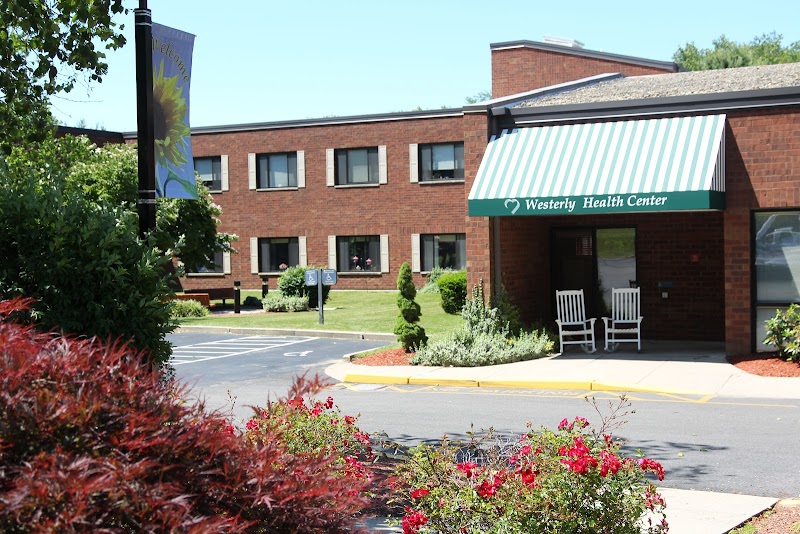
Westerly Health Center
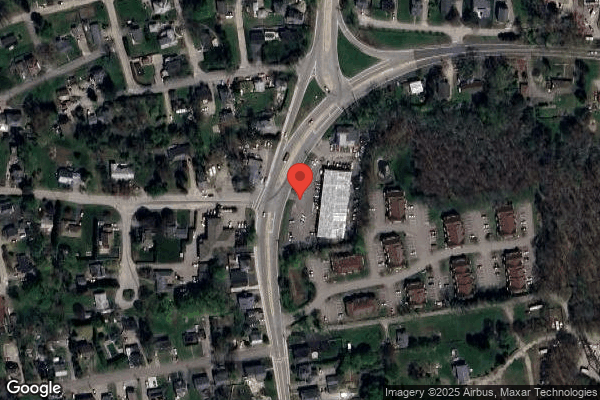

280 High Street, Westerly, RI 02891 (401) 348-0020
For profit - Limited Liability company 120 Beds MARQUIS HEALTH SERVICES Data: November 2025
Trust Grade
63/100
#33 of 72 in RI
Last Inspection: April 2025

Within standard 12-15 month inspection cycle. Federal law requires annual inspections.

Overview

Westerly Health Center has a Trust Grade of C+, indicating it is slightly above average and decent but not outstanding. It ranks #33 out of 72 nursing facilities in Rhode Island, placing it in the top half, and #5 out of 9 in Washington County, which means there are only four local options that are better. The facility is improving, with issues decreasing from six in 2024 to four in 2025, but it still has some concerns. Staffing is rated 2 out of 5 stars, indicating below-average performance, but the turnover rate is 41%, which is on par with the state average. There were also some troubling incidents noted, including a resident experiencing severe weight loss without proper follow-up and medication irregularities that were not acted upon for several residents. Additionally, food safety standards were not consistently met, as some food was stored improperly and expired items were found in the kitchen.
Trust Score
C+
63/100
In Rhode Island
#33/72
Top 45%
Safety Record
Moderate
Needs review
Inspections
Getting Better
6 → 4 violations
Staff Stability
○ Average
41% turnover. Near Rhode Island's 48% average. Typical for the industry.
Penalties
○ Average
$8,278 in fines. Higher than 70% of Rhode Island facilities. Some compliance issues.
Skilled Nurses
✓ Good
Each resident gets 44 minutes of Registered Nurse (RN) attention daily — more than average for Rhode Island. RNs are trained to catch health problems early.
Violations
⚠ Watch
23 deficiencies on record. Higher than average. Multiple issues found across inspections.
★★★★☆
4.0
Overall Rating
★★☆☆☆
2.0
Staff Levels
★★★☆☆
3.0
Care Quality
★★★★☆
4.0
Inspection Score
Stable
2024: 6 issues
2025: 4 issues

The Good

  • Full Sprinkler Coverage · Fire safety systems throughout facility
  • No fines on record
  • Staff turnover below average (41%)

    7 points below Rhode Island average of 48%

Facility shows strength in fire safety.

The Bad

Staff Turnover: 41%

Near Rhode Island avg (46%)

Typical for the industry

Federal Fines: $8,278

Below median ($33,413)

Minor penalties assessed

Chain: MARQUIS HEALTH SERVICES

Part of a multi-facility chain

Ask about local staffing decisions and management

The Ugly 23 deficiencies on record

1 actual harm
Apr 2025 4 deficiencies 1 Harm
SERIOUS (G)

Actual Harm - a resident was hurt due to facility failures

Deficiency F0692 (Tag F0692)

A resident was harmed · This affected 1 resident

Based on record review and staff interview, it has been determined that the facility failed to ensure that residents maintain acceptable parameters of nutritional status, such as usual body weight for...

Read full inspector narrative →
Based on record review and staff interview, it has been determined that the facility failed to ensure that residents maintain acceptable parameters of nutritional status, such as usual body weight for 1 of 3 residents reviewed with a severe weight loss, Resident ID #99. Findings are as follows: Review of the facility policy titled Weight Assessment and Intervention revised in March of 2022, states in part, .1. Residents are weighed upon admission and at intervals established by the interdisciplinary team. 2. Weights are recorded in each unit's record chart and in the individual's medical record. 3. Any weight change of 5 % or more since the last weight assessments is retaken the next day for confirmation. a. If the weight is verified, nursing will immediately notify the dietician in writing . 5. The threshold for significant unplanned and undesired weight loss will be based on the following criteria . a. 1 month-5% weight loss is significant: greater than 5% is severe. b. 3 months-7.5% weight loss is significant: greater than 7.5% is severe . Care Planning 1. Care planning for weight loss or impaired nutrition is a multidisciplinary effort . Record review revealed Resident ID #99 was admitted to the facility in January of 2025 with a diagnosis including, but not limited to, muscle wasting. Record review revealed a care plan initiated on 1/13/2025 for a weight loss trend and a calorie expenditure from walking around the unit throughout the day. Further review revealed a goal for no significant weight loss or trending weight loss. Additional review revealed interventions to obtain weights as ordered and for the Registered Dietitian (RD) to evaluate the resident's nutritional status and to make recommendations as applicable. Record review revealed a physcian's order dated 1/10/2025, weight on admission, then weekly weight x 4, then monthly. Record review revealed the following weights: -1/10/2025- 153.9 pounds (lbs.) -1/13/2025- 154.2 lbs. -2/3/2025- 148.5 lbs. -3/6/2025- 144.8 lbs. The above weights indicated a weight loss of 5.91% (9.1 lbs.) in approximately 2 months, from 1/10 to 3/6/2025. Review of a progress note, dated 4/17/2025 authored by the RD, revealed the most recent weight was obtained on 3/6/2025 and a weight had not yet been obtained for the month of April. Further review revealed the dietitian requested that a weight be obtained to assess if the resident's needs are being met. Record review failed to reveal evidence that a weight had been obtained after the above recommendation. Further review failed to reveal evidence that any interventions were implemented for the resident's weight loss. During a surveyor interview on 4/23/2025 at 8:43 AM and at 9:59 AM with Registered Nurse (RN), Staff C, she indicated that the residents are weighed at least monthly, usually by the 5th of each month. Staff C acknowledged that the resident's weight had not been obtained since 3/6/2025 and indicated that she was unaware of the RD's recommendation to obtain the resident's weight on 4/17/2025. During a surveyor interview on 4/23/2025 at 8:46 AM with the RD, she indicated that she would expect weights to be obtained upon a resident's admission, then weekly for four weeks, and then monthly for each resident. Additionally, she indicated that she would have expected the resident's weight to have been obtained as she requested. During a surveyor interview on 4/23/2025 at 9:50 AM with the Director of Nursing Services and the Regional Director of Clinical Services, they indicated that they would expect weights to be obtained monthly or as ordered. Additionally, they acknowledged that the resident's weight had not been obtained since 3/6/2025. During a subsequent surveyor interview on 4/23/2025 at 2:15 PM with RN, Staff C, she revealed that the resident's weight was obtained after it was brought to her attention by the surveyor. Staff C indicated the resident's weight is now 137.2 lbs., indicating s/he has a further weight loss of 7.6 lbs. This indicates a severe weight loss of 10.85% (16.7 lbs.) from 1/10 to 4/23/2025. Further review failed to reveal evidence that any interventions were implemented for the resident's severe weight loss from 1/10/2025 until 4/23/2025 when it was brought to the facility's attention by the surveyor.
CONCERN (D)

Potential for Harm - no one hurt, but risky conditions existed

Medical Records (Tag F0842)

Could have caused harm · This affected 1 resident

Based on surveyor observation, record review and staff interview, it has been determined that the facility failed to ensure resident's records are accurate, complete and readily accessible for 1 of 1 ...

Read full inspector narrative →
Based on surveyor observation, record review and staff interview, it has been determined that the facility failed to ensure resident's records are accurate, complete and readily accessible for 1 of 1 resident reviewed with a physician's order for one to one (1:1) supervision, Resident ID #48. Findings are as follows: Record review of a facility reported incident received by the Rhode Island Department of Health on 4/15/2025 alleges that on 4/15/2025, a staff member witnessed Resident ID #48 touching the top of Resident ID #88's head. Additionally, the report revealed that Resident ID #88 pushed Resident ID #48's arm away from his/her head and then grabbed it. Record review revealed Resident ID #48 was admitted to the facility in March of 2025 with diagnoses including, but not limited to, dementia and anxiety. Record review of an additional facility reported incident received by the Rhode Island Department of Health on 4/17/2025 revealed on 4/17/2025, Resident ID #48 was seen hitting another resident, Resident ID #28, on his/her forehead. Record review revealed a physician's order dated 4/17/2025 that states in part, 1:1 supervision until seen and cleared by behavioral health services every shift for resident-to-resident altercation. Record review completed on 4/22/2025 failed to reveal evidence that the resident was seen by behavioral health services after 3/17/2025. Record review of the April 2025 Medication Administration Record revealed staff documented that 1:1 supervision was completed every shift from 4/17/2025 through 4/22/2025 on the first shift. During surveyor observations of Resident ID #48 revealed s/he was without 1:1 supervision on the following dates and times: -4/21/2025 at 10:03 AM and 12:53 PM -4/22/2025 a continuous observation from 10:00 AM through 12:00 PM During a surveyor interview on 4/22/2025 at 12:03 PM with Registered Nurse (RN), Staff C, she revealed that she was unaware of the 1:1 supervision order. Additionally, she indicated that she inaccurately documented that she provided the resident 1:1 supervision, when in fact she did not. During a surveyor interview on 4/23/2025 at 10:41 AM and at 3:30 PM with the Director of Nursing Services (DNS), in the presence of the Regional Director of Clinical Services, she indicated that the resident was seen by the consultant Behavioral Health Advanced Practice Registered Nurse (APRN) and acknowledged that the documentation was not in the medical record. Although the DNS indicated that the resident was seen multiple times by the APRN, the record review failed to reveal evidence that the resident was seen by the APRN after the incidents on 4/15 and 4/17/2025.
CONCERN (D)

Potential for Harm - no one hurt, but risky conditions existed

Infection Control (Tag F0880)

Could have caused harm · This affected 1 resident

Based on surveyor observation, record review and staff interview, it has been determined that the facility failed to maintain an infection prevention and control program to help prevent the transmissi...

Read full inspector narrative →
Based on surveyor observation, record review and staff interview, it has been determined that the facility failed to maintain an infection prevention and control program to help prevent the transmission of communicable diseases and infections relative to Enhanced Barrier Precautions (EBP; refers to an infection control intervention designed to reduce transmission of multidrug-resistant organisms [MDRO] that employs targeted gown and glove use during high contact resident care activities), Resident ID #s 22, 55, 215 and 367. Findings are as follows: Review of a facility policy titled, .Enhanced Barrier Precautions last revised December of 2024 states in part, .1. Enhanced Barrier Precautions (EBP) are utilized to prevent the spread of multi-drug-resistant organisms (MDROs) to resident's . 2. Enhanced barrier precautions apply when: a. A resident is infected or colonized [a group of microorganisms that may not make the infected person sick but may still be spread to others] with a CDC-targeted MDRO, but does not have a wound or indwelling devise, and does not have secretions or excretions that cannot be covered or contained; b. A resident is NOT known to be infected or colonized with any MDRO, has a wound or indwelling medical devices, and does not have secretions or excretions that are unable to be covered or contained . 5. Indwelling medical devices include .urinary catheters . 6. Examples of secretions or excretions include wound drainage .or other discharges from the body that cannot be contained and pose an increased potential for extensive environmental contamination and risk of transmission . 7. EBPs employ targeted gown and glove use in addition to standard precautions during high contact resident care activities when contact precautions do not otherwise apply. a. Gloves and gown are applied prior to performing the high contact resident care activity (as opposed to before entering the room) . 8. Examples of high-contact resident care activities requiring the use of gown and gloves for EBPs include . e. transferring . h. prolonged, high-contact with items in the resident's room, with resident's equipment, or with resident's clothing or skin . i. device care or use .urinary catheter . 17. Signs are posted on the door or wall outside the residents' rooms which communicate the type of precautions and PPE required . 1. Record review revealed Resident ID #22 has an indwelling urinary catheter, is diagnosed with Extended-Spectrum Beta-Lactamases in the urine (ESBL- a multidrug resistant organism) and is on EBP. During a surveyor observation on 4/21/2025 at 12:20 PM, EBP signage was affixed to the resident's doorway and a bin containing PPE was outside of the room. The Director of Nursing Services (DNS) and the Admissions Director assisted Resident ID #22 with a transfer from his/her bed to a chair in the resident's room without wearing a gown or gloves. The Admissions Director then took the resident's pillow off of his/her bed and placed it behind the resident's back. Additionally, the DNS handled the resident's urinary drainage bag with her bare hands, moving it from the side of the bed to the resident's walker. During a survey interview on 4/21/2025 at 12:25 PM with the Admissions Director, she acknowledged that she did not wear a gown and gloves to transfer the resident as outlined on the EBP sign on the resident's door. During a surveyor interview on 4/22/2025 at 4:18 PM with the DNS, she acknowledged that the resident is on EBP and that she did not wear a gown or gloves when transferring the resident and handling the urinary drainage bag. 2. Record review revealed Resident ID #55 has a chronic wound and is on EBP. During a surveyor observation on 4/23/2025 at 10:43 AM, EBP signage was affixed to the resident's doorway and a bin containing PPE was outside of the room. The housekeeper, Staff D, was observed entering the residents' room without a gown, wearing only gloves and carrying a spray bottle. Staff D removed multiple personal items from each of the resident's bedside tables, he then sprayed and wiped down each table. Staff D continued to clean the residents' sink, countertop and mirror before exiting the room. Staff D removed his gloves and failed to perform hand hygiene. He then re-entered the residents' room with a mop and solution without donning any PPE and continued to mop the floor. Furthermore, he was observed emptying the resident's wastebasket before exiting the room. During a surveyor interview immediately following the above observation, Staff D was unable to explain what PPE he should have worn. 3. Record review revealed Resident ID #367 has ESBL in his/her urine and is on EBP. During a surveyor observation on 4/23/2025 at 10:46 AM, EBP signage was affixed to the resident's doorway and a bin containing PPE was outside of the room. A phlebotomist from the facility's contracted laboratory company, was observed kneeling on the floor of the resident's room while obtaining the resident's blood. The phlebotomist was observed wearing gloves only, but no gown. During a surveyor interview immediately following the above observation, the phlebotomist acknowledged that she was not wearing a gown during her interaction with the resident. During a surveyor interview on 4/23/2025 at 11:54 AM with the DNS, she was unable to explain why Staff D and the phlebotomist did not wear the appropriate PPE while in the residents' rooms who are on EBP.
CONCERN (E)

Potential for Harm - no one hurt, but risky conditions existed

Deficiency F0658 (Tag F0658)

Could have caused harm · This affected multiple residents

Based on record review and staff interview, it has been determined that the facility failed to meet professional standards of quality related to following physician's orders for 1 of 1 resident review...

Read full inspector narrative →
Based on record review and staff interview, it has been determined that the facility failed to meet professional standards of quality related to following physician's orders for 1 of 1 resident reviewed with an order for Mucinex (a medication prescribed to thin mucus), Resident ID #52 and for 1 of 1 resident reviewed with an order for Metoprolol Succinate Extended Release (a medication prescribed to treat high blood pressure), Resident ID #63. Findings are as follows: According to Mosby's 4th Edition, Fundamentals of Nursing, page 314 states in part, .The physician is responsible for directing medical treatment, Nurses are obligated to follow physician's orders unless they believe the orders are in error or would harm the clients . 1. Record review revealed Resident ID #52 was originally admitted to the facility in April of 2024 with diagnoses including, but not limited to, chronic obstructive pulmonary disease (COPD; a condition involving constriction of the airways) and chronic pulmonary edema (a condition in which the lungs accumulate too much fluid). Record review revealed a physician's order dated 4/20/2025 for Mucinex 600 milligrams (mg) twice a day for three days. Record review of the April 2025 Medication Administration Record (MAR) failed to reveal evidence that the Mucinex was administered as ordered. The Mucinex was only administered twice on 4/20/2025 and not for three days as ordered. During a surveyor interview on 4/23/2025 at 11:03 AM with Registered Nurse (RN), Staff A, she acknowledged that the Mucinex was administered for only one day and not the three days as ordered. During a surveyor interview on 4/23/2025 at 12:03 PM with the Director of Nursing Services (DNS), she acknowledged that the resident only received the medication for one day and not the three days as ordered. 2. Record review revealed Resident ID #63 was admitted to the facility in November of 2024 with diagnoses including, but not limited to, high blood pressure and atrial fibrillation (an irregular heart rhythm). Record review revealed an order dated 11/18/2024 for Metoprolol Succinate extended release, 25 mg tablet by mouth daily in the morning. Record review of the March and April 2025 MARs revealed the resident's blood pressure was obtained prior to the administration of the Metoprolol. Further review of the March and April MARs revealed the Metoprolol was held on the following dates with the following blood pressures: - 3/1/2025, 91/64 (a normal blood pressure is 120/80) - 3/5/2025, held without a blood pressure documented - 3/6/2025, held without a blood pressure documented - 3/13/2025, 92/54 - 3/19/2025, 92/52 - 3/25/2025, 98/68 - 4/2/2025, 92/65 - 4/16/2025, 97/57 Further review of the physician's order failed to indicate that the medication was to be held based on the resident's blood pressure readings. Record review of the progress notes failed to reveal evidence that the provider was notified on the above dates when the Metoprolol was held. During a surveyor interview on 4/23/2025 at 2:13 PM with RN Staff B, she acknowledged that she held the Metoprolol on 3/1, 3/13, 3/19, 3/25, 4/2 and 4/16. Additionally, she was unable to provide evidence that the provider was notified of the resident's blood pressures and that the medication was held. During an interview on 4/23/2025 at approximately 3:00 PM with the DNS, she was unable to provide evidence that the provider was notified of the resident's blood pressures and that the Metoprolol was held on 3/1, 3/5, 3/6, 3/13, 3/19, 3/25, 4/2 and 4/16/2025.
Nov 2024 1 deficiency
CONCERN (D) 📢 Someone Reported This

A family member, employee, or ombudsman was alarmed enough to file a formal complaint

Potential for Harm - no one hurt, but risky conditions existed

Deficiency F0661 (Tag F0661)

Could have caused harm · This affected 1 resident

**NOTE- TERMS IN BRACKETS HAVE BEEN EDITED TO PROTECT CONFIDENTIALITY** Based on record review and staff interview, it has been determined that the facility failed to reconcile all pre-discharge medic...

Read full inspector narrative →
**NOTE- TERMS IN BRACKETS HAVE BEEN EDITED TO PROTECT CONFIDENTIALITY** Based on record review and staff interview, it has been determined that the facility failed to reconcile all pre-discharge medication orders with the resident's post-discharge medication orders, for 1 of 3 residents reviewed relative to discharge from the facility, Resident ID #2. Findings are as follows: Record review revealed the resident was admitted to the facility in September of 2024 with diagnoses including, but not limited to, polymyalgia rheumatica (an inflammatory disorder that causes pain), osteoarthritis and cervical disc disorder (injuries to the discs between the vertebrae). Further review revealed the resident was discharged to his/her home on [DATE]. Record review of the active physician's orders on the day of the resident's discharge on [DATE], revealed the following: - Acetaminophen (a medication prescribed to treat pain) 1000 mg (milligrams), give 1000 mg three times a day. - Cholecalciferol (a supplement prescribed to treat vitamin D deficiency) 1000 units, give 1 tablet once daily. - Gabapentin (a medication prescribed to treat nerve pain) 100 mg, give 1 capsule by mouth two times a day. Record review of the resident's, Rhode Island Health Continuity of Care (COC) Form completed for at the time of the resident's discharge and signed by the discharging nurse and the resident's representative on 10/13/2024, revealed the following physician's orders: - Acetaminophen 500 mg, 1 tablet three times a day. - Cholecalciferol 1000 units, give 1 tablet twice daily. - Gabapentin 100 mg, give 1 capsule once daily. During a surveyor interview with the Director of Nursing Services on 11/27/2024 at 1:46 PM, she acknowledged that the above-mentioned discharge medications were transcribed incorrectly on the resident's COC.
Sept 2024 1 deficiency
CONCERN (E) 📢 Someone Reported This

A family member, employee, or ombudsman was alarmed enough to file a formal complaint

Potential for Harm - no one hurt, but risky conditions existed

Report Alleged Abuse (Tag F0609)

Could have caused harm · This affected multiple residents

Based on record review and staff interview, it has been determined that the facility failed to ensure that the results of all alleged abuse investigations are reported in accordance with State law, in...

Read full inspector narrative →
Based on record review and staff interview, it has been determined that the facility failed to ensure that the results of all alleged abuse investigations are reported in accordance with State law, including to the State Survey Agency (Rhode Island Department of Health; RIDOH), within 5 working days of the incident for 5 of 10 facility reported incidents (FRI) reviewed. Findings are as follows: 1. Review of a FRI submitted to the RIDOH on 7/12/2024, failed to reveal evidence that the results of the facility's investigation were submitted to RIDOH within 5 working days of the incident. 2. Review of a FRI submitted to the RIDOH on 7/12/2024, failed to reveal evidence that the results of the facility's investigation were submitted to RIDOH within 5 working days of the incident. 3. Review of a FRI submitted to the RIDOH on 7/24/2024, failed to reveal evidence that the results of the facility's investigation were submitted to RIDOH within 5 working days of the incident. 4. Review of a FRI submitted to the RIDOH on 8/9/2024, failed to reveal evidence that the results of the facility's investigation were submitted to RIDOH within 5 working days of the incident. 5. Review of a FRI submitted to the RIDOH on 8/20/2024, failed to reveal evidence that the results of the facility's investigation were submitted to RIDOH within 5 working days of the incident. During a surveyor interview on 9/3/2024 at 1:00 PM with the Administrator and the Director of Nursing Services, they acknowledged that results of the five above-mentioned FRI investigations were not reported to RIDOH, within 5 working days of the incident, as required.
May 2024 4 deficiencies
CONCERN (E) 📢 Someone Reported This

A family member, employee, or ombudsman was alarmed enough to file a formal complaint

Potential for Harm - no one hurt, but risky conditions existed

Respiratory Care (Tag F0695)

Could have caused harm · This affected multiple residents

Based on surveyor observation, record review, and staff interview, it has been determined that the facility failed to provide respiratory care consistent with professional standards of practice for 4 ...

Read full inspector narrative →
Based on surveyor observation, record review, and staff interview, it has been determined that the facility failed to provide respiratory care consistent with professional standards of practice for 4 of 5 residents reviewed for respiratory care, Resident ID #s 4, 20, 105, and 112. Findings are as follows: Record review of a facility policy titled, Oxygen Administration states in part .review the physician's order for this procedure .review resident's care plan to assess needs of the resident . Additional review of the policy under the section titled documentation states in part, .date and time procedure was performed .name and title of the individual who performed the procedure .rate of oxygen flow, route, and rationale . 1. Record review revealed Resident ID #4 was admitted to the facility in July of 2022 with diagnoses including, but not limited to, hypertension, and diabetes. Record review of the resident's May 2024 Treatment Administration Record (TAR) revealed an order dated 6/6/2023 for oxygen 2-4 liters/minute via nasal cannula (a tubing used to deliver oxygen) to maintain oxgen saturation greater than 90% (normal range is 95%-100%) every 8 hours as needed. During surveyor observations on the following dates and times, the resident was observed on 1 liter of oxygen instead of 2-4 liters as ordered: -5/6 at 10:48 AM -5/7 at 9:04 AM -5/8 at 8:45 AM Further record review of the TAR for May failed to reveal evidence that the resident received the 2-4 liters of oxygen on the above-mentioned dates and times, as ordered and per the facility's policy. During a surveyor observation and interview with Licensed Practical Nurse (LPN), Staff A on 5/8/2024 at approximately 9:00 AM, she acknowledged the resident was receiving 1 liter of oxygen instead of 2-4 liters, as ordered. 2. Record review revealed Resident ID #20 was admitted to the facility in September of 2023 with diagnoses including, but not limited to, pneumonia and anxiety. Record review of the resident's May 2024 TAR revealed an order dated 5/3/2024 for intermittent oxygen at 2-4 liters/minute via nasal cannula for oxygen saturation greater than 93% every 24 hours as needed. During surveyor observations on the following dates and times, the resident was observed on 1 liter of oxygen instead of 2-4 liters as ordered: -5/6 at 10:26 AM -5/6 at 1:53 PM -5/7 at 9:04 AM -5/8 at 8:50 AM Further record review of the TAR for May failed to reveal evidence that the resident received the 2-4 liters of oxygen on the above-mentioned dates and times, as ordered and per the facility's policy. During a surveyor interview with LPN, Staff A on 5/8/2024 at 9:03 AM, she acknowledged that the resident was on 1 liter of oxygen instead of 2-4 liters, as ordered. 3. Record review revealed Resident ID #105 was admitted to the facility in April of 2024 with diagnoses including, but not limited to, chronic obstructive pulmonary disease (COPD, a lung disease that blocks airflow that makes it difficult to breath) and acute respiratory failure. Record review of the resident's May 2024 TAR revealed an order dated 4/30/2024 for oxygen 1 liter/minute via a nasal cannual as needed for comfort and shortness of breath. During surveyor observations on the following dates and times, the resident was observed on 2 liters of oxygen instead of the 1 liter as ordered: -5/6 at 9:48 AM -5/6 at 9:50 AM -5/7 at 11:25 AM -5/7 at 11:51 AM Further record review of the TAR for May failed to reveal evidence that the resident received the 1 liter of oxygen on the above-mentioned dates and times, as ordered and per the facility's policy. During a surveyor interview with the Regional Nurse on 5/8/2024 at 12:30 PM, she acknowledged the staff had failed to document the resident had received oxygen on the above-mentioned dates and times as observed by the surveyor. Additionally, she revealed that she would expect the staff to document each time oxygen is administered to a resident as per the facility's policy. 4) Record review revealed Resident ID #112 was admitted into the facility in April of 2024 with diagnosis including, but not limited to, chronic obstructive pulmonary disease. Record review of the resident's May 2024 TAR revealed an order dated 4/10/2024 to titrate (adjust the oxygen based on the resident's needs) continuous oxygen as needed to maintain oxygen saturation greater than 95% every 8 hours. Record review of the above-mentioned order failed to reveal evidence of a flow rate of the liter of oxygen to be administered and titrated to the resident. During surveyor interviews on 5/8/2024 at 10:04 AM and at 11:38 AM with the Director of Nursing Services (DNS), she indicated that she would expect the oxygen order to include the flow rate that should be administered to the resident. Additionally, the DNS indicated that she would expect the staff to administer oxygen to the residents as ordered, and that each time oxygen is administered, the staff is expected to document the administration, as per the facility's policy.
CONCERN (E) 📢 Someone Reported This

A family member, employee, or ombudsman was alarmed enough to file a formal complaint

Potential for Harm - no one hurt, but risky conditions existed

Deficiency F0760 (Tag F0760)

Could have caused harm · This affected multiple residents

Based on record review and staff interview, it has been determined that the facility failed to ensure that residents are free from any significant medication errors for 1 of 3 residents reviewed with ...

Read full inspector narrative →
Based on record review and staff interview, it has been determined that the facility failed to ensure that residents are free from any significant medication errors for 1 of 3 residents reviewed with blood pressure parameters, Resident ID #64. Findings are as follows: Record review of the facility's policy titled, Administering Medications revealed in part, Medications are administered in a safe and timely manner, and as prescribed .Medications are administered in accordance with prescriber orders .The following information is checked/verified for each resident prior to administering medications .Allergies to medications .Vital signs, if necessary . Record review revealed the resident was admitted to the facility in January of 2024 with diagnoses including, but not limited to, essential hypertension, atrial fibrillation (irregular rapid heart beat), and atherosclerotic heart disease (narrowing of the arteries). Record review revealed a physician's order dated 4/3/2024 for Hydralazine HCL (a medication to lower blood pressure) 10 milligrams (mg) give 1 tablet every 6 hours as needed for systolic blood pressure greater than 150. Record review of the hydralazine order on the April and May Medication Administration Record (MAR) revealed that blood pressures failed to be checked every 6 hours, and that the medication failed to be administered since the start date of 4/3/2024. Further record review of the April and May MAR revealed a daily 8:00 AM blood pressure monitoring order with a start date of 4/23/2024. This order revealed the following blood pressures with a systolic blood pressure greater than 150: 4/25/2024- 164/78 4/26/2024-164/69 4/29/2024-166/57 4/30/2024- 157/71 5/1/2024-178/68 5/3/2024-185/62 5/5/2024-160/65 5/7/2024-160/62 Record review of the April and May MAR revealed that the hydralazine failed to be administered for the above Systolic blood pressures above 150. During a surveyor interview on 5/8/2024 at 12:29 PM with Certified Medication Technician, Staff B, she revealed that because the order for hydralazine was written as a PRN (as needed order) that she had not been taking the resident's blood pressure every 6 hours and administering the medication according to parameters. Further review of the MAR revealed that Staff B was administering medication to this resident on the following day shifts when his/her systolic blood pressure was greater than 150: 4/26/2024-164/69 4/29/2024-166/57 5/1/2024-178/68 5/5/2024-160/65 During a surveyor interview on 5/8/2024 at 12:36 PM with the Director of Nursing Services, she acknowledged that the resident's blood pressure failed to be checked every 6 hours and the medication failed to be administered as ordered based on the blood pressure, since the order was implemented on 4/3/2024. She further acknowledged that the resident's blood pressure was greater than 150 on the above dates and that the hydralazine should have been administered.
CONCERN (E) 📢 Someone Reported This

A family member, employee, or ombudsman was alarmed enough to file a formal complaint

Potential for Harm - no one hurt, but risky conditions existed

Deficiency F0761 (Tag F0761)

Could have caused harm · This affected multiple residents

**NOTE- TERMS IN BRACKETS HAVE BEEN EDITED TO PROTECT CONFIDENTIALITY** Based on surveyor observation, record review and staff interview, it has been determined that the facility failed to store and l...

Read full inspector narrative →
**NOTE- TERMS IN BRACKETS HAVE BEEN EDITED TO PROTECT CONFIDENTIALITY** Based on surveyor observation, record review and staff interview, it has been determined that the facility failed to store and label drugs and biologicals in accordance with currently accepted professional principles for 4 of 4 medication carts and 1 of 1 medication room observed. Findings are as follows: Record review of the facility's policy titled Medication Labeling and Storage states in part, .Medications requiring refrigeration are stored in a refrigerator located in the medication room at the nurses' station or other secure location . Record review of the facility policy titled Discarding and Destroying Medications states in part, .if a resident is transferred to another facility, or dies the facility may dispose of the controlled substance(s) by depositing in the authorized on-site collection receptacle .Disposal of controlled substances must take place immediately (no longer than three days) after discontinuation of use by the resident . 1. During a surveyor observation on [DATE] at approximately 8:00 AM of the Team One medication cart in the presence of Registered Nurse, Staff C and Licensed Practical Nurse, Staff D revealed the following: - Trellegy Elipta inhaler opened and not dated. Manufacturer instructions indicate to discard the inhaler 6 weeks after opening. During an interview immediately following this observation with Staff C and Staff D, they acknowledged the inhaler was opened and not dated. 2. During a surveyor observation on [DATE] at approximately 8:08 AM of the Team Two medication cart in the presence of Registered Nurse, Staff E revealed the following: - A bottle of Active liquid protein 30 oz (ounce) opened and not dated. Manufacturer instructions indicate a 3-month shelf life from date opened. - Morphine Sulfate (a schedule II-controlled substance) last signed off as administered on [DATE]. The medication was for a resident who had passed away on [DATE]. - Lorazepam (a medication used to treat anxiety) last signed off as administered on [DATE]. The medication was for a resident who had passed away on [DATE]. During an interview immediately following this observation with Staff E, he acknowledged the liquid protein was opened and not dated. Additionally, Staff E acknowledged that the resident who had received the Morphine and Lorazepam had passed away, and he could not provide evidence why the medications were not removed from the medication cart as per the facility policy. 3. During a surveyor observation on [DATE] at approximately 9:07 AM of the Team Four medication cart in the presence of Licensed Practical Nurse, Staff F revealed the following: - Three bottles of Lorazepam intensol (used to treat anxety) opened, not dated, and unrefrigerated. Manufacturer instruction states in part, .Store at Cold Temperature-Refrigerate 36°-46°F [Fahrenheit] .Discard opened bottle after 90 days . During an interview immediately following this observation with Staff F, she acknowledged that the above-mentioned medications were opened and not dated. Additionally, Staff F revealed that the Lorazepam intensol is only stored in the refrigerator if it is not opened, and once they are opened, they are stored in the medication cart. 4. During a surveyor observation on [DATE] at approximately 9:20 AM of the Team Three medication cart in the presence of Licensed Practical Nurse, Staff A revealed the following: - Latanaprost 0.005% eye drops (used to treat glaucoma) unopened and stored unrefrigerated in the medication cart. This medication was delivered to the facility on [DATE]. Label on the medication revealed to refrigerate when unopened. During an interview immediately following the above observation with Staff A, she acknowledged the eye drops should have been refrigerated. 5. During a surveyor observation on [DATE] at approximately 9:35 AM of the second-floor medication room in the presence of Staff A revealed the following: - A bottle of Lorazepam intensol 2MG/ML 30ML unopened with a manufacturer expiration date of [DATE]. During an interview immediately following the above observation with Staff A, she acknowledged the above-mentioned medication had expired. During a surveyor interview on [DATE] at approximately 11:20 AM with the Director of Nursing Services (DNS), she revealed that she would expect the staff to date the medications upon opening and store per the manufacturer's instructions. She further revealed that she would expect the staff to inform her of expired and discontinued medications, and those medications would be removed from the cart in a timely manner.
CONCERN (E) 📢 Someone Reported This

A family member, employee, or ombudsman was alarmed enough to file a formal complaint

Potential for Harm - no one hurt, but risky conditions existed

Infection Control (Tag F0880)

Could have caused harm · This affected multiple residents

**NOTE- TERMS IN BRACKETS HAVE BEEN EDITED TO PROTECT CONFIDENTIALITY** Based on record review and staff interview, it has been determined that the facility failed to maintain an infection prevention ...

Read full inspector narrative →
**NOTE- TERMS IN BRACKETS HAVE BEEN EDITED TO PROTECT CONFIDENTIALITY** Based on record review and staff interview, it has been determined that the facility failed to maintain an infection prevention and control program designed to provide a sanitary environment and to help prevent the development of infections for 1 of 1 residents reviewed relative to the use of continuous positive airway pressure (CPAP-a device used to provide breathing support), Resident ID #25 and 1 of 1 residents reviewed with current treatment for Multidrug Resistant Organisms (MDRO-organisms resistant to antibiotics), Resident ID #82. Findings are as follows: Review of a facility policy titled CPAP/BIPAP Support dated March 2015, states in part, .General guidelines for cleaning .Machine cleaning .Wipe machine with warm, soapy water and rinse at least once a week and as needed .filter cleaning .rinse washable filter under running water once a week to remove dust and debris. Replace this filter at least once a year .Masks, nasal pillows and tubing .Clean daily by placing in warm, soapy water and soaking/agitating for 5 minutes. Mild detergent is recommended. Rinse with warm water and allow it to air dry between uses .Headgear(strap) .wash with warm water and mild detergent as needed. allow to air dry . 1. Record review revealed that Resident ID #25 was readmitted to the facility in March of 2024 with diagnoses including, but not limited to, obstructive sleep apnea (a sleep disorder where breathing is interrupted repeatedly) and chronic obstructive pulmonary disorder (COPD- a chronic inflammatory lung disease that causes obstructed airflow from the lungs.) Record review of the Treatment Administration Record (TAR) for April and May 2024 revealed that the resident has an order to use a CPAP machine every night at bedtime. Additional review revealed that the order was signed off as in use every night. Record review failed to reveal evidence that the CPAP machine including the mask were cleaned or disinfected in April or May of 2024 per the facility policy. During a surveyor interview on 5/8/2024 at 12:25 PM with Licensed Practical Nurse, Staff A, she revealed that she is unaware of how the residents CPAP machine should be cleaned. Additionally, she revealed that staff are responsible to clean the machine and there should be a physician's order to sign off as completed. During a surveyor interview on 5/8/2024 at 12:49 PM with the Director of Nursing Services (DNS), she acknowledged that the above-mentioned resident does not have orders to clean his/her machine. Additionally, she was unable to provide evidence that the machine was cleaned per the facility policy. 2. Review of the Centers for Disease Control and Prevention (CDC) document titled, Multidrug-resistant organisms management (MDRO) states in part, .For ill residents (e.g., those totally dependent upon healthcare personnel for healthcare and activities of daily living use Contact Precautions [use of gown and gloves when entering a resident's room] .Implement Contact Precautions (CP) routinely for all patients colonized or infected with a target MDRO .modify CP to allow MDRO .colonized/infected patients whose site of colonization or infection can be appropriately contained and who can observe good hand hygiene practices to enter common areas and participate in group activities .No recommendation can be made regarding when to discontinue Contact Precautions . Review of a facility policy titled Multidrug-resistant organisms states in part, .use of contact precautions .implement contact precautions routinely for all residents colonized or infected with target MDRO .modify contact precautions to allow MDRO colonized/infected residents whose site of colonization or infection can be appropriately contained . Record review revealed that Resident ID #82 was readmitted to the facility in February of 2024 with a past medical history including, but not limited to, Extended-spectrum-beta-lactamase (ESBL- a MDRO bacterial infection resistant to many antibiotics.) Review of a Quarterly Minimum Data Set (MDS) assessment dated [DATE] revealed s/he required maximum to dependent assistance to complete activities of daily living (ADLs). Additionally, the assessment revealed that the resident was frequently incontinent of bladder and always incontinent of bowel. Review of a urine culture obtained on 5/2/2024 revealed the resident is positive for ESBL. Record review of a physician's order dated 5/6/2024 revealed an order for Augmentin (an antibiotic) 875-125 milligrams (mg) by mouth every 12 hours for bacterial infection for 10 days. Record review of a progress note dated 5/9/2024 by the Nurse Practitioner, Staff G, revealed the following assessment and plan, continue Augmentin until course completed. Continue precautions per facility protocol. During surveyor observations of the resident's room on 5/8/2024 at 8:39 AM and 5/9/2024 at approximately 12:15 PM, failed to reveal evidence that the resident was on any precautions as there was no signage or PPE supplies at the door, indicating that personal protective equipment was required during high-contact resident care activities due to his/her ESBL infection. During a surveyor interview on 5/9/2024 at approximately 1:10 PM with Nursing Assistant, Staff H, she revealed she was unaware that the resident required any precautions during high-contact resident care activities. Additionally, she revealed that the resident is incontinent of urine and requires staff assistance with incontinence care. Furthermore, she acknowledged there was no signage or PPE supplies at the door. During a surveyor interview on 5/8/2024 at 12:49 PM with the Director of Nursing Services (DNS), she was unable to provide evidence that the resident was placed on the appropriate precautions related to his/her ESBL infection. The DNS was unable to provide evidence that the facility maintained an infection control program that provided a sanitary environment to help prevent the development of infections.
Aug 2023 1 deficiency
CONCERN (D) 📢 Someone Reported This

A family member, employee, or ombudsman was alarmed enough to file a formal complaint

Potential for Harm - no one hurt, but risky conditions existed

Deficiency F0578 (Tag F0578)

Could have caused harm · This affected 1 resident

**NOTE- TERMS IN BRACKETS HAVE BEEN EDITED TO PROTECT CONFIDENTIALITY** Based on record review and staff interview, it has been determined that the facility failed to ensure that the resident's most r...

Read full inspector narrative →
**NOTE- TERMS IN BRACKETS HAVE BEEN EDITED TO PROTECT CONFIDENTIALITY** Based on record review and staff interview, it has been determined that the facility failed to ensure that the resident's most recent advance directive was signed by an authorized health care provider and honored for 1 of 1 resident reviewed, Resident ID #1. Additionally, the facility failed to ensure that a resident's advance directive was formulated for 1 of 3 residents reviewed, Resident ID #3. Findings are as follows: Record review of a community reported complaint submitted to the Rhode Island Department of Health on [DATE] alleges in part, .received a call from a family member of a resident [Resident ID #1] who passed away [at the facility], the resident's [spouse] had updated [his/her] information to be DNR [Do not resuscitate] .several weeks before [his/her] death, on the day the resident passed [the family] of the resident went into the facility, the staff had stated the facility had called 911 and the EMTs [Emergency Medical Technicians] were performing CPR [Cardiopulmonary resuscitation] and the facility had been performing CPR prior to their arrival, the family was confused because that was not the resident's wishes . Record review of the facility policy titled Emergency Procedure - Cardiopulmonary Resuscitation states in part, .If an individual .is found unresponsive and not breathing normally, a licensed staff member who is certified in CPR/BLS [Basic life support] shall initiate CPR unless: a. it is known that Do Not Resuscitate (DNR) order that specifically prohibits CPR and/or external defibrillation exists for that individual . 1a) Record review revealed Resident ID #1 was admitted to the facility in March of 2023 with diagnoses including, but not limited to, dementia and malignant neoplasm (cancer) of the prostate. Record review revealed that the resident had an advance directive dated [DATE] revealing a full code status that indicated CPR was to be performed if the resident has no pulse and is not breathing. Record review of a physician's order dated [DATE] revealed that the resident was a DNR. Additionally, the DNR order was active at the time the facility provided CPR for the resident who expired on [DATE]. Additional record review revealed that the resident had a Medical Orders for Life Sustaining Treatment (MOLST) form dated [DATE] revealing a DNR code status that indicated not to attempt CPR if the resident has no pulse and is not breathing. Further record review of the MOLST form revealed that if any section of the form is incomplete, full treatment for the resident is implied. Further record review of the MOLST form revealed that the form was missing a signature from a healthcare provider. Record review of a progress note dated [DATE] at 12:54 PM authored by Licensed Practical Nurse (LPN), Staff A, states in part, Resident found unresponsive at approximately 8:25 AM. Resident listed as DNR on profile however verified residents code status against [his/her] scanned documents, per Inservice training, and the most recent code status listed resident as full code ([DATE]) signed by family; [DATE] signed by resident physician. MOLST, from [DATE], also in system but is not signed by a physician. 911 notified, CPR begun .CPR continued until emergency personnel arrived and took over. Resident declared deceased at 9:04 AM by emergency personnel. Resident's [spouse] arrived at the facility as emergency personnel were working on resident . Record review revealed that the MOLST form was uploaded into the resident's electronic medical record without an authorized health care provider's signature on [DATE] by a Social Worker, Staff B. During a surveyor interview on [DATE] at 10:30 AM with the Resident's spouse and Durable Power of Attorney, s/he revealed that the MOLST form indicating a DNR code status was submitted to Staff B on [DATE]. She further revealed that at that point moving forward, she believed that Resident ID #1's code status was DNR. During a surveyor interview on [DATE] at 12:37 PM with Staff B, she revealed she usually gives the MOLST form to the nurse supervisors or the in house physician assistant to be reviewed and signed. She was unable to recall why the MOLST form was uploaded into the resident's electronic medical record without an authorized health care provider's signature. She further revealed it should not have been uploaded if it was incomplete. During a surveyor interview on [DATE] at 2:45 PM with Staff A, he revealed he was one of the nurses involved in administering CPR to the resident on [DATE]. He further revealed that he and another nurse verified the resident's code status with the documents on file prior to administering CPR. Furthermore, he indicated that because the MOLST form was missing a physician's signature it was invalid, he referred to the advanced directive document dated [DATE] which indicated s/he was a full code. Additionally, he acknowledged that if the MOLST form was complete with a physician's signature, the DNR directive would have been honored. During a surveyor interview on [DATE] at 11:13 AM and 11:27 AM with the Assistant Director of Nurses (ADNS), she revealed that a MOLST form that requires a physician's signature will go into a binder at the nurses' station on the unit. Additionally, once the form is reviewed and signed by the physician, it will be uploaded into the resident's electronic medical record. She further revealed that the MOLST form should not have been uploaded without a physician's signature. Furthermore, she indicated that the resident's physician visits the facility at least weekly and would've expected it to have been signed. Lastly, she indicated that had the MOLST form been signed by the physician, the resident's wishes for a DNR code status would have been honored. She was unable to retrieve the hard copy of the MOLST form when requested by the surveyor. Record review revealed that the MOLST form remained unsigned by the resident's physician for approximately 3 weeks prior to the above-mentioned incident, therefore invalidating the document which ultimately led to Resident ID #1 receiving CPR against his/her wishes. 1b) Record review revealed Resident ID #3 was admitted to the facility in August of 2023 with a diagnosis including, but not limited to, diabetes mellitus. Record review of a Minimum Data Set assessment dated [DATE] revealed a Brief Interview for Mental Status score of 15 out of 15, indicating intact cognition. Record review revealed that Resident ID #3 has resided at the facility for 22 days at the time of the investigation. Further record review failed to reveal evidence that an advanced directive or MOLST were formulated for the resident. During a surveyor interview on [DATE] at 10:52 AM with Resident ID #3, s/he revealed that the facility has yet to address his/her code status. During a surveyor interview on [DATE] at approximately 11:00 AM with the Unit Manager, Registered Nurse, Staff C, she revealed that advance directives are addressed with the residents upon admission. During a surveyor interview on [DATE] at 11:13 AM with the ADNS, she acknowledged that the resident's code status should have been addressed. She was unable to provide evidence that the facility worked with the resident to formulate an advanced directive or MOLST.
Jun 2023 1 deficiency
CONCERN (D) 📢 Someone Reported This

A family member, employee, or ombudsman was alarmed enough to file a formal complaint

Potential for Harm - no one hurt, but risky conditions existed

Deficiency F0760 (Tag F0760)

Could have caused harm · This affected 1 resident

Deficiency Text Not Available

Read full inspector narrative →
Deficiency Text Not Available
Mar 2023 10 deficiencies
CONCERN (D)

Potential for Harm - no one hurt, but risky conditions existed

Deficiency F0578 (Tag F0578)

Could have caused harm · This affected 1 resident

**NOTE- TERMS IN BRACKETS HAVE BEEN EDITED TO PROTECT CONFIDENTIALITY** Based on record review and staff interview, it has been determined that the facility failed to ensure that the resident's formul...

Read full inspector narrative →
**NOTE- TERMS IN BRACKETS HAVE BEEN EDITED TO PROTECT CONFIDENTIALITY** Based on record review and staff interview, it has been determined that the facility failed to ensure that the resident's formulated advance directive would be followed, as there was inconsistency between the signed advanced directive and the electronic medical record (EMR), for 1 of 20 residents reviewed relative to advanced directives, Resident ID #34. Findings are as follows: Record review revealed the resident was originally admitted to the facility in March of 2016 and readmitted in January of 2023 with diagnoses including, but not limited to, transient cerebral ischemic attack (stroke) and hypertension (high blood pressure). Record review of the Minimum Data Set (MDS) Assessment revealed a Brief Interview for Mental Status (BIMS) score of 14 out of 15, indicating the resident is cognitively intact. Record review of a signed advance directive dated [DATE] indicated the resident wished to be a Full Code (if the heart stopped beating or if they stopped breathing, life saving measures would be initiated including, but not limited to, Cardiopulmonary Resuscitation, CPR). Record review of the resident's face sheet revealed that s/he was listed as Do Not Resuscitate (DNR), indicating staff would not initiate CPR, a discrepancy from his/her signed advanced directive. Record review revealed an physician's order dated [DATE] indicating Advanced Directive: DNR. Record review of the hospital discharge documentation from January of 2023 indicated the resident's code status was Full Code. During a surveyor interview on [DATE] at 9:06 AM, with Licensed Practical Nurse, Staff A, she indicated that the resident's code status was DNR. Additionally, she revealed that she would refer to the resident's face sheet for the code status in an emergency. During a surveyor interview on [DATE] at 9:08 AM, with Registered Nurse Supervisor, Staff B, she indicated that the code status on the face sheet should reflect the most recent signed advanced directive and acknowledged that the code status on the face sheet was incorrect for this resident. During a surveyor interview on [DATE] at 9:58 AM, the resident revealed that s/he would like to receive resuscitation if his/her heart were to stop beating. During a surveyor interview on [DATE] at 12:30 PM, with the Medical Director, he indicated that he would expect the resident's code status to correctly reflect the signed advance directive to ensure the appropriate actions are taken in an emergency.
CONCERN (D)

Potential for Harm - no one hurt, but risky conditions existed

Deficiency F0676 (Tag F0676)

Could have caused harm · This affected 1 resident

Based on surveyor observation, record review, and resident and staff interview, it has been determined that the facility failed to provide the necessary services to a resident who is unable to carry o...

Read full inspector narrative →
Based on surveyor observation, record review, and resident and staff interview, it has been determined that the facility failed to provide the necessary services to a resident who is unable to carry out activities of daily living (ADL), relative to toileting and incontinence care for 1 of 3 residents reviewed, Resident ID #43. Findings are as follows: Record review revealed the resident was admitted to the facility in February of 2023 with a diagnosis including, but is not limited to, multiple sclerosis (MS, an autoimmune disease of the brain and spinal cord that causes difficulty with mobility). Record review of the admission Minimum Data Set Assessment, dated 3/2/2023, revealed a Brief Interview for Mental Status score of 9 out of 15, indicating the resident has moderately impaired cognition. Further review revealed s/he requires the use of a mechanical lift device and total assistance of two or more staff members for transfers. Lastly, s/he requires extensive assistance of two or more staff members for personal hygiene, toileting, and experiences bowel and bladder incontinence. Additional record review revealed a care plan with revision a date of 3/23/2023, which indicates the resident has limitations with self care related to his/her diagnosis of MS. Interventions include, but are not limited to, assist with ADLs as needed. During surveyor observation on 3/28/2023 at approximately 2:15 PM the resident was observed sitting in a wheelchair in his/her room, accompanied by his/her spouse. During a surveyor interview immediately following the above observation, the resident's spouse indicated being present when the resident requested to use the bedpan before lunch and was still waiting for staff assistance. This is approximately 2 1/2 hours of waiting for staff to assist with incontinence needs. Continuous surveyor observations on 3/28/2023 revealed the resident did not receive assistance for at least 36 minutes. The following was observed: -from 2:18 PM until 2:29 PM the resident's call light went unanswered. -at 2:29 PM, a staff member was observed entering the resident's room and the call light was turned off. During a surveyor interview immediately following the above observation with the resident and his/her spouse, revealed that the staff member turned off the call light and indicated they would be back. Additionally, the resident indicated s/he asked to use the bedpan. -from 2:29 PM to 2:42 PM continuous observation revealed that no staff member returned to the resident's room. A surveyor observation at 2:43 PM, revealed Nursing Assistant (NA), Staff C, entering the resident's room with the mechanical lift. Staff C was heard saying she did not know how to place the [mechanical lift] sling on the resident because s/he was sitting on the wheelchair without it and indicated she needed to get help and exited the resident's room. -from 2:43 PM to 2:54 PM revealed Staff C did not return to the resident's room. -at 2:54 PM, Staff C along with another staff member and physical therapy staff entered the room with the mechanical lift device and closed the door. During a surveyor observation on 3/28/2023 at 3:02 PM, Staff C was observed exiting the resident's room and was overheard reporting to the oncoming NA that the resident was utilizing the bedpan. During a surveyor interview with Staff C immediately following the above-mentioned observation, she revealed that she was the resident's assigned NA for the day. She acknowledged that it takes longer to assist a resident that requires two persons as it can be difficult to get another person for assistance. During a surveyor interview on 3/30/2023 at 12:28 PM with NA, Staff D, she indicated that she answered the resident's light earlier when she was covering another staff members break. She indicated that the resident asked if s/he had urinated in the brief twice, would the urine soak through his/her pants. Staff D indicated she told the resident she did not think that if s/he urinated again it would soak through his/her pants, and then she shut the resident's call light off. Furthermore, Staff D acknowledged that she did not pass that information on to the resident's assigned NA when she returned from break. During a surveyor interview with the resident and his/her spouse on 3/30/2023 at 12:31 PM, the resident indicated that his/her brief was wet and s/he was waiting for assistance. During a surveyor interview on 3/30/2023 at 12:33 PM with Licensed Practical Nurse (LPN), Staff E, she indicated that she would expect the resident to receive assistance with toileting/incontinence care when requested. During a surveyor observation on 3/30/2023 at 12:43 PM, the resident initiated his/her call light and Staff E entered the room at that time. During a surveyor observation on 3/30/2023 at 12:46 PM in the presence of Staff E, the resident's incontinence brief was observed to be saturated with urine and the resident's buttocks was observed with redness and peeling skin. During a surveyor interview on 3/30/2023 at approximately 1:30 PM with the Director of Nursing, she indicated that she expects residents to receive assistance with toileting upon their request.
CONCERN (D)

Potential for Harm - no one hurt, but risky conditions existed

Deficiency F0725 (Tag F0725)

Could have caused harm · This affected 1 resident

Based on surveyor observation, record review, and resident and staff interview, it has been determined that the facility failed to have sufficient nursing staff to provide nursing and related services...

Read full inspector narrative →
Based on surveyor observation, record review, and resident and staff interview, it has been determined that the facility failed to have sufficient nursing staff to provide nursing and related services to assure resident safety and maintain the highest practicable physical, mental, and psychosocial well-being of each resident, as determined by resident assessments and individual plans of care for 1 of 3 residents reviewed for Activities of Daily Living (ADLs), relative to toileting and incontinence care, Resident ID #43. Findings are as follows: Record review of the facility's staffing schedule dated 3/30/2023 for the 7:00 AM-3:00 PM shift revealed that the 1st floor unit was staffed with 4 Nursing Assistants (NA) and one nurse. Review of the Facility Assessment with a review date of 3/27/2023, revealed that the 1st floor unit has a total of 48 beds. Additional record review revealed that the 1st floor unit daily census was approximately 43 residents on 3/29/2023. Record review revealed that the resident was admitted to the facility in February of 2023 with a diagnosis including, but not limited to, multiple sclerosis (an autoimmune disease of the brain and spinal cord that causes difficulty with mobility). Record review of the admission Minimum Data Set Assessment, dated 3/2/2023, revealed that the resident requires the use of a mechanical lift device and the total assistance of two or more staff members for transfers. Furthermore, s/he requires extensive assistance of two or more staff members for personal hygiene and toileting use and experiences bowel and bladder incontinence. During a surveyor observation on 3/28/2023 at approximately 2:15 PM the resident was observed sitting in a wheelchair in his/her room, accompanied by his/her spouse. During a surveyor interview immediately following the above observation, the resident's spouse indicated being present when the resident requested to use the bedpan before lunch and was still waiting for staff assistance. This is approximately 2 1/2 hours of waiting for staff to assist with incontinence needs. Continuous surveyor observations on 3/28/2023 revealed the resident did not receive assistance for at least 36 minutes. The following was observed: -from 2:18 PM until 2:29 PM the resident's call light went unanswered. -at 2:29 PM, a staff member was observed entering the resident's room and the call light was turned off. During a surveyor interview immediately following the above observation with the resident and his/her spouse, revealed that the staff member turned off the call light and indicated they would be back. Additionally, the resident indicated s/he asked to use the bedpan. -from 2:29 PM to 2:42 PM continuous observation revealed that no staff member returned to the resident's room. A surveyor observation at 2:43 PM, revealed Nursing Assistant (NA) Staff C entering the resident's room with the mechanical lift. Staff C was heard saying she did not know how to place the [mechanical lift] sling on the resident because s/he was sitting on the wheelchair without it and indicated she needed to get help and exited the resident's room. -from 2:43 PM to 2:54 PM revealed Staff C did not return to the resident's room. -at 2:54 PM, Staff C along with another staff member and physical therapy staff entered the room with the mechanical lift device and closed the door. During a surveyor observation on 3/28/2023 at 3:02 PM, Staff C was observed exiting the resident's room and was overheard reporting to the oncoming NA that the resident was utilizing the bedpan. During a surveyor interview with Staff C immediately following the above-mentioned observation, she revealed that she was the resident's assigned NA for the day. She acknowledged that it takes longer to assist a resident that requires two persons as it can be difficult to get another person for assistance. During a surveyor interview on 3/30/2023 at 11:41 AM, the resident revealed that s/he put the call light on earlier because his/her brief was wet and staff told the resident to ring again then s/he would get changed. During a surveyor interview on 3/30/2023 at 12:33 PM, with Licensed Practical Nurse, Staff E, she indicated that the unit was staffed with 3 NAs and not 4 as the schedule indicated. Additionally, she revealed that it was difficult to meet resident's needs, because there is Not enough staff. Furthermore, Staff E indicated that she would expect the resident to receive assistance with toileting and incontinence care when requested. Additionally, she revealed that it takes longer to find a second staff member to assist with the mechanical lift. During a surveyor observation on 3/30/2023 at 12:46 PM, in the presence of Staff E, revealed the resident was assisted from the wheelchair to the bed for incontinence care, which was approximately over an hour since the resident reported s/he had been waiting for incontinence care and to use the bedpan. Additionally, the resident's incontinence brief was observed to be saturated with urine. During a surveyor interview on 3/30/2023 at approximately 1:54 PM, with the Staffing Scheduler, in the presence of the Director of Nursing (DON), she indicated that the staffing levels for the facility are determined by a ratio. She further indicated that the staffing ratio for the 7:00 AM to 3:00 PM shift is, 1 NA is assigned to 8 or 9 residents. The DON acknowledged that the ratio for the 1st floor unit for the 7:00 AM to 3:00 PM shift on 3/30/2023 was 1 NA to approximately 15 residents. Additionally, she was unable to provide evidence that the there was sufficient nursing staff to provide toileting and incontinence assistance timely for Resident ID #43 which resulted in the resident waiting approximately 2 1/2 hours on 3/28/2023 and approximately 1 hour on 3/30/2023.
CONCERN (D)

Potential for Harm - no one hurt, but risky conditions existed

Medication Errors (Tag F0758)

Could have caused harm · This affected 1 resident

Based on record review and staff interview, it has been determined that the facility failed to ensure a resident's drug regimen is free from unnecessary psychotropic drugs who have as needed psychotro...

Read full inspector narrative →
Based on record review and staff interview, it has been determined that the facility failed to ensure a resident's drug regimen is free from unnecessary psychotropic drugs who have as needed psychotropic medication orders extending beyond 14 days without a rationale, for 3 of 5 residents reviewed, Resident ID #'s 10, 79 and 82. Findings are as follows: Review of a facility policy titled, Psychotropic Medication Use, states in part, .Psychotropic medications are not prescribed or given on a PRN [as needed] basis unless that medication is necessary to treat a diagnosed specific condition that is documented in the clinical record .PRN orders for psychotropic medications are limited to 14 days .For psychotropics that are NOT antipsychotics: If the prescriber or attending physician believes it is appropriate to extend the PRN order beyond the 14 days, he or she will document the rationale for extending the use and include the duration for the PRN order . 1. Review of the record for Resident ID #10 revealed that s/he was admitted to the facility in January of 2023 with diagnoses including, but not limited to, Alzheimer's disease and dementia. Further review of the record revealed a physician's order, dated 2/26/2023, for Lorazepam Intensol (medication used to treat anxiety) 2 mg/mL (milligrams/milliliter) 0.5 mg = 0.25 ml to be administered sublingually (under the tongue), every 4 hours as needed for anxiety or shortness of breath. Further review of this order failed to reveal evidence of a stop date per facility policy. Review of the March 2023 Medication Administration Record (MAR) revealed that s/he received the above-mentioned medication beyond the 14 days per facility policy on the following dates: - 3/18/2023 - 3/19/2023 - 3/22/2023 - 3/23/2023 - 3/28/2023 Additional review of the record failed to reveal evidence of a documented rationale for extending the duration of use for this order. 2. Record review for Resident ID #82 revealed that s/he was admitted to the facility in December of 2022 with a diagnosis including, but not limited to, dementia with behavioral disturbance. Further review of the record revealed a physician order, dated 3/4/2023, for Lorazepam Intensol 2 mg/mL 0.5 mg = 0.25 mL to be administered sublingually every 4 hours as needed for anxiety/sob. Further review of this order failed to reveal evidence of a stop date per facility policy. Review of the March 2023 MAR revealed that s/he received the above-mentioned medication beyond the 14 days per facility policy on the following dates: - 3/19/2023 - 3/22/2023 - 3/27/2023 - 3/28/2023 - 3/30/2023 Additional record review failed to reveal evidence of a documented rationale for extending the duration of use for this order. 3. Review of the record for Resident ID #79 revealed that s/he was admitted to the facility in October of 2022 with diagnoses including, but not limited to: vascular dementia, psychotic disturbance, mood disturbance, and anxiety. Record review revealed a physician's order, dated 12/14/2022, for Trazodone 25 mg to be administered every 8 hours as needed for anxiety. Further review failed to reveal evidence of a stop date or a documented rationale for extending the duration of this order. Review of the January 2023 MAR revealed that s/he received the above ordered medication on 1/9/2023, one time after 14 days. During a surveyor interview with the Director of Nursing on 3/30/2023 at 1:42 PM and 2:45 PM, it was indicated that her expectation would be that the above-mentioned orders would include a stop date, as indicated in the policy. Additionally, she was unable to provide evidence of a documented rationale as to why the as needed medications were administered after 14 days.
CONCERN (D)

Potential for Harm - no one hurt, but risky conditions existed

Deficiency F0810 (Tag F0810)

Could have caused harm · This affected 1 resident

Based on surveyor observation, record review, and staff interview, it has been determined that the facility failed to provide special adaptive eating and/or drinking equipment for residents who need t...

Read full inspector narrative →
Based on surveyor observation, record review, and staff interview, it has been determined that the facility failed to provide special adaptive eating and/or drinking equipment for residents who need them, for 2 of 5 residents reviewed who require specialized eating equipment, Resident ID #s 5 and 27. Findings are as follows: 1. Record review revealed Resident ID #5 was admitted to the facility in July of 2022 with diagnoses including, but not limited to, vascular dementia with behavioral disturbance (a condition caused by the lack of blood that carries oxygen and nutrient to a part of the brain), and fracture of the right upper arm. Record review revealed a physician's order, dated 11/09/2022, for a house diet no salt packet with divided plate, one handed cup, and built-up utensils. Surveyor observations of the resident's meals on the following dates and times, failed to reveal evidence that s/he had built up utensils and a one-handed cup as ordered: -3/28/2023 during the lunch meal at approximately 12:00 PM -3/29/2023 during the breakfast meal at approximately 9:00 AM -3/29/2023 during the lunch meal at approximately 12:00 PM During a surveyor interview with Liaison, Staff F, on 3/30/2023 at approximately 12:30 PM, she acknowledged that she set the resident up for the lunch meal and provided him/her a regular cup and regular utensils. She further stated she was unaware of the resident's current diet order for a one-handed cup and built-up utensils. During a surveyor interview with Licensed Practical Nurse, Staff A, on 3/30/2023 at approximately 1:00 PM, she acknowledged that the resident was not provided the one-handed cup and built-up utensils as ordered. During a surveyor interview with the Director of Nursing (DON) on 3/29/2023 at approximately 2:00 PM, she indicated that her expectation would be that the resident would receive the one-handed cup and built-up utensils as indicated in the order. 2. Record review revealed Resident ID #27 was admitted to the facility in September of 2022 with diagnoses including, but not limited to: dysphagia (difficulty swallowing foods or liquids), Parkinson's disease (disorder of the central nervous system that affects movement, often including tremors), and stroke. Further record review revealed a current physician's order dated 9/22/2022 for a nosey cup (specialized drinking cup for residents who are unable to lift their head to drink). Review of the resident's care plan for nutritional status dated 4/22/2021 indicates the resident will be provided with adaptive equipment as ordered including a nosey cup. Additionally, review of the resident's diet slip revealed built-up utensils, scoop plate, and nosey cup are to be provided. Surveyor observations of the resident's meals on the following dates and times, failed to reveal s/he had a nosey cup as ordered: -3/28/2023 during the breakfast meal at approximately 9:15 AM -3/28/2023 during the lunch meal at approximately 12:35 PM -3/29/2023 during the breakfast meal at approximately 8:45 AM During a surveyor interview on 3/30/2023 at approximately 1:00 PM, with Licensed Practical Nurse, Staff G, she revealed that she assisted the resident during his/her breakfast meal and did not provide him/her with a nosey cup. She further revealed she was unaware of the physician's order and care plan that indicate the resident requires a nosey cup. During a surveyor interview on 3/30/2023 at approximately 2:30 PM with the DON, she acknowledged that the resident had a physician order and care plan for a nosey cup as indicated on his/her diet slip. The DON was unable to explain why the resident did not receive the ordered adaptive equipment to assist the resident with his/her meals.
CONCERN (D)

Potential for Harm - no one hurt, but risky conditions existed

Deficiency F0865 (Tag F0865)

Could have caused harm · This affected 1 resident

Based on record review and staff interview, it has been determined that the facility failed to implement and maintain an effective, comprehensive, data-driven, Quality Assurance and Performance Improv...

Read full inspector narrative →
Based on record review and staff interview, it has been determined that the facility failed to implement and maintain an effective, comprehensive, data-driven, Quality Assurance and Performance Improvement (QAPI) program that focuses on indicators of the outcomes of care and quality of life. Findings are as follows: Review of the QAPI binder for 2023 failed to reveal evidence of a process for identifying and correcting quality deficiencies, including tracking and measuring performance, and establishing goals and thresholds for performance measurement. Additionally, record review failed to reveal documentation demonstrating the implementation and evaluation of corrective actions or performance improvement activities for 4 of 9 clinical performance improvement projects identified by the facility's QAPI Plan in 1 out of 4 quarters reviewed, January of 2023. 1. Siderails 2. Safe Patient Handling 3. Med (medication) Administration/Special Orders 4. Dehydration and nutritional status During a surveyor interview with the Administrator on 3/30/2023 at 9:37 AM and 3:32 PM, she was unable to provide evidence of an ongoing and comprehensive QAPI program that address the criteria to monitor nursing care and services listed from their QAPI plan.
CONCERN (E)

Potential for Harm - no one hurt, but risky conditions existed

Deficiency F0744 (Tag F0744)

Could have caused harm · This affected multiple residents

**NOTE- TERMS IN BRACKETS HAVE BEEN EDITED TO PROTECT CONFIDENTIALITY** Based on record review and staff interview, it has been determined that the facility failed to provide the appropriate treatment...

Read full inspector narrative →
**NOTE- TERMS IN BRACKETS HAVE BEEN EDITED TO PROTECT CONFIDENTIALITY** Based on record review and staff interview, it has been determined that the facility failed to provide the appropriate treatment and services to attain or maintain his or her highest practicable physical, mental, and psychosocial well-being for a resident who is diagnosed with dementia relative to behaviors for 1 of 7 residents reviewed, Resident ID #86. Findings are as follows: Record review revealed that the resident was admitted to the facility in February 2023 with a diagnosis including, but not limited to, dementia. Record review of an admission Minimum Data Set assessment dated [DATE] revealed a Brief Interview for Mental Status score of 4 out of 15 indicating severely impaired cognition. Record review of the March 2023 Medication Administration Record (MAR) revealed in part, the following physician orders with a start date of 2/19/2023: - Seroquel (antipsychotic medication) 50 (milligram) mg three times daily - Seroquel 100 mg once a day - Trazodone (antidepressant medication) 25 mg once an evening - Remeron (antidepressant medication) 15 mg once an evening Record review revealed a care plan dated 3/9/2023 which indicates that the resident receives psychotropic medication to treat his/her diagnosis of dementia with behaviors. An intervention includes but is not limited to .Monitor for change in mood/behavior .and Psych [psychiatric] consult as needed . Record review revealed a document titled, PSYCHIATRIC EVALUATION & CONSULTATION dated 2/20/2023 which indicates the current assessment and plan is for the resident's behavior, cognition, and mood to be monitored. Further record review failed to reveal evidence that the resident's behavior, cognition, and mood, were monitored and documented on a consistent basis. During a surveyor interview with the Director of Nursing on 3/30/2023 at 2:54 PM, she was unable to provide evidence that the resident's behavior was monitored consistently per policy. Additionally, she indicated that she would expect a physician's order to be in place to monitor the resident's behavior.
CONCERN (E)

Potential for Harm - no one hurt, but risky conditions existed

Safe Environment (Tag F0921)

Could have caused harm · This affected multiple residents

**NOTE- TERMS IN BRACKETS HAVE BEEN EDITED TO PROTECT CONFIDENTIALITY** Based on surveyor observation, record review, and staff interview, it has been determined that the facility failed to provide a ...

Read full inspector narrative →
**NOTE- TERMS IN BRACKETS HAVE BEEN EDITED TO PROTECT CONFIDENTIALITY** Based on surveyor observation, record review, and staff interview, it has been determined that the facility failed to provide a safe and sanitary environment for residents related to linen handling, patient care, and dispensing of ice and beverages for 3 of 6 units observed, Resident ID #s 47, 70, 74, 76, and 82. Findings are as follows: 1. The United States Food and Drug Administration Food Code 2022 Edition 3-301.11, states in part, .EMPLOYEES may not contact exposed, READY-TO-EAT-FOOD with their bare hands and shall use suitable UTENSILS such as tongs . Review of the facility policy titled, Handwashing/Hand Hygiene, revealed in part, .Use an alcohol-based hand rub .or, alternatively, soap (antimicrobial or non-antimicrobial) and water for the following situations .After contact with .bodily fluids . Surveyor observation on Unit 3 during the lunch meal on 3/29/2023 at 12:22 PM, revealed Nursing Assistant, Staff H, standing at the beverage cart outside of the room of Resident ID #82. She was observed utilizing her bare hands to obtain a cup stored on top of the cart, used it to scoop ice from a white bucket, then pour fluids into the cup containing the ice. She then entered the room of Resident ID #82 and served the prepared drink to him/her. She then returned to the beverage cart and began preparing a drink for Resident ID #47. Utilizing her bare hands, Staff H obtained a cup stored on top of the cart, used it to scoop ice from the white bucket, poured fluids into the cup containing the ice, then entered the room of Resident ID #47 and served the prepared drink to him/her. Staff H was then observed entering the room of Resident ID #76 and with her bare hands utilized a napkin to wipe the resident's mouth and shirt. Further surveyor observation failed to reveal evidence that she performed hand hygiene after contact with the resident's mouth. Additional surveyor observation revealed that she returned to the beverage cart, obtained a cup, and began preparing another drink. During an interview with Staff H immediately following the above-mentioned observation, she acknowledged that she did not perform hand hygiene after wiping secretions from the resident's mouth and shirt. Additionally, she acknowledged that she utilized her bare hands to obtain ice from the bucket to provide beverages for the above-mentioned residents, instead of using tongs or an ice scoop. During an interview with Agency Nurse Staff I on 3/29/2023 at 1:20 PM, she indicated that her expectation would be that hand hygiene would be performed and gloves would be worn when wiping secretions from a resident's mouth and shirt. Additionally, she would expect that the tongs or ice scoop provided on the beverage carts would be used when serving ice. 2. Record review of the facility policy titled Laundry and Bedding, Soiled states in part, 1. All used laundry is handled as potentially contaminated until it is properly bagged and labeled for appropriate processing .Contaminated laundry is placed in a bag or container at the location where it is used . a. During a surveyor observation of the Liaison Staff J on 3/29/2023 at 10:28 AM, she was observed transporting unbagged, soiled linen from Resident ID #70's room to a laundry bin approximately 20 feet away. Additional surveyor observation failed to reveal evidence that she performed hand hygiene after handling the soiled linen and before retreiving the clean linen from the clean linen cart. During a surveyor interview with Staff J following the above observations, she acknowledged that she should have performed hand hygiene after handling the soiled linen. Additionally, she was unable to identify the correct procedure when transporting soiled linen. b. During a surveyor observation of Staff D on 3/29/2023 at 10:24 AM, she was observed transporting soiled linen out of Resident ID #74's room to the laundry bin unbagged. During a surveyor interview with Staff D following the above observation, she acknowledged that the soiled linens should have been bagged prior her to exiting the resident's room. c. During a surveyor observation of Staff X ([NAME]) on 3/30/2023 at 11:30 AM, she was observed transporting soiled linen out of the room to the laundry bin unbagged. During a surveyor interview following the above observation, she indicated that it is her usual practice not to bag soiled linen when transporting them outside of the rooms. During a surveyor interview with the Director of Nursing on 3/29/2023 at 4:00 PM, she revealed that she would expect the staff to bag all of the soiled linen before exiting the resident's rooms and perform hand hygiene after handling soiled linens.
CONCERN (F)

Potential for Harm - no one hurt, but risky conditions existed

Drug Regimen Review (Tag F0756)

Could have caused harm · This affected most or all residents

Based on record review and staff interview, it has been determined the facility failed to ensure a resident's medication regimen review (MRR) was acted upon after irregularities were identified for 6 ...

Read full inspector narrative →
Based on record review and staff interview, it has been determined the facility failed to ensure a resident's medication regimen review (MRR) was acted upon after irregularities were identified for 6 of 6 residents reviewed for monthly pharmacy drug regimen reviews, Resident ID #s 12, 35, 55, 71, 72, and 79. Findings are as follows: Record review of the facility policy titled Medication Monitoring Medication Regimen Review and Reporting states in part, Procedure . 6. Resident-specific MRR recommendations and findings are documented and acted upon by the nursing care center and/or physician. 7. A record of the consultant pharmacist's observations and recommendations is made available in an easily retrievable format to nurses, physicians and the care planning team within 48 hours of MRR completion. 8. The nursing care center follows up on the recommendations to verify that appropriate action has been taken. Recommendations shall be acted upon within 30 calendar days . During a surveyor interview with the Director of Nursing (DON) on 3/29/2023 at 2:37 PM, she was unable to provide the MRR results for January and February of 2023, for 9 of 10 opportunities. She revealed they were not received by the facility, and the results were not retrieved until it was brought to her attention by the surveyor. During a surveyor interview with the pharmacist on 3/30/2023 at 2:22 PM, she revealed that she sent the January and February of 2023 MRR results to the facility via email within 48 hours of review completion. Record review of the January and February of 2023 MRR revealed the following pharmacy recommendations: 1. Record review for Resident ID #12 revealed a physician order dated 11/2/2021 for Digoxin (a medication used to treat various heart conditions), administer 0.125 mg (milligrams) by mouth daily, hold for a heart rate less than 60 beats per minute. Review of the pharmacy MRR dated 1/18/2023 revealed a recommendation to consider checking for digoxin levels as a baseline and every 6 months. Further record review failed to reveal evidence that the above recommendation was reported to a physician or acted upon by the facility. 2. Record review for Resident ID #35 revealed a physician order dated 9/19/2022 for Lipitor (a medication used to treat high cholesterol), administer 20 mg by mouth once a day at bedtime. Review of the pharmacy MRR dated 1/19/2023 revealed recommendations to consider checking for baseline and annual liver function tests and lipid panel, to monitor for therapeutic effects and side effects of the medication. Record review failed to reveal evidence that the above recommendations were reported to a physician or acted upon by the facility. 3. Record review for Resident ID #55 revealed a physician order dated 12/2/2022 for Ferrous Sulfate 325 mg (65 mg Iron), administer 2 tablets, by mouth once a day. Review of the pharmacy MRR dated 2/4/2023 revealed recommendations to review iron dosing and consider checking the serum iron level. Record review failed to reveal evidence that the above recommendations were reported to a physician or acted upon by the facility. 4. Record review for Resident ID #71 revealed s/he was admitted from the hospital in January 2023 with diagnosis including, but not limited to, epilepsy (a neurological disorder that causes seizures). Record review of a hospital medication administration report dated 1/18/2023 indicates the resident received Divalproex (Depakote - a medication used to treat certain types of seizures) tablet delayed release (DR) 500 mg, by mouth every 12 hours. Further record review revealed a physician order dated 1/18/2023 for Divalproex tablet extended release (ER) 24 hour, administer 500 mg every 12 hours by mouth, twice a day. Review of the pharmacy MRR dated 1/20/2023 revealed a recommendation to clarify the physician order due to a possible transcription error. Record review failed to reveal evidence that the above recommendation was reviewed, reported to a physician, or was acted upon by the facility. 5. Record review for Resident ID #72 revealed a physician order dated 7/11/2022 for Paroxetine HCI (a medication used to treat depression and anxiety) administer 10 mg once a day. Review of the pharmacy MRR dated 1/20/2023 revealed recommendations to evaluate the current dose and consider a dose reduction. Record review failed to reveal evidence that the above recommendations were reported to a physician or acted upon by the facility. 6. Record review for Resident ID #79 revealed a physician order dated 12/15/2022 for Trazodone, administer 25 mg for anxiety, every 8 hours PRN (as needed). Review of a MRR report dated 2/6/2023 revealed, CMS [Centers for Medicare and Medicaid] requires PRN psychoactive medications to have a 14 day stop date. Subsequent renewals, after evaluation and documentation in the record as to rationale still must have specific stop dates but can be of longer intervals. Please review. Record review failed to reveal evidence that the above recommendations were reported to a physician or acted upon by the facility. During a surveyor interview with the DON on 3/30/2023 at 2:45 PM, she was unable to provide evidence that all the above pharmacy recommendations were reported to the physician and/or acted upon by the facility.
CONCERN (F)

Potential for Harm - no one hurt, but risky conditions existed

Food Safety (Tag F0812)

Could have caused harm · This affected most or all residents

Based on surveyor observation and staff interview, it has been determined that the facility failed to ensure that food is stored and distributed, in accordance with professional standards for food ser...

Read full inspector narrative →
Based on surveyor observation and staff interview, it has been determined that the facility failed to ensure that food is stored and distributed, in accordance with professional standards for food service safety, relative to the main kitchen. Findings are as follows: The United States Food and Drug Administration Food Code 2022 Edition 3-305.11, states in part, .FOOD shall be protected from contamination by storing the FOOD .At least 15 cm [centimeters] (6 inches) above the floor . During the initial tour of the main kitchen on 3/28/2023 at 9:06 AM, in the presence of the Food Service Director (FSD), revealed the following surveyor observations: - 1 full 40-pound box of fresh yams (sweet potatoes) directly on the floor of the food storage room Further surveyor observations at 9:30 AM revealed the following: -5 quarts of Lactaid milk with an expiration date of 3/19/2023, two were opened and approximately ¼ to ½ full, stored in the refrigerator - 43 thawed single serve Lyons Ready Care chocolate shakes, without a date when pulled from the freezer, stored in the refrigerator. Manufacturer's instructions indicate that once thawed the refrigerated shelf life is 14 days - 1 gallon container of Kikkoman Teriyaki marinade and sauce, opened and not dated - One 3.78-liter container of Gravy Booster, opened and not dated - One 3.78-liter container of Eagle Spice Soy Sauce, opened and not dated During a surveyor interview with the FSD on 3/30/2023 at 10:01 AM, he acknowledged that the yams (sweet potatoes) should not be stored on the floor and the Lactaid milk should be disposed of by the expiration date. Furthermore, it was stated that his expectation is that the chocolate shakes would be dated when pulled from the freezer and the above-mentioned marinades and sauces would be dated when opened.
Feb 2023 1 deficiency
CONCERN (D) 📢 Someone Reported This

A family member, employee, or ombudsman was alarmed enough to file a formal complaint

Potential for Harm - no one hurt, but risky conditions existed

Deficiency F0658 (Tag F0658)

Could have caused harm · This affected 1 resident

**NOTE- TERMS IN BRACKETS HAVE BEEN EDITED TO PROTECT CONFIDENTIALITY** Based on surveyor observation, record review, and staff interview it has been determined that services provided by the facility ...

Read full inspector narrative →
**NOTE- TERMS IN BRACKETS HAVE BEEN EDITED TO PROTECT CONFIDENTIALITY** Based on surveyor observation, record review, and staff interview it has been determined that services provided by the facility failed to meet professional standards of quality relative to physician's orders for 1 of 1 resident reviewed related to hypoglycemia (a condition in which your blood sugar (glucose) level is lower than the standard range), Resident ID #2. Findings are as follows: Record review of the facility's policy titled, Management of Hypoglycemia, states in part, . For Level 1 hypoglycemia (70mg/dl) [milligrams/milligrams per deciliter]: a. Give the resident an oral form of rapidly absorbed glucose (15-20 grams); b. notify the provider immediately; C. remain with the resident; d. Recheck blood glucose in 15 minutes: (1) If blood glucose is within established reference range, provide the resident with a meal or snack; (2) If blood glucose is greater than established reference range( rebound hyperglycemia) administer diabetic medications as ordered; or (3) If blood sugar remains < 70mg/dL repeat oral glucose and notify physician for further orders . For Level 2 hypoglycemia (54mg/dL): a. administer glucagon (intranasal, intramuscular, or as provided); b. notify the provider immediately; c. Remain with the resident; d. Place resident in a comfortable and safe place (bed or chair); e. Monitor vital signs; and f. recheck blood glucose in 15 minutes (as above) . Record review revealed the resident was admitted to the facility in September of 2022 with diagnoses including, but not limited to, Type 2 diabetes mellitus (a metabolic disorder in which the body has high sugar levels for prolonged periods of time) without complication and Type 1 diabetes mellitus with ketoacidosis (a feature of uncontrolled diabetes mellitus characterized by a combination of ketosis, the accumulation of substances called keytones, and acidosis, increased acidity of the blood). S/he expired in February of 2023. Record review revealed a physician order dated [DATE] GlucaGen HypoKit (glucagon) [medication used to treat very low blood sugar] . soln [solution]; 1 mg; amt [amount]: 1 dose; injection Special Instructions: as needed if unable to swallow for low blood sugars Every 8 Hours-PRN [as needed] . Record review revealed a physician order dated [DATE] Insta-Glucose .[a product used to treat very low blood sugar levels], (dextrose-dextrin-maltose) [a group of carbohydrate] gel; 24 gram/31gram; amt: 1 dose; oral Special instructions: for low blood sugar Every 10 minutes- PRN . During a surveyor interview with the physician on [DATE] at 1:51 PM he revealed he would expect a parameter (a quantity or number that if the blood sugar is below the glucagon would be administered) for low blood sugars with administration of Glucagon and Insta glucose gel. During a surveyor interview with the Director of Nursing Services on [DATE] at approximately 3:15 PM she was unable to provide evidence that a low blood sugar parameter was ordered relative to when to adminster the glucagon and glucose gel order for Resident ID #2.
Understanding Severity Codes (click to expand)
Life-Threatening (Immediate Jeopardy)
J - Isolated K - Pattern L - Widespread
Actual Harm
G - Isolated H - Pattern I - Widespread
Potential for Harm
D - Isolated E - Pattern F - Widespread
No Harm (Minor)
A - Isolated B - Pattern C - Widespread

Questions to Ask on Your Visit

  • "Can I speak with families of current residents?"
  • "What's your RN coverage like on weekends and overnight?"

Our Honest Assessment

Strengths
  • • 41% turnover. Below Rhode Island's 48% average. Good staff retention means consistent care.
Concerns
  • • 23 deficiencies on record, including 1 serious (caused harm) violation. Ask about corrective actions taken.
Bottom line: Mixed indicators with Trust Score of 63/100. Visit in person and ask pointed questions.

About This Facility

What is Westerly Health Center's CMS Rating?

CMS assigns Westerly Health Center an overall rating of 4 out of 5 stars, which is considered above average nationally. Within Rhode Island, this rating places the facility higher than 99% of the state's 100 nursing homes. This rating reflects solid performance across the metrics CMS uses to evaluate nursing home quality.

How is Westerly Health Center Staffed?

CMS rates Westerly Health Center's staffing level at 2 out of 5 stars, which is below average compared to other nursing homes. Staff turnover is 41%, compared to the Rhode Island average of 46%. This relatively stable workforce can support continuity of care.

What Have Inspectors Found at Westerly Health Center?

State health inspectors documented 23 deficiencies at Westerly Health Center during 2023 to 2025. These included: 1 that caused actual resident harm and 22 with potential for harm. Deficiencies causing actual harm indicate documented cases where residents experienced negative health consequences.

Who Owns and Operates Westerly Health Center?

Westerly Health Center is owned by a for-profit company. For-profit facilities operate as businesses with obligations to shareholders or private owners. The facility is operated by MARQUIS HEALTH SERVICES, a chain that manages multiple nursing homes. With 120 certified beds and approximately 113 residents (about 94% occupancy), it is a mid-sized facility located in Westerly, Rhode Island.

How Does Westerly Health Center Compare to Other Rhode Island Nursing Homes?

Compared to the 100 nursing homes in Rhode Island, Westerly Health Center's overall rating (4 stars) is above the state average of 3.1, staff turnover (41%) is near the state average of 46%, and health inspection rating (4 stars) is above the national benchmark.

What Should Families Ask When Visiting Westerly Health Center?

Based on this facility's data, families visiting should ask: "Can you walk me through typical staffing levels on day, evening, and night shifts?" "Can I visit during a mealtime to observe dining assistance and food quality?" "How do you handle medical emergencies, and what is your hospital transfer rate?" "Can I speak with family members of current residents about their experience?" These questions are particularly relevant given the below-average staffing rating.

Is Westerly Health Center Safe?

Based on CMS inspection data, Westerly Health Center has a clean safety record: no substantiated abuse findings (meaning no confirmed cases of resident harm), no Immediate Jeopardy citations (the most serious violation level indicating risk of serious injury or death), and is not on the Special Focus Facility watch list (a federal program monitoring the lowest-performing 1% of nursing homes). The facility has a 4-star overall rating and ranks #1 of 100 nursing homes in Rhode Island. While no facility is perfect, families should still ask about staff-to-resident ratios and recent inspection results during their visit.

Do Nurses at Westerly Health Center Stick Around?

Westerly Health Center has a staff turnover rate of 41%, which is about average for Rhode Island nursing homes (state average: 46%). Moderate turnover is common in nursing homes, but families should still ask about staff tenure and how the facility maintains care continuity when employees leave.

Was Westerly Health Center Ever Fined?

Westerly Health Center has been fined $8,278 across 1 penalty action. This is below the Rhode Island average of $33,162. While any fine indicates a compliance issue, fines under $50,000 are relatively common and typically reflect isolated problems that were subsequently corrected. Families should ask what specific issues led to these fines and confirm they've been resolved.

Is Westerly Health Center on Any Federal Watch List?

Westerly Health Center is not on any federal watch list. The most significant is the Special Focus Facility (SFF) program, which identifies the bottom 1% of nursing homes nationally based on persistent, serious quality problems. Not being on this list means the facility has avoided the pattern of deficiencies that triggers enhanced federal oversight. This is a positive indicator, though families should still review the facility's inspection history directly.