Riverside Health and Rehab
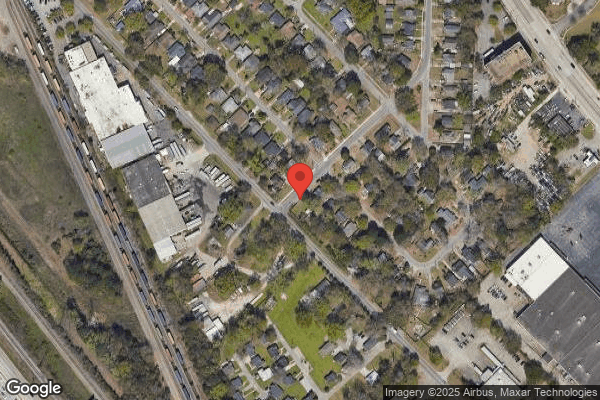
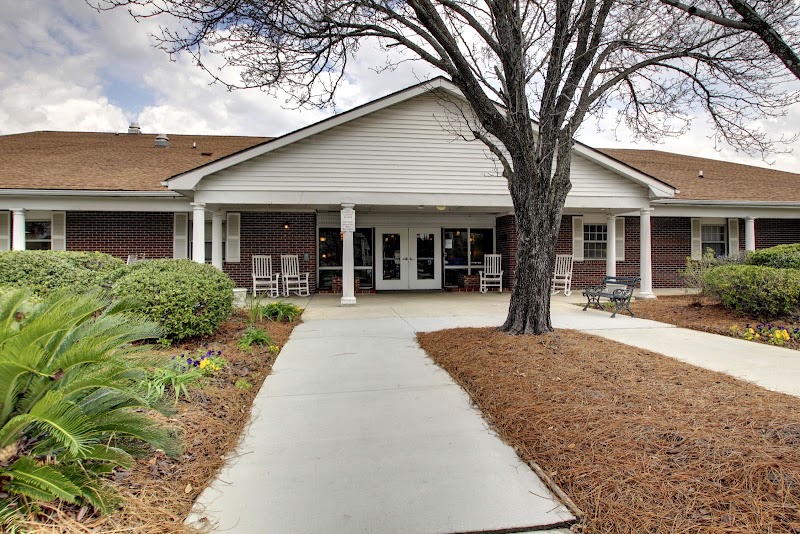
2375 Baker Hosp Blvd, Charleston, SC 29405 (843) 744-2750
For profit - Limited Liability company 160 Beds FUNDAMENTAL HEALTHCARE Data: November 2025 3 Immediate Jeopardy citations
Trust Grade
0/100
#173 of 186 in SC
Last Inspection: April 2025

Within standard 12-15 month inspection cycle. Federal law requires annual inspections.

Overview

Riverside Health and Rehab has received a Trust Grade of F, indicating significant concerns about the care provided, which is poor compared to other facilities. It ranks #173 out of 186 nursing homes in South Carolina, placing it in the bottom half, and #10 out of 11 in Charleston County, meaning there are only a few local options that are better. The facility's trend is improving, with the number of issues decreasing from 12 to 7 in the past year. However, staffing is a weakness, receiving just 1 out of 5 stars, and turnover is high at 57%, which could affect the quality of care. The facility has faced serious issues, including a lack of proper smoking assessments for multiple residents, which posed immediate safety risks. Furthermore, there was an incident where a resident went missing, and the facility failed to promptly implement emergency protocols to locate them. On a positive note, the facility was able to provide acceptable plans to rectify these critical issues after being notified, indicating a willingness to improve their compliance.
Trust Score
F
0/100
In South Carolina
#173/186
Bottom 7%
Safety Record
High Risk
Review needed
Inspections
Getting Better
12 → 7 violations
Staff Stability
⚠ Watch
57% turnover. Above average. Higher turnover means staff may not know residents' routines.
Penalties
✓ Good
$33,883 in fines. Lower than most South Carolina facilities. Relatively clean record.
Skilled Nurses
⚠ Watch
Each resident gets only 22 minutes of Registered Nurse (RN) attention daily — below average for South Carolina. Fewer RN minutes means fewer trained eyes watching for problems.
Violations
⚠ Watch
29 deficiencies on record. Higher than average. Multiple issues found across inspections.
★☆☆☆☆
1.0
Overall Rating
★☆☆☆☆
1.0
Staff Levels
★★☆☆☆
2.0
Care Quality
★☆☆☆☆
1.0
Inspection Score
Stable
2024: 12 issues
2025: 7 issues

The Good

  • Full Sprinkler Coverage · Fire safety systems throughout facility
  • No fines on record

Facility shows strength in fire safety.

The Bad

1-Star Overall Rating

Below South Carolina average (2.8)

Significant quality concerns identified by CMS

Staff Turnover: 57%

10pts above South Carolina avg (46%)

Frequent staff changes - ask about care continuity

Federal Fines: $33,883

Above median ($33,413)

Moderate penalties - review what triggered them

Chain: FUNDAMENTAL HEALTHCARE

Part of a multi-facility chain

Ask about local staffing decisions and management

Staff turnover is elevated (57%)

9 points above South Carolina average of 48%

The Ugly 29 deficiencies on record

3 life-threatening
Apr 2025 7 deficiencies
CONCERN (D)

Potential for Harm - no one hurt, but risky conditions existed

Resident Rights (Tag F0550)

Could have caused harm · This affected 1 resident

**NOTE- TERMS IN BRACKETS HAVE BEEN EDITED TO PROTECT CONFIDENTIALITY** Based on observation, interview, record review, and review of facility policy, the facility failed to: 1.) promote the resident'...

Read full inspector narrative →
**NOTE- TERMS IN BRACKETS HAVE BEEN EDITED TO PROTECT CONFIDENTIALITY** Based on observation, interview, record review, and review of facility policy, the facility failed to: 1.) promote the resident's right to dignity for 128 of 147 residents who ate food from the kitchen when meals were served in Styrofoam containers, and 2.) protect the resident's right to physical privacy during medication administration for one of 34 sampled residents (Resident (R)77), reviewed for resident rights. These failures had the potential to affect the dignity and psychosocial wellbeing of the residents. Findings include: A request for a meal service policy was requested on 04/14/25 at 3:45 PM and on 04/15/25 at 11:30 AM. The policy was not provided prior to the survey exit. 1. During an observation of meal service on 04/13/25 at 9:15 AM, residents received their breakfast trays served on Styrofoam containers. During an interview on 03/13/25 at 9:30 AM, the [NAME] stated she arrived at work to find dirty pots, pans, and dishes from the previous evening meal service and did not have enough time to wash dishes prior to serving the breakfast meal. The [NAME] stated she also served resident meals in Styrofoam containers for the breakfast and lunch meals on Saturday 04/12/25, because she was running behind schedule. During an interview on 04/16/25 at 10:45 AM, the Dietary Manager (DM) stated that serving meals to residents in Styrofoam containers was not acceptable and that the evening kitchen staff on 04/12/25 should have cleaned and prepared the kitchen for the morning meal service. Review of the facility's undated policy titled, Resident Rights revealed, . The facility protects and promotes the rights of each resident in our care . Each resident has the right to privacy with regard to accommodations, treatment, communications, personal care, visits and meetings of family and resident groups. 2. Review of R77's admission Record, located in the Profile tab of the electronic medical record (EMR), revealed R77 was admitted to the facility on [DATE], with diagnoses that included but was not limited to: congestive heart failure and neuromuscular dysfunction of bladder. Review of R77's quarterly Minimum Data Set (MDS), with an Assessment Reference Date (ARD) of 03/06/25 and located in the MDS tab of the EMR, revealed a Brief Interview for Mental Status (BIMS) score of 15 out of 15, which indicated the resident was cognitively intact. Review of R77's Physician Orders, located in the Orders tab of the EMR, revealed R77 was to receive insulin glargine (a long-acting insulin) 100 unit/mL, 28 units once a day and Renacidin (citric ac-gluconolact-mag Carb, a sterile irrigating solution), 1980.6 mg-59.4 mg-980.4mg/30mL; 30 ml irrigation to his suprapubic catheter for 10 minutes and drain once a day. During an observation on 04/14/25 at 9:10 AM, Licensed Practical Nurse (LPN)2 entered R77's room, left the door wide open, approached R77, and did not close the privacy curtain. R77 could be seen from the hallway. LPN2 raised R77's shirt above his abdomen and administered R77 his long-acting insulin to the lower left quadrant, while R77 lowered the waistband of his pants to access his suprapubic catheter. LPN2 then administered the Renacidin irrigation solution into the catheter tube. R77 used one hand to hold both the tube and the top sheet up for privacy. R77 used other hand to pour the irrigation solution. During an interview on 04/14/25 at 9:25 AM, LPN2 stated, I had to leave [R77]'s door open so that I could watch my unlocked med cart and laptop screen. [R77] held up the top sheet so no one could see. But normally I would pull the privacy curtain to give them their privacy. During an interview on 04/14/25 at 10:20 AM, Registered Nurse (RN)1 stated, All the staff know that you must provide patient privacy. My expectation is that nurses lock their med carts and minimize their laptop screens so that they can provide privacy. That's what [LPN2] should have done. During an interview on 04/14/25 at 10:24 AM, the Director of Nursing (DON) stated, All the staff know to always provide privacy during all patient care no matter what it is. That is my expectation too, with no exceptions. [LPN2] . should have provided privacy.
CONCERN (D)

Potential for Harm - no one hurt, but risky conditions existed

Deficiency F0554 (Tag F0554)

Could have caused harm · This affected 1 resident

**NOTE- TERMS IN BRACKETS HAVE BEEN EDITED TO PROTECT CONFIDENTIALITY** 2. Review of R108's Face Sheet, located in the EMR under the Profile tab, revealed R108 readmitted to the facility on [DATE], wi...

Read full inspector narrative →
**NOTE- TERMS IN BRACKETS HAVE BEEN EDITED TO PROTECT CONFIDENTIALITY** 2. Review of R108's Face Sheet, located in the EMR under the Profile tab, revealed R108 readmitted to the facility on [DATE], with diagnoses that included but was not limited to: End Stage Renal Disease, urinary tract infection, diabetes mellitus, and essential hypertension. Review of R108's quarterly MDS, with an ARD of 02/28/25 and located in the EMR under the RAI tab, revealed R108 had a BIMS score of 15 out of 15, which indicated R108 was cognitively intact. Review of R108's Physician's Orders, located under the Orders tab of the EMR, revealed no order for self-administration of medication. During an interview and observation on 04/14/25 at 1:00 PM, R108 was observed lying in bed. A medication cup containing eight medications was noted on her overbed table. R108 was asked why her medications were left and had not been taken. R108 stated, I had fallen asleep and forgot to take them. R108 picked up her medications and took them. During an interview on 04/14/25 at 1:09 PM, LPN2 confirmed that she had administered R108 medications and did not observe the resident taking them. The surveyor asked LPN2 to verify the medications that were left. LPN2 stated, Vitamin C, Aspirin, Vitamin B, Vitamin B 12, Iron Pill, Keppra, Methocarbamol, Metoprolol and Neurontin. LPN2 stated R108 had not been assessed for self-administration and it was not facility policy to leave medications unattended. During an interview on 04/15/25 at 3:03 PM, the DON confirmed R108 had not been assessed for self-administration of medications. The DON stated it was her expectation that medications are not left unattended with any residents. She stated nursing staff were to monitor all residents taking medications. Based on observation, interview, record review, and facility policy review, the facility failed to assess a resident's ability to self-administer medications for two of two residents (Resident (R)77 and R108) reviewed for self-administration of medications out of a total sample of 34. This had the potential to cause medication administration errors and adverse consequences. Findings include: Review of the facility's policy titled, Pharmacy Services Policies and Procedures, revised on 04/17/24, revealed, . The resident may choose to self-administer medication(s) according to applicable state and federal law and regulation upon completion of an assessment by the Interdisciplinary Care Team (lDT). 1. Review of R77's admission Record, located in the Profile tab of the electronic medical record (EMR) revealed R77 was admitted to the facility on [DATE], with diagnoses including but not limited to: congestive heart failure. Review of R77's quarterly Minimum Data Set (MDS), with an Assessment Reference Date (ARD) of 03/06/25 and located in the MDS tab of the EMR, revealed a Brief Interview for Mental Status (BIMS) score of 15 out of 15, which indicated the resident was cognitively intact. Review of R77's Physician Orders, located in the Orders tab of the EMR, revealed R77 was to receive: Amlodipine (a calcium channel blocker to treat hypertension), five mg once a day, Amiodarone (an antiarrhythmic), 200 mg once a day, Atorvastatin (a statin), 10 mg once a day, Docusate sodium (a laxative), 100 mg twice a day, Diazepam (a benzodiazepine), two mg three times a day, Loratadine (an antihistamine), 10 mg once a day, Magnesium oxide (a minerals/electrolyte), 500 mg once a day, Methenamine hippurate (an anti-infective), one gram once a day, Metoprolol tartrate (a beta blocker to treat hypertension), 25 mg twice a day, Famotidine (an H2 blocker (acid reducer)), 20 mg twice a day, Actobacillus acidophilus (a probiotic), 1.5 mg (250 million cell) twice a day, Ergocalciferol (vitamin d2, a dietary supplement), 1,250 mcg (50,000 unit) once a day on Monday, and Cyanocobalamin (vitamin B-12, a dietary supplement), 500 mcg once a day. During an observation and interview on 04/14/25 at 9:10 AM, Licensed Practical Nurse (LPN) 2 placed a medicine cup containing 13 pills on R77's bedside table and left the room prior to R77 consuming the medications. R77 was observed to have a half bottle of Tums on his bedside table. LPN2 stated, We're not allowed to leave meds at the bedside, but [R77] likes to take his meds with his breakfast. So, I go pass the next room's meds and come back to check on [R77] to make sure he took all his meds. He likes to do things his way. He has that bottle of Tums whenever he needs them, but I don't think he takes them regularly. I'll have to look to see if he has an order for them. He orders a lot of his own meds from Amazon. I know he doesn't have an assessment to self-administer his own meds, but like I said, [R77] likes to do things his way. During an interview on 04/14/25 at 9:35 AM, R77 stated, The Tums just sit there, and I take them as an emergency in case the Pepcid doesn't work. I bought them on Amazon. The doctor has seen them on my bedside table every time they come to see me and have never said a word about them. I haven't had one in four months. I dropped most of them on the floor and that's why they're gone. During an observation and interview on 04/14/25 at 10:20 AM, Registered Nurse (RN)1 stated, The nurses don't leave meds at the bedside. We don't have any residents that are assessed to self-administer their own meds. [LPN2] should have watched R77 take his meds or return with them when he was ready to take them. We do have a few residents that order their own meds from Amazon. We make rounds checking for meds in rooms, remove them, and educate them. RN1 entered R77's room, informed R77 that he was not allowed to have medications in his room, and she would need to remove them. RN1 informed R77 that they could call the doctor to get orders for the medications to be left at the bedside. During an interview on 04/14/25 at 10:24 AM, the Director of Nursing (DON) stated, Nurses are not supposed to leave meds at bedside with any resident. [LPN2] knows that is the policy and she will be reeducated immediately. The DON stated, We don't have any residents that self-administer their own meds. We do have a few residents that try to order their own over the counter meds from Amazon and we must monitor for that. We remove the meds and reeducate them that they are not allowed to because other residents could come and take them.
CONCERN (D)

Potential for Harm - no one hurt, but risky conditions existed

Garbage Disposal (Tag F0814)

Could have caused harm · This affected 1 resident

Based on observation and interview, the facility failed to dispose of garbage in a sanitary manner in the kitchen. Specifically, the garbage container was overflowing with garbage on the floor. This d...

Read full inspector narrative →
Based on observation and interview, the facility failed to dispose of garbage in a sanitary manner in the kitchen. Specifically, the garbage container was overflowing with garbage on the floor. This deficient practice had the potential to affect 128 of 147 residents who received meals prepared in the kitchen. Findings include: During the initial kitchen tour on 04/13/25 at 8:30 AM, with the dietary cook (DA), the following observation was made: The garbage container near the food preparation area was uncovered and overflowing with garbage of paper towels and gloves on the floor. During an interview with the Dietary Manager (DM) on 04/16/25 at 10:45 AM, she stated that it was unacceptable, and that garbage should be contained or emptied before it overflowed.
CONCERN (D)

Potential for Harm - no one hurt, but risky conditions existed

Infection Control (Tag F0880)

Could have caused harm · This affected 1 resident

**NOTE- TERMS IN BRACKETS HAVE BEEN EDITED TO PROTECT CONFIDENTIALITY** Based on observations, interviews, and review of facility policy, the facility failed to ensure staff properly handled soiled li...

Read full inspector narrative →
**NOTE- TERMS IN BRACKETS HAVE BEEN EDITED TO PROTECT CONFIDENTIALITY** Based on observations, interviews, and review of facility policy, the facility failed to ensure staff properly handled soiled linen. Specifically, Licensed Practical Nurse (LPN)1 carried unbagged soiled linen out of one of one resident's room (Resident (R) 102) and placed the linen in the soiled linen cart. Failure to properly handle soiled linen can lead to cross contamination. Findings include: Review of the facility's policy titled, Laundry, dated 05/2006 revealed, Soiled linens are handled minimally . collection bags, carts or other containers should be strong and large enough to contain the contents of the soiled linens . personnel is instructed in the proper disposition of linens . Review of R102's Face Sheet, located in the electronic medical record (EMR) under the Face Sheet tab, revealed R102 was readmitted to the facility on [DATE], with diagnoses that included but was not limited to: urinary tract infection (UTI) and dysphagia. Review of R102's Physician Orders, located in the EMR under the Resident tab, revealed, . [R102] is on Enhanced Barrier Precautions, r/t [related to] Enteral Feeding tube . During an observation and interview on 04/13/25 at 12:39 PM, revealed Licensed Practical Nurse (LPN)1 exited R102's room after providing activities of daily living (ADL) care. LPN1 was carrying a large bundle of unbagged soiled linen and placed the linen in the laundry cart which was located 60 to 75 feet away from R102's room. Interview with LPN1 immediately after this observation confirmed that she did not bag the soiled linen per facility policy and failed to follow facility's procedures for handling soiled linen. During an interview on 04/13/25 at 12:40 PM, Certified Nurse Aide (CNA)1 confirmed soiled linen is to be placed in a clear bag prior to exiting a resident's room per facility policy and procedures to reduce the spread of infections. CNA1 stated soiled linen which is unbagged is not to exit a resident's room. During an interview with the Infection Preventionist (IP) on 04/14/25 at 10:04 AM, revealed her expectation is that all staff should adhere to the facility's soiled linen policy.
CONCERN (E)

Potential for Harm - no one hurt, but risky conditions existed

Deficiency F0688 (Tag F0688)

Could have caused harm · This affected multiple residents

**NOTE- TERMS IN BRACKETS HAVE BEEN EDITED TO PROTECT CONFIDENTIALITY** Based on observation, interview, record review, and review of facility policy, the facility failed to implement therapy recommen...

Read full inspector narrative →
**NOTE- TERMS IN BRACKETS HAVE BEEN EDITED TO PROTECT CONFIDENTIALITY** Based on observation, interview, record review, and review of facility policy, the facility failed to implement therapy recommendations for the use of hand splints for three of three residents (Resident (R)40, R102, and R15) reviewed for contractures out of a total sample of 34. This failure had the potential to increase limited range of motion, deformities, and pain. Findings included: Review of the facility's policy titled, Restorative Nursing Policies and Procedures, revised 10/25/24, revealed, . The Nurse completes the Restorative monthly summary to include overall status in the program, progress toward care plan goals, and program recommendation. Documentation must be completed as per state specific guidelines . documents on all programs during look back of Minimum data set (MDS) . Patients/Residents in a Joint Mobility/Splint Program are reassessed on a regular basis (quarterly), and as needed (significant change). The plan of care is reviewed by the interdisciplinary team and revised as needed. Reassess as per nursing assessment and follow trigger guidelines . appropriate candidates for the Nursing Restorative (range of motion) ROM Program may include, but are not limited to, patients/residents with the following conditions: Contractures . 1. Review of R40's Face Sheet, located in the electronic medical record (EMR) under the Face Sheet tab, revealed R40 was readmitted to the facility on [DATE], with diagnoses that included but was not limited to: cerebral palsy, quadriplegia, unspecified and contracture, unspecified joint. Review of R40's Care Plan, located in the EMR under the RAI tab and initiated on 05/08/24, revealed, . [R40] has, requires assistance with ADL's [activities of daily living] r/t [related to] Cerebral Palsy . LUE [Left Upper extremities] d/t [due to] contracture. Review of R40's Occupational Therapy (OT) Discharge Summary, provided by the facility and dated 03/05/25, revealed, . Discharge Recommendations: LHS [Left right hand splint] three hours a day as tolerated to prevent worsening contractures . Review of R40's EMR, including Orders, Medication Administration Records (MARs), Treatment Administration Records (TARs), and Care Plan tabs revealed no orders or treatments for R40's left hand contracture per OT discharge recommendations. The Care Plan had not been updated to reflect the OT discharge recommendations for the use of a left hand splint. During an observation and interview on 04/13/25 at 10:49 AM, R40 was resting in his room. A blue hand splint was noted on the resident's dresser. R40 stated that while on therapy services, therapy staff would place the splint on his left hand, but since I do not have therapy anymore, no one puts it on me. R40 confirmed that he was unable to put the brace on without assistance. 2. Review of R102's Face Sheet, located in the EMR under the Face Sheet tab, revealed R102 was admitted to the facility on [DATE], with diagnoses that included contracture, unspecified joint. Review of R102's Occupational Therapy Discharge Summary, provided by the facility and dated 03/04/25, revealed, . Discharge Recommendations: Continue use of RHS [right hand splint] with nursing staff . It was recorded R102 was to use the splint three hours per day as tolerated to prevent worsening contractures. Review of R102's Care Plan, located in the EMR under the RAI tab and dated 03/04/25, revealed, . [R102] has (L) hand splint . [R102] requires assistance with ADL's R/T COPD, Muscle wasting and atrophy . R hand contracture . The care plan did not address use of the right hand splint. Review of R102's EMR, including Orders, MARs, and TARs tabs revealed no order or treatments for R102's right hand contracture per OT discharge recommendations. During an observation on 04/13/25 at 12:36 PM and 04/14/25 at 1:49 PM, R102's right hand was noted to be contracted inwards at the wrist at a 90-degree angle. R102's splint was observed laying on the resident's bedside table at each observation. During an interview on 04/14/25 at 3:49 PM, the Rehabilitation Director stated the tracking and placement of splints had been a concern. The Rehabilitation Director stated that once a resident was discharged from rehabilitation services, orders were not implemented related to the therapist's recommendations. During an interview on 04/14/25 at 4:10 PM, the Director of Nursing (DON) confirmed that there had been a communication failure between nursing and therapy. The DON stated her expectation was for orders to be placed to reflect therapy recommendations. During an interview on 04/15/25 at 10:20 AM, the Regional Director of Rehabilitation revealed she was aware of the disconnect between the therapy department and nursing and the concern was currently being addressed. 3. Review of R15's Face Sheet, located under the Resident tab of the electronic medical record (EMR), indicated the resident was admitted to the facility on [DATE], with diagnoses that included but was not limited to: epilepsy, right hand contracture, and aphasia following cerebral infarction. Review of R15's quarterly Minimum Data Set (MDS), with an Assessment Reference Date (ARD) of 03/18/25 and located in the MDS tab of the EMR, revealed a Brief Interview for Mental Status (BIMS) score of 99 out of 15, which indicated the resident was severely cognitively impaired. The assessment indicated the resident had functional limitation in range of motion to the upper extremity on one side and that R15 was dependent on staff for self-care and mobility and did not reject care. Review of R15's Physician Orders, located under the Resident tab of the EMR and dated 07/12/23, indicated, [R15] splint to right hand daily with hand hygiene. Review of R15's Care Plan, initiated 07/01/21 and located in the Care Plan tab of the EMR, revealed the resident was at risk for skin impairment related to impaired mobility, incontinence, orthotic use, contracture. Interventions, dated 12/27/24, revealed, orthotic as ordered. An additional intervention, dated 04/15/25, was to splint to right hand daily. Review of R15's Observations, located under the Resident Documents tab of the EMR and dated 01/01/25, revealed a Therapy Screening Form, which was documented by the Occupational Therapist (OT), that R15, currently has towel roll used in hand contracture with nursing . Review of R15's Observations, located under the Resident Documents tab of the EMR and dated 03/18/25, revealed a Therapy Screening Form, which was documented by the OT, that R15 . was at baseline. Review of R15's Observations, located under the Resident Documents tab of the EMR and dated 04/14/25, revealed a Therapy Screening Form, which was documented by the OT, that R15 had joint limitations/contractures and . would benefit from new R [right] palm guard. During an observation on 04/13/25 at 12:14 PM, R15 was asleep in bed with her right hand in a fist. No splinting was observed in place. During an additional observation on 04/14/25 at 3:30 PM, R15 was observed in bed with her right hand in a fist without splinting. During an interview on 04/14/25 at 4:12 PM, the DON stated that the facility kept a book on the nursing floor to identify the ambulation needs of the residents. She stated that the information was also verbalized to the staff. The DON confirmed they needed to do a better job documenting. She stated that her expectation was that if there was a need for splinting for a resident, there would be a physician order in place with directions on how to use it. During an interview on 04/15/25 at 9:20 AM, the Regional Director of Rehab (RDR) stated that R15 required the use of a small right-handed palm guard. During an observation on 04/15/25 at 9:28 AM, R15 was observed in bed with her right hand in a fist, with no splinting in place. During an interview on 04/15/25 at 9:30 AM, Licensed Practical Nurse (LPN)3 stated that she was not aware if R15 required a splint or not but confirmed the resident was not currently using one. During an additional interview on 04/15/25 at 9:39 AM, the RDR stated that OT had rescreened R15 on 04/14/25 and had noted she did not have a splint or palm guard in use. She stated that after searching, the facility staff could not find one in her room for use. The RDR stated that the last assessment had been completed on 03/18/25, and that the assessments were completed by the OT. At 10:31 AM, the RDR confirmed there should be better communication between nursing and therapy. During an additional interview and resident observation on 04/15/25 at 11:00 AM, the DON confirmed R15 was in bed and not actively wearing a splint or palm guard to her right hand. The DON stated that the use of the splint could help prevent decline or pain. She again confirmed that she would want to see a care plan and physician order for the splinting. During an interview on 04/15/25 at 11:24 AM, the OT stated that she evaluated new residents on caseload, new or old, and did quarterly screening for residents with contractures. OT stated that since R15 had a contracture, she would see her quarterly. OT confirmed R15 had a right-handed contracture and had been treated with passive range of motion last year and had a palm guard that she was tolerating. OT stated that R15 had not had any changes since last year according to the nursing staff. She stated that after speaking with nursing, the facility staff could not find her palm guard and told her they were using a towel. OT stated that she believed that R15 should wear the palm guard daily because it was a flatter design.
CONCERN (F)

Potential for Harm - no one hurt, but risky conditions existed

Food Safety (Tag F0812)

Could have caused harm · This affected most or all residents

Based on observation and interview, the facility failed to ensure food stored in the refrigerator was labeled and dated; failed to ensure dietary equipment was clean; failed to ensure dry storage bins...

Read full inspector narrative →
Based on observation and interview, the facility failed to ensure food stored in the refrigerator was labeled and dated; failed to ensure dietary equipment was clean; failed to ensure dry storage bins were free of a Styrofoam cup directly touching the flour and sugar instead of a scoop; and failed to ensure dirty dishes and trays were not stored in the dietary prep area. This deficient practice had the potential to affect 128 of 147 residents who received meals prepared in the facility and had the potential to affect the spread of food borne illness. Findings include: A request for a kitchen cleaning and service policy was requested on 04/14/25 at 3:45 PM and on 04/15/25 at 11:30 AM. The policy was not provided prior to the survey exit. During the initial kitchen tour on 04/13/25 at 8:30 AM, with the Dietary [NAME] (DA) the following observations were made: The reach in refrigerator contained food items of gravy, roast beef, a block of opened cheese, and three packages of opened sliced sandwich meat, that were not dated or labeled. The large bins that contained sugar and flour contained a Styrofoam cup inside the bin. The Styrofoam cup was in direct contact with the flour and sugar. In the prep area of the kitchen, there was a six-tiered rack that held dirty trays, and on the floor were crumbs and scraps of paper. The oven's cooktop and the sides of the oven had the appearance of thick grease and food debris. During the second kitchen tour on 04/13/25 at 4:00 PM, with the Dietary Manager (DM), the following observations were made: The large bins containing dry goods containers of sugar and flour still contained a Styrofoam cup inside the bin. The oven's cooktop and sides of the oven still had the appearance of thick grease and food debris. During an interview with the Dietary [NAME] (DA) on 04/13/25 at 9:15 AM, she stated she arrived to discover dirty pots, pans, and trays left by the previous staff that prepared dinner on 04/12/25. She stated she was not aware of the Styrofoam cups in the dry food bins that appeared to be used as scoops. She stated there should be a proper scoop available for the dry food bins. During an interview with the Dietary Manager (DM) on 04/16/25 at 10:45 AM, she provided a cleaning schedule for cleaning the appliances, floors, and dirty kitchen ware. She stated that the staff should have labeled and dated the food in the reach in refrigerator, that it was not acceptable to have the Styrofoam cup in the flour and sugar bins, and the oven should have been cleaned.
MINOR (C)

Minor Issue - procedural, no safety impact

Staffing Information (Tag F0732)

Minor procedural issue · This affected most or all residents

Based on observation and interview, the facility failed to post current nurse staffing information daily. Specifically, the facility had a nurse staffing posting displayed in a common area accessible ...

Read full inspector narrative →
Based on observation and interview, the facility failed to post current nurse staffing information daily. Specifically, the facility had a nurse staffing posting displayed in a common area accessible to residents and visitors; however, the information was not current for the date reviewed. This practice has the potential to mislead all residents and visitors regarding staffing levels and may impact transparency and trust in the facility's operations. Findings include: Review of the facility's 24 Hour Posting of nursing staffing data on 04/13/25 at 9:00 AM, located in the facility front lobby revealed, Riverside Health and Rehab .Census 147 .date 04/10/25 . During an interview on 04/13/25 at 10:13 AM, the Assistant Administrator confirmed the posting was dated 04/10/25 and should have been dated 04/13/25. He further stated that the staffing data was to be current, accurate, and posted daily. During an interview on 04/13/25 at 10:22 AM, the Director of Nursing (DON) confirmed that the 24-hour posting nurse staffing data should reflect the current date.
Nov 2024 2 deficiencies 2 IJ
CRITICAL (J) 📢 Someone Reported This

A family member, employee, or ombudsman was alarmed enough to file a formal complaint

Immediate Jeopardy (IJ) - the most serious Medicare violation

Free from Abuse/Neglect (Tag F0600)

Someone could have died · This affected 1 resident

**NOTE- TERMS IN BRACKETS HAVE BEEN EDITED TO PROTECT CONFIDENTIALITY** Based on interviews, record reviews and review of the facility policy, the facility neglected to identify and acknowledge that R...

Read full inspector narrative →
**NOTE- TERMS IN BRACKETS HAVE BEEN EDITED TO PROTECT CONFIDENTIALITY** Based on interviews, record reviews and review of the facility policy, the facility neglected to identify and acknowledge that Resident (R)3 was missing from the facility. The facility further failed to implement emergency protocol in a timely manner in order to locate the missing resident. On 11/18/24 at 3:15 PM, the Administrator was notified that the facility neglected to acknowledge a resident was missing from the facility and implement emergency protocol timely for locating the missing resident, which constituted IJ at F600. On 11/18/24 at 3:15 PM, the survey team provided the Administrator with a copy of the CMS IJ Templates, informing the facility IJ existed as of 11/04/24. The IJ was related to 42 CFR 483.12 - Freedom from Abuse, Neglect, and Exploitation. On 11/19/24 the facility provided an acceptable IJ Removal Plan for F600. On 11/19/24, the survey team validated the facility's corrective actions and determined the facility put forth due diligence in addressing the noncompliance. The IJ is considered at Past Non-Compliance as of 11/07/24. An Extended Survey was conducted in conjunction with the Complaint Survey for non-compliance at F600, constituting substandard quality of care. Findings Include: Review of the facility policy titled, Elopement, with a revision date of 11/1/17 states, to safely and timely redirect patients/residents to a safe environment. Review of R3's Face Sheet revealed R3 was admitted to the facility on [DATE], with diagnoses including but not limited to: depression, cognitive communication deficit, acquired absence of left leg above knee, and unspecified psychosis not due to a substance or known physiological condition. Review of R3's admission Minimum Data Set (MDS) with an Assessment Reference Date (ARD) of 09/30/24, revealed R3 had a Brief Interview for Mental Status (BIMS) score of 8 out of 15, indicating R3 had moderate cognitive impairment. Review of R3's Elopement Risk Observation dated 11/07/24 revealed, Resident is not oriented to person, place and time. Resident is confused. Does not have safe decision-making capabilities. Wanderguard placed on right ankle. Review of R3's Decisional Making Capacity Form located in his Electronic Medical Record revealed an undated document with R3's name on it. There was a slash across the form. Review of the Facility's 5 Day Reportable revealed R3 was taken from the facility on 11/04/24 between 1:00 PM - 2:00 PM. R3 was last seen sitting in his wheelchair on the front porch of the facility after lunch, which is his usual routine. On 11/04/24 at 5:30 PM, R3 was noted to not be available for his afternoon medications or dinner. Staff assumed R3 was visiting friends in the facility. R3 was not reported as potentially missing to the Administrator or the Police within 30 minutes as required by the facility's policy. An attempt was made to interview R3 on 11/18/24 at 11:38 AM with no success. A second attempt was made to interview R3 on 11/19/24 at 9:15 AM and 11:00 AM, with no success. Observations of R3 during these times revealed a wanderguard bracelet in place to R3's ankle. During an interview with the Medical Records Clerk on 11/18/24 at 11:57 AM, she stated she is responsible for setting up transport for appointments. She stated on the day of the appointment, she called the transport company to verify because she noted the original resident who was to be transported was still in the facility. She was told that the call had been completed, meaning transport had taken someone. She stated she notified transport that no one had been taken because the intended resident was still in the building. At that time, she was told that an investigation would be taking place. During an interview with the Central Supply Clerk on 11/18/24 at 12:09 PM, she stated, I was covering the Receptionist's lunch break at approximately 12:30 PM - 1:00 PM that day. I did notice 2 transport vans, 1 black and 1 gray, but did not see anyone get into the vans. She stated she was not made aware of R3 being missing until the next morning when she returned to work. She stated the process for residents leaving for appointments is typically a resident with a wheelchair will sit in the lobby and wait for transport. However, if they need a stretcher, transport comes to their room to get them. During an interview with Licensed Practical Nurse (LPN)1 on 11/18/24 at 12:13 PM, she stated, I got on the [med] cart around 1:00 PM. I did not receive a report, the keys to the cart were left in the book. I started giving medications so I could catchup on anything that may have been late. I believe it was around dinner time when a Certified Nursing Assistant (CNA) stated [R3's] tray was still in his room, untouched. I knew this was unusual because he goes to other units looking for food. She stated she then made the Director of Nursing (DON) and Unit Manager (UM) aware and went on about her night. LPN1 said, There was no code white or sense of urgency to look to see if anyone knew where [R3] was. During a telephone interview on 11/18/24 at 12:47 PM, the DON stated, [R3] left the facility with transport, instead of the resident that was intended to go. [R3] normally sits outside in the lobby but has never attempted to wander away from the facility. The Assistant DON (ADON) was supposed to go with the intended resident to the appointment, however, she left before him. Once it was noted that the intended resident was still in the building, transport was called and stated they had taken someone from the facility. Code White was not initiated because it was unknown that a resident was truly missing at that time. Later that day, the police notified the facility that [R3] was at a local Waffle House and a facility staff member went and picked him up. A telephone interview with the Lead Customer Service Supervisor of the Transport Driver on 11/18/24 at 1:24 PM, she stated, Driver asked and [R3] signed the letters BJ, so she took him. She stated that she is unaware of the drivers needing to go into the facility to verify who they are taking. She stated, I will reach out to our upper management to see if they will be putting a process in place so this doesn't happen again. During an interview on 11/18/24 at 1:30 PM, the ADON stated, I agreed to escort the original attendee to the appointment. She was sitting in the lobby of the facility with the original attendant and said she would meet him in there, so she left the facility to head to the doctor's office, which is approximately 18 minutes/13 miles away. The ADON stated she asked the Unit Manager (UM) to text or call when he (the intended resident) was picked up. The DON called and asked her to make a new appointment for him since there was an issue with transportation, but she was not made aware of what the issue was. When the ADON left the facility around 1:40 PM on 11/04/24, R3 was not outside of the facility at that time. She stated that when she was sitting at the doctor's office, there were no residents outside, nor was there a van. Since she was not made aware of the incident, she did not know to look for R3. During an interview with the Administrator on 11/18/24 at 2:07 PM, she stated, I was not made aware of the incident until Tuesday. I believe it was around 2:00 AM on 11/05/24 when [R3] returned to the facility with a staff member. [R3] told the workers at Waffle House that he was ready to go home. The workers then called the police and [R3] told the police his name and that he lived at Riverside. The police called the facility, and a staff member went and picked him up. When asked what her expectations were, the Administrator stated, If I had known he was missing or that transport had stated they had taken someone, I would have immediately locked the building down and completed a headcount, but unfortunately, that was not done. Multiple attempts were made to contact the staff member who returned R3 to the facility, for interview, with no success. During a telephone interview with R3's brother on 11/19/24 at 9:26 AM, he stated, The police called my mother stating my brother was at a Waffle House. My mother then told them to call me. When the police called, I told them that my brother is supposed to be at Riverside Nursing Home, so I don't know how he got to the Waffle House. The facility did not tell us all what happened, someone just called to say they were putting an ankle monitor on him. During an interview with the Administrator on 11/19/24 at 10:30 AM, she indicated that the form with the slash meant the resident has decisional making capabilities, but she would defer to the Social Services Director (SSD) for further clarification. During an interview with the SSD on 11/19/24 at 12:30 PM, he stated that the slash meant the resident does have decision making capacity, but there was not any documentation from a Physician to confirm it. He stated that he dropped the ball and R3's medical record is confusing because of conflicting information. During a follow-up interview with the Administrator and Administrator in Training on 11/19/24 at 1:15 PM, she stated that part of their audits was to ensure all residents were safely located in the building and residents who wish to be outside have now been provided with a courtyard that does not have access for them to be able to wander away from the facility unknown. On 11/19/24 the facility provided an acceptable IJ Removal Plan, which included the following: -What corrective action(s) will be accomplished for those residents found to have been affected by the alleged deficient practice: Resident #1 left facility via transport van without staff knowledge. The resident was out of the facility without staff knowledge for more than two hours. Staff re-educated on physically checking on every resident at least every two hours on 11/7/24. Resident #1 is without injury and elopement risk assessment repeated on 11/7/24 with interventions in place per plan of care. A resident count was conducted for all residents when Resident #1 returned to the facility. All residents were accounted for. AOC date is 11/07/24. -How other residents who have the potential to be affected by the alleged deficient practice are identified: Residents who socialize on the front porch or along the walkway may be affected by this alleged deficient practice. -How the corrective action will be monitored to ensure the deficient practice will not recur: (include re-education) 1. Check-in/Check-out (Porch Pass) process implemented for residents who desire to sit on the front porch- 11/7/24 2. Re-education for staff on Abuse, Neglect, or Mistreatment starting 11/7/24. 3. Re-education for staff on physically checking on residents at least every two hours on 11/7/24. 4. Continue a midnight census every night as a daily audit. 5. Safe area (courtyard) provided for residents to socialize. Residents informed 11/7/24. 6. Adhoc QAPI- 11/7/24. 7. ADON/designee will audit midnight census five times weekly x4 weeks, then three x weekly for 4 weeks, then monthly x 1 until compliance is achieved. -What quality assurance program will be put into place: Results of the monitoring will be presented.
CRITICAL (J) 📢 Someone Reported This

A family member, employee, or ombudsman was alarmed enough to file a formal complaint

Immediate Jeopardy (IJ) - the most serious Medicare violation

Accident Prevention (Tag F0689)

Someone could have died · This affected 1 resident

**NOTE- TERMS IN BRACKETS HAVE BEEN EDITED TO PROTECT CONFIDENTIALITY** Based on interviews, record review and review of the facility policy, the facility failed to provide adequate supervision for Re...

Read full inspector narrative →
**NOTE- TERMS IN BRACKETS HAVE BEEN EDITED TO PROTECT CONFIDENTIALITY** Based on interviews, record review and review of the facility policy, the facility failed to provide adequate supervision for Resident (R)3, who successfully eloped from the facility. On 11/18/24 at 3:15 PM, the Administrator was notified that the failure to provide adequate supervision to prevent an elopement constituted Immediate Jeopardy (IJ) at F689. On 11/18/24 at 3:15 PM, the survey team provided the Administrator with a copy of the CMS IJ Templates, informing the facility IJ existed as of 11/04/24. The IJ was related to 42 CFR 483.25 - Quality of Care. On 11/19/24 the facility provided an acceptable IJ Removal Plan for F689. On 11/19/24, the survey team validated the facility's corrective actions and determined the facility put forth due diligence in addressing the noncompliance. The IJ is considered at Past Non-Compliance as of 11/07/24. An Extended Survey was conducted in conjunction with the Complaint Survey for non-compliance at F689, constituting substandard quality of care. Findings Include: Review of the facility's policy titled, Elopement, with a revision date of 11/01/17 states, to safely and timely redirect patients/residents to a safe environment. Review of R3's Face Sheet revealed R3 was admitted to the facility on [DATE], with diagnoses including but not limited to: depression, cognitive communication deficit, acquired absence of left leg above knee, and unspecified psychosis not due to a substance or known physiological condition. Review of R3's admission Minimum Data Set (MDS) with an Assessment Reference Date (ARD) of 09/30/24, revealed R3 had a Brief Interview for Mental Status (BIMS) score of 8 out of 15, indicating R3 had moderate cognitive impairment. Review of R3's Decisional Making Capacity Form located in his Electronic Medical Record revealed an undated document with R3's name on it. There was a slash across the form. Review of the Facility's 5 Day Reportable revealed R3 was taken from the facility on 11/04/24 between 1:00 PM - 2:00 PM. R3 was last seen sitting in his wheelchair on the front porch of the facility after lunch, which is his usual routine. On 11/04/24 at 5:30 PM, R3 was noted to not be available for his afternoon medications or dinner. Staff assumed R3 was visiting friends in the facility. R3 was not reported as potentially missing to the Administrator or the Police within 30 minutes as required by the facility's policy. An attempt was made to interview R3 on 11/18/24 at 11:38 AM with no success. A second attempt was made to interview R3 on 11/19/24 at 9:15 AM and 11:00 AM, with no success. Observations of R3 during these times revealed a wanderguard bracelet in place to R3's ankle. During an interview with the Medical Records Clerk on 11/18/24 at 11:57 AM, she stated she is responsible for setting up transport for appointments. She stated on the day of the appointment, she called the transport company to verify because she noted the original resident who was to be transported was still in the facility. She was told that the call had been completed, meaning transport had taken someone. She stated she notified transport that no one had been taken because the intended resident was still in the building. At that time, she was told that an investigation would be taking place. During an interview with the Central Supply Clerk on 11/18/24 at 12:09 PM, she stated, I was covering the Receptionist's lunch break at approximately 12:30 PM - 1:00 PM that day. I did notice 2 transport vans, 1 black and 1 gray, but did not see anyone get into the vans. She stated she was not made aware of R3 being missing until the next morning when she returned to work. She stated the process for residents leaving for appointments is typically a resident with a wheelchair will sit in the lobby and wait for transport. However, if they need a stretcher, transport comes to their room to get them. During an interview with Licensed Practical Nurse (LPN)1 on 11/18/24 at 12:13 PM, she stated, I got on the [med] cart around 1:00 PM. I did not receive a report, the keys to the cart were left in the book. I started giving medications so I could catchup on anything that may have been late. I believe it was around dinner time when a Certified Nursing Assistant (CNA) stated [R3's] tray was still in his room, untouched. I knew this was unusual because he goes to other units looking for food. She stated she then made the Director of Nursing (DON) and Unit Manager (UM) aware and went on about her night. LPN1 said, There was no code white or sense of urgency to look to see if anyone knew where [R3] was. During a telephone interview on 11/18/24 at 12:47 PM, the DON stated, [R3] left the facility with transport, instead of the resident that was intended to go. [R3] normally sits outside in the lobby but has never attempted to wander away from the facility. The Assistant DON (ADON) was supposed to go with the intended resident to the appointment, however, she left before him. Once it was noted that the intended resident was still in the building, transport was called and stated they had taken someone from the facility. Code White was not initiated because it was unknown that a resident was truly missing at that time. Later that day, the police notified the facility that [R3] was at a local Waffle House and a facility staff member went and picked him up. During an interview on 11/18/24 at 1:30 PM, the ADON stated, I agreed to escort the original attendee to the appointment. She was sitting in the lobby of the facility with the original attendant and said she would meet him in there, so she left the facility to head to the doctor's office, which is approximately 18 minutes/13 miles away. The ADON stated she asked the Unit Manager (UM) to text or call when he (the intended resident) was picked up. The DON called and asked her to make a new appointment for him since there was an issue with transportation, but she was not made aware of what the issue was. When the ADON left the facility around 1:40 PM on 11/04/24, R3 was not outside of the facility at that time. She stated that when she was sitting at the doctor's office, there were no residents outside, nor was there a van. Since she was not made aware of the incident, she did not know to look for R3. During an interview with the Administrator on 11/18/24 at 2:07 PM, she stated, I was not made aware of the incident until Tuesday. I believe it was around 2:00 AM on 11/05/24 when [R3] returned to the facility with a staff member. [R3] told the workers at Waffle House that he was ready to go home. The workers then called the police and [R3] told the police his name and that he lived at Riverside. The police called the facility, and a staff member went and picked him up. When asked what her expectations were, the Administrator stated, If I had known he was missing or that transport had stated they had taken someone, I would have immediately locked the building down and completed a headcount, but unfortunately, that was not done. During an interview with the Administrator on 11/19/24 at 10:30 AM, she indicated that the form with the slash meant the resident has decisional making capabilities, but she would defer to the Social Services Director (SSD) for further clarification. During an interview with the SSD on 11/19/24 at 12:30 PM, he stated that the slash meant the resident does have decision making capacity, but there was not any documentation from a Physician to confirm it. He stated that he dropped the ball and R3's medical record is confusing because of conflicting information. During a follow-up interview with the Administrator and Administrator in Training present on 11/19/24 at 1:15 PM, she stated that part of their audits was to ensure all residents were safely located in the building and residents who wish to be outside have now been provided with a courtyard that does not have access for them to be able to wander away from the facility unknown. On 11/19/24 the facility provided an acceptable IJ Removal Plan, which included the following: -What corrective action(s) will be accomplished for those residents found to have been affected by the alleged deficient practice: Resident #1 left facility via transport van without staff knowledge. The resident was out of the facility without staff knowledge for more than two hours. Staff re-educated on physically checking on every resident at least every two hours on 11/7/24. Resident #1 is without injury and elopement risk assessment repeated on 11/7/24 with interventions in place per plan of care. A resident count was conducted for all residents when Resident #1 returned to the facility. All residents were accounted for. AOC date is 11/07/24. -How other residents who have the potential to be affected by the alleged deficient practice are identified: Residents who socialize on the front porch or along the walkway may be affected by this alleged deficient practice. -How the corrective action will be monitored to ensure the deficient practice will not recur: (include re-education) 1. Elopement drill conducted 11/7/24. 2. Check-in/Check-out (Porch Pass) process implemented for residents who desire to sit on the front porch- 11/7/24 3. Re-education for staff on Elopement Policy and Process and Abuse, Neglect, or Mistreatment starting 11/7/24. 4. Elopement risk assessments completed on residents who reside in the facility on 11/7/24. 5. A review of residents who are assessed as an elopement risk was completed on 11/7/24 and care plans updated as appropriate. 6. Safe area (courtyard) provided for residents to socialize. Residents informed 11/7/24. 7. Adhoc QAPI- 11/7/24. 8. Continue a midnight census every night as a daily audit. 9. ADON/designee will audit for elopement assessments completed and accurate within 24 hours or admission/readmission five times weekly for 4 weeks, then three x weekly for 4 weeks, then monthly x 1 until compliance is achieved. 10. ADON/designee will audit 24-hour report and new nurses' notes (facility activity report) for documentation of elopement risks five times weekly x 4 weeks, then three x weekly for 4 weeks, then monthly x 1 until compliance is achieved. -What quality assurance program will be put into place: Results of the monitoring will be presented to the Quality Assurance Performance Improvement (QAPI) Committee for a period of 3 months or until substantial compliance is achieved and maintained. Any areas of concern identified will be addressed at time of discovery.
Mar 2024 10 deficiencies 1 IJ (1 affecting multiple)
CRITICAL (K)

Immediate Jeopardy (IJ) - the most serious Medicare violation

Accident Prevention (Tag F0689)

Someone could have died · This affected multiple residents

**NOTE- TERMS IN BRACKETS HAVE BEEN EDITED TO PROTECT CONFIDENTIALITY** Based on review of facility policy, record review, interviews, and observations, the facility failed to conduct smoking assessme...

Read full inspector narrative →
**NOTE- TERMS IN BRACKETS HAVE BEEN EDITED TO PROTECT CONFIDENTIALITY** Based on review of facility policy, record review, interviews, and observations, the facility failed to conduct smoking assessments for 4 out of 10 residents (Resident (R)84, R116, R133, and R75) who smoke. Additionally, the facility failed to provide proper safety protocols for 10 out of 10 residents (R80, R84, R116, R595, R60, R133, R75, R93, R37, and R103) who smoke. On 03/13/24 at 4:32 PM, the Administrator was notified that the failure to conduct assessments on residents who smoke and failing to provide proper safety protocols for residents who smoke constituted Immediate Jeopardy (IJ) at F689. On 03/13/24 at 4:32 PM, the survey team provided the Administrator with a copy of the CMS Immediate Jeopardy (IJ) Template and informed the facility IJ existed as of 03/10/24. The IJ was related to 42 CFR 483.25 - Quality of Care. On 03/13/24, the facility provided an acceptable IJ Removal Plan. On 03/14/24 the survey team, validated the facility's corrective actions and removed the IJ. The facility remained out of compliance at F689 at a lower scope and severity of E. An extended survey was conducted in conjunction with the Recertification Survey for non-compliance at F689, constituting substandard quality of care. Findings Include: Review of the facility's admission Handbook with a revision date of 05/22/20 revealed the following, Smoking Policy. Unless otherwise noted in a separate policy, this facility is a smoke-free environment . All residents are prohibited from keeping any type of smoking materials (lighter, matches, cigarettes, etc.) in their rooms or on their person. Violations of this policy endanger the health and safety of others at the facility . Review of the facility's policy titled Smoking Policy for Residents and Visitors with an effective date of 08/31/07, revealed, . our nursing facility discourages smoking due to complications that may arise due to medications, illnesses and smoking accidents. Further, we have the added responsibility of ensuring all residents, visitors and staff is free from all fire and smoking hazards . Accordingly, the following smoking policy has been implemented in our Facility and shall be enforced for ALL resident admitted after August 14, 2006 . This Facility is a smoke-free environment and, as such, there are NO designated smoking areas inside the building or on its premises for either residents or visitors. All residents are prohibited from keeping any type of smoking materials (lighter, matches, cigarettes, etc.) in their rooms or on their person. Residents' smoking materials will be kept in assigned lockers adjacent to the exit door to the garden area between Units 100 and 200. The keys for the lockers will be controlled by the medication nurse on the back hall of Unit 200 and kept in the medication cart. During an observation on 03/13/24 at approximately 9:45 AM, R80, R84, and R116 were across the street from the facility smoking. R80 was in a motorized wheelchair, R116 was in a manual wheelchair, and R84 did not have any assistive devices for ambulation. Further observation revealed no protective equipment and no staff were present to supervise and/or provide assistance. During an interview on 03/13/24 at approximately 10:00 AM, the Assistant Business Office Manager (ABOM), who was working the receptionist desk, stated, There were residents trying to smoke. But we put a stop to it. the residents that do smoke have to sign out on a leave of absence. They sign out at the nurses station. During an interview on 03/13/24 at 10:05 AM, with the group of residents smoking, revealed: R80 stated, We use to smoke on property, but they made it no smoking on property. So we come across the street. It's not really safe cause we have to cross the street and the cars zoom by like a bat out of hell. We have to watch out for the traffic. I haven't had any assessment and I keep my cigarettes and lighter on me all the time. There are about eight of us who come out here to smoke. They lock the front doors at seven, so we can't smoke after that. R84 stated, The cars come barreling through here and it is not safe. R116 stated, I keep my cigarettes and lighter on me all the time. During an interview on 03/13/24 at 10:40 AM, Licensed Practical Nurse (LPN)3 stated, I have one smoker [R84]. The resident keeps their own smoking supplies. They sign out and they can go on their own. The smoking situation is new and we are adjusting. [R84] doesn't usually sign out because she is independent. I don't know if they had assessments. During an interview on 03/13/24 at 10:43 AM, LPN12 stated, [R133] tries to buy cigarettes from other residents and sometimes his family brings him some. I am not sure if the residents have had assessments. LPN12 identified the following residents who smoke: R595, R60, and R133. During an interview on 03/13/24 at 10:50 AM, LPN13 stated, I got one smoker on my hall [R93]. He goes out at least four times on my shift. I don't know if he's had an assessment. I hope he had one done. I don't know what he does with his smoking supplies. I am from [another state] and when I worked there we kept it (smoking materials) in a lock box, I don't know what they do here. Investigation identified the following residents that smoke: 1. Review of R80's Face Sheet revealed, R80 was admitted to the facility on [DATE], with diagnoses including but not limited to: acute respiratory disease, sepsis, paraplegia, chronic obstructive pulmonary disease with acute exacerbation, shortness of breath, morbid obesity, asthma, and cognitive communication deficit. Review of R80's Annual Minimum Data Set (MDS) with an Assessment Reference Date (ARD) of 12/30/23, revealed R80 had a Brief Interview for Mental Status (BIMS) score of 15 out of 15 indicating the resident was cognitively intact. Review of R80's Physician Orders dated 02/12/24 revealed an order for 2L oxygen PRN via NC. Review of R80's Electronic Medical Record (EMR) revealed, a Smoking Policy with an effective date of 08/31/07 signed by R80 on 01/31/24. Review of R80's Smoking Risk (Acuity) dated 03/01/24 revealed, R80 smokes cigarettes every few hours. Further review of the Smoking Risk revealed, R80 is a moderate problem for Inappropriately Provides Smoking Materials to Others and Mobility. The Smoking Risk evaluated R80 at a score of 4.0 indicating R80 was a safe smoker. Review of R80's Care Plan with a start date on 02/20/24 revealed the following problems: [R80] requires oxygen therapy PRN R/T COPD. Problem start date 09/05/23 [R80] is a former smoker, smoking cessation patch offered. Problem start date 01/27/22 [R80] is at risk for complications related to Asthma and COPD. Problem start date 01/27/22 [R80] at risk for falling R/T Paraplegia, lack of coordination, muscle wasting, and weakness. 2. Review of R84's Face Sheet revealed R84 was admitted to the facility on [DATE] (latest return on 12/19/23), with diagnoses including but not limited to: Type 2 diabetes, cognitive communication deficit, disorientation, acute respiratory disease, muscle weakness, abnormalities of gait and mobility, osteoarthritis, shortness of breath, major depressive disorder, lack of coordination, difficulty in walking, and cognitive social or emotional deficit. Review of R84's Quarterly MDS with an ARD of 03/02/24, revealed R84 had a BIMS score of 99 indicating the resident was unable to complete the interview. Review of R84's Physician Orders revealed the following orders: Seroquel (quetiapine) tablet; 50 mg; amt: 1.5 tablet; oral At Bedtime 09:00 PM 09/12/2023 and tramadol - Schedule IV tablet; 50 mg; amt: ONE TABLET; oral Special Instructions: ONE TAB TID PRN FOR KNEE PAIN As Needed PRN 1, PRN 2, PRN 3 03/05/2024 Review of R84's EMR revealed no Smoking Risk (Acuity) was completed. Review of R84's Care Plan with a start date of 09/11/23 revealed the following problems: [R84] has cognitive impairment and communication deficit, memory problems: Symbolic dysfunction, short/long term memory problems Impaired ability to make decisions R/T Following CVA. [R84] at risk for falling R/T R side weakness . 3. Review of R116's Face Sheet revealed R116 was admitted to the facility on [DATE], with diagnoses including but not limited to: chronic kidney disease, acute kidney failure, altered mental status, type 2 diabetes, nicotine dependence, cognitive communication deficit, unsteadiness on feet, lack of coordination, muscle wasting and atrophy, and muscle weakness. Review of R116's Quarterly MDS with and ARD of 01/11/24, revealed R116 had a BIMS score of 15 out of 15 indicating the resident was cognitively intact. Review of R116's EMR revealed no Smoking Risk (Acuity) was completed. Review of R116's Care Plan revealed the following problems: Problem start date 07/25/22 [R116] has cognitive impairment AEB memory problems: short/long term memory problems. Impaired ability to make decisions. Impaired communication. Problem start date 07/07/22 [R116] is at risk for falling R/T orthostatic hypotension. 4. Review of R595's Face Sheet revealed R595 was admitted to the facility on [DATE] with diagnoses including but not limited to: Type 2 diabetes, panic disorder, heart failure, chronic obstructive pulmonary disease, and chronic kidney disease. Review of R595's admission MDS with an ARD of 02/29/24, revealed R595 had a BIMS score of 15 out of 15 indicating the resident was cognitively intact. Review of R595's Smoking Risk (Acuity) dated 03/08/24, revealed R595 smokes cigarettes more than once per hour. Further review of the Smoking Risk revealed, R595 is a minimal problem for Smokes in Unauthorized Areas and Mobility. R595 is a moderate problem for General Awareness and Orientation-Including Ability to Understand the Facility Safe Smoking Policy, General Behavior and Interpersonal Interaction and Capability to Follow Facility Safe Smoking Policy. The Smoking Risk evaluated R595 with a score of 8.0, indicating R595 to be a safe smoker. Review of R595's Care Plan revealed the following problems: Problem start date 03/10/24 Resident at risk for falling R/T impaired mobility. Problem start date 03/10/24 Resident is limited in physical mobility R/T impaired mobility and weakness. 5. Review of R60's Face Sheet revealed R60 was admitted to the facility on [DATE] with diagnoses including but not limited to: undifferentiated schizophrenia, acute respiratory failure, muscle weakness, tremor, internuclear ophthalmoplegia bilateral, elevated blood-pressure reading, nicotine dependence, cognitive communication deficit, and convulsions. Review of R60's Quarterly MDS with an ARD of 12/15/23, revealed R60 had a BIMS score of 15 out of 15 indicating the resident was cognitively intact. Review of R60's Smoking Risk (Acuity) dated 03/09/24, revealed R60 smokes cigarettes more than once per hour. R60 scored a 0.0 on indicating R60 is a safe smoker. Review of R60's EMR revealed a Smoking Policy with an effective date of 08/31/07, signed by the resident on 01/09/23 and 08/04/23. Review of R60's Care Plan revealed the following problems: problem start date 09/26/22 [R60] appears to have recall deficit related to: short term recall - long term recall - poor decision making. Problem start date 12/22/21 [R60] requires assistance with ADL's due to Anemia, weakness and TBI . Problem start date 10/11/18 [R60] has the dx of bipolar and schizophrenia and is at risk for behaviors including yelling out, seeing things that aren't there, insomnia, puts self on floor when angry bout going home, crying, and decline in mood. Combative at times with staff and aggressive with another resident . Non compliant with smoking policy. Problem start date 09/26/18 [R60] at risk for falling R/T left sided weakness, tremors and Psychotropic meds. 6. Review of R133's Face Sheet revealed R133 was admitted to the facility on [DATE], with diagnoses including but not limited to: schizophrenia, chronic bronchitis, wheezing, bipolar disorder, nicotine dependence, cough, mental disorder due to known physiological condition, lack of coordination, cognitive communication deficit, muscle wasting and atrophy, and muscle weakness. Review of R133's Quarterly MDS with an ARD of 02/14/24 revealed a BIMS score of 14 out of 15 indicating the resident was cognitively intact. Review of R133's Physician Orders revealed the following orders: albuterol sulfate HFA aerosol inhaler; 90 mcg/actuation; amt: 2 Puffs; inhalation Special Instructions: Inhale 2 puffs into the lungs every 4 hours as needed for shortness of breath/wheezing As Needed PRN 1, PRN 2, PRN 3 02/06/2024, ipratropium-albuterol solution for nebulization; 0.5 mg-3 mg(2.5 mg base)/3 mL; amt: 3mL; inhalation Special Instructions: 3mL q4 PRN for SOB/wheezing As Needed PRN 1, PRN 2, PRN 3, PRN 4, PRN 5, PRN 6 01/26/2024, Ativan (lorazepam) - Schedule IV solution; 2 mg/mL; amt: 2mg; injection Special Instructions: 2mg BID PRN As Needed PRN 1, PRN 2 12/15/2023, Breo Ellipta (fluticasone furoate-vilanterol) blister with device; 100-25 mcg/dose; amt: 1 puff; inhalation Special Instructions: Rinse and spit after each use Once A Day 09:00 AM 02/07/2024, and Seroquel (quetiapine) tablet; 50 mg; amt: 1 tab; oral Three Times A Day 09:00 AM, 01:00 PM, 09:00 PM 01/18/2024. Review of R133's Smoking Risk (Acuity) dated 11/09/23 revealed, R133 scored a 12.0 indicating R133 was an unsafe smoker. Further review of the Smoking Risk revealed the following: Potentially Unsafe Smoker - Follow Facility Policy - Clinical Judgement - Resident is not capable of even supervised smoking. Smoking will result in danger to self or others. True - Withhold smoking materials. Review of R133's Care Plan revealed the following problems: problem start date 02/12/24 [R133] is at risk for respiratory distress R/T bronchitis. Problem start date 11/16/23 [R133] is at risk for falling R/T neyrocognitive disorder. Problem start date 11/16/23 [R133] is at risk for further cognitive impairment R/T Neurocognitive disorder. Problem start date 11/10/23 [R133] is at risk for having mood and behaviors changes R/T Schizophrenia. Problem start date 11/10/23 '[R133] wanders and/or is an elopement risk. Requites wander guard. 7. Review of R75's Face Sheet revealed R75 was admitted to the facility on [DATE] with diagnoses including but not limited to: Wernicke's encephalopathy, tremor, delirium, Type 2 diabetes, reduced mobility, delusional disorders, difficulty in walking, and major depressive disorder. Review of R75's Quarterly MDS with an ARD of 12/12/23 revealed a BIMS score of 12 out of 15, indicating R75 was moderately cognitively impaired. Review of R75's EMR revealed no Smoking Risk (Acuity) was completed. 8. Review of R93's Face Sheet revealed R93 was admitted to the facility on [DATE], with diagnoses including but not limited to: chronic osteomyelitis, cough, and sepsis Review of R93's Quarterly MDS with an ARD of 12/27/23, revealed a BIMS score of 14 out of 15 indicating the resident was cognitively intact. Review of R93's Smoking Risk (Acuity) dated 03/01/24, revealed R93 smokes cigarettes every few hours. Further review of the Smoking Acuity revealed R93 was a minimal problem for Inappropriately Provides Smoking Materials to Others and Mobility. R93 scored a 2.0 indicating R93 is a safe smoker. Review of R93's Care Plan revealed the following problems: problem start date 05/21/21 [R93] has behaviors which include cursing at staff, refusing to obtain weight, and makes false acquisitions regarding meal/portion preferences and medication administration. Problem start date 04/01/21 [R93] at risk for falling . 9. Review of R37's Face Sheet revealed R37 was admitted to the facility on [DATE] with diagnoses including: cerebral palsey, acute upper respiratory infection, acute bronchitis, pneumonia, contracture, cough, bipolar disorder, nicotine dependence, and acquired absence of right leg below knee. Review of R37's Quarterly MDS with an ARD of 12/13/23 revealed a BIMS score of 13 out of 15 indicating the resident was cognitively intact. Review of R37's EMR revealed a Smoking Policy with an effective date of 08/31/17 signed by the resident on 01/29/24. Review of R37's Smoking Risk (Acuity) dated 03/01/24, revealed R37 smokes cigarettes and vape a couple times per day. Further review of the Smoking Risk revealed, R37 is minimal risk for Smokes in Unauthorized Areas, Inappropriately Provides Smoking Materials to Others, and Begs or Steals Smoking Materials From Others. R37 is a moderate problem for Mobility. R37 scored a 5.0 on the Smoking Risk indicating R37 is a safe smoker. Review of R37's Care Plan revealed the following problems: problem start date 09/27/23 [R37] is a risk for self harm related to: SUD, Poor support system, loneliness as evidence by: Statements of despair, helplessness, hopelessness, Suicide behavior (talk). Problem start date 09/19/23 [R37] is at risk for cognitive decline and behaviors R/T cerebral palsy, Bipolar with use of psychotropics. Problem start date 09/05/23 [R37] is a former smoker and occasionally staff has caught resident smoking despite encouragement and education. Problem start date 10/14/21 [R37] is unable to make daily decisions without cues/supervision R/T decreased safety awareness. Problem start date 09/27/21 [R37] chooses to smoke an e-cigarette. 10. Review of R103's Face Sheet revealed R103 was admitted to the facility on [DATE] with diagnoses including but not limited to: acute hematogenous osteomyelitis, difficulty walking, spastic hemiplegia, and cognitive communication deficit. Review of R103's Quarterly MDS with and ARD of 12/30/23 revealed a BIMS score of 13 out of 15 indicating the resident was cognitively intact. Review of R103's EMR revealed a Smoking Policy with an effective date of 08/31/07 signed by R103 on 08/07/23. Review of R103's Smoking Risk (Acuity) dated 03/01/24 revealed R103 smokes cigarettes a couple times per day. Further review of the Smoking Risk revealed R103 is a moderate problem for Mobility. R103 scored a 2.0 indicating R103 is a safe smoker. Review of R103's Care Plan revealed the following problems: problem start date 03/07/24 Resident at risk for falling R/T unsteady gait. Problem start date 05/15/23 He is at risk of having mood and behavior needs as evidence by periods of (type of behavior, socially inappropriate, physically aggressive, verbally aggressive, refusing care). Problem start date 05/10/22 [R103] may have c/o pain r/t left arm and hand contracted. Problem start date 05/04/22 [R103] is at risk for falling R/T traumatic amputation of 2 or more toes, seizures, resident removes wheel chair arm rest per preference. During an interview on 03/13/24 at 2:13 PM, R75 states, I smoked about a month and a half ago. I kept my cigs in my room and I borrowed someone's lighter. During an interview and observation on 03/13/24 at 2:25 PM, R133 states, I smoked yesterday, across the street. I get lucky and get one every now and again. I buy cigarettes from other residents. Observation revealed an oxygen tank in R133's room. During an interview and observation on 03/13/24 at 2:31 PM, R103 states, I smoked yesterday and I had to cross the street. I don't like crossing that street. I went out to smoke on Sunday, when I was crossing the street to come back, someone almost hit me with their van. I get my cigarettes and lighter from who ever is out there smoking. I buy my own cigarettes whenever I get some money. Observation revealed R103 in a manual wheelchair and both of R103's hands were contracted. During an interview and observation on 03/13/24 at approximately 2:35 PM, three additional residents were observed smoking across the street. During an interview on 03/13/24 at 2:37 PM, while smoking, R60 states, It ain' t too safe crossing that street. I smoked yesterday. I keep my cigarettes and lighter in my room. During an interview and observation on 03/13/24 at 2:40 PM, while smoking, R93 states, I smoke three to four times a day. I don't like crossing the street because of traffic and the parking lot. It's hard to get out here because the wheels on my walker get stuck. I keep all my smoking supplies in my walker. Observation revealed R93 sitting on his walker smoking. R93 pulled up the seat on the walker, revealing a pack of cigarettes and a lighter. During an interview and observation on 03/13/24 at 2:44 PM, while smoking, R37 states, I smoke about three to four times a day. I don't like crossing the street cause I got hit by a car when I was younger. I keep my cigarettes and lighter in my dresser drawer. Observation revealed R37 smoking, in a mechanical wheelchair, R37's left hand was contracted. During an interview on 03/13/24 at 3:17 PM, the Administrator and Director of Nursing (DON) revealed, residents have to sign out and leave the building to smoke. The DON stated her expectation is that they do not smoke. When they leave here we don't know what they are doing. We were not aware that the residents were keeping smoking materials in their room. When we see them in the facility, we will take the smoking items. The Administrator revealed, the lighter goes to the nurses station and the cigarettes we throw away. It usually goes with the nurse in their cart. We do not know how many smokers are in the facility. We were not aware that residents were sharing and borrowing cigarettes from other residents. The DON concluded, if it is a resident that we know smokes, we will do an assessment. On 03/13/24 the facility provided a removal plan, which included the following: Residents currently residing in the facility were asked by facility leadership if they currently are smokers on 3/13/24. Those self-identified as smokers will have a smoking acuity (assessments) completed by a licensed nurse on 3/13/24. The Administrator will review on 3/13/24 with the residents, that have self-identified as smokers, the admission policy including the smoking policy which states the facility is a nonsmoking facility and any smoking materials must be turned into a nurse for secured storage. Residents who had smoking materials have turned in those smoking materials to the administrator for storage in a secured area on 3/13/24. Smoking Cessation products will be offered to any resident that has identified as a smoker. If they chose to utilize smoking cessation products, the physician will be notified and orders obtained on 3/13/24. A Review of the Release of Responsibility for leave of absence forms was completed by the Director of Nursing. resident who are currently signed out were located in the facility and reeducation was provided to residents who sign themselves out regarding signing back in upon return and notifying the nurse when leaving the facility and returning on 3/13/24. Facility Staff and residents who sign themselves out via leave of absence form will be reeducated by Director of Nursing/Designee on the following: - Residents who identify as smokers will have the Smoking Acuity (Assessment) completed upon admission by a licensed nurse. - Residents will sign in and sign out with the nurse or facility representative at the nurse's station when they leave the building. - Residents check in with charge nurse or facility representative upon return. - Residents are prohibited from keeping any type of smoking materials in their rooms or on their persons. If residents do not surrender smoking materials upon reentry, appropriate discharge planning by Social Services will occur if smoking materials are identified. Any staff not receiving this education on 3/13/24 will receive prior to working the next scheduled shift. This will be presented in New Hire Orientation and for agency staff. The Director of Nursing will validate in clinical morning meeting Monday-Friday that Smoking Acuity (assessment) has been completed for newly admitted residents identifying as a smoker. The Director of Nursing will randomly interview a minimum of 2 staff and 3 interviewable residents weekly times 4 weeks then monthly for 2 additional months to validate understanding and compliance with leave of absence sign in/out process. Director of Nursing/designee will review sign out logs twice a shift for 5 days then daily for 3 additional weeks, then monthly for 2 additional months to validate residents remain complaint with signing in and out of the facility. Administrator/designee will round in resident rooms 2 times per day for 5 days, then daily for 3 additional weeks then monthly for 2 additional months to validate there are no smoking materials in residents' rooms or on their persons. Any concerns will be addressed at time of discovery. The Medical Director was notified on 3/13/24 of the Immediate Jeopardy. Ad Hoc Quality Assurance Performance Improvement Meeting was held on 3/13/24 to discuss contents of this plan. Administrator will oversee compliance of this plan for three months.
CONCERN (D)

Potential for Harm - no one hurt, but risky conditions existed

Deficiency F0578 (Tag F0578)

Could have caused harm · This affected 1 resident

Based on review of facility policy, record reviews and interviews, the facility failed to ensure Resident (R)30 was afforded the right to formulate an advance directive for 2 of 3 residents reviewed f...

Read full inspector narrative →
Based on review of facility policy, record reviews and interviews, the facility failed to ensure Resident (R)30 was afforded the right to formulate an advance directive for 2 of 3 residents reviewed for Advance Directives. Findings include: Review of the undated facility policy titled, Advance Directive, states, The facility recognizes the resident's right to formulate an advance directive. Procedures: 1. The facility recognizes the following advanced directives: A. Do-Not-Resuscitate (DNR) identifications and orders. B. Living Will, or similar declaration. C. Power of Attorney for Health Care, or similar declaration. D. Organ Donations. E. POLST, MOLST, and MOST. 2. Upon admission to the facility, the admission Coordinator will: A. Provide each resident or his/her legal representative with a copy of the facility's policy and state requirements for advanced directives. Obtain the resident or his/her legal representative's signature on a acknowledgement confirming receipt of this information. B. Interview each resident or/his/her legal representative/family members to determine whether the resident has executed an advance directive, and if not, determine if the resident wishes to formulate an advance directive. C. If the resident has executed an advanced directive, obtain copies and: 1) Place them in the medical record (Advanced Directives section) 2) Place them in the financial record (contained in the Business Office) 3) Provide a copy to the Social Services Director 4) Provide a copy to the attending physician. 3. Upon admission to the facility, the Social Services Director will: A. Review the medical record/advance directives, interview patient/resident or his/her legal representative/family member and inform them of their rights to complete advanced directives. B. Assist a patient/resident who wants to, and can, execute an advance directive in obtaining and completing the necessary forms. C. Obtain any needed orders. D. Maintain executed copies and disseminate as appropriate. E. For facilities with an electronic medical record, add a copy of the executed advance directive and patient face sheet to the centrally maintained binder that contains same for all patients/residents with advance directives. Review of R30's Face Sheet revealed, the facility admitted R30 with diagnoses including, but not limited to: osteomyelitis of vertebra, sacral and sarcococcygeal region, multiple contracted muscles, opioid abuse, anxiety disorder, cerebrovascular accident with speech and language deficits, lack of coordination, convulsions and stage four pressure ulcers. Review of R30's Electronic Medical Record (EMR) on 03/13/24 at 1:55 PM, revealed no documentation of advance directives. Further review of the EMR on 03/13/24 at 2:10 PM, revealed no documentation to ensure R30 or his personal representative was afforded the right or opportunity to formulate an advance directive. During an interview on 03/13/24 at 2:30 PM, the Director of Nursing (DON) stated she was unable to locate the advance directive for R30.
CONCERN (D)

Potential for Harm - no one hurt, but risky conditions existed

Transfer Notice (Tag F0623)

Could have caused harm · This affected 1 resident

Based on review of facility policy, record reviews, and interviews, the facility failed to ensure Resident (R)30 or his personal representative received discharge notification, upon discharge to the h...

Read full inspector narrative →
Based on review of facility policy, record reviews, and interviews, the facility failed to ensure Resident (R)30 or his personal representative received discharge notification, upon discharge to the hospital, in writing and in a language they could understand. The facility further failed to ensure the state Ombudsman received a copy of the notification in timely manner, for 1 of 3 residents reviewed for hospitalizations. Findings include: Review of the undated facility policy titled, Discharge Notification, under Policy: To specify the limited conditions under which a skilled nursing facility or nursing facility may initiate transfer or discharge of a resident, the documentation that must be included in the the medical record, and who is responsible for making the documentation. Additionally, these requirements specify the information that must be conveyed to the receiving provider for residents being transferred or discharged to another healthcare setting. Number 7 states: Notice before transfer. A. Before a facility transfers or discharges a resident, the facility must: 1) Notify the resident and the resident's representative(s) of the transfer or discharge and the reasons for the move in writing and in a language and manner they understand. 2) The facility must also send a copy of the notice to a representative of the Office of the State Long-Term Care Ombudsman and documentation to reflect in the residents' medical record. Review of R30's Face Sheet revealed, the facility admitted R30 with diagnoses including, but not limited to: osteomyelitis of vertebra, sacral and sarcococcygeal region, multiple contracted muscles, opioid abuse, anxiety disorder, cerebrovascular accident with speech and language deficits, lack of coordination, convulsions and stage four pressure ulcers. Review of R30's Electronic Medical Record (EMR), revealed a hospital stay for R30 from 03/02/24 and returning on 03/06/24. No documentation could be found to ensure R30 or the resident representative received notification of discharge to the hospital in a timely manner. Further review of EMR revealed no documentation to ensure the state ombudsman received notification within a timely manner. During an interview on 03/13/24 at 2:48 PM, the Director of Nursing (DON) confirmed that the medical record did not contain a copy of the transfer paperwork given to the resident or the resident representative. The DON however, did provide a sheet of paper that states, to the Ombudsman Intaker, and reads, Attached is the admission and discharge report for January 2024 (and March 2024 for February 2024). Please let me know if more information is needed. No resident information (names, date of discharge, etc) was included in the documentation provided.
CONCERN (D)

Potential for Harm - no one hurt, but risky conditions existed

Comprehensive Care Plan (Tag F0656)

Could have caused harm · This affected 1 resident

**NOTE- TERMS IN BRACKETS HAVE BEEN EDITED TO PROTECT CONFIDENTIALITY** Findings include: Review of the facility policy titled, Care Plan Process, Person-Centered Care, revised 05/05/23, revealed, Pol...

Read full inspector narrative →
**NOTE- TERMS IN BRACKETS HAVE BEEN EDITED TO PROTECT CONFIDENTIALITY** Findings include: Review of the facility policy titled, Care Plan Process, Person-Centered Care, revised 05/05/23, revealed, Policy Statement: The facility will develop and implement a base line and comprehensive care plan for each resident that includes the instructions needed to provide effective and person-centered care of the resident that meet professional standards of quality care. Review of the facility policy titled, Fall Management revised 05/05/23 states, 1. The facility will identify each patient/resident who is at risk for falls and will plan care and implement interventions to manage falls. Procedures included with this policy: 2. The fall risk evaluation assists in identifying the appropriate preventative interventions that will be recorded on the patient/resident's care plan. 3. The facility provides assistive devices based on individual resident needs to facilitate mobility and prevent falls. 6. The care plan reflects individualized interventions that are reassessed and revised as needed. Review of R53's Face Sheet revealed R53 was admitted to the facility on [DATE] with the latest return date of 09/01/23, with diagnoses including, but not limited to: falls, encephalopathy, seizures, anxiety disorder due to known physiological condition, bipolar disorder, dizziness and giddiness, weakness, and confusional arousals. Review of R53's quarterly Minimum Data Set (MDS) with an Assessment Reference Date (ARD) of 11/10/23, revealed R53 had a Brief Interview of Mental Status (BIMS) score of 99, suggesting R53 chose not to participate. Review of R53's undated Care Plan revealed R53 is at risk for falling related to end of life care, seizures, medication, impaired mobility, muscle weakness and atrophy, cognition. Long term goal: R53 will remain free from injury. Intervention/Approach: Fall mats in place while resident is in bed, call light within reach. During an observation on 03/12/24 at 11:17 AM, R53 was in bed asleep, fall mats were on the floor but not positioned properly. During an observation on 3/14/24 at 11:33 AM, revealed fall mats were inappropriately placed on bilateral sides of bed. The right fall mat was located diagonally underneath the bed. The left fall mat was near the left wall, away from the bed, with a folding chair on top of it. During an interview on 03/14/24 at 11:39 AM, Licensed Practical Nurse (LPN)3 revealed she is aware that R53 has a history of falls, and her last fall was a month ago. LPN3 indicated the call light should be within reach, the bed is always in the lowest position, and fall mats should be beside the bed. LPN3 verified the right fall mat positioned diagonally under R53's bed and the left fall mat away from the bed near the doorway with a folding chair on top of it. During an interview on 03/14/24 at 11:45 AM, the Director of Nursing (DON) stated her expectation is that staff are adhering to the care plan and R53 is free from falls. The DON reports that R53, at times places herself on the floor and that is listed on the care plan. The DON stated that she will address the fall mats not being in place. Based on record review, interviews, and review of facility policy, the facility failed to implement interventions outlined in Resident's (R)53's Care Plan, for 1 of 5 residents reviewed.
CONCERN (D)

Potential for Harm - no one hurt, but risky conditions existed

ADL Care (Tag F0677)

Could have caused harm · This affected 1 resident

**NOTE- TERMS IN BRACKETS HAVE BEEN EDITED TO PROTECT CONFIDENTIALITY** Based on observation, record review, and interview, the facility failed to provide nail care, maintain personal hygiene, and pro...

Read full inspector narrative →
**NOTE- TERMS IN BRACKETS HAVE BEEN EDITED TO PROTECT CONFIDENTIALITY** Based on observation, record review, and interview, the facility failed to provide nail care, maintain personal hygiene, and provide showers for residents that require, extensive assistance with Activities of Daily Living (ADLs) for 1 of 2 residents (Resident (R)44) reviewed for ADLs. Findings Include: Review of the facility's policy titled, Activities of Daily Living, Optimal Function, with a complete revision date of 05/05/23, states, Activities of daily living (ADLs), refer to tasks related to personal care including, grooming, dressing, oral hygiene, transfer, bed mobility, eating, bathing and communication system. The Facility provides necessary care to all residents that are unable to carry out activities of daily living on their own to ensure they maintain proper nutrition, grooming, and hygiene. Review of R44's Face Sheet revealed R44 was admitted to the facility on [DATE] with the latest return date being 07/13/20, with diagnosis including, but not limited to: muscle wasting and atrophy, chronic kidney disease, abnormal posture, chronic pain, major depressive disorder, cerebrovascular disease, flaccid hemiplegia affecting left nondominant side, contracture left elbow, obstructive hydrocephalus, traumatic hemorrhage of cerebrum, and Type 2 Diabetes Mellitus. Review of R44's quarterly Minimum Data Set (MDS) revealed R44 has a Brief Interview of Mental Status (BIMS) of 6 out of 15, indicating that the resident has severe cognitive impairment. The MDS further revealed that R44 does not reject any form of care and does not display any behaviors towards others. The MDS also indicates that R44 needs substantial/maximal assistance with shower and bathing and personal hygiene tasks. Review of R44's ADL Point of Care (POC) History reveals that R44 requires total dependence for personal hygiene and bathing. During the time frame of 02/15/24 through 3/14/24, R44 was provided a bath eight of the twenty-nine days. Seven of the days the resident was provided a bed bath and not provided the option to have a shower. During an observation on 03/13/24 at 11:45 AM, revealed R44 had long finger nails, with a black substance under his nails and a considerable amount of facial hair. During an observation on 03/14/24 at 12:25 PM, revealed R44 was lying in the bed, and his finger nails were two plus inches long, with a black substance under them. R44 also had a considerable amount of facial hair. During an interview on 03/14/23 at 12:25 PM, R44 revealed that he did not like his nails to be that long, and he usually shaves himself, but no one had provided him with a razor so he could shave his face. R44 also stated that no one offered to provide him with a shower. During an interview on 03/14/24 at 12:31 PM, Certified Nursing Assistant (CNA)2, revealed she does give showers to residents on the hall, but she has not provided anyone with one today. CNA2 stated she has two residents that she will give a shower today. She includes there is a book that is kept at the nurse's station of residents that they provide showers for, but she was unable to locate the book or any other form of documentation, other than what is documented in the Electronic Health Record (EHR). CNA2 stated that nail care should be provided during ADL care every morning. During an interview on 03/14/24 at 12:44 PM, CNA3 revealed that she must notify or ask a nurse if they can cut particular residents nails because some of them are diabetic and it is against their protocol. During an interview on 03/14/24 at 12:52 PM, Licensed Practical Nurse (LPN)5 revealed that every resident should be checked during morning care if they need to have any personal hygiene tasks completed. She includes if a resident's nails are dirty, they should be cleaned by the CNAs. During an observation on 03/15/24 at 9:00 AM, R44 was lying in bed, his nails had been cut, but the black substance remained underneath his finger nails. During an interview on 03/14/24 at 1:01 PM, the Director of Nursing (DON) revealed that every resident should be cleaned daily, and any ADL care should be identified daily, usually in the mornings, and addressed. ADL care should encompass the whole person and nails and personal hygiene should be completed during that time. The DON further stated that CNAs could provide nail care if the resident doesn't have diabetes or any vascular or circulatory problems. If a resident does have one of these conditions, they would notify the nurse and she would be responsible for clipping their nails, but the CNAs can clean them. The DON includes that R44's nails grow quickly, and she personally trims his nails at times, but she does not cut them low. The DON states that showers should be followed by the schedule but there is no documentation that denotes if they have had a bed bath or a shower. During an interview on 03/14/24 at 1:57 PM, CNA4 revealed that personal hygiene care is done in the morning and should be documented every day. The resident's personal care needs should be observed when rotating or repositioning the resident or if they are receiving restorative care. During an interview on 03/14/24 at 3:33 PM, LPN1 revealed that CNAs provide personal hygiene care to include showers, bed baths, oral care, cleanliness, helping with hair and assisting with most ADL's, this usually takes place during the hours of 8 am and 11 am. LPN1 further stated that she provides showers on Tuesdays and Fridays, but there is not a place that they document any notes about residents receiving a shower. LPN1 includes it is protocol if a resident refuses a shower, they should document that in the progress notes. During an interview on 03/15/24 at 10:35 AM, the Administrator revealed that ADL care is provided throughout the day, the DON schedules showers and they are provided on 1st and 2nd shifts. CNAs are responsible for documenting this in the kiosk in the POC. Staff is educated on ADL care during orientation and provided ongoing education on Relias training and on the spot training, as needed. The Administrator explained that personal hygiene is a part of their daily care and consists of getting up in the morning, brushing teeth, combing hair, nails, and shaving. Shaving is not completed every day, but it should be assessed. She includes that she was just made aware yesterday that residents were not being offered showers and she expects for staff to offer showers based upon the resident's preferences. All ADL tasks that are completed by the CNAs should be documented in the POC and if a resident refuses service, the CNA should notify the nurse and it should be reapproached.
CONCERN (D)

Potential for Harm - no one hurt, but risky conditions existed

Pressure Ulcer Prevention (Tag F0686)

Could have caused harm · This affected 1 resident

Based on review of the facility policy, observations, and interview, the facility failed to follow a procedure during wound care for Resident (R)85, to promote healing and to reduce the risk of infect...

Read full inspector narrative →
Based on review of the facility policy, observations, and interview, the facility failed to follow a procedure during wound care for Resident (R)85, to promote healing and to reduce the risk of infection for 1 of 3 residents observed during wound care. The findings include: Review of the facility policy titled, Wound Care - Policies and Procedures, states, Pressure ulcers will be evaluated and treated in accordance with professional standards of practice to heal and prevent pressure ulcers unless clinically unavoidable. Review of R85's Face Sheet revealed the facility admitted R85 with diagnoses including, but not limited to: osteomyelitis of vertebra, sacral and sacrococcygeal region, protein-calorie malnutrition and wound botulism. Review of R85's Electronic Medical Record (EMR) on 03/14/24 at 11:50 AM, revealed a physicians order which states, Cleanse sacral area with normal saline or wound cleanser, pat dry, apply Dakin's moistened gauze and cover with bordered gauze to promote autolytic debridement. During an observation of R85's wound care, performed by Licensed Practical Nurse (LPN)1 with Certified Nursing Assistant (CNA)2 assisting, went as follows: LPN1 knocked on the door and the resident gave us permission of enter the room. LPN1 explained the procedure to R85. LPN1 and CNA2 washed their hands. This surveyor introduced myself and asked permission to observe wound care, and the resident gave permission. Both LPN1 and the CNA2 applied gloves and then LPN1 poured the Dakins' Solution into a plastic cup in which she had placed several 4 x 4's. LPN1 removed her gloves and pulled the resident up in bed and moved the over bed table without gloves. LPN1 then washed her hands and applied gloves, and then removed the bed control from the resident's bed and turned the resident onto her left side, (the soiled dressing was saturated with no date or initials and the bed beneath the chux was also saturated and stained with drainage). The wound bed was large and contained slough and an odor was noted. LPN1 removed her gloves and washed her hands and applied gloves, she took the supplies from the over bed table and placed them on the bed next to the resident, and then opened 4 x 4's and sprayed them with wound cleanser and wiped around the outer edges of the wound first. Then LPN1 took the wound cleanser and sprayed the wound bed and took several 4 x 4's in hand and blotted the wound bed, several times, LPN1 never cleansed in a circular motion, and then discard the soiled 4 x 4. Then with the same 4 x4's she had used to clean and blot the wound bed she then blotted the outside surrounding area of the wound. Using the same gloved hands LPN1 took dry 4 x 4's and dried the outside surrounding tissue of the wound and then blotted the inside. LPN1 removed her gloves and washed her hands and applied gloves and opened the foam dressing. LPN1 took the Dakins' moistened gauze and placed it in the wound bed and then applied the outer foam dressing and then took a piece of tape she had already dated and initialed and placed it on on the outer foam dressing. LPN1 then bagged the trash and helped CNA2 to clean up the bed and the resident. LPN1 came out of the room and brought the bagged trash to the soiled utility room, washed her hands and charted the treatment. During an interview on 03/14/24 at 12:25 PM, LPN1 confirmed that she had not correctly performed wound care. LPN1 also confirmed that she had blotted inside the wound bed over and over and then using the same wound cleanser soaked gauze and her same gloved hands and blotted the outside surrounding tissue of the wound. LPN1 confirmed that she had not properly performed wound care.
CONCERN (D)

Potential for Harm - no one hurt, but risky conditions existed

Unnecessary Medications (Tag F0759)

Could have caused harm · This affected 1 resident

Based on The Institute For Family Health, Insulin Pen Instructions, observations and interviews, the facility failed to ensure a medication administration error rate of less than 5 percent. Specifical...

Read full inspector narrative →
Based on The Institute For Family Health, Insulin Pen Instructions, observations and interviews, the facility failed to ensure a medication administration error rate of less than 5 percent. Specifically, insulin administered via an insulin pen was primed incorrectly and administered incorrectly for Resident (R)100. The facility additionally failed to ensure R14 received the correct dose of insulin due to incorrect priming of the pen for 2 of 25 opportunities for error. The medication administration error rate was 8 percent. Findings include: Review of the insulin pen instructions from The Institute For Family Health, states: Part C. 1. Remove the paper tab from the pen needle. 2. Screw pen needle firmly onto pen. 3. Tag big cap off of pen needle. Save the big cap. 4. Take little cap off of pen needle. Throw out little cap. Part D. 1. Dial up 2 units on pen (each click is 1 unit.) 2. Point pen needle up towards ceiling and tap on it gently. 3. Press button on bottom all the way. 4. If necessary, repeat steps 1-3 until you see a drop of insulin come out. Part E. 1. Dial pen to your insulin dose. Part F. 1. Inject needle into the site you have chosen. 2. Press button on bottom of pen until you hear it click and the dose in the dose window moves back to zero. 3. Leave needle in your skin and keep pressing the button for at least 10 seconds (count slowly). 4. Remove needle from your skin. During an observation on 03/13/24 at 8:25 AM, revealed Licensed Practical Nurse (LPN)2 preparing to administer Semglee Insulin via an insulin pen. During the observation LPN2 failed to correctly prime the insulin pen. She held the pen horizontally and did not confirm the insulin escaping the needle. Then LPN2 went into R100's room and administered the insulin and did not hold the pen into the skin. LPN2 inserted the needle pressed the dose button and within 3 to 4 seconds she removed the needle from the residents skin. During an interview on 03/13/24 at 8:30 AM, LPN2 confirmed she had held the insulin pen horizontally to prime, but stated that she saw insulin escape the needle. LPN2 also stated that she had counted to 10 before removing the needle. During an observation on 03/13/24 at 8:55 AM, LPN3 was preparing to administer Insulin to R14. LPN3 also primed the insulin pen holding it horizontally and then administered the insulin to R14. During an interview on 03/13/24 at 9:06 AM, LPN3 could not confirm the insulin had escaped the needle and the air was removed before administering the insulin to R14.
CONCERN (E)

Potential for Harm - no one hurt, but risky conditions existed

Safe Environment (Tag F0584)

Could have caused harm · This affected multiple residents

**NOTE- TERMS IN BRACKETS HAVE BEEN EDITED TO PROTECT CONFIDENTIALITY** Based on interview and record review, the facility failed to provide clean linen/washcloths to residents throughout the facility...

Read full inspector narrative →
**NOTE- TERMS IN BRACKETS HAVE BEEN EDITED TO PROTECT CONFIDENTIALITY** Based on interview and record review, the facility failed to provide clean linen/washcloths to residents throughout the facility. Findings include: The facility did not provide a policy on linens/laundry. Review of Resident Council Meeting Minutes for the months of September 2023, October 2023, November 2023, December 2023, January 2024, and February 2024, all revealed concerns regarding lack of linens/wash clothes. During an observation on 03/12/24 at 10:31 AM, revealed room [ROOM NUMBER], linens on both residents' beds were stained with food and dirty. During an observation on 03/12/24 at 10:47 AM, revealed room [ROOM NUMBER], linens on resident's bed was stained and dirty. During an observation on 03/12/24 at 10:50 AM, revealed room [ROOM NUMBER], smelled of urine. Linens on the bed were soiled with what appeared to be a yellow liquid, food and dirty. During an observation on 03/12/24 at 11:05 AM, revealed room [ROOM NUMBER], linen on bed B was dirty, stained with food, and dried blood. During an observation on 03/12/24 at 11:15 AM, revealed room [ROOM NUMBER], there were no linens on bed A and the linen on bed B was dirty and stained. During an observation on 03/12/24 at 11:27 AM, revealed room [ROOM NUMBER], linen on residents bed was soiled with unknown substance and stained with food. During an observation on 03/12/24 at 12:03 PM, revealed room [ROOM NUMBER], there were no linens on on bed A, resident was laying directly on mattress, and the linens on bed B was dirty and stained. During an observation on 03/12/24 at 12:12 PM, revealed room [ROOM NUMBER], there were no linens on bed B. During an observation on 03/13/24 at 12:37 PM, revealed room [ROOM NUMBER], linens on both resident's bed was still stained with food and dirty. During the Resident Council Meeting on 03/13/2024 at 2:02 PM, which included Resident (R)14 and R00. R14, who was the Resident Council President, and R00 stated that linen/laundry had been a major issue discussed. The facility runs out of linen daily, often having residents go weeks without clean linen including washcloths. R14 stated this had been an on going issue that was brought up at every meeting, yet nothing had been done to fix it, no one would tell the residents when the issue would be resolved or what they (staff) were doing/going to do to resolve the issue. R14 stated the Director of Nursing (DON) kept telling us (residents) to try to be more patient, these issues are being addressed, we (staff) understand your (resident) concerns but this is a process and that would be all the answers we (residents) would get and nothing else. During an interview on 03/13/24 at 2:38 PM, the DON stated laundry was a major issue, partly because it was done outside of the facility. The facilities' laundry should be done around the clock or at least on every shift and it has not been done that way for some time now. The facility's laundry was not being picked up and returned in a timely manner and when it was returned it was only a portion of what was picked up. The contract the facility had with the outsourced company will be terminated at the end of the month. Starting 04/01/24 all laundry services will be conducted in-house. The DON also stated that they fully understood every concern addressed by the resident council and staff were doing their best to resolve those concerns. These matters unfortunately will take some time to resolve.
CONCERN (E)

Potential for Harm - no one hurt, but risky conditions existed

Deficiency F0725 (Tag F0725)

Could have caused harm · This affected multiple residents

Based on observation, interviews and record review, the facility failed to provide sufficient Registered Nurse (RN) staffing on a 24-hour basis to ensure all residents receive adequate care. Finding ...

Read full inspector narrative →
Based on observation, interviews and record review, the facility failed to provide sufficient Registered Nurse (RN) staffing on a 24-hour basis to ensure all residents receive adequate care. Finding include: Review of the facility policy titled Staffing with a complete revision date of 11/01/17 states, The Facility 's Leadership will provide a sufficient number of staff to successfully implement patient/resident-focused functions. 2. Nursing: A. 1. Based on facility assessment, determines care needs that are consistent with patient/residents needs, provides sufficient numbers of licensed nurses and other nursing staff (RNs, LPNs/LVNs, Nurses Aides) on a 24-hour basis. 3. Except when waived, uses the services of a RN for at least eight (8) consecutive hours seven (7) day a week. Review of the Staffing Daily Posting dated December 2023, revealed six days that the facility did not have Registered Nurse (RN) coverage for 8 consecutive hours. The dates include: 12/06, 12/07, 12/17, 12/18, 12/20, and 12/21. Review of the Staffing Daily Posting dated January 2023, revealed nine days that the facility did not have RN coverage for 8 consecutive hours. The dates include: 01/04, 01/10, 01/12, 01/14, 01/17, 01/18, 01/19, 01/27, and 01/28. Review of the Staffing Daily Posting dated February 2023, revealed thirteen days that the facility did not have RN coverage for 8 consecutive hours. The dates include: 02/01, 02/02, 02/03, 02/05, 02/07, 02/09, 02/10, 02/11, 02/14, 02/15, 02/21, 02/28, and 02/29. Durning an interview on 03/15/24 at 9:29 AM, Certified Nurse Assistant (CNA)1 stated, It depends on the days and the number of call in/out by staff, determine the number of residents I have to care for. It is the same for the weekends. CNA1 reported that if we do not have enough staff on the halls that is when we (CNAs) have to team up to provide care to our residents and we do the best we can. Durning an interview on 03/15/24 at 9:47 AM, Licensed Practical Nurse (LPN)1 stated, We communicate the residents' concerns during our huddle and if there are any concerns that is when I inform the CNAs. If an emergency arises with the resident, I will inform the RN on duty or I will contact the Director of Nursing (DON) for assistance or directions. During an interview on 03/15/24 at 10:00 AM, the DON stated, Based on the residents' concerns, we use this as a teaching moment. After an emergency, we will do a huddle and use this incident as a teaching moment in order to determine the competency needed to meet each resident's needs each day and during an emergency. The DON stated, That's unheard of, we must have a licensed nurse (RN) on duty, but if there is no RN on duty, I or the Assistant Director of Nursing (ADON) will step in to assist until one comes in. The DON, ADON will get on the floor to assist. I will stay until 7:00 PM when the second shift comes in.
CONCERN (E)

Potential for Harm - no one hurt, but risky conditions existed

Deficiency F0761 (Tag F0761)

Could have caused harm · This affected multiple residents

Based on observations, manufacturer's recommendation review, and interviews, the facility failed to: 1) provide the date medications were opened in 3 of 4 medication administration carts, 2) failed to...

Read full inspector narrative →
Based on observations, manufacturer's recommendation review, and interviews, the facility failed to: 1) provide the date medications were opened in 3 of 4 medication administration carts, 2) failed to ensure that the medication carts were free of loose pills in 2 of 4 medication carts and 1 of 2 narcotic lockboxes, and 3) failed to remove expired medications and biologicals in 2 of 2 medication storage rooms, 1 of 1 treatment supply room, and 1 of 1 central supply room reviewed for medication storage. Findings include: The facility was not able to provide a policy on medication storage. During an observation on 03/14/24 at 09:20 AM, of the medication storage room on Hall 300, with Licensed Practical Nurse (LPN)8 revealed the following: 1. 1 pack of IV3000 10cmx12cm lot 2051 with expiration date of 2023-12-1. 2. 2 single alcohol pads with no expiration date, lying open in cabinet drawer. 3. The following items were contained in one Ziploc bag: 2 - BD Vacutainer push button blood collection set REF 367342 0.6x19mmx305mm 23Gx3/4x12 and 3 - 8 IV Extension set w/non bonded needle free valve REF DYNDTC5081. One item in the bag had a dried reddish colored substance on it contaminating the entire bag. 4. 1 open Luer Lock Disposable syringe without needle ref Lot 171220 opened and not sealed. 5. 1 bag of IV caps not in the original packaging. 6. The refrigerator revealed one syringe in an open package, not labeled or sealed. During an interview on 03/14/24 at 9:49 AM, LPN8 revealed that she was unaware of why the syringe was in the refrigerator, but it may have been used for gabapentin, and that she usually uses and tosses the syringes afterwards. When shown an unlabeled bag of small green containers she identified them as caps for IV but stated that she was not sure of how original packaging looks for them to be stored correctly. LPN8 confirmed the items from the medication storage room and treatment supply room and discarded them. During an observation on 03/14/24 at 10:14 AM, of the treatment supply room on Hall 300 revealed the following: 1. 13 packs of one fluid ounce (oz.) hydrogen peroxide 3% USP 1 fl oz (30 ml) stored in box labeled non-woven drain sponges. 2. 1 urological catheter strap REF DYND 16800 lot 91122040001 package open not sealed. 3. 2 - 1 single use system with antiseptic oral rinse with an expiration date of 2023-01-18. 4. 1 Yankauer with bulb tip no control vent REF DYND5013 - packaged stained with yellowish substance. 5. 1 Calcium alginate dressing 0.35x12 (1.0x30cm) lot 20112124 with an expiration date of 2023-12-28. During an observation on 03/14/24 at 10:26 AM, of the central supply room on Hall 200 revealed the following: 1. 1 case of suture removal trays with an expiration date of 2023-01-31. 2. 1 pack/100 cotton tip wood applicator opened and not sealed for sanitation. 3. 1 Monject 1 ml tuberculin syringe lot 706523 with an expiration date of 2022-02-28. During an interview on 03/14/24 at 10:26 AM, the Central Supply Clerk confirmed the items and discarded them. During an observation on 03/14/24 at 10:40 AM, in medication storage room on Hall 200, revealed the following: 1. ½ round pink pill loose in bottom of narcotic lock box located in the refrigerator. 2. Refrigerator temperature log revealed only one temperature check for the month of March 2024. 3. The floor was not swept and dirty with spills. During an observation on 03/14/24 at 2:19 PM, of medication cart on Hall 400 Cart B revealed the following: 1. 1 oblong off white pill labeled US 250 at the bottom of 2nd drawer of the cart. 2. The 2nd Lockbox on cart was unable to be opened for observation. During an interview on 03/14/24 at 2:25 PM, LPN11 confirmed the items and discarded them. During an observation on 03/14/24 at 2:50 PM, of medication cart A on Hall 100 revealed the following: 1. 1 sharps container on cart with 3 unidentifiable needles laying on top of container. 2. 2nd drawer revealed the following loose pills in bottom of drawer: 1 oval orange pill labeled 673, 1 oval white pill labeled 6, 1 round white pill labeled Z, 1/2 round white pill (unable to see label). 3. 3rd drawer revealed 1 Lantus Solostar 100 units/ml pen with no open date and a manufacturer's warning label instructing the medication expires 28 dates after opening, with no open date the expiration date could not be determined. 4. 1 container of Evencare G3 blood glucose test strips lot (10) 16822013008 with an expiration date of 2023-10-11 and 1 container of Evencare G2 glucose control solutions lot (10) 16821072101201 with an expiration date of 2023-07-08. During an interview on 03/14/24 at 2:55 PM, LPN5 revealed that she was not aware of the loose pills found at the bottom of the drawer or when the Lantus pen was opened. LPN5 revealed that she is a PRN (as needed), and this is her first day back. LPN5 confirmed the items and discarded them. During an observation on 03/14/24 at 3:00 PM, of medication cart B on Hall 100 revealed the following: 1. 1 Novalog flexpen 100 unit/ml with no open date and a manufacturer's warning label instructing the medication expires 28 dates after opening, with no open date the expiration date could not be determined. During an interview on 03/14/24 at 03:05 PM, LPN9 confirmed that there was no open date for the medication and that the pen would be discarded. LPN 9 confirmed the items from the medication cart and discarded them. During an interview on 03/15/24 at 10:36 AM, the Director of Nursing (DON) revealed that the medication storage rooms are managed by the unit managers and the Central Supply Clerk, and that these rooms are checked monthly. The DON revealed that the medication carts on each unit are managed by the nursing staff working on the cart. The DON states that her expectation is that the nurses check the medication carts daily to ensure there they are free of expired medications, loose pills at the bottom of the drawers, and that there are no open medications that are not labeled before they start administrating medications at the beginning of their shift.
Apr 2023 5 deficiencies
CONCERN (D) 📢 Someone Reported This

A family member, employee, or ombudsman was alarmed enough to file a formal complaint

Potential for Harm - no one hurt, but risky conditions existed

Deficiency F0583 (Tag F0583)

Could have caused harm · This affected 1 resident

Based on review of the facility policies, a random observation, and interview, the facility failed to assure confidentiality of resident medication records on 1 of 4 resident halls. Cross refer F761. ...

Read full inspector narrative →
Based on review of the facility policies, a random observation, and interview, the facility failed to assure confidentiality of resident medication records on 1 of 4 resident halls. Cross refer F761. Findings include: Review of the facility policy titled, Medication Management Program revised 7/12/2021 and General Guideline for Storage of Medication and Biologicals, revised 4/1/2022, failed to reveal a policy on confidentiality of resident records and no other policy was provided by the facility. On 04/24/23 at 10:38 AM, the 300 back Hall was observed to have one medication cart with the computer screen atop the medication cart, facing outward and displaying Resident(R)3's medical record information. This finding was verified on 04/24/23 at approximately 10:44 AM by LPN (Licensed Practical Nurse)1.
CONCERN (D) 📢 Someone Reported This

A family member, employee, or ombudsman was alarmed enough to file a formal complaint

Potential for Harm - no one hurt, but risky conditions existed

Deficiency F0602 (Tag F0602)

Could have caused harm · This affected 1 resident

**NOTE- TERMS IN BRACKETS HAVE BEEN EDITED TO PROTECT CONFIDENTIALITY** Based on record reviews, facility investigation, and interviews, the facility failed to ensure residents were free from misappro...

Read full inspector narrative →
**NOTE- TERMS IN BRACKETS HAVE BEEN EDITED TO PROTECT CONFIDENTIALITY** Based on record reviews, facility investigation, and interviews, the facility failed to ensure residents were free from misappropriation of funds. Specifically, the safe keeping of a resident trust fund account belonging to Resident (R)7 in the amount of $7,900 for 1 of 1 residents reviewed for resident funds. Cross refer F610. Findings include: The facility did not provide a copy of their policy on Resident Trust Funds. Review of R7's face sheet revealed the resident had been admitted to the facility on [DATE] with diagnoses, including but not limited to, Alzheimer's, dementia with behavioral disturbances, and palliative care. Review of R7's annual Minimum Data Set (MDS) with an Assessment Reference Date (ARD) of 11/15/22 revealed in Section C: Should a Brief Interview for Mental Status be conducted? answer: No (resident is rarely/never understood). On 02/28/23, the facility Administrator informed the South Carolina Department of Health and Environmental Control (SCDHEC) Bureau of Health Facilities Licensing (BHL) that Daughter of resident alleged that a check was written out of resident's account in the amount of $6000. Also there were numerous withdrawals totaling $1900. Police called and investigation initiated. Facility failed to follow policy on Resident's Trust Funds and substantiated allegations of Misappropriation. The resident was identified as R7. On 04/24/23 at approximately 10:30 AM, a review of the facility investigation summary revealed: I was made aware by the Clinical Services Director of our Company around 3:40 pm on Tuesday, Feb. 28, 2023, that the daughter of R7 has made allegations of theft referring to a check made out of the amount of $6000.00. The allegations include a series of charges/withdrawals from the residents RFMS account between the dates of November 21, 2021 to August 22, 2022, for a total of $1900.00. Upon investigation, it was discovered that the issue was initially brought to the attention of the business office around December 2022. The family requested a meeting on Jan. 11, 2023 with the Administrator and Business Office to discuss how money was spent and withdrawals or debits from the account were handled by the facility. During that meeting the Residents RFMS withdrawal records were pulled and shared with the family. Family was concerned and questioned the withdrawal of $6000. The documentation that the facility had was a copy of the actual check and on the memo line, the previous business office manager wrote out it was for funeral arrangements. The family stated that funeral arrangements had already been established by the family. The other $1900 (consisting of multiple withdrawals) in question was for the resident for clothing and personal care items as documented by the previous business office manager on the memo line of each check. However, it was found that neither R7 or family ever consented or seen how the money was spent for the items that was stated it was for. The previous administrator instructed the business office manager to complete a Resident Loss form for reimbursement. The Resident Loss Form was never followed up by the Administrator for processing, therefore the resident/family has not received the reimbursement. The administrator during this time left the company late January 2023 and as current Administrator I, [current Adminstrator],took over the position on Feb. 8, 2023 and was not made aware of the allegations until Feb. 28, when my investigation began. I immediately pulled the RFMS account for this resident back to her admit date of November 12, 2020, along with the withdraw Record and copies of the checks. I have found that our policy of Resident Trust Fund was not followed due to not locating a Resident Trust Fund withdrawal Slip or signatures required from the resident and/or legal representative for each Withdrawal. Our policy also states that if a Resident is unable to sign, two witness signatures are required on the withdrawal-I was unable to locate these signatures. It was noted that the family had reached out to (a local funeral home) and the funeral home checked their entire data and was unable to verify that prepaid funeral arrangements had been paid on their mother's behalf. On Wednesday, March 1, we reached back out to the local funeral home to verify that they had to no record of prepaid arrangements for the residents. She spoke to [a representative] at the [NAME] location and he confirmed that their database showed no record for this resident. On Tuesday, February 28, our Regional Business Office Manager contacted the previous business office manager in reference to the $6000 that she stated was delivered and paid to the local funeral home and asked her if she would provide a receipt form the funeral home. The previous business office manager has not been able to provide a receipt or additional documentation to date. I have followed up to processed immediately for the $7900. [sic] A police report with the city has been initiated on Feb. 28 and a follow up with additional information was provided to the office with our findings. I have found that our facility failed to follow our policy on Resident Trust Fund and substantiate allegations of misappropriation. On 04/24/23 at approximately 11:45 AM, the Administrator confirmed that he had completed the facility investigation summary related to R7 after he became Administrator on February 3, 2023 and after being informed by his Corporate office and proceeded to report the allegation of misappropriation to SCDHEC BHL. He stated that Fundamental Corporate had taken over further followup with police and was conducting a complete audit of all trust fund accounts, but they had not reported back to him. When asked if the business office had any further information, he stated he thought the current business office manager had a copy of all audits done by Corporate and he would have the Business Officer Manager come visit me (the Surveyor). The Administrator stated that a total of $7,900 ($6,000 paid to a funeral home and $1,900 consisting of numerous payments to stores; such as WalMart) was taken from R7's trust fund account without approval. He did not recall any further investigation on his part because his corporate office had taken over the investigation and stated that he was unaware of the current status of the investigation, other than it involved the police department. When asked to provide more information, he stated he would try to find out the current status. On 04/24/23, record review of the facility investigation showed a case number and detective information. However, there was no date or associated report attached. On 04/24/23 at approximately 3:26 PM, during a telephone interview, the Daughter of R7 confirmed that she had informed the facility of her concerns in December, 2022 and that she had received a check for $7,900 for the missing amount in February. She confirmed that funeral arrangements had been made for her mother prior to the discovery of missing funds and that none of the payments to retail stores or funeral home were valid. During a followup interview on 04/24/23 at 4:05 PM, the Administrator verified the investigation summary statement and said that Fundamental Corporate had taken over further followup with police and was conducting an audit of all trust fund accounts, but they had not reported back to him. He provided a copy of an email from JH from the Corporate office stating, Please let Administrator know that there is an ongoing criminal investigation and that they may contact detective below for update. Also, that we have reimbursed for complaint issue. The email provided no reference to an audit of any other resident account, but the email referenced a local detective. The previous Business Office Manager was unable to be reached for interview.
CONCERN (D) 📢 Someone Reported This

A family member, employee, or ombudsman was alarmed enough to file a formal complaint

Potential for Harm - no one hurt, but risky conditions existed

Investigate Abuse (Tag F0610)

Could have caused harm · This affected 1 resident

**NOTE- TERMS IN BRACKETS HAVE BEEN EDITED TO PROTECT CONFIDENTIALITY** Based on record reviews, facility investigation, and interviews, the facility failed to perform a complete and thorough investig...

Read full inspector narrative →
**NOTE- TERMS IN BRACKETS HAVE BEEN EDITED TO PROTECT CONFIDENTIALITY** Based on record reviews, facility investigation, and interviews, the facility failed to perform a complete and thorough investigation regarding missing funds from all resident trust fund accounts subsequent to substantiating that $7,900 was missing from Resident (R)7's trust fund account for 1 of 1 residents reviewed for resident trust funds. Cross refer F602. Findings include: The facility did not provide a copy of their policy on investigating abuse/misappropriation. Review of R7's face sheet revealed the resident had been admitted to the facility on [DATE] with diagnoses, including but not limited to, Alzheimer's, dementia with behavioral disturbances, and palliative care. Review of R7's annual Minimum Data Set (MDS) with an Assessment Reference Date (ARD) of 11/15/22 revealed in Section C: Should a Brief Interview for Mental Status be conducted? answer: No (resident is rarely/never understood). On 02/28/23, the facility Administrator informed the South Carolina Department of Health and Environmental Control (SCDHEC) Bureau of Health Facilities Licensing (BHL) that Daughter of resident alleged that a check was written out of resident's account in the amount of $6000. Also there were numerous withdrawals totaling $1900. Police called and investigation initiated. Facility failed to follow policy on Resident's Trust Funds and substantiated allegations of Misappropriation. The resident was identified as R7. On 04/24/23 at approximately 10:30 AM, a review of the facility investigation summary revealed: I was made aware by the Clinical Services Director of our Company around 3:40 pm on Tuesday, Feb. 28, 2023, that the daughter of R7 has made allegations of theft referring to a check made out of the amount of $6000.00. The allegations include a series of charges/withdrawals from the residents RFMS account between the dates of November 21, 2021 to August 22, 2022, for a total of $1900.00. Upon investigation, it was discovered that the issue was initially brought to the attention of the business office around December 2022. The family requested a meeting on Jan. 11, 2023 with the Administrator and Business Office to discuss how money was spent and withdrawals or debits from the account were handled by the facility. During that meeting the Residents RFMS withdrawal records were pulled and shared with the family. Family was concerned and questioned the withdrawal of $6000. The documentation that the facility had was a copy of the actual check and on the memo line, the previous business office manager wrote out it was for funeral arrangements. The family stated that funeral arrangements had already been established by the family. The other $1900 (consisting of multiple withdrawals) in question was for the resident for clothing and personal care items as documented by the previous business office manager on the memo line of each check. However, it was found that neither R7 or family ever consented or seen how the money was spent for the items that was stated it was for. The previous administrator instructed the business office manager to complete a Resident Loss form for reimbursement. The Resident Loss Form was never followed up by the Administrator for processing, therefore the resident/family has not received the reimbursement. The administrator during this time left the company late January 2023 and as current Administrator I, [current Adminstrator],took over the position on Feb. 8, 2023 and was not made aware of the allegations until Feb. 28, when my investigation began. I immediately pulled the RFMS account for this resident back to her admit date of November 12, 2020, along with the withdraw Record and copies of the checks. I have found that our policy of Resident Trust Fund was not followed due to not locating a Resident Trust Fund withdrawal Slip or signatures required from the resident and/or legal representative for each Withdrawal. Our policy also states that if a Resident is unable to sign, two witness signatures are required on the withdrawal-I was unable to locate these signatures. It was noted that the family had reached out to (a local funeral home) and the funeral home checked their entire data and was unable to verify that prepaid funeral arrangements had been paid on their mother's behalf. On Wednesday, March 1, we reached back out to the local funeral home to verify that they had to no record of prepaid arrangements for the residents. She spoke to [a representative] at the [NAME] location and he confirmed that their database showed no record for this resident. On Tuesday, February 28, our Regional Business Office Manager contacted the previous business office manager in reference to the $6000 that she stated was delivered and paid to the local funeral home and asked her if she would provide a receipt form the funeral home. The previous business office manager has not been able to provide a receipt or additional documentation to date. I have followed up to processed immediately for the $7900. [sic] A police report with the city has been initiated on Feb. 28 and a follow up with additional information was provided to the office with our findings. I have found that our facility failed to follow our policy on Resident Trust Fund and substantiate allegations of misappropriation. On 04/24/23 at approximately 11:45 AM, the Administrator confirmed that he had completed the facility investigation summary related to R7 after he became Administrator on February 3, 2023 and after being informed by his Corporate office and proceeded to report the allegation of misappropriation to SCDHEC BHL. He stated that Fundamental Corporate had taken over further followup with police and was conducting a complete audit of all trust fund accounts, but they had not reported back to him. When asked if the business office had any further information, he stated he thought the current business office manager had a copy of all audits done by Corporate and he would have the Business Officer Manager come visit me (the Surveyor). The Administrator stated that a total of $7,900 ($6,000 paid to a funeral home and $1,900 consisting of numerous payments to stores; such as WalMart) was taken from R7's trust fund account without approval. He did not recall any further investigation on his part because his corporate office had taken over the investigation and stated that he was unaware of the current status of the investigation, other than it involved the police department. When asked to provide more information, he stated he would try to find out the current status. On 04/24/23, record review of the facility investigation showed a case number and detective information. However, there was no date or associated report attached. On 04/24/23 at approximately 3:26 PM, during a telephone interview, the Daughter of R7 confirmed that she had informed the facility of her concerns in December, 2022 and that she had received a check for $7,900 for the missing amount in February. She confirmed that funeral arrangements had been made for her mother prior to the discovery of missing funds and that none of the payments to retail stores or funeral home were valid. During a followup interview on 04/24/23 at 4:05 PM, the Administrator verified the investigation summary statement and said that Fundamental Corporate had taken over further followup with police and was conducting an audit of all trust fund accounts, but they had not reported back to him. He provided a copy of an email from JH from the Corporate office stating, Please let Administrator know that there is an ongoing criminal investigation and that they may contact detective below for update. Also, that we have reimbursed for complaint issue. The email provided no reference to an audit of any other resident account, but the email referenced a local detective. On 04/26/23 at approximately 1:10 PM, the Business Office Manager remained unavailable and the Business Office door had a sign stating, Do not Disturb. On 04/26/23 at approximately 2:30 PM, during exit interview, the Administrator was informed that the investigation of misappropriation of resident funds was incomplete and was asked to provide further information if available. On 04/27/23 at 4:31 PM, the Administrator sent an email stating, I spoke with my regional, he stated we can't give no more information in regards to the investigation, I can forward you the email.
CONCERN (D) 📢 Someone Reported This

A family member, employee, or ombudsman was alarmed enough to file a formal complaint

Potential for Harm - no one hurt, but risky conditions existed

Deficiency F0761 (Tag F0761)

Could have caused harm · This affected 1 resident

Based on observations, interviews, and facility policy, the facility failed to assure that medications were securely stored on 1 of 4 residents halls. Findings include: Review of the facility policy t...

Read full inspector narrative →
Based on observations, interviews, and facility policy, the facility failed to assure that medications were securely stored on 1 of 4 residents halls. Findings include: Review of the facility policy titled, General Guideline for storage of Medication and Biologicals, revised 4/1/22, revealed In accordance with State and Federal laws, the facility will store all drugs and biologicals in locked compartments . and review of the facility policy titled, Medication Management Program, revised 7/13/2021, revealed The medication cart is locked when not in use and in direct line of sight. On 04/24/23 at approximately 10:38 AM, the 300 back Hall was observed to have one unlocked and unattended medication cart and one unattended and unlocked treatment cart. During an interview on 04/24/23 at approximately 10:44 AM, Licensed Practical Nurse (LPN)1 verified the treatment cart was unlocked and stated the unlocked treatment cart belonged to respiratory therapy. On 04/26/23 at approximately 11:45 AM, a Wound Care Treatment Cart was observed to be unlocked and unattended, outside the nursing station in the main hallway with residents passing by. LPN3 was seated inside the nursing station with no line of sight to the Wound Care Treatment Cart. During an interview on 04/26/23 at approximately 11:48 AM, this finding was brought to the attention of LPN3, who verified that the Wound Care Treatment Cart was unlocked and unattended.
CONCERN (E) 📢 Someone Reported This

A family member, employee, or ombudsman was alarmed enough to file a formal complaint

Potential for Harm - no one hurt, but risky conditions existed

Quality of Care (Tag F0684)

Could have caused harm · This affected multiple residents

**NOTE- TERMS IN BRACKETS HAVE BEEN EDITED TO PROTECT CONFIDENTIALITY** Based on observations, record reviews, interviews, and review of the facility policy, the facility failed to ensure that medicat...

Read full inspector narrative →
**NOTE- TERMS IN BRACKETS HAVE BEEN EDITED TO PROTECT CONFIDENTIALITY** Based on observations, record reviews, interviews, and review of the facility policy, the facility failed to ensure that medications were administered on time for 3 of 3 residents reviewed for medication administration. Findings include: Review of the facility's policy titled, Medication Management Program, revised 7/13/21, revealed Medications are administered no more than one (1) hour before to one (1) hour after the designated medication pass time. Record review of Resident (R)9's face sheet revealed she was admitted to the facility on [DATE] with diagnoses including, but not limited to; chronic atrial fibrillation, urinary tract infection, dementia with behavioral disturbance and bipolar disorder. Review of R9's quarterly Minimum Data Set (MDS) with an Assessment Reference Date of 02/02/23 revealed she had a Brief Interview for Mental Status (BIMS) score of 12 out of 15, indicated she was moderately, cognitively impaired. On 04/24/23 at approximately 12:15 PM, an interview with R9 and R1 revealed they were not getting their medications on time. At this time, Licensed Practical Nurse (LPN)2 was interviewed and stated she was running late with morning med pass because they had us in a meeting this morning and there was no one else to cover. On 04/24/23 at approximately 1:39 PM, review of the April 2023 Physician orders and Medication Administration Record (MAR) printed by the facility on 04/24/23 at 12:04 PM revealed that the following medications for R9 had not been charted as administered on 04/24/23 at 9:00 AM; -Eliquis (Apixaban) 2.5 mg (milligram) twice a day, DX (diagnosis): Chronic atrial fibrillation at 9:00 AM, 9:00 PM -Methenamine hippurate 1 gram three times a day, DX: Urinary tract infection at 9:00 AM, 1:00 PM, 9:00 PM -Fluoxetine 10 mg, DX: Bipolar disorder Once a Day at 9:00 AM -Abilify (Aripiprazole) 10 mg, DX: Bipolar disorder Once a Day at 9:00 AM -Memantine 5 mg twice a day, DX: dementia with behavioral disturbance at 9:00 AM, 9:00 PM -Magnesium oxide 400 mg (241.3 mg magnesium) Three times a day DX: Chronic atrial fibrillation at 9:00 AM, 1:00 PM, 9:00 PM -Sennosides-docusate sodium 8.6-50 mg 2 tablets twice a day DX: Constipation at 9:00 AM, 9:00 PM -Omeprazole capsule delayed release 20 mg once a day DX: Gastro-esophageal reflux disease without esophagitis once a day at 9:00 AM -Aspirin Low Dose (Aspirin) 81 mg DX: Peripheral vascular disease Once a Day at 9:00 AM -Folic Acid 1 mg DX: chronic kidney disease, stage 4 (severe) Once a Day at 9:00 AM Record review of R2's face sheet revealed she was admitted to the facility on [DATE] with diagnoses including, but not limited to; major depressive disorder, pain, spinal instabilities, osteomyelitis and schizoaffective disorder. Review of R2's annual MDS with an ARD of 03/06/23 revealed she had a BIMS score of 15 out of 15, indicating she was cognitively intact. On 04/24/23 at approximately 1:48 PM, review of Physician orders and the MAR printed by the facility on 04/24/23 at 1:36 PM revealed that the following medications for R2 had not been charted as administered on 04/24/23 at 09:00 AM : -Celexa (Citalopram) 40 mg , DX: Major depressive disorder once a day at 9:00 AM -Tramadol 50 mg , DX: Pain twice a day at 9:00 AM, 9:00 PM -Lactulose solution 10 gram/15 ml (milliliter) 30 cc (cubic centimeters) DX: chronic idiopathic constipation Once a Day at 9:00 AM Record review showed that R1 had been admitted to the facility on [DATE] with diagnoses including, but not limited to 2019-nCoV acute respiratory disease, shortness of breath and age-related osteoporosis. Review of an unspecified MDS revealed a BIMS score of 15 out of 15, indicating R1 was cognitively intact. On 04/24/23 at approximately 1:48 PM, review of Physician orders and the MAR printed by the facility on 04/24/23 at 1:38 PM revealed that the following medications for R1 had not been charted as administered on 4/24/23 at 09:00 AM: -Symbicort (Budesonide-formoterol) 160-4.5 mcg (microgram)/actuation DX: shortness of breath 2 puffs Twice a day 9:00 AM, 5:00 PM -Alendronate 70 mg DX: Age-related osteoporosis Once a day on Monday 9:00 AM -Ursodiol 500 mg DX: Wegener's granulomatosis with renal involvement Once a day 9:00 AM -Lisinopril 20 mg DX: essential (primary) hypertension 1.5 tablets (30 mg) Once a day 9:00 AM -Eliquis (Apixaban) 2.5 mg Once a day 9:00 AM -Ascorbic acid (vitamin C) 500 mg DX: 2019-nCoV acute respiratory disease Twice daily 9:00 AM, 5:00 PM -Ferrous sulfate 325 mg (65 mg iron) DX: iron deficiency anemia Once a day 9:00 AM -Folic acid 1 mg DX: iron deficiency anemia Once a day 9:00 AM -Cetirizine 10 mg DX: Allergy Once a day 9:00 AM -Senexon-S (sennosides-docusate sodium) 8.6-50 mg DX: constipation 2 tablets Twice a day 9:00 AM, 5:00 PM -Saline Mist (sodium chloride) aerosol spray 0.65 % (percent) DX: allergic rhinitis 1 spray each nostril Twice a day 9:00 AM, 5:00 PM -Mometasone spray 50 mcg (micrograms)/actuation DX: allergic rhinitis Twice a day 9:00 AM, 9:00 PM -Linzess (linaclotide) 72 mcg DX: constipation Twice a day 9:00 AM, 9:00 PM -Lortadine 10 mg DX allergic rhinitis Once a day 9:00 AM
Feb 2023 1 deficiency
CONCERN (D) 📢 Someone Reported This

A family member, employee, or ombudsman was alarmed enough to file a formal complaint

Potential for Harm - no one hurt, but risky conditions existed

Notification of Changes (Tag F0580)

Could have caused harm · This affected 1 resident

**NOTE- TERMS IN BRACKETS HAVE BEEN EDITED TO PROTECT CONFIDENTIALITY** Based on record reviews, interviews, and review of the facility policy, titled, Physician and Other Communication/Change in Cond...

Read full inspector narrative →
**NOTE- TERMS IN BRACKETS HAVE BEEN EDITED TO PROTECT CONFIDENTIALITY** Based on record reviews, interviews, and review of the facility policy, titled, Physician and Other Communication/Change in Condition, the facility failed to notify the responsible party (RP) for Resident (R)2 of a change in condition related to acquiring multiple pressure ulcers in a timely manner for 1 of 3 residents reviewed for pressure ulcers and 1 of 1 resident reviewed for notification of condition. Findings include: Review of the facility policy titled, Physician and Other Communication/Change in Condition, states, To improve communication between physician's and nursing staff to promote optimal patient/resident care, provide nursing staff with guidelines for making decisions regarding appropriate and timely notification of medical staff regarding changes in a patient's/resident's condition, and to provide guidance for the notification of patients/residents and their responsible party regarding changes in condition. Under Procedures, number 5. states, The patient/resident and patient's/resident's family member/legal representative will be notified of any changes in medical condition or treatment plan. The facility admitted R2 on 08/25/22 with diagnoses including, but not limited to, a third degree burn to his right leg, peripheral vascular disease, muscle weakness, localized edema, pain and cognitive communication deficit. R2 was discharged home on [DATE]. Review on 02/16/23 at 09:00 AM of the medical record for R2 revealed a pressure area to his left and right buttocks and his sacral area. There was no documentation to ensure that R2 was admitted with any pressure ulcers. Further review on 02/16/23 of the medical record for R2 revealed body audits dated 09/15/22, 09/19/22. 09/30/22, 10/09/22, 10/21/22 and 10/28/22. The body audits are documented under skin and are as follows: 1. Skin is warm 2. Skin is dry 3. Skin is normal color 4. No petechiae present 5. Skin turgor normal 6. No alteration in skin The comments are: Discoloration to bilateral upper extremity, and old burn area to right thigh and some blisters to right elbow area present. Review on 02/16/23 at 09:30 AM of the progress notes from admission on [DATE] until discharge on [DATE] revealed a nurses' note dated 08/25/22 at 02:00 PM which is the admission note states, Resident has a reddened area to his right buttocks. A nurse's note dated 11/02/22 at 01:48 PM states, Staff was performing Activities of Daily Living when wound care nurse was notified about the area on both buttocks. It was red with blackened area around the perimeter of the open area. There is no drainage or odor. The wound was cleaned and dressed. There was no documentation to ensure the personal representative was notified of any pressure areas to R2's skin. Review of the discharge summary from the facility by the attending physician dated 11/02/22 and signed on 11/03/22 states under review of systems, Skin: Normal temp, Normal color, Sacrum: 2 large circular open areas on sacrum as well as left buttock with macerated tissue on edges which appears darker in color. No slough is present to open areas, small amount of bleeding present. Under the discharge diagnoses, a pressure ulcer of the sacral region, unspecified stage, is included. During an interview on 02/16/23 at 11:06 AM with the Administrator, he verified that the RP for R2 had not been notified at any time of the skin breakdown on R2's buttocks and sacral area.
Mar 2022 4 deficiencies
CONCERN (D)

Potential for Harm - no one hurt, but risky conditions existed

Quality of Care (Tag F0684)

Could have caused harm · This affected 1 resident

Based on observation, interview, record review, and review of facility policy, the facility failed to ensure physician orders for wound care were followed for one of five residents (Resident (R) 25) r...

Read full inspector narrative →
Based on observation, interview, record review, and review of facility policy, the facility failed to ensure physician orders for wound care were followed for one of five residents (Resident (R) 25) reviewed for pressure ulcers in a total sample of 33 residents. This deficient practice resulted in treatment errors related to physician orders not followed as prescribed. Findings include: Review of the facility policy and procedure Physician Orders, dated 10/27/17, indicated . authorized staff must understand indications or reason for therapy, the 8 Rights for administering medication which include: the right patient/resident, right drug, right dose, right time, right route, right charting, right results, and right charting . Review of R25's Resident Face Sheet, undated and located in the electronic medical record (EMR) under the Profile tab, indicated a current admission date to the facility of 06/09/21 and indicated R25 had diagnoses of unspecified disease of the spinal cord, diabetes, and generalized muscle weakness. During a wound care observation of R25 on 03/03/22 at 4:40 PM, Licensed Practical Nurse (LPN) 2, brought all wound care supplies into R25's room, which included a closed packet of collagen powder, a new calcium alginate dressing, three-ounce tube of Medihoney (wound gel made with honey), a bottle of wound cleanser, and a plastic cup with a clear liquid and gauze pads in it (identified as Dakins solution by LPN2). During the wound care observation of R25 on 03/03/22 at 4:40 PM to the right lower abdominal wound, LPN 2 cleansed the wound with wound cleanser, cleansed the wound with the Dakins solution (a diluted bleach wound cleanser), opened the Medihoney tube, squeezed a generous amount of the Medihoney onto the calcium alginate dressing and applied to the right lower abdominal wound and covered with a padded border absorbent dressing. During the same dressing change on 03/03/22 to R25's right buttock open area, LPN 2 first cleansed the area with wound cleanser, then cleansed with Dakins solution, and patted dry. LPN 2 then covered the dressing with a padded absorbent dressing. Review of R25s EMR for the March 2022 physician orders, under the Orders tab revealed orders dated 03/01/22, which stated . cleanse right lower abdominal wound with normal saline, apply Santyl (a chemical debriding agent) to wound, cover with calcium alginate and dry dressing and change daily . and . cleanse right buttock with normal saline or wound cleanser, apply Medihoney and cover with a bordered silicone padded dressing daily . Further record review for R25 did not indicate an order for Dakins solution. During an interview on 03/04/22 at 4:30 PM, the Director of Nursing (DON) stated wound care orders, or any orders, are to be followed per the written physician's orders. The DON also stated each nurse should be verifying the current order, whether it is for medications or wound care, prior to administering the medications or treatments. During an interview on 03/04/22 at 4:45 PM with LPN 2 and the DON, LPN 2 stated she was not aware the treatment orders for R25 had changed and completed the treatment as she had done it . a few days ago . LPN 2 was asked about the Dakins solution she used and if that was part of the order for cleansing and she stated . I was taught by the wound care nurse to use it . During the same interview LPN 2 was asked to verify the current treatment orders for R25 and upon LPN 2's review she stated . the orders changed on 03/01/22 . and . I didn't use the correct supplies . LPN 2 also confirmed she did not check the orders before starting the wound care for R25 on 03/03/22. With both the DON and LPN 2 on 03/04/22 at 4:50 PM, the treatment cart was observed for current wound care supplies for R25. No Santyl was observed in the treatment cart and the collagen powder (used as an additional building block to promote wound healing) was not labeled for R25 specifically. The DON stated this was a supply item the facility received from their vendor and not the pharmacy. No Dakins solution was found in the treatment cart.
CONCERN (D)

Potential for Harm - no one hurt, but risky conditions existed

Respiratory Care (Tag F0695)

Could have caused harm · This affected 1 resident

**NOTE- TERMS IN BRACKETS HAVE BEEN EDITED TO PROTECT CONFIDENTIALITY** Based on observation, interview, record review, and facility policy review, the facility failed to ensure respiratory equipment ...

Read full inspector narrative →
**NOTE- TERMS IN BRACKETS HAVE BEEN EDITED TO PROTECT CONFIDENTIALITY** Based on observation, interview, record review, and facility policy review, the facility failed to ensure respiratory equipment was bagged when not in use for one of one resident (Resident (R) 99) reviewed for oxygen therapy out of a total sample of 33 residents. This deficient practice increased the risk of contamination of the respiratory equipment. Findings include: Review of the facility's policy titled, Cleaning, Disinfecting And Sterilizing Care And Personal Protective Equipment, revised 2021, revealed Policy: 1. Care equipment will be maintained and kept sanitized or disinfected in accord with established practices . Review of the electronic medical record (EMR) undated Face Sheet located under the Face Sheet tab, revealed R99 was admitted to the facility on [DATE] with diagnoses of congestive heart failure, chronic respiratory failure with hypoxia (low oxygen) or hypercapnia (excessive carbon dioxide in the bloodstream), and shortness of breath. Review of R99's EMR under Orders tab revealed the following physician's orders dated 01/27/22: a. CPAP [Continuous Positive Airway Pressure] to be placed at 10 pressure [sic] at night at bedtime as tolerated for chronic respiratory failure with hypoxia and hypercapnia. b. O2 [oxygen] nasal canula at 2 liters as tolerated for chronic respiratory failure with hypoxia and hypercapnia. During an observation on 03/02/22 at 3:03 PM, the mask connected to the CPAP machine was lying on the bed side table and the oxygen tubing was on the floor. During an interview on 03/03/22 at 12:48 PM, Licensed Practical Nurse (LPN)5 was asked about R99's CPAP equipment and how it should be stored when not in use. LPN5 stated, The Respiratory Therapist (RT) places the resident on the CPAP at night. The nurses usually take her off in the morning. The mask and tubing should be placed in a bag when not in use. During an observation on 03/03/22 at 12:48 PM, LPN5 was asked to accompany the surveyor to R99's room. When entering the room, the mask was lying on the bedside table and the oxygen tubing was on the floor. LPN5 was asked if this was appropriate. LPN5 said, No. It should be in a bag and the tubing should not be on the floor. LPN5 stated she was the staff member who removed the CPAP and oxygen tubing on 03/03/22. During an interview on 03/03/22 at 1:29 PM, RT6 was asked how the respiratory equipment should be stored when not in use. RT6 stated, Items should be bagged when not in use. Nursing usually take the resident off the machine in the morning. RT6 was taken to R99's room. RT6 stated there should be a bag on the table and the mask and oxygen tubing should be placed in the bag. During an interview on 03/03/22 at 3:15 PM, the Administrator was asked what her expectation was when respiratory equipment should be stored when not in use. The Administrator stated, My expectation is that equipment be stored in a bag when not in use. During an interview on 03/04/22 at 3:10 PM, the Director of Nursing (DON) was asked what should be done with respiratory equipment when not in use. The DON stated, I expect the equipment to be placed in a bag for infection control purposes.
CONCERN (E)

Potential for Harm - no one hurt, but risky conditions existed

Comprehensive Care Plan (Tag F0656)

Could have caused harm · This affected multiple residents

**NOTE- TERMS IN BRACKETS HAVE BEEN EDITED TO PROTECT CONFIDENTIALITY** Based on observation, record review, staff interview, and policy review, the facility failed to develop a comprehensive person-c...

Read full inspector narrative →
**NOTE- TERMS IN BRACKETS HAVE BEEN EDITED TO PROTECT CONFIDENTIALITY** Based on observation, record review, staff interview, and policy review, the facility failed to develop a comprehensive person-centered care plan for six residents (Resident (R) 14, R53, R10, R37, R303, and R138) out of a total sample of 33 residents. This deficient practice increased the risk of improper care being provided. Findings include: Review of the policy titled, Nursing policies and procedures subject: Person centered care plan process indicated . any services and treatments to be administered by the facility and personnel acting on behalf of the facility and any updated information . 1. Review of the admission Minimum Data Set (MDS) with an Assessment Reference Date (ARD) of 11/28/21 revealed R14 had a tracheostomy (an opening created at the front of the neck so a tube can be inserted into the windpipe (trachea) to help you breathe) and received care including oxygen and suctioning. Review of the electronic medical record (EMR) under the Orders tab, revealed orders dated 11/22/21 for tracheostomy care and oral care every shift, to have spare emergency tracheostomy tubes and Ambu bag (a hand-held device commonly used to provide positive pressure ventilation to patients who are not breathing or not breathing adequately) at bedside every shift dated, and to suction tracheostomy at least every shift. Further review of the Orders revealed a physician's order dated 02/21/22 to administer oxygen at 2liters per minute (lpm) via tracheostomy collar to maintain oxygen saturation at 92% or greater. Review of the Care Plan tab, located in the EMR revealed no care plan for R14's tracheostomy. During an observation on 03/01/22 at 8:39 PM, R14 was observed lying in bed, head of bed elevated, with her eyes closed, oxygen to her tracheostomy collar and feeding tube were noted. 2. Review of the annual MDS with the ARD of 10/07/21 revealed R53 was admitted on [DATE] with diagnoses including muscle wasting and atrophy and persistent vegetative state. Review of the Care Plan tab in the EMR revealed a care plan with the updated date of 02/07/21. Further review of this care plan revealed no care plan addressing the contracture (shortening of a muscle or tendon resulting in a deformity of a joint) to R53's left hand. During an observation on 03/01/22 at 8:24 PM, R53 was observed lying in bed, eyes open, with hand outside the covers, just below her chest area. Left hand was noted to be contracted, no hand roll or splint noted to hand. During an observation on 03/02/22 at 12:47 PM, R53 was observed lying in bed, eyes open, with a hand roll noted to the left hand. In an interview with the MDS Coordinator (MDSC) and MDS Nurse (MDS1) on 03/03/22 at 1:45 PM they confirmed that the care plan was missing the care areas for R14's tracheostomy and for R53's contracture to the left hand. In an interview on 03/03/22 at 1:50 PM, the Administrator confirmed R53's care plan was missing the information pertaining to her contracture and R14's care plan was missing information related to her tracheostomy and stated, yes, I would expect the care plans to contain this information. The Administrator stated, any pertinent information about any resident should be found on the care plan. 3. Review of R10's Resident Face Sheet, undated, located in the electronic medical record (EMR) under the Profile tab, indicated R10 was admitted to the facility on [DATE] with diagnoses of Cerebral Palsy, lack of coordination, and muscle spasms. During an observation on 03/02/22 at 4:40 PM, R10 was observed in bed with ½ side rails to the upper portion of the bed in the raised position. During an observation on 03/03/22 at 3:00 PM, R10 was observed in bed with ½ side rails to the upper portion of the bed in the raised position. During an observation on 03/04/22 at 9:44 AM, R10 was observed in bed with ½ side rails to the upper portion of the bed in the raised position. Review of the Care Plan tab in the EMR revealed R10's comprehensive care plan dated 08/31/16, did not include the use of the side rails. 4. Review of R37's Resident Face Sheet, undated and located in the EMR under the Profile tab, indicated R37 was admitted to the facility on [DATE] and readmitted on [DATE] with diagnoses of Cerebral infarction (brain hemorrhage), muscle wasting, weakness, and altered mental status. During an observation on 03/02/22 at 4:10 PM, R37 was observed in bed with 1/4 side rails to the upper portion of the bed in the raised position. During an observation on 03/03/22 at 2:50 PM, R37 was observed in bed with ¼ side rails to the upper portion of the bed in the raised position. During an observation on 03/04/22 at 9:30 AM, R37 was observed in bed with ¼ side rails to the upper portion of the bed in the raised position. Review of the Care Plan tab in the EMR revealed R37's comprehensive care plan, dated 07/01/21, did not include the use of the side rails. 5. Review of R303's Resident Face Sheet, undated, located in the EMR under the Profile tab, indicated R303 was admitted to the facility on [DATE] with diagnoses of heart failure, diabetes, and muscle weakness. During an observation on 03/01/22 at 7:30 PM, R303 was observed in bed with ½ side rails to the upper portion of the bed in the raised position. During an observation on 03/02/22 at 4:00 PM, R303 was observed in bed with ½ side rails to the upper portion of the bed in the raised position. During an observation on 03/03/22 at 3:45 PM, R303 was observed in bed with ½ side rails to the upper portion of the bed in the raised position. Review of the Care Plan tab in the EMR revealed R303's comprehensive care plan, dated 02/24/22, did not include the use of the side rails. During an interview on 03/04/22 at 2:00 PM the DON and Administrator stated the expectation would be for side rails to be care planned when used. 6. During an observation and interview on 03/02/22 at 12:47 PM, R138 was observed to be lying in bed with two large ¼ side rails in the up position. During interview when R138 was asked what they side rails are for, R138 stated, I don't know, I guess to help me move in bed. Review of Physician Orders, found in R138's EMR under the Orders tab and dated 01/23/20, indicated Resident requires the use of bilateral (1/4) siderails when in bed for mobility. Review of a Side Rail and Consent, found in R138's EMR under the Resident Observations tab and dated 01/23/20, indicated the diagnosis/medical condition for which the use of side rails was Muscle Weakness. The consent form indicated R138's functional need for the use of the side rails was Bed Mobility. The side rail and consent form indicated the side rail/type was ¼ length side rails. Review of an annual Minimum Data Set (MDS) found in R138's EMR under the Plan of Care (POC)/MDS) tab revealed an Assessment Reference Date (ARD) of 02/18/20. This MDS further indicated R138 required extensive assistance for bed mobility of one person and had functional limitation in Range of Motion (ROM) impairment on one side in the upper extremities. Review of a Care Plan, found in R138's EMR under the POC tab, indicated no care plan for the use of side rails. During an interview on 03/04/22 at 9:36 AM, Licensed Practical Nurse (LPN) 3 stated, She [referring to R138] has side rails for movement, and in order to be able to turn side to side. When LPN3 was asked if there was a care plan for the use of side rails, LPN3 stated, I don't see a care plan for her. No. During an observation on 03/04/22 at 9:44 AM, R138 was again observed to be lying in bed with the two large ¼ side rails in the up position. During an interview on 03/04/22 at 9:45 AM, LPN1 stated, I would say the side rails should be care planned. Yes, but I don't see a care plan for her. During an interview on 03/04/22 at 10:04 AM, the MDS Coordinator (MDS1) stated, We are not using bed rails as a restraint. It is just to define the parameters of the bed. When the MDS1 was reviewing R138's EMR regarding a care plan for the use of side rails, MDS1 stated, I would expect there to be a care plan for the use of bed rails. We go through the orders, then we put them on the care plan, and for her, we could have missed it. There should be a care plan, but there is no care plan that I can see.
CONCERN (F)

Potential for Harm - no one hurt, but risky conditions existed

Garbage Disposal (Tag F0814)

Could have caused harm · This affected most or all residents

Based on observations, interviews, and review of facility policy, the facility failed to ensure the outside garbage area was clean and garbage contained. Observations revealed the facility garbage dum...

Read full inspector narrative →
Based on observations, interviews, and review of facility policy, the facility failed to ensure the outside garbage area was clean and garbage contained. Observations revealed the facility garbage dumpsters were overflowing with trash, the trash container lids were open, and multiple pieces of garbage were on the ground. This deficient practice increases the risk for infestation of rodents. Findings include: Review of the facility's policy titled, Nutrition Policies and Procedures- Waste Disposal, revised 08/01/20, indicated, Policy: Waste will be disposed of in a manner to prevent transmission of disease, nuisance or breeding place for insects and feeding places for rodents and other mammals. Procedure: Waste is not disposed of by garbage disposal. It is kept in leak proof non-absorbent containers with close fitting lids. Remove trash frequently enough to prevent overflow. Always cover waste containers and close dumpsters. Keep area around refuse dumpsters clean, odor and rodent free. Observation on 03/01/22 at 7:00 PM, revealed the outside garbage area located at the back of the facility to have three large green garbage containers overflowing with garbage and one large blue bin that had garbage piled on top and overflowing. At this observation, the lids to all garbage bins were open. There were also several large black garbage bags full of trash piled on top of one another on the ground. During a second observation on 03/02/22 at 9:17 AM, the three large green garbage bins were observed to have no trash on top of them but there were still several large full garbage bags overflowing on top of the blue bin. During an observation and interview on 03/02/22 at 9:20 AM, the kitchen manager stated that the trash company comes on Mondays and Fridays and They came very early this morning to empty the trash. The kitchen manager then stated, Now, they are having to come more often because the bins are pretty full. The kitchen manager stated, The blue garbage bin contains mostly old equipment such as beds, wheelchairs, old furniture, wooden pellets, and cardboard boxes. The kitchen manager then confirmed there were still several large bags of trash located piled on top of this garbage bin. The kitchen manager then stated, With the blue bin, we probably just threw the trash on top of it because there was nowhere else to put it. At this time, all the garbage bins lids were observed to be open and not closed. The kitchen manager stated, The lids to the garbage bins are supposed to be closed. During an observation and interview on 03/02/22 at 4:07 PM, the large blue garbage bin was again observed to have several bags of trash piled on top of it. At this observation, the area behind the large blue garbage bin was observed to have trash on the ground to include surgical masks, empty plastic food containers, plastic bags, and plastic utensils on the ground. Observation of the area directly next to the left side of one of the large green garbage bins revealed there to be a lot of trash on the ground to include several white plastic cups, lids, utensils, empty milk cartons, and plastic bags on the ground. There was also one empty water pitcher on the ground. At this observation, there were also many gnats flying around this area. Directly in front of the two large green bins was a pair of blue gloves on the ground. There were also two blue surgical gowns observed in the trees next to the large green bin. During an interview on 03/02/22 at 4:18 PM, when the kitchen manager was asked who is responsible for cleaning the outside trash area and who picks up the garbage on the ground, the kitchen manager stated, Maintenance walks around every morning with a grabber and picks up the trash. Then housekeeping comes around and throws their trash in the bins. When the kitchen manager was asked if she was aware of the trash on the ground next to the large green trash bin, or the trash on the ground behind the blue garbage bin, she stated, I did not notice this trash on the ground before. No, I didn't know this was all here. Nobody picked it up that I can see. At this time during the interview, the kitchen manager confirmed there were also many gnats flying around. During an observation and interview on 03/02/22 at 4:22 PM, the Maintenance Assistant (MA) stated, I pick up the trash around the facility grounds. When he was asked how often, he stated, Daily. I walk around the grounds and pick up the trash. When the Maintenance Assistant was shown the trash piling up and overflowing on top of the blue bin, and the trash on the ground next to the green bins, surgical gowns on the trees, and trash on the ground behind the blue bin, the Maintenance Assistant stated, The blue bin is not being dumped as regular as the green trash bins and I wasn't aware of all this trash on the ground. During an observation and interview on 03/02/22 at 4:25 PM, the Maintenance Director (MD) stated, The green trash bins are emptied two to three times a week and the blue bin, it has probably been a couple of weeks since it has been dumped. When the Maintenance Director was asked whose responsibility it is to pick up the trash on the ground and how often was the trash being picked up, he stated, We check the grounds every morning and go around the facility and pick up the trash. The Maintenance Director then confirmed the blue trash bin was overflowing with trash bags coming from the top and then stated, This blue bin is just dumped as needed. It has been filling up every week. Normally, it is just needed for furniture, but with COVID, we ran out of space, and we had to dump trash into it. When the Maintenance Director was asked about the trash on the ground next to the green bin, the surgical gowns in the trees, and the trash behind the blue bin, the Maintenance Director stated, I was not aware of this. When asked about the lids to the garbage bins, the Maintenance Director stated, The garbage lids to the dumpsters should always be closed. During an observation and interview on 03/03/22 at 4:34 PM, the Housekeeping Supervisor (HS) stated, My staff are supposed to put the trash in clear plastic bags, then put it in the garbage bins. When the Housekeeping Supervisor was shown the overflowing garbage on top of the blue bin, and garbage on the ground next to the green bin, the surgical gowns in the trees, and the garbage behind the blue bin, the Housekeeping Supervisor stated, I was not aware of the trash on the ground. No. Everybody is supposed to pick up the trash on the ground. All the garbage bin lids have to be closed at all times on the tops and the sides. During an observation and interview on 03/03/22 at 12:42 PM, when the Administrator was shown the overflowing garbage on top of the blue trash bin, and the trash on the ground next to the green bin, surgical gowns in the trees, and trash behind the blue bin, the Administrator stated, I was not aware of this trash not being emptied. My staff did not report anything to me. I would expect the Dietary, Maintenance, and Housekeeping staff to pick up the trash. When asked about the lids to the trash bins, the Administrator stated, The lids should always be closed, and it would be my expectation of the staff to call for extra pickup to get this trash taken out.
Understanding Severity Codes (click to expand)
Life-Threatening (Immediate Jeopardy)
J - Isolated K - Pattern L - Widespread
Actual Harm
G - Isolated H - Pattern I - Widespread
Potential for Harm
D - Isolated E - Pattern F - Widespread
No Harm (Minor)
A - Isolated B - Pattern C - Widespread

Questions to Ask on Your Visit

  • "What changes have you made since the serious inspection findings?"
  • "What safeguards are in place to prevent abuse and neglect?"
  • "Why is there high staff turnover? How do you retain staff?"
  • "Can I speak with families of current residents?"
  • "What's your RN coverage like on weekends and overnight?"

Our Honest Assessment

Strengths
  • • Licensed and certified facility. Meets minimum state requirements.
Concerns
  • • Multiple safety concerns identified: Federal abuse finding, 3 life-threatening violation(s), $33,883 in fines, Payment denial on record. Review inspection reports carefully.
  • • 29 deficiencies on record, including 3 critical (life-threatening) violations. These warrant careful review before choosing this facility.
  • • $33,883 in fines. Higher than 94% of South Carolina facilities, suggesting repeated compliance issues.
  • • Grade F (0/100). Below average facility with significant concerns.
Bottom line: This facility has a substantiated abuse finding. Extreme caution advised. Explore alternatives.

About This Facility

What is Riverside Health And Rehab's CMS Rating?

CMS assigns Riverside Health and Rehab an overall rating of 1 out of 5 stars, which is considered much below average nationally. Within South Carolina, this rating places the facility higher than 0% of the state's 100 nursing homes. A rating at this level reflects concerns identified through health inspections, staffing assessments, or quality measures that families should carefully consider.
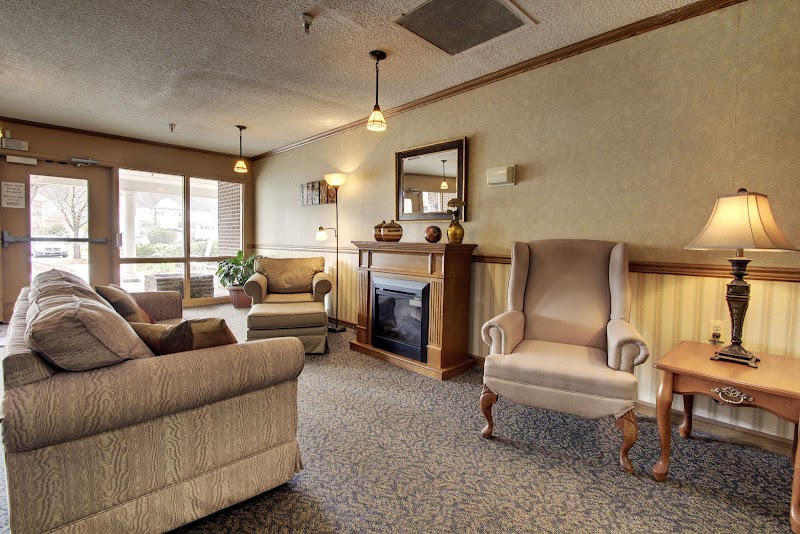
How is Riverside Health And Rehab Staffed?

CMS rates Riverside Health and Rehab's staffing level at 1 out of 5 stars, which is much below average compared to other nursing homes. Staff turnover is 57%, which is 10 percentage points above the South Carolina average of 46%. High turnover can affect care consistency as new staff learn residents' individual needs.

What Have Inspectors Found at Riverside Health And Rehab?

State health inspectors documented 29 deficiencies at Riverside Health and Rehab during 2022 to 2025. These included: 3 Immediate Jeopardy (the most serious level, indicating potential for serious harm or death), 25 with potential for harm, and 1 minor or isolated issues. Immediate Jeopardy findings are rare and represent the most serious regulatory concerns. They require immediate corrective action.

Who Owns and Operates Riverside Health And Rehab?

Riverside Health and Rehab is owned by a for-profit company. For-profit facilities operate as businesses with obligations to shareholders or private owners. The facility is operated by FUNDAMENTAL HEALTHCARE, a chain that manages multiple nursing homes. With 160 certified beds and approximately 146 residents (about 91% occupancy), it is a mid-sized facility located in Charleston, South Carolina.

How Does Riverside Health And Rehab Compare to Other South Carolina Nursing Homes?

Compared to the 100 nursing homes in South Carolina, Riverside Health and Rehab's overall rating (1 stars) is below the state average of 2.8, staff turnover (57%) is significantly higher than the state average of 46%, and health inspection rating (1 stars) is much below the national benchmark.

What Should Families Ask When Visiting Riverside Health And Rehab?

Based on this facility's data, families visiting should ask: "What changes have been made since the serious inspection findings, and how are you preventing similar issues?" "What safeguards and monitoring systems are in place to protect residents from abuse or neglect?" "How do you ensure continuity of care given staff turnover, and what is your staff retention strategy?" "Can you walk me through typical staffing levels on day, evening, and night shifts?" These questions are particularly relevant given the facility's Immediate Jeopardy citations, the substantiated abuse finding on record, the facility's high staff turnover rate, and the below-average staffing rating.

Is Riverside Health And Rehab Safe?

Based on CMS inspection data, Riverside Health and Rehab has documented safety concerns. The facility has 1 substantiated abuse finding (meaning confirmed case of resident harm by staff or other residents). Inspectors have issued 3 Immediate Jeopardy citations (the most serious violation level indicating risk of serious injury or death). The facility has a 1-star overall rating and ranks #100 of 100 nursing homes in South Carolina. Families considering this facility should ask detailed questions about what corrective actions have been taken since these incidents.

Do Nurses at Riverside Health And Rehab Stick Around?

Staff turnover at Riverside Health and Rehab is high. At 57%, the facility is 10 percentage points above the South Carolina average of 46%. High turnover means new staff may not know residents' individual needs, medications, or preferences. It can also be disorienting for residents, especially those with dementia who rely on familiar faces. Families should ask: What is causing the turnover? What retention programs are in place? How do you ensure care continuity during staff transitions?

Was Riverside Health And Rehab Ever Fined?

Riverside Health and Rehab has been fined $33,883 across 4 penalty actions. The South Carolina average is $33,418. While any fine indicates a compliance issue, fines under $50,000 are relatively common and typically reflect isolated problems that were subsequently corrected. Families should ask what specific issues led to these fines and confirm they've been resolved.

Is Riverside Health And Rehab on Any Federal Watch List?

Riverside Health and Rehab is not on any federal watch list. The most significant is the Special Focus Facility (SFF) program, which identifies the bottom 1% of nursing homes nationally based on persistent, serious quality problems. Not being on this list means the facility has avoided the pattern of deficiencies that triggers enhanced federal oversight. This is a positive indicator, though families should still review the facility's inspection history directly.