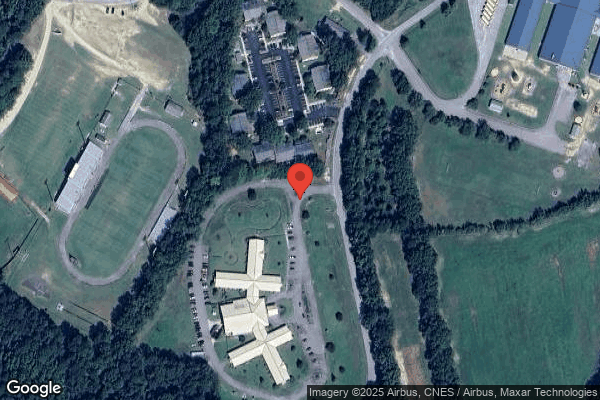

Cheraw Healthcare

400 Moffat Road, Cheraw, SC 29520 (843) 537-5253
For profit - Corporation 120 Beds Independent Data: November 2025 1 Immediate Jeopardy citation
Trust Grade
43/100
#73 of 186 in SC
Last Inspection: November 2024

Within standard 12-15 month inspection cycle. Federal law requires annual inspections.

Overview

Cheraw Healthcare has received a Trust Grade of D, indicating below-average performance with some significant concerns. Ranking #73 out of 186 facilities in South Carolina places it in the top half of the state, while being the only option in Chesterfield County means families have no better local alternatives. Unfortunately, the facility is experiencing a worsening trend, with issues increasing from 1 in 2023 to 6 in 2024. Staffing is a notable weakness, rated at 2 out of 5 stars, with a turnover rate of 48%, which is similar to the state average but still concerning. The facility has also incurred $187,205 in fines, which is alarming as it is higher than all other facilities in South Carolina, indicating potential compliance problems. In terms of care, there are critical incidents that raise red flags. One serious finding involved a staff member using physical restraint on a resident, which led to immediate action and the termination of that employee. Additionally, there were failures to remove expired medications from storage areas, and documentation errors regarding resident care plans were noted, which could impact patient safety. While the facility has some strengths, such as being proactive in addressing immediate concerns, these serious issues and the overall trust score suggest families should carefully consider their options.

Trust Score
D
43/100
In South Carolina
#73/186
Top 39%
Safety Record
High Risk
Review needed
Inspections
Getting Worse
1 → 6 violations
Staff Stability
⚠ Watch
48% turnover. Above average. Higher turnover means staff may not know residents' routines.
Penalties
✓ Good
$187,205 in fines. Lower than most South Carolina facilities. Relatively clean record.
Skilled Nurses
⚠ Watch
Each resident gets only 20 minutes of Registered Nurse (RN) attention daily — below average for South Carolina. Fewer RN minutes means fewer trained eyes watching for problems.
Violations
○ Average
7 deficiencies on record. Average for a facility this size. Mostly minor or procedural issues.
★★★☆☆
3.0
Overall Rating
★★☆☆☆
2.0
Staff Levels
★★☆☆☆
2.0
Care Quality
★★★☆☆
3.0
Inspection Score
Stable
2023: 1 issues
2024: 6 issues

The Good

  • Full Sprinkler Coverage · Fire safety systems throughout facility
  • No fines on record

Facility shows strength in fire safety.

The Bad

3-Star Overall Rating

Near South Carolina average (2.8)

Meets federal standards, typical of most facilities

Staff Turnover: 48%

Near South Carolina avg (46%)

Higher turnover may affect care consistency

Federal Fines: $187,205

Well above median ($33,413)

Significant penalties indicating serious issues

The Ugly 7 deficiencies on record

1 life-threatening
Nov 2024 5 deficiencies
CONCERN (D)

Potential for Harm - no one hurt, but risky conditions existed

Deficiency F0604 (Tag F0604)

Could have caused harm · This affected 1 resident

**NOTE- TERMS IN BRACKETS HAVE BEEN EDITED TO PROTECT CONFIDENTIALITY** Based on review of facility policy, record review, observation, and interviews, the facility failed to complete a restraint asse...

Read full inspector narrative →
**NOTE- TERMS IN BRACKETS HAVE BEEN EDITED TO PROTECT CONFIDENTIALITY** Based on review of facility policy, record review, observation, and interviews, the facility failed to complete a restraint assessment, for the use of trunk restraint on wheelchair, for Resident (R)47, for 3 of 4 residents reviewed for the use of restraints. Findings include: Review of the facility policy titled Restraint Assessment Policy with a revision date of [DATE], documents, 4. Orders must be obtained for any chemical or physical restraints. 5. Physical restraint assessment will be initiated to evaluate the appropriateness restraint use. Review of R47's Face Sheet revealed R47 was admitted to the facility with diagnoses including, but not limited to: Dementia, major depressive disorder, anxiety disorder, cerebrovascular disease, and overactive bladder. During an observation on [DATE] at 11:15 AM and on [DATE] at 10:06 AM, revealed R47 was sitting in her non mechanical wheelchair near the nurses station in North Unit, self-propelling with a lap n lock padded lap desk over her lap. R47's arms were crossed and the resident was leaning forward on the lap desk. Review of R47's Physician Order dated [DATE], revealed, Lap-n-lock pillow while up in w/c to help define safe perimeter due to inability to comprehend physical limitations, check q 30 minutes and release q 2 hrs. every shift. Review of R47's Electronic Medical Record (EMR) and Hard Chart (contains paper copies of medical records) did not reveal documentation to indicate R47 was assessed for the use of the lap desk, which could potentially be considered a restraint. Review of R47's Quarterly Minimum Data Set (MDS) with an Assessment Reference Date (ARD) of [DATE], revealed R47 had a Brief Interview for Mental Status (BIMS) score of 3 out of 15, indicating R47 is severely cognitively impaired. Further review of the MDS revealed R47 is coded for Trunk restraint - Used daily During an interview on [DATE] at 11:25 AM, Registered Nurse (RN)1 confirmed R47 has a trunk restraint per order, Lap N Lock Pillow. RN1 stated R47 was constantly falling at one point, getting up unassisted, so an order was placed to minimize falls. RN1 further stated CNAs (certified nursing assistant) and nurses are responsible for taking it off every 2 hours, or if she wants to eat, lay down, and brief change. RN1 revealed the use of the trunk restraint started on [DATE], after a fall she had on [DATE], where she fell attempting to get up and ambulate from wheelchair. RN1 stated since the trunk restraint was in place, it has minimized the risk of further injury, since September, no injuries. RN1 confirmed she could not locate R47's restraint assessment and restraint consent in the current EMR and resident's hard chart. RN1 concluded she would follow up with the Director of Nursing (DON), to see if she could locate the documentation. On [DATE] at 12:06 PM, RN1 provided a wet ink copy of a document titled Positioning Device Assessment Form which was dated [DATE]. Review of this form indicated it was completed for another resident with a similar name, who had expired in March of 2024. RN1 confirmed she, the DON and ADON could not locate the restraint assessment for R47. Furthermore, confirmed the DON produced and signed the form on [DATE], for the incorrect resident. During a phone interview on [DATE] at 12:25 PM, R47's Resident Representative revealed R47 is a fall risk, drops things and will fall while bending over to attempt to grab them. R47's Resident Representative states R47 has been there for years and he doesn't remember signing a form, or consenting via phone to his mother having a restraint. On [DATE], the DON provided a document titled Positioning Device Assessment which was dated [DATE] for R47. The assessment indicated, Late Entry done on [DATE]. The DON also provided a handwritten copy for the consent for the positioning device with a date of [DATE]. Review of the consent form revealed there was no signature and handwritten on the form was, Tel consent. The DON revealed this documentation was produced today [DATE], due to not being able to locate the original due to switching systems. During an interview on [DATE] at 1:34 PM, the DON and ADON revealed after R47's fall, a new order for Lap N lock cushion was in place because of the fall on [DATE]. Prior to [DATE], R47 was a fall risk in general. The device was used to minimize the risk of falls. The DON and ADON stated the resident can remove the restraint herself in case of an emergency. The DON stated the order was effective [DATE] and the rationale for choosing the device, the resident prefers to be out of bed in her wheelchair and often leaning forward. The DON further stated to her knowledge there were no risks when the device is in use. The DON stated if the resident wanted the restraint removed, its typically honored, if there is a staff member available. The DON and ADON concluded their expectations are for all residents to have appropriate documentation in their chart.
CONCERN (D)

Potential for Harm - no one hurt, but risky conditions existed

Tube Feeding (Tag F0693)

Could have caused harm · This affected 1 resident

**NOTE- TERMS IN BRACKETS HAVE BEEN EDITED TO PROTECT CONFIDENTIALITY** Based on review of facility policy, observation, interview, and record review, the facility failed to ensure Resident (R)107 rec...

Read full inspector narrative →
**NOTE- TERMS IN BRACKETS HAVE BEEN EDITED TO PROTECT CONFIDENTIALITY** Based on review of facility policy, observation, interview, and record review, the facility failed to ensure Resident (R)107 received proper positioning during tube feeding, which had the potential for aspiration for 1 of 1 resident reviewed. Findings include: Review of the facility policy titled Gastrostomy Tube Feeding (Bolus or Continuous Feeding) with a revision date of 10/10/19, documented, Purpose: 1. To feed the resident that has obstruction or disease of the esophagus or throat. 2. To feed the residents' that are unconscious or debilitated for long periods of time. 3. To reduce the danger of aspiration. 4. To provide adequate nourishment. Procedure: 6. Place resident in fowler's position [a semi-sitting position where a patient lies on their back with their head and upper body raised at an angle of 45° to 90°]. Review of R107's Face Sheet revealed R107 was admitted to the facility on [DATE], with diagnoses including but not limited to: peptic ulcer, gastroduodenitis, severe intellectual disabilities, congenital hiatus hernia, and oropharyngeal phase dysphagia. Review of R107's Quarterly Minimum Data Set (MDS) with an Assessment Reference Date (ARD) date of 10/22/24, did not reveal a Brief Interview for Mental Status (BIMS) score related to section C question 0100 being coded as no (rarely/never understood). Review of R107's Care Plan documented, the focus . requires tube feeding. Further review of the Care Plan revealed the following goal, The resident will be free of aspiration through the review date. The interventions directed staff to: Monitor/document/report PRN any s/sx of: Aspiration- fever, SOB, Tube dislodged, Infection at tube site, Self-extubation, Tube dysfunction or malfunction, Abnormal breath/lung sounds, Abnormal lab values, Abdominal pain, distension, tenderness, Constipation or fecal impaction, Diarrhea, Nausea/vomiting, Dehydration. During an observation and interview on 11/13/24 at 11:13 AM , R107 was observed lying on their right side, with the bed flat and tube feed infusing at Jevity 1.5 cal at 40 ml/hr. Licensed Practical Nurse (LPN)1 stated the bed should be 30-45 degrees elevated. LPN1 proceeded to raise the HOB (head of bed). During an interview on 11/15/24 at 2:07 PM, the Director of Nursing (DON) stated the expectation for staff is to elevate the HOB when finished with care to a 45 to 90 degree angle.
CONCERN (D)

Potential for Harm - no one hurt, but risky conditions existed

Respiratory Care (Tag F0695)

Could have caused harm · This affected 1 resident

**NOTE- TERMS IN BRACKETS HAVE BEEN EDITED TO PROTECT CONFIDENTIALITY** Based on review of facility policy, record review, observation, and interview, the facility failed to provide respiratory care i...

Read full inspector narrative →
**NOTE- TERMS IN BRACKETS HAVE BEEN EDITED TO PROTECT CONFIDENTIALITY** Based on review of facility policy, record review, observation, and interview, the facility failed to provide respiratory care in accordance with professional standards. Specifically, the facility failed to ensure Resident (R)33 nebulizer machine, oxygen mask and medication chamber were clean and/or bagged when not in use for 1 of 1 resident reviewed for respiratory care. Findings include: On 11/15/24 at 10:00 AM, a request was made to review the facility policy on maintenance and storage of equipment associated with respiratory therapy tasks particularly nebulizer machines. On 11/15/24 at 10:30 AM, the Director of Nursing (DON) stated that there was no policy for the cleaning and storage of a nebulizer machine. Review R33's Face Sheet revealed R33 was admitted to the facility on [DATE], with diagnoses including but not limited to: Chronic Obstructive Pulmonary Disease (COPD) and anxiety disorder. Review of R33's Physician Orders with a start date of 09/03/24 and a revision date of 09/20/24, revealed an order for Albuterol Sulfate Solution Nebulizer 0.083% (2.5 MG/3ML) 1 vial via mask every 8 hours as needed for Shortness of Breath and Oxygen at 2 liters per Minute (LPM) via nasal cannula. During an observation and interview on 11/12/24 at 12:32 PM, revealed a nebulizer machine was in the seat of a chair beside the resident's bed. The oxygen mask was propped against the nebulizer machine. The mask was attached to the medication chamber and the tubing. The mask was not bagged. There was a clear liquid in the medication chamber. The medication chamber was attached to the mask and the oxygen tubing. R33 stated she is on 2 liters of oxygen. Oxygen (O2) concentrator was set to 2.5 LPM. During an observation on 11/13/24 at 11:20 AM, revealed R33 was resting in bed with eyes closed. O2 concentrator was set at 2.5 LPM. The nebulizer was in the chair at resident's bedside. A piece of tape on the nebulizer tubing documented 11/12/24. There was a clear liquid noted in the medication chamber. The oxygen mask was propped against the nebulizer machine. The mask was attached to the medication chamber and the tubing. The mask was not bagged. The O2 concentrator was set to 2.5 LPM. During an observation 11/14/24 at 3:37 PM, revealed R33 was out of bed in wheelchair. The O2 concentrator was set to 2.0 LPM. The nebulizer was in the chair at resident's bedside. A piece of tape on the nebulizer tubing documented 11/12/24. There was a clear liquid noted in the medication chamber. The oxygen mask was propped against the nebulizer machine. The mask was attached to the medication chamber and the tubing. The mask was not bagged. During an interview on 11/15/24 at 1:22 PM, the Director of Nursing (DON) revealed the nebulizer mask and medication chamber should be cleaned with water. The DON stated the mask and the separated medication chamber should then be placed on a paper towel to air dry. The mask and the separated medication chamber should then be placed in a zip lock bag and dated.
CONCERN (E)

Potential for Harm - no one hurt, but risky conditions existed

Deficiency F0578 (Tag F0578)

Could have caused harm · This affected multiple residents

**NOTE- TERMS IN BRACKETS HAVE BEEN EDITED TO PROTECT CONFIDENTIALITY** 5. Review of R73's Face Sheet revealed R73 was admitted to the facility on [DATE], with diagnoses including but not limited to: ...

Read full inspector narrative →
**NOTE- TERMS IN BRACKETS HAVE BEEN EDITED TO PROTECT CONFIDENTIALITY** 5. Review of R73's Face Sheet revealed R73 was admitted to the facility on [DATE], with diagnoses including but not limited to: Multiple fractures of ribs, right side, subsequent encounter for fracture with routine healing, repeated falls, myasthenia gravis without (acute) exacerbation, hypo-osmolality and hyponatremia, and parkinsonism. Further review of the Face Sheet revealed R73's code status was not documented on the Face Sheet. Review of R73's Quarterly MDS with an ARD of 10/16/24, revealed R73 had a BIMS score of 15 out of 15, indicating R73 was cognitively intact. Review of R73's Physician Orders revealed no orders for advanced directives. Review of R73's Hard Chart (binder containing paper copies of medical records) revealed a document titled Cheraw Healthcare Code Status Clarification and Competency Form dated 07/09/24, revealed a DNR code status for R73. Review of R73's Hard Chart revealed a document titled SC Emergency Medical Services dated 07/15/24, which indicated R73's code status was DNR. Review of R73's Hard Chart revealed a written order dated 07/15/24, which documented, Resident's DNR Status. Review of R73's Care Plan revealed, resident has chosen to be DNR status. The interventions directed staff to; resident's Advanced Directives Wishes Will Be Known, review advanced directives on file, if applicable. During an interview on 11/13/24 at 2:09 PM, LPN4 reviewed resident's code status on the EMAR and confirmed there was no indication of the resident's code status. LPN4 also looked in the MD orders in the EMR and there was no order for code status. LPN4 stated, the hard chart contained an order for the resident to be a DNR. LPN4 concluded that she would put the DNR order in the EMR. During an interview on 11/13/24 at 2:15 PM, the DON revealed ADON stated that their expectations would be that the nurses would enter the residents code status into the EMR when the resident is admitted . The ADON stated, We have already identified that we have a problem with some of the orders for code status being brought over when we changed to PCC (Point Click Care (Electronic system for medical records)). 4. Review of R100's Face Sheet revealed that the facility admitted R100 on 01/29/24, with diagnoses including but not limited to: fracture of unspecified part of neck of left femur, subsequent encounter for closed fracture with routine healing, Alzheimer's disease, and type 2 diabetes mellitus without complications. Review of R100's quarterly MDS with an ARD of 08/02/24, revealed R100 had a BIMS of 4 out of 15, indicating R100 had severe cognitive impairment. Review of R100's Hard Chart revealed a Do Not Resuscitate Order (DNR) notice to EMS (Emergency Medical Services) Personnel dated 04/27/24. Review of R100's Physician Orders with an active date of 08/31/24, revealed a Full Code status. Review of R100's Care Plan revealed, family has chosen R100 to be DNR Status. Interventions directed staff to; Resident's Advanced Directives Wishes Will Be Known, Review Advanced Directives on file, if applicable. During an interview on 11/13/24 at 2:05 PM, LPN2 revealed R100's hard/paper chart showed that their code status is Do Not Resuscitate (DNR) and that there was no order in the chart to support the status. LPN2 reviewed R100's EMR and revealed that their code status was listed as Full Code. LPN2 stated that R100 is on Hospice and that if they were in distress Hospice would be notified for a Registered Nurse (RN) to come in and assess, however if there was an RN on shift they would have them to come and assess and they would provide comfort measures for the resident. LPN2 stated that they personally would go by what's on the resident's hard/paper chart, but stated some nurses look in the computer. LPN2 explained that the advanced directives are updated by Social Services. LPN2 retrieved a written order from Social Services and revealed that the order listed R100 as full code. During an interview on 11/13/24 at 2:15 PM, Social Services revealed that Hospice has only given us the Do Not Resuscitate paperwork with the doctor's signature on it. During a follow up interview on 11/15/24 at 12:19 PM, Social Services revealed that they meet with residents and family representatives during admission to discuss code status, once a code status is chosen, a sticker is placed in the resident's hard chart and the status is put in the computer. Social Services stated that if a resident and/or their representative decides on a DNR status they sign the paperwork and then either the physician or the nurse practitioner signs it and writes an order for it. Social Services further explains that the resident and/or representative has 7 days to inform them if they want to change the status from DNR back to Full Code or vice versa, and once a change is made they would update the resident's hard chart as well as the electronic chart as soon as they have an signed order from the physician. During an interview on 11/15/24 at 11:49 AM, the DON and the ADON revealed that a resident's code status is established during admission between Social Services and the residents and their family. If the resident and their family opt for DNR, the DNR is signed by the resident or resident representative, the doctor writes an order, and the order and status would be placed in the hard chart and is also scanned and added to the resident's electronic chart. The DON states that it's their expectation that the EMR is updated in a timely manner and that any changes be communicated as soon as possible as soon as they are received. The DON and ADON further explains there is sometimes a question of the real code status when a resident goes on Hospice and they have had staff call Social Services on the weekend if there needs to be clarity of the status. The DON concluded that R100 is on Hospice and that there wasn't an order for the DNR documentation and Social Services had to call the Hospice agency for an order. During an interview on 11/15/24 at 12:56 PM, the Administrator revealed that a resident's code status is to be on their hard chart identified by a sticker. The Administrator explains that the resident's code status is determined at admission and is discussed at length with the resident and their family. The Administrator further reveals that the DNR paperwork in the resident's chart is signed by the resident or the resident representative and the physician and to their understanding that is the order for the DNR. The Administrator states that their expectation is that for a resident who is DNR, is for the resident's code status to be in the hard chart as well as scanned in. Based on review of facility policy, record review, and interviews, the facility failed to ensure Resident (R)11, R62, R73, R96, and R100, had the right to formulate accurate Advance Directives for 5 of 8 residents reviewed for Advance Directives. Findings include: Review of the undated facility policy titled, Advance Directives Policy documented, It is the desire of Cheraw Healthcare Inc. to inform each resident of his/her right to make an informed decision concerning their medical care including: Their right to refuse or accept medical and surgical treatment and the right to formulate advance directives . Each record will be marked to signify that Advance Directives have been made . Review of the undated facility policy titled, Procedures for Advance Directives (DNR, Living Wills, Durable/Health Care Power of Attorney) documented, Information with respect to Advance Directives (Living Wills and Health Care Power of Attorney) in the form of pamphlets Medical Treatment and Your Living Will and Your Right to make Decisions about Your Health Care will be made available upon request. The Resident/Family member or representative will be responsible to make decisions concerning: B. The right to formulate advance directives . Copies of Advance Directives will be kept in the Social Services Coordinator's office and on the medical record. To alert physicians and staff, each record will be coded with A. D. for Advanced Directives. For No Code, the initials DNR will be placed on resident's record . 1. Review of R62's Face Sheet revealed R62 was admitted to the facility on [DATE], with diagnoses including but not limited to: Alzheimer's disease and unspecified dementia. Review of R62's Physician Order with a start date of 11/13/24 documented, DNR (Do Not Resuscitate). Review of R62's Medicare 5-Day Minimum Data Set (MDS) with an Assessment Reference Date (ARD) date of 10/18/24, did not reveal a Brief Interview for Mental Status (BIMS) score related to section C question 0100 being coded as no (rarely/never understood). Review of R62's Electronic Medical Record (EMR) on 11/13/24 at 12:13 PM, revealed there was no code status, however a Do Not Resuscitate (DNR) written order was discovered in R62's hard chart (paper chart). During an interview on 11/13/24 at 12:09 PM, Licensed Practical Nurse (LPN)2 confirmed that there was no code status order in R62's EMR. LPN2 verified a written DNR order in the hard chart. LPN2 stated she would get an order put into R62's EMR. During an interview on 11/13/24 at 2:15 PM, the Director of Nursing (DON) and the Assistant Director of Nursing (ADON), stated that their expectations would be that the nurses would enter the residents code status into the EMAR when the resident is admitted . Findings include: 2. Review of R96's Face Sheet revealed R96 was admitted to the facility on [DATE], with diagnoses including but not limited to: anxiety disorder, dementia, atrial fibrillation, hypertension, and osteoarthritis. Review of R96's Physician Order on 11/12/24, did not reveal an order for R96's Code Status. Review of R96's Care Plan with a problem onset date of 05/09/24, revealed family has chosen R96 to be DNR. 3. Review of R11's Face Sheet revealed R11 was admitted to the facility on [DATE], with diagnoses including but not limited to: chronic kidney disease, retention of urine, muscle weakness, restless leg syndrome, and type 2 diabetes mellitus without complications. Review of R11's Physician Order on 11/12/2024, did not reveal an order for R11's Code Status. Review of R11's Care Plan revealed R11 has chosen to be DNR status. During an interview on 11/14/24 at 3:38 PM, LPN2 revealed the facility transitioned systems back in September 2024. LPN2 confirmed R96 and R11 did not have an active order for code status in the EMR and an audit was done once department entered the building to ensure those residents who did not have an order, to have one put in the system to match the code status in the residents' hard chart.
CONCERN (F)

Potential for Harm - no one hurt, but risky conditions existed

Deficiency F0761 (Tag F0761)

Could have caused harm · This affected most or all residents

Based on observations, review of facility policy, and interviews, the facility failed to remove expired medications and biologicals from 2 of 2 medication storage rooms. Findings include: Review of t...

Read full inspector narrative →
Based on observations, review of facility policy, and interviews, the facility failed to remove expired medications and biologicals from 2 of 2 medication storage rooms. Findings include: Review of the undated facility policy titled, Medication Storage In The Facility documented, Policy: Medications and biologicals are stored safely, securely and properly following manufacturers' recommendations or those of the supplier. During an observation and interview on 11/14/24 at 7:21 AM, the medication storage room on the South Unit revealed, One (1) BD Vacutainer Red Top with lot number 2258780 and expiration date 09/30/24. Licensed Practical Nurse (LPN)2 verified the item was expired and removed it from the medication room. During an observation and interview on 11/14/24 at 7:53 AM, the medication storage room on the North Unit revealed the following: -One (1) BD Vacutainer Gel and Lithium Heparin [NAME] Top with lot number 3290681 and expiration date 10/31/24. The Director of Nursing (DON) verified the item was expired and removed it from the medication storage room. -Two (2) boxes of Covidien Filac Probe Covers with lot number 930156X and expiration date 08/31/24, containing 20 probe covers in each box. -One (1) box of Covidien Filac Probe Covers with lot number 930156X and expiration date 08/31/24, containing 19 probe covers. The DON verified the items were expired and removed them from the storage. During an observation and interview on 11/14/24 at 8:42 AM, the medication storage, in the hallway, on the North Unit revealed the following: -Three (3) Covidien Kangaroo Epump Sets with Flush 1000 ml with lot number 201110107 and expiration date 03/31/23. -One (1) Covidien Kangaroo Epump Set with Flush 1000 ml with lot number 2123613664 and expiration date 07/31/24. The DON verified the items were expired and removed them from storage.
Jun 2024 1 deficiency
CONCERN (D) 📢 Someone Reported This

A family member, employee, or ombudsman was alarmed enough to file a formal complaint

Potential for Harm - no one hurt, but risky conditions existed

Accident Prevention (Tag F0689)

Could have caused harm · This affected 1 resident

Based on observation, interview, record review, facility document review, and facility policy review, the facility failed to implement an appropriate fall intervention to prevent the wheelchair from r...

Read full inspector narrative →
Based on observation, interview, record review, facility document review, and facility policy review, the facility failed to implement an appropriate fall intervention to prevent the wheelchair from rolling for 1 (Resident (R)1) of 3 sampled residents reviewed for falls. Findings included: A facility policy titled, Fall Policy and Procedures, revised 07/04/2019, indicated, Objective: To assure as safe of an environment as possible for our residents. R1's Face Sheet revealed the facility admitted the resident on 05/19/2021. According to the Face Sheet, the resident had a medical history that included diagnoses of abnormalities with gait and mobility, dementia, osteoporosis, osteoarthritis, and muscle weakness. A quarterly Minimum Data Set (MDS), with an Assessment Reference Date (ARD) of 03/13/2024, revealed R1 had a Brief Interview for Mental Status (BIMS) score of 9, which indicated the resident had moderate cognitive impairment. The MDS revealed R1 did not have any behaviors during the assessment period. The MDS revealed the resident had no range-of-motion impairment to the upper or lower extremities and the resident used a wheelchair. The MDS revealed the resident's ability to transfer, and walk was not assessed. According to the MDS, R1 was always incontinent of bowel and bladder. The MDS revealed the resident had sustained two or more falls without injury, two or more falls with minor injuries, and no falls with major injury since their prior assessment. R1's Care Plan included a problem statement with an onset date of 05/27/2021 that indicated the resident had the potential for falls resulting in injury related to limited mobility, poor endurance, poor judgement due to dysarthria, heart murmur, hypertension, osteoarthritis, history of prostate cancer, osteoporosis, anxiety, depression, dementia, syncope, transient ischemic attacks, and a history of urinary tract infections. Interventions directed staff to offer reminders not to arise unassisted as needed, transport to high visibility areas as needed, and to assist the resident to the bathroom every two hours and as needed. An Accident/Incident Report, dated 10/12/2023, revealed R1 was eating in the dining room in their wheelchair and slid down out of the wheelchair into a sitting position on the floor. The report revealed the resident was assessed for injuries and none were noted. The report revealed an intervention for a nonskid pad on the wheelchair was crossed out. The report revealed an intervention was listed to reposition the resident in their wheelchair as needed. R1's Departmental Notes, dated 11/21/2023 at 4:19 PM, revealed staff were completing a body audit and heard a loud boom in the bathroom. The note revealed when the staff opened the bathroom door, R1 was sitting on the floor on their buttocks, leaning back with their head up. The note revealed that the resident stated, I hit the back of my head. The note revealed R1 was examined and slight redness was noted at the back of their head near their neck. The note revealed that no other injuries were noted, and the resident's range-of-motion was within their normal limits. The note revealed R1 was assisted by staff to their wheelchair. The note revealed the resident's vital signs were taken and within their normal limits. The note revealed the physician and resident representative were notified. The note revealed that the probable cause was R1 had gone to the restroom unassisted and the wheelchair rolled from underneath the resident before they sat down. An Accident/Incident Report, dated 11/21/2023, revealed preventive actions taken were to assist R1 to the bathroom every two hours and as needed, and to keep the resident in a highly visible area. The report revealed there were no documented interventions put in place to ensure the wheelchair did not roll from under the resident. R1's Departmental Notes, dated 12/18/2023 at 10:33 PM, revealed that at 6:45 PM, R1 was observed sitting upright on the floor in the television area after hearing a banging noise. The note revealed the resident was observed several minutes prior to the incident watching television. The note revealed the resident stated they were trying to get into their wheelchair, and it slipped from under them. The note revealed lacerations were noted to the residents right lower leg and bruising on their knee. The note revealed the resident had range-of-motion in all extremities. The note revealed the resident complained of pain but refused pain medication when offered. The note revealed the resident also refused to have their vital signs taken. The note revealed the physician and resident representative were notified, and x-rays were ordered. An Accident/Incident Report, dated 12/18/2023 revealed interventions that included continuing to keep R1 in visible areas and reminding the resident to ask for assistance with transfers. The report revealed that an intervention for keeping the wheelchair brakes locked was crossed out. An Accident/Incident Report, dated 05/09/2024, revealed R1 was trying to get in their wheelchair from the bed and the wheels were not locked, causing the resident to fall. The report revealed the resident had two bruised sites with open skin tears on their right leg and had three small pea size abrasions to their forehead. The report revealed that the preventive action put in place was to not leave the wheelchair in the resident's room when the resident was placed in bed. The report revealed that there was no intervention put in place to prevent the wheelchair from rolling from under the resident. During an interview on 06/18/2024 at 12:40 PM, the Director of Nursing (DON) indicated that previously there was a supervisory report completed, which had many of the same questions as the incident report. The DON stated that on this report, the supervisor could document any new interventions put into place. The DON indicated staff would not have a meeting after each fall, but falls would be discussed in the monthly quality assurance and performance improvement (QAPI) meetings. During an interview on 06/18/2024 at 3:18 PM, the DON stated the goal would be for a resident to not have any falls, but that was not realistic. She sated she would like to see the number of falls decrease by at least 50 percent. The DON indicated she would like to find better interventions that would decrease the number of falls while still providing the best care possible. During an interview on 06/19/2024 at 9:45 AM, the MDS Nurse and the DON both indicated the wheelchair skid pad was not available at the time of the fall on 10/12/2023. The MDS Nurse stated staff had been told an intervention could not be listed on the incident report if they were not able to implement it at the time. The DON stated they were not allowed to lock R1's wheelchair so the resident was free to move about. The DON also stated the intervention for more frequent toileting referred to staff checking on the resident between the two-hour intervals for rounds to make sure the resident did not need to use the restroom or be changed. During an interview on 06/19/2024 at 9:54 AM, the Medical Doctor stated his expectation was that interventions were done to try and make the environment safer for the resident in case they did fall. During an interview on 06/19/2024 at 12:34 PM, the Physical Therapy Assistant (PTA) stated that when the physical therapist performs an assessment, the goals were listed under the short-term goals or long-term goals. The PTA stated the for wheelchair mobility, the resident would usually be educated during therapy to make sure they locked the wheelchair before standing up or sitting down. The PTA stated that for R1, he did not feel the resident had the cognition to remember outside of the therapy sessions to lock the wheelchair. The PTA stated R1 was able to move around freely in the wheelchair. During an interview on 06/19/2024 at 1:40 PM, the DON stated she would need to get with the maintenance department to see if R1 could get a wheelchair that had automatic brakes to prevent it from rolling backwards. During a follow-up interview on 06/19/2024 at 3:02 PM, the DON stated education was provided to R1 on the importance of locking the wheelchair, but she realized the facility should have thought of a new intervention. The DON stated, going forward, the facility would implement additional interventions.
Apr 2023 1 deficiency 1 IJ
CRITICAL (J) 📢 Someone Reported This

A family member, employee, or ombudsman was alarmed enough to file a formal complaint

Immediate Jeopardy (IJ) - the most serious Medicare violation

Free from Abuse/Neglect (Tag F0600)

Someone could have died · This affected 1 resident

**NOTE- TERMS IN BRACKETS HAVE BEEN EDITED TO PROTECT CONFIDENTIALITY** Based on review of the facility policy, review of video evidence, interviews, and record review, the facility failed to protect ...

Read full inspector narrative →
**NOTE- TERMS IN BRACKETS HAVE BEEN EDITED TO PROTECT CONFIDENTIALITY** Based on review of the facility policy, review of video evidence, interviews, and record review, the facility failed to protect Resident (R)1 from physical and mental abuse by Certified Nursing Assistant (CNA)2. Observation of video evidence from 01/09/23-02/01/23 revealed CNA2 intentionally wrapping R1's head and face with clothing to restrict movement, pushing R1's head into her bed, and pinning R1 down with her knees to restrict movement. On 04/24/23 at 12:57 PM, an Immediate Jeopardy (IJ) template was provided to the facility's Administrator via phone with the Business Office Manager present, notifying them that an IJ existed at F600 with an effective date of 01/09/23. On 4/25/23 at 10:45 AM, the facility provided an acceptable IJ Removal Plan indicating they identified their own deficient practice and implemented a plan prior to the start of the survey. Verification of the removal plan confirmed the facility put forth good faith attempts and implemented a plan to remove the immediacy including terminating CNA2 from the facility and in services to staff, effective 02/17/23. Implementation of the removal plan for F600 included R1 being assessed by the Assistant Director of Nursing (ADON) and Minimum Data Set (MDS) Coordinator on 02/01/23 to validate that there were no signs or symptoms of abuse such as skin tears, or reddened skin areas, none were identified. On 02/01/23 the ADON identified residents that were potentially impacted by completing skin and body audits first on the residents cared for directly by CNA2 and then on all current residents. This was completed on 02/01/23; no abuse signs and symptoms were noted. On 02/02/23 current residents that are interviewable were asked if they had been abused by any staff member. This was completed by the Social Services Coordinator on 02/16/23, no additional residents were identified. On 02/15/23 -02/16/23 the Nursing Managers (DON, ADON, MDS Coordinator) interviewed all staff members to determine if they had witnessed another staff member being rough, mistreating, or abusing a resident; no additional residents were identified. On 02/09/23 the Administrator in-serviced all nursing staff (including agency staff) on abuse policies and procedures. On 02/16/23 the Nursing Managers in serviced all staff on abuse policy and procedures; competency testing was completed. This training included all current staff including agency and contract staff. The training included: recognizing physical and non-physical signs of abuse; when and how to report abuse; how to minimize the risk of abuse; what to do if a resident resists care; and how to respond to aggression. As of 02/17/23, all staff have attended the in-service, the DON will ensure that any newly identified staff who has not completed the in-service training will not be allowed to work until the training is completed. In-service and competency testing will continue once a month for three months, and then quarterly after that for one year. Abuse drills will be performed in coordination with the monthly and quarterly abuse services. The Social Services Coordinator will monitor abuse processes such as identification of abuse, reporting abuse, and identification of how to respond to care refusals weekly for two weeks; monthly for three months; then quarterly for up to one year. Reports will be presented to the Quality Assurance (QA) committee by the Administrator or DON to ensure the auditing program is reviewed at the QA meetings. The QA meetings are attended by the Administrator, DON, ADON, MDS Coordinator, Health Care Services Director, Therapy Director, Medical Director, Dietary Manager, Business Office Manager, and other supervisors. Findings include: Review of facility policy titled, Abuse Prevention, Intervention, Investigation, and Reporting Policy and Procedure last revised 9/23/19, revealed Residents are to be free from verbal, sexual physical, environmental/mental abuse; neglect; self-neglect; involuntary seclusion; at all times. Abuse: the willful infliction of injury; unreasonable confinement; intimidation; or punishment with resulting physical harm, pain, or mental anguish. Abuse also includes the deprivation by an individual, including a caretaker, of goods or services that are necessary to attain or maintain physical, mental, and psychosocial wellbeing. R1 was admitted to the facility on [DATE] with diagnoses including, but not limited to; dementia without behavioral disturbances, type 2 diabetes, and major depressive disorder. Review of the Quarterly Minimum Data Set (MDS) with an Assessment Reference Date (ARD) of 02/05/23 revealed R1 has a Brief Interview of Mental Status (BIMS) score of 99, which indicates severe cognitive impairment. An observation and an attempted interview on 03/27/23 at 10:45 AM revealed R1 was non-interviewable. She showed no visual signs of injury or abuse. A phone interview on 03/27/23 at 11:37 AM with R1's Resident Representative (RR) revealed CNA2 was arrested on 02/14/23 and was charged with abuse and neglect related to R1. CNA2 is being prosecuted by the Attorney General's Office for abuse and the allegation was determined to be substantiated due to video evidence. I had concerns about R1 being abuse since back in January when they went to visit the resident and she was jumping (motioning as if she was afraid) when I tried to hug her, and she had never done that to me before. I told the Administrator and other staff about this incident and I was brushed aside and was told that R1 has dementia, so that might be the reason she is becoming fearful towards others, because she is confused and doesn't know who I am anymore. I knew this didn't sound right and I could tell something was wrong with R1. So I decided to put a camera in R1's room and I observed CNA2 put her knee on R1 to hold her down, pushing her arms into R1's chest and into the bed, spraying R1 with deodorant, and flushing R1's food over the course of a few days. When I showed the video to the local Ombudsman and Attorney General, she (CNA2) was arrested immediately. An observation of the video evidence on 03/27/23 at 11:45 AM revealed a video with a date of 01/09/23. In the video, CNA2 was observed to be intentionally wrapping R1's head and face with clothing to restrict movement. CNA2 was observed pushing R1's head into her bed and pinning R1 down with her knees to also restrict R1's movement. Additional observation of video evidence on 03/27/23 revealed additional videos dated 01/09/23 - 02/01/23. These videos revealed CNA2 spraying R1's head, face, and body with an aerosol deodorant, in order to control R1's movement. Further observation of the videos revealed R1's head being pushed into her bed and CNA2 holding R1 down to restrict movement. A phone interview on 03/27/23 at 12:43 PM with the Director of the Ombudsman Program for South Carolina revealed On 01/23/23, R1's RR contacted our office because they had concerns of R1 suddenly becoming fearful of family members when they attempted to hug her, which was a new behavior. R1's RR put cameras in R1's room and over the course of a few days, videos showed CNA2 abusing R1. We were in contact with R1's RR on the following dates beginning on 01/23/23 and continued contact regarding this incident on the following days: 01/25/23; 01/26/23; 01/27/23; 01/31/23; and 02/06/23. After R1's RR showed us the videos of CNA2 abusing R1, we immediately reported this incident to law enforcement and the Attorney General's Office, so criminal charges could be taken against CNA2 and both agencies went onsite to investigate this matter. During the on-site investigation, Administration revealed that R1's RR had spoken to the facility about concerns related to R1 suddenly becoming fearful of others on (01/16/23) and had conducted their own internal investigation, but could not substantiate any abuse allegations at the time. CNA2 was arrested on 02/14/23 and a press release to the public by law enforcement was on 02/22/23. Record review of an internal investigation by the facility dated 01/16/23 revealed R1's RR was visiting the resident and she had concerns she addressed with the Administrator, which he spoke with other abuse coordinating staff about their concern. R1's RR stated that R1 was very jumpy today when she would move around her, when she went to hug R1 she jumped, almost as if she was afraid of being hit. R1's RR never accused anyone of any abuse, she was just concerned. A body audit was done and staff went to speak with R1. She was sitting in the hallway in her wheelchair with something in her hand that she was fidgeting with and was mumbling. When I spoke to her, she didn't acknowledge me, when I stooped down, she didn't look at me but she did rub my arm. I continued talking to her, she laughed as I talked to her, she continued mumbling something regarding smoking and a job. R1 didn't show any signs of distress, anxiousness or being nervous. R1 has been known to resist care (push staff away from her) and she will push off staff when they have tried to hug her in the past. She hasn't shown any signs of affection toward staff or her husband, that also resides at the facility since admission. Staff will continue to monitor for any changes in R1 and will address them accordingly. A phone interview on 03/27/23 at 4:06 PM with CNA2 revealed she denied all accusations of abusing R1. She further stated and denied being arrested and charged with elder abuse by law enforcement or the Attorney General's Office and denied any pending criminal charges as well. CNA2 stated that she retired from the facility by choice and was not terminated by the facility due to abusing R1. An interview with the Social Services Director (SSD) on 03/27/23 at 4:30 PM revealed that they had written the internal investigation concern related to this incident and interviewed R1 on 01/16/23 (date where RR had 1st concerns related to R1). The SSD further stated that she interviewed R1's roommate and other interviewable residents that were in the care of CNA2 and had no other concerns with abuse or neglect with other residents. An interview with the Administrator on 03/27/23 at 4:39 PM revealed that they were informed about CNA2's physical, mental, and involuntary seclusion of R1 by law enforcement/the Attorney General's Office on 02/01/23. When the facility was made aware of the abuse by law enforcement, they reported the abuse to the state agency in a timely manner. We spoke with R1's RR in mid-January (01/16/23), but were unable to substantiate abuse allegation at that time, due to no signs of harm in an interview and body audits. We were unaware that R1's RR had put a camera in R1's room after they reported their concerns until law enforcement and the Ombudsman Office arrived at the facility for their investigation. R1 and CNA2 previously worked together here at the facility before R1 was diagnosed with dementia and was admitted as a resident. We never suspected any abuse with CNA2 with other residents at the facility. When R1's RR spoke with us about her concerns she never alleged abuse against anyone at the facility, at the time. When law enforcement arrived at the facility for the investigation, CNA2 was still employed at the facility because we had no reason to believe that she harmed any residents, but after their investigation we terminated CNA2 on 02/05/23 and she was later charged by law enforcement on 2/14/23. Review on 03/27/23 at 4:45 PM of an Employee Termination Record dated 02/06/23 revealed CNA2 was terminated from the facility due to violations of resident rights and the care they provided was not in consistent expectations of the facility in a way that could have resulted in harm to the resident. A phone interview on 04/12/23 at 9:30 AM with the Attorney General Investigator revealed that CNA2 was still employed at the facility when they went onsite to complete their investigation. CNA2 was terminated from the facility after the completion of their investigation and has been charged with elder abuse. Under the terms of CNA2's bond, they are not allowed to be employed at any healthcare facility type.
Understanding Severity Codes (click to expand)
Life-Threatening (Immediate Jeopardy)
J - Isolated K - Pattern L - Widespread
Actual Harm
G - Isolated H - Pattern I - Widespread
Potential for Harm
D - Isolated E - Pattern F - Widespread
No Harm (Minor)
A - Isolated B - Pattern C - Widespread

Questions to Ask on Your Visit

  • "What changes have you made since the serious inspection findings?"
  • "Can I speak with families of current residents?"
  • "What's your RN coverage like on weekends and overnight?"

Our Honest Assessment

Strengths
  • • Licensed and certified facility. Meets minimum state requirements.
Concerns
  • • Multiple safety concerns identified: 1 life-threatening violation(s), $187,205 in fines. Review inspection reports carefully.
  • • 7 deficiencies on record, including 1 critical (life-threatening) violation. These warrant careful review before choosing this facility.
  • • $187,205 in fines. Extremely high, among the most fined facilities in South Carolina. Major compliance failures.
  • • Grade D (43/100). Below average facility with significant concerns.
Bottom line: Trust Score of 43/100 indicates significant concerns. Thoroughly evaluate alternatives.

About This Facility

What is Cheraw Healthcare's CMS Rating?

CMS assigns Cheraw Healthcare an overall rating of 3 out of 5 stars, which is considered average nationally. Within South Carolina, this rating places the facility higher than 99% of the state's 100 nursing homes. This mid-range rating indicates the facility meets federal standards but may have areas for improvement.

How is Cheraw Healthcare Staffed?

CMS rates Cheraw Healthcare's staffing level at 2 out of 5 stars, which is below average compared to other nursing homes. Staff turnover is 48%, compared to the South Carolina average of 46%.

What Have Inspectors Found at Cheraw Healthcare?

State health inspectors documented 7 deficiencies at Cheraw Healthcare during 2023 to 2024. These included: 1 Immediate Jeopardy (the most serious level, indicating potential for serious harm or death) and 6 with potential for harm. Immediate Jeopardy findings are rare and represent the most serious regulatory concerns. They require immediate corrective action.

Who Owns and Operates Cheraw Healthcare?

Cheraw Healthcare is owned by a for-profit company. For-profit facilities operate as businesses with obligations to shareholders or private owners. The facility operates independently rather than as part of a larger chain. With 120 certified beds and approximately 111 residents (about 92% occupancy), it is a mid-sized facility located in Cheraw, South Carolina.

How Does Cheraw Healthcare Compare to Other South Carolina Nursing Homes?

Compared to the 100 nursing homes in South Carolina, Cheraw Healthcare's overall rating (3 stars) is above the state average of 2.8, staff turnover (48%) is near the state average of 46%, and health inspection rating (3 stars) is at the national benchmark.

What Should Families Ask When Visiting Cheraw Healthcare?

Based on this facility's data, families visiting should ask: "What changes have been made since the serious inspection findings, and how are you preventing similar issues?" "Can you walk me through typical staffing levels on day, evening, and night shifts?" "Can I visit during a mealtime to observe dining assistance and food quality?" "How do you handle medical emergencies, and what is your hospital transfer rate?" These questions are particularly relevant given the facility's Immediate Jeopardy citations and the below-average staffing rating.

Is Cheraw Healthcare Safe?

Based on CMS inspection data, Cheraw Healthcare has documented safety concerns. Inspectors have issued 1 Immediate Jeopardy citation (the most serious violation level indicating risk of serious injury or death). The facility has a 3-star overall rating and ranks #1 of 100 nursing homes in South Carolina. Families considering this facility should ask detailed questions about what corrective actions have been taken since these incidents.

Do Nurses at Cheraw Healthcare Stick Around?

Cheraw Healthcare has a staff turnover rate of 48%, which is about average for South Carolina nursing homes (state average: 46%). Moderate turnover is common in nursing homes, but families should still ask about staff tenure and how the facility maintains care continuity when employees leave.

Was Cheraw Healthcare Ever Fined?

Cheraw Healthcare has been fined $187,205 across 1 penalty action. This is 5.4x the South Carolina average of $34,951. Fines at this level are uncommon and typically indicate a pattern of serious deficiencies, repeated violations, or failure to correct problems promptly. CMS reserves penalties of this magnitude for facilities that pose significant, documented risk to resident health or safety. Families should request specific documentation of what issues led to these fines and what systemic changes have been implemented.

Is Cheraw Healthcare on Any Federal Watch List?

Cheraw Healthcare is not on any federal watch list. The most significant is the Special Focus Facility (SFF) program, which identifies the bottom 1% of nursing homes nationally based on persistent, serious quality problems. Not being on this list means the facility has avoided the pattern of deficiencies that triggers enhanced federal oversight. This is a positive indicator, though families should still review the facility's inspection history directly.