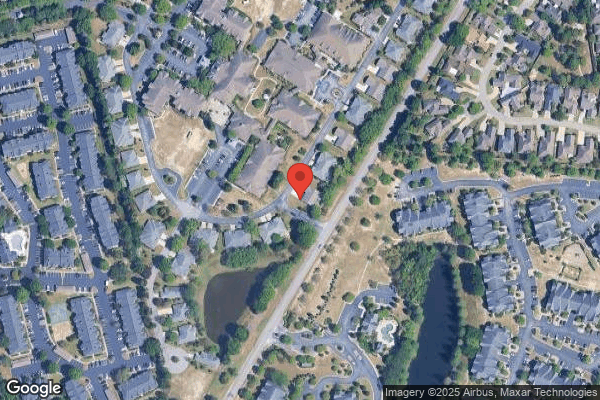
Wildewood Downs

1215 Wildewood Downs Circle, Columbia, SC 29223 (803) 788-5115
For profit - Limited Liability company 32 Beds SENIOR LIVING COMMUNITIES Data: November 2025
Trust Grade
73/100
#67 of 186 in SC
Last Inspection: October 2024

Within standard 12-15 month inspection cycle. Federal law requires annual inspections.

Overview

Wildewood Downs has a Trust Grade of B, indicating it is a good choice among nursing homes, though there is room for improvement. It ranks #67 out of 186 facilities in South Carolina, placing it in the top half, and #2 out of 14 in Richland County, suggesting it is one of the better options locally. The facility is improving, having reduced its issues from four in 2023 to three in 2024. Staffing is a strong point with a 5/5 star rating and more RN coverage than 91% of state facilities, ensuring high-quality care. However, the facility has faced some concerns, including improper storage and labeling of food items and medications, which could pose health risks. Additionally, the facility assessed $3,728 in fines, which is average, but still indicates some compliance issues that families should be aware of.

Trust Score
B
73/100
In South Carolina
#67/186
Top 36%
Safety Record
Low Risk
No red flags
Inspections
Getting Better
4 → 3 violations
Staff Stability
⚠ Watch
49% turnover. Above average. Higher turnover means staff may not know residents' routines.
Penalties
⚠ Watch
$3,728 in fines. Higher than 86% of South Carolina facilities, suggesting repeated compliance issues.
Skilled Nurses
✓ Good
Each resident gets 80 minutes of Registered Nurse (RN) attention daily — more than 97% of South Carolina nursing homes. RNs are the most trained staff who catch health problems before they become serious.
Violations
⚠ Watch
13 deficiencies on record. Higher than average. Multiple issues found across inspections.
★★★★☆
4.0
Overall Rating
★★★★★
5.0
Staff Levels
★★★☆☆
3.0
Care Quality
★★★☆☆
3.0
Inspection Score
Stable
2023: 4 issues
2024: 3 issues

The Good

  • 5-Star Staffing Rating · Excellent nurse staffing levels
  • Full Sprinkler Coverage · Fire safety systems throughout facility
  • No fines on record

Facility shows strength in staffing levels, fire safety.

The Bad

Staff Turnover: 49%

Near South Carolina avg (46%)

Higher turnover may affect care consistency

Federal Fines: $3,728

Below median ($33,413)

Minor penalties assessed

Chain: SENIOR LIVING COMMUNITIES

Part of a multi-facility chain

Ask about local staffing decisions and management

The Ugly 13 deficiencies on record

Oct 2024 3 deficiencies
CONCERN (D)

Potential for Harm - no one hurt, but risky conditions existed

Accident Prevention (Tag F0689)

Could have caused harm · This affected 1 resident

**NOTE- TERMS IN BRACKETS HAVE BEEN EDITED TO PROTECT CONFIDENTIALITY** Based on interview, record review, and facility policy, the facility failed to ensure Resident (R)4 had adequate supervision to ...

Read full inspector narrative →
**NOTE- TERMS IN BRACKETS HAVE BEEN EDITED TO PROTECT CONFIDENTIALITY** Based on interview, record review, and facility policy, the facility failed to ensure Resident (R)4 had adequate supervision to prevent a fall. 1 of 3 reviewed for accident/hazards. Findings include: Review of facility policy, date unspecified, titled, Falls and Fall Risk, Managing revealed Based on previous evaluations and current data, the staff will identify interventions related to the resident's specific risks and causes to try to prevent the resident from falling and try to minimize complications from falling. The staff, with input of the attending physician, will implement a resident-centered fall prevention plan the specific risk factor(s) of falls for each resident at risk or with a history of falls. If interventions have been successful in preventing falling, staff will continue the interventions or reconsider whether these measures are still needed if a problem that required the intervention has resolved. R4 was admitted to the facility on [DATE] with diagnoses including but not limited to fracture of left lower femur, encounter for orthopedic aftercare, and morbid severe obesity due to excess of calories. Review of the admission Minimum Data Set (MDS) with an Assessment Reference Date of 08/05/24 revealed that R4 has the Brief Interview of Mental Status (BIMS) score of 15 out of 15, which indicates that she is cognitively intact. Further review of the admission MDS revealed that R4 is dependent on staff for toileting hygiene. Record review of R4's Nurses Notes dated 08/05/24 revealed At approximately 7:45 PM Certified Nursing Assistant (CNA) approached nurse in hallway and requested help. Nurse entered room and bed was in highest position, resident was on floor lying on her left side. CNA stated that she was providing incontinent care without a second person. Nurses assessed resident for injury, resident stated repeatedly that she was okay. Nurse and CNA used Hoyer lift to assist resident back to her bed. Resident did not lose consciousness during this episode. She remained alert. Nurse assessed resident again when she was back in bed, and noted swelling and bruising to her left forearm, and a swollen spot to her head. Resident stated that she was in pain to her arm and head and needed pain medication. As needed pain medication administered to resident notified R4's resident representative informing her of incident. Nurse suggested to resident that she go to the hospital for evaluation, resident refused. Nurse re-emphasized the importance of going considering she hit her head, and her injured leg. She then agreed to go hospital. Resident left facility via stretcher to hospital. Director of Nursing (DON) and Resident Care Coordinator (RCC) notified of transfer and incident. Record review of R4's Nurses Notes dated 10/07/24 revealed At around 3:00 pm reported by another nurse, patient noted sitting in front of her wheelchair. Per Therapy during her sliding board transfer training, patient begin to scoot off board interiorly and unable to scoot back in bed, patient requires maximum assist to slowly lower to ground with slide onto buttocks. Then other nurse and Therapy get patient up from floor using Hoyer lift to put back in the wheelchair. Assessment done no noted any injury and no verbalizes complaint of pain. Patient placed on monitoring; patient informed us to place a call to daughter at around 5-6 pm after her work from school. Review of R4's Care Plan dated 07/30/24 - present revealed R4 is at risk for falls related to overall weakness, history of fall resulting in left hip fracture. Interventions include resident requires two-person assist for all bed mobility and Activities of Daily Living (ADL)s. Re-educated therapy staff and nursing staff on safety precautions and ADLs. Footwear will fit properly and have non-skid soles. Keep areas free of obstructions to reduce the risk of falls or injury. Place call light within easy reach. An interview on 10/09/24 at 12:30 PM with R4 revealed that back in August (08/05/24), a CNA was providing incontinence care to them without a second person, and they rolled off the bed. R4 stated that she went to the hospital and had some bruising after the fall but did not have any injury. R4 continued to talk about having a second incident with therapy staff where she had to be lowered to the ground due to weakness. R4 stated that normally there are always two people with me, but the therapy staff member was working alone as well. A phone interview on 10/10/24 at 10:13 AM with R4's Resident Representative (RR) revealed that R4 had a fall due to the facility not having adequate staffing and not providing the resident with two-person assistance. R4's RR stated that she was told by staff that the CNA that assisted R4 with ADL care did not want the resident sitting in her waste for a long period of time and knew that the other CNAs were busy at the moment and that it would be a while before another person could assist the resident. When the CNA provided care, R4 accidently rolled off the bed. R4's RR was upset during the interview due to a second incident with therapy staff (10/07/24) having to lower R4 to the floor because they were also working alone. An interview on 10/10/24 at 2:11 PM with CNA5 revealed that the resident has had 2 falls at the facility due to staff not following the resident's care plan for two- person assist. CNA5 stated that the first fall occurred due to CNA attempting to provide ADL care for R4 without another CNA in the room and the second fall occurred because therapy staff did not have a 2nd person, and the resident had to be lowered to the floor. An interview with 10/10/24 at 3:46 PM with Physical Therapy Assistant (PTA) revealed they were working with the resident attempting to stand her up from a chair without assistance. PTA stated that resident should have been two-person assist and was re-educated related the incident. PTA confirmed that they were aware the resident had a fall with a CNA in August where they were also working alone as well. An interview on 10/10/24 with the Administrator and Director of Nursing (DON) revealed that the resident is a two-person assist and staff (therapy and nursing) have been re-educated on the importance of having adequate assistance when providing ADL care with R4.
CONCERN (D)

Potential for Harm - no one hurt, but risky conditions existed

Respiratory Care (Tag F0695)

Could have caused harm · This affected 1 resident

**NOTE- TERMS IN BRACKETS HAVE BEEN EDITED TO PROTECT CONFIDENTIALITY** Based on observation, interviews, record review, and policy review, the facility failed to provide respiratory care in accordanc...

Read full inspector narrative →
**NOTE- TERMS IN BRACKETS HAVE BEEN EDITED TO PROTECT CONFIDENTIALITY** Based on observation, interviews, record review, and policy review, the facility failed to provide respiratory care in accordance with professional standards. The facility failed to clarify one of one sampled resident (Resident (R1) physician's orders regarding the correct CPAP Support Therapy mode and settings. Findings Include: A review of the facility policy titled CPAP/ BiPAP Support, with a complete revision date of March 2015 states - Preparation 3. Review the physician's order to determine the oxygen concentration and flow, and the PEEP pressure (CPAP, IPAP, and EPAP) for the machine. 4. Review and follow the manufacturer's instructions for CPAP machine setup and oxygen delivery. Steps in the procedure 8. Set mode, CPAP, IPAP, and EPAP settings on the machine, as prescribed. Documentation- Document the following in the resident's medical record: 3. Mode and settings for the CPAP/IPAP/EPAP. A review of R1's Face Sheet revealed that R1 was admitted to the facility on [DATE] at 2:15 PM with diagnoses that included Pneumonia, Sleep Apnea, Parkinsonism, and Hypertension. A Review of R1's admission Minimum Data Set (MDS) with an Assessment Reference Date (ARD) date of 08/22/24 revealed a Brief Interview for Mental Status (BIMS) score of 07 out of 15, indicating R1 was severely, cognitively impaired. A Review of R1's Physician Orders revealed Orders: Hour of Sleep Continuous Positive Pressure (CPAP) AC Start Date: 08/18/2024 Start Time: 12:00 am Scheduled First scheduled time is 8/18/2024 on the Hour of sleep time period. Instructions: Use with home settings already set. Observation and interview with R1 on 10/08/24 at 12:18 PM revealed R1 in her room, sitting in a non-mechanical wheelchair with CPAP noted at the bedside, R1 stated that staff will put on a CPAP machine at night, R1 also stated she was unsure of the settings on the machine. An interview with a Licensed Practical Nurse, (LPN)1 on 10/09/24 at 11:42 AM revealed LPN1 confirmed he knew R1 and had provided care to her prior. LPN1 stated the doctor's order has the right pressure for the CPAP in it. LPN1 stated that distilled water, not regular water goes in the machine. When the machine comes in, it's the nurse's responsibility to ensure that the machine is set to the correct mode and settings per physician orders. A phone interview with the facility's Nurse practitioner, (NP) on 10/10/24 at 1:31 PM revealed the following, NP confirmed she was familiar with the resident. NP stated typically when a resident brings a CPAP from home, the settings are just monitored. NP stated if the staff does not know the settings, oxygen is used until the staff finds out what the settings are on a resident's CPAP machine. NP stated if something occurs with the CPAP machine, the nursing staff is to call her. She then stated at that point she would then write an order for oxygen. She stated if the machine was in the incorrect setting, the CPAP machine will alarm, and that's how staff will know if something is wrong with that machine. NP stated there is no standard setting for the CPAP machine. The settings are determined by the sleep study. NP stated that R1's CPAP equipment was present upon admission. NP stated she was not aware that the mode and settings needed to be included in the CPAP order. NP verbalized the nursing staff can look at the display screen located on the CPAP to determine the mode and settings. NP thanked the surveyor for the information related to the CPAP policy. An interview with Registered Nurse (RN)3 on 10/10/24 at 3:05 PM revealed RN3 confirmed she was familiar with R1. RN3 stated when R1 was admitted she did not have a CPAP machine upon admission, however, she received one a few days after. RN3 stated R1 is required to wear a CPAP at night. RN3 verified R1's order and stated she was unsure of what the resident's home settings were. RN3 stated that nursing staff can call the resident's family to obtain more information in regard to the CPAP machine mode and settings. RN3 stated she would usually expect to see the mode and settings clarified in the physician orders in the case something happens to the machine such as if the CPAP machine falls or if the resident touches or changes the setting. An interview with the Director of Nursing (DON) on 10/10/24 at 3:16 PM revealed the DON confirmed she was familiar with the resident. DON stated R1's CPAP machine settings should be between 5-12. DON stated, R1's order needs to be more specific and confirmed the CPAP settings should have been included in the physician's order. DON stated moving forward, her expectation are for the nurses to be aware of the importance of the order to include CPAP mode and settings. DON stated if mode and settings are not included in the order, it would be the nurse's responsibility to clarify the physician's orders.
CONCERN (F)

Potential for Harm - no one hurt, but risky conditions existed

Food Safety (Tag F0812)

Could have caused harm · This affected most or all residents

Based on observation, interview, and facility policy the facility failed to ensure that opened food items were properly labeled and stored, 2 of 2 kitchens reviewed. Findings include: Review of an und...

Read full inspector narrative →
Based on observation, interview, and facility policy the facility failed to ensure that opened food items were properly labeled and stored, 2 of 2 kitchens reviewed. Findings include: Review of an undated policy titled, Food Receiving and Storage, revealed Foods shall be received and stored in a manner that complies with safe food handling practices. Initial tour of the Skilled Nursing Kitchen on 10/08/24 at 10:00 AM revealed the following items opened, but not dated: In a overhead shelf: -2 bottles of Steak Sauce -A bottle of Ketchup -A bottle of Malt Vinegar -1 container of house blend coffee Observation and interview with the Dietary Manager for the Skilled unit on 10/08/24 at 10:05 AM revealed that staff did not update the Food Storage Bin Log to reflect the sugar that was added to the bin on 10/07/24. Review of the Food Storage Bin Log revealed that it was last updated in July 2024. Observation on 10/08/24 at 10:07 AM of a drying rack revealed several wet cups stacked on top of each other. An observation on 10/08/24 at 10:10 AM of a storage rack revealed personal items, belonging to some of the kitchen staff and a bin of bananas stored beside each other. During an interview with the Dietary Manager and Kitchen Staff, it was confirmed that personal items are not be stored in the kitchen. An observation on 10/08/24 at 10:15 AM of a double door refrigerator/cooler revealed the following item not labeled after opening: -1 gallon of milk An observation on 10/08/24 at 10:17 AM of the Main Kitchen revealed the following items not labeled after opening: In the dry storage room: -1 container of peanut butter -1 bag of cereal (corn flakes) In the freezer: -1 box of biscuit dough -1 box of stew vegetable mix -1 freezer bag of salami -1 freezer bag of cubed cheese An interview with the Kitchen Manager on 10/08/24 at 10:30 AM revealed that all food items are to be labeled and dated after opening and personal items are not be stored near food items.
May 2023 4 deficiencies
CONCERN (D)

Potential for Harm - no one hurt, but risky conditions existed

Deficiency F0657 (Tag F0657)

Could have caused harm · This affected 1 resident

Based on interviews, record review, and facility policy review, the facility failed to review and revise a comprehensive person-centered care plan for 1 (Resident (R)17) of 10 residents whose comprehe...

Read full inspector narrative →
Based on interviews, record review, and facility policy review, the facility failed to review and revise a comprehensive person-centered care plan for 1 (Resident (R)17) of 10 residents whose comprehensive care plans were reviewed. Specifically, the facility failed to revise the comprehensive care plan for R17 after a pressure ulcer was identified. Findings include: The facility's policy titled, Goals and Objectives, Care Plans, revised 04/2009 indicated, Care plan goals and objectives are defined as the desired outcome for a specific resident problem. The policy further indicated, Care plan goals and objectives are derived from information contained in the resident's comprehensive assessment and are resident oriented. A review of R17's Face Sheet revealed the facility admitted the resident with diagnoses which include; type 2 diabetes mellitus, end stage renal disease, stage three pressure ulcer of unspecified site, muscle weakness, dependence of renal dialysis, presence of a cardiac pacemaker, and acute on chronic combined heart failure. A review of an admission Minimum Data Set (MDS), with an Assessment Reference Date (ARD) of 04/18/2023, revealed R17 had a Brief Interview for Mental Status (BIMS) score of 14, indicating the resident was cognitively intact. Per the MDS, R17 had a stage three pressure ulcer during the time of the assessment. A review of R17's Care Plan, initiated on 04/06/2023, revealed the resident did not have a care plan for pressure ulcers. Further review of the care plan revealed the care plan indicated the resident was only at risk for alteration in skin integrity related to decreased mobility and did not indicate the resident had actual skin impairment. A review of a progress note on 04/18/2023 at 11:50 AM, LPN2 indicated, Resident c/o [complained of] pain to sacrum. Upon assessment, nurse observed resident to have open area to sacrum. Area cleansed with wound cleanser, pat dry, Medi-honey ointment applied, covered with 2x2 gauze, and secured with tape. Resident stated felt better. Provider notified of new treatment order. A review of 24 Hour Report/Change of Condition Report indicated on 04/18/2023, R17 had an open area to the sacrum, treatment was initiated, and the resident was placed on a list for the provider to evaluate. A review of April 2023 Physician Order Sheet indicated on 04/19/2023 a treatment order was created to, Cleanse open area to sacrum with wound cleanser, pat dry, apply medi-honey ointment, over with 2x2 gauze, and secure with tape, daily and as needed until healed. A review of Skin Observation Form dated 04/20/2023 was not completed and had been locked by the Director of Nursing (DON). During an interview on 05/18/2023 at 08:39 AM, MDS Coordinator stated that if there was a wound coded on the MDS, there should have been a care plan developed and implemented for the wound. She was unsure why there was not a care plan for the pressure ulcer or why R17 had a care plan for being at risk for alteration in skin integrity if the resident was admitted with a wound. The MDS Coordinator confirmed she is responsible for updating the care plan along with the staff nurses. The nurses will alert the MDS Coordinator of changes that need to be made to a resident's care plan by speaking with her or by adding acute changes with resident to the 24-hour report that is reviewed in the morning meetings with the leadership team to include the DON and Administrator. During an interview on 05/18/2023 at 9:23 AM, LPN1 stated the MDS Coordinator was responsible for updating the resident's care plan. LPN1 stated she was unsure how to make changes to a resident's care plan. LPN1 stated the MDS Coordinator is alerted of acute changes of the residents by the DON looking through the resident's chart and updating the MDS Coordinator and the 24-hour report. She was unsure of when the pressure ulcer was first identified, however, remembered coming to work and the resident had wound care orders for the pressure ulcer. LPN1 stated she had not spoken with the MDS coordinator about any wounds. During an interview on 05/18/2023 at 11:02 AM, LPN2 stated she couldn't remember if R17 had a pressure ulcer on admission, but she identified a pressure ulcer a few weeks ago. Once she identified the pressure ulcer, she notified the Provider and treated the wound. She also made note of the wound on the 24-hour report. LPN2 stated the MDS Coordinator updates the care plans, and she was not sure if she had access to update the care plan or how to update the care plan if she had access. LPN2 stated the MDS coordinator gets the information to update the care plan from the nurses or the DON. The DON gets the acute changes regarding residents from the 24-hour report. During an interview on 05/18/2023 at 3:28 PM, the DON stated the MDS Coordinator updated the care plans, but the MDS Coordinator, the Administrator, and the DON talk about residents' care plans during the morning meetings. The DON stated the nurses do not update the care plans, only the MDS Coordinator. The DON also stated that if a resident is identified as having a wound, she expects the care plan to be updated to reflect the resident having a wound immediately, but definitely within 24 hours. During an interview on 05/18/2023 at 3:54 PM, the Administrator stated she expects staff to complete skin assessments on admission. The Administrator stated the MDS Coordinator is responsible for developing and updating care plans. The Administrator also stated she expects the MDS to be completed accurately and care plans should be updated immediately once a problem is identified.
CONCERN (F)

Potential for Harm - no one hurt, but risky conditions existed

Deficiency F0761 (Tag F0761)

Could have caused harm · This affected most or all residents

Based on review of the facility policy titled, Storage of Medications, and Controlled Substances, observations, and interviews, the facility failed to ensure a small metal box containing narcotics was...

Read full inspector narrative →
Based on review of the facility policy titled, Storage of Medications, and Controlled Substances, observations, and interviews, the facility failed to ensure a small metal box containing narcotics was permanently affixed in one of one medication refrigerators located in one of one medication storage rooms. The facility further failed to ensure discontinued narcotics were secured and double locked, while awaiting destruction. The facility additionally failed to ensure 4 insulin pens, in use, were dated with an open date and expiration date once opened in one of two medication carts. Findings include: Review of the undated facility policy titled, Storage of Medications, states, The facility stores all drugs and biological's in a safe, secure, and orderly manner. Number eight states, Schedule II-V controlled medications are stored in separately locked, permanently affixed compartments. Access to controlled medication is separate from access to non-controlled medications. Review of the undated facility policy titled, Controlled Substances, states, The facility complies with all laws, regulations, and other requirements related to handling, storage, disposal, and documentation of controlled medications (listed as Schedule II-V of the Comprehensive Drug Abuse Prevention and Control Act of 1976). Storing controlled substances, 1. Controlled substances are separately locked in permanently affixed compartments, except when using single unit package drug distribution systems in which the quantity stored is minimal and a missing dose can be readily detected. Number 8. Medications returned to the pharmacy are recorded and signed by the director of nursing services (or designee) and the receiving pharmacy. Number 13, Controlled substances remaining in the facility after the order has been discontinued or the resident has bed discharged are securely locked in an area with restricted access until destroyed. An observation on 05/17/2023 at 09:17 AM of the medication storage room revealed, narcotics locked in a metal box in the refrigerator. The metal box was not permanently secured within the refrigerator. Inside the metal box were 2 vials of Ativan 2 milligrams (mg) per milliliter (ml). During an interview on 05/17/2023 at 09:17 AM, the Director of Nursing (DON) confirmed the narcotics in the metal box and the fact that the box was not permanently affixed in the medication storage refrigerator, in the medication room. An observation on 05/17/2023 at 09:25 AM of the container used to store discontinued narcotics awaiting disposal by the DON and the Pharmacist revealed, a locked foot locker under the DON's desk in her office. The office door remained open and was observed open on multiple occasions on 05/16/2023 and no one inside. Observation on 05/17/2023 at 09:25 AM revealed multiple medication blister packs containing discontinued narcotics. The DON stated that the narcotics needed to be written up and placed inside the foot locker. She stated that the Pharmacist comes once a month to destroy the medications. The medications on top of the foot locker and not secured were: 1) Morphine Sulfate Sol 100 mg/5 ml - 30 mls are in the bottle 2) Morphine Sulfate Sol 100 mg/5 ml - 29.5 mls are in the bottle 3) Tramadol 50 mg- 13 tabs on the blister pack 4) Lorazepam 1 mg- 2 tabs 5) Tramadol 50 mg tabs- 30 tabs 6) Hydrocodone 5-325 mg- 8 tabs 7) Oxycodone 10 mg- 13 tabs 8) Oxycodone 10 mg- 28 tabs 9) Oxycodone 5 mg- 20 tabs 10) Morphine 20 mg/1 ml -12.75 mls 11) Morphine 30 mls 12) Lorazepam 1 mg- 19 tabs An observation on 05/18/2023 at 11:25 AM of Medication Cart #2 revealed: One Glargin Insulin (Lantus) Pens in use with no open date and no expiration date after opening. Two Lispro Insulin (Humalog, Novolog) Pens in use with no open date and no expiration date after opening. One Levemir Insulin Pen in use with no open date and no expiration date after opening. Review of a Cheat Sheet, for nurses, provided by Registered Nurse (RN)1 indicated: Humalog, Novolog and Lantus Flex pens once opened will expires in 28 days from the open date. Levemir once opened will expire in 42 days from the open date. An interview on 05/18/2023 at 11:25 AM with RN1 confirmed that the open date was not on the insulin pens and could not be sure of the date when the pens were first opened and used.
CONCERN (F)

Potential for Harm - no one hurt, but risky conditions existed

Food Safety (Tag F0812)

Could have caused harm · This affected most or all residents

Based on observations, interviews, and facility policy review, the facility failed to ensure food was stored and labeled properly in the dry goods storage, walk-in fridge, and walk- in freezer to pr...

Read full inspector narrative →
Based on observations, interviews, and facility policy review, the facility failed to ensure food was stored and labeled properly in the dry goods storage, walk-in fridge, and walk- in freezer to prevent the spread of foodborne illnesses. The facility also failed to ensure the ice machine was properly sanitized and/or cleaned. Findings include: 1. A review of the facility's policy titled, Food Receiving and Storage, revised 07/2014, revealed, . 8. All foods stored in the refrigerator or freezer will be covered, labeled and dated ('use by' date). During the initial tour of the main kitchen with the Executive Chef (EC) on 05/16/2023 at 10:43 AM, revealed the following: In the dry goods storage: - One package of tortillas in a plastic bag. The original package had been opened and the current package was sealed but there was no opened date or end date. The EC stated she did not know the open date and the package should be dated. - One package of breadcrumbs in a plastic bag. The original package had been opened and the current package was sealed but there was no opened date or end date. The EC stated she did not know the open date and the package should be dated. In the walk-in freezer: - One box of frozen premade hamburger patties. The package inside of the box contained seven frozen hamburgers. The package was open, exposing the frozen hamburgers. The EC stated the kitchen staff must have come into the freezer and got some of the hamburger patties out of the package to prepare for the next meal and they did not close the packaging. - One brown paper package of Arancini (small balls of rice stuffed with a savory filling, coated in breadcrumbs, and fried) was opened, not sealed, and was undated. The EC picked up the package and three Arancini balls fell out of package and fell to the floor due to it not being sealed. The EC stated she did not know the date the package was originally opened and the package should be dated and sealed. - Two brown paper packages of French fries were stacked on top of each other. The bottom package had a visible cut in the package, exposing a French fry. The EC picked up the top package of French fries, which exposed a cut on the right side of the package. When the EC picked up the package, the packed burst open, making the French fries fall to the floor. The EC stated the packages should have been sealed. In the walk-in fridge: - One metal cart with shelves containing eight baking trays. Each tray had raw bacon and raw sausage patties that were covered with wax paper. The bacon was draped over the lip of the tray and was uncovered. None of the trays were sealed and only had wax paper not fully covering the raw meat. The EC stated she was told on a previous inspection that it was okay to store the raw meat with only wax/parchment paper as a covering. The EC stated by not having the meat properly sealed, cross contamination could occur. During an interview on 05/18/2023 at 9:43 AM, the EC stated all food located in the dry goods storage, walk-in fridge, and walk-in freezer should be wrapped and/or sealed, labeled, and have an opened and end date. During an interview on 05/18/2023 at 3:37 PM, the Director of Nursing (DON) stated food located in the dry goods storage, walk-in fridge, and walk-in freezer should be labeled and sealed if the product had been opened. During an interview on 05/18/2023 at 4:00 PM, the Administrator stated there should be no open containers of food located in the dry good storage, walk-in fridge, and walk-in freezer and all items should be dated and labeled. The Administrator stated meat should be in a sealed package. 2. A review of the facility's undated policy titled, Ice Machines and Ice Storage Chests, revealed, Ice machines and ice storage/distribution containers will be used and maintained to assure a safe and sanitary supply of ice. 1. Ice-making machines, ice storage chests/containers, and ice can all become contaminated by .b. Waterborne microorganisms naturally occurring in the water source; c. Colonization by microorganisms . f. Clean and sanitize the tray and ice scoop daily . j. Flush and clean the ice machine and dispense after lengthy water disruptions . During the initial tour of the main kitchen on 05/16/2023 at 10:43 AM, the EC opened the lid of the commercial ice machine and used a clean paper towel and wiped the backside of the gray baffle (diverter that directs ice to the back of the machine) and the paper towel came up clean. There were 7 white plastic pieces that extended out from the back of the baffle. On each plastic piece, there was a pink/brown residue. The EC wiped one of the plastic pieces with a paper towel and stated there was a pinkish brown residue on the paper towel. The EC then looked inside the ice machine and stated she was able to see the pinkish brown residue on the plastic pieces. The EC stated the facility has a company that comes out once a month to service the machine. The EC stated the residue should not be present. During an interview on 05/18/2023 at 9:43 AM, the EC stated the ice machine should be cleaned once a week by kitchen staff and she had been doing it until there was a change in management and she had stopped cleaning it weekly. During an interview on 05/18/2023 at 3:37 PM, the Director of Nursing (DON) stated she was not sure how often the ice machines were cleaned and the kitchen staff were responsible for maintaining a clean ice machine. The DON stated the pink/brown residue indicated the machine was not clean. During an interview on 05/18/2023 at 4:00 PM, the Administrator stated the kitchen staff should follow the facility policy regarding the cleaning schedule of the ice machine, however, she was unsure of what the policy was. The Administrator stated if there was pink/brown residue inside the ice machine, she expected the kitchen staff to clean the machine.
CONCERN (F)

Potential for Harm - no one hurt, but risky conditions existed

Antibiotic Stewardship (Tag F0881)

Could have caused harm · This affected most or all residents

Based on review of facility policy, interview and record review, the facility failed to track and trend antibiotic usage, infections and perform infection surveillance for six of the twelve months rev...

Read full inspector narrative →
Based on review of facility policy, interview and record review, the facility failed to track and trend antibiotic usage, infections and perform infection surveillance for six of the twelve months reviewed. This failure placed all residents at risk for potential transmission of infections and communicable diseases. The facility census was 16. Findings include: Review of facility's policy titled Antibiotic Stewardship revised in December 2016 revealed, Antibiotics will be prescribed and administered to residents under the guidance of the facility's antibiotic stewardship program. The purpose of our antibiotic stewardship program is to monitor the use of antibiotics in our residents. Orientation, training and education of staff will emphasize the importance of antibiotic stewardship and will include how inappropriate use of antibiotics affects individual residents and the overall community. Review of the facility's monthly line/log listing of infections and antibiotics prescribed, revealed that for six out of twelve months, no documentation identifying the type of infection, the type of antibiotic prescribed for treatment, or the resident's room number had been completed. Review of the facility's Antibiotic Stewardship monthly line/log book revealed tracking and trending completed from May 2022 thru January 2023. An interview with the Infection Control Coordinator on 5/18/23 at 12:10 PM revealed, she would have to ask the Director of Nursing (DON) about previous months not included in the Antibiotic Stewardship Program log/book. She stated when she started this job, she began the Antibiotic Stewardship log/book and monitorization. She stated the DON and her are completing this task together now, but the DON was completing this prior to her starting the job. In an interview on 5/18/2023 at 12:21 PM, the DON revealed, she could not find her December 2022 - May 2023 infection control log/antibiotic stewardship book. In an interview on 5/18/2023 at 2:42 PM, the Administrator revealed her expectations of her staff in regard to antibiotic stewardship is for staff to follow policy and procedures. She stated the responsible person for this task is the DON. She stated the DON monitors, but if it is passed, it is passed to the Assisstant DON. She stated she was not aware of any outbreaks during the timeframe of 2022, when the antibiotic stewardship log cannot be located.
Dec 2021 6 deficiencies
CONCERN (D)

Potential for Harm - no one hurt, but risky conditions existed

Respiratory Care (Tag F0695)

Could have caused harm · This affected 1 resident

Based on observation and interview, the facility failed to ensure 1 of 1 (Resident (R) 2) had oxygen tubing and humidifier changed per physician orders. Findings include: Review of R2's Face Sheet da...

Read full inspector narrative →
Based on observation and interview, the facility failed to ensure 1 of 1 (Resident (R) 2) had oxygen tubing and humidifier changed per physician orders. Findings include: Review of R2's Face Sheet dated 10/15/21 revealed R2 was admitted to the facility for the following pertinent diagnoses: dependence on supplemental oxygen, muscle , generalized weakness, and heart failure. Review of R2's admission Minimum Data Set (MDS) dated 10/21/21 revealed a Brief Interview for Mental Status (BIMS) score of 14 which indicated the resident was cognitively intact and in need of oxygen therapy. Review of R2's Care Plan dated 10/25/21 revealed R2 Unable to maintain O2 (oxygen) saturation. Receives oxygen at 2 L (liters)/min (minute). Change tubing, 1 (one) time weekly . Review of R2's Resident Medication Profile revealed oxygen not listed on the profile list. During an observation on 12/06/21 at 10:36 AM revealed R2's disposable humidifier bottle dated 11/28/21 with no date on the oxygen tubing. Resident unable to remember last time tubing and humidifier was changed. During an observation on 12/07/21 at 1:25 PM revealed R2's disposable humidifier bottle dated 11/28/21 with no date on the oxygen tubing. During an interview on 12/07/21 at 1:32 PM with Licensed Practical Nurse (LPN) 1 stated, the resident's oxygen level is usually very good. She gets it for her personal comfortable .The night shift nurse changes the tubing and nasal cannula every Sunday. The settings for the resident are communicated by the nurses during report. The tubing is changed every 7 days for cleanliness and to ensure the humidifier doesn't run out and/or it's dirty. We have a supply closet for any needed supplies. During an interview on 12/08/21 at 9:28 AM with LPN1 stated, The humidifier should have been changed on Sunday and I changed it. There is a ticker in the system to notify the nurse that it needs to be done.
CONCERN (D)

Potential for Harm - no one hurt, but risky conditions existed

Deficiency F0697 (Tag F0697)

Could have caused harm · This affected 1 resident

**NOTE- TERMS IN BRACKETS HAVE BEEN EDITED TO PROTECT CONFIDENTIALITY** Based on observation, record review, and interviews, the facility failed to effectively manage and/or prevent a resident from pa...

Read full inspector narrative →
**NOTE- TERMS IN BRACKETS HAVE BEEN EDITED TO PROTECT CONFIDENTIALITY** Based on observation, record review, and interviews, the facility failed to effectively manage and/or prevent a resident from pain. Furthermore, the facility failed to treat the resident's pain consistently with his/her comprehensive assessment, plan of care and current professional standards of practice for one of one resident reviewed for pain. Findings: Review of the facility's policies titled Pain Assessment and Management and Administering Medications Pain assessment and management under general guidance: 2. Pain management is defined as the process of alleviating the resident's pain to a level that is acceptable to the resident and is based on his or her clinical condition and established treatment goals. Administering medications under policy interpretation and implementation: 8.or a medication has been identified as having potential for adverse consequences for the resident or is suspected of being associated with adverse consequences, the person preparing or administering the medication will contact the prescriber, the resident attending or the facility medical director to discuss the concerns. The facility admitted Resident (R)3 on 10/19/21 with diagnoses including but not limited to Parkinson's disease, conversion disorder with seizures of convulsion, dysphagia, and benign prostatic hyperplasia with lower urinary tract symptoms. Review of the admission Minimum Data Set (MDS) assessment dated [DATE] revealed R3 scored a 13 out of 15 in the Brief Interview for Mental Status (BIMS) indicating intact cognition. In the area of functional status on the MDS, R3 requires extensive assistance with bed mobility, transfer, dressing, toilet use, and personal hygiene and is totally dependent on staff for eating and bathing. The MDS indicates that R3 has a catheter and is always incontinent for the bowel. In the area of pain, the MDS indicates that R3 is not on scheduled pain medication. S/he receives medication for pain as needed (PRN) but does not receive non-medication intervention for pain. The interview for pain assessment was conducted and the pain was present and frequently at the time. The present pain has not made it hard for the resident to sleep but has limited the resident's day-to-day activities. His/her pain intensity was at a 6 out of 10. A review of R3's care plan with an effective date of 10/22/21 revealed that s/he may have the need for pain management related to seizures and Parkinson's disease. R3's goal is to return to an acceptable comfort pain level. Care plan interventions indicated that assessments and monitoring of his/her pain medications are adequately managing pain and signs/symptoms of complication. On 12/06/21 at 12:47 PM, R3 was observed in his/her wheelchair at the nurse's station. During an interview at this time, the resident stated that it hurts when s/he goes (pointing to his/her genital area). When asked if s/he was in pain and if s/he has told anyone, s/he said yes. R3 added that s/he was told it is broken (referring to the catheter). During an interview on 12/06/21 at 12:55 PM with Licensed Practical Nurse (LPN)3, s/he was informed that the resident was complaining of pain. LPN3 stated that R3 got his/her pain medication already and it wasn't time for another dose. A review of R3's medication administration record (MAR) from 11/01/21 through 12/09/21 revealed R3 was prescribed Tylenol 325mg 1-2 tablets every 4hours as needed. This medication was put on hold on 10/22/21 and not given to the resident at any point during November and December. There was no other pain medications ordered/given. In an interview with LPN2 on 12/07/21 at 9:35 AM, LPN2 stated that R3 was not on or given pain meds. In an interview with the Director of Nursing (DON) and ADON on 12/09/21 at 2:00 PM, the ADON stated that R3's Tylenol was put on hold because s/he said that s/he was allergic to it. The ADON was unable to elaborate on the type of adverse reactions the resident suffers when ingesting Tylenol. ADON and DON confirmed that R3 did not receive Tylenol or any other medication to alleviate his/her pain.
CONCERN (D)

Potential for Harm - no one hurt, but risky conditions existed

Infection Control (Tag F0880)

Could have caused harm · This affected 1 resident

Based on observation, interview, and review of facility policy and procedure, the facility failed to ensure ongoing Covid-19 screening for visitors. Findings include: Review of facility policy title...

Read full inspector narrative →
Based on observation, interview, and review of facility policy and procedure, the facility failed to ensure ongoing Covid-19 screening for visitors. Findings include: Review of facility policy titled, Coronavirus Disease (COVID-19) -Visitors revised date 07/20 revealed, .4. Visitor entrances are staffed by personnel who have been trained on the current visitation policies and are qualified to conduct visitor screening. 5. Health screens are conducted on any potential visitor prior to being allowed in the building. Anyone showing signs or symptoms of respiratory infection or other signs/symptoms of possible COVID-19 infection or exposure are not allowed to enter the facility, regardless of the compassionate care situation. 6. If visitation is permitted, strict adherence to infection precautions are required. Any visitors permitted in the facility are required to: a. wear a facemask b. adhere to all infection precautions c. restrict their visit to a designated area of the facility . 7. Visitor logs and Visitor Health Screens are completed with each visitor and archived until further notice . 1. During an observation of the main entrance on 12/07/21 at 5:04 PM revealed no staff member present for Covid-19 screening. Family member (F) 1 entered building through front entrance without screening, hand hygiene, and/or mask donned. F1 went to the unmasked resident's room. At 5:07 PM, F1 came to the resident's door entrance and requested assistance for the resident. The nurse did not acknowledge F1 did not have a mask donned. A Certified Nursing Assistant (CNA) went to the room to assist the resident with no acknowledgement of unmasked F1. During an observation of the dining room area on 12/09/21 at 12:20 PM revealed two residents and one F2 observed sitting at the dining room table with mask not donned. One resident and F2 playing games with one of the residents observed folding towels. The dining area was located across from the Director of Nursing (DON)'s office with another staff member of the facility noted sitting in the dining area. No intervention noted from the staff to F2 and/or the residents. During an interview on 12/09/21 at 2:00 PM with CNA2 stated, Usually someone is here to direct the visitors to be screened or the admission director is here and will stop them .I check temps (temperatures), have them answer the screening questions, and provide a name sticker. I usually work eight hours and the admission director is here from 4:30 PM to 5:00 PM. During an interview on 12/09/21 at 4:05 PM with Registered Nurse (RN)1 stated, When the person from the front door leaves than the nurses are responsible to screen in visitors for Covid-19.
CONCERN (E)

Potential for Harm - no one hurt, but risky conditions existed

Deficiency F0761 (Tag F0761)

Could have caused harm · This affected multiple residents

**NOTE- TERMS IN BRACKETS HAVE BEEN EDITED TO PROTECT CONFIDENTIALITY** Based on observation, interview, and review of manufacturer guidelines revealed the facility failed to ensure expired supplies w...

Read full inspector narrative →
**NOTE- TERMS IN BRACKETS HAVE BEEN EDITED TO PROTECT CONFIDENTIALITY** Based on observation, interview, and review of manufacturer guidelines revealed the facility failed to ensure expired supplies were removed from the resident treatment areas. Findings include: Review of manufacturer guidelines titled, Blood Glucose Test Strips dated [DATE] revealed, .Write date opened on test strip vial label when removing the first test strip. Discard all unused test strips in vial after either date printed on the test strip vial label or 4 months after date opened, whichever comes first. Using test strips past these dates may cause inaccurate results . 1. During a fingerstick blood sugar observation on [DATE] at 4:46 PM with Registered Nurse (RN) 1 revealed glucometer strips with no date when opened on the bottle. During an interview on [DATE] at 4:50 PM with RN1 stated, The test strips just used was not a new bottle. I think they are good for 30 (thirty) days once opened . 2. During an observation on [DATE] at 1:46 PM of the nurses treatment cart revealed the following expired items: one Iodofoam Bottle with no date or time when opened, nine hema-screen slide test for fecal occult blood expired [DATE], and five 22 (twenty-two) g (gauge) x (by) 1 1/2 inch sterile needles expired [DATE]. During an interview on [DATE] at 1:46 PM with RN1 stated the items were expired. During an interview on [DATE] at 12:45 PM with Director of Nursing (DON) stated, We do not have an expired supplies policy. 3. During an observation of the medication refrigerator on [DATE] at 8:25 AM revealed missing days for temperature checks on the log sheets for the months of [DATE] with twelve missing dates, October with ten missing dates, November with eighteen missing dates, and December with seven missing dates. During an interview on [DATE] at 8:25 AM with Licensed Practical Nurse (LPN) 1 stated, The night shift is responsible for checking the temperatures of the refrigerators. During an interview on [DATE] at 3:35 PM with the Assistant Director of Nursing (ADON) stated, The expectation is that the night shift will check the medication refrigerators. 4. During an observation of the supply room on [DATE] at 8:45 AM revealed the following expired items: ten Bio Patch protective disk expired [DATE], one catheter securement device expired [DATE], three catheter stabilization device (Statlock) expired [DATE], eighteen adhesive tape remover pads expired 12/19, nine alcohol swabsticks expired 06/18, and twenty-five alcohol swabsticks expired 04/17. During an interview on [DATE] at 2:06 PM with LPN2 stated, We are responsible for checking expired meds (medications) and pharmacy comes to check as well. During an interview on [DATE] at 2:23 PM with Certified Nursing Assistant (CNA)1 stated, I'm responsible for expired supplies. I check supplies during the truck order days which is usually once a week. Any expired supplies we just throw them away. We also do first in and first out for supplies. During an interview on [DATE] at 3:35 PM with the Assistant Director of Nursing (ADON) stated, CNA1 is responsible for expired supplies .
CONCERN (F)

Potential for Harm - no one hurt, but risky conditions existed

Food Safety (Tag F0812)

Could have caused harm · This affected most or all residents

Based on observations, interviews, and the review of facility policies, the facility failed to maintain the dishwasher, garbage disposal, ice machine, handwashing sink, bins, floors, and surface areas...

Read full inspector narrative →
Based on observations, interviews, and the review of facility policies, the facility failed to maintain the dishwasher, garbage disposal, ice machine, handwashing sink, bins, floors, and surface areas clean, in good repair and properly working. In addition, the facility failed to maintain food items labeled and dated and did not ensure kitchen staff wear facial hair-covers, dried/stored, and used cooking dishware appropriately for the main kitchen observed during the survey. Findings: Policy review titled Food and Nutrition Services Policy and Procedure Manual (Revised October 2017) and Production, Purchasing, Storage (issued 5/95 and revised 5/21) Under Preparation Area 3. Areas for cleaning dishes and utensils are located in a separate area from the food services line to assure that a sanitary environment is maintained. 5. Food preparation staff will adhere to proper hygiene and sanitary practice to prevent the spread of foodborne illness. 6. Handwashing sinks will be separate from ware washing sinks and will be located near food preparation and clean dish areas. Under food Services/Distribution 7. Food and nutrition services staff shall wear hair restraints (hair net, beard restraint, etc.) so that hair does not contact food. Policy review titled Production, Purchasing, Storage (issued 5/95 and revised 5/21) Subject: Food and Supply Storage Under procedures second and eighth bullet points Cover, label, and date unused portion of open packages . Arrange items neatly on shelves in the same order as the inventory book The initial tour of the kitchen conducted on 12/06/21 at 9:35 AM revealed the following: The handwashing sink appears filthy, with cloudy dried water stains and brown buildup around the drain and faucet. The cook was stirring an [NAME] sauce with a large whisk and an old-looking frying pan. When inquiring about the reason for the use of the frying pan and whisk, the cook said to stir the sauce. Am I not supposed to use these? then the cook took the frying pan out of the sauce left the whisk in and grabbed a large spoon. There was a large amount of water and food debris on the floor of the dishwasher area. The garbage disposal had standing water. The kitchen staff was not able to say whether or not the dishwasher was a low or a high temp and no one knew whether or not the chlorine was used to sanitize the dishes or how to test the dishwasher sanitation concentration. The kitchen floor appears unkempt, food debris, dark and greasy around the edges, doors, and behind ice-machine and under food prep area. In the area where clean dishware was stored, there were over 20 wet nesting pans, some were greasy to the touch and some with food particles on them. The ice machine had dried up water stains on the outside and a slight pink buildup on the inside of the door. The base rubber molding on the ice machine was unglued with brown buildup around it. There was an offensive odor coming out in the walk-in cooler. The walk-in freezer contained unlabeled and undated foods items such as waffles, onion rings, sausages, and other foods. The certified dietary manager (CDM) was present during the observation and confirmed the above findings. During a revisit to the main kitchen on 12/07/21 at 2:02 PM, observation showed one of the kitchen staff with a long beard without a cover. The wet nesting pans, the filth on the floor, and offensive odor in the walk-in cooler remained the same, the dishwasher and garbage disposal was not working properly. The sugar, rice, flour bins, and trash cans had dried dark water stains on them. On 12/09/21 at 04:13 PM, a contractor was observed working on the dishwasher. He said that the dishwasher was a low temp and that a valve for the chlorine dispenser was bad. He added that he did not know how long it has been like that, but he replaced it. In an interview with the foodservice consultant, on 12/09/21 at 4:25 PM, s/he stated that s/he is aware of the issues brought forward during the survey. S/he added that the facility is working to resolve these issues.
CONCERN (F)

Potential for Harm - no one hurt, but risky conditions existed

Room Equipment (Tag F0908)

Could have caused harm · This affected most or all residents

Based on observations and interviews, the facility failed to maintain all mechanical, electrical, and patient care equipment in safe operating condition. Furthermore, the facility failed to maintain t...

Read full inspector narrative →
Based on observations and interviews, the facility failed to maintain all mechanical, electrical, and patient care equipment in safe operating condition. Furthermore, the facility failed to maintain the dishwasher and garbage disposal, in good repair and working condition for the main kitchen observed during the survey. Findings: The initial tour of the kitchen conducted on 12/06/21 at 9:35 AM revealed the ice machine has dried water stains on the outside and a slight pink buildup on the inside of the door. The base rubber molding on the ice machine was unglued with brown buildup around it. The certified dietary manager (CDM) was present during the observation and confirmed the above findings. During a revisit to the main kitchen on 12/07/21 at 2:02 PM, observations revealed the dishwasher and garbage disposal not working properly. On 12/09/21 at 04:13 PM an observation revealed a contractor was working on the dishwasher. He stated the dishwasher was a low temp and that a valve for the chlorine dispenser was bad. He added that he did not know how long it has been like that, but he replaced it. In an interview with the foodservice consultant, on 12/09/21 at 4:25 PM, s/he stated that s/he is aware of the issues brought forward during the survey. S/he added that the facility is working to resolve these issues.
Understanding Severity Codes (click to expand)
Life-Threatening (Immediate Jeopardy)
J - Isolated K - Pattern L - Widespread
Actual Harm
G - Isolated H - Pattern I - Widespread
Potential for Harm
D - Isolated E - Pattern F - Widespread
No Harm (Minor)
A - Isolated B - Pattern C - Widespread

Questions to Ask on Your Visit

  • "Can I speak with families of current residents?"
  • "What's your RN coverage like on weekends and overnight?"

Our Honest Assessment

Strengths
  • • No major safety red flags. No abuse findings, life-threatening violations, or SFF status.
  • • $3,728 in fines. Lower than most South Carolina facilities. Relatively clean record.
Concerns
  • • 13 deficiencies on record. Higher than average. Multiple issues found across inspections.
Bottom line: Mixed indicators with Trust Score of 73/100. Visit in person and ask pointed questions.

About This Facility

What is Wildewood Downs's CMS Rating?

CMS assigns Wildewood Downs an overall rating of 4 out of 5 stars, which is considered above average nationally. Within South Carolina, this rating places the facility higher than 99% of the state's 100 nursing homes. This rating reflects solid performance across the metrics CMS uses to evaluate nursing home quality.

How is Wildewood Downs Staffed?

CMS rates Wildewood Downs's staffing level at 5 out of 5 stars, which is much above average compared to other nursing homes. Staff turnover is 49%, compared to the South Carolina average of 46%.

What Have Inspectors Found at Wildewood Downs?

State health inspectors documented 13 deficiencies at Wildewood Downs during 2021 to 2024. These included: 13 with potential for harm.

Who Owns and Operates Wildewood Downs?

Wildewood Downs is owned by a for-profit company. For-profit facilities operate as businesses with obligations to shareholders or private owners. The facility is operated by SENIOR LIVING COMMUNITIES, a chain that manages multiple nursing homes. With 32 certified beds and approximately 23 residents (about 72% occupancy), it is a smaller facility located in Columbia, South Carolina.

How Does Wildewood Downs Compare to Other South Carolina Nursing Homes?

Compared to the 100 nursing homes in South Carolina, Wildewood Downs's overall rating (4 stars) is above the state average of 2.9, staff turnover (49%) is near the state average of 46%, and health inspection rating (3 stars) is at the national benchmark.

What Should Families Ask When Visiting Wildewood Downs?

Based on this facility's data, families visiting should ask: "Can I visit during a mealtime to observe dining assistance and food quality?" "How do you handle medical emergencies, and what is your hospital transfer rate?" "Can I speak with family members of current residents about their experience?"

Is Wildewood Downs Safe?

Based on CMS inspection data, Wildewood Downs has a clean safety record: no substantiated abuse findings (meaning no confirmed cases of resident harm), no Immediate Jeopardy citations (the most serious violation level indicating risk of serious injury or death), and is not on the Special Focus Facility watch list (a federal program monitoring the lowest-performing 1% of nursing homes). The facility has a 4-star overall rating and ranks #1 of 100 nursing homes in South Carolina. While no facility is perfect, families should still ask about staff-to-resident ratios and recent inspection results during their visit.

Do Nurses at Wildewood Downs Stick Around?

Wildewood Downs has a staff turnover rate of 49%, which is about average for South Carolina nursing homes (state average: 46%). Moderate turnover is common in nursing homes, but families should still ask about staff tenure and how the facility maintains care continuity when employees leave.

Was Wildewood Downs Ever Fined?

Wildewood Downs has been fined $3,728 across 1 penalty action. This is below the South Carolina average of $33,116. While any fine indicates a compliance issue, fines under $50,000 are relatively common and typically reflect isolated problems that were subsequently corrected. Families should ask what specific issues led to these fines and confirm they've been resolved.

Is Wildewood Downs on Any Federal Watch List?

Wildewood Downs is not on any federal watch list. The most significant is the Special Focus Facility (SFF) program, which identifies the bottom 1% of nursing homes nationally based on persistent, serious quality problems. Not being on this list means the facility has avoided the pattern of deficiencies that triggers enhanced federal oversight. This is a positive indicator, though families should still review the facility's inspection history directly.