Carlyle Senior Care of Fork
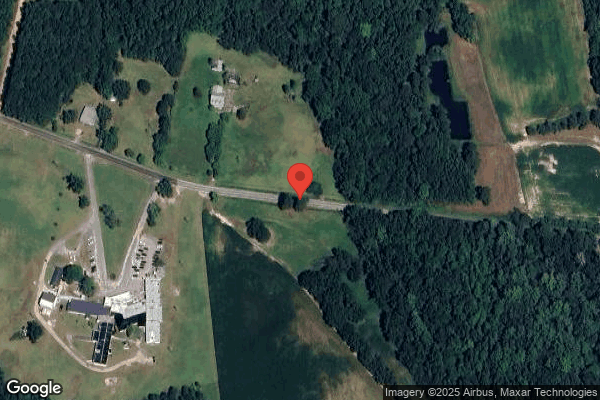
1727 Buck Swamp Road, Fork, SC 29543 (843) 464-6212
For profit - Limited Liability company 111 Beds CARLYLE SENIOR CARE Data: November 2025
Trust Grade
70/100
#70 of 186 in SC
Last Inspection: April 2025

Within standard 12-15 month inspection cycle. Federal law requires annual inspections.

Overview

Carlyle Senior Care of Fork has a Trust Grade of B, which indicates it is a good option for families seeking care, though not the best. It ranks #70 out of 186 facilities in South Carolina, placing it in the top half, and is the best choice out of two in Dillon County. The facility is showing improvement, with issues decreasing from seven in 2023 to just one in 2025. Staffing is a relative strength, with a turnover rate of 36%, which is below the state average of 46%. However, there are concerns regarding RN coverage, as it has less than 96% of other South Carolina facilities, which may impact the quality of care. While there have been no fines, which is a positive sign, the facility has faced specific issues, including failing to serve meals safely and not maintaining proper hygiene during meal service, along with a lack of dignity for residents observed in hospital gowns for extended periods. Overall, while there are strengths in staffing and no fines, families should consider the facility's challenges in certain areas of care and oversight.

Trust Score
B
70/100
In South Carolina
#70/186
Top 37%
Safety Record
Low Risk
No red flags
Inspections
Getting Better
7 → 1 violations
Staff Stability
○ Average
36% turnover. Near South Carolina's 48% average. Typical for the industry.
Penalties
✓ Good
No fines on record. Clean compliance history, better than most South Carolina facilities.
Skilled Nurses
⚠ Watch
Each resident gets only 16 minutes of Registered Nurse (RN) attention daily — below average for South Carolina. Fewer RN minutes means fewer trained eyes watching for problems.
Violations
○ Average
8 deficiencies on record. Average for a facility this size. Mostly minor or procedural issues.
★★★☆☆
3.0
Overall Rating
★★★☆☆
3.0
Staff Levels
★☆☆☆☆
1.0
Care Quality
★★★★☆
4.0
Inspection Score
Stable
2023: 7 issues
2025: 1 issues

The Good

  • Full Sprinkler Coverage · Fire safety systems throughout facility
  • No fines on record
  • Staff turnover below average (36%)

    12 points below South Carolina average of 48%

Facility shows strength in fire safety.

The Bad

3-Star Overall Rating

Near South Carolina average (2.8)

Meets federal standards, typical of most facilities

Staff Turnover: 36%

Near South Carolina avg (46%)

Typical for the industry

Chain: CARLYLE SENIOR CARE

Part of a multi-facility chain

Ask about local staffing decisions and management

The Ugly 8 deficiencies on record

Apr 2025 1 deficiency
CONCERN (D)

Potential for Harm - no one hurt, but risky conditions existed

Infection Control (Tag F0880)

Could have caused harm · This affected 1 resident

Based on observation and interview, the facility failed to ensure staff served resident meals in a clean and safe manner and utilized proper hand hygiene during meal service in one (1) of two (2) dini...

Read full inspector narrative →
Based on observation and interview, the facility failed to ensure staff served resident meals in a clean and safe manner and utilized proper hand hygiene during meal service in one (1) of two (2) dining rooms and for one (1) of one (1)1 resident observed during tray set up. (Resident (R)15) Findings include: During midday meal service on 4/15/25 from 12:10 p.m. to 12:55 p.m., Certified Nursing Assistant (CNA) HH was observed assisting multiple unidentified residents throughout the dining room with tray set up, getting additional drinks, getting and opening a resident's sandwich, clearing tables and removing trays. Additionally, CNA HH touched multiple residents on the arm, shoulder or back to prompt or encourage them to finish the meal. During the observation, CNA HH failed to use any hand hygiene between residents or after clearing the tables. Observation on 4/15/25 revealed the dietary staff delivered the cart with the room trays at approximately 12:50 p.m. to the nursing unit. CNA HH opened the cart and removed the tray for Resident #15. When this surveyor arrived at the door of R15's room, CNA HH was observed using his/her bare hands to tear the pork chop served into smaller pieces. In an interview on 4/15/25 at 3:50 p.m., the Director of Nursing (DON) verified that CNA HH was not available due to leaving early. The DON confirmed that staff knew hand hygiene should be done between residents and while serving in the dining room. The DON also confirmed staff was trained to use utensils and not hands to cut up a resident's food. In an interview on 4/16/25 at 2:00 p.m., CNA HH acknowledged using his/her bare hands to hand the pork chop. She/he stated that she/he knew better, as it was not the proper way to handle a resident's food. She/he also acknowledged that that hand hygiene should be used between residents when serving meals.
Aug 2023 7 deficiencies
CONCERN (D) 📢 Someone Reported This

A family member, employee, or ombudsman was alarmed enough to file a formal complaint

Potential for Harm - no one hurt, but risky conditions existed

Resident Rights (Tag F0550)

Could have caused harm · This affected 1 resident

Based on review of facility policy, observations, record reviews and interviews, the facility failed to ensure the dignity was maintained for 3 of 16 residents. Specifically, Resident (R)3, (R33) and ...

Read full inspector narrative →
Based on review of facility policy, observations, record reviews and interviews, the facility failed to ensure the dignity was maintained for 3 of 16 residents. Specifically, Resident (R)3, (R33) and R84 were observed in bed and wearing hospital gowns for multiple days. Findings include: Review of the undated facility policy titled, Dignity - Promoting ad Maintaining, states under Policy, It is the practice of this facility to protect and promote resident rights and treat each resident with respect and dignity as well as care for each resident in a manner and in an environment, the maintains or enhances resident's quality of life by recognizing each resident's individuality. Under the section titled Compliance Guidelines states, 1. All staff members are involved in providing care to resident's to promote and maintain resident dignity and respect resident rights. 4. The resident's former lifestyle and personal choices will be considered when providing care and services to meet the resident's needs and preferences. 9. Groom and dress residents according to resident preference. Review of R3's Face Sheet revealed R3 was admitted to the facility with diagnoses including, but not limited to, aphasia, vascular dementia, pressure ulcers, and muscle wasting. During observations on 08/20/23, 08/21/23, 08/22/23 and 08/23/23 revealed R3 in bed and dressed daily in a hospital gown. No documentation could be found in the medical record for R3 to ensure she or her personal representative had made a request as their choice for her to wear hospital gowns daily. Review of R33's Face Sheet revealed R33 was admitted to the facility with diagnoses including, but not limited to, age related physical debility, abnormal posture, lack of coordination, muscle weakness, functional quadriplegia, cerebrovascular accident, spastic hemiplegia affecting right dominant side, and cognitive communication deficit. During observations on 08/20/23, 08/21/23 revealed R33 in bed wearing a hospital gown. During an interview on 08/22/23 at 2:00 PM, the Unit Manager Licensed Practical Nurse (LPN)3 stated that some of the residents choose to wear hospital gowns daily and if they do it is on the resident's plan of care. During an interview on 08/22/23 at approximately 2:03 PM, the Social Services Director (SSD) agreed with LPN3 and confirmed that some residents choose to wear hospital gowns daily and if that is their preference then it is on the care plan. Review of R33's Care Plan on 08/22/23 at 1:20 PM, did not include a care plan or interventions regarding R33 wearing a hospital gown daily. No documentation could be found in R33's medical record that R33 had as a preference to wear a hospital gown daily. Review of R84's Face Sheet revealed R84 was admitted to the facility with diagnoses including, but not limited to, dementia, physical debility, malaise, protein calorie malnutrition, muscle wasting and atrophy, lack of coordination and unsteadiness on feet. During observations on 08/20/23, 08/21/23, 08/22/23, R84 was in bed wearing a hospital gown. Review of R84's Care Plan revealed no documentation that R84 preferred to wear a hospital gown daily. During an interview on 08/23/23 at 10:50 AM, the Minimum Data Set Care Plan Coordinator provided a copy of the care plan for R84, and stated she has added the documentation to include R84 wearing a hospital gown daily.
CONCERN (D) 📢 Someone Reported This

A family member, employee, or ombudsman was alarmed enough to file a formal complaint

Potential for Harm - no one hurt, but risky conditions existed

Safe Environment (Tag F0584)

Could have caused harm · This affected 1 resident

**NOTE- TERMS IN BRACKETS HAVE BEEN EDITED TO PROTECT CONFIDENTIALITY** Based on observations, interviews, and facility policy review, the facility failed to ensure 2 rooms (room [ROOM NUMBER], room [...

Read full inspector narrative →
**NOTE- TERMS IN BRACKETS HAVE BEEN EDITED TO PROTECT CONFIDENTIALITY** Based on observations, interviews, and facility policy review, the facility failed to ensure 2 rooms (room [ROOM NUMBER], room [ROOM NUMBER]) on 2 of 4 units were in good repair. Findings include: A review of an undated facility policy titled, Maintenance Request Form revealed, Policy Statement: The Maintenance Director and maintenance staff shall respond to all maintenance requests in a prompt and efficient manner and keep a record of all work performed. The policy included, Policy Interpretation and Implementation: 1. Employees may initiate a maintenance request by completing a Maintenance Request form (i.e., noting the person requesting the order, the date of the request, the location of the needed repair, and a brief description of the work needed) and place maintenance requests in the appropriate location. 2. The Maintenance Director should review all work requests received, prioritize the requests if needed, and schedule the tasks to be performed. Whenever possible, the maintenance requests will be completed within 24 hours from the date of the request. 1. On 08/20/23 at 11:46 AM, an observation of room [ROOM NUMBER]'s wall to the left of the window revealed the wall had tears, scratches, and lines scribbled on the wall covering an area measuring approximately 3 feet (ft.) by 2 ft. Additional observations on 08/20/23 at 3:02 PM and 08/21/23 at 1:38 PM revealed the wall's condition had not changed. An interview on 08/22/23 at 10:01 AM, Certified Nurse Assistant (CNA)1 said the wall in room [ROOM NUMBER] had been in that condition for approximately two months. CNA1 said they had not reported it to anyone and was unaware if anyone else had reported it. CNA1 said the procedure for letting maintenance know if something in a resident's room needed to be repaired was to fill out a report and put it in a slot kept at the nurses' station or to tell maintenance staff. An interview on 08/22/23 at 10:23 AM, the Maintenance Director said they had been aware of the condition of the wall in room [ROOM NUMBER] for about two weeks, which was scheduled to be repaired after completing needed repairs on the 300 Hall. An interview on 08/22/23 at 2:50 PM, the Maintenance Director said they did not have a work order for room [ROOM NUMBER] because it was verbally reported by Licensed Practical Nurse (LPN) 4. 2. On 08/22/23 at 8:52 AM, an observation of room [ROOM NUMBER] of the windowsill and the wall beneath the windowsill revealed both the windowsill and an area of the wall measuring approximately 3 inches (in) by 12 in had peeling paint. Additional observations on 08/22/23 at 9:53 AM revealed the windowsill and the wall's conditions had not changed. An interview on 08/22/23 at 10:07 AM, Certified Nurse Assistant (CNA)2 said they had not noticed the condition of the windowsill in room [ROOM NUMBER] because they usually kept the curtain pulled over it and they usually floated and was only assigned to this room occasionally. CNA2 also said usually if they saw something that needed repair, they would let maintenance know. An interview on 08/22/23 at 10:16 AM, LPN2 said they had not noticed the condition of the windowsill but would fill out a maintenance form to request repair. An interview on 08/22/23 at 10:18 AM, the Maintenance Director said they were not aware of the condition of the windowsill in room [ROOM NUMBER]. The Maintenance Director said that it needed to be painted and that he was normally made aware of these types of maintenance issues by staff completing a maintenance work order and placing it in the slot at the nurses' station that they checked daily every morning, at noon, and at 3:00 PM. An interview on 08/22/23 at 3:10 PM, the Director of Nursing (DON) said that if their staff saw something in a resident's room that needed to be fixed or repaired, they needed to fill out a maintenance work order form and put it in the maintenance box. The DON also said that maintenance staff checked the boxes daily and she expected them to fix the problem as soon as possible. The DON also said that recently maintenance staff had been dealing with a plumbing problem that had taken precedence over some of the other maintenance issues. An interview on 08/22/23 at 3:37 PM, Registered Nurse (RN)2, acting as the Administrator in the Administrator's absence, said that if staff saw an issue that needed to be fixed or repaired in a resident's room, they should complete a repair slip and put it in the maintenance slot. RN2 also said that maintenance staff checked the slots every day and maintenance staff came to the morning meetings as well. Depending on the extent of the repair, maintenance staff prioritized maintenance issues, and they should be addressed as soon as possible.
CONCERN (D) 📢 Someone Reported This

A family member, employee, or ombudsman was alarmed enough to file a formal complaint

Potential for Harm - no one hurt, but risky conditions existed

Comprehensive Assessments (Tag F0636)

Could have caused harm · This affected 1 resident

**NOTE- TERMS IN BRACKETS HAVE BEEN EDITED TO PROTECT CONFIDENTIALITY** Based on review of facility policy, record review, and interviews the facility failed to accurately assess Resident (R)45 after ...

Read full inspector narrative →
**NOTE- TERMS IN BRACKETS HAVE BEEN EDITED TO PROTECT CONFIDENTIALITY** Based on review of facility policy, record review, and interviews the facility failed to accurately assess Resident (R)45 after a fall for 1 out of 3 residents reviewed for falls. Findings include: Review of facility policy titled, MDS-conducting an accurate resident assessment with an approval date of 09/25/19 revealed, the purpose of this policy is to assure that all resident's receive an accurate assessment, reflective of the resident's status at the time of the assessment, by staff qualified to assess relevant care areas. Review of the section titled policy explanation and compliance guidelines revealed, Qualified staff who are knowledgeable about the resident will conduct an accurate assessment addressing each resident's status, needs, strengths and areas of decline. The assessment will be documented in the medical record. Review of R45's Face Sheet revealed R45 was admitted to the facility on [DATE] and diagnoses including but not limited to, dementia, major depressive disorder, dysphagia, acid reflux, alcohol dependence, and mood disorder. Review of R45's Quarterly Minimum Data Set (MDS) with an Assessment Reference Date (ARD) of 07/16/23 revealed a Brief Interview for Mental Status (BIMS) score of 5 out of 15 indicating R45 had severe cognitive impairment. Further review of the MDS revealed the assessment was not revised/updated to reflect a fall with injury on 05/10/23. Review of R45's Care Plan with a start date of 09/29/21 revealed care plan goal for falls and potential for falls related to contracture of lower extremities, history of previous fall, history of closed head injury, and history of dementia. Review of R45's Progress Note dated 05/10/23 at 9:30 PM, revealed [R45] fell out of bed onto floor reaching for a bag of Cheeze-it chips. [R45] landed face down hitting his forehead causing an app. 1 inch cut center his forehead. No other injury noted. Family member notified and 911 called at 9:40 PM for transport. EMS arrived at 9:55 PM and [R45] was placed on stretcher and taken to [local hospital]. On 05/11/23 [R45] returned to the facility with stitches to forehead and no discharge paper work. Paperwork to be faxed over by hospital. An interview with the MDS Coordinator on 08/22/23 at 2:47 PM revealed when a resident has had a fall with injury, the MDS Coordinator will update the plan and assessment and if it is within the look back period or within the 3 months review it would be listed on the assessment. Upon review of R45's MDS, the MDS Coordinator acknowledged the fall with injury which occurred on 05/10/23 was not updated on the 07/16/23 Quarterly MDS assessment.
CONCERN (D) 📢 Someone Reported This

A family member, employee, or ombudsman was alarmed enough to file a formal complaint

Potential for Harm - no one hurt, but risky conditions existed

Deficiency F0657 (Tag F0657)

Could have caused harm · This affected 1 resident

Based on review of the facility policy, observations, record reviews and interviews the facility failed to ensure the Comprehensive Care Plan was reviewed and revised to reflect Resident (R)84's prefe...

Read full inspector narrative →
Based on review of the facility policy, observations, record reviews and interviews the facility failed to ensure the Comprehensive Care Plan was reviewed and revised to reflect Resident (R)84's preference to wear hospital gowns daily, and change back and forth to hospital gowns and street clothes as she prefers for 1 of 3 residents reviewed for Dignity. Findings include: Review of the undated facility policy titled, Care Plan Revision Upon Status Change, states, The purpose of this procedure is to provide a consistent process for reviewing and revising the care plan for those resident's experiencing a status change. The, Policy Explanation and Compliance Guidelines: states, 1. The comprehensive care plan will be reviewed and revised as necessary . The procedure for reviewing and revising the care plan, states, h. The Unit Manager or other designated staff member will conduct an audit on all residents experiencing a change in status, at the time the change in status is identified, to ensure care plan have been updated to reflect current residing needs. Review of R84's Face Sheet revealed R84 was admitted to the facility with diagnoses including, but not limited to, dementia, physical debility, malaise, protein calorie malnutrition, muscle wasting and atrophy, lack of coordination and unsteadiness on feet. During observations on 08/20/23, 08/21/23, and 08/22/23, R84 was in bed wearing a hospital gown. Review of R84's Care Plan revealed no documentation that R84 prefers to wear a hospital gown daily. Review of R84's medical records revealed no documentation to address the resident's choice to wear a hospital gown daily, or that it is her preference to change from a gown to street clothes or from street clothes to a gown multiple times during the day. During an interview on 08/22/23 at 2:00 PM, the Unit Manager Licensed Practical Nurse (LPN)3 stated that some of the residents choose to wear hospital gowns daily and if they do it is on the resident's plan of care. During an interview on 08/22/23 at approximately 2:03 PM, the Social Services Director confirmed that some residents choose to wear hospital gowns daily and if that is their preference then it is on the care plan.
CONCERN (D) 📢 Someone Reported This

A family member, employee, or ombudsman was alarmed enough to file a formal complaint

Potential for Harm - no one hurt, but risky conditions existed

Pharmacy Services (Tag F0755)

Could have caused harm · This affected 1 resident

**NOTE- TERMS IN BRACKETS HAVE BEEN EDITED TO PROTECT CONFIDENTIALITY** Based on observation, record reviews, interviews, and review of facility policy, the pharmacy failed to dispense a medication fo...

Read full inspector narrative →
**NOTE- TERMS IN BRACKETS HAVE BEEN EDITED TO PROTECT CONFIDENTIALITY** Based on observation, record reviews, interviews, and review of facility policy, the pharmacy failed to dispense a medication for Resident (R)96 in a timely manner pursuant to the facility having faxed the required lab results to dispense, for 1 of 25 medication pass observations. Findings include: Review of the facility policy titled Emergency Pharmacy Service with a revised date of 7/15/2019 states, It is the policy of [Pharmacy] that emergency pharmacy service is available on a 24-hour basis . Emergency needs for medication are met . by special order from the provider pharmacy . Review of R96's Face Sheet revealed R96 was admitted to the facility on [DATE] with diagnoses including, but not limited to schizophrenia. During Medication Administration observation on 08/21/23 at approximately 9:09 AM, Licensed Practical Nurse (LPN)1, after administering medications to R96, stated that all medication had been administered to R96. Review of the medication pass reconciliation dated August 2023, revealed a physicians order dated 12/12/22 for Clozapine 100 mg (milligram) 1-1/2 tablets (150 mg) BID by mouth twice daily at 9:00 AM and 9:00 PM. Review of the August 2023 Medication Administration Record (MAR) revealed that the medication had been charted as not given by LPN1. An interview on 08/22/23 at approximately 10:29 AM, LPN1 stated that she had not administered the medication because it was not available and that in order for the pharmacy to dispense Clozapine, there must be proof of lab results and that these had been faxed to the pharmacy, but the drug did not arrive in time. LPN1 provided a copy of the lab results (CBC with differential) which had been faxed to [local pharmacy] on 08/15/23 at 10:39 AM. LPN1 further stated the Consultant Pharmacist, had called [local pharmacy] and determined that there was a new pharmacist who failed to dispense the medication. LPN1 stated the Clozapine arrived on 08/21/23 at approximately 2:30 PM and she administered according to the physician's new order. During a telephone interview on 08/22/23 at approximately 11:25 AM, the Consultant Pharmacist confirmed the Clozapine was part of the Risk Evaluation and Mitigation Strategies (REMS) program and that a new pharmacist had not dispensed it in time for the 08/21/23 9:00 AM dose to be administered.
CONCERN (F) 📢 Someone Reported This

A family member, employee, or ombudsman was alarmed enough to file a formal complaint

Potential for Harm - no one hurt, but risky conditions existed

Food Safety (Tag F0812)

Could have caused harm · This affected most or all residents

**NOTE- TERMS IN BRACKETS HAVE BEEN EDITED TO PROTECT CONFIDENTIALITY** Based on observation, interview and review of facility policy, the facility failed to ensure foods that are stored in the walk-i...

Read full inspector narrative →
**NOTE- TERMS IN BRACKETS HAVE BEEN EDITED TO PROTECT CONFIDENTIALITY** Based on observation, interview and review of facility policy, the facility failed to ensure foods that are stored in the walk-in refrigerator and freezer, and unit refrigerators were labeled and discarded after manufacturer's expiration date. These deficiencies had the potential to affect all the residents who reside in the facility. Findings include: Review of the facility policy titled, Dietary-Food Safety Requirements-Policy with an approval date of 05/21/19 revealed under policy explanation and compliance guidelines, (1) b. Storage of food in a manner that helps prevent deterioration or contamination of the food, including from growth of microorganisms; (3)c iv. Labeling, dating, and monitoring refrigerated food, including, but not limited to leftovers, so it is used by it use-by date, or frozen (where applicable) discarded. Review of the facility policy titled, Use and storage of food brought in by family and visitors policy with an approval date of 11/23/16 revealed under policy explanation and compliance guidelines, (2) a. The facility may refrigerate label and date prepared items in the nourishment refrigerator. 2 (b) The prepared food must be consumed by the resident within 3 days. 2 (c) If not consumed within 3 days, food will be thrown away by facility staff. During a kitchen observation, of the [NAME] refrigerator and freezer, on 08/20/23 at 10:18 AM revealed the following: 4 plastic containers of strawberries, which appeared to be covered in a mold like substance. 6 cantaloupes the were soft to the touch and appeared to be rotten. 1 crate of cabbages which was not dated. 3 individual salads in white styrofoam containers, which were not labeled and dated. 2 apples which appeared to be rotten. 1 pint of ice cream with an expiration date of 01/20/23. During an interview on 08/20/23 at approximately 10:18 AM, the Kitchen Supervisor stated the items should have a label with date. The Kitchen Supervisor proceeded to remove and discard the items. During an observation of the Unit Nourishment Refrigerator on 08/23/23 at 10:33 AM, revealed the following: 1 12-pack box of [NAME] Beer Non-alcoholic opened containing one beer which was not labeled or dated. 2 individual packed lunches, which was not labeled or dated. During an interview on 08/23/23 at approximately 10:40 AM, Licensed Practical Nurse (LPN)1 confirmed that one of the lunches was hers. LPN1 was unaware of which resident the [NAME] Beer belonged to. LPN1 acknowledged that items in unit refrigerator should be labeled and dated. During an interview on 08/23/23 at 11:56 AM, the Administrator revealed his expectations for the process for storing foods in the kitchen and unit refrigerators are to ensure meats, and other items are properly stored, items are up-to-date and discarded in a timely manner.
MINOR (C)

Minor Issue - procedural, no safety impact

Deficiency F0912 (Tag F0912)

Minor procedural issue · This affected most or all residents

**NOTE- TERMS IN BRACKETS HAVE BEEN EDITED TO PROTECT CONFIDENTIALITY** Based on record review and interview, the facility failed to assure each resident is afforded the required 80 square feet per re...

Read full inspector narrative →
**NOTE- TERMS IN BRACKETS HAVE BEEN EDITED TO PROTECT CONFIDENTIALITY** Based on record review and interview, the facility failed to assure each resident is afforded the required 80 square feet per resident for their living space, for 12 of 12 resident rooms with an occupancy of 2 to 3 residents each. Findings include: Based on record review the facility provided a list of rooms that did not meet the required 80 square feet per resident. The following rooms did not meet the requirement: room [ROOM NUMBER] measures 11' 9 x 19' 6 = 233 square feet and houses 3 residents for 78 square feet per resident. room [ROOM NUMBER] measures 13' 11 x 10' 11 = 133 square feet and houses 2 residents for 67 square feet per resident. room [ROOM NUMBER] measures 13' 10 x 10' 10 = 131 square feet and houses 2 residents for 66 square feet per resident. room [ROOM NUMBER] measures 13' 11 x 11' 0 = 144 square feet and houses 2 residents for 72 square feet per resident. room [ROOM NUMBER] measures 11' 0 x 14' 0 = 154 square feet and houses 2 residents for 77 square feet per resident. room [ROOM NUMBER] measures 13' 11 x 11' 0 = 144 square feet and houses 2 residents for 72 square feet per resident. room [ROOM NUMBER] measures 10' 11 x 13' 10 = 132 square feet and houses 2 residents for 66 square feet per resident. room [ROOM NUMBER] measures 14' 0 x 10' 11 = 142 square feet and houses 2 residents for 71 square feet per resident. room [ROOM NUMBER] measures 13' 10 x 10' 11 = 132 square feet and houses 2 residents for 66 square feet per resident. room [ROOM NUMBER] measures 13' 11 x 10' 11 = 131 square feet and houses 2 residents for 66 square feet per resident. room [ROOM NUMBER] measures 13' 11 x 10' 11 = 131 square feet and houses 2 residents for 66 square feet per resident. room [ROOM NUMBER] measures 13' 11 x 11' 0 = 144 square feet and houses 2 residents for 66 square feet per resident. During an interview with the Administrator he provided a Room Waiver Request which states: Please accept this request to incorporate the dimensions of these rooms for compliance. They have been in place for many years as this building has been in operation since the 1950's.
Understanding Severity Codes (click to expand)
Life-Threatening (Immediate Jeopardy)
J - Isolated K - Pattern L - Widespread
Actual Harm
G - Isolated H - Pattern I - Widespread
Potential for Harm
D - Isolated E - Pattern F - Widespread
No Harm (Minor)
A - Isolated B - Pattern C - Widespread

Questions to Ask on Your Visit

  • "Can I speak with families of current residents?"
  • "What's your RN coverage like on weekends and overnight?"

Our Honest Assessment

Strengths
  • • No major safety red flags. No abuse findings, life-threatening violations, or SFF status.
  • • No fines on record. Clean compliance history, better than most South Carolina facilities.
  • • 36% turnover. Below South Carolina's 48% average. Good staff retention means consistent care.
Concerns
  • • No major red flags. Standard due diligence and a personal visit recommended.
Bottom line: Mixed indicators with Trust Score of 70/100. Visit in person and ask pointed questions.

About This Facility

What is Carlyle Senior Care Of Fork's CMS Rating?

CMS assigns Carlyle Senior Care of Fork an overall rating of 3 out of 5 stars, which is considered average nationally. Within South Carolina, this rating places the facility higher than 99% of the state's 100 nursing homes. This mid-range rating indicates the facility meets federal standards but may have areas for improvement.

How is Carlyle Senior Care Of Fork Staffed?

CMS rates Carlyle Senior Care of Fork's staffing level at 3 out of 5 stars, which is average compared to other nursing homes. Staff turnover is 36%, compared to the South Carolina average of 46%. This relatively stable workforce can support continuity of care.

What Have Inspectors Found at Carlyle Senior Care Of Fork?

State health inspectors documented 8 deficiencies at Carlyle Senior Care of Fork during 2023 to 2025. These included: 7 with potential for harm and 1 minor or isolated issues.

Who Owns and Operates Carlyle Senior Care Of Fork?

Carlyle Senior Care of Fork is owned by a for-profit company. For-profit facilities operate as businesses with obligations to shareholders or private owners. The facility is operated by CARLYLE SENIOR CARE, a chain that manages multiple nursing homes. With 111 certified beds and approximately 95 residents (about 86% occupancy), it is a mid-sized facility located in Fork, South Carolina.

How Does Carlyle Senior Care Of Fork Compare to Other South Carolina Nursing Homes?

Compared to the 100 nursing homes in South Carolina, Carlyle Senior Care of Fork's overall rating (3 stars) is above the state average of 2.8, staff turnover (36%) is near the state average of 46%, and health inspection rating (4 stars) is above the national benchmark.

What Should Families Ask When Visiting Carlyle Senior Care Of Fork?

Based on this facility's data, families visiting should ask: "Can I visit during a mealtime to observe dining assistance and food quality?" "How do you handle medical emergencies, and what is your hospital transfer rate?" "Can I speak with family members of current residents about their experience?"

Is Carlyle Senior Care Of Fork Safe?

Based on CMS inspection data, Carlyle Senior Care of Fork has a clean safety record: no substantiated abuse findings (meaning no confirmed cases of resident harm), no Immediate Jeopardy citations (the most serious violation level indicating risk of serious injury or death), and is not on the Special Focus Facility watch list (a federal program monitoring the lowest-performing 1% of nursing homes). The facility has a 3-star overall rating and ranks #1 of 100 nursing homes in South Carolina. While no facility is perfect, families should still ask about staff-to-resident ratios and recent inspection results during their visit.

Do Nurses at Carlyle Senior Care Of Fork Stick Around?

Carlyle Senior Care of Fork has a staff turnover rate of 36%, which is about average for South Carolina nursing homes (state average: 46%). Moderate turnover is common in nursing homes, but families should still ask about staff tenure and how the facility maintains care continuity when employees leave.

Was Carlyle Senior Care Of Fork Ever Fined?

Carlyle Senior Care of Fork has no federal fines on record. CMS issues fines when nursing homes fail to meet care standards or don't correct problems found during inspections. The absence of fines suggests the facility has either maintained compliance or corrected any issues before penalties were assessed. This is a positive indicator, though families should still review recent inspection reports for the full picture.

Is Carlyle Senior Care Of Fork on Any Federal Watch List?

Carlyle Senior Care of Fork is not on any federal watch list. The most significant is the Special Focus Facility (SFF) program, which identifies the bottom 1% of nursing homes nationally based on persistent, serious quality problems. Not being on this list means the facility has avoided the pattern of deficiencies that triggers enhanced federal oversight. This is a positive indicator, though families should still review the facility's inspection history directly.