


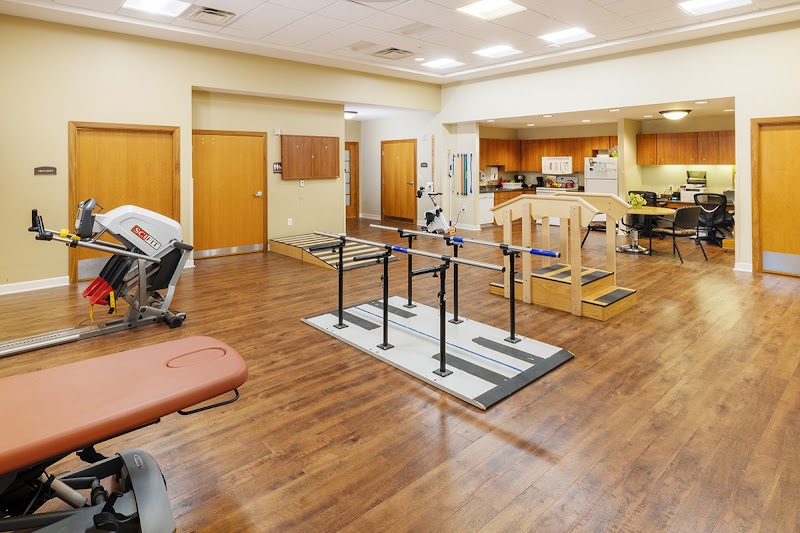

Patewwod Post Acute

2 Griffith Road, Greenville, SC 29607 (864) 990-1918
For profit - Limited Liability company 120 Beds PACS GROUP Data: November 2025
Trust Grade
75/100
#49 of 186 in SC
Last Inspection: April 2025

Within standard 12-15 month inspection cycle. Federal law requires annual inspections.

Overview

Patewood Post Acute in Greenville, South Carolina, has a Trust Grade of B, indicating it is a good choice among nursing homes, but not the top tier. It ranks #49 out of 186 facilities in the state, placing it in the top half, and #5 out of 19 in Greenville County, suggesting only four local homes perform better. The facility's trend is stable, with the same number of issues reported in both 2023 and 2025. Staffing is average, with a 3/5 star rating and a turnover rate of 42%, which is better than the state average of 46%. Notably, there have been no fines reported, which is a positive sign. However, there are some concerns, including incidents where food safety protocols were not followed, such as failing to properly label and date food items, and a staff member using the same gloves for handling raw food and trash, risking contamination. Additionally, there were issues with a lack of meaningful activities for some residents, potentially affecting their quality of life. Overall, while Patewood Post Acute has strengths in staffing stability and no fines, families should be aware of the food safety and activity engagement concerns.

Trust Score
B
75/100
In South Carolina
#49/186
Top 26%
Safety Record
Low Risk
No red flags
Inspections
Holding Steady
6 → 6 violations
Staff Stability
○ Average
42% turnover. Near South Carolina's 48% average. Typical for the industry.
Penalties
✓ Good
No fines on record. Clean compliance history, better than most South Carolina facilities.
Skilled Nurses
○ Average
Each resident gets 33 minutes of Registered Nurse (RN) attention daily — about average for South Carolina. RNs are the most trained staff who monitor for health changes.
Violations
⚠ Watch
13 deficiencies on record. Higher than average. Multiple issues found across inspections.
★★★★☆
4.0
Overall Rating
★★★☆☆
3.0
Staff Levels
★★★★★
5.0
Care Quality
★★★☆☆
3.0
Inspection Score
Stable
2023: 6 issues
2025: 6 issues

The Good

  • 5-Star Quality Measures · Strong clinical quality outcomes
  • Full Sprinkler Coverage · Fire safety systems throughout facility
  • No fines on record
  • Staff turnover below average (42%)

    6 points below South Carolina average of 48%

Facility shows strength in quality measures, fire safety.

The Bad

Staff Turnover: 42%

Near South Carolina avg (46%)

Typical for the industry

Chain: PACS GROUP

Part of a multi-facility chain

Ask about local staffing decisions and management

The Ugly 13 deficiencies on record

Apr 2025 6 deficiencies
CONCERN (D)

Potential for Harm - no one hurt, but risky conditions existed

Deficiency F0679 (Tag F0679)

Could have caused harm · This affected 1 resident

**NOTE- TERMS IN BRACKETS HAVE BEEN EDITED TO PROTECT CONFIDENTIALITY** Based on review of review of facility policy, observation, interview, and record review, the facility failed to ensure an ongoin...

Read full inspector narrative →
**NOTE- TERMS IN BRACKETS HAVE BEEN EDITED TO PROTECT CONFIDENTIALITY** Based on review of review of facility policy, observation, interview, and record review, the facility failed to ensure an ongoing and meaningful program of activities was provided for two (Residents (R) R3 and R67) of four residents reviewed for activities out of a total of 25 residents were reviewed in the sample. This had the potential for the residents to have a decreased quality of life. Findings include: Review of the facility's Activity Evaluation Policy dated 02/2023 read, in pertinent part, In order to promote the physical, mental and psychosocial well-being of residents, an activity evaluation is conducted and maintained for each resident at least quarterly and with any change of condition that could affect his/her participation in planned activities; and An activity evaluation is conducted as part of the comprehensive assessment to help develop an activities plan that reflects the choices and interests of the resident; and The activity evaluation is used to develop an individual activities care plan (separate from or as part of the comprehensive care plan) that will allow the resident to participate in activities of his/her choice and interest. 1.Review of R3's admission Record, dated 04/08/25 found in the electronic medical record (EMR) under the Admission tab, indicated R3 was admitted to the facility on [DATE]. The resident's diagnoses included seizure disorder and Alzheimer's Disease. Review of R3's annual Minimum Data Set (MDS), with an Assessment Reference Date (ARD) of 02/11/25 and found in the EMR under the MDS tab, indicated a Brief Interview for Mental Status (BIMS) score of nine out of 15, which indicated the resident was moderately cognitively impaired. Review of R3's Activities Care Plan dated 02/06/25 and found in the EMR under the Care Plan tab, revealed, (R3) needs activities for socialization and stimulation. (R3) enjoys remaining in her room listening to music, socializing with staff and peers. Approaches included encourage, inform and invite to activities, help transport to activities, offer religious activities at least once per week, offer sensory stimulation type activities (music, reality orientation, etc.), offer special events, provide with 1:1 activities as needed or requested, provide activity calendar in room, and praise efforts and attendance. Review of R3's Annual Activities Assessment dated 02/05/25 and found in the EMR under the Evaluations tab, revealed the resident enjoyed listening to radio, watching television, having stuffed animals for support, music events, and religious events. The assessment indicated the resident responded well to 1:1 visits from staff and liked to occasionally attend group activities. Review of R3's Activity Participation Records dated 03/09/25 through 04/07/25 and found in the EMR under the Tasks tab, revealed the resident attended one group activity during that time period (Pet Therapy on 03/21/25) and was provided with a total of four 1:1 visits from staff during that period of time (on 03/13/25, 03/17/25, 03/24/25 and 04/07/25). During an observation of R3 on 04/06/25 at 10:00 AM, 3:37 PM, and on 04/07/25 at 9:45 AM, 2:49 PM, and 5:44 PM, R3 was observed to be in her room in bed during all of the observations. R3 was not observed to be engaged in any type of activity during the observations. R3 was observed to remain in her bed all day on 04/06/25 and on 04/07/25. 2.Review of R67's admission Record, dated 04/08/25 found in the EMR under the Admission tab, indicated R3 was admitted to the facility on [DATE]. The resident's diagnoses included cognitive communication deficit and brain cancer. Review of R67's quarterly MDS with an ARD of 03/10/25 and found in the EMR under the MDS tab, indicated a BIMS score of zero out of 15, which indicated the resident was severely cognitively impaired. Review of R67's Activities Care Plan dated 04/04/24 and found in the EMR under the Care Plan tab, revealed the resident was at risk for social isolation due to generalized weakness. The Care Plan indicated R67 enjoyed watching television, watching shows/movies, pet therapy, listening to all types of music, and socializing with family/friends. The care plan goal was for R67 to have socialization with staff/visitors within her abilities 50% of the time weekly. Approaches included, encourage and assist the resident to engage in activities that do not require great cognitive skill (i.e., watching movies, simple board games, card games, music therapy, gardening, exercise, coloring books, reminiscing, etc.), encourage to attend activities of interest, provide activity calendar in room, provide activity materials like books, magazines, TV, radio, arts and crafts, etc., in accordance with the residents' interests, and room visits 1:1 for socialization if needed. Review of R67's Quarterly Activities Assessment dated 03/05/25 and found in the EMR under the Evaluations tab, revealed the resident enjoyed watching television, pet therapy, all types of music, and socializing with family/friends. The assessment indicated R67 preferred to remain in her room and accepted 1:1 visits from staff and family visits often. Review of R67's Activity Participation Records dated 03/09/25 through 04/07/25 and found in the EMR under the Tasks tab, revealed the resident did not participate in any group activities during that time period of time. The record indicated R67 was provided with a total of eleven 1:1 visits from staff during that period of time (on 03/12/25, 03/13/25, 03/17/25, 03/19/25, 03/24/25, 03/25/25, 03/26/25, 03/31/25, 04/03/25, 04/05/25, and 04/07/25). During an observation of R67 on 04/06/25 at 10:00 AM, 10:30 AM, and 2:20 PM, and on 04/07/25 at 10:30 AM and 2:43 PM, and 4:15 PM., R67 was observed to remain in her bed all day on 04/06/25 and 04/07/25. During an interview with R67 Responsible Party (RP) on 04/07/25 at 2:30 PM, she stated she would like the resident to participate in more activities. She stated R67 rarely came out of her room due to her physical condition, however she would like to see her participate in more 1:1 staff visits, sensory activities, and would like the resident to receive visits from church clergy when they were in the facility each week. She stated she thought R67 would enjoy these activities, but although she was a frequent visitor to the facility, she did not see the resident participating in these things. During an interview with the Activity Director (AD) on 04/07/25 at 4:23 PM, she confirmed group activities were offered daily to residents and pet therapy was available to all residents Monday through Friday. She stated all activity participation was documented in the EMR under the Tasks tab, and the documentation was expected to indicate the date and time of activity participation as well as the type of activity the resident participated in. The AD stated refusals to participate in activities was also to be documented under the Tasks tab. The AD confirmed there was sparse documentation of activity participation indicated in R3 and R67's records and stated her expectation was residents who were not participating regularly in group activities were expected to receive 1:1 visits at least three to four times per week. She confirmed R3 and R67 were not receiving adequate activities programming/visits based on review of their records and confirmed neither resident attended group activities very often and so should be receiving frequent 1:1 visits from activities staff.
CONCERN (D)

Potential for Harm - no one hurt, but risky conditions existed

Deficiency F0688 (Tag F0688)

Could have caused harm · This affected 1 resident

**NOTE- TERMS IN BRACKETS HAVE BEEN EDITED TO PROTECT CONFIDENTIALITY** Based on review of facility policy, observation, interview, and record review, the facility failed to ensure a palm guard was ap...

Read full inspector narrative →
**NOTE- TERMS IN BRACKETS HAVE BEEN EDITED TO PROTECT CONFIDENTIALITY** Based on review of facility policy, observation, interview, and record review, the facility failed to ensure a palm guard was applied to one (Resident (R) R3) of four residents reviewed for positioning/mobility. A total of 25 residents were reviewed in the sample. This had the potential for the resident to experience a decline in ROM. Findings include: Review of the facility's policy titled Resident Mobility and Range of Motion Policy dated 07/2017 read, in pertinent part, Residents will not experience an avoidable reduction in range of motion (ROM);and Residents with limited range of motion will receive treatment and services to increase and/or prevent a further decrease in ROM; and The care plan will include specific interventions, exercises and therapies to maintain, prevent avoidable decline in, and/or improve mobility and range of motion. Review of R3's admission Record dated 04/08/25 found in the electronic medical record (EMR) under the Admission tab, indicated R3 was admitted to the facility on [DATE]. The resident's diagnoses included seizure disorder and Alzheimer's Disease. Review of R3's annual Minimum Data Set (MDS), with an Assessment Reference Date (ARD) of 02/11/25 and found in the EMR under the MDS tab, indicated a Brief Interview for Mental Status (BIMS) score of nine out of 15, which indicated the resident was moderately cognitively impaired. Review of R3's physician's Orders, dated 04/08/25 and found in the EMR under the Orders tab, revealed a current order, with an original order date of 03/18/25, for the resident to wear a Palmar Guard on her left hand daily as tolerated to prevent skin breakdown and further contracture. Review of R3's Treatment Administration Records (TARs) dated 04/01/25 through 04/08/25 and found in the EMR under the Orders tab, revealed entries on each date to indicate the resident's Palm Guard was being applied as ordered. During an observation on 04/06/25 at 3:57 PM, on 04/07/25 at 9:45 AM, 2:49 PM and 5:44 PM, and on 04/08/25 at 8:34 AM and 10:33 AM, R3 was observed to have a contracted right hand. The resident was not observed to be wearing her ordered palm guard during any of the observations. There was nothing in the record to indicate R3 had been refusing to wear her palm guard. During an observation, R3 was observed, along with Certified Nursing Assistant (CNA)2 on 04/08/25 at 11:14 AM, CNA2 confirmed she was familiar with R3 and confirmed the resident was not wearing her ordered palm guard. CNA2 attempted to locate the resident's palm guard in her room and was unable to find it. CNA2 stated the resident had a palm guard and was supposed to wear it during the day, however she had not seen the appliance that morning when the resident was assisted with preparing for the day. CNA2 stated R3 sometimes refused to allow the palm guard to be applied, however she confirmed the refusal should be documented in R3's record if this was the case. During an interview with Licensed Practical Nurse (LPN)5 on 04/08/25 at 11:21 AM, she stated she was familiar with R3 and confirmed the resident was supposed to be wearing her palm guard during the day. LPN5 stated the resident's palm guard was usually placed on her in the morning and then she (LPN5) would remove it later in the day/at bedtime. LPN5 stated she did not know where the resident's palm guard was. During a follow-up interview with CNA2 on 04/08/25 at 11:33 AM, she stated she had not been able to locate R3's palm guard and so the facility's therapy department had provided her with a new one. During an interview with the Director of Nursing (DON) on 04/08/25 at 12:32 PM, she confirmed R3 was expected to be wearing the ordered palm protector or staff was expected to document the resident's refusal to wear the device in the resident record. During an interview with the Therapy Director on 04/08/25 at 1:12 PM, she confirmed R3 was expected to be wearing her ordered palm protector and stated she provided a new one to nursing staff that day when they were not able to locate the resident's original device. She stated sometimes the devices inadvertently ended up in the laundry.
CONCERN (D)

Potential for Harm - no one hurt, but risky conditions existed

Respiratory Care (Tag F0695)

Could have caused harm · This affected 1 resident

**NOTE- TERMS IN BRACKETS HAVE BEEN EDITED TO PROTECT CONFIDENTIALITY** Based on observation, interview, record review, and facility policy review, the facility failed to ensure respiratory care equip...

Read full inspector narrative →
**NOTE- TERMS IN BRACKETS HAVE BEEN EDITED TO PROTECT CONFIDENTIALITY** Based on observation, interview, record review, and facility policy review, the facility failed to ensure respiratory care equipment was maintained in a clean and sanitary manner for one (Resident (R) 413) of four residents reviewed for respiratory care out of a total sample of 25 residents. This failure had the potential to lead to respiratory infections. Findings include: Review of the facility's policy titled, Departmental (Respiratory), revised 11/22, revealed, . 3. Change the oxygen cannula and tubing every seven (7) days, or as needed. 4. Keep the oxygen cannula and tubing used PRN [as needed] in a plastic bag when not in use. 5. Wash filters from oxygen concentrators with soap and water as needed. Rinse and squeeze dry . Review of R413's admission Record, located in the electronic medical record (EMR) under the Profile tab, revealed R413 was admitted to the facility on [DATE] with a diagnosis of chronic obstructive pulmonary disease (COPD). Review of R413's admission Minimum Data Set (MDS), located in the EMR under the MDS tab with an assessment reference date (ARD) of 03/24/25, revealed the resident had a Brief Interview for Mental Status (BIMS) score of 15 out of 15, indicating R413 was cognitively intact. The MDS also indicated R413 received oxygen therapy. Review of R413's Orders located in the Orders tab of the EMR revealed the following: Oxygen at 2 liters / Nasal Cannula, Continuously every shift for Oxygen at 2 liters AND as needed dated 3/18/25. Clean and change tubing every night shift every Sunday dated 3/18/25. Albuterol Sulfate Inhalation Nebulization Solution (2.5 MG/3ML) 0.083% (Albuterol Sulfate) 3 milliliter inhale orally every 6 hours as needed for COPD SOB (shortness of breath), rinse mouth after each use dated 3/18/25 There was no specific order related to the nebulizer tubing/mask. Review of R413's March and April 2025 Medication Administration Record (MAR) located in the EMR under the Orders tab, revealed R413 had been using oxygen daily and the nebulizer machine was last used on 03/31/25. There was no documentation for the nebulizer tubing, mask, or filter cleaning. During an observation and interview on 04/06/25 at 12:06 PM and 3:42 PM, revealed R413's nebulizer mask was sitting uncovered on the nebulizer machine on his nightstand. The nebulizer tubing was undated. R413's black oxygen concentrator filter was covered in a layer of white dust. R413 stated the nebulizer tubing and mask was from the previous Sunday and there was no storage bag provided. R413 stated the oxygen concentrator was provided on admission in March. R413 confirmed he had been using both the oxygen concentrator and the nebulizer machine during this admission. During an interview on 04/06/25 at 3:20 PM, Licensed Practical Nurse (LPN)3 confirmed that R413's nebulizer tubing was undated and not stored correctly. LPN3 also confirmed that the black oxygen concentrator filter was covered in a layer of white dust. LPN3 stated the nebulizer mask, and tubing should be stored in a plastic bag and the oxygen concentrator filter should be cleaned. During an interview on 04/06/25 at 3:52 PM, LPN2, the facility's Respiratory Nurse confirmed that R413's nebulizer tubing was undated and not stored in a plastic bag. LPN2 stated she did not know where R413's storage bag was. LPN2 also confirmed that R413's oxygen concentrator filter had not been cleaned. LPN2 stated tubing changes and filter cleaning were completed every Sunday. During an interview on 04/07/25 at 1:10 PM, the Director of Nursing (DON) stated the nebulizer tubing should be dated and stored in a plastic bag and oxygen concentrator filters should be cleaned weekly when tubing was changed. During an interview on 04/07/25 at 5:15 PM, the Administrator stated the policy titled Departmental (Respiratory) applied to both oxygen and nebulizer equipment.
CONCERN (D)

Potential for Harm - no one hurt, but risky conditions existed

Infection Control (Tag F0880)

Could have caused harm · This affected 1 resident

Based on observation, review of facility policy, and interview, the facility failed to ensure proper hand hygiene was completed, and proper personal protective equipment (PPE) was worn during direct c...

Read full inspector narrative →
Based on observation, review of facility policy, and interview, the facility failed to ensure proper hand hygiene was completed, and proper personal protective equipment (PPE) was worn during direct contact/care for two residents (Resident (R)49 and R313) out of two residents observed during direct contact who were on enhanced barrier precautions (EBP) out of a total sample of 25 residents. This failure had the potential to cause cross contamination to the residents. Findings include: Review of policy titled Isolation -Transmission-Based Precautions & Enhanced Barrier Precautions Revised September 2022, revealed, . Enhanced Barrier Precautions, The facility has a framework for reducing MDRO (Multidrug-Resistant Organism) transmission through staff use of gowns and gloves while caring for patients at high risk for MDRO transmission at the point of care during specific activities with greatest risk for MDRO contamination of staff hands, clothes, and the environment. Enhanced Standard Precautions allows high risk residents to participate in activities outside of the room under specified conditions. Enhanced Barrier Precautions are indicated for residents with any of the following: . Wounds and/or indwelling medical devices even if the resident is not known to be infected or colonized with a MDRO . Review of the facility policy titled Handwashing/ hand hygiene revised October 2023 revealed, .This facility considers hand hygiene the primary means to prevent the spread of healthcare-associated infections .1. hand hygiene is indicated: a. immediately before touching a resident; b. before performing an aseptic task (for example, placing an indwelling device or handling an invasive medical device); c. after contact with blood, body fluids, or contaminated surfaces; d. after touching a resident;. g. immediately after glove removal. 2. Use an alcohol-based hand rub containing at least 60% alcohol for most clinical situations. 3. Wash hands with soap and water: a. when hands are visibly soiled; . 4. Single-use disposable gloves should be used: a. before aseptic procedures; b. when anticipating contact with blood or body fluids; and . 5. The use of gloves does not replace hand washing/ hand hygiene. 1. During an observation on 04/06/25 at 8:47 AM, Licensed Practical Nurse (LPN)6 was observed in R49's room wearing gloves, however the LPN was not wearing a gown. LPN6 hung a bag of tube feed and water for R49. She removed her gloves, performed no hand hygiene, and stepped out of the room. At 8:53 AM, LPN6 returned to R49's room wearing a mask only and continued with tube feed set up. R49 began to vomit and the LPN ran to the bathroom, grabbed paper towels, and placed them on resident's chest with ungloved hands. R49 vomited on LPN6's bare hand. LPN6 quickly donned gloves after placing paper towels, without performing hand hygiene. During an interview on 04/06/25 at 9:02 AM, LPN6 acknowledged the above observations. LPN6 admitted that she should have been wearing a gown and full PPE per EBP. During an interview with the Director of Nursing (DON) on 04/07/25 at 3:36 PM she stated it was her expectation that staff wear gowns, gloves, mask, and face shield if coming into contact with liquid that might splash and spill. The DON confirmed LPN6 should have been wearing a gown and should have performed hand hygiene immediately before and after glove changes. 2. During an observation of catheter care for R49 on 04/08/25 at 2:01 PM with Certified Nursing Assistant (CNA)1, assisted by CNA3, and with LPN1, present during the observation. CNA1 donned a gown, mask, and gloves without first performing hand hygiene. CNA3 also donned gown, mask, and gloves and was not observed to perform hand hygiene immediately before donning the gloves. LPN1 enquired about emptying R49' catheter bag and CNA1 returned to the room with one glove on and touched R49's catheter bag with a bare hand. CNA1 then donned a second glove without performing hand hygiene, went to the bathroom, returned with a urinal, and emptied R49's catheter bag. During an interview with CNA1 on 04/08/25 at 2:07 PM, CNA1 acknowledged she came out of the bathroom with one glove and touched the catheter bag and then put on another glove. During an interview with the LPN1 on 04/08/25 at 02:08 PM, she stated CNA1 should have changed gloves, performed hand hygiene and re-gloved before touching the catheter bag. 3. During observation on 04/08/25 at 2:20 PM, LPN4 donned a gown and a pair of gloves without performing hand hygiene. CNA1 was assisting and donned a gown and gloves without first performing hand hygiene. CNA1 lifted R313's left leg and removed his sock. LPN4 aborted the wound care when R313 stated he was in pain. LPN4 discarded her gown and gloves in R313's room and returned to the wound care cart without performing hand hygiene. She said the nearest hallway hand sanitizer was flashing red and was not functioning and she was unable to perform hand hygiene before going into R313's room and donning gloves. During an interview with the DON on 04/08/25 at 2:30 PM, the DON stated it was her expectation that staff perform hand hygiene before and after gloving, and that LPN4 should have used soap and water in the resident's room or hand sanitizer provided by the facility before and after wearing gloves. DON stated CNA1 should have performed hand hygiene between glove changes.
CONCERN (D)

Potential for Harm - no one hurt, but risky conditions existed

Antibiotic Stewardship (Tag F0881)

Could have caused harm · This affected 1 resident

**NOTE- TERMS IN BRACKETS HAVE BEEN EDITED TO PROTECT CONFIDENTIALITY** Based on record review, interview, document review, and facility policy review, the facility failed to ensure the McGeer criteri...

Read full inspector narrative →
**NOTE- TERMS IN BRACKETS HAVE BEEN EDITED TO PROTECT CONFIDENTIALITY** Based on record review, interview, document review, and facility policy review, the facility failed to ensure the McGeer criteria was used when an antibiotic was ordered and administered to one resident (Resident (R)45) of five residents reviewed for unnecessary medications out of a total sample of 25 resident. This had the potential for the resident to have unnecessary adverse reactions to a potentially unnecessary antibiotic administered. Findings include: Review of the document titled Suspected Rhinosinusitis dated 12/31/24 revealed a resident had to have at least one major symptom AND two minor symptoms for at least 10 days for antibiotic therapy to be initiated or have severe symptoms for at least 3 days. Otherwise, symptoms should be treated symptomatically. Review of the facility policy titled Antibiotic Stewardship last revised December 2016 revealed Antibiotics will be prescribed and administered to residents under the guidance of the facility's antibiotic stewardship program. Review of R45's undated admission Record located under the Profile tab in the electronic medical record (EMR) revealed R45 was admitted to the facility on [DATE] with the diagnoses of unspecified sequelae of other cerebrovascular disease and a history of asthma. Review of R45's Progress Notes located under the Progress Notes tab in the EMR dated 04/02/25 revealed the first note that indicated upper respiratory symptoms, was a cough. Review of R45's chest x-ray results dated 04/02/25 located under the Results tab in the EMR revealed No acute abnormality identified. Review of R45's complete blood count (CBC) results dated 04/03/25 located under the Results tab in the EMR revealed no white blood cell (WBC) count abnormality. Review of R45's March and April Vitals located in the Weights/Vitals tab of the EMR indicated no change or abnormalities in respiration, temperature, or pulse. Review of an Encounter Progress Note located under the Progress Notes tab in the EMR dated 04/03/25 written by the facility Nurse Practitioner (NP)1 revealed the following: Chief Complaint/Nature of Presenting Problem: This is a NP follow up from most recent hospitalization. On today's visit the patient is sitting up in wheelchair in her room. She is awake, alert, and appears in no acute distress. She does continue to have a congested cough with fatigue and hoarseness, chest x-ray was completed and unremarkable. Will start patient on Z-Pak (azithromycin antibiotic) x 5 days. She did have a CBC and CMP (complete metabolic panel) drawn this morning; results are pending. Patient's vital signs reviewed and stable. Review of R45's Orders located under the Orders tab in the EMR revealed the following orders: Give Azithromycin 500 milligrams (mg) by mouth one time a day for URI (upper respiratory infection) for 1 Day THEN Give 250 mg by mouth one time a day for URI for 4 Days. Review of R45's Medication Administration Record (MAR) located under the Orders tab in the EMR revealed azithromycin 500 mg was started on 04/03/25 and ended on 04/07/24, and was administered as ordered. During an interview on 04/07/25 at 3:50 PM, the Director of Nursing (DON) reviewed R45's CBC and chest x-ray and confirmed they were within normal limits and did not indicate an infection. During an interview on 04/08/25 at 11:30 AM, NP1 confirmed R45's normal chest x-ray and CBC and stated she had started the antibiotic anyway because she took into consideration R45's history of asthma and stroke, with the intent of preventing a hospital admission. NP1 agreed with the DON's assessment that R45 met the McGeer's criteria for the common cold only. NP1 did not know the duration of R45's symptoms but confirmed she had only seen R45 for the upper respiratory symptoms on 04/03/25, when she was first notified of the cough. During an interview on 04/08/25 at 1:10 PM, the DON stated R45 met the McGeer's criteria for the common cold only and stated she felt the antibiotic treatment was appropriate. The DON was unable to explain what criteria was used to determine antibiotic initiation. The DON then referred to the facility antibiotic stewardship binder and identified a decision-making tool for antibiotic initiation. The DON reviewed R45's symptoms using the Suspected Rhinosinusitis algorithm and stated R45 had only one major criteria (nasal congestion) and two minor symptoms (cough and fatigue). The DON was unable to determine the duration of symptoms - The guide went on to ask if duration of symptoms persisted for at least 10 days or 3 days if severe. The DON stated if antibiotic prescribing was inappropriate, she would reeducate providers. The DON was unable to provide further documentation showing when R45's symptoms began or the duration of symptoms.
CONCERN (F)

Potential for Harm - no one hurt, but risky conditions existed

Food Safety (Tag F0812)

Could have caused harm · This affected most or all residents

Based on observation, interview, and facility policy review, the facility failed to properly label and date food items that had been opened or prepared in the kitchen, and failed to discard expired it...

Read full inspector narrative →
Based on observation, interview, and facility policy review, the facility failed to properly label and date food items that had been opened or prepared in the kitchen, and failed to discard expired items. These failures had the potential to affect all 116 residents who consumed food from the kitchen. Findings include: Review of the facility's policy titled, Food Storage: Cold Foods last revised 02/2023 revealed All Time/Temperature Control for Safety (TCS) foods, frozen and refrigerated, will be appropriately stored in accordance with guidelines of the FDA (Food and Drug Administration) Food Code. Procedures .5. All foods will be stored wrapped or in covered containers, labeled and dated, and arranged in a manner to prevent cross contamination. Review of the facility's policy titled, Food Storage and Retention Guide last revised 02/2017 revealed Ready-to-Eat/Prepared Foods (1)-Food in a form that is edible without additional preparation to achieve food safety. (Examples: leftovers, deli meats and salads, opened canned fruits and puddings) -Up to 7 days. Shelf Stable Foods. Condiments. Mayonnaise After opening 2 months. During an observation on 04/06/25 at 8:30 AM, of the food storage revealed the following opened food items: beef broth dated 03/17/24, chicken broth dated 03/17/24, four opened containers of beef paste dated 07/29/24, 11/25/24, 07/29/24, and 07/29/24, cut cucumber undated, cut tomato undated, prepared what appeared to be potato salad labeled 04/04/25, prepared what appeared to be egg salad labeled use by 04/02/25, mayonnaise labeled 2/2025, barbecue sauce undated, lemon juice labeled 1/20, chocolate fudge icing labeled 1/21, and sweet and sour sauce dated 10/21/24. None of the dates indicated whether it was an open date or use by date except the egg salad. Also observed was a fast food bag of food and an outside container of Greek yogurt on the bottom refrigerator shelf. At 4:45 PM a box of prepared egg salad sandwiches was observed. During an interview on 04/06/25 at 8:30 AM, the Dietary Aide (DA) confirmed that the above items were not properly labeled or were expired and should be discarded. The DA stated prepared food should be labeled with the item and have a prepared and use by date. The DA did not know where the outside fast food or yogurt came from and stated that they were not to be stored in the kitchen refrigerator. During an interview on 04/06/25 at 4:45 PM the Dietary Manager (DM) stated she was unaware of the expired egg salad that was labeled use by 04/02/25. The DM confirmed the prepared egg salad sandwiches should be discarded. The DM stated opened or prepared foods should be labeled with the product name, an open date or prepared date, and a use by date and that prepared foods are good for seven days.
Jun 2023 6 deficiencies
CONCERN (D)

Potential for Harm - no one hurt, but risky conditions existed

Deficiency F0558 (Tag F0558)

Could have caused harm · This affected 1 resident

**NOTE- TERMS IN BRACKETS HAVE BEEN EDITED TO PROTECT CONFIDENTIALITY** Based on observation, interviews, and policy review, the facility failed to ensure one Resident (R)80 was provided with an adapt...

Read full inspector narrative →
**NOTE- TERMS IN BRACKETS HAVE BEEN EDITED TO PROTECT CONFIDENTIALITY** Based on observation, interviews, and policy review, the facility failed to ensure one Resident (R)80 was provided with an adapted call light control (referred to as a soft touch), to be able to request assistance from the staff when he was in need. Findings include: Review of a facility policy titled Accommodation of Needs dated 03/21 indicated .Our facility's environment and staff behaviors are directed toward assisting the resident in maintaining and/or achieving safe independent functioning, dignity and well-being .The resident's individual needs and preferences, including the need for adaptive devices and modifications to the physical environment, are evaluated upon admission and reviewed on an ongoing basis. Review of R80's electronic medical record (EMR) titled admission Record located under the Profile tab indicated the resident was admitted to the facility on [DATE] with a diagnosis of but not limited to; anoxic brain injury and paralysis. Review of R80's EMR titled Care Plan located under the Care Plan tab dated 10/27/22 indicated an activity of daily living self-care performance deficit related to deconditioning and weakness. Review of R80's EMR titled annual Minimum Data Set (MDS) with an Assessment Reference Date (ARD) of 04/19/23 indicated the resident had a Brief Interview for Mental Status (BIMS) score of 15 out of 15 which revealed the resident was cognitively intact. Further review of the MDS indicated R80 was impaired bi-laterally with his upper extremities which included the shoulder, elbow, wrist, and hands. During an observation and interview on 05/31/23 at 2:30 PM, R80 stated he could not use his call light control. R80's call light was observed on his bed next to him. The resident demonstrated that he could not open both of his hands to operate the device. During an interview on 06/01/23 at 3:20 PM, Social Services Assistant (SSA) stated the building recently had an entirely new call light system installed and a soft touch call light was ordered over a month ago. During an interview on 06/01/23 at 3:31 PM, Certified Nurse Aide (CNA)1 stated R80 could not use the current call light control. CNA1 stated he checks on the status of the resident every two hours. During an interview on 06/01/23 at 6:30 PM, the Administrator confirmed the facility ordered a soft touch call light control for R80 since he was aware the resident required an adapter. A request was made for a copy of the purchase receipt. During an interview on 06/02/23 at 10:30 AM, the Administrator stated he had to reach out to the Maintenance Director since he was unavailable during the survey. The Administrator stated the Maintenance Director did not re-order a soft touch control for R80 which would be compatible with the new call light system. The Administrator stated he did not follow up with the Maintenance Director prior to today on the status of the soft touch control.
CONCERN (D)

Potential for Harm - no one hurt, but risky conditions existed

Deficiency F0583 (Tag F0583)

Could have caused harm · This affected 1 resident

**NOTE- TERMS IN BRACKETS HAVE BEEN EDITED TO PROTECT CONFIDENTIALITY** Based on observation, interview, record review, and facility policy review, the facility failed to ensure personal privacy by co...

Read full inspector narrative →
**NOTE- TERMS IN BRACKETS HAVE BEEN EDITED TO PROTECT CONFIDENTIALITY** Based on observation, interview, record review, and facility policy review, the facility failed to ensure personal privacy by covering an indwelling urinary catheter collection bag for one Resident (R)13 of four residents reviewed for catheter care in a total sample of 32 residents. This failure resulted in the potential for an undignified appearance for the resident. Findings include: Review of the facility's policy titled, Catheter Care, Urinary revised August 2022, indicated staff were to, ensure privacy or dignity with urinary catheter bags. Review of R13's undated admission Record located in the resident's electronic medical record (EMR) under the Profiles tab, revealed a current admission date to the facility of 02/04/22 and a readmission on [DATE] indicated R13 had diagnoses including but not limited to; chronic obstructive pulmonary disease (COPD), congestive heart failure and malignant neoplasm (cancer) to the prostate. According to the unspecified Minimum Data Set (MDS), with an Assessment Reference Date (ARD) of 05/14/23, R13 had a Brief Interview for Mental Status (BIMS) score of 15 out of 15, which indicated the resident was cognitively intact. During an observation on 05/31/23 at 3:30 PM, R13 was observed lying in bed, with the urinary catheter bag attached to the end of the bed on the left side not covered in a dignity bag. The urinary catheter bag and contents were visible from the hallway. During an observation on 06/01/23 at 3:15 PM, R13 was observed lying in bed with the urinary catheter bag hanging from the end of the bed frame with the drainage spout/corner sticking out of the dignity bag. During an interview on 06/02/23 at 1:30 PM with certified nursing assistant (CNA)3 stated catheter bags should not be placed on the floor and should always be covered with a dignity bag. During an interview with the Director of Nursing (DON) on 06/02/23 at 3:30 PM, the DON stated urinary catheter bags should always be covered, placed below the level of the resident's bladder, and never left on the floor.
CONCERN (D)

Potential for Harm - no one hurt, but risky conditions existed

Assessment Accuracy (Tag F0641)

Could have caused harm · This affected 1 resident

**NOTE- TERMS IN BRACKETS HAVE BEEN EDITED TO PROTECT CONFIDENTIALITY** Based on record review, observation, interviews, and review of the Resident Assessment Instrument (RAI) Manual, the facility fai...

Read full inspector narrative →
**NOTE- TERMS IN BRACKETS HAVE BEEN EDITED TO PROTECT CONFIDENTIALITY** Based on record review, observation, interviews, and review of the Resident Assessment Instrument (RAI) Manual, the facility failed to ensure two residents (Resident (R)39 and R58) out of 29 sampled residents had an accurate Minimum Data Set (MDS) assessment. Findings include: Review of the RAI Manual, dated 10/01/19 indicated, . It is important to note here that information obtained should cover the same observation period as specified by the Minimum Data Set (MDS) items on the assessment and should be validated for accuracy (what the resident's actual status was during that observation period) by the IDT completing the assessment. 1. Review of R39's electronic medical record (EMR) titled admission Record located under the Profile tab indicated the resident was admitted to the facility on [DATE]. Review of R39's quarterly Minimum Data Set (MDS) with an Assessment Reference Date (ARD) of 03/22/23 indicated the resident had a Brief Interview for Mental Status (BIMS) score of 9 out of 15 which indicated the resident was moderately cognitively impaired. Further review of the MDS indicated R39 was on a prescribed weight loss program. Review of R39's EMR titled Physician Orders located under the Order tab indicated the resident was not on a prescribed weight loss program. Review of R39's EMR titled Nutrition/Dietary Note dated 03/01/23, in the Progress Notes tab, failed to indicate the resident was on a physician prescribed weight loss program. The progress notes revealed the resident sustained 11.1 percent weight loss in the past 180 days. 2. Review of R58's EMR titled admission Record located under the Profile tab indicated the resident was admitted to the facility on [DATE]. Review of R58's significant change MDS with an ARD of 03/28/23 indicated the resident had a BIMS score of 15 out of 15 which indicated the resident was cognitively intact. Further review of the MDS indicated R58 was not impaired bi-laterally with her upper extremities which included the shoulder, elbow, wrist, and hands. During an observation and interview on 05/31/23 at 4:11 PM, R80 showed her left arm and explained her arm could not be extended fully since the doctor told her she had arthritis in her elbow. Observed her left arm to be fixed at approximately 80 to 90 degrees from the elbow. During an interview on 06/02/23 at 8:49 AM the MDS Coordinator stated the MDS was to be accurate and would verify the MDS information for both R39 and R58. During an interview on 06/02/23 at 8:49 AM, the MDS Coordinator stated both assessments for R39 and R58 were inaccurate. During an interview on 06/02/23 at 3:41 PM, the Administrator stated the MDS was to be accurate.
CONCERN (D)

Potential for Harm - no one hurt, but risky conditions existed

Tube Feeding (Tag F0693)

Could have caused harm · This affected 1 resident

Based on observation, interview, record review, and review of facility policy, the facility failed to properly label enteral feeding bag and properly sanitize the reusable enteral feeding syringes for...

Read full inspector narrative →
Based on observation, interview, record review, and review of facility policy, the facility failed to properly label enteral feeding bag and properly sanitize the reusable enteral feeding syringes for one Resident (R)63 from a sampled 39 residents. Findings include: Review of the facility's policy titled Enteral Tube Feeding via Continuous Pump with a revision date of November 2018, documents On the formula label document initials, date and time the formula was hung/administered, and initial that the label was checked against the order. Review of the facility's policy titled Sanitation of Reusable Enteral Feeding Syringes dated March 2015 reads in part Rinse 60 milliliter (m)L enteral feeding syringe with running water if the syringe had contact with stomach secretions or enteral feeding. Disassemble the enteral feeding syringe. Place the syringe in bleach solution in the container. Place a lid on the container. Shake well (to sanitize the inside of the lid). Let sit for at least l0 minutes. Remove the lid. Tum wet side up. Place syringe parts on top of the lid and discard the bleach solution. Shake moisture off the container and sanitize items. Place syringe parts inside the container. And place the lid on top. Do not seal completely. During an observation on 05/31/23 at 2:30 PM revealed R63 in bed with head of bed (HOB) elevated 45 degrees. The resident was receiving enteral feeding via continuous pump. The feeding bag did not have a label with the resident's name, date, and time the feeding was hung; rate; or type of feeding. On the nightstand was a reusable irrigation kit unlabeled with the syringe and piston put together inside the container. During an observation on 06/01/23 at 9:37 AM revealed R63 had a tube feeding bag labeled Glucerna 1.5 with approximately 400cc (cubic centimeter) left in bag with the resident's name and date/time. The reusable irrigation kit with the piston and syringe (put together) was at the bedside undated. The feeding pump had a dried beige colored splatter. During an observation on 06/01/23 at 2:33 PM revealed R63 in bed positioned on her back, HOB elevated 45 degrees. Glucerna 1.5 feeding infusing at 100cc/hr. The reusable irrigation container was labeled with a date. However, the syringe and piston were not separated, and the tip of the syringe contained about 2 cc of clear liquid. Water bolus container labeled with date. The feeding pump continues to have a dried beige color splatter. On 06/02/23 at 11:00 AM an interview with the Licensed Practical Nurse (LPN)4 revealed the tube feeding bag should be labeled with resident's name, date/time the feeding started. The reusable irrigation kit should be rinsed after each use and the syringe and piston separated to air dry. And any spillage of feeding formula should be cleaned up. An interview on 06/02/23 at 1:13 PM with the Director of Nursing revealed it was an expectation the staff would label new feeding bag with the resident's name, date and time, and rate. The irrigation kit should be labeled with the date; and rinsed after each use and left to the air dry. The irrigation syringe and piston also should be rinsed after each use and left separated to air dry on a paper towel.
CONCERN (D)

Potential for Harm - no one hurt, but risky conditions existed

Respiratory Care (Tag F0695)

Could have caused harm · This affected 1 resident

**NOTE- TERMS IN BRACKETS HAVE BEEN EDITED TO PROTECT CONFIDENTIALITY** Based on observations, interviews, record reviews, and review of facility policy, the facility failed to ensure that two (Reside...

Read full inspector narrative →
**NOTE- TERMS IN BRACKETS HAVE BEEN EDITED TO PROTECT CONFIDENTIALITY** Based on observations, interviews, record reviews, and review of facility policy, the facility failed to ensure that two (Residents (R)44 and R60) from a sampled 39 residents were receiving oxygen therapy according to physicians' orders. The failure has the potential for residents to receive inadequate oxygen therapy. Findings include: Review of the facility's policy, Oxygen Administration, revised 10/2010 stated, Purpose The purpose of this procedure is to provide guidelines for safe oxygen administration. Preparation 1. Verify that there is a physician's order for this procedure. Review the physician's orders or facility's protocol for oxygen administration . 2. Review the resident's care plan to assess for any special needs of the resident . 1. Review of R44's Face Sheet located under the Profile tab of the electronic medical records (EMR) revealed R44 was admitted to the facility on [DATE] with the diagnoses including but not limited to; chronic pulmonary edema, acute pulmonary blastomycosis, acute and chronic resp failure. Review of R44's admission Minimum Data Set (MDS) with an Assessment Reference Date (ARD) date of 01/31/23, located under the Resident Assessment Instrument (RAI) tab, indicated R44's Brief Interview for Mental Status (BIMS) score of 15 out of 15 indicating the resident's cognition was intact. The resident had no functional limitation of his upper and lower extremities and required limited assistance with one-person physical assistance for all activities of daily living (ADLs). The resident was assessed to require oxygen therapy. Review of R44's EMR under the Orders tab indicated the resident was to receive oxygen at three liters per minute via nasal cannula. Change O2[oxygen] filters to the concentrator if applicable. Change the nasal cannula weekly and as needed. Review of the R44's EMR under the Orders Administration Record tab indicated the nurse staff had documented the oxygen tubing was changed on 05/21/23 and 05/28/23. Review of R44's Care Plan, located under the RAI tab and dated 05/17/23, indicated the resident was receiving oxygen therapy, however there was no mention of changing the filter or tubing according to the physicians' orders. During an observation on 05/31/23 at 2:00 PM revealed R44 was returning from dialysis in a wheelchair (w/c) wearing nasal cannula, O2 connected to an oxygen tank on the back of his w/c. There was no visible date on the oxygen tubing. During an observation on 06/01/23 at 9:04 AM revealed R44 was in his room wearing nasal cannula connected to an oxygen tank on the back of his w/c, the oxygen tubing was dated 05/15/23. The resident also had an oxygen concentrator in his room with nasal cannula tubing connected to it. The tubing was undated, and the concentrator had a layer of dust debris. During an observation on 06/02/23 at 10:28 AM revealed R44 with undated nasal cannula tubing connected to the oxygen concentrator which contained a layer of dust debris. The oxygen setting on the concentrator was four liters. The tubing on oxygen tank remains dated 5/15/23. On 06/02/23 at 10:49 AM an interview with Licensed Practice Nurse (LPN)5 revealed the setting should be three liter/min however sometimes the resident will change the setting. LPN5 also stated the tubing should be changed weekly on Sunday by the night shift. The LPN was asked to provide documentation of the resident changing the oxygen setting. The facility was unable to provide documentation. On 06/02/23 at 1:30 PM during an interview with LPN4, she observed the tubing dated 05/15/23 on R44's oxygen tank and the layer of the dust debris on the concentrator. LPN4 stated the tubing should be changed weekly and the concentrator should be cleaned as needed. The LPN reviewed the administration record for documenting the physicians' orders for oxygen therapy and confirmed the night nurses had signed changing the oxygen tubing when it looked as if the tubing had not been changed. On 06/02/23 at 2:10 PM a telephone interview was conducted with LPN6 who signed the administration record on 05/28/23. LPN 6 stated that she only changes the tubing on the oxygen concentrator but did not date the tubing. She had not noticed the layer of dust on the concentrator. 2. Review of R60's Face Sheet located under the Profile tab of the EMR revealed R60 was admitted to the facility on [DATE] with the diagnoses including but not limited to; type II diabetes, heart failure, peripheral vascular disease, and end stage renal disease. Review of R60's MDS with an ARD of 04/19/23, located under the RAI tab, indicated R60 needed extensive assistance of one staff member with bed mobility, dressing and toileting, and extensive assistance of two staff members for transfers. The MDS showed a BIMS score of 15 out of 15 indicating R60 was cognitively intact. Review of R60's EMR under the Orders tab indicated no physician's orders for oxygen. Review of R60's Care Plan, located under the RAI tab and dated 02/03/23, indicated no mention of resident receiving oxygen. Review of two physician orders, provided by the Director of Nursing (DON), indicated one order dated 04/16/22 stated O2 [oxygen] @ 2L[liters] /min via nasal cannula [NC] for shortness of breath and a second order dated 06/02/23 stated O2 at 2L NC prn [as needed] to keep O2 sat [saturation] greater than 90% . During an observation on 05/31/23 at 3:15 PM, R60 was wearing the oxygen nasal cannula attached to the concentrator. The concentrator was observed with two air filters on either side of the machine. The filters had a thick white coating of dust. During an observation on 06/02/23 at 11:30 PM, R60 was wearing the oxygen nasal cannula attached to the concentrator. The concentrator was observed with two air filters on either side of the machine. The filters had a thick white coating of dust. During an interview on 06/02/23 at 12:05 PM, the DON stated the filters should be visualized for cleanliness by a staff member daily. The DON said the Nurse Manager (NM) for the unit should visualize the filters weekly to ensure they are kept clean. Upon showing the DON the filters on R60's concentrator, the DON immediately removed the two filters and made an attempt to clean them but disposed of the filters in the trash. The DON said the filters would be replaced. During an interview on 06/02/23 at 4:50 PM, the DON confirmed she could not locate an order for oxygen for the time periods 05/31/23 or 06/01/23 when R60 was observed wearing oxygen. The DON stated there was an oxygen order, previously, but on 05/30/23 the Medical Director (MD) stated R60's oxygen saturation was at 100% on room air. The DON explained R60's oxygen saturation was found to be at 86%. The DON said due to the drop in R60's oxygen saturation, the staff utilized a standing order for oxygen that says if a resident's oxygen saturation was below 90 %, oxygen should be applied, and the physician contacted. The DON stated the MD was contacted and was in agreement with oxygen being re-started and stated he would address the issue further when he returned to facility on 06/06/23. During an interview on 06/02/23 at 4:58 PM, with Unit Manager (UM)1, she stated R60's oxygen concentrator filters must have been overlooked by staff and herself.
CONCERN (D)

Potential for Harm - no one hurt, but risky conditions existed

Infection Control (Tag F0880)

Could have caused harm · This affected 1 resident

**NOTE- TERMS IN BRACKETS HAVE BEEN EDITED TO PROTECT CONFIDENTIALITY** Based on observation, interview, record review, and facility policy review, the facility failed to maintain an indwelling urinar...

Read full inspector narrative →
**NOTE- TERMS IN BRACKETS HAVE BEEN EDITED TO PROTECT CONFIDENTIALITY** Based on observation, interview, record review, and facility policy review, the facility failed to maintain an indwelling urinary catheter off the floor for one Resident (R)37 of four residents reviewed for catheter use, in a total sample of 32 residents. This failure resulted in the potential for increased infections to occur. Findings include: Review of the facility's policy titled Catheter Care, Urinary revised August 2022, staff were to, be sure the catheter tubing and drainage bag are kept off the floor. Review of R37's undated admission Record, located in the Electronic Medical Record (EMR) under the Profile tab, revealed R37 was admitted to the facility on [DATE] with diagnoses included, but were not limited to neuromuscular dysfunction of the bladder (lack of ability to urinate and empty the bladder). During an observation on 05/31/23 at 4:20 PM, R37 was observed lying in bed on her left side. The dignity bag/urinary catheter bag was lying directly on the floor on the left side of the bed. During an observation on 06/01/23 at 8:45 AM, R37 was observed lying in bed, on her left side and appeared to be sleeping. The urinary catheter bag was observed lying directly on the floor on the left side of the bed. During an observation on 06/01/23 at 3:35 PM, R37 was observed lying in bed and the urinary catheter bag was observed lying directly on the floor. During an observation on 06/02/23 at 8:30 AM, R37 was observed lying in bed, on her left side. The urinary catheter bag was observed attached to the end of the left side of the bed with the bottom edge of the dignity bag/catheter bag resting on the floor. During an observation on 06/02/23 at 1:00 PM, R37 was observed lying in bed. The urinary catheter bag was observed in a dignity bag and was directly resting on the floor. During an interview and observation on 06/02/23 at 1:15 PM with Certified Nursing Assistant (CNA)2, stated the catheter bag should not be placed on the floor, even if it is contained in a dignity bag. During an interview and observation on 06/02/23 at 2:30 PM, CNA3 stated catheter bags should always be up off the floor and contained in a dignity bag. During an interview with the Director of Nursing (DON) on 06/02/23 at 3:30 PM, the DON stated urinary catheter bags should always be covered, placed below the level of the resident's bladder, and never left on the floor.
Dec 2021 1 deficiency
CONCERN (F)

Potential for Harm - no one hurt, but risky conditions existed

Food Safety (Tag F0812)

Could have caused harm · This affected most or all residents

Based on observations and interviews, the facility failed to follow proper sanitation and food handling practices. [NAME] #21 was observed cutting and touching raw sausage with gloved hands, picking u...

Read full inspector narrative →
Based on observations and interviews, the facility failed to follow proper sanitation and food handling practices. [NAME] #21 was observed cutting and touching raw sausage with gloved hands, picking up trash, removing the trash can lid with his/her gloved hands, and placing trash in the trash can. [NAME] #21 did not don new gloves and did not wash his/her hands before returning to touching and cutting the raw sausage. [NAME] #21 took the temperature of the food to be served to residents without cleaning the thermometer, either before or between food items. A can of fruit salad was observed opened, sitting in a deep sink with pieces of scrambled eggs at the bottom of the sink and a bucket with dirty cleaning solution. This affected 95 of 101 residents. Findings include: A review of the facility policy titled Handwashing Procedure not dated revealed, All Dietary employees who prepare and serve food must practice sanitary techniques and have clean hands at all times to safeguard the health of those who are dependent on the service. A review of the facility policy titled Safe Food Handling not dated revealed, Dietary employees will follow safe food handling guidelines to prevent the spread of food-borne illnesses. A review of the facility Dining Service Department In-Service Log dated 11/5/21 revealed an in-service on Masks and Gloves. The in-service included a training document titled Handwashing, which revealed, Why is handwashing important? Reduce bacteria that cause food-borne illness. Reduce the possibility of cross-contamination. When should you wash your hands? Before handling or serving foods. After handling raw meats, poultry, fish, or produce. During food production as needed. After handling soiled dishes, foods, or trash. Whenever necessary to keep hands clean. Training document titled Safe food handling revealed wash hands and surfaces often illness-causing bacteria can survive in many places around the kitchen, including your hands, utensils, and cutting boards. Unless you wash your hands, utensils, and surfaces the right way, you could spread bacteria to the food. When to wash your hands Whenever you go between food items or between clean and dirty items, Wash surfaces and utensils after each use, Bacteria can be spread throughout the kitchen and get onto cutting boards, utensils, and countertops. To prevent this: Use chemicals as directed (Store away from food). During an observation on 12/27/21 at 8:48 a.m., a #10 can of fruit salad was observed sitting in a deep sink with pieces of scrambled egg at the bottom of the sink and a bucket of dirty cleaning solution also in the sink. During an interview on 12/27/21 at 8:50 a.m. with the Certified Dietary Manager (CDM), s/he stated that the cook just opened the can of fruit salad and it should not have been placed in the sink. The fruit salad was for lunch and should have been put in a container and placed in the refrigerator until served. During an observation on 12/27/21 at 9:12 a.m., [NAME] #21 was observed cutting and touching raw sausage with gloved hands, picking up trash, removing the trash can lid, and placing trash in the trash can. [NAME] #21 did not don new gloves and did not wash his/her hands before returning to touching and cutting the raw sausage. During an interview on 12/27/21 at 9:15 a.m. with [NAME] #21, when asked if s/he threw trash away and did not remove gloves, wash hands, and don new gloves, s/he stated yes, s/he forgot to take his/her gloves off before s/he threw away the trash and forgot to wash his/her hands before going back to cutting the raw sausage. [NAME] #21 stopped cutting the raw sausage, washed his/her hands, donned gloves, and went back to cutting the same raw sausage. [NAME] #21 stated that s/he had received training on infection control, hand washing, food preparation, and sanitation practices in the kitchen. During an observation on 12/27/21 at 2:10 p.m., [NAME] #21 removed a thermometer from a pinboard near the steam table. Without cleaning the thermometer, [NAME] #21 inserted it into the cooked sausage. [NAME] #21 removed the thermometer from the sausage and, without cleaning the thermometer, placed it in the potatoes. During an interview on 12/30/21 at 12:23 p.m. with the Kitchen Manager and the CDM, the CDM stated s/he provided kitchen staff with an in-service on 11/5/21 regarding washing hands and sanitation. S/he stated that [NAME] #21 received the training but refused to sign the training sign-in log. The Kitchen Manager stated that it was a behavioral problem with [NAME] #21. S/he stated that [NAME] #21 was knowledgeable on safe practices and sanitation but lacked the will to implement best practices and facility policies.
Understanding Severity Codes (click to expand)
Life-Threatening (Immediate Jeopardy)
J - Isolated K - Pattern L - Widespread
Actual Harm
G - Isolated H - Pattern I - Widespread
Potential for Harm
D - Isolated E - Pattern F - Widespread
No Harm (Minor)
A - Isolated B - Pattern C - Widespread

Questions to Ask on Your Visit

  • "Can I speak with families of current residents?"
  • "What's your RN coverage like on weekends and overnight?"

Our Honest Assessment

Strengths
  • • No major safety red flags. No abuse findings, life-threatening violations, or SFF status.
  • • No fines on record. Clean compliance history, better than most South Carolina facilities.
  • • 42% turnover. Below South Carolina's 48% average. Good staff retention means consistent care.
Concerns
  • • 13 deficiencies on record. Higher than average. Multiple issues found across inspections.
Bottom line: Generally positive indicators. Standard due diligence and a personal visit recommended.

About This Facility

What is Patewwod Post Acute's CMS Rating?

CMS assigns Patewwod Post Acute an overall rating of 4 out of 5 stars, which is considered above average nationally. Within South Carolina, this rating places the facility higher than 99% of the state's 100 nursing homes. This rating reflects solid performance across the metrics CMS uses to evaluate nursing home quality.

How is Patewwod Post Acute Staffed?

CMS rates Patewwod Post Acute's staffing level at 3 out of 5 stars, which is average compared to other nursing homes. Staff turnover is 42%, compared to the South Carolina average of 46%. This relatively stable workforce can support continuity of care.

What Have Inspectors Found at Patewwod Post Acute?

State health inspectors documented 13 deficiencies at Patewwod Post Acute during 2021 to 2025. These included: 13 with potential for harm.

Who Owns and Operates Patewwod Post Acute?

Patewwod Post Acute is owned by a for-profit company. For-profit facilities operate as businesses with obligations to shareholders or private owners. The facility is operated by PACS GROUP, a chain that manages multiple nursing homes. With 120 certified beds and approximately 116 residents (about 97% occupancy), it is a mid-sized facility located in Greenville, South Carolina.

How Does Patewwod Post Acute Compare to Other South Carolina Nursing Homes?

Compared to the 100 nursing homes in South Carolina, Patewwod Post Acute's overall rating (4 stars) is above the state average of 2.9, staff turnover (42%) is near the state average of 46%, and health inspection rating (3 stars) is at the national benchmark.

What Should Families Ask When Visiting Patewwod Post Acute?

Based on this facility's data, families visiting should ask: "Can I visit during a mealtime to observe dining assistance and food quality?" "How do you handle medical emergencies, and what is your hospital transfer rate?" "Can I speak with family members of current residents about their experience?"

Is Patewwod Post Acute Safe?

Based on CMS inspection data, Patewwod Post Acute has a clean safety record: no substantiated abuse findings (meaning no confirmed cases of resident harm), no Immediate Jeopardy citations (the most serious violation level indicating risk of serious injury or death), and is not on the Special Focus Facility watch list (a federal program monitoring the lowest-performing 1% of nursing homes). The facility has a 4-star overall rating and ranks #1 of 100 nursing homes in South Carolina. While no facility is perfect, families should still ask about staff-to-resident ratios and recent inspection results during their visit.

Do Nurses at Patewwod Post Acute Stick Around?

Patewwod Post Acute has a staff turnover rate of 42%, which is about average for South Carolina nursing homes (state average: 46%). Moderate turnover is common in nursing homes, but families should still ask about staff tenure and how the facility maintains care continuity when employees leave.

Was Patewwod Post Acute Ever Fined?

Patewwod Post Acute has no federal fines on record. CMS issues fines when nursing homes fail to meet care standards or don't correct problems found during inspections. The absence of fines suggests the facility has either maintained compliance or corrected any issues before penalties were assessed. This is a positive indicator, though families should still review recent inspection reports for the full picture.

Is Patewwod Post Acute on Any Federal Watch List?

Patewwod Post Acute is not on any federal watch list. The most significant is the Special Focus Facility (SFF) program, which identifies the bottom 1% of nursing homes nationally based on persistent, serious quality problems. Not being on this list means the facility has avoided the pattern of deficiencies that triggers enhanced federal oversight. This is a positive indicator, though families should still review the facility's inspection history directly.