Southpointe Healthcare and Rehabiliation
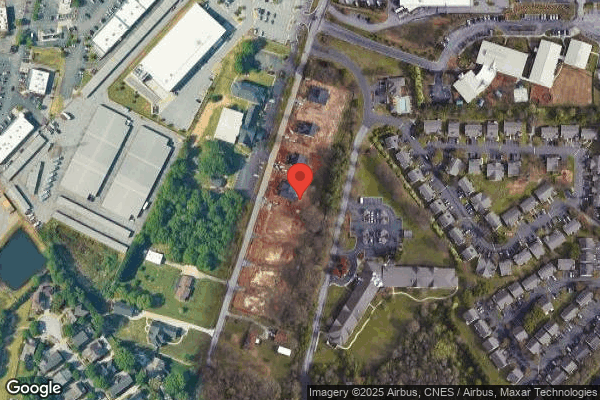
35 Southpointe Drive, Greenville, SC 29607 (864) 288-1415
For profit - Corporation 120 Beds FUNDAMENTAL HEALTHCARE Data: November 2025 2 Immediate Jeopardy citations
Trust Grade
16/100
#137 of 186 in SC
Last Inspection: March 2025

Within standard 12-15 month inspection cycle. Federal law requires annual inspections.

Overview

Southpointe Healthcare and Rehabilitation has received a Trust Grade of F, indicating significant concerns about their care quality. Ranking #137 out of 186 facilities in South Carolina places them in the bottom half, and #17 out of 19 in Greenville County suggests that only one nearby option is better. The facility has a trend of improving, having reduced issues from three in 2024 to none in 2025. However, staffing is a weakness, with a rating of 2 out of 5 stars and a concerning turnover rate of 58%, well above the state average of 46%. Additionally, they incurred $25,603 in fines, which is higher than 75% of other facilities in South Carolina, indicating recurring compliance issues. There are serious concerns about safety, including incidents where oxygen cylinders were not stored properly and a case of mental abuse involving staff members recording a resident against their will. Overall, while there are some improvements, the facility has significant weaknesses that families should consider carefully.

Trust Score
F
16/100
In South Carolina
#137/186
Bottom 27%
Safety Record
High Risk
Review needed
Inspections
Getting Better
3 → 0 violations
Staff Stability
⚠ Watch
58% turnover. Above average. Higher turnover means staff may not know residents' routines.
Penalties
⚠ Watch
$25,603 in fines. Higher than 79% of South Carolina facilities, suggesting repeated compliance issues.
Skilled Nurses
⚠ Watch
Each resident gets only 15 minutes of Registered Nurse (RN) attention daily — below average for South Carolina. Fewer RN minutes means fewer trained eyes watching for problems.
Violations
⚠ Watch
25 deficiencies on record. Higher than average. Multiple issues found across inspections.
★★☆☆☆
2.0
Overall Rating
★★☆☆☆
2.0
Staff Levels
★★★☆☆
3.0
Care Quality
★★☆☆☆
2.0
Inspection Score
Stable
2024: 3 issues
2025: 0 issues

The Good

  • Full Sprinkler Coverage · Fire safety systems throughout facility
  • No fines on record

Facility shows strength in fire safety.

The Bad

2-Star Overall Rating

Below South Carolina average (2.8)

Below average - review inspection findings carefully

Staff Turnover: 58%

12pts above South Carolina avg (46%)

Frequent staff changes - ask about care continuity

Federal Fines: $25,603

Below median ($33,413)

Moderate penalties - review what triggered them

Chain: FUNDAMENTAL HEALTHCARE

Part of a multi-facility chain

Ask about local staffing decisions and management

Staff turnover is elevated (58%)

10 points above South Carolina average of 48%

The Ugly 25 deficiencies on record

2 life-threatening
Sept 2024 1 deficiency
CONCERN (D) 📢 Someone Reported This

A family member, employee, or ombudsman was alarmed enough to file a formal complaint

Potential for Harm - no one hurt, but risky conditions existed

Infection Control (Tag F0880)

Could have caused harm · This affected 1 resident

**NOTE- TERMS IN BRACKETS HAVE BEEN EDITED TO PROTECT CONFIDENTIALITY** Based on observations, record review, interviews, facility policy and the Department of Health and Human Services Centers for Me...

Read full inspector narrative →
**NOTE- TERMS IN BRACKETS HAVE BEEN EDITED TO PROTECT CONFIDENTIALITY** Based on observations, record review, interviews, facility policy and the Department of Health and Human Services Centers for Medicare & Medicaid Services pathway, the facility failed to maintain infection prevention and control practices for 1 of 1 residents reviewed for colostomy care, Resident (R)1. Findings include: Review of the Department of Health and Human Services Centers for Medicare & Medicaid Services Infection Prevention, Control & Immunizations Pathway, dated 8/2024 Enhanced Barrier Precautions (EBP): EBP use is evaluated when investigating specific care activities, such as wound care, enteral feeding, urinary catheter care, etc. EBP are indicated during high contact care activities for residents with infection or colonization with a CDC targeted MDRO (when contact precautions do not apply) or for any resident who has a chronic wound and/or indwelling medical device.High-contact resident care activities include dressing, bathing/showering, transferring, toileting, providing hygiene, changing linens or briefs, device care or use: central line, urinary catheter, feeding tube, tracheostomy/ventilator, or wound care: generally, for residents with a chronic wound(s), not skin breaks or tears covered with an adhesive bandage (e.g., Band-Aid) or similar dressing. Review of a facility policy titled Infection Prevention and Control Policies and Procedures. Subject: Transmission Based/Standard Precautions, and Enhanced Barrier Precautions. Policy: 4. Health care workers will implement enhanced barrier precautions according to policy with additional measures to protect residents and staff from Multidrug-resistant Organisms (MDRs). MDROs refers to microorganisms predominantly bacteria that are resistant to one or more classes of antimicrobial agents. Procedures: Enhanced Barrier Precautions (EBP) 1. Enhanced Barrier Precautions expand the use of PPE (gowns and gloves) during high-contact resident care activities that provide opportunities for transfer of MDROs to staff hands and clothing. A. EBP will be implemented for All residents with the following: 2) Wounds and/or indwelling medical devices (central lines, urinary catheter, feeding tube, tracheostomy/ventilator) regardless of MDRO colonization status. B. EBP will be implemented during the following high-contact resident care activities: . 4) providing hygiene, 6) changing briefs or assisting with toilet, 7) device care or use: central lines, urinary catheter, feeding tube, tracheostomy/ventilator. C. EBP requires the following PPE: 1) gloves, 2) gown, 3) face protection if performing activity with risk of splash or spray .F. The facility will post clear signage on the door or wall outside of the room indicating the type of precautions and required PPE (gowns and gloves). G. The facility will post signage that clearly indicates the high-contact resident care activities that require the use of gown and gloves. H. The facility will provide gowns and gloves immediately outside of the resident's room .J. The facility will provide education to the facility staff on the implementation and procedure for EBP . Review of R1's Electronic Medical Record (EMR) revealed R1 was admitted to the facility on [DATE] with diagnoses including but not limited to: Other lack of coordination, muscle weakness (generalized), cerebral palsy, unspecified, restlessness and agitation, other symptoms and signs involving appearance and behavior, colostomy status, anxiety disorder, unspecified, GERD, irritant contact dermatitis due to friction or contact with body fluids, unspecified, gastrostomy status, crohn's disease, unspecified, without complications, other symptoms and signs involving cognitive functions and awareness and depression, unspecified. Review of R1's Quarterly Minimum Data Set (MDS) with an Assessment Reference Date (ARD) date of 07/04/2024 revealed a Brief Interview for Mental Status (BIMS) score of 14 out of 15, indicating R1 has intact cognition. Review of R1's Physician Order documented, Clean area around colostomy stoma and abdomen with soap and water, apply stoma powder to irritated open skin around stoma, gently brush away excess powder with hand, then spray area with skin prep spray or can dab area with skin prep pad to make area tacky, then apply colostomy wafer and bag. replace as needed Twice A Day 07:00 AM - 07:00 PM, 07:00 PM - 07:00 AM, and Enhanced Barrier Precaution with start date of 04/18/24. Review of R1's Care Plan documented, Problem: Resident is on enhanced barrier precautions r/t peg tube and ileostomy with start date 06/13/2024. Goal(s): Resident will have no signs or symptoms of infection r/t peg tube site and ostomy site with target date: 10/10/2024. Approach: Use enhanced barrier precautions during peg tube site care and ostomy appliance care and changing appliance, Use universal precautions at all times and specifically EBP (enhanced barrier precautions) during routine care when site/appliance will be exposed during care, Use enhanced barrier precautions cart set up on unit for supplies, Enhanced Barrier precautions means always wearing gloves, gown if needed during personalized care, bathing, dressing changes, toileting, wound care where you are specifically touching resident for care. Serving food trays, educations and answering call light does not call for EBP with start date of 06/13/2024. During an observation and interview on 09/23/24 at 1:11 PM, the surveyor observed Enhanced Barrier Precautions signage and Personal Protective Equipment (PPE) on R1's door. The surveyor entered R1's room and observed R1 sitting in the wheelchair and Licensed Practical Nurse (LPN)1 getting supplies together. LPN1 was wearing gloves and a face mask. R1 was observed to already have pants down to thighs and shirt up above the abdomen, which LPN1 reported that the resident had completed in preparation after being instructed to go to room for care. R1 transferred himself from wheelchair to bed with standby assistance from LPN1. LPN2 entered the room to assist. LPN1 stated that the resident had an ostomy clinic appointment at 2:00 PM. When asked about the ostomy site, LPN1 stated the dressing was about to be changed because it does not stick on the reddened irritated skin. LPN2 stated that the only time the skin seemed to improve was when the resident returned from the last hospitalization where he was receiving TPN. LPN2 reported that several things had been tried but nothing seemed to help. LPN2 was observed wearing only a face mask and gloves. The surveyor informed LPN1 and LPN2 that they would need to talk more once the care was completed. During an observation and interview on 09/23/24 at 1:18 PM, the surveyor re-entered the room to ask about the Enhanced Barrier Precautions signage noted on the door after observing care being provided with only a face mask and gloves. LPN2 stated that they had not gotten used to the new state law and should be wearing a gown. LPN2 went to obtain a PPE gown for both nurses providing care. During an interview on 9/23/24 at 1:29 PM with Certified Nursing Assistant (CNA)1, she reveal the resident will pick and pull at the ostomy site/bag often. CNA1 reported that care has to be provided multiple times during the shift with an average of 2-3 times. When CNA1 is made aware of the need to have ostomy care provided, the nurse is notified. Prompt care is given due to leaking feces. CNA1 will assist the nurse. CNA1 confirmed that Enhanced Barrier Precautions required the use of gown, gloves, mask related to ostomy care. During an interview on 9/23/24 at 1:34 PM with LPN1 revealed that the resident goes for ostomy care at a clinic due to the rash making it hard for the dressing to stick. LPN1 reported that the ostomy was changed this morning during the medication pass and had instructed LPN2 to meet in R1's room after being notified of needing care provided for the second time today. LPN1 reported that R1 will communicate needs but since R1 is independent, moves a lot, and transfers independently, it makes it challenging to keep the bag secure. It was reported that on an average of 2-3 times a shift, care is provided. LPN1 denied having any knowledge of family having concerns regarding neglectful care. When asked about the Enhanced Barrier Sign on the R1's door, it was reported that it was in place related to having a colostomy. LPN1 admitted that a gown should have been applied as the precautions included gown, gloves, and mask during care and it had been omitted related to being in the moment and rushing to get R1 ready to leave for the 2 pm appointment. During an interview on 9/23/24 at 1:40 PM, R1 stated that care is provided by the staff for the colostomy upon request. There were no concerns voiced related to not being able to get the assistance needed. During an interview on 09/23/24 at 2:59 PM the Director of Nursing (DON) stated that the expectations related to Enhanced Barrier Precautions included that staff were to wear PPE anytime care is being provided such as during ostomy care. The PPE required will be according to what is listed on the sign and staff have been educated to the requirement.
Apr 2024 1 deficiency 1 IJ
CRITICAL (J) 📢 Someone Reported This

A family member, employee, or ombudsman was alarmed enough to file a formal complaint

Immediate Jeopardy (IJ) - the most serious Medicare violation

Free from Abuse/Neglect (Tag F0600)

Someone could have died · This affected 1 resident

**NOTE- TERMS IN BRACKETS HAVE BEEN EDITED TO PROTECT CONFIDENTIALITY** Based on review of facility policy, record review, interviews, and review of video footage, the facility failed to protect Resid...

Read full inspector narrative →
**NOTE- TERMS IN BRACKETS HAVE BEEN EDITED TO PROTECT CONFIDENTIALITY** Based on review of facility policy, record review, interviews, and review of video footage, the facility failed to protect Resident (R)1 from mental and verbal abuse for 1 of 3 residents reviewed for abuse. Specifically, 2 (two) Certified Nursing Assistants (CNA)s video recorded their interaction with R1 and posted the video to social media. On 04/12/24 at 12:45 PM, the survey team provided the Administrator with a copy of the CMS Immediate Jeopardy (IJ) Template and informed the facility IJ existed as of 04/09/24. The IJ was related to 42 CFR 483.12 - Freedom from Abuse, Neglect, and Exploitation. On 04/12/24 at 1:19 PM, the facility provided an acceptable IJ Removal Plan. On 04/12/24, the survey team, validated the facility's corrective actions and determined the facility put forth good faith attempts to address the non-compliance. The IJ is considered at Past Non-Compliance as of 04/10/24. An extended survey was conducted in conjunction with the Complaint Survey for non-compliance at F600, constituting substandard quality of care. Findings include: Review of the facility policy titled Dress Code/Phone Policy Updates updated on December 2019, documented, Phones/Social Media/Misc: 1) No using personal mobile phones while in patient care/reception areas 3) No pictures of patients/residents other than as part of activity where legal disclosures are signed. 7) No posting of patient information on social media sites. Review of the facility undated Employee Handbook, documented, Telephone Use Taking photographs or recordings of a resident and/or his/her private space without a resident's or designated representative's written consent is a violation of the resident's right to privacy and confidentiality. Review of the facility policy titled Organizational Ethics Abuse, Neglect, Exploitation, or Mistreatment with an email revision date of 10/23/19, documented, Policy 7. The facility strictly prohibits staff from taking or using photographs or recordings obtained in any manner on any type of device (e.g , camera, smart phone or other electronic device) that would demean or humiliate a patient or resident. Definitions as defined by CMS section 483.5: 1. Instances of abuse of all residents, irrespective of any mental or physical condition, cause harm, pain or mental anguish. It includes verbal abuse, sexual abuse, physical abuse, and mental abuse including abuse facilitated or enabled through the use of technology. Willful, as used in this definition of abuse, means the individual must have acted deliberately, not that the individual must have intended to inflict injury or harm. 5. Mistreatment means inappropriate treatment or exploitation of a resident. Component IV: Identification 2. Neglect is the failure to provide goods and services or treatment and care necessary to avoid physical harm, mental anguish, or mental illness. Types of abuse include BUT ARE NOT LIMITED TO: B. Mental Abuse: 1) Humiliation 2) Harassment 5) Intentional disrespect or disregard for an individual's right to privacy and dignity as it relates to their person and property. This may include but is not limited to photographing or recording video or audio of a patient/resident or their personal environment or property without consent. D. Verbal abuse includes any use of: 1) Oral language Review of R1's Face Sheet revealed R1 was admitted to the facility on [DATE], with diagnoses including but not limited to: dementia, chronic obstructive pulmonary disease, anxiety disorder, need for assistance with personal care, dysphagia, cognitive communication deficit, and major depressive disorder. Review of R1's Quarterly Minimum Data Set (MDS) with an Assessment Reference Date (ARD) of 02/08/24, revealed a Brief Interview for Mental Status (BIMS) was not conducted due to R1 being rarely/never understood. Further review of the MDS, under section GG-Functional Abilities and Goals, revealed R1 is dependent on staff (helper does ALL of the effort. Resident does none of the effort to complete the activity. Or, the assistance of 2 or more helpers is required for the resident to complete the activity) for eating, oral hygiene, toileting hygiene, shower/bathe self, upper body dressing, lower body dressing, putting on/taking off footwear, and personal hygiene. Review of R1's Care Plan with a problem start date of 08/16/23, documented, [R1] is dependent on staff for meeting emotional, intellectual, physical, and social needs. Further review of the Care Plan revealed a Care Plan with a problem start date of 06/03/22, documented, [R1] requires extensive to total assist with ADL's [activities of daily living] due to confusion and weakness. Another Care Plan with a problem start date of 11/04/21, documented, [R1] is at risk for complications related to impaired communication and cognition. The goal for this Care Plan stated, [R1's] dignity and self-esteem will be preserved and quality of life improved by minimizing risk associated with cognitive and communication impairment . Review of video footage provided by the facility, revealed text at the bottom of the video which read, Southpointe Healthcare and Rehabilitation Greenville, SC. The text at the top of the video revealed a name (later identified as CNA2) and the time of 10:29. Further review of the video footage revealed CNA1 and CNA2 (later verified by the Administrator and Director of Nursing) mocking and laughing at R1. CNA1 could be heard stating, we ain't got no wee wee for you. CNA2 begins to laugh out loud at the remark made by CNA1. R1 could be heard yelling and telling the CNAs to get out. R1 continues to yell unintelligibly through the remainder of the video. At one point, the video shows R1, with a linen covering her upper body and head. R1's legs were visible from the bottom of the linen and were kicking as if R1 was in distress. CNA2 continues to laugh out loud. CNA2 stated, I bought you a fresh blanket. CNA1 responded, . if you yell, I'm going to take it back . CNA2 can be seen exiting R1's room. Review of a Witness Statement dated 04/09/24, written by the Director of Nursing (DON), revealed at 10:30 PM, I received a phone call from Social Services Director about a possible video that was made by possible staff members. At 10:45 PM, I received a call from Human Resources that the video was received and I needed to call and suspend the staff involved. At 10:50 PM, I called to the facility and spoke with [CNA2], I asked him who was inside the room with him when he made that footage on the self-deleting app. He stated nobody. I then made him aware that he was suspended pending investigation. He hung up the phone. At 10:56 PM, I called back to facility and spoke with [Licensed Practical Nurse], I asked her who was assigned to [R1] she stated [CNA1]. I asked to speak with her. Once on the phone I asked [CNA1] was she inside of the room with [CNA2] when he made the video on the self-deleting app and she stated yes ma ' am. I then made her aware that I was so disappointed in her and that I would have to suspend her at this time pending investigation. She stated ok. Review of a Witness Statement signed on 04/11/24, by the Administrator, revealed, On 04/09/24, I received a call at 10:52 PM from the DON. She explained that she was notified by the Social Worker there was video that had been posted on social media of two employees and the video showed the employees in a resident room and the resident could be seen . Review of [local police department] County Sheriffs Office Victim/Witness Assistance Program dated 04/10/24, revealed the local police department conducted an investigation related to Abuse Vulnerable Adult. Review of a Suspension Form dated 04/09/24, revealed Certified Nursing Assistant (CNA)1 was suspended Due to an allegation of abuse, employee was heard on a video that was posted on social media, the employee could be heard telling the resident we don't have a wee wee for. Employee could also be heard saying stop yelling. DON [Director of Nursing] notified employee by phone that she was being suspended pending an investigation. Review of a Termination Form dated 04/10/24, revealed CNA1 was terminated from employment due to gross misconduct. Further review revealed CNA1 was terminated for Employee Termed for Resident Abuse. Review of a Suspension Form dated 04/09/24, revealed CNA2 was suspended Due to allegation of abuse. Employee was seen in a video while another CNA was providing care. This video was posted on social media. [CNA2] was heard/seen mocking the resident who has diagnosis of dementia. The video had the facility name shown. The employee was notified by the DON that he was being suspended pending an investigation. Review of a Termination Form dated 04/10/24, revealed CNA2 was terminated from employment due to gross misconduct. Further review revealed CNA2 was terminated for Employee Termed for Resident Abuse. Multiple attempts were made to contact CNA2, but were unsuccessful. During an interview on 04/12/24 at 11:58 PM, the DON stated, I got a call Tuesday night from Social Service Director and she said there is possibly a video of a staff of ours. But she did not have the actual footage. Somehow she got the footage and notified HR, and HR called me stating they got the footage and to suspend the CNAs. I came on site and saw the video and identified the male CNA. I questioned the male CNA and he said he was alone, I told him he was suspended and he hung up the phone. I talked to the nurse on duty and she verified [CNA1] was the other CNA. [CNA1] stated she was in the room with [CNA2] when he took the video. I informed her she was suspended. I notified everyone. During an interview on 04/12/24 at 12:28 PM, CNA1 stated, unfortunately I cannot talk about it without my attorney present. During an interview on 04/12/24 at 1:18 PM, Social Services (SS) stated, I got a call from a member stating I need to see something. The member wanted to remain anonymous. She facetimed me and showed me the video that was on Snapchat (a social media platform). After I saw the video, I called the DON and HR. I was able to identify who was in the video and I saw the patient. I knew the staff member by face but not by name. I initially thought it was agency, and I knew he was in the building. On 04/12/24 at 1:19 PM, the facility provided a removal plan of the IJ which included: Alleged perpetrators suspended pending investigation immediately upon discovery. Head to toe completed on identified Resident #1 on 4-9-24 with no negative outcomes. Psychosocial evaluation completed on resident by licensed social worker on 4-10-24. Resident #1 was referred to psychiatry and psychology for follow up. A review of the 24 hour report and facility activity report was completed on 4-10-24 by the Director of Nursing beginning 4-9-24 through 4-10-24 to identify possible allegations of abuse or neglect. No concerns identified at this time. The Administrator and Director of Nursing will be re-educated by the Clinical Consultant on Abuse and Neglect policy including: -Identification of abuse or neglect, by observable and objective evidence, witness reports of unusual occurrence or patterns or trends of potential abuse or neglect -Abuse is the willful infliction of injury unreasonable confinement, intimidation, or punishment with resulting physical harm, pain, or mental anguish. Abuse also includes the deprivation by an individual of goods or services that are necessary to maintain physical, mental and psychosocial wellbeing. It includes verbal abuse, sexual abuse, physical abuse, and mental abuse -Neglect is the failure to provide goods and services or treatment and care necessary to avoid physical harm, mental anguish or mental illness -Immediate identification and removal of the alleged perpetrator -Identification and assessment of the alleged victim -Reporting immediately to State Survey and Certification agency -Resident dignity -HIPPA -Cellphone usage in the facility and Social Media usage in the facility. This reeducation was completed on 4-10-2024 Facility Staff were re-educated by the Administrator on 4-9-24 Abuse, Neglect and Misappropriation policy including: -Identification of abuse or neglect, by observable and objective evidence, witness reports of unusual occurrence or patterns or trends of potential abuse or neglect -Abuse is the willful infliction of injury unreasonable confinement, intimidation, or punishment with resulting physical harm, pain, or mental anguish. Abuse also includes the deprivation by an individual of goods or services that are necessary to maintain physical, mental and psychosocial wellbeing. It includes verbal abuse, sexual abuse, physical abuse, and mental abuse -Neglect is the failure to provide goods and services or treatment and care necessary to avoid physical harm, mental anguish or mental illness -Immediate identification and removal of the alleged perpetrator -Identification and assessment of the alleged victim -Reporting immediately to Facility Abuse Coordinator, Director of Nursing, and Social worker regardless of time of day Facility Staff were re-educated by the Administrator on 4-9-24 including -Process of reporting -Resident dignity -HIPPA -Cellphone usage in the facility and Social Media usage in the facility. This reeducation began immediately and will be completed by 4-12-24. Any staff not receiving this information prior to this date will receive prior to next scheduled shift. This education will be presented in New Hire and agency staff orientation. Administrator contacted Regional Ombudsman on 4-10-24. Administrator and Director of Nursing will review incident reports and grievance reports daily for identification of possible allegations of abuse. Members of nursing Management will interview 3 random residents daily for one week, then weekly for three months validating residents feel safe and have no care concerns. The results of this monitoring will be presented to the Quality Assurance/Performance Improvement Committee for a period of three months for review and recommendation. Any identified concerns will be addressed at the time of discovery. Human Resources will interview 3 random employees daily for one week, then weekly for three months for compliance with Abuse, Neglect, Misappropriation, resident dignity, process of reporting, resident dignity, HIPPA, cellphone usage in the facility and Social Media usage. Ad Hoc QAPI was held on 4-10-24. The Medical Director was notified of the Immediate Jeopardy on 4-12-24. Allegation of Compliance- 4-10-24.
Feb 2024 1 deficiency
CONCERN (D) 📢 Someone Reported This

A family member, employee, or ombudsman was alarmed enough to file a formal complaint

Potential for Harm - no one hurt, but risky conditions existed

Deficiency F0692 (Tag F0692)

Could have caused harm · This affected 1 resident

Based on record review and review of facility's weight policy, titled Weighing the Resident, the facility failed to provide documentation that Resident (R)1 had a 5 % or more weight loss with reviews ...

Read full inspector narrative →
Based on record review and review of facility's weight policy, titled Weighing the Resident, the facility failed to provide documentation that Resident (R)1 had a 5 % or more weight loss with reviews by facility's dietitian regarding nutritional status with recommendations for interventions for 1 of 1 resident reviewed for weight loss. Findings include: Review of the facility policy titled, Weighing the Resident with a revision date of 5/5/23 indicates; 3. Record all weights on the Monthly Weight form or per facility protocol. 4. If there is an actual 5% or more gain or loss in one month, notify the patient/resident/family, physician, and the Nutrition/Culinary Services Director. Document this notification per facility protocol. 5. The facility dietitian reviews the patient's/resident's nutritional status and makes recommendations for intervention in the nutritional progress notes if significant weight change is noted. 6. Review significant, unplanned changes and insidious gradual weight loss or gain trends in weights at the weekly Long-Term Care Coordination meeting. 7. Update the plan of care with goals and approaches/ interventions listed. R1 was admitted to facility on 2/28/23 with diagnoses including, but not limited to: dementia, congestive heart failure, type 2 diabetes, chronic kidney disease and hypertension. Review of an unspecified Minimum Data Set (MDS) with an Assessment Reference Date (ARD) of 11/28/23 indicated R1 had a Brief Interview Mental Status (BIMS) score of 9, indicating mild cognitive impairment. A review of R1's medical record revealed that on 7/7/23, R1 weighed 214 pounds. On 8/4/23, R1 weighed 187 pounds. On 8/28/23, R1 weighed 179.8 pounds and on 11/27/23 weight was 154.1 pounds. Review of the dietary notes revealed there was no dietary note addressing significant weight changes with recommendations for interventions. The medical record revealed the last dietary note for R1 was date 3/20/23. A review of R1's care plan revealed: Resident with weight fluctuation related to dialysis. Interventions: Encouragement of nourishment and fluids/fluid restrictions. A review of R1's progress notes dated 6/19/23 revealed, R1 continues on dialysis, weight continues to fluctuate due to Lymphedema improving, physician and registered dietitian made aware. During an interview with the Director of Nursing (DON) on 2/8/24 at 2:40 PM, she stated, She was the guardian angel for R1, and she spoke with R1's daughter daily about R1's care needs. The DON stated that R1 had Lymphedema when he was admitted , and he lost a great deal of weight due to the fluid loss. The resident is also a dialysis patient, and his weight fluctuates. During an interview with the Administrator on 2/8/24 at 2:45 PM, the Administrator stated that R1 had stopped eating. He was difficult to care for and he frequently refused care, include turning and positioning. R1 was frequently non-compliant with dialysis and all refusals were care planned. The Administrator stated that R1's daughter was updated daily on R1's behavior and condition. The Administrator stated there was not a documented dietary note with interventions or recommendations regarding R1's significant weight loss. The Administrator stated that R1 was started on an appetite stimulant on August 25, 2023 and was also on a dietary supplement for weight loss. A review of R1's Physician orders and Medication Administration Records (MARs) revealed R1 was not receiving a dietary supplement or ordered for one.
Jul 2023 11 deficiencies 1 IJ (1 affecting multiple)
CRITICAL (K) 📢 Someone Reported This

A family member, employee, or ombudsman was alarmed enough to file a formal complaint

Immediate Jeopardy (IJ) - the most serious Medicare violation

Accident Prevention (Tag F0689)

Someone could have died · This affected multiple residents

**NOTE- TERMS IN BRACKETS HAVE BEEN EDITED TO PROTECT CONFIDENTIALITY** Additional findings include A review of a facility policy titled, Safety and Health Policies and Procedures, dated 11/01/2018, i...

Read full inspector narrative →
**NOTE- TERMS IN BRACKETS HAVE BEEN EDITED TO PROTECT CONFIDENTIALITY** Additional findings include A review of a facility policy titled, Safety and Health Policies and Procedures, dated 11/01/2018, indicated, General Oxygen Safety, 1. Oxygen cylinders shall be stored in racks with chains, sturdy potable carts, or approved stands. 8. Oxygen cylinders shall not be dragged or slid across floors. 10. Oxygen cylinders shall never be left freestanding. Also indicated while at work, use good judgement regarding safety and that all times remember, an accident/injury cannot be undone. A review of the Face Sheet indicated the facility admitted R40 with diagnoses that included sepsis, hypokalemia, peripheral vascular disease (PVD), difficulty walking and lack of coordination. The quarterly MDS with an ARD of 04/12/2023, revealed R40 had a BIMS score of 15, which indicated the resident was cognitively intact. The resident was independent with bed mobility, eating and toileting. On 07/09/2023 at 12:00 PM, R40 was observed in their room with an oxygen cylinder at doorway leaning against the wall without being placed in a stand or secured from tipping over. Oxygen tubing was still attached to the oxygen cylinder and loosely wrapped around the cylinder and concentrator. During a concurrent observation and interview on 07/09/2023 at 12:00 PM, R40 was observed sitting in a wheelchair at bedside with the arm rest on the wheelchair raised up high with resident's arms resting on the arm rest at chest level. R40 stated that the arm rests were loose. R40 showed surveyor how the arm rests were loose and moved back and forth freely. R40's hips were pushing against the arm rests. R40 stated their hips hurt because the wheelchair was too small. During an interview on 07/09/2023 at 1:35 PM, Certified Nursing Assistant (CNA)3, stated that the oxygen cylinder was not supposed to be in the resident's room unsecure and was a hazard. During an interview on 07/09/2023 at 1:45 PM, LPN1, stated she was called in to work and that she was the one that removed the cylinder from the resident's room. She stated that was a hazard because the oxygen cylinder was not on a stand and was leaning against the wall. During an interview on 07/12/2023 at 12:07 PM, the Social Service Director (SSD) stated that she was not aware of problems with R40's wheelchair and that she would let therapy know so that R40 could be evaluated. During an interview on 07/12/2023 at 12:21 PM, LPN1, stated that she checked the wheelchair and seen the arm rest. She stated the arm rests were too high for R40's stature, and the wheelchair was too tight. She stated that she was going to check to see if they have other arm rest available to fit R40. During an interview on 07/12/2023 at 12:32 PM, the Director of Nursing (DON) stated that she expected oxygen cylinders to be in a holder or secured. She stated that she was not aware of R40's wheelchair and had not evaluated it herself. She stated therapy was responsible for measuring wheelchairs for the resident and expected a resident's wheelchair to fit appropriately and to be in a safe operating manner. During an interview on 07/12/2023 at 1:04 PM, the Administrator (ADM) stated that oxygen cylinders should be secured in a cart or on a stand and not leaning up against the wall unsecured. She stated that when an oxygen cylinder was not being used the oxygen cylinders should be put in the oxygen storage closet. She stated that she did not know about R40's wheelchair. She stated she expected oxygen cylinders to be stored properly. She expected residents' wheelchairs to be maintained safe and fit properly. A review of R71's Face sheet revealed the facility admitted the resident with diagnoses which included, myasthenia gravis, insomnia, opioid use, recurrent depressive disorders, supraventricular tachycardia, gastro-esophageal reflux disease without esophagitis, fusion of spine cervical region, and mixed hyperlipidemia. A review of the admission Minimum Data Set (MDS) with an Assessment Reference Date (ARD) of 04/19/2023, revealed R71 had a Brief Mental Status (BIMS) score of 15, indicating the resident was cognitively intact. A review of R71's comprehensive care plan initiated 04/19/2023 revealed there was no care plan to address the resident leaving the facility to go smoke off the property. A review of R71's progress note on 06/15/2023 at 11:50 AM written by the social worker (SW) stated, SW and Assistant Director of Nursing (ADON) educated resident about signing in and out, also about not having paraphernalia on campus. Also not allowing other residents to hold on to his chair to go up the road. A review of R71's progress note dated 06/19/2023 at 05:55 AM written by Licensed Practical Nurse (LPN)4 revealed, Resident's room had strong odor of cigarette smoke. When questioned, resident admitted to 'burning something'. When asked about smoking a cigarette he stated, that's what I burned. Resident refused to give Nurse his lighter. Informed resident that I would have to report the incident to management. A review of R71's progress note dated 06/19/2023 at 09:04 AM written by the SW revealed, Staff contacted SW about resident smoking in room and would not give cigarette and lighter to the staff. SW will talk with administrator about plan. A review of R71's progress note dated 06/19/2023 at 03:16 PM written by the SW revealed, Administrator met with resident to educate that facility is smoke/vape free. Went over that resident has to sign in and sign out. No paraphernalia allowed on campus including alcohol. Resident was also explained that a warning letter and 30-day dc notice will be given if not in compliance. Review of R71's Release of Responsibility for leave of absence Signing Out revealed the following: 5/26/23 1:43 PM 5/30/23 3:21 PM 6/2/23 (no time written by date) 6/3/23 2:33 PM 6/4/23 3:24 PM 6/7/23 1:56 PM 6/8/23 2:27 PM 6/9/23 2:43 PM 6/15/23 2:23 PM 6/16/23 2:18 PM 6/20/23 2:44 PM 6/21/23: 4:57 PM 6/22/23 12:27 PM 6/23/23 3:45 PM 6/28/23 3:30 PM 6/30/23 2:44 PM 7/1/23 5:23 PM 7/3/23 11:47 AM 7/7/23 2:40 PM The Signing IN revealed dates and times of: 5/6/23 3:25 PM 5/26/23 2:30 PM was struck out. 6/25/23 2:30 PM 6/1/23 9:21 PM An interview with R71 on 07/10/2023 at 9:43 AM revealed the resident left the facility a few times a day, unsupervised. R71 stated, I go outside and ride around. I sign in and out at the front desk. I don't smoke cigarettes; I only smoke black and mild. I don't buy packs of anything; I only buy one and I smoke them before I come back to the facility. I'm usually back by dinnertime. An interview with the SW on 07/10/2023 at 10:53 AM revealed the SW worked at the facility since 2014. The SW stated R71 was one of the smokers in the facility. She also stated, The smokers have been educated to sign themselves in and out and not have lighters or paraphernalia on their person. We are a smoke free facility, and we have residents who are non-compliant. The resident had a lighter and refused to give it to a staff member. Resident was educated on the fact that he could have smoking paraphernalia on them, and they would be given a 30 day notice if behavior persisted. The resident was re-educated on 7/10/23. During an interview on 07/10/2023 at 11:02 AM, Licensed Practical Nurse (LPN)4 stated, I was doing a med pass and I went passed the residents' room and I smelled the cigarette smoke. When I walked into R71's room I smelled the smoke. I asked the resident were they smoking, and they stated they had just lit something. I asked was it a cigarette and they stated yes, but I wasn't smoking. I asked for their lighter and cigarette and they refused to give them to me. I informed them I would let the administrator know and they didn't care. I made the facility aware, and the resident still refused to give them to anyone. This was only incident I've had with this resident with smoking. It's hard to keep up with the residents who smoke. They will come in and leave back out. It's hard to keep up with the smoking resident's when doing a medication pass. I have come to work and they're on the corner of the street. They could easily get hurt with the traffic on the roads. During an interview with the Administrator on 07/10/23 at 3:30 PM, the Administrator stated that the facility is a non-smoking facility and therefore the facility does not complete smoking assessments. The Administrator also stated that the facility does not care plan for smoking because residents can have therapeutic leave. The facility only has 3 resident that sign themselves out and the residents have decisional capacity. Decisional capacity was what the facility used to determine if a resident can make decisions. The Administrator further revealed that when residents are going out to smoke, the staff try to confiscate any cigarettes or lighters the residents may have. The residents are not always cooperative, and the facility can't search the residents or force the residents because the residents have rights. During an interview on 07/12/2023 at 07:49 AM, the Medical Director (MD) stated the smoking residents have the decisional capacity to sign themselves in and out of the facility. We advise the residents against drinking, smoking, and using illegal substances. We can't chain the residents to the bed. The nurses have been telling me about everything involving the residents smoking. R71 stated we can't stop R71 from going out and smoking. The MD stated R71 stated they don't care what the facility says. The facility has offered smoking cessation and nicotine patches and that doesn't help. The Medical Director states she fears if the facility does not let the smokers sign themselves out, smokers will smoke in their rooms. During an interview on 07/12/2023 at 08:21 AM, the Director of Nursing (DON) stated the facility was a non-smoking facility. The residents who smoked reviewed the smoking policy and know that smoking materials are prohibited in the facility. When we screen residents for smoking history prior to admission. We offer cessation. Because the facility is a non-smoking facility, the facility doesn't complete smoking assessments. The facility can't deem the smokers safe to smoke because that would be violate the facility's policy. The policy says you can't smoke in or around the facility. Residents can sign themselves out if they are decisional. The residents can go off the property. The staff have completed smoking cessation more than once with the smoking residents. The facility can't stop them from smoking when the residents leave the property, but the facility can try to keep them safe when they leave off the property. Social services, the Administrator and the DON have met with the smokers to let them know when they do not comply with the non-smoking rules, they would be given discharge notices. The residents are required to sign in and out of the facility. The facility has asked the residents to check in with the nurse when they come back in the facility and to hand over their smoking material. Although, the facility was a non-smoking facility, the staff should not be the gate keepers for smoking material. Technically, the residents should be taken off the property to smoke and not bring those materials into the facility. Based on interview, observations, record review and review of facility policies the facility failed to protect 3 of 4 sampled residents from accidents and/or accident hazards, Residents (R)99, R70 and R71. On 07/10/23 at 1:25 PM, the Administrator was notified that the facility's failure to protect residents from accidents and/or accident hazards by allowing R99, R70 and R71 to sign out of the facility to smoke and not signing back in the allowing the facility to not having the knowledge of knowing were the residents are located. Furthermore, a vaporizer (inhalation device) was discovered in the possession of R99. Administrator was notified that the allegations constituted Immediate Jeopardy (IJ) at F689, with an effective date of 06/14/23 and the IJ template was presented. On 07/11/23 at 10:38 AM the Administrator provided an acceptable IJ removal plan for F689, the immediacy of the IJ was removed and the IJ was lowered to the scope and severity of E, no actual harm with the potential for more than mini al harm that is not IJ. In addition, the facility failed to ensure a resident's room and wheelchair were free of potential accidents and hazards for R40. Specifically, R40 was observed with an unsecured oxygen cylinder in their room, and a wheelchair that did not fit properly and had unsecured wheelchair arms. Findings Include: Review of policy titled Leaving the Facility in the facility's admission Handbook, revised on 02/2022, revealed that Residents may leave the facility at any time with written permission from their physician. It is essential that you sign-out with the charge nurse or supervisor when you leave the facility and that you check-in with them upon your return. Review of policy titled Smoking Policy in the facility's admission Handbook, revised on 02/2022, revealed that All residents are prohibited from keeping any type of smoking materials in their rooms or on their person. Violations of this policy endanger the health and safety of others at the facility. Review of facility policy titled, Day Outings/Therapeutic Leave of Absences, with a revision date of 10/01/20 states .The LOA must be consistent with the resident's goals for care which are evaluated by means of the Comprehensive Assessment and incorporated into the Comprehensive Plan of Care. Facility staff will document Voluntary Leave Notification and Release of Liability information in the patient's/resident's medical record for use in coordinating day outings/LOAs. Alternatively, the facility may use a log with individual Voluntary Leave Notification and Release of Liability forms for signature that are added to the electronic medical record . Review of R99's admission Minimum Data Set (MDS) with an Assessment Reference Date (ARD) of 04/19/23 revealed a Brief Interview of Mental Status (BIMS) score of 12 out of 15, indicating the resident was moderately, cognitively impaired. Review of R99's care plan revealed that R99 was not care planned to smoke nor for leave of absences as stated in the facility policy. Review of R99's Progress Notes revealed the following : On 06/15/23 SW and ADON educated resident about signing in and out, also about not having paraphernalia on campus. On 06/20/23 3:25 PM Administrator met with resident to educate that facility is smoke/vape free. Went over that resident has to sign in and sign out. No paraphernalia allowed on campus including alcohol. Resident was also explained that a warning letter and 30 day dc notice will be given if not in compliance. On 06/22/23 at 4:08 PM staff reported resident up at store with sign asking for money. resident was educated about riding up the road and other activities. resident continued to go further up road On 07/06/23 at 4:43 PM Resident went LOA after lunch . resident refused to get out of electric chair & stated I need to get my book & find some where else to stay resident went outside without signing himself out On 07/06/23 5:34 PM Resident left building without signing out, resident remained in electric chair. Resident had his walker [NAME] to back of electric chair when he went out the door. On 07/06/23 at 6:12 PM Resident requested PRN oxycodone, given as ordered. Resident was instructed to stay inside for a while after taking to that staff could monitor for safety, resident said he was going to eat food & go out to smoke. On 07/08/23 1:12 AM This resident has been in and out of facility this shift. Staff member located this resident outside in driveway earlier and requested for resident to sign himself out when leaving property, Resident stated that he is looking for another facility to go to because this one is too strict. This writer attempted to reorient resident to safety precautions. Resident resting in bed at this time. Call light in reach. On 07/10/23 . administrator went over sign in and out , not to have lighters, cigarettes/vapes, alcohol, and resident has the right to go to a facility that allows smoking. Resident was also given a warning violation letter with required signature. During an observation of R99's room on 07/10/23 at 9:02 AM revealed R99 lying in bed and a pink vaporizer was lying on the residents bedside table, LPN1 was then notified and confiscated it. During an interview with Licensed Practical Nurse (LPN)1 on 07/10/23 at 9:06 AM, LPN1 stated that she has a bag of confiscated items that they have taken from residents after they had signed themselves out and left the premises. LPN1 then confirmed that residents should be checking with staff before signing themselves in and out. LPN1 stated that R99 is known to leave the facility multiple times per day and that the staff does not always know if he is in or out of the building. During an interview with the Administrator on 07/10/23 at 3:30 PM, she stated that they are a non-smoking facility and therefore they do not do smoking assessments. She also stated that they do not care plan for smoking because residents can have therapeutic leave. The facility only has 3 residents that sign themselves out and they have decisional capacity, which is what the facility uses to determine if a resident has the ability to do so. The Administrator further revealed that when residents are going out to smoke, they try to confiscate any cigarettes or lighters they may have, but the residents are not always cooperative and they can't search them or force them because they have rights. During an interview on 07/12/23 at 07:49 AM, the Medical Director (MD) stated these smoking patients have the decisional capacity to sign themselves in and out of the facility. We advise the residents against drinking, smoking, and using illegal substances. We can't chain the residents to the bed. The nurses have been telling me about everything involving the residents smoking. The resident stated we can't stop him from going out and smoking. He stated he doesn't care what we say. We have offered smoking cessation and we offer nicotine patches and that doesn't help. I fear if they do, we do not let them sign themselves out, they will smoke in their rooms. During an interview on 07/12/23 at 8:21 AM, the Director of Nursing (DON) stated We are a non-smoking facility. The local hospitals know we are a non-smoking facility. Our admission packets have a non-smoking clause in them. The residents review the smoking policy and smoking materials are prohibited in the facility. When we screen residents for smoking history, we offer cessation. Because we are a non-smoking facility, we don't do smoking assessments. We can't deem them safe to smoke because that would be violating our own policy. The policy says you can't smoke in or around the facility. Residents can sign themselves out if they are decisional. They can go off the property and they are aware that they have to go off the property Realistically, there's one way in and one way out. We have completed smoking cessation more than once. We put yellow flags on their chairs for safety, so that cars can see them. The residents take them off. We can't stop them from smoking when they leave the property, but we can try to keep them safe when they leave off the property. They have been given discharge notices. Social services, the Administrator and I have met with them in the facility to let them know if they did not comply with the non-smoking rules, they would be given discharge notices. The residents are supposed to sign in and out. We ask the residents to check in with the nurse when they come back in to hand over your smoking material. Because we are a non-smoking facility, we should not be the gate keeper for smoking material. Technically, the residents should be taken off the property to smoke and not bring those materials into the facility. In the past, family members would take residents out to smoke. The facility admitted R70 on 05/23/2023 with diagnoses including, but not limited to, physical debility, muscle weakness, alcoholic cirrhosis of the liver, muscle wasting and atrophy of the left and right hand, chronic pain, alcohol abuse and nicotine dependence. Review on 07/10/2023 at 12:10 PM of the medical record for R70, revealed sign out sheets for leave of absence starting on 06/14/2023 through 07/09/2023. R70 went out to smoke, signing a leave of absence 40 times during that period of time. He only signed back in 16 times. There is no documentation to ensure the smoking supplies were taken from the resident and secured in a locked area or compartment any of the 40 days. On 06/16/2023, R70 signed out, leave of absence at 9:23 AM to smoke and signed back in on 06/16/2023 at 8:20 PM. On 06/19/2023, R70 signed out, leave of absence to smoke and signed back in at 8:00 PM. Review on 07/10/2023 at 1:25 PM of a form titled, Authorizations, Consents, & Acknowledgements, revealed, Policies. The policies include: Admission, Discharge and readmission Policies. Smoking Policies. Rules and regulations governing resident conduct. Policies/procedures for bringing personal items into the facility and securing personal belongings, valuables and money. Policies and procedures for filing grievances. These are all signed by the resident. Further review of the forms revealed a form titled, Addressing Decisional Capacity, The form is signed by the physician on 04/05/2023 and states, This patient DOES possess the decisional capacity to make healthcare decisions for self. R70 has a BIMS score on a a MDS assessment dated [DATE] of 14 out of 15. Review of R70's medical record revealed no physicians order for R70 to sign out as a leave of absence and smoke. Review on 07/10/2023 at 2:20 PM of the progress notes revealed: Progress note dated: 6/23/23 5:50 AM -Nurse from the Blue Hall Unit brought resident back to the Pink Hall Unit stating that resident had been outside with another resident and that it was after 10:00 PM and that it was time to come in and go to rooms. Resident on Blue Hall Unit came in and went to room. This resident came in but did not come back to the unit. When the nurse brought resident to this unit he was sitting in wheelchair with his head laid over to the side. Resident was unable to hold eyes open. Resident did slightly open eyes when touched on the shoulder with calling out his name. Resident did respond that he had been drinking when asked by co nurse on Pink Hall Unit. Resident urinated on himself when in wheelchair at desk. This is not normal for this resident as he normally uses a urinal. VS taken, DON called and was made aware of situation. On call Nurse Practitioner (NP) called with vital signs given and recount of the situation. NP stated to let resident sleep and monitor resident through the shift. Resident's contact called and made aware of situation. Resident is currently up yelling out this morning. Resident does not remember the events of earlier in shift. Progress note dated: 6/14/23 3:58 AM-Second shift CNA went out to her car and heard someone hollering help at the cul-de-sac in front of facility. CNA told nurse on the other unit and that nurse called this nurse. Walked to cul-de-sac and found resident sitting in his wheelchair. Liquor bottles and beer cans found laying on ground at curb. This nurse asked resident if he had been drinking and resident stated yes. Resident smelled of alcohol. Resident was unable to wheel himself back to facility. Resident had hard time holding eyes open and speech was slurred. Resident normally is able to propel self in wheelchair. Called Nurse Practitioner (NP) on call to notify of resident. Called Assistant Director of Nursing and Director of Nursing and made aware. Vital signs taken and vitals were stable. All bedtime medications held. Resident is currently resting in bed with no further distress noted at this time. Progress note dated: 6/23/2023 06:39 PM-Resident continues with PT/OT, resident has displayed verbal aggressiveness towards staff for unknown cause/reason. Resident currently out of facility. There is no documentation on the form titled, Release of Responsibility for Leave of Absence, that R70 even left the building that day in the afternoon. The removal plan for F689 included: R99, R70 and R71 are currently in the building. R99's vaporizer was removed from his possession with their consent by the Unit Manager and stored in Unit Manager's office. Resident's family notified to obtain vaporizer from the facility. A Review of the Release of Responsibility for leave of absence forms was completed by the Director of Nursing. Residents who are currently signed out were located in the facility and reeducation was provided to residents who sign themselves out regarding signing back in upon return and notifying nurse they have returned on 7/10/23 at approximately 2:30 PM. On 7/10/23 at 11:30 AM, Administrator has spoken with residents who sign themselves in and out and requested any smoking materials be turned into the nurse for secured storage in locked medication areas. Staff- both licensed and non-licensed staff and residents who sign themselves out via leave of absence form will be reeducated by Director of Nursing /Designee on 7/10/23 on the following: o Residents will sign in and sign out with the nurse or facility representative at the nurse's station when they leave the building. o Residents check in with charge nurse or facility representative upon return-facility representative will sign next to resident signature to validate. o Residents are prohibited from keeping any type of smoking materials in their rooms or on their persons. If residents do not surrender smoking materials upon reentry, appropriate discharge planning by Social Services will occur if smoking materials are identified. Any staff not receiving this education on 7/10/23 will receive prior to working the next scheduled shift. This will be presented in New Hire Orientation and for agency staff. The Director of Nursing will randomly interview a minimum of 2 staff and 2 interview residents weekly times 4 weeks then monthly for 2 additional months to validate understanding and compliance with leave of absence sign in/out process. Director of Nursing/designee will review sign out logs twice a shift for 5 days then daily for 3 additional weeks, then monthly for 2 additional months to validate residents remain compliant with signing in and out of the facility. Administrator/designee will round in resident rooms 2 times per day for 5 days, then daily for 3 additional weeks then monthly for 2 additional months to validate there are no smoking materials in residents' rooms or on their persons. Any concerns will be addressed at time of discovery. The Medical Director was notified on 7/10/23 of the Immediate Jeopardy. Ad Hoc Quality Assurance Performance Improvement Meeting was held on 7/10/23 to discuss contents of this plan. Administrator will oversee compliance of this plan for three months.
CONCERN (D) 📢 Someone Reported This

A family member, employee, or ombudsman was alarmed enough to file a formal complaint

Potential for Harm - no one hurt, but risky conditions existed

Resident Rights (Tag F0550)

Could have caused harm · This affected 1 resident

Based on review of the facility policy, observations, interviews, and record review, the facility failed to maintain a resident's dignity during meal service for 1 (Resident (R)40) of 6 residents revi...

Read full inspector narrative →
Based on review of the facility policy, observations, interviews, and record review, the facility failed to maintain a resident's dignity during meal service for 1 (Resident (R)40) of 6 residents reviewed for dignity. Findings include: A review of a facility policy titled Patient/resident Rights, revised 10/01/2020, indicated, the facility employs measures to ensure patient and resident personal dignity, well-being, and self-determination are maintained and will educate patients and residents regarding their rights and responsibilities. The facility treats each resident with respect and dignity. The facility provides care for each resident in a manner that promotes, maintains, or enhances quality of life, recognizing each resident's individuality. A review of a facility policy titled Nutrition Policies and Procedures, revised 08/01/2020, indicated, Subject: Meal Delivery; Policy: Nursing and Culinary staff will work together to enhance the quality of the dining experience. Satisfaction with the dining experience leads to an improved appetite and can enhance quality of life. Procedures: 2. Make every effort to deliver the trays at the same time each day so patients/residents and nursing staff can anticipate the approximate arrival time. 8. Pull trays from the cart in the order they are set up. 10. Pass meals promptly upon tray cart's delivery to the nursing unit. Review of R40's Face Sheet revealed, the facility admitted R40 with diagnoses that included but was not limited to; sepsis, hypokalemia, peripheral vascular disease (PVD), difficulty walking, and lack of coordination. Review of R40's quarterly Minimum Data Set (MDS), with an Assessment Reference Date (ARD) of 04/12/23, revealed R40 had a Brief Interview for Mental Status (BIMS) score of 15 out of 15, which indicated the resident was cognitively intact. Further review of the MDS revealed R40 was independent with bed mobility, eating and toileting. Review of R40's Care plan initiated on 04/18/23, revealed R40 had diabetes and was at risk for hypo-hyperglycemia. Interventions included diet as ordered. Further review of the care plan initiated on 07/20/22, revealed R40 is at nutritional risk due to dysphasia and altered mental status (AMS). Interventions included to encourage intake of food and fluids. Review of R40's Physician Orders for the month of 07/23, revealed an order, dated 04/06/23, for a regular diet. During an observation on 07/11/23 at 8:22 AM, revealed the breakfast meals trays being passed out on the 100 hallway. During an observation on 07/11/23 at 8:35 AM, R40's roommate (R88)'s meal tray was observed in their shared room. R88 was being fed by Certified Nursing Assistant (CNA)4. R40 was observed without a tray and stated that they didn't know why they didn't receive their tray and that they had been waiting for it. During an observation on 07/11/23 at 8:59 AM, R40 was observed in their room still without a meal tray. R88 was done with their meal. CNA4 indicated R88 ate 100 percent of their meal and was finished. During an observation on 07/11/23 at 9:00 AM, revealed all trays on the 100 hall were being picked up from residents that were finished with their trays. During an interview on 07/11/23 at 9:04 AM, Licensed Practical Nurse (LPN)10, stated she did not realize R40 did not receive their breakfast tray and considered it a dignity issue when her roommate received a tray and finish eating and R40 was still waiting for a tray. During an observation on 07/11/23 at 9:11 AM, revealed R40's breakfast meal tray being delivered by the Dietary Manager (DM). During an interview on 07/11/23 at 9:12 AM, the DM stated that R40's meal tray was on the meal cart and that he did not know why they did not receive their tray. The DM stated the staff must have missed passing the tray to them. The DM stated that staff were required to pass trays to residents in the order that they are positioned in the cart. During an interview on 07/12/23 at 12:35 PM, the Director of Nursing (DON) stated the DM was the only one saying R40's meal tray was on the meal cart during a meeting they had, but multiple staff stated they went to ask for the meal tray, and it was not on the meal cart. The DON further stated she expected residents to receive their meal tray and to receive their meal when their roommate received their meal tray. During an interview on 07/12/23 at 1:04 PM, The Administrator stated she expected R40 to receive their tray at the same time as their roommate. She considered it a dignity issue for R40 not to receive their tray, and for not receiving their tray when their roommate received their tray.
CONCERN (D) 📢 Someone Reported This

A family member, employee, or ombudsman was alarmed enough to file a formal complaint

Potential for Harm - no one hurt, but risky conditions existed

Comprehensive Care Plan (Tag F0656)

Could have caused harm · This affected 1 resident

**NOTE- TERMS IN BRACKETS HAVE BEEN EDITED TO PROTECT CONFIDENTIALITY** Based on interviews, record review, and facility policy review, the facility failed to develop a comprehensive person-centered c...

Read full inspector narrative →
**NOTE- TERMS IN BRACKETS HAVE BEEN EDITED TO PROTECT CONFIDENTIALITY** Based on interviews, record review, and facility policy review, the facility failed to develop a comprehensive person-centered care plan for 2 (Resident (R)69 and R71) of 22 residents whose comprehensive care plans were reviewed. Specifically, the facility failed to develop a comprehensive care plan for R69 for a diagnosis of diabetes and R70 for smoking. Findings include: Review of the facility's policy titled, Care Plan Process, Person-Centered Care revised on 05/05/23 indicated, The facility will develop and implement a baseline and comprehensive care plan for each resident that includes the instructions needed to provide effective and person-centered care of the resident that meet professional standards of quality care. 1. A review of R69's Face Sheet revealed the facility admitted the resident with diagnoses which included but was not limited to; type 2 diabetes mellitus, other encephalopathy, gastrostomy status, major depressive disorder, pressure ulcer of other site unstageable, pressure ulcer of left heel unstageable, dementia, diabetic neuropathy, overactive bladder, and chronic diastolic congestive heart failure. A review of a quarterly Minimum Data Set (MDS), dated [DATE], revealed R69 had a Brief Interview for Mental Status (BIMS) score of 5 out of 15 indicating R69 has severely impaired cognition. Further review of the MDS revealed R69 had a diagnosis of diabetes and received insulin injections seven days in the last seven days. A review of R69's Care Plan initiated on 03/30/23, revealed the resident did not have a care plan for diabetes or diabetic care. During an interview on 07/11/23 at 11:22 AM, the MDS coordinator revealed it was the responsibility of the MDS coordinators to develop and update the care plans for each resident. She stated if a resident had a diagnosis of diabetes, then the resident should have a care plan for diabetes. The MDS coordinator stated she was unsure why there wasn't a diabetes care plan for R69 since they had a diagnosis of diabetes. During an interview on 07/11/23 at 11:33 AM, the Director of Nursing (DON) revealed the MDS coordinators were responsible for developing and updating care plans. The DON stated that when a resident had a diagnosis of diabetes, there should be a care plan for diabetes. The DON was unsure why R69 did not have a care plan for diabetes. 2. Review of R70's Face Sheet revealed the facility admitted R70 on 05/23/23 with diagnoses including, but not limited to, physical debility, muscle weakness, alcoholic cirrhosis of the liver, muscle wasting and atrophy of the left and right hand, chronic pain, alcohol abuse and nicotine dependence. Review of R70's Care Plan located in the electronic medical record (EMR), revealed a care plan that did not include smoking with goals and interventions for R70. During an interview on 07/10/23 at 10:00 AM, the Administrator confirmed that there was no care plan for smokers. She stated that the facility is a smoke free facility and the entire campus. She stated, that if a resident goes on leave of absence then the facility would not need to put that on the care plan. During an interview on 07/10/2023 at 1:25 PM with the Director of Nursing, she stated that residents have a right to sign out and go anywhere they want to. She went on to say that there was not need to care plan the 3 smokers for smoking.
CONCERN (D) 📢 Someone Reported This

A family member, employee, or ombudsman was alarmed enough to file a formal complaint

Potential for Harm - no one hurt, but risky conditions existed

ADL Care (Tag F0677)

Could have caused harm · This affected 1 resident

Based on review of facility policy, record reviews and interviews, the facility failed to ensure Resident (R)13 was provided care and services daily related to bathing for 1 of 3 residents reviewed fo...

Read full inspector narrative →
Based on review of facility policy, record reviews and interviews, the facility failed to ensure Resident (R)13 was provided care and services daily related to bathing for 1 of 3 residents reviewed for activities of daily living (ADLs). Findings include: Review of the facility's policy titled Nursing Policies and Procedures, Subject: Activities of Daily Living, Optimal Function, Complete Revision: May 5, 2023 Definition: Activities of daily living (ADL's), refer to tasks related to personal care including grooming, dressing, oral hygiene, transfer, bed mobility, eating, bathing and communication system. Review of R13's Face Sheet revealed the facility admitted R13 with diagnoses including, but not limited to, cellulitis of the right lower limb, candidal stomatities, morbid obesity, and need for assistance with personal care. During an interview on 07/09/23 at 1:23 PM, R13 stated that the facility staff were not providing the care and services she needed for bathing, changing, and to get dressed in clean clothes daily. Review of R13's electronic medical record (EMR) revealed a plan of care that indicated that R13 requires assistance with ADLs. Further review of R13's plan of care revealed R13 is incontinent of bowel and bladder. Review of R13's daily bathing log revealed no documentation indicating R13 received a bath on the following days: 06/3/23, 06/4/23, 06/7/23 , 06/10/23, 06/11/23, 06/15/23, 06/17/23, 06/18/23, 06/19/23, 06/24/23, 06/25/23, 06/28/23, 06/29/23, 07/1/23, 07/2/23, 07/3/23, 07/5/23, 07/6/23, and 07/8/23. During an interview on 07/11/23 at 4:40 PM the Licensed Practical Nurse (LPN) Unit Manager stated, she did not know why this resident was not receiving baths and showers. The LPN Unit Manager further stated she would go in and check on the resident. She was unable to find any additional documentation that R13 had received daily baths.
CONCERN (D)

Potential for Harm - no one hurt, but risky conditions existed

Quality of Care (Tag F0684)

Could have caused harm · This affected 1 resident

Based on review of facility policy, observation, interview, and record review the facility failed to ensure blood glucose was monitored while a resident was prescribed insulin for 1 resident (R69) out...

Read full inspector narrative →
Based on review of facility policy, observation, interview, and record review the facility failed to ensure blood glucose was monitored while a resident was prescribed insulin for 1 resident (R69) out of 3 residents reviewed with a diagnosis of diabetes. Findings include: A review of the facility's policy titled Blood Glucose Monitoring revised on 05/05/23 revealed The facility provides point of care blood glucose monitoring according to standards of practice and infection prevention and control principles. Review of Resident 69's Face Sheet revealed the facility admitted R69 with diagnoses which included but was not limited to; type 2 diabetes mellitus, other encephalopathy, gastrostomy status, major depressive disorder, pressure ulcer of other site unstageable, pressure ulcer of left heel unstageable, dementia, diabetic neuropathy, overactive bladder, and chronic diastolic congestive heart failure. Review of R69's Minimum Data Set (MDS) with an Assessment Reference Date (ARD) of 06/28/23, revealed R69 had a Brief Interview for Mental Status (BIMS) score of 5 out of 15, indicating the resident has severely impaired cognition. Further review of the MDS revealed R69 had a diagnosis of diabetes and received insulin injections seven days in the last seven days. Review of R69's comprehensive care plan, initiated on 03/30/23, revealed the resident did not have a care plan for diabetes or diabetic care. Review of R69's physician orders revealed an order for insulin glargine 18 units once a day dated 03/30/23. An order was dated on 03/29/2023 and discontinued on 05/31/2023 at 12:05 PM for insulin lispro 100 units/ml amount to administer per sliding scale with parameters as follows: If Blood Sugar is less than 60, call MD. If Blood Sugar is 151 to 200, give 2 Units. If Blood Sugar is 201 to 250, give 4 Units. If Blood Sugar is 251 to 300, give 6 Units. If Blood Sugar is 301 to 350, give 8 Units. If Blood Sugar is 351 to 400, give 10 Units. If Blood Sugar is 401 to 450, give 12 Units. If Blood Sugar is greater than 450, give 14 Units. If Blood Sugar is greater than 450, call Nurse Practitioner/Physician Assistant Review of R69's vital sign documentation from May 2023 to July 2023, revealed the last fingerstick blood sugar (FSBS) was documented on 05/31/23 at 11:51 AM, with a result of 117 mg/dl. Review of R69's Medication Administration Record (MAR) from 06/28/23 through 07/11/23 revealed that the resident has received insulin glargine 18 units every day. Review of a physician progress note dated 06/23/23 by the Physician Assistant (PA) revealed, Will monitor FSBS and adjust insulin regimen accordingly. Nursing to notify provider of hypo/hyperglycemia. Review of R69's Basic Metabolic Panel (BMP) lab dated 06/26/23 revealed a blood glucose level of 476 mg/dl During an interview with Licensed Practical Nurse (LPN)1 on 07/10/23 at 9:45 AM, revealed R69 did not have an order for a FSBS. LPN1 stated the FSBS was discontinued due to the resident blood sugars being stable. LPN 1 confirmed the order for FSBS was discontinued on 05/31/2023 when the order for Insulin Lispro was discontinued. LPN1 stated R69 was still on insulin at night and should have an order for a FSBS. LPN1 stated she would call the provider to check on the FSBS order. An order for FSBS twice a day was written on 07/10/2023 at 07:02 PM. During an interview with the PA on 07/11/23 at 11:27 AM, revealed the PA had worked with the facility for five years. The PA stated a resident who is on insulin should have FSBS ordered. The PA stated R69 was no longer on a sliding scale for insulin, but R69 was on insulin at night so she ordered for the staff to check her blood sugars twice a day. The PA reviewed R69's labs when R69's blood glucose levels were 476 mg/dl but didn't order FSBS for the resident. The PA was unable to give a reason why FSBS was initiated after BMP revealed R69's blood glucose levels were 476 on 06/26/2023. During an interview on 07/11/23 at 11:33 AM, the Director of Nursing (DON) revealed residents who receive basal insulin do not necessarily need to get their FSBS completed. The DON stated the decision for FSBS would be for the provider to decide. The DON reviewed a PA progress note dated 06/23/23 indicated Will monitor FSBS and adjust insulin regimen accordingly. Nursing to notify provider of hypo/hyperglycemia. The DON stated after reviewing the PA progress note it seemed as if the PA wanted R69 to have FSBS, but did not order FSBS.
CONCERN (D) 📢 Someone Reported This

A family member, employee, or ombudsman was alarmed enough to file a formal complaint

Potential for Harm - no one hurt, but risky conditions existed

Deficiency F0698 (Tag F0698)

Could have caused harm · This affected 1 resident

**NOTE- TERMS IN BRACKETS HAVE BEEN EDITED TO PROTECT CONFIDENTIALITY** Based on interviews and record review the facility failed to ensure ongoing communication, assessment of the resident's conditio...

Read full inspector narrative →
**NOTE- TERMS IN BRACKETS HAVE BEEN EDITED TO PROTECT CONFIDENTIALITY** Based on interviews and record review the facility failed to ensure ongoing communication, assessment of the resident's condition, and monitoring for complications before and after dialysis treatment for 1 Resident (R)72, of 1 reviewed for dialysis. Findings include: A review of a quarterly Minimum Data Set (MDS), dated [DATE], revealed R72 had a Brief Interview for Mental Status (BIMS) score of 6 out of 15, which indicated the resident had a severe cognitive impairment. The MDS also revealed the resident received dialysis treatments three times a week. Review of R72's comprehensive care plan initiated on 06/23/2023 revealed the resident received dialysis. Interventions to include dialysis three times a week and was at risk for increases shortness of breath, chest pain, nausea and vomiting, itchy skin, and an infected access site. Review of R72's physician's orders dated 03/08/2023 revealed the resident attended hemodialysis on Monday, Wednesday, and Friday with a chair time of 10:45 AM. During record review for R72's dialysis communication and monitoring on 07/10/2023 at 12:30 PM, there were no dialysis communication forms to monitor the resident's condition or complications before and after dialysis treatment. An interview with R72's family member on 07/09/2023 at 02:42 PM revealed the dialysis center where the resident received treatment, expressed concern about the facility not providing any communication forms for the resident. An interview with Licensed Practical Nurse (LPN)2 on 07/10/2023 at 02:16 PM revealed LPN2 had worked at the facility for six years. LPN2 stated that they had dialysis communication forms, but they have not used them in a while. LPN2 did not quantify how long a while was. LPN2 stated they called the dialysis center when they need to know anything about the resident's dialysis status. LPN2 also stated that the communication and monitoring forms should be used, but the facility does not use them. An interview with Registered Nurse (RN)1 on 07/10/2023 at 03:25 PM revealed that the facility does not have a policy on communication between the facility and the dialysis center. RN1 stated the facility does use the communication forms to communicate resident's health status. On 07/10/2023 at 04:10 PM, RN1 stated she misspoke, the facility stopped using the forms due to the dialysis center not allowing the facility to send them due to Coronavirus. An interview with the Director of Nursing (DON) on 07/10/2023 at 04:25 PM revealed the DON had worked at the facility for four years. The DON stated the facility used the dialysis communication forms sometimes and the facility sends transport packets with the resident. The transport packets include the facility phone number, the DON's personal cellphone number, face sheet, a medication list, and vital signs. The DON also stated that most of the time the facility called the dialysis center to relay information regarding the residents, but she was unable to provide any type of communication between the dialysis center and the facility. The DON also stated the facility does not have a policy on communication between the facility and the dialysis center. An interview with the Clinical Manager (CM) of the dialysis center on 07/11/2023 at 08:42 AM revealed the facility does not send any type of communication forms to the dialysis center for R72. The CM also stated the facility does not call to relay information to the dialysis center on R72's dialysis days. The CM stated the dialysis center accepts communication forms from other facility and sends those communication forms back to the other facilities. The CM stated that the dialysis would complete communication forms for R72 if the forms were sent to the dialysis center with the resident.
CONCERN (D) 📢 Someone Reported This

A family member, employee, or ombudsman was alarmed enough to file a formal complaint

Potential for Harm - no one hurt, but risky conditions existed

Medication Errors (Tag F0758)

Could have caused harm · This affected 1 resident

**NOTE- TERMS IN BRACKETS HAVE BEEN EDITED TO PROTECT CONFIDENTIALITY** Based on interview and record review, the facility failed to monitor for behaviors and adverse effects for 1 of 5 residents revi...

Read full inspector narrative →
**NOTE- TERMS IN BRACKETS HAVE BEEN EDITED TO PROTECT CONFIDENTIALITY** Based on interview and record review, the facility failed to monitor for behaviors and adverse effects for 1 of 5 residents reviewed for unnecessary medication. Resident (R)61 was ordered Seroquel (an antipsychotic medication) 100 mg every evening and 50 mg every day. The facility did not monitor R61 for behaviors the medications were meant to treat or possible adverse effects the medications may have had. Findings include: Review of policy titled, Pharmacy Services Policies and Procedures, revised on 04/01/2022, revealed that The facility will monitor and document the resident's response to psychotropic medication for efficacy and adverse consequences. Monitoring includes symptoms / behaviors / or side effects, progress toward the therapeutic goals, adverse consequences, and effectiveness of non-pharmacological approaches. R61 was admitted to the facility on [DATE] with diagnoses including, but not limited to, dementia without behavioral disturbance, primary insomnia, muscle weakness, generalized anxiety disorder, difficulty walking, and insomnia. Review of R61's orders and July 2023 medication administration record revealed that the resident was ordered for Seroquel (Quetiapine) 100 mg at bedtime for unspecified dementia, unspecified severity, without behavioral disturbance, psychotic disturbance, mood disturbance, and anxiety. The resident had received those medications reviewed on 07/10/2023. Review of R61's care plan revealed the resident was care planned for adverse reactions related to psychotropic drug use. Care planned interventions included behavior monitoring tool associated with psychotropic drug use, monitoring for side effects related to psychotropic drug use (dry mouth, blurred vision, agitation and flushing, shuffling gate, motor restlessness, etc.) Review of R61's July behavior monitoring administration history revealed there were no administrations meeting the selected criteria, i.e., the facility failed to monitor the resident's behaviors. Interview with Certified Nursing Aide (CNA)2 on 07/10/2023 at approximately 1:30 PM revealed she was the assigned aide for R61. She was unaware of what to monitor the resident for relating to psychotropic medications, nor had she been asked to monitor the resident for adverse effects of the medications or behaviors the medications were intended to alleviate. Interview with Licensed Practicing Nurse (LPN)23 on 07/10/2023 at 1:36 PM revealed there was no behavior or side effect monitoring on R61's medication administration record - which is where those two would normally be documented. Review of R61's July behavior monitoring administration history revealed the facility had begun monitoring behaviors related to Ativan (lorazepam) and Seroquel. The administrations from 07/01/2023 - 07/09/2023 had been crossed out, indicating those administrations (documentation of behavior monitoring) had not been performed. Interview with LPN1 on 07/10/2023 at approximately 2:54 PM revealed there was no behavior / side effect monitoring initiated in the medication administration record when the resident was first prescribed lorazepam and quetiapine. It was added that day after LPN23 could not find them during the interview. LPN1 revealed the facility usually tracks behaviors, side effects, and non-pharmacological interventions in the administration records for residents requiring psychotropic medications.
CONCERN (D) 📢 Someone Reported This

A family member, employee, or ombudsman was alarmed enough to file a formal complaint

Potential for Harm - no one hurt, but risky conditions existed

Unnecessary Medications (Tag F0759)

Could have caused harm · This affected 1 resident

Based on review of the facility policy, the package insert for Flonase, observations, and interviews, the facility failed to ensure a medication error rate, during med pass, less than five (5) percent...

Read full inspector narrative →
Based on review of the facility policy, the package insert for Flonase, observations, and interviews, the facility failed to ensure a medication error rate, during med pass, less than five (5) percent. The med error rate is 19.23%. The findings included: Review of the facility policy titled, Medications Administration - Insulin Pen, states under preparing the pen: 2. Remove the external pen cover and inspect the excessive air in the cylinder and ensure the internal screw mechanism is attached to the internal plunger. 3. Wipe the rubber stopper on the the end of the pen with an alcohol pad. 5. Screw the needle into the rubber stopper until it stops. Priming the Pen: 1. Remove the outer needle cap and dials 2 units. 2. Point the pen up and press the plunger button to expel 2 units of insulin. 3. Repeat these steps as needed until a drop or stream of insulin appears at the needle tip. 4. Shake the insulin off the needle top. Setting the dose selector clockwise to proper dosage. Review of the facility policy titled, Medication Administration, states: 2. Compares medication label with order transcribed to MAR, (Medication Administration Record). 6. Compare medication with MAR, as to name of medication, dose, frequency, time and route. 7. Observe specific parameters prior to medication administration: A. Vital Signs B. Lab values C. Patient/resident symptoms. 8. Make use of available resources to increase knowledge of medications as needed. Review of the Flonase insert: How it works: Flonase is a brand (trade) name for Fluticasone nasal spray. Flonase reduces inflammation and relieves itching. It can also help constrict (narrow) blood vessels. 5. Tips: Dosage may be given either once or twice daily. Shake Flonase gently before use. If you are using Flonase for the first time, or it has been more than a week since you have taken a dose, you will need to to prime it. This can be done by giving the nasal spray a good shake and releasing 6 sprays into the air away from the face. An observation of medication administration on 07/11/2023 at 07:50 AM for R90, revealed Licensed Practical Nurse (LPN)9 administering Lispro Insulin 7 units subcutaneous. LPN9 failed to prime the insulin pen. This surveyor asked if she was going to prime it and she stated, sometimes I do and sometimes I do not. An observation of medication administration on 07/11/2023 at 08:00 AM for R21 with LPN9 revealed an ordered dose of Coreg 6.25 milligrams (mgs) for a blood pressure of 138/77. There are parameters attached to the physician's order to hold if blood pressure is less than 120/90. LPN9 failed to administer the Coreg 6.25 mgs. An observation on 07/11/2023 at 08:00 AM for R21 revealed an order for Polymyxin B Sulfate and Trimethoprin eye drops. Instill 2 drops in each eye. LPN9 administered only one drop in each eye. On 07/11/2023 at 08:00 AM during medication administration for R21 revealed an administration of Flonase, one spray in each nostril. The bottle of Flonase was new and was sealed. LPN9 removed the seal, shook the Flonase and handed it to R21 to spray in each nostril. LPN9 had not primed the new bottle of Flonase. R21 could not get the bottle to spray. R21 did not have the strength to spray the Flonase but she went through the process of administering it, and LPN9 took the Flonase and handed the resident a tissue. During an interview on 07/11/2023 at 08:10 AM with LPN9, she was not aware that she had not correctly administered the above medications. An observation on 07/11/2023 at 8:25 AM with Licensed Practical Nurse #5, was to administer Levemir Insulin via a Flex Pen to R46. LPN5 knew she was to prime the insulin pen but did not correctly prime the pen. LPN5 removed the end cover from the pen, held the pen horizontally, did not use an alcohol wipe to cleanse the end. LPN5 dialed up the 2 units and pushed the button to prime the pen. LPN5 had not applied the needle, removed the needle cap, held the pen upright and then dial up the 2 units for priming and then push the button to ensure insulin came to the end of the needle. LPN5 had not primed the Levemir Insulin pen prior to administering the ordered dose. On 07/11/2023 at 8:30 AM, LPN5 confirmed that she had not correctly primed the insulin pen prior to administering the 60 units of Levemir.
CONCERN (D) 📢 Someone Reported This

A family member, employee, or ombudsman was alarmed enough to file a formal complaint

Potential for Harm - no one hurt, but risky conditions existed

Deficiency F0760 (Tag F0760)

Could have caused harm · This affected 1 resident

Based on review of the facility policy, observations, and interviews, the faciliy failed to ensure Resident (R)90, R21 and R46 were free from significant medication errors during medication administra...

Read full inspector narrative →
Based on review of the facility policy, observations, and interviews, the faciliy failed to ensure Resident (R)90, R21 and R46 were free from significant medication errors during medication administration on 07/11/2023. Findings include: Review of the facility policy titled, Medications Administration - Insulin Pen, revealed under preparing the pen: 2. Remove the external pen cover and inspect the excessive air in the cylinder and ensure the internal screw mechanism is attached to the internal plunger. 3. Wipe the rubber stopper on the the end of the pen with an alcohol pad. 5. Screw the needle into the rubber stopper until it stops. Priming the Pen: 1. Remove the outer needle cap and dials 2 units. 2. Point the pen up and press the plunger button to expel 2 units of insulin. 3. Repeat these steps as needed until a drop or stream of insulin appears at the needle tip. 4. Shake the insulin off the needle top. Setting the dose selector clockwise to proper dosage. Review of the facility policy titled, Medication Administration, states: 2. Compares medication label with order transcribed to MAR, (Medication Administration Record). 6. Compare medication with MAR, as to name of medication, dose, frequency, time and route. 7. Observe specific parameters prior to medication administration: A. Vital Signs B. Lab values C. Patient/resident symptoms. 8. Make use of available resources to increase knowledge of medications as needed. Review of the Flonase insert: How it works: Flonase is a brand (trade) name for Fluticasone nasal spray. Flonase reduces inflammation and relieves itching. It can also help constrict (narrow) blood vessels. 5. Tips: Dosage may be given either once or twice daily. Shake Flonase gently before use. If you are using Flonase for the first time, or it has been more than a week since you have taken a dose, you will need to to prime it. This can be done by giving the nasal spray a good shake and releasing 6 sprays into the air away from the face. An observation of medication administration on 07/11/2023 at 07:50 AM for R90, revealed Licensed Practical Nurse (LPN)9 administering Lispro Insulin 7 units subcutaneous. LPN9 failed to prime the insulin pen. This surveyor asked if she was going to prime it and LPN9 stated, sometimes I do and sometimes I do not. An observation of medication administration on 07/11/2023 at 08:00 AM for R21 with LPN9 revealed an ordered dose of Coreg 6.25 milligrams (mgs) for a blood pressure of 138/77. There are parameters attached to the physician's order to hold if blood pressure is less than 120/90. LPN9 failed to administer the Coreg 6.25 mgs. An observation on 07/11/2023 at 08:00 AM for R21 revealed an order for Polymyxin B Sulfate and Trimethoprin eye drops. Instill 2 drops in each eye. LPN9 administered only one drop in each eye. On 07/11/2023 at 08:00 AM during medication administration for R21 revealed an administration of Flonase, one spray in each nostril. The bottle of Flonase was new and was sealed. LPN9 removed the seal, shook the Flonase and handed it to R21 to spray in each nostril. LPN9 had not primed the new bottle of Flonase. R21 could not get the bottle to spray. R21 did not have the strength to spray the Flonase but she went through the process of administering it, and LPN9 took the Flonase and handed the resident a tissue. During an interview on 07/11/2023 at 08:10 AM with LPN9, she was not aware that she had not correctly administered the above medications. An observation on 07/11/2023 at 8:25 AM with LPN5, was to administer Levemir Insulin via a Flex Pen to R46. LPN5 did not correctly prime the pen. LPN5 removed the end cover from the pen, held the pen horizontally, did not use an alcohol wipe to cleanse the end. LPN5 dialed up the 2 units and pushed the button to prime the pen. LPN5 had not applied the needle, removed the needle cap, held the pen upright and then dial up the 2 units for priming and then push the button to ensure insulin came to the end of the needle. On 07/11/2023 at 8:30 AM, LPN5 confirmed that she had not correctly primed the insulin pen prior to administering the 60 units of Levemir.
CONCERN (E) 📢 Someone Reported This

A family member, employee, or ombudsman was alarmed enough to file a formal complaint

Potential for Harm - no one hurt, but risky conditions existed

Pressure Ulcer Prevention (Tag F0686)

Could have caused harm · This affected multiple residents

**NOTE- TERMS IN BRACKETS HAVE BEEN EDITED TO PROTECT CONFIDENTIALITY** Based on interview, observation, and record review the facility failed to ensure that 1 Resident (R)69 out 3 residents dressings...

Read full inspector narrative →
**NOTE- TERMS IN BRACKETS HAVE BEEN EDITED TO PROTECT CONFIDENTIALITY** Based on interview, observation, and record review the facility failed to ensure that 1 Resident (R)69 out 3 residents dressings were changed according to the physician's orders. In addition, the facility failed to ensure that the wound care was provided as physician ordered for 1 (R40) of 3 residents reviewed for wound care. Specifically, R40 did not receive wound care on 07/07/2023. Findings Include: A review of the facility's policy, Wound Care Policy and Procedures, revised on 06/01/2015 revealed the cover dressing should have a date, time, and initial on it. A review of Resident 69's Face Sheet revealed the facility admitted the resident with diagnoses which included Type 2 diabetes mellitus, other encephalopathy, gastrostomy status, pressure ulcer of other site unstageable, pressure ulcer of left heel unstageable, dementia, diabetic neuropathy, and chronic diastolic congestive heart failure. A review of a quarterly Minimum Data Set (MDS), dated [DATE], revealed R69 had a Brief Interview for Mental Status (BIMS) score of 5 out of 15, indicating the resident has a severe cognitive impairment. Further review of the R69's MDS revealed the resident had a stage four pressure ulcer. Interventions included to provide skin and ulcer/injury treatment and pressure reducing device for chair and pressure reducing device for bed. A review of R69's comprehensive care plan initiated on 06/27/2023 revealed the resident was at risk for skin breakdown related to diabetes mellitus and mobility issues. The care plan also revealed R69 has current wounds. An intervention in R69's care plan stated wound care as ordered. A review of R69's physician orders dated 06/26/2023 revealed an order daily wound treatment to left Heel, clean with normal saline, pat dry, place Hydrofera blue foam on the wound bed, wrap with kerlix, and secure with tape daily. Change every Monday, Wednesday, and Friday. An observation on 07/09/2023 revealed the dressing to R69's left heel was dated for 07/05/2023. A review of R69's Treatment Administration Record (TAR), for the month of July 2023, revealed R69's wound care was not completed on 07/07/2023. Initials with parentheses around the initials signifying the wound care was not completed was left by licensed Practical Nurse (LPN)7 for the date of 07/07/2023. Under the Comment/Reason section on the TAR, a comment was left by LPN 7 stating due on previous shift. During an interview on 07/11/2023 at 10:17 AM, LPN8 stated she cared for R69, but she could not remember anything regarding 07/07/2023. LPN8 stated she would be honest; she was unsure if she changed the dressing on 07/07/2023. The wound care nurse was not at the facility on 07/07/2023. An attempt was made to reach LPN7 on 07/11/2023 at 10:24 AM. There was no answer, but a voicemail was left. During an interview on 07/11/2023 at 10:36 AM, the Director of Nursing (DON) stated she expected the nurses to follow the physician orders regarding wound care. She stated nurses receive competencies on wound care during orientation, when an issue occurred, and when the facility initiated new types of wound care or brands of products. The DON stated she expected nurses to encourage residents to have wound care completed, and when a resident refused wound care, the nurse should go back and try again later or try to get the resident to let a different nurse perform the wound care. She stated when a nurse does not perform the treatment as ordered, the DON expected the nurse to let the next shift know, call the physician to inform the provider of the missed dressing change, and/or get an order to complete the dressing change on the next day. The DON also stated when looking at the TAR, when a box had initials with parentheses around the initials, that indicated the treatment was not completed and there should be a reason or comment left under the reasons/comments section. A review of a facility policy titled, Performing a Dressing Change, revise date 06/01/2015, indicated policy: a dressing change will follow specific manufacture's guidelines and general infection control principles. Procedures: 9. Follow manufacturer's guidelines and physician orders when using any wound care product. A review of the Face Sheet, indicated the facility admitted Resident #40 with diagnoses that included type 2 diabetes mellitus with unspecified complications, chronic obstructive pulmonary disease, sepsis, hypokalemia, peripheral vascular disease, difficulty walking and lack of coordination. The quarterly Minimum Data Set (MDS), dated [DATE], revealed R40 had a Brief Interview for Mental Status (BIMS) score of 15, which indicated the resident was cognitively intact. The resident was independent with bed mobility, eating, and toileting. Review of R40's Care Plan, dated 04/18/2023, revealed the resident had a diagnosis of diabetes and was at risk for hypo-hyperglycemia. Interventions included observing signs and symptoms of poor wound healing, and to notify the Medical Doctor (MD). Review of R40's Care Plan, initiated on 08/05/2022 and revised 04/18/2023, revealed the resident is at risk for pressure ulcers r/t immobility. Interventions include notifying MD and wound nurse of any areas of concern. Interventions also included weekly body audits. A review of R40's Physician Orders, for the month of 06/2023, revealed an order, dated 06/12/2023, for daily wound treatment on Monday, Wednesday, and Friday to the right foot: clean with normal saline, pat dry, apply leptospermum (an antimicrobial paste) on wound, place calcium alginate (a dressing) on wound, wrap with kerlix, secure with tape three times a week. A review of R40's Physician Orders, for the month of 06/2023, revealed an order, dated 06/12/2023, for daily wound treatment on Monday, Wednesday, and Friday to the right heel: clean with normal saline, pat dry, apply leptospermum honey (an antimicrobial paste) to wound, wrap with kerlix, secure with tape three times a week. Review of the Treatment of Administration Record (TAR), for the month of 07/2023, revealed a treatment order for once a day on Monday Wednesday, and Friday to the right foot to clean with normal saline, pat dry, apply leptospermum on wound, place calcium alginate on wound, wrap with kerlix, secure with tape three times a week. A treatment order for once a day on Monday, Wednesday, and Friday to the right heel to clean with normal saline, pat dry, apply leptospermum honey to wound, wrap with kerlix, secure with tape three times a week. Review of the TAR dated 07/07/2023 revealed an asterisk next to the initials for Licensed Practical Nurse (LPN)12 agency nurse. Asterisk denoted to see comments. Comments noted charted late. On 07/09/2023 at 12:00 PM, R40 was observed with a dressing on their right foot that was dated 07/05/2023. R40 stated their shoe had rubbed the wound on the top of their foot and on the heel of their foot while wearing them. R40 stated they normally had their dressing changed on Mondays, Wednesdays, and Fridays. On 07/10/2023 at 10:01 AM, R40 was observed with a dressing on their right foot that was dated 07/05/2023. On 07/11/2023 at 9:15 AM, R40 gave both surveyors permission to observe wound care and dressing change. Licensed Practical Nurse (LPN)11 moved the meal tray from the bedside table to the nightstand table to perform wound care and dressing change. LPN11 placed a disposable non-sterile pad on the bedside table with unwashed bare hands and placed wound care supplies on top of the pad. Registered Nurse (RN)/ Assistant Director of Nursing (ADON)1 was assisting LPN11with wound care. RN1 with gloved hands, pulled the dirty privacy curtain, from the wall, and without washing her hands or changing gloves, touched the top of R40's foot located next to three middle toes. RN1 placed a bag at the foot of the R40's bed. LPN11 cut the old kerlix dressing off the resident's foot. A small round wound was observed on the heel of R40's foot and on the top of their foot to include partial part of the three middle toes. LPN11 took off her gloves and retrieved forgotten supplies from a wound care cart in hallway, washed hands after returning and gloved hands. LPN11 washed wound to the heel and then the top of the foot with normal saline. LPN11 then placed medicated paste to the heel of the foot, and then the top of the foot. LPN11 then placed the calcium alginate on top of the paste to cover the heel and top of the foot. LPN11 then wrapped the resident's foot with sterile kerlix and secured it with tape. During a phone interview on 07/11/2023 at 11:49 AM, LPN #12, stated she worked night shift and R40's wound care was supposed to be done on the day shift. She stated that she initialed the TAR for 07/07/2023 for it to stop coming up red on the screen but she did not perform the wound care on R40 07/07/2023. She stated that she expected wound care to be done per physician order. She stated that there are a lot of agency staff working in the facility, and not a lot of continuity of care. During an interview on 07/11/2023 at 12:17 PM, LPN11 stated that she did not follow proper infection control practices during R40's wound care. She stated she did not wash her hands before setting up the bedside table with disposable pad and wound supplies. She stated she expected proper infection control to be followed. During an interview on 07/11/2023 at 12:46 PM, RN/ADON #1, stated that she touched the top of R40's foot with gloved hand after touching the privacy curtain first, and did not change gloves or wash her hands before touching the top of R40's wound. She stated she should have washed her hands and put new gloves on after touching the privacy curtain and before touching the top of R40's foot. She stated she expected to follow proper infection control practices during wound care. During an interview on 07/12/2023 at 12:48 PM, the Director of Nursing (DON) stated that staff should be dating wound care dressings after wound care was provided. She stated that she did not know why the wound care dressing did not get done. She stated for 07/07/2023, that R40's wound care may not have been able to be done on the day shift since they were already tapped out of staffing and had used their back up staffing plan. She stated that on 07/07/2023 all shifts were agency staff and two of which didn't show up. She stated she expected when wound care could not be done as physician ordered, for staff to call the physician to get an order for the dressing change to be done the next day, or for staff to ask the next shift to complete the wound care treatment. She stated she was aware that the agency nurse signed the TAR like it was completed but was not completed. She stated that staff should not be signing on the TAR as if the treatment was done if it was not done. She expected wound care to be done as ordered by the physician. The Administrator (ADM) was interviewed on 07/12/23 at 1:09 PM. The ADM stated that she expected wound care to be completed as physician ordered. She stated that she expected staff not to sign off on the TAR if the treatment was not actually done.
CONCERN (F) 📢 Someone Reported This

A family member, employee, or ombudsman was alarmed enough to file a formal complaint

Potential for Harm - no one hurt, but risky conditions existed

Deficiency F0761 (Tag F0761)

Could have caused harm · This affected most or all residents

**NOTE- TERMS IN BRACKETS HAVE BEEN EDITED TO PROTECT CONFIDENTIALITY** Based on review of the facility policy titled, Medication Storage, observations, and interviews, the facility failed to ensure 1...

Read full inspector narrative →
**NOTE- TERMS IN BRACKETS HAVE BEEN EDITED TO PROTECT CONFIDENTIALITY** Based on review of the facility policy titled, Medication Storage, observations, and interviews, the facility failed to ensure 1 of 4 medication carts and 1 of 1 treatment carts was locked and secured away from ambulating residents. The facility further failed to ensure expired medications were removed from 4 of 4 medication carts, 1 of 2 med storage rooms, and 1 of 1 treatment carts. The findings included: Review of the facility's policy titled, Medication Storage, revealed Medications and biological's are stored safely, securely and properly following manufacturer's recommendations or those of the supplier. In accordance with State and Federal laws, the facility will store all drugs and biological's in locked compartments under proper temperatures and other appropriate environmental controls to preserve their integrity. The medication and biological supply is only accessible to licensed nursing personnel, pharmacy personnel or authorized staff members. Procedures: Number 5 states, Medications with manufacturer's expiration date expressed in month and year will expire on the last day of the month, (unless a sooner expiration date has been placed on the package by the pharmacy). Number 6 states, Once any medication or biological is opened, the facility should follow manufacturer/supplier guidelines with respect to expiration dates of opened medications. Number 7 states, Once any multi-dose packaged medication or biological is opened, nursing will mark multi-dose products (e.g. inhalers, insulin, ophthalmic's, optics and the like) with the date opened ad follow manufacturer/supplier guidelines with respect to expiration dates. An observation on 07/09/2023 at 10:15 AM revealed an unlocked medication cart on the Pink Hall, and an unlocked treatment cart on the Pink Hall, both unattended. Some residents were observed ambulating in the hallway past the carts and some were propelling themselves in wheel chairs in front of the carts. An interview on 07/09/2023 at 10:15 AM with Licensed Practical Nurse (LPN)3 confirmed the unlocked carts, stating she was an agency nurse. An observation on 07/11/2023 at 10:00 AM of the Pink Hall medication cart 1 revealed: Hydroxyzine HCL 25 milligrams (mgs) 1 by mouth (po) every (q) 6 hours, Manufactured by North Star RX#1234413 30 tablets expired on 6/6/2023. Thera Multi Vitamin, 1 bottle Lot#601002, expired on 06/2023 An interview on 07/11/2023 at 10:05 AM with LPN6 confirmed the findings. An observation on 07/11/2023 at 10:20 AM of the Pink Hall med storage room revealed: One Covid-19 AG Lot#135906 exp 9/16/21 AWLB195430 Rev 2. One bottle of Extra Strength Pain Relief Tabs with Acetaminophen 250mg/Aspirin 250mg/Caffeine 65mg, Manufactured by Medline 24 tabs expired 06/2023. The findings were confirmed by LPN5. Further review of the Pink Hall medication storage room revealed: Hydroxyzine HCL Tabs 25mg 70 tablets, Manufactured by North Star, Lot#96338 Exp 05/01/2023 Hydroxyzine HCL Tabs 25mg 30 tabs Manufactured by North Star Lot#99856 Exp on 07/06/23 Divalproex Sprink DR 125mg, 60 capsules Manufactured by Dr. Reddy's Lot#C2111637 expired on 06/06/2023. An interview on 07/11/2023 at 10:30 AM with LPN6 confirmed the findings. An observation on 07/11/2023 at 01:20 PM of the Pink Hall medication cart 2 revealed: One Bottle of Evencare Blood Glucose Test Strips Lot#16822022006 open with no open date; One Combivent - Respimat Inhaler 20mcg/100mcg per actuation, RX#1344869, Lot#201122A, Opened on 01/30/2023 States on the inhaler instructions Expires 3 months after insertion of cartridge into inhaler. Evencare G2 Glucose Control Solution Lot#16819082101/201, expired 08/18/2021. LPN5 confirmed the findings. An observation on 07/11/2023 at 1:30 PM of the Blue Hall crash cart revealed: One bottle of Prefilled Humidifier 340 mls of Sterile Water expired on 05/07/2023. Ten (10) packs of lubricating Jelly 0.9 oz per pack, Ref #MD50322732, Expired on 11/2022. The findings were confirmed by LPN9. Review on 07/11/2023 at 01:40 PM of the treatment cart on the Blue hall revealed: One Bottle of Curad - Sterile Packing strips, Lot#05949 - Opened and used and placed back on the cart and is no longer sterile. Remedy 1 tube 4oz. expired on 05/2023. Curad Petrolatum Dressing 3 x 9 - 9 packets expired. Medline Skin Integrity - Hydrogel impregnated gauze, Lot#18475, 2x2 squares, 21 packages, expired 08/2022. Medline Puracal-Ultra Powder Collagen Wound Dressings Lot#(10) 11141 - 4 packages expired on 02/18/2020 Good Sense Hemorrhoidal Suppositories, Lot#9D6814, 22 suppositories expired on 03/2021 [NAME] 1 tube of Nystatin Oint. USP, RX#1025903, 100,000 USP Nystatin Units, 30 grams ID10433, Expired on 02/2023. Nystatin and Triamcinolone Creme, 60 gram tube, Lot#05210993, Expired on 04/2023. Cutimed Sorbact, Sterile, Hydrophobic Microbe Binding Dressing with Hydrogel. Lot#017093, 3x3 dressings, 17ct, expired on 04/23/2020. The expired medications and biological's in the Blue Hall treatment cart were confirmed by LPN1. Review on 07/11/2023 at 01:45 PM of the Blue Hall medication cart 1 revealed: One Symbicort inhaler RX#1417438 expired on 01/02/2023. One Symbicort inhaler RX#1456909 expired on 02/07/2023 One Symbicort inhaler RX#1519547 expired on 11/21/2022. One Symbicort inhaler RX#1375496 expired on 01/13/2023. One Symbicort inhaler RX#1430200 expired on 03/03/2023. The expired inhalers were confirmed by LPN9. Review on 07/11/2023 at 2:00 PM of the Blue Hall medication cart 2 revealed: One bottle of Thera Lot#601V02 expired on 06/2023. Pro-stat AWC 1 bottle Lot #220906 expired on 07/08/2023. Two (2) bottles of Acetaminophen Lot #2IJJA046 expired on 06/2023. Metoprolol one blister pack RX#1209078 expired on 06/06/2023. Famotidine 1 blister pack RX#1238519, expired on 07/05/2023. Lisinopril 1 blister pack RX# 12398102 expired on 07/05/2023. Metoprolol 1 blister pack, RX#1238103 expired on 07/05/2023. Hemorrhoidal Supp 1 box Lot#11-7-0435 expired on 05/2023. The expired medications were confirmed by LPN9.
Jan 2023 2 deficiencies
CONCERN (D) 📢 Someone Reported This

A family member, employee, or ombudsman was alarmed enough to file a formal complaint

Potential for Harm - no one hurt, but risky conditions existed

Report Alleged Abuse (Tag F0609)

Could have caused harm · This affected 1 resident

**NOTE- TERMS IN BRACKETS HAVE BEEN EDITED TO PROTECT CONFIDENTIALITY** Based on record reviews, facility policy review and interviews, the facility failed to report a major accident/incident involvin...

Read full inspector narrative →
**NOTE- TERMS IN BRACKETS HAVE BEEN EDITED TO PROTECT CONFIDENTIALITY** Based on record reviews, facility policy review and interviews, the facility failed to report a major accident/incident involving Resident (R)2, for 1 of 1 resident reviewed for accidents. Findings include: Review of the facility's policy titled, Accident/Incident Reporting- Patient/Resident with a complete revision of 11/01/2017 states, The Facility's Leadership will follow the established guidelines for the reporting of accidents and incidents. In the event of a state reportable incident, the Facility's Leadership will notify the state regulatory agency according to applicable law and regulation. 6. The Director of Nursing designates the responsible party to complete the follow-up. The designee conducts a complete investigation of all accidents and incidents and documents the findings on the second page of the worksheet and on supplemental investigation worksheets if applicable. 7. Accidents or incidents involving a patient/resident that result in an injury are immediately reported to his/her physician and promptly reported to the family or legal representative. 8. For 3 days following an incident/accident the nurse documents the condition of the patient/resident in the medical record every shift. 9. Incidents such as unusual deaths or other serious adverse incidents require reporting to the state in which the facility is located .B. One that results in a patient/resident unexpectedly requiring immediate transfer to emergency room for life-saving care. Review of R2's Face Sheet revealed, R2 was admitted on [DATE] with diagnoses including, but not limited to, fracture of right femur and acute pain due to trauma. Review of R2's Nurse Practitioner discharge note, dated April 22, 2022, X-rays revealed acute fracture. It was determined that R2 did not have right hip x-rays during her visit last week. R2 was sent to the ER today for further work up as it appears that this is a new fracture. Further review of R2's progress notes, failed to contain any information that the resident was involved in an accident or incident from a self-reported fall. During an interview with the Unit Manager, Licensed Practical Nurse (LPN)1, on 01/25/23 at an unspecified time, revealed, LPN1 was familiar with R2 and the incident involved her sliding out of bed. R2 was ambulatory she was able to get herself back in bed and she didn't tell anyone about her falling. LPN1 includes they sent her to have x-rays because R2 was in so much pain and they were trying to determine if the pain was coming from her previous fracture or if this was something new. LPN1 adds that they wanted to compare the x-rays that were taken a week before. LPN1 further stated they sent R2 to the ER, the x-rays revealed that R2 had an acute fracture. LPN1 has to locate the incident report, but she states there was one that was completed. During an interview with the Assistant Director of Nursing (ADON), on 01/25/23 at an unspecified time revealed, she remembers that it was reported that R2 had slid out of bed during the weekend, and it was reported to the on-call provider and R2 went to the ER that weekend. ADON also revealed an x-ray was done to try and determine if the fracture was new or if it was various hardware that was causing R2 pain. She states that once they were informed that it was a fracture, an incident report was created and she thinks that family was notified, I think it was communicated, or at least it should have been. The ADON revealed the procedure for falls is to address with nurse management, nursing staff then completes an incident report, based on the historical compacity of the resident or if it is submitted by a reliable source and then they all would follow up as needed with family and all providers. The ADON revealed when they conduct an investigation for accidents or falls, It depends on the circumstance, such as the capacity of the resident, if the staff or another resident was the reporting agent, and the staff would interview the resident if possible. The ADON revealed Falls are reported if there is a major injury or for a sentinel event. The ADON stated she would attempt to locate any documentation that may have been completed in reference to this incident. The ADON was unable to locate any records.
CONCERN (D) 📢 Someone Reported This

A family member, employee, or ombudsman was alarmed enough to file a formal complaint

Potential for Harm - no one hurt, but risky conditions existed

Investigate Abuse (Tag F0610)

Could have caused harm · This affected 1 resident

**NOTE- TERMS IN BRACKETS HAVE BEEN EDITED TO PROTECT CONFIDENTIALITY** Based on record reviews, facility policy review and interviews, the facility failed to investigate a major accident/incident for...

Read full inspector narrative →
**NOTE- TERMS IN BRACKETS HAVE BEEN EDITED TO PROTECT CONFIDENTIALITY** Based on record reviews, facility policy review and interviews, the facility failed to investigate a major accident/incident for 1 of 1 resident, Resident (R)2. Specifically, the facility did not provide documentation indicating that an investigation was completed for a major injury sustained by R2. Findings include: Review of the facility's policy titled, Accident/Incident Reporting with a complete revision date of 11/1/2017, states, The staff will report and investigate all incidents and accidents in a timely manner. 1. Complete the appropriate non-employee accident/incident form immediately upon discovery of the accident/incident stating observed facts only. 2. Document the accident/incident in the medical record stating only facts relating to that patient/resident. 3. Interview all individuals with first-hand knowledge of the accident/incident and create a written summary of all interviews. 5. A licensed nurse in a supervisory role reviews form at the time of occurrence. 6. Physician and qualified legal representative are notified of the accident/incident. 7. If the accident/incident is of a serious nature (e.g. death, allegations of abuse, serious injury), Facility will contact the FAS Legal Department, before beginning its investigation. 8. The unit director or designee begins an investigation into any accident/incident and takes action, if appropriate. 9. Staff is educated regarding the accident/incident and preventative measures are identified as appropriate. Review of R2's Face Sheet revealed, R2 was admitted on [DATE] with diagnoses including, but not limited to, fracture of right femur and acute pain due to trauma. Review of R2's Nurse Practitioner discharge note, dated April 22, 2022, X-rays revealed acute fracture. It was determined that R2 did not have right hip x-rays during her visit last week. R2 was sent to the ER today for further work up as it appears that this is a new fracture. Further review of R2's progress notes, failed to contain any information that the resident was involved in an accident or incident from a self-reported fall. During an interview with the Unit Manager, Licensed Practical Nurse (LPN)1, on 01/25/23 at an unspecified time, states that she recalls R2 and the incident involving her sliding out of bed. LPN1 revealed she has to locate the incident report, but she states there was one that was completed. During an interview with the Assistant Director of Nursing (ADON), on 01/25/23 at an unspecified time revealed she remembers that it was reported that R2 had slid out of bed during the weekend. The ADON states once they were informed that it was a fracture, an incident report was created and she thinks that family was notified, I think it was communicated, or at least it should have been. ADON revealed the procedure after a resident has fallen: it is addressed with nurse management, nursing staff then completes an incident report, based on the historical capacity of the resident or if it is submitted by a reliable source and then they all would follow up as needed with family and all providers. The ADON further revealed an investigation for accidents or falls is conducted: It depends on the circumstance, such as the capacity of the resident, if the staff or another resident was the reporting agent, and the staff would interview the resident if possible. This surveyor asked the ADON why wasn't an investigation completed on R2 being that she had the cognitive ability to provide the complaint and details about her fall? The ADON replied, I don't have an answer for that. The ADON stated that she would attempt to locate any documentation that may have been completed in reference to this incident. The ADON was unable to locate any records.
Aug 2021 9 deficiencies
CONCERN (D)

Potential for Harm - no one hurt, but risky conditions existed

Resident Rights (Tag F0550)

Could have caused harm · This affected 1 resident

**NOTE- TERMS IN BRACKETS HAVE BEEN EDITED TO PROTECT CONFIDENTIALITY** Based on interview, record review, and review of facility policy, the facility failed to treat a resident with dignity, includin...

Read full inspector narrative →
**NOTE- TERMS IN BRACKETS HAVE BEEN EDITED TO PROTECT CONFIDENTIALITY** Based on interview, record review, and review of facility policy, the facility failed to treat a resident with dignity, including consideration of their individuality, personal choices, needs, and preferences for one (Resident (R) 255) of 48 sampled residents. R255, who was assessed to be alert, oriented, cognitively intact, and could express her preferences, was not provided the opportunity to participate in her treatment, including the care planning and the goal setting process, and was not provided information that she requested about her care. Findings include: Review of the facility's policy titled Resident Rights Under Federal Law dated 05/22/20 revealed, 1. Basic Rights: Each resident has the right to a dignified existence, self-determination, and communication with and access to persons and services inside and outside the facility. The facility must provide equal access to quality care regardless of diagnosis, the severity of the condition, or payment source . 4. Planning and Implementing Care: The resident has the right to participate in the development and implementation of his/her plan of care, including the right to identify individuals or roles to be included in the planning process, the right to request meetings, and the right to request revisions to the plan of care. The resident has the right to participate in establishing the expected goals and outcomes of care, the type, amount, frequency, and duration of care, and the right to see the care plan, including the right to sign after significant changes to the plan of care. The facility must support the resident in his/her right to participate in his/her treatment. The resident has the right to be informed, in advance, of the care to be furnished and the caregiver or professional that will furnish care. The resident has the right to request, refuse and discontinue treatment, to participate in or refuse to participate in experimental research, and to formulate an advance directive . 48. Quality of Life: Each resident must receive, and the facility must provide the necessary care and services to attain or maintain the highest practicable physical, mental, and psychosocial well-being, consistent with the resident's comprehensive assessment and plan of care. 49. Resident's Dignity: The facility must treat each resident with respect and dignity and care for each resident in a manner and in an environment that maintains or enhances his/her quality of life, recognizing each resident's individuality. 50. Self-Determination and Participation: The resident has the right to, and the facility must promote and facilitate resident self-determination through the support of resident choice, including but not limited to the resident's choice of activities, schedules (including sleeping and waking times), health care and providers of healthcare services consistent with his/her interests, and assessments of a plan of care. The resident has the right to make choices about his/her aspects of his or her life in the facility that are significant to the resident and the right to interact with members of the community and participate in community activities both inside and outside the facility. A review of R255's Face Sheet in the electronic medical record (EMR) revealed R255 was admitted on [DATE] with diagnoses including hypo-osmolality and hyponatremia, need for assistance with personal care, and encephalopathy. A review of the admission Agreement located in the Resident Documents section of the EMR revealed R255 signed the admission paperwork for her admission to the facility. A review of the Authorizations, Consents, and Acknowledgment form located in the Resident Documents section of the EMR revealed R255 also signed this form. Review of both forms revealed no evidence that the resident was not competent to make these decisions or sign the forms that verified she understood the authorizations and consents that she gave at the time of admission. A review of R255's Progress Notes, dated 08/05/21 and located in the Progress Notes section of the EMR revealed R255 was admitted for short-term rehab to return home with her spouse. Further review of R255's Progress Notes dated 08/10/2021 revealed R255 was alert, oriented to person and place, intermittently confused, and able to voice needs to staff. Review of R255's History and Physical, dated 08/11/21 and located in the EMR, completed by the physician for admission revealed, when speaking with R255 Have her medications put in vanilla pudding instead of applesauce. She says the applesauce is bothering her GERD [reflux disease]. She was unsure about her care here. She stated therapy was moving too slow, and she felt what was happening was not appropriate for her. She does not appear overly anxious or manic. She does have some pressured speech at times. All available medical records are reviewed. Her care is discussed with her nurse. Further review of the physician assessment in the EMR revealed Psychologic assessment indicated .Psychologic: Oriented X 3, Clear and Lucid, Normal, Recent Memory Intact, Remote Memory Intact, No evidence of anxious mood, No depressed mood or manic mood. Normal Cognition. Auscultation Mood/Affect, Insight Appropriate, Recent Memory Intact, the patient does seem a little paranoid at times. A review of R255's Care Conference Report located in the Care Planning section of the EMR revealed an initial Care Plan meeting was held on 08/11/21. The Care Conference Report noted, Expectation Meeting held, resident's spouse attended via phone: discussed dc [discharge] plans, code status. Reviewed meds and baseline care plan; current status. It was documented that the interdisciplinary facility team (IDT), the Social Services Director (SSD), and the Minimum Data Set (MDS) Coordinator attended the meeting. R255 was not present at the meeting. During an interview on 08/24/21 at 11:00 AM, R255 stated she felt like no one was listening to her and she would like to know what was going on with her care. R255 stated she had not had a care conference or been given a copy of her baseline care plan explaining her medications, therapy goals, and how long she would be at the facility. R255 stated she had asked to discuss the information with someone, but no one was listening. R255 stated she would like someone to tell her about the Medicare appeal she applied for last week to continue therapy in the facility. R255 stated she had asked to speak face to face with the Nurse Practitioner (NP)/Physician's Assistant (PA) but had yet to talk with either of them. During an interview on 08/24/21 at 1:30 PM with the Director of Nursing (DON) and the MDS Coordinator, it was confirmed the facility had not invited R255 to her initial care conference meeting and had invited R255's spouse instead. The MDS Coordinator stated the facility assumed R255 was too confused to participate in the care conference, referencing a Social Services progress note that was reviewed before the meeting. Review of R255's Progress Notes written by the SSD, dated 08/11/21 and located in the Progress Notes section of the chart revealed 72 hr [hour] sw [Social Worker] and nurse spoke with husband due to this admit resident appears to have some confusion. All services are the same: resident also has a cane and w/c [wheelchair]. his [sic] goal is for her to return home. The nurse reviewed code, meds, and care plan. Interview on 08/25/21 at 4:00 PM with the SSD revealed R255 was expected to go home with her spouse on 08/28/21. The SSD stated that in the beginning, R255 was having some episodes of confusion; however, that had cleared, and R255's memory was sharp and R255 was able to remember details of the conversation that had been previously discussed. During an interview on 08/26/21 at 9:00 AM, the DON stated the reason R255's husband was invited to the care conference and the resident was not invited was because R255 was having some reported confusion. The DON confirmed she had not personally spoken with R255 prior to the care conference to assess the resident and determine her level of confusion or level of comprehension. Interview on 08/26/21 at 9:46 AM with the MDS Coordinator revealed she thought someone had told her R255 was deemed incapacitated when making decisions. The MDS Coordinator was unable to provide any information to verify this information during the survey. Interview on 08/26/21 at 10:51 AM with the PA revealed R255 was an intelligent person, and the PA did not consider R255 as incapacitated in any form. The PA stated that, in her professional opinion, R255 would be able to make her own decisions regarding her care and treatment while in the facility. The PA stated she was not aware the facility had not adequately assessed R255 to be afforded the right to participate in decisions about her care, and they should have.
CONCERN (D)

Potential for Harm - no one hurt, but risky conditions existed

Assessment Accuracy (Tag F0641)

Could have caused harm · This affected 1 resident

Based on interview, record review, review of facility policy, and review of the Resident Assessment Instrument (RAI) manual, the facility failed to assure that Minimum Data Set (MDS) assessments accur...

Read full inspector narrative →
Based on interview, record review, review of facility policy, and review of the Resident Assessment Instrument (RAI) manual, the facility failed to assure that Minimum Data Set (MDS) assessments accurately reflected the resident's status for two (Resident (R) 98 and R103) of 48 sampled residents. R98's weight and significant weight loss was not accurately documented on an MDS assessment. R103's MDS documented that the resident received insulin on a daily basis; however, the resident did not receive this medication since 2020. Findings include: 1. Review of the Centers for Medicare and Medicare Services (CMS) RAI version 3.0 manual, dated 10/18, revealed that a nurse is to document the weight based on the most recent measure in the last 30 days and loss of 5% or more last 30 days or loss of 10% or more last six months on the MDS. Review of R98's weight record located in the electronic medical record (EMR) under the Vital Signs tab revealed the following weights: 01/26/21: 194 pounds 02/24/21: 182 pounds 03/16/21: 187 pounds 04/02/21: 173.3 pounds However, a Nutritional Assessment dated 03/24/21, provided by Unit Manager (UM)1 revealed R98's weight was documented as 194 pounds. A Nutritional Review dated 04/28/21, provided by UM1 revealed R98's weight was again documented as 194 pounds and the review documented there was no significant weight loss in the past 30, 90, or 180 days. During an interview with the Registered Dietician (RD) on 08/26/21 at 3:30 PM, she confirmed the 03/24/21 nutritional review inaccurately recorded R98's weight at 194 instead of 187 pounds. The RD confirmed the 04/28/21 nutritional review also inaccurately recorded R98's weight at 194 instead of the accurate weight of 173.3 pounds, which would have indicated a significant weight loss. Review of the quarterly MDS, located in the EMR under the MDS tab with an Assessment Reference Date (ARD) of 04/29/21, revealed R98's weight was documented as 198 pounds, and, per this MDS, he had no current weight loss. During an interview with the MDS Coordinator on 08/26/21 4:42 PM, she stated she obtains weights from the Vital Signs tab in the EMR. The MDS Coordinator confirmed the weight on R98's 04/29/21 quarterly MDS was documented as 198 pounds, instead of the correct weight of 173.3 pounds. The MDS Coordinator also confirmed that the accurate weight was greater than a 10% weight loss, however, this was not checked on the quarterly MDS. 2. Review of R103's annual MDS, with an ARD of 07/01/21, in the EMR under the MDS 3.0 Assessments tab, revealed this assessment documented that R103 received insulin for the seven days of the look-back period. Review of R103's Prescription Order found in the EMR under the Orders tab revealed an order for Humalog U-100 Insulin solution with a start date of 06/25/20 and a discontinuation date of 10/15/20. Additional review of R103's prescription orders revealed no other insulin orders after the Humalog order was discontinued on 10/15/20. Interview on 08/26/21 at 1:40 PM with the MDS Coordinator revealed the 07/01/21 MDS was R103's most recent assessment. The MDS Coordinator stated the 07/01/21 assessment was completed by a staff member that is no longer employed by the facility. The MDS Coordinator stated that although the MDS was coded to show that the resident received insulin during the look-behind period, R103 was not on insulin at that time. The MDS Coordinator confirmed, The insulin should be coded as zero. This was an error. I will have to modify this assessment and resubmit. Review of the facility policy titled, Nursing Policies and Procedures, subject Minimum Data Set, revised on 10/01/19, revealed, Each assessment much represent an accurate picture of the resident's status during the observation period of the MDS. When the MDS is completed, only those occurrences during the observation period will be captured on the assessment. If it did not occur during the observation period, it is not coded on the MDS.
CONCERN (D)

Potential for Harm - no one hurt, but risky conditions existed

Deficiency F0655 (Tag F0655)

Could have caused harm · This affected 1 resident

**NOTE- TERMS IN BRACKETS HAVE BEEN EDITED TO PROTECT CONFIDENTIALITY** Based on interview, record review, and facility policy review, the facility failed to develop a baseline care plan within 48 hou...

Read full inspector narrative →
**NOTE- TERMS IN BRACKETS HAVE BEEN EDITED TO PROTECT CONFIDENTIALITY** Based on interview, record review, and facility policy review, the facility failed to develop a baseline care plan within 48 hours of admission for one (Resident (R) 255) of 48 sampled residents. In addition, the facility failed to provide R255 with a summary of the baseline care plan, including the resident's initial goals and choices, medications, dietary instructions, and any services and treatments that would be provided by the facility. Findings include: A review of the facility's policy titled, Nursing Policies and Procedures Person Centered Care Plan Process, dated 10/19/17, revealed, The facility will develop and implement a baseline care plan and comprehensive care plan for each resident that includes the instructions needed to provide effective and person-centered care of the resident that meet professional standards of quality of care .The facility will provide the resident and their legal representative with a summary of the baseline care plan that includes but no limited to initial goals of the resident, a summary of the resident's medications and dietary instructions, any services and treatments to be administered by the facility and personnel acting on behalf of the facility .Procedures: 1. Develop and implement the baseline care plan within 48 hours of a resident's admission.4. Provide the resident and their legal representative (if applicable) a copy of the baseline care plan summary and document the receipt in the medical record. a. A review of R255's Face Sheet in the electronic medical record (EMR) revealed R255 was admitted on [DATE] with diagnoses of hypo-osmolality and hyponatremia, need for assistance with personal care, and encephalopathy. Review of R255's Baseline Care Plan, dated 08/09/21 and located in the care planning section of the EMR, revealed that although R255 was admitted on [DATE], the baseline care plan was not developed until 08/09/21. Further review of this baseline care plan revealed it was incomplete and did not contain all required healthcare information necessary to properly care for R255, based on the admission orders, resident stated goals and choices, physician orders, dietary orders, therapy services, social services, and other resident-specific information. Interview on 08/26/21 at 9:46 AM with the Minimum Data Set (MDS) Coordinator revealed the baseline care plan was not completed timely (within 48 hours of admission). The MDS Coordinator confirmed the baseline care plan was not completed until 08/09/21, four days after R255's admission. b. A review of R255's Progress Notes, dated 08/05/21 and located in the Progress Notes section of the record revealed R255 was admitted for short-term rehab to return home with her spouse. Further review of R255's progress notes, dated 08/10/21, revealed R255 was alert, oriented to person and place, intermittently confused, and was able to voice her needs to staff. Interview with R255 on 08/24/21 at 11:00 AM revealed she was not given a copy of her baseline care plan explaining her medications, therapy goals, preferences, choices, and how long she would remain in the facility. A review of R255's admission Care Conference Report located in the care planning section of the EMR revealed that R255 was not present at the 08/11/21 Expectation Meeting in which the resident's discharge plans, code status, medications, and baseline care plan were reviewed. Further review of the Care Conference Report revealed that although the spouse was informed of this information via telephone, R255 did not receive a summary of this information related to her baseline care plan and needs. Interview on 08/26/21 at 9:46 AM with the MDS Coordinator revealed the initial care conference discussing the baseline care plan was held over the phone with R255's spouse. The MDS Coordinator confirmed R255 was not provided a copy of the baseline care plan, stating it was mailed to R255's spouse at their home. The MDS Coordinator stated R255 was not invited to the care conference because R255 had some documented times of confusion after admission, and she could not confirm if R255 understood the details of the care conference and baseline care plan development because the baseline care plan was not discussed with R255.
CONCERN (D)

Potential for Harm - no one hurt, but risky conditions existed

Deficiency F0688 (Tag F0688)

Could have caused harm · This affected 1 resident

**NOTE- TERMS IN BRACKETS HAVE BEEN EDITED TO PROTECT CONFIDENTIALITY** Based on observation, interview, and record review, the facility failed to provide treatment to further prevent decrease in rang...

Read full inspector narrative →
**NOTE- TERMS IN BRACKETS HAVE BEEN EDITED TO PROTECT CONFIDENTIALITY** Based on observation, interview, and record review, the facility failed to provide treatment to further prevent decrease in range of motion for two of two sampled residents (Resident (R) 18 and R31) reviewed for range of motion out of a total sample of 48 residents. Splints designed to prevent the worsening of contractures were not provided for the two residents, creating the potential for a further decline in their range of motion. Findings include: 1. Review of the Resident Face Sheet located under the Face Sheet tab in the electronic medical record (EMR) revealed R18 was admitted to the facility on [DATE] with diagnoses including a right-hand contracture and history of transient ischemic attack (mini stroke). Per facility documentation, the hospital record was incorrect, and the resident had a left-hand contracture. Observation on 08/24/21 at 10:48 AM confirmed that R18's contracture was to the left hand. The resident's left fingers were closed in a fist. R18 was not able to open his left fingers completely and he stated he was not able to hold items in that hand. Review of the quarterly Minimum Data Set (MDS) assessment with an Assessment Reference Date (ARD) of 04/29/21, located under the MDS tab of the EMR revealed R18 had a Brief Interview for Mental Status (BIMS) score of 14/15, indicating the resident was cognitively intact. Per 04/29/21 MDS, R18 required extensive staff assist with positioning and personal care and had a limitation in range of motion on the lower and upper extremities on one side. Review of the Physician Orders dated 04/19/19, located in the Orders tab of the EMR revealed Patient to wear left resting hand splint as tolerated during daylight hours, doffing at night in order to reduce risk of contracture. Review of the care plan dated 05/13/19 located in the Care Plan tab of the EMR revealed R18 required assistance with personal care related to a history of a stroke and quadriplegia. The care plan included: Apply splint to left hand during daylight hours as tolerated, remove at night, has a history of refusing to wear. Review of a Therapy Screen Form dated 04/21/21, revealed this was a quarterly screen and there were no recent changes/deficits noted. The screen noted R18 was not compliant with wearing the hand splint. Observations on 08/24/21 at 10:48 AM, 08/25/21 at 4:25 PM, and on 08/26/21 at 9:05 AM revealed R18 was in bed and was not wearing a splint on his left hand. During an interview with R18 on 08/24/21 at 10:48 AM, he stated he was supposed to have a splint on his left hand and the staff were not consistent with placing the splint on his hand. R18 stated no one asked him if he wanted to use the splint and he believed the splint was lost. During an interview with Licensed Practical Nurse (LPN) 2 on 08/25/21 at 10:06 AM, she said she was not aware R18 had a splint. During an interview with Certified Nursing Assistant (CNA)1 on 08/25/21 at 3:18 PM, CNA1 stated she never observed R18 wearing a splint. During an interview with CNA2 on 08/26/21 at 8:15 PM, she stated she was not aware R18 was supposed to wear a splint. During an interview with Unit Manager (UM)1 on 08/25/21 at 4:35 PM, she stated R18 did not have a splint or an order for a splint. UM1 stated she was not aware the resident wanted to wear a splint, and he was not always compliant with wearing the splint in the past. During an interview with the Physician Assistant (PA) on 08/26/21 at 10:05 AM, she stated she was not notified of R18's noncompliance with wearing a splint. Interview with the Rehabilitation Manager on 08/26/21 at 4:30 PM revealed, that, after surveyor intervention, he spoke to R18, who told him he wanted to wear a hand splint. The Rehabilitation Manager stated the splint was found and placed on R18. During an interview with the Director of Nursing (DON) on 08/26/21 at 11:42 AM, she stated R18 had an order for splints at one time and was noncompliant. The DON stated she was not aware R18 currently had an order for a splint and confirmed that R18 should have a splint available if he wanted to use the splint. 2. Review of the Resident Face Sheet located under the Face Sheet tab in the EMR revealed R31 was admitted to the facility on [DATE] with diagnoses that included quadriplegia. Review of a quarterly Therapy Screening Form, dated 05/05/21, revealed R31 had joint limitations/contractures. The screen noted that R31 was currently hospitalized . Review of the quarterly MDS, with an ARD of 05/20/21, revealed R31 had a BIMs of 14/15, indicating the resident was cognitively intact. Per the MDS, R31 was dependent on staff for personal care and positioning and had limitation in range of motion on lower and upper extremities on both sides. Review of a Therapy Screening Form, dated 05/20/21, revealed R31's family requested a screen for R31's contractures/spasticity. The screen revealed R31 tolerated a left-hand splint and there was no need for a right splint. The screen documented the care plan was updated. Review of R31's 08/16/21 Care Plan under the Care Plan tab in the EMR revealed it did not include the use of splints. Review of the 08/21 Physician Orders under the Orders tab in the EMR revealed it did not include an order for splints for R31. During an observation on 08/24/21 at 11:09 AM, R31 was lying in bed and was observed to have a contracture of her left hand. The left hand was closed in a tight fist, with the thumb under the fingers, and the resident was not able to open the left fingers upon request. During an interview with R31 on 08/24/21 at 11:09 AM, R31 stated she used a splint on her left hand at one time and had not had a left-hand splint since her recent hospitalizations. During an interview with CNA1 on 08/25/211 at 3:18 PM, she stated R31 had contractures of her hands, wore splints in the past, and did not currently use splints. During an interview with CNA2 on 08/26/21 at 8:15 PM, she stated R31 wore splints at one time, and she had not seen her wearing splints in the past month. CNA2 stated she would find information regarding the resident's splint status in the resident's profile in the kiosk. During an interview on 08/25/21 at 4:35 PM, UM1 stated she has not seen splints on R31. During an interview on 08/25/21 at 4:00 PM, the Rehabilitation Director stated R31 used a splint at one time; the splint was discontinued and then reinitiated. The Rehabilitation Director stated he did not know why the staff were not placing splints on the resident's hand. The Rehabilitation Director stated R31 did not have splints available, saying she would be assessed for splints, and they would be ordered. During an interview with the DON on 08/26/21 at 6:08 PM, she stated R31's splints were discontinued in 07/20 related to multiple hospitalizations. The DON stated that on 05/21/21, the family requested the therapist evaluate R31 for hand splints and R31 was provided a left-hand splint. The DON stated the order was not entered into the resident's physician orders and therefore, was not in the resident profile in the kiosk used by the CNAs. The DON stated there was no tracking of the splint and confirmed R31 was not wearing splints per the therapist's recommendation.
CONCERN (D)

Potential for Harm - no one hurt, but risky conditions existed

Deficiency F0810 (Tag F0810)

Could have caused harm · This affected 1 resident

**NOTE- TERMS IN BRACKETS HAVE BEEN EDITED TO PROTECT CONFIDENTIALITY** Based on observation, interview, record review, and review of facility policy, the facility failed to provide a needed assistive...

Read full inspector narrative →
**NOTE- TERMS IN BRACKETS HAVE BEEN EDITED TO PROTECT CONFIDENTIALITY** Based on observation, interview, record review, and review of facility policy, the facility failed to provide a needed assistive device for one (Resident (R) 43) of five residents sampled for nutrition out of a total sample of 48 residents. This failure had the potential to decrease the resident's ability to drink independently and could present a choking hazard for the resident. Findings include: Review of R43's Resident Face Sheet, found in the electronic medical record (EMR) under the Resident tab, revealed the resident was admitted to the facility on [DATE] and had diagnoses including dysphagia, oral phase, and dysphagia, oropharyngeal phase. Review of R43's Diet Order found in the EMR under the Orders tab in the EMR revealed an 08/02/21 dietary order for Regular, pureed solids, feeding assistance at all meals, two handled spouted cup on all trays. Observation on 08/25/21 at approximately 8:57 AM revealed R43's breakfast tray was located on his bedside table. The resident's meal card indicated that the resident should have a two handled cup. At the time of this observation, no two handled cup was present on the tray. Observation on 08/25/21 at approximately 11:58 AM revealed R43 being assisted with eating lunch by Certified Nursing Assistant (CNA) 8. During this time, the resident's lunch meal card again indicated that the resident should have a two handled cup. At the time of this observation, a two handled cup was not present. Observation on 08/26/21 at approximately 8:14 AM revealed R43's breakfast tray was on a meal cart outside of the resident's room. Review of the resident's meal card revealed that R43 should have a two handled cup; however, at the time of observation, the two handled cup was not present. Interview on 08/26/21 at approximately 9:59 AM with the Speech Therapist revealed she made the order for the two handled spouted cup to reinforce the resident to drink slowly and not to take large gulps of liquid. She further stated that the spouted cup helps R43 to drink less and make the resident less likely to choke. Interview on 08/26/21 at approximately 5:57 PM with the [NAME] revealed the line caller reads the meal card to alert staff as to the items that will need to be added to each resident's tray. The [NAME] further stated that the kitchen does not have very many of the two handled cups with spouts because the cups do not always make it back from the residents' rooms and the kitchen is having to constantly order more cups. Observation on 08/26/21 at approximately 6:12 PM revealed R43 being assisted with dinner by CNA6. R43's meal card noted that the resident should have a two handled cup. At the time of this observation, the two handled cup was not present. CNA6 was observed to assist R43 in drinking his drink from a regular cup (not two-handled) with a lid and regular straw. During this observation, CNA6 stated that the resident appears to blow the liquid back into the straw. Interview on 08/26/21 at approximately 6:24 PM with CNA6 revealed R43 does not always receive the two handled cup at meals. She stated, There have been times that I have seen the cup on the tray, but usually not. Review of the facility's policy titled, Nutrition Policies and Procedures, with the subject, Preventing or Mitigating Undesirable Weight Loss, revised on 08/01/20, revealed, Determine if adaptive equipment is needed and ensure such equipment is noted on the tray card and provided at each meal. Review of the facility's policy titled, Nutrition Policies and Procedures, with the subject, Therapeutic Diets, revised on 08/01/20, revealed, Check all trays for accuracy before they are served to the patient/resident.
CONCERN (E)

Potential for Harm - no one hurt, but risky conditions existed

Comprehensive Assessments (Tag F0636)

Could have caused harm · This affected multiple residents

**NOTE- TERMS IN BRACKETS HAVE BEEN EDITED TO PROTECT CONFIDENTIALITY** Based on interview, record review, facility policy review, and review of the Resident Assessment Instrument (RAI) Manual, the fa...

Read full inspector narrative →
**NOTE- TERMS IN BRACKETS HAVE BEEN EDITED TO PROTECT CONFIDENTIALITY** Based on interview, record review, facility policy review, and review of the Resident Assessment Instrument (RAI) Manual, the facility failed to develop and complete a comprehensive admission assessment in a timely manner for one (Resident (R) 255) of 48 sampled residents. R255's comprehensive admission assessment, including the Minimum Data Set (MDS) and Care Area Assessments (CAA) was not completed within 14 calendar days after admission. The failure to complete timely admission assessments also affected 128 residents out of 130 assessments that were late. Findings include: Review of the facility's policy titled, Nursing Policies and Procedures Minimum Data Set (MDS) dated 10/01/19 revealed the facility will follow the specific Resident Assessment Instrument (RAI) 3.0 guidelines specified by the Centers for Medicare and Medicaid Services (CMS). Review of the current guidelines for CMS RAI 3.0's process, last updated 08/25/21, revealed in Chapter 2: The Assessment Schedule for the RAI, an admission comprehensive assessment must be completed by midnight on the 14th day of admission. A review of R255's Face Sheet in the electronic medical record (EMR) revealed the resident was admitted to the facility on [DATE]. A review on 08/26/21 of R255's MDS 3.0 Assessment tab in the EMR revealed that the comprehensive admission assessment indicated it was Still in Progress and had not been completed as of the 22nd day of admission. Interview on 08/26/21 at 10:30 AM with the MDS Coordinator revealed R255's comprehensive admission assessment was late, as it should have been completed by 08/18/21. The MDS Coordinator stated she had been the only MDS Coordinator for the past few months, adding that the facility was trying to hire someone, and she was provided with an as needed (PRN) employee to help one time a week. The MDS Coordinator further stated that R255's MDS assessment was not the only late resident assessment. Review of the facility's MDS Late Submission - Fundamental Administrative Services, LLC report dated from 06/28/21 through 08/23/21 revealed out of 193 resident assessments, 130 were late being completed. Further review of this report revealed that 128 of the 130 late assessments were admission assessments not completed by the 14th day of admission.
CONCERN (E)

Potential for Harm - no one hurt, but risky conditions existed

Infection Control (Tag F0880)

Could have caused harm · This affected multiple residents

**NOTE- TERMS IN BRACKETS HAVE BEEN EDITED TO PROTECT CONFIDENTIALITY** Based on observation, interview, record review, and facility policy review, the facility failed to maintain and implement an eff...

Read full inspector narrative →
**NOTE- TERMS IN BRACKETS HAVE BEEN EDITED TO PROTECT CONFIDENTIALITY** Based on observation, interview, record review, and facility policy review, the facility failed to maintain and implement an effective infection prevention and control program (IPCP). Staff failed to don all required personal protective equipment (PPE) when providing care for three residents (Resident (R) 103, R262, and R263), who were on transmission-based precautions. In addition, the facility failed to assure storage of one (R74) resident's nasal cannula oxygen tubing in a manner to prevent the spread of infection. Findings include: 1. Review of the facility's policy titled, Infection and Prevention and Control Policies and Procedures COVID, dated 07/27/21, revealed, Residents who require testing are placed on transmission-based precautions (TBP) in accordance with CDC [Centers for Disease Contral and Prevention] guidelines until test results are received. lf the resident test results are negative but the person remains symptomatic, the resident should continue to be placed on transmission-based precautions. Observation revealed that residents who were in isolation/quarantine and on TBP had two types of door signs located on the resident's rooms. One sign was titled, Enhanced Respiratory Precautions. This sign stated, Required PPE for this room: Gown (Dispose After Use/Episode of Care), Respirator (N95 or KN95), Eye Protection (Goggles or Face Shield), Gloves, and Optional PPE: Hair Cover, Shoes Cover. The second sign, titled, COVID-19 Personal Protective Equipment (PPE) for Healthcare Personnel, dated 03/23/20, showed pictures indicating the proper PPE to don and the proper way to wear the PPE. a. Observation on 08/24/21 at 1:45 PM on the Blue unit revealed Certified Nursing Assistant (CNA) 5 was in R263's room. An isolation sign on the resident's door indicated the resident was in isolation until 08/25/21. CNA5 donned a mask, face shield, and gloves, but did not have a gown on while in the resident's room. During an interview on 08/24/21 at 1:52 PM, CNA5 stated that full PPE for residents in isolation was a mask, gloves, face shield, and gown. She stated the procedure for entering and exiting isolation rooms was to hand sanitize, don a mask, face shield, gown, and gloves on the outside of the room then enter the room and, when exiting, enter the resident's bathroom and doff the gown and gloves into the white container in the bathroom, wash hands, and then exit the room. CNA5 confirmed that R263 was in isolation and that she had been in the resident's room without a PPE gown on. CNA5 verified she had been educated by the facility on the proper use of PPE. On 08/24/21 at 2:00 PM, an interview was conducted with the Physical Therapy Director (PTD) who was providing therapy to the resident while CNA5 was assisting in the room. He confirmed CNA5 should have had a gown on while assisting the resident. b. Observation on 08/24/21 at approximately 10:07 AM revealed CNA7 entering R103's room. Isolation paperwork was taped to the door of R103's room and an isolation cart storing PPE was outside the door of the room. The isolation paperwork taped to the door indicated that the resident was in isolation through 08/24/21. CNA7 was observed wearing a mask and face shield at the time of entrance into the room but did not don all other required PPE before entering the isolation room. Further observation on 08/24/21 at approximately 10:09 AM revealed CNA7 exiting isolation the resident's room wearing a mask and face shield and no other PPE, such as the required gown and gloves. An interview was conducted with CNA7 on 08/24/21 at approximately 10:09 AM. When asked about the signage on the door of room, CNA7 stated, It is precautions for gowning up and the isolation paper. When asked the procedure for entering an isolation room, CNA 7 stated, We are supposed to put on a gown, gloves, shoe covers, and a mask. CNA7 confirmed that she had not donned all PPE as required. c. Observation on 08/26/21 at approximately 10:25 AM revealed Activity Assistant 2 entering R262's room, wearing a mask and face shield. Isolation paperwork was taped to the door of R262's room and an isolation cart storing PPE was outside the door of the room. The isolation paperwork indicated that the resident's isolation lasted through 09/01/21. Activity Assistant 2 did not don all required PPE before entering the isolation room. Further observation on 08/26/21 at approximately 10:27 AM revealed Activity Assistant 2 exiting R262's room. Activity Assistant 2 was observed wearing a mask and face shield and no other PPE at the time of exit from the room. During an interview on 08/26/21 at approximately 10:27 AM, Activity Assistant 2 was asked the procedure for entering an isolation room, Activity Assistant 2 stated, I should have put on the gown and stuff, and confirmed that she had been trained on isolation room procedures. Interview on 08/26/21 at approximately 2:10 PM with the Infection Control Preventionist (ICP) revealed that staff should don their PPE in the hallway, with masks and face shield (if not vaccinated) already in place, adding the gown and gloves before entering the isolation room. She further stated staff should doff their PPE in the doorway and dispose of it before exiting the room. The ICP stated, We have an infection control bootcamp that we do quarterly about donning and doffing PPE. The last one we had was earlier this month. This is done facility-wide, and all staff have been trained. 2. Review of R74's Face Sheet in the electronic medical record (EMR) revealed R74 was admitted on [DATE] with diagnoses of dementia, anxiety, depression and psychiatric disorder. R74's Nursing admission Assessment dated 07/14/21 revealed the resident had severe cognition impairment with no behaviors and required extensive to total assist of staff for activities of daily living (ADL). Physician orders for 08/21 documented R74 was to receive continuous oxygen therapy per nasal cannula. An observation on 08/24/21 at 1:30 PM revealed R74 was in bed with eyes closed. R74 was observed with oxygen per nasal cannula in place which was connected to an oxygen concentrator set at two liters per minute and was turned on. The oxygen tubing was lying on the floor. There was no label attached to determine the last date the tubing was changed for sanitary purposes. On 08/24/21 at 2:30 PM in an interview with the Licensed Practical Nurse (LPN) 2, she stated oxygen tubing was changed once a week on Sundays on night shift and as needed. LPN2 stated the resident's oxygen tubing should be labeled with a piece of tape with the date of change and the initials of the nurse who changed it. LPN 2 explained the reason for changing the oxygen tubing on a routine basis was for sanitary purposes. Review of the facility's policy titled, Respiratory Policies and Procedures, dated 02/01/20, revealed it did not address sanitary care of resident respiratory equipment.
CONCERN (F)

Potential for Harm - no one hurt, but risky conditions existed

Food Safety (Tag F0812)

Could have caused harm · This affected most or all residents

Based on observation, interview, and review of facility policies, the facility failed to prepare food under sanitary conditions. Specifically, equipment was found to have paper and food remnants on it...

Read full inspector narrative →
Based on observation, interview, and review of facility policies, the facility failed to prepare food under sanitary conditions. Specifically, equipment was found to have paper and food remnants on it. Dust and/or a black substance was observed in multiple locations in the kitchen. The failure to prepare food under sanitary conditions had the potential to affect 110 residents who consumed food prepared in the kitchen, out of a total of 113 residents residing in the facility at the time of the survey. Findings include: On 08/24/21 at 9:20 AM, an initial tour of the kitchen was conducted with the Kitchen Manager. Observation of the can opener revealed food particles and paper remnants on the blade. The fan positioned on the wall near the ceiling in the dishwashing area was found to be covered in dust and was in operation. The air conditioner vents located over the steam table and food preparation table (total of four vents) were noted to have dust and a black substance on them. The front edge of the range hood was noted to have a visible layer of dust as well as the wall area located over the table containing the microwave and toaster. On 08/24/21 at 9:20 AM, an interview was conducted with the Kitchen Manager. The Kitchen Manager stated, The can opener should be clean; the food particles and paper should not be there. The Kitchen Manager further stated, The fan in the dishwashing area is dirty and needs to be cleaned. The Kitchen Manager confirmed, The air conditioner vents, the wall above the table containing the microwave and toaster, and the range hood all need to be cleaned and should not have dust on them. Review of the facility policy titled, Nutrition Policies and Procedures - Cleaning the Walls, dated 08/01/20, revealed: Policy - The walls will be maintained in a clean condition and in good repair .Procedures: Daily: 1. Wipe soiled areas clean with a warm solution of all-purpose cleaner. Weekly (or per cleaning schedule): 1. Wash walls from floor to ceiling. Scheduling one section per week will ensure periodic cleaning of all walls. Review of the facility policy titled, Nutrition Policies and Procedures - Cleaning the Can Opener (Bench Type), dated 08/01/20, revealed: Policy: The can opener will be maintained in a clean and sanitary condition .Procedures: 1. After each use, wipe the blade clean with a cloth saturated in sanitizer solution .Daily: 1. Remove the opener by lifting the shank out of the base. 2. Scrub the opener with a small wire brush, especially around the cutting edge. 3. Wash/rinse can opener shank in dish machine. Review of the facility policy titled, Nutrition Policies and Procedures - Cleaning Vent Hoods and Filters or Extractors, dated 08/01/20 revealed: Policy: Venting equipment will be clean and free of grease. Hoods will be checked and cleaned semi-annually by an outside contractor from inside the kitchen to the roof .Procedures: Monthly: 1. Clean vent hoods to prevent accumulation of dirt and grease. 2. A degreaser-detergent should be used to clean all surfaces. A cloth or stiff bristle brush should be used to clean entire surface of hood, both interior and exterior surfaces.
MINOR (C)

Minor Issue - procedural, no safety impact

Staffing Information (Tag F0732)

Minor procedural issue · This affected most or all residents

Based on observation, interview, and review of facility policy, the facility failed to ensure staffing information was posted in a prominent place that was readily accessible for residents and visitor...

Read full inspector narrative →
Based on observation, interview, and review of facility policy, the facility failed to ensure staffing information was posted in a prominent place that was readily accessible for residents and visitors. In addition, the facility failed to maintain the nurse staffing data for a minimum of 18 months, as required. This failure had the potential to affect all 113 residents of the facility and/or their family members/representatives who wished to review staffing data. Findings include: 1. Observation of the facility, including both wings, main lobby area, vendor/staff entrance area, nurses' station, hallways, and day area, during tours of the facility on 08/24/21 at approximately 10:13 AM, 08/25/21 at approximately 8:39 AM, and 08/26/21 at approximately 9:30 AM, revealed no evidence that staffing information was posted. Interview on 08/26/21 at approximately 3:01 PM with the Payroll Coordinator revealed she and the scheduler are responsible for staffing and the staffing data is normally posted in the main lobby area and the vendor/staff entrance area. During this interview, the Payroll Coordinator and the survey team toured these areas and found that the staffing information not posted. The Payroll Coordinator stated, It is usually in a plastic frame. I do not know why it is not here. She further stated, Sometimes it is at the nurses' station also. The Payroll Coordinator and the survey team then toured the nurses' station on the Blue Wing and found no evidence that the staffing information was posted. When asked who was responsible for posting the information, the Payroll Coordinator stated the scheduler is responsible for posting the staffing data. Interview on 08/26/21 at approximately 3:19 PM with the Wound Care Nurse/Scheduler revealed staffing information is posted at the main lobby and at the nurses' stations. During this interview, the Wound Care Nurse/Scheduler and the survey team toured the main lobby area and found no evidence that the staffing information was posted. Observation of the Blue Wing nurses' station revealed however, that since surveyor intervention during the observation at 3:19 PM, the staffing information was now posted. The Wound Care Nurse/Scheduler stated she had just posted the staffing information there because the Payroll Coordinator told her, The surveyor knows staffing isn't posted. When asked to show the staffing posted on the Pink Wing, the Wound Care Nurse/Scheduler stated, I haven't posted it there. Interview on 08/26/21 at approximately 5:04 PM with the Director of Nursing (DON) revealed staffing information was posted in the main lobby on 08/24/21 but was taken down to make a copy for a South Carolina Department of Health and Environmental Control (DHEC) surveyor and was not put back into place. When asked if staffing was posted for 08/25/21 or 08/26/21, the DON confirmed that the staffing information for those days was not posted. The DON confirmed, We should keep staffing posted in a visible and prominent area. During this interview, when asked if the facility had their previous staffing records, the DON stated, We had ones from March and April but none really since then. If we do have some, it would be sporadic. Review of the facility's policy titled, Posting of Licensed and Unlicensed Direct Care Staff, revised 11/01/17, revealed Direct care staffing for licensed and unlicensed staff is posted on a daily basis. The policy also stated, The facility must maintain the posted daily nurse staffing data for a minimum of 18 months, or as required by state law, whichever is greater.
Understanding Severity Codes (click to expand)
Life-Threatening (Immediate Jeopardy)
J - Isolated K - Pattern L - Widespread
Actual Harm
G - Isolated H - Pattern I - Widespread
Potential for Harm
D - Isolated E - Pattern F - Widespread
No Harm (Minor)
A - Isolated B - Pattern C - Widespread

Questions to Ask on Your Visit

  • "What changes have you made since the serious inspection findings?"
  • "Why is there high staff turnover? How do you retain staff?"
  • "Can I speak with families of current residents?"
  • "What's your RN coverage like on weekends and overnight?"

Our Honest Assessment

Strengths
  • • Licensed and certified facility. Meets minimum state requirements.
Concerns
  • • Multiple safety concerns identified: 2 life-threatening violation(s), $25,603 in fines. Review inspection reports carefully.
  • • 25 deficiencies on record, including 2 critical (life-threatening) violations. These warrant careful review before choosing this facility.
  • • $25,603 in fines. Higher than 94% of South Carolina facilities, suggesting repeated compliance issues.
  • • Grade F (16/100). Below average facility with significant concerns.
Bottom line: Trust Score of 16/100 indicates significant concerns. Thoroughly evaluate alternatives.

About This Facility

What is Southpointe Healthcare And Rehabiliation's CMS Rating?

CMS assigns Southpointe Healthcare and Rehabiliation an overall rating of 2 out of 5 stars, which is considered below average nationally. Within South Carolina, this rating places the facility higher than 0% of the state's 100 nursing homes. A rating at this level reflects concerns identified through health inspections, staffing assessments, or quality measures that families should carefully consider.

How is Southpointe Healthcare And Rehabiliation Staffed?

CMS rates Southpointe Healthcare and Rehabiliation's staffing level at 2 out of 5 stars, which is below average compared to other nursing homes. Staff turnover is 58%, which is 12 percentage points above the South Carolina average of 46%. High turnover can affect care consistency as new staff learn residents' individual needs.

What Have Inspectors Found at Southpointe Healthcare And Rehabiliation?

State health inspectors documented 25 deficiencies at Southpointe Healthcare and Rehabiliation during 2021 to 2024. These included: 2 Immediate Jeopardy (the most serious level, indicating potential for serious harm or death), 22 with potential for harm, and 1 minor or isolated issues. Immediate Jeopardy findings are rare and represent the most serious regulatory concerns. They require immediate corrective action.
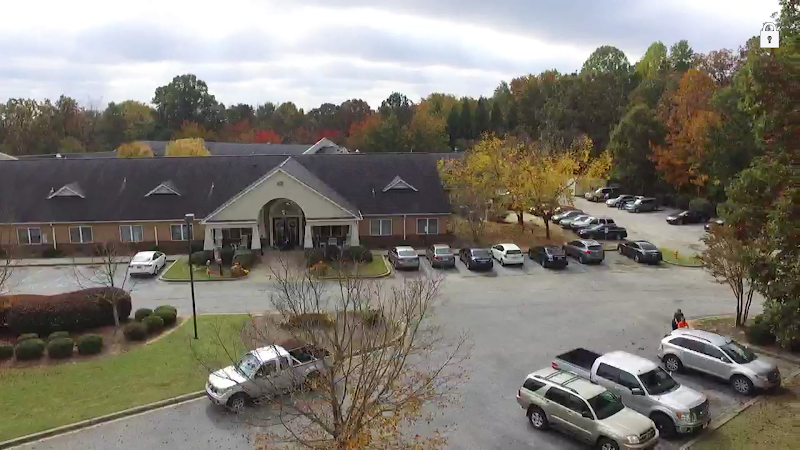
Who Owns and Operates Southpointe Healthcare And Rehabiliation?

Southpointe Healthcare and Rehabiliation is owned by a for-profit company. For-profit facilities operate as businesses with obligations to shareholders or private owners. The facility is operated by FUNDAMENTAL HEALTHCARE, a chain that manages multiple nursing homes. With 120 certified beds and approximately 111 residents (about 92% occupancy), it is a mid-sized facility located in Greenville, South Carolina.
How Does Southpointe Healthcare And Rehabiliation Compare to Other South Carolina Nursing Homes?

Compared to the 100 nursing homes in South Carolina, Southpointe Healthcare and Rehabiliation's overall rating (2 stars) is below the state average of 2.8, staff turnover (58%) is significantly higher than the state average of 46%, and health inspection rating (2 stars) is below the national benchmark.

What Should Families Ask When Visiting Southpointe Healthcare And Rehabiliation?

Based on this facility's data, families visiting should ask: "What changes have been made since the serious inspection findings, and how are you preventing similar issues?" "How do you ensure continuity of care given staff turnover, and what is your staff retention strategy?" "Can you walk me through typical staffing levels on day, evening, and night shifts?" "Can I visit during a mealtime to observe dining assistance and food quality?" These questions are particularly relevant given the facility's Immediate Jeopardy citations, the facility's high staff turnover rate, and the below-average staffing rating.

Is Southpointe Healthcare And Rehabiliation Safe?

Based on CMS inspection data, Southpointe Healthcare and Rehabiliation has documented safety concerns. Inspectors have issued 2 Immediate Jeopardy citations (the most serious violation level indicating risk of serious injury or death). The facility has a 2-star overall rating and ranks #100 of 100 nursing homes in South Carolina. Families considering this facility should ask detailed questions about what corrective actions have been taken since these incidents.

Do Nurses at Southpointe Healthcare And Rehabiliation Stick Around?

Staff turnover at Southpointe Healthcare and Rehabiliation is high. At 58%, the facility is 12 percentage points above the South Carolina average of 46%. High turnover means new staff may not know residents' individual needs, medications, or preferences. It can also be disorienting for residents, especially those with dementia who rely on familiar faces. Families should ask: What is causing the turnover? What retention programs are in place? How do you ensure care continuity during staff transitions?

Was Southpointe Healthcare And Rehabiliation Ever Fined?

Southpointe Healthcare and Rehabiliation has been fined $25,603 across 2 penalty actions. This is below the South Carolina average of $33,335. While any fine indicates a compliance issue, fines under $50,000 are relatively common and typically reflect isolated problems that were subsequently corrected. Families should ask what specific issues led to these fines and confirm they've been resolved.

Is Southpointe Healthcare And Rehabiliation on Any Federal Watch List?

Southpointe Healthcare and Rehabiliation is not on any federal watch list. The most significant is the Special Focus Facility (SFF) program, which identifies the bottom 1% of nursing homes nationally based on persistent, serious quality problems. Not being on this list means the facility has avoided the pattern of deficiencies that triggers enhanced federal oversight. This is a positive indicator, though families should still review the facility's inspection history directly.