THE GABLES OF PELHAM SKILLED NURSING & REHAB
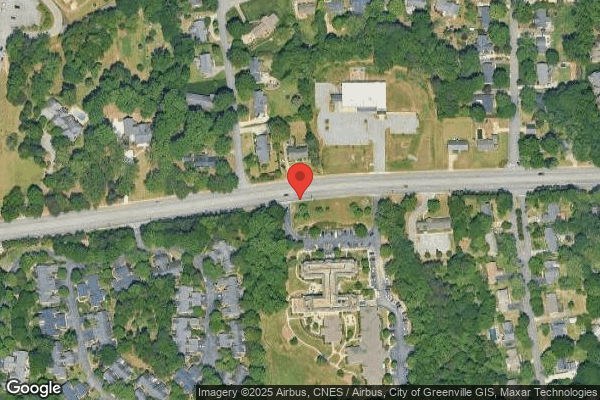
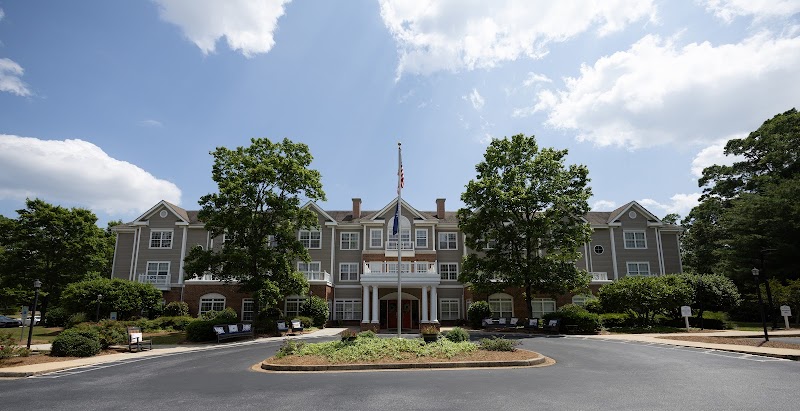
1306 PELHAM RD, GREENVILLE, SC 29615 (864) 286-6600
For profit - Limited Liability company 45 Beds Independent Data: November 2025 2 Immediate Jeopardy citations
Trust Grade
14/100
#182 of 186 in SC
Last Inspection: July 2025

Inspected within the last 6 months. Data reflects current conditions.

Overview

The Gables of Pelham Skilled Nursing & Rehab has received a Trust Grade of F, indicating significant concerns about their care quality and operations. They rank #182 out of 186 facilities in South Carolina, placing them in the bottom half of the state's nursing homes and #19 out of 19 in Greenville County, meaning there are no better local options available. The facility is worsening, with issues increasing from 3 in 2022 to 7 in 2025, which raises alarms about the consistency of care. Staffing is rated average at 3/5 stars, but the turnover rate is concerning at 76%, much higher than the state average, indicating instability among caregivers. There have been notable incidents, such as a resident being given a medication not properly justified and another resident eloping from the facility due to inadequate supervision, highlighting critical safety issues. While they do provide a decent level of RN coverage, the overall picture shows significant weaknesses that families should carefully consider.

Trust Score
F
14/100
In South Carolina
#182/186
Bottom 3%
Safety Record
High Risk
Review needed
Inspections
Getting Worse
3 → 7 violations
Staff Stability
⚠ Watch
76% turnover. Very high, 28 points above average. Constant new faces learning your loved one's needs.
Penalties
⚠ Watch
$11,196 in fines. Higher than 82% of South Carolina facilities, suggesting repeated compliance issues.
Skilled Nurses
○ Average
Each resident gets 32 minutes of Registered Nurse (RN) attention daily — about average for South Carolina. RNs are the most trained staff who monitor for health changes.
Violations
○ Average
10 deficiencies on record. Average for a facility this size. Mostly minor or procedural issues.
★☆☆☆☆
1.0
Overall Rating
★★★☆☆
3.0
Staff Levels
★★☆☆☆
2.0
Care Quality
★☆☆☆☆
1.0
Inspection Score
Stable
2022: 3 issues
2025: 7 issues

The Good

  • Full Sprinkler Coverage · Fire safety systems throughout facility
  • No fines on record

Facility shows strength in fire safety.

The Bad

1-Star Overall Rating

Below South Carolina average (2.8)

Significant quality concerns identified by CMS

Staff Turnover: 76%

29pts above South Carolina avg (46%)

Frequent staff changes - ask about care continuity

Federal Fines: $11,196

Below median ($33,413)

Minor penalties assessed

Staff turnover is very high (76%)

28 points above South Carolina average of 48%

The Ugly 10 deficiencies on record

2 life-threatening
Jul 2025 4 deficiencies
CONCERN (D)

Potential for Harm - no one hurt, but risky conditions existed

Deficiency F0554 (Tag F0554)

Could have caused harm · This affected 1 resident

**NOTE- TERMS IN BRACKETS HAVE BEEN EDITED TO PROTECT CONFIDENTIALITY** Based on review of facility policy, record reviews, observation and interviews, the facility failed to assess a resident for saf...

Read full inspector narrative →
**NOTE- TERMS IN BRACKETS HAVE BEEN EDITED TO PROTECT CONFIDENTIALITY** Based on review of facility policy, record reviews, observation and interviews, the facility failed to assess a resident for safe self-administration of medication for 1 of 1 resident, Resident (R) 34 reviewed for self-administration of medication.Review of the facility policy titled, Self-Administration of Medication last revised February 2021, states, Residents have the right to self-administer medications if the interdisciplinary team has determined that it is clinically appropriate and safe for the resident to do so.1. As a part of the evaluation comprehensive assessment, the interdisciplinary team (IDT) assesses each resident's cognitive and physical abilities to determine whether self-administering medications is safe and clinically appropriate for the resident. 3. If it is deemed safe and appropriate for a resident to self-administer medications, this is documented in the medical record and the care plan. The decision that a resident can safely self-administer medications is reassessed periodically based on changes in the resident's medical and/or decision-making status. 8. Self-administered medications are stored in a safe and secure place, which is not accessible by other residents.Review of the facility's policy titled Administering Medications states Medications are administered in a safe and timely manner, and as prescribed.27. Residents may self-administer their own medications only if the Attending Physician, in conjunction with the Interdisciplinary Care Planning Team, has determined that they have the decision-making capacity to do so safely.Review of R34's Face Sheet revealed R34 was admitted to the facility on [DATE], with diagnoses including but not limited to: orthostatic hypotension, syncope, and collapse.Review of R34's admission Minimum Data Set (MDS) with an Assessment Reference Date (ARD) of 07/21/25 revealed R34 had a Brief Interview for Mental Status (BIMS) score of 15 out of 15, indicating R34 is cognitively intact.Review of R34's Physician Orders revealed Deep Sea Nasal Spray Solution (Saline) 1 spray in both nostrils every six hours as needed for dry nasal passages. No orders for self-administration documented.Review of R34's Care Plan revealed no documentation to self-administer medications or to keep medications at the bedside.An observation on 07/22/25 at 10:57 AM, revealed, two nasal sprays in R34's window seal. The first nasal spray container's label read Nasal Spray 12-Hour Relief Over-the-Counter (OTC). The resident's attached label was faded and difficult to read. The second nasal spray was labeled Nasal Moisturizing Spray also with the residents' label faded.During an interview on 07/22/25 at 10:57 AM, R34 stated, I have been here about 2 weeks. I used my nasal sprays at night because I need it for my breathing due to my sinuses being operated on. It helps me to breathe.During an interview on 07/23/25 at 2:31 PM, the Director of Nursing (DON) stated, We reordered his nasal medications. I realized the labels were unreadable. It is the Registered Nurse (RN) and the Medical Director (MD)'s responsibility to decide if the residents can self-administer medications. We will educate families about bringing in medications without notifying the staff. We will have the families check with the nurses before bringing in medications. We will also make sure the medication is on their medication list and get approval from the Medical Director (MD) as well as get an order. He told me this morning he was stuffy last night, and he could hardly breathe. His new medications were delivered last night. We completed a self-assessment form. R34 demonstrated how to administer the medications properly.
CONCERN (D)

Potential for Harm - no one hurt, but risky conditions existed

Deficiency F0761 (Tag F0761)

Could have caused harm · This affected 1 resident

Based on review of facility policy, observations and interviews, the facility failed to ensure that expired medications and biologicals were removed from the refrigerator in 1 of 1 medication storage ...

Read full inspector narrative →
Based on review of facility policy, observations and interviews, the facility failed to ensure that expired medications and biologicals were removed from the refrigerator in 1 of 1 medication storage rooms.Review of the facility policy titled Medication Labeling and Storage last revised February 2023, states 2. The nursing staff is responsible for maintaining medication storage and preparation areas in a clean, safe, and sanitary manner. 3. If the facility has discontinued, outdated or deteriorated medications or biologicals, the dispensing pharmacy is contacted for instructions regarding returning or destroying these items.During an observation of the medication storage room on 07/22/25 at 12:25 PM, the following was observed:1. 1 dose of Covid 19 Vaccine with an expiration date of 05/09/252. 12 doses of Influenza Vaccine Adjuvanted with an expiration date of 04/24/253. 1 does Influenza Vaccine Adjuvanted with an expiration date of 06/02/25. During an interview on 07/22/25 at 12:33PM, Licensed Practical Nurse (LPN)1 stated, I was unable to determine who was responsible for discarding expired medications from the refrigerator. I am unsure how to discard them; I will find out.During an interview on 07/22/25 at 01:18 PM, the Director of Nursing (DON) stated, The pharmacist comes and does the audits monthly. The nurses should be checking weekly on the day shift for expired medications in the refrigerator.
CONCERN (D)

Potential for Harm - no one hurt, but risky conditions existed

Infection Control (Tag F0880)

Could have caused harm · This affected 1 resident

Based on review of facility policy, manufactures instructions, observations and interviews, the facility failed to: 1. Ensure the safe handling and preparation of meals when during meal preparation a ...

Read full inspector narrative →
Based on review of facility policy, manufactures instructions, observations and interviews, the facility failed to: 1. Ensure the safe handling and preparation of meals when during meal preparation a metal can lid was noted in a pan of cooked desert 2. Follow appropriate infection control practices during medication administration when Licensed Practical Nurse (LPN)1 failed to clean the top of the insulin syringe before administration of insulin. 1. Review of the facility's policy, titled Food Preparation and Service, last revised November 2022, revealed, Food and nutrition services employees prepare, distribute and serve food in a manner that complies with safe food handling practices.During an observation of the main kitchen on 07/23/25 at 11:44 AM a Dietary Aide (DA) was observed plating an apple crisp dessert when she pulled a metal can lid out of the bottom of the prepared pan with her gloved hand. She then discarded the lid into the trash, followed by the contents of the pan and any dessert that had already been plated. The DA then proceeded to use a second prepared pan of apple crisp. Halfway through serving, she again encountered a metal can lid at the bottom of this second pan, she discarded the lid, the contents of the pan, and any plated dessert.During an interview on 07/23/25 at 12:11 PM, the Dietary Manager DM confirmed that the DA found lids in the apple crisp and states that she will conduct an in-service with staff regarding the lids found in the prepared food.During an interview on 07/23/25 at 12:57 PM, [NAME] (C)1 revealed that she cooked the apple crisp. Then stated she doesn't know what happened today, and that it's usually not like this.During an interview on 07/23/25 at 1:40 PM, the Administrator revealed that she oversees the kitchen. The Administrator explained that when preparing food, the cooks should check to ensure all foods are free of objects and can lids should not be in prepared food.Follow up interview on 07/23/25 at 2:39 PM, The DM explained that some food items are usually prepped and prepared the day before. She states that when using items that come from a can, the can is opened, the lid is removed and that food contents are dumped into a bowl and prepared.2. Review of the facility's policy title, Insulin Administration last revised March 2025, revealed, Purpose: to provide guidelines for safe administration of insulin. Steps in the procedure (Insulin injections via Syringe) 10. Disinfect the top of the vial with an alcohol wipe.Review of the manufacturer's instructions for the use of lispro insulin injection revealed step 2: wipe the rubber stopper with an alcohol swab.During an observation on 07/23/25 at 08:23 AM, LPN1 did not use an alcohol wipe to clean the hub of the Lispro insulin syringe.During an interview on 07/23/25 at 08:23, LPN1 stated, We only clean the hub with alcohol after we initially open the insulin cartridge. The nurse proceeded to prime and restated that we do clean off the hub with an alcohol swab. In my haste, I didn't do it. Too much coffee this morning.During an observation on 07/23/25 at 08:26 AM, LPN1 removed the needle and wiped the insulin syringe hub off with alcohol and reprimed the insulin syringe.During an interview on 07/23/25 at 2:42 PM, DON stated, I will have an in-service and huddle, and have everyone sign off on the proper procedure of administering insulin using insulin syringes. We in-service the nurses any time anything like this comes up.
CONCERN (F)

Potential for Harm - no one hurt, but risky conditions existed

Food Safety (Tag F0812)

Could have caused harm · This affected most or all residents

Based on observations, interviews, and review of the facility policy, the facility failed to ensure foods that are stored in the freezer, refrigerators and dry food storage were appropriately sealed, ...

Read full inspector narrative →
Based on observations, interviews, and review of the facility policy, the facility failed to ensure foods that are stored in the freezer, refrigerators and dry food storage were appropriately sealed, labeled and dated with a use by date and/or discarded after the manufacturer's expiration date. In 2of 2Kitchens, 1of 2Freezers, 1of 2Refrigerators and 1 of 1 Dry Foods Storage.Review of the facility's policy titled Food Receiving and Storage last revised July 2024 revealed, Foods shall be received and stored in a manner that complies safe food handling practices. 7) Dry foods that are stored in bins will be removed from original packing, labeled and dated (use by date). Such food will be rotated using a first in - first out system. 8. All foods stored in the refrigerator or freezer will be covered, labeled and dated ( use by date) . 14. C. Refrigerators must have working thermometers and be monitored for temperature according to state specific guidelines. E. other opened containers must be dated and sealed or covered during storage.During the initial kitchen tour on 07/22/25 at 9:14 AM, the following was observed:1. The Dry Food storage had 1 -12 ct. (count) pack of 6 inch flour tortillas with a prep date of 07/07/25 and a use by date of 07/14/25.2. The walk-in cooler had two bags of salad mix with a use by date 07/21/25, the salad mix was brown and wilted; one pan of cut lettuce with no prep or use by date; three 6-ounce (oz.) containers of blackberries with a white fuzzy substance on them; one 1 gallon (gal) container of bread & butter pickle slices with no open date or use by date.3. The walk-in freezer had one bag of frozen corn with no open and/or use by date and one open package of sausage with an open date 05/15/25 and a use by date 06/15/25. 4. The reach in freezer had one 15-pound (lb.) box of lasagna sheets marked with a prep date of 01/6/25 and a use by date of 02/06/25 and one bag of chicken tenders opened and not labeled or dated. During a follow- up observation of the main kitchen on 07/23/25 at 8:21 AM the following was observed again in the walk-in cooler:1. Two bags of brown and wilted salad mix with a best by date of 07/21/25. One of the bags was now opened and wrapped with plastic film without an open date or use by date.2. Four 16oz containers of fresh strawberries with white fuzzy debris and brown spots. Both items were noted in the kitchen on the previous day.During tour of the unit kitchen on 07/23/25 at 10:55 AM, the following was observed:1. One stained 10 oz. container of active food thicker opened with no open or use by date.2. One 24 oz. container of thick and easy food and beverage thickening power opened with no open or use by date.3. One storage container of brown sugar not labeled and without an open or no use by date.4. One 10.5 oz. box of Lucky Charms cereal open, bag not properly sealed inside box with a best by date of 02/23/25.5. One 24 oz. box of bite size frosted shredded wheat open and not properly sealed without an open date and a best by date of 02/10/25.During an interview on 07/23/25 at 8:30 AM the Dietary Manager (DM) revealed that her expectation is that when food items are received they are to be marked with the received date, then they are to be used by the first in and first out based on the date, when food are opened they are to be marked with an open date as well as a use by date, and all foods beyond the manufacturer's or marked use by date should be discarded. The DM states that she does a walk though of the kitchen daily checking food quality and ensuring that items are properly labeled and dated. DM also revealed that the bags of salad mix in the walk in cooler should have been discarded based on how they looked as well as be the use by date. The DM explains that staff should check food items, especially the fruit because it goes bad quick.During an interview on 07/23/25 at 11:05 AM dietary aide (DA) revealed the dates on the cereal were February 23, 2025, and February 10, 2025, and stated that both boxes belonged to a resident that was a respite resident and is no longer at the facility, and that they should have been tossed out. The DA explains that usually cereal kept only for about a week and discard after that. The DA continues to explain that the thicker in the kitchen is not used by the kitchen staff but should have an open date. The DA further explained that the container of brown sugar should have been labeled with contents and use by date. The DA further revealed that the food items in the kitchen should be checked by the staff in the kitchen, the supervisor or kitchen manager to make sure items are not expired and that they are labeled properly.During an interview on 7/23/25 at 1:40 PM the Administrator revealed that she oversees the kitchen and if there are issues, she needs to know about them. The Administrator explains that she conducts a walk though of the kitchen monthly and the unit dining room daily. The Administrator states that her expectation for food items is that they are stored at the proper temperature, labeled and dated per the facility's policy and the regulation.
Feb 2025 3 deficiencies 2 IJ
CRITICAL (J) 📢 Someone Reported This

A family member, employee, or ombudsman was alarmed enough to file a formal complaint

Immediate Jeopardy (IJ) - the most serious Medicare violation

Deficiency F0605 (Tag F0605)

Someone could have died · This affected 1 resident

**NOTE- TERMS IN BRACKETS HAVE BEEN EDITED TO PROTECT CONFIDENTIALITY** Based on manufacturer's recommendation, review of the facility policy, record review, and interviews, the facility failed to ens...

Read full inspector narrative →
**NOTE- TERMS IN BRACKETS HAVE BEEN EDITED TO PROTECT CONFIDENTIALITY** Based on manufacturer's recommendation, review of the facility policy, record review, and interviews, the facility failed to ensure Resident (R)1 was free from chemical restraints, when it was identified that R1 was administered Haloperidol Deaconate (Haldol) for exit seeking, entering patient rooms. The medication was not ordered for an approved indication of use. On 02/07/25 at 2:20 PM, the State Agency (SA) determined that the facility's non-compliance with one or more federal health, safety, and/or quality regulations has caused or was likely to cause serious injury, serious harm, serious impairment, or death. On 02/07/25 at 2:23 PM, the Administrator was notified that the facility's failure to have systems in place to monitor for chemical restraints constituted Immediate Jeopardy (IJ) at F605. On 02/10/25 at 9:37 AM, the facility provided an acceptable IJ Removal Plan. On 02/10/25 at 10:00 AM, the survey team validated the facility's corrective actions and removed the IJ. The facility remained out of compliance at F605 at a lower scope and severity of D. An extended survey was conducted in conjunction with the Complaint Survey for non-compliance at F605, constituting substandard quality of care. Findings include: Review of the Manufacturer's Recommendation for the medication Haldol revealed, Increased Mortality in Elderly Patients with Dementia-Related Psychosis treated with antipsychotic drugs are at an increased risk for death. Observational studies show that, similar too atypical antipsychotics drugs, treatment with conventional antipsychotic drugs may increase mortality. The extent to which the findings of increased mortality in observational studies may be attributed to antipsychotic drugs as opposed to some characteristics of patient is not clear. Haldol Deaconate 50 and Haldol Deaconate 100 are indicated for the treatment of patients with schizophrenia who required prolonged antipsychotic therapy. Review of the undated facility policy titled, Use of Restraints revealed under the policy, Ensure that chemical restraints are only used when needed to treat the residents medical symptoms and then, only use the least restrictive alternate for the least amount of time. Prior to the initiation of psychotropic medication, clinicians will thoroughly assess resident's mental/cognitive, behavior and physical status. This assessment will address other interventions that may be symptoms or the cause of the situation. A physicians order is necessary for the initiation of any restraint or psychotropic medication . that order will include the physicians diagnosis .it will also include the expected duration. Record review of R1's facesheet revealed he was admitted to the facility on [DATE] with diagnoses that include but are not limited to Alzheimer's disease, type 2 diabetes, chronic obstructive pulmonary disease and anemia. Review of R1's admission Minimum Data Set (MDS) with an Assessment Reference Date (ARD) of 12/23/24 revealed the Brief Interview for Mental Status (BIMS) score could not be conducted and was checked as, rarely understood. Review of R1's Physician orders revealed, an order dated 12/21/24 for Haldol Deaconate Inject 0.2 milliliter (ml) 10 milligrams (mg) intramuscularly (IM) as needed for agitation. Every 8 hours. End date Indefinite. It had 3 warnings, including Back Box warning, Alert Dose warning and Drug interaction warning. The alert dose warning stated, The frequency of daily exceeds the usual frequency of every 28 days. Record review of R1's medication administration record (MAR) dated December 24 revealed R1 received 3 doses of Haldol Deaconate, recorded as given on 12/21/24, 12/23/24 and 12/29/24. The medication remained active on R1's MAR for 17 days. There was no monitoring of the medication for adverse effects or behaviors. Review of R1's care plan dated 12/17/24 revealed, [R1 uses psychotropic medications, dementia and that he will be free of drug related complications, including movement disorder, discomfort, hypotension, gait disturbance, constipation/impaction or cognitive/behavioral impairment.] Record review of R1's progress notes dated 12/21/24 at 01:58 revealed Licensed Practical Nurse (LPN)1 reported exit seeking behavior, entering patient rooms and is in constant need of redirection. [Nurse Practitioner] NP called back and said she will fax order in the morning and stated he can have 10 mg IM of Haldol. Record review of a fax confirmation dated 12/21/24 revealed an order from the NP for Haldol 10 mg IM x 1, as needed for agitation for R1. This was received at 6:00 PM. Record review of the Emergency Drug Kit #1 revealed there was Haloperidol 5 milligram/milliliter injection in the drug kit. Record review of R1's Order Audit Form revealed 2 dates the pharmacy sent the Haldol Deaconate, on 12/21/24 and 12/27/24. Record review of the pharmacy packing slip dated 12/21/24 and 12/28/24 revealed R1's medication of Haloperidol Deaconate was delivered to the facility. During an interview on 02/06/25 at 4:30 PM, with the Director of Nursing (DON) revealed, that she monitors the antipsychotic medication, and the scripts are for 14 days. The DON stated she was not aware the medication had been ordered for longer than 14 days without a diagnosis. She said the physician should give the diagnosis and the nurses should ask. She stated, I am aware the NP was called for R1 when the order was given. On 02/06/25 at 5:07 PM, an interview with the NP confirmed she was the on-call provider and did order an injection. She stated, As far as I know, yes, he can receive that, we do give Haldol sometimes. I know of the Black Box Warning. I've never received an alert dose warning on administration like that. For acute conditions, it can be anywhere from 1 to 5 to 10 mg. The maximum daily dose is 20 mg. We were trying to choose medication from their formulary. I didn't specify a diagnosis. I didn't get a call back on the warning. Ordering every 8 requires constant monitoring. I'm concerned it may have been a 1-time order. I need to review my documentation on this and refer to my Physician and I will call you back. I'll get clarification on the Haldol Deaconate versus the Haldol injection. On 02/06/25 at 5:30 PM, during a follow-up interview with the NP, revealed, Regular Haldol is not the same as Haldol Deaconate, it's usually given once a month. The NP said, They gave the wrong medication, and confirmed she ordered the Haldol 10 mg, as a 1 time dose only. During a follow up interview with the DON at 6:25 PM, the DON stated she spoke to the NP and she said it was the wrong medication. The DON stated, Somehow the pharmacy ordered it as a 1-time dose as needed, and it ended up being input as 0.2 mg IM Q 8 hours. We expect the nurses to ask for the diagnosis. If the pharmacy puts it in correctly, the behaviors and the side effects would be there, but they did not. Those warnings are confirmed by the nurse after the order is placed by the pharmacy. The DON also stated, I believe those warnings also go to our Medical Director. During an interview on 02/06/25 at 7:38 PM, LPN1 stated, R1 was exit seeking and trying every door. We would try to redirect him, and he was aggressive and very unaware of his surroundings. We had given him Ativan, it didn't help. So, I called the NP on call. She asked me what all his medications were. She said she was going to put an order in for Haldol and to discontinue the Ativan. She said to wait for the fax order, but don't give it until confirmed with the pharmacy. On 02/07/25 at 10:20 AM, a follow up interview with the DON revealed, I spoke to pharmacy several times yesterday and they confirmed it was their transcription error for R1's Haldol. A request was made by the surveyor to review the Haldol removed from the drug kits in December 24. The DON said, Our Social Services Director (SSD) does the consents for Psychotropic medications. She was not doing that. On 02/07/25 at 10:45 AM, a phone interview was conducted with the Pharmacist Consultant. She said, When the nurse gets the order and it is available, they can get the medication from the e-kits. The pharmacy enters the orders into the system and pushes it back over into their electronic system. The facility can also enter orders. After hours, if the medication is not a controlled med, the nurse can pull the medication from the e-kit without going through the pharmacy to open the kit, that is not required. The regular Haldol is short acting, the other was long acting. Excessive lethargy and multiple drug interactions are just a few adverse effects that can occur. The nurses should be monitoring for drug side effects, and behaviors. The facility is responsible for putting those behaviors and side effects into the system. On 02/07/25 at 11:15 AM, an interview was conducted with the Pharmacy Director. He confirmed they did in fact send the Haldol Deaconate, and confirmed that was a pharmacy error. He stated, The medication was a 1-time only order, not every 8 hours. I'm not sure where that came from. The facility's removal plan dated 02/07/25; 1) R1 was discharged from the facility to another facility on 01/06/25. 2) Immediately on 02/07/25, the DON, MDS or Designee conducted an audit of residents to identify those residents with potential risk for chemical restraints. 3) Immediately on 02/07/25, the DON, MDS Nurse, Administrator or Designee will conduct nurse and or provider in-service education of Guardian Pharmacy Psychotropic PRN Medication Regulation in LTC and medication Monitoring Management - Policy regarding F758 Psychotropic Medication and PRN use. 4) Immediately on 02/07/25 the Director of MDS Nurse, Administrator or designee will conduct nurse inservice education on (6) rights of Medication Administration. 5) Immediately on 02/07/25 the Director of MDS Nurse, Administrator or designee will conduct in-service/education on AASC Agitation in Alzheimer's Screener for Caregivers. 6) Immediately on 02/07/25 the Director of MDS Nurse, Administrator or designee will conduct in-service/education on Policy for Medication Variance Report. 7) Immediately on 02/07/25 the Director of MDS Nurse, Administrator or designee will conduct in-service/education on New Order Tracking Form. 8) Immediately on 02/07/25 the Director of MDS Nurse, Administrator or designee will conduct in-service/education on CMS Revises Several Regulations in Appendix PP- Chemical Restraints/Unnecessary Psychotropic Medications. Monitoring and Follow Up Plan; The facility will monitor compliance with the corrected procedures to ensure the IJ issue does not recur by; 1. Reminders of At- Risk residents at Daily Stand Up and on 24 HOUR NURSE REPORT by DON/ADON/Nurse Supervisors each shift. 2) Weekly Ad Hoc Meetings of each resident identified AT Risk: Review effectiveness interventions in place and/or recommended change in interventions and update team members, MD, and POA. Behavioral interventions will be developed for the individual resident and communicated to team members, MD, and POA. EHR/PCC was updated with these identified interventions. 3) Inclusion of Therapy ie; PT/OT/ST, plus IDT team members and ED in determination of appropriate therapy and other interventions as identified. 4) Inservice will be ongoing until all appropriate facility have signed off, during orientation and annually. 5) An audit of the inservice/education training will be conducted by the Administrator weekly x 6 weeks and annually. 6) The Administrator will send in audit findings to corporate compliance and bring to QAPI for review monthly. 7) Anticipated correction date 02/07/25.
CRITICAL (J) 📢 Someone Reported This

A family member, employee, or ombudsman was alarmed enough to file a formal complaint

Immediate Jeopardy (IJ) - the most serious Medicare violation

Accident Prevention (Tag F0689)

Someone could have died · This affected 1 resident

**NOTE- TERMS IN BRACKETS HAVE BEEN EDITED TO PROTECT CONFIDENTIALITY** Based on review of the facility policy, record review, and interviews, the facility failed to ensure that adequate supervision w...

Read full inspector narrative →
**NOTE- TERMS IN BRACKETS HAVE BEEN EDITED TO PROTECT CONFIDENTIALITY** Based on review of the facility policy, record review, and interviews, the facility failed to ensure that adequate supervision was in place to prevent Resident (R)1 from eloping from the facility. On 12/17/24 at approximately 9:33 PM, R1 was found outside of an exit door on the C-Unit of the facility. Licensed Practical Nurse (LPN)1 stated that they heard the alarm sounding off from another unit and felt cold air coming from the door while walking down the hallway. R1 was observed outside of the door in his wheelchair and stated that he was picking berries from the bush. On 12/17/24 at approximately 9:33 PM, the weather was 54 degrees Fahrenheit (F). On 02/05/25 at 7:34 PM the Administrator was electronically notified that the failure to ensure Resident (R)1 was free from accidents/hazards related to a succesful elopement on 12/17/24 constituted Immediate Jeopardy (IJ). The IJ was related to §483.25(d)(2) Each resident receives adequate supervision and assistance devices to prevent accidents. On 02/06/25 at 10:40 AM the facility provided an acceptable IJ Removal Plan. On 02/06/25 at 10:40 AM, the survey team validated the facility's corrective action and verified the removal of the IJ related to F689 on 02/05/25. An extended survey was conducted in conjunction with the Complaint Survey as a result of substandard quality of care. Findings include: Review of the facility's policy titled, Elopement Risk-RM-2, Category/Sub-Function: Clinical Services, Applies to: Skilled Nursing Communities with a revision date of 07/2015 revealed, Policy Overview: Residents who are at risk for elopement should be identified. Elopement occurs when a cognitively impaired resident leaves the community undetected and unsupervised. A. Evaluating for Elopement Risk Prior to Admission. 1) admission Associate will identify potential risk for elopement and notify the Director of Clinical Services/designee of the following: The resident has a pertinent diagnosis of dementia, Alzheimer's/anxiety disorder, delusions and is the resident currently capable of independent mobility. A history of exit seeking, wandering away, or getting lost. A history of unmet needs, alcohol or drug abuse. 2) The Interdisciplinary Team will approve/decline all potential admissions based on the resident's exit seeking/elopement risk and safety measures in place at the Community. B. admission to and/or Residence within the Community 1) Resident accepted for admission will be assessed upon admission into the Community and appropriate interventions will be established to respond to the resident's potential exit/elopement seeking behavior. 2) Intervention may include, but are not limited to: Frequent monitor (Q 15-minute checks) Activities specific to resident needs Family/companion services Electronic Monitoring/Elopement System Pain Management Room Location Assess for cause of Delirium signage placed to assist resident with directions to room. Knowledge of dominant hand 3) Completion of Elopement Risk Data Sheet with photograph. Place in Elopement Risk binder at Nursing Station and/or Receptionist Desk. 4) Communication of Elopement Risk to nursing associates and ancillary departments. 5) Director of Clinical Services or designee will review and maintain the accuracy of Resident Identification and Wandering Resident Binders. 6) Residents will be assessed on admission and a minimum of quarterly or as condition change warrants. 7) Interventions will be documented in the Resident's Plan of Care and reviewed/updated a minimum of quarterly or as condition warrants. C. Additional Interventions for Communities with Resident Monitoring System 1) The admission Team will assess the resident for appropriate placement of the Community's wandering resident monitor system on admission and a minimum of quarterly or as condition change warrants to promote resident safety in least restricted environment. 2) Interventions/approaches will be documented in the Resident's Plan of Care and reviewed/updated a minimum of quarterly or as conditions warrants. 3) Initiate Resident Monitoring System as follows: Obtain Physician Orders for monitoring system. Inform resident/legal representative. Apply the personal monitoring device in accordance with the manufacturer's instructions. Monitor resident's comfort relative to the fit of device. Verify proper functioning of alarm after application by following manufacturer's activation instructions. Record review of R1's Face Sheet revealed he was admitted to the facility on [DATE] with diagnoses including but not limited to; acute respiratory failure with hypoxia, Alzheimer's disease, age related physical debility, and muscle weakness. Record review of the admission Minimum Data Set (MDS) with an Assessment Reference Date (ARD) of 12/23/24 revealed R1 has the Brief Interview of Mental Status (BIMS) score of 00 out of 15, which indicates that he is not cognitively intact. Further review of the MDS revealed that during the assessment period, R1 had delusions (misconceptions or beliefs that were firmly held and contrary to reality. Further review of the admission MDS revealed R1 had verbal behavioral symptoms directed towards others (threatening others occurred one to three days during the assessment. R1's behavioral impact significantly interfered with the residents care and interfered with the resident's participation in activities/ social interactions. R1 had a wandering presence, and this behavior occurred four to six days but less than lately and wandering placed the resident at significant risk of getting into a potentially dangerous place during this assessment period. Record review of R1's Electronic Medical Record (EMR) Care Plan revealed Focus: The resident is an elopement risk/wanderer AEB [as evidenced by] Disoriented to place, History of attempts to leave community unattended, Impaired safety awareness, Resident wanders aimlessly Goal: The resident will have no injury related to exit seeking behavior through the next review date. Date Initiated: 12/18/2024 Interventions/Tasks include Distract resident from wandering by offering pleasant diversions, structured activities, food, conversation, television, books. Resident prefers. Distract resident from wandering by offering pleasant diversions, structured activities, food, conversation, television, books. Resident prefers. Identify pattern of wandering. Intervene as appropriate. Record review of R1's EMR Nurses Notes dated 12/17/24 revealed Patient continues to exit seek, he has attempted to exit out of all 3 doors, I have called and spoke with R1's Resident Representative (RR)2 however, he is out of state and stated that patient was restrained while in the hospital. I then called R1's other Resident Representative (RR)1 to come and sit with the patient. However, I got a voicemail and left a message, Director of Nursing (DON) and Assistant DON aware of patient's exit seeking behaviors, patient is now in day area wit the TV. Record review of R1's EMR Nurses Note dated 12/18/24 of a Comprehensive Nursing Note revealed Patient is alert and oriented X1. Patient can recall past events, patient continues to receive skilled nursing care, patient is exit-seeking and trying doors throughout the shift. Patient medicated per Medication Administration Record (MAR), patient is now resting in his bed eye closed and RR1 present, bed is low and locked with fall mat on the ground. Record review of R1's EMR Nurses Notes dated 12/18/24 revealed On 12/17/24 at 9:33 PM, R1 was exit seeking at the end of hall C. LPN1 was in a room passing medications when she returned, she felt cold air coming through the door and the alarm sounds from the door at the end of hall C. She discovered the resident outside. He stated he was picking berries from a bush by the door. No injuries were noted .appropriate parties were notified. A state reportable was made regarding the incident, a body audit and elopement risk assessment was completed on admission and again on 12/18/24. Investigation is in progress; the front lobby door was on lock down on 12/17/24. Record review of R1's EMR Social Services Progress Note dated 12/18/24 revealed Writer attempted to call R1's RR1 to get admission paperwork and discuss getting a sitter, no answer. Record review of R1's EMR General Note dated 12/18/24 revealed New admit on 12/16/24 following hospital stay for acute respiratory failure. He has Alzheimer's dementia with sundowning behavior. He arrived soaked in urine from hospital, needed bath. Had been strapped in bed prior to admit, difficult to redirect propels self around facility. Elopement out of C- door evening before, prior to hospital has been in multiple facilities, son wants to send back to previous facility. Speech Therapy observed R1 standing and messing with clothing, he did sit when asked but upset pants do not fit well and will not fasten. Social Services to notify daughter of need for clothing, working with Physical Therapy and Occupational Therapy. Record review of R1's EMR Nursing Note dated 12/18/24 revealed Resident has increased agitation, behaviors, exit seeking behavior. Resident being constantly redirected, constant supervision needed. Record review of R1's EMR General Note dated 12/19/24 revealed Documentation for 12/18/24 attempted to call R1's RR1 and was unsuccessful, was able to contact RR2. RR2 stated that he will be willing to check into a private sitter, spoke with RR1 and they stated they were unable to drive at night due to poor vision and working during the day, unable to be present with Medical Director (MD) visit but will be available by phone. An interview on 02/05/25 at 12:11 PM with Licensed Practical Nurse (LPN)1 revealed R1 was constantly attempted to exit-seek throughout that evening and night and was unable to be redirected. I was passing medications in another resident's room and when I finished, I heard the alarm to the door sounding off and I also felt a cool breeze down the hallway as well. When I found the resident, his was in his wheelchair and right beside the door and attempting to pick the berries from off the bush. The resident had been outside alone for about 30 seconds prior to me coming outside and finding him. An observation and interview with LPN1 on 02/05/25 at 12:25 PM revealed the location of where R1 eloped from the facility, at the time of the observation the door was in working order. Record review of LPN1's Witness Statement dated 12/17/24 revealed I heard (the) alarm door and walked from A-Hall towards (the) Nurses Station, I felt cold air and walked towards C-Hall door and it was opened. R1 was just outside the door in his wheelchair. The resident's Certified Nursing Assistant (CNA) was in (the) dayroom, the other staff member was on the B-Hall. I called to them and they helped me get R1 inside safely, no harm to patient. A phone interview on 02/05/25 at 2:37 PM with RR1 revealed that they were notified when the resident eloped from the facility on 12/17/24. RR1 further stated that when the facility notified her of the resident's elopement they insisted that they hire a private sitter to adequately supervise R1. RR1 stated, I refused to pay anyone to sit with R1 because it's their job (the facility) to make sure he doesn't get out. RR1 further mentioned that they felt pressure by facility staff to hire an outside sitter but did not because of the financial strain. An interview with the Director of Nursing (DON) and Administrator on 02/05/25 at 5:37 PM, revealed that they were unable to recall when exactly they were notified of R1's elopement from the facility because it happened at night. The DON further stated that the facility does not utilize electronic monitoring devices on residents that are at risk for elopement, but have a program called the 'Sunflower Program' that alerts staff to keep an extra eye on those high-risk residents. The DON further stated that after R1 eloped from the facility, they spoke with R1's family to determine if they could hire a private sitter for extra supervision for R1. When it was determined that was not feasible for R1's family, R1 was moved to a room closer to the nurse's station and was placed on the Sunflower Program to alert staff of his high-risk elopement status. Further interview with the Administrator and DON revealed that the facility does not currently have electronic monitoring devices for the residents and staff are to monitor residents adequately. The facility's removal plan included the following: 1. Resident 1 (who allegedly eloped) was discharged from the facility to another facility on 01/06/2025. 2. The Director of Nursing, MDS Nurse, Administrator or Designee will conduct an audit before admission and within 24 hrs after admission to evaluate residents for possible elopement risk, initiate interventions, notify MD and POA, then document on the Interim Care Plan. Residents identified at risk for elopement should be reassessed each quarter. Audit will continue daily for 3 months. 3. Immediately on 2/5/25-The Director of Nursing, MDS Nurse or Designee conducted an audit of residents to identify those residents with potential elopement risk. 4. Immediately on 2/5/25-The Director of Nursing and Administrator Completed Elopement Risk Assessments for the residents identified to be a potential elopement risk, initiated interventions, notified MD and POA, then documented on the Interim Care Plan. Residents identified at risk for elopement should be reassessed each quarter. 5. Immediately on 2/5/25-The Director of Nursing and Administrator initiated The Sunflower Elopement Program was for those identified residents considered to be a potential elopement risk. A Sunflower magnet was placed on the resident's door, wheelchair and assistive device. 6. Immediately on 2/5/25-The Director of Nursing and Administrator updated The Elopement Risk Binder with a profile page including a photo for those identified residents considered to be a potential elopement risk. 7. Immediately on 2/5/25-The Director of Nursing and Administrator in serviced/educated team members on the Sunflower Program-Elopement Risk Management & Interventions, signing acknowledgement of understanding and compliance. Team Members were also educated on the alarm system in use in the [NAME] SNF and are required to respond immediately to any exit door opening. In communities with a centralized alarm system, the control panel is in a team member accessible location. lnservice will be ongoing until all facility staff have signed off, during orientation and annually. 8. An audit of the in-service/education training will be conducted by the administrator weekly x 6 weeks and annually. Monitoring and Follow-up Plan: The facility will monitor compliance with the corrected procedures to ensure the IJ issue does not recur by: 1. Reminders of At- Risk residents at Daily Stand-Up and by DON/ADON/Nurse Supervisors each shift. 2. Weekly At- Risk Meetings of each resident identified at-risk: Review effectiveness of interventions in place and/or recommended change in interventions and update team members, MD and POA. Residents identified at risk for elopement will be reviewed each week during the At-Risk Meeting. Elopement prevention interventions will be developed for the individual resident and communicated to team members, MD and POA. EHR/ PCC was updated with these identified interventions. 3. Inclusion ofTherapy ie.PT/ OT/ST, plus IDT team members and ED in determination of appropriate therapy and other interventions as identified. 4. To maximize safety for residents in the community, each exit door at The [NAME] SNF is equipped with a sounding alarm device that is activated when the door is opened. In some communities, this is audible and of sufficient volume to be heard by team members. 5. Include plans for ongoing staff education of new and existing staff, monthly elopement drills, competency assessments and any noted areas of identified improvements related to the IJ issue. 6. The Administrator will send in audit findings to corporate compliance and bring to QAPI for review monthly. Anticipated Correction Date 02/05/25.
CONCERN (D) 📢 Someone Reported This

A family member, employee, or ombudsman was alarmed enough to file a formal complaint

Potential for Harm - no one hurt, but risky conditions existed

Abuse Prevention Policies (Tag F0607)

Could have caused harm · This affected 1 resident

**NOTE- TERMS IN BRACKETS HAVE BEEN EDITED TO PROTECT CONFIDENTIALITY** Based on review of the facility policy, interviews, and record review, the facility failed to implement their policy, Abuse Prev...

Read full inspector narrative →
**NOTE- TERMS IN BRACKETS HAVE BEEN EDITED TO PROTECT CONFIDENTIALITY** Based on review of the facility policy, interviews, and record review, the facility failed to implement their policy, Abuse Prevention Program to provide protection for the identified resident (Resident (R)4) for 1 of 3 residents reviewed for abuse. Findings include: Review of the undated facility policy titled, Abuse Prevention Policy states under the policy, The abuse prevention program provides policies and procedures that govern at a minimum; protection of residents during investigations of abuse, including prohibiting and preventing retaliation. Under Procedure 4, Appropriate steps will be taken, as directed by the administrator to provide protection for the identified resident prior to conducting the investigation of the alleged violation. Record review of the facility's facesheet revealed R4 was admitted on [DATE] with diagnosis including but not limited to; displaced intertrochanteric fracture right femur, sciatica right side, and hypothyroidism. Record review of R4's Minimum Data Set (MDS) with an Assessment Reference Date of 10/09/24 revealed R4's Brief Interview of Mental Status (BIMS) score was 15 out of 15, indicating she was cognitively intact. Record review of the South Carolina Department of Public Health (SCDPH) report submitted on 12/13/24 revealed an allegation of neglect or exploitation, suspected or confirmed abuse stated, reported to Licensed Practical Nurse (LPN), Certified Nurse Assistant (CNA) had been rough with her during toileting and her mother called her multiple nights and is afraid. CNA has been removed from the floor. An interview with LPN1 on 02/06/25 at 10:55 AM revealed she worked the night of the allegation and remembered the daughter came up here and overheard a conversation with the CNA and witnessed, The CNA jerked the covers off her mom and was handling her roughly. I called my Director of Nurses (DON) and was told to Take CNA off her mom's assignment. She continued the same assignment, just not that room. I learned in the morning I was supposed to have CNA leave the building right away, that if there is an allegation of abuse, the person is supposed to leave the building right away to determine if it was actual abuse. An interview with R4's daughter on 02/06/25 at 12:09 PM, confirmed she came in during the night because her mom called. She stated, She was confused and thought she'd been kidnapped. Mama's light was on. There were people in the room. I said get away from my mother, I'll take care of her. She pushed mom's leg that had the surgery, and it hurt my mom. She told mom, you can pee 5 times in that diaper. Mother had a Urinary Tract Infection (UTI). She told me she was scared to death of her and was afraid she was going to be killed by the nurse. They didn't allow the lady back in there. I stayed all night. An interview with the DON on 02/06/25 at 1:30 PM revealed, The LPN called me that night. She was accusing the CNAs of being rough. I told her to start gathering witness statements. It was aimed at CNA1. She was removed from her care. She was asked not to go back in there. When I came in, it was right at the end of the shift. I make the determination of an allegation after I gather the information. I should make the allegation of abuse and had her gather the information. It sounds like I probably should have asked her (LPN) to send her home. When it is an allegation of abuse, the policy states that we would send them home pending an investigation. The employee was suspended that morning. She had already left for the day, she went home. An interview with the Administrator on 02/06/25 at 1:51 PM revealed, I am the abuse coordinator. If an incident happened, she, (the DON) gets the records and statements. When we have an allegation, we will suspend the person who was named. Then we will investigate it out. I think it was on 12/13/24. Around 7:03 AM, the DON informed me of it. The daughter reported to the LPN that the CNA had been rough with her. The CNA had been removed from the floor. She should have been asked to go home.
Jun 2022 3 deficiencies
CONCERN (D)

Potential for Harm - no one hurt, but risky conditions existed

Notification of Changes (Tag F0580)

Could have caused harm · This affected 1 resident

Based on interview, record review, and policy review, the facility failed to notify the resident representative in a timely manner, for an accident with change of condition for 1 resident Resident (R)...

Read full inspector narrative →
Based on interview, record review, and policy review, the facility failed to notify the resident representative in a timely manner, for an accident with change of condition for 1 resident Resident (R) 24 of 6 residents reviewed for falls/accidents. Findings include: Review of the undated policy titled Condition Change of the Resident, revealed the procedure to be Documentation guidelines .Notification of the resident's responsible party, including date and time. Review of a Progress Note documented by Licensed Practical Nurse (LPN) 1, located in the Progress Note tab of R24's electronic medical record (EMR) and dated 05/10/22 at 7:15 PM, revealed Nursing staff was in room with patient providing ADL [activity of daily living] care, during care patient turned onto right side, brief was being placed onto patient, patient started to move and started to roll off the bed Nursing staff was able to assist patient by lowering her to the floor safely. Patient was assisted back into the bed by two staff members. Patient c/o [complained of] pain in right knee currently, on call from [name of physician's group] notified, DON [Director of Nursing] notified, and RR [responsible party] notified. X-ray orders were obtained. Review of the Change in Condition Evaluation-V5/1, located in the Forms tab of the EMR and dated 05/10/22 at 7:21 PM, documented resident representative [name of representative] was notified on 05/10/22 at 7:20 PM by LPN1 about R24's accident. Review of an Incident Report, completed by LPN1 on 05/10/22 at 6:30 PM, documented patient was being changed after voiding, patient rolled onto right side, brief was being tucked under pt. Patient kept rolling and slid down, staff attempted to readjust patient with no avail, patient was lowered to ground safely, did not hit her head, c/o right knee pain. LPN1 documented the resident representative (RR) was notified on 05/10/22 at 7:15 PM and the RR responded on 05/10/22 at 7:30 PM. During a phone interview on 06/28/22 at 6:31 PM, Family Member (FM) 2, said she did not receive a phone call from the facility about R24's accident until the next day, more than 14 hours later. FM2 stated she would have come to the facility the evening of the accident if she would have known. FM2 said when she saw R24 in the ER, R24 was in intense pain, and receiving Morphine. During an interview on 06/29/22 at 12:16 PM, LPN1 stated she attempted to call the family, but there was no voice mail set up to leave a message. When showing LPN1 the incident report with her signature, documenting the family responded, she said the 7:30 PM entry on 05/10/22 about the RR responding was just a second attempt to call the family. LPN1 confirmed on 06/29/22 at 12:16 PM, she did not speak to any family members about the accident. LPN1 stated she did not try to call any additional emergency contacts listed in R24's EMR. There is no documentation in the EMR of any other attempts to notify the RR until 05/11/22 at 8:50 AM when R24 was transferred to the hospital. During an interview on 06/29/22 at 11:39 AM, the Social Service Director (SSD) stated she was with the family when the Executive Director told the family what had happened. The SSD stated the RR was upset about not being called until the day after the accident. Cross Reference: F689 Free of Accident Hazards, Supervision, and Devices.
CONCERN (D)

Potential for Harm - no one hurt, but risky conditions existed

ADL Care (Tag F0677)

Could have caused harm · This affected 1 resident

**NOTE- TERMS IN BRACKETS HAVE BEEN EDITED TO PROTECT CONFIDENTIALITY** Based on policy review, record review, observations and interviews, the facility failed to ensure that 2 residents, Resident (R)...

Read full inspector narrative →
**NOTE- TERMS IN BRACKETS HAVE BEEN EDITED TO PROTECT CONFIDENTIALITY** Based on policy review, record review, observations and interviews, the facility failed to ensure that 2 residents, Resident (R)14 and R22, of 3 residents reviewed for provision of activities of daily living (ADL) out of a total sample of 12 residents, received appropriate grooming, specifically related to the removal of facial hair. Failure to remove facial hair for a resident could result in a decrease in body image, depression, and isolation. Findings include: Review of the Shaving the Resident policy, dated 05/22/21, revealed it was the basic responsibility of the licensed nurse, Certified Nursing Assistant (CNA) .to remove facial hair to improve the resident's appearance and morale . 1. Review of R14's Face Sheet, located in the electronic medical record (EMR) under the Face Sheet tab, indicated R14 was admitted to the facility on [DATE], with diagnoses of dementia without behavioral disturbance and major depressive disorder. Review of R14's annual Minimum Data Set (MDS) located in the EMR under the MDS tab, with an Assessment Reference Date (ARD) of 05/10/22, revealed a Brief Interview for Mental Status (BIMS) score of zero out of 15, which indicated R14 had severely impaired cognition. R14 was assessed as exhibiting physical behavior symptoms directed toward others, which did not include resisting and/or rejecting care. R14 was dependent on staff for personal hygiene, including shaving. Review of R14 Care Plans, dated 04/26/21 and located in the EMR under the Care Plan tab, revealed R14 required assistance with ADLs. Observation of R14, who was sitting in her wheelchair in the day room next to the nurses' station on 06/28/22 at 3:27 PM and on 06/29/22 at 11:35 AM, revealed R14 had strands of white hair on her chin that measured 1/4 to 3/4 inch in length. During an interview on 06/29/22 at 1:40 PM, Licensed Practical Nurse (LPN)1 confirmed R14 had facial hair and needed to be shaved. LPN1 stated she shaved R14 last week and R14 had no behaviors while being shaved. When asked how she monitors care given to residents, LPN1 stated she usually checks residents' ADL care during rounds and when passing medications, and checks the resident if staff tell her they have an issue. LPN1 stated she would expect the CNAs to ensure the facial hair was removed during daily care and notify her if a resident refused or had behaviors while shaving. LPN1 stated none of the staff reported they had issues while shaving R14. During an interview on 06/29/22 at 12:03 PM, the Director of Nurses (DON) stated R14 is occasionally combative during personal care. The DON stated that shaving was part of the resident's daily care, and she expected staff to remove facial hair during ADL care, if the resident allowed. The DON stated she was not aware the staff had reported any concerns related to the shaving of R14 to the nurse. During an interview on 06/30/22 at 1:46 PM, CNA2 stated she is usually assigned to provide care to R14. CNA2 stated R14 was never combative during personal care, and she usually shaved R14 in the morning, if needed. 2. Review of R22's Face Sheet indicated R22 was admitted to the facility on [DATE], with a diagnosis of dementia with behavioral disturbance. Review of R22's admission MDS with an ARD of 06/06/22, revealed a BIMS score of zero out of 15, which indicated R22 had severely impaired cognition. R22 was assessed as exhibiting physical and behavior symptoms directed toward others, which did not include resisting and/or rejecting care. R22 was dependent on staff for personal hygiene, including shaving, and dressing, which included how the resident puts on, fastens, and takes off all items of clothing. The Nursing admission Data Collection, dated 05/24/22 and located in R22's EMR under the Forms tab, documented R22 had an ADL self-care performance deficit. During an interview on 06/28/22 at 2:30 PM, R22's Power of Attorney (POA) stated when R22 lived in an assisted living facility prior to this facility, he shaved R22, who always liked to be well groomed. He stated when R22 was admitted to the facility, the staff told him they would provide shaving, nail care, and other cares R22 required. He stated R22 would not like to have facial hair and would want the staff to shave her. Observation of R22 on 06/28/22 at 10:01 AM and at 3:50 PM sitting in the dayroom revealed R22 with a moderate amount of dark brown hair on her chin. Observation on 06/29/22 at 11:30 AM sitting in the dayroom revealed R22 had a moderate amount of dark brown hair on her chin. During an interview on 06/29/22 at 1:14 PM, CNA1 stated the staff were to provide personal care and hygiene to R22, which included shaving and dressing. CNA1 stated R22 was combative during shaving. CNA1 stated although frequently assigned to provide care to R22, she never shaved her as she was combative. CNA1 stated she did not notify the nurse as everyone knew R22 was combative with care and CNA1 never asked anyone else to shave R22. During an interview on 06/28/22 at 3:15 PM, LPN1 stated R22 was occasionally combative with care and the staff were to notify her if she was combative. LPN1 stated R22 was dependent on the staff for personal care, hygiene, and dressing. During further interview with LPN1 on 06/29/22 at 11:40 AM, she verified R22 had brown facial hair that needed to be shaved. LPN1 stated she shaved R22 last week and R22 was not combative. She stated the CNAs were to shave residents as needed unless contraindicated per their care plan. LPN1 stated the staff never told her they were unable to shave R22 because she was combative when they attempted to shave her. During an interview on 06/29/22 at 12:03 PM, the DON stated R22 was sometimes combative, and the staff were to notify the nurse if unable to provide care. She stated she was not aware of any issues related to shaving R22. The DON stated shaving was a part of the resident's daily care and she expected the staff to shave a resident during ADL care.
CONCERN (F)

Potential for Harm - no one hurt, but risky conditions existed

Garbage Disposal (Tag F0814)

Could have caused harm · This affected most or all residents

Based on policy review, observation, and interview, the facility failed to ensure that 1 of the 2 dumpsters were kept closed to keep pests out and/or to keep the garbage contained in the dumpsters. Th...

Read full inspector narrative →
Based on policy review, observation, and interview, the facility failed to ensure that 1 of the 2 dumpsters were kept closed to keep pests out and/or to keep the garbage contained in the dumpsters. The facility also failed to ensure the area around the dumpster was clean and free of debris and failed to ensure the other dumpster was clean. This failure had the potential to cause insects and rodents near the dumpster, which could potentially be a health hazard. Findings include: Review of the policy Disposal of Garbage/Rubbish, dated 05/02/21 provided by the Executive Director documented .All garbage and rubbish containing food wastes will be kept in container .Garbage and rubbish containing food wastes will be stored in such a way that it is inaccessible to vermin. Storage areas will be always kept clean. Outside dumpsters provided by garbage pickup services will be kept closed and the surrounding area will be kept free of litter . Observation and interview with the Maintenance Director (MD) on 06/29/22 at 12:15 PM revealed the dumpster used for garbage and trash had a missing door, thus exposing the trash inside the dumpster. The Maintenance Director said the door had not been on the dumpster for the past four to five months. He stated he notified the contracted dumpster company approximately one month ago regarding the missing door and had not heard from the company. MD verified that the dumpster was missing a door that was to be closed unless staff were emptying trash/garbage or the company was emptying the dumpster. Further observations revealed used papers, cigarette butts, and a plastic bag with a used brief and other items on the ground next to the dumpster. MD stated the items must have tumbled out of the dumpster through the open door. The Maintenance Director said the staff smoke in that area and are not supposed to leave their cigarette butts on the ground. Observed next to the dumpster were two uncovered toilets that contained leaves and brown material, a sofa, and a chair. The Maintenance Director said these items had been outside for the past month and he was trying to get another dumpster, as they were not allowed to place those items in the current dumpster. Further observation revealed a dumpster that contained used grease from the kitchen. There was a moderate amount of built-up black grease piled around the outside of the dumpster opening. The inside of the dumpster contained black grease that filled 1/2 of the dumpster. During observation and interview on 06/30/22 at 9:09 AM, the Dietary Manager (DM) stated one dumpster contained the facility's garbage and the other contained the grease from the fryer used in the kitchen. In addition to confirming the above observations, two used masks and two empty water bottles were on the ground near the dumpster. The DM verified the area around the dumpsters was not clean and stated when the dumpster was emptied or near full, items could spill out from the opening, where the door was supposed to be. The Dietary Manager stated the grease build up around the grease dumpster was from spillage when emptying the fry grease into the dumpster. During an interview on 06/30/22 at 9:10 AM, the Executive Director stated everyone who brings trash to the dumpster was responsible for keeping the area around the dumpster clean. He stated the overall responsibility of maintaining the area around the dumpsters was the Maintenance Director. The Executive Director stated he observed the area on 06/29/22 and verified there was no door on the dumpster and the area needed to be cleaned.
Understanding Severity Codes (click to expand)
Life-Threatening (Immediate Jeopardy)
J - Isolated K - Pattern L - Widespread
Actual Harm
G - Isolated H - Pattern I - Widespread
Potential for Harm
D - Isolated E - Pattern F - Widespread
No Harm (Minor)
A - Isolated B - Pattern C - Widespread

Questions to Ask on Your Visit

  • "What changes have you made since the serious inspection findings?"
  • "Why is there high staff turnover? How do you retain staff?"
  • "Can I speak with families of current residents?"
  • "What's your RN coverage like on weekends and overnight?"

Our Honest Assessment

Strengths
  • • Licensed and certified facility. Meets minimum state requirements.
Concerns
  • • Multiple safety concerns identified: 2 life-threatening violation(s). Review inspection reports carefully.
  • • 10 deficiencies on record, including 2 critical (life-threatening) violations. These warrant careful review before choosing this facility.
  • • $11,196 in fines. Above average for South Carolina. Some compliance problems on record.
  • • Grade F (14/100). Below average facility with significant concerns.
Bottom line: Trust Score of 14/100 indicates significant concerns. Thoroughly evaluate alternatives.

About This Facility

What is The Gables Of Pelham Skilled Nursing & Rehab's CMS Rating?

CMS assigns THE GABLES OF PELHAM SKILLED NURSING & REHAB an overall rating of 1 out of 5 stars, which is considered much below average nationally. Within South Carolina, this rating places the facility higher than 0% of the state's 100 nursing homes. A rating at this level reflects concerns identified through health inspections, staffing assessments, or quality measures that families should carefully consider.
How is The Gables Of Pelham Skilled Nursing & Rehab Staffed?

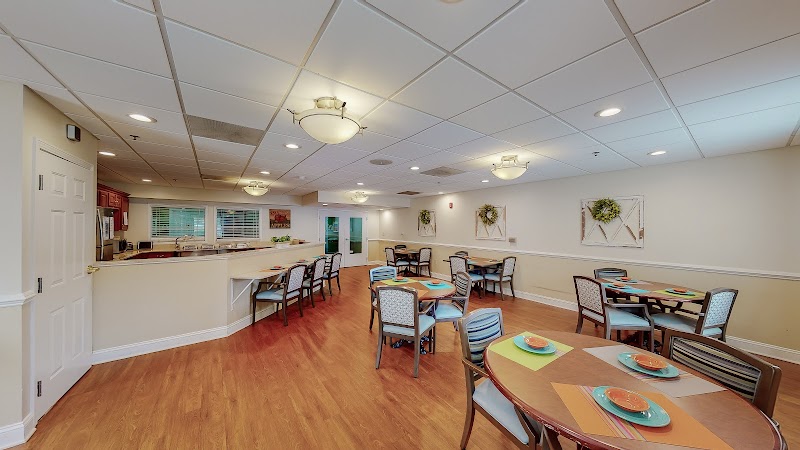
CMS rates THE GABLES OF PELHAM SKILLED NURSING & REHAB's staffing level at 3 out of 5 stars, which is average compared to other nursing homes. Staff turnover is 76%, which is 29 percentage points above the South Carolina average of 46%. High turnover can affect care consistency as new staff learn residents' individual needs.

What Have Inspectors Found at The Gables Of Pelham Skilled Nursing & Rehab?

State health inspectors documented 10 deficiencies at THE GABLES OF PELHAM SKILLED NURSING & REHAB during 2022 to 2025. These included: 2 Immediate Jeopardy (the most serious level, indicating potential for serious harm or death) and 8 with potential for harm. Immediate Jeopardy findings are rare and represent the most serious regulatory concerns. They require immediate corrective action.
Who Owns and Operates The Gables Of Pelham Skilled Nursing & Rehab?

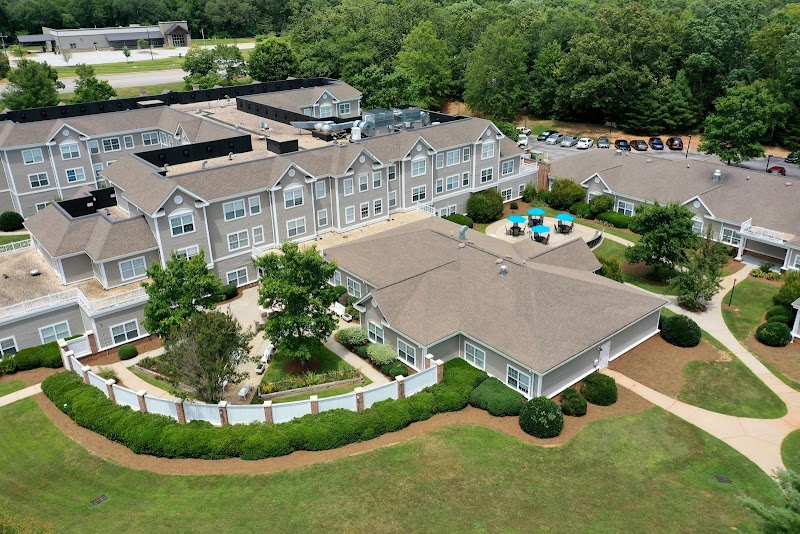
THE GABLES OF PELHAM SKILLED NURSING & REHAB is owned by a for-profit company. For-profit facilities operate as businesses with obligations to shareholders or private owners. The facility operates independently rather than as part of a larger chain. With 45 certified beds and approximately 28 residents (about 62% occupancy), it is a smaller facility located in GREENVILLE, South Carolina.
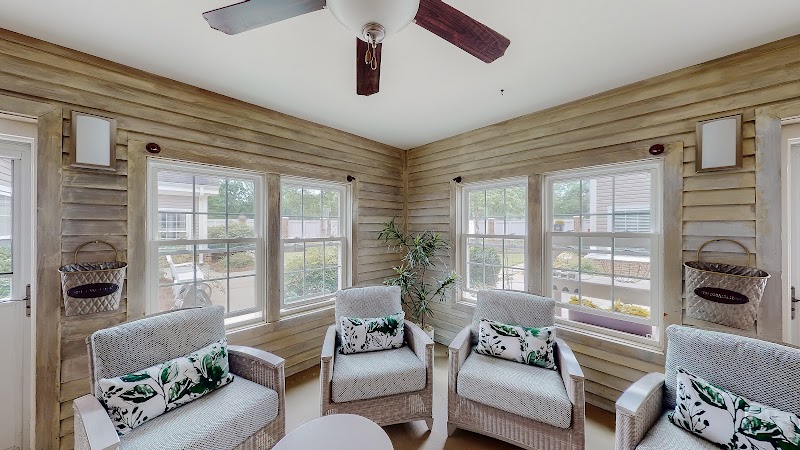
How Does The Gables Of Pelham Skilled Nursing & Rehab Compare to Other South Carolina Nursing Homes?

Compared to the 100 nursing homes in South Carolina, THE GABLES OF PELHAM SKILLED NURSING & REHAB's overall rating (1 stars) is below the state average of 2.8, staff turnover (76%) is significantly higher than the state average of 46%, and health inspection rating (1 stars) is much below the national benchmark.

What Should Families Ask When Visiting The Gables Of Pelham Skilled Nursing & Rehab?

Based on this facility's data, families visiting should ask: "What changes have been made since the serious inspection findings, and how are you preventing similar issues?" "How do you ensure continuity of care given staff turnover, and what is your staff retention strategy?" "Can I visit during a mealtime to observe dining assistance and food quality?" "How do you handle medical emergencies, and what is your hospital transfer rate?" These questions are particularly relevant given the facility's Immediate Jeopardy citations and the facility's high staff turnover rate.

Is The Gables Of Pelham Skilled Nursing & Rehab Safe?

Based on CMS inspection data, THE GABLES OF PELHAM SKILLED NURSING & REHAB has documented safety concerns. Inspectors have issued 2 Immediate Jeopardy citations (the most serious violation level indicating risk of serious injury or death). The facility has a 1-star overall rating and ranks #100 of 100 nursing homes in South Carolina. Families considering this facility should ask detailed questions about what corrective actions have been taken since these incidents.

Do Nurses at The Gables Of Pelham Skilled Nursing & Rehab Stick Around?

Staff turnover at THE GABLES OF PELHAM SKILLED NURSING & REHAB is high. At 76%, the facility is 29 percentage points above the South Carolina average of 46%. High turnover means new staff may not know residents' individual needs, medications, or preferences. It can also be disorienting for residents, especially those with dementia who rely on familiar faces. Families should ask: What is causing the turnover? What retention programs are in place? How do you ensure care continuity during staff transitions?

Was The Gables Of Pelham Skilled Nursing & Rehab Ever Fined?

THE GABLES OF PELHAM SKILLED NURSING & REHAB has been fined $11,196 across 2 penalty actions. This is below the South Carolina average of $33,191. While any fine indicates a compliance issue, fines under $50,000 are relatively common and typically reflect isolated problems that were subsequently corrected. Families should ask what specific issues led to these fines and confirm they've been resolved.

Is The Gables Of Pelham Skilled Nursing & Rehab on Any Federal Watch List?

THE GABLES OF PELHAM SKILLED NURSING & REHAB is not on any federal watch list. The most significant is the Special Focus Facility (SFF) program, which identifies the bottom 1% of nursing homes nationally based on persistent, serious quality problems. Not being on this list means the facility has avoided the pattern of deficiencies that triggers enhanced federal oversight. This is a positive indicator, though families should still review the facility's inspection history directly.