Carlyle Senior Care of Kingstree
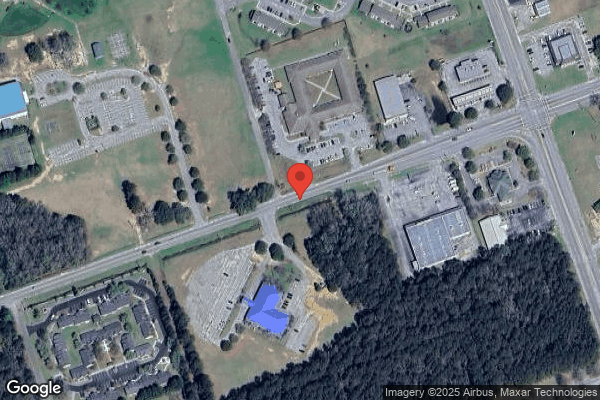

401 Nelson Boulevard, Kingstree, SC 29556 (843) 355-6116
For profit - Limited Liability company 96 Beds CARLYLE SENIOR CARE Data: November 2025
Trust Grade
53/100
#108 of 186 in SC
Last Inspection: March 2025

Within standard 12-15 month inspection cycle. Federal law requires annual inspections.

Overview

Carlyle Senior Care of Kingstree has a Trust Grade of C, meaning it is average and sits in the middle of the pack among nursing homes. It ranks #108 out of 186 facilities in South Carolina, placing it in the bottom half, but it is the top facility in Williamsburg County, where there is only one other option. The facility's trend is worsening, having increased from one issue in 2024 to three in 2025. Staffing is a strength here with a rating of 4 out of 5 and a turnover rate of 46%, which is average for South Carolina. However, the facility has been fined $8,788, which is concerning as it indicates some compliance issues. Specific incidents from recent inspections revealed that the facility failed to manage pain effectively for one resident by not ordering necessary medication in a timely manner, resulting in increased pain levels. Additionally, they did not properly assess and document the treatment of pressure ulcers for several residents, putting them at risk for worsening conditions. They also failed to document bruising for a resident, which could lead to confusion between accidental injuries and potential abuse. While there are strengths in staffing, these significant concerns highlight areas that need improvement.

Trust Score
C
53/100
In South Carolina
#108/186
Bottom 42%
Safety Record
Moderate
Needs review
Inspections
Getting Worse
1 → 3 violations
Staff Stability
⚠ Watch
46% turnover. Above average. Higher turnover means staff may not know residents' routines.
Penalties
✓ Good
$8,788 in fines. Lower than most South Carolina facilities. Relatively clean record.
Skilled Nurses
○ Average
Each resident gets 33 minutes of Registered Nurse (RN) attention daily — about average for South Carolina. RNs are the most trained staff who monitor for health changes.
Violations
○ Average
6 deficiencies on record. Average for a facility this size. Mostly minor or procedural issues.
★★☆☆☆
2.0
Overall Rating
★★★★☆
4.0
Staff Levels
★☆☆☆☆
1.0
Care Quality
★★★☆☆
3.0
Inspection Score
Stable
2024: 1 issues
2025: 3 issues

The Good

  • 4-Star Staffing Rating · Above-average nurse staffing levels
  • Full Sprinkler Coverage · Fire safety systems throughout facility
  • No fines on record

Facility shows strength in staffing levels, fire safety.

The Bad

2-Star Overall Rating

Below South Carolina average (2.8)

Below average - review inspection findings carefully

Staff Turnover: 46%

Near South Carolina avg (46%)

Higher turnover may affect care consistency

Federal Fines: $8,788

Below median ($33,413)

Minor penalties assessed

Chain: CARLYLE SENIOR CARE

Part of a multi-facility chain

Ask about local staffing decisions and management

The Ugly 6 deficiencies on record

1 actual harm
Mar 2025 3 deficiencies 1 Harm
SERIOUS (G)

Actual Harm - a resident was hurt due to facility failures

Deficiency F0697 (Tag F0697)

A resident was harmed · This affected 1 resident

**NOTE- TERMS IN BRACKETS HAVE BEEN EDITED TO PROTECT CONFIDENTIALITY** Based on review of the facility policy, record review, observation and interview the facility failed to effectively manage pain ...

Read full inspector narrative →
**NOTE- TERMS IN BRACKETS HAVE BEEN EDITED TO PROTECT CONFIDENTIALITY** Based on review of the facility policy, record review, observation and interview the facility failed to effectively manage pain for one of one resident (Resident (R) 58) reviewed for pain out of 23 sample residents. The facility failed to order R58's Morphine (an opioid pain medication) in a timely manner, resulting in an escalation of pain levels and decreased oral intake. Findings include: Review of the facility's policy titled Pain Management revised 08/30/24, revealed, 1. In order to help a resident attain or maintain his/her highest practicable level of physical, mental and psychosocial well-being and to prevent or manage pain, the facility will . c. Manage or prevent pain, consistent with the comprehensive assessment and plan of care, current professional standards of practice, and the resident's goals and preferences . i. Facility staff will notify the practitioner, if the resident's pain is not controlled by the current treatment regimen. Review of the facility's policy titled Ordering Medications from the Pharmacy, revised 08/10/21, revealed 3. Schedule II controlled substances should be reordered seven (7) days in advance of need. Review of R58's quarterly Minimum Data Set (MDS) with an Assessment Reference Date (ARD) date of 12/23/24 revealed R58 was admitted to the facility on [DATE] with diagnoses that include but are not limited to: acquired absence of the right leg above the knee, cardiomyopathy and peripheral vascular disease. R58 had a Brief Interview for Mental Status (BIMS) score of 15 out of 15, indicating R58 was cognitively intact. Review of R58's Care Plan, revised 03/12/25 revealed Pain: Resident is at risk for alteration in comfort related to weakness, decreased mobility, peripheral arterial occlusion with ischemia to the LLE [lower left extremity] with chronic pain, Rt [right] AKA [above the knee amputation], GERD [gastroesophageal reflux disease], BPH [benign prostatic hyperplasia], Dysphagia and pain Constipation. Amputation was recommended to LLL [lower left leg] but has been declined by the resident. 2/17/25-readmitted to facility, Neurontin & morphine sulfate in place . Interventions included Administer medication as ordered and PRN [as needed] pain meds when non-pharmacological pain interventions are ineffective .Provide alternative comfort measures (relaxation, positioning etc ) prn as ordered, and Report uncontrolled pain to MD [Medical Doctor] as needed. Review of R58's Orders revealed: 02/17/25 Morphine Sulfate Tab ER [extended release] 15 MG [milligrams] by mouth [by mouth] three times a day [TID] for pain. 02/17/25 Gabapentin Cap 400 MG 1 capsule orally two times [BID] a day for pain in legs. 03/03/25 Tylenol Oral Tablet 325 MG (Acetaminophen) 2 tablet by mouth every 6 hours as needed for pain. 3/13/25 Acetaminophen Oral Tablet 325 MG 2 tablet by mouth in the afternoon for Chronic Pain. Review of a medication request located in the Nurse Practitioner's book at the nurse's station, revealed, a request completed on 03/10/25 for R58's morphine ER 15 MG PO three times a day for pain and noted the number on hand as three. On 03/17/25 and 03/22/25 the number on hand was left blank. Review of R58's Pain Assessment dated 03/17/25, revealed R58 occasionally had pain with a Numeric Rating of 3 on a Scale (00-10). R58's pain was managed with Tylenol daily, Gabapentin BID, Morphine TID. Review of R58's Medication Administration Record (MAR) revealed R58's morphine was not administered on 03/21/25 at 2:00 PM, on 03/22/25 and 03/23/25 at 6:00 AM, 2:00 PM, and 10:00 PM, and on 03/24/25 at 6:00 AM. A total of eight doses of morphine were not administered. Review of R58's administration note, dated 03/25/25 revealed Tylenol Oral Tablet 325 MG Give 2 tablet by mouth every 6 hours as needed for pain. Resident c/o [complain of] pain 10/10. During an interview on 03/25/25 at 11:01 AM, R58 stated he had been out of his morphine for five days and suspected the facility ran out. R58 stated his morphine came in yesterday [03/24/25] and it was taking a while for his body to catch up. R58 was asked how it made him feel to be without the morphine and he stated he couldn't describe it, but he couldn't get out of bed or move about in bed because he had a lot of pain. R58 was asked if he was given something else to help with his pain. R58 said Tylenol. R58 was asked if the Tylenol helped and he stated, No, not really, it took a little of the edge off. During an observation and interview on 03/26/25 at 8:34 AM, R58 was observed awake in bed eating breakfast. R58 stated he felt much better now his pain was more controlled. R58 also stated during the time he was without the morphine and in pain he wasn't able to eat. Review of R58's Amount Eaten revealed, on 03/24/25 R58 refused breakfast and lunch. On 03/25/25 R58 ate 26-50 % at breakfast and lunch. R58's usual consumption was 51-100%. During an interview on 03/26/25 at 8:37 AM, Licensed Practical Nurse (LPN) 1 was asked if R58's morphine was out over the weekend. LPN1 stated, Yes. LPN1 stated the prescription was sent to the pharmacy with no response. LPN1 stated, Finally the unit manager called the pharmacy. LPN1 was asked how much time in advance the process needed to be started to refill the morphine. LPN stated they ordered when they saw the morphine getting low, about four days out. LPN1 stated they physically placed the order request in the Nurse Practitioner's (NP) book at the nurse's station and the NP sent it. LPN1 was asked if the prescription for R58's morphine was sent timely and LPN1 stated, No. During an interview on 03/26/25 at 3:09 PM, the Director of Nursing (DON) was asked if she was aware R58 was out of his morphine over the weekend. The DON stated, No, she just became aware. The DON stated she reviewed the medication request book; pharmacy was called, and the NP said she sent it in. The DON went on to say, But it [morphine] didn't come in until we requested it on Monday [03/24/25]. The DON stated it should have come Friday night, 03/21/25. The DON was asked what should be done when the medication didn't come in as planned. The DON stated, Notify the physician. The DON was asked if another pain medication or intervention was utilized in the meantime. The DON stated she would have to check. During an interview on 03/27/25 at 11:20 AM, the NP was asked if she was aware R58 was out of morphine over the weekend. The NP stated, No. The NP stated on 03/21/25, the medication was supposed to be filled and sent to the facility that night. The NP stated R58 informed her 03/24/25 during her visit that the morphine wasn't given. The NP stated the staff on-call should have been notified. The NP checked her computer and confirmed she didn't get notification the on-call staff were called.
CONCERN (D)

Potential for Harm - no one hurt, but risky conditions existed

Quality of Care (Tag F0684)

Could have caused harm · This affected 1 resident

Based on review of the facility policy, record review, observation, and interviews, the facility failed to document bruising for one of two residents (Resident (R)11) reviewed for quality of care of 2...

Read full inspector narrative →
Based on review of the facility policy, record review, observation, and interviews, the facility failed to document bruising for one of two residents (Resident (R)11) reviewed for quality of care of 23 sample residents. This failure could have caused a missed opportunity to distinguish accidents from inflicted injuries. Findings include: Review of the facility's policy titled, Skin Assessment revised 09/30/24, revealed A full body, or head to toe, skin assessment will be conducted by a licensed or registered nurse upon admission/re-admission, daily for three days, and weekly thereafter. The assessment may also be performed after a change of condition . h. Note any skin conditions such as redness, bruising . Documentation of skin assessment . b. Document observations (e.g., skin conditions). Review of R11's annual Minimum Data Set (MDS) with an Assessment reference date (ARD) date of 02/03/25, revealed R11 had an admission date of 09/14/23 and a BIMS score of 11 out of 15, indicating R11's cognition was moderately impaired. R11 received an antiplatelet medication, and had diagnoses of heart failure, diabetes mellitus, and stroke. Review of R11's Orders revealed the following: 08/21/24 Clopidogrel Bisulfate (an antiplatelet medication) 75 MG [milligrams] 1 tablet [tab] by mouth [PO] one time a day. 08/21/24 Aspirin (an antiplatelet medication) Tab 325 MG 1 tablet by mouth one time a day. With instructions to observe closely for significant side effects including .bruising . every shift and to document: Y[yes] if side effects noted and notify MD if indicated; N[no] if no side effects noted. Document side effects observed in progress note. Review of R11's March 2025 Medication Administration Record (MAR) revealed, monitoring of anticoagulant side effects such as bruising documented with an N or 0 for 03/01/25 through 03/26/25 indicating no side effects were present. Review of R11's Skin Only Evaluations dated 03/03/25 and 03/18/25, revealed no current skin issues noted. Review of R11's Progress Notes, dated 01/10/25 through 03/25/25, revealed no documentation of bruising. During an observation and interview on 03/25/25 at 11:10 AM, R11 was awake in bed dressed in a night gown. Several purple bruises were noted on both of R11's forearms. R11 was asked about her bruises. R11 stated she didn't know how she got them, and it was concerning her. R11 stated she was not mistreated, and the bruises were not painful. R11 then revealed more bruises on her right neck and shoulder. R11 stated she didn't remember bumping anything. During an interview on 03/26/25 at 1:26 PM, Licensed Practical Nurse (LPN) 1 was asked about R11's bruises. LPN1 stated she was aware of R11's bruises, but she wasn't sure why R11 had them as she wasn't receiving an anticoagulant medication. During an interview on 03/26/25 at 1:56 PM, the DON was asked why R11 had bruises and why the section of the March 2025 MAR included 0 or N indicating no side effects were present. The DON stated she didn't know but R11 was out of the facility last weekend. The DON stated R11 had bumps things on her way to the bathroom and that sometimes causes bruises. The DON confirmed the MAR section for documenting side effects and the skin assessment were noted as none present. During an interview on 03/27/25 at 11:23 AM, the Nurse Practitioner (NP) was asked about R11's bruises. The NP stated she found out about R11's bruises on Monday, 03/24/25 and they looked like purpura. The NP stated she documented the bruises but didn't always tell the staff. The NP was asked what her expectation was for staff in documenting bruises. The NP stated, it depends on the bruise.
CONCERN (E)

Potential for Harm - no one hurt, but risky conditions existed

Pressure Ulcer Prevention (Tag F0686)

Could have caused harm · This affected multiple residents

**NOTE- TERMS IN BRACKETS HAVE BEEN EDITED TO PROTECT CONFIDENTIALITY** Based on review of the facility policy, record reviews and interviews, the facility failed to ensure services were provided to p...

Read full inspector narrative →
**NOTE- TERMS IN BRACKETS HAVE BEEN EDITED TO PROTECT CONFIDENTIALITY** Based on review of the facility policy, record reviews and interviews, the facility failed to ensure services were provided to prevent and treat pressure ulcers by not following professional standards of practice to evaluate and document initiating wound assessment and following the wound doctor's care recommendation for four of six residents (Resident (R) 12, R27, R30, and R47) reviewed for pressure ulcers out of a total sample of 23 residents. These failures placed all four residents at risk of pressure ulcers worsening. Findings include: Review of the facility's policy titled, Pressure Injury Prevention and Management, dated 09/30/23, revealed documentation as follows: Licensed nurses will conduct a full body skin assessment on all residents upon admission/readmission and weekly. Findings will be documented in the medical record .Assessments of pressure injuries will be performed by a licensed nurse and documented in the electronic charting. 1. Review of R12's admission Record revealed, R12 was admitted to the facility on [DATE] and readmitted on [DATE] with diagnoses including but not limited to: chronic respiratory failure and need for assistance for personal care. Review of R12's Care Plan, revised on 03/26/25, included the following: Potential for alterations in skin integrity related to comorbidities, incontinence, impaired mobility, weakness, and history of pressure ulcers. 02/26/25 - unstageable pressure ulcer to the left medial foot with treatment noted. 03/04/25 - unstageable pressure ulcer left heel with treatment changed. 03/11/25 - treatment changed to left heel and left medial foot. 03/25/25 - treatment changed to left medial foot. Review of R12's Treatment Administration Record (TAR) dated from 01/01/25 to 03/27/25, revealed R12 was receiving wound care orders, that included: Start date 02/26/25, offload heels/ heel protectors two times a day on everyday shift and night shift. May offload heels or apply heel protectors. Start date 03/26/25, wound care to cleanse distal medial foot wound with normal saline. Pat dry. Apply Medi honey and border gauze, do daily. everyday shift. Review of R12's Progress Notes titled VohraProgressNote dated 03/04/25 and 03/25/25, documented three pressure ulcers as follows: a. Site two, UNSTAGEABLE (DUE TO NECROSIS) OF THE LEFT, DISTAL, MEDIAL FOOT FULL THICKNESS. The plan of care included recommendations: Cleanse with saline at time of dressing change; Off-Load Wound; Reposition per facility protocol; Pressure Off-Loading Boot. b. Site three, UNSTAGEABLE (DUE TO NECROSIS) OF THE LEFT, MEDIAL FOOT FULL THICKNESS. The plan of care included recommendations: Cleanse with saline at time of dressing change; Off-Load Wound; Reposition per facility protocol; Pressure Off-Loading Boot. c. Site four, UNSTAGEABLE DTI OF THE LEFT HEEL UNDETERMINED THICKNESS The plan of care included recommendations: Cleanse with saline at time of dressing change; Off-Load Wound; Reposition per facility protocol; Pressure Off-Loading Boot. Review of R12's record revealed, no initial wound assessment documentation to include: start date, wound size and wound conditions. Review R12's TAR revealed no documentation that the wound doctor's plan of care recommendations was implemented. During an interview on 03/26/25 at 11:06 AM, the Director of Nursing (DON) stated R12's pressure ulcers' start date was 02/26/25, a Certified Nurse Aide (CNA) verbally reported this to the Infection Preventionist/ Wound Nurse (IP/WN) IP /WN. She said that IP/WN did not document the initial measurements, and the conditions of the pressure wounds in R12's record. 2. Review of R27's admission Record revealed R27 was admitted to the facility on [DATE] with diagnoses including but not limited to diabetes. Review of R27's Nurse's Note dated 03/05/25 at 1:17 PM, documented, Open area noted to right buttock. TX [treatment] put in place. RP [responsible party] made aware. No s/s [signs and symptoms] of distress noted. Call light is within reach. Review of R27's Progress Notes titled VohraProgressNote dated 03/11/25 included the following: Site two, STAGE 2 PRESSURE WOUND OF THE RIGHT BUTTOCK PARTIAL THICKNESS. Review of R27's Care Plan, revised on 03/24/25, included the following: Stage II pressure ulcer to right buttock with potential for further alterations in skin integrity related to decreased mobility, incontinence, history of healed wounds, comorbidities, and edema. 03/11/25 and stage II pressure ulcer noted to the right buttock with treatment noted. Resolved on 03/22/25. Review of R27's record revealed no initial wound assessment to include: the stage II pressure ulcer's size and wound conditions. During an interview on 03/26/25 at 11:06 AM, The DON stated that a nurse verbally reported the wound to IP/WN and the IP/WN did not document the initial measurements and conditions of the pressure wound in R27's record. 3. Review of R30's admission Record revealed R30 was admitted to the facility on [DATE] with diagnoses including but not limited to: chronic obstructive pulmonary disease, and pressure-induced deep tissue damage of left heel. Review of R30's Care Plan, revised on 03/26/25 included the following: Existing stage IV to sacrum & Deep Tissue Injury (DTI) left heel with potential for further alternations in skin integrity related to comorbidities, weakness, & impaired mobility, 12/10/24 - Bactrim for fourteen days and cefepime intravenous (IV) for 14 days rated to Methicillin-resistant Staphylococcus aureus (MRSA, a type of staph bacteria resistant the antibiotics) in wound and 12/20/24 - Cefepime IV for fourteen days related to MRSA in wound. Review of R30's Progress Notes titled, VohraProgressNote dated 03/25/25, included the following: Site six, STAGE 4 PRESSURE WOUND SACRUM FULL THICKNESS, wound size 0.4 x 0.7 x 0.3 cm. The plan of care included recommendations: Group-2 Mattress: Continue; Cleanse with saline at time of dressing change; Off-Load Wound; Reposition per facility protocol; Check bed pump q [every] shift to ensure working properly. Review of R30's TAR dated 01/01/25 to 03/26/25 revealed, R30 was receiving wound care by physician's order as follows: Start date 08/06/24, apply heel protectors as tolerated two times a day every day and night shift May offload heels or apply heel protectors. Start 08/14/24, air mattress to bed every shift for aid in wound healing. Check every shift. Start date 03/27/25, wound care for sacral wound, cleanse with wound cleanser. Apply barrier cream on skin directly around the wound. Apply small amount of saline to small piece of Hydrofera Blue, wring out. Tuck in wound and cut off excess. Cover with a dry dressing every day shift, every Tuesday, Thursday, and Saturday, for stage IV pressure ulcer to sacrum. Replace if soiled. Review of R30's record revealed no documentation that the wound doctor's plan of care recommendations was implemented. During an interview on 03/27/25 at 9:53 AM, the DON reviewed R30's record and stated there was no documentation that indicated that the wound doctor's care recommendation was implemented or recorded in R30's record and it should have been implemented, documented in the MAR, and care planned. 4. Review of R47's admission Record revealed R47 was admitted to the facility on [DATE] with diagnoses including but not limited to: diabetes, stage three pressure ulcer of sacral region, onset date 12/10/25. Review of R47's Care Plan, revised on 03/20/25, included, documentation on 10/28/24 R27 had a stage III pressure ulcer to sacrum. Review of R47's TAR dated 01/01/25 to 03/27/25 revealed that R12 was receiving wound care by physician order as follows: Start date 02/18/25, mattress to bed as tolerated. Check functional every shift. Start 02/21/25, wound care for stage III pressure ulcer to sacrum, clean with wound cleanser, normal saline. Then apply calcium alginate and cover with dry dressing, two times a day on every day and night shift. Review of R47's Progress Notes titled VohraProgressNote dated 10/29/24, included the following: Site seven, STAGE 3 PRESSURE WOUND SACRUM FULL THICKNESS. The plan of care included recommendations: Cleanse with wound cleanser at time of dressing change; Off-Load Wound; Reposition per facility protocol; Turn side to side in bed every 1-2 hours if able; Group-2 Mattress. Review of R47's Progress Notes titled VohraProgressNote dated 02/21/25 and 03/18/25 included the following: Site seven, STAGE 4 PRESSURE WOUND SACRUM FULL THICKNESS Peri Wound Treatment: Zinc ointment apply twice daily and as needed for 30 days. The plan of care included recommendations: Group-2 Mattress: Continue; Cleanse with saline at time of dressing change; Off-Load Wound; Reposition per facility protocol; Turn side to side in bed every 1-2 hours if able; Check bed pump q [every] shift to ensure working properly. Review of R47's record revealed no initial wound assessment was documented to include when the stage III pressure ulcer, now stage IV, began and the initial assessed size. There was no documentation that the treatment order of Zinc ointment twice daily and as needed for 30 days. was given, and if the plan of care recommendation was implemented and what was the pump pressure requirement for the air mattress. During an interview on 03/26/25 at 11:06 AM, the DON stated staff usually verbally reported new wounds to the IP/WN and the IP/WN did not have any documentation of the initial measurements and the condition of the pressure wound. During an interview on 03/27/25, at 9:53 AM, the DON stated a wound assessment would have included size, color, drainage, odors. The DON reviewed R47's record and stated no documentation indicating that the wound doctor's care recommendation was implemented or recorded, and it should have been documented in the MAR, and care planned. During a follow up interview on 03/27/25 at 11:30 AM, the DON stated that the facility's air mattresses were in group two. She said per the manufacturer's manual; the pressure setting would adjust based on the resident's weight. The DON said she would include the pressure setting for air mattress in the monitoring orders in the future.
Dec 2024 1 deficiency
CONCERN (D) 📢 Someone Reported This

A family member, employee, or ombudsman was alarmed enough to file a formal complaint

Potential for Harm - no one hurt, but risky conditions existed

Report Alleged Abuse (Tag F0609)

Could have caused harm · This affected 1 resident

**NOTE- TERMS IN BRACKETS HAVE BEEN EDITED TO PROTECT CONFIDENTIALITY** Based on review of facility policy, record reviews and interviews, the facility failed to ensure an allegation of physical abuse...

Read full inspector narrative →
**NOTE- TERMS IN BRACKETS HAVE BEEN EDITED TO PROTECT CONFIDENTIALITY** Based on review of facility policy, record reviews and interviews, the facility failed to ensure an allegation of physical abuse towards Resident (R)1 was reported within the 2 hour time frame, for 1 of 1 residents reviewed for abuse. Findings include: Review of the facility policy titled, Abuse, Neglect and Exploitation, revised on 10/24/22, documents, It is the policy of this facility to provide protections for health, welfare, and rights of each resident by developing and implementing written policies and procedures that prohibit and prevent abuse, neglect, exploitation and misappropriation of resident property. VII. Reporting/Response A. The facility will have written procedures that include: 1. Reporting of all alleged violations to the Administrator, state agency, adult protective services and to all other required agencies (e.g. law enforcement when applicable) within specified timeframe's: a. Immediately, but not later than 2 hours after the allegation is made, if the events that cause the allegation involve abuse or result in serious bodily injury. B. The Administrator will follow up with government agencies, during business hours, to confirm the initial report was received, and to report the results of the investigation when final within 5 working days of the incident, as required by state agencies. Review of R1's Face Sheet revealed the facility admitted R1 with diagnoses, including, but not limited to: dementia with behavior disturbance, Alzheimer's Disease and major depressive disorder. Review of the Facility Reportable, revealed the date of the alleged abuse occurred on 09/15/24 at 6:38 AM, in which R1 reported that a Certified Nursing Assistant (CNA)1 drug her to the floor from her bed, and had beat her in order to get her to allow the CNA to bathe her. Further review of the reportable revealed, the actual allegation of physical abuse was made on 09/12/24, when the nurses leaving their shift and were at the nurses station giving report to the oncoming nurses. CNA1 came out of R1's room to report the incident to the nurse, when the bath was finished. The nurses did not report the incident to the Administrator in the required timeframe and the Administrator did not submit the allegation of physical abuse in the required timeframe. Review of a Witness Statement dated 09/16/24, CNA1 stated, The resident was walking around soiled, and I suggested that we get cleaned, the resident agreed and went into her room to get cleaned, she did not get combative and let me get her cleaned up, after we were done, she began to allege that I beat her on her hip, nurses were changing shift and notified. A body assessment was done and nothing was found. (Happened of [sic] 2nd shift 9/12/24). Review of R1's Progress Note dated 09/14/24 at 11:15 PM, documented, Resident's son [name] reported to this writer that resident said she was dragged off the bed onto the floor and forced to take a bath. Body audit complete. No bruising noted. No signs of injury at this time. Resident states She dragged me on the floor and beat me to take a bath. Resident states she has pain all over and rates it a 6/10 on pain scale. Resident currently on scheduled tylenol for management of pain. Incident reported to unit manager and on-call phone. Reported to physician. Resident currently laying in bed resting. No acute distress noted. Will continue to monitor for signs of injury. During an interview on 12/03/24 at 11:05 AM, CNA1 stated, The resident agreed to a bath, and then when I got finished giving her a bath, she started yelling, that I had beat her an drug her to the shower. I would never hurt any of the residents. I went immediately to get the nurse. During an interview on 12/03/24 at 12:30 PM, the Administrator confirmed the allegation of physical abuse occurred on 09/12/24. During an interview on 12/03/24 at 12:45 PM, the Registered (RN) Unit Manager stated we were at the nurses desk giving report to the oncoming nurses when CNA1 came out of the resident's room and said that the resident alleged that she had been beat by the CNA. The RN Unit Manager stated that the incident should have been reported within 2 hours to the State Agency, and immediately to the Administrator.
May 2023 2 deficiencies
CONCERN (D)

Potential for Harm - no one hurt, but risky conditions existed

PASARR Coordination (Tag F0644)

Could have caused harm · This affected 1 resident

Based on record review, facility policy review, and interviews, the facility failed to ensure residents who were identified as having a newly evident or possible serious mental disorder were referred ...

Read full inspector narrative →
Based on record review, facility policy review, and interviews, the facility failed to ensure residents who were identified as having a newly evident or possible serious mental disorder were referred for a Level II pre-admission screening and resident review (PASARR). This affected 1 (Resident (R)59) of 2 residents reviewed for PASARR. Findings include: A review of the facility's policy titled, PASARR Coordination effective 11/28/2016, revealed, This facility coordinates assessments with the preadmission screening and resident review (PASARR) program under Medicaid to the maximum extent practicable to avoid duplicative testing and effort. Policy Explanation and Compliance Guidelines: 1. All individuals with a mental disorder or intellectual disability who apply for admission to this facility will be screened in accordance with the State's Medicaid rules for screening. The policy further revealed, 6. Any resident who exhibits a newly evident or possible serious mental disorder, intellectual disability, or a related condition will be referred promptly to the state mental health or intellectual disability authority for a level II resident review. 1. A review of R59's Facesheet revealed the facility admitted the resident on 06/09/2020 with a diagnosis of anxiety disorder and the resident was diagnosed with psychosis on 12/28/2021. A review of R59's annual Minimum Data Set (MDS), with an Assessment Reference Date (ARD) of 03/06/2023, revealed R59 had a Brief Interview of Mental Status (BIMS) score of 3 out of 15, indicating severe cognitive impairment. The MDS also indicated the R59 was not currently considered by the state Level II PASARR process to have a serious mental and/or intellectual disability or a related condition. However, according to the MDS, R59 had a diagnosis of a psychotic disorder. A review of R59's active Care Plan(s), with a start date of 12/14/2022, revealed R59 was at risk for side effects of psychotropic medication use (Risperdal) related to diagnoses of dementia with behaviors and psychosis. A review of R59's Level I PASARR screening, dated 06/09/2020, revealed the resident had a diagnosis of anxiety. The screening revealed the resident did not have a diagnosis of mental illness and had no history of psychiatric hospitalization within the previous two years. According to the PASARR, no further action was needed. During an interview on 05/25/2023 at 8:34 AM, the Social Service Director stated the admission Coordinator was responsible for residents' PASARR screenings. During an interview on 05/25/2023 at 8:40 AM, the admission Coordinator (AC) indicated she completed the Level I PASARR screening for R59 dated 06/09/2020. The AC indicated that she revaluated and completed a new Level I PASARR when a resident developed a mental disorder after being admitted . She stated nursing staff made her aware of residents who developed a new mental disorder and she also reviewed physician notes. The AC indicated she also completed an audit on all PASARRs every quarter but had not caught R59's new diagnosis. She indicated she was not aware the resident was diagnosed with psychosis on 12/28/2021 and had not completed a new Level I PASARR. She said a new Level I screening should have been completed when the resident received the new mental diagnosis. The admission Coordinator stated the negative outcome if a new Level I screening was not completed when the resident developed a new mental diagnosis after admission was they possibly may not receive more specialized care and services for their mental disorder. During an interview on 05/25/2023 at 12:26 PM, the Director of Nursing (DON) stated she was not too familiar with the PASARR process but indicated that every person, before they were admitted , needed to have a Level I PASARR. She stated if the resident had a serious mental disorder or intellectual disability, they may need a Level II screening. The DON stated the AC was responsible for the PASARRs at the facility. The DON stated she was not aware if a resident required a new Level I PASARR if they developed a new mental disorder diagnosis after they were admitted . She also indicated she was not aware of the importance of the PASARRs being accurate and complete prior to this survey. During an interview on 05/25/2023 at 12:43 PM, the Administrator stated the facility must have a PASARR when residents were admitted to the facility. She indicated a Level II PASARR meant they had certain diagnoses that warranted the Level II screen. The Administrator stated if there was a change in a specific diagnosis after admission, a new Level I screen may have to be completed. She indicated the admission Coordinator was responsible for making sure the PASARRs were accurate and complete. She indicated her expectation was that PASARRs were completed timely and accurately. She also indicated the importance of the PASARR was to see if the resident may require more advanced services. After reviewing R59's PASARR dated 06/09/2020, the Administrator indicated a new Level I screen should have been completed to ensure the resident received all the necessary care and services for their mental disorder diagnosis.
CONCERN (D)

Potential for Harm - no one hurt, but risky conditions existed

Deficiency F0687 (Tag F0687)

Could have caused harm · This affected 1 resident

Based on observations, interviews, and record review, the facility failed to ensure residents received proper treatment and care to maintain good foot health for 1 (Resident (R)77) of 3 residents revi...

Read full inspector narrative →
Based on observations, interviews, and record review, the facility failed to ensure residents received proper treatment and care to maintain good foot health for 1 (Resident (R)77) of 3 residents reviewed for non-pressure skin conditions. Specifically, staff identified that R77 had a crusted area to the right great toenail bed on 05/19/2023 and the facility failed to provide treatment and monitoring to the area from 05/19/2023 through 05/24/2023. Findings include: A review of a Facesheet revealed the facility admitted R77 on 10/24/2022 with diagnoses that included but was not limited to; paraplegia, iron deficiency, essential hypertension, pressure ulcer, and type 2 diabetes. A review of R77's quarterly Minimum Data Set (MDS), with an Assessment Reference Date (ARD) of 04/24/2023, indicated R77 had a Brief Interview for Mental Status (BIMS) score of 15 out of 15, which indicated the resident was cognitively intact. The MDS also indicated R77 required extensive assistance of one person assistance with bed mobility and toileting and was totally dependent on two people for transfers. The MDS indicated the resident was independent with set-up assistance only with eating. A review of R77's Care Plan, initiated on 10/24/2022, revealed the resident was at risk for alterations in skin integrity related to incontinence, history of pressure sores, and paraplegia resulting in impaired mobility. Interventions directed staff to monitor skin with weekly body audits for signs and symptoms of alteration in skin integrity and notify the wound nurse and practitioner as indicated. Further review revealed an intervention initiated on 05/24/2023 related to a draining area to the right great toe that was likely an ingrown toenail. An interview on 05/23/2023 at 12:16 PM with R77 revealed R77 had an open area on his/her right big toe. The resident said it was oozing and staff were not cleaning it or providing treatment for it. R77 said he/she was unable to clean it themself. The resident stated the area was not covered and the staff told the resident they would need to wait to see the foot doctor when the foot doctor came to the facility again. An observation on 05/23/2023 at 12:25 PM of R77's right great toe revealed an area of dry crusted drainage from the cuticle area to the tip of the toe covering the left side of the nail bed. There was slight swelling noted at the cuticle area with a small (approximately 1/32 inch) open area with no active drainage noted. A review of Departmental Notes revealed a nurses note, dated 05/19/2023 at 8:02 AM and documented by Registered Nurse (RN)10, that indicated R77 was noted with a crusted area to the lateral aspect of the right great toenail bed. A review of Departmental Notes revealed a nurses note, dated 05/23/2023 at 4:13 PM and documented by RN11, that indicated R77 had complaints about issues with toenails on the right foot. The note further indicated R77 would follow-up with the podiatrist on 05/30/2023. An interview on 05/24/2023 at 1:00 PM with RN10 revealed the facility's process when there was a new skin condition was to first identify what type of wound or skin issue it was and inform the treatment nurse. RN10 said she did notify the oncoming shift of the concern with R77's toe that was identified on 05/19/2023, and she was sure she informed the treatment nurse as well. RN10 stated she did not document the notification. RN10 said the concern with R77's toe also should have been documented on the communication log and she thought she may have documented it there, but she could not be certain. RN10 stated she was not aware of any complaints by R77 about the resident's right toe prior to it being identified on 05/19/2023, while completing a skin audit. RN10 stated she did not notify the physician and had not seen the resident's right great toe since 05/19/2023. An interview on 05/24/2023 at 2:24 PM with RN11, who was the treatment nurse, revealed she was aware there was an issue with R77's right great toe. She said a night shift nurse informed her on 05/19/2023 that R77 had an area to the right great toe. RN11 said she saw R77 on 05/19/2023 but she did not document that. She stated when she assessed the resident on 05/19/2023, she did not think the resident needed any treatment at that time. RN11 said there was not any drainage or crust on the right great toe at that time, but she did not document that assessment. RN11 said she assessed R77's right great toe again on 05/23/2023 and she documented there was a change at that time due to the area having some crust/dried drainage. However, she did not put in a treatment at that time and indicated the resident would be seen on the next rounds for podiatry on 05/30/2023. RN11 stated she had not notified the physician of the area on the right great toe. She also stated it should have been noted on the communication log on 05/19/2023 when it was first discovered, but she did not check the communication log to ensure there was documentation related to the issue with R77's right great toe. RN11 stated any information the physician needed to be aware of about a resident was documented on the communication log and it was checked daily by the nurse practitioner. RN11 stated the nurse practitioner signed the book to indicate they had followed up and the unit manager would review those daily to ensure there was a signature by each entry. A review of the Communication Log on 05/24/2023 at 2:48 PM revealed no evidence of documentation related to R77's right great toe on 05/19/2023 or 05/23/2023. An interview with RN11 during an observation of R77's right great toe on 05/24/2023 at 2:52 PM revealed, RN11 stated the resident had drainage to the top of the toe at the nail bed and the foot had some edema (swelling). The RN stated she cleaned the area today when the wound doctor looked at it on rounds and stated there was some dried drainage to the area before it was cleaned. RN11 stated this was the first time the area had been cleaned since it was identified on 05/19/2023. An interview on 05/25/2023 at 11:09 AM with the Medical Director (MD) revealed any new skin conditions should be reported to the nurse practitioner (NP) during work hours or on call after work hours. The MD stated if it was not an emergency it was okay for staff to inform the NP first thing the next morning. The MD stated if it was a new wound or skin tear, staff would have the wound team assess the area first. An interview on 05/25/2023 at 11:57 AM with Nurse Practitioner (NP)12 revealed if there was a change in condition and she was in the building staff could verbally tell her or write it in the communication book. The NP stated she would expect for staff to make her aware of any residents change in condition within a 24-hour period. The NP stated she was not aware of the area to R77's right great toe until 05/24/2023. The NP stated any delay in care that was below the resident's level of sensation due to paraplegia put R77 at a high risk for losing the toe. The NP stated it was concerning that she was not informed about the new area to the right great toe for five days. An interview on 05/25/2023 at 12:08 PM with the Wound Physician (WP) revealed she saw R77 on 05/24/2023 related to a diabetic wound on the resident's calf that she was treating. She stated she was not made aware of the wound on the right great toe until they were doing wound rounds on 05/24/2023. An interview on 05/25/2023 at 12:07 PM with the Director of Nursing (DON) revealed any new skin conditions, whether it was a skin tear or breakdown, should have a treatment initiated when it was first identified. The DON said that most nurses would notify the wound nurse who would assess and either continue the treatment in place or change the treatment and notify the physician. The DON stated most of the time staff would put it in the communication log or inform the treatment nurse. The DON said that all orders were reviewed daily and thats was how they would become aware of any new skin condition; by reviewing the treatment order. The DON said she was aware of the issue on R77's right great toe after RN11 told her on 05/23/2023 or 05/24/2023. The DON said she did not assess the resident at that time because she trusted that RN11 made the right decision. The DON said RN11 did not put any treatment in place at that time because she did not think it needed one and that RN11 thought it looked like an ingrown toenail and would wait and let podiatry look at it. However, the DON said a treatment should have been put in place on 05/19/2023 when the area was first identified. The DON stated the area being left untreated could have caused the resident to become septic, or the toe to become infected and it put the resident at risk for amputation of the toe because R77 was high risk due to having diabetes and being a paraplegic. The DON stated the nurse who identified it on 05/19/2023 should have put it on the communication log to ensure the nurse practitioner was made aware the following day. An interview on 05/25/2023 at 12:41 PM with the Administrator revealed when staff identify any new skin condition, it should be communicated on the communication log and staff should ensure the oncoming shift was aware of the issue and what treatment was put into place. The Administrator stated four to five days was too long to wait for treatment to be put into place for R77.
Understanding Severity Codes (click to expand)
Life-Threatening (Immediate Jeopardy)
J - Isolated K - Pattern L - Widespread
Actual Harm
G - Isolated H - Pattern I - Widespread
Potential for Harm
D - Isolated E - Pattern F - Widespread
No Harm (Minor)
A - Isolated B - Pattern C - Widespread

Questions to Ask on Your Visit

  • "Can I speak with families of current residents?"
  • "What's your RN coverage like on weekends and overnight?"

Our Honest Assessment

Strengths
  • • Licensed and certified facility. Meets minimum state requirements.
Concerns
  • • 6 deficiencies on record, including 1 serious (caused harm) violation. Ask about corrective actions taken.
  • • Grade C (53/100). Below average facility with significant concerns.
Bottom line: Mixed indicators with Trust Score of 53/100. Visit in person and ask pointed questions.

About This Facility

What is Carlyle Senior Care Of Kingstree's CMS Rating?

CMS assigns Carlyle Senior Care of Kingstree an overall rating of 2 out of 5 stars, which is considered below average nationally. Within South Carolina, this rating places the facility higher than 0% of the state's 100 nursing homes. A rating at this level reflects concerns identified through health inspections, staffing assessments, or quality measures that families should carefully consider.

How is Carlyle Senior Care Of Kingstree Staffed?

CMS rates Carlyle Senior Care of Kingstree's staffing level at 4 out of 5 stars, which is above average compared to other nursing homes. Staff turnover is 46%, compared to the South Carolina average of 46%.

What Have Inspectors Found at Carlyle Senior Care Of Kingstree?

State health inspectors documented 6 deficiencies at Carlyle Senior Care of Kingstree during 2023 to 2025. These included: 1 that caused actual resident harm and 5 with potential for harm. Deficiencies causing actual harm indicate documented cases where residents experienced negative health consequences.

Who Owns and Operates Carlyle Senior Care Of Kingstree?

Carlyle Senior Care of Kingstree is owned by a for-profit company. For-profit facilities operate as businesses with obligations to shareholders or private owners. The facility is operated by CARLYLE SENIOR CARE, a chain that manages multiple nursing homes. With 96 certified beds and approximately 89 residents (about 93% occupancy), it is a smaller facility located in Kingstree, South Carolina.

How Does Carlyle Senior Care Of Kingstree Compare to Other South Carolina Nursing Homes?

Compared to the 100 nursing homes in South Carolina, Carlyle Senior Care of Kingstree's overall rating (2 stars) is below the state average of 2.8, staff turnover (46%) is near the state average of 46%, and health inspection rating (3 stars) is at the national benchmark.

What Should Families Ask When Visiting Carlyle Senior Care Of Kingstree?

Based on this facility's data, families visiting should ask: "Can I visit during a mealtime to observe dining assistance and food quality?" "How do you handle medical emergencies, and what is your hospital transfer rate?" "Can I speak with family members of current residents about their experience?"

Is Carlyle Senior Care Of Kingstree Safe?

Based on CMS inspection data, Carlyle Senior Care of Kingstree has a clean safety record: no substantiated abuse findings (meaning no confirmed cases of resident harm), no Immediate Jeopardy citations (the most serious violation level indicating risk of serious injury or death), and is not on the Special Focus Facility watch list (a federal program monitoring the lowest-performing 1% of nursing homes). The facility has a 2-star overall rating and ranks #100 of 100 nursing homes in South Carolina. While no facility is perfect, families should still ask about staff-to-resident ratios and recent inspection results during their visit.

Do Nurses at Carlyle Senior Care Of Kingstree Stick Around?

Carlyle Senior Care of Kingstree has a staff turnover rate of 46%, which is about average for South Carolina nursing homes (state average: 46%). Moderate turnover is common in nursing homes, but families should still ask about staff tenure and how the facility maintains care continuity when employees leave.

Was Carlyle Senior Care Of Kingstree Ever Fined?

Carlyle Senior Care of Kingstree has been fined $8,788 across 1 penalty action. This is below the South Carolina average of $33,167. While any fine indicates a compliance issue, fines under $50,000 are relatively common and typically reflect isolated problems that were subsequently corrected. Families should ask what specific issues led to these fines and confirm they've been resolved.

Is Carlyle Senior Care Of Kingstree on Any Federal Watch List?

Carlyle Senior Care of Kingstree is not on any federal watch list. The most significant is the Special Focus Facility (SFF) program, which identifies the bottom 1% of nursing homes nationally based on persistent, serious quality problems. Not being on this list means the facility has avoided the pattern of deficiencies that triggers enhanced federal oversight. This is a positive indicator, though families should still review the facility's inspection history directly.