White Oak Manor - Lancaster

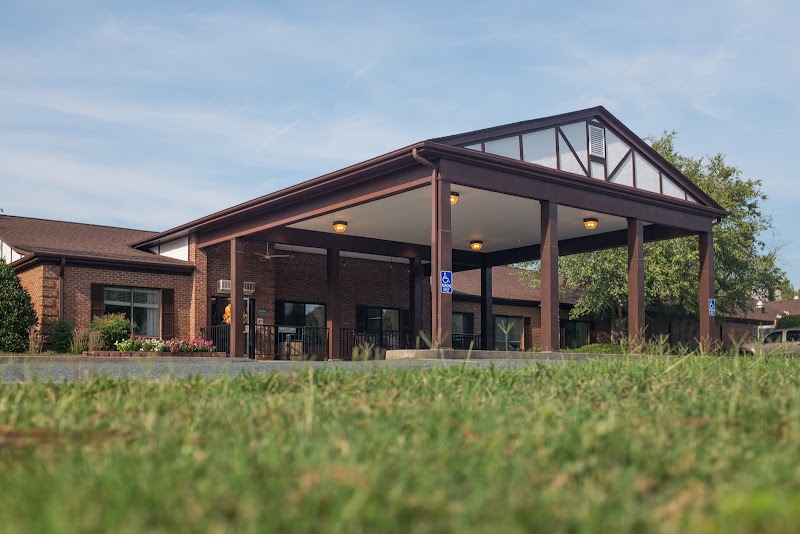
253 Craig Manor Road, Lancaster, SC 29720 (803) 286-1464
For profit - Corporation 132 Beds WHITE OAK MANAGEMENT Data: November 2025
Trust Grade
80/100
#65 of 186 in SC
Last Inspection: May 2025

Inspected within the last 6 months. Data reflects current conditions.

Overview

White Oak Manor in Lancaster, South Carolina, has a Trust Grade of B+, which indicates it is above average and recommended for families seeking care. It ranks #65 of 186 facilities in the state, placing it in the top half, and it is the best option out of two in Lancaster County. However, the facility's trend is concerning as it has worsened from two issues in 2023 to four in 2025. While staffing is decent with a turnover rate of 33%, lower than the state average, there are several cleanliness concerns, including expired food items in the kitchen and inadequate sanitation practices that could lead to food-borne illnesses. Additionally, residents have faced dignity issues, such as being referred to as "feeders" during meals and not having proper access to bathroom facilities. Overall, while there are strengths in staffing and no fines on record, the facility needs to address its cleanliness and care practices.

Trust Score
B+
80/100
In South Carolina
#65/186
Top 34%
Safety Record
Low Risk
No red flags
Inspections
Getting Worse
2 → 4 violations
Staff Stability
○ Average
33% turnover. Near South Carolina's 48% average. Typical for the industry.
Penalties
✓ Good
No fines on record. Clean compliance history, better than most South Carolina facilities.
Skilled Nurses
⚠ Watch
Each resident gets only 25 minutes of Registered Nurse (RN) attention daily — below average for South Carolina. Fewer RN minutes means fewer trained eyes watching for problems.
Violations
○ Average
6 deficiencies on record. Average for a facility this size. Mostly minor or procedural issues.
★★★★☆
4.0
Overall Rating
★★★☆☆
3.0
Staff Levels
★★★★★
5.0
Care Quality
★★★☆☆
3.0
Inspection Score
Stable
2023: 2 issues
2025: 4 issues

The Good

  • 5-Star Quality Measures · Strong clinical quality outcomes
  • Full Sprinkler Coverage · Fire safety systems throughout facility
  • No fines on record
  • Staff turnover below average (33%)

    15 points below South Carolina average of 48%

Facility shows strength in quality measures, fire safety.

The Bad

Staff Turnover: 33%

13pts below South Carolina avg (46%)

Typical for the industry

Chain: WHITE OAK MANAGEMENT

Part of a multi-facility chain

Ask about local staffing decisions and management

The Ugly 6 deficiencies on record

May 2025 4 deficiencies
CONCERN (D)

Potential for Harm - no one hurt, but risky conditions existed

Resident Rights (Tag F0550)

Could have caused harm · This affected 1 resident

**NOTE- TERMS IN BRACKETS HAVE BEEN EDITED TO PROTECT CONFIDENTIALITY** Based on observation, interview, and review of facility policy, the facility failed to ensure staff did not refer to Resident (R...

Read full inspector narrative →
**NOTE- TERMS IN BRACKETS HAVE BEEN EDITED TO PROTECT CONFIDENTIALITY** Based on observation, interview, and review of facility policy, the facility failed to ensure staff did not refer to Resident (R)65 as a feeder during meals, for one (1) of one (1) dependent resident. Additionally, the facility failed to ensure that residents were able to use the bathroom in their rooms, causing R27 to be incontinent of bowel and bladder, for 1 of 1 dependent resident. Findings include: 1. Review of the facility policy titled, Points to Remember in Respecting Dignity revised on 08/16, revealed, . Promote good dining (no disturbances in dining room, etc.) Review of R65's Electronic Medical Record (EMR) revealed R65 was admitted to the facility on [DATE], with diagnoses including but not limited to: Alzheimer's disease, dementia, psychotic disturbance, mood disturbance, anxiety, muscle weakness (generalized), right bundle-branch block, osteoarthritis, and hemiplegia and hemiparesis following cerebral infarction affecting left non-dominant side. Review of R65's Quarterly Minimum Data Set with an Assessment Reference Date (ARD) of 04/02/25, indicated R65 had severe cognitive impairment, and the resident was dependent on staff for assistance with meals and activities of daily living (ADL). During an observation on 05/05/25 at 12:54 PM, R65 was being assisted with lunch meal by a certified nursing assistant (CNA). CNA referred to R65 as a feeder. During an interview on 05/05/25 at 1:04 PM, CNA1 revealed she has been in her position for 10 years. CNA1 stated R65 is a feeder. CNA1 continued, We have feeders, that's what we call residents that we are assisting with their meals. I have always called residents that need assistance with their meals feeders, and no one has ever corrected me. Staff use this verbiage all the time. We have a white binder at the nurse's station and it has the feeders list in it, this list has feeding assignments for staff. During an interview and record review on 05/05/25 at an unspecified time, Licensed Practical Nurse (LPN)1 showed this surveyor a document from a white binder that was labeled Unit 2 assignment book, the book was located on the front counter of the nurse's station, where anyone could have access to it. The first document in the binder was labeled Feed List - For all shifts. LPN1 stated this is the feeding list so that we know who is feeding who, so that we don't miss a resident. LPN1 stated she has occasionally heard staff refer to resident as feeders. During an interview on 05/05/25 at 1:28 PM, CNA2 revealed she has been in her position for 14 years; she has heard staff refer to residents that require assistance with their meals as feeders, CNA2 stated, but it's not supposed to be that way. During an interview on 05/06/25 at 4:19 PM, the Director of Nursing (DON) revealed staff should use the verbiage dependent diners instead of feeders when referring to residents that require assistance with meals. 2. Review of the facility policy titled, Points to Remember in Respecting Dignity revised on 08/16, documented, . Any treatments that dehumanizes a resident or creates an environment that perpetuates a disrespectful and/or potentially abusive attitude toward the resident(s) will be considered grounds for disciplinary action and/or termination. Review of 27's EMR revealed R27 was admitted to the facility on [DATE], with diagnoses including but not limited to: other cholangitis, nausea with vomiting, urgency of urination, other abnormalities of gait and mobility, and overactive bladder. Review of R27's Quarterly Minimum Data Set with an Assessment Reference Date (ARD) of 03/30/25, revealed R65's cognition was intact, and the resident was dependent on staff for assistance with activities of daily living (ADL). During an interview on 05/04/25 at 11:32 AM, R27 stated she cannot use the bathroom in her room because her wheelchair will not fit in that bathroom. I must use the hall bathroom, and it takes 30 to 45 minutes most of time to get someone to take me to the bathroom. I wet myself frequently and then I must sit there in wet clothes. During an observation on 05/06/25 at 9:52 AM, R27 was sitting in a wheelchair fully dressed in a rose and blue blouse, paired with jean and shoes. R27's call bell was within reach and functioning. R27's bathroom opens out directly beside her bed, however R27's wheelchair would not fit in the bathroom. During an interview on 05/06/25 at 11:55 AM, the Maintenance Director (MD) stated that this is the first of him knowing that R27 could not get into her bathroom with her wheelchair. The MD states that all problems are reported by the nurse and he was going to see what solution that he could come up with regarding R27's issue of not be able to utilize the bathroom in her room. During an interview on 05/06/25 at 2:52 PM, R27 stated that she does not drink a lot because then she will have to go to the bathroom and she does not want to go to the bathroom a lot, it takes staff very long to respond to the call bell. R27 stated she promised the staff that she would not go into the bathroom in her room because her chair got stuck because the bathroom is not large enough for her wheelchair. R27 further stated she does not feel comfortable going to the bathroom in her room without her wheelchair, because there are not enough rails to hold onto, and the one that is in there is elbow shape and it is awkward and hard for her to hold onto and she is afraid of falling. During an interview on 05/06/25 at 2:53 PM, Certified Nursing Assistant (CNA)1 revealed she does recall a time when R27 had a hard time getting out of her bathroom with the wheelchair. CNA1 stated it is hard to maneuver the wheelchair and the resident in the bathroom because the bathroom is small. CNA1 confirms that there have been times that R27 was soiled before she can get to the bathroom down the hall and around the corner. During an interview on 05/06/25 at 2:57 PM, CNA2 stated she never assisted R27 to the bathroom in her room, she always brings her to the central bathroom down the hall, because there is rail in that bathroom. CNA2 further stated there is not enough room in her bathroom for staff, the resident, and the wheelchair. All the bathrooms are the same. CNA2 stated R27 does experience many incontinent episodes of bladder and bowel due to having go so far to the bathroom. During an interview on 05/06/25 at 4:29 PM, the Director of Nursing (DON) revealed she is not sure if R27 can walk into the bathroom in her bedroom. The DON stated R27 has use of the central bathroom and she was not aware that this was an issue for R27.
CONCERN (D)

Potential for Harm - no one hurt, but risky conditions existed

Deficiency F0697 (Tag F0697)

Could have caused harm · This affected 1 resident

**NOTE- TERMS IN BRACKETS HAVE BEEN EDITED TO PROTECT CONFIDENTIALITY** Based on observation, interview, and review of the facility's policy, the facility failed to monitor and manage Resident (R)64's...

Read full inspector narrative →
**NOTE- TERMS IN BRACKETS HAVE BEEN EDITED TO PROTECT CONFIDENTIALITY** Based on observation, interview, and review of the facility's policy, the facility failed to monitor and manage Resident (R)64's pain to the extent possible in accordance with the comprehensive assessment and care plan, as well as professional standards of practice, for 1 of 1 resident reviewed for pain. Findings include: Review of the facility policy titled, Pain Management Program revised on August 2016, documented, Objective: To enable the resident to be at a consistent level of comfort while maintaining as much function as possible. 5. Residents with uncontrolled pain levels will have a pain management program implemented to include a Pain Flow Sheet form N(079). 7. The documentation will be monitored by the licensed nurse and the interdisciplinary team to determine the effectiveness of the pain relief for the resident. 8. The plan will be adjusted as needed to assure adequate pain relief is obtained, while maintaining the resident's highest quality of life, both physically and psychosocially with the fewest side effects possible. Review of R64's Face Sheet revealed R64 was admitted to the facility on [DATE], with diagnoses including but not limited to: dementia, pressure ulcer stage 4 right heel, age related osteoporosis, atrial fibrillation and heart failure. Review of R64's Quarterly Minimum Data Set (MDS) with an Assessment Reference Date (ARD) date of 04/09/25, revealed a Brief Interview for Mental Status (BIMS) score of 12 out of 15, indicating R64 was moderately cognitively impaired. This Quarterly MDS also revealed that R64 is in constant pain with a pain intensity score of 8 out of 10. Review of R64's Care Plan with a start date of 11/30/21 and target date of 01/30/25, documented, Focus At risk for episodes of uncontrolled pain r/t dx of polyosteoarthritis, osteoporosis, current pressure ulcers and h/o R hip fx. The goal documented, Will be free of any s/s of uncontrolled pain. The interventions directed staff to, Monitor for s/s of pain (verbalization, grimacing, guarding, restlessness, irritability, change in mood or behavior, decline in physical functioning). Review of the Physician's Order, located in the Electronic Medical Record (EMR) under the Physician's Order tab, revealed R64 is scheduled to receive two tablets of acetaminophen 500 mg three times a day for pain. Further review of the Physician's Order did not reveal an order to monitor the resident's pain level. Review of R64's EMR did not reveal a Pain Flow Sheet to monitor the resident pain. During an interview on 05/04/25 at 2:54 PM, R64 revealed, I hurt all the time. Nothing helps. I just stay in bed because I hurt so bad. During an observation and interview on 05/05/25 at 8:30 AM, R64 was laying in bed. R64 stated, I do not want to do nothing but lie here. I hurt all the time. During an interview on 05/06/25 at 11:47 AM, Licensed Practical Nurse (LPN)1 revealed, A resident's pain regimen is reevaluated every six months. If the pain medication is PRN (as needed), it is reevaluated every 14 days. A resident's pain is addressed using a 1-10 pain scale. If the resident is nonverbal, we watch for grimacing, moaning and facial expressions. We have a standing order for Tylenol, and we log them for the doctor to see the next morning. The nurse should make a progress note that details why the doctor needs to see the resident. I do not work this hall usually, I am not familiar with these residents. I can't help you. During an interview on 05/06/25 at 11:52 AM, the Restorative Aide revealed, I do active range of motion on his arms and legs once a day. He does it himself. He verbalizes pain sometimes due to that sore on his heel. He is no longer ambulating due to the sore on his heel. The hope is that the sore will heal, and we will refer him back to therapy. During an interview on 05/06/25 at 7:51 PM, the Resident Assessment Coordinator (RAC)1 talked to the nurse practitioner as well as his nurse after that interview about his pain. RAC1 stated that the nurse practitioner ordered Tylenol three times a day for him. He stated that the site of his pain was his right heel. During an interview on 05/06/25 at 8:35 PM, the Medical Director revealed that the resident and family have declined narcotics, but it is her expectation that the nurses should be monitoring resident's pain every shift and reporting that to myself and the nurse practitioner. During an interview on 05/06/25 at 8:03 PM, the Director of Nursing (DON) revealed pain medication should work and if not we should reevaluate in a day or two. The DON stated it should be on the MAR (medication administration record) for the nurses to be evaluating the resident's pain every shift after a new pain medication is started.
CONCERN (D)

Potential for Harm - no one hurt, but risky conditions existed

Deficiency F0761 (Tag F0761)

Could have caused harm · This affected 1 resident

Based on observation, interview, and review of facility policy, the facility failed to ensure that all drugs and biologicals were stored in locked compartments for one of one resident, Resident (R)57....

Read full inspector narrative →
Based on observation, interview, and review of facility policy, the facility failed to ensure that all drugs and biologicals were stored in locked compartments for one of one resident, Resident (R)57. Findings include: Review of the facility's policy titled, Medication Storage In The Facility, last revised on 09/21/22, revealed, Policy: Medications and biologics are stored safely, securely, and properly following manufacturers recommendations or those of the supplier. The medication supply is accessible only to licensed nursing personal, pharmacy personal, or staff members lawfully authorized to administer medications. Procedure : 2. Only licensed nurses, consultant pharmacist, designated pharmacy staff and those lawfully authorized to administer medications ( e.g. medication aides) are allowed access to medications. Medication rooms, carts and medication supplies are locked or attended by persons with authorized access. Review of the facility's policy titled, Self Administration Of Medication, last revised on 09/21/22, revealed, Policy: Residents are not allowed to practice self- administration of medication unless specifically ordered by the physician and determined to be safe by the interdisciplinary team . Procedure: 1. The determination by the interdisciplinary resident assessment team that a resident may self - administer medications is documented on the plan of care. Documentation of this assessment should be indicated by the following, Resident prefers nursing to administer all medications except (enter medication(s)) which is/are kept at the bedside or in resident's immediate possession for self-administration per physician's order and facility policy or a similar statement. Review of the facility's policy titled, Bedside Storage Of Medication, last revised on 09/21/22, revealed, Bedside medication storage is permitted for residents who are able to self- administer medications upon the written order of the prescriber and when it is deemed appropriate in the judgement of the facility's interdisciplinary resident assessment team. Procedure: 1. A written order from the attending physician for the bedside storage of medication is placed in the resident's medical record. 2. Bedside storage of medications is indicated on the resident's medical record and in the care plan for the appropriate medications. During an observation on 05/04/25 at 10:35 AM, a Pain patch Lidocaine 4% x2 was noted at R57's bedside. Review of R57's Electronic Medical Record (EMR) did not reveal order to keep medication at bedside or an order for R57 to self administer medications. During a telephone interview on 05/04/25 at 4:52 PM, Licensed Practical Nurse (LPN) confirmed R57 does not have an order to self administer medication and R57 does not have an order to keep medication at bedside. LPN1 stated the Lidocaine patches should not be at bedside if there is no order. During an interview on 05/04/25 at 4:55 PM, the Nursing Supervisor revealed the pain patches should be placed on the resident at 8:00 AM and off at bedtime. The Nursing Supervisor verified there was no order for R57 to keep the patches at bedside and there was no order to self administer medications. During an interview on 05/05/25 at 2:20 PM, the Director of Nursing (DON) revealed her expectations are that nurses do not leave medications at a resident's bedside without a doctor's order.
CONCERN (F)

Potential for Harm - no one hurt, but risky conditions existed

Food Safety (Tag F0812)

Could have caused harm · This affected most or all residents

Based on review of the facility policy, observations, and interviews, the facility failed to ensure the kitchen was free of expired food items. Findings include: Review of the facility's policy title...

Read full inspector narrative →
Based on review of the facility policy, observations, and interviews, the facility failed to ensure the kitchen was free of expired food items. Findings include: Review of the facility's policy titled, Storage of Food and Supplies, revised on 12/05/2017 revealed: Food and supplies are received, stored, and monitored according to federal, state, and local guidelines. Under Procedures, Food and supplies are received and checked for accuracy, damage, and appropriate temperature . Any food not stamped with a manufacturer's expiration or use-by date will be marked with the date of delivery. During the initial tour of the kitchen on 05/04/25 at 10:10 AM, observation of the beverage nourishment refrigerator revealed the following: -40, 4 ounce (oz). cups of Dannon Light and Fit Yogurt, flavored Strawberry, Blueberry and Raspberry with an expiration date of 5/01/25. -1, 1/2 pint of Chocolate milk expired 4/14/25. -1, 1/2 pint of Chocolate milk expired 4/28/25. -4, 1/2 pints of Chocolate milk expired 5/01/25 These items were confirmed as expired by Cook1. During an interview on 05/04/25 at 10:18 AM, Cook1 stated, Items are supposed to be checked in here daily to make sure they aren't expired. During the initial tour of the dry storage room on 05/04/25 at 10:22 AM, observation revealed the following: -1, 0.7 oz bag of Cheetos Puffs with an expiration date of 04/08/25. This was confirmed as expired by Kitchen Aide (KA)1. During an interview with the Certified Dietary Manager (CDM) on 05/04/25 at 10:35 AM, the CDM was made aware of the previous findings and agreed expiration dates should be checked daily.
Sept 2023 2 deficiencies
CONCERN (D)

Potential for Harm - no one hurt, but risky conditions existed

Comprehensive Care Plan (Tag F0656)

Could have caused harm · This affected 1 resident

**NOTE- TERMS IN BRACKETS HAVE BEEN EDITED TO PROTECT CONFIDENTIALITY** Based on observations, record review, staff interview, and facility policy review, the facility failed to ensure that one (Resid...

Read full inspector narrative →
**NOTE- TERMS IN BRACKETS HAVE BEEN EDITED TO PROTECT CONFIDENTIALITY** Based on observations, record review, staff interview, and facility policy review, the facility failed to ensure that one (Resident (R)20) of one resident reviewed for dysphagia had a care plan in place for the diagnosis of dysphagia. Findings include: Review of the facility's 2023 RAI Process policy dated 5/18/17, revealed Each discipline will enter into the computer their assigned Problem/Strength Statement, measurable Goal statement, and specific Approaches and interventions. And Care Plans will be updated/revised to reflect current physician's orders; however, specific orders will not be attached to Care Plan problems. Rather, Care Plans will reflect, for example: Meds as ordered for , Meds as ordered for or PT 5x wk for 4 wks as ordered. These types of interventions may be entered by each discipline as an intervention to the appropriate care plan problem to ensure that current care interventions from the physician's orders are referenced in the Plan of Care. Review of R20's Profile tab of the electronic medical record (EMR) revealed R20 was admitted to the facility on [DATE]. Review of the R20's Diagnosis list in the EMR dated 9/14/23 showed a diagnosis of dysphagia, oropharyngeal phase, (RTP) gastro-esophageal reflux disease without esophagitis, and pneumonitis due to inhalation of food and vomit. Review of R20's quarterly Minimum Data Set (MDS) assessment with an Assessment Reference Date (ARD) of 07/2/23 located in the MDS tab of the EMR, revealed she scored 11 out of 15 on the Brief Interview for Mental Status (BIMS), indicating moderately impaired cognition. Observations of R20 on 09/12/23 at 12:36 PM revealed that R20 received a regular texture lunch meal that included pork chops cut into about four squares. R20 did not eat the pork chops or any of the regular texture items listed on the menu. However, R20 did receive and ate an alternative meal that resembled a grilled cheese sandwich. On 9/13/23 at 6:17 PM, R20 seemed to enjoy eating what appeared to be a sandwich. Although, R20 received a regular texture meal that included ham and beans. Observations of R20 on 9/14/23 at 1:08 PM revealed that R20 did not eat anything from R20's lunch of baked beans, crumbled bread strawberry shortcake, breaded whole chicken breast patty between hamburger buns. R20 rolled away in her wheelchair to the nurse's station. Review of R20's Diet Order tab of the EMR dated 11/15/2021 showed a regular diet order for R20. During an interview with Certified Nursing Assistant (CNA)5 on 9/14/23 at 2:28 PM, CNA5 stated that R20 had a good appetite and that R20 loved to eat pimento cheese sandwiches. In an interview with CNA1 on 9/14/23 at 3:27 PM, CNA1 said that R20 ate well and loved pimento cheese sandwiches. In an interview with Licensed Practical Nurse (LPN) 2 on 9/14/23 at 2:43 PM, LPN2 stated that R20 had recent diagnosis of dysphagia and was surprised of the diagnosis considering that LPN2 had not noticed R20 having difficulty swallowing. R20 added that there was no care plan for R20's dysphagia. In an interview with MDS Coordinator (MDSC) on 09/14/23 at 3:31 PM, MDSC said R20 had not had any choking incidents in a year, and they had not noticed any problems with R20's dysphagia. MDSC stated that the dysphagia diagnosis was no longer active and that they would address it with R20's physician.
CONCERN (F)

Potential for Harm - no one hurt, but risky conditions existed

Food Safety (Tag F0812)

Could have caused harm · This affected most or all residents

Based on observations, staff interviews, and facility policy review, the facility failed to ensure dishware/utensils were cleaned, storage areas were cleaned, and the oven was cleaned in accordance wi...

Read full inspector narrative →
Based on observations, staff interviews, and facility policy review, the facility failed to ensure dishware/utensils were cleaned, storage areas were cleaned, and the oven was cleaned in accordance with professional standards for 121 census residents who received meals from the kitchen. These failures had the potential to lead to food-borne illness among all facility residents. Findings include: During the initial visit to the kitchen on 9/12/23 at 11:09 AM, lunch meal preparation was taking place. Observations and interviews revealed: - Tea, water, and coffee area needed cleaning because of brown liquid-like substance build-up on surface. - The three-level tea cart beside the beverage area contained a built-up sticky substance, crumbs, and trash particles. - A thick orange-tannish syrup substance covered the walls and containers of the produce washing area. The Dietary Manager (DM) said that the areas needed to be wiped down due to the substance build-up. - Black dust-like particles that resembled mold covered the inside office window ledge. Kitchen staff stored clean cups, resident water pitcher and pitcher straws directly under the ledge. - Random pieces of trash throughout the floor and along the perimeter of the kitchen: mainly small pieces of paper. - Two lipstick-stained straws on the resident water pitcher storage cart. The DM said that lipstick-stained straws needed to be removed. During a subsequent visit to the kitchen on 9/14/23 at 10:18 AM, lunch meal preparation was taking place. Observations and interviews revealed: - The ovens were covered with a waxy, black grime build-up. Some areas contained a crusted and peeling black substance on the bottom and around the wall of the ovens. The bottom oven contained layers of the substance. The DM stated that the ovens were supposed to be cleaned daily and they tried to scrap it clean on 9/1/2023 but the black substance could not be removed. - Seven knives hanging openly above the fresh produce two sink washing area contained a heavy residue on about four of the knives. The Corporate Dietary Consultant (CDC) and DM stated that the buildup on the knives was residue from the dishwasher water because the knives must be air dried. - A three level tray that the Dietary [NAME] (DC) used to prepare cooked food contained embedded crumbs, a sticky substance built-up on all levels and appeared worn. The CDC said that they agreed the three-level portable tray did contain build-up, but it was not a food safety issue. Review of the facility's Sanitation/Infection Control policy dated 08/10 revealed, Bedside water pitchers and accessories shall be cleaned and sanitized on a scheduled basis. And All fruits and vegetables are cleaned prior to peeling. Knives and other portioning utensils are cleaned and sanitized between each fruit or vegetable preparation. In addition, Surfaces, countertops, utensils, equipment, and cutting boards are thoroughly cleaned and sanitized between processing steps.
Understanding Severity Codes (click to expand)
Life-Threatening (Immediate Jeopardy)
J - Isolated K - Pattern L - Widespread
Actual Harm
G - Isolated H - Pattern I - Widespread
Potential for Harm
D - Isolated E - Pattern F - Widespread
No Harm (Minor)
A - Isolated B - Pattern C - Widespread

Questions to Ask on Your Visit

  • "Can I speak with families of current residents?"
  • "What's your RN coverage like on weekends and overnight?"

Our Honest Assessment

Strengths
  • • Grade B+ (80/100). Above average facility, better than most options in South Carolina.
  • • No major safety red flags. No abuse findings, life-threatening violations, or SFF status.
  • • No fines on record. Clean compliance history, better than most South Carolina facilities.
  • • 33% turnover. Below South Carolina's 48% average. Good staff retention means consistent care.
Concerns
  • • No significant concerns identified. This facility shows no red flags across CMS ratings, staff turnover, or federal penalties.
Bottom line: Generally positive indicators. Standard due diligence and a personal visit recommended.

About This Facility

What is White Oak Manor - Lancaster's CMS Rating?

CMS assigns White Oak Manor - Lancaster an overall rating of 4 out of 5 stars, which is considered above average nationally. Within South Carolina, this rating places the facility higher than 99% of the state's 100 nursing homes. This rating reflects solid performance across the metrics CMS uses to evaluate nursing home quality.

How is White Oak Manor - Lancaster Staffed?

CMS rates White Oak Manor - Lancaster's staffing level at 3 out of 5 stars, which is average compared to other nursing homes. Staff turnover is 33%, compared to the South Carolina average of 46%. This relatively stable workforce can support continuity of care.

What Have Inspectors Found at White Oak Manor - Lancaster?

State health inspectors documented 6 deficiencies at White Oak Manor - Lancaster during 2023 to 2025. These included: 6 with potential for harm.

Who Owns and Operates White Oak Manor - Lancaster?

White Oak Manor - Lancaster is owned by a for-profit company. For-profit facilities operate as businesses with obligations to shareholders or private owners. The facility is operated by WHITE OAK MANAGEMENT, a chain that manages multiple nursing homes. With 132 certified beds and approximately 126 residents (about 95% occupancy), it is a mid-sized facility located in Lancaster, South Carolina.

How Does White Oak Manor - Lancaster Compare to Other South Carolina Nursing Homes?

Compared to the 100 nursing homes in South Carolina, White Oak Manor - Lancaster's overall rating (4 stars) is above the state average of 2.9, staff turnover (33%) is significantly lower than the state average of 46%, and health inspection rating (3 stars) is at the national benchmark.

What Should Families Ask When Visiting White Oak Manor - Lancaster?

Based on this facility's data, families visiting should ask: "Can I visit during a mealtime to observe dining assistance and food quality?" "How do you handle medical emergencies, and what is your hospital transfer rate?" "Can I speak with family members of current residents about their experience?"

Is White Oak Manor - Lancaster Safe?

Based on CMS inspection data, White Oak Manor - Lancaster has a clean safety record: no substantiated abuse findings (meaning no confirmed cases of resident harm), no Immediate Jeopardy citations (the most serious violation level indicating risk of serious injury or death), and is not on the Special Focus Facility watch list (a federal program monitoring the lowest-performing 1% of nursing homes). The facility has a 4-star overall rating and ranks #1 of 100 nursing homes in South Carolina. While no facility is perfect, families should still ask about staff-to-resident ratios and recent inspection results during their visit.

Do Nurses at White Oak Manor - Lancaster Stick Around?

White Oak Manor - Lancaster has a staff turnover rate of 33%, which is about average for South Carolina nursing homes (state average: 46%). Moderate turnover is common in nursing homes, but families should still ask about staff tenure and how the facility maintains care continuity when employees leave.

Was White Oak Manor - Lancaster Ever Fined?

White Oak Manor - Lancaster has no federal fines on record. CMS issues fines when nursing homes fail to meet care standards or don't correct problems found during inspections. The absence of fines suggests the facility has either maintained compliance or corrected any issues before penalties were assessed. This is a positive indicator, though families should still review recent inspection reports for the full picture.

Is White Oak Manor - Lancaster on Any Federal Watch List?

White Oak Manor - Lancaster is not on any federal watch list. The most significant is the Special Focus Facility (SFF) program, which identifies the bottom 1% of nursing homes nationally based on persistent, serious quality problems. Not being on this list means the facility has avoided the pattern of deficiencies that triggers enhanced federal oversight. This is a positive indicator, though families should still review the facility's inspection history directly.