Pocotaligo River Health And Rehab

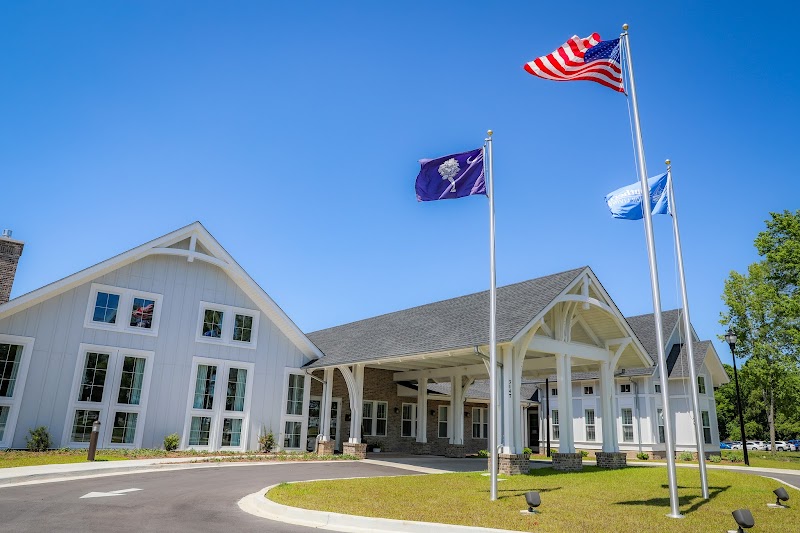
3147 Sumter Hwy, Manning, SC 29102 (803) 478-2323
Non profit - Other 88 Beds Independent Data: November 2025
Trust Grade
68/100
#90 of 186 in SC
Last Inspection: August 2025

Inspected within the last 6 months. Data reflects current conditions.

Overview

Pocotaligo River Health And Rehab has a Trust Grade of C+, which means it is decent and slightly above average compared to other nursing homes. It ranks #90 out of 186 facilities in South Carolina, placing it in the top half, and is the best option out of two facilities in Clarendon County. The facility is improving overall, having reduced issues from 7 in 2024 to just 3 in 2025. Staffing is a strength, rated 4 out of 5 stars, with a turnover rate of 43%, which is below the state average, suggesting staff stability. However, there have been some concerning incidents, such as inadequate hand hygiene practices in the kitchen and failures in food labeling and temperature control, which could pose health risks to residents.

Trust Score
C+
68/100
In South Carolina
#90/186
Top 48%
Safety Record
Low Risk
No red flags
Inspections
Getting Better
7 → 3 violations
Staff Stability
○ Average
43% turnover. Near South Carolina's 48% average. Typical for the industry.
Penalties
✓ Good
$4,017 in fines. Lower than most South Carolina facilities. Relatively clean record.
Skilled Nurses
○ Average
Each resident gets 31 minutes of Registered Nurse (RN) attention daily — about average for South Carolina. RNs are the most trained staff who monitor for health changes.
Violations
⚠ Watch
11 deficiencies on record. Higher than average. Multiple issues found across inspections.
★★★☆☆
3.0
Overall Rating
★★★★☆
4.0
Staff Levels
★★☆☆☆
2.0
Care Quality
★★★☆☆
3.0
Inspection Score
Stable
2024: 7 issues
2025: 3 issues

The Good

  • 4-Star Staffing Rating · Above-average nurse staffing levels
  • Full Sprinkler Coverage · Fire safety systems throughout facility
  • No fines on record
  • Staff turnover below average (43%)

    5 points below South Carolina average of 48%

Facility shows strength in staffing levels, fire safety.

The Bad

3-Star Overall Rating

Near South Carolina average (2.8)

Meets federal standards, typical of most facilities

Staff Turnover: 43%

Near South Carolina avg (46%)

Typical for the industry

Federal Fines: $4,017

Below median ($33,413)

Minor penalties assessed

The Ugly 11 deficiencies on record

Aug 2025 3 deficiencies
CONCERN (D)

Potential for Harm - no one hurt, but risky conditions existed

Deficiency F0628 (Tag F0628)

Could have caused harm · This affected 1 resident

**NOTE- TERMS IN BRACKETS HAVE BEEN EDITED TO PROTECT CONFIDENTIALITY** Based on record review, interview, and facility policy review, the facility failed to ensure 1 resident or resident representati...

Read full inspector narrative →
**NOTE- TERMS IN BRACKETS HAVE BEEN EDITED TO PROTECT CONFIDENTIALITY** Based on record review, interview, and facility policy review, the facility failed to ensure 1 resident or resident representative (RP) of 1 resident (Resident (R)6) reviewed for hospitalization, received written notice that specified the duration of the bed hold policy. Specifically, the facility failed to include the current rate for the reserve bed payment in the event the resident did not return within ten (10) days, leaving the resident without all the necessary decision-making information.Findings include:Review of the facility's undated policy titled, ''Bed Hold Notice'' indicated that ''It is the policy of this facility to provide written information to the resident and/or the resident representative bed hold practices both well in advance, and at the time of, a transfer for hospitalization or therapeutic leave . 'Reserve Bed Payment' refers to payments made by a State to the facility to hold a bed during a resident's temporary absence from a nursing facility . The facility will provide this written information to all facility residents, regardless of their payment source .''Review of R6's ''admission Record'' located in the electronic medical record (EMR) under the ''Resident'' tab indicated she was originally admitted to the facility on [DATE].Review of R6's entry tracking ''Minimum Data Set (MDS)'' with an Assessment Reference Date (ARD) of 07/06/25 indicated the resident was re-admitted from a short-term general hospital.Review of R6's ''Notice of Resident Transfer or Discharge'' dated 07/02/25 confirmed that R6 was transferred to the hospital due to '' . needs cannot be met in this facility .''Review of R6's ''Bed Hold Notice'' dated 07/02/25 confirmed R6 was transferred to the hospital on [DATE] and did not include the ''basic per diem rate.'' Additionally, the notice indicated that ''The State bed-hold period is 10 days consecutive for hospital stay .''During an interview on 08/21/25 at 12:32 PM, the Administrator and Social Services Director (SSD) stated that the SSD filled out all ''Bed Hold Notice'' forms and confirmed that the ''basic per diem'' rate was not included in the ''Bed Hold Notice'' dated 07/02/25. The SSD stated that when residents were admitted , the bed hold rates were reviewed with the resident/RP. The SSD provided R6's admission documents indicating the bed hold rate as of 02/28/22 was $240.00 per day and as of 11/01/24 the rate increased to $297.00 per day. The SSD stated that the rate increase was mailed to all RP's on 10/01/24 but was not included on the ''Bed Hold Notice'' and that she was not aware that it was required.
CONCERN (D)

Potential for Harm - no one hurt, but risky conditions existed

Infection Control (Tag F0880)

Could have caused harm · This affected 1 resident

**NOTE- TERMS IN BRACKETS HAVE BEEN EDITED TO PROTECT CONFIDENTIALITY** Based on observation, interview, record review, and review of facility policy, the facility failed to ensure 2 of 11 residents (...

Read full inspector narrative →
**NOTE- TERMS IN BRACKETS HAVE BEEN EDITED TO PROTECT CONFIDENTIALITY** Based on observation, interview, record review, and review of facility policy, the facility failed to ensure 2 of 11 residents (Resident (R) 6 and R17) observed received care performed with the proper use of personal protective equipment (PPE). Specifically, R6 was on enhanced barrier precautions (EBP) for indwelling catheter/wound status, and a staff member did not wear a gown during a bed bath, and R17 was on contact and droplet precautions for Covid-positive status, and a staff member did not wear gloves or eye protection during medical administration. This failure increased the risk for spread of COVID-19 and other infections to residents and staff.Findings include:Review of the facility's policy titled ''Enhanced Barrier Precautions'' revised on 06/02/24 indicated that '' . It is the policy of this facility to implement enhanced barrier precautions for the prevention of transmission of multidrug-resistant organisms [MRDO] . EBP refer to an infection control intervention designed to reduce transmission of multidrug-resistant organisms that employs targeted gown and gloves use during high contact resident care activities . An order for enhanced barrier precautions will be obtained for residents with any of the following: i. Wounds . ii . MDRO . high-contact resident care activities include: . bathing . providing hygiene . changing linens . device care or use: . catheters . ''Review of the facility's policy titled ''Isolation - Categories of Transmission-Based Precautions'' revised on 10/20/28 indicated that '' . Transmission-based precautions are additional measures that protect staff, visitors and other residents from becoming infected . Contact Precautions may be implemented for residents known or suspected to be infected with microorganisms that can be transmitted by direct contact with the resident or indirect contact with environmental surfaces or resident-care items . staff and visitors will wear gloves . wear a disposable gown . Droplet precautions may be implemented for an individual documented or suspected to be infected with microorganisms transmitted by droplets . masks will be worn when entering the room . gloves, gown, and goggles should be worn ''Review of the facility's policy titled, ''COVID-19 Prevention, Response and Reporting revised on 12/31/24 indicated that '' . HCP [healthcare personnel] who enter the room of a resident with suspected or confirmed SARS-CoV-2 [COVID-19] infection should adhere to standard precautions and use a NIOSH-approved particulate respirator with N95 filters or higher, gown, gloves, and eye protection .''1. Review of R6's ''admission Record'' located in the electronic medical record (EMR) under the ''Resident'' tab indicated she was admitted to the facility on [DATE] with diagnoses including but not limited to pressure-induced deep tissue damage of left heel, proteus mirabilis, disorder of the kidney and ureter, obstructive and reflux uropathy, and extended spectrum beta lactamase (ESBL, antibiotic) resistance.Review of R6's five-day ''Minimum Data Set (MDS)'' with an Assessment Reference Date (ARD) of 07/12/25 included indwelling catheter and wound status.Review of R6's ''Care Plan'' provided by the facility and initiated on 01/12/25 included the use of enhanced barrier precautions related to urinary catheter and ESBL.Review of R6's ''Order Summary Report'' located in the EMR under the ''Orders'' tab included an order for enhanced barrier precautions initiated on 07/23/25 related to urinary tract infection and ESBL resistance.During an observation and interview on 08/19/25 at 10:40 AM, Certified Nursing Assistant (CNA)1 was providing a bed bath to R6. CNA1 was wearing gloves and a surgical mask. CNA1 confirmed that R6 was on EBP and that she had not put on a gown but should have. At the time of the observation, R6 was lying in bed, the linens were draped over the foot of the bed, and a trash bag of soiled linens was on the floor next to the wall. CNA6 then exited the room and went to retrieve a gown. R6 had Center for Disease Control and Prevention (CDC) signage outside of the room indicating the need for EBP, stating, ''Providers and staff must also: wear gloves and a gown for the following high-contact resident care activities, dressing, bathing/showering, transferring, changing linens, providing hygiene, changing briefs or assisting with toileting, device care or use: . urinary catheter .''During an interview on 08/21/25 at 12:49 PM, the Director of Nursing (DON) was made aware of the observation of R6 and CNA1 on 08/19/25 and confirmed that R6 was on EBP for urinary catheter and wound status. The DON confirmed that CNA1 should have been wearing a gown during the procedure.2. Review of R17's ''admission Record'' located in the EMR under the ''Resident'' tab indicated that she was admitted to the facility on [DATE] with a primary diagnosis of hyperlipidemia. The admission Record did not include COVID-19 status.Review of R17's ''Care Plan'' provided by the facility and revised 08/18/25 included COVID-19 positive status with the need for droplet and contact precautions.Review of R17's ''Order Summary Report'' located in the EMR under the ''Orders'' tab, included an order dated 08/19/25 for droplet and contact precautions for ten days due to testing positive for COVID. Precautions were to be in place through 08/28/25.Review of R17's ''Progress Note'' located in the EMR under the ''Progress Notes'' tab and dated 08/18/25, indicated that R17 tested positive for COVID-19.During an observation and interview on 08/20/25 at 4:45 PM, Licensed Practical Nurse (LPN)1 was administering metoprolol tartrate 50 milligrams oral tablet (blood pressure medication) mixed in pudding and brimonidine 0.2-0.5% eye drops (glaucoma treatment) to R17. Prior to entering R17's room, it was observed that there was signage for contact and droplet precautions with the requirement to wear a gown, mask, gloves, and eye protection. LPN1 donned a gown and N95 mask. LPN1 assisted R17 to reposition in the bed, donned and doffed gloves, performed hand hygiene and then proceeded to administer oral medications without donning gloves. After LPN1 completed oral medication administration, she performed hand hygiene again, donned gloves, and administered eye drops. Eye protection was not worn at any time during the administration of medications. At the end of the administration, LPN1 confirmed the requirements for residents on contact and droplet precautions were to wear gowns, masks, gloves, and eye protection. LPN1 stated she was nervous and forgot to don gloves prior to oral administration of medications and forgot to don eye protection prior to entering the room but should have.During an interview on 08/21/25 at 12:49 PM, the DON confirmed that R17 was diagnosed with COVID-19 on 08/18/25 and was immediately placed on contact and droplet precautions which require the use of gowns, gloves, N95 masks and face shields. The DON was informed of LPN1 not wearing gloves during oral medication administration and the failure to wear eye protection during medication administration. The DON confirmed that LPN1 should have worn gloves and eye protection during medication administration.
CONCERN (F)

Potential for Harm - no one hurt, but risky conditions existed

Food Safety (Tag F0812)

Could have caused harm · This affected most or all residents

Based on observation, interview, and review of facility policy, the facility failed to ensure staff performed adequate hand hygiene while washing dishes in 4 of 5 kitchens and failed to ensure kitchen...

Read full inspector narrative →
Based on observation, interview, and review of facility policy, the facility failed to ensure staff performed adequate hand hygiene while washing dishes in 4 of 5 kitchens and failed to ensure kitchen staff thoroughly air-dried pans prior to storage in the main kitchen. Failure to perform adequate hand hygiene before touching clean dishes and not thoroughly drying pans can have the potential to lead to contamination and the increased risk of foodborne illness. This had the potential to affect 74 of 77 residents in the facility who received dietary services.Findings include:Review of the facility's undated policy titled, Dishwashing Manual and Dishwashing: Machine Operation revealed, Policy: . 6. The pots and pans will be drained and air-dried on the drain counter or designated drying rack . f. Use clean, washed hands to pull out clean racks, and allow to air dry before putting dishes away for storage. Place glasses, cups, pots, and pans upside down on the drying rack .1. During an observation on 08/19/25 at 1:35 PM in the Palmetto Dining Room, Dietary Aide (DA)4 along with a new dietary aide, DA6, were using the dishwasher in the kitchen area. DA4 was handwashing dirty dishes in the sink, then moved to the dishwasher and pulled clean dishes out without performing hand hygiene.During an observation on 08/20/25 at 9:47 AM in the main kitchen revealed DA1 handwashing dishes. DA1 moved from the dirty dish sink to the dishwasher, removing clean dishes and placing them on the clean racks. DA1 handled the clean dishes without performing hand hygiene.During an interview on 08/20/25 at 10:05 AM, DA1 confirmed she was touching clean dishes with dirty hands for a while and did not realize she was doing that.During an observation on 08/20/25 at 12:45 PM in the Dogwood Dining Room revealed DA2 was washing dishes by hand and then removed clean dishes out of the dishwasher without performing hand hygiene.During an observation on 08/20/25 at 1:25 PM in the Cypress Dining Room revealed DA5 was washing dirty dishes and then walked over to the dishwasher and, without performing hand hygiene, removed clean dishes from the dishwasher and placed them to dry.During an interview on 08/20/25 at 12:50 PM, the visiting Dietary Manager (DM) revealed her expectation was that staff should wash hands before handling clean dishes coming out of the dishwasher. The Dietary Manager Assistant (DMA) confirmed that the facility's policy Dishwashing: Machine Operation, required hand hygiene before handling clean dishes.2. During an observation in the main kitchen on 08/19/25 at 8:43 AM revealed five metal pans that had been washed and placed on storage racks had water standing on them.During an interview and observation on 08/20/25 at 9:45 AM in the main kitchen revealed there were five metal pans 6 inches by 12 inches by 2 inches and four plastic lids 6 3/4 inches by 4 1/4 inches that had water on them and were stored ready for use. The pans were found to have been stacked wet and not allowed to air dry. The DM and DMA stated all dishes were to be dry before stored on the shelf. The DM stated there should be a separate place to place pans and items that need longer to air dry before placing them on storage shelves.
Sept 2024 1 deficiency
CONCERN (D) 📢 Someone Reported This

A family member, employee, or ombudsman was alarmed enough to file a formal complaint

Potential for Harm - no one hurt, but risky conditions existed

Free from Abuse/Neglect (Tag F0600)

Could have caused harm · This affected 1 resident

Based on review of facility policy, record reviews, and interviews, the facility failed to ensure Resident (R)1 was free from verbal abuse for 1 of 2 residents reviewed for abuse. Specifically, R1 was...

Read full inspector narrative →
Based on review of facility policy, record reviews, and interviews, the facility failed to ensure Resident (R)1 was free from verbal abuse for 1 of 2 residents reviewed for abuse. Specifically, R1 was verbally abused during care by a Certified Nursing Assistant (CNA). Findings include: Review of the undated facility policy titled, Abuse Policy, states, The facility recognizes that each resident has the right to be free from all types of abuse including verbal . The facility also recognizes that the residents must not be subjected to abuse by anyone, including, but not limited to staff . Willful, as used in the definition of Abuse, means the individual must have acted deliberately, not that the individual intended to inflict injury of harm . Mental Abuse, is the use of verbal or nonverbal conduct which causes or has the potential to cause the resident to experience humiliation, intimidation, fear, shame, agitation or degradation. Verbal Abuse, may be considered a type of mental abuse. It is defined as the use of oral, written or gestured language that willfully includes disparaging and derogatory terms to residents or their families, or within their hearing distance, regardless of their age, ability to comprehend, or disability . Examples of verbal and mental abuse includes, but are not limited to: harassing a resident; mocking, insulting, ridiculing; yelling or hovering over a resident with the intent to intimidate. Review of R1's Face Sheet revealed the facility admitted R1 on 12/05/23 and readmitted R1 on 06/26/24, with diagnoses including, but not limited to: dementia, anxiety disorder, restlessness and agitation, major depressive disorder, insomnia, violent behavior, obstructive sleep apnea, and mild intellectual disabilities. Review of R1's admission Minimum Data Set (MDS) with an Assessment Reference Date of 07/02/24, revealed a Brief Interview for Mental Status (BIMS) score of 8 out of 15 indicating R1 was moderately cognitively impaired. Further review of the MDS revealed R1 is understood and understands verbal content and reacts and answers appropriately, speech is clear and hearing is adequate. Review of CNA1's Notice of Disciplinary Action dated 07/29/24, revealed, CNA was terminated from employment for Resident Abuse and Violation of Company Policy/Procedure/Rules. Further review of the Notice of Disciplinary Action revealed remarks which documented, CNA used profanity and was yelling at a resident. This was witnessed by the nurse. CNA stated Sit your a** back in the chair, if you fall your a** on the floor you gonna stay on the d*** floor. Move your d*** hand. Review of the Employee Remarks documented, I didn't said any of that. During an interview on 09/12/24 at 10:25 AM, CNA1 stated, [R1] was up in her wheel chair all night, the CNA on the evening shift should have put her to bed. I know that is their choice if they do not want to go to bed. [Licensed Practical Nurse (LPN)1] was on the phone. She had called me to help get the resident in bed, and then she was on the phone. I was charting when the nurse called me, then I could not find her to help me. She said, I cursed the resident, but I did not, I did say that if she fell on the floor I was not going to pick her up. I knew I could not get her back to bed by myself. During an interview on 09/12/2024 at 10:40 AM, LPN1 stated, The resident was yelling for help, so I went to see what she needed. I called for the CNA to help me put her to bed but she did not come right away. I was on the phone with the nurse on the other unit. The next thing I knew, the CNA was yelling for me to come and help her get [R1] back to bed. I carried the phone in the resident's room and the nurse could hear what was being said. The resident was sitting on the edge of the wheelchair seat and yelling. [CNA1] has always been loud and rough. The CNA told me she did not know why the resident was yelling so I tried to talk to the resident and calm her down. She calmed down and the CNA started yelling and cursing at her. LPN1 stated that she asked the CNA to go and get the sit-to-stand lift so they could get the resident in bed. CNA1 went and got the lift and came back into the room and started yelling at the resident and cursing her again. LPN1 further stated, [R1] was upset at that point, so all I was focused on was getting the resident in bed, cleaned up and comfortable. After getting the resident back in bed, I called the Director of Nursing [DON], I believe it was between 4:00 AM and 5:00 AM, and reported the incident. The DON told me to tell the CNA to clock out and go home. She called the administrator because she came in early to talk to the resident and make sure she was alright. During an interview on 09/12/24 at 12:48 PM, LPN2, the nurse that was on the phone, stated she overheard CNA1 telling the resident to Get your d*** a** in the bed. LPN2 stated that she heard that CNA1 talks rough to the residents. During an interview on 09/12/24 at 1:42 PM, the DON stated that CNA1 came in the next day to tell her side of the story. The DON stated that CNA1 said she was ruff with the resident, but she did not curse. The CNA came in only for an exit interview, and to sign the termination form and then I escorted her out of the facility and reported her to the state registry. During an interview and observation on 09/12/24 at 3:12 PM, R1 stated CNA1 curses at her all the time. R1 stated, Look at my arms they are bruised all over, that is from them grabbing me to turn me over, I guess I do not move quickly enough for them. This surveyor observed R1's arms and did not see the bruising she was referring to, but did report the allegation to the Administrator. R1 began talking about places she has lived in the past, and how she loved to cook. R1 continued telling me about her family, while laughing, and was happy. R1 did not have any concerns. During interviews on 09/12/24 at 3:30 PM, with random interviewable residents on the same hall, revealed they did not have any concerns with staff or any abuse concerns. Residents stated they were happy with the staff caring for them and the nurses were good to them.
Jul 2024 6 deficiencies
CONCERN (D) 📢 Someone Reported This

A family member, employee, or ombudsman was alarmed enough to file a formal complaint

Potential for Harm - no one hurt, but risky conditions existed

Comprehensive Care Plan (Tag F0656)

Could have caused harm · This affected 1 resident

**NOTE- TERMS IN BRACKETS HAVE BEEN EDITED TO PROTECT CONFIDENTIALITY** Based on the facility policy, record reviews and interviews, the facility failed to develop a Comprehensive Plan of Care for Res...

Read full inspector narrative →
**NOTE- TERMS IN BRACKETS HAVE BEEN EDITED TO PROTECT CONFIDENTIALITY** Based on the facility policy, record reviews and interviews, the facility failed to develop a Comprehensive Plan of Care for Resident (R)79 related to dialysis, for 1 of 1 resident reviewed for Dialysis. Findings include: Review on 07/23/2024 at 01:07 PM of the facility policy titled, Comprehensive Care Plans, states, It is the policy of this facility to develop and implement a comprehensive person-centered care plan for each resident, consistent with resident rights, that includes measurable objectives ad timeframe's to meet a resident's medical, nursing, and mental and psychosocial needs that are identified in the resident's comprehensive assessment. The Policy and Compliance Guidelines: 1. The care planning process will include an assessment of the resident's strengths and needs, and will incorporate the resident's personal and cultural preferences in developing goals of care. Services provided or arranged by the facility, as outlined by the comprehensive care plan, shall be culturally-competent and trauma-informed. 3. the comprehensive care plan will describe, at a minimum, the following: a. The services that are to be furnished to attain or maintain the resident's highest practicable physical, mental, and psychosocial well-being. 6. The comprehensive care plan will include measurable objectives and timeframe's to meet the resident's needs as identified in the resident's comprehensive assessment. The objectives will be utilized to monitor the resident's progress. Alternative interventions will be documented as needed. Review of R79's Face Sheet revealed R79 was admitted to the facility on [DATE], with diagnoses including, but not limited to: end stage renal disease, diabetes insipidus and diabetes mellitus, diabetic chronic kidney disease, acute kidney failure, and dependent on renal dialysis. Review of R79's Comprehensive Care Plan on 07/23/24 at 1:07 PM, did not reveal a plan of care addressing R79's Dialysis treatment and care. During an interview on 07/24/24 at 2:10 PM, the Care Plan Coordinator stated the care plans were put into a PDF (portable document format) file, but now they could not locate the file. The Care Plan Coordinator further stated the care plans were being rewritten manually and it was taking a lot of time. The facility changed computer systems on 07/01/24. The Care Plan Coordinator confirmed the care plan for R79 was not developed to include dialysis. During an interview on 07/24/24 at 3:25 PM, the Administrator stated that all the care plans were printed out so that the facility would have a copy before the system change on 07/01/24. The Administrator further stated that the care plans were to be updated when they came due again.
CONCERN (D) 📢 Someone Reported This

A family member, employee, or ombudsman was alarmed enough to file a formal complaint

Potential for Harm - no one hurt, but risky conditions existed

Deficiency F0692 (Tag F0692)

Could have caused harm · This affected 1 resident

**NOTE- TERMS IN BRACKETS HAVE BEEN EDITED TO PROTECT CONFIDENTIALITY** Based on review of facility policy, record reviews, and interviews, the facility failed to ensure interventions were in place to...

Read full inspector narrative →
**NOTE- TERMS IN BRACKETS HAVE BEEN EDITED TO PROTECT CONFIDENTIALITY** Based on review of facility policy, record reviews, and interviews, the facility failed to ensure interventions were in place to ensure Resident (R)79 maintained acceptable parameters of nutritional status and decreased the likelihood for further weight loss for 1 of 3 residents reviewed for nutrition. Findings include: Review of the undated facility policy titled, Weight Monitoring states as the Policy, Based on the resident's comprehensive assessment, the facility will ensure that all residents maintain acceptable parameter of nutritional status, such as usual body weight or desirable body weight range and electrolyte balance, unless the resident's clinical condition demonstrates that this is not possible or resident preferences indicate otherwise. Compliance Guidelines: Weight can be a useful indicator of nutritional status. Significant unintended changes in weight (loss or gain) or insidious weight loss (gradual unintended loss over a period of time) may indicate a nutritional problem. 1. The facility will utilize a systemic approach to optimize a resident's nutritional status. This process includes. a. Identifying and assessing each resident's nutritional status risk factors. b. Evaluating/analyzing the assessment information, c. Developing and consistently implementing pertinent approaches. d. Monitoring the effectiveness of interventions and revising them as necessary. 4. Interventions will be identified, implemented, monitored and modified (as appropriate), consistent with the resident's assessed needs, choices, preferences, goals and current professional standards to maintain acceptable parameters of nutritional status. 7. Documentation: a. The physician should be informed of a significant change in weight and may order nutritional interventions. c. Meal consumption information should be recorded and may be referenced by the interdisciplinary team as needed. e. The Registered Dietitian, Dietary Manager should be consulted to assist with interventions: actions are recorded in the nutrition progress notes. g. The interdisciplinary plan of care communicates care instructions to staff. Review of R79's Weights located in the medical record revealed the following weights: On admission [DATE]), R79 weighed 156 pounds. On 06/16/2024, R79 weighed 153 pounds. On 06/23/2024, R79 weighed 152 pounds. On 07/03/2024, R79 weighed 153 pounds. On 07/07/2024, R79 weighed 145 pounds. On 07/14/2024, R79 weighed 145 pounds. On 07/22/2024, R79 weighed 142 pounds. No interventions were in place to decrease the likelihood of further weight loss. Review of R79's Medication Administration Record (MAR) revealed a supplement Nepro with Carb Steady after meals give 1 carton 3 times daily. The Nepro Carb Steady was ordered on 07/02/24 and was to be discontinued on 07/19/24. The MAR documented R79 receiving 3 times per day from 07/02/24 until 07/18/24. R79 did not receive the supplement after 07/18/24. Further review of the MAR revealed that on 07/24/24 the supplement was reordered due to the weight loss. No other supplements were ordered or had been ordered prior to 07/24/24. Review of the meal intake from 07/01/24 through 07/21/24 revealed no documentation for percentage of meals (breakfast, lunch, and dinner) eaten on 07/02/24, 07/07/24, 07/08/24, 07/11/24, 07/12/24, 07/15/24, 07/16/24 or 07/18/24. During an interview on 07/24/24 at 8:40 AM, the Registered Dietitian (RD) brought in a RD note dated 06/17/24, as there were no other RD notes in the medical record for R79. The RD stated she would be making recommendations today. On 07/24/24 the Nepro Carb Steady dietary supplement was reordered. During an interview on 07/24/24 at 10:40 AM, the Director of Nursing (DON) stated that was due to the new software and the changing from one computer system to the current one as of 07/01/24. All the medications are documented but not the supplement. The DON stated that if the surveyor asked the resident, he could tell me that he received it 3 times daily even though it is not documented. The documented meal intake was reviewed with the DON and she stated that they had had multiple issues changing from the old computer system to the new computer system.
CONCERN (D) 📢 Someone Reported This

A family member, employee, or ombudsman was alarmed enough to file a formal complaint

Potential for Harm - no one hurt, but risky conditions existed

Deficiency F0730 (Tag F0730)

Could have caused harm · This affected 1 resident

Based on record review, interviews, and review of facility policy, the facility failed to provide a completed performance review for 4 of 5 staff members reviewed for employee performance. Findings i...

Read full inspector narrative →
Based on record review, interviews, and review of facility policy, the facility failed to provide a completed performance review for 4 of 5 staff members reviewed for employee performance. Findings include: Review of the facility policy titled Competency Evaluation with a revision date of February 2023, revealed, It is the policy of this facility to evaluate each employee to assure appropriate competencies and skills for performing his or her job and to meet the needs of facility residents. Employee competency forms are maintained in the Staff Development Coordinator's office for current training year. Then forwarded to the Human Resource Director for placing into the employee's personnel file. Review of 5 Pocatiligo Health and Nursing Employee Personnel files revealed, current performance reviews were not included in personnel files for 4 of 5 staff members. Review of Nurse Aide Competency Performance Reviews revealed, competencies were assessed for 5 of 5 staff members, 4 of 5 Nurse Aide Competency Performance Reviews were without competency type and signature of staff member. During an interview on 07/24/24 at 4:14 PM, the Director of Nursing (DON) revealed, staff will be bringing performance reviews shortly. Competencies are based on patient acuity and determines the level of competency a staff member will need. Competencies are assessed by the unit managers, Assistant Director of Nursing (ADON), and DON. During a follow up interview on 07/24/24 at 4:40 PM, the DON revealed, she doesn't know why evaluations were not signed, had a lot that day just probably forgot to get them to sign.
CONCERN (D) 📢 Someone Reported This

A family member, employee, or ombudsman was alarmed enough to file a formal complaint

Potential for Harm - no one hurt, but risky conditions existed

Medication Errors (Tag F0758)

Could have caused harm · This affected 1 resident

**NOTE- TERMS IN BRACKETS HAVE BEEN EDITED TO PROTECT CONFIDENTIALITY** Based on review of facility policy, interview, and record review, the facility failed to ensure that residents were free of unne...

Read full inspector narrative →
**NOTE- TERMS IN BRACKETS HAVE BEEN EDITED TO PROTECT CONFIDENTIALITY** Based on review of facility policy, interview, and record review, the facility failed to ensure that residents were free of unnecessary psychotropic medication, for 1 out of 5 residents reviewed for unnecessary medications, Resident (R)22. Findings include Review of the undated facility policy titled, Use of Psychotropic Medication revealed, Policy: Residents are not given psychotropic drugs unless the medication is necessary to treat a specific condition, as diagnosed and documented in the clinical record, and the medication is beneficial to the resident, as demonstrated by monitoring and documentation of the resident's response to the medication(s). Policy Explanation and compliance guidelines: 12. Use of psychotropic medications in specific circumstances: c. New admissions: i. The facility shall identify the indication for use, as possible, using pre-admission screening and other pre-admission data. ii. The physician in collaboration with the consultant pharmacist shall re-evaluate the use of the medication and consider whether or not the medication can be reduced or discontinued up admission or soon after admission. Review of R22s admission Record revealed R22 was initially admitted on [DATE] and readmitted to the facility on [DATE] with a diagnoses including but not limited to encounter for other orthopedic aftercare, Parkinsonism, and chronic obstructive pulmonary disease. Review of R22s Quarterly Minimum Date Set (MDS) with an Assessment Reference Date (ARD) date of 06/26/24 a Brief Interview for Mental Status (BIMS) score of 4 out of 15, indicating R22 has severe cognitive impairment. Review of R22's Physician Order revealed the following orders: Seroquel Oral Tablet 25 MG Give 25 mg by mouth at bedtime for sleep for 7 days order date of 07/11/24, start date 07/25/24, end date 08/01/24. Seroquel Oral Tablet 50 MG Give 50 mg by mouth at bedtime for sleep for 7 days order date of 07/11/24, start date 07/18/24, end date 07/25/24. Review of R22s Care Plan with a start date of 06/26/24 revealed no diagnoses that required that use of antipsychotic medications nor a plan related to adverse effects of the medication. During an interview on 07/24/24 at 12:02 PM, the Medical Director (MD) revealed that inability to consent determination for resident stated that resident is unable to consent due to dementia and encephalopathy. The MD states, resident does not have a true diagnosis of dementia and that's why I added the encephalopathy. The MD states that R22 does have encephalopathy. When advised that neither diagnosis was listed on R22's diagnosis list the MD revealed that because, signing the inability to consent form is not something we charge for, I would not go back and add an ICD on the diagnosis, it's done off of clinical judgement. During a follow-up interview on 07/24/24 at 12:43 PM, related to R22 receiving Seroquel for sleep, the MD revealed that, [R22] came to the facility from the hospital, back in June with Parkinsons, had some falls, which goes back to encephalopathy. The MD states, I saw him on the 25th and the nurse practitioner saw him on the 27th. He came to us on it, we wouldn't have done a psychotic GDR (gradual dose reduction) yet, medication reviews are done quarterly. The MD continues to explain, everyone I work with knows I like I like to see a correct diagnosis. If there is not one on there that is on us. The MD further explains, I don't think pharmacy has mentioned that to me, I don't have a good explanation. When asked is there something you all do when residents come in regarding medications, the MD revealed, with new admits it's a team discussion and if they don't have a past history, staff knows I don't like keeping them on it. I like to stop it. This has been an oversight. The MD states I will see the resident today. The encephalopathy would be a correct diagnosis. During an interview on 07/24/24 at 3:05 PM, Registered Nurse (RN)2 revealed they are familiar with R22 and their diagnoses and care and explains that R22 has a diagnosis of dementia, congestive heart failure, blind, and needs to be fed. RN2 continues to explain that R22 is taking Seroquel for behaviors. RN2 reviewed R22's chart during the interview and revealed that R22 had no listed diagnosis of dementia then stated, dementia is a loose term when residents are confused. RN2 further explains that, the MD and admin team make the call for the medication based on input from nurses, bottom line is the doctor, he relies on the admin team's input to warrant medication. During an interview on 07/24/24 at 3:47 PM, the Administrator revealed that residents come in with discharge summary, every medication should have a diagnosis. The Administrator states, I think pharmacy reaches out to us or the MD for clarification of the order if there are two orders for the same medication. The Administrator states that a medication review is done when a resident comes in but is unable to specify the exact time frame. The Administrator further explains, pharmacy is in here every month doing drug reviews. The Administrator revealed their expectation is that, residents would have a proper diagnosis, but I leave it to the MD to make the determination.
CONCERN (E) 📢 Someone Reported This

A family member, employee, or ombudsman was alarmed enough to file a formal complaint

Potential for Harm - no one hurt, but risky conditions existed

Infection Control (Tag F0880)

Could have caused harm · This affected multiple residents

Based on observations, interviews, record review, review of facility policy, and manufacturer recommendations, the facility failed to ensure the proper cleaning and disinfection of a glucometer for 1 ...

Read full inspector narrative →
Based on observations, interviews, record review, review of facility policy, and manufacturer recommendations, the facility failed to ensure the proper cleaning and disinfection of a glucometer for 1 of 4 medication pass observations of finger stick blood sugars. Furthermore, the facility failed to ensure staff used appropriate PPE (personal protective equipment) when handling soiled laundry for 2 of 2 staff observed processing laundry. Findings include: Review of the facility policy titled Glucometer Disinfection dated 2024, states, The purpose of this procedure is to provide guidelines for the disinfection of capillary-blood glucose sampling devices to prevent transmission of blood borne diseases to resident and employees . Glucometers will be cleaned and disinfected after each use and according to manufacturer's instructions. Review of the Quality Control Reference Manual for the Assure Platinum Blood Glucose Monitoring System dated 2024, states, Cleaning can be accomplished by wiping down with soap and water or isopropyl alcohol, but will not disinfect a meter. Disinfecting the meter can be accomplished with an EPA (Environmental Protection Agency) registered disinfectant or germicide that is approved for healthcare settings or a solution of 1:10 concentration of sodium hypochlorite (bleach) . In accordance with CDC (Center for Disease Control) guidelines, we recommend that the Assure Platinum meter be cleaned and disinfected after each use for individual resident care. During an observation and interview on 07/22/24 at approximately 4:03 PM, Registered Nurse (RN)1 removed an Assure Platinum glucometer from the medication cart, placed it on a plastic tray and proceeded to use the glucometer to test the blood sugar of Resident (R)133. On 7/22/24 at approximately 4:07 PM, RN1 returned to the medication cart, wiped the plastic tray used to carry the glucometer with a Sani-wipe but did not wipe the glucometer. The glucometer was then placed back in its medication cart compartment, not cleaned or disinfected. When asked about cleaning and disinfecting the glucometer, RN1 stated the glucometer had not been wiped and was not typically wiped since everyone has their own. Review of the facility policy titled Infection Prevention and Control Program dated 05/15/23 revealed, Policy Explanation and Compliance Guidelines: 12. Linens: a: Laundry and direct care staff shall handle, store, process and transport linens to prevent the spread of infection. Review of a Third Party Laundry Services policy and procedure titled Handling Soiled Linen dated 03/17/14, revealed, Handling Soiled Linen on Units Laundry personnel must use proper protective equipment when pulling the soiled linens from the floor (gloves, apron, goggles, etc.) Handling Soiled Linen in Laundry Proper personal protective equipment should always be worn when sorting soiled linens. Handling clean linen on the Units Personnel handling clean linen must wear proper protective equipment especially if the same person handles both the soiled and clean linens. During an observation on 07/23/24 at 8:24 AM, Laundry Aide (LA)1 was observed in the laundry room, on the dirty laundry side, standing in front of a washing machine, with gloves on but no apron. LA1 was reaching in a large yellow bin, pulling out soiled linen and putting them into the washing machine. During an observation on 07/23/24 at 8:40 AM, LA1 was observed entering the soiled linen room on the 100 Hall. LA1 put on gloves, pulled bags of soiled linen and resident clothes from one bin and placed it into another. LA1 pulled Hoyer slings from a bin with trash in it and placed it in a bin with bagged soiled linen and clothing (slings were not bagged). LA1 removed their gloves as they exited the soiled linen room and proceeded to push bins back to the laundry room. Once they entered the laundry room LA1 put on gloves, without washing their hands, and began removing bagged items from the large yellow bin and separating them into a larger black bin. The large black bin has a cover marked 1&2. LA1 opened bags one at a time slightly shaking them and placed white linen to the front side of the bin and residents' dark clothes to the back side of the bin. During an observation on 07/23/24 at 8:52 AM, Laundry Supervisor entered the laundry room and began assisting LA1 in separating clothes. The Laundry Supervisor was observed removing bags of soiled linen and clothing from a large yellow bin and placing them in a separate large black bin with a cover marked 3&4 on top. The Laundry Supervisor wore gloves but no other PPE as she removed the soiled items from the bags and placed them into the large bin. The Laundry Supervisor was also observed handling heavily soiled linens and pads, with large wet brown stains and placed it in the bin. Both the Laundry Supervisor and LA1 sprayed and wiped down the bins once they were empty. During an observation on 07/23/24 at 11:26 AM, LA1 pulled a load of clean linen out of one dryer and the Laundry Supervisor began folding the linen. While folding the linen the Laundry Supervisor pressed the linen against her body. During an interview on 07/23/24 at 8:50 AM, the Laundry Supervisor revealed the linen with heavily soiled brown stain will sit at the bottom of the bin and be washed last. The Laundry Supervisor further explains, we try to reclaim them two times but if they are too bad, we just get rid of them. During an interview on 07/23/24 at 11:08 AM, the Laundry Supervisor revealed the procedure for processing the laundry is as follows: bins are pulled in from the floor, separate the whites from the color, we usually load whites which includes the towels and linens first because that's what they need the most of first thing in the morning. After the bins are emptied, we wipe the bins down and the floor techs take them back to the floor. The Laundry Supervisor explains, each hall has a separate washer, we wash halls 1 and 2 together and we wash halls 3 and 4 together. After loading the machine we wash hands, check the chemicals to make sure they are not low and wash our hands again, then we take clean linen out on clean side. The Laundry Supervisor further explains, an apron is worn if there is an infection control outbreak along with goggles, each staff have their own goggles. The Laundry Supervisor revealed that at the scheduled times of 8:00 AM, 10:00 AM, 12:00 PM, 2:00 PM and 4:00 PM, the machines (both washers and dryers) are wiped down and the lint filters are checked. The Laundry Supervisor revealed that staff do not wear aprons when they fold clothes, only when there is an infection, but staff should not allow clean clothes to touch their clothes when they are folding. During an interview on 07/23/24 at 4:25 PM, with the Infection Preventionist (IP) and the Director of Nursing (DON). The DON revealed, when handing soiled linen contaminated with blood or bodily fluids, in the laundry room, staff should have on gloves, gowns/aprons, and mask to prevent inhalation of aerosol or splatter of blood and body fluids. The IP further explains staff should keep soiled and clean separated at all times wash hands before contact with clean leaning and after contact with soiled linen. The IP revealed their expectation is that staff wear PPE at all times because there may be body fluid on soiled linen or clothing.
CONCERN (F) 📢 Someone Reported This

A family member, employee, or ombudsman was alarmed enough to file a formal complaint

Potential for Harm - no one hurt, but risky conditions existed

Food Safety (Tag F0812)

Could have caused harm · This affected most or all residents

Based on review of facility policy, observation, interview, and record review, the facility failed to ensure accurate labeling and dating of foods. Furthermore, the facility failed to ensure cold food...

Read full inspector narrative →
Based on review of facility policy, observation, interview, and record review, the facility failed to ensure accurate labeling and dating of foods. Furthermore, the facility failed to ensure cold foods are held at safe temperatures. Findings include: Review of the facility policy titled Labeling, Dating Foods (Date Marking) dated 2020, revealed, Procedure: 2. Date marking for refrigerated storage food items. Once a case is opened, the individual, refrigerated food items are dated with the date the item was received into the facility and place in/on proper storage location utilizing the first in-first out method of rotation. Once opened, all ready to eat, potentially hazardous food will be re-dated with a use by date according to the current safe food storage guidelines or by the manufacture's expiration date. Review of the facility policy titled Monitoring Food Temperatures for Meal Services dated 2020, revealed, Guideline: Food temperatures will be monitored to prevent foodborne illness and ensure foods are served at palatable temperatures. Procedure: 1. Prior to serving a meal, food temperatures will be taken and documented for all hot and cold foods to ensure proper serving temperatures, any food item not found at the correct holding/serving temperature will not be served but will undergo the appropriate corrective action listed below. 2. The temperature for each food item will be recorded on the Food Temperature Log Foods that required corrective action (such as reheating) will have the new temperature recorded with a notation of the corrective action intervention. During an observation on 07/22/24 at 10:14 AM, of the kitchen with the Registered Dietician (RD) revealed the following in the Walk in Cooler: one box of opened romaine lettuce labeled with an open date of 07/19/24, but no discard date. One opened box of lettuce with an open date of 07/19/24, but no discard date. One box of cucumbers with an open date of 07/16/24, but no discard date. During an interview on 07/22/24 at approximately 10:17 AM, the Registered Dietician (RD) revealed that all staff are trained on how to properly receive, label, rotate and discard items. During an observation on 07/23/24 at approximately 12:09 PM, of temperature checks in the kitchen, the following readings were captured for cold items being served during lunch: beets at 48 degrees Fahrenheit, chicken salad at 42 degrees Fahrenheit, chicken salad on croissant at 54 degrees Fahrenheit, pureed chicken salad at 45 degrees Fahrenheit, chicken salad on white bread at 53 degrees Fahrenheit, salad at 58 degrees Fahrenheit, and salad without tomatoes at 61 degrees Fahrenheit. Review on 07/23/24 of food temperature for Cypress Wing, Dogwood Wing, Magnolia Wing, and Palmetto Wings, revealed no food temperatures were recorded prior to service. During an interview on 07/23/24 at 12:20 PM, the Dietary Aide revealed, when the food temperature is not in range it is the procedure to notify the manager and the manager gives directions as to what to do. During an interview on 07/23/24 at 12:20 PM, the Homemaker revealed, When the regulatory food temperature is not in reach it is the procedure to notify the [RD] for further instructions. She is to document the temperature on the temperature logs while temping the food item. During a follow up interview on 07/23/24 at 1:57 PM, the Homemaker stated, They do not temp foods once the food leaves the kitchen and are bought to the satellite kitchens. During an interview on 07/23/24 at 2:05 PM, the Registered Dietician (RD) states that they do not temp foods before they serve in the satellite kitchens. If the meals were delayed, then they would but the carts have hot plates that hold the temps. The RD states she does not know if they are always properly working or if the temp stays the same because they have never checked to see.
Aug 2022 1 deficiency
CONCERN (D)

Potential for Harm - no one hurt, but risky conditions existed

Incontinence Care (Tag F0690)

Could have caused harm · This affected 1 resident

**NOTE- TERMS IN BRACKETS HAVE BEEN EDITED TO PROTECT CONFIDENTIALITY** Based on facility policy review, record review, observations, and interviews, the facility failed to ensure optimal placement wa...

Read full inspector narrative →
**NOTE- TERMS IN BRACKETS HAVE BEEN EDITED TO PROTECT CONFIDENTIALITY** Based on facility policy review, record review, observations, and interviews, the facility failed to ensure optimal placement was maintained related to an indwelling urinary catheter for 1 (Resident (R) 164) of 1 resident reviewed for catheter use, in a total sample of 23 residents. This failure resulted in the potential for decreased urinary flow and urinary tract infections to occur. Findings include: Review of the facility's policy titled, Catheter Care dated 11/2017, indicated staff were to, ensure drainage bag is located below the level of the bladder to discourage backflow of urine. Review of R164's undated admission Record, located in the Electronic Medical Record (EMR) under the Resident Profile tab, revealed R164 was admitted to the facility on [DATE] on Hospice services. R164's diagnoses included, but were not limited to, chronic urinary retention (lack of ability to urinate and empty the bladder) and dementia. During an observation on 08/03/22 at 11:00 AM, R164 was lying in bed in his room with the bed noted to be in the low position and a pillow under his left arm. The urinary catheter bag was positioned on the left side of the bed, above the level of the resident's bladder, and the bottom of the urinary catheter bag/drainage spout was resting on the floor. Based on the position of the resident's arm on the pillow, the resident's urinary catheter bag was out of reach. During an observation on 08/03/22 at 3:00 PM, R164 was lying in his bed. The bed was noted to be in the low position and the resident had a pillow under his left arm. The urinary catheter bag was positioned on the left side of the bed, above the level of the resident's bladder, and the bottom of the urinary catheter bag/drainage spout was resting on the floor. Based on the position of the resident's arm on the pillow, the resident's urinary catheter bag was out of reach. During an observation on 08/04/22 at 8:00 AM, R164 was lying in bed in his room, with a pillow under his left arm. R164's urinary catheter bag hung from the bedframe, on the left side of the bed, above the level of his bladder, with the bottom of the urinary catheter bag/drainage spout directly touching the floor. Based on the position of the resident's arm on the pillow, the resident's urinary catheter bag was out of reach. During an observation on 08/04/22 at 3:00 PM, R164 was lying in bed in his room, with a pillow under his left arm. R164's urinary catheter bag hung from the bedframe, on the left side of the bed, above the level of his bladder, with the bottom of the urinary catheter bag/drainage spout directly touching the floor. Based on the position of the resident's arm on the pillow, the resident's urinary catheter bag was out of reach. During an observation on 08/05/22 at 8:30 AM, R164 was lying in bed in his room, with a pillow under his left arm. R164's urinary catheter bag hung from the bedframe, on the left side of the bed, above the level of his bladder, with the bottom of the urinary catheter bag/drainage spout directly touching the floor. Based on the position of the resident's arm on the pillow, the resident's urinary catheter bag was out of reach. During an interview on 08/05/22 at 10:00 AM, the Director of Nursing (DON) stated she expected staff to ensure the catheter bag was positioned below the level of the resident's bladder and that it did not come into contact with the floor. During the same interview, the Clinical Services Support (CSS) Registered Nurse (RN), who was also present, stated she was aware the survey team had been observing the resident's urinary catheter bag each day of the survey. After the interview at 10:00 AM on 08/05/22 with the DON and CSS, an additional observation was made of R164's urinary catheter bag on 08/05/22 at 10:15 AM, in the presence of the DON and CSS. R164's urinary catheter bag continued to hang from the bedframe, on the left side of the bed, above the level of his bladder. During the observation, the CSS moved the urinary catheter bag to the end of R164's bed, which resulted in an immediate observation of cloudy yellow urine flowing in the tubing.
Understanding Severity Codes (click to expand)
Life-Threatening (Immediate Jeopardy)
J - Isolated K - Pattern L - Widespread
Actual Harm
G - Isolated H - Pattern I - Widespread
Potential for Harm
D - Isolated E - Pattern F - Widespread
No Harm (Minor)
A - Isolated B - Pattern C - Widespread

Questions to Ask on Your Visit

  • "Can I speak with families of current residents?"
  • "What's your RN coverage like on weekends and overnight?"

Our Honest Assessment

Strengths
  • • No major safety red flags. No abuse findings, life-threatening violations, or SFF status.
  • • $4,017 in fines. Lower than most South Carolina facilities. Relatively clean record.
  • • 43% turnover. Below South Carolina's 48% average. Good staff retention means consistent care.
Concerns
  • • 11 deficiencies on record. Higher than average. Multiple issues found across inspections.
Bottom line: Mixed indicators with Trust Score of 68/100. Visit in person and ask pointed questions.

About This Facility

What is Pocotaligo River Health And Rehab's CMS Rating?

CMS assigns Pocotaligo River Health And Rehab an overall rating of 3 out of 5 stars, which is considered average nationally. Within South Carolina, this rating places the facility higher than 99% of the state's 100 nursing homes. This mid-range rating indicates the facility meets federal standards but may have areas for improvement.

How is Pocotaligo River Health And Rehab Staffed?

CMS rates Pocotaligo River Health And Rehab's staffing level at 4 out of 5 stars, which is above average compared to other nursing homes. Staff turnover is 43%, compared to the South Carolina average of 46%. This relatively stable workforce can support continuity of care.

What Have Inspectors Found at Pocotaligo River Health And Rehab?

State health inspectors documented 11 deficiencies at Pocotaligo River Health And Rehab during 2022 to 2025. These included: 11 with potential for harm.

Who Owns and Operates Pocotaligo River Health And Rehab?

Pocotaligo River Health And Rehab is owned by a non-profit organization. Non-profit facilities reinvest revenue into operations rather than distributing to shareholders. The facility operates independently rather than as part of a larger chain. With 88 certified beds and approximately 82 residents (about 93% occupancy), it is a smaller facility located in Manning, South Carolina.

How Does Pocotaligo River Health And Rehab Compare to Other South Carolina Nursing Homes?

Compared to the 100 nursing homes in South Carolina, Pocotaligo River Health And Rehab's overall rating (3 stars) is above the state average of 2.8, staff turnover (43%) is near the state average of 46%, and health inspection rating (3 stars) is at the national benchmark.

What Should Families Ask When Visiting Pocotaligo River Health And Rehab?

Based on this facility's data, families visiting should ask: "Can I visit during a mealtime to observe dining assistance and food quality?" "How do you handle medical emergencies, and what is your hospital transfer rate?" "Can I speak with family members of current residents about their experience?"

Is Pocotaligo River Health And Rehab Safe?

Based on CMS inspection data, Pocotaligo River Health And Rehab has a clean safety record: no substantiated abuse findings (meaning no confirmed cases of resident harm), no Immediate Jeopardy citations (the most serious violation level indicating risk of serious injury or death), and is not on the Special Focus Facility watch list (a federal program monitoring the lowest-performing 1% of nursing homes). The facility has a 3-star overall rating and ranks #1 of 100 nursing homes in South Carolina. While no facility is perfect, families should still ask about staff-to-resident ratios and recent inspection results during their visit.

Do Nurses at Pocotaligo River Health And Rehab Stick Around?

Pocotaligo River Health And Rehab has a staff turnover rate of 43%, which is about average for South Carolina nursing homes (state average: 46%). Moderate turnover is common in nursing homes, but families should still ask about staff tenure and how the facility maintains care continuity when employees leave.

Was Pocotaligo River Health And Rehab Ever Fined?

Pocotaligo River Health And Rehab has been fined $4,017 across 1 penalty action. This is below the South Carolina average of $33,119. While any fine indicates a compliance issue, fines under $50,000 are relatively common and typically reflect isolated problems that were subsequently corrected. Families should ask what specific issues led to these fines and confirm they've been resolved.

Is Pocotaligo River Health And Rehab on Any Federal Watch List?

Pocotaligo River Health And Rehab is not on any federal watch list. The most significant is the Special Focus Facility (SFF) program, which identifies the bottom 1% of nursing homes nationally based on persistent, serious quality problems. Not being on this list means the facility has avoided the pattern of deficiencies that triggers enhanced federal oversight. This is a positive indicator, though families should still review the facility's inspection history directly.