McCormick Post Acute
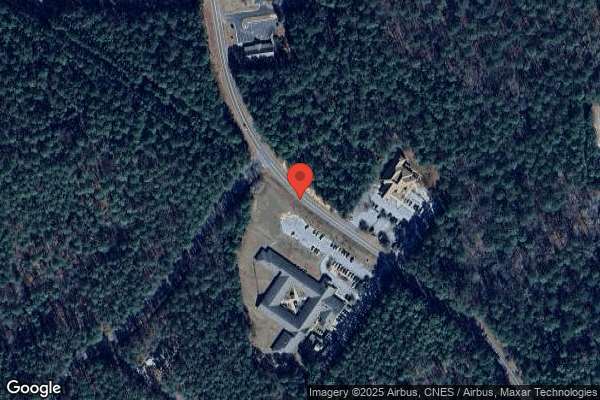
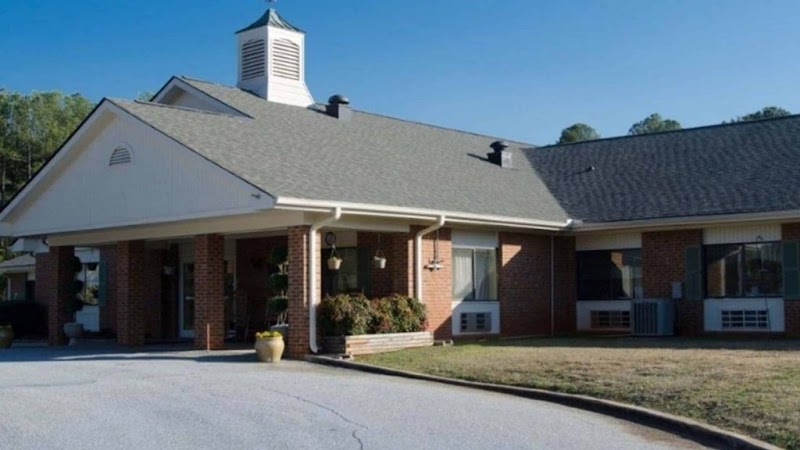
204 Holiday Road, McCormick, SC 29835 (864) 391-2390
For profit - Limited Liability company 120 Beds PACS GROUP Data: November 2025 3 Immediate Jeopardy citations
Trust Grade
0/100
#157 of 186 in SC
Last Inspection: May 2025

Inspected within the last 6 months. Data reflects current conditions.

Overview

McCormick Post Acute has received a Trust Grade of F, indicating significant concerns about the quality of care, which is among the worst possible ratings. It ranks #157 out of 186 nursing homes in South Carolina, placing it in the bottom half of facilities in the state, and is the only option in McCormick County. The situation is worsening, with the number of issues doubling from four in 2024 to twelve in 2025. Staffing has a rating of 1 out of 5 stars, but a turnover rate of 43% is slightly better than the state average of 46%, suggesting some level of stability. However, the facility faces serious concerns, including over $50,000 in fines for compliance issues, and critical incidents like a resident being improperly secured during transport and instances of resident-to-resident abuse. While there are some strengths in quality measures, the overall picture shows significant areas that need improvement.
Trust Score
F
0/100
In South Carolina
#157/186
Bottom 16%
Safety Record
High Risk
Review needed
Inspections
Getting Worse
4 → 12 violations
Staff Stability
○ Average
43% turnover. Near South Carolina's 48% average. Typical for the industry.
Penalties
○ Average
$50,911 in fines. Higher than 52% of South Carolina facilities. Some compliance issues.
Skilled Nurses
⚠ Watch
Each resident gets only 21 minutes of Registered Nurse (RN) attention daily — below average for South Carolina. Fewer RN minutes means fewer trained eyes watching for problems.
Violations
⚠ Watch
21 deficiencies on record. Higher than average. Multiple issues found across inspections.
★☆☆☆☆
1.0
Overall Rating
★☆☆☆☆
1.0
Staff Levels
★★★★☆
4.0
Care Quality
★☆☆☆☆
1.0
Inspection Score
Stable
2024: 4 issues
2025: 12 issues

The Good

  • 4-Star Quality Measures · Strong clinical quality outcomes
  • Full Sprinkler Coverage · Fire safety systems throughout facility
  • No fines on record
  • Staff turnover below average (43%)

    5 points below South Carolina average of 48%

Facility shows strength in quality measures, fire safety.

The Bad

1-Star Overall Rating

Below South Carolina average (2.8)

Significant quality concerns identified by CMS

Staff Turnover: 43%

Near South Carolina avg (46%)

Typical for the industry

Federal Fines: $50,911

Above median ($33,413)

Moderate penalties - review what triggered them

Chain: PACS GROUP

Part of a multi-facility chain

Ask about local staffing decisions and management

The Ugly 21 deficiencies on record

3 life-threatening
Jun 2025 1 deficiency 1 IJ
CRITICAL (J) 📢 Someone Reported This

A family member, employee, or ombudsman was alarmed enough to file a formal complaint

Immediate Jeopardy (IJ) - the most serious Medicare violation

Accident Prevention (Tag F0689)

Someone could have died · This affected 1 resident

**NOTE- TERMS IN BRACKETS HAVE BEEN EDITED TO PROTECT CONFIDENTIALITY** Based on review of the facility policy, record review, and interviews, the facility failed to ensure Resident (R)1 was free from...

Read full inspector narrative →
**NOTE- TERMS IN BRACKETS HAVE BEEN EDITED TO PROTECT CONFIDENTIALITY** Based on review of the facility policy, record review, and interviews, the facility failed to ensure Resident (R)1 was free from of accident/hazards, over which the facility had control of on 04/26/25. The facility staff loaded R1, who is a bilateral amputee to his lower extremities, with a Hoyer lift to a boat, allowing him to ride on a highway without being properly secured. On 06/05/25 at 5:39 PM, the survey team provided the Director of Nursing (DON) and the Regional Director of Clinical Services (RDCS) with a copy of the CMS Immediate Jeopardy (IJ) Template, informing the facility IJ existed as of 04/26/25. The IJ was related to 42 CFR 483.25 - Quality of Care at F689- Free of Accident Hazards/Supervision/Devices. On 06/06/25 at 1:14 PM, the facility provided an acceptable IJ Removal Plan. On 06/06/25 at 2:15 PM, the survey team validated the facility's corrective actions had been implemented. The IJ was removed and lowered to a Scope/Severity level of D. An extended survey was conducted in conjunction with the Complaint Survey for non-compliance at F689, constituting substandard quality of care. Findings include: A review of the facility's policy titled Safe Lifting and Movement of Residents (n.d.) stated, In order to protect the safety and well-being of staff and residents, and promote quality care, this facility uses appropriate techniques and devices to lift and move residents. 1. Resident safety, dignity, comfort, and medical condition will be incorporated into goals and decisions regarding the safe lifting and moving of residents. R1 was admitted to the facility on [DATE] with diagnoses including, but not limited to, multiple sclerosis, bipolar disorder, acute kidney failure, history of falling, acquired absence of left leg above knee, and acquired absence of right leg above knee. Review of R1's Annual Minimum Data Set (MDS) with an Assessment Reference Date (ARD) of 02/21/25 revealed R1 scored a Brief Interview for Mental Status (BIMS) score of 13, indicating he was cognitively intact. Review of Section GG0015 of the MDS indicated impairment on both sides to lower extremity. Review of R1's Nursing-Fall Risk Observation/Assessment dated 05/23/25 indicated the following: 3. Balance: Evaluate resident's balance while standing, sitting and during transitions. This was coded as 2. Non-ambulatory/ wheelchair for locomotion. 6. Mobility was coded as non-ambulatory/wheelchair for locomotion. Confined to chair/geri-chair, coded as yes. During an interview with R1 on 06/05/2025 at 11:34 AM, R1 stated, The whole going boating thing was his and his friend's idea. This has never been done before. He stated, I did express to the staff my idea, Licensed Practical Nurse (LPN)1. LPN1 stated that we could not go on the boat without authorization and she contacted the Operation Manager (OM)1, who was the administrator at that time. This happened on Saturday, before Mother's Day, I am unsure of the date. LPN1 said that OM1 called back and said it will be alright to go fishing. The staff and I thought the best way was to unload and load me was with the crane. It was mostly LPN's idea. When I sat on the seat, we noticed that there was no seat belt. LPN1 secured me with a sheet under my arms and tied it behind me, behind the seat, so I would not move at all. I was able to move very little with the sheet there, mostly my arms. I could not move my lower chest to lower body with the sheet. I was loaded in the boat by Certified Nursing Assistants (CNA) and LPN1. I am unsure of the CNA Names, there were maybe 3, or 4. I was driven to the dock, while I was tied up on the boat. It is roughly about five miles. We got on the water and started to go to the lake to go fishing. The boat started filling with water. R1 then stated his friend stated, I think we are sinking. R1 said, I was not too concerned because I had on a life vest. Everything seemed so surreal. A passerby boat was waved down, and they pulled us back toward the dock. EMS came out and had to pull us out the water because the lake authority was called because the boat was sinking. 911 was called. One of the buses came and got me, it was a wheelchair bus. When I got back to the facility, they assessed me, I had no injury at all. I am trying to block out this memory. It was the worst experience I had since living here. Social Services did talk to me briefly. It could have been much worse. I will never go fishing or get on a boat again. During an interview with CNA1 on 06/05/25 at 12:10 PM, CNA1 revealed, We debated about doing it and we called OM1. He [OM1] said to give him a minute, and he would call back. OM1 called back and said it was okay. OM1 spoke with LPN1. LPN1 said it was okay to put him in the boat. CNA1 stated, We got the Hoyer lift and put him in the boat with the lift. All four CNAs was standing on the ground at first. I climbed on top of the boat then to ensure he did not fall. It was not part of the plan; we thought he would have a seat belt. R1 insisted on going, even without the seatbelt. The sheet was his friend's idea. I just got down off the boat. I don't know what happened with the sheet, I came back in the inside. During an interview on 06/05/25 at 12:28 PM, R1's Friend stated that he and the resident had the idea of going on a boat to fish on the lake. He stated, The nursing home thought of the sheet because R1 fell over. R1 kept sliding down, so they tied him up. They tied him down to ensure he stayed in one spot. The nursing home tied up the sheet, I did not tie up the sheet. It worked; he did not slide down anymore. During an interview on 06/05/25 at 12:34 PM, the Director of Nursing (DON) stated, OM1 called him after the fact, and he looked up the South Carolina law. He stated, It was not a law against driving a patient on a boat on the roadway, please review this section. At this time, the Surveyor was shown Section 56-5-3900 of South Carolina State house which pertains to transportation of minors in open vehicles. Review of the document titled, Code of Laws-Title 56-Chapter 5- Uniform Act Regulating Traffic on Highways; Section 56-5-3900. Transportation of minors in open vehicles stated, (A) It is unlawful to transport a person under fifteen years of age in the open bed or open cargo area of a pickup truck or trailer. An open bed or open cargo area is a bed or cargo area without permanent overhead restraining construction. Review of photographic evidence revealed R1 sitting in the back of the boat, without a covering above him. During on 06/05/25 at 12:42 PM, CNA3 stated, I was not out there really, but I helped for a while. I don't know who tied him up. During an interview on 06/05/25 at 12:55 PM, CNA2 revealed that she was not in charge of his care, but she and other staff members assisted him onto the boat by Hoyer Lift. She stated that she doesn't ' t remember how he was secured on the seat. She left and went on the inside. LPN1, CNA1, and CNA3 was out there when she left. She stated, We got the okay from the Administrator via the phone that is why we did it. On 06/05/2025 at 11:59 AM, LPN1 was called but mailbox is full. Attempted to call again at 12:20 PM. At 2:34 PM, another unsuccessful attempt was made to contact LPN1. On 06/05/2025 at 2:19 PM, attempts were made to contact OM1 via telephone, with no success. The following information constitutes [NAME] Post Acute removal plan for the immediate jeopardy. Summary of Incident: Resident 1 left the faciity on his own accord on 4-26-25 after signing out for LOA to go with a friend on his boat to fish. Staff assisted him into the boat per his request and per his request he used a sheet to hold him up on the seat. He was unable to remove the sheet himself. After he was on the boat off of the premises they incurred issues and facility was called by EMS to come and get him from the lake. He had no injuries. Timeline of Events: Resident 1 was admitted to the facility on [DATE] for LTC. He is alert with BIMS 15/15 and has decisional capacity. 4-26-25 Resident left the facility in a boat with a fried per his request to go fishing. He was placed on the boat by staff using a Hoyer lift and he used a sheet to secure him to the seat of the boat per his request. Staff received a call from EMS that the boat incurred issues and R1 was at the lake and facility needed to pick him up. Facility went to pick him up and returned him to the facility. He had no injuries. 4-28-25 Education was initiated for staff to instruct to not assist any residents into a recreational vehicle for LOA. Residents may only leave for LOA in a motor vehicle. 4-28-25 Audit was complete for month April LOA forms to ensure no other residents had left the facility in a boat. Immediate Actions Taken: 1) Resident 1 has not been out of the facility since 04-26-25 for LOA. 2) 100% Audit of all LOAs from 04-26-25 present to confirm that no other residents left the facility in a boat or unsafe vehicle for a resident to be transported in. Audit complete on 06-05-25 at 7:30 pm and no other residents have left via a vehicle that could be unsafe for their condition/situation. 3) LOA sign out sheet amended to include a column to indicate how they are leaving the facility. Type of vehicle used to leave. (see attached) 4) All staff will be re-educated to ensure understanding that a resident on LOA may not leave the facility in a vehicle that is unsafe for the condition or situation such as a boat or motorcycle and never assist with transfer to any vehicle that is not safe. Also, when a resident signs out LOA to include on the sign out sheet the type of vehicle in which they left. Medical equipment/lift shall not be used to transfer a resident for a nonmedical purpose. 5) Letter will be prepared for mailing to RR's, families and residents to inform them that to protect their safety on LOA they will only be permitted to leave the facility in a motor vehicle that is safe for the residents condition/situation. (see attached) Letters will be mailed 06-06-25. 6) Audits will be complete weekly by DON of LOA sign out sheets to ensure that no resident are leaving the facility by a vehicle that is not safe for their condition or situation. Audits will be weekly x 4 weeks then monthly x 2 months then random thereafter. Report will be submitted to QA committee to determine need for continued monitoring after 3 months. ADHOC QA Meeting Held 06-05-25 *Members Present were: RN RDCS, Dr. via phone, LSW, Director of Nursing, and RN, Operations Manager *Root Cause of issue is identified: Staff failed to ensure that a resident left the facility for LOA by a safe means of transportation. *Audit will be complete of all residents with LOA from 04-26-25 to present to ensure that no other resident has left via a vehicle that is unsafe for their condition/situation. *Education initiated for all staff by DON/RDCS to ensure understanding that any resident who signs out and leaves LOA cannot leave in any vehicle that is not safe and must leave only in a motor vehicle that is safe. Column will be added to LOA sign out sheet to indicate type of vehicle they leave in for LOA. Education will also include that medical equipment/lifts witll not be used for a transfer that is not medically necessary. Education will be complete for current staff and or agency by noon 06-06-25. New hires and agency will continue to receive education prior to first shift worked. *Letter prepared to mail to all families/RR's and residents to inform that to protect their safety during LOA they will only be permitted to leave on LOA in a safe motor vehicle and not a vehicle that is unsafe for the condition or situation. Letters will be mailed 06-06-25. *All education will be provided to newly hired staff and agency staff prior to first shift worked. The above components have been implemented as of 06-05-25 by 7:30 pm.
May 2025 11 deficiencies 1 IJ
CRITICAL (J) 📢 Someone Reported This

A family member, employee, or ombudsman was alarmed enough to file a formal complaint

Immediate Jeopardy (IJ) - the most serious Medicare violation

Free from Abuse/Neglect (Tag F0600)

Someone could have died · This affected 1 resident

**NOTE- TERMS IN BRACKETS HAVE BEEN EDITED TO PROTECT CONFIDENTIALITY** Based on record review, interview, and facility policy review, the facility failed to ensure two residents, Resident (R)83 and R...

Read full inspector narrative →
**NOTE- TERMS IN BRACKETS HAVE BEEN EDITED TO PROTECT CONFIDENTIALITY** Based on record review, interview, and facility policy review, the facility failed to ensure two residents, Resident (R)83 and R6, were free from resident-to-resident physical abuse for 2 of 3 resident reviewed. Specifically, R103 was able to physically attack R83 on 03/09/25, on three separate occasions, within a forty-five-minute timeframe. Additionally, on 04/14/25, R103 spit on and hit R6. On 05/01/25 at 5:34 PM, the Operation Manager and Director of Nursing were notified that the failure to protect a resident from multiple incidents of physical abuse constituted Immediate Jeopardy (IJ) at F600. On 05/01/25 at 5:34 PM, the survey team provided the Operation Manager and Director of Nursing with a copy of the CMS IJ Template and informed the facility IJ existed as of 03/09/25. The IJ was related to 42 CFR 483.12 - Freedom from Abuse, Neglect, and Exploitation. On 05/02/25 at 1:24 PM, the facility provided an acceptable removal plan. On 05/02/25 at 1:30 PM, the survey team, validated the facility's corrective actions and removed the IJ. The facility remained out of compliance at F600 at a lower scope and severity of D. An extended survey was conducted in conjunction with the Recertification and Complaint Survey for non-compliance at F600, constituting substandard quality of care Findings include: Review of the facility's policy titled Abuse and Neglect revised March 2018 revealed, . abuse was defined as the willful infliction of injury, unreasonable confinement, intimidation, or punishment with resulting physical harm, pain, or mental anguish. Instances of abuse of all residents, irrespective of any mental physical condition, cause physical harm, pain, or mental anguish. It includes verbal abuse . and mental abuse . 1. Review of R103's quarterly Minimum Data Set (MDS) with an assessment reference date (ARD) of 02/07/25, revealed a Brief Interview for Mental Status (BIMS) score of 00 out of 15 which indicated severe cognitive impairment. Review of R83's annual MDS with an ARD of 03/03/25, revealed a BIMS score of 05 out of 15 which indicated severe cognitive impairment. Review of R83's Nurse's Note, dated 03/09/25 at 9:55 AM, and located in the EMR under the ''Notes'' tab, written by Licensed Practical Nurse (LPN)3 revealed, . she heard someone yelling stop when nurse got to the nursing station she observed [R103] hitting [R83] on her right arm several times, they were separated [R103] was taken to her room and [R83] was taken to A-side. Body audit performed. During an interview on 05/01/25 at 9:48 AM, Licensed Practical Nurse (LPN)1 stated that on 03/09/25, she was in the hallway and R83 was sitting in her wheelchair in the hallway, when R103 came around the nurse's station, and went into the parlor. She heard R83 hollering, and when she ran back, she observed R103 hitting R83 on the arm and maybe on the chest with a closed fist. She immediately separated them and took R103 to her room and left R83 in hallway. A few minutes later she heard hollering again, and observed R103 had returned and was hitting R83 on her arms/chest again in the hall. At that time, she took R103 back to her room for a second time and moved R83 to the parlor by the nurse's station. Then a few minutes after that she heard hollering again and returned for a third time and found R103 hitting R83 again in the parlor. She returned R103 to her room and at that time she took R83 to the other unit. LPN1 stated R103 attacked R83 three different times in about a 45-minute period. She said she told the Certified Nursing Assistant (CNA) staff to keep an eye on R103. She said R103 understood what she was doing. Whenever someone said something to her, she did not like, she immediately began hollering and cussing. Staff have tried to keep an eye on her whenever she came out of her room. They try and watch to see where she's going. But her behaviors went from 0 to 100 in seconds. There was usually any indication when she was about to escalate. LPN1 further stated staff were not doing enough to keep her or other residents safe. She did not know what staff could do to keep them safe. If they move her to another unit, she will just do the same thing there. Review of facility documentation revealed that R83 did not have a skin assessment completed at the time the incident occurred. Review of R103's EMR Psych Consult under the Assessments tab revealed two consults were completed on 03/10/25 and 04/15/25, and medications were adjusted. The Social Service Director (SSD) sent a referral for behavioral placement evaluation on 04/15/25, but there was no follow up after that date related to the status of the referral. During interviews on 05/01/25 at 7:58 AM and 8:43 AM, both Certified Nursing Assistants (CNA) and CNA5, assigned to residents at the time the incident occurred, revealed they did not witness the incident and were unaware that R103 required increased supervision. During an interview on 05/01/25 at 3:41 PM, the Director of Nursing (DON) stated the facility substantiated the abuse. However, he was unaware that R103 was allowed to attack R83 three separate times. The DON stated it was frustrating because that was not the information that staff reported to him. Based on what he stated staff told him it was not that serious. The DON thought R103 hit R83 once and they were separated and there were no further issues. 2. Review of R6's EMR Progress Notes tab revealed a note authored by the Director of Nursing (DON) dated 04/14/25 at 3:39 PM that stated, [R6] was outside being supervised during her smoke break. The opposing resident [R103] attempted to get past the residents who were near the door but became frustrated when she could not. She then pulled one resident's wheelchair backwards causing it to strike [R6's] legs. [R6] expressed her disdain towards the opposing resident's actions to which the opposing resident said, F**k you. As staff attempted to separate the two residents, the opposing resident slapped [R6] on the knee and spit on her smoking apron. Staff continued to separate the residents immediately, and no further incident occurred. Review of facility provided incident investigation for the incident showed the initial report stated: Time of incident 04/14/25 at 3:00 PM [R103] going outside to courtyard to smoke and she pushed a wheelchair which hit resident's legs. Resident became angry and both exchanged profanities - staff attempted to intervene but before residents could be reached, [R103] smacked resident on the leg and spit toward her. Both separated immediately and taken inside. Body audit showed no injuries. During an interview on 05/01/25 at 10:20 AM, R6 was in her wheelchair wearing a smoking apron and self-propelling on the path to the courtyard. R6 remembered the incident and stated the wheelchair did not cause an injury, they exchanged some words she shouldn't have said, and R103 started spitting on her apron then came closer and closer and hitting her knee. R6 stated she went to grab her arm to stop her, but the aide pulled her away before she could do so. R6 stated her knee was a bit sore a few days. During an interview on 05/01/25 at 3:17 PM, CNA2 stated, I was watching smoking and [male resident name] asked [R103] to move him back. [R103] moved [the] wheelchair towards [R6] and [R6] say I'm back here but [R103] moved his wheelchair into her [R6] stump. I tried to get up to move [the male resident] beside [R6]. [R103] started cursing [R6] out, [R6] told her 'because of you he hit me,' they went back and forth, I told them to chill out. [R103] then spits on [R6]. Finally [DON's name] came out and took [R103] inside. He was out trying to calm [R6] down, [R103] came back out and swung around [DON] and hit [R6] on the leg. So, he took her back in and she didn't come back out. In a follow-up interview on 05/02/25 at 5:05 PM, the DON was advised of CNA2's interview. The DON denied [R103] returned to the courtyard. I brought her in and went back out to [R6], but [R103] didn't come back out. The surveyor asked how he found out about the incident, to come out, the DON replied [CNA2] reported it to me. On 05/02/25 at 1:24 PM, the facility provided an acceptable removal plan, which included the following: . Immediate Actions Taken: 1) Body audit complete for Residents 83 and Resident 6 and 103 to ensure no concerns. 2) Interview complete with Resident 83 and Resident 6 to ensure they feel safe and have no concerns with care or safety at the facility. 3) Education initiated immediately with 100% of staff by DON/DSD/RDCS/designees on 5-1-25 to ensure understanding of reporting of abuse and resident to resident altercations and ensuring that residents are kept separated and that all information and details are accurately reported to Administrative staff. 4) Interviews initiated with all residents by Admin staff and SS to ensure they have no concerns with abuse and that they feel safe at the facility. 5) Education initiated with SS, DON, Operations Manager and Admin Nursing Staff by RDCS to ensure understanding of abuse and abuse reporting and ensuring that residents are kept separated and that all behaviors and interventions are care planned timely. 6) Rooms assignments were reviewed to determine whether or not proximity was an issue for resident 103 and resident 83, and for resident 103 and resident 6, with findings revealing that resident 103 resides on a separate hall than resident 83 and resident 6, therefore no room adjustments were deemed necessary. 7) Resident 103 was placed on 1:1 observation. 8) Resident 103 care plan was updated to reflect the 1:1 intervention. 9) Psychiatric services will continue to follow resident 103. 10) Compliance completion was confirmed as of 5-2-25 at 12:45 pm. ADHOC QA Meeting Held 5-1-25 *Members Present were: [name] RN RDCS, [name] LNHA, [name] Operations Manager, [name] RN DON, [name] Dr via phone. *Root Cause of issue is identified as lack of accurately reporting events and behaviors to Admin staff and failure to ensure residents kept separated once an alteration occurred and failure to follow up and accurately care plan interventions r/t behaviors and keeping residents separated. *Education initiated for all staff by DON/RDCS to ensure understanding of abuse and abuse reporting and ensuring that residents are kept separated and free from abuse. *Interviews initiated with residents with BIMs> 12 by SS and Admin staff to ensure they feel safe and have no concerns r/t abuse. *Education initiated for all Admin Staff by RDCS to ensure understanding or reporting abuse, ensuring residents are kept safe and separated and that all interventions are care planned for residents regarding behaviors. *All education will be provided to newly hired staff and agency staff prior to first shift worked. *The above components have been implemented as of 5-1-25 by 7:30 pm, and 100% compliance was confirmed as of 5-2-25 at 12:45 pm. *The results of the interventions will be audited every shift times 4 four weeks and then every week times four weeks, and the results will be brought to the QAPI committee monthly for the duration of the interventions. *The 1:1 interventions will continue indefinitely as deemed necessary per ongoing review of 1:1 observation documentation.
CONCERN (D) 📢 Someone Reported This

A family member, employee, or ombudsman was alarmed enough to file a formal complaint

Potential for Harm - no one hurt, but risky conditions existed

Investigate Abuse (Tag F0610)

Could have caused harm · This affected 1 resident

Based on record review, interview, and review of facility policy, the facility failed to ensure an injury of unknown origin, and a fracture was thoroughly investigated for two of five residents (Resid...

Read full inspector narrative →
Based on record review, interview, and review of facility policy, the facility failed to ensure an injury of unknown origin, and a fracture was thoroughly investigated for two of five residents (Resident (R)103 and R83) reviewed for abuse out of 30 sample residents. Findings include: Review of the facility's policy titled Abuse and Neglect revised March 2018, revealed the staff, with the physician's input as needed, will investigate alleged abuse and neglect to clarify what happened and identify possible causes. Review of R103's quarterly Minimum Data Set (MDS) with an assessment reference date (ARD) of 02/07/25, revealed a Brief Interview for Mental Status (BIMS) score of 00 out of 15 which indicated severe cognitive impairment. Review of R83's annual MDS with an ARD of 03/03/25, revealed a BIMS score of 5 out of 15, which indicated severe cognitive impairment. Review of R83's Nurse's Note dated 03/09/25 at 9:55 AM, and located in the EMR under the ''Notes'' tab written by Licensed Practical Nurse (LPN)3 revealed, . she heard someone yelling stop when nurse got to the nursing station she observed the resident [R103] hitting [R83] on her right arm several times they were separated [R103] was taken to her room and [R83] was taken to A-side. Body audit performed. No skin tears, swelling, or discolorations noted at this time. Review of the facility's investigative documentation revealed no evidence of R83's skin assessment, no interview with LPN1 who witnessed all three incidents or with Certified Nurse Aide (CNA)5 who was assigned to R103 on 03/09/25, no interview with LPN3 who documented the incident in the EMR, and no other residents were interviewed. During an interview with LPN1 on 05/01/25 at 9:48 AM, she stated that on 03/09/25 she was in the hallway and R83 was sitting in her wheelchair in the hallway, when R103 came around the nurse's station, and went into the parlor. She heard R83 hollering, and when she ran back, she observed R103 hitting R83 on the arm and maybe on the chest with a closed fist. She immediately separated them and took R103 to her room and left R83 in hallway. A few minutes later she heard hollering again, and observed R103 had returned and was hitting R83 on her arms/chest again in the hall. At that time, she took R103 back to her room for a second time and moved R83 to the parlor by the nurse's station. Then a few minutes after that she heard hollering again and returned for a third time and found R103 hitting R83 again in the parlor. She returned R103 to her room and at that time she took R83 to the other unit. She said R103 attacked R83 three different times in about a 45-minute period. During an interview on 05/01/25 at 3:41 PM, the Director of Nursing (DON) stated that he and the Operations Manager conducted the facility's investigation. The DON stated after an abuse allegation a nurse would complete a body audit, talk to residents involved considering their BIMS, any witness and notify the sheriff's office. The DON stated he interviewed LPN1, but he did not have any documentation or her statement. The DON agreed he should have interviewed other staff and obtained written statements from them, residents statements and should have had documentation of R83's skin assessment. During an interview on 05/02/25 at 6:06 AM the Operations Manager, who was the Abuse Coordinator, stated there should have been more interviews conducted.
CONCERN (D)

Potential for Harm - no one hurt, but risky conditions existed

Transfer Notice (Tag F0623)

Could have caused harm · This affected 1 resident

Based on record review, interview, and facility policy review, the facility failed to ensure two of two residents and/or their representatives (Resident (R)56 and R111) reviewed for hospital transfer ...

Read full inspector narrative →
Based on record review, interview, and facility policy review, the facility failed to ensure two of two residents and/or their representatives (Resident (R)56 and R111) reviewed for hospital transfer out of a total sample of 30, were provided with a written transfer notice that contained all required information. This failure has the potential to affect the resident and their Resident Representative (RP) by not having the knowledge of where and why a resident was transferred and/or how to appeal the transfer, if desired. Findings include: Review of the facility policy titled Transfer or Discharge Notice dated August 2022, revealed, Policy Statement Residents and/or representatives are notified in writing, and in a language and format they understand . Policy Interpretation and Implementation . 4. Under the following circumstances, the notice is given as soon as it is practicable but before the transfer or discharge: . d. An immediate transfer or discharge is required by the resident's urgent medical needs; 5. The resident and representative are notified in writing of the following information: a. The specific reason for the transfer or discharge; including name of the new provider and address b. The effective date of the transfer or discharge; c. The location to which the resident is being transferred or discharged ; d. An explanation of the resident's rights to appeal the transfer or discharge to the state, include: (1) the name, address, email, and telephone number of the entity which receives appeal hearing requests; (2) information about how to obtain, complete, and submit an appeal request; and (3) how to get assistance completing the appeal process; . f. The name, address, and telephone number of the Office of the State Long-Term Care Ombudsman. g. The name, address, email, and telephone number of the agency responsible for the protection and advocacy of residents with intellectual and developmental (or related) disabilities (as applies); h. the name, address, email, and telephone number of the agency responsible for the protection and advocacy of residents with a mental disorder or related disabilities (as applies); and i. The name, address, and telephone number of the state health department agency that has been designated to hand appeals of transfers and discharge notices. Review of the facility policy titled Transfer or Discharge, Emergency dated August 2022, revealed the policy did not address written notice of emergent transfer provision to the resident and RP. 1. Review of R56's admission Record from the facility electronic medical record (EMR) Profile tab revealed a facility admission date of 03/11/25, with diagnosis including but not limited to: schizophrenia. Review of R56's EMR Census tab showed a hospital leave on 03/27/25 and return on 03/28/25. Review of R56's admission Minimum Data Set (MDS) with an assessment reference date (ARD) of 03/17/25, revealed a Brief Interview for Mental Status (BIMS) score of 4 out of 15, indicative of being severely cognitively impaired. Review of R56's EMR Progress Notes tab revealed, 3/27/2025 15:22 [3:22 PM] Nurse's Note .NP [Nurse Practitioner] made aware of resident's behavior . NP recommendation to send him out to [hospital] for eval r/t [evaluation related to] agitation, 3/27/2025 15:36 [3:36 PM] Nurse's Note Note Text: EMS left facility with resident on his way to [hospital]. Further review of the EMR Evaluations and Documents tab along with further review of the Progress Notes did not reveal evidence that a written notice of transfer was provided to R56 or his RP. During a telephone interview on 05/01/25 at 11:01 AM, regarding the receipt of a written transfer notice RP2 stated, No, I don't recall getting anything in writing. RP2 confirmed she was called about the transfer but did not receive a written notice. 2. Review of R111's admission Record from the EMR Profile tab showed a facility admission date of 09/15/21. Review of R111's significant change of status MDS with an ARD of 01/13/25 showed a BIMS score of 3 out of 15, indicative of severe cognitive impairment. Review of R111's EMR Progress Notes revealed, 2/5/2025 09:07 [9:07 AM] Nurse's Note Note Text: Resident having resp [respiratory] distress [Practitioner] notified and send to ER [emergency room] for evaluation and treatment. 2/6/2025 14:27 [2:27 PM] Activities Note Note Text: Note: Resident sent out to hospital on 2/5/25. Further review of the EMR Evaluations and Documents tab, along with further review of the Progress Notes, did not reveal evidence that a written notice of transfer was provided to R111 or her RP. During an interview on 05/01/25 at 5:23 PM, the General Manager stated the expectation was, that those [transfer notices] are done and provided to the resident or RP. During an interview on 05/01/25 at 5:40 PM, regarding the emergent transfer process, Licensed Practical Nurse (LPN)7 explained, . get order to transfer, call 911, a transfer form [requested clarification, it is an e interact transfer to hospital, given to EMS for the hospital, it is not for the resident], which are all given to EMS; Nothing in writing is given to the resident or RP upon [emergent] transfer. During an interview on 05/01/25 at 6:10 PM, the Medical Records Director (MRD) stated, There is a letter that is sent out by the Social Service Director (SSD) for transfers. On 05/02/25 at 7:15 AM a transfer notice was provided for R111, dated 02/05/25 stating the resident requested to go to the hospital for shortness of breath. No documentation as to the provision of the document to R111 or the RP. During an interview on 05/02/25 at 7:31 AM, the MRD stated because R111 was not out over 24 hours, so the letter was not sent out. At 10:59 AM the MRD stated she just writes the letters and emails them to the SSD, who sends them out. During an interview on 05/02/25 at 11:02 AM, the SSD stated R111's letter was not mailed because she passed [away] within 24 hours. Asked about evidence of mailing, SSD retrieved a 3-ring binder; reviewed R56's letter and stated, Not sent out because he returned within 24 hours. When queried that if MRD writes the letter and she (SSD) mails them, how do residents get a copy of the transfer notice. The SSD responded, Residents don't get this transfer notice. SSD then confirmed neither R56 nor R111 received a transfer notice because they were out under 24 hours.
CONCERN (D)

Potential for Harm - no one hurt, but risky conditions existed

Comprehensive Assessments (Tag F0636)

Could have caused harm · This affected 1 resident

**NOTE- TERMS IN BRACKETS HAVE BEEN EDITED TO PROTECT CONFIDENTIALITY** Based on record review, interview, and review of the Resident Assessment Instrument (RAI) manual, the facility failed to ensure ...

Read full inspector narrative →
**NOTE- TERMS IN BRACKETS HAVE BEEN EDITED TO PROTECT CONFIDENTIALITY** Based on record review, interview, and review of the Resident Assessment Instrument (RAI) manual, the facility failed to ensure comprehensive Minimum Data Set (MDS) assessments were completed and submitted for processing for one of one residents triggered for no MDS in over 120 days, (Resident (R)31), out of a total sample of 30. This failure has the potential to adversely affect the care planning and care provision for any resident that may not have received a comprehensive assessment. Findings include: Review of R31's admission Record from the electronic medical record (EMR) Profile tab showed a facility admission date of 04/27/24 and readmission on [DATE]. Review of R31's Minimum Data Set (MDS) assessments from the EMR MDS tab showed the last transmitted and accepted assessment was a quarterly assessment on 12/26/24 and an annual MDS with an assessment reference date (ARD) of 04/23/25 and showed as export ready. During an interview on 04/30/25 at 3:45 PM, regarding the four month gap in assessment transmissions, the MDS Coordinator (MDS)2 confirmed it was completed on 04/26/25 and was not yet transmitted, and it was over 120 days since the last transmission. During an interview on 05/01/25 at 12:20 PM, MDS2 confirmed there is no facility policy regarding MDS transmission and the Resident Assessment Instrument (RAI) manual will be followed. During an interview on 05/01/25 at 5:24 PM, regarding MDS timing, the General Manager stated the expectation is, that the MDS would be exported [clarified, completed & transmitted] per the RAI timeline. Review of the October 2024 RAI Manual on page 2-34, revealed, The ARD of an assessment drives the due date of the next assessment. The next non- comprehensive assessment is due within 92 days after the ARD of the most recent OBRA [Omnibus Budget Reconciliation Act] assessment (ARD of previous OBRA assessment - Admission, Annual, Quarterly, Significant Change in Status, or Significant Correction assessment - + 92 calendar days).
CONCERN (D)

Potential for Harm - no one hurt, but risky conditions existed

Deficiency F0637 (Tag F0637)

Could have caused harm · This affected 1 resident

**NOTE- TERMS IN BRACKETS HAVE BEEN EDITED TO PROTECT CONFIDENTIALITY** Based on record review, interview and review of the Resident Assessment Instrument (RAI) manual, the facility failed to complete...

Read full inspector narrative →
**NOTE- TERMS IN BRACKETS HAVE BEEN EDITED TO PROTECT CONFIDENTIALITY** Based on record review, interview and review of the Resident Assessment Instrument (RAI) manual, the facility failed to complete a significant change assessment for a resident receiving hospice services for one of three residents, (Resident (R)112), reviewed for hospice. Findings include: Review of GUIDELINES FOR DETERMINING THE NEED FOR A SCSA FOR RESIDENTS WITH TERMINAL CONDITIONS from the RAI manual revealed, The key in determining if an SCSA is required for individuals with a terminal condition is whether or not the change in condition is an expected well-defined part of the disease course and is consequently being addressed as part of the overall plan of care for the individual. If a terminally ill resident experiences a new onset of symptoms or a condition that is not part of the expected course of deterioration, an SCSA assessment is required. Similarly, if the resident enrolls in a hospice (Medicare Hospice program or other structured hospice program), but remains a resident at the facility, an SCSA should be performed if the terminally ill resident experiences a new onset of symptoms or a condition that is not part of the expected course of deterioration. The facility is responsible for providing necessary care and services to assist the resident in achieving his/her highest practicable well-being at whatever stage of the disease process the resident is experiencing. Review of R112's admission Record located in the Profile tab of the electronic medical record (EMR) revealed readmission to the facility on [DATE]. Review of R112's admission Minimum Data Set (MDS) under the MDS tab of the EMR, with an Assessment Reference Date (ARD) of 01/30/25 revealed a Brief Interview for Mental Status (BIMS) score of 5 out of 15, which indicated severe cognitive impairment. Further review revealed R112 went on hospice on 03/19/25 but a Significant Change in Status Assessment (SCSA) MDS was not completed. Review of 112's Physician Orders located under the Orders tab of the EMR dated 03/19/25, revealed an order for hospice. Review of R112's Care Plan located under the ''Care Plan'' tab of the EMR and dated 04/07/25, revealed, The resident was care planned for end of life/hospice services. During an interview on 05/01/25 at 10:32 AM, the MDS1 and MDS2 stated when a resident was placed on hospice that information was communicated during their morning meetings. They also received a list of hospice residents from the Social Service Director (SSD). MDS1 and MDS2 stated that a SCSA should have been completed. During an interview on 05/01/25 at 3:38 PM, the Director of Nursing (DON) stated that he expected after a resident was placed on hospice, that a SCSA MDS was completed accurately and timely.
CONCERN (D)

Potential for Harm - no one hurt, but risky conditions existed

Quality of Care (Tag F0684)

Could have caused harm · This affected 1 resident

**NOTE- TERMS IN BRACKETS HAVE BEEN EDITED TO PROTECT CONFIDENTIALITY** Based on observation, interview, record review, and facility policy review, the facility failed to ensure that one of two reside...

Read full inspector narrative →
**NOTE- TERMS IN BRACKETS HAVE BEEN EDITED TO PROTECT CONFIDENTIALITY** Based on observation, interview, record review, and facility policy review, the facility failed to ensure that one of two residents, (Resident (R)28), reviewed for skin conditions out of a sample of 30 residents received documented skin assessments identifying the status of the skin. In addition, the facility failed to ensure a resident was appropriately screened and had documentation to support the use of a wander guard for one of two residents, (Residents (R)106), reviewed for wander guards in the sample of 30 residents. Findings include: 1. Review of the facility's policy titled, Skin Assessment dated April 2020 indicated, The purpose of this procedure is to provide information regarding identification of pressure injury risk factors and interventions for specific risk factors. Monitoring included to evaluate, report and document potential changes in the skin. Review of R28's undated admission Record found under the Profile tab of the electronic medical record (EMR) indicated that R28 was admitted to the facility on [DATE], with diagnoses including but not limited to: encephalopathy, anemia, peripheral vascular disease, hypertension, malnutrition, type 2 diabetes, cerebrovascular disease, and hemiplegia and hemiparesis affecting the right dominant side. Review of R28's quarterly Minimum Data Set (MDS) with an Assessment Reference Date (ARD) of 02/27/25, found under the MDS tab of the EMR indicated a Brief Interview for Mental Status (BIMS) score of 15 out of 15, indicating R28 was cognitively intact. Review of R28's Impaired Skin Integrity Care Plan with a review date of 03/20/25, found in the EMR under the Care Plan tab indicated interventions of monitoring skin daily with routine care and weekly nursing assessments to observe for skin breakdown. Review of R28's Body Audit Schedule provided by the facility for the weeks of 04/07/25 - 04/13/25, 04/14/25 - 04/20/25, and 04/21/25 - 04/27/25, indicated that R28 was scheduled weekly on Mondays for skin assessments. During an observation of R28's skin assessment on 04/30/25 at 1:45 PM, Licensed Practical Nurse (LPN)2 revealed redness under the right breast fold, dark redness on the perineum area, upper inner thighs, and the right and left buttocks to the waist. LPN2 stated that the redness under the right breast was new and that the nurse practitioner would be notified. Review of R28's EMR revealed no documentation pertaining to skin assessments of the perineum area, buttocks, abdominal folds, and breast folds. During an interview on 04/30/25 at 5:30 PM, the Regional Director of Clinical Services (RDCS)1 stated that there was a schedule for weekly skin assessments at the nurses' stations; however, there was no documentation found for R28's weekly skin audits. RDCS1 stated that there needed to be improvement in documentation. During an interview on 05/01/25 at 10:40 AM, the Nurse Practitioner (NP) stated that she had not received notification of R28's reddened areas in the past week. The NP stated that she relied on the skin assessment documentation as part of her review of a resident's skin condition. During an interview on 05/02/25 at 7:34 AM, the Director of Nursing (DON) stated that he was not aware of R28's skin condition and that R28's skin assessments were not being done. The DON's expectation going forward was to put a system in place that would help him track completion of skin assessments to ensure timely completion. 2. Review of R106's admission Record located in the Profile tab of the electronic medical record (EMR) revealed she was admitted to the facility on [DATE], with diagnoses including but not limited to: paranoid schizophrenia. Review of R106's Quarterly MDS assessment under the MDS tab of the EMR, with an ARD of 02/03/25, revealed a BIMS score of 10 out of 15, indicating moderate cognitive impairment. Further review revealed no wandering behavior was exhibited. Review of R106's Care Plan located under the Care Plan tab of the EMR dated 02/10/25, revealed the resident was care planned for risk for elopement related to a responsible party reporting history of exit seeking. Interventions in place were personal security alarm. Review of R106's Nurses Notes located under the Notes tab of the EMR from admission on [DATE] until present revealed no documentation related to wandering or exit seeking behaviors. Review of R106's Physician Orders located under the Orders tab in the EMR dated 01/30/25, revealed secure care device. Review of R106's Elopement Risk Assessment located under the Observations tab in the EMR dated 01/28/25, revealed R106 did not have any documented history of elopement attempts, and did not exhibit any unsafe wandering or elopement behaviors. The assessment indicated the family stated resident had a history or wandering and wanted to be at home. During an interview on 04/30/25 at 11:42 AM, R106 stated she did have a band on her ankle that she thought was her identity, but she said nobody has explained to her why she had to wear it. She stated that she did not like to wear it because it irritated the skin on her leg. During an interview on 05/01/25 at 8:04 AM, Certified Nurse Assistant (CNA)5 stated R106 did not bother anyone and would walk down the halls but would respond to staff if they called her. She said she has walked by the doors, but she has never tried to open the door. There has never been any concern that she would try to leave. During an interview on 05/01/25 at 8:23 AM, CNA4 stated that R106 was independent and did not interact much. She usually just stayed in her room with the door shut but would let staff know when she needed anything. She was not aware of R106 ever trying to leave or exit seek. During an interview on 05/01/25 at 9:38 AM, Registered Nurse (RN)1 stated she completed R106's elopement risk assessment on admission. She said sometimes the family expressed concerns for wandering or they would observe a resident wandering around the exit doors. She said the day of R106 admission staff had to redirect her constantly but agreed it was a new environment and that she has never personally seen her try to exit seek or try to open an exit door. She agreed it was not appropriate for R106 to wear a wander guard.
CONCERN (D)

Potential for Harm - no one hurt, but risky conditions existed

Deficiency F0698 (Tag F0698)

Could have caused harm · This affected 1 resident

**NOTE- TERMS IN BRACKETS HAVE BEEN EDITED TO PROTECT CONFIDENTIALITY** Based on interview, record review, and facility policy review, the facility failed to ensure ongoing communication and collabora...

Read full inspector narrative →
**NOTE- TERMS IN BRACKETS HAVE BEEN EDITED TO PROTECT CONFIDENTIALITY** Based on interview, record review, and facility policy review, the facility failed to ensure ongoing communication and collaboration with the dialysis facility for one resident (Residents (R)108) reviewed for dialysis out of a sample of 30 residents. This had the potential to affect all residents receiving dialysis treatment. Findings include: Review of the facility's policy titled End-Stage Renal Disease, Care of a Resident with revised September 2010, revealed that Residents with end-stage renal disease (ESRD) will be cared for according to currently recognized standards of care. Agreements between this facility and the contracted ESRD facility include all aspects of how the resident's care will be managed, including: how the care plan will be developed and implemented; how information will be exchanged between the facilities; and c. responsibility for waste handling, sterilization, and disinfection of equipment. Review of R108's admission Record, found in the Profile tab of the electronic medical record (EMR) revealed he was admitted to the facility on [DATE], with diagnoses including but not limited to: type two diabetes mellitus with diabetic chronic kidney disease. Review of R108's quarterly Minimum Data Set (MDS) located in the MDS tab in the EMR with an Assessment Reference Date (ARD) of 04/14/24 revealed R108 had a Brief Interview for Mental Status (BIMS) score of 10 out of 15, which indicated moderate cognitive impairment. Further review revealed R108 received hemodialysis. Review of R108's Care Plan located in the Care Plan tab of the EMR dated 04/08/25, documented that the resident needs dialysis related to renal failure. The interventions included for the resident to attend dialysis on Tuesday, Thursday, and Saturdays. Review of R108's Treatment Details Report forms dated February 2025 thru April 2025 revealed the only documented form completed by dialysis and received by the facility for that time was on 04/11/25. There was no additional documentation from the dialysis center for that time. During an interview on 04/30/25 at 3:45 PM, Licensed Practical Nurse (LPN)6 stated facility nursing staff completed a pre and post dialysis evaluation for the resident that was sent to the dialysis center, but the dialysis center was not great about sending it back. LPN6 stated she never reported when they did not get dialysis information. During an interview on 05/01/25 at 3:20 PM, the Director of Nursing (DON) stated there was a dialysis worksheet that was sent to dialysis, but dialysis kept it and did not send it back. The DON stated that he expected their process to be followed.
CONCERN (D)

Potential for Harm - no one hurt, but risky conditions existed

Deficiency F0700 (Tag F0700)

Could have caused harm · This affected 1 resident

**NOTE- TERMS IN BRACKETS HAVE BEEN EDITED TO PROTECT CONFIDENTIALITY** Based on observation, interview, record review, and Food Drug Administration guidance, the facility failed to ensure a resident ...

Read full inspector narrative →
**NOTE- TERMS IN BRACKETS HAVE BEEN EDITED TO PROTECT CONFIDENTIALITY** Based on observation, interview, record review, and Food Drug Administration guidance, the facility failed to ensure a resident was appropriately evaluated for use of bedrail and that alternative measures were attempted prior to installation of side rails for one of one resident (Resident (R)27) reviewed for side rails out of a total sample of 22. The lack of alternate side rail measures had the potential to lead to safety concerns related to bed rail use. Findings include: Review of the Food and Drug Administration's Clinical Guidance For the Assessment and Implementation of Bed Rails In Hospitals, Long Term Care Facilities, and Home Care Settings, dated April 2003 and located at https://www.dfa.gov/media/88765, revealed, . Every patient, regardless of care setting, deserves a safe and comfortable sleeping and bed environment . Although various types may be used depending on a patient's medical and functional needs, bed rails may pose increased risk to patient safety . Evaluation is needed to assess the relative risk of using the bed rail compared with not using it for an individual patient . Decisions to use or to discontinue the use of a bed rail should be made in the context of an individualized patient assessment using an interdisciplinary team with input from the patient and family or the patient's legal guardian . Regardless of the purpose for which bed rails are being used or considered, a decision to utilize or remove those in current use should occur within the framework of an individual patient assessment . Use of bed rails should be based on patients' assessed medical needs and should be documented clearly and approved by the interdisciplinary team. The patient's chart should include a risk-benefit assessment that identifies why other care interventions are not appropriate or not effective if they were previously attempted and determined not to be the treatment of choice for the patient . Bed rail use for patient's mobility and/or transferring, for example turning and positioning within the bed and providing a hand-hold for getting into or out of bed, should be accompanied by a care plan. Review of R27's admission Record, found in the Profile tab of the electronic medical record (EMR), revealed she was admitted to the facility on [DATE], with diagnoses including but not limited to: acute kidney failure. Review of R27's annual Minimum Data Set (MDS) located in the MDS tab in the EMR and with an Assessment Reference Date (ARD) of 02/06/25, revealed R27 had a Brief Interview for Mental Status (BIMS) score of 9 out of 15, which indicated moderate cognitive impairment. Review of R27's Care Plan dated 11/17/23, and located in the EMR under the Care Plan tab, revealed, The resident was at risk for Falls related to transferring self. Interventions in place were side rails as ordered. During an observation on 04/30/25 at 11:46 AM, R27 was in bed with quarter side rails on both sides of bed. Review of R27's Bed Rail Evaluation, dated 11/06/24, 01/06/25 and 02/05/25, revealed R27 did not use bedrails and bedrails were not indicated for use. Further review revealed no documentation of alternates used prior to bedrail use. Review of R27's Physician Order, dated 01/06/25, and located in the EMR under the Orders tab revealed an order for side rails for bed mobility. During an interview on 04/30/25 at 3:45 PM, Licensed Practical Nurse (LPN)6 stated that there was a pre-evaluation that gave a score that indicated the need for bedrail use. She was unsure if anything was assessed or monitored prior to bedrail use. She stated a resident should not have bedrails if their assessment stated that bedrails were not indicated or should not be used. She stated she completed R27's February bed rail assessment but was unaware that R27 had bedrails or why the assessment stated he did not use or should not use bedrails. During an observation and interview on 04/30/25 at 5:10 PM, LPN6 looked in R27's room and stated, You sure do have bedrails. R27 said he did not use them, but they have always been on the bed. During an interview on 05/01/25 at 3:25 PM, the Director of Nursing (DON) stated staff should be screening, completing an evaluation, risk and benefits of bedrail use were explained and making sure a resident could release the bedrail by themselves. He stated nurses documented in the assessment a risk for entrapment. He stated staff should be exploring alternatives prior to bedrail use and it was not appropriate for a resident to have bedrails if they were assessed not to.
CONCERN (D)

Potential for Harm - no one hurt, but risky conditions existed

Deficiency F0806 (Tag F0806)

Could have caused harm · This affected 1 resident

**NOTE- TERMS IN BRACKETS HAVE BEEN EDITED TO PROTECT CONFIDENTIALITY** Based on observation, record review, interview, and facility policy review, the facility failed to ensure resident preferences w...

Read full inspector narrative →
**NOTE- TERMS IN BRACKETS HAVE BEEN EDITED TO PROTECT CONFIDENTIALITY** Based on observation, record review, interview, and facility policy review, the facility failed to ensure resident preferences were followed for one of one resident (Resident (R)91) reviewed for food preferences of 30 sample residents. This had the potential to affect nutritional status and resident preferences for residents who received food from the kitchen. Findings include: Review of the facility's policy titled, Dining and Food Preferences, revised 10/22, revealed Food allergies, food intolerance, food dislikes, and food and fluid preferences will be entered into the resident profile in the menu management software system .The individual tray assembly ticket will identify all food items appropriate for the resident/ patient based on diet order, allergies & intolerances, and preferences. Review of R91's admission Record located under the Profile tab of the electronic medical record (EMR) revealed the resident was admitted on [DATE], with diagnoses including but not limited to: protein-calorie malnutrition and type two diabetes mellitus. Review of the annual Minimum Data Set (MDS) with an Assessment Reference Date (ARD) of 03/10/25 and located under the MDS tab of the EMR, revealed a Brief Interview for Mental Status (BIMS) of 14 out of 15 which indicated the resident was cognitively intact. Review of the care plan located under the Care Plan tab of the EMR, revised on 06/16/24, revealed resident was at risk for malnutrition. Interventions included: encourage adequate nutrition .provide diet as ordered. Review of the quarterly Nutritional Risk Review, located under the Evaluation tab of the EMR, dated 05/01/24, revealed, No food preferences changes at this time. Review of the quarterly Nutritional Risk Review, located under the Evaluation tab of the EMR, dated 09/15/24, revealed, No Food Preferences Updated. Review of the quarterly Nutritional Risk Review, located under the Evaluation tab of the EMR, dated 12/17/24, revealed, the Food Preferences section was blank. During an observation and interview on 04/29/25 at 12:37 PM, R91 confirmed she received meatballs, mashed potatoes, pasta, gravy, roll, peaches, and chicken noodle soup. Her tray card revealed she was supposed to have gotten chicken and carrots. She stated the meatballs did not look appealing and would try to eat the fruit. During an observation and interview on 04/30/25 at 12:30 PM, R91 confirmed she received pork, mashed potatoes, roll, green beans, gravy, and cake with icing. Her tray ticket revealed Salisbury steak. Her dislike revealed pork on the tray ticket. R91 stated pork did not digest well. The resident confirmed she did not get the right food items according to her preferences and received pork. She stated she tried to eat the mashed potatoes, but it tasted like pork, so she could not eat it. During an observation and interview on 05/01/25 at 12:55 PM, R91 confirmed she got chicken, cornbread, black eyed peas, chicken noodle soup, cornbread, and cookies. She confirmed the food items did not match her tray ticket. The tray ticket showed a roll, tomatoes, and vegetable soup. During an interview on 05/01/25 at 10:09 AM, the Dietary Manager (DM) and the cook stated they used the tray tickets which had preferences and food items from the menu. The DM stated they needed to double-check the preferences from the tray ticket, on the line. She stated she did not have access to change the menu items- through the electronic menu version. She confirmed the dislikes on the tray ticket did not align with the menu items displayed on the tray tickets. During an interview on 05/01/25 at 10:52 AM, the Dietary District Manager stated the tray tickets had a section for the preferences, and the system was supposed to incorporate the preferences and automatically change the food items. He confirmed the tray tickets were not aligned with the preferences displayed. During an interview on 05/02/25 at 11:51 AM, the Operations Manager stated they tried to get everyone's preferences and follow the regulations.
CONCERN (D)

Potential for Harm - no one hurt, but risky conditions existed

Deficiency F0847 (Tag F0847)

Could have caused harm · This affected 1 resident

Based on interview, record review, and facility policy review, the facility failed to ensure that Residents (R)34, R47, and R84 or the Resident Representatives (RRs) reviewed for signing the Arbitrati...

Read full inspector narrative →
Based on interview, record review, and facility policy review, the facility failed to ensure that Residents (R)34, R47, and R84 or the Resident Representatives (RRs) reviewed for signing the Arbitration Agreement had the agreement clearly explained to ensure the signatories were fully aware of the consequences of signing the agreement. Findings include: Review of the facility's policy titled Binding Arbitration Agreements, revised November 2023, revealed: Policy Statement Residents (or representatives) are informed of the nature and implications of any proposed binding agreements so as to make informed decisions on whether to enter into such agreements. Policy Interpretation and Implementation . 5. The terms and conditions of a binding arbitration agreement are explained to the resident (or representative) in a way that ensures his or her understanding of the agreement, including that the resident may be giving up his or her right to have a dispute decided in a court proceeding (i.e., litigation). 6. The terms and conditions of a binding arbitration agreement are explained to the resident (or representative) in a form and manner that he or she understands, taking into consideration the resident's (or representative's) language, literacy, and stated preference for learning. 7. After the terms and conditions of the agreement are explained, the resident or representative must acknowledge that he or she understands the agreement before being asked to sign the document. a. A signature alone is not sufficient acknowledgement of understand. b. The resident (or representative) must verbally acknowledge understand, and the verbal acknowledgement documented by the staff member who explains the agreement. 9. If arbitration agreements are embedded within other contracts or agreements (for example, the admission agreement), the facility will ensure that the arbitration agreement is distinguished from the other agreement and explain [sic] to the resident (or representative) that her [sic] or she may accept or decline each agreement separately. 11. Any facility personnel who are responsible for explaining the terms and conditions of binding arbitration agreements to the residents (or representatives) are trained in the specifics of this policy . 1. Review of R84's admission Record from the facility electronic medical record (EMR) Profile tab showed a facility admission date of 04/10/25. Review of R84's admission Minimum Data Set (MDS) with an assessment reference (ARD) date of 04/17/25, showed a Brief Interview for Mental Status (BIMS) score of 13 out of 15, indicative of being cognitively intact. Review of R84's admission paperwork from the EMR Documents tab showed he initialed each page and signed the facility Arbitration Agreement on 04/11/25. During an interview on 05/01/25 at 2:05 PM, R84 did not remember signing an arbitration agreement stating, [They] just give you a lot of forms and you just sign. R84 denied the right to go to court to settle a dispute that was being waived was made clear and did not remember anything pointed out about having 30 days to rescind his agreement. 2. Review of R47's admission Record from the EMR Profile tab showed a facility admission date of 04/10/25. Review of R47's admission MDS with an ARD of 04/17/25 showed a BIMS score of 15 out of 15, indicative of being cognitively intact. Review of R47's admission paperwork from the EMR Documents tab showed his RR initialed each page and signed the facility Arbitration Agreement on 04/11/25. During an interview on 05/01/25 at 2:15 PM, regarding explaining the arbitration agreement, R47 along with his RP stated, The day he came in my husband came in with him. A gal came in the next day and went over everything, and I signed the paperwork but that is not something I remember that was explained or signing. When asked if he remembered anything about the arbitration agreement, R47 responded No. I don't think I would have signed it. 3. Review of R34's admission Record from the EMR Profile tab showed a facility admission date of 03/10/25. Review of R34's admission MDS with an ARD of 03/17/25, showed a BIMS score of 15 out of 15, indicative of being cognitively intact. Review of R34's admission paper from the EMR Documents tab showed he initialed and signed the facility Arbitration Agreement on 03/11/25. During an interview on 05/01/25 at 2:42 PM, R34 stated he did not remember signing an arbitration agreement. After an explanation of what the agreement entailed, R34 stated he did not remember any of that, I don't think I would have signed it. During an interview on 05/01/25 at 2:20 PM, the Medical Records Director (MRD) confirmed she does the admission paperwork, explained the process, stating, I start out with HIPAA law, speak with them and check who is the RP and talk with them or the resident. I discuss the bed hold, 10 days for Medicaid, if insurance private or Medicare, . I talk to them about private pay. We discuss code status, flu shots, pneumonia, and COVID vaccines, TB test and photographs here. When queried about the facility arbitration agreement and signing away rights, the MRD responded, I let them know if they sign, it's a way to protect them and handle it in house. Our facility will do the lawyer part for them instead of them having to get a lawyer on their own. Arbitration is handled in a quicker manner than on their own. They don't have to sign it; I read it to them and explain it. When asked if the arbitration agreement is signed separately, MRD stated, No, when they sign the HIPAA they sign at the end, not actually each page. During an interview on 05/01/25 at 3:11 PM, the Human Resources Director (HRD) stated she used to do the admission paperwork, went and reviewed the arbitration agreement with the residents and RP, gave all the option to rescind and only R47 wanted to do so. The HRD stated she explained to the RP she just needed a note in writing to rescind. The HRD confirmed none of them remembered going over the form upon admission. During an interview on 05/01/25 at 5:25 PM, the General Manager stated the expectation is that we provide to the resident the [arbitration] agreement clearly explained to them in layman's terms, in a way clearly understood to the resident and/or RP.
CONCERN (F)

Potential for Harm - no one hurt, but risky conditions existed

Menu Adequacy (Tag F0803)

Could have caused harm · This affected most or all residents

**NOTE- TERMS IN BRACKETS HAVE BEEN EDITED TO PROTECT CONFIDENTIALITY** Based on observation, record review, interview, and facility policy review, the facility failed to ensure the menu was followed ...

Read full inspector narrative →
**NOTE- TERMS IN BRACKETS HAVE BEEN EDITED TO PROTECT CONFIDENTIALITY** Based on observation, record review, interview, and facility policy review, the facility failed to ensure the menu was followed regarding menu substitutions displayed on the menu and tray tickets for one of one resident (Resident (R)91) reviewed for menu compliance of 30 sample residents. This had the potential to affect nutritional status and resident preferences for residents who received food from the kitchen. Findings include: Review of the facility's policy titled, Menus revised 10/22, revealed, Menus will be planned in advance to meet the nutritional needs of the residents/patients in accordance with established national guidelines . Review of R91's admission Record located under the Profile tab of the electronic medical record (EMR) revealed the resident was admitted on [DATE], with diagnoses including but not limited to: protein-calorie malnutrition and diabetes. Review of the annual Minimum Data Set (MDS) with an Assessment Reference Date (ARD) of 03/10/25, located under the MDS tab of the EMR revealed a Brief Interview for Mental Status (BIMS) score of 14 out of 15, which indicated R91 was cognitively intact. Review of the Order Summary Report, located under the Orders tab of the EMR, revealed R91 was on consistent carbohydrate diet (CCD) diet with start date of 07/26/24. Review of the undated Week at a Glance menu, week one for Tuesday lunch and provided by the facility, revealed the following: Swedish meatballs, egg noodles, glazed carrots, dinner roll, and peaches. The alternate BBQ (barbeque) chicken thigh, buttered rice, spinach, and peaches. During an observation and interview on 04/29/25 at 12:37 PM, R91 confirmed she received meatballs, mashed potatoes, noodles, gravy, dinner roll, and peaches. The tray ticket revealed chicken and carrots. R91 confirmed she did not receive the alternate chicken, or the carrots listed on the menu. Review of the undated Week at a Glance menu, week one for Wednesday lunch and provided by the facility, revealed the following: Open faced roast pork sandwich, brown gravy, mashed potatoes, green beans, dinner roll, and lemon cake. The alternate Salisbury steak, brown gravy, buttered noodles, brussel sprouts, dinner roll, and lemon cake. During an observation and interview on 04/30/25 at 12:30 PM, R91 confirmed she received plain pork slice, mashed potatoes, dinner roll, green beans, gravy, and cake with icing. Her tray ticket revealed Salisbury steak. R91 confirmed she did not receive the Salisbury steak. Review of the undated Week at a Glance menu, week one for Thursday lunch and provided by the facility, revealed the following: Ranchers chicken thigh, black eyed peas, cabbage, dinner roll, and pumpkin pie (Cornbread was not displayed on the menu). The alternate on the menu was cheese quiche, cabbage was written onto the menu which replaced the tomatoes and carrots were listed. During an observation on 05/01/25 from 9:00 AM - 12:51 PM, food preparation in the kitchen revealed they made fried small chicken drumsticks, cabbage, cornbread, black eyed peas, green beans, and pumpkin pie. There was no cheese quiche, tomatoes, dinner rolls, or carrots prepared. Review of the undated Menu Substitution Log, weeks one-four and provided by the facility, revealed for week one: Thursday Lunch: The Rancher's chicken was substituted with fried chicken; and the tomatoes were substituted with cabbage. During an observation and interview on 05/01/25 at 12:55 PM, R91 confirmed she got chicken, cornbread, black eyed peas, chicken noodle soup, cornbread, and a cookie. She confirmed some of the food items did not match her tray ticket. The tray ticket showed a dinner roll, tomatoes, and vegetable soup. During an interview on 05/01/25 at 10:09 AM, the Dietary Manager (DM) stated they did not make the alternate food items listed on the menu and she did not have access to change that information. She stated they changed some of the food items based on resident preferences but were not able to change the electronic menu system. She stated three residents triggered to receive the cheese quiche because they did not want the chicken, but they did not make any quiche. During an interview on 05/01/25 at 10:52 AM, the Dietary District Manager stated the preferences listed and the main meal on the tray ticket were supposed to be communicated. He acknowledged an alternate was listed on the menu but not prepared.
Apr 2024 1 deficiency 1 IJ
CRITICAL (J) 📢 Someone Reported This

A family member, employee, or ombudsman was alarmed enough to file a formal complaint

Immediate Jeopardy (IJ) - the most serious Medicare violation

Deficiency F0624 (Tag F0624)

Someone could have died · This affected 1 resident

**NOTE- TERMS IN BRACKETS HAVE BEEN EDITED TO PROTECT CONFIDENTIALITY** Based on review of facility policy, record reviews and interviews, the facility failed to ensure a resident had a safe and order...

Read full inspector narrative →
**NOTE- TERMS IN BRACKETS HAVE BEEN EDITED TO PROTECT CONFIDENTIALITY** Based on review of facility policy, record reviews and interviews, the facility failed to ensure a resident had a safe and orderly discharge from the facility, for 1 of 1 resident. Specifically, Resident (R)1 was discharged from the facility on 04/14/23 to a motel located approximately 50 minutes from facility. Upon arrival to the motel, R1 suffered an emergent event and had to be transported to an emergency room. On 04/09/24 at 3:00 PM, the Director of Nursing and Regional Director of Clinical Services was notified that the failure to ensure a resident had a safe and orderly discharge from the facility constituted Immediate Jeopardy (IJ) at F624. On 04/09/24 at 3:04 PM, the survey team provided the Director of Nursing with a copy of the CMS Immediate Jeopardy (IJ) Template and informed the facility IJ existed as of 04/14/23. The IJ was related to 42 CFR 483.15 - Admission, Transfer, and Discharge On 04/16/24, during Quality Assurance (QA) of the survey, the State Agency (SA) determined that further investigation was necessary and the survey team returned to the facility on [DATE]. On 04/19/24 at 10:41 AM, the facility provided an acceptable IJ Removal Plan. On 04/19/24 at 10:41 AM, the survey team validated the facility's corrective actions and removed the IJ as of 04/09/24. Findings include: Review of the facility policy titled Discharge Summary and Plan last revised October 2022 states, Every resident is evaluated for his or her discharge needs and has an individualized post-discharge plan and The discharge plan is re-evaluated based on changes in residents' condition or needs prior to discharge. Review of the facility policy titled Discharging a Resident without a Physician's Approval last revised October 2022 states, If a resident wishes to be discharged to a setting that does not appear to meet his or her post-discharge needs, the facility will treat this situation similarly to refusal of care and will: a. discuss with the resident and document the implications and/or risks of being discharged to a location that is not equipped to meet his/her needs . b. determine if a referral to Adult Protective Services or other state entity is necessary. Review of R1's Face Sheet revealed R1 was admitted to the facility on [DATE] with diagnoses included but not limited to: homelessness, bipolar disorder, anxiety, depression, chronic hypoxemic and hypercapnic respiratory failure, COPD exacerbation, acute encephalopathy, injury of head, long term use of insulin, pressure ulcer to sacral region and type 2 diabetes. Review of R1's 5 Day Entry Minimum Data Set (MDS) with an Assessment Reference Date (ARD) of 02/24/23 revealed a Brief Interview for Mental Status (BIMS) score of 15 out of 15, indicating R1 was cognitively intact. Review of R1's Discharge Summary revealed R1 was discharged with a wheelchair, oxygen tank and tubing and various personal items. Review of R1's Post-Discharge Plan of Care with an effective date of 04/13/23, revealed R1 required home health services for nursing needs. The Post-Discharge Plan of Care also indicated that resident/family would provide; personal care, transportation, meals, and housekeeping. R1's Dietary and Nutritional Needs indicated R1's suggested food fluids: CCD [controlled carbohydrate diet] diet, Dysphagia Advanced texture, Thin Liquids consistency. Further review of the Post-Discharge Plan of Care revealed Amount sent with resident (regarding medications) was left blank indicating the medication was not sent with the resident upon discharge. The medications included: Pregabalin Oral Capsule 25 MG, Omeprazole 20 MG, Lucricant Eye Opththalmic Ointment, Valproic Acid Oral Capsule 250 MG, Insulin Glargine Solution 100 Unit/ML, Losartan Potassium Oral Tablet 50 MG, Fluticasone Propionate Nasal Suspension 50 MCG/ACT, Doxazosin Mesylate Oral Tablet 1 MG, Symbicort Inhalation Aerosoal 160-4.2 MCG/ACT, Amitriptyline HCL Oral tablet 50 MG, Trazodone HCL Oral Tablet 50 MG, Montelukast Sodium Oral Tablet 10 MG, Oxycodone-Acetaminophen Oral tablet 5-325 MG, Amlodipine Besylate Oral Tablet 5 MG, Albuterol Sulfate HFA Inhalation Aerosol Solution 108 (90 Base) MCG/ACT, Ziprasidone HCL Oral Capsule 80 MG, and Diazepam Oral Tablet 5 MG. The Post-Discharge Plan of Care also indicated under Wound Care, Treatments, Therapy Procedures you should do 1. Procedure/Purpose/Frequency: Santyl Ointment 250 Unit/GM (Collagenase) Apply to sacrum topically every day shift for wound care cleanse with wound cleanser apply alginate calcium after application of santyl cover with bordered gauze. Lastly, section ii which states, These discharge instructions have been reviewed with me in a language I understand. All questions have been answered to my satisfaction. I have received the medications or written prescriptions as indicated above. The signature and date sections acknowledging section ii, was left blank. Review of R1's Care Plan dated 02/22/24 revealed the following: The resident has limited physical mobility r/t weakness and recent hospitalization. The resident has an ADL self-care performance deficit r/t weakness, impairments in mobility and impairments in overall function. Resident requires assist with ADL's several times daily and prn. Resident is incontinent of bladder/bowel and is at risk for complications. Contributing factors to incontinence are: decreased ability to make self understood, decreased ability to understand others, diabetes. And Resident is at risk for Altered ADLs R/T: Decline in functional ADL activity such as: Bed Mobility (e.g., turning and positioning), Transfer (e.g. getting in or out of bed), Walking, Locomotion, Dressing, Eating, Toileting, and Personal Hygiene & Bathing. Review of R1's Progress Notes dated 04/17/23 at 11:41 AM, revealed Resident D/C from facility on 4/14/23. Review of R1's Progress Notes dated 04/13/23 at 2:19 PM, revealed, Patient seen today for NP discharge visit patient will be discharged from facility by himself to a hotel. He will be discharged with home health services MSA and he will need skilled nurse services, HHA, PT, SN, and OT . Prescription given for oxygen at 4 L/min via nasal cannula continuously for history of COPD. Facility social worker also informed that patient will need oxygen in place at his home setting prior to discharge from facility. Review of R1's Progress Notes dated 04/14/23 at 1:00 AM revealed patient seen today for NP discharge visit patient will be discharged from facility by himself to a hotel. He will be discharged with home health services MSA and he will need skilled nurse services, HHA, PT, SN, and OT. Patient has mobility limitations preventing the patient from completing ADL's. and I am extremely concerned over patient discharge but he is competent to make this decision. He is high risk for repeat hospitalization. Frankly I think he should begin with home health and probably transition to palliative care since his pulmonary disease is end-stage. He is malnourished with a hypermetabolic state. He is aware of the risk. Medications were reviewed and reconciled. During an interview on 04/09/24 at 10:47 AM, the Social Services Director (SSD) stated that R1 was discharged due to him not wanting to be here anymore and R1 had expressed the facility was not getting his money. SSD also states that R1 was discharged to a motel, and that he did not sign an AMA (against medical advice) and during his admission he was not compliant with wearing his oxygen. Lastly the SSD states that they focus on resident rights and choices when discharge planning and if it is a safe place, they will discharge resident. Review of an email from Home Health to the facility dated 04/09/24 at 5:04 PM, revealed, Received referral from [facility representative] for [R1] to be seen on MSA Home Health services on 04/13/23. However Patient could not be admitted to our services due to returning to [hospital] on 4/14/23. Patient not admitted to MSA Home Health. During an interview on 04/09/24 at 11:44 AM, the Director of Nursing (DON) stated that R1 knew where he wanted to go and that all she can remember about his discharge is how ugly he was towards the staff. The DON further stated that upon R1's arrival at the motel, the transportation driver called 911 and he was then taken to the hospital. R1 was not offered an AMA, nor did he sign one. During an interview on 04/09/24 at 1:36 PM, the Transport Driver (TD) stated that during transport of R1 to the motel, he had complained about not being able to breathe but that he was excited to go to the motel. Upon arrival at the motel the owner of the motel stated that R1 could not stay there without someone staying with him due to his condition. The TD then placed a call to 911 as a nurse on the transport van turned up his oxygen and was attending to his needs. The TD could not confirm if R1 had medications with him but could confirm that he had an Oxygen tank, tubing, wheelchair, and various personal items in a bag. During an interview on 04/09/24 at 1:50 PM, the Former Medical Director (FMD) stated that, he had multiple concerns with the facility regarding discharging residents who had issues with funding. The FMD also stated that he had concerns with the discharge of R1 and had noted those concerns in his physician note. The FMD could not remember if an IDT meeting was held prior to R1's discharge, nor could he comment on R1's discharge to the motel. Interview with R1 attempted but unsuccessful due to phone no longer connected. Interview with transport nurse attempted but unsuccessful due to phone no longer connected. On 04/19/24 at 10:41 AM, the facility provided an IJ Removal plan, which included the following: Immediate Actions Taken: -MD notified of lJ issued. -Re- education provided to SSD and DON by RDCS on 4-9-24 to ensure that all discharges from the facility are safe and that all documentation is in place. -ADHOC QA meeting held (see below) -Resident 1 no longer resides at the facility -Audit of all discharges in last 30 days complete by RDCS on 4-9-24 to ensure all discharges were safe and all documentation present. There were no concerns identified with any other residents. ADHOC QA Meeting Held 4-9-24 Audits of all discharges in last 30 days was reviewed by RDCS on 4-9-24 to ensure all were safe discharges and all documentation in place. All discharges will be reviewed and discussed by IDT team including Administrator prior to to discharge occurring to ensure that all documentation is complete and the discharge is deemed safe. Re-education was provided to SS, DON and Administrator by RDCS on 4-9-24 to ensure all discharges are safe and that all documentation and services needed are in place. Ongoing Monitoring to Continue: -All discharges are discussed daily in stand up meeting at facility as well as during IPOC (daily clinical review) and PDPM (review of skilled stay/short term residents). -All discharges are reviewed with MD prior to discharge to ensure all orders and any services needed are ordered and provided. -All discharges with any concerns r/t resident safety or well being will be discussed and APS referrals made as needed. -Ongoing monitoring and discussion of discharges will betaken thru QA meetings to discuss ongoing need for monitoring. -Audits of all discharges will beconducted weekly x 4 weeks and monthly x 2 months then random thereafter and report discussed with QA committee. The above components have been implemented as of 4-9-24 by 5pm
Apr 2024 3 deficiencies
CONCERN (D)

Potential for Harm - no one hurt, but risky conditions existed

Deficiency F0645 (Tag F0645)

Could have caused harm · This affected 1 resident

**NOTE- TERMS IN BRACKETS HAVE BEEN EDITED TO PROTECT CONFIDENTIALITY** Based on observation, record review, interview, and facility policy review, the facility failed to ensure a Preadmission Screeni...

Read full inspector narrative →
**NOTE- TERMS IN BRACKETS HAVE BEEN EDITED TO PROTECT CONFIDENTIALITY** Based on observation, record review, interview, and facility policy review, the facility failed to ensure a Preadmission Screening and Resident Review (PASARR) level I was completed correctly for two resident (Resident (R) 64 and R65) of four reviewed for PASARR I in a total sample of 38 residents. Findings include: Review of the policy provided by the facility titled, admission Criteria, dated 03/2019, indicated .All new admissions and readmissions are screened for mental disorders (MD), intellectual disabilities (ID) or related disorders (RD) per the Medicaid Pre-admission Screening and Resident Review (PASARR) process. The facility conducts a Level I PASARR screen for all potential admissions, regardless of payer source, to determine if the individual meets the criteria for a MD, ID, or RD. If the level I screen indicates that the individual may meet the criteria for a MD, ID, or RD, the resident is referred to the state PASARR representative for the Level II screening process. The admitting nurse notifies the social services department when a resident is identified as having a possible MD, ID, or RD. The social worker is responsible for making referrals to the appropriate state-designated authority . 1. Review of R64's admission Record, located in the Profile tab of the electronic medical record (EMR) revealed admission to the facility on [DATE] with diagnoses including major depressive disorder and schizophrenia. Review of R64's Initial Assessment PASARR located under the Resident Documents tab in the EMR and dated 03/25/20 did not indicate any mental illness diagnosis. Further review revealed a diagnosis of major depressive disorder and schizophrenia. Review of R64's Diagnosis List, located under the Medical Diagnosis tab of the EMR and dated 02/15/24, revealed a diagnosis of major depressive disorder and schizophrenia on 02/15/21. During an interview on 04/04/24 at 12:10 PM, the Social Services Director (SSD) said when a resident was admitted she requested the PASARR level I from the hospital to be completed prior to admission. She said she would review it and ensure all the information was accurate and she reviewed the diagnosis. She looked at the hospital notes to see if there was any mental illness diagnosis and at any psychiatric hospital stays within the last two years or any behaviors. She would also look to see a resident was on a antipsychotic medications and she would make sure there was a check mark for mental illness. She said schizophrenia was only listed sometimes on the PASARR, but she was unable to explain what that meant exactly. She did not check R64 diagnosis and ensure the PASARR was accurate, but she should have. During an interview on 04/05/24 at 2:46 PM, the Director of Nursing (DON) said during the survey, the facility has identified there was an issue when the PASARR came the hospital and were not always completed accurately. She said social services will monitor and communicate with the state contact to ensure the Interdisciplinary Team (IDT) check physician orders and MDS assessments. She said she expected them to be completed accurately but they have lot of work to be done to ensure the process was done correctly. 2. Review of R65's EMR revealed an undated admission Record, which indicated the resident was admitted to the facility on [DATE], with diagnoses that included schizophrenia and major depressive disorder. Review of R65's EMR quarterly MDS, with an Assessment Reference Date, of 01/18/24 revealed the resident had a Brief Interview for Mental Status score of 15 out of 15, which indicated the resident was cognitively intact. Section I of the MDS included an active diagnosis of schizophrenia. Review of R65's EMR Care Plan, dated 10/01/24, located under the Care Plan, tab indicated the resident had diagnoses of schizophrenia and took a antipsychotic medication (Olanzapine) at bedtime for schizophrenia. Review of R65's PASARR Level I provided by the facility and dated 09/29/23, revealed diagnoses of anasarca (edema), metabolic encephalopathy, malignancy of unknown primary, cocaine use, diabetes, congestive heart failure, hypertension, and mental health disorder. It listed Olanzapine 10 mg oral nightly as the psychotropic drug currently being used. No further evaluation was recommended. During an interview on 04/04/24 at 12:10 PM with the SSD revealed I check all PASARRs that come from the hospital prior to admission. I check for accuracy and look at all diagnosis and if any antipsychotic medications are being used. The schizophrenia diagnoses far R65 should have been on the PASARR level I and I did not see it. The resident was also on an antipsychotic and I missed that also. PASARR stated a mental health disorder and I did not question that diagnosis. Interview with the DON on 04/05/24 at 2:29 PM revealed The PASARRs will need to be reviewed for accuracy. We will have to change our process to catch mistakes upon admission.
CONCERN (D)

Potential for Harm - no one hurt, but risky conditions existed

Respiratory Care (Tag F0695)

Could have caused harm · This affected 1 resident

**NOTE- TERMS IN BRACKETS HAVE BEEN EDITED TO PROTECT CONFIDENTIALITY** Based on observation, interview, record review and policy review, the facility failed to ensure oxygen was administered per phys...

Read full inspector narrative →
**NOTE- TERMS IN BRACKETS HAVE BEEN EDITED TO PROTECT CONFIDENTIALITY** Based on observation, interview, record review and policy review, the facility failed to ensure oxygen was administered per physician orders and ensure there was an order in place for oxygen administration for two (Residents (R)23 and R103) reviewed for oxygen. Findings include: Review of the facility's policy titled Oxygen Administration, dated October 2010 revealed, the purpose of this procedure is to provide guidelines for safe oxygen administration. Verify there is a physician's order for this procedure. 1. Review of R23's admission Record, located in the Profile tab of the electronic medical record (EMR) revealed admission to the facility on [DATE] with diagnosis of acute respiratory distress. Review of R23's quarterly Minimum Data Set (MDS) under the MDS tab of the EMR, with an Assessment Reference Date (ARD) of 01/02/24, revealed a Brief Interview for Mental Status (BIMS), score of 12 out of 15 which indicated the resident had moderate cognitive impairment. Further review of the MDS revealed R23 received oxygen therapy while a resident. Observations on 04/03/24 at 8:24 AM, and 04/04/24 at 9:35 AM and at 11:10 AM revealed R23 wearing a nasal cannula and the oxygen setting was at 3 liters per minute (LPM). Review of R23's Care Plan, located under the Care Plan tab of the EMR dated 01/24/24, revealed The resident required the use of continuous oxygen. Interventions in place were to administer oxygen at 2 LPM via nasal cannula and monitor oxygen saturation via pulse oximetry. Review of R23's Physician Orders located under the Orders tab of the EMR dated 01/03/24, revealed an order for continuous oxygen at 2 LPM via nasal cannula. Review of R23's Treatment Administration Record (TAR) located under the Orders tab of the EMR, dated April 2024, revealed oxygen at 2 LPM via nasal cannula continuously was signed off on 04/04/24 by Licensed Practical Nurse (LPN)1 for the 7:00 AM to 3:00 PM shift. 2. Review of R103's admission Record, located in the Profile tab of the EMR revealed admission to the facility on [DATE] with diagnosis of chronic obstructive pulmonary disease (COPD) and pneumonia. Review of R103's admission MDS with an ARD of 01/12/24, revealed a BIMS score of 10 out of 15 which indicated resident had moderate cognitive impairment. Further review of the MDS revealed R19 received continuous oxygen therapy on admission and while a resident. Observations on 04/03/24 at 10:03 AM, 04/04/24 at 9:38 AM and 04/04/24 at 12:03 AM revealed wearing a nasal cannula and the oxygen setting was at 2.5 liters per minute. Review of R103's Care Plan, located under the Care Plan tab of the EMR dated 01/07/24, revealed The resident was at risk for complications with the respiratory system due to COPD. BIPAP as ordered . Review of R103 Physician Orders located under the Orders tab of the EMR, dated 04/03/24, revealed there was no order for continuous oxygen. During an interview on 04/04/24 at 11:14 AM, LPN1 observed R23's oxygen canister and confirmed the setting was at 3 LPM. She confirmed she checked his oxygen earlier and signed off on the MAR that R23 was on 2 LPM of oxygen. She said she thought the resident was supposed to be on 2 LPM and she thought it said 2 LPM when she looked at the concentrator. She did not notice it was set on 3 LPM. She verified R103 was on continuous oxygen but admitted there was no current order for oxygen and she was not sure why but there should have been. She did not notice there was not an order before today, but she said she did not work with the resident that often. She said she was not sure how staff were able to monitor the resident's oxygen without an order in place. During an interview on 04/05/24 at 2:46 PM the Director of Nursing (DON) said staff should be checking a resident's oxygen setting before they sign off on it on the MAR to ensure it was correct. And they should be checking to ensure it was correct each time. She stated the oxygen order for R103 may have dropped off but was not sure why that happened, and they notified the APRN and got an order in place. She said staff should have noticed there was no order when they were checking the residents and observing she was on continuous oxygen.
CONCERN (D)

Potential for Harm - no one hurt, but risky conditions existed

Infection Control (Tag F0880)

Could have caused harm · This affected 1 resident

**NOTE- TERMS IN BRACKETS HAVE BEEN EDITED TO PROTECT CONFIDENTIALITY** Based on observation, interview, and record review, the facility failed to ensure staff properly stored nebulizer masks when not...

Read full inspector narrative →
**NOTE- TERMS IN BRACKETS HAVE BEEN EDITED TO PROTECT CONFIDENTIALITY** Based on observation, interview, and record review, the facility failed to ensure staff properly stored nebulizer masks when not in use for one of one sampled resident (Resident (R) 103). Findings include: Review of R103's admission Record, located in the Profile tab of the electronic medical record (EMR) revealed admission to the facility on [DATE] with diagnosis of chronic obstructive pulmonary disease (COPD) and pneumonia. Review of R103's admission Minimum Data Set (MDS) under the MDS tab of the EMR, with an Assessment Reference Date (ARD) of 01/12/24, revealed a Brief Interview for Mental Status (BIMS), score of 10 out of 15 which indicated resident had moderate cognitive impairment. Further review of the MDS revealed R19 received continuous oxygen therapy on admission and while a resident. Observations on 04/03/24 at 10:03 AM, and 04/05/24 at 10:38 AM revealed nebulizer mask was not placed inside a bag lying underneath the bed and lying on top of the dresser next to the bed with the tubing hanging inside the trash can. Review of R103's Care Plan, located under the Care Plan tab of the EMR dated 01/07/24, revealed The resident was at risk for complications with the respiratory system due to COPD. BIPAP as ordered . During an interview on 04/05/24 at 11:43 AM LPN2 observed R103's nebulizer mask sitting out and exposed. She said she did not work at the facility that often and she would have to check to see what the policy/process for the facility was on how nebulizer masks should be stored when not in use. But as a nurse she said it should be covered and sealed to prevent any potential contamination of bacteria that would be an infection control concern. She said she came into the room earlier and observed the nebulizer mask left uncovered but left it because she wanted to check with facility staff on what their process was and where it should be stored. During an interview on 04/05/24 at 2:46 PM the Director of Nursing (DON) said R103 has been known to get the nebulizer mask out of the bag but stated she was not care planned for that and she should have been. But she said she expected staff to store nebulizers masks in a plastic bag when not in use as an infection control prevention.
Feb 2022 5 deficiencies
CONCERN (D)

Potential for Harm - no one hurt, but risky conditions existed

Deficiency F0582 (Tag F0582)

Could have caused harm · This affected 1 resident

Based on interview and record review, the facility failed to ensure a documented date and method of notification for two residents' (Resident (R) 18 and R89) or Resident Representative (RR)'s choice o...

Read full inspector narrative →
Based on interview and record review, the facility failed to ensure a documented date and method of notification for two residents' (Resident (R) 18 and R89) or Resident Representative (RR)'s choice of acceptance or denial of advanced benefits was documented on the Advanced Beneficiary Notice (ABN) form for two of two ABNs reviewed. Findings include: 1. Review of R18's admission Record from the electronic medical record (EMR) Profile tab showed an original admission date of 10/28/19 and readmission date of 11/22/21 with medical diagnoses that included sepsis, acute respiratory failure, bacteremia, type 2 diabetes, heart failure and vascular dementia. Review of the Notice of Medicare Non-Coverage (NOMNC) showed R18 started Medicare A therapy benefits on 11/22/21 with a 12/18/21 NOMNC notification that those services would end on 12/20/21. The ABN issued along with the NOMNC did not have a date when R18 or the RR was notified or shown what their choice was regarding continued services, nor was it signed by R18 or RR. The ABN showed three options: Option 1. I want the D. [services listed on form] above. You may ask to be paid now, but I also want Medicare billed for an official decision on payment, which is sent to me on a Medicare Summary Notice (MSN). I understand that if Medicare doesn't pay, I am responsible for payment, but I can appear to Medicare by following the directions on the MSN. If Medicare does pay, you will refund any payments I made to you, less co-pays or deductibles. Option 2. I want the D. [services listed on form] above, but do not bill Medicare. You may ask to be paid now as I am responsible for payment. I cannot appeal if Medicare is not billed. Option 3. I don't want the D. [services listed on form] above. I understand with this choice I am not responsible for payment, and I cannot appeal to see if Medicare would pay. There was a copy of the front of a stamped envelope attached to the two forms that the forms would be sent to the RR. 2. Review of R89's admission Record from the EMR Profile tab showed an original admission date of 08/27/21 and a readmission date of 12/08/21 with medical diagnoses that included orthopedic aftercare after amputation, pneumonia, end stage renal disease, type 2 diabetes, and atrial fibrillation. R89 started on Medicare A therapy services on 12/08/21 with a NOMNC issued on 12/10/21 (it did have a date error of 12/10/22) noted a telephone verbal notice at 3:30 PM, with a last day of service of 12/14/21. The ABN notice had a line that stated Patient Responsible party was given notification of skilled services ending via phone. The form did not show the date or time of the notice or what Option (as above) was chosen by the RR. During an interview on 02/23/22 at 9:50 AM, the Business Office Manager (BOM) stated I just do what I was taught. I was told to document the phone call on the NOMNC and then mail it and the ABN to them for signature. Sometimes I get it back and I attach it to the original, sometimes I don't. I do include a self-addressed stamped envelope for them to mail it back. In a follow-up interview at 11:10 AM regarding a policy for NOMNC and ABN notices, the BOM stated, We don't have a policy for those. During an interview on 02/23/22 at 5:24 PM, the Administrator expressed an expectation the ABN notices would have a choice documented. Review of the Form Instructions Skilled Nursing Facility Advanced Beneficiary Notice of Non-coverage (SNFABN) showed: 3. Option Boxes There are 3 options listed on the SNFABN with corresponding check boxes. The beneficiary must check only one option box. If the beneficiary is physically unable to make a selection, the SNF may enter the beneficiary's selection at his/her request and indicate on the notice that this was done for the beneficiary. Otherwise, SNFs are not permitted to select or pre-select an option for the beneficiary as this invalidates the notice. Option 1: Option 1. I want the care listed above. I want Medicare to be billed for an official decision on payment, which will be sent to me on a Medicare Summary Notice (MSN). I understand that if Medicare doesn't pay, I'm responsible for paying, but I can appeal to Medicare by following the directions on the MSN. When the beneficiary selects Option 1, the care is provided, and the SNF must submit a claim to Medicare. The SNF must notify the beneficiary when the claim is submitted. This will result in a payment decision, and if Medicare denies payment, the decision can be appealed. SNFs aren't permitted to collect money for Part A services until Medicare makes an official payment decision on the claim. Note: Beneficiaries who need an official Medicare decision (Medicare denial) for a secondary insurance claim should choose Option 1. Option 2: Option 2. I want the care listed above, but don't bill Medicare. I understand that I may be billed now because I am responsible for payment of the care. I cannot appeal because Medicare won't be billed. When the beneficiary selects Option 2, the care is provided, and the beneficiary pays for it out-of-pocket. The SNF does not submit a claim to Medicare. Since there is no Medicare claim, the beneficiary has no appeal rights. Note: Although Option 2 indicates that Medicare will not be billed, SNFs must still adhere to the Medicare requirements for submitting no pay bills. See Chapter 6 of the Medicare Claims Processing manual for SNF claim submission guidance. Option 3: Option 3. I don't want the care listed above. I understand that I'm not responsible for paying, and I can't appeal to see if Medicare would pay. When the beneficiary selects Option 3, the care is not provided, and there is no charge to the beneficiary. Since no care is given, the SNF doesn't submit a claim, and there are no appeal rights.
CONCERN (D)

Potential for Harm - no one hurt, but risky conditions existed

Comprehensive Care Plan (Tag F0656)

Could have caused harm · This affected 1 resident

Based on record review, interview, and review of facility policy, the facility failed to develop a person-centered comprehensive care plan to meet resident preferences and goals for one resident of tw...

Read full inspector narrative →
Based on record review, interview, and review of facility policy, the facility failed to develop a person-centered comprehensive care plan to meet resident preferences and goals for one resident of two residents (Resident (R) 27) reviewed for hospice. Findings include: Review of R27's Admission located in the electronic medical record (EMR) under the Profile tab, revealed an original admission date of 11/25/20 and included diagnoses of hypertensive encephalopathy. Review of R27's quarterly Minimum Data Set (MDS) with an Assessment Reference Date (ARD) of 12/16/21 revealed a hospice designation. Review of R27's Orders located in the EMR under the Orders tab, revealed R27 was admitted to hospice on 09/17/21 with a diagnosis of hypertensive encephalopathy. Review of R27's EMR revealed no evidence the resident had a comprehensive care plan developed for R27's hospice designation. During an interview on 02/22/22 at 4:02 PM, the Director of Nursing (DON) stated when a resident was on hospice, there should be a facility hospice care plan. During an interview on 02/22/22 at 4:05 PM, MDS Coordinator (MDSC) 1 confirmed R27 did not have a facility hospice care plan. MDSC1 stated the facility's hospice care plan contained at minimum the following: date of admission to hospice, diagnosis, feelings about death, and hospice services to be received. During an interview on 02/23/22 at 1:19 PM, MDSC2 confirmed she did not develop a comprehensive care plan that addressed R27's admission to hospice. MDSC2 further stated a hospice care plan would include goals and interventions.
CONCERN (D)

Potential for Harm - no one hurt, but risky conditions existed

Respiratory Care (Tag F0695)

Could have caused harm · This affected 1 resident

Based on observation, interview, medical record review, and review of facility policies, the facility failed to ensure appropriate care of the respiratory suction equipment for one resident out of one...

Read full inspector narrative →
Based on observation, interview, medical record review, and review of facility policies, the facility failed to ensure appropriate care of the respiratory suction equipment for one resident out of one resident (Resident (R) 57) with a tracheostomy in the facility. Findings include: The facility's policy for Suctioning revised August 2014 stated the suction collection canister should be emptied and cleaned daily and changed or decontaminated as necessary. Review of R57's medical history found in the electronic medical record (EMR) under the Orders tab revealed, R57 was admitted by the facility on 08/14/20 with diagnoses to include: Malignant neoplasm of larynx, removal of larynx and tracheostomy. Physician orders dated February 2022 include Tracheostomy stoma care every shift, and to suction the resident PRN as needed. Review of R57's EMR revealed no documentation of when the resident's suction collection canister was to be changed and/or cleaned. Observation of R57 during the initial tour of the facility on 02/21/22 at 11:11 PM, revealed the resident had an older tracheostomy with a plastic stoma. The resident was alert, awake, with non-labored breathing. [NAME] thick secretions were present in the stoma and R57 was able to cough and clear his airway without difficulty. An undated, uninitialed suction cannister and an undated, uninitialed Yankauer suction catheter (arigid suction tip used to aspirate secretions from the oropharynx) were observed at the bedside table. Observation on 02/21/22 at 2:00 PM, revealed R57's Yankauer suction catheter had been replaced with a small suction tubing catheter 1/4-inch diameter, which was undated and un-initialed. Observation on 02/22/22 at 9:19 AM, revealed R57 resting in bed, breathing quietly, no labored breathing observed, white secretions noted in trach noted, a clear container observed on the floor between the bed and bedside table, filled with clear liquid approximately 1-inch depth, dated 08/28/20. The suction collection canister and Yankauer suction catheter at the bedside table continued to remain undated and uninitialed. The suction collection canister contained cloudy liquid and was observed to be half full. Observation of R57's bedside table on 02/23/22 at 8:35 AM, revealed the suction collection cannister was now dated 02/23/22 with no initials present. During an interview on 02/23/22 at 8:43 AM, Licensed Practical Nurse (LPN) 1 revealed all respiratory equipment including the suction catheters and suction collection canister should be dated and initialed. LPN1 did not know why R57's suction collection canister and suction catheters had not been dated and initialed. LPN1 related the oxygen equipment and nasal canula's were changed once a week by the nurse on night shift on Sunday night. Interview with the Director of Nursing (DON) on 02/23/22 at 10:00 AM revealed it was her expectation that all suction collection cannisters and suction catheters should be dated and initialed. The DON did not know why R57's suction collection canister and suctions catheters had not been dated or initialed and would immediately look into R 57's respiratory equipment and correct the situation. The DON related the respiratory equipment was changed once a week on Sunday night by the night nurse, was not sure about the documentation of the weekly respiratory equipment.
CONCERN (E)

Potential for Harm - no one hurt, but risky conditions existed

Safe Environment (Tag F0584)

Could have caused harm · This affected multiple residents

**NOTE- TERMS IN BRACKETS HAVE BEEN EDITED TO PROTECT CONFIDENTIALITY** Based on observation, interview, and review of facility policies, the facility failed to ensure a homelike environment in 11 out...

Read full inspector narrative →
**NOTE- TERMS IN BRACKETS HAVE BEEN EDITED TO PROTECT CONFIDENTIALITY** Based on observation, interview, and review of facility policies, the facility failed to ensure a homelike environment in 11 out of 62 resident rooms in the facility. Specifically, 11 resident bathroom had significant rust on handrails and were in need of repair. Findings include: The facility's policy, Homelike Environment revised February 2021 stated, Residents are provided with a safe, clean, comfortable and homelike environment. The facility's policy Maintenance Service revised December 2009 stated, Maintenance service shall be provided to all area of the building, grounds, and equipment. During the initial tour of the facility on 02/21/22 at 10:35 AM, in room [ROOM NUMBER], red brown rust was observed on the back handrail of the bathroom behind the toilet, and side rail and lateral rails surrounding the toilet. Observation 02/21/22 at 10:32 AM in room [ROOM NUMBER] revealed a brown, red rust covering the back handrail in the bathroom, rust observed on the lateral handrails, rust observed on bottom side handrail, dust noted on ceiling fan < 1/8 inch, peeling plaster noted on floorboard of bathroom, and the left lateral side handrail was loose and not secure to the wall. Observation 02/21/22 at 10:37 AM in room [ROOM NUMBER] revealed brown, red rust on the back handrail of the bathroom behind the toilet, and brown, red rust was observed on lateral and side rails surrounding the toilet. Observation 02/21/22 at 10:38 AM in room [ROOM NUMBER] revealed brown, red rust observed on the bathroom handrail behind the toilet, and brown, red rust was observed on the lateral and side rails surrounding the toilet. Observation 02/21/22 at 10:28 AM in room [ROOM NUMBER] reveal brown, red rust noted on the back handrail behind the toilet. Observation 02/21/22 at 10:42 AM in room [ROOM NUMBER] revealed brown, red on bathroom handrail behind the toilet and lateral side rails surrounding the toilet. Observation 02/21/22 at 10:50 AM in room [ROOM NUMBER] revealed brown, red rust on the back handrail behind the toilet. Observation on 02/21/22 at 1:42 PM of the shared bathroom for rooms [ROOM NUMBERS] showed an over-toilet-frame (a four-legged frame with chair arms and a toilet seat that sits over the toilet bowl and provides assistance with sitting down and standing up) had very rusty cross bars that the seat was attached to and the other joint areas were very rusty and not a cleanable surface. Observation on 02/22/22 at 12:10 PM, in room [ROOM NUMBER] the edging of the entrance door was noted to be broken and chipped with missing pieces of wood. The lower walls to the left of the room were noted to be scuffed and the ceiling contained broken and missing area on the popcorn-type surface. In the bathroom, the metal frame of the toilet chair was heavily rusted. Observation on 2/23/22 at 12:14 PM, in room [ROOM NUMBER] unpainted patch work was observed behind the first bed. In the bathroom, the caulking around toilet was noted to be stained with a dark brown coloration and the hand bars was heavily rusted. Observation on 2/23/22 at 12:16 PM, in room [ROOM NUMBER] the bedside table at the first bed was noted to have rough edges due to the trim missing and the lower wall was severely scraped behind the bed. In the bathroom, the lower wall was noted to have extensive water-type damage with discolored spots and bubbled paint. The wall was also observed with unpainted patch work adjacent the sink. During an interview on 02/23/22 at 4:40 PM, the Administrator stated he was aware some of the resident rooms were in need of repair and that there was rust in the bathrooms. Resident rooms 106, 113, 114, 117, 120, 121, and 123 were observed with the Administrator. The above observations were discussed with the Administrator who stated he was not sure if a work order was in place for any of the issues noted above. On 02/23/22 at 5:00 PM, the Administrator confirmed he did not have current work orders or plans in place to repair the stated issues.
CONCERN (F)

Potential for Harm - no one hurt, but risky conditions existed

Food Safety (Tag F0812)

Could have caused harm · This affected most or all residents

**NOTE- TERMS IN BRACKETS HAVE BEEN EDITED TO PROTECT CONFIDENTIALITY** Based on observation, interview, and policy review, the facility failed to ensure floors, ceiling, vents, equipment, and walls t...

Read full inspector narrative →
**NOTE- TERMS IN BRACKETS HAVE BEEN EDITED TO PROTECT CONFIDENTIALITY** Based on observation, interview, and policy review, the facility failed to ensure floors, ceiling, vents, equipment, and walls throughout the kitchen were kept clean and/or in good repair and foods were stored and/or labeled. This deficient practice had the potential to affect 85 of 87 residents who received meals prepared in the facility's only kitchen. Findings include: During a kitchen tour on 02/21/22 at 9:42 AM, the following observations were made with the Kitchen Assistant Manager (KAM). a. A box of cucumbers with a black fuzzy substance on them and an open carton of buttermilk without an open date were observed in the walk-in refrigerator. b. In the walk-in freezer, a box of carrots, a box of cinnamon rolls, and a box of biscuits were all open and exposed to air. The DM stated it was their policy to tie the inside plastic bag closed to protect the product. c. A red bucket in use and filled with water was observed at the two-compartment sink. The KAM was asked if the water contained a sanitizer and she stated yes, quat (quaternary ammonium, a surface disinfectant). The content was tested by the KAM using a quaternary ammonium test strip. The KAM was asked what color the strip should turn for sanitizing, and she stated green. The strip remained yellow with no color change, which indicated the solution was not effective. During a tour of the kitchen 02/22/22 at 2:45 PM with the Dietary Manager (DM) the following observations were made: a. In the dry food storage room, the base boards and floors under the wire shelves needed cleaning due to trash, dust, and food debris. The metal shelves were rusty with worn paint and had a build-up of dust debris. The ceiling was noted to have a crack in the gypsum board and the walls had a collection of old glue-type debris. b. The walls in and around both hand sinks were damaged with stains, broken drywall, old patch repairs, and dried splatters. c. The ceiling to the right of the range contained a long crack that extended to the three-compartment sink. The DM stated maintenance was addressing it but did not know what caused the large crack. d. The ceiling adjacent the steamtable contained steam-like stains and an attic access that had a gouged area. e. The convection and range ovens were soiled with a very greasy residue on the handles and a burnt-on residue in the interior. The DM stated the ovens were old making it hard to clean. f. The blue painted walls throughout the kitchen needed cleaning and repair. The walls behind the toaster, under the production table, in and around the two-compartment sink, and behind the beverage station contained a build-up of dried splatters and spills, gouges, and/or scraped worn and missing paint. The blue painted wall in and around the three-compartment sink contained an accumulation of dried splatters and spills and was damaged with scrapes and missing and worn paint. The blue painted walls in and around both hand sinks were damaged with stains, broken drywall, old patch repairs, and dried splatters. The DM stated the kitchen walls were on the cleaning schedule and that the cleaning product caused some of the paint to wear off. g. The white caulking around the three-compartment sink was noted to have a growth of dark mold-like substance. The metal shelf above the three-compartment sink contained multiple rust spots. h. The exposed side of the reach-in freezer next to the two-compartment sink was noted to have a large peeling plastic film and a collection of dried splatters and food residue. The DM stated this was on the cleaning schedule. i. Two ceiling air vents were observed with an accumulation of dark dust debris. The DM stated maintenance would take care of these. j. The vent-a-hood above the dish machine contained a collection of small rust spots. During an interview on 02/23/22 at 2:48 PM, the consulting registered dietitian (RD) stated he was at the facility twice monthly and was due for a visit tomorrow. The RD stated he walked through the kitchen on his visits and conducted monthly audits. The RD stated his reports were then submitted to the facility. Review of the Sanitation Audit Report, dated 12/17/21, 01/14/22, and 02/23/22, submitted by the RD reflected issues with food labeling and the three-compartment sink leaking. Review of the kitchen's cleaning schedule revealed on Sundays clean oven & dip pans, Mondays make sure every item in [NAME] [sic] cooler is dated, opened or not opened, Tuesdays Walk in cooler (check-dates . close open boxes ., and, Wednesdays clean wall behind tea and coffee maker. Review of the kitchen's policy for the environment, revised 09/2017, reflected All food preparation areas, food service areas, and dining areas will be maintained in a clean and sanitary condition. Review of the kitchen's policy for equipment, revised 09/2017, reflected All foodservice equipment will be clean, sanitary, and in proper working order.
Understanding Severity Codes (click to expand)
Life-Threatening (Immediate Jeopardy)
J - Isolated K - Pattern L - Widespread
Actual Harm
G - Isolated H - Pattern I - Widespread
Potential for Harm
D - Isolated E - Pattern F - Widespread
No Harm (Minor)
A - Isolated B - Pattern C - Widespread

Questions to Ask on Your Visit

  • "What changes have you made since the serious inspection findings?"
  • "What safeguards are in place to prevent abuse and neglect?"
  • "Can I speak with families of current residents?"
  • "What's your RN coverage like on weekends and overnight?"

Our Honest Assessment

Strengths
  • • 43% turnover. Below South Carolina's 48% average. Good staff retention means consistent care.
Concerns
  • • Multiple safety concerns identified: Federal abuse finding, 3 life-threatening violation(s), $50,911 in fines. Review inspection reports carefully.
  • • 21 deficiencies on record, including 3 critical (life-threatening) violations. These warrant careful review before choosing this facility.
  • • $50,911 in fines. Extremely high, among the most fined facilities in South Carolina. Major compliance failures.
  • • Grade F (0/100). Below average facility with significant concerns.
Bottom line: This facility has a substantiated abuse finding. Extreme caution advised. Explore alternatives.

About This Facility

What is Mccormick Post Acute's CMS Rating?

CMS assigns McCormick Post Acute an overall rating of 1 out of 5 stars, which is considered much below average nationally. Within South Carolina, this rating places the facility higher than 0% of the state's 100 nursing homes. A rating at this level reflects concerns identified through health inspections, staffing assessments, or quality measures that families should carefully consider.

How is Mccormick Post Acute Staffed?

CMS rates McCormick Post Acute's staffing level at 1 out of 5 stars, which is much below average compared to other nursing homes. Staff turnover is 43%, compared to the South Carolina average of 46%. This relatively stable workforce can support continuity of care.

What Have Inspectors Found at Mccormick Post Acute?

State health inspectors documented 21 deficiencies at McCormick Post Acute during 2022 to 2025. These included: 3 Immediate Jeopardy (the most serious level, indicating potential for serious harm or death) and 18 with potential for harm. Immediate Jeopardy findings are rare and represent the most serious regulatory concerns. They require immediate corrective action.
Who Owns and Operates Mccormick Post Acute?

McCormick Post Acute is owned by a for-profit company. For-profit facilities operate as businesses with obligations to shareholders or private owners. The facility is operated by PACS GROUP, a chain that manages multiple nursing homes. With 120 certified beds and approximately 106 residents (about 88% occupancy), it is a mid-sized facility located in McCormick, South Carolina.

How Does Mccormick Post Acute Compare to Other South Carolina Nursing Homes?

Compared to the 100 nursing homes in South Carolina, McCormick Post Acute's overall rating (1 stars) is below the state average of 2.8, staff turnover (43%) is near the state average of 46%, and health inspection rating (1 stars) is much below the national benchmark.

What Should Families Ask When Visiting Mccormick Post Acute?

Based on this facility's data, families visiting should ask: "What changes have been made since the serious inspection findings, and how are you preventing similar issues?" "What safeguards and monitoring systems are in place to protect residents from abuse or neglect?" "Can you walk me through typical staffing levels on day, evening, and night shifts?" "Can I visit during a mealtime to observe dining assistance and food quality?" These questions are particularly relevant given the facility's Immediate Jeopardy citations, the substantiated abuse finding on record, and the below-average staffing rating.

Is Mccormick Post Acute Safe?

Based on CMS inspection data, McCormick Post Acute has documented safety concerns. The facility has 1 substantiated abuse finding (meaning confirmed case of resident harm by staff or other residents). Inspectors have issued 3 Immediate Jeopardy citations (the most serious violation level indicating risk of serious injury or death). The facility has a 1-star overall rating and ranks #100 of 100 nursing homes in South Carolina. Families considering this facility should ask detailed questions about what corrective actions have been taken since these incidents.

Do Nurses at Mccormick Post Acute Stick Around?

McCormick Post Acute has a staff turnover rate of 43%, which is about average for South Carolina nursing homes (state average: 46%). Moderate turnover is common in nursing homes, but families should still ask about staff tenure and how the facility maintains care continuity when employees leave.

Was Mccormick Post Acute Ever Fined?

McCormick Post Acute has been fined $50,911 across 2 penalty actions. This is above the South Carolina average of $33,588. Fines in this range indicate compliance issues significant enough for CMS to impose meaningful financial consequences. Common causes include delayed correction of deficiencies, repeat violations, or care failures affecting resident safety. Families should ask facility leadership what changes have been made since these penalties.

Is Mccormick Post Acute on Any Federal Watch List?

McCormick Post Acute is not on any federal watch list. The most significant is the Special Focus Facility (SFF) program, which identifies the bottom 1% of nursing homes nationally based on persistent, serious quality problems. Not being on this list means the facility has avoided the pattern of deficiencies that triggers enhanced federal oversight. This is a positive indicator, though families should still review the facility's inspection history directly.