Franke Health Care Center
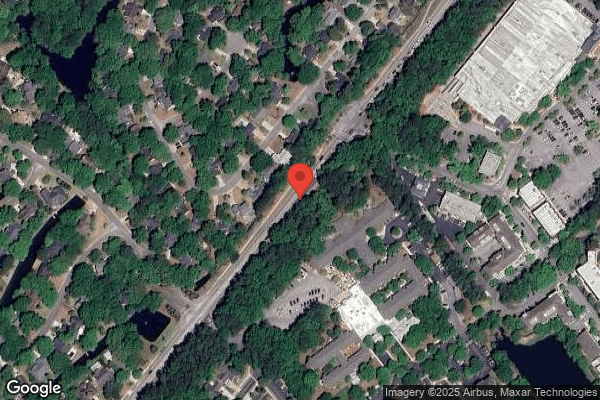
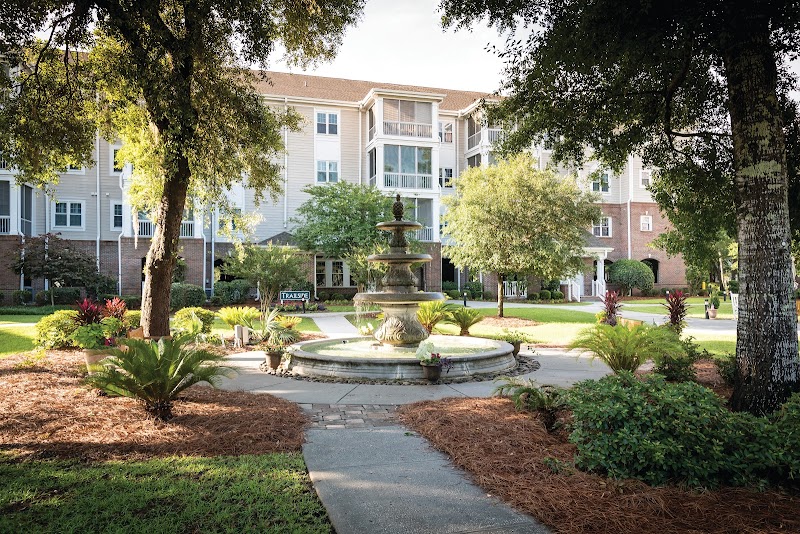
1885 RIFLE RANGE ROAD, Mount Pleasant, SC 29464 (843) 856-4700
Non profit - Corporation 44 Beds Independent Data: November 2025
Trust Grade
70/100
#74 of 186 in SC
Last Inspection: April 2025

Within standard 12-15 month inspection cycle. Federal law requires annual inspections.

Overview

Franke Health Care Center has a Trust Grade of B, which indicates it is a good facility, offering solid care. It ranks #74 out of 186 nursing homes in South Carolina, placing it in the top half of state facilities, and #5 out of 11 in Charleston County, meaning only four local options are rated higher. The facility is improving, with the number of issues decreasing from 5 in 2024 to 3 in 2025. Staffing is average with a 3/5 star rating and a turnover rate of 50%, which is about the same as the state average. While there are currently no fines reported, there are some concerning incidents, such as improper food storage practices, a leaking dumpster, and outdated medications not being removed from storage, indicating areas that need attention for better resident safety and care. Overall, Franke Health Care Center has both strengths and weaknesses that families should consider.


Trust Score
B
70/100
In South Carolina
#74/186
Top 39%
Safety Record
Low Risk
No red flags
Inspections
Getting Better
5 → 3 violations
Staff Stability
⚠ Watch
50% turnover. Above average. Higher turnover means staff may not know residents' routines.
Penalties
✓ Good
No fines on record. Clean compliance history, better than most South Carolina facilities.
Skilled Nurses
⚠ Watch
Each resident gets only 29 minutes of Registered Nurse (RN) attention daily — below average for South Carolina. Fewer RN minutes means fewer trained eyes watching for problems.
Violations
○ Average
9 deficiencies on record. Average for a facility this size. Mostly minor or procedural issues.
★★★☆☆
3.0
Overall Rating
★★★☆☆
3.0
Staff Levels
★★★★☆
4.0
Care Quality
★★★☆☆
3.0
Inspection Score
Stable
2024: 5 issues
2025: 3 issues

The Good

  • 4-Star Quality Measures · Strong clinical quality outcomes
  • Full Sprinkler Coverage · Fire safety systems throughout facility
  • No fines on record

Facility shows strength in quality measures, fire safety.

The Bad

3-Star Overall Rating

Near South Carolina average (2.8)

Meets federal standards, typical of most facilities

Staff Turnover: 50%

Near South Carolina avg (46%)

Higher turnover may affect care consistency

The Ugly 9 deficiencies on record

Apr 2025 3 deficiencies
CONCERN (D)

Potential for Harm - no one hurt, but risky conditions existed

Deficiency F0761 (Tag F0761)

Could have caused harm · This affected 1 resident

**NOTE- TERMS IN BRACKETS HAVE BEEN EDITED TO PROTECT CONFIDENTIALITY** Based on review of the facility policy, observations, and interviews, the facility failed to ensure expired and outdated medicat...

Read full inspector narrative →
**NOTE- TERMS IN BRACKETS HAVE BEEN EDITED TO PROTECT CONFIDENTIALITY** Based on review of the facility policy, observations, and interviews, the facility failed to ensure expired and outdated medications and biologicals were removed from storage and not currently in use in 2 of 2 medication carts, 2 of 2 treatment carts and 1 of 1 med storage rooms. Findings include: Review of the facility policy titled, Storage of Medication, states: Medications and biological's are stored properly, following manufacturer's or provider pharmacy recommendations, to maintain their integrity and to support safe effective drug administration. The medication supply shall be accessible only to licensed nursing personnel, pharmacy personnel, or staff members lawfully authorized to administer medications. Procedures: 14. Outdated, contaminated, discontinued or deteriorated medications and those in containers that are cracked, soiled, or without secure closures are immediately removed from stock, disposed of according to procedures for medication disposal and reordered from the pharmacy if a current order exists. An observation on [DATE] at 07:50 AM of the skilled rehab medication cart revealed: Biscodyl EC 5 milligram (mg) tablets with Lot #P933476, 24 tablets was expired on 03/2025. During an interview on [DATE] at 08:00 AM with Registered Nurse (RN)1 confirmed the findings. An observation on [DATE] at 08:19 AM of the skilled treatment cart revealed: One bottle of Skin Tegrity Wound Cleanser, manufactured by Medline, 16 ounces with Lot #70238 was expired on 11/2023. One box of Hypafix measuring 5 centimeters by 10 centimeters by 2 inches by 11 yards with Lot #94751230 was expired on 10/2024. One box of Hypafix measuring 5 centimeters by 10 centimeters by 2 inches by 11 yards with Lot #93540230 was expired on 07/2024. One box of Hypafix measuring 5 centimeters by 10 centimeters by 2 inches by 11 yards with Lot #74931230 was expired on 11/2022. One box of Hypafix measuring 5 centimeters by 10 centimeters by 2 inches by 11 yards with Lot #74222230 was expired on 09/2022. One box of Hypafix measuring 5 centimeters by 10 centimeters by 2 inches by 11 yards with Lot #74640230 was expired on 10/2022. One box of Hypafix measuring 5 centimeters by 10 centimeters by 2 inches by 11 yards with Lot #93930230 was expired on 08/2024. One box of Hypafix measuring 10 centimeters by 10 centimeters by 4 inches by 11 yards with Lot #41230 was expired on 11/2024. The expired biologicals on the treatment cart were confirmed by the Director of Nursing (DON). Review on [DATE] at 08:55 AM of the long term care treatment cart revealed: One bottle of Nystop, 30 grams with Lot #2228099 was expired on [DATE]. The expired medication was confirmed by the DON. An observation on [DATE] at 09:12 AM of the one medication room for the unit revealed: One prefilled syringe of the Hepatitis B Vaccine, Engeix B 20 micrograms with Lot #D23D3 was expired on [DATE]. The medication was confirmed as expired by the DON. Review on [DATE] at 09:30 AM of the long term care medication cart revealed: One bottle of Alacone Double Strength Antacid, 12 fluid ounces with Lot #ADN022 was expired on 02/2025. This was confirmed by Licensed Practical Nurse (LPN)1. Further review of the long term hall medication cart revealed: Senna - Time, 8.6 milligram tabs, with Lot #8402-4001, manufactured by Time, 18 tablets were expired on [DATE]. The DON confirmed at this time, the expired tablets. An additional observation revealed: Senna - Time, 8.6 milligram tabs, with Lot#8402-3011, manufactured by Time, 27 tablets were expired on [DATE]. The expired tablets were confirmed by the DON.
CONCERN (F)

Potential for Harm - no one hurt, but risky conditions existed

Food Safety (Tag F0812)

Could have caused harm · This affected most or all residents

Based on review of the facility policy, observations, and interviews, the facility failed to ensure foods were stored appropriately, and temperatures were monitor in the walk in cooler in one of one m...

Read full inspector narrative →
Based on review of the facility policy, observations, and interviews, the facility failed to ensure foods were stored appropriately, and temperatures were monitor in the walk in cooler in one of one main kitchens. Findings include: Review of the facility policy titled, Food Storage, states: Sufficient storage facilities will be provided to keep foods safe, wholesome, and appetizing. Food will be stored in an area that is clean, dry and free from contaminants. food will be stored at appropriate temperatures and by methods designed to prevent contamination or cross contamination. 10. Food should be stored a minimum of 6 inches above the floor, 18 inches from the ceiling and 2 inches from the wall with adequate space on all side of stored items to permit ventilation. 12. Leftover food should be stored in covered containers or wrapped carefully and securely and clearly labeled and dated before being refrigerated. Review of the facility policy titled, Refrigerators and Freezers, states: The facility will ensure safe refrigerator and freezer maintenance, temperatures, and sanitation, and will observe food expiration guidelines. Policy Interpretation and Implementation: 1. Acceptable temperature ranges are 35 degrees to 40 degrees for refrigerators and less than 0 degrees Fahrenheit for freezers. 2. Monthly tracking sheets for all refrigerators and freezers will be posted to record temperatures. 3. monthly tracking sheets will include time, temperature, initials, and action taken. The last column will be completed only if temperatures are not acceptable. 4. Food service supervisors or designated employees will check and record refrigerator and freezer temperatures daily with the first opening and at closing in the evening. 5. The supervisor will take immediate action if temperatures are out of range. Actions are necessary to correct the temperatures will be recorded on the tracking sheet, including the repair personnel and/or department contacted. An observation on 04/17/2025 at 10:15 AM during initial tour of the facility main kitchen, revealed the following: 1) One partially eaten, opened, snack cake was observed lying on a can in the dry storage area. It was then removed by the Dietary Manager. 2) No temperature logs kept for the reach in cooler. 3) In the walk-in-cooler food in boxes was stacked less than 18 inches from the ceiling. During an interview on 04/17/2025 at 10:20 AM with the Dietary Manager, she confirmed the findings and stated she would look for the reach in cooler temperature logs. These were not provided by the end of the survey.
CONCERN (F)

Potential for Harm - no one hurt, but risky conditions existed

Garbage Disposal (Tag F0814)

Could have caused harm · This affected most or all residents

Based on the facility policy, observations and interviews, the facility failed to ensure one of two dumpsters were not leaking and further failed to ensure the grease trap was clean and free from spil...

Read full inspector narrative →
Based on the facility policy, observations and interviews, the facility failed to ensure one of two dumpsters were not leaking and further failed to ensure the grease trap was clean and free from spillage and an accumulation of old grease and fried food debris. Findings include: Review of the facility policy titled, Food-Related Garbage and Refuse Disposal, states: Food-related garbage and refuse are disposed of in accordance with current state laws. The Policy Interpretation and Implementation, states: 1. All food waste shall be kept in containers. 2. All garbage and refuse containers are provided with tight-fitting lids or covers and must be kept covered when stored or not in continuous use. 5. Garbage and refuse containing food wastes will be stored in manner that is inaccessible to pests. 6. Storage areas will be kept clean at all times, and shall not constitute a nuisance. 7. Outside dumpsters provided by garbage pickup services will be kept closed and free of surrounding litter. An observation on 04/15/2025 at 10:25 AM with the Dietary Manager of the dumpsters and the grease trap revealed: 1) One of two dumpsters were observed with a liquid running from under the dumpster and onto the cement surface. 2) The grease trap, was on a non-porous surface and had a large build-up of old grease that had ran down the outside and fried food particles around the lid. During an interview on 04/15/2025 at 10:26 AM with the Dietary Manager, she confirmed the findings and stated she was not aware of the liquid coming from the dumpster and stated she would have to call the company concerning the old grease and food particles left around the opening of the grease trap.
Mar 2024 5 deficiencies
CONCERN (D)

Potential for Harm - no one hurt, but risky conditions existed

Deficiency F0578 (Tag F0578)

Could have caused harm · This affected 1 resident

**NOTE- TERMS IN BRACKETS HAVE BEEN EDITED TO PROTECT CONFIDENTIALITY** Based on interviews, record reviews, and facility policy reviews, the facility failed to ensure that one out of one resident, (R...

Read full inspector narrative →
**NOTE- TERMS IN BRACKETS HAVE BEEN EDITED TO PROTECT CONFIDENTIALITY** Based on interviews, record reviews, and facility policy reviews, the facility failed to ensure that one out of one resident, (Resident 14), had a signed copy of their Power of Attorney form on Resident (R) 14 records. Additionally, the facility failed to assure an accurate code status for R20. Findings Include: Review of R14's electronic health record (EHR) revealed she was admitted on [DATE] with a diagnosis of Neurocognitive disorder with Lewy Bodies, Major Depressive Disorder, Anxiety Disorder Review of R14's Minimum Data Set (MDS) with an Assessment Reference Date (ARD) of [DATE] indicates R14's C1000 Cognitive Skills for Daily Decision-Making Score of 3: Severely Impaired - Never/rarely made decisions. Review of R14's EHR on [DATE] 03:10 PM, R14 has an advanced directive on file Do Not Resuscitate Form (DNR) signed by her daughter. After further review of R14's EHR, no documentation on file of R14's Power of Attorney (POA) form or Decisional Capacity Form. Additional review of the EHR on [DATE] at 11:00 AM, no POA form or Decisional Capacity form found on resident's EHR. Additional review of the EHR on [DATE] 09:23 AM revealed no POA form or Decisional Capacity form on file for resident. Interview with Director of Nursing at approximately 9:00 AM at [DATE], DON states that facility attempted to contact the Hospice service to get a copy of the resident's POA form and attempt was unsuccessful as the Hospice company stated that the resident daughter had the form. Facility attempted to get a copy of the POA form from the resident's daughter, but DON states the daughter is away in the mountains with limited service. DON states that it is possible that the facility may not be able to produce R14's POA form to survey team by end of day. Interview with Director of Social Services (DSS) on [DATE] 11:58 AM, indicates that the facility screens residents on admission for their advance directives. Facility will review any pertinent documentation in regard to patient advanced directives and if properly completed facility will then upload documents to resident EHR. If residents and families need assistance with filling out Advance directive paperwork, the facility will help assist with this process. 2. Review of the undated admission Record, provided by the facility, revealed R20 was readmitted to the facility on [DATE] with the diagnosis of hypertension, and dementia. Review of R20's admission MDS with an ARD of [DATE] revealed a Brief Interview for Mental Status (BIMS) score of six out of 15, indicating R20 was severely cognitively impaired. Review of R20's DNR Order located under the Attachments tab in the EHR revealed a DNR order dated [DATE]. Review of R20's baseline care plan dated [DATE] revealed under Code Status CPR (Full Code). During an interview on [DATE] at 12:36 PM, the DON stated, [R20] came to us from our assisted living and transferred to long term care. It [DNR] would be the same DNR that she had there [assisted living] . During an interview on [DATE] at 1:57 PM, Licensed Practical Nurse (LPN)2 stated, It [DNR] wasn't available to me when I did this care plan, and it wasn't given to me. I didn't ask the nurse I was helping. During an interview on [DATE] at 2:11 PM, the DSS stated, The DNR should be in the computer when the nurses do the admission. R20 has been here before and was a DNR then too. That information would carry over from that admission for staff to see the entire record of the previous admission. During an interview on [DATE] at 2:36 PM, the DON stated, [R20] was in long term care previously and the DNR would have been accessible to any nurse to refer back to when [R20] was admitted this time.
CONCERN (D)

Potential for Harm - no one hurt, but risky conditions existed

Deficiency F0625 (Tag F0625)

Could have caused harm · This affected 1 resident

**NOTE- TERMS IN BRACKETS HAVE BEEN EDITED TO PROTECT CONFIDENTIALITY** Based on record review, interview, and policy review, the facility failed to provide a notice of bed hold to the resident for on...

Read full inspector narrative →
**NOTE- TERMS IN BRACKETS HAVE BEEN EDITED TO PROTECT CONFIDENTIALITY** Based on record review, interview, and policy review, the facility failed to provide a notice of bed hold to the resident for one of three residents (Resident (R)27) reviewed for hospitalizations in a total sample of 15 residents. This failure increased the risk of residents not knowing their rights to request and the cost of a bed hold. Findings include: Review of the facility policy Bed-Holds and Returns, dated March 2022, revealed Prior to a transfer, written information will be given to the residents and the resident representatives that explains in detail: a. the rights and limitations of the resident regarding bed-holds; b. the reserve bed payment policy as indicated by the state plan (Medicaid residents); c. the facility per diem rate required to hold a bed (non-Medicaid residents), or to hold a bed beyond the state bed-hold period (Medicaid residents); and d. the details of the transfer (per the notice of transfer) . Review of the undated admission Record, provided by the facility, revealed R27 was readmitted to the facility on [DATE] with the diagnosis of sepsis, urinary tract infection, and diabetes mellitus. Review of R27's quarterly Minimum Data Set (MDS) with an Assessment Reference Date (ARD) of 01/01/24 revealed a Brief Interview for Mental Status (BIMS) score of 15 out of a possible score of 15, indicating R27 was cognitively intact. Review of R27's electronic medical record (EMR) revealed R27 was discharged to the hospital on [DATE]. There was no documentation of a bed hold notification given to the resident and/or responsible party prior to R27's transfer to the hospital on [DATE]. During an interview on 03/05/24 at 1:30 PM, R27 stated he did not remember receiving a bed hold notice when he was sent to the hospital on [DATE]. During an interview on 03/05/24 at 12:17 PM, the Director of Nursing (DON) stated, The nurses would document it in the nurses' notes, or they have a form that they can fill out and place in the attachments. I don't see where they documented this anywhere.
CONCERN (D)

Potential for Harm - no one hurt, but risky conditions existed

Deficiency F0655 (Tag F0655)

Could have caused harm · This affected 1 resident

**NOTE- TERMS IN BRACKETS HAVE BEEN EDITED TO PROTECT CONFIDENTIALITY** Based on record review and staff interview, the facility failed to develop an accurate baseline care plan for one of three resid...

Read full inspector narrative →
**NOTE- TERMS IN BRACKETS HAVE BEEN EDITED TO PROTECT CONFIDENTIALITY** Based on record review and staff interview, the facility failed to develop an accurate baseline care plan for one of three residents (Resident (R)285) reviewed as new admissions out of a total of 15 sampled residents. This failure increased the risk for incomplete and/or inaccurate care being provided to the residents. Findings include: 1. Review of the undated admission Record, provided by the facility, revealed R285 was admitted to the facility on [DATE] with the diagnosis of pneumonia and respiratory failure with hypoxia (low oxygen levels). Review of R285's nursing assessment, provided by the facility and dated 02/20/24 at 9:09 PM, revealed resident .alert and oriented to person, place, time, and situation with confusion . Review of R285's physician orders, provided by the facility, revealed an order for Oxygen continuous at 2 l/min [liter per minute]. This order was dated 02/20/24. Review of R285's baseline care plan completed by the Director of Nursing (DON) on 02/20/24 revealed under Respiratory Room Air. During an interview on 03/05/24 at 12:14 PM, the DON stated, I must had hit the wrong button by mistake. The DON confirmed oxygen should had been included on the baseline care plan instead of it reflecting room air.
CONCERN (D)

Potential for Harm - no one hurt, but risky conditions existed

Respiratory Care (Tag F0695)

Could have caused harm · This affected 1 resident

**NOTE- TERMS IN BRACKETS HAVE BEEN EDITED TO PROTECT CONFIDENTIALITY** Based on review of the facility policy, observations, interviews, and record review, the facility failed to provide respiratory ...

Read full inspector narrative →
**NOTE- TERMS IN BRACKETS HAVE BEEN EDITED TO PROTECT CONFIDENTIALITY** Based on review of the facility policy, observations, interviews, and record review, the facility failed to provide respiratory care in accordance with professional standards. The facility failed to ensure 2 of 2 residents received the proper respiratory care for R187 and R285. This failure has the potential to cause respiratory and other communicable infections/complications. Findings include: Review of the facility's Oxygen Administration Policy, revised October 2010;n revealed: Preparation-Verify that there is a physician's order for this procedure. Review the physician's orders or facility protocol for oxygen administration. Review of R187's clinical record revealed the admission date of 02/29/24 and the diagnoses included but not limited to; other pulmonary embolism, acute respiratory failure with hypoxia, and dementia. Review of R187's Physician Orders included: 02/29/24-Oxygen (O2) at 2 L/min continuous. Review of R187's Care Plan dated 02/29/24 revealed Care Plan: Problem: Resident is at risk for alteration in breathing pattern, Goal: Resident will have adequate air exchange as evidenced by O2 sats and no signs and symptoms of resp distress. Interventions: Meds as ordered, O2 as ordered. Review of R187's Medication Administration Record (MAR) revealed staff did not document the assessment of Oxygen saturation. Observation on 03/03/24 at 11:33 AM revealed R187 sleeping in bed, O2 was underneath R187's chin. Observation on 03/03/24 at 12:54 PM revealed R187 sleeping in bed, O2 was underneath R187's chin. Observation on 03/03/24 at 1:41 PM revealed R187 alert and eating her dessert, O2 not administered. Observation on 03/03/24 at 2:38 PM revealed R187 has a raddling cough. At this time, the Administrator went to get the nurse and the Director of Nursing (DON) came into room to check on the resident. Observation on 03/04/24 at 12:39 PM revealed R187 eating her lunch in dining room and started coughing, Certified Nursing Assistant (CNA)1 suggested R187 drink some tea or water. R187 stated, Do you think that will help?, Observation revealed the cough subsided. O2 not administered. Observation on 03/04/24 at 3:15 PM revealed R187 sitting in her room in her wheelchair watching television, O2 not administered. Observation on 03/05/24 at 8:11 AM revealed R187 being rolled down the hall by her CNA, no O2 administered. Observation on 03/05/24 at 11:44 AM revealed R187 sitting in the common area with other residents, no O2 present. During an interview on 03/05/24 at11:44 AM with R187 revealed that she did not have her oxygen on today, but she had it on last night. During an interview on 03/05/24 at 10:07 AM with Licensed Practical Nurse (LPN)2, revealed she is assigned to R187. LPN2 was told by the night nurse, the oxygen was PRN (as needed). LPN2 stated the procedure when administering medication is to pull up physician's orders in the medical record and to always follow the orders. LPN2 stated she had not looked at R187's orders at the time of the interview. LPN2 pulled up orders and verified the orders are O2-2L a minute and says continuous. During an interview on 03/05/24 at 10:14 AM, LPN3 revealed that she didn't see any orders for oxygen for R187; LPN3 stated 03/04/24 was her first day providing services for R187. LPN3 stated the night nurse verbally told her R187 was admitted the night before with a respiratory issue and a chronic cough. LPN3 stated when residents have orders for oxygen, the computer system is supposed to pull it over to the treatment section of the chart, however LPN3 stated R187 did not have oxygen in the treatment section. During an interview on 03/05/24 at 12:48 PM the DON confirmed R187 physician's orders for Oxygen (O2) at 2 L/min continuous. The expectation of the nurse is to follow the physicians' orders. 2. Review of the undated admission Record, provided by the facility, revealed R285 was admitted to the facility on [DATE] with the diagnosis of pneumonia and respiratory failure with hypoxia (low oxygen levels). Review of R285's nursing assessment, dated 02/20/24 at 9:09 PM and provided by the facility, revealed resident .alert and oriented to person, place, time, and situation with confusion . Review of the physician orders, provided by the facility, revealed an order for Continuous Positive Airway Pressure (CPAP) at hour of sleep (Starting 03/04/24 8:00 PM [sic] .Assist resident with CPAP at bedtime . Review of the comprehensive care plan, provided by the facility, revealed under Problem [R285] is at risk for alteration in breathing patterns r/t [related to] pneumonia, acute respiratory failure .wears CPAP during sleep. Under Interventions revealed .Assist resident with CPAP every bedtime . Observations were made on 03/03/24 at 1:38 PM and on 03/04/24 at 12:42 PM of the CPAP mask sitting on the bedside table not stored in a plastic bag. During an interview on 03/04/24 at 1:10 PM, Licensed Practical Nurse (LPN)4 stated, That's a CPAP mask and it should be stored in a plastic bag. During an interview on 03/04/24 at 2:54 PM, the Director of Nursing (DON) stated they do not have a policy that speaks to the storage of a CPAP mask but We treat and manage them like any other oxygen supply that isn't in use. We put it in a respiratory bag.
CONCERN (D)

Potential for Harm - no one hurt, but risky conditions existed

Deficiency F0761 (Tag F0761)

Could have caused harm · This affected 1 resident

**NOTE- TERMS IN BRACKETS HAVE BEEN EDITED TO PROTECT CONFIDENTIALITY** Based on observations and interviews, the facility failed to assure that a medication belonging to Resident (R)22 was properly s...

Read full inspector narrative →
**NOTE- TERMS IN BRACKETS HAVE BEEN EDITED TO PROTECT CONFIDENTIALITY** Based on observations and interviews, the facility failed to assure that a medication belonging to Resident (R)22 was properly stored and secured in the room of R30 for 1 of 12 residents observed during initial tour. Findings include: The facility policy on Storage of Medications, revised November 2020, states: 1. Drugs and biologicals used in the facility are stored in locked compartments under proper temperature, light and humidity control. , 2. Drugs and biologicals are stored in the packaging, containers or other dispensing systems in which they are received. and 3. The nursing staff is responsible for maintaining storage and preparation areas in a clean, safe, and sanitary manner. R30 had been admitted to the facility on [DATE] with diagnoses including, but not limited to dementia and R22 had been admitted to the facility on [DATE] with diagnoses including, but not limited to ulcerative colitis. On 3/3/24 at approximately 11:16 AM, during initial tour of R30's room, one orange, oblong pill, unlabeled as to drug content and imprinted 435 on one side was found in a clear medicine cup labeled with a sharpie type pen with the name of R22 atop the chest of drawers, located on opposite side of the room from bed. On 3/3/24 at approximately 11:23 AM, Licensed Practical Nurse (LPN)1 was asked by Surveyor to come to R30's room, where she confirmed the finding and stated R30 was not her resident and she had not been in the room today. On 3/3/24 at approximately 11:27 AM, Registered Nurse (RN)1 stated she was the nurse caring for R30 and confirmed the finding while stating that the medication was Mesalamine and belonged to R22, not R30. RN1 further stated that she had given R22 her morning dose of mesalamine earlier in the morning and that she did not place the unlabeled drug in R30s room. On 3/3/24 at approximately 11:38 AM, the Surveyor identified the orange pill imprinted 435 as Mesalamine DR (Delayed Release) 800 mg (milligram) and review of R22's March 2024 medication administration record revealed that RN1 had administered the 3/3/24-8:00 AM dose to R22.
May 2022 1 deficiency
CONCERN (D)

Potential for Harm - no one hurt, but risky conditions existed

Incontinence Care (Tag F0690)

Could have caused harm · This affected 1 resident

Based on observation, interviews, and review of the facility policy titled, Catheter Care, Urinary, the facility failed to follow a procedure to prevent infection during Foley catheter care for Reside...

Read full inspector narrative →
Based on observation, interviews, and review of the facility policy titled, Catheter Care, Urinary, the facility failed to follow a procedure to prevent infection during Foley catheter care for Resident (R)23 for 1 of 1 resident reviewed for catheter care. Findings include: The facility admitted R23 with diagnoses including, but not limited to, urinary retention, hematuria, benign prostatic hypertrophy and pain. An observation on 5/4/22 at 2:15 PM of foley catheter care for R23 revealed the following: The Unit Manager, Licensed Practical Nurse (LPN)2, Certified Nursing Assistant (CNA)1 and the surveyor entered R23's room after asking permission. CNA1 explained the procedure and provided privacy. CNA1 and LPN2 washed their hands and applied gloves. The supplies were already set out on the over bed table. CNA1 then removed the bed covers and pulled down R23's pants and his brief. CNA1 then unhooked the drainage bag from R23's right leg, then she took a wipe and cleaned around the insertion site several times and using the same wipe, she continued to wipe different areas of the penis. After using the same wipe multiple times, CNA1 discarded the wipe and took another wipe and wiped over the same areas again. CNA1 then removed her gloves and washed her hands and took a wipe and wiped down the tubing 4 times, changing the wipe each time. CNA1 then removed her gloves and washed her hands and then applied gloves and took a wipe and wiped down the left and right side of the scrotum. CNA1 then removed her gloves and washed her hands and applied gloves and then applied a clean brief, and reattached the leg bag to R23's right leg, after emptying it. She then pulled up his pants and made him comfortable. On 5/4/22 at 2:35 PM, during an interview with LPN2, she was informed that CNA1 was observed using the same wipe to clean more than one area during R23's catheter care. LPN2 did not offer comment. On 5/4/22 at 2:40 PM during an interview with CNA1, she was informed that the surveyor had observed her using the same wipe to wipe several areas and some of the same areas already wiped. CNA1 did not offer comment. Review on 5/4/22 at 2:45 PM of the facility policy titled, Catheter Care, Urinary, number 16 states, Males-Using left hand, grasp penis, with right hand wash from meatus outward down the side closest to you and discard in a bag. Number 17 states, Using a clean disposable washcloth, wash from the meatus outward. Number 18 states, Repeat washing using a clean disposable washcloth each time, until all areas are clean. Number 19 states, Gently slide fingers to grasp the tube and using a clean disposable washcloth, wash down the tube about 4 inches.
Understanding Severity Codes (click to expand)
Life-Threatening (Immediate Jeopardy)
J - Isolated K - Pattern L - Widespread
Actual Harm
G - Isolated H - Pattern I - Widespread
Potential for Harm
D - Isolated E - Pattern F - Widespread
No Harm (Minor)
A - Isolated B - Pattern C - Widespread

Questions to Ask on Your Visit

  • "Can I speak with families of current residents?"
  • "What's your RN coverage like on weekends and overnight?"

Our Honest Assessment

Strengths
  • • No major safety red flags. No abuse findings, life-threatening violations, or SFF status.
  • • No fines on record. Clean compliance history, better than most South Carolina facilities.
Concerns
  • • No major red flags. Standard due diligence and a personal visit recommended.
Bottom line: Mixed indicators with Trust Score of 70/100. Visit in person and ask pointed questions.

About This Facility

What is Franke Health Care Center's CMS Rating?

CMS assigns Franke Health Care Center an overall rating of 3 out of 5 stars, which is considered average nationally. Within South Carolina, this rating places the facility higher than 99% of the state's 100 nursing homes. This mid-range rating indicates the facility meets federal standards but may have areas for improvement.

How is Franke Health Care Center Staffed?

CMS rates Franke Health Care Center's staffing level at 3 out of 5 stars, which is average compared to other nursing homes. Staff turnover is 50%, compared to the South Carolina average of 46%. RN turnover specifically is 70%, which is notably high. RNs provide skilled clinical oversight, so turnover in this role can affect medical care quality.

What Have Inspectors Found at Franke Health Care Center?

State health inspectors documented 9 deficiencies at Franke Health Care Center during 2022 to 2025. These included: 9 with potential for harm.

Who Owns and Operates Franke Health Care Center?

Franke Health Care Center is owned by a non-profit organization. Non-profit facilities reinvest revenue into operations rather than distributing to shareholders. The facility operates independently rather than as part of a larger chain. With 44 certified beds and approximately 40 residents (about 91% occupancy), it is a smaller facility located in Mount Pleasant, South Carolina.

How Does Franke Health Care Center Compare to Other South Carolina Nursing Homes?

Compared to the 100 nursing homes in South Carolina, Franke Health Care Center's overall rating (3 stars) is above the state average of 2.8, staff turnover (50%) is near the state average of 46%, and health inspection rating (3 stars) is at the national benchmark.

What Should Families Ask When Visiting Franke Health Care Center?

Based on this facility's data, families visiting should ask: "Can I visit during a mealtime to observe dining assistance and food quality?" "How do you handle medical emergencies, and what is your hospital transfer rate?" "Can I speak with family members of current residents about their experience?"

Is Franke Health Care Center Safe?

Based on CMS inspection data, Franke Health Care Center has a clean safety record: no substantiated abuse findings (meaning no confirmed cases of resident harm), no Immediate Jeopardy citations (the most serious violation level indicating risk of serious injury or death), and is not on the Special Focus Facility watch list (a federal program monitoring the lowest-performing 1% of nursing homes). The facility has a 3-star overall rating and ranks #1 of 100 nursing homes in South Carolina. While no facility is perfect, families should still ask about staff-to-resident ratios and recent inspection results during their visit.

Do Nurses at Franke Health Care Center Stick Around?

Franke Health Care Center has a staff turnover rate of 50%, which is about average for South Carolina nursing homes (state average: 46%). Moderate turnover is common in nursing homes, but families should still ask about staff tenure and how the facility maintains care continuity when employees leave.

Was Franke Health Care Center Ever Fined?

Franke Health Care Center has no federal fines on record. CMS issues fines when nursing homes fail to meet care standards or don't correct problems found during inspections. The absence of fines suggests the facility has either maintained compliance or corrected any issues before penalties were assessed. This is a positive indicator, though families should still review recent inspection reports for the full picture.

Is Franke Health Care Center on Any Federal Watch List?

Franke Health Care Center is not on any federal watch list. The most significant is the Special Focus Facility (SFF) program, which identifies the bottom 1% of nursing homes nationally based on persistent, serious quality problems. Not being on this list means the facility has avoided the pattern of deficiencies that triggers enhanced federal oversight. This is a positive indicator, though families should still review the facility's inspection history directly.