Oak Harbor Healthcare
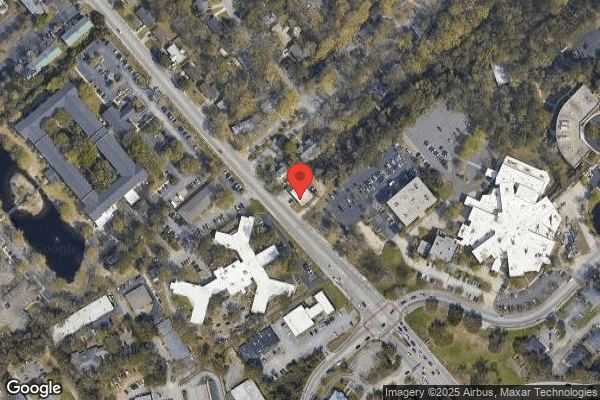
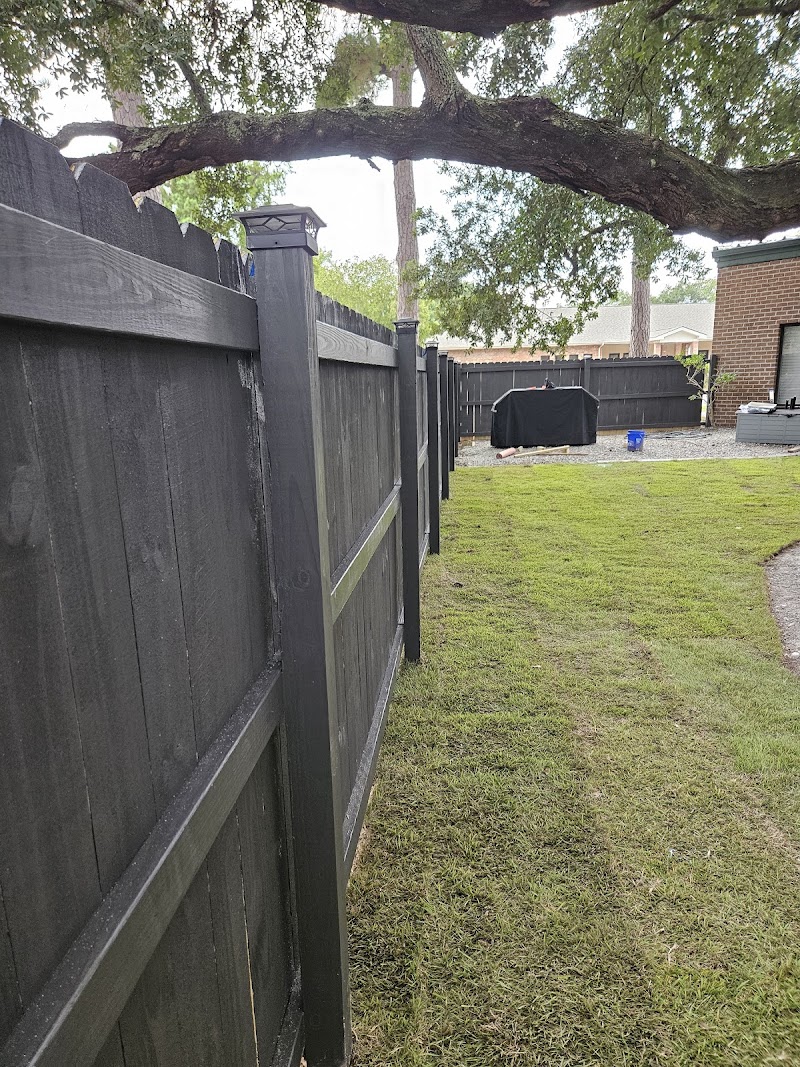
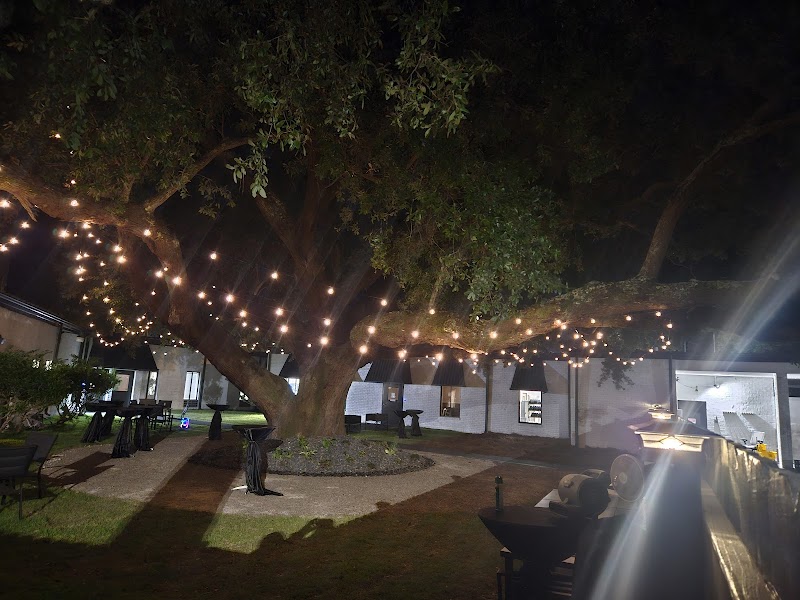
921 Bowman Road, Mt Pleasant, SC 29464 (843) 884-8903
For profit - Limited Liability company 132 Beds THE ENSIGN GROUP Data: November 2025
Trust Grade
58/100
#88 of 186 in SC
Last Inspection: May 2025

Inspected within the last 6 months. Data reflects current conditions.

Overview

Oak Harbor Healthcare has a Trust Grade of C, which means it is average-middle of the pack, not great but not terrible. It ranks #88 out of 186 facilities in South Carolina, placing it in the top half, and #6 out of 11 in Charleston County, indicating only five local options are better. The facility is improving, having reduced its issues from five in 2024 to two in 2025. Staffing is a concern here, with a rating of 2 out of 5 stars and a 49% turnover rate, which is average but indicates some instability. There were serious incidents, such as a resident falling during a bath due to improper assistance, and concerns about food safety and medication storage that could potentially harm residents. While the facility has some strengths, such as good quality measures, it also has notable weaknesses that families should consider when making a decision.
Trust Score
C
58/100
In South Carolina
#88/186
Top 47%
Safety Record
Moderate
Needs review
Inspections
Getting Better
5 → 2 violations
Staff Stability
⚠ Watch
49% turnover. Above average. Higher turnover means staff may not know residents' routines.
Penalties
✓ Good
$7,901 in fines. Lower than most South Carolina facilities. Relatively clean record.
Skilled Nurses
⚠ Watch
Each resident gets only 20 minutes of Registered Nurse (RN) attention daily — below average for South Carolina. Fewer RN minutes means fewer trained eyes watching for problems.
Violations
⚠ Watch
13 deficiencies on record. Higher than average. Multiple issues found across inspections.
★★★☆☆
3.0
Overall Rating
★★☆☆☆
2.0
Staff Levels
★★★★☆
4.0
Care Quality
★★★☆☆
3.0
Inspection Score
Stable
2024: 5 issues
2025: 2 issues

The Good

  • 4-Star Quality Measures · Strong clinical quality outcomes
  • Full Sprinkler Coverage · Fire safety systems throughout facility
  • No fines on record

Facility shows strength in quality measures, fire safety.

The Bad

3-Star Overall Rating

Near South Carolina average (2.8)

Meets federal standards, typical of most facilities

Staff Turnover: 49%

Near South Carolina avg (46%)

Higher turnover may affect care consistency

Federal Fines: $7,901

Below median ($33,413)

Minor penalties assessed

Chain: THE ENSIGN GROUP

Part of a multi-facility chain

Ask about local staffing decisions and management

The Ugly 13 deficiencies on record

1 actual harm
May 2025 2 deficiencies
CONCERN (D)

Potential for Harm - no one hurt, but risky conditions existed

Deficiency F0574 (Tag F0574)

Could have caused harm · This affected 1 resident

Based on record review and interviews, the facility failed to ensure residents were informed of their right to have access to names, addresses and telephone numbers of all pertinent state regulatory a...

Read full inspector narrative →
Based on record review and interviews, the facility failed to ensure residents were informed of their right to have access to names, addresses and telephone numbers of all pertinent state regulatory and informational agencies, resident advocacy groups and information on filing a complaint and or reporting alleged abuse violations. The facility further failed to ensure residents knew where the above information was located within the facility as revealed by 10 of 10 residents during 1 of 1 resident council meeting. The findings included: Review on 05/13/25 at approximately 4:00 PM of the Resident Council Minutes for December 2024, January 2025, February 2025 and March 2025 made no mention of informing residents of the resident's right to have access to a list of names, addresses and telephone numbers of all pertinent state regulatory and informational agencies, resident advocacy groups and information on filing a complaint and or reporting alleged abuse violations. The Resident Council Minutes did not mention the whereabouts of such information within the facility. Interviews on 05/14/25 at approximately 11:30 AM, during a resident council meeting, 10 of 10 residents in attendance confirmed they were not aware of their right to have access to a list of names, addresses and telephone numbers of all pertinent state regulatory and informational agencies, resident advocacy groups and information on filing a complaint and or reporting alleged abuse violations and the whereabouts of this information in the facility. An interview on 05/14/25 at 02:06 PM with the Activity Director revealed, Yes, I go over resident rights with the residents in resident council. There is a list of 10 questions that I go over with them. Examples of the questions reviewed include, Do you get your mail unopened? Do you know your resident rights? The AD stated, I have not reviewed the location of the contact information for the Omsbudsman. I have not met the new Omsbudsman. She was here 2 or 3 weeks ago, but she did not introduce herself to me. I am not aware that there is a complaint line that residents can call to lodge a complaint with the state. I do not know where the Omsbudsman's contact information is posted. The AD was unsure where the information is to lodge a complaint with the state. On 05/14/25 at 02:52 PM, an interview with the Administrator revealed, I need to work more with her. The Ombudsman has not worked much with our activities department. We have involved the Ombudsman in resident issues in the past. My expectation would be to add to resident council that contact information for the Ombudsman and how to lodge a complaint with the state. This will be especially important to review this information with new residents.
CONCERN (E)

Potential for Harm - no one hurt, but risky conditions existed

Deficiency F0761 (Tag F0761)

Could have caused harm · This affected multiple residents

Based on review of the facility policy, observations, and interviews, the facility failed to ensure that medications were properly stored in 3 of 3 medication rooms. Findings include: Review of the ...

Read full inspector narrative →
Based on review of the facility policy, observations, and interviews, the facility failed to ensure that medications were properly stored in 3 of 3 medication rooms. Findings include: Review of the facility policy entitled Medication Access and Storage . revised 7/2022 states It is the policy of this facility to store all drugs and biological in locked compartments under proper temperature controls Medications requiring refrigeration or temperatures between 2 degrees (C) Centigrade 36 degrees (F) Fahrenheit and 8 degrees C and (26 degrees F) are kept in a refrigerator with a thermometer to allowing temperature monitoring. Temperatures will be monitored each shift. If temperature is found out of range, adjust temperatures and recheck in 30 minutes. If temperature is still out of range, remove medications and contact maintenance. and Outdated, medications .are immediately removed from stock, disposed of according to procedures for medication destruction . On 5/15/25 at approximately 11:40 AM, inspection of the Hall 200 Medication Room refrigerator revealed, in active storage, 18 syringes of Influenza Vaccine, Adjuvanted FLUAD by Seqirus Lot 388492, expiration date 5/2/25. On 5/15/25 at approximately 11:48 AM, this finding was confirmed by Licensed Practical Nurse (LPN)1. On 5/15/25 at approximately 11:59 AM, the Consultant Pharmacist acknowledged the vaccine was in active refrigerator storage, but was intended to be returned to the manufacturer. On 5/15/25 at approximately 11:56 AM, inspection of the Hall 100 medication room refrigerator thermometer revealed a temperature reading of 32 degrees Fahrenheit (F). On 5/15/25 at approximately 11:57 AM, the thermometer reading of 32 degrees F was confirmed by LPN2. The Refrigerator Temperature Log for May 2025 has been filled out with multiple reading of 36 degrees F and the Log stated temperatures should be between 36 - 46 degrees F. On 5/15/25 at approximately 11:58 AM, the Surveyor placed his calibrated thermometer in the refrigerator, closed the refrigerator door and asked LPN2 to call the Maintenance Director (MD) to check the refrigerator temperature using the facility's thermometer. On 5/15/25 at approximately 11:59 AM, the Administrator and MD were made aware of the concern and on 5/15/25 at approximately 12:09 PM, the MD arrived on Hall 100, but did not check the refrigerator temperature with the two thermometers he had brought from the kitchen. On 5/15/25 at approximately 12:10 PM, the Surveyor's thermometer read 46 degrees F after being in the closed refrigerator approximately 12 minutes. On 5/15/25 at approximately 12:15 PM, inspection of the Hall 300 medication room refrigerator thermometer revealed a temperature reading of 17 degrees F. The Refrigerator Temperature Log did not have a temperature entry for 5/15/25, 7 AM-7 PM. On 5/15/25 at approximately 12:17 PM, the thermometer temperature reading of 17 degrees F was confirmed by LPN3 and the Surveyor placed his calibrated thermometer inside the refrigerator and closed the refrigerator door. On 5/15/25 at approximately 12:37 PM, the surveyor's thermometer read 46 degrees F after being in the closed refrigerator approximately 20 minutes. On 5/15/25 at approximately 12:39 PM, LPN4 (Unit Manager) was informed of the 17 degree F reading of the refrigerator thermometer and after reviewing the Refrigerator Temperature Log for May 2025 stated no temperature had been taken for 5/15/25 on the day shift 7 AM -7 PM, that they should have been taken and that she expected the temperature to be between 36-46 degrees F. On 5/15/25 at approximately 12:43 PM, the Administrator was informed of the Hall 300 medication room thermometer reading of 17 degrees. The Administrator confirmed the reading was not acceptable and that the MD would be directed to place new thermometers in Halls 100 and 300 medication room refrigerators, for correct temperature readings to be verified and refrigerator functioning to be checked out. On 5/15/25 at approximately 3:20 PM, the Surveyor rechecked the Hall 100 medication refrigerator which now contained two new thermometers each reading 38 degrees F. On 5/15/25 at approximately 3:30 PM, the Surveyor rechecked the Hall 300 medication refrigerator which now contained two new thermometers each reading 40 degrees F. On 5/15/25 at approximately 3:41 PM, the Administrator stated that new refrigerators had been ordered for all medication rooms and that these would not contain a freezer compartment.
Mar 2024 5 deficiencies
CONCERN (D)

Potential for Harm - no one hurt, but risky conditions existed

Assessment Accuracy (Tag F0641)

Could have caused harm · This affected 1 resident

**NOTE- TERMS IN BRACKETS HAVE BEEN EDITED TO PROTECT CONFIDENTIALITY** Based on record review, interviews, and facility policy review, the facility failed to ensure the Minimum Data Set (MDS) assessm...

Read full inspector narrative →
**NOTE- TERMS IN BRACKETS HAVE BEEN EDITED TO PROTECT CONFIDENTIALITY** Based on record review, interviews, and facility policy review, the facility failed to ensure the Minimum Data Set (MDS) assessments captured: hemodialysis treatments for Resident (R)17; pain requiring interventions daily for R29; and anticoagulant therapy for R113 to appropriately meet the resident's specialized care needs in the facility. This failure affected three residents (R17, R29, and R113) of 33 sampled residents reviewed for MDS assessment accuracy. Findings include: Review of the facility policy titled, Accuracy of Assessment (MDS 3.0), reviewed 05/21, showed: Policy: It is the policy of this facility to ensure that the assessment accurately reflect the resident's status. Purpose: To assure that each resident receives an accurate assessment by staff that are qualified to assess relevant care areas and knowledgeable about the resident's status, needs, strengths, and areas of decline. Procedures .3. The assessment sections are completed with utilization of the RAI [Resident Assessment Instrument] manual guidance, [sic] . Review of the October 2023 RAI Manual, Page N-7 showed: N0415E1. Anticoagulant (e.g., warfarin, heparin, or low-molecular weight heparin): Check if an anticoagulant medication was taken by the resident at any time during the 7-day look-back period (or since admission/entry or reentry if less than 7 days). N0415E2. Anticoagulant: Check if there is an indication noted for all anticoagulant medications taken by the resident any time during the observation period (or since admission/entry or reentry if less than 7 days) . 1. Review of R17's admission Record, dated 03/29/24 and found in the electronic medical record (EMR) under the Profile tab, revealed the resident was admitted to the facility on [DATE] with diagnoses including end stage renal disease (ESRD) and dependence on dialysis. Review of R17's Order Summary Report, dated 03/29/24 and found in the EMR under the Orders tab, indicated an order for the resident to receive dialysis services three times weekly on Mondays, Tuesdays, and Fridays related to his diagnosis of ESRD. Review of R17's Renal Condition and Risk for Complications Care Plan, dated 10/03/22 and found in the EMR under the Care Plan tab, indicated the resident was receiving dialysis services three times weekly on Mondays, Tuesday, and Fridays. Review of R17's quarterly Minimum Data Set (MDS) with an Assessment Reference Date (ARD) of 03/15/24 and found in the EMR under the MDS tab, indicated a Brief Interview for Mental Status (BIMS) score of 14 out of 15 which indicated the resident had intact cognition. The assessment incorrectly indicated the resident was not receiving dialysis services. During an interview on 03/29/24 at 11:30 AM, the MDS Coordinator (MDSC) confirmed R17 had been receiving dialysis services since his admission to the facility. The MDSC stated the 03/15/24 MDS assessment was incorrect and stated, I will have to modify that (the assessment to correctly reflect the resident's dialysis services). 2. Review of R29's Face Sheet found in the EMR, under the Profile tab, revealed R29 was admitted to the facility on [DATE] with diagnoses including dementia with behaviors, osteoarthritis, anxiety disorder, and a history of falls. Review of R29's most recent quarterly MDS with an ARD of 03/07/24 revealed a BIMS score of 00 which indicated R29 was rarely to never understood and could not make decisions regarding her care. The MDS assessment addressed pain. The assessment failed to capture that R29 was frequently in pain expressed by facial wincing, and grimacing or crying out. The resident had an order for narcotic pain medications that were available for pain and were administered at least once daily (and twice daily in most cases) during the seven days look back period of the MDS assessment. Review of R29's Medication Administration Record (MAR) for the month of March 2024 revealed an order for Hydrocodone 5/325mgs (milligrams) by mouth every six hours as needed. The review revealed R29 received the pain medication twice each day. Her first dose was usually upon rising, and a second dose was needed in the afternoon or evening. The medications were documented as effective in relieving R29's intermittent pain. During an interview on 03/28/24 at 3:00 PM, the Licensed Practical Nurse (LPN)1 revealed she cared for R29 regularly and stated, She [R29] speaks in word salad but can definitely let you know if she's hurting . LPN1 stated R29 had a history of falls and occasionally resisted care, especially if she's already hurting. LPN1 stated the pain medications ordered appeared to work well for her and it definitely increased her compliance with cares. 3. Review of R113's admission Record from the EMR Profile tab showed a facility admission date of 10/17/23 with medical diagnoses that included sepsis, quadriplegia, stage four pressure ulcer, chronic embolism and thrombosis, and pulmonary embolism. During an interview on 03/28/24 at 10:01 AM, R113 stated he did not think he took a blood thinner medication. Review of R113's MAR from the EMR Orders tab showed R113 was administered apixaban [anticoagulant] five milligrams (mg) twice a day. Further review of the Orders tab for anticoagulant medication showed that apixaban was ordered and started on 12/13/23 and had received the medication daily unless refused. Review of R113's quarterly MDS with an ARD of 01/24/24 showed no coding for R113 taking an anticoagulant medication. Review of R113's admission MDS, dated 10/24/23 and five day MDS, dated 12/15/23, showed R113 was coded for taking an anticoagulant. During an interview on 03/28/24 at 10:29 AM, MDSC reviewed R113's 01/24/24 MDS and stated, No, I did not code him for an anticoagulant. MDSC then reviewed R113's January 2024 MAR and commented, He was on it for AFib [atrial fibrillation] all of January. So that was my error. I was a baby MDS coordinator in January.
CONCERN (D)

Potential for Harm - no one hurt, but risky conditions existed

Deficiency F0688 (Tag F0688)

Could have caused harm · This affected 1 resident

**NOTE- TERMS IN BRACKETS HAVE BEEN EDITED TO PROTECT CONFIDENTIALITY** Based on observations, interviews, and record review, the facility failed to provide a splint device for contracture per plan of...

Read full inspector narrative →
**NOTE- TERMS IN BRACKETS HAVE BEEN EDITED TO PROTECT CONFIDENTIALITY** Based on observations, interviews, and record review, the facility failed to provide a splint device for contracture per plan of care for one of three residents (Resident (R) 112) reviewed for positioning/mobility of 33 sampled residents. Findings include: The facility's policies and procedures related to Range of Motion (ROM) and splinting were requested on 03/29/34 at 10:00 AM. During an interview with the Director of Therapy on 03/29/24 at 11:01 AM, she stated the facility did not have a policy/procedure to address the use of splints or ROM. Review of R112's admission Record, dated 03/29/24 and found in the electronic medical record (EMR) under the Admission tab, indicated R112 was admitted to the facility on [DATE] with diagnoses including history of seizures. Review of R112's quarterly Minimum Data Set (MDS) with an Assessment Reference Date (ARD) of 12/31/23 and found in the EMR under the MDS tab, indicated a Brief Interview for Mental Status (BIMS) assessment was not completed because the resident was non- responsive. The assessment indicated the resident was completely dependent upon staff to complete all her ADLs (Activities of Daily Living), including movement in bed and range of motion. Review of R112's undated Alteration in Musculoskeletal Status r/t (Related to) Right Hand Contracture Care Plan, found in the EMR under the Care Plan tab, indicated R112 had an actual contracture to her right hand. The care plan indicated the use of a right-hand [NAME] guard/splint to prevent further worsening of the resident's right hand contracture. Review of R112's physician's orders, dated 03/29/24 and found in the EMR under the Orders tab, revealed no current order for the resident's use of a right-hand splint. Review of R112's Treatment Administration Records (TARs), dated 03/01/24 through 03/29/24 and found in the EMR under the Orders tab, revealed nothing to indicate the resident's right hand splint had been applied per her plan of care. R112 was observed on 03/28/24 at 9:44 AM, 10:50 AM, and 12:06 PM. The resident's right hand was severely contracted, and a splint was not observed to be applied to her right hand during the observations. The resident's hand splint was observed to be hanging on a hook on the wall at the resident's bedside. During an observation of R112 with Licensed Practical Nurse (LPN) 2 on 03/28/24 at 12:10 PM, LPN2 confirmed R112 was not wearing her right-hand splint per her plan of care and stated the splint should have been on R112's right hand per her plan of care. LPN2 applied the resident's splint to her right hand. During an interview on 03/28/24 at 2:43 PM, the Director of Therapy confirmed R112 had a right-hand contracture and was dependent upon staff for all her daily care. She stated R112 was supposed to be wearing her right hand splint all day and that nursing staff had been provided with education related to the application of the splint. She stated orders had been in place for the resident's splint, and application of the resident's splint was expected to be documented in the TAR. The Director of Therapy stated the splint order had been omitted from the resident's physician order set and so had not been populating on the TAR to trigger nursing staff to apply the splint. She stated the order for the resident's splint had been put back into the EMR this day (03/28/24) and nursing had been made aware the splint was expected to be applied during the day every day. During an interview on 03/28/24 at 2:52 PM, the Director of Nursing (DON) stated R112's right-hand splint was expected to be applied according to her plan of care. The DON stated physician's orders were expected to be in place for the resident's splint, and stated his expectation was the application of the resident's splint to be documented in the TAR.
CONCERN (D)

Potential for Harm - no one hurt, but risky conditions existed

Deficiency F0698 (Tag F0698)

Could have caused harm · This affected 1 resident

**NOTE- TERMS IN BRACKETS HAVE BEEN EDITED TO PROTECT CONFIDENTIALITY** Based on record review, interviews, and facility policy review, the facility failed to ensure dialysis related medications were ...

Read full inspector narrative →
**NOTE- TERMS IN BRACKETS HAVE BEEN EDITED TO PROTECT CONFIDENTIALITY** Based on record review, interviews, and facility policy review, the facility failed to ensure dialysis related medications were provided for one of two residents (Resident (R) 71) reviewed for dialysis of 33 sampled residents. Findings include: Review of the facility's policy titled, Dialysis (Renal), Pre- and Post-Care, dated 01/22, revealed, It is the policy of this facility to: Assist resident in maintain homeostasis pre- and post-renal dialysis; assess and maintain patency of renal dialysis access; assess resident daily for function related to renal dialysis; participate in ongoing communication and collaboration with the dialysis facility regarding dialysis care and services .Hold any blood pressure medications and/or any other specified medications as ordered by physician. Review of R71's admission Record, found in the Profile tab of the electronic medical record (EMR), revealed he was admitted to the facility on [DATE], and readmitted [DATE], with diagnoses including diabetes mellitus II, end stage renal disease, and dependence on renal dialysis. Review of R71's annual Minimum Data Set (MDS) with an Assessment Reference Date (ARD) of 02/27/24 and found in the EMR under the MDS tab, indicated a Brief Interview for Mental Status (BIMS) score of 15 out of 15 which indicated the resident had intact cognition. The resident was documented to require dialysis while a resident. Review of R71's Care Plan, located in the Care Plan tab of the EMR, initiated 09/14/22 and last revised 12/02/22, documented that the resident had Hemodialysis r/t [related to] Renal failure. The interventions included for the resident to attend dialysis on Monday, Wednesday, and Friday. During an interview on 03/27/24 at 9:01 AM, R71 stated that he went to dialysis three times a week, approximately 4:50 AM. R71 stated that the facility sent him with food. He stated that he was not always given his Renvela on dialysis days, which was his only concern. R71 stated that when he asked the nursing staff about receiving the medication, he was told that other residents were receiving medication administration before him, and he would have to wait. Review of R71's Orders tab of the EMR revealed an order, dated 09/12/23, for Renvela Oral Tablet 800mg, give two tablet [sic] by mouth with meals for hyperphosphatemia related to end stage renal disease. Take with snack. To be administered 7:30 AM, 12:00 PM, and 5:00PM. Review of R71's Medication Administration Record (MAR) of the EMR under the Orders tab for January 2024, revealed Renvela Oral Tablet 800mg was not administered on 01/22/24 and 01/31/24 at 7:30 AM, coded by nursing staff as out of the facility on scheduled dialysis dates. Review of R71's MAR of the EMR under the Orders tab for February 2024, revealed Renvela Oral Tablet 800mg was not administered on 02/21/24 at 7:30 AM and coded by nursing staff as out of the facility on scheduled dialysis date. Review of R71's MAR of the EMR under the Orders tab for March 2024, revealed Renvela Oral Tablet 800mg was not administered on 03/01/24, 03/06/24, 03/07/24, 03/13/24, 3/18/24, 03/20/24, 03/27/24, and 03/28/24 at 7:30 AM, coded by nursing staff as out of the facility on scheduled dialysis dates. Review of R71's EMR under the Progress Notes tab revealed: -03/22/24 Renvela just got back from HD [hemodialysis] -03/29/24 Renvela at dialysis. During an interview on 03/29/24 at 11:01 AM, Unit Manager (UM) 2 stated that R71 went to dialysis very early in the mornings and did not always get his Renvela. UM2 stated that when the resident returned it was almost time for his lunch dose. During an interview on 03/29/24 at 11:05 AM, Nurse Practitioner (NP) stated that there should not be any outcome for R71 missing Renvela due to being at dialysis and was not sure if the resident needed to receive the medication on those mornings. NP stated that he was reviewing the resident's medication, and confirmed R71 was not currently receiving Renvela on numerous dialysis days per the physician order. During an interview on 03/29/24 at 11:44 AM, Director of Nursing (DON) stated he was not aware if there had been communication or review of the Renvela not being administered on numerous dialysis days for R71. DON stated that he would have to speak with the medical provider to determine if the medication should be reviewed.
CONCERN (E)

Potential for Harm - no one hurt, but risky conditions existed

Infection Control (Tag F0880)

Could have caused harm · This affected multiple residents

Based on observation, interview, and facility policy review, the facility failed to ensure effective hand hygiene during wound care and there was a way to restrict air flow between the dirty laundry a...

Read full inspector narrative →
Based on observation, interview, and facility policy review, the facility failed to ensure effective hand hygiene during wound care and there was a way to restrict air flow between the dirty laundry and clean laundry area. This had the potential to cause wound infection and exposure to viruses and bacteria to any of the 121 residents in the facility. Findings include: Review of the facility's policy titled, Hand Hygiene, reviewed 12/23, showed: .3. Washing Hands a. Vigorous lather hands with soap and rub them together, creating friction to all surfaces, for a minimum of 20 seconds (or longer) under a moderate stream of running water, at a comfortable temperature .b. Rinse hands thoroughly under running water. Hold hands lower than wrists. Do not touch fingertips to inside of sink. c. Dry hands thoroughly with paper towels and then turn off faucets with a clean, dry paper towel . Review of the facility's policy titled, Departmental (Environmental Services) - Laundry and Linen, revised January 2014, showed: General Guidelines . 3. Consider all soiled linen to be potentially infectious and handle with standard precautions .Washing Linen and other Soiled Items .6. Keep soiled and clean linen, and their respective hampers and laundry carts, separate at all times. 7. Clean linen will remain hygienically clean (free of pathogens in sufficient numbers to cause human illness) through measures designed to protect it from environmental contamination, such as covering clean linen carts . Review of the facility policy titled, Infection Control Prevention and Control Program, reviewed 09/17, showed: .C. Prevention of Infection Staff and resident education is done to identify risk of infection and promote practices to decrease risk. Policies, procedures and aseptic practices are followed by personnel in performing procedures, linen handling and disinfection of equipment. The hand hygiene procedures will be followed by staff involved in direct resident contact . 1. During an observation of R113's ischial pressure ulcer on 03/29/24 at 10:15 AM, the Wound Care Nurse (WCN) entered the bathroom and performed a handwash of six seconds from soap push to turning the water off, then pulled a paper towel to dry hands. After pulling the privacy curtain and closing the blinds, WCN performed a hand wash at 10:16 AM that was five seconds from soap push to towel pull, then turned the water off. After adjusting the bed and removing the old dressing with gloved hands, WCN performed a hand wash at 10:19 AM that was nine seconds from soap push to towel pull (WCN dropped the normal saline and went to the door for another staff to retrieve one from the treatment cart). At 10:21 AM, WCN performed a handwash that was five seconds from soap push to water off, turned the water back on and washed nine seconds to pulling a paper towel, then turning the water off. WCN applied gloves and cleaned the wound, removed gloves, and performed a handwash at 10:23 AM that was ten seconds from soap push to water off, then pulled a paper towel. After treating and dressing the wound, WCN removed gloves and was waiting for staff to assist to provide other care to R113. During an interview on 03/29/24 at 10:28 AM about effective handwashing, WCN stated that you should sing Happy Birthday while washing. When asked to sing the song how many times, WCN responded, Once, then thought about it and stated, yes, once; no wait, twice. When asked the sequence of effective handwashing, clarifying, when was the water to be turned off, WCN stated, Towel then water off. When advised of the observations, WCN stated One time I turned the water back on. During an interview on 03/29/24 at 1:25 PM, the Director of Nursing (DON) stated a handwash expectation of 20 seconds at a minimum. Clarified, the DON stated that was the scrub portion (vigorously rubbing hands together). When asked the sequence of handwashing, the DON stated, Turn on the faucet, soap, lather at least 20 seconds getting in between fingers and nails, rinse hands pointed down, grab a paper towel and dry hands, discard and get a new paper towel to turn off the water source. 2. During an observation of the laundry area and interview on 03/29/24 at 12:10 PM, the laundry room had no physical barrier to separate dirty laundry from the clean laundry area. Laundry Staff (LS) 1 was present during the observation and stated the blue line is the divider - nothing dirty past here & nothing clean over there . She confirmed there was no curtain, or any type of barrier used to separate the dirty laundry while it was sorted into the washing machines. During a second laundry area observation and interview on 03/29/24 at 12:30 PM, LS1 showed three gray large barrels that LS1 confirmed was dirty laundry for sorting and was not in any type of contained area (i.e. the laundry room was one large room). The washing machines were directly across the walkway from the barrels. Looking from the washing machines, there was a wash sink area between the washers and dryers and a blue line across a table with clean linen folded and stored approximately twelve inches from the tape, and tape on the floor that LS1 confirmed was the divider between clean and dirty. When asked if the blue line was the only thing to keep any bacteria/viruses that might be agitated during the sorting of the dirty laundry or the placement of the dirty laundry into the washing machines, LS1 stated That's what divides the clean and dirty. Above the 'blue line' divider was a large air vent that LS1 stated was output, not intake. The air would blow straight down and cause any settled bacteria/ viruses/ dust/ lint/ dirt on the dirty side of the table or floor to go airborne. During an interview on 03/29/24 at 12:20 PM, the Administrator stated the no barrier in the laundry was identified during their mock survey. During an interview on 03/29/24 at 1:33 PM the DON stated an expectation regarding laundry handling was There needs to be separation between clean and dirty; proper PPE [personal protective equipment worn] when sorting or putting in washer, and that the air does not flow from dirty to clean.
CONCERN (F)

Potential for Harm - no one hurt, but risky conditions existed

Food Safety (Tag F0812)

Could have caused harm · This affected most or all residents

Based on observations, staff interviews, record review, and facility policy review, the facility failed to ensure the kitchen was properly cleaned, food was properly handled, and the dish machine was ...

Read full inspector narrative →
Based on observations, staff interviews, record review, and facility policy review, the facility failed to ensure the kitchen was properly cleaned, food was properly handled, and the dish machine was working in accordance with professional standards for food service safety as required for 121 census residents who received meals from the facility kitchen. These failures had the potential to lead to food-borne illness among all facility residents. Findings include: The facility's policy titled, Dishwashing: Machine Operation, dated 2020, documented The Dining Services staff shall maintain the operation and manufacturer guidelines posted or contained in this guideline to ensure effective cleaning and sanitizing of all tableware and equipment used in the preparation and service of food .All dishwashing machines should be operated according to manufacturer recommendations .Check the dishwashing machine before first use. If the dishwashing machine has not been used for several hours, it is generally recommended to allow the dishwashing machine to cycle for one or two cycles to allow dishwashing machine to come up to proper function. The facility's policy titled, Proper Hand Washing and Glove Use, dated 2020, documented All employees will use proper hand washing procedures and glove usage in accordance with State and Federal sanitation guidelines .Employees will wash hands before and after handling foods, after touching any part of the uniform, face, or hair, and before and after working with an individual resident .Gloves are to be used whenever direct food contact is required .Hands are washed before donning gloves and after removing gloves .Gloves are changed any time hand washing would be required .if the gloves become contaminated by touching the face, hair, uniform, or other non-food contact surface, such as door handles and equipment. The facility's policy titled, Sanitizing Equipment and Food Contact Surfaces, dated 2020, documented Employees shall sanitize equipment and food contact surfaces utilizing the proper sanitizing solution. 1. During observations alongside the Dietary Manager (DM) on 03/27/24 at 7:00 AM revealed: -The walk-in refrigerator had a visibly soiled door and dark debris on the handle. -The walk-in freezer had multiple broken curtain slats with ice buildup on the curtain and around the door. 2. During observations alongside the DM on 03/28/24 at 10:15 AM revealed: -There was a knife storage box, with numerous knives stored into the slots. There were three knives that rested sideways on the top of the storage box. The lid was observed with dried dirt and debris on the exposed sides of the box, including the top where the knives rested. -The floor was observed with broken tile approximately ¾ inch thick at the entrance to the pantry, with extensive dark debris built-up along the length of the door. -The dishwasher temperatures were monitored with multiple cycles run, which revealed: First run: Wash temperature of 90 F (Fahrenheit), a rinse temperature of 103 F, and 200 PPM (parts per million) of the sanitizer. Second run: Wash temperature of 100 F, and a rinse of 119 F, and 200 PPM of the sanitizer. Third run: Wash temperature of 112 F, and a rinse of 122 F, and 200 PPM of the sanitizer. Review of the March 2024 Temperature Log for the Dish Machine revealed the expected parameters of Wash: 120 F, Rinse 120 F, and Test Strip 50 PPM (parts per million). The log was documented for Breakfast, Lunch, and Dinner each day. The log was documented with temperatures of 100 F for all the Wash and Rinse cycles during Lunch on 03/02/24 through 03/10/24. A concurrent interview on 03/28/24 at 10:42 AM with the DM, Corporate Dining Consultant (CDC), and Registered Dietician (RD) confirmed that the facility had a new booster to improve hot water levels due to a history of low temperature concerns. They all confirmed the dishwasher required temperatures of 120 F and should have always been logged accurately, after ensuring the correct temperatures had been reached. During a meal service observation on 03/28/24 at 12:23 PM, Cook1 was observed plating food for lunch. Cook1 pulled on gloves, pulled up their pants, then continued to pick up a serving utensil and began to plate the food. Cook1 was observed touching the inside edge of the resident plates with the same gloved hands. On multiple occasions, Cook1 was observed using the same gloved fingers to touch the mixed vegetables that were on the scoop, to ensure the food did not fall out of the scoop while plating. Cook1 dropped a pair of tongs onto the stuffing, with the handle touching the food, then picked them back up with the same gloved hands. During an interview on 03/29/24 at 12:40 PM, DM confirmed that many of the dietary staff were new, and she had spoken many times to them, including Cook1, about wearing gloves and touching items they should not touch, including clothes. The DM stated she was still educating new dietary staff on cleaning processes.
Nov 2023 1 deficiency 1 Harm
SERIOUS (G) 📢 Someone Reported This

A family member, employee, or ombudsman was alarmed enough to file a formal complaint

Actual Harm - a resident was hurt due to facility failures

Accident Prevention (Tag F0689)

A resident was harmed · This affected 1 resident

**NOTE- TERMS IN BRACKETS HAVE BEEN EDITED TO PROTECT CONFIDENTIALITY** Based on interview, record review, and review of facility policy, the facility failed to maintain resident safety from harm for ...

Read full inspector narrative →
**NOTE- TERMS IN BRACKETS HAVE BEEN EDITED TO PROTECT CONFIDENTIALITY** Based on interview, record review, and review of facility policy, the facility failed to maintain resident safety from harm for 1 of 1 resident. Specifically, while bathing Resident (R)1 on 09/01/23, Certified Nursing Assistant (CNA)1 grabbed the bed linen/sheet and attempted to move/reposition R1 resulting in R1 falling to the floor and suffering injuries. On 11/09/23 the facility presented a Time Line of events. The survey team's investigation revealed the facility implemented interventions to address the noncompliance, indicating past noncompliance as of 09/02/23. Findings include: Review of the undated facility policy titled Fall Management System revealed, Standard: This facility is committed to promoting resident autonomy by providing an environment that remains as free of accident hazards as possible. Each resident is assisted in attaining or maintaining their highest practicable level of function through providing the resident adequate supervision, assistive devices, and functional programs as appropriate to prevent accidents. Policy: It is the policy of this facility to provide each resident with appropriate assessment and interventions to prevent falls and to minimize complications if a fall occurs. Review of R1's Face Sheet revealed R1 was admitted to the facility on [DATE] with diagnoses to include but not limited to, dementia, convulsions, hemiplegia and hemiparesis following cerebral infraction affecting left non-dominant side. Review of R1's Quarterly Minimum Data Set (MDS) with an Assessment Reference Date (ARD) of 09/25/23, revealed a Brief Interview for Mental Status (BIMS) was not conducted due to R1 being non-verbal. Further review of R1's MDS revealed R1 needs extensive assistance with two person physical assist with bed mobility and R1 is total dependence with two person physical assist with transfers. Review of R1's Care Plan (unspecified date) revealed, Falls: risk for injury/falls r/t impaired mobility/coordination, cognitive/judgement deficits, medications . Risk for injury/falls will be minimized . Interventions include, Anticipate and meet needs. Mechanical lift for transfers. Needs a safe environment: . the bed in low position at night; side rails as ordered . Further review of the Care Plan revealed, ADL Mobility: ADL Self Care Performance Deficit r/t Disease Process and Limited Mobility. ICH/CVA with Left Hemiparesis, dysphagia, aphasia, seizure disorder, hydrocephalus, MDD, GERD, HTN, gastrostomy. Interventions include, Transfer: Requires (2) staff participation: Mechanical Aid (Sling) for transfers. Bathing: Usually needs total assistance. Bed Mobility: Usually needs total assistance. Review of R1's Progress Note dated 09/01/23 at 5:08 AM, written by Advanced Practice Nurse (APN) revealed, [R1] is a pleasant [AGE] year-old female resident who presents this morning with a chief complaint of fall from bed during care with contusion of the head. A small laceration with active bleeding to the occipital area was found by nursing and they initiated emergent transfer to the ER due to head injury with active bleeding. Review of R1's Neurosurgery Consult Note dated 09/01/23 revealed, .presenting as transfer from living facility with trace right frontal traumatic subarachnoid hemorrhage. Patient was being bathed by the facility staff when she was dropped and struck her head. Unknown if loss of consciousness. Patient is not on any AC/AP meds. Per EMS and patient's facility, she is at her neurologic baseline. On my exam, patient's eyes are open spontaneously, pupils reactive, right gaze preference, moans, purposeful on the right, contracted on the left. Patient was a trauma transfer he [sic] also has some C-spine fractures per report. Review of R1's Discharge summary dated [DATE] revealed, .presenting as transfer from living facility with trace right frontal traumatic subarachnoid hemorrhage. Transfer for higher level of care needs and transferred to [local hospital] after sustaining a reported slip w/ care needs. Hospital Course . Consultants were obtained 2/ 2 complex injury patterns . Chronic ossific fragment vs osteophyte fracture at C6. Review of a witness statement written by CNA1 on 09/01/23 revealed, I was bathing the resident in room [ROOM NUMBER]-B while I was bathing her, she was pulling on her brief and her feeding tube. I held her hand gently to stop her from pulling on anything else and proceeded to bathe her. I then used the sheet to pull her towards me and the chuck pad and turned her in the opposite direction. I rolled the resident over and she fell off the bed onto the floor. I then checked on the resident and laid a towel under her head. I went to the hallway and called for the nurse. Review of a witness statement written by Licensed Practical Nurse (LPN)1 on 09/01/23 revealed, This nurse was passing Meds on Hall one [CNA1] assigned to [R1] came to me to report that the resident had fallen out of her bed and was bleeding from the head. This nurse went immediately to check on the resident. Upon entering the resident room, she was noted laying on the floor on the right side of the bed nearest the air conditioner lying on her back and her head at the base of the nightstand. Bright red blood noted. [CNA1] had placed a towel under her head for support and to stop the bleeding. Third eye on call Advance Practice Nurse (APN) notified with message. I will be there shortly resident was assisted off of the floor to be cleaned as she noted having a BM and the floor soiled water or urine. After assisting resident to bed, she was turned over so this nurse could check to see where she was bleeding. A laceration was noted to the back of her head. EMT notified for transport to ER [local hospital] for further eval. On call NP and R/P are made aware. During an interview with the Director of Nursing (DON) on 11/09/23 at 1:37 PM revealed, My expectation is to follow the training they received when hired and [CNA1] did not. The DON stated staff should never reposition/move a patient in that manner. On 11/09/23, the facility presented a timeline of events which included interventions that were implemented to address the noncompliance. 11/9/2023 - Self Reportable investigation regarding [R1] [R1] had a change of elevation on 9/1/2023 during a bed bath. The patient required emergency medical services and was transported to [local hospital], the Registered Nursc at [local hospital] notified staff on 9/1/2023 at 11:26 am that the patient had sustained a neck fracture. 9/1/2023 - Immediate education was started with staff on the following: Providing Care to residents with restlessness, total assist; Post Fall instruction for possible Major/Serious Injury and Turning and Repositioning a Client as well as education on LMS/Relias for Dementia Care: Performing ADLs. 9/1/2023 - Teachable moment provided with CNA stating: When assisting a total care patient, 2 staff members are required for all care. Patients must be turned toward you and not away from you. 1:1 Education. 9/1/2023: Witness statements began to be obtained per investigation process and Interventions added to patient plan of care. (Fall Mats, Bolstered Mattress to aide with centering re ident in the bed and 2 person assist with ADLs). 9/2/2023: Patient returned to the facility from the Hospital with set interventions in place per IDT Team. At the hospital per discharge summary the patient did not require Acute Neurosurgical interventions, Repeat CTH upon arrival from [local hosital] to [local hospital] was stable, no additional imaging necessary. [R1] was kept overnight for observation and discharged back with the documentation from [local hospital] stating that patient was at Baseline. Orthopedic Spine consulted at [local hospital] and deemed no C Collar needs at time of discharge.
May 2023 1 deficiency
CONCERN (D) 📢 Someone Reported This

A family member, employee, or ombudsman was alarmed enough to file a formal complaint

Potential for Harm - no one hurt, but risky conditions existed

Report Alleged Abuse (Tag F0609)

Could have caused harm · This affected 1 resident

Based on record review, facility policy review, and interviews, the facility failed to report an allegation of abuse to the Administrator and the State Survey Agency within the two-hour timeframe for ...

Read full inspector narrative →
Based on record review, facility policy review, and interviews, the facility failed to report an allegation of abuse to the Administrator and the State Survey Agency within the two-hour timeframe for 1 (Resident (R)2) of 3 residents reviewed for abuse. Findings include: The facility policy, titled, Reporting Alleged Violations of Abuse, Neglect, Exploitation or Mistreatment, revised in October 2022, indicated, Procedure: 1. In response to allegations of abuse, neglect, exploitation, or mistreatment, the Facility will: a. Ensure that all alleged violations involving abuse, neglect, exploitation or mistreatment, including injuries of unknown source and misappropriation of resident property, are reported immediately but: not later than two (2) hours after the allegation is made if the events that cause the allegation involves abuse or results in serious bodily injury. 2. Ensure that all alleged violations involving abuse, neglect, exploitation or mistreatment, including injuries of unknown source and misappropriation of resident property, are reported to: a. The Administrator of the Facility b. The State Survey Agency. A review of R2's admission Record revealed the facility admitted the resident on 02/17/2022 with diagnoses that included chronic pain, anxiety disorder, and the presence of other specified devices. A review of the quarterly Minimum Data Set (MDS), with an Assessment Reference Date of 02/03/23, revealed R2 had a Brief Interview for Mental Status (BIMS) score of 13, indicating the resident was cognitively intact. R2 had no behaviors, was able to feed themself after set-up, and received anti-anxiety medications, diuretics, and opioid medications seven out of seven days of the look-back period. Review of a nursing Progress Note, dated 01/22/23 at 3:55 PM, revealed R2's family member called the facility requesting to speak to the head nurse. The writer informed the family member that she was a nurse and asked how she could help. The family member began to question if the nurse knew how to care for the elderly, stating that what they were doing to R2 was elder abuse and neglect. The family member stated that R2 was in the hospital, and the family member received a call stating that R2's labs showed they were not receiving their medications. The family member said that meant someone at the facility was taking the medications. The family member wanted to know who was working the night shift with R2 because they were told that R2 did not receive any of their medications. The nurse informed the family member that R2 had received all their scheduled medications on the 7:00 AM - 7:00 PM shift the day before as well as thus far that day and could only speak for the shifts the writer worked. The nurse informed the family member that they needed to speak to the unit manager regarding their concern as the writer was an agency nurse on staff. A review of the Initial 2/24-Hour Report, dated 01/23/23, indicated the State Survey Agency was notified of the abuse allegation on 01/23/23 at 3:02 PM, which was approximately 24 hours after the abuse allegation was made. During an interview on 05/04/23 at 10:30 AM with the Administrator, he stated he would expect any allegation of abuse to be sent to the State Survey Agency within the required two-hour time frame. He stated that in this circumstance, the facility was not notified of the abuse allegation on the day it was made, as the nurse was with an external agency. The next day, when the 24-hour chart audits were done, they saw the allegation. The allegation was reported at that time.
Mar 2022 4 deficiencies
CONCERN (D)

Potential for Harm - no one hurt, but risky conditions existed

Deficiency F0568 (Tag F0568)

Could have caused harm · This affected 1 resident

**NOTE- TERMS IN BRACKETS HAVE BEEN EDITED TO PROTECT CONFIDENTIALITY** Based on interviews and record review, the facility failed to provide quarterly financial statements in writing to the resident'...

Read full inspector narrative →
**NOTE- TERMS IN BRACKETS HAVE BEEN EDITED TO PROTECT CONFIDENTIALITY** Based on interviews and record review, the facility failed to provide quarterly financial statements in writing to the resident's representative for one resident (Resident (R) 71) of 32 residents in the initial pool sample, within 30 days after the end of the quarter, and upon request. This failure had the potential for the resident's representative not to be aware of charges to the resident's account. Findings include: Review of R71's undated admission Record located in R71's electronic medical record (EMR) under the Profile tab, indicated R71 was admitted on [DATE] with diagnoses including but not limited to; acute respiratory failure with hypoxia, hallucinations, and dementia with behavioral disturbance. Review of R71's quarterly Minimum Data Set (MDS) with an Assessment Reference Date (ARD) of 02/08/22, revealed the facility assessed R71 to have a Brief Interview of Mental Status (BIMS) score of four out of 15, indicating R71's cognition was severely impaired. During an interview conducted on 03/14/22 at 1:14 PM, R71's representative stated they did not receive R71's quarterly financial statements from the facility. During an interview conducted on 03/16/22 at 1:45 PM, the Business Office Manager (BOM) stated she gives R71 the quarterly statements in person in the resident's room. The BOM confirmed she did not send the statement or hand the R71's Power of Attorney (POA), a copy of the quarterly statements. Review of the facility's policy titled Management of Resident Funds revised 08/11/17, indicates the facility will provide written notification to .the resident's responsible party in cases where the resident is not competent .it is the policy of this facility to provide a written statement to the resident or legal representative every quarter for review.
CONCERN (D)

Potential for Harm - no one hurt, but risky conditions existed

PASARR Coordination (Tag F0644)

Could have caused harm · This affected 1 resident

**NOTE- TERMS IN BRACKETS HAVE BEEN EDITED TO PROTECT CONFIDENTIALITY** Based on interview, record review, and facility policy review, the facility failed to ensure the Preadmission Screening and Resi...

Read full inspector narrative →
**NOTE- TERMS IN BRACKETS HAVE BEEN EDITED TO PROTECT CONFIDENTIALITY** Based on interview, record review, and facility policy review, the facility failed to ensure the Preadmission Screening and Resident Review (PASSAR) Level I) was updated for one resident (Resident (R) 108) of five residents reviewed for PASSAR. Due to this failure, R108 did not receive a PASSAR Level II evaluation to ensure R108 was receiving the appropriate care and services. Findings include: Review of R108's undated admission Record located in R108's electronic medical record (EMR) under the Profile tab, indicated R108 was admitted to the facility on [DATE] with diagnoses including psychotic disorder with delusions, psychological and behavioral factors associated with disorders, mood disorders, anxiety disorders, and vascular dementia with behavioral disturbance, (not a primary diagnosis). Review of R108's quarterly Minimum Data Set (MDS) with an Assessment Reference Data (ARD) of 03/03/22, located in R108's EMR under the MDS tab, revealed a Brief Interview of Mental Status (BIMS) score was not attempted due to resident was rarely/never understood. The staff assessment for mental status indicated R108's ability to make decisions regarding tasks of daily life was severely impaired and never or rarely made decisions. R108 was assessed as not exhibiting any behaviors during the look back period. Review of R108's PASARR Level-I Screening Form dated 07/31/19, provided by the facility, indicated R108 did not have any diagnoses of mental illness and the recommendation of the reviewer was no further evaluation is recommended. Indicating R108 would not meet the requirements for a PASARR Level II evaluation. During an interview conducted on 03/15/22 at 3:14 PM, the Social Services Director (SSD), indicated the SSD would be the person to review all PASARR's upon admission. The current SSD started at the facility in September 2021 and was unaware R108's PASARR I was inaccurate. The SSD stated upon review of R108's PASARR I, a new PASARR should have been resubmitted. Review of the facility's policy titled admission Criteria revised March 2019, indicated all new admissions and readmissions are screened for mental disorders (MD), intellectual disabilities (ID), or related disorders (RD) per the Medicaid Pre-admission Screening and Resident Review (PASARR) process.
CONCERN (D)

Potential for Harm - no one hurt, but risky conditions existed

Deficiency F0679 (Tag F0679)

Could have caused harm · This affected 1 resident

**NOTE- TERMS IN BRACKETS HAVE BEEN EDITED TO PROTECT CONFIDENTIALITY** Based on observation, interview, and record review, the facility failed to provide an ongoing program of activities in accordanc...

Read full inspector narrative →
**NOTE- TERMS IN BRACKETS HAVE BEEN EDITED TO PROTECT CONFIDENTIALITY** Based on observation, interview, and record review, the facility failed to provide an ongoing program of activities in accordance with the comprehensive assessment, interest, and the physical, mental, and psychosocial well-being for two of seven sampled residents (Resident (R) 33 and R105) reviewed for activities This failure caused the residents' activity preferences not to be honored. Findings include: 1. Review of R33's undated Face Sheet located in the electronic medical record (EMR) under the Profile tab indicated R33 was admitted to the facility on [DATE] with diagnoses that include Parkinson's disease, visual loss, and adult failure to thrive. Review of R33's Activities Initial Review dated 10/07/21 located in the EMR under the Assessments tab documented prior to admission R33 participated in listening to TV (news, spiritual programs), listening to music (all kinds), would like to social visit in the dayroom, and due to vision impairment, staff need to set TV to preferred stations and need to assist with transport. Review of R33's admission Minimum Data Set (MDS) with an Assessment Reference Date (ARD) of 10/08/21, located in the resident's EMR under the MDS tab revealed the resident's preferences identified music was very important to her. Review of the quarterly MDS with an ARD of 01/04/22, revealed the resident had a Brief Interview for Mental Status (BIMS) score of four out of 15, which indicated the resident was severely cognitively impaired. Review of the activity Care Plan revised on 01/13/22, located in the resident's EMR under the Care Plan tab documented the resident had little or no interest in group activities. Previous interests included listening to television, news, Sunday services, and all types of music. R33 was accepting of dayroom visits and visits with staff for socialization. Interventions included to provide one to one visits frequently as tolerated, and ensuring needs are known and met. Observations on 03/14/22 at 10:00 AM, 11:00 AM, 12:00 PM, 1:15 PM, and 2:00 PM identified R33 sitting in a wheelchair, at a table in the unit dining/dayroom. R33 was sitting alone at the table. The television was on an oldies station and was approximately twenty-five feet from the resident. Sound from the television was not audible where R33 was sitting. During the observations, music was not playing in the room and staff did not engage the resident in any other forms of socialization. Observation on 03/15/22 at 9:08 AM, 9:45 AM, 11:00 AM, 12:00 PM, and 1:30 PM identified R33 sitting in a wheelchair at a table in the unit dining/dayroom. The television had on a game show and sound was not audible, where R33 was sitting. During the observations, there was no music playing in the room. Review of the March 2022 calendar of activities, located in the resident's room, did not identify any music programs on the calendar. Review of R33's March 2022 Activity Attendance Record provided by the Activity Director, revealed television was provided daily; however, music was not provided on any day. In an interview on 03/16/22 at 09:53 AM, the Activity Director stated R33 did not go to the main activity room for programs because she preferred to stay in the unit dining/dayroom. The Activity Director stated R33 loved to eat ice cream and listen to music, and she was not aware staff were not putting music on for R33 when she was in the unit dining/dayroom. The Activity Director stated she thought staff were aware to put music on per R33's preference. In an interview on 03/16/22 at 10:45 AM, Licensed Practical Nurse (LPN) 2, who was the unit manager, stated R33 spent almost all day in the dining/dayroom per her preference. LPN2 was not aware staff should ensure music was on when R33 is in the dining/dayroom. 2. Review of R105's undated Face Sheet located in the EMR under the Profile Tab indicated R105 was admitted to the facility on [DATE] with diagnoses that include dementia with behavioral disturbances, hemiplegia and hemiparesis following cerebral infarction affecting the dominant left side. Review of Resident Preferences Evaluation dated 12/03/21, located in the resident's EMR under the Assessments tab documented, .How important is it to you to do your favorite things: Very important favorite activities include: music, tv watching westerns, fishing shows, news. Review of R105's quarterly MDS with an ARD of 03/01/22, located in the resident's EMR under the MDS tab revealed the resident had a BIMS score of 13 out of 15, which indicated the resident was cognitively intact. Continued review of the MDS revealed R105 required extensive assist of one for bed mobility, total assistance of two for transfer with mechanical lift, and total assistance of one for locomotion. Review of the activity Care Plan dated 02/22/22, revised on 03/03/22, located in the resident's EMR under the MDS tab documented R105 was dependent on staff for meeting emotional, intellectual, physical, and social needs and demonstrates passive participation in activity events. Interventions included to provide the resident with the activities calendar and staff will provide daily contact to ensure that his needs are being known and met. Observation on 03/14/22 at 10:20 AM, 11:30 AM, and 1:20 PM identified R105 was sitting in a wheelchair in his room. The television was on and was on a channel airing a game show and then soap opera. The television was not on to a channel showing westerns, news, or fishing program. R105 did not have a radio or device to play music in the room. R105 had his head down and appeared to be sleeping during the observations. Observation on 03/15/22 at 9:30 AM, 10:00 AM, 11:50 AM, 1:00 PM and 1:20 PM identified R105 sitting in a wheelchair in the unit dining/dayroom. R105 was at a table not positioned in a manner to be able to view the television that was on in the room. The television was on a channel airing a western program; however, R105 could not see or hear the program. Music was not playing in the dining/dayroom during the observations. Observation on 03/16/22 at 8:35 AM identified R105 lying in bed awake. The television was on and dialed to the Nickelodeon channel. There was not music on in the room. Review of R105's March 2022 Activity Attendance Record provided by the Activity Director revealed television was provided daily and music was not provided on any day. Review of the March 2022 calendar of activities located in the resident's room did not identify any music programs on the calendar. In an interview on 03/16/22 at 09:53 AM, the Activity Director stated R105 used to come to the main activity room; however, that stopped with COVID. She stated programs had resumed, but R105 had not attended. The Activity Director stated music was played during coffee chat, coloring crazy programs, and Wednesday socials. She said there was no reason he could not go; it was on the care plan and the staff should have assisted R105 to activities because R105 was dependent on staff for activities. The Activity Director stated now that she knew his preferred programs were not on the television and music was not available in his room, she would make sure R105 got to programs and the television is on the right channel. In an interview on 03/16/22 at 10:45 AM, LPN2 stated she did not know what activity programs R105 liked to attend, and recreation staff never asked nursing staff to transport R105 to a program. LPN2 was not aware staff should put R105's television on specific channels.
CONCERN (D)

Potential for Harm - no one hurt, but risky conditions existed

Deficiency F0688 (Tag F0688)

Could have caused harm · This affected 1 resident

**NOTE- TERMS IN BRACKETS HAVE BEEN EDITED TO PROTECT CONFIDENTIALITY** Based on observation, interview, and record review, the facility failed to ensure that one resident (Resident (R) 48) of two res...

Read full inspector narrative →
**NOTE- TERMS IN BRACKETS HAVE BEEN EDITED TO PROTECT CONFIDENTIALITY** Based on observation, interview, and record review, the facility failed to ensure that one resident (Resident (R) 48) of two residents reviewed for limited range of motion was provided appropriate treatment and services to increase and/or prevent a further decrease in range of motion to R48's severely contracted left hand. This deficient practice had the potential for R48 to experience additional pain/discomfort and poor hygiene. Findings include: Review of R48's undated admission Record located under the Profile tab in the electronic medical record (EMR) revealed R48 was admitted to the facility on [DATE] for long term care. Review of R48's quarterly Minimum Data Set (MDS) with an assessment reference date (ARD) of 01/13/22 revealed R48 had a Brief Interview for Mental Status Score (BIMS) of 04 out of 15, which indicated the resident was severely cognitively impaired. The MDS also documented the resident had arthritis and functional impairment in range of motion (ROM) of the upper extremity on one side. Review of R48's Care Plan under the Care Plan tab in the EMR revealed on 10/12/21 identified a problem ADL/MOBILITY: ADL deficits with risk for fluctuation/decline with an intervention on 11/27/21 DON [put on] RIGHT PALM GUARD DAILY, UP TO 4 HOURS AS TOLERATED, OFF FOR MEALS AND BATHING. There was no documentation in R48's active Care Plan that R48 had severe left hand and finger contractures or any interventions to prevent further decline of the left hand. Review of R48's Interdisciplinary Form: GG0130 Self Care Rehabilitation Review-PT [Physical Therapy] GG0170 Mobility dated 01/19/21, 04/15/21, and 07/27/21 provided by the Rehabilitation Director (RD) and identified as quarterly therapy screens for R48, indicated that the documented information was for the Assessment period is days 1 through 3 of the SNF [skilled nursing facility] PPS[Prospective Payment System] Stay /Skilled Care Discharge End of SNF PPS stay is the last 3 days of the skilled stay, ending on LCD. The forms did not contain a range of motion assessment/measurement of R48's upper extremities, including her hands. Review of R48's Initial Contracture Assessment form dated 11/08/21 provided by the RD documented that R48 had Severe contractures in the right and left finger joints; identified as 25% of range by the form. Review of the R48's Occupational Therapy Discharge Summary provided by the RD dated for services from 11/12/21 to 12/10/21 revealed Reason for Referral: [R48] is a LTC resident who was referred to skilled occupational therapy for decline in hand contractures, positioning, and functional decline in bed immobility. Patients [sic] left hand has severe finger immobility with MP [middle phalange] moderate flexion Patient will benefit from skilled occupational therapy to address caregiver training in wc [wheelchair] sitting tolerance, splint management, PROM[passive range of motion] HEP [home exercise program], and safe w/c positioning, use of AE [adaptive equipment] in self feeding to prevent further decline and contractures with recommendations for R48 for Splint/Orthotic Recommendations: It is recommended the patient wear finger separators, a palmar guard and to further assess and order/fabricate on left wrist, on left hand and on left fingers for 4 hrs [hours] on / 4 hrs off in order to maintain joint integrity manage tone develop/establish wearing schedule and adapt/modify splint device. A comment for the use of left fingers separators and [NAME] guard documented that Splint was assessed and needed for right dominant hand, in between meals and off tor hygiene and documented on 11/12/21 and 11/24/21 that the intervention was N/A [not applicable]. No other documentation addresses the reason a left palm guard or other interventions were not utilized to address R48's severe left-hand contracture. Continued review of the discharge summary revealed the short-term goal was for R48 to achieve normal anatomical alignment of the left hand, left fingers and left wrist for 4 hours using finger separators and a palmar guard in order to reduce tone/promote mobility, in order to facilitate joint mobility, in order to prevent contractures and in order to maintain joint integrity. PROM was initiated with left hand on 11/23/21 focused on right hand splint to prevent disuse/contracture shoulder Caregiver training has not been initiated in PROM. on y [sic] with self feeding [sic] AE and splint management .PROM was provided to patients left hand during right splint tolerance time Patient reported she still uses her L [left] hand for eating intermittently Patient has MIP [Metacarpal interphalangeal (joint- finger bones)] flexion with PROM provided to open up finger hand and thumb webspace. Patient had good PROM tolerance. The discharge summary also revealed an entry dated 12/10/21 documented that Training caregivers was not completed d/t [due to] change in caregivers as well appropriate as patients [sic]inconsistent tolerance in shoulder ROM. Patient will safely wear a palmar guard on right hand for up to 4 hours w/minimal s/s of redness, swelling, discomfort or pain and progressed with a right splint tolerance of one hour on 11/24/21 to four hours upon discharge from occupational therapy on 12/10/21. There were no therapy recommendations for the severe left hand and finger contractures nor assessment of any improvement and/comment regarding the goals of therapy. During observations on 03/14/22 at 10:18 AM, 03/14/22 at 1:40 PM, 03/14/22 at 2:47 PM, 03/14/22 at 4:21 PM, 03/15/22 at 9:04 AM, 03/15/22 at 12:29 PM, and 03/16/22 at 7:16 AM, R48's left hand was tightly fisted with all fingers touching the palm; no splint device was on R48's severely left contracted hand. During an interview on 03/16/22 at 11:35 AM, the RD acknowledged that R48 was provided OT from 11/12-12/10/21 for therapy for hand contractures and although R48 was referred for contractures of the left hand, the palm guard worked better on the right. In addition, the RD acknowledged there were no therapy recommendations for the left hand and the contractures can place the resident at risk for discomfort and poor hygiene. During a concurrent interview and observation on 03/16/22 at 1:05 PM with the RD, R48 was in bed sitting in high fowlers with a tray table and a drink in front of her with a fisted left hand. The RD director asked the R48 to open her left hand and when the resident opened her left hand, the RD acknowledged that the resident's fingers were still severely contracted. During the observation, the RD asked the resident if she would wear a palm guard and the resident stated she wanted to be able to use one of her hands. During this interview, the RD did not explore further options for hand joint mobility with the resident nor formulate a resident centered plan for preventing further joint contractures of the left hand and fingers. During an interview on 03/16/22 at 02:03 PM, Licensed Practical Nurse (LPN) 1 who was the Unit Manager, acknowledged that the facility had not had restorative nursing program since the COVID-19 pandemic. In addition, LPN1 acknowledged that R48 has had hand and fingers contractures for quite a while that worsened, and nursing staff made the occupational therapy referral last year. LPN1 stated she knew the resident only had a palm guard for the right hand. During an interview on 03/16/22 at 5:20 PM, the RD acknowledged that the facility did not have a policy for contractures and stated that therapy staff follow scope of practice and Centers for Medicare and Medicaid Services (CMS) guidelines for the provision of therapy services.
Understanding Severity Codes (click to expand)
Life-Threatening (Immediate Jeopardy)
J - Isolated K - Pattern L - Widespread
Actual Harm
G - Isolated H - Pattern I - Widespread
Potential for Harm
D - Isolated E - Pattern F - Widespread
No Harm (Minor)
A - Isolated B - Pattern C - Widespread

Questions to Ask on Your Visit

  • "Can I speak with families of current residents?"
  • "What's your RN coverage like on weekends and overnight?"

Our Honest Assessment

Strengths
  • • Licensed and certified facility. Meets minimum state requirements.
Concerns
  • • 13 deficiencies on record, including 1 serious (caused harm) violation. Ask about corrective actions taken.
  • • Grade C (58/100). Below average facility with significant concerns.
Bottom line: Mixed indicators with Trust Score of 58/100. Visit in person and ask pointed questions.

About This Facility

What is Oak Harbor Healthcare's CMS Rating?

CMS assigns Oak Harbor Healthcare an overall rating of 3 out of 5 stars, which is considered average nationally. Within South Carolina, this rating places the facility higher than 99% of the state's 100 nursing homes. This mid-range rating indicates the facility meets federal standards but may have areas for improvement.

How is Oak Harbor Healthcare Staffed?

CMS rates Oak Harbor Healthcare's staffing level at 2 out of 5 stars, which is below average compared to other nursing homes. Staff turnover is 49%, compared to the South Carolina average of 46%. RN turnover specifically is 64%, which is notably high. RNs provide skilled clinical oversight, so turnover in this role can affect medical care quality.

What Have Inspectors Found at Oak Harbor Healthcare?

State health inspectors documented 13 deficiencies at Oak Harbor Healthcare during 2022 to 2025. These included: 1 that caused actual resident harm and 12 with potential for harm. Deficiencies causing actual harm indicate documented cases where residents experienced negative health consequences.

Who Owns and Operates Oak Harbor Healthcare?

Oak Harbor Healthcare is owned by a for-profit company. For-profit facilities operate as businesses with obligations to shareholders or private owners. The facility is operated by THE ENSIGN GROUP, a chain that manages multiple nursing homes. With 132 certified beds and approximately 118 residents (about 89% occupancy), it is a mid-sized facility located in Mt Pleasant, South Carolina.

How Does Oak Harbor Healthcare Compare to Other South Carolina Nursing Homes?

Compared to the 100 nursing homes in South Carolina, Oak Harbor Healthcare's overall rating (3 stars) is above the state average of 2.8, staff turnover (49%) is near the state average of 46%, and health inspection rating (3 stars) is at the national benchmark.

What Should Families Ask When Visiting Oak Harbor Healthcare?

Based on this facility's data, families visiting should ask: "Can you walk me through typical staffing levels on day, evening, and night shifts?" "Can I visit during a mealtime to observe dining assistance and food quality?" "How do you handle medical emergencies, and what is your hospital transfer rate?" "Can I speak with family members of current residents about their experience?" These questions are particularly relevant given the below-average staffing rating.

Is Oak Harbor Healthcare Safe?

Based on CMS inspection data, Oak Harbor Healthcare has a clean safety record: no substantiated abuse findings (meaning no confirmed cases of resident harm), no Immediate Jeopardy citations (the most serious violation level indicating risk of serious injury or death), and is not on the Special Focus Facility watch list (a federal program monitoring the lowest-performing 1% of nursing homes). The facility has a 3-star overall rating and ranks #1 of 100 nursing homes in South Carolina. While no facility is perfect, families should still ask about staff-to-resident ratios and recent inspection results during their visit.

Do Nurses at Oak Harbor Healthcare Stick Around?

Oak Harbor Healthcare has a staff turnover rate of 49%, which is about average for South Carolina nursing homes (state average: 46%). Moderate turnover is common in nursing homes, but families should still ask about staff tenure and how the facility maintains care continuity when employees leave.

Was Oak Harbor Healthcare Ever Fined?

Oak Harbor Healthcare has been fined $7,901 across 1 penalty action. This is below the South Carolina average of $33,158. While any fine indicates a compliance issue, fines under $50,000 are relatively common and typically reflect isolated problems that were subsequently corrected. Families should ask what specific issues led to these fines and confirm they've been resolved.

Is Oak Harbor Healthcare on Any Federal Watch List?

Oak Harbor Healthcare is not on any federal watch list. The most significant is the Special Focus Facility (SFF) program, which identifies the bottom 1% of nursing homes nationally based on persistent, serious quality problems. Not being on this list means the facility has avoided the pattern of deficiencies that triggers enhanced federal oversight. This is a positive indicator, though families should still review the facility's inspection history directly.