Sprenger Health Care of Port Royal
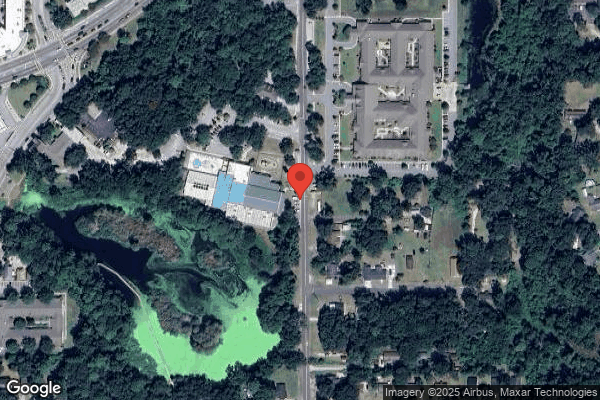

1810 Richmond Avenue, Port Royal, SC 29935 (843) 781-7700
For profit - Corporation 65 Beds SPRENGER HEALTH CARE SYSTEMS Data: November 2025
Trust Grade
90/100
#25 of 186 in SC
Last Inspection: December 2024

Within standard 12-15 month inspection cycle. Federal law requires annual inspections.

Overview

Sprenger Health Care of Port Royal has an overall Trust Grade of A, indicating it is considered excellent and highly recommended for care. It ranks #25 out of 186 nursing homes in South Carolina, placing it in the top half, and #3 out of 7 in Beaufort County, meaning only two local options are better. The facility is improving, having reduced its issues from 1 in 2023 to none in 2024, and it boasts strong RN coverage, exceeding that of 95% of state facilities, which helps ensure residents receive proper care. Staffing is a relative strength with a rating of 4 out of 5 stars, although turnover is at 53%, which is slightly above the state average. While there have been no fines, there were two concerns identified during inspections: expired medications were found accessible, and one resident did not receive the necessary incontinence care as per physician orders, highlighting areas that need attention despite the overall positive ratings.

Trust Score
A
90/100
In South Carolina
#25/186
Top 13%
Safety Record
Low Risk
No red flags
Inspections
Getting Better
1 → 0 violations
Staff Stability
⚠ Watch
53% turnover. Above average. Higher turnover means staff may not know residents' routines.
Penalties
✓ Good
No fines on record. Clean compliance history, better than most South Carolina facilities.
Skilled Nurses
✓ Good
Each resident gets 64 minutes of Registered Nurse (RN) attention daily — more than 97% of South Carolina nursing homes. RNs are the most trained staff who catch health problems before they become serious.
Violations
✓ Good
Only 2 deficiencies on record. Cleaner than most facilities. Minor issues only.
★★★★★
5.0
Overall Rating
★★★★☆
4.0
Staff Levels
★★★★★
5.0
Care Quality
★★★★★
5.0
Inspection Score
Stable
2023: 1 issues
2024: 0 issues

The Good

  • 4-Star Staffing Rating · Above-average nurse staffing levels
  • 5-Star Quality Measures · Strong clinical quality outcomes
  • Full Sprinkler Coverage · Fire safety systems throughout facility
  • No fines on record

Facility shows strength in staffing levels, quality measures, fire safety.

The Bad

Staff Turnover: 53%

Near South Carolina avg (46%)

Higher turnover may affect care consistency

Chain: SPRENGER HEALTH CARE SYSTEMS

Part of a multi-facility chain

Ask about local staffing decisions and management

The Ugly 2 deficiencies on record

Sept 2023 1 deficiency
CONCERN (D) 📢 Someone Reported This

A family member, employee, or ombudsman was alarmed enough to file a formal complaint

Potential for Harm - no one hurt, but risky conditions existed

Deficiency F0658 (Tag F0658)

Could have caused harm · This affected 1 resident

**NOTE- TERMS IN BRACKETS HAVE BEEN EDITED TO PROTECT CONFIDENTIALITY** Based on observations, interviews, record review, facility document review, and facility policy review, the facility failed to f...

Read full inspector narrative →
**NOTE- TERMS IN BRACKETS HAVE BEEN EDITED TO PROTECT CONFIDENTIALITY** Based on observations, interviews, record review, facility document review, and facility policy review, the facility failed to follow physician orders for 1 (Resident (R)9) of 2 residents reviewed for the provision of care and services. Findings included: A review of a facility policy titled, Incontinence Care Protocol, dated 03/2022, revealed, It is the policy of [facility] systems to outline the appropriate management for all residents with incontinence, to prevent the loss of skin integrity. A listed protocol directed staff to Apply moisture barrier cream and Assess/monitor skin with each incontinent episode. Review of an admission Record indicated the facility admitted R9 on 06/07/2023 with diagnoses that included encephalopathy and prostate cancer. Review of a quarterly Minimum Data Set (MDS), with an Assessment Reference Date (ARD) of 09/11/2023, revealed R9 had a Brief Interview for Mental Status (BIMS) score of 15, which indicated the resident had intact cognition. Per the MDS, the resident required limited assistance with bed mobility, transfers, dressing, toilet use, and personal hygiene. The MDS noted R9 was frequently incontinent of urine and bowel. According to the MDS, the resident did not have any wounds or skin conditions. Review of Resident #9's Care Plan, initiated on 06/07/2023, revealed R9 had a potential for impairment of skin integrity. The Care Plan directed staff to apply moisture barrier after each incontinent episode. A review of the label for Calmoseptine ointment revealed, Uses: A moisture barrier that prevents and helps heal skin irritations from: urine. A review of R9's [NAME] Report, dated 06/07/2023, revealed, Skin Preventative. Moisture barrier after each incontinent episode. On 09/30/2023 at 10:25 AM, Certified Nursing Assistant (CNA)10 was observed providing incontinence care for R9. CNA10 properly explained to the resident what she needed to do and the resident provided permission for the surveyor to observe the care being provided. R9's existing incontinence brief was removed and was observed to be wet, but not soaked. R9 was cleaned using wet wipes and a clean incontinence brief was placed on the resident. R9's skin was observed to be clean, dry, and without any breakdown or redness. There was no application of a barrier cream. During an interview on 09/30/2023 at 10:30 AM, CNA10 stated the facility used Calmoseptine as a barrier cream, noting it was used whenever the aides noticed redness on a resident's buttocks or groin area. CNA10 stated if Calmoseptine was used, a nurse was notified. During an interview on 09/30/2023 at 10:35 AM, Licensed Practical Nurse (LPN)13 stated the facility used Calmoseptine as a barrier cream, noting a corresponding order would be on the treatment administration record (TAR). LPN13 noted that, if he or the aides noticed redness or breakdown, he contacted the nurse on call to obtain a treatment order. LPN13 stated there was always a nurse on call. LPN13 identified that the aides obtained barrier cream from a nurse to apply. During an interview on 09/30/2023 at 12:25 PM, R9 stated the nurses kept them clean and dry, though the resident was unable to endorse if staff applied cream during incontinence care. R9 noted there were no issues with their skin or timely incontinence brief changes. During an interview on 09/30/2023 at 12:30 PM, CNA10 stated she did not apply barrier cream to Resident #9 during the observation of incontinence care, noting their skin was not red. CNA10 opened a [NAME] (a list of care instructions in the electronic medical record,) which revealed Resident #9 was to receive barrier cream following every incontinence episode. CNA10 then stated she had not applied the barrier cream as she had ran out, and did not have anyone to get it for her, as the nurses were all agency and did not have a key to get into the storage area. On 09/30/2023 at 12:50 PM, the Director of Nursing (DON) accompanied the surveyor to the storeroom, noting that, while the storeroom was accessible by all staff, the Calmoseptine cream was not located in the storeroom. The DON stated barrier cream was stored in the treatment cart, noting all nurses had a master key and were able to obtain the cream whenever requested by an aide. During an interview on 09/30/2023 at 4:00 PM, CNA15 stated barrier cream was applied following every changing, which was noted on the [NAME]. The CNA stated barrier cream was obtained from a nurse, stating the aides generally knew who needed barrier cream, which they obtained prior to entering the resident's room. During an interview on 09/30/2023 at 4:15 PM, the DON stated CNAs were required to apply barrier cream after each incontinence episode for all incontinent residents, noting that while this was not documented in the plan of care, the nurses charted the barrier cream application on the resident's TAR once alerted by the CNA. The DON stated CNA10 should have applied a barrier cream to R9's perineal area after providing incontinence care, noting there was no reason not to. A review of CNA10's Nurse Aide Competency Evaluation, dated 11/28/2022, revealed the CNA received education and provided a return demonstration for incontinence care and review of the [NAME] as it pertained to the prevention of skin breakdown. During an interview on 09/30/2023 at 4:30 PM, the Administrator was made aware of the concern and stated he expected the aides to apply barrier cream following each incontinence episode.
Aug 2021 1 deficiency
CONCERN (E)

Potential for Harm - no one hurt, but risky conditions existed

Deficiency F0761 (Tag F0761)

Could have caused harm · This affected multiple residents

Based on observation, interview and facility policy review, the facility failed to provide safe and effective medication administration by allowing expired medications to be available for resident use...

Read full inspector narrative →
Based on observation, interview and facility policy review, the facility failed to provide safe and effective medication administration by allowing expired medications to be available for resident use in two (2) of two (2) medication storage rooms. Findings include: The facility provided policy titled Medication Storage Guidance dated 2021 directed, Tuberculin Tests: Aplisol Injection: Tubersol Injection. Store in the refrigerator at 36 degrees to 46 degrees F [Fahrenheit] (two (2) degrees to eight (8) degrees C [Celsius]). Protect from light. Do not freeze. Date when opened and discard unused portion after 30 days. Observation of the Front Medication Room on 8/18/21 at 12:20 p.m. with Licensed Practical Nurse (LPN) #2 revealed one (1)multi-dose bottle of Aplisol Tuberculosis skin testing solution for resident use in a box dated 7/6/21. During interview with LPN #2 at that time, s/he stated nurses should date the bottle when opened and discard it after being open for 30 days. LPN #2 stated it appeared there was at least one (1) dose left in the bottle, and it was expired. LPN #2 stated the Unit Manager checked the expiration dates of the medications, and each nurse should check the expiration date before giving the medication/solution to a resident. Observation of the Back Medication Room on 8/18/21 at 12:45 p.m. with LPN #2 revealed two (2) multi-dose bottles of Aplisol Tuberculosis skin testing solution for resident use in one (1) box dated 7/13/21. LPN #2 stated s/he would discard both bottles of the Aplisol because the only date was 7/13/21 and was expired 30 days after the open date. LPN #2 stated there were several doses remaining in each opened bottle. During an interview on 8/18/21 at 2:16 p.m., the Director of Nursing (DON) stated his/her expectation was the open date should be written on the medication, ideally on the bottle instead of the box. The nurse should check for the date opened before giving the medication, and the bottle should be discarded after 30 days. During an interview on 8/20/21 at 8:53 a.m., the Pharmacist stated for Aplisol used after 30 days post opening, the potency of the solution may not be as effective. The Pharmacist stated a medication room audit was done monthly and any irregularities or expired medications were reported to nursing staff.
Understanding Severity Codes (click to expand)
Life-Threatening (Immediate Jeopardy)
J - Isolated K - Pattern L - Widespread
Actual Harm
G - Isolated H - Pattern I - Widespread
Potential for Harm
D - Isolated E - Pattern F - Widespread
No Harm (Minor)
A - Isolated B - Pattern C - Widespread

Questions to Ask on Your Visit

  • "Can I speak with families of current residents?"
  • "What's your RN coverage like on weekends and overnight?"

Our Honest Assessment

Strengths
  • • Grade A (90/100). Above average facility, better than most options in South Carolina.
  • • No major safety red flags. No abuse findings, life-threatening violations, or SFF status.
  • • No fines on record. Clean compliance history, better than most South Carolina facilities.
  • • Only 2 deficiencies on record. Cleaner than most facilities. Minor issues only.
Concerns
  • • No significant concerns identified. This facility shows no red flags across CMS ratings, staff turnover, or federal penalties.
Bottom line: Generally positive indicators. Standard due diligence and a personal visit recommended.

About This Facility

What is Sprenger Health Care Of Port Royal's CMS Rating?

CMS assigns Sprenger Health Care of Port Royal an overall rating of 5 out of 5 stars, which is considered much above average nationally. Within South Carolina, this rating places the facility higher than 99% of the state's 100 nursing homes. This rating reflects solid performance across the metrics CMS uses to evaluate nursing home quality.

How is Sprenger Health Care Of Port Royal Staffed?

CMS rates Sprenger Health Care of Port Royal's staffing level at 4 out of 5 stars, which is above average compared to other nursing homes. Staff turnover is 53%, compared to the South Carolina average of 46%.

What Have Inspectors Found at Sprenger Health Care Of Port Royal?

State health inspectors documented 2 deficiencies at Sprenger Health Care of Port Royal during 2021 to 2023. These included: 2 with potential for harm.

Who Owns and Operates Sprenger Health Care Of Port Royal?

Sprenger Health Care of Port Royal is owned by a for-profit company. For-profit facilities operate as businesses with obligations to shareholders or private owners. The facility is operated by SPRENGER HEALTH CARE SYSTEMS, a chain that manages multiple nursing homes. With 65 certified beds and approximately 50 residents (about 77% occupancy), it is a smaller facility located in Port Royal, South Carolina.

How Does Sprenger Health Care Of Port Royal Compare to Other South Carolina Nursing Homes?

Compared to the 100 nursing homes in South Carolina, Sprenger Health Care of Port Royal's overall rating (5 stars) is above the state average of 2.9, staff turnover (53%) is near the state average of 46%, and health inspection rating (5 stars) is much above the national benchmark.

What Should Families Ask When Visiting Sprenger Health Care Of Port Royal?

Based on this facility's data, families visiting should ask: "Can I visit during a mealtime to observe dining assistance and food quality?" "How do you handle medical emergencies, and what is your hospital transfer rate?" "Can I speak with family members of current residents about their experience?"

Is Sprenger Health Care Of Port Royal Safe?

Based on CMS inspection data, Sprenger Health Care of Port Royal has a clean safety record: no substantiated abuse findings (meaning no confirmed cases of resident harm), no Immediate Jeopardy citations (the most serious violation level indicating risk of serious injury or death), and is not on the Special Focus Facility watch list (a federal program monitoring the lowest-performing 1% of nursing homes). The facility has a 5-star overall rating and ranks #1 of 100 nursing homes in South Carolina. While no facility is perfect, families should still ask about staff-to-resident ratios and recent inspection results during their visit.

Do Nurses at Sprenger Health Care Of Port Royal Stick Around?

Sprenger Health Care of Port Royal has a staff turnover rate of 53%, which is 7 percentage points above the South Carolina average of 46%. Moderate turnover is common in nursing homes, but families should still ask about staff tenure and how the facility maintains care continuity when employees leave.

Was Sprenger Health Care Of Port Royal Ever Fined?

Sprenger Health Care of Port Royal has no federal fines on record. CMS issues fines when nursing homes fail to meet care standards or don't correct problems found during inspections. The absence of fines suggests the facility has either maintained compliance or corrected any issues before penalties were assessed. This is a positive indicator, though families should still review recent inspection reports for the full picture.

Is Sprenger Health Care Of Port Royal on Any Federal Watch List?

Sprenger Health Care of Port Royal is not on any federal watch list. The most significant is the Special Focus Facility (SFF) program, which identifies the bottom 1% of nursing homes nationally based on persistent, serious quality problems. Not being on this list means the facility has avoided the pattern of deficiencies that triggers enhanced federal oversight. This is a positive indicator, though families should still review the facility's inspection history directly.