St George Healthcare Center
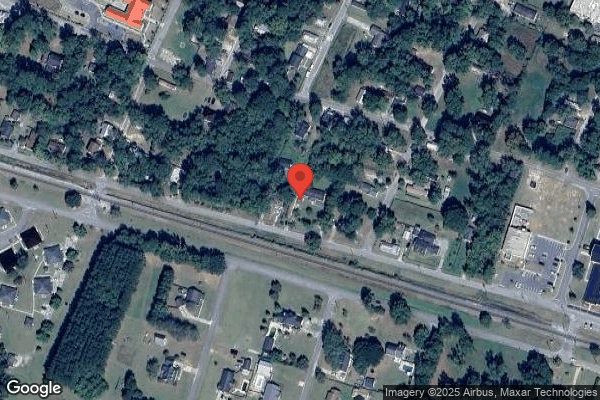
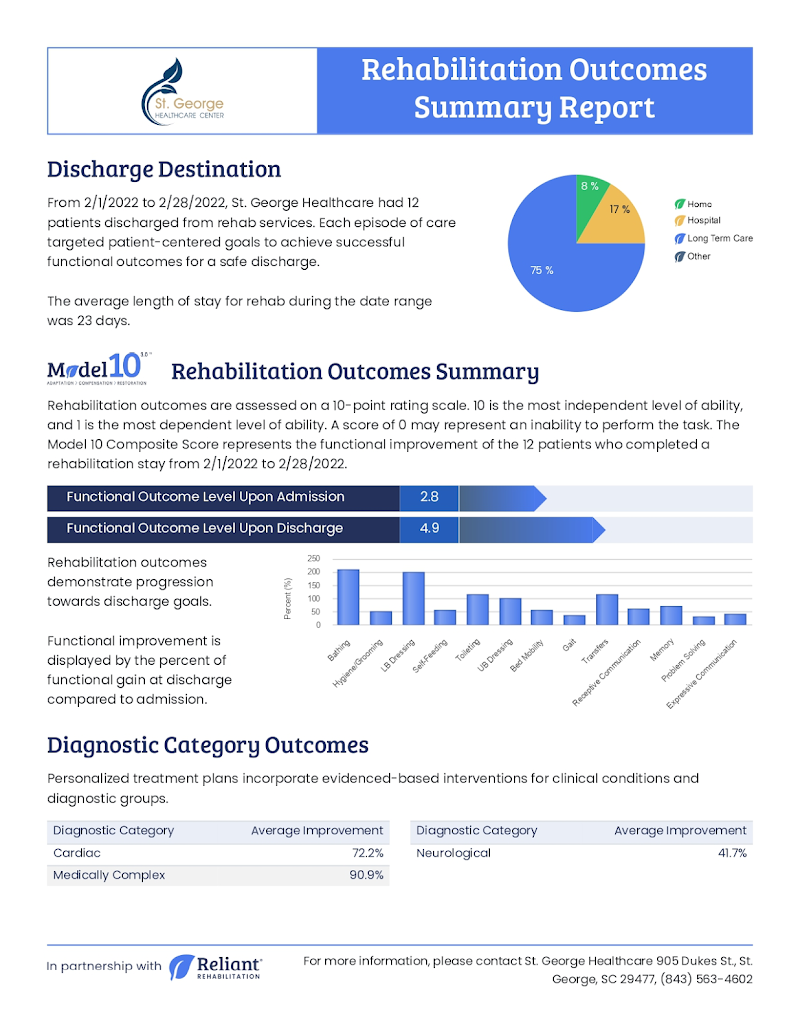
905 Duke Street, Saint George, SC 29477 (843) 563-4602
For profit - Limited Liability company 88 Beds FUNDAMENTAL HEALTHCARE Data: November 2025 3 Immediate Jeopardy citations
Trust Grade
0/100
#180 of 186 in SC
Last Inspection: January 2025

Within standard 12-15 month inspection cycle. Federal law requires annual inspections.

Overview

St. George Healthcare Center has received a Trust Grade of F, indicating poor quality and significant concerns about care. Ranked #180 out of 186 facilities in South Carolina, this places them in the bottom half of all nursing homes in the state, and they are the lowest-ranked of four facilities in Dorchester County. The facility is worsening, having increased from one issue in 2024 to two in 2025, which raises concerns about ongoing problems. Staffing is a relative strength with a turnover rate of 34%, lower than the state average, though their overall staffing rating is only 2 out of 5 stars. However, the facility has accumulated $55,169 in fines, which is concerning and suggests ongoing compliance issues. Notably, there have been critical incidents where a resident known to be at risk of elopement was able to leave the facility unsupervised, which resulted in a serious safety risk. This failure to provide necessary supervision and interventions for vulnerable residents is alarming. Overall, while there are some positive aspects regarding staff retention, the significant issues in care and safety present serious concerns for families considering this facility for their loved ones.

Trust Score
F
0/100
In South Carolina
#180/186
Bottom 4%
Safety Record
High Risk
Review needed
Inspections
Getting Worse
1 → 2 violations
Staff Stability
○ Average
34% turnover. Near South Carolina's 48% average. Typical for the industry.
Penalties
✓ Good
$55,169 in fines. Lower than most South Carolina facilities. Relatively clean record.
Skilled Nurses
○ Average
Each resident gets 30 minutes of Registered Nurse (RN) attention daily — about average for South Carolina. RNs are the most trained staff who monitor for health changes.
Violations
⚠ Watch
16 deficiencies on record. Higher than average. Multiple issues found across inspections.
★☆☆☆☆
1.0
Overall Rating
★★☆☆☆
2.0
Staff Levels
★☆☆☆☆
1.0
Care Quality
★★☆☆☆
2.0
Inspection Score
Stable
2024: 1 issues
2025: 2 issues

The Good

  • Full Sprinkler Coverage · Fire safety systems throughout facility
  • No fines on record
  • Staff turnover below average (34%)

    14 points below South Carolina average of 48%

Facility shows strength in fire safety.

The Bad

1-Star Overall Rating

Below South Carolina average (2.8)

Significant quality concerns identified by CMS

Staff Turnover: 34%

12pts below South Carolina avg (46%)

Typical for the industry

Federal Fines: $55,169

Above median ($33,413)

Moderate penalties - review what triggered them

Chain: FUNDAMENTAL HEALTHCARE

Part of a multi-facility chain

Ask about local staffing decisions and management

The Ugly 16 deficiencies on record

3 life-threatening 1 actual harm
Jan 2025 2 deficiencies
CONCERN (D)

Potential for Harm - no one hurt, but risky conditions existed

Transfer Notice (Tag F0623)

Could have caused harm · This affected 1 resident

**NOTE- TERMS IN BRACKETS HAVE BEEN EDITED TO PROTECT CONFIDENTIALITY** Based on record review, interviews, and facility policy review, the facility failed to provide the reason for transfer or discha...

Read full inspector narrative →
**NOTE- TERMS IN BRACKETS HAVE BEEN EDITED TO PROTECT CONFIDENTIALITY** Based on record review, interviews, and facility policy review, the facility failed to provide the reason for transfer or discharge, to the resident and/or the resident representative upon discharge to the hospital, in writing for 2 of 2 residents (Resident (R)58 and R70) reviewed for transfer and discharge. This failure had the potential to affect residents' understanding for the reason of transfer. Findings include: Review of the facility's policy titled, SOCIAL SERVICES POLICIES AND PROCEDURES: DISCHARGE NOTIFICATION, revised on 06/09/23, documented, Notify the resident and the resident's representative(s) of the transfer or discharge and the reasons for the move in writing and in a language and manner they understand. 1. Review of R58's Face Sheet located under the Profile tab in the electronic medical record (EMR) indicated that he was admitted to the facility on [DATE], with diagnoses including but not limited to: acute respiratory failure, hypertension, and chronic obstructive pulmonary disease. Review of R58's quarterly Minimum Data Set (MDS) with an Assessment Reference Date (ARD) of 12/13/24, and located in the MDS tab of the EMR, revealed a Brief Interview for Mental Status (BIMS) score of 15 out of 15, which indicated R58 was cognitively intact. Further review of the MDS revealed R58 needed supervision and/or touch assistance with all Activities of Daily Living (ADL). Review of R58's Hospital Summary, dated 01/07/25, located in the Resident Records tab of the EMR, revealed an admission date of 01/04/25, and a discharge date of 01/07/25, with the reason for admission being viral gastroenteritis and acute kidney injury on chronic kidney disease. 2. Review of R70's Face Sheet located under the Profile tab in the EMR indicated that his current admission to the facility was on 11/26/24, with diagnoses including but not limited to: diabetes mellitus type two with hyperglycemia, hypertension, and coronary artery disease. Review of R70's admission MDS with an ARD of 01/26/24, and located in the MDS tab of the EMR revealed a BIMS score of 8 out of 15, indicating R70 was moderately cognitively impaired. Further review of the MDS revealed R70 needed supervision and/or touch assistance with all ADL. Review of R70's Hospital Summary located in the Resident Records tab of the EMR, revealed an admission date to the hospital of 02/07/24, and a discharge date of 02/12/24, with the reason for admission being episode of syncope. Review of R58's and R70's EMR revealed no documentation of the reason for discharge provided in writing. During an interview on 01/09/25 at 10:39 AM, the Social Services Director (SSD) stated that she did not understand about sending a reason for transfer or discharge in writing to the resident, resident representative, and the ombudsman because the facility sent a bed hold that was completed by the nurses at time of discharge to the hospital. The SSD also stated that the bed hold was all they had. During an interview on 01/09/25 at 10:53 AM, the Director of Nurses (DON) stated the nurses had a check list that they filled out when a resident transferred to the hospital. The DON provided a copy of the check list and stated it was everything they did when a resident went out. During an interview on 01/09/25 at 3:00 PM, the Administrator stated that he was not aware the facility was not completing a written discharge/transfer notice.
CONCERN (D)

Potential for Harm - no one hurt, but risky conditions existed

Deficiency F0625 (Tag F0625)

Could have caused harm · This affected 1 resident

**NOTE- TERMS IN BRACKETS HAVE BEEN EDITED TO PROTECT CONFIDENTIALITY** Based on record review, interviews, and facility policy review, the facility failed to provide the complete Bed Hold to the resi...

Read full inspector narrative →
**NOTE- TERMS IN BRACKETS HAVE BEEN EDITED TO PROTECT CONFIDENTIALITY** Based on record review, interviews, and facility policy review, the facility failed to provide the complete Bed Hold to the resident and or the resident representative upon discharge to the hospital for 2 of 2 residents (Resident (R) 58) and R70) reviewed for transfer and discharge. This failure had the potential to affect the resident's knowledge on return to the facility. Findings include: Review of the facility's policy titled, FACILITY'S POLICY AND STATE REQUIREMENTS FOR TEMPORARY LEAVE] BED-HOLD, revised on 06/09, documented, In order to ensure the resident's specific bed is available to him/her when he/she is ready to return, the resident or his/her representative shall pay the basic per diem rate of $__ for each day during the bed-hold period. 1. Review of R58's Face Sheet located under the Profile tab in the electronic medical record (EMR) indicated that he was admitted to the facility on [DATE], with diagnoses including but not limited to: acute respiratory failure, hypertension, and chronic obstructive pulmonary disease. Review of R58's quarterly Minimum Data Set (MDS) with an Assessment Reference Date (ARD) of 12/13/24, and located in the MDS tab of the EMR, revealed a Brief Interview for Mental Status (BIMS) score of 15 out of 15, which indicated R58 was cognitively intact. Further review of the MDS revealed R58 needed supervision and/or touch assistance with all Activities of Daily Living (ADL). Review of R58's Hospital Summary, dated 01/07/25, located in the Resident Records tab of the EMR, revealed an admission date of 01/04/25, and a discharge date of 01/07/25, with the reason for admission being viral gastroenteritis and acute kidney injury on chronic kidney disease. 2. Review of R70's Face Sheet located under the Profile tab in the EMR indicated that his current admission to the facility was on 11/26/24, with diagnoses including but not limited to: diabetes mellitus type two with hyperglycemia, hypertension, and coronary artery disease. Review of R70's admission MDS with an ARD of 01/26/24 and located in the MDS tab of the EMR, revealed a BIMS score of 8 out of 15 which indicated R70 was moderately cognitively impaired. Further review of the MDS revealed R70 needed supervision and/or touch assistance with all ADL. Review of R70's Hospital Summary located in the Resident Records tab of the EMR, revealed an admission date to the hospital of 02/07/24, and a discharge date of 02/12/24, with the reason for admission being episode of syncope. Review of R58's and R70's EMR revealed no copy of the Bed Hold was located. During an interview on 01/09/25 at 10:39 AM, the Social Services Director (SSD) stated that she sent the ombudsman a list of transfers and discharges every month. She stated the Business Office Manager (BOM) sent the notification to the family and residents for bed holds. The SSD also stated the nurse notified the family if a resident was sent out. She stated there was a packet at the nurse's station that the nurse filled out; made a copy for the BOM to send to the resident representative and the original was sent with the ambulance for the resident. The SSD concluded, As far as I know that is all we have. During an interview on 01/09/25 at 10:53 AM, the Director of Nurses (DON) stated the nurses had a check list that they filled out when a resident transferred to the hospital. The DON provided a copy of the check list and stated that was everything they did when a resident went out. During an interview on 01/09/25 at 11:45 AM, the BOM stated that she sent the resident representative a copy of the bed hold, and the nurse sent the original with the resident at time of transfer. The BOM stated that R70 did not have a resident representative so there was not one sent. The BOM also stated that the Bed Hold for R58 was not completed because it was missing the daily rate for the room charge. During an interview on 01/09/25 at 3:00 PM, the Administrator stated that the Bed Hold notice for R70 was probably not sent to the resident representative and that the Bed Hold for R58 was incomplete due to the fact that it did not have the daily per diem rate to hold the room.
Sept 2024 1 deficiency 1 IJ
CRITICAL (J) 📢 Someone Reported This

A family member, employee, or ombudsman was alarmed enough to file a formal complaint

Immediate Jeopardy (IJ) - the most serious Medicare violation

Accident Prevention (Tag F0689)

Someone could have died · This affected 1 resident

**NOTE- TERMS IN BRACKETS HAVE BEEN EDITED TO PROTECT CONFIDENTIALITY** Based on review of facility policy, interview, and record review, the facility failed to provide appropriate supervision for Res...

Read full inspector narrative →
**NOTE- TERMS IN BRACKETS HAVE BEEN EDITED TO PROTECT CONFIDENTIALITY** Based on review of facility policy, interview, and record review, the facility failed to provide appropriate supervision for Resident (R)1, resulting in R1 successfully eloping from the facility, for 1 of 3 residents reviewed. On 09/18/24 at 3:35 PM, the Administrator was notified that the failure to ensure a resident receives appropriate supervision, to prevent an elopement, constituted Immediate Jeopardy at F689. On 09/18/24 at 3:35 PM, the survey team provided the Administrator with a copy of the CMS Immediate Jeopardy (IJ) Template, informing the facility IJ existed as of 09/15/24. The IJ was related to 42 CFR 483.25 - Quality of Care. On 09/18/24, the facility provided an acceptable IJ Removal Plan. On 09/18/24 the survey team, validated the facility's corrective actions and determined the facility put forth due diligence in addressing the noncompliance. The IJ is considered at Past Non-Compliance as of 09/16/24. An extended survey was conducted in conjunction with the Complaint Survey for non-compliance at F689, constituting substandard quality of care. Findings include: Review of the facility policy titled Elopement Risk Assessment with a revision date of 11/01/17, documented under procedure, 3. Interventions will be added to the patient's/resident's care plan after analyzing the information obtained. 4. completes an elopement risk assessment and presents the information to the Interdisciplinary Team for further interventions. Review of R1's Face Sheet revealed R1 was admitted to the facility on [DATE], with diagnoses including but not limited to: Huntington's disease, major depressive disorder, restlessness and agitation, and insomnia. Review of R1's Significant Change Minimum Data Set (MDS) with an Assessment Reference Date (ARD) of 07/15/24, revealed that a Brief Interview for Mental Status (BIMS) was not conducted because the resident is rarely/never understood. Further review of the MDS revealed R1 was severely impaired regarding Cognitive Skills for Daily Decision Making. Additionally, R1's assessment for Rejection of Care and Wandering indicated that these behaviors did not occur. Review of R1's Care Plan with a start date of 07/15/24, documented, [R1] appears to have recall deficit as evidenced by: inability to understand commands/communication, poor decision making, related to diagnosis of: Huntington's Disease. Further review of the Care Plan did not reveal a Care Plan related to wandering/elopement, prior to the incident. Review of R1's Elopement Risk Observation dated 07/17/24, revealed R1 is confused and has a history of wandering. Further review revealed there was no scoring criteria related to the risk and no interventions listed. Review of R1's Progress Note revealed a note dated 09/15/24 at 3:44 AM, which documented, Door alarm at nurses station was alarming. Upon arrival it was noted that resident was not in his room. Resident was outside in company van. Staff assisted resident back into wheelchair. Resident was combative. Staff assisted resident back into room. 15 checks initiated on resident. During an interview on 09/18/24 at 1:08 PM, Registered Nurse (RN)1 revealed, sometimes R1 does try to go out the side door on Stone, maybe about 1 or 2 months ago. The Interdisciplinary Team was notified and reviews the assessment. Resident did not have a wander guard on prior to the incident. The Interdisciplinary Team makes the decision to implement interventions. During an interview on 09/18/24 at 1:55 PM, Licensed Practical Nurse (LPN)1 revealed, R1 is combative and has exit seeking behavior. R1 is difficult to redirect. R1 has always had a behavior of exit seeking. Supervisors are notified in 24-hour report and progress notes. R1 did not have a wander guard on the day of incident. During an interview on 09/18/24 at 2:20 PM, the Director of Nursing (DON) stated, R1 got out and was found in the van. The DON questioned the resident being found in the van, due to the resident's physical condition and there was nothing moved around in the van. The DON verified the driver side door of the van was unlocked, but the passenger side doors were locked. The DON further stated, I did not know that he was wandering/exit seeking. He had a wanderguard in place prior to this incident but it was taken off because he went a long time without the behaviors. The DON concluded, video footage was reviewed, and nothing was found. During an interview on 09/18/24 at 2:47 PM, the Administrator revealed, the cameras haven't been working for a while. The resident did get out but was found immediately. The Administrator stated, I was told there was a nine minute window that the resident wasn't accounted for. I don't know off the top of my head the criteria that a wandergaurd would need to be placed on a resident based on the elopement assessment. I will have to get back to you on that. I was not aware that the resident was having exit seeking behaviors leading up to the incident. On 09/18/24, the facility provided an acceptable IJ Removal Plan, which included the following: Resident #1 without injury and elopement risk evaluation repeated on 9/15/24 with interventions in place per care plan. Director of Nursing and Administrator will be reeducated on the Elopement Policy and Process on 9/18/24 by the Clinical Consultant including: Completing the elopement risk evaluation thoroughly and implementing interventions based on risk identified. Documentation of exit seeking behavior and completing elopement risk evaluation for increased exit seeking behaviors. Elopement risk Assessments will be reviewed for completion and accuracy on 9/18/24 by the Director of Nursing/Designee on current residents in facility to identify residents at risk for elopement. Those residents identified at risk will have interventions initiated and care plan updated on 9/18/24. Licensed Nurses will be reeducated on the Elopement Policy and Process on 9/18/24 by the Director of Nursing/Designee including: Completing the elopement risk evaluation thoroughly and implementing interventions based on risk identified. Documentation of exit seeking behavior and completing elopement risk evaluation for increased exit seeking behaviors. Licensed Nurses not receiving this education by 9/18/24 will receive prior to their next scheduled shift. Facility Activity Report and 24hour report will be reviewed Monday - Friday in clinical morning meeting to validate elopement assessments completed. The Director of Nursing/Designee will review completed elopement assessments Monday - Friday in clinical morning meeting to validate accuracy and interventions have been implemented accordingly. Ad hoc QAPI held on 9/18/24. Medical Director was notified of the Immediate Jeopardy and the contents of this plan on 9/18/24.
Jun 2023 2 deficiencies 2 IJ
CRITICAL (J) 📢 Someone Reported This

A family member, employee, or ombudsman was alarmed enough to file a formal complaint

Immediate Jeopardy (IJ) - the most serious Medicare violation

Free from Abuse/Neglect (Tag F0600)

Someone could have died · This affected 1 resident

**NOTE- TERMS IN BRACKETS HAVE BEEN EDITED TO PROTECT CONFIDENTIALITY** Based on interview and record review, the facility failed to provide services to Resident (R)1 necessary to R1 to avoid physical...

Read full inspector narrative →
**NOTE- TERMS IN BRACKETS HAVE BEEN EDITED TO PROTECT CONFIDENTIALITY** Based on interview and record review, the facility failed to provide services to Resident (R)1 necessary to R1 to avoid physical harm, pain, mental anguish, or emotional distress for 1 of 9 residents reviewed. R1 exited the facility on 06/22/2023 at approximately 7:55 AM and was found at 8 AM. Certified Occupational Therapy Assistant (COTA)1 found the resident in the receptionist's car. This was confirmed by the receptionist, administrator, housekeeping staff #1 and #2, Certified Nursing Aide (CNA)1, and the Assistant Director of Nursing. The resident was known to be an elopement risk, but no interventions were put in place to protect the resident from elopement. Because the facility failed to implement interventions recommended to protect R1 from wandering / elopement, the resident was able to elope from the facility without permission or supervision. This placed her at increased risk of a serious adverse outcome, such as severe harm or death. On 06/26/2023 at approximately 3 PM, the State Agency (SA) determined that the facility's non-compliance with one or more federal health, safety, and/or quality regulations has caused or was likely to cause serious injury, serious harm, serious impairment, or death. On 06/22/2023 at 8 AM, R1 was discovered outside the facility, in the driver's seat of the receptionist's vehicle. The facility's failure to implement wandering / elopement interventions when the resident was identified as an elopement risk on 05/02/2023 constituted immediate jeopardy at F600. The facility presented an acceptable plan of removal of the immediate jeopardy on 06/27/2023 at 10:50 AM. The survey team validated that the immediate jeopardy was removed on 06/27/2023 at 12:30 PM following the facility's implementation of the plan of removal of the immediate jeopardy. The facility remained out of compliance at F600 at a lower scope and severity of D (isolated with potential for more than minimal harm) following removal of the IJ. The findings include: Review of undated facility policy titled Abuse, Neglect, Exploitation, or Mistreatment revealed that Neglect is the failure of the facility, its employees or service providers to provide goods and services to a resident that are necessary to avoid physical harm, pain, mental anguish, or emotional distress. R1 was admitted to the facility on [DATE] with diagnoses including, but not limited to, unspecified dementia, psychotic disturbance, mood disturbance, cognitive communication deficit, abnormalities of gait and mobility, restlessness and agitation, and muscle weakness. Review of the resident's admission Minimum Data Set (MDS) with Assessment Reference Date (ARD) of 05/07/2023 revealed the resident scored a 99/15 in her Brief Interview for Mental Status, indicating she was unable to complete the interview. Review of COTA1's statement written to the facility on [DATE] revealed pulled into the parking lot and identified R1 sitting within her wheelchair by a parked vehicle. Upon approaching, she then realized the wheelchair was empty, and the resident was in the front seat of the vehicle. She alerted the receptionist (the car's owner), and then the Administrator. Interview with COTA1 on 06/26/2023 at 2:15 PM confirmed her statement to the facility. She identified the resident based on the pink shirt on her wheelchair, then realized the resident was inside the vehicle. She alerted the receptionist and then the administrator. The resident had demonstrated prior wandering behaviors to COTA1, such as rolling into therapy when the door was open. Review of housekeeping staff #1's statement to the facility written on 06/22/2023 revealed she saw the resident sitting in an employee's car when she pulled up to the facility at start of shift (approximately 8 AM). Staff were already outside trying to get the resident back in. Interview with housekeeping staff #1 on 06/26/2023 at approximately 2 PM confirmed her statement to the facility. She spotted the wheelchair beside the receptionist's car. She asked the Administrator what was happening, and one of the other staff members said they were trying to get R1 to leave the vehicle. Review of housekeeping staff #2's statement to the facility written on 06/22/2023 revealed she walked outside with another employee to assist the resident out of the car. Interview with housekeeping staff #2 on 06/26/2023 at 2:44 PM confirmed her statement to the facility. She heard the resident was in the employee's car and went out to help take her back inside. The resident was uninjured. Review of the Assistant Director of Nursing (ADON) statement to the facility on [DATE] revealed she was asked to help the resident back to the facility, but by that point the resident was already being returned to the facility with staff assistance. She did notice the resident wandering earlier that morning. Interview with the ADON on 06/26/2023 at approximately 2:20 PM confirmed her statement to the facility. Interview also revealed she had noted R1 to wander often in the facility. She would go up and sit by the door, though she had never tried to leave. She had, however, expressed a desire to leave the facility. The resident is always looking for her daughter, her car, or saying she needs to get to work. Review of the receptionist's statement to the facility written on 06/22/2023 revealed she clocked in that morning at 8 AM. She walked back to the front office, when therapy staff told her a resident was in her car. She went to check, then told therapy to get the administrator. She waited with the resident while the administrator and staff came to assist the resident. Interview with the receptionist on 06/26/2023 at approximately 1:48 PM confirmed her statement to the facility. She came into the facility that morning just before 8 AM and went to clock in. When she returned to the front, COTA1 told her R1 was in her car. There were no keys in the car, so the resident could not have driven or turned it on. Review of R1's chart revealed an Elopement Risk Assessment recorded on date 05/02/2023 at 11:07 AM. The assessment revealed R1 was not oriented to person, place, or time; the resident was confused; the resident did not have safe decision-making capabilities; the resident had a history of wandering; the resident had attempted to leave the health care center; the resident was not easily redirected; the resident ambulatory; and the resident has a diagnosis that requires supervision. The recommended intervention was a wander guard to be placed on the ankle and function to be monitored every shift. Interview with the administrator on 06/26/2023 at approximately 1:50 PM revealed she saw R1 that morning just before 8 AM. She was heading to the front of the facility, which is not unusual for the resident - who often sits by the receptionist. Someone called for her to come to the parking lot, and she saw R1 in the driver's seat of the receptionist's vehicle. The receptionist parked beside her, about 50 feet from the main entrance. The resident would have to cross the parking lot to the street side to reach where the vehicles were parked. R1 had a wandering assessment on 05/02/2023 that determined the resident to be capable of ambulation, expressing the desire to leave the facility, and requiring of supervision. The primary intervention to protect wandering / eloping residents is a wander guard, though R1 did not have one ordered at the time of the incident. It has since been added to her orders and care plan. This was confirmed by chart review. The administrator confirmed that the resident does often wander and has gone into other resident's rooms. She did not know why a wander guard was not already in place to protect the resident. Review of R1's Care Plan revealed the care area and interventions for the resident's elopement risk has a start date of 06/22/2023 - the date of the elopement - despite the resident demonstrating wandering and exit seeking behaviors prior to that date. Follow-up interview with the administrator on 06/26/2023 at 4:20 PM revealed that at the time of the elopement, facility policy was to lock the front door when the receptionist was not on duty. When the receptionist entered that morning for her shift, she unlocked the door, and when she left the front area to clock in, the resident was able to elope from the facility. Review of timeanddate.com revealed the temperature and weather in St. [NAME] on the morning of 06/22/2023 was 67 degrees Fahrenheit and sunny. Multiple observations and interview attempt on 06/26/2023 revealed no concerns relating to neglect at time of survey. The resident was unharmed on multiple observations, and there was no observable psychological distress related to the elopement. The resident was not interviewable. The facility's removal plan included the following: Staff escorted R1 back into the facility on [DATE] at 8 AM. Staff performed a complete body audit on R1 on 06/22/2023 at 8:30 AM. A wander guard was placed on R1 on 06/22/2023, and an order was updated to reflect the new placement. On 06/22/2023 at 8:30 AM, facility audited all remaining residents in the facility, and all residents were accounted for. On 06/22/2023 at 8:50 AM, Maintenance validated exit doors were secure. On 06/22/2023 at 1 PM, residents at risk for elopement had an elopement evaluation repeated. Facility initiated re-education of staff on monitoring wander guard for placement and function for those who are an elopement risk on 06/22/2023. Staff will be re-educated prior to their next shift. On 06/22/2023, R1's care plan was reviewed for accuracy and updated as appropriate. On 06/22/2023, the front door was locked with a code required for entry and exit at all times - including business hours. Previously, the door had been unlocked when the receptionist was on-duty. Facility staff received re-education on abuse, neglect, and misappropriation on 06/26/2023. All staff will be re-educated prior to their next shift. The DON will randomly audit a minimum of 5 residents' elopement assessments and care plans weekly x 4, monthly x 2, to validate accuracy and placement of interventions implemented. The maintenance director will inspect facility doors thrice weekly x 4 weeks, then weekly x 2 additional months to validate doors are functioning properly. An ad hoc QAPI meeting was held on 06/22/2023 regarding the elopement.
CRITICAL (J) 📢 Someone Reported This

A family member, employee, or ombudsman was alarmed enough to file a formal complaint

Immediate Jeopardy (IJ) - the most serious Medicare violation

Accident Prevention (Tag F0689)

Someone could have died · This affected 1 resident

**NOTE- TERMS IN BRACKETS HAVE BEEN EDITED TO PROTECT CONFIDENTIALITY** Based on interview and record review, the facility failed to provide supervision necessary to prevent elopement for 1 of 9 resid...

Read full inspector narrative →
**NOTE- TERMS IN BRACKETS HAVE BEEN EDITED TO PROTECT CONFIDENTIALITY** Based on interview and record review, the facility failed to provide supervision necessary to prevent elopement for 1 of 9 residents reviewed. R1 eloped from the facility on 06/22/2023 at approximately 7:55 AM and was found at 8 AM. Certified Occupational Therapy Assistant (COTA)1 found the resident in the receptionist's car. This was confirmed by the receptionist, administrator, housekeeping staff #1 and #2, Certified Nursing Aide (CNA)1, and the Assistant Director of Nursing. The resident was known to be an elopement risk, but no interventions were put in place to protect the resident from elopement. Because the facility failed to provide supervision to R1 to prevent elopement, the resident was placed her increased risk of a serious adverse outcome, such as severe harm or death. On 06/26/2023 at approximately 3 PM, the State Agency (SA) determined that the facility's non-compliance with one or more federal health, safety, and/or quality regulations has caused or was likely to cause serious injury, serious harm, serious impairment, or death. On 06/22/2023 at 8 AM, R1 was discovered outside the facility, in the driver's seat of the receptionist's vehicle. The elopement constituted immediate jeopardy at F689. The facility presented an acceptable plan of removal of the immediate jeopardy on 06/27/2023 at 10:50 AM. The survey team validated that the immediate jeopardy was removed prior to the start date of the survey, on 06/23/2023. Verification shown F689 was identified as IJ Pastnoncompliance for 06/22/2023-06/23/2023. The findings include: Review of facility policy titled Leadership Policies and Procedures about Elopement and last revised on 11/01/2017 revealed the policy aim is To safely and timely redirect patients / residents to a safe environment. Interview with the Administrator on 06/26/2023 at 3:29 PM revealed the facility defined elopement as a situation in which the resident was unsupervised and outside the building. R1 was admitted to the facility on [DATE] with diagnoses including, but not limited to, unspecified dementia, psychotic disturbance, mood disturbance, cognitive communication deficit, abnormalities of gait and mobility, restlessness and agitation, and muscle weakness. Review of the resident's admission Minimum Data Set (MDS) with Assessment Reference Date (ARD) of 05/07/2023 revealed the resident scored a 99/15 in her Brief Interview for Mental Status, indicating she was unable to complete the interview. Review of a 06/15/2023 progress note for R1 written on 06/15/2023 at 10:26 AM revealed the night staff reported that the resident kept trying to return to her old room and required social services to redirect her multiple times during the night. Review of a 06/20/2023 progress note or R1 written at 2:28 AM revealed that the resident was frequently wandering in and out of other's rooms. Review of COTA1's statement written to the facility on [DATE] revealed pulled into the parking lot and identified R1 sitting within her wheelchair by a parked vehicle. Upon approaching, she then realized the wheelchair was empty, and the resident was in the front seat of the vehicle. She alerted the receptionist (the car's owner), and then the Administrator. Interview with COTA1 on 06/26/2023 at 2:15 PM confirmed her statement to the facility. She identified the resident based on the pink shirt on her wheelchair, then realized the resident was inside the vehicle. She alerted the receptionist and then the administrator. The resident had demonstrated prior wandering behaviors to COTA1, such as rolling into therapy when the door was open. Review of housekeeping staff #1's statement to the facility written on 06/22/2023 revealed she saw the resident sitting in an employee's car when she pulled up to the facility at start of shift (approximately 8 AM). Staff were already outside trying to get the resident back in. Interview with housekeeping staff #1 on 06/26/2023 at approximately 2 PM confirmed her statement to the facility. She spotted the wheelchair beside the receptionist's car. She asked the Administrator what was happening, and one of the other staff members said they were trying to get R1 to leave the vehicle. Review of housekeeping staff #2's statement to the facility written on 06/22/2023 revealed she walked outside with another employee to assist the resident out of the car. Interview with housekeeping staff #2 on 06/26/2023 at 2:44 PM confirmed her statement to the facility. She heard the resident was in the employee's car and went out to help take her back inside. The resident was uninjured. Review of the Assistant Director of Nursing (ADON) statement to the facility on [DATE] revealed she was asked to help the resident back to the facility, but by that point the resident was already being returned to the facility with staff assistance. She did notice the resident wandering earlier that morning. Interview with the ADON on 06/26/2023 at approximately 2:20 PM confirmed her statement to the facility. Interview also revealed she had noted R1 to wander often in the facility. She would go up and sit by the door, though she had never tried to leave. She had, however, expressed a desire to leave the facility. The resident is always looking for her daughter, her car, or she say, needs to get to work. Review of the receptionist's statement to the facility written on 06/22/2023 revealed she clocked in that morning at 8 AM. She walked back to the front office, when therapy staff told her a resident was in her car. She went to check, then told therapy to get the administrator. She waited with the resident while the administrator and staff came to assist the resident. Interview with the receptionist on 06/26/2023 at approximately 1:48 PM confirmed her statement to the facility. She came into the facility that morning just before 8 AM and went to clock in. When she returned to the front, COTA1 told her R1 was in her car. There were no keys in the car, so the resident could not have driven or turned it on. Interview with the administrator on 06/26/2023 at approximately 1:50 PM revealed she saw R1 that morning just before 8 AM. She was heading to the front of the facility, which is not unusual for the resident - who often sits by the receptionist. Someone called for her to come to the parking lot, and she saw R1 in the driver's seat of the receptionist's vehicle. The receptionist parked beside her, about 50 feet from the main entrance. The resident would have to cross the parking lot to the street side to reach where the vehicles were parked. R1 had a wandering assessment on 05/02/2023 that determined the resident to be capable of ambulation, expressing the desire to leave the facility, and requiring of supervision. The primary intervention to protect wandering / eloping residents is a wander guard, though R1 did not have one ordered at the time of the incident. It has since been added to her orders and care plan. The administrator confirmed that the resident does often wander and has gone into other resident's rooms. She did not know why a wander guard was not already in place to protect the resident. Follow-up interview with the administrator on 06/26/2023 at 4:20 PM revealed that at the time of the elopement, facility policy was to lock the front door when the receptionist was not on duty. When the receptionist entered that morning for her shift, she unlocked the door, and when she left the front area to clock in, the resident was able to elope from the facility. Review of timeanddate.com revealed the temperature and weather in St. [NAME] on the morning of 06/22/2023 was 67 degrees Fahrenheit and sunny. Multiple observations and interview attempt on 06/26/2023 revealed no concerns relating to neglect at time of survey. The resident was unharmed on multiple observations, and there was no observable psychological distress related to the elopement. The resident was not interviewable. The facility's removal plan included the following: Staff escorted R1 back into the facility on [DATE] at 8 AM. Staff performed a complete body audit on R1 on 06/22/2023 at 8:30 AM. A wander guard was placed on R1 on 06/22/2023, and an order was updated to reflect the new placement. On 06/22/2023 at 8:30 AM, facility audited all remaining residents in the facility, and all residents were accounted for. On 06/22/2023 at 8:50 AM, Maintenance validated exit doors were secure. On 06/22/2023 at 1 PM, residents at risk for elopement had an elopement evaluation repeated. Facility initiated re-education of staff on monitoring wander guard for placement and function for those who are an elopement risk on 06/22/2023. Staff will be re-educated prior to their next shift. On 06/22/2023, R1's care plan was reviewed for accuracy and updated as appropriate. On 06/22/2023, the front door was locked with a code required for entry and exit at all times - including business hours. Previously, the door had been unlocked when the receptionist was on-duty. Facility staff received re-education on abuse, neglect, and misappropriation on 06/26/2023. All staff will be re-educated prior to their next shift. The DON will randomly audit a minimum of 5 residents' elopement assessments and care plans weekly x 4, monthly x 2, to validate accuracy and placement of interventions implemented. The maintenance director will inspect facility doors thrice weekly x 4 weeks, then weekly x 2 additional months to validate doors are functioning properly. An ad hoc QAPI meeting was held on 06/22/2023 regarding the elopement.
Feb 2023 6 deficiencies 1 Harm
SERIOUS (G) 📢 Someone Reported This

A family member, employee, or ombudsman was alarmed enough to file a formal complaint

Actual Harm - a resident was hurt due to facility failures

Accident Prevention (Tag F0689)

A resident was harmed · This affected 1 resident

**NOTE- TERMS IN BRACKETS HAVE BEEN EDITED TO PROTECT CONFIDENTIALITY** Based on record review, interviews, and policy review, the facility failed to ensure Certified Nursing Assistant (CNA1) followed...

Read full inspector narrative →
**NOTE- TERMS IN BRACKETS HAVE BEEN EDITED TO PROTECT CONFIDENTIALITY** Based on record review, interviews, and policy review, the facility failed to ensure Certified Nursing Assistant (CNA1) followed the resident positioning procedure during resident care for 1 of 2 residents (Resident (R) 16) reviewed for accidents out of a total sample of 21 residents. As a result of the deficient practice R16 fell and was harmed when she sustained bilateral leg fractures. Findings include: Review of the facility's undated policy titled, Hartman's Nursing Assistant Basics Fifth Edition revealed when positioning a resident .Gently slide your hands under the resident's head and shoulders and move them toward you. Gently slide your hands under her midsection and move it toward you. Gently slide your hands under the hips and legs and move them toward you . Review of R16's Face Sheet located in the Resident tab of the electronic medical record (EMR), revealed R16 was admitted to the facility on [DATE]. R16's diagnoses included but was not limited to obesity. Review of R16's quarterly Minimum Data Set (MDS) with an Assessment Reference Date (ARD) of 07/26/22 revealed R16 required total dependence in bathing with a one-person assist. This MDS further revealed R16 required extensive assistance in bed mobility with a one-person assist and a Brief Interview for Mental Status (BIMS) score of 11 out of 15 which indicated R16 was moderately cognitively impaired at the time of this assessment. Review of R16's BIMS in the MDS with an ARD of 01/11/23, located in the RAI tab of the EMR, revealed R16 scored a 14 out of 15 which indicated R16 was cognitively intact. During an initial screening interview on 02/06/23 at 11:30 AM, R16 stated I fell out of bed and broke my kneecaps. further stated it happened about two months ago while receiving morning care. During an interview on 02/08/23 at 10:51 AM, R16 stated The girl [CNA1] was cleaning me when I broke my legs. She asked me to roll over, and she pushed at the same time. I fell off the other side of the bed. Some nurses came in to help me get up. Review of the incident investigation report, dated 08/30/22, revealed R16 fell out of bed while receiving a bath by CNA1. The incident report further documented R16 had bilateral knee pain and x-rays were ordered. The report included a recommendation for side rails and an updated care plan to add a floor mat. The incident report included in service training dated 09/01/22 for staff regarding proper positioning of turning residents towards them during care. Review of mobile x-ray located in the Documents tab under Radiology revealed bilateral fractures of the distal femurs (the area of the thigh bone near the knee). Review of R16's records concerning her hospital stay from 08/31/22 to 09/06/22, located in Resident tab under Hospital records, revealed the resident underwent an open reduction and internal fixation surgery for the bilateral distal femur fractures. Open reduction and internal fixation surgery includes the use of screws, plates, sutures, or rods to hold the broken bone together. During an interview on 02/08/23 at 10:45 AM, CNA2 said Licensed Practical Nurse (LPN1) called to help pick R16 up off the floor. When I got in the room the bed was as high as it could go. She [CNA1] said she pulled the pad and she [R16] fell on the other side of the bed. I told her [CNA1] you must have pushed her too far; you could have asked her to roll over. CNA1 stated R16 was able to turn herself in bed. During an interview on 02/08/23 at 11:08 AM, LPN1 who worked the day shift starting at 7:00 AM on 08/30/22, said she was notified by staff around 9:00 AM that R16 was complaining of pain. LPN1 said The CNA came to get me; I went down there and pulled the covers back. The left knee was swollen. I reported it and obtained an order for X-rays. It had to have happened during rounds and it was not reported to me by the night shift agency nurse. During an interview on 02/08/23 at 11:18 AM, LPN2 said I worked the other hall. We were making our last rounds and I was called to the room, went in there and found resident was on the floor. The patient was angry. For that patient to fall she had to be too close to the edge of the bed and the bed was in a high position. I told them to leave the resident and go get her nurse, before we get her up off the floor, we need to ensure the patient is ok, so I went and got her [LPN1]. It was change of shift and I went back to complete my work. During an interview on 02/08/23 at 11:35 AM, the Director of Nursing (DON) said I was told that the resident had a fall on night shift and now was complaining of pain so we got an order for x-ray. The nurse said the CNA was bathing the resident and she rolled the resident away instead of towards her. The resident told me she fell out of the bed when she was getting cleaned up. I did not talk with the CNA, she was agency. We did in servicing that day. Then she [CNA1] put in her resignation effective immediately. The DON stated, The CNAs should roll the patient towards them to prevent falls during care.
CONCERN (D) 📢 Someone Reported This

A family member, employee, or ombudsman was alarmed enough to file a formal complaint

Potential for Harm - no one hurt, but risky conditions existed

Resident Rights (Tag F0550)

Could have caused harm · This affected 1 resident

**NOTE- TERMS IN BRACKETS HAVE BEEN EDITED TO PROTECT CONFIDENTIALITY** Based on review of facility policy, record review, observations, and interviews, the facility failed to ensure that one (Residen...

Read full inspector narrative →
**NOTE- TERMS IN BRACKETS HAVE BEEN EDITED TO PROTECT CONFIDENTIALITY** Based on review of facility policy, record review, observations, and interviews, the facility failed to ensure that one (Resident (R) 2) of 21 sampled residents were treated in a respectful and dignified manner during dining. Specifically, staff stood over the resident while feeding the resident the meal, rather than sitting at the resident's eye level, maintaining face-to-face contact. Findings include: Review of facility policy titled, Nutrition - Assisting the Patient/Resident with Eating, dated 07/01/16 indicated, Procedures: 10. Sit down. Review of R2's Resident Face Sheet, located under the Resident tab of the electronic medical record (EMR), revealed R2 was admitted on [DATE] and had diagnoses including dementia. Review of R2's quarterly Minimum Data Set (MDS), located in the EMR under the RAI (Resident Assessment Instrument) tab with an Assessment Reference Date (ARD) of 12/27/22, revealed R2's Brief Interview for Mental Status (BIMS) score was not assessed due to the resident being rarely/never understood. This MDS also revealed R2 required total dependence during meals. During a dining observation on 02/07/23 at 12:01 PM, Certified Nursing Assistant (CNA)4 was observed standing over R2 while feeding the resident. R2 was seated in a Geri-chair in the assisted dining room at the time of observation. A chair was available in the assisted dining room for CNA4's use; however, CNA4 was observed for an eight-minute continuous period, to stand over the resident while feeding him. During an interview on 02/07/23 at 12:09 PM, CNA4 was observed walking out of the assisted dining room. When asked the proper way she should assist a resident to eat, CNA4 stated, I should be sitting down, not standing up. During a dining observation on 02/07/23 at 12:10 PM, CNA4 immediately returned to the assisted dining room and was again observed standing over R2 while feeding the resident. A chair remained available in the assisted dining room for CNA4's use; however, CNA4 was observed for a three-minute continuous period, to stand over the resident while feeding him. During an interview on 02/08/23 at 12:20 PM, the Social Services Director (SSD) stated, Staff should not stand or hover over the resident when feeding them. They [staff] should be at eye level. This is a dignity issue. During an interview on 02/08/23 at 4:18 PM, the Director of Nursing (DON) stated, The staff should sit when feeding resident. The staff should be at eye level because makes it more personable.
CONCERN (D) 📢 Someone Reported This

A family member, employee, or ombudsman was alarmed enough to file a formal complaint

Potential for Harm - no one hurt, but risky conditions existed

Deficiency F0561 (Tag F0561)

Could have caused harm · This affected 1 resident

Based on observation, interview, record review, and facility policy review, the facility failed to honor choices regarding meals for 1 (Resident (R) 32) of 1 resident reviewed for dialysis out of a to...

Read full inspector narrative →
Based on observation, interview, record review, and facility policy review, the facility failed to honor choices regarding meals for 1 (Resident (R) 32) of 1 resident reviewed for dialysis out of a total sample of 21 residents. Specifically, R32's choice of receiving his lunch meal upon return from dialysis. Findings include: Review of facility policy titled, Meal Service for Residents out of Facility at Mealtime, dated 08/01/20, indicated, Meals will be provided to patients or residents who are unable to eat at their usual time or in their usual location. Review of R32's Face Sheet, located in the electronic medical record (EMR) under the Resident tab, revealed an admission date of 08/05/22 with medical diagnoses including but not limited to end stage renal disease. Review of R32's quarterly Minimum Data Set (MDS), located in the EMR under the RAI (Resident Assessment Instrument) tab, revealed an admission MDS with an Assessment Reference Date (ARD) of 11/04/22, indicated a Brief Interview for Mental Status (BIMS) score of 15 out of 15, indicating R32 was cognitively intact. Review of R32's Orders located in the EMR under the Resident tab, revealed the following order: Dialysis: [name of dialysis facility] T [Tuesday] - Th [Thursday] - S [Saturday]. During an initial screening interview on 02/06/23 at 7:56 AM, R32 stated, When I get back from dialysis, I'm hungry but have to wait for my dinner tray. When asked what time he usually returned from dialysis, R32 stated, Sometimes 3:00 PM and sometimes 4:00 PM and sometimes later. R32 further stated, I've been telling them about it for a long time but it's been bad for the last three months. Sometimes they tell me that they threw my lunch tray away. During an observation and concurrent interview on 02/07/23 at 4:53 PM, R32 was observed in his bedroom asking, Where's my lunch tray. Why can't I get my lunch tray? There was no staff observed to be in the area at this time of observation. When asked how long it had been since he returned from dialysis, R32 stated, I just got back about ten minutes ago. I always come back hungry. At this time of observation, dinner meal trays were being passed on other halls. Review of R32's Resident Progress Notes, from November 2022 - February 2023, located in the EMR under the Resident tab, documented R32's return to the facility on dialysis days ranged from the hours of 3:15 PM - 5:45 PM, with most of the return time being 4:30 PM. Review of R32's Resident Progress Notes dated 02/07/23, documented R32 returned to the facility at 4:45 PM. During an interview on 02/08/23 at 1:31 PM, Licensed Practical Nurse (LPN)3 stated that R32 returns from dialysis between 4:00 - 5:00 PM. LPN3 stated, When he returns, I usually get him a sandwich or something. LPN3 further stated, He was really upset yesterday and stated he wanted his lunch tray, but they didn't have one for him. It happens to him every dialysis day. We used to keep it down here on the unit, but when the new manager in the kitchen started, she said that the tray can't be held here. During an interview on 02/08/23 at 1:37 PM, LPN1 stated, The dietary manager informed us that the lunch trays could not be held on the unit. She said that it is against policy. Since we can't give him his lunch tray, we try to offer him a sandwich but he said that he wants his lunch. Usually, dinner is about to come when he gets back so he gets that but is really upset about not having his lunch. During a follow up interview with R32 on 02/08/23 at 1:39 PM, when asked if he had received his lunch tray on yesterday afternoon, R32 stated, No, I got my dinner tray, but I had to wait until after 5:30 PM for that. I should be able to get my lunch tray. This happens every Tuesday, Thursday, and Saturday. It happens every single time. During an interview on 02/08/23 at 2:22 PM, Cook1 stated, Dialysis residents' lunch trays are held on the unit until they return from dialysis. During an interview on 02/08/23 at 2:24 PM, Cook2 stated R32's lunch trays were held on the unit in the refrigerator. When he returns from dialysis, the staff warm it up. During an interview on 02/08/23 02:23 PM, the Dietary Manager (DM) stated she began working at the facility approximately one year ago. When asked about R32's lunch tray on dialysis days, the DM stated, If he is hungry after dialysis, the staff can come get his dinner tray early. The DM stated she was not sure if the staff knew R32's dinner tray could be requested early. The DM further stated, When I started, I told nursing they can't put the tray in fridge because it can't be re-heated properly using the microwave. It is also an infection control issue. By the time that he gets back from dialysis, we are making dinner. If he is hungry, they need to come to the kitchen and get his dinner tray. When asked if the resident can get his lunch tray upon return from dialysis, the DM stated, No, because it is already dinner time and dinner arrives on his hall between 5:15 PM and 5:30 PM. During an interview on 02/08/23 at 4:18 PM, the Director of Nursing (DON) states her expectation is for R32 to receive his lunch tray upon return from dialysis.
CONCERN (D) 📢 Someone Reported This

A family member, employee, or ombudsman was alarmed enough to file a formal complaint

Potential for Harm - no one hurt, but risky conditions existed

Incontinence Care (Tag F0690)

Could have caused harm · This affected 1 resident

Based on observation, interviews, record review, and facility policy review, the facility failed to ensure 1 (Resident (R) 64) of 1 resident reviewed for urinary catheter received appropriate catheter...

Read full inspector narrative →
Based on observation, interviews, record review, and facility policy review, the facility failed to ensure 1 (Resident (R) 64) of 1 resident reviewed for urinary catheter received appropriate catheter care out of a total sample of 21 residents. The facility's deficient practice had potential to injure R64's urinary tract system. Findings include: Review of facility provided policy titled Catheter - Urinary Catheter, Cleaning and Maintenance, revised 07/01/16, indicated, With non-dominant hand: B. Male: Retract foreskin, if not circumcised, and hold penis at shaft just below glans, maintaining position throughout the procedure. This policy further indicated, Cleanse area well at catheter insertion, taking care not to pull on catheter or advance further into urethra. Review of R64's Face Sheet located in the electronic medical record (EMR) under the Resident tab, revealed an admission date of 05/21/21 with medical diagnoses that included obstructive and reflux uropathy (urine does not drain from the bladder). Review of R64's quarterly Minimum Data Set (MDS) located in the EMR under the RAI (Resident Assessment Instrument) tab, revealed an admission MDS with an Assessment Reference Date (ARD) of 12/30/22, revealed a Brief Interview for Mental Status (BIMS) score of 11 out of 15, indicating R64 was mildly cognitively impaired. Per this MDS, R64 had an indwelling catheter. Review of R64's Orders, located in the EMR under the Resident tab, revealed the following order: Indwelling foley catheter 16 fr [French] - 10 cc [cubic centimeter] bulb for obstructive and reflux uropathy. During an observation and concurrent interview on 02/08/23 at 11:37 AM, Certified Nursing Assistant (CNA) 3 was observed to complete catheter care for R64. CNA3 used a wet washcloth and started at the end of the resident's penis and cleansed the tubing. CNA3 did not hold R64's penis to prevent the tubing from being pulled tight. CNA3 was holding and pulling the tubing instead of holding R64's penis. There was no stat lock or leg strap observed. CNA3 did not clean R64's penis during this observation of catheter care. CNA3 stated was R64's primary caregiver and provided catheter care to R64 every shift that she worked. During an interview on 02/08/23 at 4:44 PM, when informed of the technique used by CNA3 during R64's catheter care, the Director of Nursing (DON) stated, The tubing should have been held to prevent pulling, the penis should have been cleaned, and there should have been a leg strap or clip.
CONCERN (D) 📢 Someone Reported This

A family member, employee, or ombudsman was alarmed enough to file a formal complaint

Potential for Harm - no one hurt, but risky conditions existed

Medication Errors (Tag F0758)

Could have caused harm · This affected 1 resident

**NOTE- TERMS IN BRACKETS HAVE BEEN EDITED TO PROTECT CONFIDENTIALITY** Based on record reviews and interviews, the facility failed to conduct behavior tracking and monitor the side effects of antidep...

Read full inspector narrative →
**NOTE- TERMS IN BRACKETS HAVE BEEN EDITED TO PROTECT CONFIDENTIALITY** Based on record reviews and interviews, the facility failed to conduct behavior tracking and monitor the side effects of antidepressant medication for 1 of 5 residents (Resident (R) 16) reviewed for unnecessary medications out of a total sample of 21 residents. These failures placed the residents at risk for not obtaining the intended therapeutic goal of the antidepressant medication and the potential for serious adverse effects from the antidepressant medications. Findings include: Review of R16's Face Sheet, located in the Resident tab of the electronic medical record (EMR), revealed R16 was admitted to the facility on [DATE]. R16's diagnosis included but was not limited to depression. Review of R16's Brief Interview for Mental Status (BIMS) in the Minimum Data Set (MDS) with an Assessment Reference Date (ARD) of 01/11/23, located in the RAI tab of the EMR, revealed a score of 14 out of 15 which indicated R16 was cognitively intact. Review of R16's Physician's Orders, dated 01/01/23 and located in the EMR under the Resident tab, revealed R16 received sertraline (an antidepressant) 25mg (milligrams) daily. Further review failed to reveal orders for behavior tracking and/or monitoring the side effects of antidepressant medications. Review of R16's Care Plan, updated 01/18/23 and located under the RAI tab in the EMR, documented Assess/record effectiveness of drug treatment. Monitor and report signs of sedation, hypotension [low blood pressure], or anticholinergic symptoms [dry mouth, confusion, disorientation, poor coordination]. Review of R16's Medication Administration Records (MAR) and Treatment Administration Record (TAR), dated 09/2022 through 01/2023, located in the EMR, revealed no behavior tracking or medication side effects monitoring for antidepressant medications. During an interview on 02/08/23 at 2:45 PM, the Unit Manager (UM) stated there was no documentation of R16's behavior or medication side effects monitoring for the antidepressant medication. During an interview on 02/08/23 at 4:39 PM, the Director of Nursing (DON) stated the resident should have a template in her record that prompts the nurses to monitor behavior and side effects.
CONCERN (D) 📢 Someone Reported This

A family member, employee, or ombudsman was alarmed enough to file a formal complaint

Potential for Harm - no one hurt, but risky conditions existed

Deficiency F0760 (Tag F0760)

Could have caused harm · This affected 1 resident

**NOTE- TERMS IN BRACKETS HAVE BEEN EDITED TO PROTECT CONFIDENTIALITY** Based on observation, interview, record review, and policy review, the facility failed to decrease the dosage of a blood pressur...

Read full inspector narrative →
**NOTE- TERMS IN BRACKETS HAVE BEEN EDITED TO PROTECT CONFIDENTIALITY** Based on observation, interview, record review, and policy review, the facility failed to decrease the dosage of a blood pressure medication when ordered by the physician for 1 resident (Resident (R) 55) of 5 residents reviewed for unnecessary medications out of a total sample of 21 residents. This deficiency had the potential for R55 to continue to experience unwanted side effects of a slow heart rate. Findings include: Review of the facility's policy Physician Orders revised 07/01/2016 documented, .Record the actual order received from the physician . Telephone and verbal orders are immediately recorded on patient's/resident's medical record . After initiating the steps to carry out the physician's written order (i.e entering it on the medication sheet, placing order with pharmacy, etc.), the nurse countersigns and dates the order. Review of R55's Face Sheet located in the Resident tab of the electronic medical record (EMR), revealed R55 was admitted to the facility on [DATE]. R55's diagnosis included but was not limited to; dementia, hypertension, long QT syndrome (a heart rhythm disorder) and acute embolism (artery blockage) of lower extremity. Review of R55's Brief Interview for Mental Status (BIMS) in the Minimum Data Set (MDS) with an Assessment Reference Date (ARD) of 12/05/22, located in the RAI tab of the EMR, revealed R16 scored a 7 out of 15 which indicated R16 had severe cognitive impairment. Review of R55's Pharmacy Note to Attending Physician, located in the EMR under Documents tab and dated 12/26/22, revealed Resident is currently taking Quetiapine and Haloperidol [both are antipsychotic medications]. Concurrent use of these medications may lead to QT prolongation. Recommend obtaining an ECG [records the electrical signal from the heart to check for heart conditions] now and periodically to monitor for adverse effects. Review of R55's Cardiology Report, under the Documents tab in the EMR ordered by the Physician dated 12/30/2023, revealed Abnormal ECG Results: Moderate sinus bradycardia [slow heart rate]. Review of R55's Progress Notes, under the Resident tab located in the EMR, revealed on 01/02/23 the physician ordered a decrease in R55's Metoprolol (anti-hypertension medication) from 50 milligram (mg) twice a day to 25 mg twice a day because R55s ECG revealed moderate sinus bradycardia. Review of R55's Medication Administration History, located under Resident tab in the EMR revealed R55 received Metoprolol 50 mg, instead of 25mg, twice a day from 01/02/23 until 01/16/23. Review of R55's Progress Notes, under Resident tab located in the EMR, the physician noted that the orders to decrease R55's Metoprolol were not carried out. During a phone interview with the physician on 02/07/23 at 4:40 PM, the physician said, The patient had bradycardia, the medication order should have been followed through when I first ordered it. During an interview on 02/08/23 at 11:44 AM, the Director of Nursing (DON) said When the doctor verbally tells the nurse his order, that nurse should put in the order.
Aug 2021 5 deficiencies
CONCERN (D)

Potential for Harm - no one hurt, but risky conditions existed

Comprehensive Care Plan (Tag F0656)

Could have caused harm · This affected 1 resident

**NOTE- TERMS IN BRACKETS HAVE BEEN EDITED TO PROTECT CONFIDENTIALITY** Based on record review, interview and facility policy review, the facility failed to develop and implement comprehensive care pl...

Read full inspector narrative →
**NOTE- TERMS IN BRACKETS HAVE BEEN EDITED TO PROTECT CONFIDENTIALITY** Based on record review, interview and facility policy review, the facility failed to develop and implement comprehensive care plans according the CAA (Care Area Assessments) for one (1) of 18 residents (Resident #72) reviewed. Findings include: Review of the facility's Person Centered Care Plan Process Policy revised 10/19/17 revealed: .The services provided or arranged by the facility, as outlined by the comprehensive care plan, will meet professional standards of quality. The facility will coordinate the development of the person-centered care plan within the required timeframes. Procedure: .3. Following the RAI (Resident Assessment Instrument) Guidelines develop and implement a comprehensive person-centered care plan that includes measurable objectives and timeframes to meet a resident's medical, nursing, and mental and psychosocial needs that are identified in the comprehensive assessment. .7. The Interdisciplinary Team (IDT) will review for effectiveness and revise the care plan after each assessment. This include both the comprehensive and quarterly assessments. For the comprehensive assessment, the review will be completed within seven (7) days of V0200B2 (CAA process signature date) and no more than 21 days after admission. Review of Resident #72's electronic Face Sheet revealed the resident was admitted to the facility on [DATE] with diagnoses which included Malignant Neoplasm of Spinal Cord; Malignant Neoplasm of Bronchus or Lung; Hemoptysis; Hypertension; Pain; and Delirium due to Known Physiological Condition. Review of the CAA Summary dated 7/27/21 revealed the following triggered areas: cognitive loss/dementia; ADL (activities of daily living) functional/rehabilitation potential; urinary incontinence and indwelling catheter; activities; falls; nutritional status; dental status; pressure ulcer; psychotropic drug use. Further review revealed care planning decision for all triggered areas was yes. Review of the Resident #72's Care Plans revealed no care plans were developed for the following CAA triggered areas: cognitive loss/dementia; ADL (activities of daily living) functional/rehabilitation potential; urinary incontinence and indwelling catheter; falls; nutritional status; dental status; pressure ulcer; psychotropic drug use. During an interview with the MDS Nurse, Administrator and DON on 8/12/21 at 4:35 p.m., the MDS Nurse stated he/she started working at the facility on 7/12/21. He/she stated he/she was responsible for developing the care plans. The DON stated all disciplines were responsible for developing their care plans. The Administrator stated the facility had a mobile/remote MDS Nurse prior to the current one.
CONCERN (D)

Potential for Harm - no one hurt, but risky conditions existed

Deficiency F0688 (Tag F0688)

Could have caused harm · This affected 1 resident

**NOTE- TERMS IN BRACKETS HAVE BEEN EDITED TO PROTECT CONFIDENTIALITY** Based on observation, interview, record review, and review of facility policies it was determined the facility failed to ensure ...

Read full inspector narrative →
**NOTE- TERMS IN BRACKETS HAVE BEEN EDITED TO PROTECT CONFIDENTIALITY** Based on observation, interview, record review, and review of facility policies it was determined the facility failed to ensure residents received services to maintain or improve mobility for one (1) of 42 sampled residents, Resident #36. The resident received therapy services and had therapy discharge recommendations to continue with the restorative ambulation program. The resident did not receive restorative services to maintain or improve mobility. The findings include: Review of the facility policy, Activities of Daily Living, Optimal Functional, dated 8/30/17, revealed the facility provided care and services to ensure that a resident's abilities in activities of daily living did not diminish unless circumstances of the individual's clinical condition demonstrated that such diminution was unavoidable. Review of the facility's Restorative Nursing Ambulation and/or Transfer, policy dated 1/1/2020 documented residents who were assessed and found to have impaired mobility in ambulation or transferring would receive an ambulation and/or transfer program that promoted the highest level of independence by optimizing their functional mobility. Review of Resident #36's clinical record revealed the resident was admitted to the facility on 2/ 12/21 after a three (3) month hospital stay. The resident's diagnoses included traumatic subdural hemorrhage, anemia, muscle weakness, attention and concentration deficit following cerebral vascular accident (CVA), hypertension, and auto immune disorder. Review of the admission Minimum Data Set (MDS) assessment dated [DATE] revealed Resident #36's Brief Interview for Mental Status (BIMS) score was seven (7) which indicated severe cognitive impairment. The resident was assessed to require extensive one (1) person assistance with bed mobility, transfers, dressing, toilet use, personal hygiene, and wheelchair mobility. Resident #36 was totally dependent for bathing. The resident had no impairment upper or lower extremities. His/her balance was not steady, and that the Resident #36 participated in the assessment. The Care Area Assessment Summary (CAAS) triggered for Activities of Daily Living (ADL's) and Functional/Status Rehabilitation potential due to the resident requiring limited to total assistance with ADL's and using a wheelchair for mobility on an off the unit. Therapy services were in place to address Resident #36's cognition and physical function deficits and to increase his/her participation in ADL's and safety awareness. A Quarterly MDS dated [DATE] documented Resident #36's cognitive status and functional status had improved with a BIMS score of 9, which indicated moderate cognitive impairment. The resident required supervision with bed mobility and transfers. He/she had no impairment of range of motion in the upper or lower extremities and used a wheelchair independently for mobility. Resident #36 and resident expected to be discharged to the community. Review of the Care Plan for Resident #36 with a revision date of 5/12/21 revealed: Problem: Resident was at risk for falling related to a history of falls prior to admission, poor safety awareness, decreased strength/endurance of lower extremities. Approaches listed on the care plan included to obtain physical therapy consult as indicated for strength training, toning, positioning, transfer training, gait training and use of mobility devices. Review of Therapy notes revealed Resident #36 received physical therapy services 2/16/21-4/16/21 and 5/23/21-7/12/21 for bilateral strengthening to improve safety and independence with functional mobility. Review of the Physical Therapy Discharge Summary dated 7/12/21 revealed the resident had reached maximum potential with skilled therapy services. Discharge recommendations included to discharge with Restorative Ambulation Program: wheelchair and ambulation with restorative with rolling walker for up to 200 feet and stand by assistance wheelchair to follow. Review of a Therapy to Restorative Nursing Communication form dated 7/12/21 documented Resident #36 had been discharged from physical therapy with recommendation to ambulate with rolling walker to and from dining room or front porch. The resident was to stand up straight and staff to follow with a wheelchair for the resident because he/she was easily fatigued. Observation of Resident #36 on 8/10/21 at 10:30 a.m. revealed the resident was independently propelling self about the facility in wheelchair. The resident stated during interview at that time he/she had improved during his/her stay at the facility and if he/she was able to use a walker discharge from the facility would be possible. The resident stated staff had been assisting him/her with ambulation using a walker previously but were no longer provided that service. An interview with the Physical Therapy Assistant (PTA) on 8/12/21 at 10:30 a.m. revealed Resident #36 had worked with therapy services for ambulation strengthening and balance and the goal was to get the resident independent with a walker. He/she said the resident was not able to reach the goal due to decreased safety awareness and back pain. The PTA said the resident was aware he/she had not reached the goal and the resident was referred to restorative nursing services to ensure he/she did not decline and perhaps could improve mobility skills. During an interview with the Restorative Aide (RA) 8/12/21 at 10:55 a.m. he/she stated that restorative services were provided to residents listed on the Current Restorative Listing form and that Resident #36 was not listed on that form. The RA stated no new residents had recently been added to the restorative nursing program. He/she stated that he/she had heard Resident #36 needed to be added to the restorative program, but that he/she did not have the authority to add resident names to the Current Restorative Listing form. A nurse had to place a resident on the restorative nursing program. Review of the Current Restorative Listing form confirmed Resident #36's name was not on the form to received restorative nursing services. The Director of Nursing (DON) stated on 8/12/21 at 11:20 a.m. that he/she had recently assumed the position as DON and the facility currently had no staff person in charge of the restorative nursing program. He/she stated therapy should forward a communication form to the nursing department to indicate a resident needed to be placed on restorative nursing. The DON stated he/she did not recall receiving the Therapy to Restorative Nursing Communication form to place Resident #36 on restorative nursing services. An interview with the Administrator on 8/13/21 at 12:40 p.m. revealed he/she was aware the restorative nursing program needed some tweaking but was not aware Resident #36 had been referred to restorative nursing services and had fallen through the cracks until today. The Administrator concluded a staff person needed to be placed in charge of the restorative nursing program to ensure residents do not decline.
CONCERN (D)

Potential for Harm - no one hurt, but risky conditions existed

Deficiency F0744 (Tag F0744)

Could have caused harm · This affected 1 resident

**NOTE- TERMS IN BRACKETS HAVE BEEN EDITED TO PROTECT CONFIDENTIALITY** Based upon observation, interview, record review, and review of facility policy, the facility failed to develop and implement a ...

Read full inspector narrative →
**NOTE- TERMS IN BRACKETS HAVE BEEN EDITED TO PROTECT CONFIDENTIALITY** Based upon observation, interview, record review, and review of facility policy, the facility failed to develop and implement a person-centered care plan that included and supported the dementia care needs for one (1) resident diagnosed with dementia (Resident #228) of two (2) residents reviewed for dementia care. The facility failed to assess the residents treatment and service needs through the Resident Assessment Instrument (RAI) process to identify, address, and/or obtain necessary services for the dementia care needs of the resident. This failure had the potential to cause the resident to not attain or maintain the highest practicable physical, mental, and psychosocial well-being possible. Review of the Centers for Medicare and Medicaid (CMS) State Operations Manual (SOM) Appendix PP revised 11/22/17 reflected that some individuals living with dementia may have co-existing symptoms psychiatric conditions, such as depression or bipolar affective disorder. Progressive dementia may exacerbate these symptoms and conditions. Findings include: Review of the facility policy, Person Centered Care Plan Process dated 10/19/2017, revealed the facility will develop and implement a baseline and comprehensive care plan for each resident that includes the instructions needed to provide effective and person-centered care of the resident that meet professional standards of quality care.The facility will the coordinate the development of the person-centered care plan within required timeframes. Additionally, the policy stated, The baseline care plan will include the minimum healthcare information necessary to properly care for the resident and following RAI Guidelines develop and implement a .care plan that includes measurable objectives and timeframes to meet a resident's .mental and psychosocial needs. There was no facility policy identified specific to dementia care. During observations and interviews with Resident #228 on 8/10/21 at 11:18 a.m. and 12:15 p.m. Resident #228 was observed in his/her wheelchair in the hallway. S/he was pleasant, articulate, and appropriately dressed. S/he said that s/he had no concerns in the facility and was doing therapy, and looking forward to returning home. Review of Resident #228's clinical record revealed admission into the facility on 8/02/2021 from an acute care hospital. Resident #228's diagnoses included Encephalopathy (damage or disease that affects the brain), Cognitive Communication Deficit, Seizures, Focal Traumatic Brain injury, Bipolar Disorder, Unspecified Dementia without behavioral disturbance, and Anxiety Disorder. Review of Resident #228's admission History and Physical notes of 8/2/21 and 8/3/21 revealed that the resident was admitted into the facility from the hospital after an accidental drug overdose. Review of Resident #228's Physician's Orders dated 8/2/21 revealed orders including Trazodone HCl 150 milligrams (mg) by mouth (PO) at every bedtime (QHS) (medication for insomnia) Topamax 100 mg PO twice a day (BID) (medication for seizures) Aricept ten (10) mg PO once every day (QD) (medication for dementia) Percocet five (5) mg/325 mg PO BID (medication for pain) Clonazepam two (2) mg PO three times a day (TID) (medication for seizures/panic, brand name Klonopin) Seroquel 400 mg PO QHS (antipsychotic) Seroquel 50 mg PO every morning (QAM) (antipsychotic) Seroquel 50 mg PO QD at 2:00 PM (antipsychotic) Behavior and side effect monitoring for Klonopin Behavior and side effect monitoring for Seroquel Consult: Psychiatry evaluate and treat Review of the Nursing Progress Notes dated 8/2/21-8/12/21 for Resident #228 reflected no information about the resident's diagnosis of Dementia or of behavior indicative of Dementia. There was no documentation of any behaviors exhibited by the resident. Review of the admission Minimum Data Set (MDS) assessment dated [DATE] reflected a Basic Interview for Mental Status (BIMS) score of 15 indicating intact cognition and information about dementia. The 5-day Assessment had not been completed. Resident #228 discharged from the facility to home on 8/12/21 and no other assessments were required to be completed. Review of the Baseline Care Plan dated 8/2/21 reflected that Resident #228 did not have dementia, and no interventions were specified. There was no required Comprehensive Care Plan for R #228, who discharged from the facility on 8/12/21 10 days after admission. During an interview with the MDS Coordinator on 8/12/21 at 5:30 PM the MDS Coordinator stated that s/he does the Care Plans, and that the facility follows the RAI guidelines.
CONCERN (E)

Potential for Harm - no one hurt, but risky conditions existed

MDS Data Transmission (Tag F0640)

Could have caused harm · This affected multiple residents

**NOTE- TERMS IN BRACKETS HAVE BEEN EDITED TO PROTECT CONFIDENTIALITY** Based on record review, interview, and facility policy review, the facility failed to ensure the Minimum Data Set (MDS) Assessme...

Read full inspector narrative →
**NOTE- TERMS IN BRACKETS HAVE BEEN EDITED TO PROTECT CONFIDENTIALITY** Based on record review, interview, and facility policy review, the facility failed to ensure the Minimum Data Set (MDS) Assessment was transmitted within 14 days of completion for 14 of 30 Sampled Residents (Resident #1, Resident #2, Resident #3, Resident #4, Resident #5, Resident #7, Resident #8, Resident #16, Resident #17, Resident #18, Resident #25, Resident #26, Resident #28, and Resident #44) whose assessments were reviewed. Findings include: Review of the facility's MDS - Primary Assessment Policy revised 10/1/19 revealed: .5. Complete a comprehensive assessment .F. MDS Nurse to close the assessment after the VB4 date (date of the signature of the person completing the care planning decision on the RAP summary sheet) has been entered and no later than seven (7) days after the VB2 date (date of the RN assessment coordinator's signation, indicating that the MDS is complete). And transmit every seven (7) days. .6. MDS completion guidelines for quarterly review of resident status: .E. MDS Nurse to close the assessment no later than seven (7) days after the R2b date (date of the RN assessment coordinator's signation, indicating that the MDS is complete). Review of the facility's MDS - Automation/Electronic Submission Policy revised 10/1/2019 revealed Policy: The facility will electronically submit via Matrix its state - specific version of the Minimum Data Set (MDS) within the required timeframes according to applicable law and regulations. Review of Resident #1's electronic Face Sheet revealed the resident was admitted to the facility on [DATE] and readmitted on [DATE] with diagnoses which included COVID-19 Acute Respiratory Disease; Cognitive Communication Deficit, Methicillin Resistant Staphylococcus Aureus Infection; Fracture of Shaft of Right Tibia; Open Wound Left Foot; Major Depressive Disorder; Dementia without Behavioral Disturbance and Type Two (2) Diabetes Mellitus Review of Resident #1's Quarterly MDS assessment dated [DATE] revealed status: in process. Further review of Section Z: Assessment Administration revealed pending signature for sections GG and Z. There were no signatures for the other sections. There was no RN (Registered Nurse) signature verifying assessment completion. The Quarterly MDS was not transmitted. Review of the facility's CMS (Center for Medicare and Medicaid Services) Submission Report - MDS 3.0 NH (Nursing Home) Final Validation Report dated 8/13/21 revealed Resident #1's Quarterly MDS assessment dated [DATE] was accepted with the following warning: Assessment Completed Late: Z0500B (assessment completion date) is more than 14 days after A2300 (assessment reference date). Review of Resident #2's electronic Face Sheet revealed the resident was admitted to the facility on [DATE] with diagnoses which included Major Depressive Disorder; Fracture of Wrist and Hand; Acute Respiratory Failure with Hypoxia; 2019 COVID-19 Acute Respiratory Disease; Altered Mental Status; Type one (1) Diabetes Mellitus with Diabetic Neuropathy; and Anxiety Disorder. Review of Resident #2's Quarterly MDS assessment dated [DATE] revealed status: in process. Further review of Section Z: Assessment Administration revealed no signatures for sections completed. There was no RN signature verifying assessment completion. The Quarterly MDS was not transmitted. Review of the facility's CMS (Center for Medicare and Medicaid Services) Submission Report - MDS 3.0 NH (Nursing Home) Final Validation Report dated 8/13/21 revealed Resident #2's Quarterly MDS assessment dated [DATE] was accepted with the following warning: Assessment Completed Late: Z0500B (assessment completion date) is more than 14 days after A2300 (assessment reference date). Review of Resident #3's electronic Face Sheet revealed the resident was admitted to the facility on [DATE] with diagnoses which included Dementia without Behavioral Disturbance; Major Depressive Disorder; Generalized Anxiety Disorder; Insomnia; Acute Embolism and Thrombosis; Acute Pulmonary Edema and Chronic Pain. Review of Resident #3's Quarterly MDS assessment dated [DATE] revealed status: in progress. Further review of Section Z: Assessment Administration revealed no signatures sections completed. There was no RN signature verifying assessment completion. The Quarterly MDS was not transmitted. Review of the facility's CMS (Center for Medicare and Medicaid Services) Submission Report - MDS 3.0 NH (Nursing Home) Final Validation Report dated 8/13/21 revealed Resident #3's Quarterly MDS assessment dated [DATE] was accepted with the following warning: Assessment Completed Late: Z0500B (assessment completion date) is more than 14 days after A2300 (assessment reference date). Review of Resident #4's electronic Face Sheet revealed the resident was admitted to the facility on [DATE] and readmitted on [DATE] with diagnoses which included Arterial Embolism and Thrombosis of the Abdominal Aorta; Cerebral Infarction; Acquire Absence of the Right and Left Leg Above Knee; Alzheimer's Disease; Vascular Dementia with Behavioral Disturbance; Major Depressive Disorder; Fracture of the Left Clavicle and history of Multiple Fractures of the Ribs. Review of Resident #4's Quarterly MDS assessment dated [DATE] revealed status: in process. Further review of Section Z: Assessment Administration revealed no signatures for sections A - J and sections L - Q. There was no RN signature verify assessment completion. The Quarterly MDS was not transmitted. Review of the facility's CMS (Center for Medicare and Medicaid Services) Submission Report - MDS 3.0 NH (Nursing Home) Final Validation Report dated 8/13/21 revealed Resident #4's Quarterly MDS assessment dated [DATE] was accepted with the following warning: Assessment Completed Late: Z0500B (assessment completion date) is more than 14 days after A2300 (assessment reference date). Review of Resident #5's electronic Face Sheet revealed the resident was admitted to the facility on [DATE] with diagnoses which included Dementia without Behavioral Disturbance; Generalized Muscle Weakness; Type Two (2) Diabetes Mellitus; Major Depressive Disorder and Hypertension. Review of Resident #5's Quarterly MDS assessment dated [DATE] revealed status: in process. Further review of Section Z: Assessment Administration revealed no signatures for sections completed. There was no RN signature verifying assessment completion. The Quarterly MDS was not transmitted. Review of the facility's CMS (Center for Medicare and Medicaid Services) Submission Report - MDS 3.0 NH (Nursing Home) Final Validation Report dated 8/13/21 revealed Resident #5's Quarterly MDS assessment dated /21/21 was accepted with the following warning: Assessment Completed Late: Z0500B (assessment completion date) is more than 14 days after A2300 (assessment reference date). Review of Resident #7's electronic Face Sheet revealed the resident was admitted to the facility on [DATE] with diagnoses which included Atrial Fibrillation; Hypertension; Anemia; Vascular Dementia with Behavioral Disturbance; Altered Mental Status; and Chronic Kidney Disease. Review of Resident #7's Quarterly MDS assessment dated [DATE] revealed status: in process. Further review of Section Z: Assessment Administration revealed no signatures for sections completed. There was no RN signature verifying assessment completion. The Quarterly MDS was not transmitted. Review of the facility's CMS (Center for Medicare and Medicaid Services) Submission Report - MDS 3.0 NH (Nursing Home) Final Validation Report dated 8/13/21 revealed Resident #7's Quarterly MDS assessment dated [DATE] was accepted with the following warning: Assessment Completed Late: Z0500B (assessment completion date) is more than 14 days after A2300 (assessment reference date). Review of Resident #8's electronic Face Sheet revealed the resident was admitted to the facility on [DATE] with diagnoses which included Type Two (2) Diabetes Mellitus; Contact with and (Suspected) Exposure to Other Viral Communicable Disease; Hypertension; Dementia without Behavioral Disturbance; Chronic Obstructive Pulmonary Disease; Anorexia; Cognitive Communication Deficit and Sleep Apnea. Review of Resident #8's Quarterly MDS assessment dated [DATE] revealed status: in process. Further review of Section Z: Assessment Administration revealed no signatures for sections A - J and sections L - Q. There was no RN signature verify assessment completion. The Quarterly MDS was not transmitted. Review of the facility's CMS (Center for Medicare and Medicaid Services) Submission Report - MDS 3.0 NH (Nursing Home) Final Validation Report dated 8/13/21 revealed Resident #8's Quarterly MDS assessment dated [DATE] was accepted with the following warning: Assessment Completed Late: Z0500B (assessment completion date) is more than 14 days after A2300 (assessment reference date). Review of Resident #16's electronic Face Sheet revealed the resident was admitted to the facility on [DATE] with diagnoses which included Cerebral Infarction; Congestive Heart Failure; Schizoaffective Disorder, Bipolar Type; Chronic Obstructive Pulmonary Disease; Severe Morbid Obesity; Major Depressive Disorder; Hypertension and Type Two (2) Diabetes Mellitus. Review of Resident #16's Quarterly MDS assessment dated [DATE] revealed status: in process. Further review of Section Z: Assessment Administration revealed no signatures for sections completed. There was no RN signature verifying assessment completion. The Quarterly MDS was not transmitted. Review of the facility's CMS (Center for Medicare and Medicaid Services) Submission Report - MDS 3.0 NH (Nursing Home) Final Validation Report dated 8/13/21 revealed Resident #16's Quarterly MDS assessment dated [DATE] was accepted with the following warning: Assessment Completed Late: Z0500B (assessment completion date) is more than 14 days after A2300 (assessment reference date). Review of Resident #17's electronic Face Sheet revealed the resident was admitted to the facility on [DATE] and readmitted on [DATE] with diagnoses which included Dementia without Behavioral Disturbance; Dysphagia; Chronic Kidney Disease, Stage Four (4); Bipolar Disorder; Physical Debility; Vascular Dementia without Behavioral Disturbance; Anxiety Disorder; Hypertension and History of Adult Neglect or Abandonment. Review of Resident #17's Significant Change MDS assessment dated [DATE] revealed status: in progress. Further review of Section Z: Assessment Administration revealed no signatures for sections B, F, G, K, L and M. There were pending signature for sections A, D, GG, H, I, J, N, O, Q and Z. There were no RN signature verifying assessment completion. The Significant Change MDS was not transmitted. Review of the facility's CMS (Center for Medicare and Medicaid Services) Submission Report - MDS 3.0 NH (Nursing Home) Final Validation Report dated 8/13/21 revealed Resident #17's Significant Change MDS assessment dated [DATE] was accepted with the following warning: Assessment Completed Late: Z0500B (assessment completion date) is more than 14 days after A2300 (assessment reference date). Review of Resident #18's electronic Face Sheet revealed the resident was admitted to the facility on [DATE] and readmitted on [DATE] with diagnoses which included Cerebral Infarction; Contracture of Left Hand, Elbow and Shoulder; Pain Periapical Abscess; Conversion Disorder with Seizures; Major Depressive Disorder; Irritable Bowel Syndrome with Diarrhea; Epilepsy and Hypertension. Review of Resident #18's Quarterly MDS assessment dated [DATE] revealed status: in process. Further review of Section Z: Assessment Administration revealed no signatures for sections completed. There was no RN signature verifying assessment completion. The Quarterly MDS was not transmitted. Review of the facility's CMS (Center for Medicare and Medicaid Services) Submission Report - MDS 3.0 NH (Nursing Home) Final Validation Report dated 8/13/21 revealed Resident #18's Quarterly MDS assessment dated [DATE] was accepted with the following warning: Assessment Completed Late: Z0500B (assessment completion date) is more than 14 days after A2300 (assessment reference date). Review of Resident #25's electronic Face Sheet revealed the resident was admitted to the facility on [DATE] and readmitted on [DATE] with diagnoses which included Type Two (2) Diabetes Mellitus; End-Stage Renal Disease; Dependence on Renal Dialysis; Generalized Muscle Weakness; Long-Term Use of Insulin; Acquired Absence of Left and Right Leg Below Knee and Hypertension. Review of Resident #25's Quarterly MDS assessment dated [DATE] revealed status: in progress. There were no signatures for sections completed. There was no RN signature verifying assessment completion. The Quarterly MDS was not transmitted. Review of the facility's CMS (Center for Medicare and Medicaid Services) Submission Report - MDS 3.0 NH (Nursing Home) Final Validation Report dated 8/13/21 revealed Resident #25's Quarterly MDS assessment dated [DATE] was accepted with the following warning: Assessment Completed Late: Z0500B (assessment completion date) is more than 14 days after A2300 (assessment reference date). Review of Resident #26's electronic Face Sheet revealed the resident was admitted to the facility on [DATE] with diagnoses which included Age-Related Osteoporosis; Nutritional Deficiency; Insomnia; Hypertension; Vascular Dementia without Behavioral Disturbance; Pain; Peripheral Vascular Disease; Anxiety Disorder; Adult Failure to Thrive and Chronic Pulmonary Embolism. Review of Resident #26's Quarterly MDS assessment dated [DATE] revealed status: in progress. There were no signatures for sections completed. There was no RN signature verifying assessment completion. The Quarterly MDS was not transmitted. Review of the facility's CMS (Center for Medicare and Medicaid Services) Submission Report - MDS 3.0 NH (Nursing Home) Final Validation Report dated 8/13/21 revealed Resident #26's Quarterly MDS assessment dated [DATE] was accepted with the following warning: Assessment Completed Late: Z0500B (assessment completion date) is more than 14 days after A2300 (assessment reference date). Review of Resident #28's electronic Face Sheet revealed the resident was admitted to the facility on [DATE] with diagnoses which included Repeated Falls; Chronic Obstructive Pulmonary Disease; Congestive Heart Failure; Muscle Weakness; Diabetes Mellitus Type Two (2) with Complications; Pressure Ulcer and Depression. Review of Resident #28's Quarterly MDS assessment dated [DATE] revealed status: in progress. There were no signatures for sections completed. There was no RN signature verifying assessment completion. The Quarterly MDS was not transmitted. Review of the facility's CMS (Center for Medicare and Medicaid Services) Submission Report - MDS 3.0 NH (Nursing Home) Final Validation Report dated 8/13/21 revealed Resident #28's Quarterly MDS assessment dated [DATE] was accepted with the following warning: Assessment Completed Late: Z0500B (assessment completion date) is more than 14 days after A2300 (assessment reference date). Review of Resident #44's electronic Face Sheet revealed the resident was admitted to the facility on [DATE] and discharged to the hospital on 8/4/21 with diagnoses which included Pressure Ulcer of Sacral Region; Severe Sepsis with Septic Shock; Diabetes Mellitus due to Underlying Condition with Other Diabetic Kidney Complications; Cognitive Communication Deficit; Streptococcus Group A; Chronic Systolic (Congestive) Heart failure (History of); Anemia and Abnormal Weight Loss. Review of Resident #44's Quarterly MDS assessment dated [DATE] revealed status: in progress. There were no signatures for sections A, B, C, D, E, G, GG, H, I, J, L, M, N, O, P, and Q. There was no RN signature verifying assessment completion. The Quarterly MDS was not transmitted. Review of the facility's CMS (Center for Medicare and Medicaid Services) Submission Report - MDS 3.0 NH (Nursing Home) Final Validation Report dated 8/13/21 revealed Resident #44's Quarterly MDS assessment dated [DATE] was accepted with the following warning: Assessment Completed Late: Z0500B (assessment completion date) is more than 14 days after A2300 (assessment reference date). During an Interview on 8/12/21 at 4:35 p.m. with the DON, MDS Nurse and the Administration, the following was revealed: Per the MDS Nurse, revealed he/she began working at the facility on 7/12/21 which was about a month and responsible for completing the MDS Assessments and the Care Plans. He/she stated was unsure why the mobile MDS Nurse did not sign and transmit the MDS Assessments and will get the assessments signed and transmitted, then will provide a copy of the transmission report. Per the Administrator, he/she stated the previous MDS Nurse left on March 12, 2021, and the facility had a mobile MDS Nurse until the current staff member started. When he/she started in April, all the Administrative Staff were interims. He/she stated when the current MDS Nurse arrived, the first thinghe/she did was ran a 60-day report to determine which assessments needed to be completed. The MDS Nurse agreed that is what he/she did. The Administrator stated the MDS Nurse was currently working to get them all completed plus complete the assessments that are due. Per the DON, the facility has MDS and Care Plan policies. He/she stated the facility also references the RAI (Resident Assessment Instrument) Manual 3.0.
CONCERN (E)

Potential for Harm - no one hurt, but risky conditions existed

Deficiency F0642 (Tag F0642)

Could have caused harm · This affected multiple residents

**NOTE- TERMS IN BRACKETS HAVE BEEN EDITED TO PROTECT CONFIDENTIALITY** Based on record review, interview and facility policy review, the facility failed to ensure each individual who completed a port...

Read full inspector narrative →
**NOTE- TERMS IN BRACKETS HAVE BEEN EDITED TO PROTECT CONFIDENTIALITY** Based on record review, interview and facility policy review, the facility failed to ensure each individual who completed a portion of the MDS (Minimum Data Set) Assessment signed and certified the accuracy of that portion and failed to ensure a Registered Nurse (RN) signed and certified the MDS Assessment was completed for 14 of 30 Residents (Resident #1, Resident #2, Resident #3, Resident #4, Resident #5, Resident #7, Resident #8, Resident #16, Resident #17, Resident #18, Resident #25, Resident #26, Resident #28, and Resident #44) whose assessments were reviewed. Findings include: Review of the facility's MDS - Primary Assessment Policy revised 10/1/19 revealed .5. Complete a comprehensive assessment: A. Nursing initiates the MDS B. Each discipline may complete their respective sections/questions on the MDS as identified . C. Each discipline to sign MDS form indicating sections/questions answered. D. Each discipline work their respective CAAs (Care Area Assessments) when triggered. E. Each discipline review/sign hard copy of their respective sections/questions prior to MDS Nurse closing the assessment. F. MDS Nurse to close the assessment after the VB4 date (date of the signature of the person completing the care planning decision on the RAP summary sheet) has been entered and no later than seven (7) days after the VB2 date (date of the RN assessment coordinator's signation, indicating that the MDS is complete). And transmit every seven (7) days. 6. MDS completion guidelines for quarterly review of resident status: A. Nursing initiates the MDS B. Each discipline may complete their respective sections/questions on the MDS as identified . C. Each discipline to sign MDS form indicating sections/questions answered. D. Each discipline review/sign hard copy of their respective sections/questions prior to MDS Nurse closing the assessment. E. MDS Nurse to close the assessment no later than seven (7) days after the R2b date (date of the RN assessment coordinator's signation, indicating that the MDS is complete). Review of Resident #1's electronic Face Sheet revealed the resident was admitted to the facility on [DATE] and readmitted on [DATE] with diagnoses which included COVID-19 Acute Respiratory Disease; Cognitive Communication Deficit, Methicillin Resistant Staphylococcus Aureus Infection; Fracture of Shaft of Right Tibia; Open Wound Left Foot; Major Depressive Disorder; Dementia without Behavioral Disturbance and Type Two (2) Diabetes Mellitus Review of Resident #1's Quarterly MDS assessment dated [DATE] revealed status: in process. Further review of Section Z: Assessment Administration revealed pending signature for sections GG and Z. There were no signatures for the other sections. There was no RN (Registered Nurse) signature verifying assessment completion. Review of Resident #2's electronic Face Sheet revealed the resident was admitted to the facility on [DATE] with diagnoses which included Major Depressive Disorder; Fracture of Wrist and Hand; Acute Respiratory Failure with Hypoxia; 2019 - COVID Acute Respiratory Disease; Altered Mental Status; Type one (1) Diabetes Mellitus with Diabetic Neuropathy; and Anxiety Disorder. Review of Resident #2's Quarterly MDS assessment dated [DATE] revealed status: in process. Further review of Section Z: Assessment Administration revealed no signatures for sections completed. There was no RN signature verifying assessment completion. Review of Resident #3's electronic Face Sheet revealed the resident was admitted to the facility on [DATE] with diagnoses which included Dementia without Behavioral Disturbance; Major Depressive Disorder; Generalized Anxiety Disorder; Insomnia; Acute Embolism and Thrombosis; Acute Pulmonary Edema and Chronic Pain. Review of Resident #3's Quarterly MDS assessment dated [DATE] revealed status: in progress. Further review of Section Z: Assessment Administration revealed no signatures sections completed. There was no RN signature verifying assessment completion. Review of Resident #4's electronic Face Sheet revealed the resident was admitted to the facility on [DATE] and readmitted on [DATE] with diagnoses which included Arterial Embolism and Thrombosis of the Abdominal Aorta; Cerebral Infarction; Acquire Absence of the Right and Left Leg Above Knee; Alzheimer's Disease; Vascular Dementia with Behavioral Disturbance; Major Depressive Disorder; Fracture of the Left Clavicle and history of Multiple Fractures of the Ribs. Review of Resident #4's Quarterly MDS assessment dated [DATE] revealed status: in process. Further review of Section Z: Assessment Administration revealed no signatures for sections A - J and sections L - Q. There was no RN signature to verify assessment completion. Review of Resident #5's electronic Face Sheet revealed the resident was admitted to the facility on [DATE] with diagnoses which included Dementia without Behavioral Disturbance; Generalized Muscle Weakness; Type Two (2) Diabetes Mellitus; Major Depressive Disorder and Hypertension. Review of Resident #5's Quarterly MDS assessment dated [DATE] revealed status: in process. Further review of Section Z: Assessment Administration revealed no signatures for sections completed. There was no RN signature verifying assessment completion. The Quarterly MDS was not transmitted. Review of Resident #7's electronic Face Sheet revealed the resident was admitted to the facility on [DATE] with diagnoses which included Atrial Fibrillation; Hypertension; Anemia; Vascular Dementia with Behavioral Disturbance; Altered Mental Status; and Chronic Kidney Disease. Review of Resident #7's Quarterly MDS assessment dated [DATE] revealed status: in process. Further review of Section Z: Assessment Administration revealed no signatures for sections completed. There was no RN signature verifying assessment completion. Review of Resident #8's electronic Face Sheet revealed the resident was admitted to the facility on [DATE] with diagnoses which included Type Two (2) Diabetes Mellitus; Contact with and (Suspected) Exposure to Other Viral Communicable Disease; Hypertension; Dementia without Behavioral Disturbance; Chronic Obstructive Pulmonary Disease; Anorexia; Cognitive Communication Deficit and Sleep Apnea. Review of Resident #8's Quarterly MDS assessment dated [DATE] revealed status: in process. Further review of Section Z: Assessment Administration revealed no signatures for sections A - J and sections L - Q. There was no RN signature verifying assessment completion. Review of Resident #16's electronic Face Sheet revealed the resident was admitted to the facility on [DATE] with diagnoses which included Cerebral Infarction; Congestive Heart Failure; Schizoaffective Disorder, Bipolar Type; Chronic Obstructive Pulmonary Disease; Severe Morbid Obesity; Major Depressive Disorder; Hypertension and Type Two (2) Diabetes Mellitus. Review of Resident #16's Quarterly MDS assessment dated [DATE] revealed status: in process. Further review of Section Z: Assessment Administration revealed no signatures for sections completed. There was no RN signature verifying assessment completion. Review of Resident #17's electronic Face Sheet revealed the resident was admitted to the facility on [DATE] and readmitted on [DATE] with diagnoses which included Dementia without Behavioral Disturbance; Dysphagia; Chronic Kidney Disease, Stage Four (4); Bipolar Disorder; Physical Debility; Vascular Dementia without Behavioral Disturbance; Anxiety Disorder; Hypertension and History of Adult Neglect or Abandonment. Review of Resident #17's Significant Change MDS assessment dated [DATE] revealed status: in progress. Further review of Section Z: Assessment Administration revealed no signatures for sections B, F, G, K, L and M. There were pending signature for sections A, D, GG, H, I, J, N, O, Q and Z. There were no RN signature verifying assessment completion. Review of Resident #18's electronic Face Sheet revealed the resident was admitted to the facility on [DATE] and readmitted on [DATE] with diagnoses which included Cerebral Infarction; Contracture of Left Hand, Elbow and Shoulder; Pain Periapical Abscess; Conversion Disorder with Seizures; Major Depressive Disorder; Irritable Bowel Syndrome with Diarrhea; Epilepsy and Hypertension. Review of Resident #18's Quarterly MDS assessment dated [DATE] revealed status: in process. Further review of Section Z: Assessment Administration revealed no signatures for sections completed. There was no RN signature verifying assessment completion. Review of Resident #25's electronic Face Sheet revealed the resident was admitted to the facility on [DATE] and readmitted on [DATE] with diagnoses which included Type Two (2) Diabetes Mellitus; End-Stage Renal Disease; Dependence on Renal Dialysis; Generalized Muscle Weakness; Long-Term Use of Insulin; Acquired Absence of Left and Right Leg Below Knee and Hypertension. Review of Resident #25's Quarterly MDS assessment dated [DATE] revealed status: in progress. There were no signatures for sections completed. There was no RN signature verifying assessment completion. Review of Resident #26's electronic Face Sheet revealed the resident was admitted to the facility on [DATE] with diagnoses which included Age-Related Osteoporosis; Nutritional Deficiency; Insomnia; Hypertension; Vascular Dementia without Behavioral Disturbance; Pain; Peripheral Vascular Disease; Anxiety Disorder; Adult Failure to Thrive and Chronic Pulmonary Embolism. Review of Resident #26's Quarterly MDS assessment dated [DATE] revealed status: in progress. There were no signatures for sections completed. There was no RN signature verifying assessment completion. Review of Resident #28's electronic Face Sheet revealed the resident was admitted to the facility on [DATE] with diagnoses which included Repeated Falls; Chronic Obstructive Pulmonary Disease; Congestive Heart Failure; Muscle Weakness; Diabetes Mellitus Type Two (2) with Complications; Pressure Ulcer and Depression. Review of Resident #28's Quarterly MDS assessment dated [DATE] revealed status: in progress. There were no signatures for sections completed. There was no RN signature verifying assessment completion. Review of Resident #44's electronic Face Sheet revealed the resident was admitted to the facility on [DATE] and discharged to the hospital on 8/4/21 with diagnoses which included Pressure Ulcer of Sacral Region; Severe Sepsis with Septic Shock; Diabetes Mellitus due to Underlying Condition with Other Diabetic Kidney Complications; Cognitive Communication Deficit; Streptococcus Group A; Chronic Systolic (Congestive) Heart failure (History of); Anemia and Abnormal Weight Loss. Review of Resident #44's Quarterly MDS assessment dated [DATE] revealed status: in progress. There were no signatures for completed sections A, B, C, D, E, G, GG, H, I, J, L, M, N, O, P, and Q. There was no RN signature verifying assessment completion. During an Interview on 8/12/21 at 4:35 p.m. with the DON, MDS Nurse and the Administration, the following was revealed: Per the MDS Nurse, revealed he/she began working at the facility on 7/12/21 which was about a month ago and he/she was responsible for completing the MDS Assessments and the Care Plans. He/she stated was unsure why the mobile MDS Nurse did not sign and transmit the MDS Assessments and will get the assessments signed and transmitted, then will provide a copy of the transmission report. Per the Administrator, he/she stated the previous MDS Nurse left on March 12, 2021, and the facility had a mobile MDS Nurse until the current staff member started. When he/she started in April, all the Administrative Staff were interims. He/she stated when the current MDS Nurse arrived, the first thing he/she did was ran a 60-day report to determine which assessments needed to be completed. The MDS Nurse agreed that is what he/she did. The Administrator stated the MDS Nurse was currently working to get them all completed plus complete the assessments that are due. Per the DON, the facility has MDS and Care Plan policies. He/she stated the facility also references the RAI (Resident Assessment Instrument) Manual 3.0.
Understanding Severity Codes (click to expand)
Life-Threatening (Immediate Jeopardy)
J - Isolated K - Pattern L - Widespread
Actual Harm
G - Isolated H - Pattern I - Widespread
Potential for Harm
D - Isolated E - Pattern F - Widespread
No Harm (Minor)
A - Isolated B - Pattern C - Widespread

Questions to Ask on Your Visit

  • "What changes have you made since the serious inspection findings?"
  • "Can I speak with families of current residents?"
  • "What's your RN coverage like on weekends and overnight?"

Our Honest Assessment

Strengths
  • • 34% turnover. Below South Carolina's 48% average. Good staff retention means consistent care.
Concerns
  • • Multiple safety concerns identified: 3 life-threatening violation(s), 1 harm violation(s), $55,169 in fines. Review inspection reports carefully.
  • • 16 deficiencies on record, including 3 critical (life-threatening) violations. These warrant careful review before choosing this facility.
  • • $55,169 in fines. Extremely high, among the most fined facilities in South Carolina. Major compliance failures.
  • • Grade F (0/100). Below average facility with significant concerns.
Bottom line: This facility has 3 Immediate Jeopardy findings. Serious concerns require careful evaluation.

About This Facility

What is St George Healthcare Center's CMS Rating?

CMS assigns St George Healthcare Center an overall rating of 1 out of 5 stars, which is considered much below average nationally. Within South Carolina, this rating places the facility higher than 0% of the state's 100 nursing homes. A rating at this level reflects concerns identified through health inspections, staffing assessments, or quality measures that families should carefully consider.

How is St George Healthcare Center Staffed?
CMS rates St George Healthcare Center's staffing level at 2 out of 5 stars, which is below average compared to other nursing homes. Staff turnover is 34%, compared to the South Carolina average of 46%. This relatively stable workforce can support continuity of care.

What Have Inspectors Found at St George Healthcare Center?

State health inspectors documented 16 deficiencies at St George Healthcare Center during 2021 to 2025. These included: 3 Immediate Jeopardy (the most serious level, indicating potential for serious harm or death), 1 that caused actual resident harm, and 12 with potential for harm. Immediate Jeopardy findings are rare and represent the most serious regulatory concerns. They require immediate corrective action.
Who Owns and Operates St George Healthcare Center?

St George Healthcare Center is owned by a for-profit company. For-profit facilities operate as businesses with obligations to shareholders or private owners. The facility is operated by FUNDAMENTAL HEALTHCARE, a chain that manages multiple nursing homes. With 88 certified beds and approximately 81 residents (about 92% occupancy), it is a smaller facility located in Saint George, South Carolina.

How Does St George Healthcare Center Compare to Other South Carolina Nursing Homes?

Compared to the 100 nursing homes in South Carolina, St George Healthcare Center's overall rating (1 stars) is below the state average of 2.8, staff turnover (34%) is significantly lower than the state average of 46%, and health inspection rating (2 stars) is below the national benchmark.

What Should Families Ask When Visiting St George Healthcare Center?

Based on this facility's data, families visiting should ask: "What changes have been made since the serious inspection findings, and how are you preventing similar issues?" "Can you walk me through typical staffing levels on day, evening, and night shifts?" "Can I visit during a mealtime to observe dining assistance and food quality?" "How do you handle medical emergencies, and what is your hospital transfer rate?" These questions are particularly relevant given the facility's Immediate Jeopardy citations and the below-average staffing rating.

Is St George Healthcare Center Safe?

Based on CMS inspection data, St George Healthcare Center has documented safety concerns. Inspectors have issued 3 Immediate Jeopardy citations (the most serious violation level indicating risk of serious injury or death). The facility has a 1-star overall rating and ranks #100 of 100 nursing homes in South Carolina. Families considering this facility should ask detailed questions about what corrective actions have been taken since these incidents.

Do Nurses at St George Healthcare Center Stick Around?

St George Healthcare Center has a staff turnover rate of 34%, which is about average for South Carolina nursing homes (state average: 46%). Moderate turnover is common in nursing homes, but families should still ask about staff tenure and how the facility maintains care continuity when employees leave.

Was St George Healthcare Center Ever Fined?

St George Healthcare Center has been fined $55,169 across 4 penalty actions. This is above the South Carolina average of $33,631. Fines in this range indicate compliance issues significant enough for CMS to impose meaningful financial consequences. Common causes include delayed correction of deficiencies, repeat violations, or care failures affecting resident safety. Families should ask facility leadership what changes have been made since these penalties.

Is St George Healthcare Center on Any Federal Watch List?

St George Healthcare Center is not on any federal watch list. The most significant is the Special Focus Facility (SFF) program, which identifies the bottom 1% of nursing homes nationally based on persistent, serious quality problems. Not being on this list means the facility has avoided the pattern of deficiencies that triggers enhanced federal oversight. This is a positive indicator, though families should still review the facility's inspection history directly.