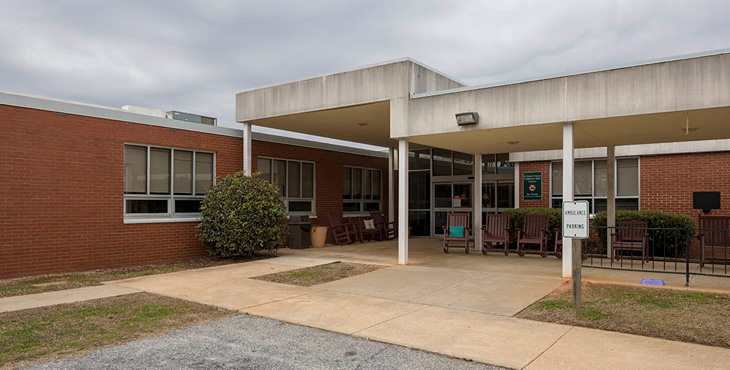
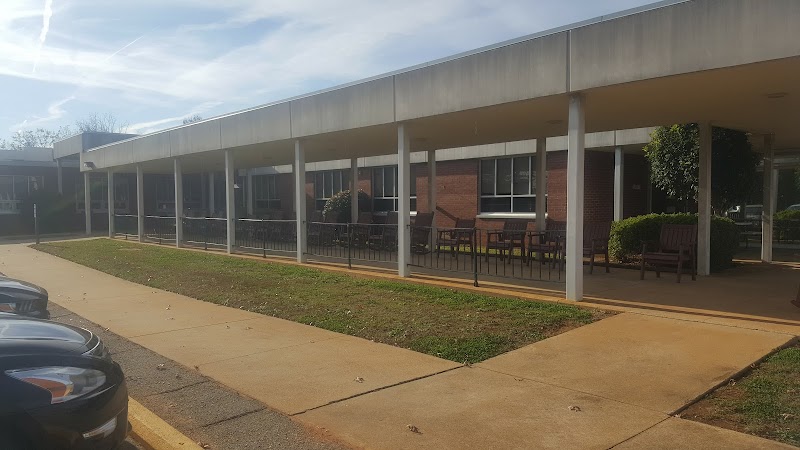
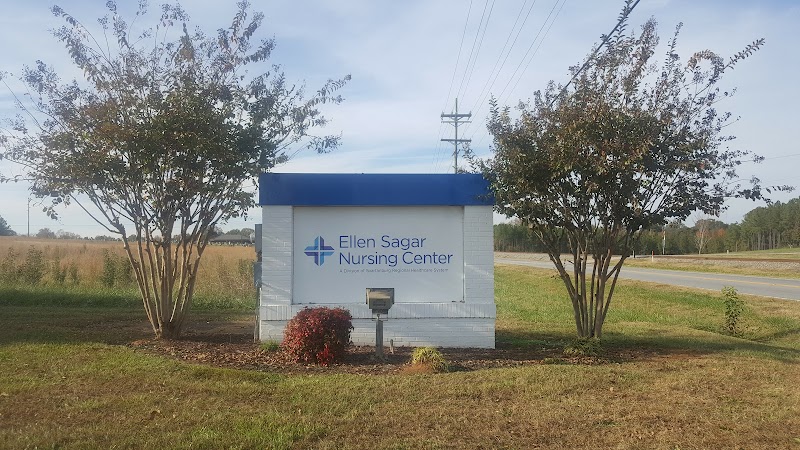
Ellen Sagar Nursing Center
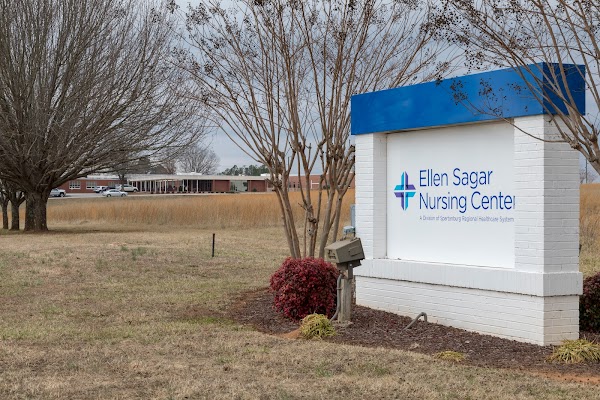
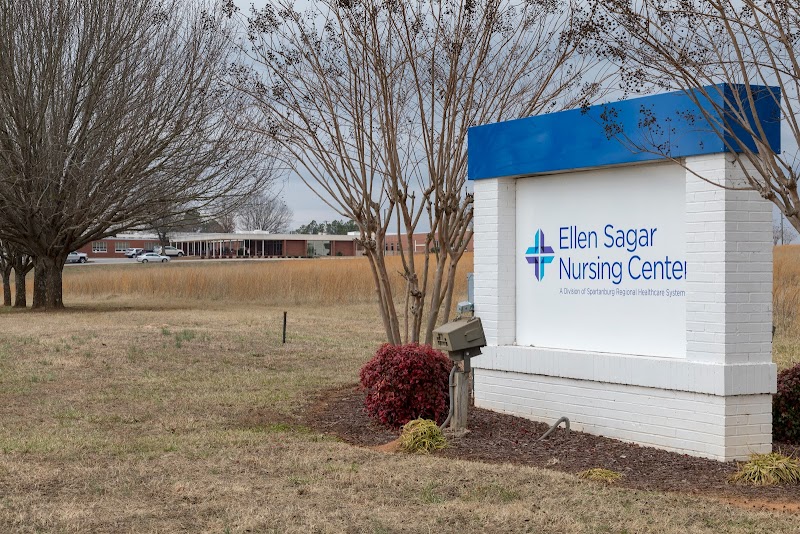
1817 Jonesville Highway, Union, SC 29379 (864) 301-3500
Government - Hospital district 113 Beds Independent Data: November 2025 1 Immediate Jeopardy citation
Trust Grade
31/100
#111 of 186 in SC
Last Inspection: March 2025

Within standard 12-15 month inspection cycle. Federal law requires annual inspections.

Overview

Ellen Sagar Nursing Center has received a Trust Grade of F, indicating significant concerns about its operations and care quality. It ranks #111 out of 186 nursing homes in South Carolina, placing it in the bottom half of facilities in the state, and is #2 out of 2 in Union County, meaning there is only one other local option available that is better. The facility's trend is worsening, with the number of reported issues increasing from 3 in 2023 to 6 in 2025. Staffing is rated average, with a turnover rate of 46%, which is on par with the state average but could be a concern for continuity of care. However, the facility has incurred $17,631 in fines, which is average but suggests ongoing compliance issues. Specific incidents include a critical failure to supervise a resident, leading to an elopement where the resident left the facility unnoticed, which posed a serious risk to their safety. Additionally, there were serious concerns regarding the care plan for another resident with Parkinson's disease, as the facility did not adequately address their functional limitations, resulting in a decline in their range of motion. While there are some strengths, such as average RN coverage, the overall picture is concerning, and families should weigh these factors carefully when considering this nursing home.
Trust Score
F
31/100
In South Carolina
#111/186
Bottom 41%
Safety Record
High Risk
Review needed
Inspections
Getting Worse
3 → 6 violations
Staff Stability
⚠ Watch
46% turnover. Above average. Higher turnover means staff may not know residents' routines.
Penalties
✓ Good
$17,631 in fines. Lower than most South Carolina facilities. Relatively clean record.
Skilled Nurses
⚠ Watch
Each resident gets only 29 minutes of Registered Nurse (RN) attention daily — below average for South Carolina. Fewer RN minutes means fewer trained eyes watching for problems.
Violations
⚠ Watch
14 deficiencies on record. Higher than average. Multiple issues found across inspections.
★★☆☆☆
2.0
Overall Rating
★★★☆☆
3.0
Staff Levels
★★★★☆
4.0
Care Quality
★★☆☆☆
2.0
Inspection Score
Stable
2023: 3 issues
2025: 6 issues

The Good

  • 4-Star Quality Measures · Strong clinical quality outcomes
  • Full Sprinkler Coverage · Fire safety systems throughout facility
  • No fines on record

Facility shows strength in quality measures, fire safety.

The Bad

2-Star Overall Rating

Below South Carolina average (2.8)

Below average - review inspection findings carefully

Staff Turnover: 46%

Near South Carolina avg (46%)

Higher turnover may affect care consistency

Federal Fines: $17,631

Below median ($33,413)

Minor penalties assessed

The Ugly 14 deficiencies on record

1 life-threatening 2 actual harm
Mar 2025 6 deficiencies
CONCERN (D)

Potential for Harm - no one hurt, but risky conditions existed

Deficiency F0558 (Tag F0558)

Could have caused harm · This affected 1 resident

Based on observation, interview, record review, and a review of facility policy, the facility failed to protect the resident's right to receive services by failing to keep Resident (R)38's call device...

Read full inspector narrative →
Based on observation, interview, record review, and a review of facility policy, the facility failed to protect the resident's right to receive services by failing to keep Resident (R)38's call devices within reach. This deficient practice affected 1 resident from a total of 40 residents sampled. Findings include: Review of R38's medical record revealed an initial admission date of 07/05/17. His/her primary medical diagnosis was Type 2 Diabetes. Secondary diagnoses included fracture of the left tibia and cerebral infarction. Review of R38's Quarterly Minimum Data Set (MDS) with an Assessment Reference Date (ARD) of 01/22/25, revealed a Brief Interview for Mental Status (BIMS) score of 2 out of 15, indicating R38's cognition was impaired. R38 was dependent on facility staff for most activities of daily living (ADLs). During an initial tour of the facility on 03/04/25 at 10:45 AM, R38 was laying in his/her bed with his/her eyes closed. The room lights were off and the window blinds were closed. R38's call device was observed to be wedged behind a bedside table on the resident's left side and was not within reach of the resident in the event he/she needed to call for assistance. During a second tour of Unit Two on 03/04/25 at 2:33 PM, R38 was heard from the hallway yelling Help me! repeatedly. A housekeeper was cleaning the hallway floor approximately 10 feet away from the resident's room but was not responding to R38's calls for help. Upon entering the room, R38 was positioned diagonally in the bed with both of his/her lower extremities hanging off the bed and his/her head laying on the siderail. R38's call device again was observed to be wedged behind the bedside table on the resident's left side and was not within his/her reach. During an interview on 03/04/25 at approximately 2:33 PM, R38 stated, I need somebody to get me out of this bed. The nearby housekeeper was asked to summon assistance to help R38. During an interview on 03/04/25 at 2:47 PM, Licensed Practical Nurse (LPN)14, confirmed he/she was assigned to care for R38 at that time. When asked whether R38 was able to use the call device, LPN14 stated, I think [he/she] does sometimes. When asked how he/she oversees the direct care of his/her assigned residents, to include ensuring call devices were within the reach of residents, LPN14 explained that he/she checked placement when going in and out of rooms. When asked whether he/she was aware that R38's call device was wedged behind his/her bedside table, LPN14 stated, No.
CONCERN (D)

Potential for Harm - no one hurt, but risky conditions existed

Respiratory Care (Tag F0695)

Could have caused harm · This affected 1 resident

**NOTE- TERMS IN BRACKETS HAVE BEEN EDITED TO PROTECT CONFIDENTIALITY** Based on observation, interview, record review, and review of facility policy, the facility failed to ensure each resident who r...

Read full inspector narrative →
**NOTE- TERMS IN BRACKETS HAVE BEEN EDITED TO PROTECT CONFIDENTIALITY** Based on observation, interview, record review, and review of facility policy, the facility failed to ensure each resident who received respiratory care and services by the use of oxygen via tracheostomy collar and nasal cannula, had the care consistent with professional standards of practice. The facility also failed to have Physician's Orders for 2 of 7 residents reviewed who received oxygen services (Resident (R)1, R11 and R44). Findings include: Review of facility policy titled, Oxygen Services with an effective date of 1/2025 revealed in the section titled Infection Control the following instructions: Oxygen tubing is changed every [seven] 7 days. Water bottles used for humidification are changed every [seven] 7 days. Oxygen concentrator filters are cleaned every [seven] 7 days. Care should be taken to keep oxygen masks and cannula free from potential contaminants. 1. Review of the medical record for R1 revealed an admission date of 10/15/24. Diagnoses included but was not limited to: Cerebrovascular Disease, Acute and Chronic Respiratory Failure with Hypoxia, Cardiomegaly, Quadriplegia, Malignant Neoplasm of the Right Kidney, Malignant Neoplasm of the Rectum, Malignant Neoplasm of the Colon, Hypoxemia, Obsessive Compulsive Disorder, Aphasia, Traumatic Brain Injury, Major Depressive Disorder, Dysphagia, Tracheostomy Status and Gastrostomy Status. Review of R1's Physician's Orders revealed an order to wean with oxygen saturation above 90% dated 03/09/25. Additional orders included: 1. Every Sunday night shift, complete the following: change oxygen tubing and water humidification. Date water bottle and tubing. Clean filter on concentrator and wipe down concentrator dated 03/05/25; 2. Change uncuffed trach every 60 days and as needed. Notify (Staff Member Name) to change, dated 01/27/25; 3. NPO (nothing by mouth) dated 10/28/24; 4. Enhanced barrier precautions related to tracheostomy and G-tube dated 10/25/24; oxygen via tracheostomy at one (1) liter per minute to maintain oxygen saturation above 92%. Check oxygen saturation levels two (2) times a day dated 10/21/24. 5. Suction resident as needed for copious secretions and document in the progress notes dated 10/15/24; 6. Change disposable inner cannula every shift and as needed, continue to clean tracheostomy site perimeter with normal saline and place fresh gauze and tracheostomy collar/tracheostomy ties as needed. During an observation on 03/04/25 at 1:48 PM, revealed R1 was in bed with the head of the bed elevated approximately 45 degrees. R1 was observed to have a tracheostomy tube and was wearing a tracheostomy collar to provide oxygen to him/her. The oxygen flow meter read two (2) liters/minute on the concentrator meter. A bottle of water for humidification was attached to the oxygen concentrator and then to the tracheostomy collar in use by R1. The water humidification bottle had a date of 02/03/25 which indicated when it was last changed. The tubing on the tracheostomy collar did not have a date to indicate when it was last changed. During an observation on 03/05/25 at 9:15 AM, revealed the water humidification bottle was still dated 02/03/25 and the tracheostomy collar and oxygen tubing were still not dated. During an observation and interview on 03/05/25 at 11:45 AM, of tracheostomy care, Licensed Practical Nurse (LPN)1 confirmed the container of water for the humidifier had been dated 02/03/25. LPN1 stated he/she was not sure why it had that date, but that he/she had changed it prior to tracheostomy care when he/she made the observation when the 02/03/25 date had been written on the label of the water humidification bottle. Review of R44's medical record revealed R44 was admitted to the facility on [DATE], with diagnoses including but not limited to: Anxiety Disorder, Delusional Disorder, Pain in Throat, Other Diseases of Pharynx, Tachycardia, Major Depressive Disorder, Pain and Post Traumatic Stress Disorder. Review R44's Medication Administration Record (MAR) for March 2025, with an order dated 08/15/24, for two (2) liters of oxygen per minute via nasal cannula as needed. During an observation on 03/04/25 at 11:00 AM, revealed R44's oxygen concentrator was set to five liters per minute. Further observation revealed there was no humidifier bottle and the tubing was not dated as to when it was last changed. During an interview on 03/04/25 at approximetly 11:05 AM, LPN10 was asked to check the respiratory equipment and reported that the correct setting for the oxygen flow was two (2) liters per minute. LPN10 also verified that the oxygen concentrator did not have a humidifier bottle and the tubing was not dated as to when it was last changed. Review of R11's medical record revealed R11 was admitted to the facility on [DATE], with diagnoses including but not limited to: Alzheimer's Disease, Congestive Heart Failure, Chronic Pain Syndrome, Dementia and Hypertension. Review of R11's MAR for March 2025, included an order dated 02/24/25 for oxygen at two liters per minute via nasal cannula every day and night. Further review of the MAR revealed another order dated 03/02/25, which stated the respiratory equipment was to be changed every Sunday. During an observation on 03/04/25 at 11:00 AM, revealed the oxygen concentrator for R11 was set to three liters of oxygen per minute and the attached humidifier bottle was dated 02/03/25.
CONCERN (D)

Potential for Harm - no one hurt, but risky conditions existed

Pharmacy Services (Tag F0755)

Could have caused harm · This affected 1 resident

Based on observations, interviews, and record review, the facility failed to provide routine drugs to Resident (R)308 as ordered by the physician. This deficient practice affected 1 of 3 residents rev...

Read full inspector narrative →
Based on observations, interviews, and record review, the facility failed to provide routine drugs to Resident (R)308 as ordered by the physician. This deficient practice affected 1 of 3 residents reviewed for medication administration from a total of 40 residents sampled. Findings included: Review of R308's medical record revealed an initial admission date of 02/27/25, with a primary medical diagnosis of Alzheimer's Disease. During an observation on 03/05/25 at 9:11 AM, of medication administration for R308 with Licensed Practical Nurse (LPN)10, revealed while preparing R308's medications, LPN10 realized that one of the resident's medications (Osteo Bi-Flex) was not available. LPN10 checked the medication cart and the medication room - neither contained the medication. LPN10 stated she would just have to give that later. Review of R308's Physician's Orders revealed an order dated 02/27/25, for Osteo Bi-Flex 100 mg (milligram) to be administered by mouth twice daily as a supplement. Review of R308's Medication Administration Record for February 2025 and March 2025, revealed the medication had not been administered since admission. During an interview on 03/06/25 at 2:05 PM, with the Administrator and the Director of Nursing (DON). The DON revealed, If the medication is ordered, we need to supply it. For OTCs [over the counter medications], we usually order it from our supplier but if we can't get it there, we'll ask the pharmacy to provide it. The DON was asked for evidence that facility staff had attempted to order the medication, but no evidence was provided.
CONCERN (D)

Potential for Harm - no one hurt, but risky conditions existed

Infection Control (Tag F0880)

Could have caused harm · This affected 1 resident

Based on observations, interviews, and record review, facility staff failed to ensure appropriate hand hygiene and gloving practices during the administration of medications. This deficient practice a...

Read full inspector narrative →
Based on observations, interviews, and record review, facility staff failed to ensure appropriate hand hygiene and gloving practices during the administration of medications. This deficient practice affected 1 of 3 residents, (Resident (R)4), reviewed for medication administration from a total of 40 residents sampled. Findings included: During an observation and interview on 03/05/25 at 8:40 AM, of medication administration for R4 with Licensed Practical Nurse (LPN)10 revealed, before preparing R4's medications, LPN10 applied a pair of disposable gloves. After applying the gloves, LPN10 unlocked the medication cart and prepared several medications for R4, including a Pregabalin capsule (used to treat pain caused by fibromyalgia, or nerve pain in people with diabetes (diabetic neuropathy), herpes zoster (post-herpetic neuralgia), or spinal cord injury), which LPN10 dispensed from the blister pack directly into his/her hand before placing it into the medication cup. LPN10 then dispensed two Calcium 600 mg (milligram) tablets from a stock bottle into the medication cup. LPN10 then removed one 1 of the tablets from the medication cup with his/her fingers and placed it back into the stock bottle and stated, [R4] only gets one. Wearing the same disposable gloves, LPN10 then brought the resident's medications to him/her at bedside. LPN10 handed the oral medications to the resident first. After R4 swallowed the oral medications, LPN10 administered eye drops into both of R4's eyes using the same disposable gloves. LPN10 then prepared two inhalers for the resident to administer and handed both inhalers to the resident sequentially while wearing the same disposable gloves. During an interview on 03/05/25 at 8:50 AM, LPN10 acknowledged administering all of R4's medications using the same disposable gloves and recognized there were several opportunities for hand hygiene and glove changes to have been implemented. LPN10 also acknowledged the particular risk for infection from administering eye drops with gloves that had been in contact with numerous contaminated sources. During an interview on 03/06/25 at 2:05 PM, with the Administrator and the Director of Nursing (DON). The DON confirmed that his/her expectation would have been for LPN10 to wash his/her hands and apply new gloves before administering R4's eye drops. Additionally, the DON explained that medications should be dispensed from the blister packs directly into medication cups and that medications should not be removed from medication cups using fingers.
CONCERN (E)

Potential for Harm - no one hurt, but risky conditions existed

Safe Environment (Tag F0584)

Could have caused harm · This affected multiple residents

**NOTE- TERMS IN BRACKETS HAVE BEEN EDITED TO PROTECT CONFIDENTIALITY** Based on observation and interview, the facility failed to ensure a clean, comfortable, and homelike environment by failing to m...

Read full inspector narrative →
**NOTE- TERMS IN BRACKETS HAVE BEEN EDITED TO PROTECT CONFIDENTIALITY** Based on observation and interview, the facility failed to ensure a clean, comfortable, and homelike environment by failing to maintain clean floors and walls in common areas. Findings included: On 03/04/25 at 10:50 AM, an initial tour of the facility was conducted. The walls and baseboards on both sides of the hallway leading to Unit Two were heavily scuffed and soiled. Additionally, there was both loose dirt and buildup observed in the corners. On 03/04/25 at 12:00 PM, an observation of the lunch meal was conducted in the facility's main dining area. The walls, baseboard, and floors near the kitchen entrance from the dining room were heavily soiled. On 03/07/25 at 10:09 AM, an interview was conducted with the Environmental Services (EVS) Supervisor. The EVS Supervisor initially stated, The walls and floors are over [AGE] years old so it is difficult to clean them. The EVS Supervisor was then observed cleaning a small area of one of the affected walls with a cleaning product and a cloth. That area of scuffing and soiling were easily removed. When asked whether the EVS team had a schedule for maintaining cleanliness of the floors and walls, the EVS Supervisor stated, No. An initial observation on 03/04/25 at 11:00 AM and repeated observations over the days of the survey, revealed a wood composite footboard on the resident's bed which had approximately a four inch piece broken off and with the jagged edge exposed. During an interview and observation on 03/07/25 at 9:45 AM, in Resident (R)61's room, the Maintenance Technician (MT)13 reported that the facility had replacements on hand, but no work order had been submitted. During an interview on 03/07/25 at 9:50 AM, the Administrator and Director of Nursing acknowledged that staff were to report any broken or damaged equipment and should have submitted a work order for repair.
CONCERN (E)

Potential for Harm - no one hurt, but risky conditions existed

Deficiency F0925 (Tag F0925)

Could have caused harm · This affected multiple residents

Based on review of facility policy, observations, interviews, and record review, the facility failed to maintain an effective pest control program to ensure the facility was free of pests. This was ev...

Read full inspector narrative →
Based on review of facility policy, observations, interviews, and record review, the facility failed to maintain an effective pest control program to ensure the facility was free of pests. This was evidenced by the ongoing presence of insects affecting 1 of 2 units observed during the survey. Findings include: Review of the facility policy titled Vector and Vermin Control effective on 04/2024, documented in pertinent part Policy: To prevent vermin and vector in the facility, maintain Infection Prevention control practices and report all incidents to EVS [Environmental Services], operations manager and or Administrator/Designee. Review of the Minutes from the Resident Council group meetings dated 02/17/25 at 2:00 PM, revealed that residents raised concern about pest presence at the facility. Specifically, the Minutes documented the residents complained that Bugs are back! Review of the facility's pest control Service Inspection Reports dated 09/13/24, 09/24/24, 9/25/24, 10/16/24, 11/11/24, 11/13/24, 12/06/24, 01/05/25, 02/03/25 and 02/19/25, all documented the facility's pest control vendor visited the facility and treated for targeted pests including but not limited to spiders, cockroaches, ants, bed bugs, etc. The Open Conditions portion of the pest control vendor's service inspection report documented structural deficits such as gaps around pipes going into walls, cracks and crevices around multiple spots throughout the facility contributed to the pest control ineffectiveness at the facility and it was recommended to have the identified areas sealed. There was no evidence that the facility followed up on the pest control vendor's recommendation. During observations conducted across multiple hallways of the facility, as well as the facility's conference room, during the survey dated 03/04/25 through 03/07/25, revealed the presence of multiple black flying insects. During an interview on 03/04/25 2:50 PM, Resident (R)42 stated they experienced continuous presence of bugs in their room. The resident stated the bugs crawled into their room through a crack underneath the radiator and they had made the facility aware of the concern without any solution. The resident stated the presence of bugs in the room disrupted their sleep and made the facility environment feel un-homelike. During an interview on 03/06/25 at 12:05 PM, R48 stated that he has observed bugs, both dead and alive, in several areas of his room and in common areas. R48 further stated that he has killed a bunch of them with tissues. R48 added that he had reported the concern to facility staff members several times, including the Administrator, but that the issue didn't seem to have improved. During an interview on 03/07/25 at 9:46 AM, the Operations Manager verified the facility staff was made aware of the residents' concerns related to the bugs' reappearance at the facility. Specifically, she stated that her department was made aware of the report from the Resident Council group meeting dated 02/17/25, during which the residents raised concern that Bugs are back! She stated that immediately after her attention was brought to the situation, she invited the facility's contracted exterminator company to come out to the facility to provide pest control services. She stated she does not monitor for effectiveness. She added that the Facilities Manager (a title used interchangeably to describe the Maintenance Director) was responsible for following up and addressing the concerns and recommendations made during the exterminators' visits. She however, clarified that if there was a pest control concern after the exterminator's visit, she contacted them again for a revisit. During an interview on 03/07/25 at 10:36 AM, the Facilities Manager stated he was responsible for keeping the facility in good repair. He stated that he periodically went around the facility to check for cracks in the walls and sealed them as necessary to discourage insects and rodents from accessing the facility. He stated the last time he inspected the facility for cracks and/or gaps in the wall was sometime last year. He stated he does not keep a log or documentation of his inspections and findings. He stated he was not informed of the recommendations from the exterminator, and he does not have access to the exterminator's documentation so that he was able to follow-up on whatever recommendation was made during the exterminator's visits. He stated it was important for him to be informed of the recommendations from the exterminators as it drove an action to address any pest infestation concerns across the facility. He stated the lack of follow-up on the exterminator's recommendation made the pest control measures ineffective.
Aug 2023 2 deficiencies
CONCERN (D)

Potential for Harm - no one hurt, but risky conditions existed

Garbage Disposal (Tag F0814)

Could have caused harm · This affected 1 resident

Based on observations, interviews, and review of the facility policy, the facility failed to ensure trash dumpsters were kept closed. On the first day of survey, two (2) of two (2) trash dumpsters wit...

Read full inspector narrative →
Based on observations, interviews, and review of the facility policy, the facility failed to ensure trash dumpsters were kept closed. On the first day of survey, two (2) of two (2) trash dumpsters with sliding doors were observed opened. Interviews and a review of the facility's policy revealed the dumpsters should be closed prevent insect and pest infestations. The findings include: Review of the facility's policy titled, Infection Prevention/Trash Containers, dated 4/2023, stated the purpose was, to provide sanitary conditions the trash dumpsters regarding infection prevention of vermin. [sic] The policy stated, the lid to the trash dumpsters will remain closed after use. In addition, the policy stated, the side doors will remain closed after use. On 8/1/23 at 9:00 a.m., observations of the outside of the facility revealed two (2) trash dumpsters with side doors were unattended and the side doors of the dumpsters were left open. A bag of garbage was observed hanging outside the dumpster from the top of one of the dumpsters. Additional observations of the dumpster area during the initial tour of the kitchen on 8/1/23 at 10:00 a.m. revealed the dumpsters remained opened until 10:30 a.m. On 8/1/23 at 10:30 a.m., an interview was conducted with the Dietary Manager (DM). The DM stated garbage from the kitchen area of the facility was placed in the dumpsters and acknowledged the side doors of the dumpsters should be closed and no garbage should be hanging from the dumpster. On 8/1/23 at 10:55 a.m., an interview was conducted with the facility's Administrator. The Administrator stated the facility recently received new dumpsters and the Administrator was not aware the dumpsters had side doors on them. In addition, the Administrator stated the expectations were that the lids and side doors of the dumpsters should remain closed when not in use. On 8/1/23 at 11:02 a.m., an interview was conducted with the Director of Nursing (DON). The DON stated the dumpsters should always be closed when not in use to prevent insect and vermin infestation at the facility.
CONCERN (E)

Potential for Harm - no one hurt, but risky conditions existed

Safe Environment (Tag F0584)

Could have caused harm · This affected multiple residents

**NOTE- TERMS IN BRACKETS HAVE BEEN EDITED TO PROTECT CONFIDENTIALITY** Based on observations, interviews, and facility policy review, the facility management failed to provide residents with a safe a...

Read full inspector narrative →
**NOTE- TERMS IN BRACKETS HAVE BEEN EDITED TO PROTECT CONFIDENTIALITY** Based on observations, interviews, and facility policy review, the facility management failed to provide residents with a safe and clean homelike environment. Findings include: 1. Review of the facility's policy titled, Resident's Rights and Responsibilities, effective 9/2022, revealed, To define the resident's rights and responsibilities. The Skilled Nursing Facility recognizes that the basic rights of human beings for independence of expression, decision-making, and action and concern for personal dignity and human relationships are always a great importance .C- Each resident or the resident's legal guardian has the right to: 8. To a safe, clean, comfortable and homelike environment. [sic] On 8/1/23 at 10:00 a.m., 8/2/23 at 9:15 a.m. and 8/3/23 at 8:28 a.m., a clogged air conditioning unit in room [ROOM NUMBER], was observed to have water on the floor underneath the air conditioning unit. There was also water observed inside the air conditioning unit. The air conditioning unit cover was missing pieces of it in several different areas. On 8/1/23 at 10:13 a.m., during an interview with Resident (R)11, the resident stated there was always water coming out of that thing (referring to the air conditioning unit). Resident #11 was asked if someone from the facility staff had checked it, which R11 stated no. On 8/3/23 at 2:00 p.m., in the presence of the Surveyor, the Facilities Coordinator confirmed the air conditioning unit was clogged and that a maintenance order to address the issue had not been completed until the Surveyor notified Administration earlier on 8/3/23. 2. Review of the facility's policy titled, Shower Cleaning, effective 11/2016 and last reviewed 4/2023, revealed Guidelines: Shower rooms cleaning includes tile, flooring, faucets, shower head, and shower curtain if present. [sic] On 8/1/23 at 10:39 a.m., 8/2/23 at 9:00 a.m., and 8/3/23 at 8:15 a.m., the shower room on Unit 1 (located on the hallway with room [ROOM NUMBER]-#19), was observed with a blackish substance in the grout of the walls located in the shower, tiles were observed to be discolored and chipping away from wall, and a brownish corrosion appearing substance underneath a vent on the wall was observed and looked to be from leaking water. During the survey, several residents were interviewed about the shower room on Unit 1. R11, R48, R55, and R294 stated the shower room sometimes looked like it hadn't been cleaned. The residents all stated that it was an older building, however, sometimes they do not want to use the shower room because of the black stains on the walls. An interview with Environmental Services (EVS) staff #1 on 8/3/23 at 10:31 a.m., revealed the facility was in the process of remodeling. EVS staff #1 confirmed the tiles chipping off the walls and the condition of the floors in the shower room. EVS staff #1 stated the mildew in the shower rooms can be cleaned with the Clorox cleaner Avert. EVS staff #1 revealed the shower rooms were cleaned daily however, because the building was older, sometimes it was hard to keep the areas free of mildew. An interview with Certified Nursing Assistant (CNA)1 on 8/3/23 at 10:12 a.m. revealed the shower rooms were cleaned daily by the EVS staff. CNA1 stated he/she has not heard any residents voicing concerns about the cleanliness of the shower room. CNA1 stated the black substance was on the walls of the shower, however, it can be cleaned. An interview with the Facilities Coordinator on 8/3/23 at 2:00 p.m. revealed the black substance on the walls in the shower room could be mildew. The Facilities Coordinator stated the EVS staff were to clean the shower rooms daily An interview with EVS staff #2 on 8/4/23 at 9:25 a.m., revealed he/she usually worked on Unit 2. EVS staff #2 stated the shower rooms were cleaned based on the cleaning schedule that was provided by the EVS Manager. EVS staff #2 stated the walls were to be cleaned with Avert, which was an approved solution to kill mildew and germs. EVS staff #2 stated he/she was unaware of any concerns voiced by residents regarding Unit 1's shower room. An interview with the EVS Manager and the Director of Support Services on 8/4/23 at 9:36 a.m., revealed the black substance on the shower room walls was mildew. The EVS Manager revealed the shower room was cleaned daily. The Director of Support Services stated that the shower rooms could use a little more attention due to Unit 1 being built several years before Unit 2. The EVS Manager agreed with the Director of Support Services.
Mar 2023 1 deficiency 1 IJ
CRITICAL (J) 📢 Someone Reported This

A family member, employee, or ombudsman was alarmed enough to file a formal complaint

Immediate Jeopardy (IJ) - the most serious Medicare violation

Accident Prevention (Tag F0689)

Someone could have died · This affected 1 resident

**NOTE- TERMS IN BRACKETS HAVE BEEN EDITED TO PROTECT CONFIDENTIALITY** Based on review of the facility policy, interviews, and observation, the facility failed to provide supervision to 1 of 5 reside...

Read full inspector narrative →
**NOTE- TERMS IN BRACKETS HAVE BEEN EDITED TO PROTECT CONFIDENTIALITY** Based on review of the facility policy, interviews, and observation, the facility failed to provide supervision to 1 of 5 residents (R)3 to prevent accidents and hazards. R3 eloped from the facility on 03/13/23 between approximately 7:20-7:30 PM. Because no staff were on the hallway to hear the door alarm sounding when the resident exited, it was not known she had eloped - placing her at risk of serious harm. No staff were searching for the resident when she was found by Dietary Assistant (DA)1, who was leaving at the end of the shift. On 03/16/23 at approximately 3 PM, the State Agency (SA) determined that the facility's non-compliance with one or more federal health, safety, and/or quality regulations has caused or was likely to cause serious injury, serious harm, serious impairment, or death. On 03/16/23 at 6:05 PM the Administrator and the Director of Nursing were notified that the elopement of R3 constituted Immediate Jeopardy (IJ) at F689, effective 03/13/23. The facility presented an acceptable plan of removal of the IJ on 03/17/23 at 12:20 PM. The survey team validated that the IJ was removed on 03/17/23 at 2 PM following the facility's implementation of the plan of removal. The facility remained out of compliance at F689 at a lower scope and severity of D (isolated with potential for more than minimal harm) following removal of the IJ. An extended survey was conducted in conjunction with the Complaint Survey for non-compliance at F689, constituting substandard quality of care. Findings include: Review of the facility's policy titled, Elopement Risk Precautions, with a revision date of 09/22 revealed Elopement occurs when a resident leaves the premises or a safe area without authorization and/or any necessary supervision to do so. Furthermore, A resident who leaves a safe area may be at risk of heat or cold exposure .or being struck by a motor vehicle. R3 was admitted to the facility on [DATE] with diagnoses including, but not limited to, dementia with behavioral disturbance, schizoaffective disorder, and mild cognitive impairment of unknown etiology. Review of the admission Minimum Data Set (MDS) with an Assessment Reference Date (ARD) of 03/02/23 revealed a Brief Interview of Mental Status (BIMS) score of 99, indicating she could not complete the interview due to her cognitive status. Review of DA1 ' s Narrative of Incident written on 03/13/23 at 07:29 PM revealed that she exited the building from the Unit 2 Dining Room around 7:29 PM. She noticed R3 on the sidewalk outside and took the resident back inside to alert the nursing staff. Interview with DA1 on 03/16/23 at approximately 11:40 AM confirmed her statement to the facility. At the time of the incident, she was leaving the building after her shift had ended. She did not hear the door alarm sounding prior to exiting the facility. She found R3 outside on the sidewalk adjacent to the staff parking lot, approximately 10 – 15 feet from the exit on hall 7 (R3 ' s assigned hall). She escorted the resident back into the building, using the main entrance on Unit 2. Review of DA2 ' s Narrative of Incident written on 03/13/23 revealed she was in the patient common area near unit 2 when DA1 entered with R3. When she saw the resident, she knocked on the window to the unit 2 nursing station to alert the nurses. Interview with DA2 on 03/16/23 at approximately 11:45 AM confirmed her statement to the facility. When DA1 entered with R3, she knocked on the window to the nurse ' s station to alert nursing staff. She did not hear the Hall 7 door alarm at any point. Review of Registered Nurse (RN)1 ' s Narrative of Incident for the facility investigation, written on 03/13/23 at 7:35 PM, revealed she last saw the resident at 7:15 PM in a recliner. At around 7:30 PM, RN1 witnessed dietary staff bringing the resident to the unit. She then heard the alarm sounding on Hall 7. Interview with RN1 on 03/16/23 at approximately 11:50 AM confirmed her statement. She did not hear when the alarm on hallway 7 was first set off because she was at the nurse's station. When the resident was brought in by dietary staff, her wander bracelet set off the alarm of the door she entered. Review of R3 progress notes revealed that RN1 documented exit seeking behaviors from the resident on 03/11/23 at approximately 4:45 PM. Review of R3 ' s Baseline Care Plan revealed R3 ' s exit-seeking behaviors were not care planned until 03/14/23. On 03/14/23, the facility care planned a Code Alert Bracelet to the left ankle of the resident. Review of R3 ' s Medication Record revealed that R3 ' s Code Alert Bracelet to Left Ankle was not documented as in use prior to 03/14/23. Interview with Administrator and Director of Nursing (DON) on 03/16/23 at approximately 11:55 AM confirmed there was no order for the Care Alert Bracelet prior to the elopement on 03/14/23. A clarification order was filled out after the incident. Interview revealed that R3 had a Care Alert Bracelet at the time of the incident, but they confirmed no documentation in the resident ' s chart can verify this. Review of Certified Nursing Aide (CNA)1 ' s Narrative of Incident written on 03/13/23 revealed she was on Hall 8 at the time of the incident. Interview with CNA1 on 3/16/23 at approximately 3:30 PM confirmed her statement to the facility. She was providing care in a resident ' s room on Hall 8 and did not hear the alarm at the time of the incident. She also confirmed she was the CNA for R3. Review of Licensed Practical Nurse (LPN)1 ' s Narrative of Incident written on 03/13/23 at 7:35 PM, revealed she was in the nurse ' s station with RN1 when dietary staff brought in R3 at 7:30 PM on 03/13/23. They were trying to configure a bed/chair alarm for another resident. Interview with LPN1 on 3/16/23 at approximately 4:22 PM confirmed her statement to the facility. She did not hear the alarm going when it first started going off, and she had not started the door alarm protocol when the DA1 escorted R3 back into the building. When staff hear the door alarm, they are meant to check the door sounding the alarm, ensure no resident is exiting or has exited the door, and verify that all residents on the unit are present and accounted for. Instead, both LPN1 and RN1 were still in the nurse ' s station at the time of the incident. Interview with RN1 on 3/16/23 at approximately 4:24 PM confirmed she did not hear the alarm immediately when the resident exited. She only noticed the alarm sounding when the resident was brought in by DA1. She was still in the nurse ' s station, and had not started the door alarm protocol when DA1 escorted R3 back into the building. Review of localconditions.com revealed the temperature in Union County was approximately 48 degrees Fahrenheit at the time of the incident. The weather was clear and without precipitation at the time. The facility's provided removal plan included: R3 was provided 1:1 supervision by staff. The alarm system was retested. RN Supervisor educated all staff on how to respond to elopement and alarms. This was completed by 03/14/23. A care planning session with R3's family was held in person on 3/15/23. A new bull horn system was ordered by facilities and placed in the nurse's station and is hard wired into the door alarm system. The device is estimated to arrive on 03/24/23. Once installed, checks for functioning and compliance will be added to the shift nursing checks of other alarms. A stop sign was placed over the threshold of the exit door on hallway 7 on 03/17/23. A work order was placed to move the wander guard alarm system closer to the end of hallway 7. It was placed on 03/16/23. QAPI will meet on 03/23/23 to discuss R3's elopement. A 100% audit will be completed in the next 7 days of all residents for an elopement risk. All identified residents will have elopement precautions secured and in place. An elopement drill was scheduled for 03/21/23 at 1 PM. Ongoing education will be continued in annual competencies and with new employee orientation.
Jun 2021 5 deficiencies 2 Harm
SERIOUS (G)

Actual Harm - a resident was hurt due to facility failures

Comprehensive Care Plan (Tag F0656)

A resident was harmed · This affected 1 resident

**NOTE- TERMS IN BRACKETS HAVE BEEN EDITED TO PROTECT CONFIDENTIALITY** Based on observations, record review, and staff interviews, the facility failed to develop a comprehensive care plan addressing ...

Read full inspector narrative →
**NOTE- TERMS IN BRACKETS HAVE BEEN EDITED TO PROTECT CONFIDENTIALITY** Based on observations, record review, and staff interviews, the facility failed to develop a comprehensive care plan addressing functional limitation in range of motion (ROM) for 1 of 5 sample residents (Resident (R) #6) reviewed for ROM. As a result, R6 sustained a decline in ROM in his/her left-hand/fingers. The Findings include: Review of the facility Face Sheet revealed R6 was admitted to the facility on [DATE] with a diagnosis of Parkinson's disease, abnormal posture, acute pain due to trauma, muscle weakness, contracture of the muscle-right lower leg, contracture of muscle-left lower leg, pain, other symptoms, and signs with cognitive functions, difficulty in walking, unspecified osteoarthritis, and unspecified dementia without behavioral disturbance. Review of the quarterly Minimum Data Set (MDS) assessment, dated 05/05/2021, R6 had a Brief Interview for Mental Status score of 12 out of 15, which indicated R6 was moderately cognitively impaired. R6 required extensive assistance with two-person assist with activities of daily living (ADLs). Further review of the MDS assessment revealed R6 did not have any functional limitation in range of motion in the upper extremity (shoulder, elbow, wrist, hand) or lower extremity (hip, knee, ankle, foot) and did not display any behaviors, or refuse care during the review period. Observations conducted on R6 on 06/01/2021 at 4:03 PM, 06/02/2021 at 2:53 PM, and 06/02/2021 at 3:57 PM, revealed three of R6's fingers and thumb on his/her left-hand were bent inward towards his/her palm, and his/her left index finger was in a fixed position pointing outward. R6 was unable to open his/her left-hand. R6 did not have a splint or brace in place or available in his/her room. On 06/03/2021 at 4:12 PM, in the presence of the Director of Nursing (DON), revealed R6 seated in a reclining Geri-chair. Three of R6's fingers and thumb on his/her left hand were bent inward towards his/her palm, and his/her left index finger was in a fixed position pointing outward. Both of R6's legs were positioned straight out in-front of him/her. R6 was unable to open his/her left-hand or bend both his/her legs at the knees. Review of R6's comprehensive care plans, last revised on 05/19/2021, did not reveal the facility developed a comprehensive person-centered care plan that included any problems, goals or current or previous approaches related to the R6's bilateral lower extremity contractures and risk for functional decline in ROM. Review of the Occupational Therapy Evaluation,dated 06/04/2021 (during the survey), revealed Resident #6 had a contracture of the left hand/fingers. Resident #6's current decline in strength/endurance/ROM (range of motion) is affecting their level of independence in ADL's and required OT (occupational therapy) intervention to improve their level of ADL independence, positioning, and prevention of further contractures. Attempts to interview R6 on 06/01/2021 at 2:53 PM and 2:57 PM were unsuccessful. The resident refused to respond to interview questions. During an interview with the Administrator and DON on 06/04/2021 at 3:01 PM, the Administrator stated R6 did not have contractures and did not have any upward flexion, or internal rotation of his/her extremities. S/he stated R6 had stiffness and the facility would not care plan stiffness because it was related to R6's diagnosis of Parkinson's Disease.
SERIOUS (G)

Actual Harm - a resident was hurt due to facility failures

Deficiency F0688 (Tag F0688)

A resident was harmed · This affected 1 resident

**NOTE- TERMS IN BRACKETS HAVE BEEN EDITED TO PROTECT CONFIDENTIALITY** Based on observation, record review, and staff interviews, and record review, the facility failed to ensure 1 of 5 sample reside...

Read full inspector narrative →
**NOTE- TERMS IN BRACKETS HAVE BEEN EDITED TO PROTECT CONFIDENTIALITY** Based on observation, record review, and staff interviews, and record review, the facility failed to ensure 1 of 5 sample residents (Resident (R)#6) reviewed for functional mobility for limited range of motion received the care and services to assist the resident and maintain, improve, or prevent an avoidable decline in range of motion (ROM). As a result, R6 sustained a decline in the ROM in his/her left-hand/fingers. The Findings include: Review of the facility Face Sheet revealed R6 was admitted to the facility on [DATE] with a diagnosis of Parkinson's disease, abnormal posture, acute pain due to trauma, muscle weakness, contracture of the muscle-right lower leg, contracture of muscle-left lower leg, pain, other symptoms, and signs with cognitive functions, difficulty in walking, unspecified osteoarthritis, and unspecified dementia without behavioral disturbance. Review of the quarterly Minimum Data Set (MDS) assessment, dated 05/05/2021, revealed R6 had a Brief Interview for Mental Status score of 12 out of 15, which indicated R6 was moderately cognitively impaired. R6 required extensive assistance with two-person assist with activities of daily living (ADLs). Further review of the MDS assessment revealed R6 did not have any functional limitation in ROM in the upper extremity (shoulder, elbow, wrist, hand) or lower extremity (hip, knee, ankle, foot) and did not display any behaviors, or refuse care during the review period. Review of R6's care plan, last revised on 05/19/2021, revealed the facility did not develop a comprehensive person-centered care plan related to R6's bilateral lower extremity contractures or his/her risk for functional decline in ROM (cross-refer F656). On 06/01/2021 at 4:03 PM, R6 was observed in bed. Three of his/her fingers and thumb on his/her left-hand were bent inward towards his/her palm, and his/her left index finger was in a fixed position pointing outward. R6 was unable to open his/her hand. R6 did not have a splint or brace in place or available in his/her room. On 06/02/2021 at 2:53 PM, R6 was observed sitting in a reclining Geri-chair in the hallway watching television. Three of R6's fingers and thumb on his/her left-hand were bent inward towards his/her palm and his/her left index finger was in a fixed position pointing outward. R6 did not have a splint or brace in place. On 06/02/2021 at 3:57 PM, R6 was observed in bed. Three of R6's fingers and thumb on his/her left-hand were bent inward towards his/her palm and his/her left index finger was in a fixed position pointing outward. R6 did not have a splint or brace in place or available in his/her room. Review of the monthly Nursing Summary, dated 05/12/2021 noted movement of upper extremities as moving both upper extremities well; per usual and movement of lower extremities as limited lower extremity; bilateral-existing condition. Review of the physician's Annual Exam,, dated 06/15/2021, revealed R6 did not have a decline, was angry and irritated, difficult to care for at times, received Depakote (an anticonvulsant) for behaviors, yells and becomes aggressive to staff. Musculoskeletal: normal range of motion, no edema. Review of the Physician Orders, dated 06/03/2021, revealed R6 had a diagnosis of contractures in his/her lower legs, but did not reveal the resident was receiving any restorative or ROM services. Further review revealed an order for Physical Therapy/Occupational Therapy/Speech therapy (PT/OT/ST) as needed. Review of the physician's Progress Note/ Follow-Up visit, dated 04/01/2021, revealed no acute concerns, pain well controlled with the Tylenol (an analgesic) and Ultram (an analgesic) as ordered. Further review revealed Musculoskeletal: full range of motion X (times) 4 (four). On 06/03/2021 at 4:03 PM, the Director of Nursing (DON) was asked if R6 was receiving restorative nursing or ROM. S/he stated R6 did not have any limited ROM in his/her left-hand. The DON stated s/he would have to examine R6 to confirm if s/he had any limited ROM. At 4:12 PM, the DON observed R6's left-hand and bilateral legs. Three of R6's fingers and thumb on his/her left-hand were bent inward towards his/her palm, and his/her left index finger was in a fixed position pointing outward. R6 was unable to open his/her left-hand. R6's bilateral lower extremities were in a straight fixed position. R6 was unable to bend his/her legs at the knees. Review of an Interdisciplinary Rehabilitation Screening Form, dated 06/03/2021 (during the survey), completed by the Certified Occupational Therapy Assistant (COTA), revealed R6 had a new/existing deficit -- change of function in his/her range of motion. Further review revealed the COTA documented R6 appears to have a Trigger Finger type of contracture to left-hand. Patient reports no loss of function as a result of this contracture. Patient has agreed to an evaluation to address this issue. Review of the Occupational Therapy Evaluation, dated 06/04/2021 (during the survey), revealed R6 hads a contracture of the left-hand/fingers. Further review revealed the Occupational Therapist (OT) documented R6's current decline in strength/endurance/ROM (range of motion) is affecting their level of dependence in ADL's and requires OT (occupational therapy) intervention to improve their level of ADL independence, positioning, and prevention of further contractures. On 06/01/2021 at 2:53 PM and 2:57 PM, two attempts to interview R6 were unsuccessful. The resident refused to answer interview questions. On 06/04/2021 at 12:48 PM, an interview with the (OT) revealed R6 has a left-hand contracture. The OT stated s/he was unsure what caused the contracture and stated that the contracture may be a Dupuytren's contracture (a hand deformity that usually develops over years) or caused by the use of medications. The OT stated s/he would provide resident with a soft hand splint and/or towel to prevent the contracture from worsening. On 06/04/2021 at 12:54 PM, an interview with the COTA revealed R6 was last screened for therapy on 12/10/2020. The COTA stated R6 did not have a change in his/her functional range of motion and that s/he did not become aware of R6's left-hand contracture until 06/03/2021 (during the survey) when the DON requested a therapy screening. On 06/04/2021 at 1:08 PM; Licensed Practical Nurse (LPN) 8 was asked when s/he noticed R6 could not open his/her left-hand. LPN 8 stated R6's left-hand had always been that way as long as s/he could remember. On 06/04/2021 at 1:14PM; an interview with Registered Nurse (RN) 9 revealed s/he did not become aware R6's left-hand contracture until 06/03/2021 (during the survey). S/he stated that if a resident had a contracture on admission; the contracture would be documented on the admission assessment. RN 9 stated that the Certified Nursing Aides (CNAs) perform weekly skin/body audits on residents and licensed nurses perform monthly nursing assessments. RN 9 was asked to provide any documentation noting the limited ROM in R6's left-hand. RN 9 stated there were no other assessments documenting R6 had limited ROM in his/her left-hand. On 06/04/2021 at 1:21 PM; an interview with the Physical Therapist revealed s/he has not seen R6 for PT and was not aware that R6 had a change of condition. S/he confirmed R6 had a left-hand contracture, but was unable to state when the contracture developed and was unaware of his/her diagnoses/pre-existing condition. On 6/4/21 at 2:35 PM, an interview with the DON revealed that due to COVID-19 the facility stopped their restorative nursing program. The DON stated that the residents previously on a restorative program were moved over to nursing and the licensed nurses conduct ROM and assessed residents for limited ROM during the monthly nursing assessments. On 6/4/21 at 3:01 PM, an interview with the Administrator and DON revealed that due to COVID-19; the facility did not have a restorative nursing program. The Administrator stated the facility did not have a policy on ROM or a policy on restorative nursing. Resident's previously receiving restorative nursing services were transferred to nursing services and nursing services was responsible for providing ROM to residents. The Administrator stated R6 did not have contractures and did not have any upward flexion, or internal rotation of his/her extremities. S/he stated R6 had stiffness related to his/her diagnosis of Parkinson's Disease.
CONCERN (D)

Potential for Harm - no one hurt, but risky conditions existed

Deficiency F0578 (Tag F0578)

Could have caused harm · This affected 1 resident

**NOTE- TERMS IN BRACKETS HAVE BEEN EDITED TO PROTECT CONFIDENTIALITY** Based on record review, facility policy review, and interviews, the facility failed to ensure two physicians evaluated and signe...

Read full inspector narrative →
**NOTE- TERMS IN BRACKETS HAVE BEEN EDITED TO PROTECT CONFIDENTIALITY** Based on record review, facility policy review, and interviews, the facility failed to ensure two physicians evaluated and signed off on the Decisional Capacity for 1 of 2 residents. (Resident (R) 2) reviewed for advanced directives before changing the resident's code status as required by state law. This failure placed the residents at risk of receiving, failure to receive, or a delay in receiving Cardiopulmonary Resuscitation (CPR). Findings include: Review of the facility policy and procedure titled Advanced Directives, dated 04/2020, indicated, If an adult resident is incapable of making his or her health treatment decisions, the resident's Advance Directive is presumed to be valid. In all cases in which an Advance Directive is to be disregarded, persuasive and credible evidence must exist that the resident lacks decision making [sic] capacity at the time the Directive was made. Review of the facility's Face Sheet, dated [DATE], revealed R2 was admitted to the facility on [DATE] with a diagnosis including but not limited to unspecified dementia with behavioral disturbances. Further review revealed R2 was a Do Not Resuscitate (DNR). Review of the quarterly Minimum Data Set (MDS) assessment, dated [DATE], revealed R2 was rarely or never understood. Review of the Progress Note Addressing Decision Capacity, dated [DATE], signed by one physician, indicated R2 DOES NOT meet ALL the criteria for decisional capacity, therefore is not able to make healthcare decisions for self. Furthermore, it is my opinion that due to the patient's medical condition(s), this lack of capacity is not likely to change in the immediate future. R2 was not oriented to time and place, did not have the ability to understand and use information logically to reach a decision and did not have the ability to be realistic in decision making (i.e., to understand the consequences of a decision). Further review revealed, This process requires a note with signatures of TWO Physicians! A progress note should be written regarding both the patient's medical condition and mental capacity. Review of the Physician's Order Form dated [DATE], signed by the physician on [DATE], revealed the physician provided a telephone/verbal order that indicated R2 was a DNR. During an interview with the Director of Nursing (DON) on [DATE] at 3:05 PM and [DATE] at 12:00 PM, the DON acknowledged R2 did not meet the criteria for decisional capacity to make healthcare decisions and that the Progress Note Addressing Decision Capacity required a second physician's signature. The DON acknowledged the facility did not obtain a second physician's signature for decisional capacity for R2 was not received until [DATE] (during the survey). During an interview with Social Services Director (SSD) on [DATE] at 3:20 PM, the SSD acknowledged that the facility did not obtain a second physician's signature for decisional capacity until [DATE] (during the survey). During an interview with Social Worker 2 on [DATE] at 12:10 PM, SW2 acknowledged the facility did not obtain a second physician's signature for decisional capacity for R2 until [DATE].
CONCERN (D)

Potential for Harm - no one hurt, but risky conditions existed

Grievances (Tag F0585)

Could have caused harm · This affected 1 resident

**NOTE- TERMS IN BRACKETS HAVE BEEN EDITED TO PROTECT CONFIDENTIALITY** Based on interview, record review, facility policy and procedure, the facility failed to follow their grievance policy and proce...

Read full inspector narrative →
**NOTE- TERMS IN BRACKETS HAVE BEEN EDITED TO PROTECT CONFIDENTIALITY** Based on interview, record review, facility policy and procedure, the facility failed to follow their grievance policy and procedure, complete a grievance, and thoroughly search the facility for missing personal items for 1 of 2 residents (Resident (R) 48) reviewed for missing personal property. As a result, the facility did not locate the resident's personal property until 06/03/2021. Review of the facility's policy and procedure titled Resident/Family Complaint and Grievance Policy, dated 02/2021, indicated, Each resident or authorized resident voicing a complaint/grievance shall receive a timely response from the facility that addressed the concern. The Skilled Nursing Facility shall actively seek a resolution and shall keep the resident or resident's representative apprised of progress. If the resident or resident's representative is satisfied with the resolution, the complaint grievance shall be considered closed. Resolution or an update shall be communicated within a timely manner to the resident and or legal representative. When the grievance/complaint cannot be resolved in a timely manner the facility shall inform the resident/representative of the continuing investigation. Review of the quarterly Minimum Data Set (MDS) assessment dated [DATE] revealed R48 had a Brief Interview for Mental Status (BIMS) score of 12 out of 15, which indicated the resident was moderately cognitively impaired. The resident's pertinent diagnosis included dementia. During an interview with R48 on 06/02/2021 at 8:55 AM, R48 stated that his/her high school yearbooks and pictures were missing. During a follow-up interview with R48 at 2:56 PM, the resident said staff temporarily moved him/her to another room, and when s/he returned, his/her high school yearbooks and pictures were missing. R48 stated that s/he reported the missing items to staff during a meeting and his/her sister. R48 did not remember if the staff followed up with him/her regarding the missing personal items. Review of the Progress Notes dated 04/01/2021 through 06/02/2021 did not reveal R48 reported or that staff followed up on any missing personal items. Review of the Resident Council Minutes dated 04/19/2021 revealed R48 reported, 21 year books [sic] ??? [sic] missing. During an interview with Registered Nurse (RN) 1 on 06/02/2021 at 3:20 PM, RN1 denied any knowledge R48 was missing any personal items. During an interview with the Social Worker (SW) 2 on 06/03/2021 at 9:20 AM, the SW2 stated s/he did not have any grievances on file for R48. During an interview with Housekeeper (HSK) 3 on 06/03/2021 at 9:25 AM, HSK3 stated that the family usually handled R48's laundry and that R48 did not report any missing items recently. During an interview with the Housekeeping Manager (HM) 4 on 06/03/2021 at 9:31 AM, the HM4 stated that s/he had not received any report that R48 was missing any personal items. During an interview with Activity Staff (AS) 5 on 06/03/2021 at 9:32 AM, the AS5 said that R48 reported missing personal items during a Resident Council Meeting about a month ago. The AD said the missing items R48 reported should be documented in the Resident Council meeting minutes. During a second interview with the SW2 on 06/03/2021 at 10:09 AM, SW2 acknowledged that R48 reported s/he was missing some books during the Resident Council Meeting. SW2 stated that s/he looked for R48's books but did not complete a grievance. S/he stated that staff does not file a grievance for every resident concern voiced in the Resident Council Meeting. A request was made for a copy of the investigation and follow-up. SW2 stated that s/he was unable to provide any documentation at that time. On 06/03/2021, at 11:30 AM, SW2 returned with a notebook containing handwritten notes related to multiple residents and multiple tasks. SW2 said s/he noted that s/he was unable to find the resident's yearbooks, talked with the resident and that the resident was OK. A review of the information in the notebook revealed that on 04/19/2021, the SW noted, [resident name] missing annuals? A second entry (at the bottom of the page), dated 04/26/2021 (no time noted), indicated, [resident name] – unable to find yearbooks talked with [resident name] – OK. During a third interview with SW2 on 06/04/2021 at 10:30 AM, SW2 stated that on 06/03/2021 a Certified Nurse Aid (CNA) overheard the conversation regarding the resident's missing personal items. The CNA told the SW that s/he saw a drawer in an area not previously searched by the staff. The staff located the resident's missing yearbooks and pictures and returned them to R48. During an interview with R48 on 06/04/2021 at 10:45 AM, R48 was sitting in his/her room, going through his/her pictures and yearbooks. R48 stated the facility found and returned his/her lost items on 06/03/2021 and that s/he was happy to have the items back. During an interview with the Administrator on 06/04/2021 at 11:56 AM, the Administrator stated that staff did not write up missing items as a grievance. Instead, the SW tracks the missing items, tries to contact the family, and replaces the missing items. The Administrator stated the staff would not be expected to follow up on a missing item they could not replace.
CONCERN (D)

Potential for Harm - no one hurt, but risky conditions existed

Quality of Care (Tag F0684)

Could have caused harm · This affected 1 resident

**NOTE- TERMS IN BRACKETS HAVE BEEN EDITED TO PROTECT CONFIDENTIALITY** Based on observation, record review, staff interview, the facility failed to identify a change in the skin condition for 1 of 4 ...

Read full inspector narrative →
**NOTE- TERMS IN BRACKETS HAVE BEEN EDITED TO PROTECT CONFIDENTIALITY** Based on observation, record review, staff interview, the facility failed to identify a change in the skin condition for 1 of 4 residents (Resident (R48). Specifically, the facility failed to identify and investigate a bruise on R48's right hand. Review of the quarterly Minimum Data Set (MDS) assessment dated [DATE] revealed R48 had a Brief Interview for Mental Status (BIMS) score of 12 out of 15, which indicated R48 was moderately cognitively impaired. R48's pertinent diagnoses included dementia and peripheral vascular disease. R48 required physical assistance in bathing, supervision from one staff member for dressing, and supervision after set-up assistance with bed mobility, transfers, walking in the corridor, locomotion on the unit, and toileting. The care plan last revised 04/07/2021 revealed R48 was at risk for impaired skin integrity related to dry skin, episodes of dermatitis, history of cellulitis, took aspirin daily, and had venous insufficiency (improper functioning of the vein valves in the leg, causing swelling and skin changes). The pertinent interventions directed staff to conduct weekly skin audits, observe the resident's skin condition with daily care, and report changes to the nurse. Observations conducted on 06/01/2021 at 12:44 PM and 06/03/2021 at 12:40 PM revealed R48 sitting in his/her room. R48 had a large, dark blue, circular bruise on the right hand, in between the right thumb and right index finger. R48 was not sure when or how the bruise occurred. Review of the Skin Check Roster: dated 05/01/2021 thru 06/04/20201, completed by the certified nurse aides (CNAs), revealed staff documented no new concerns on 05/08/2021, 05/09/2021, 05/20/2021, 05/21/2021, 05/23/2021, 05/26/2021, 05/28/2021, 05/29/2021, and 06/03/2021. Review of R48's Progress Notes dated 05/14/2021 through 06/03/2021 did not reveal staff noted or identified R48 had a bruise to his/her right hand. During an interview with the director of nursing (DON) on 06/03/2021 at 4:30 PM, the DON was asked to provide a copy of the facility's investigation related to the bruise on R48's right hand. S/he stated that s/he needed to look for the incident report. During a second interview with the DON on 06/04/2021 at 10:23 AM, The DON indicated that the facility did not have an investigation or incident report related to the bruise on R48's right hand. S/he stated that s/he started an internal investigation today (06/04/2021). S/he said that s/he interviewed nurses and residents, not yielding any results regarding how and when the bruise appeared on R48's hand. However, R48 was not scheduled for a body audit until 06/06/2021. During an interview with CNA6 on 06/04/2021 at 10:31 AM, CNA6 stated that s/he did not notice the bruise on R48's right hand. S/he said that if staff notices a bruise on a resident, staff usually notified the nurse immediately. S/he stated that the staff does not wait until the weekly skin assessments are completed to address a bruise. Bruises are addressed immediately. During an interview with CNA7 on 06/04/2021 at 10:39 AM, CNA7 stated that on 06/03/2021, R48 wore arm protectors (Geri Sleeves) and that s/he did not notice the bruise on R48's right hand while providing care to the resident. CNA7 stated that if s/he noted a bruise on a resident s/he would document it in the electronic health record and notify the nurse. During an interview with the Licensed Practical Nurse (LPN) 8 on 06/04/2021 at 10:35 AM, LPN8 stated that s/he did not notice the bruise on R48's right hand. S/he said that when staff noticed a bruise on a resident, the staff would normally notify the physician and family. S/he reviewed the clinical record to see if R48 had any recent lab work that contributed to the bruise, but no recent lab work was completed. S/he said the resident probably bumped his/her hand against something and that staff is currently filling out the incident report. During a third interview with the DON on 06/04/2021 at 11:35 AM, the DON stated that associates would complete an incident report if they saw something (i.e., bruise, injury, etc.) and usually place the incident report in his/her box for review the next day. S/he stated that the LPNs complete body audits on Sundays, and that staff did not identify a bruise on R48's right hand on the previous Sunday. S/he stated R48 could have obtained the injury at any time because s/he continues to try to provide care to his/her roommate.
Understanding Severity Codes (click to expand)
Life-Threatening (Immediate Jeopardy)
J - Isolated K - Pattern L - Widespread
Actual Harm
G - Isolated H - Pattern I - Widespread
Potential for Harm
D - Isolated E - Pattern F - Widespread
No Harm (Minor)
A - Isolated B - Pattern C - Widespread

Questions to Ask on Your Visit

  • "What changes have you made since the serious inspection findings?"
  • "Can I speak with families of current residents?"
  • "What's your RN coverage like on weekends and overnight?"

Our Honest Assessment

Strengths
  • • Licensed and certified facility. Meets minimum state requirements.
Concerns
  • • Multiple safety concerns identified: 1 life-threatening violation(s), 2 harm violation(s). Review inspection reports carefully.
  • • 14 deficiencies on record, including 1 critical (life-threatening) violation. These warrant careful review before choosing this facility.
  • • $17,631 in fines. Above average for South Carolina. Some compliance problems on record.
  • • Grade F (31/100). Below average facility with significant concerns.
Bottom line: Trust Score of 31/100 indicates significant concerns. Thoroughly evaluate alternatives.

About This Facility

What is Ellen Sagar Nursing Center's CMS Rating?

CMS assigns Ellen Sagar Nursing Center an overall rating of 2 out of 5 stars, which is considered below average nationally. Within South Carolina, this rating places the facility higher than 0% of the state's 100 nursing homes. A rating at this level reflects concerns identified through health inspections, staffing assessments, or quality measures that families should carefully consider.
How is Ellen Sagar Nursing Center Staffed?
CMS rates Ellen Sagar Nursing Center's staffing level at 3 out of 5 stars, which is average compared to other nursing homes. Staff turnover is 46%, compared to the South Carolina average of 46%. This relatively stable workforce can support continuity of care.

What Have Inspectors Found at Ellen Sagar Nursing Center?

State health inspectors documented 14 deficiencies at Ellen Sagar Nursing Center during 2021 to 2025. These included: 1 Immediate Jeopardy (the most serious level, indicating potential for serious harm or death), 2 that caused actual resident harm, and 11 with potential for harm. Immediate Jeopardy findings are rare and represent the most serious regulatory concerns. They require immediate corrective action.

Who Owns and Operates Ellen Sagar Nursing Center?

Ellen Sagar Nursing Center is owned by a government entity. Government-operated facilities are typically run by state, county, or municipal agencies. The facility operates independently rather than as part of a larger chain. With 113 certified beds and approximately 93 residents (about 82% occupancy), it is a mid-sized facility located in Union, South Carolina.

How Does Ellen Sagar Nursing Center Compare to Other South Carolina Nursing Homes?

Compared to the 100 nursing homes in South Carolina, Ellen Sagar Nursing Center's overall rating (2 stars) is below the state average of 2.8, staff turnover (46%) is near the state average of 46%, and health inspection rating (2 stars) is below the national benchmark.

What Should Families Ask When Visiting Ellen Sagar Nursing Center?

Based on this facility's data, families visiting should ask: "What changes have been made since the serious inspection findings, and how are you preventing similar issues?" "Can I visit during a mealtime to observe dining assistance and food quality?" "How do you handle medical emergencies, and what is your hospital transfer rate?" "Can I speak with family members of current residents about their experience?" These questions are particularly relevant given the facility's Immediate Jeopardy citations.

Is Ellen Sagar Nursing Center Safe?

Based on CMS inspection data, Ellen Sagar Nursing Center has documented safety concerns. Inspectors have issued 1 Immediate Jeopardy citation (the most serious violation level indicating risk of serious injury or death). The facility has a 2-star overall rating and ranks #100 of 100 nursing homes in South Carolina. Families considering this facility should ask detailed questions about what corrective actions have been taken since these incidents.

Do Nurses at Ellen Sagar Nursing Center Stick Around?

Ellen Sagar Nursing Center has a staff turnover rate of 46%, which is about average for South Carolina nursing homes (state average: 46%). Moderate turnover is common in nursing homes, but families should still ask about staff tenure and how the facility maintains care continuity when employees leave.

Was Ellen Sagar Nursing Center Ever Fined?

Ellen Sagar Nursing Center has been fined $17,631 across 3 penalty actions. This is below the South Carolina average of $33,255. While any fine indicates a compliance issue, fines under $50,000 are relatively common and typically reflect isolated problems that were subsequently corrected. Families should ask what specific issues led to these fines and confirm they've been resolved.

Is Ellen Sagar Nursing Center on Any Federal Watch List?

Ellen Sagar Nursing Center is not on any federal watch list. The most significant is the Special Focus Facility (SFF) program, which identifies the bottom 1% of nursing homes nationally based on persistent, serious quality problems. Not being on this list means the facility has avoided the pattern of deficiencies that triggers enhanced federal oversight. This is a positive indicator, though families should still review the facility's inspection history directly.