Millennium Post Acute Rehabilitation

2416 Sunset Boulevard, West Columbia, SC 29169 (803) 796-8024
For profit - Limited Liability company 132 Beds THE ENSIGN GROUP Data: November 2025
Trust Grade
33/100
#158 of 186 in SC
Last Inspection: March 2025

Within standard 12-15 month inspection cycle. Federal law requires annual inspections.

Overview

Millennium Post Acute Rehabilitation has received a Trust Grade of F, indicating significant concerns about the facility's quality of care. Ranked #158 out of 186 nursing homes in South Carolina, it falls in the bottom half, and #6 out of 7 in Lexington County, meaning there are only one or two local options that are better. The facility is worsening, as it went from 6 issues in 2024 to 11 in 2025, showing an increase in problems. Staffing is a weak point, with a poor rating of 1 out of 5 stars and a turnover rate of 56%, which is above the state average of 46%. In terms of fines, the facility faces $4,271, which is average but still raises concerns about compliance. While they have average RN coverage, which is beneficial for catching issues, several specific incidents are troubling. For example, the facility has been without a full-time Licensed Medical Social Worker, potentially impacting psychosocial support for residents. Additionally, they failed to ensure proper food storage and sanitation, risking residents' health. There were also breaches of resident privacy, with sensitive information being left unsecured, which could compromise confidentiality. Overall, while some aspects like RN coverage are acceptable, the numerous concerns and poor ratings suggest families should carefully consider their options.
Trust Score
F
33/100
In South Carolina
#158/186
Bottom 16%
Safety Record
Low Risk
No red flags
Inspections
Getting Worse
6 → 11 violations
Staff Stability
⚠ Watch
56% turnover. Above average. Higher turnover means staff may not know residents' routines.
Penalties
✓ Good
$4,271 in fines. Lower than most South Carolina facilities. Relatively clean record.
Skilled Nurses
⚠ Watch
Each resident gets only 28 minutes of Registered Nurse (RN) attention daily — below average for South Carolina. Fewer RN minutes means fewer trained eyes watching for problems.
Violations
⚠ Watch
25 deficiencies on record. Higher than average. Multiple issues found across inspections.
★☆☆☆☆
1.0
Overall Rating
★☆☆☆☆
1.0
Staff Levels
★★☆☆☆
2.0
Care Quality
★★☆☆☆
2.0
Inspection Score
Stable
2024: 6 issues
2025: 11 issues

The Good

  • Full Sprinkler Coverage · Fire safety systems throughout facility
  • No fines on record

Facility shows strength in fire safety.

The Bad

1-Star Overall Rating

Below South Carolina average (2.8)

Significant quality concerns identified by CMS

Staff Turnover: 56%

10pts above South Carolina avg (46%)

Frequent staff changes - ask about care continuity

Federal Fines: $4,271

Below median ($33,413)

Minor penalties assessed

Chain: THE ENSIGN GROUP

Part of a multi-facility chain

Ask about local staffing decisions and management

Staff turnover is elevated (56%)

8 points above South Carolina average of 48%

The Ugly 25 deficiencies on record

Sept 2025 6 deficiencies
CONCERN (D) 📢 Someone Reported This

A family member, employee, or ombudsman was alarmed enough to file a formal complaint

Potential for Harm - no one hurt, but risky conditions existed

Respiratory Care (Tag F0695)

Could have caused harm · This affected 1 resident

Based on review of the facility policy, observations, and interviews, the facility failed to ensure proper tracheostomy care, in relation to documentation and changing the tracheostomy neck tie, accor...

Read full inspector narrative →
Based on review of the facility policy, observations, and interviews, the facility failed to ensure proper tracheostomy care, in relation to documentation and changing the tracheostomy neck tie, according to professional standards of practice for 1 of 1 resident reviewed.Findings include:Review of a facility policy titled Trach Tie Change dated 01/2025, revealed Policy: The respiratory care provider should use accepted practices to change trach ties.Frequency: Every seven days, after showers or when visibly soiled.A review of the admission record revealed that the facility admitted Resident (R)4 on 09/05/2025, with diagnoses that included, but were not limited to, chronic respiratory failure with hypoxia, dependence on respiratory [ventilator] status, functional quadriplegia, and persistent vegetative state.A review of R4's Respiratory Administration Record (RAR) dated 07/01-31/2025 revealed an order to change the trach ties weekly on Thursday (Thurs) and as needed every day shift every Thurs.During a review of R4's August Medication Administration Record (MAR), the review did not reveal an order to change the tracheostomy ties.A review of R4's Care Plan, initiated 03/13/2025, revealed that R4 has a tracheostomy related to (r/t) chronic respiratory failure. The resident also has Chronic Obstructive Pulmonary Disease (COPD). The interventions further revealed tracheostomy care per facility protocol.A review of the Minimum Data Set (MDS) with an Assessment Reference Date (ARD) of 08/20/2025, revealed R4 had a Brief Interview for Mental Status (BIMS) that was not scored.During an observation on 09/09/2025 at 01:00 PM, the RAR did not reveal the changing of tracheostomy ties, weekly.During an interview on 09/09/2025 at 01:06 PM, Licensed Practical Nurse (LPN)4 stated, My new nursing orientation training was for 30 days. They are responsible for changing the tracheostomy neck ties. Respiratory does everything associated with the R4's tracheostomy.During an interview on 09/09/20025 at 01:15 PM, Respiratory Therapist (RT)1 stated, I've worked here for 3 years. We change his tracheostomy ties every Thursday and as needed. He lays on his side and drools a lot, so we may have to change it a little more than once a week.During an interview on 09/09/2025 at 01:36 PM, the Director of Respiratory stated, If they have skin breakdown proximity to the stoma site, the wound nurse changes the dressing. When R4 was in and out of the hospital, the order fell off for changing the tracheostomy ties. I realized his tracheostomy ties were not being changed once I observed there was no documentation for it.During an interview on 09/09/2025 at 02:29 PM, the Director of Respiratory stated, We do not have any documentation on trach changes for August.During an interview on 09/10/2025 at 05:22 PM, the Director of Nursing (DON) stated, They get checked off on changing the neck ties. It is one of the things we do during our annual skills fair.
CONCERN (D) 📢 Someone Reported This

A family member, employee, or ombudsman was alarmed enough to file a formal complaint

Potential for Harm - no one hurt, but risky conditions existed

Deficiency F0761 (Tag F0761)

Could have caused harm · This affected 1 resident

Based on facility policy review, record review, observations and interviews, the facility failed to ensure medications were properly stored and secured for one of one resident (R)1, observed for pharm...

Read full inspector narrative →
Based on facility policy review, record review, observations and interviews, the facility failed to ensure medications were properly stored and secured for one of one resident (R)1, observed for pharmacy services. Specifically, a cup containing Guaifenesin (Robitussin) was observed left unattended on R1's bedside table without documentation of a self-administration assessment or physician authorization.Findings include:Review of the facility policy titled, Medication Administration: General Guidelines, with a last review date of 7/28/25 revealed: Medications are administered as prescribed in accordance with good nursing principles and practices and only by persons legally authorized to do so. Personnel authorized to administer medications do so only after they have familiarized themselves with the medication. Policy further reveals, Medications are administered at the time they are prepared. Medications are not pre-paired/pre-set/pre-crushed. Only one patient/resident's medications are prepared and administered at a time.An observation of R1's bedside table on 9/9/25 at 11:50 AM revealed R1 had a medication cup in her bed side table with a red liquid. During a subsequent interview, R1 revealed it was a cough medicine that a night shift nurse gave her 2 nights ago.An observation and interview with Licensed Practical Nurse (LPN)2 on 9/9/25 at 1:38 PM revealed a loose white pill tablet that had H-49 engraved on the back of the pill. H-49 Imprint is identified as Sulfamethoxazole and Trimethoprim 800 mg [milligrams] / 160 mg, commonly used to treat various bacterial infections. LPN2 revealed she does not know what the pill is, where it came from, or who it is for. LPN2 denies pulling it for R1. LPN2 was observed wasting medication.Record review of R1's orders revealed no PRN [as needed] and or one time order for cough medication, or Sulfamethoxazole and Trimethoprim in the past 3 days.Record review of R1's electronic health record reveals no self-medication administration assessment completed on file nor was there a provider order for R1 to self-administer medication.During an interview with LPN1, completed on 9/10/25 at 3:37 PM, revealed the facility has standing orders for all residents from the Provider for common symptom relief, among these medications is Guaifenesin/Robitussin: 10ml/po every 8 hours as needed which is a medication used to treat a common cough/cold like symptoms. Subsequent record review was completed with LPN1 of R1's orders revealed no standing orders for cough medication. Further review of R1's electronic health record indicated no one time order or note indicating that the resident was ordered for and received cough medication. Observation was then made with LPN1 of unknown red substance in the medication cup. LPN1 was able to identify the substance as Guaifenesin/Robitussin. LPN1 acknowledged that the resident should have had an order or at least a progress note indicating the use and need for the cough medication.During an interview with the Administrator (LNHA), Director of Nursing (DON), and Assistant Director of Nursing (ADON) on 9/10/25 at 3:30 PM, revealed the leadership team has emphasized that, in accordance with safe medication administration practices, nursing staff must first verify that a resident has a valid provider order for any medication. The medication must be active on the Medication Administration Record (MAR), and provider instructions must be carefully followed prior to administration. Following this, staff are expected to document whether the resident took the medication and record the outcome in the resident's Electronic Health Record (EHR). The leadership team further clarified that residents should never have medications at their bedside, particularly medications that have not been prescribed. In this case, the leadership acknowledged, the nurse who administered the cough medication failed to obtain a provider order and did not adhere to the established protocols, thereby not meeting leadership's expectations for safe and compliant medication practices.
CONCERN (D) 📢 Someone Reported This

A family member, employee, or ombudsman was alarmed enough to file a formal complaint

Potential for Harm - no one hurt, but risky conditions existed

Deficiency F0800 (Tag F0800)

Could have caused harm · This affected 1 resident

**NOTE- TERMS IN BRACKETS HAVE BEEN EDITED TO PROTECT CONFIDENTIALITY** Based on review of the facility policies, Resident [NAME] of Rights, record review, observations and interviews, the facility fa...

Read full inspector narrative →
**NOTE- TERMS IN BRACKETS HAVE BEEN EDITED TO PROTECT CONFIDENTIALITY** Based on review of the facility policies, Resident [NAME] of Rights, record review, observations and interviews, the facility failed to ensure the nutritional well-being of Resident (R)5,while respecting an individual's right to make choices about their diet. Findings include: Review of the Resident's [NAME] of Rights (South Carolina Code of Laws, Section 44-81-20 et. Seq., revealed under personal treatment, to be treated with respect and dignity. Review of the facility's Heart Healthy Precautions, copyright 2022, revealed indications for use are for the individual desiring to reduce their risk of developing heart disease or minimize further complications from heart disease .A less restrictive diet is shown to increase intake, enjoyment, and palatability of the meal. Nutritional Adequacy revealed with the proper selection of foods, the Heart Healthy Precautions meets the current Dietary Reference Intakes/Recommended Dietary Allowances/Adequate Intakes, Food and Nutrition Board, Institute of Medicine, National Academy of Science, 2011 for individuals ages 31 years and older. Review of the facility's Heart Precautions Educational Handoutcopyrighted 2022, revealed well balanced, nourishing meals include the following component daily: · 6 ounces of protein – one ounce is equivalent to one ounce cooked meat or fish, one ounce cheese, ¼ cup cottage cheese, one egg or ½ cup of cooked beans. Review of R5's Face Sheet revealed that R5 was admitted to the facility on [DATE] with diagnoses including but not limited to: chronic respiratory failure, tracheostomy status, chronic obstructive pulmonary disease, and hypertensive heart disease without heart failure. Review of R5's Quarterly Minimum Data Set (MDS) with an Assessment Reference Date (ARD) of 07/08/25, revealed R5 had a Brief Interview for Mental Status (BIMS) score of 14, indicating an intact cognitive response. Review of R5's Care Plan with a start date of 01/02/2025 documented, “R5 has a nutritional problem or potential nutritional problem, PEG use related to (r/t) dysphagia, type 2 diabetes mellitus, heart failure, gastroesophageal reflux disease (GERD), congestive heart failure (CHF) with weight fluctuations expected resident and family are non-compliant with the ordered diet. Further review of the Care Plan revealed the following approach, “Diet as ordered by the physician, RD to evaluate and make diet change recommendations as needed (PRN), risk versus benefit to resident and family for appropriate diet for resident.” Review of R5's Treatment Administration Record (TAR), revised 08/29/2025 revealed Consistent Carbohydrate Diet (CCHO), regular texture, thin liquids consistency, no concentrated sweets/no fried foods/large protein portions. During an interview on 09/10/2025 at 09:12 AM, R5 stated, “They have me on a strict diet. I am tired of chicken. I eat chicken every day. They gave me two tortillas with salsa with no meat. It is days they don't give me meat. I really don't know much about the Heart Healthy diet. During an interview on 09/10/2025 at 10:30 AM, the Long-Term Care (LTC) ombudsman stated, “When I went out to speak with R5. I was informed that R5 is on a diet. The plan was for R5 to lose weight. But then R5 started complaining that they were not giving R5 enough to eat, and the food is not good.” During an interview on 09/10/2025 at 04:17 PM, Dietary Assistant Supervisor stated, “We get a diet form from the nursing station that tell us what the diet is so they write it on a preference slip. We then try to find out what they like. We go through the meats, milks, drinks, vegetable that we have at Millennium. On the dietary slip, it also let us know what their food allergies are. She never request more food. I know she has to have skinless meat for her heart healthy meal. Our diet slip breaks it down to what our meals are and what they can have and what they can't have. We follow up their preferences as much as possible. R5 can also reach out to the CNA or the Nurse if they want to request a change of diet selections. If the tray is already out, we will make the changes in the system or reprint the ticket or scratch it off. If it's something they can't have I have to have permission to change their diet. We offer salads and hamburger patties. She has an alternate menu posted in her room. I posted it myself. It is under her meal plan she has. They can call on their phone to us directly to change their menu selection. It is in front of her bed. She verified she can see the Menu. We have a cook after hours. I stay till six.” During an observation on 09/10/2025 at 04:39 PM, the surveyor had difficulty reading the weekly menu on the resident's wall. During an interview on 09/10/2025 at 04:39 PM, R5 stated, “I am unable to read the menu on the wall.” During an interview on 09/10/2025 at 05:03 PM, the Dietary Assistant Supervisor stated, “My boss had a conversation with her recently. If we ask if she is ok, R5 says she is ok. I cannot speak on extra portions for her meals because I was not here. We do try our best to see if R5 enjoys their meal.” During an observation on 09/10/2025 at 05:00 PM, the Dietary Assistant Supervisor stated, “She could not see the menu on the wall.” During an observation on 09/10/2025 at 05:00 PM, the Dietary Assistant Supervisor provided the surveyor with a menu for week 2. On Wednesday (Day 11), for dinner, the menu revealed cheese enchiladas, refried beans, pico salad, fresh grapes, sugar cookies, and milk/beverage. During an interview on 09/10/2025 at 05:05 PM, the Dietary Assistant Supervisor provided the surveyor with a menu that was changed out for Wednesday (Day 11). The menu revealed cheese quesadilla- 1 cup, carrots-4 ounce (oz), pico salad #8 scp, fresh grapes-4oz, sugar cookie-1, skim milk/beverage-1 cup. She could not confirm the portion sizes. During an interview on 09/10/2025 at 07:15 PM, the Administrator stated, “R5's Resident Representative (RR) will send food that is not on her heart-healthy diet. We have educated the RR to adhere to her diet, fluid-restricted, low-sodium. The problem is getting her to follow her diet. We are fighting that battle with what she is eating. She DoorDash. A Registered Dietitian (RD) is here weekly. The RD may say she has had her allotted protein for the day. The RD tracks the daily and weekly menu.
CONCERN (D) 📢 Someone Reported This

A family member, employee, or ombudsman was alarmed enough to file a formal complaint

Potential for Harm - no one hurt, but risky conditions existed

Deficiency F0919 (Tag F0919)

Could have caused harm · This affected 1 resident

Based on review of the facility policy, record review, observations, and interviews, the facility failed to ensure the call bell was within reach for one of one resident (R)2) reviewed for physical en...

Read full inspector narrative →
Based on review of the facility policy, record review, observations, and interviews, the facility failed to ensure the call bell was within reach for one of one resident (R)2) reviewed for physical environment, which resulted in a delay in care. Specifically, R2 was observed in bed with the call bell positioned out of reach, on the opposite side of the bed. During the observation, R2 stated they were unable to call for assistance and had waited over 30 minutes to request pain medications. Findings include:Review of the facility policy titled, CALL LIGHTS - ACCESSIBILITY AND TIMELY RESPONSE-POLICY, with a last update date of 10/31/24 revealed: The purpose of this policy is to assure the facility is adequately equipped with a call light at each resident's bedside, toilet, and bathing facility to allow residents to call for assistance. Call lights will directly relay to a staff member or centralized location to ensure appropriate response.Review of R2's face sheet revealed a diagnosis of muscle weakness and history of cerebral infarction.Review of R2's Comprehensive Minimum Data Set (MDS) with an Assessment Reference Date (ARD) of 8/31/25 revealed resident is dependent on staff for self-care and mobility. R2's MDS also reveals resident has impairment on both lower extremities (hip, knee, ankle, foot).During an observation of R2 on 9/9/25 between 1 PM and 1:20 PM revealed R2 was lying in bed, on her right side, supported by positional wedges on her left. The call light was located approximately 6 inches from the ground on the left side of the bed, out of the resident's reach. The resident attempted to access the call light, but was unsuccessful due to her current position. Subsequent interview with R2 revealed she cannot reach her call light and needs to talk to the nurse because she is in pain. R2 rated the pain 8/10 and stated the pain is all over her body. R2 revealed she has been attempting to get a hold of staff for the past 15 minutes.During an observation with Licensed Practical Nurse (LPN)1 completed on 9/9/25 between 1:20 PM and 1:35 PM, the surveyor called LPN1 to R2's room. LPN1 acknowledged the placement of the call bell and confirmed that it was out of the resident's reach. While speaking with R2, the resident requested her pain medication. LPN1 promptly notified the nurse responsible for R2's care, regarding the resident's request for pain management. In a subsequent interview, LPN1 confirmed that the facility's expectation is for call bells to always be within residents' reach. Staff are trained to conduct regular rounding as needed and at least every two hours to ensure that residents have access to their call bells at all times. Additionally, staff are instructed to verify that call bells are within reach before leaving a resident's room. LPN1 acknowledged that failure to ensure call bell accessibility can lead to negative patient outcomes and admitted that R2's call bell should have been positioned within the resident's reach.Review of R2's Electronic Medication Administration Record (EMAR) for 9/9/25 at 1:39 PM, documentation revealed that the resident was administered Hydrocodone-Acetaminophen 5-325 mg in response to a reported pain level of 9 out of 10.During an interview with the Administrator (LNHA), Director of Nursing (DON), and Assistant Director of Nursing (ADON) on 9/10/25 at 3:30 PM, revealed the leadership team expects staff to respond to call bells as promptly as possible when available. However, response times may vary during high demand periods such as meal service or when staff are assisting other residents. Regardless, residents must always have an assistive call device within reach. For residents with mobility limitations or other specific needs, the Interdisciplinary Team (IDT) addresses these concerns through individualized care planning, ensuring appropriate devices such as blow calls, pressure pads, or standard call bells are provided based on the resident's capabilities. Leadership staff conduct routine Angel Rounds to ensure expectations are being met and to support resident care directly on the floor. All staff are expected to round on residents at least every 2 to 3 hours and as needed to maintain safety and accessibility. In the incident observed, the call bell was noted to be on the wrong side of the bed, leadership team reveals the call bell should have been positioned on the side accessible to the resident to ensure timely assistance and compliance with facility standards. Leadership team reveals in this instance, the facility staff did not follow their expectations.
CONCERN (E) 📢 Someone Reported This

A family member, employee, or ombudsman was alarmed enough to file a formal complaint

Potential for Harm - no one hurt, but risky conditions existed

Deficiency F0583 (Tag F0583)

Could have caused harm · This affected multiple residents

Based on facility policy review, observation, and interviews, the facility failed to ensure the confidentiality and security of resident Protected Health Information (PHI) for two of two residents (R)...

Read full inspector narrative →
Based on facility policy review, observation, and interviews, the facility failed to ensure the confidentiality and security of resident Protected Health Information (PHI) for two of two residents (R)3 and R4) observed for resident rights. Specifically, a resident's code status document containing PHI was observed uncovered and unsecured in a clear wall-mounted mailbox, located in a hallway accessible to staff, residents, and visitors. Additionally, a staff member left a computer unattended in a common area with the screen displaying a resident face sheet, which included personally identifiable information such as the resident's name, photograph, and medical details.Findings include:Review of the undated facility document titled, HIPAA Privacy and Security Operational Guide, revealed: The everyday definition of breach is an infarction or violation of a law, obligation, or standard. HIPAA defines breach as the acquisition, access, use or disclosure of protected health information which compromises the security or privacy of the PHI. PHI is defined by this document as Protected Health Information. Examples of PHI as determined by the facility document includes but is not limited to: Information doctors, nurses, therapists, consultants, and other health care providers document in the medical record; both on paper and electronically. Document also reveals that an example of a breach in PHI includes but is not limited to, Unsecured documents (not shredded, left open/unlocked).Observation of Hall 100 Computer on Wheels (COW) on 9/9/25 at approximately 12:37 PM revealed the computer on wheels was unattended by a staff member. The computer was observed to be on, displaying a resident face sheet and picture displayed on the unattended screen. The Assistant Director of Nursing (ADON) was then observed taking away the COW and closing down the resident's chart.An observation of the Social Services clear mailbox on the 100 hallway, on 9/9/25 at 1:05 PM revealed, Protected Health Information (PHI) was inappropriately exposed and left unsecured. Documentation left exposed included Millennium Post Acute Advance Directives for Resident (R)3, and R4, and R4's signed document for Emergency Medical Services Do Not Resuscitate Order.An interview with the Social Services Assistant (SSA) on 9/9/25 at 1:29 PM revealed that the PHI stored uncovered and exposed should not have been left out in the open, the way it was. SSA revealed, PHI that need to be stored in her mailbox need to be placed in a folder and should be secured and covered. If there is no folder available, then the expectation is for staff to slide PHI underneath her door.During a group interview conducted on 9/10/25, at 3:30 PM with the Administrator (LNHA), Director of Nursing (DON), and ADON confirmed that it is their clear expectation for all staff to protect residents' PHI and comply with the Health Insurance Portability and Accountability Act (HIPAA). The leadership emphasized that PHI must not be left visible or unattended, should not be discussed in open or public areas, and must not be shared with individuals who are not directly involved in the resident's care. Additionally, they stated that when computers on wheels (COWs) are left unattended, screens displaying resident information must be properly secured to prevent unauthorized access. The leadership team acknowledged that staff failed to follow facility policy and expectations regarding the safeguarding of PHI. They confirmed that a resident's electronic health record was left open and unattended, exposing PHI in violation of HIPAA regulations and facility policy. Furthermore, leadership acknowledged that documents containing PHI were inappropriately left unsecured in the SSA's clear mailbox, which does not align with the facility's standards for protecting confidential information.
CONCERN (F) 📢 Someone Reported This

A family member, employee, or ombudsman was alarmed enough to file a formal complaint

Potential for Harm - no one hurt, but risky conditions existed

Social Worker (Tag F0850)

Could have caused harm · This affected most or all residents

Based on record review and interviews, the facility failed to employ a full-time qualified Licensed Medical Social Worker (LMSW), as required for facilities with more than 120 certified beds. 130/130 ...

Read full inspector narrative →
Based on record review and interviews, the facility failed to employ a full-time qualified Licensed Medical Social Worker (LMSW), as required for facilities with more than 120 certified beds. 130/130 certified beds, all of which are potentially affected by the lack of a full-time LMSW to provide necessary psychosocial support and services.Findings include:Review of facility staff list revealed there is no Licensed Medical Social Worker employed in the facility. Review of the facility census dated 9/9/25 revealed the facility was certified for 132 beds. During an interview with the Social Services Assistant (SSA) on 09/09/25 at 1:29 PM revealed the facility's Social Services Director, who was a Social Worker (SW) left the facility around Mid-August of 2025. SSA revealed the facility has been without a SW since that time and that she has done her best to fill in the role since her departure. SSA revealed that there is a Corporate liaison that she can call if she needs help, but she is unaware of her official title or role. SSA revealed her background is that of a Certified Nursing Assistant (CNA).During an interview with the Administrator (LNHA), Director of Nursing (DON), and Assistant Director of Nursing (ADON) on 9/10/25 at 3:30 PM revealed, Social workers at the facility are responsible for scheduling care plans, handling grievances, assisting with discharge planning, and coordinating discharge and home health services. The full-time LMSW left the facility in mid-August, and the facility has been without an LMSW since that time. The LNHA stated that the facility is currently posting and interviewing for the position, with a candidate scheduled to complete a facility walk-through on Friday, 9/12/25. The DON reported that the facility currently has a resource supporting the SSA. A subsequent interview revealed that this resource is an RN, not an LMSW, and confirmed that the facility is currently without a licensed medical social worker.
Mar 2025 5 deficiencies
CONCERN (D)

Potential for Harm - no one hurt, but risky conditions existed

Quality of Care (Tag F0684)

Could have caused harm · This affected 1 resident

**NOTE- TERMS IN BRACKETS HAVE BEEN EDITED TO PROTECT CONFIDENTIALITY** Based on interview, record review, and facility policy review, the facility failed to ensure all medications were appropriately ...

Read full inspector narrative →
**NOTE- TERMS IN BRACKETS HAVE BEEN EDITED TO PROTECT CONFIDENTIALITY** Based on interview, record review, and facility policy review, the facility failed to ensure all medications were appropriately administered on dialysis days for one of one resident (Resident (R)34) reviewed for dialysis out of a total of 22. Findings include: Review of R34's admission Record, found in the Profile tab of the electronic medical record (EMR), revealed she was admitted to the facility on [DATE] and last readmitted on [DATE]. R34 was admitted with diagnoses including end stage renal disease and type 2 diabetes. Review of R34's quarterly Minimum Data Set (MDS), located in the MDS tab in the EMR and with an Assessment Reference Date (ARD) of 12/05/24, revealed R34 had a Brief Interview for Mental Status (BIMS) score of 03 out of 15, which indicated significant cognitive impairment. R18 was documented to receive hemodialysis while a resident. Review of R34's EMR under the Orders tab revealed an order, dated 01/02/25, for the resident to attend hemodialysis Tuesday, Thursday, and Saturday at 11:00 AM. Further review revealed orders dated 01/21/25 for a mighty shake at meals for decreased appetite, and dated 01/02/25 for Midodrine 10 milligrams (mg) 1 tablet by mouth before meals and Sevelamer carbonate oral packet 2.4 grams 1 packet by mouth with meals in 4-6 ounces of liquid for ESRD (end stage renal disease). Review of R34's Care Plan, located in the Care Plan tab of the EMR and initiated 05/06/22, revealed a focus related to the need for dialysis related to renal failure. The interventions included for the resident to attend dialysis on Tuesday, Thursday and Saturday and to administer medications as ordered. Review of R34's Medication Administration Record (MAR), located under the Orders tab, revealed for January, February and March 2025, the mighty shake, midodrine and the sevelamer were not being regularly administered on Tuesday, Thursday and Saturday at 11:30 AM. During an interview on 03/11/25 at 5:35 PM, Licensed Practical Nurse (LPN)7 stated the resident's blood pressure medication was scheduled before each meal but that R34 would always miss the 2nd dose on the days she went to dialysis. She also stated they were not giving her the 2nd mighty shake, and she did not receive it after she returned from dialysis. She stated she did not notify the physician about the missed medications because she had never thought about it that way. During an interview on 03/12/25 at 11:41 AM, the Nurse Practitioner (NP) stated that it was understood that dialysis residents did not receive medications prescribed during dialysis times but agreed the orders should indicate that. The NP confirmed the current orders did not. During an interview 03/12/25 at 3:19 PM, the Director of Nursing (DON) was unable to provide any information or her expectation on ensuring staff following physician orders and administration medications per the orders. She stated she would need to review R34's medical records before answering but did not provide any additional information by the end of the survey.
CONCERN (D)

Potential for Harm - no one hurt, but risky conditions existed

Accident Prevention (Tag F0689)

Could have caused harm · This affected 1 resident

**NOTE- TERMS IN BRACKETS HAVE BEEN EDITED TO PROTECT CONFIDENTIALITY** Based on record review, interview, and policy review, the facility failed to ensure one of two residents (Resident (R)109) revie...

Read full inspector narrative →
**NOTE- TERMS IN BRACKETS HAVE BEEN EDITED TO PROTECT CONFIDENTIALITY** Based on record review, interview, and policy review, the facility failed to ensure one of two residents (Resident (R)109) reviewed for falls out of a total sample of 22 had adequate supervision, which resulted in a fall from bed. In addition, the facility failed to ensure there was an accurate root cause analysis which identified the events which led to R109's fall and the corrective action taken as a result. This had the potential to cause harm. Findings include: Review of a facility policy titled, Fall Management Systems, dated 07/24, indicated, . This facility is committed to promoting resident autonomy by providing an environment that remains as free of accident hazards and possible. Each resident is assisted in attaining or maintaining their highest practicable level of function through providing the resident with adequate supervision, assistive devices, and functional programs appropriate to prevent accidents . Review of the fall incident will include investigation to determine probable causal factors . Review of R109's titled Face Sheet, located under the Profile tab of the electronic medical record (EMR), indicated R109 was admitted to the facility on [DATE] with diagnoses that included chronic respiratory failure with hypoxia and nontraumatic intracerebral hemorrhage (stroke). Review of R109's Care Plan, located under the Care Plan tab of the EMR and dated 10/09/24, indicated the resident had a tracheostomy. The care plan indicated the resident was unable to voice her needs and was totally dependent on staff for activities of daily living. It was recorded that the resident had no history of falls. Review of R109's quarterly Minimum Data Set (MDS), with an Assessment Reference Date (ARD) of 01/15/25 and located in the ASPEN MDS viewer, indicated the staff were unable to determine the resident's Brief Interview of Mental Status (BIMS) score. The assessment indicated the resident was totally dependent on staff for all activities of daily living. Review of R109's Progress Notes, located under the Prog (Progress) Notes tab of the EMR and dated 01/30/25, indicated the resident coughed and slid off the bed. It was recorded the resident landed on her right side and was identified with swelling and some redness on her face. The provider was notified and ordered the resident to be sent to the emergency room for evaluation and treatment. Review of R109's hospital CT [computed tomography] Head Without Contrast, dated 01/30/25 and provided by the facility, indicated the resident did not sustain any head or neck injury and was returned back to the facility. Review of R109's IDT [Interdisciplinary Team], located under the Prog Notes of the EMR and dated 01/31/25, indicated IDT reviewed the resident's fall on 01/30/25. The IDT determined the resident had no acute findings. A new intervention was to place fall mats on each side of the resident's bed. Review of a document provided by the facility and titled Fall, dated 01/30/25, indicated Certified Nurse Aide (CNA) 4 was in room doing care to R109, when the resident coughed through her trach and slid off the right side of the bed. The resident had a small amount of redness to her cheek and was sent to the emergency room for evaluation and treatment. Review of a document provided by the facility and titled Fall, dated 01/31/25, indicated R109 was reviewed by the IDT and a root cause analysis was completed. The documented indicated Licensed Practical Nurse (LPN) 1 and CNA 4 were at the resident's bed side and providing care when the resident had a strong cough and slid off the bed. During an observation on 03/11/25 at 8:51 AM, R109 was in bed and had a fall mat on each side of her bed. The resident did not move while in bed. During an interview on 03/11/25 at 1:21 PM, LPN1 stated she was in the room along with CNA4 when the fall occurred. LPN1 stated she turned the resident towards CNA4, and CNA4 was present but did not grab the resident, the resident then coughed and then fell from the bed. LPN1 checked on the resident, placed her back into bed, and then informed her manager of the incident. During an interview on 03/11/15 at 2:40 PM, the Therapy Program Manager (TPM) stated the resident did not have the capacity to initiate movement in her bed or to remain on her side. Three calls and messages were left for CNA4, and there were no returned calls received. During an interview on 03/12/25 at 8:35 AM, the Director of Nursing (DON) stated she was not the staff member who completed the root cause analysis. The Assistant Director of Nursing (ADON) stated this was the first time LPN1 had experienced a resident fall while she worked with them. During an interview on 03/12/25 at 2:16 PM, LPN2, who was the unit manager for the [NAME] and Camillia Units, stated his understanding of R109's fall was LPN1 reported she had turned the resident towards CNA4, and CNA4 did not have her hands on the resident. LPN2 stated the ADON provided education to CNA4 regarding bed mobility. LPN2 stated CNA4 told him she was distracted and when the resident began to fall, it was too late to grab her. During an interview on 03/12/25 at 2:47 PM, the DON stated the staff were taught to use the draw sheet to pull the resident towards them and not to push the resident away from the staff member. The DON stated R109 was totally dependent on staff for all cares.
CONCERN (D)

Potential for Harm - no one hurt, but risky conditions existed

Deficiency F0692 (Tag F0692)

Could have caused harm · This affected 1 resident

**NOTE- TERMS IN BRACKETS HAVE BEEN EDITED TO PROTECT CONFIDENTIALITY** Based on observations, record review, and staff interviews, the facility failed to ensure adequate interventions were provided t...

Read full inspector narrative →
**NOTE- TERMS IN BRACKETS HAVE BEEN EDITED TO PROTECT CONFIDENTIALITY** Based on observations, record review, and staff interviews, the facility failed to ensure adequate interventions were provided to establish proper nutrition for one of five residents (Resident (R) 75) reviewed for nutrition in a total sample of 22. The facility failed to provide the resident with a dietary supplement as per physician order. This placed the resident at risk for further weight loss. Cross Reference: F842 Findings include: Review of the facility's policy titled, Dietary Services, dated 05/2014, indicated . The RD [Registered Dietician] or designee will document the specific interventions used and determine a monitoring system to evaluate the success of the interventions initiated (i.e. weekly eights, food/fluid intake studies, etc.) . Review of R75's Face Sheet, located under the Profile tab of the electronic medical record (EMR), indicated the resident was admitted to the facility on [DATE]. Review of R75's Care Plan, located under the Care Plan tab of the EMR and dated 05/18/22, indicated the resident had the potential for weight loss and would refuse being weighed at times. The goal identified on the care plan was to provide a physician ordered diet. Review of R75's quarterly Minimum Data Set (MDS), with an Assessment Reference Date (ARD) of 11/21/24 and located in the ASPEN MDS viewer, indicated the resident had a Brief Interview for Mental Status (BIMS) score of 11 out of 15, which indicated the resident was moderately cognitively impaired. The assessment indicated the resident did not sustain any significant weight loss. Review of R75's Physician Orders, located under the Orders tab of the EMR and dated 01/23/25, indicated the resident was identified with significant weight loss, and the medical provider ordered to add Mighty Shakes (nutritional supplement) with meals. During an interview on 03/10/25 at 11:51 AM, R75 stated he was aware that he was losing weight, but he was unsure why. During an observation on 03/10/25 at 12:35 PM, R75 had his meal tray on his bedside table and there was no Mighty Shake on his tray. At 1:14 PM, Certified Nurse Aide (CNA)1, pulled the resident's tray from the meal cart, and confirmed that the resident did not receive a Mighty Shake. During an observation on 03/11/25 at 8:32 AM, R75's meal tray was observed and there was no mighty shake on his tray. The resident's meal ticket was reviewed during this observation, and there was no Mighty Shake listed on his meal ticket. During an interview on 03/11/25 at 8:33 AM, CNA2 stated the Mighty Shakes came from the kitchen, and if the resident was ordered the shake, it would be on his tray. During an interview on 03/11/25 at 8:36 AM, CNA3 stated R75 did not receive a Mighty Shake with his meals, and it would be on his meal ticket if he did. During an interview on 03/11/25 at 10:09 AM, Licensed Practical Nurse (LPN) 2, who was the unit manager for [NAME] and Camillia units, stated when the medical providers ordered Mighty Shakes, a diet slip was created and taken to the kitchen. During an interview on 03/11/25 at 10:11 AM, the Dietary Manager (DM) stated the kitchen supplied the Mighty Shakes for the residents and confirmed that she had never received an order from the nurses for R75. During an interview on 03/12/25 at 10:50 AM, the RD stated the medical provider did order R75 Mighty Shakes since he was losing weight. The RD stated the process was for her to make the recommendation, an order was written, and a report was sent to the DM in addition to the order. The RD stated the DM missed her communication for the Mighty Shake for R75.
CONCERN (D)

Potential for Harm - no one hurt, but risky conditions existed

Medication Errors (Tag F0758)

Could have caused harm · This affected 1 resident

**NOTE- TERMS IN BRACKETS HAVE BEEN EDITED TO PROTECT CONFIDENTIALITY** Based on interviews, record reviews, and facility policy review, the facility failed to monitor target behaviors for the use of ...

Read full inspector narrative →
**NOTE- TERMS IN BRACKETS HAVE BEEN EDITED TO PROTECT CONFIDENTIALITY** Based on interviews, record reviews, and facility policy review, the facility failed to monitor target behaviors for the use of Risperidone (an antipsychotic medication) for one of five sampled residents (Resident (R) 33) reviewed for unnecessary medications out of a total sample of 22. This had the potential to cause the resident to receive unnecessary antipsychotic medications. Findings include: Review of R33's undated Resident Face Sheet, found in the electronic medical record (EMR) under the Continuity of Care (CCD) tab, indicated the resident was re-admitted to the facility on [DATE] with diagnoses including schizoaffective disorder. Review of R33's quarterly Minimum Data Set (MDS), with an Assessment Reference Date (ARD) of 12/03/24 and located under the MDS tab in the EMR -, indicated a Brief Interview for Mental Status (BIMS) score of 11 out of 15, which indicated R33 was moderately cognitively impaired. The assessment indicated the resident was not exhibiting any behavioral symptoms during the assessment period. It also indicated that the resident used antipsychotic medications during the assessment period. Review of R33's Physician Order Report, dated 10/04/23 and found in the EMR under the Orders Tab, indicated R33 was to receive risperidone 0.5 milligrams (mg), one tablet by mouth twice daily for schizoaffective disorder as evidenced by delusions, yelling out, and sexual comments. Review of R33's Medication Administration Record (MAR), dated February and March 2025 and found in the EMR under the Orders tab, revealed no documented evidence to show which specific behaviors were associated with the administration of the resident's antipsychotic medications and required routine monitoring. During an interview on 03/11/25 at 5:35 PM, Licensed Practical Nurse (LPN)7 stated staff documented monitoring of target behaviors on a resident's medication MAR. She stated she was unsure what specific behaviors were associated with the risperidone for R33. She stated R33 had not had any sexual behaviors that she was aware of, but he did yell out. She stated he did not have any delusions, but she had not communicated that with anyone. She stated she had not reported that to psychiatric physician or the nurse practitioner. LPN7 stated staff should be notifying one of them if they were not seeing behaviors specific to the medications being prescribed. During an interview on 03/12/25 at 9:59 AM, LPN6 stated staff document behavior monitoring on a resident's MAR. She stated she was unsure of what the behaviors were that staff should be monitoring in relation to R33's risperidone. During an interview on 03/12/25 at 12:02 PM, LPN5, who was a unit manager, stated she would expect to see monitoring of the targeted behaviors for R33's antipsychotic medications. LPN5 stated it would need to be added to the MAR since it was not indicated on there. During an interview on 03/12/25 at 3:18 PM, the Director of Nursing (DON) stated staff should be documenting they are monitoring targeted behaviors for R33's risperidone.
CONCERN (D)

Potential for Harm - no one hurt, but risky conditions existed

Medical Records (Tag F0842)

Could have caused harm · This affected 1 resident

**NOTE- TERMS IN BRACKETS HAVE BEEN EDITED TO PROTECT CONFIDENTIALITY** Based on record review, interviews, and facility policy review, the facility failed to ensure that clinical records were complet...

Read full inspector narrative →
**NOTE- TERMS IN BRACKETS HAVE BEEN EDITED TO PROTECT CONFIDENTIALITY** Based on record review, interviews, and facility policy review, the facility failed to ensure that clinical records were complete and contained accurate documentation for one of 22 residents (Resident (R)75) whose records were reviewed. This had the potential for the resident not to receive accurate care. Findings include: Review of a facility policy titled, Physician Orders, Telephone Orders and Recapitulation Process . Documentation in Long Term Care Record, dated 08/2016, indicated, . This policy ensures that the hybrid record during the transition to the EHR (electronic health record) is managed in accordance with the requirements for maintaining the designated record set. It is the policy of this facility to ensure accuracy of the physician orders, as much as possible, in accordance with the state and federal regulations.Physician's orders shall be obtained prior to the initiation of any medication or treatment . Review of R75's Face Sheet, located under the Profile tab of the electronic medical record (EMR), indicated the resident was admitted to the facility on [DATE]. Review of R75's Physician Orders, located under the Orders tab and dated 01/23/25, indicated the resident was ordered Mighty Shakes (nutritional supplement) with meals. Review of R75's Medication Administration Record, located under the Orders tab of the EMR and for the months of 01/2025, 02/2025, and 03/2025, indicated the order for the Mighty Shake was transcribed into the MAR section and revealed documentation the resident received his physician order Mighty Shake with each meal since 01/23/25. Two observations were conducted of R75. An observation was conducted on 03/10/25 at 12:35 PM, and the resident did not have Mighty Shake on his lunch tray. An observation was conducted on 03/11/25 at 8:32 AM, and there was not a Mighty Shake on his breakfast tray. The resident stated he was to have a Mighty Shake on his trays but did not receive it. During an interview on 03/11/25 at 8:37 AM, Licensed Practical Nurse (LPN)1 stated the process for ordering the Mighty Shake was to complete a diet slip and send it to the kitchen. LPN1 was shown her documentation from 03/10/25 and 03/11/25, and she stated she was to make sure that the resident actually drank the Mighty Shake and typically will ask the Certified Nurse Aide (CNA) if the Mighty Shake was consumed by the resident. LPN1 stated she needed to actually verify that the resident drank a Mighty Shake or not. During an interview on 03/12/25 10:02 AM, LPN8 stated the Mighty Shakes came from the kitchen. LPN8 stated she would ask the CNA if the resident drank the shake and then document this information in the MAR. During an interview on 03/12/25 at 2:47 PM, the Director of Nursing (DON) stated that it was stressed with all clinical staff to enter accurate information into the clinical records and denied that all nurses documented fraudulently. The DON stated it was an issue with LPN1.
Mar 2024 1 deficiency
CONCERN (D) 📢 Someone Reported This

A family member, employee, or ombudsman was alarmed enough to file a formal complaint

Potential for Harm - no one hurt, but risky conditions existed

Comprehensive Care Plan (Tag F0656)

Could have caused harm · This affected 1 resident

Based on review of the facility policy, record review, and interviews, the facility failed to develop a comprehensive care plan to include concerns about allegations of family member interfering with ...

Read full inspector narrative →
Based on review of the facility policy, record review, and interviews, the facility failed to develop a comprehensive care plan to include concerns about allegations of family member interfering with care and whom to notify in change of condition for 1 of 3 residents (R)105, reviewed for comprehensive care plan. Findings include: Review of the facility's policy titled, Comprehensive Person-Centered Care Planning, with a revision date of 02/2024 states, The Interdisciplinary Team shall develop a person centered care plan to meet a residents medical, nursing and mental and psychosocial needs .to properly care for a resident. Record review of R105's electronic health record (EHR) revealed diagnoses including, but not limited to; anoxic brain damage and persistent vegetative state. R105's EHR revealed, under Special Instructions: Guardian makes decisions for resident. He is to be notified before mother, indicating he is called first, and she will be notified after. Review of R105's care plan revealed there was not a plan of care indicating R105's mother was interfering with his care. Futhermore, there was not a plan of care to instruct staff to contact mother after the guardian was notified of any changes. During an interview with the Social Services Director on 3/28/24 at 2:25 PM the Social Services Director stated, I don't care plan for having a guardian and for concerns from familiy member who interfere with care. An interview with the Mimimum Data Set (MDS) Nurse on 3/28/24 at 2:52 PM revealed, If there is a concern with a family, including behaviors and affecting care of the resident, and them being banned from the facility, we normally would not care plan something like that. We have several people with Guardians, and we do not care plan that. An interview with the Director of Nursing (DON) on 3/29/24 at 10:45 AM revealed, His mother has a language barrier and uses her hands when speaking and tries to use gestures. This is how she tries to communicate with us. So I called the Guardian and asked if we can use the language line, he said, yes. So I called as I was told mom was touching his catheter. She kept saying pee pee too small. They said she was trying to take it off. But, actually she was trying to say the condom catheter was too big for him. We got a different size and she was happy. This should have been care planned to include who to contact and when. His mother isn't listed on the paper work to be notified. We don't even have her phone number.
Jan 2024 5 deficiencies
CONCERN (D)

Potential for Harm - no one hurt, but risky conditions existed

Resident Rights (Tag F0550)

Could have caused harm · This affected 1 resident

**NOTE- TERMS IN BRACKETS HAVE BEEN EDITED TO PROTECT CONFIDENTIALITY** Based on observation, interview, and facility policy the facility failed to provide dignity for 1 of 1 Resident (R)27 related to...

Read full inspector narrative →
**NOTE- TERMS IN BRACKETS HAVE BEEN EDITED TO PROTECT CONFIDENTIALITY** Based on observation, interview, and facility policy the facility failed to provide dignity for 1 of 1 Resident (R)27 related to his urinal. Finding include: Review of the facility policy titled, Resident Rights Dignity and Privacy last revised 11/30/21, revealed It is the policy of the facility that all residents be treated with kindness, dignity, and respect. Residents shall be examined and treated in a manner that maintains the privacy of their bodies. Privacy of a resident's body shall be maintained during toileting, bathing, and other activities of personal hygiene, except when staff assistance is needed for the resident's safety. Resident (R)27 was admitted to the facility on [DATE] with diagnoses including but not limited to; type 2 diabetes, spastic hemiplegia affecting the right dominant side, and encounter for attention to tracheostomy. Review of the Quarterly Minimum Data Set (MDS) dated [DATE] revealed R27 has a Brief Interview of Mental Status (BIMS) score of 13 out of 15, which indicates that he is cognitively intact. Further review of the Quarterly MDS revealed that R27 is dependent on staff with Activities of Daily Living and has impairment to both his upper and lower extremities. An observation and interview on 01/25/24 at 12:16 PM revealed R27 in bed awake. There was a urinal with urine beside the resident, hanging on the side rail. R27 stated that several staff members have been in his room to provide care to his roommate and himself and have not offered to empty his urinal. R27 further stated that staff will also walk by his room with his door open and not offer him assistance to use his urinal, as well. A second observation on 01/26/24 at 08:44 AM revealed R27's urinal with urine hanging on the side rail of the resident's bed, R27 at the time was asleep. A third observation on 01/26/24 at 10:24 AM revealed R27's urinal with urine hanging on the side rail of the resident's bed. During the observation, a staff member, Respiratory Therapist (RT)1, was in the room speaking with the resident and exited the room, without offering to assist R27 in emptying his urinal. An interview on 01/26/24 at 10:24 AM with RT1 revealed that Certified Nursing Assistants (CNAs) and all staff members can assist residents with urinal care to provide dignity for residents. RT1 further stated that they did not notice the resident's urinal with urine, on the side rail of his bed. An observation and interview on 01/26/24 at 10:26 AM with CNA5 revealed that they were R27's assigned CNA for the day and they were unaware that R27 needed assistance with his urinal, because he did not use his call light for assistance. CNA5 further stated that she completes rounds on residents every 2 hours and last checked on the resident around 8:30 AM. A follow-up interview with R27 on 01/26/24 at 10:33 AM revealed that his urinal has been sitting at his bedside for several hours and he has had several staff members in his room this morning and no one offered to empty his urinal.
CONCERN (D)

Potential for Harm - no one hurt, but risky conditions existed

Deficiency F0554 (Tag F0554)

Could have caused harm · This affected 1 resident

**NOTE- TERMS IN BRACKETS HAVE BEEN EDITED TO PROTECT CONFIDENTIALITY** Based on observation, interview, record review, and review of facility policy, the facility failed to ensure that two residents ...

Read full inspector narrative →
**NOTE- TERMS IN BRACKETS HAVE BEEN EDITED TO PROTECT CONFIDENTIALITY** Based on observation, interview, record review, and review of facility policy, the facility failed to ensure that two residents (Resident (R) 69 and 49) of two residents reviewed were clinically appropriate to self-administer medications. Findings include: Review of the facility policy titled, Policy/Procedure-Nursing Administration- Section: Care and Treatment, Subject: Self Administration of Medications revised 05/2022 revealed Policy: It is the policy of this facility to respect the wishes of alert, competent residents to self-administer prescribed as allowable under state regulations. Procedures: 2. If a resident desires to participate in self-administration, the interdisciplinary team will assess and periodically re-evaluate the resident based on change in the resident's status. 3. The residents cognitive, communication, visual, and physical ability to carry out this responsibility will be evaluated. If the interdisciplinary team determines that this resident is unable to carry out this responsibility (this would be dangerous to resident or others), the interdisciplinary team may withdrawal this right. 4. If the resident is a candidate for self-administration of medications, this will be indicated in the record. 5. Resident will be instructed regarding proper administration of medication by the nurse and this will be care planned. 7. Storage and location of drug administration (e.g., resident's room, nurses' station, or activities room) will comply with state and federal requirements for medication storage. 9. Appropriate notation of these determinations will be placed in the residents care plan. Review of the facility policy titled, Policy & Procedures-Department: Respiratory, Subject: Medication Access/Storage. Policy: It is the policy of this facility to store all drugs and biological in locked compartments under proper temperature controls. The medication supply is accessible only to licensed respiratory personnel, nursing personnel, or staff members lawfully authorized to administer medications. 2. Only licensed respiratory therapists, nurses, the consultant pharmacist and those lawfully authorized to administer medications are allowed access to medications. Medication rooms, carts, and medication supplies are locked . Review of R69's Face Sheet revealed R69 was admitted to the facility on [DATE] with diagnoses including but not limited to: hypertension, type 2 diabetes mellitus with hyperglycemia, anemia, hyperlipidemia, dementia without behavioral disturbance, psychotic disturbance, mood disturbance, and bipolar disorder. Review of R69's Quarterly Minimum Data Set (MDS) with an Assessment Reference Date (ARD) of 01/05/24 revealed R69 had a Brief Interview of Mental Status (BIMS) score of 15 out of 15, which indicates R69 was cognitively intact. Review of R69's Care Plan initiated 04/18/22 with target date of 03/21/24 revealed, At risk for impaired cognitive function r/t (related to) Dementia. Will maintain current level of cognitive function through the review date. Administer medications as ordered. Review of R69's Physician Orders for 01/01/24 - 01/25/24 revealed an order for Saline Nasal Solution 0.65% (Saline) two sprays in each nostril, two times a day for dry nostrils. Further review of R69's Physician Order for 01/01/24 - 01/25/24 revealed no Physician Order for R69 to have Saline Nasal Solution 0.65% (Saline) at her bedside. During an observation and interview on 01/25/24 at 8:33 AM, surveyor observed Major/Deep Sea Spray Premium Saline 1.5 oz. (ounces) spray on the overbed table beside R69's breakfast tray with opened date of 12/17/23. When R69 was asked about this medication, she stated that the nurse had left it and said she would come back to get it. R69 reported that this medication is usually left for her to self-administer because the nurses want to administer it and leave, but the resident is not always ready for the medication, related to the need to frequently go to the bathroom. During an interview on 01/25/24 at 8:33 AM in the resident's room, Licensed Practical Nurse (LPN)5 confirmed that the nasal spray was on the overbed table and stated that the patient administers by herself, so she leaves it for her and comes back. When asked if medications are left at bedside for the resident, LPN5 verbalized that only the nose spray is left. When asked what the facility policy stated for leaving medications unattended, she confirmed that this was not the policy to leave medications at bedside. During an interview on 01/26/24 at 9:49 AM, the interim Director of Nursing (DON) confirmed that she knew about the medication being left at the bedside and had educated the nurse, as she is a new nurse. Her expectation was that the nurse would stay at the bedside during medication administration. Review of R49's facesheet revealed R49 was admitted to the facility on [DATE] with diagnoses including but not limited to: personal history of transient ischemic attack (TIA), and cerebral infarction without residual deficits, overactive bladder, hypertension, obstructive sleep apnea, and morbid obesity. Review of R49's Quarterly MDS with an ARD of 11/02/23 revealed R49 had a BIMS score of 15 out of 15, which indicates R49 was cognitively intact. Review of R49's Medication Administration Record (MAR) dated 01/01/24 - 01/31/24 revealed an order for Nystatin External Cream 100,000 unit/gram (Nystatin Topical); Apply to right ankle topically one time a day for yeast to right ankle for 14 days that was ordered 12/26/23 and discontinued on 01/09/24. Review of R49's Physician Orders for 01/01/24 - 01/31/24 revealed no Physician Order for R49 to have Antifungal powder or Zinc ointment at bedside. During an interview on 01/25/24 at 12:17 PM with R49 revealed the nurse will leave meds, sometimes. When asked if she had an order to self-administer medications, R49 stated that she did not know. During an interview on 01/25/24 at 2:13 PM with LPN1 and LPN2 revealed they were not aware of medications in R49's room. LPN1 stated that anyone could get in the cart, but clarified that nurses had a key for access to the wound carts. LPN2 stated that she did not think the resident had an order for antifungal powder and thinks it was discontinued. LPN2 voiced that medications should not be left at the bedside and confirmed that there had been an antifungal order for cream that was discontinued, but not for powder. LPN2 confirmed that zinc ointment was also discontinued. It was confirmed that the resident does not have an order for self-administration. During an interview on 01/25/24 at 2:21 PM, LPN6 stated that she saw the antifungal powder and zinc ointment and removed them from the room, as it was the right thing to do.
CONCERN (D)

Potential for Harm - no one hurt, but risky conditions existed

Respiratory Care (Tag F0695)

Could have caused harm · This affected 1 resident

**NOTE- TERMS IN BRACKETS HAVE BEEN EDITED TO PROTECT CONFIDENTIALITY** Based on review of facility policy, observations, interviews, and record review, the facility failed to provide respiratory care...

Read full inspector narrative →
**NOTE- TERMS IN BRACKETS HAVE BEEN EDITED TO PROTECT CONFIDENTIALITY** Based on review of facility policy, observations, interviews, and record review, the facility failed to provide respiratory care consistent with professional standards of practice for 1 of 2 residents reviewed for respiratory care, Resident (R)69. Findings include: Review of the facility's policy titled, Policy & Procedures Department: Respiratory Subject: Infection Control dated 01/2022 revealed, Policy: Disposable equipment is for single patient use only and will be changed per facility policy based off of manufacture guidelines under the criteria listed below . Procedure: 4. All disposable equipment will be replaced as follows: a. SVN (small volume nebulizer): will be changed every 7 days and PRN (as needed), to be stored in a setup bag loosely and not sealed. Review of R69's Face Sheet revealed R69 was admitted to the facility on [DATE] with diagnoses including but not limited to, hypertension, dementia, bipolar disorder, and obstructive sleep apnea. Review of R69's Quarterly Minimum Data Set (MDS) with an Assessment Reference Date (ARD) date of 01/05/24 revealed a Brief Interview for Mental Status (BIMS) score of 15 out of 15, indicating R69 was cognitively intact. Review of R69's Care Plan with a start date of 11/30/21 and target date of 03/21/24 documented, focus Has altered respiratory status r/t Chronic Respiratory failure and OSA, COPD and emphysema cough resident with respiratory allergies, allergic rhinitis. Documented goal Will have no complications related to SOB though the review date. Documented intervention revealed, nebulizer as ordered. Further review of the Care Plan with start date of 11/15/21 and target date 03/21/24 documented focus Has Oxygen Therapy r/t Respiratory illness with documented goal Will have no s/sx (signs and symptoms) of poor oxygen absorption through the review date. Review of R69's Medication Administration Record (MAR) for 01/01/24 - 01/31/24 revealed an order for change nebulizer tubing/mask/mouthpiece weekly and PRN (as needed) every night shift every Wed, Sun -Order Date 01/14/2024. The document revealed documentation on the following days as noted with nurse initials: 1/14/24, 1/17/24, 1/21/24, and 1/24/24. Review of R69's Physician Order with a start date of 01/14/24 documented, change nebulizer tubing/mask/mouthpiece weekly and PRN (as needed). Review of R69's MAR for 01/01/24 - 01/31/24 revealed an order for O2 AT 3 L (liters)/min continuous per nasal Cannula every shift for resp. failure -Order Date 01/14/2024. During an observation on 01/23/24 at 10:37 AM, R69 was observed in room, sitting in wheelchair at bedside, with oxygen at 4L/min via nasal canula. The nebulizer mask was dated 11/20/23 and uncovered. R69's Trelegy mask was also uncovered. During an interview at this same time, R69 stated that the nebulizer mask had not been changed in a month and needs to be changed. She reported that both masks were in a bag, but it was thrown away. She reported that a Certified Nursing Assistant (CNA) told her it didn't need to be in a bag. During an observation 01/25/24 at 8:33 AM, R69 was observed in her room sitting in her wheelchair at bedside, finishing breakfast. Oxygen noted at 3L/min via nasal canula. During an interview on 01/26/24 at 8:15 AM, CNA1 confirmed the nebulizer mask should be stored in a bag, and confirmed it was not in one. She then verified the date on the mask as 11/20/23. She stated that she did not know who was responsible for changing the masks, but it was not a CNA responsibility. CNA1 also verified R69's O2 was set a 3 ½ L/min. During an interview on 01/26/24 at 8:25 AM, Licensed Practical Nurse (LPN)5 verified the date on the mask as 11/20/23 and that it should be in a bag. LPN5 placed the mask into the bag at this time and stated she did not know how often the mask was supposed to be changed. LPN5 verified at the computer oxygen rate of 3 L/minute. During an interview 01/26/24 at 8:25 AM, LPN5 verified R69's Oxygen was set on 3 1/2 L/min and that the order stated 3L/min but did not change the setting at this time. At the computer, LPN5 pulled up orders to verify oxygen rate of 3L/min. During an interview on 01/26/24 at 8:48 AM, the Interim Director of Nursing (DON) stated that oxygen was set on 3.75 L/minute and did not know what the order stated but would look. Observation at this time with the DON revealed the nebulizer mask was not in the bag, as it was previously put by LPN5 at 8:25 AM. During an interview on 01/26/24 at 9:49 AM, the Interim DON confirmed that she reviewed the documentation and noted that it was being signed on the medication administration record (MAR) for changing the mask and that R69 refuses at times. She stated that if the resident refused the nurses should not be signing off, but instead indicating a refusal within the system for documentation. She confirmed that the mask needs to be changed every Sunday per orders. She also stated that her expectation for ensuring oxygen is at correct rate, is that nurses should be checking during the time they are taking vital signs to ensure the accuracy of the flow rate.
CONCERN (D)

Potential for Harm - no one hurt, but risky conditions existed

Unnecessary Medications (Tag F0759)

Could have caused harm · This affected 1 resident

**NOTE- TERMS IN BRACKETS HAVE BEEN EDITED TO PROTECT CONFIDENTIALITY** Based on review of the facility policy, observation, interview, and record review, the facility failed to ensure a medication er...

Read full inspector narrative →
**NOTE- TERMS IN BRACKETS HAVE BEEN EDITED TO PROTECT CONFIDENTIALITY** Based on review of the facility policy, observation, interview, and record review, the facility failed to ensure a medication error rate of less than five (5) percent for 1 of 7 residents observed for medication administration. The medication error rate was 42.31 percent. Findings Include: Review of the facility's undated policy titled, Administering Medication through an Enteral Tube, revealed Preparation: #23 Administer medication by gravity flow. Review of the facility policy titled, Medication Administration, Medication Administration Standards and Principles dated 7/2014, revealed, Medication will be administered based on the Eight Rights. 1. Right time- medications are administered within prescribed timeframe. Review of Resident (R)75's medical record revealed he was admitted to the facility on [DATE] with diagnoses including but not limited to; chronic respiratory failure, anoxic brain damage, persistent vegetative state, dependence on respirator and use of gastrostomy. Review of R75's Physician orders revealed the following medications and supplements to be administered via g tube at 9 AM: Midodrine 10 milligram (mg), Baclofen 10 mg, Thiamine 100 mg, Liquid Protein, Multiple Vitamins, Reglan 5 mg, Zinc 220 mg, Sodium Chloride 1 gram, Norco 5-325 mg, and Ascorbic Acid 500 mg. During an observation and interview on 1/25/24 at 9:36 AM of medication administration for R75, Licensed Practical Nurse (LPN)4, who was drawing up the medication stated, I dont have 3 of the medications to give right now, they are not available. The medications, Zinc 220 oral capsule, Sodium Chloride 1 Gram; two tablets, and Reglan 5 milligrams (mg) tablet, were not drawn up to administer. LPN4 then plunged 9 medications individually into the gastrostomy tube. During an interview on 1/25/24 at 10:05 AM, LPN4 stated, We're taught to allow the meds to free flow. During an observation and interview on 1/25/24 at 2:50 PM of LPN4 pulling medication from the Pyxis revealed Reglan 5 mg was available, but the Zinc 220 and the Sodium Chloride were not in the Pyxis machine. LPN4 stated, Well, I missed the morning dose. Record review of the Medication Administration Record (MAR) for R75 dated January 2024 revealed Zinc 220 oral was signed as given at 1000, Sodium Chloride Oral Tablet 1 Gram; give 2 tablets was signed as given at 900 and 1300, and Reglan 5 milligram (mg) was signed as given at 0900 and 1300. During a second interview on 1/25/24 at 2:45 PM, LPN4 stated, I need to go to the Pyxis to see if these medications are available. During an interview on 1/26/24 at 8:10 AM, the interim Director of Nursing (DON) stated, Nurses should administer all medication as ordered. We always administer gastrostomy medication by gravity.
CONCERN (D)

Potential for Harm - no one hurt, but risky conditions existed

Infection Control (Tag F0880)

Could have caused harm · This affected 1 resident

Based on review of the facility policy, observation, and interviews, the facility failed to ensure proper infection control protocols were followed for 1 of 1 Resident (R)82. Findings include: Review ...

Read full inspector narrative →
Based on review of the facility policy, observation, and interviews, the facility failed to ensure proper infection control protocols were followed for 1 of 1 Resident (R)82. Findings include: Review of the facility's policy titled, Subacute Resident Respiratory Equipment Cleaning dated 10/2022, revealed it does not include procedures for cleaning the oximeter. An observation on 1/25/24 at 7:56 AM with Respiratory Therapist (RT)1 performing respiratory treatment on R82 revealed when she checked his oxygen saturation with a pulse oximeter, she removed it from her pocket multiple times after placing it on R82's finger during treatment, and returning it to her pocket. At the end of the treatment, she again placed it in her pocket, and exited the room. During an interview on 1/25/24 at 8:25 AM with RT1, she stated, I should have cleaned the pulse ox before I placed it in my pocket. We're taught cleaning of the equipment. I used sanitizer in my pocket, my pocket is silk lined. During an interview on 1/25/24 at 8:55 AM with the Manager of Respiratory Services, she stated, All of the equipment we bring into the room to use should be sanitized before the therapists put it in their pocket.
Dec 2022 3 deficiencies
CONCERN (D) 📢 Someone Reported This

A family member, employee, or ombudsman was alarmed enough to file a formal complaint

Potential for Harm - no one hurt, but risky conditions existed

Free from Abuse/Neglect (Tag F0600)

Could have caused harm · This affected 1 resident

Based on review of the facility policy titled, Abuse: Prevention of and Prohibition Against, record review, and interviews, the facility failed to ensure Resident (R)7 was free from abuse, specificall...

Read full inspector narrative →
Based on review of the facility policy titled, Abuse: Prevention of and Prohibition Against, record review, and interviews, the facility failed to ensure Resident (R)7 was free from abuse, specifically neglect, for 1 of 5 residents reviewed for abuse. Findings include: Review of the undated facility policy titled, Abuse: Prevention of and Prohibition Against, states under, Policy: It is the policy of this facility that each resident has the right to be free from abuse, neglect, misappropriation of resident property, and exploitation. The facility will provide oversight and monitoring to ensure that its staff, who are agents of the facility, deliver care and services in a ways that promotes and respects the rights of residents to be free from abuse, neglect, misappropriation or resident property and exploitation. Definitions: Abuse is willful infliction of injury, unreasonable confinement, intimidation, or punishment with resulting physical harm, pain or mental anguish. this includes deprivation by an individual, including a caretaker, of goods or services that are necessary to attain or maintain physical, mental and psychosocial well-being. Instances of abuse of all residents, irrespective of any mental or physical condition, cause physical harm, pain or mental anguish. It includes verbal abuse, sexual abuse, physical abuse, and mental abuse including abuse facilitated or enabled through the use of technology. Willful, as used in this definition of abuse, means the individual must have acted deliberately, not that the individual must have intended to inflict injury or harm. Neglect is the failure of the facility, its employees or service providers to provide goods and services to a resident that are necessary to avoid physical harm, pain, mental anguish or emotional distress. The facility admitted R7 with diagnoses including, but not limited to, acute and chronic respiratory failure with hypoxia, chronic respiratory failure with hypercapnia, dysphagia and a tracheostomy. Review on 12/07/22 at 10:30 AM of the reportable dated 8/19/22 at 4:35 PM states, On Friday August 19, 2022, R7 reported that he was denied entry into his own room by CNA1 due to patient care being given to his roommate. During an interview on 12/07/22 at 10:45 AM, R7 gave the following account of the incident. He started the interview by stating that he had been out of his room at a scheduled activity when his oxygen tank became empty. He propelled himself in the hallway to his room where he knew he could hook up the tubing to an oxygen concentrator. When he went to open the door, Certified Nursing Assistant (CNA)1 began yelling in a loud, rude voice to get out, that he could not come in the room, which was his room, because she was giving his roommate a bed bath. He stated, he looked down the hall and saw a respiratory therapist and she came up the hall to aid in his distress. During an interview on 12/07/22 at 12:01 PM, Registered Respiratory Therapist (RRT)1 stated the incident had happened on 08/18/22 at 5:55 PM. She stated she was working up the hall and saw R7 sweating, and in respiratory distress. She stated she met R7 in the hallway and noticed his oxygen tank was empty, so she wheeled him to his room and tapped on the door and opened it and CNA1 started yelling stating, you cannot come in here, I'm giving a bed bath. She told the CNA that R7's airway came first, she stated she got R7 over to his bed space and hooked the oxygen tubing to the concentrator. She stated that she checked R7's oxygen saturation and it read 88 percent. She stated she stayed with R7 until his oxygen saturation was 95 percent. R7 told the respiratory therapist that CNA1 has done that to him several times before, so RRT1 immediately reported it. On 12/07/22 at 12:37 PM, CNA1 was not available for interview.
CONCERN (D) 📢 Someone Reported This

A family member, employee, or ombudsman was alarmed enough to file a formal complaint

Potential for Harm - no one hurt, but risky conditions existed

Report Alleged Abuse (Tag F0609)

Could have caused harm · This affected 1 resident

Based on review of the facility policy and procedures titled, Reporting Alleged Violations of Abuse, Neglect, Exploitation or Mistreatment, record review, and interview, the facility failed to report ...

Read full inspector narrative →
Based on review of the facility policy and procedures titled, Reporting Alleged Violations of Abuse, Neglect, Exploitation or Mistreatment, record review, and interview, the facility failed to report to the state agency an allegation of abuse for Resident (R)7 in a timely manner for 1 of 5 residents reviewed for abuse. Findings include: Review on 12/7/22 at 1:00 PM of the facility policy and procedures titled, Reporting Alleged Violations of Abuse, Neglect, Exploitation or Mistreatment, under Procedure, 1. In response to allegations of abuse, exploitation, or mistreatment, the facility will: a. Ensure that all alleged violations involving abuse, neglect, exploitation, or mistreatment, including injuries of unknown source and misappropriation of resident property are reported immediately but: - Not later than two (2) hours after the allegation is made if the events that cause the allegation involves abuse or results in serious bodily injury. - Not later than twenty-four (24) hours if the events that cause the allegation does not involve abuse and does not result in serious bodily injury. The facility admitted R7 with diagnoses including, but not limited to, Acute and Chronic Respiratory Failure with Hypoxia, Chronic Respiratory Failure with Hypercapnia, Dysphagia and a Tracheostomy. Review on 12/7/22 at 10:30 AM of the reportable dated 8/19/22 at 4:35 PM states, On Friday August 19, 2022, R7 reported that he was denied entry into his own room by Certified Nursing Assistant (CNA)1 due to patient care being given to his roommate. R7's oxygen tank was empty and CNA1 neglected to aid in his distress and allow him to enter into his room and hook up his oxygen tubing to an oxygen concentrator before his oxygen saturation was recorded at 88 percent. Review on 12/7/22 at 10:35 AM revealed a witness statement dated 08/18/22 at 5:55 PM from Respiratory Therapist (RRT)1 and she confirmed the incident and the time the incident actually happened as being 08/18/22 at 5:55 PM. The RRT1 reported the incident to her supervisor, but it was not reported to the state agency until 8/20/22 at 12:39 PM.
CONCERN (D) 📢 Someone Reported This

A family member, employee, or ombudsman was alarmed enough to file a formal complaint

Potential for Harm - no one hurt, but risky conditions existed

Deficiency F0729 (Tag F0729)

Could have caused harm · This affected 1 resident

Based on review of the facility policy titled, Abuse: Prevention of and Prohibition Against, and interview, the facility failed to screen Certified Nursing Assistant (CNA)1 as a prospective employee, ...

Read full inspector narrative →
Based on review of the facility policy titled, Abuse: Prevention of and Prohibition Against, and interview, the facility failed to screen Certified Nursing Assistant (CNA)1 as a prospective employee, before hire, for 1 of 1 CNAs reviewed. Findings include: Review on 12/7/22 at 12:50 PM of the facility policy titled, Abuse: Prevention of and Prohibition Against, states under Procedures: A. Screening (Prospective Employees) 1. Prior to hire, the facility will screen potential employees for a history of abuse, neglect, exploitation, or misappropriation of resident property in order to prohibit such abuse, neglect, exploitation, or misappropriation of resident property. This screening will include but not be limited to: - Attempting to obtain information from previous employers, and or current employers, whether favorable or unfavorable. - Documentation of status and any disciplinary actions from licensing or registration boards and other registries. - Reviewing the prospective employee's employment history, especially when there is or may be a pattern of inconsistency. 2. The facility will not hire or retain any person, directly or indirectly (through the use of registry, a staffing service, or an affiliated academic institution) who: - Has been found guilty of abuse, neglect, exploitation, misappropriation of property, or mistreatment by a court of law; - Has a finding entered into the State nurse aide registry or Office of the Inspector General database concerning abuse, neglect, mistreatment of residents and of misappropriation of their property; or - Has disciplinary action in effect against his or her professional license by a state licensure body as a result of a finding of abuse, neglect, exploitation, mistreatment of residents or misappropriation of resident property. 3. Certified Nursing Assistants (CNAs) will be properly screened for criminal background and approved by the Department of Health Services, through us of their CNA Abuse Registry and Certification Verification program. 4. All CNAs and licensed employees will have their certificates or licenses verified through the State Board of Nursing. 5. Licenses will be verified for all employees who hold licenses. 6. All employees, temporary staff, prospective consultants, contractors, volunteers, caregivers and students will be properly screened prior to working at the facility. Review of the employee file for CNA1 revealed a hire date of 10/8/2020. CNA was allowed to work a full shift on 10/12/2020, and allowed to care for the facility's residents without a background check. The background check was not completed until 11/9/2020. During an interview on 12/7/22 at 11:30 AM, the Administrator voiced understanding, but had no comment due to the fact he is new to the facility. The Administrator is knowledgeable of the screening process before hiring staff to care for vulnerable residents.
Feb 2022 5 deficiencies
CONCERN (D)

Potential for Harm - no one hurt, but risky conditions existed

Comprehensive Care Plan (Tag F0656)

Could have caused harm · This affected 1 resident

**NOTE- TERMS IN BRACKETS HAVE BEEN EDITED TO PROTECT CONFIDENTIALITY** Based on interview, record review, and facility policy review, the facility failed to revise and implement a plan of care for on...

Read full inspector narrative →
**NOTE- TERMS IN BRACKETS HAVE BEEN EDITED TO PROTECT CONFIDENTIALITY** Based on interview, record review, and facility policy review, the facility failed to revise and implement a plan of care for one out of one sampled residents (Resident (R) R56) who were reviewed for activities of daily living (ADL). Specifically, R56's activities of daily living had not been reviewed and revised to reflect R56's individualized care need for nail care. This practice had the potential to cause serious harm to R56. Review of the facility's policy titled Developing Baseline and Comprehensive Care Plans, last revised on 02/18, revealed that this facility's policy is to develop and implement both a baseline care plan and a comprehensive care plan for each resident prepared by the interdisciplinary team. Findings include: Review of the facility's policy titled Routine Procedure/ Bath, Complete Bed, revealed that this facility's policy is to .Bathe resident to include personal hygiene .C. Nail Care (finger and toe). Review of the annual Minimum Data Set (MDS) assessment, with an Assessment Reference Date (ARD) of 06/23/21, revealed the facility admitted R56 to the facility on [DATE]. R56 was in a vegetative state, as evidenced by a Brief Interview for Mental Status (BIMS) score of 99 and required total dependence of staff with ADL care. R56's pertinent diagnoses included post traumatic seizures, chronic respiratory failure, osteomyelitis, stage 4 pressure ulcer of sacral region, and persistent vegetative state. Review of the quarterly MDS assessment, with an ARD of 12/16/21, revealed R56 was in a vegetative state, as evidence by a BIMS score of 99 and required total dependence of staff with ADL care. A review of R56's Skin/Wound Note located under the Progress Notes tab in the electronic medical record (EMR) dated 02/09/22 at 10:19AM indicated the following: .Resident seen this AM and toenails thick brittle and discolored. Resident has been placed on podiatry list and sister has been provided verbal update will continue to monitor as indicated. Facility Nurse Practitioner (NP) is aware again will continue to monitor. However, a prior medical note regarding R56's nail care assessment was not available for review. A review of R56's [NAME], dated 02/09/22, revealed that the is resident .is totally dependent on staff to provide a bath as necessary. Furthermore, staff are instructed to Keep skin clean and dry. Use lotion on dry skin. Provide bathing and personal hygiene .Conduct a skin inspection daily. Report any findings to the Nurse. A review of R56's current Care Plan dated 07/01/19 indicated an intervention for ADL care, and stated .Requires Skin inspection. Observe for redness, open areas, scratches, cuts, bruises, and report any changes to the Nurse. R56 was observed on 02/08/22 at 03:28PM as having toenails appearing to being long and requiring trimming, thick with a possible fungus, and jagged. A dried blood-like substance is observed on the bottom of the foot, between the 3rd and fifth toes on the left. A substance resembling dried blood was observed on the nail bed of the 3rd toe all on the left foot. During an interview on 02/08/22 at 02:39PM Certified Nurse Assistant (CNA), CNA1, stated that for non-diabetic residents, the CNAs are allowed to clip the resident's toenails. However, for diabetic patients, CNAs are not allowed to clip the nails. Instead, they would inform the resident's nurse if they noticed the nails first. The nurse would submit an order for podiatry to clip the resident's nails. During an interview on 02/08/22 at 03:10PM Licensed Practical Nurse (LPN), LPN2, observed R56's toenails and stated that the toenails were thick but not necessarily dirty, with a possible fungal infection, and could be cut but they are not necessarily long. During an interview on 02/09/22 at 02:45PM LPN2 stated that when a nail care issue is identified, the wound care nurse would be consulted. At this point, the Interdisciplinary Team (IDT), would review the resident's care plan. Adjustments to the care plan would then be relayed to the staff during the unit's morning huddle. During an interview on 02/09/22 at 02:39PM Registered Nurse (RN), RN2 stated that the care plan intervention is added to the resident's [NAME] to instruct the staff on how to care for the resident. During an interview on 02/09/22 at 09:30AM, the Director of Nursing, DON, observed R56's toenails and stated that the resident has thick great toenails on both sides, a possible fungal infection, and a dried blood-like substance on the bottom of the left foot. However, she was not able to determine the origin of the blood. The DON also stated that R56 has been added to the list of residents requiring a visit by the podiatrist.
CONCERN (D)

Potential for Harm - no one hurt, but risky conditions existed

Deficiency F0687 (Tag F0687)

Could have caused harm · This affected 1 resident

**NOTE- TERMS IN BRACKETS HAVE BEEN EDITED TO PROTECT CONFIDENTIALITY** Based on observation, record review, staff interview, and facility policy review the facility failed to provide adequate activit...

Read full inspector narrative →
**NOTE- TERMS IN BRACKETS HAVE BEEN EDITED TO PROTECT CONFIDENTIALITY** Based on observation, record review, staff interview, and facility policy review the facility failed to provide adequate activities of daily living (ADLs) for one sampled resident, (Resident (R) R56) as evidenced by the appearance of several toes with thick, long, jagged, and dirty nails accompanied with a blood-like substance under the 3rd, 4th, and 5th toes on the left foot that could have resulted in harm. Finding include: The facility failed to adhere to the guidelines and practices as described in the facility's Routine Procedure/Bath, Complete Bed policy. The purpose of the policy was .to routinely bathe each resident. Residents will be offered a complete bed bathe to include personal hygiene, shaving, foot care, nail care, grooming, etc. The policy instructed the staff to bathe the resident to include personal hygiene .C. Nail Care (finger and toe). Review of the annual Minimum Data Set (MDS) assessment, with an Assessment Reference Date (ARD) of 06/23/21, revealed the facility admitted R56 to the facility on [DATE]. R56 was in a vegetative state, as evidenced by a Brief Interview for Mental Status (BIMS) score of 99 and required total dependence of staff with ADL care. R56's pertinent diagnoses included post traumatic seizures, chronic respiratory failure, osteomyelitis, stage 4 pressure ulcer of sacral region, and persistent vegetative state. Review of the quarterly MDS assessment, with an ARD of 12/16/21, revealed R56 was in a vegetative state, as evidence by a BIMS score of 99 and required total dependence of staff with ADL care. A review of the facility's ADL log for R56 for the month of February 2022 revealed that the facility performed total assistance for personal hygiene and bathing care on the following dates: 1. 02/03/22 at 11:07AM 2. 02/03/22 at 10:41PM 3. 02/04/22 at 01:42AM 4. 02/04/22 at 12:23PM 5. 02/04/22 at 10:36PM 6. 02/05/22 at 03:40PM 7. 02/05/22 at 11:38PM 8. 02/05/22 at 03:59PM 9. 02/07/22 at 08:50AM 10. 02/08/22 at 02:00AM 11. 02/08/22 at 11:32AM R56 was observed on 02/08/22 at 03:28PM as having toenails appearing to being long and requiring trimming, thick with a possible fungus, and jagged. A dried blood-like substance is observed on the bottom of the foot, between the 3rd and fifth toes on the left. A substance resembling dried blood was observed on the nail bed of the 3rd toe all on the left foot. A review of R56's Kardex, dated 02/09/22, revealed that the is resident .is totally dependent on staff to provide a bath as necessary. Furthermore, staff are instructed to Keep skin clean and dry. Use lotion on dry skin. Provide bathing and personal hygiene .Conduct a skin inspection daily. Report any findings to the Nurse. A review of R56's current Care Plan dated 07/01/19 indicated an intervention for ADL care, and stated .Requires Skin inspection. Observe for redness, open areas, scratches, cuts, bruises, and report any changes to the Nurse. A review of R56's Skin/Wound Note located under the Progress Notes tab in the electronic medical record (EMR) dated 02/09/22 at 10:19AM indicated the following: .Resident seen this AM and toenails thick brittle and discolored. Resident has been placed on podiatry list and sister has been provided verbal update will continue to monitor as indicated. Facility Nurse Practitioner (NP) is aware again will continue to monitor. However, a prior medical note regarding R56's nail care assessment was not available for review. During an interview on 02/08/22 at 02:39PM Certified Nurse Assistant (CNA), CNA1, stated that for non-diabetic residents, the CNAs are allowed to clip the resident's toenails. However, for diabetic patients, CNAs are not allowed to clip the nails. Instead, they would inform the resident's nurse if they noticed the nails first. The nurse would submit an order for podiatry to clip the resident's nails. During an interview on 02/08/22 at 02:49 PM Licensed Practical Nurse (LPN), LPN1, observed R56's toenails and she stated that the toenails were too long. During an interview on 02/08/22 at 03:10PM Licensed Practical Nurse (LPN), LPN2, observed R56's toenails and stated that the toenails were thick but not necessarily dirty, with a possible fungal infection, and could be cut but they are not necessarily long. During an interview on 02/09/22 at 09:30AM, the Director of Nursing, DON, observed R56's toenails and stated that the resident has thick great toenails on both sides, a possible fungal infection, and a dried blood-like substance on the bottom of the left foot. However, she was not able to determine the origin of the blood. The DON also stated that R56 has been added to the list of residents requiring a visit by the podiatrist.
CONCERN (E)

Potential for Harm - no one hurt, but risky conditions existed

Deficiency F0698 (Tag F0698)

Could have caused harm · This affected multiple residents

**NOTE- TERMS IN BRACKETS HAVE BEEN EDITED TO PROTECT CONFIDENTIALITY** Based on record reviews, interviews, and review of the facility's policies and procedures, and the facility's dialysis service a...

Read full inspector narrative →
**NOTE- TERMS IN BRACKETS HAVE BEEN EDITED TO PROTECT CONFIDENTIALITY** Based on record reviews, interviews, and review of the facility's policies and procedures, and the facility's dialysis service agreement, the facility failed to ensure ongoing communication with the dialysis center regarding care and services for one of one resident (Resident (R) 67) reviewed for dialysis. This failure placed the resident at risk for a lack of continuity of care and services. Review of the facility's policy titled Nursing Clinician - Dialysis (Renal), Pre and Post Care, last revised on 03/2009, revealed that it is the facility's policy to assess or evaluate the resident's condition and monitor for complications before and after dialysis treatments, and collaborate and communicate with the dialysis facility regarding dialysis care and services. Review of the facility's Dialysis Service Agreement, dated 07/26/21, revealed the facility's dialysis center obligations, section three (3), item five (5) - The dialysis center obligations documents: Provide to the care facility from time to time all appropriate information and guidance regarding the renal condition of residents who are patients of the Dialysis Center, including admission of medications, directions for handling medical and non-medical emergencies. Review of the quarterly Minimum Data Set (MDS) assessment, with an Assessment Reference Date (ARD) of 12/30/21, revealed the facility admitted R67 to the facility on [DATE]. R67 was cognitively intact, as evidenced by a Brief Interview for Mental Status (BIMS) score of 15 out of 15. R67's pertinent diagnosis included end-stage renal disease, and R67 received dialysis services. Review of copies of R67's Pre and Post Dialysis Communication Forms dated 09/2021 through 12/2021, provided by the facility, revealed facility staff completed the pre-dialysis section of the communication forms that were sent with R67 to the dialysis center on 09/27, 09/29, 10/04, 10/06,10/08, 10/13, 10/15, 10/18, 10/20, 10/22, 10/27, 10/29, 11/01, 11/03, 11/05, 11/08, 11/10, 11/12, 11/15 (appoint canceled), 11/17, 11/18, 11/19, 11/22, 11/24, 11/26, 12/01, 12/03, 12/06, 12/08, 12/10, 2/13, 12/15, 12/20, 12/22, 12/24, 12/27, 12/29, and 12/31. Further review revealed the dialysis center only completed the post-dialysis section of the communication form and returned it to the facility on 09/24, 10/11, 10/25, 11/29, and 12/17. Review of the Dialysis Communication Book for R67 revealed copies of the Pre and Post Dialysis Communication Forms dated 01/03/2022 through 02/07/2022. Facility staff completed the pre-dialysis section of the communication forms sent with R67 to the dialysis center on 01/03, 01/05, 01/07, 01/10, 01/12, 01/14, 01/17, 01/19, 01/21, 01/24, 01/26, 01/28/, 01/31, 02/2, 2/4, and 02/07. However, there was no evidence that the dialysis center completed the post-dialysis section of the aforementioned communication forms and returned them to the facility after each treatment. Review of R67's dialysis Post-Treatment reports dated 09/03/21 through 02/07/22 revealed the facility did not receive R67's post-dialysis treatment reports from the dialysis center until 02/08/22 (during the survey). During an interview with Licensed Practical Nurse (LPN) #2 (Unit Manager) on 02/09/22 at 2:45 PM, LPN #2 stated R67 did not have a history of missing dialysis appointments and was unaware of any complications. LPN #2 indicated that the Nurse Practitioner (NP) communicates with the physician regarding care and that the correspondence for treatment was at the nurse station in a binder (Dialysis Communication Book). During an interview with LPN #3 on 02/09/22 at 2:49 PM, LPN #3 stated that the process for managing the communications for residents on dialysis was as follows: Facility staff sends the residents to the dialysis center with a dialysis communication form. The facility staff completes the pre-dialysis section that includes the resident's vital signs, pre-weight, changes in medications, and any new behaviors. LPN #3 stated that if the dialysis center did not complete and return the communication form, she called the dialysis center to inquire if the resident experienced any issues during dialysis, obtain the resident's post-dialysis weight, and confirm if the resident displayed any behaviors. LPN #3 did not know why the facility received limited communication from the dialysis center or why the facility did not receive R67's post-treatment reports for 09/21 until 02/08/2022. During a second interview with LPN #2 on 02/09/2022 at 2:51 PM, LPN #2 stated the dialysis communication book contains the communication form that facility staff sends with the resident to dialysis. The information provided on the form includes the resident's vital signs, medications received, and any issues or concerns. LPN #2 stated that when the dialysis center does not complete and return the communication form, we call them and ask them to fax over what they have. LPN #2 stated that the dialysis center entered their communication electronically and was supposed to send their correspondence to the facility. LPN #2 stated that recently the dialysis center reported that they would no longer send information to the facility because the dialysis center's policy changed. When asked to provide a copy of the dialysis center's policy, LPN #2 stated they were waiting for the dialysis center to fax it to the facility. The facility did not provide a copy of the dialysis center's revised policy before or upon exiting the survey on 02/10/22.
CONCERN (E)

Potential for Harm - no one hurt, but risky conditions existed

Deficiency F0883 (Tag F0883)

Could have caused harm · This affected multiple residents

**NOTE- TERMS IN BRACKETS HAVE BEEN EDITED TO PROTECT CONFIDENTIALITY** Based on interview, record review, review of facility policy and review of the Centers for Disease Control and Prevention (CDC) ...

Read full inspector narrative →
**NOTE- TERMS IN BRACKETS HAVE BEEN EDITED TO PROTECT CONFIDENTIALITY** Based on interview, record review, review of facility policy and review of the Centers for Disease Control and Prevention (CDC) guidelines, the facility failed to offer immunizations to five (Residents (R) 2, 7, 67, 79, and 291) out of 8 residents reviewed for immunizations. Specifically, the facility failed to offer residents the pneumococcal vaccine (PCV 13), and/or the pneumococcal polysaccharide vaccine (PPSV 23). Findings include: Review of the Centers for Disease Control and Prevention (CDC) website titled, Pneumococcal Vaccine Recommendations revealed For adults 65 (sixty-five) years or older who do not have an immunocompromising condition, cerebrospinal fluid leak, or cochlear implant and want to receive PCV (Prevnar 13), and PPSV 23 (Pneumovax 23) Administer 1 (one) dose of PCV 13 first then give 1 dose of PPSV 23 at least 1 year later. If the patient already received PPSV 23, give the dose of PCV 13 at least 1 year after they received the most recent dose of PPSV 23. Anyone who received any doses of PPSV 23 before age [AGE] should receive 1 final dose of the vaccine at age [AGE] or older . Review of facility policy titled Immunizations, Influenza and Pneumococcal revised date 09/17 revealed, Policy: .3. Each resident is offered an pneumococcal immunization, unless the immunization is medically contraindicated or the resident has already been immunized .5. Administration of the Influenza and/or Pneumococcal vaccination will be made in accordance with current Centers for Disease Control and Prevention recommendations at the time of vaccination. Review of facility face sheet dated 09/14/21 revealed R2 was admitted to the facility with the following pertinent diagnoses: acute and chronic respiratory failure with hypoxia, type 2 diabetes, hypertension, and personal history of pulmonary embolism. The resident was 65 or older at the time of admission. Review of R2's Immunization Report revealed no evidence that the resident and/or the resident's representative were educated about or offered the PPSV 23 or PCV 13, a year later. Review of R2's Consent Form for Inactivated Influenza Vaccine (Seasonal Flu)/Pneumonia Vaccine dated 1/26/22 revealed R2's representative consented for R2 to receive the pneumococcal vaccine but did not identify if PPSV 23 or PCV 13 was administered. Information was requested but not provided to the surveyor prior to exit. Review of facility face sheet dated 6/01/21 revealed R7 was admitted to the facility with the following pertinent diagnoses: muscle wasting and atrophy, not elsewhere classified, other site, and Schizoaffective disorder, Bipolar type. The resident was 65 or older at the time of admission. Review of R7's Immunization Report revealed no evidence that the resident and/or the resident's representative were educated about PCV 13 and/or date of refusal. Review of facility face sheet dated 09/23/21 revealed R67 was admitted to the facility with the following pertinent diagnoses: type 2 diabetes mellitus with foot ulcer, chronic obstructive pulmonary disease , unspecified, and dependence on renal dialysis. The resident was 65 or older at the time of admission. Review of R67's Immunization Report revealed no evidence that the resident and/or the resident's representative were educated about or offered the PCV 13 immunization. Review of facility face sheet dated 10/28/21 revealed R79 was admitted the the facility with the following pertinent diagnoses: osteomylitis, unspecified, paraplegia, incomplete, type 2 diabetes mellitus, and impetigo. The resident was 65 or older at the time of admission. Review of R79's Immunization Report revealed no evidence that the resident and/or the resident's representative were educated about or offered the PCV 13 immunization. Review of facility face sheet dated 12/2/21 revealed R291 was admitted to the facility for the following pertinent diagnoses: type 2 diabetes mellitus without complications, chronic kidney disease stage 4, and acute pancreatitis, without necrosis or infection. The resident was 65 or older at the time of admission. Review of R291's Immunization Record revealed no evidence that the resident and/or the resident's representative were educated about or offered PPSV 23 or PCV 13 a year later. An interview on 02/09/22 at 3:10 PM with the Director of Nursing (DON) revealed, Our pharmacy provides the pneumonia vaccine for 13 and 23. The floor nurse or Assistant DON talks to the resident about the pneumovax. Nurse Practitioner orders the option for the resident or family. CDC info is printed and provided. The different options are discussed and once it is picked we order it from the pharmacy. The Medical Director doesn't specify a specific one to give. An interview on 02/09/22 at 3:19 PM with the ADON revealed, I have been assisting with resident vaccinations since 05/20/21. I tell them (the resident or family member) the type of pneumovax we have. I explain that 23 is good forever and the 13 is good for 5 years. I explain the side effects to them. The physician will determine if a 2nd dose is to be given before it is administered. An interview on 02/09/22 at 3:55 PM with the Medical Director revealed, There is no policy stating a preference but it is that we follow CDC recommendation. The vaccination given to the resident is dependent on family and patient remembrance of what they got. I don't think the family or the resident may remember if we say PPSV 23 or Prevnar 13 but they will probably remember if we ask them if they had a pneumonia shot. The vaccine received will vary based on if they previously received a pneumococcal vaccine. We defer to CDC guidelines to relay information about the one to give. If the pharmacy doesn't have one in stock then we revert to the lesser dosage and when the other item is back in stock then we provide the other vaccine per CDC guidelines.
CONCERN (F)

Potential for Harm - no one hurt, but risky conditions existed

Food Safety (Tag F0812)

Could have caused harm · This affected most or all residents

Based on observations, record review, interviews, and facility policies, the facility failed to ensure proper food storage and kitchen sanitation in 1 of 1 kitchen observed. Specifically, the facility...

Read full inspector narrative →
Based on observations, record review, interviews, and facility policies, the facility failed to ensure proper food storage and kitchen sanitation in 1 of 1 kitchen observed. Specifically, the facility failed to ensure the proper storage, labeling, and dating of dry and refrigerated foods; and the discarding of foods that have passed their labeled expiration date. These failures placed all 90 residents at risk for food contamination and potential foodborne illness. 1. Proper storage, labeling, and dating of dry and refrigerated foods: Review of the facility's policy and procedure titled Dietary Services Food Storage; Policy for Dry /Cold Storage, last revised 08/07, revealed the safety policies and procedures for the cold storage of refrigerated foods. The policy and procedure directed staff to ensure that all foods are covered, wrapped, dated, and labeled. Observation of the kitchen conducted on 02/06/22 at 09:51 AM, in the presence of the Certified Dietary Manager (CDM), revealed the cold storage contained several unlabeled and undated foods. The foods identified in the cold storage included the following: two square cake pieces in a closed plastic bag, eight uncovered cups of apple sauce, and one turkey deli sandwich. 2. Disposal of foods that have passed the identified expiration date: Review of the facility's policy and procedure titled Dietary Services Food Storage; Policy for Dry /Cold Storage, last revised 08/07, revealed the safety policies and procedures for the cold storage of refrigerated foods. The policy and procedure directed staff to inspect food items when they are received to ensure they are in appropriate condition (i.e. not in damaged packaging), are within their use by date and of the correct temperature. Observation of the kitchen conducted on 02/06/22 at 09:59 AM revealed three packages of sliced oven roasted turkey breast with a freeze or use by date of 02/03/22 and one pimento cheese sandwich with a use by date of 02/02/22. During an interview with the Dietary Supervisor on 02/06/22 at 09:59 AM, he stated that the cups of apple sauce were used for dessert on the previous night, 02/05/22. He stated that the cups should have been dated and labeled for a use by range of three days, as the apple sauce was not in its original container. He states that he witnessed the applesauce being prepared on the previous day. During an interview with the CDM on 02/06/22 at 10:31 AM, he stated that the apple sauces should have been labeled when placed in the cold storage the previous day.
Understanding Severity Codes (click to expand)
Life-Threatening (Immediate Jeopardy)
J - Isolated K - Pattern L - Widespread
Actual Harm
G - Isolated H - Pattern I - Widespread
Potential for Harm
D - Isolated E - Pattern F - Widespread
No Harm (Minor)
A - Isolated B - Pattern C - Widespread

Questions to Ask on Your Visit

  • "Why is there high staff turnover? How do you retain staff?"
  • "Can I speak with families of current residents?"
  • "What's your RN coverage like on weekends and overnight?"

Our Honest Assessment

Strengths
  • • No major safety red flags. No abuse findings, life-threatening violations, or SFF status.
  • • $4,271 in fines. Lower than most South Carolina facilities. Relatively clean record.
Concerns
  • • 25 deficiencies on record. Higher than average. Multiple issues found across inspections.
  • • Grade F (33/100). Below average facility with significant concerns.
  • • 56% turnover. Above average. Higher turnover means staff may not know residents' routines.
Bottom line: Trust Score of 33/100 indicates significant concerns. Thoroughly evaluate alternatives.

About This Facility

What is Millennium Post Acute Rehabilitation's CMS Rating?

CMS assigns Millennium Post Acute Rehabilitation an overall rating of 1 out of 5 stars, which is considered much below average nationally. Within South Carolina, this rating places the facility higher than 0% of the state's 100 nursing homes. A rating at this level reflects concerns identified through health inspections, staffing assessments, or quality measures that families should carefully consider.
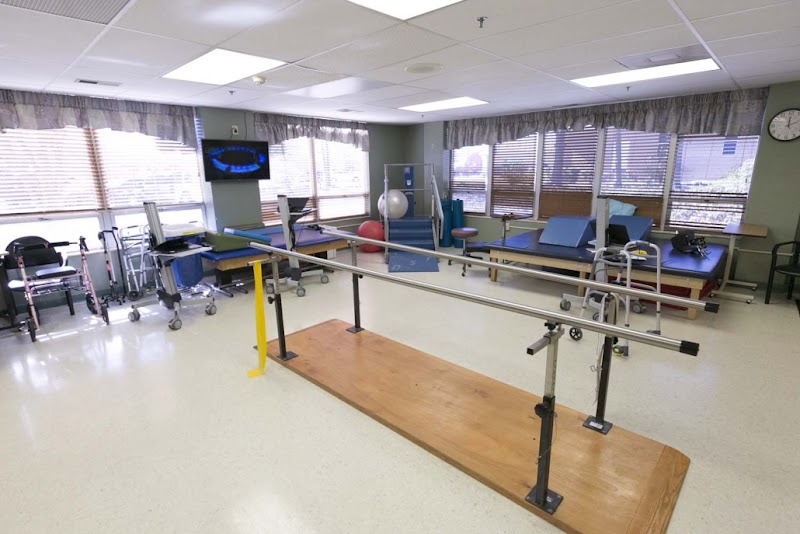
How is Millennium Post Acute Rehabilitation Staffed?
CMS rates Millennium Post Acute Rehabilitation's staffing level at 1 out of 5 stars, which is much below average compared to other nursing homes. Staff turnover is 56%, which is 10 percentage points above the South Carolina average of 46%. High turnover can affect care consistency as new staff learn residents' individual needs.

What Have Inspectors Found at Millennium Post Acute Rehabilitation?

State health inspectors documented 25 deficiencies at Millennium Post Acute Rehabilitation during 2022 to 2025. These included: 25 with potential for harm.

Who Owns and Operates Millennium Post Acute Rehabilitation?

Millennium Post Acute Rehabilitation is owned by a for-profit company. For-profit facilities operate as businesses with obligations to shareholders or private owners. The facility is operated by THE ENSIGN GROUP, a chain that manages multiple nursing homes. With 132 certified beds and approximately 118 residents (about 89% occupancy), it is a mid-sized facility located in West Columbia, South Carolina.

How Does Millennium Post Acute Rehabilitation Compare to Other South Carolina Nursing Homes?

Compared to the 100 nursing homes in South Carolina, Millennium Post Acute Rehabilitation's overall rating (1 stars) is below the state average of 2.8, staff turnover (56%) is significantly higher than the state average of 46%, and health inspection rating (2 stars) is below the national benchmark.

What Should Families Ask When Visiting Millennium Post Acute Rehabilitation?

Based on this facility's data, families visiting should ask: "How do you ensure continuity of care given staff turnover, and what is your staff retention strategy?" "Can you walk me through typical staffing levels on day, evening, and night shifts?" "Can I visit during a mealtime to observe dining assistance and food quality?" "How do you handle medical emergencies, and what is your hospital transfer rate?" These questions are particularly relevant given the facility's high staff turnover rate and the below-average staffing rating.

Is Millennium Post Acute Rehabilitation Safe?

Based on CMS inspection data, Millennium Post Acute Rehabilitation has a clean safety record: no substantiated abuse findings (meaning no confirmed cases of resident harm), no Immediate Jeopardy citations (the most serious violation level indicating risk of serious injury or death), and is not on the Special Focus Facility watch list (a federal program monitoring the lowest-performing 1% of nursing homes). The facility has a 1-star overall rating and ranks #100 of 100 nursing homes in South Carolina. While no facility is perfect, families should still ask about staff-to-resident ratios and recent inspection results during their visit.

Do Nurses at Millennium Post Acute Rehabilitation Stick Around?

Staff turnover at Millennium Post Acute Rehabilitation is high. At 56%, the facility is 10 percentage points above the South Carolina average of 46%. High turnover means new staff may not know residents' individual needs, medications, or preferences. It can also be disorienting for residents, especially those with dementia who rely on familiar faces. Families should ask: What is causing the turnover? What retention programs are in place? How do you ensure care continuity during staff transitions?

Was Millennium Post Acute Rehabilitation Ever Fined?

Millennium Post Acute Rehabilitation has been fined $4,271 across 1 penalty action. This is below the South Carolina average of $33,122. While any fine indicates a compliance issue, fines under $50,000 are relatively common and typically reflect isolated problems that were subsequently corrected. Families should ask what specific issues led to these fines and confirm they've been resolved.

Is Millennium Post Acute Rehabilitation on Any Federal Watch List?

Millennium Post Acute Rehabilitation is not on any federal watch list. The most significant is the Special Focus Facility (SFF) program, which identifies the bottom 1% of nursing homes nationally based on persistent, serious quality problems. Not being on this list means the facility has avoided the pattern of deficiencies that triggers enhanced federal oversight. This is a positive indicator, though families should still review the facility's inspection history directly.