SANFORD CHAMBERLAIN CARE CENTER
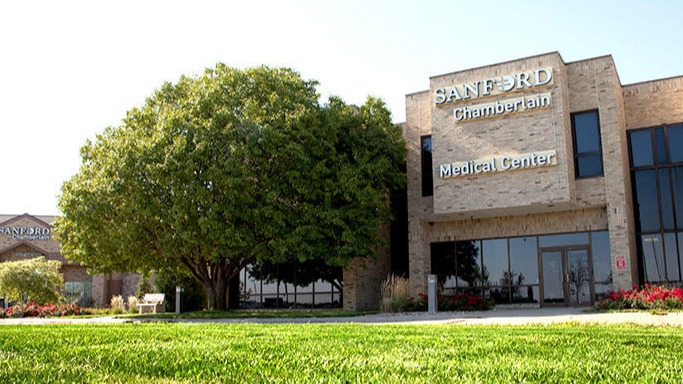
300 S BYRON BLVD, CHAMBERLAIN, SD 57325 (605) 234-6518
Non profit - Corporation 44 Beds Independent Data: November 2025 2 Immediate Jeopardy citations
Trust Grade
0/100
#91 of 95 in SD
Last Inspection: August 2025

Inspected within the last 6 months. Data reflects current conditions.

Overview

Sanford Chamberlain Care Center has received a Trust Grade of F, indicating significant concerns about the quality of care, which is poor and below average. It ranks #91 out of 95 facilities in South Dakota, placing it in the bottom half, but it is the only option in Brule County. Although the facility is improving, with a decrease in reported issues from 10 to 6 over the past year, the staffing turnover rate is concerning at 62%, significantly higher than the state average. The center has also incurred fines totaling $125,945, which is alarming and indicates repeated compliance problems. While there is good RN coverage, specific incidents have raised serious concerns, such as staff failing to manage aggressive behavior among residents and instances of physical abuse by staff, which highlight the facility's need for improvement in care and safety protocols.

Trust Score
F
0/100
In South Dakota
#91/95
Bottom 5%
Safety Record
High Risk
Review needed
Inspections
Getting Better
10 → 6 violations
Staff Stability
⚠ Watch
62% turnover. Above average. Higher turnover means staff may not know residents' routines.
Penalties
⚠ Watch
$125,945 in fines. Higher than 90% of South Dakota facilities, suggesting repeated compliance issues.
Skilled Nurses
○ Average
Each resident gets 41 minutes of Registered Nurse (RN) attention daily — about average for South Dakota. RNs are the most trained staff who monitor for health changes.
Violations
⚠ Watch
16 deficiencies on record. Higher than average. Multiple issues found across inspections.
★☆☆☆☆
1.0
Overall Rating
★★★★☆
4.0
Staff Levels
★☆☆☆☆
1.0
Care Quality
★☆☆☆☆
1.0
Inspection Score
Stable
2024: 10 issues
2025: 6 issues

The Good

  • 4-Star Staffing Rating · Above-average nurse staffing levels
  • Full Sprinkler Coverage · Fire safety systems throughout facility
  • No fines on record

Facility shows strength in staffing levels, fire safety.

The Bad

1-Star Overall Rating

Below South Dakota average (2.7)

Significant quality concerns identified by CMS

Staff Turnover: 62%

16pts above South Dakota avg (46%)

Frequent staff changes - ask about care continuity

Federal Fines: $125,945

Well above median ($33,413)

Significant penalties indicating serious issues

Staff turnover is elevated (62%)

14 points above South Dakota average of 48%

The Ugly 16 deficiencies on record

2 life-threatening 6 actual harm
Aug 2025 2 deficiencies
CONCERN (D)

Potential for Harm - no one hurt, but risky conditions existed

Deficiency F0658 (Tag F0658)

Could have caused harm · This affected 1 resident

Number of residents sampled: Number of residents cited: Based on interview, record review and policy review the provider failed to have physician orders for therapeutic leaves, to ensure no disruption...

Read full inspector narrative →
Number of residents sampled: Number of residents cited: Based on interview, record review and policy review the provider failed to have physician orders for therapeutic leaves, to ensure no disruption in wound cares and scheduled medications supplies for care were available and sent with one of one sampled resident (33) who left the facility for therapeutic leave home visits. Findings include:1. Interview on 8/13/25 at 8:43 a.m. with resident 33 revealed:*He would leave the facility for therapeutic leaves.*He made his own decisions.*He used his wheelchair for mobility. Review of resident 33 electronic medical record (EMR) revealed:*Resident 33 made his own decisions.*There was no physician's order to complete a head-to-toe assessment when he returned from therapeutic leave. *There was no physician's order for his therapeutic leave home visits*His therapeutic leave was not addressed on his care plan. *Resident 33 had the diagnoses of:- Pressure ulcer of sacral region, Shortness of breath, hypertension [high blood pressure], localized edema [swelling], pain, thrombocytopenia [low blood cells], Type 2 diabetes mellitus [insulin dependent] with foot ulcer [wound], peripheral vascular disease [narrowed blood vessels], iron deficiency anemia [not enough healthy blood cells to carry oxygen], alcohol dependence [alcohol use disorder], Insomnia [sleep disorder], Rash and other skin eruption, Methicillin resistant Staphylococcus aureus infection [bacteria resistant to antibiotics], hyperlipidemia [high levels of fat particles in the blood] , Osteomyelitis of vertebra [infection of the spine], sacral and sacrococcygeal [infection of the bone and bone marrow in the lower back] region, Gastro-esophageal reflux.*Resident 33 had physician's orders for medications including:-Albuterol sulfate inhaler (to treat difficulty breathing), amlodipine (treat blood pressure, Aldactone (helps the body get rid of excess fluid), diclofenac (used to treat swelling), aspirin (can treat pain, headaches, and swelling), calcium carbonate, (dietary supplement), clopidogrel (prevent blood clots), famotidine (reduce stomach acid), ferrous sulfate (iron supplement), folic acid (form of vitamin B), furosemide (for excess fluid), hydrocodone-acetaminophen (for pain), Lantus Solsotar insulin (regulates blood sugar), Lipitor (lowers cholesterol levels in the blood), losartan (treats high blood pressure), melatonin (regulates sleep), novolog flexpen Insulin (control high blood sugar), nystatin (antifungal medication), pantoprazole (treats acid reflux), potassium (chloride treats low blood potassium levels), lisinopril (treats high blood pressure). *Resident 33 was to receive treatments that included: Diabetic foot and nail care by charge nurse weekly, Heel lift boot to bilateral lower extremities at night, lymphedema pumps [compression device] to bilateral [both] extremities twice a day for 45 minutes, multipodus boot [a type of ankle-foot boot to treat various foot and ankle conditions] to the right lower extremities at all times, Santyl (colligenase clostidium histo) [ointment that removes dead tissue] twice a day applied to right heel, right 3rd toe, left transmetetarasal amp [amputation] site, apply twice daily then cover with dakins [Dakin's a brand of wound disinfectant] moistened gauze, ABD [gauze] pad, wrap with Kerlex [gauze bandage roll], Wear Tubi Grips [support bandage] for edema daily, weekly skin/wound assessment one [once] a day on Thursday, zinc oxide [prevent rash] one [once] a day cleanse with sage wipes [bacteria wipe] and wound cleanser and gauze. Apply Z guard [prevent skin irritation] to wound bed area. Cover with sacral bordered dressing [foam bandage]. Dakin's solution (sodium hypochorite) [wound disinfectant] every shift, Cleanse bilateral extremities with soap and water, cleanse open areas with wound cleanser and gauze. Apply clear aide to peri wound, apply dakin's [Dakin's] 0.125 % to moistened 2x2 gauze to open areas left achilles [heel]/ankle and posterior leg. Cover with dry gauze or abd pad as needed for drainage. Secure with Kerlix and tape. Tubigrip size G from toes to new bilateral lower extremities. Apply HLB to bilateral feet when in bed. Change dressings twice daily 4th and 5th toes-apply Dakins moistened gauze, cover all with ABDs, Kerlix, Edema wear from toes to knee on bilateral extremities. Aquaphor original (white petrolatum) one [once] a day apply moderate amount topically every day to right and left lower legs and feet. Bed Bugs notify maintenance: when [resident 33] returns from leave outside of facility, notify maintenance ASAP [as soon as possible] to come check and clean belongings, wheelchair, linens, etc. for bed bugs. Interview on 8/14/25 at 12:56 p.m. with licensed practical nurse (LPN) I regarding resident 33 revealed:*She confirmed resident 33 would leave the facility for therapeutic leave home visits.*His briefs and extra clothes would be sent with him for those home visits. *She stated they did not have a physician's order to send his medications with him and his medications were not sent with him, and she did not think wound supplies were sent out with him on those leaves, but thought he could get care from another care provider while out on those visits but did not know if he did. *She was aware he had come back with maggots in his wounds one time. *She stated after that incident, resident 33 would receive a shower when he returned to the facility, would be assessed from head to toe by the nurse, and his wheelchair and personal items were inspected by maintenance for bed bugs after he had returned with them from a prior home visit. *She stated he had refused those assessments and inspections at times and those refusals should be documented. Interview on 8/14/25 at 2:57 p.m. with director of nursing (DON) B regarding resident 33 revealed:*He agreed resident 33 did not have a physician's order for therapeutic leaves and should have.*He stated resident 33's wound supplies should have been sent with him when he left the facility. *Medications were not sent with resident 33. He thought there was a physician's order in place to not send medications with him on the therapeutic leaves due to the resident not returning with those medications and the facility having to repurchase them. *He could not provide that order. Interview on 8/14/25 at 2:57 p.m. with MDS coordinator C revealed:*She stated that resident 33's therapeutic leaves were not on the care plan.*She stated she did not expect resident 33's care plan to include his therapeutic leave, Not everything had to be on the [resident's] care plan. Review of the provider's 3/9/23 Physician/Practitioner Orders-Rehab/Skilled policy dated revealed:*To provide individualized care to each resident by obtaining appropriate, accurate and timely physician/practitioner orders.*Physician/Practitioner orders content 4.Therapeutic Leave Orders.*The policy did not include what medications or care supplies should be sent with the resident for therapeutic leave. Review of the provider's Nursing Services Philosophy and Care- R/S, LTC dated 7/29/24 revealed:*11. To maintain a level of excellence to the fullest extent possible in order to provide a quality of care that will meet the needs of every person. Review of the provider's 12/2/24 Care Plan- R/S, LTC, Therapy & Rehab revealed:*The care plan will emphasize the care and development of the whole person ensuring that the resident will receive appropriate care and services. It will address the relationship of items or services required and facility responsibility for providing these services. Review of the provider's 6/2/25 Absence-Temporary, From Location- R/S, LTC, Hospice Facilities [(therapeutic leave)] policy dated 6/2/25 revealed: *4. Provide the resident with any necessary medications, diet instructions, activity restrictions, etc., using the Discharge or Therapeutic leave Medication List UDA/Matrix/ or Hospice equivalent.
CONCERN (D)

Potential for Harm - no one hurt, but risky conditions existed

Food Safety (Tag F0812)

Could have caused harm · This affected 1 resident

**NOTE- TERMS IN BRACKETS HAVE BEEN EDITED TO PROTECT CONFIDENTIALITY** Based on observation, interview, and policy review the provider failed to follow standard food safety practices, maintaining san...

Read full inspector narrative →
**NOTE- TERMS IN BRACKETS HAVE BEEN EDITED TO PROTECT CONFIDENTIALITY** Based on observation, interview, and policy review the provider failed to follow standard food safety practices, maintaining sanitary conditions in the kitchenette on [NAME]-wing, and processes to prevent foodborne illnesses for:*One of one cook (H) who had not worn gloves or performed hand hygiene (handwashing) while serving one of one sampled resident's (4) food items to prevent foodborne illnesses. Findings include: 1. Observation on 8/14/25 at 8:15 a.m. with cook H while preparing a meal for resident 4 in the kitchenette of [NAME]-wing revealed he:*Did not wash his hands or put on gloves. With his bare hands, he removed a Ziploc bag of frozen sausage links out of the refrigerator freezer and placed them on a plate.*Touched the panel of the microwave to enter a cook time and put the plate with the sausage links in the microwave.*Took one raw egg, broke it open into a frying pan on the stove top.*Touched the top surface of the plate he placed the food on.*Touched the spatula on the counter.*Touched a dirty towel that was on the counter.*Touched his eyeglasses that he was wearing.*Removed the plate with the sausage links from the microwave.*Removed the cooked egg from the frying pan, with the same spatula he had touched the counter with and placed it onto the plate.*Did not check the temperature of the sausage or the egg.*Removed two slices of bread from a bagged loaf of bread.*Placed those two slices of bread into the toaster and touched the toaster knob to toast the bread.*Removed the 2 slices of toasted bread and buttered them with a knife.*Served resident 4 that plate of food.*He did not wear gloves or wash his hands at any time during the above observation. Observation on 8/14/25 at 8:20 a.m. of the dining area on [NAME]-wing revealed:*An opened tub of butter without a lid on it. A large butter knife was resting on top of it the butter tub, and both contained a significant amount of food crumbs.*There were several uncovered 8-ounce cups of milk and juice sitting on a serving cart that were open. Several residents and staff were observed entering and exiting the areas where they were. Interview on 8/14/25 at 8:17 a.m. with Registered Nurse (RN) K revealed:*Residents could choose what they would like to eat for breakfast.-He indicated that the kitchen cooking staff would make resident requests for foods such as fried eggs, sausage, and toast. Interview on 8/14/25 at 8:41 a.m. with cook H revealed he:*Had not used gloves or completed hand hygiene while he prepared the breakfast food items for resident 4.*Should have used gloves and hand hygiene while preparing meals in the kitchenette.*Had not checked the temperature of the sausage links and the egg prior to serving them to the resident, but he should have. Further interview and observation on 8/14/25 at 8:47 a.m. with cook H in the kitchenette of [NAME]-wing revealed he:*Verified the internal temperature of the Malt O Meal hot cereal was 185-degrees Fahrenheit (F) and the internal temperature of the eggs was 162-degrees F. Those foods were in metal bins on the serving cart warmer. -Documented those temperatures on the food service temperature log for [NAME] kitchen.-Verified he had not temp checked the temperatures of the Malt O Meal hot cereal or the eggs when they were delivered from the main kitchen at 7:00 a.m.-Verified the temperature of the hot Malt O Meal cereal and the eggs had not been checked prior to being served to the residents.*He indicated the uncovered cups of milk and juice without lids sitting on the serving cart, were to be served to residents who had not yet had their breakfast.-Those had been sitting uncovered at room temperature since 7:30 a.m. Interview on 8/14/25 at 8:54 a.m. with nursing assistant (NA) F revealed:*The residents on [NAME] wing were assisted to the dining room starting at 7:00 a.m.*She had indicated that there had not been any residents who had been sick with any gastrointestinal symptoms. Interview on 8/14/25 at 9:10 a.m. with director of nursing (DON) B revealed:*He expected dietary cook H wear gloves and to completed hand hygiene while preparing and serving food to residents. Interview on 8/14/25 at 9:30 a.m. with dietary manager E revealed:*She expected the dietary staff to wear gloves and to complete hand hygiene while preparing food for the residents.*She expected the dietary staff to check the food temperatures before they were served to residents to ensure they were within the safe temperature ranges. Interview on 8/14/25 at 9:49 a.m. with resident 4 revealed:*He confirmed that cook H had made him one fried egg, 3 sausage links, and toast with butter on it for breakfast.-He stated, It tasted fine. Interview on 8/14/25 at 10:50 a.m. with administrator A and business office manager (BOM) J revealed:*They felt improper hand hygiene and glove use by staff was a major concern.*They had indicated that they had already spoken with dietary cook H and all the staff who had been working in the main kitchen about improper hand hygiene and glove use. Interview on 8/14/25 at 3:48 p.m. with quality measures control program/infection preventionist (IP) G revealed the facility had an infection prevention and control program that included specific policies for hand washing and glove use for all employees of the facility. Review of the provider's August 2025 food service temperature log for [NAME] kitchen revealed:*Danger zone for bacterial growth is 40-140-degree[s].*All potentially hazardous foods must meet [the[ regulation minimum internal cooking temperature.- Ground meat/eggs [must remain at]: 165-degree[s] for 15 seconds.- Fresh shell egg for immediate service [must remain at]: 145-degree[s] for 15 seconds.- Reheating food [must remain at]: 165-degree[s] for 15 seconds [and be reheated] (within 2 hours). Review of the provider's revised 3/29/22 [NAME] Policy Enterprise: Infection Prevention: Hand Hygiene revealed:Purpose: To guide compliance for hand hygiene with the Centers for Disease Control and Prevention (CDC) and the World Health Organization's Moments of Hand Hygiene recommendations:- To establish hand hygiene as the single most important factor in preventing the spread of disease-causing organisms to patients and personnel in healthcare setting.- To provide guidance regarding lotion use, glove use, and fingernail care. Review of the provider's revised 12/26/24 [NAME] Policy Location [NAME], South Dakota: Food and Nutrition: Rehab/Skilled and Long-Term Care: Care Center Safe Meal Service, Long-Term Care-[NAME] revealed: Purpose: To ensure the resident dining environment remains free of accident hazards as possible. Policy: Providing a safe environment for serving resident meals at the care center and keeping the resident environment safe. Three meals are served daily with no more than 14 hours between evening meal and breakfast the next day. Procedure: Food Service staff will plate up residents' meal and may deliver if assistance from nursing staff is unavailable and resident is able to feed self safely. Staff need to remember to pay attention to potential contamination during delivery and complete proper hand washing or glove change if needed.- No bare hand contact with ready to eat foods is allowed. Staff should use utensils, such as tongs, or use a gloved hand to handle ready to eat food.
Jun 2025 3 deficiencies 2 Harm
SERIOUS (G) 📢 Someone Reported This

A family member, employee, or ombudsman was alarmed enough to file a formal complaint

Actual Harm - a resident was hurt due to facility failures

Free from Abuse/Neglect (Tag F0600)

A resident was harmed · This affected 1 resident

**NOTE- TERMS IN BRACKETS HAVE BEEN EDITED TO PROTECT CONFIDENTIALITY** Based on South Dakota Department of Health (SD DOH) facility reported incident (FRI) review, electronic medical record (EMR) rev...

Read full inspector narrative →
**NOTE- TERMS IN BRACKETS HAVE BEEN EDITED TO PROTECT CONFIDENTIALITY** Based on South Dakota Department of Health (SD DOH) facility reported incident (FRI) review, electronic medical record (EMR) review, video footage review, interview, and policy review, the provider failed to protect the resident's right to be free from physical abuse by: *One of one certified nursing assistant (CNA) (D) who responded to falling incidents with physical force and restraint for one of one sampled resident (1) with cognitive impairment. *Eight additional staff members (E, G, H, I, J, K, L, and M), identified as present at the time the physical abuse occurred, who did not intervene or report those incidents to a supervisor at the time those incidents occurred. Findings include: 1. Review of the provider's 4/7/25 SD DOH FRI revealed: *On 4/7/25, the provider reviewed video footage of resident 1's falls from 4/6/25. *The video footage revealed CNA D assisted [resident 1] roughly back into his wheelchair after he had fallen. *CNA D pushed him [resident 1] up to the desk and locked the brakes on his wheelchair so he was not able to move around . *CNA D did not get the nurse when he fell to do an assessment. *[The] Nurse completed [an] assessment on 4/7/2025 and [resident 1] has some bruises on his arms. *Resident 1 was showing signs of increased anxiety during his interactions with CNA [D]. *CNA D did state that she did become frustrated . and should have stepped away. *[Licensed practical nurse (LPN) J] stated that she was in report [staff communication of residents' status] when these events took place, and no one reported these events until after report. *On 4/14/25, when interviewed by director of nursing (DON) B and licensed social worker (LSW) O, Certified medication assistant (CMA) I reported that CNA D had transferred [resident 1] back into his wheelchair after his fall without the nurse assessing him first. *CMA I noted that [CNA D] was laughing at [resident 1's] statements, but did not recall any specific instances where [CNA D] was rough with [resident 1]. *Education was immediately [on 4/7/25] provided to all nurses and CNAs regarding proper procedures after a fall, including notifying the nurse of the fall so they can complete an assessment . All staff was [were] also educated on proper times to lock wheels on wheelchairs, and safely transferring residents. *Resident cares with [resident 1] will also be audited randomly for the next 2 months and then prn [as needed] to ensure appropriate interactions from staff. *New staff will be trained upon hire on managing residents with dementia. *CNA D was terminated immediately after her interview on 4/7/25, no longer allowing her to provide resident care at that facility. 2. Review of resident 1's electronic medical record (EMR) revealed: *He was admitted on [DATE]. *His 3/28/25 Minimum Data Set (MDS) assessment indicated he was rarely understood or able to understand others and was severely cognitively impaired. *His diagnosis included dementia (a group of symptoms affecting memory, thinking and social abilities), psychotic disturbance (a mental state where a person loses touch with reality), mood disturbance (a serious mental illness that causes persistent and intense changes in a person's mood energy and behavior), general anxiety disorder, Alzheimer's Disease, Parkinson's disease (a disorder of the central nervous system that affects movement often including tremors), and conduct disorder (a mental health condition that involves a persistent pattern of aggressive and antisocial behavior). *His care plan indicated, Inappropriate behaviors related to dementia. He demonstrates behaviors which include restlessness, wandering, combative, resists cares, verbally abusive, disruptive to other[s], [and] varying mood. -His care plan Approaches included: --Resident will have 2 staff assist [assistance of two staff] with cares when given due to aggressive behaviors. --If [Resident 1] becomes restless try these [non]pharmacological interventions like having the dog sit with him, wheel him around the facility in his wheelchair, visiting with him in a quiet setting or listening to calming music, resting on the couch in dining room with lights lowered and giving him snacks or something to drink. --When approaching [resident 1] come from the front and not behind or on his sides as this can startle him. *Resident 1 was out of the facility and unavailable for interview throughout the survey. 3. Interview and review of the 4/6/25 video footage on 6/12/25 at 10:12 a.m. with director of finance N, DON B, and LSW O revealed: *Resident 1 fell on 4/6/25 at 12:45 p.m., 6:04 p.m., 6:12 p.m., and at 6:51 p.m. *At 12:45 p.m., resident 1 stood up from his Broda Pedal Wheelchair (a specialized high-back reclining wheelchair with upper body support that allows a person to self-propel with their hands or feet) that was positioned at the counter in front of the nurses' station. CNA D approached resident 1. Resident 1 swung his arm at her. CNA D stepped back, and resident 1 fell to the floor. -Without requesting assistance or notifying a nurse, CNA D reached around resident 1 and, from the back, grabbed both of his forearms, lifted him off the floor by herself while he was fighting her, and placed him into the wheelchair forcefully. Her movements were quick and rough. She placed his wheelchair at the counter and locked his wheelchair brakes, which prevented him from moving his wheelchair. -CNA M, LPN J, and nutrition and food services supervisor L were all visible on the video footage present in the area of the nurses' station, and did not intervene or offer assistance to resident 1. *At 6:04 p.m., resident 1, positioned at the nurses' station, stood up from his wheelchair and fell to the floor. CNA D was seen from behind the wheelchair, extending resident 1's arms above his head as he lay on the floor. Without requesting assistance or notifying a nurse, CNA D then stood beside resident 1, placed her arms behind him, attempted to hoist him back into his wheelchair, and lifted him from the floor multiple times before seating him roughly into the wheelchair while he resisted her assistance. -CMA G, CNA H, and food service assistant E were all visible on the video footage and present in the area of the nurses' station, and did not intervene or offer assistance to resident 1. *At 6:12 p.m., resident 1, still positioned at the nurses' station, stood up from his wheelchair and again fell to the floor for a third time. Without requesting assistance or notifying a nurse, CNA D lifted resident 1 from the floor and sat him roughly into the wheelchair while he resisted her assistance. -CMA I, CNA D, and food service assistant E were all visible on the video footage and present in the area of the nurses' station, and did not intervene or offer assistance to resident 1. *At 6:50 p.m., resident 1, still positioned at the nurses' station, stood up from his wheelchair and again fell to the floor for a fourth time. He was provided with a pillow, by a staff member and was not observed having been assessed by the nurse or assisted off the floor in that video footage. -He threw the pillow at the staff member and remained on the floor for approximately an hour. -CMA G, CNA K, CNA H, LPN J, and food service assistant E were all visible on the video footage and present in the area of the nurses' station, and did not intervene or offer assistance to resident 1. *CNA D's employment was terminated on 4/7/25 for her actions observed in the video footage immediately after the footage had been reviewed by management on 4/7/25. *CNA K had been a contracted travel employee and was unavailable for interview. Her contract had ended. *CNA H had been a contracted travel employee and was unavailable for interview. Her contract had been terminated due to another incident. *LPN J had been a contracted travel employee and was unavailable for interview. She had terminated her contract three or four days after the incident with resident 1 on 4/6/25. 4. Interview on 6/12/25 at 8:42 a.m. with CMA Q revealed she had recently received training on fall protocols, but did not recall any recent training on abuse and neglect. She completed abuse and neglect training when she was hired and annually online in the Success Center. 5. Interview on 6/12/25 at 9:31 a.m. with LSW O regarding staff training and education revealed: *Monthly All Staff Meetings were mandatory. -Employees were allowed to attend in person, by phone, via a WebEX (an online meeting platform) or were required to read and sign the attendance sheet before their next working shift. *The monthly staff meeting binder was kept in the employee break room. *New employee orientation and annual education were provided on the provider's online Success Center. -Those trainings were assigned by corporate. *Training was also provided in person, by text, and by email. 6. Interview on 6/12/25 at 1:07 p.m. with CMA G revealed she: *Stated she had not worked on 4/6/25, the day that resident 1 had fallen four times. *Did not recall any times that CNA D had been rough when providing care to resident 1. *Had not attended any recent training on abuse, neglect, or falls. *CMA G was seen in the video footage of 4/6/25 at 12:45 p.m., at 6:04 p.m., and at 6:51 p.m. 7. Interview on 6/12/25 at 2:19 p.m. with LSW O revealed she: *Assisted with the completion of audits and had not been aware of any current audits of resident 1's care. *Was unaware that the FRI had indicated, Resident cares with [resident 1] will also be audited randomly for the next 2 months and then prn [as needed] to ensure appropriate interactions from staff. 8. Interview on 6/12/25 at 2:23 p.m. with DON B revealed: *On 4/7/25 administrator A, DON B, director of finance N, and LSW O had reviewed the video footage of resident 1's 4/6/25 falls. -They felt that the video was embarrassing, and had shown everything that should not have been done. --The footage revealed CNA D had been really rough with resident 1 and had locked his wheelchair while it was positioned at the nurse's station. --LPN J had been present on the video footage on 4/6/25 at 12:45 p.m. and 6:51 p.m. and had not assessed resident 1 after his falling incidents. *An assessment of resident 1 had been completed on 4/7/25 after review of the video by Minimum Data Set (MDS) registered nurse (RN) C and DON B, and they had confirmed that bruises on resident 1's forearms correlated with where CNA D had placed her hands while lifting resident 1 after his falls. *The video verified abuse had occurred, and CNA D's agency [travel] employment contract had been terminated immediately. *Education had been provided to LPN J on 4/7/25 on proper transfer techniques and completing a resident assessment after a fall. *In-person staff education was initiated on 4/7/25 on not locking wheelchair brakes, ensuring an assessment was performed by a nurse before transferring a resident after a fall, and proper transfer techniques. *Education on resident abuse and neglect was provided through the online Success Center during orientation and annually. -There had not been any recent training provided on resident abuse and neglect. *Dementia training was ongoing, and a training was scheduled in July with the local ombudsman (resident rights advocate). *DON B expected CNA D to have: -Alerted the nurse when resident 1 fell. -Ensured that resident 1 had been assessed by the nurse before she transferred resident 1 back into his wheelchair. -Asked for assistance when transferring resident 1. -Requested another staff member to take over when she became frustrated with resident 1. *DON B expected the other staff members identified as present when the incidents in the video occurred to have: -Assisted when resident 1 fell. -Stopped CNA D when she attempted to transfer resident 1 alone. -Alerted the nurse when resident 1 fell to complete an assessment to ensure he was not injured. -Attempted other interventions to prevent him from falling. -Contacted him to report the incident. *He was unaware that the FRI had indicated, Resident cares with [resident 1] will also be audited randomly for the next 2 months and then prn [as needed] to ensure appropriate interactions from staff. An interview with CMA I was requested and set up for 6/12/25 at 3:00 p.m. A voicemail was left, and no return call was received. All Staff training completed since 4/1/25, including materials provided and staff who attended, including any additional PRN training/education completed, was requested from administrator A and DON B during the survey entrance conference. Review of the provider's staff training/education documentation since 4/1/25 revealed: *Education on Timeliness of DOH Reports was provided to four employees between 4/28/25 and 5/5/25 and one employee on an undisclosed date. *Neuro [assessment of nervous system function] Vital [vital signs such as blood pressure, temperature, pulse, respirations, and blood oxygen level] Documentation (Falls) education was provided to: -Two employees in December 2024. -Twelve employees in January 2025. -One employee in February 2025. -Two employees in March 2025. *A Falls Investigation packet did not identify the date the training was provided or include a signature sheet for attendance. *The provider's All Staff Meeting Binder revealed: -The 4/24/25 Care Center Monthly Meeting Agenda did not include education on the topics of abuse or neglect. -Out of 66 employees, 33 had attended the meeting or signed that they had reviewed the information in the binder. *The 5/30/25 Care Center Monthly Meeting Agenda did not include education on the topics of abuse or neglect. -Out of 45 employees, 18 had attended the meeting or signed that they had reviewed the information in the binder. *The provider's In Person Dementia Training education staff attendance sheets from 1/8/25 through 5/27/25 did not include documentation of the content of the education provided in that training. *The provider's Ombudsman Dementia Training education staff attendance sheets from 1/28/25 through 5/29/25 did not include documentation of the content of the education provided in that training. *LPN J received training on 4/7/25 on proper assessment techniques after a resident fall, that included resident 1 should have been helped back up to his wheelchair immediately after [an] assessment [of the resident had been completed], not left to lay on the floor .for nearly an hour, and ensuring brakes are not locked on wheelchair that is a restraint . -That training did not include resident abuse and neglect. *Education dated 4/7/25 included notify the nurse immediately so they can assess the resident for injury, and brakes also should not be locked when a resident's wheelchair is stationary, that is considered a restraint, was provided to 26 employees between 4/7/25 and 4/18/25. -Food service assistant E, nutrition and food services supervisor L, and CNA M had not received that education. Interview on 6/12/25 at 4:00 p.m. with executive assistant P regarding abuse and neglect training revealed: *Abuse and neglect training was provided to staff on the Success Center online learning platform. *CNA D was a contracted travel employee from 2/24/25 until 4/8/25 and had not received abuse and neglect training. *CNA H was a contracted travel employee from 4/2/25 until 4/14/25 and had not received abuse and neglect training. *CNA K was a contracted travel employee from 2/26/25 until 5/24/25 and had not received abuse and neglect training. *LPN J was a contracted travel employee from 2/13/25 until 4/9/25 and had not received abuse and neglect training. *Food service assistant E was hired on 8/23/21. Executive assistant P was unable to find documentation that food service assistant E had received abuse and neglect training. *Nutrition and food services supervisor L was hired on 9/19/11. Executive assistant P was unable to find documentation that nutrition and food services supervisor L had received abuse and neglect training. *CNA M was hired on 2/19/25 and received abuse and neglect training on 2/20/25. *CMA G was hired on 5/28/19 and had received abuse and neglect training on 3/8/25. *CMA I was hired on 3/18/24 and received abuse and neglect training on 2/4/25. Review of the provider's 7/10/24 Abuse and Neglect policy revealed: *Patients and residents have the right to be free from verbal, sexual, physical, mental abuse, neglect, misappropriation of property, corporal punishment, exploitation and involuntary seclusion. *Patients and residents must not be subject to any kind of abuse by anyone, but not limited to, facility staff, other patients or residents, consultants, volunteer staff or other agencies serving the individual, family members, legal guardians or personal representatives, friends, or other individuals. *Abuse means the willful infliction of injury, unreasonable confinement, intimidation or punishment with resulting physical harm, pain or mental anguish. Abuse also includes the deprivation by an individual, including a caretaker of goods and services that are necessary to attain or maintain physical, mental and psychosocial wellbeing. This presumes that instances of abuse of all patients and residents even those in a coma, cause physical harm or pain or mental anguish. *Physical Abuse includes .restraining or confining a patient/resident to control behavior . *Policy To require facility staff to report suspected abuse or neglect of vulnerable adults. *All persons who have reasonable cause to believe a resident/patient of this facility is being subjected to abuse and/or neglect .are responsible to report such suspicions.
SERIOUS (G) 📢 Someone Reported This

A family member, employee, or ombudsman was alarmed enough to file a formal complaint

Actual Harm - a resident was hurt due to facility failures

Accident Prevention (Tag F0689)

A resident was harmed · This affected 1 resident

**NOTE- TERMS IN BRACKETS HAVE BEEN EDITED TO PROTECT CONFIDENTIALITY** Based on South Dakota Department of Health (SD DOH) facility reported incident (FRI) review, observation, record review, and int...

Read full inspector narrative →
**NOTE- TERMS IN BRACKETS HAVE BEEN EDITED TO PROTECT CONFIDENTIALITY** Based on South Dakota Department of Health (SD DOH) facility reported incident (FRI) review, observation, record review, and interview, the provider failed to implement, review and revise interventions to reduce the risk of falls for two of two sampled residents (1 and 2) with a history of falls and to prevent subsequent falls. Findings Include: 1. Review of the provider's 6/1/25 SD DOH FRI revealed: *[Resident 2] was found on [the] floor at 1910 [7:10 p.m.] by a CNA [certified nursing assistant] .he was attempting to self transfer out of wheelchair by [his room]. *Resident 2 sustained a closed fracture of [his] left hip. *Before the fall, resident 2 was changed from [needing to use] a stand aid [a mechanical device that lifts a resident from a sitting position to a standing position] to a stand pivot with two [staff] assist [assistance]. Interview and review of the 6/1/25 video footage on 6/12/25 at 10:12 a.m. with director of finance N, director of nursing (DON) B, and licensed social worker (LSW) O revealed: *Resident 2 was seated in his wheelchair by certified medication assistant (CMA) G at her medication cart two minutes before he fell. *CMA G entered a resident's room across from her medication cart, and resident 2 propelled himself in his wheelchair down the hall. Used the railing in the hallway, stood from his wheelchair, took approximately six to eight small steps, and fell. *Registered nurse (RN) F responded and provided care to resident 2. Review of resident 2's electronic medical record (EMR) revealed: *He was admitted on [DATE] and received hospice services from 2/17/25 until 5/10/25. *Resident 2 had been evaluated by physical therapy (PT) on 5/15/25. *His 5/23/25 MDS assessment indicated he was rarely understood or able to understand others and was severely cognitively impaired. *A 5/27/25 PT progress note indicated .will change program to add SPT [stand pivot transfer] in addition to stand aid until all staff [are] more comfortable with transfer and staff are aware. *Resident 2 fell on 5/29/25. *A 5/29/25 Fall Risk Assessment indicated resident 2 was Not at Risk for falls and to Continue with Plan of Care. *His 5/29/25 fall incident report did not indicate any interventions were implemented or revised to prevent subsequent falls. *Resident 2's Post-Fall Investigation Tool Recommendations for future prevention revealed toilet more frequently. -His care plan was not updated to include that intervention. *Resident 2 fell on 6/1/25 and sustained a closed fracture of his left hip and was hospitalized . *He was readmitted to the facility on [DATE] and admitted to Hospice Services that same day. Review of resident 2's current care plan revealed: *A 3/5/25 last reviewed/revised problem area of ADL's Functional Status with approaches that indicated: Transfers Dependent x2 [on the assistance of two staff members] for transfers using [a] Hoyer lift [a mechanical lift and sling used to lift a person's full body] to/from toilet, recliner . *A 3/5/25 last reviewed/revised problem area of Falls [resident 2] has a history of falling and is at risk for injury from fall with Approaches that indicated: Posey bed alarm system [a device used to alert caregivers when a resident attempts to exit their bed, designed to help prevent falls] activated while in bed. Keep bed in low position. Provide proper, well-maintained footwear. Provide resident [2] an environment free of clutter. *A 2/17/25 initiated problem area Terminal Care [resident 2] is on [provider name] Hospice d/t [due to] terminal prognosis of Alzheimer's Disease. That was last reviewed/revised on 3/14/25 with an approach that indicated: -Air mattress overlay .to prevent skin breakdown while in bed. *His care plan had not been updated to indicate: -His transfer status had changed to a stand pivot transfer on 5/27/25. Any new or revised fall prevention interventions after his 5/29/25 fall. He had been admitted to hospice services on 6/5/25. He did not have an air mattress overlay on his bed. 2. Interview and review of the 4/6/25 video footage on 6/12/25 at 10:12 a.m. with director of finance N, DON B, and LSW O revealed: *Resident 1 fell on 4/6/25 at 12:45 p.m., 6:04 p.m., 6:12 p.m., and at 6:51 p.m. *At 12:45 p.m., resident 1 stood up from his Broda Pedal Wheelchair (a specialized high-back reclining wheelchair with upper body support that allows a person to self-propel with their hands or feet) that was positioned at the counter in front of the nurses' station. CNA D approached resident 1. Resident 1 swung his arm at her. CNA D stepped back, and resident 1 fell to the floor. -Without requesting assistance or notifying a nurse, CNA D reached around resident 1 and, from the back, grabbed both of his forearms, lifted him off the floor by herself while he was fighting her, and placed him into the wheelchair forcefully. Her movements were quick and rough. She placed his wheelchair at the counter and locked his wheelchair brakes, which prevented him from moving his wheelchair. *At 6:04 p.m., resident 1, still positioned at the nurses' station, stood up from his wheelchair and fell to the floor. CNA D was seen from behind the wheelchair, extending resident 1's arms above his head as he lay on the floor. Without requesting assistance or notifying a nurse, CNA D then stood beside resident 1, placed her arms behind him, attempted to hoist him back into his wheelchair, and lifted him from the floor multiple times before seating him roughly into the wheelchair while he resisted her assistance. *At 6:12 p.m., resident 1, still positioned at the nurses' station, stood up from his wheelchair and again fell to the floor for a third time. Without requesting assistance or notifying a nurse, CNA D lifted resident 1 from the floor and sat him roughly into the wheelchair while he resisted her assistance. *At 6:50 p.m., resident 1, still positioned at the nurses' station, stood up from his wheelchair and again fell to the floor for a fourth time. He was provided with a pillow, by a staff member and was not observed having been assessed by the nurse or assisted off the floor in that video footage. *After each fall observed on that video footage, resident 1 was returned to his wheelchair and positioned facing the counter at the nurses' station. No new interventions were implemented to prevent subsequent falls. Review of resident 1's EMR revealed: *He was admitted on [DATE]. *His 3/28/25 MDS assessment indicated he was rarely understood or able to understand others and was severely cognitively impaired. *His diagnosis included dementia (a group of symptoms affecting memory, thinking and social abilities), psychotic disturbance (a mental state where a person loses touch with reality), mood disturbance (a serious mental illness that causes persistent and intense changes in a person's mood energy and behavior), general anxiety disorder, Alzheimer's Disease, Parkinson's disease (a disorder of the central nervous system that affects movement often including tremors), and conduct disorder (a mental health condition that involves a persistent pattern of aggressive and antisocial behavior). *Resident 1 experienced 15 falls between 3/11/25 and 5/7/25. *Five of resident 1's falls occurred on or before 4/6/25. Review of resident 1's Fall Risk Assessments indicated: *On 4/6/25, he had a high risk for falls, and a referral to a Falls Prevention Program may be appropriate, and Continue Current Plan of Care were marked. -Resident 1 fell four times between 4/7/25 and 4/15/25. *On 4/15/25, he had a high risk for falls, and No Referrals Necessary, and Continue Current Plan of Care were marked. -Resident 1 fell four times between 4/16/25 and 4/26/25. *On 4/26/25, he had a high risk for falls, and a referral to a Falls Prevention Program may be appropriate, and Continue Current Plan of Care were marked. -Resident 1 fell two times between 4/27/25 and 5/7/25. *On 5/7/25, he had a high risk for falls, and a referral to a Falls Prevention Program may be appropriate, and Plan of Care Updated, and safety signs in room were marked. -At least eight of resident 1's falls occurred outside of his room. Review of resident 1's fall incident reports and interventions implemented to prevent subsequent falls revealed: *On 4/6/25 at 12:40 p.m., staff were to keep resident 1 in Line of sight for the next couple of hours. *On 4/6/25 at 6:10 p.m., 6:15 p.m., and 6:20 p.m., 4/14/25 at 11:40 a.m., and 12:25 p.m., no documented interventions were put in place. *On 4/15/25 at 11:00 a.m. and 4:00 p.m., UNKNOWN was indicated. *On 4/16/25, resident 1 was agitated and left alone on floor with [a] pillow per [his] care plan. -No other documented intervention was put in place at that time to prevent him from subsequent falls. *On 4/26/25, We let resident [1] lay on the floor until he was ready to get up was documented. -No other intervention was put in place at that time to prevent him from subsequent falls. -On 5/7/25 at 2:45 p.m., Safety signs placed was documented. Review of resident 1's Post-Fall Investigation Tool Recommendations for future prevention revealed: *On 4/14/25 at 11:40 a.m. and 12:25 p.m., 4/15/25 at 4:00 p.m., 4/16/25, 4/18/25, 4/26/25, 4/22/25, and 5/5/25 that section had not been completed. *On 4/15/25 at 11:00 a.m. Quit isolating dementia Pts [patients] was documented. *On 5/7/25, Signs in room was documented. Review of resident 1's care plan revealed: *A problem area indicated Falls [resident 1] at risk for falling R/T [related to] dementia, incontinence, and ambulatory status was last reviewed/revised on 4/24/25. -A 5/7/25 Approach (intervention) indicated Posted signs or pictures to cue [resident] for toileting /assistance prior to [the resident] getting up. -A 4/7/25 Approach indicated Provide toileting assistance every 2-3 [two to three] hrs [hours] while awake and PRN [as needed]. --Resident 1 was Dependent [on the] assistance x2 [of two staff members] for walking on/off unit. --Resident 1 was Able to pedal [his wheelchair] with [his] feet [for] short distances. --Resident 1 was Dependent [on the] assistance x 1-2 [of one to two staff members] for toileting. *Resident 1's care plan had not been updated with interventions to reduce his risk for falls after he fell nine times between 4/7/25 and 5/7/25. 3. Phone interview on 6/12/25 at 11:19 a.m. with RN F revealed: *Resident 1 had many falls. *He was the nurse on duty when resident 2 fell on 6/1/25. *CMA G had been with resident 2 just before he fell and had called him to assess resident 2 after he fell on 6/1/25. *After a resident fell, the staff members on duty would have a post-fall huddle (meeting) to discuss the fall and how to prevent further falls. *The post-fall sheet had a place to indicate new interventions. *A list of fall interventions had been posted at the nurses' station recently, and nurses had been told that they needed to update the residents' care plans after each fall. *He had not received education on how to update the care plan. *He would email MDS RN C to let her know if they had tried a new intervention. *He would look in the residents' EMR for their care plans, but he was not sure where the CNAs would find the interventions since they had stopped using pocket care plans (a portable document that outlines a resident's care needs). 4. Interview on 6/12/25 at 1:07 p.m. with CMA G revealed she: *Had not attended any recent training on preventing falls. *Had worked on 6/1/25 when resident 2 fell. *Recalled resident 2 had been with her at her medication cart at the end of the hall. The resident in the room across from her was standing in his room. She entered that resident's room to assist that resident and heard resident 2 fall. *She had only been away from resident 2 a couple of minutes before he fell. *She was unsure how resident 2 transferred or when he had been last used the bathroom before his fall. *The nurse would give a verbal a report, or the CNAs would do walking rounds to share resident status information. *She does not look at the care plan in the EMR and was not sure where to locate resident fall interventions. 5. Interview on 6/12/25 at 1:35 p.m. with MDS RN C regarding resident fall interventions revealed: *She had posted a laminated list of fall interventions at each nurse's station for nurses to reference when they updated the resident care plans after a fall. *She expected new interventions to be implemented and added to the resident care plans in real time after a resident's fall to reduce the resident's risk for falls. 6. Interview on 6/12/25 at 2:23 p.m. with DON B regarding fall interventions revealed he expected care plans to be updated with new fall interventions after a resident had a fall to reduce the resident's risk for falls. Review of the provider's 3/1/24 Fall Prevention & Follow-Up Reporting policy revealed: *The interdisciplinary team will review and discuss [fall] preventatives at weekly Mini-Managers meetings. *The QMI [quality management and improvement Committee will review resident falls every month to determine what new, preventative [fall] measures [interventions] should be put in place.
CONCERN (E) 📢 Someone Reported This

A family member, employee, or ombudsman was alarmed enough to file a formal complaint

Potential for Harm - no one hurt, but risky conditions existed

Deficiency F0657 (Tag F0657)

Could have caused harm · This affected multiple residents

**NOTE- TERMS IN BRACKETS HAVE BEEN EDITED TO PROTECT CONFIDENTIALITY** Based on South Dakota Department of Health (SD DOH) facility reported incident (FRI), record review, interview, and policy revie...

Read full inspector narrative →
**NOTE- TERMS IN BRACKETS HAVE BEEN EDITED TO PROTECT CONFIDENTIALITY** Based on South Dakota Department of Health (SD DOH) facility reported incident (FRI), record review, interview, and policy review, the provider failed to ensure care plans were reviewed and revised to reflect the current care needs for two of two sampled residents (1 and 2). Findings include: 1. Review of resident 1's electronic medical record (EMR) revealed: *He was admitted on [DATE]. *His 3/28/25 Minimum Data Set (MDS) assessment indicated he was rarely understood or able to understand others and was severely cognitively impaired. *His diagnosis included dementia (a group of symptoms affecting memory, thinking and social abilities), psychotic disturbance (a mental state where a person loses touch with reality), mood disturbance (a serious mental illness that causes persistent and intense changes in a person's mood energy and behavior), general anxiety disorder, Alzheimer's Disease, Parkinson's disease (a disorder of the central nervous system that affects movement often including tremors), and conduct disorder (a mental health condition that involves a persistent pattern of aggressive and antisocial behavior). *Resident 1 experienced 15 falls between 3/11/25 and 5/7/25. *Five of resident 1's falls occurred on or before 4/6/25. Review of resident 1's Fall Risk Assessments indicated: *On 4/6/25, he had a high risk for falls, and a referral to a Falls Prevention Program may be appropriate, and Continue Current Plan of Care were marked. -Resident 1 fell four times between 4/7/25 and 4/15/25. *On 4/15/25, he had a high risk for falls, and No Referrals Necessary, and Continue Current Plan of Care were marked. -Resident 1 fell four times between 4/16/25 and 4/26/25. *On 4/26/25, he had a high risk for falls, and a referral to a Falls Prevention Program may be appropriate, and Continue Current Plan of Care were marked. -Resident 1 fell two times between 4/27/25 and 5/7/25. *On 5/7/25, he had a high risk for falls, and a referral to a Falls Prevention Program may be appropriate, and Plan of Care Updated, and safety signs in room were marked. -At least eight of resident 1's falls occurred outside of his room. Review of resident 1's fall incident reports and interventions implemented to prevent subsequent falls revealed: *On 4/6/25 at 12:40 p.m., staff were to keep resident 1 in Line of sight for the next couple of hours. *On 4/6/25 at 6:10 p.m., 6:15 p.m., and 6:20 p.m., 4/14/25 at 11:40 a.m., and 12:25 p.m., no documented interventions were put in place. *On 4/15/25 at 11:00 a.m. and 4:00 p.m., UNKNOWN was indicated. *On 4/16/25, resident 1 was agitated and left alone on floor with [a] pillow per [his] care plan. -No other documented intervention was put in place at that time to prevent him from subsequent falls. *On 4/26/25, We let resident [1] lay on the floor until he was ready to get up was documented. -No other intervention was put in place at that time to prevent him from subsequent falls. -On 5/7/25 at 2:45 p.m., Safety signs placed was documented. Review of resident 1's Post-Fall Investigation Tool Recommendations for future prevention revealed: *On 4/14/25 at 11:40 a.m. and 12:25 p.m., 4/15/25 at 4:00 p.m., 4/16/25, 4/18/25, 4/26/25, 4/22/25, and 5/5/25 that section had not been completed. *On 4/15/25 at 11:00 a.m. Quit isolating dementia Pts [patients] was documented. *On 5/7/25, Signs in room was documented. Review of resident 1's care plan revealed: *A problem area indicated Falls [resident 1] at risk for falling R/T [related to] dementia, incontinence, and ambulatory status was last reviewed/revised on 4/24/25. -A 5/7/25 Approach (intervention) indicated Posted signs or pictures to cue [resident] for toileting /assistance prior to [the resident] getting up. -A 4/7/25 Approach indicated Provide toileting assistance every 2-3 [two to three] hrs [hours] while awake and PRN [as needed]. --Resident 1 was Dependent [on the] assistance x2 [of two staff members] for walking on/off unit. --Resident 1 was Able to pedal [his wheelchair] with [his] feet [for] short distances. --Resident 1 was Dependent [on the] assistance x 1-2 [of one to two staff members] for toileting. *Resident 1's care plan had not been updated with fall prevention interventions after falling incidents that occurred between 4/7/25 and 5/7/25. He had experienced nine falls during that time. Resident 1 was out of the facility and unavailable for an interview throughout the survey. 2. Review of the provider's 6/1/25 SD DOH FRI revealed: *[Resident 2] was found on [the] floor at 1910 [7:10 p.m.] by a CNA .he was attempting to self transfer out of wheelchair by [his room]. *Resident 2 sustained a closed fracture of [his] left hip. *Before the fall, resident 2 was changed from [needing to use] a stand aid [a mechanical device that lifts a resident from a sitting position to a standing position] to a stand pivot with two [staff] assist [assistance]. Observation and interview on 6/11/25 at 11:10 a.m. with resident 2 revealed: *He was seated in his recliner, fully reclined, holding a cup of water with a straw. *He answered questions with one to two words, smiled, and laughed. *There was no air mattress overlay on his bed. Review of resident 2's EMR revealed: *He was admitted on [DATE] and received hospice services from 2/17/25 until 5/10/25. *Resident 2 had been evaluated by physical therapy (PT) on 5/15/25. *His 5/23/25 MDS assessment indicated he was rarely understood or able to understand others and was severely cognitively impaired. *A 5/27/25 PT progress note indicated .will change program to add SPT [stand pivot transfer] in addition to stand aid until all staff [are] more comfortable with transfer and staff are aware. *Resident 2 fell on 5/29/25. *A 5/29/25 Fall Risk Assessment indicated resident 2 was Not at Risk for falls and to Continue with Plan of Care. *His 5/29/25 fall incident report did not indicate any interventions were implemented or revised to prevent subsequent falls. *Resident 2's Post-Fall Investigation Tool Recommendations for future prevention revealed toilet more frequently. -His care plan was not updated to include that intervention. *Resident 2 fell on 6/1/25 and sustained a closed fracture of his left hip and was hospitalized . *He was readmitted to the facility on [DATE] and admitted to Hospice Services that same day. Review of resident 2's current care plan revealed: *A 3/5/25 last reviewed/revised problem area of ADL's Functional Status with approaches that indicated: Transfers Dependent x2 [on the assistance of two staff members] for transfers using [a] Hoyer lift [a mechanical lift and sling used to lift a person's full body] to/from toilet, recliner . *A 3/5/25 last reviewed/revised problem area of Falls [resident 2] has a history of falling and is at risk for injury from fall with Approaches that indicated: Posey bed alarm system activated while in bed. Keep bed in low position. Provide proper, well-maintained footwear. Provide resident [2] an environment free of clutter. *A 2/17/25 initiated problem area Terminal Care [resident 2] is on [provider name] Hospice d/t [due to] terminal prognosis of Alzheimer's Disease. That was last reviewed/revised on 3/14/25 with an approach that indicated: -Air mattress overlay .to prevent skin breakdown while in bed. *His care plan had not been updated to indicate: -His transfer status had changed to a stand pivot transfer on 5/27/25. Any new or revised fall prevention interventions after his 5/29/25 fall. He had been admitted to hospice services on 6/5/25. He did not have an air mattress overlay on his bed. 3. Interview on 6/11/25 at 2:08 p.m. with CNA R regarding resident 2 revealed: *Resident 2 was on hospice. *CNA R used the care plan located in the EMR system to know how to care for resident 2. 4. Observation and interview on 6/12/25 at 8:42 a.m. with resident 2 and CNA Q revealed: *CNA Q confirmed resident 2 did not have an air mattress or overlay on his bed. -She indicated he had one when he had previously received hospice services, but it had been removed. *CNA Q used the care plan in their EMR system to know how to care for resident 2. 5. Phone interview on 6/12/25 at 11:19 a.m. with registered nurse (RN) F revealed: *After a resident fell, the staff members on duty would have a post-fall huddle to discuss the fall and how to prevent further falls (interventions). *The post-fall sheet had a place to indicate new interventions. *Minimum Data Set (MDS) RN C updated the care plans. *A list of fall interventions had been posted at the nurses' station recently, and nurses had been told that they needed to update the residents' care plans after each fall. *He had not received education on how to update the care plan. *He would email MDS RN C to let her know if they had tried a new intervention. *He would look in the residents' EMR for their care plans, but he was not sure where the CNAs would find the interventions since they had stopped using pocket care plans (a portable document that outlines a resident's care needs). 6. Interview on 6/12/25 at 1:35 p.m. with MDS RN C regarding resident care plans revealed: *Each department was responsible for its portion of a resident's care plan. *She updated the nursing sections of the resident's care plan when she completed the MDS and expected all nurses to update the care plans as changes occurred. *Staff had been educated on updating care plans in January 2025. *She had posted a laminated list of fall interventions at each nurse's station for the nurses to reference when they updated the resident care plans after a fall. *She expected that resident 2's care plan would have been updated when he was discharged from hospice services in May. *She expected the resident care plans to be updated in real time to reflect the resident's current care needs. *She acknowledged that resident 1 and 2's care plans did not reflect their current care needs. 7. Interview on 6/12/25 at 2:23 p.m. with director of nursing (DON) B regarding resident care plans revealed he expected care plans to be updated to reflect the resident's current care needs. Review of the provider's 1/31/25 Comprehensive Care Plan and Care Conferences policy revealed: *To develop a person-centered care plan for each resident that includes measurable objectives and timetables to meet his or her physical, mental, spiritual and psychosocial well-being. *The care plan is driven by identified resident issues/conditions and their unique characteristics, strengths and needs. When implemented in accordance with the standards of good clinical practice, the care plan becomes a powerful, practical tool representing the best approach to providing quality of care and quality of life. *Person-centered care - To focus on the resident as the focus of control and support the resident in making their own choices and having control over their daily lives. * .The care plans must be revised as the resident's needs/status changes.
Jan 2025 1 deficiency 1 IJ
CRITICAL (J) 📢 Someone Reported This

A family member, employee, or ombudsman was alarmed enough to file a formal complaint

Immediate Jeopardy (IJ) - the most serious Medicare violation

Free from Abuse/Neglect (Tag F0600)

Someone could have died · This affected 1 resident

**NOTE- TERMS IN BRACKETS HAVE BEEN EDITED TO PROTECT CONFIDENTIALITY** Based on South Dakota Department of Health (SD DOH) 1/2/25 facility-reported incident (FRI), observation, interview, record revi...

Read full inspector narrative →
**NOTE- TERMS IN BRACKETS HAVE BEEN EDITED TO PROTECT CONFIDENTIALITY** Based on South Dakota Department of Health (SD DOH) 1/2/25 facility-reported incident (FRI), observation, interview, record review, and policy review, the provider failed to: *Ensure there was a plan of action implemented following an incident where one of one sampled resident (1) had become physically aggressive with staff and had struck another resident (2) in the face during the interaction. *Ensure one of one sampled resident (1) who had cognitive impairment was free from psychological and physical abuse by three of three certified nursing assistants (CNA) (G, K, and L) during an episode of the resident having had increased agitation and aggression. *Ensure extended education and training on how to take care of residents with dementia and psychosocial behaviors for all staff had occurred to help them assist one of one sampled resident (1) during episodes of increased agitation and aggression. *Ensure all direct care-givers had knowledge of how to access and review updated care plan changes for the residents. Findings include: 1. IMMEDIATE JEOPARDY NOTICE Notice of immediate jeopardy was given verbally and in writing on 1/8/25 at 4:57 p.m. to licensed social worker (LSW) A, executive assistant D, and director of finance M for F600: *The provider failed to have an immediate plan of action in place and implemented following an incident that occurred on 1/2/25. *When resident 1 had become physically aggressive with staff and had struck resident 2 in the face during that occurrence. *His behaviors are impulsive, unpredictable, and have the potential to cause harm to both the residents and staff. *Through interviews, document review, and video review, it was identified that there was no plan or education presented to the staff on how to address their ongoing concerns about how to assist the resident during those episodes to ensure the safety of the residents and staff had occurred. *A plan for the removal of the immediacy was requested at that time. IMMEDIATE JEOPARDY REMOVAL PLAN On 1/9/25 at 4:43 p.m. the provider gave the following acceptable immediate jeopardy removal plan: *On 1/8/2025 1309 [1:09 p.m.] a message was sent to residents' psychiatric provider with updates on behaviors. Verbal orders were received by a nurse 1-9-2025 from Psych Provider stated to discontinue Hydroxyzine [allergy and anxiety medication] and to use the PRN [as needed] Seroquel [antipsychotic]. He is also scheduled with the Psychiatric provider for a revisit on 1/13/25. PRN pain medication Tylenol has been scheduled instead of PRN, and Labs CBC, and CMP are ordered by PCP. *1/8/2025 starting at 0645 pm [6:45 p.m.] In person Dementia training Lewy Body Dementia What Everyone Needs to Know was given to staff from day shift and for the overnight. [Name] Administrative Assistant who is Teepa Snow Dementia certified. Training will resume in the morning at 0630-830 [6:30 a.m. - 8:00 a.m.], 12-2 [12:00 noon - 2:00 p.m.], and 3:30-5:30 [3:30 p.m. - 5:30 p.m.] and will continue until all staff are educated before their next scheduled shift. Monitoring of efficacy will be done by scenario role playing drills of all staff by picking random 5 people per week for 1 month and 5 random people a month for 6 months will be documented. *1/9/2025 education on how to find care plans was sent to all staff via email and put on each kiosk, and by the nurse's station computers. Will do one to one education with each staff and they will sign they have received the education. Care plan updates will be added to the 7-day sheet which is communicated in the report to nurses and CNA. MDS [Minimum Data Set] or designee will monitor care plan documentation to the seven-day sheet for updates only from the care plans that were updated weekly for 3 months. *1-8-2025 Residents whole care plan was reviewed to ensure appropriate for resident and if any updates needed to be established. Care plan was updated with ways to approach resident from the front instead of the side or from behind do [due] to diagnosis of dementia. Resident is care planned one to one. One to one is provided as definition of one to one is 1 person assigned to resident that focuses on 1 person needs, abilities, strengths, and interests during staff to resident one to one situation while awake. *Cameras will be monitored especially on nights and weekends random 1-hour snips will be viewed 5 times per week for 1 month 3 times a week for 6 months and will be reviewed at that time for further discussion. *To ensure the safety of all the residents who are likely to suffer or have suffered serious adverse outcomes we are doing current medication review for the resident. We have been in contact with his Psychiatric provider in person. Education for staff including training on dementia before working next shift and setting up quarterly training through the state's ombudsman program. The immediate jeopardy was removed on 1/9/25 at 4:43 p.m. after the survey team verified the provider had implemented their removal plan through document review and staff interviews. After the removal of the immediate jeopardy, the scope and severity of the citation level was an H. Current census was 44. 2. Review of the provider's 1/2/25 submitted SD DOH FRI regarding resident 1's interaction with resident 2 revealed: *His Brief Interview for Mental Status (BIMS) assessment score was zero which indicated he was severely cognitively impaired. *[Resident 1's name] was laying on the floor next to the window, CNA attempted to assist resident off the floor, [the resident] attempted to go after another CNA chasing her, swung his arms as he was running and hit another resident in the face [and] made contact with her right cheek. *Investigation Conclusion: -Investigation started. Separated the resident and staff tried to get [resident 1's name] out of dining room. LSW [licensed social worker] came in and assisted to get his [him] calmed down and then got him ready for bed. Staff stated [resident 1's name] got upset and threw up his arms and hit [resident 2's name]. -Called and updated [resident 1's name] PCP [primary care provider] and will update his psych [psychiatry] provider tomorrow. Plans going forward will continue to monitor [resident 1's name] and will wait and see if his providers make any changes. -The facility has reached out to HSC [Human Service Center] and [behavioral health provider's name] through November and December and have been told his [he] [resident 1] doesn't need an inpatient stay. *No documentation that indicated how the staff should have monitored and assisted resident 1: -To ensure the safety of the other residents and staff during episodes of increased agitation. -Until they received further direction from his providers. -To help decrease his agitation and aggressive behaviors. -No documentation that indicated if resident 2 had been assessed for injury after being struck in the face by resident 1. 3. Observation on 1/7/25 at 12:50 p.m. of resident 2 in the dining room revealed: *She had been sitting at the dining room table visiting with another resident. *She was pleasantly confused and answered simple questions. *They had just finished lunch and the dirty dishes remained on the table. *She repeatedly made gestures towards the dirty dishes and had commented several times that we needed to pick them up. *No visible injury had been observed to her face. Observation on 1/7/25 at 1:10 p.m. of resident 1 in his room revealed: *He was attempting to get out of his bed. *His legs were hanging over the edge of the mattress and he was waving his left arm while yelling hey, hey. *LSW A went into his room and assisted him with getting out of bed. 4. Interview on 1/7/25 at 1:15 p.m. with CNA N revealed: *All of her dementia and abuse training had been online. *She was not aware of any additional dementia training outside of those online course. Interview on 1/7/25 at 1:20 p.m. with resident 5 in her revealed: *Her room was located across the hall from resident 1's room. *She would have left her room once a day to exercise per her preference. *She had: -Changed the time of day that she exercised to avoid resident 1. -Not felt safe from resident 1 and could hear interactions he had with staff and other residents. *She stated: -He goes into other people's rooms. -He tried to come into my room once but an aide stopped him. -We can't lock our doors to keep him out. -I've never seen it, but I know he hits the aides because I hear everything that's going on out there. -About four days ago they gave him a bath and he was fighting, yelling, and screaming the entire time. -He has a bad mouth and says the F word all the time and I find it very offensive. -I don't want to be around him either. Interview on 1/7/25 at 1:50 p.m. and again on 1/8/25 at 11:00 a.m. with CNA E revealed: *She was a traveling CNA and had been working at the facility for approximately two months. *Her dementia and abuse training had been through the mandatory online courses. -She had completed those upon hire at the facility. -There had not been additional training on dementia care outside of those online courses. *She had worked with resident 1 frequently and he had required a lot of staff to take care of him when he was agitated. *She stated: -Nothing will trigger him and he will just start throwing stuff, like chairs, anything in front of him. -He pushes and hits at the staff. -He'll start fighting with you when you try to take care of him. Sometimes it takes three of us to work with him. -He's hit other residents too. -It's happens almost daily. -He only likes the office staff. -The office staff take him to their office sometimes when he is awake. -When they're not here we just have to deal with it. -Yeah, it's scary because I don't want to get hit. -I just get the nurse or someone who knows him when he acts like that. *He had required one to one (one staff assigned to one resident) monitoring when he was awake. *The CNAs were assigned to him and when he was awake someone had to stop helping on the floor and stay with him. -No additional staff were scheduled to work with him. *She stated: -When there are just two CNAs, one of us stops helping on the floor and work just with him. -If the other CNA needs help with a transfer the med [medication] aide had to help or the nurse if she could. -The med aide was supposed to stop what she was doing and help. *She confirmed that unit where resident 1 resides had nine residents who required two staff to assist with a transfer. *There had been times when resident 1 was calm and she would have left him to assist with other residents. *She stated: Usually I was not far [away] and was in the area where he was. *She confirmed: -His behaviors had been unpredictable, quick, and aggressive. -Those behaviors had placed the other residents at risk for being struck by him when staff were not sitting with him. *She stated When he's awake, he's the priority over the others. *She had been working on 1/2/25 when he had an aggressive outburst with the staff and struck resident 2. -He was awake and had required a one to one to follow him around. -The incident happened in the dining room and he had been sitting on the floor. -After the staff tried to help get him up off the floor he turned around and started running after CNA K. She had been assigned to be his one to one. -His arms were waving around and he had punched resident 2 in the cheek. She had been sitting at the dining room table. -The hit had left a red mark on resident 2's cheek. -The police had been called and came to the facility. *Resident 2: -Was confused and had forgotten the incident shortly after it had occurred. -Her husband had recently passed away and she would wander around the two wings looking for him. *Since that incident: -There had been no additional training and education on how to take care of resident 1 or those residents with dementia and behaviors. -There had been an all-staff meeting in December but she had not attended it. To her knowledge those meetings were not mandatory. -The one to one monitoring had been in place prior to the 1/2/25 incident. *She: -Knew where the care plans were located in the electronic system but would not have checked it. -Was not aware if the care plan information was located in the electronic kiosk system where the CNAs charted on the residents. -Had relied upon the nurses and other staff to inform her of care changes for the residents. -Had not been instructed on what the policy and process for one to one monitoring was. -Had relied upon the other staff to tell her. Interview on 1/7/25 at 2:26 p.m. with CNA H revealed: *She was a traveling CNA and was on her fourth contract with the facility. *She had been involved in two incidents with resident 1 where he had hit her. *Regarding the first incident: -She had her hands full of laundry, he came up from behind her, and without warning started hitting her in the head. -She had required medical treatment, had two knots on her head, and missed two days of work. -The travel staffing agency would not allow her to work with him after that incident. *Regarding the second incident she: -Had been on vacation for two weeks and was not informed he had moved to another wing. -Happened to be outside of the room where he had moved to, he came out of his room, and started to punch her in the face. -Had no interaction with him that shift prior to him coming out of his room and hitting her. -Stated: I had no idea he was even down that wing. I was told to take a breather. *His behaviors had been impulsive, unpredictable, and quick. *He had attacked other residents during his episodes of increased agitation. *She stated: -I heard he hit [resident 2's name] in the face, I think it was last week. -Such a sweet lady, but very confused. -She wanders down here [from the other wing] looking for her husband. -The only dementia training we've had is the required course online. -He's a one to one now. Someone has to be with him when he's awake. *There had not been any recent training on abuse, dementia care, or how to take care of residents with aggressive behaviors. Interview on 1/7/25 at 3:15 p.m. with CNA N revealed: *Regarding resident 1: -When he was calm he was a peach. -He could chit-chat with you but he could not have a full conversation. -He was unpredictable and the staff could not tell what triggered his aggressive behaviors. -When he would become aggressive with residents and staff she would have called LSW A to help work with him. -She had been scared of him at times depending on the situation. -He would not have targeted anyone during one of his episodes unless someone was in his way at that time. -He was to have one to one monitoring while awake. -There was no extra staff scheduled to monitor him and the staff had been pulled from the floor to perform one to one monitoring of resident 1. *She stated: -That leaves us one person short on the floor to help with transfers and answer lights. -He is very unpredictable and quick, there is no plan for his outbursts. -He hurt [resident 2's name] last week. -He hit her on the cheek and it left a mark across it. *A dementia training had been offered a couple of months ago. -The training had been offered from 11:00 a.m. to 3:00 p.m. and was not mandatory. -Anyone working during that time, students, and the night shift staff would not have been able to participate in that training. -She was unsure if it had been recorded. *She was not aware of a plan on how to take care of residents like resident 1. *She was not aware of any mandatory or updated training and education after above incident between residents 1 and 2. Interview on 1/7/25 at 3:45 p.m. with CNA G revealed: *He had been a college student and only worked during holiday leave. *He was required to catch-up on additional trainings and education prior to working. *Regarding resident 1: -He had worked frequently with the resident and was aware of his episodes of increased agitation and aggression. -The resident was to have one to one monitoring by staff when awake. -He was sporadic in allowing assistance with personal cares and toileting. -At times it would take two or three CNAs to assist him. -He had a history of biting, kicking, screaming, spitting, and hitting at staff when they had tried to calm him down or assist him with cares. -He had increased behaviors almost daily. Those behaviors occurred mostly during the evening hours when the office staff had left for the day. -No one was aware of what triggered his behaviors. Those behaviors were sporadic and hard to control. -There had not been extra staff scheduled to take care of him when he was awake. -A CNA would have been pulled off the floor to work with him during those times. -That would have left them short staffed on the floor to assist other residents with transfers, cares, and to answer their call lights. -LSW A would have been called to assist with watching him during the daytime hours. -When he was awake he became a priority over the other residents. *CNA G had been working on 1/2/25 when resident 1 had become upset and aggressive towards others. -The resident had sat down on the floor and he attempted to help him get up. -He had been told by the nurses to pick him up and not leave him on the floor. -After staff had assisted resident 1 in getting up, he had taken off after resident 2 and hit her in the face. -He ran to the refrigerator at the nurse's station and threw some yogurt on the floor. -Staff had attempted to get him to sit down in his Broda chair [specialized positioning wheelchair]. *After the incident CNA G had been told he was not following resident 1's care plan and had been reprimanded. -He was not aware that one of the resident's interventions was to let him lay on the floor when he had put himself there. *He was not aware of where the care plans were or how to locate them. *He stated: -I think they are in a book down the hallway. -I don't know, I just do what the nurses tell us to do. *He had not received any extra training on residents with dementia and how to take care of them. -The training he had completed was on the provider's online training site and had been required to be completed on a yearly basis. *He was not aware of any updated training or plan on how to take care of resident 1. *He was not aware of additional training on one to one monitoring or a policy for that. Interview on 1/8/25 at 8:30 a.m. with the interim Minimum Data Set (MDS) coordinator J revealed: *She had been hired: *She started a 13-week contract on 11/4/24 as the interim MDS coordinator until the full-time MDS coordinator returned. *She had been working on 1/2/25 when resident 1 had become upset, aggressive, and hard to calm down. -The incident happened just after dinner and during the nurse's shift report. -He had sat down on the floor and the staff assisted him up off of the floor. -He had bumped into another resident on his way out of the dining area. -He went into the kitchen area and was assisted into a Broda chair. -The police were called per the direction of the on-call staff. -Being in the Broda chair calmed him down and he was calmer by the time the police arrived. -He had not hit resident 2 but rather brushed up against her. She did not have a red mark on her face, it appeared to be an age spot. -Resident 2 had been uninjured and did not remember the incident shortly after it occurred. -There had been a video recording of the incident and she had watched it. -After resident 1 was assisted off the floor he had taken off with his arms flying and brushed up against resident 2. *She had provided verbal education to the staff at that time on resident 1's care plan interventions. -He should have been left to lay on the floor per his wishes. *She stated: -We talk about him all the time and we tell the staff what they should do. -He is a priority, we talk about him daily. -Those staff should tell the other staff. *There was no documentation that indicated she had provided that verbal education. *There was a clipboard at the nurse's station that contained updated resident care plan information. -Sometimes those updates were given verbally to the direct care staff. -She agreed if it had not been documented there was nothing to support that education had been provided. -She would have expected those staff to inform the other staff of any care plan changes/updates. *She stated: Everyone knows to use it [regarding the clipboard at the nurse's station] they use it every day. *Resident 1 was on a one to one monitoring plan and staff were assigned to take care of him on the daily sheet at the nurse's station. -The staff had been pulled off the floor to work with the resident when he was awake. -The nurse and med aide had been expected to assist with transferring and answering other residents' call lights during that time. -During the daytime hours, resident 1 spent a lot of his time with the office staff to help assist with the one to one monitoring. -Those office staff had not been there on weekends or after daytime hours to have assisted with resident 1. *She was not aware of any additional training, education, or updates regarding resident 1's episode on 1/2/25. *She stated: -There is extra hands-on training for dementia care in the works. -In the meantime we are trying to keep him a one to one. -No, the one to one is not a new change for him. *She agreed the staff should have had hands-on dementia care training sooner. Interview on 1/8/25 at 9:56 a.m. with licensed practical nurse (LPN) F revealed: *She had been working the evening of 1/2/25 when resident 1 had an outburst. -He had been agitated prior to her leaving the area for the nurse's change of shift report. -She had walked with him until he had calmed down prior to that meeting. -A CNA came and got her out of the report room to help with resident 1. -Resident 1 had sat on the floor and the staff had attempted to assist him with standing. -He became upset and ran after CNA K and in the process had hit resident 2 in the face. -He was uncontrollable and was in the kitchen area going through the refrigerator. -The staff helped him to sit down in his Broda chair. -Most of the time the Broda chair was a comfort for him. -She called the on-call administrator and was instructed to call the police. -She checked resident 2's right cheek and it had a large reddened area and measured it. It was not raised or hurtful to the resident. *The CNA assigned as resident 1's one to one that evening was fearful of him and had been involved in other episodes of his agitated and uncontrolled aggressive behaviors. *Resident 1: -Had frequent, almost daily outbursts of uncontrollable and aggressive behaviors. -During those episodes he had been hard to calm down and would start hitting, scratching, biting, and kicking at staff. -There had been times when LPN F had walked with him during those episodes and he hit and scratched at her. -She had received bruises from his hitting. -She had not filled out an incident report on all of those resident-to-staff occurrences because she thought nothing would have changed with his plan. -His behaviors were unpredictable because they were sporadic, quick, and it was hard for staff to tell what would have triggered an onset of increased aggression. -Most of the staff had been scared of him because of his aggressive behaviors. -During the daytime hours through the week days he spent most of the time in LSW A's office. She thought the LSW had a good relationship with the resident. *He had been placed on one to one monitoring after the last complaint survey on 10/31/24. -The direct caregivers working the floor had all been assigned to do that task. -Whoever was available would take over the one to one task with him when he was awake. *No extra staff had been scheduled to provide his one to one monitoring only the already scheduled staff. -At times this would have left them short staffed on the floor to assist the other residents with transfers, cares, and answering resident call lights. -The nurses and med aides had been expected to assist him or the other residents during those times. *She had been told he was a priority when he was awake. *She helped the staff on the floor and with his one to one as much as she could. -She had other tasks that she was responsible for and had to finish herself. *She confirmed: -Nine out of the twenty-two residents that lived on the same wing as resident 1 had required two staff for assistance with transfers. -Those nine residents had to wait at times for assistance when resident 1 was awake and required one on one. *There had been no changes since the last episode with resident 1 on 1/2/25. -There had been no changes to the staffing to accommodate the needs of resident 1. -Resident 1's plan of care had not been updated or shared with staff if it had been updated. -No mandatory education was provided on how to work with him or residents who had dementia and increased behaviors. *She had completed dementia and abuse training that year. -That training was mandatory and part of the yearly required online trainings. *The staff had not been educated on what the provider's one to one monitoring policy requirements were. -She was not sure if they had a policy or process in place on how to take care of resident 1. *She was not part of the care planning process and was not aware of how that process worked. *She did not know how to access the care plans to check for any changes. *She had not been informed of any resident care plan updates or changes. *She stated: -I would think I should be updated on any care plan changes so we know how to take care of the residents. -I'm in charge of the residents and staff and new myself so I would think I should know these things. -I don't think there is a good plan in place to take care of [resident 1's name] and if there is I'm not aware of it. *The all-staff meetings had not been mandatory. -There was one in December and dementia care was scheduled to be discussed. -She had not attended it because it was not mandatory, she had not worked that day, and had other obligations. -It was optional for the staff to attend the dementia training and all staff meetings. Interview on 1/8/25 at 11:54 a.m. with LSW A revealed: *She had assisted the staff with one to one monitoring of resident 1 during the week and during the daytime hours. *A staff had not been assigned one to one monitoring for resident 1 until December. -The office staff had been providing the one to one monitoring since the last complaint survey on 10/31/24 to support that plan of correction. *To her knowledge there had been extra staff to provide the one to one, but she was not responsible for the scheduling. *Since the incident on 1/2/25 they had been in touch with the Ombudsman to try and set-up additional dementia care training for the staff. -To her knowledge there had not been any other changes or updates to resident 1's care plan to help the staff with taking care of him. *She stated: -He is just fine with me and I'm not scared of him. -I talk to the staff all the time on different things they can do to help keep him calmer. -He has problems with his peripheral vision and I'm not sure if that's a part of his care plan. -But the care plan doesn't explain the one to one expectations either. -The expectation is that staff keep him, other residents, and staff safe. *She agreed: -The peripheral vision difficulties should have been a part of his care plan so the staff would have known how to approach him better. -One to one monitoring expectations should have been a part of his care plan so the staff would have known how to take care of him. *They had mis-interpreted the CMS guidance for gradual dose reductions and his antipsychotic medication had been discontinued a few months ago. -Since then his behaviors had increased and the Seroquel had been restarted. He was not quite to the dose he had been on before it was discontinued. *She had no response when asked if the staff had been properly educated on: -How to take care of resident 1 or residents with dementia and aggressive behaviors. -What the one to one monitoring expectations for resident 1 had been. Interview on 1/8/25 at 12:42 p.m. with CNA K revealed: *She had been working there for approximately 6 months. *She had been working the evening of 1/2/25 during the episode with resident 1. *The expectation was for her to be with him at all times while he was awake. -That had included walking with him, giving him things to do, and assisting him with his care needs. *She had been walking with him when he laid down on floor in the dining room. *She and CNA G had not been aware that when he sat or laid down on the floor he was to have been left there. *CNA G assisted resident 1 up off the floor and he ran after her. *In the process of running after her, he had hit resident 2 in the face. *Resident 1 ran into the kitchen area and rummaged through the refrigerator. *They had tried to help him sit down in the Broda chair but he kept trying to get out. *She stated: -I was afraid of getting hit. -Honestly, I'm scared of him and so are some others. -Leadership knows we are, they just ignore it. *She confirmed: -Resident 1 had required one to one monitoring when he was awake. -She had not received extra training on what the one to one person should have done when working with him. -There had not been extra staff scheduled to assist or monitor him when he was awake. -Whoever was available would have provided the one to one monitoring. -That staff person still had other residents to take care of and tasks. -The needs of the other residents had to wait until a staff person was available to assist them. -She had been instructed that the one to one resident had taken priority over the other residents. -She thought resident 1 had been neglected because of his increased behaviors. There had been times he had sat in his bowel movement because they had been to scared to change him. *She stated. Sometimes it takes up to three of us to change him or work with him so that no one gets hurt or kicked. *She had: -Not felt that she had the proper training to help take care of resident 1 and other residents with similar behaviors. -Not been aware of any updates or changes to his plan of care since the incident on 1/2/25 to ensure the safety of others and himself. -Had not been kept informed of when the resident's care plans had updated or changed. *She stated. One time a resident's diet changed to puree [food blended to a smooth consistency] and the o
Dec 2024 3 deficiencies 2 Harm
SERIOUS (G) 📢 Someone Reported This

A family member, employee, or ombudsman was alarmed enough to file a formal complaint

Actual Harm - a resident was hurt due to facility failures

Accident Prevention (Tag F0689)

A resident was harmed · This affected 1 resident

**NOTE- TERMS IN BRACKETS HAVE BEEN EDITED TO PROTECT CONFIDENTIALITY** Based on South Dakota Department of Health (SD DOH) facility reported incident (FRI), interview, observation, record review, and...

Read full inspector narrative →
**NOTE- TERMS IN BRACKETS HAVE BEEN EDITED TO PROTECT CONFIDENTIALITY** Based on South Dakota Department of Health (SD DOH) facility reported incident (FRI), interview, observation, record review, and policy review, the provider failed to ensure the safety of one of one sampled resident (2) who fell, suffered head trauma, and required emergency room treatment, while attempting to sit down on a whirlpool chair when one of one sampled employee (K) failed to ensure the brakes on the whirlpool tub chair were locked. Findings include: 1. Review of the provider's 12/17/24 FRI regarding resident 2 revealed: *She was getting ready to take a bath in the whirlpool tub. *She attempted to sit down on the tub chair. *The tub chair brakes were not locked, and she fell forward landing on her face. -She had supraorbital bruises to both eyes, a skin tear to her right wrist, and she was transferred to the emergency room (ER) for evaluation. Interview and observation on 12/26/24 at 3:05 p.m. with resident 2 revealed: *She stated I look like this is [because] the aide didn't lock brakes on [the] chair. Maybe try: She was going to take a whirlpool bath and when she went to sit down on the tub chair, it slid out from under her, and her face hit the floor. *Her face had purple bruising under both eyes, a greenish-colored raised area above her right eye, and a scabbed area between her eyes on the bridge of her nose. *She now ensured the brakes are locked on the tub chair before attempting to sit down. *She was not willing to share the staff member's name of who did not lock the brakes. -She stated She is a sweet thing and I do not want anything to happen to her. -She indicated she felt the issue was related to lack of staff training rather than an intentional oversight. Interview on 12/27/24 at 8:22 a.m. with licensed practical nurse (LPN) I revealed a certified nursing assistant assisted residents with baths unless the CNA was not of age to operate mechanical equipment. Observation and interview on 12/27/24 at 8:29 a.m. with CNA J in the tub room revealed: *She received education on the use of the whirlpool tub chair in 9/2024 when she took classes to become a CNA. *She knew the wheels on the tub chair needed to be locked to prevent it from sliding when a resident attempted to sit in it. *She indicated there were various signs throughout the tub room with the safety requirements needed to operate and clean the tub appropriately. -No signage indicated the wheels needed to be locked on the tub chair. -She had no knowledge of where the manufacturer's instructions for the operation of the tub chair would have been located. Observation on 12/27/24 at 8:38 a.m. of the whirlpool tub room revealed: *There was a whirlpool tub chair which had four wheels. -The two wheels on the back of the chair were able to be locked to prevent the chair from moving. -All the wheels were functioning as intended. Review of resident 2's electronic medical record (EMR) revealed: *She was admitted on [DATE]. *Her diagnoses included: arthritis, stroke, history of fall with fracture, and epilepsy. *Review of resident 2's 12/27/24 care plan revealed: *She was identified to be at risk for falls related to a stroke that affected her left side. -Her medications listed on the care plan included: use of antipsychotic, narcotic, antidepressant, antihypertensive, antihistamines, and laxative meds [medications] which can contribute to falls. -She was independent in room and throughout facility with front wheeled walker for stability. -Her bathing performance required Supervision of one staff member for transfer to/from bath. *Review of her nurses progress notes revealed: -On 12/17/24 she was sent to the ER due to a fall from a tub chair that did not have the wheel brakes locked. -On 12/26/24 she still has bruising to the face and some on her arms. Review of resident 2's ER notes revealed: *She was seen on 12/17/24 at 8:05 a.m. for a fall. -She had a skin tear to her right wrist, a skin tear to her right nose, and a hematoma (raised bruised area) above her right eye. -A CAT scan was performed and was negative for any acute intracranial findings. -She was discharged back to the facility on [DATE] at 10:05 a.m. with orders to Ice for next 24-48 hours. Review of CNA K's employment record and training records revealed: *She was hired on 10/29/24. *Her last day of orientation was on 12/14/24. *Her 11/13/24 Safe Resident Handling Equipment Competency Validation Checklist included: -Uses appropriate safety measures and equipment to prevent accidents. -Manufacturer's directions should be followed for use of bathing equipment. *On 12/17/24 following the above incident CNA K was provided immediate education by LPN I to remember to lock the brakes on beds, wheelchairs, and bath chairs. Interview on 12/27/24 at 12:30 p.m. with director of nursing (DON) A, social worker B, and administrative assistant D regarding the use of the tub chair revealed: *DON A stated a staff member could ask management for the manufacturer's instructions for safe use of the tub chair, if they wanted to look at it. *After the above incident with the tub chair, staff had been educated by writing a note on the communication sheet. Review of the provider's 12/15/24 Communication Sheet revealed a handwritten note that read All staff education *make sure breaks are locked on shower/bath chairs. *There was no documentation to support nursing staff had read the form. Review of the provider's 9/3/24 Bathing policy revealed: *Use appropriate safety measures and equipment to prevent accidents. *Manufacturer's directions for operating and maintaining equipment should be followed. Review of the 10/1/09 Manufacturer's Patient Transfer Lift System Safe Operation and Daily Maintenance Instructions revealed: *System Preparation (Before Transferring or Lifting). -Lock the brakes by stepping down on the lock-arm tab located on the back of the rear casters. -WARNING --Failure to lock the caster brakes before the resident is transferred, could result in injury to the operator or patient [resident]. Review of the provider's 8/1/23 Safe Resident Handling Program (SRHP) revealed: *Will include bathing equipment as part of the SRHP. Locations may choose a separate manufacturer for bathing equipment (tub lifts, shower chairs, shower gurney) but must consider safety, training and compliance. *Will provide training and documented competency for all caregivers (including contracted employees with direct care responsibilities) prior to providing resident care with mobility and bathing. Review of the provider's 11/20/24 Nursing Assistant, Certified, job description revealed, Assists the resident in transferring, repositioning, and walking using correct and appropriate transfer techniques and equipment .
SERIOUS (G) 📢 Someone Reported This

A family member, employee, or ombudsman was alarmed enough to file a formal complaint

Actual Harm - a resident was hurt due to facility failures

Deficiency F0692 (Tag F0692)

A resident was harmed · This affected 1 resident

**NOTE- TERMS IN BRACKETS HAVE BEEN EDITED TO PROTECT CONFIDENTIALITY** Based on the South Dakota Department of Health (SD DOH) facility-reported incident (FRI), observation, interview, record review,...

Read full inspector narrative →
**NOTE- TERMS IN BRACKETS HAVE BEEN EDITED TO PROTECT CONFIDENTIALITY** Based on the South Dakota Department of Health (SD DOH) facility-reported incident (FRI), observation, interview, record review, and policy review the provider failed to ensure one of one sampled resident (1) consumed adequate fluid intake to prevent dehydration and one of one sampled resident (1) had neurological checks completed after a fall. Findings include: 1. Review of the provider's submitted SD DOH FRI regarding resident 1 revealed: *On 12/8/24 at 1:41 p.m. resident 1 was found on the floor beside his bed. *He stated that he was trying to get up into his wheelchair. *On 12/9/24 resident 1 complained of back pain and staff documented confusion and lethargy (decreased consciousness, fatigue, drowsiness, or sleepiness). *On 12/9/24 resident 1 was sent to the clinic for an appointment due to the inability to collect a urine sample. -At the clinic appointment he was diagnosed with three rib fractures, a urinary tract infection (UTI), and dehydration. -Resident 1 received intravenous (through a vein) fluids and an antibiotic. *On 12/9/24 returned to facility with orders to start oral antibiotics on 12/10/24 and follow up with the provider on 12/11/24. Observation on 12/26/24 at 3:00 p.m. of the water pitchers in the residents' rooms revealed: *There were pitchers with a clear liquid in the residents' rooms. *Some pitchers were full, and others were partially full. *Some pitchers contained ice and others did not. *Resident 1's water pitcher was in his room and was full of a clear liquid with ice present. Interview on 12/26/24 at 3:20 p.m. with certified nursing assistant (CNA) G revealed: *Water was passed out to the resident rooms around 2:00 p.m. *Resident 1 was able to request a refill of water. *Resident 1 often requested staff refill his water. *With meals resident 1 usually drinks coffee, juice, and water. *Dietary staff documented the residents' fluid and food intake at meals. *Nursing staff did not document fluids taken by residents outside of meals unless the resident was on a fluid restriction. Interview on 12/26/24 at 3:30 p.m. with licensed practical nurse (LPN) I revealed: *Water was to be passed out to the resident rooms at 2:00 a.m. and 2:00 p.m. *LPN I was the nurse on duty on 12/8/24 at the time of resident 1's fall. *Resident 1 did not describe to her how the fall happened, but LPN I stated that resident 1 was unsteady and fell. * She stated that resident 1 had been more unsteady and she was unsure how he had not fallen more than he had. *She stated that resident 1 wants to be more independent than he is safe to be, and he did not follow recommendations made by staff. *She reported that at the time of resident 1's fall, he denied pain. *She explained that his right rib pain documented after the fall was also documented before the fall. *She stated that there was a urine sample ordered before his clinic appointment on 12/9/24 but it was unable to be obtained due to incontinence. Observation and interview on 12/26/24 at 3:50 p.m. with resident 1 revealed: *He was self-propelling in his wheelchair rapidly. *He had no trouble getting water. *He could get water out of his sink or go get a pop. *His gave a urine sample about four days ago that was pure yellow. *His urine was not usually that yellow. *He fell at least once per week, sometimes every other day. *He had to be careful because he was unsteady. *He explained that he had been told by staff to use his call light to get assistance, but he only used his call light when he wanted to go outside to smoke. Review of resident 1's electronic medical record (EMR) revealed: *He was admitted on [DATE]. *His 11/15/24 Brief Interview of Mental Status (BIMS) assessment score was 3 which indicated he was severely cognitively impaired. *His diagnoses included: Tourette's (a disorder involving repetitive movements or unwanted sounds) retention of urine, weakness, urinary tract infection, dehydration, and prostate cancer. *He was found on the floor in his room on 11/20/24, 12/1/24, and 12/8/24. *The documented assessments following each of those falls indicated that he denied hitting his head or having pain. *On 11/19/24 resident 1 was started on an antibiotic for a sore throat. *On 11/19/24 and 11/20/24 it was documented that he had spent most of the time in his bed. *On 11/19/24 and 11/21/24 it was documented that he had no appetite and a small appetite. *On 11/22/24 Resident 1 reported he had left rib pain and staff documented he had increased weakness and needed for assistance with cares. -He stated that he fell into his w/c [wheelchair] yesterday. -An order was received to x-ray his left ribs. *On 11/28/24 resident 1 refused his supper. *On 12/3/24 resident 1 reported he had right rib pain. *On 12/3/24 at 5:02 p.m., it was documented that resident 1 had remained in his room since breakfast. *On 12/4/24 it was documented that resident 1 was asking if he was in the right room and he stated that he was seeing a dog outside. *On 12/4/24 resident 1 went to a clinic appointment, medication changes included: -Discontinue melaxicam, flexiril, and januvia. -start hydrocodone three times a day and continue the as needed order. -start Excedrine ES two tablets in the morning as needed. -Omeprazole 20 mg (milligrams) in the morning. -Naproxyn 500mg at bedtime. -Update in a week on how he [resident 1] responds in one week. *On 12/6/24 resident 1's daughter was informed that his status has declined. *On 12/8/24 resident 1 needed assistance with changing his brief and clothing. *On 12/9/24 resident 1 had episodes of confusion, increased lethargy, and c/o [complaints of] back pain. -He was scheduled for an appointment at the clinic. -He was diagnosed with right rib fractures, dehydration, and a urinary tract infection. *On 12/11/24 labs were rechecked and the antibiotic he was taking by mouth was increased. *On 12/12/24 the clinic called and asked that we push water and fluids for resident 1 as his labs showed he was still slightly dehydrated. Review of resident 1's fluid intake for meals from 12/1/24 through 12/26/24 revealed: *There was no documentation for 18 of 26 breakfasts. *There were three suppers and one lunch that were not documented on. *There were 12 times that 0ml (milliliters) of fluid was documented. *According to the fluid intake documentation, resident 1's average daily fluid intake: -Between 12/1/24 and 12/7/24 it was 557 ml. -Between 12/8/24 and 12/14/24 it was 480 ml. -Between 12/15/25 and 12/21/24 it was 640 ml. -Between 12/22/24 and 12/26/24 it was 980 ml. Review of resident 1's weights from 12/3/24 through 12/24/24 revealed: *On 12/3/24 resident 1 weighed 156 pounds. *On 12/11/24 resident 1 weighed 138 pounds. *On 12/18/24 resident 1 weighed 147.5 pounds. *On 12/24/24 resident 1 weighed 152 pounds. Review Resident 1's 11/19/24 dietary quarterly assessment progress note entered by supervisor, nutrition and food services C revealed: *Resident 1's meal intakes were, breakfast is 76-100%, lunch is mostly 76-100%, and dinner is 50-100%. *His fluid intakes are good and his weights have been steady over the past 6 months. Review of Resident 1's 12/9/24 clinic note revealed: *He had been a little confused and unsteady for the past week or so. *He had some chronic right rib pain. * He had a history of urinary frequency and has a known history of prostate cancer. *He was alert and aware of surroundings but has some slurred speech. -*The right rib fractures were new from 11/22/2024. *His labs indicated that resident 1 was dehydrated and had a significant UTI. *He was dehydrated appearing. *IV fluids and an IV antibiotic were ordered with a plan to start antibiotics by mouth. Review of resident 1's 12/27/24 care plan revealed: *He was at risk of falling. *He had a history of noncompliance with physical therapy recommendations and not calling for help when needed. *He had an identified history of urinary tract infections that was initiated on 8/15/22. -The approach for this indicated staff were to Report signs of UTI (acute confusion, urgency, frequency, bladder spasms, nocturia, burning, pain, difficulty urinating, low back pain/flank pain, malaise, nausea/vomiting, chills, fever, foul odor concentrated urine, blood in urine). * He had an identified potential for nutrition and fluid problems that was initiated on 7/1/22. -The goal was that resident 1 will be well hydrated. -The approaches to achieve this goal included: --Resident 1 will have all meal and fluid intakes recorded daily. --Resident 1 will have fresh water in his room and is capable of drinking on his own. He will be reminded to drink plenty of fluids. --Resident 1 will be weighed weekly with his bath and an increase or decrease of 4# [pounds] or more will be reported to the charge nurse and re-weights will be done according to policy. Interview on 12/27/24 at 8:42 a.m. with cook H revealed: *Resident 1 usually comes out for all meals. *If he would would choose to remain in his room for a meal a meal tray would be provided. *She stated that in her observations, if resident 1 received a meal tray in his room he ate the majority of the meal. *If she noticed a resident's meal intake had decreased, she would notify a nurse or CNA. Interview on 12/27/24 at 8:45 a.m. and 10:40 a.m. with registered nurse (RN) F revealed: *Nursing does not document fluid intake for residents. *Resident 1 usually comes out to the dining room for breakfast. *There was no formal process to alert nursing if there was a decrease in a resident's intake. *She stated that she would expect dietary or a CNA to report to the charge nurse if a decrease in meal intake was seen. *She stated that if there was an identified change in a resident's intake this would be passed on through report (nurse to nurse communication at change of shift). *Supervisor, nutrition and food services C would bring the resident weights printout to nursing weekly. *If there was an increase or decrease of four pounds in a resident's weight from the previous week the resident would be reweighed daily for three days. *She confirmed resident 1 weighed 138 pounds on 12/11/24. *She confirmed this weight was more than a four-pound weight loss from the week prior. *She confirmed there were no daily weights completed after the weight loss was documented. Interview on 12/27/24 at 10:45 a.m. with supervisor, nutrition and food services C revealed: *She printed a weekly weight report on Fridays around noon. *She identified on that report, with a marking, any weight gains, or losses greater than four pounds. *She would give the report to the CNA coordinator, the director of nursing, the minimum data set (MDS) nurse, and the charge nurse for each hallway. *The dietician completed audits on resident intakes. *She audited quarterly when she completes the MDS. *It was her expectation that resident intakes for all meals were to be charted. *She stated that she completed random audits of meal documentation and reports them to quality. *She stated she had not noticed missing documentation. Interview on 12/27/24 at 12:15 p.m. with director of nursing A revealed: *It was her expectation that a neurological check would be completed on every shift for 72 hours with all falls. *Resident weights were to be completed on Mondays, Tuesdays, and Wednesdays. *On Friday, the supervisor, nutrition and food services C printed the weight report, highlighted residents with weight changes and gave it to the DON, MDS coordinator, the CNA coordinator, and the charge nurse for each hallway. *She expected if there was a weight change, the resident who had the weight change would be reweighed for three days. *She indicated that the charge nurse was responsible for initiating the reweights. *The CNA coordinator was responsible for follow-up on the reweights. *The dietician and the MDS coordinator would then be notified if there was a confirmed weight loss unless it was a planned weight loss. *She stated that the resident's representative should be notified of a confirmed weight loss. *She stated that the resident's provider would be notified of a confirmed weight loss if an order for a nutritional supplement was needed. *She stated that the nursing staff did not chart fluid intake unless the resident was on a fluid restriction. *She stated that any fluid consumed during snacks or in the resident's room was not documented. Review of the provider's 4/1/24 Nutrition and Hydration- Food and Nutrition policy revealed: *Identify, implement, monitor and modify interventions (as appropriate) that are consistent with the resident's assessed needs, choices, preferences, goals, and current professional standards of practice to maintain acceptable parameters of nutritional status. *Monitor weight and intake of food and drinks. *Monitor to determine whether the resident is consuming adequate food and fluid for their needs. Fluid includes beverages, foods that are liquid at room temperature and fluid in foods. *A goal of 1,500 mls (ccs) of liquids per day is often recommended. Fluids at snack times will be recorded in PCC-POC [EMR] per care plan. Review of the provider's 10/15/24 Weight and Height policy revealed: *The location will immediately inform the resident, consult with the resident's physician and, if known, notify the resident's legal representative when there is a significant change in the resident's weight, as defined by the RAI [Resident Assessment Instrument] manual. *If weight varies by more than three percent, reweigh resident and document. *The licensed nurse should notify the director of food and nutrition (DFN) within 24 hours regarding any significant weight change. Significant weight change is defined as five percent in 30 days, 7.5 percent in 90 days and 10 percent in 180 days. Based on the South Dakota Department of Health (SD DOH) facility reported incident (FRI), observation, interview, record review, and policy the provider failed to ensure one of one sampled resident (1) consumed adequate fluid intake to alleviate and prevent dehydration. Findings include:
CONCERN (E) 📢 Someone Reported This

A family member, employee, or ombudsman was alarmed enough to file a formal complaint

Potential for Harm - no one hurt, but risky conditions existed

Deficiency F0658 (Tag F0658)

Could have caused harm · This affected multiple residents

**NOTE- TERMS IN BRACKETS HAVE BEEN EDITED TO PROTECT CONFIDENTIALITY** 1. Review of the provider's submitted SD DOH FRI regarding resident 1 revealed: *On 12/8/24 at 1:41 p.m. resident 1 was found on...

Read full inspector narrative →
**NOTE- TERMS IN BRACKETS HAVE BEEN EDITED TO PROTECT CONFIDENTIALITY** 1. Review of the provider's submitted SD DOH FRI regarding resident 1 revealed: *On 12/8/24 at 1:41 p.m. resident 1 was found on the floor beside his bed. *He stated that he was trying to get up into his wheelchair. *On 12/9/24 resident 1 complained of back pain and staff documented confusion and lethargy (decreased consciousness, fatigue, drowsiness, or sleepiness). *On 12/9/24 resident 1 was sent to the clinic for an appointment due to the inability to collect a urine sample. -At the clinic appointment he was diagnosed with three rib fractures, a urinary tract infection (UTI), and dehydration. Observation and interview on 12/26/24 at 3:50 p.m. with resident 1 revealed: *He was self-propelling in his wheelchair rapidly. *He fell at least once per week, sometimes every other day. *He had to be careful because he was unsteady. *He explained that he had been told by staff to use his call light to get assistance, but he only used his call light when he wanted to go outside to smoke. Review of resident 1's electronic medical record (EMR) revealed: *He was admitted on [DATE]. *His 11/15/24 Brief Interview of Mental Status (BIMS) assessment score was 3 which indicated he was severely cognitively impaired. *His diagnoses included: Tourette's (a disorder involving repetitive movements or unwanted sounds) retention of urine, weakness, urinary tract infection, dehydration, and prostate cancer. *He was found on the floor in his room on 11/20/24, 12/1/24, and 12/8/24. *The documented assessments following each of those falls indicated that he denied hitting his head or having pain. Review of the neurological flow sheet from resident 1's 12/8/24 fall revealed: *The neurological flow sheet indicated that neurological checks were to be completed every 15 minutes x4 [four times], every 1 hour x2 [two times] , every 2 hours x2, and every 4 hours x2 *The neurological checks were not documented as completed on the day shift on 12/9/24 and 12/10/24 or the night shift on 12/9/24. Review of the provider's 3/1/24 Fall Prevention & Follow-Up Reporting-LTC policy revealed: *For any resident with a fall the resident will have vital signs taken each shift for 3 days. *In the event of an unwitnessed fall, open the post fall order set in Matrix for: Fall: With Suspected head trauma- Neuro checks Q [every]15 minutes x 4, then Q1 hour x2, then Q2 hours x2, then Q4 hours x2, then Q shift x3. This order set will apply to all unwitnessed falls regardless of signs of head trauma. Based on the South Dakota Department of Health (SD DOH) facility-reported incident (FRI), observation, interview, record review, and policy review the provider failed to ensure one of one sampled resident (1) had neurological checks completed after a fall. Findings include:
Oct 2024 3 deficiencies 1 IJ
CRITICAL (J) 📢 Someone Reported This

A family member, employee, or ombudsman was alarmed enough to file a formal complaint

Immediate Jeopardy (IJ) - the most serious Medicare violation

Free from Abuse/Neglect (Tag F0600)

Someone could have died · This affected 1 resident

**NOTE- TERMS IN BRACKETS HAVE BEEN EDITED TO PROTECT CONFIDENTIALITY** Based on South Dakota Department of Health (SD DOH) 9/25/24 facility-reported incident (FRI), observation, interview, record rev...

Read full inspector narrative →
**NOTE- TERMS IN BRACKETS HAVE BEEN EDITED TO PROTECT CONFIDENTIALITY** Based on South Dakota Department of Health (SD DOH) 9/25/24 facility-reported incident (FRI), observation, interview, record review, and policy review, the provider failed to: *Ensure the physical and psychosocial wellbeing for one of one sampled resident (1) with a history of trauma expressed feelings of fear, feeling unsafe, and suicidal thoughts that potentially increased after an unwanted entry into her room and an act of physical aggression made towards her by resident (2) who has cognitive impairment. *Ensure two of two sampled residents (2 and 3) were free from acts of verbal and physical aggression towards each other. Findings include: 1. IMMEDIATE JEOPARDY NOTICE Notice of immediate jeopardy was given verbally and in writing on 10/30/24 at 3:06 p.m. to administrator A and executive assistant K for F600 related to resident 1's fears and expressed suicidal thoughts following unwanted encounters with resident 2, lack of necessary interventions to keep resident 2 from entering other rooms and aggressing and maintaining separation of residents 2 and 3 to minimize verbal and physical aggression towards each other. A plan for removal of the immediacy was requested. 2. Review of the provider's 9/25/24 SD DOH FRI revealed: *Resident 2 entered resident 1's room and a verbal altercation occurred. *Resident 1 became scared due to pass [past] personnel events earlier in her life. *Resident 1 has a trauma history and does not care for this resident [resident 2] who walked into her room. *Regarding resident 2 Medication has been restarted is aware of behaviors with behaviors getting better with medication adjustments. -No other interventions to keep resident 1 safe were included in the FRI. Observation on 10/29/24 at 2:17 p.m. of resident 2 revealed: *He was in the commons area, walking with socks on his feet and no shoes. -He was smiling and laughing, was able to say words, but his statements were nonsensical. Observation on 10/29/24 at 2:43 p.m. of resident 2 revealed: *He was in the kitchenette area and staff were able to redirect him to the commons area. -He agreed to sit on the couch, was assisted to the couch, and then refused to sit down. -He continued to attempt to enter the kitchenette. Interview and observation 10/29/24 at 3:07 p.m. with resident 1 revealed: *There was a mental health therapist who came to the facility, weekly, to counsel her. -She had received counseling from that therapist for many years and felt it was very helpful. -She stated, She has dug me out of a hole more than once. *When asked specifically about other residents she stated that's a hard piece to chew because some of them have hearing and vision deficits. *When asked if she felt safe, she replied no. *She stated resident 2 had tried to strangle me about a month ago, he came from behind and grabbed her neck with both hands and then let go and left. -She demonstrated by placing both of her hands around her neck. -She stated that she had not provoked him. She didn't know what got into his head. *He entered her room again on 9/25/24, she yelled at him, and he left after a short time. -She stated, I was so shaky it caused me to go to the hospital. -She stated that she has been at the hospital before for severe depression, PTSD (Post Traumatic Stress Disorder),anxiety and all that stuff. *She stated, He [resident 2] is still here so I don't think they have done anything and the staff tell her it takes time. *She had been instructed by the staff to push her call button, yell, or scream, when resident 2 came into her room. -He has continued to come into her room, she tells him to leave, and he does. *She stated, I choose to stay in my room because I don't want any contact, I think he needs to go somewhere where he can get the proper attention. Review of the provider's 8/1/24 SD DOH FRI revealed: *On 7/31/24 resident 2 was very agitated. -He had a verbal altercation with resident 3. -Both men were separated into different ways. Recommendation: continue to monitor. -No other interventions were included in the FRI. Review of the provider's 10/15/24 SD DOH FRI revealed: *On 10/15/24 resident 2 entered resident 3's room. -Resident 2 was yelling and swearing at resident 3. -Resident 3 reported resident 2 grabbed his forearms. -There was no visible injury. 3. IMMEDIATE JEOPARDY REMOVAL PLAN On 10/30/24 at 7:11 p.m. administrator A provided the survey team with a final written immediate jeopardy removal plan. The removal plan had been approved by the survey team on 10/31/24 at 8:32 a.m. with guidance from the assistant administrator and long-term care advisor for the South Dakota Department of Health. The provider gave the following acceptable immediate jeopardy removal plan on 10/31/24 at 10:30 a.m. 1. On 10/30/24 at 3:25 p.m. implemented one-to-one staff assistance for resident 2 to ensure his safety and residents 1 and 2's safety. 2. On 10/30/24 updated resident 2's care plan with the new interventions to keep residents 1 and 3 safe. 3. On 10/30/24 at 4:06 p.m. resident 2 was moved to the opposite household to limit interactions between residents 2 and 3. 4. On 10/30/24 at 4:23 p.m. resident 2's primary care physician was notified and an order for Rexulti and a second referral to psychiatric counseling was received. 5. On 10/30/24 at 5:19 p.m. a paper stop sign was placed next to resident 1 and 3's doorways to deter resident 2 from entering their rooms. 6. On 10/30/24 approximately 5:25 p.m. completed immediate education with all staff on duty. 7. On 10/30/24 at 5:34 p.m. emailed all staff resident 2's updated care plan. 8. On 10/30/24 at 6:16 p.m. texted all staff that they needed to read that email and care plan. The immediate jeopardy was removed on 10/31/24 at 10:30 a.m. after the survey team verified the provider had implemented their removal plan. After the removal of the immediate jeopardy, the scope and severity of the citation level was lowered to a G. Current census was 43. 4. Interview on 10/29/24 at 2:20 p.m. with housekeeper I revealed: *She felt resident 1 did not like resident 2 because, He has choked her before a couple of months ago. -Resident 1 went to a psychiatric hospital as she was afraid of resident 2. *Housekeeper I had no training regarding dementia and behaviors of residents. Interview on 10/29/24 at 2:44 p.m. with licensed practical nurse (LPN) F revealed: *He [resident 2] is very busy and he wandered quite a bit. -He wandered into other resident rooms when he was not provided one-to-one assistance from staff. -Other residents would get upset with resident 2. -He would spend most of the day in the social service staff's office. -He often became worked up and anxious. -She indicated that loud noises triggered his behaviors and would set him off. -He had a history of becoming physically abusive to staff. -She was not aware if he had become physically abusive to other residents. -She stated that resident 3 often sets him off. *She identified the following interventions for resident 2's behavior: -Direct him to the social service staff office. -A staff member was to spend one-to-one time with him. -When he was exit seeking, a staff member was to walk with him around the facility. *She knew that on 8/22/24 at 6:30 p.m. there was an incident between resident 2 and resident 1 but had no further knowledge of that incident. Interview on 10/29/24 at 2:50 p.m. with CNA/CMA E revealed: *Resident 2 and resident 3 had gotten into it but were now friends. *Resident 2 would go into other residents rooms. -A staff member would re-direct him out of the room. Interview on 10/29/24 at 3:10 p.m. with activities supervisor H regarding resident 2 revealed: *He had a short attention span. *When she saw he was becoming agitated she would try to redirect him to a different area. *A staff member was to have eyes on him. *Resident 3 likes to antagonize resident 2 to see his reaction. -Resident 3 would call resident 2 names and would say do you want to fight. Interview on 10/30/24 at 8:35 a.m. with RN G regarding resident interactions revealed: *Interventions for keeping resident 1 safe included that she stayed in her room or the activity room and she can remove herself from the situation. -Other interventions had included notes on the doors, and to keep doors closed. --There was no note observed resident 1's door. *Interventions for keeping resident 2 safe were to keep him distracted and keep resident 2 and 3 separated. *Any changes to interventions would be provided to her during nurse-to-nurse report with updated care plans. Interview on 10/30/24 at 8:45 a.m. with CNA D regarding resident interactions revealed: *She was aware of an incident between resident 1 and resident 2. -She made sure resident 2 did not go into resident 1's room. -When resident 2 went towards resident 1's room, she would make sure they were both safe. *Interventions for keeping resident 2 safe were to monitor as able, intervene if needed, re-direct to keep them apart, and resident 3 was easier to redirect. Interview on 10/31/24 at 11:19 a.m. with licensed social worker (LSW) C, administrator A, and director of nursing (DON) B via teleconference revealed: *They had not reviewed the psychiatric hospital notes upon resident 1's return to the facility. -They were not sure if anyone else had reviewed the notes. -They would have expected the nurse on duty at the time of resident 1's return to review the notes and update the resident's EMR. 5. Review of resident 1's electronic medical record (EMR) revealed: *She was admitted on [DATE]. *Her 8/23/24 Brief Interview of Mental Status (BIMS) assessment score was a 15, which indicated her cognition was intact. *Her diagnoses included cerebral palsy, anxiety, depression, sleep disturbance, and heart disease. Review of resident 1's nurses progress notes revealed: *On 8/22/24 at 6:30 p.m., Resident [1] informed CNA [certified nursing assistant/certified medication aide (CNA/CMA E)] of incident in her room with resident (2) entering her room while she was watching TV [television] and putting his hands on her shoulders by her neck and squeezing tightly. Resident [1] states she has pain but declines pain med [medication]. Resident [1] has no marks on her neck/shoulders at this time. Resident is calm but doesn't want this to happen again and wants to do what she can to make sure. Resident does seem fearful for her safety and the safety of others. *On 8/22/24 at 8:47 p.m., She [resident 1] informed me that she wanted to file a complaint with the city police. RN [registered nurse] did call [out of town] dispatch and police arrived at 2040 [8:40 p.m.] to get statement from resident. *On 8/23/24 resident 1, Stated she was shook but doing ok. She stated she feels safe most of the time just not safe now around the male resident [2]. She stated she avoids coming out of her room at night because of another resident. *On 8/26/24, She [resident 1] then made her own appointment to see her counselor [name] today at 11am [11:00 a.m.] She reported to the CNA that 'her mind is all over the place after what happened last week'. *On 8/30/24, a care conference note indicated she [resident 1] feels staff aren't doing anything about him and getting him out of the facility. [Resident 1] did state will continue to stay in her room until he leaves facility or she is gone. *On 9/4/24, resident 1 wants to find another nursing home to live in because of resident [2]. She voices to staff that she feels like her rights have been taken away from her and that she does not want to be out of her room much. She states that she will go 'anywhere but here'. *On 9/25/24, Resident [1] upset that another resident [2] took a step into her room while walking down the hallway with a CNA. [Resident 2] did not fully go into room. Resident was using bathroom at the time and door was half closed. CNA quickly direct [resident 2] back into the hallway. *On 9/26/24 at 9:11 a.m., Resident 1 reported to Dakota at Home (South Dakota's aging and disability resource center) an incident. This RN spoke with resident [1] who states she was in her bathroom getting ready for bed at and was halfway undressed when resident [2] came into her room. RN asked if resident [1] was physically harmed and she denied but stated she was mentally harmed. Resident [1] states she 'wants the hell out of this place'. Resident [1] stated that she is tired of the run-a-round, that he's [resident 2] is supposed to be on a 24 hour watch and how does he get into her room twice. she stated she feels like she has no rights and that he shouldn't even be here. Resident [1] held up her thumb and fore-finger tightly together and said 'I'm this close to committing suicide.' She said she shouldn't have to stay in her room for 3 weeks. Resident [1] is frustrated and states feels like she isn't important and that she doesn't matter. *On 9/26/24 at 4:09 p.m., resident 1 was transferred to a psychiatric inpatient hospital. This RN talked to resident [1] prior to leaving and resident states she still feels the same urge for suicide and denies having any methods to carry out thoughts. *On 10/10/24 at 4:15 p.m., resident 1 returned to the facility from the psychiatric inpatient hospital. *On 10/21/24, resident 1 reported that [resident 2] had been in her room x2 [two times] this morning. 6. Review of resident 2's electronic medical record (EMR) revealed: *His diagnoses included: dementia without behavioral disturbances, psychotic disturbance, mood disturbance, and anxiety; Alzheimer's Disease, Parkinson's disease, pain in right shoulder, and conduct disorder. *His 9/4/24 primary care provider progress notes included: -There have been a lot of changes over the past couple months. Per state requirements we took him off all antipsychotic medications as his diagnosis did not meet their recommendations. As a result, the patient's behaviors became significantly worse to the point of threatening physical harm to other residents in long-term care. -A lot of his issues depend on who is working and how they are able to handle him, however, there is some room for improvement as he is not as good as he used to be. Review of resident 2's nurses progress notes included: *On 10/17/24 resident 3 stopped beside resident 2 who was sitting quietly at the nurses station. -Resident 3 stated, I should just smack him now. -Resident 2 yelled at resident 3. -Resident 3 then started punching [resident 2] in the upper left arm. -Resident 2 grabbed at resident 3 and started to swing and punched him in the arm. -Staff intervened and separated the residents. -Resident 2 had no noted injuries. -It was documented that resident 3 stated he did not get hit and denied pain to his fist from hitting resident 2. -He then stated that, I want to hit him again and again as he laughed. -There were no other documented interventions to ensure the safety of resident 2 or resident 3. 7. Review of resident 3's EMR revealed: *His diagnoses included: Tourette's disorder (a chronic nervous system condition that causes people to have involuntary tics, or repetitive movements and sounds, that they cannot control), depression, and nicotine dependence. *His 8/16/24 BIMs score was a 10, which indicated he was cognitively impaired. Review of resident 3's nurses progress notes revealed: *There was no progress note regarding the 7/31/24 altercation with resident 2. *On 8/13/24 he was calling two other residents, Coo-Coo and stated, I don't have to be nice, I pay enough, to live here, and then [they] don't even know/understand I'm [I am] even calling then names. *He had physical altercations with resident 2 on 10/15/24 and on 10/17/24. *His 10/25/24 primary care provider progress note revealed: -He had a history of cognitive impairment. -He is due to see Behavioral Health as he does have some outbursts that are slightly inappropriate at times. Behavior Health is due to see him on 12/4 [12/4/24]. 8. Review of the provider's 6/30/23 Abuse Prevention policy revealed: *Purpose: -To identify, correct, and intervene in situations in which abuse, neglect, or misappropriation of residents' property is more likely to occur. -Physical Abuse: includes, hitting, slapping, pinching, kicking, etc. -Psychosocial Abuse: includes, but is not limited to, humiliation, harassment, threats of punishment, deprivation, restraints, silence, or exposing. -Neglect: a failure, through inattentiveness, carelessness, seclusion, or omission, without a reasonable justification to provide timely, consistent and safe services, treatment and care to a resident. *Procedure: -Administration and Head of Dept. [Department] will provide a plan to correct and intervene in situations identified that abuse is more likely to occur: -The assessment, care planning, and monitoring of the resident needs and behaviors which might lead to conflict or neglect, such as aggressive behaviors, wandering, self-injurious behaviors, communication disorders, and residents requiring high levels of care or are totally dependent.
SERIOUS (G) 📢 Someone Reported This

A family member, employee, or ombudsman was alarmed enough to file a formal complaint

Actual Harm - a resident was hurt due to facility failures

Deficiency F0699 (Tag F0699)

A resident was harmed · This affected 1 resident

**NOTE- TERMS IN BRACKETS HAVE BEEN EDITED TO PROTECT CONFIDENTIALITY** Based on interview, and policy review, the provider failed to ensure: *One of three sampled residents (1) had been screened for ...

Read full inspector narrative →
**NOTE- TERMS IN BRACKETS HAVE BEEN EDITED TO PROTECT CONFIDENTIALITY** Based on interview, and policy review, the provider failed to ensure: *One of three sampled residents (1) had been screened for post-traumatic stress disorder (PTSD) upon admission, quarterly, annually, or upon her return from an inpatient psychiatric hospitalization for suicidal ideations. *Two of three sampled residents (2, and 3) had been screened for post-traumatic stress disorder (PTSD) upon admission, quarterly, or annually. Findings include: 1. Interview on 10/30/24 at 3:07 p.m. with resident 1 revealed: *There was a mental health therapist who came to the facility, weekly, to counsel her. -She had received counseling from that therapist for many years and felt it was very helpful. -She stated, She has dug me out of a hole more than once. *She stated she had been hospitalized for severe depression, PTSD, anxiety and all that stuff. Review of resident 1's electronic medical record (EMR) revealed: *She was admitted on [DATE]. *Her 8/23/24 Brief Interview for Mental Status (BIMs) assessment score was 15, which indicated her cognition was intact. *There was no trauma screen completed upon admission, quarterly, annually, or upon her return from an inpatient psychiatric hospitalization. *She had an inpatient psychiatric hospitalization stay from 9/26/24 through 10/10/24, that record indicated: -She had suicidal ideation with thoughts of stabbing or cutting herself with knives and refusing to leave her room. -She had PTSD related to the abuse her first husband inflected. 2. Review of resident 2's EMR revealed: *He was admitted on [DATE]. *His 9/27/24 BIMs assessment score was 0, which indicated he had severe cognitive impairment. *There was no trauma screen completed, or documentation that he was unable to complete one. 3. Review of resident 3's EMR revealed: *He was admitted on [DATE]. *His 8/16/24 BIMs assessment score was 10, which indicated he was modertately cognitively impaired. *There was no trauma screen completed upon his admission or on a quarterly basis. *A yearly trauma screen had been completed for him on 6/19/23. -There was no yearly trauma screen completed for him for 2024. 4. Interview on 10/31/24 at 11:19 a.m. with licensed social worker (LSW) C regarding trauma screening of residents revealed: *She was responsible to screen all residents for trauma upon their admission, quarterly, annually, and with a significant change. *She confirmed she had not completed a trauma screen for: -Resident 1 upon her admission, quarterly, annually, or from her return from an inpatient psychiatric hospital. -Resident 2 upon his admission, quarterly, or annually. -Resident 3 upon his admission, quarterly, and annually for 2024. 5. Interview on 10/31/24 at 11:25 with director of nursing B regarding resident 1's recent psychiatric hospitalizaiton revealed: *She had not reviewed the hospital notes upon resident 1's return. -The nurse on duty was to have reviewed those notes. 6. Review of the provider's 11/16/23 Trauma Informed Care policy revealed: *Trauma - 'Individual trauma results from an event, series of events, or set of circumstances that is experienced by an individual as physically or emotionally harmful or life threatening and that has a lasting adverse effect on the individual's functioning and mental, physical, social, emotional, or spiritual well-being. *Trauma-informed care - 'is a strength-based framework grounded in an understanding of and responsiveness to the impact of trauma, that emphasizes physical, psychological, and emotional safety for both providers and survivors, and that creates opportunities for survivors to rebuild a sense of control and empowerment.' *The Trauma Assessment is required: -a. Within five days of admission for all new residents; -b. PRN [as needed]. *The Trauma Assessment is completed by Social Services while interviewing the resident/representative. *Document how trauma is currently affecting resident. *Individualize Care Plan interventions to avoid re-traumatization; *See Also. -SAMHSA's [Substance Abuse and Mental Health Services Administration] - Concept of Trauma and guidance for a Trauma-Informed Approach. -SASMHSA - Trauma-Informed Care in Behavioral Health Services: Quick Guide for Clinicians Based on Tip 57. Review of the SAMHSA's July 2014 Concept of Trauma and guidance for a Trauma-Informed Approach revealed: *A trauma-informed approach seeks to resist re-traumatization of clients as well as staff. *A trauma-informed approach reflects adherence to six key principles. -1. Safety: Throughout the organization .feel physically and psychologically safe; the physical setting is safe and interpersonal interactions promote a sense of safety. *Trauma screening and assessment are an essential part of the work. Trauma specific interventions are acceptable, effective, and available for individual .seeking services. Review of the SASMHSA's 2014 Trauma-Informed Care in Behavioral Health Services Based Quick Guide for Clinicians Based on Tip 57 revealed: *Create a Safe Environment. *Conduct Universal Routine Trauma Screening. *The most important areas to screen among individuals with trauma histories include: -Trauma-related symptoms. -Depressive symptoms. -Sleep disturbances. -Past and present mental disorders, including trauma-related disorders. -Type and characteristics of trauma. -Substance abuse. -Social support, coping styles, and availability of resources. -Risks for self-harm, suicide, and violence. -Health screenings. *A positive screening calls for further action-an assessment that evaluates presenting struggles to develop an appropriate treatment plan and to make an informed and collaborative decision about treatment placement. *Establish Safety. *Prevent Retraumatization. -Be sensitive to the needs of clients who have experienced trauma; consider behaviors in the treatment setting that might trigger memories of the trauma. *Address Sleep Disturbances and Disorders.
CONCERN (E) 📢 Someone Reported This

A family member, employee, or ombudsman was alarmed enough to file a formal complaint

Potential for Harm - no one hurt, but risky conditions existed

Deficiency F0657 (Tag F0657)

Could have caused harm · This affected multiple residents

**NOTE- TERMS IN BRACKETS HAVE BEEN EDITED TO PROTECT CONFIDENTIALITY** Based on South Dakota Department of Health (SD DOH) facility reported incident (FRI), interview, record review and policy review...

Read full inspector narrative →
**NOTE- TERMS IN BRACKETS HAVE BEEN EDITED TO PROTECT CONFIDENTIALITY** Based on South Dakota Department of Health (SD DOH) facility reported incident (FRI), interview, record review and policy review the provider failed to ensure the care plans were reviewed and revised for four of four sampled residents (1, 2, 3, and 4). Findings include: 1. Review of the provider's 8/13/24 submitted SD DOH FRI regarding resident 4 revealed: *On 8/12/24 at 10:00 a.m. resident 4 slid out of the stand aid lift (a manual lift used to assist from a seated to a standing position) while being transfered to her wheelchair. -Certified nursing assistant (CNA) K assisted resident 4 with the transfer. --No other staff member was present. -The provider reported that CNA K followed resident 4's plan of care by using the stand aid but she had not followed the provider's policy for two staff members being required for transfers with the use of a stand aid. -Resident 4 was not injured from the fall. -The report indicated that one to one education was provided to CNA K immediately after the fall. Interview on 10/29/24 at 2:30 p.m. with resident 4 regarding the above fall revealed: *She was able to recall the incident and stated she was not injured. *She indicated there were usually two staff members assisting her when they used the lift. -She stated one person had assisted her when using the lift hardly at all. Interview on 10/29/24 at 2:50 p.m. with certified nursing assistant/certified medication aide (CNA/CMA) E regarding transfers revealed: *Resident 4 is currently a full body mechanical lift (a mechanical lift and sling used to lift a person's full body) due to her recent surgery, which resulted in her having weight limitations to her left upper extremity. *CNA/CMA E reported that two staff were required to assist with all lift transfers. -When asked how long the use of two staff had been required, she stated it had always been that way. *CNA/CMA E stated that she was of the understanding that resident 4 fell during a transfer because she let go of the handles. -CNA/CMA E stated it was not normal for resident 4 to let go of the handles. Interview on 10/30/24 at 8:35 a.m. with registered nurse (RN) G during review of resident 4's care plan revealed: *RN G used the care plans to determine what cares need to be provided for residents. -Changes in care plans were relayed to staff through nurse to nurse report, nurse to CNA report and care plan updates. *When asked how resident 4 was to be transfered, RN G stated that she had used a full body mechanical lift since her surgery. -She reviewed resident 4's 10/30/24 care plan and indicated that on 3/15/24 she was changed to a stand-aid for transfers, hoyer [full body mechanical lift] as needed. *RN G indicated if she was a new staff member, that referred to the care plan, she would have transferred resident 4 with a stand aid. Interview on 10/30/24 at 8:45 a.m. with CNA D during review of resident 4's care plan revealed: *CNA D used the care plans tp determine what cares residents required. *Updates and communication were provided to her during report from the nurse. *CNA D indicated resident 4 used a full body mechanical lift for transfers. *After reviewing resident 4's care plan, CNA D confirmed the care plan instructed staff to transfer resident 4 with a stand aid and a full body mechanical lift could be used as needed. -She indicated as needed to her meant if resident 4 was weak or sick. -CNA D stated, If it [the transfer information on the care plan] is not the most recent, they would have it out of there, right? Review of resident 4's electronic medical record (EMR) revealed: *Resident 4 had a left mastectomy (surgical breast removal) on 9/26/28 and returned to the facility on 9/28/24. *Her current care plan included, she requires extensive assist x2 [with two staff members] for transfers using a Hoyer [full body mechanical] lift d/t [due to] increased weakness to lower & [and] upper extremities. 3/15/24 switched back to stand-aid for transfers, hoyer [full body mechanical lift] as needed.2. Observation on 10/29/24 at 2:17 p.m. of resident 2 revealed: *He was in the commons area, walking with socks on his feet and no shoes. -He was smiling and laughing, was able to say words, but his statements were nonsensical. Observation on 10/29/24 at 2:43 p.m. of resident 2 revealed: *He was in the kitchenette area and staff were able to redirect to the commons area. -He agreed to sit on the couch, was assisted to the couch, and then refused to sit down. -He continued to attempt to enter the kitchenette. Interview on 10/29/24 at 2:20 p.m. with housekeeper I regarding resident 2 revealed: *He had choked a resident a couple of months ago. *He had hit a staff member. Interview on 10/29/24 at 2:44 p.m. licensed practical nurse (LPN) F regarding resident 2 revealed: *He wandered into other resident rooms. -Other residents would get upset with resident 2. -She was not aware if he had become physically abusive to other residents. -He often became worked up and anxious. -Resident 3 often sets him off. -He had an altercation with resident 1 on 8/22/24. *She identified the following interventions for resident 2's behavior: -Direct him to the social service staff office. -A staff member to spend one-to-one time with him. -When he was exit seeking, a staff member was to walk with him around the facility. *He was physically abusive to staff. Interview on 10/29/24 at 2:50 p.m. with CNA/CMA E revealed: *Resident 2 would go into other residents rooms. -A staff member would re-direct him out of the room. *Resident 2 and resident 3 had gotten into it but were now friends. Review of resident 2's EMR revealed: *He was admitted on [DATE]. *His 9/27/24 Brief Interview of Mental Status (BIMS) assessment score was 0, which indicated he had severe cognitive impairment. *His October 2024 medication administration record (MAR) included an 7/25/23 physician order for acetaminophen [Tylenol] PRN [as needed]. -He received the PRN acetaminophen once on 10/1/24. *His care plan included: -Staff members proper names. --One of those staff members was no longer employed. -Had a problem area listed as pain with interventions of Tylenol scheduled & [and] PRN. -Regarding wandering into other residents rooms his interventions included to Remove resident from other resident's rooms and unsafe situations. --There were no interventions to prevent him from entering other residents rooms. -An 8/2/23 care plan problem indicated, exhibits wandering (moves with no rational purpose, seemingly oblivious to needs or safety) r/t [related to] his dementia putting him at risk for elopement. --The interventions that staff were utilizing for his wandering and behaviors were not identified in his care plan. -There was no mention of him being physically and verbally aggressive with residents or staff. 3. Interview on 10/29/24 at 2:44 p.m. with LPN F regarding resident 2 revealed resident 3 often sets him off. Interview on 10/29/24 at 2:50 p.m. with CNA/CMA E revealed resident 2 and resident 3 had gotten into it but were now friends. Review of resident 3's EMR revealed: *He was admitted on [DATE] *His 8/16/24 BIMs assessment score was 10, which indicated he was moderately cognitively impaired. *His care plan had not included his aggression and targeting of another male resident. 4. Interview and observation 10/29/24 at 3:07 p.m. with resident 1 revealed: *There was a mental health therapist who came to the facility, weekly, to counsel her. -She stated, She has dug me out of a hole more than once. *She stated she did not feel safe due to resident 2 had tried to strangle me about a month ago, he came from behind and grabbed her neck with both hands and then let go and left. *She indicated resident 2 again entered her room on 9/25/24 and she stated, I was so shaky it caused me to go to the hospital. -She had been hospitalized for severe depression, post-traumatic stress disorder (PTSD), anxiety and all that stuff. *She had been instructed by the staff to push her call button, yell, or scream, when resident 2 came into her room. *She stated, I choose to stay in my room because I don't want any contact. Interview on 10/30/24 at 9:00 a.m. with licensed social worker (LSW) C regarding the care needs of resident 1 revealed: *Resident 1 had a history of PTSD related to being tormented as a child for having cerebral palsy (neurological disorder that affects movement and posture, caused by damage to or abnormalities inside the developing brain). -Resident 1 had a safety plan for suicide prevention interventions that was detailed on a card that she only shared with staff she trusted. *LSW C was responsible for developing and maintaining residents' mood and behavior care plans. Review of resident 1's EMR revealed: *She was admitted on [DATE]. *Her 8/23/24 BIMs assessment score was a 15, which indicated her cognition was intact. *Her diagnoses included cerebral palsy, anxiety, depression, sleep disturbance, and heart disease. *She had an inpatient psychiatric hospitalization stay from 9/26/24 through 10/10/24, that documentation indicated: -She had suicidal ideation with thoughts of stabbing or cutting herself with knives and refusing to leave her room. *Her 10/30/24 care plan included that she was on Wellbutrin and Estazolam doses d/t [due to] increase depression & [and] Anxiety with positive suicidal ideations without plan or intent or means. *Her care plan had not included she: -Had a safety plan for suicide prevention interventions. -Had a history of PTSD. -Received psychiatric care from a counselor on a weekly basis. -Was vulnerable and at risk for physical abuse and psychosocial trauma from a male resident. 5. Interview on 10/31/24 at 11:19 a.m. with LSW C, administrator A and director of nursing (DON) B revealed: *Minimum Data Set (MDS) nurse M was responsible for the completion of the residents' care plans. -DON B was responsible when MDS Nurse M was not available. -A remote corporate MDS nurse also assisted when necessary. *Their expectation was what the regulation is. *LSW C stated care plan updates were to be completed quarterly with the MDS and whenever there was a change of care need, examples given were the use of a lift or a pressure ulcer. -She confirmed care plans should be consistent with the current care a resident required. *DON B confirmed she had updated resident 4's care plan on 10/31/24 to include the use of a full body mechanical lift only, she was not aware the care plan still had two areas where the lift use was not accurate. *Regarding resident 2's care plan: -DON B stated resident 2 did not have obvious pain. -DON B indicated the proper names of staff would be removed from his care plan. *LSW C confirmed resident 3's behaviors of targeting other residents was not included in his care plan. *LSW C confirmed resident 1's care plan did not include her suicidal ideations, PTSD, or her safety plan. 6. Review of the provider's 6/10/24 Dementia Care Guidelines policy revealed: *Behavioral expressions or indications of distress often represent a resident's attempt to communicate an unmet need, discomfort or thoughts they can no longer articulate. *All behavior has meaning and is a means to communicate an unmet need. A resident's distress may be related to a variety of factors, including physical needs, emotional needs, the environment or actions of the caregiver. Possible causes include: -a. Physical Health: -b. Emotional: Fear, anxiety, boredom, insecurity, lack of choice or control which may result in flight or fight responses and are not uncommon emotions for residents with dementia when their emotional needs are unmet. -c. Environment: They key to a positive environment for residents with dementia is to manage stimulation in the environment. Changes in the environment or too much stimulation such as too many people, too much noise, inadequate lighting levels and lack of structure, routine, and/or activities can cause challenging behaviors. *Residents with dementia may exhibit behaviors that are unpredictable due to brain changes. Utilize individualized, non-pharmacological approaches for behaviors since there is no magic pill to eliminate behaviors. 7. Review of the provider's 11/16/23 Trauma Informed Care policy revealed: *Trauma - 'Individual trauma results from an event, series of events, or set of circumstances that is experienced by an individual as physically or emotionally harmful or life threatening and that has a lasting adverse effect on the individual's functioning and mental, physical, social, emotional, or spiritual well-being. *Trauma-informed care - 'is a strength-based framework grounded in an understanding of and responsiveness to the impact of trauma, that emphasizes physical, psychological, and emotional safety for both providers and survivors, and that creates opportunities for survivors to rebuild a sense of control and empowerment.' *Document how trauma is currently affecting resident. *Individualize Care Plan interventions to avoid re-traumatization; 8. Review of the provider's 11/1/23 Care Plan policy revealed: *Person-centered care - A focus on the resident as the locus of control and supporting the resident in making his or her own choices and having control over their daily life. *Residents will receive and be provided the necessary care and services to attain or maintain the highest practicable well-being in accordance with the comprehensive assessment. -Each resident will have an individualized, person-centered, comprehensive plan of care that will include measurable goals and timetables directed toward achieving and maintaining the resident's optimal medical, nursing, physical, functional, spiritual, emotional, psychosocial, and educational needs. Any problems, needs and concerns identified will be addressed through the use of departmental assessments, the Resident Assessment Instrument (RAI) and review of the physician's orders. *The plan of care will be modified to reflect the care currently required/provided for the resident. *The interdisciplinary team will review care plans at least quarterly. Care plans also will be reviewed, evaluated and updated when there is a significant change in the resident's condition.
Jul 2024 4 deficiencies 1 Harm
SERIOUS (G) 📢 Someone Reported This

A family member, employee, or ombudsman was alarmed enough to file a formal complaint

Actual Harm - a resident was hurt due to facility failures

Accident Prevention (Tag F0689)

A resident was harmed · This affected 1 resident

**NOTE- TERMS IN BRACKETS HAVE BEEN EDITED TO PROTECT CONFIDENTIALITY** Based on South Dakota Department of Health (SD DOH) facility-reported incident (FRI), observation, interview, record review, and...

Read full inspector narrative →
**NOTE- TERMS IN BRACKETS HAVE BEEN EDITED TO PROTECT CONFIDENTIALITY** Based on South Dakota Department of Health (SD DOH) facility-reported incident (FRI), observation, interview, record review, and policy review, the provider failed to ensure the safety of one of one sampled resident (24) who eloped (left the facility without staff knowledge) and while he was outside of the building, fell and required evaluation at the emergency department. Findings include: 1. Review of the SD DOH FRI revealed: *On 7/10/24 resident 24 had walked out the front double doors of the building without staff knowledge. 2. Observation on 7/11/24 at 11:16 a.m. of resident 24 in his room revealed: *He had small scabbed-over lacerations to the top of his nose, and his upper and lower lip. *He was smiling, laughing, pleasant, cooperative, and conversive with intermittent garbled and nonsensical speech. 3. Interview on 7/11/24 at 11:27 a.m. with registered nurse (RN) J revealed: *RN J had worked as a permanent staff member for five months and had not worked the previous evening when resident 24 eloped. *Resident 24 moved into the facility a year ago, was ambulatory, and did not use any assistive devices to ambulate. *Residents were assessed for risk of elopement on admission and when newly identified as at risk for elopment. *The social worker was notified when residents were identified as at risk for elopement and obtained orders for a Wander Guard (bracelet door alarm device). *Resident 24 wore a Wander Guard wristwatch, was never known to take his Wander Guard off, had gotten out of the facility the evening prior, and had a history of eloping in the past. *Staff monitored resident 24 closely, but there were no set times or frequencies for rounds (staff checks of resident status and care needs) or documentation of rounds. *Staff communicated at shift change report and he felt the certified nursing assistants (CNAs) were good at reporting to the nurse if residents were observed to have had increased wandering or risk of elopement behaviors. *The Wander Guard was resident 24's primary intervention for his risk of elopement. 4. Interview on 7/11/24 at 11:39 a.m. with CNA K revealed: *She had worked as a permanent staff member for one year and had not worked the previous evening when resident 24 eloped. *She had heard that resident 24 had gone out of the front door, tripped, fell, hit his nose, and was taken to the emergency department. *The resident had a Wander Guard watch, and no residents removed their Wander Guards that she was aware of. *They monitored residents closely, approximately every thirty minutes, when they went up and down the hallways but there were no set times or frequencies or documenting of that. *Staff communicated at shift change report, and in a communication book at the nurse's station. The CNAs reported to the nurse if residents were observed to have had increased wandering or risk of elopement behaviors. 5. Review of resident 24's medical record revealed: *He was admitted on [DATE]. *His diagnoses included dementia with behavioral disturbances and Alzheimer's disease. *His Brief Interview of Mental Status (BIMS) score was a 99, which indicated the interview was not successfully completed. *He had eloped from the facility on 7/10/24. *A 7/10/24 a nurse's progress note indicated: -Noted by activities coordinator that a passerby said someone was lying facedown on the concrete outside the building. CNA staff ran out there and found resident. As I was getting to the resident I could see blood coming from his mouth and nose. He appears to have cut his bottom lip and has a small laceration to the top of his nose. Resident was able to roll with assistance to his side and was sat up right. He was then assisted up and into a wheelchair. The bleeding is minimal. In examining the resident his nose appeared to be misshapen. -Decision made to send to ED [emergency department] for evaluation of this. -On 7/10/24 a follow-up nurse's progress note indicated: --Resident has returned from ED and ruled out fracture or acute head injury. --Of note, it was determined residents fall was witnessed, by the time the CNA's were getting to him to assist him back to the building, he fell then. 6. Review of resident 24's 7/11/24 care plan revealed: *An initiated focus on 11/16/21, and revised on 4/11/24, that he experienced wandering due to his dementia, wandered without a destination or any safety awareness, and had a WanderGuard on his left wrist. -The goal for this focus was that he would wander safely within the specified boundaries. --There were no boundaries specified. -The interventions for this goal included: --Equip resident with a wander guard [WanderGuard] device that alarms when wanders, apply to left wrist. Check for proper functioning of device every night and skin breakdown. --Avoid over-stimulation (e.g., noise, crowding, other physically aggressive residents). --Maintain a calm environment and approach to [resident 24]. --Remove [resident 24] from other resident's rooms and unsafe situations. 7. Review of resident 24's July 2024 treatment administration record revealed: *A 1/4/24 order to monitor for Wander guard [WanderGuard] on at all times (left wrist) with daily activation check at night. *The diagnosis for this treatment was Unspecified dementia with behavioral disturbance. 8. Review of resident 24's 7/10/24 Elopement Risk assessment revealed: *He had wandered in the past 60 days. *His diagnoses included dementia and Alzheimer's disease. *Contributing factors to this elopement were Repeatedly Opening Doors/Setting Off Alarms of Secured Doors and Wandering With No Rational Purposes And Attempting To Open Doors. 9. Interview on 7/11/24 at 2:35 p.m. with director of nursing (DON) B and director of nursing trainer (DONT) M regarding resident 24 revealed: *On 3/1/24 a different resident had alerted staff that resident 24 had exited the building. *On 3/24/24 resident 24 had walked out of the front double doors onto the sidewalk. *On 7/10/24 resident 24 had walked out of the front double doors onto the sidewalk. -He had tripped and fallen while coming back into the building. 10. Interview and review of a video recording on 7/11/24 at 3:40 p.m. with DON B and director of finance N revealed: *At 7:36 p.m. resident 24 held one side of the front double doors for 12 seconds until it opened and walked through the door and exited the building. *At 7:37 p.m. a staff member exited the bathroom in that area, looked through the front double doors, shut off the alarm, and walked around the corner to a different hallway. *At 7:38 p.m. two CNAs ran from the way the staff member above had gone to the front double doors and exited the building. *At 7:40 p.m. a nurse went to the front double doors and exited the building. *At 7:43 p.m. that same nurse returned inside while she talked on her cellphone. *At 7:44 p.m. that same nurse and another CNA exited the building through the front double doors. *At 7:46 p.m. that same nurse, and three CNAs returned with resident 24, seated in a wheelchair back inside the building. 11. Interview on 7/11/24 at 4:10 p.m. with nursing supervisor/wound care nurse (NS/WCN) H, DON B and DONT M regarding resident 24's elopement revealed: *Interventions in place for his elopements included staff were to monitor him during normal rounding every two hours and a Wander Guard was placed on his wrist. -They indicated there were no other interventions in place to prevent him from elopement. 12. Review of the provider's 7/10/24 Security Alert: Missing Person-Elopement policy revealed: *Upon return of the resident to the facility, the following steps will be carried out: -An incident report will be completed. -The person responsible for the resident's care shall initiate an appropriate plan of treatment. -The resident's care plan will be revised to reflect elopement and prevention plan developed. -Elopement assessment will be completed. -Care planning team will meet each week and as needed to investigate any elopements to ensure safety of all residents and to prevent any elopement from reoccurring.
CONCERN (D) 📢 Someone Reported This

A family member, employee, or ombudsman was alarmed enough to file a formal complaint

Potential for Harm - no one hurt, but risky conditions existed

Report Alleged Abuse (Tag F0609)

Could have caused harm · This affected 1 resident

**NOTE- TERMS IN BRACKETS HAVE BEEN EDITED TO PROTECT CONFIDENTIALITY** Based on record review, observation, interview, and policy review, the provider failed to ensure the South Dakota Department of ...

Read full inspector narrative →
**NOTE- TERMS IN BRACKETS HAVE BEEN EDITED TO PROTECT CONFIDENTIALITY** Based on record review, observation, interview, and policy review, the provider failed to ensure the South Dakota Department of Health (SD DOH) had been notified of two of three incidents of elopement for one of one sampled resident (24). Findings include: 1. Review of resident 24's medical record revealed: *He was admitted on [DATE]. *His diagnoses included dementia with behavioral disturbances and Alzheimer's disease. *His Brief Interview of Mental Status (BIMS) score was a 99, which indicated the interview was not successfully completed. *He had eloped from the facility on 3/1/24, 3/24/24, and 7/10/24. *On 3/1/24 a nurse's progress note indicated: -resident was found outside the [NAME] end door. -Two certified nursing assistants (CNAs) were putting residents to bed and stated they did not see resident leave the building. -[Another resident] was yelling out that the resident [24] had gone out of the North end door on [NAME] household and the door alarm was going off. -Resident was brought into the [NAME] end [NAME] door and walked to the [NAME] household. Wander guard [Wander Guard] [a bracelet door alarm device] remains in place on residents left wrist and is working. *On 3/24/24 a nurse's progress note indicated: -Front door alarm of the Care Center was alarming. This nurse went to investigate and found that resident went through the double doors and was walking but not yet made it to the parking lot. He was easily re-directed back into facility. Resident has a birthday today and seems a little anxious. Interview and record review on 7/11/24 at 2:35 p.m. with director of nursing (DON) B and director of nursing trainer (DON) M regarding resident 24 revealed: *DONT M indicated he had eloped once, in the last year. -He had pushed open the door and walked out. *On 3/1/24 a resident had alerted staff that he had exited the building. -DONT M had not considered this an elopement as it was witnessed by another resident. *On 3/24/24 he had walked out the front double doors onto the sidewalk. -DONT M had not considered this an elopement as he had not made it into the parking lot. -DON B indicated he had no knowledge of resident 24's elopements on 3/1/24 and 3/24/24. *On 7/10/24 resident 24 had eloped again. *After review of resident 24's nurse's progress notes from 3/1/24 and 3/24/24, DONT M confirmed those incidents had been elopements and should have been reported to the SD DOH. Review of the provider's 7/10/24 Security Alert: Missing Person-Elopement policy revealed: *Upon return of the resident to the facility, the following steps will be carried out: -An incident report will be completed. -The person responsible for the resident's care shall initiate an appropriate plan of treatment. -The resident's care plan will be revised to reflect elopement and prevention plan developed. -Elopement assessment will be completed. -Care planning team will meet each week and as needed to investigate any elopements to ensure safety of all residents and to prevent any elopement from reoccurring.
CONCERN (D) 📢 Someone Reported This

A family member, employee, or ombudsman was alarmed enough to file a formal complaint

Potential for Harm - no one hurt, but risky conditions existed

Deficiency F0658 (Tag F0658)

Could have caused harm · This affected 1 resident

**NOTE- TERMS IN BRACKETS HAVE BEEN EDITED TO PROTECT CONFIDENTIALITY** Based on observation, interview, record review, and policy review, the provider failed to ensure one of one sampled resident (24...

Read full inspector narrative →
**NOTE- TERMS IN BRACKETS HAVE BEEN EDITED TO PROTECT CONFIDENTIALITY** Based on observation, interview, record review, and policy review, the provider failed to ensure one of one sampled resident (24) identified at risk for developing skin injuries and who had acquired a skin injury (wound) received: *Timely skin assessments performed by professional licensed staff. *Timely notification to his physician to obtain orders for treatment. Findings include: 1. Observation and interview on 7/11/24 at 4:20 p.m. with nursing supervisor and wound care nurse (NS/WCN) H regarding resident 24's wound revealed: *He was in his room sitting in his recliner watching television. *When asked to observe his wound he gave his permission and was able to reposition, stand, ambulate and reposition his pants independently. *He had an approximate 1.3 centimeter (cm) length by 0.2 cm width by .02 cm deep open wound with a skin flap near the center left inner buttocks. *The wound was clean, and had no drainage. *NS/WCN H stated the wound had been deeper but was healing from the inside out. *He was prone to and had a history of boils to that same area. *The wound was being treated with Mepilex (an absorbent foam dressing). *NS/WCN H had been asked to look at the wound on 6/26/24 at the end of the day by the staff nurse who had worked that evening shift. *The wound had been assessed by physical therapy and determined the cause of the wound was not related to pressure. Review of resident 24's medical record revealed: *He was admitted on [DATE]. *His diagnoses included dementia with behavioral disturbances and Alzheimer's disease. *His Brief Interview of Mental Status (BIMS) score was a 99, which indicated the interview was not successfully completed. *His 7/11/24 care plan had a focus initiated on 7/28/22 that indicated he had impaired skin related to redness of abdominal folds and/or his groin and was receiving treatment. -The interventions for this focus included: --Conduct a systematic skin inspection every week with baths & [and] PRN [as needed]. --Monitor and record any complaints of pain/itching/discomfort (location, durations, quantity, quality, alleviating factors, aggravating factors). --Administer medications/treatments as ordered, obtain lab/diagnostics as ordered, monitor for improvement. *His July 2024 treatment administration record revealed an order initiated on 6/27/24 that indicated he had an open wound to his left buttock. -On 7/2/24 a physician order for Mepilex and Medihoney [wound healing product] to left buttock every 3 days and PRN. Review of the C.N.A. [certified nursing assistant] SKIN INSPECTION REPORT form for resident 24 revealed a licensed nurse had dated and signed each form and the forms: *Identified on 6/17/24 a sore on his right buttock. *On 6/19/24 there were no skin impairments identified. *Identified on 6/21/24 redness to his groin area and swollen on both lower legs. *Identified on 6/24/24 a sore was identified on his left buttock. *On 6/26/24 there were no skin impairments identified. *Identified on 6/28/24 an open sore to his left buttock. Interview on 7/11/24 at 3:00 p.m. with director of nursing (DON) B regarding resident 24's buttock wound revealed: *On 6/26/24 at approximately 5:00 p.m. WCN/RN H had assessed resident 24's buttocks, found a wound on the left side of his buttock, and she had placed Mepilex on it. -She had not notified his primary care provider or his family at that time. *On 6/27/24 DON B and NS/WCN H had assessed resident 24's left buttock and they were unable to determine the type of wound it was. -His primary care provider was notified of the wound, and he ordered Mepilex dressing and a physical therapy evaluation. *On 7/2/24 the physical therapist evaluated the wound and indicated it was an abrasion and it doesn't look like pressure ulcer. has hole punch look and some skin build up on the medial [near the center left inner buttock] side of it (skin tag like). Interview on 7/11/24 at 4:10 p.m. with NS/WCN H, DON B, and DONT M regarding resident 24's C.N.A. Skin Inspection Reports revealed: *NS/WCN H indicated the 6/17/24 report had probably the wrong side of butt, it had indicated the right side of his buttocks and she had identified it on the left side of his buttocks. *She thought a CNA was able to identify skin concerns, complete the CNA Skin Inspection Report, and provide the completed form to the nurse for follow-up. Interview on 7/11/24 at 5:24 p.m. with NS/WCN H and DONT M regarding resident 24's wound revealed: *He may have had a different skin wound prior to his current wound on his left buttock. -He would have been kept on a skin monitoring schedule for two weeks for any wounds. -DONT M was not able to confirm if he had been on a monitoring schedule prior to 6/26/24. Interview on 7/11/24 at 5:32 p.m. with NS/WCN H regarding resident 24's wound revealed: *On 6/26/24 a charge nurse on duty had told her to look at the wound on his buttocks. *The 6/26/24 C.N.A. Skin Inspection Report had been completed by another nurse after NS/WCN H had assessed his wound. -That assessment indicated there were no skin concerns. -A nurse had signed that assessment. -The nurse's signature indicated they had acknowledge of what the CNA reported on the form. -Above the nurse's signature was a place to write any new interventions they had implemented. *When a resident had a bath, the CNA would have documented any skin concerns on the CNA skin inspection report. *Nurses were to have completed a weekly skin assessment. -When an assessment was completed by a nurse, it would have been documented in the nurse's progress notes. *When a resident was identified with a wound, a progress note Event was made and each week an additional progress note that indicated the status of the wound was attached to that initial Event. *A formal skin assessment was completed by a nurse when a resident was admitted , then quarterly, and annually. Continued interview on 7/11/24 at 6:00 p.m. with NS/WCN H regarding wound assessments revealed resident 24 was not on the nurse's weekly assessment schedule. *She confirmed no weekly nurse skin assessment had not been completed by a nurse on a routine basis for resident 24. Review of the provider's nursing assistant job description revealed: *Communicates resident's changing condition and care related concerns/responses to the charge nurse. *It does not include assessing the condition of a resident's skin. Review of the provider's 7/10/24 Skin Breakdown Prevention (Pressure Ulcers) policy revealed: *The following principles have been adopted and are to be included in skin care and early treatment: -Any deviation in skin assessment shall be noted and documented in the patient/resident's clinical record. A policy for assessing a resident's skin was requested on 7/11/24 and was not received by the end of the survey.
CONCERN (F)

Potential for Harm - no one hurt, but risky conditions existed

Food Safety (Tag F0812)

Could have caused harm · This affected most or all residents

**NOTE- TERMS IN BRACKETS HAVE BEEN EDITED TO PROTECT CONFIDENTIALITY** 2. Observation on 7/8/24 at 5:40 p.m. in the 100-hallway open-concept kitchenette revealed: *The interior of the refrigerator co...

Read full inspector narrative →
**NOTE- TERMS IN BRACKETS HAVE BEEN EDITED TO PROTECT CONFIDENTIALITY** 2. Observation on 7/8/24 at 5:40 p.m. in the 100-hallway open-concept kitchenette revealed: *The interior of the refrigerator contained multiple food items that were opened and not dated or labeled including: -Celery, strawberries, blueberries, grapes, cheese slices, various syrups, milk and a wilted cucumber. -A container of 2 slices of bologna dated 5/20/24. -An opened container of apple butter that had the name {Resident Name} on it dated 4/26. *The bottom pull-out freezer contained: -Dirt and unidentified dried food particles on the top portion of the freezer door. -One opened bag of sausage links that had 2 links left. -One opened package of unidentified food. -One package of bacon with packaged on 4/25/24 written on it. Observation on 7/9/24 at 8:38 a.m. in the 100-hallway kitchenette revealed: *The coffee machine, microwave, toaster, and dishwasher were unclean. *There were multiple cleaning supplies located under the sink including: -Two one-gallon jugs of Spar-Chlor chlorinated dish sanitizer. One of [NAME] jugs had a tube inserted into it that led to the dishwasher. -Two one-gallon jugs of Detergent II Sanitizing dish cleaner. One of the jugs had a tube inserted into it that led to the dishwasher. -One gallon jug of Bleach. -Two different types of spray-on kitchen cleaners. Interview on 7/11/24 at 8:52 a.m. with cook I revealed: *He had been employed with the facility since 2021. *He had cleaned, washed, and wiped down the kitchen daily. *One-time a week he had been going through the fridge and labeling and discarding food. *All the cooks and dietary aides were responsible to have kept the kitchenette, refrigerator and freezer clean and to have labeled all of the food items with the opened date. *He agreed there were food items that were not labeled and food items that should have been thrown out. Interview on 7/11/24 at 9:35 a.m. with nutrition and food services supervisor E revealed: *She had been employed with the facility since 2011. *She had been checking the kitchenettes on the 100 and 200 halls two times a week. -She checked if the temperatures on the refrigerators and freezers were taken,the pantry was stocked, and the ovens were cleaned by the cooks and dietary aides. *The cooks and the dietary aides had a checklist to mark off the cleaning of the kitchenettes for weeks and monthly checkoffs which included outdated of food. -She would review the checklist and discuss with the team if they were not filled out and why. *She would have expedted staff to clean kitchenettes, date and label the food when opened, throw away food when it expired complete the cheklist and stock the pantry. *She agreed the kitchenettes needed to be cleaned, the foods in the refrigerators had not been labeled and there were food items that needed to be thrown out. Review of the provider's April through July 2024 Care Center Household Cleaning Weekly and Monthly Kitchen and Dining Room cleaning checklists for the 100 and 200 hallways' kitchenettes revealed there were multiple weekly and monthly cleaning checklist items that had not been initialed as completed by dietary staff. Review of the provider's 6/11/23 Equipment Cleaning, Sanitizing and Cleaning Surfaces policy revealed: *All equipment and work surfaces will be sanitized in accordance with standards as set by the State Health and Sanitation Department. *All equipment used and work surfaces will be cleaned and sanitized daily. Review of the provider's 1/24/23 HACCP Leftover Foods policy revealed: *Potentially hazardous food items must be handled in regulation compliance. *All stored leftover food[s] are covered, labeled, and dated. They are stored in reusable containers. *The policy had not included instruction on when to discard expired food items. Based on observation, interview, record review, and policy review, the provider failed to ensure necessary food safety guidelines were followed for two of two kitchenettes located in the 100 and 200 hallways which included: *The appropriate storage and labeling of food items. *The cleaning and safe maintenance of kitchen surfaces and appliances. Findings include: 1. Observation on 7/8/24 at 5:32 p.m. of the 200-hallway open-concept kitchenette revealed: *The exterior of the refrigerator had a build-up of dried grayish colored sticky material on and around the door handle. *The interior of the refrigerator contained multiple food items that were opened and not dated or labeled including: -One half-can of vanilla frosting with no opened date. -One partially empty package of blueberry bagels with no opened date. -Two plastic cling-wrapped packages of sliced cheeses with no identifying labels or opened dates. -Two large plastic squeeze bottles of salad dressing substances with no identifying labels or opened dates. -One half-empty bottle of barbeque sauce with no opened date. -One partially empty bottle of cocktail sauce with no opened date. -One partially empty container of parmesan cheese with no opened date. *All the refrigerator shelves and pull-out drawers contained multiple scattered un-identified dried food particles and food stains. *The bottom pull-out freezer contained: -Multiple clear plastic wrapped packages of pre-cooked pancakes that had no identifying labels or expiration dates. -Laying on top of those pancakes was a large, partially used, unsealed plastic package of unlabeled and undated exposed microwave bacon. *The water dispenser and ice machine had a buildup of splattered dried lime scale on the exterior surface and a yellow colored slime layer in the catch tray. The machine was dripping water. The water supply lines were coated with a dried, white scaly substance. *The following items were under the kitchen sink next to the dishwasher: -Two one-gallon jugs of Spar-Chlor chlorinated dish sanitizer. One of those jugs had a plastic tube inserted into an unsealed lid which led to the dishwasher. The plastic tube had a dried, unidentified, white substance buildup extending the length of the tube. -Two half-empty gallon jugs of Detergent II Sanitizing dish cleaner. -One half-empty gallon jug of pot and pan detergent. -Four various brands of spray-on kitchen surface cleaner. -One can of spray-on oven cleaner. -The bottom shelf was soiled with spilled cleaning supplies. *The toaster had dried breadcrumbs around and under the toaster. *The exterior of the microwave was sticky to the touch with multiple splatters of unidentified substances. *The surfaces of the flat-top stove and oven had multiple dried grease-type splatters. The oven's glass door was difficult to see through due to the amount of burnt particles. The inside of the oven had burnt-on dried food residue on the bottom shelf. *Multiple clean utensil drawers had drawer handles that were sticky to the touch and dried food particles were located underneath the clean utensils. Interview on 7/9/24 at 10:01 a.m. with environmental services supervisor (EVS) D regarding kitchenette cleanliness and maintenance revealed: *The EVS staff were responsible for the cleaning of the floors in the kitchenette. *The dietary department and dietary aides were responsible for all other cleaning and maintenance of the kitchenettes. -The dietary department and dietary aides were employed by the adjacent hospital. *He stated the hospital's dietary department were responsible all other cleaning and maintenance of the ice and water machines. Observation on 7/10/24 at 9:26 a.m. of the 200-hallway kitchenette revealed the above mentioned items remained unchanged. The refrigerator then contained another opened, undated gallon of milk, and opened, undated, packages of grapes and oranges. Interview and observation of the 200-hallway kitchenette on 7/11/24 at 9:47 a.m. with director of nursing (DON) B revealed: *He stated all food items were supplied by the hospital and the hospital's dietary department aides should have cleaned the kitchenettes and ensured the opened food items were labeled and dated. *He was not aware of the cleaning chemicals located under the kitchenette's sink and agreed they should not be within easy access of the residents. *He confirmed the kitchenette and food supplies were not maintained in a clean, safe manner and many opened food items were not labeled or dated with an opened date. Interview on 7/11/24 at 11:14 a.m. with infection control (IC) nurse L regarding the condition of the kitchenettes and the undated, unlabeled opened food items revealed: *She was the IC nurse for both the hospital and the nursing home. *She was not aware of the condition of the kitchenettes and had not audited the kitchenettes for IC standards. -She stated every department was responsible for auditing their department and reporting the results during quality assurance meetings. *She agreed that poor cleaning methods and unlabeled and undated perishable food items could place the residents at an increased risk for food born illnesses. -She stated there had not been any food born illnesses that she was aware of.
Understanding Severity Codes (click to expand)
Life-Threatening (Immediate Jeopardy)
J - Isolated K - Pattern L - Widespread
Actual Harm
G - Isolated H - Pattern I - Widespread
Potential for Harm
D - Isolated E - Pattern F - Widespread
No Harm (Minor)
A - Isolated B - Pattern C - Widespread

Questions to Ask on Your Visit

  • "What changes have you made since the serious inspection findings?"
  • "What safeguards are in place to prevent abuse and neglect?"
  • "Why is there high staff turnover? How do you retain staff?"
  • "Can I speak with families of current residents?"
  • "What's your RN coverage like on weekends and overnight?"

Our Honest Assessment

Strengths
  • • Licensed and certified facility. Meets minimum state requirements.
Concerns
  • • Multiple safety concerns identified: Federal abuse finding, 2 life-threatening violation(s), 6 harm violation(s), $125,945 in fines. Review inspection reports carefully.
  • • 16 deficiencies on record, including 2 critical (life-threatening) violations. These warrant careful review before choosing this facility.
  • • $125,945 in fines. Extremely high, among the most fined facilities in South Dakota. Major compliance failures.
  • • Grade F (0/100). Below average facility with significant concerns.
Bottom line: This facility has a substantiated abuse finding. Extreme caution advised. Explore alternatives.

About This Facility

What is Sanford Chamberlain's CMS Rating?

CMS assigns SANFORD CHAMBERLAIN CARE CENTER an overall rating of 1 out of 5 stars, which is considered much below average nationally. Within South Dakota, this rating places the facility higher than 0% of the state's 100 nursing homes. A rating at this level reflects concerns identified through health inspections, staffing assessments, or quality measures that families should carefully consider.
How is Sanford Chamberlain Staffed?

CMS rates SANFORD CHAMBERLAIN CARE CENTER's staffing level at 4 out of 5 stars, which is above average compared to other nursing homes. Staff turnover is 62%, which is 16 percentage points above the South Dakota average of 46%. High turnover can affect care consistency as new staff learn residents' individual needs.

What Have Inspectors Found at Sanford Chamberlain?

State health inspectors documented 16 deficiencies at SANFORD CHAMBERLAIN CARE CENTER during 2024 to 2025. These included: 2 Immediate Jeopardy (the most serious level, indicating potential for serious harm or death), 6 that caused actual resident harm, and 8 with potential for harm. Immediate Jeopardy findings are rare and represent the most serious regulatory concerns. They require immediate corrective action.
Who Owns and Operates Sanford Chamberlain?

SANFORD CHAMBERLAIN CARE CENTER is owned by a non-profit organization. Non-profit facilities reinvest revenue into operations rather than distributing to shareholders. The facility operates independently rather than as part of a larger chain. With 44 certified beds and approximately 41 residents (about 93% occupancy), it is a smaller facility located in CHAMBERLAIN, South Dakota.
How Does Sanford Chamberlain Compare to Other South Dakota Nursing Homes?

Compared to the 100 nursing homes in South Dakota, SANFORD CHAMBERLAIN CARE CENTER's overall rating (1 stars) is below the state average of 2.7, staff turnover (62%) is significantly higher than the state average of 46%, and health inspection rating (1 stars) is much below the national benchmark.

What Should Families Ask When Visiting Sanford Chamberlain?

Based on this facility's data, families visiting should ask: "What changes have been made since the serious inspection findings, and how are you preventing similar issues?" "What safeguards and monitoring systems are in place to protect residents from abuse or neglect?" "How do you ensure continuity of care given staff turnover, and what is your staff retention strategy?" "Can I visit during a mealtime to observe dining assistance and food quality?" These questions are particularly relevant given the facility's Immediate Jeopardy citations, the substantiated abuse finding on record, and the facility's high staff turnover rate.

Is Sanford Chamberlain Safe?

Based on CMS inspection data, SANFORD CHAMBERLAIN CARE CENTER has documented safety concerns. The facility has 1 substantiated abuse finding (meaning confirmed case of resident harm by staff or other residents). Inspectors have issued 2 Immediate Jeopardy citations (the most serious violation level indicating risk of serious injury or death). The facility has a 1-star overall rating and ranks #100 of 100 nursing homes in South Dakota. Families considering this facility should ask detailed questions about what corrective actions have been taken since these incidents.

Do Nurses at Sanford Chamberlain Stick Around?

Staff turnover at SANFORD CHAMBERLAIN CARE CENTER is high. At 62%, the facility is 16 percentage points above the South Dakota average of 46%. High turnover means new staff may not know residents' individual needs, medications, or preferences. It can also be disorienting for residents, especially those with dementia who rely on familiar faces. Families should ask: What is causing the turnover? What retention programs are in place? How do you ensure care continuity during staff transitions?

Was Sanford Chamberlain Ever Fined?

SANFORD CHAMBERLAIN CARE CENTER has been fined $125,945 across 3 penalty actions. This is 3.7x the South Dakota average of $34,338. Fines at this level are uncommon and typically indicate a pattern of serious deficiencies, repeated violations, or failure to correct problems promptly. CMS reserves penalties of this magnitude for facilities that pose significant, documented risk to resident health or safety. Families should request specific documentation of what issues led to these fines and what systemic changes have been implemented.

Is Sanford Chamberlain on Any Federal Watch List?

SANFORD CHAMBERLAIN CARE CENTER is not on any federal watch list. The most significant is the Special Focus Facility (SFF) program, which identifies the bottom 1% of nursing homes nationally based on persistent, serious quality problems. Not being on this list means the facility has avoided the pattern of deficiencies that triggers enhanced federal oversight. This is a positive indicator, though families should still review the facility's inspection history directly.