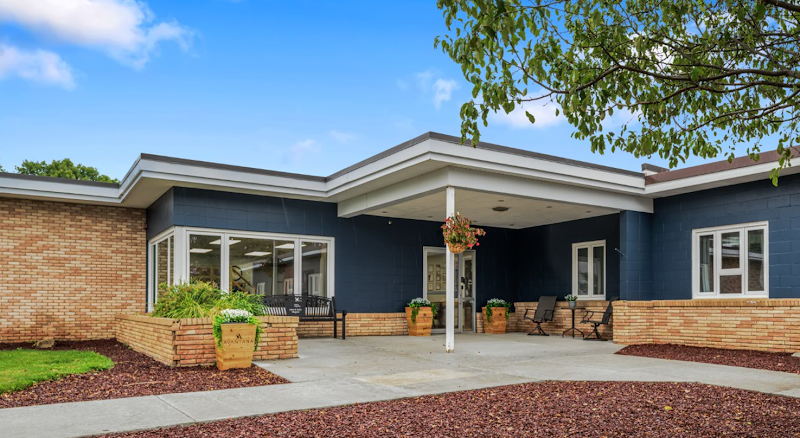
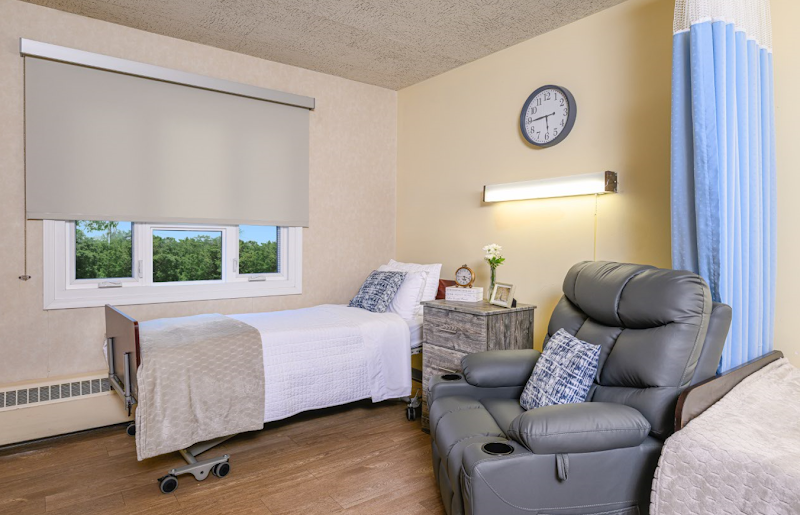
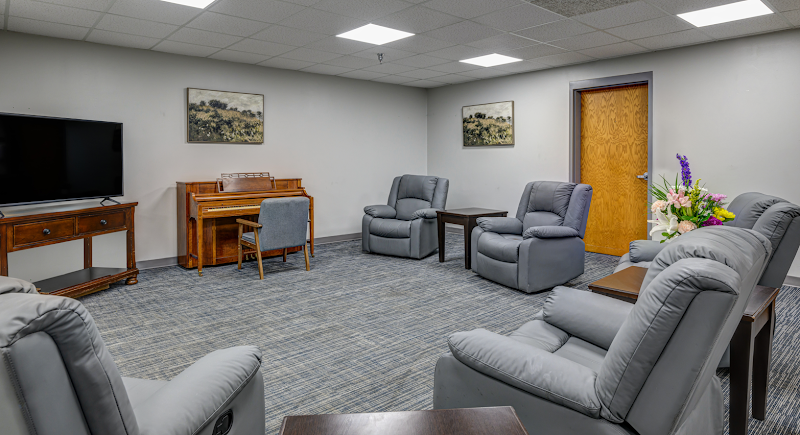
AVANTARA CLARK CITY

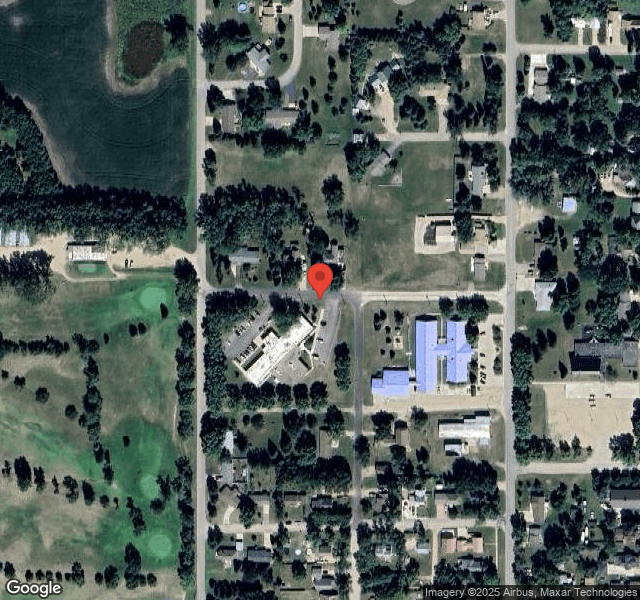
201 8TH AVENUE NW, CLARK, SD 57225 (605) 532-3431
For profit - Limited Liability company 35 Beds LEGACY HEALTHCARE Data: November 2025
Trust Grade
63/100
#33 of 95 in SD
Last Inspection: September 2024

Within standard 12-15 month inspection cycle. Federal law requires annual inspections.

Overview

Avantara Clark City in Clark, South Dakota, has a Trust Grade of C+, indicating a decent facility that is slightly above average but not without its issues. It ranks #33 out of 95 nursing homes in the state, placing it in the top half, and is the only option available in Clark County. The facility's trend is stable, with one issue reported in both 2024 and 2025, and while staffing has a rating of 3 out of 5 stars with a turnover rate of 49%, this is on par with the state average. However, there have been some concerning findings, such as a resident sustaining a skin tear from a sharp edge on a bed frame and insufficient updates to nutritional care plans for residents. Overall, while there are strengths in staffing and overall ratings, families should be aware of the facility's lapses in care that could impact resident safety.

Trust Score
C+
63/100
In South Dakota
#33/95
Top 34%
Safety Record
Moderate
Needs review
Inspections
Holding Steady
1 → 1 violations
Staff Stability
⚠ Watch
49% turnover. Above average. Higher turnover means staff may not know residents' routines.
Penalties
✓ Good
$17,010 in fines. Lower than most South Dakota facilities. Relatively clean record.
Skilled Nurses
✓ Good
Each resident gets 45 minutes of Registered Nurse (RN) attention daily — more than average for South Dakota. RNs are trained to catch health problems early.
Violations
✓ Good
Only 5 deficiencies on record. Cleaner than most facilities. Minor issues only.
★★★☆☆
3.0
Overall Rating
★★★☆☆
3.0
Staff Levels
★☆☆☆☆
1.0
Care Quality
★★★★☆
4.0
Inspection Score
Stable
2024: 1 issues
2025: 1 issues

The Good

  • Full Sprinkler Coverage · Fire safety systems throughout facility
  • No fines on record

Facility shows strength in fire safety.

The Bad

3-Star Overall Rating

Near South Dakota average (2.7)

Meets federal standards, typical of most facilities

Staff Turnover: 49%

Near South Dakota avg (46%)

Higher turnover may affect care consistency

Federal Fines: $17,010

Below median ($33,413)

Minor penalties assessed

Chain: LEGACY HEALTHCARE

Part of a multi-facility chain

Ask about local staffing decisions and management

The Ugly 5 deficiencies on record

1 actual harm
Jul 2025 1 deficiency
CONCERN (D) 📢 Someone Reported This

A family member, employee, or ombudsman was alarmed enough to file a formal complaint

Potential for Harm - no one hurt, but risky conditions existed

Accident Prevention (Tag F0689)

Could have caused harm · This affected 1 resident

Based on South Dakota Department of Health (SD DOH) facility-reported incident (FRI), record review, interview, and policy review, the provider failed to provide adequate supervision and assistance to...

Read full inspector narrative →
Based on South Dakota Department of Health (SD DOH) facility-reported incident (FRI), record review, interview, and policy review, the provider failed to provide adequate supervision and assistance to ensure the safety of one of one sampled resident (1) who fell while being transferred by certified nursing assistant (CNA) C who did not transfer the resident as directed in the resident's care plan and did not report the incident as a fall to the nurse for timely and appropriate assessment of the resident. This citation is considered past non-compliance based on a review of the provider's corrective actions immediately following the incident.Findings include:1. Review of provider's 7/1/25 SD DOH FRI for resident 1 revealed:* On 6/30/25 at 7:30 p.m. licensed practical nurse (LPN) E notified director of nursing (DON) D that certified nursing assistant (CNA) B stated resident 1 fell on 6/29/25.*CNA B reported to LPN E that CNA C had been looking for assistance to transfer resident 1 on 6/29/25 around 5:30 p.m. up from the floor.*There was no fall assessment completed.*No neurological assessments were started.*No family notification of the incident was documented in resident 1's chart.*DON D notified administrator A on 6/30/25 to review fall sensor footage.*Administrator A reviewed the footage on 6/30/25 at 8:10 p.m. while on the phone with DON D and saw that CNA C had completed a stand pivot transfer of resident 1 from her bed to her wheelchair. CNA C appeared to have:-lost her balance and tipped resident 1 in her wheelchair, along with herself, over backwards.-CNA C was seen in the footage going and getting CNA B to assist with getting resident 1 upright in her wheelchair.-CNA C was seen going to get registered nurse (RN) F from the dining room. *CNA C reported to RN F that she tipped resident 1's wheelchair back, but it was not a fall, and she did not hit her head.-RN F went to resident 1's room, observed resident 1 in her wheelchair with no injuries, and instructed CNA C to bring resident 1 to the dining room to eat supper.*After reviewing that information, DON D instructed LPN E on 6/30/25 to initiate fall follow-up, and to complete a head-to-toe assessment and neurological checks.*Administrator A suspended CNA C pending an investigation.*Upon completing assessment on resident:-Neurological assessment (evaluation of nerve function, reflexes, coordination, motor skills, sensation, reflexes, and mental status) was within normal limits (WNL).-Range of motion (measurement of movement around a joint or body part) was WNL.-Resident 1 complained of pain in her left upper extremity from a previous fracture.-Vital signs (measurement of the body's basic functions, such as temperature, blood pressure, pulse, and respiration rate) were WNL.*On 7/1/25 witness statements were obtained from CNA B and RN F who had worked with CNA C on 6/29/25 and confirmed what administrator A saw on security camera footage.*CNA C was interviewed regarding the incident with resident 1 and revealed:-She was not aware the incident was considered a fall since resident 1 remained in her wheelchair.-She confirmed that resident 1was to be transferred with the assistance of two staff members, and she did not wait for another staff member's assistance.*CNA C's employment was then terminated immediately on 7/1/25.*Resident 1's family, primary care provider, and orthopedic doctor were notified of the fall.*All staff were educated on the fall management policy.*CNAs demonstrated competencies with full mechanical lift (a mechanical lift and sling used to lift a person's full body) and sit-to-stand lift (a mechanical lift used to assist from a seated to standing position).*A whole-house audit was of transfer assistance needs was completed of all resident care plans, Kardex, CNA assignment sheets, and current therapy orders.*Transfer status and staff would be audited weekly for one month, then monthly for three months, and then quarterly for a year for continuance of care. 2. Review of resident 1's electronic medical record (EMR) revealed:*She admitted to facility on 5/26/22.*Physical therapy's 4/28/25 recommendations were for her to be transferred with maximum staff assistance (staff member provides the majority of the support) with the use of a mechanical lift and two staff members' assistance, and to use a sit-to-stand or total mechanical lift if she was too lethargic (tired).*Occupational therapy's 4/29/25 recommendations were for a mechanical sit-to-stand lift with two staff members assistance when able, or a total mechanical lift with two staff members' assistance if she was unsafe in the sit-to-stand.*Her care plan indicated transfers with total mechanical lift initiated 6/7/22.*Review of fall risk assessments completed on 2/28/25 and 6/1/25 identified resident 1 as having a high risk for falling. 3. Interview on 7/16/25 at 2:47 p.m. with CNA B revealed:*On 6/29/25 at approximately 5:30 p.m. CNA C was in the west hallway, motioning for her to come to resident 1's room.*Upon entering resident 1's room, CNA B observed resident 1 in her wheelchair tipped over and lying on the floor.*CNA C had told her she had lowered resident 1 to the floor, and that she did not fall.*CNA B told CNA C to notify the nurse because she thought what happened was a fall.*CNA C was already trying to sit the wheelchair up, so CNA B assisted resident 1 into an upright position.*CNA B left the room to notify RN F, but CNA C passed her in the hallway, and went to RN F.*She assumed CNA C told RN F of the fall as RN F went to resident 1's room.*On 6/30/25, she asked LPN E if she was aware of resident 1's fall from the previous day.*She wrote a statement about the events involving resident 1 on 6/29/25.*She was aware resident 1 needed the assistance of two staff members and the use of a mechanical lift for transferring.*She had received education on the fall policy after the incident, and a disciplinary teaching moment for failing to report a fall to the nurse.*She completed competencies on the safe use of the total mechanical lift and sit-to-stand lift following the incident. Interview on 7/17/25 at 9:25 a.m. with administrator A revealed:*She considered the 6/29/25 incident with resident 1 as a fall.*The fall policy should have been followed.*Resident 1's incident occurred because the staff did not follow her care plan and need to be transferred with a total mechanical lift and two staff.Education was provided to caregiver staff on the mechanical lift policy and the fall policy following the incident.*Competencies for the mechanical lift were completed with the nursing staff following the incident.Audits were being completed weekly, and adjustments like sling size and needed lift evaluations completed, and care plans being updated with the needed information was being made to ensure similar incidents do not happen again.*A quality assurance and performance improvement (QAPI) meeting was held on 7/1/25 regarding safe resident transfers, updating resident care plans, competencies being completed and transfer status updated to reflect safest option for the resident's transfers, and timely reporting of incidents to the nurse. 4. Review of the provider's revised February 2024 Fall management policy revealed:*It is the policy of the facility to identify and implement appropriate interventions to reduce the risk of falls or injuries while maximizing dignity and independence.- A fall is the unintentional change in position coming to rest on the ground, floor or onto the next lower surface.- An intercepted fall occurs when the resident would have fallen if he or she had not caught him/herself or had not been intercepted by another person-this is still considered a fall. The provider's implemented actions to ensure the deficient practice does not reoccur was confirmed on 7/17/25 after record review revealed the facility had followed their quality assurance process, education was provided to all nursing staff regarding mechanical lift policy and fall policy, mechanical lift competencies were completed for caregiver staff, and audits were being completed and will be ongoing. Interviews with nursing staff revealed they understood the education provided regarding those topics. Observation of mechanical lift transfers in residents' rooms were conducted and confirmed staff understood how to use lifts and transfer residents safely. A QAPI meeting was held on 7/1/25 to implement a plan and will continue to be a part of their QAPI process for review and further advise staff as needed. Based on the above information, non-compliance at F689 occurred on 6/29/25, and based on the provider's 6/30/25 implemented corrective actions for the deficient practice confirmed on 7/17/25, the non-compliance is considered past non-compliance.
Sept 2024 1 deficiency 1 Harm
SERIOUS (G)

Actual Harm - a resident was hurt due to facility failures

Accident Prevention (Tag F0689)

A resident was harmed · This affected 1 resident

Based on interview, observation, and record review, the provider failed to ensure a bed frame was maintained and free of hazardous sharp areas for one of one sampled resident (1) who acquired a skin t...

Read full inspector narrative →
Based on interview, observation, and record review, the provider failed to ensure a bed frame was maintained and free of hazardous sharp areas for one of one sampled resident (1) who acquired a skin tear to her right lower outer ankle. Findings include: 1. Interview on 9/09/24 at 3:51 p.m. with resident 1 revealed: *She was lying in her bed and stated she had a cut on her right leg that was caused from the metal on her bed when they were putting her to bed after using the bathroom. *She stated she had no other skin concerns. 2. Record review of resident 1's skin alteration evaluations revealed: *On 8/18/24 resident 1 received a skin tear to her right outer ankle while CNA I transferred her into bed. -The skin tear measured 6.0 L X 3.0 W x 0.5 centimeters (cm) deep. -Resident 1 declined go to the emergency room (ER) for an evaluation. *The residents wound was cleaned, Steri strips and a gauze pad were applied, and then her leg was wrapped in a gauze bandage. -The family was notified and agreed that she would not go to the ER for evaluation of the right leg wound. *On 9/11/24 the wound measured 6 cm X 2.2 cm X 0.1 cm. 3. Observation and interview on 9/10/24 at 9:26 a.m. with resident 1 revealed: *She stated nothing had been done to her bed to prevent her from being cut again. *The bed frame was exposed under her mattress and had seven metal square bars. -Three of those bars, from the middle of the bed to the head of the bed, had plastic protective caps on the ends of them. -Four those bars, from the middle of the bed to the toot of the bed, did not have protective caps. 4. Observation and interview on 9/10/24 at 9:52 a.m. with certified nursing assistant (CNA) G revealed: *She stated, I am almost positive she cut her leg on those bars. *She pointed to the bars on the bed frame. 5. Observation on 9/10/24 at 2:58 p.m. with resident 1 while she was asleep in her bed revealed sheepskin cover was under the mattress and over the edge of the bed covering the bed frame. 6. Interview on 9/10/24 at 3:24 p.m. with registered nurse (RN) C and administrator A revealed: *They both confirmed a sheepskin cover had been placed over resident 1's bed frame. *Administrator A stated she had informed maintenance staff H of the resident's bed frame that past weekend when she was the manager on duty, but he had not been notified previously. *She agreed nothing had been done about the bed frame until today (9/10/24). 7. Interview on 9/10/24 at 3:45 p.m. with RN E revealed: *Resident 1 acquired a skin tear to her right leg during a transfer on 8/18/24 and was bleeding pretty good. *Resident 1 and her family did not want her to go the ER for evaluation because the bleeding had stopped. *She would monitor the resident's leg for redness and cellulitis because she worked the next day. -The wound was not red. *She had evaluated the resident's bed and wheelchair but did not see anything dangerous that would have caused the skin tear, so she did not report it to others. *She agreed that resident 1 had acquired a skin tear to her right leg that measured 8.0 X 3.0 x 0.5 cm when staff had transferred her from the wheelchair to her bed. 8. Observation on 9/11/24 at 9:18 a.m. of resident 1's bed revealed. *Her bed was made with the blankets tucked under the mattress. *There was no sheepskin on the bed to cover the bed frame. *There were end caps on all the square bars. 9. Interview and observation on 9/11/24 at 10:06 a.m. with administrator A revealed: *She said TELS (a building management software system) communication was how staff communicated with maintenance staff if something needed his attention. *She stated nothing had been put in TELS for maintenance staff about resident 1's bed. *She clarified she had taken a picture of the bed with her phone and had sent it to maintenance staff when she was the manager on duty and showed the message to the surveyor. 10. Observation and interview on 9/11/24 at 1:00 p.m. with resident 1 revealed: *She was in the hall in her wheelchair and was heading to her room. She stated, My bed was fixed, I wish it had been done before I cut my leg on it. *She asked the surveyor to return to her room with her. *The sheepskin was back on the bed, and it was held in place with Velcro. *She said she should have gone to the ER for an evaluation but, it was in the middle of the night, and I didn't want to go. 11. Observation on 9/11/24 at 2:26 p.m. of resident 1's wound care with licensed practical nurse (LPN) F and CNA D revealed: *CNA D removed the dressing to resident 1's lower outer right leg. *LPN F said Resident 1 had a skin tear on her right lower leg. *LPN F cleansed the wound with saline wound cleaner, applied medihoney (a topical medication) with a cotton -tipped applicator, and applied a Mepilex bandage. -The wound bed was wet with pink outer edges. *LPN F did not measure the wound's size and said that measurements were done weekly on Mondays. 12. Interview on 9/11/24 at 2:46 p.m. with director of nursing (DON) B revealed: *She expected staff would have reported an equipment problem to maintenance staff and or her after a resident acquired a skin tear or injury. *She stated the bed should have been investigated because of the skin tear. *She agreed that equipment problems would have been reported to maintenance staff through TELS communication. *She confirmed the CNA I that had assisted resident 1 with her the transfer when she received the skin tear 8/18/24 was a traveler and no longer worked there.
Jun 2023 2 deficiencies
CONCERN (E)

Potential for Harm - no one hurt, but risky conditions existed

Deficiency F0657 (Tag F0657)

Could have caused harm · This affected multiple residents

**NOTE- TERMS IN BRACKETS HAVE BEEN EDITED TO PROTECT CONFIDENTIALITY** Based on record review, interview and policy review the provider failed to ensure the 48 hour nutritional care plans for two of ...

Read full inspector narrative →
**NOTE- TERMS IN BRACKETS HAVE BEEN EDITED TO PROTECT CONFIDENTIALITY** Based on record review, interview and policy review the provider failed to ensure the 48 hour nutritional care plans for two of four sampled residents (11 and 22) were updated in their comprehensive care plan. Findings include: 1. Review of resident 11's medical record revealed he: *Was admitted on [DATE]. *Had diagnoses that included: Anemia secondary to blood loss, type 2 diabetes mellitus with hyperglycemia and pneumonitis due to inhalation of other solids and liquids. *Was on a consistent carbohydrate (CCHO) diet. Review of resident 11's care plan problems initiated on 5/12/23 revealed: *Altered cardiovascular functioning related to post-op blood loss anemia. -The goal was to be free from signs and symptoms of complications of cardiac problems through the next review window. -The intervention was to give the diet as ordered. *Resident 11 was at risk for fluctuating blood sugars due to diabetes mellitus with hyperglycemia. -The goal was blood sugars would remain within parameters set forth by the physician through the next review window. -The intervention was to provide the diet per physician's order. 2. Interview on 6/13/23 at 1:47 p.m. with resident 22 revealed she: *Was in her room sitting in her recliner. *Knew she was on a ground meat diet because of her Barrett's esophagus diagnosis. *Had been dealing with acid reflux. *Had lost over 100 pounds in the last two years. -Due to a loss of appetite. -Dealing with her acid reflux. Review of resident 22's medical record revealed she: *Was admitted on [DATE]. *Had diagnoses that included: dysphagia, unspecified, gastroesophageal reflux disease without esophagitis and Barrett's esophagus without dysplasia. *Was on the provider's nutrition at-risk list for weight loss. -Weighed 133.6 pounds on 4/15/23. -Weighed 127.8 pounds on 6/8/23. Review of resident 22's care plan problems initiated on 4/13/23 revealed: *{Name} is at risk for altered cardiovascular functioning related to hyperlipidemia, anemia, obesity hypertension, peripheral vascular disease (PVD). -The goal was to have been free from cardiac overload through the next review period. -The intervention was to give the diet as ordered. *{Name of the resident} has an actual impairment to skin integrity to bilateral lower extremities (BLE) classified as unhealing leg ulcers. These were present upon admission. -The goal was not to develop signs and symptoms of infection on the wound site through the next review. -The intervention was to encourage good nutrition and hydration in order to promote healthier skin. Interview on 6/14/23 at 1:39 p.m. with dietary manager H revealed: *She completed the dietary portion of the initial care plan upon the resident's admission within 48 hours. *The comprehensive care plan should have been completed by the 21st day after admission. -She thought the comprehensive care plans had been updated for residents 11 and 22. -She agreed the comprehensive care plans were not updated in a timely manner. Interview on 6/14/23 at 3:35 p.m. with director of nursing (DON) A regarding resident 11 and 22's care plans revealed: *The interdisciplinary team (IDT): -Implemented the 48-hour resident care plans for all new admissions. -Completed the comprehensive care plan within 21 days after admission. *She agreed that the dietary portion of the comprehensive care plan was not updated for residents 11 and 22. *It was her expectation the resident care plans would have been completed in a timely manner. Review of the provider's September 2019 Care Planning policy revealed: *Individual, resident-centered care planning will be initiated upon admission and maintained by the interdisciplinary team throughout the resident's stay to promote optimal quality of life while in residence. In doing so, the following considerations are made: 1. Each resident is an individual. The personal history, habits, likes and dislikes, life patterns and routines, and personality facets must be addressed in addition to medical/diagnosis-based care consideration . 3. Care planning is constantly in process; it begins the moment the resident is admitted to the facility and doesn't end until discharge or death . 6. The DON will be responsible for holding the team accountable to intitiating and completing the admission care plan within 48 hours and the long-term care plan by day 21 and updated as necessary thereafter.
CONCERN (E)

Potential for Harm - no one hurt, but risky conditions existed

Deficiency F0700 (Tag F0700)

Could have caused harm · This affected multiple residents

**NOTE- TERMS IN BRACKETS HAVE BEEN EDITED TO PROTECT CONFIDENTIALITY** Based on observation, interview and record review the provider failed to ensure quarterly side rail assessments were completed f...

Read full inspector narrative →
**NOTE- TERMS IN BRACKETS HAVE BEEN EDITED TO PROTECT CONFIDENTIALITY** Based on observation, interview and record review the provider failed to ensure quarterly side rail assessments were completed for three of seven residents (4, 5, and 19). 1.Observation on 6/14/23 at 9:00 a.m. of resident 5's room revealed she had a one-half side rail on the left side of her bed. Interview on 6/14/23 at 9:30 a.m. with maintenance director E revealed: *He stated the assessments had been completed in the four months since he began working at this facility. *He provided documentation of a side rail audit with one bed rail audit conducted on 5/30/23 for room [ROOM NUMBER] which was not resident 5's room. *He admitted that he had not done as many assessments as he thought. Interview on 6/14/23 at 3:34 p.m. with director of nursing A and Minimum Data Set coordinator F regarding resident 5's side rails revealed: *There were no assessments completed for residents who use side rails. *Resident 5 had no assessment for side rails. *Their expectation would have been that the assessments had been completed. Review on 6/14/23 at 3:45 p.m. of resident 5's electronic medical record revealed: *She had no assessment completed for the use of a side rail. *There were no physician's order for the use of the side rail. *She had a signed side rail consent form on her admission on [DATE]. 2. Observation and interview on 6/12/23 at 4:01 p.m. with resident 4 revealed: *She was in her room seated in her wheelchair. *A u-shaped side rail was elevated on the upper half of her bed. *She used her side rail to reposition in bed and to assist herself to sit up on the edge of the bed. Review of resident 4's medical record revealed: *She was admitted on [DATE]. *She had diagnoses of symptomatic epilepsy and epileptic syndrome with complex partial seizures. *Her most recent Brief Interview of Mental Status (BIMS) of 13 revealed no cognitive impairment. *Quarterly side rail/other device evaluation forms were completed on 8/18/22 and on 1/25/23. 3. Observation and interview on 6/13/23 at 10:02 a.m. with resident 19 revealed: *She was in her room sitting in her recliner with the footrest elevated. *A u-shaped side rail was elevated on the upper half of her bed. *She used the side rail to reposition in bed and to transfer to her recliner or wheelchair. Review of resident 19's medical record revealed: *She was admitted on [DATE]. *She had diagnoses of epileptic seizures related to external causes, a mild neurocognitive disorder due to known physiological conditions without behavior disturbance, type two diabetes mellitus with unspecified complications and Parkinson's disease. *Quarterly side rail/other device evaluations were completed on 9/29/21 and on 11/13/22. A side rail policy was requested from the director of nursing but was not recieved by the end of the survey.
Feb 2022 1 deficiency
CONCERN (E)

Potential for Harm - no one hurt, but risky conditions existed

Infection Control (Tag F0880)

Could have caused harm · This affected multiple residents

Based on observation, interview, record review, and policy review, the provider failed to ensure proper hand hygiene had been performed by three of five observed staff (C,D, and E) while providing car...

Read full inspector narrative →
Based on observation, interview, record review, and policy review, the provider failed to ensure proper hand hygiene had been performed by three of five observed staff (C,D, and E) while providing care for three of five sampled residents' (14, 20, and 28) as evidenced by: *One of one sampled resident (28) during observed personal care performed by certified nursing assistant (CNA) E. *One of one sampled resident (20) during observed wound care performed by registered nurse (RN) C and licensed practical nurse (LPN) D. *One of one sampled resident (28) observed medication administration via feeding tube performed by LPN D. Findings include: 1. Observation on 2/15/22 at 3:44 p.m. of CNA E who assisted resident 28 with personal care revealed: *She was lying in bed with her brief pulled down. *CNA E: -Pulled up her pants and brief while wearing gloves. -Assisted her to a seated position on her bed. -Applied a gait belt. -Transferred her to her wheelchair. -Removed her gloves and put on a new pair. -Transferred her from her wheelchair to the toilet. -Provided peri care and pulled up her clean brief and pants with her contaminated gloves. -Repositioned her in her wheelchair with the same contaminated gloved hands. -Removed her contaminated gloves and without performing hand hygiene put on a new pair. -Assisted her with oral care. -Removed her gloves and washed her hands. Interview on 2/15/22 following the observation with CNA E revealed: *She had not been aware that hand hygiene needed to be completed after changing gloves. Review of the provider's October 2019 Hand Hygiene policy revealed: *All personnel shall be trained and regularly educated on the importance of hand hygiene in preventing the transmission of healthcare-associated infections. *All personnel shall follow the handwashing/hand hygiene procedures to help prevent the spread of infections to other personnel, residents, and visitors. *Before putting on and removing gloves hand hygiene shall be performed. 2. Observation on 2/16/22 at 10:44 a.m. with RN C and LPN D who completed wound care for resident 20 revealed: *RN C removed the dressing from his right knee and turned off the wound vac. *LPN D grabbed gauze with her gloved hand and turned the faucet handle on. -Using her gloved hands, she soaked that same gauze with water from the faucet, then dabbed the wound. -Moistened more gauze with tap water and cleaned his pinhole sites. *RN C applied Santyl ointment to the wound bed using a sterile Q-tip applicator. -Removed her gloves without performing hand hygiene and applied a new pair. *LPN D opened a Xeroform gauze package and applied gauze to the pinhole sites. -Removed her gloves and performed hand hygiene. Interview on 2/16/22 at 11:42 a.m. with RN C regarding the above observation revealed: *She had followed the physician's orders for wound cleansing. *The 1/11/22 physician's order instructed to clean the pinhole sites with soap and water. Interview on 2/16/22 at 11:43 a.m. with DON B regarding the above observation revealed: *She would expect staff to use wound cleanser if not cleansing with soap and water. *Staff should use sterile water or sterile saline when cleaning wounds with soap. Review of the provider's undated Dressing Change Competency-Aseptic Technique procedure revealed: *Cleanse wound with prescribed solution. 3. Observation on 2/17/22 at 7:55 a.m. with LPN D administering medication via a feeding tube for resident 14 revealed: *LPN D: -Prepared the medications and placed them on a tray. -Applied a pair of gloves. -Removed the old dressing from around the feeding tube site. -Instilled air into the tube and listened for air to check tube placement. -Removed her gloves to fill the graduate container with water for flushes. -Put on a new pair of gloves without performing hand hygiene. -Flushed the feeding tube with 60 milliliters of water before and after medication administration. -Removed her gloves. -Left the graduate container with water remaining in it on the nightstand next to resident's bed. Interview on 2/17/22 with LPN D following the above medication administration revealed she: *Had followed the physician's order to instill air and listen for tube placement before administering medication and the water bolus. * Stated, She normally would have removed the remaining water from the graduate when done but did not do that this time. *Cleaned the inside of the medication tray with an alcohol prep pad, but not the outside of the tray before placing it back in the med cart. *Stated, She did not think about that. *Agreed she had not performed hand hygiene between glove changes. Interview on 2/17/22 at 8:30 a.m. with DON B regarding the above medication administration observation revealed: *She would expect staff to remove any remaining water from the graduate. *She would expect staff to perform proper hand hygiene according to their policy.
Understanding Severity Codes (click to expand)
Life-Threatening (Immediate Jeopardy)
J - Isolated K - Pattern L - Widespread
Actual Harm
G - Isolated H - Pattern I - Widespread
Potential for Harm
D - Isolated E - Pattern F - Widespread
No Harm (Minor)
A - Isolated B - Pattern C - Widespread

Questions to Ask on Your Visit

  • "Can I speak with families of current residents?"
  • "What's your RN coverage like on weekends and overnight?"

Our Honest Assessment

Strengths
  • • Licensed and certified facility. Meets minimum state requirements.
Concerns
  • • 5 deficiencies on record, including 1 serious (caused harm) violation. Ask about corrective actions taken.
  • • $17,010 in fines. Above average for South Dakota. Some compliance problems on record.
Bottom line: Mixed indicators with Trust Score of 63/100. Visit in person and ask pointed questions.

About This Facility

What is Avantara Clark City's CMS Rating?

CMS assigns AVANTARA CLARK CITY an overall rating of 3 out of 5 stars, which is considered average nationally. Within South Dakota, this rating places the facility higher than 99% of the state's 100 nursing homes. This mid-range rating indicates the facility meets federal standards but may have areas for improvement.

How is Avantara Clark City Staffed?

CMS rates AVANTARA CLARK CITY's staffing level at 3 out of 5 stars, which is average compared to other nursing homes. Staff turnover is 49%, compared to the South Dakota average of 46%.

What Have Inspectors Found at Avantara Clark City?

State health inspectors documented 5 deficiencies at AVANTARA CLARK CITY during 2022 to 2025. These included: 1 that caused actual resident harm and 4 with potential for harm. Deficiencies causing actual harm indicate documented cases where residents experienced negative health consequences.

Who Owns and Operates Avantara Clark City?

AVANTARA CLARK CITY is owned by a for-profit company. For-profit facilities operate as businesses with obligations to shareholders or private owners. The facility is operated by LEGACY HEALTHCARE, a chain that manages multiple nursing homes. With 35 certified beds and approximately 30 residents (about 86% occupancy), it is a smaller facility located in CLARK, South Dakota.

How Does Avantara Clark City Compare to Other South Dakota Nursing Homes?

Compared to the 100 nursing homes in South Dakota, AVANTARA CLARK CITY's overall rating (3 stars) is above the state average of 2.7, staff turnover (49%) is near the state average of 46%, and health inspection rating (4 stars) is above the national benchmark.

What Should Families Ask When Visiting Avantara Clark City?

Based on this facility's data, families visiting should ask: "Can I visit during a mealtime to observe dining assistance and food quality?" "How do you handle medical emergencies, and what is your hospital transfer rate?" "Can I speak with family members of current residents about their experience?"

Is Avantara Clark City Safe?

Based on CMS inspection data, AVANTARA CLARK CITY has a clean safety record: no substantiated abuse findings (meaning no confirmed cases of resident harm), no Immediate Jeopardy citations (the most serious violation level indicating risk of serious injury or death), and is not on the Special Focus Facility watch list (a federal program monitoring the lowest-performing 1% of nursing homes). The facility has a 3-star overall rating and ranks #1 of 100 nursing homes in South Dakota. While no facility is perfect, families should still ask about staff-to-resident ratios and recent inspection results during their visit.

Do Nurses at Avantara Clark City Stick Around?

AVANTARA CLARK CITY has a staff turnover rate of 49%, which is about average for South Dakota nursing homes (state average: 46%). Moderate turnover is common in nursing homes, but families should still ask about staff tenure and how the facility maintains care continuity when employees leave.

Was Avantara Clark City Ever Fined?

AVANTARA CLARK CITY has been fined $17,010 across 1 penalty action. This is below the South Dakota average of $33,249. While any fine indicates a compliance issue, fines under $50,000 are relatively common and typically reflect isolated problems that were subsequently corrected. Families should ask what specific issues led to these fines and confirm they've been resolved.

Is Avantara Clark City on Any Federal Watch List?

AVANTARA CLARK CITY is not on any federal watch list. The most significant is the Special Focus Facility (SFF) program, which identifies the bottom 1% of nursing homes nationally based on persistent, serious quality problems. Not being on this list means the facility has avoided the pattern of deficiencies that triggers enhanced federal oversight. This is a positive indicator, though families should still review the facility's inspection history directly.