FAULKTON SENIOR LIVING
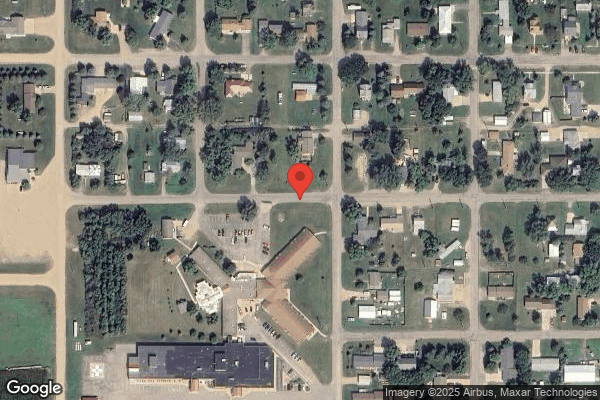
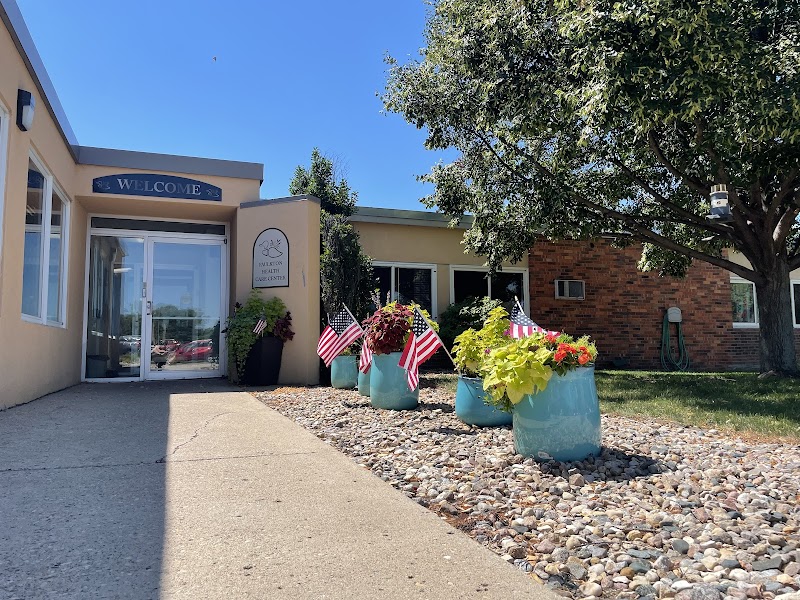
1401 PEARL ST, FAULKTON, SD 57438 (605) 598-6214
For profit - Corporation 35 Beds ACCURA HEALTHCARE Data: November 2025
Trust Grade
90/100
#7 of 95 in SD
Last Inspection: August 2024

Within standard 12-15 month inspection cycle. Federal law requires annual inspections.

Overview

Faulkton Senior Living has an impressive Trust Grade of A, indicating it is highly recommended and provides excellent care. It ranks #7 out of 95 facilities in South Dakota, placing it in the top half, and is the only facility in Faulk County, meaning families have no local competition. However, the facility is experiencing a worsening trend, with issues increasing from 1 in 2022 to 2 in 2024. Staffing is generally strong, with a 4 out of 5 stars rating and a turnover rate of 46%, which is slightly below the state average, providing a stable environment for residents. Notably, there have been some concerns, including a failure to maintain the privacy of electronic health records during medication administration and cleanliness issues with shared mechanical lifts that could pose health risks.

Trust Score
A
90/100
In South Dakota
#7/95
Top 7%
Safety Record
Low Risk
No red flags
Inspections
Getting Worse
1 → 2 violations
Staff Stability
⚠ Watch
46% turnover. Above average. Higher turnover means staff may not know residents' routines.
Penalties
✓ Good
No fines on record. Clean compliance history, better than most South Dakota facilities.
Skilled Nurses
○ Average
Each resident gets 33 minutes of Registered Nurse (RN) attention daily — about average for South Dakota. RNs are the most trained staff who monitor for health changes.
Violations
✓ Good
Only 3 deficiencies on record. Cleaner than most facilities. Minor issues only.
★★★★★
5.0
Overall Rating
★★★★☆
4.0
Staff Levels
★★★★☆
4.0
Care Quality
★★★★★
5.0
Inspection Score
Stable
2022: 1 issues
2024: 2 issues

The Good

  • 4-Star Staffing Rating · Above-average nurse staffing levels
  • 4-Star Quality Measures · Strong clinical quality outcomes
  • Full Sprinkler Coverage · Fire safety systems throughout facility
  • No fines on record

Facility shows strength in staffing levels, quality measures, fire safety.

The Bad

Staff Turnover: 46%

Near South Dakota avg (46%)

Higher turnover may affect care consistency

Chain: ACCURA HEALTHCARE

Part of a multi-facility chain

Ask about local staffing decisions and management

The Ugly 3 deficiencies on record

Aug 2024 2 deficiencies
CONCERN (D)

Potential for Harm - no one hurt, but risky conditions existed

Infection Control (Tag F0880)

Could have caused harm · This affected 1 resident

Based on observation, interview, and policy review, the provider failed to ensure two of five mechanical lifts shared for multiple resident use were maintained in a clean and sanitary manner. Findings...

Read full inspector narrative →
Based on observation, interview, and policy review, the provider failed to ensure two of five mechanical lifts shared for multiple resident use were maintained in a clean and sanitary manner. Findings include: 1. Observation on 7/30/24 at 8:26 a.m. in the 300-hallway revealed: *The Volaro Full Body Lift had a torn and cover that left a non-cleanable surface area on the top of the lift. *There was rust and scratched paint on the top of the lift's legs. 2. Observation on 7/30/24 at 9:58 a.m. of the Volaro sit-to-stand aide lift in the 300-hallway revealed: *There was a buildup of food particles and dirt on the foot base. *The knee padding was worn and torn. *The foot base was missing several areas of paint with exposed rusted metal. *The right wheelbase of the lift had a large gouge in the rusted metal. 3. Interview on 7/31/24 at 10:42 a.m. with CNA E revealed: *She was unsure how to clean the damaged portions of the two lifts. *She was unsure if there was a policy on how to clean the lifts. 4. Interview on 8/1/24 at 11:26 a.m. with DON B revealed: *No one had informed her that the mechanical lifts were damaged and needed repair. *She would have expected all equipment would be in good working order and sanitized properly between each use. 5. Review of the provider's May 2024 General information Prevention and Control policy. *Procedure: -a. All items for resident care will be cleaned and disinfected and will be designated for the resident's use only. -i. Reducing and /or preventing infections through indirect contact requires the decontamination (i.e., cleaning, sanitizing, or disinfecting an object to render it safe for handling) for resident equipment, medical devices, and the environment. *Nursing Weekly Cleaning Tasks -Multiple use items will be cleanded and disinfected between each resident use: d. Mechanical lifts.
CONCERN (E)

Potential for Harm - no one hurt, but risky conditions existed

Deficiency F0583 (Tag F0583)

Could have caused harm · This affected multiple residents

Based on observation, interview, and policy review, the provider failed to ensure the privacy and confidentiality of resident electronic health records had been maintained by two of two staff (license...

Read full inspector narrative →
Based on observation, interview, and policy review, the provider failed to ensure the privacy and confidentiality of resident electronic health records had been maintained by two of two staff (licensed practical nurse (LPN) C and certified nursing assistant (CNA) D, during medication administration. Findings include: 1. Observation and interview 7/30/24 from 8:50 a.m. to 9:00 a.m. of one medication cart computer in the dining room with LPN C revealed: *It was placed in the dining area and there were no staff within view of the medication cart. *The medication computer screen faced the wall, was open and displayed a resident's electronic medical record (EMR). *The unattended computer screen was visible to any resident, staff, or visitors that would have been passing by the medication cart. *It contained the following information: -The resident's name and room location. -Age and date of birth . -Gender. -Allergies. -Medical record number. *LPN C agreed the screen should not have been left open and should have been shut. *She thought since the screen was facing the wall no one would have looked at it. *She was not sure how to lock the screen. *She agreed it was a violation of Health Insurance Portability and Accountability Act (HIPAA). 2. Observation on 8/1/24 at 7:57 a.m. of one medication cart computer located in the dining room revealed: *CNA D had been in the dining area administering medications to a resident. *She had walked away from the medication cart. *The medication computer screen was open and displayed a resident's medication administration record (MAR). *The record had been visible to any resident, staff or visitors passing by the medication cart. 3. Observation and interview on 8/1/24 at 1:41 p.m. of one medication cart computer located in the 200-hallway with CNA D revealed: *The medication computer screen was opened and displayed a resident's EMR. *She had walked away from the medication cart and was in a resident's room. *She agreed she should not have left the medication cart with the screen open with the resident's information displayed on it. *She was not feeling well and was not doing her job 100%. *She only does medication pass once a month and feels it is like new every time she does it. *She stated she has not had re-training in 23 years. 4. Interview on 8/1/24 at 11:26 a.m. with director of nursing (DON) B regarding the above observations revealed she: *Would have expected all nurses to have locked the medication carts and the computer screen prior to leaving the medication cart unattended. *Agreed that if the computer screen was not locked when unattended resident's personal health information could have been viewed by anyone walking past that medication cart. 5. Review of provider's February 2019 Notice of Privacy Practice policy revealed: *How will this Facility protect my health information? - This Facility works hard to protect your health information. We use computer systems to store your health information. We have protections in place to keep your information from being seen by anyone that should not see it. *Electronic health records/ health information -This electronic health record is a secure system. This Facility and the providers using the system are trained to ensure your information is private.
Feb 2022 1 deficiency
CONCERN (D)

Potential for Harm - no one hurt, but risky conditions existed

Comprehensive Assessments (Tag F0636)

Could have caused harm · This affected 1 resident

Based on observation, interview, record review, and policy review, the provider failed to assess fall prevention devices for 2 of 3 (15 and 18) sampled residents with devices. Findings include: 1. Obs...

Read full inspector narrative →
Based on observation, interview, record review, and policy review, the provider failed to assess fall prevention devices for 2 of 3 (15 and 18) sampled residents with devices. Findings include: 1. Observation and interview on 2/16/22 at 11:00 a.m. with resident 18 revealed: *She was seated in a reclining chair with her legs extended on the footrest and was using an oxygen concentrator. *She reported she had been in the hospital several times since she moved in and thought it was due to problems with her breathing. Observation and interview on 2/16/22 at 12:43 p.m. revealed: *Certified nursing assistant (CNA) J provided weight-bearing assistance while transferring resident 18 from her recliner to her wheelchair and then onto the toilet. *While the resident was seated on the toilet, CNA J moved an alarm pad from the seat of the recliner to the seat of the wheelchair. *The alarm sounded momentarily when the resident transferred off the recliner, and then when she sat down in her wheelchair. *CNA J explained the alarm sounds at times of transfer to confirm it is turned on and working, but staff received all other alarm sounds on their pagers when the resident was moving. Review of the progress notes in the electronic medical record (EMR) for resident 18 revealed: *On 11/30/21, she was admitted to the facility. *On 12/6/21, she was sent to the hospital with an injury that happened when the resident was rolling/sliding out of bed. *On 12/9/21, she returned to the facility, and a fall risk summary scored her as high risk. *On 12/10/21, a care conference noted a discussion of the resident's fall history and plans for fall prevention with multiple family members. *On 12/11/21, the resident was educated to use her call light but doesn't remember to use it at this point. She tends to yell .to get staff members attention. *On 12/14/21, a physical device evaluation noted the use of a hi-low bed in a low position was appropriate because the resident does not always remember to call for assistance, and she does not seem to want to get out of her [reclining] chair when her wheelchair and walker are not close enough to use. *On 1/23/22, the resident was found on the floor next to the toilet in her room with her bottom exposed and a bump on the back of her head. *On 1/24/22, a post-fall intervention was noted as Do not leave unattended in bathroom. Another note documented a conversation with the resident's power of attorney included: -Options to prevent falls, including moving her to a room closer to the nurse's station. -A discussion that most interventions are to prevent injuries as it is not feasible to expect we can prevent every fall. Review of the care plan, initiated on 11/30/21 and revised on 12/6/21, revealed: *At risk for falls r/t [related to] limited physical mobility and weakness. *An intervention for wide bed with pillow under sheet when in bed. Bed low to the floor. *Interventions added on 1/24/22 included: -Do not leave unattended in the bathroom. -Use an alarm pad under [resident] at all times in her bed, recliner, & w/c [and wheelchair]. Review of the physical device evaluation dated 2/1/22 revealed: *Locomotion devices included wheeled walker and wheelchair. *The Other option was not checked under the section for Other devices. Instead, None of the above was checked. *Medical symptoms and diagnosis list included: -Sensory and cognitive deficits, impaired judgment, unaware of boundaries, impulsive and self-injurious behavior, impaired mobility and weakness, and frequent falls. -Arthritis, stroke (CVA), and dementia. *The section for Interventions was left blank. *The summary section indicated the device will be used for mobility, positioning, safety, resident preference. *There was no rationale documented for the use of the chair and bed alarms nor how the alarms could or did affect the resident's movement. Review of the 2/8/22 comprehensive Minimum Data Set (MDS) assessment revealed: *Bed and chair alarms were coded as not used. *The fall history noted that a fall occurred in the last month and in the last 2-6 months. *Resident 18's diagnosis list included dementia, cardiorespiratory conditions, and restlessness and agitation. *She needed extensive weight-bearing activities of daily living (ADL) assistance to transfer between surfaces. *Her mental status was cognitively intact, but she displayed behavioral symptoms that significantly interfered with the resident's participation in activities or interactions with others. Review of the 2/8/22 care area assessments (CAA) for the comprehensive MDS revealed: *The behavioral symptoms CAA noted resident 18 was disruptive and yelling out and had one episode of hallucinations/delusions that was associated with Sundowners. *The ADL functional potential CAA noted her functional abilities were impacted by her behavioral symptoms, recent falls due to the risk factors of weakness and poor balance. *The falls CAA noted a history of falls with several since admission with risks factors including weakness and dizziness from poor oxygenation. On 2/16/22, a written request form for documents, including the policies and procedures for fall prevention and physical restraints, was provided to administrator A. Review of the written request form and the documents provided revealed: *The fall risk and prevention guidelines, revised in February 2019, did not address the assessment of fall prevention devices. *The note, (Don't have one/[do not] use restraints) was written on the request form next to the requested restraint policy and procedure. Interview on 2/17/22 with MDS coordinator C did not occur as she was involved with the care conferences. Interview on 2/17/22 at 1:58 p.m. with director of nursing B revealed: *There were no documented assessments for the use of the chair and bed alarms because they had not restricted her movement. *She acknowledged they could have been addressed on the physical device evaluation. *The fall on 1/23/22 occurred when the resident impulsively tried to get up [from the toilet] when she was done [going to the bathroom]. *The fall could have been prevented if the CNA who had assisted the resident onto the toilet had not left her there to answer a call for help from another CNA. 2. Observation on 2/17/22 at 3:01 p.m. of resident 15 revealed: *She was lying on her bed that was low to the floor with a raised edge mattress. *She had both of her legs resting on top of the raised edge. *The resident was awake and spoke with a strongly tremulous (quivering) voice that made it very difficult to understand what she said. Review of the care plan, initiated on 1/23/20 and revised on 11/15/21, revealed the interventions for the resident's fall risk included: *Bed in low position at all times. *Lip mattress on bed. *Rocking w/c [wheelchair] for positioning and fall prevention. Review of the physical device evaluation dated 12/8/21 revealed: *Hi-low bed was the only bed device checked. Scoop type mattress was not checked. *Wheelchair was the only locomotion or chair device checked. The rocking wheelchair was not noted. *The Other option was not checked under the section for Other devices. Instead, None of the above was checked. *The section for Interventions was left blank. *The summary section indicated the device will be used for positioning, safety, and resident preference. Review of the 12/21/21 MDS revealed: *No physical restraint options were coded as used. *There had been no falls since the prior assessment. *She needed extensive weight-bearing activities of daily living (ADL) assistance to transfer between surfaces and was totally dependent for mobility in her wheelchair. *She had not wandered nor displayed any behavioral symptoms.
Understanding Severity Codes (click to expand)
Life-Threatening (Immediate Jeopardy)
J - Isolated K - Pattern L - Widespread
Actual Harm
G - Isolated H - Pattern I - Widespread
Potential for Harm
D - Isolated E - Pattern F - Widespread
No Harm (Minor)
A - Isolated B - Pattern C - Widespread

Questions to Ask on Your Visit

  • "Can I speak with families of current residents?"
  • "What's your RN coverage like on weekends and overnight?"

Our Honest Assessment

Strengths
  • • Grade A (90/100). Above average facility, better than most options in South Dakota.
  • • No major safety red flags. No abuse findings, life-threatening violations, or SFF status.
  • • No fines on record. Clean compliance history, better than most South Dakota facilities.
  • • Only 3 deficiencies on record. Cleaner than most facilities. Minor issues only.
Concerns
  • • No significant concerns identified. This facility shows no red flags across CMS ratings, staff turnover, or federal penalties.
Bottom line: Generally positive indicators. Standard due diligence and a personal visit recommended.

About This Facility

What is Faulkton Senior Living's CMS Rating?

CMS assigns FAULKTON SENIOR LIVING an overall rating of 5 out of 5 stars, which is considered much above average nationally. Within South Dakota, this rating places the facility higher than 99% of the state's 100 nursing homes. This rating reflects solid performance across the metrics CMS uses to evaluate nursing home quality.
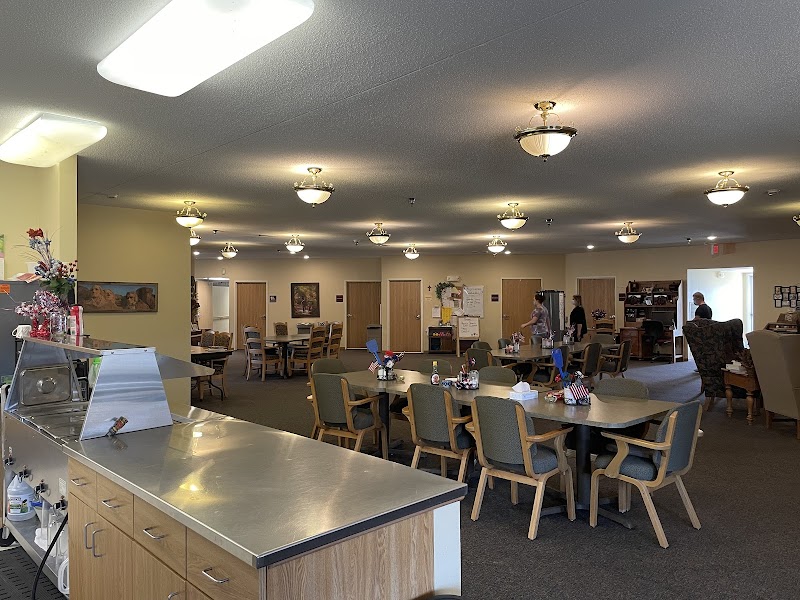
How is Faulkton Senior Living Staffed?

CMS rates FAULKTON SENIOR LIVING's staffing level at 4 out of 5 stars, which is above average compared to other nursing homes. Staff turnover is 46%, compared to the South Dakota average of 46%. This relatively stable workforce can support continuity of care.

What Have Inspectors Found at Faulkton Senior Living?

State health inspectors documented 3 deficiencies at FAULKTON SENIOR LIVING during 2022 to 2024. These included: 3 with potential for harm.
Who Owns and Operates Faulkton Senior Living?

FAULKTON SENIOR LIVING is owned by a for-profit company. For-profit facilities operate as businesses with obligations to shareholders or private owners. The facility is operated by ACCURA HEALTHCARE, a chain that manages multiple nursing homes. With 35 certified beds and approximately 35 residents (about 100% occupancy), it is a smaller facility located in FAULKTON, South Dakota.
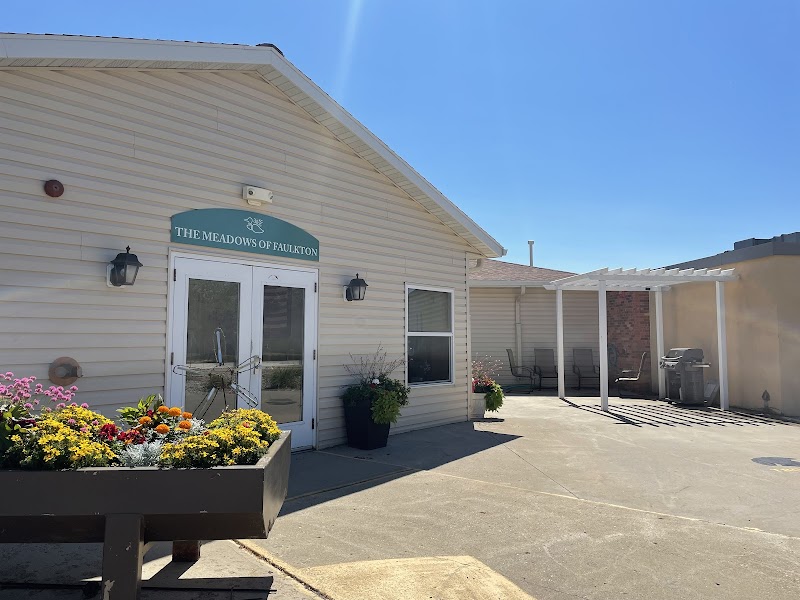
How Does Faulkton Senior Living Compare to Other South Dakota Nursing Homes?

Compared to the 100 nursing homes in South Dakota, FAULKTON SENIOR LIVING's overall rating (5 stars) is above the state average of 2.7, staff turnover (46%) is near the state average of 46%, and health inspection rating (5 stars) is much above the national benchmark.

What Should Families Ask When Visiting Faulkton Senior Living?

Based on this facility's data, families visiting should ask: "Can I visit during a mealtime to observe dining assistance and food quality?" "How do you handle medical emergencies, and what is your hospital transfer rate?" "Can I speak with family members of current residents about their experience?"

Is Faulkton Senior Living Safe?

Based on CMS inspection data, FAULKTON SENIOR LIVING has a clean safety record: no substantiated abuse findings (meaning no confirmed cases of resident harm), no Immediate Jeopardy citations (the most serious violation level indicating risk of serious injury or death), and is not on the Special Focus Facility watch list (a federal program monitoring the lowest-performing 1% of nursing homes). The facility has a 5-star overall rating and ranks #1 of 100 nursing homes in South Dakota. While no facility is perfect, families should still ask about staff-to-resident ratios and recent inspection results during their visit.

Do Nurses at Faulkton Senior Living Stick Around?

FAULKTON SENIOR LIVING has a staff turnover rate of 46%, which is about average for South Dakota nursing homes (state average: 46%). Moderate turnover is common in nursing homes, but families should still ask about staff tenure and how the facility maintains care continuity when employees leave.

Was Faulkton Senior Living Ever Fined?

FAULKTON SENIOR LIVING has no federal fines on record. CMS issues fines when nursing homes fail to meet care standards or don't correct problems found during inspections. The absence of fines suggests the facility has either maintained compliance or corrected any issues before penalties were assessed. This is a positive indicator, though families should still review recent inspection reports for the full picture.

Is Faulkton Senior Living on Any Federal Watch List?

FAULKTON SENIOR LIVING is not on any federal watch list. The most significant is the Special Focus Facility (SFF) program, which identifies the bottom 1% of nursing homes nationally based on persistent, serious quality problems. Not being on this list means the facility has avoided the pattern of deficiencies that triggers enhanced federal oversight. This is a positive indicator, though families should still review the facility's inspection history directly.