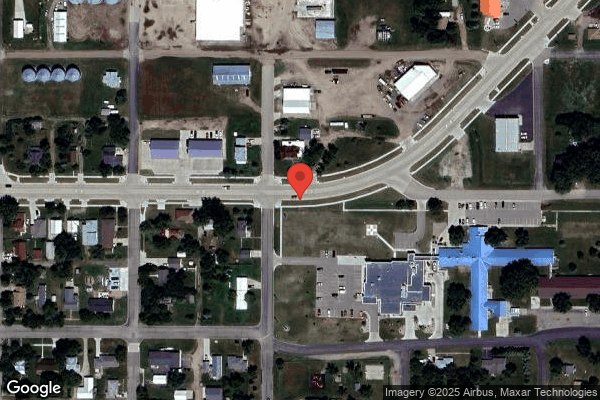

AVERA OAHE MANOR

700 E GARFIELD, GETTYSBURG, SD 57442 (605) 765-2461
Non profit - Corporation 53 Beds Independent Data: November 2025
Trust Grade
43/100
#76 of 95 in SD
Last Inspection: July 2025

Inspected within the last 6 months. Data reflects current conditions.

Overview

Avera Oahe Manor has a Trust Grade of D, indicating below-average performance and some notable concerns. They rank #76 out of 95 nursing homes in South Dakota, placing them in the bottom half, but they are the only option in Potter County. Unfortunately, the facility is worsening, with issues increasing from 3 in 2024 to 6 in 2025. Staffing is a notable weakness, with a low rating of 1 out of 5 stars and a turnover rate of 46%, which is slightly better than the state average. The facility has incurred $12,735 in fines, a figure that is average compared to other facilities. There is average RN coverage, but the facility failed to ensure safe coffee temperatures, resulting in a resident experiencing burns. Additionally, the care plans for some residents were not updated to reflect their current needs, raising concerns about the quality of care. Overall, while there are some strengths, the facility has significant weaknesses that families should carefully consider.

Trust Score
D
43/100
In South Dakota
#76/95
Bottom 20%
Safety Record
Moderate
Needs review
Inspections
Getting Worse
3 → 6 violations
Staff Stability
⚠ Watch
46% turnover. Above average. Higher turnover means staff may not know residents' routines.
Penalties
⚠ Watch
$12,735 in fines. Higher than 94% of South Dakota facilities. Major compliance failures.
Skilled Nurses
✓ Good
Each resident gets 47 minutes of Registered Nurse (RN) attention daily — more than average for South Dakota. RNs are trained to catch health problems early.
Violations
○ Average
9 deficiencies on record. Average for a facility this size. Mostly minor or procedural issues.
★☆☆☆☆
1.0
Overall Rating
★☆☆☆☆
1.0
Staff Levels
★☆☆☆☆
1.0
Care Quality
★★★☆☆
3.0
Inspection Score
Stable
2024: 3 issues
2025: 6 issues

The Good

  • Full Sprinkler Coverage · Fire safety systems throughout facility
  • No fines on record

Facility shows strength in fire safety.

The Bad

1-Star Overall Rating

Below South Dakota average (2.7)

Significant quality concerns identified by CMS

Staff Turnover: 46%

Near South Dakota avg (46%)

Higher turnover may affect care consistency

Federal Fines: $12,735

Below median ($33,413)

Minor penalties assessed

The Ugly 9 deficiencies on record

1 actual harm
Sept 2025 1 deficiency
CONCERN (D) 📢 Someone Reported This

A family member, employee, or ombudsman was alarmed enough to file a formal complaint

Potential for Harm - no one hurt, but risky conditions existed

Deficiency F0658 (Tag F0658)

Could have caused harm · This affected 1 resident

**NOTE- TERMS IN BRACKETS HAVE BEEN EDITED TO PROTECT CONFIDENTIALITY** Based on the South Dakota Department of Health (SD DOH) facility reported incident (FRI), record review, interview, and policy r...

Read full inspector narrative →
**NOTE- TERMS IN BRACKETS HAVE BEEN EDITED TO PROTECT CONFIDENTIALITY** Based on the South Dakota Department of Health (SD DOH) facility reported incident (FRI), record review, interview, and policy review, the provider failed to follow nursing professional standards to ensure one of one sampled resident (1) had consistent neurological checks completed and documented after the resident fell and hit her head, according to the provider's policies.Findings include:1. Review of the 8/3/25 SD DOH FRI regarding resident 1 revealed:*On 8/3/25 at 12:00 p.m. resident 1 was walking with certified nursing assistant (CNA) E to the bathroom.*CNA E let go of resident 1's gait belt (a waist strap gripped as support for safe mobility and transfers) to turn on the bathroom light.*Resident 1 lost her balance, fell to the floor, and hit her head on the floor.*Resident 1 was assessed by licensed practical nurse (LPN) F, who did not identify any injuries at that time.*Resident 1 was taken to the emergency room by her husband, who was present at the time of the fall.*While in the emergency department resident 1's husband declined a CT scan (imaging test that uses x-rays of cross sections of the body) of resident 1's head.2. Review of resident 1's electronic medical record (EMR) revealed:*She was admitted on [DATE].*Her 8/7/25 Brief Interview of Mental Status (BIMS) assessment score was 13, which indicated her cognition was intact.*Her diagnoses included Parkinson's (a disorder of the central nervous system that affects movement, often including tremors), weakness, dizziness on standing, and loss of balance.*Review of her admission care plan revealed on 8/1/25 an intervention was added to her care plan that indicated resident 1, transfers and ambulates with staff assistance x1 [times one], a walker and [the use of a] gait belt.*Resident 1's 8/1/25 fall risk assessment, had a score of 2 which indicated she required Standard fall precautions.*Resident 1 was admitted to the emergency room on 8/3/25 at 1:30 p.m. and discharged from the emergency department on 8/3/25 at 2:29 p.m.*She returned to the facility on 8/3/25 at 2:30 p.m. with a diagnosis of mild dehydration (loss of body fluid caused by illness, sweating, or inadequate intake), and was advised to increase her fluid intake.3. Review of resident 1's post-fall neurological assessments (assessment of nerve function, reflexes, coordination, motor skills, sensation, and mental status) (neuros) revealed:*There were identified areas for assessment on the Neuro Check Care Assessment in resident 1's EMR which included:- Neurological--Orientation--Behavior--Speech Patter- Glasgow Coma Scale [a neurological assessment tool used to evaluate the level of consciousness after a brain injury]--Eye opening--Verbal response--Motor response--Glasgow coma scale total score- Pupil Assessment--bilateral eyes--Pupil size (mm) [millimeters]--Pupil reaction--Pupil shape- Ocular [eye] Assessment--Eye movement--Tracking on horizontal plane--Tracking on vertical plane--Able to independently open and close eyelids- Visual Acuity--Peripheral visual fields intact--Blurry Vision- Neurological Symptoms-Dizziness/vertigo-Nausea/vomiting-Headache- Movement/Strength/Sensation--bilateral lower--Movement description--Strength description--Sensation description--bilateral upper--Movement description--Strength description--Sensation description.*Resident 1's 8/3/25 12:00 p.m. neuro assessment taken immediately after the resident's fall did not have the Pupil Assessment or the Movement/Strengths/Sensation portions of the assessment completed.*Resident 1's 8/3/25 12:30 p.m. neuro assessment did not have the Glasgow Coma Scale, Pupil Assessment, Ocular Assessment, Visual Acuity, Neurological Symptoms, or the Movement/Strength/Sensation portions of the assessment completed.*Resident 1's 8/3/25 1:00 p.m. neuro assessment did not have the Glasgow Coma Scale, Pupil Assessment, or the Movement/Strength/Sensation portions of the assessment completed.*Resident 1's next neuro assessment was completed on 8/3/25 at 5:00 p.m. and did not have the Glasgow Coma Scale, Pupil Assessment, Ocular Assessment, Visual Acuity, Neurological Symptoms, or the Movement/Strength/Sensation portions of the assessment completed.*Resident 1's 8/3/25 9:00 p.m. neuro assessment did not have the Glasgow Coma Scale completed.*Resident 1's 8/4/25 1:04 a.m. neuro assessment did not have resident 1's orientation, the Glasgow Coma Scale, bilateral lower sensation description, or bilateral upper sensation description.*Resident 1's 8/4/25 5:00 a.m. neuro assessment did not have the Glasgow Coma Scale completed.*Resident 1's 8/5/25 9:00 a.m. neuro assessment did not have the Glasgow Coma Scale completed.*Resident 1's 8/6/25 9:00 a.m. neuro assessment had every field in the neuro assessment completed.*Resident 1's 8/7/25 9:00 a.m. neuro assessment did not have the Ocular Assessment, Visual Acuity, Neurological Symptoms, or the Movement/Strength/Sensation portions of the assessment completed.*Resident 1's 8/8/25 9:00 a.m. neuro assessment did not have the Glasgow Coma Scale completed.*Resident 1's 8/9/25 9:00 a.m. neuro assessment did not have the Glasgow Coma Scale, Pupil Assessment, Ocular Assessment, Visual Acuity, Neurological Symptoms, or the Movement/Strength/Sensation portions of the assessment completed.*Resident 1's 8/10/25 9:00 a.m. neuro assessment did not have the pupil size, Ocular Assessment, Visual Acuity, Neurological Symptoms, or the Movement/Strength/Sensation portions of the assessment completed.*Resident 1's 8/11/25 9:00 a.m. neuro assessment did not have the Glasgow Coma Scale, or the pupil size completed.4. Interview on 9/3/25 at 2:15 p.m. with LPN D revealed:*Neuro assessments were to be completed anytime a resident fell and hit their head.*She would check the resident's pupils, make sure the resident could follow commands, and check their strength in their upper and lower extremities.*There was a post-fall worksheet that the nursing staff followed so they would know what needed to be done after a resident fell and how often the resident's vital signs (measurements of the body's basic functions, such as temperature, blood pressure, pulse, and respiration rate) needed to be taken and when the neuro assessments were to be completed.5. Interview on 9/3/25 at 2:56 p.m. with registered nurse (RN)/infections preventionist (IP) B revealed:*Each of the areas identified on the Neuro Check Care Assessment form was visible to the nurse who was completing the resident's neuro assessments.*RN/IP B verified resident 1's documented neuro assessments completed after she fell, had areas that were completed were blank or not completed.6. Interview on 9/3/25 at 3:10 p.m. with RN/IP B and LPN C revealed:*They felt the expectations were not clear regarding what needed to be charted related to in the residents' neuro assessments because when one identified area on the Neuro Check Care Assessment was completed, the neuro assessment task was able to be documented as completed in the EMR system.*RN/IP B's expected that the residents' Neuro Check Care Assessments were to be completed as thoroughly as possible.*They stated that it would not be possible to identify if there was a change in a resident's neurological status if the neuro assessments and documentation of those assessments were not complete.7. Interview on 9/4/25 at 11:10 a.m. with administrator A revealed:*She expected the documentation on the Neuro Check Care Assessment form would be completed consistently.*She verified the documentation in resident 1's post-fall Neuro Check Care Assessments were not completed consistantly.8. Review of the provider's undated Post Fall Worksheet revealed: *If [a] resident hit [their] head, or if [a] fall is not witnessed and [the] resident is unable to tell you if they hit their head, Neuro checks need to be completed as below, in addition to vital signs.-Initially after the fall, every 30 minutes times two, every four hours times four, and daily times seven.Review of the provider's February 2024 Fall Evaluation and Injury Prevention policy revealed:* Resident fall.-c. Assessment of the resident will continue at least every shift for the next 72 hours.--a. Reassessments should include vital signs, neurological assessments, review of systems as well as worsening or improving symptoms as well as any treatment provided.-d. If the resident hit their head or the fall was unwitnessed and the resident is not able to communicate if they hit their head, staff will complete the Neurological Assessment-LTC [long-term care] at least every 4 hours x [times] 4 then daily x 72 hours.
Jul 2025 5 deficiencies 1 Harm
SERIOUS (G)

Actual Harm - a resident was hurt due to facility failures

Accident Prevention (Tag F0689)

A resident was harmed · This affected 1 resident

**NOTE- TERMS IN BRACKETS HAVE BEEN EDITED TO PROTECT CONFIDENTIALITY** Based on South Dakota Department of Health (SD DOH) Facility Reported Incident (FRI), interview, record review, and policy revie...

Read full inspector narrative →
**NOTE- TERMS IN BRACKETS HAVE BEEN EDITED TO PROTECT CONFIDENTIALITY** Based on South Dakota Department of Health (SD DOH) Facility Reported Incident (FRI), interview, record review, and policy review, the provider failed to ensure a safe environment by not having checked the coffee temperature to ensure it was within a safe temperature range before serving it to one of one sampled residents (9) who spilled her coffee and sustained a burn to her upper anterior (front) thighs.Findings include: Review of the provider's 5/21/25 SD DOH FRI report revealed that resident 9 had spilled her coffee in her lap at a meal on 5/16/25. Findings include:1. Resident 9 had picked up her cup from the table and it caught on her meal container, tipping the coffee into her lap. She wheeled herself out of the dining room. One of her tablemates notified the activities director (who is also a CNA) who had been in the dining room, and found resident 9 attempting to enter the lobby restroom and immediately assisted her in getting the wet clothing away from her skin. The resident suffered burning and blistering to her upper anterior (front) thighs. 2. Review of DON B's notes regarding the incident revealed that the coffee maker tank was set to a temp of 180 degrees and the staff had checked the coffee temperature and it was 168 degrees. 3. Interview on 7/29/25 at 8:37 a.m. with food service worker II (FSW II) R revealed that his position held the primary responsibility for filling the coffee carafes. He had not been instructed to take the temperatures of hot beverages or on what a safe serving temperature would be. He stated that after the 5/16/25 burn from hot coffee, they left the coffee carafe open in the kitchen for a few minutes in order to cool the coffee, and then they got a new coffee machine. They did not check the temperature of the coffee carafe after leaving it open. *Interview on 7/29/25 at 10:21 a.m. with resident 9 revealed that she burned her legs when she spilled her coffee in her lap. She said it was painful at the time but it healed up quickly. She stated that it was an accident, and anyone could spill their coffee. She thought there had been too much fussing about it and she had been embarrassed by it. *Interview on 7/29/25 at 12:00 p.m. with FSW II Q revealed her FSW II position was responsible for delivering meals to residents in the dining room but was not responsible for serving hot beverages. She had never checked the temperature of the hot beverages and did not think it was a part of the provider's regular food temperature monitoring and recording process. *Interview on 7/29/25 at 2:40 p.m. with certified dietary manager (CDM) P revealed that they had not taken the temperatures of hot beverages (coffee, hot water, hot chocolate) before serving them to the residents. The coffee machine supplier had installed a low temp kit on the coffee maker on 5/20/25 that was to limit the coffee temperature. They checked and recorded the temperature of the coffee from 5/17/25 to 6/7/25. Those temperatures ranged from temperature ranging from 145 to 156 degrees Fahrenheit (F). A new coffeemaker was installed on 6/24/25 with software-controlled temperatures that was to ensure that coffee and hot water could not dispense out of the machine if it was over 160 degrees F. They had not taken any temperatures of the coffee since that new machine was installed. *Interview on 7/31/25 at 1:30 p.m. with CDM P revealed that she was not aware that director of nursing (DON) B's notes of the above incident's investigation stated that the coffee dispenser tank was set at 180 degrees F and that dietary staff had temped the coffee at 168 degrees F. She did not know who might have provided those temperatures to the DON. She stated that she had instructed the staff to check the coffee temperature to ensure it had cooled to 150 degrees F before serving. She thought a safe temperature for serving hot beverages was be 160 degrees F. *Interview on 7/31/25 at 2:00 pm. with DON B revealed she thought the 180 degrees F coffee temperature in her notes had come from the coffee machine supplier. She could not identify who had temped the coffee at 168 degrees F. *Review of resident 9's electronic medical record (EMR) revealed that she was admitted on [DATE] with a primary diagnosis of dementia. Her Brief Interview for Mental Status (BIMS) assessment score was 7 which indicated she had severe cognitive impairment. *Her 3/13/25 hot liquid risk screening indicated no safety risk factors related to hot liquids. On 5/16/25, nurse practitioner (NP) A ordered Silvadene cream and dressings to the burn site. Resident 9's family member was notified of the incident and requested that she have a burn wound consultation. An e-care wound consultation (visit with a medical provider through the use of live video) was completed with no changes to treatment recommended. Wound inspection of resident 9 on 5/23/25 indicated that skin area remained red, measured 8.5 cm x 3.5 cm, and was dry. It required no further treatment. *Review of the provider's 10/31/24 LTC Falls and Accidents Policy revealed that staff will ongoingly assess the physical environment with regard to potential hazards, including access to.hot liquids and any deficiencies in the safety of the physical environment will be immediately addressed. *Review of the provider's 5/22/24 LTC Food Safety and Sanitation Policy revealed the serving temperature of hot beverages (coffee, tea, water) should be adjusted based on assessment of risk in order to decrease risk of resident burn.
CONCERN (D)

Potential for Harm - no one hurt, but risky conditions existed

Deficiency F0658 (Tag F0658)

Could have caused harm · This affected 1 resident

Based on observation, interview, record review, the provider failed to have a physician order for two of two sampled residents' (12 and 38) use of continuous positive airway pressure (CPAP) devices, w...

Read full inspector narrative →
Based on observation, interview, record review, the provider failed to have a physician order for two of two sampled residents' (12 and 38) use of continuous positive airway pressure (CPAP) devices, which deliver pressurized air through a mask to keep a person's airways open. Findings include: 1. Observation and interview on 7/29/25 at 10:22 a.m. with resident 38 revealed: *He had a CPAP machine that he cleaned himself. He stated, “I am going to as them [the staff] to do it because I think it could use a women’s touch.” 2. Interview on 7/30/25 at 8:10 a.m. with director of nursing (DON) B revealed they did not have a CPAP policy. She stated they did not have a current CPAP cleaning process but they were working on one. *She stated the current CPAP machines in the facility were newer and were cleaned in self-cleaning devices. *She stated the certified nursing assistants (CNAs) had been trained on the CPAPs by the family of a previous resident, but a newly contracted travel CNA had not been trained. 3. Interview and observation on 7/30/25 at 8:49 a.m. with CNA L revealed: *She demonstrated how resident 38’s CPAP mask went into the “SoClean” automated CPAP cleaning and sanitizing machine's tank in his room after it was removed from his face. *She stated, I just hit the “on” button and it cleans and sanitizes his mask. She was not sure how often or when his CPAP device was to be cleaned. She stated the nurses cleaned the CPAPs. She stated there was one other resident with a CPAP machine. 4. Review of resident’s 12s EMR revealed her care plan indicated she used a CPAP device but there was not a medical order for that CPAP device. 5. Review of resident 38s EMR revealed his care plan indicated he used a CPAP device but there was not a medical order for the CPAP device. 6. Interview on 7/31/25 at 11:35 a.m. with certified medication aide (CMA) I revealed she had been trained how to use the CPAP devices automated cleaning system but she did not remember who trained her or when. She thought that CPAP training was part of her new staff orientation process and yearly competency reviews. 7. Interview on 7/31/25 at 11:38 a.m. with LPN H revealed she had been trained how to use the CPAP devices but could not remember who trained her or when. She thought it had been trained probably more than a year ago since she had received any CPAP training. 8. Interview on 7/31/25 at 10:04 a.m. with DON B regarding what professional standard reference she used revealed: *She stated she would have used the manufacturing guidelines for new equipment or for the current CPAP devices. *She stated she she did not have a physician order policy but had a checklist process for physician orders that the nurses followed. *There were 3 lists the nurse could use for new order, admission, or return from hospital. *She agreed that CPAP was not on any of the 3 lists for a nurse to check off that a resident had that device or that the nurse had obtained a physicians order for that devices use for a resident.
CONCERN (E)

Potential for Harm - no one hurt, but risky conditions existed

Deficiency F0657 (Tag F0657)

Could have caused harm · This affected multiple residents

**NOTE- TERMS IN BRACKETS HAVE BEEN EDITED TO PROTECT CONFIDENTIALITY** Based on observation, record review, interview, and policy review the provider failed to ensure, the care plans were updated for...

Read full inspector narrative →
**NOTE- TERMS IN BRACKETS HAVE BEEN EDITED TO PROTECT CONFIDENTIALITY** Based on observation, record review, interview, and policy review the provider failed to ensure, the care plans were updated for one of one sampled resident (5) to reflect her current care needs, and one of one sampled resident (38) who no longer had a urinary catheter. Findings include: 1. Observation on 7/29/25 at 2:50 p.m. of resident 5 revealed: *She was sitting in a recliner with her feet elevated in the common area. *She began sitting forward and attempted to scoot forward in the recliner. *Certified nursing assistant (CNA) J asked resident 5 to wait a moment until she got resident 5’s wheelchair. *CNA J then assisted resident 5 in transferring to her wheelchair. Observation and interview on 7/30/25 at 11:28 a.m. with registered nurse (RN) G revealed: *She pushed resident 5 in her wheelchair into her room. *RN G stated resident 5 was able to walk, but she was unsteady and had a high risk for falling. *RN G assisted resident 5 to a standing position, held her hands, and provided cues for resident 5 to walk into the bathroom. *RN G stated resident 5 would attempt to stand and walk independently at times, but staff would watch her closely and walk with her. *RN G stated resident 5 was usually continent of urine but wore a liner in her underwear at night. *Resident 5 was not wearing an incontinence product at that time. Review of resident 5’s 7/30/25 care plan revealed: *The ADLs (activities of daily living) focus area indicated, -She was incontinent two or more times a week and wore a large pull-up. -She transferred and walked in her room independently. -She used the toilet independently. *The intervention area of bowel and bladder indicated she, -Used a panty liner for bladder leakage. Review of the 7/31/25 care sheet revealed: *Resident 5 used a wheelchair. *Staff were to walk with her in the hallway when she was restless. *She did not require any incontinence products. Interview on 7/31/25 at 10:04 a.m. with CNA M revealed: *Each staff member received a resident care sheet at the beginning of their shift that included, general care needs information for each resident. *In addition to the care sheets, she referenced the residents' care plans in the computer system to determine the care assistance she needed to provide to each resident. *Resident 5 spent most of the time in her wheelchair. *She would get up and attempt to walk independently at times, but staff would monitor her closely, and would walk with her for her safety when she stood up. 2. Observation and interview on 7/29/25 at 2:52 p.m. with resident 38 revealed: *He did not have a urinary catheter. Record review of resident 38's electronic medical record revealed: *His medical orders from 6/1/25 through 7/30/25 indicated he did not have a urinary catheter order and it was discontinued on 6/12/25. *His care plan indicated he had a urinary catheter from an outside facility related to urinary incontinence. Interview on 7/30/25 at 8:53 a.m. with CNA S regarding resident 38 revealed he did not have a urinary catheter as noted on his care plan dated 6/20/25. 3. Interview on 7/31/25 at 10:04 a.m. with DON B regarding resident 38’s urinary catheter revealed: *Resident 38’s care plan did not get updated after his urinary catheter was discontinued on 6/12/25. *She stated the nurse should have updated his care plan after they had received the order to discontinue it. Interview on 7/31/25 at 2:10 p.m. with director of nursing (DON) B regarding resident care plans revealed: *She expected resident care plans to be updated anytime there was a change in a resident’s care or condition. *The nurses were able to update care plans in addition to all the management staff. *No one was currently completing audits of the care plans to ensure they were accurate. *She was aware the care plans were not up to date and some of the information in them were not up to date. *She verified there was conflicting information in resident 5’s care plan which included, -Within the bowel and bladder focus area it indicated resident 5 was to wear a pull-up for incontinence and a panty liner for urinary leakage. -Within the ADL focus the care plan indicated resident 5 had the tendency to walk without a wheelchair or walker and she was independent with ambulation in her room. -Within the bowel and bladder focus area it indicated resident 5 needed assistance with toileting, and within the ADL focus area the care plan indicated she was independent with toileting. -The care sheet indicated she did not wear any incontinence product, and staff should walk with her in the hallway when she was restless. -The care sheet did not that she primarily used a wheelchair for locomotion. 4. Interview on 7/31/25 at 10:28 a.m. with licensed practical nurse (LPN) H revealed she did not know how to update resident care plans, and she did not know how to update care plans. 5. Review of the provider’s care plan policy dated 11/2024 revealed: *” It is the philosophy of [NAME] [long term care] LTC to communicate effectively with all staff providing care for our residents. By ensuring a standardized careplan [care plan] process we are ensuring staff is getting the needed information for [the] resident’s care.” *”Policy Implementation: 5. iii. Only licensed professionals and designated ancillary department leaders will have access to make any changes to a resident’s plan of care. This includes but is not limited to adding or deleting interventions from the worklist and adding or editing or frequencies on said interventions.”
CONCERN (E)

Potential for Harm - no one hurt, but risky conditions existed

Infection Control (Tag F0880)

Could have caused harm · This affected multiple residents

Number of residents sampled:Number of residents cited:Based on observation, interview, and policy review the provider failed to follow infection control practices to ensure:*Enhanced barrier precautio...

Read full inspector narrative →
Number of residents sampled:Number of residents cited:Based on observation, interview, and policy review the provider failed to follow infection control practices to ensure:*Enhanced barrier precautions (EBP) (glove and gown use when providing contact care) and contact precautions (gown and gloves must be worn when entering a resident's room to prevent the spread of an identified organism) were properly followed for two of two sampled residents (3 and 26).*The sit-to-stand lift (a mechanical lift used to assist from a seated to a standing position) slings were not shared or properly disinfected between residents (4 and 17) use.Findings include: 1. Observation on 7/29/25 at 9:38 a.m. of resident 3's room revealed:*A sign on the outside of his door indicated the need for contact precautions.*Personal Protective Equipment (PPE) was hanging on the door across the hall from resident 3's room.Review of resident 3's electronic medical record (EMR) revealed:*He had a left knee abscess that was drained on 1/27/25.-The culture obtained during the abscess being drained was positive for methicillin-resistant staphylococcus aureus (MRSA) (a contagious antibiotic-resistant infection).*He had a 4/3/25 physician order for a dressing change to an open wound on his left knee.*His 7/30/25 care plan indicated he was on contact precautions due to an open wound on his left knee that had been cultured positive for MRSA on 1/27/25.Observation and interview on 7/29/25 at 10:38 a.m. outside resident 3's with certified nursing assistant (CNA) J revealed:*CNA J exited resident 3's room with the sit-to-stand lift and placed the lift in the hallway without disinfecting the lift.*She had a gown and gloves on when she exited the room.*She walked across the hallway to the tub room and removed and discarded her gown and gloves.*She applied another pair of gloves without performing hand hygiene (handwashing).*She pushed resident 3's wheelchair into the hallway from the tub room.*CNA J then cleaned the sit-to-stand lift with a disinfectant wipe.*Resident 3 was seated in his recliner in his room.*CNA J stated resident 3 was on contact precautions because he had a wound on his knee that had previously tested positive for MRSA.Observation on 7/29/25 at 11:08 a.m. of housekeeper N in resident 3's room revealed:*She was mopping resident 3's room floor.*She was not wearing a gown or gloves, which would have been required for a resident who was on contact precautions when she entered the resident room.Interview on 7/31/25 at 1:30 p.m. with housekeeper N revealed:*The cleaning of a resident's room consisted of wiping down all the surfaces in the room, cleaning the toilet, and mopping the floor daily.*A deep cleaning of each resident's room, which included dusting and cleaning the registers was completed weekly.2. Observation on 7/29/25 at 9:38 a.m. of resident 26's room revealed, there was a green square posted on the door frame at the entrance to her room, and PPE was hanging on the back of her room door.Interview on 7/29/25 at 10:44 a.m. with CNA J revealed:*The green square on the door frame indicated the resident was on enhanced barrier precautions (EBP).*Resident 26 was on EBP for a history of MRSA.*Resident 26 did not have an open wound.3. Observation on 7/29/25 at 9:44 a.m. in the Haven secured dementia unit's common area revealed, several wheelchairs were lined up against the wall. Four of those wheelchairs had a sit-to-stand lift sling draped over the back of the wheelchair.Observation on 7/30/25 at 11:42 a.m. in the Haven common area revealed:*There was a sling draped over the sit-to-stand mechanical lift.*Registered nurse (RN) G and CNA K used a second sit-to-stand lift sling to assist resident 17 from the recliner to his wheelchair.*CNA K then placed that sit-to-stand sling on top of the other sling that was draped over the mechanical lift.*She wiped the bars on the sit-to-stand that the resident holds on to and the arms that support the lift sling with a disinfectant wipe but did not clean any other surfaces of the lift or change the lift sling.*The sit-to-stand sling was made of cloth material, which would not maintain the wet contact time required with the use of disinfectant wipes to ensure the sling was disinfected between each resident use.*CNA K then used the lift sling used for resident 17 for assisting resident 4 from a recliner to his wheelchair with the sit-to-stand lift.*CNA K then draped the sit-to-stand lift sling back over the lift.*CNA K wiped the bars on the sit-to-stand that the resident holds on to and the arms that support the lift sling with a disinfectant wipe but did not clean any other surfaces of the lift or change the lift sling.*No hand hygiene was completed before, during, or after the above residents' transfers. 4. Interview on 7/31/15 at 10:04 a.m. with CNA M revealed:*All residents were to have their own sit-to-stand sling.*The slings were to be cleaned weekly and as needed by laundry.*The sit-to-stand lifts were to be wiped down after each resident use.*She was not aware of any resident in the Haven area who was on EBP.*She wore PPE when providing any close contact cares with resident 26.*She wore PPE when she assisted resident 3 to the bathroom or changed his clothing.5. Interview on 7/31/25 at 10:18 a.m. with RN F revealed:*All residents were to have their own sit-to-stand slings.*The sit-to-stand lift was to be wiped down after each resident use.*EBPs were to be implemented with any resident who had a urinary catheter, a wound, or a history of an MDRO (multidrug resistant organism).*Residents 3 and 26 were on EBP due to having a history of MRSA.*Staff were to wear a gown and gloves with resident 26 anytime she was in the bathroom or with bedding changes because she was often incontinent of urine.*PPE was to be worn when the staff completed dressing changes for resident 3.6. Interview on 7/31/25 at 12:20 p.m. with RN/infection preventionist C revealed:*Each resident was to have their own sit-to stand lift sling.*The sit-to-stand lift was to be wiped down with a disinfectant after each resident use.*PPE should be worn when providing most resident cares, such as toileting, changing clothes, changing bedding, bathing, and transferring residents on EBP.*PPE should be worn anytime a staff member entered the room of a resident on contact precautions.*She expected housekeeping to wear PPE when cleaning a room of a resident on contact precautions if their clothing could come in contact with any of the room surfaces.*PPE should be removed prior to exiting a resident's room who is on contact precautions.7. Interview on 7/31/25 at 2:10 p.m. with director of nursing (DON) B revealed:*PPE should be worn with residents on EBP anytime staff would come into contact with the resident.*PPE should be worn with residents on contact precautions anytime staff come in contact with the resident.*PPE should be removed prior to the staff member exiting the resident's room.*She expected the housekeeping staff to wear PPE when cleaning a resident's room who was on contact precautions.*Each resident should have had their own sit-to-stand sling.*The sit-to-stand lift should have been cleaned after each resident use.Review of the provider's 11/13/24 Transmission Based Precautions and Enhanced Barrier Precautions policy revealed:*Purpose:- A means of transmission for the organism.--Interruption of this link in the chain of infection is achieved primarily by separating an individual physically (Transmission Based Precautions) or using a barrier (Enhanced Barrier Precautions).* Enhanced Barrier Precautions are used during high contact resident care activities for the following residents and should be implemented as facilities are able:-a. Infection of colonization with an MDRO when contact precautions do not otherwise apply. -d. if a, b, or c apply, gown and gloves must be used during high contact resident care activities including (but not limited to)--i. dressing--ii. bathing--iii. transferring --iv. providing hygiene--v. changing linen--vi. changing briefs or assisting with toileting--vii. device care or use (Central lines, urinary catheters, feeding tube, trach [tracheostomy] adjustment/care--viii. wound care (any wound requiring a dressing)--ix. Therapy requiring resident contact with uniform* Remove PPE appropriately and complete hand hygiene before leaving the room.* Contact Precautions will be used for residents with known or suspected infections due to certain organisms. Examples are:.-Active infection with MDRO.* Gowns:-a. Wear whenever anticipating that clothing will have direct contact with the resident or potentially contaminated environmental surfaces or equipment in close proximity to the resident. [NAME] gown upon entry into the room if need is anticipated.* Gloves:-a. Wear whenever touching the resident's intact skin or surfaces and articles in close proximity to the patient (e.g. medical equipment, bed rails). [NAME] gloves upon entry into the room if need is anticipated.-c. Remove before leaving the room.- Hand Hygiene upon entering and leaving the room and after removal of PPE.Review of the provider's October 2024 LTC [long term care] IC [infection control] Policy & Procedures policy revealed:* Handwashing: Good hand hygiene techniques will be used before, during and after the care of each resident.* CLEANING DISINFECTION AND STERILIZATION OF EQUIPMENT-A. Non-Disposable Items:. --5. All other equipment will be cleaned between use of each resident.
CONCERN (F)

Potential for Harm - no one hurt, but risky conditions existed

Deficiency F0727 (Tag F0727)

Could have caused harm · This affected most or all residents

Based on Payroll Based Journal (PBJ) reports review, interview, posted nurse schedule review, and staff timecard review, the provider failed to ensure a registered nurse (RN) had been scheduled for ei...

Read full inspector narrative →
Based on Payroll Based Journal (PBJ) reports review, interview, posted nurse schedule review, and staff timecard review, the provider failed to ensure a registered nurse (RN) had been scheduled for eight consecutive hours of coverage for ten days in quarter four (Q4) (July 1 through September 30) of fiscal year 2024, and for seven days in quarter one (Q1) (October 1 through December 31) of fiscal year 2025.Findings include: 1.Interview on 7/29/25 at 8:48 a.m. with director of nursing (DON) B during the entrance conference revealed she thought the provider had a registered nurse (RN) staffing waiver in place that exempted them from the requirement of having an RN in the facility for eight consecutive hours seven days a week.2. Review of the provider's RN waiver application revealed:*The provider had an RN waiver in place that required to have been reapproved by 7/10/24.*The provider sent an email to the South Dakota Department of Health (SD DOH) to reapply for the RN waiver on 5/16/25.*On 6/5/25 the SD DOH replied to the provider's application with direction from the Center for Medicare and Medicaid Services (CMS) to, wait on the waiver review and approval until after the facility's next recertification survey.3. Review of the provider's nurse staffing schedule for 7/20/25 through 8/9/25 revealed there was no RN scheduled on 7/26/25.4. Review of the RN staff timecards for Q4 fiscal year 2024 and Q1 fiscal year 2025 revealed:*RN coverage for eight consecutive hours could not be verified for 7/19/24, 7/20/24, 7/21/24, 7/27/24, 8/16/24, 8/17/24, 9/7/24, 9/8/24, 9/28/24, and 9/29/24 in Q4 of fiscal year 2024.*RN coverage for eight consecutive hours could not be verified for 10/19/24, 10/27/25, 11/10/25, 11/28/25, 12/21/25, 12/22/25, and 12/23/25 in Q1 of fiscal year 2025.5. Interview on 7/30/25 at 8:11 a.m. with DON B revealed the provider did not have a staffing policy.6. Interview on 7/31/25 at 9:00 a.m. with administrator A and DON B revealed:*Administrator A was responsible for submitting the application to the SD DOH for the RN staffing waiver request.*Administrator A was not aware the RN staffing waiver had been due for renewal on 7/10/24.*Administrator A realized there was a lapse in the RN staffing waiver in May 2025, when she submitted the letter to renew the waiver.*Even after the lapse in the waiver was identified Administrator A, DON B stated she was not aware an RN needed to be in the facility for eight consecutive hours seven days per week.*DON B verified there were days in Q4 fiscal year 2024, and Q1 fiscal year 2025, that there was no RN in the facility for eight consecutive hours.*She stated there were days in the provider's current schedule that did not have an RN scheduled for eight consecutive hours.
Jan 2024 3 deficiencies
CONCERN (D)

Potential for Harm - no one hurt, but risky conditions existed

Resident Rights (Tag F0550)

Could have caused harm · This affected 1 resident

**NOTE- TERMS IN BRACKETS HAVE BEEN EDITED TO PROTECT CONFIDENTIALITY** Based on observation, interview, record review, and policy review, the provider failed to offer or provide dignified positioning...

Read full inspector narrative →
**NOTE- TERMS IN BRACKETS HAVE BEEN EDITED TO PROTECT CONFIDENTIALITY** Based on observation, interview, record review, and policy review, the provider failed to offer or provide dignified positioning for one sampled vulnerable resident (82) while in the activity room. Findings include: 1. Observation on 1/24/24 at 9:40 a.m. of the front activity room revealed: *Resident 27 was seated in a chair at the table across from resident 82. *Resident 82 was positioned approximately 3 feet from the activity table in her wheelchair, slumped forward with her head hung over her knees, her arms hung down in front of her, and her hands resting on her ankles/feet by the front wheelchair pedals. *Activities assistant E was placing bingo cards on the activity table. *Activities coordinator F had then entered the room. *Shortly after, activities assistant G had entered the room. *All three staff sat at the opposite end of the table from the residents and had what appeared to be a meeting. *Resident 82 was noted to be in the same position, with her head at her knee level, moving her left hand and lifting her head periodically. *None of these staff were observed to have acknowledged resident 82 or offer/request assistance for her to be repositioned in an upright position. 2. Observation on 1/24/24 at 9:49 a.m. revealed: *All three activities staff (E, F and G) exited the activities room. *Resident 82 remained in the same position, moving both of her hands, touching her feet, ankles and wheelchair legs and pedals, and attempting to lift her head. 3. Observation and interview on 1/24/24 at 9:53 a.m. revealed: *Resident 27 was sitting across from resident 82. She shook her head and stated she had to ask them [staff] to help her [resident 82]. *Resident 27 stated she was worried she [resident 82] was going to fall out of her chair. *Resident 82 was in her wheelchair positioned at the bingo table, slumped over with her right hand and head resting on the table. 4. Observation on 1/24/24 at 9:56 a.m. revealed activities coordinator F entered and exited the activity room, leaving resident 82 in the same position. 5. Observation on 1/24/24 at 10:02 a.m. revealed: *Activities coordinator F had returned with two other staff. *Those two staff assisted resident 82 from her wheelchair in the activities room to a recliner in the dining room with her feet elevated. *The resident closed her eyes and appeared to have fallen asleep. 6. Record review revealed resident 82: *Was admitted on [DATE]. *Was admitted to hospice services on 1/19/24. *Had diagnoses of: -Parkinson's disease with dyskinesia, with fluctuations. -Dementia in other diseases classified elsewhere, severe, with psychotic disturbance. -Idiopathic scoliosis [curved spine]. -Weakness. -Anxiety disorder, unspecified. -Moderate persistent asthma. 7. Interview on 1/25/24 at 9:58 a.m. with administrator A and director of nursing B regarding vulnerable residents, including resident 82, revealed: *Staff should have approached the resident and assisted if they were appropriate to do so. *Staff should get nursing staff or use the radio to call for assistance. *All residents should get help in a dignified and timely manner. 8. Interview on 1/25/24 at 11:01 a.m. with activities coordinator F regarding the observations of resident 82 revealed she stated: *She should have checked to see if the resident was ok or needed assistance. *All staff should check on any resident who is seen in poor or unsafe positioning and assistance should be given or requested right away. 9. Review of the provider's last approved February 2023 Patient/Resident Rights and Responsibilities policy revealed: *The patient/resident has the right to be treated with dignity, compassion and respect. The patient/resident has the right to care that takes into account the social, spiritual and cultural matters that have an effect on his or her illness. Race, ethnicity, sex, culture, language, sexual orientation, gender identity, physical/mental disabilities, religion or ability to pay will not affect the care delivered. 10. Review of the provider's last approved April 2023 Resident Quality of Life policy revealed: *The provider will promote care of each resident in a manner and in an environment that maintains and enhances each resident's dignity and respect while enhancing the resident's individuality. *Staff provides care that maintains and enhances each resident's self-esteem and self-worth. This is carried out with each interaction staff have with each resident. *While providing care to residents and/or during staff interaction(s), staff will promote resident dignity. *Staff will provide care to residents in the above referenced areas (others as indicated) in a manner that recognizes the self-worth, dignity and respect of each resident.
CONCERN (E)

Potential for Harm - no one hurt, but risky conditions existed

Deficiency F0655 (Tag F0655)

Could have caused harm · This affected multiple residents

Based on electronic medical record (EMR) review, interview, and policy review, the provider failed to ensure documentation in the EMR had indicated that three of three sampled residents (332, 182, and...

Read full inspector narrative →
Based on electronic medical record (EMR) review, interview, and policy review, the provider failed to ensure documentation in the EMR had indicated that three of three sampled residents (332, 182, and 82) had received their baseline care plan. Findings include: 1. Review of resident 82, 182, and 332's EMR confirmed no documentation they had received a copy of their baseline care plan. Interview on 1/24/24 at 3:20 p.m. with director of resident care J regarding documentation of resident's receiving a copy of their baseline care plan revealed: *She agreed that their was no documentation that resident 82, 182, and 332 had received a copy of her baseline care plan. *Licensed practical nurse (LPN) H should have provided the copy of the baseline care plan to the resident and documented that it was given. Interview on 1/25/24 at 2:40 p.m. with LPN H regarding documentation of resident 182 and 82 had received a copy of their baseline care plan revealed: *She did not have documentation that a copy of the baseline care plan had been provided to the residents and representatives. *They would have printed a copy of the baseline care plan and provided it to the resident or representative, but they do not document that it had been given. Review of the provider's October 2023 Care Plan Procedure revealed: *The plan of care is initiated within 48 hours after admission and fully developed within seven days following the comprehensive assessment, by the interdisciplinary team.
CONCERN (E)

Potential for Harm - no one hurt, but risky conditions existed

Deficiency F0909 (Tag F0909)

Could have caused harm · This affected multiple residents

Based on observation, interview, electronic medical record (EMR) review, and policy review the provider failed to ensure two of two sampled resident's (332 and 27) had a physician's order, assessment,...

Read full inspector narrative →
Based on observation, interview, electronic medical record (EMR) review, and policy review the provider failed to ensure two of two sampled resident's (332 and 27) had a physician's order, assessment, consent, care planned, and inspection of the side rails they had been using. Findings include: 1. Observation and interview on 1/23/24 at 10:43 a.m. with resident 332's regarding the use of her side rail that was raised at the head of her bed revealed she used the side rail for bed mobility. Review of resident 332's EMR revealed: *On 1/8/24 a device evaluation was completed and was marked no for currently using a device to assist with mobility/positioning/safety. *No physician's order, consent, or care plan had indicated the use of the side rail. 2. Observation and interview on 1/23/24 during the initial tour revealed resident 27: *Had one side rail in the up position near the head of the bed, on the left side. *Resident stated she uses it to move herself around in bed. Interview on 1/24/24 at 3:44 p.m. with LPN H regarding request for resident 27's side rail revealed she: *Had not been aware of resident 27's side rail. *Stated there was not an assessment, order or consent for resident 27's side rail. Review of resident 27's EMR revealed there was no physician's order, assessment, consent, or care plan for the use of a side rail. Interview on 1/25/24 at 10:30 a.m. with maintenance technician I regarding the inspection of the side rail when attached to a resident's bed revealed: *All but four of the beds with side rail had been in use upon his employment in 2019. *He had not been inspecting the bed with side rails annually. Review of the provider's April 2023 Siderail Policy revealed: *If side rails are in use, the resident will have a dated, timed order from the provider with the rational for the side rail use. The resident will be assessed and care planned for the side rail and the family will sign a consent for the side rail use. *Use of side rails will be reevaluated at every provider visit and quarterly with care plans. Review of the provider's April 2023 Restraint Policy revealed: *Staff will fill out the side rail/grab bar intervention and ADL intervention prior to side rail utilization to assess bed mobility. *Results of resident's bed mobility needs will be reviewed by interdisciplinary team, resident/family, and resident's physician. Designated interdisciplinary team members will assist in evaluation the resident's cognitive status as the interdisciplinary team determines the resident's full ability to make a safe decision regarding the side rail usage. *Prior to utilizing side rails a pre-retraining assessment will be completed to ensure resident's safety of the device. *A physician's order must be obtained for the use of the side rails. *Use of device will be care planned accordingly and quarterly assessment will be documented in the restraint assessment. *Staff will document on side rail usage every shift. This information will be charted on the Side/Rail Grab Bar intervention in the EHR. *Use of the device will be reviewed quarterly by Interdisciplinary team, resident, and family at the care conference.
Understanding Severity Codes (click to expand)
Life-Threatening (Immediate Jeopardy)
J - Isolated K - Pattern L - Widespread
Actual Harm
G - Isolated H - Pattern I - Widespread
Potential for Harm
D - Isolated E - Pattern F - Widespread
No Harm (Minor)
A - Isolated B - Pattern C - Widespread

Questions to Ask on Your Visit

  • "Can I speak with families of current residents?"
  • "What's your RN coverage like on weekends and overnight?"

Our Honest Assessment

Strengths
  • • Licensed and certified facility. Meets minimum state requirements.
Concerns
  • • 9 deficiencies on record, including 1 serious (caused harm) violation. Ask about corrective actions taken.
  • • $12,735 in fines. Above average for South Dakota. Some compliance problems on record.
  • • Grade D (43/100). Below average facility with significant concerns.
Bottom line: Trust Score of 43/100 indicates significant concerns. Thoroughly evaluate alternatives.

About This Facility

What is Avera Oahe Manor's CMS Rating?

CMS assigns AVERA OAHE MANOR an overall rating of 1 out of 5 stars, which is considered much below average nationally. Within South Dakota, this rating places the facility higher than 0% of the state's 100 nursing homes. A rating at this level reflects concerns identified through health inspections, staffing assessments, or quality measures that families should carefully consider.

How is Avera Oahe Manor Staffed?

CMS rates AVERA OAHE MANOR's staffing level at 1 out of 5 stars, which is much below average compared to other nursing homes. Staff turnover is 46%, compared to the South Dakota average of 46%.

What Have Inspectors Found at Avera Oahe Manor?

State health inspectors documented 9 deficiencies at AVERA OAHE MANOR during 2024 to 2025. These included: 1 that caused actual resident harm and 8 with potential for harm. Deficiencies causing actual harm indicate documented cases where residents experienced negative health consequences.

Who Owns and Operates Avera Oahe Manor?

AVERA OAHE MANOR is owned by a non-profit organization. Non-profit facilities reinvest revenue into operations rather than distributing to shareholders. The facility operates independently rather than as part of a larger chain. With 53 certified beds and approximately 31 residents (about 58% occupancy), it is a smaller facility located in GETTYSBURG, South Dakota.

How Does Avera Oahe Manor Compare to Other South Dakota Nursing Homes?

Compared to the 100 nursing homes in South Dakota, AVERA OAHE MANOR's overall rating (1 stars) is below the state average of 2.7, staff turnover (46%) is near the state average of 46%, and health inspection rating (3 stars) is at the national benchmark.

What Should Families Ask When Visiting Avera Oahe Manor?

Based on this facility's data, families visiting should ask: "Can you walk me through typical staffing levels on day, evening, and night shifts?" "Can I visit during a mealtime to observe dining assistance and food quality?" "How do you handle medical emergencies, and what is your hospital transfer rate?" "Can I speak with family members of current residents about their experience?" These questions are particularly relevant given the below-average staffing rating.

Is Avera Oahe Manor Safe?

Based on CMS inspection data, AVERA OAHE MANOR has a clean safety record: no substantiated abuse findings (meaning no confirmed cases of resident harm), no Immediate Jeopardy citations (the most serious violation level indicating risk of serious injury or death), and is not on the Special Focus Facility watch list (a federal program monitoring the lowest-performing 1% of nursing homes). The facility has a 1-star overall rating and ranks #100 of 100 nursing homes in South Dakota. While no facility is perfect, families should still ask about staff-to-resident ratios and recent inspection results during their visit.

Do Nurses at Avera Oahe Manor Stick Around?

AVERA OAHE MANOR has a staff turnover rate of 46%, which is about average for South Dakota nursing homes (state average: 46%). Moderate turnover is common in nursing homes, but families should still ask about staff tenure and how the facility maintains care continuity when employees leave.

Was Avera Oahe Manor Ever Fined?

AVERA OAHE MANOR has been fined $12,735 across 1 penalty action. This is below the South Dakota average of $33,206. While any fine indicates a compliance issue, fines under $50,000 are relatively common and typically reflect isolated problems that were subsequently corrected. Families should ask what specific issues led to these fines and confirm they've been resolved.

Is Avera Oahe Manor on Any Federal Watch List?

AVERA OAHE MANOR is not on any federal watch list. The most significant is the Special Focus Facility (SFF) program, which identifies the bottom 1% of nursing homes nationally based on persistent, serious quality problems. Not being on this list means the facility has avoided the pattern of deficiencies that triggers enhanced federal oversight. This is a positive indicator, though families should still review the facility's inspection history directly.