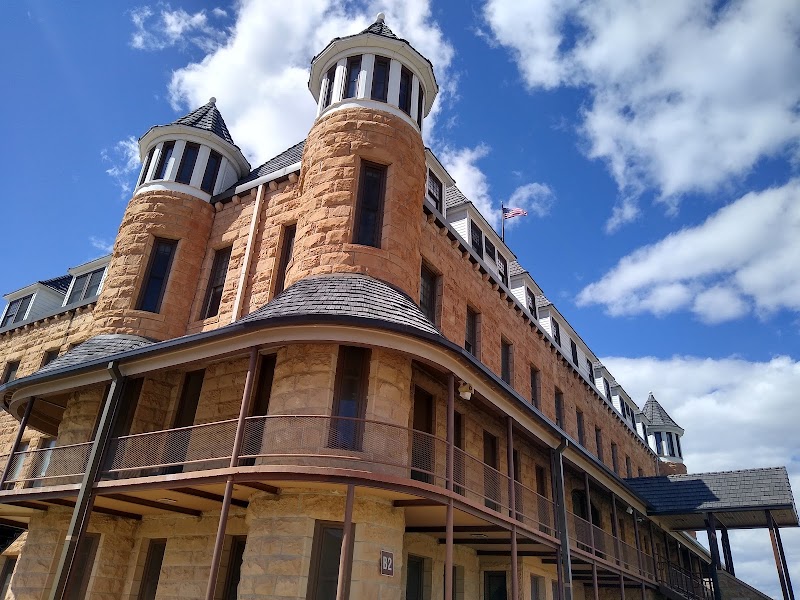
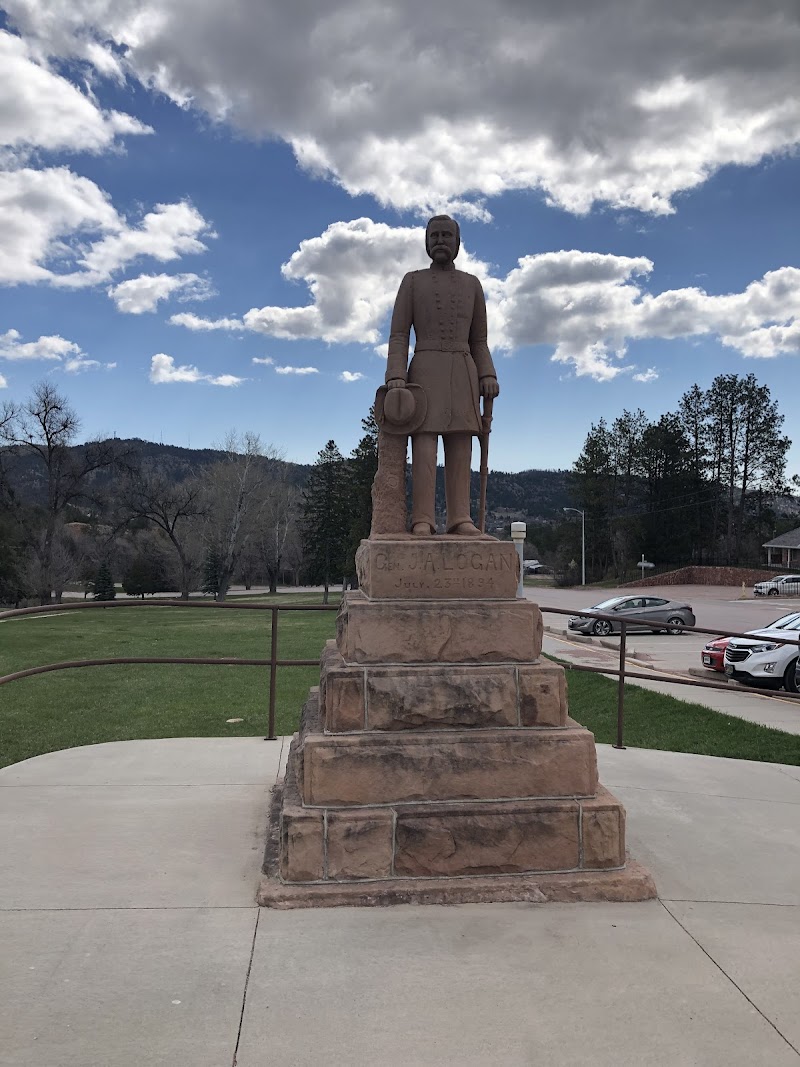
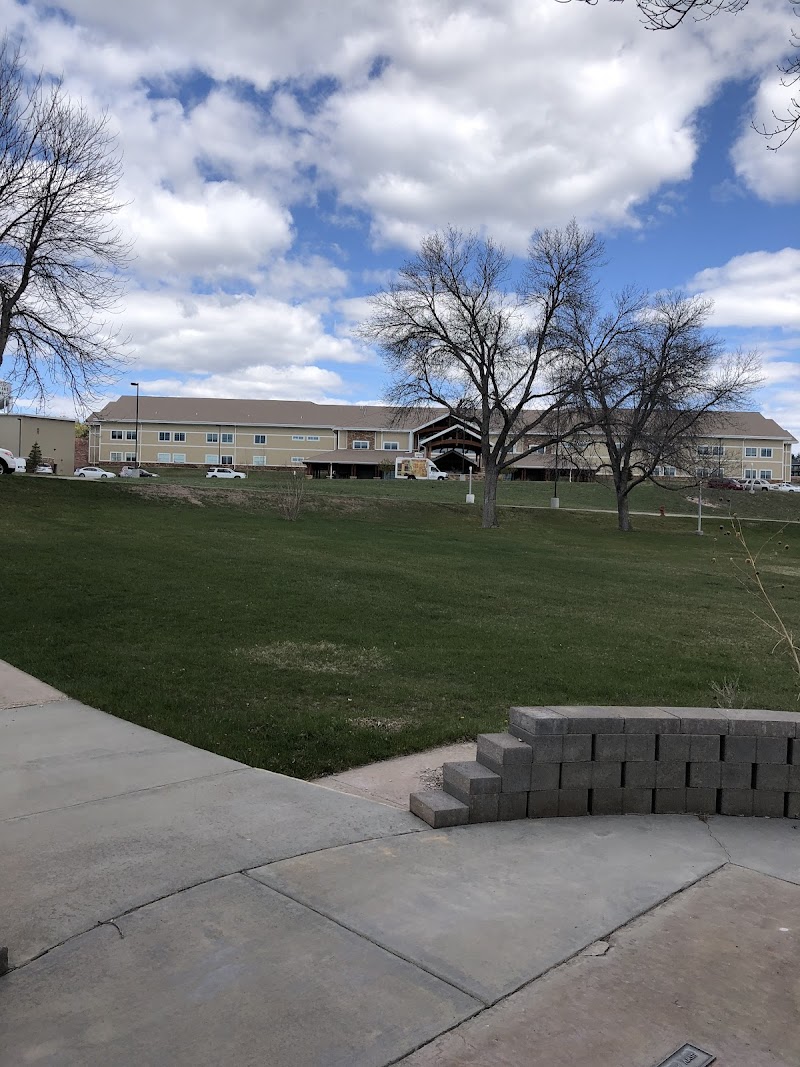
Michael J Fitzmaurice South Dakota Veterans Home

2500 MINNEKAHTA AVENUE, HOT SPRINGS, SD 57747 (605) 745-5127
Government - State 78 Beds Independent Data: November 2025
Trust Grade
30/100
#64 of 95 in SD
Last Inspection: May 2025

Inspected within the last 6 months. Data reflects current conditions.

Overview

Michael J Fitzmaurice South Dakota Veterans Home received a Trust Grade of F, indicating poor performance with significant concerns. Ranking #64 out of 95 facilities in South Dakota places it in the bottom half, and as #2 out of 2 in Fall River County, there is only one local option that is better. The facility's trend is stable, with 6 issues reported in both 2024 and 2025, and while staffing received a good rating of 4 out of 5 stars with a low turnover rate of 0%, there are serious concerns about care quality. Notably, there were serious incidents where a resident died after not receiving timely medical attention for vomiting, and another resident developed additional pressure ulcers due to inadequate treatment and prevention measures. Although there have been no fines, the facility has multiple serious deficiencies that families should consider.

Trust Score
F
30/100
In South Dakota
#64/95
Bottom 33%
Safety Record
High Risk
Review needed
Inspections
Holding Steady
6 → 6 violations
Staff Stability
○ Average
Turnover data not reported for this facility.
Penalties
✓ Good
No fines on record. Clean compliance history, better than most South Dakota facilities.
Skilled Nurses
✓ Good
Each resident gets 68 minutes of Registered Nurse (RN) attention daily — more than 97% of South Dakota nursing homes. RNs are the most trained staff who catch health problems before they become serious.
Violations
⚠ Watch
15 deficiencies on record. Higher than average. Multiple issues found across inspections.
★★☆☆☆
2.0
Overall Rating
★★★★☆
4.0
Staff Levels
★★★★☆
4.0
Care Quality
★★☆☆☆
2.0
Inspection Score
Stable
2024: 6 issues
2025: 6 issues

The Good

  • 4-Star Staffing Rating · Above-average nurse staffing levels
  • 4-Star Quality Measures · Strong clinical quality outcomes
  • Full Sprinkler Coverage · Fire safety systems throughout facility
  • No fines on record

Facility shows strength in staffing levels, quality measures, fire safety.

The Bad

2-Star Overall Rating

Below South Dakota average (2.7)

Below average - review inspection findings carefully

The Ugly 15 deficiencies on record

2 actual harm
May 2025 6 deficiencies 2 Harm
SERIOUS (G) 📢 Someone Reported This

A family member, employee, or ombudsman was alarmed enough to file a formal complaint

Actual Harm - a resident was hurt due to facility failures

Free from Abuse/Neglect (Tag F0600)

A resident was harmed · This affected 1 resident

**NOTE- TERMS IN BRACKETS HAVE BEEN EDITED TO PROTECT CONFIDENTIALITY** Based on South Dakota Department of Health (SD DOH) facility-reported incident (FRI), observation, record review, and interview,...

Read full inspector narrative →
**NOTE- TERMS IN BRACKETS HAVE BEEN EDITED TO PROTECT CONFIDENTIALITY** Based on South Dakota Department of Health (SD DOH) facility-reported incident (FRI), observation, record review, and interview, the provider failed to protect the resident's right to be free from neglect by one of one licensed practical nurse (LPN) (U) who failed to initiate standing orders for an upset stomach for one of one sampled resident (210) after he became sick in the dining room at supper time and later that night aspirated on his emesis and passed away. This citation is considered past non-compliance based on a review of the corrective actions the provider implemented immediately following the incident. Findings included: 1. Review of the provider's SD DOH FRI submitted on 2/14/25 at 10:35 a.m. revealed: *Nurse manager P had been completing a chart audit for an Ombudsman report regarding resident 210 and had concerns regarding some missing documentation the day before he passed away. *Nurse manager P had completed a camera review and discovered resident 210 had an episode of emesis (vomiting) in the dining room on 1/24/25 at 5:45 p.m. before the evening meal. -Staff had taken resident 210 to his room to clean him up and then brought him back to the dining room. -Staff had placed a full meal in front of him when he returned from his room after he had been cleaned up. --Resident 210 had eaten 100% of his supper. *Later during the evening shift, resident 210 was found to have aspirated on his emesis and passed away in his room. *Nurse manager P reviewed resident 210's daytime documentation in his electronic medical record (EMR) and it had shown: -On 1/24/25 LPN U did not document that he had an emesis during the evening meal. The documentation stated he had no complaints of pain. -There was no documentation that LPN U initiated the standing orders for an upset stomach, made any changes to his diet such as from a regular diet to clear liquids, no assessments of the residents condition were completed, and no vital signs were taken. *Homemaker X had reported to LPN U that resident 210 was not feeling well and that he had stomach pains. *LPN U was placed on administrative leave effective 2/12/25. *An investigation was initiated by staff interviews. *Education was provided to all staff that included understanding of the documentation processes, assessments, vital sign assessments, the importance of comprehensive change of shift reporting, and a change of a resident's condition. 2. Review of resident 210's EMR revealed: *He was admitted on [DATE] and his diagnoses included dementia, chronic obstructive pulmonary disease (COPD), atrial fibrillation (irregular, rapid heart rate), diabetes, chronic kidney disease, post-traumatic stress disorder (PTSD), Parkinson's disease, and hypertension (high blood pressure). *His Brief Interview for Mental Status (BIMS) assessment score was 1, which indicated he was severely cognitively impaired. On 5/1/25 at 11:46 a.m. LPN U's personal file was requested from DON A, but it had been closed and sent to the Human Resources Department. 3. Interview on 5/1/25 at 1:46 p.m. with director of nursing (DON) A regarding resident 210 revealed she: *Had watched the 1/24/25 camera footage and had seen LPN U put her hand on resident 210's head but LPN U did not listen to his stomach or do any vitals after his emesis. *Stated LPN U did not initiate the standing order for an upset stomach. *Stated the staff gave resident 210 a regular diet that evening instead of thin liquids for his upset stomach. *Stated LPN U reported to the night nurse that he had an emesis once but was fine. 4. Homemaker X was unavailable for an interview at the time the survey was conducted. 5. Phone interview on 5/1/25 at 3:07 p.m. with agency certified nursing assistant (CNA) V regarding resident 210 revealed: *She was working the evening shift on 1/24/25 and had heard that resident 210 had an emesis earlier that day. *She had heard a loud sound coming from resident 210's room after supper. -He was sitting on the side of his bed, and his walker had fallen over. *He had told her he wanted to lie down and rest. *She stated she raised the head of the bed 45 to 60 degrees due to him having emesis earlier that day. *She stated she checked on him until 10:00 p.m., then she left due to being assigned to another resident area. It wasn't until later when the nurse in that neighborhood got a call from a CNA that resident 210 had aspirated and needed assistance. 6. Phone interview on 5/1/25 at 3:11 p.m. with agency licensed practice nurse (LPN) W regarding resident 210 revealed: *She was working the evening shift on 1/24/25 and had heard he had an emesis earlier that day and later that evening, she got a call from a CNA that resident 210 had aspirated and needed assistance. *She stated that when she had gotten to his room, he was air hungry; and he had an advanced directive of a do-not-resuscitate. -She stated the head of the bed was elevated 45 to 60 degrees. *She had called his power of attorney (POA), and the POA said to make him comfortable, and when she returned to resident 210's room, he had passed away within one to two minutes. *She said he had emesis all over his clothes and while she cleaned him up and turned him over to his side, more of the emesis had come out of his mouth. 7. Interview on 5/1/25 at 4:27 p.m. with DON A regarding LPN U revealed: *LPN U had multiple coaching sessions with a nurse educator. *The nurse educator would often be with LPN U on the floor, ensuring LPN U completed her nursing duties as required. *She stated LPN U's performance had improved for a while. *Some of the issues they had with LPN U included her lack of safety measures, which included not locking the medication cart, not using appropriate hand hygiene, failure to accurately chart on residents, failure to properly assess residents conditions, and medication administration errors. *They continued to investigate LPN U's competency as a nurse, and had moved forward with termination. The provider implemented actions to ensure the deficient practice does not recur was confirmed after record review revealed the facility had followed their quality assurance process, education was provided to all staff regarding understanding of documentation processes, assessments, vital sign assessments, the importance of comprehensive change of shift reporting, and a change of a resident's condition. Audits were being continued for completion of nursing assessments after an incident and discussed in QAPI. Interviews and observations indicated staff understood the education provided. Based on the above information, non-compliance at F600 was determined to have occurred on 1/24/25, and the provider's implemented 3/23/25 corrective actions for the deficient practice confirmed on 5/1/25; the non-compliance is considered past non-compliance.
SERIOUS (G)

Actual Harm - a resident was hurt due to facility failures

Pressure Ulcer Prevention (Tag F0686)

A resident was harmed · This affected 1 resident

Based on observation, interview, record review, and policy review, the provider failed to ensure ordered treatments for a current pressure ulcer (skin wound caused by prolonged pressure) were complete...

Read full inspector narrative →
Based on observation, interview, record review, and policy review, the provider failed to ensure ordered treatments for a current pressure ulcer (skin wound caused by prolonged pressure) were completed and preventative interventions were consistently implemented for one of one sampled resident (47) who developed additional pressure ulcers (wounds) on his toes. Findings include: 1. Observation on 4/29/25 at 11:35 a.m. of resident 47 in his room revealed: *He was seated in a recliner with the footrest halfway up. -He had on a pair of gripper socks on his feet. Observation on 4/30/25 at 1:48 p.m. of resident 47 in his room revealed: *He was seated in a recliner with the footrest up, and he was covered with a blanket. *A wheelchair was across the room, against the wall, with a pair of protective boots on the seat. Observation on 4/30/25 at 2:59 p.m. and again at 3:07 p.m. of resident 47 revealed he was lying on his bed, his eyes were closed, and a bed cradle device (suspends bedsheets and blankets off a person's legs and feet) was holding the blankets off his feet. Observation on 5/1/25 at 8:12 a.m. and again at 9:27 a.m. of resident 47 in his room revealed: *He was seated in a recliner with the footrest up he was covered with a blanket. *His left foot had two silicone spacers placed between his toes. -The first silicone spacer was between his first and second toes, and the other silicone spacer was between his second and third toes. *A wheelchair was across the room, against a wall, with a pair of protective boots on the seat. 2. Interview on 5/1/25 at 8:32 a.m. with certified homemaker N regarding the care needs of resident 47 revealed: *He received a bed bath two days per week. He used to receive three baths per week. That was changed about two or three weeks ago due to the pressure wound [ulcer] on the second toe of his left foot. -He was to have a silicone spacer placed between his first toe and his second toe. -She thought the nurses completed wound care on his toe two times each day. 3. Review of resident 47's electronic medical record (EMR) revealed: *His admission date was 1/16/24. *His Brief Interview of Mental Status assessment score was a 3, which indicated he was severely cognitively impaired. *His diagnoses included: Parkinson's, dementia, chronic pain, post-traumatic stress disorder, disorders of bone density and structure, paralysis of 7th and 11th cranial nerves, pain, neurostimulator for low back pain, vitamin D deficiency, and osteoarthritis of hip. *His 4/7/25 Braden scale (an assessment of a patient's risk for developing pressure wounds) score was 13-14, indicating he was at moderate risk for skin breakdown. 4. Review of resident 47's physician orders revealed his skin treatment orders included: *On 12/2/24 foam boot(s), AM PM NOC [night] for pressure relief. *On 12/31/24 a physician order for, foot cradle when in bed for pressure relief. *On 12/10/24, Weekly skin charting 1 x wk [one time each week]. *On 4/23/25, Apply small amount of Amerigel [wound healing product] & [and] light dressing to the L [left] 2nd digit [toe] every other day AM NO FOOT SOAKS. Keep Left 1st and 2nd toe separated with use of silicone toe spacer. *On 4/24/25, Keep Left 1st and 2nd toe separated with use of silicone toe spacer, Check twice a day AM HS. *On 4/28/25, DO NOT put socks on toe pressure relief AM PM NOC. 5. Review of resident 47's podiatry notes included: *On 1/22/25, he had a wound on the medial left second digit [toe] with bone exposed, and no signs of infection. The treatment ordered was to apply betadine and a Band-Aid daily with a silicone toe spacer, and no foot soaks. *On 2/12/25, a note indicated he had a small open sore approximately the size of the tip of a large sharpie and the wound is approximatel [approximately] .3 [0.3 cm] in diameter. *On 3/14/25 a note that indicated he had a sore to the medial aspect of his left second digit. Compared to his last visit it has filled in significantly and no bone is noted, and small open sore approximately the size of the tip of a large sharpie. 6. Review of resident 47's 1/22/25 radiology report indicated he was seen for an evaluation for osteo [osteomyelitis, bone infection] left 2nd digit, pt [patient] has ulcer. -He had a previous partial amputation of the distal 2nd phalanx [a bone of the toe]. -There was no radiographic evidence of osteomyelitis. -There were mild degenerative changes at the first interphalangeal joint. 7. Review of resident 47's baseline care plan provided to certified homemakers who cared for him revealed his skin care included his need to wear bilateral foam boots while in bed, and the use of a foot cradle. 8. Review of resident 47's 4/30/25 care plan revealed: *A 4/16/25 focus area that indicated he had the potential to fall. -The intervention for that focus area included apply my compression stockings assist me with transfers or when I walk remind me to ask for help. *A 4/16/25 focus area indicated he had a pressure injury to his left second toe, Because I can't move around well on my own. -Interventions for that focus area included bilateral foam boots while in bed and a foot cradle. -The goal for that focus was to have my skin heal and avoid infection. *A 4/16/25 focus area indicated he required assistance to complete his care. -The interventions for that focus area included I need bed baths I cannot have foot soaks until my pressure injury is healed, and foam boots in bed, foot cradle. 9. Review of resident 47's nurse progress notes revealed: *On 4/18/25, it was noted he had an open lesion (wound) on the second inner toe of his foot with dimensions of that wound documented as 1cm [centimeter]. *On 4/20/25, it was noted he had a wound on his left anterior toes with documentation of Remove date of 4/13/25. This nurse performs txmt [treatment] 4/19/25 bandage clean dry and intact. *On 4/26/25 and 4/27/25, it was noted he had a wound to his Left anterior toes. *On 4/28/25, it was noted he had: -A Stage 1 or greater ulcer on his left 2nd toe, described as open area to inner medial aspect, surrounding skin fragile, reddened, with soft-red scab. --The dimensions of that wound were 0.4 cm x [by] 0.1 cm with no depth measurement. --The wound care treatment provided was Area cleansed w/ [with] wound cleanser, applied Amerigel, covered with band-aid, foam spacer placed between 1st and 2nd digits. -A pressure ulcer to his left lateral aspect, 3rd toe, described as small open area-wound bed reddened, older brown-drainage noted between 3rd and 4th toes. Surrounding skin dry and intact, no redness. --The dimensions of this wound were 0.4 cm x 0.2 cm with no depth measurement. --This was a new pressure ulcer. -A pressure ulcer to his left medial aspect, 4th toe, described as open area-wound bed reddened, older brown-drainage noted between 3rd and 4th toes. Surrounding skin dry and intact, no redness. --The dimensions of this wound were 0.3 cm x 0.4 cm, with no depth measurement. --This was a new pressure ulcer. -The possible cause for the pressure wounds was listed as Continuous pressure between toes. -Additional comments included Nurse was completing ordered wound care for left 2nd toe-nurse noted old-brown discharge along 3rd toe, nurse separated toes to clean area and found two new pressure injuries. Gauze placed between toes to reduce pressure. Nurse suggested no socks/stockings to left foot until seen by HCP [health care provider]. *On 4/29/25, it was noted he had pressure wounds on his 2nd, 3rd, & 4th toes, and Silicone wedges for toes in place, foam boots while in bed, no tight socks/stockings. 10. Review of resident 47's treatment administration record (TAR) revealed for April 2025: *The 12/2/24 order for his wound treatment of Foam boots, AM PM NOC for pressure relief was not documented as completed for the 4/3/25 NOC, 4/4/25 a.m. and p.m., and 4/25/25 a.m. and p.m. scheduled times. *The order for his wound treatment of his left second toe Clean with wound cleanser, apply small amount of Amerigel to wound, cover with band aid, use silicone toe separator daily AM, no foot soaks until resolved was not documented as being completed on 4/5/25, 4/11/25, and 4/22/25. -That order was discontinued on 4/23/25. *The 4/24/25 order for his wound treatment of Keep left 1st and 2nd toe separated with use of silicone toe spacer, Check twice a day AM HS was not documented as completed for the 4/25/25 p.m. and 4/30/25 a.m. scheduled times. *The 4/9/25 order for his wound treatment of Clean sore every dressing change. Apply Puracel and bandaid to L 2nd medial toe, then toe spacer. AM every other day NO FOOT SOAKS was not documented as completed on 4/22/25. -That order was discontinued on 4/23/25. 11. Interview on 5/1/25 at 1:25 p.m. with certified homemaker N regarding the care needs of resident 47 revealed: *He was no longer able to walk and was dependent on the use of a wheelchair for mobility. *He was not to wear compression stockings. *She had received an email last week that he was not to wear socks due to them rubbing on his toes. *He often sat in his recliner. *He had a wound on one of his left toes. *He sometimes used puffy boots [protective boots] to protect his toes. *She confirmed he was not wearing puffy boots that morning when he was in his recliner, as we were just letting his toe air out. *She would have to confirm with the nurse when he was to wear those boots. 12. Interview and EMR review on 5/1/25 at 1:31 p.m. with licensed practical nurse (LPN) E regarding resident 47's toe pressure wound revealed: *She thought he only wore protective boots when he was in bed. *She verified he had physician's orders were to use a bed cradle for blankets and to have protective boots on in the a.m., p.m., and nighttime, for pressure relief. -She stated the bed cradle was only used when he was in bed and not when he was in his recliner. --When in his recliner, he was covered with a light blanket that extended over his toes. -She stated the order did not say continuous use of the protective boots, and she would have to ask the physician for clarification, as she was unaware of what a.m., p.m., and nighttime meant. *She stated he used a silicone spacer between his left great toe and his left second toe due to them pulling into each other. *She was not aware that the silicone spacers for his toes had been missing. *She indicated that according to his EMR, the treatment to his left toe was to be changed to every other day on 4/23/25. *She indicated he had pain with the wound care to the toe, as evidenced by saying owe and trying to pull his foot back when the nurse performed the treatment. -She confirmed he did not receive any pain medication before having the wound care; he had a nerve stimulator implanted for his hip, but she stated that would not have helped the pain in his toe. 13. Interview on 5/1/25 at 1:44 p.m. with registered nurse (RN) M and RN L regarding the care needs of resident 47 revealed: *He was seen at wound care clinic, every two weeks, for follow-up with his toe pressure wounds. -The wound care clinic would prescribe the treatment for his toe wounds. His current treatment was for Amerigel light dressing to be applied to his toe every other day, and not to have foot soaks or showers. *The silicone toe separator that was to be placed between his left 1st and 2nd toe, was missing once. -Foam was used in place of the silicone that day, additional silicone spacers were ordered, and the silicone spacer was found after five hours. 14. Observation, interview, and record review, on 5/1/25 at 1:55 p.m. with RN L of resident 47 revealed: *Resident 47 was lying in his bed, the foot cradle was in place holding the blankets above his toes, and he was wearing protective boots with his toes exposed. *Observation of the toes on his left foot revealed: -A Band-Aid around the second toe. -A silicone spacer was between the second and third toes and between the third and fourth toes. -She removed the silicone spacers and the Band-Aid. -She stated she did not see any pressure injury on his third toe. *After having reviewed resident 47's 4/28/25 and 4/29/25 EMR wound notes, that indicated he had new pressure wounds to his left foot toes, with RN L revealed she did not offer any comment. 15. Interview on 5/1/25 at 2:39 p.m. with RN L revealed she would be re-assessing resident 47's toes and would provide the measurements of all wounds when she was done. 16. Interview on 5/1/25 at 2:59 p.m. with assistant director of nursing (ADON) B and director of nursing (DON) A regarding resident 47's pressure wound revealed: *ADON B's expectation regarding the order of a.m., p.m., and nighttime use of protective boots was for the nurse to have confirmed that the boots were on the residents' feet. *When informed of the observations of protective boots not being on, she stated that it was a good education moment. -She confirmed he should have had protective boots on when he was in his recliner, and silicone spacers or a foam pad should have separated his toes. *She stated, The paperwork for his 3rd and 4th toe pressure wounds was just turned in. *The physician's order for a dressing to his second toe was changed on 4/23/25 from daily to every other day. *She stated his second toe wound was healed, and on 4/28/25, new pressure wounds were identified on the toes of his left foot. *She stated the use of a foam separator between his toes could have also caused pressure. *She would have to review his EMR to determine how and when the wound started. 17. On 5/1/25 at 3:11 p.m. RN L and ADON B provided the survey team with a document regarding resident 47's toe pressure wounds that included: *The pressure injury to his left first toe was healed. *His left second toe pressure wound measured 0.3 centimeter (cm) in diameter. *His left third toe and left fourth toe pressure wounds measured 0.4 cm in diameter each. *His right great toe had an area of peeling skin that measured one cm in diameter. *They confirmed the resident had additional pressure wounds acquired in the facility. 18. Review of the provider's 2/27/24 Pressure Ulcer Prevention and Treatment policy revealed: *It is the policy of the [provider's name] that all residents be protected from pressure ulcers and have a protocol in place to treat. *Pressure Ulcer-Goals. -Prevention of pressure ulcers. -Early recognition of pressure ulcer development/skin changes. -Implementation of protocols as determined by Braden score. -Document presence or absence of skin issues. *Pressure Ulcers-Nursing Care Strategies and Interventions. -A skin assessment will be done on a weekly basis at bath time for those residents at risk or when their condition changes. -Document Braden scores and implement prevention protocols based on Braden scale score. -Residents with a Braden Score of 18 or below with skin issues will be documented on daily. -Residents will be seen every week by PCP or with changes to evaluate effectiveness of current treatment regimen. -Any resident with an active skin issue regardless of their Braden score will be documented on daily *General Care Issues and Interventions. -Use pillows or other devices to keep bony prominences from direct contact with each other. -Raise heels of bed-bound residents off the bed and use foam boot. -Use pressure-reducing devices, if a pressure-reducing device is ordered it must be ordered for wheelchair, recliner and bed. -Protect skin from friction and pressure related to oxygen tubing, splints/braces, foley catheters, cpap/bipap masks, glasses, and tight-fitting clothing.
CONCERN (D)

Potential for Harm - no one hurt, but risky conditions existed

Deficiency F0657 (Tag F0657)

Could have caused harm · This affected 1 resident

Based on observation, record review, interview, and policy review, the provider failed to ensure the care plan was reviewed and revised to reflect the current necessary care needs for one of one sampl...

Read full inspector narrative →
Based on observation, record review, interview, and policy review, the provider failed to ensure the care plan was reviewed and revised to reflect the current necessary care needs for one of one sampled resident (47). Findings include: 1. Observation on 4/29/25 at 11:35 a.m. of resident 47 in his room revealed: *He was seated in a recliner with the footrest halfway up. -He had on a pair of gripper socks on his feet. Observation on 4/30/25 at 1:48 p.m. of resident 47 in his room revealed: *He was seated in a recliner with the footrest up, and he was covered with a blanket. *A wheelchair was across the room, against the wall, with a pair of protective boots on the seat. Observation on 4/30/25 at 2:59 p.m. and again at 3:07 p.m. of resident 47 revealed he was lying on his bed, his eyes were closed, and a bed cradle device (suspends bedsheets and blankets off a person's legs and feet) was holding the blankets off his feet. Review of resident 47's electronic medical record (EMR) revealed: *His admission date was 1/16/24. *His Brief Interview of Mental Status assessment score was a 3, indicating he was severely cognitively impaired. *His diagnoses included: Parkinson's, dementia, chronic pain, post-traumatic stress disorder, disorders of bone density and structure, paralysis of 7th and 11th cranial nerves, pain, neurostimulator for low back pain, urgency of urination, anxiety disorder, insomnia, osteoarthritis of the hip, and hallucinations. Review of resident 47's 4/30/25 care plan revealed he was: *To wear compression stockings on his feet and legs. *To wear foam boots when he was in bed. -It did not specify if he was to wear the boots when in his recliner. *Unable to walk independently and needed staff members to assist him to walk around and I need to be reminded to take big sets [steps] when walking. *Unable to walk. *To be transferred with the use of a Hoyer [a mechanical lift and sling that lifts a person's full body) lift or a ceiling lift. *Had a pressure pressure injury noted to my left second toe. -There was no diagnosis in his EMR for this pressure injury. Review of resident 47's 4/16/25 baseline care plan, provided to certified homemakers who cared for him, revealed: *His mobility included: Hoyer lift or ceiling lift. *Supportive aides included Ceiling lift for transfers. Interview on 5/1/25 at 1:25 p.m. with certified homemaker N regarding resident 47 revealed: *She would refer to the resident's baseline care plan when she provided care to resident 47. *She knew there was a care plan in the resident's EMR, but she did not use that one. *He was no longer able to walk. *Could self-propel himself in a wheelchair for short periods. *He did not wear compression stockings as his wife did not want him to wear them. *He used protective boots periodically when in his recliner. *He was not to wear socks as they rubbed on his toes. Interview and EMR review on 5/1/25 at 1:31 p.m. with licensed practical nurse (LPN) E regarding resident 47's toe pressure wound revealed: *She thought he only wore protective boots on his feet when he was in bed. *She verified he had physician's orders to use a bed cradle for blankets and to have protective boots on in the a.m., p.m., and nighttime, for pressure relief. Interview on 5/1/25 at 1:44 p.m. with registered nurse (RN) M and RN L regarding resident 47's care plan revealed: *RN L stated that the Minimum Data Set (MDS) assessment nurse coordinator updated the residents' care plans *She stated the MDS coordinator was out of the building and unavailable for an interview. Interview on 5/1/24 at 2:55 p.m. with assistant director of nursing (ADON) B revealed: *Resident 47 no longer wore compression stockings on his legs. *He had pressure wounds to his toes, and was unable to walk. *The MDS Coordinator was responsible for updating the resident's care plan. -The care plan in the EMR should have been updated with new orders or when there were changes in a resident's condition or their care needs. *Resident 47's EMR care plan should have included: -He was not to wear compression stockings on his feet and legs. -He was to wear foam boots when he was in bed. -He was to wear foam boots when in his recliner. -Identify if he was able walk or if he was unable to walk. Review of the provider's 6/12/23 Using the Care Plan policy revealed: *The nurse supervisor uses the care plan to complete CNAs daily/weekly work assignment sheet and/or flow sheets. *The care plan shall be used in developing the resident's daily care routines and will be available to staff personnel who have responsibility for providing care or services to the resident. *CNAs are responsible for reporting to the nurse supervisor any change in the resident's condition and care plan goals and objectives that have not been met or expected outcomes that have not been achieved. *Other facility staff noting a change in the resident's condition must also report those changes to the nurse supervisor and/or MDS Coordinator. *Changes in resident condition should also be reported to the ADON or DON, whomever is on call, immediately. *Changes in the resident's condition must be reported to the MDS Coordinator so that a review of the resident's assessment and care plan can be made. *Documentation must be consistent with the resident's care plan. Review of the provider's 2/27/24 Pressure Ulcer Prevention and Treatment policy revealed: *Care plan will reflect current wound status and treatment and be updated as needed.
CONCERN (E)

Potential for Harm - no one hurt, but risky conditions existed

Accident Prevention (Tag F0689)

Could have caused harm · This affected multiple residents

Based on observation, interview, record review, and policy review, the provider failed to ensure an environment free from potential hazards by not following their policy and ensuring that lighters for...

Read full inspector narrative →
Based on observation, interview, record review, and policy review, the provider failed to ensure an environment free from potential hazards by not following their policy and ensuring that lighters for two of two sampled residents (33 and 42) who smoked were secured at the nurses' station when not in use. Findings include: 1. Observation on 4/29/25 of resident 33 in the dining room at 4:43 p.m.: *Resident 33 asked homemaker K for cigarettes. *Homemaker K provided her with two cigarettes but no lighter. *Multiple random daily observations from 4/29/25 through 5/1/25 revealed resident 33 was outside of the unit at the designated smoking area. *Observation on 5/1/25 at 2:30 p.m. of resident 33 in her neighborhood revealed she: *Was wearing a coat and asked another resident to go out to the smoking area with her. *Received two cigarettes from an unidentified staff member. *Had not requested or received a lighter from staff prior to exiting the unit and going outside to the smoking area. *Interview on 4/29/25 at 4:45 p.m. with resident 33 revealed: *She was going outside to smoke. *She had gotten two cigarettes from homemaker K. *She had her own lighter in her possession. *She was only to go out to smoke if she was with another resident who smoked or a staff member. *Sometimes she would turn in her lighter to a staff member, but sometimes she would forget. *Review of the 2/10/25 smoking assessment for resident 33 revealed: *A nurse was supposed to dispense to her a limited supply of cigarettes. *She had signed a smoking agreement. *She had been instructed about the facility's smoking policy. *Review of resident 33's electronic medical record (EMR) revealed: *Her most recent Brief Interview for Mental Status (BIMS) assessment score was 8 which indicated she had moderate cognitive impairment. *Her diagnoses included dementia and depression. *Review of resident 33's 2/19/25 care plan revealed: *I am forgetful because I have vascular dementia. *I need my nurses to secure lighter and cigarettes at nurses' station. *I need my aides to support the safe storage of my cigarettes and lighter. *I need social services to make sure I understand what the smoking policy says. 2. Interview on 5/1/25 at 5:30 p.m. with resident 42 revealed: *He spent as much of the day as possible outdoors as he felt the the walls close in. *He had possession of his cigarettes and lighter. *He kept them in his possession as he went outside frequently and didn't want to bother the staff. *He knew that the policy said that smoking materials were to be turned to staff upon return from smoking but the staff had not asked him for them. *Review of resident 42's EMR revealed: *His most recent BIMS assessment score of 15 indicated that was cognitively intact. *His diagnoses included post traumatic stress disorder (PTSD) and depression. *Review of the 4/1/25 smoking assessment for resident 42 revealed: *His smoking paraphernalia should have been stored at the nurses' station. *The resident was aware of and demonstrated clear understanding of the facility smoking standards. *He had signed a smoking agreement. *He had been instructed on the facility's smoking policy. *Review of resident 42's 4/17/25 care plan revealed: *I need my nurses to secure lighter and cigarettes at nurses' station. *I need my aides to support the safe storage of my cigarettes and lighter. *I need social services to make sure I understand what the smoking policy says. 3. Interview on 4/30/25 at 4:00 p.m. with human services social worker G revealed: *She had been employed by the provider for about two months. *She expected that staff would be ensuring that all cigarettes and lighting materials for residents who smoked were returned to the staff when the resident reentered the building after smoking. *She was not aware that resident 33 and resident 42 had possession of their lighters. *All staff were responsible for ensuring that the smoking policy was followed, including the returning and storing of smoking materials at the nurses' station for the resident's safety. *Interview on 5/1/25 at 2:06 p.m. with certified homemaker J revealed: *She had been employed by the facility for 14 years. *The smoking policy required residents to request their smoking materials from the staff and to return them to staff after returning to the unit from the outdoor smoking area. *The smoking materials did not always get turned in to the staff. *Resident 33 would sometimes turn in her lighter to the staff and sometimes the staff would retrieve the lighter from her. *Resident 42 kept his smoking materials and did not turn them in to staff. *Interview on 5/1/25 at 3:30 p.m. with household coordinator H revealed. *She was the coordinator for the unit where residents 33 and 42 resided. *She expected residents' smoking materials to be checked in and out at the nurses' stations with each use per the facility smoking policy. *She was aware that the the residents' smoking materials were not always checked in and out. *It was difficult to keep track of lighters as residents would buy new ones when out on shopping trips and keep them in their possession. *Interview on 5/1/25 at 5:15 p.m. with director of nursing (DON) A revealed: *It was their facility policy for residents' smoking materials to be kept at nurses' station. *She expected residents' smoking materials to be checked in and out of the nurses' station per their policy for the safety of all of the residents. *She was not surprised to hear that some residents were in possession of their smoking materials. *She agreed that residents having lighters in their possession was a safety issue. *Review of the provider's undated nursing care resident smoking policy and agreement revealed: *All cigarettes and smoking materials will be left at the nurses' station. *At no time will residents on the Nursing Care Units be allowed to keep matches, lighters, or fire producing devices in their rooms. *The designated smoking shelter is located west of the building on the second level. *Smokers who require supervision must be supervised by volunteer or staff. *Residents that are able to leave the unit independently may take their lighting devices with them but return them to the nurses' station once they have returned to the unit. *All smoking paraphernalia [materials], including but not limited to, cigarettes, matches, lighters, will be kept at the nursing state or designated area. Residents are not allowed to keep their smoking material in their rooms.
CONCERN (E)

Potential for Harm - no one hurt, but risky conditions existed

Deficiency F0909 (Tag F0909)

Could have caused harm · This affected multiple residents

**NOTE- TERMS IN BRACKETS HAVE BEEN EDITED TO PROTECT CONFIDENTIALITY** Based on observation, interview, record review, and policy review, the provider failed to assess bed rails for safe use for five...

Read full inspector narrative →
**NOTE- TERMS IN BRACKETS HAVE BEEN EDITED TO PROTECT CONFIDENTIALITY** Based on observation, interview, record review, and policy review, the provider failed to assess bed rails for safe use for five of five sampled residents (24, 28, 41, 44, and 47) who had bed rails on their beds. Findings included: 1. Observation on 4/29/25 at 9:57 a.m. of resident 28's room revealed grab bars were on both sides of the bed. Review of resident 28's electronic medical record (EMR) revealed: *He was admitted on [DATE]. *A device evaluation for his use of bed rails was last completed on 1/13/25. -He utilized the bed rails for turning and repositioning while in bed. There was no documentation that an assessment of the bed rails had been completed to determine safe use or measurements of the bed rails for risk of entrapment and injury. 2. Observation and interview on 4/29/25 at 10:00 a.m. with resident 24 in his room revealed: *He had bed rails on both sides of his bed. *He was unsure why he had the bed rails, and stated they had come with the bed when he was admitted to the facility. Review of resident 24's EMR revealed: *He was admitted on [DATE]. *He had a Brief Interview for Mental Statues (BIMS) assessment score of 11, which indicated he had moderate cognitive impairment. *A device evaluation for his use of bed rails was last completed on 3/9/25. -He utilized the bed rails for turning and repositioning while in bed. *There was no documentation that an assessment of the bed rails had been completed to determine safe use or measurements of the bed rails for risk of entrapment and injury. 3. Observation and interview on 4/29/25 at 11:17 a.m. with resident 41 in his room revealed: *He had bed rails on both sides of his bed. *He stated he does not use them; and they came with the bed when he was admitted to the facility. Review of resident 41's EMR revealed: *He was admitted on [DATE]. *He had a BIMS assessment score of 15, which indicated he was cognitively intact. *A device evaluation for his use of bed rails was last completed on 1/29/25. -He utilized the bed rails for turning and repositioning while in bed. *There was no documentation that an assessment of the bed rails had been completed to determine safe use or measurements of the bed rails for risk of entrapment and injury. 4. Observation on 4/29/25 at 11:35 a.m. of resident 47's room revealed bed rails were on both sides of the bed. Review of resident 47's EMR revealed: *He was admitted on [DATE]. *He had a BIMS assessment score of 3, which indicated he had severe cognitive impairment. *A device evaluation for his use of bed rails was last completed on 4/7/25. -He utilized the bed rails for turning and repositioning while in bed. *There was no documentation that an assessment of the bed rails had been completed to determine safe use or measurements of the bed rails for risk of entrapment and injury. 5. Observation on 4/29/25 at 2:51 p.m. of resident 44's room revealed bed rails were on both sides of the bed. Review of resident 44's EMR revealed: *He was admitted on [DATE]. *He had a BIMS assessment score of 11, which indicated he had moderate cognitive impairment. *A device evaluation for his use of bed rails was last completed on 4/5/25. -He utilized the bed rails for turning and repositioning while in bed. *There was no documentation that an assessment of the bed rails had been completed to determine safe use or measurements of the bed rails for risk of entrapment and injury. 6. Interview on 4/30/25 at 2:36 p.m. with physical therapist (PT) D revealed she: *Had been employed with the facility since 6/6/2016. *Had been asked by the previous director of nursing in 2023 to assess the bed rails of the residents who had used them. -Assessed all the residents who had them from the beginning of February 2023 to the end of March 2023. *Had not been doing any regular maintenance inspections on the bed rails since she finished assessing them in 2023. 7. Interview on 4/30/25 at 2:50 p.m. with physical plant manager II C revealed he: *Stated he had not completed measurement assessments for the safe use of the bed rails for any residents. *Has done maintenance on the residents' beds, and work orders from staff on the bed rails when the bed rails come loose. *Was unaware that PT D had not completed the measurement assessments for the bed rails since 2023. 8. Interview on 4/30/25 at 5:00 p.m. with director of nursing (DON) A regarding the bed rail assessments revealed she: *Stated that since PT D had assessed them in 2023, they would keep the mattress, beds and the rails as one unit and move them to the residents' room when needed. *Was unaware they needed regular maintenance inspections on the bed rails to determine safe use or measurements of the bed rails for risk of entrapment and injury. 9. Review of the provider's undated Bed Safety policy revealed: 1. The residence sleeping environment will be inspected for safety. Inspection of all bed frames, mattresses and bed rails will be conducted monthly by the Maintenance Department and Household Coordinator as part of a regular preventative maintenance program. 2. To try to prevent deaths slash injuries from the beds and related equipment (including the frame, mattresses, side rails, headboard, footboard, and bed accessories), Facility shall promote the following approaches: a. Inspection by maintenance staff of all beds and related equipment as part of our regular bed safety program to identify risks and problems including potential entrapments. b. Review that gaps within the bed system are within dimensions established by the FDA note: the review shall consider situations that could be caused by a resident's weight, movement, or bed position. d. Ensure that bedrails are properly installed using the manufacturer's instructions and other pertinent safety guidance to ensure proper fit example avoid bowing, ensure proper distance from the headboard and footboard, etc.
CONCERN (F)

Potential for Harm - no one hurt, but risky conditions existed

Infection Control (Tag F0880)

Could have caused harm · This affected most or all residents

**NOTE- TERMS IN BRACKETS HAVE BEEN EDITED TO PROTECT CONFIDENTIALITY** Based on record review, observation, interview, and policy review, the provider failed to ensure proper infection control practi...

Read full inspector narrative →
**NOTE- TERMS IN BRACKETS HAVE BEEN EDITED TO PROTECT CONFIDENTIALITY** Based on record review, observation, interview, and policy review, the provider failed to ensure proper infection control practices were followed regarding: *Hand hygiene and personal protective equipment (PPE) use by four of four observed staff (E, O, R, and S) for one sampled resident (360) with a physician order for contact precautions related to an infected unhealed chest wound and two sampled residents (10 and 49) on enhanced barrier precautions (EBP) who resided in the NASA unit. *The storage and maintenance of wound care supplies in one of one observed treatment cart located in the NASA unit. Findings include: 1. A review of resident 360's electronic medical record (EMR) revealed: *He was admitted on [DATE] and resided in the NASA unit. *He had a diagnosis of chronic kidney disease, stage 5, which required dialysis (a process that filters waste and excess fluids from the blood when the kidneys are unable to do so effectively) three times a week. *He had a recent dialysis fistula (a connection made between an artery and a vein for dialysis access) placed in the upper right arm. *He had a double-lumen central line (a tube inserted into a large vein above the heart that comes out from under the skin and is used to deliver fluids and medications) in his right chest. - He had no physician orders for the care and treatment of the central line. *He had a history of chronic empyema (infected fluid in the space between the lungs and chest wall) with the placement of a chest tube. *He currently had an unhealed left-sided chest wound secondary to the chest tube removal and was on an antibiotic (actively infected). *A [DATE] physician progress note indicated he was diagnosed with a surgical wound infection. *He had a physician order to change the left-sided chest wound dressing twice daily. *He had a physician order to use silver nitrate sticks as needed when bleeding from the chest wound (draining wound) occurred. *He had a diagnosis of a bacteria called Methicillin-resistant Staphylococcus aureus (MRSA); a type of Multidrug-Resistant Organism (MDRO) resistant to several antibiotics. *The MRSA was colonized (the organism was present on or in the body) and could spread to others through direct or indirect contact with the resident or his environment. *His history and physical dated [DATE] included a physician's order for contact precautions (a transmission-based precaution) for the unhealed chest wound and a history of MRSA. -He was not on contact precautions the physician ordered on [DATE]. 2. Observations on [DATE] from approximately 3:00 p.m. through 5:00 p.m. and on [DATE] from approximately 8:00 a.m. through 10:30 a.m. in the NASA unit revealed: *Residents 10, 49, and 360 had signs posted on the outside door frames of their rooms that indicated what personal protective equipment (PPE), such as gloves and gowns, staff and visitors were required to wear when entering the rooms. *There were no PPE supplies available outside or inside the doors of residents 10, 49, and 360 rooms. *LPN E, agency LPN O, and homemakers R and S were observed entering residents 10, 49, and 360 rooms without performing hand hygiene or putting on gowns and gloves during direct resident care and while performing environmental tasks. -Those staff touched contact surface areas of beds, linens, call lights, handles on the drawers of the bathroom carts, dresser drawers, door handles, wheelchairs, and bedside tables. *LPN E, agency LPN O, and homemakers R and S were observed exiting resident 10, 49, and 360's rooms without performing hand hygiene. *Resident 360 did not have a sign posted for contact precautions to ensure his [DATE] physician order was followed. 3. Observation and interview on [DATE] at 3:09 p.m. with agency licensed practical nurse (LPN) O on the NASA unit revealed: *Wound care supplies were not stored in resident rooms. *Wound care supplies were labeled and stored separately for residents in gray plastic bins in the medication storage room, the treatment cart, and the unit's supply closet. *Wound care supplies were removed from the bins and taken into the resident's room for wound care treatment as they were scheduled. *He stated there was sometimes a cart stocked with PPE supplies inside or outside the resident's room when residents were on precautions. *He confirmed resident 360 was on EBP for his open wound to the left chest. *He confirmed that Resident 360 was started on Doxycycline (an antibiotic) 100 milligrams (mg) by mouth twice daily for seven days on [DATE] for his chest wound infection. *He was unsure that resident 360 had a central line to his right chest and what care and treatment was to be provided. -He did report that he had confirmed with nurse management that resident 360 did have a central line. *He agreed that there were no PPE supplies stored outside or inside resident 360's room for staff and visitors to use to follow EBP and contact precautions for infection control. 4. Observation on [DATE] at 3:18 p.m. of homemaker R in the whirlpool room on the NASA unit with agency LPN O revealed: *Agency LPN O knocked and opened the door to the whirlpool tub room. *Homemaker R was assisting resident 360 with his bath. *Homemaker R was wearing gloves but no gown. *Agency LPN O informed her that a gown should be worn because of the resident's wound. *Homemaker R stated, I didn't know I was supposed to put a gown on. *Agency LPN O exited the room. *Homemaker R told resident 360, I haven't had to wear a gown since I started working with you. They [surveyors] are here and {the surveyors are} changing everything around. *Agency LPN O returned with a gown for homemaker R, who put on the gown and completed the resident's bath. *After his bath, homemaker R assisted the resident back to his room in his wheelchair. -She assisted him from his wheelchair to his recliner chair. -She did not perform hand hygiene or put on gloves or a gown. 5. Observation and interview on [DATE] at 3:34 p.m. with homemaker S outside resident 360's room revealed: *An EBP sign was posted on the door frame. *She had a housekeeping cart parked outside the door of resident 360's room. *She stated she was cleaning his room and changing his bed linens. *She had no gloves or gown on. *She indicated that she did not wear PPE when cleaning resident rooms. *She stated she would only wear gloves and a gown when she assisted residents with personal care if they were on EBP. *She stated that the PPE should have been stored in a 3-drawer cart in the resident's bathroom. *No PPE supplies were found in the 3-drawer cart in the resident's bathroom. -The top drawer contained a variety of personal care cleansers and wipes. -The middle drawer contained incontinent products (pullups) and black trash bags. -The bottom drawer contained what appeared to be clear plastic bags. *She then searched the black 3-drawer wicker stand between the resident's bed and recliner. -No PPE supplies were found in those wicker drawers. *She did not complete hand hygiene or wear any PPE when she touched surface areas in his room and when she handled his dirty bed linens. 6. Interview and observation on [DATE] at 3:42 p.m. of resident 10, 49, and 360's rooms with the director of nursing (DON) A regarding PPE revealed: *She stated that the PPE supplies for staff and visitors should have been set up and available outside of residents' rooms for those residents on EBP or contact precautions. *She agreed there were no PPE supplies outside of those residents' rooms. *She then stated the PPE supplies were kept in the 3-drawer carts in the residents' bathrooms. *She was unable to find any PPE supplies stored in those residents' bathroom carts. *She stated she would have to talk and clarify with the infection preventionist nurse where the PPE supplies should have been stored for staff and visitors to use to follow EBP and contact precautions for infection control. 7. Wound care observation on [DATE] at 3:46 p.m. of agency LPN O with resident 360 in the whirlpool bath area in the NASA unit revealed: : *Wound care supplies had been set up before the observation began. *Those supplies were on the counter, on top of clean paper towels. *Agency LPN O performed hand hygiene and put on a pair of gloves and a gown. *He added soap and warm water to a small basin. *He opened a sterile 4X4 gauze package and placed the gauze into the warm soapy water. *A transparent dressing was in place over the resident's left chest wound. *With his gloved hands, agency LPN O threw the wet, soapy gauze 4X4 into the trash and removed the transparent dressing from the resident's chest wound. *He removed those soiled gloves and discarded them. *He did not perform hand hygiene and put on a pair of gloves. *A sterile 4X4 gauze was opened and placed into the warm soapy water. *He cleaned, rinsed, and dried the resident's wound. *He poured normal saline into a small basin. *A sterile 2X2 gauze was opened and placed into the normal saline. *He placed that gauze on the wound. *He then placed a dry, sterile 2X2 gauze pad on the wound. *He applied tape to all four edges of the dry gauze pad to secure it in place. *He then removed his gown and gloves and performed hand hygiene. 8. Interview on [DATE] at 5:15 p.m. with DON A revealed: *DON A stated that RN/infection preventionist Q had indicated that it was up to each unit or neighborhood to decide where to stock the PPE for staff and visitors for residents on EBP precautions. -Some residents would rummage through the supplies and throw them in the trash if the supplies were left in their room. -Each unit/neighborhood should have also had PPE stored at the nurse's station for the staff to use. 9. Interview on [DATE] at 8:09 a.m. with homemaker R revealed: *She had stocked resident 360's bathroom cart with gowns the previous evening after his bath. *She did not know she was to wear a gown and gloves with resident 360 when in direct contact with the resident's skin, clothing, soiled linens, or potentially contaminated surfaces in his room. -She stated that she had been aware he was on EBP. *She indicated that each resident on EBP had different precautions to take and not everyone would be the same. 10. Observation on [DATE] at 8:21 a.m. in resident 360's bathroom revealed: *His bottom drawer of the cart was stocked with gowns. *Disposable gloves were available in the bathroom and stored in glove dispensers on a wall between the sink and toilet. 11. Interview on [DATE] at 9:08 a.m. with LPN E on the NASA unit revealed: *The treatment cart was parked across from the nurse's station. *Wound care supplies should have been kept in the treatment cart. *The treatment cart was stocked with the supplies stored in the supply closet. *Staff were to take the treatment cart and park it outside the resident's room when doing the resident's treatments. *Staff were not to take the treatment cart into resident rooms to keep it from potential contamination. *The cart was stocked with multi-use supplies for residents. *Resident supplies should have been kept separated in the treatment cart. -Each resident should have had a bin for their personal supplies. *Those resident-specific bins were removed from the treatment cart and taken into the resident rooms for wound care treatments. -The bins should have been cleaned after being in the resident rooms, before putting them back into the treatment cart to prevent potential cross-contamination. -The bins were to be cleaned with the Micro-kill one germicidal alcohol wipes. *The bins in the treatment cart were cardboard. -She agreed cardboard was not a cleanable surface as it was porous (allows liquids or air to pass through it). -Cardboard would not have been considered cleaned and disinfected from contamination if a cleaning wipe had been used on it. *The multi-use scissors were to be cleaned with the Micro-kill one germicidal alcohol wipes after use and between uses for each resident. -She confirmed the two pairs of multi-use scissors in the top drawer were visibly soiled with dry, white residue. *She agreed that residents 10 and 360 had wound care supplies stored together in a cardboard bin and their supplies were not separated to prevent cross-contamination. *She confirmed there was an opened and used Optifoam dressing in the top drawer that had no open date and had not been labeled with a resident identifier. *She confirmed there was a tube of Hydrogel wound cleanser that had expired. *She confirmed there was a bottle of normal saline that should have been discarded after it had been opened and used. *She confirmed there were outdated Mepilex and Calcium Alginate with silver dressings in the bottom drawer. *The supplies should have been checked frequently and if outdated, they should be discarded. *She stated that PPE should be worn by staff for residents on EBP or contact precautions. -She indicated that the infection preventionist nurse would put the signage on the resident's door and relay the infection control precaution information to the nursing staff on the units. *She confirmed that resident 360 was taking doxycycline 100mg by mouth twice daily for 7 days for an infection, but was unsure what infection the resident was being treated for. *She was aware that the resident had a fistula in his arm and a central line in his chest. -She was unsure of the care and treatment that should be provided to the central line. -She stated she wore gloves when she checked the resident's fistula after dialysis. *She was unsure if resident 360 should have been on EBP or contact precautions for a MDRO. -She stated, It depends on what the infection is. 12. Observation on [DATE] at 9:39 a.m. in the NASA unit revealed: *Resident 10 did not have gowns stocked in his bathroom and they were not readily available in or near his room for staff to follow EBP. *Resident 49 had gowns stocked in his bathroom for EBP. -Gloves were stocked in dispensers in the bathrooms. *There were no gowns or gloves readily available for visitors to follow EBP. 13. Observation and Interview on [DATE] at 10:03 a.m. with RN/nurse manager P in the NASA unit revealed: *She was observed cleaning, organizing, and discarding supplies from the treatment cart. *She confirmed that the bins in the treatment cart were cardboard which was not a cleanable surface. *She agreed that residents 10 and 360 had wound care supplies stored together in a cardboard bin and their supplies were not separated to prevent cross-contamination. *She confirmed the two pairs of multi-use scissors in the top drawer were visibly soiled with dry, white residue. *She confirmed supplies that were opened, unlabeled, and outdated should not have been used and should have been discarded. 14. Interview on [DATE] at 1:35 p.m. with RN/infection preventionist Q revealed: *EBP should be used for residents with implanted medical devices, chronic wounds, catheters, chest wounds/tubes, tracheostomy, or any history of an MRDO. *She would be notified by the resident care coordinator who worked with the provider by phone or email that EBP or contact precautions should be started. -If she was gone, then the DON, assistant director of nursing (ADON), or the nurse manager for the unit would be called and notified and should know to initiate the precautions for a resident. *She would place the resident on EBP or contact precautions at the time of admission if indicated or after she was notified. -She would have placed the signage on the resident's door and stocked the resident's cart with the PPE supplies. *She would notify the units and staff via email. *She was notified that resident 360 was started on an antibiotic on [DATE] via email after the provider rounds for the resident. *She stated, Carts with PPE supplies were not set up in the resident rooms with residents on EBP. -PPE supplies were stocked wherever it works best for the residents and staff. -It was easiest to have PPE supplies at the nurse's stations for the staff instead of in their rooms. *Carts with stocked PPE supplies should have been outside the resident's room for residents on contact precautions. -Staff were responsible for re-stocking the PPE supplies in the unit. *She did expect staff to follow the EBP and use the proper PPE when in direct contact with the residents. *She has gone to each unit to educate staff and notified staff frequently through emails. *Nursing staff cleaned resident rooms in the units. *She confirmed one homemaker would clean the resident's room while another homemaker completed the resident's bath. *She encouraged the staff to wear gowns and gloves when cleaning rooms for residents on EBP. -It was not required that staff were to wear a gown when cleaning the rooms for residents on EBP. *Staff should wear gloves when wiping surfaces in the EBP rooms. *She confirmed resident 360 had an order for contact precautions included in the physician and history and physical dated [DATE]. *There were no orders for EBP or contact precautions on resident 360's EMR orders that staff could view for them to follow. *She was unsure why the EBP was not sufficient for his open wound and active wound infection with a history of MRSA. *She stated, I thought he would still just be on EBP precautions. *Staff were not following the physician's order for contact precautions. -Contact precautions were a transmission-based precaution (TBP) needed to limit the transmission of the resident's infection. 15. Observation on [DATE] at 11:37 a.m. and again on [DATE] at 8:46 a.m. revealed a treatment cart across from the nurses' station by the exit door. *This cart was unattended and unlocked. *In the top drawer of this treatment cart were: -Two pairs of scissors, one was a bandage scissor that had dried residue on the blades, the other pair of scissors had black handles and dried residue on the blades. -A package of Optifoam dressing that was torn open and had an uneven piece removed from the corner of the dressing. *In the third drawer, there were: -Several Aquaphor product tubes with resident 10's on them. -A container of sterile normal saline solution that was opened and had no open date on it, stored next to a lubricating jelly tube that was 3/4 empty, with no name of a resident on it, and sticky to the touch. -Dermal wound cleanser 3/4 gone with no resident name on it, stored next to Curad bandaids -In a cardboard container with resident 10's name handwritten in black marker was a tube of Remedy moisturizing skin cream stored next to the Aquaphor tubes (2) that were opened with resident 360's name on them. -Next to the Aquaphor was a tube of open hydrogel wound dressing. 16. Observation on [DATE] at 2:57 p.m. of the treatment cart revealed: *There were medical supplies that were being used for wound dressing changes for residents on the NASA unit. *The cart contained the following: -One Lubricating Jelly with an expiration date of [DATE]. -One 1 oz tube of Hydrogel wound dressing with an expiration date of 5/2024. -One bottle of Peroxide 3% with an expiration date of [DATE]. -Five Mepilex 6x6 inch foam dressings, three of those with an expiration date of [DATE] and two with an expiration date of [DATE]. -One Maxorb II Calcium Alginate with silver 4x4 inch wound dressing with an expiration date of [DATE]. -One package of 855 series foam hydrogel electrocardiogram electrodes with an expiration date of [DATE]. -One cotton tipped applicator box that was half full with an expiration date of [DATE]. -Blue disposable isolation gowns with an expiration date of 12/2023. 17. Interview on [DATE] at 1:35 p.m. with RN/infection preventionist Q regarding the stocking of the facility's supplies revealed: *Purchasing/property management officer Y was in charge of stocking each supply room on every neighborhood/unit at the facility. -It was his responsibility to ensure the supplies were not expired prior to placing them into the supply room. *Nursing staff who took supplies from the supply room should have been checking for outdated supplies prior to placing them on the treatment cart. 18. Interview on [DATE] at 6:20 p.m. with director of nursing (DON) A regarding outdated supplies on the treatment cart revealed: *She expected nursing staff who worked night shifts: -To check the treatment cart for any outdated resident care supplies. *She stated they had been trialing the use of the treatment cart for the last three months. -She indicated the treatment cart it had not really been getting used by the staff. -She stated that she was not surprised that there were expired supplies on the cart. Review of the provider's [DATE] Wound Care - Dressing Change Policy included Date and initial all bottles and jars upon opening (unless product is single use). Review of the provider's [DATE] Storage of Medications policy revealed: *The nursing staff shall be responsible for maintaining medication storage and preparation areas in a clean, safe and sanitary manner. *The facility shall not use discontinued, outdated, or deteriorated drugs or biologicals. All such drugs shall be returned to the dispensing pharmacy or destroyed. Review of the provider's [DATE] Physician Orders policy revealed: *It is the policy of the ([provider's name] that all treatments and medications be ordered by the resident's Primary Care Provider upon admission and as needed throughout resident stay at [provider name]. *admission physician orders should include: *Special medical procedures required for the safety and well-being of the resident. *Other orders as deemed necessary or appropriate. *All medical records and physician orders specifically must be checked for accuracy every 24 hours. Review of the provider's [DATE] Wound Care - Dressing Change Policy revealed: *Review the resident's care plan, current orders, and diagnoses to determine if there are special resident needs. *Date and initial all bottles and jars upon opening (unless product is single use). *The following equipment and supplies will be necessary when performing this procedure. *Personal protective equipment (e.g. gowns, gloves, mask, etc., as needed). Review of the provider's undated Enhanced Barrier Precautions Policy revealed: *Enhanced barrier precautions (EBP) refer to an infection control intervention designed to reduce transmission of multidrug-resistant organisms that employs targeted gown and glove use during high contact resident care activities. *EBP are used in conjunction with standard precautions and expand the use of PPE to donning of gown and glove during high-contact resident care activities that provide opportunities for transfer of MDROs to staff hands and clothing. *EBP are indicated for all residents within the facility with any of the following: *Infection or colonization with a CDC-targeted MDRO with [when] Contact Precautions do not otherwise apply; or. *Wounds and/or indwelling medical devices even if the resident is not known to be infected or colonized with a MDRO. *Wounds generally chronic wounds, not short-lasting wounds, such as skin breaks or skin tears covered with an adhesive bandage or similar bandage. *Examples of chronic wounds include, but are not limited to: *Unhealed surgical wounds. *Indwelling medical device examples include: *Central lines. *Examples of MDRO's. *Additional epidemiologically important MDROs may include, but are not limited to: *Methicillin-resistant Staphylococcus aureus (MRSA). *Enhanced Barrier Precautions: *Applies to all residents with any of the following: *Infection or colonization with an MDRO. *Wounds and/or indwelling medical devices (e.g. central line) .regardless of MDRO colonization status. *PPE used for these situations. *During high-contact resident care activities: *Dressing. *Bathing/showering. *Transferring. *Changing linens. *Device care or use: central line. *Wound care: any skin opening requiring a dressing. *Required PPE. *Gloves and gown prior to the high-contact care activity. *Face protection may also be needed if performing activity with risk of splash or spray. *Contact Precautions: *All residents infected or colonized with a MDRO in any of the following situations: *Present of acute ., draining wounds. *PPE used for these situations: *Any room entry. *Required PPE. *Gloves and gown. *Don before room entry, doff before room exit; change before caring for another resident.

Feb 2024 6 deficiencies
CONCERN (D)

Potential for Harm - no one hurt, but risky conditions existed

Resident Rights (Tag F0550)

Could have caused harm · This affected 1 resident

Based on observation, interview, record review, and policy review, the provider failed to ensure: *The psychosocial well-being and dignity was maintained for one of four sampled residents (46) during...

Read full inspector narrative →
Based on observation, interview, record review, and policy review, the provider failed to ensure: *The psychosocial well-being and dignity was maintained for one of four sampled residents (46) during three of three observed meal services. *Privacy for one of two sampled residents (29) was provided during his Foley catheter care. Findings include: 1. Random observations on 2/13/24 between 9:45 a.m. and 12:06 p.m. with resident 46 revealed: *He sat alone facing an empty kitchenette. -His Broda chair (a specialty wheelchair that provided supportive positioning and repositioning ability) was pushed against the kitchenette countertop with the wheels of the chair locked. -His back faced the main dining room. *A quilt with sensory touch items secured to it was placed on the countertop in front of him. -He occasionally grazed the items on that quilt with his fingers. *Other times he was asleep, mumbling, repetitively moving his trunk forward then back or reaching for seasonal decorations just out of his reach. -When staff walked past the resident they briefly spoke to him, offered him fluids or would move things out of his reach. *His spouse arrived after noon and sat next to him, interacted with him, and assisted him with his meal. Observation and interview on 2/13/24 at 10:15 a.m. with certified homemaker M in the main dining room revealed: *She led a group exercise program in the main dining room. -All participants including certified homemaker M sat in a circle for that program. *Resident 46's back faced the group of exercising residents. -He was not invited to join or assisted to participate in the group exercise program. Random observations on 2/14/24 between 10:00 a.m. and 2:15 p.m. of resident 46 revealed: *The resident's morning care routine was completed in his room by certified homemaker K at 10:00 a.m. *He was then positioned against the countertop facing the empty kitchenette in his Broda chair with the brakes locked. -The resident sat alone and fed himself breakfast. *At 12:15 p.m. the resident remained in his Broda chair in the manner referred to above. -His breakfast food was removed. -Two almost empty drinking cups from breakfast remained in front of him. -Pieces of bacon and slices of banana from breakfast laid on the resident's lap and on the floor surrounding his Broda chair. -Residents gathered in the main dining room for the noon meal. -Resident 46's back was faced toward those residents. *At 12:42 p.m. he remained positioned against the countertop facing the empty kitchenette and was served lunch. -He sat alone. -The area on the floor surrounding his Broda chair remained littered with fallen breakfast food served earlier that day. *At 1:50 p.m. residents finished their noon meal and left the dining room. -Resident 46 remained at the countertop with an empty lunch plate in front of him. -The area on the floor surrounding his Broda chair remained littered with food from his breakfast and noon meals. Review of resident 46's care plan revised on 2/8/24 revealed: *I dine in the main dining room. -There was no indication he was unable to sit with other residents at a dining room table. Interviews on 2/14/24 with certified homemaker K at 10:00 a.m. and again at 1:50 p.m. regarding the observations of resident 46 referred to above revealed: *The resident had previously eaten his meals at a table in the main dining room. -Staff were instructed to have the resident eat his meals at the kitchenette countertop after he had begun using the Broda chair in October 2023 but she had no idea why. *She confirmed resident 46 remained in the same position at the countertop facing away from interaction and stimulation since 10:00 a.m. that morning. *She agreed his dignity was not maintained when: -He was left staring at an empty kitchenette for hours at a time with minimal interaction or stimulation. -Bits and pieces of mealtime foods that had fallen onto his clothes were not removed and the area around his Broda chair littered with that same food was not cleaned up. Interview on 2/14/24 at 2:30 p.m. with licensed practical nurse (LPN) I regarding resident 46 revealed: *He stays there [pushed against the countertop of the kitchenette with the Broda chair brakes locked] most of the day. -That was a customary practice for the resident since at least October 2023. *It was easier to keep an eye on him so he would not try to stand up on his own and potentially fall. Interview on 2/14/24 at 3:10 p.m. with director of nursing (DON) B regarding resident 46's mealtime observations on 2/13/24 and on 2/14/24 referred to above revealed: *She was not aware the resident was positioned away from the main dining room at the kitchenette counter during meals and left alone for periods in that position. -His psychosocial well-being and his dignity were disregarded during those meal services. Interview on 2/15/24 at 2:45 p.m. with superintendent A, social work staff F and G regarding the observations referred to above revealed they: *Were not aware that observations like those referred to above were occurring. -Agreed the resident's psychosocial well-being and his dignity was overlooked by the staff. 2. Observation and interview on 2/13/24 at 3:50 p.m. with certified homemaker L in resident 29's room revealed: *She lifted his pant leg and emptied the urine from his urine collection bag into a collection device. *His door was left open and his care was visible to anyone walking by his room. -His privacy was not maintained. Review of the undated Resident Rights policy revealed: *1. Federal and state laws guarantee certain basic rights to all residents of this facility. These rights include the resident's right to: -a. a dignified existence; -b. be treated with respect, kindness, and dignity; -d. be free from corporal punishment or involuntary seclusion, and physical or chemical restraints not required to treat the resident's symptoms; -t. privacy and confidentiality; Refer to F604 and F684.
CONCERN (D)

Potential for Harm - no one hurt, but risky conditions existed

Deficiency F0604 (Tag F0604)

Could have caused harm · This affected 1 resident

**NOTE- TERMS IN BRACKETS HAVE BEEN EDITED TO PROTECT CONFIDENTIALITY** Based on observation, interview, record review, and policy review, the provider failed to identify one of four sampled residents...

Read full inspector narrative →
**NOTE- TERMS IN BRACKETS HAVE BEEN EDITED TO PROTECT CONFIDENTIALITY** Based on observation, interview, record review, and policy review, the provider failed to identify one of four sampled residents (46) seated in a wheelchair was restrained with locked brakes pushed against a countertop. Findings include: 1. Random observations on 2/13/24 between 9:45 a.m. and 12:06 p.m. with resident 46 revealed: *He sat alone facing an empty kitchenette. -His Broda chair (a specialty wheelchair that provided supportive positioning and repositioning ability) was pushed against the kitchenette countertop and his wheels were locked. -There was no lap belt in the chair. *A quilt with sensory touch items secured to it was placed on the countertop in front of him. -He occasionally grazed the items on that quilt with his fingers. *Other times he was asleep, mumbling, repetitively moving his trunk forward then back or reaching for seasonal decorations just out of his reach. -When staff walked past the resident they briefly spoke to him, offered him fluids or moved things out of his reach. Random observations on 2/14/24 between 10:00 a.m. and 2:15 p.m. of resident 46 revealed: *He sat alone facing an empty kitchenette. -His Broda chair was pushed against the kitchenette countertop and his wheels were locked. -There was no lap belt in the chair. *He fed himself finger foods for breakfast and the noon meal. Review of resident 46's electronic medical record (EMR) revealed: *His diagnoses included: early onset Alzheimer's dementia and hypertension. -His cognition was severely impaired and he required assistance of one or more staff to complete his activities of daily living. *Two physician orders dated 10/23/23: -May lock wheelchair until anti-tippers are placed. -Wheelchair lap belt for safety continuous use. Review of resident 46's paper medical record revealed: *A physical therapy consultation was completed on 11/20/23 to determine the appropriateness of the resident using a Broda chair versus the wheelchair he was using at the time. -Subjective: .Inconsistent reports of what 'fall' out of chair that veteran sustained. Facility cannot have him in the seat belt while up in the chair [previous wheelchair] due to being a restraint free facility. -Recommendations: Look for different backrest w/ [with] contour at laterals to maintain safety & not restrain. *The wheelchair the resident was using was left with the physical therapy provider at the conclusion of that consultation and he had begun using the Broda chair. Review of resident 46's care plan updated on 12/19/23 revealed: *He was at high risk for falling. -Used a Broda chair. -Used a lap belt to remind him to stay seated. -My wheelchair can be locked until anti-tippers are placed. *There was no documentation that the resident should have been pushed against the countertop kitchenette while in his Broda chair. Interview on 2/14/24 at 2:30 p.m. with licensed practical nurse (LPN) I regarding resident 46 revealed: *He stays there [pushed against the countertop of the kitchenette with his chair brakes locked] most of the day. -That practice was a regular occurrence since at least October 2023. *It was easier to keep an eye on him so he would not try to stand up on his own and potentially fall. Interview on 2/14/24 at 3:10 p.m. with director of nursing (DON) B regarding resident 46 revealed she: *Observed the resident seated at the kitchenette counter during the meal services but had not considered pushing him against the counter with his chair brakes locked as a restraint. -There was a physician's order to lock the chair brakes. Interview on 2/15/24 at 8:55 a.m. with doctor of physical therapy (DPT) E regarding resident 46 revealed: *In November 2023, the physical therapy department completed a wheelchair evaluation for the resident. *It was determined the Broda chair was an appropriate seating option for the resident because it: -Provided bilateral lateral supports for improved positioning and the seat depth was better able to accommodate his leg length. -Decreased the resident's tendency towards sliding out of the chair. *With appropriate supervision, there was no need to push the resident against the kitchenette countertop and lock the brakes of the Broda chair. Follow-up interview on 2/15/24 at 3:15 p.m. with superintendent A, DON B, assistant director of nursing (ADON) C, and DPT E regarding resident 46 revealed: *The 10/23/23 physician's order regarding locking the wheelchair brakes until anti-tippers arrived was invalid. -DPT E explained the anti-tippers were intended for use with the wheelchair the resident previously used and not for the Broda chair. *The 10/23/23 physician's order regarding the use of a lap belt was invalid. -There was no lap belt used with the Broda chair. *Superintendent A, DON B, and ADON C were not aware of that information. *They agreed to push resident 46 in front of the kitchenette counter with the Broda chair wheels locked was a restraint. Review of the 11/7/22 Physical and Chemical Restraints policy revealed: *It is the policy of the MJF SD [[NAME] J [NAME] South Dakota] Veterans Home that every resident has the right to be free from any physical restraint imposed or psychoactive drug administered for purposes of discipline or convenience and not required to treat the resident's medical symptoms. *2. There must be a physician's order for the purpose of use and safety of devices and restraints. *3. The physician's order will identify the type of restraint/posture/safety device to be used and what time it may be applied. Refer to F684
CONCERN (D)

Potential for Harm - no one hurt, but risky conditions existed

Quality of Care (Tag F0684)

Could have caused harm · This affected 1 resident

2. Observation on 2/14/24 at 2:20 p.m. of resident 46 while in his room during a mechanical lift transfer and personal care performed by certified homemaker N and homemaker O revealed: *He was transfe...

Read full inspector narrative →
2. Observation on 2/14/24 at 2:20 p.m. of resident 46 while in his room during a mechanical lift transfer and personal care performed by certified homemaker N and homemaker O revealed: *He was transferred from his Broda-style reclining wheelchair onto his bed using a mechanical lift. *His pants and shirt had multiple areas of dried food particles adhered to the fabric. -Certified homemaker N brushed off the food particles from his shirt onto the sheet of his bed then onto the floor. -His pants were removed and placed into a soiled laundry container. *During the removal of the mechanical lift sling and his incontinence brief: -His lower abdominal skin fold had an approximate four-inch horizontal, thin, red indentation from where the fastened brief was creased. -His posterior skin had multiple, dark red, indentation marks, that varied in size and shape, extending from about four inches above his knees to his upper buttocks. -His incontinent brief was saturated with urine and contained an unformed, partially dried, bowel movement (BM). -That BM was adhered to the inner skin folds of his buttocks and anal area. *Certified homemaker N cleansed the resident's genital area and buttock folds while homemaker O stood on the opposite side of the bed supporting the resident in a side-lying position. -During that time, resident 46 had swung his legs off the opposite side of the bed. -Certified homemaker N and homemaker O had not attempted to reposition the resident's legs. *Certified homemaker N was not observed cleansing the BM off the resident's skin that surrounded his anal area. *When homemaker N was asked to allow viewing of the anal area it was visually confirmed BM was remaining around the anal area. -Homemaker N had not viewed that area while lifting his buttock fold. -She then applied barrier cream to the resident's buttock folds and applied a clean incontinent brief. -The call light was placed within the residents reach, the garbage was removed from the resident's room and the homemakers left the room after performing hand hygiene. Interview on 2/14/24 at 2:40 p.m. with certified homemaker N regarding the above observation revealed she: *Was not aware BM remained on the resident's anal area. -Stated she was in a hurry to cleanse the resident's perineal area because she was worried he would roll out of the bed. -Had not offered an explanation as to why his legs were not repositioned back onto the bed. *Had not returned to the room to complete the cleansing of the resident's anal area. Interview on 2/14/24 at 3:10 p.m. with director of nursing (DON) B regarding the above observation revealed: *She expected resident 46's incontinent brief to have been checked and his body repositioned at least every two hours. *Stated she was mortified and that was not how she expected his care to have been provided. Observation and interview on 2/14/24 at 3:30 p.m. with DON B and homemaker O while resident 46 was laying in his bed revealed: *He was turned onto his side, his incontinent brief removed, and DON B agreed the skin to his backside continued to have tan-colored indentations to his upper thighs and buttocks area and that BM remained around his anal area. -Homemaker O had to repeatedly cleanse the resident's anal area to remove the BM. *Homemaker O informed DON B the resident had a small open area and pointed to an approximate 0.2 cm red circular area on the resident's inner right buttock near his anal opening. -DON B stated that was not an open area, but was a reddened area. *Barrier cream was applied to the area by homemaker O and a new incontinent brief was applied. Review of resident 46's nurses notes that were dated 2/14/24 at 5:23 p.m. and entered by DON B revealed GENERAL SKIN CONDITION: skin issues noted SKIN PROBLEMS: abrasion [sp] vs. pressure wound. LOCATION: R buttock, sacral area D[d]imensions of wound (LxWxD) [length by width by depth]: Approx 0.5 x 0.2 cm[centimeters]. SKIN TREATMENT: Area cleansed well, barrier cream applied ACTION: continue to observe R[r]epositioned. Review of the provider's October 2021 Perineal Care policy revealed: *10. For a male resident: -h. Wash and rinse the rectal area thoroughly, including the area under the scrotum, the anus, and the buttocks. Based on observation, interview, record review, and policy review, the provider failed to ensure: *One of one four residents (46) at risk for skin breakdown was repositioned according to the protocol of the facility. *One of four sampled residents (46) received proper and timely peri-care following a bowel movement. Findings include: 1. Random observations on 2/13/24 between 9:45 a.m. and 12:06 p.m. with resident 46 revealed he: *Sat in a Broda chair (a specialty wheelchair that provided supportive positioning and repositioning ability) at a countertop facing a kitchenette. -The brakes on that chair were locked. *A quilt with sensory touch items secured to it was placed on the countertop in front of him. -He occasionally grazed the items on that quilt with his fingers. *Other times he was asleep, mumbling, repetitively moving his trunk forward then back or reaching for seasonal decorations just out of his reach. -When staff walked past the resident they briefly spoke to him, offered him fluids or would move things out of his reach. Interview on 2/14/24 at 8:55 a.m. with doctor of physical therapy (DPT) E regarding resident 46 revealed: *The resident was not able to reposition himself without staff assistance. -He was non-ambulatory and required caregivers to anticipate and meet his needs. *He was expected to have been repositioned no less than every two hours. Random observations on 2/14/24 between 10:00 a.m. and 2:15 p.m. of resident 46 revealed he: *Sat in that Broda chair positioned at the countertop facing a kitchenette. -The brakes on that chair were locked. *Fed himself finger foods at breakfast and for the noon meal. Observation and interview on 2/14/24 with certified homemaker K at 12:48 p.m. and again at 2:15 p.m. regarding resident 46 revealed: *She confirmed resident 46 remained in the same position at the countertop since 10:00 a.m. that morning when she positioned him there. -He should have been repositioned out of the Broda chair more than once during that time. *Shift change occurred a little after 2:00 p.m. at which time certified homemaker K left work and oncoming staff repositioned the resident to his bed and changed his soiled incontinence brief. -That was over four hours without checking or changing his incontinent brief or being repositioned. Interview on 2/14/24 at 2:30 p.m. with licensed practical nurse (LPN) I regarding resident 46 revealed: *He stays there [pushed against the countertop of the kitchenette with the Broda chair brakes locked] most of the day. -That was a customary practice for the resident since at least October 2023. *It was easier to keep an eye on him so he would not try to stand up on his own and potentially fall. *It was important the resident was routinely repositioned to prevent skin breakdown. -That had not occurred on that date. Review of resident 46's care plan revised on 2/8/24 revealed: *I need help repositioning. I use a Broda chair for safety and repositioning because I need assistance with mobility and am unable to reposition without help. *I have the potential to fall down and hurt myself. I am on purposeful hourly rounding. *I have the potential to have a skin injury. -Repositioning interventions were not identified as an approach to reduce the resident's risk for skin injury. Interview on 2/14/24 at 3:10 p.m. with director of nursing (DON) B regarding the observations of resident 46 referred to above revealed: *She confirmed the resident was unable to make his needs known and relied on caregivers to anticipate and meet his care needs. *She expected the resident to have been repositioned no less than every two hours but more frequently if that was indicated. -The observations referred to above had not supported routine repositioning for resident 46 occurred. Review of the 5/23/23 Repositioning policy revealed: *General Guidelines: -3. Repositioning is critical for a resident who is immobile or dependent upon staff for repositioning. *Interventions: -5. Residents who are in a chair [wheelchair] should be on an every one hour [q1 hour] repositioning schedule.
CONCERN (D)

Potential for Harm - no one hurt, but risky conditions existed

Deficiency F0800 (Tag F0800)

Could have caused harm · This affected 1 resident

**NOTE- TERMS IN BRACKETS HAVE BEEN EDITED TO PROTECT CONFIDENTIALITY** Based on observation, interview, record review, and policy review, the provider failed to ensure one of two sampled residents (5...

Read full inspector narrative →
**NOTE- TERMS IN BRACKETS HAVE BEEN EDITED TO PROTECT CONFIDENTIALITY** Based on observation, interview, record review, and policy review, the provider failed to ensure one of two sampled residents (57) with a physician ordered renal dialysis diet was implemented. Findings include: 1. Observation and interview on 2/13/24 at 2:57 p.m. with resident 57 revealed he: *Appeared tired, was yawning, and stated he had just returned from renal dialysis. *Had been a resident at the nursing facility for about a month and resided on the [NAME] hallway. -Had been a resident of the independent living part of the facility but was hospitalized due to a spike in his potassium levels and was transferred back from the hospital into the nursing facility. *Had been receiving renal dialysis for about four years. *Was supposed to be receiving a renal diet, but had not received a renal diet since he was admitted . -Stated, Yesterday I had a grilled cheese and potato soup. That was what they served me. They are both high in phosphorus. *Felt his diet was very important and would have preferred a renal diet. 2. Observation and interview on 2/13/24 at 4:57 p.m. with dietary aide P in the [NAME] dining room revealed: *He was serving the supper meal, and while serving, the resident homemakers told him there was one person who received finger foods, two persons who received pureed foods, and one person who received ground meat. -All other residents were served the main meal. *He voiced he had worked at the facility for about three months, had all the resident's food likes and dislikes memorized but depended on the nurse to tell him if a resident was on a special diet. -He shared he would ask his dietary manager if no one else was available to inform him of any resident special diets. -He stated there should have been a list of residents and their diet orders located in the back of the food temperature logbook that he could have referred to. 3. Review on 2/13/24 at 5:00 p.m. of the back of the food temperature logbook with dietary aide P revealed a printout of several resident's face sheets along with their dietary orders; resident 57 was not included. *He was unsure who was responsible for updating the resident's diet order sheets. -There were no instructions on dietary restrictions or types of dietary restrictions available. -There was not a renal diet food substitutions list available for the dietary aide. *He was unable to identify if any of the residents that were served should have received a renal diet. 4. Review of resident 57's electronic medical record revealed: *An admission date of 1/12/24. *Diagnoses of end-stage renal disease (ESRD), type 2 diabetes mellitus with diabetic chronic kidney disease, and renovascular hypertension. *A 1/12/24 physician order for a dialysis diet with regular consistency liquids. -The physician order stated the resident agreed to make a conscious effort to adhere to the diet ordered. *A 1/16/24 care plan entry that identified he was on a dialysis diet. -The care plan's approaches indicated he would receive the diet of his choosing and education regarding a dialysis diet. -The care plan's goal indicated he would have his nutritional needs met. *Two entries on 1/15/24 and again on 1/21/24 from registered dietitian Q which stated the resident was receiving a dialysis diet and to continue with current nutrition interventions. 5. Observation on 2/15/24 at 11:30 a.m. of resident 57 revealed: *He had just returned from his dialysis appointment and went to the [NAME] dining room to eat. -He was served the main lunch meal that consisted of a grilled chicken patty on a bun with a side of honey mustard sauce, a dill pickle, french fries, and a tossed salad with dressing. *The resident removed the bun and the honey mustard sauce and set them next to his plate. 6. Interview on 2/15/24 at 11:46 a.m. with dietary aide R in the [NAME] dining room revealed: *She was unsure if there were any residents on a renal dialysis diet. -Stated, I just serve the food. *If there were any specialized diets, her dietary manager would have notified her, and the food would have been sent up pre-prepared from the main kitchen. *The homemakers would have known of any residents on a renal dialysis diet. 7. Interview on 2/15/24 at 11:47 a.m. with certified homemaker S in the [NAME] dining room revealed she had moved up to the floor one week ago and as far as she had known there were no residents on a renal dialysis diet. 8. Interview on 2/15/24 at 11:50 a.m. with registered nurse (RN) T on the [NAME] hall revealed he identified resident 57 as having a renal dialysis diet order, but was unsure if he was being served that type of diet. 9. Interview on 2/15/24 at 2:47 p.m. with dietary manager H regarding renal dialysis diets revealed: *He was unable to name the two residents on a renal dialysis diet until he looked them up on the computer. *Those orders were entered into the electronic record called 'Net Menu' once they were received by the dietitian. -He would verbally tell the cooks and the dietary aides of the specialized diet. *He expected the household units to let the kitchen know if there were any specialized diets. -The homemakers could call the kitchen and ask for a specialized diet if one had not been received. *There was a food substitutions list for renal diets located in the main kitchen. -The renal dialysis diets were prepared in the main kitchen and sent up to the resident's hall. *There was no information or instruction available to the kitchen staff regarding the residents who were to receive a physician-ordered renal dialysis diet. *The diets in the located in the food temperature log books got updated whenever there was a change in the diet. -He had updated those books recently. *Stated the dietitian was in the facility full-time every week. -He expected the books to have been updated and staff to have been familiar with those resident's who had specialized diets. *Agreed renal dialysis diets were important for the resident. 10. Phone interview on 2/15/24 at 3:15 p.m. with registered dietitian Q regarding the renal dialysis diet for resident 57 revealed: *The resident care coordinators (RCCs) should have been responsible for notifying the kitchen staff, since they were notified of the resident's diet by the physician's. *Residents 57's diet order should have been followed on admission from the independent living part of the facility. -She had not visited resident 57 since his admission into the nursing facility and was not aware he had not been receiving a renal dialysis diet. *It was her expectation for resident 57 to have received a renal dialysis diet. Review of the provider's February 2021 [NAME] Standard Diet List had listed renal diets as part of the offered diets but it had not included instruction on how the physician-ordered diets were to have been communicated with staff.
CONCERN (E)

Potential for Harm - no one hurt, but risky conditions existed

Pressure Ulcer Prevention (Tag F0686)

Could have caused harm · This affected multiple residents

**NOTE- TERMS IN BRACKETS HAVE BEEN EDITED TO PROTECT CONFIDENTIALITY** 2. Observation on 2/14/24 at 9:04 a.m. of resident 27 in the Old [NAME] bathhouse during application of a pressure ulcer dressin...

Read full inspector narrative →
**NOTE- TERMS IN BRACKETS HAVE BEEN EDITED TO PROTECT CONFIDENTIALITY** 2. Observation on 2/14/24 at 9:04 a.m. of resident 27 in the Old [NAME] bathhouse during application of a pressure ulcer dressing by LPN I revealed: *When the resident shook the surveyor's hand, his skin felt dry and rough to the touch. *He had a thin frame with little fat tissue located on his buttocks. -His buttock bones were visible while he was standing. -He had a newly healed pressure ulcer to his right inner buttock with intact pink skin. -There were dry flakes of loose skin surrounding the newly healed pressure ulcer. *LPN I placed a Meplex foam boarder dressing on the healed ulcer site. *Lotion was not applied to the resident's dry skin. Interview on 2/14/24 at 9:20 a.m. and again at 10:45 a.m. with LPN I regarding resident 27's pressure ulcer skin care revealed: *LPN I stated he monitored all dressings on a daily basis and changed them according to the ordered dressing change schedule and as needed. -Skin checks and dressing changes were usually performed following the resident's twice-weekly baths. *Resident 27's pressure ulcer prevention interventions consisted of: -Encouraging walking. -A pressure-relieving mattress. -A gel cushion in the resident's wheelchair. *The resident spent a lot of time in his recliner in the evenings but got up a lot and moved around. *He thought there was a pressure relieving cushion in the recliner seat with towels covering the cushion. -He agreed towels were not made to have been used as a pressure relieving device. *He stated sometimes preventative skincare interventions were missed as he was busy performing other tasks and had to care for residents located in two separate hallways. Based on observation, record review, interview, and policy review, the provider failed to: *Ensure the paper copy of the standardized protocol for stage II pressure ulcer interventions was followed according to policy for one of two sampled residents (27) with a stage II facility acquired pressure ulcer (a skin injury incurred while residing at the facility). *Implement the use of a pressure-reducing device to mitigate the risk for one of two sampled residents (27) who developed a stage II facility acquired pressure ulcer. Findings include: 1. Observations on 2/13/24 at 11:00 a.m. and again at 12:05 p.m. of resident 27 revealed he: *Participated in group exercise seated in his wheelchair. *Ate lunch in the main dining room seated in his wheelchair. -There was a pressure reducing cushion on the seat of his wheelchair. Review of resident 27's electronic medical record (EMR) revealed a 2/8/24 nurse progress note: *An open area to the resident's right buttock was identified. *It was a one centimeter (cm) by one cm open area with a red wound bed. Interviews on 2/13/24 at 3:18 p.m. and again on 2/14/24 at 1:19 p.m. with licensed practical nurse (LPN) I regarding resident 27 revealed: *He had an open area on his right buttock that was identified a few weeks ago. -It was covered with a Mepilex border (a foam-type wound dressing) and was changed after his bi-weekly bath and as needed. *The resident's wheelchair was his primary mobility source. -The cause of his pressure ulcer was due to chronic sitting. Observation and interview on 2/13/24 at 5:00 p.m. and again on 2/14/24 at 9:30 a.m. with resident 27 in his room revealed: *He sat in his recliner but was able to stand up from the chair on his own when asked to do so. *On the seat of the recliner was a folded, lap-sized blanket laid on top of the following: -A small, black, flat pillow at the front edge of the recliner seat. -A wrinkled blanket behind the black pillow at the back of the recliner seat. *He had a sore on his bottom. -Staff changed a bandage that covered his sore. *He was not aware what had caused the sore. *There was a pressure-reducing mattress on his bed. Interview and review of resident 27's February 2024 Treatment Administration Record (TAR) on 2/14/24 at 3:30 p.m. with LPN I revealed the following: *A nursing order for a skin treatment was started on 2/8/24. -Change Mepilex with border on the resident's right buttock two times per week on Thursday's and Sunday's and as needed until resolved. *That nursing order came from a standardized protocol that included skin treatment interventions approved by a medical provider. -A paper copy of the standardized protocol was kept in the same binder with the residents' Medication Administration Records (MAR) and the TARs. Review of the paper copy of the standardized protocol referred to above revealed the following skin treatment intervention for a stage II pressure ulcer: Write an order for Mepilex with border change 3X wk [three times per week] and PRN [as needed]. Interview on 2/15/24 at 1:05 p.m. with director of nursing (DON) B and assistant director of nursing (ADON) C regarding prevention and treatment of resident 27's stage II pressure ulcer revealed: *There was a discrepancy between the paper copy of the standardized protocol for treatment of a stage II pressure ulcer (dressing change three times per week) and the stage II pressure ulcer treatment order on resident 27's TAR (dressing change two times per week). -That was a system failure that neither DON B or ADON C had been aware of until now. *The resident's dressing was expected to have been changed three times per week not two times per week following the standardized protocol approved by the medical provider. *DON B and ADON C stated the black pillow on resident 27's recliner was a gel cushion. Observation and interview on 2/15/24 at 1:50 p.m. with DON B, ADON C, and resident 27 in his room revealed: *When the resident was asked to stand from his recliner, DON B and ADON C confirmed: -The black pillow was not a gel cushion. -The folded and wrinkled bedding also on the recliner sheet had not provided resident 27 appropriate pressure relief for his buttocks or mitigated his chance of further pressure ulcer development. *Resident 27 was agreeable to having a cushion placed in his recliner. -He stated That would be more comfortable than what was on his chair seat now. *He slept in his recliner and not in his bed at night. -DON B and ADON C were unaware of resident 27's sleeping preference and that made his need for an appropriate recliner cushion even more critical. Review of the 11/7/22 Pressure Ulcer Prevention and Treatment policy revealed: *It is the policy of the [NAME] J [NAME] South Dakota Veterans Home that all residents be protected from pressure ulcers and have a protocol in place to treat. *General Care Issues and Interventions: -11. Use pressure-reducing devices.
CONCERN (E)

Potential for Harm - no one hurt, but risky conditions existed

Infection Control (Tag F0880)

Could have caused harm · This affected multiple residents

4. Observation on 2/14/24 at 9:04 a.m. with resident 27 in the WP tub room during a dressing change performed by LPN I revealed: *LPN I washed his hands for approximately ten seconds and shut off the ...

Read full inspector narrative →
4. Observation on 2/14/24 at 9:04 a.m. with resident 27 in the WP tub room during a dressing change performed by LPN I revealed: *LPN I washed his hands for approximately ten seconds and shut off the water faucet using the back of his wet left hand before drying his hands on a paper towel. -He pulled a pair of gloves from his uniform pocket and applied them to his hands. *When he peeled off the protective plastic barrier from the back of a Meplex foam border dressing, he placed his gloved index finger on the interior center of the exposed foam pad of the dressing. -He then applied that dressing over resident 27's pressure ulcer site. *He removed his gloves and washed his hands for approximately nine seconds and again turned off the water faucet using the back of his wet hand. Interview on 2/14/24 at 9:20 a.m. with LPN I regarding the above observations with resident 27 revealed: *He wore extra large gloves and they were not always available in the room he was working in, so he kept several pairs in his uniform pocket. -Agreed his uniform pocket was not a clean area as his hands were in and out of his pockets multiple times a day. *He thought turning off the faucet with the back of his hand was an acceptable practice. *He had not realized he washed his hands for an inappropriate amount of time. *He had touched the interior center of the dressing pad to keep his gloves from sticking to the dressing's adhesive border. *Stated he had tried not to do those things but got in a hurry. Review of the provider's 8/10/23 Wound Care-Dressing Change Policy revealed dressings were to have been opened by pulling the corners of the exterior wrapping outward, touching only the exterior of the dressing. Review of the provider's undated Handwashing and Hand-Hygiene Policy revealed: *Policy Interpretation and Implementation. -2. All personnel shall follow the hand washing/hand hygiene procedures to help prevent the spread of infections to other personnel, residents, and visitors. -3. Hand hygiene products and supplies (sinks, soap, towels, alcohol-based hand rub, etc [etcetera]) shall be readily accessible and convenient for staff use to encourage compliance with hand hygiene policies. -11. Washing Hands. a. Vigorously lather hands with soap and rub them together, creating friction to all services [surfaces], for a minimum of 20 seconds under a moderate stream of running water . -11. c. Dry hands thoroughly with paper towels and then turn off faucets with a clean, dry paper towel. -13. Applying and removing gloves. a. When applying, remove one glove from the dispensing box at a time, touching only the top of the cuff. Based on observation, interview, record review, and policy review, the provider failed to ensure infection prevention and control practices were implemented for the following: *Effective whirlpool (WP) tub cleaning by one of one certified homemaker (J) in one of five multi-use resident WP tub rooms after bathing one of one sampled resident (8). *Appropriate mask, face shield, and gown use by one of one licensed practical nurse (LPN) (I) during care for one of four sampled residents (34) on transmission-based precautions (TBP). *Appropriate face shield and mask use by one of one certified homemaker (L) during care for one of four residents (52) on TBP. *Appropriate hand hygiene, glove use, and dressing application by one of one LPN (I) during a dressing change for one of two sampled residents (27). Findings include: 1. Observation and interview on 2/13/24 at 10:00 a.m. with certified homemaker J in the WP tub room revealed: *She used the following process to clean the WP tub after bathing resident 8: -While the WP tub filled with water she pressed the disinfectant button on the control panel a few times then added (by her estimation) 1/2 cup of disinfectant solution from the disinfectant container stored beneath the control panel. -Filled the WP tub almost 3/4 full of water, scrubbed the inside of the WP tub and the tub chair while running the air jets. -Planned to scrub the WP tub again after 15 minutes then drain, rinse and dry the tub. -Used that same WP cleaning process between each resident's bath. *WP tub cleaning instructions were posted on the control panel of the tub but she had not referred to them during the above observation. Follow-up interview on 2/13/24 at 10:45 a.m. and review of the posted WP tub cleaning instructions with certified homemaker J revealed: *She was not aware when the disinfectant button on the control panel was pressed, the cleaning solution entered the tub through jets on the bottom of the tub. -The bottom of the tub was expected to have been covered with disinfectant before scrubbing the interior of the tub and the tub chair. *The WP tub should not have been filled with water during the cleaning process. *The disinfectant remained on the surface of the tub for 10 minutes before it was drained, rinsed, and dried. *She was not cleaning the tub according to the posted instructions. 2. Observation on 2/13/24 at 12:30 p.m. of resident 34 in the dining room revealed: *He sat with his head down towards his chest and his meal was uneaten. *An unidentified caregiver was taking his vital signs because he had seemed ill. Interview on 2/13/24 at 3:00 p.m. with licensed practical nurse (LPN) I regarding resident 34 revealed: *He assessed the resident after his vital signs were taken at 12:30 p.m. then called the resident's medical provider to discuss his findings. -The medical provider ordered the resident transfer to the local emergency department (ED) for further evaluation and treatment. Interview on 2/13/24 at 5:10 p.m. with LPN I revealed: *He received a report from the ED that resident 34 was returning to the facility via non-emergent ambulance transport. -The resident was diagnosed with COVID-19 while at the ED. Observation and interview on 2/13/24 at 5:30 p.m. with infection preventionist (IP) D outside of resident 34's room revealed: *A personal protective equipment (PPE) cart was placed outside of the resident's room. *He was transported to his room by gurney escorted by ambulance crew members. *Donning only a pair of gloves, LPN I entered the room, helped move the resident from the gurney to his bed, received report from the crew members, and settled the resident into his bed. *IP D expected LPN I had performed hand hygiene, donned a gown, an N95 mask, and face shield prior to entering resident 34's room. 3. Observation and interviews on 2/13/24 at 5:15 p.m. and again at 5:45 p.m. with certified homemaker L outside resident 52's room revealed: *Symptomatic residents were tested for COVID-19 after it was confirmed resident 34 had COVID-19. -Four residents including resident 52 tested positive for COVID-19. *Before entering resident 52's room to take his vital signs she performed hand hygiene then: -Donned a gown and a pair of gloves. -Placed an N95 mask on top of the surgical mask she was already wearing. -Donned a face shield. *Before exiting his room she discarded her gloves and gown and then performed hand hygiene. *After leaving the room she: -Placed her face shield on the medication cart without cleaning it. -Removed her unclean N95 mask but continued to wear the surgical mask that was underneath the N95 mask. *Her face shield was expected to have been cleaned with a disinfectant wipe after it was used. *Her surgical mask was expected to have been discarded before donning an N95 mask. Telephone interview on 2/15/24 at noon with IP D regarding the observations referred to above revealed: *The instructions posted on the WP tub control panel for the WP cleaning procedure were updated on 1/9/24. -Those instructions were consistent with the Whirlpool and Whirlpool Room Cleaning and Disinfectant policy with the same date. -Certified homemaker J was not following the expected WP cleaning process according to the instructions on the WP tub and the provider's WP cleaning policy. *Correct use and re-use of PPE for COVID-19 positive residents was not followed by certified homemaker L. -Her unclean surgical mask should have been removed and hand hygiene performed before donning a clean N95 mask and entering resident 52's room. -Re-usable face shields were expected to have been cleaned after exiting the room of a resident on TBP. Review of the 3/30/23 Standard Precautions policy revealed: *Standard Precautions include the following practices: -3.a. Wear mask and eye protection or a face shield to protect mucous membranes of the eyes, nose, and mouth during procedures and resident-care activities that are likely to to generate splashes or sprays of blood, body fluids, secretions and excretions. -4.a. Wear a gown to protect skin and prevent soiling of clothing during procedures and resident care activities that are likely to generate splashes of sprays of blood, body fluids, secretions, excretions or cause soiling of clothing. *Initiating Transmission-Based Precautions: -Transmission-based precautions will be initiated when there is reason to believe that a resident has a communicable infectious disease. Transmission-based precautions may include contact precautions, droplet precautions, or airborne precautions.
Feb 2023 3 deficiencies
CONCERN (D)

Potential for Harm - no one hurt, but risky conditions existed

Report Alleged Abuse (Tag F0609)

Could have caused harm · This affected 1 resident

Based on observation, interview, record review, and policy review the provider failed to ensure one of one sampled resident (13) who had an injury of unknown origin was investigated and reported to th...

Read full inspector narrative →
Based on observation, interview, record review, and policy review the provider failed to ensure one of one sampled resident (13) who had an injury of unknown origin was investigated and reported to the South Dakota Department of Health (SDDOH). Findings include: Observation and interview on 2/14/23 at 1:20 p.m. with resident 13 revealed: *He was awake and sitting in his wheelchair watching television. *The inside corner of his right eye, from just below his eyebrow and extending to below the lower lid of his eye appeared to be black and blue. -He was unaware what happened to his eye. Review of resident 13's electronic medical record revealed his: *Diagnoses included: heart failure, anemia, macular degeneration, and chronic obstructive pulmonary disease. *Medications included Eliquis, which was a blood thinner. *Care plan included he: -Had poor eyesight. -Had short term memory loss. -Had the potential to fall down. -Needed assistance from one or two staff members for most of his cares. *Nursing progress notes included that on 2/12/22 he had a New bruise to his R [right] inner eye within close proximity to his nose, no pain noted. Unknown origin, resident doesn't remember how he obtained it. Interview on 2/15/23 at 10:37 a.m. with director of nursing B regarding resident 13's black and blue eye revealed: *Their process was to have the assistant director of nursing (ADON) or DON available for calls at any time from the nurses to call. *When an injury of unknown origin occurred the ADON or DON should have been notified by the nurse who was working at the time the injury was discovered. *The DON would then submit the report to the SDDOH. -The resident care coordinator (RCC) for that resident would conduct interviews with staff in order to determine what had happened. *She had not been notified of the bruise by resident 13's eye, and there had not been an investigation or a report submitted to the SDDOH. *She agreed their process had not been followed for reporting injuries of unknown origin. Interview on 2/16/23 at 11:02 a.m. with superintendent A regarding resident 13's bruising by his right eye revealed: *His expectation was for any injury that a resident sustained and that had not been witnessed should have been investigated and reported to the SDDOH. *Their process was for the DON or ADON to submit the actual reports to the SDDOH, and he would read the reports and make recommendations if necessary. -The DON, ADON, household coordinator, or RCC would have completed the investigation. *He agreed that the bruise by resident 13's eye should have been investigated and reported. Review of the provider's Abuse and Neglect Policy revealed: *Director of Nursing shall, within 24 hours, report . unexplained resident injury . by contacting the Department of Health by email or fax . Report of incident shall also be emailed to the Superintendent . *Director of Nursing shall, within 5 business days, report all investigation done . unexplained resident injury . by contacting the Department of Health by email or fax . Report of incident shall also be emailed to the Superintendent . *Investigation -Director of Nursing and social services shall conduct a thorough investigation into all . unexplained resident injury .
CONCERN (D)

Potential for Harm - no one hurt, but risky conditions existed

Deficiency F0658 (Tag F0658)

Could have caused harm · This affected 1 resident

**NOTE- TERMS IN BRACKETS HAVE BEEN EDITED TO PROTECT CONFIDENTIALITY** Based on observation, interview, record review, and policy review the provider failed to ensure one of one sampled resident's (4...

Read full inspector narrative →
**NOTE- TERMS IN BRACKETS HAVE BEEN EDITED TO PROTECT CONFIDENTIALITY** Based on observation, interview, record review, and policy review the provider failed to ensure one of one sampled resident's (46) physician orders had been clarified and were followed. Findings include: Observation and interview 2/14/23 at 9:54 a.m. with resident 46 in his room revealed: *He was sitting in his wheelchair. *His feet were swollen. *He had been arguing with an unidentified nurse regarding how his compression socks were to have been put on his legs and feet. -The nurse had stated the tan-colored compression stocking should have been put on before the black stocking. Review of resident 46's medical record revealed: *His diagnoses included: diabetes, peripheral vascular disease, congestive heart failure, and edema *His treatment administration records (TAR) were documented on a paper form. *His physician orders on this form included: -On 12/31/21 an order for Circaid stockings to bilateral lower extremities daily on in a.m. and off in p.m. for edema and improved circulation -On 5/26/22 an order for open toe stockings only due to reoccurring toe wounds. --Both of these orders were on the same line on the paper form. --There was only a place to document if they had been put on in the a.m. for the 12/31/21 and only a place to document if they had been taken off for the 5/26/22 order. -On 2/14/22 an order for [NAME] knee high compression socks to bilateral lower extremities daily for edema, on in a.m. and off in p.m. --An undated sticky note was attached to the form that stated, Continue using circaid stockings until compression stockings come in . Stocking order to be DC'd [discontinued] when compression stockings arrive. *A 2/14/22 progress note from his certified nurse practitioner included: -Patient has edema to both feet however the legs do not have any edema due to the compression wraps. -Because the compression wraps appear to be causing significant edema to the feet, they will be discontinued. We will start him on low pressure compression hose . Interview on 2/16/23 at 8:30 a.m. with resident care coordinator (RCC) G regarding resident 46's edema wear revealed he had the following physician orders on his TAR: *A 12/31/21 order for Circaid stockings (a two-part compression stocking that includes knee-high socks, usually black, with a compression wrap placed over the black socks.) He was using the black socks from Circaid stockings but not the compression wrap. *A 5/26/22 order for open toed compression stockings. *A 2/14/23 order for [NAME] stockings (a compression stocking that provides physician recommended where compression is higher at the bottom of the stocking than at the top.) -The [NAME] stockings had been ordered from the facility's supplier and would be delivered on 2/20/23. -She confirmed the order for the open toed compression stockings was the correct physician order. --This order would be discontinued when the [NAME] stockings were delivered on 2/20/23. *The order for the Circaid stocking system had not been removed from the TAR as they were still using the black sock from that system but not the compression wrap -She agreed the order for the Circaid stocking system should have been clarified or discontinued. *She stated the 12/31/21 and the 5/26/22 physician orders for compression stockings were two separate orders and were not recorded correctly on the paper TAR. Interview on 2/16/23 at 8:59 a.m. with RN I regarding the treatment administration for resident 46 revealed: *He would check the paper form before completing treatments. *He had made a plan that day for RCC G to assist him with the application of compression stockings as he did not work full time and was not certain what needed to be completed. Interview on 2/16/23 at 10:35 a.m. with director of nursing B regarding the physician order and TAR for edema wear for resident 46 revealed: *Her expectation was for physician orders to have been clearly understood and to discontinue the previous order when a new physician order was received *She agreed the edema wear orders on his TAR were not clear. Interview and record review on 2/16/23 at 11:02 a.m. with superintendent A regarding physician orders revealed: *The occupational therapist that specialized in lymphedema had left employment with the provider about three months ago. *After reviewing the physician order for resident 46 regarding edema wear, he agreed the order on the TAR would have been confusing for staff. -If a physician order was discontinued the order should have been discontinued. -He stated the physician's order for edema wear should have been more specific. Review of provider's 5/14/22 unsigned Transcribing Physician Orders policy revealed: *Policy -It is the policy of the MJF South Dakota Veterans Home to accurately carry out physician orders to ensure quality medical care to the resident. -Procedural Guidelines 1. Transcribe medication and treatment orders to the resident's medication sheet from the physician order sheet. 2. Complete resident information section on the medication sheet. 3. Date and initial all medication orders on the medication sheet. Be sure to include drug name, strength, dosage, time, and route of administration. 4. Include date and hour drug is to be discontinued when a specific number of doses are ordered. 5. To terminate an order, enter the words order changed on the space for nurse's initials and rewrite the order as a new order. 6. When a medication has been discontinued, use a yellow marker and color through the medication order and the remaining spaces. Date and initial and write the words discontinued or D/C in the remaining spaces.
CONCERN (E)

Potential for Harm - no one hurt, but risky conditions existed

Food Safety (Tag F0812)

Could have caused harm · This affected multiple residents

**NOTE- TERMS IN BRACKETS HAVE BEEN EDITED TO PROTECT CONFIDENTIALITY** 2. Random observations on 2/13/23 at 5:45 p.m. and 2/14/23 at 10:20 a.m. in the Old [NAME] unit revealed: *There were two freeze...

Read full inspector narrative →
**NOTE- TERMS IN BRACKETS HAVE BEEN EDITED TO PROTECT CONFIDENTIALITY** 2. Random observations on 2/13/23 at 5:45 p.m. and 2/14/23 at 10:20 a.m. in the Old [NAME] unit revealed: *There were two freezer/refrigerator units; one that residents had access to use freely, and one that was located in the kitchenette. *Both freezer/refrigerator units had temperature monitoring logs that were missing multiple temperatures throughout the log. -Partial February 2023 logs for the residents' freezer/refrigerator unit listed three columns to document temperatures at least two times a day. --As of 2/14/23, there was nine missed opportunities out of twenty-eight opportunities. -Partial February 2023 logs for the kitchenette freezer/refrigerator unit listed three columns to document temperatures at least two times a day. --As of 2/14/23 there was nine missed opportunities out of twenty-eight opportunities. Interview on 2/16/23 at 10:15 a.m. with dietary manager C regarding freezer/refrigerator temperature monitoring revealed: *Temperatures were to have been taken two times per day and documented. *The form they used for documentation had columns for the temperatures to have been taken three times per day. *He monitored the documentation of the temperature each morning he worked, and again before he left for the day. *He expected the evening dietary supervisor to monitor the temperatures. *He agreed the temperatures had not always been taken two times per day. Review of the provider's 10/17/22 Food Services policy revealed: *5. Functioning of the refrigeration and food temperatures will be monitored at designated intervals throughout the day and documented according to state-specific requirement. Review of the provider's undated Monitoring and Recording: Equipment policy revealed: *The freezer temperature log was to have been monitored two times daily. *The refrigerator temperature log was to have been monitored two times daily. Based on observation, interview, record review, and policy review, the provider failed to ensure: *Three of three employees on three of three observations had followed proper glove use guidelines when handling ready-to-eat foods. *Two of seven freezer/refrigerator units observed had temperatures taken and monitored according to the policy. Findings include: 1. Observation on 2/14/22 from 8:35 a.m. to 8:58 a.m. in the NASA unit revealed: *Dietary aide D washed her hands and then touched her face mask twice to adjust it. *She dried her hands with paper towels and then pushed the paper towels down into the trash can. -Her hands touched the trash can liner and other items in the trash can. *Without performing hand hygiene, she put on clean gloves. -With those gloves on her hands, she touched three drawer handles, two cupboard door handles, the hot box cart, a pen to write down food temperatures, the food thermometer, the plastic wrap covering the pans of hot food, and the clean plates. *Without performing hand hygiene or changing gloves, she started to serve breakfast. *While serving the pureed food, she was asked a question about the texture of the pureed eggs. -With the same gloved hands, she picked up a piece of the pureed egg, squished it between her fingers, and placed it back on the plate. -She served that to a resident. *Without performing hand hygiene or changing gloves, she: -Grabbed fistfuls of ground meat with her gloved hands and portioned it on three plates. --She did not use a serving utensil to measure the serving size of the ground meats. -Served the hashbrown patties and steak by picking up the food items with her gloved hands. *At one point during breakfast service, dietary aide D wiped her forehead with the back of both her wrists. -She did not perform hand hygiene or change gloves after that. *She missed at least seven opportunities for hand hygiene and changing gloves during the breakfast observation. Observation and interview on 2/14/23 at 12:20 p.m. in Stars and Stripes satellite kitchen with dietary aide E revealed: *He had on a pair of single-use gloves on both hands. *While wearing those gloves he: -Opened a drawer and took a serving utensil out. -He then removed plastic wrap from a ready-to-eat sandwich and using his potentially contaminated glove he placed the sandwich on a plate. -He then served the noon meal with those same gloved hands. --While wearing the same gloves he touched multiple potentially contaminated items including drawer handles, counter tops and then picked up garlic toast with those potentially contaminated gloves six different times. Interview with dietary aide E revealed he: *Always wore gloves while serving the resident meals. -He did not change gloves or complete hand hygiene while serving resident meals. *Thought he could touch the garlic toast with his gloved hands because they were gloved. -He agreed the garlic toast was a ready-to-eat food. *He agreed he had touched multiple potentially contaminated items while wearing those gloves and then touched the sandwich and the garlic bread with those same gloves. Observation and interview on 2/14/23 at 12:30 p.m. in the Stars and Stripes dining room with certified homemaker (CH) F revealed: *She wore a pair of single-use gloves. *With those gloves she: -Pulled up her pants. -Held a piece of garlic bread on a resident's plate with her gloved hand while cutting it with her other hand. -Took off those gloves, held the lid of the trash can open with her now bare hand, and disposed of those gloves. -Put on a new pair of gloves without completing hand hygiene. *She agreed she should have completed hand hygiene when changing gloves. Interview on 2/16/23 at 10:20 a.m. with dietary manager C revealed: *Dietary staff always wore gloves while preparing food. -That was not the facility's policy, the staff just did it. *Employees D and E had training on proper hand hygiene and glove use on 9/22/22. *He agreed garlic bread was a ready-to-eat food. -His expectation was that ready-to-eat food should not be touched with bare hands or potentially contaminated gloved hands. Interview on 2/16/23 at 10:30 a.m. with director of nursing B regarding hand hygiene while assisting residents during resident meals revealed: *Hand hygiene was to have been completed when removing soiled gloves and before putting on clean gloves. *CH F should have washed her hands after removing her soiled gloves and before putting on clean gloves. *There had been on-going issues with staff hand hygiene being completed correctly. Review of the provider's undated dietary Handwashing policy revealed: *Hands and exposed portions of the employee's arms were to have been rewashed after the following activities: -Touching hair, face and body. -Before putting on single-use gloves and after removing single-use gloves. -Touching clothing or aprons. -Touching anything else that may contaminate hands (e.g. dirty equipment, works surfaces, phones or clothes.) Review of the foodservice provider's 9/6/19 Glove Use policy revealed: *Policy: Team members must correctly use gloves. *Under the Hygiene section: -Use for Ready-to-Eat Food. Wear gloves and/or use suitable utensils when handling ready-to-eat food. -When using gloves, follow these procedures: --Wash hands before putting on gloves. -Change Gloves. When: --Gloves become dirty or torn. --Before beginning a different task. --After an interruption (e.g. taking a phone call). --Before handling ready-to-eat food.
Understanding Severity Codes (click to expand)
Life-Threatening (Immediate Jeopardy)
J - Isolated K - Pattern L - Widespread
Actual Harm
G - Isolated H - Pattern I - Widespread
Potential for Harm
D - Isolated E - Pattern F - Widespread
No Harm (Minor)
A - Isolated B - Pattern C - Widespread

Questions to Ask on Your Visit

  • "What safeguards are in place to prevent abuse and neglect?"
  • "Can I speak with families of current residents?"
  • "What's your RN coverage like on weekends and overnight?"

Our Honest Assessment

Strengths
  • • No fines on record. Clean compliance history, better than most South Dakota facilities.
Concerns
  • • Multiple safety concerns identified: Federal abuse finding, 2 harm violation(s). Review inspection reports carefully.
  • • 15 deficiencies on record, including 2 serious (caused harm) violations. Ask about corrective actions taken.
  • • Grade F (30/100). Below average facility with significant concerns.
Bottom line: This facility has a substantiated abuse finding. Extreme caution advised. Explore alternatives.

About This Facility

What is Michael J Fitzmaurice South Dakota Veterans Home's CMS Rating?

CMS assigns Michael J Fitzmaurice South Dakota Veterans Home an overall rating of 2 out of 5 stars, which is considered below average nationally. Within South Dakota, this rating places the facility higher than 0% of the state's 100 nursing homes. A rating at this level reflects concerns identified through health inspections, staffing assessments, or quality measures that families should carefully consider.

How is Michael J Fitzmaurice South Dakota Veterans Home Staffed?

CMS rates Michael J Fitzmaurice South Dakota Veterans Home's staffing level at 4 out of 5 stars, which is above average compared to other nursing homes.

What Have Inspectors Found at Michael J Fitzmaurice South Dakota Veterans Home?

State health inspectors documented 15 deficiencies at Michael J Fitzmaurice South Dakota Veterans Home during 2023 to 2025. These included: 2 that caused actual resident harm and 13 with potential for harm. Deficiencies causing actual harm indicate documented cases where residents experienced negative health consequences.

Who Owns and Operates Michael J Fitzmaurice South Dakota Veterans Home?

Michael J Fitzmaurice South Dakota Veterans Home is owned by a government entity. Government-operated facilities are typically run by state, county, or municipal agencies. The facility operates independently rather than as part of a larger chain. With 78 certified beds and approximately 58 residents (about 74% occupancy), it is a smaller facility located in HOT SPRINGS, South Dakota.

How Does Michael J Fitzmaurice South Dakota Veterans Home Compare to Other South Dakota Nursing Homes?

Compared to the 100 nursing homes in South Dakota, Michael J Fitzmaurice South Dakota Veterans Home's overall rating (2 stars) is below the state average of 2.7 and health inspection rating (2 stars) is below the national benchmark.

What Should Families Ask When Visiting Michael J Fitzmaurice South Dakota Veterans Home?

Based on this facility's data, families visiting should ask: "What safeguards and monitoring systems are in place to protect residents from abuse or neglect?" "Can I visit during a mealtime to observe dining assistance and food quality?" "How do you handle medical emergencies, and what is your hospital transfer rate?" "Can I speak with family members of current residents about their experience?" These questions are particularly relevant given the substantiated abuse finding on record.

Is Michael J Fitzmaurice South Dakota Veterans Home Safe?

Based on CMS inspection data, Michael J Fitzmaurice South Dakota Veterans Home has documented safety concerns. The facility has 1 substantiated abuse finding (meaning confirmed case of resident harm by staff or other residents). The facility has a 2-star overall rating and ranks #100 of 100 nursing homes in South Dakota. Families considering this facility should ask detailed questions about what corrective actions have been taken since these incidents.

Do Nurses at Michael J Fitzmaurice South Dakota Veterans Home Stick Around?

Michael J Fitzmaurice South Dakota Veterans Home has not reported staff turnover data to CMS. Staff turnover matters because consistent caregivers learn residents' individual needs, medications, and preferences. When staff frequently change, this institutional knowledge is lost. Families should ask the facility directly about their staff retention rates and average employee tenure.

Was Michael J Fitzmaurice South Dakota Veterans Home Ever Fined?

Michael J Fitzmaurice South Dakota Veterans Home has no federal fines on record. CMS issues fines when nursing homes fail to meet care standards or don't correct problems found during inspections. The absence of fines suggests the facility has either maintained compliance or corrected any issues before penalties were assessed. This is a positive indicator, though families should still review recent inspection reports for the full picture.

Is Michael J Fitzmaurice South Dakota Veterans Home on Any Federal Watch List?

Michael J Fitzmaurice South Dakota Veterans Home is not on any federal watch list. The most significant is the Special Focus Facility (SFF) program, which identifies the bottom 1% of nursing homes nationally based on persistent, serious quality problems. Not being on this list means the facility has avoided the pattern of deficiencies that triggers enhanced federal oversight. This is a positive indicator, though families should still review the facility's inspection history directly.