GOOD SAMARITAN SOCIETY HOWARD
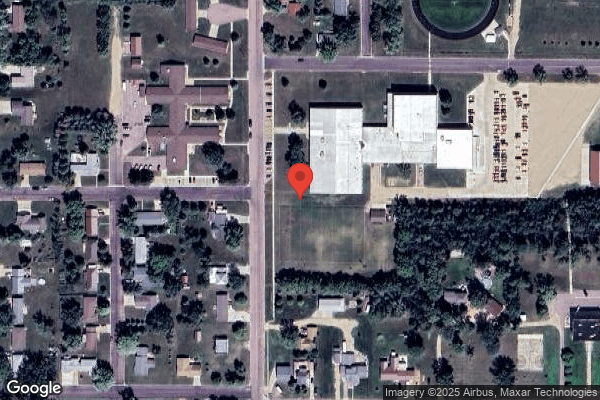
300 WEST HAZEL AVENUE, HOWARD, SD 57349 (605) 772-4481
Non profit - Corporation 45 Beds GOOD SAMARITAN SOCIETY Data: November 2025
Trust Grade
90/100
#8 of 95 in SD
Last Inspection: January 2025

Within standard 12-15 month inspection cycle. Federal law requires annual inspections.

Overview

Good Samaritan Society Howard has received a Trust Grade of A, indicating it is considered excellent and highly recommended. It ranks #8 out of 95 nursing homes in South Dakota, placing it in the top half of facilities statewide, and it holds the top spot in Miner County, which means there are no local competitors for quality. The facility's trend is stable, with two issues reported in both 2023 and 2025, suggesting consistent oversight without significant deterioration. Staffing is rated 4 out of 5 stars, which is good, although turnover is at 51%, slightly above the state average of 49%. Notably, the facility has not incurred any fines, which is a positive sign. However, there are some weaknesses to consider. Recent inspector findings revealed that residents experienced delays in having their call lights answered, with one resident waiting over an hour for assistance. Additionally, there was a concern about the lack of thorough investigation into an injury of unknown origin for another resident, indicating potential gaps in attention to resident safety. Overall, while the facility has strong ratings and no fines, families should weigh these specific concerns against the overall positive reputation.

Trust Score
A
90/100
In South Dakota
#8/95
Top 8%
Safety Record
Low Risk
No red flags
Inspections
Holding Steady
1 → 1 violations
Staff Stability
⚠ Watch
51% turnover. Above average. Higher turnover means staff may not know residents' routines.
Penalties
✓ Good
No fines on record. Clean compliance history, better than most South Dakota facilities.
Skilled Nurses
✓ Good
Each resident gets 46 minutes of Registered Nurse (RN) attention daily — more than average for South Dakota. RNs are trained to catch health problems early.
Violations
✓ Good
Only 2 deficiencies on record. Cleaner than most facilities. Minor issues only.
★★★★★
5.0
Overall Rating
★★★★☆
4.0
Staff Levels
★★★☆☆
3.0
Care Quality
★★★★★
5.0
Inspection Score
Stable
2023: 1 issues
2025: 1 issues

The Good

  • 4-Star Staffing Rating · Above-average nurse staffing levels
  • Full Sprinkler Coverage · Fire safety systems throughout facility
  • No fines on record

Facility shows strength in staffing levels, fire safety.

The Bad

Staff Turnover: 51%

Near South Dakota avg (46%)

Higher turnover may affect care consistency

Chain: GOOD SAMARITAN SOCIETY

Part of a multi-facility chain

Ask about local staffing decisions and management

The Ugly 2 deficiencies on record

Jan 2025 1 deficiency
CONCERN (D)

Potential for Harm - no one hurt, but risky conditions existed

Quality of Care (Tag F0684)

Could have caused harm · This affected 1 resident

Based on observation, interview, record review, call light report review, resident council meeting, and policy review the provider failed to ensure that two of seven sampled residents (1 and 5) had th...

Read full inspector narrative →
Based on observation, interview, record review, call light report review, resident council meeting, and policy review the provider failed to ensure that two of seven sampled residents (1 and 5) had their call lights answered in a timely manner. Findings include: 1. Observation and interview on 1/27/25 at 2:56 p.m. with resident 1 while in her room revealed: *She was in bed. *Her call light was attached to a blanket within her reach. *Staff used a total lift (a mechanical lift and sling used to lift a person's full body) to transfer her in and out of bed. *She had chronic pain. *Staff would come in her room and turn her call light off and tell her they needed to get another staff member to help with her transfer. *She stated she had waited over an hour for staff to answer her call light. Review of resident 1's call light report for January 2025 revealed: *There were 22 call light response times over 20 minutes. *Three of those call lights were on for over an hour. Review of resident 1's electronic medical record (EMR) revealed: *She had a brief interview for mental status (BIMS) assessment score of 15 which indicated she was cognitively intact. *She had diagnoses of: -Quadriplegia. -Major depressive disorder, recurrent severe without psychotic features. -Unspecified intracranial injury with loss of consciousness of unspecified duration. -Chronic pain due to trauma. *Her revised 11/1/24 care plan stated she had a history of not allowing staff to turn the call light to answered/off knowing that the call light system tracked times of cares and that was empowering to resident. 2. Observation and interview on 1/28/25 at 9:10 a.m. with resident 5 in her room regarding call light wait times revealed: *She was in bed. *Her call light was attached to a blanket within her reach. *She stated it took staff a long time to answer her call light at certain times of the day. *She had a BIMS assessment score of 15 which indicated she was cognitively intact. Review of resident 5's call light report for January 2025 revealed: *There were 13 call light response times over 20 minutes. *Two of those call lights were over an hour. Interview on 1/29/25 at 9:10 a.m. with administrator A and director of nursing (DON) B regarding call light times revealed: *They could review call light times by hallway, but not by individual resident room. *They were not able to print documentation for call light reports. *The DON reviewed and monitored call lights monthly, and it was very labor intensive. *Call light times were part of the quality assurance meetings. *They had created a performance improvement plan (PIP) in October for call lights *They had some high acuity residents that took a lot of time to care for. *They had increased staffing levels around mealtimes to try to meet the resident's needs. *Ancillary staff helped answer resident call lights, but they could not provide personal cares. *It was their expectation that resident call lights be answered in a timely manner. *They agreed call lights should be answered within 20 minutes. Interview on 1/29/25 at 10:38 a.m. with agency certified nursing assistant (CNA) D regarding call lights revealed: *They monitored call lights in the hallways and were to answer them when they come on. *A white light meant a resident needed assistance. *A green light meant staff were already helping a resident. *A red light meant a resident needed assistance in the bathroom. *She carried a walkie-talkie to communicate with other staff members about resident care needs, including call lights. Interviews on 1/29/25 at 1:28 p.m. with residents in a group setting regarding call lights revealed: *They waited longer before and after meals for call lights to be answered. *Some staff would answer the call lights but they had to get another staff member to help them, which increased their wait times. Interview on 1/30/25 at 10:08 a.m. with business office manager/quality assurance performance improvement (QAPI) C regarding resident call lights revealed *The QAPI team met monthly. *Call light times were reviewed at the meeting by DON B for specific trends. *They had been completing call light audits since October. *The call lights were on longer around mealtimes and during morning and evening cares for residents. *They had added staffing hours to try to address the longer resident call light times. Review of the provider's 7/29/24 revised call light policy revealed: *Purpose: To ensure resident always has a method of calling for assistance. *To promptly answer resident's call light. *Procedure: 1. New admission- explain and demonstrate the use of call light system. *2. When resident's call light is observed/heard, go to resident's room promptly. *3. Respond to request as soon as possible. Turn call light off and inquire about resident's request.
Sept 2023 1 deficiency
CONCERN (D)

Potential for Harm - no one hurt, but risky conditions existed

Report Alleged Abuse (Tag F0609)

Could have caused harm · This affected 1 resident

**NOTE- TERMS IN BRACKETS HAVE BEEN EDITED TO PROTECT CONFIDENTIALITY** Based on record review, interview, and policy review the provider failed to ensure one of one sampled resident (37) who had an i...

Read full inspector narrative →
**NOTE- TERMS IN BRACKETS HAVE BEEN EDITED TO PROTECT CONFIDENTIALITY** Based on record review, interview, and policy review the provider failed to ensure one of one sampled resident (37) who had an injury of unknown origin was thoroughly investigated and reported to the South Dakota Department of Health (SDDOH). Findings include: 1. Review of resident 37's electronic medical record revealed her: *Diagnoses included: Parkinson's Disease, schizophrenia, bipolar disorder, anxiety disorder, major depressive disorder, muscle weakness, mild cognitive impairment, and pain in her right knee. *Medications included: Haldol (used to treat mental/mood disorders) and risperidone (used to treat bipolar disorder and schizophrenia. *Care plan included that she: -Had communication problems related to her Parkinson's disease. -Used a wheelchair for mobility. -Required a mechanical lift and two staff members to assist in transferring between surfaces. -Required total assistance of a staff member for positioning when in bed. *On [DATE] a Suggestion or Concern form was completed that indicated certified nursing assistants (CNA) heard a popping sound when repositioning resident 37. -On [DATE]: --Resident 37 was interviewed and denied having had a fall or difficulty with transfers. --Two CNAs were interviewed and stated there had been no difficulty with transfers or with repositioning. --A charge nurse was interviewed and had knowledge of a popping sound while staff were providing care to her. --There had been no other identified concerns from the resident or staff. *Review of resident 37's medical record revealed: -A progress note dated [DATE] indicated: Resident continues to c/o [complain of] pain and states her legs hurt bad. Will continue to monitor and repositioned with the right leg on a pillow. Resident closes her eyes off and on. -On [DATE], at 10:14 a.m. the provider sent a facsimile to the primary care provider (PCP) that included the following: --When she had been repositioned on the night of [DATE] the staff heard a loud pop. --She complained of right knee into hip pain. -The PCP ordered an x-ray of her right knee to have been done on [DATE] due to her knee pain. -A nurse's progress note on [DATE] at 1:05 p.m. revealed she complained of an increase in pain in her right hip area to the fore right thigh. -A nurse's progress note on [DATE] indicated she had x-rays taken of her knee due to knee and hip pain. *On [DATE], the PCP noted knee xray reviewed and She has severe arthritis sometimes joints can make popping sounds with arthritis. *On [DATE], resident 37: -Had her gastrostomy tube displaced. -Was transported to the hospital via ambulance. -Was admitted to the hospital for a fracture of her right hip. *On [DATE], a radiology report noted Acute right subtrochanteric right femoral fracture. Interview on [DATE] at 3:07 p.m. with director of nursing (DON) B regarding resident 37 revealed: *She had used a full-body mechanical lift for transfers. *She had a feeding tube in place for her nutrition. *She went to the emergency room on [DATE] due to having pulled out her feeding tube and she was having high blood sugars, not for any pain or her hip. *She passed away on [DATE]. *We were waiting for some kind of information from hospital/final report. *The protocol for investigations was: -Investigations occurred when an incident on the premises, or a resident was out of the facility, or staff took a resident out and something happened was reported. -She had no knowledge of the hip fracture until after resident 37 had passed away. -She had not completed an investigation for the hip fracture. --She had not thought that a report needed to have been be filed with the SDDOH as resident 37 had passed away. -She agreed resident 37's hip fracture was an injury of unknown origin and should have been reported to the SDDOH. Interview on [DATE] at 4:14 p.m. with administrator (ADM) A regarding resident 37's fractured hip revealed: *The protocol was for any abuse or neglect allegation to have been reported to the SDDOH within two hours of notification of the allegation. -The ADM, DON, or social service designee would have completed and filed the report. -An investigation would have been started. -She was made aware of resident 37's hip fracture the day after she had died. -She had not reported the hip fracture to the SDDOH as they had not been aware if the fracture occurred while resident 37 was in the facility. -She stated, We had no incident, no trauma. -She agreed the hip fracture should have reported. Review of the provider's [DATE] Abuse and Neglect Policy revealed: *Purpose -To ensure that all identified incidents of alleged or suspected abuse/neglect, including injuries of unknown origin, are promptly reported and investigated. *Procedure *4. Notification procedures: -c. Designated agencies will be notified in accordance with state law, including the State Survey and Certification Agency. --If there is an allegation ., including injuries of unknown source ., then it will be reported immediately, but not later than two hours after the allegation is made.
Understanding Severity Codes (click to expand)
Life-Threatening (Immediate Jeopardy)
J - Isolated K - Pattern L - Widespread
Actual Harm
G - Isolated H - Pattern I - Widespread
Potential for Harm
D - Isolated E - Pattern F - Widespread
No Harm (Minor)
A - Isolated B - Pattern C - Widespread

Questions to Ask on Your Visit

  • "Can I speak with families of current residents?"
  • "What's your RN coverage like on weekends and overnight?"

Our Honest Assessment

Strengths
  • • Grade A (90/100). Above average facility, better than most options in South Dakota.
  • • No major safety red flags. No abuse findings, life-threatening violations, or SFF status.
  • • No fines on record. Clean compliance history, better than most South Dakota facilities.
  • • Only 2 deficiencies on record. Cleaner than most facilities. Minor issues only.
Concerns
  • • No significant concerns identified. This facility shows no red flags across CMS ratings, staff turnover, or federal penalties.
Bottom line: Generally positive indicators. Standard due diligence and a personal visit recommended.

About This Facility

What is Good Samaritan Society Howard's CMS Rating?

CMS assigns GOOD SAMARITAN SOCIETY HOWARD an overall rating of 5 out of 5 stars, which is considered much above average nationally. Within South Dakota, this rating places the facility higher than 99% of the state's 100 nursing homes. This rating reflects solid performance across the metrics CMS uses to evaluate nursing home quality.

How is Good Samaritan Society Howard Staffed?

CMS rates GOOD SAMARITAN SOCIETY HOWARD's staffing level at 4 out of 5 stars, which is above average compared to other nursing homes. Staff turnover is 51%, compared to the South Dakota average of 46%.

What Have Inspectors Found at Good Samaritan Society Howard?

State health inspectors documented 2 deficiencies at GOOD SAMARITAN SOCIETY HOWARD during 2023 to 2025. These included: 2 with potential for harm.

Who Owns and Operates Good Samaritan Society Howard?

GOOD SAMARITAN SOCIETY HOWARD is owned by a non-profit organization. Non-profit facilities reinvest revenue into operations rather than distributing to shareholders. The facility is operated by GOOD SAMARITAN SOCIETY, a chain that manages multiple nursing homes. With 45 certified beds and approximately 36 residents (about 80% occupancy), it is a smaller facility located in HOWARD, South Dakota.

How Does Good Samaritan Society Howard Compare to Other South Dakota Nursing Homes?

Compared to the 100 nursing homes in South Dakota, GOOD SAMARITAN SOCIETY HOWARD's overall rating (5 stars) is above the state average of 2.7, staff turnover (51%) is near the state average of 46%, and health inspection rating (5 stars) is much above the national benchmark.

What Should Families Ask When Visiting Good Samaritan Society Howard?

Based on this facility's data, families visiting should ask: "Can I visit during a mealtime to observe dining assistance and food quality?" "How do you handle medical emergencies, and what is your hospital transfer rate?" "Can I speak with family members of current residents about their experience?"

Is Good Samaritan Society Howard Safe?

Based on CMS inspection data, GOOD SAMARITAN SOCIETY HOWARD has a clean safety record: no substantiated abuse findings (meaning no confirmed cases of resident harm), no Immediate Jeopardy citations (the most serious violation level indicating risk of serious injury or death), and is not on the Special Focus Facility watch list (a federal program monitoring the lowest-performing 1% of nursing homes). The facility has a 5-star overall rating and ranks #1 of 100 nursing homes in South Dakota. While no facility is perfect, families should still ask about staff-to-resident ratios and recent inspection results during their visit.

Do Nurses at Good Samaritan Society Howard Stick Around?

GOOD SAMARITAN SOCIETY HOWARD has a staff turnover rate of 51%, which is 5 percentage points above the South Dakota average of 46%. Moderate turnover is common in nursing homes, but families should still ask about staff tenure and how the facility maintains care continuity when employees leave.

Was Good Samaritan Society Howard Ever Fined?

GOOD SAMARITAN SOCIETY HOWARD has no federal fines on record. CMS issues fines when nursing homes fail to meet care standards or don't correct problems found during inspections. The absence of fines suggests the facility has either maintained compliance or corrected any issues before penalties were assessed. This is a positive indicator, though families should still review recent inspection reports for the full picture.

Is Good Samaritan Society Howard on Any Federal Watch List?

GOOD SAMARITAN SOCIETY HOWARD is not on any federal watch list. The most significant is the Special Focus Facility (SFF) program, which identifies the bottom 1% of nursing homes nationally based on persistent, serious quality problems. Not being on this list means the facility has avoided the pattern of deficiencies that triggers enhanced federal oversight. This is a positive indicator, though families should still review the facility's inspection history directly.