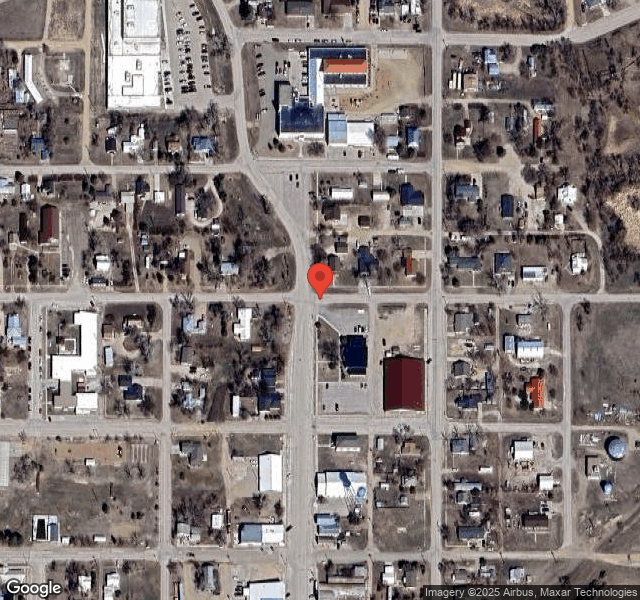

Kadoka Nursing Home

605 MAPLE ST W, KADOKA, SD 57543 (605) 837-2247
Non profit - Corporation 31 Beds Independent Data: November 2025
Trust Grade
60/100
#62 of 95 in SD
Last Inspection: April 2025

Within standard 12-15 month inspection cycle. Federal law requires annual inspections.

Overview

Kadoka Nursing Home has a Trust Grade of C+, indicating it is slightly above average but still falls into the decent range. It ranks #62 out of 95 facilities in South Dakota, placing it in the bottom half, but it is the top choice in Jackson County. The facility is showing improvement, with the number of issues decreasing from 6 in 2023 to 3 in 2025. However, staffing is a concern with a low rating of 1 out of 5 stars, despite having a turnover rate of 40%, which is better than the state average. The home has not faced any fines, which is a positive sign. Specific incidents noted by inspectors include failures in maintaining proper dishwashing temperatures, which could affect sanitation, and instances where residents were not given their medications correctly, raising potential health risks. Overall, while there are strengths like the absence of fines and a decreasing trend in issues, families should be aware of staffing challenges and some concerning care practices.

Trust Score
C+
60/100
In South Dakota
#62/95
Bottom 35%
Safety Record
Low Risk
No red flags
Inspections
Getting Better
6 → 3 violations
Staff Stability
○ Average
40% turnover. Near South Dakota's 48% average. Typical for the industry.
Penalties
✓ Good
No fines on record. Clean compliance history, better than most South Dakota facilities.
Skilled Nurses
○ Average
Each resident gets 35 minutes of Registered Nurse (RN) attention daily — about average for South Dakota. RNs are the most trained staff who monitor for health changes.
Violations
○ Average
10 deficiencies on record. Average for a facility this size. Mostly minor or procedural issues.
★★☆☆☆
2.0
Overall Rating
★☆☆☆☆
1.0
Staff Levels
★☆☆☆☆
1.0
Care Quality
★★★★☆
4.0
Inspection Score
Stable
2023: 6 issues
2025: 3 issues

The Good

  • Full Sprinkler Coverage · Fire safety systems throughout facility
  • No fines on record
  • Staff turnover below average (40%)

    8 points below South Dakota average of 48%

Facility shows strength in fire safety.

The Bad

2-Star Overall Rating

Below South Dakota average (2.7)

Below average - review inspection findings carefully

Staff Turnover: 40%

Near South Dakota avg (46%)

Typical for the industry

The Ugly 10 deficiencies on record

Apr 2025 3 deficiencies
CONCERN (D)

Potential for Harm - no one hurt, but risky conditions existed

Deficiency F0658 (Tag F0658)

Could have caused harm · This affected 1 resident

Based on observation, interview, record review, and policy review, the provider failed to adhere to professional standards of care by not ensuring medications were taken by four of four observed resid...

Read full inspector narrative →
Based on observation, interview, record review, and policy review, the provider failed to adhere to professional standards of care by not ensuring medications were taken by four of four observed residents (3, 9, 14, and 19) at the time those medications had been administered by one of one unlicensed medication aide (UMA) (I) and one of one licensed practical nurse (LPN) (J). Findings include: 1. Observation and interview on 4/14/25 with resident 14 in the dining room revealed: *At 5:30 p.m. a blue, oval-shaped pill, and a round salmon-colored pill were in a medication cup on the dining table in front of the resident. *Resident 14 sat between two female residents at that table. -The table was located near the entrance to the kitchen and around the corner from the medication cart. *At 5:45 p.m. the above medications remained in the medication cup. -Resident 14 stated she wanted to eat something first before she had taken those pills. *At 6:05 p.m. the medication cup was empty. 2. Continued observation in the dining room of resident 9 revealed: *At 5:35 p.m. UMA I placed a powdered substance in the resident's cup of thickened juice, and stirred it using a straw. -The powdered substance had not dissolved in the thickened juice and small clumps of the powder were seen inside the cup. *UMA I encouraged resident 9 to drink the contents of the cup, then walked back to her medication cart and continued with other residents' evening medication administrations. *At 6:15 p.m. the above juice glass was mostly empty. Small bits of clumped powder were seen along the inside and bottom of that cup. 3. Continued observation in the dining room and interview with resident 19 revealed: *At 5:50 p.m. resident 21 leaned over from her dining room chair and picked up a white pill from the floor. -She handed that pill to resident 19, who then placed it into her mouth and swallowed it. *Resident 19 stated that pill was just a calcium pill. 4. Observation and interview on 4/15/25 at 7:35 a.m. with resident 3 in the dining room revealed: *She had picked up a medication cup on the table in front of her and drank the clear-colored substance inside that cup. -She had not known what she had drunk from that cup, but she thought it was medicine. 5. Review of residents 14, 9, 19, and 3's electronic medical records revealed: *Resident 14's 1/23/25 Basic Interview for Mental Status (BIMS) assessment score was a 9. That indicated she had moderate cognitive impairment. *Resident 9's 2/28/25 BIMS assessment score was 14. That indicated he was cognitively intact. *Resident 19's 1/25/25 BIMS assessment score was 15. That indicated she was cognitively intact. *Resident 3's 2/27/25 BIMS assessment score was 9. That indicated she had moderate cognitive impairment. *None of the above residents had a physician's order or an assessment completed that supported their ability to have self-administered their medications. Interview on 4/15/25 at 3:20 p.m. with UMA I and LPN J regarding the above medication administrations revealed: *UMA I confirmed having left residents 14 and 19's medication cups on their tables without having ensured that those residents had taken the prescribed medications in those cups. *The powder UMA I had added to resident 9's thickened juice was a physician-ordered fiber supplement. -The resident was unable to drink the entire cup of thickened juice at one time, so she observed the juice cup periodically during the meal service to ensure the contents had all been consumed by the resident by the end of the meal service. *UMA I and LPN J had known resident 9 took his fiber supplement in a gummy form in the past. They felt that allowed staff to confirm the supplement was taken at the time of its administration. *LPN J confirmed having left resident 3's fiber supplement on the table for the resident to have taken on her own. -She stated she was expected to have watched the resident take the medication at the time she administered it and she should not have walked away from the resident when the medication had not yet been taken. Interview on 4/16/25 at 7:46 a.m. with director of nursing (DON) B regarding the above observations revealed: *It was her expectation that UMAs and licensed nursing staff were to have observed and confirmed residents had taken their prescribed medications at the time they were administered. -A physician's order and a completed medication self-administration assessment were required for a resident to take their medications unsupervised. Review of the provider's revised 3/11/24 Administration of Medications policy on 4/16/25 at 7:46 a.m. with DON B revealed: *The policy had indicated: 14. No medications will be left in the resident's room unless a Self-Administration of Medications Assessment has been documented by the medication nurse and a special order by the attending physician is in place. -DON B confirmed the above would have also applied to leaving medications on a dining room table.
CONCERN (D)

Potential for Harm - no one hurt, but risky conditions existed

Deficiency F0699 (Tag F0699)

Could have caused harm · This affected 1 resident

**NOTE- TERMS IN BRACKETS HAVE BEEN EDITED TO PROTECT CONFIDENTIALITY** Based on observation, interview, record review, and facility assessment review, the provider failed to ensure: *One of one sampl...

Read full inspector narrative →
**NOTE- TERMS IN BRACKETS HAVE BEEN EDITED TO PROTECT CONFIDENTIALITY** Based on observation, interview, record review, and facility assessment review, the provider failed to ensure: *One of one sampled resident (20) had been screened for post-traumatic stress disorder (PTSD) upon being admitted to the facility. *The implementation of a trauma informed care program. Findings include: 1. Observation and interview on 4/15/25 at 10:00 a.m. with resident 20 in his room revealed he: *Was a well-groomed, heavy-set man who sat in his wheelchair during the interview. *Was never married, but he had a sister who was involved with his care. *Had lived in the facility for about 18 months. He wanted to live on his own again or in an assisted living facility. *Had a history of health conditions that included heart disease, a stroke that had affected his left side, and a fall that had caused a brain bleed. -Had a new diagnosis of leukemia, but he was not certain what his treatment course was. -Had breathing issues he attributed to the inhalation of jet fumes while he was in the military. *Had served during the Vietnam War on an aircraft carrier. -Had seen planes land on that carrier with visible signs of having been shot at by enemy fire. -Had not given his mother any details regarding his military assignment to protect her from worrying about him. -Was not recognized for his military service with a parade or a celebration when he was discharged from the service. *Confirmed he had anxiety and depression mostly related to his loss of independence. He denied the need for counseling services, but he was taking medication for those conditions. Review of resident 20's electronic medical record (EMR) revealed: *He was admitted to the facility on [DATE]. *He was taking an anti-depressant medication once daily and an anti-anxiety medication twice daily. *In addition to the above diagnoses reported by the resident, he also had a history of suicidal ideations diagnosed on [DATE]. *His 2/22/25 Brief Interview for Mental Status assessment score was 15. That indicated his cognition was intact. *Social services designee (SSD)/registered nurse (RN) D's 2/24/25 progress note indicated: he [resident 20] does have a history of being verbally abusive to staff and mocks other residents, this behavior has improved and this behavior is monitored. He has had occasional outbursts with staff when he becomes frustrated, none in this assessment period. [Resident 20] has been counseled and redirected with this negative behavior. -Resident 20 had refused mental health services. There was no mention of his past military service or potential trauma. On 4/15/25 at 1:50 p.m. a trauma-informed care assessment for resident 20 was requested from director of nursing (DON) B, assistant DON C, SSD/RN D, and Minimum Data Set (MDS) coordinator K. *They confirmed there was no such assessment completed for resident 20. They did not have a process to have assessed residents for trauma history. -They agreed resident 20 may have been at risk for trauma related to his military service. *The provider had no Trauma-Informed Care policy. Review of the provider's Facility Assessment last reviewed and updated in November 2024 revealed: *Part 2: Services and Care We Offer Based on our Residents' Needs: -Specific Care or Services had included: Manage medical conditions and medication-related issues causing psychiatric symptoms and behavior, identify and implement interventions to help support individuals with issues such as trauma/post-traumatic stress disorder (PTSD) .
CONCERN (F)

Potential for Harm - no one hurt, but risky conditions existed

Food Safety (Tag F0812)

Could have caused harm · This affected most or all residents

Based on observation, record review, interview, and policy review, the provider failed to ensure: *One of one low-temperature dishwasher consistently met the required minimum wash and rinse temperatur...

Read full inspector narrative →
Based on observation, record review, interview, and policy review, the provider failed to ensure: *One of one low-temperature dishwasher consistently met the required minimum wash and rinse temperatures for proper sanitation. *Temperature monitoring and documentation was completed consistently for one of one dishwasher temperature logs. Findings included: 1. Observation on 4/14/25 at 12:35 p.m. in the kitchen revealed: *The mechanical dishwashing machine had a label on it that read: -Wash Temperature 120 degrees F [Fahrenheit] minimum. -Rinse Temperature 120 degrees F minimum. *The logs for the dishwasher temperatures for April 2025 were on the counter and included: -Columns to record Wash/Rinse Temp/IN [initials] for each of the three mealtimes listed as Breakfast, Lunch', and Supper. -Each column had only one recorded temperature. -Those temperatures ranged from 111 to 134 degrees F. --Fifteen of those recorded temperatures were not at the minimum wash/rinse temperature of 120 degrees F. *Review of additional dishwasher temperature logs revealed: -For March 2025: - Columns to record Wash/Rinse Temp/IN for each of the three mealtimes Breakfast, Lunch', and Supper. -Each column had only one recorded temperature. -Those temperatures ranged from 103.7 to 132.3 degrees F. --Twenty-four of those recorded temperatures were not at the minimum wash/rinse temperature of 120 degrees F. *For February 2025: -Columns to record Wash/Rinse Temp/IN for each of the three mealtimes Breakfast, Lunch', and Supper. -Each column had only one recorded temperature. -Those temperatures ranged from 97 to 130.5 degrees F. --Eighteen of those recorded temperatures were not at the minimum wash/rinse temperatures of 120 degrees F. *For January 2025: -Columns to record Wash/Rinse Temp/IN for each of the three mealtimes Breakfast, Lunch', and Supper. -Each column had only one recorded temperature. -Those temperatures ranged from 85 to 137.8 degrees F. --Twenty-five of those recorded temperatures were not at the minimum wash/rinse temperatures of 120 degrees F. 2. Observation and record review on 4/14/25 at 12:45 p.m. in the kitchen revealed: *The dishwasher temperature monitoring sheets had several unrecorded temperatures that included: -April 2025 had 7 unrecorded temperatures out of 40 opportunities. -March 2025 had 15 unrecorded temperatures out of 93 opportunities. -February 2025 had 36 unrecorded temperatures out of 84 opportunities. -January 2025 had 32 unrecorded temperatures out of 93 opportunities. 3. Interview on 4/14/25 at 12:53 p.m. with dietary manager (DM) E revealed: *She had been employed with the facility as the DM since 7/29/24. *She knew about the low temperatures of the dishwasher since she had started as the dietary manager. *She had called the service department from whom they leased the dishwasher, he came to the facility four times to service the dishwasher and was able to get the rinse and wash temperatures to a minimum of 120 degrees F. -He had been coming to the facility to service the dishwasher and had told the facility they needed a holding tank. -She was unsure of when maintenance had installed the holding tank. *She agreed there were several unrecorded temperatures on the dishwasher temperature logs. *She had tried to check the dishwasher temperature logs monthly but had gotten busy and forgotten to check them. 4. Observation and interview on 4/15/25 at 8:13 a.m. in the kitchen with dietary staff G revealed: *She stated she was running the dishwasher to see what the thermometer read. -It had read 117 degrees F for the wash temperature, she did not wait for the thermometer to read the rinse temperature. *She stated she had to run the dishwasher again to get the thermometer to read 120 degrees F or above. *On the second cycle, the wash temperature was 123 degrees F, and the rinse temperature was 127 degrees F. 5. Interview on 4/15/25 at 8:25 a.m. with maintenance manager F revealed he had installed the holding tank on 1/7/25. 6. Interview on 4/15/25 at 9:20 a.m. with chief operating officer (COO) A regarding the low dishwasher temperature readings revealed: *She thought the holding tank that was installed on 1/7/25 had fixed the problem. *She expected the kitchen staff to have notified the DM of the dishwasher low temperature readings. *She had talked to the service department that they leased the dishwasher from, and they discussed options if the temperature problem did not resolve. *She confirmed there had been no gastrointestinal outbreak in the facility. 7. Interview on 4/15/25 at 4:45 p.m. with dietary staff H regarding the low dishwasher temperature readings revealed she: *Had written temperatures on the dishwasher temperature log below 120 degrees F. *Stated she knew the dishwasher temperature needed to be 120 degrees F or above. *Did not notify the dietary manager of the low dishwasher temperature readings. 8. Review of the provider's 11/1/23 Dish Machine Temperature Log policy revealed: OBJECTIVE: Dishwashing staff will monitor and record dish machine temperatures to ensure proper sanitizing of dishes. Procedure: *1. The dishwashing staff will be provided a log for daily temperature tracking. *2. The food service manager will train dishwashing staff to monitor [the] dish machine temperature throughout the dishwashing process. *3. Staff will be trained to record dish machine temperatures. *4. Dishwashing staff will be trained to report any problem with the dish machine to the food service manager as soon as they occur. *5. The food service manager will assess any dish machine problems and take action to assure sanitation of dishes.
Dec 2023 6 deficiencies
CONCERN (D)

Potential for Harm - no one hurt, but risky conditions existed

Deficiency F0658 (Tag F0658)

Could have caused harm · This affected 1 resident

Based on observation, interview, record review, and policy review, the provider failed to ensure one of one sampled residents (27) physician's order (PO) for weight monitoring and physician notificati...

Read full inspector narrative →
Based on observation, interview, record review, and policy review, the provider failed to ensure one of one sampled residents (27) physician's order (PO) for weight monitoring and physician notification of weight changes outside the specified parameters was followed. Findings include: 1. Observation and interview on 12/18/23 at 11:31 a.m. and again on 12/19/23 at 3:00 p.m. with resident 27 revealed he: *Was admitted in August 2023 and his diagnoses included a stroke history, heart disease, diabetes, and a brain bleed. -Was wearing compression socks to help maintain his blood flow and reduce leg swelling. -Weighed less than he had in the recent past. Review of resident 27's electronic medical record (EMR) revealed: *A 9/4/23 PO that included the following instructions: -Weigh the resident daily. -Notify the cardiologist if the resident has a three lb (pound) weight gain overnight or a five lb weight gain in one week. *An 11/28/23 Nutritional Assessment indicated the resident's weight was 288.8 lbs. -That was an increase of 17.2 lbs in 30 days and a 13.8 lb increase since his admission date. Interview on 12/19/23 at 9:30 a.m. with registered nurse G regarding resident 27 revealed: *He was administered a daily diuretic medication (a medicine that helps reduce fluid build-up in the body) for heart failure. *His weight was taken and documented daily. *A physician was notified if the resident's weight fluctuated outside the parameters outlined in the PO referred to above. -Nurse communication with the physician regarding those weight changes was documented in the resident's EMR. *She had not: -Ever had to notify a physician for a weigh gain outside of the parameters referred to in the above PO. -Been aware of any nurse who needed to contact a physician regarding the resident's weight having been outside of those physician-ordered parameters. Interview on 12/19/23 at 1:30 p.m. with director of nursing (DON) B revealed: *Resident 27's weight was taken no later than 9:00 a.m. each day and documented on the Daily Weight Sheet form. *The nurse was responsible for the following: -Signing the bottom of the Daily Weight Sheet form each day indicating the weight information was reviewed. -Determining if resident 27's weight for the current day was three lbs greater than his weight that was documented for the previous day or if the current days weight was five lbs greater than his weight documented one week prior. -Notifying the physician of weight fluctuations outside of the parameters in the 9/4/23 PO. -Documenting the outcome of the physician notification in the resident's EMR. Continued interview with DON B and review of resident 27's 11/19/23 through 12/17/23 Daily Weight Sheet forms and his EMR revealed she confirmed: *There were no documented weights on 11/19/23, 11/30/23, 12/7/23, 12/13/23, and 12/16/23. *Overnight weight gains of greater than 3 lbs occurred on the following days: -Between 11/18/23 (273 lbs) and 11/20/23 (282 lbs). -Between 11/20/23 (282 lbs) and 11/21/23 (288 lbs). -Between 11/28/23 (283.6 lbs) and 11/29/23 (287.8 lbs). -Between 12/4/23 (280.4 lbs) and 12/5/23 (285.6 lbs). -No nurse progress notes between 11/19/23 and 12/17/23 regarding the weight changes referred to above had been communicated to the physician. Review of the undated Physician's Orders policy revealed [Physician's] orders are verified and coordinated by a nurse.
CONCERN (D)

Potential for Harm - no one hurt, but risky conditions existed

Medication Errors (Tag F0758)

Could have caused harm · This affected 1 resident

Based on review of the Consultant Pharmacist Review reports for 2023, record review, interview, and policy review, the provider failed to ensure a physician's order (PO) included a specific duration o...

Read full inspector narrative →
Based on review of the Consultant Pharmacist Review reports for 2023, record review, interview, and policy review, the provider failed to ensure a physician's order (PO) included a specific duration of time for an as needed (PRN) psychotropic medication for one of one sampled resident (26) who received a PRN psychotropic medication. Findings include: 1. Review of resident 26's electronic medical record (EMR) revealed: *Two POs for PRN Ativan (psychotropic medication). -One had instructions for administration with seizure activity and the other had instructions for administration with agitation. -The PO for Ativan 0.5 mg every 6 hours PRN for agitation was started on 6/19/23. *Consultant Pharmacist Review 2023 monthly notes completed by pharmacist D that reviewed the resident's EMR for identification of medication irregularities revealed: -Only the PRN PO for Ativan administered with seizure activity had been reviewed. -There was no documentation of the PRN PO for Ativan administered for agitation. *Medication administration records from 6/19/23 through 12/19/23 revealed the PRN Ativan for agitation was administered three times in November 2023. Interview on 12/19/23 at 3:49 p.m.with pharmacist D regarding resident 26's PRN Ativan for agitation revealed he: *Had monitored the resident's use of PRN Ativan administered for seizure activity but had not monitored the use of the PRN Ativan administered for agitation. -That was an oversight on his part. *Had known PRN orders for the use of psychotropic medications were limited to 14 days unless the physician documented a rationale to extend the use of that medication. -Should have requested a standing order for re-evaluation of the use of that medication every 14 days, requested the medication had been administered on a scheduled basis, or requested the medication had been discontinued. Interview on 12/20/23 at 9:21 a.m. with director of nursing B regarding resident 26's PRN Ativan administered for agitation revealed: *The resident's admission orders included multiple PRN Ativan orders for agitation. -She had thought all those POs had been discontinued. Review of the July 2022 Psychotropic Medication Use policy revealed 12. a. PRN orders for psychotropic medications are limited to 14 days. Review of the undated Physician's Orders policy revealed: *6. The ADON/SSD [assistant director of nursing/social services designee] will print and verify the physician's orders at least every 60 days to provide a clean (recap) copy. *7. The physician will review the recap. The physician, then, will sign and date the recap, stating that it is correct. *8. The charge nurse will review the recap of orders, enacting all new orders, then noting the recap by signing 'noted', signing, and dating it when the process is completed.
CONCERN (D)

Potential for Harm - no one hurt, but risky conditions existed

Deficiency F0761 (Tag F0761)

Could have caused harm · This affected 1 resident

Based on observation, interview, and policy review, the provider failed to ensure: *Medications in one of one medication refrigerator were securely stored. *One of one sampled residents (20) had her p...

Read full inspector narrative →
Based on observation, interview, and policy review, the provider failed to ensure: *Medications in one of one medication refrigerator were securely stored. *One of one sampled residents (20) had her prescription insulin medication accurately labeled. Findings include: 1. Observation on 12/18/23 at 2:36 p.m. of the medication refrigerator revealed: *It was unlocked on a counter in an alcove near where the north/south and east/west residential hallways intersected. *Inside of the refrigerator was the following: -One syringe of Ativan (psychotropic medication) in a clear plastic container secured by a zip tie. -Multiple stacked boxes of residents' insulin. -A tuberculin vial. *Staff entered and exited that alcove to access residents' paper charts and to use a handwashing sink. Interview on 12/18/23 at 2:54 p.m. with registered nurse (RN) G regarding the medication refrigerator revealed: *It was unsecured. -The key used to lock it had not worked for a few months. -I would have to think someone reported this issue to management. *The medications in the refrigerator were accessible to anyone who entered that alcove. -Missing medications would not have been noticed until shift change when they were counted by the nursing staff. Interview on 12/19/23 at 1:30 p.m. with director of nursing (DON) B regarding the unsecured medication refrigerator revealed she: *Was unsure how long the refrigerator key had not worked. -Had known the key worked at the end of the preceding week. *Expected nursing staff to notify her or another member of the management team upon discovering that the refrigerator key was not working. -The refrigerator could have been secured by another means until a new key was made or the lock was replaced. 2. Observation and interview on 12/19/23 at 11:30 a.m. with RN G during a medication administration pass revealed: *She referred to resident 20's medication administration record (MAR) for the physician's order (PO) and instructions regarding the administration of her insulin (Lantus) medication. -That order was for ten units of Lantus to have been injected subcutaneously daily for diabetes. *She removed the prescription labeled Lantus insulin pen from the medication cart. -Without comparing the instructions on the prescription label to the MAR she prepared and primed the insulin pen. -Dialed the number of units of insulin to administer to ten. -Locked the medication cart and turned towards the resident's room to administer that insulin dose. *RN G was asked by the surveyor to read the prescription label on the insulin pen. -It instructed five units of Lantus to be injected subcutaneously daily. *She had not noticed the discrepancy between the amount of insulin on the MAR that was to have been administered compared to the amount of insulin on the prescription label that was to have been administered. -She was expected to compare them and reconcile any differences before drawing up the insulin for resident 20. Interview on 12/19/23 at 11:45 a.m. with DON B revealed RN G was expected to: *Compare the prescription label of resident 20's insulin against the PO for insulin on her MAR before preparing the medication for administration. *Place a See MAR sticker on the prescription label to alert other nursing staff to the discrepancy between the prescription label on the insulin pen and the PO for insulin on the MAR. Review of the undated Compliance of Medications policy revealed 7. Resident's medications must be properly labeled and stored in a locked cabinet at the nurse's station.
CONCERN (D)

Potential for Harm - no one hurt, but risky conditions existed

Deficiency F0811 (Tag F0811)

Could have caused harm · This affected 1 resident

Based on observation, interview, and record review, the provider failed to ensure one of one dietary manager (DM) (E) had completed a State-approved training program for feeding assistants prior to pr...

Read full inspector narrative →
Based on observation, interview, and record review, the provider failed to ensure one of one dietary manager (DM) (E) had completed a State-approved training program for feeding assistants prior to providing two of two observed residents (20 and 26) feeding assistance during one of one observed meal service. Findings include: 1. Entrance conference interview on 12/18/23 at 10:30 a.m. with chief operating officer (COO) A revealed the facility had no paid feeding assistants. Observation and interview on 12/18/23 at 5:07 p.m. with DM E in the dining room revealed: *She sat at one of the dining room tables in between residents 20 and 26. *Resident 20's meal was served on a three-compartment plate. -The consistency of her food was moist-looking and had been modified to a soft texture. *DM E verbally cued and physically assisted the resident to eat her meal. *Resident 26 used a modified spoon to scoop his food and bring it to his mouth to eat. *DM E held a cup to the resident's mouth for him to drink fluids. *She helped feed residents to support her co-workers. *She was not a certified nurse aide (CNA) and had not been provided any specialized feeding training. -She thought the only requirement for feeding residents was having cardio-pulmonary resuscitation (CPR) certification. Review of resident 20's electronic medical record (EMR) revealed: *An 8/29/23 speech therapy daily treatment note: Patient continues to present with moderate to severe dysphagia characterized by needing a modified diet, pocketing food, anterior loss with cup and residue within oral cavity. Review of resident 26's EMR revealed: *A 10/3/23 speech therapy daily treatment note: Patient presents with mild to moderate dysphagia characterized by oral residues, pocketing, deficits from stroke, and no use of left side as well as safety precautions d/t [due to] patient being at an increased risk for aspiration. Interview on 12/19/23 at 1:00 p.m. with COO A revealed: *She had known DM E helped assist residents with their meals without having CNA training or having completed a State-approved training program for feeding assistants. *Neither resident 20 nor resident 26 were appropriate to have been assisted by a feeding assistant based on their diagnoses, the speech therapy recommendations referred to above, and DM E's lack of specialized training for residents who required feeding assistance. A Feeding Assistance Program policy was requested from COO A on 12/19/23 at 3:00 p.m. She confirmed there was no policy.
CONCERN (D)

Potential for Harm - no one hurt, but risky conditions existed

Deficiency F0919 (Tag F0919)

Could have caused harm · This affected 1 resident

Based on observation, interview, and policy review, the provider failed to ensure an in-room call light system was accessible for one of one sampled resident (13). Findings include: 1. Observation and...

Read full inspector narrative →
Based on observation, interview, and policy review, the provider failed to ensure an in-room call light system was accessible for one of one sampled resident (13). Findings include: 1. Observation and interview on 12/18/23 at 11:46 a.m. with resident 13 in his room revealed: *He was in bed underneath his bedding wearing a hospital gown. -Individual packets of lip balm and packages of mouth swabs sat on his bedside table. *His television was on, and his call light was lying on top of the bed covers near his feet. -He used his hands to feel on top of his bedding for the call light but was not sure where it was. -He would have tried to get the attention of someone passing by his room if he had needed help. Observation on 12/18/23 at 2:26 p.m. of resident 13 in his room revealed: *He was in bed asleep with the television on. -His call light lay on the floor at the foot of his bed. Interview on 12/18/23 at 2:30 p.m. with certified nurse aide (CNA) I revealed: *Resident 13 was hospitalized about a month ago. -He received end-of-life care and had chosen to remain in bed most of the time. *Staff had been in the resident's room no less than every two hours to reposition, check, and change his incontinence brief. Observation on 12/18/23 at 3:25 p.m. of resident 13 revealed maintenance manager F stood in the resident's doorway and asked How are you, [resident 13]? without noticing the call light was on the floor. Interview on 12/19/23 at 8:05 a.m. with maintenance manager F regarding the 12/18/23 observation referred to above revealed he had not noticed the resident's call light on the floor. Observation and interview on 12/19/23 at 7:40 a.m. of resident 13 revealed he: *Was in bed and would have been better if he had coffee. -Was unable to make his needs known because his call light was between his legs below his knees and was unable to be seen or reached by the resident. Interview on 12/19/23 at 10:20 a.m. with CNA J regarding resident 13 revealed she: *Provided care for the resident at 7:30 a.m. that morning. -Had not noticed the resident's call light was not accessible to him. *Thought the call light might have been unintentionally displaced by the resident when he moved around in bed. -Had known other residents whose call light had a clip on it that could be attached to their clothing or bedding so it remained in place. Interview on 12/19/23 at 1:30 p.m. with director of nursing B regarding resident 13's call light revealed: *Staff were in and out of his room at routine intervals to provide end-of-life care. -They were expected to ensure the resident's call light was accessible anytime they were in his room or passed by and looked into his room. *A modification to the resident's call light should have been made so it remained in place and accessible for the resident to activate. Interview on 12/20/23 at 9:30 a.m. with assistant DON C revealed call light competencies were completed annually for all caregivers and included ensuring residents always had access to a call light. On 12/19/23 at 4:45 p.m. chief operating officer A stated there was no policy that specifically addressed call light accessibility.
CONCERN (F)

Potential for Harm - no one hurt, but risky conditions existed

Food Safety (Tag F0812)

Could have caused harm · This affected most or all residents

2. Observation on 12/18/23 at 10:00 a.m. in the kitchen revealed: a. Inside the dry food storage room there was the following: *Unsealed and undated opened bags of pretzels, rice, and crackers. *An un...

Read full inspector narrative →
2. Observation on 12/18/23 at 10:00 a.m. in the kitchen revealed: a. Inside the dry food storage room there was the following: *Unsealed and undated opened bags of pretzels, rice, and crackers. *An unlabeled and undated can of coconut flakes. *An unlabeled and undated jar of dried parsley that was opened to the air. *Multiple bags of unlabeled and undated bags of dried pasta that had been removed from their original packaging. b. Inside the chest freezer there was the following: *Opened bags of unlabeled and undated frozen chicken, frozen pork chops, and frozen garlic toast. *A bag of unlabeled and undated frozen hamburger patties that was opened to the air. *Multiple bags of unlabeled and undated frozen vegetables, poultry, breads, and meat that had been removed from their original packaging. c. Inside the refrigerator there was the following: *Undated and unlabeled plastic containers of prepared Jell-O cups and fruit cups with lids. *Undated and unlabeled pitchers of prepared tea. Interview on 12/18/23 at 10:15 a.m. with dietary manager (DM) E regarding the above-mentioned food items revealed: *She confirmed the food items were not dated, labeled, and sealed when they were opened. *She was unsure when the Jell-O cups, fruit cups, and pitchers of tea were prepared. *It was her expectation that staff stored opened food items in sealed containers and label them with open dates. Interview on 12/19/23 at 9:45 a.m. with chief operations officer (COO) A revealed it was her expectation that food packages and containers would be sealed and have an opened date on them to ensure the quality and freshness of the foods. Review of the provider's undated and untitled Food Storage and Labeling policy revealed: *Previously cooked or prepared foods were to be labeled with a discard date. *Foods that were made with previously cooked foods in-house were to be labeled with the discard date of the previously cooked items. *Leftover foods stored in containers were to have tight-fitting lids and clearly labeled with the date and time the food was first prepared. *If foods were stored in a zip-top plastic bag, the air was to be pushed out of the bag before it was sealed. *All ready-to-eat foods that were prepared in-house were to have been stored for a maximum of 7 days. -After 7 days, those food items were to have been thrown out to prevent bacteria from growing to unsafe levels. Review of the provider's undated and untitled Food Service policy revealed food stored for future serving was dated and stored in sealed containers then discarded based on the shelf life of the individual food item. Based on observation, interview and policy review the provider failed to ensure: *One of one kitchen was maintained in a clean and sanitary manner. *Food was stored and labeled safely. Findings include: 1. Observation and interview on 12/18/23 at 10:15 a.m. with dietary manager E while in the kitchen revealed: *A large, thick, white, and brown circle under the dishwasher. *The gas stovetop and burners had dried, burnt food particles on it. *The space between the stovetop and the grill had grease build-up and burnt food particles. *Under the stove and the prep table the floor had a thick build-up of dust, grease and visible chunks of food. *The front of the stove had splattered grease covering the surface. *The stovetop was cleaned weekly every Monday. *The kitchen had been deep cleaned two and a half weeks ago. *The floors were mopped nightly. *The cleaning list was to have been posted on the refrigerator and staff were to place a check mark when completing the task. *She had not kept any logs of past cleaning lists. Observation on 12/18/23 at 4:30 p.m. in the kitchen revealed: *The back of the stove had grease build-up, dust, and spider webs on it. *The floor in the back of the stove had thick dust build-up with visible food particles around the stoves floor outlet. *The back of the stove had a layer of thick dust and cobwebs. *Under the three-compartment sink there was a bucket placed on a serving tray, under a drain that had unidentified overflowing white sludge. Interview on 12/19/23 at 9:45 a.m. with chief operating officer A revealed: *She agreed the items above were dirty and unsanitary. *Dietary manager E should have kept a log of the past cleaning lists. *The mops used to clean the floor in the kitchen, were hard to get under the stove and prep table. *She was unaware of the bucket that was on a serving tray under the drain of the three-compartment sink. Review of provider's undated Cleaning Instructions: Ranges policy revealed The range will be cleaned after each use. Spills and food particles will be wiped up as they occur. Review of provider's undated Cleaning Instructions: Floor, Tables and Chairs policy revealed: *Procedure: -1. Kitchen floors will be swept and cleaned after each meal. A thorough cleaning using a disinfectant will be done at least twice a week. Major appliances will be moved at least once a month (as appropriate) in order to facilitate cleaning behind and underneath them. Review of provider's undated Sanitation of Dining and Food Service Areas policy revealed: *The food service staff will maintain the sanitation of the dining and food service areas through compliance with a written, comprehensive cleaning schedule. *The food service manager will record all cleaning and sanitation tasks needed for the department.
Dec 2022 1 deficiency
CONCERN (D)

Potential for Harm - no one hurt, but risky conditions existed

Food Safety (Tag F0812)

Could have caused harm · This affected 1 resident

Based on observation, interview, and policy review, the provider failed to ensure appropriate hand hygiene and glove use to prevent cross-contamination in the handling of ready to eat foods during one...

Read full inspector narrative →
Based on observation, interview, and policy review, the provider failed to ensure appropriate hand hygiene and glove use to prevent cross-contamination in the handling of ready to eat foods during one of one meal service with one of one cook (E). Findings include: 1. Observation and interview on 12/27/22 from 4:33 p.m. through 5:20 p.m. of the supper meal revealed: *Beginning at 4:33 p.m. with gloves on completed the following food preparation tasks, he: -Used gloved hands obtained a knife from drawer and started cutting a grilled cheese sandwhich. -Placed the grilled cheese sandwhich on plate and with same gloved hands adding crackers and cookies to plate. -Used utensils to serve soup and dish up cauliflower out of a pan and placed on same plate. -Handed the plate to his co-worker. -Looked out to the dining room to see who to serve next as he leaned on countertops and top of the microwave with gloved hands. -Touched drawers to get utensils out, used a pen to write on a sticky note and touched his mask. -Continued to touch the grilled cheese sandwiches, cookies and crackers with the same gloved hands along with utensils for soup and cauliflower to serve the residents. -Served 5 more plates then got tongs out for the grilled cheese sandwiches. -Opened the microwave and placed two small containers of pureed cauliflower in it with same gloved hands. -Touched the controls on the microwave to heat the containers. -Removed the containers and placed them on the plate. -Grabbed another bowl to heat the pureed soup in. -Touched the microwave controls to heat the soup. -Removed soup from the microwave. -Grabbed a bowl and used a utensil to fill it with soup. -Placed it on a plate and handed it to a co-worker. -Leaned on countertops and top of the microwave to look out into the dining area. -Continued to use the same gloves to serve cookies, crackers and plates until all residents were served. -Removed the gloves he had used from start of serving the meal, touching objects, removed the gloves without washing his hands. Interview with [NAME] E on 12/27/22 at 5:20 p.m. revealed: *He was hired in March of 2022. *His dietary trainings were completed upon hire. *He agreed, by nodding his head and verbilizing he should not have touched contaminated surfaces and then continue to serve food without sanitizing and changing his gloves. Review of [NAME] E's training records revealed he: *Completed Competencies for Food and Nutrition Services Employees on 9/8/22. *Completed Hand Washing Competency on 10/18/22. *Was working towards getting Servsafe certified. Interview on 12/29/22 at 4:06 p.m. with Chief Operations Officer (COO) A revealed: *The Dietary Manager (DM) was on vacation. *Trainings for dietary staff included Relias and Association of Nutrition & Foodservice Professionals (ANFP) upon hire and annually. *Monitoring of staff included the DM and COO overseeing. *Discussion in Quality Assurance Performance Improvement (QAPI) from DM and any individual training that was needed. *COO A agreed [NAME] E should not have continued to use soiled gloves to serve food to the residents. Review of the Facility's undated Hand Hygiene and Glove use in the Kitchen policy revealed: *Objective: To ensure that all residents, residents' family or friends, and staff are receiving ready to eat food under sanitary conditions. To reduce as possible transmission of harmful bacteria to any resident, residents family or friends, or staff that may eat in the facility. *Procedure: -Policy for Glove use: --1. Wash hands properly before and after wearing or changing to a new pair of gloves ---b. If gloves become contaminated or visibly soiled dispose of properly and re glove following the proper steps of hand washing --4. When wearing gloves work from clean surfaces to dirty surfaces
Understanding Severity Codes (click to expand)
Life-Threatening (Immediate Jeopardy)
J - Isolated K - Pattern L - Widespread
Actual Harm
G - Isolated H - Pattern I - Widespread
Potential for Harm
D - Isolated E - Pattern F - Widespread
No Harm (Minor)
A - Isolated B - Pattern C - Widespread

Questions to Ask on Your Visit

  • "Can I speak with families of current residents?"
  • "What's your RN coverage like on weekends and overnight?"

Our Honest Assessment

Strengths
  • • No major safety red flags. No abuse findings, life-threatening violations, or SFF status.
  • • No fines on record. Clean compliance history, better than most South Dakota facilities.
  • • 40% turnover. Below South Dakota's 48% average. Good staff retention means consistent care.
Concerns
  • • No major red flags. Standard due diligence and a personal visit recommended.
Bottom line: Mixed indicators with Trust Score of 60/100. Visit in person and ask pointed questions.

About This Facility

What is Kadoka Nursing Home's CMS Rating?

CMS assigns Kadoka Nursing Home an overall rating of 2 out of 5 stars, which is considered below average nationally. Within South Dakota, this rating places the facility higher than 0% of the state's 100 nursing homes. A rating at this level reflects concerns identified through health inspections, staffing assessments, or quality measures that families should carefully consider.

How is Kadoka Nursing Home Staffed?

CMS rates Kadoka Nursing Home's staffing level at 1 out of 5 stars, which is much below average compared to other nursing homes. Staff turnover is 40%, compared to the South Dakota average of 46%. This relatively stable workforce can support continuity of care.

What Have Inspectors Found at Kadoka Nursing Home?

State health inspectors documented 10 deficiencies at Kadoka Nursing Home during 2022 to 2025. These included: 10 with potential for harm.

Who Owns and Operates Kadoka Nursing Home?

Kadoka Nursing Home is owned by a non-profit organization. Non-profit facilities reinvest revenue into operations rather than distributing to shareholders. The facility operates independently rather than as part of a larger chain. With 31 certified beds and approximately 30 residents (about 97% occupancy), it is a smaller facility located in KADOKA, South Dakota.

How Does Kadoka Nursing Home Compare to Other South Dakota Nursing Homes?

Compared to the 100 nursing homes in South Dakota, Kadoka Nursing Home's overall rating (2 stars) is below the state average of 2.7, staff turnover (40%) is near the state average of 46%, and health inspection rating (4 stars) is above the national benchmark.

What Should Families Ask When Visiting Kadoka Nursing Home?

Based on this facility's data, families visiting should ask: "Can you walk me through typical staffing levels on day, evening, and night shifts?" "Can I visit during a mealtime to observe dining assistance and food quality?" "How do you handle medical emergencies, and what is your hospital transfer rate?" "Can I speak with family members of current residents about their experience?" These questions are particularly relevant given the below-average staffing rating.

Is Kadoka Nursing Home Safe?

Based on CMS inspection data, Kadoka Nursing Home has a clean safety record: no substantiated abuse findings (meaning no confirmed cases of resident harm), no Immediate Jeopardy citations (the most serious violation level indicating risk of serious injury or death), and is not on the Special Focus Facility watch list (a federal program monitoring the lowest-performing 1% of nursing homes). The facility has a 2-star overall rating and ranks #100 of 100 nursing homes in South Dakota. While no facility is perfect, families should still ask about staff-to-resident ratios and recent inspection results during their visit.

Do Nurses at Kadoka Nursing Home Stick Around?

Kadoka Nursing Home has a staff turnover rate of 40%, which is about average for South Dakota nursing homes (state average: 46%). Moderate turnover is common in nursing homes, but families should still ask about staff tenure and how the facility maintains care continuity when employees leave.

Was Kadoka Nursing Home Ever Fined?

Kadoka Nursing Home has no federal fines on record. CMS issues fines when nursing homes fail to meet care standards or don't correct problems found during inspections. The absence of fines suggests the facility has either maintained compliance or corrected any issues before penalties were assessed. This is a positive indicator, though families should still review recent inspection reports for the full picture.

Is Kadoka Nursing Home on Any Federal Watch List?

Kadoka Nursing Home is not on any federal watch list. The most significant is the Special Focus Facility (SFF) program, which identifies the bottom 1% of nursing homes nationally based on persistent, serious quality problems. Not being on this list means the facility has avoided the pattern of deficiencies that triggers enhanced federal oversight. This is a positive indicator, though families should still review the facility's inspection history directly.