AVERA BRADY HEALTH AND REHAB
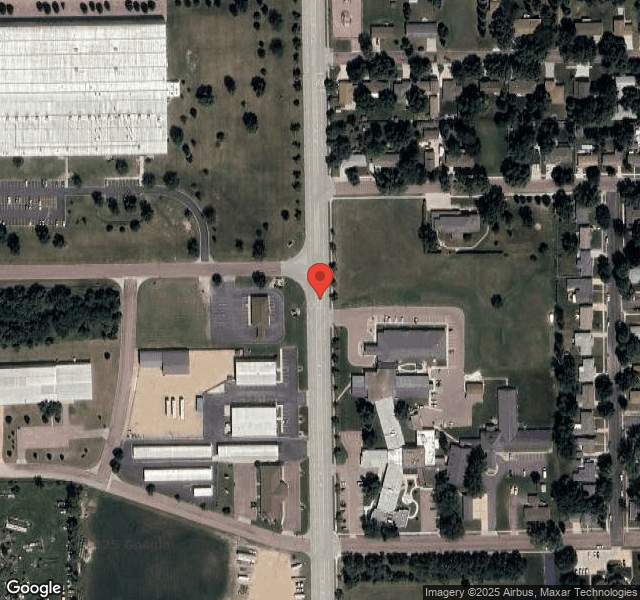
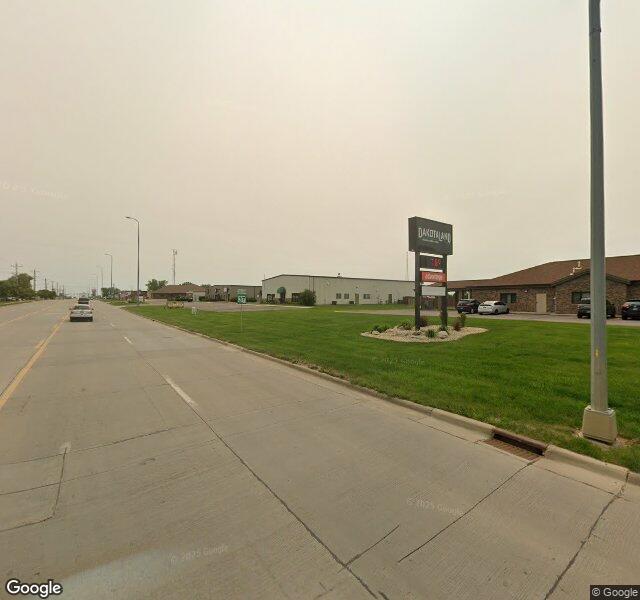
500 S OHLMAN, MITCHELL, SD 57301 (605) 996-7701
Non profit - Corporation 84 Beds AVERA HEALTH Data: November 2025
Trust Grade
90/100
#2 of 95 in SD
Last Inspection: December 2024

Within standard 12-15 month inspection cycle. Federal law requires annual inspections.

Overview

Avera Brady Health and Rehab has received an excellent Trust Grade of A, indicating it is highly recommended and stands out positively among nursing homes. It ranks #2 out of 95 facilities in South Dakota, placing it in the top tier for quality care, and it is the best option among the two nursing homes in Davison County. However, the facility's trend is worsening, with issues increasing from 2 in 2023 to 3 in 2024. Staffing is a strength, with a 5/5 star rating and a turnover rate of 40%, which is lower than the state average, indicating that staff members tend to stay and develop relationships with residents. On the downside, there were specific concerns noted, such as delays in responding to call lights, with some residents waiting as long as 30-60 minutes for assistance, and a failure to properly monitor a resident during a nebulizer treatment, which could pose health risks. Despite these issues, the facility boasts good RN coverage, exceeding 95% of state facilities, which helps ensure that potential problems are caught early.

Trust Score
A
90/100
In South Dakota
#2/95
Top 2%
Safety Record
Low Risk
No red flags
Inspections
Getting Worse
2 → 3 violations
Staff Stability
○ Average
40% turnover. Near South Dakota's 48% average. Typical for the industry.
Penalties
✓ Good
No fines on record. Clean compliance history, better than most South Dakota facilities.
Skilled Nurses
✓ Good
Each resident gets 85 minutes of Registered Nurse (RN) attention daily — more than 97% of South Dakota nursing homes. RNs are the most trained staff who catch health problems before they become serious.
Violations
✓ Good
Only 5 deficiencies on record. Cleaner than most facilities. Minor issues only.
★★★★★
5.0
Overall Rating
★★★★★
5.0
Staff Levels
★★★★★
5.0
Care Quality
★★★★☆
4.0
Inspection Score
Stable
2023: 2 issues
2024: 3 issues

The Good

  • 5-Star Staffing Rating · Excellent nurse staffing levels
  • 5-Star Quality Measures · Strong clinical quality outcomes
  • Full Sprinkler Coverage · Fire safety systems throughout facility
  • No fines on record
  • Staff turnover below average (40%)

    8 points below South Dakota average of 48%

Facility shows strength in staffing levels, quality measures, fire safety.

The Bad

Staff Turnover: 40%

Near South Dakota avg (46%)

Typical for the industry

Chain: AVERA HEALTH

Part of a multi-facility chain

Ask about local staffing decisions and management

The Ugly 5 deficiencies on record

Dec 2024 3 deficiencies
CONCERN (D)

Potential for Harm - no one hurt, but risky conditions existed

Deficiency F0760 (Tag F0760)

Could have caused harm · This affected 1 resident

**NOTE- TERMS IN BRACKETS HAVE BEEN EDITED TO PROTECT CONFIDENTIALITY** Based on Observation, interview, record review, and policy review, the provider failed to correctly administer medication for on...

Read full inspector narrative →
**NOTE- TERMS IN BRACKETS HAVE BEEN EDITED TO PROTECT CONFIDENTIALITY** Based on Observation, interview, record review, and policy review, the provider failed to correctly administer medication for one of one sampled resident (8) by registered nurse (RN) (E) who did not verify resident had a self-administration medication order for her nebulizer treatment. Findings include: 1. Observation on 12/11/24 at 11:23 a.m. with RN E while administering medications to resident 8 revealed: *She had set up the albuterol/ipratropium (medication for breathing problems) 3 ML(milliliters) nebulizer (neb) treatment and handed the neb tube to resident 8. *She paused the treatment because resident 8 was talking on the phone. *Once the resident was done with her phone call, RN E started the treatment and left the room. *RN E did not monitor resident 8 while she self-administered her neb treatment. 2. Observation and interview immediately following the above observation with RN E regarding self-administration medication orders revealed: *If a resident had a self-administration medication order, it would appear as an intervention on their charting for the nursing staff to check off on. *She verified resident 8 did not have a self-administration medication order on her electronic medical record (EMR). *She verified resident 8 did not have a self-administration medication evaluation completed on her EMR. *A self-administration medication evaluation was to be completed first on a resident then a self-administration medication order was to be obtained. *She agreed resident 8 should not have been left unsupervised while she received her neb treatment. 3. Review of resident 8 EMR revealed: *She was admitted on [DATE]. *Her diagnoses included chronic obstructive pulmonary disease (a group of lung diseases that block airflow and make it difficult to breathe), congestive heart failure (chronic condition in which the heart doesn't pump blood as well as it should), and chronic kidney disease (longstanding disease of the kidneys leading to renal failure). *She had an order for albuterol/ipratropium 3 ML neb to be taken four times a day. *Her Brief Interview for Mental Status (BIMS) assessment score was 15 which indicated cognitively intact. *A self-administration of medication intervention was entered into the care plan on 12/11/24 at 12:17 p.m. 4. Interview on 12/12/24 at 8:51 a.m. with director of nursing B revealed: *Residents can only self-administer their own medications if they have a self-administration medication order. *If residents do not have a self-administration medication order, then they must be supervised while medications are given. *She agreed RN E should have waited and monitored the neb treatment for resident 8. 5. Interview on 12/12/24 at 9:29 a.m. with resident 8 revealed the staff would set up her neb treatments and then leave the room while she administered the neb treatments. 6. Review of the provider's updated 9/6/23 Self-Administration-of-Medications -System Standard Policy revealed: * .the interdisciplinary team (IDT) will assess the resident to determine if the practice of self-administration of medications is clinically appropriate, safe, and feasible. *A resident may only self-administer medications after the IDT has determined which medications may be safely self-administered. *C. Determination of the residents' ability to self-administer medication by the IDT will be documented in the resident's medical record and on the care plan. The documentation will also include the participation of the resident and resident representative, if applicable, in the assessment and care plan process. *E. A physician's order will be obtained and recorded in the chart. *G. Nurse or medication aide to check with resident each shift for appropriate medication administration.
CONCERN (E)

Potential for Harm - no one hurt, but risky conditions existed

Deficiency F0655 (Tag F0655)

Could have caused harm · This affected multiple residents

**NOTE- TERMS IN BRACKETS HAVE BEEN EDITED TO PROTECT CONFIDENTIALITY** 3. Review of resident 68's EMR revealed: *He had been admitted on [DATE]. *He was admitted from home due to a fall. *He was dia...

Read full inspector narrative →
**NOTE- TERMS IN BRACKETS HAVE BEEN EDITED TO PROTECT CONFIDENTIALITY** 3. Review of resident 68's EMR revealed: *He had been admitted on [DATE]. *He was admitted from home due to a fall. *He was diagnosed with right and left pelvic fractures, weakness, falls, Leukocytosis (high white blood cell count), diabetes mellitus, pulmonary hypertension, and chronic obstructive lung disease. *His Brief Interview for Mental Status (BIMS) assessment score was 15 which indicated he was cognitively intact. *His baseline care plan was signed as completed on 11/11/24. Based on record review, interview, and policy review the provider failed to review with the resident, their representative, or their responsible family member and provide a written summary of the baseline care plan for five of eighteen sampled residents (2, 26, 68, 69, and 71) within 48 hours of their admission. Findings include: 1. Review of resident 26's electronic medical record (EMR) revealed: *She had been admitted on [DATE]. *Her diagnoses included acute ischemic left MCA (middle cerebral artery) stroke, with right hemiplegia (paralysis or weakness on one side of the body), aphasia (a communication disorder, dysphagia (difficulty swallowing), depression, anxiety, malnutrition, weakness, and a history of GI (gastrointestinal) bleed. *Her Brief Interview for Mental Status (BIMS) assessment score was 4, which indicated she was severely cognitively impaired. *A care plan intervention of I have difficulty expressing my needs so please anticipate my needs; I usually do not volunteer my needs. *A progress note (PN) on 7/30/24 Baseline CC [care conference] held in resident[s] room with nursing and resident. Resident was able to verbalize fine when asked how she was Current medications and POC [plan of care] reviewed and [a] copy was provided for family and resident on [the] nightstand -That was completed on the fourth day of her stay. *The provider's Plan of Care Participation Agreement was signed unable to sign on 7/30/24. 2. Review of resident 71's electronic medical record (EMR) revealed: *She had been admitted on [DATE]. *Her diagnoses included failure to thrive, urinary tract infection with sepsis, pain, compression fracture, and a head injury. *Her Brief Interview for Mental Status (BIMS) assessment score was 14, which indicated she was cognitively intact. *A PN on 9/16/24 Baseline CC held in resident[s] room with resident, nursing, and ss [social services]. [C]urrent medications and POC reviewed and [a] copy [was provided] to [the] resident . -That was completed on the twenty-fifth day of her stay. *The provider's Plan of Care Participation Agreement was signed on 9/16/24. *A copy of her care plan was requested but the provider was unable to provide a printed copy as the resident had been discharged . 4. Review of resident 2's EMR revealed: *She had been admitted on [DATE]. *Her diagnoses included congestive heart failure, pneumonia, coronary artery disease, hypertension, diabetes mellitus, and osteoarthritis. *Her BIMS assessment score was 15 which indicated she was cognitively intact. *Her baseline care plan had been completed on 10/13/24. *There was no documentation of her baseline care plan being provided to her or her family. Interview on 12/11/24 at 5:14 p.m. with director of social services (DSS) C revealed there was no documentation that resident 2's baseline care plan was discussed or provided to her. DSS C agreed that the requirement for the baseline care plan to be provided to the resident was not met for this resident. 5. Review of resident 69's EMR revealed: *She had been admitted on [DATE]. *Her diagnoses included hypertension, fibromyalgia, anxiety, and osteoarthritis. *Her BIMS assessment score was 15 which indicated she was cognitively intact. *Her baseline care plan had been completed on 11/14/24. *A social services progress note on 11/18/24 that was signed by DSS C indicated her baseline care conference was held with the resident. *A care plan participation form was signed by resident 69 and DSS C on 11/18/24. Interview on 12/11/24 at 5:14 p.m. with DSS C regarding resident 69's baseline care plan revealed: *Resident 69's baseline care plan was discussed and provided to the resident on 11/18/24. *DSS C agreed the requirement for the baseline care plan to be provided to the resident was not met for this resident. 6. Interview on 12/11/24 at 5:55 p.m. with administrator A and director of nursing (DON) B regarding the requirements for baseline careplans revealed: *The provider used their EMR's comprehensive care plan as their baseline care plan and built upon that care plan to complete the resident's comprehensive care plan. *They agreed they had not provided all of the residents and/or family with the summary of the baseline care plan within 48 hours of admission and that there were residents that had Plan of Care Participation Agreements signed by residents after the second day of admission. *They stated the regulation was not clear on when that baseline summary needed to be provided to the resident and family. Interview on 12/12/24 at 12:45 p.m. with DSS C revealed she would wait three to four days after the resident's admission before giving a copy of the baseline care plan to the resident or their family as a means to check with the resident and family to see how things were going. 7. Review of the provider's 6/5/23 LTC (Long Term Care) Baseline/Comprehensive Care Plans policy revealed: *A baseline care plan will be developed within 48 hours of a resident's admission: -To promote continuity of care and communication among nursing home staff, increase resident safety and safeguard against adverse events that are most likely to occur right after admission; . -To ensure the resident and representative, if applicable are informed of the initial plan for delivery of care and services by receiving a written summary of the baseline care plan.
CONCERN (E)

Potential for Harm - no one hurt, but risky conditions existed

Quality of Care (Tag F0684)

Could have caused harm · This affected multiple residents

**NOTE- TERMS IN BRACKETS HAVE BEEN EDITED TO PROTECT CONFIDENTIALITY** Based on observation, interview, record review, and policy review the provider failed to maintain the physical, mental, and psyc...

Read full inspector narrative →
**NOTE- TERMS IN BRACKETS HAVE BEEN EDITED TO PROTECT CONFIDENTIALITY** Based on observation, interview, record review, and policy review the provider failed to maintain the physical, mental, and psychosocial well-being by ensuring staff promptly responded to call lights for two of eighteen sampled residents (1 and 16) who used call lights to alert staff of their assistance needs. Findings include: 1. Observation and interview on 12/10/24 at 9:51 a.m. with resident 1 in her room revealed: *She was seated in her recliner. *Her call light was within her reach. *She stated it had taken staff at least 30-60 minutes go answer her call light at times. *She said she had waited so long that she had been incontinent of bowel and bladder. 2. Observation and interview on 12/10/24 at 10:50 a.m. with resident 16 in her room revealed: *She was seated in her recliner, with her feet elevated. *She had a flat touch call light attached to her recliner that was within her reach. *She needed a total body lift (a mechanical lift and sling used to lift a person's full body) to transfer between surfaces. *She stated it could take staff forever to come to her room when she turned her call light on, and they blame that on the call light not working properly. *She stated there had been instances when she had pushed her call light for over an hour before someone arrived. *She pushed her call light and stated she needed to be put in her wheelchair for lunch. 3. Review of resident 1's call light audit report from 11/2/24 to 12/10/24 revealed: *There were eighty-three call light response wait times over 10 minutes. *There were eighteen call light response wait times over 20 minutes. *There were seven call light response wait times over 30 minutes. *On 11/26/24 at 5:37 a.m. the call light response time was 72 minutes and 39 seconds. 4. Review of resident 16's call light audit report from 11/1/24 to 12/10/24 revealed: *There were one hundred and forty-three call light response wait times over 10 minutes. *There were forty-four call light response wait times over 20 minutes. *There were ten call light response wait times over 30 minutes. *On 11/25/24 at 8:46 a.m. the wait time was 68 minutes and 56 seconds. 5. Review of resident 1's electronic medical record (EMR) revealed: *She was admitted on [DATE]. *Her Brief Interview for Mental Status (BIMS) assessment score was 15 which indicated cognitively intact. *She was diagnosed with atrial fibrillation, hypertension, chronic kidney disease stage 4, osteoarthritis, hypothyroidism, and overactive bladder. *She needed staff assistance with transfers. 6. Review of resident 16's EMR revealed: *She was admitted on [DATE]. *Her Brief Interview for Mental Status (BIMS) assessment score was 15 which indicated cognitively intact. *She needed the assistance of two staff and the use of a total body lift to transfer between surfaces. 7. Interview on 12/12/24 at 8:26 a.m. with director of nursing B regarding call light response revealed: *The goal was for staff to respond to call lights within ten minutes 87% of the time. *All staff were responsible to answer call lights if they could. *She agreed thirty minutes is excessively long for residents to wait for assistance. *They were completing monthly audits on call lights. 8. Review of the providers Call Light Policy updated on 08/24 revealed: *Objective: To respond to patient/resident's requests and needs on a timely basis. *Call light scores are calculated monthly. Goal to answer call lights is within 10 minutes 87% of the time. *If call light is defective, report immediately to maintenance.
Aug 2023 2 deficiencies
CONCERN (D)

Potential for Harm - no one hurt, but risky conditions existed

Menu Adequacy (Tag F0803)

Could have caused harm · This affected 1 resident

Based on observation, interview, menu review, and policy review, the provider failed to follow written menus and serve adequate portion sizes that would have had the potential to effect all residents ...

Read full inspector narrative →
Based on observation, interview, menu review, and policy review, the provider failed to follow written menus and serve adequate portion sizes that would have had the potential to effect all residents who dined in the main dining room for one of one meal observed. Findings include: 1. Observation and interview on 8/17/23 at 11:56 a.m. with cook E during the lunch service in the main dining room revealed: *The regular diet lunch menu consisted of a hotdog on a bun, 1/2 cup of steak fries, 1/2 cup of coleslaw, and 1/2 cup of mandarin oranges. -The alternative menu included 3 ounces of rancher's chicken, 1/2 cup of mashed potatoes with gravy, and 1/2 cup of broccoli. *The following scoops were used for the following foods: -A green handled scoop for the coleslaw and mashed potatoes. -A blue handled scoop for the minced broccoli. *There was a chart on a door in the serving area that showed the serving sizes according to the color of the handle. -The blue scoops were 1/4 cup. -The green scoops were 1/3 cup. Continued interview on 8/17/23 at 2:26 p.m. with cook E about menu serving sizes revealed she: *Thought the green handled scoops were a 1/2 cup. *Had been trained to use the green scoops for the vegetables, and the blue scoops for the minced vegetables. *Agreed she should have double-checked the menu to use the correct sized scoops. Interview on 8/17/23 at 2:33 p.m. with certified dietary manager D about the above observations revealed: *She expected staff to review the menu for serving sizes to correctly set up their serving station. *Laminated menus were available in both dining rooms for staff to have utilized. *Cook E should have used the gray 1/2 cup scoops for the coleslaw, broccoli, and the mashed potatoes rather than the green 1/3 cup and blue 1/4 cup scoops. *She confirmed the residents received a smaller amount of food than what was posted on the menu.
CONCERN (D)

Potential for Harm - no one hurt, but risky conditions existed

Food Safety (Tag F0812)

Could have caused harm · This affected 1 resident

Based on observation, interview, and policy review, the provider failed to minimize potential cross-contamination by improperly sanitizing the food thermometer in between checking temperatures of diff...

Read full inspector narrative →
Based on observation, interview, and policy review, the provider failed to minimize potential cross-contamination by improperly sanitizing the food thermometer in between checking temperatures of different food items during one of one meal service observation. Findings include: 1. Observation on 8/17/23 at 11:24 a.m. of cook E temping the food for lunch revealed she: *Removed the thermometer probe from its sheath and pierced several hot dogs with the probe. She had not sanitized the probe prior to checking the temperature of the hot dogs. *After removing the probe from the hotdogs, she used a new alcohol-based thermometer probe wipe to sanitize the probe. -She used that same wipe after temping each of the food items that were going to have been served. -She temped the hotdogs, then the rancher's chicken, then the ground meats, then the steak fries, then the mashed potatoes, and then the gravy. *She used a new alcohol-based thermometer probe wipe before placing the probe back in its sheath. Interview on 8/17/23 at 11:35 a.m. with certified dietary manager (CDM) D about the above observation revealed: *She expected staff to sanitize the thermometer probe before placing it into the first food. *She expected the dietary staff to use two separate thermometer probe wipes in between each food item that was being temped; the first wipe to clean the physical food off the probe, then the second wipe to sanitize the probe. *She stated that cook E should have at least used a new thermometer probe wipe in between each food item. Interview on 8/17/23 at 11:56 a.m. with cook E revealed: *She had spoken with CDM D about the above observation and brought forward that she should not have used the same thermometer probe wipe throughout temping the different foods. *She now knows to use a new wipe in between temping different foods. Review of the provider's March 2023 Sanitation in Holding and Serving Food policy revealed: *A. Employees shall use properly cleaned and sanitized utensils. Review of the provider's undated Directions for using digital thermometer revealed: *Press button to turn on---thermometer will shut off automatically after 50 min [minutes] *Sanitize stem *Insert stem at least 2 inches into the thickest part of the product *Do not let the stem touch bottom of the pan *Record temp *Before temping next item, clean and sanitize stem *Sanitize stem before returning thermometer to holder Review of the alcohol-based thermometer probe wipe packaging revealed there was a statement of Single use.
Understanding Severity Codes (click to expand)
Life-Threatening (Immediate Jeopardy)
J - Isolated K - Pattern L - Widespread
Actual Harm
G - Isolated H - Pattern I - Widespread
Potential for Harm
D - Isolated E - Pattern F - Widespread
No Harm (Minor)
A - Isolated B - Pattern C - Widespread

Questions to Ask on Your Visit

  • "Can I speak with families of current residents?"
  • "What's your RN coverage like on weekends and overnight?"

Our Honest Assessment

Strengths
  • • Grade A (90/100). Above average facility, better than most options in South Dakota.
  • • No major safety red flags. No abuse findings, life-threatening violations, or SFF status.
  • • No fines on record. Clean compliance history, better than most South Dakota facilities.
  • • Only 5 deficiencies on record. Cleaner than most facilities. Minor issues only.
Concerns
  • • No significant concerns identified. This facility shows no red flags across CMS ratings, staff turnover, or federal penalties.
Bottom line: Generally positive indicators. Standard due diligence and a personal visit recommended.

About This Facility

What is Avera Brady Health And Rehab's CMS Rating?

CMS assigns AVERA BRADY HEALTH AND REHAB an overall rating of 5 out of 5 stars, which is considered much above average nationally. Within South Dakota, this rating places the facility higher than 99% of the state's 100 nursing homes. This rating reflects solid performance across the metrics CMS uses to evaluate nursing home quality.

How is Avera Brady Health And Rehab Staffed?

CMS rates AVERA BRADY HEALTH AND REHAB's staffing level at 5 out of 5 stars, which is much above average compared to other nursing homes. Staff turnover is 40%, compared to the South Dakota average of 46%. This relatively stable workforce can support continuity of care.

What Have Inspectors Found at Avera Brady Health And Rehab?

State health inspectors documented 5 deficiencies at AVERA BRADY HEALTH AND REHAB during 2023 to 2024. These included: 5 with potential for harm.

Who Owns and Operates Avera Brady Health And Rehab?

AVERA BRADY HEALTH AND REHAB is owned by a non-profit organization. Non-profit facilities reinvest revenue into operations rather than distributing to shareholders. The facility is operated by AVERA HEALTH, a chain that manages multiple nursing homes. With 84 certified beds and approximately 68 residents (about 81% occupancy), it is a smaller facility located in MITCHELL, South Dakota.

How Does Avera Brady Health And Rehab Compare to Other South Dakota Nursing Homes?

Compared to the 100 nursing homes in South Dakota, AVERA BRADY HEALTH AND REHAB's overall rating (5 stars) is above the state average of 2.7, staff turnover (40%) is near the state average of 46%, and health inspection rating (4 stars) is above the national benchmark.

What Should Families Ask When Visiting Avera Brady Health And Rehab?

Based on this facility's data, families visiting should ask: "Can I visit during a mealtime to observe dining assistance and food quality?" "How do you handle medical emergencies, and what is your hospital transfer rate?" "Can I speak with family members of current residents about their experience?"

Is Avera Brady Health And Rehab Safe?

Based on CMS inspection data, AVERA BRADY HEALTH AND REHAB has a clean safety record: no substantiated abuse findings (meaning no confirmed cases of resident harm), no Immediate Jeopardy citations (the most serious violation level indicating risk of serious injury or death), and is not on the Special Focus Facility watch list (a federal program monitoring the lowest-performing 1% of nursing homes). The facility has a 5-star overall rating and ranks #1 of 100 nursing homes in South Dakota. While no facility is perfect, families should still ask about staff-to-resident ratios and recent inspection results during their visit.

Do Nurses at Avera Brady Health And Rehab Stick Around?

AVERA BRADY HEALTH AND REHAB has a staff turnover rate of 40%, which is about average for South Dakota nursing homes (state average: 46%). Moderate turnover is common in nursing homes, but families should still ask about staff tenure and how the facility maintains care continuity when employees leave.

Was Avera Brady Health And Rehab Ever Fined?

AVERA BRADY HEALTH AND REHAB has no federal fines on record. CMS issues fines when nursing homes fail to meet care standards or don't correct problems found during inspections. The absence of fines suggests the facility has either maintained compliance or corrected any issues before penalties were assessed. This is a positive indicator, though families should still review recent inspection reports for the full picture.

Is Avera Brady Health And Rehab on Any Federal Watch List?

AVERA BRADY HEALTH AND REHAB is not on any federal watch list. The most significant is the Special Focus Facility (SFF) program, which identifies the bottom 1% of nursing homes nationally based on persistent, serious quality problems. Not being on this list means the facility has avoided the pattern of deficiencies that triggers enhanced federal oversight. This is a positive indicator, though families should still review the facility's inspection history directly.