FIRESTEEL HEALTHCARE CENTER
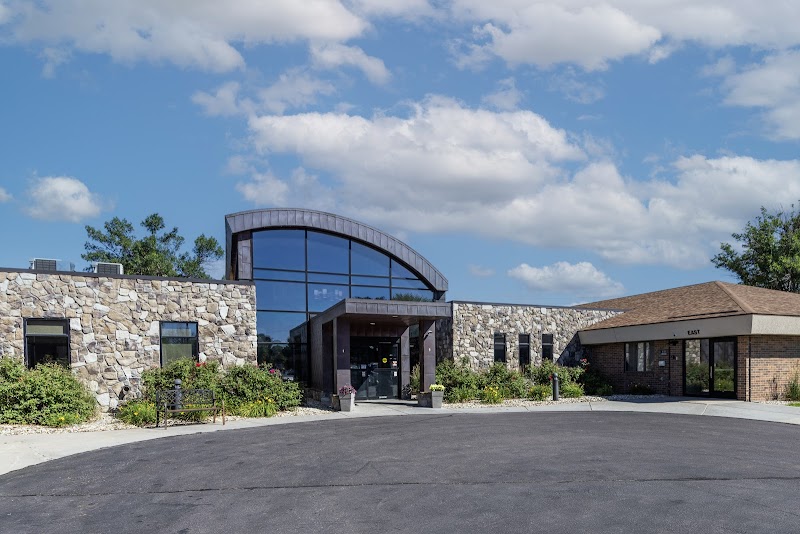
1120 EAST 7TH AVENUE, MITCHELL, SD 57301 (605) 996-6526
For profit - Limited Liability company 150 Beds EMPRES OPERATED BY EVERGREEN Data: November 2025
Trust Grade
0/100
#80 of 95 in SD
Last Inspection: April 2025

Within standard 12-15 month inspection cycle. Federal law requires annual inspections.

Overview

Firesteel Healthcare Center in Mitchell, South Dakota, has received a Trust Grade of F, indicating significant concerns and poor overall performance. Ranking #80 out of 95 facilities in South Dakota places it in the bottom half, and it's the second of two options in Davison County, suggesting limited local alternatives. The facility's trend is worsening, with issues increasing from 8 in 2024 to 15 in 2025. Staffing is rated 2 out of 5 stars, which is below average, and although turnover is somewhat manageable at 47%, the overall RN coverage is concerning, as it is lower than 95% of state facilities. There are serious issues highlighted by recent inspections, including failures in infection control practices that contributed to a norovirus outbreak affecting multiple residents, and a serious oversight where a resident did not receive prescribed antibiotic treatment for a serious infection. Additionally, a resident was bitten by flying ants in their room, indicating a lack of effective pest control. While there are some staffing strengths, the significant fines of $178,757 and the overall poor inspection ratings raise serious concerns for families considering this facility for their loved ones.

Trust Score
F
0/100
In South Dakota
#80/95
Bottom 16%
Safety Record
High Risk
Review needed
Inspections
Getting Worse
8 → 15 violations
Staff Stability
⚠ Watch
47% turnover. Above average. Higher turnover means staff may not know residents' routines.
Penalties
○ Average
$178,757 in fines. Higher than 67% of South Dakota facilities. Some compliance issues.
Skilled Nurses
⚠ Watch
Each resident gets only 21 minutes of Registered Nurse (RN) attention daily — below average for South Dakota. Fewer RN minutes means fewer trained eyes watching for problems.
Violations
⚠ Watch
27 deficiencies on record. Higher than average. Multiple issues found across inspections.
★☆☆☆☆
1.0
Overall Rating
★★☆☆☆
2.0
Staff Levels
★★★☆☆
3.0
Care Quality
★☆☆☆☆
1.0
Inspection Score
Stable
2024: 8 issues
2025: 15 issues

The Good

  • Full Sprinkler Coverage · Fire safety systems throughout facility
  • No fines on record

Facility shows strength in fire safety.

The Bad

1-Star Overall Rating

Below South Dakota average (2.7)

Significant quality concerns identified by CMS

Staff Turnover: 47%

Near South Dakota avg (46%)

Higher turnover may affect care consistency

Federal Fines: $178,757

Well above median ($33,413)

Significant penalties indicating serious issues

Chain: EMPRES OPERATED BY EVERGREEN

Part of a multi-facility chain

Ask about local staffing decisions and management

The Ugly 27 deficiencies on record

6 actual harm
Apr 2025 9 deficiencies 2 Harm
SERIOUS (G)

Actual Harm - a resident was hurt due to facility failures

Deficiency F0925 (Tag F0925)

A resident was harmed · This affected 1 resident

**NOTE- TERMS IN BRACKETS HAVE BEEN EDITED TO PROTECT CONFIDENTIALITY** Based on interview, observation, record review, and policy review, the provider failed to ensure effective pest control for flyi...

Read full inspector narrative →
**NOTE- TERMS IN BRACKETS HAVE BEEN EDITED TO PROTECT CONFIDENTIALITY** Based on interview, observation, record review, and policy review, the provider failed to ensure effective pest control for flying ants for one of twenty-six sampled residents (91) who complained of flying ants in his room and ant bites on his back. Findings include: 1. Interview and observation on 4/23/25 at 10:56 a.m. with resident 91 in his room revealed he stated: *He was having a problem with flying ants in his room. *The problem was daily and he had killed 30 to 40 of the flying ants every day. *The maintenance guy thinks they are coming in from behind [the] heater that was located on the wall below the window in his room. *Every morning his bedside table was covered with them and four to five of the flying ants were in his bed. -He had bites all over his back from the flying ants. -Resident 91 lifted the back of his shirt and showed his back which appeared to have several small red marks on his mid back. *Resident 91 stated he had been having problems with the flying ants for several weeks. -He stated I can feel them [flying ants] when they bite, they grab your attention. *He stated that yesterday (4/22/25), staff had asked him if he would like to move to another room, but he liked his current room. -He was asked to vacate his room for a couple of hours, and said that three staff members had been in his room. -When he woke up this morning (4/23/25), there were around 40 flying ants on his nightstand. *There were three dead flying ants on his nightstand which he stated he had killed with a tissue. *Maintenance assistant X was outside the resident's window with a spray bottle which he used to spray at the area below the window. *A round container of ant bait was on the floor by the window next to the heater on the wall. *A liquid ant bait was on the floor by the wall at the head of resident 91's bed. 2. Observation on 4/23/25 at 11:22 a.m. revealed resident 91 walked into the hallway with his walker and stated he had a bug on his window screen. Upon entering his room, an active flying ant was observed on the window screen in his room. 3. Observation and interview on the morning of 4/24/25 with resident 91 and staff in his room revealed: *At 7:55 a.m. the resident was in his room eating his breakfast and he: -Stated that social services director (SSD) E had brought in his breakfast that morning. -Pointed to seven dead flying ants on his nightstand, and stated he had used a paper napkin to kill them. -Stated five flying ants were in his bed that morning. *At 7:58 a.m. maintenance supervisor (MS) W and SSD E entered his room and asked him about moving to another room. -SSD E offered to move him to another room so they could deal more effectively with the flying ant problem. -SSD E escorted the resident out of the room to show him the other room. -MS W stated they had been working on the flying ant problem for a few weeks: --They had offered to move the resident multiple times. --He had a bug control contractor in to service resident 91's room and he would provide those invoices. *At 8:06 a.m. SSD E stated the resident had agreed to move to the other room that day. 4. Interview on 4/24/25 at 8:15 a.m. with restorative aide Y regarding the problem with flying ants revealed she had seen flying ants in a room on the 500 hallway and a room on the 400 hallway: *In the 400 hallway's room, she had seen flying ants about a week ago, but not since then in that room. *She felt the flying ant problem in the 400 hallway's room had been taken care of. 5. Interview on 4/24/25 at 9:30 a.m. with administrator A regarding the flying ants revealed he had: *A pest control company come into the facility to service the affected room, and after several treatments, the pest control company had told him they could not do anything more regarding the flying ants. *Staff deep cleaned resident 91's room on Tuesday, 4/22/25, as they felt the snacks resident 91 kept in his room had attracted the flying ants. *They had also set out bait traps to help with the flying ants. 6. Interview on 4/24/25 at 4:33 p.m. with resident 91 in his new room revealed: *He stated he was moved into the room by 10:30 a.m. that morning. *The staff had moved his bed and recliner from his other room. *He had not seen any flying ants in his current room yet. 7. Observation on the afternoon of 4/24/25 of resident 91's previous room revealed: *At 4:39 p.m. the room was empty except for one dining room chair and an overbed table. -Two live and active flying ants were noted on the window screen in the room. -There was a sticky strip hanging from the ceiling by the window. -There were three (Product name) liquid ant baits noted on the floor by the base board. -An ant bait was by the heater unit on the floor below the window. *At 4:46 p.m. certified medication assistant/certified nursing assistant (CMA/CNA) BB entered the room and confirmed there were two flying ants on the window screen. 8. Interview on 4/25/25 at 11:00 a.m. with resident 91 in his new room revealed he stated: *He hasn't seen a bug yet and was in a good mood. *Had a good night's sleep and had slept for ten hours. 9. Interview on 4/25/25 at 11:03 a.m. with SSD E revealed she had become aware of the issue with the flying ants yesterday, 4/24/25. When she had delivered resident 91's breakfast tray into his room he had stated he was having a problem with the flying ants in his room. 10. Interview on 4/25/25 at 11:21 a.m. with MS W revealed: *He had reviewed his records. He had become aware of the flying ants in resident 91's room on 4/11/25 when a work order was entered into their electronic maintenance software system called Technology-Enabled Life Safety (TELS). *In response, they had done the following in resident 91's room: -Deep cleaned resident 91's room as they felt the snacks resident 91 kept in his room had attracted the flying ants. -Placed containers of ant bait on the floor in resident 91's room. -Sprayed ant killer on the outside of the facility by resident 91's room. *He had requested the pest control company provide treatment for the flying ants. *He confirmed the flying ants had continued to be a problem as of 4/23/25, when resident 91 had reported the problem to the surveyor. 11. Interview on 4/25/25 at 12:15 p.m. with administrator A revealed he had become aware of the flying ants problem at about the same time as MS W had on 4/11/25. 12. Review of the provider's invoices from the contracted pest control company revealed invoices for monthly contract services detailing: *Target: Spiders, Ants, Roaches. *Location: Interior Baseboards, Kitchen. *On the following dates: -1/8/25. -2/3/25. -3/5/25. -4/1/25. *There was no documentation of the pest-control company having an additional visit or involvement after 4/1/25. Review of an e-mail communication from the provider's contracted pest control company revealed a message on 4/24/25 at 8:34 a.m. stated We were there for monthly scheduled service on March 4th and April 1. We did an extra call on March 21st to spray for ants . Interview on 4/24/25 at 4:55 p.m. with administrator A revealed the provider had no invoice from the contracted pest control company for 3/21/25, but he verified they had provided service at the facility on that date. Review of the requested provider's TELS Work Orders regarding the flying ants revealed: *Work Order #3833 created on 4/11/25 at 3:43 p.m. by licensed practical nurse (LPN) Z regarding resident 91's room indicated: -Comments: Resident states that he has flying ants coming in his room by his window. -Updated Status: 4/14/25 at 10:48 a.m. Set to Completed by maintenance assistant X. --Notes: Housekeeping deep cleaned area, Maintenance checked area and posted Ant traps, resident offered to move and declined. *Work Order #3847 created on 4/17/25 at 7:42 a.m. by CMA AA regarding resident 91's room indicated: -Notes: Resident stated he killed about 15-20 bugs located in his bed and inside of his dresser. Resident states that the strips in the windows do not serve a purpose. -Updated Status: 4/18/25 at 2:54 p.m. Set to Completed by maintenance assistant X. -Notes: [Maintenance assistant X] 04/18 [4/18/25] Traps have been placed, sprayed for bugs, housekeeping has been notified to deep clean [that room] regularly. *Work Order #3858 created 4/22/25 at 6:55 a.m. by LPN N regarding room [ROOM NUMBER]. -Updated Status: 4/22/25 at 7:36 a.m. Set to Completed by MS W. -Notes: House keeping deep cleaned residents [resident's] room, found many food particles all over [the] ground. Maintenance silicone sealed flooring and pest control had recently been out to spray. Also Ant traps placed. Review of the provider's May 2015 Pest Control policy revealed: *Purpose: To provide an environment free of pests. *Procedure: The Center has a pest contract that provides frequent treatment of the environment for pests. It allows for additional visits when a problem is detected. -Monitoring of the environment is done by the Center's staff. Pest control problems are reported promptly.
SERIOUS (H) 📢 Someone Reported This

A family member, employee, or ombudsman was alarmed enough to file a formal complaint

Actual Harm - a resident was hurt due to facility failures

Infection Control (Tag F0880)

A resident was harmed · This affected multiple residents

Based on South Dakota Department of Health (SD DOH) complaint intake review, observation, interview, record review, and policy review, the provider failed to ensure proper infection control practices ...

Read full inspector narrative →
Based on South Dakota Department of Health (SD DOH) complaint intake review, observation, interview, record review, and policy review, the provider failed to ensure proper infection control practices were followed regarding: *Hand hygiene practices by staff members BB, GG, and HH during two of two dining observations in two of three dining rooms. *Hand hygiene and personal protective equipment (PPE) use by three of three staff observed (L, M, and BB) during personal cares for one of one sampled resident (41), personal cares for one of one sampled resident (33) on contact precautions (which indicated staff should have worn gowns and gloves), and assisting with resident transportation for two of two sampled residents (33 and 85). Failure to follow infection control practices potentially contributed to a norovirus [a highly contagious virus that causes nausea, vomiting, and diarrhea] outbreak in April 2025 which included three residents (18, 40, and 76) with confirmed norovirus infections and at least forty-two additional residents (1, 2, 3, 4, 12, 13, 14, 16, 22, 23, 24, 25, 29, 30, 31, 33, 34, 35, 36, 41, 42, 43, 45, 53, 58, 60, 64, 65, 67, 68, 69, 77, 78, 79, 80, 85, 93, 99, 100, 107, 258, and 259) with identified gastrointestinal (GI) symptoms. Findings include: 1. Review of the 4/16/25 SD DOH complaint intake form revealed: *An anonymous email reported a concern that the provider had a severe outbreak of norovirus. *The anonymous reporter was concerned the provider was not monitoring hand washing, sanitation, [and] dishwashing. *The writer was fearful for their family member that resided at the facility. 2. Review of a separate SD DOH complaint intake received on 4/16/25 revealed: *The complainant reported that resident 107 was recently hospitalized and had to be admitted to the intensive care unit (ICU). Review of resident 107's electronic medical record (EMR) revealed: *On 4/9/25, she experienced vomiting, diarrhea, weakness, and confusion. She was unable to speak coherently. *On 4/9/25 around 4:45 p.m., she was sent to the local emergency room for evaluation. -She was then admitted to the ICU for a diagnosis of pneumonia. *She continued to experience diarrhea throughout her hospitalization. *She returned to the facility on 4/15/25. 3. Observation on 4/22/25 at 3:51 p.m. of certified nurse aide (CNA) M and CNA/certified medication aide (CMA) BB performing personal cares for resident 41 revealed: *Both CNAs performed proper hand hygiene before putting on clean pairs of gloves. *Resident 41 had been incontinent of bowel, and they cleaned her up and removed the soiled brief. *Without removing her gloves or performing hand hygiene, CNA/CMA BB walked over to resident 41's wardrobe and touched the door handles, rummaged around in the wardrobe, and grabbed a clean brief. *She continued to assist resident 41 with putting on the clean brief with those same soiled gloves on. *Both CNAs kept on their same pair of soiled gloves throughout the process of changing resident 41's brief, getting her cleaned up, and redressing resident 41. *Both CNAs then removed their gloves and did not perform hand hygiene. *With their unclean hands, they touched: -The resident's sling used for the full body lift. -The full body lift. -The resident's positioning pillow. -The resident's wheelchair. -The door handle to exit the room. -CNA M also touched the resident's water cup, held the straw between her right index and middle fingers, and helped resident 41 take a drink of water. *CNA/CMA BB wrapped up the trash and walked away with it down the hallway. -After she came back, she brought the full body lift out into the hallway and cleaned it. *Neither of them were observed to have performed hand hygiene after assisting the resident. 4. Interview on 4/22/25 at 4:10 p.m. with both CNA M and BB about the above observation revealed: *Neither of them realized they had missed several opportunities for hand hygiene and changing their gloves. *CNA M questioned how soon she should have performed hand hygiene after removing her gloves as she explained she came out here [the hallway] to do that, is that not soon enough? -The surveyor explained that she touched the resident's water cup and drinking straw after removing her gloves and had not yet performed hand hygiene after assisting the resident with personal care. Her contaminated hands potentially increased the risk of spreading infection. -She agreed she had done that and promptly walked away from the conversation. 5. Observation on 4/22/25 at 4:41 p.m. of CNAs L and M in resident 33's shared room revealed: *There was a sign on the door for Contact Precautions which explained what PPE each person entering the room was required to wear. -PPE was available and hanging on the door. *CNA M came out of resident 33's side of the room with no evidence that she had worn PPE while interacting with the resident. *CNA L came out of resident 33's side of the room with the full body lift and parked it in the hallway. She was not wearing any PPE. -She did not clean the lift. *She did not put on any PPE and then went back into resident 33's side of the room. *She came back out of the resident's room, wearing one glove on her left hand and was holding a small bag of trash. There did not appear to be any PPE in the small trash bag. *She was holding the bag of trash while she was pushing resident 33 in her wheelchair down the hallway. -She was touching the left wheelchair handle with the same hand that she was holding the trash with. *She wheeled the resident all the way down the 400-hallway and turned towards the rehab dining room. *By 4:56 p.m., no staff had come back to clean the lift. 6. Interview on 4/22/25 at 4:58 p.m. with licensed practical nurse (LPN) N revealed: *She confirmed that resident 33 had an order for contact precautions, but she was not sure why the resident was on contact precautions. -She wondered if it was from the gastrointestinal (GI) bug that went through the building for the past several weeks. -When reviewing resident 33's record, she confirmed that the resident had diarrhea and vomiting the previous week. *She explained that contact precautions were implemented for residents known or suspected to be infected with infectious agents transmitted [from] person-to-person. *For contact precautions, she expected staff to wear at least a gown and gloves when providing care to the resident, even for transferring. -If staff were physically touching the resident, she expected staff to wear PPE for infection control purposes. *She indicated that the contact precautions for resident 33 were no longer necessary since her GI symptoms had subsided several days ago. -She discontinued that order for contact precautions in resident 33's electronic medical record (EMR). *She did not know exactly why the contact precautions sign and the PPE were still on resident 33's door and guessed that someone may have forgotten to discontinue the precautions after she was symptom-free. *She expected staff to have followed the contact precautions signage and use the proper PPE or contact a nurse if there were any questions. 7. Interview on 4/22/25 at 5:05 p.m. with CNA L revealed: *She could not remember how long she had been working at that facility. *When asked if she knew which resident in the shared room from the above observation was on contact precautions, she indicated that she did not know how to tell which resident in that room was on contact precautions. *She confirmed that neither she nor CNA M wore gowns while interacting with resident 33, they only wore gloves. *When asked if she knew what contact precautions meant, she said that they were supposed to wear gowns, gloves, and sometimes a face shield when interacting with the resident. *She said she also caught the GI bug that was going around the facility recently. *When asked why she did not follow the contact precautions as posted on the door and in the resident's orders, she said, I don't know, that's what I was trained to do, to just follow the other CNA. *When asked how often she was to clean the lift, she indicated that it was supposed to have been cleaned after each resident's use. -She still did not clean the lift after being informed that she had not cleaned the lift after taking it out of the resident's room. 8. Observation on 4/22/25 at 5:11 p.m. revealed LPN N was removing the contact precautions sign and PPE off resident 33's door. 9. Observation on 4/22/25 from 5:34 p.m. to 5:40 p.m. in the rehab dining room revealed: *CNA/CMA BB was sitting between two residents (41 and 56) to help them eat supper. *With her bare hands, she touched her hair braids to push them back behind her shoulders. *Without performing hand hygiene, she continued to help the two residents eat their meals. -She was taking straws out of their wrappers and placing the straws into the residents' beverages, touching the resident's silverware handles, squeezing condiments out of packets, and wiping the residents' mouths with their napkins. 10. Observation on 4/22/25 at 5:49 p.m. of the evening meal on the memory care unit (MCU) revealed: *Residents were not assisted with cleaning their hands before their meal. *CNA HH did not sanitize her hands before she passed the residents' meal trays. *She was observed coughing into her hand, she did not sanitize her hands after coughing, then she delivered the resident's meal tray. *There was a potentially contaminated rehabilitation cone device on the table. -A resident grabbed the cone and appeared to have been trying to take a drink from the cone as he picked it up and brought it to his mouth. -CNA HH noticed this and gently removed the potentially contaminated cone from his hands. She continued serving meal trays without performing hand hygiene. *She served nine residents their meal trays and did not sanitize her hands. 11. Observation on 4/23/25 at 9:29 a.m. of the morning meal service on MCU revealed: *Some residents were sitting at the table prior to meal service. *CNA GG did not perform hand hygiene before assisting residents with eating. *CNA GG was observed assisting a resident to eat after the resident had coughed. -The resident was not offered hand sanitizer or a hand wipe. *CNA GG then moved to another table without sanitizing her hands and assisted a different resident with eating. 12. Observation on 4/23/25 at 10:09 a.m. near the 400-hallway nurse's station revealed: *CNA M had a glove on her right hand and was holding a bag of trash. *At the same time, she was touching resident 85's wheelchair handle as she pushed him down the hallway. 13. Interview on 4/24/25 at 8:43 a.m. with resident 33 revealed: *She confirmed: -She had the GI bug earlier that month. -Staff did not put on gowns when they helped her with personal cares. *She was no longer experiencing GI symptoms like vomiting or diarrhea. Review of resident 33's electronic medical record revealed: *Her quarterly Minimum Data Set (MDS) assessment completed on 4/4/25 revealed a Brief Interview for Mental Status assessment score of 14, which indicated she was cognitively intact. *A nursing progress note from 4/8/25 that read, Contact precautions and isolation to room implemented per protocol for GI illness. *She experienced diarrhea on 4/8/25, 4/9/25, 4/10/25, and 4/11/25. *A physician's order started on 4/8/25 for Contact precautions as recommended for residents known or suspected to be infected with infectious agents transmitted person to person via the direct/indirect contact route (e.g. VRE [Vancomycin-resistant Enterococcus], Clostridium Difficile, MRSA [Methicillin-resistant Staphylococcus aureus] etc.). 14. Interview on 4/24/25 at 11:32 a.m. with LPN FF regarding resident and staff hand hygiene during meal service revealed: *There was usually hand sanitizer on the tables for residents to use before meals. *Residents were given a hand wipe to clean their hands with their meals. *It was her expectation that staff assisting residents with eating would sanitize their hands before assisting a resident, and before assisting the next resident. 15. Interview on 4/24/25 at 1:50 p.m. with CMA II revealed: *She was aware of a GI outbreak in the facility the past couple weeks. *She reported the outbreak was facility-wide and included many residents and staff members. *She reported if she were assisting residents to eat, she would sanitize her hands before assisting residents, then after assisting them before she assisted another resident. 16. Interview on 4/25/25 at 10:15 a.m. with resident care manager registered nurse (RN) G revealed: *She was a the provider's infection preventionist. *There was an outbreak of norovirus in the facility during April 2025. *They tested three residents, each from different wings of the facility, all were positive for norovirus. *After that initial testing, all residents with GI symptoms (nausea, vomiting, diarrhea) were assumed to have norovirus and were tracked for infection control purposes. *Residents with symptoms were placed on contact precautions to prevent further spread of the virus. *Residents remained on contact precautions for 24 hours after symptoms stopped. 17. Interview on 4/25/25 at 10:51 a.m. with director of nursing services (DNS) B and division director of clinical services (DDCO) C revealed: *DNS B recently started her position at the facility on 4/7/25. *Since the resident GI symptoms started on 4/8/25, she was fully aware of the GI outbreak. -In her time at that facility, she noted concerns in infection control such as hand hygiene. *On 4/8/25, residents who were experiencing diarrhea and vomiting were placed on contact precautions. *The staff collected and sent stool cultures to the laboratory for testing from three residents that had GI symptoms (residents 18, 40, and 76). Those residents resided in different areas of the facility. On 4/12/25, those stool culture results came back positive for norovirus. *Both DNS B and DDCO C appeared disappointed when they were informed about the above observations. -They expected staff to have followed the provider's policies on hand hygiene, glove use, and contact precautions. *A total of 45 residents were affected. -The census at the time of the survey was 104. 18. Review of the provider's Line listings for infections by resident tracking sheet revealed: *Between 4/6/25 and 4/14/25, a total of 45 residents (1, 2, 3, 4, 12, 13, 14, 16, 18, 22, 23, 24, 25, 29, 30, 31, 33, 34, 35, 36, 40, 41, 42, 43, 45, 53, 58, 60, 64, 65, 67, 68, 69, 76, 77, 78, 79, 80, 85, 93, 99, 100, 107, 258, and 259) had been identified to have GI symptoms. 19. Review of the provider's March 2018 handwashing/hand hygiene policy revealed: *Policy statement: This Center considers hand hygiene the primary means to prevent the spread of infections. *Procedure: -1. Personnel are trained and regularly in-serviced on the importance of hand hygiene in preventing the transmission of healthcare-associated infections. -2. Personnel follow the handwashing/hand hygiene procedures to help prevent the spread of infections to other personnel, residents, and visitors. 20. Review of the provider's May 2015 Initiating Transmission-Based Precautions policy revealed: *Policy Statement: Transmission-Based Precautions are initiated when there is reason to believe that a resident has a communicable infectious disease. -Transmission-Based Precautions may include Contact Precautions, Droplet Precautions, or Airborne Precautions. *Procedure: -1. If a resident is suspected of, or identified as, having a communicable infectious disease, the Charge Nurse or Nursing Supervisor notified the Infection Preventionist and the resident's Attending Physician for appropriate Transmission-Based Precautions. - .4. Transmission-Based Precautions remain in effect until the Attending Physician or Infection Preventionist discontinues them, which occur after pertinent criteria for discontinuation are met. -5. When Transmission-Based Precautions are implemented, the Infection Preventionist or designee: --a. Validates protective equipment (i.e., gloves, gowns, masks, etc.) is maintained near the resident's room so that everyone entering the room can access what they need; --b. Posts the appropriate notice on the room entrance door and on the front of the resident's chart so that all personnel will be aware of precautions, or be aware that they must first see a nurse to obtain additional information about the situation before entering the room. This Center's process for notification is signage . -6. In an emergency, the Infection Preventionist, [Executive Director], and/or Medical Director have the administrative authority, accountability, and responsibility to: --a. Institute actions necessary to control or prevent infections within the Center; --b. Notify the health department of reportable diseases, as appropriate; --c. Initiate isolation precautions; --d. Obtain laboratory specimens; --e. Restrict or ban admissions; --f. Restrict or ban visitations; --g. Implement other measures as necessary to prevent and control infections within the Center. 21. Review of the provider's March 2025 Transmission-Based Precautions (Isolation) policy revealed: *Policy Statement: Transmission-Based Precautions (previously referred to as isolation precautions) are implemented for residents known to be, or suspected of being, infected with infectious agents. *Procedure: -1. Use Transmission-Based Precautions in addition to Standard Precautions. -2. The four types of Transmission-Based Precautions may be used alone, or in combination for diseases that have multiple routes of transmission. Determination of use is based on how the infectious agent is transmitted. --Contact precautions. --Droplet precautions. --Airborne precautions. --Enhanced barrier precautions. -3. The need to implement Transmission-Based Precautions is determined by the [facility's] Infection Preventionist (IP), Director of Nursing and/or consultation with the local health department. Precautions are based on CDC [Centers for Disease Control and Prevention] guidelines. Precautions are the least restrictive possible for the resident. -4. The facility documents in the resident's medical record the rationale for the type of transmission-based precautions selected as well as the length of time the precautions is maintained. -5. Communication of Transmission-Based Precautions is accomplished with the pertinent signage and verbal reports to personnel and visitors. -6. Residents on TBP [Transmission-Based Precautions], apart from EBP [Enhanced Barrier Precautions], should remain in their room for the duration of precautions, except for medically necessary care or resident choice. -7. Indirect transmission of infectious agents can occur through contact with resident care equipment. Whenever possible, personal care items such as thermometers, stethoscopes, blood pressure cuffs and gait belts will be dedicated for use by the resident needing contact, droplet, or airborne precautions. All reusable items, including glucometers and other point-of-care devices are cleaned using appropriate disinfectant after using the devices with individual residents. *Contact Isolation Precautions: -Contact, or touch, is the most common and most significant mode of transmission of infectious agents. Contact transmission can occur by directly touching the resident, through contact with the resident's environment, or by using contaminated gloves or equipment. -Personnel having contact with the infected resident should wear gloves and a gown. -Prior to leaving the resident's room, gown and gloves are removed and hand hygiene performed. -Options for residents on contact precautions may include a private room, cohorting with another infected or colonized resident or sharing a room with a resident with limited risk factors (no immunosuppression, IVs, indwelling catheters or open skin lesions). -Residents with wound drainage, fecal incontinence, or diarrhea, that cannot be contained, should be placed on contact precautions until a specific organism for the origin of the medical issue is identified.
CONCERN (D)

Potential for Harm - no one hurt, but risky conditions existed

Deficiency F0554 (Tag F0554)

Could have caused harm · This affected 1 resident

**NOTE- TERMS IN BRACKETS HAVE BEEN EDITED TO PROTECT CONFIDENTIALITY** 2. Observation and interview on 4/24/25 at 9:44 a.m. of resident 104 in his room revealed: *He was inhaling a nebulizer treatmen...

Read full inspector narrative →
**NOTE- TERMS IN BRACKETS HAVE BEEN EDITED TO PROTECT CONFIDENTIALITY** 2. Observation and interview on 4/24/25 at 9:44 a.m. of resident 104 in his room revealed: *He was inhaling a nebulizer treatment independently. *There were no staff members with him. *He indicated that a nurse sat with him when he was first prescribed the nebulizer treatments, educated him on how to complete the treatment, and reminded him to keep breathing. -Since then, staff would set up the nebulizer machine, and they would leave so he could complete the treatment by himself. Review of resident 104's EMR revealed: *He admitted on [DATE]. *His 4/9/25 BIMS assessment score was 15, which indicated he was cognitively intact. *He had a physician's order for Ipratropium-Albuterol Solution 0.5-2.5 (3) MG [milligrams]/3ML [milliliters] 3 ml inhale orally via nebulizer three times a day . that started on 4/3/25. *There were no physician's orders for his self-administration of the nebulizer medication. *There were no assessments or evaluations indicating that he was safe to have self-administered that medication. *His care plan did not include that he could safely self-administer the nebulizer medication. 3. Review of the provider's 9/2017 Self-Administration of Medication policy revealed: 1.If the resident desires to self-administer medications, the Self-Medication Evaluation is completed. This evaluation is completed before the resident is able to self-administer. 2.If it is determined the resident may self-administer medications, the nurse: a.Obtains a physician order for self-administration for the specific medication (s). b.Initiates the Self-Medication Administration Care Plan. c.Determines whether medications will be stored at nursing station or resident's room. d.Initiates the Bedside Self-Medication Administration Record, if medications are stored at bedside. e.Obtain and initiate proper safety mechanisms if medications are stored at the bedside (i.e.lock box). f.LN director of nursing (DON) has a key to any lock box or locked drawer holding medications. 3.If the resident is able to self-administer medications, the evaluation is reviewed quarterly or upon resident's change in condition. 4.If the resident is unable to self-administer medications, the interdisciplinary team (IDT) reviews the Self-Medication Evaluation and determines if there are other areas the resident can complete. Based on observation, interview, record review, and policy review, the provider failed to ensure two of two sampled residents (31 and 104) were assessed for the ability to safely self-administer medications delivered through nebulizer machines (device that converts liquid medication into an inhalable mist). Findings include: 1. Observation and interview on 4/23/25 at 8:45 a.m. with resident 31 revealed: *She confirmed the staff would: -Have set up the nebulizer (neb) medication (med) for her to administer on her own. -Not have stayed in the room to ensure she had taken all the medication. *She stated, They come back and check on me to make sure I finished it. *The neb machine remained on the table stand with the tubing and the reservoir cup (medication chamber) disassembled. *The tubing and reservoir cup appeared to have been cleaned out. Observation and interview on 4/24/25 at 7:32 a.m. with certified medication aide (CMA) DD while administering a neb med to resident 31 revealed she: *Placed the med in the reservoir cup of the neb tube assembly. *Placed the neb machine on the table stand next to resident 31's recliner, turned it on, and handed the neb tube assembly to the resident. *Left the resident's room, went back to her medication cart and continued to pass meds to other residents. -The resident was not visible to her while she was back at her med cart. *Stated she would check back with the resident to ensure she had completed the treatment later. Review of resident 31's electronic medical record (EMR) revealed: *She was admitted on [DATE]. *She had a Brief Interview for Mental Status (BIMS) assessment score of 12, which indicated she was moderately cognitively impaired. *A physician's order on 12/6/24 for budesonide (med to reduce inflammation) inhalation suspension 0.5mg [milligrams]/2ml [milliliters] to be given two times a day by neb for shortness of breath (SOB). -There was no physician's order found to support she could have self-administered that neb med treatment. -There was no assessment to support she had been assessed as capable of self-administering the budesonide. *Her care plan did not include that she self-administered of any medications. Interview and record review on 4/24/25 at 8:30 a.m. with staff development registered nurse (RN) F regarding resident 31 revealed: *She had not been aware the staff had been leaving the resident to self-administer the budesonide neb treatment. They are supposed to have an order for the resident so she can self-administer her neb treatment. *She confirmed there was no order found in resident 31's electronic medical record (EMR) to support she could have self-administered that med. *She confirmed there was no assessment found in her EMR to support she had been capable of safely self-administering the budesonide neb treatment.
CONCERN (E) 📢 Someone Reported This

A family member, employee, or ombudsman was alarmed enough to file a formal complaint

Potential for Harm - no one hurt, but risky conditions existed

Safe Environment (Tag F0584)

Could have caused harm · This affected multiple residents

**NOTE- TERMS IN BRACKETS HAVE BEEN EDITED TO PROTECT CONFIDENTIALITY** 2. Observation and interview on 4/23/25 10:30 a.m. with resident 48 regarding his room located on the 200-hallway revealed: *He...

Read full inspector narrative →
**NOTE- TERMS IN BRACKETS HAVE BEEN EDITED TO PROTECT CONFIDENTIALITY** 2. Observation and interview on 4/23/25 10:30 a.m. with resident 48 regarding his room located on the 200-hallway revealed: *He was lying on his bed. *There was a strong urine smell in his room. *The gray sweatpants he was wearing appeared to be wet. *He had an empty urinal that was hanging from a small garbage can next to the bed. *He did not notice any odors in his room. Interview on 4/23/25 at 9:48 a.m. with certified medication aide (CMA) O regarding the strong urine smell by the 200-hallway nurses' station revealed: *Resident 48's room had a strong urine odor that was noticeable down the hall. *Resident 48 tried to use his urinal and would sometimes spill or miss the urinal causing urine to go on the floor or other areas. *The housekeepers have cleaned resident 48's room when he allows them to. Interview on 4/23/25 at 10:19 am. with housekeeper P regarding the urine odor in the 200-hallway revealed: *She stated they have had several strange smells throughout the building recently. *They had issues with a radiator in a room and needed to call someone to fix it. *Housekeepers have done a deep clean in rooms when residents were not in those rooms. *The deep clean included mopping the floor with Ecolab Rapid Multi-surface Disinfectant Cleaner that addresses urine smells. *If she was notified of an accident or someone urinating on the floor, she would clean it up and use that chemical. Observation on 4/23/25 at 2:53 p.m. in the 200-hallway revealed: *A strong urine odor was noticeable starting near the nurses' station. *The odor became stronger and was very noticeable going down the hall, then lessened and lingered a few rooms down the hallway. Interview on 4/24/25 at 9:55 a.m. with contracted housekeeping supervisor Q regarding the urine odors in the 200-hallway revealed: *She was aware of the odors. *They had daily task sheets that the housekeepers were to fill out for each room they cleaned. *She kept those sheets for a month. *Resident 48 did not like to let people change his sheets or deep clean his room which contributed to the odors. *They tried to coordinate room cleaning with his bath day. *She did not feel housekeeping staff got a lot of help from nursing staff when trying to coordinate problem areas that needed to be cleaned to help reduce the odors. Observation on 4/24/25 at 9:55 a.m. in the 200-hallway continued to show a strong urine smell was noticeable starting at the nurse's station that odor continued past room [ROOM NUMBER]. Observation and interview on 4/24/25 at 10:22 a.m. in the 200-hallway with administrator A revealed: *He confirmed there was a strong urine odor between rooms 201 to 205. *He thought one of those rooms was the source of the odor. *He stated resident 48 had anxiety and exhibited behaviors when staff tried to clean his room. Observation on 4/25/25 at 7:58 a.m. of resident 48's room after it had been deep cleaned revealed: *It still had a strong urine smell. *The urine odor was masked by the scent of an air freshener. Review of the provider's undated 5-step Daily Room Cleaning policy revealed: *Purpose: To teach Environmental Services employees the proper cleaning method to sanitize a patient room or any area in a healthcare facility. *5. Damp mop -Remember-The procedure is to 'damp mop'-not wet mop. -The most important area of a patient's room to disinfect is the floor. This is where most airborne bacteria will settle and so it needs to be sanitized daily. -As with dust mopping, start in the far corner of the room, move all furniture necessary, and run the mop along the edges first. Never push the mop into a corner. That will only lead to build up. Based on observation, interview, record review, and policy review, the provider failed to ensure a homelike environment that was free from foul odors for: *The physical therapy gym, the nurse's desk outside the physical therapy gym, and near the rehab dining room. *The area around the nurse's station on the 200-hallway. Findings include: 1. Interview on 4/22/25 at 3:27 p.m. with therapy director R revealed: *There was a sewer odor coming from the linen closet near the therapy gym. *A contracted company recently performed a smoke test to determine areas of poor ventilation. -Some fixes were made which helped decrease the sewer odor in one of the therapy gym rooms. -There were still periods where a sewer odor was lingering and noticeable. -The odor was worse in the morning, usually around 9:00 a.m. Interview on 4/22/25 at 5:22 p.m. with resident 30 in her room revealed: *She felt the sewer odor throughout the facility had been an issue for a long time. *She said that she was able to smell the same sewer odor on her way to the therapy gym that morning. *She had informed the administrator and other staff about the sewer odor on several different occasions. -The administrator had told her that he solved the problem, but she could still smell the odor. Interview on 4/22/25 at 5:56 p.m. with administrator A revealed: *He confirmed he was aware of the sewer odor issue near the physical therapy gym. *He confirmed a contracted plumbing company performed a smoke test to determine any areas of leaking ventilation. -He showed photos of the smoke coming out from under the wall in the therapy gym. -The drywall in that area was removed to find an uncovered pipe in the cinderblock wall. -That uncovered pipe was potentially the source of the sewer odor. -The pipe was fixed, and the wall was repaired. Observation and interview on 4/23/25 at 9:40 a.m. with resident 30 in the therapy gym revealed: *There was a distinct sewer odor near the entrance to the therapy gym. The odor grew stronger in the therapy gym. *Resident 30 was utilizing a piece of gym equipment. -She indicated that the odor had been there for years. -Her room was near the rehab dining room, and she sometimes could smell the sewer odor near her room. Review of the provider's online maintenance log revealed: *There were seven different work orders provided for review regarding the sewer odor from January through March 2025 including: -Work order #3609 titled sewer smell submitted on 1/30/25 read, Heater units checked and put water in traps to ensure that no traps are empty. [Ran] water in sinks and in bathtub as well to ensure no sewer gases are coming back out of the plumbing. -Work order #3689 titled Sewer Smell submitted on 2/27/25 read, Sink with no water in p-trap allowing sewer [gases] to escape. -Work order #3720 titled sewer smell submitted on 3/10/25 read, checked Room and did not note any odd smells but will contact vendor to smoke test. -Work order #3724 titled sewer smell submitted on 3/11/25 read, Contacted [vendor] to smoke test vents on building but they cannot be out for another week as they are booked up. Drains checked, no problems noted, there is an odor but cannot smell sewer gases. -Work order #3729 titled sewer smell submitted on 3/12/25 at 7:58 a.m. read, Still waiting for vendor to come smoke test, will check drains. The affected locations were documented as the 300 desk area [the nurse's desk outside the physical therapy gym], hallway into therapy, therapy, [staff member's] office, and OP [outpatient] therapy room. -Work order #3731 titled sewer smell submitted on 3/12/25 at 9:34 a.m. read, Still waiting for vendor. Checked room and smell is not as bad as it is being described. Will have Housekeeping spray rooms. Let staff know multiple times that we are waiting for the vendor. -Work order #3776 titled ceiling tile submitted on 3/24/25 read, ceiling tile was removed out of place in the OP room where the recent sewer gas/smoke test was completed. Review of the provider's invoice from the contracted plumbing vendor revealed: *The vendor conducted smoke tests on 3/19/25 and 4/7/25. *They found a 1.5 [inch] pipe in the block wall was not capped off.
CONCERN (E) 📢 Someone Reported This

A family member, employee, or ombudsman was alarmed enough to file a formal complaint

Potential for Harm - no one hurt, but risky conditions existed

Deficiency F0625 (Tag F0625)

Could have caused harm · This affected multiple residents

**NOTE- TERMS IN BRACKETS HAVE BEEN EDITED TO PROTECT CONFIDENTIALITY** Based on observation, interview, record review, and policy review, the provider failed to provide bed-hold notices to the reside...

Read full inspector narrative →
**NOTE- TERMS IN BRACKETS HAVE BEEN EDITED TO PROTECT CONFIDENTIALITY** Based on observation, interview, record review, and policy review, the provider failed to provide bed-hold notices to the resident or the resident's responsible party at the time of transfer to a hospital for four of four sampled residents (33, 52, 66, and 107) who had transferred to the hospital. Findings include: 1. Observation and interview on 4/22/25 at 5:06 p.m. with resident 52 in his room revealed: *He was sitting in his recliner. *He had a sling around his left arm and shoulder. *He stated he was in the hospital for four days earlier this month. Review of resident 52's electronic medical record (EMR) revealed: *He had a Brief Interview for Mental Status (BIMS) assessment score of 15, which meant he was cognitively intact. *He had a fall on 4/4/25 and was transferred to the emergency room (ER). *His emergency contact had been notified on 4/4/25 of the need for an emergency room evaluation. *He was readmitted to the facility on [DATE]. *No documentation indicated he had received the bed hold policy information. 2. Review of resident 33's EMR revealed she was hospitalized from [DATE] through 1/2/25. Neither she nor her representative were provided with a bed hold notice to indicate if she wanted the facility to hold her bed during her hospital stay. 3. Review of resident 107's EMR revealed she was hospitalized from [DATE] through 4/15/25. Neither she nor her family were provided with a bed hold notice to indicate if she wanted the facility to hold her bed during her hospital stay. 4. Review of resident 66's EMR revealed: *He had a BIMS score of 15 which meant he was cognitively intact. *He had been admitted on [DATE]. *Since his admission, he had been transferred to the hospital multiple times. *He was hospitalized on [DATE]. *There was no documentation that a written Bed Hold policy or notice had been given to the resident or his representative at that time. Interview on 4/24/25 at 9:12 a.m. with business office manager CC revealed: *When a resident was admitted to the facility the Bed Hold policy was given to the resident or their representative. *When a resident transferred to the hospital they called the family about the Bed Hold policy. -The nurse initiating the transfer of the resident was to initiate the bed hold paperwork. -She was unaware if anyone documented that. Interview on 4/25/25 at 9:55 a.m. with administrator A revealed: *The Bed Hold policy was given at the time of admission to new residents. *They had not issued bed hold notices for Medicaid residents who returned within five days because Medicaid pays for holding the resident's bed the first five days of a hospital stay. *He was unaware that all residents needed a bed-hold signed when they were transferred to the hospital. 5. Review of the provider's undated South Dakota Notice of Bed-Hold Policy revealed: It is the policy of the Center to offer the resident and /or resident representative the option to hold the resident bed upon leave of absence, transfer, or discharge. If a bed hold is not in place, the Center may choose to pack resident belongings for safekeeping. The resident has the right to be re-admitted to the Center in the next available bed at the appropriate level of care if bed hold is not secured. *Private Pay Residents: Bed hold is paid by private funds. *Medicare Residents: Bed hold is paid by private funds. *Medicaid Residents: -https://dss.sd.gov/sdmedx/docs/providers/Long TermCareManual.pdf. 1.The recipient must be absent from the nursing facility due to an inpatient hospital stay in order to qualify for reserved bed days. 2.The state may pay for 5 reserved bed days. 3.The facility may be reimbursed for non-medical, therapeutic leave days, approved by a physician. *The form requested a signature indicating acknowledgement of receiving that notice.
CONCERN (E)

Potential for Harm - no one hurt, but risky conditions existed

Comprehensive Care Plan (Tag F0656)

Could have caused harm · This affected multiple residents

**NOTE- TERMS IN BRACKETS HAVE BEEN EDITED TO PROTECT CONFIDENTIALITY** Based on observation, interview, and record review, the provider failed to ensure resident care plans were updated to reflect th...

Read full inspector narrative →
**NOTE- TERMS IN BRACKETS HAVE BEEN EDITED TO PROTECT CONFIDENTIALITY** Based on observation, interview, and record review, the provider failed to ensure resident care plans were updated to reflect the current needs of three of twenty-six sampled residents (19, 33, and 85), such as resident preferences, skin wound prevention, and PTSD re-traumatizing prevention. Findings include: 1. Observation and interview on 4/23/25 at 2:28 p.m. with resident 19 in her room revealed: *She was lying on her back in bed. *There was a foot cradle over her feet, a device to lift the blankets away from a resident's feet. *She was very soft-spoken and indicated that she normally stays in bed each day. -She was terrified of falling. -She had a fall about a year ago and has stayed in bed since then. -She refuses to get out of bed. -She had no current skin issues or pressure injuries. Review of resident 19's current comprehensive care plan revealed: *She was admitted on [DATE]. *Her diagnoses included major depressive disorder (a mood disorder), and post-traumatic stress disorder (PTSD). *Her care plan included that she was a veteran and had access to psychiatric resources through the Veteran's Administration (VA). -She was receiving telehealth counseling services. *Her care plan did not include her diagnosis of PTSD or interventions staff should utilize to address that diagnosis and avoid re-traumatizing. *There was no mention of the use of a foot cradle on her care plan. Interview on 4/24/25 at 1:33 p.m. with certified nurse aide/certified medication aide (CNA/CMA) BB about resident 19 revealed: *She was a contracted travel staff member and had been working at the facility for four months. *She was not aware that resident 19 had a diagnosis of PTSD or what strategies to use to address the resident's psychosocial wellbeing. -She was not aware of possible trauma triggers for resident 19. *She was aware that resident 19 frequently refused to get out of bed, and she had never seen resident 19 out of bed in her time working at that facility. Interview on 4/24/25 at 1:47 p.m. with CNA EE about resident 19 revealed: *She was not aware that resident 19 had a diagnosis of PTSD or any trauma triggers. *She had access to resident care plans through the provider's point of care electronic program. -The point of care electronic program allowed the nursing staff to review the resident's care plan and chart care items such as food and fluid intake, behavior symptoms, and bladder and bowel output. Interview on 4/24/25 at 2:18 p.m. with Minimum Data Set (MDS) coordinator D revealed: *As the MDS coordinator, she was the main person in charge of initiating and updating resident care plans. *Other departments, such as social services and dietary, also participated in developing and updating the residents' comprehensive care plans. -She indicated to talk to the social services department regarding resident 19's behavioral health needs. *She was not aware that resident 19 was using a foot cradle when she was in bed. -She confirmed that she would have expected specialized equipment, like that foot cradle, to have been included on the resident's care plan. Interview on 4/24/25 at 2:37 p.m. with social services director (SSD) E revealed: *She confirmed that resident 19 was a veteran and had a history of trauma and mental health concerns. -She exhibited paranoia at times. -Her past trauma included her experience in the military and a car accident where she almost died. *Care plans should have included the resident's trauma history and any trauma triggers so staff could avoid re-traumatizing the resident. *Care plans should have also included a resident's personality and effective ways that staff should communicate with or approach residents. Interview on 4/24/25 at 4:23 p.m. with MDS coordinator D revealed that resident 19's foot cradle was implemented a few months ago. The former wound care nurse implemented the device but had not updated the resident's care plan. 2. Interview on 4/25/25 at 8:43 a.m. with resident 33 revealed: *She indicated that her normal eating habits included skipping breakfast. She said she never ate breakfast. *While lying in bed, she utilized a hiking water bladder (a flexible container for holding liquids) with a straw that rested on her bedside table. -She believed she did not have the strength to pick up the normal water bottle from her bedside table, so she had her daughter bring in the water bladder to use for fluid intake while she was in bed. Review of resident 33's EMR revealed her current comprehensive care plan did not include her preference of skipping breakfast or her use of the water bladder. Interview on 4/24/25 at 9:53 a.m. and 11:29 a.m. with registered nurse (RN) K revealed: *She was aware that resident 33 usually skipped breakfast. The resident kept snacks in her room to consume as she wished. *She was aware that the resident used the water bladder for fluid intake while in bed. *She had the ability to add items to the resident's care plan, but the intake team (consisting of one of the resident care managers and the social worker) and the MDS coordinator usually managed the care plan. *Normal dietary items to include on the care plan included the resident's diet order, preferences and allergies, and nutrition supplements. 3. Observation and interview on 4/23/25 at 3:47 p.m. of resident 85 with licensed practical nurse (LPN) N and RN K revealed: *Both of resident 85's lower legs were wrapped with compression bandages. *LPN N and RN K confirmed that resident 85 had venous stasis wounds (open sores that develop on the skin due to impaired blood circulation in the veins) on both of his lower legs and was to use Unna boots (compression bandages) for those wounds. Review of resident 85's current comprehensive care plan revealed: *His care plan included that he had actual impairment to skin integrity of the neck r/t [related to] surgical wound. *The care plan did not include that he had wounds on both of his lower legs or that he was to use the Unna boots. Interview on 4/24/25 at 11:35 a.m. with RN K revealed: *The Unna boots were specialized wound treatment compression wraps. -That was a new treatment intervention for resident 85. *The wraps stayed on his legs until the nurse supervisors changed them. -She did not know how often the Unna boots were changed. Continued interview on 4/24/25 at 11:42 a.m. with RN K and DNS B revealed: *Resident 85 had venous stasis ulcers on both his lower legs. He was noncompliant with elevating his legs to reduce his edema (a buildup of fluid that causes swelling). *His Unna boots were not actual boots, and they explained it was a system of wet wrapping. -The inner wrappings were saturated with medicated ointment, then wrapped with compression wrappings over the top. *The wrappings were changed twice per week. *They confirmed that resident 85's surgical wound on his neck (that was included on his current comprehensive care plan) was no longer an issue and was resolved over a year ago. 4. Interview on 4/24/25 at 2:05 p.m. with MDS coordinator D revealed: *The comprehensive care plan was built from the MDS assessment and the care area assessments that were triggered by the initial comprehensive MDS assessment question responses. *The social worker was in charge of the social/emotional portion of the care plan. *Other departments were responsible for other sections of the care plan, such as the activities and dietary departments. *The care team discussed the residents daily during their stand-up meeting and made care plan changes as needed. *They did not often go into detail with including wound treatments on the care plan as the treatment orders could change often. -Rather, they would include a statement such as, Resident has a skin impairment, see orders for current treatments. 5. Interview on 4/24/25 at 3:22 p.m. with resident care manager G and staff development RN F revealed: *The care management team developed and updated resident care plans. *The resident care managers were to complete the initial baseline care plan when a resident was admitted to the facility. *Each department was to be involved in developing and updating a resident's comprehensive care plan and revising as needed. 6. Interview on 4/24/25 at 3:30 p.m. with director of nursing services (DNS) B revealed: *She was new to her position as the DNS in that facility since the beginning of April 2025. *Comprehensive care plans should include topics such as a resident's transfer status, mobility, psychosocial, behavioral, social services, relevant diagnoses, certain medications, skin issues, and nutritional status. *She was not aware of resident 19's PTSD diagnosis and agreed that was an important topic to have included include on the resident's care plan. *She would have expected resident 33's unique dietary and drinking equipment preferences to have been included on her care plan. *She agreed that once a wound was healed and resolved, it should have been removed from the care plan. -The care plan should have been updated with current skin concerns like resident 85's venous ulcers. 7. A care plan policy was requested on 4/24/25 at around 12:18 p.m. A care plan policy was not provided by the end of the survey on 4/25/25 at 1:52 p.m.
CONCERN (E)

Potential for Harm - no one hurt, but risky conditions existed

Deficiency F0847 (Tag F0847)

Could have caused harm · This affected multiple residents

**NOTE- TERMS IN BRACKETS HAVE BEEN EDITED TO PROTECT CONFIDENTIALITY** Based on record review, interview, resident admission packet review, and policy review, the provider failed to ensure residents ...

Read full inspector narrative →
**NOTE- TERMS IN BRACKETS HAVE BEEN EDITED TO PROTECT CONFIDENTIALITY** Based on record review, interview, resident admission packet review, and policy review, the provider failed to ensure residents or their representatives fully understood the binding arbitration agreement process for two of three sampled residents (66 and 89). Findings include: 1. Review of the provider's record of residents or their representatives who had entered into a binding arbitration agreement revealed: *Resident 66 admitted on [DATE] and signed the binding arbitration agreement that same day. *Resident 89 admitted on [DATE] and his wife signed the binding arbitration agreement on 3/4/25. That form had an area to checkmark I Accept or I Decline and his wife had marked the box next to I Accept. *There was no checkmark for I Accept or I Decline on resident 66's binding arbitration agreement form. 2. Interview on 4/23/25 at 8:31 a.m. with social services director (SSD) E revealed the provider's parent company recently revised the binding arbitration agreement form to include the I Accept or I Decline options to make the form easier to understand for residents or their representatives. 3. Phone interview on 4/24/25 at 10:53 a.m. with resident 89's wife revealed: *She went through the admission paperwork with facility staff on 3/4/25, the day after resident 89 was admitted . *She could not remember what the binding arbitration agreement was or if anyone had explained the form to her. *When asked if she was aware that by signing the agreement, she was giving up her right to legal litigation in a court of law, resident 89's wife indicated that she did not realize that. *She seemed to have been quite upset about that on the phone. Continued interview on 4/24/25 at 3:43 p.m. with resident 89's wife in-person revealed: *During the admission process, she felt overwhelmed because there was so much information all at once. *SSD E sat with her through the admission process and explained the paperwork to her. -She could not remember SSD E having explained the binding arbitration agreement that in-depth with her. -She could not remember anyone explaining to her that by signing the binding arbitration agreement, she was giving up her right to pursue legal litigation in a court of law. -It felt more like a 'and sign here, and here, and here.' -If she would have known the implications of the binding arbitration agreement, she would not have agreed and signed it. *She confirmed that she did not feel forced to sign the document to have her husband admitted to the facility. 4. Interview on 4/24/25 at 4:03 p.m. with resident 66 revealed: *He thought he admitted to the facility a couple of months ago. *He could not remember anything about the arbitration agreement from the admission process. *He indicated his wife might know more about the admission process. *When asked if he was aware that by signing the agreement, he was giving up his right to litigation in a court proceeding, resident 66 indicated that he did not realize that. *He was verbally upset about having signed that document and threw his hands in the air in frustration. The surveyor attempted to call resident 66's wife on 4/25/25 at 10:31 a.m. and left a voicemail requesting to call the surveyor back. The surveyor was unable to reach resident 66's wife by the end of the survey on 4/25/25 at 1:52 p.m. to discuss the binding arbitration agreement. Review of resident 66's electronic medical record revealed: *He had admission Minimum Data Set (MDS) records on 8/12/24, 11/8/24, 12/26/24, 2/21/25, and 3/5/25. *The binding arbitration agreement provided to the survey team was from his 11/8/24 admission. *His 11/14/24 admission MDS assessment indicated that he had a Brief Interview for Mental Status (BIMS) assessment score of 14, which indicated he was cognitively intact. *His latest 3/11/25 quarterly MDS assessment BIMS assessment score was 13, which indicated he was cognitively intact. 5. Interview on 4/25/25 at 10:36 a.m. with SSD E and administrator A revealed: *SSD E was the primary staff member to explain the binding arbitration agreement to newly admitted residents and their representatives during the admission meeting. -She usually met with residents and their representatives for 45 to 60 minutes. -She would explain that the binding arbitration agreement was optional. -She would specifically review the bolded portions of the agreement. *Some residents and their representatives would request a paper copy to review on their own and decide later to sign the agreement or not. *If residents or their representatives wanted to rescind the binding arbitration agreement, they would contact their legal department for further direction. 6. Review of the provider's September 2022 South Dakota Arbitration Agreement revealed: *In italics directly below the document title read, Optional - Not Required *The items in bold font included: -This Arbitration Agreement will remain in effect for all care and services subsequently rendered at the Center, even if such care and services are rendered following the Resident's discharge and readmission to the Center. -THE PARTIES UNDERSTAND AND AGREE THAT BY ENTERING INTO THIS ARBITRATION AGREEMENT THEY AGREE TO WAIVE THEIR CONSTITUTIONAL RIGHT TO HAVE ANY CLAIM DECIDED IN A COURT OF LAW BEFORE A JUDGE AND JURY. -If someone other than the Resident signs this Arbitration Agreement, they represent to the Center by signing this Arbitration Agreement on the Resident's behalf that they are the legal agent for the Resident and have full power and authority to bind the Resident to this Arbitration Agreement. -The Resident and Resident's agent further acknowledge that they have received a copy of this Arbitration Agreement, have had an opportunity to read it and ask questions about it, and that they have the right to seek legal counsel concerning this Arbitration Agreement. By signing below, Resident and Resident's agent acknowledge that they fully understand the terms contained in this Arbitration Agreement. -The Resident and Resident's agent further acknowledge that they are voluntarily entering into this Arbitration Agreement and understand that it is not a condition of admission to the Center or a condition for receiving continued care. -IN WITNESS WHEREOF, the parties, intending to be legally bound, have signed this Agreement on the date written below. *There were two boxes to checkmark: one indicating I Accept and the other indicating I Decline.
CONCERN (E) 📢 Someone Reported This

A family member, employee, or ombudsman was alarmed enough to file a formal complaint

Potential for Harm - no one hurt, but risky conditions existed

QAPI Program (Tag F0867)

Could have caused harm · This affected multiple residents

Based on interview, record review, and policy review, the provider failed to identify, implement, and document quality assurance and performance improvement (QAPI) plans of action to correct identifie...

Read full inspector narrative →
Based on interview, record review, and policy review, the provider failed to identify, implement, and document quality assurance and performance improvement (QAPI) plans of action to correct identified infection control deficiencies for three of three months reviewed (January through April 2025) related to hand hygiene and personal protective equipment (PPE) compliance benchmarks. Findings include: 1. Observations and interviews made throughout the survey from 4/22/25 through 4/25/25 revealed that there were issues regarding hand hygiene and PPE compliance, which potentially contributed to the outbreak of a gastrointestinal illness that affected several residents and staff. Refer to F880. 2. Interview and record review on 4/25/25 at 11:19 a.m. with administrator A regarding their quality assurance and performance improvement (QAPI) activities revealed: *Administrator A reviewed their QAPI data on an Excel spreadsheet with the surveyor. *Their QAPI committee met at least monthly to review data and quality measures. -During their meetings, they reviewed the previous month's audits and data. -For example, their January reports reflected data gathered in December. *They identified infection control as a performance measure to track monthly. -Data gathered included hand hygiene and PPE compliance. -Audits were completed monthly to track performance. *Their plan of correction (POC) for those areas included continuing to educate staff about the importance of hand hygiene and following PPE guidelines. *It was identified that their POC did not include actions beyond educating staff, and their compliance percentages continued to fall below their identified benchmarks each month from January to April 2025 (that data would have reflected December 2024 through March 2025). *They had not tried any other documented methods to increase hand hygiene and PPE compliance to improve their identified infection control concerns. 3. Review of the provider's QAPI report records revealed: *Their compliance benchmark for both hand hygiene and PPE was set at 95% on one page of their QAPI report, but was set at 100% on a different page. *According to their 2025 data, their monthly compliance percentages were as follows: -For hand hygiene: 90% compliance for January, February, March, and April. -For PPE: 85% in January, February, and March, and 90% in April. *Notes from their January 2025 QAPI meeting included: -Hand hygiene: Investigation: Hand [Hygiene] was at about 90% this month. At times, it was noted that staff did not use hand sanitizer after coming out of rooms each time. Plan of Correction: ICP [infection control program] continue to educate staff [of] the importance of hand [hygiene] and using hand sanitizer after each room. Use of soap and water after 3 times of hand sanitizer usage. --There was a section for Outcome, but nothing was noted in that section. -PPE compliance: Investigation: PPE compliance was at about 85% this month. Staff would go into COVID rooms with surgical masks on and not N95 [a specialized face mask]. Gowns not being worn at all times during cares in EBP [enhanced barrier precautions] rooms. Plan of Correction: ICP continue to educate staff [of] the importance of the signs on the doors and wearing the correct PPE. List of COVID positive residents were placed at the [nurse's] station to make staff more aware of which residents required the special quarantine precautions. Outcome: Once staff were reminded on the importance of correct PPE usage, this improved. *Notes from their February 2025 QAPI meeting included: -The hand hygiene notes were identical to January's notes. -PPE compliance: Investigation: PPE compliance was at about 85% this month. Gowns not being worn at all times during cares in EBP rooms. Plan of Correction: ICP continue to educate staff [of] the importance of the signs on the doors and wearing the correct PPE. --There was a section for Outcome, but nothing was noted in that section. *Notes from their March 2025 QAPI meeting included: -The hand hygiene notes were identical to January's and February's notes. -The PPE compliance notes were identical to February's notes. -PPE Plan of Correction: ICP continue to educate staff [of] the importance of the signs on the doors and wearing the correct PPE. Outcome: EBP rooms audited and precautions taken down if did not meet criteria to help with importance of PPE.
CONCERN (F)

Potential for Harm - no one hurt, but risky conditions existed

Food Safety (Tag F0812)

Could have caused harm · This affected most or all residents

Based on observation, interview, record review, and policy review, the provider failed to follow standard food safety practices to ensure: *Prepared foods were covered when stored in one of one walk-i...

Read full inspector narrative →
Based on observation, interview, record review, and policy review, the provider failed to follow standard food safety practices to ensure: *Prepared foods were covered when stored in one of one walk-in cooler. *The food stored in the walk-in cooler was stored appropriately to prevent cross-contamination. *Potentially hazardous food was prepared, stored, and served at safe food temperatures for one of one observed meal service. Findings include: 1. Observation on 4/22/25 at 3:15 p.m. of the walk-in cooler in the kitchen revealed: *A tray of 21 individual servings of chocolate pudding in reusable dessert bowls on a tray rack that were not covered and were open to air. *A shelving unit that contained on its: -Top shelf a cardboard box containing a plastic package of sliced beef that was fully cooked and another cardboard box containing three plastic packages of sliced smoked fully-cooked ham. -Top shelf, a laminated sign zip tied which displayed Safe Refrigerator Storage . with a chart that directed to store: --Ready-to Eat Foods on the top shelf. --Raw Fish and Seafood on the second shelf. --Raw Beef on the third shelf. --Raw Pork on the fourth shelf. --Raw Ground Beef or Pork on the fifth shelf. --Raw Poultry Raw Eggs on the bottom shelf. -Second shelf a cardboard box of Texas Smoked Brand Layflat Bacon that contained strips of raw bacon. --The cardboard box was observed with a small amount of water on top of it. --The box contained a label that stated KEEP FROZEN. -Third shelf, a metal container of turkey slices covered with tin foil dated 4/22. -Bottom shelf, a plastic tub of lettuce mixed with shredded cheese covered with tin foil that was not labeled or dated. --That ready-to-eat salad was stored underneath the cardboard box of raw bacon strips, with water on top of the box, having the potential for cross-contamination. 2. Interview on 4/22/25 at 3:24 p.m. with an unidentified staff member who walked into the cooler regarding the container of salad that was stored on the bottom shelf revealed he replied, I'm not a cook and left the walk-in cooler. Observation and interview on 4/22/25 at 3:26 p.m. with food and nutrition services (FANS) cook S who walked into the cooler regarding the container of salad stored on the bottom shelf revealed she: *Lifted the tin foil covering, looked at the salad, and stated it had been made that day and would be served at the supper meal. *Had not moved the container of ready-to-eat salad stored on the bottom shelf underneath the cardboard box of raw bacon strips. Observation on 4/22/25 at 5:40 p.m. in the main dining room of the evening meal revealed the meals served to the residents included a lettuce salad. Observation on 4/23/25 at 9:03 a.m. of the walk-in cooler in the kitchen revealed the plastic tub of lettuce mixed with shredded cheese was not in cooler. Interview on 4/23/25 at 9:04 a.m. with FANS cook T regarding yesterday's observations of the shelving unit in the walk-in cooler with the ready-to-eat salad stored below the cardboard box of raw bacon strip revealed he agreed that it created the potential for cross-contamination and was a problem. Interview on 4/23/25 at 9:09 a.m. with administrator A in the kitchen regarding the concern with the storage of ready-to-eat salad stored below the cardboard box of raw bacon strips in the walk-in cooler revealed he agreed with the concern for cross-contamination and stated, We've been working on that a lot. Interview on 4/24/25 at 11:32 a.m. with regional dietitian I regarding the ready-to-eat salad stored below the cardboard box of raw bacon strips in the walk-in cooler revealed she agreed that had for potential cross-contamination and it would not have been stored according to the provider's Safe Refrigerator Storage reference. 3. Observation on 4/24/25 at 11:10 a.m. of the walk-in cooler revealed a tray cart was in the cooler with trays of: *Plated egg salad sandwiches covered with clear plastic wrap. *Bowls of egg salad covered with clear plastic wrap. Observation and interview on 4/24/25 during the noon meal service in the kitchen revealed: *FANS cook U was dishing the prepared food onto plates for the residents. *FANS cook V was placing the plates of prepared food onto individual serving trays. *Regional dietitian I and FANS manager H were observing the process. *At 11:49 a.m. FANS cook V pulled a plate with an egg salad sandwich covered with plastic wrap from the tray rack in the walk-in cooler to serve to a resident. -Regional dietitian I used a food thermometer and took the surveyor 43021 requested temperature reading of the prepared egg salad sandwich, which was 53.4 degrees Fahrenheit (F). -That temperature was requested as certain foods are considered more hazardous than others and are called potentially hazardous foods (PHF) or Time/Temperature Controlled for Safety (TCS) food. --PHF/TCS foods include eggs. --PHF/TCS foods must be maintained at or below 41 degrees F for food safety. *FANS cook U stated: -The egg salad mixture had been prepared the day before (4/23/25), using hard-boiled eggs and mayonnaise and then placed into the walk-in cooler overnight. -She had made the sandwiches with that egg salad mixture that morning (4/24/25) at 10:00 a.m. and then had put those egg salad sandwiches into the walk-in cooler. *Regional dietitian I took the food temperature at 51.6 degrees F for the egg salad in the bowls, which she stated was for the International Dysphasia Diet Standardization Initiative (IDDSI)'s level five minced and moist diet. *At 11:52 a.m. FANS cook V pulled another plate with an egg salad sandwich covered with plastic wrap from the tray rack in the walk-in cooler to serve to a resident. *At 11:57 a.m. FANS cook V requested an egg salad sandwich and regional dietitian I pulled a plate with an egg salad sandwich covered with plastic wrap from the tray rack in the walk-in cooler and gave it to FANS cook V who served it to a resident. *At 12:01 p.m. FANS cook V requested another egg salad sandwich and regional dietitian I pulled a plate with an egg salad sandwich covered with plastic wrap from the tray rack in the walk-in cooler and gave it to FANS cook V who served it to a resident. *At 12:02 p.m. regional dietitian I used a food thermometer and took the surveyor 43021 requested temperature reading of the prepared egg salad sandwiches which was: -50.4 degrees F for the egg salad in a bowl for the IDDSI's level five minced and moist diets. -50.7 degrees F for the prepared egg salad sandwiches. -FANS cook U confirmed: --The egg salad mixture had been prepared the day before (4/23/25), using hard-boiled eggs and mayonnaise and then placed into the walk-in cooler overnight. --She had made the sandwiches with that egg salad mixture that morning (4/24/25) at 10:00 a.m. and then had been put those egg salad sandwiches into the walk-in cooler. *There was no record of any food temperatures taken of the egg salad prior to the noon meal service to support the egg salad had been in the appropriate temperature range. *Both regional dietitian I and FANS manager H agreed that the egg salad: -Was a PHF/TCS food item. -Food temperature was not maintained at or below 41 degrees F. -Should not have been served at the noon meal to residents. Observation on 4/24/25 at 3:30 p.m. of the walk-in cooler in the kitchen revealed several uncooked pizzas were on trays in a tray rack that were uncovered. Interview on 4/24/25 at 3:35 p.m. with FANS manager H revealed her expectation was for food that was stored in the walk-in cooler to be covered to prevent cross contamination. She agreed: *The individual servings of chocolate pudding in reusable dessert bowls should have been covered. *The uncooked pizzas should have been covered. Interview on 4/25/25 at 12:10 p.m. with FANS manager H regarding food storage in the walk-in cooler revealed she: *Agreed that the storage of the ready-to-eat salad below the cardboard box of raw bacon strips in the walk-in cooler had the potential for cross-contamination and was not stored safely. *Had posted the laminated sign in the walk-in cooler regarding Safe Refrigerator Storage . with a chart that displayed how to properly store ready-to-eat foods and raw meats. *Had received that Safe Refrigerator Storage . from the regional dietitian and she expected the dietary staff would follow that chart. 4. Review of the provider's October 2017 Food Storage policy revealed Raw eggs and thawing meats are stored in the refrigerator, preferably on the bottom shelf. Do not store them over ready to eat foods. Review of the provider's November 2018 Preparation and Service of Foods - Safety Precautions policy revealed: *Cooling and Cold Holding Methods: -Potentially Hazardous/Time Temperature Control for safety foods (PHF/TCS) are cooled within 4 hours to 41°F or less if prepared from ingredients at room temperature. Review of the provider's October 2017 Food Temperature policy revealed: *For potentially hazardous foods on the trayline, the temperature of the food is periodically monitored throughout the meal service to maintain proper hot or cold holding temperatures. *Corrective action is taken for food temperatures outside of regulatory standards (hot foods should be 140°F or above, cold foods 41°F or less).
Jan 2025 2 deficiencies
CONCERN (D) 📢 Someone Reported This

A family member, employee, or ombudsman was alarmed enough to file a formal complaint

Potential for Harm - no one hurt, but risky conditions existed

Quality of Care (Tag F0684)

Could have caused harm · This affected 1 resident

**NOTE- TERMS IN BRACKETS HAVE BEEN EDITED TO PROTECT CONFIDENTIALITY** Based South Dakota Department of Health (SD DOH) facility reported incident (FRI), record review, interview and policy review th...

Read full inspector narrative →
**NOTE- TERMS IN BRACKETS HAVE BEEN EDITED TO PROTECT CONFIDENTIALITY** Based South Dakota Department of Health (SD DOH) facility reported incident (FRI), record review, interview and policy review the provider failed to ensure one of one sampled resident (1) who was identified as an elopement risk on admission had been accounted for when a door alarm activated. This citation is considered past non-compliance based on review of the corrective actions the provider implemented immediately following the incident. Findings include: 1. Review of the provider's SD DOH FRI regarding resident 1 revealed: *The report had been submitted on 1/16/25 at 7:00 a.m. and indicated resident 1 had eloped (left the facility without staff knowledge) at 6:53 a.m. on 1/16/25. *The resident was found by a city policeman and maintenance supervisor (MS) E and was brought back to the facility. *Her vitals were Blood pressure 135/89, temp 98.2, pulse rate 97 beats per minute, respiratory rate 18 breaths per minute, and oxygen saturation (oxygen level in the blood stream) of 94%. *Resident 1's physician was notified of the elopement and orders were received. 2. Review of resident 1's electronic medical record (EMR) revealed she had: *admitted on [DATE]. *Diagnoses of disorientation, dementia without behavioral, psychotic, mood, and anxiety disturbance. -A Brief interview mental assessment (BIMS) assessment completed on 1/15/25 with a score of 7 which indicated severe cognitive impairment. *Been assessed and was determined to have a risk for elopement on 1/15/25. *A 1/15/25 order for the placement of a Wander Guard (door alarm activating bracelet) and to ensure the wander guard was in place twice daily. 3. Observation and interview on 1/22/25 at 3:50 p.m. with resident 1 and her husband revealed: *Her husband had been notified of resident 1's elopement. *She did not have a history of wandering, exit-seeking, and/or elopement. *Resident 1 stated It was cold out that day and rainy, but I had a coat on. I spoke with the policeman too. * Resident 1's husband denied any further concerns with the care she was receiving and stated, She is safe back here now. 4. Interview on 1/22/25 at 10:12 a.m. with registered nurse (RN) F regarding resident 1's Wander Guard placement and function revealed: *Resident 1 had a Wander Guard on since she was admitted on [DATE]. *The Wander Guard book was up to date with resident 1's name and identification. *Her Wander Guard had been checked for placement by nursing staff on the evening of 1/15/25 and the morning of 1/16/25. *Resident 1 was moved to the memory care hall on 1/16/25 after her elopement. *Her Wander Guard was discontinued per doctor's order and was removed from resident 1. 5. Interview on 1/21/25 at 2:20 p.m. with certified nursing assistant (CNA) H regarding resident 1's above elopement revealed: *CNA H indicated she had seen the resident at the end of the hallway with her walker but did not know if she was a resident or a visitor due to not having worked for the past 2 days prior. *She indicated that she was working in the 400 hallway that day and typically works in the 100-200 hallway. *She indicated that there was a red light up above the emergency exit doors, that would blink when the door was activated, and the alarm would sound. *She faintly heard the alarm and noticed the red light above the door blinking. *She looked out the window but did not see anyone. She did not open the door as she thought she needed a code to open it and to shut the alarm off. *CNA H stated she then reported to RN K that the alarm was going off and that she had looked out the window and did not see anyone but did not open the door. *RN K then had gone down the hallway to see why the alarm went off, CNA H went to answer residents' call lights and did not know what RN K had done. *Another staff member asked her if she had seen resident 1, as she was missing. That was when she realized that resident 1 was likely the person she had seen at the end of the hallway. *CNA H indicated about 10 to 15 minutes after she had notified RN K a Code [NAME] Unknown was announced. *She was suspended around 8:30 a.m. after the day of the elopement pending the investigation. 6. Interview on 1/21/25 at 4:34 p.m. with MS E revealed: *The facility had video surveillance cameras on some entrance/exit doors. *There were monitors available for nursing staff to view those at the nurses' stations. *A door alarm panel (shows what door has been opened) was at the nurse's station for the one hundred and two hundred halls. *Nursing staff would sit at the 400 hall nurses' station, there was no door alarm panel there. *A panel for the door alarms in the 400 hall was expected to be installed by a vendor in two weeks. 7. Interview on 1/21/25 at 5:07 p.m. with executive director (ED) A revealed: * RN K's employment was terminated. He stated, She had been here a long time and should have known what to do and did not do it. *He stated the facility was performing one code white drill daily for seven days with alternating shifts. *Staff were to announce Code white unknown if it was unknown of who the resident was or include the resident's name if known. *All staff were expected to aid in these drills. *All residents must be accounted for before the code would be cleared. 8. On 1/22/25 at 11:53 a.m. with ED A and MS E regarding the camera footage investigation of resident 1's elopement revealed: *Resident 1 left the facility through the 400 hall back door at 6:53 a.m. on 1/16/25. *At 6:55 a.m. CNA H walked down the hall by the door the alarm indicated but did not look out the window or open the door. She had looked at a resident's room across the hallway. *At 6:57 a.m. RN K walked down the hall to the keypad on the wall next to the back door, entered the code for the alarm to stop sounding and did not look out the window or open the door. *ED A verified the camera footage revealed neither CNA H or RN K had visually looked out the window or opened the door to see if someone had left the facility. 9. On 1/22/25 at 11:55 a.m. interview with MS E regarding resident 1's above incident revealed: *When he arrived to the facility for work he saw a police officer speaking to someone outside but was unaware if the individual was a resident of the facility at that time. *The police officer was with that individual when MS E entered the facility and asked the staff if they were missing a resident. *A Code [NAME] Unknown was called immediately. *He returned outside where resident 1 and the police officer were and informed him that resident 1 resided at their facility. *Resident was then escorted back to the facility by the police officer. The provider's implemented actions to ensure the deficient practice does not reoccur was confirmed on 1/22/25 after a review of the provider's performance improvement plan revealed: *Director of nursing (DON) or designee and /or (MDS) [minimum data set] coordinator reevaluated residents at risk for wandering and effectiveness of wander-guard for resident safety. *All nursing staff on all shifts received education on wandering, elopement, and resident safety from the DON or designee. Any staff on leave will receive education on their next scheduled workday prior to their shift. *DDCO [divisional director of clinical operations] reviewed all elopement evaluations to ensure timely evaluation. *The facility's policies and procedures regarding elopement and wandering residents was reviewed by ED, DNS [director of nursing services], and IDT [interdisciplinary team] completed on 1/16/25. *All staff education on the elopement procedure was completed ED, DNS or designee on 1/16/25. *Elopement binder was reviewed and is up to date completed on 1/16/25. *New hires will receive education on wandering, elopement, and resident safety by the DON, director of social services, or designee completed on 1/16/25 and ongoing. *Elopement drill conducted and on-going daily x 1 week then weekly for the next four weeks. After four weeks IDT to determine whether to continue drills on a week by week or month by month completed on 1/16/25 and ongoing. *Risk management completed on the incident by DNS and was signed off and approved by the ED completed on 1/16/25 and ongoing. *A quality assurance performance improvement (QAPI) performance improvement project (PIP) was implemented to review and interpret all audit findings. All findings will be discussed at the monthly QAA [quality assessment assurance] meeting for a minimum of three months or until the pattern of compliance is maintained completed on 1/16/25. *Resident involved in the incident to be referred to locked memory care unit for additional care opportunities completed on 1/16/25. *Care plans updated and reviewed on residents that are identified as potential elopement risks by DNS/designee and SSD [social services director] completed on 1/16/25. *All exit doors were checked by vendor to ensure all doors working as intended completed on 1/16/25. *New panel for door alarms on the 400 will be installed per vendor estimated time of arrival two weeks (no panel on that hall at this time) completion to be on 1/31/25.' *Review/modify current policies as applicable to ensure appropriate procedures are in place to prevent harm/potential harm completed on 1/16/25. *QAPI plan: all new residents will be screened prior to and on admission to assess for elopement risk. -Increased elopement drills to ensure staff are proficient in handling an occurrence ongoing. *The DNS or designee will do a random audit of all residents identified at risk for elopement to ensure wander-guard is functioning, elopement binder is up to date, elopement evaluation is completed timely and care plan is updated completed on 1/16/25 and ongoing. *Record review of a sample of resident care plans after 1/16/25 showed they were following their new and updated policies. *Observations and staff interviews revealed the staff understood the education provided and the revised processes. Based on the above information, past non-compliance at F684 occurred on 1/16/25, and based on the provider's implemented corrective action for the deficient practice confirmed on 1/22/25, the non-compliance is considered past non-compliance.
CONCERN (D) 📢 Someone Reported This

A family member, employee, or ombudsman was alarmed enough to file a formal complaint

Potential for Harm - no one hurt, but risky conditions existed

Accident Prevention (Tag F0689)

Could have caused harm · This affected 1 resident

Based on South Dakota Department of Health (SD DOH) facility-reported incident (FRI) review, observation, interview, record review, and manufacturer's operator's instructions review the provider faile...

Read full inspector narrative →
Based on South Dakota Department of Health (SD DOH) facility-reported incident (FRI) review, observation, interview, record review, and manufacturer's operator's instructions review the provider failed to ensure *The safety of one of one sampled resident (2) who had to be lowered to the floor while in a sit-to-stand lift (a mechanical lift that requires the person to be able to partially bear weight on at least one leg when assisted from a seated position to a standing position) while being transferred. *While transferring resident 2 from the commode to the recliner two of two certified nurse aides (CNA) (D and L) utilizing the sit-to-stand lift did not adjust the safety strap of the sling. *Six of eight sit-to-stand lifts were used and maintained per the manufacturer's operator instructions. Findings include: 1. Review of the provider's 1/12/25 SD DOH FRI regarding resident 2 revealed: *On 1/11/25 at 9:30 p.m. while CNA C was attempting to transfer him with the sit-to-stand lift she lowered him to the floor because he was not able to maintain a safe standing position. *He required two staff to assist him with transfers while using the sit-to-stand lift. *The sit-to-stand leg strap was not used during that transfer. *His Brief Interview for Mental Status (BIMS) assessment score was 14, which indicated he was cognitively intact. -He was his own responsible party and did not want his mother called. *He was assessed and had no injuries. *The physician was notified. 2. Interview on 1/21/25 at 2:06 p.m. with CNA H and CNA I regarding the use of mechanical lifts revealed: *Some residents who used the mechanical sit-to-stand lift for transfers required the assistance of one staff and some required the assistance of two staff. *Some residents had a lift sling stored in their room and others shared a sling that was stored on the lift. *The care plan and special instructions in the resident's electronic medical record that indicated which type of lift, the size sling required, and the number of staff required to transfer each resident. *The pocket care plan was a paper they carried that indicated how each was to be resident transferred. *They both had attended a training maybe a week ago regarding transferring residents with the mechanical lifts. 3. Observation and interview on 1/21/25 at 2:20 p.m. with resident 2, CNA D, and CNA L in resident 2's room revealed: *Resident 2 was seated on the commode to the left of his recliner. *He was wearing a lift sling around his back that was attached to the sit-to-stand lift. There was a second sling draped over the lift. -The safety strap was not tight around his midsection. *CNA D and CNA L then transferred resident 2 to his recliner using the sit-to-stand lift without adjusting the strap on the sling. *CNA L removed the lift sling worn by resident 2, hung that sling on the back of his door, and exited the room with CNA D. -CNA L said she knew which sling to use for resident 2 by the color of the sling's handle and because it was stored in his room. Continued observation and interview on 1/21/25 at 2:25 p.m. with resident 2 revealed: *He confirmed that the strap around his midsection had been very loose. -He stated, Sometimes they tighten the strap and sometimes they don't. *He recalled that he had slid out of the sit-to-stand lift about a week ago. -The fall had occurred at night. -There was one staff with him at that time, maybe [CNA C]. -He stated, It was not attached right. -He confirmed that he had not been injured and stated he went down slow. *At times one or two staff assisted him when transferring him with the sit-to-stand lift. *He had to use the full-body lift (a mechanical lift and sling used to lift a person's full body) after the fall and stated, I hate that thing. *He had begun working with physical therapy after the above incident so that he could return to using the sit-to-stand lift. 4. Interview on 1/21/25 at 2:50 p.m. with CNA L revealed: *Resident 2 had needed the full-body lift at one time, but had been working with therapy to use the sit-to-stand. *She knew which lift and sling to use and how many staff were needed to assist resident 2 because it was on his care plan. *She received facility training maybe last Friday on transferring residents with the mechanical lifts. *She stated the lift sling had padding that should be under the belt and the belt should be tightened. -She could not recall if she had tightened the belt when she transferred resident 2 during the above observed transfer that day. 5. Interview on 1/21/25 at 2:55 p.m. with CNA D regarding the above observed transfer with resident 2 that day revealed: *Resident 2 required the full-body lift for transfers with nursing staff. *Resident 2 had been working with therapy. -The therapist assisted in transferring resident 2 onto the commode with the sit-to-stand lift. --The therapist had cleared them to transfer resident 2 off the commode that day. *She stated that the lift sling belt should be tight, but it loosens as they stand. *CNA D could not recall if the belt had been tight when she transferred resident 2 off the commode. -She stated, He already had the sling on. 6. Interview on 1/21/25 at 3:06 p.m. with physical therapist PT M revealed: *He had been working with resident 2 because of concerns after his recent fall from the sit-to-stand lift. *It had been unclear if there was a mechanical problem with the lift or if the fall occurred as a result of user error. *He had been trialing lifts, assessing safety, and providing education to staff during transfers with resident 2. *The facility had sit-to-stand lifts capable of lifting 400 and 500 pounds. *He had approved the CNAs to use a 500-pound capacity lift for the above observed transfer that day with resident 2. -Resident 2 weighed between 366 and 375 pounds. *Two or three other lifts slowly descended with resident 2 in the standing position, which increased his risk of falling. *He thought maintenance supervisor (MS) E had been checking the lifts and had been in contact with the lift vendor about any issues. *He had educated staff today (1/21/25) when putting resident 2 on the commode. -He expected the padding on the lift sling to be underneath the strap and the strap to be snug. 7. Interview on 1/21/25 at 3:53 p.m. CNA N revealed: *Some of the lifts would not maintain the standing position and would slowly lower the resident back down while she had tried to transfer them. -She had switched the lift batteries to see if that would help, but it had not helped. *Most of the lifts go up to 400 or 500 pounds, but the older lifts were not used with heavier residents because they could not hold as much weight. 8. Interview on 1/21/25 at 4:23 p.m. with MS E revealed: *He was aware of staff concerns about some lifts that lowered with a resident in the lift. -He was told it had been only with resident 2. *He completed monthly inspections of the lifts and any required maintenance. -Inspections and maintenance were tracked on TELS (maintenance electronic work order system). -He used the lift serial numbers to identify the lifts and track the maintenance performed on them. -Each lift was inspected for a list of items including the motor and several other areas. -He stated, There hasn't been anything mechanically wrong with the lifts. *The weight capacity was labeled on the side of each lift. *The lift manufacturer representative had provided advice on possible problems that had been looked into. *He expected staff to notify him of needed repairs or broken equipment through the TELS system. *When lifts required repair, they were taken out of service. *Recently some lifts have been replaced. 9. Phone interview on 1/21/25 at 5:30 p.m. with CNA C regarding the incident on 1/11/25 involving resident 2 revealed: *She worked from 10:00 p.m. to 6:00 a.m. that night. *Two CNAs and one nurse were responsible for the residents in the 100 and 200 hallways that night. *She had used a sit-to-stand lift and had attempted to transfer resident 2 alone. -She had not fastened the leg strap behind his legs. -She could not recall if she had tightened the mid-body lift sling strap as he stood. *She had used the smaller lift and he had been near that lift's weight capacity. *She recalled he stood up and then slid down, and she tried to place him in his wheelchair and called for the nurse. *The nurse arrived as she lowered him to the floor. *She could not recall if the lift had started to lower him down that time but stated that some lifts would not stay up. *Resident 2 did not need to be transferred on her shift very often and she did not know he required two staff to assist him. *She stated she should have checked the care plan and the special instructions to know how he transferred. *She received training on mechanical lift transfers when she was hired, annually, and again after that incident. 10. Observation and interview on 1/22/25 at 8:48 a.m. with resident 3 and CNA P during a transfer with the sit-to-stand lift revealed: *Resident 3's lift sling was stored in her room and staff used one specific lift for her. *Resident 3 put on her lift sling and tightened the strap herself. *Resident 3 stated a metal clip where the sling attached to the lift was missing and had been for a long time. *She had not told anyone about the broken clip. *CNA P stated she had not noticed the broken clip but would notify maintenance using the TELS system. 11. Observation on 1/22/25 at 9:00 a.m. throughout the facility of the sit-to-stand lifts revealed: *Lifts 960816, 706010794, and 70609707 were missing one of two metal clips where the sling attached to the lift. *Lift 41522 was missing one of two rubber clips where the sling attached to the lift and had been identified as an older lift that lowered residents when in the standing position. *Lift 905968 was missing one of two metal clips where the sling attached to the lift and had been identified as a newer lift that lowered residents when in the standing position. *Lift 41644 was missing two of two rubber clips where the sling attached to the lift and had been identified as an older lift that lowered residents when in the standing position. 12. Observation and interview on 1/22/25 at 9:45 a.m. with MS E revealed he: *Confirmed the above-listed lifts were missing those clips. *Had checked for the presence of the clips during the monthly lift inspections. *Had not been notified of the lift's missing parts. *Expected staff that used the lifts would notify him through the TELS system if parts were missing. 13. Interview on 1/22/25 at 9:11 a.m. with director of nursing (DON) B regarding resident 2 revealed: *She had expected resident 2 to have been transferred with two staff and the sit-to-stand lift the day he was lowered to the floor. *She had been notified of the incident immediately after it occurred. *She initiated staff education and mechanical lift competency checklists with all caregiver staff. *There was no current performance improvement plan (PIP) involving the use of mechanical lifts or resident falls. -She planned to initiate a PIP regarding falls at the next quality assurance performance improvement (QAPI) meeting on 1/30/25. *She had not conducted any audits regarding the use or condition of the sit-to-stand lifts. *She expected the leg strap to be used on resident 2 and all residents other than resident 3 who had been assessed for risk versus benefit, educated and signed a form that indicated she chose not use the leg strap. *Resident 2 had needed a full-body lift after the above incident and had been working with therapy to determine if he could safely use the sit-to-stand lift again. *PT M cleared resident 2 to return to being transferred with the sit-to-stand lift today (1/22/24) with the assistance of two staff. *The care plan had been updated to reflect those changes. 14. Review of resident 2's electronic medical record revealed: *His weight was 365 pounds. *His special instructions indicated Transfers: stand aid with 2 assist. *His care plan indicated, Toilet Transfer: Total lift with two assists for transfers, and had not been updated to reflect the 1/22/25 lift change. *Fall risk assessments completed on 1/7/24 and 4/15/24 indicated a high risk for falls *A fall risk assessment completed on 1/12/25 indicated a moderate risk for falls. *The care plan did not indicate which sit-to-stand lift was to be used for resident 2. 15. Interview on 1/22/25 at 10:15 a.m. with staff development RN G revealed: *CNA C and CNA D had received education on the proper use of the lifts when hired, annually, and after the incident on 1/12/25. *CNA L was an agency staff employee and, would have received training on the use of lifts through her agency, and had been re-educated and completed her competency at the facility after the incident on 1/12/25. *Staff were trained to ensure the sit-to-stand mid-body lift sling strap was snug and tightened as the resident stood and that the leg strap was to be used with all residents unless the care plan stated otherwise. 16. Interview on 1/22/25 at 10:59 a.m. with executive director (ED) A revealed: *Maintenance inspected the mechanical lifts monthly. *He expected the staff that used the lifts to use the TELS system to report mechanical issues with the lifts. -He confirmed that no mechanical lift repair requests had been entered into the TELS system since 11/1/24. -There was one TELS request from today (1/22/25) related to the missing clip on one of the lifts. 17. Observation and interview on 1/22/25 at 11:45 a.m. with resident 2 and PT M during a sit-to-stand transfer revealed: *PT M trained CNA D and CNA R on transferring resident 2 with the sit-to-stand lift. *PT M indicated only one of the lifts could be used with resident 2 because it was the only lift that had consistently held him up. -It was marked with a small black X on one side. *The mid-body lift strap was snug around the resident's body and tightened as he stood. -Approximately five to six inches of strap extended out of the buckle. 18. Observation and interview on 1/22/25 at 12:03 p.m. and 2:20 p.m. with DON B of the mechanical sit-to-stand lifts revealed: *The older model sit-to-stand lifts required a rubber clip where the sling would be attached, and the new lifts required metal clips. *Lifts 960816, 706010794, 41522, 41644, and 70609707 had been repaired and now had the required clips. *Lift 905968, identified as a newer lift that was missing the required clips and lowered residents when in the standing position was taken out of service. *She was aware that one sit-to-stand lift had been reported as descending when used with resident 2. *She was unaware that staff had concerns about three lifts descending when used with patients identified as heavier. 19. Review of resident 2's Physical Therapy Treatment Encounter Notes revealed: *On 1/14/25 a note indicated, .staff needs to have education and training in correct use of one [brand name sit-to-stand lift] and .interviews of 2 CNA's reveals that at least one [brand name sit-to-stand lift] loses its ability to maintain the standing position and thus, the pt [patient] is descending from the starting position when transferred . *On 1/15/25 a note indicated, Use of 500# [pound] heavy wt [weight] [brand name sit-to-stand lift] reveals the machine malfunctioning today and lowering pt when it is intended for maintaining the position . and trial of various batteries due to? [question] of low battery [as] possible cause of machine dropping. *On 1/16/25 a note indicated, Pt has trial of 2 [brand name sit-to-stand lifts] with both losing ability to hold pt once upright in standing, and demonstration to maintenance supervisor . *On 1/17/25 a note indicated a discussion with the maintenance supervisor regarding .cause for the machine not holding pt upright as is supposed to be the case with the 2 machines that are rated at 500# and that resident 2's weight was 366.2 pounds. 20. Review of the provider's 1/21/25 TELS Resident Lifts report revealed: *The checklist contained at least 12 areas to inspect that included: -Check the sling hooks for bends or deflection. -Inspect all surfaces on the lifts to ensure they are in good repair. *There was no specific inspection of the metal clip listed. *Task completion was Marked done on-time by [MS E] on 12/31/24. Review of the [brand name sit-to-stand lift] Operator's Instructions revealed: *The maximum lifting capacity of each lift is located on the opposite side of the stand mast from the battery receiver. *All [brand name sit-to-stand lift] equipment must be maintained regularly by competent staff according to the maintenance checklist provided. *For the safety of the patient, securely fasten the safety strap around the patient's torso. Secure the buckle and pull the strap to tighten. *Verify the loops are properly hooked inside the pigtail and the end of the [brand name sit-to-stand lift] arms and the Safety Catch is in place, blocking the strap from exiting through the pigtail. *As the patient is being raised, simultaneously tighten the safety strap buckled around their torso. *The Safety & Maintenance Checklist included safety tabs need to be checked to make sure they are in place, with a photograph of the metal clips where the sling attached to the lift.
Jan 2025 4 deficiencies
CONCERN (D) 📢 Someone Reported This

A family member, employee, or ombudsman was alarmed enough to file a formal complaint

Potential for Harm - no one hurt, but risky conditions existed

Deficiency F0583 (Tag F0583)

Could have caused harm · This affected 1 resident

**NOTE- TERMS IN BRACKETS HAVE BEEN EDITED TO PROTECT CONFIDENTIALITY** Based on South Dakota Department of Health (SD DOH) facility-reported incident (FRI), interview, record review, and policy revie...

Read full inspector narrative →
**NOTE- TERMS IN BRACKETS HAVE BEEN EDITED TO PROTECT CONFIDENTIALITY** Based on South Dakota Department of Health (SD DOH) facility-reported incident (FRI), interview, record review, and policy review, the provider failed to protect a residents right to privacy for one of one resident (2) who had a photo taken of her head injury without permission by one of one certified nursing assistant (CNA) (J). This citation is considered past non-compliance based on a review of the corrective actions the provider implemented following the incident. Findings include: 1. Review of the provider's submitted 12/17/24 SD DOH FRI regarding resident 2 revealed: *She had fallen on 12/11/24. *She was found lying in her bathroom doorway with a lump and an abrasion (layer of skin broken) on the back of her head and an abrasion on her upper lip. *Registered nurse (RN) I had completed a full skin assessment, vitals, a post fall neurological evaluation, cleaned the wounds, and manually lifted resident 2 off the floor by himself. *As part of the providers final investigation they found that CNA J had taken a picture of the head wound because she was concerned RN I should have sent resident 2 to the hospital. *There were no identifying marks of resident 2 in the photo. *CNA J had not shared the photo with anyone. *CNA J was agency staff. *CNA J was suspended pending an investigation due to a privacy violation of resident 2. 2. Review of resident 2's electronic medical record (EMR) revealed: *She was admitted on [DATE] *She had a Brief Interview for Mental Status (BIMS) assessment score of 0, which indicated she was severely cognitively impaired. *Her daughter was her POA. *Her diagnoses included moderate protein-calorie malnutrition, anxiety disorder, and major depressive disorder. *She had been admitted to hospice for end-of-life care. *She needed two staff assistance for transfers between surfaces. *She had a urinary tract infection. 3. Interview on 12/31/24 at 4:36 p.m. with director of nursing (DON) B revealed: *CNA J had signed the Health Insurance Portability and Accountability Act (HIPAA) corporate training on 9/3/24. *She received education regarding violating residents' privacy on 12/18/24. *She received disciplinary action by written warning and probation on 12/18/24. *CNA J's agency contract was completed on 12/21/24 and she was no longer employed at the facility. *All staff have been educated regarding protecting resident's privacy and confidentiality since the incident. 4. Review of the 12/17/24 staff inservice revealed: *Education regarding the providers HIPAA policy was provided to staff. *Staff signed the inservice indicating they read and understood the education. The provider's implemented actions to ensure the deficient practice does not reoccur was confirmed on 12/18/24 after record and policy review revealed the facility had followed their quality assurance process, education was provided to all nursing care staff regarding protecting residents' privacy and confidentiality, and disciplinary action was taken on appropriate staff. Based on the above information, non-compliance at F583 occurred on 12/11/24, and based on the provider's implemented corrective action for the deficient practice confirmed on 12/18/24, the non-compliance is considered past non-compliance.
CONCERN (D) 📢 Someone Reported This

A family member, employee, or ombudsman was alarmed enough to file a formal complaint

Potential for Harm - no one hurt, but risky conditions existed

Deficiency F0658 (Tag F0658)

Could have caused harm · This affected 1 resident

**NOTE- TERMS IN BRACKETS HAVE BEEN EDITED TO PROTECT CONFIDENTIALITY** Based on South Dakota Department of Health (SD DOH) facility-reported incident (FRI), record review, interview, and policy revie...

Read full inspector narrative →
**NOTE- TERMS IN BRACKETS HAVE BEEN EDITED TO PROTECT CONFIDENTIALITY** Based on South Dakota Department of Health (SD DOH) facility-reported incident (FRI), record review, interview, and policy review, the provider failed to adequately monitor five of five sampled residents (2, 3, 4, 5, and 6) for neurological changes after they had fallen. Findings include: 1. Review of the provider's submitted 12/17/24 SD DOH FRI regarding resident 2 revealed: *She had an unwitnessed fall on 12/11/24. *She was found lying in her bathroom doorway with a lump and an abrasion (layer of skin broken) on the back of her head and an abrasion on her upper lip. *Registered nurse (RN) I had completed a full skin assessment, vitals, a post fall neurological evaluation, cleaned her wounds, and he manually lifted resident 2 off the floor by himself. Review of resident 2's electronic medical record (EMR) revealed: *She was admitted on [DATE] *She had a Brief Interview for Mental Status (BIMS) assessment score of 0, which indicated she was severely cognitively impaired. *Her diagnoses included moderate protein-calorie malnutrition, anxiety disorder, and major depressive disorder. *She had been admitted to hospice for end-of-life care. *She needed the assistance of two staff for transfers between surfaces. *Her neurological evaluation was not completed at the designated times by RN I following her fall on 12/11/24. 2. Review of the provider's submitted 12/17/24 SD DOH FRI regarding resident 3 revealed: *He had fallen on 12/11/24 in the hallway heading back to his room from supper. *RN I had taken vitals and completed a full skin evaluation. *RN I did not find any injuries on resident 3 and stated he felt comfortable lifting the resident off of the floor without a full body mechanical lift. Review of resident 3's EMR revealed: *He was admitted on [DATE]. *He had a BIMS assessment score of 14, which indicated he was cognitively intact. *His diagnoses included atrial fibrillation (irregular heartbeat), presence of cardiac pacemaker, and nonrheumatic aortic (valve) stenosis (a narrowing in the aortic valve). *He walked independently to and from the dining room with his wheelchair. *His neurological evaluation was not completed at the designated times by RN I following his fall on 12/11/24. 3. Review of residents 4, 5, and 6 EMR's following their falls indicated by the facility matrix revealed: *Resident 4's neurological evaluation was not completed at the designated times by nursing staff following his fall on 11/5/24. *Resident 5's neurological evaluation was not completed at the designated times by nursing staff following her fall on 12/24/24. *Resident 6's neurological evaluation was not completed at the designated times by nursing staff following his fall on 11/11/24. 4. Interview on 12/31/24 at 4:36 p.m. with director of nursing (DON) B revealed: *RN I was hired on 11/4/24 *She stated she felt he had enough education and training after ten completed training shifts and could work on his own. *A day shift nurse had reported that RN I had not completed his neurological evaluation on resident 2 on 12/12/24. *She was informed by RN I that he did not perform the neurological evaluation due to resident 2 being on hospice and sleeping. *She confirmed she educated RN I on the facility's policy regarding neurological evaluations before his next shift that evening on 12/12/24. *She had educated all staff regarding neurological evaluations on 10/29/24 and had not provided any new education on that topic since then. *She stated she had not evaluated any other residents' neurological evaluations for completion other than resident 2. 5. Review of the providers 9/2014 Neurological Evaluation policy revealed: *In the event that a resident has an unwitnessed fall and/or it is suspected or known that the resident has bumped/hit his/her head, initiate neurological evaluations and continue for 72 hours. *The nurse completes the Neurological Evaluation Log according to the following time frames: -a. Every 15 minutes (X8) [8 times] for 2 hours. (If stable and within normal limits for the resident, continue.) THEN -b. Every 30 (X4) [4 times] minutes for 2 hours. (If stable and within normal limits for the resident, continue.) THEN -c. Every 1 hour (X4) for 4 hours after the fall. (If stable and within normal limits for the resident continue.) Then -d. Every 8 hours (X8) for the remaining 64 hours after fall.
CONCERN (D) 📢 Someone Reported This

A family member, employee, or ombudsman was alarmed enough to file a formal complaint

Potential for Harm - no one hurt, but risky conditions existed

Accident Prevention (Tag F0689)

Could have caused harm · This affected 1 resident

Based on South Dakota Department of Health (SD DOH) facility-reported incident (FRI), record review, policy review, and interview the provider failed to ensure resident safety by not completing a hot ...

Read full inspector narrative →
Based on South Dakota Department of Health (SD DOH) facility-reported incident (FRI), record review, policy review, and interview the provider failed to ensure resident safety by not completing a hot liquid assessment at the time of admission. One of one sampled resident (11) had spilled coffee on herself without injury. Findings include: 1. Review of provider's 12/18/24 DOH FRI of resident 11 revealed: *On 12/18/24 at 12:30 p.m. resident 11 spilled her coffee on herself. -Resident 11 was interviewed by staff and stated, Spilled my coffee right here (pointed at left arm and left outer thigh). -Her clothing had been changed, the area was assessed by director of nursing (DON) B and registered nurse (RN) M and no redness was noted to her skin in that area. -Her family and primary care provider (PCP) was notified of the incident without injury. -Orders were received from PCP. 2. Review of resident 11's electronic medical record (EMR) revealed: *A Hot Liquid Assessment had not been completed at the time of admission. *Resident's baseline care plan had indicated the resident has impaired cognitive function and thought process related to Alzheimer's/Dementia. *Her 7/15/21 Brief Interview for Mental Status (BIMS) assessment score was 12, which indicated she was moderately cognitively impaired. *On 6/24/24 her MDS BIMS score was 5, which indicated she was severely cognitively impaired. *On 9/11/24 her MDS BIMS score was 3, which indicated she was severely cognitively impaired. *Her PCP ordered to monitor resident 11's left forearm and left thigh for signs and symptoms of burn, every shift for 1 week. *Her 12/19/24 Hot Beverage Safety Evaluation score was a 3, which indicated that nursing was to evaluate the need for an individualized care plan addressing safe hot beverage consumption. *Her care plan was updated on 12/31/24 to include she was to have a lid on a cup, for all hot beverages. 3. Interview on 12/31/24 at 2:37 p.m. with DON B revealed: *The facility did not complete a hot liquid assessment with new admissions. *She had indicated that if problems were to arise such as a resident spilling hot liquids, they would then complete a hot liquid assessment. 4. Interview on 1/2/25 at 12:00 p.m. with RN M revealed: *She was the nurse on duty at the time of resident 11's coffee spill. -She stated, she observed a medication aide (med aide) who had brought resident 11 back to her room after she had spilled the coffee on herself in the dining room. The nurse was not aware of the name of the med aide. -She stated, the med aide had changed resident 11's clothing, as it was wet and soiled. -Resident 11's skin was assessed with no redness or injury noted. 5. Observation on 12/31/24 of all coffee makers in the facility excluding the one in the main kitchen area revealed there were no temperature log sheets located near those coffee makers that indicated temperature checks were being completed on those hot liquids. 6. Review of the provider's temperature log sheets that were requested and received provided by executive director (ED) A on 12/30/24 revealed: *The log sheets included temperature checks for the days of 12/18/24 through 12/30/24. -Temperature checks listed on the log sheet included coffee and hot water to have been checked at breakfast, lunch, and supper. -On 12/23/24 at breakfast, a coffee temperature check of 151 fahrenheit and on 12/28/24 at breakfast, a hot water temperature check of 155 fahrenheit was logged and no indication that there was a follow up temperature (temp) check completed. *An additional request was made on 12/31/24 for temp log sheets that included the entire month of November and December. Those were received from ED A. -Those temperature logs had conflicting logged temperatures, that differed from the above initially provided log sheet that only included the days of 12/18/24 through 12/30/24. 7. Observation on 12/31/24 at 11:30 a.m. in a dining hall revealed: *Residents were seated around the tables waiting for the meal to be served. *Dietary staff member had gone into a kitchenette area just behind the dining hall to get a resident a cup of hot chocolate per the president's request. -She had indicated that she got the hot water from the coffee maker to make the hot chocolate. -She said she thought the hot water on the coffee maker had been temp checked earlier in the day and she had received that information by word of mouth from other staff. -No temperature log sheet was found near that coffee maker to verify if the temperature had been checked. 8. Interview on 12/31/24 at 11:45 a.m. with DON B revealed: *The only hot water or coffee that was to be served to the residents, was to come from the prefilled thermal containers that were placed on the food carts in the dining hall. -She indicated that those have been temp checked, since they are filled from the coffee maker located in the main serving area. 9. Interview on 12/31/24 at 12:40 a.m. with ED A revealed: *The only coffee pot that was temp checked daily, was the one located in the main serving area. *He had indicated that All the water that goes to the coffee pots in the building come from the same pipe, therefore we do not check the water on the other coffee pots. 10. Interview on 1/2/25 at 12:10 p.m. with DON B and ED A revealed: *On 1/1/25 the facility had implemented a process, that all hot liquids taken from any coffee maker in the facility, must be temp checked daily prior to serving residents during breakfast, lunch, and dinner. *There would be a sheet placed on the side of the coffee maker displaying the temperatures. -If the temperature was not in range, staff must notify dietary manager and rechecked prior to serving to the residents. *The coffee makers distributor would be notified if temperatures are out of range. *Coffee makers will have notes placed on them indicating that the machine is out of order and should not be used if needed. 11. Review of the provider's Hot Beverages policy published July 2010 and updated December 2014 revealed: *Dietary staff checks and documents on a temperature log the hot beverage temperature per meal just prior to the hot beverages leaving the kitchen. *The temperature of the hot beverage at resident contact should NOT exceed 150-degree Fahrenheit. *If it is necessary to reheat or prepare a hot beverage, staff must perform this task and take the temperature of the beverage to validate service to the resident at equal to or less than 150-degree Fahrenheit. *Coffee makers with electric heated burners are not present in any resident accessible areas. *Only thermal containers are used to hold hot beverages in resident areas.
CONCERN (E) 📢 Someone Reported This

A family member, employee, or ombudsman was alarmed enough to file a formal complaint

Potential for Harm - no one hurt, but risky conditions existed

Menu Adequacy (Tag F0803)

Could have caused harm · This affected multiple residents

**NOTE- TERMS IN BRACKETS HAVE BEEN EDITED TO PROTECT CONFIDENTIALITY** Based on the South Dakota Department of Health (SD DOH) complaint intake form, observation, interview, and document review, the ...

Read full inspector narrative →
**NOTE- TERMS IN BRACKETS HAVE BEEN EDITED TO PROTECT CONFIDENTIALITY** Based on the South Dakota Department of Health (SD DOH) complaint intake form, observation, interview, and document review, the provider failed to follow the planned menu for the renal and cardiac therapeutic diets, which had the potential to affect all residents who were prescribed those diets. Findings include: 1. Review of the 12/19/24 SD DOH complaint intake form revealed: *Resident 1 was prescribed a renal diet (a therapeutic diet to aid in the treatment of kidney diseases) due to her receiving dialysis treatments. *She was not receiving the correct foods for that diet. 2. Review of resident 1's electronic medical record (EMR) revealed: *She was admitted on [DATE] with a renal diet ordered by her primary physician. *She was readmitted to the hospital on [DATE] due to infection complications. *She came back to the nursing facility on 12/31/24 with an order to receive a renal diet. 3. Observation during supper service on 12/31/24 at 5:37 p.m. in the main kitchen revealed: *Cook F prepared supper that day and was plating the residents' meals. *The menu included a BBQ pulled pork sandwich, potato wedges, peas, and fruit fluff. *When asked how he knew what foods residents with therapeutic diets were to be served, he pulled out the menu extension spreadsheet binder and showed the different diets. *Every resident received the same meal despite there being different menu items for therapeutic diets such as the cardiac (foods that promote heart health) and renal diets. *When asked if there were production sheets to help him estimate the amount of food to prepare for all the diets, he pointed to the Diet Order Tally Record on the bulletin board. -Those tally sheets included how many of each diet type was currently in the building. -The last time it was updated was on 12/16/24. 4. Review of the provider's menu extension spreadsheet binder at that time revealed: *The supper menu for 12/31/24 included the following items: -2 ounces of BBQ Pork Platter on a hamburger bun. -A half cup of potato wedges. -A half cup of green beans with onions. -A half cup of fruit fluff. *Those residents on the renal diet were to receive a Pork Roast rather than a BBQ pulled pork sandwich, and Rice/Noodles rather than the potato wedges. *Those residents on the cardiac diet were to receive a Pork Roast rather than a BBQ pulled pork sandwich, and a wheat dinner roll rather than the hamburger bun. 5. Continued interview on 12/31/24 at 6:06 p.m. with cook F revealed: *He did not prepare the plain pork roast. *There were no wheat dinner rolls. *When asked why he did not prepare the alternate foods for the therapeutic diets, he said he overlooked the therapeutic diet spreadsheets and made the same food for everyone. *He said he had been working at that facility for approximately six to seven months. -He indicated his training was not the best. On his second day of working, the cook he was supposed to train with called in sick and there was no one else to cover. -He had to learn everything by himself very quickly due to a lack of support. 6. Review of the Diet Type Report generated by the provider's EMR system revealed: *The following residents were prescribed a renal diet: -Resident 1. -Resident 9. -Resident 10. *The following residents were prescribed a cardiac diet: -Resident 8. -Resident 7. 7. Interview on 1/2/25 at 8:32 a.m. with administrator A and food and nutrition services (FANS) director D revealed: *They were not aware that the renal and cardiac therapeutic diets had not been followed to prepare and serve residents for supper on 12/31/24. *They would have expected the diet orders to have been followed. *Administrator A mentioned that several residents who were prescribed a therapeutic diet signed a risk/benefit form to decline the therapeutic diet. *New dietary staff were to be paired with a seasoned staff member to train with them for two weeks. *FANS director D said she printed a new Diet Order Tally Report sheet every day. -When it was pointed out that the last time the reports were updated was on 12/16/24, she indicated that there had not been any changes in residents' diet orders, and she also got back from vacation that day, so she had not had the chance to update the reports. 8. Review of resident EMRs revealed: *Residents 7 and 10 had signed the risk/benefit form. *Residents 1, 9, and 8 did not have signed risk/benefit forms on file. 9. Review of the provider's 7/08 Therapeutic Diets policy revealed: *Policy statement: Therapeutic diets are prescribed by the attending physician. *Procedure: -1. A therapeutic diet is prescribed by the resident's attending physician. -2. Prescribed therapeutic diets are reviewed regularly along with other orders. -3. Routine therapeutic menus are approved by the Dietitian; however, unusual or complex therapeutic diets are planned in writing by the Dietitian. -4. A tray card system is used to confirm each resident received the diet as ordered. -5. The Registered Dietitian and/or Dietary Manager record in the resident's medical record significant information relating to the resident's response to the therapeutic diet. -6. The Diet Order Terminology sheet explains routine diets available.
Nov 2024 1 deficiency 1 Harm
SERIOUS (G) 📢 Someone Reported This

A family member, employee, or ombudsman was alarmed enough to file a formal complaint

Actual Harm - a resident was hurt due to facility failures

Quality of Care (Tag F0684)

A resident was harmed · This affected 1 resident

**NOTE- TERMS IN BRACKETS HAVE BEEN EDITED TO PROTECT CONFIDENTIALITY** Based on South Dakota Department of Health (SD DOH) facility-reported incidents (FRI), record review, interview, and policy revi...

Read full inspector narrative →
**NOTE- TERMS IN BRACKETS HAVE BEEN EDITED TO PROTECT CONFIDENTIALITY** Based on South Dakota Department of Health (SD DOH) facility-reported incidents (FRI), record review, interview, and policy review, the provider failed to administer physician-ordered antibiotic treatment and monitoring for one of one resident (1) who had an infection and was readmitted to the hospital. Findings include: 1. Review of the provider's submitted SD DOH FRI regarding resident 1 revealed: *His Brief Interview for Mental Status (BIMS) assessment score was 7 which indicated he had moderate cognitive impairment. *He had been hospitalized and returned to the facility on [DATE] with a diagnosis of clostridium difficile (an infection that causes inflammation of the colon and diarrhea). *He had an order for Vancomycin HCI Oral Suspension 50 milligrams (mg)/milliliter (ml) give 2.5ml by mouth four times a day (antibiotic to treat infection) for clostridium difficile. *Upon his re-admission the admitting team incorrectly entered his antibiotic order into the electronic medical record (EMR) system as unsupervised medication administration (which indicated a resident gave themself the medication unsupervised). *On 11/19/24 the Minimum Data Set (MDS) coordinator registered nurse (RN) F had found the incorrect transcription error. *Resident 1 had not received any of the physician-ordered doses of Vancomycin. *Physician ordered to start vancomycin doses as originally prescribed until all doses were given. *He was re-admitted to the hospital on [DATE] for hyponatremia (low sodium) and hyperglycemia (high blood sugar) and loose stools. *Audits were completed on all residents to ensure no one else had a medication order in their EMR for unsupervised medication administration. 2. Review of resident 1's EMR revealed: *He was re-admitted to the facility on [DATE] at 12:46 p.m. following a hospitalization for a syncope episode (sudden loss of consciousness), pancolitis (a type of inflammatory bowel disease), and clostridium difficile. *He missed 16 scheduled doses of his physician-ordered vancomycin which were marked as U-SA for unsupervised self-administration (indicating he gave himself the vancomycin) on his medication administration record (MAR). *Nurses charted that he did not have any adverse side effects from the vancomycin medication on 11/15/24, 11/17/24 (three times), and on 11/18/24 (two times). *He received scheduled daily glycolax powder (used for constipation) on 11/16/24, 11/17/24, 11/18/24, and on 11/19/24. *He had bowel movements on 11/16/24, 11/17/24, 11/18/24, 11/19/24, and on 11/20/24. *A nursing progress note indicated he complained of frequent loose stools on 11/18/24 at 9:44 p.m. *He received his first dose of vancomycin on 11/19/24 at 3:16 p.m. when RN B was notified of the error and corrected the order on resident 1's MAR. *On 11/20/24 he had a basic metabolic panel (BMP) lab test completed which indicated hyponatremia and hyperglycemia and he was re-admitted to the hospital. 3. Interview on 11/25/24 at 3:39 p.m. with RN B revealed: *She received education on 11/22/24 about medication administration and if they have concerns to check with the nurse manager. *She stated she was unaware of any concerns of wrong resident medication orders. 4. Interview on 11/26/24 at 8:23 a.m. with licensed practical nurse (LPN) I revealed: *An unsupervised medication administration is care planned and staff must ensure it is safe for residents to have that medication in their room and be able to administer it themselves appropriately. *If a medication is labeled as unsupervised medication administration on a resident's MAR then it would be shown as a green box. *The green box would indicate a medication had already been given during that medication pass time. *Medications shown as a red box would indicate they need to be administered. *The medication aides (CMAs) would give the residents their medications which included any antibiotics. *She stated the nurses were to chart the resident's signs and symptoms of adverse effects of antibiotics use: -They would go into the resident's room to ask the resident how they were feeling. -The nurse would not know if they had received that medication or not. 5. Interview on 11/26/24 at 08:36 a.m. with staff development RN C and resident care manager (RCM) E revealed: *They were on the admission team and would participate in the process for admitting residents to the facility. *On admission, one person would transcribe the resident's medication orders and another person would double-check they were correct. *On 11/15/24 RCM J entered the vancomycin order into resident 1's EMR as unsupervised instead of clinician by accident. *RCM J had put the vancomycin in the medication refrigerator and said the nurses were aware that it was in there. *Resident 1's discharge order from the hospital included the glycolax powder, give 17 grams by mouth one time a day for constipation (in liquid). *They changed their order entry process of the double-check for medication orders to ensure that this type of incident would not happen again. *Admit orders would be reviewed against a printed MAR to visualize any errors. *They were not aware of anyone having questioned why they were not giving a resident on clostridium difficile precautions antibiotics. 6. Interview on 11/26/24 at 9:32 a.m. with certified medication aide (CMA) H revealed: *If a resident had orders for a scheduled constipation medication, she would administer it even if they had a bowel movement. *She stated if a resident were on precautions for an infection such as clostridium difficile and they still wanted the constipation medication she would administer it. 7. Interview on 11/26/24 at 10:55 a.m. with director of nursing services (DNS) A revealed: *She stated communication among the CMAs and nurses only happened if there was an issue such as when a medication was not given. *She felt the nurse should not need to verify with the CMA that a medication had been given in order for them to complete their medication assessment on a resident because the medication should be labeled on the residents MAR as given or not given. *She agreed that the CMAs should have questioned the green box which indicated resident 1's vancomycin was already given. *She confirmed that resident 1 had not received his doses of vancomycin as ordered. *She agreed resident 1 should not have been given glycolax powder while he was on precautions for clostridium difficile and was having loose bowel movements. *Education was provided to staff to report any time a medication was shown on a resident's EMR as an unsupervised medication administration green box which would indicate the medication was already given. 8. Review of providers Certified Medication Assistant Job Description policy updated April 2019 revealed: *Administers prescribed medications to residents and maintains related medical records under supervision of Nurse. *1. Verifies identify of resident receiving medication and records name of drug, dosage, and time of administration on specified forms or records. *2. Presents medication to resident and observes ingestion or other application, or administers medication, using specified processes. *3. Takes vital signs or observes resident to detect response to specified types of medications and prepares report or notifies designated personnel of unexpected reactions. *4. Documents reasons prescribed drugs are not administered. Review of providers Medication Administration policy updated June 2017 revealed there was no indication of how nurses were to oversee medications administered by CMAs to ensure proper documentation and follow-up nursing assessments were completed appropriately.
Oct 2024 1 deficiency 1 Harm
SERIOUS (G) 📢 Someone Reported This

A family member, employee, or ombudsman was alarmed enough to file a formal complaint

Actual Harm - a resident was hurt due to facility failures

Accident Prevention (Tag F0689)

A resident was harmed · This affected 1 resident

**NOTE- TERMS IN BRACKETS HAVE BEEN EDITED TO PROTECT CONFIDENTIALITY** Based on South Dakota Department of Health (SD DOH) facility-reported incident (FRI), record review, policy review, and intervie...

Read full inspector narrative →
**NOTE- TERMS IN BRACKETS HAVE BEEN EDITED TO PROTECT CONFIDENTIALITY** Based on South Dakota Department of Health (SD DOH) facility-reported incident (FRI), record review, policy review, and interview the provider failed to ensure the safety of one of one sampled resident (1) who had a fall from the full mechanical lift and required hospitalization for injuries the following day. The citation is considered past non-compliance based on a review of the provider's corrective actions immediately following the incident. Findings include: 1. Review of provider's 10/4/24 DOH FRI resident 1 revealed: *On 10/4/24 at 11:30 a.m. resident fell from the full mechanical lift -Resident 1 was interviewed by staff and stated, it happened so fast I am not sure what happened. -Resident interview also indicated her legs went up in the air and head went down causing her to slide onto the floor on her back. -Her vital signs were taken and were within normal limits. -She complained of upper back pain. -She refused further evaluation. -Neuro checks (the assessment of mental status, coordination, and reflexes) were performed and were within normal limits. -She requested PRN (as needed) acetaminophen (pain medication) and to get up for lunch. -Her family and physician were notified of the fall. *Resident 1 was hospitalized on [DATE] for: -Increased hip pain as well as atrial fibrillation (AFIB), urinary tract infection (UTI), right ventricular response (RVR). -Her x-ray report showed a right hip fracture. -Non-surgical conservative treatment was recommended by an orthopedic doctor. *On 10/8/24 resident 1 was re-admitted to facility 2.Review of resident 1's record revealed: *She had diagnosis including cardiomyopathy, gastro-esophageal reflux disease, constipation, hypertension, glaucoma, atrial fibrillation, major depressive disorder, and anxiety disorder. *She had a Brief Interview for Mental Status score of 13 meaning cognitively intact. *Her care plan has been updated to include use of EZ lift with assist of 2. *Care plan has been updated to include the correct sling size of medium. *72 hour neurological checks were completed following the fall. *An updated device evaluation was completed on 10/8/24. 3.Reviw of providers fall policy, dated March 2018 review revealed: *An interdisciplinary progress note, including a summary of the fall, the nursing evaluation, actions taken, who was notified, and the resident's current condition will be completed. *Nurse will complete nursing evaluation, notify necessary parties, and review resident's condition following a resident fall. *Resident's Morse scale will be updated for the resident following a fall. *The resident's family and physician will be notified following a fall. *Residents care plan will be updated to include newly identified interventions, as needed. *Nurse will complete neurological checks for 72 hours following the fall and resident's condition will be documented in nurse's notes in resident's chart. 4. Interview on 10/16/24 at 2:15 pm with CNA D and CNA E revealed: * CNA E states that she has been a CNA for 15 years * She reports that she has working this facility 2-3 months -She works on 400 and 500 wings -She reports that there are 2 sit to stand lifts and 2 full mechanical lifts available to use for 400 and 500 wings *CNA D states that he thinks the sling used for resident 1 at the time of the fall was too large for her. -He states that when resident 1 was lifted from her bed, she became unbalanced and slid out of the sling and onto the floor. -He states that audits are being completed regarding lifts and transfers -He reports that prior to resident 1's fall, the sling that was with the lift was the one used for the resident, regardless of size. *CNA D and CNA E both state that they were immediately educated regarding lifts and transfers 5. Interview on 10/17/24 at 7:56 am with registered nurse (RN) C revealed: *She was the nurse on duty at the time of resident 1's fall -She states that she entered resident 1's room following the fall and observed her on the floor still strapped in the sling -She states that she observed that the sling had been placed on resident 1 incorrectly. -She states that the shoulder straps were longer than needed for the resident *She states that she completed an assessment and neuro checks on resident 1 *She states that staff education regarding lift procedure and correct sling size has been completed since resident 1's fall. 6. Interview on 10/17/24 at 11:35 am with director of nursing (DON) B revealed: *Mechanical lift and sling size education was completed for all care staff including CNA D and CNA E dated 10/7/24 *Mechanical lift competency was complete with CNA E on 10/4/24 *Facility assessments are completed annually and as needed *All resident care plans requiring lifts have been updated verifying the correct sling size for resident use *Audits have been completed for staff since the date of the incident -Audits were to be reviewed at the next scheduled quality assurance and performance improvement meeting on 11/8/24 The provider implemented action on 10/4/24 to ensure the deficient practice does not recur and was confirmed on 10/17/24 after record review revealed the facility had followed their quality assurance process, education was provided to all direct care staff regarding mechanical lift safety and following residents' care plans, observations and interviews revealed staff understood how to correctly operate mechanical lifts according to each resident's individualized care plan, review of the appropriate sling sizes for each resident's mechanical lift needs, care plans were updated to include the resident's correct sling size, and verification certified nurse aide (CNA) competencies and audits were being performed.
Sept 2024 1 deficiency 1 Harm
SERIOUS (G) 📢 Someone Reported This

A family member, employee, or ombudsman was alarmed enough to file a formal complaint

Actual Harm - a resident was hurt due to facility failures

Deficiency F0725 (Tag F0725)

A resident was harmed · This affected 1 resident

**NOTE- TERMS IN BRACKETS HAVE BEEN EDITED TO PROTECT CONFIDENTIALITY** Based on observation, interview, record review, and resident rights review, the provider failed to ensure staff were available t...

Read full inspector narrative →
**NOTE- TERMS IN BRACKETS HAVE BEEN EDITED TO PROTECT CONFIDENTIALITY** Based on observation, interview, record review, and resident rights review, the provider failed to ensure staff were available to promptly respond to call lights for seven of seven sampled residents (1, 2, 3, 4, 5, 8, and 9) who used call lights to alert staff of their assistance needs. Findings include: 1. Observation on 9/16/24 at 3:45 p.m. throughout the facility revealed there was: *A sit-to-stand lift (mechanical lift used to assist to a standing position for transfers) and total lift (a mechanical lift with a body sling used for transfers) located in the hallway between rooms [ROOM NUMBERS]. *A sit-to-stand lift located in the 400 hallway outside of room [ROOM NUMBER]. -The lift had two safety slings stacked on top of it. *Two sit-to-stand lifts and two total lifts located in the 200 hallway. *A sit-to-stand lift located in the 100 hallway. Interview on 9/16/24 at 3:50 p.m. with certified nursing assistant (CNA) C revealed: *She worked as a bath aide in the 400 and 500 hallways. *She would have completed eight to ten baths during an 8-hour shift. *She estimated ten residents who resided in those hallways required a sit-to-stand lift for all transfers. -Some residents required one staff to assist them with that lift, some required two staff to assist with that lift. *She estimated five residents who resided in those hallways required a total lift for all transfers. -Residents always required two staff to assist them with a total lift. *She reported that they had two sit-to-stand lifts and two total lifts. *She stated, Residents sometimes have to wait for a lift to be available. *Residents who required two staff to assist with the transfer sometimes have to wait longer for two staff to be available. Interview on 9/16/24 at 3:54 p.m. with resident 1's daughter revealed: *She visited every day. *Her mother required a total lift for transfers. *It sometimes took 30 to 45 minutes or longer for one person to come to answer the call light and It's even longer if you have to wait for a second person. -She stated, They will come and shut off the call light while they wait for a second person to come to assist with transfers. *She did not feel the long wait times were not limited to a certain time of day or a certain day of the week. It varies. Review of resident 1's call light audit report from 8/29/24 to 9/3/24 revealed: *There were two call light response wait times over 25 minutes. *On 9/3/24 at 6:47 p.m. the wait time was 30 minutes. Interview on 9/16/24 at 4:12 p.m. with resident 2 revealed: *She required the sit-to-stand lift for transfers. -Sometimes one staff assisted her and sometimes they needed two staff to assist. *Sometimes they don't come for a very long time. I pull the string and they just don't come. -She clarified she felt a long time to wait was over 15 minutes. -She became visibly upset when she discussed how long she had waited for someone to answer her call light. *She preferred her bathroom door to be open just a little. If they close it [the door], I get scared because I have to wait so long. Interview on 9/16/24 at 4:19 p.m. with resident 3 revealed: *She shared a room and bathroom with resident 2. *She could walk to the bathroom, But I am supposed to wait for help. -I just can't wait that long. *She stated she fell next to her bed last week. -After putting my light on I waited 25 minutes [for staff assistance] then, I got up and went by myself. -She reported that was when she fell. Review of resident 3's electronic medical record (EMR) revealed: *She had a Brief Interview for Mental Status (BIMS) score of 13 which indicated she was cognitively intact. *A 9/14/24 progress note indicated Resident was self-transferring from bed to recliner and lost her balance. Resident call light was on prior to the fall. Review of residents 2 and 3's room call light audit report from 8/23/24 to 9/17/24 revealed: *There were 88 call light response wait times over 15 minutes. -21 of those were over 30 minutes. -6 of those were over 45 minutes. -On 9/5/24 at 4:44 a.m. the wait time was 64 minutes. *On 9/14/24 the call light was activated at: -4:53 p.m. -6:55 p.m. -9:00 p.m. -9:15 p.m. -9:37 p.m. -10:17 p.m. Interview on 9/16/24 at 4:26 p.m. with resident 4 revealed she said: *They get mad at me for pushing my call light. They think I am playing with it. *She knew when she needed to use the bathroom, But when they don't come I just go in my pants. *I can't hold it as long as it takes them to get here. *She could not state how long it took staff to answer her call light in minutes. *They don't have enough people working here. Review of resident 4's EMR revealed: *She had a Brief Interview for Mental Status (BIMS) score of 8 which indicated she was moderately cognitively impaired. *From 8/27/24 through 9/17/24 she was incontinent of urine 34 times. -She had been continent 24 times in that same period. * From 8/27/24 through 9/17/24 she was incontinent of bowel two times. -She had been continent 11 times in that same period. Review of residents 4's room call light audit report from 8/26/24 to 9/17/24 revealed: *There were 45 call light response wait times over 15 minutes. -Six of those were over 30 minutes. -Two of those were over 45 minutes. -On 9/13/24 at 7:08 p.m. the wait time was 88 minutes. Interview on 9/16/24 at 5:08 p.m. with resident 8 and resident 9 revealed: *Resident 8 and resident 9 shared a room and a bathroom. *They said staff could take a long time to respond to their call lights. -Resident 9 felt a long time was over 20 minutes. *They both acknowledged the staff was trying hard but there isn't enough of them. Review of residents 8 and resident 9's shared room call light audit report from 8/26/24 to 9/17/24 revealed: *There were 38 call light wait times over 15 minutes. -12 of those were over 30 minutes. -6 of those were over 45 minutes. *On 9/11/24 at 7:11 p.m. the wait time was 57 minutes Interview on 9/16/24 at 5:40 p.m. with CNA D revealed: *There were 40 residents who resided between the 400 and 500 hallways. *There were two CNAs assigned to care for the residents on the 400 and 500 hallways. -There was a third CNA there that day, but that was not always the case. *Ten residents required the use of a sit-to-stand lift, and five residents required the use of a total lift. -They had two sit-to-stand lifts and two total lifts available for use that day. *There were not enough lifts or staff to assist the residents. *Residents got frustrated because they had to wait to be assisted with a lift or for two staff to help them. Interview on 9/16/24 at 5:54 p.m. with resident 5 revealed: *She required the sit-to-stand lift for assistance with all of her transfers. *There were only two CNAs assigned to the 400 and 500 hallways over the weekend *She had to wait over 30 minutes for staff to respond to her call light. -They know I only call when I need to use the bathroom. -There are not enough lifts or staff. *Two weeks ago, I had to wait so long that I was incontinent of BM [bowel] while sitting in my wheelchair and it leaked on the floor. -It's so embarrassing. *She had not filed a grievance about the long wait times but was aware of the process. *She did not attend the resident council. She stated, All we do is complain and nothing gets done. Review of resident 5's EMR revealed she had a Brief Interview for Mental Status (BIMS) score of 15 which indicated she was cognitively intact. Review of resident 5's room call light audit report from 8/23/24 to 9/17/24 revealed: *There were 35 call light response wait times over 15 minutes. -Five of those were over 30 minutes. *On 9/14/24 at 4:54 p.m. the wait time was 38 minutes. Interview on 9/16/24 at 4:34 p.m. director of nursing (DON) B revealed: *They do not have a lift policy or a call light policy. *She confirmed that the call lights are not visible outside the resident rooms when the call lights are activated. -Staff carried a walkie-talkie that announced when a call light was on. *There was a monitor that CNAs could look at that indicated which call light was active and for how many minutes it had been waiting for staff response. Interviews on 9/17/24 between 8:00 a.m. and 4:00 p.m. with staff members E, F, G, H, and I who requested anonymity for fear of retaliation revealed: *Issues with insufficient staff have impacted residents' having to wait to be toileted, dressed, repositioned, and changed. *At times one CNA may be responsible for the care of up to 20-33 residents. *At night when a CNA needs to leave their assigned area to help another staff member there was no staff available to assist residents in that area for over 15 minutes. -We are doing the best we can with what we have. *A bath aide was assigned 12 baths in an 8-hour shift. *We are always rushed. *Some of the residents require two [staff to] assist [them] and there is only two of us on the hallway so they have to wait while we help the others. *Sometimes we have to tell the resident we will come back as soon as we can, but then two more people need help. Interview on 9/17/24 at 3:15 p.m. with activities director K revealed: *Resident council meetings are held monthly. *Residents raised concerns about food and call lights at almost all resident council meetings. *She assisted residents individually to complete a grievance when needed. -The resident group did not complete a grievance form when they had concerns during the resident council meetings. Interview on 9/17/24 at 3:36 p.m. with resident 6 and resident 7 about the resident council meetings revealed: *Resident 6 became the president of the resident council last month but had attended those meetings regularly before that. *Resident 7 attended all of the resident council meetings. -She confirmed the resident council met monthly. *Residents are unhappy about the food and long call wait times. *Executive director (ED) A had attended resident council meetings. -Resident 6 stated, We tell him about the food and call lights -Resident 7 stated, .but [it] doesn't do any good. Interview on 9/17/24 at 5:00 p.m. with ED A and DON B revealed: *Two additional sit-to-stand lifts had been ordered and were expected to be received the following week. *Nurse staffing is based on the facility assessment. -They considered the facility adequately staffed. *They conducted call light audits for Quality Assurance (QA) and had not identified a problem with extended call light times. *ED A stated he was not aware of resident concerns about long call light wait times. *ED A stated there had been a problem with the call light system activating lights when residents were not in the room and staff were not able to turn those lights off. *There was no time range provided to staff on how quickly call lights were expected to be answered. -Don stated, As quickly as we can. -DON B would not confirm that 15 minutes was a reasonable time for a call light to be answered, but confirmed that 30 minutes was a long time. *They did not have a call light policy or a lift policy. Review of the provider's updated November 2016 Notice of Resident Rights under Federal Law handout revealed: *The Resident has the right to a dignified existence and self-determination. *The Resident has the right to be treated with respect and dignity. *The Resident has the right to reside and receive services in the Center, with reasonable accommodation of Resident needs, except when doing so endangers the health and safety of other Residents. Review of the provider's The 4 R's of Resident Satisfaction Employee Acknowledgement form revealed: * .the 4R's of resident satisfaction that ALL employees adhere to and implement. *Relieve- We want to relieve any and all pain! *Reposition - We want our residents comfortable! *Restroom- We want our residents dry! Assist the resident to the restroom, if needed or as scheduled. *Reach- We want our residents to have what they need!
May 2024 1 deficiency 1 Harm
SERIOUS (G) 📢 Someone Reported This

A family member, employee, or ombudsman was alarmed enough to file a formal complaint

Actual Harm - a resident was hurt due to facility failures

Deficiency F0760 (Tag F0760)

A resident was harmed · This affected 1 resident

**NOTE- TERMS IN BRACKETS HAVE BEEN EDITED TO PROTECT CONFIDENTIALITY** Based on South Dakota Department of Health (SD DOH) complaint report review, record review, and interview, the provider failed t...

Read full inspector narrative →
**NOTE- TERMS IN BRACKETS HAVE BEEN EDITED TO PROTECT CONFIDENTIALITY** Based on South Dakota Department of Health (SD DOH) complaint report review, record review, and interview, the provider failed to correctly administer medications as ordered for one of one sampled resident (1) who required hospitalization. Failure to administer medications as ordered may have contributed to resident 1's health condition and need for hospitalization. This citation is considered past non-compliance based on a review of the corrective actions the provider implemented following the incident. Findings include: 1. Review of SD DOH complaint revealed resident 1 had not received his medications as ordered after his 1/10/24 admission to the facility and he required another hospitalization on 1/14/24 . Review of resident 1's electronic medical record (EMR) revealed: *He was hospitalized on [DATE] for the evaluation and treatment of hypokalemia (low potassium), falls, rib fractures, acute kidney injury, and dehydration. *On 1/10/24 he was admitted to the facility following the hospital stay. His diagnosis included hypopotassemia (low potassium), anemia, acute kidney injury, chronic kidney disease stage III, hypertension, and malignant neoplasm (cancer) of the bladder. *His potassium level at the time of his discharge from the hospital on 1/10/24 was 2.8. (normal range is 3.5-5.1). *His 1/10/24 hospital discharge orders included new orders for four medications including: -One Folic acid 1 milligram (mg) tablet daily for anemia due to folic acid deficiency. -Two Potassium chloride 20 milliequivalents (mEq) extended-release tablets twice daily for Hypopotassemia. -Two Sodium bicarbonate 650 mg tablets three times daily for acute kidney injury. -Urea-lactic acid 10-4% cream topically twice daily for sebaceous cyst. Review of resident 1's January 2024 medication administration record (MAR) revealed he had not received his ordered: *Folic Acid 1 mg to be given once daily on 1/11/24 and 1/12/24. *Potassium Chloride ER Give 40 mEq to be given twice daily on: -1/10/24 at 8 p.m. -1/11/24 at 8 a.m. -1/11/24 at 8 p.m. -1/12/24 at 8 a.m. -1/12/24 at 8 p.m. Review of resident 1's progress notes revealed: *On 1/11/24 at 10:41 a.m. a pharmacy note regarding the review of resident 1's admitting orders indicated remote review per facility request, no recommendations . *Registered nurse (RN) E documented on 1/13/24 at 1:40 p.m. Family made aware of not receiving Potassium and 40 MEQ taken from E-kit [emergency medication supply] (4- 10 meq tabs) earlier this AM and given to resident. *Licensed practical nurse (LPN) G documented on 1/14/24 at 8:21 a.m. Received lab report; abnormal results as follows: -Potassium: 2.6 L -Chloride: 114 H -CO2: 15 L -Calcium: 8.4 L -BUN: 42 H -Creatine: 4.9 H -BUN/Create Ratio: 8.6 L -GFR (MDRD) 12 L -GFR (CKD-EPI) 12 L *LPN G documented on 1/14/24 at 8:30 a.m. Called PCP [primary care provider] with lab results, send to ED [Emergency Department] for IV therapy per PCP verbal order. Called [family] notified about resident getting transferred to ED. *LPN G documented on 1/14/24 at 1:21 p.m. Hospital called stated they admitted resident to ICU [Intensive Care Unit] for low potassium and were going to administer potassium via IV [intravenously] . Interview on 5/29/24 at 2:06 p.m. with executive director (ED) A revealed: *They did not have policies regarding physician orders or medication administration. *They would follow the medication administration quick reference guide updated in June 2017. Further interview on 5/29/24 at 2:31 p.m. with ED A regarding the admission process for medication orders revealed: *Medication orders upon admission should be entered into the EMR by the admission nurse manager. *The orders should be double-checked by another nurse for accuracy. *Medication orders should be faxed to the pharmacy for review and dispensing to the facility. *Medications should be delivered on the same day they were ordered. -There are two scheduled medication deliveries daily, one mid-afternoon and one late evening. *In addition, the pharmacy would deliver stat (rush) medications if needed. *There were medications available in the E-kit also. Interview on 5/30/24 at 10:03 a.m. with LPN F revealed: *The admissions team nurse enters all orders into the EMR system. *If medications are not delivered, an RN should be notified. *Medications should be taken from the E-kit for administration if available. Interview on 5/30/24 at 10:12 a.m. with the resident case manager (RCM)/RN D revealed: *The admissions team nurse inputs the orders into the EMR system. *Orders should then be faxed to the pharmacy. *Another nurse should double-check the orders for accuracy. *Pharmacy reviews the orders. *Orders will indicate pending confirmation in the EMR and are not activated to prompt for administration until they have been double-checked and marked as confirmed. *Medications must be confirmed before the pharmacy would send the medications to the facility. *The pharmacy would call or fax the provider if they had questions about medication orders the facility had input into the system. *She was unsure if the pharmacy called or faxed anything regarding resident 1's medication orders. *She agreed resident 1's potassium level of 2.8 at the time of his 1/10/24 hospital discharge was low. *She confirmed resident 1 did not receive two doses of folic acid and five doses of potassium chloride as ordered while he was at the facility from 1/10/24 through 1/14/24. *Potassium chloride ER 10 mEq tablets were available in the E-kit. Interview on 5/30/24 at 11:30 a.m. with director of nursing (DON) B and minimum data set (MDS) coordinator C revealed: *DON B confirmed blanks on the MAR indicate the medication was not administered. -They confirmed resident 1 had not received medications as ordered following his 1/10/24 admission to the facility as indicated above. *An EMR integration was completed in January 2024. *The pending confirmation notice for new orders was new following the integration. *On 1/13/24 at 8:09 a.m. a medication error form was completed for resident 1's missed doses of potassium. -The reason for the error was listed as pending confirmation. *On 1/13/24 the resident's PCP had been updated on the medication error. *They had recognized the concern with the pending confirmation notice and implemented corrective action. *The facility had an E-kit available for certain medications. That E-kit could be used if medications were not available from the pharmacy. *Education was provided to staff on 1/25/24 that orders pending confirmation, need to be addressed by a nurse to activate the orders for the resident. The provider's implemented actions to ensure the deficient practice does not reoccur was confirmed on 5/30/24 after record review revealed the facility had followed their quality assurance process, education was provided to all nursing care staff regarding medication orders processing, pharmacy notification, E-kit medication availability and administration of medications as ordered, interviews revealed staff understood the education provided regarding those topics, observation of the E-kit contained medications, as listed on its content sheet were available for resident use, and a review of recently admitted residents revealed no omissions on medication administration records. Based on the above information, non-compliance at F760 occurred on 1/10/24, and based on the provider's implemented corrective actions for the deficient practice confirmed on 5/30/24, the non-compliance is considered past non-compliance.
Apr 2024 1 deficiency
CONCERN (D) 📢 Someone Reported This

A family member, employee, or ombudsman was alarmed enough to file a formal complaint

Potential for Harm - no one hurt, but risky conditions existed

Accident Prevention (Tag F0689)

Could have caused harm · This affected 1 resident

Based on review of provider's 4/17/24 South Dakota Department of Health (SD DOH) facility reported incident (FRI), interviews, record review, and policy review, the provider failed to ensure two of tw...

Read full inspector narrative →
Based on review of provider's 4/17/24 South Dakota Department of Health (SD DOH) facility reported incident (FRI), interviews, record review, and policy review, the provider failed to ensure two of two residents (1 and 2) who smoked were assessed for safety. 1. Review of provider's SD DOH FRI revealed the following: *Resident 1 was at risk for elopement and wore a Wanderguard, (a device worn by the resident that would alarm and alert staff if the resident attempted to open and go through a door). *On 4/16/24 director of nursing (DON) B had notified receptionist F to allow resident 1 to go outside as she would be taking him for a car ride. -Receptionist F had interpreted DON B's comment to allow resident 1 to go outside independently, meant at any time. *On 4/17/24 receptionist F allowed resident 1 to go outside independently. 2. Interview on 4/23/24 at 9:00 a.m. with administrator A revealed the following: *Smoking was not allowed on the property. *Resident 1 was taken off the property by his family to smoke. 3. Interview on 4/23/24 at 11:00 a.m. with licensed practical nurse C revealed: *Resident 1 smoked. -There was a smoking area outside with a bench to sit on. -He was required to sign out when he went outside to smoke and sign in when he came back inside. -He used a vape pen for smoking. -That vape pen was kept in the medication cart. 4. Interview on 4/23/24 at 11:05 a.m. with hospitality aide D revealed the following: *She indicated resident 2 was the only resident who smoked. -Resident 2's friend visited and took her outside to the designated smoking area to smoke. 5. Interview on 4/23/24 at 11:12 a.m. with resident 2 regarding smoking revealed the following: *She smoked cigarettes. *She was not aware of any designated smoking area. *Staff did not assist her with smoking. *She had a friend who came to visit and took her outside to smoke several times. *She did not remember having been assessed for smoking safety. *When asked if she had ever burned herself or her clothing with a cigarette, she looked away and would not respond. 6. Interview on 4/23/24 at 11:23 a.m. with DON B regarding smoking revealed the following: *She was aware that resident 1 and resident 2 both smoked. *Resident 1 had recently started smoking a vape pen and his family would take him, daily, for a car ride, to smoke. *Resident 2 smoked cigarettes. *Smoking was not allowed on the facility property. -Residents were required to leave the property to smoke. *Smoking safety assessments were not routinely completed for those residents. -Resident 1 had a smoking safety assessment completed on 4/19/24, after he left the property without staff knowledge because he wanted to smoke a cigarette. -A smoking safety assessment for resident 2 had not been completed. *She was not aware that a smoking safety assessment should have been completed for all residents who smoked. 7. Interview on 4/23/24 at 12:15 p.m. with receptionist E revealed all residents were required to sign out when they left the facility. 8. Review of resident 1's electronic medical record (EMR) revealed the following: *His admission date was 12/15/23. *His 3/18/24 Brief Interview of Mental Status (BIMS) score was a 15, that meant his cognition was intact. *His nurses progress notes revealed that: -On 3/8/24 he had asked for cigarettes as he wanted to smoke. -On 4/15/24 he asked staff to take him outside to smoke, when staff refused, he became upset. -On 4/17/24 he went outside to smoke. *His 4/23/24 care plan revealed the following: -A 12/15/23 intervention indicating that he was a smoker and is aware he can not [cannot] smoke will have nicotine patch provide reassurance. -A 4/18/24 intervention indicating that he smoked a vape pen independently, off the property. *A Smoking Safety Evaluation was completed on 4/19/24 that indicated he had the, Ability to safely hold, light and smoke cigarette or other smoking materials. 9. Review of resident 2's EMR revealed the following: *Her admission date was 11/30/23. *Her 2/29/24 BIMS score was a 15, that meant her cognition was intact. *Her 4/23/24 care plan revealed the following: -She had been educated on not smoking on-site. -She had impaired thought processes related to everyday choices, daily tasks, and safety. -She went on outings with friends and engaged in past behavior such as smoking. *There was no documentation to support a smoking safety assessment was completed. 10. Review of the provider's 11/2016 Smoke-Free Center Policy Acknowledgement form revealed the following: *Smoking (including the use of e-cigarettes) is prohibited for everyone on the property owned and operated by the Center [provider], including residents, employees, visitors, volunteers, consultants, contractors, and government representatives. *The Center [provider] does not own the sidewalks and streets that border the grounds. -Prohibiting smoking in the center and on the grounds preserves everyone's right to breathe clean, smoke-free air while allowing adults who smoke to continue to do so off grounds. This decision supports the rights and privileges of smokers and non-smokers alike as well as the state's Clean Indoor Act, as applicable. *Resident 1 and resident 2 both had signed a copy of that form on admission. 11. Interview on 4/23/24 at 3:41 p.m. with DON B revealed the following: *They did not follow their updated 8/2019 Resident Smoking Safety policy. *They did not have a no smoking policy. -Their admission agreement included a Smoke-Free Center Policy Acknowledgement form that residents acknowledged and signed on admission. 12. Review of the provider's updated 8/2019 Resident Smoking Safety policy revealed the following: *The Center [provider] completes the Smoking Safety Evaluation for residents desiring to smoke tobacco products (cigarettes, cigars, or pipes, including electronic e-cigarettes). Residents store tobacco products and fire materials at the nurses' station or other Center [provider] designated location. Residents only smoke with supervision. *The Licensed Nurse (LN) completes the Smoking Safety Evaluation, if the resident smokes (including e-cigarettes/vape products) on admission and with change in condition. The Evaluation is reviewed for accuracy, quarterly. *Smoking, including the use of Electronic Cigarettes (e-cigarettes/vaping devices), is not allowed inside the Center [facility] and is confined to designated smoking areas only. *Appropriate interventions are care planned and implemented based on the results of the Smoking Safety Evaluation. *A copy of Center Smoking Regulations (e.g. designated smoking times, locations, and Center-specific rules) is provided to the resident/resident's authorized representative and verbally explained as indicated. *A copy of the Center Smoking Regulations, this policy, and the Acknowledgement of Smoking Risks, is provided to the resident/resident's authorized representative and verbally explained as indicated. Residents choosing to smoke sign the Acknowledgement of Smoking Risks. *If a resident wants to smoke independently off grounds, the Center [provider] does not knowingly allow this to occur without supervision. *Residents who smoke (including e-cigarettes) are required to utilize NFPA 701 Compliant Smoking Aprons when they smoke. *When there is a potential or identified conflict between the resident's right to smoke and/or the resident's continued smoking while using oxygen and/or the risk of harm to self or others, a re-evaluation of the residents smoking is completed. Resident safety outweighs the resident's right to smoke.
Jan 2024 3 deficiencies
CONCERN (D)

Potential for Harm - no one hurt, but risky conditions existed

Safe Environment (Tag F0584)

Could have caused harm · This affected 1 resident

Based on observation, interview, and policy review the provider failed to ensure: *One of one artificial leather couch and two of two artificial leather chairs were maintained in good repair in one of...

Read full inspector narrative →
Based on observation, interview, and policy review the provider failed to ensure: *One of one artificial leather couch and two of two artificial leather chairs were maintained in good repair in one of one memory care unit. *Four of four dining room windows were clean and maintained in good repair in one of one main dining room. Findings include: 1. Observation and interview on 1/3/24 at 8:05 a.m. in the memory care unit commons area with certified nursing assistant H revealed: *There was an artificial leather couch and two artificial leather chairs. -The artificial leather couch had a bedsheet placed over the seat cushions. -The seat cushions on the artificial leather couch had large areas where material was worn off and peeling. -The armrests and backrests of the artificial leather couch and the chairs had areas where the artificial leather was worn off and was peeling. *The bedsheet was placed on the artificial leather couch seat cushions to prevent further peeling and flaking of the seat cushions. Interview on 1/3/24 at 8:18 a.m. with administrator A revealed: *He was not aware that the furniture had areas were the artificial leather was worn off and peeling. *He agreed there were multiple areas where the artificial leather had worn off and was peeling. *He confirmed it was not a cleanable surface. 2. Observation on 1/3/24 at 11:30 a.m. in main dining room revealed: *There were four windows on one side of the dining room. -The first window had cobwebs in between the window and the screen. --The latches to lock the window in place were not in the lock position, and you could feel cold air coming from the window. -The second window had a red clothes protector lying on the windowsill. --The screen was bent. --The latches to lock the window in place were not in the lock position and you could feel cold air coming from the window. -The third window had an open space in the trim where the window crank was missing. --Cold air could be felt coming from the window. -The fourth window had a bent screen and you could feel cold air coming from the window. Interview on 1/3/24 at 11:40 a.m. with administrator A revealed: *He agreed that the screens were bent and one window had a cobweb in it. *He noticed that some of the windows were not closed and tried to close them and latch them. *He agreed that you could feel cold air coming from the windows. *He confirmed that the windows need to have been cleaned and repaired. *He was not aware of repairs unless residents or staff brought it to his attention. Interview on 1/4/24 at 1:55 p.m. with resident 55 revealed: *Three weeks ago he had informed an unidentified kitchen staff member and administrator A about the cold draft that was coming from the dining room window directly behind him. *The unidentified kitchen staff member had placed the red clothes protector on the windowsill to prevent the cold draft from hitting the back of his neck. Interview on 1/4/24 at 2:00 p.m. with maintenance supervisor I revealed: *He was not aware of the cold air coming from the dining room windows. *He agreed that some of the window screens were bent, and the windows were not closed tight and the latches were not locked. *He had received no maintenance request for the dining room windows. *He confirmed the windows needed to have been repaired. A furniture and window repair policy was requested on 1/4/24 at 3:00 p.m. from the administrator A and the provider had no policy.
CONCERN (E)

Potential for Harm - no one hurt, but risky conditions existed

Food Safety (Tag F0812)

Could have caused harm · This affected multiple residents

**NOTE- TERMS IN BRACKETS HAVE BEEN EDITED TO PROTECT CONFIDENTIALITY** 3. Observation on 1/2/24 at 3:28 p.m. of the kitchen revealed: *The walk-in refrigerator contained several food items that were ...

Read full inspector narrative →
**NOTE- TERMS IN BRACKETS HAVE BEEN EDITED TO PROTECT CONFIDENTIALITY** 3. Observation on 1/2/24 at 3:28 p.m. of the kitchen revealed: *The walk-in refrigerator contained several food items that were not covered, labeled, or dated. That included the following: -A pan of brownies that were not labeled or dated. -A Tupperware container with a green lid that was not labeled or dated. -A container of pickles that did not have an opened or use-by date. -A container of cottage cheese that did not have an opened or use-by date. -A container of minced garlic that did not have an opened or use-by date. -A bag of shredded cheese that did not have an opened or use-by date. -An opened bag of onions that were open to air without an opened or use-by date. -An opened bag of spinach that did not have an opened or use-by date. *The refrigerator by the walk-in freezer contained pitchers of liquids that were not labeled or dated. *The walk-in freezer contained food items that were not properly covered, labeled, or dated. That included the following: -An opened container of ice cream that did not have an opened or use-by date. -A box of beef steaks left open to air appeared freezer burnt. Interview on 1/2/24 at 4:00 p.m. with food and nutrition services cook (FANS) E revealed: *He agreed that the food identified in the refrigerator and the freezer should have been covered and dated. *He stated that he had not had time to go through the refrigerator and the freezer to ensure food was properly labeled, dated, and discarded. Interview on 1/2/24 at 4:15 p.m. with administrator A revealed that he agreed that the food items identified should have been covered and labeled with a use-by date. 4. Observation on 1/2/24 at 5:50 p.m. of the refrigerator/freezer in the memory care unit revealed: *A Red [NAME] pizza that was dated 6/3/23 that had a use-by date of 9/30/23. *A 16 oz brick of butter that was not labeled with an opened or use-by date. *An opened one-gallon container of ice cream that was not labeled with a use-by date. *An opened half-gallon of whole milk that had no use-by date. *An opened 46 oz jar of applesauce that had no use-by date. Interview at the time of the above observations with infection preventionist C revealed: *She agreed that all food items should have been labeled with an open or use-by date. *The kitchen staff were responsible for the memory care refrigerator. Interview on 1/4/24 at 9:00 a.m. with administrator (acting dietary manager) A revealed: *He had been acting as the interim dietary manager. *The contracted traveling certified dietary manager (CDM) walked off the job in November 2023 after only 2 weeks on the job. *The provider has had no dietary manager for the last year and was in the process of training a new dietary manager. Interview on 1/4/24 at 10:00 a.m. with regional registered dietitian D revealed: *Opened food containers should have been labeled with opened and/or use-by dates. *She was able to provide a Food Labeling Reference Guide for Opened Items sheet that dietary staff were to have used for reference. *All dietary staff had access to the above reference sheet which included how to determine use-by dates for specific food items. *She would conduct quarterly kitchen audits that included food handling/storage/sanitation. Review of the Food and Nutrition Services Comprehensive Summary of the Quarterly Kitchen audits on 7/12/23 and 10/12/23 revealed that under repeated key concerns it had been noted that dating of food items had improved but was still a work in progress. Review of the provider's October 2017 Food Storage Policy revealed that opened food items should have had a use-by date on them. The Food Labeling Reference Guide was referenced for appropriate use-by dates for opened items. Review of the provider's September 2019 Sanitation Policy revealed: *Cleaning schedules were developed by the FANS manager or the person in charge. *The FANS manager or person in charge monitors compliance with cleaning schedule. *The regional registered dietitian completes the FANS comprehensive summary reports. *The FANS manager maintained completed cleaning schedules for a minimum of 60 days. Based on observation, interview, record review, and policy review, the provider failed to ensure: *Two of two convection ovens, two of two ovens, one of one stovetop and two grease trap drawers underneath the stovetop, and one of one flattop grill were maintained and cleaned in a sanitary manner in one of one kitchen. *One of one top of the metal electrical box under the dishwasher was maintained as a cleanable surface. *Food items were appropriately covered, and dated in two of two refrigerators and in one of one walk-in freezer in one of one kitchen and one of one refrigerator in one of one memory care unit. Findings include: 1. Observation on 1/2/24 at 3:30 p.m. revealed: *Two of two convection ovens had unidentified brown and black residue throughout the ovens. *Two of two ovens had unidentified brown and black residue throughout the oven. *The gas stove top had chucks of burnt bits of food and unidentified black build-up. *The two grease drawers under the stovetop had aluminum foil on them with burnt food particles and under the aluminum foil was unidentified black residue. *One of one flattop grill had crusted food particles on it and unidentified black streaks down the front of it. Interview on 1/2/24 at 4:00 p.m. with food and nutrition services cook (FANS) E revealed: *Ovens were cleaned once a month. *He agreed the above items were not maintained and cleaned in a sanitary manner. *He was in training to be the dietary manager and that administrator A was the acting dietary manager. Interview on 1/4/24 at 9:00 a.m. with administrator A revealed: *He agreed the areas noted above were unclean. *He had no dietary manager for the last year and was in the process of training a new dietary manager. Interview on 1/4/24 at 10:00 a.m. with registered dietitian D revealed: *She agreed that the above areas in the kitchen were unclean and not sanitary. *She would conduct quarterly kitchen audits and was aware of the issues in the kitchen. Review of the 10/12/23 Food and Nutrition Service Comprehensive Summery (kitchen audit) revealed an 88% overall score suggesting a written and submitted action plan was needed. 2. Observation and interview on 1/4/24 at 9:00 a.m. in the kitchen next to the dishwasher with administrator A revealed: *Two one-inch rusted out holes on the top of a metal electrical box under the dishwasher. *He agreed that it was not a cleanable surface.
CONCERN (F)

Potential for Harm - no one hurt, but risky conditions existed

Infection Control (Tag F0880)

Could have caused harm · This affected most or all residents

Based on observation, interview, and policy review, the provider failed to ensure appropriate infection control techniques and practices were maintained by one of one certified nursing assistant (CNA)...

Read full inspector narrative →
Based on observation, interview, and policy review, the provider failed to ensure appropriate infection control techniques and practices were maintained by one of one certified nursing assistant (CNA) H and one of one housekeeper (G) by not following proper contact precautions when entering one of one sampled resident's (148) room with clostridioides difficile (C. diff). Findings include: 1. Observation and interview on 1/3/24 at 8:37 a.m. with CNA H revealed: *The door to resident 148's room had a sign requiring all visitors to take proper contact precautions and put on a mask, gown and gloves when entering the room. *CNA H enter resident 148's room without wearing any personal protective equipment (PPE). *She said that she was just placing a calendar in the resident's room. *She did not have to wear any PPE due to her not touching the resident or their medical devices. *She was aware that resident 148 had active C. diff. Interview on 1/3/24 at 8:46 a.m. with CNA J revealed: *She was not aware of any policy that required donning PPE when entering a resident's room who has active C. diff. *She did know that you are to wear all PPE when entering an active C. diff resident's room whether you are doing personal cares or not. 2. Observation and interview on 1/4/24 at 12:34 p.m. with housekeeper G revealed: *She entered resident 148's room with only a mask and gloves on. *She was wiping off the red recliner in the room. *A mop was in the room. *She did not speak English at all and had to use an interpreter to answer questions. *She was not aware that she needed to have had the complete PPE on to enter resident 148's room due to them having C. diff. *She was using a Virus Plus spray which did not have bleach in the ingredients list to clean the multiple surfaces in the room. *She did not always use bleach to clean the rooms only when they were too dirty with feces. *She did not use bleach to mop the floors and did not know what was in the liquid she was using to mop the floors. Interview on 1/4/24 at 12:49 p.m. with housekeeping manager F revealed: *She trained the staff but would sometimes have a staff member who has been there longer complete some of the training. *She was aware that resident 148 has active C. diff. *All housekeeping staff are to wear the proper PPE to enter and clean those rooms. *All cleaning of C. diff rooms was to have been done with bleach products. *She verified that the Virus Plus spray and mopping solution did not have bleach in it. *She advised that housekeeper G did not speak English and was trained by another staff member who spoke both Spanish and English. Interview on 1/3/24 at 8:53 a.m. with registered nurse/infection preventionist (RN) C revealed: *All staff were to don the proper PPE to enter a room with active C. diff. *Her expectation was that all staff wear a mask, gown and gloves when entering a resident's room that has active C. diff and that a resident's with C. diff room was to have been cleaned with bleach. Interview on 1/4/24 at 1:20 p.m. with director of nursing (DON) B and administrator A about the above observations and interviews revealed: *They would expect all staff to wear the proper PPE when entering a resident's room that had active C. diff. *They would expect all housekeeping to wear the proper PPE and use the proper cleaning solutions when entering or cleaning a room that has active C. diff. Review of May 2015 C-Diff policy states: *5. Steps toward prevention and early intervention include: -f. Disinfection of items with potential fecal soiling (e.g., bedpans, commode chairs, bedrails, etc.) using a disinfecting agent recommended for C. difficile (e.g., household bleach and water solution or an EPA registered germicidal agent effective against C. Difficile spores). *14. Due to the persistence of C. difficile spores for prolonged periods of times, the environment is disinfected with a disinfecting agent recommended for C. difficile (e.g. household bleach and water solution or an EPA registered germicidal agent effective against C. difficile spores).
Jan 2023 4 deficiencies
CONCERN (D)

Potential for Harm - no one hurt, but risky conditions existed

Deficiency F0658 (Tag F0658)

Could have caused harm · This affected 1 resident

**NOTE- TERMS IN BRACKETS HAVE BEEN EDITED TO PROTECT CONFIDENTIALITY** Based on observation, interview, record review and policy review, the provider failed to ensure timely physician notification fo...

Read full inspector narrative →
**NOTE- TERMS IN BRACKETS HAVE BEEN EDITED TO PROTECT CONFIDENTIALITY** Based on observation, interview, record review and policy review, the provider failed to ensure timely physician notification for one of two sampled (66) with significant weight gain. Findings include: 1. Observation and interview on 1/29/23 at 7:59 a.m. with resident 66 revealed she: *Was confused and not orientated to time or place. *Had what appeared to be an ace wrap on her left leg. Both of her lower legs appeared to be swollen. *Stated her legs swell up. Observation and interview on 1/30/23 at 2:20 p.m. with registered nurse (RN) M regarding resident 66's left leg revealed there was a lymphedema wrap on her left leg and RN M stated she previously had wounds on both lower legs that had healed. Review of resident 66's medical record revealed: *She had been admitted on [DATE] and her diagnoses included: kidney failure, lymphedema, delusional disorders, and vascular dementia. *Her physician orders had included: -On 9/26/22, to be weighed weekly for monitoring. -On 12/16/22, occupational therapy to evaluate and treat for lymphedema. *Between 12/19/22 and 1/2/23, her weights were between 217.0 pounds (lbs) and 239.0 lbs, a 24 pound weight gain. *On 1/3/23, there was a nutrition note from the dietitian that suggested the resident's physician should be updated regarding her weight gain. *Between 1/3/23 and 1/23/23, her weights were not obtained weekly but showed fluctuation of four weights between 231.5 lbs. to 238.5 lbs., with 233.0 lbs on 1/23/23. *Her physician noted a routine visit with her on 1/13/23. There was no notation to indicate the physician had been notified of her significant weight gain. Interview and record review on 1/30/23 at 2:15 p.m. with RN M revealed: *Resident 66 had a weight gain of 24 lbs. from 12/26/22 to 1/2/23. *The dietitian monitored resident weights and came to the facility on a weekly basis. *The interdisciplinary team (IDT) had a clinical meeting each morning and reviewed resident weights to see if any resident needed to be reweighed due to a significant weight loss or weight gain. *They had not identified and addressed resident 66's weight gain. *She reviewed resident 66's medical record and could not determine whether the provider had been notified of her weight gain. *Nursing staff or the dietitian should have notified the physician of the weight gain but had not. Interview on 1/30/23 at 3:32 p.m. with regional nurse consultant (RNC) E and director of nursing (DON) B regarding resident weight's revealed: *The IDT monitored weight loss/gain as a care team. *The dietitian monitored resident weight loss. *When a resident's weight was over 3 lbs from the previous recorded weight, the nurse would have been notified by the staff member who had weighed the resident, and then the nurse would have notified DON B. *DON B thought resident 66's physician had been notified of the weight gain. *No documentation was provided to demonstrate the physician had been notified of the significant weight gain. Interview on 1/31/23 at 2:15 p.m. with RNC E revealed the provider did not have a policy for physician notifications regarding resident change in condition. Review of provider's Weights policy revealed: *Policy Statement: The Center uses weights as one component of data collection needed to evaluate a resident's nutritional status, fluid retention, or diuresis. -b. Weekly Weights The following are guidelines for residents who may need to be weighed weekly (not all inclusive): -Significant weight loss/gain. --5% [percent] 30 days (CA: 5 lbs./one month considered significant weight change). -c. Re-weigh --Any weight with a 5-lb. variance is re-weighed within 24 hours. --If a significant variance is actual after re-weigh, the nurse documents in the medical record .and notifies the physician and resident/resident's authorized representative. These notifications are recorded in the nursing progress notes of the medical record. -2. Obtaining and Recording Weights --e. The nurse reviews the current weight and compares to prior weight on Weight Worksheet. The nurse requests a re-weight in accordance with the re-weight definition outlines above. --g. Licensed nurse will notify physician, resident/responsible party of significant change in weight and document notification in progress notes. Progress note to include responses.
CONCERN (D)

Potential for Harm - no one hurt, but risky conditions existed

Medication Errors (Tag F0758)

Could have caused harm · This affected 1 resident

**NOTE- TERMS IN BRACKETS HAVE BEEN EDITED TO PROTECT CONFIDENTIALITY** Based on observation, interview, record review, and policy review, the provider failed to ensure one of two sampled residents (7...

Read full inspector narrative →
**NOTE- TERMS IN BRACKETS HAVE BEEN EDITED TO PROTECT CONFIDENTIALITY** Based on observation, interview, record review, and policy review, the provider failed to ensure one of two sampled residents (72) with a PRN (as needed) order for psychotropic drugs had physician documentation of the rationale for continued use beyond the limited 14 day use. Findings include: 1. Observation on 1/29/23 at 8:05 a.m. of resident 72 revealed she: *Was sitting at the dining room table in her wheelchair. *Appeared to be sleeping, with her forehead resting on the table. Review of resident 72's medical record revealed: *She had been admitted on [DATE], and she had a diagnosis of dementia with behavioral disturbances. *Her physician orders included an 11/11/22 order for lorazepam PRN for anxiety. *Her electronic medication administration record revealed the PRN lorazepam had been administered: -Two times in November 2022. -Thirteen times in December 2022. -Five times in January 2023. *Consulting pharmacist recommendations from 11/21/22 through 1/23/23 revealed three notifications regarding the need to have the PRN lorazepam renewed with duration. *Two Psychotropic Drug and Behavior Monthly & PRN nursing assessments completed on 12/8/22 and 1/9/23 indicated in section 4. PRN Psychotropic or Antipsychotic Medication that resident 72 was on a PRN psychotropic medication and there was no documentation to support rationale for extended use. Interview on 1/30/23 at 3:28 p.m. with regional nurse consultant (RNC) E and director of nursing (DON) B regarding anti-anxiety medications revealed RNC E believed PRN psychotropic medications did not have to be re-evaluated by the physician every 14 days for continued use. Interview on 1/31/23 at 11:30 a.m. regarding anti-anxiety medication for resident 72 revealed DON B agreed resident 72 should have been evaluated every 14 days by her the primary physician for continued use of PRN lorazepam. Review of provider's October 2022 Psychotropic Drugs policy revealed: *1. Psychotropic drugs are any drug that affects brain activities associated with mental processes and behavior. These drugs include, but are not limited to: -c. Anti-anxiety *12. PRN Psychotropic Drugs are limited to 14 days EXCEPT if the prescribing physician or practitioner believes that it is appropriate for PRN orders to be extended beyond 14 days. -a. The practitioner documents their rationale in the medical record.
CONCERN (D)

Potential for Harm - no one hurt, but risky conditions existed

Deficiency F0801 (Tag F0801)

Could have caused harm · This affected 1 resident

Based on observation and interview, the provider failed to employ a full-time qualified registered dietician or dietary manager who met the requirements to serve as the director of food and nutritiona...

Read full inspector narrative →
Based on observation and interview, the provider failed to employ a full-time qualified registered dietician or dietary manager who met the requirements to serve as the director of food and nutritional services. Findings include: 1. Interview on 1/29/23 at 7:40 a.m. with food and nutrition services (FANS) aide F, while she served the breakfast meal in the kitchen, revealed: *She had worked for the provider for 25 years, was not ServSafe certified, and was not a certified dietary manager (CDM). *The provider did not currently have a dietary manager (DM). Continued interview on 1/29/23 at 11:20 a.m. with FANS aide F revealed: *She was the only cook during the day. *They served approximately 80 residents at each meal. *There was a dishwasher and a dietary aide working with her. Interview on 1/29/23 at 11:32 a.m. with administrator A revealed and confirmed: *They did not have a current DM or CDM. *In the absence of a CDM, he was the interim DM and oversaw the dietary department. *He was attempting to hire a CDM. Interview on 1/31/23 at 9:47 a.m. with administrator A regarding employment of a CDM revealed: *The provider hired a CDM on 11/1/22 but that CDM left employment on 12/23/22 and had not been replaced. *Prior to 11/2/22 there had not been a CDM or an interim CDM for approximately two months. *The registered dietitian was not full-time and was at the facility one day per week.
CONCERN (D)

Potential for Harm - no one hurt, but risky conditions existed

Infection Control (Tag F0880)

Could have caused harm · This affected 1 resident

Based on observation, interview, and policy review, the provider failed to ensure one of one licensed practical nurse (LPN) had performed appropriate hand hygiene in between glove changes when providi...

Read full inspector narrative →
Based on observation, interview, and policy review, the provider failed to ensure one of one licensed practical nurse (LPN) had performed appropriate hand hygiene in between glove changes when providing personal cares and medication administration for one of one sampled resident (25) with a percutaneous endoscopic gastrostomy (PEG) tube, who was in enhanced barrier precautions (gown and gloves during high contact resident care for those with implanted or inserted devices to reduce potential transmission of multi-drug resistant organisms). Findings include: 1. Observation on 1/31/23 from 7:20 a.m. through 7:41 a.m. of LPN L providing cares to resident 25 revealed she: *Entered the room without performing hand hygiene, and put on a pair of gloves and a gown. *Removed the gown then, with her gloves on, she exited the room. *Removed her gloves while she walked down the hallway to retrieve an item and returned to the resident's room without performing hand hygiene. *Put on a new pair of gloves and the same gown she had removed, mentioned above. *Administered medications, gave a water bolus, and Isosource to the resident through her PEG tube and removed her gloves. *Without performing hand hygiene, she put on a new pair of gloves. *Cleaned the PEG tube site, applied bacitracin around the tube, and then placed a drain sponge around the PEG tube site. *Removed her gloves and gown, performed hand hygiene, and put on a new pair of gloves. *Performed oral care for resident 25 with a mouth swab. *Removed her gloves and, without performing hand hygiene, she put on a new pair of gloves. *Applied Carmex to resident 25's lips and removed her gloves. *Without performing hand hygiene, she put on a new pair of gloves and cleaned a scab to the resident's left leg with a Betadine swab. *Removed her gloves, exited the resident's room, walked into the hallway, and used a hand sanitizer dispenser that was attached to the wall. Interview on 1/31/23 at 7:42 a.m. with LPN L regarding the above observation with resident 25 revealed she: *Should have performed hand hygiene when changing her gloves and before moving from one task to another. *There was no hand sanitizer available in the resident rooms for staff to use and she had forgotten to perform hand hygiene. *Stated staff used to have small hand sanitizer bottles to keep in their pockets but that was not available anymore. *Agreed she could have washed her hands in the sink that was in resident 25's room. Interview on 1/31/23 at 8:35 a.m. with director of nursing B and regional nurse consultant E regarding the above observation and interview of LPN L revealed: *They would expect all staff to perform hand hygiene between glove changes and before moving from one task to another. *There had been individual hand sanitizing wipes at each nurse's station for staff to carry with them into residents' rooms. Review of the provider's March 2018 Handwashing/Hand Hygiene policy revealed: *Policy Statement: This Center considers hand hygiene the primary means to prevent the spread of infections. *7. Use an alcohol-based hand rub containing at least 62% [percent] alcohol, or, alternatively, soap (antimicrobial or non-antimicrobial) and water for the following situations: -b. Before and after direct contact with residents; -c. Before preparing or handling medications; -d. Before performing any non-surgical invasive procedures; -e. Before and after handling an invasive device (e.g. [for example] urinary catheters, IV [intravenous] access sites); -g. Before handling clean or soiled dressings, gauze pads, etc. [etcetera]; -h. Before moving from a contaminated body site to a clean body site during resident care;' -m. After removing gloves. *8. Hand hygiene is the final step after removing and disposing of personal protective equipment.
Understanding Severity Codes (click to expand)
Life-Threatening (Immediate Jeopardy)
J - Isolated K - Pattern L - Widespread
Actual Harm
G - Isolated H - Pattern I - Widespread
Potential for Harm
D - Isolated E - Pattern F - Widespread
No Harm (Minor)
A - Isolated B - Pattern C - Widespread

Questions to Ask on Your Visit

  • "Can I speak with families of current residents?"
  • "What's your RN coverage like on weekends and overnight?"

Our Honest Assessment

Strengths
  • • Licensed and certified facility. Meets minimum state requirements.
Concerns
  • • Multiple safety concerns identified: 6 harm violation(s), $178,757 in fines. Review inspection reports carefully.
  • • 27 deficiencies on record, including 6 serious (caused harm) violations. Ask about corrective actions taken.
  • • $178,757 in fines. Extremely high, among the most fined facilities in South Dakota. Major compliance failures.
  • • Grade F (0/100). Below average facility with significant concerns.
Bottom line: Trust Score of 0/100 indicates significant concerns. Thoroughly evaluate alternatives.

About This Facility

What is Firesteel Healthcare Center's CMS Rating?

CMS assigns FIRESTEEL HEALTHCARE CENTER an overall rating of 1 out of 5 stars, which is considered much below average nationally. Within South Dakota, this rating places the facility higher than 0% of the state's 100 nursing homes. A rating at this level reflects concerns identified through health inspections, staffing assessments, or quality measures that families should carefully consider.
How is Firesteel Healthcare Center Staffed?

CMS rates FIRESTEEL HEALTHCARE CENTER's staffing level at 2 out of 5 stars, which is below average compared to other nursing homes. Staff turnover is 47%, compared to the South Dakota average of 46%.

What Have Inspectors Found at Firesteel Healthcare Center?

State health inspectors documented 27 deficiencies at FIRESTEEL HEALTHCARE CENTER during 2023 to 2025. These included: 6 that caused actual resident harm and 21 with potential for harm. Deficiencies causing actual harm indicate documented cases where residents experienced negative health consequences.
Who Owns and Operates Firesteel Healthcare Center?

FIRESTEEL HEALTHCARE CENTER is owned by a for-profit company. For-profit facilities operate as businesses with obligations to shareholders or private owners. The facility is operated by EMPRES OPERATED BY EVERGREEN, a chain that manages multiple nursing homes. With 150 certified beds and approximately 108 residents (about 72% occupancy), it is a mid-sized facility located in MITCHELL, South Dakota.
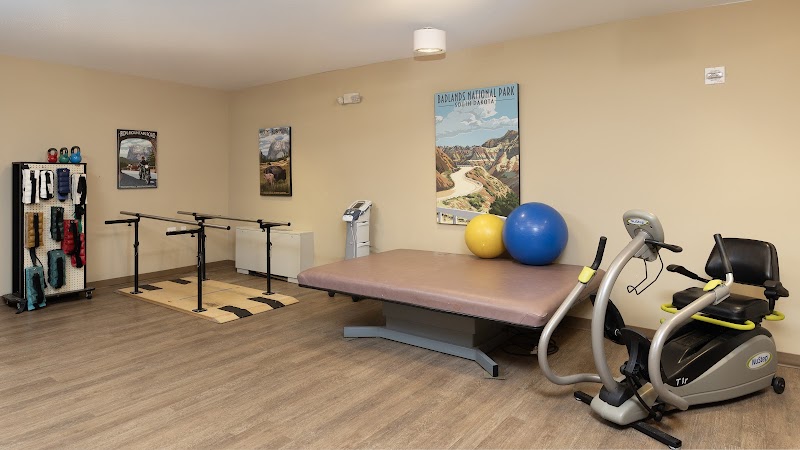
How Does Firesteel Healthcare Center Compare to Other South Dakota Nursing Homes?

Compared to the 100 nursing homes in South Dakota, FIRESTEEL HEALTHCARE CENTER's overall rating (1 stars) is below the state average of 2.7, staff turnover (47%) is near the state average of 46%, and health inspection rating (1 stars) is much below the national benchmark.

What Should Families Ask When Visiting Firesteel Healthcare Center?

Based on this facility's data, families visiting should ask: "Can you walk me through typical staffing levels on day, evening, and night shifts?" "Can I visit during a mealtime to observe dining assistance and food quality?" "How do you handle medical emergencies, and what is your hospital transfer rate?" "Can I speak with family members of current residents about their experience?" These questions are particularly relevant given the below-average staffing rating.

Is Firesteel Healthcare Center Safe?

Based on CMS inspection data, FIRESTEEL HEALTHCARE CENTER has a clean safety record: no substantiated abuse findings (meaning no confirmed cases of resident harm), no Immediate Jeopardy citations (the most serious violation level indicating risk of serious injury or death), and is not on the Special Focus Facility watch list (a federal program monitoring the lowest-performing 1% of nursing homes). The facility has a 1-star overall rating and ranks #100 of 100 nursing homes in South Dakota. While no facility is perfect, families should still ask about staff-to-resident ratios and recent inspection results during their visit.

Do Nurses at Firesteel Healthcare Center Stick Around?

FIRESTEEL HEALTHCARE CENTER has a staff turnover rate of 47%, which is about average for South Dakota nursing homes (state average: 46%). Moderate turnover is common in nursing homes, but families should still ask about staff tenure and how the facility maintains care continuity when employees leave.

Was Firesteel Healthcare Center Ever Fined?

FIRESTEEL HEALTHCARE CENTER has been fined $178,757 across 6 penalty actions. This is 5.1x the South Dakota average of $34,866. Fines at this level are uncommon and typically indicate a pattern of serious deficiencies, repeated violations, or failure to correct problems promptly. CMS reserves penalties of this magnitude for facilities that pose significant, documented risk to resident health or safety. Families should request specific documentation of what issues led to these fines and what systemic changes have been implemented.

Is Firesteel Healthcare Center on Any Federal Watch List?

FIRESTEEL HEALTHCARE CENTER is not on any federal watch list. The most significant is the Special Focus Facility (SFF) program, which identifies the bottom 1% of nursing homes nationally based on persistent, serious quality problems. Not being on this list means the facility has avoided the pattern of deficiencies that triggers enhanced federal oversight. This is a positive indicator, though families should still review the facility's inspection history directly.