SPEARFISH CANYON HEALTHCARE
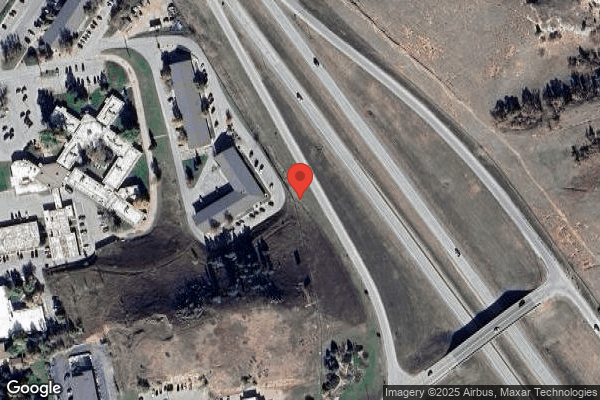
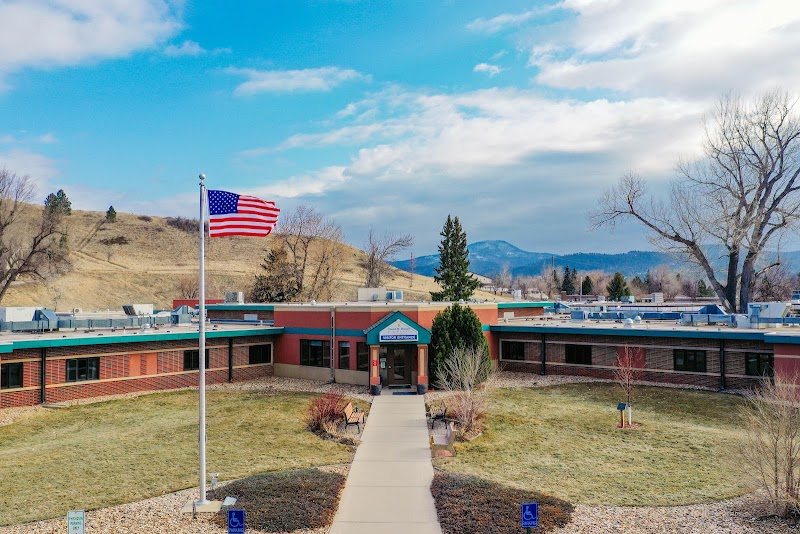
1020 N 10TH STREET, SPEARFISH, SD 57783 (605) 642-2716
For profit - Limited Liability company 105 Beds EDURO HEALTHCARE Data: November 2025
Trust Grade
48/100
#67 of 95 in SD
Last Inspection: August 2025

Inspected within the last 6 months. Data reflects current conditions.

Overview

SPEARFISH CANYON HEALTHCARE has a Trust Grade of D, indicating below-average performance with some concerning issues. It ranks #67 out of 95 nursing homes in South Dakota, placing it in the bottom half of facilities in the state, but it is the only option in Lawrence County. The facility’s trend is stable, with 8 issues reported in both 2024 and 2025, reflecting ongoing challenges. Staffing is rated at 2 out of 5 stars, with a turnover rate of 52%, which is comparable to the state average, but there is less RN coverage than 96% of other facilities, potentially impacting care quality. Specific incidents include a resident suffering a skin burn from improperly prepared food and another resident falling when not assisted correctly, highlighting areas where safety protocols need improvement. Overall, while there are strengths in quality measures, the facility has significant weaknesses that families should consider carefully.
Trust Score
D
48/100
In South Dakota
#67/95
Bottom 30%
Safety Record
Moderate
Needs review
Inspections
Holding Steady
8 → 8 violations
Staff Stability
⚠ Watch
52% turnover. Above average. Higher turnover means staff may not know residents' routines.
Penalties
✓ Good
$3,250 in fines. Lower than most South Dakota facilities. Relatively clean record.
Skilled Nurses
⚠ Watch
Each resident gets only 20 minutes of Registered Nurse (RN) attention daily — below average for South Dakota. Fewer RN minutes means fewer trained eyes watching for problems.
Violations
⚠ Watch
20 deficiencies on record. Higher than average. Multiple issues found across inspections.
★★☆☆☆
2.0
Overall Rating
★★☆☆☆
2.0
Staff Levels
★★★★☆
4.0
Care Quality
★★☆☆☆
2.0
Inspection Score
Stable
2024: 8 issues
2025: 8 issues

The Good

  • 4-Star Quality Measures · Strong clinical quality outcomes
  • Full Sprinkler Coverage · Fire safety systems throughout facility
  • No fines on record

Facility shows strength in quality measures, fire safety.

The Bad

2-Star Overall Rating

Below South Dakota average (2.7)

Below average - review inspection findings carefully

Staff Turnover: 52%

Near South Dakota avg (46%)

Higher turnover may affect care consistency

Federal Fines: $3,250

Below median ($33,413)

Minor penalties assessed

Chain: EDURO HEALTHCARE

Part of a multi-facility chain

Ask about local staffing decisions and management

The Ugly 20 deficiencies on record

1 actual harm
Aug 2025 6 deficiencies
CONCERN (D)

Potential for Harm - no one hurt, but risky conditions existed

Safe Environment (Tag F0584)

Could have caused harm · This affected 1 resident

**NOTE- TERMS IN BRACKETS HAVE BEEN EDITED TO PROTECT CONFIDENTIALITY** Based on observation, interview, record review, and policy review, the provider failed to ensure a homelike environment for one ...

Read full inspector narrative →
**NOTE- TERMS IN BRACKETS HAVE BEEN EDITED TO PROTECT CONFIDENTIALITY** Based on observation, interview, record review, and policy review, the provider failed to ensure a homelike environment for one of one sampled resident (39) due to the noise level in his room and that one of one sampled resident (61) had a hand towel available to dry himself after he had used his handwashing sink. Findings include: 1. Observation on 8/26/25 at 3:50 p.m. in resident 61's room revealed: Certified nurse aide (CNA) L assisted the resident in his bathroom after he had used the toilet. The resident used a grab bar beside the toilet to hold himself up while CNA L completed his peri-care, helped him with his clothing, and transferred him to his wheelchair with assistance from the resident's wife. There was a wall-mounted soap dispenser and paper towel dispenser near the resident's hand washing sink. It was just outside of his bathroom. CNA L had used that sink to wash and dry her hands after she exited the bathroom. She had not reminded or assisted resident 61 to wash his hands after he had exited the bathroom. There were no cloth towels on the towel rack that was mounted on the side of the countertop sink. There was a wadded-up washcloth that sat on top of the sink counter. Interview on 8/26/25 at 4:00 p.m. with resident 61 and his spouse revealed that the spouse had asked staff at different times for a clean washcloth and hand towel to be left on the towel rack for the resident to use, but that request was inconsistently accommodated. The resident confirmed he was able to independently use his handwashing sink. He was able to reach the paper towels and the soap dispenser. He preferred using cloth towels rather than paper towels because he had used cloth towels at home. Observations on 8/27/25 at 8:30 a.m. in resident 61's room revealed that same used washcloth observed above remained on the sink's countertop. There were no cloth towels on the towel rack. At 1:50 p.m., the used washcloth had been removed and not replaced with a clean one. There were no cloth towels on the towel rack. Interview on 8/27/25 at 2:05 p.m. with CNA L revealed it was her responsibility to ensure resident 61 had a clean washcloth and hand towel on his towel rack to use. That had not occurred. Interview on 8/27/25 at 2:15 p.m. with director of nursing (DON) B revealed she had not known that resident 61's washcloths and hand towels were not consistently placed on the resident's towel rack for him to use as he preferred. His preference for using cloth towels to wash and dry his hands was not accommodated, but it should have been. Review of the provider's revised 6/10/25 Safe and Homelike Environment policy revealed 4. The facility will provide and maintain bed and bath linens that are clean and in good condition. Based on observation, interview, record review, and policy review, the facility failed to provide a homelike environment for one of one resident (39) due to a very loud pressure valve release noise from bulk oxygen tanks placed directly outside the wall of the resident’s room. 2. Observation and interview with resident 39 in his room on 8/26/25 at 5:03 p.m. revealed: *He was the only occupant of the room. *He preferred to lie flat in his bed for much of the day due to chronic thoracic (middle section of the spine) pain. *He liked to listen to books on tape but would also watch television sometimes. *His bed was placed with the long side against the exterior wall of the room. *Approximately 11 large bulk oxygen tanks were grouped along the exterior wall of the room. *The tanks intermittently released pressure with a loud, aggressive hissing noise. -Each tank release noise lasted from 5 to 15 seconds. -The noise level interrupted the ability to converse or hear the television. *He wore headphones a lot to help block the noise. *He said the tanks’ release noises interrupted his thoughts, activities, and disturbed his sleep. *He felt the tanks’ release noise increased his anxiety and caused him to be startled frequently. *He stated he hated the noise and it was often louder than the one experienced at that time. *The noise had been present since he admitted to the facility last year. *He had not asked for a different room as he was grateful to be there. *He felt that the noise aggravated his anxiety and negatively affected his mental health. Observation on 8/27/25 from 9:30 a.m. to 9:45 a.m. outside of resident 39’s room revealed: *There was no pattern to how often the tanks’ release noise would occur. *The tanks’ release noise occurred three times during approximately 15 minutes of observation. -The tanks’ release noise level varied but could be heard and clearly identified in the hall 30 feet from resident’s room with the room door closed. Review of the resident 39’s electronic medical record (EMR) revealed: *Resident 39 was admitted on [DATE]. *His admitting diagnoses included: *Generalized Anxiety Disorder (a chronic mental health condition characterized by excessive and persistent worry and anxiety that is difficult to control.) *Post-traumatic stress disorder (PTSD) (a mental health condition that’s develops after experiencing or witnessing a traumatic event.) *Schizotypal disorder (a mental disorder characterized by thought disorder, paranoia, and social anxiety.) *Other schizoaffective disorder (a mental health condition marked by a mix of symptoms such as hallucinations and delusions, and mood disorder symptoms such as depression.) *He had a Basic Interview for Mental Status (BIMS) assessment score of 14, which indicated his cognition was intact. Review of resident 39’s care plan revealed: *Resident 39 had screened positive for PTSD related to prior Vietnam war service. *Resident had triggers identified to a history of trauma that included excessive or prolonged television (TV) viewing, especially TV programming with action scenes. *Resident 39 experienced stressful or startled responses when others walked quickly or stomped behind him. Interview on 8/27/25 at 9:30 a.m. with Social Services Designee H regarding oxygen tank release noise levels in resident 39’s room revealed: *She was not aware of the noise made by the bulk oxygen tanks releasing pressure. *She agreed that his PTSD and anxiety could be aggravated by that noise Interview on 8/28/25 at 8:40 a.m. with maintenance technician E revealed: *He was aware of the noises from the oxygen tanks releasing pressure. *He had not heard it from inside the resident 39’s room. *He had not thought about if the noise was disturbing resident 39. *He thought residents would “probably get used to it.” Interview on 8/28/25 at 8:48 a.m. with certified medication aide (CMA) F revealed: *She was not aware of the oxygen tanks’ release noise in resident 39’s room. *She stated she “was probably used to it.” *She wouldn’t want a resident to be constantly disturbed. Interview on 8/28/25 at 9:30 a.m. with registered nurse (RN) G revealed she was not aware of the tanks’ release noises in resident 39’s room. Interview on 8/28/25 at 9:50 a.m. with resident 39 revealed: *The social worker had come to visit him about the tank noise on 8/26/25. *He had told her that the noise was extremely startling, increased his stress and anxiety, and interrupted his activities and thoughts. *The tank released while he was talking, startling both resident and this surveyor. *He was grateful to have a roof over his head, but was very happy to be moving to a new room away from the noise. Interview on 8/28/25 at 12:20 p.m. with administrator A revealed: *The bulk oxygen tanks had been placed in that location prior to her return to the facility approximately two years ago. *Now aware of the noise, they intended to move the tanks away from resident rooms. *They would not have a resident reside in that room until the tanks were moved. Review of the providers safe and homelike environment policy revealed: *”In accordance with residents’ rights, the facility will provide a safe, clean, comfortable and homelike environment, allowing the resident to use his or her personal belongings to the extent possible.” *”Comfortable sound levels” was defined to mean “levels that do not interfere with resident’s hearing, levels that enhance privacy when privacy is desired, and levels that encourage interaction when social participation is desired.”
CONCERN (D)

Potential for Harm - no one hurt, but risky conditions existed

Quality of Care (Tag F0684)

Could have caused harm · This affected 1 resident

Based on observation, interview, record review, and policy review, the provider failed to implement a process that ensured an accurate accounting of daily fluid intake for one of one sampled resident ...

Read full inspector narrative →
Based on observation, interview, record review, and policy review, the provider failed to implement a process that ensured an accurate accounting of daily fluid intake for one of one sampled resident (4) on dialysis with a physician-ordered fluid restriction. Findings include:1. Observation and interview on 8/27/25 at 8:15 a.m. with resident 4 revealed she was returning to her room from the dining room after breakfast. She was not available for an interview on 8/26/25 because she had been at dialysis for most of that day. She dialyzed on Tuesdays, Thursdays, and Saturdays. There were 13 bottled waters, a six-pack of soda, and a lidded cup with water inside it in her room. She had opened one of those bottled waters and drank from it during the interview. She stated her medical provider had told her she should be trying to get rid of fluid, and avoid drinking a lot of fluids. Review of resident 4's electronic medical record (EMR) revealed a 4/17/22 physician's order for: Fluid Restriction: 1500 cc [cubic centimeters] per day. Dietary: 320 cc 3 X [times]/day [per day]. Nursing: 120 cc 3x/day med [during medication] pass: 60 cc 3x/day. Interview on 8/27/25 at 3:20 p.m. with licensed practical nurse (LPN) R regarding resident fluid restrictions revealed that a Huddle Book was kept at the nurses' station. The huddle book was referred to by caregivers for resident-specific information, including which residents had fluid restrictions. Resident 4's name was on that fluid restriction list. Regarding the excessive number of fluids available to the resident in her room, LPN R stated a bottled water and a lunch were sent with the resident on her dialysis days. The resident often had not consumed the bottled water at dialysis and brought it back with her to her room. LPN R stated that those unused bottled waters should have been removed from the resident's room when the nurse had completed the resident's post-dialysis assessment. On 8/27/25 at 4:20 p.m., a copy of resident 4's fluid intake documentation for one week was requested from director of nursing (DON) B. Interview on 8/27/25 at 5:20 p.m. with DON B revealed that when a resident had a physician-ordered fluid restriction, that restriction was to be added to the resident's treatment administration record (TAR). Daily fluid intakes were to be documented, calculated, and monitored on that TAR to ensure compliance with the physician's order. Resident 4's fluid restriction order information had not been added to her TAR. Her daily fluid intake had not been calculated or monitored to determine if her fluid restriction was being followed as ordered. Review at that same time with DON B of the communication tool used between the provider and the dialysis unit revealed no noted concerns by either entity regarding the resident having potentially not followed her fluid restriction. DON B agreed that failing to follow the provider's processes for accounting for resident 4's fluid restrictions and not removing unnecessary fluids from the resident's room had placed that resident at risk for potential harm. Review of the provider's revised 5/2/25 Fluid Restriction policy revealed:1. The breakdown of a resident's fluid intake will be recorded on the medication record or other format as per facility protocol.4. Water will not be provided at the bedside unless calculated into the daily total fluid restriction or unless specifically ordered by the physician.
CONCERN (D)

Potential for Harm - no one hurt, but risky conditions existed

Accident Prevention (Tag F0689)

Could have caused harm · This affected 1 resident

Based on observation, interview, record review, and policy review, the provider failed to ensure:The whiteboard communication board in one of one sampled residents' rooms (61) was updated to reflect t...

Read full inspector narrative →
Based on observation, interview, record review, and policy review, the provider failed to ensure:The whiteboard communication board in one of one sampled residents' rooms (61) was updated to reflect the amount and type of caregiver assistance required for him to safely transfer from his toilet to his wheelchair. The safety of one of one sampled resident (61) who was not transferred by one of one certified nurse aide (CNA) L as directed in the resident's care plan and the provider's huddle book (a communication tool that informs caregivers of residents' care needs), which may have increased his risk for falling and/or injury. Findings include: 1 Observation on 8/26/25 at 3:50 p.m. in resident 61's room revealed a wall-mounted whiteboard with the following information written on it: 7/17[/25]: SPT [stand pivot transfer-a staff person assists the resident to a standing position, and the resident then turns their body to move to another surface] w/FWW [front wheeled walker] assist X1 [assisted by one staff person]. There was a folded mat propped against the wall at the foot of the resident's bed.Continued observation revealed CNA L was with resident 61 inside his bathroom, assisting him off the toilet. Without first putting a gait belt around the resident's waist (a waist strap gripped by the caregiver and used as support for safe mobility and transfer), she lifted up on the resident's pants and verbally cued him to use the wall-mounted grab bar next to the toilet to help pull himself up off the toilet to stand. The resident had repeatedly stated he was too weak to pull himself up to stand. He called out for his wife to help.After hearing the resident call for her help, the resident's spouse entered the bathroom with a gait belt and handed it to CNA L. CNA L then placed the gait belt around the resident's waist. The gait belt enabled CNA L to provide the support resident 61 needed to come to a standing position, pivot, and lower himself onto his wheelchair seat safely. Interview on 8/26/25 at 4:20 p.m. with CNA L regarding the above transfer revealed she was expected to have used a gait belt whenever she had assisted a resident with a transfer. It was a standard safety and fall prevention intervention. She stated she referred to the information on the whiteboards in residents' rooms to know how to properly transfer the residents. She had not known who was responsible for updating the information on the residents' whiteboards.Interview on 8/26/25 at 4:30 p.m. with resident 61 and his spouse revealed that he had been awake early and had been busy throughout that day with therapy and outpatient appointments. His physical stamina was diminished. He had fallen since he was admitted to the facility. His bed was lowered at night, and the fall mat observed above was to be placed along the side of his bed at night, related to his risk for falling. Review of resident 61's electronic medical record (EMR) revealed his admission date was 4/17/25. His diagnoses included a right femur (upper leg/thigh) fracture and chronic obstructive pulmonary disease (a chronic breathing disorder).An 8/18/25 event note indicated: CNA stated she was attempting to transfer resident [61] from his bed to his wheelchair for toileting, his right leg slid forward causing [the] resident to be lowered to the floor onto his buttocks. There was no injury to the resident as a result of that fall. An 8/19/25 Fall Assessment-Post Incident score was 18. That indicated the resident was at high risk for falling.Review of resident 61's current care plan initiated on 4/18/25 revealed a focus area of Transfers/Bed Mobility/Ambulation. A revised 6/19/25 intervention for that focus area indicated resident 61 required extensive assistance of 1 staff person with bed mobility, transfers and ambulation. That intervention was revised again on 7/21/25 by director of rehabilitation C and indicated Assist X 2 [by two staff persons] stand pivot transfer [a staff member assists the resident to a standing position, and the resident then turns their body to move to another surface] with FWW [a front-wheeled walker] and [the use of a] gait belt. Interview on 8/27/25 at 9:30 a.m. with director of nursing (DON) B revealed the whiteboards in residents' rooms were to be maintained and updated by the therapy department. If the whiteboard was updated, those changes were documented on a Therapy to Care Plan-Communication Tool. Copies of that tool were distributed to the provider's Minimum Data Set (MDS) Coordinator, the DON, and the nurses' station. Nursing staff were to communicate those resident-specific changes to caregivers during shift changes. Copies of those tools were placed in a Huddle Book that contained resident-specific care information and was kept at the nurses' station for the caregivers to reference. Review of the above Huddle Book revealed a 7/17/25 Therapy to Care Plan-Communication Tool, signed by physical therapist Q, had indicated resident 61 required a 2 person stand pivot transfer with FWW and gait belt.Interview on 8/28/25 at 10:25 a.m. with physical therapy assistant (PTA) P regarding the 7/17/25 expectations for transferring resident 61, and the transfer information documented on his whiteboard revealed that the information on his whiteboard was outdated and not accurate. She confirmed resident 61 had required the assistance of two staff persons and the use of a gait belt when he was transferred. Physical therapist Q was not available to interview.Interview on 8/28/25 at 11:30 a.m. with director of rehabilitation C regarding resident 61 revealed that the process used to ensure caregivers were informed of and educated on changes in resident 61's transfer needs failed. Caregivers referred to the transfer information on a resident's whiteboard to know how they were expected to transfer that resident. That failure placed resident 61 at a higher risk for having been injured and/or falling when he was transferred. PT Q was should have updated resident 61's whiteboard at the same time she completed her 7/17/25 Therapy to Care Plan-Communication Tool that included the resident's updated transfer recommendations. Review of the provider's revised 5/15/25 Resident Handling/Transfers policy revealed 13. Staff members are expected to maintain compliance with safe handling/transfer practices. 14. Resident lifting and transferring will be performed according to the resident's individual plan of care.
CONCERN (D)

Potential for Harm - no one hurt, but risky conditions existed

Pharmacy Services (Tag F0755)

Could have caused harm · This affected 1 resident

**NOTE- TERMS IN BRACKETS HAVE BEEN EDITED TO PROTECT CONFIDENTIALITY** Based on observation, interview, and policy review, the provider failed to ensure two of two observed medication refrigerators h...

Read full inspector narrative →
**NOTE- TERMS IN BRACKETS HAVE BEEN EDITED TO PROTECT CONFIDENTIALITY** Based on observation, interview, and policy review, the provider failed to ensure two of two observed medication refrigerators had not contained expired vaccines that were available for administration to the residents. Findings include: 1. Observation on 8/28/25 at 1:45 p.m. of the medication room refrigerator in the [NAME] Hall revealed: *Ten influenza vaccines had expired on 6/30/25. *One pneumococcal 13-valent vaccine had expired on 4/2025.Interview immediately after having identified the above expired vaccines with registered nurse (RN) G revealed:*She had thought that the night nursing staff had been checking for expired vaccines and medications.*She was unsure if there had been any other staff who were responsible for checking for expired vaccines and medications.2. Observation on 8/28/25 at 2:15 p.m. of the medication room refrigerator in the green hall revealed:*Three influenza vaccines had expired on 6/30/25.*One pneumococcal 13-valent vaccine had expired on 4/2025. Interview immediately after having identified the above expired vaccines with licensed practical nurse (LPN) I revealed:*She thought the pharmacist checked for outdated medication once a month.*She was not aware that those expired vaccines had been in the refrigerator.*She was unsure if the night nursing staff had been checking for expired medication. Interview on 8/28/25 at 2:30 p.m. with director of nursing (DON) B regarding the expired vaccines in the two medication room refrigerators revealed:*She was not aware there was expired vaccines in the two refrigerators.*She stated the consultant pharmacist was to check for expired medications and vaccines once a month.*All staff that administered vaccines should have checked the expirations dates.*The expired vaccines should have been removed and sent back to the pharmacy for drug destruction. Review of the provider's June 2025 Hazardous Waste Pharmaceuticals revealed:*Facility staff with approved access to pharmaceuticals will store, administer, and discard pharmaceuticals in accordance with relevant facility procedures.*Expired medications sent for drug destruction.
CONCERN (D)

Potential for Harm - no one hurt, but risky conditions existed

Infection Control (Tag F0880)

Could have caused harm · This affected 1 resident

Based on observation, interview, and policy review, the provider failed to ensure infection prevention and control practices were followed by:One of one observed certified medication aide (CMA) (M) wh...

Read full inspector narrative →
Based on observation, interview, and policy review, the provider failed to ensure infection prevention and control practices were followed by:One of one observed certified medication aide (CMA) (M) who did not clean one of one sampled resident's (76) inhaler after it was used for medication administration.One of one observed certified nurse aide (CNA) (N) who did not complete hand hygiene (handwashing) during a transition in cleaning urine from the floor and handling one of one sampled resident's (63) catheter urine collection bag valve.One of one observed CNA (L) who had not reminded or assisted one of one sampled resident (61) to perform hand hygiene after he had used the bathroom.Findings include: 1. Observation and interview on 8/26/25 at 11:37 a.m. with CMA M after she had administered resident 76's medication through an inhaler revealed:Without first cleaning the mouthpiece of the inhaler, CMA M placed the uncleaned inhaler back into its box inside the medication cart.The box top was opened and stored with other residents' medications.She stated that she should have used an alcohol pad to clean the mouthpiece after it was used to mitigate the resident's risk of infection or cross-contamination, but she had not done that. 2. Observation and interview on 8/26/25 at 12:21 p.m. with CNA N in resident 63's room revealed:Resident 63 was seated in his recliner. There was a large amount of urine on the floor in front of and to the side of his recliner.After CNA N lifted the resident's pant leg, CNA N stated the valve of the resident's urinary catheter bag was not properly tightened and that caused the urine inside the catheter bag to leak out and onto the floor.CNA N performed hand hygiene, then put on a gown and a pair of gloves. He used cloth towels to absorb the urine from the floor. With those same gloved hands, CNA N adjusted the resident's urinary catheter bag valve and resumed cleaning the floor.CNA N stated he was not sure at what point in the above observation that he should have removed his gloves, performed hand hygiene, and put on a clean pair of gloves. He agreed that using unclean gloves while handling the catheter bag valve had increased resident 63's risk for infection. 3. Observation and interview on 8/26/25 at 3:50 p.m. with resident 61, after CNA L had assisted him to use the bathroom, revealed:CNA L exited the bathroom, removed and discarded her gown and gloves. Outside of the bathroom, there were wall-mounted paper towel and soap dispensers near the handwashing sink that she used to perform hand hygiene. She had not reminded or assisted the resident to perform hand hygiene after he had exited the bathroom.Resident 61 confirmed he was able to independently use the handwashing sink to wash and dry his hands. He had not always remembered to perform hand hygiene after he used the bathroom without staff reminding him. Interview on 8/27/25 at 2:05 p.m. with CNA L regarding the above resident observation revealed she had not reminded or assisted resident 61 to wash his hands after he had used the bathroom, but she should have. She agreed that resident hand washing after bathroom use was an important infection prevention intervention. Interview on 8/28/25 at 2:07 p.m. with Infection Preventionist O regarding the above observations revealed that she confirmed the above observed staff missed opportunities to mitigate the risk of infection. Review of the provider's revised 5/20/25 Administration of Metered-Dose Inhaler (MDI) policy revealed: 18. When all the ordered inhalations have been administered, remove the spacer (if used) from the MDI, and wash the spacer and mouthpiece according to the manufacturer's instructions. Review of the provider's revised 4/10/25 Hand Hygiene policy revealed: 2. Hand hygiene is indicated and will be performed under the conditions listed in, but not limited to, the attached hand hygiene table. That hand hygiene table included the following condition: When, during resident care, moving from a contaminated body site to a clean body site. A Glove Use policy was requested from administrator A on 8/28/25 at 3:10 p.m. At 3:45 p.m. on 8/28/25, administrator A stated the facility had no Glove Use policy.A Resident Hand Hygiene policy was requested from administrator A on 8/26/25 at 12:05 p.m. At 2:50 p.m. on 8/28/25, administrator A stated the facility had no Resident Hand Hygiene policy.
CONCERN (E)

Potential for Harm - no one hurt, but risky conditions existed

Food Safety (Tag F0812)

Could have caused harm · This affected multiple residents

Based on observation, record review, interview, and policy review, the provider failed to ensure follow standard food safety practices to ensure:*One of one low-temperature dishwasher's temperature wa...

Read full inspector narrative →
Based on observation, record review, interview, and policy review, the provider failed to ensure follow standard food safety practices to ensure:*One of one low-temperature dishwasher's temperature was consistently monitored and documented to ensure it met the required minimum wash temperature for sanitation of items used to prepare and serve food to the residents.Findings included:1. Observations on 8/26/25 at 10:32 a.m. and 10:37 a.m. in the kitchen revealed: *The logs for the dishwasher temperatures for August 2025 were hanging on the wall and included:-Columns to record Temp (temperature) for B (Breakfast), L (Lunch), and D (Dinner), Sanitizer Concentration (PPM) (parts per million), and Initials.-Those temperature columns had documented temperatures that ranged from 110 to 126 degrees F (Fahrenheit)--Thirty-six of those documented temperatures were not at the minimum required temperature of 120 degrees F.-For July 2025:-The dishwasher temperatures documented in the columns titled Temp (temperature) for B (Breakfast), L (Lunch), and D (Dinner).-ranged from 110 to 130 degrees F.--Five of those temperatures were not at the minimum required wash temperature of 120 degrees F.-There were had 41 out of 93 opportunities in July 2025 that did not have documented dishwasher temperatures. 2. Interview on 8/26/25 at 10:45 a.m. with dietary supervisor (DS) J revealed she:*Had been employed with the facility as the DS for only a short time.*Was unaware of the dishwasher's low wash temperature readings.*Stated she would call the service department that they lease the dishwasher from to schedule maintenance.-She was unsure of the last time the leased dishwasher had been serviced. 3. Interview on 8/27/25 at 1:55 p.m. with dietary aide K revealed she ran the dishwasher three times after breakfast before the water temperature reached 120 degrees F. 4. Further interview on 8/27/25 at 2:10 p.m. with DS J revealed she:*Had been employed with the facility as the DS since 6/25/25.*Called the service department that they lease the dishwasher from, and they informed her that they would only service the dishwasher if they had problems with the chemicals, not the water temperature.*Had the maintenance technicians inspect the dishwasher that day, and they advised her that the kitchen staff would need to run the dishwasher multiple times to get the water temperature to 120 degrees F.*Agreed there were several unrecorded temperatures on the dishwasher temperature logs.*Had been training new staff, and had forgotten to check the dishwasher logs. 5. Interview on 8/28/25 at 8:32 a.m. with maintenance technician E revealed he:*Informed the DS that the kitchen staff would need to run the dishwasher multiple times to reach the required temperature of 120 degrees F.*Was unaware of the dishwasher's low wash temperature readings before the DS informed him. *Had not been asked to perform maintenance on the dishwasher in the past few months. 6. Interview on 8/28/25 at 8:40 a.m. with administrator A revealed:*She was unaware of the dishwasher's low wash temperature readings.*She expected the kitchen staff to have notified the DS of the dishwasher's low wash temperature readings.*There had been no gastrointestinal outbreak in the facility. 8. Review of the provider's 6/15/25 Dishwasher Temperature policy revealed: It is the policy of this facility to ensure dishes and utensils are cleaned under sanitary conditions through adequate dishwasher temperatures. 4. For low temperature dishwashers (chemical sanitization):a. The wash temperature shall be 120 degrees F.b. The sanitizing solution shall be 50ppm (parts per million) hypochlorite (chlorine) on dish surface in final rinse.
Jul 2025 2 deficiencies 1 Harm
SERIOUS (G) 📢 Someone Reported This

A family member, employee, or ombudsman was alarmed enough to file a formal complaint

Actual Harm - a resident was hurt due to facility failures

Accident Prevention (Tag F0689)

A resident was harmed · This affected 1 resident

**NOTE- TERMS IN BRACKETS HAVE BEEN EDITED TO PROTECT CONFIDENTIALITY** Based on South Dakota Department of Health (SD DOH) facility reported incident (FRI), record review, staff interview, and policy...

Read full inspector narrative →
**NOTE- TERMS IN BRACKETS HAVE BEEN EDITED TO PROTECT CONFIDENTIALITY** Based on South Dakota Department of Health (SD DOH) facility reported incident (FRI), record review, staff interview, and policy review, the provider failed to ensure an environment free of safety hazards for:*One of one sampled resident (4), who sustained a skin burn injury from hot liquid (broth) that was improperly prepared by cook (H) who did not follow the facility's established procedures for safe food preparation and service.*One of one sampled resident (1), who fell when CNA O assisted her to walk without the use of a gait belt.Findings include: 1. Review of the provider’s 3/25/25 SD DOH facility reported incident (FRI) revealed: *On 3/25/25 at approximately 8:24 a.m., physical therapist (PT) N answered resident 4’s call light. *Resident 4 reported to PT N that she had spilled her broth on her right leg. *PT N immediately notified licensed practical nurse (LPN) Q, who entered resident 4’s room at approximately 8:25 a.m. *With resident 4’s consent, LPN Q immediately assessed resident 4’s leg area and noted redness to the area on her right leg. Resident 4 had no complaints of pain at that time. *LPN Q gently dried the area, ensured resident 4’s comfort, and alerted director of nursing (DON) B of the situation. *Silvadene was applied to the area to treat the skin and prevent further damage. *The doctor and the power of attorney (POA) were notified. *On 3/25/25, resident 4 was seen by a physician assistant for increased lethargy and decreased alertness that had been noted on 3/24/25. She was also evaluated for the burn at that time. *On 3/25/25, LPN Q noted that resident 4 was awake and visiting with staff before breakfast. *On 3/25/25, cook H prepared the broth using water from the stovetop kettle. -The stovetop kettle was normally used to make hot cereal. *Education was completed with all dietary workers to ensure that hot beverages are made from the coffee machine, which also dispenses hot water, at a reduced temperature of 135°F to 140°F. *Hot liquid safety evaluation audits were conducted for all residents in the facility to ensure accuracy. *Facility education was provided to nursing and dietary staff to ensure that: -Nursing staff assisted residents who choose to eat in their rooms with proper positioning prior to meals or beverages being served. -When hot liquids are served, dietary staff must ensure beverages are in a handled cup with a lid and must communicate with nursing staff to monitor residents in their rooms. *Audits were conducted to monitor the temperature of food and beverages, and no concerns were identified. 2. Review of resident 4’s electronic medical record (EMR) revealed: *She was admitted on [DATE] after surgical repair of a left hip fracture that resulted from her fall at an assisted living facility (ALF) and had been discharged back to that ALF. *She had a Brief Interview for Mental Status (BIMS) assessment score of 13, which indicated she was cognitively intact. *Her diagnoses included a history of transient ischemic attack (TIA) (a “mini-stroke”), age-related macular degeneration (an eye disease typically associated with aging that can cause significant vision loss), fracture of neck of left femur (hip fracture), and tremor (involuntary muscle contraction causing shaking or trembling) unspecified (specific type or cause of the tremor not yet identified). *A 3/26/25 nursing note indicated “Assessed resident right thigh burn today, she has a 2.5 cm [centimeter] area where the blister opened, skin is beefy red with no s/s [signs/symptoms] of infection.” *A 4/11/25 discharge summary indicated resident 4 had skin issues described as “Burn to R [right] outer thigh- healing.” 3. Interview on 7/8/25 at 1:37 p.m. with certified medication aide (CMA) C revealed: *Dietary staff would deliver room trays to resident rooms. *Some residents routinely chose to eat in their rooms. *Room trays were delivered after the dining room meals were served. *Dietary staff would set up the meal tray for the resident in their room. *CMA C stated that staff had received education about how to safely position residents for eating in their rooms. *She stated that staff had received “a lot” of education about hot liquid safety. 4. Interview on 7/8/25 at 1:48 p.m. with Certified Nursing Assistant (CNA) E and CMA D revealed: *A few residents who chose to eat in their rooms by preference. *If there was a last-minute resident request to eat in their room, staff would call the kitchen to notify dietary staff. *Dietary staff delivered the cart with meal trays, after the dining room was served, to the residents in their rooms. *Nursing staff were only involved in meal service if a resident required assistance. *They confirmed receiving education about the safe positioning of residents for meals and hot liquid safety. *Nursing staff had access to a thermometer that was kept near the microwave in case food or beverages needed to be warmed by nursing staff. 5. Interview on 7/8/25 at 2:35 p.m. with dietary aide F revealed: *Dietary aides delivered trays to residents in their rooms. *If a resident was in bed when a tray was delivered, she would turn the call light on to notify nursing staff that the tray had been delivered. *Coffee and hot water were dispensed from the coffee machine into carafes and kept on the cart for room meal trays. *If a resident requested coffee or hot water for tea, she would pour the beverage into a coffee cup, place a lid on it, and bring the covered cup into the resident’s room. *She stated she had received education as recently as “a couple of days ago” about hot liquid temperatures and safety. 6. Interview on 7/8/25 at 4:00 p.m. with dietary supervisor G revealed: *She had been the dietary supervisor since 6/16/25. She had worked in the kitchen as a cook and a dietary aide before she began the dietary supervisor role. *She had received education on hot liquid safety and the proper procedure for preparing hot liquids using hot water from the coffee machine. *The coffee machine was calibrated to maintain coffee and hot water at a specific temperature throughout the day, which she thought was 132 or 134 degrees. *The coffee machine’s temperatures were to be checked twice daily, once in the morning and once in the afternoon. *Soups were served in bowls; if soup was included on a room tray, it was to be covered with a lid. *Soups served in the dining room did not have lids on them. 7. Interview on 7/9/25 at 10:37 a.m. with cook H revealed: *The day of the burn incident was only his second or third day working at the facility. *He had prepared the broth using water from the stovetop kettle rather than the facility’s established procedure of using hot water from the coffee machine. *He had not checked the temperature of the broth before it was sent out on a room tray. *He stated that they are now checking the temperatures of items such as soup that are heated in the microwave. *When temperatures are checked for items like soup after microwave heating, there was no formal log to record those temperatures, but the temperature was written on the resident’s meal ticket. 8. Interview on 7/9/25 at 11:40 a.m. with administrator A and director of nursing (DON) B revealed: *The meal tray delivery process was adjusted through the facility’s Quality Assurance and Performance Improvement (QAPI) program. Dietary staff were to deliver room trays to resident rooms and set the trays up for residents. They would notify nursing staff if a resident was not sitting up or needed to be positioned safely for meals. *Their audits indicated that revised practice was being followed by staff. *They reported experiencing significant turnover in the dietary department, including the dietary management team. *Administrator A confirmed that cook H had not followed proper procedure when he prepared the broth, and did not check the temperature of the broth before it was sent out on a room meal tray to be delivered to the resident. 9. Review of the provider’s October 2014 Safety of Hot Liquids Policy revealed: *Policy Statement -“Residents will be evaluated for safety concerns and potential for injury from hot liquids upon admission, readmission, and with any change of condition.” *Policy Interpretation and Implementation -“The potential for burns from hot liquids is considered an ongoing concern among residents with weakened motor skills, balance issues, impaired cognition, and nerve or musculoskeletal conditions. -Residents with these or other conditions may suffer from accidental burns and related complications stemming from thinner, more fragile skin that may burn quickly and severely and take longer to heal. -Residents who prefer hot beverages with meals (i.e., coffee, tea, soups, etc.) will not be restricted from these options. Instead, staff will conduct regular Hot Liquid Safety Evaluations as indicated, and document the risk factors for scalding and burns in the care plan. -Once risk factors for injury from hot liquids are identified, appropriate interventions will be implemented to minimize the risk of burns. Such interventions may include: --Maintaining a hot liquid serving temperature of not more than 155 degrees Fahrenheit; --Serving hot beverages in a cup with a lid; --Encouraging residents to sit at a table while drinking or eating hot liquids; --Providing protective lap covering or clothing to protect skin from accidental spills; and --Staff supervision or assistance with hot beverages. -Food service staff will monitor and maintain food temperatures that comply with food safety requirements but do not exceed recommended temperatures to prevent scalding.” 10. Review of the provider's SD DOH FRI submitted on 4/8/25 at 5:06 p.m. regarding resident 1 revealed: *Resident 1 fell on 4/5/25 at 5:30 a.m. when being assisted back from the bathroom by CNA O. *Resident 1 had verbalized that her knees were weak and then CNA O lowered resident 1 to the floor in a sitting position. -Resident 1 had no complaints of pain before or after she was sitting on the floor. -CNA O indicated that she guided resident 1 to the floor gradually by her waist. -CNA O had placed resident 1’s thoracic-lumbar-sacral-orthosis (TLSO) brace (a brace used to stabilize and limit motion in the back) prior to ambulating her to and from the bathroom. -Resident 1 had this brace prior to her admission to the facility related to her lumbar (lower back) 3 compression fracture (broken bone). -She was to always wear the TLSO brace when sitting upright and when she was out of bed doing an activity. -The TSLO brace could be removed when she was in bed. -No gait belt (a safety device used to assist resident's with walking) was used by CNA O when she assisted resident 1 with walking to and from the bathroom. -Resident 1 had her front-wheeled walker (FWW) for an assistive device when she was being assisted to the bathroom by CNA O. *Resident 1 was evaluated by the nurse and then three staff assisted her up off the floor. -Resident 1 had no complaints of pain after she was assisted up. *The physician and power of attorney (POA) were notified of the fall on 4/5/25 at 6:44 a.m. *Resident 1 used a portable assist lift (a medical device used to move residents with limited mobility) over the weekend related to her new acute weakness in her legs and pending a therapy consult. -Resident 1 was ambulating with a FWW prior to her fall on 4/5/25. *The therapy staff evaluated resident 1 on 4/7/25 and ordered continued use of the PAL lift related to resident 1’s leg weakness. *Resident 1 verbalized persisting pain to her right thigh after the incident on 4/5/25, which was not a new complaint for her. *Resident 1 had a neurosurgery follow-up appointment that was scheduled for 4/8/25 prior to her admission to the facility. -She had a history of a spontaneous lumbar 3 compression fracture that occurred prior to her admission to the facility. *On 4/8/25 resident 1 went to her neurology follow-up appointment. *Resident 1 was sent to the emergency department by neurology on 4/8/25 because of her increased radiculopathy pain. -The emergency room imaging results indicated she had a continued lumbar 3 compression fracture and a new acute (a new break in a bone) and/or subacute (a break in a bone that is between 5 and 13 days old) fracture of the lumbar 4 vertebral body. -Resident 1 was hospitalized on [DATE] for treatment of her bilateral lower leg weakness and the lumbar 4 vertebrae fracture. *Her POA, family, and the physician were notified of the above imaging results and her hospitalization. 11. Review of resident 1's electronic medical record (EMR) revealed: *She was admitted on [DATE] and currently resided at the facility. **Her diagnoses included wedge compression fracture of the 3rd lumbar vertebrae sequela, wedge compression fracture of the 3rd lumbar vertebrae, subsequent encounter for fracture with routine healing, age related osteoporosis without current pathological fracture, other abnormalities of gait and mobility, abnormal findings of diagnostic imaging of other parts of musculoskeletal system, and unspecified dementia. * Her 6/16/25 Brief Interview for Mental Status (BIMS) assessment score was 12, which indicated she had moderate cognitive impairment. * On 3/10/25 a fall risk assessment was completed which identified her as being at risk for falls. 12. Review of resident 1's 6/30/25 care plan revealed: *Her medications listed on the care plan included: “use of antidepressant, psychotropic, pain, and hypnotic medications which can contribute to gait disturbance and falls.” *I need assistance with my transfers, bed mobility and ambulation. -“I have limitations related to my lumbar fracture.” -“Assist [the resident] with one staff person for transfers, walking to/from the bathroom with FWW, and gait belt.” *”At risk for falls/injuries related to debility/generalized weakness, poor safety awareness.” -“Monitor [the resident] for increased weakness or instability.” -Refer [the resident] to physical/occupational therapy for strengthening exercises and gait training to increase mobility and safety awareness. *At risk for spontaneous and unavoidable fractures related to severe osteoporosis and history of spontaneous compression fractures.” -“Assess [the resident's] functional ability for mobility and note changes.” -Assist [the resident] with mobility as needed and using assistive devices e.g., --a. [NAME] or crutches, --b. Walker. -Provide and assist [the resident] with mobility by means of wheelchair, walker, crutches, canes as soon as possible. Instruct in safe use of mobility aids.” 13. The SD DOH FRI final report included further review of notes and imaging for resident 1 by the management team which revealed the following: *Resident 1 had a diagnosis of osteoporosis (a condition in which bones become weak and brittle) and a history of spontaneous lumbar fractures (bones in the lower back weaken and collapse, often without significant trauma) prior to her admission to the facility. -On 2/23/25 she had acute back pain in the lumbar vertebrae 4 and 5 areas, an x-ray (a medical imaging procedure) was obtained and was negative for fractures. -On 3/2/25 she had worsening back pain, increased weakness and pain to the right thigh, a computed tomography (CT) scan (a medical imaging procedure) was obtained and was positive for an acute compression fracture at lumbar 3 vertebrae. -On 3/2/25 a magnetic resonance image (MRI) (a medical imaging procedure) was obtained and showed a lumbar 3 vertebrae compression fracture and a lumbar 2 nondisplaced acute fracture. --No trauma was identified to cause those fractures. --The lumbar 3 was a spontaneous osteoporosis related fracture. -On 3/8/25 another MRI was obtained of the lumbar spine; this noted the severe lumbar 3 compression fracture. -On 3/10/25 resident 1 was admitted to the facility for rehabilitation with therapy services. -On 4/5/25 resident 1 had an assisted fall to the floor with no use of a gait belt. -On 4/8/25 a chair x-ray was obtained at the neurology department and deemed the lumbar 3 fracture worsened and she had a possible lumbar 4 fracture. -On 4/8/25 in the emergency department, an MRI was obtained and showed the lumbar 3 subacute and lumbar 4 acute/subacute fracture with 30% stature loss centrally. --It was noted that resident 1 had osteoporosis in the setting of the compression fractures. *On 4/8/25 resident 1’s physician provided a written statement regarding resident 1’s compression fractures. *On 4/9/25 at 8:34 a.m. the POA signed a bed hold (reserving the resident's bed for a temporary absence) for resident 1. *On 4/9/25 at approximately 9:30 a.m. a detective with the local law enforcement called the facility and stated that a family member had called and felt resident 1 had been improperly transferred which led to her fall on 4/5/25 and a report was filed. -No prior calls were received from family to the facility with concerns or questions about resident 1's fall on 4/5/25. *On 4/9/25 DON B and social services director (SSD) P called resident 1’s POA to follow up on the police report concerns. -The POA denied she made a report to law enforcement and denied any treatment concerns about resident 1’s care. -The POA inquired about gait belt use during the conversation. -The grievance and complaint procedures were reviewed with her. *On 4/10/25 resident 1 was re-admitted back to the facility. 14. Record review on 7/9/25 of resident 1’s physician letter revealed: *The above timeline and findings were confirmed and verified in his letter. *He referenced that resident 1 had not experienced any significant trauma to cause the lumbar fractures. *He referenced that with the combination of resident 1’s diagnosis of osteoporosis, poor bone density, and underlying bone fragility, resident 1’s fractures most likely occurred spontaneously. 15. Record review on 7/9/25 of CNA O’s written statements regarding resident 1’s fall revealed: *CNA O entered resident 1’s room at approximately 5:30 a.m. to find resident 1 sitting on the edge of her bed. *Resident 1 stated, “I need to pee”. -CNA O assisted her with applying her TLSO brace and walked with her to the bathroom while resident 1 used her FWW, no gait belt was applied. *After she used the bathroom, resident 1 and CNA O were walking back to resident 1’s bed, when she explained that her knees were weak, and she could not walk anymore. *Resident 1 was assisted to the floor by CNA O to a sitting position. - No gait belt was used by CNA O when assisting resident 1. -CNA O indicated that she assisted resident 1 down to the floor by guiding her by her waist. -Resident 1 received two skin tears to her right arm and one skin tear to her left arm from rubbing her arms on the recliner chair during the assisted fall to the floor. *CNA O called for help on her radio. -The floor nurse, and another CNA responded to the radio call. -CNA O indicated that resident 1 did not complain of pain before the incident, during toileting, during walking, or after the incident occurred. 16. Observation and interview on 7/9/25 at 11:43 a.m. with physical therapist (PT) I in hall 100 with resident 1 revealed: *She was ambulating with the use of her FWW with physical therapist (PT) I in the hallway. *Resident 1 was wearing a gait belt around her waist. *Resident 1 had her TSLO brace on. *PT I stated that the staff should always use a gait belt with residents with walking or transferring. *PT I stated that resident 1 walked approximately twenty-five feet with her assistance. -PT I stated that resident 1 had improved but her recent respiratory illness had set her progress back at that time. *Resident 1 denied pain when she walked with PT I. 17. Interview on 7/9/25 at 1:44 p.m. with CNA J regarding the use of a gait belts revealed: *Staff should use a gait belt for residents who needed assistance with walking or transferring. *Gait belts were stored in the resident rooms, behind the door on a hook or on the resident’s walker or wheelchair. -Staff could retrieve a gait belt from the storage room if unable to locate in a resident room. *Each resident had their own gait belt. *Staff had been trained on the use of gait belts. -Staff were trained at orientation and annually on gait belt use. 18. Interview on 7/9/25 at 1:51 p.m. with certified medication aide (CMA) C regarding the use of a gait belts revealed: *Gait belts were available for each resident who required assistance. *Gait belts were required for staff to use. *Staff received training on the use of gait belts during orientation and annually. -A registered nurse (RN) educator provided that training. 19. Interview on 7/9/25 with DON B regarding resident 1’s fall and gait belt use revealed: *The facility revised their “Use of a Gait Belt” policy on 5/13/25. -Directed staff were required to use gait belts with residents who “cannot independently ambulate or transfer” for the purpose of safety. -She stated the policy had stated before, that staff were to use gait belts with “anyone” who ambulated or transferred. *She indicated that CNA O was educated on gait belt use during her orientation. *She stated that resident 1’s fall on 4/5/25 was not a high impact fall and that it was an assisted fall to the floor. *CNA O put resident 1’s TLSO brace on her before she walked her to the bathroom. -She indicated that resident 1 was already up at the time and wanted to use the bathroom. -She explained there was a “time restraint” as resident 1 needed to use the bathroom, and CNA O was trying to get her to the bathroom to prevent an incontinent episode. -She added that CNA O and resident 1 used the FWW to walk to the bathroom. *DON B agreed that CNA O should have used a gait belt when she assisted resident 1 to and from the bathroom. *She confirmed that gait belt training and education was completed with all facility staff on 4/9/25. *Residents were to be assessed upon admission and periodically for fall risks. *Resident falls, facility reported, and non-facility reported incidents were tracked in the monthly quality assurance and process improvement (QAPI) meetings to discuss trends and audit findings. 20. Review of CNA O’s employment and training records revealed: *She was hired on 3/13/25. *She received orientation education on 2/28/25 from the provider which included: -Transfer Techniques. -How to lift and transfer without injury. -Gait belt use. -Types of Abuse. -How to report suspected or actual abuse. -Incident Reporting. *CNA O received re-education on 4/9/25. -Patient Handling. -What is a gait belt. -What is the purpose of a gait belt. -How to use a gait belt. -Choosing a gait belt. -Gait belt training and education. -Safe lifting and movement of residents. *CNA O voluntarily terminated her employment at the facility on 4/29/25. Review of the provider’s revised May 13, 2025, Use of Gait Belt policy revealed: *”Policy: It is the policy of this facility to use gait belts with residents that cannot independently ambulate or transfer for the purpose of safety.” *”Policy Explanation and Compliance Guidelines: -Gait belts will be available to all employees. -Applicable employees will receive education on the proper use of gait belt.” Review of the provider’s revised June 9, 2025, Fall Risk Assessment policy revealed: *”It is the policy of this facility to provide an environment that is free from accident hazards over which the facility has control, and provides supervision and assistive devices to each resident to prevent avoidable accidents.” *”Policy Explanation and Compliance Guidelines: -3. An “At Risk for Falls” care plan will be completed for each resident to address items identified on the risk assessment and will be updated accordingly.”
CONCERN (D) 📢 Someone Reported This

A family member, employee, or ombudsman was alarmed enough to file a formal complaint

Potential for Harm - no one hurt, but risky conditions existed

Quality of Care (Tag F0684)

Could have caused harm · This affected 1 resident

**NOTE- TERMS IN BRACKETS HAVE BEEN EDITED TO PROTECT CONFIDENTIALITY** Based on South Dakota Department of Health (SD DOH) facility reported incident (FRI), record review, interview, observation and ...

Read full inspector narrative →
**NOTE- TERMS IN BRACKETS HAVE BEEN EDITED TO PROTECT CONFIDENTIALITY** Based on South Dakota Department of Health (SD DOH) facility reported incident (FRI), record review, interview, observation and policy review the provider failed to ensure the safety of one of one sampled resident (2) when the resident left the facility without staff knowledge or staff supervision (eloped). This citation is considered past non-compliance based on review of the corrective actions the provider implemented immediately following the incident. Findings include:1. Review of the provider's 6/2/25 SD DOH FRI submitted at 6:50 p.m. to the SD DOH revealed:*On 6/1/25 at 6:52 p.m., camera footage showed that resident 2 was sitting in her wheelchair by the front entrance doors.*At 6:53 p.m., resident 3's spouse, who was visiting, opened the front entrance door, stepped aside, and held the door open as resident 2 exited the building. *At 6:54 p.m., certified medication aide (CMA) L observed resident 2 outside with other residents and with resident 3's spouse.-CMA L went outside and told resident 3's spouse that resident 2 needed staff supervision when outside.* At 6:54.12 p.m., CMA L brought resident 2 back into the facility. -Resident 2 was assessed for injuries by the nurse on duty and was not injured. *A Wander Guard bracelet (door alarm activating bracelet) was placed on 6/1/25 with the notification and consent of her son, who was her power of attorney (POA).*The director of nursing (DON B) and the physician were notified on 6/2/25 via HUCU (a secure healthcare communication platform).*Her 4/8/25 elopement risk assessment determined she was not at risk for elopement.*She had not demonstrated any recent exit seeking behaviors in the facility.*Letters were sent to family members educating them to ensure a staff member was asked prior to assisting residents out of the facility.*A sign was posted in the entry way that read the following:-Attention Visitors.--Please do not let a resident out without checking with a staff member first.---Make sure to look at your surroundings before exiting.*Her care plan was reviewed.*Elopement education and facility reporting education was completed with all facility staff. 2. Review of resident 2's electronic medical record (EMR) revealed:*She was admitted on [DATE].* Her 4/11/25 Brief Interview for Mental Status (BIMS) assessment score was 7, which indicated she was severely cognitively impaired.*She was assessed for elopement and wandering risks upon her admission to the facility, quarterly with her Minimum Data Set (MDS) and as needed with her resident monitoring activity. -Her 1/9/25 and 4/8/25 elopement risk assessments determined she did not exit seek, and was not at risk for elopement. -Her 1/9/25 wandering risk assessment determined she had wandering behavior, a Wander Guard bracelet was indicated, and consent had been obtained. -Her 1/23/25 and 4/8/25 wander risk assessments determined she did not wander, and a Wander Guard bracelet was not indicated.*A Head-Toe skin evaluation and a pain assessment were completed for resident 2 on 6/1/25 at 6:50 p.m.*A wandering risk assessment was completed for resident 2 on 6/1/25, it determined she needed a Wander Guard bracelet since she exited the front entrance door of the facility.*Her physician orders were updated on 6/2/25 for the use of the Wander Guard bracelet.-Nursing staff were to check the Wander Guard bracelet twice daily for it's placement and functioning. 3. Review of resident 2's current care plan dated 4/24/25 revealed:*She used a wheelchair independently for moving around the facility.*She had no history of exit-seeking or elopement. *She occasionally required supervision.*Her current care plan dated 4/24/25 was reviewed and revised on 6/2/25 for risk of wandering and eloping. 4. Observation on 7/8/25 at 9:45 a.m. of the facility entrance doors revealed:*A sign was posted on the front entrance door to alert visitors to check with staff before assisting a resident outside. Visitors and staff were to look around for residents in the area before exiting the door.*The other exit doors throughout the facility had key code access panels for staff to enter codes to unlock those doors. 5. Interview on 7/8/25 at 11:30 a.m. with administrator A regarding resident 2's elopement revealed:*Letters were generated on 6/5/25 by receptionist M to send or distribute to families regarding education on resident safety.-The letters were sent to the residents' power of attorneys (POA's) listed as number one on file.-Visitors/family members were to be aware of their surroundings with residents with dementia (a decline in mental ability, such as memory) or Alzheimer's diseases(a progressive disease that destroys memory and other mental functions). -Visitors/family members were to check with staff before assisting a resident outside. 6. Observations on 7/8/25 between 1:30 p.m. and 2:10 p.m. in hall 100 and the common area between the 100 and 200 halls of resident 2 revealed: *Resident 2 was sitting in her wheelchair and slowly propelled herself down the hall.*She was pleasantly confused and answered simple questions appropriately.*She entered the common area and sat and watched the birds in the display.*She appeared content and happy bird watching.*She had no observed aimless wandering or exit seeking behaviors.*The Wander Guard bracelet was on her left ankle. 7. Interview on 7/8/25 at 1:59 p.m. with registered nurse (RN) K regarding resident 2 revealed:*Resident 2 wandered in her wheelchair daily throughout the halls.-She usually stayed in hall 100 near the nurse's station when she was awake and in her wheelchair.-She was content in the common area (bird room) watching the birds or television.*RN K was not aware of any attempts made by resident 2 to elope prior to the 6/1/25 incident.*She indicated that resident 2 had not attempted to exit seek or elope while RN K had been on duty during previous shifts. 8. Interview on 7/8/25 at 2:04 p.m. with certified medication aide (CMA) L regarding resident 2's elopement revealed: *Resident 2 would only wander in the hallways in her wheelchair.*CMA L felt that the incident was an isolated incident.*Resident 2 did not exit seek and had never eloped from the building before.*Resident 2 seemed content to sit out by the nurse's station near the common area. 9. Interview on 7/8/25 at 2:09 p.m. with administrator A and director of nursing (DON) B regarding resident elopement revealed:*The front entrance doors were the only doors visitors could enter and exit the facility.-A sign was posted on that door to alert visitors and asking staff before assisting residents outside.*Education was provided to new hires and at least annually on resident wandering, elopement, reporting, and the door alarm system. *Elopement education and facility reporting education was completed with all facility staff on 6/2/25.*Residents were assessed upon admission, quarterly with MDS and as needed with resident monitoring activity for wandering and elopement risks.*Elopements, facility reported, and non-facility reported incidents were tracked and discussed in the monthly quality assurance and process improvement (QAPI) meetings regarding trends and audit findings. 10. On 7/8/25 between 3:30 p.m. and 3:46 p.m. random residents' POA's were contacted to confirm they had received the 6/5/25 letter. *Two of four resident POA's confirmed the 6/5/25 letter was received. 11. Interview on 7/8/25 at 3:54 p.m. with resident 3's spouse in hall 200 revealed:*She received verbal education from a staff member on the day of the incident.-The staff member told her that resident 2 needed staff supervision if she was outside and that she should ask staff to assist the resident outside. -She indicated that she also wrote a statement about the incident that had occurred and signed it for the facility.-She verified receiving the letter in the mail from the facility about resident safety and understood to ask staff to assist residents outside. Review of the provider's Quarter 3, 2018 Elopements policy revealed:*The provider followed their policy and procedure related to a missing resident.*The elopement was reported timely, and it was determined that resident 2 was not authorized to be outside without staff knowledge or staff supervision. Review of the provider's revised 6/10/25 Resident Alarms policy revealed:*Policy Explanation and Compliance Guidelines:-Wander/elopement alarms- includes devices such as bracelets, pins/buttons worn on the resident's clothing, sensors in shoes, or building/unit exit sensors worn/attached to the resident that alert the staff when the resident nears or exits an area or building. This includes devices that are attached to the resident's assistive device (e.g., walker, wheelchair, cane) or other belongings.*Identification of risk:-Each resident shall be assessed for fall and elopement risk upon admission and periodically thereafter as part of the comprehensive assessment process.*Implementation of interventions.-Alarms shall be initiated only to address a specific medical symptom or unique risk, when the benefit of the alarm outweighs the risk associated with its use.*Monitoring and modification:-Supervision shall be provided to the resident in accordance with the resident's plan of care.-When alarms are utilized, additional monitoring shall be provided, including but not limited to:--1. Verifying alarms are used in accordance with the resident's care plan.--2. Verifying alarms are working properly, at least once per shift, per facility protocol. The provider's implemented actions to ensure the deficient practice does not recur was confirmed onsite on 7/9/25 after observations, interviews, and record reviews revealed the facility had followed their quality assurance process and action plan for tracking and trending incidents and:*Resident 2 had a Wander Guard bracelet placed on 6/1/25 after the incident. *A wandering risk assessment was completed for resident 2 on 6/1/25, which determined she needed a Wander Guard bracelet after she exited the front entrance door of the facility.*Education on resident safety and supervision was provided to resident 3's spouse on 6/1/25.*There was a plan to include the following in the provider's SD DOH FRI final report:-Nursing staff were checking the functioning and placement of the Wander Guard bracelet on resident 2 twice a day. -Resident 2's physician orders were verified and her care plan was reviewed and revised.-Resident 2 had a wandering risk assessment and an elopement risk assessment completed upon her admission, quarterly with her MDS and as needed with her monitoring activity. -New resident admissions will have wandering and elopement risk assessments completed upon admission, quarterly with their MDS, and as needed with their monitoring activities. -The facilities policies and procedures regarding elopement and wandering residents were reviewed. -Re-education about resident wandering, elopement, safety and reporting was provided to all facility staff on 6/2/25. -New hire education about wandering, elopement, resident safety, and reporting will continue as a part of the facilities orientation process. -Letters educating families on resident safety and supervision were sent to the POA's on 6/5/25.-Resident 3's spouse confirmed verbal and written education was received on 6/1/25 and on 6/9/25. -Interviews with staff confirmed they knew the requirements for elopement and were aware of the procedures to address a resident who had eloped. -Signage was posted on the front entrance door for visitors not to assist residents out of the building without checking with staff. Based on the above information, non-compliance at F684 occurred on 6/1/25, and based on the provider's implemented corrective actions on 6/9/25 and additional corrective action plans, for the deficient practice confirmed on 7/9/25, the non-compliance is considered past non-compliance.
Jun 2024 1 deficiency
CONCERN (D) 📢 Someone Reported This

A family member, employee, or ombudsman was alarmed enough to file a formal complaint

Potential for Harm - no one hurt, but risky conditions existed

Quality of Care (Tag F0684)

Could have caused harm · This affected 1 resident

Based on South Dakota Department of Health (SD DOH) facility-reported incident (FRI) review, observation, interview, record review, and policy review, the provider failed to ensure one of one resident...

Read full inspector narrative →
Based on South Dakota Department of Health (SD DOH) facility-reported incident (FRI) review, observation, interview, record review, and policy review, the provider failed to ensure one of one resident's (1) repositioning and incontinence care needs were being provided according to her plan of care. Failure to follow the plan of care for her repositioning and incontinence needs potentially placed resident 1 at a higher risk for discomfort, infection, and skin breakdown. This citation is considered past non-compliance based on review of the corrective actions the provider implemented immediately following the incident. Findings include: 1. Review of the provider's 6/10/24 SD DOH FRI and resident 1's electronic medical record revealed: *At the time of the incident, resident 1 was on comfort care with a pending hospice referral. -She was incontinent of urine and unable to reposition herself without the staff's assistance. -She had a urinary tract infection (UTI) with a pending urinalysis lab culture and sensitivity results and anticipated orders for antibiotic treatment. *On 6/8/24 at 5:30 a.m., bath aide D found resident 1 lying in her bed with a urine-saturated incontinence brief and linens. *Certified nursing assistant (CNA) C was responsible for her care and admitted during the investigation that he had not provided repositioning or incontinence care to resident 1 during his night shift which started on 6/7/24 at 10:00 p.m. Interview on 6/19/24 at 11:00 a.m. with director of nursing (DON) B revealed an investigation was immediately initiated, no other similar incidents were identified, and education was provided to all care staff regarding repositioning and incontinence care. The provider implemented systemic changes to ensure the deficient practice does not recur was confirmed after: record review revealed the provider had followed their quality assurance process; staff training and education of repositioning and incontinence care needs had been provided; verifying ongoing staff education was being provided to ensure residents' repositioning and incontinence care needs were being met; care plan review verified each resident's care plan contained individualized repositioning and incontinence care interventions; verifying the CNA's resident care sheets accurately reflected each resident's repositioning and incontinence care needs as directed in their plans of care; observations and interviews revealed staff had been educated and understood when to provide resident repositioning and incontinence care; interviews with residents and family members confirmed they felt resident care was being provided in a timely manner; confirming ongoing staff audits of resident incontinence care and repositioning needs were being conducted; and review of the provider's policies confirmed a clear definition of resident care expectations. Based on the above information, non-compliance at F684 occurred on 6/8/24, and based on the provider's implemented corrective actions for the deficient practice confirmed on 6/19/24, the non-compliance is considered past non-compliance.
May 2024 1 deficiency
CONCERN (D) 📢 Someone Reported This

A family member, employee, or ombudsman was alarmed enough to file a formal complaint

Potential for Harm - no one hurt, but risky conditions existed

Investigate Abuse (Tag F0610)

Could have caused harm · This affected 1 resident

Based on review of provider's 4/24/24 South Dakota Department of Health (SD DOH) facility reported incident (FRI), record review, observation, interview, and policy review, the provider failed to ensu...

Read full inspector narrative →
Based on review of provider's 4/24/24 South Dakota Department of Health (SD DOH) facility reported incident (FRI), record review, observation, interview, and policy review, the provider failed to ensure a thorough investigation was completed for one of one resident (1) who had a burn from hot coffee. 1. Review of provider's SD DOH FRI revealed the following: *On 4/24/24 resident 1 had a coffee burn from spilling her hot coffee on her lap at breakfast. *A certified nursing assistant (CNA) [D] alerted licensed practical nurse (LPN) C of the spill. *LPN C assessed the skin and noted redness and two small blisters to the right upper, inner thigh. CNA [D] stated that resident was in dining room for breakfast and resident spilled coffee in own lap. Review of resident 1's electronic medical record revealed the following: *Her Brief Interview of Mental Status score was a five, which meant her cognition was impaired. *A 3/28/24 hot liquid safety evaluation revealed she was not at risk for spilling hot liquids. *A 4/24/24 hot liquid safety evaluation revealed she had cognitive impairment, tremors or abnormal muscle movements of her hands, and altered range of motion or contractures of her fingers. -This evaluation included an intervention that she was to be provided a cup with a lid and to drink hot liquids at a table only. Observation at on 5/1/24 at 12:02 p.m. of resident 1 in the dining room revealed she had a two-handled cup with a lid for her coffee. Interview on 5/1/24 at 3:10 p.m. with director of nursing B regarding resident 1's burn revealed: *Resident 1 was cognitively impaired and was not able to say what happened. *An unknown CNA [D] observed resident 1 spill her coffee at approximately 8:30 a.m. on 4/24/24. *That CNA [D] took resident 1 to her room and called for a nurse [LPN C], to assist, over the walkie-talkie. *There were no statements from individuals who may have had knowledge of the event. Interview on 5/1/24 at 3:43 p.m. with LPN C regarding resident 1's coffee burn revealed: *She thought CNA D was the CNA who notified of her of the event but was not sure. *She went to resident 1's room to assess the resident for the coffee burn. -Resident 1's right abdomen was red and her right inner thigh was red and had a blister on it. -She contacted the resident's physician and received an order for Silvadene for partial thickness burn. Interview on 5/2/24 at 9:22 a.m. with CNA D regarding resident 1's coffee burn revealed: *An unknown therapist had notified her resident 1 had spilled her coffee on herself in the dining room. -She was not able to recall who that therapist was. *After she was notified, she took resident 1 to her room and called for a nurse [LPN C] over the walkie-talkie to assess resident 1. -LPN C had responded to that call. Review of the provider's 3/2018 Abuse and Neglect-Clinical Protocol policy revealed: *The staff, with the physician's input as needed, will investigate alleged abuse and neglect to clarify what happened and identify possible causes. *The physician will provide adequate documentation regarding significant negative outcomes that have resulted from a resident's underlying medical illnesses or conditions, despite appropriate care. Review of the provider's 7/2017 Accidents and Incidents - Investigating and Reporting policy revealed: *All accidents or incidents involving residents, employees, visitors, vendors, etc., occurring on our premises shall be investigated and reported to the Administrator. *The Nurse Supervisor/Charge Nurse and/or the department director or supervisor shall promptly initiate and document investigation of the accident or incident. *The following data, as applicable, shall be included on the Report of Incident/Accident form. -The circumstances surrounding the accident or incident. -The name(s) of witnesses and their accounts of the accident or incident; -The signature and title of the person completing the report.
Feb 2024 6 deficiencies
CONCERN (D)

Potential for Harm - no one hurt, but risky conditions existed

Deficiency F0558 (Tag F0558)

Could have caused harm · This affected 1 resident

2. Interview and observation on 2/5/24 at 5:35 p.m. in the main dining room revealed: *Resident 33's daughter stated she had been noticing her father had not been getting the food that they requested ...

Read full inspector narrative →
2. Interview and observation on 2/5/24 at 5:35 p.m. in the main dining room revealed: *Resident 33's daughter stated she had been noticing her father had not been getting the food that they requested on his meal tickets. *Resident 33's supper meal had been served accordingly to what the family requested on his meal ticket. Observation on 2/6/24 at 12:47 p.m. of resident 33 revealed he: *Had been served pureed peas instead of the requested pureed capri vegetable mix. *Had been served chocolate pudding instead of the requested pureed peaches. Interview on 2/6/24 at 4:35 p.m. with dietary supervisor E regarding the above observation revealed: *There were pureed peaches in the kitchen. *He was unsure why the staff had not served resident 33 the pureed peaches. *They did not have any capri vegetable mix to puree. Observation on 2/6/24 at 5:33 p.m. of resident 33 revealed he was served pureed peas instead of the requested pureed green beans. Interview on 2/7/24 at 11:13 a.m. with dietary supervisor E regarding the above observation revealed he: *Had told his staff they needed to be watching what was on the tickets and what was served to the residents more closely. *Had told the staff if they do not see the food that was requested, they need to ask him and he would assist them in finding the requested food. *Agreed that staff should have been asking the resident or family if a substitute was fine before serving the substitute to them. 3. Review of provider's March 2021 revised Accommodation of Needs policy: 2. The resident's individual needs and preferences are accommodated to the extent possible, except when the health and safety of the individual or other residents would be endangered. Based on observation, interview, and policy review, the provider failed to ensure the following: *Four of four Resident Council members' (22, 28, 32, and 47) preference to have menu information posted was accommodated. *One of one sampled resident (33) had not received his requested food choice at meals. Findings include: 1. Group interview on 2/6/24 between 11:00 a.m. and noon with Resident Council members 22, 28, 32, and 47 regarding the facility's food service program revealed: *Resident menus were not posted. *The Resident Council members referred to above made food choices each day from a paper menu provided that listed the following days meal option information. -Families of some residents who were unable to make their own food choices were provided multiple days worth of menus to complete for their family member. *Menu information was supposed to have been posted on the white erasable board at the entrance of the dining room or on a mounted television screen inside the main dining room. *Knowing in advance of upcoming menu information was important to the Resident Council members. -That sometimes dictated whether one of the Resident Council members chose to eat somewhere other than the facility. -Other Resident Council members were unable to remember what they selected for the next days meal after they completed their daily menu. Interviews on 2/6/24 at 3:45 p.m. and again on 2/7/24 at 11:15 a.m. with dietary supervisor E revealed: *He was rehired as the dietary supervisor two days ago after having been the facility's administrator for a year and a half. -Before that time, he was the facility's dietary supervisor. *He confirmed there was no posted menu information for residents to know what was scheduled to be served to them beyond the next days menu. *A television screen in the dining room was designated to display facility-specific information including the weekly menu information. -The computer flash drive that contained the current menu cycle was not available to the kitchen staff to upload on that television so it was turned off. *The erasable whiteboard was used to communicate menu changes. *He was aware of the significance of residents knowing what their food choices were beyond the next day's menu options. Review of the revised October 2017 Menus policy: 11. Copies of menus are posted in at least two (2) resident areas, in positions and in print large enough for residents to read them.
CONCERN (D)

Potential for Harm - no one hurt, but risky conditions existed

Free from Abuse/Neglect (Tag F0600)

Could have caused harm · This affected 1 resident

**NOTE- TERMS IN BRACKETS HAVE BEEN EDITED TO PROTECT CONFIDENTIALITY** Based on observation, interview, record review, and policy review, the provider failed to ensure the following: *One of one samp...

Read full inspector narrative →
**NOTE- TERMS IN BRACKETS HAVE BEEN EDITED TO PROTECT CONFIDENTIALITY** Based on observation, interview, record review, and policy review, the provider failed to ensure the following: *One of one sampled resident (116) was provided timely incontinence care by one of one certified nurse aide (CNA) (P). *Physical therapy recommendations regarding bed mobility for one of one sampled resident (25) were followed by one of one activities director (H) and one of one CNA (N). Findings include: 1. Observation and interview on 2/5/24 at 1:30 p.m. with CNA O assisting resident 116 in the bathroom revealed: *CNA O was a float CNA [assisted other CNAs in different resident living units provide resident care] that day. -That was her first encounter with resident 116 on that day. *CNA O commented the resident was wearing two pairs of incontinent briefs underneath his pants. -He had a bowel movement in the first pair of briefs and the second pair of briefs was dry. *The resident was unable to verbalize why he was wearing two pairs of briefs. -He was unable to independently have placed those briefs on himself. Interview on 2/5/24 at 2:24 p.m. with director of nursing (DON) B revealed CNA O had discussed with her the observation referred to above regarding resident 116. Interview on 2/5/24 at 2:26 p.m. with CNA P revealed he: *Overheard the conversation between the surveyor and DON B referred to above. *Had forgotten about resident 116 and not provided him incontinence care since arriving for work at around 6:00 a.m. that day. -The resident had moved to a different room on that unit last Friday and this was CNA P's first day back to work since that move occurred. Interview on 2/5/24 at 3:30 p.m. with unit director/licensed practical nurse C regarding the process for shift-to-shift communication regarding resident care revealed: *Off-going staff and on-coming staff were expected to complete daily walking rounds. -That included walking from room to room with the off-going staff providing the on-coming staff a verbal report regarding each resident residing on that unit. Interviews on 2/6/24 at 12:15 p.m. and again on 2/7/24 at 3:30 p.m. with DON B and administrator A regarding resident 116 revealed: *DON B interviewed the overnight staff person responsible for resident 116's care on the evening of 2/4/24 through the morning of 2/5/24. That staff person reported: -CNA P was given a verbal hand-off report on 2/5/24 around 6:00 a.m. that included resident 116. -No walking rounds occurred. -Resident 116's incontinence brief was dry when it was last checked before leaving the overnight shift around 6:00 a.m. *DON B confirmed CNA P had not checked resident 116's incontinency brief between 6:00 a.m. and 1:30 p.m. on 2/5/24. -CNA P's failure to have provided resident 116 personal care during that time was careless. *There was no explanation or reason why resident 116 was wearing two incontinent briefs when he was checked and changed at 1:30 p.m. on 2/5/24. 2. Observation and interview on 2/5/24 at 3:08 p.m. with activities director H and CNA N transferring resident 25 from his wheelchair to his bed with a Hoyer mechanical lift revealed: *One side of his bed was pushed against the south wall. -On that wall directly above the center of the bed was a sign that read: Pillow between knees when rolling. *After lowering the resident to his bed using the lift, activities director H and CNA N rolled the resident without using a pillow between his knees on his right then his left side to remove the Hoyer lift sling from underneath his body. -The resident cried out in pain each time he was rolled onto his side. *CNA N thought the resident had a left leg fracture but was not aware of any specific precautions that were expected to be followed when he was physically moved. -She was hired about a week ago and had only cared for the resident one other time. *Activities director H (also a CNA) referred her to the resident's [NAME] (a resource that provided an overview of an individual resident's care needs) for resident-specific care information. *Activities director H and CNA N confirmed seeing the sign on the wall referred to above regarding the resident's care needs but it just didn't register [to have followed those instructions]. Review of resident 25's electronic medical record revealed he: *Was admitted to the facility on [DATE] after he was hospitalized with a left intertrochanteric femur fracture (a specific type of hip fracture). -Elected not to have surgery on that fracture while he was hospitalized but after his admission to the facility decided he wanted to have surgery. -Was waiting on medical clearance from a pulmonologist and orthopedic surgery before that surgery was able to be scheduled. *Had no physician orders related to his weight bearing status or specific care instructions for staff to have followed related to his fracture. Review of his care plan revised on 2/5/24 revealed: *The resident had declined the use of a knee immobilizer to his left lower extremity but used a pillow between his knees when rolling in bed for all care. -There was no mention of his current weight bearing status or how the resident was expected to have been transferred in and out of bed. Interview on 2/5/24 at 3:17 p.m. with unit director/licensed practical nurse D regarding resident 25 revealed: *He admitted to the facility with comfort care orders but had since decided to proceed with rehabilitation and surgical treatment of the hip fracture. *Staff were expected to use a pillow between his legs to prevent him from crossing his legs. Interview on 2/6/24 at 8:40 a.m. with physical therapist L regarding resident 25 revealed: *She placed the sign above his bed regarding the use of a pillow between his legs when he was rolled in bed during care. -It was purposely hung where the activity [bed mobility] occurs to ensure staff had read and followed her instructions. *The purpose of using a pillow was for the resident's comfort and to keep his left hip in a neutral position to prevent undue stress. Interview on 2/7/24 at 8:45 a.m. and review of resident 25's care plan with administrator A and DON B revealed: *It was last week when the resident started transferring out of his bed and into a wheelchair. *Director of rehabilitation K and the resident's medical provider discussed the physical restrictions related to his hip fracture. -The therapy department was responsible for but had not updated the resident's care plan to reflect his weight-bearing status or how the resident was expected to have been transferred in and out of his bed. *Care plan content was linked to the resident's individualized [NAME] for staff to have know-how to care for resident 25's hip fracture. *Activities director H and CNA N failed to follow physical therapist L's instructions regarding how to safely and comfortably remove the lift sling from beneath resident 25 causing him undue stress and discomfort. Interview and review of the 2/2/24 Requested Change in Care Plan on 2/7/24 at 9:45 a.m. with director of rehabilitation K regarding resident 25 revealed: *Orders from the resident's medical provider: Staff to assist out of bed with Hoyer lift, at least daily. NWB [non-weight bearing] L LE [left lower extremity]. -A copy of that communication was to be routed to the following facility staff: the Minimum Data Set Coordinator, director of nursing, the nurses' station and placed in a staff communication book, and charge nurse sheets. *Director of rehabilitation K was out sick and the process referred to above had not occurred. Review of the September 2022 Identifying Neglect policy revealed: *5. Neglect includes cases where the facility's indifference to or disregard for resident care, comfort or safety results in (or could have resulted in) physical harm, pain, mental anguish or emotional distress. *9. Examples of failures to provide care and services to the resident that result in neglect include: f. Failure of staff to implement resident interventions, even when residents are assessed and interventions are identified in the care plan;
CONCERN (D)

Potential for Harm - no one hurt, but risky conditions existed

Deficiency F0658 (Tag F0658)

Could have caused harm · This affected 1 resident

Based on observation, interview, and policy review, the provider failed to ensure one of one licensed practical nurse (LPN) (X) had removed and cleaned the nebulizer mask and the medicine reservoir wh...

Read full inspector narrative →
Based on observation, interview, and policy review, the provider failed to ensure one of one licensed practical nurse (LPN) (X) had removed and cleaned the nebulizer mask and the medicine reservoir when the treatment was completed for one of one sampled resident (33). Findings include: 1. Observation and Interview on 2/5/24 at 4:40 p.m. in resident 33's room revealed: *LPN X was administering the resident's nebulizer treatment. *After the setup of the nebulizer, LPN X had asked the resident's daughter if she would prefer the LPN to have come back and remove the nebulizer mask or if the daughter would remove the nebulizer mask and the daughter stated she would remove the nebulizer mask. *The daughter stated she had visited her father in the evenings and his nebulizer mask was still on and the liquid in the medication reservoir was gone. *She understood the medicine was gone when the machine had made a different sound and the smoke in the nebulizer mask was gone. -The nebulizer treatment would have taken about 10 minutes. -She would have cleaned the nebulizer mask and the medicine reservoir. -She had not had any formal training or any discussion that covered knowing when the treatment was completed or how to clean the nebulizer mask or medicine reservoir. Observation on 2/6/24 at 4:00 p.m. in resident 33's room revealed: *LPN X was administering the resident's nebulizer treatment. *After the setup of the nebulizer, LPN X had asked the resident's daughter if she would prefer the LPN to have come back and remove the nebulizer mask or if the daughter would remove the nebulizer mask and the daughter asked the nurse to come back and remove the nebulizer mask. Interview on 2/6/24 at 4:07 with LPN X regarding the above observation revealed she: *Had been allowing the family to remove the mask after the nebulizer treatment was done. *Had taught the family to listen for a different sound when the nebulizer treatment was done and the smoke inside the nebulizer mask would have been gone, and it would have taken between 8 to 12 minutes to complete the treatment. *Had been going back to the resident's room after the family had removed the nebulizer mask and cleaned the nebulizer mask and the medicine reservoir. *Had discussed with her unit manager that she had been working with the resident's family. Interview on 2/7/24 at 1:16 p.m. with unit manager D regarding the above observation revealed she: *Felt resident 33's family had been particular with some of their requests for their father and that had included the nebulizer treatments. *Had verbally taught the daughter and son when the nebulizer treatments were finished and how to remove the nebulizer mask. *Had not put any documentation in the resident's chart of any formal training with the family. *Had not put a cleaning schedule into the treatment administration record (TAR) for staff to follow regarding the nebulizer mask or the medicine reservoir. Interview on 2/7/24 at 1:55 p.m. with director of nursing (DON) B revealed she: *Expected LPN X to have removed and cleaned the nebulizer mask and the nebulizer medication reservoir. *Had not expected the resident's family to have removed and cleaned the nebulizer mask and the reservoir cup. Review of provider's revised October 2010 Administering Mediations through a Small Volume (Handheld) Nebulizer Policy revealed: 24. When treatment is complete, turn off nebulizer and disconnect T-piece, mouth piece and medicine cup. 27. Rinse and disinfect the nebulizer equipment according to facility protocol.
CONCERN (E)

Potential for Harm - no one hurt, but risky conditions existed

Safe Environment (Tag F0584)

Could have caused harm · This affected multiple residents

Based on observation, interview and policy review the provider failed to ensure: *One of one hallway (400) was maintained in a home-like environment. *One of one hallway (400) refrigerator was clean....

Read full inspector narrative →
Based on observation, interview and policy review the provider failed to ensure: *One of one hallway (400) was maintained in a home-like environment. *One of one hallway (400) refrigerator was clean. *One of one carpet in the sunroom was maintained and clean. *One of one loveseat cushions in the sunroom was maintained and clean. *The faucet heads on the sinks in 34 out of 34 residents' rooms, on the green unit were maintained and clean. Findings include: 1. Observation on 2/6/24 at 11:32 a.m. of hallway 400 and the sunroom revealed: *There were multiple unused screw holes in the walls. *The refrigerator had dark brown stains on the bottom of the refrigerator and the top shelf on the door. *The carpet in the sunroom had multiple dark stains on it. *The cushions on the loveseat in the sunroom had stains on them. *The faucet heads on the sinks in residents' rooms had white, hard and thick buildup on them. Interview on 2/7/24 at 8:50 a.m. with plant maintenance assistant Z revealed: *He had not noticed the multiple unused screw holes in the walls. -The holes in the walls should have been filled and painted over. *Maintenance was not responsible for the cleaning of the refrigerator. *He confirmed the carpet in the sunroom had multiple stains but was unsure who was responsible for it. *Cleaning of the cushions on the loveseat in the sunroom was completed by housekeeping staff. *He confirmed that maintenance was responsible for the upkeep of the faucet heads in residents' room. -He confirmed the faucet heads were unappealing and needed to be addressed. Interview on 2/7/24 at 10:15 a.m. with administrator A and director of nursing (DON) B revealed: *DON B was not aware of the unused screw holes in the 400 hallway. -The unused screw holes should have been filled and painted over. *Confirmed that the refrigerator in the 400 hallway was unclean and all staff was resposible for cleaning it. *They confirmed that the sunroom carpet had multiple stains on it. -The carpet cleaners were to have been there the next week to clean the carpet. *They were unaware of the stains on the cushions of the loveseat that was in the sunroom. -They confirmed that the cushions on the loveseat in the sunroom were not cleanable. *DON B was not aware of the buildup of white, hard, and thick buildup on the head of the faucet heads in the resident's rooms on the green unit. -She agreed that the buildup on the faucet heads was unappealing and needed to be addressed. Review of providers revised 2023 Cleaning and Disinfection of Environmental Surfaces policy reveals: *3. Devices that are used by staff but not in direct contact with residents shall be cleaned and disinfected regularly by the environmental services staff and as needed by the nursing staff. *10. Environmental surfaces will be disinfected on a regular basis and when surfaces are visibly soiled. Review of providers revised December 2009 Cleaning/Repairing Carpeting and Cloth Furnishings policy revealed: *2. Carpets shall be deep cleaned periodically or more often as needed. *6. Stained or soiled upholstered furniture shall be cleaned in a manner consistent with the type of fabric and stain.
CONCERN (E)

Potential for Harm - no one hurt, but risky conditions existed

Infection Control (Tag F0880)

Could have caused harm · This affected multiple residents

**NOTE- TERMS IN BRACKETS HAVE BEEN EDITED TO PROTECT CONFIDENTIALITY** Based on observation, interview, and policy review, the provider failed to ensure infection prevention and control practices wer...

Read full inspector narrative →
**NOTE- TERMS IN BRACKETS HAVE BEEN EDITED TO PROTECT CONFIDENTIALITY** Based on observation, interview, and policy review, the provider failed to ensure infection prevention and control practices were implemented to ensure the following: *One of two bath aides (O) had demonstrated effective cleaning of the whirlpool (WP) tub, air jets, and bath seat, in one of two sampled multi-use resident WP bathrooms. *Urine collection bags for three of six sampled residents (13, 25, and 54) were kept off of the floor and covered with a protection bag (dignity bag used to hold and protect urine collection bags). Findings include: 1. Observation and interview on 2/07/24 at 11:45 a.m. with bath aide O in the [NAME] hallway multi-resident use WP bathroom revealed: *She had already cleaned the WP tub but was willing to demonstrate her cleaning methods. *She would spray down the tub, including the chair, with an unlabeled spray bottle that was hanging off a linen cart in the main resident bath area. -Stated the bottle contained a sanitizing solution but could not recall the name of the solution. *After spraying the inside surfaces of the WP tub, she let those areas soak in the spray solution for about 10 minutes. -She was unable to recall exactly how long the sanitizing spray should soak before wiping it off. -She would then wipe down the inner sides of the tub and the surface of the chair seat with a clean cloth. -She would then rinse the tub with clean water. -She would flush the WP air jets with a sanitizer solution after every second resident's bath. *She would scrub and sanitize the underside of the WP seat about two times in every five days of her giving baths. -Stated, Probably not as often as I should. -Sometimes she would use a brush to scrub the tub surfaces, but not always. *She could not recall the provider's protocol for cleaning and disinfecting of the WP bathtub and bathroom. -She had been shown several different ways of cleaning the WP room with several different bath aides. -Stated she felt she was being very thorough in how she cleaned the WP tub. *She had not identified the cleaning of any other WP room surfaces other than the inside surfaces of the WP bathtub. *She agreed infectious materials like bacteria, viruses, and fungi, could remain in the tub, on the seat, and in the WP jets if they were not thoroughly cleaned, scrubbed, and sanitized between each resident. Interview on 2/07/24 at 3:29 p.m. with director of nursing (DON) B and administrator A regarding the cleaning and sanitizing of the WP bathtub and bathroom revealed it was their expectation for the WP tub, jets, seat, and surrounding surfaces to be thoroughly cleaned, scrubbed, and sanitized between each resident use and according to their policy. Review of the provider's February 2023 'Bath, Shower/Tub' policy revealed: *Steps in the Procedure. -9. Be sure the tub or shower is clean. -35. Clean the bath tub with a disinfectant solution. *There were no instructions or policy provided on how to clean and sanitize the WP bathtub or bathroom surfaces. Review of the provider's 2023 'Infection Prevention and Control Program' policy revealed: *11. Prevention of Infection. a. (3) educating staff and ensuring that they adhere to proper techniques and procedures; 2. Observation on 2/05/24 at 3:50 p.m. of resident 54 while in her room revealed her urinary catheter drainage bag was attached to the side of a small garbage can with the lower half of the urine collection bag lying on the floor unprotected. Further observations on 2/06/24 at 8:35 a.m. and at 2:00 p.m. of resident 54, while sitting in her wheelchair and while lying in her bed, revealed the lower half of the urine collection bag lying on the floor unprotected. Observation and interview on 2/06/24 at 2:05 PM with CNA S, while emptying resident 54's urine collection bag revealed: *Following the emptying of the collection bag, CNA S placed the urine collection bag into a dignity protection bag and hung it so the bag was not touching the floor. *She thought the therapist had placed the resident in bed following therapy and had left the bag uncovered and touching the floor. -She stated that sometimes people would get into a hurry and would not put the urinary collection bag into the dignity protector bag. *Stated the urine collection bags should be protected with a dignity bag at all times to prevent contamination of the collection bag. Interview on 2/06/24 at 2:18 p.m. with therapist T revealed: *She was a traveling occupational therapist and had been at this facility since September of 2023. *She had assisted resident 54 into bed following her therapy after lunch. *The facility orientation that was provided to her had consisted of computer navigation and the layout of the facility. -She was trained by her travel company on infection control practices. *Stated the dignity protector bags were usually kept on the wheelchairs for when the resident was in a wheelchair. *Confirmed the unprotected urinary collection bag probably should not have been touching the floor and agreed it posed a potential infection control risk. 3. Observation on 2/5/24 at 2:38 p.m. of resident 13 revealed: *She was asleep in a recliner chair in her room. -Her uncovered urine collection bag lay on the floor beside her chair. 4. Observation and interview on 2/05/24 at 3:00 p.m. with activities director H and CNA N in resident 25's room revealed: *Staff prepared to transfer the resident from his wheelchair to his bed using a Hoyer mechanical lift. *CNA N: -Laid the resident's uncovered urine collection bag onto the floor after removing it from his wheelchair frame. -Assisted activities director H to secure the mechanical lift sling that was beneath the resident's body to the Hoyer lift. -Picked the uncovered urine collection bag up from off the floor and attached it to the resident's bed frame. -Completed the Hoyer transfer of resident 25 with activities director H. *Activities director H and CNA N agreed the resident's uncovered urine collection bag should not have been laid on the uncleaned floor. -Resident 25's urine collection bag was expected to have been inside of a dignity protection bag. Interview on 2/7/24 at 8:45 a.m. with administrator A and director of nursing B regarding the uncovered urine collection bags referred to above revealed: *Urine collection bags were expected to be kept inside of dignity protection bags and off of the floor. -Uncovered urine collection bags laid onto or that touched the floor were an infection control risk. Review of the revised August 2022 Urinary Catheter Care policy revealed Infection Control 2. Be sure the catheter tubing and drainage bag are kept off the floor.
CONCERN (F)

Potential for Harm - no one hurt, but risky conditions existed

Deficiency F0576 (Tag F0576)

Could have caused harm · This affected most or all residents

Based on interview, and policy review, the provider failed to ensure mail delivery was available on Saturdays for all 67 residents residing in the facility. Findings include: 1. Interview on 2/6/24 at...

Read full inspector narrative →
Based on interview, and policy review, the provider failed to ensure mail delivery was available on Saturdays for all 67 residents residing in the facility. Findings include: 1. Interview on 2/6/24 at 9:00 a.m. with resident 19 revealed: *The facility's business office staff delivered resident mail Monday through Friday. -Resident mail was not delivered on Saturdays because there were no business office staff available to deliver it on that day. *There was no delivery of Saturday mail for as long as I can remember. Interview on 2/6/24 at 9:05 a.m. with assistant business office manager (BOM) J regarding Saturday resident mail delivery revealed: *She, BOM I, and receptionist M were responsible for delivering mail to the residents on weekdays. *Resident mail delivered on Saturdays was held over (not given to residents) until the next Monday when she, BOM I, and receptionist M returned to work. -There was no designated staff person assigned to deliver resident mail on Saturdays. Interview on 2/7/24 at 8:30 a.m. with administrator A and director of nursing B revealed: *They were not aware resident mail delivery was not occurring on Saturdays. *The activities department was responsible for ensuring resident mail was delivered on Saturdays. -An activities department staff person was scheduled to work seven days a week. Review of the revised May 2017 Mail and Electronic Communication policy revealed 4. Mail and packages will be delivered to the resident within twenty-four (24) hours of delivery on premises or to the facility's post office box [including Saturday deliveries.]
Feb 2023 4 deficiencies
CONCERN (D) 📢 Someone Reported This

A family member, employee, or ombudsman was alarmed enough to file a formal complaint

Potential for Harm - no one hurt, but risky conditions existed

Safe Environment (Tag F0584)

Could have caused harm · This affected 1 resident

**NOTE- TERMS IN BRACKETS HAVE BEEN EDITED TO PROTECT CONFIDENTIALITY** Based on observation, interview, record review, and policy review, the provider failed to ensure reasonable care for the protect...

Read full inspector narrative →
**NOTE- TERMS IN BRACKETS HAVE BEEN EDITED TO PROTECT CONFIDENTIALITY** Based on observation, interview, record review, and policy review, the provider failed to ensure reasonable care for the protection of personal property from loss or theft by confused wandering residents for one of one sampled resident (62) who had created his own space. Findings include: 1. Observation and interview on 1/31/23 at 10:23 a.m. with resident 62 revealed he: *Had a Velcro banner with stop do not enter on it, across his open doorway. *Was in bed watching television. *Had complained that several confused residents entered and dismantled his room frequently and he was not able to get up on his own and stop them. *Had tried shutting his door but they still came into his room and there were times when he returned to his room that he could tell his items had been moved or were missing. *Had told confused residents to leave and they had become aggressive, swore at him, once one of them slammed his door and then returned with a butter knife, and another instance one took off her clothes and attempted to climb into his bed at 1:00 a.m. *Had many personal items in his room that he collected or were gifts and he stated they were valuable, sentimental and irreplaceable. -A walrus tooth carved figurine he received from his ex-wife had been missing from his room and the facility replaced it with a similar item he found on the Internet that cost $400 but, it was not the same and not from his ex-wife. *Had his own personal food and snack items in his room. -He was not able to enjoy his snacks after another resident touched and rifled through them touching his Pringles in the can and other food items. *Was in the process of packing up his [NAME] tooth tiger skull, mounted on a handmade tiger wood platform and was sending it to his mothers home. -Felt the item was far too valuable and irreplaceable and would be broken or go missing from his room. *Had complained to the staff repeatedly about the confused residents in his room and felt nothing had been done. *Filed a grievance with the administrator and the administrator responded but there had been no improvement with the confused residents wandering into his room. Review of the resident's record revealed he: *Was admitted to the facility on [DATE]. *Had a Brief Interview for Mental Status (BIMS) score of 15 indicating he had no cognitive deficit. *Was a younger resident with identified care needs that he had determined the facility was the best place for him to live. *Had filed five grievances beginning in 2022 through January 2023. -On 7/30/22, the facility had replaced a walrus tusk figure. Review of resident council meeting minutes revealed: *In November residents had complained about confused residents wandering into their rooms. *There was no documentation of follow up in the December or January resident council meeting minutes. Interview on 2/1/23 at 11:15 a.m. of the resident's at the resident council meeting held with surveyors present revealed; *Resident's reported wandering residents in the facility was a big problem since the memory unit had closed, they came into others rooms, got in their beds, used their bathrooms, got aggressive, got into altercations, and took and broke personal items belonging to other residents. Interview on 2/1/23 at 2:03 p.m. with activities director D who attends the resident council meetings revealed: *Confused residents wandering into other residents rooms was an issue brought up at the resident council meeting in November. *No formal grievance was created and no follow up was done regarding the wandering residents concern brought up at the resident council meeting. *Options she discussed at the meeting were Velcro sign and redirection. Interview on 2/2/23 at 9:53 a.m. certified nursing assistant (CNA) H regarding the resident revealed: *She had worked at the facility for seventeen years. *Felt she got the equipment and training needed to do her job. *The new director of nursing asked staff what could she do to help staff and the registered nurses were helpful. *They used a staff communication book, but she did not feel it was always effective and communication of events had gotten missed. *The computer/kiosk/[NAME] told staff how to care for residents and it was updated well. *Felt staffing had gotten better and they had a good team. *Was aware of issues with confused residents wandering into other resident's room. *They used stop banners to deter confused residents and they were working 50 percent of the time. *They attempted to redirect confused residents as best they could, and no other interventions were used. *There are two to three residents that come over here and enter other residents rooms. *Resident 62 is unable to get up independently and other residents would eat his food, go through his personal belongings, and dismantle his room. *It had gotten better in the last month or so, they are still a challenge, the residents with sundowners [NAME] to the med cart and it is disruptive and difficult to pass meds. *We have been told it is their right to wander. *There have been safety concerns, staff have had to intervene where there could have been a possible physical altercation between the residents. One lady takes silverware from the dining room and carries it with her. Another one at night gets violent and frustrated. *There is one confused resident that will shove his walker at people and get physically aggressive. *Management was aware of those issues. *Management had not shared a plan with staff. *The staff are instructed to do the best they can and keep an eye on those wandering residents. Interview on 2/2/23 at 9:26 a.m. with social services coordinator E revealed: *She had worked in the facility since May 2021. *She had a licensed social worker that provided oversight and collaboration. *They corresponded via email, the licensed social worker reviewed the grievances, provided feedback on needed changes, and told her what needed to be done. *Agreed five grievances were on her report from this resident. *We replaced a figurine and could not get the exact same one. -He picked out one online, she was aware it had been a gift and was irreplaceable, so they offered him a lock box. *She agreed residents had the right to have a room with personal items, and it was unfair he felt he had to send his valuable items to his mother's home. *Our primary intervention for managing confused residents wandering into other residents' rooms was signage, educating staff on redirecting, offering different activities, and making sure needs were met, snacks, toileted etc *She agreed it would be frustrating for the resident to watch confused residents come into his room, go through his personal belongings, and not to have been able to do anything about it. *She agree it would be frustrating for the resident to not be able to have personal items in his room and feel they are safe. Interview on 2/2/23 at 9:58 a.m. with EPH/administrator A regarding Quality Assurance and Improvement(QAPI) revealed: *He is the emergency administrator since September 2022. *QAPI met monthly. *The medical director comes more often than quarterly. *The consultant pharmacist attends quarterly and sends a monthly summary too. *Direct care staff are invited when they are oriented, they are reminded that they can attend QAPI meetings annually too. *They had a direct care staff come in September. *Usually direct care staff bring their concerns to administration and they are shared at QAPI. *QAPI and the governing board were aware of the issue with confused residents wandering into other residents rooms. *They do not currently have a performance improvement plan for this. *He was aware of the situation with the confused resident with the knife. -She took the silverware from the dining room after the meal. -Staff were now more vigilant during the meals to make sure she is not taking the silverware. -He told staff to always pick up the silverware to make sure she does not have access to the silverware after meals. Review of the facility's undated Personal Property policy revealed: *2. Each resident is encouraged to maintain his/her room in a home-like environment by bringing personal items (i.e., photographs, knickknacks, etc.) to place on nightstands, televisions, etc. Review of the facility's 2018 Resident Rights policy revealed: *1. Federal and State laws guarantee certain basic rights to all residents of this facility,. These rights include the resident's right to: ee. retain and use personal possessions to the maximum extent that space and safety permit
CONCERN (D)

Potential for Harm - no one hurt, but risky conditions existed

Report Alleged Abuse (Tag F0609)

Could have caused harm · This affected 1 resident

Based on record review, interview, and policy review the provider failed to ensure two separate injuries to her arm(s) for one of one resident (9) were thoroughly investigated and documented as well a...

Read full inspector narrative →
Based on record review, interview, and policy review the provider failed to ensure two separate injuries to her arm(s) for one of one resident (9) were thoroughly investigated and documented as well as reported to the South Dakota Department of Health (SD DOH). Findings include: 1. Review of resident 9's progress notes revealed: *On 11/8/22 the resident sustained a bruise to her right forearm from rubbing her arm between a wall and the railing. *On 12/2/22 the resident sustained bilateral wrist swelling and discoloration from striking a staff member. 2. Interview on 2/1/23 at 4:48 p.m. with EPH/administrator A about resident 9's incident report form revealed: *He was not able to provide any documentation that an investigation had been completed. *There was no documentation the SD DOH or State Ombudsman had been notified of resident 9's incidents. *He thought he only had to report resident-to-resident incidents. Interview on 2/2/23 at 8:45 a.m. with EPH/administrator A and director of nursing B about resident 9's incident report form revealed: *He was able to provide two handwritten incident report forms for the two incidents involving resident 9, they reflected internal investigations had been done, but the forms did not indicate whether abuse or neglect was suspected or present. *There was no documentation the State Ombudsman or SD DOH had been notified. 3. Review of the provider's undated policy Abuse Investigation and Reporting revealed: *Reporting -1. All alleged violations involving abuse, neglect, exploitation, or mistreatment, including injuries of an unknown source and misappropriation of the property will be reported by the facility Administrator, or his/her designee, to the following persons or agencies: -a. The State licensing/certification agency responsible for surveying/licensing the facility. -b. The local/State Ombudsman; -5. The Administrator, or his/her designee, will provide the appropriate agencies or individuals listed above with a written report of the findings of the investigation within five (5) working days of the occurrence of the incident.
CONCERN (E) 📢 Someone Reported This

A family member, employee, or ombudsman was alarmed enough to file a formal complaint

Potential for Harm - no one hurt, but risky conditions existed

Deficiency F0565 (Tag F0565)

Could have caused harm · This affected multiple residents

Based on interview, resident council minutes review, and policy review, the provider failed to ensure resident expressed concerns were thoroughly investigated including follow-up with complainants, an...

Read full inspector narrative →
Based on interview, resident council minutes review, and policy review, the provider failed to ensure resident expressed concerns were thoroughly investigated including follow-up with complainants, and resolved as much as possible to everyone's satisfaction for six of six sampled residents. Findings include: 1. Interview on 2/1/23 from 11:15 to 11:45 a.m. with six residents (14, 16, 26, 32, 36 and 42) who attended resident council revealed: *They met every month. *They were able to voice their concerns. *The activity coordinator D was always present and kept notes of the meeting. *The emergency permit holder (EPH)/administrator A had started on 9/1/22 and attended the December 2022 meeting. *The residents complained about wandering residents coming into their rooms, laying in their beds, using their bathrooms, and taking their belongings. *Resident council stated management had verbally responded with, put up with it, or use Velcro banner across their room door, a stop sign or close their room door. *The residents felt their concerns had not been resolved. Review of the November-December 2022 and January 2023 resident council minutes revealed: *New business for the November 2022 meeting included: -Shared concern about those residents who previously resided in the memory care unit because they wander excessively. -They felt the environment of the facility was not suited for some of the residents that would excessively wander. -They discussed how these residents wander in and out of other residents' rooms, would sleep in their beds, or get into their personal belongings. *Old business for December 2022 and January 2023 meeting included no mention of any follow up regarding the residents wandering into their rooms, sleeping in their beds and getting into their personal belongings. Interview on 2/1/23 at 4:18 p.m. with activities director D regarding the follow-up of concerns brought up in resident council revealed: *She facilitated the meetings, and minutes were kept of each meeting. *Residents were given an opportunity to voice concerns. *She made a determination during the meeting if it was a discussion or concern. *Concerns were brought up in the interdisciplinary meeting and then referred to the specific department. *She agreed she should have completed a grievance form from the November 2022 Resident Council meeting referring to the concern of residents wandering. *She agreed there was no documentation in December 2022 or January 2023 Resident Council minutes that discussed a resolution. Interview on 2/2/23 at 11:00 a.m. with director of nursing (DON) B regarding concerns brought up by residents in Resident Council revealed she: *Started her position on 1/4/23. *Had known about the concerns of the wandering residents during her walk-through interview with residents. *Encouraged residents to complete a grievance form. *Was aware education was provided to staff for redirecting the wandering residents to activities. *Stated that locks were given to the residents to lock up their personal property in their rooms. *Was aware there were no new interventions put in place. Interview on 2/2/23 at 11:23 a.m. with EPH/administrator A revealed he: *Transitioned from his previous position in the facility to his current position on 9/1/22. *Was the grievance officer. *Was aware of the November 2022 resident council concerns about the wandering residents. *Met with resident 16, who was the council president, in November to discuss interventions that would have been put in place for the residents who had wandered. *Discussed in December 2022 resident council meeting the interventions that the facility had taken. -Agreed there was no documentation in the resident council minutes for December 2022 of his discussion regarding interventions for those residents that wandered. Review of the undated Grievance/Complaints Filing policy revealed: *1. Any resident, family member, or appointed resident representative may file a grievance or complaint concerning care, treatment, behavior of other residents, staff members, theft of property, or any other concerns regarding his or her stay at the facility. *3. All grievances, complaints or recommendations stemming from residents or family groups concerning issues of resident care in the facility will be considered. Actions on such issues will be responded to in writing, including a rationale for the response. *8. Upon receipt of a grievance and/or complaint, the Grievance Officer will review and investigate the allegations and submit a written report of such findings to the Administrator within five (5) working days of receiving the grievance and/or complaint.
CONCERN (E)

Potential for Harm - no one hurt, but risky conditions existed

Infection Control (Tag F0880)

Could have caused harm · This affected multiple residents

Based on observation, interview, and policy review, the provider failed to ensure: *One of one certified nurse assistant (I) had not reused disposable razors on more than one resident. *One of one lic...

Read full inspector narrative →
Based on observation, interview, and policy review, the provider failed to ensure: *One of one certified nurse assistant (I) had not reused disposable razors on more than one resident. *One of one licensed practical nurse (F) had performed proper hand hygiene procedures during one of two observed wound care treatments. Findings include: 1. Observation and interview on 1/31/23 at 9:30 a.m. with certified nurse assistant (CNA) I in one of the bathing rooms revealed: *She was finishing up cleaning and sanitizing the whirlpool tub. *There were two disposable razors and a nail clipper sitting on top of the tub. *When asked if she used the disposable razors on one resident or reused them for multiple residents, she said: -To be honest, yes. -I will swish the razor around in the sanitizer water that I'm cleaning the bathtub with to sanitize the razors and nail clippers. *She placed the two razors in the sharps container after she was done cleaning the tub. Interview on 2/1/23 at 4:43 p.m. with director of nursing (DON) B and registered nurse consultant (RNC) N about the reuse of nail clippers and disposable razors revealed: *Each resident should have had their own nail clippers. *They provided the disposable razors if a resident did not have their own. -It was not their policy or practice to reuse nails clippers and razors on more than one resident. Review of the provider's 2018 Cleaning and Disinfection of Resident-Care Items and Equipment policy revealed: *d. Reusable items are cleaned and disinfected or sterilized between residents (e.g., stethoscopes, durable medical equipment). -3. Single resident-use items are cleaned/disinfected between uses by a single resident and disposed of afterwards (e.g., bedpans, urinals). *e. Single-use items are disposed of after a single use (e.g., thermometer probe covers). *5. Only equipment that is designated reusable shall be used by more than one resident. *6. Single use items will be discarded after a single use. 2. Observation and interview on 1/31/23 at 11:00 a.m. of licensed practical nurse (LPN) F during resident 63's wound dressing change revealed: *She gathered supplies from the wound care cart. *She took a pair of scissors from her pocket and placed it on the bedside table with the wound care supplies. -There was no barrier placed underneath the wound care supplies. *She placed a paper towel on top of the supplies. *Without performing hand hygiene or putting gloves on, she removed the resident's shoe and sock. *She placed another paper towel on the floor beneath the resident's foot. *She put on a pair of clean gloves without performing hand hygiene. *She removed the gauze and inspected the wound, touching it with her gloved hand. *With the same gloves on, she: -Retrieved the normal saline and poured some into a cup. -Grabbed a clean gauze pad, dipped it into the normal saline, and cleansed the wound. -Grabbed the foam dressing and scissors, and cut the dressing. --Placed the scissors in her shirt pocket after she was done cutting the dressing without sanitizing the scissors. -Placed the foam dressing over the resident's wound. *She removed her gloves, threw away the unused supplies and the soiled gloves, then washed her hands. Interview on 1/31/23 at 11:20 a.m. with LPN F about the above wound care procedure revealed she should have: *Placed a barrier on the bedside table before putting the wound care supplies down. *Performed hand hygiene before putting on the gloves. *Changed her gloves and performed hand hygiene after handling the resident's wound and soiled dressing. *Not have placed the scissors in her pocket. Interview on 2/1/23 at 4:43 p.m. with DON B and RNC N about the above observation revealed: *They were aware of the above wound observation. *It was their expectation that staff should perform hand hygiene before putting gloves on, after taking gloves off, and in-between glove changes. Review of the provider's 2022 Handwashing/Hand Hygiene policy revealed: *Policy Statement: This facility considers hands hygiene the primary means to prevent the spread of infections. *Policy Interpretation and Implementation: -2. All personnel shall follow the handwashing/hand hygiene procedures to help prevent the spread of infections to other personnel, residents, and visitors. -7. Use an alcohol-based hand rub containing at least 62% alcohol; or, alternatively, soap (antimicrobial or non-antimicrobial) and water for the following situations: --b. Before and after direct contact with residents. --f. Before donning [putting on] sterile gloves. --g. Before handling clean or soiled dressings, gauze pads, etc. --i. After contact with a resident's intact skin. --j. After contact with blood or bodily fluids. --k. After handling used dressings, contaminated equipment, etc. --m. After removing gloves. -8. Hand hygiene is the final step after removing and disposing of personal protective equipment. *Procedure: Applying and Removing Gloves. -1. Perform hand hygiene before applying non-sterile gloves. -5. Perform hand hygiene [after removing gloves]. Review of the provider's 2018 Wound Care policy revealed: *Steps in the Procedure: -2. Wash and dry your hands thoroughly. -4. Put on exam glove. Loosen tape and remove dressing. -5. Pull glove over dressing and discard into appropriate receptacle. Wash and dry your hands thoroughly. -6. Put on gloves. -8. Pour liquid solutions directly on gauze sponges on their papers. -19. Use clean field saturated with alcohol to wipe overbed table. -21. Wipe reusable supplies with alcohol as indicated (i.e., outsides of containers that were touched by unclean hands, scissor blades, etc.). Return reusable supplies to resident's drawer in treatment cart. -23. Wash and dry your hands thoroughly.
Understanding Severity Codes (click to expand)
Life-Threatening (Immediate Jeopardy)
J - Isolated K - Pattern L - Widespread
Actual Harm
G - Isolated H - Pattern I - Widespread
Potential for Harm
D - Isolated E - Pattern F - Widespread
No Harm (Minor)
A - Isolated B - Pattern C - Widespread

Questions to Ask on Your Visit

  • "Can I speak with families of current residents?"
  • "What's your RN coverage like on weekends and overnight?"

Our Honest Assessment

Strengths
  • • $3,250 in fines. Lower than most South Dakota facilities. Relatively clean record.
Concerns
  • • 20 deficiencies on record, including 1 serious (caused harm) violation. Ask about corrective actions taken.
  • • Grade D (48/100). Below average facility with significant concerns.
Bottom line: Trust Score of 48/100 indicates significant concerns. Thoroughly evaluate alternatives.

About This Facility

What is Spearfish Canyon Healthcare's CMS Rating?

CMS assigns SPEARFISH CANYON HEALTHCARE an overall rating of 2 out of 5 stars, which is considered below average nationally. Within South Dakota, this rating places the facility higher than 0% of the state's 100 nursing homes. A rating at this level reflects concerns identified through health inspections, staffing assessments, or quality measures that families should carefully consider.
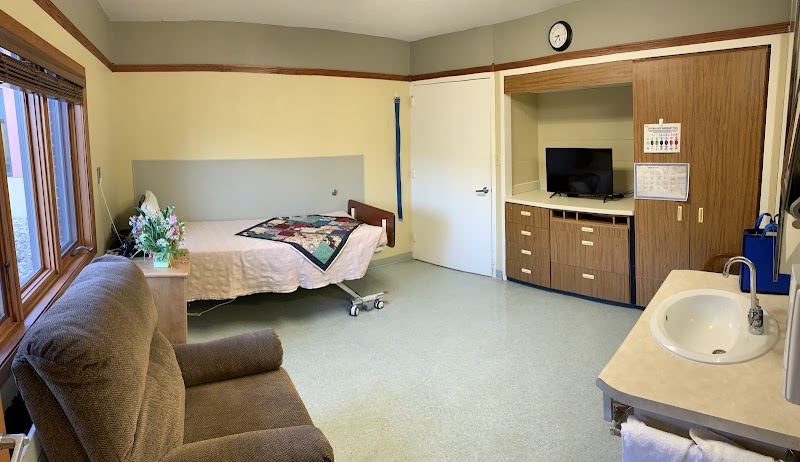
How is Spearfish Canyon Healthcare Staffed?

CMS rates SPEARFISH CANYON HEALTHCARE's staffing level at 2 out of 5 stars, which is below average compared to other nursing homes. Staff turnover is 52%, compared to the South Dakota average of 46%.

What Have Inspectors Found at Spearfish Canyon Healthcare?

State health inspectors documented 20 deficiencies at SPEARFISH CANYON HEALTHCARE during 2023 to 2025. These included: 1 that caused actual resident harm and 19 with potential for harm. Deficiencies causing actual harm indicate documented cases where residents experienced negative health consequences.
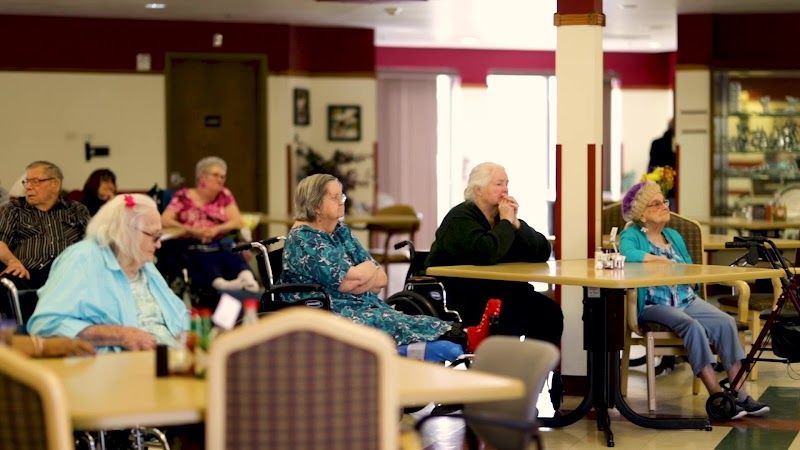
Who Owns and Operates Spearfish Canyon Healthcare?

SPEARFISH CANYON HEALTHCARE is owned by a for-profit company. For-profit facilities operate as businesses with obligations to shareholders or private owners. The facility is operated by EDURO HEALTHCARE, a chain that manages multiple nursing homes. With 105 certified beds and approximately 75 residents (about 71% occupancy), it is a mid-sized facility located in SPEARFISH, South Dakota.

How Does Spearfish Canyon Healthcare Compare to Other South Dakota Nursing Homes?

Compared to the 100 nursing homes in South Dakota, SPEARFISH CANYON HEALTHCARE's overall rating (2 stars) is below the state average of 2.7, staff turnover (52%) is near the state average of 46%, and health inspection rating (2 stars) is below the national benchmark.

What Should Families Ask When Visiting Spearfish Canyon Healthcare?

Based on this facility's data, families visiting should ask: "Can you walk me through typical staffing levels on day, evening, and night shifts?" "Can I visit during a mealtime to observe dining assistance and food quality?" "How do you handle medical emergencies, and what is your hospital transfer rate?" "Can I speak with family members of current residents about their experience?" These questions are particularly relevant given the below-average staffing rating.

Is Spearfish Canyon Healthcare Safe?

Based on CMS inspection data, SPEARFISH CANYON HEALTHCARE has a clean safety record: no substantiated abuse findings (meaning no confirmed cases of resident harm), no Immediate Jeopardy citations (the most serious violation level indicating risk of serious injury or death), and is not on the Special Focus Facility watch list (a federal program monitoring the lowest-performing 1% of nursing homes). The facility has a 2-star overall rating and ranks #100 of 100 nursing homes in South Dakota. While no facility is perfect, families should still ask about staff-to-resident ratios and recent inspection results during their visit.

Do Nurses at Spearfish Canyon Healthcare Stick Around?

SPEARFISH CANYON HEALTHCARE has a staff turnover rate of 52%, which is 5 percentage points above the South Dakota average of 46%. Moderate turnover is common in nursing homes, but families should still ask about staff tenure and how the facility maintains care continuity when employees leave.

Was Spearfish Canyon Healthcare Ever Fined?

SPEARFISH CANYON HEALTHCARE has been fined $3,250 across 1 penalty action. This is below the South Dakota average of $33,111. While any fine indicates a compliance issue, fines under $50,000 are relatively common and typically reflect isolated problems that were subsequently corrected. Families should ask what specific issues led to these fines and confirm they've been resolved.

Is Spearfish Canyon Healthcare on Any Federal Watch List?

SPEARFISH CANYON HEALTHCARE is not on any federal watch list. The most significant is the Special Focus Facility (SFF) program, which identifies the bottom 1% of nursing homes nationally based on persistent, serious quality problems. Not being on this list means the facility has avoided the pattern of deficiencies that triggers enhanced federal oversight. This is a positive indicator, though families should still review the facility's inspection history directly.