Wakonda Heritage Manor
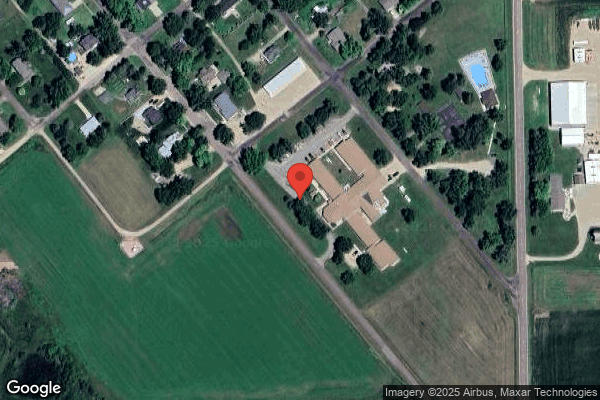

515 OHIO STREET, WAKONDA, SD 57073 (605) 267-2081
Non profit - Other 38 Beds AVERA HEALTH Data: November 2025
Trust Grade
73/100
#28 of 95 in SD
Last Inspection: February 2025

Within standard 12-15 month inspection cycle. Federal law requires annual inspections.

Overview

Wakonda Heritage Manor has received a Trust Grade of B, indicating it is a good choice for families seeking care, ranking #28 out of 95 nursing homes in South Dakota, which places it in the top half of facilities in the state. However, the facility is experiencing a worsening trend, with issues increasing from 1 in 2024 to 2 in 2025. Staffing is a relative strength, with a 4 out of 5 rating and a turnover rate of 38%, which is better than the state average of 49%. On the downside, the facility has been fined $19,500, which is average, and has had some concerning incidents, such as a dietary staff member failing to maintain proper hand hygiene while handling food and a resident being observed in a potentially unsafe environment due to unclear communication and an unsteady gait. Overall, while there are strengths in staffing and overall quality, families should consider the recent negative trends and specific incidents when making their decision.

Trust Score
B
73/100
In South Dakota
#28/95
Top 29%
Safety Record
Moderate
Needs review
Inspections
Getting Worse
1 → 2 violations
Staff Stability
○ Average
38% turnover. Near South Dakota's 48% average. Typical for the industry.
Penalties
○ Average
$19,500 in fines. Higher than 54% of South Dakota facilities. Some compliance issues.
Skilled Nurses
✓ Good
Each resident gets 49 minutes of Registered Nurse (RN) attention daily — more than average for South Dakota. RNs are trained to catch health problems early.
Violations
✓ Good
Only 5 deficiencies on record. Cleaner than most facilities. Minor issues only.
★★★★☆
4.0
Overall Rating
★★★★☆
4.0
Staff Levels
★★★☆☆
3.0
Care Quality
★★★★☆
4.0
Inspection Score
Stable
2024: 1 issues
2025: 2 issues

The Good

  • 4-Star Staffing Rating · Above-average nurse staffing levels
  • Full Sprinkler Coverage · Fire safety systems throughout facility
  • No fines on record
  • Staff turnover below average (38%)

    10 points below South Dakota average of 48%

Facility shows strength in staffing levels, fire safety.

The Bad

Staff Turnover: 38%

Near South Dakota avg (46%)

Typical for the industry

Federal Fines: $19,500

Below median ($33,413)

Minor penalties assessed

Chain: AVERA HEALTH

Part of a multi-facility chain

Ask about local staffing decisions and management

The Ugly 5 deficiencies on record

1 actual harm
Feb 2025 2 deficiencies 1 Harm
SERIOUS (G) 📢 Someone Reported This

A family member, employee, or ombudsman was alarmed enough to file a formal complaint

Actual Harm - a resident was hurt due to facility failures

Accident Prevention (Tag F0689)

A resident was harmed · This affected 1 resident

**NOTE- TERMS IN BRACKETS HAVE BEEN EDITED TO PROTECT CONFIDENTIALITY** 11. Observation and interview on 2/11/25 at 12:44 p.m. with resident 21 in her room revealed: *Her speech was unclear, and she w...

Read full inspector narrative →
**NOTE- TERMS IN BRACKETS HAVE BEEN EDITED TO PROTECT CONFIDENTIALITY** 11. Observation and interview on 2/11/25 at 12:44 p.m. with resident 21 in her room revealed: *Her speech was unclear, and she was not able to answer any direct questions. *She walked with an unsteady gait. *There was an electric lift chair and a wheeled, swivel desk chair with a throw blanket draped over it that hung near its wheels. 12. Observation on 2/13/25 at 8:50 a.m. of resident 21 in her room revealed: *She sat herself in the electric lift chair. *The control for that chair was on the right-side armrest. *That control lifted and lowered that chair when the button was pressed. *She then tucked that control between the armrest and the back of the chair. 13. Observation and interview on 2/13/25 at 10:04 a.m. with CNA H in resident 21's room revealed: *Resident 21 often knew what she wanted but had a difficult time communicating with words. *CNA H stated the wheeled swivel desk chair looked like a fall hazard, but resident 21 only sat in her electric lift chair. She had not seen resident 21 sit in the desk chair. *The desk chair was where resident 21 put her dirty clothes at night. 14. Review of resident 21's EMR revealed: *She was admitted to the facility on [DATE]. *Her diagnoses included Alzheimer's disease with late onset and anxiety disorder. *Her BIMS assessment score was 00, which indicated she was severely cognitively impaired. *A 1/3/25 lift chair assessment determined Resident is unsafe. Resident does not meet [the] criteria to operate lift chair independently. *Her care plan indicated: -I will benefit from simple, repetitive, one-step instructions during activities. -Encourage resident to sit in her recliner w/her [with her] feet up. -Per lift chair assessment, I am not safe to use the controls on my own. 15. Interview on 2/13/25 at 1:29 p.m. with director of nursing (DON) B regarding electric lift chairs revealed: *All residents were assessed for the safe use of electric lift chairs on admission, quarterly, and with any significant change. *The care plan should have indicated if a resident was unsafe to use an electric lift chair. *Residents were allowed to have an electric lift chair in their room as long as it had been unplugged. *Staff removed the electric lift chair's power cord from some residents' chairs and some residents were required to call for assistance with using the lift chair. -Staff would plug the electric lift chair in at that time and then unplug it after it had been positioned. *Power cords would be removed from the chair and from the resident's room if a resident could not comprehend the safe use of the lift chair. *She expected resident 3's electric lift chair to have been unplugged because the assessment had determined he was unsafe to use that chair independently. *She expected resident 21's electric lift chair to have been unplugged because the assessment had determined she was unsafe to use that chair independently. *Staff knew which residents required assistance with their lift chairs and which lift chairs were to remain unplugged because it was on the resident's EMR and paper care plan. *She was unaware resident 21 had a wheeled, swivel desk chair with a throw blanket draped over it in her room. *She thought resident 21's family may have brought that desk chair in and stated, We certainly would not have given her a chair with wheels. -She would discuss removing the desk chair with resident 21's family. 16. Review of the provider's Resident Lists of Cares paper care plan revealed: *Resident 3 had a Recliner in [the] room, resident not safe to operate independently. Must remain unplugged. *Resident 21 was Safe to use lift chair independently. 17. Review of the provider's October 2024 LTC (Long Term Care) Lift Chair Safety Assessment policy revealed: *Before a lift chair is used by a resident, a member of the interdisciplinary team will complete a lift chair safety assessment. *If the assessment deems the resident can safely operate [the] lift chair, [the] lift chair will remain in Residents [resident's] room with full power function of lift chair. If the resident is unable to safely operate the lift chair, the power to the chair will be disabled and the chair will remain in the sitting and sedentary position. 18. Review of the provider's 10/1/24 Lift Chair Assessment policy revealed: *Lift chair assessments will be completed in Point Click Care on each resident upon admission to the facility, quarterly and with any significant change. *The purpose of the assessment is to determine whether resident can safely operate the chair independently. Results will be care planned. *Risks associated with lift chairs include but are not limited to the following: -Falling out of the chair which could cause serious injury and potential death. -Cognitive decline may lead to poor judgement related to when and when not to engage the chair. -Individuals who use mobility devices may have an increased risk for falls. -Risk of injury may be higher for those who present with the multiple factors and spend prolonged periods of time using the device unsupervised. Based on South Dakota Department of Health (SD DOH) facility-reported incident (FRI), record review, observation, interview, and policy review the provider failed to ensure two of two sampled residents (3 and 21) who were assessed and determined unable to safely use electronic lift chairs independently did not have access to the lift chair control or the chairs' power cords were unplugged or removed as directed in their assessments. Findings include: 1. Review of the provider's 11/22/24 SD DOH FRI regarding resident 3 revealed: *On 11/22/24 at 7:45 p.m. resident 3 had fallen out of his lift chair. -The resident was found by registered nurse (RN) I in his room, lying face down on the floor with his head next to his bed -The resident denied having pain. -He was rolled onto his back with staff assistance. -His vitals were as follows: Blood pressure (BP) 122/79, pulse rate (P) 54, respiratory rate (R) 16 breaths per minute, and oxygen saturation (SpO2) (oxygen level in the blood) of 95%. -A hematoma (swollen, bruised area) was noted on the resident's forehead and a small laceration on his nose. -The resident was alert to self only and verbal with confusion. He could not provide information as to why he was found lying on the floor. -His call light remained clipped on to the resident's chest area of his shirt. -The lift chair was found to be in the most upright position. -His catheter bag remained attached to the pocket on the lower right side of the lift chair. -A call was placed to 911 by RN I. -At 8:33 p.m. the resident was evaluated by emergency medical services (EMS). -His blood glucose was tested and found to be 150, BP 120/85, P 61, R 16, and SpO2 98%. -The resident was transferred to the local hospital by EMS at 8:50 p.m. -At 9:03 p.m. his family was notified of the incident. -His primary care provider (PCP) was notified of the incident. 2. Review of resident 3's electronic medical record (EMR) revealed: *A Lift Chair Assessment had been completed on 4/22/24, 9/6/24, 10/16/24, and 11/29/24. -Each individual assessment had indicated that the resident did not meet the criteria to safely operate a lift chair independently. *A physical restraint assessment was completed on 4/4/23 and had indicated staff were to hook the control for the lift chair on the backside of the chair and to reassess quarterly. *He had a history of raising the lift chair in an upright position and falling when he was sitting in it and had access to the control. *His baseline care plan indicated he had Depression, Paranoid Schizophrenia (one's mind doesn't agree with reality such as hallucinations and delusions), Epilepsy (brain disorder that causes seizures), Insomnia, Aphasia (language disorder that affects one's ability to communicate), and Cerebral Infarction (stroke). -He had tremors that were not related to his medications. -He had balance problems and a history of falls. *On 11/12/24 he had a Brief Interview for Mental Status (BIMS) assessment with a score of 6, which indicated he was severely cognitively impaired. *His care plan had been updated on 12/3/24 to include he did not meet the criteria to safely operate his lift chair independently and would utilize his call light and request assistance to get to and from the chair. 3. Observation on 2/11/25 at 2:30 p.m. of resident 3's room revealed: *The lift chair was plugged into an outlet behind the chair with the control inside its side pocket. -The chair raised and lowered with the use of the control. 4. Observation and interview on 2/11/25 at 10:45 a.m. with resident 3 who was seated in his wheelchair with call light attached to his blanket that was draped over his lap was attempted but he was unable to provide adequate information related to the above fall with injury. *There were no observations at any time, of resident 3 sitting in the lift chair. 5. Interview on 2/11/25 at 2:37 p.m. with certified nursing assistant (CNA) G regarding resident 3 revealed: *He rarely used the lift chair in his room, and when he did, he felt they made sure it was unplugged. -The lift chair was used to raise his legs to decrease the edema in his lower legs. 6. Observation on 02/12/25 at 10:13 a.m. revealed: *Power cord remained attached to the lift chair in resident 3's room. 7. Random observations of resident 3 during the survey revealed he had not been in the lift chair and the control was in the lift's side pocket. 8. Interview on 2/12/25 at 3:15 p.m. with RN C revealed: -The lift chair belonged to resident 3 and was to remain in his room, unplugged and without availability for his use of the remote. -He was not sure why the lift chair remained in resident 3's room, other than it belongs to the resident. -Resident 3 no longer sat in his lift chair due to his history of falls with the use of the chair. 9. Observation on 02/13/25 at 9:10 a.m. of resident 3's room revealed the lift chair's electric power cord had been removed. 10. RN I was not available for interview at the time of the survey.
CONCERN (F)

Potential for Harm - no one hurt, but risky conditions existed

Food Safety (Tag F0812)

Could have caused harm · This affected most or all residents

Based on observation, interview, and policy review, the provider failed to ensure appropriate hand hygiene and glove use was performed to prevent contamination of resident foods by two of two dietary ...

Read full inspector narrative →
Based on observation, interview, and policy review, the provider failed to ensure appropriate hand hygiene and glove use was performed to prevent contamination of resident foods by two of two dietary staff (dietary manager J and medical secretary K) during one of one observed meal service in the kitchen and dining room. Findings include: 1. Observation on 2/11/25 at 11:31 a.m. in the main dining room during the noon meal service revealed: *At 11:31 a.m. dietary manager (DM) J began to prepare the resident meal plates. *DM J wore gloves while she prepared to plate the resident's food. *While wearing those same gloves, she: -Touched the surface of trays that were being reused to deliver food to the resident's tables. -Repeatedly touched the individual resident's diet cards. -Touched her cap. -Touched plates and serving utensils. -Picked up ready to eat dinner rolls and placed them on plates. -Continued to dish up food and pick up dinner rolls until the meal service was finished, with those same gloved hands. *Medical secretary K delivered meals to the residents. She reused the same two trays to carry the meal items to the tables. -She asked DM J if she needed to wash her hands between meal deliveries and was told she did not. -She set the trays on the tables while serving the residents' meals. -She touched residents on their shoulders while serving the meals. -She did not wash her hands during the meal service. 2. Interview on 2/12/25 at 9:30 a.m. with DM J revealed: *She had worked in the dietary department for more than six years. *She provided the new employee and annual training for the dietary staff. *She did not think she needed to change gloves to serve the rolls. *She had not considered using tongs to serve them. *She thought she could change her gloves three times before she needed to wash her hands. *She did not know they should have used clean trays to deliver residents' meals. *That was the first time medical secretary K had helped with a meal service in the dining room. *She had told medical secretary K that she did not need to wash her hands between delivering resident meals. 3. Interview on 2/12/25 at 3:30 p.m. with director of nursing (DON) B who was the acting infection preventionist revealed: *She expected that kitchen staff would follow the hand hygiene and glove changing practices as stated in their hand hygiene policy. *She did not know why DM J thought she could change her gloves three times without washing her hands between each glove change. 4. Review of DM J's undated food safety staff in-service training on Personal Hygiene and Handwashing from the Association of Nutrition & Food Service professionals revealed to always wash your hands: -Before putting on clean, single-use gloves for working with food and between glove changes. -If you touch anything that may contaminate your hands, wash them. 5. Review of DM J's in-service training material from Horizon US Foodservice dated April 2006 on Proper Handwashing Technique revealed: -If a food handler does not wash their hands before putting on gloves, the outside of the glove becomes contaminated. -The food handler may contaminate the gloves by touching face, hair, equipment, etc. -Gloves should be changed before handling ready-to-eat foods. 6. Review of DM J's undated in-service training material titled Glove Use and Bare-Hand Contact revealed: -Disposable gloves are not a substitute for handwashing, and hands need to be clean before putting gloves on them. -Anything that can contaminate your hands will contaminate gloves as well. -Change gloves after touching your hair, face, or other non-disinfected surfaces. 7. Review of the provider's 11/14/2024 long term care (LTC) Hand Hygiene policy revealed: *HH (hand hygiene) either with soap and water or with alcohol-based hand rub (ABHR): -After removing gloves. *ABHR may be used instead of soap and water except when in a food preparation setting.
Jun 2024 1 deficiency
CONCERN (D) 📢 Someone Reported This

A family member, employee, or ombudsman was alarmed enough to file a formal complaint

Potential for Harm - no one hurt, but risky conditions existed

Menu Adequacy (Tag F0803)

Could have caused harm · This affected 1 resident

Based on observation, interview, record review, and policy review, the provider failed to ensure menu substitutions for special events were reviewed and approved by a registered dietitian. Findings in...

Read full inspector narrative →
Based on observation, interview, record review, and policy review, the provider failed to ensure menu substitutions for special events were reviewed and approved by a registered dietitian. Findings include: 1.Observation on 6/24/24 at 12:08 p.m. of resident 1 in the dining room revealed: *He was assisted into the dining room in his wheelchair by a staff member. *His juice, water, and soy milk were at the table for him. *Dietary staff brought his meal on a portioned plate which consisted of meatballs, a baked potato, and wax beans. *The meatballs were ground. *All other foods were cut into small pieces. *He used weighted gloves to keep his hands steady. 2. Interview on 6/24/24 at 1:35 p.m. with resident 1 in his room revealed: *He had an issue with choking a few days ago and went to the hospital. *The meal he was served that day included steak and potatoes for a special Father's Day meal. *He said he had issues with swallowing but that was better now. *The meat was ground up now and his other food was cut into small pieces. *He was ok with his new diet. 3. Interview and record review on 6/24/24 at 3:00 p.m. with dietary manager C regarding the incident with resident 1 revealed: *The meal on the menu for supper on 6/14/24 was, a hot dog and a bun, mashed potatoes and gravy, pea salad, and a banana. *They provided a special Father's Day meal of steak and foil packets that contained potatoes, carrots, onions, and butter for the male residents. *She had marinated the steaks in the morning before they were cooked. *She cut up the steaks for residents before they were served. *Resident 1 was originally on an NDD2 diet with regular meat and staff would cut up the meat. -He came back from the hospital with an order for a speech evaluation. -On 6/19/24 the speech therapist did a speech eval and education to change his diet to NDD2 with ground meat. -He was now on NDD2 diet (moist, soft foods) with ground meat. *The female residents were served what was listed on the menu. *The June menu substitution log revealed staff had not added the steak and vegetable foil packets to the menu substitution log for the registered dietitian to review and approve. *It was her expectation that staff would have added those food items to the substitution log for the dietitian to review and approve. 4. Interview on 6/24/24 at 3:30 p.m. with director of nursing (DON) B regarding resident choking and emergency response in the dining room revealed: *All the nursing staff are CPR certified which included choking response. *They have an annual training to go over emergency procedures that pertain to the residents and the facility. *Resident 1 was on an NDD2 diet with regular meat at the time of his choking incident. *After that incident they obstained an order for a speech evaluation. *The evaluation was completed on 6/19/24 and his diet was changed to NDD2 with ground meat. 5. Interview and record review on 6/24/24 at 4/25 p.m. with licensed practical nurse (LPN)D regarding resident 1's choking incident on 6/14/24 revealed: *She worked the day shift on 6/15/24. *Resident 1 was in the dining room for breakfast but did not want to eat due to complaints of nausea. *He was taken back to his room where he had some watery emesis (vomit) with bits of egg in it. *She gave him Zofran (medication to pervent nausea per his doctor's orders. *He continued to have emesis issues throughout the day but denied any issues with breathing. *She called an electronic long-term care support service, and they recommended he be sent to the emergency room (ER) for an evaluation. *He was evaluated in the ER and then admitted to the hospital for thevremoval of the steak. *They had removed two ¼ inch-sized pieces of steak from his throat from the special Father's Day meal the night before. *He returned to the facility on 6/16/24 with orders for a clear liquid diet and a speech evaluation. *The speech evaluation changed his diet to NDD2 with soft meats. *He would be moved to a different table in the dining room to allow for increased staff observation for signs of choking. 6. Interview on 6/24/24 at 4:40 p.m. with administrator A regarding resident 1's choking incident revealed: *They provide special meals for residents on special occasions like Mother's Day, Father's Day, and St. Patrick's Day. *All nursing staff were trained in CPR and to address choking issues. *There was always a member of the nursing department in the dining room. *She was not sure if dietary staff had ever documented the special meal menus on the substitution sheet for the dietitian to review and approve. *She agreed the dietary staff should have followed the policy for menu substitutions. Review of the provider's menu substitutions policy dated 2021 revealed: *Menu substitutions will be made after discussion with the director of food and nutrition services whenever possible. Last minute substitutions may need to be made for uncontrollable situations (ie. inventory emergency when a food item is temporarily unavailable) . *3. All changes to the menu (including the date, menu item substitution, and reason for the substitution) will be recorded. *4. The registered dietitian (RDN) or designee will periodically evaluate menu changes and if needed, an appropriate plan of action will be made to correct any concerns.
Oct 2023 1 deficiency
CONCERN (D)

Potential for Harm - no one hurt, but risky conditions existed

Infection Control (Tag F0880)

Could have caused harm · This affected 1 resident

Based on observation, interview, and policy review the provider failed to ensure infection control policies were adhered to with the following: *Appropriate hand hygiene and glove use by two of two ce...

Read full inspector narrative →
Based on observation, interview, and policy review the provider failed to ensure infection control policies were adhered to with the following: *Appropriate hand hygiene and glove use by two of two certified nursing assistants (CNAs) E and F during the provision of personal care for one of one sampled resident (24). *Appropriate sanitization of an EZ stand mechanical lift by CNAs E and F between care for two of two sampled residents ( 24 and 85). Findings include: Observation on 10/18/23 at 8:21 a.m. with CNA E and F assisting resident 24 revealed: *They both entered the room without knocking on the resident's door. *CNA E applied gloves to both hands without performing hand hygiene. *CNA F applied gloves without performing hand hygiene. *CNA E with her gloved hands performed the following tasks she: -Had moistened the personal wipes with water and Aloe Vista cleansing foam. *The bottle of Aloe Vista had fallen into the empty garbage can. -Picked up the bottle of Aloe Vista out the garbage and then placed it on the sink. -Removed resident 24's soiled incontinence brief and performed peri-care. -Assisted CNA F rolling resident 24 from side to side and placed a new incontinence brief. -Continued to assist CNA F and resident 24 with dressing. -Had been touching resident 24's bedding. *They each removed their gloves and then performed hand hygiene. *CNA E applied the EZ lift strap around resident 24's waist. *She then begun to lift the resident up using the mechanical lift and then transferred her to her wheelchair. *CNA E removed her gloves and applied an alcohol hand rub. *She then made the resident's bed. *CNA E wheeled the resident out of her room. *CNA F had moved the EZ stand mechanical lift out into the hallway. -They had not sanitized the lift after using it on resident 24. *CNA F then wheeled the lift into resident 85's room. *CNA E and CNA F attached the sling to resident 85's waist and transferred her to the toilet. Interview with CNA E and CNA F following the above observations revealed: *CNA E had not realized that she used the same gloves to perform peri-care and then assisted resident 24 to dress with those same gloved hands. *CNA F had not realized that CNA E had not sanitized the lift between the use with resident 24 and 85. Interview on 10/19/23 at 3:00 p.m. with registered nurse (RN) D regarding the above observations and interviews revealed: *CNAs have been trained to sanitize the mechanical lifts between each resident use. *She agreed that CNA E should have removed her gloves and performed hand hygiene after performing peri-care and the removal of the resident's soiled brief. Interview on 10/19/23 at 4:04 p.m. with director of nursing (DON) B regarding the above observations and interviews revealed: *She agreed that CNA E should have changed gloves after performing peri-care and removing the resident's soiled brief. *Mechanical lifts were to have been sanitized after each resident use. Review of the provider's April 2023 Hand Hygiene (washing hands with soap and water or using an alcohol hand rub) policy revealed: *Before a clean procedure. *After removing gloves. Review of the provider's October 2023 EZ Stand Operation Lifting/Transferring policy revealed: *Cleaning: -EZ Stand harnesses are for single patient use only to avoid the risk of cross contamination. -EZ stand lift should be thoroughly wiped down with facility approved disinfectant, Allow to dry for a full minute before use.
Aug 2022 1 deficiency
CONCERN (E)

Potential for Harm - no one hurt, but risky conditions existed

Food Safety (Tag F0812)

Could have caused harm · This affected multiple residents

**NOTE- TERMS IN BRACKETS HAVE BEEN EDITED TO PROTECT CONFIDENTIALITY** A. Based on observation, interview, and South Dakota Food Service Code review, the provider failed to ensure proper storage of r...

Read full inspector narrative →
**NOTE- TERMS IN BRACKETS HAVE BEEN EDITED TO PROTECT CONFIDENTIALITY** A. Based on observation, interview, and South Dakota Food Service Code review, the provider failed to ensure proper storage of raw and ready-to-eat meats in one of one walk-in cooler. Findings include: 1. Observation on 8/16/22 at 8:58 a.m. of the bottom shelf of the righthand side food rack in the walk-in cooler revealed: *An unopened log of ready-to-eat uncut deli ham meat and part of a 10-pound (lb.) tube of raw ground beef were on the middle tray. -Red liquid was leaking from the tube of raw ground beef onto the middle tray and onto the floor. The red liquid was touching the unopened log of ready-to-eat uncut deli ham. *The remainder of the 10lb. tube of raw ground beef was on the right tray. Interview on 8/16/22 at 9:41 a.m. with dietary manager C regarding the above observation revealed: *She was able to list how to properly store raw and ready-to-eat meats and agreed the tube of raw ground beef should not have been on the tray with the unopened log of ready-to-eat uncut deli ham. *They recently started receiving raw ground beef in the 10lb. tubes and were trying to figure out how best to thaw it. Review of the Administrative Rule of South Dakota (ARSD) Food Service Code 44:02:07:23, Preventing contamination of packaged and unpackaged food revealed, Packaged and unpackaged food must be protected from cross-contamination by the following methods .Separating raw animal foods during storage, preparation, holding, and display from raw ready-to-eat food, including other raw animal food such as fish for sushi or molluscan shellfish; other raw ready-to-eat food, such as vegetables; and cooked ready-to-eat food. B. Based on observation, interview, and weekly cleaning schedule review, the provider failed to ensure adequate sanitation practices for the floors in one of one kitchen and one of one dish room. Findings include: 1. Observation on 8/16/22 at 8:38 a.m. in the dish room revealed: *The floor drain in the dish room was caked with pieces of colored plastic, chunks of unidentified food, and an unidentifiable gray substance. *The floor drain was halfway plugged with the above-mentioned refuse, which potentially compromised the draining ability. *The floor underneath the handwashing sink in the dish room was caked with an unknown black and greasy-looking substance. 2. Observation on 8/16/22 at 10:57 a.m. in the main kitchen/service area revealed: *The floors underneath the flattop grill, the food prep counters, the three-door cooler, and the hot-holding table were covered with dust, dirt, and food crumbs. *The area of the floors that bordered the black safety mats was covered in an unknown black, greasy substance. Interview on 8/16/22 at 4:07 p.m. with dietary cook E regarding kitchen sanitation activities revealed: *The end-of-day closing procedures included sweeping and mopping. *She mopped every other day. *There was neither a daily cleaning task list nor deep-cleaning task list. *The only cleaning task list they had was the weekly cleaning schedule posted on the kitchen's bulletin board that was located outside the dish room. *She confirmed the cleaning task list did not include cleaning the floors in-between, underneath, or behind equipment. Interview on 8/16/22 at 4:15 p.m. with dietary manager C regarding kitchen sanitation activities revealed: *The black safety mats were cleaned monthly. *Staff were supposed to sweep and mop each day. *They used to have a deep cleaning schedule, but they had not used it for some time. *She thought their weekly cleaning schedule covered everything that needed to be cleaned in the kitchen. *The floors in-between, underneath, and behind equipment should have been cleaned more thoroughly. Review of the dietary department's 8/1-8/18/22 weekly cleaning schedule revealed there was no task on the list indicating to clean the floors underneath, in-between, or behind food service equipment such as the three-door cooler, the flattop grill, or the hot-holding table. C. Based on observation, interview, and policy review, the provider failed to ensure one of five dietary staff wore appropriate hair restraints. Findings include: 1. Observation on 8/16/22 at 11:32 a.m. in the kitchen during lunch service revealed: *Dietary aide D was wearing a hair net, a plastic face shield, and a surgical face mask. *Black beard hairs were seen sticking out of the sides and underneath his face mask. *He was placing beverage cups on resident meal trays. *He had poured the beverages earlier in the day in preparation for lunch service. *There was a short black hair floating in a cup of milk. Interview on 8/17/22 at 8:19 a.m. with dietary aide D regarding beard restraints revealed: *He confirmed he had access to proper beard restraints, like beard nets. *He said that beard nets were discussed at a meeting previously, and it was decided that a surgical face mask was sufficient to act as a beard restraint. -He did not indicate who was involved in the above-mentioned meeting. Interview on 8/17/22 at 8:21 a.m. with dietary manager C regarding beard restraints revealed: *She confirmed they had proper beard restraints, like beard nets. *She assumed a surgical face mask was sufficient to act as a beard restraint. *She was not aware dietary aide D's hair had not been completely restrained within the surgical face mask, or that a hair had been found in a cup of milk that was supposed to have been used for lunch service. *She agreed he should have worn a proper beard restraint, like a beard net. Interview on 8/17/22 at 8:35 a.m. with administrator A regarding the above observations revealed she agreed improvements were needed for food safety, kitchen cleanliness, and the use of proper beard restraints. Review of provider's policy titled Employee Sanitary Practices revealed: *The policy was part of the 2019 Becky [NAME] & Associates, Inc. policy and procedure manual, section 4-4. *Procedure number one stated, All employees will .Wear hair restraints (hairnet, hat, and/or beard restraint) to prevent hair from contacting exposed food.
Understanding Severity Codes (click to expand)
Life-Threatening (Immediate Jeopardy)
J - Isolated K - Pattern L - Widespread
Actual Harm
G - Isolated H - Pattern I - Widespread
Potential for Harm
D - Isolated E - Pattern F - Widespread
No Harm (Minor)
A - Isolated B - Pattern C - Widespread

Questions to Ask on Your Visit

  • "Can I speak with families of current residents?"
  • "What's your RN coverage like on weekends and overnight?"

Our Honest Assessment

Strengths
  • • 38% turnover. Below South Dakota's 48% average. Good staff retention means consistent care.
Concerns
  • • 5 deficiencies on record, including 1 serious (caused harm) violation. Ask about corrective actions taken.
  • • $19,500 in fines. Above average for South Dakota. Some compliance problems on record.
Bottom line: Mixed indicators with Trust Score of 73/100. Visit in person and ask pointed questions.

About This Facility

What is Wakonda Heritage Manor's CMS Rating?

CMS assigns Wakonda Heritage Manor an overall rating of 4 out of 5 stars, which is considered above average nationally. Within South Dakota, this rating places the facility higher than 99% of the state's 100 nursing homes. This rating reflects solid performance across the metrics CMS uses to evaluate nursing home quality.

How is Wakonda Heritage Manor Staffed?

CMS rates Wakonda Heritage Manor's staffing level at 4 out of 5 stars, which is above average compared to other nursing homes. Staff turnover is 38%, compared to the South Dakota average of 46%. This relatively stable workforce can support continuity of care.

What Have Inspectors Found at Wakonda Heritage Manor?

State health inspectors documented 5 deficiencies at Wakonda Heritage Manor during 2022 to 2025. These included: 1 that caused actual resident harm and 4 with potential for harm. Deficiencies causing actual harm indicate documented cases where residents experienced negative health consequences.

Who Owns and Operates Wakonda Heritage Manor?

Wakonda Heritage Manor is owned by a non-profit organization. Non-profit facilities reinvest revenue into operations rather than distributing to shareholders. The facility is operated by AVERA HEALTH, a chain that manages multiple nursing homes. With 38 certified beds and approximately 31 residents (about 82% occupancy), it is a smaller facility located in WAKONDA, South Dakota.

How Does Wakonda Heritage Manor Compare to Other South Dakota Nursing Homes?

Compared to the 100 nursing homes in South Dakota, Wakonda Heritage Manor's overall rating (4 stars) is above the state average of 2.7, staff turnover (38%) is near the state average of 46%, and health inspection rating (4 stars) is above the national benchmark.

What Should Families Ask When Visiting Wakonda Heritage Manor?

Based on this facility's data, families visiting should ask: "Can I visit during a mealtime to observe dining assistance and food quality?" "How do you handle medical emergencies, and what is your hospital transfer rate?" "Can I speak with family members of current residents about their experience?"

Is Wakonda Heritage Manor Safe?

Based on CMS inspection data, Wakonda Heritage Manor has a clean safety record: no substantiated abuse findings (meaning no confirmed cases of resident harm), no Immediate Jeopardy citations (the most serious violation level indicating risk of serious injury or death), and is not on the Special Focus Facility watch list (a federal program monitoring the lowest-performing 1% of nursing homes). The facility has a 4-star overall rating and ranks #1 of 100 nursing homes in South Dakota. While no facility is perfect, families should still ask about staff-to-resident ratios and recent inspection results during their visit.

Do Nurses at Wakonda Heritage Manor Stick Around?

Wakonda Heritage Manor has a staff turnover rate of 38%, which is about average for South Dakota nursing homes (state average: 46%). Moderate turnover is common in nursing homes, but families should still ask about staff tenure and how the facility maintains care continuity when employees leave.

Was Wakonda Heritage Manor Ever Fined?

Wakonda Heritage Manor has been fined $19,500 across 1 penalty action. This is below the South Dakota average of $33,274. While any fine indicates a compliance issue, fines under $50,000 are relatively common and typically reflect isolated problems that were subsequently corrected. Families should ask what specific issues led to these fines and confirm they've been resolved.

Is Wakonda Heritage Manor on Any Federal Watch List?

Wakonda Heritage Manor is not on any federal watch list. The most significant is the Special Focus Facility (SFF) program, which identifies the bottom 1% of nursing homes nationally based on persistent, serious quality problems. Not being on this list means the facility has avoided the pattern of deficiencies that triggers enhanced federal oversight. This is a positive indicator, though families should still review the facility's inspection history directly.