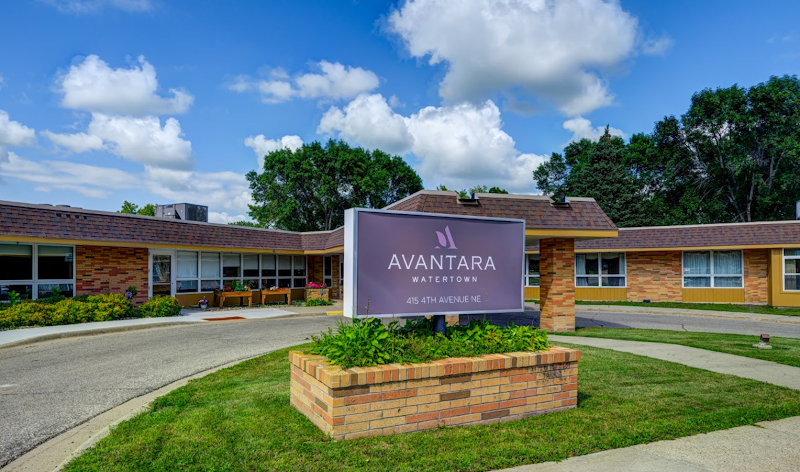

AVANTARA WATERTOWN

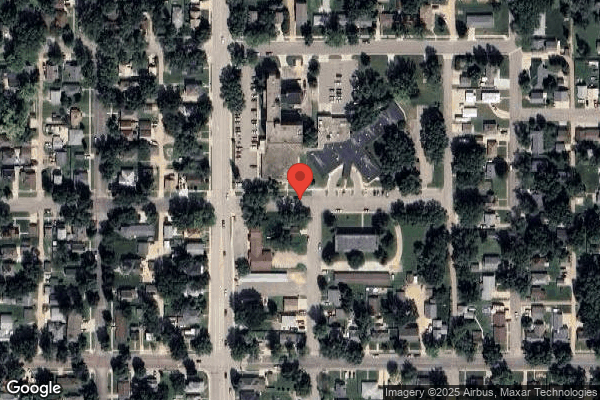
415 FOURTH AVE NE, WATERTOWN, SD 57201 (605) 886-8431
For profit - Limited Liability company 51 Beds LEGACY HEALTHCARE Data: November 2025
Trust Grade
53/100
#53 of 95 in SD
Last Inspection: December 2024

Within standard 12-15 month inspection cycle. Federal law requires annual inspections.

Overview

Avantara Watertown has received a Trust Grade of C, indicating it is average compared to other facilities. It ranks #53 out of 95 nursing homes in South Dakota, placing it in the bottom half, but it is the top facility in Codington County. The facility shows improvement in its trend, reducing issues from four in 2024 to just one in 2025. Staffing is a relative strength, with a rating of 4 out of 5 stars and a turnover rate of 34%, significantly lower than the state average, which suggests that staff members are experienced and familiar with residents' needs. However, the facility has faced some serious concerns, including a significant medication error that led to a resident's acute kidney injury and dignity issues related to uncovered urinary catheter bags in common areas. Overall, while there are strengths in staffing and a trend of improvement, families should be aware of specific incidents that raise concerns regarding resident care.

Trust Score
C
53/100
In South Dakota
#53/95
Bottom 45%
Safety Record
Moderate
Needs review
Inspections
Getting Better
4 → 1 violations
Staff Stability
○ Average
34% turnover. Near South Dakota's 48% average. Typical for the industry.
Penalties
✓ Good
$12,735 in fines. Lower than most South Dakota facilities. Relatively clean record.
Skilled Nurses
✓ Good
Each resident gets 70 minutes of Registered Nurse (RN) attention daily — more than 97% of South Dakota nursing homes. RNs are the most trained staff who catch health problems before they become serious.
Violations
○ Average
7 deficiencies on record. Average for a facility this size. Mostly minor or procedural issues.
★★☆☆☆
2.0
Overall Rating
★★★★☆
4.0
Staff Levels
★☆☆☆☆
1.0
Care Quality
★★★☆☆
3.0
Inspection Score
Stable
2024: 4 issues
2025: 1 issues

The Good

  • 4-Star Staffing Rating · Above-average nurse staffing levels
  • Full Sprinkler Coverage · Fire safety systems throughout facility
  • No fines on record
  • Staff turnover below average (34%)

    14 points below South Dakota average of 48%

Facility shows strength in staffing levels, fire safety.

The Bad

2-Star Overall Rating

Below South Dakota average (2.7)

Below average - review inspection findings carefully

Staff Turnover: 34%

12pts below South Dakota avg (46%)

Typical for the industry

Federal Fines: $12,735

Below median ($33,413)

Minor penalties assessed

Chain: LEGACY HEALTHCARE

Part of a multi-facility chain

Ask about local staffing decisions and management

The Ugly 7 deficiencies on record

1 actual harm
Mar 2025 1 deficiency 1 Harm
SERIOUS (G) 📢 Someone Reported This

A family member, employee, or ombudsman was alarmed enough to file a formal complaint

Actual Harm - a resident was hurt due to facility failures

Deficiency F0760 (Tag F0760)

A resident was harmed · This affected 1 resident

**NOTE- TERMS IN BRACKETS HAVE BEEN EDITED TO PROTECT CONFIDENTIALITY** Based on South Dakota Department of Health (SD DOH) complaint report review, record review, and interview, the provider failed t...

Read full inspector narrative →
**NOTE- TERMS IN BRACKETS HAVE BEEN EDITED TO PROTECT CONFIDENTIALITY** Based on South Dakota Department of Health (SD DOH) complaint report review, record review, and interview, the provider failed to ensure one of one resident (1) had been free from a significant medication error and who suffered an acute kidney injury after she was administered the incorrect dose of medication for five consecutive days. Failure to administer that medication as ordered may have contributed to resident 1's health condition and acute kidney injury. This citation is considered past non-compliance based on a review of the corrective actions the provider implemented following the incident. Findings include: 1. Review of the provider's 2/21/25 SD DOH FRI regarding resident 1 revealed: *Resident 1 had several changes in the frequency and dosage of furosemide (a diuretic medication that reduces extra body fluid) since her admission in response to weight gain and increased edema (fluid retention) in her extremities. *Upon receiving orders for medication changes, the facility faxed the pharmacy the new orders for review and entry into resident 1's medication administration record (MAR). *On 2/7/25 the physician ordered to increase resident 1's daily furosemide dose from 80 milligrams (mg) to 120 mg and she was referred to cardiology. *That physician's order was entered into the MAR by the pharmacy staff to administer an additional 40 mg of furosemide daily in addition to the current order of furosemide 80 mg for a total of 120 mg. *Resident 1 had cardiology appointments on 2/12/25, 2/13/25, and 2/14/25 and was given furosemide 80 mg intravenously (IV) at those appointments. -Written communication was provided by cardiology to the facility to hold resident 1's oral furosemide on those days. *On 2/14/25 resident 1 returned to the facility following her cardiology appointment with orders to restart oral furosemide 80 mg twice daily (a total of 160 mg) the following day (2/15/25). -That medication order was faxed to the pharmacy and was entered in her MAR by pharmacy staff as follows: --Furosemide 80 mg daily was discontinued, and furosemide 80 mg twice daily was entered to start on 2/15/25 as ordered. ---The previous additional furosemide 40 mg daily dose order was not discontinued *The resident was administered the additional dose of furosemide 40 mg daily for five days, from 2/15/25 through 2/19/25. -That medication error was discovered at her cardiology appointment on 2/19/25. *On 2/19/25 a review of her laboratory blood values indicated an increase in her Creatinine (waste product produced by muscle breakdown and is filtered by the kidneys and excreted in urine) level from 1.3 milligrams per deciliter (mg/dl) to 2.0 mg/dl (which may indicate impaired kidney function). *Resident 1 had a weight loss of 13 pounds in those five days. 2. Review of resident 1's electronic medical record (EMR) revealed: *She was admitted on [DATE]. *She had diagnoses that included congestive heart failure, chronic kidney disease, localized edema, and hypertension. *She had a Brief Interview for Mental Status (BIMS) assessment score of 10 that indicated she had moderate cognitive impairment. *A 2/14/25 physician's order Restart oral Lasix tomorrow; 80 mg twice daily. *Her Creatinine level increased from 1.09 mg/dl on 2/5/25 to 2.57 mg/dl on 2/21/25. 3. Review of resident 1's medication administration record (MAR) revealed *She had been given furosemide 40 mg daily on 2/15/25, 2/16/25, 2/17/25, 2/18/25, and 2/19/25. *She had also been given furosemide 80 mg two times daily on those days. 4. Review of resident 1's 2/19/25 cardiology note revealed: *The cardiology provider had contacted the facility regarding resident 1's furosemide dose. -She should only be on 80 mg [of furosemide] twice daily *The care center [facility] did call back, and [resident 1] was given the wrong dose of Lasix [furosemide]. She had been getting a total of 120 mg in the morning with an additional 80 mg in the afternoon. This is likely the result of her acute kidney injury and hypotension. 5. Review of resident 1's 3/6/25 cardiology note revealed: *At her last appointment she was noted to be on the incorrect dose of Lasix and did suffer an acute kidney injury. 6. Review of resident 1's 2/27/25 medication error report revealed: *An additional dose of 40 mg of furosemide was given in the morning for five days. *It was indicated that was a transcription error/overlooked. *Discontinued Medication given, was not appropriately DCd [discontinued]. *The medication error type was marked as Significant. 7. Observation and interview on 3/6/25 at 9:01 a.m. with registered nurse D revealed: *She administered medications to two residents with no errors identified. *She had received education and training recently on the process to be followed when receiving medication orders, communicating with the pharmacy, and using a double-check when confirming those orders to minimize the risk of error. *A new system for processing physician's orders was implemented to ensure a double-check was completed when medication orders were changed in the EMR from pending to confirmed. -Two nurses verified that the order had been entered into the EMR correctly from the written physician's order. 8. Interview on 3/6/25 at 12:35 a.m. with administrator A and director of nursing (DON) B regarding resident 1's medication revealed: *The cardiology provider had notified the facility of the above potential medication error after resident 1's cardiology appointment on 2/19/25. *The facility investigated and confirmed the medication error had occurred. *The facility had faxed the physician's orders to the pharmacy and the pharmacy had entered those orders in the electronic system. The order then appeared as pending in the EMR. *DON B expected the nurse to verify that pending order by cross-checking it with the written physician's order. -That order would then have changed from pending to confirmed in the EMR before the medication was administered. *The furosemide order was changed from 80 mg from once a day to twice daily. *The furosemide 40 mg order had been overlooked and was not discontinued. *They felt the pharmacy staff should have discontinued the 40 mg dose of furosemide 40 mg order when the furosemide 80 mg dose was changed to twice daily. *The nurse should have caught the 40 mg dose needed to be discontinued when she confirmed that order. 9. Interview on 3/6/25 at 1:23 p.m. with registered pharmacist C regarding resident 1's furosemide orders revealed: *He was the manager at the pharmacy that received resident 1's furosemide order on 2/14/25. *He confirmed that before 2/14/25 resident 1 received an 80 mg dose of furosemide and an additional 40 mg dose of furosemide daily. *The facility staff faxed resident 1's 2/14/25 physician's order to Restart oral Lasix tomorrow; 80 mg twice daily, to the pharmacy, and the pharmacy staff entered that order into their EMR system. -They changed the previous 80 mg dose of furosemide from once daily to twice a day. -That pending order then required the facility nursing staff to confirm and verify that the order was correct before they administered that medication to resident 1. *The furosemide 40 mg dose had not been discontinued and had remained as an active order. -That dose should have been discontinued. *It was a manual process to review the EMR across all of the resident's existing medication orders and stated, We missed that one [discontinuing the furosemide 40 mg dose]. *The pharmacy was notified by the facility on 2/21/25 that a medication error had occurred when that furosemide 40 mg dose had not been discontinued and the resident continued to receive that medication for five days. *The pharmacy implemented education on their process to review the entire resident medication profile with all medication changes. -That education was completed on 2/27/25. *There was a daily audit completed to verify that the process was followed. 10. Interview on 3/6/25 at 3:06 p.m. with licensed practical nurse E who participated by phone revealed: *Resident 1 was confused at times and required assistance taking her medications. *On 2/15/25 she had confirmed resident 1's pending order for furosemide 80 mg twice daily. -She had not been familiar with resident 1's medications and did not know that there was an additional order for furosemide 40 mg that needed to be discontinued. *She had been notified that an error had occurred when the 40 mg dose was not discontinued. -She received education on 2/27/25 regarding the facility's new process to have a second nurse verify that a new medication order was correct in the EMR before administering that medication. The provider's implemented actions to ensure the deficient practice does not reoccur was confirmed on 3/6/25 after record review revealed no other resident medication errors had been identified, system changes were implemented at the facility to create a double-check process when pending orders were confirmed, education was provided to all nursing care staff regarding medication order processing and pharmacy notification, interviews revealed staff understood the education provided regarding those topics, the facility had followed their quality assurance process and added accuracy of medication orders to their QAPI process for auditing and monitoring, and the pharmacy staff was re-educated on their responsibility when entering medication orders into the electronic system. Based on the above information, non-compliance at F760 occurred on 2/15/25, and based on the provider's implemented corrective action for the deficient practice confirmed on 3/6/25, the non-compliance is considered past non-compliance.
Dec 2024 3 deficiencies
CONCERN (E)

Potential for Harm - no one hurt, but risky conditions existed

Resident Rights (Tag F0550)

Could have caused harm · This affected multiple residents

Based on observation and interview, the provider failed to preserve the dignity of three of three sampled residents (13), (145), and (146) by not ensuring urinary catheter bags (collects drained urine...

Read full inspector narrative →
Based on observation and interview, the provider failed to preserve the dignity of three of three sampled residents (13), (145), and (146) by not ensuring urinary catheter bags (collects drained urine) were covered while residents were in the common areas. Findings include: 1. Observation on 12/3/24 of resident 13 revealed: *His catheter bag was hanging under his wheelchair with visible urine in it. *At 11:37 a.m., the resident was observed wheeling himself in the hallway with his urinary catheter bag uncovered with visible urine in it. *At 12:08 p.m., the resident was seated in the dining area with his urinary catheter bag uncovered with visible urine. 2. Observation on 12/3/24 of resident 145 revealed: *At 12:25 p.m. during lunch, she was sitting in the dining room with her urinary catheter bag uncovered. -There were three other residents sitting at her table. -The catheter bag contained visible urine and was in clear view of the other residents. *At 3:00 p.m. and again at 3:55 p.m., she was observed in the dining area playing bingo and later watching TV with her urinary catheter bag not covered and with visible urine. 3. Observation on 12/4/24 at 8:25 a.m. of resident 146 revealed he was sitting in the dining area with his urinary catheter bag uncovered and in view of other residents, staff, and visitors. 4. Interview on 12/4/24 at 10:30 a.m. with licensed practical nurse (LPN) D revealed: *She was not unaware of any policy that required urinary catheter bags to be covered. *She reported that she had worked at a different facility that required urinary catheter bag covers to be utilized to preserve resident dignity. 5. Interview on 12/4/24 at 10:35 a.m. with registered nurse (RN) F revealed: *She was not sure if the facility had urinary catheter bag covers. *She was not aware of any policy that required urinary catheter bags to be covered when the resident was not in their room. 6. Follow-up interview on 12/4/24 at 12:30 p.m. with RN F revealed: *She showed this surveyor a packaged urinary catheter privacy cover. *She stated, we do have catheter covers. *When asked if there was a reason they were not used on the previous day, she replied she was not sure, but we fixed it. 7. Interview on 12/5/24 at 1:00 p.m. with director of nursing (DON) B revealed it was her expectation that resident's urinary catheter drainage bags would be covered while residents were out of their rooms.
CONCERN (E) 📢 Someone Reported This

A family member, employee, or ombudsman was alarmed enough to file a formal complaint

Potential for Harm - no one hurt, but risky conditions existed

Pharmacy Services (Tag F0755)

Could have caused harm · This affected multiple residents

Based on the South Dakota Department of Health (SD DOH) Facility Reported Incident (FRI), interview, record review, and policy review, the provider failed to ensure teh accountability of fentanyl patc...

Read full inspector narrative →
Based on the South Dakota Department of Health (SD DOH) Facility Reported Incident (FRI), interview, record review, and policy review, the provider failed to ensure teh accountability of fentanyl patches (a controlled topical pain medication) by not monitoring and documenting the placement of the patches for three of five sampled residents (8, 30, and 144) who were administered fentanyl patches. Findings include: 1. Review of the provider's submitted SD DOH FRI revealed: *On 5/7/24 at 8:00 a.m., registered nurse (RN) G reported to assistant director of nursing (ADON) C that on 5/6/24, she was unable to locate resident 144's fentanyl patch that had been placed on resident 144 on 5/3/24. *ADON C reviewed resident 144's-controlled substance/narcotic record and discovered that nursing staff had been unable to locate his fentanyl patch on four other occasions. *Resident 144 and his spouse were interviewed by administrator A on 5/7/24 and they were not able to determine what may have happened to the missing fentanyl patch. -Administrator A reported that resident 144's spouse was confused at this time. *Housekeeper H was interviewed by administrator A, she was unable to recall seeing any patches or bandages on the floor while cleaning the resident's room. *A pain assessment was completed, and resident rated his pain 0 on a zero to ten scale (0=no pain, 10=the worst pain). *On 5/8/24 at 4:00 a.m., the fentanyl patch placed on 5/6/24 was found on the floor. *The resident's primary care physician was notified of the missing fentanyl patches. -Fentanyl patches were discontinued for the resident. -Resident 144 was started on oral medication for his pain control. *Controlled substance/narcotic record for all other residents who utilized fentanyl patches were reviewed with no other patches found missing. *Education was provided to all nursing staff that any missing narcotic must be reported to the DON and administrator immediately when identified. *Monitoring was added to the medication administration record (MAR) to check placement of fentanyl patches at the beginning and the end of each shift, with the location of the patch being documented in the resident's MAR. 2. Interview on 12/4/24 at 3:15 p.m. with RN F revealed: *The placement of fentanyl patches should be checked each shift. *The checking of patch placement each shift has been considered standard practice since the start of her employment at the facility. *If she was unable to locate a fentanyl patch on a resident, she would search the resident's room (floor, linen, clothing), and if still unable to find the patch, she would report it to her DON. *When asked how to waste or discard controlled substances, she reported there needs to be two nurses to verify and document the waste or discard. 3. Interview on 12/4/24 at 3:18 p.m. with licensed practical nurse (LPN) D revealed: *Fentanyl patch placement should be verified each shift and documented. *Checking patch placement has been considered standard practice since the start of her employment at the facility. *She reported if she were unable to locate a fentanyl patch on a resident, she would first search the resident's room, and if she still could not locate the patch, she would report it to her DON. 4. Interview on 12/5/24 at 9:15 a.m. with administrator A revealed: *When asked who monitors the controlled substance/narcotic record, he reported it was the responsibility of the DON to review the logs. *Referring to the prompt placed in the MAR to check the fentanyl patch placement each shift, he reported it would be the responsibility of the nurse admitting the resident to ensure that was entered into the MAR. *It was his expectation that staff would report a missing fentanyl patch immediately to the DON. 5. Interview on 12/5/24 at 10:00 a.m. with DON B, ADON C, and regional nurse consultant (RNC) I revealed: *Referring to new resident admissions, DON B reported that admissions are a team effort. -The floor nurse would perform and document the resident assessment. -The DON or ADON would usually put in the physician orders. *Referring to the prompt placed in the MAR to check the fentanyl patch placement, DON B reported it would be the responsibility of the person putting in the admission orders to recognize the resident uses a fentanyl patch and to enter the verification of the patch placement each shift prompt into that resident's MAR. -The fentanyl patch placement verification did not automatically accompany the order for the fentanyl patch. *Regional nurse consultant (RNC) I reported the facility was in the process of changing pharmacies and the new pharmacy planned to automatically include the placement verification of the fentanyl patches each shift when a resident utilized a fentanyl patch. *It was the expectation of DON B and ADON C that a resident missing their fentanyl patch would be reported immediately. 6. Review of resident 144's-controlled substance/narcotic record revealed: *On 3/16/24, 3/22/24, 4/18/24, 4/30/24, and 5/3/24, the record was signed by only one nurse and it was documented that the patches were patch missing, or not found. *He had been discharged from the facility. 7. Review of resident 144's MAR revealed: *On 4/21/24, LPN J noted, Patch not on left rear shoulder. Not found on res clothes, bed, floor, table. Two nurse check was done. Not found at this time -It was not noted on the resident's-controlled substance/narcotic record that the fentanyl patch was missing. 8. Review of the provider's list of residents utilizing fentanyl patches printed on 12/4/24 at 2:31 p.m. revealed there were four current residents receiving fentanyl patches (2, 8, 29, and 30). 9. Record review of residents 8 and 30 revealed: *Resident 30's fentanyl patch was ordered on 11/13/24. -The placement verification of the fentanyl patch each shift was not entered into the resident's MAR until 12/4/24 at 2:30 p.m. *Resident 8's fentanyl patch was ordered on 9/10/24. -The placement verification of the fentanyl patch each shift was not entered into the resident's MAR until 12/4/24 at 2:30 p.m. 10. Review of the provider's 11/19/24 Drug Diversion Prevention policy revealed: *Administration of controlled substances section B: Administration of transdermal controlled substances should follow the steps above for documentation of administration, as well as: -i. Placement of patches will be checked and documented on the MAR every shift. -ii. Removal and destruction of controlled substance transdermal patches requires two nurses with appropriate documentation on the specific inventory sheet.
CONCERN (E)

Potential for Harm - no one hurt, but risky conditions existed

Deficiency F0761 (Tag F0761)

Could have caused harm · This affected multiple residents

Based on observation, interview, and policy review, the provider failed to ensure expired medications were removed from one of one medication storage room. Findings include: 1. Observation on 12/5/24 ...

Read full inspector narrative →
Based on observation, interview, and policy review, the provider failed to ensure expired medications were removed from one of one medication storage room. Findings include: 1. Observation on 12/5/24 at 10:55 a.m. in the provider's medication storage room with assistant director of nursing (ADON) C revealed: *In the locked refrigerator, 23 of 23 Hepatitis B vaccines were expired on 6/2/24. *In the locked refrigerator, three 5 milliliters (ml) multi-dose vials of influenza (Flu) vaccine were expired on 6/20/24. 2. Interview with director of nursing (DON) B revealed: *The medication room was checked for outdated medications and supplies each month. *The task was to be completed on night shifts, there was no documented verification that task was completed. *It was her expectation that expired medications would be removed and properly disposed of. 3. Review of the provider's January 2018 Medication Storage in the Facility policy revealed: *Expiration Dating, section G. All expired medications will be removed from the active supply and destroyed in the facility, regardless of amount remaining. The medication will be destroyed in the usual manner.
Mar 2024 1 deficiency
CONCERN (E) 📢 Someone Reported This

A family member, employee, or ombudsman was alarmed enough to file a formal complaint

Potential for Harm - no one hurt, but risky conditions existed

ADL Care (Tag F0677)

Could have caused harm · This affected multiple residents

Based on observation, interview, and record review the provider failed to ensure oral care was consistently performed and accurately documented for three of four sampled residents (2, 3, and 4). Findi...

Read full inspector narrative →
Based on observation, interview, and record review the provider failed to ensure oral care was consistently performed and accurately documented for three of four sampled residents (2, 3, and 4). Findings include: 1. Observation and interview on 3/19/24 at 9:40 a.m. with resident 2 revealed: *He had a considerable amount of plaque build up on his bottom teeth. *He stated that the staff did not consistently assist him with brushing his teeth daily. *He stated that he had not had his teeth brushed in approximately three days. *He was able to locate his toothbrush and the bristles on the toothbrush were hard, dry, and appeared to have not been used for some time. Review of resident 2's electronic medical record (EMR) revealed staff had documented that he had completed his oral care on 3/19/23 at 9:28 a.m. Interview with certified nursing assistant (CNA) D regarding resident 2's oral care revealed she: *Assisted the resident with his morning care on 3/19/24. *Had not assisted him with his oral care as she had documented in the EMR at 9:28 a.m. Review of resident 2's 1/22/24 care plan revealed: *The resident was at risk for alterations in personal care related to decreased mobility. *Interventions included the following: - I do have full upper dentures and a partial lower. I am able at this time to care for them once I have things set up for me. Please assist as needed. My staff will make sure I get this done at least twice daily. Review of resident 2's EMR revealed: *The 1/15/24 Minimum Date Set (MDS) progress note for resident 2 stated the following: -The quarterly MDS review was completed on 1/19/24. - Resident had a full upper and a partial lower denture, his natural teeth were in poor condition/cavity like. *A 2/25/24 SeniorDent progress note stated Note heavy plaque on teeth today with bleeding with scaling mod debri [moderate debris] on partial and denture. He [Resident 2] said he sometimes does forget to take them out to clean them enc [encourage] staff to help with this daily if possible. 2. Observation and interview on 3/19/24 at 11:15 a.m. with resident 3 revealed: *He had missing teeth and visible plaque buildup on his lower teeth by the gum line. *He stated that he had not had his teeth brushed in a couple days. *The toothbrush bristles were dry and did not appear to have been used recently. Review of resident 3's EMR revealed that oral care was documented as completed on 3/19/24 at 11:06 a.m. Interview on 3/19/24 at 11:40 a.m. with CNA F regarding resident 3's oral care revealed: *The resident performed oral care independently. She would ask him if he had brushed his teeth and would assist him with setting up his toothbrush. *When asked how she confirmed that the resident had completed his oral care, she stated she would have asked him. *When asked if she had asked the resident about his oral care today, she said No. *She stated that she had documented in the EMR that his oral care was completed without verifying with the resident. Review of resident 3's 2/1/24 care plan revealed: *The resident was at risk for alterations in personal care related to decreased mobility. *The resident had his natural teeth, and they were in poor health. *Interventions included the following: -I may be able to brush my own teeth once set up if I am not too tired, otherwise please make sure I get my teeth brushed twice a day. Please provide oral care with a mouth swab as needed throughout the day and night. Review of resident 3's EMR revealed: *The 2/12/24 MDS progress note for resident 3 stated the following: -The resident's quarterly MDS review was completed on 2/12/24. -The resident denied any broken or sharp teeth along with any other mouth concerns. Teeth appeared to have cavities but reported no pain. 3. Observation on 3/19/24 at 11:30 a.m. of resident 4 revealed that her toothbrush was dry and the toothbrush bristles were hard. She was unable to answer if she had her teeth brushed. Review of resident 4's EMR revealed that oral care was documented as completed for resident 4 on 3/19/24 at 10:09 a.m. Interview on 3/19/24 at 11:50 a.m. with CNA E regarding resident 4's oral care revealed: *She stated that she had brushed resident 4's teeth that morning. *When asked about resident 4's toothbrush being dry and appeared that the toothbrush had not been used that morning, she stated that she had thrown away the toothbrush she used that morning on resident 4. Review of resident 4's 10/16/23 care plan revealed: *The resident was at risk for alterations in personal care related to decreased mobility. *The resident had her natural teeth, and they were in good condition. *There were no interventions listed on how to care for the resident's teeth. 4. Interview on 3/19/24 at 3:40 p.m. with director of nursing (DON) B and registered nurse (RN) C revealed that they expected oral care would have been completed on all residents twice daily. 5. Interview on 3/19/24 at 4:00 p.m. with administrator A revealed the provider did not have a policy for oral care.
Sept 2023 1 deficiency
CONCERN (E)

Potential for Harm - no one hurt, but risky conditions existed

Deficiency F0761 (Tag F0761)

Could have caused harm · This affected multiple residents

Based on observation, interview, and record review the provider failed to ensure their pharmacy services were consistent in labeling identification information and appropriate handling information for...

Read full inspector narrative →
Based on observation, interview, and record review the provider failed to ensure their pharmacy services were consistent in labeling identification information and appropriate handling information for cytotoxic agents (a toxic agent that has the ability to kill dividing cells such as cancer treatment or substance in some types of venom) for five of five sampled residents (11, 12, 13, 15, and 36) receiving such agents. Findings include: 1. Observation and interview on 9/27/23 at 4:07 p.m. with registered nurse (RN) D regarding the medication bubble packs that had red hazardous labels attached to them located in the medication room revealed: *Finasteride 5 mg bubble pack was labeled as hazardous, but there were no instructions for the nursing staff regarding proper administration of that medication. *Paroxetine 20 mg bubble pack was labeled as hazardous, but there were no instructions for the nursing staff regarding proper administration of that medication. *RN D was not sure why the above medications had a red hazardous label attached to them. -She was not aware that finasteride was a cytotoxic medication. 2. Review of resident 11's electronic medical record (EMR) revealed: *There was a physician's order to administer finasteride 5 milligrams (mg) daily orally. *There was no black box warning (proper handling, administration, and the destruction of medication) on the medication. 3. Review of resident 12's EMR revealed: *There was a physician's order to administer finasteride 5 mg daily orally. *There was no black box warning (proper handling, administration, and destruction of the medication) on the medication. 4. Review of resident 13's EMR revealed: *There was a physician's order to administer finasteride 5 mg daily orally. *There was no black box warning on the medication. 5. Review of resident 15's EMR revealed: *There was a physician's order to administer finasteride 5 mg daily orally. *Medication was to have been crushed and administered with applesauce. *There was no black box warning on the medication. 6. Review of resident 36's EMR revealed: *There was a physician's order to administer finasteride 5 mg daily orally. *The medication was to have been dissolved in 15 to 30 milliliters (ml) of warm water. *There was no black box warning on the medication. Interview on 9/28/23 at 8:30 a.m. with RN D regarding the black box warnings on the medication administration record (MAR) revealed: *She agreed that the finasteride had no black box warning information for staff administering the medications. *There was a warning tab on the methotrexate that the medication was cytotoxic. Interview on 9/28/23 at 8:55 a.m. with unit manager RN C regarding the hazardous labeling of the above medication revealed: *She noticed the hazardous labels on those medications. *She agreed that there was no further information regarding the handling or administration of those medications labeled as hazardous. *The previous pharmacy that was used labeled medication with safe handling and administration instructions for the hazardous medication. Interview by phone on 9/28/23 at 12:24 p.m. with consultant licensed pharmacist E regarding the labeling of hazardous medication revealed: *The pharmacy had only placed red hazardous labels on those medications. *She felt the responsibility to know what the medication hazard was the facility's responsibility. *Staff that were pregnant should not have been handling those medications without wearing gloves. Request on 9/28/23 at 12:30 p.m. to RN C had been made to prior to survey exit for a policy on hazardous medication administration.
Jul 2022 1 deficiency
CONCERN (D)

Potential for Harm - no one hurt, but risky conditions existed

Safe Environment (Tag F0584)

Could have caused harm · This affected 1 resident

Based on observation, interview, and policy review, the provider failed to ensure 12 of 28 bathroom doors were maintained in a safe and homelike manner. Findings include: 1. Observation on 7/19/22 fro...

Read full inspector narrative →
Based on observation, interview, and policy review, the provider failed to ensure 12 of 28 bathroom doors were maintained in a safe and homelike manner. Findings include: 1. Observation on 7/19/22 from 4:45 p.m. through 5:27 p.m. and on 7/20/22 from 10:25 a.m. through 10:58 a.m. of resident room doors and bathroom doors revealed: *The interior bottom twelve inches of the bathroom doors in rooms 1, 3, 7, 9, 10, 11, 16, 17, 18, 20, 24, and 25 had multiple scrapes and gouges. *There were sharp edges where the wood had been peeled away from the bottom of the doors. *Those damaged areas could have caused splinters, skin tears, or lacerations if a resident had come in contact with them. 2. Interview on 7/20/22 at 1:27 p.m. with administrator A revealed: *She was aware of the conditions of the bathroom doors. *The gouges and scrapes in the bathroom doors were from wheelchair foot pedals. *They did have a computer driven preventative maintenance program. *The building was next in line for a refresh which would include new carpet and replacing doors as necessary. 3. Review of the provider's October 2019 Homelike Environment policy revealed: *Residents are provided with a safe, clean, comfortable and homelike environment and encouraged to use their personal belongings to the extent possible. 1. Staff shall provide person-centered care that emphasizes the residents' comfort, independence and personal needs and preferences. 2. The facility staff and management shall maximize, to the extent possible, the characteristics of the facility that reflect a personalized, homelike setting. These characteristics include: - .i. Walls and door scuffs/chips repaired with paint/stain when needed.
Understanding Severity Codes (click to expand)
Life-Threatening (Immediate Jeopardy)
J - Isolated K - Pattern L - Widespread
Actual Harm
G - Isolated H - Pattern I - Widespread
Potential for Harm
D - Isolated E - Pattern F - Widespread
No Harm (Minor)
A - Isolated B - Pattern C - Widespread

Questions to Ask on Your Visit

  • "Can I speak with families of current residents?"
  • "What's your RN coverage like on weekends and overnight?"

Our Honest Assessment

Strengths
  • • 34% turnover. Below South Dakota's 48% average. Good staff retention means consistent care.
Concerns
  • • 7 deficiencies on record, including 1 serious (caused harm) violation. Ask about corrective actions taken.
  • • $12,735 in fines. Above average for South Dakota. Some compliance problems on record.
  • • Grade C (53/100). Below average facility with significant concerns.
Bottom line: Mixed indicators with Trust Score of 53/100. Visit in person and ask pointed questions.

About This Facility

What is Avantara Watertown's CMS Rating?

CMS assigns AVANTARA WATERTOWN an overall rating of 2 out of 5 stars, which is considered below average nationally. Within South Dakota, this rating places the facility higher than 0% of the state's 100 nursing homes. A rating at this level reflects concerns identified through health inspections, staffing assessments, or quality measures that families should carefully consider.

How is Avantara Watertown Staffed?

CMS rates AVANTARA WATERTOWN's staffing level at 4 out of 5 stars, which is above average compared to other nursing homes. Staff turnover is 34%, compared to the South Dakota average of 46%. This relatively stable workforce can support continuity of care.

What Have Inspectors Found at Avantara Watertown?

State health inspectors documented 7 deficiencies at AVANTARA WATERTOWN during 2022 to 2025. These included: 1 that caused actual resident harm and 6 with potential for harm. Deficiencies causing actual harm indicate documented cases where residents experienced negative health consequences.

Who Owns and Operates Avantara Watertown?

AVANTARA WATERTOWN is owned by a for-profit company. For-profit facilities operate as businesses with obligations to shareholders or private owners. The facility is operated by LEGACY HEALTHCARE, a chain that manages multiple nursing homes. With 51 certified beds and approximately 46 residents (about 90% occupancy), it is a smaller facility located in WATERTOWN, South Dakota.

How Does Avantara Watertown Compare to Other South Dakota Nursing Homes?

Compared to the 100 nursing homes in South Dakota, AVANTARA WATERTOWN's overall rating (2 stars) is below the state average of 2.7, staff turnover (34%) is significantly lower than the state average of 46%, and health inspection rating (3 stars) is at the national benchmark.

What Should Families Ask When Visiting Avantara Watertown?

Based on this facility's data, families visiting should ask: "Can I visit during a mealtime to observe dining assistance and food quality?" "How do you handle medical emergencies, and what is your hospital transfer rate?" "Can I speak with family members of current residents about their experience?"

Is Avantara Watertown Safe?

Based on CMS inspection data, AVANTARA WATERTOWN has a clean safety record: no substantiated abuse findings (meaning no confirmed cases of resident harm), no Immediate Jeopardy citations (the most serious violation level indicating risk of serious injury or death), and is not on the Special Focus Facility watch list (a federal program monitoring the lowest-performing 1% of nursing homes). The facility has a 2-star overall rating and ranks #100 of 100 nursing homes in South Dakota. While no facility is perfect, families should still ask about staff-to-resident ratios and recent inspection results during their visit.

Do Nurses at Avantara Watertown Stick Around?

AVANTARA WATERTOWN has a staff turnover rate of 34%, which is about average for South Dakota nursing homes (state average: 46%). Moderate turnover is common in nursing homes, but families should still ask about staff tenure and how the facility maintains care continuity when employees leave.

Was Avantara Watertown Ever Fined?

AVANTARA WATERTOWN has been fined $12,735 across 1 penalty action. This is below the South Dakota average of $33,206. While any fine indicates a compliance issue, fines under $50,000 are relatively common and typically reflect isolated problems that were subsequently corrected. Families should ask what specific issues led to these fines and confirm they've been resolved.

Is Avantara Watertown on Any Federal Watch List?

AVANTARA WATERTOWN is not on any federal watch list. The most significant is the Special Focus Facility (SFF) program, which identifies the bottom 1% of nursing homes nationally based on persistent, serious quality problems. Not being on this list means the facility has avoided the pattern of deficiencies that triggers enhanced federal oversight. This is a positive indicator, though families should still review the facility's inspection history directly.