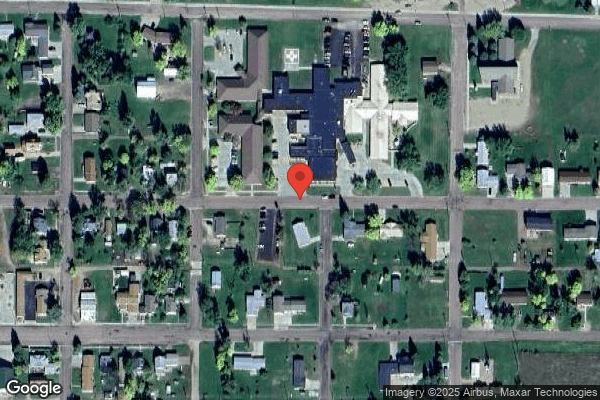
Weskota Manor Inc

608 1ST STREET NE, WESSINGTON SPRINGS, SD 57382 (605) 539-1621
Non profit - Corporation 40 Beds Independent Data: November 2025
Trust Grade
83/100
#29 of 95 in SD
Last Inspection: August 2024

Within standard 12-15 month inspection cycle. Federal law requires annual inspections.

Overview

Weskota Manor Inc in Wessington Springs, South Dakota, has a Trust Grade of B+, which means it is recommended and above average in quality. It ranks #29 out of 95 nursing homes in the state, placing it in the top half, and is the only facility in Jerauld County, making it the best local option. However, the facility is experiencing a worsening trend, with issues increasing from 2 in 2022 to 3 in 2024. Staffing is a strength here, with a 4 out of 5-star rating and a turnover rate of 26%, significantly lower than the state average, indicating that staff are stable and familiar with residents. On the downside, there have been concerns identified, such as improper food storage practices that could risk health and safety, and a failure to screen most new residents for PTSD, which is critical for their care. Additionally, while there were no fines recorded, there were five minor concerns noted in inspections, indicating some areas still need improvement. Overall, Weskota Manor offers good staffing and a solid reputation, but families should be aware of the recent issues and ensure they are addressed.

Trust Score
B+
83/100
In South Dakota
#29/95
Top 30%
Safety Record
Low Risk
No red flags
Inspections
Getting Worse
2 → 3 violations
Staff Stability
✓ Good
26% annual turnover. Excellent stability, 22 points below South Dakota's 48% average. Staff who stay learn residents' needs.
Penalties
✓ Good
No fines on record. Clean compliance history, better than most South Dakota facilities.
Skilled Nurses
✓ Good
Each resident gets 45 minutes of Registered Nurse (RN) attention daily — more than average for South Dakota. RNs are trained to catch health problems early.
Violations
✓ Good
Only 5 deficiencies on record. Cleaner than most facilities. Minor issues only.
★★★★☆
4.0
Overall Rating
★★★★☆
4.0
Staff Levels
★★★★☆
4.0
Care Quality
★★★★☆
4.0
Inspection Score
Stable
2022: 2 issues
2024: 3 issues

The Good

  • 4-Star Staffing Rating · Above-average nurse staffing levels
  • 4-Star Quality Measures · Strong clinical quality outcomes
  • Low Staff Turnover (26%) · Staff stability means consistent care
  • Full Sprinkler Coverage · Fire safety systems throughout facility
  • No fines on record
  • Staff turnover is low (26%)

    22 points below South Dakota average of 48%

Facility shows strength in staffing levels, quality measures, staff retention, fire safety.

The Bad

No Significant Concerns Identified

This facility shows no red flags. Among South Dakota's 100 nursing homes, only 1% achieve this.

The Ugly 5 deficiencies on record

Aug 2024 3 deficiencies
CONCERN (D)

Potential for Harm - no one hurt, but risky conditions existed

Deficiency F0761 (Tag F0761)

Could have caused harm · This affected 1 resident

**NOTE- TERMS IN BRACKETS HAVE BEEN EDITED TO PROTECT CONFIDENTIALITY** Based on observation, interview, record review, and policy review, the provider failed to ensure that 17 of 17 expired Influenza...

Read full inspector narrative →
**NOTE- TERMS IN BRACKETS HAVE BEEN EDITED TO PROTECT CONFIDENTIALITY** Based on observation, interview, record review, and policy review, the provider failed to ensure that 17 of 17 expired Influenza vaccine injections were removed from the medication refrigerator prior to the expiration date. Findings include: 1. Observation and interview on [DATE] at 5:00 p.m. with licensed practical nurse (LPN) E in the medication storage room revealed: *There were two boxes of Influenza vaccines totaling 17 doses with an expiration date of 06/2024 found in the medication refrigerator. *LPN E agreed that these influenza vaccines were expired and should not have been in the medication refrigerator. *The vaccines were removed from the refrigerator and LPN E said she would find out what needed to be done with them. 2. Interview on [DATE] at 07:54 a.m. with director of nursing (DON) B revealed: *DON B agreed that the 17 influenza vaccines were expired. *When asked what happened to the vaccines and she said, we got rid of them. She later said that they were destroyed the previous night after the vaccines were discovered. *I asked if she knew what the expiration date was on the vaccines, and she said 06/2024. 3. Interview and record review on [DATE] at 1105 a.m. with DON B regarding the provider's Pharmaceutical Supplies Inspection Guide revealed: *The Pharmaceutical Supplies Inspection Guide was a tool used to check for outdated medications and pharmaceutical supplies. *This guide was to be completed monthly. *The last time this guide was documented as completed was on [DATE] by LPN E. *That guide was not completed during the month of July, 2024. 4. Review of the provider's Medication Destruction policy revealed: * When medications are discontinued by the physician order, expired or in the of patient's death or discharge, the medications are destroyed in the facility.
CONCERN (E)

Potential for Harm - no one hurt, but risky conditions existed

Deficiency F0699 (Tag F0699)

Could have caused harm · This affected multiple residents

**NOTE- TERMS IN BRACKETS HAVE BEEN EDITED TO PROTECT CONFIDENTIALITY** Based on interview, and policy review, the provider failed to ensure fourteen of fifteen sampled residents (1,2,5,7,10,11,16,17,...

Read full inspector narrative →
**NOTE- TERMS IN BRACKETS HAVE BEEN EDITED TO PROTECT CONFIDENTIALITY** Based on interview, and policy review, the provider failed to ensure fourteen of fifteen sampled residents (1,2,5,7,10,11,16,17,19,21,23,26 and 33) had been screened for post-traumatic stress disorder (PTSD) upon admission. Finding include: 1. Interview on [DATE] at 12:58 p.m. with resident 10 while seated in her recliner revealed: *She did not know why she was there. She had been a good girl. *She had thought she was living there because her mother died. Interview on [DATE] at 4:00 p.m. with licensed practical nurse (LPN) E regarding the above interview with resident 10 revealed: *She knew that resident 10 had been sent to a juvenile detention center when she was a teenager because she had a boyfriend. *Resident 10 would often tell staff she had been a good girl and did not know why she was there. Interview on [DATE] at 4:44 p.m. with social service manager (SSM) D regarding PTSD screening of residents revealed: *She did not screen all new residents for PTSD. *She had screened resident 34 for PTSD due to her having a diagnosis of the disorder upon admission. *She had contacted her social services consultant G regarding screening new residents for PTSD. -She had been informed a screening needed to be completed upon admission and annually on all residents. Interview on [DATE] at 10:07 a.m. with SSM D regarding PTSD screening on resident 10 revealed: *She had screened resident 10 today ([DATE]) and had spoken to the resident's son. -The resident's son had verified that resident 10 had been in a juvenile detention center when she was a teenager. --He added that resident 10 would reference she had been a good girl and did not know why she was there. *SSM D had offered counseling to resident 10 but she declined and her family also declined. Interview on [DATE] at 9:55 a.m. with social services consultant G regarding screening residents for PTSD revealed she had informed SSM D all residents needed a screening upon admission and then annually. Interview on [DATE] at 10:30 a.m. with director of nursing B regarding screening residents for PTSD revealed she had not been aware that all residents required a screening upon admission and annually. Review of the provider's [DATE] PTSD Screening policy revealed: *Nursing assess the day of admit with clinical assessment. *Social Services to evaluate each resident at admit and then during the annual assessment using the PTSD screening tool for DSM-5.
CONCERN (F)

Potential for Harm - no one hurt, but risky conditions existed

Food Safety (Tag F0812)

Could have caused harm · This affected most or all residents

**NOTE- TERMS IN BRACKETS HAVE BEEN EDITED TO PROTECT CONFIDENTIALITY** Based on observation, interview, policy review, and manufacturer's instructions review the provider failed to ensure food items ...

Read full inspector narrative →
**NOTE- TERMS IN BRACKETS HAVE BEEN EDITED TO PROTECT CONFIDENTIALITY** Based on observation, interview, policy review, and manufacturer's instructions review the provider failed to ensure food items for resident consumption were appropriately labeled, stored, and served in a safe and sanitary manner for the following: *Three of three commercial and one of one resident refrigerators that contained food items that were not labeled, dated, or discarded by the use-by date. *Two of two dry food storage areas that contained dry food items that were not labeled or dated. *One of one commercial freezer that contained food items that were not labeled, dated, or appropriately stored. *One of one food service manager (C) did not properly sanitize the food thermometer while temping the food items before serving them to the residents. *The kitchen and food service equipment was not maintained in a clean condition. Findings include: 1. Observation during the initial tour of the kitchen and food storage areas on 8/12/24 at 12:40 p.m. revealed: *In the reach-in refrigerator: -There were two out of five Activia yogurts with a use-by date of 7/28/24. -There was a can of V8 juice dated 7/29/24. -There was a [NAME] jar containing an unidentified red liquid dated 8/7/24. -There was an opened tube of whipped topping that did not have an opened date or use-by date. *Another refrigerator which staff referred to as the salad fridge contained: -An opened bag of mozzarella cheese dated 3/24. -A container of sour cream with an opened date of 8/7 and a use-by date of 7/16/24. -An egg carton contained ten eggs with a use-by date of 5/31/24. -An opened package of deli fresh roast beef that did not have an opened date. -A container of beef paste that did not have an opened date or a use by date. -An unopened package of oven roasted turkey with a use-by date of 8/5/24. -An opened package of oven roasted turkey that did not have an opened date and had a use-by date of 8/5/24. -An opened jug of creamer that did not have an opened date. -A jug of orchard splash juice with an opened date of 8/12/24 and a use by date of 7/26/24. *In the dry baking goods storage room: -A clothing jacket was on the metal wire shelf that had oyster crackers stored on it. -An opened bag of marshmallows that did not have an opened date on it. -A container of pink lemonade powder with an expiration date of 6/7/23 with an opened date of 6/21. -An unsealed bag of Oreo cookie pieces that had a use-by date 6/17/24. -An opened container of white vanilla frosting that did not have an opened date. *The freezer in the dry baking goods storage room contained: -A light weight zipped bag of brats that appeared to have freezer burn dated 7/24. -An opened bag of sausage dated 6/18. -An opened bag of rhubarb with best by date of 4/10/24. -An opened bag of potatoes that did not have a use-by date. -A light weight zipped bag of French fries that did not have a use-by date. -A light weight zipped bag of ham which appeared to be freezer burnt that did not have an opened by date. -A ripped open brown paper sack with French fries that did not have an opened by date. -An opened ice cream container that was labeled, 6/24 chicken pot pie. -Three bags of opened chicken patties that did not have an opened by date. *The weekly cleaning schedule hung up on a cabinet revealed: -Two out of 19 tasks were marked as completed for week 1. -One out of 19 tasks were marked as completed for week 2. *The cabinet above the sink contained: -A cottage cheese tub that contained lemon jello dated 1/30. -A bag open to air that contained vanilla pudding and pie mix that had not open or best by date. -A box of orange gelatin mix that was labeled, 8/16. *The top of the oven appeared dusty with food particles and had a baking rack set on it. *The canned dry storage area contained: -Cleaning supplies including Comet, Dawn [NAME] Sanitizer, and Stera Sheen on the bottom rack of a food shelving unit. *In the walk-in freezer: -There were three unopened boxes on the floor. -An opened bag of sausage patties that did not have an opened by date. -A light weight zipped bag of blueberry muffins that did not have an opened or use-by date. *In the walk-in fridge: -There were six unopened packages of roasted turkey that was dated use or freeze by 8/5. -A case of cottage cheese that had a use-by date of 8/6. -Three activia yogurts that had a use-by date of 7/28. -A case of lite and fit yogurt that had a use-by date of 8/9. -There were four cucumbers that were uncovered on the shelving unit and visibly spoiled with mold spots. -There were six 4-packs of lemon lime jello that had a use-by date of 4/14. -There were two 4-packs of strawberry jello that had a use-by date of 5/1. -A case of unpasteurized eggs. *In the dining room fridge/freezer: -There was an undated, zipped bag in freezer with pumpkin bread labeled, a resident's name on it. -There were two undated jars of pickles labeled, a resident's name on it. -An undated Walmart bag with strawberries, melon, and tomatoes labeled, a resident's name on it. -A tub with blue lid with watermelon in it labeled, 8/11 a resident's name on it. -An undated container with a blue lid with grapes in it labeled, a resident's name on it. -An opened, unfinished can of root beer with resident's initials that was not dated. 2. Observation and interview on 8/13/24 at 11:38 a.m. through 12:10 p.m. with food service manager C during the noon meal prep revealed: *The desserts (carrot cake and pudding) for the noon meal in the reach-in fridge were not covered. *Food service manager C: -Dipped the thermometer in a red bucket which she stated was filled with sanitizer. -Inserted that thermometer in a chicken breast, waited a few seconds, and read the temperature of 165 degrees Fahrenheit (F). -Placed the thermometer in a green bucket which she stated was detergent. -Wiped off the food particles into the green bucket and then dipped the thermometer into the red bucket. -Continued to obtain the temperatures of the food items and used this cleaning process ten additional times. *She stated the sanitizer is the same that is used for the dishes. 3. Observation on 8/13/24 at 12:15 p.m. in the dishwasher room revealed: *Expired hydron chlorine test strips dated 12/1/16. *There were rusty cans that staff put leftover food in after meals and would then wash them in the dishwasher. 4. Interview on 8/13/24 at 3:36 p.m. with food services manager C about the above observations revealed: *She was not aware there were expired items in any of the fridges. *It was her expectation that staff throw away expired food times and label them correctly when opened. *The staff were supposed to keep personal items in their locker and not with food items. *She stated things in the freezer should be wrapped in saran wrap and put in gallon zipped bags. *She was not aware that her zipped bags were not freezer bags, and the food was getting freezer burnt. *If food was brought in for residents, it needed to be labeled correctly with their name, date, and could be kept for seven days. *She confirmed that the eggs were not pasteurized. *She stated the egg container in the kitchen fridge has been refilled since she has been there but should have the correct date from the original egg container marked on it. *She agreed that the cleaning schedule was not complete and that everything on that list should be cleaned weekly and marked when done. *Staff were supposed to put the hydron chlorine test strips on the silverwear before every meal to test the chlorine level. *She stated she was not aware the test strips were expired. *She explained dishes must completely air dry after they were removed from the dishwasher per the sanitizer instructions. *When asked if she allowed the thermometer to dry before temping foods, she stated she had not and that it was a problem. 5. Interview on 8/13/24 at 4:34 p.m. with administrator A revealed there was no policy on the cleaning schedule, and she expected staff to fill the cleaning schedule out accordingly. 6. Review of the providers April 2023 reviewed General Food Preparation and Handling policy revealed: *Procedure: -The kitchen and equipment are clean. -Foods are received, checked, and stored properly as soon as they are delivered. -Food is covered for storage. 7. Review of the providers August 2008 Dry Food Storage policy revealed: * Food is stored, prepared, and transported at appropriate temperatures and by methods designed to prevent contamination. *Procedure: -All containers must be legible and accurately labeled. -Chemicals must be clearly labeled, kept in original containers when possible, and kept in a locked area away from food. -All stock must be rotated with each new order received. 8. Review of the provider's April 2023 reviewed Temperatures of Hot and Cold Food policy revealed: *Procedure: -To take temperatures, a clean, sanitized and air-dried thermometer is needed . -The thermometer must be sanitized between uses in different foods. Thermometers can be sanitized using alcohol swabs in between taking the temperature of the food. 9. Review of the provider's April 2023 reviewed Food from Outside Sources policy revealed: *Procedure: -It must be placed in a plastic container with tight fitting lid. -Food brought in should be labeled with the individuals name. If the item is to be stored, it must be dated and placed in the resident's refrigerator. After 3 days the perishable item will be discarded. 10. Review of the [NAME] Sanitizer manufacturer's instructions for use revealed: *For sanitizing food contact surfaces: - .must be sanitized by emersion. -Thoroughly wet all surfaces. -Drain thoroughly and air dry. -Do not rinse.
Mar 2022 2 deficiencies
CONCERN (D)

Potential for Harm - no one hurt, but risky conditions existed

Deficiency F0657 (Tag F0657)

Could have caused harm · This affected 1 resident

**NOTE- TERMS IN BRACKETS HAVE BEEN EDITED TO PROTECT CONFIDENTIALITY** Based on observation, interview, and record review, the provider failed to revise care plans to address the status for 1 of 12 s...

Read full inspector narrative →
**NOTE- TERMS IN BRACKETS HAVE BEEN EDITED TO PROTECT CONFIDENTIALITY** Based on observation, interview, and record review, the provider failed to revise care plans to address the status for 1 of 12 sampled residents (28). Findings include: 1. Observations and interviews with resident 28 on 3/21/22 at 3:00 p.m. and 4:24 p.m. and on 3/22/22 at 8:30 a.m and 11:00 a.m. revealed: *She was in bed with the head of the bed raised at 75 degrees. *She was holding onto a tablet watching music videos and pushed the pause button to visit. *Her physician said her motor neurons are shutting down her motor skills. *She had limited ability to move including the movement of her mouth. *She decided to use syringes for eating instead of tube feeding when she started having trouble swallowing her food. *Staff now assisted her with food syringes because she no longer had the strength to do that. *Her voice was going, and she would not be able to speak much longer. *She started receiving hospice services in November 2021. Review of the order summary report revealed a physician order dated 10/23/21 for a Heart Healthy Diet Pureed - Level 4 texture, Regular consistency. Review of the 2/10/22 Minimum Data Set (MDS) noted several areas of decline when compared to the 8/26/21 quarterly MDS and the 11/18/21 significant change in status MDS, including: *Increased staff assistance needed for transferring and eating. *Increased symptoms of a swallowing disorder. *A severe weight loss of greater than 10% in 6 months. *Stage 2 pressure ulcer. Review of the nutritional risk assessment dated [DATE] revealed the registered dietitian noted: *The resident's current food intake was greater than 75 percent. *The resident had Stage 1 and 2 pressure ulcers. *Swallowing difficulties included pocketing of food items and drooling. *A might shake supplement was recommended with meals, at 10:30 a.m., 3:30 p.m., and at HS (hour of sleep). *The texture of the diet was for pureed/blended fluid. *The resident had a 2 percent weight gain in the past 30 days. *The resident was completely fed by staff via syringe per [resident] request and [physician] order. Review of the care plan revealed the following were not consistent with the resident's status: *A focus revised on 11/15/21 for recommending a general surgery consult for feeding tube. Obtained declined feeding tube with an intervention revised on 10/15/21 to proceed with MRI and consult for feeding tube. Arrangements to follow. Completed on 10/14/21. *A focus revised on 11/29/21 of limited physical mobility had a goal to continue ability to feed myself after staff set-up without applicable interventions related to that goal. *A focus revised on 3/22/22 for Fortified Heart Healthy level 4 pureed regular consistency liquids. Supplement with meals and 3:30 [p.m.] and HS snack had a contradictory intervention revised on 10/26/21 for Staff will give me a supplement at meals and at 10:30 [a.m. and] 3:30 [p.m.] snack and HS snack. and four duplicative interventions including: -On 10/26/21, Staff will serve me a Fortified Heart Healthy level 4 Pureed diet with regular liquids. -On 2/1/22, May use syringe for food and liquids per residents request. May thin food to adequate consistency to pass through syringe. Staff to assist with loading syringe with food and fluids. Staff may assist resident using the syringe per residents request as long as she is awake and alert. Res feels she has better intake using this method. -On 2/13/22, I have my liquids and food put in syringes. They need to be thin to go thru the syringe Staff to assist with filling and feeding me with them. -On 2/17/22, I have requested assistance with syringe feeding due to increased weakness. *A focus revised on 3/18/21 for not choosing to attend many group activities had a goal to attend and participate in activities of my choice 2-3 times per week. *A focus revised on 6/10/21 for usually understood and usually understands .My speech is sometimes slurred and soft spoken without interventions related to alternate methods of communication. Interview on 3/22/22 at 3:42 p.m. with social service/activity manager H revealed: *The hospice social worker had brought in something for her to use as an alternate communication method. *The resident does not attend activities and was currently able to direct staff to assist her as needed. Interview on 3/23/22 at 1:53 p.m. with dietary manager K revealed: *The normal pureed food was too thick for the resident to pull up into the syringes by herself. *The pureed food needed to be thinned out. *Now it had gotten too hard for the resident to push the thinned pureed food through the syringes into her mouth. *They had been giving her a mighty shake (supplement) in the morning and afternoon between meals and in the evening, but the resident said she wasn't hungry for the morning supplement so it was only provided in the afternoon and evening. *They were trying to follow International Dysphagia Diet Standardization Initiative (IDDSI) but the diet order listed on the care plan was not consistent with the level of consistency that was currently being used. *It should be ordered as an IDDSI level 3 liquidized and moderately thick food with thin drinks.
CONCERN (E)

Potential for Harm - no one hurt, but risky conditions existed

Pressure Ulcer Prevention (Tag F0686)

Could have caused harm · This affected multiple residents

**NOTE- TERMS IN BRACKETS HAVE BEEN EDITED TO PROTECT CONFIDENTIALITY** Based on observation, interview, record review, and policy review, the provider failed to ensure two of two sampled residents (2...

Read full inspector narrative →
**NOTE- TERMS IN BRACKETS HAVE BEEN EDITED TO PROTECT CONFIDENTIALITY** Based on observation, interview, record review, and policy review, the provider failed to ensure two of two sampled residents (2, 28) with a facility acquired pressure ulcer received ongoing assessments and interventions to have prevented the pressure ulcer. Findings include: 1. Observation on 3/21/22 at 3:00 p.m. of resident 2 revealed she had been seated in her wheelchair in the hall way. Observation on 3/22/22 at 8:30 a.m. of resident 2 revealed she had been seated in her wheelchair in the dining room. Interview on 3/21/22 at 5:00 p.m. with licensed practical nurse O regarding skin treatment for resident 2 revealed: *She received normal saline dressing change twice a day to the affected area. *While staff had already completed treatment prior to the surveyor arrival, request was made to observe other skin treatments. Review of resident 2's electronic medical record revealed inconsistencies in documentation between different portions of the record that included: *She was admitted on [DATE]. *She had a Brief Interview for Mental Status (BIMS) of 6 indicating very severe impairment. *She had refused to be repositioned and other cares. *She had been incontinent of bowel and bladder. *Registered nurse (RN) M had a skin observations entry on 11/12/21 at 1:26 p.m. that revealed: -Open areas to bilateral gluteal folds measuring 4 centimeters (cm) by 1 cm to the left side and 2 cm by 1 cm to the right side. -Barrier cream was applied. *On 12/9/21 at 2:36 p.m., RN M's skin/wound note revealed: -The upper buttock crease was pink and the skin was fragile. -The right inner buttock measured a 2 cm by 2 cm bruise. Light purple area. Skin was intact. *On 1/3/22 at 6:27 p.m., RN I's Communicated to Physician progress note revealed: -Open L shaped area to right buttock that measured 0.6 cm by 0.8 cm. -Resident 2 had a cushion in her wheelchair and recliner. -She had an air mattress on her bed. -Barrier cream was applied. -No response or orders were noted in the progress note from the physician. *On 1/11/22 at 1:26 p.m., RN M's Communicated to Physician progress note revealed: -Open area measured 1 cm by 1.5 cm stage 2 pressure ulcer to her right buttock. -Order received from physician to apply duoderm to right buttock every three days and as needed. *On 1/25/22 at 2:14 p.m., RN N's Communicated to physician progress note revealed: -Duoderm not effective to open area on buttock. -Order received from physician to discontinue the duoderm. -Barrier cream applied to affected area and encouraged resident to lay on her side. -She refused to lay on her side. *On 1/25/22 at 2:51 p.m., RN M documented a skin/wound note that revealed: -A stage 2 pressure ulcer to inner left buttock measured 5 cm by 4 cm and right buttock measured 4.5 cm by 4.0 cm. -The skin area around the wound was red and wound beds were pink. -Resident 2 had been incontinent multiple times. *On 2/28/22 at 11:32 a.m.n RN M documented a skin/wound note that revealed: -Open areas to buttock are closed. -Continued to use a barrier cream. *On 3/7/22 at 10:32 a.m., RN N documented a skin/wound note that revealed: -Very superficial open abrasion to right inner buttock with cleaning resident. -The resident's quote of, They wipe me too hard, was in the progress note. -Normal saline dressing was applied and education was given to resident to continue laying on her side while in bed between meals and during the night. -Director of Nursing (DON) B aware. *On 3/22/22 at 3:19 p.m., RN I communicated to the physician the following: -The area to right buttock was open 1 cm by 0.8 cm. -Normal saline dressing was used to the affected area. *On 3/23/22 at 9:40 a.m., the physician evaluated the wound and ordered normal saline dressing three times per day. Review of resident 2's skin observation documentation between 12/9/21 through 3/23/22, a total of 105 days with 306 separate entries, revealed the number of times per day resident 2 had toileting/incontinence care provided: *One day had only one entry. *18 days had two entries. *72 days had three entries. *14 days had four entries. Interview on 3/23/22 at 2:15 p.m. with DON B regarding skin evaluation revealed: *Skin evaluations had been kept in point click care (PCC) and the skin assessment book. *The wound nurse had been documenting in both places with skin measurements. *Measurements in the skin assessment book were not always documented in PCC. *She would expect other nurses to measure and document new skin findings. *The skin observation task was completed by the certified nursing assistant after providing care. Review of resident 2's undated care plan revealed: *I am at risk for skin breakdown and pressure ulcer related to decreased mobility, incontinence and moisture under my folds. *Interventions include: -Administer treatments/meds as ordered and monitor for effectiveness. -Apply protective barrier cream to peri/rectal area following incontinent episodes and as needed. -Apply lotion to my skin. *The care plan had not identified the following interventions: -Turning and repositioning a minimum of every two hours with inspection of bony prominence's. -No other interventions were identified if the resident refused. -Incontinence care every two hours and as needed. -No intervention was provided by the registered dietitian. Review of the provider's policy dated 3/21 on Prevention of Pressure Ulcers revealed: *It is the policy of this facility to prevent the development of pressure ulcers in residents whenever possible. Prevention measures shall include, but not limited to: -Assessment risk upon admission to the facility and quarterly with each MDS or significant change. --Resident had scored at risk for Braden assessments. -Appropriate skin and incontinence care. -Identification of disease and comorbid conditions which, increase skin risk. -Relief and reduction of pressure as needed. -Continued education of residents, families, and staff relative to the prevention of injury to the skin. *Nursing care shall include: -Turning and repositioning at a minimum of every two hours with inspection of bony prominence's. -Incontinent care every two hours and as needed. -Assessment of nutrition and hydration with referrals as needed. -Institution of measures to reduce the effects of pressure, friction, and shear. 2. Observation and interview with resident 28 on 3/21/22 at 3:00 p.m. revealed: *She was in bed with the head of the bed raised at 75 degrees. *Her physician said her motor neurons are shutting down her motor skills. *She did not have much pain except my tailbone due to an open area on it. *She got it from sitting in her reclining chair too long, and had it for about a month. Review of resident 28's electronic medical record revealed inconsistencies in documentation between different portions of the record that included: *A 2/10/22 quarterly Minimum Data Set (MDS) that noted several areas of decline when compared to the 8/26/21 quarterly MDS and the 11/18/21 significant change in status MDS, including: -Increased staff assistance needed for transferring and eating. -Use of a catheter. -Increased incontinence of bowel. -Increased symptoms of a swallowing disorder. -A severe weight loss of greater than 10% in 6 months. -Stage 2 pressure ulcer. *The care plan noted a focus initiated on 5/31/20 and revised on 3/7/22 for potential for altered skin integrity/pressure ulcer development with notations of a pressure ulcer to her tailbone on 2/8/22 healed and on 3/1/22. *The point of care (POC) task documentation for skin observation on each day from February 1, 2022 to March 22, 2022 revealed no areas were noted as scratched, red, discolored, torn, or open. *The Skin Only Evaluation noted measurements of the Stage 2 pressure ulcer on coccyx: -On 3/2/22, 2 centimeters (cm) length by 2 cm width by superficial depth, no drainage or odor. -On 3/9/22, same as 3/2/22 except for 0 depth. -On 3/15/22, 0.3 cm by 0.3 cm by 0 depth. -On 3/21/22, 0.8 cm by 0.7 cm by 9 depth. *Two of the four evaluations (3/2 and 3/9) noted the resident was unable to move without assistance and sat on a bedpan for long periods due to bowel concerns. *The 3/21/22 evaluation noted she had been refusing to get up in recliner and continues to set on bed pan for extended periods of time. *No skin only evaluation was found for the 2/8/22 pressure ulcer noted as healed on the care plan. Interview on 3/23/22 at 10:49 a.m. with DON B revealed: *The certified nursing assistants monitor for skin concerns every day as part of the POC tasks. *She was not aware there was no POC documentation of open areas to correlate with the pressure ulcers on 2/8/22 and 3/1/22 as noted on the care plan. *She would look for documentation related to the 2/8/22 pressure ulcer. Interview on 3/23/22 at 10:54 a.m. with registered nurse/minimum data set coordinator (RN/MDS-C) I revealed: *Resident 28 used to sit up in her recliner and several different cushions had been tried. *She had limited ability to reposition herself and chose to sit on a bedpan due to bowel concerns. *The pressure ulcer noted on the 2/10/22 MDS had closed after that date for a little while but opened again. Interview on 3/23/22 at 11:57 a.m. with DON B and RN/MDS-C I revealed: *No documentation was found regarding the pressure ulcer noted on 2/8/22 as healed on the carte plan. *A printed copy of a discontinued order on 2/17/22 for Duoderm to open area on tailbone. was provided by DON B.
Understanding Severity Codes (click to expand)
Life-Threatening (Immediate Jeopardy)
J - Isolated K - Pattern L - Widespread
Actual Harm
G - Isolated H - Pattern I - Widespread
Potential for Harm
D - Isolated E - Pattern F - Widespread
No Harm (Minor)
A - Isolated B - Pattern C - Widespread

Questions to Ask on Your Visit

  • "Can I speak with families of current residents?"
  • "What's your RN coverage like on weekends and overnight?"

Our Honest Assessment

Strengths
  • • Grade B+ (83/100). Above average facility, better than most options in South Dakota.
  • • No major safety red flags. No abuse findings, life-threatening violations, or SFF status.
  • • No fines on record. Clean compliance history, better than most South Dakota facilities.
  • • Only 5 deficiencies on record. Cleaner than most facilities. Minor issues only.
Concerns
  • • No significant concerns identified. This facility shows no red flags across CMS ratings, staff turnover, or federal penalties.
Bottom line: Generally positive indicators. Standard due diligence and a personal visit recommended.

About This Facility

What is Weskota Manor Inc's CMS Rating?

CMS assigns Weskota Manor Inc an overall rating of 4 out of 5 stars, which is considered above average nationally. Within South Dakota, this rating places the facility higher than 99% of the state's 100 nursing homes. This rating reflects solid performance across the metrics CMS uses to evaluate nursing home quality.

How is Weskota Manor Inc Staffed?

CMS rates Weskota Manor Inc's staffing level at 4 out of 5 stars, which is above average compared to other nursing homes. Staff turnover is 26%, compared to the South Dakota average of 46%. This relatively stable workforce can support continuity of care.

What Have Inspectors Found at Weskota Manor Inc?

State health inspectors documented 5 deficiencies at Weskota Manor Inc during 2022 to 2024. These included: 5 with potential for harm.

Who Owns and Operates Weskota Manor Inc?

Weskota Manor Inc is owned by a non-profit organization. Non-profit facilities reinvest revenue into operations rather than distributing to shareholders. The facility operates independently rather than as part of a larger chain. With 40 certified beds and approximately 33 residents (about 82% occupancy), it is a smaller facility located in WESSINGTON SPRINGS, South Dakota.

How Does Weskota Manor Inc Compare to Other South Dakota Nursing Homes?

Compared to the 100 nursing homes in South Dakota, Weskota Manor Inc's overall rating (4 stars) is above the state average of 2.7, staff turnover (26%) is significantly lower than the state average of 46%, and health inspection rating (4 stars) is above the national benchmark.

What Should Families Ask When Visiting Weskota Manor Inc?

Based on this facility's data, families visiting should ask: "Can I visit during a mealtime to observe dining assistance and food quality?" "How do you handle medical emergencies, and what is your hospital transfer rate?" "Can I speak with family members of current residents about their experience?"

Is Weskota Manor Inc Safe?

Based on CMS inspection data, Weskota Manor Inc has a clean safety record: no substantiated abuse findings (meaning no confirmed cases of resident harm), no Immediate Jeopardy citations (the most serious violation level indicating risk of serious injury or death), and is not on the Special Focus Facility watch list (a federal program monitoring the lowest-performing 1% of nursing homes). The facility has a 4-star overall rating and ranks #1 of 100 nursing homes in South Dakota. While no facility is perfect, families should still ask about staff-to-resident ratios and recent inspection results during their visit.

Do Nurses at Weskota Manor Inc Stick Around?

Staff at Weskota Manor Inc tend to stick around. With a turnover rate of 26%, the facility is 20 percentage points below the South Dakota average of 46%. Low turnover is a positive sign. It means caregivers have time to learn each resident's needs, medications, and personal preferences. Consistent staff also notice subtle changes in a resident's condition more quickly. Registered Nurse turnover is also low at 14%, meaning experienced RNs are available to handle complex medical needs.

Was Weskota Manor Inc Ever Fined?

Weskota Manor Inc has no federal fines on record. CMS issues fines when nursing homes fail to meet care standards or don't correct problems found during inspections. The absence of fines suggests the facility has either maintained compliance or corrected any issues before penalties were assessed. This is a positive indicator, though families should still review recent inspection reports for the full picture.

Is Weskota Manor Inc on Any Federal Watch List?

Weskota Manor Inc is not on any federal watch list. The most significant is the Special Focus Facility (SFF) program, which identifies the bottom 1% of nursing homes nationally based on persistent, serious quality problems. Not being on this list means the facility has avoided the pattern of deficiencies that triggers enhanced federal oversight. This is a positive indicator, though families should still review the facility's inspection history directly.