White River Health Care Center
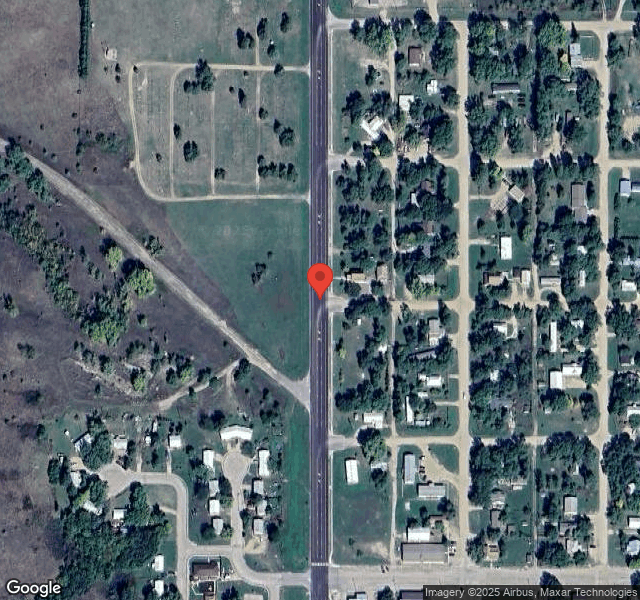
515 E 8TH STREET, WHITE RIVER, SD 57579 (605) 259-3161
Non profit - Corporation 52 Beds Independent Data: November 2025
Trust Grade
48/100
#48 of 95 in SD
Last Inspection: March 2025

Within standard 12-15 month inspection cycle. Federal law requires annual inspections.

Overview

White River Health Care Center has a Trust Grade of D, indicating below average care and some concerns that families should consider. It ranks #48 out of 95 nursing homes in South Dakota, placing it in the bottom half of facilities in the state, but is the only option in Mellette County. The facility is stable, with the same number of issues reported in both 2024 and 2025, but there are serious concerns about care quality. Staffing is a strong point, earning 5 out of 5 stars with a turnover rate of 37%, which is better than the state average. However, there were incidents of inadequate care, such as a resident not receiving necessary dental services after tooth extractions and staff failing to use proper equipment during resident transfers, which may put residents at risk. Overall, while staffing appears stable, the facility has notable weaknesses that families should weigh carefully.

Trust Score
D
48/100
In South Dakota
#48/95
Top 50%
Safety Record
High Risk
Review needed
Inspections
Holding Steady
1 → 1 violations
Staff Stability
○ Average
37% turnover. Near South Dakota's 48% average. Typical for the industry.
Penalties
⚠ Watch
$12,335 in fines. Higher than 91% of South Dakota facilities. Major compliance failures.
Skilled Nurses
○ Average
Each resident gets 35 minutes of Registered Nurse (RN) attention daily — about average for South Dakota. RNs are the most trained staff who monitor for health changes.
Violations
✓ Good
Only 3 deficiencies on record. Cleaner than most facilities. Minor issues only.
★★★☆☆
3.0
Overall Rating
★★★★★
5.0
Staff Levels
★★★★☆
4.0
Care Quality
★★☆☆☆
2.0
Inspection Score
Stable
2024: 1 issues
2025: 1 issues

The Good

  • 5-Star Staffing Rating · Excellent nurse staffing levels
  • 4-Star Quality Measures · Strong clinical quality outcomes
  • Full Sprinkler Coverage · Fire safety systems throughout facility
  • No fines on record
  • Staff turnover below average (37%)

    11 points below South Dakota average of 48%

Facility shows strength in staffing levels, quality measures, fire safety.

The Bad

3-Star Overall Rating

Near South Dakota average (2.7)

Meets federal standards, typical of most facilities

Staff Turnover: 37%

Near South Dakota avg (46%)

Typical for the industry

Federal Fines: $12,335

Below median ($33,413)

Minor penalties assessed

The Ugly 3 deficiencies on record

1 actual harm
Nov 2024 1 deficiency 1 Harm
SERIOUS (G) 📢 Someone Reported This

A family member, employee, or ombudsman was alarmed enough to file a formal complaint

Actual Harm - a resident was hurt due to facility failures

Free from Abuse/Neglect (Tag F0600)

A resident was harmed · This affected 1 resident

**NOTE- TERMS IN BRACKETS HAVE BEEN EDITED TO PROTECT CONFIDENTIALITY** Based on South Dakota Department of Health (SD DOH) facility reported incident (FRI) review, electronic medical record (EMR) rev...

Read full inspector narrative →
**NOTE- TERMS IN BRACKETS HAVE BEEN EDITED TO PROTECT CONFIDENTIALITY** Based on South Dakota Department of Health (SD DOH) facility reported incident (FRI) review, electronic medical record (EMR) review, observation, interview, and policy review, the provider failed to ensure one of one resident (1) was not abused by staff registered nurse (RN) (C), licensed practical nurse (LPN) (D), and certified nurse aide (CNA) (E) during the administration of a medication injection. Findings include: 1. Review of the provider's 11/8/24 SD DOH FRI revealed: *Resident 1 had a recent visit to the tribal Indian health service (IHS) emergency room (ER) on 10/23/24 related to increased aggressive behaviors toward other residents and staff. *The ER physician, tribal judge, facility medical director, and resident 1's guardian had consulted and agreed he was a risk to himself and others and would benefit from inpatient behavioral health care. *An inpatient placement was not available, he was placed on the waiting list and started on two medications for the aggressive behaviors. *On 10/30/24, resident 1 was seen by doctor of nurse practitioner (DNP) O; she ordered an antipsychotic medication injection to begin in one week. After the initial injection it was to be administered once every four weeks. *On 11/5/24 at approximately 2:20 p.m., seemingly in a good mood following a behavioral health visit with LPN D, director of nurses (DON) (B) determined it would be a good time to approach resident 1 about the new injection. She accompanied RN C and LPN D to resident 1's room. -He was awake and resting in bed. -DON B approached him and asked if it would be okay to give him the injection. -He immediately became aggressive, he was refusing and saying no, he was not taking any insulin. -LPN D attempted to explain the medication and provide reassurance it was not insulin but would help him with his mood; again he adamantly refused. -At that point, DON B determined to wait until the next day when DNP O and LPN M would be there as resident 1 had a good rapport with them. They then left his room. *On 11/5/24 at approximately 2:30 p.m. RN C and LPN D had CNA E accompany them and returned to resident 1's room. -He appeared to be sleeping. -While LPN D and CNA E stood by, RN C administered the injection in his right upper arm. -After the injection was administered, resident 1 became upset, stood up from his bed, swinging at the staff, he slipped and fell down on his knees and then to the floor hitting his head on slippers and the floor. -He had no loss of consciousness. -He refused an initial assessment and was assisted up from the floor to his bed by the CNA and LPN. -Neurological checks were initiated and his guardian notified. *On 11/5/24 at approximately 2:40 p.m. the DON learned of the incident of the injection being given and the resident's subsequent fall. -She immediately went to resident 1's room to assess him and asked him what happened. -He replied, They came in here and gave me that damn shot, I didn't want it and it pissed me off so I tried to hit them and ended up on the ground. Now I got this and pointed at his head. -He had a large hematoma over his left eyebrow, the skin was intact; he was able to see three fingers being held up by the DON. *On 11/5/24 at approximately 3:15 p.m. assistant DON (ADON) (N) assessed resident 1. -The hematoma over his left eyebrow measured 5.3 X 7 X 3 centimeters with purple coloration in the center. -He complained of pain at an 8 out on a scale 0 to10 with 10 being the worst. -The hematoma and the back of the right side of his head were tender to touch. -He was drowsy and mumbled his words. -He agreed to be seen in the ER. -The ADON contacted the physician for an order to send him to the ER and updated his guardian. *On 11/6/24, RN C was officially suspended, LPN D's employer was notified she was not to return to the facility pending the outcome of the investigation. Review of resident 1's EMR revealed: *He was admitted on [DATE] following a series of falls. *He had diagnoses that included previous alcohol abuse, high blood pressure, type 2 diabetes with high blood sugars, dementia, agitation, and bipolar disorder. *He was on medications for elevated blood pressure and cholesterol, oral and injected insulin for diabetes, for dementia, agitation, and bipolar disorder. *His Brief Interview for Mental Status (BIMS) assessment score was 11 that indicated he had moderate cognitive impairment. *He had a history of trauma from having been assaulted by a male acquaintance in the past. *His care plan reflected he could be very aggressive with other males and females; easily agitated by loud yelling and those that wander into his room; and his refusal to take medications including insulin as well as refusal to shower and observe personal hygiene. *Care plan approaches included: -Staff to be consistent and firm yet gentle and calm in approach. -Do not argue, leave and reapproach later. -Document refusal and behaviors, report to the charge nurse. -Offer choice in timing for shower. *Physician notifications of medication refusals. *Resident's guardian/son notifications of refusal to take medications, shower and observe personal hygiene, as well as aggressiveness toward other residents and staff. *Between 8/14/24 and 11/5/24, there were 66 entries related to refusal to take medications including insulin, refusal to allow blood sugar checks, refusal to shower or observe personal hygiene, and demonstration of aggressive verbal and physical aggressiveness toward other residents and staff. Random observations on 11/18/24 between 12:30 p.m. and 14:35 p.m. of resident 1 revealed: At 12:30 p.m. he was lying in bed snoring quietly. While he was not shaved, he did not appear unkempt. At 1:10 p.m. he continued in bed, sleeping; did not arouse when his name was spoken. At 2:00 p.m. he was awake in his wheel chair requested assistance back to bed, staff summoned. He was not interested in talking to this surveyor. At 2:35 p.m. he again was sleeping, snoring quietly. Interviews on 11/18/24 between 12:35 p.m. and 2:55 p.m. with staff about resident 1 revealed: *At 12:35 p.m. RN F stated he had had multiple instances of aggressive language and behavior toward other residents and staff. Staff had received re-education about abuse following the the incident where he was given the injection and fell. *At 1:20 p.m. LPN G shared his care plan does have approaches for his aggressiveness and staff do keep track of his behaviors and refusals. Staff received re-education from the administrator and ADON about abuse. *At 1:30 p.m. LPN H stated she had been working on the other hall the day of the reported incident and was aware he had refused the injection that was given while he was sleeping. Staff were re-educated and that education is also in the communication book. *At 1:50 p.m. social services I stated she was aware of the incident and received re-education about abuse. *At 2:05 p.m. restorative aide J stated she was aware of the incident with resident 1 and had received re-education about abuse. *At 2:15 p.m. CNA K stated she was aware of the abuse of resident 1 and had received re-education about abuse. *At 2:45 p.m. CNA L shared following the incident with resident 1 he had received re-education about abuse. Interview and review of the FRI and facility internal investigation on 11/18/24 at 3:00 p.m. with administrator A and DON B revealed: *DON B had been in her office when she stepped out and saw a staff member heading to resident 1's room with an ice pack. She was informed he had fallen on the floor following receiving the injection. She went to his room to investigate the situation. -After doing a preliminary assessment herself, she returned to the office to notify administrator A as she was out of town. -After leaving a message for administrator A, she received a return call around 3:00 p.m. from her. -She didn't begin the complete investigation until after resident 1 was sent out to the ER. -RN C received official notification of suspension. -LPN D's employer was notified she was not to return to the facility. -CNA E was not suspended. He had started at the facility three shifts prior to the date of the incident and when interviewed on three separate occasions he believed he had to follow all the orders given by the RN. He had been told to hold resident 1's arm while he was getting the shot. He received one-to-one re-education and the staff education on abuse. *Administrator A concurred with DON B that she was out of town and received notification of the incident around 3:00 p.m. on 11/5/24. -They had open communication with resident 1's guardian/son, the medical director, the behavioral health employer of LPN D, law enforcement, and the ombudsman. -At the conclusion of their investigation they made the determination to terminate RN C. -They received notification from LPN D's employer on 11/8/24 that they had terminated her from employment. -She and ADON N had provided staff re-education about abuse and their abuse policy on 11/8/24 and that education was also available in the staff communication book. *Both DON B and administrator A stated they did not believe the staff involved in the incident intended harm to resident 1 but they had ignored the decision to wait until the next day to reapproach, and did not follow resident 1's care plan approach interventions or the facility policy. *During the course of the investigation they did not identify any other residents who may have incurred abuse with medication administration. *A Quality Assurance Performance Improvement meeting was planned to occur in early December when the medical director was to be available. Review of the provider's reviewed 11/1/24 Abuse, Neglect, and Exploitation policy revealed in the definitions: Willful means the individual must have acted deliberately, not that the individual must have intended to inflict injury or harm. The provider's implemented actions to ensure the deficient practice does not reoccur was confirmed on 11/18/24 after record review revealed the facility had followed their quality assurance process, education was provided to all nursing staff regarding medication administration and abuse, interviews revealed staff understood the education provided regarding those topics, observation of the resident revealed no signs of emotional distress, and review of his record revealed no documented ongoing signs of resident distress related to the reported incident. Based on the above information, non-compliance at F600 was determined on 11/5/24, and based on the provider's implemented corrective actions for the deficient practice confirmed on 11/18/24, the non-compliance is considered past noncompliance.
Dec 2023 1 deficiency
CONCERN (D)

Potential for Harm - no one hurt, but risky conditions existed

Dental Services (Tag F0791)

Could have caused harm · This affected 1 resident

**NOTE- TERMS IN BRACKETS HAVE BEEN EDITED TO PROTECT CONFIDENTIALITY** Based on observation, interview, record review, and policy review the provider failed to ensure one of one sampled resident (20)...

Read full inspector narrative →
**NOTE- TERMS IN BRACKETS HAVE BEEN EDITED TO PROTECT CONFIDENTIALITY** Based on observation, interview, record review, and policy review the provider failed to ensure one of one sampled resident (20) received recommended dental services after tooth extractions were completed. Finding include: 1. Observation and interview on 12/12/23 at 8:36 a.m. with resident 20 in his room revealed he: *Was missing all his teeth. *Stated that all of his teeth were pulled three months ago. *Was waiting for dentures. *Had not been informed of an appointment to start the process of getting dentures. Review of resident 20's electronic medical record revealed: *He was admitted on [DATE]. *His Brief Interview of Mental Status score was 15, meaning his cognition was intact. *His diagnoses included: -Cerebral infarction due to thrombosis of the right middle cerebral artery. -Hemiplegia and hemiparesis following cerebral infarction affecting the left non-dominant side. -Hypokalemia. -Gastro0esophageal reflux disease without esophagitis. *His care plan dated 9/20/23 showed a regular mechanical soft diet. *His progress notes included: -On 2/6/23 he returned from an oral surgery appointment. -Instructions were given to begin resident on Amoxicillin 500 mg three times a day for five days. -Hydrocodone 5/325 mg every six hours for pain as needed. -Chlorhexidine 15 mL mouthwash twice a day for 14 days. -The resident was instructed to keep gauze in extractions until no blood was present. -Ice packs as needed for swelling. Interview on 12/13/23 at 10:48 a.m. with director of nursing B regarding resident 20's dentures revealed: *The medical records person would have scheduled the appointments for his new dentures, but she was out on maternity leave. *The business manager was the backup person for medical records. *She agreed the appointment should have been set up when he came back from getting his teeth extracted. *The follow-up appointment must have gotten overlooked. *It was her expectation that all follow-up appointments would be scheduled and documented in the appointment book. *She confirmed his follow-up appointment with the dentist was not scheduled. Interview on 12/13/23 at 11:03 a.m. with business manager D regarding resident 20's dentures revealed: *She was the backup person for medical records while she was on maternity leave. *The Medicaid authorization did not get scanned into resident 20's medical record. *There was no paper trail for the follow-up visit with the dentist. *She agreed there should have been a follow-up dentist appointment scheduled. *The medical records person was not available for an interview. Review of the provider's revised February 2014 Medication and Treatment Orders, Dental Services policy revealed: *Orders for the treatment of the resident's dental problems must be signed by the attending dentist. *All orders must be charted and made a part of the resident's medical record and care plan.
Dec 2022 1 deficiency
CONCERN (D)

Potential for Harm - no one hurt, but risky conditions existed

Resident Rights (Tag F0550)

Could have caused harm · This affected 1 resident

Based on observation, interview, record review, and the provider's admission resident rights document review, the provider failed to ensure that: *Dignity and safety was maintained for one of one samp...

Read full inspector narrative →
Based on observation, interview, record review, and the provider's admission resident rights document review, the provider failed to ensure that: *Dignity and safety was maintained for one of one sampled resident (1) during one of one observed transfer from bed to wheelchair by two of two certified nursing assistants (CNA) (G and H). *One of one observed medication cart had confidential information out of the sight of visitors. Findings include: 1. Observation and interview on 12/6/22 at 11:45 a.m. of CNAs G and H helping resident 1 to transfer from his bed to his wheelchair revealed: *They had helped him to a sitting position on his bed, then without using a gait belt, each had pulled on the back of his pants and pivoted him to the wheelchair. *Two gait belts were noted hanging on separate hooks in his room. *When asked about the observation and the lack of gait belt use, they both said, We usually use a gait belt to transfer him. Review of resident 1's care plan revealed he had required a pivot transfer with two staff helping. Use gait belt for transfers. Interview on 12/7/22 at 1:35 p.m. with CNA G when asked why they did not use the gait belt to transfer resident 1 she stated, I just spaced out using it [the gait belt]. Interview on 12/7/22 at 1:43 p.m. with director of nursing (DON) B regarding resident 1's transfer revealed, They should not be using the back of his pants to transfer him. They should be using a gait belt. She agreed to transfer him in this manner did not promote his dignity. Review of the provider's 7/1/22 Attachment I Resident Rights in the admission packet revealed, Each resident has the right to a dignified existence, self-determination, and communication 1. Observation on 12/7/22 at 4:45 p.m. of the east medication cart revealed the 12/7/22 shift report sheet laying on top in full view of anyone passing by. This sheet had private health information of every resident in the building. The information included: *Medication residents received, including insulin. *Fall risks. *Remove dentures. *Wound care. *Toileting assistance or use of an incontinence product. *Elopement risk. *Check closet for soiled clothes. Interview on 12/8/22 at 2:00 p.m. with licensed practical nurse (I) revealed she had not realized she had the report sheet out in plain view. She usually puts it under the computer when she is away from the medication cart. Interview on 12/8/22 at 2:10 p.m. with DON A revealed she, expected the nurses to keep confidential information out of public view. I have to continually remind them of this almost daily. Review of the provider's 7/1/22 Attachment I Resident Rights in the admission packet revealed, Each resident has the right to confidential handling of his/her medical and personal records and will only be released with the resident's prior written consent.
Understanding Severity Codes (click to expand)
Life-Threatening (Immediate Jeopardy)
J - Isolated K - Pattern L - Widespread
Actual Harm
G - Isolated H - Pattern I - Widespread
Potential for Harm
D - Isolated E - Pattern F - Widespread
No Harm (Minor)
A - Isolated B - Pattern C - Widespread

Questions to Ask on Your Visit

  • "What safeguards are in place to prevent abuse and neglect?"
  • "Can I speak with families of current residents?"
  • "What's your RN coverage like on weekends and overnight?"

Our Honest Assessment

Strengths
  • • 37% turnover. Below South Dakota's 48% average. Good staff retention means consistent care.
Concerns
  • • Multiple safety concerns identified: Federal abuse finding, 1 harm violation(s). Review inspection reports carefully.
  • • 3 deficiencies on record, including 1 serious (caused harm) violation. Ask about corrective actions taken.
  • • $12,335 in fines. Above average for South Dakota. Some compliance problems on record.
  • • Grade D (48/100). Below average facility with significant concerns.
Bottom line: This facility has a substantiated abuse finding. Extreme caution advised. Explore alternatives.

About This Facility

What is White River Health Care Center's CMS Rating?

CMS assigns White River Health Care Center an overall rating of 3 out of 5 stars, which is considered average nationally. Within South Dakota, this rating places the facility higher than 99% of the state's 100 nursing homes. This mid-range rating indicates the facility meets federal standards but may have areas for improvement.

How is White River Health Care Center Staffed?

CMS rates White River Health Care Center's staffing level at 5 out of 5 stars, which is much above average compared to other nursing homes. Staff turnover is 37%, compared to the South Dakota average of 46%. This relatively stable workforce can support continuity of care.

What Have Inspectors Found at White River Health Care Center?

State health inspectors documented 3 deficiencies at White River Health Care Center during 2022 to 2024. These included: 1 that caused actual resident harm and 2 with potential for harm. Deficiencies causing actual harm indicate documented cases where residents experienced negative health consequences.

Who Owns and Operates White River Health Care Center?

White River Health Care Center is owned by a non-profit organization. Non-profit facilities reinvest revenue into operations rather than distributing to shareholders. The facility operates independently rather than as part of a larger chain. With 52 certified beds and approximately 33 residents (about 63% occupancy), it is a smaller facility located in WHITE RIVER, South Dakota.

How Does White River Health Care Center Compare to Other South Dakota Nursing Homes?

Compared to the 100 nursing homes in South Dakota, White River Health Care Center's overall rating (3 stars) is above the state average of 2.7, staff turnover (37%) is near the state average of 46%, and health inspection rating (2 stars) is below the national benchmark.

What Should Families Ask When Visiting White River Health Care Center?

Based on this facility's data, families visiting should ask: "What safeguards and monitoring systems are in place to protect residents from abuse or neglect?" "Can I visit during a mealtime to observe dining assistance and food quality?" "How do you handle medical emergencies, and what is your hospital transfer rate?" "Can I speak with family members of current residents about their experience?" These questions are particularly relevant given the substantiated abuse finding on record.

Is White River Health Care Center Safe?

Based on CMS inspection data, White River Health Care Center has documented safety concerns. The facility has 1 substantiated abuse finding (meaning confirmed case of resident harm by staff or other residents). The facility has a 3-star overall rating and ranks #1 of 100 nursing homes in South Dakota. Families considering this facility should ask detailed questions about what corrective actions have been taken since these incidents.

Do Nurses at White River Health Care Center Stick Around?

White River Health Care Center has a staff turnover rate of 37%, which is about average for South Dakota nursing homes (state average: 46%). Moderate turnover is common in nursing homes, but families should still ask about staff tenure and how the facility maintains care continuity when employees leave.

Was White River Health Care Center Ever Fined?

White River Health Care Center has been fined $12,335 across 1 penalty action. This is below the South Dakota average of $33,202. While any fine indicates a compliance issue, fines under $50,000 are relatively common and typically reflect isolated problems that were subsequently corrected. Families should ask what specific issues led to these fines and confirm they've been resolved.

Is White River Health Care Center on Any Federal Watch List?

White River Health Care Center is not on any federal watch list. The most significant is the Special Focus Facility (SFF) program, which identifies the bottom 1% of nursing homes nationally based on persistent, serious quality problems. Not being on this list means the facility has avoided the pattern of deficiencies that triggers enhanced federal oversight. This is a positive indicator, though families should still review the facility's inspection history directly.