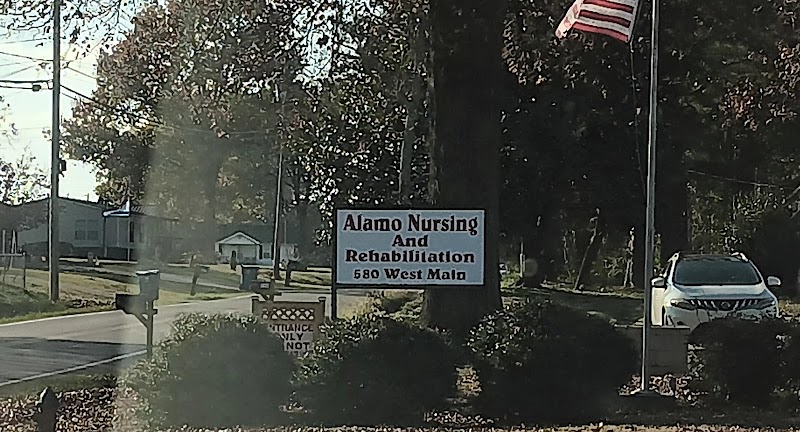
ALAMO NURSING AND REHABILITATION CENTER

580 W MAIN STREET, ALAMO, TN 38001 (731) 696-4541
For profit - Corporation 121 Beds Independent Data: November 2025 4 Immediate Jeopardy citations
Trust Grade
0/100
#229 of 298 in TN
Last Inspection: February 2025

Within standard 12-15 month inspection cycle. Federal law requires annual inspections.

Overview

Alamo Nursing and Rehabilitation Center has received a Trust Grade of F, indicating significant concerns about the facility's operations and care quality. It ranks #229 out of 298 nursing homes in Tennessee, placing it in the bottom half of options available in the state, and is the second-best in Crockett County, with only one local facility performing better. Unfortunately, the situation appears to be worsening, with the number of reported issues increasing from 6 in 2024 to 7 in 2025. Staffing is a considerable concern, reflected by a low rating of 2 out of 5 stars and a high turnover rate of 62%, which is above the state average. Additionally, the facility has incurred $86,119 in fines, indicating compliance problems that are more severe than 87% of other facilities in Tennessee. There are critical issues noted in inspections, such as staff failing to wear proper protective equipment in COVID-19 positive areas, risking infection spread, and not maintaining sanitation standards for meal delivery carts, which further highlights the need for improvement in infection control protocols. Overall, while the facility does have some staff members, the high turnover and serious deficiencies in care raise significant red flags for families considering this option for their loved ones.

Trust Score
F
0/100
In Tennessee
#229/298
Bottom 24%
Safety Record
High Risk
Review needed
Inspections
Getting Worse
6 → 7 violations
Staff Stability
⚠ Watch
62% turnover. Above average. Higher turnover means staff may not know residents' routines.
Penalties
⚠ Watch
$86,119 in fines. Higher than 77% of Tennessee facilities, suggesting repeated compliance issues.
Skilled Nurses
⚠ Watch
Each resident gets only 25 minutes of Registered Nurse (RN) attention daily — below average for Tennessee. Fewer RN minutes means fewer trained eyes watching for problems.
Violations
⚠ Watch
21 deficiencies on record. Higher than average. Multiple issues found across inspections.
★☆☆☆☆
1.0
Overall Rating
★★☆☆☆
2.0
Staff Levels
★☆☆☆☆
1.0
Care Quality
★★☆☆☆
2.0
Inspection Score
Stable
2024: 6 issues
2025: 7 issues

The Good

  • Full Sprinkler Coverage · Fire safety systems throughout facility
  • No fines on record

Facility shows strength in fire safety.

The Bad

1-Star Overall Rating

Below Tennessee average (2.8)

Significant quality concerns identified by CMS

Staff Turnover: 62%

15pts above Tennessee avg (46%)

Frequent staff changes - ask about care continuity

Federal Fines: $86,119

Well above median ($33,413)

Moderate penalties - review what triggered them

Staff turnover is elevated (62%)

14 points above Tennessee average of 48%

The Ugly 21 deficiencies on record

4 life-threatening 1 actual harm
Feb 2025 7 deficiencies
CONCERN (D) 📢 Someone Reported This

A family member, employee, or ombudsman was alarmed enough to file a formal complaint

Potential for Harm - no one hurt, but risky conditions existed

ADL Care (Tag F0677)

Could have caused harm · This affected 1 resident

**NOTE- TERMS IN BRACKETS HAVE BEEN EDITED TO PROTECT CONFIDENTIALITY** Based on policy review, medical record review, and interview, the facility failed to ensure Activities of Daily Living (ADL) ass...

Read full inspector narrative →
**NOTE- TERMS IN BRACKETS HAVE BEEN EDITED TO PROTECT CONFIDENTIALITY** Based on policy review, medical record review, and interview, the facility failed to ensure Activities of Daily Living (ADL) assistance was provided related to showering for 2 of 2 sampled residents (Resident #39 and #114) reviewed for ADLs.? The findings include: 1. Review of the facility policy titled, Activities of Daily Living (ADL), Supporting, dated 03/2018, revealed .Residents who are unable to carry out activities of daily living independently will receive the services necessary to maintain good nutrition, grooming and personal and oral hygiene .? 2. Medical record revealed Resident #39 was admitted to the facility on [DATE], with diagnoses including Cerebral Vascular Disease, Lack of Coordination, Difficulty Walking, and Anxiety. Review of the care plan dated 8/26/2022, revealed Resident bathing preference fluctuates but prefers daytime bath. Review of the annual Minimum Data Set (MDS) assessment dated [DATE], revealed a Brief Interview for Mental Status (BIMS) score of 15 which indicated that Resident #39 was cognitively intact. Upper impairment on one side and both lower sides impaired. Uses wheelchair for mobility. Review of the quarterly MDS assessment dated [DATE], revealed a BIMS score of 15 which indicated that Resident #39 was cognitively intact. Substantial to maximal assist needed for shower/bath. Impairment on both lower extremities. Review of the task: Documentation Survey Report . dated November 2024, revealed .ADL-BATHING Resident preference is to have a whirlpool twice a week and bed bath 5 times a week . Resident #39 did not receive a bath 11/4/2024, 11/7/2024, 11/9/2024, 11/12/2024, 11/13/2024, 11/14/2024, 11/18/2024, 11/19/2024, 11/21/2024, 11/27/2024 and 11/27/2024. 3. Medical record revealed Resident #114 was admitted to the facility 12/6/2022, and readmitted [DATE], with diagnoses including Spinal Stenosis, Congestive Heart Failure, Anxiety and Depression. Review of the quarterly MDS assessment dated [DATE], revealed a BIMS score of 15 which indicated Resident #114 was cognitively intact. The Resident was dependent on staff for bathing. Review of the annual MDS assessment dated [DATE], revealed a BIMS score of 15 which indicated Resident #114 was cognitively intact. Resident was dependent on staff for bathing. Review of the task: Documentation Survey Report . dated November 2024, revealed .ADL-BATHING resident preference is to have a whirlpool twice a week and bed bath 3 times a week . Resident #114 did not receive a bath or shower 11/3/2024 11/7/2024, 11/10/2024, 11/21/2024, 11/23/2024, 11/26/2024 and 11/30/2024. During an interview on 2/12/2025 at 8:11 AM, the Director of Nursing (DON) confirmed that Residents should be receiving a bath of some sort daily or documented if it is refused.
CONCERN (D)

Potential for Harm - no one hurt, but risky conditions existed

Respiratory Care (Tag F0695)

Could have caused harm · This affected 1 resident

**NOTE- TERMS IN BRACKETS HAVE BEEN EDITED TO PROTECT CONFIDENTIALITY** Based on policy review, medical record review, observation, and interview the facility failed to ensure a resident was provided ...

Read full inspector narrative →
**NOTE- TERMS IN BRACKETS HAVE BEEN EDITED TO PROTECT CONFIDENTIALITY** Based on policy review, medical record review, observation, and interview the facility failed to ensure a resident was provided Oxygen consistent with professional standards of practice when the facility failed ensure an order for the continued use of Oxygen and failed to monitor and document the effectiveness of the Oxygen, for 1 of 2 resident (Resident #41) sampled for Oxygen. The findings include: 1. Review of the facility's policy titled, Oxygen Administration, dated 4/2014, revealed .The purpose of this procedure is to provide guidelines for safe oxygen administration .Verify that there is a physician's order for this procedure. Review the physician's order or facility protocol for oxygen administration .Before administering oxygen, and while the resident is receiving oxygen therapy, assess for the following as applicable .Oxygen tubing should be replaced weekly as well as humidifier bottles if not already replaced. It should be labeled with a resident identifier and date .After completing the oxygen setup or adjustment, the following information may be recorded in the resident's electronic medical record: 1. The date and time that the procedure was performed. 2. The name and title of the individual who performed the procedure. 3. The rate of oxygen flow and route. 4. The reason for p.r.n. (as necessary) administration. 5. Any assessment data obtained before, during, and after the procedure if applicable 2. Medical record revealed Resident # 41 was admitted to the facility on [DATE], with diagnoses including of Chronic Obstructive Pulmonary Disease, Anxiety, and Peripheral Vascular Disease. Review of the annual Minimum Data Set, dated [DATE], revealed a Brief Interview for Mental Status score of 15, which indicated Resident #41 had intact cognition. Review of the Physician Orders revealed Resident #41 had no order for Oxygen(O2). Observation in Resident #41's room on 2/10/2025 at 9:40 AM, at 4:51 PM, and 1:47 PM on 2/12/2025 at 8:49 AM, revealed the resident had O2 via nasal canula at 3 Liters. Observation on 2/10/2025 at 1:52 PM revealed the O2 tubing was on Resident #41's dresser, not in a bag. Observation on 2/11/2025 at 4:20 PM revealed the O2 tubing was on the resident's bed, not in a bag. During an observation and interview on 2/12/2025 at 8:55 AM, Practical nurse (LPN H) entered confirmed Resident #41's room and confirmed the resident had O2 via nasal canula set on 3 Liters. LPN H confirmed no awareness Resident #41 received O2, looked in the computer and confirmed Resident #41 had no order for the O2. During an interview on 2/12/2025 at 9:46 AM, the Director of Nursing was asked about orders for Oxygen. The DON stated, .the order should be in the computer .should be monitored . be on the MAR [medication administration record] .checking the O2 sat [saturation] to make sure right amount of O2 . The DON confirmed Resident #41 did not have an order in the computer for Oxygen use, and Resident O2 saturation was not monitored to ensure adequate amount of O2 was delivered to maintain acceptable safe levels.
CONCERN (D)

Potential for Harm - no one hurt, but risky conditions existed

Pharmacy Services (Tag F0755)

Could have caused harm · This affected 1 resident

Based on policy review, observation, and interview, the facility failed to ensure that medication records were in order and that an account of all controlled medications were maintained and reconciled...

Read full inspector narrative →
Based on policy review, observation, and interview, the facility failed to ensure that medication records were in order and that an account of all controlled medications were maintained and reconciled for 1 of 3 Medication Carts (North Medication Cart) medication carts. The findings include: 1. Review of the facility policy titled Administering Medications, dated 11/2017, revealed .The individual administering the medication .the signature will be attached after giving the medication .As required .for a medication, the individual administering the medication will record in the resident's medical record .The signature and title of the person administering the drug . 2. Observation and interview at the North Medication Cart on 2/11/2025 at 8:52 AM, revealed Licensed Practical Nurse (LPN) B was asked to review Resident #5's narcotics. Review of the NARCOTIC INVENTORY SHEET for Resident #5 revealed, .Tramadol [for pain] 50 MG [milligrams] .Doses Left .2 . Review of Resident #5's narcotic card revealed 1 tablet remained. LPN B was asked about the difference in the number remaining, I did not sign it out she confirmed it should have been signed out when it was administered. Observation and interview at the North Medication Cart on 2/11/2025 at 8:55 AM, revealed Licensed Practical Nurse (LPN) B was asked to review Resident #11's narcotics. Review of the NARCOTIC INVENTORY SHEET for Resident #11 revealed, .Gabapentin [for nerve pain] 300 MG [milligrams] .Doses Left .3 . Review of Resident #11's narcotic card revealed 2 tablets remained. LPN B was asked about the difference in the number remaining, I did not sign it out she confirmed it should have been signed out when it was administered. Observation and interview at the North Medication Cart on 2/11/2025 at 8:58 AM, revealed Licensed Practical Nurse (LPN) B was asked to review Resident #24's narcotics. Review of the NARCOTIC INVENTORY SHEET for Resident #24 revealed, .Lorazepam [for anxiety] 0.5 MG [milligrams] .Doses Left .8 . Review of Resident #24's narcotic card revealed 7 tablets remained. LPN B was asked about the difference in the number remaining, I did not sign it out she confirmed it should have been signed out when it was administered. During an interview on 2/11/2025 at 9:34 AM the Regional Nurse Consultant confirmed that narcotics should be signed out in the narcotic book after they are administered.
CONCERN (D)

Potential for Harm - no one hurt, but risky conditions existed

Medication Errors (Tag F0758)

Could have caused harm · This affected 1 resident

**NOTE- TERMS IN BRACKETS HAVE BEEN EDITED TO PROTECT CONFIDENTIALITY** Based on policy review, medical record review, and interview the facility failed to ensure a resident's medication regimen was f...

Read full inspector narrative →
**NOTE- TERMS IN BRACKETS HAVE BEEN EDITED TO PROTECT CONFIDENTIALITY** Based on policy review, medical record review, and interview the facility failed to ensure a resident's medication regimen was free of unnecessary medications when the facility failed to ensure as needed (prn) psychotropic medications were discontinued after 14 days, failed to ensure monitoring related to the use of an anticoagulant (blood thinner), and failed to follow a provider's order for 1 of 5 residents (Resident #6) sampled for unnecessary meds. The findings include: 1. Review of the facility's undated policy titled, Psychotropic Medication Use, revealed .A psychotropic medication is any medication that affects brain activity associated with mental processes and behavior .Anti-anxiety medications; and .PRN orders for psychotropic medications are limited to 14 days .For psychotropic medications that ARE antipsychotics: PRN orders cannot be renewed unless the attending physician or prescriber evaluates the resident and documents the appropriateness of the medication . Review of the facility's policy titled, Anticoagulation - Clinical Protocol, dated 2/2014, revealed .The staff and physician will identify and address potential complications .The staff and physician will monitor for possible complications . 2. Review of the medical record revealed Resident # 6 was admitted to the facility on [DATE], with diagnoses including Dementia, Chronic Kidney Disease, Atherosclerotic Heart Disease, Anxiety, and Depression. Review of the annual Minimum Date Set (MDS) assessment dated [DATE], revealed a Brief Interview for Mental Status (BIMS) score of 7, which indicated Resident #6 had severe cognitive impairment and received antidepressants, and antianxiety medications. Review of the Physicians Order dated 10/17/2024, revealed Eliquis [an anticoagulant-blood thinner] Oral Tablet 5 MG [milligrams] (Apixaban) Give 1 tablet by mouth two times a day for PVD [Peripheral Vascular Disease]. Review of the Physician Order dated 11/10/2024, revealed Promethazine [medication for nausea and vomiting] HCl Oral Tablet 25 MG (Promethazine HCl) Give 25 mg by mouth every 8 hours as needed for nausea/vomiting. The as needed Promethazine order had no end date. Review of the Physician Order dated 11/18/2024, revealed Ativan [an antianxiety medication] Oral Tablet 0.5 MG (Lorazepam) .Give 0.5 mg by mouth every 4 hours as needed The as needed order for Ativan had no end date. Review of a Pharmacist Communication/Recommendation sheet revealed [named Provider] signed and dated to discontinue Promethazine (a medication used for nausea and vomiting) on 2/4/2025. During an interview on 2/12/2025 at 10:10 AM, the Director of Nursing (DON) confirmed Resident #6 had an as needed (prn) order for Ativan dated 11/18/2024 with no end date. The DON confirmed a review of the facility's policy would be necessary before questions related to the as needed order for Ativan could be answered. The facility failed to discontinue the prn psychotropic medication order after 14 days and failed to present documented rationales for the continued use of the prn psychotropic medication. The DON confirmed the facility failed to monitor Resident #6 for bleeding and bruising related to the use of Eliquis and it should have been completed every shift. The DON confirmed the facility failed to discontinue Promethazine as ordered by the provider.
CONCERN (D)

Potential for Harm - no one hurt, but risky conditions existed

Deficiency F0761 (Tag F0761)

Could have caused harm · This affected 1 resident

Based on policy review, observation, and interview, the facility failed to ensure medications were properly and securely stored when a medication was left unattended in a resident's room for 1 of 1 sa...

Read full inspector narrative →
Based on policy review, observation, and interview, the facility failed to ensure medications were properly and securely stored when a medication was left unattended in a resident's room for 1 of 1 sampled residents (Resident #37). The findings include: 1. Review of the facility's policy titled storage of Medications, dated 5/2015, revealed .The facility shall store all drugs and biologicals in a safe, secure and orderly manner .Drugs shall be stored in an orderly manner in cabinets, drawers, carts .or holding area to prevent possibility of mixing medications . 2. Observation in the resident's room on 2/09/2025 at 9:55 AM, revealed Resident #37 had an unsecured Heparin Flush (to maintain patency of an indwelling intravenous catheter) syringe on the over the bed table on the unoccupied side of the room that was left unattended. During an interview on 2/09/2025 at 3:02 PM, Licensed Practical Nurse (LPN) F was asked if the medication should have been left unattended at the bedside. He stated, .No, she no longer has the midline . During an interview on 2/09/2025 at 3:07 PM, Registered Nurse (RN) G confirmed that the medication should not have been left unattended at the bedside. During an interview on 2/12/2025 at 8:09 AM the Director of Nursing (DON) confirmed that medications should not be left unattended at the bedside.
CONCERN (D)

Potential for Harm - no one hurt, but risky conditions existed

Infection Control (Tag F0880)

Could have caused harm · This affected 1 resident

**NOTE- TERMS IN BRACKETS HAVE BEEN EDITED TO PROTECT CONFIDENTIALITY** Based on Centers for Disease Control guidelines, policy review, record review, observation, and interview, the facility failed t...

Read full inspector narrative →
**NOTE- TERMS IN BRACKETS HAVE BEEN EDITED TO PROTECT CONFIDENTIALITY** Based on Centers for Disease Control guidelines, policy review, record review, observation, and interview, the facility failed to ensure infection control practices to prevent the spread of infection when 1 of 4 (Licensed Practical Nurse (LPN) A) staff failed to perform hand hygiene during medication administration and when 2 of 2 (Certified Nurse Assistants (CNA) D and (CNA) E) failed to wear Personal Protective Equipment (PPE) during a transfer of a resident on Enhanced Barrier Precautions. The findings include: 1. Review of the Centers for Disease Control (CDC), Clinical Safety: Hand Hygiene for Healthcare Workers, revealed .Clinical Safety: Hand Hygiene for Healthcare Workers .CDC provides the following recommendations for hand hygiene in healthcare settings .Know when to clean your hands .Immediately after glove removal . Review of the facility's policy titled, Enhanced Barrier Precautions, dated August 2022, revealed .Enhanced barrier precautions (EBP) are utilized to prevent the spread of multi-drug resistant organisms (MDROs) to residents .Gloves and gown are applied prior to performing the high contact resident care activities (as opposed to before entering the room) .Examples of high-contact resident care activities requiring the use of gown and gloves for EBPs include .transferring .device care or use (central line, urinary catheter, feeding tube, tracheostomy/ventilator .wound care (any open skin requiring a dressing) . EBPs are indicated (when contact precautions do not otherwise apply) for residents with wounds and/or indwelling medical devices regardless of MDRO colonization . Review of the facility's policy titled, Handwashing/Hand Hygiene, dated October 2023, revealed .This facility considers hand the primary means to prevent the spread of healthcare-associated infections .All personnel are expected to adhere to hand hygiene policies and practices to help prevent the spread of infections to other personnel, residents, visitors .Hand hygiene is indicated .after contact with blood, body fluids, or contaminated surfaces .immediately after glove removal .The use of gloves dose not replace hand washing/hand hygiene . 2. Observation at the North Medication Cart on 2/10/2025 at 3:14 PM, revealed LPN A entered Resident #213's room and failed to perform proper hand hygiene before and after administering medications. Observation at the [NAME] Medication Cart on 2/11/2025 at 3:19 PM, revealed LPN A entered Resident #113's room and did not perform hand hygiene between donning and doffing of gloves. During an interview on 2/11/2025 at 3:38 PM LPN A was asked if she should have done hand hygiene between glove changes. LPN A stated, .yes . During an interview on 2/12/25 at 8:00 AM, the Director of Nursing (DON) confirmed the staff should perform hand hygiene between donning and doffing of gloves. 3. Review of medical record revealed Resident #113 was admitted on [DATE], with diagnoses including, Bladder-neck obstruction, Gastrostomy status, Retention of urine, and Aphasia. Review of the annual Minimum Data Set (MDS) assessment dated [DATE], revealed a Brief Interview for Mental Status (BIMS) score of 11, which indicated Resident #113 was moderately cognitively impaired. Review of the Physician's Order dated 2/6/2025, revealed Enhanced barrier precautions related to peg tube every shift. Review of the Physicians Order dated 2/8/2025, revealed Enhanced barrier precautions related to foley catheter. A random observation in Resident #113's on 2/11/2025 at 9: 45 AM, revealed CNA E entered Resident #113's room and failed to put on a gown and failed to perform hand hygiene before donning gloves. CNA D was observed in the resident's room holding the resident's catheter bag in her gloved hand but did not have on a gown. CNA E left the resident's room with gloved hands and entered another resident's room with the same gloves on and returned to the resident's room with a gait belt. CNA E failed to remove the gloves and perform hand hygiene before exiting the room and failed put on a gown. CNA E placed and secured the gait belt around the resident's waist. CNA D continued to hold the resident's catheter bag without a gown while CNA E and C NA D transferred the resident to another wheelchair. CNA E took the catheter bag and placed it inside a black plastic catheter bag cover and then placed it on the lower part of the resident's wheelchair. CNA D failed to remove gloves, perform hand hygiene and put on a gown before connecting the resident's peg tubing to peg site and turning on the feeding pump. CNA D exited the room and failed to remove the gloves and perform hand hygiene. CNA E failed to remove gloves and perform hand after handling the resident's catheter bag and preceded to place the resident's bed pillow on the head on the bed, and pulled the resident's bed covers from the end of bed. CNA E removed gloves, failed to perform hand hygiene before exiting the resident's room. During an interview on 2/12/2025 at 8:41 AM, the Infection Control Preventionist (ICP) confirmed staff should wear a gown and gloves when transferring a resident who is on Enhanced Barrier Precautions. The ICP confirmed staff should remove gloves and perform hand hygiene after touching potentially contaminated items. The ICP confirmed staff should not exit a resident's room with gloved hands on and enter another resident's room with same gloved hands, and staff should remove gloves and perform hand hygiene before exiting a resident's room.
CONCERN (E)

Potential for Harm - no one hurt, but risky conditions existed

Unnecessary Medications (Tag F0759)

Could have caused harm · This affected multiple residents

**NOTE- TERMS IN BRACKETS HAVE BEEN EDITED TO PROTECT CONFIDENTIALITY** Based on policy review, medical record review, observation, and interview, the facility failed to ensure a medication administra...

Read full inspector narrative →
**NOTE- TERMS IN BRACKETS HAVE BEEN EDITED TO PROTECT CONFIDENTIALITY** Based on policy review, medical record review, observation, and interview, the facility failed to ensure a medication administration rate of less than 5% (percent) when 1 of 4 nurses (Licensed Practical Nurse (LPN) B ) failed to sign out 19 out of 25 medications after administration for 2 of 2 sampled residents (Resident #30 and #39) observed during medication administration. This resulted in a medication administration error rate of 76%. The findings include: 1. Review of the facility policy titled Administering Medications, dated 11/2017, revealed .The individual administering the medication is logged into the resident's EMR [Electronic Medical Record] the signature will be attached after giving the medication .As required .for a medication, the individual administering the medication will record in the resident's medical record .The signature and title of the person administering the drug . 2. Review of the medical record revealed Resident #30 was admitted to the facility on [DATE], with diagnoses including Chronic Obstructive Pulmonary Disease, Edema, Depression, Glaucoma and Pain. Review of the annual Minimum Data Set (MDS) assessment dated [DATE], revealed a Brief Interview for Mental Status (BIMS) score of 15 which indicated that Resident #30 was cognitively intact. Observation in Resident #30's room on 2/11/2025 at 8:21 AM, revealed Resident #30 was administered Trilogy ( asthma treatment), Iron (supplement), Gabapentin (nerve pain treatment), Tramadol (pain treatment), Gemtesa (overactive bladder treatment), Singular (asthma treatment), Meloxicam (arthritis treatment), Bethanechol (urinary retention treatment), Famotine (antacid), Duloxetine (anti-anxiety) Sertraline (anti-depression), Lansoprazole (intestinal ulcers), Mucus Relief, Topiramate (seizure treatment) and Olopatadine (itchy eyes treatment). LPN B did not sign the medications out before administering medications to the next resident. 3. Review of the medical record revealed Resident #39 was admitted to the facility on [DATE], with diagnoses including Cerebral Vascular Disease, Lack of Coordination, Difficulty Walking, and Anxiety. Review of the quarterly MDS assessment dated [DATE], revealed a BIMS score of 15 which indicated that Resident #39 was cognitively intact. Observation in Resident #39's room on 2/11/2025 at 8:15 AM, revealed Resident #39 was administered Amlodipine (high blood pressure treatment), Clopidogrel (prevent clotting), Aspirin (cerebral infarction treatment) and Labetalol (high blood pressure treatment). LPN B did not sign the medications out before administering medications to the next resident. During an interview on 2/11/2025 at 9:34 AM, the Regional Nurse Consultant confirmed that medications should be signed out after they are administered. During an interview on 2/12/2025 at 8:01 AM, the Director of Nursing confirmed that medications should be signed out right after they are administered.
Mar 2024 6 deficiencies 1 Harm
SERIOUS (G)

Actual Harm - a resident was hurt due to facility failures

Accident Prevention (Tag F0689)

A resident was harmed · This affected 1 resident

**NOTE- TERMS IN BRACKETS HAVE BEEN EDITED TO PROTECT CONFIDENTIALITY** Based on policy review, medical record review, observation, and interview, the facility failed to ensure fall interventions were...

Read full inspector narrative →
**NOTE- TERMS IN BRACKETS HAVE BEEN EDITED TO PROTECT CONFIDENTIALITY** Based on policy review, medical record review, observation, and interview, the facility failed to ensure fall interventions were implemented for 1 of 4 (Resident #7) sampled residents reviewed for accidents. The facility's failure to implement a fall intervention resulted in Actual Harm when Resident #7 had a fall that resulted in a head laceration [a deep cut] and was sent to the Emergency Room. The findings include: 1. Review of the facility's policy titled, Assessing Falls and Their Causes, dated 10/2010, revealed .After a Fall .If a resident has just fallen, or is on the floor without a witness to the event, nursing staff will record vital signs and evaluate for possible injuries to the head, neck, spine, and extremities .If there is evidence of a significant injury such as a fracture or bleeding, nursing staff will provide appropriate first aid .Nursing staff will observe for delayed complications of a fall after an observed or suspected fall, and will document findings in the medical record .An incident report must be completed for resident falls . Review of the facility's policy titled, Neurological Assessment, dated 10/2010, revealed .The purpose of this procedure is to provide guidelines for a neurological assessment .upon physician order .when following an unwitnessed fall .subsequent to a fall with a suspected head injury .when indicated by resident condition .Perform neurological checks with the frequency as ordered or per falls protocol . 2. Review of the medical record revealed Resident #7 was admitted to the facility on [DATE], with diagnoses of Dementia, Osteoporosis, Glaucoma, Anxiety, and Diabetes. Review of the Annual Minimum Data Set (MDS) dated [DATE], revealed Resident #7 had a Brief Interview for Mental Status (BIMS) score of 6, which indicated the resident had severe cognitive impairment, and 2 or more falls with no injuries. Review of the Fall Risk assessment dated [DATE], revealed Resident #7 was a high risk for falls with a score of 24. Review of the medical record revealed Resident #7 had 5 falls from 5/8/2023 through 7/13/2023 with no documented injuries. Review of the Quarterly MDS dated [DATE], revealed Resident #7 had a BIMS score of 5, which indicated the resident had severe cognitive impairment. Review of the Care Plan dated 10/27/2023, revealed .Falls; risk for related to history of falls, dementia, osteoarthritis, osteoporosis, confusion, psychotropic medication use, muscle weakness, incontinence, cardiac dx [diagnosis], tendency to get up unassisted at times and remove non skid socks, refuse to use call light for assistance at times, and tends to hold on to furniture when ambulating instead of walker . Review of the Incident Note dated 11/7/2023 at 11:10 PM, revealed Notified to the resident's room by aide. Resident sitting on the floor between the wheelchair and the front of the toilet. Wheelchair not locked. Resident back to left side of toilet wall legs stretched out in front of her with feet touching the opposite wall. Resident alert and oriented to person, place, and time [The MDS indicated the resident had severe cognitive impairment]. Resident complaining of left arm pain. Head to toe assessment done. Knot to back of head noted upon initial assessment. This nurse with another aide used gait belt to assist resident back in wheelchair to get resident back in the bed. Further assessment showed redness to lower resident back and skin tear to left forearm. Neuro checks initiated. Cleaned area with Dermal wound cleanser, applied TAO [triple antibiotic ointment, used to prevent and treat minor skin infections caused by small cuts, scrapes, or burns] and bandage. On call notified. RP [Responsible Party] [named daughter] called x [times] 3 no answer. [Named daughter] called .very grateful to be notified and wants mother to be watched but not sent out to hospital. Intervention 30 min.[minute] visual check-initiated times 3 days . There was no documentation the facility implemented other interventions after the 3 days of every 30 minute checks were completed. Review of the Incident Note dated 1/10/2024 at 12:30 AM, revealed Notified to the room by staff. Resident noted sitting on the restroom floor back against the wall to the right of the toilet, legs stretched out in front of her with brief down to her knees. Toilet seat twisted toward her on the floor and wheelchair laying down. Head to toe assessment completed. Resident assisted on to the toilet then to wheelchair with gait belt and 2 person assist. This nurse and staff assisted resident on to the bed where this nurse completed another head to toe assessment. Bruises noted to bilateral lower legs, skin tear to left leg below the knee to the right. Skin tear cleansed, triple antibiotic ointment applied with band aid. Redness to the upper back no new open spots .[Named daughter] notified about incident. She thanked us for notifying her and asked could we increase monitoring her tonight since she is in isolation [Droplet precaution for 10 days related to Covid]. [Named Nurse Practitioner] called and notified of no anticoagulants [medication that prevent blood clots] taken and with order to start neuro checks. Neuro checks started. Fall precautions in place and being followed. Intervention increased level of observation every 30 min times three days. Resident encouraged to use call light when needing any assistance . The interventions for this fall was to provide resident checks every 30 minutes for 3 days and to encourage resident (who has cognitive impairment) to use the call light. Review of the quarterly MDS dated [DATE], revealed Resident #7 had a BIMS score of 10, which indicated moderate cognitive impairment. Resident #7 had two or more falls with injury that were not major. Resident #7 received antianxiety, antidepressant, antibiotic, and hypoglycemic medications. Review of the Incident Note dated 1/23/2024 at 6:15 PM, revealed This nurse was called to resident's room by CNA [certified nursing assistant]. Upon entering room, wheelchair noted in front of bathroom facing hallway. Resident lying on left side at the end of roommate's bed. Full skin assessment completed. Resident assisted to bed and vital signs obtained. Scattered bruising noted to bilateral arms, tx [treatment] remains in place .No complaints of pain or discomfort at his time. Resident noted to be drowsy. RP notified. DON [Director of Nursing] notified. MD [Medical Doctor] notified. MD notified of administration of Meclizine [med used for nausea, dizziness, and vertigo] due to resident complaining of dizziness. MD stated Meclizine can cause drowsiness .Staff educated to assist resident back to bed after administration of Meclizine. One on one supervision for the half-life [half-life of Meclizine is 6-8 hours] of medication after administration to assess for side effects such as drowsiness. There was no documentation the intervention of 1:1 monitoring for the half-life of the Meclizine was implemented for Resident #7. Review of the Incident Note (for the 2/18/2024 fall) dated 2/19/2024 at 5:02 AM, revealed CALLED TO RESIDENT'S ROOM BY CNA. OBSERVED RESIDENT FACE DOWN ON FLOOR BY HER BED WITH HEAD TOWARD BED A. HER HEAD WAS BY HER ROOMMATES W/C [wheelchair] WHEEL AND IT HAD BLOOD ON IT. SHE WAS BARE FOOT. HER PJ [pajama] BOTTOMS WERE DOWN AROUND HER THIGHS. HER BRIEF WAS DRY. HER SHEET WAS BY HER FEET/LEGS ON THE FLOOR. ROOM LIGHTS WERE OFF. ONLY LIGHT WAS HALL LIGHTS ILLUMINATING THE ROOM. FLOOR WAS DRY AND FREE OF ANY TRIPPING HAZARDS. RESIDENT'S W/C WAS BY HER NIGHT STAND AND OUT OF THE WAY. BED ALARM DID NOT SOUND AND CNA DISCOVERED THAT THE ALARM SWITCH IN THE HALLWAY WAS TURNED OFF, SO STAFF WAS NOT ALERTED TO RESIDENT GETTING OOB [out of bed]. THERE WAS A POOL OF BLOOD UNDER HER HEAD AND ALL IN HER HAIR. RESIDENT COULDN'T RECALL WHAT SHE WAS DOING WHEN SHE FELL. THIS CN [charge nurse] AND 3 CNAS, ASSESSED RESIDENT FROM HEAD TO TOE. ONLY INJURY OBSERVED WAS TO HER FOREHEAD. AT THAT TIME, WE PICKED UP RESIDENT AND MOVED HER ONTO HER BED. RESIDENT WAS TALKING AND C/O [complain of] HEAD REALLY HURTING. THIS CN AND AIDES CLEANED BLOOD FROM RESIDENT'S FACE AND HAIR & [and] NOTED A 3/4 [inch] INDENTED LACERATION TO FOREHEAD, JUST BELOW HAIRLINE, WITH A 2.5 AREA OF BRUISING AND SWELLING DEVELOPING AROUND THAT. APPLIED PRESSURE TO STOP BLEEDING. CLEANED WITH WOUND CARE SPRAY AND COVERED WITH A NON-STICK DRESSING. HAD CNA SIT WITH RESIDENT AND TAKE VITALS PER PROTOCOL. NEURO CHECKS WERE INITIATED. CONTACTED ON-CALL [named Nurse Practitioner] AND WAS GIVEN AN ORDER TO SEND RESIDENT TO ER [Emergency Room] FOR EVAL [evaluation] AND TX [treatment]. NOTIFIED RP/DAUGHTER .AND SHE STATED SHE WOULD MEET HER AT THE ER. NOTIFIED EMS [Emergency Medical Service] FOR TRANSPORT. NOTIFIED [named DON] ABOUT INCIDENT. INTERVENTION IS TO MAKE SURE RESIDENT HAS ON NON-SKID SOCKS AND TO VERIFY THAT ALARM IS ON AND WORKING PROPERLY EVERY SHIFT. Review of the Care Plan revealed on 2/18/2024 the interventions of chair and bed alarm were implemented, and on 2/19/2024 the intervention of the wall alarm was implemented. Review of the Emergency Department (ED) Triage assessment dated [DATE] at 10:48 PM, revealed . Brought by EMS [Emergency medical services] from SNF [Skilled Nursing Facility] for fall .was found in the floor, no one witnessed the fall. Pt [patient] unable to recall what happened. Head laceration noted. Pt complains of head pain .Upon arrival pt was in a fib w/ rvr [Atrial Fibrillation with rapid ventricular rate] .heart rate at 146 [beats per minute] .Orientation Assessment: Identifies self, Not oriented to situation .Primary Pain Location: Head .Moderate pain .Irregular Cardiac Rhythm : Atrial fibrillation . History of Falling Immediate or Within Last 3 Months : Yes .Mental Status Fall Risk Morse : Forgets limitations .Skin abnormality .Head .laceration . Review of the ED Computerized Tomography (CT) Scan dated 2/18/2024 at 11:24 PM, revealed .IMPRESSION .No CT evidence for acute intracranial process or acute intracranial injury is identified. Some mild soft tissue swelling seen at the left forehead. Bones intact . Review of the ED physician's Medical Screening Examination (MSE) documentation dated 2/18/2024 at 11:00 PM, revealed .The patient presents following fall .Preceding symptoms dizziness. Associated symptoms: Tachycardia. Additional history: Patient is DNR [Do Not Resuscitate] with comfort measures .Family was upset that she was even brought to the ER in the 1st place, as she is on comfort measures .Skin: Warm, dry, 3 centimeter laceration on left forehead .Crystalloid bolus [intravenous solution of water, salt, and minerals] given mild dehydration .Sutures refused. Steri-Strips applied to laceration on forehead. Family agreed to single dose of amiodarone for atrial flutter .Amiodarone bolus given with improvement of patient's heart rate .Okay for discharge back to nursing facility . Review of the ED laboratory results dated [DATE], revealed, .BEDSIDE GLUCOSE: 275 mg/dL [milligrams per deciliter] -- Normal range between (70 and 110) .BUN (BLOOD UREA NITROGEN) [measures amount of urea nitrogen in the blood]: 45 mg/dL -- Normal range between (7 and 17) .LACTIC ACID [measures the level of lactic acid in the body made by muscle tissue and red blood cells]: 5.3 mEq/L [milliequivalents per liter] -- Normal range between (0.7 and 2.1) .TROPONIN I [measures damage to the heart] : 0.178 ng/mL [nanograms per milliliter]-- Normal range between (0.000 and 0.033) . Review of the ED medical record revealed Resident #7 was discharged back to the nursing home on 2/19/2024 at 9:30 AM with the diagnoses of Accidental fall; Atrial flutter; Dementia; Elevated troponin; Forehead contusion; Forehead laceration. Review of the significant change MDS dated [DATE], revealed Resident #7 had severe cognitive impairment. Resident #7 had one fall with injury. Resident #7 received antianxiety, antidepressant, opioid, and antibiotic medications. Review of the care plan dated 3/7/2024 revealed ADL [Activities of Daily Living] limitations r/t cardiac dx, osteoporosis and osteoarthritis, muscle weakness, psychotropic medication use, occasional incontinence, pain, hx [history] of SOB [shortness of breath] with exertion, hx of falls, dependent on staff for ADL's . Observations in Resident #7's room on 3/12/2024 at 4:57 PM, revealed a CNA in the resident's room trying to keep resident from getting out of bed. Resident #7 was saying, I want to get up .Get me up. The CNA would tell her you can't get up by yourself you might fall and break a bone. Then the roommate began to say she wanted to get up also. The CNA stayed in the room with them until the nurse came back with someone to assist them. The bed was in a low position and the alarm was on. Observation in Resident #7's bathroom on 3/13/2024 at 8:53 AM, revealed Resident #7 was sitting on the toilet, no staff was present at the time, and no alarm was sounding. During an interview on 3/12/2024 at 9:45 AM, the MDS Coordinator was asked about the decline Resident #7 has had. MDS Coordinator stated, .recently had a fall and since the fall had a decline in ADL function and cognitive status. She was made comfort measures. She could not answer questions like she used to . During a telephone interview on at 3/13/2024 at 3:02 PM, LPN #4 stated, I work at least 2-3 days [during] the week. Whenever, I was doing 4-5 o'clock med pass, she [Resident #7] got Meclizine. It has side effect of drowsiness and after dinner she fell out of wheelchair frontwards. Her roommate called for help when she fell .They paged me to the room. No injuries .I believe the intervention was 1 on 1 for first hour after Meclizine given . During a telephone interview on 3/13/2024 at 3:52 PM, LPN #3 was asked about Resident #7's fall on 2/18/2024. LPN #3 stated, I was working that night. She has alarms on the bed and hooked to the alarm on wall outside the room. So, we hear from bed and chair alarm. They did not go off that night someone had turned it off. It [fall] happened right as we got on shift. Within first hour or so when we got there. The alarm had not been checked and we come in on 7 PM, on weekends. We work 12 hours on weekends. Once they did rounds, I was doing med pass, aides sit on the hallway, and the CNA was sitting on the hall outside her door. I hear someone say help. I asked the CNA, said did you hear something, and CNA went to the door and found her on the floor. CNA said oh there is blood everywhere, she was facedown with a pool of blood around her head. She is sort of blind but can see shadows, checked BP [blood pressure] and turned her over, she wasn't answering questions like normal she was loopy, so we applied pressure to her head I felt all her joints and watched her facial expressions we picked her up on a sheet and put her on the bed. At that time, she was making a little more sense. A CNA got a cloth to wash her hair to see if she only had the one wound .one area on forehead, sent CNA to get [vital signs] and 1 CNA sat with her while I called the doctor. I don't remember her [CNA] name. Holding pressure to her head. I put a bandage on her head I knew she was going out. Order from physician. Waited on EMS, called RP, DON, EMS picked her up and took her to [NAME]. Yes, she is different since fall. She hollers more, seems to say she has Headaches, she doesn't want me to leave her room, wants someone to stay with her. She has declined cognitively and ADLs also a definite decline. One of the aides [CNA #6] peeked around the corner and said the alarm is turned off. It has to be manually cut off. So, we didn't hear her until she yelled help. We would have been in there if alarm had been on. We could hear them easily. When they start moving around, they go off. She is slow and not cognitive enough to use the call light, her roommate used the call light. [Named Resident #7] can't use call light. During a telephone interview on 3/13/2024 at 4:21 PM, CNA #7 was asked about Resident #7's fall on 2/18/2024. CNA #7 stated, I did work that night with [named CNA #6 and CNA #8]. I was sitting by her door in hall, I guess someone on the 7a-7p [7:00 AM-7:00 PM] shift turned off the alarm. We didn't hear the alarm, we heard 'help' it was coming from [named Resident #7's] room I went running in there and there was blood on the floor, I yelled for [named LPN #3] told her she fell, and we tried to figure out why the alarm didn't go off. [Named CNA #6] said alarm was turned off. Nurse did [an] assessment, we tried to see how she hit her head; she hit her head on the roommate's walker, on [the] edge, we tried to get her up, put [her] in bed, and took vital signs. I was keeping her awoke [awake]. Did not return on our shift [after Resident #7 was transferred to the ED]. We usually hear her alarm. We were right by her door, she would never have fell if alarm had worked . During an interview on 3/13/2024 at 4:48 PM, the DON was asked about the Resident #7's fall with the laceration on 2/18/2024. The DON stated, She had a fall early .when I got here Monday morning I started investigating and in the report it stated the alarm had been turned off. So, when I saw that, I went to the room myself to check alarm to see if it was malfunctioned. The bed alarm and the chair are both connected to the doorbell in hall. Then I went back to look at documentation to look into when .[the] last time she was changed, toileted, offered a snack, hydrated, anything in room that could cause fall. I checked the orders in PCC [Point Click Care- computer system program used by the facility] to see who all was on alarm orders, to see who all had alarms. Made sure they had an order and the nurse marks on MAR [Medication Administration Record] alarm is functioning. Made that an audit, to make sure that was being done. [Named Resident #7] returned between 10 and 11 AM [on 2/19/2024]. Her daughter was present at that time, her daughter was concerned with being comfort measures and sent out to ER anyway. I explained with a fall with an injury we called provider and they felt she needed to go out for treatment. Had sutures [steri strips] put in. After explaining why she was sent out per orders, she was better with it. ISNP [Institutional-Equivalent Special Needs Plan] is a [an] extra provider that oversees care with a resident. They round on resident couple times a week. We try to keep them in the loop. This was an emergent situation. I checked her vitals and made sure they had no other concerns. I then, on 2/21/2024, did in-service with nurses for incidents for appropriate documentation is captured so we could get whole picture. It was important for us to know. Important to check alarms at beginning of shift and throughout the shift. To get in habit of checking them not necessarily documenting it. Initially she was not herself, was more drowsy, not getting out of the room, or up in the wheelchair. But is back to more like herself, eating, drinking better. The alarm was properly working. It does manually have to be turned on and off. I did in-service on 2/21/2024 with nurses on that day I did verbally go over the in-service . and on the 2/19/2024 with the nurse on at the time of the fall, [Named LPN #3]. I feel like with the history of her falls we have really had to dig in, a huge factor is her vision and she is very quick when she gets up, the alarm is there to alert staff to get there much quicker to assist her. Can't say realistically that it would have prevented fall. Fell again last night, alarm was functioning, she got up out of bed, [Charge Nurse #2] found her sitting on floor on her bottom. Wheelchair was beside her to left and nightstand to the right of her she said she was going to bathroom putting her hand on nightstand to get in wheelchair it was not locked and appears wheelchair rolled. No immediate injury last night complained of left arm pain. Not aware of results x-ray was here this morning. Anti-tippers applied to wheelchair. During a telephone interview on 3/13/2024 at 5:33 PM, CNA #8 was asked about the night Resident #7 fell and lacerated her head. CNA #8 stated, I was working on my shift. I don't remember times exactly. It was around 9 PM, we had 3 aids [CNAs] on the [NAME] Hall and 1 nurse on West. [Named CNA #6] and I walked to nurses' station to get a cannula for a resident .when we walked back on hall we saw LPN #3 walking quickly into [named Resident #7's] room and when we got up there, [Resident #7] was lying on the floor. One of the things I did was check bed alarm that was connected to box in the hall and it was turned off. We got vitals and cleaned her up and everything .If alarm had been on it would not have been a problem. It was the first thing I did was check alarm, we would have got to her in time. After the fall her head was hurting, her demeanor was not changed, but she was in pain. She does not get up as fast as she did, she still tries to get up. I have not noticed a change in cognition, I only work on the weekends. She has had falls prior to this, yes, that's why she has bed alarm. There was nothing on the floor she could have tripped over .
CONCERN (D)

Potential for Harm - no one hurt, but risky conditions existed

Deficiency F0561 (Tag F0561)

Could have caused harm · This affected 1 resident

**NOTE- TERMS IN BRACKETS HAVE BEEN EDITED TO PROTECT CONFIDENTIALITY** Based on policy review, medical record review, observation, and interview, the facility failed to honor a resident's preferences...

Read full inspector narrative →
**NOTE- TERMS IN BRACKETS HAVE BEEN EDITED TO PROTECT CONFIDENTIALITY** Based on policy review, medical record review, observation, and interview, the facility failed to honor a resident's preferences for bathing for 1 of 1 sampled resident (Resident #35) reviewed for choices. The findings include: 1. Review of the facility's policy titled, .Resident Rights Policy, dated 11/2016 revealed .The nursing home shall establish .implement .the rights of residents .preservation of dignity, individuality .must treat each resident with respect and dignity and care for each resident in a manner .that promotes .enhancement of his or her quality of life, recognizing each resident's individuality . 2. Review of the medical record revealed Resident #35 was admitted to the facility on [DATE], with the diagnoses of Non-Traumatic Brain Dysfunction, Hypertension, and Alzheimer's Disease. Review of the Quarterly Minimum Date Set dated 2/8/2024, revealed a Brief Interview for Mental Status (BIMS) score of 12, which indicated moderate cognitive impairment with no behaviors exhibited. The resident did not reject evaluation or care. Functional Limitation in Range of Motion showed no impairment. Review of the Care Plan dated 2/12/2024, for Resident #35 revealed, ADL [activities of daily living] limitations r/t [related to] functional and cognitive factors such as dx [diagnoses] of Alzheimer's ds [disease] with dementia, memory disturbances, need for assist with ADL's, psychotropic meds. Resident has a tendency to wear clothes multiple days in a row and refuses to allow staff to take to laundry at times. Bathing: Prefers shower or sponge bath in early morning. Requires up to extensive assistance with bathing task. Personal Grooming: Provide limited to extensive assistance . Review of the undated document titled, .NORTH BATH/SHOWER/WHIRLPOOL LIST, revealed Resident #35 was to receive showers on Mondays, Wednesdays, and Fridays. Review of the facility's report titled, .Documentation Survey Report . revealed Resident #35 did not receive a shower on 1/1/2024, 1/3/2024, 1/8/2024, 1/10/2024, 1/12/2024, 1/15/2024, 1/17/2024, 1/19/2024, 1/22/2024, 1/26/2024, 1/29/2024, and 1/31/2024 on his scheduled days in January. Review of the facility's report titled, .Documentation Survey Report . revealed Resident #35 did not receive a shower on 2/2/2024, 2/5/2024, 2/7/2024, 2/9/2024, 2/12/2024, 2/16/2024, 2/19/2024, 2/21/2024, and 2/23/2024 on his scheduled days in February. Review of the facility's report titled, .Documentation Survey Report . revealed Resident #35 did not receive a shower on 3/4/2024, and 3/6/2024. Resident #35 did not receive his shower on his scheduled days in March. Observations in Resident #35's room on 3/11/2024 at 8:48 AM, revealed the bed was in low position, resident was dressed and resting in bed. At 1:55 PM, the resident was in the bed and appeared to be asleep. During an interview on 3/11/2024 at 3:21 PM, Resident #35 was asked about bathing and showers, Resident #35 confirmed that he gets 1 shower a week, and he would prefer them daily. Observations on 3/13/2024 at 8:23 AM, revealed Resident #35 said he received a shower yesterday and he was mad cause they took his jeans to wash. He confirmed he only has one pair. During an interview on 3/15/2024 at 9:45 AM, Certified Nursing Aide (CNA)#2 was asked should CNA's follow the shower schedule. CNA # 2 stated, Yes .we are supposed to document the reason they did not get a shower and we are to report it to the nurse . During an interview in the Central Supply room on 3/15/2024 at 11:05 AM, Certified Nursing Assistant (CNA) #1/Staffing Coordinator confirmed that if a resident is on the list for a shower on Monday, Wednesday, and Friday they should be getting one. She was asked that if a resident wanted a shower 5 days a week should they be able to get one. CNA #1 stated, Yes. She was asked if a resident refused, should there be documentation. CNA #1 stated, The nurse should document something in the progress note .
CONCERN (D)

Potential for Harm - no one hurt, but risky conditions existed

Deficiency F0569 (Tag F0569)

Could have caused harm · This affected 1 resident

**NOTE- TERMS IN BRACKETS HAVE BEEN EDITED TO PROTECT CONFIDENTIALITY** Based on policy review, medical record review, and interview, the facility failed to convey the funds to the estate of a decease...

Read full inspector narrative →
**NOTE- TERMS IN BRACKETS HAVE BEEN EDITED TO PROTECT CONFIDENTIALITY** Based on policy review, medical record review, and interview, the facility failed to convey the funds to the estate of a deceased resident within the 30 days requirement for 1 of 2 (Resident #322) residents reviewed for personal funds account. The findings include: 1. Review of the facility's policy titled, Refunds, dated 12/2006, revealed .within thirty (30) days of a resident's death, the facility will provide the resident's personal funds and a final accounting of those funds to the resident's representative or to the probate administering the resident's estate . 2. Review of the medical record revealed Resident #322 was admitted to the facility on [DATE] with diagnoses of Alzheimer's, Depression, Anxiety, and Dysphagia. Review of the facility's Discharge Summary, dated 1/2014, revealed Resident #344 expired on [DATE]. The refund check reimbursement was issued on [DATE]. The refund was 93 days after the resident expired. During an interview on [DATE] at 2:34 PM, the Receptionist was asked for a copy of a refund check to the estate of a deceased resident. The Receptionist stated, I have [named Resident #322] oh, but hers was held up. Let me find you another one that was refunded . The Receptionist was asked what the timeframe for the check is to be refunded to the estate after a death. The Receptionist stated, .I have to wait until corporate sends me the ok to send one out .usually within one to two weeks, sometimes takes longer .as for a certain amount of time to get them out, I don't know anything about that .
CONCERN (D)

Potential for Harm - no one hurt, but risky conditions existed

Deficiency F0578 (Tag F0578)

Could have caused harm · This affected 1 resident

**NOTE- TERMS IN BRACKETS HAVE BEEN EDITED TO PROTECT CONFIDENTIALITY** Based on policy review, medical record review, and interview, the facility failed to provide information regarding residents' ri...

Read full inspector narrative →
**NOTE- TERMS IN BRACKETS HAVE BEEN EDITED TO PROTECT CONFIDENTIALITY** Based on policy review, medical record review, and interview, the facility failed to provide information regarding residents' right to formulate an advanced directive for 6 of 24 (Resident #22, #28, #29, #52, #62 and #270) sampled residents reviewed for advance directives. The findings include: 1. Review of the facility's policy titled, Advanced Directives dated 10/2022, revealed .The resident has the right to formulate an advance directive, including the right to accept or refuse medical or surgical treatment .prior to or upon admission of a resident .the resident or representative is provided with written information .and to formulate an advance directive if he or she chooses to do so .the facility will offer assistance in establishing advance directives . 2. Review of the medical record revealed Resident #22 was admitted to the facility on [DATE], with diagnoses of Parkinson's Disease, Anxiety, Dysphagia, Diabetes, Traumatic Subarachnoid Hemorrhage, and Seizures. Review of the annual Minimum Data Set (MDS) dated [DATE], revealed Resident #22 had severe cognitive impairment. Review of Resident #22's medical record revealed there was no advance directive and there was no documentation that upon admission the resident or his legal representative was informed of/or provided written information regarding his right to formulate an advanced directive. During the survey the facility provided an advance directive document that was dated 3/12/2024. 3. Review of the medical record revealed Resident #28 was admitted to the facility on [DATE], with diagnoses of Cerebral Infarction, Pain, Diabetes, Anxiety, and Anemia. Review of the quarterly MDS dated [DATE], revealed Resident #28 had a Brief Interview for Mental Status (BIMS) score of 4 which indicated severe cognitive impairment. Review of Resident #28's medical record revealed an advanced directive dated 5/25/2021, with neither the yes or no circled, and had no signature. 4. Review of the medical record revealed Resident #29 was admitted on [DATE], with diagnoses of Atrial Fibrillation, Hypertension, Anxiety Disorder, and Depression. Review of the quarterly MDS dated [DATE], revealed Resident #29 had a BIMS score of 13 which indicated she was cognitively intact. Review of Resident #29's medical record revealed there was no advance directive and there was no documentation that upon admission the resident or his legal representative was informed of/or provided written information regarding his right to formulate an advanced directive. 5. Review of the medical record revealed Resident #52 was admitted to the facility on [DATE], with diagnoses of Spinal Stenosis, Osteoarthritis, Anxiety, Urinary Retention and Depression. Review of the annual MDS dated [DATE], revealed Resident #52 had a BIMS score of 9 indicating the resident had moderate cognitive impairment. Review of Resident #52's medical record revealed there was no advance directive and there was no documentation that upon admission the resident or his legal representative was informed of/or provided written information regarding his right to formulate an advanced directive. 6. Review of the medical record revealed Resident #62 was admitted to the facility on [DATE], with diagnoses of Cerebral Infarction, Insomnia, Dementia, Anxiety, Atrial Fibrillation, and Diabetes. Review of the quarterly MDS dated [DATE], revealed Resident #62 had a BIMS score of 14, which indicated he was cognitively intact. Review of Resident #62's medical record revealed there was no advance directive and there was no documentation that upon admission the resident or his legal representative was informed of/or provided written information regarding his right to formulate an advanced directive. 7. Review of the medical record revealed Resident #270 was admitted to the facility on [DATE], with diagnoses of Alzheimer's Disease, Seizures, Anxiety, Depression, and Dementia. Review of the annual MDS dated [DATE], revealed Resident #270 had a BIMS score of 6, which indicated he had severe cognitive impairment. Review of Resident #270's medical record revealed there was no advance directive and there was no documentation that upon admission the resident or his legal representative was informed of/or provided written information regarding his right to formulate an advanced directive. 8. During an interview on 3/15/2024 at 10:57 AM, the Administrator was asked when an advance directive should be completed. The Administrator stated, On admission and the Administrator confirmed the advance directives were not completed until during the survey on 3/12/2024.
CONCERN (D)

Potential for Harm - no one hurt, but risky conditions existed

Deficiency F0658 (Tag F0658)

Could have caused harm · This affected 1 resident

**NOTE- TERMS IN BRACKETS HAVE BEEN EDITED TO PROTECT CONFIDENTIALITY** Based on facility policy review, observation and interview the facility failed to meet Professional Standards of Quality when Re...

Read full inspector narrative →
**NOTE- TERMS IN BRACKETS HAVE BEEN EDITED TO PROTECT CONFIDENTIALITY** Based on facility policy review, observation and interview the facility failed to meet Professional Standards of Quality when Registered Nurse (RN #1) prepared medications for administration and Licensed Practical Nurse (LPN #1) administered the medications to the residents. The finding include: 1. Review of the facility's policy titled Administering Medications, dated December 2012 revealed .Medications shall be administered in a safe and timely manner .The individual administering medications must check the label to verify the right medication, right dosage, right time and right method (route) of administration before giving the medication .As required or indicated for a medication, the individual administering the medication will record in the resident's medical record .the date and time the medication was administered . The signature and title of the person administering the drug . Review of the facility's policy titled, Administering Medications dated December 2012, revealed .Medications must be administered in accordance with the orders, including any required time frame .Medications must be administered within one (1) hour before .or within one (1) after their prescribed time . Review of Understanding the Basics of Medication Administration, revealed, .Proper preparation and medication administration .Although there may be instances in which more than one healthcare provider may be required to administer a single medication, such as in a code, it is not generally acceptable practice to prepare any type of medication for another person to administer. Nor is it acceptable practice to administer a medication that another has prepared. The reasons for this strict rule are numerous. First and foremost, because preparation and administration are fraught with potential for error, relying on another nurse to prepare a medication that you administer is dangerous at best . Understanding the basics of medication administration | Nurse.com 2. Review of the medical record revealed Resident #19 was admitted to the facility on [DATE], with diagnoses of Dementia, Diabetes, Chronic Kidney Disease and Depression. Review of the quarterly MDS dated [DATE] revealed Resident #19 had a BIMS score of 12, which indicated moderate cognitive impairment. Review of the Medication Administration Record (MAR) for March 2024 revealed that Resident #19 had the following medications scheduled at 8:00 AM and were signed out by RN #1: a. LEVOTHYROXINE (for hypothyroidism) 75 mcg (micrograms) b. Aspirin Tablet (for Heart Disease) 81 mg (milligrams) c. FUROSEMIDE (diuretic) 40 mg d. Glycol Powder (used for constipation) 17 grams e. Lantus Subcutaneous Solution (to lower blood glucose) 5 units Subcutaneous Injection f. Losartan Potassium (to lower blood pressure) 25 mg g. Potassium CL (Chloride) ER (Extended Release) (used for low potassium) 20 MEQ milliequivalent) h. Carvedilol (used to lower blood pressure) 3.125 mg i. OXYCODONE .(for pain) .325 mg. Observations on the [NAME] Hall on 3/13/2024 at 09:27 AM, RN #1 was pulling medications from the medication cart and then handing the mediations to LPN #1 to administer the medications to Resident #19. LPN #1 went in the room with medication cup full of pills and syringe to administer medications while RN #1 started gathering medications for the next resident. Observations on the [NAME] Hall on 3/13/2024 at 9:36 AM, RN #1 and LPN #1 were at the medication cart. LPN #1 walked away to wash her hands and had her back to RN#1, not observing RN #1 pulling medications. During an interview on 3/13/2024 at 9:45 AM, RN #1 was asked How do you know the resident is receiving the medications. [Named LPN #1] stated, She tells me, and I trust her. During an interview on 3/13/2024 at 9:47 AM, LPN #1 was asked, How do you know the medications you are administering are for the correct resident. LPN #1 stated, I watch her. I told her that I observed her go into the resident's room and that RN #1 started pulling medications for the next resident. LPN #1 then stated, I trust her. I then asked who was signing the medications out on the MAR. RN #1 stated she is the one signed into the Electronic Medical Record [EMR], so she is signing them out since she is logged in. I asked if this was common practice and they both stated it was not. They said they were short staffed and to make medication pass faster, since they are not used to passing medications, they would do it together .
CONCERN (D)

Potential for Harm - no one hurt, but risky conditions existed

Unnecessary Medications (Tag F0759)

Could have caused harm · This affected 1 resident

**NOTE- TERMS IN BRACKETS HAVE BEEN EDITED TO PROTECT CONFIDENTIALITY** Based on policy review, medical record review and observation, the facility failed to ensure a medication administration error r...

Read full inspector narrative →
**NOTE- TERMS IN BRACKETS HAVE BEEN EDITED TO PROTECT CONFIDENTIALITY** Based on policy review, medical record review and observation, the facility failed to ensure a medication administration error rate of less than 5 percent (%) when 1 of 6 nurses (Licensed Practical Nurse (LPN) #1) failed to properly administer medications for 1 of 6 (Resident #37) sampled residents observed during medication administration with 12 errors out of 33 opportunities. This resulted in a medication administration error rate of 36.36 %. The findings include: 1. Review of the facility's policy titled, Administering Medications dated December 2012, revealed .Medications must be administered in accordance with the orders, including any required time frame .Medications must be administered within one (1) hour before .or within one (1) after their prescribed time . 2. Review of the medical record revealed Resident #37 was admitted to the facility on [DATE], with diagnoses of Atherosclerotic Heart Disease, Shortness of Breath, Depression, Cardiomegaly, and Angina. Review of the Medication Administration Record for March 2024, revealed the following medications were to be administered at 8:00 AM: a. BUSPIRONE HCL (used for anxiety) 15 MG (Milligrams). b. HYDROCHLOROTHIAZIDE (for high blood pressure) 25 MG. c. ISOSORBIDE MONO ER [Extended Release] (widens the blood vessels) 30 MG. d. LOSARTAN POT [Potassium](for high blood pressure) 100 MG. e. Ativan Oral Tablet (for anxiety) 0.5 MG. f. FUROSEMIDE (treats fluid retention) 20 MG. g. Gemtesa Oral tablet (for urinary Frequency) 75 MG. h. Lactobacillus Capsule (used for diarrhea). i. Potassium Tablet (treatment for low potassium) 10 mEq (milliequivalents). j. Thera-M Tablet (Supplement for added nutrition). k. CARVEDILOL (for high blood pressure) 6.26 MG. l. Tylenol 8 Hour Arthritis Pain Tablet Extended Release (for pain) 650 MG. Observations on 3/13/2024 at 9:52 AM, revealed LPN #2 administered the above listed medications approximately 52 minutes past the time frame for 8:00 AM medications to be administered by. Failure to administer medications timely in accordance with the facility policy and resulted in a medication error rate greater than 5%.
Dec 2022 1 deficiency 1 IJ
CRITICAL (J) 📢 Someone Reported This

A family member, employee, or ombudsman was alarmed enough to file a formal complaint

Immediate Jeopardy (IJ) - the most serious Medicare violation

Accident Prevention (Tag F0689)

Someone could have died · This affected 1 resident

**NOTE- TERMS IN BRACKETS HAVE BEEN EDITED TO PROTECT CONFIDENTIALITY** Based on policy review, facility investigation review, medical record review, and interview, the facility failed to ensure a saf...

Read full inspector narrative →
**NOTE- TERMS IN BRACKETS HAVE BEEN EDITED TO PROTECT CONFIDENTIALITY** Based on policy review, facility investigation review, medical record review, and interview, the facility failed to ensure a safe and secure environment was provided to prevent accidents for 2 of 3 sampled residents (Resident #1 and #4) reviewed for accident hazards. The facility's failure to ensure a safe and secure environment resulted in Immediate Jeopardy when 2 staff members left Resident #1 in the smoking area unsupervised with a lit cigarette for an undetermined amount of time. Resident #1, an aphasic, wheelchair bound resident with severe cognition impairment, was found on the ground of the Smoke Shack by an outside source. Resident #1 sustained a skin tear. The failure of the facility to ensure a safe environment resulted in actual harm when a staff member (Certified Nursing Assistant (CNA) #4) failed to follow facility policy related to use of a gait belt during resident transfers, and Resident #4 sustained a fall with a hip fracture during the transfer. Immediate Jeopardy (IJ) is a situation in which the provider's noncompliance with one or more requirements of participation has caused, or is likely to cause, serious injury, harm, impairment, or death to a resident. The Administrator and the Director of Nursing (DON) were notified of the Immediate Jeopardy (IJ) for F-689 during the complaint investigation on 12/5/2022 at 4:54 PM, in the Conference Room. The facility was cited Immediate Jeopardy at F-689. The facility was cited Immediate Jeopardy at F-689 at a scope and severity of J, which is Substandard Quality of Care. The Immediate Jeopardy existed from 9/25/2022 through 12/13/2022. An acceptable Removal Plan, which removed the immediacy of the jeopardy, was received on 12/6/2022 and was validated onsite by the surveyors on 12/12/2022 by policy review, medical record review, observation, review of education records, auditing tools, and interviews. The findings include: 1. Review of the facility's policy titled, Neurological Assessment, dated 3/2015, revealed, .The purpose of this procedure is to provide guidelines for a neurological assessment .when following an unwitnessed fall .Neurological assessments are indicated .Following an unwitnessed fall .When assessing neurological status, always include frequent vital signs .Perform neurological checks with the frequency as ordered or per falls protocol .The following information should be recorded in the residents' medical record .date and time .name and title of individual who performed the procedure .all assessment data obtained during the procedure .the signature and title of the person recording the data . Review of the facility's policy titled, Assessing Falls and Their Causes Level III, dated 10/2017, revealed, .The purposes of this procedure are to provide guidelines for assessing a resident after a fall and to assist staff in identifying causes of the fall .nursing staff will record vital signs and evaluate for possible injuries to the head, neck, spine, and extremities .Nursing staff will notify the resident's Attending Physician or practitioner and family in an appropriate time frame .nursing staff will observe for delayed complications of a fall .and will document findings in the medical record .Documentation will include any observed injuries, and any changes in level of responsiveness/consciousness .An incident report must be completed for resident falls .After a fall, the therapy department is made aware .When a resident falls .recorded in the resident's medical record .Appropriate interventions taken to prevent future fall .Report .in accordance with facility policy . Review of the facility's policy titled, Smoking Policy-Residents, dated 11/2017, revealed, .This facility shall establish and maintain safe resident smoking practices .will be re-evaluated upon significant change .Residents shall have the direct supervision of a staff member .at all times while smoking. No resident will be permitted to smoke alone . Review of the facility's protocol titled Neuro [Neurological] Checks dated 12/1/2022, revealed, .YOU MUST FILL OUT THE WHOLE FORM WHEN STARTING A SET OF NEURO CHECKS .The purpose of this procedure is to provide guidelines for a neurological assessment .when following an unwitnessed fall .with a suspected head injury .every 15 minutes x[times] 4 .Every 30 minutes x 4 .Every 1 hour x 5 .Every shift x8 . Review of the medical record revealed Resident #1 was admitted to the facility on [DATE], with diagnoses of Anxiety, Cerebral Infarction Affecting Right Side, Aphasia, Convulsions, Hemiplegia and Hemiparesis, and Dementia. Review of the quarterly Minimum Data Set (MDS) dated [DATE], revealed Resident #1 had a Brief Interview for Mental Status (BIMS) score of 00 indicating Resident #1 had severe cognition impairment, required supervision with set-up help for transfers and locomotion on and off the unit, had 1 fall with injury since admission, and received anticoagulant (blood thinning) medication. Review of the Care Plan dated 10/27/2022 revealed, .The resident is a smoker .The resident refuses to wear smoking apron despite staff encouragement .The resident requires SUPERVISION while smoking .Altered communication related to past stroke, dx [diagnosis] Aphasia and communication with yes/no at times & [and] more often with hand gestures & facial expressions .sometimes will .stare at speaker .Falls; risk for r/t [related to] .right sided hemiplegia .hx [history of] ambulating without staff assist [assistance] despite education .hx of falls, memory deficit, aphasia .Anticoagulant use; risk for bleeding . Review of the facility's Incidents By Incident Type for 8/28/2022 to 11/28/2022, revealed Resident #1 had a fall 9/25/2022. Review of a facility Unwitnessed Fall Report dated 9/25/2022, revealed, .Incident Location .Outside .Incident Description .At approximately 8:20 am [8:20 AM] this nurse [Licensed Practical Nurse (LPN#1)] was on med [medication] pass when 3 EMTS [Emergency Medical Transport Service Technicians] were walking towards the breakroom and saying .he [Resident #1] .on the ground .this nurse asked the EMTs .What is going on, who is on the ground .reported to this nurse that resident [Resident #1] was on the ground in the smoke shack and the EMTs that were here at the time to transport a different resident to the ER [Emergency Room] had noted Resident #1 in the smoking shack on the ground and attempted to assist him but couldn't .get to him due to no outside door to the smoking area. This nurse and the 3 EMTs entered the smoking area and noted resident [Resident #1] sitting on the ground in front of his wheelchair with legs stretched out in front of him. No other residents or staff members present during this time. Skin tear noted to right elbow .Resident unable to voice details of what happened .Resident Description .Resident unable to give description .Injury Type .Skin Tear .Right Elbow .Mobility .Wheelchair Bound .Agencies/People Notified .[Named Physician] .9/25/2022 20:20 [8:20 PM (12 hours after the incident occurred)] . Review of the undated Incident Summary provided by the Administrator revealed, Resident #1 BIMS Score of 3 [indicated severe cognition impairment] .Resident #1 was escorted by a staff member [Nursing Assistant (NA) #2] on 9/25/2022 at approximately 8AM [8:00 AM]. This staff member lit his cigarette for him and left him [Resident #1] unattended. A second staff member [Certified Nursing Assistant (CNA) #6] walked out to the smoking area at the same time. She also left the resident unattended and returned to the building. Resident [Resident #1] was left unattended in smoking area for approximately 20 minutes. He attempted to propel himself back into the facility unsuccessfully and fell out of his wheelchair. EMS [Emergency Medical Services (ambulance)] was at facility to pick up another resident and saw him. EMS notified staff in the facility who then responded to him. Resident was assessed and found to be without injury. He was brought back into the facility .UPDATE 9/29/2022 Investigation revealed that two staff members of the facility [NA #2 and CNA #6] left resident [Resident #1] unattended in the smoking area. This is a direct violation of the facility smoking policy for residents .Staff members .were terminated from facility .facility staff re-educated on smoking policy .also re-educated on abuse/neglect policy .resident did sustain a skin tear to his right elbow . During an interview on 11/29/2022 at 9:16 AM, LPN #1 confirmed 3 EMT's came to the medication cart where she was working, asked for the code to the break room, and informed her that a resident was on the floor in the smoking area. LPN #1 confirmed she assisted them into the smoking area to assist with transferring Resident #1 back into the wheelchair. LPN #1 confirmed that there were no staff members in the smoking area at the time that she and the EMTs entered the area, and that that Resident #1 was alone. LPN #1 confirmed she had asked staff members who had left him alone in the smoking area, but no one would give her any information. During an interview on 11/29/2022 at 10:08 AM, the Administrator confirmed she had watched the surveillance camera video of Resident #1 being left alone in the smoking area. The Administrator confirmed that the surveillance camera video showed that 2 staff members (NA #2 and CNA #6) left Resident #1 alone in the smoking area with a lit cigarette. The Administrator confirmed the surveillance camera video showed Resident #1 struggling to get the door open from the smoking area into the break room and fell out of his wheelchair onto the floor. The Administrator confirmed that the surveillance camera video showed that Resident #1 was left alone unsupervised in the smoking area for approximately 20 minutes. The Administrator confirmed that she did not save the surveillance camera video. The Administrator was asked who found Resident #1. The Administrator confirmed EMS personnel from outside the facility found Resident #1 on the ground in the smoking area. The Administrator was asked if staff knew that Resident #1 was in the smoking area. The Administrator stated, Not other than the 2 people [NA #2 and CNA #6] that left him out there .You're not supposed to leave them [residents] out there [smoking area] . During an interview on 11/29/2022 at 12:18 PM, the DON was asked what occurred related to the incident when Resident #1 was left unsupervised in the smoking area with a lit cigarette. The DON stated, I was told that EMS came to pick up another resident, and EMS observed Resident #1 laying [lying] on the ground in the Smoke Shack. The DON confirmed 2 employees (NA #2 and CNA #6) left Resident #1 unsupervised in the smoking area with a lit cigarette. The DON confirmed they should not have left him alone, and that the policy stated when residents are smoking, there should be a staff member present at all times. The DON confirmed Resident #1 was left unsupervised with a lit cigarette in the smoking area for approximately 20 minutes. During an interview on 11/30/22 at 11:52 PM, with Paramedic #1 [personnel for the Named Ambulance Service], confirmed they arrived at the facility on 9/25/2022 to transfer another resident in the facility to the hospital. Paramedic #1 confirmed that when they arrived at the facility, they did not see Resident #1 when they initially pulled up, but they noticed him when they were departing the facility at approximately 8:18 AM. Paramedic #1 confirmed when they were leaving, they noticed Resident #1 lying on the ground in the smoking area. The Paramedic was asked if Resident #1 had any injuries. Paramedic #1 confirmed Resident #1 had a skin tear to his right elbow. Paramedic #1 stated, .obviously someone had left him alone out there. Review of the medical record revealed no documentation was entered into Resident #1's medical record until 10/1/2022 by the DON. The facility failed to follow policies/procedures to initiate neurological checks until 9/26/2022 at 12:20 PM, approximately 28 hours after Resident #1's unwitnessed fall, failed to obtain vital signs or a therapy evaluation after the fall according to facility policy, and failed to notify the physician for 12 hours after Resident #1's fall occurred. The facility failed to conduct a thorough investigation of the incident that led to Resident #1's fall on 9/25/2022, failed to obtain witness statements from staff assigned to the 9/25/2022 8:00 AM smoke break when the incident occurred, and failed to implement interventions to prevent future falls. The facility failure to ensure a safe and secure environment during smoking to prevent accident hazards resulted in Immediate Jeopardy for Resident #1 when he was left unsupervised and alone with a lit cigarette for approximately 20 minutes, resulting in a fall with a skin tear. The surveyors verified the Allegation of Compliance (AoC) Removal Plan through record review, audit reviews, review of education and sign-in sheets, and interviews for the immediate corrective actions listed below: a. Beginning on December 5, 2022 at the 7:00 PM smoke break, the facility Administrator began auditing the smoking area at the assigned smoking times to ensure residents are being supervised by staff members and not being left unattended. The Surveyors verified and validated onsite through review of audits, in-services, observations, and interviews with staff. b. The Administrator, Restorative Nurse, Skilled Nurse, or [NAME] Side Charge Nurse will audit the smoking area during smoke breaks to ensure residents are being supervised by staff members and not being left unattended. Audits will be conducted daily for 4 weeks, weekly for 4 weeks, monthly for 4 months, and quarterly thereafter. The Surveyors verified and validated onsite through review of audits, in-services, observations, and interviews with staff. c. Nursing staff were in-serviced on 09-29-2022 regarding assessing falls and their causes. Nurses were in-serviced on 12-01-2022 on neurological assessments. Nurses were in-serviced on 12-01-2022 on fall risk assessments. Facility staff were in-serviced on 09-26-2022 regarding the resident smoking policy and abuse/neglect prevention. The Surveyors verified and validated onsite through review of audits, in-services, observations, and interviews with staff. d. Beginning on 12-06-2022 facility staff were in-serviced on the resident smoking policy and abuse and neglect. Nursing staff were also in-serviced on assessing falls and their causes on 12-06-2022. The Surveyors verified and validated onsite through review of audits, in-services, observations, and interviews with staff. e. The facility Medical Director, was apprised of the cited deficiencies on 12/5/2022. An immediate ad-hoc meeting with the Administrator, DON, Performance Improvement (PI) Nurse, Facility Owner, Board Members, and Corporate Compliance Nurses was conducted on 12/5/2022, to discuss the Immediate Jeopardy deficiencies. The Surveyors verified and validated onsite through review of signature sheets and interviews with staff. The facility's noncompliance of F-689 continues at a scope and severity of D for monitoring the effectiveness of the corrective actions. The facility is required to submit a Plan of Correction. 2. Review of the facility's policy dated 6/2018, Safe Lifting and Movement of Residents, policy revealed, In order to protect the safety and well-being of staff and residents, and to promote quality care, this facility uses appropriate techniques and devices to lift and move residents .Extensive Assistance .Resident partially participates in the task of transferring .requiring weight-bearing assistance .Gait belt usage is mandatory for all residents handling .This policy is to be followed at all times .The gait belt will be considered a part of the nursing assistant's uniform .This policy is to be followed at all times . Review of the medical record revealed Resident #4 was admitted to the facility on [DATE], with diagnoses of Congestive Heart Failure, Chronic Obstructive Pulmonary Disease, Diabetes, and Non-Pressure Chronic Ulcer of left Foot. Review of the admission MDS dated [DATE], revealed Resident #4 had a BIMS score of 15, which indicated Resident #4 was cognitively intact, required extensive assistance by 2 staff members for transfers, was not steady and was only able to stabilize with staff assistance when moving from seated to standing position, turning around, walking, moving on and off the toilet and surface to surface transfers, and used a wheelchair and walker for mobility. Review of the Care Plan dated 8/10/2022, revealed, .ADL [activities of daily living] limitations .can stand/transfers with assistance .risk for fall .Anticoagulant (Eliquis) use and risk for bleeding .Antiplatelet (Aspirin Use) risk for bleeding . Review of the facility's Order Summary Report dated 9/30/2022, revealed, .Aspirin 81 [milligrams] .one time daily .Start Date .7/30/2022 .Clopidogrel 75 MG [milligrams] .one time a day .Start Date .7/30/2022 . Review of the Witnessed Fall Incident Report, dated 9/14/2022, revealed .Incident Location .Resident's room .Incident Description .Nursing Description .At 7pm [7:00 PM] this nurse was coming onto the south hall when CNA #4 .came running out of Resident #4's room .She said help, [Resident #4] fell .she was in dire distress due to pain .at 7:05 pm [7:05 PM] I called [Named Nurse Practitioner] .At 7:20pm [7:20 PM] EMS [Emergency Medical Service] was notified .Resident left the facility at 7:39pm [7:39 PM] via ambulance .CNA #4 was assisting Resident #4 into bed .[Resident #4] lost her balance and starting toppling backwards .[Resident #4] landed on her bottom .Resident's Description .[Resident #4] stated, [CNA #4] was helping me into bed .I lost my balance and fell backwards .Immediate Action Taken .[CNA #4] .was written up for not using a gait belt to assist the resident in transferring .Injury Type .skin tear .Injury Location .Left Trochanter (hip) . Review of a [Named Hospital] Radiology Final Report dated 9/14/2022 revealed, .comminuted minimally displaced acetabular fracture .minimally displaced inferior pubic ramus [pelvic] fracture . Review of [Named Hospital] ER Note dated 9/15/2022 revealed, .now with left acetabular [hip] fracture . Review of the facility's Personal Action form dated 9/14/2022, revealed, WARNING .Employee Name .[CNA #4] .Remarks .Ambulating resident .w/o [without] gait belt .There was no gait belt in her room. And I could not find one. During an interview on 11/29/2022 at 2:40 PM, LPN #6 confirmed Resident #4 fell while being assisted by CNA #4, and that CNA #4 was given a written notice for not using a gait belt. LPN #6 confirmed it is required by staff to use a gait belt when transferring residents if they are not bed bound residents or require a lift for transfers. During an interview on 11/29/2022 at 4:00 PM, CNA #4 confirmed Resident #4 fell while she was transferring her from the wheelchair to the bed, and that she failed to use a gait belt while she was transferring her. CNA #4 confirmed that it is required to use a gait belt when transferring residents, but that she was unable to find one in the resident's room at the time of the transfer. CNA #4 confirmed she should have used a gait belt. During an interview on 12/1/2022 at 2:41 PM, the Rehabilitation Director confirmed that staff are to use a gait belt when transferring and walking residents, and that a gait belt would have assisted the CNA . The facility's failure to provide a safe and secure environment during transfer resulted in actual harm when Resident #4 sustained a fall with hip and pelvic fracture.
Feb 2022 7 deficiencies 3 IJ (3 facility-wide)
CRITICAL (L)

Immediate Jeopardy (IJ) - the most serious Medicare violation

Administration (Tag F0835)

Someone could have died · This affected most or all residents

⚠️ Facility-wide issue

Based on policy review, job description review, Center for Disease Control and Prevention (CDC) guidelines, observation and interview, the facility Administration failed to administer the facility in ...

Read full inspector narrative →
Based on policy review, job description review, Center for Disease Control and Prevention (CDC) guidelines, observation and interview, the facility Administration failed to administer the facility in a manner that provided a safe and sanitary environment to help prevent the development and transmission of communicable diseases and infections. Administration failed to provide oversight and a sanitary environment for all residents when meal delivery carts containing meal trays from COVID-19 positive resident rooms were not cleaned with an Environmental Protection Agency (EPA) approved disinfectant to kill COVID-19 prior to using the trays for the next meal delivery service to COVID-19 positive and non-COVID-19 positive residents and staff failed to wear the appropriate Personal Protective Equipment (PPE) in rooms of COVID-19 positive residents. These failures resulted in Immediate Jeopardy when Dietary Staff #1 was observed cleaning a dietary meal delivery cart that had contained trays removed from rooms of residents that were positive for COVID-19 as well as non-COVID-19 positive resident rooms with a disinfectant that was not EPA approved to kill COVID-19; when staff were observed entering COVID-19 positive resident rooms without wearing proper Personal Protective Equipment (PPE); when the Activity Assistant was observed in a resident care area wearing a cloth mask; and when Certified Nursing Assistant (CNA) #3 was observed removing a soiled meal tray from a COVID-19 positive resident's room and delivering it to the kitchen with her bare hands. Immediate Jeopardy (IJ) is a situation in which the provider's noncompliance with one or more requirements of participation has caused, or is likely to cause, serious injury, harm, impairment, or death to a resident. The [NAME] President, Regional Nurse Consultant, Regional Registered Nurse (RN), and Director of Nursing (DON) were notified of the Immediate Jeopardy on 2/7/2022 at 1:23 PM, in the Conference Room. The facility was cited Immediate Jeopardy at F-835, F-867, and F-880 at a scope and severity of L. The Immediate Jeopardy existed from 1/31/2022 through 2/7/2022. An acceptable Removal Plan, which removed the immediacy of the jeopardy, was received on 2/7/2022 at 4:06 PM, and was validated onsite by the surveyors on 2/6/2022 through 2/8/2022 through review of in-service records, policies and procedures, and staff interviews. The findings include: Review of the facility's Administrator job description dated 4/2013, revealed, .Lead and direct the overall operation of the facility as to maintain excellent care for the residents .Monitor each department's activities, communicate policies, evaluate performance, provide feedback .Conduct regular rounds to monitor delivery of nursing care .ensure universal precautions and infection control .isolation .and sanitation practices .procedures are followed. Maintain a working knowledge and ensure compliance with all governmental regulations and quality assurance standards .ensure .appropriate orientation, training and staff education. Supervise, conduct, and participate in department and facility education activities and staff meetings .Monitor environment for .infection control and all other departmental policies and procedures are followed . Review of the facility's Director of Nursing job description dated 4/2013, revealed, .To manage overall operation of the nursing services department .Work with the administrator, consultants, and facility staff in planning all aspects of nursing services .Monitor department activities, communicate policies, evaluate performance .ensure universal precautions and infection control, isolation .and sanitation procedures are followed .Conduct regular rounds to monitor .care activities .to ensure the delivery of nursing care according to .established standards .Ensure compliance with State, Federal, and company PI [Performance Improvement] standards .Ensure current .training, and staff education .ensure that established safety rules and regulations are followed at all times. Monitor environment for established .infection control and all other departmental policies and procedures are followed; and to ensure cleanliness and safety of work and treatment areas . The facility's Performance Improvement Nurse Registered Nurse (RN)/Licensed Practical Nurse (LPN) job description dated 4/2013, revealed .To manage and coordinate a performance improvement plan of care .in accordance with company policies, standards of nursing practices and government regulations, so as to maintain excellent care of all the residents' needs .Work with or support .administrator in planning all aspects of nursing services to include interface with other disciplines and departments .assist .in managing nursing care to monitor day-to-day operation of nursing functions .ensure compliance with State, Federal, and PI standards, to include alerting management to potential non-compliance issues and preparation of correction plans .Monitor environment for established .infection control and all other departmental policies and procedures are followed; and to ensure cleanliness and safety of work and treatment areas . Review of the facility's policy titled, Policies and Practices-Infection Prevention and Control, dated 4/2012, revealed .This facility's infection prevention and control policies and practices are intended to facilitate maintaining a safe, sanitary and comfortable environment and to help prevent and manage transmission of diseases and infections .The Quality Assurance and Performance Improvement Committee, through the Infection Prevention and Control Committee, shall oversee implementation of infection prevention and control policies and practices, and help department heads and managers ensure that they are implemented and followed .The Administrator or Governing Body, through the Quality Assurance and Performance Improvement Committee and the Infection Prevention and Control Committees, has adopted our infection prevention and control policies and practices, as outlined herein, to reflect the facility's needs and operational requirements for preventing transmission of infections and communicable diseases as set forth in current OBRA [Omnibus Budget Reconciliation Act], OSHA [Occupational Safety and Health Administration], and CDC [Centers for Disease Control] guidelines and recommendations . Review of the CDC website document titled, Interim Infection Prevention and Control Recommendations for Healthcare Personnel During the Coronavirus Disease 2019 (COVID-19) Pandemic, updated 2/2/2022, revealed .Recommended infection prevention and control (IPC) practices when caring for a patient with suspected or confirmed SARS-CoV-2 infection [the virus that causes COVID-19] .HCP [Healthcare Providers] who enter the room of a patient with suspected or confirmed SARS-CoV-2 infection should adhere to Standard Precautions and use a NIOSH [National Institute for Occupational Safety and Health]-approved N95 [a particulate-filtering facepiece respirator] or equivalent or higher-level respirator, gown, gloves, and eye protection (i.e., goggles or a face shield that covers the front and sides of the face) . Observations of staff during the survey revealed the following: a. On 1/31/2022 at 11:09 AM, CNA #1 failed to don eye protection prior to entering Resident #37's (a COVID-19 positive resident) room with bed linens. At 11:18 AM, CNA #2 failed to don eye protection prior to entering the Resident #37's room to deliver the meal tray. b. On 1/31/2022 at 11:24 AM, staff were going from COVID-19 positive to non-COVID-19 positive residents' rooms. c. On 1/31/2022 at 11:29 AM, CNA #2 was feeding Resident #4, a non-COVID-19 positive resident (this was after the CNA had failed to don eye protection in a COVID-19 positive resident's (Resident #37) room). d. On 2/01/2022 at 8:20 AM, Housekeeper #1 entered Resident #7's room (a COVID-19 positive resident) and was wearing 3 surgical masks, an isolation gown, gloves, and no eye protection. Housekeeper #1 exited the room, entered the hallway, and failed to remove the PPE or perform hand hygiene. Housekeeper #1 returned to Resident #7's room wearing the same 3 surgical masks, isolation gown, gloves and no eye protection. e. On 2/1/2022 at 8:40 AM, the Activity Assistant was wearing a cloth mask (not a surgical mask) in Resident #60's (a non-COVID-19 positive resident) room and in the hallway outside the residents' rooms. f. On 2/1/2022 at 2:46 PM, the Activity Assistant was wearing a cloth mask, leaning over 3 residents, while assisting them to play bingo. g. On 2/4/2022 at 1:47 PM, CNA #3 received a meal tray with her bare hands. The meal tray contained soiled dishes from Resident #68's room (a COVID-19 positive resident), walked down the hall to the kitchen with the meal tray in her bare hands, and handed the meal tray through the kitchen window to the dietary staff. CNA #3 failed to don gloves before handling Resident #68's meal tray. During an interview on 1/31/2022 at 9:30 AM, LPN #4 confirmed that Residents #7 and #37 were in Droplet Precautions isolation for COVID 19. LPN #4 was asked if staff should wear eye protection in a resident's room that was on Droplet Precautions. LPN #4 stated, .KN95 or N95 mask, gloves, gown and goggles or face shield . During an interview on 2/2/2022 at 11:43 AM, the DON confirmed the facility did not have a Performance Improvement (PI)/Infection Control Preventionist (ICP) nurse and she was fulfilling those responsibilities. The DON was asked whose responsibility it was to ensure staff wore the proper PPE when entering COVID-19 positive rooms and non-COVID-19 positive rooms. The DON stated, .the PI nurse .that would be me . During an interview on 2/4/2022 at 10:31 AM, the DON confirmed she had been the PI nurse from 1/2021 to 6/2021 and took on the responsibilities of the PI nurse from 10/2021 to 1/31/2022 during the absence of a PI nurse in the facility. The DON confirmed her responsibilities as PI nurse included educating staff on infection control policies and procedures and arranging the Quality Assurance Performance Improvement (QAPI) meetings. The DON confirmed that all staff should wear N95 masks, a gown, gloves and either goggles or a face shield when entering a COVID-19 positive room. During an interview on 2/4/2022 at 10:54 AM, the DON confirmed staff should wear a surgical mask or a KN95 mask in resident care areas and when assisting residents. During a telephone interview on 2/6/2022 at 2:02 PM, the Administrator was asked what her job responsibilities were. The Administrator stated, Overseeing all department heads .but I do not know what they are supposed to do . The Administrator confirmed the facility did not have anyone in the position as PI and the DON was taking on those responsibilities. The Administrator was asked if she attended the in-services conducted in the facility and she stated, .some are strictly for nurses .so I did not even look at them to be honest . The Administrator confirmed she is responsible for oversight of the facility and the staff. During a telephone interview on 2/7/2022 at 9:16 AM, the Administrator was asked who was responsible for the QAPI meetings. The Administrator confirmed she did not know the difference between a Performance Improvement Project (PIP) and QAPI. The Administrator stated, .we haven't actually done that since I have been here .since I have been here that is something that I am lacking in . Refer to F-835, F-867, and F-880. The surveyors verified the Removal Plan by: 1. The Corporate Director of Operations, who is also a licensed nursing home Administrator, will work with the facility Administrator to provide additional training and oversight regarding infection control and prevention on a weekly basis for 3 months. The surveyors interviewed the Corporate Director of Operations and the facility Administrator. 2. The Corporate Clinical Staff will provide additional training and oversight regarding infection Control and Prevention for the facility leadership weekly for 3 months. The surveyors interviewed the Corporate RN and the Regional Nurse Consultant, DON, and Administrator. 3. The Corporate Director of Operations and the Corporate Clinical Staff will provide guidance and oversight for Administration to provide a safe and sanitary environment and ensure procedures are followed to prevent the spread of infection. The surveyors interviewed the Chief of Operations, Corporate RN, Regional Nurse Consultant, and the Administrator. 4. The Governing Body will monitor the training and performance of the facility administration weekly for 8 weeks and monthly thereafter. The surveyors interviewed the Corporate Director of Operations, Corporate [NAME] President, Administrator, DON, Dietary Manager, Housekeeping/Laundry Supervisor, Social Service Director, and Rehabilitation Director. The facility's noncompliance at F-835 continues at a scope and severity of F for monitoring the effectiveness of the corrective actions. The facility is required to submit a Plan of Correction.
CRITICAL (L)

Immediate Jeopardy (IJ) - the most serious Medicare violation

QAPI Program (Tag F0867)

Someone could have died · This affected most or all residents

⚠️ Facility-wide issue

Based on policy review, job description review, Quality Assurance (QA) document review, observation, and interview, the Quality Assurance Performance Improvement (QAPI) committee failed to ensure an e...

Read full inspector narrative →
Based on policy review, job description review, Quality Assurance (QA) document review, observation, and interview, the Quality Assurance Performance Improvement (QAPI) committee failed to ensure an effective QAPI program that identified opportunities for improvement related to infection control, failed to implement corrective action or performance improvement activities for infection control in order to provide a safe and sanitary environment for residents, prevent the spread of infections and communicable disease, and ensure systems and processes were in place that were consistently followed by staff and administration. The QAPI committee failed to ensure the facility was administered in a manner that enabled it to identify quality care issues and ensure systems and procedures were in place and being followed placed the 75 residents residing in the facility in Immediate Jeopardy when dietary staff failed to clean dining carts containing meal trays from COVID-19 positive residents' rooms with an Environmental Protection Agency (EPA) approved disinfectant to kill COVID-19, prior to using them for the next meal service delivery of trays to COVID-19 positive and non-COVID-19 positive residents and when staff failed to put on Personal Protective Equipment (PPE) in COVID-19 positive resident rooms. These facility failures resulted in Immediate Jeopardy. Immediate Jeopardy (IJ) is a situation in which the provider's noncompliance with one or more requirements of participation has caused, or is likely to cause, serious injury, harm, impairment, or death to a resident. The [NAME] President, Regional Nurse Consultant, Regional Registered Nurse (RN), and Director of Nursing (DON) were notified of the Immediate Jeopardy on 2/7/2022 at 1:23 PM, in the Conference Room. The facility was cited Immediate Jeopardy at F-835, F-867, and F-880 at a scope and severity of L. The Immediate Jeopardy existed from 1/31/2022 through 2/7/2022. An acceptable Removal Plan, which removed the immediacy of the jeopardy, was received on 2/7/2022 at 4:06 PM and was validated onsite by the surveyors on 2/6/2022 through 2/8/2022 through review of in-service records, policies and procedures, and staff interviews. The findings include: Review of the facility's policy titled, Performance Improvement Committee, revised 12/2009, revealed .This facility shall establish and maintain a Performance Improvement Committee that oversees the identification and handling of quality issues .The Administrator shall delegate the necessary authority for actions and processes to the Performance Improvement Committee .The committee shall be a standing committee of the facility, and shall provide reports to the Administrator and governing board (body) .To oversee facility systems and processes related to improving quality of care and services .To promote consistent facility systems and processes and appropriate practices in resident care .The Performance Improvement Coordinator shall coordinate the activities of the Performance Improvement Committee .The following individuals will serve on the committee .Committee Chairperson .Administrator .Director of Nursing .Medical Director .Dietary Representative .Social Services Representative .Activities Representative .Environmental Services Representative .Infection Control Representative .Rehabilitative/Restorative Services Representative .Staff Development Representative .and Safety Representative .The committee will oversee the development and implementation of actions to correct quality concerns and promote overall quality of care and services in the facility . Review of the facility's policy titled, Policies and Practices-Infection Prevention and Control, dated 4/2012, revealed .This facility's infection prevention and control policies and practices are intended to facilitate maintaining a safe, sanitary and comfortable environment and to help prevent and manage transmission of diseases and infections .The Quality Assurance and Performance Improvement Committee, through the Infection Prevention and Control Committee, shall oversee implementation of infection prevention and control policies and practices, and help department heads and managers ensure that they are implemented and followed .The Administrator or Governing Body, through the Quality Assurance and Performance Improvement Committee and the Infection Prevention and Control Committees, has adopted our infection prevention and control policies and practices, as outlined herein, to reflect the facility's needs and operational requirements for preventing transmission of infections and communicable diseases as set forth in current OBRA [Omnibus Budget Reconciliation Act], OSHA [Occupational Safety and Health Administration], and CDC [Centers for Disease Control and Prevention] guidelines and recommendations . Review of the facility's Administrator job description dated 4/2013, revealed .Lead and direct the overall operation of the facility as to maintain excellent care for the residents .Monitor each department's activities, communicate policies, evaluate performance, provide feedback .ensure universal precautions and infection control .isolation .and sanitation practices .procedures are followed. Maintain a working knowledge and ensure compliance with all governmental regulations and quality assurance standards .ensure .appropriate orientation, training and staff education. Supervise, conduct, and participate in department and facility education activities and staff meetings .Monitor environment for .infection control and all other departmental policies and procedures are followed . Review of the facility's Director of Nursing (DON) job description dated 4/2013, revealed .To manage overall operation of the nursing services department .Work with the administrator, consultants, and facility staff in planning all aspects of nursing services .Monitor department activities, communicate policies, evaluate performance .ensure universal precautions and infection control, isolation .and sanitation procedures are followed .Conduct regular rounds to monitor .care activities .to ensure the delivery of nursing care according to .established standards .Ensure compliance with State, Federal, and company PI [Performance Improvement] standards .Ensure current .training, and staff education .ensure that established safety rules and regulations are followed at all times. Monitor environment for established .infection control and all other departmental policies and procedures are followed; and to ensure cleanliness and safety of work and treatment areas . Review of the facility's Performance Improvement Nurse/Registered Nurse (RN)/Licensed Practical Nurse (LPN) job description dated 4/2013, revealed .To manage and coordinate a performance improvement plan of care .in accordance with company policies, standards of nursing practices and government regulations, so as to maintain excellent care of all the residents' needs .Work with or support .administrator in planning all aspects of nursing services to include interface with other disciplines and departments .assist .in managing nursing care to monitor day-to-day operation of nursing functions .ensure compliance with State, Federal, and PI [Performance Improvement] standards, to include alerting management to potential non-compliance issues and preparation of correction plans .Participate in educational training, assist in implementing orientation programs and jobs skills training, maintain professional compliance .Monitor environment for established .infection control and all other departmental policies and procedures are followed; and to ensure cleanliness and safety of work and treatment areas . Review of the facility's document titled, Performance Improvement Project Information, updated 1/25/2021, revealed .Team Members .RN QAPI, LPN, PCC [Patient Care Coordinator], RN, DON, RN ADON [Assistant Director of Nursing], LPN, PCC [Point Click Care], LPN Staffing Coordinator . Review of the facility's document titled, [Named Facility] QA [Quality Assurance] Program, dated 7/29/2021, confirmed the facility's Medical Director was not in attendance. Observation on the North Hall on 1/31/2022 at 8:36 AM, revealed a sign on the door of Resident #37's room, a COVID-19 positive resident, that revealed, .DROPLET PRECAUTIONS .EVERYONE MUST .Make sure their eyes, nose and mouth are fully covered before room entry . Observation on the North Hall on 1/31/2022 at 8:39 AM, revealed a sign on the door of Resident #7's (COVID-19 positive resident) room that revealed, .DROPLET PRECAUTIONS .EVERYONE MUST .Make sure their eyes, nose and mouth are fully covered before room entry . Observation of the North Hall on 1/31/2022 at 11:09 AM, revealed CNA #1 failed to don eye protection and entered Resident #37's (a COVID-19 positive resident) room with bed linens. Observation on the North Hall on 1/31/2022 at 11:18 AM, revealed CNA #2 failed to don eye protection and entered Resident #37's room to deliver his meal tray. Observation in the North Hall on 1/31/2022 at 11:24 AM, revealed staff were going from COVID-19 positive to non-COVID-19 positive residents' rooms. Observation in the resident's room on 1/31/2022 at 11:29 AM, revealed CNA #2 feeding Resident #4, a non-COVID-19 positive resident (this was after the CNA had failed to don eye protection in a COVID-19 positive resident's (Resident #37) room). Observation of the North Hall on 2/1/2022 at 8:20 AM, revealed Housekeeper #1 entered Resident #7's (a COVID-19 positive resident) room wearing 3 surgical masks, an isolation gown, gloves, and no eye protection. Housekeeper #1 failed to don an N95 mask (or equivalent) or protective eye wear. Housekeeper #1 exited the room and entered the hallway and failed to remove the PPE or perform hand hygiene. Housekeeper #1 then returned back to Resident #7's room wearing the same 3 surgical masks, isolation gown, gloves, and no eye protection. Observation of the North Hall on 2/1/2022 at 8:40 AM, revealed the Activity Assistant wearing a cloth mask (not a surgical mask) in Resident #60's (a non-COVID-19 positive resident) room and in the hallway outside the residents' rooms. Observation in the South Hall on 2/1/2022 at 2:46 PM, revealed the Activity Assistant wearing a cloth mask, while leaning over 3 residents, and assisting them to play bingo. Observation on 2/1/2022 at 3:42 PM, revealed Dietary Staff #1 removed the dirty trays from the meal carts, that contained COVID-19 positive and non-COVID-19 meal trays. After the meal cart was empty, Dietary Staff #1 sprayed the inside of the meal cart with a (Named disinfectant) and wiped the inside of the cart with a cloth she had picked up off the countertop. Dietary Staff #1 failed to use an approved EPA that kills COVID-19 and was not observed using a bleach solution to clean the cart. During an interview on 2/2/2022 at 8:55 PM, the Registered Dietary Manager (RDM) confirmed that the (Named disinfectant) did not kill COVID-19 and stated, .it was not approved for viruses .it killed bacteria not viruses .have another product they received last week called [Named Disinfectant] which does kill viruses. The kitchen did not have it until now .the kitchen staff are supposed to use bleach solution first . During an interview on 2/4/2022 at 10:33 AM, the DON was asked who the members of the QAPI team were. The DON stated, .Me, [named the Administrator], and [named the ADON] get together and discuss infections, antibiotics .if we need to isolate [a resident] where is the best place to put them. The DON was asked when was the last time the Medical Director attended a QAPI meeting. The DON stated, The beginning of the year .2021. The DON was asked if only three people attend the QAPI meetings. The DON stated, There are other members as well .the Medical Director, people from Corporate, the Housekeeping Supervisor .it's all on the sign in sheet. The DON was asked how often those meetings are held. The DON stated, Quarterly. The DON was asked when the last Quarterly QAPI meeting was. The DON stated, We did not have an actual QAPI meeting .[in December 2021] we did the minutes for the last quarter, but we did not get to have the meeting .We had a lot of people having symptoms [of COVID] so we just kind of held up . The DON was asked what are some things that are reviewed in QAPI. The DON stated, We have been working on COVID, consistently we have been tracking the proper use of the mask, keeping the mask up, and COVID .[the Medical Director] has not been with us since the first quarter because of COVID. We take information to him and he signs it . The DON was asked if the Medical Director should be involved in the QAPI meetings. The DON stated, He should. Observation of the South Hall on 2/4/2022 at 1:47 PM, revealed a Droplet Precautions sign on Resident #68's room. Resident #68 was positive for COVID-19. While standing outside the room, CNA #3 was handed a meal tray containing soiled dishes from the room, carried the meal tray with her bare hands to the kitchen window, and handed it to the dietary staff. CNA #3 failed to don gloves before handling Resident #68's meal tray. During an interview on 2/4/2022 at 10:31 AM, the DON was asked when QAPI meetings should be held and confirmed QAPI meetings should be held at least quarterly. The DON confirmed she failed to set up QAPI meetings and the last QAPI meeting was held in 7/2021. During an interview on 2/6/2022 at 9:20 AM, the DON confirmed there have been no official QAPI meetings which included the QAPI team and Medical Director since 1/28/2021. The DON confirmed that no Performance Improvement Project (PIP) or QAPI meetings were held related to an outbreak of COVID 19 in December 2021. During an interview on 2/6/2022 at 12:01 PM, the Chief of Operations confirmed that he attends QAPI meetings when he is around and available. The Chief of Operations was asked how often the facility was supposed to have QAPI meetings. The Chief of Operations stated, .quarterly . The Chief of Operations was asked when the last QAPI meeting was held. The Chief of Operations stated, I'm going to say about a year and a half ago . The Chief of Operations was asked who was responsible for making sure the QAPI meetings were held. The Chief of Operations stated, The Administrator . During an interview on 2/6/2022 at 12:41 PM, the Medical Director was asked when was the last QAPI meeting that he had attended. The Medical Director stated, .4 to 6 months . During a telephone interview on 2/6/2022 at 2:02 PM, the Administrator confirmed she was responsible for the QAPI program but the PI nurse is responsible for the quarterly meetings. The Administrator was asked when was the facility's last QAPI meeting. The Administrator stated, .I think it was in July 2021 and one should have been held in October, but it wasn't. The Administrator confirmed she is responsible to provide oversight of the facility, the staff, the operations, and functions of the facility. During an interview on 2/6/2022 at 3:19 PM, the DON confirmed the December QAPI minutes had not been sent to the Medical Director. The DON stated, We sent it to Corporate for them to review and make any changes . During a telephone interview on 2/7/2022 at 9:16 AM, the Administrator was asked who was responsible for the QAPI meetings. The Administrator stated, I am not sure what a PIP or QAPI is. The Administrator was asked if the facility had any QAPI meetings. The Administrator stated, .we haven't actually done that since I have been here, since I have been here that is something that I am lacking in . The Administrator stated, I have not done anything with that .since I've been in [Named Facility] [10/18/2021] .it's definitely what I need to focus on .it's probably the most thing lacking .I am learning more during this survey .I'm going to have to take more control . During an interview on 2/7/2022 at 10:17 AM, the DON confirmed she was the PI Nurse from January 2021 until June 2021, when she took the Assistant Director of Nursing (ADON) and then the DON role. The DON confirmed no one has been in the role of PI nurse since November 2021. The DON confirmed that she has been responsible for the QAPI program since November 2021. The DON was asked if she knew what the policies and procedures related to QAPI were. The DON stated, No. The DON stated, There was a meeting in January, then when it came time for the next meeting, I had never written up QAPI minutes, so we did not have a meeting. Then I changed jobs .everyone that I report to knew [that meetings were not being held] .the Administrator and Corporate . Refer to F-880 and F-835 The surveyors verified the Removal Plan by: 1. The facility hired a nurse to fill the position of QAPI nurse on 1/21/2022. The Corporate nurses will train the QAPI nurse on the QAPI program. The QAPI nurse was interviewed. 2. The facility will develop a system for QAPI to monitor departmental performance data and communication, to monitor staff are using the appropriate PPE, and to monitor to ensure the facility is using EPA approved cleaning agents to disinfect all tray carts. The surveyors interviewed administration and made observations. 3. On 2/7/2022, the facility QAPI Committee met to discuss the survey findings related to infection control. The QAPI Committee included the Medical Director, Administrator, Director of Nursing, Assistant Director of Nursing, Social Services Director, Minimum Data Set (MDS) Coordinator, Dietary Supervisor, Activity Director, Restorative Nurse, Maintenance Supervisor, Housekeeping Supervisor, Therapy Representative, Performance Improvement Nurse, and the Corporate leadership team. The QAPI Committee will meet weekly for four weeks, monthly for five months, then at least quarterly. The Corporate leadership team will oversee the QAPI program and report to the Governing Body. The surveyors reviewed the QAPI minutes from 2/7/2022 and interviewed the QAPI Committee. The facility's noncompliance at F-867 continues at a scope and severity of F for monitoring the effectiveness of the corrective actions. The facility is required to submit a Plan of Correction.
CRITICAL (L)

Immediate Jeopardy (IJ) - the most serious Medicare violation

Infection Control (Tag F0880)

Someone could have died · This affected most or all residents

⚠️ Facility-wide issue

**NOTE- TERMS IN BRACKETS HAVE BEEN EDITED TO PROTECT CONFIDENTIALITY** Based on the Centers for Disease Control and Prevention (CDC) guidelines, policy review, medical record review, observation, and...

Read full inspector narrative →
**NOTE- TERMS IN BRACKETS HAVE BEEN EDITED TO PROTECT CONFIDENTIALITY** Based on the Centers for Disease Control and Prevention (CDC) guidelines, policy review, medical record review, observation, and interview, the facility failed to follow CDC infection control guidelines and ensure practices to prevent the spread of infection were maintained when 4 of 20 staff members (Hostess #1, Housekeeper #1, and Certified Nursing Assistant (CNA) #1 and #2) failed to wear appropriate Personal Protective Equipment (PPE) in COVID-19 positive residents' rooms and were caring for other residents, 1 of 20 staff members (the Activity Assistant) failed to wear appropriate PPE in resident care areas and in resident's rooms, 1 of 15 staff (CNA #3) failed to wear gloves when handling a meal tray from a COVID-19 positive resident's room, 1 of 3 staff members (Dietary staff #1) failed to clean meal carts containing meal trays from COVID-19 positive residents' rooms with an EPA (Environmental Protection Agency) approved disinfectant, to kill COVID-19, prior to using them for the next meal service delivery of trays to COVID-19 positive and non-COVID-19 residents, and when 3 of 4 nurses (LPN #1, #2, and #3) failed to perform hand hygiene and contaminated multidose bottles of eye drops during medication administration. The community positivity rate was 38.7% on 2/4/2022. The facility's failure to wear appropriate PPE in COVID-19 positive residents' rooms and in resident care areas and failure to clean meal carts containing trays from COVID-19 positive residents' rooms with an EPA approved disinfectant, to kill COVID-19, prior to using them for the next meal service delivery of trays to COVID-19 positive and non-COVID-19 residents resulted in Immediate Jeopardy (IJ) and could potentially affect all 75 residents residing in the facility. Immediate Jeopardy is a situation in which the provider's noncompliance with one or more requirements of participation has caused, or is likely to cause, serious injury, harm, impairment, or death to a resident. The [NAME] President, Regional Nurse Consultant, Regional Registered Nurse (RN), and Director of Nursing (DON) were notified of the Immediate Jeopardy on 2/5/2022 at 12:35 PM, in the Conference Room. The facility was cited Immediate Jeopardy at F-880 at a scope and severity of L. The Immediate Jeopardy existed from 1/31/2022 to 2/7/2022. An acceptable Removal Plan, which removed the immediacy of the jeopardy, was received on 2/5/2022 at 5:20 PM and was validated on site by the surveyors on 2/6/2022 through 2/8/2022 by review of in-service records, observations, and staff interviews. The findings include: Review of the Center for Disease Control and Prevention (CDC) website document titled, Interim Infection Prevention and Control Recommendations for Healthcare Personnel During the Coronavirus Disease 2019 (COVID-19) Pandemic, updated 2/2/2022, revealed .Recommended infection prevention and control (IPC) practices when caring for a patient with suspected or confirmed SARS-CoV-2 infection [the virus that causes COVID-19] .HCP [Healthcare Providers] who enter the room of a patient with suspected or confirmed SARS-CoV-2 infection should adhere to Standard Precautions and use a NIOSH [National Institute for Occupational Safety and Health]-approved N95 [a particulate-filtering facepiece respirator] or equivalent or higher-level respirator, gown, gloves, and eye protection (i.e., goggles or a face shield that covers the front and sides of the face) . Review of the CDC's website document titled, Science Brief: SARS-CoV-2 and Surface (Fomite) Transmission for Indoor Community Environments, updated 4/5/2021, revealed .It is possible for people to be infected through contact with contaminated surfaces or objects (fomites) .Surface survival .on non-porous surfaces, viable virus can be detected for days to weeks .Effectiveness of cleaning and disinfection .To substantially inactivate SARS-CoV-2 on surfaces, the surface must be treated with a disinfectant registered with the Environmental Protection Agency's (EPA's) List or technology that has been shown to be effective against the virus .Disinfectant products might also contain cleaning agents, so they are designed to clean by both removing soil and inactivating microbes. Cleaners and disinfectants should be used safely, following the manufacturer guidance .In situations when there has been a suspected or confirmed case of Covid-19 indoors within the last 24 hours, the presence of infectious virus on surfaces is more likely .Conclusion .People can be infected with SARS-Cov-2 through contact with surfaces . Review of the facility's policy titled, Policies and Practices-Infection Prevention and Control, dated 4/2012, revealed .This facility's infection prevention and control policies and practices are intended to facilitate maintaining a safe, sanitary and comfortable environment and to help prevent and manage transmission of diseases and infections .The Administrator or Governing Body .has adopted our infection prevention and control policies and practices, as outlined herein, to reflect the facility's needs and operational requirements for preventing transmission of infections and communicable diseases as set forth in current OBRA [Omnibus Budget Reconciliation Act], OSHA [Occupational Safety and Health Administration], and CDC guidelines and recommendations . Review of the facility's policy titled, Cleaning and Disinfection of Environmental Surfaces, Resident-Care Items, Equipment and Other Items, revised 8/2010, revealed .Environment surfaces, resident-care items and equipment will be cleaned and disinfected according to current CDC recommendations for disinfection of healthcare facilities .items that may come in contact with mucous membranes or non-intact skin .should be free from all microorganisms .Reusable items are cleaned and disinfected or sterilized between residents . Review of the (Named Disinfectant) information sheet revealed .food contact surface sanitizer .ready to use quaternary-based [a non toxic and non corrosive] cleaner, sanitizer and deodorizer .provides light cleaning .can be used as a light duty cleaner on multi-touch surfaces such as refrigerators, drinking fountains .it stops the growth of bacteria . It did not include COVID-19 as one of the organisms killed by the disinfectant. Review of the medical record, revealed Resident #7 was admitted to the facility on [DATE] with diagnoses of Cerebral Infarction, Hemiplegia, Aphasia, Dysphagia, and Depression. Review of a Point of Care (POC) Test Result dated 1/24/2022, revealed Resident #7 tested positive for COVID-19. The Medication Administration Record (MAR) dated January 2022, documented, Droplet Precautions .1/26/22 [2022] . Observation on the North Hall on 1/31/2022 at 8:39 AM, revealed a sign on the door of Resident #7's room that revealed, .DROPLET PRECAUTIONS .EVERYONE MUST .Make sure their eyes, nose and mouth are fully covered before room entry . Observation in residents' room on 1/31/2022 at 11:24 AM, revealed staff moving from COVID-19 positive residents to non-COVID-19 positive residents' rooms. Observation of the North Hall on 2/1/2022 at 8:20 AM, revealed Housekeeper #1 entered Resident #7's room wearing 3 surgical masks, an isolation gown, gloves, and no eye protection. Housekeeper #1 failed to don an N95 mask (or equivalent) or protective eye wear. Housekeeper #1 exited the room, entered the hallway and failed to remove the PPE or perform hand hygiene. Housekeeper #1 then returned to Resident #7's room, wearing the same 3 surgical masks, isolation gown, gloves, and no eye protection. Review of the medical record, revealed Resident #37 was admitted to the facility on [DATE] with diagnoses of Peripheral Vascular Disease, Diabetes, Benign Prostatic Hyperplasia, Polyosteoarthritis, Parkinson's Disease, and Depression. Review of a POC Test Result dated 1/24/2022, revealed Resident #37 tested positive for COVID-19. Review of a Telephone Order dated 1/24/2022, revealed .Droplet Precautions . Observation on the North Hall on 1/31/2022 at 8:36 AM, revealed a sign on the door of Resident #37's room that revealed, .DROPLET PRECAUTIONS .EVERYONE MUST .Make sure their eyes, nose and mouth are fully covered before room entry . Observation of the North Hall on 1/31/2022 at 11:09 AM, revealed CNA #1 failed to don eye protection and entered Resident #37's room with bed linens. Observation on the North Hall on 1/31/2022 at 11:18 AM, revealed CNA #2 failed to don eye protection and entered Resident #37's room to deliver his meal tray. Observation in the resident's room on 1/31/2022 at 11:29 AM, revealed CNA #2 feeding Resident #4, a non-COVID-19 positive resident (this was after the CNA had failed to don eye protection in a COVID-19 positive resident's (Resident #37) room). Observation of the North Hall on 2/1/2022 at 8:40 AM, revealed the Activity Assistant wearing a cloth mask (not a surgical mask) in Resident #60's (a non-COVID-19 positive resident) room and in the hallway outside of residents' rooms. Observation in the South Hall on 2/1/2022 at 2:46 PM, revealed the Activity Assistant wearing a cloth mask while leaning over 3 residents and assisting them to play bingo. Observation and interview in the Dining Room on 2/1/2022 at 3:42 PM, revealed Dietary Staff #1 removed the soiled meal trays from the dining carts which contained the meal trays from COVID-19 positive resident and non-COVID-19 positive residents and placed the plate covers and silverware into a large dish pan filled with liquid. Once all the meal carts were empty, Dietary Staff #1 sprayed the inside of the empty meal cart with a solution, retrieved a cloth from the countertop, and wiped the inside of the meal cart with a cloth. Dietary Staff #1 was asked what dishware and utensils the meals were served on for residents in isolation. Dietary Staff #1 stated, Styrofoam trays .nurses dispose of it in their room, all we get back is the tray that was under the Styrofoam tray . Review of the medical record, revealed Resident #68 was admitted to the facility on [DATE] with diagnoses of Metabolic Encephalopathy, Chronic Obstructive Pulmonary Disease, Hypertension, Diabetes Mellitus, and Pneumonia. Review of a POC Test Result dated 2/3/2022, revealed Resident #68 tested positive for COVID-19. Review of a Telephone Order dated 2/3/2022, documented .Droplet Precautions .2/3/2022 . Observation on the South Hall on 2/4/2022 at 1:47 PM, revealed a Droplet Precautions sign on Resident #68's room. While standing outside the room, CNA #3 was handed a meal tray containing soiled dishes from the room, carried the meal tray with her bare hands to the kitchen window, and handed it to the dietary staff. CNA #3 failed to don gloves before handling Resident #68s meal tray. During an interview on 1/31/2022 at 9:30 AM, LPN #4 confirmed that Residents #7 and #37 were in Droplet Precautions isolation for COVID-19. LPN #4 was asked what staff was required to wear in a resident's room that was on Droplet Precaution. LPN #4 stated, .KN95 or N95 mask, gloves, gown and goggles or face shield . During an interview on 2/1/2022 at 3:44 PM, the DON was asked what residents' meals were served on for residents with COVID-19. The DON stated, The first few days, they receive their food on Styrofoam trays, and everything is disposed of in the trash in the room, after 3 or 4 days they receive regular meal trays . During an interview on 2/2/2022 at 9:05 AM, the Certified Dietary Manager (CDM) confirmed residents in isolation get meals served on disposable Styrofoam trays and stated, The nurses dispose of them in their rooms. All we get back is the tray that was under the Styrofoam tray .nurses notify them [dietary staff] of who is in isolation by phone or by using communication forms they [nurses] send to them [dietary staff] to let them know who is in isolation. During an interview on 2/2/2022 at 11:43 AM, the DON confirmed that the facility had N95 masks available. The DON stated, .we should be keeping a better look at the carts, I admit I do not check them regularly . The DON was asked whose responsibility it was to ensure staff were wearing the proper PPE in COVID-19 positive and non-COVID-19 positive resident rooms. The DON stated, .that would be me. During an interview on 2/2/2022 at 11:47 AM, the Housekeeping Supervisor was asked if staff should wear an N95 mask when cleaning COVID-19 positive residents' rooms. The Housekeeping Supervisor stated Yes, sort of, kind of. The Housekeeping Supervisor was asked if she was aware that the housekeeping staff were not using an N95 or equivalent mask when cleaning COVID-19 positive resident rooms. The Housekeeping Supervisor stated, .sort of kind of . During an interview on 2/2/2022 at 8:55 PM, the Regional Dietary Manager (RDM) confirmed that the disinfectant that was used to clean the meal carts on 2/1/2022 did not kill Covid and stated, . it [disinfectant] was not approved for viruses .it killed bacteria not viruses .have another product they [staff] received last week called [named cleaner] which does kill viruses. The kitchen did not have it until now .the kitchen staff are supposed to use bleach solution first . During an interview on 2/4/2022 at 10:54 AM, the DON confirmed that staff should wear a surgical or KN95 mask in resident care areas and when assisting non COVID-19 positive residents. During an interview on 2/5/2022 at 9:22 AM, CNA #4 confirmed COVID-19 positive and non-COVID-19 positive meal trays were put on regular trays and stated, .we picked them up and put them on the regular cart. CNA #4 was asked if the staff in dietary were told that there were trays on the cart from COVID-19 positive residents' rooms. CNA #4 stated, No . During a telephone interview on 2/5/2022 at 9:28 AM, Hostess #2 confirmed COVID-19 positive meal trays were being put back on the meal cart with non-COVID-19 positive resident meal trays and stated, .not usually how it is .was using Styrofoam, throw away when we had our outbreak of 18-20 residents . During an interview on 2/5/2022 at 9:33 AM, CNA #5 was asked how COVID-19 positive resident meal trays were delivered. CNA #5 stated, We are supposed to use Styrofoam, I'm pretty sure you have seen we don't have the Styrofoam right now, we had 27 residents that were COVID-19 positive, we didn't have any, the person over dietary was out with COVID-19, [I] don't know what happened there but we were given regular trays and had to take regular trays in .for a while they were putting them on a metal wire rack covered in plastic. CNA #5 was asked how the trays were delivered on Monday [1/31/2022]. CNA #5 stated, We were just putting them [COVID-19 meal trays] back on the regular buggy. CNA #5 was asked if the COVID-19 positive trays were with the non-COVID-19 meal trays. CNA #5 stated, Yes. CNA #5 was asked if the dietary staff were told there were COVID-19 positive trays on the cart with non-COVID-19 trays when the cart was delivered to the kitchen. CNA #5 stated, No, they knew. During an interview on 2/7/2022 at 8:59 AM, the Medical Director was asked if he would expect staff to remove a meal tray from a COVID-19 positive room with their bare hands and carry it down the hall to the kitchen. The Medical Director stated, No. The Medical Director was asked if staff should follow CDC guidelines and wear proper PPE in COVID-19 positive residents rooms. The Medical Director stated, Yes . The Medical Director was asked if he expected staff to follow CDC guidelines for cleaning, COVID-19 positive contaminated meal carts with the proper CDC and EPA approved disinfectants. The Medical Director stated, Yes. During a telephone interview on 2/7/2022 at 9:12 AM, the Administrator was asked if staff received any in-services or education related to PPE use because of the outbreak of COVID-19 that occurred in December 2021. The Administrator stated, .I do not know that for sure .I personally did not. The Administrator was asked if an in-service should be conducted after a large outbreak. The Administrator stated, I think that I am gonna have to be on top of that more . The Administrator was asked if she would expect staff to go into a COVID-19 positive resident's room wearing only a surgical mask. The Administrator stated, .I would not, they do know they are supposed to wear the N95 . The Administrator was asked if she would expect staff to go into COVID-19 positive residents' rooms without eye protection. The Administrator stated, Well, that's iffy, that's not something they are used to . The Administrator was asked if she would expect staff to follow CDC guidelines regarding COVID-19 PPE procedures. The Administrator stated, Yes, I do . The Administrator was asked if staff should transport a meal tray from a COVID-19 positive resident's room down the hall to the kitchen with their bare hands. The Administrator stated, No . During a telephone interview on 2/7/2022 at 9:16 AM, the Administrator was asked if dietary staff should clean the meal tray carts with an approved EPA disinfectant that kills COVID-19 on the carts that contained COVID-19 positive and non-COVID-19 resident meal trays. The Administrator confirmed dietary staff should have been using the approved EPA disinfectant that kills COVID-19 and stated, I would think they should have been separated .not mixing . During an interview on 2/7/2022 at 10:17 AM, the DON was asked if she would expect staff to go into a COVID-19 positive resident's room wearing only a surgical mask. The DON stated, No. The DON was asked if she would expect staff to go into a COVID-19 positive resident's rooms without eye protection. The DON stated, No. The DON was asked if a staff member should transport a COVID-19 positive tray with their bare hands down the hall to the kitchen. The DON stated, No. During an interview on 2/7/2022 at 10:18 AM, the DON was asked if dietary staff should clean the meal tray carts with an approved EPA disinfectant that kills COVID-19, after commingling the COVID-19 positive and non-COVID-19 residents' meal trays. The DON stated, Yes. Review of the facility's policy titled, Instillation of Eye Drops, revised 10/2010, revealed .Drop the medication into the mid lower eyelid .(Note: Do not touch the eye or eyelid with the dropper) . Review of the facility's policy titled, Administer Medications through a Small Volume (Handheld) Nebulizer, revised 10/2010, revealed .The purpose of this procedure is to safely and aseptically administer aerosolized particles of medication into the resident's airway .When treatment is complete, turn off nebulizer and disconnect .Perform hand hygiene .Cleanse the nebulizer equipment .Perform hand hygiene . Observation in the resident's room on 2/1/2022 at 12:53 PM, revealed LPN #1 prepared to administer a nebulizer treatment to Resident #55. LPN #1 donned gloves, placed the aerosol solution in the nebulizer canister of the mask, and placed the mask on Resident #55. LPN #1 then plugged the machine in and turned it on, repositioned the nebulizer mask on Resident #55's face, and placed her hands on the siderail. LPN #1 then adjusted her KN95 mask, which had fallen below her nose, adjusted the bed with the bed crank, adjusted the resident's blankets, repositioned Resident #55's nebulizer mask without removing her gloves and performing hand hygiene, and returned her hands to the siderail. LPN #1 turned the nebulizer machine off, removed the nebulizer mask, took it across the hall to a bathroom, and failed to remove her gloves or perform hand hygiene. LPN#1 turned on the water faucet, and washed the mask with water, dried it with paper towels, turned the water off and returned to Resident #55's room to return the mask before she removed her gloves and exited the room. Observation in the resident's room on 2/1/2022 at 4:00 PM, revealed LPN #2 administered eye drops to Resident #41. LPN #2 administered 1 drop of Brimonidine (a medication used to lower pressure in the eyes) into Resident #41's right eye, touched the eye lid with the dropper, replaced the cap, and returned the multidose bottle to the medication cart. Observation in the resident's room on 2/2/2022 at 9:25 AM, revealed LPN #3 administered eye drops to Resident #29. LPN #3 administered 1 drop of lubricating eye drops to Resident #29's left eye, touched the eye lid with the dropper, replaced the cap and returned the multidose bottle to the medication cart. During an interview on 2/4/2022 at 10:54 AM, the DON confirmed that staff should perform hand hygiene after administering a nebulizer treatment, before cleaning the nebulizer mask, that masks worn by staff should cover the mouth and nose when in a resident's rooms, that staff should not touch a resident's eye or eye lid with the dropper during eye drop administration, and that contaminated bottles of eye drops should be replaced. The surveyors verified the Removal Plan by: 1. On 2/2/2022 The Dietary Manager immediately removed the sanitizer in question and an EPA-approved disinfectant was obtained by the Dietary Manager. The dietary staff members on duty were instructed by the Dietary Manager on the proper use of the EPA-approved disinfectant. The surveyors made observations and interviewed staff on all shifts. 2. On 2/3/2022 and 2/4/2022, the Dietary Manager in-serviced the remaining dietary staff members, regarding the use of EPA-approved disinfectants and infection control practices. The surveyors reviewed education records and interviewed staff on all shifts. 3. On 2/4/2022, the facility Leadership/Quality Assurance Team, consisting of the Administrator (via phone), Dietary Manager, DON, Assistant DON, the Housekeeping Supervisor, the Performance Improvement Nurse, the Regional Dietary Manager, and the Corporate Registered Dietitian/Vice-President met to discuss and develop an education plan for the staff regarding the appropriate use of PPE and best practices for infection control and prevention. Instruction was then provided to on-duty staff regarding removing meal trays from COVID positive resident rooms. The surveyors reviewed the education records and interviewed staff on all shifts. 4. On 2/5/2022, all staff members on duty were in-serviced by their respective department managers on the proper use of only EPA-approved disinfectants. All facility staff members will be in-serviced by their respective department managers on the proper use of EPA-approved disinfectants prior to returning to work on his/her next scheduled work shift. The use of only EPA-approved disinfectants will be monitored by the Dietary Manager or the Head Cook, daily for two weeks; weekly for 2 weeks; and monthly thereafter to ensure only EPA-approved disinfectants are used. The surveyors made observations, reviewed education records, and interviewed staff on all shifts. 5. On 2/5/2022, all facility staff members on duty were in-serviced by their respective department managers on the proper use of appropriate PPE for COVID-19 positive residents. All remaining facility staff members will be in-serviced by their respective department managers on the proper use of appropriate PPE for COVID-19 positive residents, prior to returning to work on his/her next scheduled work shift. The DON and ADON will be responsible for assuring that there is adequate PPE available to the staff and to monitor compliance. As adopted above, the DON or Assistant DON will monitor the clinical staffs' use of PPE and appropriate infection control techniques, daily for two (2) weeks; weekly for two (2) weeks; and monthly thereafter to ensure compliance. The surveyors reviewed education records and interviewed staff on all shifts. 6. As of 2/5/2022, all active and on duty staff members have received updated education on the appropriate use of PPE and to assure that any disinfectants being used to sanitize environmental hard services are to be EPA Approved for the prevention of COVID related transmission. The remaining scheduled off/PRN/LOA/Vacation staff members have been called or texted and informed that they can't return to work until they have received the appropriate training regarding the updated protocols. A notice was also placed on the time clock to alert each of these employees to receive an in-service session before proceeding with their assignments. The remaining staff members will be in-serviced as they move back on the active work schedule. The surveyors made observations, reviewed education records, and interviewed staff on all shifts. 7. On 2/5/2022 the facility Medical Director, was apprised of the cited deficiencies and has agreed to expand his oversight & supervision of the facility's Infection Control protocols. In addition to his routine responsibilities, the Medical Director will participate with the Safety & Quality Committee to ensure policies are in place and being followed relative to staff supervision and infection control practices. The surveyors interviewed the Medical Director and interviewed staff on all shifts. 8. As of 2/6/2022, the Facility Leadership Team/Quality Assurance Team met to discuss serving COVID positive residents' meals on disposable dishes. All facility staff will be educated on this new process. In servicing of the new process will be initiated on 2/6/2022, with in servicing continuing until all facility staff have been in serviced. The surveyors made observations and interviewed staff on all shifts. The facility's noncompliance at F-880 continues at a scope and severity of F for monitoring the effectiveness of the corrective actions. The facility is required to submit a Plan of Correction.
CONCERN (D)

Potential for Harm - no one hurt, but risky conditions existed

Deficiency F0698 (Tag F0698)

Could have caused harm · This affected 1 resident

**NOTE- TERMS IN BRACKETS HAVE BEEN EDITED TO PROTECT CONFIDENTIALITY** Based on medical record review and interview, the facility failed to communicate with dialysis for 1 of 1 sampled resident (Resi...

Read full inspector narrative →
**NOTE- TERMS IN BRACKETS HAVE BEEN EDITED TO PROTECT CONFIDENTIALITY** Based on medical record review and interview, the facility failed to communicate with dialysis for 1 of 1 sampled resident (Resident #63) reviewed for dialysis. The findings include: Review of the medical record, revealed Resident #63 was admitted to the facility on [DATE] with diagnoses of End Stage Renal Disease and Dependence on Dialysis, Anemia, and COVID-19. Review of the Physician's Orders dated 9/15/2021, revealed .Dialysis .[Named Dialysis Center] ON TUESDAY, THURSDAY AND SATURDAY .ORDER DATE 10/11/2021 . Review of the quarterly Minimum Data Set (MDS) assessment dated [DATE], revealed Resident #63 was assessed for receiving dialysis services. Review of the medical record, revealed Hemodialysis Transfer Communication Forms were completed for Resident #63 on 10/12/2021, 10/16/2021, and 10/27/2021. Review of the medical record, revealed Resident #63 also went out of the facility to the dialysis unit on 10/14/2021, 10/19/2021, 10/21/2021, 10/26/2021, 10/28/2021, 11/2/2021, 11/4/2021, 11/11/2021, 1/16/2021, 11/18/2021, 11/20/2021, 11/23/2021, 11/25/2021, 11/30/2021, 12/2/2021, 12/7/2021, 12/9/2021, 12/14/2021, 12/16/2021, 12/21/2021, 12/23/2021, 1/13/2022, 1/22/2022, and 2/1/2022. There were no Hemodialysis Transfer Communication Forms completed for these dates. During an interview on 2/2/2022 at 7:20 PM, the Assistant Director of Nursing confirmed communication sheets should be completed by both the facility and the dialysis center when the resident goes to the dialysis center.
CONCERN (D)

Potential for Harm - no one hurt, but risky conditions existed

Deficiency F0757 (Tag F0757)

Could have caused harm · This affected 1 resident

**NOTE- TERMS IN BRACKETS HAVE BEEN EDITED TO PROTECT CONFIDENTIALITY** Based on policy review, medical record review, and interview, the facility failed to document behaviors for 2 of 5 sampled resid...

Read full inspector narrative →
**NOTE- TERMS IN BRACKETS HAVE BEEN EDITED TO PROTECT CONFIDENTIALITY** Based on policy review, medical record review, and interview, the facility failed to document behaviors for 2 of 5 sampled residents (Resident #32 and #40) reviewed for unnecessary medications. The findings include: Review of the facility's policy titled, .Behavior Assessment and Monitoring, revised 4/2007, revealed .Problematic behavior will be identified and managed appropriately .The staff will document (either in progress notes, behavior assessment forms, or other comparable approaches) about specific problem behaviors . Review of the medical record, revealed resident #32 was admitted on [DATE] with diagnoses of Congestive Heart Failure, Chronic Obstructive Pulmonary Disease, Anxiety, Hypertension, and Diabetes. Review of the Care Plan dated 12/20/2021, revealed .Psychoactive [a chemical substance that changes a person's mental state by affecting the way the brain and nervous system work] medications; risk for adverse effects .Observe for therapeutic benefits/adverse effects every shift . Review of the Physician's Orders dated 1/2022, revealed .ALPRAZOLAM 0.5 milligrams [mg] ADMINISTER 0.5 MG TABLET BY MOUTH BID (twice daily) FOR ANXIETY .ZOLOFT 100 MG TABLET GIVE ONE BY MOUTH DAILY FOR DEPRESSION .AMITRIPTYLINE .50 MG GIVE ONE BY MOUTH AT HS [HOUR OF SLEEP] FOR DEPRESSION. Review of the Medication Administration Records (MARs) for 12/2021, 1/2022, and 2/2022, revealed Resident #32 received antianxiety and antidepressant medications as ordered with no monitoring of behaviors documented from 12/9/2021 through 2/1/2022. Review of the medical record, revealed Resident #40 was admitted to the facility on [DATE] with diagnoses of COVID-19, Alzheimer's Disease, Dementia, Cerebral Infarction, Anxiety, Depression, and Hallucinations. Review of the Physician's Orders dated 9/17/2021, revealed, .MIRTAZAPINE 30 MG GIVE ONE AT BEDTIME FOR DEPRESSION .RISPERIDONE 0.25 MG GIVE ONE BY MOUTH AT BEDTIME FOR HALLUCINATIONS .BUSPIRONE .5 MG GIVE ONE BY MOUTH TWICE DAILY FOR ANXIETY . Review of the Care Plan dated 1/26/2022, revealed .Psychoactive medications .risk for adverse effects .observe for therapeutic benefit/adverse effects every shift .Behaviors .hx [history] of hallucinations . Review of the MARs for 12/2021, 1/2022, and 2/2022, revealed Resident #40 received antianxiety and antidepressant medications as ordered with no monitoring of the resident's behaviors documented from 12/1/2021 through 2/2/2022. During an interview on 2/2/2022 at 5:57 PM, the Assistant Director of Nursing confirmed that residents receiving psychotropic medications should have an order for behavior monitoring and that monitoring should be recorded on the MAR every shift.
CONCERN (E)

Potential for Harm - no one hurt, but risky conditions existed

Deficiency F0761 (Tag F0761)

Could have caused harm · This affected multiple residents

Based on policy review, observation, and interview, the facility failed to ensure medications were stored appropriately and securely when opened and undated medications, unsecured narcotics, and expir...

Read full inspector narrative →
Based on policy review, observation, and interview, the facility failed to ensure medications were stored appropriately and securely when opened and undated medications, unsecured narcotics, and expired medications were found in 3 of 7 medication storage areas (North Medication Room, [NAME] Medication Cart, and [NAME] Medication Room). The findings include: Review of the facility's policy titled, Storage of Medications, revised 4/2007, revealed .The facility shall store all drugs and biologicals in a safe, secure, and orderly manner .The facility shall not use discontinued, outdated, or deteriorated drugs or biologicals. All such drugs shall be returned to the dispensing pharmacy or destroyed . Review of the facility's policy titled, Controlled Substances, revised 12/2011, revealed .The facility shall comply with all laws, regulations, and other requirements related to handling, storage, disposal, and documentation of Schedule II and other controlled substances .Schedule II Narcotics supply is to be kept under TWO locks at all times .when a resident refuses a non-unit dose medication or it is not given, or receives partial tablet or single ampules, or it is not given, the medication shall be destroyed, witnessed by two nurses, and may not be returned to the container .Nursing staff must count controlled drugs at the end of each shift. The nurse coming on duty and the nurse going off duty must make the count together. They must document and report any discrepancies to the Director of Nursing Services . Observation in the North Medication Room on 2/2/2022 at 7:16 PM, revealed an open undated bottle of polyethylene glycol powder (a medication used to increase and soften the number of bowel movements) and an expired bottle of aspirin (a medication used for relieving pain and fever) with an expiration date of 12/2021. Observation of the [NAME] Medication Cart on 2/2/2022 at 7:26 PM, revealed an open undated vial of lorazepam (a controlled narcotic substance medication used to treat anxiety and sleep problems) in the top drawer. The top drawer was not secured with two locks. Observation in the [NAME] Medication Room on 2/2/2022 at 7:35 PM, revealed an open undated bottle of ibuprofen (a medication used to reduce pain and fever) and an expired bottle of phenylephrine hydrochloride (a medication used to relieve sinus congestion and pressure) with an expiration date of 11/2021. During an interview on 2/4/2022 at 10:54 PM, the Director of Nursing (DON) confirmed medications should be labeled with an open date, narcotic medication should be stored behind two locks in the medication cart, and expired medications should not be stored in the medication cart or in the medication room.
CONCERN (F)

Potential for Harm - no one hurt, but risky conditions existed

Food Safety (Tag F0812)

Could have caused harm · This affected most or all residents

Based on policy review, observation, and interview, the facility failed to maintain sanitary conditions to prevent the spread of infection when 1 of 5 dietary staff (Dietary Staff #2) failed to wash t...

Read full inspector narrative →
Based on policy review, observation, and interview, the facility failed to maintain sanitary conditions to prevent the spread of infection when 1 of 5 dietary staff (Dietary Staff #2) failed to wash their hands after they picked up items off the floor during meal service, when scratches and carbon build up was observed on the cook ware, and when cake pans were found with dried food residue, the small mixer had old grease and dried food on it, when 2 of 3 resident nourishment refrigerators (West Hall and North Hall) had staff food present, and unlabeled and undated resident food, and when dirt and rust stains were found inside 1 of 2 ice machines (South Hall) and the ice scoop was stored in standing water in 1 of 2 ice machines (South Hall). This had the potential to affect the 75 residents who received a meal tray from the Kitchen. The findings include: Review of the facility's policy titled, Handwashing/Hand Hygiene, dated 2/2011, revealed .Use an alcohol-based hand rub .or .soap .and water .before and after .handling food . Review of the facility's policy titled, Foods Brought by Family/Visitors, dated 11/2017, revealed .Containers will be labeled with the resident's name, the date received, and the use by date .nursing staff is responsible for discarding perishable foods on or before the use by date will be discarded after 72 hours . Review of the facility's policy titled, Ice Machines and Ice Storage Chests, dated 11/2017, revealed .Ice machines and ice storage/distribution containers will be used and maintained to assure a safe and sanitary supply of ice . Observation in the Kitchen on 2/1/2022 at 11:05 AM, revealed Dietary Staff #2 picked up a thermometer and ink pen that had fallen on the floor, placed them on the clean counter and did not wash his hands prior to returning to serving food on the tray line. During an interview on 2/2/2022 at 6:42 PM, the Certified Dietary Manager (CDM) confirmed Dietary Staff #2 should have washed his hands after picking the items up off the floor and prior to resuming work on the serving line. Observation in the kitchen on 2/1/2022 at 4:12 PM, revealed scratched cookware, carbon build up and old grease on two small skillets, food residue on 3 of 4 cake pans with dried food residue and old grease on a small mixer. During an interview on 2/1/2022 at 4:12 PM, the CDM confirmed that skillets used for resident food preparation should be clean, and the cake pans, and mixers should not have dried food residue and old grease present when preparing resident food. Observation of the [NAME] Hall resident nourishment refrigerator on 2/2/2022 at 5:40 PM, revealed the presence of staff food which included a large, open, unlabeled container of coffee creamer and an unlabeled frozen omelet. Observation of the North Hall resident nourishment refrigerator on 2/2/2022 at 5:45 PM, revealed an unlabeled, undated brown banana, 2 unlabeled bowls of cereal, unlabeled apple juice and undated diced fruit. During an interview on 2/2/2022 at 5:50 PM, the CDM confirmed that staff food should not be stored in the [NAME] Hall resident nourishment refrigerator and that unlabeled resident food should not be stored in the North Hall nourishment refrigerator. Observation of the South Hall ice machine on 2/2/2022 at 5:55 PM, revealed brown and rust stains on the inside right edge of the ice machine. The holder for the scoop was noted to have approximately 1 inch of standing water present and the curved edge of the scoop was in the standing water. During interview on 2/2/2022 at 6:00 PM, the CDM was asked what was the brown and rust stain on the ice machine. The CDM stated, .looks like rust. The CDM confirmed that standing water should not be present where the clean ice scoop is stored.
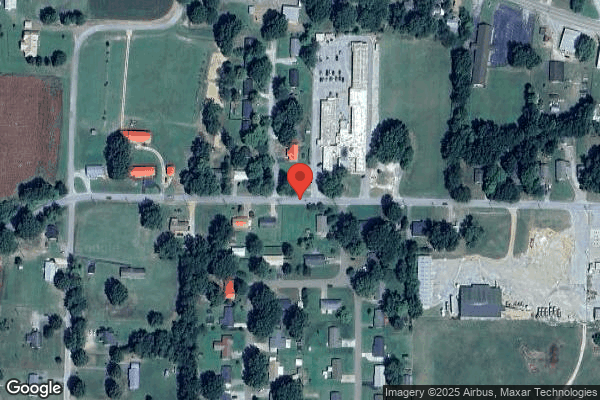
Understanding Severity Codes (click to expand)
Life-Threatening (Immediate Jeopardy)
J - Isolated K - Pattern L - Widespread
Actual Harm
G - Isolated H - Pattern I - Widespread
Potential for Harm
D - Isolated E - Pattern F - Widespread
No Harm (Minor)
A - Isolated B - Pattern C - Widespread

Questions to Ask on Your Visit

  • "What changes have you made since the serious inspection findings?"
  • "Why is there high staff turnover? How do you retain staff?"
  • "Can I speak with families of current residents?"
  • "What's your RN coverage like on weekends and overnight?"

Our Honest Assessment

Strengths
  • • Licensed and certified facility. Meets minimum state requirements.
Concerns
  • • Multiple safety concerns identified: 4 life-threatening violation(s), 1 harm violation(s), $86,119 in fines, Payment denial on record. Review inspection reports carefully.
  • • 21 deficiencies on record, including 4 critical (life-threatening) violations. These warrant careful review before choosing this facility.
  • • $86,119 in fines. Extremely high, among the most fined facilities in Tennessee. Major compliance failures.
  • • Grade F (0/100). Below average facility with significant concerns.
Bottom line: This facility has 4 Immediate Jeopardy findings. Serious concerns require careful evaluation.

About This Facility

What is Alamo's CMS Rating?

CMS assigns ALAMO NURSING AND REHABILITATION CENTER an overall rating of 1 out of 5 stars, which is considered much below average nationally. Within Tennessee, this rating places the facility higher than 0% of the state's 100 nursing homes. A rating at this level reflects concerns identified through health inspections, staffing assessments, or quality measures that families should carefully consider.

How is Alamo Staffed?

CMS rates ALAMO NURSING AND REHABILITATION CENTER's staffing level at 2 out of 5 stars, which is below average compared to other nursing homes. Staff turnover is 62%, which is 15 percentage points above the Tennessee average of 46%. High turnover can affect care consistency as new staff learn residents' individual needs. RN turnover specifically is 75%, which is notably high. RNs provide skilled clinical oversight, so turnover in this role can affect medical care quality.

What Have Inspectors Found at Alamo?

State health inspectors documented 21 deficiencies at ALAMO NURSING AND REHABILITATION CENTER during 2022 to 2025. These included: 4 Immediate Jeopardy (the most serious level, indicating potential for serious harm or death), 1 that caused actual resident harm, and 16 with potential for harm. Immediate Jeopardy findings are rare and represent the most serious regulatory concerns. They require immediate corrective action.

Who Owns and Operates Alamo?

ALAMO NURSING AND REHABILITATION CENTER is owned by a for-profit company. For-profit facilities operate as businesses with obligations to shareholders or private owners. The facility operates independently rather than as part of a larger chain. With 121 certified beds and approximately 60 residents (about 50% occupancy), it is a mid-sized facility located in ALAMO, Tennessee.

How Does Alamo Compare to Other Tennessee Nursing Homes?

Compared to the 100 nursing homes in Tennessee, ALAMO NURSING AND REHABILITATION CENTER's overall rating (1 stars) is below the state average of 2.8, staff turnover (62%) is significantly higher than the state average of 46%, and health inspection rating (2 stars) is below the national benchmark.

What Should Families Ask When Visiting Alamo?

Based on this facility's data, families visiting should ask: "What changes have been made since the serious inspection findings, and how are you preventing similar issues?" "How do you ensure continuity of care given staff turnover, and what is your staff retention strategy?" "Can you walk me through typical staffing levels on day, evening, and night shifts?" "Can I visit during a mealtime to observe dining assistance and food quality?" These questions are particularly relevant given the facility's Immediate Jeopardy citations, the facility's high staff turnover rate, and the below-average staffing rating.

Is Alamo Safe?

Based on CMS inspection data, ALAMO NURSING AND REHABILITATION CENTER has documented safety concerns. Inspectors have issued 4 Immediate Jeopardy citations (the most serious violation level indicating risk of serious injury or death). The facility has a 1-star overall rating and ranks #100 of 100 nursing homes in Tennessee. Families considering this facility should ask detailed questions about what corrective actions have been taken since these incidents.

Do Nurses at Alamo Stick Around?

Staff turnover at ALAMO NURSING AND REHABILITATION CENTER is high. At 62%, the facility is 15 percentage points above the Tennessee average of 46%. Registered Nurse turnover is particularly concerning at 75%. RNs handle complex medical decisions and coordinate care — frequent RN changes can directly impact care quality. High turnover means new staff may not know residents' individual needs, medications, or preferences. It can also be disorienting for residents, especially those with dementia who rely on familiar faces. Families should ask: What is causing the turnover? What retention programs are in place? How do you ensure care continuity during staff transitions?

Was Alamo Ever Fined?

ALAMO NURSING AND REHABILITATION CENTER has been fined $86,119 across 2 penalty actions. This is above the Tennessee average of $33,940. Fines in this range indicate compliance issues significant enough for CMS to impose meaningful financial consequences. Common causes include delayed correction of deficiencies, repeat violations, or care failures affecting resident safety. Families should ask facility leadership what changes have been made since these penalties.

Is Alamo on Any Federal Watch List?

ALAMO NURSING AND REHABILITATION CENTER is not on any federal watch list. The most significant is the Special Focus Facility (SFF) program, which identifies the bottom 1% of nursing homes nationally based on persistent, serious quality problems. Not being on this list means the facility has avoided the pattern of deficiencies that triggers enhanced federal oversight. This is a positive indicator, though families should still review the facility's inspection history directly.