CELINA HEALTH AND REHABILITATION CENTER
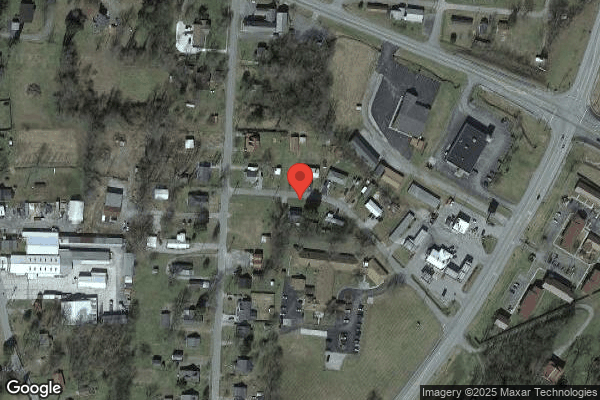
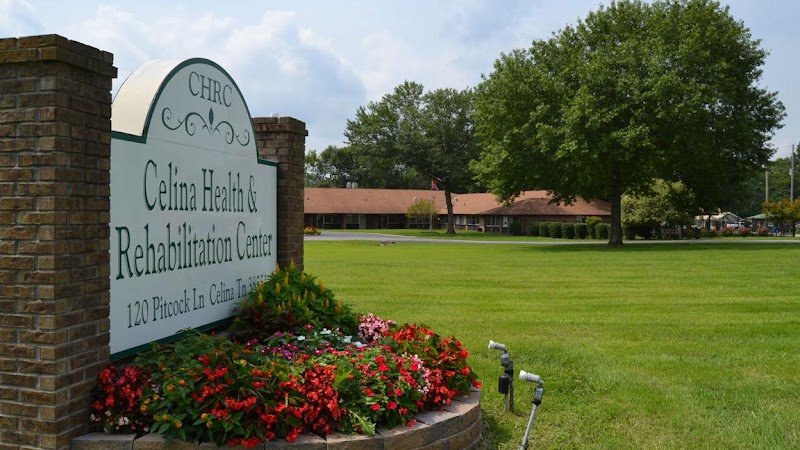
120 PITCOCK LANE, CELINA, TN 38551 (931) 243-3139
For profit - Limited Liability company 78 Beds TWIN RIVERS HEALTH & REHABILITATION Data: November 2025
Trust Grade
80/100
#55 of 298 in TN
Last Inspection: August 2022

Over 2 years since last inspection. Current conditions may differ from available data.

Overview

Celina Health and Rehabilitation Center has a Trust Grade of B+, indicating it is above average and generally recommended for families considering care options. It ranks #55 out of 298 facilities in Tennessee, placing it in the top half of nursing homes in the state, while it is the only option in Clay County. Unfortunately, the trend is worsening, with the number of issues rising from 2 in 2019 to 3 in 2022. Staffing is a concern, rated at 2 out of 5 stars, with a 42% turnover rate, which is slightly better than the state average. However, the facility has no fines on record, which is a positive sign, and it offers more RN coverage than 75% of similar facilities, enhancing care quality. Specific incidents noted during inspections include staff transporting uncovered food, raising concerns about food safety, and a failure to ensure that a resident received proper treatment for pressure ulcers, which could hinder healing. While the facility has strengths, such as no fines and good RN coverage, families should be aware of the staffing issues and the recent increase in reported concerns.

Trust Score
B+
80/100
In Tennessee
#55/298
Top 18%
Safety Record
Low Risk
No red flags
Inspections
Getting Worse
2 → 3 violations
Staff Stability
○ Average
42% turnover. Near Tennessee's 48% average. Typical for the industry.
Penalties
✓ Good
No fines on record. Clean compliance history, better than most Tennessee facilities.
Skilled Nurses
○ Average
Each resident gets 34 minutes of Registered Nurse (RN) attention daily — about average for Tennessee. RNs are the most trained staff who monitor for health changes.
Violations
○ Average
7 deficiencies on record. Average for a facility this size. Mostly minor or procedural issues.
★★★★☆
4.0
Overall Rating
★★☆☆☆
2.0
Staff Levels
★★★☆☆
3.0
Care Quality
★★★★☆
4.0
Inspection Score
Stable
2019: 2 issues
2022: 3 issues

The Good

  • Full Sprinkler Coverage · Fire safety systems throughout facility
  • No fines on record
  • Staff turnover below average (42%)

    6 points below Tennessee average of 48%

Facility shows strength in fire safety.

The Bad

Staff Turnover: 42%

Near Tennessee avg (46%)

Typical for the industry

Chain: TWIN RIVERS HEALTH & REHABILITATION

Part of a multi-facility chain

Ask about local staffing decisions and management

The Ugly 7 deficiencies on record

Aug 2022 3 deficiencies
CONCERN (D)

Potential for Harm - no one hurt, but risky conditions existed

Pressure Ulcer Prevention (Tag F0686)

Could have caused harm · This affected 1 resident

**NOTE- TERMS IN BRACKETS HAVE BEEN EDITED TO PROTECT CONFIDENTIALITY** Based on facility policy review, medical record reviews, observations, and interviews, the facility failed to ensure 1 of 22 sam...

Read full inspector narrative →
**NOTE- TERMS IN BRACKETS HAVE BEEN EDITED TO PROTECT CONFIDENTIALITY** Based on facility policy review, medical record reviews, observations, and interviews, the facility failed to ensure 1 of 22 sampled residents (Resident #1) received necessary treatment consistent with professional standards of practice, to promote healing of pressure ulcers. The findings include: Review of the facility's undated policy titled, Wound Management, revealed, .The Wound Management Program is committed to the assessment, prevention, identification and treatment of a break in skin integrity .to implement prevention and wound healing strategies . Review of the medical record revealed Resident #1 was admitted to the facility on [DATE] with diagnoses which included Cerebral Infarction, Hemiplegia and Hemiparesis, and Muscle Weakness. Review of the Baseline Care Plan for Resident #1 dated 8/17/2022, revealed, .impaired skin integrity .Pressure Ulcer .St [stage] 1 Rt [right] foot .Elevate heels off of bed .perform rounds for compliance . Review of the Wound Physician's notes dated 8/17/2022, revealed, .pressure wound of the right heel .float heels in bed .off-load wound . Observations in Resident #1's room on 8/22/2022 at 2:00 PM, 3:00 PM, 4:19 PM, 5:01 PM, and 8/23/2022 at 1:00 PM, revealed Resident #1 was in bed with both heels against the bed surface. Continued observation revealed two heel protector boots on A bed and no heels up cushion present in the room. During an interview on 8/23/2022 at 1:50 PM, the Director of Nursing (DON) stated Resident #1 did not have an order for heel protector boots. She stated there was a heels up cushion intervention in place to keep Resident #1's heels off the bed. She stated she had observed Resident #1 in bed today and confirmed the resident's heels were not floated on the heels up cushion nor were the resident's heels placed in the heel protector boots She stated the cushion had been taken off with the linen change and was not in the room. She stated she expected the intervention for Resident #1's heel wound to be followed as ordered.
CONCERN (D)

Potential for Harm - no one hurt, but risky conditions existed

Deficiency F0757 (Tag F0757)

Could have caused harm · This affected 1 resident

**NOTE- TERMS IN BRACKETS HAVE BEEN EDITED TO PROTECT CONFIDENTIALITY** Based on facility policy review, medical record review, and interview, the facility failed to adequately monitor 2 of 9 resident...

Read full inspector narrative →
**NOTE- TERMS IN BRACKETS HAVE BEEN EDITED TO PROTECT CONFIDENTIALITY** Based on facility policy review, medical record review, and interview, the facility failed to adequately monitor 2 of 9 residents (Resident #36 and #196) receiving anticoagulant therapy. The Findings include: Review of the facility's policy titled, Medication Monitoring and Management, dated 1/1/2018 revealed, .In order to optimize the therapeutic benefit of medication therapy and minimize or prevent potential adverse consequences, facility staff, the attending physician/prescriber, and the consultant pharmacist perform ongoing monitoring for appropriate, effective, and safe medication use .The interdisciplinary team reviews the resident's medication regimen for efficacy and actual or potential medication-related problems on an ongoing basis . Review of the medical record revealed Resident #36 was admitted to the facility on [DATE] with diagnoses which included Mild Protein-Calorie Malnutrition, Chronic Kidney Disease, Stage 3, and Heart Failure. Review of the admission Minimum Data Set (MDS) assessment dated [DATE], revealed Resident #36 received an anticoagulant 7 of 7 days during the look back period. Review of the Physician Orders for Resident #36 dated 8/2022 revealed, .Eliquis [anticoagulant] 2.5 mg [milligram] take one tablet by mouth twice daily . Review of the Medication Administration Record (MAR) dated 8/2022, for Resident #36 revealed Eliquis 2.5 mg was administered as ordered. Continued review revealed no monitoring for side effects of anticoagulant. Review of the medical record revealed Resident #196 was admitted to the facility on [DATE] with diagnoses which included Acute Respiratory Failure with Hypoxia, Atherosclerotic Heart Disease (ASHD), and Atrial Fibrillation. Review of the 5-day Prospective Payment System (PPS) MDS assessment dated [DATE], revealed Resident #196 received anticoagulant 7 of 7 days during the look back period. Review of the Physician Orders for Resident #196 dated 8/2022, revealed, .Eliquis 2.5 mg tablet take one tablet by mouth twice daily . Review of the MAR dated 8/2022, for Resident #196 revealed Eliquis 2.5 mg was administered as ordered. Continued review revealed no monitoring for side effects of anticoagulant. During an interview on 8/24/2022 at 9:13 AM, the Director of Nursing confirmed residents receiving an anticoagulant should be monitored on the MAR for side effects.
CONCERN (E)

Potential for Harm - no one hurt, but risky conditions existed

Food Safety (Tag F0812)

Could have caused harm · This affected multiple residents

**NOTE- TERMS IN BRACKETS HAVE BEEN EDITED TO PROTECT CONFIDENTIALITY** Based on facility policy review, observations, and interviews, the facility failed to transport and distribute meals in a safe s...

Read full inspector narrative →
**NOTE- TERMS IN BRACKETS HAVE BEEN EDITED TO PROTECT CONFIDENTIALITY** Based on facility policy review, observations, and interviews, the facility failed to transport and distribute meals in a safe sanitary manner for 2 of 2 meal observations. The findings include: Review of the facility's policy titled, Food Preparation and Service, dated 4/2019 revealed, .Food and nutrition services employees prepare and serve food in a manner that complies with safe food handling practices .Food preparation staff adhere to proper .sanitary practices to prevent the spread of food borne illness . Observation on the 100 and 300 halls on 8/22/2022, during the noon meal, at 11:58 AM to 12:25 PM, revealed the dietary staff plated 21 plates of food without a cover. Continued observation revealed the staff transported the uncovered plates down the hallways and distributed the uncovered plates of food to the residents. During an interview on 8/22/2022 at 12:30 PM, the Dietary Manager confirmed the uncovered food plates were transported down the hall and distributed to the residents. Observation on the 100 and 300 halls on 8/22/2022, during the evening meal, at 4:42 PM to 5:20 PM, revealed the dietary staff plated 22 plates of food without a cover. Continued observation revealed the staff transported the uncovered plates down the hallways and distributed the uncovered plates of food to the residents. Observation on the 300 hall on 8/22/2022 at 5:13 PM, revealed a staff member transported an uncovered plate of food to room [ROOM NUMBER]. Continued observation revealed room [ROOM NUMBER] was 5 rooms down from the food cart. During an interview on 8/22/2022 at 5:25 PM, the Dietary Manager confirmed the plate delivered to room [ROOM NUMBER] was not covered during transportation and distribution. Continued interview with the Dietary Manager confirmed uncovered plates of food were transported down the 100 and 300 halls and distributed to the residents.
Jul 2019 2 deficiencies
CONCERN (D)

Potential for Harm - no one hurt, but risky conditions existed

Deficiency F0655 (Tag F0655)

Could have caused harm · This affected 1 resident

**NOTE- TERMS IN BRACKETS HAVE BEEN EDITED TO PROTECT CONFIDENTIALITY** Based on facility policy review, medical record review, and interview, the facility failed to develop a baseline care plan to ad...

Read full inspector narrative →
**NOTE- TERMS IN BRACKETS HAVE BEEN EDITED TO PROTECT CONFIDENTIALITY** Based on facility policy review, medical record review, and interview, the facility failed to develop a baseline care plan to address fall precautions for 1 resident (#5) of 4 residents reviewed for falls of 15 sampled residents. The findings include: Review of the facility policy Care Plans - Baseline revised 12/2016 revealed .A baseline plan of care to meet the resident's immediate needs shall be developed for each resident .Policy Interpretation and Implementation .To assure that the resident's immediate care needs are met and maintained, a baseline care plan will be developed .The Interdisciplinary Team will review the healthcare .orders .and implement a baseline care plan to meet the resident's immediate care needs .The baseline care plan will be used until the staff can conduct the comprehensive assessment and develop an interdisciplinary person-centered care plan . Medical record review revealed Resident #5 was admitted to the facility on [DATE] with diagnoses including Alzheimer's Disease, Cognitive Communication Deficit, Difficulty in Walking, Lack of Coordination, and Muscle Weakness. Medical record review of Physician Orders dated 4/12/19 from a local hospital revealed .Transfer patient to .SNF [skilled nursing facility] .Activity .Fall precautions . Medical record review of an undated Baseline Care Plan for Resident #5 revealed the facility failed to develop and implement a plan of care for fall precautions. Interview with Registered Nurse (RN) #1 on 7/22/19 at 2:32 PM, in the conference room, revealed she had completed the admission assessment for Resident #5 on 4/12/19. Further interview confirmed admitting Physician Orders for the resident dated 4/12/19 from a local hospital revealed fall precautions. Continued interview confirmed a baseline care plan had not been developed to include fall precautions for Resident #5. Interview with the Director of Nursing on 7/23/19 at 7:23 AM, in the conference room, confirmed the facility failed to develop a baseline care plan to include fall precautions for Resident #5.
CONCERN (D)

Potential for Harm - no one hurt, but risky conditions existed

Deficiency F0657 (Tag F0657)

Could have caused harm · This affected 1 resident

**NOTE- TERMS IN BRACKETS HAVE BEEN EDITED TO PROTECT CONFIDENTIALITY** Based on facility policy review, medical record review, observation and interview the facility failed to reassess and revise the...

Read full inspector narrative →
**NOTE- TERMS IN BRACKETS HAVE BEEN EDITED TO PROTECT CONFIDENTIALITY** Based on facility policy review, medical record review, observation and interview the facility failed to reassess and revise the effectiveness of the care planned interventions for communication for 1 resident (#54) of 25 residents reviewed. The findings include: Review of the facility's policy Care Plans, Comprehensive Person-Centered, revised 12/2016, revealed .Care plan interventions are chosen .after careful data gathering, careful consideration of the relationship between the resident's problem areas .Assessments of residents are ongoing and care plans are revised as information about the resident and the residents' conditions change . Medical record review revealed Resident #54 was admitted to the facility on [DATE] with diagnoses including Cerebral Infarction, Altered Mental Status, Expressive Language Disorder, Aphasia (loss of ability to understand/express speech), and Apraxia (loss of speech making ability). Medical record review of a Quarterly Minimum Data Set (MDS) dated [DATE] revealed the resident scored a 00 on the Brief Interview for Mental Status (BIMS) indicating the resident was severely cognitively impaired. Continued review revealed Resident #54 had unclear speech, rarely understands and impaired ability to make self-understood. Medical record review of the Comprehensive Care Plan, dated 7/10/19, revealed .Impaired ability to make self understood .Teach resident how to use communication book .Teach resident how to use communication board .Teach resident how to use assistive device .difficulty expressing my ideas or wants and understanding others .refer to speech pathology . Observation and interview with Resident #54 on 7/21/19 at 11:01 AM, in the resident's room, revealed the resident was unable to respond/communicate verbally or non-verbally. Continued observation revealed no communication devices were observed in the resident's room. Interview with Licensed Practical Nurse (LPN) #1 on 7/21/19 at 11:28 AM, at the nurses station, revealed .resident is non-verbal because of a stroke we communicate with her on paper and pencil .she writes down what she wants or needs . Observation of Resident #54 on 7/22/19 at 8:40 AM, in the resident's room, revealed no paper and pencil available for the resident. Interview with the Speech Pathologist on 7/22/19 at 1:17 PM, on the 200 hallway, revealed the resident does not have the cognitive ability to use a communication board or a communication book. Further interview revealed Resident #54 was unable to express her needs verbally and would not be able to write her needs on paper. Observation of Resident #54 on 7/23/19 at 7:55 AM, in the resident's room, revealed the staff delivered the resident's meal tray. Continued observation revealed the staff asked if the resident needed anything and the resident was unable to respond/communicate. Interview with the MDS Coordinator on 7/23/19 at 7:55 AM, in the conference room, confirmed the resident's care plan did not include appropriate interventions on how to communicate with Resident #54. Continued interview confirmed the facility failed to reassess and revise the effectiveness of the resident's care planned interventions. Interview with the MDS Coordinator on 7/23/19 at 7:55 AM, in the conference room, confirmed the resident's care plan did not include appropriate interventions on how to communicate with Resident #54. Continued interview confirmed the facility failed to reassess and revise the effectiveness of the resident's care planned interventions. Interview with the Assistant Director of Nursing (ADON) on 7/23/19 at 8:24 AM, in the ADON's office, revealed .we have a difficult time communicating with [Resident#54] . Interview with the Administrator on 7/23/19 at 9:25 AM, in the Administrator's office confirmed the care plan had not been updated to include person centered interventions.
Aug 2018 2 deficiencies
CONCERN (D)

Potential for Harm - no one hurt, but risky conditions existed

Deficiency F0658 (Tag F0658)

Could have caused harm · This affected 1 resident

**NOTE- TERMS IN BRACKETS HAVE BEEN EDITED TO PROTECT CONFIDENTIALITY** Based on review of facility policy, medical record review, observation, and interview, the facility failed to follow professiona...

Read full inspector narrative →
**NOTE- TERMS IN BRACKETS HAVE BEEN EDITED TO PROTECT CONFIDENTIALITY** Based on review of facility policy, medical record review, observation, and interview, the facility failed to follow professional standards of practice for 1 resident (#9) of 3 residents reviewed for enteral feedings. The findings include: Review of the undated Enteral Feedings - Safety Precautions policy revealed .Preventing errors in administration .2.On the formula label document initials, date and time the formula was hung/administered, and initial that the label was checked against the order . Medical record review revealed Resident #9 admitted on [DATE] and readmitted on [DATE] with diagnoses including Muscular Dystropy, Dysphagia (difficulty swallowing) and Gastrostomy (external opening into the stomach for nutritional support). Medical record review of the quarterly Minimum Data Set, dated [DATE] revealed a Brief Interview for Mental Status score of 0 indicative of severely cognitively impaired. Continued review revealed no moods or behaviors and resident required total assistance for Activities of Daily Living (ADL). Medical record review of the quarterly care plan updated 7/31/18 revealed potential for falls related to muscular dystrophy, prone to contractures, requires a Percutaneous Endoscopic Gastrostomy (PEG) tube (a tube passed into the stomach to provide nutritional support), and depends on staff for all ADL's. Medical record review of the physician's order dated August 2018 revealed .TwoCal HN Liquid [a High Calorie Nutritional Formula] @ [at] 38 ml/hr [milliliters/hour] with 51cc [cubic centimeter] water flush via pump x [for] 22 hours, clean PEG Tube Site with Normal Saline .NPO [nothing by mouth] . Observation of resident on 7/30/18 at 11:10 AM, in the resident's room, revealed resident lying in bed with Head of Bed (HOB) elevated 45 degrees with tube feeding (TF) infusing at 38 ml/hr. Continued observation revealed the enteral TF formula bag had no label that indicated the type of formula, the date or time the formula was hung or the nurse initials that it was checked against the physician's order. Interview with the Director of Nursing, on 7/30/18 at 2:19 PM, in Resident #9's room, confirmed Resident #9's enteral tube feeding bag did not contain a label and the facility failed to follow the professional standards of practice for enteral tube feeding.
CONCERN (E)

Potential for Harm - no one hurt, but risky conditions existed

Deficiency F0800 (Tag F0800)

Could have caused harm · This affected multiple residents

Based on facility policy review, and interview the facility failed to ensure staff calibrate thermometers weekly and failed to document food temperatures for 11 of 40 evening meals reviewed. The find...

Read full inspector narrative →
Based on facility policy review, and interview the facility failed to ensure staff calibrate thermometers weekly and failed to document food temperatures for 11 of 40 evening meals reviewed. The findings include: Review of the undated, Calibrating A Probe Thermometer facility policy, revealed .Probe food thermometer should be calibrated weekly to assure accuracy . Review of the facility policy, Food Temperatures, dated 9/11 revealed .Record reading on Food Temperature Chart .at beginning of the trayline and end of trayline .Take the temperature of each pan of product before serving . Review of the facility Food Temperature Charts dated 7/1/18-8/1/18 revealed evening meal food temperatures were not completed on 7/3, 7/4, 7/5, 7/6, 7/8, 7/9, 7/10, 7/13, 7/14, 7/17 and 7/20. Interview with [NAME] #1 and [NAME] #2 on 7/29/18 at 11:30 AM, in the kitchen confirmed they do not calibrate the thermometers on a regular basis and were unsure how often the thermometers were to be calibrated. Interview with the Dietary Manager on 8/1/18 at 8:45 AM, in the conference room, confirmed the facility failed to ensure staff calibrated thermometers weekly and failed to ensure staff document food temperatures as per the facility policy.
Understanding Severity Codes (click to expand)
Life-Threatening (Immediate Jeopardy)
J - Isolated K - Pattern L - Widespread
Actual Harm
G - Isolated H - Pattern I - Widespread
Potential for Harm
D - Isolated E - Pattern F - Widespread
No Harm (Minor)
A - Isolated B - Pattern C - Widespread

Questions to Ask on Your Visit

  • "Can I speak with families of current residents?"
  • "What's your RN coverage like on weekends and overnight?"

Our Honest Assessment

Strengths
  • • Grade B+ (80/100). Above average facility, better than most options in Tennessee.
  • • No major safety red flags. No abuse findings, life-threatening violations, or SFF status.
  • • No fines on record. Clean compliance history, better than most Tennessee facilities.
  • • 42% turnover. Below Tennessee's 48% average. Good staff retention means consistent care.
Concerns
  • • No significant concerns identified. This facility shows no red flags across CMS ratings, staff turnover, or federal penalties.
Bottom line: Generally positive indicators. Standard due diligence and a personal visit recommended.

About This Facility

What is Celina Center's CMS Rating?

CMS assigns CELINA HEALTH AND REHABILITATION CENTER an overall rating of 4 out of 5 stars, which is considered above average nationally. Within Tennessee, this rating places the facility higher than 99% of the state's 100 nursing homes. This rating reflects solid performance across the metrics CMS uses to evaluate nursing home quality.
How is Celina Center Staffed?

CMS rates CELINA HEALTH AND REHABILITATION CENTER's staffing level at 2 out of 5 stars, which is below average compared to other nursing homes. Staff turnover is 42%, compared to the Tennessee average of 46%. This relatively stable workforce can support continuity of care.

What Have Inspectors Found at Celina Center?

State health inspectors documented 7 deficiencies at CELINA HEALTH AND REHABILITATION CENTER during 2018 to 2022. These included: 7 with potential for harm.
Who Owns and Operates Celina Center?

CELINA HEALTH AND REHABILITATION CENTER is owned by a for-profit company. For-profit facilities operate as businesses with obligations to shareholders or private owners. The facility is operated by TWIN RIVERS HEALTH & REHABILITATION, a chain that manages multiple nursing homes. With 78 certified beds and approximately 57 residents (about 73% occupancy), it is a smaller facility located in CELINA, Tennessee.
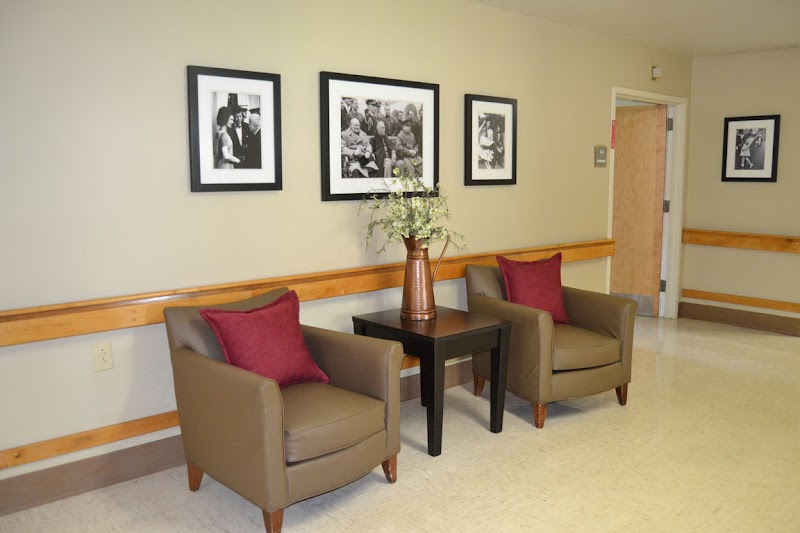
How Does Celina Center Compare to Other Tennessee Nursing Homes?

Compared to the 100 nursing homes in Tennessee, CELINA HEALTH AND REHABILITATION CENTER's overall rating (4 stars) is above the state average of 2.8, staff turnover (42%) is near the state average of 46%, and health inspection rating (4 stars) is above the national benchmark.

What Should Families Ask When Visiting Celina Center?

Based on this facility's data, families visiting should ask: "Can you walk me through typical staffing levels on day, evening, and night shifts?" "Can I visit during a mealtime to observe dining assistance and food quality?" "How do you handle medical emergencies, and what is your hospital transfer rate?" "Can I speak with family members of current residents about their experience?" These questions are particularly relevant given the below-average staffing rating.

Is Celina Center Safe?

Based on CMS inspection data, CELINA HEALTH AND REHABILITATION CENTER has a clean safety record: no substantiated abuse findings (meaning no confirmed cases of resident harm), no Immediate Jeopardy citations (the most serious violation level indicating risk of serious injury or death), and is not on the Special Focus Facility watch list (a federal program monitoring the lowest-performing 1% of nursing homes). The facility has a 4-star overall rating and ranks #1 of 100 nursing homes in Tennessee. While no facility is perfect, families should still ask about staff-to-resident ratios and recent inspection results during their visit.

Do Nurses at Celina Center Stick Around?

CELINA HEALTH AND REHABILITATION CENTER has a staff turnover rate of 42%, which is about average for Tennessee nursing homes (state average: 46%). Moderate turnover is common in nursing homes, but families should still ask about staff tenure and how the facility maintains care continuity when employees leave.

Was Celina Center Ever Fined?

CELINA HEALTH AND REHABILITATION CENTER has no federal fines on record. CMS issues fines when nursing homes fail to meet care standards or don't correct problems found during inspections. The absence of fines suggests the facility has either maintained compliance or corrected any issues before penalties were assessed. This is a positive indicator, though families should still review recent inspection reports for the full picture.

Is Celina Center on Any Federal Watch List?

CELINA HEALTH AND REHABILITATION CENTER is not on any federal watch list. The most significant is the Special Focus Facility (SFF) program, which identifies the bottom 1% of nursing homes nationally based on persistent, serious quality problems. Not being on this list means the facility has avoided the pattern of deficiencies that triggers enhanced federal oversight. This is a positive indicator, though families should still review the facility's inspection history directly.