NHC HEALTHCARE, CHATTANOOGA
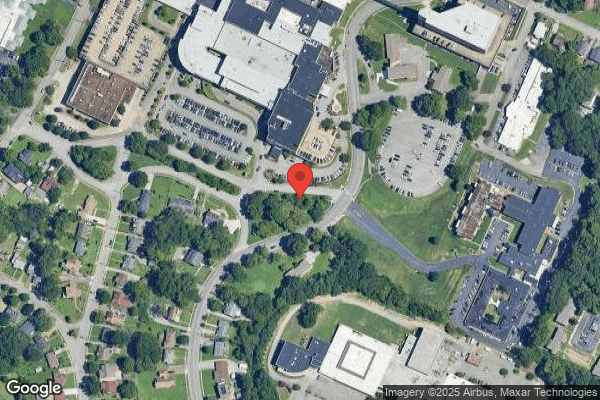

2700 PARKWOOD AVE, CHATTANOOGA, TN 37404 (423) 624-1533
For profit - Corporation 200 Beds NATIONAL HEALTHCARE CORPORATION Data: November 2025
Trust Grade
80/100
#78 of 298 in TN
Last Inspection: October 2024

Within standard 12-15 month inspection cycle. Federal law requires annual inspections.

Overview

NHC Healthcare in Chattanooga has a Trust Grade of B+, which means it's above average and generally recommended for families considering care options. It ranks #78 out of 298 facilities in Tennessee, placing it in the top half, and #6 out of 11 within Hamilton County, indicating only five other local options are better. The facility is improving, with issues decreasing from six in 2022 to four in 2024. Staffing is a concern, rated at 2 out of 5 stars, with a turnover rate of 52%, which is average but may affect consistency in care. Fortunately, there have been no fines recorded, which is a positive sign, but the RN coverage is below average, being less than 82% of other facilities in the state, meaning residents might not have as much specialized nursing attention. However, there are notable weaknesses. An inspector found that the kitchen was not kept clean, with food debris present on equipment, which could affect resident safety. Additionally, medical information for some residents was not properly protected, meaning their privacy was potentially compromised. Lastly, there were deficiencies in developing comprehensive care plans for several residents, which could impact the quality of care they receive. While the facility has strengths such as no fines and a good quality measures rating, families should weigh these concerns carefully when considering this nursing home.

Trust Score
B+
80/100
In Tennessee
#78/298
Top 26%
Safety Record
Low Risk
No red flags
Inspections
Getting Better
6 → 4 violations
Staff Stability
⚠ Watch
52% turnover. Above average. Higher turnover means staff may not know residents' routines.
Penalties
✓ Good
No fines on record. Clean compliance history, better than most Tennessee facilities.
Skilled Nurses
⚠ Watch
Each resident gets only 21 minutes of Registered Nurse (RN) attention daily — below average for Tennessee. Fewer RN minutes means fewer trained eyes watching for problems.
Violations
○ Average
10 deficiencies on record. Average for a facility this size. Mostly minor or procedural issues.
★★★★☆
4.0
Overall Rating
★★☆☆☆
2.0
Staff Levels
★★★★★
5.0
Care Quality
★★★☆☆
3.0
Inspection Score
Stable
2022: 6 issues
2024: 4 issues

The Good

  • 5-Star Quality Measures · Strong clinical quality outcomes
  • Full Sprinkler Coverage · Fire safety systems throughout facility
  • No fines on record

Facility shows strength in quality measures, fire safety.

The Bad

Staff Turnover: 52%

Near Tennessee avg (46%)

Higher turnover may affect care consistency

Chain: NATIONAL HEALTHCARE CORPORATION

Part of a multi-facility chain

Ask about local staffing decisions and management

The Ugly 10 deficiencies on record

Oct 2024 4 deficiencies
CONCERN (D)

Potential for Harm - no one hurt, but risky conditions existed

Assessment Accuracy (Tag F0641)

Could have caused harm · This affected 1 resident

**NOTE- TERMS IN BRACKETS HAVE BEEN EDITED TO PROTECT CONFIDENTIALITY** Based on facility policy review, medical record review and interview, the facility failed to accurately code a Preadmission Scre...

Read full inspector narrative →
**NOTE- TERMS IN BRACKETS HAVE BEEN EDITED TO PROTECT CONFIDENTIALITY** Based on facility policy review, medical record review and interview, the facility failed to accurately code a Preadmission Screening and Resident Review (PASRR) level 2 on the Minimum Data Set (MDS) assessment for 3 residents (Resident #35, Resident #81 and Resident #84) of 7 residents reviewed for PASRR. The findings include: Review of the facility's policy titled, Pre-admission SCREENING & [and] Resident Review (PASRR), revised 11/2016, revealed .requires all centers to screen patients .to determine if they have Mental Illness, Intellectual or Developmental Disability .those patients found nursing facility appropriate under Level II [2] review, the Center [facility], should incorporate .PASRR Level II determination .into the patient's assessments (MDS) . Resident #35 was admitted to the facility on [DATE], with diagnoses including Parkinson's Disease, Failure to Thrive, Bipolar Disorder, Hallucinations and Insomnia. Review of Resident #35's PASRR submission dated 6/27/2023, revealed the resident was considered by the state designated agency to have a level 2 outcome. Review of Resident #35's significant change MDS assessment dated [DATE], revealed the resident was not coded as a resident currently considered by the state to have a level 2 outcome. Resident #81 was admitted to the facility on [DATE], with diagnoses including, Bipolar Disorder, Anxiety, Emotional Liability and Nicotine Dependence. Review of Resident #81's PASRR submission dated 7/19/2024, revealed the resident was considered by the state designated agency to have a level 2 outcome. Review of Resident #81's significant change MDS assessment dated [DATE], revealed the resident was not coded as a resident currently considered by the state to have a level 2 outcome. Resident #84 was admitted to the facility on [DATE], with diagnoses including Non-Alzheimer's Dementia, Anxiety, Depression and Psychotic Disorder. Review of Resident #84's PASRR submission dated 9/5/2024, revealed the resident was considered by the state designated agency to have a level 2 outcome. Review of Resident #84's admission MDS assessment dated [DATE], revealed the resident was not coded as a resident currently considered by the state to have a level 2 outcome. During an interview on 10/17/2024 at 5:50 PM, the MDS Supervisor stated Resident #35, Resident #81 and Resident #84 were currently determined by the state designated agency to have a level 2 outcome and confirmed Resident #35, Resident #81 and Resident #84 were not accurately coded for a PASRR level 2 on the MDS assessment.
CONCERN (D)

Potential for Harm - no one hurt, but risky conditions existed

Comprehensive Care Plan (Tag F0656)

Could have caused harm · This affected 1 resident

**NOTE- TERMS IN BRACKETS HAVE BEEN EDITED TO PROTECT CONFIDENTIALITY** Based on facility policy review, medical record review and interview, the facility failed to implement a person centered compreh...

Read full inspector narrative →
**NOTE- TERMS IN BRACKETS HAVE BEEN EDITED TO PROTECT CONFIDENTIALITY** Based on facility policy review, medical record review and interview, the facility failed to implement a person centered comprehensive care plan intervention related to falls for 1 resident (Resident #51) of 3 residents reviewed for falls. The findings include: Review of the facility's policy titled, Documentation Guidelines, revised 6/2023, revealed .Care Plan Approaches [interventions] are specific, individualized steps partners [staff] and patients will take together to assist the patient to achieve the goal .Approaches serve as instructions for patient care . Review of the facility's undated policy titled, [Named facility] FALLS PROGRAM, revealed .to reduce the patients' risk of falling .implement appropriate interventions .Evaluate effectiveness of the interventions . Review of the facility's undated policy titled, L.A.M.P (Look at me please), revealed .L.A.M.P is a program initiated within the facility .means of communication to alert the staff of the individual's specific fall intervention needed . Medical record review revealed Resident #51 was admitted to the facility on [DATE], with diagnoses including Low Blood Pressure While Standing, Bradycardia, History of Falls, Dementia and Osteoporosis. Review of the facility's document for Resident #51 titled, POST FALL INVESTIGATION, dated 9/12/2024, revealed the resident had a witnessed fall while ambulating in the hallway on 9/12/2024, and the L.A.M.P program was listed as the facility's post fall intervention. Review of the significant change Minimum Data Set (MDS) assessment dated [DATE], revealed Resident #51 was unable to complete the Brief Interview for Mental Status (BIMS) assessment which indicated the resident had severe cognitive impairment. Further review of the Significant Change MDS revealed the resident had falls at the facility since admission. Review of a comprehensive care plan for Resident #51 revised 10/13/2024, revealed .At risk for falls .Approach .pt [patient] to be a participant on the L.A.M.P. program . During an observation on 10/14/2024 at 2:00 PM, Resident #51 was in her room, sitting in her wheelchair. No signage was posted on the doorway, or in the resident's room related to falls or the L.A.M.P program. During an observation on 10/17/2024, at 9:00 AM, Resident #51 was not in the room, and no signage was posted on the doorway, or in the resident's room related to falls or the L.A.M.P. program. During an interview on 10/17/2024, at 9:20 AM, LPN F stated .The L.A.M.P program is a picture of a lamp or sign on the resident's door frame intended to remind staff prior to entering the resident's room. The Lamp stands for look at me please and reminds staff to pay special close attention to the resident regarding falls while in the room. The sign is kept on the doorframe and not in the room and not in the closet . During an interview on 10/17/2024, at 9:30 AM, CNA G stated .The L.A.M.P program is picture that goes only on the resident's door or door frame to let us know to pay close attention to them for falls risk and there is a number written on the picture to tell you which resident is on the L.A.M.P program . During an observation and interview on 10/17/2024, at 9:35 AM, LPN F and CNA G observed the door and door frame for Resident #51's room and confirmed there was no L.A.M.P signage in use for the resident. During an interview on 10/17/2024, at 10:00 AM, the Care Plan Coordinator H stated the L.A.M.P program signage was to be placed on the resident's door or the resident's door frame and confirmed the L.A.M.P. program fall intervention was not implemented.
CONCERN (D)

Potential for Harm - no one hurt, but risky conditions existed

Food Safety (Tag F0812)

Could have caused harm · This affected 1 resident

**NOTE- TERMS IN BRACKETS HAVE BEEN EDITED TO PROTECT CONFIDENTIALITY** Based on review of facility job descriptions, medical record review, observation and interview, the facility failed to ensure 1 ...

Read full inspector narrative →
**NOTE- TERMS IN BRACKETS HAVE BEEN EDITED TO PROTECT CONFIDENTIALITY** Based on review of facility job descriptions, medical record review, observation and interview, the facility failed to ensure 1 coffee cup was clean prior to resident use of 5 coffee cups observed. The findings include: Review of the facility job description titled, Dishwasher, revised 11/2020, revealed duties and responsibilities included, .Assists in maintaining the FNS [Food Nutrition Services] department in a .sanitary manner .Responsible for scraping .washing, and sanitizing dishes .utensils .Assembles meal trays on tray line and checks trays for .quality . Review of the facility job description titled, Food and Nutrition Services (FNS) Aide, revised 11/2020, revealed duties and responsibilities included .Assists in maintaining the FNS department in a .sanitary manner .Responsible for scraping .washing, and sanitizing dishes .utensils .Assembles meal trays on tray line and checks trays for .quality . Review of the medical record revealed Resident #94 was admitted to the facility on [DATE], with diagnoses including Mild Dementia with Anxiety, Delusional Disorders and Chronic Obstructive Pulmonary Disease. Review of a quarterly Minimum Data Set (MDS) assessment dated [DATE], revealed Resident #94 scored 13 on the Brief Interview for Mental Status (BIMS) which indicated the resident was cognitively intact. The resident did not require assistance with eating. During observation and interview on 10/15/2024, at 8:52 AM, Resident #94 requested this surveyor look at the rim of her coffee cup. Observation revealed a dark substance on the rim of the coffee cup. The dark substance was easily removed when the resident wiped a small area with a tissue. The substance on the tissue was wine colored. In reference to a clock face, the handle of the coffee cup was sitting on the over bed table with the handle at 3 o'clock and the dark substance was at 12 o'clock. Resident #94 was not wearing lipstick at the time of the observation. During observation and interview on 10/15/2024, at 9:05 AM, the Director of Nursing confirmed the rim of the resident's coffee cup had a dark substance and confirmed the cup had not been properly cleaned prior to resident use. During an interview on 10/15/2024, at 11:30 AM, the Administrator stated dietary staff were expected to inspect dishes, cups, and eating utensils for cleanliness prior to serving food and drinks to residents.
CONCERN (D)

Potential for Harm - no one hurt, but risky conditions existed

Medical Records (Tag F0842)

Could have caused harm · This affected 1 resident

**NOTE- TERMS IN BRACKETS HAVE BEEN EDITED TO PROTECT CONFIDENTIALITY** Based on facility policy review, medical record review and interviews, the facility failed to ensure the medical record was accu...

Read full inspector narrative →
**NOTE- TERMS IN BRACKETS HAVE BEEN EDITED TO PROTECT CONFIDENTIALITY** Based on facility policy review, medical record review and interviews, the facility failed to ensure the medical record was accurate and complete for 1 resident (Resident #117) of 5 residents reviewed for blood glucose monitoring. The findings include: Review of the facility's policy titled, Introduction to Documentation for Inpatient Medical Records, dated 11/2023, revealed .It is the responsibility of each health care center to .maintain comprehensive records .accurately .Professional Standards of Documentation .evaluations, treatments .responses are accurately recorded .Information is recorded as near to the time of the occurrence . Resident #117 was admitted to the facility on [DATE] with diagnoses including Type 2 Diabetes Mellitus, Long term use of Insulin, Hyperglycemia and Adult Failure to Thrive. Review of the Part A PPS (Prospective Payment System) Discharge Item Set Minimum Data Set (MDS) assessment for Resident #117 dated 9/30/2024, revealed the resident had received insulin in the 7 day look back review. Review of the comprehensive care plan for Resident #117 dated 8/24/2024, revealed .Type II Diabetes .Perform fingersticks as ordered . Review of a Physician Order for Resident #117 dated 8/24/2024, revealed the order for blood sugar checks before meals and at bedtime (07:30 AM, 11:00 AM, 04:30 PM, 09:00 PM). Review of a Physician Order for Resident #117 dated 9/18/2024, revealed .Hyperglycemic Protocol .Any blood sugar 401 or greater, administer insulin per sliding scale and recheck in 2 hours. If still 401 or higher, notify medical staff for further orders . Further review of the medical record revealed Resident #117 had orders for long acting insulin (started 8/26/2024) and sliding scale insulin orders were added 10/11/2024. Review of the Medication Administration Record (MAR) for Resident #117 dated 9/1/2024-9/30/2024, revealed a blood sugar check was performed on 9/23/2024 at 4:30 PM with results of 434 mg/dl (milligram/deciliter-unit of measure). Continued review of the MAR revealed the Hyperglycemic Protocol dated 9/23/2024 had been omitted for the entire day. A repeat blood sugar should have performed 2 hours after the initial elevated blood sugar. Review of the Vitals Report for Resident #117 dated 9/23/2024, revealed the resident had a blood sugar recorded at 5:09 PM which resulted 434 mg/dl and the next blood sugar recorded at 8:01 PM which resulted 264 mg/dl (3 hours and 8 minutes later). During an interview on 10/17/2024 at 1:57 PM, Nurse Practitioner (NP) D was hesitant to increase Resident #117's insulin or order sliding scale insulin. Resident #117 was a new admission, and she was not familiar with the resident and sensitivity of his blood sugars to insulin. The NP was aware outside food was brought in by family for the resident and the resident snacked frequently. During an interview on 10/17/2024 at 2:24 PM, Medical Doctor (MD) E reviewed Resident #117's blood sugars for 9/23/2024 and had no issues with the single elevated blood sugar; the next blood sugar was not elevated and had come down. Resident #117 did not have to be sent to the hospital for the elevated blood sugar and had no negative outcomes. During interviews on 10/17/2024 at 4:34 PM, the Assistant Director of Nursing and the Director of Nursing confirmed Resident #117's medical record dated 9/23/2024, was incomplete and not accurate.
Jan 2022 6 deficiencies
CONCERN (D)

Potential for Harm - no one hurt, but risky conditions existed

Assessment Accuracy (Tag F0641)

Could have caused harm · This affected 1 resident

**NOTE- TERMS IN BRACKETS HAVE BEEN EDITED TO PROTECT CONFIDENTIALITY** Based on medical record review and interview, the facility failed to accurately complete a Minimum Data Set (MDS) assessment for...

Read full inspector narrative →
**NOTE- TERMS IN BRACKETS HAVE BEEN EDITED TO PROTECT CONFIDENTIALITY** Based on medical record review and interview, the facility failed to accurately complete a Minimum Data Set (MDS) assessment for 3 residents (#84, #150, and #164) of 34 residents reviewed for MDS assessments. The findings include: Resident #84 was admitted to the facility on [DATE] with diagnoses including Type 2 Diabetes, Stage 4 Pressure Ulcer of Sacral Region, and Hypertension. Review of the MDS quarterly assessment dated [DATE] showed Resident #84 had no documentation of a stage 4 pressure ulcer. During an interview on 1/12/2022 at 5:26 PM, the MDS coordinator confirmed the MDS dated [DATE] was not coded correctly and did not document the stage 4 pressure ulcer. Resident #164 admitted to the facility on [DATE] with diagnoses including Cellulitis of Left Lower Extremity, Venous Insufficiency, and Anemia. Review of the MDS discharge assessment dated [DATE] showed Resident #164 had a planned discharge to acute hospital. Review of a Nurse Progress Note dated 11/9/2021 showed Resdient #164 discharged home at 2:25 PM with family. During an interview on 1/12/2022 at 3:50 PM, the MDS Coordinator confirmed the MDS dated [DATE] was not coded correctly. The discharge should have been planned, return to the community. Resident #150 was admitted to the facility on [DATE] and readmitted on [DATE] with diagnoses including Heart Failure, End Stage Renal Disease, Type 2 Diabetes, and Acquired Absence of Left Lower Leg. Review of the MDS quarterly assessment dated [DATE] showed no documentation of a limb prosthesis for Resident #150. During an interview on 1/12/2022 at 4:16 PM, the MDS coordinator confirmed the MDS dated [DATE] showed no documentation Resident #150 had a limb prosthesis.
CONCERN (D)

Potential for Harm - no one hurt, but risky conditions existed

Deficiency F0688 (Tag F0688)

Could have caused harm · This affected 1 resident

**NOTE- TERMS IN BRACKETS HAVE BEEN EDITED TO PROTECT CONFIDENTIALITY** Based on medical record review , Physical Therapy (PT) recommendations, observation and interview the facility failed to ensure ...

Read full inspector narrative →
**NOTE- TERMS IN BRACKETS HAVE BEEN EDITED TO PROTECT CONFIDENTIALITY** Based on medical record review , Physical Therapy (PT) recommendations, observation and interview the facility failed to ensure 1 resident (#41) received appropriate services to prevent further decrease in range of motion for 3 residents reviewed for limited range of motion. The findings include: Resident #41 was admitted to the facility on [DATE] with diagnoses including Stage 4 Pressure Ulcer, Quadriplegia, Protein Calorie Malnutrition, and Diabetes. Review of a PT Progress & (and) Discharge summary dated [DATE] showed .Patient received PT evaluation and initial treatment. Patient with orders for bedrest and inability to attempt sitting at edge of bed .severity of sacral wound .recommend nursing ROM [range of motion] to BLE's [bilateral lower extremities] with ADL [activities of daily living] care . Review of a Minimum Data Set (MDS) admission assessment dated [DATE] showed the resident was cognitively intact, required extensive assistance of 2 staff for bed mobility, extensive assistance of 1 staff for personal hygiene and toilet use and had bilateral upper and lower extremity impairment. Review of Resident #41's care plan dated 10/26/2021 showed no documentation the resident was to receive range of motion with ADL care. During an observation and interview on 1/10/2022 at 3:45 PM, showed Resident #41 lying in bed. Resident #41 stated she is unable to move her legs and she has little movement of her upper extremities. She stated physical therapy does not work with her and nursing staff do not complete range of motion with her during ADL care. During an interview on 1/12/2022 at 10:15 AM, PT #1 stated Resident #41 was discharged from PT services in 10/2021 due to a severe pressure ulcer and the inability to sit at the bedside. PT #1 stated PT recommended nursing to complete passive ROM to extremities with ADL care.That's standard care . Further interview confirmed Resident #41 did not experience decline in range of motion. During an interview on 1/12/2022 at 11:00 AM, the Director of Nursing stated there was no documentation ROM had been completed for Resident #41. During an interview on 1/12/2022 at 11:15 AM, Certified Nursing Assistant (CNA) #1 stated she had not completed and was not aware Resident #41 required ROM during ADL care. During an interview on 1/12/2022 at 11:20 AM, Licensed Practical Nurse (LPN) #1 stated she was not aware Resident #41 required and had not completed ROM during ADL care.
CONCERN (D)

Potential for Harm - no one hurt, but risky conditions existed

Accident Prevention (Tag F0689)

Could have caused harm · This affected 1 resident

**NOTE- TERMS IN BRACKETS HAVE BEEN EDITED TO PROTECT CONFIDENTIALITY** Based on facility policy review, medical record, observation and interview the facility failed to implement a new intervention a...

Read full inspector narrative →
**NOTE- TERMS IN BRACKETS HAVE BEEN EDITED TO PROTECT CONFIDENTIALITY** Based on facility policy review, medical record, observation and interview the facility failed to implement a new intervention after a fall for 1 resident (#43) of 3 residents reviewed for accidents. The findings include: Review of the facility policy titled, FALLS POLICY, undated showed .Initiate a new intervention to keep patient safe and pertains to this fall . Resident #43 was admitted to the facility on [DATE] with diagnoses including Displaced Upper Arm Fracture, Non-Displaced Neck Fracture, Depression and Diabetes. Review of a Minimum Data Set (MDS) admission assessment dated [DATE] showed Resident #43 required extensive assistance for bed mobility and toileting. Review of a Post Fall Investigation dated 1/7/2022 showed Resident #43 had a fall with no injury in the resident's bathroom.pt [patient] using restroom .light In hand .CNA [Certified Nursing Assistant] lowered pt to floor . Review of Resident #43's care plan showed no new fall intervention implemented on the care plan after the resident's fall on 1/7/2022. During an observation and interview on 1/10/2022 at 12:25 PM, with Resident #43 showed the resident was seated in a wheelchair in her room. Resident #43 stated she had a previous fall. A CNA had assisted her from the toilet and she had fell in the bathroom. During an interview on 1/12/2022 at 8:00 AM, Registered Nurse (RN) #1 stated she was responsible to oversee falls in the facility. RN #1 stated Resident #43 required 1 staff to assist with transfers and did not sustain any injuries after the fall. RN#1 stated she did not feel there was unsafe behavior by the resident or the CNA. Continued interview confirmed RN #1 did not implement a new intervention to prevent further falls for Resident #43.
CONCERN (E)

Potential for Harm - no one hurt, but risky conditions existed

Resident Rights (Tag F0550)

Could have caused harm · This affected multiple residents

**NOTE- TERMS IN BRACKETS HAVE BEEN EDITED TO PROTECT CONFIDENTIALITY** Based on facility policy review, medical record review, observations, and interviews, the facility failed to ensure medical info...

Read full inspector narrative →
**NOTE- TERMS IN BRACKETS HAVE BEEN EDITED TO PROTECT CONFIDENTIALITY** Based on facility policy review, medical record review, observations, and interviews, the facility failed to ensure medical information was not visible for 4 residents (#28, #65, #92, and #96) of 34 residents reviewed for dignity. The findings include: Review of the facility's undated policy titled, Patient Dignity, showed Each resident shall be cared for in a matter that promotes and enhances quality of life, dignity, respect and individuality .Residents shall be treated with dignity and respect at all times .Staff shall maintain an environment in which confidential clinical information is protected .Signs indicating the resident's clinical status or care needs shall not be openly posted in the resident's room unless specifically requested by the resident or family member. Discreet posting of important clinical information for safety reasons is permissible (e.g. [for example], taped to the inside of the closet door) . Resident #28 was admitted to the facility on [DATE] with diagnoses including Surgical Aftercare Following Surgery on the Digestive System, Protein-Calorie Malnutrition, Palliative Care, Dysphagia, Stage 3 Sacral Pressure Ulcer, and Adult Failure to Thrive. Review of the Minimum Data Set (MDS) significant change assessment dated [DATE], showed Resident #28 was sometimes able to make self understood and had moderate cognitive impairment. During observations on 1/10/2022 at 11:22 AM and 4:00 PM, 2 signs were located above Resident #28's bed. One sign read, Please make sure that Pressure-Relieving Boots are on patient's feet while in bed. Thank You! The other sign read, Please do not put a brief on patient while in bed .Please try to feed .Hospice .No Brief .Dependent diner. The signs were visible to residents, staff, and visitors that entered the room. During an observation and interview on 1/10/2022 at 4:42 PM, in Resident #28's room, Unit Manager #1 confirmed the signage was present above Resident #28's bed and was visible to other residents, staff, and visitors who entered the room. During a telephone interview on 1/11/2022 at 6:18 PM, Resident #28's responsible party stated he was unaware of any signage placed in the resident's room and had not requested any signage be placed in Resident #28's room. Resident #65 was admitted to the facility on [DATE] with diagnoses including Schizophrenia, Intellectual Disabilities, Mood Disorder, Anxiety, Epilepsy, Dependence on Supplemental Oxygen, and Palliative Care. Review of the MDS quarterly assessment dated [DATE], showed Resident #65 had unclear speech and severe cognitive impairment. During observations on 1/10/2022 at 12:05 PM and 3:25 PM, 3 signs were located above Resident #65's bed. One sign read, Keep [Resident #65] bed against the wall! This is care planned. DO NOT MOVE BED. One sign read, Hospice shaves [Resident #65] face on Thursdays . The other sign read, [Resident #65] is to be on continuous O2 [oxygen]. Please do not remove resident's nasal cannula. Thank-you. The signs were visible to residents, staff, and visitors who entered the room. During an observation and interview on 1/10/2022 at 4:46 PM, in Resident #65's room, Unit Manager #2 confirmed the signage was present above Resident #65's bed and was visible to other residents, staff, and visitors who entered the room. Resident #92 was admitted to the facility on [DATE] with diagnoses including Chronic Kidney Disease, Heart Failure, Type 2 Diabetes Mellitus, Alzheimer's Disease, and Neuromuscular Dysfunction of the Bladder. Review of the MDS 5-day scheduled assessment dated [DATE], showed Resident #92 had moderate cognitive impairment. During an observation on 1/10/2022 at 3:48 PM, 1 sign was located above Resident #92's bed which read, NO DIAPERS WHILE IN BED .NO MILK .NO ICE CREAM .NO YOGURT .NO APPLE JUICE .NO COFFEE . The sign was visible to residents, staff, and visitors who entered the room. During an observation and interview on 1/10/2022 at 3:35 PM, in Resident #92's room, Certified Nursing Assistant (CNA) #2 confirmed the signage was present above Resident #92's bed and was visible to other residents, staff, and visitors who entered the room. Resident #96 was admitted to the facility on [DATE] with diagnoses including Dysphagia following Cerebral Infarction, Gastrostomy, and Protein Calorie Malnutrition. Review of the MDS 5-day scheduled assessment dated [DATE], showed Resident #96 had unclear speech, was sometimes able to make self understood, and had severe cognitive impairment. During an observation on 1/10/2022 at 11:34 AM, 2 signs were located above Resident #96's bed. One sign read, PLEASE REVIEW BEFORE PROVIDING LIQUIDS OR SOLIDS and the other sign read, NPO [nothing by mouth] !! RISK FOR ASPIRATION PNEUMONIA! The signage was visible to residents, staff, and visitors who entered the room. During an observation and interview on 1/10/2022 at 4:05 PM, in Resident #96's room, Licensed Practical Nurse (LPN) #3 confirmed the signage was present above Resident #96's bed. During a telephone interview on 1/11/2022 at 7:50 PM, Resident #96's emergency contact confirmed he was unaware of any signage posted in the resident's room and had not requested any signage be placed in Resident #96's room. During an interview on 1/12/2022 at 5:28 PM, the Director of Nursing (DON) stated it would be the expectation of the facility to follow the facility policy. Further interview confirmed that signage posted above a resident's bed that had not been requested by the resident or family was a failure to follow the facility's policy. During an interview on 1/12/2022 at 6:41 PM, the DON confirmed no documentation showed Residents #28, #65, #92, and #96 or their families had requested any signage to be placed in their rooms.
CONCERN (E)

Potential for Harm - no one hurt, but risky conditions existed

Comprehensive Care Plan (Tag F0656)

Could have caused harm · This affected multiple residents

**NOTE- TERMS IN BRACKETS HAVE BEEN EDITED TO PROTECT CONFIDENTIALITY** Based on facility policy review, medical record review, and interviews the facility failed to develop and implement comprehensiv...

Read full inspector narrative →
**NOTE- TERMS IN BRACKETS HAVE BEEN EDITED TO PROTECT CONFIDENTIALITY** Based on facility policy review, medical record review, and interviews the facility failed to develop and implement comprehensive care plans for 4 residents (#24, #41, #150, and #156) of 34 residents reviewed for care plans. The findings include: Review of the facility policy titled, NHC Care Plan Development, undated showed .center will ensure an interdisciplinary and comprehensive approach to the development of the patient's plan of care .Care Plan Approaches are individualized . Resident #24 was admitted to the facility on [DATE], readmitted on [DATE] with diagnoses including Spinal Stenosis, Localized Edema Bilateral Lower Extremities, Heart Failure, Type 2 Diabetes Mellitus, Paraplegia, Unspecified Protein-Calorie Malnutrition, Obesity, Stage 3 Pressure Ulcer Left Buttock, Stage 2 Pressure Ulcer Right Buttock, and Dermatitis. Review of the Minimum Data Set (MDS) annual assessment dated [DATE] showed Resident #24 required extensive assistance with bed mobility, dressing, toileting, personal hygiene, and bathing; Impairment of bilateral lower extremities. Further reivew showed frequent incontinence. MDS showed (1) stage 2 pressure ulcer present on admission; (1) stage 3 pressure ulcer present on admission; (1) stage 3 pressure ulcer present on admission and moisture associated skin damage. Review of the care plan dated 10/21/2021 showed the care plan did not address Resident #24's pressure ulcers or staging of pressure ulcers to buttocks. Resident #41 was admitted to the facility on [DATE] with diagnoses including Stage 4 Pressure Ulcer, Quadriplegia, Protein Calorie Malnutrition, and Diabetes. Review of a Physical Therapist (PT) Progress & (and) Discharge summary dated [DATE] showed .Patient received PT evaluation and initial treatment. Patient with orders for bedrest and inability to attempt sitting at edge of bed .severity of sacral wound .recommend nursing ROM [range of motion] to BLE's [bilateral lower extremities] with ADL [activities of daily living] care . Review of an Minimum Data Set (MDS) admission assessment dated [DATE] showed the resident was cognitively intact, required extensive assistance of 2 staff for bed mobility, extensive assistance of 1 staff for personal hygiene and toilet use and had bilateral upper and lower extremity impairment. Review of Resident #41's care plan dated 10/26/2021 showed no documentation the resident was to receive range of motion with ADL care and did not address pressure ulcers or staging of pressure ulcers to sacrum. Resident #150 was admitted to the facility on [DATE] and readmitted on [DATE] with diagnoses including Heart Failure, End Stage Renal Disease, Type 2 Diabetes, and Acquired Absence of Left Lower Leg. Review of the comprehensive care plan dated 10/14/2021 showed no documentation of a prosthetic device. Review of the MDS quarterly assessment dated [DATE] showed no documentation of a limb prosthesis for Resident #150. Resident #156 was admitted to the facility on [DATE] with diagnoses including Pressure Ulcers, Paraplegia, Neuromuscular Dysfunction, Hypertension, and Diabetes. Review of the care plan dated 12/16/2021 showed a potential for skin integrity/wound at risk compromise. The care plan did not identify the resident had multiple pressure ulcers. Review of the MDS admission assessment dated [DATE] showed Resident #156 required extensive assistance of 2 staff for bed mobility and transfers; extensive assistance of 1 staff for dressing, toileting, and personal hygiene. Further review showed (3) stage 4 pressure ulcers and (2) unstageable pressure ulcers. During an interview on 1/12/2022 at 11:00 AM, the Director of Nursing stated physician orders drive the care plans and nurse managers work with MDS coordinators to develop the care plans. During an interview on 1/12/2022 at 3:00 PM, Licensed Practical Nurse #2 stated care plans are not individualized. During an interview on 01/12/2022 at 3:45 PM, the Wound Care Nurse stated care plans are generic and not person centered.
CONCERN (F)

Potential for Harm - no one hurt, but risky conditions existed

Food Safety (Tag F0812)

Could have caused harm · This affected most or all residents

Based on review of facility policy, observation, and interview the facility failed to maintain a clean environment in 1 of 1 kitchen observed with the potential to affect 162 of 174 residents in the f...

Read full inspector narrative →
Based on review of facility policy, observation, and interview the facility failed to maintain a clean environment in 1 of 1 kitchen observed with the potential to affect 162 of 174 residents in the facility. The findings include: Review of the facility policy titled, Safety & Sanitation Best Practice Guidelines, revised 11/2017 showed .Equipment must be cleaned and/or sanitized after every use .Cleaning shall be done during periods when the least amount of food is exposed such as after closing . During the initial kitchen observation and interview on 1/10/2022 at 10:30 AM, with the Dietary Supervisor showed dried brown food debris on the meat slicer. Continued observation showed a deep fryer with brown food debris present in the oil and a large pool of oil present of the floor beside the deep fryer. The Dietary Supervisor stated the meat slicer and deep fryer were used the day before and should have been cleaned after its use. During an observation of the kitchen on 1/10/2022 at 12:00 PM, showed the Dietary Supervisor sprayed water on the oil in the floor, next to the deep fryer, during food preparation. During an interview on 1/11/2022 at 11:00 AM, the Certified Dietary Manager (CDM) stated she is responsible to over see the kitchen. The CDM stated the Dietary Supervisor should not clean equipment during food preparation and serving. The CDM stated the meat slicer and deep fryer should be cleaned after each use.
Understanding Severity Codes (click to expand)
Life-Threatening (Immediate Jeopardy)
J - Isolated K - Pattern L - Widespread
Actual Harm
G - Isolated H - Pattern I - Widespread
Potential for Harm
D - Isolated E - Pattern F - Widespread
No Harm (Minor)
A - Isolated B - Pattern C - Widespread

Questions to Ask on Your Visit

  • "Can I speak with families of current residents?"
  • "What's your RN coverage like on weekends and overnight?"

Our Honest Assessment

Strengths
  • • Grade B+ (80/100). Above average facility, better than most options in Tennessee.
  • • No major safety red flags. No abuse findings, life-threatening violations, or SFF status.
  • • No fines on record. Clean compliance history, better than most Tennessee facilities.
Concerns
  • • No significant concerns identified. This facility shows no red flags across CMS ratings, staff turnover, or federal penalties.
Bottom line: Generally positive indicators. Standard due diligence and a personal visit recommended.

About This Facility

What is Nhc Healthcare, Chattanooga's CMS Rating?

CMS assigns NHC HEALTHCARE, CHATTANOOGA an overall rating of 4 out of 5 stars, which is considered above average nationally. Within Tennessee, this rating places the facility higher than 99% of the state's 100 nursing homes. This rating reflects solid performance across the metrics CMS uses to evaluate nursing home quality.
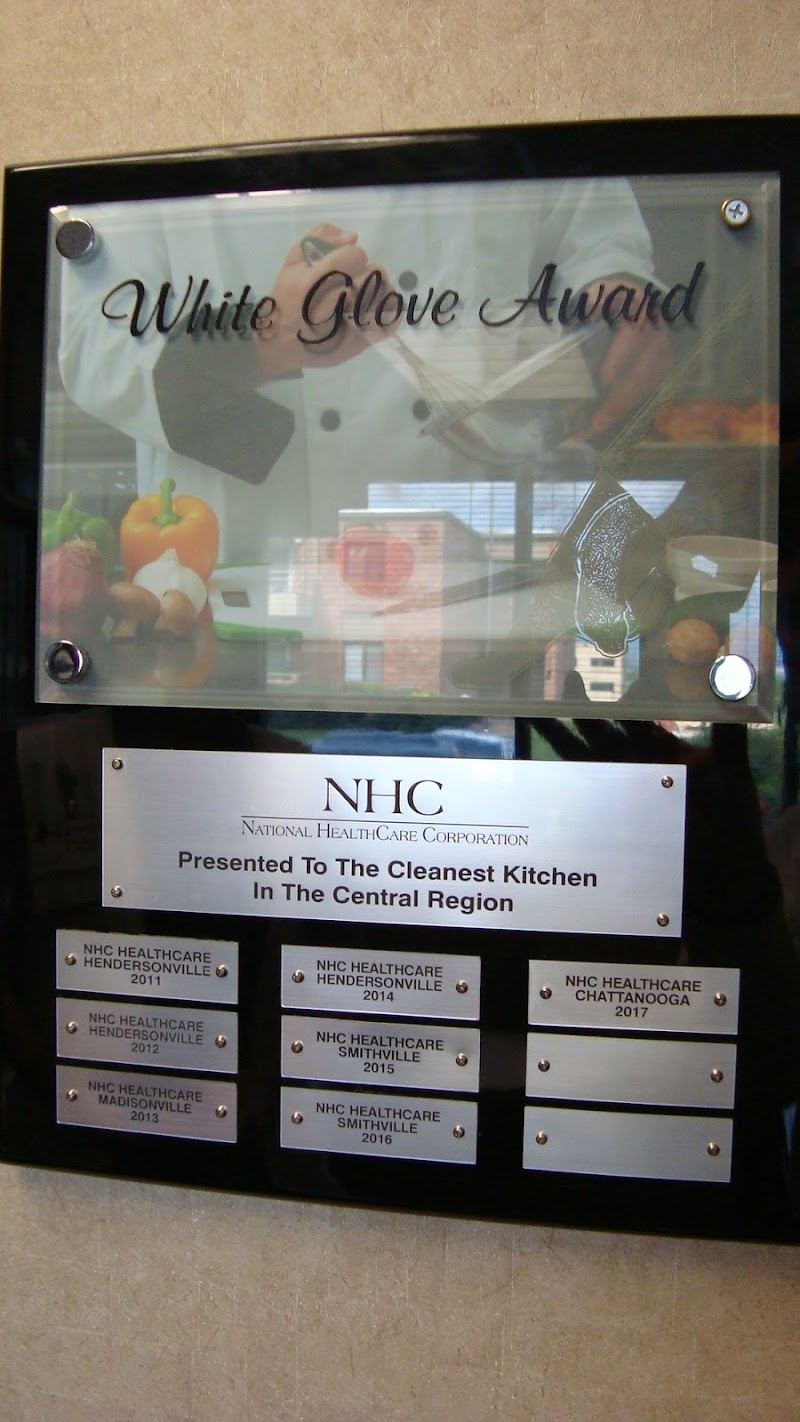
How is Nhc Healthcare, Chattanooga Staffed?

CMS rates NHC HEALTHCARE, CHATTANOOGA's staffing level at 2 out of 5 stars, which is below average compared to other nursing homes. Staff turnover is 52%, compared to the Tennessee average of 46%.

What Have Inspectors Found at Nhc Healthcare, Chattanooga?

State health inspectors documented 10 deficiencies at NHC HEALTHCARE, CHATTANOOGA during 2022 to 2024. These included: 10 with potential for harm.
Who Owns and Operates Nhc Healthcare, Chattanooga?

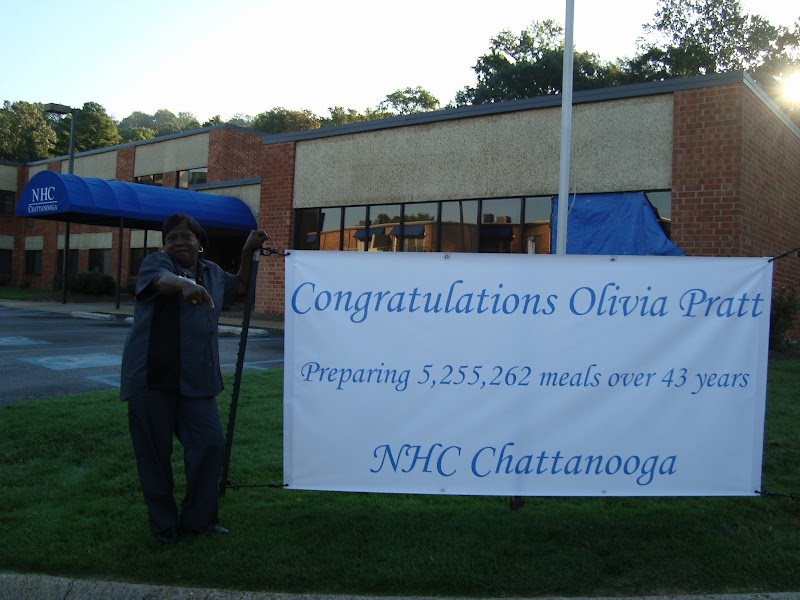
NHC HEALTHCARE, CHATTANOOGA is owned by a for-profit company. For-profit facilities operate as businesses with obligations to shareholders or private owners. The facility is operated by NATIONAL HEALTHCARE CORPORATION, a chain that manages multiple nursing homes. With 200 certified beds and approximately 181 residents (about 90% occupancy), it is a large facility located in CHATTANOOGA, Tennessee.

How Does Nhc Healthcare, Chattanooga Compare to Other Tennessee Nursing Homes?

Compared to the 100 nursing homes in Tennessee, NHC HEALTHCARE, CHATTANOOGA's overall rating (4 stars) is above the state average of 2.8, staff turnover (52%) is near the state average of 46%, and health inspection rating (3 stars) is at the national benchmark.

What Should Families Ask When Visiting Nhc Healthcare, Chattanooga?

Based on this facility's data, families visiting should ask: "Can you walk me through typical staffing levels on day, evening, and night shifts?" "Can I visit during a mealtime to observe dining assistance and food quality?" "How do you handle medical emergencies, and what is your hospital transfer rate?" "Can I speak with family members of current residents about their experience?" These questions are particularly relevant given the below-average staffing rating.

Is Nhc Healthcare, Chattanooga Safe?

Based on CMS inspection data, NHC HEALTHCARE, CHATTANOOGA has a clean safety record: no substantiated abuse findings (meaning no confirmed cases of resident harm), no Immediate Jeopardy citations (the most serious violation level indicating risk of serious injury or death), and is not on the Special Focus Facility watch list (a federal program monitoring the lowest-performing 1% of nursing homes). The facility has a 4-star overall rating and ranks #1 of 100 nursing homes in Tennessee. While no facility is perfect, families should still ask about staff-to-resident ratios and recent inspection results during their visit.

Do Nurses at Nhc Healthcare, Chattanooga Stick Around?

NHC HEALTHCARE, CHATTANOOGA has a staff turnover rate of 52%, which is 6 percentage points above the Tennessee average of 46%. Moderate turnover is common in nursing homes, but families should still ask about staff tenure and how the facility maintains care continuity when employees leave.

Was Nhc Healthcare, Chattanooga Ever Fined?

NHC HEALTHCARE, CHATTANOOGA has no federal fines on record. CMS issues fines when nursing homes fail to meet care standards or don't correct problems found during inspections. The absence of fines suggests the facility has either maintained compliance or corrected any issues before penalties were assessed. This is a positive indicator, though families should still review recent inspection reports for the full picture.

Is Nhc Healthcare, Chattanooga on Any Federal Watch List?

NHC HEALTHCARE, CHATTANOOGA is not on any federal watch list. The most significant is the Special Focus Facility (SFF) program, which identifies the bottom 1% of nursing homes nationally based on persistent, serious quality problems. Not being on this list means the facility has avoided the pattern of deficiencies that triggers enhanced federal oversight. This is a positive indicator, though families should still review the facility's inspection history directly.