LIFE CARE CENTER OF CLEVELAND
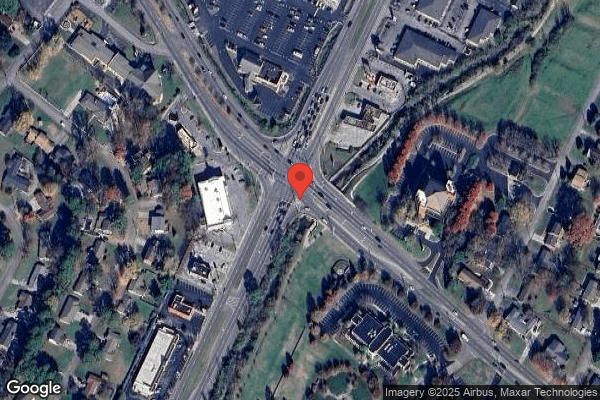

3530 KEITH ST NW, CLEVELAND, TN 37311 (423) 476-3254
For profit - Corporation 142 Beds LIFE CARE CENTERS OF AMERICA Data: November 2025
Trust Grade
75/100
#67 of 298 in TN
Last Inspection: March 2022

Over 2 years since last inspection. Current conditions may differ from available data.

Overview

Life Care Center of Cleveland has a Trust Grade of B, indicating that it is a good choice for families seeking care for their loved ones. It ranks #67 out of 298 facilities in Tennessee, placing it in the top half, and #2 out of 3 in Bradley County, meaning only one local option is better. The facility is improving its performance, having reduced the number of issues from 3 in 2022 to just 1 in 2023. Staffing is rated at 3 out of 5 stars, with a turnover rate of 48%, which aligns with the state average, and the facility offers more RN coverage than 82% of other facilities, ensuring that residents receive attentive care. However, there have been concerns about food safety and expired medical supplies, as inspectors found instances of expired food items and medical supplies that could potentially affect residents' health. While there are notable strengths in staffing and care quality, families should consider these weaknesses when making their decision.

Trust Score
B
75/100
In Tennessee
#67/298
Top 22%
Safety Record
Low Risk
No red flags
Inspections
Getting Better
3 → 1 violations
Staff Stability
⚠ Watch
48% turnover. Above average. Higher turnover means staff may not know residents' routines.
Penalties
✓ Good
No fines on record. Clean compliance history, better than most Tennessee facilities.
Skilled Nurses
✓ Good
Each resident gets 42 minutes of Registered Nurse (RN) attention daily — more than average for Tennessee. RNs are trained to catch health problems early.
Violations
⚠ Watch
13 deficiencies on record. Higher than average. Multiple issues found across inspections.
★★★★☆
4.0
Overall Rating
★★★☆☆
3.0
Staff Levels
★★★☆☆
3.0
Care Quality
★★★★☆
4.0
Inspection Score
Stable
2022: 3 issues
2023: 1 issues

The Good

  • Full Sprinkler Coverage · Fire safety systems throughout facility
  • No fines on record

Facility shows strength in fire safety.

The Bad

Staff Turnover: 48%

Near Tennessee avg (46%)

Higher turnover may affect care consistency

Chain: LIFE CARE CENTERS OF AMERICA

Part of a multi-facility chain

Ask about local staffing decisions and management

The Ugly 13 deficiencies on record

Jun 2023 1 deficiency
CONCERN (D) 📢 Someone Reported This

A family member, employee, or ombudsman was alarmed enough to file a formal complaint

Potential for Harm - no one hurt, but risky conditions existed

Quality of Care (Tag F0684)

Could have caused harm · This affected 1 resident

**NOTE- TERMS IN BRACKETS HAVE BEEN EDITED TO PROTECT CONFIDENTIALITY** Based on facility policy review, medical record review, and interview, the facility failed to follow a physician's order for the...

Read full inspector narrative →
**NOTE- TERMS IN BRACKETS HAVE BEEN EDITED TO PROTECT CONFIDENTIALITY** Based on facility policy review, medical record review, and interview, the facility failed to follow a physician's order for the administration of Oxygen for 1 resident (Resident #1) of 4 residents reviewed for Oxygen administration. The findings include: Review of the facility's policy titled, Oxygen Administration/Safety Storage/ Maintenance dated 10/7/2022 showed .Oxygen will be administered in accordance with physician orders and current standards of practice . Resident #1 was admitted to the facility on [DATE] and readmitted on [DATE], with diagnoses including Hypertensive Heart and Chronic Kidney Disease with Heart Failure, Acute and Chronic Respiratory Failure with Hypoxia, Type 2 Diabetes Mellitus. Review of the 5 day admission Minimum Data Set (MDS) assessment dated [DATE] showed Resident #1's Brief Interview of Mental Status (BIMS) score was 15 indicating the resident was cognitively intact. The resident required assistance of one to two facility staff members for activities of daily living (ADL's).The resident received oxygen therapy on all 7 days of the look back period. Review of the Medication Administration Record (MAR) dated 3/1/2023-3/31/2023 showed a physicians order dated 6/28/2021 for .Oxygen at 5 liters/min [liters per minute] continuously per nasal cannula . The Oxygen was not administered as ordered on 3/16/2023. Licensed Practical Nurse (LPN) #1 documented on 3/16/2023 Resident #1 received 5 liters of continuous flow Oxygen. Medical record review of a nurses progress note dated 3/17/2023 12:21 AM, showed .Health Status Note .Note Text: Approx. 10:30 pm [3/16/2023] resident c/o [complained of] SOB [Shortness of Breath]. O2 sat [Saturation] 86% [percent] on 4L [Liters] O2 [Oxygen]. Head of bed elevated and resident encouraged to take deep breaths. Sats[oxygen saturation] came up to 90 [Normal range 90-100%] then almost immediately back down to 86. With repeated reminders to deep breath, sats would come up then back down. Resident c/o feeling fuzzy headed. Nurse suggested resident go to ER [Emergency Room] for evaluation, resident agreed. 911 was called for transport . Review of Resident #1's current care plan last revised 4/7/2023, showed .The resident has altered respiratory status/difficulty breathing .Oxygen dependent . During a telephone interview on 6/6/2023 at 9:46 AM, LPN #1 stated on 3/16/2023 she was informed by Certified Nursing Assistant (CNA) that Resident #1 had an episode of respiratory distress, LPN #1 entered room to assess the resident and noted the oxygen concentrator set at 2 liters per minute. LPN #1 confirmed the liters per minute was wrong and was set to 4 liters per minute. Resident #1's oxygen saturation level was 86% and at points returned to 90%. LPN #1 confirmed she checked Resident #1's oxygen flow during medication pass, resident was on a portable oxygen cylinder at that time, and it was set to 4 liters per minute. During an observation/interview on 6/6/2023 at 5:00 PM, the Director of Nursing (DON) confirmed the facility failed to follow physicians orders for Resident #1's prescribed oxygen flow rate, the physicians orders were oxygen at 5 liters per minute and nursing documentation on 3/17/2023 at 12:21 AM reflected oxygen set at 4 liters per minute.
Mar 2022 3 deficiencies
CONCERN (D)

Potential for Harm - no one hurt, but risky conditions existed

Comprehensive Care Plan (Tag F0656)

Could have caused harm · This affected 1 resident

**NOTE- TERMS IN BRACKETS HAVE BEEN EDITED TO PROTECT CONFIDENTIALITY** Based on facility policy review, medical record review, observations, and interviews the facility failed to implement a care pla...

Read full inspector narrative →
**NOTE- TERMS IN BRACKETS HAVE BEEN EDITED TO PROTECT CONFIDENTIALITY** Based on facility policy review, medical record review, observations, and interviews the facility failed to implement a care plan intervention for 1 resident (Resident #50) of 3 residents reviewed for falls. The findings include: Review of the facility policy titled, Fall Management, dated 8/2/2021 showed .promote patient safety and reduce patient falls by care planning .The facility will assess the resident with every fall event for .fall risks .identify appropriate interventions to minimize the risk of injury related to falls .resident receives assistance devices to prevent accidents . Resident #50 was admitted to the facility on [DATE] with diagnoses including Covid-19, Pneumonia, Muscle Weakness, Post Traumatic Stress Disorder, and Bipolar Disorder. Review of the facility Incident Follow-Up and Recommendation Form dated 2/12/2022 showed .Fall in room, pt [patient] stated he was having flashbacks to war . Recommendations included .Mats placed at bedside . Review of a Progress Note dated 2/12/2022 showed .resident was in the floor .checked from head to toe .no injuries were noted .Call button within reach. Safety meausres [measures] in place . Review of a Progress Note dated 2/14/2022 showed .Reviewed in risk management meeting by IDT (Interdisciplinary Team) for fall. No apparent injuries. Resident unable to explain what happened. Intervention for fall mats to bedside . Review of the 5-day Minimum Data Set (MDS) assessment dated [DATE] showed Resident #50 had moderate cognitive impairment. He required supervision of 2 staff persons with bed mobility and toileting. The resident required extensive assistance of 2 staff persons with transfers and dressing. Fall history showed Resident #50 had falls prior to admission; he had a fall since admission with injury. Review of the Comprehensive Care Plan dated 2/22/2022 showed .at risk for falls .h/o [history of] multiple falls at home, weakness, new environment . Interventions included .Orient resident to room .Anticipate .meet The resident's needs .Call light within reach .Complete fall risk assessment .Educate the resident/family/caregivers about safety reminders and what to do if a fall occurs .Mats to bedside (2/14/2022) . During multiple observations on 3/28/2022-3/29/2022 of Resident #50's room showed no fall mat to bedside. During an interview on 3/29/2022 at 1:05 PM, the Director of Nursing confirmed the fall mats were not in place in the resident's room. During interviews on 3/29/2022 at 1:45 PM, Licensed Practical Nurse (LPN) #2 stated she does not recall a fall mat at Resident #50's bedside.
CONCERN (D)

Potential for Harm - no one hurt, but risky conditions existed

Tube Feeding (Tag F0693)

Could have caused harm · This affected 1 resident

**NOTE- TERMS IN BRACKETS HAVE BEEN EDITED TO PROTECT CONFIDENTIALITY** Based on facility policy review, Lippincott procedures review, medical record review, observation, and interview the facility fa...

Read full inspector narrative →
**NOTE- TERMS IN BRACKETS HAVE BEEN EDITED TO PROTECT CONFIDENTIALITY** Based on facility policy review, Lippincott procedures review, medical record review, observation, and interview the facility failed to administer enteral feedings (liquid nutrition provided through a tube inserted into the stomach) as ordered for 1 resident (#90) of 3 residents reviewed for enteral feedings. The findings include: Review of the facility's policy titled, Feeding Tubes (Gastrostomy, Jejunostomy, Transgastric Jejunal), reviewed 7/14/2021, showed .The facility will utilize .Lippincott procedures . Review of Lippincott procedure titled, Enteral tube feeding, intermittent, gastrostomy and jejunostomy, revised 11/19/2021, showed .Verify the practitioner's order .enteral feeding device; prescribed enteral formula; administration method, volume, and rate . Resident #90 was admitted to the facility on [DATE] with diagnoses including Dementia, Generalized Anxiety Disorder, Esophagitis, and Anorexia. Review of the Comprehensive Care Plan dated 3/18/2022, showed .The resident requires tube feeding .RD [Registered Dietician] to evaluate .Make recommendations for changes to tube feeding as needed .See MD [Medical Doctor] orders for current feeding orders . Review of weights for Resident #90 showed on 3/20/2022 a weight of 168 pounds (lbs) prior to the Dietician recommendation. Continued review showed on 3/30/2022 Resident #90's weight of 168.4 lbs (slight gain). Review of Resident #90's current active physician orders showed, .Enteral Feed .JEVITY 1.5 [nutritional supplement] .at 120 ml/hour [milliliters per hour] .x [times] .10 .hours .(ON AT 10PM AND OFF AT 8AM) . During an observation on 3/30/2022 at 7:24 AM, Resident #90 was awake and laying in bed with the head elevated. The Resident had Jevity 1.5 at 70 ml/hr enteral feeding infusing. During an interview on 3/30/2022 at 8:35 AM, the RD stated she had assessed Resident #90's nutritional status on 3/23/2022. The resident had an order for Jevity 1.2 enteral feeding at 70 ml/hr for 10 hours every night. She also stated the resident was in her ideal body weight and had a normal body mass index for her age. The RD confirmed, after the resident's nutritional assessment, she had recommended for the enteral feeding be changed to Jevity 1.5 at 120 ml/hr to meet the caloric needs of the resident. During an observation and interview on 3/30/2022 at 8:43 AM, in Resident #90's room, Registered Nurse (RN) #1 and the Director of Nursing (DON) confirmed the resident had received Jevity 1.5 enteral feeding at 70 ml/hr from 10 PM on 3/29/2022 until 8 AM on 3/30/2022. During an interview on 3/30/2022 at 8:45 AM, the DON confirmed Resident #90 had a physician's order dated 3/23/2022 to change the enteral feeding to Jevity 1.5 at 120 ml/hr. The DON also confirmed the physician's orders had not been followed for Resident #90. During an interview on 3/30/2022 at 11:27 AM, the Medical Director stated the failure to follow physician orders to increase the enteral feeding for Resident #90 did not cause harm. The Medical Director also stated the resident's weights were currently stable.
CONCERN (D)

Potential for Harm - no one hurt, but risky conditions existed

Infection Control (Tag F0880)

Could have caused harm · This affected 1 resident

**NOTE- TERMS IN BRACKETS HAVE BEEN EDITED TO PROTECT CONFIDENTIALITY** Based on facility policy review, observation, and interview the facility failed to ensure infection control practices were follo...

Read full inspector narrative →
**NOTE- TERMS IN BRACKETS HAVE BEEN EDITED TO PROTECT CONFIDENTIALITY** Based on facility policy review, observation, and interview the facility failed to ensure infection control practices were followed to prevent the potential spread of infection when 1 of 2 Licensed Practical Nurses (LPN #1) failed to perform hand hygiene during medication administration. The findings include: Review of the facility policy titled, Transmission-based Precautions and Isolation Procedures revised 4/20/2020 showed, .Hand hygiene .Before and after doffing of personal protective equipment ( .gloves, gown .) Resident #89 was admitted to the facility on [DATE] with diagnoses including Major Depressive Disorder, Chronic Obstructive Pulmonary Disease, and Adjustment Disorder with Anxiety. Review of a physician's order dated 3/14/2022, showed .CONTACT/DROPLET ISOLATION . During a medication administration observation on 3/29/2022 at 8:05 AM, LPN #1 sanitized hands, donned (put on) a gown and gloves prior to entering Resident #89's room. Further observation showed LPN #1 administered the resident's medication, removed gown and gloves, and exited the room without sanitizing hands. During an interview on 3/29/2022 at 8:09 AM, LPN #1 confirmed she exited Resident #89's room, which was an isolation room, and failed to sanitize hands.
Aug 2019 6 deficiencies
CONCERN (D)

Potential for Harm - no one hurt, but risky conditions existed

Assessment Accuracy (Tag F0641)

Could have caused harm · This affected 1 resident

**NOTE- TERMS IN BRACKETS HAVE BEEN EDITED TO PROTECT CONFIDENTIALITY** Based on facility policy, medical record review, observation, and interview, the facility failed to accurately complete a Minimu...

Read full inspector narrative →
**NOTE- TERMS IN BRACKETS HAVE BEEN EDITED TO PROTECT CONFIDENTIALITY** Based on facility policy, medical record review, observation, and interview, the facility failed to accurately complete a Minimum Data Set (MDS) assessment for 2 (#96, #111) residents of 24 residents reviewed for MDS assessments. The findings include: Review of the facility policy Certification of the Accuracy of the MDS, reviewed 4/22/19, revealed .the MDS accurately reflects the patient's status . Medical record review revealed Resident #96 was admitted to the facility on [DATE] with diagnoses including Fracture of Lower End Left Tibia, Fracture of Proximal Right Ring Finger, Disorder of Tendon, Right Ankle and Foot, Encounter of Surgical Aftercare, Removal of Internal Fixation Device, Acute Kidney Failure, and Type 2 Diabetes Mellitus. Medical record review of a quarterly MDS dated [DATE] revealed the resident scored a 15 on the Brief Interview for Mental Status (BIMS) indicating the resident was cognitively intact. Continued review revealed a limb restraint was utilized for Resident #96. Observation and interview with Resident #96 on 8/13/19 at 7:45 AM, in the resident's room, revealed she did not have restraints applied durind her stay at the facility. Medical record review and staff interviews revealed no documentation of restraint use for Resident #96. Interview with MDS/Licensed Practical Nurse #1 on 8/13/19 at 2:05 PM, in the MDS office, confirmed Resident #96 restraint documentation was inaccurate. Interview with the Director of Nursing (DON) on 8/14/19 at 11:00 AM, in the DON's office, confirmed the quarterly MDS dated [DATE] for Resident #96 was not accurate in the use of restraints. Medical record review revealed Resident #111 was admitted to the facility on [DATE] with diagnoses including Tyrosinemia (genetic disorder of amino acids and protein metabolism), Acute and Chronic Respiratory Failure, Tracheostomy, Dysphagia, and Gastrostomy. Medical record review of a discharge summary MDS dated [DATE] revealed Resident #111 was discharged to an acute hospital. Medical record review revealed Resident #111 was discharged home with his parents on 6/4/19. Continued review revealed no documentation of a hospitalization or transfer during the resident's admission to the facility. Interview with the DON on 8/14/19 at 11:00 AM, in the DON's office, confirmed Resident #111 was not transferred to a hospital and the discharge MDS did not reflect an accurate assessment of the resident's discharge from the facility.
CONCERN (D)

Potential for Harm - no one hurt, but risky conditions existed

Deficiency F0655 (Tag F0655)

Could have caused harm · This affected 1 resident

**NOTE- TERMS IN BRACKETS HAVE BEEN EDITED TO PROTECT CONFIDENTIALITY** Based on medical record review and interview, the facility failed to address a wound on the Baseline Care Plan for 1 resident (#...

Read full inspector narrative →
**NOTE- TERMS IN BRACKETS HAVE BEEN EDITED TO PROTECT CONFIDENTIALITY** Based on medical record review and interview, the facility failed to address a wound on the Baseline Care Plan for 1 resident (#259) of 17 residents reviewed for baseline care plans of 24 sampled residents. The findings include: Medical record review revealed Resident #259 was admitted to the facility on [DATE] with diagnoses including Asthma, Chronic Pain, Anxiety Disorder, Artificial Knee Joint Bilateral, Morbid Obesity, and Chronic Obstructive Pulmonary Disease. Medical record review of the baseline care plan dated 8/9/19 revealed .Resident is at risk for break in skin integrity .maintain intact [undamaged] skin with no skin breaks through next review . Medical record review of a Skin/Wound Progress Note dated 8/11/19 revealed .noted to have a small .open area to posterior left thigh .Patient .states that it was previously a bump she could not stop picking at, turned into open wound . Medical record review of a physician's order dated 8/9/19 revealed .cleanse area left posterior [back] thigh with wound cleanser .place drsg [dressing] change daily and prn [as needed] . Interview with the Licensed Practical Nurse (LPN) Unit Manager #2 on 8/13/19 at 4:22 PM, in the LPN Unit Manager's Office, confirmed the wound (non-pressure) to the back of Resident #259's left thigh was present on admission on [DATE]. Interview with Minimum Data Set (MDS)/LPN #1 on 8/14/19 at 10:20 AM, in the MDS office, confirmed the facility failed to address the wound to the back of Resident #259's left thigh on the Baseline Care Plan.
CONCERN (D)

Potential for Harm - no one hurt, but risky conditions existed

Comprehensive Care Plan (Tag F0656)

Could have caused harm · This affected 1 resident

**NOTE- TERMS IN BRACKETS HAVE BEEN EDITED TO PROTECT CONFIDENTIALITY** Based on facility policy review, medical record review, observation, and interview the facility failed to develop a comprehensiv...

Read full inspector narrative →
**NOTE- TERMS IN BRACKETS HAVE BEEN EDITED TO PROTECT CONFIDENTIALITY** Based on facility policy review, medical record review, observation, and interview the facility failed to develop a comprehensive care plan to address a pressure ulcer for 1 resident (#101) of 5 residents reviewed for pressure ulcers of 24 sampled residents. The findings include: Review of the facility policy Resident Assessment Instrument & Care Plan last revised 11/28/16 revealed .develop an individualized person-centered care plan that provides a path toward the resident achieving or maintaining their highest practicable level of well-being . Medical record review revealed Resident #101 was admitted to the facility on [DATE] with diagnoses including Displaced Intertrochanteric Fracture of Left Femur, Pain Left Hip, Muscle Weakness, Visual Loss, and Cognitive Communication Deficit. Medical record review of the admission Minimum Data Set (MDS) dated [DATE] revealed a Brief Interview for Mental Status (BIMS) score of 11, indicating the resident had moderate cognitive impairment. Further review revealed the resident had a risk for pressure injury. Medical record review of the care plan dated 5/28/19 revealed .At risk for break in skin integrity . Continued review revealed no documentation to address a pressure ulcer for Resident #101. Medical record review of a Skin/Wound Progress Note dated 7/8/19 revealed .Unstageable wound to left heel .Cleansed with wound cleanser and placed foam dressing . Medical record review of a physician's order dated 7/8/19 revealed .Left Heel- Unstageable Wound . Medical record review of a Wound Observation tool dated 8/9/19 revealed .Location: Left heel .Type: pressure .Wound started as unstageable to left heel . Observation of Resident #101 on 8/14/19 at 7:36 AM, in the resident's room, revealed the resident lying on the bed with the heels floated on a cushion. Observation of Resident #101's wound with the Wound Care Nurse on 8/14/19 at 8:47 AM, in the resident's room, revealed a small round open area to the left heel with a small amount of yellow slough and the wound was clean and dry. Interview with the MDS/Licensed Practical Nurse #1 on 8/14/19 at 10:16 AM, in the MDs office, revealed she was aware of the pressure ulcer to Resident #101's left heel. Further interview confirmed the facility failed to develop a care plan to address the resident's pressure ulcer.
CONCERN (D)

Potential for Harm - no one hurt, but risky conditions existed

Deficiency F0692 (Tag F0692)

Could have caused harm · This affected 1 resident

**NOTE- TERMS IN BRACKETS HAVE BEEN EDITED TO PROTECT CONFIDENTIALITY** Based on medical record review, observation, and interview, the facility failed to address a recommendation from the Registered ...

Read full inspector narrative →
**NOTE- TERMS IN BRACKETS HAVE BEEN EDITED TO PROTECT CONFIDENTIALITY** Based on medical record review, observation, and interview, the facility failed to address a recommendation from the Registered Dietitian (RD) timely for 1 resident (#78) of 3 residents reviewed for nutrition of 24 sampled residents. The findings include: Medical record review revealed Resident #78 was admitted to the facility on [DATE] and readmitted on [DATE] with diagnoses including Hypertension, Acute Kidney Failure, Type 2 Diabetes, Malignant Neoplasm Left Bronchus or Lung, Gastrostomy (7/23/19), Adult Failure to Thrive, Anxiety Disorder, Cognitive Communication Deficit, and Major Depressive Disorder. Medical record review of the care plan dated 7/31/19 revealed .The resident requires tube feeding .RD to .Make recommendations for changes to tube feeding as needed . Medical record review of the 14 day Minimum Data Set (MDS) assessment dated [DATE] revealed modified independence for decision making. Further review revealed the resident received nutrition by a feeding tube (tube placed into the stomach to provide nutrition). Medical record review of the Order Summary Report dated 8/14/19 revealed .Enteral Feed [tube feeding] .every shift .50 ml [milliliters] .via [by] pump .Start Date .8/6/19 . Medical record review of a Nutrition/Dietary Note dated 8/7/19 revealed .Current TF [tube feeding] .@ [at] 50ml/hr [hour] .Current TF does not accurately meet resident's needs .R/C [recommend] .[tube feeding] @ 60ml/hr x [times] 22hrs . Observation of Resident #78 on 8/13/19 at 2:24 PM, in the hallway, revealed the resident sitting up in a wheel chair with the tube feeding infusing at 50 ml/hr via pump. Observation of Resident #78 on 8/14/19 at 7:40 AM, in the resident's room, revealed the resident lying on the bed with the tube feeding infusing at 50 ml/hr via pump. Interview with the RD on 8/14/19 at 9:15 AM, in the RD office, confirmed she had written a progress note on 8/7/19 to recommend increasing the tube feeding to 60 ml/hr .to better meet her needs . Continued interview revealed she communicated her recommendations to the unit manager who was then responsible for obtaining the order from the Physician. Interview with the Licensed Practical Nurse (LPN) Unit Manager #2 on 8/14/19 at 9:25 AM, in the LPN Unit Manager's office, revealed she had not checked her box used for communication of recommendations from the RD to the nurse. Continued interview confirmed the recommendation had been made 7 days ago (8/7/19) and had not been addressed with the Physician for a new order to be obtained. Interview with the Director of Nursing (DON) on 8/14/19 at 2:46 PM, in the DON's office, confirmed the RD recommendations were to be addressed no later than 72 hours . after the recommendation was made. Continued interview confirmed the facility failed to address the RD recommendation to increase the tube feeding for Resident #78's nutritional needs timely.
CONCERN (E)

Potential for Harm - no one hurt, but risky conditions existed

Deficiency F0761 (Tag F0761)

Could have caused harm · This affected multiple residents

**NOTE- TERMS IN BRACKETS HAVE BEEN EDITED TO PROTECT CONFIDENTIALITY** Based on facility policy review, observation, and interview the facility failed to ensure expired medical supplies were not avai...

Read full inspector narrative →
**NOTE- TERMS IN BRACKETS HAVE BEEN EDITED TO PROTECT CONFIDENTIALITY** Based on facility policy review, observation, and interview the facility failed to ensure expired medical supplies were not available for resident use in 2 of 3 medication storage rooms observed. The findings include: Review of the facility policy, Storage and Expiration Dating of Medications, Biologicals, Syringes and Needles, revised on [DATE], revealed . Facility personnel should inspect nursing station storage areas for proper storage compliance on a regularly scheduled basis . Observation with Licensed Practical Nurse (LPN) Unit Manager #1 on [DATE] at 1:45 PM, in the South Wing medication storage room, revealed the following expired items: 1 enema kit with use by date of 4/2017 8 blue top laboratory (lab) tubes (tube used for blood collection) with expiration date of [DATE] 1 hand sanitizer 4 ounce (oz.) bottle with expiration date of 8/2018 1 yellow top lab tube with expiration date of [DATE] 1 hand sanitizer 4 oz. bottle with expiration date of 6/2019 2 red top lab tubes with expiration date of [DATE] 23 vacutainer blood collection sets with expiration date of [DATE]. Interview with LPN Unit Manager #1 on [DATE] at 1:45 PM, in the South Wing medication storage room, confirmed the expired medical supplies were available for resident use. Interview with the Director of Nursing (DON) on [DATE] at 2:28 PM, in the DON's office, confirmed expired supplies were avaiable for resident use. Observation with the LPN Unit Manager #2 on [DATE] at 4:00 PM, in the Skilled Wing medication storage room, revealed the following expired items: 3 enema kits with use by date of 4/2017 1 urine leg bag with expiration date of 4/2017 3 enema kits with use by date of 12/2017 1 catheter securement device ½ inch with expiration date of [DATE] 1 enema kit with use by date of [DATE] 3 catheter securement devices ½ inch with expiration date of [DATE]. Interview with LPN Unit Manager #2 on [DATE] at 4:00 PM, in the Skilled Wing medication storage room, confirmed the expired medical supplies were available for resident use and the facility failed to follow their policy.
CONCERN (F)

Potential for Harm - no one hurt, but risky conditions existed

Food Safety (Tag F0812)

Could have caused harm · This affected most or all residents

Based on review of facility policy, facility weekly cleaning schedule, observation, and interview, the facility failed to date and label food items, failed to discard expired foods, failed to maintain...

Read full inspector narrative →
Based on review of facility policy, facility weekly cleaning schedule, observation, and interview, the facility failed to date and label food items, failed to discard expired foods, failed to maintain clean and sanitary kitchen equipment, failed to separate personal and resident dining items, and failed to secure hair in a hair covering in the 1 of 1 kitchen possibly affecting 117 of 119 residents. The findings include: Review of the Infection Prevention and Control Program (IPCP), not dated, revealed .an infection prevention and control program designed to provide a safe, sanitary, and comfortable environment .a system for preventing, identifying .controlling infections and communicable diseases .appropriate storage .of supplies and equipment . Review of the facility policy Use by Date Guide, revised 1/13/17 revealed .all opened containers of food .should be placed in an enclosed container, labeled, and dated .expiration date - the last day the product should be used for best quality .cheese, processed, opened .30 days .store in enclosed container after opening .ham, sliced .7 days .hotdogs/Franks, opened .7 days .vegetables, frozen .6 months . Review of the facility policy Food Safety, dated 11/28/17, revealed .food is stored and maintained in a clean, safe and sanitary manner .pre-packaged food .labeled with the name of the contents and date (when the item is transferred to the new container) 'Use by Date' is noted on the label .leftovers are dated properly and discarded after 72 hours .opened packages of food are resealed tightly to prevent contamination of the food item and 'use by date' . Review of the facility policy Dress Code, dated 11/28/17 revealed .The Food and Nutrition Services associates wear a hair covering, which covers all unpinned hair at all times . Review of the facility's weekly cleaning schedule dated 7/7/19, 7/14/19, 7/21/19, 8/4/19, and 8/11/19 revealed Ovens (Inside & [and] Out) to be cleaned by the PM [evening] [NAME] on Sundays. Continued review revealed no documentation the Ovens (inside & out) were cleaned the week of 7/7/19 and 7/14/19. Observation and interview with the Certified Dietary Manager (CDM) on 8/12/19 at 10:00 AM, of the desert cooler, in the kitchen revealed 10 racks of unlabeled, undated Boston Cream pie 96 slices. Interview with the CDM confirmed the facility failed to date and label the pie slices. Observation and interview with the CDM on 8/12/19 at 10:05 AM, of the walk-in cooler, in the kitchen, revealed the following: 3 unlabeled, undated, opened packages of orange cheese slices, all re-wrapped in plastic wrap; 1 partially sliced corned beef, labeled use in 7 days dated 8/3; 1 repackaged hot dog dated 8/6; and 1 plastic bag of unlabeled, undated shredded carrots. Interview with the CDM confirmed the facility failed to date and label the cheese slices and shredded carrots. Continued interview confirmed the facility failed to label and discard the expired corned beef and hot dog. Observation and interview with the CDM on 8/12/19 at 10:10 AM, of the walk-in freezer, in the kitchen, revealed the following unlabeled, undated food items in plastic bags: 3 beef patties and 4 boneless chicken breasts. Interview with the CDM confirmed the facility failed to date and label the repackaged frozen meats. Observation and interview with the CDM on 8/12/19 at 10:15 AM, of the cooks freezer, in the kitchen, revealed 20 unsecured, open to air breaded chicken patties;1 bag of unsecured, open to air onion rings; 2 bags of unsecured, open to air tater tots; and 1 bag of opened, undated, and unlabeled french fries. Interview with the CDM confirmed the facility failed to properly secure the chicken patties, onion rings, and tater tots, and failed to date and label the french fries. Observation and interview with the CDM on 8/12/19 at 10:20 AM, of the combination stove/oven, revealed dried debris with grease streaks on the front of the 2 oven doors; and dried debris and grime on the 7 stove/oven knobs and on the shelf of the flat holding area of the oven. Interview with the CDM confirmed the facility failed to maintain a clean and sanitary stove/oven. Observation and interview with the CDM on 8/12/19 at 10:20 AM, in the paper storage room, of the kitchen, revealed on a metal bakers rack, along with coffee carafes and coffee pots, 1 blue hoodie (touching 1 coffee carafe) and 1 unzipped woman's purse with visible contents. Interview with the CDM confirmed the facility failed to separate personal and resident items. Observation and interview with the Dietary Aide (DA) #1 on 8/14/19 at 12:15 PM, in the kitchen revealed DA #1 walked across the length of the kitchen without a hair covering. Interview with DA #1 confirmed she failed to secure her hair with hair covering in the kitchen. Interview with the CDM on 8/14/19 at 12:11 PM, in the conference room, confirmed the facility failed to ensure hair covering use in the kitchen.
Oct 2018 3 deficiencies
CONCERN (D)

Potential for Harm - no one hurt, but risky conditions existed

Deficiency F0658 (Tag F0658)

Could have caused harm · This affected 1 resident

**NOTE- TERMS IN BRACKETS HAVE BEEN EDITED TO PROTECT CONFIDENTIALITY** Based on medical record review, observation, and interview, the facility failed to follow physician's orders for 1 resident (#15...

Read full inspector narrative →
**NOTE- TERMS IN BRACKETS HAVE BEEN EDITED TO PROTECT CONFIDENTIALITY** Based on medical record review, observation, and interview, the facility failed to follow physician's orders for 1 resident (#159) of 45 sampled residents. The findings include: Resident #159 was admitted to the facility on [DATE] and readmitted to the facility on [DATE], with diagnoses including Displaced Intertrochanteric Fracture Right Femur, Subsequent Encounter for Closed Fracture, Dementia without Behavioral Disturbance, Displaced Intertrochanteric Fracture of Left Femur, Subsequent Encounter for Closed Fracture, Congestive Heart Failure, Pain in Left and Right hip, and Lymphoma. Medical record review of the Resident #159's care plan, initiated 6/14/18 revealed, .Resident has diagnosis of .lymphoma [cancer] . Continued review revealed, .Approaches .Meds .as ordered by MD [medical doctor] . Medical record review of Physician's Orders for August 2018 revealed, . gabapentin (anti-convulsant) 300 mg (milligrams) capsule PO (by mouth) daily . at 8:00 AM. Medical record review of a nurse Progress Note dated 8/27/18 revealed, .late entry for 8/23/18. At approximately 1:30 PM, resident turned on call light requesting pain medication for left hip. This nurse was getting ready to sign out pain medication Hydrocodone [narcotic pain medication] .this nurse mistakenly signed out Gabapentin instead of hydrocodone . Interview with Licensed Practical Nurse (LPN) #1 on 10/23/18, at 3:25 PM, at the nurses' station, confirmed the LPN had mistakenly gave an additional dose of the medication gabapentin. Interview with the Director of Nursing (DON) on 10/24/18, at 8:35 AM, in the DON's office, confirmed LPN #1 had not followed the physician's order for medication administration and confirmed Resident #159 had received an additional dose of gabapentin.
CONCERN (D)

Potential for Harm - no one hurt, but risky conditions existed

Deficiency F0698 (Tag F0698)

Could have caused harm · This affected 1 resident

**NOTE- TERMS IN BRACKETS HAVE BEEN EDITED TO PROTECT CONFIDENTIALITY** Based on facility policy review, medical record review, and interview, the facility failed to ensure post dialysis assessments w...

Read full inspector narrative →
**NOTE- TERMS IN BRACKETS HAVE BEEN EDITED TO PROTECT CONFIDENTIALITY** Based on facility policy review, medical record review, and interview, the facility failed to ensure post dialysis assessments were completed for 1 resident (#67) of 1 resident reviewed for dialysis for 16 days of 25 scheduled dialysis days of 45 sampled residents. The findings include: Review of facility policy Dialysis, Revised 11/28/16, revealed .The dialysis patient shall receive consistent care pre [before] and post [after]-dialysis .Post-Dialysis .1. Obtain vital signs of patient upon return from dialysis .2. Follow routine dialysis instructions on dialysis transfer form .5. Monitor shunt site on a routine basis. Notify physician if any unusual problems are noted with shunt site (tenderness, bleeding) .6. Internal vascular access .dressing should be reinforced with tape as needed to assure that catheter is kept clean and dry .If dressing becomes wet/soiled or if the patient removes it, please use the sterile technique to replace it .7. Maintain dialysis transfer form in the patient's medical record - do not destroy .General Guidelines .3. Assess for any signs/symptoms of infection .4. Monitor for any complaints or observations at vascular access site .6. Document in the clinical nursing record: dialysis treatment completed .condition of shunt site . Medical record review revealed Resident #67 was admitted to the facility on [DATE] with diagnoses including Unspecified Dementia without Behavioral Disturbance, Muscle Weakness, End Stage Renal Disease, Chronic Ischemic Heart Disease, Encephalopathy, Dysphagia, and Hypertension. Medical record review of a Quarterly Minimum Data Set (MDS) dated [DATE] revealed a Brief Interview for Mental Status (BIMS) score of 5 out of 15 indicating Resident #67 was severely cognitively impaired, and required extensive assistance of 2 person with transfer and eating. Medical record review of Physician Orders dated October 2018 revealed, .Assess Shunt Site Dressing and Bruit and Thrill before and after Dialysis Every Shift .Hemodialysis Every Mon-Wed and Friday .Remove dressing at night on dialysis days Mon-Wed-Fri to LUE [left upper extremity] shunt site . Medical record review of the Pre/Post Dialysis Communication forms for 8/29/18 thru 10/24/18 revealed the Post Dialysis assessment forms were incomplete for the following dates: *8/29/18 No Pre/Post Dialysis assessment form done *8/31/18 No Pre/Post Dialysis assessment form done *9/5/18 missing vital signs, condition of access/site, dressing, signs/symptoms (S/S) of infection *9/7/18 missing vital signs, condition of access/site, dressing, S/S of infection *9/10/18 missing vital signs, condition of access/site, dressing, S/S of infection *9/12/18 missing vital signs, condition of access/site, dressing, S/S of infection *9/14/18 No Pre/Post Dialysis assessment form done *9/17/18 missing vital signs, condition of access/site, dressing, S/S of infection *9/19/18 missing vital signs, condition of access/site, dressing, S/S of infection *9/24/18 missing vital signs, condition of access/site, dressing, S/S of infection *9/26/18 missing vital signs, condition of access/site, dressing, S/S of infection *10/3/18 missing vital signs, condition of access/site, dressing, S/S of infection *10/5/18 No Pre/Post Dialysis assessment form done *10/10/18 missing vital signs, condition of access/site, dressing, S/S of infection *10/15/18 No Pre/Post Dialysis assessment form done *10/17/18 No Pre/Post Dialysis assessment form done Medical record review of Nursing Notes for 8/29/18 thru 10/24/18 revealed no documentation of the Post Dialysis assessment. Interview with Unit Manager #1 on 10/23/18 at 4:30 PM, in the nursing station, confirmed the dialysis form should be completed pre and post dialysis. Interview with the Administrator on 10/23/18 at 4:55 PM, in the conference room, confirmed the nurses were to follow the dialysis policy. Interview with the Director of Nursing (DON) on 10/24/18 at 7:55 AM, in the DON's office, confirmed the expectation for the nurses were to fill out the dialysis transfer form before and after the resident went for dialysis. Continued interview confirmed the facility failed to complete Post Dialysis assessments for Resident #67 on 8/29/18, 8/31/18, 9/5/18, 9/7/18, 9/10/18, 9/12/18, 9/14/18, 9/17/18, 9/19/18, 9/24/18, 9/26/18, 10/3/18, 10/5/18, 10/10/18, 10/15/18, and 10/17/18.
CONCERN (F)

Potential for Harm - no one hurt, but risky conditions existed

Food Safety (Tag F0812)

Could have caused harm · This affected most or all residents

Based on facility policy review, observation, and interview, the facility failed to discard expired yogurt by the use by date, failed to obtain and record temperatures in 2 of 2 nourishment freezers, ...

Read full inspector narrative →
Based on facility policy review, observation, and interview, the facility failed to discard expired yogurt by the use by date, failed to obtain and record temperatures in 2 of 2 nourishment freezers, and failed to properly store ice creams in 1 of 2 nourishment freezers, potentially affecting 110 of 114 residents. The findings include: Review of the facility policy, Food Safety, last revised 11/28/2017, revealed, .Temperatures recorded at least twice daily on the Refrigerator/Freezer Temperature Log using an inside thermometer . Further review revealed, .Ambient temperatures in freezers remain at 0 degrees F [Fahrenheit] or lower and all food is frozen solid . Observation and interview with the Director of Food Service [DFS] on 10/22/18 at 9:15 AM, in the kitchen, revealed one 32 ounce container of half used vanilla yogurt. Further observation revealed a use by date of 10/6/18, and an open date of 10/13/18. Interview with the DFS at the same time confirmed, it needs to be thrown away . Observation and interview with the DFS of the nourishment freezer on 10/24/18 at 9:05 AM, in the skilled wing nourishment room, confirmed no thermometer in the freezer. Observation and interview of the nourishment freezer with the DFS on 10/24/18 at 9:25 AM, in the south wing nourishment room, revealed no thermometer in the freezer. Further observation revealed 27 4 ounce ice creams that were soft to the touch. Further observation revealed 2 ice creams were 10 degrees F. Interview with the DFS confirmed the ice creams were not at the appropriate temperature. Interview with the Administrator on 10/24/18 at 10:45 AM, in the dining room, confirmed the facility failed to monitor the temperatures of the nourishment freezers on the skilled and south wings of the facility.
Understanding Severity Codes (click to expand)
Life-Threatening (Immediate Jeopardy)
J - Isolated K - Pattern L - Widespread
Actual Harm
G - Isolated H - Pattern I - Widespread
Potential for Harm
D - Isolated E - Pattern F - Widespread
No Harm (Minor)
A - Isolated B - Pattern C - Widespread

Questions to Ask on Your Visit

  • "Can I speak with families of current residents?"
  • "What's your RN coverage like on weekends and overnight?"

Our Honest Assessment

Strengths
  • • No major safety red flags. No abuse findings, life-threatening violations, or SFF status.
  • • No fines on record. Clean compliance history, better than most Tennessee facilities.
Concerns
  • • 13 deficiencies on record. Higher than average. Multiple issues found across inspections.
Bottom line: Generally positive indicators. Standard due diligence and a personal visit recommended.

About This Facility

What is Life Of Cleveland's CMS Rating?

CMS assigns LIFE CARE CENTER OF CLEVELAND an overall rating of 4 out of 5 stars, which is considered above average nationally. Within Tennessee, this rating places the facility higher than 99% of the state's 100 nursing homes. This rating reflects solid performance across the metrics CMS uses to evaluate nursing home quality.
How is Life Of Cleveland Staffed?

CMS rates LIFE CARE CENTER OF CLEVELAND's staffing level at 3 out of 5 stars, which is average compared to other nursing homes. Staff turnover is 48%, compared to the Tennessee average of 46%.

What Have Inspectors Found at Life Of Cleveland?

State health inspectors documented 13 deficiencies at LIFE CARE CENTER OF CLEVELAND during 2018 to 2023. These included: 13 with potential for harm.

Who Owns and Operates Life Of Cleveland?

LIFE CARE CENTER OF CLEVELAND is owned by a for-profit company. For-profit facilities operate as businesses with obligations to shareholders or private owners. The facility is operated by LIFE CARE CENTERS OF AMERICA, a chain that manages multiple nursing homes. With 142 certified beds and approximately 82 residents (about 58% occupancy), it is a mid-sized facility located in CLEVELAND, Tennessee.

How Does Life Of Cleveland Compare to Other Tennessee Nursing Homes?

Compared to the 100 nursing homes in Tennessee, LIFE CARE CENTER OF CLEVELAND's overall rating (4 stars) is above the state average of 2.8, staff turnover (48%) is near the state average of 46%, and health inspection rating (4 stars) is above the national benchmark.

What Should Families Ask When Visiting Life Of Cleveland?

Based on this facility's data, families visiting should ask: "Can I visit during a mealtime to observe dining assistance and food quality?" "How do you handle medical emergencies, and what is your hospital transfer rate?" "Can I speak with family members of current residents about their experience?"

Is Life Of Cleveland Safe?

Based on CMS inspection data, LIFE CARE CENTER OF CLEVELAND has a clean safety record: no substantiated abuse findings (meaning no confirmed cases of resident harm), no Immediate Jeopardy citations (the most serious violation level indicating risk of serious injury or death), and is not on the Special Focus Facility watch list (a federal program monitoring the lowest-performing 1% of nursing homes). The facility has a 4-star overall rating and ranks #1 of 100 nursing homes in Tennessee. While no facility is perfect, families should still ask about staff-to-resident ratios and recent inspection results during their visit.

Do Nurses at Life Of Cleveland Stick Around?

LIFE CARE CENTER OF CLEVELAND has a staff turnover rate of 48%, which is about average for Tennessee nursing homes (state average: 46%). Moderate turnover is common in nursing homes, but families should still ask about staff tenure and how the facility maintains care continuity when employees leave.

Was Life Of Cleveland Ever Fined?

LIFE CARE CENTER OF CLEVELAND has no federal fines on record. CMS issues fines when nursing homes fail to meet care standards or don't correct problems found during inspections. The absence of fines suggests the facility has either maintained compliance or corrected any issues before penalties were assessed. This is a positive indicator, though families should still review recent inspection reports for the full picture.

Is Life Of Cleveland on Any Federal Watch List?

LIFE CARE CENTER OF CLEVELAND is not on any federal watch list. The most significant is the Special Focus Facility (SFF) program, which identifies the bottom 1% of nursing homes nationally based on persistent, serious quality problems. Not being on this list means the facility has avoided the pattern of deficiencies that triggers enhanced federal oversight. This is a positive indicator, though families should still review the facility's inspection history directly.