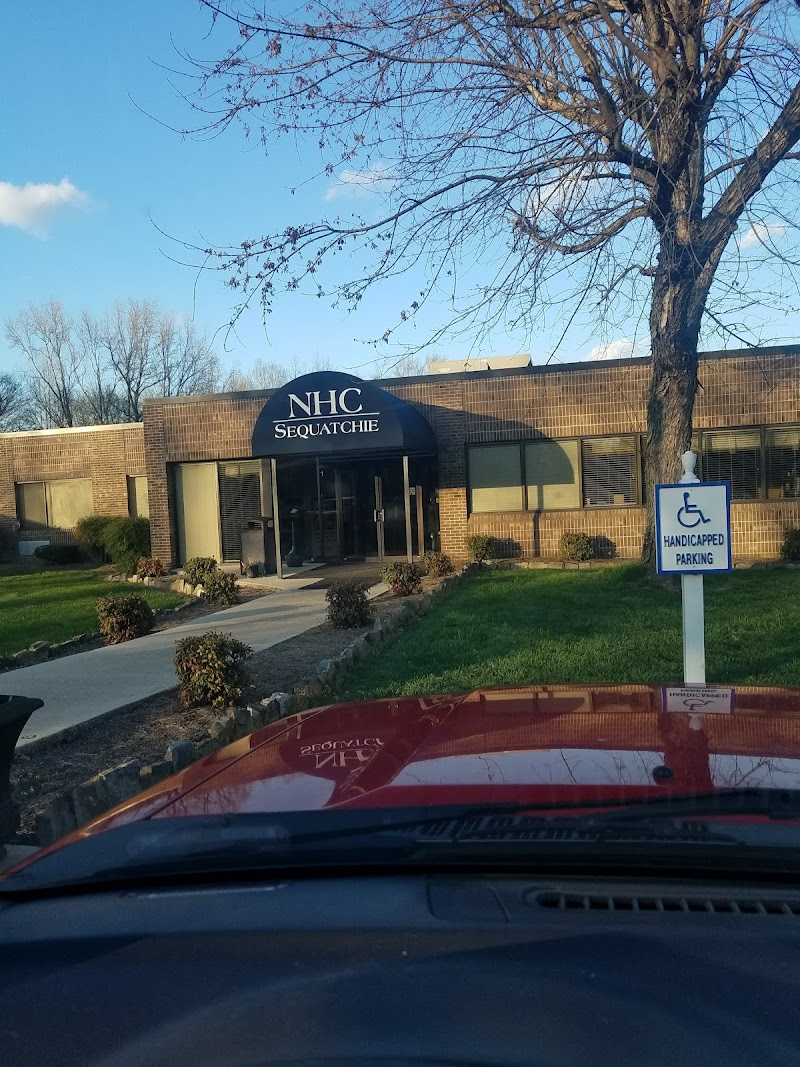
NHC HEALTHCARE, SEQUATCHIE
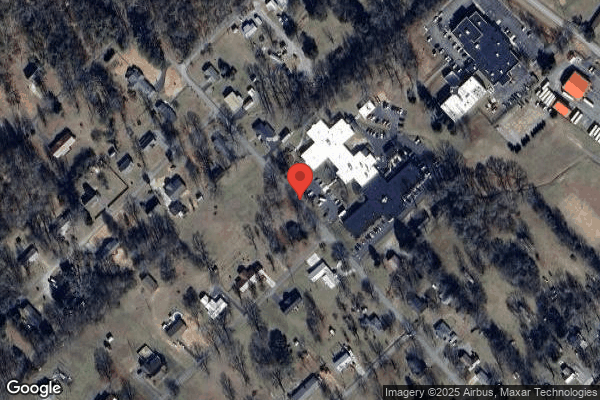
360 DELL TRAIL, DUNLAP, TN 37327 (423) 949-4651
For profit - Corporation 110 Beds NATIONAL HEALTHCARE CORPORATION Data: November 2025
Trust Grade
80/100
#84 of 298 in TN
Last Inspection: February 2023

Over 2 years since last inspection. Current conditions may differ from available data.

Overview

NHC Healthcare in Sequatchie has earned a Trust Grade of B+, indicating it is recommended and above average compared to other facilities. It ranks #84 out of 298 nursing homes in Tennessee, placing it in the top half, and is the only option in Sequatchie County. The facility is new and has a stable trend with its first inspection on record, which reported five concerns, but no critical issues. While staffing is decent with a turnover rate of 41%, which is lower than the state average, the facility has less RN coverage than 92% of other Tennessee facilities, which is concerning. Specific incidents included a failure to maintain sanitary kitchen equipment, improper use of personal protective equipment, and delays in refunding resident personal funds after discharge, highlighting areas for improvement alongside its strengths.

Trust Score
B+
80/100
In Tennessee
#84/298
Top 28%
Safety Record
Low Risk
No red flags
Inspections
Too New
0 → 5 violations
Staff Stability
○ Average
41% turnover. Near Tennessee's 48% average. Typical for the industry.
Penalties
✓ Good
No fines on record. Clean compliance history, better than most Tennessee facilities.
Skilled Nurses
⚠ Watch
Each resident gets only 19 minutes of Registered Nurse (RN) attention daily — below average for Tennessee. Fewer RN minutes means fewer trained eyes watching for problems.
Violations
✓ Good
Only 5 deficiencies on record. Cleaner than most facilities. Minor issues only.
★★★★☆
4.0
Overall Rating
★★★☆☆
3.0
Staff Levels
★★★★★
5.0
Care Quality
★★★☆☆
3.0
Inspection Score
Stable
: 0 issues
2023: 5 issues

The Good

  • 5-Star Quality Measures · Strong clinical quality outcomes
  • Full Sprinkler Coverage · Fire safety systems throughout facility
  • No fines on record
  • Staff turnover below average (41%)

    7 points below Tennessee average of 48%

Facility shows strength in quality measures, fire safety.

The Bad

Staff Turnover: 41%

Near Tennessee avg (46%)

Typical for the industry

Chain: NATIONAL HEALTHCARE CORPORATION

Part of a multi-facility chain

Ask about local staffing decisions and management

The Ugly 5 deficiencies on record

Feb 2023 5 deficiencies
CONCERN (D)

Potential for Harm - no one hurt, but risky conditions existed

Deficiency F0569 (Tag F0569)

Could have caused harm · This affected 1 resident

**NOTE- TERMS IN BRACKETS HAVE BEEN EDITED TO PROTECT CONFIDENTIALITY** Based on facility policy review, medical record review, review of the facility's Current Balance Report, Review of Trust Fund St...

Read full inspector narrative →
**NOTE- TERMS IN BRACKETS HAVE BEEN EDITED TO PROTECT CONFIDENTIALITY** Based on facility policy review, medical record review, review of the facility's Current Balance Report, Review of Trust Fund Statements, and interview, the facility failed to refund personal funds within 30 days of discharge for 6 residents (Residents #245, #244, #240, #241, #243, and #242) of 56 residents reviewed for resident funds. The findings include: Review of the facility policy titled, Patient Rights, undated, showed .The money you have deposited in your patient trust fund belongs to you and automatically becomes a part of your estate in the event of your death. It will be conveyed promptly, within 30 days, to the individual administering your estate, after a complete and final accounting of your trust fund . Resident #245 was admitted to the facility on [DATE] and was discharged on 12/7/2022. Review of the Current Balance Report dated 12/31/2022, showed Resident #245 had $1051.37 remaining in the trust fund. Review of Resident #245's Trust Fund Statement dated 2/7/2023, showed a refund was issued on 1/9/2023 (3 days overdue). Resident #244 was admitted to the facility on [DATE] and was discharged on 10/7/2022. Review of the Current Balance Report dated 12/31/2022, showed Resident #244 had $934.52 remaining in the trust fund. Review of Resident #244's Trust Fund Statement dated 2/7/2023, showed a refund was issued on 1/9/2023 (64 days overdue). Resident #240 was admitted to the facility on [DATE] and was discharged on 9/26/2022. Review of the Current Balance Report dated 12/31/2022, showed Resident #240 had $50.19 remaining in the trust fund. Review of Resident #240's Trust Fund Statement dated 2/7/2023, showed a refund was issued on 1/9/2023 (75 days overdue). Resident #241 was admitted to the facility on [DATE] and was discharged on 11/18/2022. Review of the Current Balance Report dated 12/31/2022, showed Resident #241 had $20.05 remaining in the trust fund. Review of Resident #241's Trust Fund Statement dated 2/7/2023, showed a refund was issued on 1/9/2023 (22 days overdue). Resident #243 was admitted to the facility on [DATE] and was discharged on 9/30/2022. Review of the Current Balance Report dated 12/31/2022, showed Resident #243 had $18.02 remaining in the trust fund. Review of Resident #243's Trust Fund Statement dated 2/7/2023, showed a refund was issued on 1/9/2023 (71 days overdue). Resident #242 was admitted to the facility on [DATE] and was discharged on 11/8/2022. Review of the Current Balance Report dated 12/31/2022, showed Resident #242 had $10.03 remaining in the trust fund. Review of Resident #242's Trust Fund Statement dated 2/7/2023, showed a refund was issued on 1/9/2023 (32 days overdue). During an interview on 2/7/2023 at 3:46 pm, the Business Office Manager (BOM) confirmed the facility failed to refund personal funds within 30 days from discharge for Residents #240, #241, #242, #243, #244, and # 245. During an interview on 2/7/2023 at 3:19 PM, the Director of Nursing (DON) stated personal funds were to be refunded as soon as possible but within 30 days of a resident's discharge from the facility.
CONCERN (D)

Potential for Harm - no one hurt, but risky conditions existed

PASARR Coordination (Tag F0644)

Could have caused harm · This affected 1 resident

**NOTE- TERMS IN BRACKETS HAVE BEEN EDITED TO PROTECT CONFIDENTIALITY** Based on facility policy review, medical record review, and interview, the facility failed to resubmit a Pre-admission Screening...

Read full inspector narrative →
**NOTE- TERMS IN BRACKETS HAVE BEEN EDITED TO PROTECT CONFIDENTIALITY** Based on facility policy review, medical record review, and interview, the facility failed to resubmit a Pre-admission Screening and Resident Review (PASARR) after a new mental health diagnosis for 2 residents (#75 and #64) of 10 residents reviewed for PASRR. The findings include: Review of a facility policy titled, Pre-admission Screening and Resident Review, revised 11/2016, .nursing facility .should refer any patient for Level II resident review upon a significant change .such as newly evident or possible serious mental disorder . Resident #75 was admitted to the facility on [DATE] with diagnoses including Major Depressive Disorder and Anxiety. Review of the Level I Form Pre-admission Screening and Resident Review dated 6/29/2021, showed .mental health conditions .Major Depressive Disorder .Anxiety .MAXIMUS OUTCOME .If the nursing facility (NF) determines any inaccuracies in diagnosis a Status Change review will be required . Review of the medical record showed Resident #75 received a new diagnosis of Dementia and Schizophrenia on 10/1/2022. Review of the quarterly Minimum Data Set (MDS) assessment dated [DATE], showed Resident #75 had an active diagnosis of .Anxiety .Depression .Schizophrenia . and received antipsychotic, antianxiety, and antidepressant medications on all 7 days of the 7 day look back period. Review of medical record showed no new Level II resident review had been submitted to include a new diagnosis of Dementia and Schizophrenia. Resident #64 was admitted to the facility on [DATE] with diagnoses including Anxiety Disorder and Depression. Review of the Level I Form Pre-admission Screening and Resident Review dated 11/4/2021, showed .mental health conditions .Anxiety Disorder .Depression .MAXIMUS OUTCOME .If the nursing facility (NF) determines any inaccuracies in diagnosis a Status Change review will be required . Review of the medical record showed Resident #64 received a new diagnosis of Schizophrenia was added on 7/13/2022. Review of the quarterly MDS assessment dated [DATE], showed Resident #64 had an active diagnosis of .Anxiety .Depression .Schizophrenia . and received antipsychotic, antianxiety, and antidepressant medications on 4 days of the 7 day look back period. Review of the medical record showed no new Level II resident review had been submitted to include a new diagnosis of Schizophrenia. During an interview on 2/8/2023 at 8:50 AM, the Assistant Director of Nursing (ADON) stated she was responsible for PASARRs. The ADON confirmed Resident #75 had a new diagnosis of Dementia and Schizophrenia added on 10/01/2022, and Resident #64 received a new diagnosis of Schizophrenia on 7/13/2022. The ADON stated the Level I PASARR should have been .resubmitted after the new diagnosis was added .we just overlooked it . During an interview on 2/8/2023 at 12:15 PM, the Director of Nursing stated when a resident in the facility receives a new mental health diagnosis a PASSAR was to be resubmitted.
CONCERN (D)

Potential for Harm - no one hurt, but risky conditions existed

Accident Prevention (Tag F0689)

Could have caused harm · This affected 1 resident

**NOTE- TERMS IN BRACKETS HAVE BEEN EDITED TO PROTECT CONFIDENTIALITY** Based on facility policy review, SAFETY DATA SHEET review, medical record review, observation, and interview the facility failed...

Read full inspector narrative →
**NOTE- TERMS IN BRACKETS HAVE BEEN EDITED TO PROTECT CONFIDENTIALITY** Based on facility policy review, SAFETY DATA SHEET review, medical record review, observation, and interview the facility failed to ensure an environment was free from accident hazards for 2 residents (#51 and #58) of 22 residents observed on the Memory Care Unit for accident hazards. The findings include: Review of the facility's undated policy titled, Environmental Services Tool Kit, showed .Keep chemicals locked up away from patients when not in use . Review of the SAFETY DATA SHEET for Sani-cloth Bleach Germicidal Disposable Wipe dated 8/12/2016, showed .HAZARD(S) IDENTIFICATION .This product is a clear white liquid with a chlorine odor impregnated on a wipe. There is a small amount of liquid on the wipes and no free liquid in the packages .HANDLING AND STORAGE .Precautions for Safe Handling: Avoid contact with eyes .Keep containers closed when not in use .PRECAUTIONARY STATEMENTS .Hazards to Humans & Domestic Animals .Caution: Causes moderate eye irritation. Avoid contact with eyes or clothing. Wash thoroughly with soap and water after handling . Resident #51 was admitted to the facility on [DATE] and readmitted on [DATE] with diagnoses including Dementia, Anxiety Disorder, Major Depressive Disorder, and Muscle Wasting and Atrophy. Review of Resident #51's Care Plan dated 12/6/2022, showed .At risk for alteration in mood/behaviors r/t [related to] Dementia, Anxiety, Depression .Memory care residency . Review of Resident #51's quarterly Minimum Data Set (MDS) assessment dated [DATE], showed the resident had a Brief Interview for Mental Status (BIMS) score of 7, indicating the resident had severe cognitive impairment and rejection of care behaviors were exhibited on 1 to 3 days of the look back period. Resident #51 required supervision for locomotion on the unit. Resident #58 was admitted to the facility on [DATE] with diagnoses including Alzheimer's Disease, Dementia, Anxiety Disorder, Major Depressive Disorder, and Adult Failure to Thrive. Review of Resident #58's Care Plan dated 3/18/2019, showed .Cognition/Communication .Deficits related to: dementia .Confusion .Long-term memory problem .Short-term memory problem .Elopement risk .Memory care residency to allow more freedom for locomotion in a safe secure environment . Review of Resident #58's annual MDS assessment dated [DATE], showed the resident had a BIMS score of 1, indicating the resident had severe cognitive impairment and behavioral symptoms not directed towards others occurred on 1 to 3 days of the look back period. Resident #58 required supervision for bed mobility, transfers, locomotion on unit, and eating. During an observation in the Memory Care Unit hallway on 2/6/2023 from 11:28 AM - 12:00 PM, showed there was a bedside table with a container of Sani-cloth Bleach Germicidal Disposable Wipes on the table outside next to a isololation cart of a COVID-19 (an infectious disease caused by the SARS-CoV-2 virus) positive resident room. Resident #51 was seated in a wheelchair in the hallway. Temporary Nurse Aide (TNA) #1 and TNA #2 exited the COVID-19 positive resident room at 11:32 AM and walked to the bedside table next to the isolation cart, placed a barrier on the table, and sanitized their face shields with the bleach wipes. The TNAs then walked down the hallway into another room to store their face shields. The bleach wipes remained on the bedside table and Resident #51 remained seated in a wheelchair in the hallway outside of the COVID-19 positive residents' room. During the interview with the TNAs at 11:40 AM , Resident #58 propelled herself down the hallway in a wheelchair and stopped outside the COVID-19 positive resident room and interacted with Licensed Practical Nurse (LPN) #1. At 11:50 AM, TNA #1 and TNA #2 entered the COVID-19 positive resident room to provide care and LPN #1 left the area. Resident #51 and #58 remained outside the room and the bleach wipes remained on the bedside table next to the isolation cart in the hallway, unsecured and available for resident use. During an observation and interview in the Memory Care Unit hallway on 2/6/2023 at 12:00 PM, TNA #1 confirmed the bleach wipes were left unsecured with Resident #51 and #58 in the immediate area and stated, .these bleach wipes don't need to be out here .[Resident #58's first name] will grab stuff . TNA #1 then secured the bleach wipes in the a drawer of the isolation cart next to the bedside table. During an interview on 2/7/2023 at 9:51 AM, the DON stated the Memory Care Unit housed residents with poor cognition. The DON confirmed it was the facility's policy that chemicals were locked up and away from residents when not use. The DON confirmed the facility's policy was not followed when bleach wipes were left unsecured on the Memory care unit available for 2 residents with poor cognition.
CONCERN (E)

Potential for Harm - no one hurt, but risky conditions existed

Infection Control (Tag F0880)

Could have caused harm · This affected multiple residents

**NOTE- TERMS IN BRACKETS HAVE BEEN EDITED TO PROTECT CONFIDENTIALITY** Based on Centers for Disease Control and Prevention (CDC) guidance documentation, facility policy review, manufacturer instructi...

Read full inspector narrative →
**NOTE- TERMS IN BRACKETS HAVE BEEN EDITED TO PROTECT CONFIDENTIALITY** Based on Centers for Disease Control and Prevention (CDC) guidance documentation, facility policy review, manufacturer instruction review, medical record review, observation, and interview the facility failed to ensure Personal Protective Equipment (PPE) was donned according to manufacturer's recommendations, failed to follow appropriate infection control practices for PPE for 4 Residents (#17, #22, #2, #16) of 15 residents observed for Transmission Based Precautions, and failed to sanitize hands after glove removal after provided care for 2 residents (#17 and #22) in 1 of 5 hallways. The findings include: Review of the CDC guidance documentation titled, Strategies for Optimizing the Supply of Eye Protection, updated 9/13/2021, showed the following: .When manufacturer instructions for cleaning and disinfection are unavailable, such as for single use disposable face shields or goggles, consider: 1. While wearing a clean pair of gloves, carefully wipe the inside, followed by the outside of the face shield or goggles using a clean cloth saturated with neutral detergent solution or cleaner wipe. 2. Carefully wipe the outside of the face shield or goggles using a wipe or clean cloth saturated with EPA [Environmental Protection Agency]-registered hospital disinfectant solution. 3. Wipe the outside of face shield or goggles with clean water or alcohol to remove residue. 4. Fully dry (air dry or use clean absorbent towels). 5. Remove gloves and perform hand hygiene. 6. Cleaned and disinfected eye protection can be stored onsite, in a designated clean area within the facility . Review of the facility's policy titled, Infection Control Policy, dated 1/2023, showed .This Infection Prevention and Control program is designed to provide a safe, sanitary, and comfortable environment, and to help prevent the development and transmission of communicable diseases .The goal of the Infection Preventive and Control Program is to provide a system of preventing, identifying, reporting, investigating, and controlling infections and communicable diseases for patients, partners, volunteers, visitors, and others who provide contracted services . Review of the facility's policy titled, 905 COVID-19 (SARS-CoV-2), dated 1/2023, showed .COVID-19 is caused by a virus called SARS-CoV-2. It is part of the coronavirus family .coronaviruses spread quickly through droplets that you project out of your mouth or nose when you breathe, cough, sneeze, or speak .HOW COVID-19 Spreads .COVID-19 spreads when an infected person breathes out droplets and very small particles that contain the virus. These droplets and particles can be breathed in by other people or land on their eyes, noses, or mouth. In some circumstances, they may contaminate surfaces they touch. Anyone infected with COVID-19 can spread it, even if they do not have symptoms .CORE PRINCIPLES OF COVID-19 INFECTION PREVENTION .Appropriate staff use of Personal Protective Equipment (PPE) . Review of the facility's policy titled, HAND HYGIENE, updated 1/2023, showed .Hand hygiene has been cited frequently as the single most important practice to reduce the transmission of infectious agents in healthcare settings .'hand hygiene' includes both handwashing with either plain or antiseptic-containing soap and water, and use of alcohol-based products (gels, rinses, foams) that do not require the use of water .PROCEDURE .Provide hand hygiene before and after contact with each patient, after toileting, smoking or eating, and before and after removal of gloves . Review of the facility's policy titled, CONTACT PRECAUTIONS, updated 1/2023, showed .In addition to Standard Precautions, use Contact Precautions for patients to prevent transmission of infectious agents .Personal Protective Equipment .Discard PPE before exiting room and perform hand hygiene .Equipment .If equipment must be used among patients, then they must be adequately clean and disinfected before another patient use .Appropriate Contact Precautions sign on door . Review of the facility's policy titled, DROPLET PRECAUTIONS, updated 1/2023, showed .In addition to Standard Precautions, use Droplet Precautions for a patient known or suspected to be infected with microorganisms transmitted by droplets larger than 5 microns in size that can be transmitted through close respiratory or mucous membrane contact with respiratory secretions .PPE .Facemasks should be used upon entry into the patient room .if there is risk of exposure of mucous membranes or substantial spraying of respiratory secretions is anticipated, gloves and gown as well as goggles (or face shield in place of goggles) should be worn .Equipment .If equipment must be used among patients, then they must be adequately cleaned and disinfected before another patient use .Appropriate Droplet Precaution sign on door . Review of the undated N95 manufacturer's instructions, showed .Place respirator under chin with molded nose contour (narrow end) up. Nose cushion must not be creased inside respirator. Raise top strap to top back of head. Pull shorter bottom strap over head, below ears, to around neck. Do not wear with only strap because it may affect fit . Resident #17 was admitted to the facility on [DATE] with diagnoses including Dementia, History of Falling, and Chronic Pain. Review of Resident #17's annual Minimun Data Set (MDS) assessment dated [DATE], showed the resident had severe cognitive impairment. Review of Resident #17's POC [Point of Care] Test Results dated 1/30/2023, showed the resident tested positive for COVID-19 on 1/30/2023. Review of a Physician's Order dated 1/30/2023, showed .Isolation: Droplet isolation for positive COVID-19; care and services to be provided in pt's [patient's] room . Continued review showed an order for .Contact isolation .due to Covid positive; all care and treatment to be provided in patient's room . Review of Resident #17's Care Plan dated 1/30/2023, showed .Isolation/Infection: COVID-19 Positive .Maintain droplet isolation as ordered .Use gloves and protective clothing as needed. Linen and trash containers in room . Resident #22 was admitted to the facility on [DATE] with diagnoses including Severe Protein-Calorie Malnutrition, Hypertension, and Anxiety. Review of Resident #22's annual MDS assessment dated [DATE], showed the resident had moderately impaired cognitive skills for daily decision making. Review of Resident #22's POC Test Results dated 1/30/2023, showed the resident tested positive for COVID-19 on 1/30/2023. Review of a Physician's Order dated 1/30/2023, showed .Contact isolation .due to Covid positive; all care and treatment to be provided in patient's room . Continued review showed .Droplet isolation for positive COVID-19; care and services to be provided in pt's room . Review of Resident #22's Care Plan dated 1/30/2023, showed .Isolation/Infection: COVID-19 Positive .Maintain droplet isolation as ordered .Use gloves and protective clothing as needed. Linen and trash in containers in room . During an observation on 2/6/2023 at 11:28 AM, outside Residents #17 and #22's room showed an isolation cart outside the door and multiple signs posted on the door. The signage read as follows; .STOP DO NOT ENTER ., .STOP MUST HAVE ON N95 TO ENTER ., .Personal Protective Equipment (PPE) for Healthcare Personnel .Preferred PPE- Use N95 or Higher Respirator .Face shield or goggles .When respirators are not available, use the best available alternative, like a facemask .One pair of clean, non-sterile gloves .Isolation gown ., .STOP .DROPLET PRECAUTIONS .STOP .EVERYONE MUST: Clean their hands, including before entering and when leaving the room .Make sure their eyes, nose and mouth are fully covered before room entry .Remove face protection before room exit ., .STOP CHECK WITH NURSE BEFORE ENTERING .CONTACT PRECAUTIONS (In addition to Standard Precautions) .STAFF and PHYSICIANS .Gloves .Always .Hand hygiene before donning .Gown .Always .Equipment .Dedicate equipment .Disinfect with disinfectant wipes between patients .VISITORS, STAFF and PHYSICIANS .When you enter and each time you leave the room, either: Use waterless foam .OR Wash hands ., .SEQUENCE FOR PUTTING ON PERSONAL PROTECTIVE EQUIPMENT .GOWN .MASK OR RESPIRATOR .GOGGLES OR FACE SHIELD .GLOVES .USE SAFE WORK PRACTICES TO PROTECT YOURSELF AND LIMIT THE SPREAD OF CONTAMINATION ., .HOW TO SAFELY REMOVE PERSONAL PROTECTIVE EQUIPMENT (PPE) . Remove all PPE before exiting the patient room except a respirator, if worn. Remove the respirator after leaving the patient room and closing the door. Remove PPE in the following sequence .GLOVES .GOGGLES OR FACE SHIELD .GOWN .MASK OR RESPIRATOR .Discard in a waste container .WASH HANDS OR USE AN ALCOHOL-BASED HAND SANITIZER IMMEDIATELY AFTER REMOVING ALL PPE .PERFORM HAND HYGIENE BETWEEN STEPS IF HANDS BECOME CONTAMINATED AND IMMEDIATELY AFTER REMOVING ALL PPE . Further observation showed Temporary Nurse Aide (TNA) #1 and TNA #2 exited the room at 11:32 AM wearing N95 masks and holding their face shields in their hands. The TNAs discarded their N95 masks in a small trash can outside the room. The uncovered trash can was full of discarded N95 masks, surgical masks, and gloves. TNA #1 and TNA #2 cleaned their face shields with bleach wipes and walked down the hallway into another room to store their face shields. During an interview on 2/6/2023 at 11:40 AM, TNA #1 and TNA #2 stated they had discarded their gown and gloves used to provide care for the COVID-19 positive residents in the room and had discarded their N95 mask used during the interaction with the COVID-19 positive residents in the uncovered trash can outside the room. The TNAs stated this was the normal procedure for N95 mask disposal. During an observation on 2/6/2023 at 11:50 AM, TNA #1 donned a gown, gloves, face shield, and N95 mask and entered Residents #17 and #22's room to provide care. TNA #1's straps for the N-95 mask were both located at the base of her neck. During an observation on 2/6/2023 at 11:54 AM, TNA #1 exited Residents #17 and #22's room and wore gloves, N95 mask, and held her face shield in her hands. TNA #1 discarded the N95 mask and gloves in the uncovered trash can outside the room, donned a surgical mask, and sanitized the face shield. TNA #1 did not sanitize the hands after removing the gloves. During an interview on 2/6/2023 at 12:00 PM, TNA #1 confirmed she had discarded the N95 mask in the uncovered trash can outside the room and did not sanitize the hands after she removed her gloves. Further interview confirmed she had not donned the N95 mask appropriately and had worn the 2 straps on the N95 mask at the base of her neck. TNA #1 confirmed one of the straps was to be located at the base of her neck and one should have been on top of her head. During an observation and interview outside Residents #17 and #22's room on 2/6/2023 at 12:06 PM, the Infection Preventionist (IP) stated it staff were to don N95 mask, gown, gloves, and face shield prior to entering COVID positive resident rooms. Gloves and gown were to be discarded in the room. N95 masks were to be discarded in a covered trash can outside the room and face shields sanitized and stored for re-use. The IP confirmed the trash can outside the room used for N95 disposal was not covered and stated .it should have a lid . to prevent contamination . The IP confirmed appropriate infection control practices were not maintained when N95 masks worn in a COVID-19 positive resident room were discarded in an uncovered trashcan. The IP confirmed the trashcan was open and available to anyone who passed the room. The IP further stated hands were to be sanitized after glove removal and confirmed appropriate infection control practices were not maintained when TNA #1 failed to sanitize her hands after glove removal. Continued interview with the IP confirmed N95 straps were to be worn according to manufacturer's instructions with 1 strap at the base of the neck and 1 on the top of the head to ensure appropriate fit. The IP confirmed appropriate infection control practices were not maintained when TNA #1 wore her N95 mask with both straps at the base of her neck. During an interview on 2/7/2023 at 7:13 AM, the DON confirmed N95 mask were to be discarded outside the room in a trash can with a lid. The DON confirmed the trash can was to be covered and contained with a lid to prevent contamination. During an interview on 2/7/2023 at 9:51 AM, the DON confirmed N95 masks were to be worn according to manufacturer's recommendations with .top strap to top back of the head and bottom strap over the head and below the ears . Resident #2 was admitted to the facility on [DATE] with diagnoses including Malignant Carcinoid Tumor of the Bronchus and Lung, Urinary Retention, Anxiety Disorder, and Chronic Pain. Review of Resident #2's POC [Point of Care] Test Results dated 1/30/2023, showed the resident tested positive for COVID-19 on 1/30/2023. Resident #16 was admitted to the facility on [DATE] with diagnoses including Chronic Obstructive Pulmonary Disorder, Chronic Kidney Disease, Anxiety Disorder, and Major Depressive Disorder. Review of Resident #16's POC [Point of Care] Test Results dated 1/30/2023, showed the resident tested positive for COVID-19 on 1/30/2023. During an observation on 2/6/2023 at 12:24 PM, Certified Nursing Assistant (CNA) #3 donned PPE prior to entering Residents #2 and #16's room. The residents in the room were placed on droplet precautions isolation according to the signage observed on the door. The signage read as follows; .STOP DO NOT ENTER ., .STOP MUST HAVE ON N95 TO ENTER ., .Personal Protective Equipment (PPE) for Healthcare Personnel .Preferred PPE- Use N95 or Higher Respirator .Face shield or goggles .When respirators are not available, use the best available alternative, like a facemask .One pair of clean, non-sterile gloves .Isolation gown ., .STOP .DROPLET PRECAUTIONS .STOP .EVERYONE MUST: Clean their hands, including before entering and when leaving the room .Make sure their eyes, nose and mouth are fully covered before room entry .Remove face protection before room exit ., .STOP CHECK WITH NURSE BEFORE ENTERING .CONTACT PRECAUTIONS (In addition to Standard Precautions) .STAFF and PHYSICIANS .Gloves .Always .Hand hygiene before donning .Gown .Always .Equipment .Dedicate equipment .Disinfect with disinfectant wipes between patients .VISITORS, STAFF and PHYSICIANS .When you enter and each time you leave the room, either: Use waterless foam .OR Wash hands ., .SEQUENCE FOR PUTTING ON PERSONAL PROTECTIVE EQUIPMENT .GOWN .MASK OR RESPIRATOR .GOGGLES OR FACE SHIELD .GLOVES .USE SAFE WORK PRACTICES TO PROTECT YOURSELF AND LIMIT THE SPREAD OF CONTAMINATION ., .HOW TO SAFELY REMOVE PERSONAL PROTECTIVE EQUIPMENT (PPE) . Remove all PPE before exiting the patient room except a respirator, if worn. Remove the respirator after leaving the patient room and closing the door. Remove PPE in the following sequence .GLOVES .GOGGLES OR FACE SHIELD .GOWN .MASK OR RESPIRATOR .Discard in a waste container .WASH HANDS OR USE AN ALCOHOL-BASED HAND SANITIZER IMMEDIATELY AFTER REMOVING ALL PPE .PERFORM HAND HYGIENE BETWEEN STEPS IF HANDS BECOME CONTAMINATED AND IMMEDIATELY AFTER REMOVING ALL PPE ., Contact Kill Times .Leave Surfaces wet for the times listed below .Bleach Wipes[orange top] 4 Min. [minutes] . CNA #3 exited the room with her face shield on. CNA #3 removed the face shield while she was walking down the hallway and placed it in the storage area without sanitizing the face shield. During an interview on 2/6/2023 at 12:25 PM, CNA #3 confirmed she had not sanitized her face shield prior to storing the face shield in the storage area. CNA #3 confirmed she was aware the face shield should have been sanitized prior to being placed in storage. During an interview on 2/8/2023 at 3:00 PM, the Director Of Nursing (DON) stated the facility was to follow CDC guidelines for the disinfection of eye protection. The DON confirmed facility staff should adhere to the CDC guidance procedures for disinfecting their face shield prior to storage.
CONCERN (F)

Potential for Harm - no one hurt, but risky conditions existed

Food Safety (Tag F0812)

Could have caused harm · This affected most or all residents

Based on facility policy review, observation, and interview the facility failed to maintain sanitary kitchen equipment with the potential to affect 90 residents in the facility. The findings include: ...

Read full inspector narrative →
Based on facility policy review, observation, and interview the facility failed to maintain sanitary kitchen equipment with the potential to affect 90 residents in the facility. The findings include: Review of the facility policy titled, Safety & Sanitization Best Practice Guidelines, dated 11/2017, showed .Equipment must be cleaned and/or sanitized after every use according to the manufacturer's directions .Non-food contact surfaces of foodservice equipment should be free of unnecessary ledges, projections, and crevices, and designed and constructed to allow easy cleaning and to facilitate maintenance .Department inspection should be conducted to review sanitation and immediate action should be taken to correct any problems that interfere with meeting sanitary standards . During an observation on 2/6/2023 at 9:56 AM, a tour of the kitchen was conducted with the Certified Dietary Manager (CDM). During the tour, the following items were observed: 1. The dual burner cook top had spatter of dark- brown/black dried food debris on the back splash panel of the unit. 2. Beside the dual burner cooktop, a small stainless steel table was observed with a large cooking pot on top of it with brown dried food debris on the base of the large cooking pot and the table. 3. The steam cart had dried brown food debris in 6 of 6 wells where the metal serving bins would be placed on top of the steam table. During an interview on 2/6/2023 at 10:35 AM, the CDM confirmed the equipment in the facility's kitchen was not in sanitary condition. The CDM confirmed she was responsible to oversee the cleanliness and sanitary operation of the kitchen in the facility. During an interview on 2/8/2023 at 11:54 AM, the Administrator confirmed the kitchen staff were to follow the equipment cleaning schedule and ensure the kitchen was maintained in a sanitary condition.
Understanding Severity Codes (click to expand)
Life-Threatening (Immediate Jeopardy)
J - Isolated K - Pattern L - Widespread
Actual Harm
G - Isolated H - Pattern I - Widespread
Potential for Harm
D - Isolated E - Pattern F - Widespread
No Harm (Minor)
A - Isolated B - Pattern C - Widespread

Questions to Ask on Your Visit

  • "Can I speak with families of current residents?"
  • "What's your RN coverage like on weekends and overnight?"

Our Honest Assessment

Strengths
  • • Grade B+ (80/100). Above average facility, better than most options in Tennessee.
  • • No major safety red flags. No abuse findings, life-threatening violations, or SFF status.
  • • No fines on record. Clean compliance history, better than most Tennessee facilities.
  • • Only 5 deficiencies on record. Cleaner than most facilities. Minor issues only.
Concerns
  • • No significant concerns identified. This facility shows no red flags across CMS ratings, staff turnover, or federal penalties.
Bottom line: Generally positive indicators. Standard due diligence and a personal visit recommended.

About This Facility

What is Nhc Healthcare, Sequatchie's CMS Rating?

CMS assigns NHC HEALTHCARE, SEQUATCHIE an overall rating of 4 out of 5 stars, which is considered above average nationally. Within Tennessee, this rating places the facility higher than 99% of the state's 100 nursing homes. This rating reflects solid performance across the metrics CMS uses to evaluate nursing home quality.

How is Nhc Healthcare, Sequatchie Staffed?

CMS rates NHC HEALTHCARE, SEQUATCHIE's staffing level at 3 out of 5 stars, which is average compared to other nursing homes. Staff turnover is 41%, compared to the Tennessee average of 46%. This relatively stable workforce can support continuity of care.

What Have Inspectors Found at Nhc Healthcare, Sequatchie?

State health inspectors documented 5 deficiencies at NHC HEALTHCARE, SEQUATCHIE during 2023. These included: 5 with potential for harm.

Who Owns and Operates Nhc Healthcare, Sequatchie?

NHC HEALTHCARE, SEQUATCHIE is owned by a for-profit company. For-profit facilities operate as businesses with obligations to shareholders or private owners. The facility is operated by NATIONAL HEALTHCARE CORPORATION, a chain that manages multiple nursing homes. With 110 certified beds and approximately 86 residents (about 78% occupancy), it is a mid-sized facility located in DUNLAP, Tennessee.

How Does Nhc Healthcare, Sequatchie Compare to Other Tennessee Nursing Homes?

Compared to the 100 nursing homes in Tennessee, NHC HEALTHCARE, SEQUATCHIE's overall rating (4 stars) is above the state average of 2.8, staff turnover (41%) is near the state average of 46%, and health inspection rating (3 stars) is at the national benchmark.

What Should Families Ask When Visiting Nhc Healthcare, Sequatchie?

Based on this facility's data, families visiting should ask: "Can I visit during a mealtime to observe dining assistance and food quality?" "How do you handle medical emergencies, and what is your hospital transfer rate?" "Can I speak with family members of current residents about their experience?"

Is Nhc Healthcare, Sequatchie Safe?

Based on CMS inspection data, NHC HEALTHCARE, SEQUATCHIE has a clean safety record: no substantiated abuse findings (meaning no confirmed cases of resident harm), no Immediate Jeopardy citations (the most serious violation level indicating risk of serious injury or death), and is not on the Special Focus Facility watch list (a federal program monitoring the lowest-performing 1% of nursing homes). The facility has a 4-star overall rating and ranks #1 of 100 nursing homes in Tennessee. While no facility is perfect, families should still ask about staff-to-resident ratios and recent inspection results during their visit.

Do Nurses at Nhc Healthcare, Sequatchie Stick Around?

NHC HEALTHCARE, SEQUATCHIE has a staff turnover rate of 41%, which is about average for Tennessee nursing homes (state average: 46%). Moderate turnover is common in nursing homes, but families should still ask about staff tenure and how the facility maintains care continuity when employees leave.

Was Nhc Healthcare, Sequatchie Ever Fined?

NHC HEALTHCARE, SEQUATCHIE has no federal fines on record. CMS issues fines when nursing homes fail to meet care standards or don't correct problems found during inspections. The absence of fines suggests the facility has either maintained compliance or corrected any issues before penalties were assessed. This is a positive indicator, though families should still review recent inspection reports for the full picture.

Is Nhc Healthcare, Sequatchie on Any Federal Watch List?

NHC HEALTHCARE, SEQUATCHIE is not on any federal watch list. The most significant is the Special Focus Facility (SFF) program, which identifies the bottom 1% of nursing homes nationally based on persistent, serious quality problems. Not being on this list means the facility has avoided the pattern of deficiencies that triggers enhanced federal oversight. This is a positive indicator, though families should still review the facility's inspection history directly.