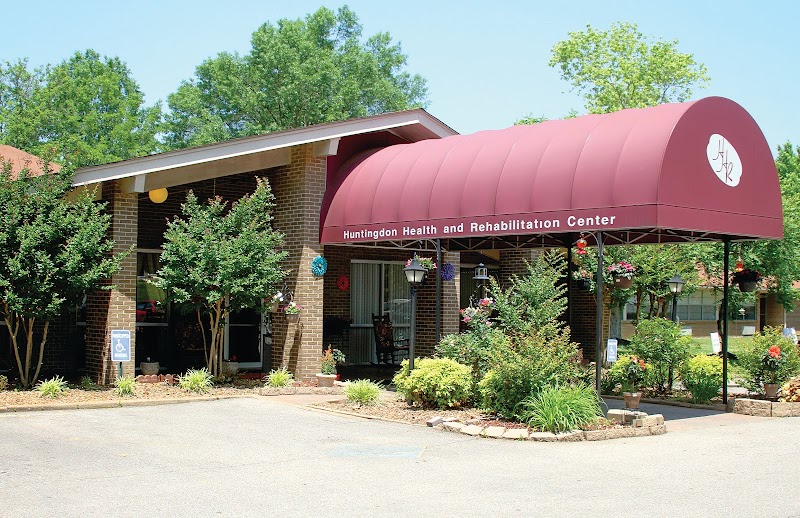
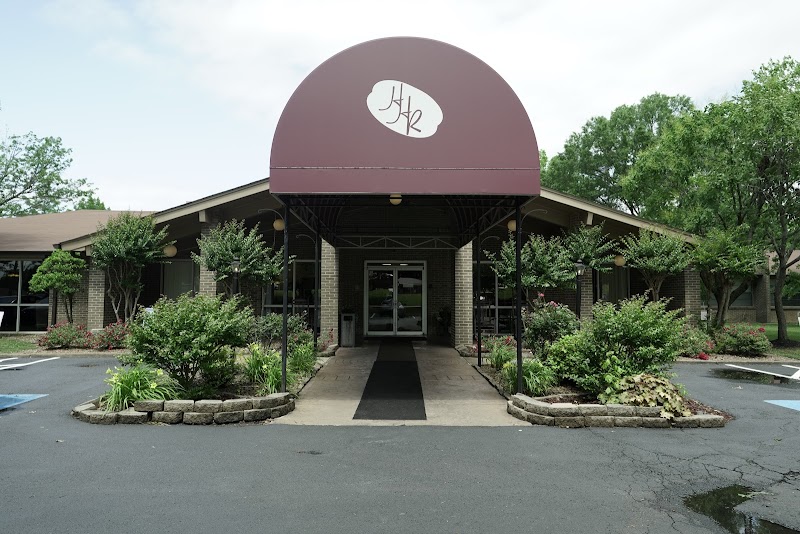
HUNTINGDON HEALTH & REHABILITATION CENTER

635 HIGH STREET, HUNTINGDON, TN 38344 (731) 986-8943
For profit - Limited Liability company 120 Beds PRESTIGE ADMINISTRATIVE SERVICES Data: November 2025 4 Immediate Jeopardy citations
Trust Grade
0/100
#255 of 298 in TN
Last Inspection: July 2024

Within standard 12-15 month inspection cycle. Federal law requires annual inspections.

Overview

Huntingdon Health & Rehabilitation Center has received a Trust Grade of F, indicating significant concerns about the facility's quality of care. Ranking #255 out of 298 nursing homes in Tennessee places it in the bottom half of facilities state-wide, and it is last among the four facilities in Carroll County. Although the facility has shown improvement in its trend, reducing issues from six in 2024 to one in 2025, it still faces serious challenges. Staffing is rated at 2 out of 5 stars, with a turnover rate of 52%, which is around the state average, but there is concerningly less RN coverage than 83% of state facilities, meaning residents may not receive the oversight they need. Notably, serious incidents have occurred, including a failure to ensure CPR certification for staff, which led to a resident being unresponsive and CPR being performed by uncertified personnel, underscoring a critical risk to resident safety.

Trust Score
F
0/100
In Tennessee
#255/298
Bottom 15%
Safety Record
High Risk
Review needed
Inspections
Getting Better
6 → 1 violations
Staff Stability
⚠ Watch
52% turnover. Above average. Higher turnover means staff may not know residents' routines.
Penalties
✓ Good
$52,156 in fines. Lower than most Tennessee facilities. Relatively clean record.
Skilled Nurses
⚠ Watch
Each resident gets only 19 minutes of Registered Nurse (RN) attention daily — below average for Tennessee. Fewer RN minutes means fewer trained eyes watching for problems.
Violations
⚠ Watch
17 deficiencies on record. Higher than average. Multiple issues found across inspections.
★☆☆☆☆
1.0
Overall Rating
★★☆☆☆
2.0
Staff Levels
★★☆☆☆
2.0
Care Quality
★☆☆☆☆
1.0
Inspection Score
Stable
2024: 6 issues
2025: 1 issues

The Good

  • Full Sprinkler Coverage · Fire safety systems throughout facility
  • No fines on record

Facility shows strength in fire safety.

The Bad

1-Star Overall Rating

Below Tennessee average (2.8)

Significant quality concerns identified by CMS

Staff Turnover: 52%

Near Tennessee avg (46%)

Higher turnover may affect care consistency

Federal Fines: $52,156

Above median ($33,413)

Moderate penalties - review what triggered them

Chain: PRESTIGE ADMINISTRATIVE SERVICES

Part of a multi-facility chain

Ask about local staffing decisions and management

The Ugly 17 deficiencies on record

4 life-threatening
May 2025 1 deficiency 1 IJ
CRITICAL (J) 📢 Someone Reported This

A family member, employee, or ombudsman was alarmed enough to file a formal complaint

Immediate Jeopardy (IJ) - the most serious Medicare violation

Free from Abuse/Neglect (Tag F0600)

Someone could have died · This affected 1 resident

**NOTE- TERMS IN BRACKETS HAVE BEEN EDITED TO PROTECT CONFIDENTIALITY** Based on facility policy review, medical record review, hospital documentation review, observation and interview, the facility f...

Read full inspector narrative →
**NOTE- TERMS IN BRACKETS HAVE BEEN EDITED TO PROTECT CONFIDENTIALITY** Based on facility policy review, medical record review, hospital documentation review, observation and interview, the facility failed to protect the resident's right to be free from sexual abuse for 2 of 4 sampled residents (Resident #1 and Resident #2) reviewed. On [DATE] during group activities, the Former Activities Director (FAD) observed Resident #1 display unwanted behaviors towards Resident #4, leaning against him during conversation, putting her arms around him and touching him affectionately. The FAD intervened and reported the inappropriate behaviors to the Staff Development Coordinator (SDC). The SDC notified Medical Doctor (MD) T on [DATE] and obtained orders for medication to be given for hypersexual behaviors. There were no interventions implemented to monitor Resident #1's hypersexual behaviors pending medication administration with evaluation of medication effectiveness. On [DATE], 2 days after the FAD reported Resident #1's inappropriate behaviors, Certified Nursing Assistant (CNA) C observed Resident #1 and Resident #2, both vulnerable, severely cognitively impaired Residents who lack the capacity to consent, engaged in sexual activity. Interviews conducted with Resident #1 and Resident #2's immediate family concluded both Residents maintained their life with character and integrity in such a manner that would have caused humiliation and psychosocial trauma related to the nonconsensual sexual encounter. After a brief stay in a Psych Facility, Resident #1 returned to the facility and has continued displays of affection towards Resident #3, another male whom she mis-identified as her husband. The facility's failure to provide the necessary care and services to prevent sexual abuse resulted in Immediate Jeopardy (IJ) (a situation in which the provider's noncompliance with one or more requirements of participation has caused, or is likely to cause, serious injury, harm, impairment, or death to a resident) for Resident #1 and Resident #2. The Interim Administrator, Administrator, Director of Nursing and the Regional Clinical Educator were notified of the Immediate Jeopardy on [DATE] at 3:32 PM, in the Administrator's office. The facility was cited at F-600 with a scope and severity of J, which is a substandard quality of care. An acceptable Removal Plan which removed the immediacy of the Jeopardy for F-600 was received on [DATE], and the Removal Plan was validated on-site by the surveyor on [DATE] through [DATE] by medical record review, monitoring log review, observation, review of education records, and staff interviews. The Immediate Jeopardy for F600 began on [DATE] through [DATE], the IJ was removed on [DATE]. The facility's noncompliance at F-600 continues at a scope and severity of D for monitoring of the effectiveness of the corrective actions. A partial extended survey was done [DATE]- [DATE]. The facility is required to submit a Plan of Correction. The findings included: 1. Review of the facility policy titled, Abuse, Neglect and Exploitation, revised on [DATE], revealed, .It is the policy of this facility to provide protections for the health, welfare, and rights of each resident .prohibit and prevent abuse, neglect, exploitation, and misappropriation of resident property .'Abuse' means the willful infliction of injury, unreasonable confinement, intimidation, or punishment with resulting physical harm, pain, or mental anguish, which can include staff to resident abuse .'Sexual Abuse' is non-consensual sexual contact of any type with a resident .'Mistreatment' means inappropriate treatment or exploitation of a resident .The identification, ongoing assessment, care planning for appropriate interventions, and monitoring of residents with needs or behaviors which might lead to conflict or neglect . 2. Review of the medical record revealed Resident #1 was admitted to the facility on [DATE] and readmitted on [DATE], with diagnoses which included Anxiety Disorder, Dementia with Agitation, and Insomnia. Review of the Progress Notes for Resident #1 dated [DATE], revealed .17:47 [5:47 PM] .Previous facility reports that this resident tends to sundown [a behavioral change that occurs in the late afternoon and evening in people with dementia], wanders, and asks for [Named deceased husband] . Progress Note was entered by Licensed Practical Nurse (LPN) P. Review of the Order Summary Report for Resident #1 revealed, .ALPRAZolam [used to treat anxiety] .Oral Tablet 0.25 MG [milligram] .1 tablet by mouth two times a day for anxiety .Order Date [DATE] .Start Date XXX[DATE] . Review of the Progress Notes for Resident #1 dated [DATE], revealed .21:53 [9:53 PM] .Really wanting to go home to see husband .Pharmacy notified of not receiving all of meds [medication], stated would be arriving on the next run except for the Alprazolam which a script [prescription] is needed . Progress note was entered by LPN W. Review of the Progress Notes for Resident #1 dated [DATE], revealed .12:51 [PM] .Resident also fixating on another resident and standing over him .Not easily redirected .believes her husband .other family members are nearby and keeps asking us to call them to her room to eat lunch . Progress note entered by Registered Nurse (RN) H. Review of the Progress Notes for Resident #1 dated [DATE], revealed .15:23 [3:23 PM] .we have no records for her history and she is a poor historian accept [except] for one page from previous facility that just list a few diagnosis .Dementia with behaviors will use the paroxetine [antidepressant] for the hypersexual behaviors .depression stable with paroxetine 20mg daily . The note was electronically signed by MD T. Review of the Order Summary Report for Resident #1 revealed, .PARoxetine HCL [Hydrochloride] [used to treat depression and anxiety] Tablet 20 MG .one time a day for hypersexual behavior .Order Date XXX[DATE] .Start Date XXX[DATE] . Review of the Progress Notes for Resident #1 dated [DATE], revealed .16:01 [4:01 PM] .Contacted pharmacy again to pull medication [Alprazolam] from backup. Pharmacy says they still do not have a signed script. Provider aware and says they are sending it over . Progress note entered by RN H. Review of the comprehensive care plan for Resident #1 dated [DATE], revealed .Resident has behavior(s) .Interventions .Administer medications as ordered .Approach resident in a calm manner to avoid frustration and behavior escalation, re-approach later .Keep resident safe during episodes of behaviors; attempt to redirect .Observe and document episodes of inappropriate behaviors; notify Physician/NP [Nurse Practitioner]/PA [Physician Assistant] when behaviors persist or won't de-escalate .Offer psychologist/psychiatrist services as needed . Offer/provide activities of interest to keep resident engaged in positive interactions . Review of the Progress Notes for Resident #1 dated [DATE], revealed .19:24 [7:24 PM] ALPRAZolam .Awaiting arrival from pharmacy . Progress Note was entered by LPN R. Review of the Nursing Home Progress Note for Resident #1 dated [DATE], revealed .New admit seen yesterday .[Named MD T] noted hypersexual yesterday and wrote for paxil [paroxetine] .to start med not available yet from pharmacy she denies pain but continues to be interested in wanting sex . The progress note was signed by NP E. Review of the Order Summary Report for Resident #1 revealed, .PARoxetine HCL Oral Tablet 20 MG .Verbal Give 1 tablet by mouth one time only for Hypersexual Behavior .Order Date XXX[DATE] .Start Date XXX[DATE] .End Date XXX[DATE] . Review of the comprehensive care plan for Resident #1 dated [DATE], revealed, .Resident has behavior(s) related to anxiety, dementia, macular degeneration as evidenced by hypersexual behaviors, physically combative with staff when attempted to redirect .wandering, entering other resident rooms .fixated on her husband .Interventions .If resident resists with ADLs [Activities of Daily Living], reassure resident, leave, then return later . Review of the Progress Note for Resident #1 dated [DATE], revealed, .11:00 [AM] .0800 [8:00 AM] dose of Paroxetine was not given due to this Nurse awaiting the pill from pharmacy . Progress note entered by LPN C. Review of the Progress Notes for Resident #1 dated [DATE], revealed, .12:07 [PM] .Resident is showing an increase in sexual behavior at this time . Progress note entered by LPN C. Review of the Progress Notes for Resident #1 dated [DATE], revealed .15:27 [3:27 PM] .Nurse states pharmacy has been notified today that Paxil not available .NP notified and gave hold order until med available .pharmacy has been called today .and yesterday . Progress note was entered by the Regional Clinical Educator (RCE). Review of the Progress Notes for Resident #1 dated [DATE], revealed .18:34 [6:34 PM] .Inappropriate sexual touching, making statements that she wants to leave .difficult to redirect, hypersexual behavior .Stat [immediate] order for Paxil from pharmacy .give paxil immediately on arrival . Progress note was entered by the RCE. Review of the Resident Monitoring Tool revealed staff documented 1 on 1 monitoring for Resident #1 from [DATE] at 10:10 AM through [DATE] at 1:00 PM. Review of the Progress Notes for Resident #1 dated [DATE], revealed .04:33 [AM] .Orders were written for the hold to be removed and for the one time dose of Paroxetine 20 mg po [by mouth] to be given . Progress note entered by LPN G. Review of the Medication Administration Record (MAR) dated [DATE], revealed Resident #1 received an initial dose of Paroxetine 20 mg at 4:33 AM, three days after the order was obtained to treat hypersexual behaviors. Review of the Nursing Home Progress Note for Resident #1 dated [DATE], revealed .f/u [follow/up] .Patient was found c [with] a male resident expressing a desire for sex .she reports today that she no longer desires this but she does have dementia. Recently started paxil 20mg .CHRONIC DX [Diagnosis] .hypersexuality .Continue 1/1 [1 on 1 monitoring] until medication effective . The progress note was signed by NP E. Review of the Progress Notes for Resident #1 dated [DATE] revealed the Resident was transferred to Hospital #1 for medical clearance evaluation for acceptance to Psych Facility #1. Review of the Initial Psych Evaluation for Resident #1 completed at the Psych Facility, dated [DATE], revealed, .female with history of hypertension and dementia presenting for worsening confusion, combativeness, and exit seeking behavior per her paperwork .Social History: unknown, from a nursing home and only oriented to self .Plan: dc [discontinue] previously prescribed psychotropics cont [continue] Depakote [used to treat mood disorder] as previously prescribed add rivastigmine [medication used to treat dementia] 3mg .add valium [to treat anxiety] . benzodiazepine [nervous system depressant used to treat anxiety] withdrawal from Xanax [benzodiazepine to treat anxiety] and to aid sleep) . The evaluation was electronic signed by MD CC. Review of the nursing home facility Timed Behavioral Monitor Log dated [DATE], revealed staff documented monitoring for Resident #1 from 7:00 AM through 1:00 PM while the Resident was out of the nursing home facility and at the Psychiatric facility. Review of the Progress Notes for Resident #1 dated [DATE] revealed, .Resident arrived to the unit via [by way of] EMS [Emergency Medical Services] stretcher @ [at] 1310 [1:10 PM] .Resident is on the 15 minute checks, due to recent behaviors (hypersexuality, exit seeking, wandering) . The progress note was entered by LPN P. Review of the Timed Behavioral Monitor Log dated [DATE] through [DATE] revealed, .How to use as behavioral assessment tool .Note what resident is doing at each time increment. Example: wandering, exit seeking, sleeping, eating, or pacing .How to use as safety monitor .Check that resident is safe at each time increment and document 'SAFE' . Staff documented monitoring for Resident #1's Behavior/Status inconsistently with the word OK, check marks, an X, type of monitoring, and/or resident status/location. Review of the comprehensive care plan intervention for Resident #1 dated [DATE], revealed, .Other: 1:1 supervision [DATE] [2025] end on 4/18 [2025] moved to 15 minute checks then dc [discontinue] at [DATE] . The facility was unable to provide documentation of monitoring after [DATE] at 7:00 PM. Review of the Progress Notes for Resident #1 dated [DATE], revealed, .17:09 [5:09 PM] .Resident with wandering and overly affectionate behaviors . Progress note was entered by the Director of Nursing (DON) . Review of the Progress Notes for Resident #1 dated [DATE], revealed .Resident was admitted from psychiatric services .Paxil [paroxetine], Celexa [Resident did not have Celexa ordered during her stay], Seroquel [antipsychotic], and Xanax [Alprazolam] discontinue with the initiation of Rivastigmine, Valium, dosage change of Depakote .placed on 1:1 observation for behaviors to evaluate resident safety .No negative behaviors observed for 72 hours. MD in agreement with 1:1 observations. Will continue to monitor closely . Progress note entered by the Director of Nursing (DON). Review of the comprehensive care plan for Resident #1 with a revision date of [DATE], revealed .Resident was on 1/1 care from Thursday [DATE] to Monday [DATE]. Resident will now be on 15 minute checks for 24 hours, 30 minute checks for the following 24 hours, then DC checks . The facility was unable to provide documentation of monitoring for [DATE] after 7:00 PM through [DATE]. Review of the Psychiatric Progress Note for Resident #1 dated [DATE], revealed .Pt [patient] continues with delusional thought process .will continue to follow and redirect based on clinical course .pt recently returned from [Named Hospital #1- resident actually returned from Psych Facility #1] secondary to neuropsychiatric [mental and behavioral changes] symptoms .Addendum to [DATE] note: A conversation took place with the DON regarding the patients [patient's] removal of one to one monitoring secondary to no new sexual disinhibitions [behaviors considered outside of normal range caused by a reduced ability to control impulses and emotions] .observed since return from [Named Hospital #1- resident actually returned from Psych Facility #1] . Verbal order provided [DATE] Addendum added on this date, [DATE] .[Family Nurse Practitioner-FNP D] . This Addendum related to removal of one to one monitoring was added after the IJ template was given on [DATE]. FNP D documented no new sexual disinhibitions observed since Resident #1 returned to the facility. Monitoring was documented on the log for 6 hours prior to Resident #1's return to the facility and inconsistently documented by staff [DATE] through [DATE]. A Progress note on [DATE] revealed wandering and overly affectionate behaviors not documented for behavior on the monitoring log. Review of the Documentation Survey Report v2 for Resident #1 dated [DATE], revealed staff documented mis-identifying male residents as her husband or significant other. Review of the admission Minimum Data Set (MDS) assessment dated [DATE], revealed Resident #1 had a Brief Interview for Mental Status (BIMS) score of 4, which indicated severe cognitive impairment. Resident #1 had no coded behaviors and was coded for Supervision to Partial/Moderate assistance for walking. Mobility Devices was coded for the use of a wheelchair during the 7-day look back period. Review of the Psychiatric Progress Note for Resident #1 dated [DATE], revealed .Pt seen per staff request for intermittent resistance & [and] increased exit-seeking behaviors .will continue to follow .CURRENT MEDICATIONS: DEPAKOTE .RIVASTIGMINE .DIAZEPAM [VALIUM] .MELATONIN [supplement used to encourage sleep] .Hydroxyzine [to reduce anxiety] 25mg Q24 [every 24 hours] prn [as needed] (4/10) [medication added on [DATE]] .Depakote increase 250 mg BID [twice daily] . The psych progress note was signed by Psych NP W. Review of the Psychiatric Progress Note for Resident #1 dated [DATE], revealed, .examined per staff request; pt noted with an increase in delusional thought process and agitation .Pt noted with a preoccupative [preoccupied] thought process and disinhibitory behavior .RECOMMENDATIONS: Start Risperdal [risperidone] .for psychosis [disconnection from reality] elements and reflect [redirect] as clinically indicated .FOLLOW UP: 1-2 months . The psych progress note was completed by Psych FNP D. Review of the Progress Notes for Resident #1 dated [DATE], revealed .00:53 [12:53 AM] .Resident has exhibited ongoing disruptive behavior throughout shift .continues to attempt to wander into other residents' rooms and has been trying .to talk various other residents into helping her rearrange furniture within her room .redirected for a very short time and then immediately resuming previous behaviors . Progress note entered by RN K. Review of the Progress Notes for Resident #1 dated [DATE], revealed .Resident is showing an increase in anxiety and agitation .No new orders at this time . Progress note was entered by LPN C. Review of the Documentation Survey Report v2 for Resident #1 dated [DATE], revealed staff documented sexually inappropriate behavior or touching towards other residents, sexually inappropriate towards staff, exit seeking, unsafe wandering, visual hallucinations, delusional thoughts and mis-identifying male residents as her husband or significant other. Review of the Documentation Survey Report v2 for Resident #1 dated [DATE], revealed staff documented sexually inappropriate behavior or touching towards other residents, sexually inappropriate towards staff, exit seeking, unsafe wandering, visual hallucinations, and delusional thoughts. Review of the Documentation Survey Report v2 for Resident #1 dated [DATE], revealed staff documented sexually inappropriate behavior or touching towards other residents, exit seeking, unsafe wandering, visual hallucinations, delusional thoughts and mis-identifying male residents as her husband or significant other. Review of the Order Summary Report for Resident #1 revealed, .Divalproex Sodium [Depakote] Oral Capsule Delayed Release Sprinkle 125 MG .2 capsule [250 mg] two times a day related to DEMENTIA .WITH AGITATION .Order Date XXX[DATE] Start Date XXX[DATE] .risperidone [antipsychotic medication used to treat psychosis] Oral Tablet 0.25 MG .1 tablet .two times a day for psychosis .Order Date XXX[DATE] .Start Date [DATE] . Review of the Progress Notes for Resident #1 dated [DATE], revealed .Resident noted to have increased agitation with thinking male residents are her husband . Progress note was entered by the SDC. Review of the Documentation Survey Report v2 for Resident #1 dated [DATE], revealed staff documented sexually inappropriate behavior or touching towards other residents, exit seeking, unsafe wandering, visual hallucinations, delusional thoughts and mis-identifying male residents as her husband or significant other. Review of the Documentation Survey Report v2 for Resident #1 dated [DATE], revealed staff documented exit seeking, unsafe wandering, visual hallucinations, delusional thoughts and mis-identifying male residents as her husband or significant other. Review of the Progress Notes for Resident #1 dated [DATE], revealed .Resident continues with delusions of fellow residents being her sons or husband .continues to be difficult to direct . Progress note entered by the Social Service Director (SSD). Review of the Documentation Survey Report v2 for Resident #1 dated [DATE], revealed staff documented exit seeking, unsafe wandering, visual hallucinations, delusional thoughts and mis-identifying male residents as her husband or significant other. Review of the Psychiatric Progress Note for Resident #1 dated [DATE], revealed .seen per staff request for increased irritability, agitation, delusional content, and recent altercation with another resident .becomes tearful on exam lamenting [mourning] time with deceased spouse .recently started on risperidone and appears to tolerate well with no adverse effects reported RECOMMENDATION: Depakote increase to 375mg TID [three times daily] . There was no order to increase Depakote as recommended. The psych progress note was completed by Psych NP W. Review of the Documentation Survey Report v2 for Resident #1 dated [DATE], revealed staff documented sexually inappropriate behavior or touching towards other residents, exit seeking, unsafe wandering, visual hallucinations, delusional thoughts and mis-identifying male residents as her husband or significant other. Observation on the secured unit on [DATE] at 2:00 PM, revealed Resident #1 sat outside of the Dining Room in the hall next to Resident #3 having a conversation. Continued observation revealed Resident #1's room was located at the end of the secured unit hall approximately 45 to 50 feet from the nursing desk. Resident #3's room was two rooms away from Resident #1 on the same side of the hall. During an interview on [DATE] at 2:25 PM, CNA N stated on [DATE] she noticed the privacy curtain was pulled in Resident #1's room and entered to investigate. CNA N stated, .I walked around the curtain and saw [Named Resident #1] and [Named Resident #2] having sex .[Resident #1]'s clothes were pulled down to her ankles and [Resident #2]'s clothes were around his ankles .he was behind her, erect as he could get and going at it .I told them to stop and [Resident #2] seemed caught off guard but [Resident #1] was mad because I interrupted them, she said I should give her and her husband some privacy .[Resident #2] pulled up his pants and left the room .I cleaned [Resident #1] up and walked her down the hall and into the main dining room [and] got the scheduler to stay with both residents .then went and told [Named RCE S] . CNA N stated both Residents were monitored and Resident #1 was moved off the unit to another hall. When asked if Resident #1 had been on monitoring prior to the day of the incident ([DATE]), CNA N replied, No, she had only been here for a couple of days before it happened .Her son told us if she was in her right mind she would be mortified about the sexual behaviors she is having . During an interview on [DATE] at 2:35 PM, CNA B stated Resident #2 had been on 15-minute checks and 1 on 1 monitoring multiple times for exit seeking behaviors. CNA B stated, .[Resident #1] thinks [Resident #3] is her husband and walks with him in the hall often .[Resident #1] sits really close to him when we go in for activities or watching tv .we try to separate them as much as possible, she will whine to him and get him all worked up .agitated . When asked what care plan interventions were implemented to prevent Resident #1's sexually inappropriate behaviors, CNA B stated, .we try to keep her busy and redirect her if she is getting touchy with the male residents . During an interview on [DATE] at 3:26 PM, LPN P stated Resident #1 was not on increased monitoring at this time and had not been on monitoring prior to having the sexual behavior on [DATE]. LPN P stated she was unaware of Resident #1 having inappropriate behaviors on [DATE]. LPN P stated, .[Resident #1] thinks the male residents, especially [Named Resident #3] are her husband and gets really agitated if we try to separate her from him . Review of the Progress Notes for Resident #1 dated [DATE], revealed, .Resident presented with increased confusion. Resident continues to believe others are her family members. Difficult to redirect . Progress note was entered by LPN P. Review of the Documentation Survey Report v2 for Resident #1 dated [DATE], revealed staff documented sexually inappropriate behavior or touching towards other residents, exit seeking, unsafe wandering, visual hallucinations, delusional thoughts and mis-identifying male residents as her husband or significant other. During a telephone interview on [DATE] at 10:46 AM, the Former Regional Director of Operations (FRDO) stated she had conducted the facility investigation for the incident between Resident #1 and Resident #2. The FRDO stated during the investigation a staff member had acknowledged Resident #1 was sitting by another male resident leaning in talking to him but nothing sexually inappropriate had happened. The FRDO stated CNA (N) went to Resident #1's room looking for her and found the two residents, with their pants down, one standing behind the other .[Resident #1] was leaning forward on her walker and [Resident #2] was standing behind her .the CNA (N) announced herself, then Resident #2 turned and pulled his pants up and Resident #1 asked why they couldn't have some privacy . When asked if the facility had substantiated the allegation of sexual abuse, the FRDO replied, .We were not able to prove sexual contact occurred .we were not able to substantiate that sexual intercourse had occurred . When asked if sexual intercourse had to occur for nonconsensual sexual contact to be considered, the FRDO replied, .Without being able to prove penetration or know intercourse had happened .we didn't feel like it was something we needed to intervene on .we checked to see if they were able to consent and since he was not able to consent, we made the decision to keep them separated .we didn't feel like it was appropriate contact because he could not consent for sure .our feeling was both patients appeared to be willing participants, even though they were willing, we did deem him incompetent so we did want to prevent contact going forward . When asked to define sexual abuse, the FRDO replied, Nonconsensual sexual contact. The FRDO was asked to review the State Operations Manual guideline for nonconsensual sexual contact and agreed both residents lacked the capacity to consent, and the facility did not substantiate sexual abuse. During a telephone interview on [DATE] at 11:12 AM, the SDC stated Resident #1 had no history of inappropriate behaviors prior to [DATE]. The SDC confirmed on [DATE] the FAD notified her about Resident #1 getting close to a male resident in activities and Family Member (FM) I having concerns due to Resident #1's history of going into male residents' room in the last facility [Facility #2]. When asked what she meant by Resident #1 getting close to a male resident, the SDC stated, .[Resident #1] was just leaning into the resident too close when they were talking, not touching him or anything .I did notify the doctor [MD T] because the family had concerns .[MD T] started [Resident #1] on Paxil 20 mg . When asked if the medication was given for hypersexual behavior, the SDC responded, .I am not sure, I really don't remember . When asked if she had ordered monitoring for the resident pending evaluation of the medication's effect on Resident #1's hypersexual behaviors, the SDC replied, I think it was just a verbal nothing written down. (Multiple interviews revealed staff were not aware of orders to monitor Resident #1 prior to [DATE].) The SDC concluded residents with a BIMS score equal to or higher than 8 had the capacity to consent to sexual contact. The SDC was asked if she provided in-services related to abuse to the staff, she replied, Yes. During a telephone interview on [DATE] at 1:20 PM, FM L stated Resident #1 had no history of inappropriate sexual behaviors prior to coming to the facility. FM L stated, .Mom [Resident #1] had wandered in and out of rooms at [Named Facility #2] .[Resident #1] was a very devoted wife, a Christian woman .she would have just died of humiliation and embarrassment to know she was so casually seducing strangers . FM L stated the facility had not contacted her to discuss Resident #1's plan of care related to the sexual encounter, only the agitation and wandering behavior. During a telephone interview on [DATE] at 2:27 PM, the FAD stated on [DATE] Resident #1 had inappropriate behaviors during activities. The FAD stated, .She [Resident #1] was just all over [Named Resident #4] she had her arm around him, just had to be touching him .I could see he was getting agitated and I got in between them .[Resident #1] got up and stood behind him and began touching his shoulders .[Resident #1] got agitated because I separated them . The FAD stated after activities she spoke to FM I, who had concerns due to Resident #1's wandering behavior at the prior facility. The FAD suggested there might be medication to help with the behaviors and FM I asked her to talk to the nurse about the medication. The FAD confirmed she had reported the behaviors and the medication request to the SDC on [DATE]. Observation on the secured unit on [DATE] at 3:00 PM, revealed Resident #1 and Resident #3 standing at the end (C Hall entrance) of the hall talking. No staff were observed in the hall during the observation. A CNA came and escorted the residents to the dining room at 3:11 PM. Resident #1 and Resident #3 were unsupervised at the end of the hall, outside of resident rooms for 11 minutes. Observation on [DATE] at 4:05 PM revealed Resident #1 sat at a table next to Resident #3. During conversation, Resident #1 placed her hand on Resident #3's thigh and began to rub back and forth. CNA F was present in the dining room interacting with another resident and unaware of the contact between Resident #1 and #3. This surveyor alerted CNA F to the behavior and Resident #1 was redirected at that time. During an interview on [DATE] at 4:10 PM, CNA F stated there was monitoring after the [DATE] sexual encounter between Resident #1 and Resident #2. CNA F stated there had not been any monitoring in place before [DATE] and monitoring had not been on-going for Resident #1 since the incident. CNA F stated Resident #1 was fixated on Resident #3 and often was seen touching him on the leg or arm requiring staff intervention. CNA F confirmed Resident #1 refers to Resident #3 as her husband and at times, her son. When asked if staff were able to always monitor Resident #1 and #3, CNA F replied, .We do try, it isn't possible for us to monitor all the time. We try to watch Resident #1 because she tries to talk Resident #3 into helping her arrange furniture in her room and he follows her wherever she goes .back here in memory care all the residents require constant attention . Review of the Documentation Survey Report v2 for Resident #1 dated [DATE], revealed staff documented sexually inappropriate behavior or touching towards other residents, exit seeking, unsafe wandering, visual hallucinations, delusional thoughts and mis-identifying male residents as her husband or significant other. During a telephone interview on [DATE] at 8:25 AM, FM I confirmed she had spoke with the FAD on [DATE] about concerns with Resident #1's behavior and the possibility of medication to help with her increased sexual desire. FM I stated the FAD had spoken to the Nurse Superv[TRUNCATED]
Jul 2024 6 deficiencies
CONCERN (D)

Potential for Harm - no one hurt, but risky conditions existed

Resident Rights (Tag F0550)

Could have caused harm · This affected 1 resident

**NOTE- TERMS IN BRACKETS HAVE BEEN EDITED TO PROTECT CONFIDENTIALITY** Based on policy review, observation, and interview, the facility failed to ensure that residents were treated with dignity and r...

Read full inspector narrative →
**NOTE- TERMS IN BRACKETS HAVE BEEN EDITED TO PROTECT CONFIDENTIALITY** Based on policy review, observation, and interview, the facility failed to ensure that residents were treated with dignity and respect as evidenced by 1 of 63 (Resident #62) residents not receiving their meal tray timely with the other residents seated at the table in the main dining room. The findings included: 1. Review of the facility's policy titled, Resident Meal Service dated 1/1/2022, revealed .Each resident shall receive the correct diet .shall receive prompt meal service and appropriate .assistance .Nursing personnel will ensure that residents are served the correct food tray .Nursing personnel will evaluate food .intake in residents with, or at risk for, significant nutritional problems . 2. Review of the medical record revealed Resident #62 was admitted to the facility on [DATE], with diagnoses including Severe Protein-Calorie Malnutrition and Neurocognitive Disorder. Review of the Care Plan dated 3/20/2024, revealed .Resident is at risk for altered nutritional status related to low body mass index, dx [diagnosis] of protein calorie malnutrition-present on admission. Therapeutic diet / [and] sandwich lunch and dinner . Review of the Physician's Orders dated 3/20/2024, revealed .Regular texture, Regular fluid, thin consistency, Fortified foods to all meals, send sandwich with lunch and supper trays . Review of the quarterly Minimum Data Set (MDS) assessment dated [DATE], revealed a Brief Interview for Mental Status (BIMS) score of 8, which indicated Resident #62 was moderately cognitively impaired and required set up or clean up assistance with eating. Observation in the Main Dining room on 7/15/2024 at 11:34 AM, revealed the trays arrived in the dining room and were distributed to the residents. Resident #62 was sitting at the dining table with Resident #3 and Resident #16. Residents #3 and #16 received their tray and was eating. Resident #62 was not given a tray. The Lead Dietitian was notified that Resident #62 did not receive a tray. Resident #62 was brought a tray at 11:52 AM. During an interview on 7/15/2024 at 11:53 AM, the Registered Dietician (RD) confirmed that Resident #62 should have been given a tray when the other residents at the table were served. During an interview on 7/17/2024 at 12:22 PM, the Director of Nursing (DON) confirmed that Resident #62 should have received a tray when the other residents at the table were served.
CONCERN (D)

Potential for Harm - no one hurt, but risky conditions existed

Safe Environment (Tag F0584)

Could have caused harm · This affected 1 resident

Based on policy review, observation, and interview, the facility failed to provide effective housekeeping to maintain a sanitary and comfortable environment as evidenced by a floor in a resident's roo...

Read full inspector narrative →
Based on policy review, observation, and interview, the facility failed to provide effective housekeeping to maintain a sanitary and comfortable environment as evidenced by a floor in a resident's room had 2 straws, white powdery substance and torn salt packet on the floor in 1 of 7 (Resident #8 ) resident rooms, and 3 dried dark brown spots on the floor, dried brown substance on the outside of the toilet, back of the toilet tank and on the door frame in 1 of 4 (Resident #12) observed bathrooms. The findings include: 1. Review of the facility's undated policy titled, 7-Step Daily Washroom Cleaning, revealed, .Clean and Sanitize Commode .includes the tank, the seat, the bowl and the base .Spot Clean the Walls .Damp Mop the Floor . Review of the facility's undated policy titled, 5-Step Daily Room Cleaning, revealed .Dust Mop .entire floor .especially behind dressers and beds .All corners and along the baseboards must be dust mopped to prevent buildup .Damp Mop .most important area .to disinfect is the floor . 2. Observation and interview on 7/17/2024 at 7:58 AM, Resident #12 asked this surveyor to look at the Resident's room and bathroom. The room had an odor and dried dark brown spots of the floor. The bathroom toilet had dried dark brown substance on the outside of the toilet, back of the toilet tank and on the door frame. Observations in Resident #12 bathroom on 7/17/2024 at 8:30 AM, revealed a dried brown substance on the floor, dried dark brown substance on the outside of the toilet, back of the toilet tank and on the door frame. Observation on 7/17/2024 at 10:05 AM, revealed a Wet Floor sign outside of Resident #12's room. The dried dark brown substance on the outside of the toilet, back of the toilet tank, and on the door frame was still present. Observation and interview on 7/17/2024 at 11:47 AM, the Administrator was asked if she thought the bathroom had been cleaned. She stated it didn't look like it had been cleaned. Observation and interview on 7/17/2024 12:00 PM, the Housekeeping Supervisor was asked if Resident #59's bathroom and room had been cleaned. I asked her if she thought the floor was sticky, the Housekeeping Supervisor confirmed the floor was sticky and dirty. The Housekeeping Supervisor was shown the bathroom and asked if the bathroom had been cleaned. She confirmed the bathroom was not clean and stated it was Unacceptable. 3. Observation in Resident #8's room on 7/17/2024 at 8:14 AM, revealed the floor had 1 straw under the bed and another straw in between the bed and the window. There was a white powdery substance on the side of the bed by the window, a torn salt packet in the corner of the room, and crumbs scattered all over Resident's room. Resident #8 is confined to the bed. Observation in Resident #8's room on 7/17/2024 at 10:05 AM, revealed the floor was still dirty with the same paper items. Observation and interview on 7/17/2024 at 11:47 AM, the Administrator confirmed the floor in Resident #8's room was not clean. Observation and interview on 7/17/2024 at 11:47 AM, the Housekeeping Supervisor confirmed that Resident #8's floor had not been cleaned recently.
CONCERN (D)

Potential for Harm - no one hurt, but risky conditions existed

ADL Care (Tag F0677)

Could have caused harm · This affected 1 resident

**NOTE- TERMS IN BRACKETS HAVE BEEN EDITED TO PROTECT CONFIDENTIALITY** Based on policy review, medical record review, observation, and interview, the facility failed to ensure Activities of Daily Liv...

Read full inspector narrative →
**NOTE- TERMS IN BRACKETS HAVE BEEN EDITED TO PROTECT CONFIDENTIALITY** Based on policy review, medical record review, observation, and interview, the facility failed to ensure Activities of Daily Living (ADL) assistance was provided related to incontinent care, bathing, and grooming for 3 of 3 sampled residents (Resident #8, #47 and #57) reviewed for ADL care. The findings included: 1. Review of the facility's policy titled, Activities of Daily Living (ADLs), revised date of 12/28/2023 revealed, .The facility takes measures to minimize the loss of residents functional abilities, including activities of daily living .A resident who is unable to carry out activities of daily living receives the necessary services to maintain good nutrition, grooming, and personal and oral hygiene . 2. Review of the medical record revealed Resident #8 was admitted to the facility on [DATE], with diagnoses including Diabetes, Arthritis, Depression, and Anxiety. Review of the annual Minimum Data Set (MDS) assessment dated [DATE], revealed Brief Interview for Mental Status (BIMS) score of 14, which indicated Resident #8 was cognitively intact and dependent on staff for personal hygiene. Review of the Physician Orders dated 7/7/2024, revealed .Provide diabetic nail care every Sunday or PRN [as needed] Review of the Mediation Administration Record [MAR] dated July 2024, revealed .Provide diabetic nail care every Sunday or PRN one time a day every Sun . Observation and interview on 7/15/2024 at 9:37 AM, revealed Resident #8's fingernails on both hands were approximately ¼ (quarter) of an inch past the fingertips and had a brown substance under the nails on both hands. Resident #8 stated he would like his nails cut and to be shaved. Observation on 7/16/2024 at 8:07 AM, Resident #8's nails still long and dirty and not shaved. Observation and interview on 7/16/2024 at 4:55 PM, in the Resident's room the Director of Nursing (DON) confirmed Resident #8's nails had not been cleaned or trimmed. 3. Review of the medical record revealed Resident #47 was admitted to the facility on [DATE], with diagnoses including End Stage Renal Disease, Seizures, Anxiety and Acute Pulmonary Edema. Review of the admission MDS assessment dated [DATE], revealed a BIMS score of 15, which indicated Resident #47 was cognitively intact, and required maximal assist with bathing. Review of Resident #47's Care Plan dated 5/2/2024, revealed .Honor resident's bathing preference. tues [Tuesday] and thurs [Thursday] 2nd shift . Review of the Bath Reports revealed Resident #47 had no shower or bed bath provided or documented for the following days: 5/3/2024, 6/11/2024, 6/21/2024, 7/5/2024, and 7/12/2024. Observation in the resident's room on 7/15/2024 at 9:09 AM, revealed Resident #47 was sitting in a wheelchair playing cards on her computer. 4. Review of the medical record revealed Resident #57 was admitted to the facility on [DATE] with diagnoses including Alzheimer's, Diabetes, Congestive Heart Failure, Depression and Osteoporosis. Review of the Care Plan dated 10/17/2023 revealed, .Resident has an ADL self-care performance deficit related to Alzheimer's Disease, anxiety .generalized weakness .visual impairment .BATHING: 1 person assist . Review of the quarterly MDS assessment dated [DATE], revealed a BIMS score of 14, which indicated Resident #57 was cognitively intact. Review of the Bath Reports revealed Resident #57 had no shower or bed bath provided or documented for the following days: 4/15/2024, 5/2/2024, 5/6/2024, 5/23/2024, 6/3/2024, 6/13/2024, and 7/4/2024. Observation in the resident's room on 7/15/2024 at 2:08 PM, revealed Resident #57 dressed, lying in bed watching television, drinking a diet coke. Interview on 7/17/2024 at 4:00 PM, the Wound Care Nurse provided the shower sheets for Resident #47 and Resident # 57 and confirmed the staff is supposed to fill out the shower sheets on all residents and stated, .I'm not going to fabricate it .if I don't have it, I don't have it . Interview on 7/18/2024 at 11:06 AM, the DON confirmed the facility was unable to provide a document that Resident #47 and Resident #57 received their bath/showers twice a week.
CONCERN (D)

Potential for Harm - no one hurt, but risky conditions existed

Infection Control (Tag F0880)

Could have caused harm · This affected 1 resident

**NOTE- TERMS IN BRACKETS HAVE BEEN EDITED TO PROTECT CONFIDENTIALITY** Based on policy review, medical record review, observation, and interview, the facility failed to ensure practices to prevent th...

Read full inspector narrative →
**NOTE- TERMS IN BRACKETS HAVE BEEN EDITED TO PROTECT CONFIDENTIALITY** Based on policy review, medical record review, observation, and interview, the facility failed to ensure practices to prevent the potential spread of infection were maintained for 1 of 1 sampled residents (Resident #34) reviewed for transmission- based precautions, failed to provide a clean barrier while administering medications for 4 of 9 residents, (Resident #13, #16, #21 and #32) and used a contaminated alcohol wipe to clean a resident's cheek (Resident #13), and failed to observe Enhanced Barrier Precautions for 1 of 2 (Resident #32) sampled residents. The findings include: 1. Review of the facility's policy titled Transmission-Based (Isolation) Precautions, dated 12/27/2023, revealed .The facility will have PPE [Personal Protective Equipment] readily available near the entrances of the resident's room. Staff .will don appropriate PPE before or upon entry into the environment of a resident on transmission-based precautions .Contact Precautions .Intended to prevent transmission of pathogens that are spread by direct or indirect contact with the resident or the resident's environment .Healthcare personnel caring for residents on Contact Precautions wear a gown and gloves for interactions that may involve contact with the resident or potentially contaminated areas in the resident's environment . Review of the facility's policy titled Enhanced Barrier Precautions, dated 3/26/2024, revealed .infection control intervention designed to reduce transmission of multidrug-resistant organisms that employs targeted gown and gloves use during high contact resident care activities .Even if the resident is not known to be infected or colonized with a MDRO [Multi Drug Resistant Organism], an order for enhanced barrier precautions will be obtained for residents with .indwelling medical devices (e.g., central lines .feeding tubes .PPE for enhanced barrier precautions is .necessary when performing high-contact care activities . 2. Medical record review revealed Resident #34 was admitted to the facility on [DATE], with diagnoses including Dementia, Hypokalemia, Dysphagia, Depression, and Anxiety. Review of the quarterly Minimum Data Set (MDS) assessment dated [DATE], revealed Resident #34 had severe cognitive impairment. Review of the Care Plan dated 3/26/2024, revealed Resident has an infection as evidenced by UTI [urinary tract infection] & [and] is in contact isolation .Contact isolation precautions . Review of the quarterly MDS assessment dated [DATE], revealed a Brief Interview for Mental Status (BIMS) score of 3, which indicated Resident #34 was severely cognitively impaired. Review of the Physician's Order dated 7/11/2024, revealed CONTACT ISOLATION Place in contact isolation due to ESBL [Extended-spectrum beta-lactamases enzymes that confer resistance to most beta-lactam antibiotics] in the urine . Review of the Physician's Order dated 7/12/2024, revealed Amoxicillin-Pot [Potassium] Clavulanate [antibiotic] Tablet 875-125 MG [milligram] Give 1 tablet by mouth every 12 hours for urinary tract infection for 7 Days . Observation on 7/18/2024 at 12:48 PM, revealed Certified Nursing Assistant (CNA) B and CNA C were in Resident #34's room, assisted her to the bathroom and back to bed. Neither CNA were dressed out in PPE to assist Resident #34, which was in contact isolation for ESBL in urine. Interview on 7/18/2024 at 3:06 PM, the Registered Nurse (RN) B was asked what PPE should staff wear in a contact isolation room. The RN stated, Gloves and gown . Interview on 7/18/2024 at 3:12 PM, the Infection Control Preventionist (ICP) was asked what PPE is required for Contact Isolation. The ICP stated, Gowns and gloves . 3. Observation on 7/17/2024 at 8:29 AM, revealed Licensed Practical Nurse (LPN) A entered Resident #21's room and failed to perform hand hygiene or provide a clean barrier during medication administration. Observation on 7/17/2024 at 8:40 AM, revealed RN G failed to provide a clean barrier while administering Resident #13's eyedrops and insulin. RN G used a contaminated alcohol wipe to clean Resident #13's right cheek, then used a gloved finger to wipe off the left cheek after administering eyedrops. Observation on 7/17/2024 at 8:59 AM, revealed RN G failed to provide a clean barrier while administering Resident #16's ordered oral medications and inhaler. Observation on 7/17/2024 at 10:27 AM, revealed RN G entered Resident #32's room and failed to observe Enhanced Barrier Precautions for a resident with a Percutaneous Endoscopic Gastronomy (a tube that allows nutrition to be received through the stomach) (PEG). RN G also failed to provide a clean barrier while preparing and administering medications. Interview on 7/18/2024 at 10:06 AM, the Director of Nursing (DON) was asked the process when setting up to administer eyedrops. The DON stated, .sanitize your hands .put down a barrier .make sure you take a napkin to wipe their cheek off if the medication runs .use the tissue to wipe their cheek off . The DON was asked if someone should use a contaminated alcohol wipe or finger to wipe off the resident's cheek. The DON stated, No they should not. The DON confirmed that a clean barrier should be provided while administering medications. The DON stated hand hygiene should be performed prior to administering medications. During an interview on 7/18/2024 at 10:32 AM, RN G confirmed that a tissue should have been used to clean resident's cheeks after administering eyedrops. RN G confirmed that Enhanced Barrier Precautions should be followed while performing high contact care for a Resident with a PEG. RN G confirmed that clean barriers should be in place before administering medications.
CONCERN (E)

Potential for Harm - no one hurt, but risky conditions existed

Deficiency F0761 (Tag F0761)

Could have caused harm · This affected multiple residents

**NOTE- TERMS IN BRACKETS HAVE BEEN EDITED TO PROTECT CONFIDENTIALITY** Based on policy review, medical record review, observation, and interview, the facility failed to ensure medications were proper...

Read full inspector narrative →
**NOTE- TERMS IN BRACKETS HAVE BEEN EDITED TO PROTECT CONFIDENTIALITY** Based on policy review, medical record review, observation, and interview, the facility failed to ensure medications were properly stored and secured when a medication was left in residents rooms for 2 of 2 (Resident #217 and #267) sampled residents, and failed to ensure that all medications were labeled and dated for 2 of 11 (Nurse's Station 1 Medication Room and Nurse's Station 2 Medication Cart) medication storage areas. The findings included: 1. Review of the facility's policy titled Medication Administration, dated 1/17/2023, revealed .Medications are administered .as ordered by the physician and in accordance with professional standards of practice, in a manner to prevent contamination or infection .Wash hands prior to administering medications .Observe resident consumption of medication . Review of the facility's policy titled Medication Storage, dated 1/30/2024, revealed .During a medication pass, medications must be under the direct observation of the person administering medications .all medication rooms are routinely inspected .for .outdated .medications .and .missing labels . Review of the facility's policy titled Medications and Biologicals-Labeling ., dated 6/20/2024, revealed .Labels for individual drug containers must include .resident's name .physician's name .medication name .prescribed dose .date drug was dispensed .expiration date . Review of the Hospitality Guide, revealed .MEDICATIONS, TREATMENTS AND SELF-ADMINISTRATIONS .We don't allow medication .to be kept in your room . 2. Review of the medical record revealed Resident #217 was admitted to the facility on [DATE], with diagnoses including Diabetes, Hypertension, and Hemiplegia. Review of the quarterly Minimum Data Set (MDS) assessment dated [DATE], revealed a Brief Interview for Mental Status (BIMS) score of 15, which indicated Resident #217 was cognitively intact. Review of the Medication Administration Record (MAR) dated July 2024, revealed Progesterone Oral Capsule 100 MG (Progesterone) Give 1 capsule by mouth one time a day related to ABNORMAL UTERINE AND VAGINAL BLEEDING . During a random observation and interview in Resident #217's room on 7/15/2024 at 9:30 AM, revealed Resident #217 was sitting up in bed and a pill cup containing 2 pills was on the overbed table. Resident #217 was asked if she takes her own medications, she stated They leave them in here and then I take them when I'm ready. I asked what the medications were, and she stated, progesterone and not sure of the other. During an interview on 7/15/2024 at 9:42 AM, Licensed Practical Nurse (LPN) A was asked if medications should be left in the resident's room unattended. LPN A stated, I usually leave them [medications] for her [Resident #217] to take. LPN A was asked if the Resident was assessed to self administer her medications. He stated, It is alright as far as I know. During an interview on 7/15/2024 at 9:46 AM, the Director of Nursing (DON) was asked if medications should be left with a resident unattended and out of sight for the resident to self administer. She stated, Medications are not to be left unattended with residents. 3. Review of medical record revealed Resident #267 was admitted to the facility on [DATE], with diagnoses including End Stage Renal Disease, HIV (Human Immunodeficiency Virus), Diabetes, and Dementia. Review of Care Plan dated 7/11/2024, revealed .Resident has impaired cognitive function .Administer medications as ordered . Review of the Physician's Orders dated 7/12/2024, revealed .Ipratropium Albuterol Solution [treatment of chronic obstructive pulmonary disease] 0.5-2.5 . MG/3ML [milligram/milliliter] 1 vial inhale orally every 8 hours as needed for SOB [Shortness of Breath] or Wheezing via nebulizer . During a random observation in Resident #267's room on 7/15/2024 at 9:20 AM, revealed Resident #267 was sitting up in a wheelchair and self-administering a nebulizer (a drug delivery device used to administer medication in the form of a mist inhaled into the lungs) treatment. There was no staff present. During an interview on 7/15/2024 at 9:25 AM, LPN A was asked if Resident #267 had an assessment or order to self-administer medications. LPN A replied, No. and confirmed that Resident #267 should not have been self-administering medication. Review of the July 2024 Medicine Administration Record/Treatment Administration Record (MAR/TAR) revealed Resident #267's Ipratropium Albuterol Solution nebulizer observed as self-administered on July 15, 2024, was not documented as administered. Review of the admission MDS assessment dated [DATE], still in progress, revealed a BIMS score of 8, which indicated Resident #267 was moderately cognitively impaired. During an interview on 7/17/2024 at 10:53 AM, the Administrator confirmed that if a medication is given it should be signed out on the MAR. During an interview on 7/17/2024 at 10:57 AM, LPN A confirmed that if a medication was administered it should be documented on the MAR. During an interview on 7/17/2024 at 12:22 PM, the DON confirmed that Resident #267 should not have been self-administering medication and if a medication is administered, it should be documented on the MAR. 4. Observation on 7/17/2024 at 11:54 AM, revealed an unlabeled insulin pen in a plastic bag with Resident #18's name written in marker on the outside of the bag. Observation and interview on 7/18/2024 at 9:15 AM, at Nurse's Station #1 Medication Room, revealed 6 tubes of normal saline flush (used to clean out an intravenous (IV) catheter) with an expiration date of 7/1/2024, and 25 tubes of Heparin flush (blood thinner used to clean out IV catheters) with an expiration date of 3/1/2024. Registered Nurse (RN) G confirmed that there should be no expired medications in the Medication Room. During an interview on 7/18/2024 at 9:05 AM, RN B confirmed that Resident #18's insulin pen should have been labeled with the Residents name. During an interview on 7/18/2024 at 10:06 AM, the DON confirmed that insulin pens should have a label and that there should be no expired medications in the medication room.
CONCERN (E)

Potential for Harm - no one hurt, but risky conditions existed

Food Safety (Tag F0812)

Could have caused harm · This affected multiple residents

Based on facility policy review, observation, and interview, the facility failed to calibrate the thermometer, failed to ensure resident's food was labeled and dated in 2 of 2 resident nourishment ref...

Read full inspector narrative →
Based on facility policy review, observation, and interview, the facility failed to calibrate the thermometer, failed to ensure resident's food was labeled and dated in 2 of 2 resident nourishment refrigerators, and failed to ensure staff beverages were not stored in 1 of 2 resident nourishment refrigerators. The facility had a census of 64 residents with 63 of those residents receiving a meal tray from the kitchen. The findings included: 1. Review of the facility's undated policy titled, State Food Safety Resources revealed .A thermometer that is even five degrees off can lead you to .serve food that is not safe to eat .You can only rely on a thermometer if you calibrate it . Review of the facility policy titled Food: Preparation, dated 9/2017, revealed .All foods will be held at appropriate temperatures .Temperatures for TCS [Time/Temperature Control for Safety] foods will be recorded at time of service, and monitored periodically during meal service . Review of the facility's policy titled Use and Storage of Food Brought in by Family or Visitors dated 1/1/2022, revealed .All food items that are .brought in must be labeled .and dated .the facility may refrigerate labeled and dated .items in the nourishment refrigerator . 2. Observation and interview on 7/15/2024 at 9:00 AM, with Licensed Practical Nurse (LPN) B, revealed the Nutrition refrigerator located in the Clean Utility Room at Station 1 contained an open unlabeled and undated bag of chips, an unlabeled and undated gallon of tea, and an unlabeled and undated protein shake. LPN B was asked if the protein shake should be labeled with the resident's name. She replied, .It is an employee's shake . LPN B was asked should employee food be stored in the resident's Nutrition refrigerator. She replied, No. LPN B was asked if there should be unlabeled or undated food in the resident's Nutrition refrigerator. LPN B replied No. 3. Observation and interview on 7/16/2024 at 9:17 AM, with District Manager B at the Nutrition refrigerator located in the Memory Care Unit Kitchen revealed unlabeled and undated cookies and cream ice cream. District Manager B confirmed that there should not be unlabeled, undated, or employee food in the nutrition refrigerator. During an interview on 7/16/2024 at 9:28 AM, the DM and District Manager A confirmed that there should not be unlabeled, undated, or employee food in the nutrition refrigerator. 4. Observation and interview on 7/16/2024 at 11:00 AM, with the Dietary Manager (DM) in the kitchen, revealed that the DM did not calibrate the thermometer prior to checking the final internal cooking temperatures for lunch. The DM was asked if she had been calibrating the thermometers prior to use. The DM replied, Honestly no, I just got them out of the box yesterday. The DM confirmed that the thermometer should be calibrated prior to use. During an interview on 7/16/2024 at 11:48 AM, District Manager A confirmed that thermometers should be calibrated.
Oct 2021 9 deficiencies 3 IJ (3 affecting multiple)
CRITICAL (K)

Immediate Jeopardy (IJ) - the most serious Medicare violation

Deficiency F0678 (Tag F0678)

Someone could have died · This affected multiple residents

**NOTE- TERMS IN BRACKETS HAVE BEEN EDITED TO PROTECT CONFIDENTIALITY** Based on policy review, medical record review, and interview, the facility failed to ensure there was at least one Cardiopulmona...

Read full inspector narrative →
**NOTE- TERMS IN BRACKETS HAVE BEEN EDITED TO PROTECT CONFIDENTIALITY** Based on policy review, medical record review, and interview, the facility failed to ensure there was at least one Cardiopulmonary Resuscitation (CPR) certified staff member on each shift to perform CPR for 1 of 3 sampled residents (Resident #161) reviewed as full code status (residents that could require CPR). The facility failed to have at least one current CPR certified licensed staff member working on each shift, which had the potential to affect the 36 full code status residents residing in the facility. The facility's failure resulted in Immediate Jeopardy (IJ) when Resident #161 was found without a pulse or respirations and CPR uncertified staff members performed CPR. Immediate Jeopardy (IJ) is a situation in which the provider's noncompliance with one or more requirements of participation has caused or is likely to cause serious injury, harm, impairment, or death to a resident. The Administrator, Regional Director of Operations, and the Director of Nursing (DON) were notified of the Immediate Jeopardy for F-678 on [DATE] at 3:33 PM, in the Conference Room. The facility was cited immediate Jeopardy at F-678. The facility was cited Immediate Jeopardy at F-678 at a scope and severity of K, which is Substandard Quality of Care. The Immediate Jeopardy was effective from [DATE] through [DATE]. An acceptable Removal Plan, which removed the immediacy of the jeopardy, was received on [DATE] at 4:34 PM. The corrective actions were validated onsite by the surveyors on [DATE]-[DATE] through observations, review of audits, review of in-service minutes, and staff interviews. The findings include: Review of the facility's policy titled, Cardiopulmonary Resuscitation (CPR) & [and] Basic Life Support (BLS), revised [DATE], revealed .Obtain and/or maintain certification in Basic Life Support (BLS) /Cardiopulmonary Resuscitation (CPR) for key clinical staff members who will direct resuscitative efforts, including non-licensed personnel .The licensed nurse on each shift is responsible for coordinating the rescue effort and directing other team members during the rescue effort .There shall be a licensed nurse on each shift who has received training and certification in CPR/BLS . Review of the closed medical record, revealed an admission date of [DATE] for Resident #161 with diagnoses of Chronic Respiratory Failure, Acute Kidney Failure, Depressive Episodes, Hypertension, Dysphagia, Adult Failure to Thrive, and Anxiety Disorder. Review of Resident #161's Physician's Orders for Scope of Treatment (POST) FORM dated [DATE], revealed the resident's desire to be resuscitated, have CPR performed, and full treatment administered. Review of a Progress Note dated [DATE] at 9:25 PM, revealed .At 2120 [9:20 PM] Nurse was called to residents [resident's] room per CNA [Certified Nursing Assistant]. Nurse was unable to obtain v/s [vital signs] and resident was not responding to physical or verbal stimuli. Code status obtained and initiated [started CPR] and EMS [Emergency Medical Services] in route . Review of an Emergency Medical Services (EMS) transport form dated [DATE], revealed .responded to a patient unresponsive. Upon arrival to [Named Nursing Home] we had a [AGE] year old female. CPR was in progress by nursing home staff. Pt was very cold to touch, even the patient's core and abdomet [abdomen] were cold. Pt's [patient's] skin dry cyanotic. Pt [patient] pulseless and apneic [cessation of breathing], pt's pupils were fixed and dilated. Cardiac monitor showing asystole [without a heartbeat]. Per staff pt was last seen 2 hours and 45 minutes ago .orders for termination of resuscitation [obtained] .Coroner contacted . Review of the [DATE], [DATE], and [DATE] schedules revealed there were no CPR certified staff working on the following days: a. The night shift of [DATE], [DATE], [DATE], [DATE], [DATE], [DATE], [DATE], [DATE], [DATE], [DATE], and [DATE]. b. The night shift of [DATE], [DATE], [DATE], [DATE], [DATE], [DATE], [DATE], [DATE], [DATE], [DATE], [DATE], [DATE], [DATE], the day and night shift of [DATE], the night shift of [DATE], [DATE], [DATE], and the day and night shift of [DATE]. c. The night shift of [DATE], [DATE], [DATE], [DATE], [DATE], [DATE], [DATE], the day and night shift of [DATE], the night shift of [DATE], [DATE], the day shift of [DATE], the night shift of [DATE], [DATE], [DATE], [DATE], [DATE], the day and night shift of [DATE], and the night shift of [DATE]. During an interview on [DATE] at 3:43 PM, the DON was asked if there should be a certified CPR staff member on each shift in the facility. The DON stated, Yes. The DON was asked if there was a certified CPR staff member on [DATE], the night Resident #161 arrested. The DON stated, No, there was not. The DON confirmed that was not an acceptable practice. During a telephone interview on [DATE] at 11:16 AM, CNA #15 stated, .happened around 8 or 9 [8:00 or 9:00 PM on [DATE]] .someone else found her .I believe the nurse .they had coded her .they did CPR until ambulance arrived .she [Resident #161] was cold I think when they found her .I helped afterwards .[Named Licensed Practical Nurse (LPN) #1 and #6] did CPR .CPR was started right away as far I know .It was crazy .EMS started compressions when they arrived .then they [EMS] called their boss to tell them to stop .she [Resident #161] went to funeral home .I was not CPR certified .did not participate in CPR . During an interview on [DATE] at 2:00 PM, LPN #1 stated, .I can remember [Named LPN #6] .the Charge Nurse on that hall .yelled I need the crash cart .I took [Named LPN #6] .the crash cart .she was assessing her [Resident #161] checking her for pulse and getting her on the back board . LPN #1 confirmed that she was not assigned to the resident. LPN #1 stated, .when I got the crash cart .was getting oxygen going with a mask .had someone call 911 .we alternated the chest compressions .then we got the Ambu bag [a bag valve mask] out .we kept the CPR going till EMS got there . LPN #1 confirmed that her CPR certification expired in February 2021. During a telephone interview on [DATE] at 10:11 AM, LPN #7 stated, .I was not in the building during the code .I had clocked out at that time .she [Resident #161] was awake and alert .she was able to take meds [medications] .she was sitting on the side of the bed .I finished the [medication] cart .passed the meds on the A Hall and completed my charting and left for the evening . During an interview on [DATE] at 10:21 AM, the DON confirmed she (the DON) did not have her CPR certification. During an interview on [DATE] at 2:30 PM, CNA #1 stated, .I checked on her [Resident #161] every hour .I was going to get her cleaned up and she was not talking to me I thought she was asleep, I walked to her bedside and shook her arm to wake her up .that's when I realized she was cold and unresponsive .so I went to get my nurse [Named LPN #1] she was in the nursing office .[Named LPN #1] checked on her and called [Named LPN #6] .[Named LPN #1] went to see if she [Resident #161] was a DNR [do not resuscitate] or a full code .we did the emergency code button .she [Resident #161] was really pale and cold and losing color .[Named LPN #1] checked her vitals .checked heart beat and breath sound .[Named LPN #6] was in the room trying to see if she could get her responsive .she [Named LPN #6] did a sternal rub .[Named LPN #1] came in with the crash cart and got CPR board off crash cart .[Named LPN #6] started compressions and [Named LPN #1] started with the bag .EMS arrived felt for a pulse and listen [listened] for respirations and pronounced her dead . During an interview on [DATE] at 3:23 PM, the Administrator was asked about the licensed nurses' expired CPR certifications. The Administrator stated, .it was an oversight from not having a true SDC [Staff Development Coordinator] full-time .during Covid could not get certifications . The Administrator was asked when she identified that there was a problem with the CPR certifications. She stated.on Tuesday .I realized I did not have the list . The Administrator confirmed that she is ultimately responsible for the facility nursing staff certifications. During an interview on [DATE] at 8:18 AM, The Assistant Director of Nursing (ADON) confirmed her (the ADON) CPR certification expired in 2020. The surveyors verified the Removal Plan by: 1. The facility's Medical Director was notified by the DON on [DATE] of the lack of certified personnel to provide basic life support, including Cardiopulmonary Resuscitation (CPR). The facility completed an Ad Hoc (Impromptu meeting) including the Medical Director and facility staff on [DATE]. The surveyors reviewed and verified the minutes from the Ad Hoc meeting, the Medical Director was notified, and the minutes were reviewed. 2. The DON or designee completed a chart audit on current residents for code status and a list was developed of the residents with Full code status that have the potential to be affected on [DATE]. The surveyors reviewed and verified the audit on current residents for code status and the list was completed. 3. The Facility Administrator and DON were re-educated on CPR policy which stated that there will be a licensed nurse on each shift who has received training and certification in CPR/Basic Life Support (BLS) by the Senior DON [DATE] at 4:15 PM. The surveyors reviewed and verified the in-service conducted by the Senior DON. 4. Beginning on [DATE], the Administrator and DON validated there was a certified CPR/BLS licensed nurse on each shift. The facility has set up an America Heart Association CPR/BLS class for [DATE] at 2:00 PM. An on-shift alert was sent to all licensed staff on [DATE] for the CPR/BLS class. The surveyors reviewed and verified the schedule of CPR staff member on each shift, observed the CPR class in progress on [DATE], reviewed and validated the on-shift alert that was sent out to each staff member, and interviewed staff on all shifts. 5. On [DATE], the DON reviewed all current licensed nurses' certification for CPR/BLS and obtained documentation of their status. The surveyors reviewed and verified the list of certified CPR employees, reviewed the roster for the CPR class, and interviewed staff on all shifts. 6. The DON or Designee will validate at the beginning of each shift that at least one nurse is certified in CPR/BLS for two weeks. After the two weeks, all current licensed nurses will have active CPR/BLS certification or be removed from the schedule. The CPR/BLS certification will be monitored through the facility payroll system with certification numbers and expiration dates. The certification list will be reviewed by the Administrator or designee at each bi-weekly payroll review. Newly hired licensed nurses will provide current CPR/BLS certification status upon hire which will be reviewed by Administrator or designee. If newly hired nurses are not CPR/BLS certified, they will receive their certification within 60 days or be removed from the schedule. Schedule will be reviewed monthly by the DON or designee to ensure that there is at least one CPR/BLS certified nurse working on each shift. In the event of a staff member not being able to work, an on-going coordination will occur between the prior shift certified CPR/BLS nurse and the oncoming certified CPR/BLS nurse. The surveyors reviewed and validated the CPR schedule dated [DATE]-[DATE] with day and night shifts, reviewed the Event List with the updated licensure and CPR certifications, and conducted interviews with management staff. 7. A Quality Assurance Performance Improvement (QAPI) Ad Hoc committee was convened on [DATE] to include DON, Administrator, Medical Director, and the Business Office Manager to review above plan of removal; the DON or designee will monitor certification of licensed nurses each shift by review of schedule at the beginning of each shift; and CPR/BLS certifications for 2 weeks. After the two weeks, all current licensed nurses will have active CPR/BLS certification or be removed from the schedule. The CPR/BLS certification will be monitored through the payroll system with certification numbers and expiration dates. The certification list will be reviewed by the Administrator or designee at each bi-weekly payroll review. Newly hired licensed nurses will provide current CPR/BLS certification status upon hire which will be reviewed by administrator or designee. If newly hired nurses are not CPR/BLS certified, they will receive their certification within 60 days or be removed from the schedule. Schedule will be reviewed monthly to ensure that there is at least one CPR/BLS certified nurse working on each shift by the DON or designee. The surveyors reviewed the QAPI minutes held with the Administrator, DON, Business Office Manager, and the Medical Director, and conducted interviews with the management staff members. 8. After two weeks, the DON or designee will review the schedule daily for 30 days for each shift to assure a licensed nurse with active CPR/BLS certification, if less than two licensed nurses with active CPR/BLS certification are scheduled, the DON or designee will call at the beginning of the shift to verify that a nurse with active CPR/BLS certification is working. The surveyors reviewed the day and night shift calendar and conducted interview with management staff members. 9. Results of the audits will be reported at the monthly Quality Assurance Agency (QAA) Committee meeting and the concerns that are identified will be reviewed for further recommendations. The surveyors conducted interviews with the management staff members and reviewed the facilities calendar with scheduled QAA meetings. 10. The Administrator or Designee will audit bi-weekly payroll event list for the licensed staff CPR/BLS certification expiration dates. The findings will be reviewed at the monthly QAA Committee meeting. The surveyors reviewed the Payroll Calendar and the facility's Event List. The facility's noncompliance of F-678 continues at a scope and severity of E for monitoring the effectiveness of the corrective actions. The facility is required to submit a Plan of Correction.
CRITICAL (K)

Immediate Jeopardy (IJ) - the most serious Medicare violation

Administration (Tag F0835)

Someone could have died · This affected multiple residents

**NOTE- TERMS IN BRACKETS HAVE BEEN EDITED TO PROTECT CONFIDENTIALITY** Based on policy review, job description review, and interview, the facility Administration failed to administer the facility in ...

Read full inspector narrative →
**NOTE- TERMS IN BRACKETS HAVE BEEN EDITED TO PROTECT CONFIDENTIALITY** Based on policy review, job description review, and interview, the facility Administration failed to administer the facility in a manner that enabled the facility to use its resources effectively and efficiently to attain and maintain the highest practicable well-being of the residents. Administration failed to provide oversight to monitor and evaluate Cardiopulmonary Resuscitation (CPR) certification status when licensed staff members' CPR certifications had expired. The failure of the facility to ensure each shift had CPR trained personnel placed 1 of 3 sampled residents (Resident #161) in Immediate Jeopardy when Resident #161 was found unresponsive, without a pulse, and untrained and uncertified staff members provided CPR. The facility's failure could have affected the 36 full code status residents (residents that could require CPR) residing in the facility. Immediate Jeopardy (IJ) is a situation in which the providers noncompliance with one or more requirements of participation has caused, or is likely to cause, serious injury, harm, impairment, or death to a resident. The Administrator, Regional Director of Operations, Director of Nursing (DON), and Assistant Director of Nursing (ADON) were notified of the Immediate Jeopardy for F-835 on [DATE] at 1:47 PM, in the Conference Room. The facility was cited Immediate Jeopardy at F-678, F-835, and F-867. The facility was cited Immediate Jeopardy at F-678, at a scope and severity of K, which is Substandard Quality of Care. The Immediate Jeopardy was effective from [DATE] through [DATE]. An acceptable Removal Plan, which removed the immediacy of the jeopardy, was received on [DATE] at 10:30 AM and was validated onsite by the surveyors on [DATE] through observations, review of audits, review of in-service training minutes, and staff interviews. The findings include: Review of the facility's policy titled, Cardiopulmonary Resuscitation (CPR) & [and] Basic Life Support (BLS), revised [DATE], revealed .this procedure is .for the initiation of Cardiopulmonary Resuscitation (CPR) .in victims of sudden cardiac arrest .Obtain and/or maintain certification in Basic Life support/Cardiopulmonary Resuscitation for key clinical staff members who will direct resuscitative efforts .The licensed nurse on each shift is responsible for coordinating the rescue effort and directing other team members during the rescue effort .There shall be a licensed nurse on each shift who has received training and certification in CPR/BLS . Review of the facility's undated Administrator job description, revealed .Responsible for the efficient .operation of the facility .compliance with .State and Federal rules and regulations, and providing the highest quality of care possible .Manages the day-to-day operations of the facility .Directs the hiring and training of personnel .Implements control systems to ensure accountability of all departments .ensures all employees receive orientation and training to meet the quality goals of the organization .Knowledge of Long Term Care and Medicaid and Medicare regulations and standards . Review of the facility's undated DON job description, revealed .Manages the facility nursing program in accordance with the Nurse Practice Act, applicable State and Federal regulations, and policies and procedures .Valid CPR certification .Manages the Nursing Department with the goal of achieving and maintaining the highest quality of care possible .Develops and manages systems to assure clinical competencies .Identification of training needs .Ensures that annual competency evaluations and performance reviews are completed .addresses survey and/or standards of care issues .Knowledge of training techniques for all clinical staff .Knowledge of the Nurse Practice Act, state and federal regulations policies and procedures regarding nursing standards and delivery of care . During an interview on [DATE] at 3:43 PM, the DON was asked if there should be a certified CPR staff member on each shift in the facility. The DON stated, Yes. The DON was asked if there was a certified CPR staff member on [DATE], the night Resident #161 arrested. The DON stated, No, there was not. The DON confirmed that was not an acceptable practice. During an interview on [DATE] at 4:50 PM, Licensed Practical Nurse (LPN) #6 confirmed that on [DATE] she performed CPR on Resident #161 without a current CPR certification. LPN #6 confirmed her CPR certification remains expired to this date. During an interview on [DATE] at 1:49 PM, the Administrator, was asked who was responsible for monitoring staff to assure the staff were CPR certified. The Administrator stated, .The Staffing Development Coordinator .we have not had one [a Staffing Development Coordinator] since beginning of this year or last . During an interview on [DATE] at 2:00 PM, LPN #1 confirmed she was not CPR certified on [DATE], the night she performed CPR on Resident #161. LPN #1 confirmed her certification in CPR expired in February 2021. During an interview on [DATE] at 10:21 AM, the DON was asked if she was CPR certified. The DON stated, .No . During an interview on [DATE] at 3:23 PM, the Administrator was asked how the facility failed to monitor staff CPR certifications and some were expired. The Administrator stated, .oversight . The Administrator confirmed she was first aware of expired CPR certifications when compiling the binders of information for the survey team. During an interview on [DATE] at 9:33 AM, the Regional Director of Operations was asked if the facility should have CPR certified staff members on all shifts. The Regional Director of Operations stated, .Yes ma'am . She confirmed she became aware of the failure to monitor staff CPR certification this week when the Administrator informed her. The Regional Director of Operations was asked who was responsible to make certain facility staff is CPR trained and certified. She stated, .the Administrator is ultimately responsible. Refer to F-678 and F-867. The surveyors verified the Removal Plan by: 1. On [DATE], the DON or designee completed an audit of all current residents to identify those that were a full code status. There were 36 residents identified as having the potential to be affected. The surveyor interviewed the DON and reviewed the audit sheets. 2. On [DATE], the Regional Director of Operations observed the Administrator and noted the Administrator to be conducting herself in a manner that enabled them to use their resources effectively and efficiently to attain or maintain the highest practical physicals, mental and psychosocial well-being of each resident, including oversight for adequate staff with CPR Certification. The surveyors interviewed the Regional Director of Operations. 3. On [DATE], the Regional Director of Operations provided re-education to the Administrator on the regulation for administration, F-835, as well as the Administrator Job Description which included systems to ensure adequate staff with CPR certifications every shift. The surveyors reviewed the in-service with the Administrator, the Administrator's job description, and the Regional Director of Operations was interviewed. 4. On [DATE], monitoring of CPR certifications was added to the facility Quality Assurance and Performance Improvement (QAPI) template for monthly review by the Administrator. There QAPI Committee will identify any upcoming expiration dates on the event list and will ensure newly hired nurses have CPR certification or receive CPR certification within 60 days of being employed. The surveyor reviewed the QAPI template. 5. On [DATE], the Regional Director of Operations observed the Administrator conducting an audit of the payroll event report and noted the Administrator was complete and thorough in the audit to identify those licensed staff who were not currently certified in CPR and a plan for CPR certification for those that needed CPR certification. 6. The Regional Director of Operations or designee will monitor the Administrator for effectiveness in use of resources effectively and efficiently to attain or maintain the highest practicable physical, mental, and psychosocial well-being of each resident including oversight of the adequate coverage of staff with active CPR Certification. This will occur every two weeks for 12 weeks. The surveyors reviewed the calendar for October, November and December and interviewed the Regional Director of Operations. 7. On [DATE], the Quality Assurance (QA) Committee convened to hold an Ad Hoc (impromptu Quality Performance Improvement meeting) to review the Immediate Jeopardy and Removal Plan. Participants included the Administrator, Regional Director of Operations, DON, Assistant Director of Nursing, and the Medical Director. The surveyors reviewed the Ad Hoc minutes and interviewed management staff. The facility's noncompliance of F-835 continues at a scope and severity of E for monitoring the effectiveness of the corrective actions. The facility is required to submit a Plan of Correction.
CRITICAL (K)

Immediate Jeopardy (IJ) - the most serious Medicare violation

QAPI Program (Tag F0867)

Someone could have died · This affected multiple residents

**NOTE- TERMS IN BRACKETS HAVE BEEN EDITED TO PROTECT CONFIDENTIALITY** Based on policy review, job description review, nursing schedule review, Quality Assurance (QA) meeting sign in sheet review, an...

Read full inspector narrative →
**NOTE- TERMS IN BRACKETS HAVE BEEN EDITED TO PROTECT CONFIDENTIALITY** Based on policy review, job description review, nursing schedule review, Quality Assurance (QA) meeting sign in sheet review, and interview, the Quality Assurance Performance Improvement (QAPI) committee failed to ensure an effective QAPI program that identified opportunities for improvement related to nursing staff maintaining a Cardiopulmonary Resuscitation (CPR) certification. Failure of the QAPI committee to ensure the CPR certifications remained current allowed the facility to operate without at least one CPR certified staff member working on each shift. Resident #161 went into Cardiopulmonary Arrest, CPR uncertified staff members performed CPR, and Resident #161 expired. The facility's failures could have affected the 36 full code status residents (residents that could require CPR) residing in the facility. Immediate Jeopardy (IJ) is a situation in which the provider's noncompliance with one or more requirements of participation has caused, or is likely to cause, serious injury, harm, impairment, or death to a resident. The Administrator, Regional Director of Operations, Director of Nursing (DON), and Assistant Director of Nursing (ADON) were notified of the Immediate Jeopardy for F-867 on [DATE] at 1:47 PM, in the Conference Room. The facility was cited Immediate Jeopardy at F-678, F-835, and F-867. The facility was cited at F-678 at a scope and severity of K, which is Substandard Quality of Care. The Immediate Jeopardy was effective from [DATE] through [DATE]. An acceptable Removal Plan, which removed the immediacy of the Jeopardy, was received on [DATE] at 10:30 AM and was validated onsite by the surveyors on [DATE] through review of the root cause analysis, in-services, audits, and staff interviews. The findings include: Review of the facility's policy titled, Quality Assurance Performance Improvement Plan, dated [DATE], revealed .It is the policy of this facility to develop, implement, and maintain an effective, comprehensive, data-driven QAPI program that focuses on indicators of the outcomes of care and quality of life .'Adverse event' is an untoward, undesirable and usually unanticipated event that causes death or serious injury, or the risk thereof, including near misses .'QA [Quality Assurance]' is the specification of (1) standards for quality of care, service and outcomes, and (2) systems throughout the facility for assuring that care is maintained at acceptable levels in relation to those standards .'QAPI' is the coordinated application of two mutually reinforcing aspects of a quality management system: Quality Assurance (QA) and Performance Improvement (PI) .The facility will maintain documentation and demonstrate evidence of its ongoing QAPI program .The QAPI program will be ongoing, comprehensive, and will address the full range of care and services provided .Facility staff are responsible for following departmental procedures for data collection .Department heads are responsible for ensuring data is collected appropriately and performance metrics are monitored in accordance with facility policy . Review of the facility's policy titled, Cardiopulmonary Resuscitation (CPR) & [and] Basic Life Support (BLS), revised [DATE], revealed .The purpose of this procedure is to provide guidelines for the initiation of Cardiopulmonary Resuscitation (CPR)/Basic Life Support (BLS) in victims of sudden cardiac arrest .Obtain and/or maintain certification in Basic Life Support (BLS)/Cardiopulmonary Resuscitation (CPR) for key clinical staff members who will direct resuscitative efforts, including non-licensed personnel . There shall be a licensed nurse on each shift who has received training and certification in CPR/BLS . Review of the facility's undated Administrator job description, revealed .Responsible for the efficient and profitable operation of the facility, facility compliance with .policies and State and Federal rules and regulations, and providing the highest quality of care possible .Essential Functions .Manages the day-to-day operations of the facility .Directs the hiring and training of personnel .Implements control systems to ensure accountability of all departments .Knowledge/Skills/Abilities .Knowledge of Long Term Care and Medicaid and Medicare regulations and standards . Review of the facility's undated Staff Development Coordinator job description, revealed .Assess, plan, organize, implement, evaluate and coordinate the center Staff Development Program, performs clinical tasks and assists in other departments .Qualifications .Valid CPR teaching certificate .Conducts or coordinates new employee job training, and CPR training . Review of the facility's undated DON job description, revealed .Manages the facility nursing program in accordance with the Nurse Practice Act, applicable State and Federal regulations, and policies and procedures .Qualifications .Valid CPR certification .Essential Functions .Manages the Nursing Department with the goal of achieving and maintaining the highest quality of care possible .Develops and manages systems to assure clinical competencies .Knowledge/Skills/Abilities .Knowledge of training techniques for clinical staff .Knowledge of the Nurse Practice Act, state and federal regulations policies and procedures regarding nursing standards and delivery of care . Review of the facility's undated Assistant Director of Nursing job , revealed .Assists the Director of Nursing with administrative duties as designated and the supervision of nursing staff not to exceed scope of practice .Qualifications .Valid CPR certification .Essential Functions .Performs personnel management functions such as establishing personnel qualification requirements .in-service programs, and installing record and reporting systems .Works with the Staffing Coordinator to ensure that shifts have adequate nursing staff to meet facility/census requirements .Knowledge/Skills/Abilities .Knowledge of the Nurse Practice Act, state and federal regulations and Company policies and procedures regarding nursing standards and delivery of care . Review of the facility's undated Registered Nurse (RN) job description, revealed .Plans, coordinates, and provides total nursing care for residents and provides supervision and guidance to clinical staff members. Scope of work may be modified by state specific rules under the Nurse Practice Act .Qualifications .Valid CPR certification . Review of the facility's undated Licensed Practical (LPN)/Vocational Nurse job description, revealed .Coordinates and provides nursing care for residents and provides supervision and guidance to clinical staff members. Scope of work may be modified by state specific rules under the Nurse Practice Act . Review of the [DATE], [DATE], and [DATE] schedules revealed there were no CPR certified staff working on the following days: a. The night shift of [DATE], [DATE], [DATE], [DATE], [DATE], [DATE], [DATE], [DATE], [DATE], [DATE], and [DATE]. b. The night shift of [DATE], [DATE], [DATE], [DATE], [DATE], [DATE], [DATE], [DATE], [DATE], [DATE], [DATE], [DATE], [DATE], the day and night shift of [DATE], the night shift of [DATE], [DATE], [DATE], and the day and night shift of [DATE]. c. The night shift of [DATE], [DATE], [DATE], [DATE], [DATE], [DATE], [DATE], the day and night shift of [DATE], the night shift of [DATE], [DATE], the day shift of [DATE], the night shift of [DATE], [DATE], [DATE], [DATE], [DATE], the day and night shift of [DATE], and the night shift of [DATE]. During an interview on [DATE] at 10:21 AM, the DON confirmed that she (the DON) did not have her CPR certification. During an interview on [DATE] at 3:23 PM, the Administrator was asked about the licensed nurses' expired CPR certifications. The Administrator stated, .it was an oversight from not having a true SDC [Staff Development Coordinator] full-time .during Covid could not get certifications . The Administrator was asked when she identified that there was a problem with the CPR certifications. She stated.on Tuesday .I realized I did not have the list . The Administrator confirmed that she is ultimately responsible for the facility nursing staff certifications. During an interview on [DATE] at 8:18 AM, The Assistant Director of Nursing (ADON) confirmed that her (the ADON) CPR certification expired in 2020. Review of the QA sign in sheets for [DATE], [DATE], [DATE], [DATE], [DATE], and [DATE], revealed there were no signatures on the roster showing attendance. During an interview on [DATE] at 9:33 AM, the Regional Director of Operations confirmed that each QA roster should be signed by the staff members who attended and scanned back into the program minutes. The Regional Director of Operations was asked if the facility should have CPR certified staff members on all shifts. The Regional Director of Operations stated, .Yes ma'am . She confirmed she became aware of the failure to monitor staff CPR certification this week when the Administrator informed her. During a telephone interview on [DATE] at 9:28 AM, the Medical Director confirmed that during the Quality Assurance Ad Hoc (Impromptu meeting) on [DATE] and on [DATE], he was updated by phone and stated, .the focus was on getting back in compliance with the CPR status .are responding to get back in compliance . Refer to F-678 and F-835. The surveyors verified the Removal Plan by: 1. On [DATE], the DON or designee completed an audit of all current residents to identify those that were a full code status. There were thirty-six (36) residents identified as having the potential to be affected. The surveyors reviewed the audit list of 36 residents in the facility that had a full code status and the list of 24 residents that were do not resuscitate. 2. On [DATE], the Regional Director of Operations added to the facility QAPI template a review of CPR certifications to be reviewed by the Administrator and presented to the QAPI committee monthly. The surveyors reviewed the Quality Assessment and Process Improvement template that listed the CPR certification expiration dates on the event list, to be completed by the Administrator. It also is used to identify any upcoming expiration dates on event list and to identify newly hired nurses hire date to ensure they are CPR certified within 60 days of hire. 3. On [DATE], the QAPI committee was re-educated by the Regional Director of Operations on the QAPI process. The committee consisted of Administrator, Director of Nursing, Assistant Director of Nursing, Rehabilitation (Rehab) Manager, Maintenance Director and Maintenance Assistant, Activity Director, Dietary Manager, Housekeeping Manager, Infection Control Preventionist, and Payroll Benefit Coordinator. The surveyors reviewed the in-service records, the in-service sign in sheet, and the QAPI policy. 4. On [DATE], the QAPI Committee reviewed the facility QAPI template including areas to review monthly in addition to identify any other areas that need to be included in a systematic approach to maintain resident safety. The surveyors reviewed the in-service records, the in-service sign in sheet, and the QAPI policy. 5. On [DATE], the Regional Director of Operations observed the QAPI committee during the Ad hoc QA and noted that the QAPI committee was thorough in their review of the QAPI template and identification of systematic approach to maintain resident safety including CPR, and CPR policy compliance and CPR Certifications. The surveyors reviewed a documents by the Regional Director of Operations, in-service records, the in-service sign in sheet, and interviewed the regional Director of Operations. 6. The Regional Director of Operations or designee will monitor the facility QAPI Committee monthly for at least three months to evaluate effectiveness of the QAPI committee including CPR and other areas for a systematic approach for resident safety. The surveyors reviewed calendars for October, November, and December with highlighted areas of one week each month the Regional Director of Operations will attend monthly QAPI meetings and interviewed the Regional Director of Operations. 7. On [DATE], an Ad Hoc QA committee was convened to review the Immediate Jeopardy and removal plan. Participants including the Administrator, Director of Nursing, Assistant Director of Nursing, Maintenance Director, Activity Director, Dietary Manager, Housekeeping Manager, Rehab Manager, Maintenance Assistant, and the Medical Director attended. The surveyors reviewed the Ad Hoc meeting sign in sheet and minutes. The facility's noncompliance of F-867 continues at a scope and severity of E for monitoring of the effectiveness of the corrective actions. The facility is required to submit a Plan of Correction.
CONCERN (D)

Potential for Harm - no one hurt, but risky conditions existed

Resident Rights (Tag F0550)

Could have caused harm · This affected 1 resident

Based on policy review, observation, and interview, the facility failed to ensure 2 of 9 staff members (Certified Nursing Assistant (CNA) #1 and #2) provided care for a resident in a manner that maint...

Read full inspector narrative →
Based on policy review, observation, and interview, the facility failed to ensure 2 of 9 staff members (Certified Nursing Assistant (CNA) #1 and #2) provided care for a resident in a manner that maintained or enhanced the resident's dignity for 2 of 6 residents (Resident #1 and #6) observed during dining. The findings include: Review of the facility's policy titled, Promoting/Maintaining Resident Dignity, revised 10/30/2020, revealed .All staff members are involved in providing care to residents to promote and maintain resident dignity and respect resident rights . Observation in Resident #1's and Resident #6's room on 9/27/2021 at 12:15 PM, revealed both CNA #1 and CNA #2 stated, .we have one more feeder on the cart in [Named Room number] . Observation in the common area on the Memory Care Unit on 9/28/2021 at 6:13 PM, revealed CNA #1 stated, .we have 3 feeders left . During an interview on 9/28/2021 at 6:18 PM, CNA #1 stated, .I never been trained on what to say .all I know is feeders .I have always heard feeders . During an interview on 9/29/2021 at 11:08 AM, CNA #2 confirmed she should not refer to the residents as feeders. During an interview on 10/6/2021 at 10:01 AM, the Director of Nursing (DON) confirmed the staff should not refer to the residents as feeders.
CONCERN (D)

Potential for Harm - no one hurt, but risky conditions existed

Pressure Ulcer Prevention (Tag F0686)

Could have caused harm · This affected 1 resident

**NOTE- TERMS IN BRACKETS HAVE BEEN EDITED TO PROTECT CONFIDENTIALITY** Based on policy review, medical record review, observation, and interview, the facility failed to accurately assess a pressure i...

Read full inspector narrative →
**NOTE- TERMS IN BRACKETS HAVE BEEN EDITED TO PROTECT CONFIDENTIALITY** Based on policy review, medical record review, observation, and interview, the facility failed to accurately assess a pressure injury for 1 of 2 sampled residents (Resident #58) reviewed for pressure ulcers. The findings include: Review of the facility's policy titled, Wound Treatment Management, dated 1/1/2021, revealed .Characteristics of the wound .Pressure injury stage .Size .Condition of the tissue in the wound bed .The effectiveness of treatments will be monitored through ongoing assessment of the wound . Review of medical record, revealed Resident #58 was admitted to the facility on [DATE] and had diagnoses of Benign Neoplasm, Schizoaffective Disorder, Diabetes, Mood Disorder, COVID-19, Hypertension, and Alzheimer's Disease. Review of the significant change Minimum Data Set (MDS) dated [DATE], revealed Resident #58 had a Brief Interview for Mental Status (BIMS) score of 0, which indicated the resident was cognitively impaired for decision making and the resident was not coded for pressure ulcers. Review of a document from the Named Wound Consultant Company dated 7/27/2021, revealed .Conclusion .excellent perfusion throughout both legs at rest .Relative stenosis in the right proximal Femoral artery . Review of the Physician Orders dated 9/8/2021, revealed .Cleanse ruptured blister wound L [left] inner heel with hebiclenz [ Hibiclens] [antibacterial and antimicrobial skin cleanser] and/or/ NS [normal saline] wound cleanser, pat dry, apply calcium acetate with silver, cover with 4x[by]4 and ABD [abdominal] pad and wrap with kerlix. As needed for wound treatment prn [as needed] for soiling or dislodgement AND every day shift every Mon [Monday], Wed [Wednesday], Fri [Friday] . Review of a Wound Evaluation from the Named Wound Consultant Company dated 9/28/2021, revealed, .Left heel .Other Blister .Thickness/Stage blank .Length (cm) [centimeters] 4.1 .Width .4.0 (cm) .Depth (cm) blank .Necrotic/Eschar .80 % [percent] . There was no stage of the wound. Review of the Wound Evaluation from the Named Camera System (a system used to measure the wounds), revealed .Onset 7/12/2021 Blister Left medial malleolus .9/27/2021, 4.08 x 3.97 cm, Blister .9/20/2021, 4.82 x 5.86 cm, Blister .9/13/2021, 5.32 x 5.54 cm .Blister .9/6/2021, 4.51 x 5.79 cm, Blister . There was no stage of the wound. Review of a Nurse's Note dated 9/1/2021, revealed Wound assessment completed .Eschar edges detaching with bleeding noted .Current measurement to L medial heel is 4.8 x 5.5 cm with adjacent dark closed area 1.5 cm at 10 o'clock. Wound covered with thick eschar but detaching from 4 to 2 o'clock .Unable to determine depth of wound . There was no stage of the wound. Observation in Resident #58's room on 9/29/21 at 10:01 AM, with the Wound Care nurse and the Director of Nursing (DON), revealed the wound measured with the computerized camera and was 3.9 x 4.7 x 0 cm (centimeters) and the manual measurements were 4.9 x 5.2 x 0 cm. During an interview on 9/29/2021 at 11:26 AM, the Director of Nursing (DON) confirmed the wound was not accurately assessed and measured with the computerized camera. During a telephone interview on 9/29/2021 at 3:57 PM, the Named Wound Care Company LPN confirmed the wound was unstageable and not a blister. The Wound Care LPN stated, .you know we do the area from the [Named computerized camera] and they measure different every time .I don't like them [computerized camera] measurements .that is what facility is using now .we use their [the facility] measurement from their [Named computerized camera] to pick the dressing for these wounds . During an interview on 9/29/2021 at 4:51 PM, the Wound Care nurse confirmed the wound looked the same. The wound care nurse stated .the wound is unstageable .to my knowledge when I saw it [the wound] it's always been unstageable with the eschar .I started on August the 10th, there has been inconsistencies . The Wound Care Nurse confirmed the wound had not been accurately assessed and measured.
CONCERN (D)

Potential for Harm - no one hurt, but risky conditions existed

Deficiency F0761 (Tag F0761)

Could have caused harm · This affected 1 resident

Based on policy review, observation, and interview, the facility failed to ensure medications were properly stored and secured in 3 of 8 medication storage areas (Unit 1 Cart, D Hall Cart, and the Tre...

Read full inspector narrative →
Based on policy review, observation, and interview, the facility failed to ensure medications were properly stored and secured in 3 of 8 medication storage areas (Unit 1 Cart, D Hall Cart, and the Treatment Cart) when internal and external medications were stored together, and Medication and Treatment Carts were unlocked and unattended. The findings include: Review of the facility's policy titled, Storage of Medication, revised 10/30/2020, revealed .All drugs and biologicals will be stored in locked compartments .During a medication pass, medication must be under the direct observation of the person administering medications or locked in the medication storage area/cart .External Products: Disinfectants and drugs for external use are stored separately from internal .Internal Products: Medication to be administered by mouth are stored separately from other formulation . Observation of the Unit 1 Medication Cart on 9/27/2021 at 10:16 AM, revealed a bottle of hand sanitizer, 3 boxes of rivastigmaine transdermal patches, and a bottle of melatonin 3 milligrams (mg) tablets in the top drawer. During an interview on 9/27/2021 at 10:16 AM, Licensed Practical Nurse (LPN) #2 confirmed that internals and externals should not be in the same drawer in the medication cart. Observation outside of Resident #4's room on 9/28/2021 at 9:00 AM, revealed the D Hall split Medication Cart was unattended and unlocked . Observation at Nursing Station 1 on 10/3/2021 at 12:15 PM, revealed an unattended and unlocked Treatment Cart. During an interview on 9/28/2021 at 9:04 AM, LPN #3 confirmed the medication cart should have been locked. During an interview on 10/3/2021 at 12:17 PM, LPN #5 confirmed the Treatment Cart contained medicated ointments, lotions, and powders. LPN #5 confirmed the Treatment Cart should be locked at all times when not attended. During an interview on 10/3/2021 at 3:45 PM, the Director of Nursing (DON) confirmed the Medication Cart and Treatment Carts should be locked.
CONCERN (E)

Potential for Harm - no one hurt, but risky conditions existed

Transfer Notice (Tag F0623)

Could have caused harm · This affected multiple residents

**NOTE- TERMS IN BRACKETS HAVE BEEN EDITED TO PROTECT CONFIDENTIALITY** Based on policy review, medical record review, and interview, the facility failed to notify the Ombudsman of emergency transfers...

Read full inspector narrative →
**NOTE- TERMS IN BRACKETS HAVE BEEN EDITED TO PROTECT CONFIDENTIALITY** Based on policy review, medical record review, and interview, the facility failed to notify the Ombudsman of emergency transfers for 3 of 3 sampled residents (Resident #19, #26, and #52) reviewed for hospitalization. The findings include: Review of the facility's policy titled, Transfer and Discharge (including AMA [Against Medical Advice]), dated 7/28/2020, revealed .A copy of the notice shall be provided to a representative of the Office of the State Long-Term Care Ombudsman . Review of the medical record, revealed Resident #19 was admitted to the facility on [DATE] with diagnoses of Bipolar Disorder, Chronic Obstructive Pulmonary Disease, Alzheimer's Disease, Depression, Dementia with Behavioral Disturbance, and Hypertension. Review of the Progress Notes dated 6/7/2021, revealed .Resident left facility for [Named Hospital]-emergency room [ER] at 1600 [4:00 PM] via [by] EMS [Emergency Medical Services]/ambulance . Review of the medical record, revealed Resident #26 was admitted to the facility on [DATE] and readmitted on [DATE] with diagnoses of Congestive Heart Failure, Chronic Obstructive Pulmonary Disease, Cerebral Infarction, Dementia, Quadriplegia, Hypoxemia, and Schizoaffective Disorder. Review of the Progress Notes dated 7/15/2021, revealed .Resident sent to [Named Hospital]-emergency room via EMS per MD [Medical Doctor] order . Review of the Progress Notes dated 7/17/2021, revealed .report called to ER transported to hospital via EMS . Review of the medical record, revealed Resident #52 was admitted on [DATE] with diagnoses of Chronic Obstructive Pulmonary Disease, Diabetes, Hypertension, Congestive Heart Failure, Schizophrenia, Anxiety Disorder and Depression. Review of the Physician's Order dated 8/31/2021, revealed .Transfer to [Named Hospital]-emergency room for eval [evaluation] and treatment for Hypertension, Chest Pain, CHF [Congestive Heart Failure] . The facility was unable to provide documentation that the Ombudsman was notified of Resident #19, Resident #26, or Resident #52's transfers to the hospital. During an interview on 9/29/2021 at 8:26 AM, the Administrator was asked should the Emergency Discharge/Transfer list be sent to the Ombudsman monthly. The Administrator stated, Yes Ma'am. During an interview on 9/29/2021 at 8:32 AM, the Ombudsman, via telephone, was asked if the facility had been sending the Emergency Discharge/Transfer list monthly. The Ombudsman stated, .did not receive one for June, July or August .
CONCERN (E)

Potential for Harm - no one hurt, but risky conditions existed

Food Safety (Tag F0812)

Could have caused harm · This affected multiple residents

**NOTE- TERMS IN BRACKETS HAVE BEEN EDITED TO PROTECT CONFIDENTIALITY** Based on policy review, observation, and interview, the facility failed to ensure food was stored, prepared, and served in a san...

Read full inspector narrative →
**NOTE- TERMS IN BRACKETS HAVE BEEN EDITED TO PROTECT CONFIDENTIALITY** Based on policy review, observation, and interview, the facility failed to ensure food was stored, prepared, and served in a sanitary manner when 3 of 9 staff members (Certified Nursing Assistant (CNA) #10, #13, and #14) failed to don appropriate Personal Protective Equipment (PPE), failed to perform hand hygiene, placed dirty meal trays on the cart with unserved trays, and failed to clean bedside tables for 9 of 61 sampled residents (Resident #4, #5, #6, #10, #14, #31, #32, #48, and #159) during dining observations. The findings include: Review of the facility's policy titled, Hand Hygiene, revised 5/7/2021, revealed .Hand Hygiene Table .Between resident contact .After handling contaminated objects .before applying and after removing personal protective equipment (PPE), including gloves .before and after handling clean or soiled linens .When in doubt . Observation in the resident's room [ROOM NUMBER]/27/2021 at 11:49 AM, revealed after meal tray setup, CNA #14 exited Resident #48's room and placed the dirty meal tray back on the clean dining cart with unserved trays. Observation in the resident's room on 9/27/2021 at 11:50 AM, revealed CNA #14 placed a meal tray on Resident #4's bedside table for tray setup, removed all the items from the meal tray, exited the room and placed the dirty meal tray back on the clean dining cart with unserved trays. Observation in the resident's room on 9/27/2021 at 11:52 AM, revealed CNA #14 placed the meal tray on Resident #14's bedside table, removed the plates and drinks from the meal tray, donned her gloves, assisted the resident to a chair, removed her gloves, failed to perform hand hygiene, then exited the room and placed the dirty meal tray back on the clean dining cart with unserved trays. Observation in the resident's room on 9/27/2021 at 11:55 AM, revealed CNA #14 assisted Resident #31 into the geriatric chair, proceeded to the dining cart in the hall, removed the residents' meal tray, placed the meal tray on the bedside table, removed the plates and drinks from the meal tray, exited the room and placed the dirty meal tray back on the clean dining cart with unserved trays. CNA #14 failed to perform hand hygiene after assisting the resident and before serving the resident's food tray. Observation in the dining room on the Memory Care Unit on 9/27/2021 at 11:57 AM, CNA #14 placed the meal tray on the table for Resident #159, removed the plate and drinks from the meal tray, exited the dining room and placed the dirty meal tray on the clean dining cart with unserved trays, and failed to perform hand hygiene. Observation in the dining room on the Memory Care Unit on 9/27/2021 at 11:59 AM, revealed CNA #14 donned gloves, prepared a meal tray, assisted a resident in a chair, opened a carton of milk with her gloved hand, pushed the resident closer to the table, exited the dining room and placed the dirty meal tray back on the clean dining cart. CNA #14 failed to remove her gloves and perform hand hygiene. CNA #14 removed another meal tray from the dining cart, placed the meal tray on the counter in the dining room, removed a bedside table from the dining room, and failed to clean the bedside table before placing the bedside table in front of Resident #10. CNA #14 placed the meal tray on the bedside table, removed her gloves, and placed the dirty meal tray back on the clean dining cart with unserved trays. Observation in the resident's room on 9/27/2021 at 12:12 PM, revealed CNA#14 placed the tray on the bedside table, touched and hugged Resident #6, helped position Resident #6's legs into the bed, and adjusted the head of the bed with the remote. CNA #14 donned gloves and sat down in a chair to assist Resident #6 with her meal. CNA #14 failed to perform hand hygiene after touching contaminated surfaces and assisting the resident with her food. Observation in the resident's room on 9/28/2021 at 5:45 PM, revealed CNA #10 placed a meal tray on the bedside table, touched the resident on his back to help transfer him from the recliner to the chair, and positioned the bedside table in front of Resident #5. CNA #10 failed to perform hand hygiene and continued with the tray setup. Observation in the resident's room on 9/28/2021 at 5:59 PM, revealed CNA #10 placed a meal tray on the bedside table and donned her gloves. CNA #13 came into the room to assist Resident #32 up in bed with the use of the draw sheet. CNA #13 failed to don her gloves during transfer, CNA #10 adjusted the head of the bed with the remote, continued with tray setup, removed her gloves, and failed to perform hand hygiene. During an interview on 9/28/2021 at 6:18 PM, CNA #13 confirmed she should have washed her hands after removing her gloves and when touching contaminated objects. CNA #14 confirmed when assisting a resident up in bed, she should have donned her gloves. During an interview on 9/29/21 at 11:08 AM, CNA #14 confirmed she should not have placed the dirty trays back on the clean dining cart with unserved trays. CNA #14 confirmed she should have washed her hands after removal of the gloves, after coming in contact with dirty objects, and between each resident. During an interview on 10/6/2021 at 10:01 AM, the Director of Nursing (DON) confirmed the staff members should sanitize their hands between each resident during dining. The DON confirmed that when removing equipment from one resident's room or the dining room, the staff should clean the equipment. The DON confirmed that the staff members should wash their hands when removing their gloves and after touching contaminated objects. The DON confirmed staff members should not put dirty meal trays back on the clean dining cart with unserved trays.
CONCERN (F)

Potential for Harm - no one hurt, but risky conditions existed

Infection Control (Tag F0880)

Could have caused harm · This affected most or all residents

Based on Centers for Disease Control and Prevention (CDC) guidelines, policy review, medical record review, daily working schedule, employee time detail reports, employee screening logs, observation, ...

Read full inspector narrative →
Based on Centers for Disease Control and Prevention (CDC) guidelines, policy review, medical record review, daily working schedule, employee time detail reports, employee screening logs, observation, and interview, 2 of 4 staff members (Licensed Practical Nurse (LPN) #2 and #8) failed to perform hand hygiene for 2 of 4 sampled residents (Resident #4 and #21) observed during medication pass and 28 of 75 staff members (Licensed Practical Nurse (LPN) #1, #2, #3, #4, and #5, Certified Nurse Assistant (CNA) #1, #2, #3, #4, #5, #6, #7, #8, #9, #10, #11, and #12, Dietary Staff #1, #2, #3, #4, #5, #6, Housekeeping Staff #1, and #2, and Therapy Staff #1, #2 and #3) failed to complete the screenings log for COVID-19 prior to working 9 of 9 days (9/11/2021-9/19/2021) reviewed. This could have affected the 61 residents residing in the facility. The findings include: Review of the facility's policy titled, Hand Hygiene, revised 5/7/2021, revealed .Hand Hygiene Table .Between resident contact .After handling contaminated objects .Before applying and after removing personal protective equipment (PPE), including gloves .Before preparing or handling medications .When in doubt . Review of the Centers for Medicare and Medicaid Services (CMS) document titled, Recommended routine infection prevention and control (IPC) practices during the COVID-19 pandemic, updated 9/10/2021, revealed .Establish a process to identify anyone entering the facility, regardless of their vaccination status, who has any of the following so that they can be properly managed .1) a positive viral test for SARS-CoV-2, 2) symptoms of COVID-19, or 3) who meets criteria for quarantine or exclusion from work .Options could include (but are not limited to): individual screening on arrival at the facility; or implementing an electronic monitoring system in which individuals can self-report any of the above before entering the facility . Observation on the D Hall on 9/28/2021 at beginning at 11:30 AM, revealed LPN #8 donned her gloves, cleaned the glucometer, removed the gloves, did not perform hand hygiene, donned new gloves, gathered the supplies, removed her gloves, and failed to perform hand hygiene. LPN #8 entered Resident #21's room, donned her gloves, picked up the call light and bed control off the floor and placed them on the bed, removed her gloves, and failed to perform hand hygiene. LPN #8 donned new gloves, moved the over bed table, administered oral medications, performed a finger stick, removed her gloves, and failed to perform hand hygiene. LPN #8 donned new gloves, administered a subcutaneous injection, and exited the room. LPN #8 removed her gloves, failed to perform hand hygiene and signed the Medication Administration Record (MAR) the medications had been administered. Observation in the resident's room on 9/29/2021 at 8:30 AM, revealed LPN #2 donned her gloves, failed to perform hand hygiene, removed the medication patch from the Resident #4, and exited the room. LPN #2 failed to remove her gloves, failed to perform hand hygiene, and went to the medication cart to prepare the oral medications. LPN #2 entered Resident #4's room, placed the medication cup and patch on the bedside table, applied the topical patch, administered the oral medications, removed her gloves, and failed to perform hand hygiene. Review of the Employee Time Detail Reports and COVID-19 Daily Staff-Survey-Vendor Screening Logs revealed the following employees worked on the following days and failed to screen for signs and symptoms of COVID-19: a. 9/11/2021- Dietary Staff #1 and #2. b. 9/12/2021- Dietary Staff #1, #2, and #3, and Housekeeping Staff #1. c. 9/13/2021- LPN #1, CNA #1 and #2, Housekeeping Staff #2. d. 9/14/2021- LPN #2, CNA #3, #4, and #5, Dietary Staff #4, and Housekeeping Staff #2. e. 9/15/2021- LPN #3, CNA #3, #5, #6, and #7, Dietary Staff #5, Therapy Staff #1, and #2. f. 9/16/2021- CNA #2, #3, #4, #8, and #9, Dietary Staff #1, #4, and #6. g. 9/17/2021- Therapy Staff #3. h. 9/18/2021- LPN #4, CNA #7, Therapy Staff #2. i. 9/19/2021- LPN #5, CNA #7, #9, #10, #11, and #12, Dietary Staff #2, #3, and #4. During a interview on 10/1/2021 at 4:35 PM, the Administrator confirmed all staff should be screened for COVID-19 upon entering the facility. During an interview on 10/4/2021 at 1:41 PM, the Infection Preventionist stated, .I am surprised and disappointed .there is no excuse for staff not to screen properly . During an interview on 10/6/2021 at 10:01 AM, the Director of Nursing (DON) confirmed staff members should wash their hands when removing their gloves and after touching contaminated objects.
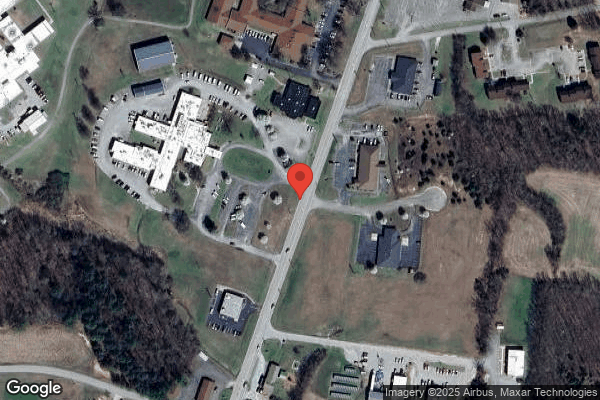
Feb 2020 1 deficiency
CONCERN (D)

Potential for Harm - no one hurt, but risky conditions existed

Deficiency F0761 (Tag F0761)

Could have caused harm · This affected 1 resident

**NOTE- TERMS IN BRACKETS HAVE BEEN EDITED TO PROTECT CONFIDENTIALITY** Based on policy review, observation, and interview, the facility failed to ensure medications were properly stored when expired ...

Read full inspector narrative →
**NOTE- TERMS IN BRACKETS HAVE BEEN EDITED TO PROTECT CONFIDENTIALITY** Based on policy review, observation, and interview, the facility failed to ensure medications were properly stored when expired medications and opened and undated medications were observed in 2 of 8 medication storage areas (Medication room [ROOM NUMBER] and Secured Unit Medication Room). Findings include: Review of the facility's policy titled, Storage of Medications, dated 6/23/2016, showed, The facility shall store all drugs and biologicals in a safe, secure, and orderly manner .The facility shall not use discontinued, outdated, or deteriorated drugs .such drugs shall be returned to the dispensing pharmacy or destroyed . 1. Observation of Medication room [ROOM NUMBER] on 2/5/2020 at 7:55 AM, showed a medication refrigerator containing the following expired medications: a. 3 Bisacodyl 10 mg suppositories with an expiration date of 5/2019. b. 5 Bisacodyl suppositories with an expiration date of 6/2019. 2. Observation in the Secured Unit Medication Room on 2/5/2020 at 4:43 PM, showed one opened and undated 16 ounce bottle of Hydrogen Peroxide stored on a shelf. During an interview conducted on 2/5/2020 at 4:47 PM, the Director of Nursing confirmed expired medications and opened and undated medications should not be stored in the medication rooms.
Understanding Severity Codes (click to expand)
Life-Threatening (Immediate Jeopardy)
J - Isolated K - Pattern L - Widespread
Actual Harm
G - Isolated H - Pattern I - Widespread
Potential for Harm
D - Isolated E - Pattern F - Widespread
No Harm (Minor)
A - Isolated B - Pattern C - Widespread

Questions to Ask on Your Visit

  • "What changes have you made since the serious inspection findings?"
  • "What safeguards are in place to prevent abuse and neglect?"
  • "Can I speak with families of current residents?"
  • "What's your RN coverage like on weekends and overnight?"

Our Honest Assessment

Strengths
  • • Licensed and certified facility. Meets minimum state requirements.
Concerns
  • • Multiple safety concerns identified: Federal abuse finding, 4 life-threatening violation(s), $52,156 in fines. Review inspection reports carefully.
  • • 17 deficiencies on record, including 4 critical (life-threatening) violations. These warrant careful review before choosing this facility.
  • • $52,156 in fines. Extremely high, among the most fined facilities in Tennessee. Major compliance failures.
  • • Grade F (0/100). Below average facility with significant concerns.
Bottom line: This facility has a substantiated abuse finding. Extreme caution advised. Explore alternatives.

About This Facility

What is Huntingdon Health & Rehabilitation Center's CMS Rating?

CMS assigns HUNTINGDON HEALTH & REHABILITATION CENTER an overall rating of 1 out of 5 stars, which is considered much below average nationally. Within Tennessee, this rating places the facility higher than 0% of the state's 100 nursing homes. A rating at this level reflects concerns identified through health inspections, staffing assessments, or quality measures that families should carefully consider.

How is Huntingdon Health & Rehabilitation Center Staffed?

CMS rates HUNTINGDON HEALTH & REHABILITATION CENTER's staffing level at 2 out of 5 stars, which is below average compared to other nursing homes. Staff turnover is 52%, compared to the Tennessee average of 46%. RN turnover specifically is 56%, which is notably high. RNs provide skilled clinical oversight, so turnover in this role can affect medical care quality.

What Have Inspectors Found at Huntingdon Health & Rehabilitation Center?

State health inspectors documented 17 deficiencies at HUNTINGDON HEALTH & REHABILITATION CENTER during 2020 to 2025. These included: 4 Immediate Jeopardy (the most serious level, indicating potential for serious harm or death) and 13 with potential for harm. Immediate Jeopardy findings are rare and represent the most serious regulatory concerns. They require immediate corrective action.

Who Owns and Operates Huntingdon Health & Rehabilitation Center?

HUNTINGDON HEALTH & REHABILITATION CENTER is owned by a for-profit company. For-profit facilities operate as businesses with obligations to shareholders or private owners. The facility is operated by PRESTIGE ADMINISTRATIVE SERVICES, a chain that manages multiple nursing homes. With 120 certified beds and approximately 70 residents (about 58% occupancy), it is a mid-sized facility located in HUNTINGDON, Tennessee.

How Does Huntingdon Health & Rehabilitation Center Compare to Other Tennessee Nursing Homes?

Compared to the 100 nursing homes in Tennessee, HUNTINGDON HEALTH & REHABILITATION CENTER's overall rating (1 stars) is below the state average of 2.8, staff turnover (52%) is near the state average of 46%, and health inspection rating (1 stars) is much below the national benchmark.

What Should Families Ask When Visiting Huntingdon Health & Rehabilitation Center?

Based on this facility's data, families visiting should ask: "What changes have been made since the serious inspection findings, and how are you preventing similar issues?" "What safeguards and monitoring systems are in place to protect residents from abuse or neglect?" "Can you walk me through typical staffing levels on day, evening, and night shifts?" "Can I visit during a mealtime to observe dining assistance and food quality?" These questions are particularly relevant given the facility's Immediate Jeopardy citations, the substantiated abuse finding on record, and the below-average staffing rating.

Is Huntingdon Health & Rehabilitation Center Safe?

Based on CMS inspection data, HUNTINGDON HEALTH & REHABILITATION CENTER has documented safety concerns. The facility has 1 substantiated abuse finding (meaning confirmed case of resident harm by staff or other residents). Inspectors have issued 4 Immediate Jeopardy citations (the most serious violation level indicating risk of serious injury or death). The facility has a 1-star overall rating and ranks #100 of 100 nursing homes in Tennessee. Families considering this facility should ask detailed questions about what corrective actions have been taken since these incidents.

Do Nurses at Huntingdon Health & Rehabilitation Center Stick Around?

HUNTINGDON HEALTH & REHABILITATION CENTER has a staff turnover rate of 52%, which is 5 percentage points above the Tennessee average of 46%. Moderate turnover is common in nursing homes, but families should still ask about staff tenure and how the facility maintains care continuity when employees leave.

Was Huntingdon Health & Rehabilitation Center Ever Fined?

HUNTINGDON HEALTH & REHABILITATION CENTER has been fined $52,156 across 1 penalty action. This is above the Tennessee average of $33,600. Fines in this range indicate compliance issues significant enough for CMS to impose meaningful financial consequences. Common causes include delayed correction of deficiencies, repeat violations, or care failures affecting resident safety. Families should ask facility leadership what changes have been made since these penalties.

Is Huntingdon Health & Rehabilitation Center on Any Federal Watch List?

HUNTINGDON HEALTH & REHABILITATION CENTER is not on any federal watch list. The most significant is the Special Focus Facility (SFF) program, which identifies the bottom 1% of nursing homes nationally based on persistent, serious quality problems. Not being on this list means the facility has avoided the pattern of deficiencies that triggers enhanced federal oversight. This is a positive indicator, though families should still review the facility's inspection history directly.