HUNTSVILLE POST-ACUTE AND REHABILITATION CENTER
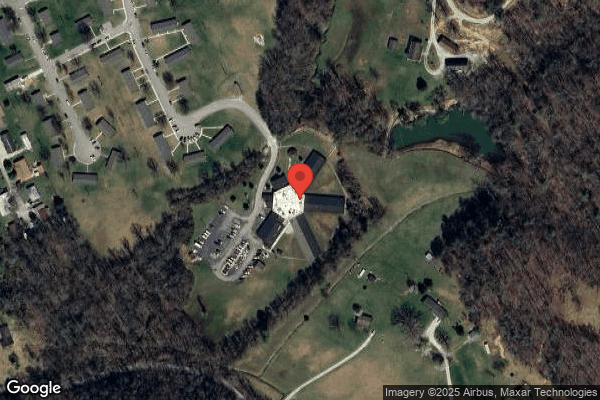

287 BAKER STREET, HUNTSVILLE, TN 37756 (423) 663-3600
For profit - Corporation 96 Beds Independent Data: November 2025 3 Immediate Jeopardy citations
Trust Grade
0/100
#256 of 298 in TN
Last Inspection: August 2024

Within standard 12-15 month inspection cycle. Federal law requires annual inspections.

Overview

Huntsville Post-Acute and Rehabilitation Center has received a Trust Grade of F, indicating significant concerns about the quality of care provided. Ranked #256 out of 298 facilities in Tennessee, it falls in the bottom half, and while it is the top option in Scott County, there is only one other facility to compare against. The facility is worsening, with issues increasing from 2 in 2023 to 12 in 2024, highlighting a troubling trend. Staffing turnover is impressively low at 0%, suggesting that the staff remains stable; however, the overall staffing rating is poor at 1 out of 5 stars. There have been concerning incidents reported, including a critical failure to develop a comprehensive care plan for residents, which resulted in one resident hoarding medications and placing others at risk. Additionally, there was inadequate supervision during medication administration, leading to potential harm for all residents. Overall, while the facility has the advantage of stable staffing, the severe issues related to resident care and safety are major red flags for families considering this option.

Trust Score
F
0/100
In Tennessee
#256/298
Bottom 15%
Safety Record
High Risk
Review needed
Inspections
Getting Worse
2 → 12 violations
Staff Stability
○ Average
Turnover data not reported for this facility.
Penalties
✓ Good
$9,062 in fines. Lower than most Tennessee facilities. Relatively clean record.
Skilled Nurses
○ Average
RN staffing data not reported for this facility.
Violations
⚠ Watch
26 deficiencies on record. Higher than average. Multiple issues found across inspections.
★☆☆☆☆
1.0
Overall Rating
★☆☆☆☆
1.0
Staff Levels
★★★☆☆
3.0
Care Quality
★☆☆☆☆
1.0
Inspection Score
Stable
2023: 2 issues
2024: 12 issues

The Good

  • Full Sprinkler Coverage · Fire safety systems throughout facility
  • No fines on record

Facility shows strength in fire safety.

The Bad

1-Star Overall Rating

Below Tennessee average (2.8)

Significant quality concerns identified by CMS

Federal Fines: $9,062

Below median ($33,413)

Minor penalties assessed

The Ugly 26 deficiencies on record

3 life-threatening 1 actual harm
Aug 2024 7 deficiencies
CONCERN (D)

Potential for Harm - no one hurt, but risky conditions existed

Resident Rights (Tag F0550)

Could have caused harm · This affected 1 resident

**NOTE- TERMS IN BRACKETS HAVE BEEN EDITED TO PROTECT CONFIDENTIALITY** Based on facility policy review, medical record review, observations, and interviews, the facility failed to protect a resident'...

Read full inspector narrative →
**NOTE- TERMS IN BRACKETS HAVE BEEN EDITED TO PROTECT CONFIDENTIALITY** Based on facility policy review, medical record review, observations, and interviews, the facility failed to protect a resident's dignity by not covering a urinary catheter collection bag for 1 resident (Resident #55) of 4 residents observed with indwelling urinary catheters. The findings include: Review of the facility's undated policy titled, Promoting Resident Dignity, revealed .The facility will .treat each resident with respect and dignity .When caring for residents with urinary catheters, place the resident's urinary bag in a privacy bag . Review of the medical record revealed Resident #55 was admitted to the facility on [DATE] with diagnoses including Bladder Neck Obstruction, Benign Prostatic Hyperplasia and Major Depressive Disorder. Review of a quarterly Minimum Data Set assessment dated [DATE], revealed Resident #55 scored a 15 on the Brief Interview for Mental Status assessment, which indicated the resident was cognitively intact. The resident had an indwelling urinary catheter and an active diagnosis of Obstructive Uropathy. Review of a comprehensive care plan for Resident #55 dated 4/23/2024, revealed .Urinary Catheterization Care Plan .Urinary catheter r/t [related to] bladder trauma . During an observation on 8/19/2024 at 12:16 PM, in Resident #55's room, the resident was resting in the bed by the door to the room and had an uncovered urinary collection bag hanging below the bladder level on a walker at the bedside. The bag could be seen from the door. During an observation and interview on 8/19/2024 at 12:29 PM, in Resident #55's room, Licensed Practical Nurse (LPN) F stated the resident's urinary catheter bag was hanging on the side of the walker which was just inside the resident's door and was clearly visible to anyone who was standing at the door of the room. The LPN confirmed the urinary collection bag was not covered with a dignity bag. During an interview on 8/20/2024 at 3:37 PM, the Director of Nursing (DON) stated it was her expectation that all urinary catheters have privacy bags over the collection bag. The DON confirmed the resident's dignity was not protected when the catheter bag was not covered.
CONCERN (D)

Potential for Harm - no one hurt, but risky conditions existed

Report Alleged Abuse (Tag F0609)

Could have caused harm · This affected 1 resident

**NOTE- TERMS IN BRACKETS HAVE BEEN EDITED TO PROTECT CONFIDENTIALITY** Based on facility policy review, medical record review, facility investigation documentation review, and interviews, the facilit...

Read full inspector narrative →
**NOTE- TERMS IN BRACKETS HAVE BEEN EDITED TO PROTECT CONFIDENTIALITY** Based on facility policy review, medical record review, facility investigation documentation review, and interviews, the facility failed to report an injury of unknown origin to the state designated authorities for 1 resident (Resident #24) of 24 residents reviewed for abuse. The findings include: Review of the facility's undated policy titled, Injury of Unknown Source, revealed .All unexplained injuries, including bruises, abrasions, and injuries of unknown source will be investigated .If an allegation of abuse is made or the injury is of unknown source, reporting and investigation procedures shall be implemented in accordance with the facility's abuse policies and procedures .An injury should be classified as an 'injury of unknown source' when both of the following conditions are met .The source of the injury was not observed by any person or the source of the injury could not be explained by the resident; and The injury is suspicious because of .The extent of the injury or .The location of the injury (e.g., the injury is located in an area not generally vulnerable to trauma) or .The number of injuries observed at one particular point in time or .The incidence of injuries over time . Review of the facility's undated policy titled, Abuse, Neglect and Exploitation, revealed .Identification of Abuse, Neglect and Exploitation .Possible indicators of abuse include .Physical injury of a resident, of unknown source .Investigation .An immediate investigation is warranted .Reporting/Response .Reporting of all alleged violations to the Administrator, DON, state agency, adult protective services and to all other required agencies .Immediately, but not later than 2 hours after the allegation is made, if the events that cause the allegation involve abuse or result in serious bodily injury, or Not later than 24 hours if the events that cause the allegation do not involve abuse and do not result in serious bodily injury . Review of the medical record revealed Resident #24 was admitted to the facility on [DATE] and readmitted on [DATE] with diagnoses including Displaced Comminuted Fracture of Shaft of Right Tibia (2/2/2024), Hemiplegia and Hemiparesis Following Cerebrovascular Disease Affecting Right Dominant Side, Lack of Coordination, Abnormalities of Gait and Mobility, Vascular Dementia, Major Depressive Disorder, Obsessive-Compulsive Disorder, Edema, Expressive Language Disorder, Aphasia, and Chronic Pain. Review of the comprehensive care plan for Resident #24 dated 10/10/2022, revealed . [NAME] had a cerebral vascular accident (CVA/Stroke) affecting right dominant side .impaired cognitive function or impaired thought processes r/t [related to] dementia .Impaired communication r/t [Resident #24] has difficulty expressing self or understanding others at times .hemiplegia/hemiparesis r/t CVA . Review of the comprehensive care plan for Resident #24 dated 1/9/2023, revealed .self care deficit related to hemiparesis s/p CVA [Cerebrovascular Accident] requires supervision/set up with ADLs [Activities of Daily Living] .facilitates via wheel chair independently . Review of the comprehensive care plan for Resident #24 dated 6/26/2023, revealed . Fall Prevention Care Plan History of falls related to impaired balance, generalized weakness, assistance needed with transfers .to call for assist when transferring . Review of the annual Minimum Data Set (MDS) assessment dated [DATE], revealed Resident #24 had unclear speech and was sometimes able to make self understood and sometimes able to understand others. Resident #24 had short and long term memory problems and had moderately impaired cognitive skills for daily decision making. Resident #24 exhibited no behavioral symptoms. Resident #24 had impaired range of motion on one side of the upper and lower extremities and required a wheelchair for mobility. The resident had no falls since Admission/Entry, Reentry, or Prior Assessment. Review of the Nurse Practitioner (NP) note for Resident #24 dated 1/26/2024, revealed the resident was seen by the Nurse Practitioner and it was noted .Chief Complaint/Nature of Presenting Problem .Follow-up on recent chest x-ray .Staff have no other concerns .Musculoskeletal .No reported redness or swelling .He is in no acute distress at this time . Review of a Nursing Note for Resident #24 dated 1/27/2024 at 4:38 PM, revealed Licensed Practical Nurse (LPN) C noted .Resident c/o [complains of] pain to right upper and lower extremity. Resident having difficulty standing. Swelling and redness noted to right ankle and calf. Tender to touch .NP notified. Ordered STAT x-ray to right leg . Review of a physician's order dated 1/27/2024, revealed .XRay to right hip, knee, and ankle STAT for Pain/Swelling . Review of the MOBILE IMAGES report for Resident #24 dated 1/27/2024, revealed a right ankle x-ray was obtained at the facility on 1/27/2024 at 6:13 PM. It was noted .IMPRESSIONS .Comminuted spiral fracture distal tibia . Review of the facility's incident report for Resident #24 dated 1/27/2024 at 7:30 PM, revealed .Resident c/o [complains of] pain to RLE [Right Lower Extremity]. Tender to touch. Swelling and redness noted. Xray report impressions: Comminuted spiral fracture distal tibia .Resident unable to give Description .Immediate Action Taken .Immobilized RLE. Xray ordered. NP notified of result, order to send resident to ER obtained. Sent resident to [named hospital] .Investigation pending .Level of Pain .Numerical: 10 .Level of Consciousness: Alert .Mobility: Wheelchair bound .Resident drags foot on the floor when propelling self in wheel chair .No Witnesses found . The Nurse Practitioner and Director of Nursing (DON) were notified. Review of a Nursing Note for Resident #24 dated 1/27/2024 at 8:00 PM, revealed .ems [Emergency Medical Services] here to transport resident to ER [Emergency Room] for eval [evaluation] and tx [treatment] related to right leg .D.O.N notified . Review of a witness statement from LPN C dated 1/27/2024, revealed .CNA's [Certified Nursing Assistant] reported to me [Resident #24] leg was swollen [and] red and he complained of Pain. No incident or injury reported . Review of a witness statement from CNA D dated 1/27/2024, revealed .was transferring [Resident #24] to bed and Noticed his leg when he complained of pain. Called Nurse to Room to see . Review of a witness statement from CNA H dated 1/27/2024, revealed .[Resident #24] complained of pain in his leg when we were putting him in bed. I did not see anything happen to him . Review of the discharge MDS assessment dated [DATE] revealed Resident #24 had an unplanned discharge to a short term general hospital and return was anticipated. Resident #24 had no falls since Admission/Entry, Reentry, or Prior Assessment. Review of facility investigation documentation revealed the facility had a call with the management staff and members of corporate to discuss Resident #24's injury .Attendees on the Call .[Administrator] .[Risk Manager] .Resident name: [Residnet #24] .Medical History- condition: Depression, Aphasia, Expressive Language Disorder, Seizure .Short Term/Long Term Memory problems .DX: [Diagnosis] Cerebral Vascular Disease with R [right] Side Hemiparesis .Cognition .Alert and Oriented with expressive difficulties .Date of incident .1-27-24 .Time of incident: unknown .Location: unknown .What occurred .Right Lower extremity had moderate swelling, redness, and pain to touch .Witnesse(s): none .Resident does not use foot pedal on w/c [wheelchair] Gets angry when asked to use .Also refuses help [with] transfers .Is it reportable .No .DOH [Department of Health] .No .Police .No .01-27-2024 attempted to notify family x 3 .Root Cause analysis .Interventions for like residents: Ensure they are utilizing the foot rest on wheelchair .Status of resident .at hospital . Review of the hospital History and Physical dated 1/28/2024, revealed .Chief Complaint .AMS [Altered Mental Status] .RIGHT TIBIAL FRACTURES .presented to ED [Emergency Department] from [facility name] related to redness/swelling of RLE [Right Lower Extremity]. Findings in the ER showed the patient to have a distal tibial .fracture .appears acute however per the nursing staff .they aren't aware of any falls that he had had. They state that the patient is back [bad] to try to get up and ambulate by himself and he drags his right leg so they believe he may have twisted or fall without them knowing. Patient is very aphasic and is very frustrated during history and is unable to tell me if he's recently fell or not. He has significant pain of the right lower extremity and he has pain noted at the right femur and hip as well, x-rays have been ordered .Because of the swelling of the right lower extremity which is .likely related to the fracture of the distal tibia I am concerned of possible blood clot so I have ordered venous ultrasound to be completed prior to discharge back .in the morning .Radiology .XR [x-ray] right tib [tibia]/fib [fibula] .IMPRESSION .Comminuted fracture distal tibia .Exam .moderate distress .Extremities: Redness/swelling of RLE at the distal aspect of leg, pulse is 2+ in the right foot .Assessment and Plan .Acute Comminuted Fx [fracture] of the right tib/fib .Posterior splint to RLE .Non weight bearing .US [ultrasound] venous pending fo the AM [morning] r/t [related to] swelling/redness .will need outpatient Ortho follow up . Review of the 1/2024 Medication Administration Record for Resident #24 revealed the resident's pain was assessed every shift. Resident #24 reported a pain level of 5 out of 10 on 1/11/2024 at 8:15 PM and received Percocet-Acetaminophen (pain medication). The medication was effective. The resident reported a level of 0 out of 10 on all other pain assessments until 1/27/2024. Review of the medical record revealed no explanation of the injury or incidents to explain the resident's fracture. During an interview on 8/21/2024 at 10:42 AM, the Administrator stated on 1/27/2024, Resident #24 was noted with pain, redness, and swelling to the right leg. The NP was notified and ordered a stat mobile image x-ray that showed a spiral fracture of the right distal tibia and the resident was sent to the ER for treatment. Resident #24 has expressive aphasia and was unable to communicate what had happened. The Administrator stated an investigation was started after being notified of the fracture. The Administrator stated he was told by the Risk Manager that a staff had witnessed Resident #24's leg get caught under the pedal of his wheelchair but was unaware what staff member witnessed it. The Administrator stated there was no witness statement in the investigation to show the resident got his leg caught underneath the wheelchair and Resident #24's medical record did not contain any information about the resident getting his leg caught up in foot pedal of the wheelchair. Resident #24 does not have osteoporosis. The Administrator stated Resident #24's injury was not reported because he believed the cause of the injury was due to the Resident getting his leg caught under the wheelchair pedal. The Administrator stated an injury was classified as unknown origin if it was not observed by any person or the source of the injury could not be explained and the injury was suspicious because of the extent of the injury, location of the injury, number of injuries, or incidence of injuries over time. During an interview on 8/21/2024 at 12:10 PM, the DON stated .the best that we could determine he had gotten caught in his foot pedal on his wheelchair . The DON stated she was unaware of any witnesses and stated the resident had no falls or incidents that anyone was aware of. Resident #24 had a history of getting his leg caught in the footrest so we .we assumed that is what had happened . The DON interviewed the staff who had provided care for him over the few days prior and no one was aware of any incidents that could have occurred. Residents were interviewed and were unaware of any issues. The resident has expressive aphasia and was unable to communicate what had happened. During an interview on 8/21/2024 at 12:30 PM, the Risk Manager stated she had investigated Resident #24's right spiral tibia fracture. Spiral fractures require torsion twisting and .through my investigation I have knowledge that he was refusing to his use his wheelchair pedal .we couldn't pinpoint any other incident . The Risk Manager confirmed there were no witnesses and was unaware of any witnessed incident that occurred to explain the fracture. Resident #24 was unable to explain what had happened and staff that provided care for the resident were unaware of any specific incident to explain the fracture. The Risk Manager confirmed the injury was not observed and the resident was not able to explain the source of the injury. The Risk Manager confirmed Resident #24's right tibia fracture was not reported because we did not consider it an injury of unknown origin based off the kind of fracture it was. The Risk Manager stated .Those [spiral fractures] are hard fractures to get so I deduced the injury based off his history of not using his foot pedal . Resident #24's fracture was discussed with the corporate team via telephone and the facility was advised Resident #24's fracture was not a reportable event. During an interview on 8/21/2024 at 12:49 PM, LPN C stated she was the nurse providing care for Resident #24 the day the fracture was discovered. The CNAs notified LPN C that Resident #24 was complaining of right leg pain, redness and swelling. LPN C notified the NP and a stat x-ray showed a fracture. The LPN was present in the room during the x-ray and was made aware of the fracture and immediately notified the NP. The NP ordered transfer to the ER for evaluation. LPN C was unaware of any cause for the pain and Resident #24 had not had any falls or incidents that she was aware of that could have explained the injury. Resident #24 drags his foot and has to be encouraged to put it on the foot rest but LPN C was unaware of anytime the resident's foot had been caught up in the foot pedal of the wheelchair. During an interview on 8/21/2024 at 12:45 PM, the NP stated she was familiar with Resident #24 and saw him often. She was made aware on 1/27/2024 that the resident was complaining of pain and had redness and swelling to the right lower extremity. The NP ordered an x-ray that revealed a distal tibial fracture and the resident was sent out to the ER for evaluation. The NP stated she was unaware of what the cause of the injury was and was unable to speculate about the cause. Resident #24 did not have a diagnosis of osteoporosis. Multiple observations during the survey period of the resident propelling self with his feet in a wheelchair. Right foot pedal present on wheelchair. During an observation on 8/21/2024 at 1:02 PM, revealed the resident was seated in a wheelchair propelling self through the hallway. Right foot resting on foot pedal while stopped. During an interview on 8/21/2024 at 2:10 PM, the Risk Manager stated video footage was reviewed of the hallways and no incident was observed to explain Resident #24's fracture. During an interview on 8/21/2024 at 2:58 PM, the Administrator stated he was told by the Risk Manager there was a witness that observed Resident #24 get his leg caught in the foot pedal of the wheelchair. The Administrator confirmed he did not know who the witness was and there was no documentation in the investigation for the witness. The Administrator confirmed an injury of unknown origin was to be reported to the state agency within 2 hours. The Administrator confirmed the incident was not reported because he thought the incident was witnessed.
CONCERN (D)

Potential for Harm - no one hurt, but risky conditions existed

ADL Care (Tag F0677)

Could have caused harm · This affected 1 resident

**NOTE- TERMS IN BRACKETS HAVE BEEN EDITED TO PROTECT CONFIDENTIALITY** Based on facility policy review, medical record review, observation and interview, the facility failed to provide nail care duri...

Read full inspector narrative →
**NOTE- TERMS IN BRACKETS HAVE BEEN EDITED TO PROTECT CONFIDENTIALITY** Based on facility policy review, medical record review, observation and interview, the facility failed to provide nail care during Activities of Daily Living (ADL) care for 1 resident (Resident #62) of 24 residents reviewed for ADL care. The findings include: Review of the facility's undated policy titled ADL CARE (Nails), revealed .policy will provide the facility with guidance related to provision of care to resident's nails for good grooming and health .nursing staff will provide routine cleaning and inspection of nails during ADL care on an ongoing basis . Review of the medical record revealed Resident #62 was admitted to the facility on [DATE] with diagnoses including Visual Loss, Both Eyes, Congestive Heart Failure, Lack of Coordination and Schizophrenia. Review of a quarterly Minimum Data Set assessment dated [DATE], revealed Resident #62 scored a 15 on the Brief Interview for Mental Status assessment, which indicated the resident was cognitively intact. The resident had a diagnosis of Traumatic Brain Injury and required assistance with ADLs. Review of a comprehensive care plan for Resident #62 dated 4/5/2024, revealed .[Resident #62] has an ADL self-care performance deficit r/t [related to] blindness .requires assistance by 1 staff with personal hygiene . Review of an ADL task history for Resident #62 revealed the resident had last received a bath by staff on 8/16/2024. During an observation and interview on 8/19/2024 at 11:27 AM, Resident #62 was lying in bed and had long rough finger nails with a brown substance under them. Resident #62 stated he would like to have his nails clipped but had not been asked by staff .in a while . During an observation on 8/20/2024 at 3:15 PM, Resident #62 was lying in bed. Resident #62's nails were long, rough, and noted with a brown substance under the nails. During an observation and interview on 8/20/2024 at 4:00 PM, in Resident #62's room, Licensed Practical Nurse (LPN) F confirmed the resident had long rough nails with a brown substance under them. The LPN stated usually the Certified Nursing Assistants (CNAs) cleaned them while bathing the resident. During an interview on 8/21/2024 at 1:59 PM, CNA G stated nail care was to be provided after he the resident's shower or a bed bath. During an interview on 8/20/2024 at 5:14 PM, the Director of Nursing (DON) stated nail care was supposed to be done during showers by CNAs, and nails should be short and clean. The DON confirmed the resident was not getting thorough ADL care when the nails were not checked and cleaned.
CONCERN (D)

Potential for Harm - no one hurt, but risky conditions existed

Accident Prevention (Tag F0689)

Could have caused harm · This affected 1 resident

**NOTE- TERMS IN BRACKETS HAVE BEEN EDITED TO PROTECT CONFIDENTIALITY** Based on facility policy review, medical record review, facility document review, observations, and interviews, the facility fai...

Read full inspector narrative →
**NOTE- TERMS IN BRACKETS HAVE BEEN EDITED TO PROTECT CONFIDENTIALITY** Based on facility policy review, medical record review, facility document review, observations, and interviews, the facility failed to ensure smoking supplies and medications were secured properly for 1 resident (Resident #11) of 69 residents observed. The findings include: Review of the facility's undated policy titled, Smoking Policy - Resident, revealed .The facility shall establish and maintain safe resident smoking practices .All smoking products such as cigarettes, lighters .will be kept at the nurses station in a designated area, and no products are allowed to be kept on resident or in their possession including their room . Review of the facility's undated policy titled, Medication Storage guidelines, revealed .The facility will ensure all medications will be stored in the medication rooms/carts according to the manufacturer's recommendations .to ensure proper sanitation, temperature, light, ventilation, moisture control, segregation, and security .All drugs .will be stored in locked compartments (i.e. [that is], medication carts, cabinets, drawers, refrigerators, medication rooms) . Review of the medical record revealed Resident #11 was admitted to the facility on [DATE] with diagnoses including Pneumonia, Chronic Obstructive Pulmonary Disease (COPD), Acute and Chronic Respiratory Failure, Nicotine Dependence, Major Depressive Disorder, Anxiety Disorder, Malignant Neoplasm of Esophagus, and Tobacco Use. Review of a NURSING - Admission/readmission Nursing Evaluation for Resident #11 dated 7/29/2024, revealed .Type of respiratory treatments ordered .Aerosol/nebulizer .Does the resident smoke or Vape .No . Review of the 7/2024 Medication Administration Record (MAR) for Resident #11 revealed an order dated 7/29/2024 for .Budesonide Inhalation Suspension [an inhaled medication used to decrease swelling and irritation in the airways to allow for easier breathing] 0.5 MG [milligrams]/2ML [milliliters] .2 ml inhale orally two times a day related to CHRONIC OBSTRUCTIVE PULMONARY DISEASE . The MAR was documented that Resident #11 received all scheduled doses of the medication from 7/29/2024 - 7/31/2024. Continued review showed an order dated 7/29/2024 for .Nicotine Transdermal Patch [a patch applied to the skin for smoking cessation] 24 Hour 21 MG/24 HR [hour] .Apply 1 patch transdermally one time a day for tobacco cessation and remove per schedule . Resident #11 received all scheduled doses. Review of a comprehensive care plan for Resident #11 dated 7/30/2024, revealed .uses tobacco products as evidenced by smokes cigarettes . Continued review revealed .COPD, chronic respiratory failure, and neoplasm of esophagus .Give medications as ordered by physician . Review of an admission Minimum Data Set (MDS) assessment dated [DATE], revealed Resident #11 scored a 15 on the Brief Interview for Mental Status (BIMS) assessment which indicated the resident was cognitively intact. The resident exhibited no behavioral symptoms and was not currently using tobacco products. Review of the 8/2024 MAR for Resident #11 revealed an order dated 8/4/2024, for .Albuterol Sulfate [an inhaled medication used to prevent and treat wheezing and shortness of breath caused by breathing problems such as COPD] .Inhalation Aerosol Solution 108 (90 Base) MCG [micrograms]/ACT [actuation] . Resident #11 received all dose of the Nicotine Transdermal Patch and Budesonide Inhalation Suspension according to the physician's orders. Review of a Self-Administration Evaluation Record for Resident #11 dated 8/7/2024, revealed the section of the assessment that stated .Per above assessment results, this resident Would/Would Not (circle one) benefit from self-administration of medications . was incomplete. Review of the facility document titled, Release of Responsibility for leave of absence, revealed the resident's stepdaughter signed the resident out of the facility on 8/12/2024 at 11:15 AM and signed the resident back into the facility on 8/12/2024 at 1:45 PM. During an observation and interview on 8/19/2024 at 11:17 AM, Resident #11 was lying in bed. The resident's bedside table contained 2 water pitchers, a large coffee can, napkins, cups (some with liquid and some empty) a blue cigarette lighter, an Albuterol Sulfate Inhalation Aerosol Inhaler and 1 unopened 0.5mg/2ml vial of Budesonide Inhalation Suspension. There was a plastic grocery bag tied to Resident #11's bedrail that contained a pack of 24/7 Red cigarettes. The resident stated he had only smoked ½ cigarette since being at the facility with his daughter when she took him outside the facility. The resident would not answer questions about how he obtained the cigarettes or lighter and the resident refused to answer any further questions. During an observation and interview on 8/19/2024 at 11:37 AM, with the Director of Nursing (DON), in Resident #11's room, the DON confirmed the presence of the pack of cigarettes, lighter, Albuterol Sulfate inhaler, and vial of Budesonide Inhalation were at the resident's bedside. The DON stated cigarettes and lighters were to be kept secured in the cigarette box and not at the resident's bedside, and medications were to be secured in the medication cart unless the resident had been assessed as safe to self-administer medications. The DON removed the cigarettes, lighter, and medication from the bedside and explained to Resident #11 that medications and smoking supplies had to be secured appropriately. The DON explained the smoking policy and procedure to the resident. During an interview on 8/19/2024 at 11:45 AM, the DON stated the facility had been discussing allowing the resident to self-administer his medications and were waiting on a lockbox to store his medication safely. The DON stated there were no wandering residents that wandered in the resident's room. The DON stated Resident #11 had not been smoking while at the facility and was unaware how the resident obtained the lighter and cigarettes. Residents were not allowed to keep their cigarettes and lighters on them and they were kept secured in the cigarette box at all times. Cigarette boxes are kept secured in Activities office in between smoke times. The DON stated medication was to be administered under nurse supervision and not left at the residents' bedside. Resident #11 received Budosenide Inhalation Suspension 0.5 mg/2ml via inhalation twice daily for COPD and Albuterol Sulfate HFA Aerosol Solution 108 mcg/actuation 2 puffs via inhalation every 4 hours as needed for SOB (shortness of breath)/COPD. Resident #11 received a Nicotine Patch at the facility for smoking cessation. Review of a SMOKING - SAFETY SCREEN for Resident #11 dated 8/19/2024 at 11:58 AM, revealed .Can resident light own cigarette? .No .Does resident need facility to store lighter and cigarettes? .Yes .Resident is safe to smoke under supervision and staff to light his cigarette .Resident is safe to smoke with supervision and the facility to hold his cigarettes . Review of a facility document titled, ATTESTATION, dated 8/19/2024, revealed the the Social Services Director provided a typed statement that read, .After a call with [Resident #11]'s stepdaughter .she confirmed that she bought [Resident #11] the pack of cigarettes last Monday on 8/12/24 [2024] when she took him out of the facility. She also confirmed that half of the cigarette that was still in the pack was used when they were outside of the facility .I educated [Resident #11's stepdaughter] on the smoking policy and how the facility must store [Resident #11]'s on his behalf. [Resident #11's stepdaughter] verbalized understanding and apologized for the inconvenience . During an interview on 8/19/2024 at 12:17 PM, Hydration Aide E was unaware Resident #11 smoked and had never seen him smoke at the facility. Hydration Aide E was unaware Resident #11 had smoking supplies and medications at his bedside. Hydration Aide E stated there were no wandering residents that wandered into the resident room. During an interview on 8/19/2024 at 1:01 PM, Licensed Practical Nurse (LPN) C stated she was assigned to the resident today and provided care for Resident #11 often. LPN C sheated Resident #11's Budesonide breathing treatment had been administered earlier today and the LPN remained in the room for the duration of his treatment. LPN C stated she did not observe any smoking supplies or medications at Resident #11's bedside during her interactions with the resident and was unaware how he obtained them. LPN C stated, .he [Resident #11] gets Nicotine patches .I've never seen him smoke or ask to smoke . LPN C was unaware of any residents on the unit that wandered into other resident rooms. During an interview on 8/19/2024 at 2:56 PM, Certified Nursing Assistant (CNA) D stated she was assigned to Resident #11's unit today. CNA D was unaware that Resident #11 smoked and stated he had never gone out for smoke time at the facility that she was aware of. CNA D was unaware of Resident #11 had smoking supplies and medications at the bedside. CNA D was unaware of any residents on the unit that wandered into other resident rooms. During an interview on 8/20/2024 at 8:01 AM, the Activities Director stated the Activities department was responsible for filling resident cigarette boxes with the number of cigarettes they were allowed to smoke on each cigarette break. Cigarette boxes were kept locked in the dayroom cabinet and lighters were kept locked in the Activities Director's office. Residents were never provided lighters and cigarette boxes were distributed to the residents at the start of the smoke time and collected at the end. The Activities Director stated Resident #11 had not participated in smoke times. During an interview on 8/20/2024 at 11:07 AM, the Social Services Director stated he asked all residents about their smoking status on admission. Resident #11 reported that he smoked at home but was in the facility for Pneumonia and wasn't going to smoke until his Pneumonia cleared up. Resident #11 was set to discharge home on 8/12/2024 and decided to stay in the facility until he could better take care of himself. The Social Services Director stated he notified Resident #11's stepdaughter of the resident's wishes to remain in the facility. Resident #11's stepdaughter was already on the way to get him and came by the facility to visit. Resident #11's stepdaughter took the resident out of the facility that day (8/12/2024) to get something to eat and by his house and returned him to the facility. The Social Services Director stated he called Resident #11's stepdaughter on 8/19/2024 and asked her if she was aware how the resident obtained the cigarettes and lighter, and she stated she had brought them to the resident when she visited on 8/12/2024. The Social Services Director explained the facility's smoking policy to Resident #11's stepdaughter and she apologized and stated, .I didn't even think about that . Resident #11's stepdaughter had not visited the facility other than the 8/12/2024 visit. Attempted telephone interview with Resident #11's stepdaughter on 8/20/2024 at 4:12 PM without success, a message was left with return contact information. Resident #11's stepdaughter did not return the call. During a telephone interview on 8/20/2024 at 4:14 PM, the Consultant Pharmacist stated Budesonide solution and Albuterol were inhalant medications used to treat COPD. The medication helps to open the airway. The Consultant Pharmacist stated if the medication was ingested, the gut may absorb some of it with no problems at all. Ingestion could potentially cause a minor increase in heart rate and blood pressure. The Consultant Pharmacist stated ingestion of 1 vial would not cause any significant harm and stated .You would have to ingest a large amount to have any serious problems . The Consultant Pharmacist stated Albuterol would be difficult to ingest from a handheld inhaler and stated, . it would be difficult for anyone to be able to even squeeze it . The Consultant Pharmacist stated ingestion of Albuterol was unlikely to cause any serious effects but could cause a minor increase in blood pressure and heart rate and had less risk than Budesonide and unlikely to cause any serious effects. The Consultant Pharmacist stated the risk related to ingestion of a small amount of either medication was low, and he had no concerns related to ingestion of a small amount of either medication. Observations during the survey period of 8/19/2024 - 8/21/2024 revealed no concerns related to residents wandering into other resident rooms.
CONCERN (D)

Potential for Harm - no one hurt, but risky conditions existed

Respiratory Care (Tag F0695)

Could have caused harm · This affected 1 resident

**NOTE- TERMS IN BRACKETS HAVE BEEN EDITED TO PROTECT CONFIDENTIALITY** Review of the medical record revealed Resident #40 was admitted to the facility on [DATE] with diagnoses including COPD, Encount...

Read full inspector narrative →
**NOTE- TERMS IN BRACKETS HAVE BEEN EDITED TO PROTECT CONFIDENTIALITY** Review of the medical record revealed Resident #40 was admitted to the facility on [DATE] with diagnoses including COPD, Encounter for Palliative Care, and Anxiety Disorder. Review of a quarterly MDS assessment dated [DATE], revealed Resident #40 scored a 14 on the Brief Interview for Mental Status (BIMS) assessment, which indicated the resident was cognitively intact. The resident had active diagnoses of COPD, Hypertension and Anxiety. Review of a comprehensive care plan for Resident #40 dated 4/8/2024, revealed .[Resident #40] is at risk for impaired respiratory status r/t [related to] End stage COPD . During an observation and interview on 8/19/2024 at 11:14 AM, Resident #40 was sitting on the bed and stated she received breathing treatments, and she had a treatment about 8:45 AM that morning. The resident's nebulizer mask was lying uncovered on the nebulizer machine which was on the bedside table. During an observation and interview on 8/20/2024 at 1:09 PM, in Resident #40's room, the resident was sitting on the side of the bed and stated her last breathing treatment was at 11:00 AM that morning. The resident's nebulizer mask was sitting on her side table uncovered. During an observation and interview on 8/20/2024 at 4:48 PM, in resident #40's room, Licensed Practical Nurse (LPN) F confirmed Resident #40 had a respiratory nebulizer mask lying on the table uncovered. The LPN stated the mask should be in a bag when not in use. During an interview on 8/20/2024 at 5:05 PM, the DON stated it was her expectation that respiratory nebulizer masks were to be in a bag and covered when not in use. The DON confirmed the staff was not following the respiratory equipment policy by leaving the nebulizer mask lying uncovered on the table. During an interview on 8/21/2024 at 1:02 PM, the Family Nurse Practitioner (FNP) stated Resident #40 takes nebulizers for COPD that are ordered every 6 hours as needed. The resident was stable, took no antibiotics, and currently had no respiratory infections. Based on facility policy review, medical record review, observation, and interview the facility failed to ensure nebulizer masks were stored appropriately for 2 residents (Residents #11 and #40) of 5 residents observed for respiratory care. The findings include: Review of the facility's undated policy titled, Respiratory Equipment Cleaning GUIDELINES, revealed .The facility will use these guidelines to manage respiratory equipment .Common respiratory equipment includes nebulizers .Cover respiratory items with plastic bag when not in use . Review of the medical record revealed Resident #11 was admitted to the facility on [DATE] with diagnoses including Pneumonia, Chronic Obstructive Pulmonary Disease (COPD), Acute and Chronic Respiratory Failure, Major Depressive Disorder, Anxiety Disorder, and Malignant Neoplasm of Esophagus. Review of a NURSING - Admission/readmission Nursing Evaluation for Resident #11 dated 7/29/2024, revealed .Type of respiratory treatments ordered .Aerosol/nebulizer . Review of the Nurse Practitioner's History and Physical for Resident #11 dated 7/30/2024, revealed .admitted for skilled nursing services .recently presented to emergency department .found to have pneumonia and debility .treated with antibiotics .transferred to [facility name] . Review of the comprehensive care plan dated 7/30/2024, revealed .COPD, chronic respiratory failure, and neoplasm of esophagus .Give medications as ordered by physician . Review of the 8/2024 Medication Administration Record (MAR) for Resident #11 revealed the resident received nebulized medications including Budesonide Inhalation Suspension [an inhaled medication used to decrease swelling and irritation in the airways to allow for easier breathing] 0.5 milligrams/2 milliliters twice daily for COPD, Formoterol Fumarate Inhalation Nebulization Solution [an inhaled medication used to make it easier to breathe] 20 micrograms/2 milliliters every 12 hours for Pneumonia, and Ipratropium-Albuterol Solution [an inhaled medication used to treat airflow blockage] 0.5 - 2.5 (3) MG/3ML every 6 hours for COPD. During an observation and interview on 8/19/2024 11:17 AM, Resident #11 was lying in bed. Resident #11's nebulizer mask was lying on the bedside table uncovered and exposed to air. During an observation and interview on 8/19/2024 at 11:37 AM, with the Director of Nursing (DON), in Resident #11's room, the DON confirmed the resident's nebulizer mask was lying on the bedside table, uncovered and open to air. The DON stated nebulizer masks were to be stored in a plastic bag when not in use and confirmed Resident #11's nebulizer mask was not stored appropriately.
CONCERN (D)

Potential for Harm - no one hurt, but risky conditions existed

QAPI Program (Tag F0867)

Could have caused harm · This affected 1 resident

**NOTE- TERMS IN BRACKETS HAVE BEEN EDITED TO PROTECT CONFIDENTIALITY** Based on facility policy review, prior survey results review, medical record review, facility documentation review, observation,...

Read full inspector narrative →
**NOTE- TERMS IN BRACKETS HAVE BEEN EDITED TO PROTECT CONFIDENTIALITY** Based on facility policy review, prior survey results review, medical record review, facility documentation review, observation, and interview, the facility failed to maintain an effective and ongoing Quality Assurance Performance Improvement (QAPI) program. The QAPI committee's failure resulted in continued deficient practice when medications were found at 1 resident's (Resident #11) bedside of 69 residents observed. The findings include: Review of the facility's policy titled, Quality Assurance and Performance Improvement (QAPI) Plan, revised 4/2014, revealed .The facility shall develop, implement, and maintain an ongoing, facility-wide QAPI Plan designed to monitor and evaluate the quality and safety of resident care .and resolve identified problems .objectives .Provide a means to identify and resolve present and potential negative outcomes related to resident care and services .Provide structure and processes to correct identified quality and/or safety deficiencies .Establish and implement plans to correct deficiencies, and to monitor the effects of these action plans .The owner and/or governing board (body) of our facility shall be ultimately responsible for the QAPI Program . Review of prior survey findings, revealed the facility was previously cited a deficiency of F689 on a complaint survey on 5/3/2024 at an Immediate Jeopardy level (IJ- A condition in which facility noncompliance with one or more conditions of participation has resulted in or is likely to result in serious injury, harm, impairment, or death and must be immediately corrected). Review of the medical record revealed Resident #11 was admitted to the facility on [DATE] with diagnoses including Pneumonia, Chronic Obstructive Pulmonary Disease (COPD), Acute and Chronic Respiratory Failure, Nicotine Dependence, Major Depressive Disorder, Anxiety Disorder, Malignant Neoplasm of Esophagus, and Tobacco Use. Review of the 7/2024 Medication Administration Record (MAR) for Resident #11 revealed an order dated 7/29/2024 for .Budesonide Inhalation Suspension [an inhaled medication used to decrease swelling and irritation in the airways to allow for easier breathing] 0.5 MG [milligrams]/2ML [milliliters] .2 ml inhale orally two times a day related to CHRONIC OBSTRUCTIVE PULMONARY DISEASE . Review of an admission Minimum Data Set (MDS) assessment dated [DATE], revealed Resident #11 scored a 15 on the Brief Interview for Mental Status (BIMS) assessment which indicated the resident was cognitively intact. Review of the 8/2024 MAR for Resident #11 revealed an order dated 8/4/2024, for .Albuterol Sulfate [an inhaled medication used to prevent and treat wheezing and shortness of breath caused by breathing problems such as COPD] .Inhalation Aerosol Solution 108 (90 Base) MCG [micrograms]/ACT [actuation] . Review of a Self-Administration Evaluation Record for Resident #11 dated 8/7/2024, revealed the section of the assessment stated .Per above assessment results, this resident Would/Would Not (circle one) benefit from self-administration of medications . was incomplete. Review of the facility document titled, RAP (Resident Advocate Program) Surveys, for Resident #11 dated 8/12/2024, revealed no medications were observed at the resident's bedside. Review of the facility document titled, RAP (Resident Advocate Program) Surveys, for Resident #11 dated 8/19/2024, revealed no medications were observed at the resident's bedside. During an observation and interview on 8/19/2024 at 11:17 AM, Resident #11 was lying in bed. The resident's bedside table contained 2 water pitchers, a large coffee can, napkins, cups (some with liquid and some empty), an Albuterol Sulfate Inhalation Aerosol Inhaler, and 1 unopened vial of 0.5mg/2ml vial of Budesonide Inhalation Suspension. During an observation and interview on 8/19/2024 at 11:37 AM, with the Director of Nursing (DON), in Resident #11's room, the DON confirmed the presence of the Albuterol Sulfate inhaler and vial of Budesonide Inhalation vial on the resident's bedside table. The DON stated medications were to be secured in the medication cart unless the resident had been assessed as safe to self-administer medications. During an interview on 8/19/2024 at 1:01 PM, Licensed Practical Nurse (LPN) C stated she had administered Resident #11's morning dose of Budesonide Inhalation treatment and had remained in the room for the duration of the treatment. LPN C stated she did not observe any medications at Resident #11's bedside. During an interview on 8/21/2024 at 3:39 PM, the Administrator stated after the complaint survey on 5/3/2024, where the facility was cited Immediate Jeopardy related to medications at a resident's bedside, the facility implemented the RAP program where a member of management (the resident's advocate) visited residents daily Monday through Friday. One of the things the resident's advocate checked for during their visit was the presence of medications at the bedside. The Administrator stated Resident #11's advocate completed the RAP round on 8/19/2024 prior to the survey team entering the facility and no medications were observed at the bedside. The Administrator stated the facility's QAPI program was effective and stated .I don't know how that happened [medications at Resident #11's bedside] .finding things at the bedside .The program is working in comparison to where it was when I got here a year ago .
CONCERN (E)

Potential for Harm - no one hurt, but risky conditions existed

Infection Control (Tag F0880)

Could have caused harm · This affected multiple residents

**NOTE- TERMS IN BRACKETS HAVE BEEN EDITED TO PROTECT CONFIDENTIALITY** Based on facility policy review, Reportable Diseases/Conditions list review, medical record review, observations, and interviews...

Read full inspector narrative →
**NOTE- TERMS IN BRACKETS HAVE BEEN EDITED TO PROTECT CONFIDENTIALITY** Based on facility policy review, Reportable Diseases/Conditions list review, medical record review, observations, and interviews, the facility failed to report new COVID-19 infections for 7 residents (Residents #5, #24, #30, #34, #58, #59, and #66) to the local health department, failed to use appropriate infection control practices by allowing 2 residents (Residents #24 and #58) who were positive for COVID-19 to smoke with 2 residents (Residents #7 and #33) who did not have COVID-19 during 1 of 3 smoking activities observed, failed to ensure infection control practices were followed for 1 resident (Resident #24) of 7 resident's reviewed for transmission based precautions, failed to offer hand hygiene assistance to residents prior to meals for 4 residents (Residents #4, #48, #71, and #41) observed in 1 of 3 resident units observed for meal tray distribution. The findings include: Review of the facility's undated policy titled, Infection Prevention and Control Program, revealed .Surveillance data and reporting information is used to inform the committee of potential issues and trends .Outbreak Management is a process that consists of .reporting the information to appropriate public health authorities .Prevention of Infection .implementing appropriate isolation precautions when necessary . Review of the facility's undated policy titled, COVID-19 Transmission Based Precautions, revealed .Residents suspected or confirmed to have COVID-19 infection should not participate in communal .activities .and should remain in their rooms .unless medically necessary . Review of the facility's undated policy titled, COVID-19 Management of Residents, revealed .Transport and movement of the resident outside of the room will be limited to medically essential purposes .Staff will wear full PPE (N95 respirator, gown, gloves, eye protection) when providing care .Residents with confirmed COVID-19 will have in-room .activities until recovered . Review of the facility's undated policy titled, COVID-19 GUIDELINES, revealed .If a resident is suspected or confirmed to have COVID-19, HCP [Healthcare Provider] must wear an N95 respirator, eye protection, gown, and gloves . Review of the facility's undated policy titled, Hand Hygiene, revealed .'Hand Hygiene' is a general term for cleaning your hands by handwashing with soap and water or the use of an antiseptic hand rub, also known as alcohol-based hand rub (ABHR) .If residents need assistance with hand hygiene, staff should assist with washing hands after toileting, before meals . Review of the state Department of Health's 2024 Reportable Diseases/Conditions list revealed .These healthcare reporting requirements apply to all providers .Please report cases of diseases or conditions listed here .Disease/condition .Coronavirus disease (COVID-19) . Review of the medical record revealed Resident #5 was admitted to the facility on [DATE] with diagnoses including Traumatic Subdural Hemorrhage and Anxiety Disorder. Review of an admission Minimum Data Set (MDS) assessment dated [DATE], revealed Resident #5 scored a 13 on the Brief Interview for Mental Status (BIMS) assessment which indicated the resident was cognitively intact. Review of facility documentation of COVID-19 testing dated 8/10/2024, revealed Resident #5 had a positive COVID-19 test. Review of physician's order for Resident #5 dated 8/10/2024, revealed .Isolation precautions for Covid. All care to be provided in room . Review of the medical record revealed Resident #24 was admitted to the facility on [DATE] with diagnoses including Acute Respiratory Failure, Shortness of Breath and Vascular Dementia. Review of a quarterly MDS assessment dated [DATE], revealed Resident #24 had memory problems and unclear speech. Review of facility documentation of COVID-19 testing dated 8/10/2024, revealed Resident #24 had a positive COVID-19 test. Review of physician's order for Resident #24 dated 8/10/2024, revealed .Isolation precautions for Covid. All care to be provided in room . Review of the medical record revealed Resident #30 was admitted to the facility on [DATE] with diagnoses including Hydrocephalus (a collection of fluid in the brain) and Depression. Review of a quarterly MDS assessment dated [DATE], revealed Resident #30 scored a 13 on the BIMS assessment which indicated the resident was cognitively intact. Review of facility documentation of COVID-19 testing dated 8/10/2024, revealed Resident #30 had a positive COVID-19 test. Review of physician's order for Resident #30 dated 8/10/2024, revealed .Isolation precautions for Covid. All care to be provided in room . Review of the medical record revealed Resident #34 was admitted to the facility on [DATE] with diagnoses including Asthma and Morbid Obesity. Review of a quarterly MDS assessment dated [DATE], revealed Resident #34 scored a 15 on the BIMS assessment which indicated the resident was cognitively intact. Review of facility documentation of COVID-19 testing dated 8/10/2024, revealed Resident #34 had a positive COVID-19 test. Review of physician's order for Resident #34 dated 8/10/2024, revealed .Isolation precautions for Covid. All care to be provided in room . Review of the medical record revealed Resident #58 was admitted to the facility on [DATE] with diagnoses including Myocardial Infarction and Chronic Obstructive Pulmonary Disease (COPD). Review of a quarterly MDS assessment dated [DATE], revealed Resident #58 scored a 15 on the BIMS assessment which indicated the resident was cognitively intact. Review of facility documentation of COVID-19 testing dated 8/10/2024, revealed Resident #58 had a positive COVID-19 test. Review of physician's order for Resident #58 dated 8/10/2024, revealed .Isolation precautions for Covid. All care to be provided in room . Review of the medical record revealed Resident #59 was admitted to the facility on [DATE] with diagnoses including Anemia and Depressive Disorders. Review of an admission MDS assessment dated [DATE], revealed Resident #59 scored a 10 on the BIMS assessment which indicated the resident had moderate cognitive impairment. Review of facility documentation of COVID-19 testing dated 8/10/2024, revealed Resident #59 had a positive COVID-19 test. Review of physician's order for Resident #59 dated 8/10/2024, revealed .Isolation precautions for Covid. All care to be provided in room . Review of the medical record revealed Resident #66 was admitted to the facility on [DATE] with diagnoses including Multiple Sclerosis and COPD. Review of a quarterly MDS assessment dated [DATE], revealed Resident #66 scored a 13 on the BIMS assessment which indicated the resident was cognitively intact. Review of facility documentation of COVID-19 testing dated 8/10/2024, revealed Resident #66 had a positive COVID-19 test. Review of physician's order for Resident #66 dated 8/10/2024, revealed .Isolation precautions for Covid. All care to be provided in room . During an interview on 8/20/2024 at 5:05 PM, the Director of Nursing (DON) stated she failed to report the positive COVID results from 8/10/2024 to the state health department. She did not notify the state health department when Residents #5, #24, #30, #34, #58, #59, and #66 tested positive for COVID-19. The DON confirmed she notified the state agency on 8/20/2024, 10 days later. Review of the medical record revealed Resident #7 was admitted to the facility on [DATE] with diagnoses including COPD and Type 2 Diabetes Mellitus. Review of a quarterly MDS assessment dated [DATE], revealed Resident #7 scored a 15 on the BIMS assessment which indicated the resident was cognitively intact. Review of facility documentation of COVID-19 testing dated 8/15/2024, revealed Resident #7 had a negative COVID-19 test. Review of the medical record revealed Resident #33 was admitted to the facility on [DATE] with diagnoses including Dementia and Impulse Disorder. Review of an annual MDS assessment dated [DATE], revealed Resident #33 scored a 9 on the BIMS assessment which indicated the resident had moderate cognitive impairment. Review of facility documentation of COVID-19 testing dated 8/15/2024, revealed Resident #33 had a negative COVID-19 test. During an observation on 8/20/2024 at 9:00 AM, Residents #7, #33 (COVID-19 negative), and Residents #24 and #58 (COVID-19 positive), were gathered 1-2 feet apart from one another at the end of the hall waiting to go outside to smoke. Resident #33 was wearing a mask on his face. Residents #7, #24, and #58 were not wearing masks. Once outside, all 4 residents did not have masks on while smoking. Continued observation showed the residents were distanced approximately 6 feet apart during the smoking activity. During an interview on 8/20/2024 at 9:05 AM, Residents #7 and #33 stated they were aware of other residents (Residents #24 and #58) who tested positive for COVID-19 and participated in the smoking activity. The residents stated they did not have concerns about the COVID-19 positive residents participating in the activity and stated they not seated near them during the smoke times in the smoking area. During an interview on 8/20/2024 at 9:10 AM, CNA B confirmed that Residents #24 and #58 had tested positive for COVID-19 and were in transmissions based precautions. During an interview on 8/20/2024 at 5:05 PM, the DON stated the facility had coordinated that smoking activity at the end of that hall because, in her opinion, all the residents had already been exposed alreadyconfirmed staff failed to take COVID-19 positive residents out separately from residents not infected with COVID-19. Review of the medical record revealed Resident #24 was admitted to the facility on [DATE] and readmitted on [DATE] with diagnoses including Abnormalities of Gait and Mobility, Type 2 Diabetes Mellitus, Vascular Dementia, Major Depressive Disorder, Obsessive-Compulsive Disorder, Expressive Language Disorder, Anxiety, Seizures, and Aphasia. Review of facility documentation revealed Resident #24 tested positive for COVID-19 on 8/10/2024. Review of the Order Summary Report for Resident #24 revealed a physician's order dated 8/10/2024 for .Isolation precautions for Covid. All care to be provided in room . Review of the care plan dated 8/12/2024, revealed .positive for COVID on 8/10/24 .Quarantine for 14 days . During an observation on 8/19/2024 at 2:53 PM, Resident #24 was lying in the bed and Certified Nursing Assistant (CNA) D was at the bedside obtaining the resident's blood pressure in the left arm. CNA D wore an N95 mask during the interaction and no other Personal Protective Equipment (PPE). There was signage on Resident #24's door that read, .PPE must be donned correctly before entering the patient area .PPE must remain in place and be worn correctly for the duration of work in potentially contaminated areas .Preferred PPE .N95 or Higher Respirator .Faceshield or goggles .One pair of clean, non-sterile gloves .Isolation gown .Acceptable Alternative PPE .Facemask .Faceshield or goggles .One pair of clean, non-sterile gloves .isolation gown . There was a container on the door that contained masks, gloves, gowns, and faceshields. During an interview on 8/19/2024 at 2:56 PM, CNA D confirmed Resident #24 was positive for COVID-19. CNA D stated signage on the door told staff what PPE was required for a resident in isolation. Residents that were COVID positive required a gown, N95 mask, face shield or goggles, and gloves during resident care. CNA D confirmed she had not worn a faceshield or goggles, gown, or gloves during the direct care interaction with Resident #24. During an interview on 8/20/2024 at 2:22 PM, the DON stated staff were to wear a gown, N95 mask, gloves, and a faceshield or goggles during care for residents with COVID-19. The DON confirmed appropriate infection control practices were not maintained during the resident care interaction. Review of the medical record revealed Resident #4 was admitted to the facility on [DATE] and readmitted on [DATE] with diagnoses including Osteoarthritis, Dementia, and Cognitive Communication Deficit. Review of a significant change MDS assessment dated [DATE], revealed Resident #4 scored a 5 on the BIMS assessment which indicated the resident had severe cognitive impairment. During an observation on 8/19/2024 at 12:46 PM, CNA D delivered the lunch tray to Resident #4 and exited the room without offering hand hygiene assistance to the resident. Review of the medical record revealed Resident #48 was admitted to the facility on [DATE] and readmitted on [DATE] with diagnoses including Dementia, Osteoarthritis, and Schizophrenia. Review of a quarterly MDS assessment dated [DATE], revealed Resident #48 scored a 5 on the BIMS assessment which indicated the resident had severe cognitive impairment. During an observation on 8/19/2024 at 12:47 PM, CNA D delivered the lunch tray to Resident #48. CNA D set up Resident #48's tray and exited the room without offering hand hygiene assistance to the resident. Review of the medical record revealed Resident #71 was admitted to the facility on [DATE] with diagnoses including Hemiplegia and Hemiparesis, Vascular Dementia, and Mild Cognitive Impairment. Review of an admission MDS assessment dated [DATE], revealed Resident #71 scored a 7 on the BIMS assessment which indicated the resident had severe cognitive impairment. During an observation on 8/19/2024 at 12:49 PM, CNA D delivered the lunch tray to Resident #71. CNA D set up Resident #71's tray and exited the room without offering hand hygiene assistance to the resident. Review of the medical record revealed Resident #41 was admitted to the facility on [DATE] with diagnoses including Adjustment Disorder, Osteoarthritis, Other Symptoms and Signs Involving Cognitive Functions and Awareness, and Need for Assistance with Personal Care. Review of a quarterly MDS assessment dated [DATE], revealed Resident #41 scored a 9 on the BIMS assessment which indicated the resident had moderate cognitive impairment. During an observation on 8/19/2024 at 12:50 PM, CNA D delivered the lunch tray to Resident #41. CNA D assisted Resident #41 to set up the lunch tray and exited the room without offering hand hygiene assistance to the resident. During an interview on 8/19/2024 at 12:52 PM, CNA D confirmed she had not offered hand hygiene assistance prior to the meal for Residents #4, #48, #71, and #41. CNA D stated .sometimes I do . when this surveyor asked if she offered hand hygiene assistance to residents prior to meals. CNA D confirmed residents were to be offered hand hygiene prior to meals with either a .rag or hand sanitizer . During an interview on 8/20/2024 at 2:24 PM, the DON confirmed staff were to offer hand hygiene assistance to residents prior to meals with either hand sanitizer, soap and water, or a clean damp cloth. All residents should be offered hand hygiene prior to meals and assistance provided for the resident's that need it. The DON confirmed infection control practices were not followed when hand hygiene was not offered to residents prior to meals.
May 2024 5 deficiencies 3 IJ
CRITICAL (J) 📢 Someone Reported This

A family member, employee, or ombudsman was alarmed enough to file a formal complaint

Immediate Jeopardy (IJ) - the most serious Medicare violation

Comprehensive Care Plan (Tag F0656)

Someone could have died · This affected 1 resident

**NOTE- TERMS IN BRACKETS HAVE BEEN EDITED TO PROTECT CONFIDENTIALITY** Based on review of facility policy, medical record review, facility documentation, observations, and interviews, the facility fa...

Read full inspector narrative →
**NOTE- TERMS IN BRACKETS HAVE BEEN EDITED TO PROTECT CONFIDENTIALITY** Based on review of facility policy, medical record review, facility documentation, observations, and interviews, the facility failed to develop a comprehensive care plan and implement appropriate interventions for 1 resident (Resident #10), to prevent hoarding of medications, and failed to implement appropriate interventions to alert staff 1 Resident (Resident #10) was ordering and receiving over the counter medications online. The facility's failure to develop a comprehensive care plan and implement appropriate interventions placed Resident #10 and all other residents in the facility in an Immediate Jeopardy situation, (a condition in which facility noncompliance with one or more conditions of participation has resulted in or is likely to result in serious injury, harm, impairment, or death and must be immediately corrected). The facility's failure to develop a comprehensive care plan and implement appropriate interventions had the potential to impact all residents in the facility. The Facility Administrator was notified of the IJ on 4/30/2024 at 1:50 PM, in the conference room. The Immediate began on 1/3/2024, and ended on 5/2/2024. The facility was cited Immediate Jeopardy at F-656 at a scope and severity of J. The IJ began on 1/3/2024, and continued through 4/30/2024. The IJ ended on 5/1/2024, and was removed on site. An acceptable Allegation of Compliance which removed the immediacy was provided by the facility and verified onsite on 5/3/2024, for F-656. The facility is required to submit a Plan of Correction (POC). The findings include: Review of the facility's undated policy titled, Comprehensive Care Plans, revealed .it is the policy of this facility to develop and implement a comprehensive person-centered care plan for each resident, consistent with resident rights, that includes measurable objectives and timeframes to meet a resident's medical, nursing, and mental and psychosocial needs that are identified in the resident's comprehensive assessment Medical record review revealed Resident #10 was admitted to the facility on [DATE], and readmitted on [DATE], with diagnoses including Psoriatic Arthritis, Chronic Obstructive Pulmonary Disease, Lactose Intolerance, Bipolar Disorder, Peripheral Vascular Disease, Anxiety Disorder, Obsessive-Compulsive Personality Disorder, and Major Depressive Disorder. Medical record review of a comprehensive care plan dated 9/26/2022, revealed no revision or updates for manipulative behaviors involving medication including hoarding and/or cheeking medication related to the incident on 1/3/2024, when Resident #10 was found with medications at bedside. Medical record review of the Psychiatric Nurse Practitioner (NP) Notes for Resident #10 dated 1/4/2024, revealed .I was asked to see him today regarding he [him] having medications at bedside. He apparently was trying to 'hoard' medications. When I asked him why he had done that he tell[s] me that it was a 'dumb idea he had in his head' .He denies any suicidal ideation . Medical record review of the NP Progress Note for Resident #10 dated 1/5/2024, revealed .the nurse reports he was noted to have several pills in his room. I discussed this with him. He denies suicidal ideation. We discussed the importance of note [not] keeping medications in his room and taking all medications as prescribed . Medical record review of a quarterly Minimum Data Set (MDS) assessment dated [DATE], revealed Resident #10 scored a 15 on the Brief Interview for Mental Status (BIMS) assessment which indicated the resident was cognitively intact. Medical record review of a NP Progress Note for Resident #10 dated 3/20/2024, showed .I discussed with him his recent visit with [Medical Director]. No new recommendations were made Addendum details: I was notified by the DON [Director of Nursing] .That multiple medications were found in [Resident #10's] bed when staff was changing his linens. Myself, DON .and Social Services .attempted to discuss this with [Resident #10]. He became agitated. He would never discuss why or how he obtained these medications. The medications included [name of pain medication], [name of muscle relaxant for spasms, cramping] and [name of a medication to treat conditions where there is too much acid in the stomach] . Medical record review of a comprehensive care plan for Resident #10 revised 3/20/2024, revealed .has potential for impaired behaviors related to manipulative behaviors involving medication including hoarding/cheeking .has potential for impaired or inappropriate behaviors related to accumulation of items in his room .Resident #10 is to take medication crushed per nurse practitioner . Medical record review of the Nursing Notes for Resident #10 dated 3/21/2024 at 11:45 PM, revealed . [Resident #10] approached nurse in hall at 10:50 PM, and ask if I could come to his room, he had some medication he needed to give me; I asked if he was okay with me getting another nurse to go witness what he was giving me and he stated 'Only if you trust them.' I asked .RN [Registered Nurse] B to go with me to resident's room and upon entering room he unzipped [a] duffle bag and handed us a white grocery bag filled with several zip lock [bags] with multiple pills in each one. He stated he wanted to make a clean start of things and thanked us for listening. The pills were placed in the med room . Medical record review of a comprehensive care plan for Resident #10 revised 3/21/2024, revealed at 12:00 AM, (3/22/2024) Resident #10 was placed on 15-minute checks, for increase monitoring. and the checks were discontinued on 3/22/2024 at 9:00 AM. Medical record review of a comprehensive care plan for Resident #10 revised 3/25/2024, revealed all medications to be given crushed in applesauce, (name of medication used to treat seizure disorders and certain psychiatric conditions) may be given whole in applesauce. Medical record review of a comprehensive care plan for Resident #10 revised 3/30/2024, revealed .can take medications whole. He must rinse his mouth and spit after medication administration to ensure medications are swallowed. Medical record review of a Physician's Order for Resident #10 dated 4/5/2024, revealed .take medication at med cart. Medical record review of LPN B's Nursing Notes for Resident #10 dated 4/5/2024, revealed .resident approached nurses' station and ask if we had seen his package from [local store]; I explained that yesterday 4/4 2024, that (activities personnel) had brought me a package from [local store] with his name on it and asked me where to put it d/t [due to] it containing [potassium]. I explained to the resident I turned it into the DON, and he became irate, stating that we violated his rights by taking his mail. I attempted to educate him on how the facility has the right to inspect packages due to safety concerns; and how he could not order medication and expect to be able to keep it as he chooses that even OTC [over the counter] meds have to be Dr. [Doctor] ordered, he began cussing and yelling and stating that we will no longer discuss this issue what done is done and Administration can deal with on Monday . Medical record review of a comprehensive care plan for Resident #10 dated 4/5/2024, revealed Behavior Care Plan .has potential for impaired or inappropriate behaviors related to manipulative behaviors involving medication . The care plan revealed no problem identified or interventions developed related to Resident #10 ordering and receiving over the counter medications and dietary supplements by mail or delivery. During an interview on 4/18/2024 at 9:35 AM, the DON stated .I do not recall any [name of narcotic pain medication] or psych meds [psychoactive medications] in the bag he turned in .in the initial bag there were [name of stomach medication], [name of narcotic pain medication], [name of medication used to treat nerve pain], [name of seizure medication also used for mood disorder], vitamin C, [name of headache pain medication], and several over the counter vitamins and medications .there were probably 20 different medications in the medications found but we did not count the medicines or identify all the meds I will estimate around 200 to 250 pills. I did recognize some of them .he does have several over the counter vitamins, and medications .3/20/2024 was the first time I had knowledge of him not taking all of his medication .I was not the DON in January [2024] and had no knowledge of medications being found at bedside . During an observation on 4/18/2024 at 1:15 PM, with the Executive DON, in [Resident #10's] room, revealed the resident had received a package by mail. The Executive DON ask for permission to open the package. The package contained a bottle of magnesium [dietary supplement]. The Executive DON, explained the dangers in taking medications not prescribed, and explained the resident was not allowed to keep any medications in his room. The resident agreed to the Executive DON removing the magnesium and storing it in the medication room. The Executive DON stated he would speak to the NP to see if she wanted to order labs to see if the supplement was needed. Resident #10 agreed to this resolution . Medical record review of Resident #10's comprehensive care plan on 4/18/2024, after the observation in Resident #10's room revealed the resident had received magnesium by mail, there was no update, revision, or intervention related to Resident #10 receiving dietary supplements he ordered online and received by mail. During an interview on 4/23/2024 at 8:35 AM, Resident #10 was asked how was he able to accumulate so many medications and he stated .it was over a long period of time .I don't know .It was never just necessarily a daytime thing, just a few here and there over a period .I just didn't want to get accused of not taking my meds . During an interview on 4/24/2024 at 9:35 AM, the Medical Director stated .if another resident had found and taken the medications it is always a possibility of that resident having harm if they took them .when we found out he was hoarding these medications we had concerns he would try to trade them for favors from staff or residents .the crushing was to prevent him from pocketing them and spitting them out .could others have had harm? If other residents had wandered into his room and found them that would be a possibility that would stand to reason. I couldn't deny that the medications could have be taken by them is plausible and could have suffered harm that is a possibility .we can't exclude that possibility .I suppose it would have been a possibility he could have taken the medications inappropriately. I suppose there would have been some risks of harm .I wasn't involved in the pill count, but with that amount of medications who's to say what he could have done with them at any point in time .I can't quantify the risk, but there was a risk . During an interview on 4/30/2024 at 9:00 AM, the DON confirmed the facility failed to develop and implement a comprehensive care plan addressing Resident #10 ordering and receiving over the counter medications and supplements and failed to implement appropriate interventions following the discovery on 1/3/2024, of medications left at Resident #10's bedside, which assisted Resident #10 in hoarding medications in his room. The Surveyor verified the Removal Plan by: 1 A. On 4/30/2024, the QAPI (quality assurance performance improvement) committee, which includes the DON, Risk Manager, Social Services Director, and Administrator, conducted an Ad-Hoc QAPI meeting and identified the root cause of the alleged deficiency. The root cause identified the medications, which were found at bedside of Resident #10, was indicative of Resident #10's manipulative behavior. Compliance was validated by review of the AD-Hoc QAPI minutes for the 4/30/2024 meeting and confirmed the signatures of attendance. 1 B. On 4/30/2024, and 5/1/2024, the IDT (Interdisciplinary team) reviewed Resident #10's behavioral care plan. Compliance was validated by interview with the DON and Administrator and review of Resident #10's care plan. On 5/1/2024, use of a dispenser tray during medication administration was added to the care plan interventions by the IDT. This intervention was validated by reviewing the care plan and observation of Resident #10's medication administration on 5/3/2024 at 12:00 PM. The DON provided training to the nurses on 5/1/2024, for the use of the medication dispenser tray during medication administration. This training was validated by reviewing education, cross-referencing the sign-in sheet with staff roster, and interviews with facility LPNs and RNs. On 5/1/2024, the IDT updated the 4/23/2024 care plan intervention related to Resident #10's packages to include all packages received. This intervention will have front office staff monitor packages coming in for Resident #10. This intervention applies to all packages addressed to Resident #10. The front desk will notify the DON and/or the Administrator during the week of all packages received for Resident #10. This will be done (Monday-Friday) on week days. During the weekends, the MOD (Manager on duty) and/or nurse supervisor will monitor packages received for Resident #10. This intervention was validated by care plan review and interviews with the front office staff and nurses. On 5/1/2024, the Administrator/DON provided the front desk staff, assigned MODs, nurse supervisors and nurses instructions to notify the Administrator, DON, MOD, nurse supervisor of packages received for Resident #10. This intervention was validated by interviews with the front office staff, nurses and nurse supervisors and review of the education sign-in sheet. On 5/1/2024, the DON and Administrator shared the care planned intervention with Resident #10. Resident #10 expressed understanding and agreed to open packages in the presence of the Administrator, DON, MOD, or nurse supervisor. Compliance was validated by an interview with Resident #10. On 5/1/2024, use of a tongue depressor starting on 5/1/2024, to perform an oral cheek check during medication administration to ensure all medicines are swallowed by resident #10. This was validated through observation of medication administration for Resident #10 and with nursing interviews. Care plan intervention for accurate use of tongue depressor was added on 5/1/2024 by the IDT. This was validated through review of the updated plan of care on 5/2/2024. Tongue depressor use: The nurse will use the tongue depressor to check the oral cavity for cheeking of medications. The nurse will ask Resident #10 to open his mouth. The nurse will observe the tongue's resting position then ask Resident #10 to stick his tongue out. The nurse will place the tongue depressor against the tip of the tongue that is sticking out to check for any medications in both inner area cheeks. The nurse will then gently press the tongue with the tongue depressor to get an unobstructed view of the oral cavity. If a medication is seen during the mouth check using the tongue depressor, Resident #10 will be provided with water to swallow the medication. After that, the nurse will repeat the process. The nurse will repeat the process until no medication is seen with the mouth check using the tongue depressor. To ensure implementation of this care plan intervention, the DON and Risk Manager provided nurses with training related to use of the tongue depressor during medication administration with Resident #10. The training was completed on 5/1/2024. The nurses not present for training will be notified of the intervention for Resident #10 related to the use of tongue depressor prior to start of their shifts. Compliance was validated by observation of a Medication Pass for Resident #10, review of education sign-in sheets with staff roster and nurses' interviews. On 5/1/2024, the DON also provided Resident #10 with education about the use of the tongue depressor during medication administration. Resident #10 expressed understanding and agreement to the new intervention. Compliance was validated during an interview with resident #10. Modification of medication administration and the number of medications being administered during each medication pass was completed by the DON, Risk Manager, and Executive DON on 5/1/2024. Compliance was validated by review of the worksheet dated 5/1/2024, and interview with the DON on 5/2/2024. The resident was provided education on 5/1/2024, by the DON about changes of the medication administration times and the number of medications planned to be administered with each of the medication pass times as a new care plan intervention. This intervention was validated during an interview with Resident #10 on 5/2/2024. He confirmed the education for the adjusted times for medication administration was given to him on 5/1/2024. The DON informed the nurses on 5/1/2024, of the new medication schedule and the modified number of medications being administered with each medication pass. The nurse will be notified of the intervention for Resident #10 related to the number of medications and new medication schedule prior to start of their shifts. This intervention was validated through review of education attendance sign-in sheets and nurse interviews. It was identified the resident stays awake most of the time until 2:00 AM, so another medication pass time was added at 1:00 AM. This was validated with nurses' interviews and an interview with Resident #10 on 5/2/2024. On 5/1/2024, after the modification of the medication schedule and review of all medications being administered, the total number of medications were divided equally into 10 medication administration times, which allowed 3-5 medications to be administered with each medication administration. This intervention was validated by reviewing a worksheet completed by the DON and the NP, distributing medications to add an additional medication pass and interviews with nursing staff. C. On 5/1/2024, the Social Service Director scheduled a monthly care plan meeting with Resident #10 to review his plan of care and assess the status of care plan interventions. The Social Service Director met with Resident #10 to discuss a monthly care plan meeting calendar. The care plan meeting will be attended by the IDT which includes the DON, Administrator, Risk Manager, Social Service Director, Director of Rehabilitation, and Nurse Practitioner. A laminated listing of care plan meeting dates was given to resident #10 as a reminder. This intervention was validated during an interview with the Social Service Director and Resident #10. On 5/1/2024 the DON trained the nurses to notify the DON or Administrator if Resident #10 becomes uncooperative during medication administration. Nurses who are not available due to vacation or leave of absence will receive the training before they start their next shift upon return to work. This was validated through nursing interviews and review of the 5/1/2024 education with the attendance sign-in sheet on 5/2/2024. Starting 5/1/2024, medication observations will be done by the DON, Risk Manager, Unit Manager, and MDS Nurse to observe the nurse during medication administration for Resident #10. The DON, Risk Manager, Unit Manager, and MDS Nurse will observe the nurse to verify the care plan interventions are being followed during medication administration. Any identified concern will be addressed immediately. If a nurse does not follow the care plan interventions during the medication administration, the nurse will be provided with additional training before the next medication administration. This intervention was validated through review of completed audits. The document audit titled Observation Pass Observation audit will be used to document the results of the observations to identify concerns and corrective actions. The completed audits will be kept by the DON and will be readily available for review by QAPI committee members. This intervention was validated by review of the Observation Pass Observation audits completed. The audit will be completed for four weeks. After four weeks, the QAPI team will review the results of the medication observation audit to determine if additional interventions or monitoring are necessary. For the next three months a weekly Ad-Hoc QAPI meeting will be held and participated in by the Administrator, the VP of operations, DON, Risk Manager, MDS Nurse, Social Service, and NP to discuss the implementation of resident #10's care plan interventions. If concerns are identified, the QAPI team will determine if additional care plan interventions are needed to sustain compliance.
CRITICAL (J) 📢 Someone Reported This

A family member, employee, or ombudsman was alarmed enough to file a formal complaint

Immediate Jeopardy (IJ) - the most serious Medicare violation

Accident Prevention (Tag F0689)

Someone could have died · This affected 1 resident

**NOTE- TERMS IN BRACKETS HAVE BEEN EDITED TO PROTECT CONFIDENTIALITY** Based on medical record review, facility documentation review, observation, and interviews, the facility failed to ensure adequa...

Read full inspector narrative →
**NOTE- TERMS IN BRACKETS HAVE BEEN EDITED TO PROTECT CONFIDENTIALITY** Based on medical record review, facility documentation review, observation, and interviews, the facility failed to ensure adequate supervision during medication administration to prevent 1 resident (Resident #10) from hoarding medications and the facility failed to adequately address 1 resident's (Resident #10) ordering and accumulating over the counter medications and supplements from outside sources for self-administration. The facility's failure to ensure adequate supervision during medication administration placed Resident #10 and all other residents in the facility in an Immediate Jeopardy situation, (A condition in which facility noncompliance with one or more conditions of participation has resulted in or is likely to result in serious injury, harm, impairment, or death and must be immediately corrected). The facility's failure to ensure adequate supervision during medication administration had the potential to impact all residents in the facility. On 4/15/2024, the facility census was 70. The Facility Administrator was notified of the IJ on 4/30/2024 at 1:55 PM, in the conference room. The Immediate Jeopardy began on 1/3/2024, and ended on 5/1/2024. The facility was cited Immediate Jeopardy at F-689 at a scope and severity of J. The IJ began on 1/3/2024, and continued through 5/1/2024. The IJ ended on 5/2/2024, and was removed on site. An acceptable Allegation of Compliance which removed the immediacy was provided by the facility and verified onsite by surveyor on 5/3/2024 for F-689. The facility's noncompliance at F-689 continues at a scope and severity of D for monitoring the effectiveness of the corrective action. The facility is required to submit a Plan of Correction (POC). The findings include: Medical record review revealed Resident #10 was admitted to the facility on [DATE], and readmitted on [DATE], with diagnoses including Psoriatic Arthritis, Chronic Obstructive Pulmonary Disease, Lactose Intolerance, Bipolar Disorder, Peripheral Vascular Disease, Anxiety Disorder, Obsessive-Compulsive Personality Disorder, and Major Depressive Disorder. Medical record review of the Licensed Practical Nurse (LPN) C's Nursing Note for Resident #10 dated 1/3/2024 at 6:02 PM, revealed .medication found at bedside 15-minute checks [for] 72 hours in place for safety r/t [related to] hoarding medication. APRN [Advanced Practice Nurse Practitioner] made aware with Psychiatric MD to eval [evaluate] Rt [Resident] made aware of orders . Medical record review of the Psychiatric Nurse Practitioner (NP) Notes for Resident #10 dated 1/4/2024, revealed .I [NP] was asked to see him today regarding he [him] having medications at bedside. He apparently was trying to 'hoard' medications. When I asked him why he had done that he tell[s] me that it was a 'dumb idea he had in his head.' He denies any suicidal ideation .Review chart for medications, labs, and history. No known triggers to behaviors modifying factors. Risk and severity for complications is moderate .Continue to monitor and offer supportive care. Continue current treatment plan and medications. He denies any suicidal plan, suicidal ideation, or homicidal ideation . Medical record review of the LPN C Nursing Note for Resident #10 dated 1/4/2024 at 12:41 PM, revealed .currently on 15-minute checks for safety r/t [related to] hoarding meds no issues noted this day Rt [resident] behavior is cheerful up in w/c [wheelchair] propelling self in hallways no c/o [complaint of] pain or acute distress noted in view of staff . Medical record review of the NP Progress Note for Resident #10 dated 1/5/2024, revealed .the nurse reports he [Resident #10] was noted to have several pills in his room. I discussed this with him. He denies suicidal ideation. We discussed the importance of note [not] keeping medications in his room and taking all medications as prescribed. He verbalized understanding and has no concerns at this time .Staff have no other concerns . Medical record review of a quarterly Minimum Data Set (MDS) assessment dated [DATE], revealed Resident #10 scored a 15 on the Brief Interview for Mental Status (BIMS) assessment which indicated the resident was cognitively intact. Medical record review of the Nursing Note by the Director of Nursing (DON) for Resident #10 dated 3/20/2024, revealed .Notified by resident's [Resident #10's] nurse that multiple medications were found in resident's room. [Resident 10] was taking a shower and the CNA [Certified Nursing Assistant] was making the resident's bed. There was a headphone case on the bed that was partially zipped. The CNA picked it up and heard rattling. The CNA opened the case fully and observed multiple medications inside. CNA gave medications to nurse. Provider notified .NP and Social Service Director and DON went to resident's room to discuss the found medications. When asked the resident became furious stating, you all illegally searched my stuff! You violated my civil rights! Explained to the resident that none of his belongings had been searched and the medications had been found while cleaning off his bed. Resident remains furious and continuous to yell and insist that he was 'set up.' Resident continues to state he wasn't hoarding medication and that staff is out to get him. Resident was specifically asked if he had any thoughts of harming himself in any way. Resident denies this. Resident states 'I have no plans to hurt myself or anyone else.' Resident denies hoarding the medication in attempt to hurt himself. Staff explained to resident that we were concerned for his health and safety due to episodes of crying and labile moods and that we had contacted Mobile Crisis and they recommended to go to the ER [emergency room] for further evaluation. Resident adamantly refuses to go to the ER. Resident states 'I don't need to go I'm not going to hurt myself.' NP informed resident that his medicines would have to be crushed from now on for safety. Informed resident that staff could not ensure he was safely taking his medication due to his frequent refusals and excuses when asked to take medication in front of the nurse. Resident verbalized understanding . Medical record review of a NP Progress Note for Resident #10 dated 3/20/2024, revealed .I discussed with him his recent visit with [Medical Director]. No new recommendations were made .Addendum details: I was notified by the DON . That multiple medications were found in [Resident #10's] bed when staff was changing his linens. Myself, DON .and Social Services .attempted to discuss this with [Resident #10]. He became agitated. He would never discuss why or how he obtained these medications. The medications included [name of narcotic pain medication], [name of a muscle relaxant], [name of a medication to reduce stomach acid]. He currently denies any SI/HI [suicidal ideations/homicidal ideations] .GDRs [gradual dose reduction] of these medications will be initiated, and all medications will be given crushed in applesauce. DON to educate staff . Medical record review of a comprehensive care plan for Resident #10 revised 3/20/2024, revealed .has potential for impaired behaviors related to manipulative behaviors involving medication including hoarding/cheeking .Resident #10 is to take medication crushed per nurse practitioner. Medical record review of LPN B's Nursing Note for Resident #10 dated 3/21/2024 at 11:45 PM, revealed . [Resident #10] approached nurse in hall at 10:50 PM and ask if I could come to his room, he had some medication he needed to give me; I asked if he was okay with me getting another nurse to go witness what he was giving me and he stated 'Only if you trust them.' I asked .RN [Registered Nurse] B to go with me to resident's room and upon entering room he unzipped duffel bag and handed us a white grocery bag filled with several zip lock [bags] with multiple pills in each one. He stated he wanted to make a clean start of things and thanked us for listening. The pills were placed in the med room . Review of a facility document titled, Ad Hoc Quality Assurance and Performance Improving Meeting, for Resident #10 dated 3/22/2024, revealed .Opportunity for Improvement Medication Administration. Data Medication being left at bedside. Minimize the opportunity for obtaining a cache of medications. Root Cause Analysis. Resident #10 tends to delay the process of medication administration. Due to the timeframe, nursing staff may leave medications at bedside or not observe/verify medication being swallowed. Plan Modify the administration methods crushed, mixed, dissolved. Educate for staff regarding manipulative behaviors surrounding medication administration. Responsible Team Members. Nursing . Medical record review of the NP Progress Notes for Resident #10 dated 3/22/2024, revealed . The nurse also reports he turned into her and another nurse voluntarily approximately 500 pills that had been hoarded by the resident. This was discussed with him by myself and DON . I consulted [Medical Director] for assistance with plan of care regarding this issue. It was explained to [Resident #10] that a medication review was done with discontinuation of several medications that were found to be hoarded and not being taken as directed. Also explained that his medications will continue to be crushed in applesauce. Discontinue [name of narcotic pain medication] . Medical record review of a comprehensive care plan for Resident #10 revised 3/25/2024, revealed all medications to be given crushed in applesauce, (name of medication used to treat seizure disorders and certain psychiatric conditions) may be given whole in applesauce. Medical record review of a comprehensive care plan for Resident #10 revised 3/30/2024, revealed .can take medications whole. He must rinse his mouth and spit after medication administration to ensure medications are swallowed. Medical record review of a comprehensive care plan for Resident #10 dated 4/5/2024, revealed Behavior Care Plan .has potential for impaired or inappropriate behaviors related to manipulative behaviors involving medication including hoarding/cheeking .Ensure the safety of Resident and others .Notify provider of new onset finding .can take medications whole. He must rinse his mouth and spit after medication administration to ensure medications are swallowed .is allowed to take medication whole at the nurses' cart per Nurse Practitioner. Medical record review of LPN B's Nursing Note for Resident #10 dated 4/5/2024, revealed .resident approached nurses' station and ask if we had seen his package from [local store]; I explained that yesterday 4/4 2024, that (activities personnel) had brought me a package from [local store] with his name on it and asked me where to put it d/t [due to] it containing (Potassium) .I explained to the resident I turned it into the DON, and he became irate, stating that we violated his right by taking his mail. I attempted to educate him on how the facility has the right to inspect packages due to safety concerns; and how he could not order medication and expect to be able to keep it as he chooses that even OTC [over the counter] meds have to be Dr. ordered, he began cussing and yelling and stating that we will no longer discuss this issue what done is done and administration can deal with on Monday . During an interview on 4/15/2024 at 10:10 AM, Resident #10 stated .I am in serious pain . he then turned his body halfway around took his arm and lifted his shirt to show 2 scars .He stated .I have had two back fusions .[NP] deliberately decreased my pain medication .they said I had hoarded meds. The CNA illegally searched my headphone case .there was a little over the counter vitamins maybe a few prescription meds .Maybe some pain pills. I have narcolepsy and I have been too nauseated to eat .I am being punished if I had meds left over, I just kept them because if I slept over too late to get my meds .they decreased my pain pill to 2 times a day . During an interview on 4/17/2024 at 9:35 AM, RN A stated .when I came in the DON pulled me to the side and showed me the pills she had put them in a baggie and put in the safe .the DON and Administrator had a corporate call for an significant event .I did look at the pills there was [name of medication to treat nerve pain], pain medication [narcotic] .multiple over the counter vitamins. Initially it was small bag with I'm guessing 50 assorted pills .later in the day or the next day, he turned over a bag to a night shift nurse it was a gallon bag about ¼ full which contained a variety of medications .I am not sure what all was in the bag .he willingly gave those to the nurse . During an interview on 4/17/2024 at 10:15 AM, Certified Nursing Assistant (CNA) A was asked about the medications found in Resident #10's room on 3/20/2024, .on his way to the shower he asked me if I would make his bed. I asked if he had cleaned his bed off because he has a lot of electronics he said 'mostly yes' .I gathered the stuff to make his bed, I started removing items off his bed to his table and I started to pick up what resembled a CD case, it was unzipped, and a pill had fallen out and was laying on the bed. So I opened the container right as my co-worker walked in .there was a bag, medicine cups, and loose pills in the bottom of the case .there was a lot of pills I guestimate at least over 50 .I told CNA B to call our nurse. Our nurse came down [LPN] A and she pulled out her phone and took pictures, so we had proof of how and what we found, then she gathered all the meds and we all 3 walked them to the nurses' station . During an interview on 4/17/2024 at 11:15 AM, the DON stated .I was notified by the nursing staff they had found medications in his room. I interviewed the nurse and CNA on the hall regarding the situation .she [CNA A] told me that [Resident #10] was going to have a shower .She told him that she was going to clean up his bed and remake his bed [Resident #10] agreed to that .his headphone case was on the bed. She said she picked it up heard a rattle .it was partially zipped .she saw the medications. She immediately took them to the nurse and the nurse gave them to me we notified the nurse practitioner about it. We wanted to make sure why he was hoarding medication. We went down to speak to him about it and specifically asked him if he had any suicidal thoughts, or any feelings of self-harm he said no. He said that he wasn't holding on to them for self-harm, he had difficulty taking all his medicines at one time, but that was the only explanation, except he had narcolepsy and he would just fall asleep and not take them all .I said [Resident #10] if you fell asleep and didn't take them all why did you not tell the nurse so we could dispose of them. He said he felt he would be retaliated against and I told him no not if he explained what had happened .Yes, the nurse is supposed to watch the resident take all medications prior to leaving the room, unless the resident has been assessed and we have a physicians order for self-administration of medication .He is very difficult he will only take one medication at a time and requires several minutes up to 5 minutes between medications .the next day on night shift he asked the nurse to come to his room, per the nurse (LPN B) he unzipped a duffle bag and gave her a grocery bag containing multiple small [bags] of medications. He turned it in to [LPN B] and [RN B] .they immediately called me .he said he turned it in because of the statement I had made to him about letting someone know that is why he turned it in .We did have concerns about that many medications of manipulative behaviors such as cheeking, or taking them out of his mouth .at that point the NP felt it was necessary to crush his medications to ensure they were taken appropriately .his pain medication had been decreased previously with the first medications found on 3/20/2024. After this his pain medication was discontinued .[Resident #10] was very upset about his medications being crushed and he did report that to me. He complained of nausea and vomiting with the crushed medications. I discussed it with the NP and it was decided to try whole medications in applesauce, he continued to report nausea and vomiting and that he could not take it that way. The NP and I had a discussion with him regarding our concerns of him taking his medications properly in a timely manner. He told me he did not have any problems taking his medications consecutively when I discussed the delay in taking medications. He agreed to take them in a timely manner. The NP agreed he could take them whole he is to take a sip of water and spit it out after each medication. He has done very well with that . During an interview on 4/18/2024 at 9:05 AM, with the DON and Executive DON, in Resident #10's room, he stated .the pills the CNA found when she violated my civil rights was in this case [the case was hard shelled approximately 8'' X 8 X 2, tattered case] .he said the medicines were in cups by the head phones and other medications were in the small zipper case . He was asked about the medications he turned in, he stated he had them hid it the side pocket of his recliner in the pocket next to the bed in a bag .I had the bag pushed way down so no one could see it . During an interview on 4/18/2024 at 9:35 AM, the DON stated .he is correct I do not recall any [name for pain pill] or psychiatric meds in the bag he turned in .there were about 3 [name of nerve medication] and no [name of pain medication] .in the initial bag there were [names of stomach, pain, nerve medication and the name of a medication to treat seizure disorder and certain psychiatric conditions, including for Bipolar Disorder, vitamin C, over the counter headache medication, and several over the counter vitamins and medications .there were probably 20 different medications in the medications found but we did not count the medicines or identify all the meds. I will estimate around 200 to 250 pills. I did recognize the some of them .In the pills we found I am estimating approximately 30 pills [prescribed medications] . 3/20/2024, was the first time I had knowledge of him not taking all of his medication .I was not the DON in January and had no knowledge of medications being found at bedside . During an interview on 4/18/2024 at 10:00 AM, LPN A stated .I was the nurse on duty when the CNA found the medications on his bed in a headphone case. It was unzipped and when she picked it up, she could see the pills, she didn't touch anything until I was in the room .I went to the room, the case was on the bed I flipped it open, there were some cups stacked on top of each other and some in a plastic baggie .when we removed the headphones there were some loose pills. Mind you that headphone case is never left unattended he was in a hurry to get his shower .normally it was always on his person, in his backpack on his chair, or .in his room .I brought them all up front, got a large zip lock bag and put them in the med room until the DON got here .he had multiple medications [ordered] 4 or 5 eye drops, [medication for constipation], [fiber], [aerosol inhaler] .he would not take med cart water he wanted his own bathroom faucet water. You had to mix the [name of fiber and constipation medication] in the room and get a separate cup to get the water to rinse his mouth out with after the inhaler from his bathroom sink. So we did have to turn our back on him to get water from the sink. It could easily be 45 minutes to an hour to administer his meds. I suspect when we would be getting water from the bathroom that would be when he would remove the medications and hid them .he would not always eat his breakfast tray so I would leave him on occasion with a couple of lactate but all others I would look to make sure nothing was left .he has a diagnosis of narcolepsy so it is not uncommon for him to fall asleep .I didn't see any of his narcolepsy medications .but I never saw any excessive drowsiness or him appearing to be under the influence of excessive medication .since then we tried crushing meds in applesauce but he makes himself vomit .the first day he took it just fine .then the next day when he saw we were still going to crush his meds he would take a bite then he was try to gag and sometimes to the point he would eventually vomit .the next step was whole in applesauce that ended the same .the last thing is he can have them whole at the med cart in front of the camera, or he has to rinse and spit after each medicine . During an observation on 4/18/2024 at 1:15 PM, with the Executive DON, in [Resident #10's] room, revealed the resident had received a package via mail. The Executive DON ask for permission to open the package. The package contained a bottle of magnesium [dietary supplement]. The Executive DON, explained the dangers in taking medications not prescribed, and explained the resident was not allowed to keep any medications in his room. The resident agreed to the Executive DON removing the magnesium and storing it in the medication room. The Executive DON stated he would speak to the NP to see if she wanted to order labs to see if the supplement was needed. Resident #10 agreed to this resolution . Medical record review the Executive DON's Nursing Note for Resident #10 dated 4/18/2024 at 2:18 PM, revealed .package arrived with suspicion of medication being inside .went to discuss with [Resident #10] .he gave permission .to open in front of him. Magnesium was noted to be in package .educated him that it's against regulation to keep medication in room without MD/NP signing that he can. He agreed to allow us to store medication until we talk with NP . During an interview on 4/22/2024 at 7:00 PM, LPN B stated .I think it was a couple of nights later [3/21/2022 or 3/22/2024], I was at the end of the hall getting ready to do my midnight med pass and he came up the hall in his wheelchair, he asked me to come to his room he wanted to give me something, I asked him what and he said he didn't want to say in the hall I said if it is that serious, I needed a witness so I asked [RN B] the charge nurse to go with me to his room. When we went in, he had a duffle bag zipped setting by the windowsill he pulled out some bubble wrap and unwrapped it and there were a couple bags that had quite a few pills in it, I am guessing approximately 250 pills in it .we told him we had to turn them in he said he understood he wanted to turn over a new leaf .he said he wasn't trying to kill himself or anything like that .he wanted to come clean .I don't know how he did that because since I have been giving him his medicine since last May or April, he took one pill at a time .we talked a lot during the med pass so I know he took them .there aren't any wonderers on his hall but other wonderers from the other halls do go down that hall at times . During an observation of medication administration on 4/23/2024 at 8:09 AM-8:30 AM, with LPN A, in Resident #10's room, revealed the resident had a (inhaler), (muscle relaxant), (anti-depressant), (medication for obsessive-compulsive disorder), (diuretic), (2 medications to treat too much stomach acid), (a numbing patch to relieve nerve pain), (medication to treat symptoms of an enlarged prostate), and 2 eye medications. Resident #10 refused the ordered fiber and constipation medications. The resident requested a PRN (as needed) medication ordered to reduce chest congestion, a PRN medication for headache, and an anti-nausea PRN medication. He used the inhaler first, then the nurse administered the first eye drop, he took the medication cup and poured out the medication on an unoccupied bed. There was a 15 to 20 second delay between each medication. After the medications were all taken the nurse looked at her watch and stated okay lets do the last eye drop . During an interview on 4/23/2024 at 8:35 AM, when Resident #10 was asked about accumulating so many medications, he stated .it was over a long period of time .It was never just necessarily a daytime thing, just a few here and there over a period .I just didn't want to get accused of not taking my meds .Oh no I would never share any of my meds with any other resident, I would never do that in a million years. No, I didn't have any thoughts of harming myself . During an interview on 4/24/2024 at 9:35 AM, the Medical Director stated .if another resident had found and taken the medications it is always a possibility of that resident having harm if they took them .when we found out he was hoarding these medications we had concerns he would try to trade them for favors from staff or residents .the crushing was to prevent him from pocketing them and spitting them out .could others have had harm if other residents had wandered into his room and found them that would be a possibility that would stand to reason I couldn't deny that the medications could have be taken by them is plausible and could have suffered harm that is a possibility .we can't exclude that possibility .I suppose it would have been a possibility he could have taken the medications inappropriately I suppose there would have been some risks of harm .I wasn't involved in the pill count, but with that amount of medications who's to say what he could have done with them at any point in time .I can't quantify the risk, but there was a risk .I have never had anything like that before .he definitely unique .because he was hoarding all these medications including pain medications we had suspicion he was not being honest about his pain level .I did give my approval to the NP to discontinue pain meds .every time I see him he is in his wheelchair, and I see no evidence of pain .I am very open for him to go to a pain clinic whether he would follow through with that or not .there are some instances that the pain clinic will refuse to see residents .we do use alternatives to narcotics such as [named 2 medications for nerve pain], physical therapy, topical .gels .we do acknowledge residents with pain and we do address pain .with our resources . During an interview on 4/24/2024 at 10:30 AM, LPN C stated .he is very time consuming .I suppose there has been a time that I have taken my eyes off of him, or gone back to the med cart sitting at his room door .but I never just left him with a cup of meds and not be in the room, bathroom, or in the doorway while he had his medications .I did find some [medications] at the bedside in January .I spoke with the DON he identified the medicine .I removed them from the room, they were at the bedside because he said he took them before meals .after that I didn't leave them anymore and that was the only time I had every found any medication in his room . During an interview on 4/24/2024 at 12:30 PM, the NP stated .I did observe both sets of medications, but I did not dig through them .I don't see the medications on a regular basis so I did not identify any of them .there were approximately 30ish pills of a variety of mediations in the bag that the facility found, the second bag there were probably 200 plus of a variety of medications .the facility did inform me that the first bag did contain some pain medication .but no pain medication in the second bag .On 3/22/2024 I noted I had been informed he had turned in a large quantity of various medications .The DON and I discussed with him the medicines that he had and I would be doing a medication review and be discontinuing several of those medications .I gave him a printed list of the medications that were going to be discontinued and those that he would continue to receive .there was a potential there for him to have taken the medications prior to our knowledge of him having them and there would have been a potential for harm if he had taken the medications it would have been a possibility for a resident to dig through his stuff and find the medications .there could have been a potential for harm if another resident had taken the medications he was hoarding . During an interview on 4/24/2024 at 1:40 PM, the Executive DON stated .LPN C did bring me the medication she found at bedside on January 3rd, 2024, I identified the medications .this was the first time this had happened .I did an inservice with the nurses not to leave any medication at bedside .and I did educate the resident that we could not leave any medications in the room . During an interview on 4/30/2024 at 9:00 AM, the DON confirmed the facility failed to provide adequate supervision for Resident #10 during medication administration to ensure the resident consumed all medications. It is possible however very unlikely a resident would have wandered into his room and found the medication. The medications were hidden very well not easily accessible .it would have taken some time to find . The Surveyor verified the Removal Plan by: 1 A. On 4/30/2024, the QAPI [Quality Assurance Performance Improvement] committee, which includes the DON, Risk Manager, Social Services Director, and Administrator, conducted an Ad-Hoc QAPI meeting and identified the root cause of the alleged deficiency. The root cause identified medications which were found at bedside of Resident #10 was indicative of Resident #10's manipulative behavior. Compliance was validated by review on 5/2/2024 of the meeting minutes and attendance sign-in sheet, dated 4/30/2024. The QAPI committee identified the following as the root cause: Resident #10 tends to delay the process of medication administration and because of his manipulative ways of making the process of medication administration that takes a long time, around 45 minutes to one hour, the nurse leave the medications at bed side, or the nurse does not have time to observe or verify the medication is being swallowed by Resident #10. Compliance was validated by review of the QAPI meeting minutes on 5/2/2024. 1 B. On 5/1/2024, the QAPI committee which includes the DON, Risk Manager, Executive DON, Administrator, VP of Regulatory Compliance and QAPI Chief Regulatory and Compliance Officer conducted an AD-Hoc meeting and discussed Resident #10's hoarding behavior and identified ways to eliminate any opportunity for Resident #10 to hoard medications during medication administration and prevent medications being delivered to him through his online ordering of medications. This was validated through a 5/2/2024 review of the 5/1/2024 QAPI meeting minutes and attendance signatures. Root cause analysis was also conducted to determine why nurses leave medication at his bedside without ensuring the medications are swallowed by the resident. It was identified that in one medication pass, Resident #10 still required the nurse to pour the medications on his bedspread/linens which is part of his distracting manipulative actions. It was also identified that in one medication pass schedule time, there are 24 medications to be administered. This number of medications as well as medications being poured onto the white linens creates an opportunity for resident #10 to hide and hoard medications. These were the root causes identified. Compliance was validated by interview with the DON and Administrator on 5/2/2024. C. On 4/30/2024, and 5/1/2024, the IDT team reviewed resident #10's behavior care plan. This was validated with interview with the DON and Administrator on 5/2/2024. The updated care plan was also reviewed for new interventions on 5/2/2024. The Behavioral care plan initiated on 3/20/2024, was reviewed by the IDT to address the resident potential for impaired or inappropriate behaviors related to manipulative behaviors involving medication, including medication hoarding by cheeking medications. The care[TRUNCATED]
CRITICAL (J) 📢 Someone Reported This

A family member, employee, or ombudsman was alarmed enough to file a formal complaint

Immediate Jeopardy (IJ) - the most serious Medicare violation

Medical Records (Tag F0842)

Someone could have died · This affected 1 resident

**NOTE- TERMS IN BRACKETS HAVE BEEN EDITED TO PROTECT CONFIDENTIALITY** Based on review of facility policy, medical record review, facility documentation, observations, and interviews, the facility fa...

Read full inspector narrative →
**NOTE- TERMS IN BRACKETS HAVE BEEN EDITED TO PROTECT CONFIDENTIALITY** Based on review of facility policy, medical record review, facility documentation, observations, and interviews, the facility failed to provide a complete and accurate record of Resident #10's medication administration. The facility's medication nurses failed to ensure Resident #10 swallowed all medications when administered. This failure resulted in Resident #10's Medication Administration Record (MAR) documenting medications administered that were not taken by Resident #10 and subsequently hoarded by the resident. This failure placed Resident #10 and all other residents in the facility, in an Immediate Jeopardy situation (A condition in which facility noncompliance with one or more conditions of participation has resulted in or is likely to result in serious injury, harm, impairment, or death and must be immediately corrected). The facility's failure to observe and document accurate medication administration had the potential to impact all residents in the facility. On 4/15/2024, the facility census was 70. The Facility Administrator was notified of the IJ on 4/30/2024 at 1:55 PM, in the conference room. The Immediate Jeopardy began on 1/3/2024, and ended on 5/1/2024. The facility was cited Immediate Jeopardy at F-842 at a scope and severity of J. The IJ began on 1/3/2024, and continued through 4/30/2024. The IJ ended on 5/1/2024, and was removed onsite on 5/2/2024. An acceptable Allegation of Compliance, which removed the immediacy was provided by the facility and verified onsite on 5/2/2024, for F-842. The facility is required to submit a Plan of Correction (POC). The findings include: Review of the facility's undated policy titled, Medication Administration Procedures, revealed . Observes resident swallow medications .Documents initials [administering nurse] after administration of medication. Medical record review revealed Resident #10 was admitted to the facility on [DATE], and readmitted on [DATE], with diagnoses including Psoriatic Arthritis, Chronic Obstructive Pulmonary Disease, Lactose Intolerance, Bipolar Disorder, Peripheral Vascular Disease, Anxiety Disorder, Obsessive-Compulsive Personality Disorder, and Major Depressive Disorder. Medical record review of Medication Administration Records for Resident #10 dated 1/1/2024-3/31/2024, do not accurately document the medications that were administered as evidenced by the undetermined amount of medications Resident #10 had hoarded in his room. Medical record review of the Nursing Notes for Resident #10 dated 1/3/2024 at 6:02 PM, revealed .medication found at bedside . Medical record review of the Psychiatric Nurse Practitioner (NP) Note for Resident #10 dated 1/4/2024, revealed .I was asked to see him today regarding he [him] having medications at bedside. He apparently was trying to 'hoard' medications. When I asked him why he had done that he tell[s] me that it was a 'dumb idea he had in his head. He denies any suicidal ideation . Medical record review of the NP Progress Note for Resident #10 dated 1/5/2024, revealed .the nurse reports he was noted to have several pills in his room. I discussed this with him. He denies suicidal ideation. We discussed the importance of note [not] keeping medications in his room and taking all medications as prescribed . Medical record review of a quarterly Minimum Data Set (MDS) assessment dated [DATE], revealed Resident #10 scored a 15 on the Brief Interview for Mental Status (BIMS) assessment, which indicated the resident was cognitively intact. Medical record review of the Nursing Notes for Resident #10 dated 3/20/2024, revealed .Notified by resident's nurse that multiple medications were found in resident's room. Was taking a shower and the CNA [Certified Nursing Assistant] was making the resident's bed. The CNA stated there was a headphone case on the bed that was partially zipped .picked it up and heard rattling .opened the case fully and observed multiple medications inside .gave the medications to the nurse .NP, Social Service Director, and DON [Director of Nursing] went to the resident's room to discuss the found medications . Medical record review of Licensed Practical Nurse (LPN) B's Nursing Note for Resident #10 dated 3/21/2024 at 11:45 PM, revealed . [Resident #10] approached nurse in hall at 10:50 PM and ask if I could come to his room, he had some medication he needed to give me; I asked if he was okay with me getting another nurse to go witness what he was giving me and he stated 'only if you trust them.' I asked .RN [Registered Nurse] B to go with me to resident's room and upon entering room he unzipped duffel bag and handed us a white grocery bag filled with several zip lock [bags] with multiple pills in each one. He stated he wanted to make a clean start of things and thanked us for listening. The pills were placed in the med room . During an interview on 4/17/2024 at 11:15 AM, the Director of Nursing (DON) stated .I was notified by the nursing staff they had found medications in his room .we notified the nurse practitioner about it. We wanted to make sure why he was hoarding medication .he said he wasn't holding on to them for self-harm, he had difficulty taking all his medicines at one time, but that was the only explanation, except he had narcolepsy and he would just fall asleep and not take them all .I said [resident's name] if you fell asleep and didn't take them all why did you not tell the nurse so we could dispose of them. He said he felt he would be retaliated against, and I told him no not if he explained what had happened .Yes, the nurse is supposed to watch the resident take all medications prior to leaving the room . During an interview on 4/30/2024 at 9:00 AM, the DON confirmed the facility failed to accurately document Resident #10's medication administration. 1 A. On 4/30/2024 the QAPI [Quality Assurance Performance Improvement] committee, which includes the DON, Risk Manager, Social Services Director, and Administrator conducted an Ad-Hoc QAPI meeting and identified the root cause of the alleged deficiency. The QAPI committee identified the following as the root cause. Resident #10 tends to delay the process of medication administration and because of his manipulative ways of making the process of medication administration it takes a long time, around 45 minutes to 1 hour. The nurse leaves the medication at bedside, or the nurse does not spend time to observe or verify the medication is being swallowed by Resident #10. This resulted in resident #10 being able to hoard medication and nurses documenting the medication as administered in error. Compliance was validated through review of the 4/30/2024 meeting minutes and attendance sign-in sheet on 5/2/2024. On 5/1/2024 facility nurses were trained on use of the tongue depressor during medication administration. Compliance was validated through nursing interviews on 5/2/2024 and review of education sign-in sheets dated 5/1/2024. Nurse training was completed to ensure nurses use a tongue depressor to check the oral cavity for cheeking of medication during medication administration. Nurses who were on vacation or leave of absence will receive the training before they start their shift upon returning to work. The training includes the following: Tongue depressor use: the nurse will use the tongue depressor to check the oral cavity for cheeking of medications. The nurse will ask resident #10 to open his mouth. The nurse will observe the tongue's resting position, then ask Resident #10 to stick out his tongue. The nurse will place the tongue depressor against the tip of the tongue to check for any medications in both inner areas of cheeks. The nurse will then gently press the tongue with the tongue depressor to get an unobstructed view of the oral cavity. If a medication is seen during the mouth check using the tongue depressor, Resident #10 will be provided with water to swallow the medication. After that, the nurse will repeat the process of checking the mouth using the tongue depressor. The nurse will repeat the process until no medication is seen with the mouth check, using the tongue depressor. If for any reason, Resident #10 becomes uncooperative, the nurse will notify the DON and/or the Administrator for additional guidance and intervention. Compliance was validated through nursing interviews and review of education signature sheets on 5/1/2024. The process was validated by an observation of a medication administration for Resident #10 on 5/1/2024. On 5/1/2024, the nurses were trained how to document refusal of medications. Compliance was validated through interviews on 5/2/2024 with nursing and review of education attendance signature sheets. Starting on 5/1/2024, medication observations will be done by the DON, Risk Manager, Unit Manager, and MDS Nurse alternately to observe the nurse during medication administration for Resident #10. The DON, Risk Manager, Unit Manager, or MDS nurse will observe the nurse to verify the care plan interventions are being followed during medication administration. Any identified concern will be addressed immediately. If a nurse does not follow the care plan interventions during the medication administration, the nurse will be provided with additional training before the next medication administration. This intervention was validated through review of completed audits. The document titled, Observation Pass Observation audit will be used to document the results of the observations to identify any concerns and corrective actions. The completed audits will be kept by the DON and will be readily available for review by QAPI committee members. This intervention was validated on 5/2/2024 by review of the Observation Pass Observation audits completed on 5/1/2024. The audit will be completed for four weeks. After four weeks, the QAPI team will review the results of the medication observation audit to determine if additional interventions or monitoring are necessary. For the next three months a weekly Ad-Hoc QAPI meeting will be held and participated in by the Administrator, the VP of operations, DON, Risk Manager, MDS nurse, Social Service, and NP to discuss the implementation of Resident #10's care plan interventions. If concerns are identified the QAPI team will determine additional care plan interventions that may be needed to sustain compliance.
CONCERN (D) 📢 Someone Reported This

A family member, employee, or ombudsman was alarmed enough to file a formal complaint

Potential for Harm - no one hurt, but risky conditions existed

Deficiency F0554 (Tag F0554)

Could have caused harm · This affected 1 resident

**NOTE- TERMS IN BRACKETS HAVE BEEN EDITED TO PROTECT CONFIDENTIALITY** Based on facility policy review, medical record review, facility documentation review, observations, and interviews, the facilit...

Read full inspector narrative →
**NOTE- TERMS IN BRACKETS HAVE BEEN EDITED TO PROTECT CONFIDENTIALITY** Based on facility policy review, medical record review, facility documentation review, observations, and interviews, the facility failed to prevent 1 resident (Resident #10) from self-administering medications without an assessment for self-administration and without a physician's order for self-administration. The findings include: Review of the facility's undated policy titled, Self-Administration of Medication Guidelines, revealed .A resident may only self-administer medications after the facility's interdisciplinary team has determined which medications may be self-administered safely .The results of the interdisciplinary team assessment will be recorded in the resident's medical record. The attending physician will be notified of the result of the interdisciplinary team assessment . Medical record review revealed Resident #10 was admitted to the facility on [DATE], and readmitted on [DATE], with diagnoses including Psoriatic Arthritis, Chronic Obstructive Pulmonary Disease, Lactose Intolerance, Bipolar Disorder, Peripheral Vascular Disease, Anxiety Disorder, Obsessive-Compulsive Personality Disorder, and Major Depressive Disorder. Medical record review of the Psychiatric Nurse Practitioner (NP) Notes for Resident #10 dated 1/4/2024, revealed .I was asked to see him today regarding he [him] [Resident #10] having medications at bedside. He apparently was trying to 'hoard' medications. When I [NP] asked him why he had done that he tell[s] me that it was a 'dumb idea he had in his head' . Medical record review of the NP Progress Note for Resident #10 dated 1/5/2024, revealed .the nurse reports he [Resident #10] was noted to have several pills in his room. I discussed this with him. He denies suicidal ideation. We discussed the importance of note [not] keeping medications in his room and taking all medications as prescribed. He verbalized understanding and has no concerns at this time .Staff have no other concerns . Medical record review of a quarterly Minimum Data Set (MDS) assessment dated [DATE], revealed Resident #10 scored a 15 on the Brief Interview for Mental Status (BIMS) assessment which indicated the resident was cognitively intact. Medical record review of a NP Progress Note for Resident #10 dated 3/20/2024, revealed .I [NP] discussed with him [Resident #10] his recent visit with [Medical Director]. No new recommendations were made Addendum details: I was notified by the DON [Director of Nursing] .multiple medications were found in [Resident #10's] bed when staff was changing his linens. Myself [NP], DON .and Social Services .attempted to discuss this with [Resident #10]. He became agitated. He would never discuss why or how he obtained these medications. The medications included [name of pain medication], [name of muscle relaxant for spasms, cramping], [name of a medication to treat conditions where there is too much acid in the stomach] . Medical record review of the Nursing Notes for Resident #10 dated 3/21/2024 at 11:45 PM, revealed . [Resident #10] approached nurse in hall at 10:50 PM and ask if I could come to his room, he had some medication he needed to give me; I asked if he was okay with me getting another nurse to go witness what he was giving me and he stated 'Only if you trust them' .I asked .RN [Registered Nurse] B to go with me to the resident's room and upon entering room he unzipped duffel bag and handed us a white grocery bag filled with several zip lock [bags] with multiple pills in each one. He [Resident #10] stated he wanted to make a clean start of things and thanked us for listening. The pills were placed in the med [medication] room . During an interview on 4/15/2024 at 10:10 AM, Resident #10 stated .the Nurse Practitioner deliberately decreased my pain medication .they [the facility staff] said I had hoarded meds. The CNA [Certified Nursing Assistant] illegally searched my headphone case .there was a little over the counter vitamins maybe a few prescription meds [medications]. They [the medications] were way inside in this pocket zipped up .Maybe some pain pills [opiod pain medications] they [facility staff] accused me of not taking my medicine . During an interview on 4/17/2024 at 11:15 AM, the DON stated I was notified by the nursing staff they had found medications in his [Resident #10's] room .He said that he wasn't holding on to them [the medications] for self-harm, he had difficulty taking all his medicines at one time, but that was the only explanation, except he had narcolepsy and he would just fall asleep and not take them all .Yes, the nurse is supposed to watch the resident take all medications prior to leaving the room, unless the resident has been assessed and we have a physician's order for self-administration of medication, which he does not have . During an interview on 4/23/2024 at 8:35 AM, Resident #10 was asked how was he able to accumulate so many medications? Resident #10 stated .it was over a long period of time .I don't know .It was never just necessarily a daytime thing, just a few here and there over a period . During an interview on 4/24/2024 at 10:30 AM, Licensed Practical Nurse (LPN) C stated Resident #10 was very time consuming when administering his multiple medications.I [LPN C] suppose there has been a time that I have taken my eyes off of him [Resident #10] or gone back to the med [medication] cart sitting at his room door .he does order vitamins and minerals on the Internet .I did find some [name of a dietary enzyme to aid in digestion of milk and milk products] and one [name of anti-nausea medication] at bedside in January 2024, but that was all that it was .I spoke with the DON he identified the medicine as [name of a dietary enzyme] .and one [anti-nausea medication] .he got [was prescribed] 3 [name of a dietary enzyme] before each meal, but sometimes he just wants one .he would wait and take them right before the meal .I had given him his [anti-nausea medication] .at his 4:00 PM med pass and I guess he hadn't taken it .yes even though he did not have an order for self-administration of medications I did leave his [anti-nausea medication] and [name of a dietary enzyme medication] in the room with him if he didn't take it during his medication pass . for self-administering. During an interview on 4/24/2024 at 1:40 PM, the Executive DON stated .[LPN C] did bring me the medication she found at [Resident #10's] bedside on 1/3/2024, I [Executive DON] identified the medications as 1 [anti-nausea medication] and 2 [dietary enzyme medications] . During an interview on 4/30/2024 at 9:00 AM, the DON confirmed the facility failed to follow their policy for Self-Administration of Medications Guidelines. Resident #10 had not been assessed for self-administration of medications and the nurses allowed Resident #10 to self-administer medications.
CONCERN (D) 📢 Someone Reported This

A family member, employee, or ombudsman was alarmed enough to file a formal complaint

Potential for Harm - no one hurt, but risky conditions existed

Safe Environment (Tag F0584)

Could have caused harm · This affected 1 resident

**NOTE- TERMS IN BRACKETS HAVE BEEN EDITED TO PROTECT CONFIDENTIALITY** Based on facility documents, observations, and interviews, the facility failed to maintain a homelike environment, free from odo...

Read full inspector narrative →
**NOTE- TERMS IN BRACKETS HAVE BEEN EDITED TO PROTECT CONFIDENTIALITY** Based on facility documents, observations, and interviews, the facility failed to maintain a homelike environment, free from odors in 4 resident rooms of 21 resident rooms reviewed for homelike environment. The findings include: Review of a facility document Wheelchair Cleaning dated monthly, revealed wheelchairs of incontinent residents were to be cleaned weekly and the document had no documentation of wheelchair cleaning after 9/1/2023. Observation on 4/16/2024 at 4:05 PM, with the DON, in room [ROOM NUMBER], revealed a strong foul odor. The resident was seated on his bed, and no odor was noted in close proximity to the resident. Upon further investigation, the foul odor was noted to be the resident's wheelchair. During an interview on 4/16/2024 at 4:10 PM, the DON confirmed the foul odor in the room was from urine and the DON indicated it was from the resident's wheelchair. Observation on 4/16/2024 at 4:35 PM, with the DON, in room [ROOM NUMBER], revealed a strong foul odor. The resident was lying in the bed and no odor was observed in close proximity to the resident. Upon further investigation, the foul odor was identified as coming from the resident's personal recliner. During an interview on 4/16/2024 at 4:40 PM, the DON confirmed the foul odor in the room was urine and it was coming from the resident's recliner. Observation on 4/16/2024 at 4:45 PM, with the DON in room [ROOM NUMBER], showed a strong foul odor. The resident was lying in the bed, no odors were observed in close proximity to the resident. Upon further investigation, the foul odor was noted to be coming from the resident's rock-n-go chair wheelchair. During an interview on 4/16/2024 at 4:40 PM, the DON confirmed the foul odor in the room was urine and it was coming from the resident's rock-n-go wheelchair. During an interview on 4/22/2024 at 11:00 AM, the DON confirmed wheelchairs and specialty wheelchairs were to be cleaned weekly for incontinent residents and monthly for continent residents and stated .We had a system in place but the log for documentation of the wheelchairs being cleaned got under the counter and wheelchair cleaning has not been documented since September 1, 2023. Personal recliners are part of the deep cleaning schedule by housekeeping .part of our RAP [Resident Advocate Program] rounds .at the bottom of the sheet there is a specific question related to odors . During this interview, the DON confirmed the facility had failed to maintain a homelike environment in 3 resident rooms.
Feb 2023 2 deficiencies
CONCERN (D) 📢 Someone Reported This

A family member, employee, or ombudsman was alarmed enough to file a formal complaint

Potential for Harm - no one hurt, but risky conditions existed

Free from Abuse/Neglect (Tag F0600)

Could have caused harm · This affected 1 resident

**NOTE- TERMS IN BRACKETS HAVE BEEN EDITED TO PROTECT CONFIDENTIALITY** Based on facility policy review, medical record review, review of facility investigations, and interview, the facility failed to...

Read full inspector narrative →
**NOTE- TERMS IN BRACKETS HAVE BEEN EDITED TO PROTECT CONFIDENTIALITY** Based on facility policy review, medical record review, review of facility investigations, and interview, the facility failed to protect 5 residents (Resident #6, #12, #2, #3, #14) from abuse of 16 residents reviewed for abuse. The findings include: Review of the facility policy titled, Abuse, Neglect, Misappropriation of Property, Exploitation, and Injuries of Unknown Source, revised 10/24/2022, showed .It is the organization's intention to attempt to prevent the occurrence of abuse .Abuse .is the willful infliction of injury .Willful as used in the definition of 'abuse' means the individual must have acted deliberately, not that the individual must have intended to inflict injury or harm . Resident #5 was admitted to the facility on [DATE] and readmitted on [DATE] with diagnoses including Major Depressive Disorder and Post Traumatic Stress Disorder. Review of the behavior monitoring records for 2022 showed Resident #5 had not exhibited any behaviors. Review of a quarterly Minimum Data Set (MDS) dated [DATE], showed Resident #5 had a Brief Interview for Mental Status (BIMS) score of 7 indicating the resident had severe cognitive impairment. Resident #12 was admitted to the facility on [DATE] with diagnoses including Aphasia and Major Depressive Disorder. Review of a care plan revised 9/28/2022, revealed Resident #12 .has impaired cognitive function or impaired thought processes .[Resident #12] monitor/document/report .any changes in cognitive function .[Resident #12] uses profanity unconsciously .expressive aphasia, often offending other residents at no fault of his own . Review of an annual MDS assessment dated [DATE], showed Resident #12 had a BIMS score of 10 indicating the resident had moderate cognitive impairment. Review of the behavior monitoring records for 2022 showed Resident #12 had not exhibited any behaviors. Review of the facility investigation dated 12/31/2022 showed Resident #12 was involved in a verbal altercation with another resident, redirected without issue, and no physical contact noted. Review of a facility incident report dated 12/31/2022, showed Certified Nursing Assistant (CNA) #1 reported Resident #5 and Resident #12 were in a narrow hall waiting to go outside to smoke. Resident #5 yelled out at Resident #12 .[derogative curse word] .get out of the [expletive] way . Resident #12 responded back by cursing at Resident #5. Review of a care plan revised 12/31/2022, revealed Resident #5 .has potential for verbal .physical aggressive behaviors r/t [related to] Anger, Impulse Control Disorder .12-31-2022 verbal altercation with [Resident #12] .and a physical altercation with [Resident #6] . Resident #6 was admitted to the facility on [DATE] with diagnoses including Hemiplegia and Hemiparesis, Schizophrenia, Anxiety Disorder, Impulse Disorder, Major Depressive Disorder, Pseudobulbar Affect, and Traumatic Brain Injury. Review of a care plan revised 9/28/2022, revealed Resident #6 .has impaired cognitive function or impaired thought processes .[Resident #6] monitor/document/report .any changes in cognitive function .Impaired communication r/t [related to] resident has difficulty expressing self .secondary to Aphasia . Review of an annual MDS assessment dated [DATE], showed Resident #6 had a BIMS score of 10 indicating the resident had moderate cognitive impairment. Review of the behavior monitoring records for 2022 showed Resident #6 had not exhibited any behaviors. Review of a facility incident report dated 12/31/2022, showed Registered Nurse (RN) #2 witness statement stated Resident #6 was in front of Resident #5's door asleep in his wheelchair. Resident #5 rolled up to his door in his wheelchair to exit the room, pushed .[Resident #6's] neck .and told him to get the [expletive] out of his way . Review of Resident #5's Physician Progress Note dated 1/2/2023, showed the resident was seen for a follow up on reports of an altercation with two residents (#6, #12) .nurse reports he [Resident #5] was the aggressor in an altercation . with Resident #6 and Resident #12.[Resident #5] immediately began yelling and cursing saying things [towards physician] .none of which made sense. The nurse reports no events today that is known to cause agitation .1:1 [one-to-one] care until he can be transferred to the emergency department for psychiatric evaluation . Review of Resident #5's Physician Progress Note dated 1/3/2023, showed the resident was seen for a follow up on agitation/aggression.Continued efforts are being made to find a psychiatric facility willing to accept him as a patient .consulted psychiatric services for recommendations on medications . Review of Resident #5's Psychiatric Progress Note dated 1/5/2023, showed the resident was seen for a follow up related to aggression.staff reports [Resident #5] is having more mood issues . The note stated on 12/31/2022, Resident #5 had a verbal altercation with Resident #12 and made physical contact with Resident #6. Review showed Resident #5 had been admitted to the hospital in December 2022 for pneumonia and .psych medications were discontinued by the hospital . Review showed Resident #5's mood stabilizer was restarted by the Psychiatric Nurse Practitioner after he returned to facility. Review of a Psychiatric Progress Note dated 1/12/2023 showed Resident #12 was calm and interactive. Review of a Mental Health Progress Note dated 1/27/2023 showed Resident #12 had expressive aphasia but could communicate with nods, hand gestures, and simple words, and had no behaviors. During an interview on 2/13/2023 at 11:44 AM, Resident #5 was unable to recall the incident with Resident #6 or Resident #12. During an interview on 2/13/2022 at 11:44 AM, Resident #6 was unable to recall the incident with Resident #5. During an interview on 2/13/2023 at 2:55 PM, CNA #1 stated she was taking Resident #5 and Resident #12 out to smoke. Resident #12 was in his wheelchair and couldn't get out of Resident #5's way fast enough. Resident #5 started calling Resident #12 .explicit names .he [Resident #12] has difficulty .finding his words .and only says a few words .mostly curse words .never been aggressive towards anyone . The CNA stated Resident #5 usually is not that .impatient .but seemed agitated that day . During an interview on 2/15/2023 at 8:55 AM, Registered Nurse (RN) #1 stated he could not recall a time when Resident #5 had been aggressive towards a resident until his medications were discontinued at the hospital in December. The RN stated Resident #5 returned to the facility .in rare form .but his medications were restarted, and he is good again . RN #1 stated Resident #6 had never been aggressive to his knowledge. During an interview on 2/15/2023 at 9:08 AM, RN #2 stated Resident #5 went out to the hospital with .Pneumonia and was taken off his psych medications that stabilized his moods .he [Resident #5] just became so agitated .now he's baseline . During an interview on 2/15/2023 at 2:40 PM, RN #1 confirmed abuse occurred when there was .willful intent . The RN felt Resident #5 was agitated and cursed at Resident #12 .willfully . Resident #2 was admitted to the facility on [DATE] with diagnoses including Type 2 Diabetes Mellitus, Lack of Coordination, Abnormalities of Gait and Mobility, Acquired Absence of Right Leg Below Knee, Chronic Pain Syndrome, Adjustment Disorder with Anxiety, and Weakness. Review of Resident #2's admission MDS assessment dated [DATE], showed the resident had moderate cognitive impairment. Resident #2 exhibited no behavioral symptoms. The resident was unsteady with balance during standing and transfers and required a wheelchair for mobility. Review of Resident #2's Care Plan dated 1/4/2023, showed .Cognitive function mildly impaired: short term memory loss . Resident #3 was admitted to the facility on [DATE] and readmitted on [DATE] with diagnoses including Hemiplegia and Hemiparesis Following Cerebral Infarction, Impulse Disorder, Chronic Pain Syndrome, Anxiety Disorder, and Traumatic Brain Injury. Review of Resident #3's Care Plan dated 3/28/2022, showed .potential to be physically/verbally aggressive r/t [related to] Poor impulse control, spontaneous outburst towards staff . Review of Resident #3's Care Plan dated 7/13/2022, showed .Potential for mood state issues related to dx [diagnosis] of depression/anxiety/impulse disorder/history of brain injury .Consultation with psychological/psychiatric per order .Encourage and allow open expression of feelings . Reinforce appropriate expression of feelings .Report to the physician/psychiatrist changes in mood status .Support resident's strengths and coping skills . Review of Resident #3's quarterly MDS assessment dated [DATE], showed the resident had moderate cognitive impairment and displayed verbal behavioral symptoms directed towards others and other behavioral symptoms not directed towards others on 1 to 3 days of the look back period. Resident #3 had unsteady balance during transitions and walking and required no mobility aides. Review of facility investigation documentation showed an altercation between Resident #2 and #3 occurred in the dining room around 12:15 PM on 1/29/2023. Activities Assistant #1 witnessed the incident and stated Resident #3 touched and moved Resident #2's condiments. Resident #2 yelled at Resident #3 and Resident #3 punched Resident #2 in the shoulder. Resident #2 then kicked at Resident #3. Activities Assistant #1 stepped in between the residents with her body, separated them, and called for help. The residents were immediately assessed for injuries and no injuries were noted. Both residents had no changes in behaviors to indicate something different from their baseline. Resident #3 was placed on 1:1 and Resident #2 was placed on 15-minute checks for 24 hours. No other residents were in the dining room at the time of the incident. Both residents were interviewed and denied contact occurred. It was noted .Physical abuse or contact was not verified, both residents have interviewable BIM scores say no contact occurred .[Activities Assistant #1] was successful in place her body between the residents and preventing physical contact . The investigation documentation did not include camera footage review. Review of Activities Assistant #1's Witness Interview/Statement Form dated 1/29/2023 at 1:40 PM, showed .I walked in the Dining Room and [Resident #3] was pulling out a chair to sit down to eat as he was pulling the chair out he moved [Resident #2]'s stuff over. [Resident #2] then Rolled in there and Told him not to Be touching his stuff and called Him many names told him he would whip his xxx. Then [Resident #3] told him why yelling he was just moveing [moving] it. [Resident #2] stood up and kept sayin [saying] lets go come on. [Resident #3] then walked towards him punched him in the shoulder But at that time I was trying to keep them off each other and [Resident #2] then kicked [Resident #3] then that's when I yelled for someone to help me to separate them . Review of Licensed Practical Nurse (LPN) #1's Witness Interview/Statement Form dated 1/29/2023 at 12:30 PM, showed .Was eating lunch, herd [heard] loud voices Whent [went] to check, As Im about to enter Dining Area herd would somebody help me- It was [Activities Assistant #1] She had both arms extended trying to keep 2 male residents apart, I got between residents, spoke to my resident .he easily followed me out to his room .I encouraged my resident to always avoid confrontation .get his nurse . Review of CNA #2's Witness Interview/Statement Form dated 1/29/2023, showed .I was at nursing station when I heard a female scream Someone help me so I went to dining room to find out what was going on. Activities girl, [Activities Assistant #1] was standing between residents yelling and kicking each other trying to hold them apart. One resident got upset because the other one touched his condiments so he could sit down and resident didn't like him touching his stuff for any reason. Incident resulted in both residents having physical altercation resulting in needed to be separated and spoken too . Review of Resident #2's Care Plan dated 1/29/2023, showed .has potential to be physically aggressive r/t [related to] resident to resident altercation, other resident initiated but [Resident #2] responded back .1/29/23 In dining [Resident #2] accused other resident of taking something of his, other resident struct [struck] .[Resident #2] in shoulder, [Resident #2] struck other resident back .1/29/23 refer to talk therapist and psych .1/29/23 [Resident #2] removed for [from] situation . Review of Resident #2's Physician's Order dated 1/29/2023 showed .Every 15 minute checks for 24 hours . Review of Resident #2's SKIN - Head to Toe Weekly Skin Checks dated 1/29/2023, showed the resident had an existing surgical wound and no new skin impairment was noted. Review of Resident #3's Care Plan dated 1/29/2023, showed .resident to resident altercation, other resident accused [Resident #3] of taking something of his, [Resident #3] struct [struck] other resident, other resident struck back .[Resident #3] removed from situation .refer to psych and talk therapist . Review of Resident #3's Order Summary Report showed an order dated 1/29/2023 for .1:1 [one to one] for 24 hours . Review of Resident #3's Skin- Head to Toe Weekly Skin Checks dated 1/29/2023, showed the resident had no new or existing areas of skin impairment and it was noted .no injury noted to r-leg [right leg]. Skin assessment of body was clear . Review of Resident #2's Nurse Practitioner PROGRESS NOTE dated 1/30/2023, showed .I am seeing the patient today for a follow-up on a recent physical altercation .He reports another resident attempted to take his drink while in the dining room. When confronted by himself, the other resident attempted to hit him but missed. He denies any physical injury or emotional distress .He is in no acute distress at this time .Mood and affect are normal. Pt [patient] is pleasant and cooperative with the exam . Review of Resident #2's MENTAL HEALTH PROGRESS NOTE dated 1/30/2023, showed Adjustment disorder .Mood calm. Denies distress. Recent verbal altercation with another resident .Mood is calm .Thought process is mostly logical .He is alert and oriented. Judgment and insight are fair .Assessed mood and behavior, coping skills to manage emotions, CBT [Cognitive-Behavioral Therapy], Supportive therapy .Therapist met with resident following altercation with another resident. Resident states that the other resident picked up his drink. He then raised his voice and ask, 'what are you doing with my shit.' The other resident then started yelling and coming toward him, so resident pulled back his fist. He denied that the other resident made physical contact with him. He then stated, 'I might have kicked him, but I don't remember.' Staff then intervened and de-escalated the situation . Review of Resident #3's Physician's Order dated 1/30/2023, showed .1:1 until seen by psych . Review of Resident #3's Nurse Practitioner PROGRESS NOTE dated 1/30/2023, showed .I am seeing the patient today for a follow-up on a recent physical altercation .past medical history of traumatic brain injury .right-side hemiparesis, and generalized weakness. I discussed with him today his recent physical altercation with another resident. He reports he moved a drink on the table in the dining room when the other resident yelled at him. He reports the other resident was standing and he hit the other resident in the arm. He denies any injury or emotional distress .He is in no acute distress at this time .Mood and affect are normal. Pt is pleasant and cooperative with the exam .Alert and oriented . Review of Resident #3's MENTAL HEALTH PROGRESS NOTE dated 1/30/2023, showed .Generalized anxiety disorder, Mild Neurocognitive disorder due to traumatic brain injury with behavioral disturbance .Symptoms Observed . No current distress. Recent outburst .Mood is calm .Thought process is mostly logical .Judgment and insight are poor. Impulsive .Assessed mood and behavior, coping skills to manage emotions, CBT, Supportive therapy .Summary of session .Therapist met with resident following altercation with another resident. Resident states that he touched another resident's drink, not knowing that it was another resident, and attempted to pick up the drink. The other resident became upset and pulled back his arm like he was going to hit resident. Resident then reacted and pulled back his arm. Staff intervened and de-escalated the situation. Resident denied any physical contact with the other resident during altercation . Review of the Administrator's Final Investigative Summary dated 2/5/2023, showed .[Resident #3] .On 1/29/23, he had an alleged physical altercation with resident in the dining room .No injury was experienced .Immediate Protection Initiated .Residents were immediately separated .Q [every] 15 minutes checks of [Resident #2] .1:1 of [Resident #3] .Immediate skin sweeps of both residents involved .with no skin issues or injuries noted .Investigation was initiated .No residents witnessed the event .One staff member who witnessed the event was interviewed .Conclusion .Upon reviewing the witness statements the facility did not substantiate physical contact between the two residents occurred, along with no injury occurred. Thankfully, the CNA [Certified Nursing Assistant] separated the residents immediately placing her body between the residents with arms stretched out and no injury or even scratches occurred .Both residents in their statements deny that any physical contact occurred . During an interview on 2/13/2023 at 8:07 AM, the Administrator stated she was unable to substantiate that physical abuse occurred between Residents #2 and #3 because during the investigation interviews, both residents and Activities Assistant #1 stated that no physical contact was made. The Administrator confirmed Activities Assistant #1 was the only staff witness in the room and no other residents were present. This surveyor showed the Administrator the witness statement from Activities Assistant #1 included in the investigation documentation provided by the facility and the Administrator stated .that is not what she told me . The Administrator stated Activities Assistant #1 told her that she had gotten in the middle of the 2 residents during the altercation and both residents had attempted to make contact with each other, but no actual physical contact was made. The Administrator stated she was unable to provide documentation of her interview with Activities Assistant #1. The Administrator stated she had reviewed camera footage of the incident and it did not look like the residents made contact with each other during the altercation. The Administrator stated she was unable to provide documentation that camera footage was reviewed as part of the investigation and stated she would pull the camera footage for this surveyor to review. During an interview on 2/13/2023 at 12:56 PM, Resident #2 stated he was involved in a resident-to-resident altercation with Resident #3. Resident #2 was unable to provide the date and time of the altercation and stated he had been in the dining room and had BBQ sauce and a canned Pepsi on the table. Resident #2 wheeled out into the hallway looking for someone but could still see in the dining room. Resident #3 took his BBQ sauce and his Pepsi. Resident #2 said .hey man .that's my stuff . and Resident #3 freaked out, started yelling, and reared his arm back like he was going to hit Resident #2, but did not make physical contact. Resident #2 stated he had kicked at Resident #3 in response and was unsure if he had made contact. The resident stated a staff member was present and separated them immediately. During an interview on 2/13/2023 at 1:05 PM, Resident #3 denied having any resident-to-resident altercations. During a telephone interview on 2/13/2023 at 6:55 PM, Activities Assistant #1 stated she had witnessed the altercation between Residents #2 and #3 in the dining room. Activities Assistant #1 was unable to recall the date of the incident. Resident #3 was in the dining room and moved Resident #2's BBQ sauce and Pepsi on the table so he could sit down. Resident #2 was in the hallway but was able to see inside the dining room. Resident #2 entered the dining room in his wheelchair from the hallway and yelled at Resident #3 to stop touching and stealing his stuff. Resident #3 yelled back and stated he wasn't stealing Resident #2's stuff. Resident #2 stood up out of his wheelchair on 1 leg (Resident #2 had a below the knee amputation) and said, .let's go .let's go . Resident #3 was yelling back at Resident #2 and punched Resident #2's shoulder. Activities Assistant #1 got in between the 2 residents to separate them. Resident #2 sat down in his wheelchair and kicked Resident #3. Activities Assistant #1 stated she was the only staff member present in the dining room at the time of the altercation and yelled for help while standing in between the residents. Staff arrived immediately and removed Resident #3 from the dining room and Resident #2 remained in the dining room. Activities Assistant #1 confirmed both residents made physical contact with each other, and no injuries were present to either resident. Attempted telephone interview with LPN #1 on 2/14/2023 at 10:13 AM. During an interview on 2/14/2023 at 1:15 PM, the Nurse Practitioner stated she was aware of the altercation between Residents #2 and #3. The Nurse Practitioner saw both residents after the altercation and no injuries or psychosocial change was noted. Resident #2 reported Resident #3 attempted to hit him but missed. Resident #3 reported he moved Resident #2's drink on the table, Resident #2 yelled at him, and Resident #3 hit Resident #2 in the arm. During a telephone interview on 2/14/2023 at 6:17 PM, CNA #2 stated she had not witnessed the altercation between Residents #2 and #3. CNA #2 stated she was sitting at the nurse's station and heard a scream for help from the dining room. CNA #2 responded to the dining room immediately and observed Activities Assistant #1 standing between the residents and both residents were yelling at each other. CNA #2 assisted Resident #2 out of the dining room and talked with him to calm him down. No injuries or changes in behaviors were noted. Review of a signed letter from the Administrator titled, Addendum to Investigate Summary Event, dated 2/15/2023, showed .[Resident #3] .was admitted to the center with Hemiplegia and Hemiparesis following cerebral infarction affecting right dominant. On 1/29/23, he had an alleged physical altercation with resident in the dining room .No injury was experienced .Statements Prompting Review of Camera Footage of Event .In the investigation of the incident in the dining room on 1/29/23, I encountered several contradicting statements concerning the event in question. The residents interviewed .contradict with the witness statement of [Activities Assistant #1], in which she states, '[Resident #3] walked toward [Resident #2] and punched him in the shoulder but at that time I was trying to keep them off each other and [Resident #2] then kicked [Resident #3 ]' .[Resident #2], in Progress note dated 1/30/2023 by [Nurse Practitioner], stated 'reports another resident attempted to hit him but missed. He denies any physical injury or emotional distress.' [Resident #3], in Mental Health Progress Note dated 1/30/23 .reports 'that he touched another resident's drink, not knowing that it was another resident, and attempted to pick up the drink. The other resident became upset and pulled back his arm like he was going to hit resident. Resident then reacted and pulled back his arm like he was going to hit resident. Resident reacted and pulled back his arm.' These Contradicting statements caused me, [Administrator] to review the camera footage on 2/1/23 in the front office at approximately 2:00 pm. The camera is closed in the closet in the front office. Upon review of the footage I determined that [Resident #3] did indeed move [Resident #2]'s condiments which seemed to anger [Resident #2] as demonstrated on the camera by a large amount of finger pointing when he arrived back to the dining room table after a brief departure from the dining room, of approximately 8 minutes. [Resident #2] immediately upon returning to the dining room noticed his condiments and his coke zero were moved approximately 3 to 4 inches and become agitated and approached [Resident #3] who was .seated at the right end of the oval six long dining table, Mr. [Resident #2] came back into the dining room in his wheelchair and approached Mr. [Resident #3] who was seated in a chair on the end of the table in an agitated manner about his condiments being moved. Mr. [Resident #2] then started to stand up out of his wheelchair and lean toward Mr. [Resident #3]. Mr. [Resident #3] stands and turns toward Mr. [Resident #2], I think they were still 3 feet apart. I remember this as they were standing in front of the door and the door is three feet wide and you could see the door between them. [Activities Assistant #1] was standing to the left of Mr. [Resident #2] at his left wheel to the best of my knowledge and I remember her holding a white towel. She then stands between the residents and is blocking them from any interaction. At that point in time [Resident #3] pushed Mr. [Resident #2] with a open hand. It did not look to me that [Resident #3] made contact with his push. It looked like Mr. [Resident #2] defensibly avoided the push because his shoulder did not move back. [Activities Assistant #1] .had already turned her back and left to go get help, as I remember it she turned her back and moved about two feet from the resident toward the door to scream for help. As I remember it she had her back turned when Mr. [Resident #3] then advanced toward Mr. [Resident #2]. To the best of my knowledge, Mr. [Resident #2] then lifted his leg to deter the advance of Mr. [Resident #3]. At no point did I see any contact with the leg, to the best of my knowledge Mr. [Resident #3] moved his left leg back and avoided any contact with the leg. The following statement is true and my best recollection of the event .Thank you . During an interview on 2/15/2023 at 10:50 AM, Registered Nurse (RN) #1 stated he was the DON at the time of the altercation between Residents #2 and #3. RN #1 confirmed it would be considered abuse according to Centers for Medicare and Medicaid Services (CMS) regulations because the staff who witnessed the altercation observed willful physical contact between the residents. RN #1 confirmed Resident #3 willfully hit Resident #2 and Resident #2 willfully kicked Resident #3 in retaliation. The contact was witnessed by a staff member. RN #1 confirmed no injuries were obtained to either resident and there had been no changes in behaviors for either resident. During an interview on 2/15/2023 at 11:08 AM, the Divisional [NAME] President of Operations confirmed no camera footage of the altercation between Residents #2 and #3 was available to view. During an interview on 2/15/2023 at 3:58 PM in the conference room, the Administrator stated she investigated the altercation between Residents #2 and #3. The Administrator stated she added an addendum to the investigation on 2/15/2023 after this surveyor requested the investigation. The Administrator stated there was an altercation in the dining room on 1/29/2023 between Residents #2 and #3. Resident #2 had some .condiments . on the dining room table. Resident #3 entered the dining room and moved the condiments .about 2 inches . on the table. Resident #2 re-entered the dining room and confronted Resident #3. The DON obtained a witness statement from the staff witness, Activities Assistant #1. Activities Assistant #1's witness statement showed that Resident #2 observed Resident #3 move his things on the table and re-entered the dining room to confront Resident #3. Activities Assistant #1's witness statement further alleged Resident #3 punched Resident #2 in the shoulder and Resident #2 retaliated by kicking Resident #3. The Administrator stated during the investigation both residents were interviewed and denied any physical contact was made during the altercation. The Administrator stated both residents told the Nurse Practitioner that physical contact had been attempted and was unsuccessful. The Administrator stated due to conflicting accounts from the residents and witness, she reviewed camera footage of the altercation that showed .a lot of finger pointing . and Resident #3 pushed Resident #2 with an open hand and Resident #2 fell backwards into his wheelchair in anticipation of the contact. The Administrator stated .it did not look like he [Resident #3] made contact . The Administrator further stated she observed Resident #2 attempt to kick Resident #3, but no physical contact was made. The Administrator stated Activities Assistant #1 was in between the residents when Resident #2 attempted to kick Resident #3 and it was the Administrator's opinion that Activities Assistant #1 would not have been able to see Resident #2 kick Resident #3 based on her being in between the residents. The Administrator confirmed the camera footage was unavailable for review. The Administrator stated she did not substantiate that the abuse occurred based on her review of the camera footage, and the contradictory statements from the witness (Activities Assistant #1) and the residents. The Administrator stated the original investigation provided to this surveyor on 2/13/2023 did not include the information regarding what she viewed on the camera footage and an addendum to the investigation was made 2/15/2023 after this surveyor began asking questions about the altercation. The Administrator confirmed camera footage was not available for this surveyor to review and the addendum was completed on 2/15/2023 and was not included in the original investigation provided to the surveyor. The Administrator stated .I didn't know I needed to write a book about it . The Administrator confirmed if the residents made physical contact with each other that would be considered abuse. The Administrator confirmed the actions of Residents #2 and #3 during the altercation were deliberate. Resident #14 was admitted to the facility on [DATE] with Diagnoses including Bipolar Disorder, Major Depressive Disorder, Vascular Dementia, Generalized Anxiety Disorder, Restlessness and Agitation. Review of the comprehensive care plan dated 6/3/2022, showed Resident #14 had a potential to be physically and verbally aggressive with staff and other residents related to Dementia with Psychosis, Depression, and Bipolar Disorder. Review of the quarterly MDS assessment dated [DATE], showed Resident #14 had severe cognitive impairment. He had no mood or behavior problems. Resident #14 utilized a wheelchair for mobility. Resident #14 required extensive assistance with locomotion on and off the unit. Resident #14 required two-person extensive assistance for transfers. Resident #15 was admitted to the facility on [DATE], with diagnoses including Type 2 Diabetes Mellitus, major Depressive Disorder, Generalized Anxiety Disorder and Hyperlipidemia. Review of a quarterly MDS dated [DATE], showed a BIMS score of 13 indicating Resident[TRUNCATED]
CONCERN (D) 📢 Someone Reported This

A family member, employee, or ombudsman was alarmed enough to file a formal complaint

Potential for Harm - no one hurt, but risky conditions existed

Report Alleged Abuse (Tag F0609)

Could have caused harm · This affected 1 resident

**NOTE- TERMS IN BRACKETS HAVE BEEN EDITED TO PROTECT CONFIDENTIALITY** Based on facility policy review, medical record review, facility Investigation review, and interview, the facility failed to rep...

Read full inspector narrative →
**NOTE- TERMS IN BRACKETS HAVE BEEN EDITED TO PROTECT CONFIDENTIALITY** Based on facility policy review, medical record review, facility Investigation review, and interview, the facility failed to report an abuse allegation to Adult Protective Services (APS) and the Ombudsman for 1 resident (Resident #14) of 5 residents reviewed for abuse. The findings include: Review of the facility policy titled, Abuse, Neglect, Misappropriation of Property, Exploitation, and Injuries of Unknown Source, revised [DATE], showed .all alleged violations .which involve abuse .reported immediately .and other appropriate State and local agencies in accordance with Federal and State law . Resident #14 was admitted to the facility on [DATE] with Diagnoses including Bipolar Disorder, Major Depressive Disorder, Vascular Dementia, Generalized Anxiety Disorder, Restlessness and Agitation. Review of the quarterly Minimum Data Set (MDS) assessment dated [DATE], showed Resident #14 had severe cognitive impairment. He had no mood or behavior problems. Resident #14 utilized a wheelchair for mobility. Resident #14 required extensive assistance with locomotion on and off the unit. Resident #14 used two-person extensive assist for transfers. Review of a Progress note dated [DATE], showed Resident #14 was struck by another resident (Resident #16) in the face as witnessed by the Social Service Director (SSD). The SSD immediately intervened and separated both residents. Resident #16 was admitted to the facility on [DATE] with diagnoses including Generalized Anxiety Disorder, Vascular Dementia, Chronic Pain Syndrome, Type 2 Diabetes Mellitus with Diabetic Neuropathy. The resident had expired at the facility on [DATE]. Review of a quarterly MDS dated [DATE], revealed Resident #16 had a BIMS score of 6 indicating the resident had severe cognitive impairment. Resident #16 had behavioral symptoms that put the resident and others at a significant risk for physical injury. Resident #16 utilized a wheelchair for mobility and required supervision and oversight off and on the unit. Review of the facility's investigation showed an incident occurred on [DATE] when Resident #14 had backed his wheelchair into Resident #13's wheelchair. Resident #16 then struck Resident #14 on the left side of his face and Resident #15 had witnessed the occurrence. Further review showed the facility had notified the local police department of the incident. There was no documentation the Ombudsman or APS had been notified. During an interview on [DATE] at 3:38 PM, the Social Service Director (SSD) confirmed APS, nor the Ombudsman had been notified. He confirmed it was the facility's policy to notify APS and the Ombudsman of all abuse allegations. During an interview on [DATE] at 3:36 PM, Registered Nurse (RN) #1 confirmed abuse allegations were to be reported to APS and it was the Social Services Director's responsibility to report the incident to Adult Protective Service (APS).
Nov 2021 12 deficiencies 1 Harm
SERIOUS (G)

Actual Harm - a resident was hurt due to facility failures

Accident Prevention (Tag F0689)

A resident was harmed · This affected 1 resident

**NOTE- TERMS IN BRACKETS HAVE BEEN EDITED TO PROTECT CONFIDENTIALITY** Based on review of facility policy, review of facility job descriptions, review of manufacturer's instructions, medical record r...

Read full inspector narrative →
**NOTE- TERMS IN BRACKETS HAVE BEEN EDITED TO PROTECT CONFIDENTIALITY** Based on review of facility policy, review of facility job descriptions, review of manufacturer's instructions, medical record review, review of facility investigation documentation, and interviews, the facility failed to provide a safe transfer to prevent an avoidable accident resulting in a concussion for 1 resident (Resident #64) of 3 residents reviewed for accidents. The facility's failure to provide safe transfer techniques resulted in Harm to Resident #64. The facility was cited as past noncompliance and the facility is not required to submit a Plan of Correction for F-689. The findings include: Review of the facility's undated policy titled, On-the Job Training, showed .On-the-job training is provided to train each employee in his/her respective job assignment and our methods of performing such tasks . Review of the facility's undated policy titled, Policy and Procedure Securing Wheelchair Resident On Transportation Van, showed .In the event that incident/accident should occur during van transportation, the transportation staff should initiate the following process immediately .Do not move or reposition Resident until they have been assessed by Licensed Personnel if the Resident falls or sustains an injury .If resident is injured, call 911 immediately .Contact facility .Notify Administrator or designee .The Administrator/Designee will instruct on further actions . Review of the undated Transportation Coordinator job description showed .Procedures are performed according to established method in the procedure manual .Safety guidelines established by the facility are followed . Review of the undated manufacturer's instructions titled, Step by Step Wheelchair Lift Operation Guide for the DPA [Disabled People's Association] family of Wheelchair Lifts - Century 2, Millennium 2, and Vista 2, showed Safety Features .BraunAbility lifts are designed to help prevent conditions that could result in accidents or injury to passengers .The threshold warning will also sound if a passenger enters the threshold area while the platform is in motion or when the platform is below the vehicle floor level .Although the BraunAbility public use lift offers these safety features, it's important that operators read all warning and cautions labels and adhere to their instructions each, and every time the lift is used. It's also important to follow proper procedures to help enhance overall safety .Unloading a Passenger From a Vehicle .Once the platform is fully deployed, be sure the inner barrier rests solidly on the vehicle floor and check to be sure the outer barrier is fully raised and locked. Also, be sure that your passenger's safety restraints are securely fastened and then buckle the handrail belt if equipped on your lift. Then guide your passenger onto the platform being sure to keep the wheelchair between the yellow boundaries . Review of the medical record showed Resident #64 was admitted to the facility on [DATE] with diagnoses including Lack of Coordination, Abnormalities of Gait and Mobility, and End Stage Renal Disease. Review of the Care Plan dated 2/27/2021, showed Resident #64 was at risk for falls with fall interventions including .needs a safe environment with: even floors . Further review showed the resident required hemodialysis (a process of purifying the blood of a person whose kidneys are not working normally) related to End Stage Renal Failure three days per week and was dependent on staff for Activities of Daily Living (ADLs) including transfers. Review of the quarterly Minimum Data Set (MDS) assessment dated [DATE], showed the resident was cognitively intact and received dialysis treatments. Resident #67 was totally dependent on staff for transfers and required a wheelchair for mobility. Review of the Order Summary Report showed a physician's order written 5/20/2021 for Dialysis on Tuesdays, Thursdays, and Saturdays. Review of the facility investigation documentation dated 7/13/2021, showed .Van driver statement: said after he was taking another resident to dialysis center upon returning he noted that resident was moving his self backwards toward the open door with the lift all the way down flush with the pavement. staff member went to help guide resident out the door and forgot lift was down and both staff and resident tumbled out the back onto the ground hitting his head. small abrasion noted on back of head with small amount of blood noted. resident immediately took to emergency room [ER] for evaluation .Immediate Action Taken .competencies to be done on all staff that transport with facility van. maintenance to evaluate van and lift mechanism for working order. Staff will demonstrate to maintenance to proper use of unloading and loading resident into van .after interviewing resident he said that the van driver just forgot the left [lift] was down and proceeded to exit van and that's when both fall [fell] to the ground. He was truly concerned about the van driver and said he didn't mean to that he just forgot and needed more training . Review of Emergency Documentation showed Resident #64 arrived at the emergency room (ER) on 7/13/2021 at 10:29 AM. Further review showed The patient presents with head injury. The onset was just prior to arrival. Type of injury: fall and abrasion .brought from dialysis because pt [patient] was in wheelchair and rolled down the transport van and fell backwards hitting head on concrete. Small abrasion noted .Pain Location: Head .Numeric Rating at Rest: 5 = Moderate pain . Resident #64 received a computed tomography (CT) scan (an imaging technique used to get detailed images of the body for diagnostic purposes) of the head and was diagnosed with a Concussion (a brain injury caused by a blow to the head). Resident #64 was discharged from the ER back to the facility on 7/13/2021 at 2:56 PM. Review of the Care Plan dated 7/13/2021, showed .fall from van during unloading .competencies to be done on all facility transporters .maintenance to evaluate van and lift for working order .staff to demonstrate to facility unloading and loading of resident prior to driving residents in van . Review of the Authorized Drivers Basic Skills Validation checklist showed Van Driver #1 was assessed for competency on 7/14/2021 (1 day after the fall) and included .Position wheelchair on lift .Deploy lift platform .Unlock Lift Safety Belt .Position the wheelchair in the center of the platform .Position & fasten the Lift Safety belt .Raise the lift and be sure the rollstop fully engages .Correctly position and secure the wheelchair on the lift . During an interview on 11/3/2021 at 7:31 AM, the Director of Nursing (DON) stated Van Driver #1 was assigned to transport Resident #64 and another resident to dialysis on 7/13/2021. Van Driver #1's regular position in the facility was Housekeeping Supervisor and he had never driven the facility van before. When they arrived at the dialysis center, Van Driver #1 unloaded the first resident out of the van and returned to unload Resident #64. The alarm was sounding, indicating the lift was not in proper alignment with the van floor. Van Driver #1 continued to back the resident's wheelchair out of the van and Van Driver #1 and Resident #64 fell about 3.5 to 4 feet from the van to the ground. Resident #64 was taken to the ER and diagnosed with a concussion. The DON confirmed Van Driver #1 had not received training or been checked for competency prior to operating the van on 7/13/2021. The DON confirmed Resident #64 was diagnosed with a concussion and was harmed by the fall. During an interview on 11/3/2021 at 9:22 AM, the Administrator stated Van Driver #1 transported Resident #64 and another resident to dialysis on 7/13/2021. Van Driver #1 unloaded the other resident first and returned to unload Resident #64. Van Driver #1 forgot to return the lift to the correct position after unloading the first resident and he and Resident #64 fell out of the van onto the ground because the lift was not positioned appropriately. The Administrator stated it was her expectation that all staff who operated the van be trained and checked for competency by the Social Services Director (SSD) prior to being assigned to operate the van. Van Driver #1 was not checked for competency until 7/14/2021 (1 day after the incident). Resident #64 was taken to the hospital and diagnosed with a concussion. The Administrator confirmed the facility failed to ensure Van Driver #1 was competent to operate the facility van prior to operation and Resident #64 was harmed. During an interview on 11/3/2021 at 10:15 AM, the SSD stated he was responsible for training and completing the competency checklist for all van drivers. Further interview confirmed Van Driver #1 was not assessed for competency until 7/14/2021 (1 day after the incident) and should not have been authorized to operate the van prior to being assessed for competency. During an interview on 11/3/2021 at 3:42 PM, Nurse Practitioner (NP) #1 stated Resident #64 had a fall out of the facility van on 7/13/2021 because the lift was not in the proper position. NP #1 confirmed Resident #64 was taken to the ER and diagnosed with a concussion as result of the fall. During an interview on 11/4/2021 at 2:45 PM, Resident #64 stated Van Driver #1 transported him and another resident to dialysis on 7/13/2021. Van Driver #1 was filling in for the regular driver. Van Driver #1 unloaded the other resident first and came back to the van to unload Resident #64. He unstrapped Resident #64 and was backing him out of the van in his wheelchair. Resident #64 stated an alarm was sounding and .neither of us knew what the alarm was .He [Van Driver #1] didn't know he needed to bring the lift back up after he unloaded the other resident, and I was facing backwards and couldn't see that the lift wasn't up . Resident #64 felt his wheelchair wheels dip and both (Resident #64 and Van Driver #1) fell out of the van onto the ground. Resident #64 reported he had mild pain and a small amount of bleeding coming from his head. Resident #64 was taken to the ER for evaluation and diagnosed with a mild concussion. The facility immediately implemented corrective actions. The facility's corrective actions were validated onsite by the surveyors on 11/4/2021. The corrective action plan included the following: On 7/13/2021, the facility initiated a Root Cause Analysis Summary. Review of the Root Cause Analysis Summary and interview with the Administrator on 11/3/2021 at 9:22 AM, confirmed the root cause analysis was initiated on 7/13/2021 and showed .Van transporter and resident fall out of the back of the facility van with lift all the way down .Van operator error was the cause of the fall. Van operator left lift down while he was backing with resident and wheelchair of the van toward the lift with the warning alarm sounding letting staff know ramp is down. Resident and staff fall out the back approx. 3.5 feet to the ground below. Facility failed to assure proper competencies and education of van was done prior to van operator driving the van .Staff member who was in control of facility vehicle used to drive a similar van and used a lift at his previous job. Facility still failed to have Staff member demonstrate van operations and to have him checked off to drive the facility, Van. NHA [Nursing Home Administrator] responsible for this. NHA will ensure social services are doing competencies . On 7/13/2021, an Ad Hoc Quality Assurance & Performance Improvement (QAPI) Meeting was held, and the following plan was recommended and implemented: Maintenance to service transport vehicle and ramp for proper working order - completed 7/13/2021. Competencies to be done to all staff that transport with the facility van and van ramp - initiated on 7/13/2021 and completed 7/14/2021. Staff to demonstrate to facility how to properly use lift mechanism during loading and unloading resident from van - completed 7/14/2021. Review of the QAPI sign in sheet dated 7/13/2021 and interview with the Administrator on 11/3/2021 at 9:22 AM, confirmed the QAPI meeting was held, and the corrective action plan had been completed. Review of the Weekly Safety Inspection - Company Van dated 7/13/2021, showed .The van was taken out of commission at 11:00 AM .Maintenance went over Check List and Found nothing wrong, Check all seat belts were in working order and Check out Lift. Lift was in good working order. Found nothing wrong with van . On 7/14/2021, all staff that transport with the facility vehicle and van ramp were checked for competency and demonstrated proper use of the lift mechanism during resident loading and unloading. During an interview on 11/3/2021 at 7:31 AM, the Director of Nursing (DON) confirmed all staff who drive the facility van were required to be trained in van/lift operations and checked for competency by the Social Services Director (SSD) prior to being assigned to drive the van. After the incident, the van was evaluated by maintenance, and no mechanical issues were noted.
CONCERN (D)

Potential for Harm - no one hurt, but risky conditions existed

Resident Rights (Tag F0550)

Could have caused harm · This affected 1 resident

**NOTE- TERMS IN BRACKETS HAVE BEEN EDITED TO PROTECT CONFIDENTIALITY** Based on facility policy review, medical record review, observations, and interviews, the facility failed to ensure medical info...

Read full inspector narrative →
**NOTE- TERMS IN BRACKETS HAVE BEEN EDITED TO PROTECT CONFIDENTIALITY** Based on facility policy review, medical record review, observations, and interviews, the facility failed to ensure medical information was not visible for 1 resident (Resident #68) of 27 residents reviewed for dignity. The findings include: Review of the facility's policy titled, Quality of Life - Dignity, dated 2/2020, showed Each resident shall be cared for in a manner that promotes and enhances his or her sense of well-being, level of satisfaction with life, feeling of self-worth and self esteem .Residents are treated with dignity and respect at all times .Staff protect confidential clinical information .Signs indicating the resident's clinical status or care needs are not openly posted in the resident's room unless specifically requested by the resident or family member. Discreet posting of important clinical information for safety reasons is permissible (e.g.[for example], taped to the inside of the closet door) . Review of the medical record showed Resident #68 was admitted to the facility on [DATE] with diagnoses including Cerebral Palsy, Aphasia (loss of speech), Anxiety, and Gastrostomy (opening in the stomach for feeding). Review of the quarterly Minimum Data Set (MDS) assessment dated [DATE], showed Resident #68 was nonverbal and was severely cognitively impaired. During observations on 11/1/2021 at 10:40 AM, 11/1/2021 at 3:40 PM, and 11/2/2021 at 8:38 AM, 2 signs were located above Resident #68's bed. One sign read, PATIENT IS NOT TO BE LAID DOWN FLAT AT ANY TIME WHILE TUBE FEED IS RUNNING. PATIENT IS AN ASPIRATION RISK. PLEASE KEEP HEAD OF BED ELEVATED AT ALL TIMES. PLEASE ASK NURSE TO PLACE TUBE FEED ON HOLD BEFORE PATIENT IS LAID FLAT. The other sign read, Do not unplug air mattress. If need to plug in kangaroo pump unplug bed until pump is charged. The signs were visible to residents, staff, and visitors that entered the room. During a telephone interview on 11/1/2021 at 5:47 PM, Resident #68's responsible party stated she had not requested any signage be placed in Resident #68's room and Resident #68 would not be able to request signage due to his medical condition. During an observation and interview on 11/2/2021 at 11:07 AM, in Resident #68's room, the Director of Nursing (DON) confirmed the signage was present above the resident's bed and was visible to other residents, staff, and visitors that entered the room. During an interview on 11/2/2021 at 3:59 PM, the DON stated the signage posted in Resident #68's room was posted as a reminder to staff and had not been requested by the resident or resident's representative. The DON confirmed signage placed in resident's rooms that was visible to others was a dignity issue, and no signage was to be placed in a resident's room unless requested by the resident or resident representative.
CONCERN (D)

Potential for Harm - no one hurt, but risky conditions existed

Pharmacy Services (Tag F0755)

Could have caused harm · This affected 1 resident

**NOTE- TERMS IN BRACKETS HAVE BEEN EDITED TO PROTECT CONFIDENTIALITY** Based on facility policy review, medical record review, observations, and interviews, the facility failed to ensure the correct ...

Read full inspector narrative →
**NOTE- TERMS IN BRACKETS HAVE BEEN EDITED TO PROTECT CONFIDENTIALITY** Based on facility policy review, medical record review, observations, and interviews, the facility failed to ensure the correct dosage of medication was supplied for 1 resident (Resident #29) of 5 residents reviewed for medication administration. The findings include: Review of the facility policy titled, Administering Medications, revised 4/2019, .Medications are administered in accordance with prescriber orders .The individual administering the medication checks the label THREE (3) times to verify the right resident, right medication, right dosage, right time and right method (route) of administration before giving the medication . Review of the contract titled, PHARMACY CONSULTING SERVICES, revised 11/6/2018 showed .Labeling, Handling, Storage, and Distribution. Pharmacy will assist Operator in complying with the federal and state regulations drug labeling, handling, storage and distribution .Pharmaceutical Products and Services .Pharmacy will provide to Operator the prescription and over-the-counter medications .pursuant to the order of the Facility resident's attending Physician or for the Facility's account . Resident #29 was admitted to the facility on [DATE] with diagnosis including Parkinson's Disease, Dementia with Behavioral Disturbance, Psychotic Disorder with Delusions, Psychotic Disorder with Hallucinations, and Major Depressive Disorder. Review of the Physician's Order Summary Report dated 10/13/2021 for Resident #29 showed a handwritten order on the Summary Report to increase Buspirone (antianxiety medication) to 15 mg three times daily on 10/19/2021. Review of the electronic Physician's Order showed on 10/19/2021, the Buspirone was increased from 10 mg three times daily to 15 mg three times daily. Review of the Medication Administration Record (MAR) for 11/2/2021 showed documentation Buspirone 15 mg was during the 8:00 AM administration time. During an observation of a medication administration pass with Licensed Practical Nurse (LPN) #1 on 11/2/2021 at 8:20 AM, LPN #1 administered Buspirone 10 mg to Resident #29. During an observation of the 100-hall medication cart and interview on 11/2/2021 at 3:10 PM, LPN #1 confirmed Buspirone 15 mg was not available for Resident #29, and she administered Buspirone 10 mg instead of the prescribed 15 mg. LPN #1 confirmed the Buspirone dosage was increased by the Physician on 10/19/2021 from 10 mg three times daily to 15 mg three times daily and Resident #29 had not received the correct dosage of the medication from 10/19/2021 to 11/2/2021 (43 doses). During a telephone interview on 11/2/2021 at 3:45 PM, the Pharmacist stated the pharmacy had received an order from the facility to increase Resident #29's Buspirone from 10 mg three times daily to 15 mg three times daily on 10/19/2021 and the pharmacy had not delivered the Buspirone 15 mg tables to the facility. The Pharmacist stated the facility had not notified her the incorrect dosage was in the medication cart, and she only became aware of the error on 11/2/2021. During an interview on 11/2/2021 at 4:05 PM, the Director of Nursing (DON) stated it was his expectation for all medications to be administered as ordered and it was his expectation the pharmacy would be notified of any medication inaccuracies.
CONCERN (D)

Potential for Harm - no one hurt, but risky conditions existed

Deficiency F0760 (Tag F0760)

Could have caused harm · This affected 1 resident

**NOTE- TERMS IN BRACKETS HAVE BEEN EDITED TO PROTECT CONFIDENTIALITY** Based on facility policy review, medical record review, observation, and interviews, the facility failed prevent a significant m...

Read full inspector narrative →
**NOTE- TERMS IN BRACKETS HAVE BEEN EDITED TO PROTECT CONFIDENTIALITY** Based on facility policy review, medical record review, observation, and interviews, the facility failed prevent a significant medication error for 1 resident (Resident #29) of 5 residents reviewed for medication administration. The findings include: Review of the facility policy titled, Administering Medications, revised 4/2019, .Medications are administered in accordance with prescriber orders, including any required time frame .Medication administration times are determined by resident need and benefit, not staff convenience .The individual administering the medication checks the label THREE (3) times to verify the right resident, right medication, right dosage, right time and right method (route) of administration before giving the medication . Resident #29 was admitted to the facility on [DATE] with diagnosis including Parkinson's Disease, Dementia with Behavioral Disturbance, Psychotic Disorder with Delusions, Psychotic Disorder with Hallucinations, and Major Depressive Disorder. Review of the Physician's Order Summary Report dated 10/13/2021 for Resident #29 showed an order for Buspirone (an anti-anxiety medication) 10 mg (milligrams) three times daily. On 10/19/2021, there was an order to increase in the resident's Buspirone from 10 mg three times daily to 15 mg three times daily. During an observation of a medication administration pass with Licensed Practical Nurse (LPN) #1 on 11/20/2021 at 8:20 AM, LPN #1 administered Buspirone 10 mg to Resident #29. Review of the Medication Administration Record (MAR) dated 10/1/2021-10/31/2021 showed documentation Buspirone 15 mg was administered once on 10/19/2021 and three times daily from 10/20/2021-10/31/2021. Review of the MAR dated 11/1/2021-11/2/2021 for Resident #29 showed documentation Buspirone 15 mg was administered (observation on 11/2/2021 at 8:20 AM showed the 10 mg dose of Buspirone was administered and not the 15 mg). During an interview on 11/2/2021 at 3:10 PM, LPN #1 confirmed she administered Buspirone 10 mg to Resident #29, and not the ordered 15 mg. LPN #1 confirmed the Buspirone dosage was increased by the Physician on 10/19/2021 from 10 mg three times daily to 15 mg three times daily and Resident #29 had not received the correct dosage of the medication from 10/19/2021 to 11/2/2021 (43 doses). During a telephone interview on 11/2/2021 at 3:45 PM, the Pharmacist stated the pharmacy had received an order from the facility to increase Resident #29's Buspirone from 10 mg three times daily to 15 mg three times daily on 10/19/2021, and the pharmacy had not provided the Buspirone 15 mg to the facility. During an interview on 11/2/2021 at 4:05 PM, the Director of Nursing (DON) stated it was his expectation for all medications to be administered as ordered. During a telephone interview on 11/3/2021 at 2:00 PM, Nurse Practitioner (NP) #1 stated she had not observed any increased episodes of anxiety or adverse effects for Resident #29 as a result of receiving the incorrect dosage of Buspirone from 10/19/2021-11/2/2021. During a telephone interview on 11/3/2021 at 4:00 PM, Psychiatric NP #1 stated she had not observed any increased episodes of anxiety or adverse effects for Resident #29 as a result of receiving the incorrect dosage of Buspirone from 10/19/2021-11/2/2021.
CONCERN (D)

Potential for Harm - no one hurt, but risky conditions existed

Medical Records (Tag F0842)

Could have caused harm · This affected 1 resident

**NOTE- TERMS IN BRACKETS HAVE BEEN EDITED TO PROTECT CONFIDENTIALITY** Based on facility policy review, medical record review, and interview, the facility failed to maintain accurate and complete med...

Read full inspector narrative →
**NOTE- TERMS IN BRACKETS HAVE BEEN EDITED TO PROTECT CONFIDENTIALITY** Based on facility policy review, medical record review, and interview, the facility failed to maintain accurate and complete medical records for 1 resident (Resident #80) of 33 residents reviewed for medical records. The findings include: Review of the facility policy titled, Discharging the Resident, revised 12/2016, showed .Assess and document resident's condition at discharge, including skin assessment .The following information should be recorded in the resident's medical record .the date and time the discharge was made .The name and title of the individual(s) who assisted in the discharge .All assessment data obtained during the procedure .The signature and title of the person recording the data . Resident #80 was admitted to the facility 7/29/2021 with diagnoses including Acute and Chronic Respiratory Failure with Hypoxia (low oxygen in the blood), Generalized Epilepsy (seizures), Atrial Fibrillation (irregular heartbeat), Rheumatic Mitral Insufficiency, Hypothyroidism, and Lack of Coordination. Review of the Nurse Practitioner (NP) Discharge summary dated [DATE] showed .The patient is being discharged home with his wife . Continued review showed .He will receive home health services . Review of the last entry of the nurse's Progress Note for Resident #80 dated 8/2/2021 showed .was admitted into the facility under the services of [Physician] . Review of the electronic medical record showed no documentation in the nurse's Progress Notes of Resident #80's discharge, time of discharge, the resident's status upon discharge, or discharge destination. During an interview on 11/4/2021 at 5:19 PM, the Director of Nursing confirmed the medical record was inaccurate and incomplete.
CONCERN (E)

Potential for Harm - no one hurt, but risky conditions existed

Notification of Changes (Tag F0580)

Could have caused harm · This affected multiple residents

**NOTE- TERMS IN BRACKETS HAVE BEEN EDITED TO PROTECT CONFIDENTIALITY** Based on facility policy review, medical record review, observations, and interviews, the facility failed to notify the Physicia...

Read full inspector narrative →
**NOTE- TERMS IN BRACKETS HAVE BEEN EDITED TO PROTECT CONFIDENTIALITY** Based on facility policy review, medical record review, observations, and interviews, the facility failed to notify the Physician and/or the Nurse Practitioner (NP) of medication errors for 2 residents (Residents #29 and #71) of 5 residents reviewed for medication administration. The findings include: Review of the facility policy titled, Administering Medications, revised 4/2019, showed .Medication errors are documented, reported, and reviewed .If a drug is withheld, refused, or given at a time other that the scheduled time, the individual administering the medication shall initial and circle the MAR [Medication Administration Record] space provided for that drug and dose .the individual administering the medication records in the resident's medical record .the date and time the medication was administered .the dosage . Resident #29 was admitted to the facility on [DATE] with diagnosis including Parkinson's Disease, Dementia with Behavioral Disturbance, Congestive Heart Failure, Chronic Obstructive Pulmonary Disease, Psychotic Disorder with Delusions, Psychotic Disorder with Hallucinations, Vitamin B 12 Deficiency Anemia, and Major Depressive Disorder. Review of the Physician's Order Summary Report dated 10/13/2021 for Resident #29 showed medication orders for Aspirin 81 mg (milligrams) daily, Fluticasone Propionate Suspension Nasal Spray (medication to treat seasonal allergies) 50 mcg (micrograms) 2 sprays in both nostrils one time daily, and L-Methylfolate (medication to treat Folic Acid Deficiency and Depression) 15 mg daily. On 10/19/2021, there was an order to increase in the resident's Buspirone (an anti-anxiety medication) from 10 mg three times daily to 15 mg three times daily. Review of the MAR dated 10/1/2021-10/31/2021 showed documentation Buspirone 15 mg was administered once on 10/19/2021 and three times daily from 10/20/2021-10/31/2021. Review of the MAR showed documentation Buspirone 15 mg was administered 3 times on 11/1/2021 and 1 time on 11/2/2021. During observation of a medication administration pass with Licensed Practical Nurse (LPN) #1 on 11/2/2021 at 8:20 AM, LPN #1 administered Enteric Coated (EC) Aspirin 325 mg and Buspirone 10 mg to Resident #29. LPN #1 did not administer Fluticasone Propionate Suspension 50 mcg nasal spray or L-Methylfolate 15 mg. Review of the MAR dated 11/2/2021 showed the doses of Buspirone 15 mg, Aspirin 81 mg, L-Methylfolate 15 mg, and Fluticasone Propionate Suspension Nasal Spray 50 mcg were due to be given during the 8:00 AM medication pass. The medications were documented as administered as ordered. Medical record review showed no documentation the Physician or the NP had been notified of the medication errors. During an observation and interview on 11/2/2021 at 3:10 PM, LPN #1 confirmed she administered the incorrect dosages of Aspirin and Buspirone and failed to administer the Fluticasone Propionate Suspension and the L-Methylfolate to Resident #29 on 11/2/2021. LPN #1 stated the Buspirone dosage was increased by the Physician on 10/19/2021 from 10 mg three times daily to 15 mg three times daily and confirmed Resident #29 had not received the correct dosage of the medication from 10/19/2021 to 11/2/2021 (43 doses). LPN #1 stated the Fluticasone Propionate Suspension Nasal Spray and L-Methylfolate were not available to administer and had not been administered by her .for about 2 weeks .since the resident moved . to the 100-hall on 10/22/2021. LPN #1 confirmed neither the Physician nor the NP had been notified of the medication unavailability or errors. Resident #71 was admitted to the facility on [DATE] with diagnoses including Alcohol Abuse with Alcohol-Induced Psychotic Disorder, Hypertension, Heart Failure, Chronic Obstructive Pulmonary Disease, Hypothyroidism, Deficiency of other Vitamins, Generalized Anxiety Disorder, Major Depressive Disorder, Post-Traumatic Stress Disorder, and Anxiety Disorder. Review of the Physician's Order Summary Report dated 10/13/2021 for Resident #71 showed medication orders for Levothyroxine Sodium (thyroid medication) 75 mcg at 6:00 AM every morning, Cholecalciferol (Vitamin D supplement) 1000 mcg in the morning, Fluticasone Propionate Nasal Spray 50 mcg in both nostrils in the morning, and Thiamine (vitamin supplement) 100 mg two times daily. During an observation of a medication administration pass with LPN #1 on 11/2/2021 at 8:27 AM, LPN #1 administered the 6:00 AM dose of Levothyroxine 75 mcg to Resident #71 at 8:27 AM. LPN #1 did not administer the morning doses of Thiamine 100 mg, Cholecalciferol 1000 mcg, or Fluticasone Propionate Nasal Spray 50 mcg. Review of the MAR dated 11/2/2021 for Resident #71 showed Cholecalciferol 1000 mcg and Fluticasone Propionate Nasal Spray 50 mcg were scheduled for administration during the 8:00 AM medication pass and were documented as administered as ordered. Thiamine 100 mg was scheduled for administration during the 9:00 AM medication pass and was documented as administered as ordered by LPN #1. The MAR showed the Levothyroxine 75 mcg was documented as administered at 6:00 AM by LPN #1. Continued review of the MAR showed no documentation of the omitted medications and no documentation of the Levothyroxine being administered 2 hours and 27 minutes late. Further review showed no documentation the Physician or the NP had been notified. During an observation and interview on 11/2/2021 at 3:10 PM, LPN #1 confirmed the morning doses of Thiamine, Cholecalciferol and the Fluticasone Propionate Nasal Spray were not administered to Resident #71 as prescribed on 11/2/2021 and had not been administered for .about 2 ½ weeks or more . due to the unavailability of the medications. LPN #1 further stated the Levothyroxine scheduled for 6:00 AM was not administered until 8:27 AM. LPN #1 confirmed neither the Physician nor the NP had been notified of the medication unavailability and errors. During a telephone interview on 11/3/2021 at 2:00 PM, NP #1 stated she had not been notified incorrect dosages of Buspirone were administered from 10/19/2021-11/2/2021, an incorrect dosage of Aspirin was administered on 11/2/2021, or L-Methylfolate and Fluticasone Propionate Nasal Spray had been unavailable for administration for Resident #29. NP #1 confirmed she had not been notified Thiamine 100 mg, Cholecalciferol 1000 mcg, and Fluticasone Propionate Nasal Spray 50 mcg had been unavailable for administration for Resident #71. NP #1 confirmed it was her expectation for the medications to be administered as ordered and to be notified of any errors or unavailability of medications. During a telephone interview on 11/3/2021 at 4:00 PM, Psychiatric NP #1 stated she had not been notified incorrect dosages of Buspirone had been administered to Resident #29 from 10/29/2021-11/2/2021. Psychiatric NP #1 stated it was her expectation for medications to be administered as ordered and to be notified of any errors related to psychotropic medications for the residents she treated.
CONCERN (E)

Potential for Harm - no one hurt, but risky conditions existed

Safe Environment (Tag F0584)

Could have caused harm · This affected multiple residents

**NOTE- TERMS IN BRACKETS HAVE BEEN EDITED TO PROTECT CONFIDENTIALITY** Based on facility policy review, observations, and interviews, the facility failed to replace the baseboards in 25 of 50 residen...

Read full inspector narrative →
**NOTE- TERMS IN BRACKETS HAVE BEEN EDITED TO PROTECT CONFIDENTIALITY** Based on facility policy review, observations, and interviews, the facility failed to replace the baseboards in 25 of 50 resident rooms and failed to repair holes in the walls in 5 of 50 resident rooms. The findings include: Review of the facility policy titled, Quality of Life-Homelike Environment, dated 4/2014 showed .Residents are provided with a clean .comfortable .homelike environment .facility staff .management shall maximize .the characteristics of the facility that reflect a personalized, homelike setting .characteristics include .Cleanliness .Inviting .decor . During multiple observations on 11/1/2021, 11/2/2021, 11/3/2021, and 11/4/2021, resident rooms 201, 202, 203, 204, 205, 206, 207, 208, 209, 210, 211, 212, 213, 214, 215, 216, 305, 306, 307, 309, 312, 313, 314, 315, and 317 all had missing baseboards. Multiple observations on 11/1/2021, 11/2/2021, and 11/3/2021 showed the following: room [ROOM NUMBER] had a hole in the wall under the combination heat/air unit under the window. room [ROOM NUMBER] had a hole in the wall behind the door entering the room. room [ROOM NUMBER] had a hole in the wall in the corner of the room on the right-hand side towards the head of the B bed. room [ROOM NUMBER] had a hole in the wall under the paper towel dispenser on the right-hand side and another hole in the wall on the right-hand side of the bathroom door. room [ROOM NUMBER] had a hole in the wall under the combination heat/air unit under the window. During an interview on 11/2/2021 at 9:00 AM, the Administrator stated she was aware several resident rooms had holes in the walls and rooms had missing baseboards. During an interview on 11/2/2021 at 9:46 AM, the Regional Maintenance Director stated the floors throughout the facility had been installed last fall and the baseboards had not been replaced. The new baseboards were onsite but had not been installed. He stated .other things have taken a higher priority . He stated he was aware rooms had holes in the walls. During an interview on 11/4/2021 at 10:14 AM, the [NAME] President (VP) of Plant Operations stated the floors in the facility were contracted to be replaced and the job started either 12/2020 or 1/2021. The previous Maintenance Director removed the baseboards and the company that was contracted to replace the flooring was supposed to replace the baseboards. The flooring job in the facility was completed 5/2021, but the baseboards were not replaced. The baseboards were ordered 9/2021 and arrived at the facility on 10/5/2021. During a walk-thru and observation of the facility on 11/4/2021 at 10:40 AM, the VP of Plant Operations confirmed rooms 201, 202, 203, 204, 205, 206, 207, 208, 209, 210, 211, 212, 213, 214, 215, 216, 305, 306, 307, 309, 312, 313, 314, 315, and 317 had missing baseboards. Further observations confirmed rooms 208, 210, 213, and 307 had holes in the walls. During an interview on 11/4/2021 at 11:10 AM, the VP of Plant Operations stated the missing baseboards and the unrepaired holes in the walls did not provide a homelike environment to the residents.
CONCERN (E)

Potential for Harm - no one hurt, but risky conditions existed

Deficiency F0658 (Tag F0658)

Could have caused harm · This affected multiple residents

**NOTE- TERMS IN BRACKETS HAVE BEEN EDITED TO PROTECT CONFIDENTIALITY** Based on review of the Lippincott Manual of Nursing Practice, facility policy review, medical record review, observations, and i...

Read full inspector narrative →
**NOTE- TERMS IN BRACKETS HAVE BEEN EDITED TO PROTECT CONFIDENTIALITY** Based on review of the Lippincott Manual of Nursing Practice, facility policy review, medical record review, observations, and interviews, the facility failed to ensure basic nursing standards of care were followed for medication administration and documentation for 2 residents (Residents #29 and #71) of 5 residents reviewed for medication administration. The findings include: Review of the Lippincott Manual of Nursing Practice, Ninth Edition, copyright 2010, showed .Common Legal Claims for Departure from Standards of Care .Failure to administer medications properly and in a timely fashion or to report omitted doses appropriately .Failure to make prompt, accurate entries in a patient's medical record .Failure to adhere to facility policy or procedural guidelines . Review of the facility policy titled, Charting and Documentation, revised 7/2017, showed .The following information is to be documented in the resident medical record .Medications administered . Review of the facility policy titled, Administering Medications, revised 4/2019, showed .Medications are administered in accordance with prescriber orders, including any required time frame .The individual administering the medication checks the label THREE (3) times to verify the right resident, right medication, right dosage, right time and right method (route) of administration before giving the medication . Medication errors are documented, reported, and reviewed .If a drug is withheld, refused, or given at a time other that the scheduled time, the individual administering the medication shall initial and circle the MAR [Medication Administration Record] space provided for that drug and dose .the individual administering the medication records in the resident's medical record .the date and time the medication was administered .the dosage . Resident #29 was admitted to the facility on [DATE] with diagnosis including Parkinson's Disease, Dementia with Behavioral Disturbance, Congestive Heart Failure, Chronic Obstructive Pulmonary Disease, Psychotic Disorder with Delusions, Psychotic Disorder with Hallucinations, Vitamin B 12 Deficiency Anemia, and Major Depressive Disorder. Review of the Physician's Order Summary Report dated 10/13/2021 for Resident #29 showed medication orders for Aspirin 81 mg (milligrams) daily, Fluticasone Propionate Suspension Nasal Spray (medication to treat seasonal allergies) 50 mcg (micrograms) 2 sprays in both nostrils one time daily, and L-Methylfolate (medication to treat Folic Acid Deficiency and Depression) 15 mg daily. On 10/19/2021, the resident's Buspirone (an anti-anxiety medication) was increased from 10 mg three times daily to 15 mg three times daily. Review of the MAR dated 10/1/2021-10/31/2021 showed documentation Buspirone 15 mg was administered once on 10/19/2021 and three times daily from 10/20/2021-10/31/2021. Review of the MAR showed documentation Buspirone 15 mg was administered 3 times on 11/1/2021. During observation of a medication administration pass with Licensed Practical Nurse (LPN) #1 on 11/2/2021 at 8:20 AM, LPN #1 administered Enteric Coated (EC) Aspirin 325 mg and Buspirone 10 mg to Resident #29. LPN #1 did not administer Fluticasone Propionate Suspension 50 mcg nasal spray or L-Methylfolate 15 mg. LPN #1 did not document the omitted medications and failed to document the incorrect dosages of Buspirone and EC Aspirin which had been administered. Review of the MAR dated 11/2/2021 showed documentation the doses of Buspirone 15 mg, Aspirin 81 mg, L-Methylfolate 15 mg, and Fluticasone Propionate Suspension Nasal Spray 50 mcg were administered as ordered during the 8:00 AM medication pass. During observation and interview on 11/2/2021 at 3:10 PM, LPN #1 confirmed she administered the incorrect dosages of Aspirin and Buspirone to Resident #29. LPN #1 confirmed the Buspirone dosage was increased by the Physician on 10/19/2021 from 10 mg three times daily to 15 mg three times daily and Resident #29 had not received the correct dosage of the medication from 10/19/2021 to 11/2/2021 (43 doses). LPN #1 confirmed Buspirone 15 mg and Aspirin 81 mg were not the medications she had administered and were documented incorrectly on the MAR. LPN #1 stated Fluticasone Propionate Suspension Nasal Spray and L-Methylfolate were not administered to Resident #29 and had not been available to administer .for about 2 weeks .since the resident moved . to the 100-hall on 10/22/2021 (11 days). LPN #1 stated the medications were documented as being administered as ordered by her and other nurses for the prior 2 weeks and the documentation did not reflect the actual dosage of Buspirone administered, the omitted doses of the medications, or the rationale for deviating from the physicians' orders. Observation of the 100-hall medication cart with LPN #1 showed Fluticasone Propionate Suspension Nasal Spray 50 mcg and L-Methylfolate 15 mg were not available on the medication cart for administration. The dosage of Buspirone sent from the pharmacy was 10 mg. LPN #1 confirmed she had not notified the Physician or the Nurse Practitioner (NP) there were medications that were unavailable, the Buspirone that was available for administration was the incorrect dosage, and medications had been administered incorrectly. LPN #1 confirmed there was no documentation the Physician or NP had been notified of the incorrect dosages or omitted medications prior to 11/2/2021. Resident #71 was admitted to the facility on [DATE] with diagnoses including Alcohol Abuse with Alcohol-Induced Psychotic Disorder, Amnestic (Amnesia) Disorder, Hypertension, Heart Failure, Chronic Obstructive Pulmonary Disease, Hypothyroidism, Deficiency of other Vitamins, Generalized Anxiety Disorder, Major Depressive Disorder, Post-Traumatic Stress Disorder, Anxiety Disorder, and Constipation. Review of the Physician's Order Summary Report dated 10/13/2021 for Resident #71 showed medication orders for Levothyroxine Sodium (thyroid medication) 75 mcg at 6:00 AM every morning, Cholecalciferol (Vitamin D supplement) 1000 mcg in the morning, Fluticasone Propionate Nasal Spray 50 mcg in both nostrils in the morning, and Thiamine (vitamin supplement) 100 mg two times daily. During an observation of a medication administration pass with LPN #1 on 11/2/2021 at 8:27 AM, LPN #1 administered the 6:00 AM dose of Levothyroxine 75 mcg to Resident #71 at 8:27 AM. LPN #1 did not administer the morning doses of Thiamine 100 mg, Cholecalciferol 1000 mcg, or Fluticasone Propionate Nasal Spray 50 mcg. Review of the MAR dated 11/2/2021 for Resident #71 showed documentation Cholecalciferol 1000 mcg and Fluticasone Propionate Nasal Spray 50 mcg were administered as ordered during the 8:00 AM medication pass. LPN #1 documented Thiamine 100 mg was administered as ordered during the 9:00 AM medication pass. LPN #1 documented the Levothyroxine 75 mcg was administered as ordered at 6:00 AM. Continued review of the MAR showed no documentation of the omitted medications and no documentation of the Levothyroxine being administered 2 hours and 27 minutes late. Further review showed no documentation the Physician or the NP had been notified. During an observation and interview on 11/2/2021 at 3:10 PM, LPN #1 confirmed the morning doses of Thiamine, Cholecalciferol and the Fluticasone Propionate Nasal Spray were not administered to Resident #71 as prescribed, and the Levothyroxine ordered for 6:00 AM was not administered until 8:27 AM. LPN #1 confirmed the documentation on the MAR's was inaccurate. LPN #1 stated the medications of Thiamine 100 mg, Cholecalciferol 1000 mcg, and the Fluticasone Propionate Nasal Spray had not been available for .about 2 ½ weeks or more . and she had not administered the medications. LPN #1 stated she was unsure the exact date the medications had not been available. Observation of the medication cart with LPN #1 showed Thiamine 100 mg, Cholecalciferol 1000 mcg, and Fluticasone Propionate Nasal Spray were not available on the medication cart. LPN #1 confirmed the medications documented as administered on the MARs for 10/2021 and 11/2021 was inaccurate. LPN #1 confirmed she had not notified the Physician or NP the medications were unavailable and confirmed there was no documentation the Physician or the NP had been notified of the omitted medications prior to 11/2/2021. During a telephone interview on 11/2/2021 at 3:45 PM, the Pharmacist stated the pharmacy had received an order on 10/19/2021 to increase Resident #29's Buspirone from 10 mg three times daily to 15 mg three times daily, and Buspirone 15 mg tablets had not been delivered to the facility. The Pharmacist stated she was not made aware of the error until 11/2/2021. The Pharmacist stated the Levothyroxine for resident #71 was in the system, packaged, and available for administration at 6:00 AM. The Pharmacy did not provide over-the-counter medications. During an interview on 11/2/2021 at 4:05 PM, the DON stated it was his expectation for all medications to be administered as ordered. During an observation of the Central Supply Room and interview with the Director of Nursing (DON) and the Assistant Director of Nursing (ADON) on 11/2/2021 at 4:10 PM, the over-the-counter medications Cholecalciferol 1000 mcg, Thiamine 100 mg, and the L-Methylfolate 15 mg were not available. During a telephone interview on 11/3/2021 at 2:00 PM, NP #1 stated she had not been notified by the facility medications were omitted or incorrect doses of Buspirone and Aspirin were administered to Resident #29, or of omitted medications for Resident #71. NP #1 stated it was her expectation to be notified when medications were unavailable and when medications were administered incorrectly. During a telephone interview on 11/3/2021 at 4:00 PM, Psychiatric NP #1 stated she had not been notified by the facility medications were not given or incorrect dosages of Buspirone were administered to Resident #29, or medications were not administered to Resident #71. Psychiatric NP #1 stated it was her expectation to be notified when medications were unavailable and when incorrect dosages of medications were administered to residents in which she provided care.
CONCERN (E)

Potential for Harm - no one hurt, but risky conditions existed

Unnecessary Medications (Tag F0759)

Could have caused harm · This affected multiple residents

**NOTE- TERMS IN BRACKETS HAVE BEEN EDITED TO PROTECT CONFIDENTIALITY** Based on facility policy review, medical record review, observation, and interview, the facility failed ensure prescribed medica...

Read full inspector narrative →
**NOTE- TERMS IN BRACKETS HAVE BEEN EDITED TO PROTECT CONFIDENTIALITY** Based on facility policy review, medical record review, observation, and interview, the facility failed ensure prescribed medications were administered as ordered for 2 residents (Residents #29 and #71) of 5 residents observed during medication pass, which resulted in 8 medication errors of 27 opportunities by 1 of 2 nurses observed, resulting in a medication error rate of 29.63%. The findings include: Review of the facility policy titled, Administering Medications, revised 4/2019, revealed .Medications are administered in accordance with prescriber orders, including any required time frame .Medication administration times are determined by resident need and benefit, not staff convenience .Medications are administered within one (1) hour of their prescribed time .The individual administering the medication checks the label THREE (3) times to verify the right resident, right medication, right dosage, right time and right method (route) of administration before giving the medication .If drug is withheld, refused, or given at a time other than the scheduled time, the individual administering the medication shall initial and circle the MAR [Medication Administration Record] space provided for that drug and dose . Resident #29 was admitted to the facility on [DATE] with diagnosis including Parkinson's Disease, Dementia with Behavioral Disturbance, Congestive Heart Failure, Chronic Obstructive Pulmonary Disease, Psychotic Disorder with Delusions, Psychotic Disorder with Hallucinations, Vitamin B 12 Deficiency Anemia, and Major Depressive Disorder. Review of the Physician's Order Summary Report dated 10/13/2021 for Resident #29 showed medication orders for Aspirin 81 mg (milligrams) daily, Fluticasone Propionate Suspension Nasal Spray (medication to treat seasonal allergies) 50 mcg (micrograms) 2 sprays in both nostrils one time daily, and L-Methylfolate (medication to treat Folic Acid Deficiency and Depression) 15 mg daily. On 10/19/2021, there was an order to increase in the resident's Buspirone (an anti-anxiety medication) from 10 mg three times daily to 15 mg three times daily. During observation of a medication administration pass with Licensed Practical Nurse (LPN) #1 on 11/2/2021 at 8:20 AM, LPN #1 administered Enteric Coated (EC) Aspirin 325 mg and Buspirone 10 mg to Resident #29. LPN #1 did not administer Fluticasone Propionate Suspension 50 mcg nasal spray or L-Methylfolate 15 mg. During an interview on 11/2/2021 at 3:10 PM, LPN #1 confirmed she administered Buspirone 10 mg instead of the prescribed 15 mg and EC Aspirin 325 mg instead of the prescribed 81 mg to Resident #29. LPN #1 confirmed she did not administer the Fluticasone Nasal Spray and L-Methylfolate as prescribed. Resident #71 was admitted to the facility on [DATE] with diagnoses including Alcohol Abuse with Alcohol-Induced Psychotic Disorder, Amnestic (Amnesia) Disorder, Hypertension, Heart Failure, Chronic Obstructive Pulmonary Disease, Hypothyroidism, Deficiency of other Vitamins, Generalized Anxiety Disorder, Major Depressive Disorder, Post-Traumatic Stress Disorder, Anxiety Disorder, and Constipation. Review of the Physician's Order Summary Report dated 10/13/2021 for Resident #71 showed medication orders for Levothyroxine Sodium (thyroid medication) 75 mcg at 6:00 AM every morning, Cholecalciferol (Vitamin D supplement) 1000 mcg in the morning, Fluticasone Propionate Nasal Spray 50 mcg in both nostrils in the morning, and Thiamine (vitamin supplement) 100 mg two times daily. During an observation of a medication administration pass with LPN #1 on 11/2/2021 at 8:27 AM, LPN #1 administered the 6:00 AM dose of Levothyroxine 75 mcg to Resident #71 at 8:27 AM. LPN #1 did not administer the morning doses of Thiamine 100 mg, Cholecalciferol 1000 mcg, or Fluticasone Propionate Nasal Spray 50 mcg. During an interview on 11/2/2021 at 3:10 PM, LPN #1 confirmed the morning doses of Thiamine, Cholecalciferol and Fluticasone Propionate Nasal Spray were not administered as prescribed to Resident #71 and Levothyroxine ordered for 6:00 AM was not administered until 8:27 AM. During an interview and observation of the 100 Hall medication cart with LPN #1 on 11/2/2021 at 3:30 PM, L-Methylfolate 15 mg, Thiamine 100 mg, Cholecalciferol 1000 mcg, and the Fluticasone Nasal Spray for Residents #29 and #71 were not available on the medication cart for administration. Buspirone 10 mg was available for Resident #29, but the prescribed 15 mg was not available. During an interview on 11/2/2021 at 4:05 PM, the Director of Nursing (DON) stated it was his expectation for all medications to be administered as ordered.
CONCERN (E)

Potential for Harm - no one hurt, but risky conditions existed

Infection Control (Tag F0880)

Could have caused harm · This affected multiple residents

Based on facility policy review, review of Centers for Disease Control (CDC) guidance, observations, and interviews, the facility failed to require universal use of eye protection as part of Personal ...

Read full inspector narrative →
Based on facility policy review, review of Centers for Disease Control (CDC) guidance, observations, and interviews, the facility failed to require universal use of eye protection as part of Personal Protective Equipment (PPE) during all patient care encounters in a community with high transmission rate which had the potential to result in transmission of COVID-19 to 74 of 74 residents in the facility. The findings include: Review of the facility's policy titled, Covid-19 - Pandemic Plan, revised April 2021 showed .Initiate transmission-based precautions based on CDC guidance .The Infection Preventionist will monitor the CDC .for information and guidance on the virus . Review of the CDC's Interim Infection Prevention and Control Recommendations to Prevent SARS-CoV-2 [Covid -19] Spread in Nursing Homes, dated 9/10/2021, showed .These recommendations supplement CDC's Interim Infection Prevention and Control Recommendations for Healthcare Personnel During the Coronavirus Disease 2019 (COVID-19) Pandemic and are specific for nursing homes .even as nursing homes resume normal practices, they must sustain core IPC [infection prevention and control] practices and remain vigilant for .infection among residents and HCP [health care providers] .Implement Universal Use of Personal Protective Equipment for HCP .working in facilities located in counties with substantial or high transmission should also use PPE as described below .Eye protection (i.e., goggles or a face shield that covers the front and sides of the face) should be worn during all patient care encounters . Review of the CDC COVID data tracker dated 11/1/2021, showed a community transmission rate of 11.76%, indicating a high community transmission rate. During daily observations of the facility's 3 patient care units on 11/1/2021-11/4/2021, during the administration of patient care, all staff members did not use universal eye protection as part of their personal protective equipment (PPE). During an observation on 11/3/2021, the Wound Care Nurse and a Certified Nurse Aide (CNA) #1 performed patient care for Resident #66 at the bedside. During the observation, the 2 staff members did not wear eye protection. During an interview on 11/4/2021 at 12:50 PM, the Director of Nursing (DON) stated he was the facility's Infection Preventionist. The DON confirmed the community transmission rate was high and the facility had not maintained universal use of eye protection as part of the required PPE. The DON stated the facility was in a county designated with high transmission of COVID-19. The DON stated he was not aware of CDC's updated guidance from 9/10/2021 and the facility did not require universal PPE that included eye protection. During an interview on 11/4/2021 at 1:00 PM, the Administrator confirmed the facility's policy for Covid-19 and CDC's recommendations were not followed.
CONCERN (F)

Potential for Harm - no one hurt, but risky conditions existed

Food Safety (Tag F0812)

Could have caused harm · This affected most or all residents

Based on facility policy reviews, observations, and interviews, the facility failed to maintain a sanitary kitchen evidenced by undated, unlabeled, and opened to air food items in 1 of 1 walk-in refri...

Read full inspector narrative →
Based on facility policy reviews, observations, and interviews, the facility failed to maintain a sanitary kitchen evidenced by undated, unlabeled, and opened to air food items in 1 of 1 walk-in refrigerator/freezer combo unit and 1 of 1 milk cooler; failed to maintain sanitary dry food storage in 2 of 3 dry storage bins; failed to maintain cooking equipment in a clean and sanitary manner; and failed to obtain and record temperatures for the meal service, freezer, refrigerator, milk cooler, ice cream cooler, and dishwasher machine, which had the potential to affect 73 of 74 residents in the facility. The findings include: Review of the facility policy titled, Food Storage, dated 11/25/2019 showed .Food is stored .in a clean safe sanitary manner that complies with state and federal guidelines . Review of the facility policy titled, Cold Storage Areas, dated 4/1/2021 showed .Cold food(s) will be stored under safe and sanitary conditions .Record .monitor temperatures of .refrigerators .freezers .Temperatures must be monitored .recorded on all units in which food for resident consumption is stored .Date, label, and properly secure all products removed from original containers .When labeling and dating open food items, the label should include the food item, date opened, and use-by date . Review of the facility policy titled, Record Keeping, dated 5/15/2021 showed .will retain records of .food temperatures .Food and Nutrition Services staff will record temperatures daily on the appropriate logs . During an observation of the walk-in refrigerator on 11/1/2021 at 9:55 AM, and interview with Dietary Aide #1, the Dietary Aide confirmed the walk-in cooler contained: (1) 50-ounce can of cream of chicken soup 1/2 full, opened, covered with plastic wrap, undated, and available for resident use. (1) plastic container of mandarin oranges ¼ full, covered with plastic wrap, undated, and available for resident use. (1) plastic container of cheese slices, undated, with moisture around the cheese slices, wilted lettuce pieces, sliced tomatoes; and a white foam container with pieces of diced cheese, available for resident use. Dietary Aide #1 stated it was left over from hamburgers and she was unsure how long it had been in the refrigerator. (15) partially frozen chicken breasts on the bottom shelf in a plastic bag unsealed, open to air, and undated. Dietary Aide #1 stated they had placed the chicken there to thaw that morning for lunch. She could not state when the plastic bag was opened. During an observation of the walk-in freezer on 11/1/2021 at 10:07 AM, and interview with Dietary Aide #1, Dietary Aide #1 confirmed the walk-in freezer contained: (1) plastic bag ½ full (approximately 26 pieces) of breaded chicken tenders dated 10/27/2021 unsealed, opened to air, and available for resident use. (1) 32-ounce box of frozen breaded onion rings ¼ full (approximately 13 onion rings) undated, unsealed, opened to air, and available for resident use. (1) 20-pound box of frozen hamburger patties over ¾ full undated, unsealed, open to air, and available for resident use. Dietary Aide #1 stated .only a few patties had been taken out of the box . During an observation of the milk cooler on 11/1/2021 at 10:17 AM, Dietary Aide #1 confirmed the cooler contained (1) 236 milliliter box of whole milk ½ full, opened, undated, and placed back in the milk cooler. Dietary Aide #1 stated the milk was opened that morning and used as creamer for resident coffee. During an observation and interview on 11/1/2021 at 10:19 AM, Dietary Aide #1 confirmed the scoops for the sugar and flour bins were laying inside the bins. Scoops were not to be stored inside the bins. Review of the Food Temperature Record Sheet on 11/1/2021 at 10:23 AM showed meal temperatures for breakfast on 10/30/2021, 10/31/2021, and 11/1/2021 had not been recorded. Meal temperatures for lunch on 10/30/2021 and 10/31/2021 had not been recorded. Review of the Daily Temperature Record of the Freezer on 11/1/2021 at 10:23 AM, showed freezer temperatures had not been recorded for 10/25/2021, 10/26/2021, 10/27/2021, 10/28/2021, 10/29/2021, 10/30/2021, and 10/31/2021. Review of the Daily Temperature Record of the Walk-In Refrigerator on 11/1/2021 at 10:23 AM, showed temperatures had not been recorded for 10/25/2021, 10/26/2021, 10/27/2021, 10/28/2021, 10/29/2021, 10/30/2021, and 10/31/2021. Review of the Daily Temperature Record of the Milk cooler on 11/1/2021 at 10:23 AM, showed temperatures had not been recorded for 10/25/2021, 10/26/2021, 10/27/2021, 10/28/2021, 10/29/2021, 10/30/2021, and 10/31/2021. Review of the Daily Temperature Record of the Ice Cream cooler on 11/1/2021 at 10:23 AM, showed temperatures had not been recorded for 10/25/2021, 10/26/2021, 10/27/2021, 10/28/2021, 10/29/2021, 10/30/2021, and 10/31/2021. During an observation on 11/1/2021 at 10:24 AM, and interview with Dietary Aide #1, the Dietary Aide confirmed the deep fryer did not have any oil and there were 2 baskets hanging dirty, with dried crispy brown crumb debris to the sides and bottom of the fryer baskets. The lip around the fryer was dirty with oil and dried crispy brown crumb debris and a crinkle potato fry. Dietary Aide #1 stated the oil had been dumped and the last time the fryer was used was 10/24/2021 and had not been cleaned. Review of the Temperature Dish Machine Log on 11/1/2021 at 10:30 AM, showed temperature logs for breakfast had not been recorded on 10/30/2021, 10/31/2021, and 11/1/2021. Temperature logs for lunch had not been recorded on 10/30/2021 and 10/31/2021. Temperature logs for dinner had not been recorded on 10/30/2021 and 10/31/2021. During interviews on 11/2/2021 at 8:10 AM, the Regional Certified Dietary Manager and the Dietary Manager stated it was their expectation that food be properly stored and labeled when opened, scoops were not stored in food bins, and the equipment cleaned. Further interview confirmed the temperature logs were not maintained and incomplete for the freezer, walk-in refrigerator, milk cooler, ice cream cooler, dishwasher machine, and food temperatures.
CONCERN (F)

Potential for Harm - no one hurt, but risky conditions existed

Deficiency F0868 (Tag F0868)

Could have caused harm · This affected most or all residents

Based on review of facility policy, review of facility documentation, and interview, the facility failed to ensure the Medical Director attended monthly Quality Assessment and Assurance meetings for 8...

Read full inspector narrative →
Based on review of facility policy, review of facility documentation, and interview, the facility failed to ensure the Medical Director attended monthly Quality Assessment and Assurance meetings for 8 of 10 months. The findings include: Review of the facility's policy titled, Quality Assurance and Performance Improvement (QAPI) Plan, dated 4/2014 showed This facility shall develop, implement, and maintain an ongoing, facility-wide QAPI Plan designed to monitor and evaluate the quality and safety of resident care, pursue methods to improve care quality, and resolve identified problems .This committee shall meet monthly . Review of an undated, signed statement from the Administrator showed At a minimum the QAPI committee consists of Medical Director, NHA [Nursing Home Administrator], DON [Director of Nursing], Risk Manager, Social Services Director . Review of the QAPI attendance sign-in sheets dated 1/2021, 3/2021, 4/2021, 5/2021, 6/2021, 7/2021, 8/2021, and 9/2021 showed no evidence the Medical Director attended the meetings. During an interview on 11/4/2021 at 7:10 PM, the Administrator confirmed the Medical Director did not sign the QAPI attendance sign-in sheets from 1/2021, 3/2021, 4/2021, 5/2021, 6/2021, 7/2021, 8/2021, and 9/2021. During an interview on 11/4/2021 at 7:24 PM, the Divisional [NAME] President of Operations stated it was an expectation that QAPI meetings were held monthly and should include the Medical Director. Further interview confirmed there was no documentation that the Medical Director was in attendance for the QAPI meetings.
Understanding Severity Codes (click to expand)
Life-Threatening (Immediate Jeopardy)
J - Isolated K - Pattern L - Widespread
Actual Harm
G - Isolated H - Pattern I - Widespread
Potential for Harm
D - Isolated E - Pattern F - Widespread
No Harm (Minor)
A - Isolated B - Pattern C - Widespread

Questions to Ask on Your Visit

  • "What changes have you made since the serious inspection findings?"
  • "Can I speak with families of current residents?"
  • "What's your RN coverage like on weekends and overnight?"

Our Honest Assessment

Strengths
  • • Licensed and certified facility. Meets minimum state requirements.
Concerns
  • • Multiple safety concerns identified: 3 life-threatening violation(s), 1 harm violation(s). Review inspection reports carefully.
  • • 26 deficiencies on record, including 3 critical (life-threatening) violations. These warrant careful review before choosing this facility.
  • • Grade F (0/100). Below average facility with significant concerns.
Bottom line: This facility has 3 Immediate Jeopardy findings. Serious concerns require careful evaluation.

About This Facility

What is Huntsville Post-Acute And Rehabilitation Center's CMS Rating?

CMS assigns HUNTSVILLE POST-ACUTE AND REHABILITATION CENTER an overall rating of 1 out of 5 stars, which is considered much below average nationally. Within Tennessee, this rating places the facility higher than 0% of the state's 100 nursing homes. A rating at this level reflects concerns identified through health inspections, staffing assessments, or quality measures that families should carefully consider.

How is Huntsville Post-Acute And Rehabilitation Center Staffed?

CMS rates HUNTSVILLE POST-ACUTE AND REHABILITATION CENTER's staffing level at 1 out of 5 stars, which is much below average compared to other nursing homes.

What Have Inspectors Found at Huntsville Post-Acute And Rehabilitation Center?

State health inspectors documented 26 deficiencies at HUNTSVILLE POST-ACUTE AND REHABILITATION CENTER during 2021 to 2024. These included: 3 Immediate Jeopardy (the most serious level, indicating potential for serious harm or death), 1 that caused actual resident harm, and 22 with potential for harm. Immediate Jeopardy findings are rare and represent the most serious regulatory concerns. They require immediate corrective action.

Who Owns and Operates Huntsville Post-Acute And Rehabilitation Center?

HUNTSVILLE POST-ACUTE AND REHABILITATION CENTER is owned by a for-profit company. For-profit facilities operate as businesses with obligations to shareholders or private owners. The facility operates independently rather than as part of a larger chain. With 96 certified beds and approximately 72 residents (about 75% occupancy), it is a smaller facility located in HUNTSVILLE, Tennessee.

How Does Huntsville Post-Acute And Rehabilitation Center Compare to Other Tennessee Nursing Homes?

Compared to the 100 nursing homes in Tennessee, HUNTSVILLE POST-ACUTE AND REHABILITATION CENTER's overall rating (1 stars) is below the state average of 2.8 and health inspection rating (1 stars) is much below the national benchmark.

What Should Families Ask When Visiting Huntsville Post-Acute And Rehabilitation Center?

Based on this facility's data, families visiting should ask: "What changes have been made since the serious inspection findings, and how are you preventing similar issues?" "Can you walk me through typical staffing levels on day, evening, and night shifts?" "Can I visit during a mealtime to observe dining assistance and food quality?" "How do you handle medical emergencies, and what is your hospital transfer rate?" These questions are particularly relevant given the facility's Immediate Jeopardy citations and the below-average staffing rating.

Is Huntsville Post-Acute And Rehabilitation Center Safe?

Based on CMS inspection data, HUNTSVILLE POST-ACUTE AND REHABILITATION CENTER has documented safety concerns. Inspectors have issued 3 Immediate Jeopardy citations (the most serious violation level indicating risk of serious injury or death). The facility has a 1-star overall rating and ranks #100 of 100 nursing homes in Tennessee. Families considering this facility should ask detailed questions about what corrective actions have been taken since these incidents.

Do Nurses at Huntsville Post-Acute And Rehabilitation Center Stick Around?

HUNTSVILLE POST-ACUTE AND REHABILITATION CENTER has not reported staff turnover data to CMS. Staff turnover matters because consistent caregivers learn residents' individual needs, medications, and preferences. When staff frequently change, this institutional knowledge is lost. Families should ask the facility directly about their staff retention rates and average employee tenure.

Was Huntsville Post-Acute And Rehabilitation Center Ever Fined?

HUNTSVILLE POST-ACUTE AND REHABILITATION CENTER has been fined $9,062 across 1 penalty action. This is below the Tennessee average of $33,169. While any fine indicates a compliance issue, fines under $50,000 are relatively common and typically reflect isolated problems that were subsequently corrected. Families should ask what specific issues led to these fines and confirm they've been resolved.

Is Huntsville Post-Acute And Rehabilitation Center on Any Federal Watch List?

HUNTSVILLE POST-ACUTE AND REHABILITATION CENTER is not on any federal watch list. The most significant is the Special Focus Facility (SFF) program, which identifies the bottom 1% of nursing homes nationally based on persistent, serious quality problems. Not being on this list means the facility has avoided the pattern of deficiencies that triggers enhanced federal oversight. This is a positive indicator, though families should still review the facility's inspection history directly.