CRITICAL
(J)
Immediate Jeopardy (IJ) - the most serious Medicare violation
Free from Abuse/Neglect
(Tag F0600)
Someone could have died · This affected 1 resident
**NOTE- TERMS IN BRACKETS HAVE BEEN EDITED TO PROTECT CONFIDENTIALITY** Based on policy review, medical record review, observation, and interview, the facility failed to provide a safe environment and...
Read full inspector narrative →
**NOTE- TERMS IN BRACKETS HAVE BEEN EDITED TO PROTECT CONFIDENTIALITY** Based on policy review, medical record review, observation, and interview, the facility failed to provide a safe environment and ensure supervision to prevent neglect for 1 of 3 sampled residents (Resident #36) reviewed for elopement risk. The facility's failure to provide care and services necessary to prevent neglect resulted in Immediate Jeopardy when Resident #36, a vulnerable resident with severe cognitive impairment was found 0.9 miles from the facility on a warm summer day. The facility was unaware of the resident's location for approximately 30-45 minutes. Resident #36 was located on the corner of a busy street in an [NAME] area by a facility staff member driving on her lunch break.
Immediate Jeopardy (IJ) is a situation in which the provider's noncompliance with one or more requirements of participation has caused, or is likely to cause, serious injury, harm, impairment, or death to a resident.
The Administrator and the Administrative staff were notified of the Immediate Jeopardy on 7/14/2022 at 9:43 PM, in the Administrator's office.
The facility was cited Immediate Jeopardy at F-600.
The facility was cited at F-600 at a scope and severity of J, which is Substandard Quality of Care.
The IJ existed on 6/2/2022 through 6/7/2022. The Immediate Jeopardy was removed onsite when the facility implemented a corrective action plan. The corrective actions were validated onsite by the surveyors on 7/11/2022 through 7/14/2022.
The IJ was cited as past noncompliance and the facility is not required to submit a Plan of Correction for F-600.
The findings include:
Review of the facility's policy titled, Abuse Prohibition Plan, revised 6/10/2021, revealed .This facility has a zero-tolerance policy for abuse .'Neglect' means failure of the facility, its employees, or service providers to provide goods and services to a resident that are necessary to avoid physical harm, pain, mental anguish, or emotional distress .
Review of the medical record, revealed Resident #36 was admitted to the facility on [DATE] with diagnoses of Heart Failure, Altered Mental Status, Alcohol Abuse, Nicotine Dependence, and Dysarthria.
Review of the admission Minimum Data Set (MDS) assessment dated [DATE], revealed a Brief Interview of Mental Status (BIMS) score of 0, which indicated Resident #36 had severe cognitive impairment.
Review of the Care Plan dated 1/18/2022, revealed Resident #36 had a self-care deficit related to ambulation due to weakness. The interventions implemented included the resident was to call for assistance before ambulating. Resident #36 has an alteration in thought process and was difficult to understand. The intervention included to re-orient the resident to location and time as needed.
Review of a Nurse's Progress Note dated 3/11/2022, revealed .I [Licensed Practical Nurse (LPN) #6] observed resident go to side door and held door until it open [opened]. Resident is slightly confused and wanders the hall. I redirected the resident to his room. Resident may benefit from wander guard [a monitoring device to alert staff of a resident attempting to exit the facility unattended] .
Review of a Nurses' Progress Note dated 3/14/2022, revealed .Res [Resident] with some increased wondering [wandering] .
Review of a Nurses' Progress Note dated 4/23/2022, revealed .Resident refused nicotine patch this AM [morning] and said that he does not want it anymore .tried to go out the outside door today. I could make out [understand] that he was trying to go somewhere but majority of his words are unintelligible .
Review of the quarterly Minimum Data Set (MDS) assessment dated [DATE], revealed a Brief Interview of Mental Status (BIMS) score of 0, which indicated Resident #36 had severe cognitive impairment.
Review of the Nurses Event Note dated 6/2/2022 at 12:30 PM, revealed Resident #36 left the building without an escort.
Review of the Physician Order revealed, .Start Date .6/4/2022 .Wander Guard .
Observation in the Smoke Shack on 7/11/2022 at 9:27 AM, revealed Resident #36 was seated in a wheelchair with other residents smoking a cigarette and was supervised by staff.
Observation in the resident's room on 7/12/2022 at 8:22 AM, revealed Resident #36 was dressed, standing in the doorway, and his speech was garbled.
During an interview on 7/12/2022 at 2:21 PM, the Activity Assistant Coordinator stated, .he [Resident #36] was standing to go smoke .by the door . never known him to be a smoker .this was around 10 or 11 [o'clock] [on 6/2/2022] around smoke time .around 3-4 [o'clock] [LPN #5] asked me if I heard about [Resident #36] I said I hadn't heard anything about elopement at all .she [LPN #5] said [Named Resident #36] had eloped .she [LPN #5] had picked him up and brought him back .said she [LPN #5] reported it to her supervisor .the next morning [Named the previous Director of Nursing (DON)] talked about it that he had eloped to the smoke shack and she wanted him placed on side 4 [Secure Unit] normally put people over there that wander or elope .which I felt was strange .it didn't add up to me .[LPN #5] wasn't here .she had called [the previous DON] told everything. [Named previous DON] told her [LPN #5] not to tell what happened .after that I guess they [Corporate] come [came] in and investigated .and found out [Named Previous DON] had lied about it .I said it had to be something deeper .he eloped on 6/2 [2022] .and they fired her the next day .
During an interview on 7/12/2022 at 2:34 PM, the Administrative Specialist confirmed she was seated at the Receptionist Desk in the Front Lobby and stated, .he [Resident #36] came up and pushed his chair under the window .he walked outside .if he had wander guard he couldn't have got out it wouldn't opened .when he would come up .would let him outside and he would sit in the rocking chair .I didn't notice him coming back in . The Administrative Specialist confirmed she was unaware that Resident #36 had exit seeking behaviors.
During an interview on 7/12/2022 at 2:44 PM, Dietary Aide #1 confirmed she saw Resident #36 exit the Breakroom door. Earlier in the day on 6/2/2022 Housekeeper #1 was outside by the Smoke Shack and assisted Resident #36 back into the facility.
During an interview on 7/12/2022 at 3:05 PM, the Assistant Director of Nursing (ADON) confirmed the first time Resident #36 started to leave the facility by the Breakroom door, Dietary Aide #1 was in the Breakroom. The ADON confirmed he did not have a wander guard at that time and stated, maybe an hour or so [later] me and [Named previous DON] .went out to smoke .and she [previous DON] had told me that [Resident #36] had walked away from the facility .she [previous DON] was talking about the time he [Resident #36] actually eloped that day and that [LPN #5] had seen him on her lunch break and picked him up .didn't say what time it was .I didn't know he [Resident #36] had left and gotten out .my understanding that .[LPN #5] had called her [previous DON] and had seen him walking on the sidewalk and she [LPN #5] was picking him up and bringing him back to the facility .I told her we had to report it .told her thought we had 2 hours . she [previous DON] made the comment didn't want to do all that paperwork and I told her that he [Resident #36] had walked away from the facility .that he was gone .she [previous DON] was just laughing and joking and said we wouldn't have to report it .he [Resident #36] walked right in front of EMS [Emergency Medical Service] and down by the roundabout .by the gas station .she [previous DON] made the comment that we have family members that walk there and that if they saw him [Resident #36] they wouldn't think he was a resident .God was with him that day .she [previous DON] never reported it .she [previous DON] said you are going to have to help with the calls [to staff members] .it was the same day .at this point I'm thinking we are on the same page .nothing else was ever said about it . The ADON confirmed she did not make any calls that day and stated, The next morning .we had morning meeting and she [previous DON] didn't say anything about it .after the meeting she was like .[Named Regional Director of Operation] .had called her and had questioned her about it .and she [previous DON] was telling him about the incident with the time clock [at the Breakroom door] .and that's how I know she didn't report it .[previous DON] told him about the first incident .not the second and that's when Corporate came in and that's when I told them [Corporate] .I should have followed up and made sure .it just never crossed my mind I was dumb founded I should have went [gone] straight to the Administrator . The ADON confirmed that Resident #36 did not have a wander guard on at that time and that his exit seeking behaviors and wandering were never discussed in the morning meetings.
During an interview on 7/12/2022 at 3:49 PM, LPN #5 stated, .I was on my lunch break .I was driving down the road .and saw [Resident #36] .walking down the sidewalk .not a whole mile .I turned around .I pulled off the road .I asked him [Resident #36] what was he doing .he mumbled the words out he wanted a beer and cigarettes .he seemed frustrated .I immediately notified my DON .sent her text message and she [previous DON] said bring him back to the facility .told her he [Resident #36] was wanting some cigarettes .and I asked her if that would be ok and she said yes .got him some cigarettes .when I brought him back here .checked him out .we went to his room .then I took him outside to smoke .and I stayed out there with him .he seemed to be ok .it was very hot and he walked quite a distance .it was around lunch time [12:00 PM] .after he was done smoking took him back to his room .I told his nurse to keep an eye on him .didn't tell her [his nurse] what happened was waiting for [previous DON] .to tell me what to do .went and saw her [previous DON] after that and she told me to leave it alone that she will handle it and told me to make a statement to give to her .this all happened on a Thursday .Friday I was scheduled to be off .I told [Activity Assistant Coordinator] .I think he [Activity Assistant Coordinator] saw me pull up in the parking lot .that was it .when all the other unfolded .[Previous DON] called me first and asked me did I tell anybody about the elopement and I told her I hadn't at that time .she said as you know it was not reported in a timely manner .she was just really trying to figure out if I had told anybody .[Regional Director of Operations] called me and told him exactly what had happened . LPN #5 confirmed Resident #36 had tried to get out of the facility and go smoke earlier that morning.
During a telephone interview on 7/13/2022 at 8:30 AM, LPN #6 stated, .the door on side 3 .the one by the walk-way .he [Resident #36] went to the door and held the door [on 3/11/2022] .he is kinda [kind of] confused .and I said hold up .I did let someone know that he may need a wander guard .don't remember who .I may have even wrote [written] it on the 23 hour report .
During an interview on 7/13/2022 at 8:46 AM, the Regional Nurse Manager confirmed no one had followed up on Resident #36's exit seeking behaviors on 3/11/2022 (when Resident #36 went to the door and held it open) and these behaviors should have been discussed in their morning meetings and stated, .that's one of the reasons the Director of Nursing was terminated . The Regional Nurse Manager confirmed that on 6/2/2022, Resident #36 had gotten outside that morning going to the Smoke Shack, and stated, .Should have investigated more .the Director of Nursing was told that he [Resident #36] went outside .said he was trying to go smoke .it happened at 10:30 [AM] and he was told they would take him out to smoke at 11:00 [AM]. The Regional Nurse Manager confirmed no one took him out to smoke. The Regional Nurse Manager was asked about Resident #36's elopement through the front door of the facility. The Regional Nurse Manager stated, .11:30-11:45 [AM] [Named Administrative Specialist] doesn't remember the time .a little before lunch she [Administrative Specialist] saw him [Resident #36] park his wheel chair in front the Receptionist window .and saw him go out the door .like he normally does .he sat down on the front porch .then they [LPN #5] found him on the sidewalk .this sounds horrible .when I found out .we could have prevented it .the Risk Manager [LPN #5] saw him on the sidewalk at 12:15 [PM] .he went through 3 red lights .got on the main highway on the sidewalk .she brought him back and assessed him for injuries .she [LPN #5] called the DON when she saw him on the highway .
The Regional Nurse Manager also confirmed Resident #36 should have been assessed for a wander guard on the first incident and stated, He wasn't .I was off the day all this happened I was floored .the DON told the ADON that [Resident #36] had walked off the property and [LPN #5] brought him back .she [ADON] told her [the previous DON] to report it .and thought she [previous DON] was going to report it .she [ADON] didn't know she didn't .and because she [ADON] didn't follow up with .no one did anything till [until] the next day .no one addressed the elopement issue on the 2nd .she should have reported .
During an interview on 7/13/2022 at 1:02 PM, the Regional Director of Operations stated, .I had gotten a phone call from an employee that we had elopement .didn't know anything about elopement .called the DON .the morning after the event .asked her [previous DON] about elopement she said she wasn't aware of any elopement .told her [previous DON] what I had heard .said she hadn't heard anything about that .but was an incident related to him [Resident #36] going out that morning .but they brought him right back in .later after that .I wasn't getting all the truth .and that's when we [Corporate] all came in .at first I thought we were ok if it was related to the first incident but then we became aware that there was another event that had taken place other than him going out the back door .there were 2 stories .heard patient [Resident #36] was picked up walking down the street .we started doing investigation and quickly discovered that she [previous DON] hadn't been truthful .then it was evident to us that she [previous DON] tried to sweep it under the rug .she knew it was a reportable .she told me that she made a mistake .and should have been honest with us . The Regional Director of Operations was asked what should have been done on 3/2022 when the nurse recognized Resident #36 had wandering behaviors. The Regional Director of Operations stated, .that note .should have triggered an elopement risk assessment . The Regional Director of Operations stated, .should have had an elopement risk assessment done .that's an exit seeking behavior .would have liked to have something implemented .because there wasn't an intervention set up .no implementation was done over here . The Regional Director of Operations confirmed if there had been an intervention in place, it may have stopped the elopement from happening the first time.
During an interview on 7/13/2022 at 3:45 PM, Physician #2 confirmed she was not aware of Resident #36's wandering and exit seeking behaviors and stated, If someone had brought that to our attention .wanted to smoke and drink .could have called the family and got him some cigarettes and beer .shouldn't have been swept under the rug .
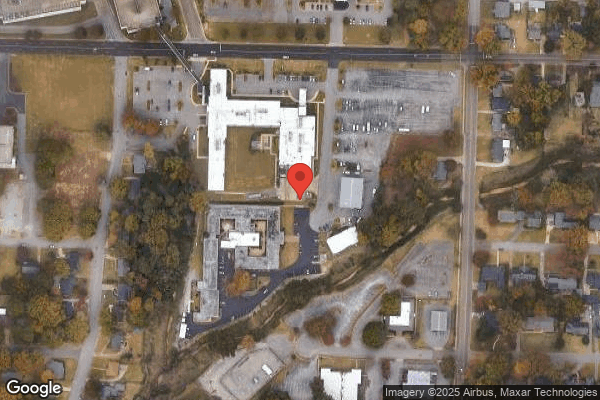
Observations of the surrounding area on 7/14/2022 at 8:36 AM, revealed the facility is located on a dead-end side street along with an Ambulance Service nearby. Resident #36 had to walk past the Ambulance service to a busy two-lane street, walked through 2 red-lights. There were no sidewalks on the two-lane street, until he reached the 3rd red-light. He then turned right on a busy 4-lane street and walked on the sidewalk. Resident #36 had walked approximate 0.9 miles away from the facility and was out of the facility between 30-45 minutes.
During an interview on 7/14/2022 at 6:32 PM, the Administrator was asked when an intervention should have been implemented when a resident had exit seeking/wandering behaviors. The Administrator stated, .immediately or as soon as possible . The Administrator was asked if an intervention should have been implemented to prevent elopement when the Resident #36 exhibited exiting seeking behaviors on 3/11/2022 (when Resident #36 held the door until it opened]. The Administrator stated, Yes ma'am. Anybody that has exit seeking behaviors should be assessed for interventions . The Administrator was asked if an intervention should have been implemented on 6/2/2022 when the resident exited the back door and was immediately brought back inside. The Administrator stated, . if a resident is exhibiting exit seeking behavior should have done an assessment and put an intervention in place to keep him from eloping .to see why .he is having a behavior and try to come up with interventions to keep it from happening .
The facility's corrective action plan included the following:
A. On 6/2/2022, Resident #36 left the facility without staff notification. Upon returning to the facility the resident was assessed by the Risk Manager and on 6/3/2022, the Physician, Responsible Party, Adult Protective Services, and State Regulatory Agency were notified. This was verified through review of the documentation and interviews with administration.
B. On 6/2/2022, a Smoking Assessment was completed for Resident #36, and he was added to the smoking list for scheduled smoke breaks. The surveyor verified this through observations, review of the smoking list, and interviews with Administration and facility staff.
C. On 6/3/2022, a head count was completed on all residents to ensure their locations. The surveyors verified this through review of the count sheet and interviews with Administration and facility staff.
D. On 6/3/2022, visual signs were posted at the front entrance to remind staff, family members, and visitors not to assist residents outside the facility before checking with the nurse. The front door was locked to ensure all entrance and exits were monitored by employees. The surveyors verified this through observations of the signage on the facility doors, validation the doors were secured, locked, and being monitored, and staff interviews.
E. A Resident head count was conducted for 48 hours. The surveyors verified this through review of the count sheet and interviews with Administration and facility staff.
F. From 6/3/2022 through 6/6/2022, Elopement Risk Assessments were reviewed and updated on 100% (percent) of the residents. The surveyors verified this through review of the audit sheets and medical record review of the sampled residents.
G. From 6/3/2022 through 6/6/2022, Smoking Assessments were reviewed and updated on 100% of residents. The surveyors verified this through review of the audit sheets and medical record review of sampled residents.
H. On 6/3/2022, in-services began on the elopement policy/procedure: When resident exhibits exit seeking behaviors, staff are to determine why they are exit seeking. If a door alarms and you are unsure of the reason why, staff are to do a 100% resident audit to assure residents are in the facility, and staff must go outside immediately to see if a resident has exited the facility. Elopements must be reported within 2 hours of the incident. A staff member can report to their supervisor, then follow up with the Administrator to ensure reporting to the state agency was completed. Staff are to report to at least 2 supervisors. Staff that are off duty will be educated upon return to work or start of their shift on the Elopement and Wandering Patients policy, steps to take in responding to alarms, steps to take when a resident is exhibiting exit seeking behavior, and the reporting requirements for an elopement. The Nurse Manager that is on call will educate agency staff that have not already received the in-service. The surveyors verified this through a review of the in-service documentation and interviews with facility staff on all shifts.
I. Residents were encouraged to sit outside in the Courtyard instead of the front porch. Staff are to go out to the Courtyard and frequently check on the residents. The surveyors verified this through observations and staff interviews.
J. On 6/7/2022, all residents were educated by the Social Services Director/designee on proper Leave of Absence (LOA) and personal outing procedure. The surveyors verified this through a review of the in-service documentation and interviews with facility staff.
K. On 6/7/2022, Resident representatives were educated by the Social Services Director/designee by text messaging, telephone calls and visual alerts on Leave of Absence personal outing process. The surveyors verified this through interviews with Administration and Social Services.
L. All newly hired personnel will be educated during orientation on Elopements and Wandering Patient Policy for responding to alarms, residents with exit seeking behaviors, reporting requirements and head in the bed check. The surveyors verified this through interviews with recently hired staff and with Administration.
M. An elopement drill was completed on 6/3/2022 and will continue 2 times a week on all shifts for two weeks. The results will be given to the Interdisciplinary Team (IDT) and drills may continue until substantial compliance is reached. The surveyors verified this through review of the elopement drill signature sheet and interviews with staff on all shifts.
N. On 6/3/2022, a 100% door audit was completed to ensure proper functioning of all doors, to include the doorbell in place and functioning at the front door, for families, friends and visitors and the telephone number for entrance to the facility. The surveyors verified this through review of the door audits, signage on the facility doors, and interview with Administration.
O. On 6/6/2022, the Regional Nurse Manger and the Regional Director of Operation educated facility administration and management on ensuring patient safety by monitoring elopement risks, concerns and reporting requirements. A policy review was conducted by the Regional Nurse Manger and the Regional Director of Operations with no new recommendations. The surveyors verified this through in-service documentation and interviews with Administration.
P. On 6/7/2022, a Quality Assurance Performance Improvement (QAPI) meeting was held to discuss the incident, the interventions that had been implemented for the individual resident and preventive measures for all residents. The surveyors verified this through review of the QAPI sign in sheet and interviews with Administration and the Medical Director.
Q. On 6/7/2022, the Regional Director of Operations updated the Physician and the Medical Director on the action plan. The surveyors verified this through interviews with the Regional Director of Operations, the Physician, and the Medical Director.
R. On 6/7/2022, the facility held a telephone conference with the Governing Body to review and approve the action plan to provide supervision to prevent residents assessed for elopement from leaving the facility without staff knowledge. It was also discussed to offer the individual resident alcohol during the day or night. The surveyors verified this through Administration interviews.
S. On 6/7/2022, placement options were discussed again for Resident #36 and agreed that the current interventions that were in place were sufficient to allow him to stay at the facility and to discontinue 1 on 1 surveillance. Every 1-hour checks had been continued for 24 hours to see if he was an active elopement risk. There were no elopement attempts and the 1-hour checks were discontinued. The family was made aware. The surveyors verified this through review of the documentation of the 1 hour checks for 24 hours and interviews with staff and Administration.
T. On 6/8/2022, the Physician gave a verbal order for the individual resident to have 2 beers a day as needed. The surveyors verified this through review of the Physician Orders, documentation of the beer given to the resident, and interviews with staff and Administration.
CRITICAL
(J)
Immediate Jeopardy (IJ) - the most serious Medicare violation
Accident Prevention
(Tag F0689)
Someone could have died · This affected 1 resident
**NOTE- TERMS IN BRACKETS HAVE BEEN EDITED TO PROTECT CONFIDENTIALITY** Based on policy review, weather website review, medical record review, observation, and interview, the facility failed to ensure...
Read full inspector narrative →
**NOTE- TERMS IN BRACKETS HAVE BEEN EDITED TO PROTECT CONFIDENTIALITY** Based on policy review, weather website review, medical record review, observation, and interview, the facility failed to ensure a safe, secure environment for 1 of 3 sampled residents (Resident #36) reviewed for elopement/wandering. The facility's failure to ensure a safe, secure environment resulted in Immediate Jeopardy when Resident #36, a vulnerable cognitively impaired resident, exited the facility unsupervised through an unlocked door. Resident #36 was found by a facility staff member driving on her lunch break approximately 0.9 miles from the facility, approximately 30-45 minutes later.
Immediate Jeopardy (IJ) is a situation in which the provider's noncompliance with one or more requirements of participation has caused, or is likely to cause, serious injury, harm and impairment or death to a resident.
The Administrator and the Administrative staff were notified of the Immediate Jeopardy (IJ) on 7/14/2022 at 9:43 PM, in the Administrator's office.
The facility was cited Immediate Jeopardy at F-689.
The facility was cited at F-689 at a scope and severity of J, which is Substandard Quality of Care.
The IJ existed from 6/2/2022 through 6/7/2022. The Immediate Jeopardy was removed onsite when the facility implemented a corrective action plan. The corrective actions were validated onsite by the surveyors on 7/11/2022 through 7/14/2022.
The IJ was cited as past noncompliance and the facility is not required to submit a Plan of Correction for F-689.
The findings include:
Review of the facility's policy titled, Elopements and Wandering Patients, revised 6/21/2021, revealed .This facility ensures that residents who exhibit wandering behavior .receive adequate supervision .Elopement occurs when a resident leaves the premise or a safe area without authorization .and/or necessary supervision to do so .
Review of the medical record, revealed Resident #36 was admitted to the facility on [DATE] with diagnoses of Heart Failure, Altered Mental Status, Alcohol Abuse, Nicotine Dependence, and Dysarthria.
Review of the admission Minimum Data Set (MDS) assessment dated [DATE], revealed a Brief Interview of Mental Status (BIMS) score of 0, which indicated Resident #36 had severe cognitive impairment.
Review of the Care Plan dated 1/18/2022, revealed Resident #36 had a self-care deficit related to ambulation due to weakness. The interventions included to call for assistance before ambulation. Resident #36 had an alteration in thought process and was hard to understand. The intervention included re-orient to location and time as needed.
Review of the Progress Note dated 3/11/2022, revealed Licensed Practical Nurse (LPN) #6 observed Resident #36 go to the side door and Resident #36 held the door until it opened. The resident was slightly confused and wandered the hall. LPN #6 redirected Resident #36 to his room and determined the resident might benefit from the use of a wander guard (a monitoring device to alert staff of a resident attempting to exit the facility unattended).
Review of the Progress Note dated 3/14/2022, revealed Resident #36 had demonstrated increased wandering.
Review of the Elopement Risk assessment dated [DATE], Resident #36 was assessed as not being at risk for wandering.
Review of the Progress Note dated 4/23/2022, revealed .[Resident #36] tried to go out the outside door today. I could make out [understand] that he was trying to go somewhere but majority of his words are unintelligible .
Review of the quarterly Minimum Data Set (MDS) assessment dated [DATE], revealed a Brief Interview of Mental Status (BIMS) score of 0, which indicated Resident #36 had severe cognitive impairment.
Review of the Nurses' Event Note dated 6/2/2022 at 12:30 PM, revealed Resident #36 left the building without an escort.
Review of weather.com, revealed the high temperature for this area on 6/2/2022 was 81 degrees.
Observation in the Smoke Shack on 7/11/2022 at 9:27 AM, revealed Resident #36 was seated in a wheelchair with other residents smoking a cigarette and was supervised by staff.
Observation in the resident's room on 7/12/2022 at 8:22 AM, revealed Resident #36 was dressed appropriately, standing in the doorway, and his speech was garbled.
During an interview on 7/12/2022 at 2:15 PM, Housekeeper #1 stated, .saw him [Resident #36] walking out the door .and I knew it wasn't smoke time .I turned him round .brought him back in . Housekeeper #1 stated this incident occurred earlier the same day he eloped through the front door, and he had reported it to the previous Director of Nursing (DON).
During an interview on 7/12/2022 at 2:44 PM, Dietary Aide #1 stated, .he [Resident #36] was sitting in the Breakroom by himself by the time clock .he wasn't in the wheelchair .I walked in the Breakroom .just me and him .the door alarm went off .he [Resident #36] jumped up .he walked towards the door .the alarm was still going off .he [Resident #36] was outside .[Housekeeper #1] was bringing him back in and asked me why did I let him out .I said I didn't let him out .it wasn't smoke time . Dietary Aide #1 confirmed this incident occurred before the elopement on 6/2/2022.
During an interview on 7/12/2022 at 2:44 PM, the Administrative Specialist stated, .[Resident #36] came up and pushed his chair under the window .he walked outside .I didn't notice him coming back in .
During an interview on 7/12/2022 at 3:05 PM, the Assistant Director of Nursing (ADON) stated, .he [Resident #36] went to go out the first time by the time clock door [in the Breakroom] .Dietary Aide [#1] had gotten up and answered the door alarm .he was pushing to get out of it .the door opened and [Housekeeper #1] was standing right outside the door .he had walked out door .[Housekeeper #1] brought him right back in .that was right around lunch time . The ADON confirmed he did not have a wander guard at that time and stated, .later on maybe an hour or so [later] me and [Named previous DON] .went out to smoke .and she [previous DON] had told me that [Resident #36] had walked away from the facility .she [previous DON] was talking about the time he [Resident #36] actually eloped that day and that [LPN #5] had seen him on her lunch break and picked him up .didn't say what time it was .I didn't know he [Resident #36] had left and gotten out .my understanding that .[LPN #5] had called her [previous DON] and had seen him walking on the sidewalk and she [LPN #5] was picking him up and bringing him back to the facility .I told her we had to report it .told her thought we had 2 hours . she [previous DON] made the comment didn't want to do all that paperwork and I told her that he [Resident #36] had walked away from the facility .that he was gone .she [previous DON] was just laughing and joking and said we wouldn't have to report it .he [Resident #36] walked right in front of EMS [Emergency Medical Service] and down by the roundabout .by the gas station .she [previous DON] made the comment that we have family members that walk there and that if they saw him [Resident #36] they wouldn't think he was a resident .God was with him that day .she [previous DON] never reported it .she [previous DON] said you are going to have to help with the calls [to staff members] .it was the same day .at this point I'm thinking we are on the same page .nothing else was ever said about it . The ADON confirmed she did not make any calls that day and stated, The next morning .we had morning meeting and she [previous DON] didn't say anything about it .after the meeting she was like .[Named Regional Director of Operation] .had called her and had questioned her about it .and she [previous DON] was telling him about the incident with the time clock [at the Breakroom door] .and that's how I know she didn't report it .[previous DON] told him about the first incident .not the second and that's when Corporate came in and that's when I told them [Corporate] .I should have followed up and made sure .it just never crossed my mind I was dumb founded I should have went [gone] straight to the Administrator . The ADON confirmed that Resident #36 did not have a wander guard on at that time and that his exit seeking behaviors and wandering were never discussed in the morning meetings.
During an interview on 7/12/2022 at 3:49 PM, LPN #5 stated, .I was on my lunch break .I was driving down the road .and saw [Resident #36] walking down the sidewalk .not a whole mile .I turned around .pulled off the road .it was him [Resident #36] .I asked him what was he was doing .he mumbled the words out he wanted a beer and cigarettes .he seemed frustrated .I immediately notified my DON .I sent her a text message and she [previous DON] said bring him back to the facility .told her he was wanting some cigarettes .I asked her if that would be ok .she said yes and .got him some cigarettes .I got him a cheeseburger and sprite .I brought him back here .then I took him outside to smoke .and I stayed out there with him .he seemed to be ok .it was very hot and he walked quite a distance .it was around lunch time [12:00 PM] .
During an interview on 7/13/2022 at 8:46 AM, the Regional Nurse Manager stated, .on 3/16/2022 .had another elopement assessment and [Resident #36] was not considered an elopement risk .6/3/2022 .risk assessment .because of the elopement .he does not have exit seeking behaviors now .he is at risk for elopement because he has history of exit seeking behaviors .think we have resolved his issues .we have put him on the smoking list .he was on a nicotine patch on admission .he started refusing those in March [2022] .nobody let him out .he just walked out the front door . The Regional Nurse Manager confirmed no one followed up with the 3/11/2022 incident when Resident #36 attempted to get out the door, and stated, .that should have been talked about in the morning meeting .Resident #36 had got outside that morning on 6/2/2022 by the Smoke Shack .saw him go out and brought him right back in .should have investigated more .the previous DON was told that he went outside .he was trying to go smoke . The Regional Nurse Manager confirmed no one took him out to smoke and that the previous DON should have placed Resident #36 on the smoking list. The Regional Nurse Manager stated, .between 11:30-11:45 [AM] [Named Administrative Specialist] doesn't remember the time .a little before lunch she [Administrative Specialist] saw him [Resident #36] park his wheelchair in front of the Receptionist window .like he normally does .and saw him go out the door .like he normally does .he sat down on the front porch .then they [LPN #5] found him on the sidewalk .this sounds horrible .when I found out .we could have prevented it .the Risk Manager [LPN #5] saw him on the sidewalk at 12:15 [PM] .he went through 3 red lights .got on the main highway on the sidewalk .she got him in the car . The Regional Nurse Manager confirmed Resident #36 should have been assessed and given a wander guard on the first incident on 6/2/2022, and stated, .he wasn't .
During a telephone interview on 7/13/2022 at 3:11 PM, the Associate Medical Director stated, .got a phone call from [Regional Director of Operations] what had happened .fortunately [LPN #5] had seen him [Resident #36] walking down the street, Thank God .got him back in the building .something like that is serious .
Observation in the hallway on 7/14/2022 at 8:18 AM, revealed Resident #36 dressed and propelling himself in a wheelchair.
Observations of the surrounding area on 7/14/2022 at 8:36 AM, revealed the facility is located on a dead-end side street with an Ambulance service nearby. Resident #36 had to walk past the Ambulance service to a busy two-lane street, had to walk through 2 red-lights, and there were no sidewalks on the two-lane street until he reached the 3rd red-light. He then turned right on a busy 4-lane street and walked on the sidewalk. Resident #36 had walked approximately 0.9 miles from the facility and was gone from the facility between 30-45 minutes.
The facility's corrective action plan included the following:
A. On 6/2/2022, Resident #36 left the building without staff notification. Upon returning to the facility, he was assessed by the Risk Manager and on 6/3/2022, the Physician, Responsible Party, Adult Protective Services, and State Regulatory Agency were notified.
B. On 6/2/2022, a Smoking Assessment was completed for Resident #36, and he was added to the smoking list for scheduled smoke breaks. The surveyor verified this through observations, review of the smoking list, and interviews with Administration and facility staff.
C. On 6/3/2022, a head count was completed on all residents to ensure their location. The surveyors verified this through review of the head count sheet and interviews with Administration and facility staff.
D. On 6/3/2022, visual signs were posted at the front entrance to remind staff, family members, and visitors not to assist residents outside before checking with the nurse. The front door was locked to ensure notification all entrance and exits were monitored by employees. The surveyors verified this through observations of the signage on the facility doors, observation the doors were secured and locked and being monitored, and staff interviews.
E. A resident head count was conducted for 48 hours. The surveyors verified this through review of the count sheet and interviews with Administration and facility staff.
F. From 6/3/2022 through 6/6/2022, Elopement Risk Assessments were reviewed and updated on 100% of the residents. The surveyors verified this through review of the audit sheets and medical record review of sampled residents.
G. From 6/3/2022 through 6/6/2022, Smoking Assessments were reviewed and updated on 100% of the residents. The surveyors verified this through review of the audit sheets and medical record review of sampled residents.
H. On 6/3/2022, in-services began on the elopement policy/procedure which included when a resident exhibits exit seeking behaviors, determine why they are exit seeking. If a door alarms and you are unsure of the reason why, do a 100% resident audit to assure that residents are in the facility, and staff must go outside immediately to see if a resident has exited the facility. Elopements must be reported within 2 hours of the incident. The elopement can be reported to their supervisor, and then follow up with the Administrator to ensure the incident was reported to the state agency. Staff are to report to at least 2 supervisors. Staff that are off duty will be educated upon return to work or start of their shift on the Elopement and Wandering Patients policy, steps to take responding to alarms, when a resident is exhibiting exit seeking behaviors and reporting requirements for an elopement. The Nurse Manager that is on call will educate agency staff that had not already received the in-service. The surveyors verified this through a review of the in-service documentation and interviews with facility staff on all shifts.
I. Residents were encouraged to sit outside in the Courtyard instead of on the front porch. Staff are to go out to the Courtyard and frequently check on the residents. The surveyors verified this through observations and staff interviews.
J. On 6/7/2022, all residents were educated by the Social Services Director/designee on proper Leave of Absence (LOA) and personal outing procedure. The surveyors verified this through a review of the in-service documentation and interviews with facility staff.
K. On 6/7/2022, the resident's representatives were educated by the Social Services Director/designee by text messaging, telephone calls and visual alerts on the LOA personal outing process. The surveyors verified this through interviews with Administration.
L. All newly hired personnel will be educated during orientation on Elopements and Wandering Patient Policy for responding to alarms, residents with exit seeking behaviors, reporting requirements and head in the bed check. The surveyors verified this through interviews with newly hired staff and with Administration.
M. An elopement drill was completed on 6/3/2022 and will continue 2 times a week on all shifts for two weeks. The results will be given to the Interdisciplinary Team ( IDT) and drills may continue until substantial compliance is reached. The surveyors verified this through review of the elopement drill signature sheet and interviews with staff on all shifts.
N. On 6/3/2022, a 100% door audit was completed to ensure proper functioning of all doors, to include doorbells in place and functioning at the front door, for families, friends and visitors and the telephone number for entrance to the facility. The surveyors verified this through review of the door audits, signage on the facility doors, and interview with Administration.
O. On 6/6/2022, the Regional Nurse Manger and the Regional Director of Operation educated facility administration and management on ensuring patient safety by monitoring elopement risks, concerns, and reporting requirements. A policy review was conducted by the Regional Nurse Manger and the Regional Director of Operations with no new recommendations. The surveyors verified this through in-service documentation and interviews with Administration.
P. On 6/7/2022, a Quality Assurance Performance Improvement (QAPI) meeting was held to discuss the incident, the interventions that had been implemented for the individual resident and preventative measures for all residents. The surveyors verified this through review of the QAPI sign in sheet and interviews with Administration and the Medical Director.
Q. On 6/7/2022, the Regional Director of Operations updated the Physician and the Medical Director on the action plan. The surveyors verified this through interviews with the Regional Director of Operations, the Physician, and the Medical Director.
R. On 6/7/2022, the facility held a telephone conference with the Governing Body to review and approve the action plan to provide supervision to prevent residents assessed for elopement from leaving the facility without staff knowledge. It was also discussed to offer the individual resident alcohol during the day or night. The surveyors verified this through Administration interviews.
S. On 6/7/2022, placement options were discussed again for Resident #36 and agreed that the current interventions that were implemented were sufficient to allow him to remain at the facility and to discontinue 1 on 1 surveillance. Every 1-hour checks had been continued for 24 hours to see if he was an active elopement risk. No elopement attempts were made, and the 1-hour checks were discontinued. The family was made aware. The surveyors verified this through documentation of the 1-hour check for 24 hours and interviews with staff and Administration.
T. On 6/8/2022, the Physician gave a verbal order for the individual resident to have 2 beers a day as needed. The surveyors verified this through review of the Physician Orders, documentation of the beer given, and interviews with staff and Administration.
CONCERN
(D)
Potential for Harm - no one hurt, but risky conditions existed
Deficiency F0553
(Tag F0553)
Could have caused harm · This affected 1 resident
**NOTE- TERMS IN BRACKETS HAVE BEEN EDITED TO PROTECT CONFIDENTIALITY** Based on policy review, medical record review, and interview, the facility failed to ensure 2 of 18 sampled residents (Resident ...
Read full inspector narrative →
**NOTE- TERMS IN BRACKETS HAVE BEEN EDITED TO PROTECT CONFIDENTIALITY** Based on policy review, medical record review, and interview, the facility failed to ensure 2 of 18 sampled residents (Resident #12 and #32) or their families were invited to participate in planning their care.
The findings include:
Review of the facility's policy titled, Comprehensive Careplan, dated 3/25/2022, revealed .The comprehensive care plan will be prepared by an interdisciplinary team, that includes, but is not limited to .The attending physician .registered nurse .nurse aide with responsibility for the resident .food and nutrition services staff .The resident and the resident's representative .The comprehensive care plan will be reviewed and revised by the interdisciplinary team after each comprehensive and quarterly MDS [Minimum Data Set] assessment .
Review of the medical record, revealed Resident #12 was admitted to the facility on [DATE] with diagnoses of Paraplegia, Anemia, Hypertension, and Anxiety.
Review of Resident 12's last Care Plan meeting held on 1/19/2022 had no documentation that Resident #12 or his family attended.
Review of the quarterly Minimum Data Set (MDS) assessment dated [DATE], revealed Resident #12 had a Brief Interview for Mental Status (BIMS) score of 12, which indicated he was moderately cognitively impaired.
During an interview on 7/14/2022 at 7:38 PM, the MDS Coordinator confirmed Resident #12 had assessments completed on 10/30/2021, 1/16/2022, and 4/18/2022. The facility was unable to provide documentation that Resident #12 or his family attended an interdisciplinary team (IDT) Care Plan meeting.
Review of the medical record, revealed Resident #32 was admitted to the facility on [DATE] with diagnoses of Peripheral Vascular Disease, Diabetes, and Quadriplegia.
Review of the quarterly MDS assessment dated [DATE], revealed Resident #32 had a BIMS score of 15, which indicated he was cognitively intact for decision making.
Review of the medical record, revealed Resident #32's last Care Plan meeting was held on 5/26/2022 with no documentation that Resident #32 or his family attended the meeting.
During an interview on 7/14/2022 at 4:33 PM, the Social Services Director confirmed no clinical information was shared with the resident. The Social Services Director stated, .we generally tell him as we pass in the hall .
During an interview on 7/14/2022 at 4:38 PM, the MDS Coordinator confirmed Resident #32 had assessments completed on 10/15/2021, 11/23/2021, 2/23/2022 and 5/26/2022. The facility was unable to provide documentation that Resident #32 or his family attended an IDT Care Plan meeting. The MDS Coordinator confirmed residents should have IDT Care Plan meetings every 3 months after each comprehensive and quarterly MDS assessment which included a Registered Nurse, Nurse Aide, nutrition services, the resident and or the resident's representative.
CONCERN
(D)
Potential for Harm - no one hurt, but risky conditions existed
Deficiency F0558
(Tag F0558)
Could have caused harm · This affected 1 resident
**NOTE- TERMS IN BRACKETS HAVE BEEN EDITED TO PROTECT CONFIDENTIALITY** Based on policy review, medical record review, observation, and interview, the facility failed to provide reasonable accommodati...
Read full inspector narrative →
**NOTE- TERMS IN BRACKETS HAVE BEEN EDITED TO PROTECT CONFIDENTIALITY** Based on policy review, medical record review, observation, and interview, the facility failed to provide reasonable accommodations to meet the residents' needs for the use of a call light for 2 of 25 sampled residents (Resident #34 and #38) reviewed.
The findings include:
Review of the facility's policy titled, .Call Lights: Accessibility and Response, revealed .is to ensure resident call light accessibility and response .With each interaction in the Resident's room or bathroom, staff will ensure the call light is within reach of Resident and secured as needed .
Review of the medical record, revealed Resident #34 was admitted to the facility on [DATE] with diagnoses of Cerebral Infarction, Hemiplegia, Chronic Obstructive Pulmonary Disease, and Anxiety.
Review of the quarterly Minimum Data Set (MDS) dated [DATE], revealed Resident #34 had a Brief Interview for Mental Status (BIMS) score of 11, which indicated the resident had moderately impaired cognition.
Observations in the resident's room on 7/11/2022 at 10:59 AM, 11:59 AM, 12:22 PM, and 2:40 PM, revealed Resident 34's call light was coiled up on the wall, out of Resident 34's reach.
During an interview on 7/11/2022 at 2:54 PM, Registered Nurse (RN) #1 was asked if call lights should be out of residents' reach. RN #1 stated, No ma'am, I just need to go through and unwind them.
Review of the medical record, revealed Resident #38 was admitted to the facility on [DATE] with diagnoses of Hypertension, Chronic Pain Syndrome, Depression, Diabetes, and Congestive Heart Failure.
Review of the quarterly MDS dated [DATE], revealed Resident #38 had a BIMS score of 11, which indicated the resident had moderately impaired cognition.
Observation in the resident's room on 7/11/2022 at 12:25 PM, 2:40 PM, and 3:05 PM, revealed Resident #38's call light was coiled up and tied against the wall, out of her reach.
During an interview on 7/11/2022 at 3:07 PM, RN #1 confirmed the call light was out of Resident #38's reach. RN#1 stated, she needs her call light where she can reach it .
CONCERN
(D)
Potential for Harm - no one hurt, but risky conditions existed
Assessment Accuracy
(Tag F0641)
Could have caused harm · This affected 1 resident
**NOTE- TERMS IN BRACKETS HAVE BEEN EDITED TO PROTECT CONFIDENTIALITY** Based on review of the Centers for Medicare & Medicaid Services (CMS) Long-Term Care (LTC) Facility Resident Assessment Instrume...
Read full inspector narrative →
**NOTE- TERMS IN BRACKETS HAVE BEEN EDITED TO PROTECT CONFIDENTIALITY** Based on review of the Centers for Medicare & Medicaid Services (CMS) Long-Term Care (LTC) Facility Resident Assessment Instrument (RAI) 3.0 dated October 2019, medical record review, and interview, the facility failed to ensure residents were accurately assessed for nutritional status and falls for 2 of 18 sampled residents (Resident #38 and #55) reviewed.
The findings include:
Review of the CMS LTC Facility RAI 3.0 User's Manual Version 1.17.1, dated October 2019, pages G-4 and K-4, revealed .In order to be able to promote the highest level of functioning among residents, clinical staff must first identify what the resident actually does for himself or herself, noting when assistance is received and clarifying the type .and level of assistance .provided by all disciplines .
Review of the medical record, revealed Resident #38 was admitted to the facility on [DATE] with diagnoses of Encephalopathy, Hypertension, Diabetes, Congestive Heart Failure, and Morbid Obesity.
Review of the quarterly Minimum Data Set (MDS) assessment dated [DATE], revealed Resident #38 was on a physician prescribed weight loss regimen.
Review of the Physician Orders revealed there was no order for a prescribed weight loss regimen.
During an interview on 7/13/2022 at 10:45 AM, the Registered Dietician (RD) confirmed Resident #38 was not on a physician prescribed weight loss regimen, and the MDS was incorrectly coded for the weight loss regimen.
Review of the medical record, revealed Resident #55 was admitted to the facility on [DATE] with diagnoses of Anxiety, Heart Failure, Dementia, and Hypertension.
Review of an Incident Report dated 3/18/2022, revealed Resident #55 fell in her room and sustained a hematoma to the back of her head.
Review of the quarterly MDS dated [DATE], revealed Resident #55 was not coded for the 3/18/2022 fall with injury.
During an interview on 7/14/2022 at 8:35 AM, the Assistant Director of Nursing (ADON) confirmed the MDS was not coded correctly for falls.
CONCERN
(D)
Potential for Harm - no one hurt, but risky conditions existed
Comprehensive Care Plan
(Tag F0656)
Could have caused harm · This affected 1 resident
**NOTE- TERMS IN BRACKETS HAVE BEEN EDITED TO PROTECT CONFIDENTIALITY** Based on policy review, medical record review, and interview, the facility failed to develop and implement a comprehensive Care ...
Read full inspector narrative →
**NOTE- TERMS IN BRACKETS HAVE BEEN EDITED TO PROTECT CONFIDENTIALITY** Based on policy review, medical record review, and interview, the facility failed to develop and implement a comprehensive Care Plan for antianxiety and anticoagulant medication and falls for 2 of 18 sampled residents (Resident #63 and #78) reviewed.
The findings include:
The facility policy titled, Comprehensive Careplan, dated 3/25/2022, revealed .The comprehensive care plan will be reviewed and revised by the interdisciplinary team after each comprehensive and quarterly MDS [Minimum Data Set] assessment .Qualified staff responsible for carrying out interventions specified in the care plan will be notified of their roles and responsibilities for carrying out the interventions, initially and when changes are made .
Review of the medical record, revealed Resident #63 was admitted to the facility on [DATE] with diagnoses of Hypertension, Vascular Dementia, Anemia, Anxiety, and Depression.
Review of the Care Plan dated 6/23/2022, revealed Resident #63 was at risk for falls with interventions to have a touch pad call light in place, and staff were to leave the bedside commode lid up.
Observation in Resident #63's room on 7/12/2022 at 8:58 AM, revealed a push button call light lying in the floor behind the bed.
Observation in Resident's #63's room on 7/13/2022 at 8:50 AM, revealed a push button call light lying in the floor behind the bed and Resident #63's lid to the bedside commode was not up.
Observations in Resident's #63's room on 7/13/2022 at 10:55 AM, 1:06 PM, and 3:55 PM, revealed a push button call light lying on her bed and the bedside commode lid was not up.
During an interview on 7/13/2022 at 3:57 PM, LPN #4 confirmed Resident #63 should have a touch pad call light. She confirmed the bedside commode seat was down and it should be kept up. She confirmed staff should follow the interventions on the Care Plan for falls.
During an interview on 7/14/2022 at 8:20 AM, the Regional Director of Nursing confirmed the Care Plan should have been followed for the commode cover to be up at all times and Resident #63 should have had a touch pad call light.
Review of the medical record, revealed Resident #78 was admitted to the facility on [DATE] with diagnoses of Heart Disease, Chronic Obstructive Pulmonary Disease, Metabolic Encephalopathy, and Chronic Kidney Disease.
Review of the Minimum Data Set (MDS) assessment dated [DATE], revealed Resident #78 had severely impaired cognition and received antianxiety and anticoagulant medications.
Review of the 7/2022 Physician's Order Sheet revealed orders for Eliquis (an anticoagulant medication) 2.5 milligram (mg) two times daily and Alprazolam (an antianxiety medication) 0.25 mg daily.
Review of the Care Plan dated 7/7/2022, revealed a Comprehensive Care Plan was not developed for Resident #78's antianxiety and anticoagulant medications.
During an interview on 7/12/2022 at 4:50 PM, the MDS Coordinator confirmed Resident #78's antianxiety or anticoagulant medications were not addressed on the Care Plan.
CONCERN
(D)
Potential for Harm - no one hurt, but risky conditions existed
Incontinence Care
(Tag F0690)
Could have caused harm · This affected 1 resident
**NOTE- TERMS IN BRACKETS HAVE BEEN EDITED TO PROTECT CONFIDENTIALITY** Based on policy review, medical record review, and interview, the facility failed to follow Physician Orders for treatment of a ...
Read full inspector narrative →
**NOTE- TERMS IN BRACKETS HAVE BEEN EDITED TO PROTECT CONFIDENTIALITY** Based on policy review, medical record review, and interview, the facility failed to follow Physician Orders for treatment of a Urinary Tract Infection for 1 of 2 sampled residents (Resident #8) reviewed with Urinary Tract Infections.
The findings include:
Review of the facility's policy titled, Medication Availability-Borrowing, dated 2/2022, revealed .If the resident's medication is not available, access the .machine or the back-up medication box to obtain the medication .Communicate the medication needs to the contracted pharmacy as soon as possible .
Review of the medical record, revealed Resident #8 was admitted to the facility on [DATE] with diagnoses of Cystitis with Hematuria, Urinary Incontinence, and Dementia.
Review of the Physician's Order dated 7/3/2022, revealed .Begin Date: 7/3/2022 .cephALEXin 500 mg [milligram] capsule [an antibiotic for infection] .Oral 2 Times Daily for 5 Days .
Review of the Physician's Order dated 7/6/2022, revealed .Begin Date: 7/6/2022 .cephALEXin 500 mg .Oral 2 Times Daily for 5 Days .
Review of the Medication Dispense Card dated 7/6/2022, revealed the 7/3/2022 antibiotics were not sent to the facility until 3 days after the order was received.
Review of the Medication Administration Record (MAR) dated July 2022, revealed the antibiotic was not administered on 7/3/2022, 7/4/2022, and 7/5/2022.
During an interview on 7/13/2022 at 8:08 AM, Registered Nurse (RN) #2 confirmed the antibiotics were not started on the day they were ordered, 7/3/2022. The medication was started when the Physician wrote a second order for the medication on 7/6/2022. The medication was not accessed from the back-up medication box and the pharmacy did not send the medication when ordered.
During an interview on 7/14/2022 at 4:53 PM, the Regional Nurse Manager confirmed the antibiotics should have been started the day the facility received the Physician Order.
CONCERN
(D)
Potential for Harm - no one hurt, but risky conditions existed
Tube Feeding
(Tag F0693)
Could have caused harm · This affected 1 resident
**NOTE- TERMS IN BRACKETS HAVE BEEN EDITED TO PROTECT CONFIDENTIALITY** Based on medical record review, observation, and interview the facility failed to provide care and services for residents with e...
Read full inspector narrative →
**NOTE- TERMS IN BRACKETS HAVE BEEN EDITED TO PROTECT CONFIDENTIALITY** Based on medical record review, observation, and interview the facility failed to provide care and services for residents with enteral feeding tubes when 2 of 2 nurses (Licensed Practical Nurse (LPN) #1 and #2) were observed administering medications through a Percutaneous Endoscopic Gastrostomy (PEG) tube by applying pressure and pushing the medications into the tube without attempting to administer them by gravity and failed to appropriately store the feeding syringe for 1 of 1 sampled residents (Resident #29) observed during PEG medication administration.
The findings include:
Review of the medical record, revealed Resident #29 was admitted to the facility on [DATE] with diagnoses of Nontraumatic Intracranial Hemorrhage, Gastrostomy, Constipation, Pain, Hyperlipidemia and Dysphagia.
Review of the quarterly Minimum Data Set (MDS) assessment dated [DATE], revealed Resident #29 was rarely or never understood, had short and long term memory problems, and had severely impaired decision making skills.
Review of the Physician Order Sheet dated 7/2022, revealed orders for the following medications to be administered by enteral feeding tube: Oxybutynin Chloride (a bladder relaxant) 5 milligrams (mg), Senna (a laxative) 8.6 mg, Rosuvastatin (a medication to treat high cholesterol and triglyceride levels) 20 mg, and Acetaminophen 500 mg per 15 milliliters [ml) liquid, 20.3 millimeters (ml) to equal 650 mg and Polyethylene Glycol (a laxative) 17 grams powder.
Observation at the 200 Hall Medication Cart on 7/12/2022 beginning at 4:09 PM, revealed LPN #1 prepared the following medications for administration to Resident #29:
1. Oxybutynin Chloride 5 mg 1 tablet
2. Rosuvastatin 20 mg 1 tablet
3. Senna 8.6 mg tab 1 tablet
4. Acetaminophen 500 mg/15 ml liquid 20.3 ml
LPN #1 then crushed the tablets individually, and placed them and the liquid medication into individual plastic cups. LPN #1 took the medications into the room and placed them on the over the bed table. LPN #1 aspirated 30 cubic centimeters (cc) of water in an enteral feeding syringe and applied pressure to the plunger of the syringe to push the water into the tube and flush it. LPN #1 did not attempt to let the water flow by gravity before using the plunger to push the water through the syringe. Then LPN #1 poured water into the cup with the liquid medication, drew the medication up in the enteral syringe and administered the medication by applying pressure to the plunger and pushing the medication into the tube, drew up 30 cc of water in the syringe and applied pressure to the plunger to push it into the tube. LPN #1 diluted the 3 crushed medications in water and administered them separately, one at a time, flushing with 30 cc of water using the same technique of applying pressure to the plunger and pushing the medications and water into the tube. LPN #1 drew up 30 cc of water into the syringe and flushed the tube by applying pressure to the plunger and pushing it into the tube. LPN #1 took the enteral feeding syringe to the sink, separated the plunger from the barrel and rinsed them with water, placed the plunger in the barrel, placed the syringe in a plastic bag and hung the bag on the enteral feeding pole with water droplets visible in the bag.
Observation at the 200 Hall Medication Cart on 7/12/2022 at 4:30 PM, revealed LPN #1 prepared to administer Polyethylene Glycol 17 grams to Resident #29. LPN #1 placed the medication in a plastic cup, entered Resident #29's room, placed the medication on the over the bed table, and prepared to administer the medication. LPN #1 diluted the medication with approximately 100 cc of water, drew up 30 cc of water into the syringe, and flushed the tube by applying pressure to the plunger and pushing it into the tube. LPN#1 did not attempt to let the water flow by gravity before using the plunger to push the water through the syringe. LPN #1 drew up 60 cc of the medication and administered it by applying pressure to the plunger and pushing it into the tube, then aspirated the remainder of the medication into the syringe and administered it and a 30 cc water flush using the same technique. LPN #1 took the enteral feeding syringe to the sink, separated the plunger from the barrel, rinsed them with water, placed them on a paper towel next to the sink, obtained the plastic storage bag and placed the separated barrel and plunger in the bag with water droplets present on the barrel and in the bottom of the bag.
Observation in the resident's room on 7/13/2022 at 9:30 AM, revealed LPN #2 administered medication to Resident #29 with an enteral feeding syringe through a PEG tube. LPN #2 took the enteral syringe barrel and plunger to the sink and rinsed them with water, placed the plunger inside the barrel, and placed the syringe on a paper towel next to the sink. LPN #2 washed her hands, picked up the enteral feeding syringe, disconnected the plunger from the barrel and rinsed them under running water again. LPN #2 placed the plunger back in the barrel of the syringe without drying them, placed them in a plastic bag and hung the bag on the enteral feeding pole with water droplets visible in the bag.
During an interview on 7/13/2022 at 1:28 PM, the Regional Nurse Manager confirmed enteral feeding syringes should be stored in a plastic bag separated and should not be wet inside the bag.
During an interview on 7/13/2022 at 1:36 PM, the Assistant Director of Nursing (ADON) confirmed medications should be administered by gravity through an enteral feeding tube. The ADON was asked if the nurse should attempt to administer the medications by gravity before applying pressure and pushing them into the tube. The ADON stated, Yes.
CONCERN
(D)
Potential for Harm - no one hurt, but risky conditions existed
Deficiency F0697
(Tag F0697)
Could have caused harm · This affected 1 resident
**NOTE- TERMS IN BRACKETS HAVE BEEN EDITED TO PROTECT CONFIDENTIALITY** Based on policy review, medical record review, and interview, the facility failed to administer pain medications as ordered for ...
Read full inspector narrative →
**NOTE- TERMS IN BRACKETS HAVE BEEN EDITED TO PROTECT CONFIDENTIALITY** Based on policy review, medical record review, and interview, the facility failed to administer pain medications as ordered for 1 of 5 sampled residents (Resident #17) reviewed.
The findings include:
Review of the facility's policy titled, Medication Availability-Borrowing, dated 2/2022, revealed .The facility shall use uniform guidelines for medication availability .Medications are available through a licensed pharmacy .Communicate the medication needs to the contracted pharmacy as soon as possible .
Review of the medical record, revealed Resident #17 was admitted to the facility on [DATE] with diagnoses of Injury of Unspecified Body Region, Necrotizing Fasciitis, and Chronic Pain.
Review of the Care Plan dated 4/25/2022, revealed .at risk for complications r/t [related to] chronic pain .
Review of the Physician's Order dated 6/30/2022, revealed .HYDROcodone [a pain medication] 7.5 mg [milligrams] .(1 TABLET) .by mouth QID [four times daily] .
During an interview on 7/13/2022 at 7:56 AM, Resident #17 stated I have not received my pain medication .can you look into that for me. Resident #17 was not in distress or complaining of pain.
Review of the Medication Administration Record (MAR) dated 7/2022, revealed Resident #17 did not receive the pain medication on 7/12/2022 at 8:00 PM and 7/13/2022 at 2:00 AM.
During an interview on 7/13/2022 at 4:08 PM, Licensed Practical Nurse (LPN) #3 confirmed she did not administer Resident #17's pain medication due to the medication being unavailable on the medication cart.
During an interview on 7/14/2022 at 1:26 PM, the Assistant Director of Nursing (ADON) confirmed the process for ordering pain medication was not followed, and Resident #17 should not have missed her pain medication.
CONCERN
(D)
Potential for Harm - no one hurt, but risky conditions existed
Unnecessary Medications
(Tag F0759)
Could have caused harm · This affected 1 resident
**NOTE- TERMS IN BRACKETS HAVE BEEN EDITED TO PROTECT CONFIDENTIALITY** Based on policy review, medical record review, observation, and interview, the facility failed to administer medications with a ...
Read full inspector narrative →
**NOTE- TERMS IN BRACKETS HAVE BEEN EDITED TO PROTECT CONFIDENTIALITY** Based on policy review, medical record review, observation, and interview, the facility failed to administer medications with a medication error rate less than 5% (percent) when 2 of 4 nurses (Licensed Practical Nurse (LPN) #1 and #4) failed to administer medications as ordered to 2 of 6 sampled residents (Resident #36 and #56) reviewed during medication administration. A total of 3 errors were observed out of 31 opportunities, resulting in a 9.68% error rate.
The findings include:
Review of the facility's policy titled Medication Administration, dated 2/9/2022, revealed .Medications will be administered .per the Physician's Signed Order .Document in the EMAR [Electronic Medication Administration Record] immediately after administration .
Review of the medical record, revealed Resident #56 was admitted to the facility on [DATE] with diagnoses of Hypertension, Depression, Quadriplegia, and Schizophrenia.
Review of the Physician Order Sheet dated 7/2022, revealed an order for Cyclobenzaprine (a muscle relaxant) 10 milligrams (mg) 1 tablet 3 times daily as needed for muscle spasms.
Observation in the lobby on 7/12/2022 at 4:04 PM, revealed LPN #1 administered 1 Cyclobenzaprine 10 milligrams (mg) and 2 Acetaminophen 325 mg tablets to Resident #56.
The facility was unable to provide an order for the Acetaminophen administered to Resident #56 and there was no documentation on the Medication Administration Record (MAR) that the medication was administered. Administration of the Acetaminophen without a Physician order resulted in medication error #1.
Review of the medical record, revealed Resident #36 was admitted to the facility on [DATE] with diagnoses of Heart Failure, Altered Mental Status, Alcohol abuse, Nicotine Dependence, and Dysarthria.
Review of the Physician's Order Sheet dated 7/2022, revealed orders for the following medications Amlodipine (a heart medication) 5 mg twice daily, Aspirin (an anti-inflammatory medication) 81 mg daily, Folic Acid (a vitamin) 1 mg daily, Minoxidil (a blood pressure medication) 2.5 mg, 2 tablets twice daily, Miralax (a laxative) 17 gram oral powder daily, Vitamin B-1 (a vitamin) 100 mg daily, Lisinopril (a blood pressure medication) 20 mg daily, Carvedilol (a heart medication) 25 mg twice daily, and Pantoprazole (a stomach medication) 40 mg daily.
Observation on the 300 hallway on 7/13/2022 at 7:59 AM, revealed LPN #4 prepared the following medications for administration to Resident #36:
1. Amlodipine 5 mg
2. Aspirin 81 mg
3. Carvedilol 25 mg
4. Lisinopril 20 mg
5. Minoxidil 2.5 mg 2 tablets
6. Pantoprazole 40 mg
7. Vitamin B-1 100 mg
LPN #4 entered the resident's room and administered the above medications to Resident #36, and did not administer the Miralax or the Folic Acid. The failure to administer the Miralax and Folic Acid resulted in medication error #2 and #3.
LPN #4 stated, I will have to go to the supply cabinet and get some Miralax . LPN #4 went to the supply cabinet and was unable to find the Miralax powder. LPN #4 returned to the cart and signed the Miralax as not given, then prepared the other medications and administered them to Resident #36.
During an interview on 7/13/2022 at 8:05 AM, LPN #4 was asked what the procedure was for obtaining a medication if it was unavailable. LPN #4 stated, If I order it now, [Named Pharmacy] will send it when they deliver today. LPN #4 was asked what time they delivered medications. LPN #4 stated, 5 O'clock.
During an interview on 7/13/2022 at 1:36 PM, the Assistant Director of Nursing (ADON) was asked what staff should do if a medication was unavailable. The ADON stated, If we don't have any in house stock or in another cart, she can let one of us know and we can go and get some. The ADON confirmed medications should not just be signed as not given without notifying nursing management so that it can be obtained from the backup pharmacy.
During an interview on 7/14/2022 at 10:00 AM, the ADON verified Acetaminophen was not recorded on the MAR as being administered to Resident #56. The ADON was asked what the process was for administering a medication from the Physician's Standing Orders. The ADON stated, .you would put an order in [the computer] and sign it out on the MAR. The ADON confirmed medications should not be administered without an order.
CONCERN
(D)
Potential for Harm - no one hurt, but risky conditions existed
Deficiency F0761
(Tag F0761)
Could have caused harm · This affected 1 resident
Based on policy review, observation, and interview, the facility failed to ensure medications were properly and securely stored when unattended and unsecured medications were found in 4 of 146 residen...
Read full inspector narrative →
Based on policy review, observation, and interview, the facility failed to ensure medications were properly and securely stored when unattended and unsecured medications were found in 4 of 146 resident rooms (Resident #12, #29, #38, and #43) and when medications were expired in 1 of 8 medication storage areas (200 Hall Medication Room).
The findings include:
Review of the facility's policy titled, Medication Administration: Medication, Controlled and Biological Storage . dated 9/20/2021, revealed .It is the policy of this facility to ensure all medications housed on our premises will be stored in the pharmacy and/or medication rooms .All drugs and biological will be stored in locked compartments .Only authorized personnel will have access to the keys to locked compartments .During a medication pass, medications must be under the direct observation of the person administering medications or locked in the medication storage area/cart .all medication rooms are routinely inspected by the consultant pharmacist for discontinued, outdated, defective or deteriorated medications with worn, illegible or missing labels. These medications are destroyed .
Observation in the resident's room on 7/11/2022 at 9:38 AM, 10:55 AM, 11:45 AM, and 2:43 PM, revealed a 12 caplet box of anti-diarrhea medication, an 8-ounce bottle of anti-diarrhea medication, and 2 tubes of medicated cream on Resident #43's bedside table.
Observation in Resident #12's room on 7/11/2022 at 9:59 AM, revealed various colored pills in a medication cup on the overbed table and a bottle of cold medication on the dresser.
Observation in the resident's room on 7/11/2022 at 2:55 PM, revealed a bottle of cold medication on Resident #12's dresser.
During an interview on 7/11/2022 at 3:00 PM, Registered Nurse (RN) #1 confirmed residents should not have unattended and unsecured medications in their rooms.
Observation in Resident #38's room on 7/11/2022 at 12:25 PM and 2:40 PM, revealed a 12 ounce bottle of antacid medication on the dresser.
During an interview on 7/11/2022 at 3:05 PM, RN #1 confirmed the bottle of antacid medication should not be unsecured or unattended in Resident #38's room.
Observation in the 200 hallway on 7/12/2022 at 4:09 PM, revealed Licensed Practical Nurse (LPN) #1 crushed tablets individually and placed them and liquid medication into individual plastic cups. LPN #1 took the medications into Resident #29's room and placed them on the overbed table. LPN #1 stated, I need to get a stethoscope. LPN #1 walked out of the room and left the medication on the table, unsecured and unattended.
Observation of the 200 Hall Medication Room on 7/14/2022 at 9:13 AM, revealed (4) 5 milliter (ML) multidose vials of Influenza Vaccine with an expiration date of 6/2/2022 and (1) 5 ML vial of Flucelvax Quad Flu Vaccine with an expiration date of 6/30/2022.
During an interview on 7/14/2022 at 10:00 AM, the Assistant Director of Nursing confirmed medications should be secured by nursing staff, and expired medications should not be stored in the medication room.
CONCERN
(D)
Potential for Harm - no one hurt, but risky conditions existed
Dental Services
(Tag F0791)
Could have caused harm · This affected 1 resident
**NOTE- TERMS IN BRACKETS HAVE BEEN EDITED TO PROTECT CONFIDENTIALITY** Based on policy review, medical record review, and interview, the facility failed to ensure dental services were provided for 1 ...
Read full inspector narrative →
**NOTE- TERMS IN BRACKETS HAVE BEEN EDITED TO PROTECT CONFIDENTIALITY** Based on policy review, medical record review, and interview, the facility failed to ensure dental services were provided for 1 of 1 sampled residents (Resident #32) reviewed.
The findings include:
Review of the facility's policy titled, Dental Services, dated 5/1/2022, revealed .in accordance with resident's needs, to assist residents in obtaining routine .dental care .assist the resident with making dental appointments .
Review of the facility's policy titled, Resident Rights and Resident Responsibilities, dated 1/2022, revealed .The resident has the right to choose health care and health care services .The resident has a right to .communication with and access to persons and services inside and outside the facility .
Review of the medical record, revealed Resident #32 was admitted to the facility on [DATE] with diagnoses which included Peripheral Vascular Disease, Neurogenic Bladder, Diabetes, and Quadriplegia.
Review of the quarterly Minimum Data Set (MDS) assessment dated [DATE], revealed Resident #32 had a Brief Interview for Mental Status (BIMS) score of 15, which indicated Resident #32 was cognitively intact for decision making.
During an interview on 7/11/2022 at 2:45 PM, Resident #32 stated, .I haven't seen a dentist in a long time and I have asked for a check-up .
During an interview on 7/13/2022 at 8:05 AM, the Social Services Director was unable to provide any documentation that Resident #32 had seen a dentist since 12/9/2019, and stated, .Dental has been here .he just got missed .
CONCERN
(E)
Potential for Harm - no one hurt, but risky conditions existed
Infection Control
(Tag F0880)
Could have caused harm · This affected multiple residents
**NOTE- TERMS IN BRACKETS HAVE BEEN EDITED TO PROTECT CONFIDENTIALITY** Based on policy review, medical record review, observation, and interview, the facility failed to ensure practices to prevent th...
Read full inspector narrative →
**NOTE- TERMS IN BRACKETS HAVE BEEN EDITED TO PROTECT CONFIDENTIALITY** Based on policy review, medical record review, observation, and interview, the facility failed to ensure practices to prevent the spread of infection were followed when 1 of 1 nurses (Licensed Practical Nurse (LPN) #7) failed to perform proper hand hygiene during wound care for 2 of 2 sampled residents (Resident #32 and #43) reviewed during wound care.
The findings include:
Review of the facility's policy titled, Hand Hygiene, dated 3/2022, revealed .Staff involved in direct resident contact will perform proper hand hygiene procedures to prevent the spread of infection to other personnel, residents, and visitors .The use of gloves does not replace hand hygiene .Perform hand hygiene after removing gloves .Before and after handling clean or soiled dressings .Before performing resident care procedures .
Review of the facility's undated policy titled, .Dressing Change Competency, revealed .Remove old dressing .Doff [remove] gloves, perform hand hygiene and [NAME] [putting on] new gloves .Once wound cleaned .Doff gloves, perform hand hygiene and [NAME] a new pair of gloves .Place all discarded supplies in the appropriate receptacle .Don gloves and perform hand hygiene .any supplies in biohazard bag need to be taken to hazardous waste closet .Perform hand hygiene .
Review of the medical record, revealed Resident #32 was admitted to the facility on [DATE] with diagnoses of Peripheral Vascular Disease, Diabetes and Quadriplegia.
Review of the Physician's Order report dated 7/4/2022, revealed .CLEANSE STAGE 4 [PRESSURE ULCER] TO LEFT HIP WITH NS [normal saline] APPLY SKIN PREP TO PERIWOUND ALLOW TO AIR DRY, APPLY COLLAGEN TO WOUND BED, COVER WITH SUPERABSORBENT DSG [dressing] Q [every] day AND PRN [as needed] .
Observation during a dressing change in the resident's room on 7/13/2022 at 8:33 AM, revealed LPN #7 performed a dressing change to the Stage 4 wound on Resident #32's left hip. LPN #7 applied gloves and removed a soiled wound dressing from the resident's left hip, LPN #7 did not remove the gloves or perform hand hygiene after removal of the soiled dressing. LPN #7 then cleansed the wound with a gauze and normal saline (NS), and applied skin prep to the edge of the wound. LPN #7 did not perform hand hygiene after removal of the soiled dressing and prior to cleansing the wound.
Review of the medical record, revealed Resident #43 was admitted to the facility on [DATE] with diagnoses of Heart Failure, Diabetes, and Cerebrovascular Accident.
Review of the Physician's Order report dated 7/2022, revealed .SACRUM: CLEAN AREA WITH NORMAL SALINE, APPLY XEROFORM TO WOUND TO PROMOTE AUTOLYTIC DEBRIDEMENT AND COVER WITH BORDERED FOAM DAILY AND AS NEEDED .
Observation in the resident's room on 7/13/2022 at 3:35 PM, revealed LPN #7 performed a dressing change to the Stage 3 pressure ulcer on the sacrum. LPN #7 put on gloves without performing hand hygiene, cleansed Resident #43's sacrum with gauze and normal saline, applied xeroform to the wound and covered the wound with a bordered foam dressing. LPN #7 did not perform hand hygiene before, during, and after performing wound care.
During an interview on 7/14/2022 at 5:45 PM, the Regional Nurse Manager confirmed nurses should perform hand hygiene before, during, and after wound care, and nurses should perform hand hygiene before and after donning and doffing gloves.