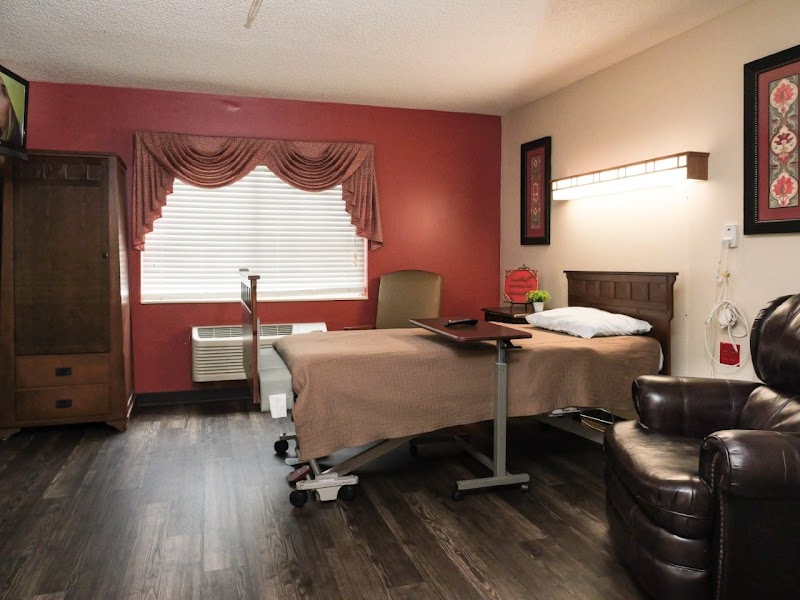
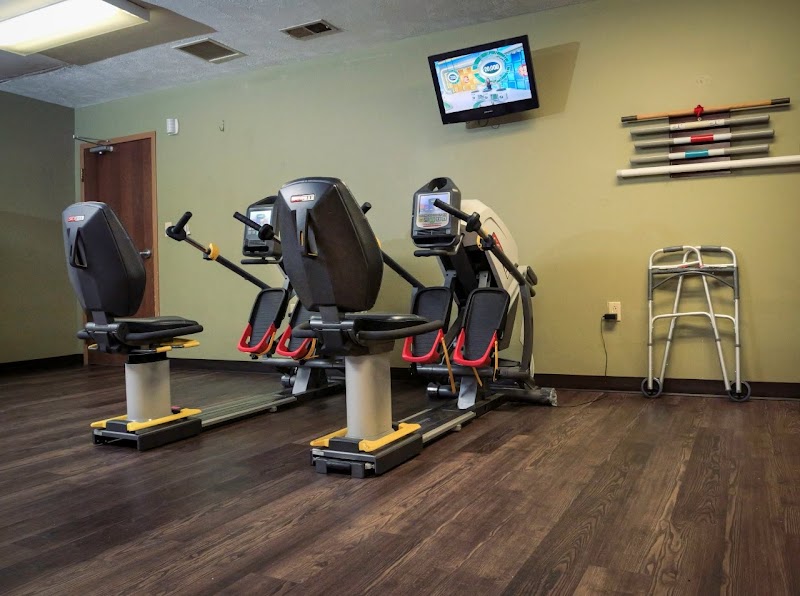
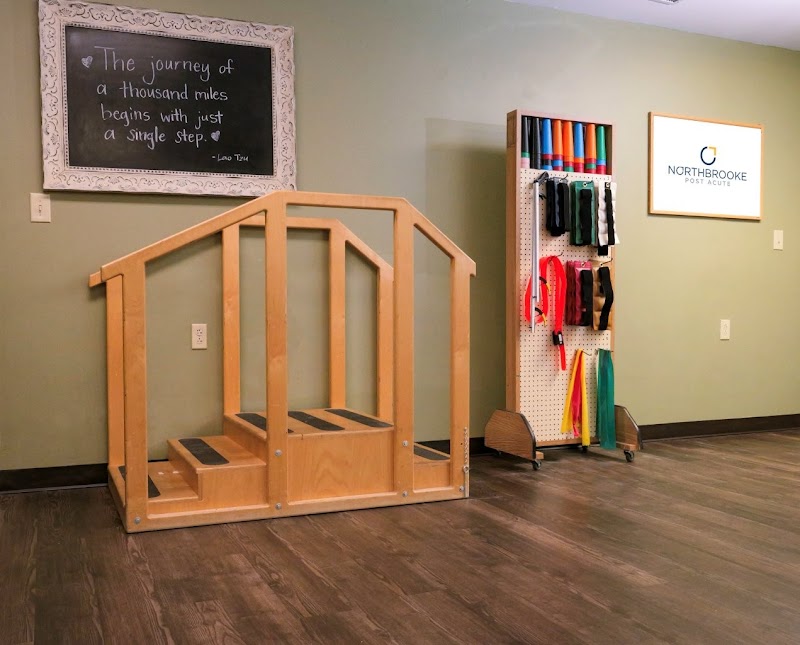
NORTHBROOKE POST ACUTE

121 PHYSICIANS DR, JACKSON, TN 38305 (731) 664-5050
For profit - Corporation 120 Beds LINKS HEALTHCARE GROUP Data: November 2025 1 Immediate Jeopardy citation
Trust Grade
16/100
#271 of 298 in TN
Last Inspection: April 2025

Within standard 12-15 month inspection cycle. Federal law requires annual inspections.

Overview

Northbrooke Post Acute in Jackson, Tennessee, has received a Trust Grade of F, indicating significant concerns about the quality of care provided. They rank #271 out of 298 facilities in Tennessee, placing them in the bottom half, and #6 out of 6 in Madison County, meaning there are no better local options available. The situation is worsening, with the number of reported issues increasing from 9 in 2024 to 15 in 2025. Staffing is a major concern, with a low rating of 1 out of 5 stars and a high turnover rate of 76%, which is significantly above the state average. There were also alarming incidents, including a resident who eloped from the facility without staff knowledge, and failures to follow physician orders for pressure ulcer treatments, highlighting serious risks to resident safety and well-being.

Trust Score
F
16/100
In Tennessee
#271/298
Bottom 10%
Safety Record
High Risk
Review needed
Inspections
Getting Worse
9 → 15 violations
Staff Stability
⚠ Watch
76% turnover. Very high, 28 points above average. Constant new faces learning your loved one's needs.
Penalties
○ Average
$10,065 in fines. Higher than 60% of Tennessee facilities. Some compliance issues.
Skilled Nurses
⚠ Watch
Each resident gets only 20 minutes of Registered Nurse (RN) attention daily — below average for Tennessee. Fewer RN minutes means fewer trained eyes watching for problems.
Violations
⚠ Watch
33 deficiencies on record. Higher than average. Multiple issues found across inspections.
★☆☆☆☆
1.0
Overall Rating
★☆☆☆☆
1.0
Staff Levels
★★★☆☆
3.0
Care Quality
★★☆☆☆
2.0
Inspection Score
Stable
2024: 9 issues
2025: 15 issues

The Good

  • Full Sprinkler Coverage · Fire safety systems throughout facility
  • No fines on record

Facility shows strength in fire safety.

The Bad

1-Star Overall Rating

Below Tennessee average (2.8)

Significant quality concerns identified by CMS

Staff Turnover: 76%

30pts above Tennessee avg (46%)

Frequent staff changes - ask about care continuity

Federal Fines: $10,065

Below median ($33,413)

Minor penalties assessed

Chain: LINKS HEALTHCARE GROUP

Part of a multi-facility chain

Ask about local staffing decisions and management

Staff turnover is very high (76%)

28 points above Tennessee average of 48%

The Ugly 33 deficiencies on record

1 life-threatening
Apr 2025 15 deficiencies
CONCERN (D)

Potential for Harm - no one hurt, but risky conditions existed

Deficiency F0553 (Tag F0553)

Could have caused harm · This affected 1 resident

**NOTE- TERMS IN BRACKETS HAVE BEEN EDITED TO PROTECT CONFIDENTIALITY** Based on policy review, medical record review, and interview, the facility failed to ensure Care Plan conference meetings were h...

Read full inspector narrative →
**NOTE- TERMS IN BRACKETS HAVE BEEN EDITED TO PROTECT CONFIDENTIALITY** Based on policy review, medical record review, and interview, the facility failed to ensure Care Plan conference meetings were held at least quarterly for 3 of 25 (Resident #4, #17 and #28) sampled residents reviewed for care plan meetings. The findings include: 1. Review of the facility policy titled Resident Participation - Care Plan, dated 2021, revealed .Spouses and other members of the family may participate in the development of the person-centered care plan with the resident's permission .The care planning process: facilitates the inclusion of the resident and /or representative .holding care planning meetings at times of day when the resident, representative and family members can attend and are functioning at their best .The social services director or designee is responsible for notifying the resident/representative and for maintaining records . 2. Review of the medical record review revealed Resident #4 was admitted to the facility on [DATE], with diagnoses including End Stage Renal Disease, Osteomyelitis, Chronic Obstructive Pulmonary Disease, and Methicillin Resistant Staphylococcus Aureus Infection. Review of the quarterly Minimum Data Set (MDS) assessment dated [DATE], revealed a Brief Interview for Mental Status (BIMS) score of 14, which indicated Resident #4 was cognitively intact. Review of the Interdisciplinary Team Care Plan Review dated 7/2/2024 revealed Resident #4 nor his representative was invited to the Care Plan meeting after the completion of the 3/19/2025 MDS assessment. Review of the quarterly MDS assessment dated [DATE], revealed a BIMS score of 15, which indicated Resident #4 was cognitively intact. Review of the Interdisciplinary Team Care Plan Review dated 10/9/2024, revealed Resident #4 nor his representative was invited to the Care Plan meeting after the completion of the 10/1/2024 MDS assessment. Review of the quarterly MDS dated [DATE], revealed a BIMS score of 15, which indicated Resident #4 was cognitively intact. Review of the Interdisciplinary Team Care Plan Review dated 1/2/2025, revealed Resident #4 nor his representative was invited to the Care Plan meeting after the completion of the 1/2/2025 MDS assessment. During an interview on 4/13/2025 at 3:06 PM, Resident #4 was asked if he participates in the Care Plan meetings, Resident #4 stated, I don't know what that is, and have never been to one During an interview on 4/14/2025 at 3:06 PM, the Regional MDS, confirmed Care Plan meetings should be completed on admission and quarterly, and Resident #4 nor his representative was present for the care plan meetings on 7/2/2024, 10/9/2024 and 1/2/2025. 3. Review of the medical record revealed Resident # 17 was admitted to the facility on [DATE], with diagnoses including Atrial Fibrillation, Heart Failure, and Osteoarthritis. Review of the quarterly MDS assessment dated [DATE], revealed a BIMS score of 15, which indicated Resident # 17 was cognitively intact. Review of the Interdisciplinary Team (IDT) Care Plan Review dated 12/20/2024, revealed no documentation that the resident or representative was invited or attended the care plan meeting. During an interview 4/13/2025 at 12:28 PM, the resident confirmed that she was not aware of any care plan meetings. During an interview on 4/15/2025 at 10:20 AM, the SW confirmed that the MDS Coordinator or SW are responsible for inviting the residents to the Care Plan Meetings. SW confirmed that the meeting notes and IDT Care Plan Review should reflect all who attended and the resident's signature if she attended. 4. Review of the medical record review revealed Resident #28 was admitted to the facility on [DATE], with diagnoses including Cerebrovascular Disease with Hemiplegia, Dementia, Morbid Obesity, Pseudobulbar Affect, Anxiety, and Diabetes. Review of the quarterly MDS assessment dated [DATE], revealed a BIMS score of 14, which indicated Resident #28 was cognitively intact. Review of the Interdisciplinary Team Care Plan Review dated 10/19/2024, revealed Resident #28 nor her representative was invited to the Care Plan meeting after the completion of the 9/16/2024 MDS assessment. Review of the quarterly MDS assessment dated [DATE], revealed a BIMS score of 14, which indicated Resident #28 was cognitively intact. Review of the Interdisciplinary Team Care Plan Review dated 12/30/2024, revealed Resident #28 nor her representative was invited to the Care Plan meeting after the completion of the 12/17/2024 MDS assessment. Review of the annual MDS assessment dated [DATE] revealed a BIMS score of 15, which indicated Resident #28 was cognitively intact. The facility is unable to provide the Interdisciplinary Team Care Plan Review meeting for the 3/17/2025 MDS assessment. During an interview on 04/13/2025 at 12:39 PM, Resident #28 was asked if she participates in the Care Plan process and attend the meetings. Resident #28 stated, I don't think I have been to a care plan meeting. During an interview on 4/15/2025 at 10:17 AM, the Regional MDS was asked how often the resident and/or family should be invited to a Care Plan meeting. The Regional MDS stated, .on admission, annually, and quarterly . The Regional MDS confirmed the IDT (Interdisciplinary Team) had not had a Care Plan meeting in March 2025 after the completion of the 3/17/2025 MDS assessment.
CONCERN (D)

Potential for Harm - no one hurt, but risky conditions existed

Deficiency F0567 (Tag F0567)

Could have caused harm · This affected 1 resident

**NOTE- TERMS IN BRACKETS HAVE BEEN EDITED TO PROTECT CONFIDENTIALITY** Based on the facility policy, Patient Trust record review and interview the facility failed to assure residents who have authori...

Read full inspector narrative →
**NOTE- TERMS IN BRACKETS HAVE BEEN EDITED TO PROTECT CONFIDENTIALITY** Based on the facility policy, Patient Trust record review and interview the facility failed to assure residents who have authorized the facility in writing to manage any personal funds have ready and reasonable access to those funds for 2 of 19 (Resident #35 and #51) sampled residents reviewed for personal funds. The findings include: 1. Review of the policy titled Links Healthcare Resident Trust Policy, dated 1/1/2019 revealed the facility will .maintain a resident trust fund for residents who desire to participate .To establish a policy and procedure that will ensure the integrity of the resident funds received at the facility through safeguards and accurate records of resident funds with verification through a reconciliation process .Petty cash .Upon request from resident or authorized representative to withdraw funds .The funds will be given directly to the resident or authorized representative within a reasonable time period of the request . 2. Review of medical records revealed Resident #35 was admitted to the facility on [DATE], with diagnoses including Hemiplegia and Hemiparesis, Metabolic Encephalopathy and Major Depressive Disorder. Review of the quarterly Minimum Data Set (MDS) assessment dated [DATE], revealed a Brief Interview Mental Status (BIMS) score of 14, which indicated Resident #35 was cognitively intact. 3. Review of medical records revealed Resident #51 was admitted to the facility on [DATE], with diagnoses including Diabetes, Anxiety Disorder and Chronic Diastolic Congestive Heart Failure. Review of the annual MDS assessment dated [DATE], revealed a BIMS score of 15, which indicated Resident #51 was cognitively intact. 4. During a Resident Council Meeting in the activity room on 4/15/2025 at 2:00 PM, 17 Residents were asked whether they had access to resident funds during after-hours and on weekends and residents responded no. Two residents (Resident #35 and Resident #51) verbalized they were not able to access their accounts at night and on the weekend and would like to have access to their funds. During an interview on 4/15/2025 at 4:30 PM, the Account Receivable (AR) Consultant stated the receptionist would be responsible for dispensing cash to the residents after hours and on the weekends. When asked if they currently have a receptionist that would be responsible, she stated, the facility is working on a plan to get money available for the residents during the nights and weekends. The facility was currently working on the dynamics of getting the funds available because they are aware of the regulations. Review of Resident Fund Management Service Statements revealed that both Resident #35 and Resident #51 have funds available.
CONCERN (D)

Potential for Harm - no one hurt, but risky conditions existed

Deficiency F0569 (Tag F0569)

Could have caused harm · This affected 1 resident

**NOTE- TERMS IN BRACKETS HAVE BEEN EDITED TO PROTECT CONFIDENTIALITY** Based on policy review, medical record review, withdrawal record review, and interview, the facility failed to refund 3 of 3 (Re...

Read full inspector narrative →
**NOTE- TERMS IN BRACKETS HAVE BEEN EDITED TO PROTECT CONFIDENTIALITY** Based on policy review, medical record review, withdrawal record review, and interview, the facility failed to refund 3 of 3 (Resident #329, #330, and #331) resident's account balances within 30 days of death. The findings include: 1. Review of the facility policy .Resident Trust Policy, dated 1/1/2019, revealed .The facility will surrender all resident trust funds of the resident or authorized representative within three (3) normal banking days upon discharge of the resident or within thirty (30) days upon the death of a resident. 2. Review of the medical record revealed Resident #329 was admitted to the facility on [DATE], with diagnoses including Hemiplegia, Pressure Ulcer, Vascular Dementia, and Depression. Review of Nurse's Note dated 3/4/2025, revealed Funeral director arrived and removed body from room . Review of the facility's Withdrawal Record dated 4/15/2025, revealed a refund for the amount of $25.40 was processed for resident's family on 4/15/2025. 3. Review of the medical record revealed Resident #330 was admitted to the facility on [DATE], with diagnoses including Kidney Failure, Sepsis, Parkinson's Disease, and Hemiplegia. Review of Nurse's Note dated 2/15/2025, revealed .this nurse assessed resident, vs [vital signs] unable to be obtained, contacted hospice services to notify of change in condition, nurse arrived at approx [approximately] 0330 [3:30 AM] .funeral home arrived and retrieved resident . Review of the facility's Withdrawal Record dated 4/15/2025, revealed a refund for the amount of $772.89 was processed for the Resident's estate on 4/15/2025. 4. Review of the medical record revealed Resident #331 was admitted to the facility on [DATE], with diagnoses including Dementia, Anxiety, and Dysphagia. Review of the Nurse's Note dated 1/26/2025, revealed .The DON [Director of Nursing] pronounce the death time at 1658 [4:58 PM] . Review of the facility's Withdrawal Record dated 4/15/2025, revealed a refund for the amount of $1,617.29 was processed for the Resident's estate on 4/15/2025. 5. During an interview on 4/15/2025 at 4:16 PM, the Accounts Receivable staff confirmed that the resident's account balances were refunded late.
CONCERN (D)

Potential for Harm - no one hurt, but risky conditions existed

Deficiency F0578 (Tag F0578)

Could have caused harm · This affected 1 resident

**NOTE- TERMS IN BRACKETS HAVE BEEN EDITED TO PROTECT CONFIDENTIALITY** Based on policy review, record review, and interview, the facility failed to provide information to the residents regarding thei...

Read full inspector narrative →
**NOTE- TERMS IN BRACKETS HAVE BEEN EDITED TO PROTECT CONFIDENTIALITY** Based on policy review, record review, and interview, the facility failed to provide information to the residents regarding their right to formulate an advance directive for 13 of 25 (Residents #4, #11, #17, #27, #30, #34, #37, #49, #61, #62, #278, #279, and #478) residents reviewed for advance directives. The findings include: 1. Review of the facility's policy titled Advance Directives, dated September 2022, revealed .The resident has the right to formulate an advance directive, including the right to accept or refuse medical or surgical treatment. Advance directives are honored in accordance with state law and facility policy .Advance Directive-a written instruction, such as a living will or durable power of attorney for health care, recognized by state law (whether statutory or as recognized by the courts of the state), relating to the provisions of health care when the individual is capacitated .Prior to or upon admission of a resident, the social services director or designee inquires of the resident, his/her family members and/or his or her legal representative, about the existence of any written advance directives .The resident or representative is provided with written information concerning the right to refuse or accept medical or surgical treatment and to formulate an advance directive if he or she chooses to do so .Written information about the right to accept or refuse medical or surgical treatment, and the right to formulate an advance directive is provided in a manner that is easily understood by the resident or representative . 2. Review of the medical record revealed Resident #4 was admitted to the facility on [DATE], with diagnoses including End Stage Renal Disease, Osteomyelitis Left Ankle and Foot, Chronic Obstructive Pulmonary Disease, Hepatic Encephalopathy, and Methicillin Resistant Staphylococcus Aureus Infection. Review of the annual Minimum Data Set (MDS) assessment dated [DATE], revealed Resident #4 had a Brief Interview for Mental Status (BIMS) score of 15, which indicated cognitively intact. There was no documentation in the medical record if Resident #4 had an Advance Directive or if the Resident would like to formulate an Advance Directive. 3. Review of the medical record revealed Resident #11 was admitted to the facility on [DATE], with diagnoses including Gastrotomy, Dementia, and Cerebral Infraction, and Dysphagia. Review of the admission MDS assessment dated [DATE], revealed Resident #11 had a BIMS score of 3, which indicated severe cognitive impairment. The facility was unable to provide completed documentation that the resident representative was educated regarding advanced directives and/or to formulate an advance directive. 4. Review of the medical record revealed Resident #17 was admitted to the facility on [DATE], with diagnoses including Atrial Fibrillation, Heart Failure, and Osteoarthritis. Review of the quarterly MDS assessment dated [DATE], revealed a BIMS score of 15, which indicated Resident #17 was cognitively intact. The facility was unable to provide written documentation or education for formulating Advance Directive was provided to the resident. 5. Review of the medical record revealed Resident #27 was admitted to the facility on [DATE] and readmitted on [DATE] with diagnoses including Peripheral Vascular Disease, Osteomyelitis Left Ankle and Foot, Chronic Kidney Disease Stage 4, Left Below Knee Amputation and Diabetes. Review of the quarterly MDS assessment dated [DATE], revealed Resident #27 had a BIMS score of 15, which indicated cognitively intact. The facility was unable to provide written documentation or education for formulating Advance Directive was provided to the resident. 6. Review of the medical record revealed Resident #30, was admitted to the facility on [DATE], with diagnoses including Metabolic Encephalopathy, Acute Pulmonary Edema, and Acute/Chronic Respiratory Failure. Review of the admission MDS assessment dated [DATE], revealed a Brief Interview for Mental Status (BIMS) score of 5, which indicated Resident #30 has severe cognitive impairment. The facility was unable to provide completed documentation that the resident representative was educated regarding advanced directives and/or to formulate an advance directive. 7. Review of the medical record review revealed Resident #34 was admitted to the facility on [DATE], with diagnoses including Covid-19, Senile Degeneration, Vascular Dementia, and Diabetes. Review of the quarterly MDS assessment dated [DATE], revealed Resident #34 had a BIMS score of 9, which indicated moderate cognitive impairment. The facility was unable to provide completed documentation that the resident representative was educated regarding advanced directives and/or to formulate an advance directive. 8. Review of the medical record revealed Resident #37 was admitted to the facility on [DATE], with diagnoses including Depression, and Cerebral Infraction, Hemiplegia and Hemiparesis. Review of the admission MDS assessment dated [DATE] revealed Resident #37 had a BIMS score of 7, which indicated severe cognitive impairment. The facility was unable to provide completed documentation that the resident representative was educated regarding advanced directives and/or to formulate an advance directive. 9. Review of the medical record revealed Resident #49 was admitted to the facility on [DATE], with diagnoses including Sepsis, Candidal Stomatitis, Dyspnea, Fracture of Left Pubis, Venous Insufficiency, and Dementia. No MDS completed at this time. The facility was unable to provide completed documentation that the resident representative was educated regarding advanced directives and/or to formulate an advance directive. 10. Review of the medical record revealed Resident #61 was admitted to the facility on [DATE], with diagnoses including Gastrostomy, Dysphagia, and Parkinson's Disease. Review of the admission MDS assessment dated [DATE], revealed Resident #61 had a BIMS score of 14, which indicated intact cognition. The facility was unable to provide completed documentation that the resident was educated regarding advanced directives and/or to formulate an advance directive. 11. Review of the medical record revealed Resident #62 was admitted to the facility on [DATE], with diagnoses including Cerebral Infarction with Hemiplegia, Diabetes, Morbid Obesity, and Depression. Review of the quarterly MDS assessment dated [DATE], revealed Resident #62 has a BIMS score of 15, which indicated cognitively intact. The facility was unable to provide completed documentation that the resident was educated regarding advanced directives and/or to formulate an advance directive. 12. Review of the medical record revealed Resident #278 was admitted to the facility on [DATE], with diagnoses including Hemiplegia and Hemiparesis, Diabetes, and Peripheral Vascular Disease. No MDS completed at this time. The facility was unable to provide completed documentation that the resident was educated regarding advanced directives and/or to formulate an advance directive. 13. Review of medical records revealed Resident #279 was admitted to the facility on [DATE], with diagnoses including Inflammatory Disorder of Scrotum, Acute Respiratory Failure and Diabetes. No MDS completed at this time. The facility was unable to provide completed documentation that the resident was educated regarding advanced directives and/or to formulate an advance directive. 14. Review of the medical record revealed Resident #478, was admitted to the facility on [DATE], with diagnoses including, Chronic Kidney Disease Stage 3, Chronic Pain, Gastrointestinal Hemorrhage, and Chronic Obstructive Pulmonary Disease. No MDS completed at this time. The facility was unable to provide completed documentation that the resident was educated regarding advanced directives and/or to formulate an advance directive. 15. During an interview on 4/15/2025 at 10:45 AM, with the Administrator in Training (AIT) and the Social Worker, in the Social Service office, was shown the advance directives given. AIT and SW confirmed that the forms provided are incomplete of information needed for advance directives. They are unable to provide what education was provided or resident or family members initials signatures also if resident was offered or declined or assisted with advance directives.
CONCERN (D)

Potential for Harm - no one hurt, but risky conditions existed

Quality of Care (Tag F0684)

Could have caused harm · This affected 1 resident

**NOTE- TERMS IN BRACKETS HAVE BEEN EDITED TO PROTECT CONFIDENTIALITY** Based on policy review, medical record review, observations and interview the facility failed to obtain a Physician's Orders for...

Read full inspector narrative →
**NOTE- TERMS IN BRACKETS HAVE BEEN EDITED TO PROTECT CONFIDENTIALITY** Based on policy review, medical record review, observations and interview the facility failed to obtain a Physician's Orders for foley catheter care for 1 of 25 (Resident #6) sampled residents reviewed for urinary catheter care and failed to follow physician orders for 1 of 25 (Resident #63) sampled residents, and The findings include: 1. Review of the policy titled Enhanced Barrier Precautions dated August 2022, revealed Enhanced barrier precautions (EBPs) are utilized to prevent the spread of multi-drug resistant organisms (MDROs) to residents .EBPs remain in place for the duration of the resident's stay or until resolution of the wound and/or indwelling medical devices regardless of MDROs colonization. 2. Review of the medical record revealed Resident #63 was admitted to the facility on [DATE], with diagnoses including Severe Protein-Calorie Malnutrition, Diabetes, Gastrostomy, Anxiety, Brief Psychotic Disorder, and Alzheimer's Disease. Review of the quarterly Minimum Data Set (MDS) assessment dated [DATE], revealed a Brief Interview for Mental Status (BIMS) score of 5, which indicated Resident #63 was severely cognitively impaired. Resident was dependent for bed mobility, transfers, eating, and toileting. Review of the Care Plan dated 2/21/2025, revealed a focus for depression, pain, psychotropic medications, and hypothyroidism. Review of the Physician Order dated 6/26/2024, revealed .LEVOTHYROXIN TAB 25MCG [microgram] Give 1 tablet orally in the morning related to HYPOTHYROIDISM . Review of the Physician Order dated 9/6/2024, revealed .DIVALPROEX CAP 125MG [milligram] .Give 4 capsule orally in the morning .And Give 2 capsule orally two times a day related to BRIEF PSYCHOTIC DISORDER . Review of the Physician order dated 9/20/2025, revealed .INSULIN ASPART 100UNIT/ML [milliliters] SOLN [solution] Inject as per sliding scale .intramuscularly before meals and a bedtime related to TYPE 2 DIABETES . Review of the Physician order dated 10/14/2024, revealed .RISPERIDONE TAB 0.5MG Give 1 tablet orally three times a day related to BRIEF PSYCHOTIC DISORDER . Review of the Physician order dated 1/13/2025, revealed .MEGESTROL AC [acetate] [NAME] [suspension] 40MG/ML [milliliter] Give 10 ml orally three times a day for appetite . Review of Resident #63's MAR (medication administration record) dated 2/2025, revealed the following medications were not administered as ordered on 2/6/2025. a. Divalproex 125mg was not administered for the 6:00 AM dose. b. Levothyroxine 25mcg was not administered for the 6:00 AM dose. c. Megestrol AC 40mg/ml was not administered for the 6:00 AM dose. d. Insulin Aspart 100unit/ml was not administered for the 5:00 AM dose. Review of Resident #63's MAR dated 2/2025, revealed the following medications were not administered as ordered on 2/9/2025. a. Divalproex 125mg was not administered for the 6:00 AM dose. b. Levothyroxine 25mcg was not administered for the 6:00 AM dose. c. Megestrol AC (acetate) 40mg/ml was not administered for the 6:00 AM dose. d. Insulin Aspart 100unit/ml was not administered for the 5:00 AM dose. e. Risperidone 0.5mg was not administered for the 6:00 AM dose. Review of Resident #63's MAR dated 2/2025, revealed the following medications were not administered as ordered on 2/10/2025. a. Divalproex 125mg was not administered for the 6:00 AM dose. b. Levothyroxine 25mcg was not administered for the 6:00 AM dose. c. Megestrol AC 40mg/ml was not administered for the 6:00 AM dose. d. Insulin Aspart 100unit/ml was not administered for the 5:00 AM dose. e. Risperidone 0.5mg was not administered for the 6:00 AM dose. Review of Resident #63's MAR dated 2/2025, revealed the following medications were not administered as ordered on 2/21/2025. a. Insulin Aspart 100unit/ml was not administered for the 4:00 PM dose. Review of Resident #63's MAR dated 2/2025, revealed the following medications were not administered as ordered on 2/23/2025. a. Divalproex 125mg was not administered for the 6:00 AM dose. b. Levothyroxine 25mcg was not administered for the 6:00 AM dose. c. Megestrol AC 40mg/ml was not administered for the 6:00 AM dose. d. Insulin Aspart 100unit/ml was not administered for the 5:00 AM dose. e. Risperidone 0.5mg was not administered for the 6:00 AM dose. Review of Resident #63's MAR dated 3/2025, revealed the following medications were not administered as ordered on 3/2/2025. a. Insulin Aspart 100unit/ml was not administered for the 5:00 AM dose. Review of Resident #63's MAR dated 3/2025, revealed the following medications were not administered as ordered on 3/10/2025. a. Divalproex 125mg was not administered for the 6:00 AM dose. b. Levothyroxine 25mcg was not administered for the 6:00 AM dose. c. Megestrol AC 40mg/ml was not administered for the 6:00 AM dose. d. Risperidone 0.5mg was not administered for the 6:00 AM dose. e. Insulin Aspart 100unit/ml was not administered for the 5:00 AM dose. Review of Resident #63's MAR dated 3/2025, revealed the following medications were not administered as ordered on 3/11/2025. a. Insulin Aspart 100unit/ml was not administered for the 5:00 AM dose. Review of Resident #63's MAR dated 3/2025, revealed the following medications were not administered as ordered on 3/14/2025. a. Divalproex 125mg was not administered for the 6:00 AM dose. b. Levothyroxine 25mcg was not administered for the 6:00 AM dose. c. Megestrol AC 40mg/ml was not administered for the 6:00 AM dose. d. Risperidone 0.5mg was not administered for the 6:00 AM dose. e. Insulin Aspart 100unit/ml was not administered for the 5:00 AM dose. Review of Resident #63's MAR dated 3/2025, revealed the following medications were not administered as ordered on 3/18/2025. a. Megestrol AC 40mg/ml was not administered for the 11:00 AM dose. b. Insulin Aspart 100unit/ml was not administered for the 4:00 PM dose. Review of Resident #63's MAR dated 3/2025, revealed the following medications were not administered as ordered on 3/19/2025. a. Divalproex 125mg was not administered for the 6:00 AM dose. b. Levothyroxine 25mcg was not administered for the 6:00 AM dose. c. Megestrol AC 40mg/ml was not administered for the 6:00 AM dose. d. Risperidone 0.5mg was not administered for the 6:00 AM dose. e. Insulin Aspart 100unit/ml was not administered for the 5:00 AM dose. Review of Resident #63's MAR dated 3/2025, revealed the following medications were not administered as ordered on 3/20/2025. a. Insulin Aspart 100unit/ml was not administered for the 11:00 AM and 4:00 PM dose b. Megestrol AC 40mg/ml was not administered for the 11:00 AM dose. Review of Resident #63's MAR dated 3/2025, revealed the following medications were not administered as ordered on 3/20/2025. a. Insulin Aspart 100unit/ml was not administered for the 4:00 PM dose Review of Resident #63's MAR dated 3/2025, revealed the following medications were not administered as ordered on 3/23/2025. a. Divalproex 125mg was not administered for the 6:00 AM dose. b. Levothyroxine 25mcg was not administered for the 6:00 AM dose. c. Megestrol AC 40mg/ml was not administered for the 6:00 AM dose. d. Risperidone 0.5mg was not administered for the 6:00 AM dose. e. Insulin Aspart 100unit/ml was not administered for the 5:00 AM dose. Review of Resident #63's MAR dated 3/2025, revealed the following medications were not administered as ordered on 3/25/2025. a. Divalproex 125mg was not administered for the 6:00 AM dose. b. Levothyroxine 25mcg was not administered for the 6:00 AM dose. c. Megestrol AC 40mg/ml was not administered for the 6:00 AM dose. d. Risperidone 0.5mg was not administered for the 6:00 AM dose. e. Insulin Aspart 100unit/ml was not administered for the 5:00 AM dose. Review of Resident #63's MAR dated 3/2025, revealed the following medications were not administered as ordered on 3/27/2025. a. Divalproex 125mg was not administered for the 6:00 AM dose. b. Levothyroxine 25mcg was not administered for the 6:00 AM dose. c. Megestrol AC 40mg/ml was not administered for the 6:00 AM dose. d. Risperidone 0.5mg was not administered for the 6:00 AM dose. e. Insulin Aspart 100unit/ml was not administered for the 5:00 AM dose. Review of Resident #63's MAR dated 4/2025, revealed the following medications were not administered as ordered on 4/6/2025. a. Divalproex 125mg was not administered for the 6:00 AM dose b. Levothyroxine 25mcg was not administered for the 6:00 AM dose c. Megestrol AC 40mg/ml was not administered for the 6:00 AM dose d. Risperidone 0.5mg was not administered for the 6:00 AM dose e. Insulin Aspart 100 unit/ml was not administered for the 5:00 AM dose. Review of Resident #63's MAR dated 4/2025, revealed the following medications were not administered as ordered on 4/10/2025. a. Divalproex 125mg was not administered for the 6:00 AM dose b. Levothyroxine 25mcg was not administered for the 6:00 AM dose c. Megestrol AC 40mg/ml was not administered for the 6:00 AM dose d. Risperidone 0.5mg was not administered for the 6:00 AM dose e. Insulin Aspart 100 unit/ml was not administered for the 5:00 AM dose. Review of Resident #63's MAR dated 4/2025, revealed the following medications were not administered as ordered on 4/11/2025. a. Divalproex 125mg was not administered for the 6:00 AM dose b. Levothyroxine 25mcg was not administered for the 6:00 AM dose c. Megestrol AC 40mg/ml was not administered for the 6:00 AM dose d. Risperidone 0.5mg was not administered for the 6:00 AM dose e. Insulin Aspart 100 unit/ml was not administered for the 5:00 AM dose. Review of Resident #63's MAR dated 4/2025, revealed the following medications were not administered as ordered on 4/12/2025. a. Insulin Aspart 100 unit/ml was not administered for the 5:00 AM dose. During an interview of 4/16/2025 at 8:41 AM, the Director of Nursing (DON) was made aware that there were multiple blanks on the residents MAR for scheduled medications in February, March, and April 2025, and no documentation showing reasoning for unsigned medications. The DON was asked if scheduled medication administrations should be signed out. The DON stated, Yes, it should be signed out. The DON was asked if an unsigned medication administration represents an error or missed dose. The DON stated, If it's not signed out you have to assume it wasn't done. 3. Review of the medical record revealed Resident #6 was admitted to the facility on [DATE], with diagnoses including Metabolic Encephalopathy, Acute Respiratory Failure and Chronic Kidney Disease, Stage 3. Review of the Annual MDS assessment dated [DATE], revealed a BIMS score of 10 which indicated Resident #6 was moderately cognitively impaired. There was no indwelling catheter noted. Review of the undated Care Plan revealed Resident #6 was .receiving diuretics on a regular basis .at risk for UTI due to history of UTIs [urinary tract infections] .unable to maintain O2 [oxygen] Saturation. Receives oxygen as ordered .has oxygen therapy r/t [related to] respiratory failure, CHF [Congestive Heart Failure], Enhance Barrier Precautions Required: Resident requires enhanced barrier precautions during high contact resident care activities secondary to indwelling catheter and wound [4/13/2025] .has an Indwelling Catheter [4/13/2025] . Review of the Fluid Output dated 4/12/2025, revealed Resident # had a urinary output of 300. Observation in Resident #6's room on 4/13/2025 at 8:49 AM, revealed a urinary catheter bag attached to the left side of bed and no enhanced barrier precaution signage on the door. Review of the Order Summary Report revealed Resident#6 had no order for indwelling catheter and Enhanced Barrier Precautions. Review of the progress notes during the month of April 2025, revealed no documentation of insertion of indwelling catheter. During an interview on 4/13/2025 at 12:30 PM, LPN A was asked whether there was an order for an indwelling catheter, and she verified no order was found. She also verified there was no signage on the door. During an interview on 4/16/2025 at 7:50 AM, Nurse P was asked when indwelling catheter for Resident #6 was placed, she stated there was no documentation related to catheter placement. Nurse P stated whoever placed the order for the foley should have placed the order for enhanced precautions. During an interview on 4/16/2025 at 8:13 AM, the DON stated an order should be obtained prior to the placement of an indwelling catheter, Enhanced Barrier Precautions should be ordered prior to placement of the indwelling catheter and documentation of the insertion of the indwelling catheter should be done.
CONCERN (D) 📢 Someone Reported This

A family member, employee, or ombudsman was alarmed enough to file a formal complaint

Potential for Harm - no one hurt, but risky conditions existed

Accident Prevention (Tag F0689)

Could have caused harm · This affected 1 resident

**NOTE- TERMS IN BRACKETS HAVE BEEN EDITED TO PROTECT CONFIDENTIALITY** Based on policy review, medical record review, and interview, the facility failed to follow interventions to prevent falls for 1...

Read full inspector narrative →
**NOTE- TERMS IN BRACKETS HAVE BEEN EDITED TO PROTECT CONFIDENTIALITY** Based on policy review, medical record review, and interview, the facility failed to follow interventions to prevent falls for 1 of 4 (Resident #328) reviewed for falls. The findings include: 1. Review of the facility policy titled, Falls and Fall Risk Managing, revised 3/2018, revealed .the staff will identify interventions related to the resident's specific risks and causes to try to prevent the resident from falling and to try to minimize complications from falling . 2. Review of the medical record revealed Resident #328 was admitted to the facility on [DATE], with diagnoses including Chronic Obstructive Pulmonary Disease, Anxiety, Depression, Diabetes, Malignant Neoplasm of Breast, and Abdominal Aortic Aneurysm. Review of the Care Plan dated 1/17/2025, revealed .At Risk for Falls R/T [related to] weakness, difficulty with transfers .Interventions .use [Named] lift [mechanical device used to transfer individuals with mobility limitations from one surface to another] and 2 assist [assistance] for transfers ., Review of the admission Minimum Data Set assessment dated [DATE], revealed a Brief Interview for Mental Status (BIMS) score of 12, which indicated Resident #328 was moderately cognitively impaired, and totally dependent on staff for transfers and had 1 fall with no injury since admission. Review of the Morse Fall assessment dated [DATE], revealed Resident #328 was at moderate risk for falls. Review of the facility's Fall Investigation dated 3/11/2025, revealed .Resident slid out of stand-up lift [mechanical lift that uses a sling to wrap around resident's waist and allows the resident to be in the standing position holding on to each side] while being transferred from her wheelchair to the bed .Resident stated arms slipped out of the sling .No injuries observed at the time of incident .Education needed on appropriate mechanical lifts for resident . Review of an Occupational Therapy [OT] Discharge Summary revealed .Dates of Service 2/4/2025- [to] 3/12/2025 .Chair/bed transfers .total dependency . Review of a Physical Therapy [PT] Discharge Summary revealed .Dates of Service 2/4/2025-3/12/2025 .not able to bring self to standing with mechanical sit to stand lift . During a telephone interview on 4/14/2025 at 8:10 PM, Certified Nursing Assistant (CNA) Q stated, .she wanted to be put in bed, I was not familiar on how she transferred from the wheelchair to the bed, I asked her how, she [Resident #328] .they use the stand up lift .myself and another aide attempted to transfer her from the wheelchair by lifting her under her arms, we could not do it so we got the stand-up lift .and we had her strapped to the lift but her arms gave out and she started to slide out of the lift to the floor .I did not look in the kiosk [electronic medical record] or care plan to see how to transfer her .the resident told me they use the stand up lift so I used it . During an interview on 4/15/2025 at 10:00 AM, the Therapy Director stated, .the resident was admitted . use Hoyer lift [mechanical lift that lifts the resident totally out of bed with a sling] for transfers and was total dependent with transfers .PT was working on sit to stand and stand-up lift and the parallel bars but [Resident #328] could not tolerate sit to stand lift .on admission she was a Hoyer lift for transfer and that never changed .it is documented on the care plan and the [NAME] [a manual plan of care used by CNAs to refer to for care] .Night shift should have looked at the Kiosk [NAME] or care plan on how to transfer . During an interview on 4/16/2025 at 9:12 AM, CNA R stated .it was not reported to her .on how this resident was to transfer from the wheelchair to the bed and we did not check the care plan or [NAME] summary .we should have checked before transferring the resident instead of asking the resident . During an interview on 4/16/2025 at 1:00 PM, the Director of Nursing (DON) stated, .Staff should look at the [NAME] or care plan before transferring a resident and not ask the resident .
CONCERN (D)

Potential for Harm - no one hurt, but risky conditions existed

Tube Feeding (Tag F0693)

Could have caused harm · This affected 1 resident

**NOTE- TERMS IN BRACKETS HAVE BEEN EDITED TO PROTECT CONFIDENTIALITY** Based on policy review, medical record review, observation, and interview, the facility failed to provide care and services for ...

Read full inspector narrative →
**NOTE- TERMS IN BRACKETS HAVE BEEN EDITED TO PROTECT CONFIDENTIALITY** Based on policy review, medical record review, observation, and interview, the facility failed to provide care and services for residents with enteral feedings when staff failed to ensure the enteral feeding, the feeding syringe and the flush solution were properly labeled for 2 of 3 sampled residents (Resident #11 and Resident #61) reviewed with Percutaneous Endoscopic Gastrostomy (PEG) tube feedings. The findings include: 1. Review of the policy titled, Enteral Nutrition, dated 11/2018, revealed Adequate nutritional support through enteral nutrition is provided to residents as ordered The nurse confirms that orders for enteral nutrition are complete .Complete orders include .the enteral product .specific enteral access device .administration method .volume and rate of administration .instructions for flushing . 2. Review of the medical record revealed Resident #11 was admitted to the facility on [DATE], with diagnoses including Gastrostomy Status, Dementia, and Cerebral Infraction, and Dysphagia. Review of the admission Minimum Data Assessment (MDS) assessment dated [DATE], revealed a Brief Interview for Mental Status (BIMS) score of 3, which indicated Resident #11 had severely impaired cognition and had a feeding tube. Review of the physician orders dated 4/1/2025 revealed .every shift for PEG tube Enteral Feeding: Glucerna 1.5 @ 65cc/hr [hour]via [by]PEG tube with 100ml [milliliters]water flush every 4 hours . Review of the physician orders dated 3/19/2025, revealed .every night shift for Peg tube ENTERAL: Change enteral syringe Q [every] 24hrs AND as needed for Peg tube Enteral: Change enteral syringe PRN [as needed] . Observation on 4/13/2025 at 8:57 AM, revealed Resident #11's enteral feeding and water bottle/bag was hung on the pole and running with no rate, no date, no resident's name, no time and no nurse initial. There was an undated, opened, bagged syringe on the pole. Observation on 4/13/2025 at 9:59 AM, revealed Resident #11's enteral feeding and the water bottle was labeled with the roommate's name, and had no rate. During interview 4/13/2025 10:05 AM, Licensed Practical Nurse (LPN) O confirmed when she entered Resident #11's room the enteral feeding and water bottle was not labeled. Observation and interview in the resident's room on 4/13/2025 at 10:09 AM, revealed LPN O confirmed she had written the wrong name on the resident's enteral feeding and water bottle. There was no rate on the enteral feeding and the water bottle had no date and rate. 3. Review of the medical record revealed Resident #61 was admitted to the facility on [DATE], with diagnoses including Gastrostomy Status, Dysphagia, and Parkinson's. Review of the admission MDS assessment dated [DATE], revealed a BIMS score of 14, which indicated Resident #61 had intact cognition, and had a feeding tube Review of the physician orders dated 4/2/2025 revealed .every shift for PEG tube Enteral Feeding: Glucerna 1.5 @ [at] 70ml/hr with 150ml of water Q4H continuously via PEG tube . Review of the physician orders dated 3/10/2025, revealed .every night shift for continuous feeding ENTERAL: Change enteral tubing Q 24hrs AND as needed for continuous feeding Enteral: Change enteral tubing PRN . Observation on 4/13/2025 at 9:08 AM, revealed Resident # 61 enteral feeding and water bottle was not labeled, except for the resident's last name room. During an interview on 4/13/2925 at 9:42 AM, Registered Nurse (RN) I confirmed the enteral syringe should be labeled with the nurse's initials, a date and should be changed every 24 hours . During an observation and interview in Resident#61's room on 4/13/2025 at 9:58 AM, Registered Nurse (RN) I confirmed the resident enteral feeding and water bottle had no label except the last name. During an interview on 4/16/2025 at 8:07 AM, the Director of Nurses was asked how enteral feeding and the water bottle for flushing should be labeled. The DON stated, With a date, rate, time, nurse initial, and the resident's name.
CONCERN (D)

Potential for Harm - no one hurt, but risky conditions existed

Respiratory Care (Tag F0695)

Could have caused harm · This affected 1 resident

**NOTE- TERMS IN BRACKETS HAVE BEEN EDITED TO PROTECT CONFIDENTIALITY** Based on policy review, medical record review, observation, and interview the facility failed to obtain physician orders, failed...

Read full inspector narrative →
**NOTE- TERMS IN BRACKETS HAVE BEEN EDITED TO PROTECT CONFIDENTIALITY** Based on policy review, medical record review, observation, and interview the facility failed to obtain physician orders, failed to ensure the physician orders were being followed, and failed to accurately care plan for 3 of 4 (Residents #29, #36, #478) sampled residents reviewed for respiratory therapy. The findings include: 1. Review of the facility policy titled Oxygen Administration, dated 4/2/2007, revealed .to provide guidelines for safe oxygen administration .Verify that there is a physician's order .Adjust the oxygen device so the proper flow of oxygen is being administered . Review of the facility policy titled Medication and Treatment Orders, dated 7/2016, revealed .Medication shall be administered only upon the written order of a person duly licensed and authorized to prescribe such medication in this state . 2. Review of the medical record revealed Resident # 29 was admitted to the facility on [DATE], with diagnoses including Acute Respiratory Failure, Diabetes, Heart Failure, and Depression. Review of the quarterly Minimum Data Set (MDS) assessment dated [DATE], revealed a Brief Interview for Mental Status (BIMS) score of 15, which indicated Resident # 29 was cognitively intact. Resident was on oxygen. Review of the Care Plan dated 4/3/2025, revealed . [named resident] has oxygen therapy .Oxygen settings .The resident has O2 [Oxygen] via [by way of] nasal .@ [at] 2 L [Liters] continuously . Observations in the Resident's room on 4/13/2025 at 9:13 AM, 4/14/2025 at 10:10 AM, and on 4/15/2025 at 8:02 AM, revealed resident with O2 at 2L via binasal cannula (BNC). The facility failed to obtain a physician's order for oxygen therapy. 3. Review of the medical record revealed Resident # 36 was admitted to the facility on [DATE], with diagnoses including Respiratory Failure, Bipolar Disorder, Dysphagia, and Tracheostomy. Review of the annual MDS assessment dated [DATE], revealed a BIMS score of 99 due to severely cognitively impaired. Resident # 36 was on continuous oxygen therapy. Review of the Care Plan dated 3/12/2025, revealed .receives Oxygen Therapy @ [at] 2L/min [2 Liters per minute] via [by way of] trach mask .has Tracheostomy . Observation in the Resident's room on 4/13/2025 at 2:50 PM, revealed resident with oxygen [o2] concentrator at bedside set on 6.5 L via tracheostomy (trach). Observations in the Resident's room on 4/14/2025 at 8:09 AM, 4:46 PM, and on 4/15/2025 at 8:00 AM, revealed resident with O2 concentrator at 7L via trach. During an interview on 4/16/2025 at 8:42 AM, the Director of Nursing (DON) confirmed that oxygen should have an order and the care plan should match. The facility failed to obtain a physician's order for the quantity of liters for oxygen therapy and the care plan was not accurate. 4. Review of the medical record revealed Resident #478, was admitted to the facility on [DATE], with diagnoses including, Chronic Kidney Disease Stage 3, Chronic Pain, and Chronic Obstructive Pulmonary Disease. Review of the Physician's Orders dated 4/11/2025, revealed .oxygen administer O2 [oxygen] @ [at] 2L/min [Liters per minute] via [by way of] BNC [binasal cannula] continuously . Review of Care plan dated 4/13/2025, revealed . OXYGEN SETTINGS: The resident has O2 via nasal cannula @ 2L continuously .Administer medications as ordered by physician . Observation in the resident's room on 4/13/2025 at 09:26 AM, revealed Resident #478 received oxygen at 8L BNC. Observation and interview in the resident's room on 4/13/2025 at 11:49 AM, revealed Resident #478 received oxygen at 8 Liters BNC. RN I confirmed the oxygen should be on 2L BNC, During an interview on 04/16/2025 at 8:12 AM, the DON confirmed staff should follow physician orders. The facility failed to follow physician order for oxygen therapy flow rate.
CONCERN (D) 📢 Someone Reported This

A family member, employee, or ombudsman was alarmed enough to file a formal complaint

Potential for Harm - no one hurt, but risky conditions existed

Deficiency F0727 (Tag F0727)

Could have caused harm · This affected 1 resident

Based on review of the facility's Licensure Staffing Requirements, daily staffing schedules, and interview, the facility failed to ensure a Registered Nurse (RN D and MDS Coordinator) was on duty at l...

Read full inspector narrative →
Based on review of the facility's Licensure Staffing Requirements, daily staffing schedules, and interview, the facility failed to ensure a Registered Nurse (RN D and MDS Coordinator) was on duty at least 8 hours a day, 7 days a week, for 2 of 28 days reviewed. The findings include: 1. Review of the facility's Nursing Home Daily Staffing schedules for March 2025 and April 2025 revealed no RN on duty for 8 consecutive hours on 3/16/2025 and 4/6/2025. 2. Review of the facility's daily working schedule for March 2025 and April 2025 confirmed no RN on duty for 8 consecutive hours on 3/16/2025 and 4/6/2025. 3. During an interview on 4/16/2025 at 11:47 AM, the Staffing Coordinator, was asked how many consecutive RN hours a day are required. The Staffing Coordinator stated, Eight. Then The Staffing Coordinator was shown the facility's NURSING HOME LICENSING CHECKLIST, dated 3/15/2025 - 3/28/2025 and 3/29/2025 -4/11/2025. The staffing Coordinator was asked about the 3/16 with 6.5 RN hours, Staffing Coordinator stated, [Named RN D] must have left early that day and [MDS Coordinator] must have left early on 4/6/2025 when there was 6.12 RN hours .
CONCERN (D)

Potential for Harm - no one hurt, but risky conditions existed

Staffing Information (Tag F0732)

Could have caused harm · This affected 1 resident

Based on policy review, daily staff posting review, and interview, the facility failed to post the total number of staff, and actual hours worked by the licensed staff responsible for resident care on...

Read full inspector narrative →
Based on policy review, daily staff posting review, and interview, the facility failed to post the total number of staff, and actual hours worked by the licensed staff responsible for resident care on the facility's Daily Staff Posting form for 31 of 31 sampled days. The findings include: 1. Review of the facility's Daily Staff Posting forms were not completed for 31 of the 31 days requested. 2. During an interview on 4/16/2025 at 12:05 PM, the Staffing Coordinator was asked where the staff postings were located. The Staff Coordinator stated, We have them on the computer, I don't post them or print them for this company .
CONCERN (D)

Potential for Harm - no one hurt, but risky conditions existed

Medical Records (Tag F0842)

Could have caused harm · This affected 1 resident

**NOTE- TERMS IN BRACKETS HAVE BEEN EDITED TO PROTECT CONFIDENTIALITY** Based on Resident Rights, medical record review, and interview, the facility failed to maintain accurate medical records related...

Read full inspector narrative →
**NOTE- TERMS IN BRACKETS HAVE BEEN EDITED TO PROTECT CONFIDENTIALITY** Based on Resident Rights, medical record review, and interview, the facility failed to maintain accurate medical records related to Cardiopulmonary Resuscitation (CPR) for 1 of 1 (Resident # 378) sampled residents reviewed for CPR. The findings included: 1. Review of the undated .Resident [NAME] of Rights revealed It is designed to ensure residents receive care that respects their dignity, privacy and autonomy .Each resident shall have the right to .the resident's wishes and preferences must be considered in the exercise of rights . 2. Review of the medical record review revealed Resident #378 was admitted to the facility on [DATE], with diagnoses including Acute Respiratory Failure with Hypoxia, Pulmonary Disease, Congestive Heart Failure, Chronic Kidney Disease, and Diabetes. Review of the .Physicians Order for Scope of Treatment (POST) form dated [DATE], revealed Resident #378 was to have full treatment CPR. Review of the Care Plan dated [DATE], revealed Resident #378 has a terminal diagnosis receiving Hospice services. Review of the Minimum Data Set (MDS) dated [DATE], revealed Resident #378 had a Brief Interview of Mental Status (BIMS) score of 14, meaning she was cognitively intact. Review of the Physician Order Sheet dated 6/2024, revealed Resident #378 did not have an order for no CPR, nor Hospice services. Review of a Hospice admission form dated [DATE], revealed Resident #378 was admitted to Hospice and code status had changed to a Do Not Resuscitate (DNR) Review of the POST form dated [DATE], revealed Resident #378 was a DNR with comfort measures. Review of a .Soap Note dated [DATE] revealed, the Family Nurse Practitioner (FNP) asked Resident #378 about her code status, Resident #378 wishes to remain a full code with full treatment. Review of a .Soap Noted dated [DATE] revealed, FNP seen Resident #378 and spoke with family on this date and will consult Hospice. Review of a Progress Note dated [DATE] revealed, .This nurse was in the middle of med [medication] pass when CNA [Certified Nurse Aide] notified nursing at 0620 (AM) that patient went unresponsive. CPR started due to patient being Full code in computer. EMS [Emergency Medical System] notified and left with patient at 0640 CPR still in progress. Hospice contacted and stated she would follow up with EMS on DNR order . During an interview on [DATE] at 10:58 AM, the Social Worker (SW) was asked the process of Hospice admission and POST forms. The SW confirmed the Hospice agency will meet at the facility and have a meeting. After the meeting the Hospice agency will give the admission forms and a new POST form to the facility. The SW confirmed the Medical Records department would have uploaded the new POST form for no CPR. The SW worker confirmed the new form should have been copied and updated and placed in the medical record.
CONCERN (D)

Potential for Harm - no one hurt, but risky conditions existed

Infection Control (Tag F0880)

Could have caused harm · This affected 1 resident

**NOTE- TERMS IN BRACKETS HAVE BEEN EDITED TO PROTECT CONFIDENTIALITY** Based on the CDC's [Center for Disease Control] Core Infection Prevention and Control Practices for Safe Healthcare Delivery in ...

Read full inspector narrative →
**NOTE- TERMS IN BRACKETS HAVE BEEN EDITED TO PROTECT CONFIDENTIALITY** Based on the CDC's [Center for Disease Control] Core Infection Prevention and Control Practices for Safe Healthcare Delivery in All Settings review, policy review, medical record review, observation, and interview, the facility failed to ensure proper infection control practices were followed when 1 of 79 occupied rooms contained a blood-tinged gauze, when 1 of 1 staff members (Certified Nurse Assistant (CNA) L) failed to properly store soiled linens, and when 5 of 5 staff members (Registered Nurse (RN) D and RN I, Licensed Practical Nurse (LPN A), CNA B and CNA L) failed to wear Personal Protective Equipment (PPE) for Enhanced Barrier Precautions (EBP) and Contact Precautions, when 1 of 6 staff members ( LPN K failed to properly disinfect reusable medical equipment, when 1 of 6 staff members (LPN H) failed to properly store an enteral syringe, and when 3 of 3 staff members (LPN C, LPN H, and RN I) failed to perform hand hygiene. The findings include: 1. Review of the CDC's Core Infection Prevention and Control Practices for Safe Healthcare Delivery in All Settings .Environmental Cleaning and Disinfection, revealed .References and resources: 4, 7, 10, 11, 13, 21 .Clean and disinfect surfaces in close proximity to the patient and frequently touched surfaces in the patient care environment on a more frequent schedule compared to other surfaces .Reprocessing of Reusable Medical Equipment References and resources: 2-4, 7-8, 11-13 .Clean and reprocess (disinfect or sterilize) reusable medical equipment (e.g., blood glucose meters and other point-of-care devices, blood pressure cuffs, oximeter probes, surgical instruments, endoscopes) prior to use on another patient or when soiled .Maintain separation between clean and soiled equipment to prevent cross contamination .CDC's Core Infection Prevention and Control Practices for Safe Healthcare Delivery in All Settings | Infection Control | CDC . www.cdc.gov/infection-control/hcp/core-practices/index.html Review of the facility policy titled, Laundry and Bedding, Soiled, dated September 2022, revealed .Soiled laundry/bedding shall be handled, transported and processed according to best practices for infection control and practices . Review of the facility policy titled, Enhanced Barrier Precautions, dated 8/2022, revealed .Enhanced barrier precautions EBPs) are used as an infection prevention and control intervention to reduce the spread of multi-drug resistant organisms(MDROs) .Gloves and gowns are worn prior to performing high contact resident care activity .examples .bathing .transferring .device care or use (central line, urinary catheter, feeding tube, tracheostomy) .wound care (any skin opening requiring a dressing) . Review of the facility policy titled, Isolation-Categories of Transmission-Based Precautions, dated 9/2022, revealed .Contact precautions are implemented for residents known or suspected to be infected with microorganisms that can be transmitted by direct contact with the resident or indirect contact with environmental surfaces or resident-care items in the environment .wear gloves .when entering the room .wear a disposable or washable gown upon entering the room . Review of the facility policy titled, Handwashing/Hand Hygiene, dated 8/2019, revealed .The facility considers hand hygiene the primary means to prevent the spread of infection .Wash hands with soap .When hands are visibly soiled .After contact with a resident with infectious .Use an alcohol-based hand rub .or, alternatively, soap .and water for the following situations .Before and after direct contact with residents. Before preparing or handling medications .Before and after handling an invasive device( .IV access sites) .Before moving from a contaminated body site to a clean site .After contact with a resident's intact skin .After contact with objects (medical equipment) in the immediate vicinity of the resident .After removing gloves .Hand hygiene is the final step after removing and disposing of personal protection equipment Review of the facility policy titled, Cleaning and Disinfection of Resident-Care Items and Equipment, dated 9/2022, revealed .Resident-care equipment, including reusable items and durable medical equipment will be cleaned and disinfected according to current CDC recommendations for disinfection and the OSHA Bloodborne Pathogens Standard . 2. Review of the medical record revealed Resident #11 was admitted to the facility on [DATE], with diagnoses including Gastrostomy Status, Dementia and Dysphagia. Review of the admission Minimum Data Set (MDS) assessment dated [DATE], revealed Resident #11 had a Brief Interview for Mental Status (BIMS) score of 3, which indicates severely impaired cognition, and had a feeding tube. Review of the Physician's Order dated 4/1/2025, revealed Resident #11 had an order for enteral feeding by Percutaneous Endoscopic Gastrostomy (PEG) tube. Review of the Physician's Order dated 4/14/2025, confirmed Resident #11 had an order for Enhanced Barrier Precautions. Observation in Resident #11's room on 4/13/2025 at 3:22 PM, revealed RN I failed to wash hands, put on a gown and apply gloves before taking hold of the resident's PEG tubing at the peg site. RN I placed the tubing back, picked up and placed a trash can near the bedside, failed to perform hand hygiene before applying gloves, disconnected the enteral feeding tubing from peg site tubing, primed the line, reconnected the tubing, removed the gloves and failed to perform hand hygiene. During an interview on 4/13/2025 at 3:30 PM, RN I confirmed hand hygiene was not performed and proper PPE was not worn during care at Resident #11 PEG site. 3.Review of the medical record revealed Resident #29 was admitted to the facility on [DATE], with diagnoses including Acute Respiratory Failure, Diabetes, Heart Failure, Depression, Anxiety, and OCD. Review of the quarterly MDS assessment dated [DATE], revealed a BIMS score of 15, which indicated Resident # 29 had intact cognition. Observations in the Resident's room on 4/13/2025 at 9:13 AM and 11:11 AM, revealed a blood tinged xeroform, a petroleum-based gauze, on the floor at the foot of the Resident's bed. During an interview on 4/16/2025 at 8:42 AM, the Director of Nursing (DON) confirmed that there should not be bloody gauze on the resident's floor. 4. Review of the medical record revealed Resident #44 was admitted to the facility on [DATE] with diagnoses including Malignant Neuroleptic Syndrome, Hypertension, and Bipolar. Review of the quarterly MDS assessment dated [DATE], revealed a BIMS score of 15, which indicated Resident #44 had intact cognition. Observation on 4/15/2025 at 9:11 AM, revealed LPN K placed and removed a reusable wristlet blood pressure (bp) machine from the top of the medication cart, entered Resident #44's room, and placed the wristlet bp machine around the resident wrist. LPN K failed to clean the wristlet bp machine before use. LPN K exited the resident's room and failed to clean or disinfect the reusable wristlet bp machine and the top of the med cart before placing it on the medication cart. During an interview on 4/16/2025 at 11:53 AM, the DON confirmed reusable resident care equipment should be disinfected before and after use. 5. Review of the medical record revealed Resident #50 was admitted to the facility on [DATE], with diagnoses including Hypertension, Kidney Disease, and Convulsions. Review of the admission MDS assessment dated [DATE], revealed a BIMS score of 5, which indicated Resident #50 had moderately impaired cognition. Observation during med pass on 4/13/2025 at 2:44 PM, revealed LPN C put on a gown, gloves and failed to perform hand hygiene, entered Resident #50's room, took the resident's blood pressure removed gloves and failed to perform hand hygiene, exited the resident's room, went to med cart and failed to perform hand hygiene before pulling the residents medications. 6. Review of the medical record revealed Resident #61 was admitted to the facility on [DATE], with diagnoses including Gastrostomy Status and Dysphagia Review of the admission MDS assessment dated [DATE], revealed a BIMS score of 14, which indicated Resident #61 had intact cognition and had a feeding tube. Review of the Physician's Order dated 3/31/2025, confirmed Resident #61 had an order for Enhanced Barrier Precautions during high contact time secondary to wound. Review of the Physician's Order dated 4/2/2025, Resident #61 had an order for enteral feeding by PEG tube. A random observation on 4/13/2025 at 9:53 AM, revealed RN D had no gown on during Resident # 61's wound care to sacral area. During an interview on 4/13/2025 at 9:58 AM, RN D confirmed there should have been a gown worn during Resident # 61's wound care. Observation in Resident #61's room on 4/14/2025 at 4:04 PM, LPN H did not perform hand hygiene before pulling medications, placed the med in a bag to crush, put on a gown, applied gloves. LPN H failed to perform hand hygiene before applying gloves. LPN H entered the resident's room, there was soiled linen on the resident's floor. LPN H raised the resident's bed with the bed remote, pulled the privacy curtain. LPN H failed to remove the gloves, perform hand hygiene, and apply clean gloves before the administration of the medication via the PEG site. LPN H rinsed the syringe off with water and failed to let the syringe air dry before placing it back in the plastic sleeve. LPN H pushed a button to restart the feeding with the same gloved hands used to administer the med via the PEG. LPN failed to remove the gloves and perform hand hygiene before touching the enteral feeding machine. During an interview on 4/14/2025 4:26 PM, LPN H confirmed hand hygiene should have been performed before applying gloves, gloves should have been removed and hand hygiene performed to prevent cross contamination and During an interview on 4/14/2025 at 4:29 PM, LPN H confirmed there was dirty linen on Resident #61's floor that should have been placed in a dirty linen barrel and not on the floor. CNA L confirmed she had placed the soiled linen on the resident's floor. 7. Review of the medical record revealed Resident #228 was admitted to the facility on [DATE], with diagnoses including Malignant Neoplasm of Prostate, and Methicillin Resistant Staphylococcus Aureus Infection. Review of the admission MDS assessment dated [DATE], revealed a BIMS score of 12, which indicated Resident # 228 had moderately impaired cognition. During an observation and interview on 4/13/2025 at 9:22 AM, Certified Nurse Assistant (CNA) L confirmed there was soiled linen on Resident #228's floor. CNA L confirmed she placed the soiled linen on the resident's floor. 8. Review of the medical record revealed Resident #229 was admitted to the facility on [DATE], with diagnoses including Hypotension and Clostridium Difficile. Review of the admission MDS assessment dated [DATE], revealed a BIMS score of 15, which indicated Resident #229 had intact cognition. Review of the Physician's Order dated 3/31/2025, confirmed Resident #229 had an order for contact precautions. Review of the Physician's Order dated 4/11/2025, revealed .COVID 19 Positive .Isolate Resident, Novel Respiratory Precautions .every shift for Covid 19 until 04/22/2025 . Observation and interview on 4/13/2025 11:40 AM, revealed Certified Nurse Assistant (CNA) L entered Resident # 229's without a gown on. C NA L confirmed Resident #229 was on contact precautions. During an interview on 4/16/2025 at 8:07 AM, the Director of Nursing (DON) The DON confirmed staff should wear a gown and gloves when providing care for resident's on EBP, and a gown gloves, and mask worn before entering a resident's room who is on contact precautions. During an interview on 4/16/2025 at 8:41 AM, the DON confirmed that soiled linens should not be left on the resident's floor, and staff should perform hand hygiene before entering a resident's room and exiting a resident's room, before and after med pass, before applying and removing gloves. The DON confirmed after touching potentially contaminated items and before providing care, gloves should be removed and hand hygiene performed. 9. Review of the medical record revealed Resident #278 was admitted to the facility on [DATE], with diagnoses including Hemiplegia and Hemiparesis, Diabetes with Foot Ulcer, and Peripheral Vascular Disease. Resident #278 was a new admit therefore no MDS was available. Review of the BIMS Temporary Worksheet dated 4/11/2025, revealed a BIMS score of 12, which indicated Resident #278 was moderately cognitively impaired. Review of Order Review History Report dated 4/1/2024-4/14/2025, revealed Resident #278 had an order for Contact Precautions Secondary to Dx: [Diagnosis] MRSA infection every shift. Observation on the 500 Hall on 4/13/2025 at 8:30 AM, revealed CNA B entered Resident #278's with no PPE. There was no signage on the door and no PPE caddy was located on the 500 Hall. Observation in the resident's room on 4/13/2025 at 10:30 AM, LPN A administered medication to Resident #278 with no PPE on. Interview on 4/13/2025 at 3:28 PM, LPN A was asked if Resident #278 should have been on isolation and she stated, yes, he should be on enhanced barrier precautions because he has a Percutaneous endoscopic gastrostomy (PEG) tube and an open wound. LPN A verified there was no signage on the door of Resident #278. During an interview on 4/14/2025 at 1:45 PM, Resident #278 stated .they told me today that I'm on isolation. I wasn't on isolation yesterday when I went to Bingo .I'm planning on going out tomorrow .is this going to keep me from being able to go out? . During an interview on 4/16/2025 at 7:50 AM, LPN P confirmed Resident #278 had an order for contact isolation. During an interview on 4/16/2025 at 8:13 AM, the DON confirmed staff should always have a gown, mask and gloves on prior to entering a contact isolation room. 11. Review of medical records revealed Resident #279 was admitted to the facility on [DATE], with diagnoses including Inflammatory Disorder of Scrotum, Acute Respiratory Failure with Hypoxia and Diabetes. Resident #279 was a new admit therefore no MDS was available. Review of the BIMS Temporary Worksheet dated 4/11/2025, revealed a BIMS score of 15, which indicated Resident #279 was cognitively intact. Review of the Care Plan revealed Resident #279 was .at risk for infection r/t [related to] .open wounds .4/13/2025 Enhanced Barrier Precautions .during high contact resident care activities secondary to peg and wound . Observation on 4/13/2025 at 8:30 AM, revealed CNA B entering and exiting the room of Resident #279 while doing patient care with no PPE on. There was no Enhanced Barrier signage was on the door of Resident #279 and no PPE caddy was on the 500 Hall. During an interview on 4/13/2025 at 12:30 AM, LPN A verified there was no signage on the door of Resident #279. During an interview on 4/16/2025 at 8:13 AM, the DON confirmed Resident #279 was admitted with a PEG tube and an open wound on 4/8/2025 and the resident should have been placed on enhanced barrier precautions at that time.
CONCERN (E)

Potential for Harm - no one hurt, but risky conditions existed

Pressure Ulcer Prevention (Tag F0686)

Could have caused harm · This affected multiple residents

**NOTE- TERMS IN BRACKETS HAVE BEEN EDITED TO PROTECT CONFIDENTIALITY** Based on policy review, medical record review, observation, and interview, it was determined the facility failed to follow physi...

Read full inspector narrative →
**NOTE- TERMS IN BRACKETS HAVE BEEN EDITED TO PROTECT CONFIDENTIALITY** Based on policy review, medical record review, observation, and interview, it was determined the facility failed to follow physician orders, failed to provide pressure ulcer/injury treatments, and failed to ensure a pressure reducing mattress was properly implemented for 3 of 3 (Resident #20, #47 and #63) sampled residents determined to have pressure ulcers/injuries. The findings include: 1. Review of the facility's policy titled, Pressure Injuries Overview dated March 2020, revealed Pressure Ulcer/Injury refers to localized damage to the skin and/or underlying soft tissue .A pressure injury will present as intact skin and may be painful .A pressure ulcer will present as an open ulcer, the appearance of which will vary depending on the stage and may be painful .Pressure ulcers/injuries occur as a result of intense and/or prolonged pressure .Stage 3 Pressure Injury: Full-thickness skin loss .in which adipose (fat) is visible in the ulcer and granulation tissue and epibole (rolled wound edges) are often present .Unstageable Pressure Ulcer: Obscured full-thickness skin and tissue loss in which the extent of tissue damage within the ulcer cannot be confirmed because it is obscured by slough or eschar .Deep Tissue Pressure Injury (DTPI): Persistent non-blanchable deep red, maroon, purple discoloration or epidermal separation reveals a dark wound bed or blood-filled blister . Review of the facility's policy titled, Prevention of Pressure Injuries dated April 2020, revealed .Assess the resident on admission .for existing pressure injury risk factors. Repeat the risk assessment weekly and upon any changes in condition .Conduct a comprehensive skin assessment upon admission .with each risk assessment, as indicated according to the resident's risk factors .Inspect skin daily on a daily basis when performing or assisting with personal care or ADLs [activities of daily living] .Identify any signs of developing pressure injuries .inspect for changes in skin tone, temperature, and consistency .Inspect pressure points .sacrum, heels, buttocks, coccyx .Reposition all residents with or at risk of pressure injuries .Review and select medical devices with consideration to the ability to minimize tissue damage .Monitor regularly for comfort and signs of pressure-related injury .Evaluate, report and document potential changes in the skin . Review of the facility's policy titled, Pressure Injury Prevention and Non-Pressure Ulcer Management dated February 26, 2024, revealed .It is the policy of this facility to implement evidence-based interventions for all residents who are assessed at risk or who have a pressure ulcers/injury present, and to promote wound healing of various types of wounds in accordance with current standards of practice and Physician orders .Pressure Ulcer/Injury refers to localized damage to the skin and/or underlying soft tissue usually over a bony prominence .A pressure injury will present as intact skin or an open ulcer .The injury occurs as a result of intense and/or prolonged pressure or pressure in combination with shear .The facility shall establish and utilize a systemic approach for pressure injury prevention and management .starting with prompt assessment and treatment .reduce and remove underlying risk factors, monitor the impact of the interventions .Evidenced-based interventions for prevention shall be implemented for all residents .Provide appropriate pressure redistributing, support surfaces including mattresses A pressure reducing mattress shall be placed on all beds .Evidence-based treatments in accordance with current standards of practice shall be provided for all residents who have pressure injury . Review of the eMaxAir Pro Mattress manufacturer's guidance revealed .System features .for alternating pressure therapy, the eMax Air Pro surface should be used in combination with the control unit . 2. Review of the medical record revealed Resident #20 was admitted on [DATE], with diagnoses including Diabetes, Anemia, and Hypertension. Review of the quarterly Minimum Data Set (MDS) dated [DATE], revealed Resident #20's Brief Interview Mental Status (BIMS) was 15 indicating intact cognition. Functional status was coded as moderate assistance from staff for activities of daily living (ADLs). Review of Resident #20's care plan dated 3/26/2025, revealed .[Named Resident] has pressure injury and is at risk for worsening of pressure injury, acquired pressure injury, and re-opening of resolved pressure injury due to compromised tissue damage r/t [related to]incontinence .UNSTG [Unstageable] pressure injury to (left buttock) will show signs of healing and remain free from infection by/through review date .STG [Stage] 3 pressure injury to (sacrum) will show signs of healing and remain free from infection by/through review date . Review of the Braden Scale (a standardized tool used in healthcare to assess a patient's risk for developing pressure injuries) dated 3/26/2025, revealed Resident #20 had a score of 16 which indicated a moderate risk for developing pressure ulcers. Review of Resident #20's Physician Orders dated 3/26/2025, revealed .Cleanse PRESSURE INJURY on LEFT BUTTOCKS with NS [normal saline], pat dry, apply CALCIUM ALGINATE and cover with dry dressing QD [each day] and PRN [as needed] . Review of Resident #20's Physician Orders dated 3/26/2025, revealed .Cleanse PRESSURE INJURY on sacrum with NS, pat dry, apply CALCIUM ALGINATE and cover with a dry dressing QD and PRN . Review of the March and April 2025 Treatment Administration Record (TAR) revealed Resident #20 had missed treatments to the Unstageable Pressure Ulcer to the left buttock on the following days: a.March 28, 2025 b. March 31, 2025 c.April 7, 2025 Review of the March and April 2025 TAR revealed Resident #20 had missed treatments to the Stage 3 Pressure Ulcer to the sacrum on the following days: a.March 28, 2025 b.March 31, 2025 c.April 7, 2025 Observations in the Resident's room on 4/14/2025 at 2:02 PM, and 4/15/2025 at 10:30 AM, revealed Resident #20's EMAX PRO pressure relief low air mattress did not have a pump at the end of the bed. During an interview on 4/14/2025 at 3:10 PM, the Director of Nursing (DON) was asked if Resident #20's bed should have a pump on her bed. The DON stated, I will check on that . Observation and interview in Resident's room on 4/15/2025 at 2:30 PM, revealed the Maintenance Director putting a pump on Resident #20's EMAX PRO Low Air Loss Mattress. The Maintenance Director confirmed Resident #20's bed should have had a pump intact in order to provide pressure relief for her wounds. Review of Physician Order dated 4/15/2025, revealed Low Air Loss Mattress every day and night shift for wound During an interview on 4/15/2025 at 3:00 PM, the DON was asked should a resident present with a Stage 3 Pressure Ulcer on first observation of the wound. The DON stated, no, the previous nurse could not tell me what wounds were in the facility, so we did a skin sweep and this was found . The DON was asked when wound treatments are completed by the licensed nurse. The DON stated, .the nurse follows Physician Orders and performs the wound treatments, then documents those treatments .if it's not documented, it's not done .the treatments should be completed and documented . The DON confirmed the appropriate Low Air Loss Mattress should be in place with the appropriate pump in order to provide pressure relief for the wound. 3. Review of the medical record review revealed Resident #47 was admitted to the facility on [DATE] with diagnoses including Cerebrovascular Disease with Hemiplegia, Pressure Ulcer, Hepatitis C, and Schizophrenia. Review of a Skin assessment dated [DATE], revealed Resident #47 had acquired a stage 3 to his sacrum, with a start date of 2/13/2025. Review of a Braden Scale dated 2/14/2025, revealed Resident #47 Braden score was 11, meaning he is at high risk for developing pressure ulcers. Review of the Physician Orders dated 3/13/2025, revealed Cleanse Pressure Injury on Sacrum with NS (normal saline) .Silver Alginate and cover with dry dressing QD (every day) and PRN (as needed) . Review of the MDS dated [DATE], revealed Resident #47 has a BIMS score of 14 which indicated Resident #47 was cognitively intact. Further review revealed Resident #47 has a Stage 3 Pressure Ulcer. Review of the Care Plan dated 3/21/2025, revealed .has pressure ulcer and is at risk for worsening .acquired pressure injury .stage 3 pressure injury to sacrum . Review of the February, March and April Treatment Administration Record (TAR) revealed Resident #47 has missed treatments on the following days a. 2/13/2025 b. 2/14/2025 c. 2/15/2025 d. 2/16/2025 e. 2/17/2025 f. 3/18/2025 g. 3/19/2025 h. 3/21/2025 i. 3/28/2025 j. 4/1/2025 During an observation on 4/13/2025 at 11:16 AM, 11:44 AM, 12:05 PM and 2:45 PM, 4/14/2025 at 7:39 AM, and 3:06 PM, 4/15/2025 at 7:52 AM, and 4/16/2025 at 8:55 AM. Resident #47 was laying on a bolster mattress. During an observation on 4/15/2025 at 10:36 AM, revealed the Maintenance Supervisor changing bolster bed out for a low loss mattress. 4. Review of the medical record revealed Resident #63 was admitted to the facility on [DATE], with diagnoses including Severe Protein-Calorie Malnutrition, Diabetes, Dysphagia, Anxiety, Gastrostomy Status, and Alzheimer's. Review of the quarterly Minimum Data Set (MDS) assessment dated [DATE], revealed a Brief Interview for Mental Status (BIMS) score of 5, which indicated Resident #63 had severely impaired cognition. Resident was dependent for bed mobility, transfers, eating, and toileting. Pressure reducing device for chair and bed. Review of the care plan dated 2/21/2025, revealed a focus for pressure injury, enhanced barrier precautions, weight loss and malnutrition r/t poor PO (by mouth) intake and wounds. Review of the Braden Scale (a standardized tool used in healthcare to assess a patient's risk for developing pressure injuries) dated 2/14/2025, revealed Resident #63 had a score of 13 which indicated moderate risk. Review of the Braden Scale dated 4/13/2025, revealed Resident #63 had a score of 10 which indicated high risk. Review of the Skin Assessment (Pressure Injury)-WGC form dated 2/24/2025, revealed .NEW AREA .Left heel Intact serous filled blister .Date of onset 2/24/2025 . Review of the Physician Order dated 2/28/2025, revealed . Cleanse PRESSURE INJURY on left heel with NS (normal saline), pat dry, apply iodine and place offloading boots to foot as needed AND every day shift . Review of the Treatment Administration Record (TAR) for 3/2025 and 4/2025, revealed . Cleanse PRESSURE INJURY on left heel with NS, pat dry, apply iodine and place offloading boot to foot .every day shift -Start Date- 03/01/2025 0700 -D/C (discontinue) Date- 04/07/2025 1539 . Review of the March 2025 TAR revealed Resident #63 had missed treatments to the left heel on the following days. a.3/19/2025 b. 3/20/2025 c. 3/21/2025 d. 3/28/2025 Review of the April 2025 TAR revealed Resident #63 had missed treatments to the left heel on the following days. a. 4/5/2025 Review of the Physicians wound evaluation and management summary dated 4/7/2025 revealed a unstageable DTI (deep tissue injury) to sacrum with undetermined thickness- Duration > 1 days-- measurements 2.8 x 3.8 x not measurable cm (centimeter). Intact with purple/maroon discoloration. Dressing treatment plan - Primary dressing- alginate calcium with silver apply once daily for 30 days; xeroform gauze apply once daily for 30 days. Review of the Physicians wound evaluation and management summary dated 4/9/2025 revealed a unstageable DTI sacrum undetermined thickness-Duration >3 Days--measurements 1.4 x 1.4 x not measurable cm. Intact with purple/maroon discoloration. Dressing treatment plan - Primary dressing- xeroform gauze apply once daily for 28 days; Alginate calcium w/silver apply once daily for 28 days. Review of the TAR dated 4/2025, revealed there were no treatment orders entered for a DTI to sacrum. Observation in resident's room on 4/13/2025 at 9:13 AM, revealed Resident #63 was resting in bed, eyes closed, bed alarm to bed and on, no pump in use on mattress, water pitcher on over bed table. Observation in resident's room on 4/15/2025 at 3:50 PM, revealed Resident #63 resting in bed placed on a low air loss mattress today pump running. During an interview on 4/15/25 at 3:13 PM, the Director of Nursing (DON) confirmed the left heel wound originated as a fluid filled blister on 2/24/2025, treatment to area was not ordered until 2/28/2025, and that a treatment should have been initiated the date the wound was found. During an interview on 4/16/2025 at 8:38 AM, the DON was asked if prior to 4/15/2025 was Resident #63 on the appropriate mattress for a resident with a stage 3 pressure ulcer. The DON stated, No. The DON was asked if completed treatments should be signed out on the TAR. The DON stated, Yes. The DON was asked if there is no documentation for treatment on the TAR, would it be considered done. The DON stated, If it's not signed it's not done. During an interview on 4/16/2025 at 11:45 AM, the DON was shown documentation from dates 4/7/2025 and 4/9/2025 of observation and measurement of sacral ulcer. Resolved on 4/14/2025. The DON was asked was there a sacral ulcer found on Resident #63. The DON stated, Yes, The DON was asked if a treatment was entered for that wound. The DON replied, No.
CONCERN (E)

Potential for Harm - no one hurt, but risky conditions existed

Deficiency F0761 (Tag F0761)

Could have caused harm · This affected multiple residents

**NOTE- TERMS IN BRACKETS HAVE BEEN EDITED TO PROTECT CONFIDENTIALITY** Based on policy review, medical record review, observation, and interview, the facility failed to ensure medications were proper...

Read full inspector narrative →
**NOTE- TERMS IN BRACKETS HAVE BEEN EDITED TO PROTECT CONFIDENTIALITY** Based on policy review, medical record review, observation, and interview, the facility failed to ensure medications were properly stored and secured when 3 of 6 staff member (Registered Nurse (RN)I, Licensed Practical Nurse (LPN) J ) left medication unattended, and out of sight, and opened oral medications were stored in a medication cup, when a medication was stored at bedside in 1 of 79 occupied rooms, when 1 of 6 medication carts (300 hall) was left unlocked, unattended, and out of sight of staff, when 3 of 6 ( 300 hall, 200 hall, and the short stay) medication carts had holes/cracks in the drawers. The findings include: 1. Review of the policy titled, Medication Labeling and Storage, dated 2/2023, revealed .The facility stores all medications and biologicals in locked compartments under proper temperature, humidity, and light. Only authorized personnel have access to keys .Medications and biologicals are stored in the packaging, containers or other dispensing systems in which they are received. The nursing staff is responsible for maintaining medication storage and preparations areas are in a clean, safe, and sanitary manner. Medication carts and storage rooms containing medications and biologicals or carts used to transport such items are not left unattended if open or otherwise potentially available to others . 2. Review of the medical record revealed Resident #21 was admitted to the facility on [DATE], with diagnoses including Chronic Obstructive Pulmonary Disease and Dysphagia. Review of the quarterly Minimum Data Set assessment dated [DATE], revealed a Brief Interview for Mental Status (BIMS) score of 15, which indicated Resident #21 had intact cognition. A random observation in the 400-hall medication cart on 4/15/2025 at 3:34 PM, revealed oral medications in a cup. Licensed Practical Nurse (LPN) J confirmed the oral medications were Resident #21's 9 AM and 11 AM meds. The Regional Quality Service confirmed the meds needed to be disposed. 3. Review of the medical record revealed Resident #46 was admitted to the facility on [DATE], with diagnoses including Hypertension and Diabetes Review of the admission MDS assessment dated [DATE], revealed a BIMS score of 15, which indicated Resident #46 had intact cognition. Review of the Physician's Order dated 4/3/2025, revealed .Novolog [Insulin aspart-lowers blood sugar levels] Injection Solution 100 Unit/[per]ML [milliliters] Inject as per sliding scale . Observation during med pass on 4/14/2025 at 4:39 PM, revealed Registered Nurse (RN) I failed to perform hand hygiene, gathered and pushed the pill from the medication card into a med cup, placed the medication card into the med cart, gathered supplies, left a vial of insulin on the medication cart, and entered Resident #46's room. 4. Review of the medical record revealed Resident #52 was admitted to the facility on [DATE], with diagnoses including Chronic Obstructive Pulmonary Disease (COPD) and Dysphagia. Review of the quarterly MDS assessment dated [DATE], revealed a BIMS score of 14, which indicated Resident #52 had intact cognition. Review of the Physician's Order dated 1/4/2025, revealed . Breztri Aero Aer Sphere [Breztri Aerosphere-inhaler used to improve symptoms of COPD for better breathing and to reduce the number of flare-ups] 2 puffs inhale orally 2 times per day . Observation and interview on 4/15/2025 at 8:44 AM, revealed LPN J, entered Resident #52's room to confirm whether there was a Breztri inhaler stored at Resident #52s bedside table. LPN J confirmed the Breztri inhaler was stored on the resident's over the bed table and there was no opened date on the inhaler. 5. Observation on 4/13/2025 at 10:20 AM, revealed the 300-hall medication cart unlocked and unattended. LPN C confirmed the med cart was left unattended and unlocked and should not have been. During an interview on 4/14/2025 at 4:46 PM RN I confirmed Resident #46's vial of insulin should not have been left unattended and out of sight and should have been placed in the med cart. During an interview on 4/15/2025 at 1:09 PM, the Director of Nurses confirmed medication should not be kept at a residents' bedside, an over the bed table was not an appropriate med storage area, and resident's meds should be stored out of the reach and sight of others. 6. Observations on 4/15/2025 at 3:13 PM, revealed the Administrator, the Regional Quality Service, and LPN C confirmed the 300-med cart's second drawer and third drawer had a hole/cracked. The crack in the second drawer of the 300-hall cart was big enough that the surveyor could take hold and pull out the plastic wrapped, multi dose medication packs. LPN C confirmed she was aware of the holes in the 300 hall cart drawers and did not notify anyone. Observations on 4/15/2025 at 3:28 PM, the Administrator, the Regional Quality Service and LPN K confirmed the med cart 200 hall med cart's drawer second drawer was cracked. The crack in the second drawer of the 200-hall cart was big enough that the surveyor could take hold and pull out the plastic wrapped, multi dose medication packs. Observation on 4/15/2025 at 3:39 PM, the Administrator, the Regional Quality Service, and LPN H confirmed the short stay med cart's second drawer had a crack. LPN confirmed she was aware on 4/14/2025 and did not notify management. 4/15/2025 at 3:44 PM, the Regional Quality Service confirmed the cracked drawers of the 300 hall, 200 hall and short stay hall med carts needed to be replaced. During an interview on 04/16/25 08:07 AM, the Director of Nurses confirmed staff should not leave medications unattended, opened medications should not be stored on top of the medication cart and medications not given in a timely matter should not be stored in a medication cup in the med cart. During an interview on 4/16/2025 at 12:15 PM, the Director of Nursing was asked what her expectation are related to the securing of the medication cart. The DON confirmed she expects the medication cart to be locked with no medication left on top of the cart and the computer should be closed. The DON was asked if there was ever a time when it was okay to leave the medication cart unsupervised and unsecured. The DON stated, No. The facility failed to ensure medications were properly stored and secured.
CONCERN (E)

Potential for Harm - no one hurt, but risky conditions existed

Food Safety (Tag F0812)

Could have caused harm · This affected multiple residents

Based on policy review, observation, refrigerator and freezer temperature logs, and interview, the facility failed to ensure food was stored, handled, prepared, and served under sanitary conditions. F...

Read full inspector narrative →
Based on policy review, observation, refrigerator and freezer temperature logs, and interview, the facility failed to ensure food was stored, handled, prepared, and served under sanitary conditions. Food items stored unlabeled and undated, stored beyond use by date, and stored on freezer floor. Staff personal items sitting on workstation on top of equipment. Plastic storage containers and lids were dirty with sticky residue, metal table with rust on surface, ice machine had fuzzy debris hanging out of filter, and food trays stored with standing water on them. Drinks sitting out uncovered. Hand hygiene not performed when plating food and loading meal cart. The facility failed to maintain temperature logs for two nourishment refrigerator/freezers. The facility had a census of 79 with 74 of those residents receiving a tray from the kitchen. The findings include: 1. Review of the undated facility policy titled Food Storage, revealed .Food is stored, prepared, and transported .by methods designed to prevent contamination .Hands must be washed after unloading supplies and prior to handling any food item .Food is stored a minimum of 6 inches above the floor on clean racks, dollies or other clean surface .Leftover food is stored in covered containers .Each item is clearly labeled and dated before being refrigerated. Leftover food is used within 48 hours or discarded .Temperatures for refrigerators should be 41 degrees F and below. They must be recorded daily .Every refrigerator must be equipped with an internal thermometer .Temperatures for freezer should be 0 degrees or below and must be recorded daily .Every freezer must be equipped with an internal thermometer .To freeze leftover food, package .label and date . Review of the undated facility policy titled Resident Personal Food Storage and Handling, revealed .A separate refrigerator specifically intended for resident food will be maintained by the facility .All prepared/perishable food or beverages brought in by resident, family or visitors for resident's use will be labeled with the resident's name and the date the item was stored .All food and beverage must be labeled and dated with resident name and date otherwise it shall be discarded .Resident food will be kept for 5 days from the label date and then discarded .Staff will monitor temperature control of unit refrigerators .This policy will be posted on units with refrigerators for resident food storage . Review of the undated facility policy titled Outside Food Policy, revealed .Labeling and Storage .All food brought into the facility should be .Clearly labeled with resident's name .Dated with the date of delivery .Unlabeled or expired food will be discarded . 2.Observation in the kitchen on 4/13/2025 at 8:23 AM, revealed the following. Large amount of raw chicken in standing water in a large sink, not in a bowl or on a pan, no running water noted. Staff had personal items sitting on workstation with a purse and a phone on a toaster. Wet nesting on 2 red food trays on the clean rack. 4 one-gallon cans of food on floor holding door open to dry storage room. 2 one-gallon pitchers of dark colored liquid unlabeled and undated sitting on counter. A bag of frozen celery with use by date of 3/31/2025 in the walk-in freezer. An open box of chicken 8 piece cut sitting on the freezer floor. A bag of dinner rolls with use by date of 2/23/2025 in the walk-in freezer. An unlabeled and undated bag of sliced cheese in the walk-in refrigerator. 6 trays of uncovered drinks on a cart without ice in them. Sticky residue on a large plastic container on the bottom clean rack in the dry storage room. Dirty plastic container lids with smears and sticky tan debris on a clean rack in the dry storage room. Ice maker with large amounts of fuzzy debris hanging out of filter, front ledge of machine at door and sides of machine stained with light brown discoloration. 3. Observation in the kitchen on 4/14/2025 at 11:03 AM, revealed the following. Dietary [NAME] #44 adjusted face mask with gloved hands and continued plating food, and tearing breadsticks apart without performing hand hygiene or changing gloves. Removed gloves when preparing to temp food and donned new gloves without completing hand hygiene. 4. Observation in the kitchen on 4/14/2025 at 11:14 AM, revealed the following. Dietary Aide #43 opened walk-in refrigerator with gloved hands, removed tray of salads and returned to filling meal cart without performing hand hygiene or changing gloves. 5. Observation in the kitchen on 4/14/2025 at 11:29 AM, revealed the following. Dietary [NAME] #44 moved cart of dishware around and continued plating food and tearing breadsticks apart without performing hand hygiene or changing gloves. 6. Observation in the 400 Hall nourishment refrigerator/freezer on 4/14/2025 at 12:15 PM, revealed the following. Brown sticky residue in the freezer, no thermometer in freezer or refrigerator areas, unlabeled/undated bag of grapes, bowl of tuna, ranch dip, cocktail shrimp, and bowl of salad. Temperature log on refrigerator door with only one temperature entry noted for April 2025 revealed 4/13/2025, 38 degrees for refrigerator and freezer. 7. Observation in the 100 Hall nourishment refrigerator/freezer on 4/14/2025 at 12:21 PM, revealed the following. Temperature log on refrigerator door with only one temperature entry noted for April 2025 revealed 4/13/2025, 32 degrees for both the refrigerator and freezer. Thermometer in freezer showed -5 degrees. No thermometer in refrigerator area. Undated/unlabeled cup of ice cream ¾ empty, Smoothie King smoothie in the door of freezer undated and unlabeled. 2 half gallon tubs of ice cream undated/unlabeled in freezer. Unlabeled and undated pack of deli meat, 3 cartons of milk with expiration of 3/21/2025. Sticky dark areas on shelf and in drawers. 8. Observation in the kitchen on 4/14/2025 at 3:49 PM, revealed the following. A metal stand with metal bowl and colander on shelf and standing mixer on top noted to have brown rust colored substance on the legs and shelf of it. During an interview on 4/13/2025 at 10:30 AM, the Certified Dietary Manager (CDM) was asked about the 6 trays of drinks sitting uncovered on a cart in kitchen. The CDM stated, .yes they are for lunch .they should be covered .we add ice prior to serving . During an interview on 4/13/2025 at 4:07 PM, the CDM confirmed that food items should be labeled and dated, not stored past use by date, canned foods should not be used as a door prop, food trays should not be stored with standing water on them, plastic containers and lids should be free of sticky substances and debris, and food items are to always be off the floor of the freezer. During an interview on 4/14/2025 at 3:49 PM, the CDM confirmed the brown rust colored substance on a metal stand with a shelf holding a metal bowl and colander and standing mixer was rust and it should not be there. During an interview on 4/16/2025 at 8:28 AM, the Director of Nursing (DON) confirmed that nourishment refrigerators/freezers are for resident's food items only and should be clean, food should be labeled and dated, free of expired or outdated food items, have a thermometer, and temperature logs should be completed daily. During an interview on 4/16/2025 at 11:10 AM, the CDM confirmed that staff's personal items should not be sitting on workstations or on equipment, and ice machines surface and filters should be clean. During an interview on 4/16/2025 at 11:14 AM, the CDM was asked if hand hygiene and glove changes should be performed if staff opens a refrigerator, handles items, moves dinnerware carts, or adjust face masks with gloved hands when preparing meal trays. The CDM stated, Yes. The CDM confirmed that hand hygiene should be performed when staff puts on or takes off gloves.
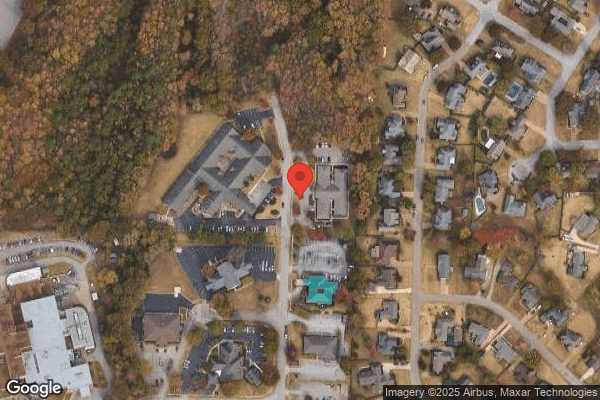
May 2024 9 deficiencies
CONCERN (D)

Potential for Harm - no one hurt, but risky conditions existed

Resident Rights (Tag F0550)

Could have caused harm · This affected 1 resident

Based on policy review, observation, and interview, the facility failed to ensure staff maintained residents' dignity and respect when 2 of 13 staff members (Certified Nursing Assistant (CNA) A and CN...

Read full inspector narrative →
Based on policy review, observation, and interview, the facility failed to ensure staff maintained residents' dignity and respect when 2 of 13 staff members (Certified Nursing Assistant (CNA) A and CNA B) failed to knock and announce themselves before entering a resident's room during dining and during a random observation. The findings include: Review of the facility's Promoting/Maintaining Resident Dignity Policy, dated 11/20/2023 revealed, It is the practice of this facility to protect and promote resident rights and treat each resident with respect and dignity .Explain .before initiating the activity .Respect the resident's living space . Observation during the Hall 200 dining on 5/20/2024 at 11:30 AM, revealed CNA A entered Resident #14's room and failed to knock or announce themself before entering resident's room. Observation during the Hall 200 dining on 5/20/2024 at 11:33 AM, revealed CNA A entered Resident #71's room and failed to knock or announce themself before entering the resident's room. Observation during the Hall 200 dining on 5/20/2024 at 11:38 AM, revealed CNA A entered Resident #66's room and failed to knock or announce themself before entering the resident's room. Observation during the Hall 200 dining on 5/20/2024 at 11:40 AM, revealed CNA A entered Resident #23's room and failed to knock or announce themself before entering the resident's room. Observation on the 200 Hall on 5/20/2024 beginnins at 12:14 PM, revealed the following: a. CNA B failed to knock or announce self before entering Resident # 58's room. b. CNA B failed to knock or announce self before entering Resident # 18's room. c. CNA B failed to knock or announce self before entering Resident # 32's room. d. CNA B failed to knock or announce self before entering Resident # 52's room. e. CNA B failed to knock or announce self before entering Resident # 3's room. f. CNA #B failed to knock or announce self before entering Resident # 14's room. g. CNA B failed to knock or announce self before entering Resident # 71's room. h. CNA B failed to knock or announce self before entering Resident # 56's room. i. CNA B failed to knock or announce self before entering Resident # 66's room. During an interview on 5/23/2024 at 3:21 pm, the Interim Director of Nursing (DON) confirmed that staff should knock and announce before entering the resident's room. The facility staff failed to ensure staff maintained residents' dignity and respect when they did not knock and announce themselves before entering a residents' room.
CONCERN (D)

Potential for Harm - no one hurt, but risky conditions existed

Safe Environment (Tag F0584)

Could have caused harm · This affected 1 resident

Based on policy review, observation, and interview, the facility failed to provide effective housekeeping to maintain a sanitary environment for 10 of 59 resident rooms (Resident #7, #12, #26, #28, #4...

Read full inspector narrative →
Based on policy review, observation, and interview, the facility failed to provide effective housekeeping to maintain a sanitary environment for 10 of 59 resident rooms (Resident #7, #12, #26, #28, #41, #43, #51, #52, #66, #189). The findings include: 1. Review of the facility's policy titled Resident Rights and Resident Responsibilities, dated 11/20/2023, revealed .The resident has the right to a safe, clean, comfortable Homelike environment . 2. Observation in the resident's room on 5/20/2024 at 8:14 AM, revealed Resident #12's room had a strong urine odor, dirty gloves, and towels on the floor in the bathroom. 3. Observation in the resident's room on 5/20/2024 at 8:16 AM, revealed Resident #26's bathroom had an odor of urine and urine in toilet, dried brown liquid substance on the toilet seat, and a bath basin in the bathroom with a brush and several unlabeled supplies in it. 4. Observation in the resident's room on 5/20/2024 at 8:21 AM, revealed Resident #51's wall beside the bed had been scraped and had white dust and debris on the floor, the bathroom floor revealed 2 unlabeled and uncovered bath basins. 5. Observation in the resident's room on 5/20/2024 at 8:36 AM, revealed Resident #7's floor with crumbs debris, the bathroom floor had a used toothbrush, 2 unlabeled and uncovered bath basins, an empty bottle, and an unlabeled deodorant on the sink. 6. Observation in the resident's room on 5/20/2024 at 8:45 AM, revealed that Resident #28's bathroom had a strong odor of urine, urine and brown substance in the toilet, and a dirty towel and wash cloth in the floor. 7. Observation in the resident's room on 5/20/2024 at 11:26 AM and 5/23/2024 at 9:25 AM, revealed Resident #52's privacy curtain had a large brown stain. 8. During an observation and interview in the resident's room on 5/20/2024 at 12:24 PM, revealed Resident #41's bathroom revealed a yellow barrel containing soiled linen with a strong foul odor. CNA A was asked if the barrel should be in Resident #4's bathroom CNA A stated No. 9. Observation in the resident's room on 5/21/2024 at 7:40 AM, 5/23/24 at 2:16 PM, 5/24/24 at 8:35 AM and 5/28/24 at 11:21 AM, revealed Resident #43 had an unlabeled and uncovered bed pan and basin in the bathroom floor. 10. Observation in the resident's room on 5/21/2024 at 11:22 AM, 5/21/24, 5/22/2024 at 7:31 AM and 5/28/24 at 11:28 AM revealed Resident #189's had an unlabeled and uncovered bedpan and basin in the bathroom floor. 11. Observation in the resident's room on 5/22/24 at 8:30 AM, revealed Resident #189 had an unlabeled and uncovered bed pan, and basin noted in the bathroom floor. The overflowing bathroom garbage can contained soiled briefs with foul urine odors. 12. During an interview on 5/22/2024 at 9:01 AM, the Interim Director of Nursing (DON) confirmed nothing dirty should be in the resident's room including dirty towels, it should be placed in a bag and out in the linen barrel for laundry. 13. Observation in the resident's room on 5/22/2024 at 11:41 AM and 5/23/2024 at 9:31 AM, revealed Resident #66's privacy curtain had a large dark brown stain on the bottom of the curtain and several brownish orange stains. 14. During an interview on 5/23/2024 at 3:21 PM, the Interim DON confirmed dirty linen, dirty incontinent bed pads should not be on the floor in resident rooms, dirty incontinent briefs should be placed in plastic bag and taken to a garbage barrel outside of the resident room, resident wash basins should clean, in a plastic bag and not left in the floor, privacy curtains should be clean, toilets should be clean and flushed after each use, resident rooms should clean without odors, the residents floors should be clean, and no dirty linen barrels should be placed in a resident's bathroom.
CONCERN (D)

Potential for Harm - no one hurt, but risky conditions existed

ADL Care (Tag F0677)

Could have caused harm · This affected 1 resident

**NOTE- TERMS IN BRACKETS HAVE BEEN EDITED TO PROTECT CONFIDENTIALITY** Based on policy review, medical record review, review of the ADL (Activities of Daily Living) Verification Worksheets, Night shi...

Read full inspector narrative →
**NOTE- TERMS IN BRACKETS HAVE BEEN EDITED TO PROTECT CONFIDENTIALITY** Based on policy review, medical record review, review of the ADL (Activities of Daily Living) Verification Worksheets, Night shift shower assignment sheet, and interview, the facility failed to ensure Activities of Daily Living (ADL) assistance related to bathing and showering was provided for 3 of 20 (Resident #31, #35 and #74) sampled residents reviewed for ADL care. The findings include: 1. Review of the facility policy titled, Activities of Daily Living (ADL), dated 4/17/2024, revealed, .A resident who is unable to carry out activities of daily living shall receive the necessary services to maintain good .grooming and personal and oral hygiene . Review of the facility undated policy titled, AHC Resident Rights and Responsibilities, revealed, .Respect and dignity, recognizing each resident's individuality, wishes and preferences . 2. Review of the medical record revealed Resident #35 was admitted to the facility on [DATE], with diagnoses of Hemiplegia, Cerebral Infarction, Ataxia, Epilepsy, Depression, Arthritis, Muscle Weakness, Anxiety, and Depression. Review of the Care Plan dated 9/1/2022, revealed, .Self care deficit R/T [related to] ambulation, bathing, bed mobility, dressing, eating, hygiene, locomotion and transfers .will be assisted with ADLs as required Bathing .Shower .3xweek .alternating days with bed baths .Prefers shave every other day . Review of the quarterly MDS dated [DATE], revealed resident had a BIMS score of 6 which indicated he was severely cognitively impaired and need substantial/maximal assistance for all ADL's. Review of the Nightshift shower assignment sheet revealed Resident #35 was to receive a shower on Monday, Wednesday and Friday. Review of the facility ADL Verification Worksheet for March, April and May 2024 revealed Resident #35 did not receive a shower on 3/1/2024, 3/4/2024, 3/6/2024, 3/8/2024, 3/11/2024, 3/13/2024, 3/15/2024, 3/18/2024, 3/20/2024, 3/22/20024, 3/25/2024, 3/27/2024, 3/29/2024, 4/1/2024, 4/3/2024, 4/5/2024, 4/8/2024,4/10/2024, 4/12/2024, 4/15/2024, 4/19/2024, 4/22/2024, 4/24/2024, 2/26/2024, 4/29/2024, 5/1/2024, 5/3/2024, 5/6/2024, 5/8/2024, 5/10/2024, 5/13/2024, 5/15/2024, 5/17/2024 and 5/20/2024. 3. Review of medical record revealed Resident #31 was admitted to the facility on [DATE], with diagnoses of Polyarthritis, Osteoarthritis, and Dementia. Review of the Care Plan dated 10/17/2023, revealed Resident #31 .will be assisted with ADLs .Bath/ [and, or] Shower .3x [times] week/prn .alternating days with bed baths . Review of the quarterly Minimum Data Set (MDS) dated [DATE], revealed Resident #31 had a Brief Interview for Metal Status (BIMS) score of 15, which indicated she was cognitively intact and required physical help for most ADLs. Review of the Nightshift shower assignment sheet revealed Resident #31 was to receive a shower on Tuesday, Thursday and Saturday. Review of the facility ADL Verification Worksheet for March, April, and May 2024, revealed Resident #31 did not receive showers on 3/2/2024, 3/5/2024, 3/7/2024, 3/9/2024, 3/12/2024, 3/14/2024, 3/16/2024, 3/19/2024, 3/21/2024, 3/23/2024, 3/26/2024, 3/28/2024, 3/30/2024, 4/2/2024, 4/4/2024, 4/6/2024, 4/9/2024, 4/11/2024, 4/13/2024, 4/15/2024, 4/18/2024, 4/20/2024, 4/23/2024, 4/25/2024, 4/27/2024, 4/30/2024, 5/2/2024, 5/4/2024, 5/7/2024, 5/14/2024, 5/16/2024 and 5/18/2024. 4. Review of the medical record revealed Resident #74 was admitted to the facility on [DATE], with diagnoses of Hemiplegia, Diabetes, Cerebrovascular Disease, Edema, and Morbid Obesity. Review of the Care Plan dated 1/20/2024, revealed, .Self care deficit R/T ambulation, bathing, bed mobility, dressing, eating, hygiene, locomotion and transfers . Review of the quarterly MDS dated [DATE], revealed a BIMS score of 15, which indicated she was cognitively intact, had impairments of upper and lower extremities on one side, required set up assist with meals, and substantial/maximal assist with other ADLs including bathing/showering. Review of the facility shower schedule revealed Resident #74 should have showers 3 times weekly. Review of the facility ADL Verification Worksheets for March, April and May 2024 revealed Resident #74 did not receive showers as scheduled on 3/9/2024, 3/12/2024, 3/142024, 3/16/2024, 3/19/2024, 3/23/2024, 3/26/2024, 3/28/2024, 3/30/2024, 4/2/24, 4/4/2024, 4/11/2024, 4/18/2024, 4/20/2024, 4/25/4/30, 4/27/2024, 5/2/2024, 5/11/2024, 5/17/2024, 5/20/2024, and 5/22/2024. 5. During an interview on 05/23/24 at 10:12 AM, the Interim Director of Nursing (DON) was asked the process of showers, she stated, .On admission showers are assigned by bed, then residents are asked their preference day or night. All residents get 3 showers a week . During an observation and interview on 5/24/2024 at 11:22 AM, the Interim DON was shown the ADL Verification Worksheet with the missing dates of showers. The Interim DON was asked should residents have their showers per schedule and preference. The Interim DON stated Yes .
CONCERN (D) 📢 Someone Reported This

A family member, employee, or ombudsman was alarmed enough to file a formal complaint

Potential for Harm - no one hurt, but risky conditions existed

Pressure Ulcer Prevention (Tag F0686)

Could have caused harm · This affected 1 resident

**NOTE- TERMS IN BRACKETS HAVE BEEN EDITED TO PROTECT CONFIDENTIALITY** Based on policy review, medical record review, observation, and interview the facility failed to provide necessary treatment and...

Read full inspector narrative →
**NOTE- TERMS IN BRACKETS HAVE BEEN EDITED TO PROTECT CONFIDENTIALITY** Based on policy review, medical record review, observation, and interview the facility failed to provide necessary treatment and services to promote the healing of a pressure ulcer wound for 2 of 4 sampled residents (Resident #73 and #189) reviewed for pressure ulcers. The facility failed to provide ordered wound care and failed to ensure a pressure reducing mattress was properly implemented. The findings include: 1. Review of the facility's policy titled, Pressure Injury Prevention and Non-Pressure Ulcer Management dated February 26, 2024, revealed .It is the policy of this facility to implement evidence-based interventions for all residents who are assessed at risk or who have a pressure ulcers/injury present, and to promote wound healing of various types of wounds in accordance with current standards of practice and Physician orders .Pressure Ulcer/Injury refers to localized damage to the skin and/or underlying soft tissue usually over a bony prominence .A pressure injury will present as intact skin or an open ulcer .The injury occurs as a result of intense and/or prolonged pressure or pressure in combination with shear .The facility shall establish and utilize a systemic approach for pressure injury prevention and management .starting with prompt assessment and treatment .reduce and remove underlying risk factors, monitor the impact of the interventions .Evidenced-based interventions for prevention shall be implemented for all residents .Provide appropriate pressure redistributing, support surfaces including mattresses A pressure reducing mattress shall be placed on all beds .Evidence-based treatments in accordance with current standards of practice shall be provided for all residents who have pressure injury . Review of the eMaxAir Pro Mattress manufacturer's guidance revealed .System features .for alternating pressure therapy, the eMax Air Pro surface should be used in combination with the control unit . 2. Review of the medical record revealed Resident #73 was admitted on [DATE], with diagnoses of Quadriplegia, Cerebral infarction, Hypertension, and Pressure Ulcer of Sacral Region and Hip. Review of the care plan dated 11/13/2023 revealed .Nursing - Wound Care and Management . 11/10/23 [11/10/2023]- Sacrum- Present on admission . 1/01/24 [1/1/2024]- Stage 2 Right hip, present upon readmission . Assess and monitor wound healing .Assess and monitor wound treatment plan for effectiveness and complications .wound care as ordered . Review of the admission Minimum Data Set (MDS) dated [DATE], revealed rarely/never understood, severely impaired decision making, impaired movement of bilateral upper and lower extremities, dependent on staff for Activities of Daily Living (ADLs), incontinent of bowel and bladder, 1 stage 2 pressure ulcer, present on admission, a pressure reducing device for the bed, surgical wound care, pressure ulcer/injury care, application of nonsurgical dressings and applications of ointment/medications. Review of the January 2024 Treatment Administration Record (TAR) revealed . Santyl [an ointment used to remove damaged tissue from chronic skin ulcers] 250 unit/[per]gram topical ointment .One Time Daily Starting 01/09/2024 .sacrum .Clean area with Normal Saline. Apply Santyl and calcium alginate [a gelling fiber dressing for moderate to highly draining wounds] for autolytic debridement, cover with boarder gauze and cover with border gauze . The treatment to the sacral wound was not signed as being administered on 1/12/2024, 1/16/2024, and 1/19/2024. Review of the January 2024 TAR revealed .Santyl .Every One Day Starting 01/09/2024 .Clean right hip with normal saline, apply Santyl 250 unit/gram topical ointment and xeroform [a petroleum- based gauze dressing that maintains a moist wound environment] for autolytic debridement. cover with boarder gauze . The treatment to the Right hip was not signed as being administered on 1/12/2024, 1/16/2024, and 1/19/2024. During an interview on 5/28/2024 at 6:25 PM, the Regional Nurse Consultant confirmed the treatments were not signed out on 1/12/2024, 1/16/2024 and 1/19/2024 and that treatments should have been signed out if the have been completed. During an interview on 5/29/2024 at 1:32 PM, the Administrator was asked do you expect treatments to be done as ordered. The Administrator stated, Yes. 3. Review of the medical record revealed that Resident #189 was admitted to the facility on [DATE], with Pressure Ulcer Stage IV of sacral region, Malnutrition, Dementia, and Cerebrovascular Accident. Review of the admission MDS dated [DATE], revealed severe cognitive impairment, required maximum assistance with all ADL's (Activities Daily of Living), always incontinent of bowel and bladder, and 1 stage 4 pressure ulcer that was present on admission. Review of the Care Plan dated 5/20/2024 revealed .admitted with pressure ulcer on sacrum, At risk for further skin breakdown .5/15/24--stg [stage] 4 to sacrum with negative pressure wound therapy .Pressure ulcer will show signs of healing and be free of infection .Observe for changes in pressure ulcer .Pressure reducing mattress .Reduce pressure to affected area .Treatment as ordered, monitor and report if ineffective .Wound vac [a wound vacuum device removes the pressure over the area of the wound] /treatments as ordered .receiving wound vac therapy to sacral wound .assess wound for dimension appearance, increase drainage, odor or pain wound to be assessed per facility protocol alternate dressing if vac therapy is interrupted and notify md/np [Medical Doctor/Nurse Practitioner] .wound vac to be changed as ordered . Review of the Physician's Orders dated 5/20/2024, revealed Negative Pressure Wound Therapy 2 Times Weekly .Notes: Clean sacrum with Normal Saline, Apply Drape to peri wound, apply oil emulsion [nonadherent petroleum based gauze] contact layer if needed, apply foam, cover drape and attach [NAME] pad [a track pad with suction tubing connects to a wound vacuum canister], apply Negative pressure wound therapy at 125mm/HG [millimeters of mercury], document number of foam pieces used in the wound bed. Review of the May 2024 TAR showed the treatment was not signed as being administered on 5/24/2024. During an observation and interview on 5/28/2024 at 4:17 PM, LPN (Licensed Practical Nurse) J described Resident #189's current sacral wound's condition and visual undermining noted with serosanguinous drainage, bone present, wound appearance beefy red wound bed. Resident was observed with a pro air mattress not attached to an air unit. LPN J was asked if the resident was on an air mattress. LPN J stated, No, but [resident] should be. During an interview on 5/29/2024 at 10:51 AM the Interim Director of Nursing (DON) was shown Resident #189's Treatment Administration Record regarding wound care for May. The interim DON was asked to interpret the meaning of =(equal) sign on 5/24/2024 for the scheduled wound care. The interim DON stated that it meant previously scheduled and that it could reflect a duplication in documentation. The Interim DON stated that she could not tell if care was done or not. Interim DON stated that the resident's nurse would be able to inform if the care was performed or not. The interim DON was asked if the care is ordered and performed should it be completed on the Medication Administration Record (MAR) and Treatment Administration Record (TAR). The Interim DON confirmed that the TAR should reflect all care performed by all staff. The Interim DON was asked if a resident is admitted and is care planned for a pressure reducing mattress, should it be implemented. The Interim DON confirmed that it should be implemented if it is ordered, and care planned for the resident. The Interim DON was asked who is responsible for implementing air mattress. The Interim DON stated that the maintenance director is responsible for putting it on the resident's bed and the nurse is responsible for putting the work order in. The Interim DON stated that the nurse is responsible for ensuring that the mattress is provided for the resident. During an interview on 5/29/2024 at 11:40 AM, the Interim DON reported that LPN K was the nurse that was assigned to Resident #189 on 5/24/24 and would have been responsible for performing the scheduled wound care on 5/24/2024. During an interview on 5/29/24 at 12:41 PM, LPN K was asked if she was assigned to take care of Resident #189 on 5/24/24. LPN K confirmed that she was assigned Resident #189 on 5/24/2024. LPN K was asked if she performed the scheduled wound care treatment for resident on that day. LPN K stated, No, I didn't because I ran out of time, and I left it for the night shift to do. During an interview on 5/29/24 at 1:14 PM, the Administrator was asked if wound care is performed on a resident how should it be documented to reflect it was done. The Administrator stated that the staff should sign off on the resident's MAR/TAR. The Administrator was asked if the resident is care planned for a pressure reducing mattress what mattress should be used for the resident. The Administrator confirmed that residents that have stage 3 or 4 pressure ulcers should have air mattresses. The Administrator was asked if wound care should be performed as ordered. The Administrator stated, Yes. The facility failed to provide ordered wound care and failed to ensure pressure reducing mattress was properly implemented.
CONCERN (D)

Potential for Harm - no one hurt, but risky conditions existed

Deficiency F0726 (Tag F0726)

Could have caused harm · This affected 1 resident

Based on policy review, observations and interviews, the facility failed to ensure all licensed nurses independently demonstrated competency while providing care and services for 2 of 6 Nurses (Licens...

Read full inspector narrative →
Based on policy review, observations and interviews, the facility failed to ensure all licensed nurses independently demonstrated competency while providing care and services for 2 of 6 Nurses (Licensed Practical Nurse (LPN) L and LPN O) observed. The findings include: Review of the facility's policy titled Medication Administration dated 8/4/2023, revealed .Medications shall be administered by licensed .nursing personnel acting within the scope of practice . Review of the facility's policy titled Tube Feeding Management/Restore Eating Skills dated 5/26/2023, revealed Purpose .To ensure that staff providing care and services to the resident via [by] feeding tube are aware of, competent in and utilize facility protocols regarding .care. Observation during Medication Administration on 5/21/2024 at 7:25 AM, revealed LPN L had cleaned the glucometer by wiping it 1 time with a Sani wipe and set it on the medication cart when another nurse that identified herself as a Regional Nurse (Assistant Director of Nursing) coached LPN L by telling her to wipe the meter 3 times with the Sani cloth .LPN L knocked on Resident #20's door and the Regional Nurse coached LPN L to wash her hands as she entered the room. Observation during Medication Administration on 5/21/2024 at 11:30 AM, revealed LPN O was administering a medication by Percutaneous Endoscopic Gastrostomy (PEG) Tube. LPN O was having difficulty with the medication being administered per gravity and asked the Unit Manager, that was present in the room what she should do. The Unit Manager coached LPN O to apply light pressure to syringe. During an interview on 05/29/2024 at 11:22 AM, The Assistant [NAME] President (AVP) of Clinical Operations, was asked if coaching is common practice for the nurses. The AVP of Clinical Operations stated, I reminded the nurses that there should be no coaching . I asked the AVP of Clinical Operations if there should there have been a nurse coaching while I was observing, she stated There is no policy that says they can't talk or ask questions.
CONCERN (D)

Potential for Harm - no one hurt, but risky conditions existed

Deficiency F0761 (Tag F0761)

Could have caused harm · This affected 1 resident

Based on policy review, observation, and interview, the facility failed to store all drugs and biologicals in locked compartments when a medication cart was left unlocked and unattended for 1 of 7 med...

Read full inspector narrative →
Based on policy review, observation, and interview, the facility failed to store all drugs and biologicals in locked compartments when a medication cart was left unlocked and unattended for 1 of 7 medication storage areas (Medication Cart 1) and when medications were left at the resident's bedside for 1 of 23 sampled resident's rooms (Resident #19). The findings include: 1. Review of the facility ' s policy titled, Medication Administration: Medication, Controlled and Biological Storage, Night/Emergency Box and Backup Pharmacy, dated 9/5/2023, revealed .It is the policy of this facility to ensure all medications housed on our premises shall be stored in the pharmacy and/or medication rooms .All drugs and biologicals shall be stored in locked compartments .Only authorized personnel shall have access .During a medication pass, medications must be under the direct observation of the person administering medications or locked in the medication storage area/cart . 2. Observation in Resident #19's room on 5/20/2024 at 8:48 AM, revealed Latanoprost Ophthalmic eye drops (used to treat high pressure inside the eye due to glaucoma) on the nightstand. During an interview on 5/20/2024 at 8:56 AM, the Interim DON confirmed that medication should not be at the bedside. During an observation and interview outside of Resident #51's room on 5/24/2024 at 8:31 AM, revealed that Medication Cart 1 was left unlocked and unattended. LPN (Licensed Practical Nurse) H was coming out of the room when she was asked if she should leave the medication cart unlocked and unattended. LPN H stated, No, I shouldn't have left it unlocked . During an observation and interview outside of Resident #73's room on 5/24/2024 at 8:43 AM, revealed LPN H left Medication Cart 1 unlocked as she was going into Resident #73's room to administer medications. LPN H was asked as she was coming out of Resident #73's room, if she should leave the medication cart unlocked. LPN H stated, No. During an interview on 5/28/2024 at 3:30 PM, the Interim DON (Director of Nursing) was asked if the medication carts should be left unlocked, unsecured, and unattended. The DON stated, No. The facility failed to ensure that all drugs and biologicals used in the facility were stored in locked compartments.
CONCERN (E)

Potential for Harm - no one hurt, but risky conditions existed

Tube Feeding (Tag F0693)

Could have caused harm · This affected multiple residents

**NOTE- TERMS IN BRACKETS HAVE BEEN EDITED TO PROTECT CONFIDENTIALITY** Based on policy review, medical record review, observation, and interview, the facility failed to ensure staff was following phy...

Read full inspector narrative →
**NOTE- TERMS IN BRACKETS HAVE BEEN EDITED TO PROTECT CONFIDENTIALITY** Based on policy review, medical record review, observation, and interview, the facility failed to ensure staff was following physician orders for a Percutaneous Gastrostomy (PEG) tube feeding and failed to date and label PEG tube feedings for 2 of 2 (Resident #43 and #73) sampled residents reviewed for enteral feedings. The findings include: 1. Review of the facility's policy titled Tube Feeding Management/Restore Eating Skills dated 5/26/2023, revealed .Feeding tube care and services shall be provided in accordance with resident needs and professional standards of practice .Continuous feedings is the uninterrupted administration of enteral formula over brief extended periods of time .Gastrostomy tube is a tube that is placed directly into the stomach through the abdominal wall incision for administration of food, fluids, and medications. The most common type is a percutaneous endoscopic gastrostomy [PEG] tube .Document the formula, rate, med flushes, auto flushes, and how administered . 2. Review of the medical record revealed that Resident #43 was admitted to the facility on [DATE], with diagnoses of Stroke, Diabetes, Aphasia, Seizure, and Malnutrition. Review of the physician's orders revealed Glucerna 1.5 CAL [Calorie] 70 milliliters per hour [ML/HR] with 55 cubic centimeter per hour [cc/hr] autoflush continuous effective 2/13/2024. Review of the quarterly MDS (Minimum Data Set) dated 4/23/2024, revealed Resident #43 with a Brief Interview of Mental Status (BIMS) score of 12, which indicated moderately cognitively impaired. Resident required maximum assistance of staff with Activities of Daily Living (ADLs) with toileting, bathing, dressing, and transferring. Resident was assessed for feeding tube. Observation in resident's room on 5/20/2024 at 4:10 PM Resident #43 with enteral feeding infusing at 70ml/hr and feeding bag not labeled with formula. Enteral bag labeled with 5/20/24 @ 0500 hrs (hours) T.P with approximately 200ml in bag. Water flush bag noted without a label with approximately 50ml in bag, and pump set for water flush to administer 55ml every hour. Observation in the resident's room on 5/21/2024 at 7:40 AM, revealed resident with enteral feeding infusing at 70ml/hr with flush 55ml/hr per pump. Feeding bag and flush bag not labeled with type of formula and rate of administration. During and observation and interview on 5/21/2024 at 2:13 PM with Staff N added 500 ml of Glucerna 1.5 from an opened container to Resident #43's hanging enteral feeding bag at bedside. Staff N was asked how she knew what was in the resident's hanging enteral bag. Staff N stated it was Glucerna 1.5 and should have been labeled by the morning nurse. Staff N took a black sharpie marker out of her pocket and wrote Glucerna 1.5 500 ml on the enteral feeding bag and refilled the water flush bag. Staff N was asked, if the bag should have been labeled by the nurse that hung it this morning. The Staff N stated, Yes, it should have. The Staff N was asked how the next shift nursing staff was supposed to know when she had added the 500ml of Glucerna 1.5 to the feeding bag. The Staff N confirmed that she needed to go back into the resident's room and add the time to the feeding bag. Observation in the resident's room on 5/23/2024 at 7:45 AM, revealed resident with enteral feeding infusing at 70ml/hr with water flush 55ml/ every hour per pump. The feeding bag was not labeled with the formula rate and the flush bag was not labeled at all. Observation in the resident's room on 5/29/2024 at 10:01 AM revealed resident with enteral feeding infusing at 70ml/hr and water flush at 55ml/hr per pump. Water flush bag not labeled. Feeding bag labeled with resident name, Glucerna, date 5/28, and no time noted. 3. Review of the medical record revealed Resident #73 was admitted to the facility on [DATE] with diagnosis of Traumatic Subdural Hemorrhage, Quadriplegia, Gastrostomy Status, Tracheostomy status, Acute Respiratory Failure with Hypoxia, and Pressure Ulcer of the Sacral Region. Review of a Physician's Order dated 5/21/2024 revised on 5/24/2024, revealed .Jevity 1.5 @ [symbol for at] 65 ml/hr [milliliters] hr [hour] w [with] 45 ml/hr h2o [water]flush . Observation in Residents 73's room on 5/22/2024 at 7:31 AM, and 4:32 PM, 5/24/2024 at 8:31 AM, and 10:29 AM, revealed Jevity infusing at 55ml/hr with H20 water infusing at 100 ml every 4 hours, and the enteral feeding bag and water bag were undated and unlabeled. During an observation and interview in resident's room on 5/24/2024 at 11:14 AM, the Interim Director of Nursing (DON) confirmed the feeding rate was incorrect at 55 ml/hr and the water hanging rate of 100 ml/hr was incorrect. Confirmed the feeding and water bags were not dated or labeled. Interim DON at this time changed the Jevity rate to 65 ml/hr and the water rate to 45 ml/hr via pump machine as per order. The Interim DON confirmed the feeding and water rates should be infusing as ordered, and also should be dated and labeled.
CONCERN (E)

Potential for Harm - no one hurt, but risky conditions existed

Food Safety (Tag F0812)

Could have caused harm · This affected multiple residents

**NOTE- TERMS IN BRACKETS HAVE BEEN EDITED TO PROTECT CONFIDENTIALITY** Based on policy review, observation, and interview, the facility failed to ensure food was stored, prepared, and served under sa...

Read full inspector narrative →
**NOTE- TERMS IN BRACKETS HAVE BEEN EDITED TO PROTECT CONFIDENTIALITY** Based on policy review, observation, and interview, the facility failed to ensure food was stored, prepared, and served under sanitary conditions as evidenced by carbon build-up on the cooking stove, unlabeled and undated food items, and expired food items. The facility had a census of 88 with 84 of those residents receiving a tray from the Kitchen. The findings include: 1. Review of the Dietary: Food Storage, revealed .To provide guidance on how food is to be stored .All store items should have an expiration date .A 'Use-By' date is the last date recommended for the use of the product while at peak quality . ' Open Date ' -refrigerated .food .prepared and packaged .shall be clearly marked at the time the original container is opened . 2. Observation in the Kitchen on 5/21/2024 at 11:46 AM, revealed an opened, undated package of tater tots, undated hamburger patties and undated hashbrowns. 3. Observation in the Kitchen on 5/22/2024 at 4:14 PM, revealed the cooking stove burners had a black-build-up on the right back eye and the right front eye, a large cooking skillet with carbon build-up hanging from the metal hook, opened, undated tater tots, and undated hashbrowns. 4. A random observation in room [ROOM NUMBER] on 5/23/2024 at 8:03 AM revealed 2 cartons of Vitamin D milk cartons with an expiration date of 5/21/2024. During an interview on 5/23/2024 at 8:03 AM, Resident #48 stated, That milk is sour, look at that date, I can't drink that . During an interview on 5/23/2024 at 8:04 AM, Resident #64 confirmed he had already drunk his milk and stated, It didn't taste good. During an interview on 5/23/2024 at 8:16 AM, CNA I was asked if the breakfast trays she delivered this morning had expired milk on the tray. CNA I stated, .yes I had 2 residents with spoiled milk that was dated 5/21/2024, Resident #20 had milk that was chunky when she poured into a bowl over her cereal. Resident #65 had soured milk with a date of 5/21/2024 as well. CNA I was asked if she told anyone about the expired sour milk. CNA I stated, .no I didn't tell anyone, but I did get them both another carton of milk that wasn't expired . During an interview on 5/23/2024 at 8:10 AM, the Certified Dietary Manager (CDM) was asked should the facility be serving expired milk. The CDM stated, No. During an interview on 5/23/2024 at 8:23 AM, Dietary Aide F was asked where he obtained the milk cartons from for this morning. Dietary Aide F stated, I grabbed a bin of milk from the refrigerator and put the milk on the trays. I ran out and had to get another bin of milk and put what was in there on the meal trays. Dietary Aide F was asked if he checked the expiration date before putting the milk on the meal tray. Dietary Aide F stated, No, I figured since they were in there, they [milk] were good 5. Observation in the Kitchen on 5/23/2024 at 2:30 PM, revealed the cooking stove burners had a black-build-up on the right back eye and the right front eye, a large cooking skillet with carbon build-up hanging from the metal hook. During an interview on 5/23/24 2:30 PM, the Certified Dietary Manager (CDM) confirmed the cooking stove should not have a build-up of a black substance on the two eyes. The CDM confirmed the large skillet had a build-up of carbon on it. The CDM stated, .I have to get a new skillet, it should not be like that . The CDM was asked the risk of the carbon build up. The CDM stated, .Could cause a grease fire . The CDM confirmed that expired milk should not be served to the residents, and the tater tots and hashbrowns should be dated.
CONCERN (E)

Potential for Harm - no one hurt, but risky conditions existed

Infection Control (Tag F0880)

Could have caused harm · This affected multiple residents

Based on policy review, observation, and interview, the facility failed to ensure food was served under sanitary conditions when 3 of 13 staff members (Certified Nurse Aide (CNA) A and B and Licensed ...

Read full inspector narrative →
Based on policy review, observation, and interview, the facility failed to ensure food was served under sanitary conditions when 3 of 13 staff members (Certified Nurse Aide (CNA) A and B and Licensed Practical Nurse (LPN) C ) failed to perform proper hand hygiene during meal service and the facility failed to ensure precautions were followed to prevent spread of infections, failed to handle and store linens to prevent the spread of infection, and failed to ensure hygiene procedures were followed by staff when 4 of 4 staff members (Housekeeper D, Certified Nurse Assistant (CNA) A, and Licensed Practical Nurse (LPN) E and O) did not wear personal protective equipment (PPE) in a resident's room, when CNA A placed a dirty incontinent brief and a dirty incontinent pad on the resident's floor, and when CNA A and LPN E failed to perform hand hygiene. The findings include: 1. Review of the facility's policy titled, Hand Hygiene, dated 3/28/2024 revealed .Staff involved in direct resident contact shall perform proper hand hygiene procedures to prevent the spread of infection .Hand hygiene is indicated and shall be performed under the conditions listed .Hand Hygiene Table .Between resident contacts . Before applying and after removing personal protective equipment (PPE) including gloves . Before and after handling clean or soiled dressing, linens .After handling potentially contaminated objects . Review of the facility's policy dated 11/1/2017, titled, Transmission Based Precautions, revealed, .To provide guidance on taking appropriate precautions to prevent transmissions of infectious agents .Enhanced Barrier Precautions .An order for enhanced barrier precautions shall be obtained for residents with any of the following .tracheostomy .Make gowns and gloves available .PPE for enhance barrier precautions .when performing high-contact care activities .include .changing linen, changing briefs .device care or use .tracheostomy/ventilator tubes . Review of the facility's policy titled, Hand Hygiene, dated 3/28/2024 revealed .Staff involved in direct resident contact shall perform proper hand hygiene procedures to prevent the spread of infection .Hand hygiene is indicated and shall be performed under the conditions listed .Hand Hygiene Table .Between resident contacts . Before applying and after removing personal protective equipment (PPE) including gloves . Before and after handling clean or soiled dressing, linens .After handling potentially contaminated objects . 2. Observation in the Resident #42's room on 5/20/2024 at 10:25 AM, revealed an enhanced barrier signage on Resident #42's door and no isolation cart on the 200 Hall. CNA A had no gown on while providing incontinent care for Resident #42. There was a dirty brief on the floor and a dirty incontinent pad on the floor. CNA A finished the incontinent care for the resident, picked up the dirty incontinent brief off the floor and placed it in the trash, picked up the dirty incontinent pad off the floor and put it in a yellow-colored soiled linen bin in the hallway, returned to the resident's room, and failed to remove the gloves and perform hand hygiene. With the same gloved hands on, CNA A grabbed and pulled the resident's incontinent pad and with the help of Housekeeper D, repositioned Resident #42. CNA A touched Resident #42's enteral feeding machine with the same gloved hands. CNA A did not remove the gloves and perform hand hygiene before she touched the enteral feeding machine to turn it back on. CNA A picked up items off the adjacent bed, placed them in a clear trash bag, threw them away, removed her gloves, and did not perform a hand hygiene. Observation during the Hall 200 dining on 5/20/2024 at 11:23 AM, revealed CNA A did not perform hand hygiene before removing a meal tray from the meal cart, entered Resident #30's room with the meal tray, placed the meal tray on the resident's over the bed table, removed the lid from the meal tray, used her hands to pull the resident's privacy curtain back, and did not perform hand hygiene before she removed the next resident's meal tray from the meal cart. Observation during the Hall 200 dining on 5/20/2024 at 11:26 AM, revealed CNA A did not perform hand hygiene before removing a meal tray from the meal cart, entered Resident #52's room with the meal tray, placed the meal tray on the resident's over the bed table, removed the lid off the meal tray, used her hands to move the over the bed table, and did not perform hand hygiene before she removed the next resident's meal tray from the meal cart. Observation during the Hall 200 dining on 5/20/2024 at 11:27 AM, revealed CNA A did not perform hand hygiene before getting a meal tray from the meal cart, entered Resident #3's room with the meal tray, placed the meal tray on the over the bed table, picked up a white towel and placed it in the resident's wheelchair, used her hands to move the over the bed table, and did not perform hand hygiene. CNA A removed the utensils from the napkin, removed the paper from the straw and placed the straw in the drink, picked up the towel and put it in a container in the hall, and did not perform hand hygiene before she removed the next resident's meal tray from the meal cart. Observation during the Hall 200 dining on 5/20/2024 at 11:30 AM, revealed CNA A did not perform hand hygiene before getting a meal tray from the meal cart, entered Resident #14's room with the meal tray, placed the meal tray on the over the bed table, picked up the bed remote to bring the head of the bed higher, and did not perform hand hygiene. CNA A pulled the paper off the straw and placed the straw in the drink, removed the utensils from napkin, gave a wipe to the resident for the resident to wash her hands, took the wipe from the resident and placed the wipe in the trash, and did not perform hand hygiene before she removed the next resident's meal tray from the meal cart. Observation during the Hall 200 dining on 5/20/2024 at 11:33 AM, CNA A did not perform hand hygiene before getting a meal tray from the meal cart, entered Resident #71's room with the meal tray and placed the meal tray on the resident's bed. Then CNA entered Resident #41's room with the meal tray, placed the meal tray on the over the bed table, moved the resident's wheelchair with her hands, and did not perform hand hygiene. CNA A removed the utensils from the napkin, removed the paper from the straw, placed the straw in the drink, and did not perform hand hygiene before she removed the next resident's meal tray from the meal cart. Observation during the Hall 200 dining on 5/20/2024 at 11:36 AM, CNA A did not perform hand hygiene before the getting a meal tray from the meal cart, entered Resident #56's room with the meal tray, placed the meal tray on the over the bed table, and did not perform hand hygiene before she removed the next resident's meal tray from the meal cart. Observation during the Hall 200 dining on 5/20/2024 at 11:38 AM, revealed CNA A did not perform hand hygiene before she got a meal tray from the meal cart, entered Resident #66's room with the meal tray, placed the meal tray on the over the bed table, picked up the resident's bed remote to adjust the head, and did not perform hand hygiene. CNA A removed the utensils from the napkin, removed the paper from the straw, placed the straw in the drink, left the room and did not perform hand hygiene before she removed the next resident's meal tray from the meal cart. Observation during the Hall 200 dining on 5/20/2024 at 11:40 AM, revealed CNA A did not perform hand hygiene before she got a meal tray from the meal cart, entered Resident #23's with the meal tray, placed the meal tray on the over the bed table, removed the utensils from the napkin, removed the paper from the straw, placed the straw in the drink, left the room and did not perform hand hygiene before she removed the next resident's meal tray from the meal cart. Observation in the dining room on 5/20/2024 at 11:45 AM, revealed CNA A did not perform hand hygiene before getting a meal tray out of the meal cart, placed the meal tray in front of Resident #45, removed the utensils from the napkin, removed the paper from the straw, placed the straw in the drink, did not perform hand hygiene and immediately went to Resident #70, picked up her utensils, cut up her food, and did not perform hand hygiene when she finished. Observation in the dining room on 5/20/2024 at 11:50 AM, revealed CNA A used her hands to touch her hair, did not perform hand hygiene before removing a meal tray from the meal cart, placed the meal tray in front of Resident #9, removed the utensils from the napkin, removed the paper from the straw, placed the straw in the resident's drink, did not perform hand hygiene, removed another meal tray from the meal cart, confirmed it was Resident #29's meal tray and left the dining room with the meal tray. 3. Observation in the dining room on 5/20/2024 at 11:53 AM, Licensed Practical Nurse (LPN) C used her hands to lift up a lid on a trash can, did not perform hand hygiene, removed a meal tray from the meal cart, placed the meal tray in front of Resident #36, removed the utensils from the napkin, removed the paper from the straw, placed the straw in the drink, did not perform hand hygiene, accepted another meal tray from a kitchen staff and placed it in the meal tray in the cart. 4. During an interview on 5/21/2024 at 10:30 AM, CNA A was asked about entering Resident #42's room being that there was an enhanced barrier precautions signage on the door. CNA A stated, I did not see the sign, normally a cart is by the resident's door with gowns, gloves, and masks in it. I know the signage tells us what we need to do before entering the room. CNA A was asked should she have had the gown on when she provided incontinent care for the Resident #42. CNA A stated, Yes. CNA A was asked whenever incontinent care is provided what is the proper procedure for handling a dirty brief once it is removed from the resident. CNA A stated, I really do not know what the procedure is here, but where I have worked in the past you could take the soiled barrel in the room with you, but not here. CNA A was asked should a dirty incontinent brief and a dirty incontinent pad be placed on the floor. CNA A stated, It should not be on the floor, should have a trash bag to place the dirty brief in and the incontinent pad should not be on the floor linen, it should have been placed in a barrel but, not on floor. CNA A was asked to tell about hand sanitization after finishing incontinent care. CNA A stated, You should wash hands with soap and water if hands are soiled and if not soiled can use hand sanitizer. CNA A was asked should she have removed your gloves and performed hand hygiene before she touched the enteral feeding machine to turn the resident's feeding back on. CNA A stated, Yes. During an interview on 5/21/2024 at 10:38 AM, Housekeeper D was asked about enhance barrier precautions. Housekeeper D stated, This is the first time seeing enhanced barrier precautions. I usually see droplet precautions. I am wondering what enhanced barrier precautions is for. Housekeeper D confirmed the signage on the Resident #42's door tells what needs to put on before entering the resident's room. Housekeeper D was asked did she wear personal protective equipment (PPE) before entering Resident #42's room to help reposition the resident. Housekeeper D stated, No, it supposed to be stuff sitting outside the resident's room for us to put on. Observation on 5/21/2024 11:56 AM, revealed Licensed Practical Nurse E for the 200 Hall entered Resident #42's room with no PPE on. There is no isolation cart on the hall. LPN #E placed a patch on left side of neck with no gown on, removed gloves and put them in the trash and did not perform hand hygiene. Observation in Resident #42's room on 5/22/24 08:11 AM, revealed a dirty white towel with a yellow substance sitting on top of a compressor [the machine used to deliver humidity to the tracheostomy]. During an observation and interview in Resident #42's room on 5/22/2024 at 8:46 AM, LPN #E was asked should the dirty white towel with the yellow substance be sitting on top of the compressor [the machine used to deliver humidity to the tracheostomy]. LPN E stated, I guess they left it [the dirty white towel]. I am guessing it [yellow substance on the white towel] is whatever she [the resident] threw up last night. LPN E stated, It [the dirty white towel with yellow substance on it] should not be there,. 5. During an interview in the Interim Director of Nurses' (DON) office on 5/22/2024 at 9:01 AM the Interim DON was asked a should a dirty towel with a yellow substance be in the resident's room on the machine that delivers humidity. The Interim DON stated, No, not anything dirty should be in the residents including dirty towels, it should be placed in a bag and out in the linen barrel for laundry. 6. Observation in Resident #186's room on 5/23/24 at 8:08 AM revealed LPN O at bedside performing an accu-check and administering medications without PPE on. Resident with an enhanced barrier sign on her door. 7. During an interview on 5/23/2024 at 3:21 PM, the Interim Director of Nurses (DON) was asked should staff throw a soiled incontinent bed pad on the floor. The Interim DON stated, No, soiled linen should not be on floor, it [soiled linen] should be placed in a plastic bag and placed in a soiled linen barrel. The Interim DON was asked should staff throw a dirty incontinent brief on the floor. The Interim DON stated, No, incontinent briefs should be placed in plastic bag and taken to the garbage barrel outside of the resident room. The Interim DON was asked to tell about enhanced barrier precautions signage and what staff should do before entering the room. The Interim DON stated, It tells what to do before they enter, they should wear mask, gown, and gloves and they should be wearing gloves and gown for any extended period of time. The Interim DON confirmed staff should wear gown and gloves while providing incontinent care for a resident who is on enhanced barrier precautions and while providing care near the resident's tracheostomy for a resident who is on enhanced barrier precautions. The Interim DON confirmed during meal tray delivery and set up, staff should perform hand hygiene before removing meal trays from the meal cart and after each meal tray delivery. The Interim DON confirmed during meal tray delivery and set up, staff should perform hand hygiene after touching the furniture, the equipment, the resident, and the linen. During an interview on 5/24/2024 at 10:10 AM the Interim DON was asked what it means when a resident is in enhanced barrier precaution. The Interim DON confirmed that all staff must wear gown and gloves when touching the resident.
Jan 2023 1 deficiency 1 IJ
CRITICAL (J) 📢 Someone Reported This

A family member, employee, or ombudsman was alarmed enough to file a formal complaint

Immediate Jeopardy (IJ) - the most serious Medicare violation

Accident Prevention (Tag F0689)

Someone could have died · This affected 1 resident

**NOTE- TERMS IN BRACKETS HAVE BEEN EDITED TO PROTECT CONFIDENTIALITY** Based on policy review, facility investigation review, weather website review, surveillance camera video footage review, medical...

Read full inspector narrative →
**NOTE- TERMS IN BRACKETS HAVE BEEN EDITED TO PROTECT CONFIDENTIALITY** Based on policy review, facility investigation review, weather website review, surveillance camera video footage review, medical record review, and interview, the facility failed to provide adequate supervision and ensure a safe and secure environment to prevent an incident of elopement for 1 of 4 (Resident #1) sampled residents reviewed for elopement. The facility's failure to ensure a safe environment to prevent an elopement resulted in Immediate Jeopardy (IJ) when Resident #1 exited the facility without staff knowledge or supervision from the Staffing Coordinator's unlocked office door, that did not have a working alarm system in place on 12/17/2022. Resident #1 was discovered approximately 20 minutes later in an unlocked car with the ignition on and the engine running in the parking lot. Immediate Jeopardy (IJ) is a situation in which the provider's noncompliance with one or more requirements of participation has caused, or is likely to cause, serious injury, harm, impairment, or death to a resident. The Interim Administrator, Director of Nurses, Regional Director of Operations, Regional Nurse Manager, and Director of Regional Nurses were notified of the Immediate Jeopardy at F-689 on 12/20/2022 at 5:02 PM, in the Conference Room. The facility was cited Immediate Jeopardy at F-689. The facility was cited F-689 at a scope and severity of J, which is Substandard Quality of Care. The IJ existed 12/17/2022 - 12/22/2022. An acceptable Removal Plan, which removed the immediacy of the jeopardy, was received on 12/21/2022 and was validated onsite by the surveyors on 12/22/2022 by policy review, medical record review, observation, review of education records, auditing tools, and staff and resident interviews. The findings include: 1. Review of the facility's policy titled, Elopements and Wandering Patients, with a revision date of 6/21/2022, revealed .The facility ensures that residents who exhibit wandering behavior and/or are at risk for elopement receive adequate supervision to prevent accidents and care .unique factors contributing to wandering or elopement risk .facility is equipped with door/alarms to help avoid elopements .establish and utilize a systemic approach to monitoring and managing residents at risk for elopement or unsafe wandering, including identification and assessment of risk, evaluation and analysis of hazards and risks, implementing interventions .monitoring for effectiveness .residents will be assessed for risk of elopement and unsafe wandering upon admission .adequate supervision will be provided to help prevent accidents or elopements .review physical plant to be sure alarms are working and that unauthorized areas are properly locked to prevent resident entry . 2. Review of the medical record revealed Resident #1 was admitted to the facility on [DATE] with diagnosis of Metabolic Encephalopathy, Dementia, Behavioral Disturbance, Acute Kidney Failure, Pain, and Insomnia. Review of the facility's undated and unsigned ADMISSION/BASELINE CARE PLAN revealed, .ELOPEMENT RISK .PROBLEM .At risk for elopement . Review of a Care Plan dated 12/19/2022 revealed, .(Resident #1) has exhibited Wandering Behavior .12/17/2022 Patient exited building .Wanderguard was placed 12/17/2022 . Review of the medical record revealed no Minimum Data Set assessment was available due to Resident #1's admission date of 12/16/2022. Review of the medical record confirmed the facility failed to complete an Elopement Risk Assessment for Resident #1 upon his admission on [DATE]. Review of a Clinical Note dated 12/17/2022 at 3:01 PM revealed, .has severe dementia and confusion .does not use words appropriately and difficulty following simple commands .restless, wandering .ambulatory .has required 1:1 [one on one] care for most of the shift, unable to redirect .then began to wonder [wander] again. Review of a Nurses Event Note dated 12/17/2022 revealed, .At approximately 1805 [6:05 PM] I was notified that pt [patient - Resident #1] in [Resident #1's room number] was noted outside on the building in a parked vehicle near the kitchen door. Kitchen staff escorted the pt back into the building and notified me. At that time I Notified the DON [Director of Nursing] .The last time I saw the pt he was ambulating on the 100 hall with the staff as they were passing trays. This was at approximately 1745-1750 [5:45 PM - 5:50 PM] .skin tear noted on his anterior left lower leg . Review of an Initial Skin Injury Note dated 12/17/2022 revealed, .6.4 x (by) 2.7 x 0.2 skin tear to lower leg . 3. During observation of the surveillance camera video footage dated 12/17/2022 starting at 17:24, with the actual time being 5:44 PM (the Regional Director of Operations had stated during an interview on 12/19/2022 at 11:55 AM that the surveillance camera video footage was 20 minutes behind at all times), revealed Resident #1 was seen in the hallway outside of the main dining room wearing a gown and socks. At approximately 17:25 (actual time was 5:45 PM) the resident was seen at the corner of the Staffing Coordinator's door entrance, and then was no longer in sight on the surveillance camera video footage until 17:44 (actual time was 6:04 PM), when Dietary Staff brought Resident #1 back into the building from outside through the kitchen door. Resident #1 was outside unattended and unsupervised for approximately 20 minutes without staff knowledge. 4. Review of The Weather Channel.com Internet resource revealed the weather on 12/17/2022 at approximately 5:00 PM, was 39 degrees. 5. During an interview on 12/19/2022 at 12:38 PM, Dietary Staff #1 confirmed she went outside on 12/17/2022 at approximately 5:50 PM, saw an elderly man sitting in the passenger seat of Dietary Staff #2's car, and went back inside to notify Dietary Staff #2. Dietary Staff #1 and #2 went back outside to Dietary Staff #2's vehicle, found Resident #1 sitting in the vehicle, and brought him back inside the facility. Dietary Staff #1 confirmed it was cold outside, and Resident #1 was wearing non-skid socks and 2 gowns. During an interview on 12/19/2022 at 4:14 PM, Dietary Staff #1 confirmed that the ignition was on and the car was running while Resident #1 was sitting inside the vehicle. During an interview on 12/19/2022 at 12:55 PM, Dietary Staff #2 confirmed Resident #1 was found sitting inside her vehicle with the engine running. Dietary Staff #2 stated, [Resident #1] seemed very lost. He didn't know where he was. He was confused. Dietary Staff #2 confirmed it was a cold night and Resident #1 had socks and a gown on when he was found outside sitting in her car. During a telephone interview on 12/19/2022 at 4:20 PM, Dietary Staff #2 was asked if her car was running when Resident #1 was found sitting inside her car. Dietary Staff #2 stated, Yes, I went outside earlier to heat it . During an interview on 12/19/2022 at 2:13 PM, the DON confirmed Licensed Practical Nurse (LPN) #1 called her to inform her of the elopement by Resident #1. The DON confirmed she watched the surveillance camera video footage to learn from which door Resident #1 exited the facility. The DON confirmed she went to the area that he was last seen on the video and noticed the Staffing Coordinator's office door was unlocked, and the emergency exit door was ajar. The DON confirmed there was no alarm sounding when she entered the Staffing Coordinator's office. The DON was asked if an admission wandering/elopement assessment was completed when Resident #1 was admitted on [DATE]. The DON confirmed a wandering/elopement assessment was not completed on the night of Resident #1's admission. The DON confirmed that Resident #1 was wearing only a gown and non-skid socks on the night he eloped and stated, It was a little chilly that night . The DON confirmed Resident #1 should not have been left alone or unsupervised for almost 21 minutes. During an interview on 12/19/2022 at 2:44 PM, LPN #1 confirmed that Resident #1 wandered constantly. LPN #1 confirmed Resident #1 was found outside of the facility unattended, and stated it was very cold outside. LPN #1 confirmed Resident #1 sustained a skin tear to his left shin. During an interview on 12/19/2022 at 3:54 PM, Certified Nurse Assistant (CNA) #1 confirmed Resident #1 constantly wandered and was hard to redirect. CNA #1 stated, .his attention span was very short .he had a skin tear .after he was brought inside . During an interview on 12/20/2022 at 12:55 PM, the Maintenance Director confirmed and verified with a rolling meter measuring device that Resident #1 wandered from the Staffing Coordinators door inside of the facility, through the Staffing Coordinator's office and through the emergency exit door, into the staff parking lot where Resident #1 was found sitting inside a parked vehicle. The measured distance was approximately 145 feet. During observation and interview on 12/20/2022 at 9:50 AM, the Interim Administrator confirmed the door to the Staffing Coordinator's office should always be locked unless she was in her office. The Interim Administrator confirmed the alarm did not sound when the emergency exit door to go outside was opened. The Interim Administrator confirmed the emergency exit door in the Staffing Coordinator's office was not functioning properly. During an interview on 12/20/2022 at 12:38 PM, the Maintenance Director confirmed he did not check the emergency exit door in the Staffing Coordinator's office on a routine basis and stated, .because that was not a door we usually exited from . During an interview on 12/21/2022 at 11:18 AM, the Interim Administrator confirmed Resident #1 exited the facility unattended, unsupervised and without staff knowledge, was outside for approximately 20 minutes on a cold evening, and was found in a parked car with the engine running. The Interim Administrator confirmed this was unacceptable. 6. The surveyors verified the Allegation of Compliance (AOC) Removal Plan through record review, audit review, review of education and sign-in sheets, and interviews for the immediate corrective actions listed below. A. Resident #1 was assessed by Charge Nurse immediately on 12/17/2022 upon return to the facility with an abrasion to anterior left lower leg. Charge Nurse cleaned the abrasion and initiated an initial skin injury assessment. Fifteen minutes checks implemented immediately for Resident #1. Family of Resident #1 was notified on 12/17/2022 of the event by the Charge Nurse. The surveyor confirmed through interviews, and medical record review. B. 100% head count completed to determine location of all residents on 12/17/2022. Residents were accounted for. The Surveyor validated by review of the census count sheet to determine location of all residents on 12/17/2022. All Residents were accounted for. C. Door leading into the Staffing Coordinator's office from hallway and the door in the Staffing Coordinator's office were locked immediately on 12/17/2022. 100% audit completed by Director of Maintenance and Director of Nursing on 12/17/2022 to ensure proper functioning of all doors within facility. The Surveyor validated and confirmed through observation, interview and review of the documentation. D. Residents with wanderguards (4 total) were verified for placement and functionality by Nurse Management on 12/18/2022. The Surveyor validated the Residents with wander -guards (4 total) were verified for placement and functionality by Nurse Management on 12/18/2022 by interview, observation of Wanderguards on residents, and review of the provided documentation. E. Elopement risk assessments were reviewed and updated on 100% of facility residents by Nurse Management on 12/19/2022. Facility residents identified as high risk for elopement had care plans reviewed and revised as needed between 12/18/2022 and 12/19/2022. The Surveyor validated through interview and Care Plan review. F. The Interdisciplinary Team (IDT) team will review new admissions for completion of elopement risk assessments and implemented plans of care for resident's identified as high risk for elopement/wandering in the morning Quality Assurance (QA) meeting. The Surveyor validated through interviews with the DON. G. The facility's Elopement and Wandering Patients Policy was reviewed to reflect procedure for responding to alarms beginning on 12/17/2022. Procedures for responding to alarms include: a. Employees should identify location and respond to alarm timely b. Upon arrival to location of alarm, observe the physical environment both inside and outside for wandering residents. c. Complete a head count on wandering/exit seeking residents to determine location. d. If unable to locate a resident initiate the procedure for Locating a Missing Resident. The surveyor validated through interviews with the DON and staff. H. On duty personnel education initiated by Director of Nursing, Nurse managers and designees on 12/17/2022 on the steps to take when a resident exhibits behavior indicating exit seeking behaviors, the procedure for responding to alarms including checking the physical environment after responding to alarms and performing a head count of physical location of residents determined to be at risk for elopement/wandering. The Surveyor validated and confirmed through interview and review of the documentation. I. Off duty personnel upon return to work will be educated by Administrator, Nurse Managers, or designee on steps to take when a resident exhibits behavior indicating exit seeking, the procedure for responding to alarms to include checking the physical environment after responding to alarms and performing a head count of physical location of patients determined to be at risk for elopement/wandering, initiated on 12/17/2022. The Surveyor validated and confirmed through interview and review of the documentation. J. Newly hired personnel will be educated during orientation on identifying residents assessed to be high risk for elopement, on the elopement/wandering patient policy and procedure, the procedure for responding to alarms to include checking the physical environment after responding to alarms and performing a head count of physical location of patients determined to be at risk for elopement/wandering. The Surveyor validated and confirmed through review of the documentation in the facility onboarding orientation process. K. Staffing Agency personnel will be educated on identifying residents assessed to be high risk for elopement and elopement/wandering patient policy and procedure, the procedure for responding to alarms to include checking the physical environment after responding to alarms and performing a head count of physical location of patients determined to be at risk for elopement/wandering. The Surveyor validated and confirmed through interview and review of the in-service documentation. L. An elopement drill was initiated by Nurse Management on 12/18/2022. An elopement drill will take place on each shift 2 times per week for two weeks. If concerns are identified, the information will be communicated to the IDT and drills will continue until substantial compliance is achieved. If no concerns are identified at the end of two weeks, the information will be communicated to the IDT and facility will return to the previous auditing schedule. The surveyor validated through interview and review of documentation of elopement drills. M. Social Services Director interviewed resident on 12/18/2022 and the resident was found to have no psychosocial harm resulting from event. Social Services will continue to make daily assessments for 72 hours to ensure no psychosocial harm results. The surveyor validated through interview with the Social Services Director and medical record review. N. Door alarms were installed on 12/18/2022 on the fire doors leading to resident units by the Director of Maintenance and Director of Nursing. Fire doors will remain closed, and the alarm will alert staff if anyone is coming onto or is leaving the unit. The Surveyor validated through interviews and observation. O. A policy review was conducted on 12/19/2022 by the Regional Director of Operations and the Regional Nurse Manger with no new recommendations. The Regional Director of Operations and Regional Nurse Manager educated facility Administration and Nurse Managers on ensuring patient safety through monitoring elopement risks/concerns on 12/19/2022. The Surveyor validated through interview, review of policy, and review of in-service documentation. P. The Medical Director was notified by the Director of Nursing of the elopement on 12/19/2022. Members of the IDT (including Administrator, Director of Nursing, Regional Nurse Manager, Regional Director of Operations and Director of Regional Nurses) met with Medical Director. On 12/19/22 a QAPI review was conducted to discuss the incident and the interventions put in place for the individual resident and preventative measures going forward for all residents. Members of the IDT and Medical Director are in agreement with the protocols and interventions that were put in place to include; initiating every 15 minute checks on resident #1, locking the staffing coordinator office door, assessing residents for high risk for elopement, verifying wanderguards in use for placement and functionality, verifying proper functioning of all doors within facility, review of facility Policies and procedures to provide adequate supervision of residents, and closing firedoors on the hall and placing an alarm on the door to alert staff when the door is opened. The Surveyor validated through interview of the Medical Director. Q. The office door leading from the main hallway into the Staffing Office, the Staffing office door leading from the office to the outside, and the office door leading from the main dining room into the staffing office were locked on 12/17/22. Starting on 12/17/22, Maintenance Director to check exit door functionality daily x 5 days, and weekly thereafter. No adverse findings were noted. Any future adverse findings will be reported to the QA&A committee. The Surveyor confirmed through interview with the Maintenance Director and review of the maintenance log. R. The facility held a Governing Body meeting via phone conference on 12/18/22 and 12/20/22 to review and approve the facility's action plans. The surveyor validated by interview of the Assistant [NAME] President of Clinical Operations. The facility's noncompliance of F-689 continues at a scope and severity of D for monitoring of the effectiveness of the corrective actions. The facility is required to submit a Plan of Correction.
Apr 2022 8 deficiencies
CONCERN (D)

Potential for Harm - no one hurt, but risky conditions existed

Notification of Changes (Tag F0580)

Could have caused harm · This affected 1 resident

**NOTE- TERMS IN BRACKETS HAVE BEEN EDITED TO PROTECT CONFIDENTIALITY** Based on policy review, medical record review, and interview, the facility failed to notify the Responsible Party for 1 of 5 sam...

Read full inspector narrative →
**NOTE- TERMS IN BRACKETS HAVE BEEN EDITED TO PROTECT CONFIDENTIALITY** Based on policy review, medical record review, and interview, the facility failed to notify the Responsible Party for 1 of 5 sampled residents (Resident #28) reviewed for accidents hazards. The findings include: Review of the facility's policy titled, Notification of Change, dated 4/30/2021, revealed .The facility must inform the resident, consult with the resident's physician and/or notify the resident's family member or legal representative when there is a change requiring such notification .Circumstances requiring notification include .accidents . Review of the medical record, revealed Resident #28 was admitted to the facility on [DATE] with diagnoses of Psychotic Disorder with Delusions, Dementia with Behavioral Disturbance, Restlessness, and Agitation. Review of Resident #28's Nursing Progress Note dated 3/13/2022, revealed .Was notified by CNA [Certified Nursing Assistant] that resident drunk [drank] peri wash .Assistant Director of Nursing was notified . During an interview on 4/5/2022 at 3:55 PM, Resident #28's son confirmed he was not notified by the facility of the 3/13/2022 occurrence when Resident #28 drank peri wash. The facility failed to notify the responsible party of the 3/13/2022 occurrence. During an interview on 4/5/2022 at 5:25 PM, the Interim Director of Nursing confirmed that Resident #28's Responsible Party was not notified of the occurrence.
CONCERN (D)

Potential for Harm - no one hurt, but risky conditions existed

Comprehensive Care Plan (Tag F0656)

Could have caused harm · This affected 1 resident

**NOTE- TERMS IN BRACKETS HAVE BEEN EDITED TO PROTECT CONFIDENTIALITY** Based on medical record review, observation, and interview, the facility failed to ensure the care plan was implemented and foll...

Read full inspector narrative →
**NOTE- TERMS IN BRACKETS HAVE BEEN EDITED TO PROTECT CONFIDENTIALITY** Based on medical record review, observation, and interview, the facility failed to ensure the care plan was implemented and followed for fall interventions for 1 of 1 sampled resident (Resident #184) reviewed for falls. The findings include: Review of the medical record, revealed Resident #184 was admitted to the facility on [DATE] with diagnoses of Fracture of Left Femur, Artificial Hip Joint, Muscle Weakness, and Need Assistance with Personal Care. Review of the Care Plan dated 3/21/2022, revealed Resident #184 was assessed for being at risk for falls with an intervention to place call bell/light within easy reach. Review of the admission Minimum Data Set (MDS) dated [DATE], indicated Resident #184 had a Brief Interview Mental Status of 5, which indicated she was severely cognitively impaired. Observation in the resident's room on 4/4/2022 at 9:30 AM, and at 3:12 PM, revealed Resident #184 in bed with the call light clipped behind her head on the pillow out of the resident's reach. Observation in the resident's room on 4/6/2022 at 8:33 AM, revealed Resident #184 in bed awake with the call light clipped behind her head on the pillow out of the resident's reach and Resident #184 was pushing the buttons on the bed control and stating, I have been calling the nurse but she won't come. During an interview on 4/6/2022 at 8:35 AM, Licensed Practical Nurse (LPN) #1 confirmed the call light should be within the residents' reach at all times when in bed. During an interview on 4/7/2022 at 9:05 AM, the Interim Director of Nursing was asked where should the call light be placed for easy access for residents to call for assistance. The Interim DON confirmed the call light should be placed in the residents' hands or clipped to the blanket in the middle torso of the resident for easy access.
CONCERN (D)

Potential for Harm - no one hurt, but risky conditions existed

Deficiency F0692 (Tag F0692)

Could have caused harm · This affected 1 resident

**NOTE- TERMS IN BRACKETS HAVE BEEN EDITED TO PROTECT CONFIDENTIALITY** Based on policy review, medical record review, observation, and interview, the facility failed to follow the facility's policy f...

Read full inspector narrative →
**NOTE- TERMS IN BRACKETS HAVE BEEN EDITED TO PROTECT CONFIDENTIALITY** Based on policy review, medical record review, observation, and interview, the facility failed to follow the facility's policy for monitoring weights for 1 of 5 sampled residents (Resident #67) reviewed for nutrition. The findings include: Review of the facility's policy titled, Dietary: Weight Monitoring, revised 11/9/2021, revealed .the facility will ensure that all residents maintain acceptable parameters of nutritional status .Weight can be a useful indicator of nutritional status .a weight monitoring schedule will be developed upon admission .Newly admitted residents .monitor weight weekly for 4 weeks .Residents with weight loss .monitor weight weekly until stable . Review of medical record, revealed Resident #67 was admitted to the facility on [DATE] with the diagnoses of Protein Calorie Malnutrition, Heart Failure, Diabetes, and Pressure Ulcer Sacral Region. Review of Resident #67's Malnutrition Risk assessment dated [DATE], revealed .Resident at risk for malnutrition .severe Protein Calorie Malnutrition . Review of the admission Minimum Data Set (MDS) dated [DATE], revealed Resident #67 had moderate cognitive impairment, required total assistance from staff for all activities of daily living, and weighed 104 pounds on admission. Review of PATIENT WEIGHTS WORKSHEET dated 3/31/2022, revealed Resident #67's weight was 106 pounds. Review of the Physician Order Sheet dated 3/9/2022 and 4/1/2022, revealed there was no order for weekly weights. The facility was unable to provide documentation of weekly weights from 3/9/2022 through 3/31/20222, 22 days from admission to the facility. During an interview on 4/7/2022 at 9:22 AM, the Interim Director of Nursing confirmed Resident #67's weekly weights should have been recorded and obtained weekly for 4 weeks after admission.
CONCERN (D)

Potential for Harm - no one hurt, but risky conditions existed

Respiratory Care (Tag F0695)

Could have caused harm · This affected 1 resident

**NOTE- TERMS IN BRACKETS HAVE BEEN EDITED TO PROTECT CONFIDENTIALITY** Based on policy review, medical record review, observation, and interview, the facility failed to follow the physician orders to...

Read full inspector narrative →
**NOTE- TERMS IN BRACKETS HAVE BEEN EDITED TO PROTECT CONFIDENTIALITY** Based on policy review, medical record review, observation, and interview, the facility failed to follow the physician orders to monitor the oxygen flow rate for 1 of 4 residents (Resident #23) reviewed for respiratory services. The findings include: Review of the facility's policy titled, Oxygen Concentrator and Oxygen Storage, revised 12/2021, revealed .To administer oxygen for the treatment .in a safe manner .physician's orders for the rate of flow .on to the desired flow rate . Review of the medical record, revealed Resident #23 was admitted to the facility on [DATE] with the diagnoses of Chronic Obstructive Pulmonary Disease, Shortness of Breath, and Malignant Neoplasm of Upper Lobe Secondary to the Bone. Review of the quarterly Minimum Data Set (MDS) assessment dated [DATE], revealed Resident #23 required the use of oxygen. Review of a Physician's Order dated 2/1/2022, revealed .Oxygen (O2) at 2L/min [liters per minute] per nasal cannula [tube inserted into the nose with prongs to deliver oxygen] .O2 at 2-3L BNC [By Nasal Cannula] . Observation in the resident's room on 4/4/2022 at 9:36 AM, revealed Resident #23 was receiving oxygen at 4 liters per minute per nasal cannula. Observation in the resident's room on 4/4/2022 at 3:59 PM, and on 4/5/2022 at 8:25 AM and 4:32 PM, revealed Resident #23 was receiving oxygen at 4.5 liters per minute per nasal cannula. During an interview on 4/5/2022 at 4:50 PM, the Interim Director of Nursing (DON) confirmed Resident #23's oxygen was at the rate of 4.5 liters per concentrator and turned the concentrator down to 2 liters. The Interim DON confirmed staff should follow physician's orders for the flow rate of oxygen.
CONCERN (D)

Potential for Harm - no one hurt, but risky conditions existed

Deficiency F0761 (Tag F0761)

Could have caused harm · This affected 1 resident

Based on policy review, observation, and interview, the facility failed to ensure medications were securely locked, stored, and inaccessible to residents, unauthorized staff, and visitors when 2 of 9 ...

Read full inspector narrative →
Based on policy review, observation, and interview, the facility failed to ensure medications were securely locked, stored, and inaccessible to residents, unauthorized staff, and visitors when 2 of 9 medication storage areas (300 Hall Medication Cart and Treatment Cart) were found unlocked and unattended. The findings include: Review of the facility's policy titled, Medication Administration: Medication, Controlled and Biological Storage, Night/Emergency Box and Backup Pharmacy, dated 9/20/2021, revealed .All drugs and biologicals will be stored in locked compartments ( .medication carts, cabinets, drawers, refrigerators, medication rooms) .only authorized personnel will have access to the keys to locked compartments . Observation at the 300 Hall Medication Cart on 4/5/2022 at 2:55 PM, revealed an unlocked and unsecured medication cart. During an interview on 4/5/2022 at 3:02 PM, Licensed Practical Nurse (LPN) #9 confirmed that the medication cart should not have been left unlocked or unattended. Observation of the Treatment Cart on the Short Stay Unit Hall on 4/8/2022 at 8:01 AM, revealed an unlocked, unsecured Treatment Cart with the keys on top of the cart. During an interview on 4/8/2022 beginning at 8:01 AM, Licensed Practical Nurse (LPN) #3 was asked should the keys to the Treatment cart be left unattended on top of the cart. LPN #3 stated, .No . During an interview on 4/8/2022 at 9:03 AM, the Interim Director of Nursing (DON) was asked how should a Treatment Cart be kept when not in use. The Interim DON stated, It should be locked . The Interim DON confirmed the keys should be with the nurse at all times in her pocket and the cart should be locked when not in use.
CONCERN (E)

Potential for Harm - no one hurt, but risky conditions existed

Deficiency F0661 (Tag F0661)

Could have caused harm · This affected multiple residents

**NOTE- TERMS IN BRACKETS HAVE BEEN EDITED TO PROTECT CONFIDENTIALITY** Based on policy review, medical record review, and interview, the facility failed to ensure the completion of a discharge summar...

Read full inspector narrative →
**NOTE- TERMS IN BRACKETS HAVE BEEN EDITED TO PROTECT CONFIDENTIALITY** Based on policy review, medical record review, and interview, the facility failed to ensure the completion of a discharge summary with a recapitulation of the resident's stay, and failed to provide discharge instructions and reconciliation of medications to the residents' representatives on discharge from the facility for 3 of 3 sampled residents (Resident #84, #85, and #285) reviewed for discharge. The findings include: Review of the facility's policy titled, Transfer and Discharge, revised 11/2021, revealed .refers to movement of a resident .or other location in the community .when return .is not expected .orientation .discharge must be provided and documented to ensure a safe .discharge from the facility .member of the interdisciplinary team completes relevant sections of the Discharge Summary. The nurse caring for the resident at the time of discharge is responsible for ensuring the Discharge Summary is complete . Review of the medical record, revealed Resident #84 was admitted to the facility on [DATE] with diagnoses of Myocardial Infarction, Diabetes Mellitus, Hypertension, Dementia, Compression Fracture and Dysphagia. Review of a Clinical Note dated 1/31/2022, revealed Resident #84's body was released to a funeral home. Review of the undated Discharge Summary revealed the document was incomplete. Review of the medical record, revealed Resident #85 was admitted to the facility on [DATE] with diagnoses of Malignant Neoplasm of Kidney, Cerebral Edema, Acute Kidney Failure, Convulsions and Hemiplegia. Review of a Clinical Note dated 3/4/2022, revealed Resident #85 was transferred to another facility related to testing positive to COVID-19. Review of a Discharge summary dated [DATE], revealed the the document was incomplete. During an interview on 4/8/2022 at 12:53 PM, the Administrator was asked to look at Resident #84 and #85's Discharge Summary. The Administrator confirmed the facility failed to complete the Discharge Summaries. Review of the medical record, revealed Resident #285 was admitted to the facility on [DATE] with diagnoses of Acute Respiratory Distress, Pneumonia due to Coronavirus, Obesity, Tracheostomy, and Gastrostomy. Review of a Clinical Note dated 9/24/2021, revealed .PATIENT [Resident #285] CLEARED FOR DISCHARGE HOME TODAY. ITEMS PACKED AND GIVEN TO FAMILY MEMBER AT FRONT PORCH . Review of the Discharge Instructions dated 9/16/2022, revealed the document was incomplete and unsigned. During an interview on 4/8/2022 at 12:53 PM, the Administrator confirmed she could not validate Resident #285 was given any discharge instructions nor medication reconciliation on discharge from the facility. The Administration confirmed the discharge summaries were incomplete.
CONCERN (E)

Potential for Harm - no one hurt, but risky conditions existed

Accident Prevention (Tag F0689)

Could have caused harm · This affected multiple residents

**NOTE- TERMS IN BRACKETS HAVE BEEN EDITED TO PROTECT CONFIDENTIALITY** Based on policy review, medical record review, observation, and interview, the facility failed to ensure a safe and secure envir...

Read full inspector narrative →
**NOTE- TERMS IN BRACKETS HAVE BEEN EDITED TO PROTECT CONFIDENTIALITY** Based on policy review, medical record review, observation, and interview, the facility failed to ensure a safe and secure environment and failed to ensure fall risk assessments were completed for 6 of 6 sampled residents (Resident #18, #28, #74, #184, #185, and #186) reviewed for accident hazards and falls. The findings include: Review of the facility's policy titled, Accidents and Supervision, dated 10/21/2021, revealed .The resident environment remains as free of accident hazards .and each resident receives adequate supervision .This includes .identifying hazard(s) and risk(s) .evaluating and analyzing hazard(s) and risk(s) .implementing interventions to reduce hazard(s) and risk(s) . Review of the facility's policy titled, Occurrence Reporting, dated 12/2021, revealed .The facility will complete an Nurse Event note to document the details of an accident/incident/occurrence/unusual event effecting the resident using the Event process .A Nurse Event Note is an assessment that is completed to record the details of accidents/incidents, patient injury and other unusual events/occurrences that occur while a patient resides in a health care facility .Accidents/Incidents/Occurrences/Events that occur on site at the facility should cause an nurse event note to be completed .Nurse event notes should be completed regardless if the resident sustained an injury during an accident/incident/occurrence/event .The Charge Nurse will initiate the investigation by interviewing and gathering witness statements .from staff .to determine the root cause .The charge nurse will notify the Primary Provider and Responsible Party and document it on the event note .MDS (Minimum Data Set) or designee will update the comprehensive careplan .The resident should be observed for a minimum of 72 hours and document observations every shift . Review of the facility's policy titled Fall Risk-Fall Prevention, dated 2/20/2022, revealed .The fall risk assessment will be completed by a licensed nurse .upon admission/readmission .After a fall . Review of the medical record, revealed Resident #18 was admitted to the facility on [DATE] with the diagnoses of Dementia, Convulsions, Joint Disorder, Hemiplegia and Hemiparesis, and History of Falling. Review of the Care Plan dated 3/17/2022, revealed Resident #18 was assessed for being at risk for injury, alteration in thought processes related to dementia, and at risk for bleeding. Review of the admission Minimum Data Set (MDS) dated [DATE], revealed Resident #18 was assessed for a Brief Interview Mental Status (BIMS) of 9, indicating he was moderately impaired. Observation in the resident's room on 4/4/2022 at 10:24 AM,11:54 AM, and 3:24 PM, revealed the mattress on the bed was shorter than the bed frame and did not extend to the end of the bed frame. Observation in the resident's room on 4/5/2022 at 9:50 AM, revealed Resident #18 was in bed asleep with feet hanging over the mattress, the mattress was shorter than the bed frame and did not extend to the end of the bed frame. During an interview on 4/6/2022 at 8:30 AM, the Risk Manager confirmed the mattress on the bed was too short for the bed frame and needed to be replaced. During an interview on 4/6/2022 at 8:40 AM, the Interim Director of Nursing (DON) was asked if the mattress fits the bed frame and if the resident's feet should be hanging off of the mattress. The Interim DON stated, Oh, this is a hazard . and confirmed the mattress should fit the bed frame but was too short. Review of medical record, revealed Resident #28 was admitted to the facility on [DATE] with diagnoses of Psychotic Disorder with Delusions, Dementia with Behavioral Disturbance, Restlessness, and Agitation. Review of the Care Plan dated 12/1/2021, revealed Resident #28 was assessed for confusion, alteration in thought processes, and wandering behavior. Review of quarterly MDS dated [DATE], revealed Resident #28 had severe cognitive impairment and required extensive assistance from staff for activities of daily living (ADL's). Review of Resident #28's Nursing Progress Note dated 3/13/2022, revealed .Was notified by CNA [Certified Nursing Assistant] that resident drunk [drank] peri wash . Review of the Material Safety Data Sheet (MSDS) for the peri-wash, revealed .HAZARDOUS IDENTIFICATION .List all hazards regarding the material .NONE .COMPOSITION/INFORMATION ON INGREDIENTS .Hazardous Components .NONE .First aid measures .NONE . The facility was unable to provide documentation of an Occurrence Report or an Occurrence Investigation, or the 72 hour documentation of the resident's condition. During an interview on 4/5/2022 at 5:17 PM, The Administrator confirmed no Occurrence Report or Occurrence Investigation was completed and no 72 hour follow up was conducted. Review of the medical record, revealed Resident #74 was admitted to the facility on [DATE] with diagnoses of Vascular Dementia, Hypertension, Dysphagia, and Seizures. Review of the quarterly MDS dated [DATE], revealed Resident #74 had severe cognitive impairment, required total assistance from staff for all ADLs, related to decreased range of motion and impairment of both upper extremities. Observations in the resident's room on 4/5/2022 at 11:15 AM and 2:45 PM, revealed Resident #74's bed had a trapeze pole attached to the head of the bed, a pole with a triangle that was unattached with a broken chain hanging down from the trapeze pole. During an interview on 4/5/2022 at 2:48 PM, Licensed Practical Nurse (LPN) #2 stated, .I'm not sure why this trapeze is on the bed .its not even connected, looks like the chain is broke .that could fall on her head when she is in the bed .she isn't able to use this anyway . Review of the medical record, revealed Resident #184 was admitted to the facility on [DATE] with diagnoses of Fracture of Left Femur, Artificial Hip Joint, and Muscle Weakness. Review of the facility's Nurses Event Note, dated 3/22/2022, revealed Resident #184 had a fall on 3/22/2022 at 9:30 PM. The facility was unable to provide a Fall Risk Assessment for 3/18/2022 when Resident #184 was admitted to the facility and on 3/22/2022 when Resident #184 had a fall in the facility. During an interview on 4/8/2022 at 9:00 AM, the Interim DON confirmed that staff failed to calculate the fall risk score for Resident #184 when she was admitted on [DATE] and confirmed the Fall Risk Assessment for 3/18/2022 was incomplete and no Fall Risk Assessment was completed when she fell on 3/22/2022. The Interim DON confirmed that Fall Risk Assessments should be completed upon admission/readmission, when a resident falls, and when there is a significant change in a resident's condition. Review of the medical record. revealed Resident #185 was admitted to the facility on [DATE] with the diagnoses of Dementia, Alzheimer's, and Insomnia. Review of the admission MDS dated [DATE], revealed Resident #185 was assessed with short and long-term memory problems, assessed for being moderately cognitive impaired, disorganized thinking, altered level of consciousness, Alzheimer's Disease, Psychotic Disorder, Depression, Insomnia, and had trouble concentrating. Observation in the resident's bathroom on 4/4/2022 at 9:50 AM, revealed a 7.5 fluid ounce bottle of skin and hair cleanser on top of the sink. Review of the medical record, revealed Resident #186 was admitted to the facility on [DATE] with diagnoses of Chronic Obstructive Pulmonary Disease, Congestive Heart Failure, Depression, Head Injury, Insomnia, Anxiety, and Pain. Review of the admission MDS dated [DATE], revealed Resident #186 was assessed with no cognitive limitations, had range of motion limitation on one side of the upper extremity, and diagnoses of Anxiety and Depression. Observation in the resident's room on 4/4/2022 at 10:00 AM, revealed a 7.5 fluid ounce bottle of skin and hair cleanser on top of the bedside table. During an interview on 4/7/2022 at 9:05 AM, the Interim DON was asked where should facility skin and hair cleanser be stored when not in use. The Interim DON stated, Out of reach in a bedside drawer or in the bottom of the dresser but definitely not out
CONCERN (E)

Potential for Harm - no one hurt, but risky conditions existed

Infection Control (Tag F0880)

Could have caused harm · This affected multiple residents

Based on the Centers for Disease Control and Prevention (CDC) guidelines, Employee Time Punch Reports, Employee Screening Logs, and interview, the facility failed to follow CDC infection control guide...

Read full inspector narrative →
Based on the Centers for Disease Control and Prevention (CDC) guidelines, Employee Time Punch Reports, Employee Screening Logs, and interview, the facility failed to follow CDC infection control guidelines to ensure practices to prevent the potential spread of COVID-19 when 27 of 106 staff members (Certified Nursing Assistant (CNA) #1, #2, #3, #4, #5, #6, #7, #8, #9, #10, #11, #12, #13, and #14, Registered Nurse (RN) #1, and Licensed Practical Nurse (LPN) #3, #4, #5, #6, #7 #8, #9, #10, #11, #12, #13, and #14) failed to complete screenings for the prevention and detection of COVID-19 prior to work for 16 of 17 days (3/19/2022, 3/20/2022, 3/22/2022, 3/23/2022, 3/24/2022, 3/25/2022, 3/26/2022, 3/27/2022, 3/28/2022, 3/29/2022, 3/30/2022, 3/31/2022, 4/1/2022, 4/2/2022, 4/3/2022, and 4/4/2022) reviewed. The facility had a census of 89. The findings include: Review of the Centers for Disease Control and Prevention (CDC) document titled, Interim Infection Prevention and Control Recommendations for Healthcare Personnel During the Coronavirus Disease 2019 (COVID-19) Pandemic, updated 2/2/2022, revealed .Recommended routine infection prevention and control (IPC) practices during the COVID-19 pandemic .Establish a process to identify anyone entering the facility, regardless of their vaccination status, who has any of the following three criteria so that they can be properly managed: 1) a positive viral test for SARS-CoV-2, 2) symptoms of COVID-19, or 3) close contact with someone with SARS-CoV-2 infection (for patients and visitors) or a higher-risk exposure (for healthcare personnel (HCP) .Options could include (but are not limited to): individual screening on arrival at the facility .or implementing an electronic monitoring system in which individuals can self-report any of the above before entering the facility .HCP should report any of the 3 above criteria to occupational health or another point of contact designated by the facility, even if they are up to date with all recommended COVID-19 vaccine doses . Review of the Employee Time Punch Reports and Employee Screening Logs from 3/19/2022 to 4/4/2022, revealed the following employees worked on the following days and failed to screen for signs and symptoms of COVID-19: a. 3/19/3022 - CNA #1, #2, and #3, and LPN #3 and #4 b. 3/20/2022 - CNA #2, #4, and #5, LPN #3 c. 3/22/2022 - LPN #5 d. 3/23/2022 - CNA #2 and LPN #4 e. 3/24/2022 - CNA #2 and LPN #6 f. 3/25/2022 - LPN #7 and #8 g. 3/26/2022 - CNA #2 and #8, and LPN #9 and #10 h. 3/27/2022 - RN #1 and LPN #5 i. 3/28/2022 - LPN #3, #7, #11, and #12 j. 3/29/2022 - CNA #2, #6, and #7 k. 3/30/2022 - CNA #6 and LPN #3 l. 3/31/2022 - CNA #6, #9, and #10 m. 4/1/2022 - CNA #11 and #12 n. 4/2/2022 - CNA #6 and #13 and LPN #3 o. 4/3/2022 - CNA #6 and LPN #7 p. 4/4/2022 - CNA #2 and #14, and LPN #13 and #14 During an interview on 4/8/2022 at 10:00 AM, the Administrator confirmed all staff should be screened for COVID-19 upon entering the facility and prior to beginning work.
Understanding Severity Codes (click to expand)
Life-Threatening (Immediate Jeopardy)
J - Isolated K - Pattern L - Widespread
Actual Harm
G - Isolated H - Pattern I - Widespread
Potential for Harm
D - Isolated E - Pattern F - Widespread
No Harm (Minor)
A - Isolated B - Pattern C - Widespread

Questions to Ask on Your Visit

  • "What changes have you made since the serious inspection findings?"
  • "Why is there high staff turnover? How do you retain staff?"
  • "Can I speak with families of current residents?"
  • "What's your RN coverage like on weekends and overnight?"

Our Honest Assessment

Strengths
  • • Licensed and certified facility. Meets minimum state requirements.
Concerns
  • • Multiple safety concerns identified: 1 life-threatening violation(s). Review inspection reports carefully.
  • • 33 deficiencies on record, including 1 critical (life-threatening) violation. These warrant careful review before choosing this facility.
  • • $10,065 in fines. Above average for Tennessee. Some compliance problems on record.
  • • Grade F (16/100). Below average facility with significant concerns.
Bottom line: Trust Score of 16/100 indicates significant concerns. Thoroughly evaluate alternatives.

About This Facility

What is Northbrooke Post Acute's CMS Rating?

CMS assigns NORTHBROOKE POST ACUTE an overall rating of 1 out of 5 stars, which is considered much below average nationally. Within Tennessee, this rating places the facility higher than 0% of the state's 100 nursing homes. A rating at this level reflects concerns identified through health inspections, staffing assessments, or quality measures that families should carefully consider.

How is Northbrooke Post Acute Staffed?

CMS rates NORTHBROOKE POST ACUTE's staffing level at 1 out of 5 stars, which is much below average compared to other nursing homes. Staff turnover is 76%, which is 30 percentage points above the Tennessee average of 46%. High turnover can affect care consistency as new staff learn residents' individual needs. RN turnover specifically is 88%, which is notably high. RNs provide skilled clinical oversight, so turnover in this role can affect medical care quality.

What Have Inspectors Found at Northbrooke Post Acute?

State health inspectors documented 33 deficiencies at NORTHBROOKE POST ACUTE during 2022 to 2025. These included: 1 Immediate Jeopardy (the most serious level, indicating potential for serious harm or death) and 32 with potential for harm. Immediate Jeopardy findings are rare and represent the most serious regulatory concerns. They require immediate corrective action.

Who Owns and Operates Northbrooke Post Acute?

NORTHBROOKE POST ACUTE is owned by a for-profit company. For-profit facilities operate as businesses with obligations to shareholders or private owners. The facility is operated by LINKS HEALTHCARE GROUP, a chain that manages multiple nursing homes. With 120 certified beds and approximately 80 residents (about 67% occupancy), it is a mid-sized facility located in JACKSON, Tennessee.

How Does Northbrooke Post Acute Compare to Other Tennessee Nursing Homes?

Compared to the 100 nursing homes in Tennessee, NORTHBROOKE POST ACUTE's overall rating (1 stars) is below the state average of 2.8, staff turnover (76%) is significantly higher than the state average of 46%, and health inspection rating (2 stars) is below the national benchmark.

What Should Families Ask When Visiting Northbrooke Post Acute?

Based on this facility's data, families visiting should ask: "What changes have been made since the serious inspection findings, and how are you preventing similar issues?" "How do you ensure continuity of care given staff turnover, and what is your staff retention strategy?" "Can you walk me through typical staffing levels on day, evening, and night shifts?" "Can I visit during a mealtime to observe dining assistance and food quality?" These questions are particularly relevant given the facility's Immediate Jeopardy citations, the facility's high staff turnover rate, and the below-average staffing rating.

Is Northbrooke Post Acute Safe?

Based on CMS inspection data, NORTHBROOKE POST ACUTE has documented safety concerns. Inspectors have issued 1 Immediate Jeopardy citation (the most serious violation level indicating risk of serious injury or death). The facility has a 1-star overall rating and ranks #100 of 100 nursing homes in Tennessee. Families considering this facility should ask detailed questions about what corrective actions have been taken since these incidents.

Do Nurses at Northbrooke Post Acute Stick Around?

Staff turnover at NORTHBROOKE POST ACUTE is high. At 76%, the facility is 30 percentage points above the Tennessee average of 46%. Registered Nurse turnover is particularly concerning at 88%. RNs handle complex medical decisions and coordinate care — frequent RN changes can directly impact care quality. High turnover means new staff may not know residents' individual needs, medications, or preferences. It can also be disorienting for residents, especially those with dementia who rely on familiar faces. Families should ask: What is causing the turnover? What retention programs are in place? How do you ensure care continuity during staff transitions?

Was Northbrooke Post Acute Ever Fined?

NORTHBROOKE POST ACUTE has been fined $10,065 across 1 penalty action. This is below the Tennessee average of $33,180. While any fine indicates a compliance issue, fines under $50,000 are relatively common and typically reflect isolated problems that were subsequently corrected. Families should ask what specific issues led to these fines and confirm they've been resolved.

Is Northbrooke Post Acute on Any Federal Watch List?

NORTHBROOKE POST ACUTE is not on any federal watch list. The most significant is the Special Focus Facility (SFF) program, which identifies the bottom 1% of nursing homes nationally based on persistent, serious quality problems. Not being on this list means the facility has avoided the pattern of deficiencies that triggers enhanced federal oversight. This is a positive indicator, though families should still review the facility's inspection history directly.