NHC HEALTHCARE, SCOTT
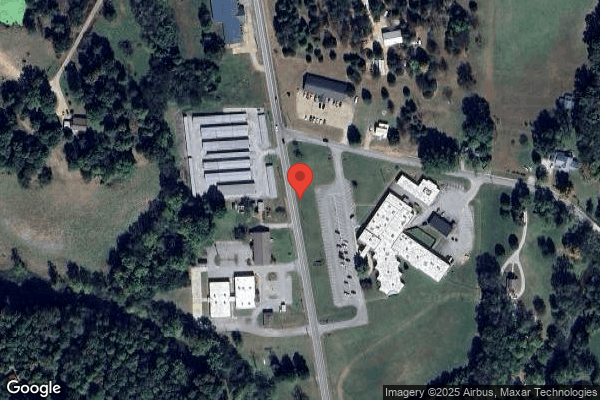
2380 BUFFALO ROAD, LAWRENCEBURG, TN 38464 (931) 762-9418
For profit - Individual 49 Beds NATIONAL HEALTHCARE CORPORATION Data: November 2025
Trust Grade
85/100
#30 of 298 in TN
Last Inspection: March 2022

Over 2 years since last inspection. Current conditions may differ from available data.

Overview

NHC Healthcare in Lawrenceburg, Tennessee, has a Trust Grade of B+, meaning it is recommended and above average compared to other facilities. It ranks #30 out of 298 in Tennessee, placing it in the top half of the state's nursing homes, and #2 out of 3 in Lawrence County, indicating only one local option is better. The facility is stable, with no significant change in issues reported over the past two years, maintaining a total of 6 concerns. Staffing is rated 4 out of 5 stars, with RN coverage better than 91% of state facilities, although turnover is at 56%, which is average. While there are no fines on record, there have been concerns about infection control practices, such as staff failing to complete screening logs and hand hygiene during meal service, which could pose health risks.

Trust Score
B+
85/100
In Tennessee
#30/298
Top 10%
Safety Record
Low Risk
No red flags
Inspections
Holding Steady
1 → 1 violations
Staff Stability
⚠ Watch
56% turnover. Above average. Higher turnover means staff may not know residents' routines.
Penalties
✓ Good
No fines on record. Clean compliance history, better than most Tennessee facilities.
Skilled Nurses
✓ Good
Each resident gets 56 minutes of Registered Nurse (RN) attention daily — more than average for Tennessee. RNs are trained to catch health problems early.
Violations
○ Average
6 deficiencies on record. Average for a facility this size. Mostly minor or procedural issues.
★★★★★
5.0
Overall Rating
★★★★☆
4.0
Staff Levels
★★★★★
5.0
Care Quality
★★★★☆
4.0
Inspection Score
Stable
2022: 1 issues
2023: 1 issues

The Good

  • 4-Star Staffing Rating · Above-average nurse staffing levels
  • 5-Star Quality Measures · Strong clinical quality outcomes
  • Full Sprinkler Coverage · Fire safety systems throughout facility
  • No fines on record

Facility shows strength in staffing levels, quality measures, fire safety.

The Bad

Staff Turnover: 56%

Near Tennessee avg (46%)

Frequent staff changes - ask about care continuity

Chain: NATIONAL HEALTHCARE CORPORATION

Part of a multi-facility chain

Ask about local staffing decisions and management

Staff turnover is elevated (56%)

8 points above Tennessee average of 48%

The Ugly 6 deficiencies on record

Oct 2023 1 deficiency
CONCERN (D) 📢 Someone Reported This

A family member, employee, or ombudsman was alarmed enough to file a formal complaint

Potential for Harm - no one hurt, but risky conditions existed

Report Alleged Abuse (Tag F0609)

Could have caused harm · This affected 1 resident

Based on policy review, record review, facility document, and interview, the facility failed to submit a five-day investigative summary to the State related to an allegation of neglect for 1 (Resident...

Read full inspector narrative →
Based on policy review, record review, facility document, and interview, the facility failed to submit a five-day investigative summary to the State related to an allegation of neglect for 1 (Resident #1) of 3 sampled residents reviewed for abuse/neglect. Findings included: 1. A review of the facility policy titled, Patient Protection and Response Policy for Allegations/Incidents of Abuse, Neglect, Misappropriation of Property and Exploitation, with an original date of 08/01/2001 and revised date of 2023, revealed, It is the policy of this facility that 'abuse' allegations (abuse, neglect, exploitation or mistreatment, including injuries of unknown source and misappropriation of resident property) are reported per Federal and State Law. 2. Medical record review of the Resident Face Sheet revealed the facility admitted Resident #1 on 04/25/2022, with diagnoses that included Conduct Disorder, Cognitive Communication Deficit, Mild Vascular Dementia with Mood Disturbance, and Recurrent Severe Major Depression with Psychotic Symptoms. A review of a quarterly Minimum Data Set (MDS), with an Assessment Reference Date (ARD) of 08/09/2022, revealed Resident #1 had a Brief Interview for Mental Status (BIMS) score of 13, which indicated the resident was cognitively intact. The MDS indicated the resident required extensive assistance with toilet use and was frequently incontinent of bowel and bladder. Review of an incident report dated 08/22/2022, indicated on 08/20/2022, Resident #1 informed a certified nursing assistant of an allegation of neglect. Per the incident report, the resident stated their incontinence brief had not been changed since 08/19/2022. A review of facility documents revealed no evidence a five-day investigative summary report had been submitted to the state agency. During an interview on 10/13/2023 at 3:18 PM, the Director of Nursing (DON) said the Administrator was responsible for reporting issues to the state agency. During an interview on 10/12/2023 at 4:47 PM, the Administrator stated he reported Resident #1's concerns to Adult Protective Services (APS), the state agency, the local police department, and the Ombudsman. The Administrator stated he had not filed a five-day report with the state because APS investigated and stated there were no issues, and because the allegations were unsubstantiated. In a follow-up interview on 10/13/2023 at 5:29 PM, the Administrator stated he was unaware a five-day report had to be submitted to the state agency.
Mar 2022 1 deficiency
CONCERN (F)

Potential for Harm - no one hurt, but risky conditions existed

Infection Control (Tag F0880)

Could have caused harm · This affected most or all residents

Based on Centers for Disease Control and Prevention (CDC) guidelines, policy review, Work Summary Report review, Screening Log review, observation, and interview, the facility failed to ensure practic...

Read full inspector narrative →
Based on Centers for Disease Control and Prevention (CDC) guidelines, policy review, Work Summary Report review, Screening Log review, observation, and interview, the facility failed to ensure practices to prevent the spread of infection were maintained to ensure all staff who enter the facility completed the screening process for the prevention and potential spread of COVID-19 when 26 of 174 staff members (Registered Nurse (RN) #1, Licensed Practical Nurse (LPN) #1, #2, #3, and #4, Respiratory Therapist (RT) #1, Social Worker #1, Maintenance #1, Receptionist #1 and #2, Physical Therapist Assistant (PTA) #1, #2, and #3, Occupational Therapist Assistant (OTA) #1 and #2, Physical Therapist (PT) #1, Certified Nursing Assistant (CNA) #1, #2, #3, #4, and #5, Temporary Nurse Assistant (TNA) #1 and #2, and Dietary Staff #1, #2, and #3) failed to complete the screening log prior to working 4 of 6 days (3/1/2022, 3/4/2022, 3/5/2022, and 3/6/2022) reviewed; and when 1 of 3 nurses (LPN #5) failed to perform hand hygiene for 1 of 4 sampled residents (Resident #32) observed during medication (med) administration. This had the potential to affect the 56 residents residing in the facility. The findings include: Review of the Centers for Disease Control and Prevention (CDC) guidelines document titled, Recommended routine infection prevention and control (IPC) practices during the COVID-19 pandemic, updated 9/10/2021, revealed .Establish a process to identify anyone entering the facility, regardless of their vaccination status, who has any of the following so they can properly manage .a positive viral test for SARS-CoV-2 .symptoms of COVID-19, or .who meets criteria for quarantine or exclusion from work .Options could include (but are not limited to): individual screening on arrival at the facility; or implementing an electronic monitoring system in which individuals can self-report any of the above before entering the facility . Review of the facility's Staff/Visitor/Vendor Screening Log and the facility's Work Summary Report dated from 3/1/2022-3/6/2022, revealed the following employees worked on the following days and failed to screen for signs and symptoms of COVID-19: a. 3/1/2022 - TNA #1, OTA #1 and #2, PTA #1, #2, and #3, and Dietary Staff #3. b. 3/4/2022 - LPN #1, #2, and #3, Maintenance #1, CNA #1, PTA #1 and #3, OTA #1, and Dietary Staff #1 and #2. c. 3/5/2022 - LPN #4, CNA #2 and #3, TNA #2, and Receptionist #1. d. 3/6/2022 - Social Worker #1, RT #1, LPN #4, PT #1, PTA #2, CNA #4 and #5, TNA #1, and Receptionist #1 and #2. During an interview on 3/16/2022 at 3:05 PM, the Infection Preventionist was asked about the staff failing to screen prior to entering the facility. The Infection Preventionist stated, .I audit weekly or twice a week .I don't know how I failed to catch those staff that didn't screen .I think it has to do with the time clock . Review of the facility's undated policy titled, Hand Washing and Hand Sanitizer, revealed .Hand hygiene is the primary means to prevent the spread of infection .Wash or sanitize hands after removal of gloves . Review of the facility's policy titled, Administration Procedures for All Medications, dated 1/1/2019, revealed .Cleanse hands .before beginning a med pass, before handling medication, and before contact with a resident . Observation at the 100 Hall Medication Cart on 3/15/2022 at 8:12 AM, revealed LPN #5 failed to perform hand hygiene before she prepared Resident #32's medications. LPN #5 disposed of the medication packages in a trash bag, touching the inside of the trash bag with her bare hands. LPN #5 failed to perform hand hygiene before she removed the cap to Resident #32's eye medication. Observation at the 100 Hall Medication Cart on 3/15/2022 at 11:56 AM, revealed LPN #5 failed to perform hand hygiene, donned gloves and cleaned the blood glucose meter. LPN #5 doffed her gloves and donned clean gloves without performing hand hygiene. LPN #5 went to Resident #32's room, wearing the same gloves, and checked the resident's blood glucose. LPN #5 did not remove her gloves, perform hand hygiene, and don clean gloves prior to checking the resident's blood glucose level. Observation at the 100 Hall Medication Cart on 3/15/2022 at 12:12 PM, revealed LPN #5 failed to perform hand hygiene and prepared insulin. LPN #5 did not perform hand hygiene, donned clean gloves, went to Resident #32's room, and administered the insulin. During an interview on 3/16/2022 at 1:30 PM, the Director of Nursing (DON) confirmed staff should wash their hands prior to administering medications.
May 2019 2 deficiencies
CONCERN (D)

Potential for Harm - no one hurt, but risky conditions existed

Infection Control (Tag F0880)

Could have caused harm · This affected 1 resident

**NOTE- TERMS IN BRACKETS HAVE BEEN EDITED TO PROTECT CONFIDENTIALITY** Based on policy review, medical record review, observation, and interview the facility failed to store an ice scoop under sanita...

Read full inspector narrative →
**NOTE- TERMS IN BRACKETS HAVE BEEN EDITED TO PROTECT CONFIDENTIALITY** Based on policy review, medical record review, observation, and interview the facility failed to store an ice scoop under sanitary conditions for 1 of 2 (200 Hall) ice storage areas and failed to ensure practices were followed to maintain infection control for 1 of 1 (Resident #25) sampled residents observed during perineal care. The findings include: 1. The facility's Safety & [and] Sanitation Best Practice Guidelines policy dated 11/2017 documented .the handle of the scoop must be stored so that it does not touch the ice . 2. Observations in the 200 Hall nourishment room on 4/29/19 at 11:30 AM and at 3:39 PM, revealed the ice scoop was stored inside the portable ice bin on top of the ice. Interview with the Director of Nursing (DON) on 4/30/19 at 11:40 AM. in the 100 Hall, the DON was asked if it was acceptable for the ice scoop to be stored inside the ice bin. The DON stated, No. 3. The facility's undated Perineal Care policy documented, .To provide cleanliness and comfort to the patient .prevent infections .Remove gloves and discard. Wash and dry your hands . 4. Medical record review revealed Resident #25 was admitted to the facility on [DATE] with diagnoses of Alzheimer's Disease, Palliative Care, and Fracture of Left Pubis. Observations in Resident #25's room on 4/29/19 at 11:37 AM, revealed Certified Nursing Assistant (CNA) #2 provided perineal care to Resident #25. CNA #2 did not remove the soiled gloves used during the perineal care. After performing the perineal care, CNA #2 assisted the resident to sit on the bedside, took the resident's hairbrush, and began brushing and touching Resident #25's hair. Interview with the DON on 4/30/19 at 9:36 AM, in the Community Room, the DON was asked if it was appropriate to perform perineal care and wear the same gloves to brush a resident's hair. The DON stated, No.
CONCERN (E)

Potential for Harm - no one hurt, but risky conditions existed

Food Safety (Tag F0812)

Could have caused harm · This affected multiple residents

Based on policy review, observation, and interview, the facility and failed to ensure meal trays were served under sanitary conditions when 3 of 7 (Certified Nursing Assistant (CNA) # 1, #2, and #3) s...

Read full inspector narrative →
Based on policy review, observation, and interview, the facility and failed to ensure meal trays were served under sanitary conditions when 3 of 7 (Certified Nursing Assistant (CNA) # 1, #2, and #3) staff members failed to perform proper hand hygiene during dining. The findings include: The facility's undated Hand Washing and Hand Sanitizer policy documented, .Hand hygiene is the primary means to prevent the spread of infection . Observations in Resident #3's room on 4/29/19 at 11:57 AM, revealed CNA #1 delivered Resident #3's meal tray into her room. CNA #1 repositioned Resident #3. CNA #1 and CNA #2 then pulled Resident #3 up in the bed. CNA #1 opened the meal tray, poured Resident #3's milk, touched items on the tray, opened Resident #3's straw, touched the straw with his bare hands, and inserted it into Resident #3's drink without performing hand hygiene. Observations in Resident #5's room on 4/30/19 at 7:32 AM, revealed CNA #3 delivered Resident #5's meal tray, moved a garbage can, then set up the meal tray, and stirred the food with the utensils, without performing hand hygiene. Observations in Resident #21's room on 4/30/19 at 7:39 AM, revealed CNA #3 delivered Resident #21's meal tray, pulled Resident #21 up in the bed, opened the silverware, opened the juice, and put the straw into the juice, without performing hand hygiene. Observations in Resident #23 and Resident #6's room on 4/30/19 at 8:01 AM, revealed CNA #3 and CNA #2 pulled Resident #23 up in the bed. CNA # 2 then removed her gloves and went to Resident #6 and set up her meal tray, opened her jelly and spread it on her food, opened the juices, opened the straw and put it into Resident #6's drink, without performing hand hygiene. Observations in Resident #303's room on 4/30/19 at 8:05 AM, revealed CNA #3 delivered Resident #303's meal tray, raised the head of the bed, adjusted Resident #303's oxygen on her face, moved a cord on the floor under the bed, moved the over-bed table in front of the resident, opened and sprinkled sweetener over the food, opened the carton of milk, opened the straw and put it into the drink, without performing hand hygiene. Interview with the Director of Nursing (DON) on 4/30/19 at 9:36 AM, in the Community Room, the DON was asked if it was appropriate to reposition residents, touch articles in the room such as garbage cans and things on the floor, then set up meal trays without performing hand hygiene. The DON stated, They should perform hand hygiene before setting up the tray.
Jun 2018 2 deficiencies
CONCERN (D)

Potential for Harm - no one hurt, but risky conditions existed

Deficiency F0761 (Tag F0761)

Could have caused harm · This affected 1 resident

Based on policy review, observation, and interview, the facility failed to ensure medications were properly stored and secured in 1 of 1 (Clean Utility Room) clean utility rooms. The findings included...

Read full inspector narrative →
Based on policy review, observation, and interview, the facility failed to ensure medications were properly stored and secured in 1 of 1 (Clean Utility Room) clean utility rooms. The findings included: 1. The facility's MEDICATION STORAGE IN THE FACILITY policy documented .The medication supply is accessible only to licensed nursing personnel, pharmacy personnel, or staff members lawfully authorized to administer medications .Medication rooms, carts, and medication supplies are locked when not attended by persons with authorized access . 2. Observations in the unlocked Clean Utility Room on 6/18/18 at 6:45 AM, 7:43 AM, 12:19 PM, and 2:34 PM, revealed 5 unsecured syringes containing 5 milliliters of heparin 100 units/milliliter (an anticoagulant medication). Interview with the Director of Nursing (DON) on 6/18/18 at 2:42 PM, in the Clean Utility Room, the DON was asked if the residents should have access to the heparin syringes. The DON stated, No. The DON confirmed the medication was not secured.
CONCERN (D)

Potential for Harm - no one hurt, but risky conditions existed

Safe Environment (Tag F0921)

Could have caused harm · This affected 1 resident

Based on policy review, observation and interview, the facility failed to ensure the environment was free from accident hazards as evidenced by unsecured and accessible chemicals and needles stored in...

Read full inspector narrative →
Based on policy review, observation and interview, the facility failed to ensure the environment was free from accident hazards as evidenced by unsecured and accessible chemicals and needles stored in 1 of 1 (Clean Utility Room) clean utility rooms. The findings included: 1. The facility's .Storage of Hazardous Chemicals policy documented, Hazardous chemicals are to be stored out of the reach of patients. Examples of hazardous materials are .Acetone . 2. The facility's .EQUIPMENT AND SUPPLIES FOR ADMINISTERING MEDICATIONS policy documented, .The following equipment and supplies are .maintained by the facility for the proper storage, preparation and administration of medication .needles . 3. Observations in the unlocked Clean Utility Room on 6/18/18 at 6:45 AM, 7:43 AM, 12:19 PM, and 2:34 PM, revealed a bottle of nail polish remover (acetone), 4 bottles of shave cream labeled Keep out of Reach of Children, 5 bottles of anti-perspirant deodorant labeled, Keep out of Reach of Children, 3 denture cleanser tablets, (9) 24-gauge needles, and (2) 23-gauge needles, all unsecured. Interview with the Director of Nursing (DON) on 6/18/18 at 2:42 PM, in the Clean Utility Room, the DON was asked if the residents should have access to the nail polish remover, the items labeled Keep out of reach of children, or the needles. The DON stated, No. The DON confirmed the chemicals and sharps were not secured.
Understanding Severity Codes (click to expand)
Life-Threatening (Immediate Jeopardy)
J - Isolated K - Pattern L - Widespread
Actual Harm
G - Isolated H - Pattern I - Widespread
Potential for Harm
D - Isolated E - Pattern F - Widespread
No Harm (Minor)
A - Isolated B - Pattern C - Widespread

Questions to Ask on Your Visit

  • "Why is there high staff turnover? How do you retain staff?"
  • "Can I speak with families of current residents?"
  • "What's your RN coverage like on weekends and overnight?"

Our Honest Assessment

Strengths
  • • Grade B+ (85/100). Above average facility, better than most options in Tennessee.
  • • No major safety red flags. No abuse findings, life-threatening violations, or SFF status.
  • • No fines on record. Clean compliance history, better than most Tennessee facilities.
Concerns
  • • 56% turnover. Above average. Higher turnover means staff may not know residents' routines.
Bottom line: Generally positive indicators. Standard due diligence and a personal visit recommended.

About This Facility

What is Nhc Healthcare, Scott's CMS Rating?

CMS assigns NHC HEALTHCARE, SCOTT an overall rating of 5 out of 5 stars, which is considered much above average nationally. Within Tennessee, this rating places the facility higher than 99% of the state's 100 nursing homes. This rating reflects solid performance across the metrics CMS uses to evaluate nursing home quality.

How is Nhc Healthcare, Scott Staffed?

CMS rates NHC HEALTHCARE, SCOTT's staffing level at 4 out of 5 stars, which is above average compared to other nursing homes. Staff turnover is 56%, which is 10 percentage points above the Tennessee average of 46%. High turnover can affect care consistency as new staff learn residents' individual needs.

What Have Inspectors Found at Nhc Healthcare, Scott?

State health inspectors documented 6 deficiencies at NHC HEALTHCARE, SCOTT during 2018 to 2023. These included: 6 with potential for harm.

Who Owns and Operates Nhc Healthcare, Scott?

NHC HEALTHCARE, SCOTT is owned by a for-profit company. For-profit facilities operate as businesses with obligations to shareholders or private owners. The facility is operated by NATIONAL HEALTHCARE CORPORATION, a chain that manages multiple nursing homes. With 49 certified beds and approximately 51 residents (about 104% occupancy), it is a smaller facility located in LAWRENCEBURG, Tennessee.

How Does Nhc Healthcare, Scott Compare to Other Tennessee Nursing Homes?

Compared to the 100 nursing homes in Tennessee, NHC HEALTHCARE, SCOTT's overall rating (5 stars) is above the state average of 2.9, staff turnover (56%) is near the state average of 46%, and health inspection rating (4 stars) is above the national benchmark.

What Should Families Ask When Visiting Nhc Healthcare, Scott?

Based on this facility's data, families visiting should ask: "How do you ensure continuity of care given staff turnover, and what is your staff retention strategy?" "Can I visit during a mealtime to observe dining assistance and food quality?" "How do you handle medical emergencies, and what is your hospital transfer rate?" "Can I speak with family members of current residents about their experience?" These questions are particularly relevant given the facility's high staff turnover rate.

Is Nhc Healthcare, Scott Safe?

Based on CMS inspection data, NHC HEALTHCARE, SCOTT has a clean safety record: no substantiated abuse findings (meaning no confirmed cases of resident harm), no Immediate Jeopardy citations (the most serious violation level indicating risk of serious injury or death), and is not on the Special Focus Facility watch list (a federal program monitoring the lowest-performing 1% of nursing homes). The facility has a 5-star overall rating and ranks #1 of 100 nursing homes in Tennessee. While no facility is perfect, families should still ask about staff-to-resident ratios and recent inspection results during their visit.

Do Nurses at Nhc Healthcare, Scott Stick Around?

Staff turnover at NHC HEALTHCARE, SCOTT is high. At 56%, the facility is 10 percentage points above the Tennessee average of 46%. High turnover means new staff may not know residents' individual needs, medications, or preferences. It can also be disorienting for residents, especially those with dementia who rely on familiar faces. Families should ask: What is causing the turnover? What retention programs are in place? How do you ensure care continuity during staff transitions?

Was Nhc Healthcare, Scott Ever Fined?

NHC HEALTHCARE, SCOTT has no federal fines on record. CMS issues fines when nursing homes fail to meet care standards or don't correct problems found during inspections. The absence of fines suggests the facility has either maintained compliance or corrected any issues before penalties were assessed. This is a positive indicator, though families should still review recent inspection reports for the full picture.

Is Nhc Healthcare, Scott on Any Federal Watch List?

NHC HEALTHCARE, SCOTT is not on any federal watch list. The most significant is the Special Focus Facility (SFF) program, which identifies the bottom 1% of nursing homes nationally based on persistent, serious quality problems. Not being on this list means the facility has avoided the pattern of deficiencies that triggers enhanced federal oversight. This is a positive indicator, though families should still review the facility's inspection history directly.