NHC HEALTHCARE, LEWISBURG

1653 MOORESVILLE HIGHWAY, LEWISBURG, TN 37091 (931) 359-4506
For profit - Limited Liability company 100 Beds NATIONAL HEALTHCARE CORPORATION Data: November 2025 7 Immediate Jeopardy citations
Trust Grade
0/100
#201 of 298 in TN
Last Inspection: February 2020

Over 2 years since last inspection. Current conditions may differ from available data.

Overview

NHC Healthcare in Lewisburg, Tennessee, received a Trust Grade of F, indicating significant concerns regarding its care and operations. Ranking #201 out of 298 facilities in Tennessee places it in the bottom half, and among the two nursing homes in Marshall County, it is ranked second, meaning only one local option is better. The facility is currently improving, with the number of reported issues decreasing from 10 in 2023 to 9 in 2024. Staffing is rated at 2 out of 5 stars, with a turnover rate of 54%, which is slightly above the state average, suggesting some instability among staff. However, the nursing home has good RN coverage, exceeding 88% of Tennessee facilities, which can help catch issues that other staff might miss. Families should be aware of serious concerns identified during inspections, including critical failures to notify medical professionals about dangerously high blood sugar levels for multiple residents, which could lead to severe health risks. Additionally, there was a troubling incident where nursing staff failed to properly assess a resident's change in condition, leading to their transfer to an emergency department where they ultimately passed away. While the facility has some strengths, such as good RN coverage, the high fines totaling $581,647 and numerous critical deficiencies raise serious red flags for families considering this home for their loved ones.

Trust Score
F
0/100
In Tennessee
#201/298
Bottom 33%
Safety Record
High Risk
Review needed
Inspections
Getting Better
10 → 9 violations
Staff Stability
⚠ Watch
54% turnover. Above average. Higher turnover means staff may not know residents' routines.
Penalties
✓ Good
$581,647 in fines. Lower than most Tennessee facilities. Relatively clean record.
Skilled Nurses
✓ Good
Each resident gets 46 minutes of Registered Nurse (RN) attention daily — more than average for Tennessee. RNs are trained to catch health problems early.
Violations
⚠ Watch
27 deficiencies on record. Higher than average. Multiple issues found across inspections.
★★☆☆☆
2.0
Overall Rating
★★☆☆☆
2.0
Staff Levels
★★★★★
5.0
Care Quality
★☆☆☆☆
1.0
Inspection Score
Stable
2023: 10 issues
2024: 9 issues

The Good

  • 5-Star Quality Measures · Strong clinical quality outcomes
  • Full Sprinkler Coverage · Fire safety systems throughout facility
  • No fines on record

Facility shows strength in quality measures, fire safety.

The Bad

2-Star Overall Rating

Below Tennessee average (2.8)

Below average - review inspection findings carefully

Staff Turnover: 54%

Near Tennessee avg (46%)

Higher turnover may affect care consistency

Federal Fines: $581,647

Well above median ($33,413)

Significant penalties indicating serious issues

Chain: NATIONAL HEALTHCARE CORPORATION

Part of a multi-facility chain

Ask about local staffing decisions and management

The Ugly 27 deficiencies on record

7 life-threatening 4 actual harm
Mar 2024 9 deficiencies 1 IJ
CRITICAL (J) 📢 Someone Reported This

A family member, employee, or ombudsman was alarmed enough to file a formal complaint

Immediate Jeopardy (IJ) - the most serious Medicare violation

Accident Prevention (Tag F0689)

Someone could have died · This affected 1 resident

**NOTE- TERMS IN BRACKETS HAVE BEEN EDITED TO PROTECT CONFIDENTIALITY** Based on facility policy review, Review of the Resident Assessment Instrument (RAI) Version 3.0 Manual, medical record review, f...

Read full inspector narrative →
**NOTE- TERMS IN BRACKETS HAVE BEEN EDITED TO PROTECT CONFIDENTIALITY** Based on facility policy review, Review of the Resident Assessment Instrument (RAI) Version 3.0 Manual, medical record review, facility investigation review, facility document review, and interview, the facility failed to provide an environment that is free from accident hazards over which the facility has control and provide supervision for 1 of 3 (Resident #1) sampled residents reviewed for accidents. On 12/27/2023, Resident #1 had an unwitnessed fall from an elevated bed and sustained bilateral lower extremity compound fractures of the tibia and fibula and a comminuted fracture of the left patella. Resident #1 was transferred via air ambulance (helicopter) to a level 1 trauma center for emergent care. The emergency department record dated 12/28/2023 for Resident #1 revealed, .reported fall from bed with bilateral lower extremity deformity and reported 'near amputation' left leg . The facility's failure to provide an environment that was free from accident hazards resulted in an Immediate Jeopardy (IJ, a situation in which the provider's noncompliance with one or more requirements of participation has caused, or is likely to cause, serious injury, harm, impairment, or death to a resident) to Resident #1. The Administrator was notified of the Immediate Jeopardy for F689 (J) on 2/29/2024 at 6:52 PM, in the Administrator's office. The facility was cited at F-689 with a scope and severity of J, which is Substandard Quality of Care. The Immediate Jeopardy began on 12/27/2023 and is ongoing. A partial extended survey was done on 3/4/2024 - 3/13/2024. The facility is required to submit a plan of correction. The findings include: 1. Review of the facility policy titled, INCIDENT AND ACCIDENT PROCESS, revised 8/13/2013, revealed, .Investigation into the incident/accident .Obtain information on what happened-what was actually seen or heard .Document all known facts, results of assessment including a complete description of injuries, treatment, notification of physician and family .Institute Alert Charting System .Review the Care plan for any possible/updates that might be required related to a change/update .Accidents not resulting in injuries should still be reported .Injuries can be found or develop later .Documentation that addresses the status and/or progress of the patient in relation to the incident/accident is to be completed at least every shift for 72 hours . Review of the RAI Manual Version 3.0 dated 10/2024, revealed, . GG0130: Self-Care .Code 01, Dependent: if the helper does ALL of the effort. Resident does none of the effort to complete the activity; or the assistance of two or more helpers is required for the resident to complete the activity .GG0170: Mobility Code 01, Dependent: if the helper does ALL of the effort. Resident does none of the effort to complete the activity. Or the assistance of two or more helpers is required for the resident to complete the activity . 2. Review of Hospital #3's History and Physical (H&P) for Resident #1 dated 10/30/2021 revealed, .Disorientation .Patient is neurologically non-focal other than the generalized weakness .presented to our ED [Emergency Department] after being found down in her yard from a reported fall and unable to get up. Per the patient she slipped because the floor was wet, without LOC [level of consciousness]. Femur X-Ray 10/29/21 .Status post total RIGHT hip arthroplasty without evidence of fracture to the RIGHT femur .Pelvis .Severe osteopenia .Thoracic Spine .Diffuse osteoporosis . The hospital H&P note review above reveals Resident #1 had a history of falls prior to her admission to Facility #1. Review of the medical record revealed Resident #1 was admitted to the facility on [DATE] with diagnoses which included Spondylosis without myelopathy or radiculopathy and Epilepsy. Continued review of the medical record revealed Resident #1 displayed gradual functional decline in her physical mobility, as well as her mental status, following admission to the facility. Review of therapy notes dated 1/12/2022 through 2/22/2022, revealed Resident #1 was unable to progress in ambulation due to increased pain and her inability to tolerate weight on her left leg. Orthopedics evaluated Resident #1 on 3/1/2022, documented that she had experienced a significant functional decline, and determined the screw that was placed during her previous left hip surgery had shifted and was coming out of the femoral head (highest part of the thigh bone). Resident #1's family declined the extensive surgical repair that would be necessary to correct the previous surgical fixation. A second Orthopedic Physician evaluated Resident #1 on 9/9/2022 and 10/9/2022 and documented that surgical repair would be highly risky considering her poor health and dementia diagnosis. Review of the Progress Notes dated 3/21/2023 for Resident #1 revealed, .received report that pt was trying to get up as she [was] told by her roommate [Resident #9] to get out of bed and that she got a skin tear by doing so. Went to pt and found .skin tear on LLE [left lower extremity] with a small amount of blood she knows she was not supposed to get up and will stay in bed . Resident #1 was moderately cognitively impaired. There were no interventions in Resident #1 and Resident #9's care plan to address the unsafe behaviors noted in the review above, which placed both residents at a greater risk of falls. Review of the Occupational Therapy (OT) Progress Note dated 4/28/2023 revealed, .Pt [Patient, Resident #1] continues to require encouragement to participate in out of bed tasks d/t [due to] pain in L hip . Review of the Morse Fall Scale dated 5/1/2023 revealed Resident #1 was high risk for falls due to a history of falling, gait impaired, and overestimates/forgets limitations. Review of the Social Service note dated 5/1/2023 revealed, .She [Resident #1] enjoys laying [lying] in bed, visiting with her roommate . Review of the Progress Note dated 6/26/2023 revealed, .Pt [Resident #1] allowed this nurse to place shoes on bedside dresser .Bed in low position, locked with floor mat in place beside bed . Review of the Progress Note dated 6/27/2023 for Resident #1 revealed, .Pleasant mood Max [maximum] assist x [times] 2 with bed MOB [mobility] Max assist with ADLs [activities of daily living] .Able to turn self in bed slightly . Review of Hospice Palliative Care #1's note dated 6/30/2023 for Resident #1 revealed, .pt lying in bed .She attempts to answer questions when prompted .but exhibits confusion and memory loss .She has contracture [shortening and stiffening of the joints or muscles that prevents normal movement] of left hand .Has h/o [history of] falls and has previously fallen out of bed at facility .Musculoskeletal .Spine, rib and pelvis: reduced ROM [range of motion] .Right upper extremity: reduced ROM .Left upper extremity: reduced ROM .Right lower extremity .reduced ROM .Left lower extremity .reduced ROM .Psychiatric: Insight: poor insight .Implement fall prevention measures-maintain bed at lowest level .Primarily bed bound and unable to ambulate . Review of the Progress Note dated 7/31/2023 revealed, .Pt [Resident #1] continues to require encouragement to participate in out of bed tasks d/t pain in L [left] hip . Review of the Social Services note dated 7/31/2023 revealed, .[Named Resident #1] alert, oriented with confusion .She enjoys laying in bed . Review of the Morse Fall Scale dated 8/8/2023 revealed Resident #1 was low risk for falls due to gait normal/Bed Rest/Wheelchair and overestimates/forgets limitations. Resident #1's Morse Fall Scale for 1/30/2023 and 5/1/2023 were high risk for falls. Review of Hospice Palliative Care #1's note dated 8/21/2023 for Resident #1 revealed, .At baseline, pt exhibits s/s [signs/symptoms] of advanced dementia including memory loss, weakness, loss of mobility .primarily bed bound .She has contracture to left hand and stiffness of right hand .Musculoskeletal: limited motion, muscle weakness, arthralgias/joint pain and swelling in extremities . Review of the Progress Note dated 9/18/2023 for Resident #1 revealed, .Max assist with ADLs, bed MOB . Review of the Morse Fall Scale dated 10/20/2023 revealed Resident #1 was low risk for falls due to gait normal/Bed Rest/Wheelchair and overestimates/forgets limitations. Review of the OT note dated 10/31/2023 revealed, .Pt [Resident #1] continues to require encouragement to participate in out of bed tasks d/t pain in L hip . Review of the OT Functional Abilities assessment dated [DATE] revealed, .Putting on/taking off footwear .Dependent [on staff] . Review of the Annual Minimum Data Set (MDS) dated [DATE] revealed Resident #1 had a Brief Interview for Mental Status (BIMS) score of 10, which indicated moderately impaired cognition, with no behaviors noted over the last 7 days. Continued review of the MDS revealed Resident #1 was dependent for toileting hygiene, putting on/taking off footwear, chair/bed-to-chair transfer, toilet transfer, and tub/shower transfer. Further review of the MDS revealed Resident #1 required substantial/maximal assistance with sit to lying and lying to sitting on side of bed. Review of the Progress Note for Resident #1 revealed, .[Recorded as Late Entry on 12/29/2023 03:04 PM] .12/27/2023 at 10:55 PM .Patient Fall with BLE [Bilateral Lower Extremity] injury/fractures .Patient found sitting beside bed, screaming in pain. Large pool of blood noted to LLE, but unable to assess full extremity as patient was sitting on part of extremity. Pressure applied to stop bleeding. RLE [right lower extremity] when assessed was noted to have bone sticking thru skin. 911 called and patient sent out via [by way of] ambulance .Upon EMS [Emergency Management Service] arrival, and further assessment patient determined to have compound f/x [fracture] of BLE. EMS transported patient to heliport to be medevac'd [taken to hospital via helicopter] to Acute trauma center . Note transcribed by Licensed Practical Nurse (LPN) #1. Review of the census for Resident #1 revealed she continued to be in the room with Resident #9 until her fall from bed on 12/27/2023. Resident #1 remained in the room with Resident #9 with a known history of unsafe interactions between the 2 residents. Review of the FSI (fall scene investigation) Report dated 12/27/2023 for Resident #1 revealed an unwitnessed fall at 10:55 PM. The Fall Description Details for the fall was marked for factors observed at time of fall .resident slipped [the fall was unwitnessed] .Bed height not appropriate . Resident #1 was found on the floor in her room. Continued review of the Fall Description Details for the fall was marked for the question What was resident doing during or just prior to fall . attempting self-transfer . (the fall was unwitnessed) . What type of assistance was resident receiving at time of fall .alone and unattended . (Resident #9 was up in the room in her wheelchair). Further review of the FSI revealed Resident #1 stated, I don't know what happened. I was trying to get out of bed and felt my left leg slip and then I fell. The FSI report noted Resident #1's footwear at the time of fall was shoes, she was last toileted at 10:00 PM, and medications given in the last 8 hours prior to the fall was a narcotic. The FSI report question What appears to be the root cause of the fall .patient attempting to get out of bed without assistance, appears patient raised bed to (arrow up sign) position which contributed to fall/Injuries . The FSI report noted initial interventions to prevent future falls, .N/A [not applicable] patient sent out via 911 . The FSI report revealed a drawn picture of patient on the floor laying on a fall mat parallel to the bed with head midway of the bed with her left leg under the resident and right leg bent up (LPN #1's Progress Note post fall noted 'Right extremity was stretched out in front of her') with a circled area indicating the compound fracture location. The picture further noted injury #2 as left leg knee area which EMS later reported as compound fractures as well. Review of the comprehensive care plan dated 12/27/2023 for Resident #1 revealed, .Problem Start Date .1/11/2022 [Named Resident #1] is At risk for Falls with Injury. She has a h/o falls and is unsteady. She has dementia and poor safety awareness, she can be impulsive .Approach Start Date .10/01/2022 Right side of bed against wall to help with spatial awareness .Approach Start Date .1/11/2022 Call light and personal items within reach .Ensure a safe environment, free of clutter and obstacles .Fall risk assessment .Approach Start Date .1/12/2022 Fall mat to left side of bed while in bed .Bed in low safe position .Problem Start Date .1/11/2022 revealed [Named Resident #1] has an altercation in ADL performance. She has weakness, unsteadiness, and dementia. She is incontinent of B&B [Bowel and Bladder] .Approach Start Date .1/11/2022 Staff to assist her with ADL needs .bathing, dressing, grooming, hygiene, toileting . The comprehensive care plan did not reveal any safety measures or interventions related to Resident #1's history of getting up unassisted, Resident #9's (Resident #1's roommate) history of attempting to assist her with shoes and attempting to assist her with getting out of bed, or safety concerns with use of bed controls with raising her bed to an unsafe elevated position. Review of the EMS report dated 12/27/2023 for Resident #1 revealed, .Primary Impression Injury of Lower Leg Secondary Impression Hemorrhage .Chief Complaint BILATERAL BELOW THE KNEE INJURY .Signs & Symptoms .Extremity Pain .Injury .Fall from bed - 4 ft [foot]-Nursing home 12/27/2023 .Mechanism of Injury Blunt .Trauma .Initial Patient Acuity Critical .Time 23:42 [11:42 PM] BP [Blood pressure] 130/107 Pulse 82 .23:50 [11:50 PM] 58/36 [BP] .Pulse 83 .23:52 [11:52 PM] 54/35 .Extremities .Left Leg .Deformity .Motor Function Absent .Pulse Abnormal .Right Leg .Deformity .Motor Function Absent .Pulse Abnormal .DISPATCHED TO AN 86 YOF [YEAR OLD FEMALE] WITH AN HEMORRHAGING AMPUTATION, IMMEDIATE EMERGENCY RESPONSE TO NURSING HOME. REQUESTED LFD [local fire department] RESPONSE EN ROUTE SQUAD 1 ARRIVED JUST PRIOR TO EMS. MET WORKERS FROM THE NURSING HOME AT THE 100 HALL AND PROCEEDED TO [Resident #1's room] WITH EMS EQUIPMENT. UPON ENTERING THE ROOM WE FOUND .FEMALE AT THE BASE OF A RAISED BED. BED APPEARED TO BE AT ITS HIGHEST LEVEL, PT WAS LYING SUPINE PARTIALLY ON A PADDED FLOOR MAT .WITH HER LEFT LEG BENT AT KNEE BACK BEHIND HER AT AN AWKWARD ANGLE WITH A LARGE POOL OF BLOOD UNDER THE KNEE-AND STILL BLEEDING, RT [right] LEG IS BENT AT A 45 DEGREE ANGLE WITH OBVIOUS OPEN TIB/FIB FX [Tibia/Fibula Fracture - a fracture in the lower leg that happens when a fall or blow places more pressure on the bones than they can withstand], STILL SLOWLY BLEEDING. AS WE APPROACH PT, SHE IS PALE IN COLORING WITH NO OBVIOUS INCREASED WOB [work of breathing], AEMT [advanced emergency medical technicians] GOES STRAIGHT TO LEFT EXT [extremity] TO TRY AND CONTROL BLEEDING .LFD APPLIES A NC [nasal cannula] AT 6 LPM [liters per minute] DUE TO [NAME] [mechanism of injury], AND TO PRE-OXYGENATE SINCE EMS WAS PREPARING TO GIVE MEDICATIONS, LFD .CHECKS THE STATUS OF THE CLOSEST AIR CRAFT, WITH AE9 [air evac] ACCEPTING-THEIR BASE IS THE CLOSEST .LFD .COVERING OPEN FX WITH TRAUMA DRESSING TO CONTROL TIB/FIB BLEED. LEFT LEG IS NOW VERY OBVIOUSLY A DETACHED/OPEN BONE INJURY AT THE KNEE, WITH LARGE OPEN WOUND ALMOST A PARTIAL AMPUTATION .PLACING A TOURNIQUET TO CONTROL THE BLEEDING AT THIS TIME .TRYING TO FIND AN IV [INTRAVENOUS] SITE-WITHOUT BEING ABLE TO LOCATE ANYTHING IN THE UPPER EXT'S. MEDICINE'S JUST TO MOVE PT VIA AN EMERGENCY LIFT WITH A MEGA-MOVER [portable transfer patients or to rescue patients from areas inaccessible to stretchers] OUT OF THE FLOOR .STILL TRYING TO FIGURE OUT PACKAGING FOR PT. 100MCG [microgram] OF FENTANYL [narcotic to treat severe pain] PREPARED FOR PT. PT HAS BEEN INCONSOLABLE REPORTING 10/10 [highest pain level] PAIN SINCE OUR ARRIVAL. 50MCG (1ML) [milliliter] GIVEN PER NARE. NC REPLACED HOPING THAT IT WILL HELP TO INCREASE UPTAKE OF MEDICINE. PT IS STILL IN IMMENSE AMOUNT OF PAIN AND ANXIETY. 2.5MG [milligram] OF VERSED GIVEN IN PT'S LEFT NARE TO HELP POTENTIATE NARCOTIC AND TO HELP WITH HER ANXIETY ABOUT HAVING TO MOVE HER TO GET HER ONTO THE MEGA MOVER AND OUT OF THE FLOOR. PT IS THEN SLIGHTLY LOG ROLLED ONTO THE MEGA MOVER THEN LIFTED ONTO THE COT. WE ARE SCARED TO STRAIGHTEN THE LEFT EXT DUE TO THE BLEEDING BEING STOPPED AT THIS TIME. PT IS SECURED TO THE COT IN A SLIGHT RT [right] LATERAL SUPINE POSITION. COT IS SECURED IN THE UNIT. YELLOW HUMERAL IO [intraosseous] [used anytime vascular access is difficult in emergent, urgent, or medically necessary cases to provide peripheral venous access with central venous catheter performance] ESTABLISHED IN THE LEFT ARM .LIDOCAINE [used to relieve pain and numb the skin] GIVEN SLOWLY, 50 MG PUSHED AND ALLOWED TO SATURATE WITH THE SECOND 50MG THEN BEING PUSHED, FOLLOWED BY A 10ML NS [normal saline - mixture of sodium chloride and water IV fluids] WITH PRESSURE BAG ATTACHED AND 250ML INFUSED EN ROUTE TO THE [NAME] [Pre-designated emergency landing area] .FURTHER DETAILED ASSESSMENT PERFORMED EN ROUTE. BLEEDING HAS STOPPED WITH THE LEFT INJURY SITE AND IS STARTING TO CLOT OFF. DISTAL INJURY STILL FEELS WARM TO THE TOUCH BUT UNABLE TO CHECK FOR PEDAL PULSE DUE TO ANGLE IT IS RESTING AT. RT EXT DISTAL INJURY FEELS COLD TO TOUCH AND UNABLE TO FEEL A PULSE OR GET ANY RESPONSE TO TOUCH-BUT NOT TRYING HARD DUE TO INJURY. PT HAS BECOME HYPOTENSIVE AT THIS POINT AND IS BEING GIVEN FLUID CHALLENGE. PT IS STILL RESPONSIVE TO PAIN/AND SOME VERBAL STIMULATION .AE9 ./RN [Registered Nurse] .PARAMEDIC ENTER THE UNIT AT THE BASE THE HANDOFF BEGINS TO THEM. EMS HELPS WITH MOVING PT OVER TO THEIR EQUIPMENT, AND TO THEIR STRETCHER, PT THEN MOVED TO THE AIRCRAFT AND SECURED . Review of the Progress Note dated 12/28/2023 at 12:59 AM (post fall note completed by LPN #1) revealed, .At 1055pm [10:55 PM] This nurse was sitting at nurses station charting, when I heard very loud scream. Upon arriving at Patients [Resident #1] room, patient was found half-sitting, lying on floor. A large pool of blood was noted to be forming around her left lower extremity. Upon assessment, nurse unable to see complete extremity as she was sitting on it. Her Right extremity was stretched out in front of her, and bone was seen protruding from skin just below knee. Immediately had CNA apply pressure to LLE to slow down bleeding. I then went and called 911. Returned to room and continued to assess patient. Patient reported that she had attempted to get up from bed, but felt her left leg 'Twist on something, and the next thing I knew, I was falling down.' Patient has a history of trying to get up by herself, and has repeatedly been educated to use call light before trying to get up by herself. Patient had her shoes on, and upon questioning CNA's, they report that they had just changed patient about 30 minutes prior to fall, and that her shoes were off at that time. Ambulance and first responders arrived and Patient loaded onto stretcher. EMS report they will be sending patient to hospital via helicopter as patient appears to have tibia/fibula fx to BLE . LPN #1 documents Resident #1's description of what happened differently in other documentation. Resident #1 had a BIMS score of 10 (moderate cognitive impairment) which could render repeated education ineffective for impulsive behaviors. Review of the Point of Care History (Certified Nursing Assistant (CNA) documentation) dated 12/25/2023-12/31/2023 for Resident #1 revealed no documentation for ADL care performed on 12/27/2023-12/28/2023 for the 3-11 shift or the 11-7 shift for Resident #1. Review of Facility #1's Incident Investigation dated 12/28/2023 (post fall 12/27/2023) revealed .[Named Resident #1] .Incident: Patient was found on the floor beside patient's bed .appears the patient was attempting to exit bed unassisted. The patient was found directly beside bed on fall mat with left leg bent at knee under patient and right leg out in from [front] of patient with open fracture noted below knee on right leg. Investigation: After review of fall scene investigation, Incident Report, Interviews with partners assigned to patients care on 12/27/2023 at 10:55pm, along with medical record review for this patient, it appears that the patient was attempting to exit her bed unassisted. The CNA's [Named Nurse Aide (NA) #1 and CNA #1] had been in patient's room approximately 30 minutes prior and provided incontinent care and removed patient's shoes from feet as the patient had placed them on because as [Named Resident #1] stated: 'I need to go home' CNA [Named NA #1] was able to redirect the patient during this interaction and remove shoes, shoes were left in the patients reach per her request. At approximately 10:55pm the Nurse and CNAs were called to the room by a loud noise to find [Named Resident #1] directly beside her bed with left knee bent under the patient and her right leg straight out in front of her on fall mat, the patient had on her left shoe and the right shoe was found behind the patient. After review of the patients medical record/history, interviews with partners, and review of Fall Investigation including illustration of the position and location the patient was found in on the floor following the fall, it appears .the patient had been sitting [on] edge of bed prior to being found on the floor and had attempted to stand to exit the bed her left leg buckled due to Nonunion of left proximal femur fracture with hardware failure and the patient went directly down to the fall mat. During the investigation it was unable to be determined if the patient's bed height had been left at an inappropriate level by the CNA or if the patient had elevated the bed height but regardless of this factor it appeared the injury would have occurred with any type of weight being placed on her lower extremity as the patient had been non-weight bearing to left leg with use of transfers via .lift since 2022 .Result: Nurse provided first aide and summoned EMS .Care Plan will be reviewed upon patients return for needed additional interventions. Education/In-services immediately started related to appropriate bed heights with all partners . Further review of the facility investigation revealed a written statement dated 12/27/2023 from LPN #2 which noted, .Upon going to 100 hall .I found [Named Resident #1] on the floor on top of the fall mat with two CNAs on the floor with one CNA .applying pressure with a sheet to the left lower leg. Other CNA [Named NA #1] exited room to get vital sign machine .Bed height was raised all the way up, when I asked CNA's if the bed was that high when patient fell, they said yes. I then asked if they were providing care to patient since the bed was high and they said 'no', that they were not in the room with patient and had changed her 30 minutes prior. I was notified that EMS was on the way so I cleared patient's roommate and anything in the way . Continued review of the facility investigation revealed a written statement dated 12/27/2023 from LPN #3 which noted, .notified that a fall just occurred on 100 hall, once entering room I seen two other techs on the ground with patient, one CNA .was applying pressure to left leg with towels/sheet, other CNA [Named NA #1] asked to leave room stating she felt 'sick' noticed bed in a high position, asked CNA about height of bed, stating they forgot to lower it back down after providing patient care . Review of NA #1's employee file revealed a Certificate of Successful Completion dated 10/6/2024 for Nursing Assistant studies for 40 classroom hours and 40 clinical hours. Continued review of NA #1's employee file revealed a hire date of 10/18/2023. Further review of employee file revealed a CNA Competency Checklist dated 12/29/2023 (2 days after Resident #1's fall) which included Bed mobility, Turning and Repositioning, and Falls Prevention, signed and dated by employee, Wound Care Nurse, and the Director of Nursing (DON). Review of education (post-accident) provided to staff dated 12/28/2023, 12/29/2023, 12/30/2023, 12/31/2023, 1/1/2024, 1/3/2024, and 1/5/2024 revealed, .Appropriate Bed Height for Patients When providing direct care it is appropriate to raise the patient's bed to an appropriate working level. Once you have completed the patient care task before leaving the patients ' bedside you should lower the patient's bed to the safest position .Low Bed with Fall Mats- Position of the bed in lowest possible position closest to the floor with fall mats in place . Continued review of the education revealed, .In-Service Record .Brief Summary: A fall mat will let you know the bed should be in the lowest position . All staff were educated on appropriate bed height for patients. Review of Hospital #2's Trauma History and Physical dated 12/28/2023 for Resident #1 revealed, .86 y/o F [female], reported fall from bed with bilateral lower extremity deformity and reported near amputation left leg. Level 1 trauma activation [life threatening injuries - level one is the most serious injuries] from scene due to tourniquet placed LLE .Blood products started for hypotension .Intubated in ER [Emergency Room] for pain control R IJ [intrajugular, right vein in neck] central line [catheter placed in a large vein] also placed by ER MD. Bilateral lower extremities were reduced, wounds irrigated with saline and betadine before dressed with set gauze and splinted .Patient complaint of bilateral lower extremity pain prior to intubation .Chief Complaint Both my legs are killing me ' .Review of Systems .bleeding .Neuro .numbness (LLE) .Extremities: large deformity to left knee with bone exposure and soft tissue defect > [greater than] 10cm [centimeters], smaller laceration to right knee with bone exposure .Neck: cervical collar, c-spine precautions .Skin: laceration to left knee and smaller to right knee, bone exposed, muscle exposed .Psychiatry: anxious . Review of Hospital #2's Operative Report Narrative dated 12/28/2023 revealed, .Closed treatment with splint application with manipulation right type 2 open proximal tibial shaft fracture .Close treatment with manipulation type 3 open left proximal tibial shaft fracture .Debridement [removing dead skin and foreign material from a wound] skin subcutaneous tissue and bone associated with open fracture left tibia .Debridement skin subcutaneous tissue and bone associated with open fracture right tibia .Pre-procedure diagnosis .Right type 2 open with a 6 cm [centimeter] anterior wound comminutes proximal tibia fracture with associated proximal fibula fracture in the setting of severe disuse osteopenia .Left type 3 open proximal tibial shaft fracture with a 21 cm complex anterior laceration in the setting of extreme osteopenia from disuse .Findings: Moderate instability noted through both proximal tibia fractures but acceptable alignment for a non ambulator was able to be obtained and maintained in the coronal plane [vertical plane running from front to back]. Extremely challenging skin quality that tore with attempts at suturing .I performed a very limited excision of some of the obviously necrotic [death of cells of tissue through disease or injury] skin at the site of the open fracture and then excised some .bone from the periosteum [connective tissue] and other soft tissue attachments .I turned my attention to the left leg this was a much more significant anterior wound extending 21 cm just distal to the site of the tibial tubercle [a bony bump on the upper part of the shin where the patellar tendon attaches the quadriceps muscles to the leg) .very limited skin excision was carried out only of the obvious necrotic tissue and then the subcutaneous tissues and .larger areas of .bone were excised as part of my debridement of the open fracture .The tissue was then reapproximated to cover the exposed anterior compartment muscle and tibia again this was extremely challenging as the skin would repeatedly tear if it was placed under any tension at all to reapproximate the skin edges .Ultimately I was able to reapproximate about 85% of the wound . Review of the PT Acute INP [inpatient] Progress Note dated 1/1/2024 for Resident #1 revealed, .She report increased pain .Pt rolled .with total A [assist] .Pt hollered in pain with all movement .Pt reports 8/10 pain at resident in BLE's .10/10 with movement . Review of Hospital #2's Discharge summary dated [DATE] for Resident #1 revealed, .Status Post: 12/28/23: bilateral tibia I&D [irrigation and debridement] with fracture manipulation and splinting .Problem List .Fall .Hypertension .Fracture of right tibia and fibula .Fracture of left tibia and fibula .Impaired mobility and ADLs .Depression .Fracture of tibia with fibula, left, open .Tibia and fibula open fracture, right .12/30/23 .Orthopedic evaluation pending for bilateral lower extremity fractures .Neurosurgery consulted for lumbar fractures .12/31/23 .Received 2U (units) packed red cells .1/1/24 .Transfer to PCU [Progressive Care Unit] .1/3/24 .She is c/o [complaining of] leg pain but no other complaints .Plan to repeat CTA [Computed Tomography Angiography] neck tomorrow .1/04/2024 .She mentions that her legs are still hurting .CTA is stable from prior imaging .1/5/24 .CM [case manager] has sent out referrals to different skilled nursing facilities. Pending SNF [skilled nursing facility] acceptance .1/06/24 .transfer to SNF today .Treatments & Procedures .Bilateral open tib/fib fx .NWB [Non-Weight Bearing] BLE .Dressings BLE .Multiple compression deformities, age indeterminate [not exactly known]. T3 [Third thoracic vertebra, thoracic spine around the rib cage area], T4 [Fourth thoracic vertebra], T5 [Fifth thoracic vertebra], T6 [Sixth thoracic vertebra], L1 [First lumbar vertebra lower end of the spinal column], L2 [Second lumbar vertebra], L3 [Third lumbar vertebra], L4 [Fourth lumbar vertebra] [prior history of wedge compression fracture of first lumbar vertebrae and second lumbar vertebrae upon admission to SNF #1 but not the other areas] . Review of the medical record revealed Resident #1 was readmitted to Facility #1 on 1/6/2024 with diagnoses which included Unspecified Fracture of shaft of Right Tibia, Unspecified Fracture of shaft of Left Fibula, Unspecified Fracture of shaft of Right Fibula, Unspecified Fracture of shaft of Left Tibia, and Unspecified Fracture of Left Patella. Review of the care plan dated 1/7/2024 (post fall) for Resident #1 revealed, .Problem Start Date .1/11/2022 [Named Resident #1] is At risk for Falls with Injury. She has a h/o falls and is unsteady. She has dementia and poor safety awareness, she can be impulsive .Approach Start Date .12/27/2023 (date of fall) Staff to ensure that the patient's bed is in the lowest appropriate position .Call light and personal items within reach .Falls risk assessment .Approach Start Date .1/6/2024 Fall mat to side of bed open to room .Side of bed against wall to help with spatial awareness . Review of the care plan post fall revealed only a change in wording of approach, Staff to ensure that patient's bed is in the lowest appropriate position which a low bed was already an active approach prior to her fall on 12/27/2023. The care plan does not address Resident #1's safety concern with use of bed control. Review of Facility Medical Doctor (MD) #1's note dated 1/8/2024 for Resident #1 r[TRUNCATED]
SERIOUS (G) 📢 Someone Reported This

A family member, employee, or ombudsman was alarmed enough to file a formal complaint

Actual Harm - a resident was hurt due to facility failures

Free from Abuse/Neglect (Tag F0600)

A resident was harmed · This affected 1 resident

**NOTE- TERMS IN BRACKETS HAVE BEEN EDITED TO PROTECT CONFIDENTIALITY** Based on facility policy review, medical record review, hospice notes, facility investigation review, and interview, the facilit...

Read full inspector narrative →
**NOTE- TERMS IN BRACKETS HAVE BEEN EDITED TO PROTECT CONFIDENTIALITY** Based on facility policy review, medical record review, hospice notes, facility investigation review, and interview, the facility failed to protect the residents' right to be free from neglect for 2 of 6 (Resident #6 and Resident #8) sampled residents reviewed for abuse. The facility failed to address a change in condition for Resident #6, a severely cognitively impaired ambulatory resident, who exhibited escalating behaviors, a changes in mobility, and increased symptoms of pain beginning on 2/1/2024. On 2/4/2024, 4 days after Resident #6's increase in behaviors, mobility changes and increased pain symptoms, the night shift nurse documented edema and a bruise to the anterior right inner right thigh and notified Hospice. Hospice assessed Resident #6 on 2/5/2024, and an X-ray was ordered on 2/5/2024 at 2:00 PM. The facility did not address the results until 2/6/2024. Resident #6's X-ray revealed a right intertrochanteric femoral fracture. The facility's failure to timely identify an acute change in condition in a severely cognitively impaired resident, resulted in actual harm to Resident #6. In addition, the facility failed to prevent physical abuse when two severely cognitively impaired residents (Resident #6 and Resident #8) were involved in a resident-to-resident altercation on 1/20/2024. The facility also failed to report or investigate the resident-to-resident altercation which involved physical abuse. On 1/20/2024 The findings include: 1. Review of the facility policy titled, Patient Protection and Response Policy for Allegations/Incidents of Abuse, Neglect, Misappropriation of Property and Exploitation, dated 2/1/2023 revealed, .Abuse, Neglect .will not be tolerated by anyone .The patient has the right to be free from abuse, neglect .Abuse .willful infliction of injury .pain or mental anguish .Instances of abuse of all residents, irrespective of any mental or physical condition, cause physical harm, pain or mental anguish .Willful, as used in this definition of abuse, means the individual must have acted deliberately .Physical Abuse .includes hitting, slapping .Neglect .the failure of the facility, its employees, or service providers to provide goods and services necessary to avoid physical harm, pain, mental anguish, or emotional distress .Injuries of Unknown Source .An injury should be classified as an ' injury of unknown source ' when both of the following conditions are met .The source of the injury was not observed by any person .The source of the injury could not be explained by the patient .The injury is suspicious because of the extent of the injury or the location of the injury . Review of the facility policy titled, PATIENT'S RIGHTS, with the revision date of 2/2023, revealed, .All alleged violations involving mistreatment, neglect, or abuse .are reported immediately to the administrator of the center and to other officials in accordance with Federal and State law through established procedures .Alleged violations will be thoroughly investigated, and further potential harm will be prevented while the investigation is in process . Review of Mobile Radiology #1's agreement dated 10/28/2009, revealed, .Mobile X-ray with Radiologist Interpretation, 7/365 [7 days a week/365 days a year] .X-Ray: Regular hours of service are 7:00 A.M. to 11:00 P.M. weekdays. Services are available on all weekends and Holidays for urgent (STAT) needs and will be provided as requested during regular business hours 7/365 .All x-rays are to be read by a Board Certified Radiologist with written reports for routine examinations faxed to each facility within four (4) hours. In case of a STAT request, x-rays will be reviewed with a written report faxed to the facility within one (1) hour . 2. Review of the medical record revealed Resident #6 was admitted to the facility on [DATE] with diagnoses which included Dementia, Vitamin D Deficiency, Other Specified Disorders of Bone Density and Structure, Polyosteoarthritis, and Irritable Bowel Syndrome, and readmitted on [DATE] with Displaced Intertrochanteric Fracture of Right Femur (broken hip). Review of the comprehensive care plan for Resident #6 revealed, .Problem Start Date .9/30/2022 .At risk for Falls with Injury r/t [related to] dementia, impaired safety awareness, unsteadiness on feet, lack of coordination .wanders throughout building when family is not present. She will sit or lay down in the floor at times .Approach .1/6/2024 Provide frequent checks on patient throughout shift .12/29/2023 will continue to instruct and assist pt to have rest periods in bed .7/25/2023 .Increase rounding/frequent rounding .7/16/2023 Encourage periods of rest for patient .10/7/2022 .Observe her for wandering and/or exit seeking behaviors. Maintain a safe environment. Re-direct her as needed, re-orienting her .providing assistance back to room or desired destination . The care plan had no interventions related to Resident #6 sitting in the floor. Review of the Quarterly Minimum Data Set (MDS) dated [DATE] revealed Resident #6 had a Brief Interview for Mental Status (BIMS) score of 0 which indicated severe cognitive impairment. Continued review of the MDS revealed no behaviors in the last 7 days. Further review of the MDS revealed Resident #6 required limited assist with set up only for walking in the room, walking in the corridor, and locomotion on the unit. Review of the Progress Notes dated 12/7/2024 for Resident #6 revealed, .confusion noted .anxiety noted .Up amb indep [ambulatory independent] .Max [maximum] assist with ADLs [activities of daily living], bed MOB [mobility], toileting, pericare . Review of the Social Services (SS) note dated 12/8/2023 revealed, .SS unable to complete interview of BIms [BIMS] .d/t [due to] her not answering .She is severely impaired .She likes to color .walk up and down the hall . Review of the Progress Note dated 12/29/2023 for Resident #6 revealed, .resident was up, walking in hallway, lost balance .fell, landed on butt and left hip area .witnessed falling .was assisted to bed, but got back up and was walking in hallway . Review of the Quarterly MDS dated [DATE] revealed a BIMS score of 0 which indicated severe cognitive impairment. Continued review of the MDS revealed no behaviors. Further review of the MDS revealed supervision with sit to stand, toilet transfer, walking 10 feet, walking 50 feet with two turns, and walking 150 feet. Review of the Progress Note dated 1/6/2024 revealed Resident #6 had gotten out of bed a few times and was redirected back to bed. Review of the Progress Note dated 1/8/2024 for Resident #6 revealed, there were no visible injuries related to the self-reported fall on 1/6/2024 and no symptoms of pain or discomfort. Resident #6 had a diagnosis of Dementia with a BIMS score of 0 which indicated severe cognitive impairment. Review of the Progress Note dated 1/9/2024 revealed Resident #6 ambulated with an unsteady gait at times, with no residual concerns related to the self-reported fall over the weekend. Review of the Progress Note dated 1/17/2024 for Resident #6 revealed, .Very delusional .yelling for help, or calling at [out] to, 'Mommy,' or 'Daddy' Noticed several times thru out shift beating on walls . hitting/slapping self in face. Not easily redirected at times. Patient attempted to his [hit] nurse a couple of times, and attempted to spit on this nurse another time .Patient also noticed w [with]/increased abdominal pain thru out shift. Hydromorphone [Narcotic medication given for moderate to severe pain] given as scheduled and 1x [time] prn [as needed] dose given. Patient finally in bed at this time . Review of the Progress Note dated 1/21/2024 for Resident #6 revealed, patient was yelling, beating walls with hands, fists, cursing, agitated, and redirected. Review of the Progress Note dated 1/21/2024 revealed, Resident #6 was in the TV room crying, beating on the couch and hitting herself in the stomach and face. Continued review revealed she napped in the morning for three hours and was pleasant. At suppertime she became agitated and was yelling, I want my daddy! and was redirected to her room. Review of the Progress Note dated 1/24/2024 for Resident #6 revealed she was up yelling, I want my daddy! Resident #6 was hitting herself in the face, head, and banging bedside table and wall with her fists. She complained of stomach pain and was given Dilaudid (Narcotic pain medication given for moderate to severe pain) 1 milliliter (ml). Review of the Hospice Visit Note Report dated 1/31/2024 for Resident #6 revealed, .Pain .UNABLE TO RATE .PATIENT'S EMOTIONAL STATUS .UNRESPONSIVE DISORIENTED CONFUSED .PATIENT FOUND SITTING IN A WHEELCHAIR IN THE DAY ROOM WITH HER EYES SHUT AND RESTING HER HEAD ON HER HAND WITH ELBOW PROPPED UP ON THE ARMREST OF THE CHAIR .PATIENT NOT SPEAKING WORDS TODAY-ONLY MAKING SOUNDS. SNF [skilled nursing facility] STAFF REPORT THAT PATIENT HAS NOT BEEN THIS SLEEPY ALL DAY AND WAS MORE ALERT EARLIER TODAY .PATIENT CONTINUES ON RECENTLY ADDED ORDER FOR ATIVAN [medication to treat anxiety] 0.5 MG [MILLIGRAM] BID [TWICE PER DAY] RELATED TO COMBATIVE BEHAVIORS. TRACE EDEMA TO RLE [right lower extremity] AND [plus] +1 NONPITTING TO LLE [left lower extremity] NOTED .WRITER INQUIRED ABOUT PATIENT BEING IN A WHEELCHAIR IN THE AFTERNOON, AS PATIENT IS TYPICALLY AMBULATORY AD LIB .PATIENT REQUIRES MAX ASSIST WITH ADLS, BED MOBILITY, AND INCONTINENCE CARE . Review of the Progress Note dated 2/1/2024 for Resident #6 revealed, .[Recorded as Late Entry on 02/17/2024] Pt rested in bed this shift .Alert with confusion .Peri care provided. Combative behavior noted .Daughter .voiced concern on Ativan dosage, reported to .Hospice . Review of the Progress Note dated 2/2/2024 for Resident #6 revealed, .12:49PM .Depakote [medication given for seizures and bipolar disorder] ER [extended release] 125mg TID [three times per day] and 2HS [hour of sleep] mood disorder . Review of the Progress Note dated 2/4/2024 for Resident #6 revealed, .3:36PM .patient has been sleeping in bed on and off today, has been trying to hit .scratch .claw when being turned and checked for incontinence .noted to have a small bruised area to right inner thigh area .pillow has been being placed in between .legs when in bed when .lying on each side .patient has bony hips/legs, is Hospice patient .dtr [daughter] .has been here and is aware of bruise to right inner thigh area . Review of the Progress Note dated 2/4/2024 for Resident #6 revealed, .7:24PM .Also noted edema to pt's [patient] R [right] hip area and pt c/o [complaint of] pain to R hip. 0 rotation noted to BLE's [both lower extremities]. 0 redness. Has been resting in bed this weekend with pillow between legs/knees. 0 eating/drinking well. Notified .Hospice this evening and asked that a nurse come to see pt tomorrow on 2/05/24 . Review of the Progress Note dated 2/4/2024 for Resident #6 revealed, 7:30PM .SITUATION .Note pt has not been OOB [out of bed] since at least 2/02/24 [2/2/2024]. It was reported to this nurse that pt hollers out when incont[incontinence]/pt care is provided. Pt grabbing R hip/thigh area, and note sm [small] amt [amount] edema to anterior R upper thigh and sm light bluish bruise noted to R inner upper thigh . Review of Hospice Client Coordination Note Report dated 2/4/2024 for Resident #6 revealed .TIME: 7:22 PM, [Licensed Practical Nurse LPN #8] WITH [Named Facility #1] .REQUESTS VISIT TOMORROW FOR PATIENT. REPORTS PATIENT HAS NOT GOTTEN OUT OF BED OR ATE SINCE SATURDAY. REPORTS PATIENT'S RIGHT HIPS IS SWOLLEN AND ALSO HAS A BRUISE THE SIZE OF A HALF DOLLAR ON INNER LEFT THIGH. REPORTS PATIENT IS NON WEIGHT BEARING AT THIS TIME . Review of the Hospice Visit Note Report dated 2/5/2024 for Resident #6 revealed, .PAIN .UNABLE TO RATE .FRIGHTENED .TENSE .UNABLE TO CONSOLE, DISTRACT, OR REASSURE .BRUISING .RIGHT BACK MID THIGH .BONE/JOINT PROBLEMS .RIGHT HIP UNABLE TO STAND ON IT .LOWER RIGHT EXTREMITY .DROWSINESS SCORE (0-10) 7 . Review of the Hospice Client Coordination Note Report dated 2/5/2023 revealed .OC [on call] NURSE REPORTED THAT CENTER CALLED OVERNIGHT .R/T [related to] SIGNIFICANT DECLINE .SPOKE WITH CENTER NURSE AND SHE STATED THAT THE PT WAS UNABLE TO GET UP AND WALK WHERE SHE WAS OOB DAILY AND WALKING INDEPENDENTLY IN THE CENTER. DURING THE ASSESSMENT SN [skilled nurse] NOTICED A DEEP PURPLE/DEEP BLUE BRUISE TO HER RIGHT INNER/BACK THIGH. PAT [patient] HAD SIGNIFICANT PAIN WHEN TOUCHED OR MOVED AND WOULD YELL HELP. WHEN THIS NURSE ASKED HER WHERE SHE NEEDED HELP SHE POINTED TO HER RIGHT LEG. NO FALL WAS REPORTED BY FACILITY STAFF. THIS NURSE CALLED MD [medical doctor] TO ASK FOR AN XRAY TO RULE OUT OR CONFIRM A FRACTURE .FAMILY WAS NOTIFIED . Review of the Physician's Order for Resident #6 revealed, .HIPS BILAT [Bilateral] W [with] OR W/O [without] PELVIS 2 V [view] . Review of the faxed Radiology Report dated 2/5/2024 revealed, .2/5/2024 4:52 PM TX [transmission] .Report Date: 2/5/2024 3:44:46 PM .Conclusion: Acute intertrochanteric RIGHT femoral fracture as noted .Electronically signed by [Radiologist #1] 2/5/2024 3:44 .PM . Review of the Progress Note dated 2/5/2024 for Resident #6 revealed, .7:35PM .Xray of R hip obtained this afternoon, no results at current time. POA [Power of Attorney] notified of changes noted . Review of the Progress Note dated 2/6/2024 for Resident #6 at 8:49 AM revealed, .Xray results reported to center. Patient has an acute intertrochanteric right femoral fracture. Hospice notified. Family updated per hospice nurse . The progress note was completed by the Director of Nursing (DON). Review of the Hospice Client Coordination Note Report dated 2/6/2024 for Resident #6 revealed .APPROACHED THIS MORNING AT THE CENTER BY SNF [skilled nursing facility] UM [Unit Manager]. SHE SHOWED WRITER PATIENT ' S XRAY RESULTS SHOWING AN INTERTROCHANTERIC RIGHT FEMUR FRACTURE. SNF REQUEST THAT WRITER CONTACT PATIENT'S DAUGHTER TO NOTIFY OF RESULTS .SHE DESIRED FOR HER TO SEEK TREATMENT FOR RIGHT FEMUR .SHE STATES SHE WOULD LIKE TO SPEAK WITH HER FAMILY AND THE MEDICAL DIRECTOR IF POSSIBLE TO DECIDE ON A COURSE OF ACTION .DECISION MADE THAT PATIENT TO BE CENTER [sent] TO HOSPITAL FOR PATIENT'S HIP TO BE STABILIZED TO REDUCE PAIN THEN RETURN TO [Named Facility #1] . Review of the Progress Note dated 2/6/2024 at 10:54 AM, .Received call from Hospice RN .Daughter wishes to revoke hospice services and have patient transported to hospital for hip repair to promote comfort . Review of the medical record revealed Resident #6 was transferred to the emergency room on 2/6/2024. Review of the facility investigation dated 2/6/2024 revealed statements from employees that worked with Resident #6 from 1/31/2024 to 2/6/2024. The facility first obtained either in person or by phone interviews which revealed the following: a. Review of the typed statement dated 2/6/2024 and signed by Certified Nursing Assistant (CNA) #9 revealed, .Wednesday [1/31/2023] the pt was up walking until at least 7pm [7:00 PM] when I left. Saturday [2/3/2024], I reported to the nurse that the pt was in pain and her right leg was swollen and her hip looked 'stuck out.' . b. Review of the typed statement dated 2/6/2024 and signed by CNA #12 revealed, .Wednesday [1/31/2024] .pt was up walking around. I came back on Monday [2/5/2024] and noticed a knot on her right hip . c. Review of an unsigned, undated, typed statement, from LPN #1 revealed, .I actually saw her [Resident #6] ambulating around 9pm [9:00 PM] in the hallway on 100 hall on 1/31 [1/31/2024] .and hitting the walls on 100 hall around 9pm .she had no complaints of pain or edema during my shift . d. Review of the unsigned, typed statement dated 2/6/2024 from Registered Nurse (RN) #5 revealed, .Pt was in bed all day Thursday [2/1/2024] . e. Review of the typed statement dated 2/6/2024 and signed by CNA #14 revealed, .On Thursday [2/1/2024] I noticed the pt was not out of bed all day. She acted like she was in pain when I tried to roll her in order to change pt on Thursday [2/1/2024] .she was moaning and groaning .On Monday [2/5/2024] I came back in and seen a knot on her right hip . f. Review of the typed statement dated 2/6/2024 and signed by RN #2 revealed, .Thursday [2/1/2024] the pt was lying in bed all day .Monday [2/5/2024] when I was back on the hall, I noticed she had a knot on her right hip . g. Review of the unsigned, typed statement dated 2/6/2024 from Nurses' Aide (NA) #6 revealed, .Nurse informed me Friday Night [2/2/2024] to be gentle with pt. Pt stayed in bed all night curled up in a ball .When I tried to change pt she started cursing at me. The nurse told us to be careful because she thinks her hip hurts . h. Review of the typed statement dated 2/6/2024 and signed by CNA #8 revealed, .Saturday [2/3/2024] was the first time I observed her in pain. I reported to [Named LPN #6] the nurse. Nurse observed pt . i. Review of the typed statement dated 2/6/2024 and signed by LPN #7 revealed, .I made an event [note] on a bruise on Sunday [2/4/2024]. The DON was here as a CNA, so I informed her Sunday evening of the bruise .Pt slept on and off all weekend. Her right side was slightly swollen Saturday [2/3/2024] morning .There were no reports of any falls or injuries . j. Review of the unsigned statement dated 2/6/2024 from CNA #10 revealed, .The patient was lying in bed Sunday [2/4/2024] and appeared to be in pain hollering and grabbing at us when we changed her . k. Review of the typed statement dated 2/7/2024 and signed by LPN #6 revealed, .Offgoing nurse reported to me Monday morning [2/5/2024] PT [patient] hasn't been out of bed or eating all weekend. I went to the pt room to assess her, and I seen [saw] a bruise on her R thigh . l. Review of the typed statement dated 2/8/2024 and signed by CNA #11 revealed, .[Named Resident #6] was her normal self during Monday thru Wednesday [1/31/2024], ambulating ad lib. When he [CNA #11] returned to work on Thursday [2/1/2024], he was told by day shift that .[Named Resident #6] had not been out of bed that entire day . Continued review of the facility investigation revealed the facility performed some specific question interviews with employees which revealed the following: a. Review of the questionnaire statement dated 2/14/2024 from CNA #10 revealed, .When was the last time that you saw [Named Resident #6] ambulating .The last time I saw her walking was 1/28 [1/28/2024]. She [was] walking all throughout the night .At anytime during your shifts did you assist [Named Resident #6] from the floor during your shift or observe her putting herself in the floor .on 1/27 [1/27/2024] I saw her lay herself in the floor .Did you note during your observations with [Named Resident #6], any signs of pain or edema .Who did you report this to .I noticed her in pain on 2/2 [2/2/2024], I reported it to [Named LPN #8]. She assessed the pt . b. Review of the questionnaire statement dated 2/14/2024 from CNA #14 revealed, .When was the last time you saw [Named Resident #6] ambulating .Tuesday 1/30 [1/30/2024] was the last time I saw her walking on 100 [100 hall], Thursday 2/1 [2/1/2024] she was in bed .Did you observe the patient having any behaviors .On Thursday [2/1/2024] I thought the pt was declining because she was in bed all day .Did you note during your observations with [Named Resident #6], any signs of pain or edema .Who did you report this to .Acted like her legs were hurting Thursday [2/1/2024] I let [Named RN #5] know. The nurse went to assess her . The facility investigation revealed another questionnaire on 2/16/2024 which revealed the following: a. Review of the verbal questionnaire dated 2/16/2024 which was obtained by LPN #5 from CNA #12 revealed, .Did you ever physically help get [Named Resident #6] out of the floor on 1/27 [1/27/2024] .Yes .What was her position on the floor .lying on her left side, I watched her sit herself in the floor then lay down. Where on 100 hall was [Named Resident #6] when she put herself in the floor .She was just outside her room door .How was she after she got up .Did she c/o [complain of] pain .Where did she go after she got up .Walked to her bed and laid down. She didn't seem like she was in pain. Did you report this .Yes I reported it to the nurse [Named LPN #7] . The facility's undated Summary of Incident for Resident #6 revealed, .on 1/27/2024, a CNA observed our [Named Resident #6] sitting herself in the floor and continued to lie down. The patient was helped up and walked to her bed for rest. The patient had been seen ambulating with no complaints of pain to her right hip after 1/27/2024. [Named Resident #6] was identified with edema/swelling to right hip on Saturday 2/3/2024 during care provided by her CNA. During this investigation, the last time noted of the patient ambulating was 1/31/2024 and it was noted that [Named Resident #6] did not get out of bed after 2/1/2024, so concluding the time frame of the probable incident is 1/31/2024-02/01/2024 The last known witnessed ambulation, was 2/1/2024 at 3am [3:00 AM] .Per multiple employee statements, [Named Resident #6] was more sleepy than normal and did not wish to get out of bed. On 2/2/2024 due to increased behaviors 0 [of] hitting walls, yelling out, and slapping herself in the head, [Named Resident #6] received an order for lorazepam 0.5mg and an increase in her risperidone, and increase in her Depakote. Nurses contributed the med [medication] changes as potentially reasoning as to [Named Resident #6] staying in bed with increased lethargy. The facility's undated Conclusion revealed, .The patient has a history of sitting herself on the floor at times, this is care planned for her .[Named Resident #6] has several behavioral diagnoses that include adjustment disorder, anxiety, depression, affective mood disorder, psychotic disorder with delusions, and severe dementia with agitation. [Named Resident #6] also has a diagnoses [diagnosis] of osteopenia and vitamin D deficiency .There is a possibility that [Resident #6] fell and was able to get up independently without assistance. There is a possibility related to her bone density issues the injury occurred by a nontraumatic nature. Patient had insertion of intramedullary of her right femur on 2/7/2024 and returned to the center on 2/9/2024 . The care plan revealed no interventions related to Resident #6 sitting in the floor. Resident #6's x-rays were not obtained until 2/5/2024 at the request of the hospice agency, although facility staff were aware that Resident #6 appeared to be in pain, had an increase in behaviors, was not eating, and remained in bed since 2/1/2024. (5 days) Review of Hospital #1's Discharge summary dated [DATE] for Resident #6 revealed, .Patient is an [AGE] year-old female with past medical history of dementia who resides at SNF [Skilled Nursing Facility] and was on hospice who presented to the emergency room today due to right hip fracture. It is unclear as to what happened because nursing home did not state patient fell. For [a] few weeks patient was on Ativan due to behaviors but family did not like her on Ativan because it made her too sleepy and dazed. She was taken off Ativan and started on Depakote last week. She has been doing better and then Sunday family noticed that the patients' right hip was swollen. She was sent for a hip xray and it revealed a hip fracture .family decided to have her hip fx [fracture] repaired for pain control so she was sent to the emergency room .Family has revoked hospice for hip fracture repair .Patient underwent right intramedullary nailing of intertrochanteric femur fracture [surgical repair in which a metal road is inserted into the center of the femur then fixed at both ends with screws] .Course complicated due to delirium following procedure that resolved .Discharge Diagnoses/Plan .Displaced intertrochanteric fracture of right femur .UTI [urinary tract infection] . Review of the significant change MDS assessment dated [DATE] revealed, Resident #6 had a BIMS score of 0 which indicated severely impaired cognition. Continued review of the MDS revealed no behaviors were noted over the last 7 days and Resident #6's change in behavior improved. Further review of the MDS revealed sit to stand, toilet transfer, and walk 10 feet not attempted due to medical condition or safety concerns. Observation in the resident's room on 3/8/2024 at 2:00 PM revealed Resident #6 was in a bed in the lowest position, dressed in street clothes, and sleeping. Observation in the dining room on 3/11/2024 at 8:49 AM revealed Resident #6 was in a wheelchair with foot pedals on both sides. Resident #6 was calm and eating her oatmeal. During a telephone interview on 3/5/2024 at 10:57 AM, Family Member (FM) #3 stated, .She [Named Resident #6] has Dementia and it just got to the point where I couldn't take care of her .I came in to see her on Thursday [2/1/2024] .I could tell something just wasn't right with her .she has stomach issues has for years and she would cry or groan when she was dirty [had a bowel movement] or if her stomach was hurting .She was sitting in a wheelchair which she was usually up walking .I knew she needed to go to the bathroom .I turned on her call light .we got her in the bathroom it was like she could not move out of the wheelchair .had to pick her up .I just thought the Ativan had her down .that day I thought something has to be done .I went to the nurse and told her I thought the medicine was making her to drowsy .the nurse called hospice and got it decreased .another family member went out on Friday she still was sleeping and not up .Saturday my aunt was there she was still sleeping and not up walking .Sunday I went back the staff had to change her and her hip looked swollen .the nurse said she thought it was a little swollen .they told me she had a small bruise on her right inner thigh had been there 2-3 days .they called Hospice to come out on Monday, Hospice told me they thought she needed an x-ray .Hospice called and told me she had a fracture .the emergency room doctor couldn't believe how bad the break was .he was asking other staff members at the hospital to look at her x-rays .the doctor told me it was bad and that someone turning her had to know . FM #3 stated, .I have come in and seen my mom sitting in the floor .staff would say she likes to sit in the floor .I couldn't understand that, no one wants to sit on the floor .I think she sit in the floor because she was dirty or just tired from wandering all day .maybe she did fall, I really don't know. The Administrator told me no one can get her out of the floor anymore until a nurse evaluates her first .They don't know what happened to my mom . During an interview on 3/6/2024 at 1:45 PM, CNA #8 was asked if she cared for Resident #6 the weekend before she was transferred to the hospital. CNA #8 stated, .I worked Wednesday [1/31/2024] and [Named Resident #6] was up walking around like she always does .I came back in on Saturday [2/3/2024] and noticed some swelling to her hip and reported it to the nurse .when I repositioned her and cleaned her up you could tell she was in pain . During an interview on 3/6/2024 at 3:50 PM, Anonymous Employee #1 stated, .I have seen [Named Resident #6] sit down on the floor .she would hold to the rail, kneel, and then sit down .we were walking with her to the dining room because she was slowing down with her walking .she would sit down in a wheelchair sometimes because she was dirty .she hated to have an accident .it would frustrate her .we talked about her accident .we were not really sure how she broke her hip . During a telephone interview on 3/7/2024 at 10:33 AM, Hospice RN #1 stated, .the facility didn't know how [Named Resident #6] broke her hip .no falls had been reported .I was on call the weekend before hospice made the visit on Monday [2/5/2024] .no nurse called me over the weekend about any concerns related to [Named Resident #6] . During a telephone interview on 3/7/2024 at 11:05 AM, Hospice RN #2 stated, .[Named Resident #6] was confused .I don't think she was clear enough to make a self-reported fall .on 1/31/2024 I questioned why she was in a wheelchair that evening because normally she is up walking and wandering around .she never set [sat] down .the staff said she had been up earlier, and she was tired .I am not aware of how her hip was fractured . During a telephone interview on 3/7/2024 at 11:24 AM, Hospice LPN #1 stated, .the hospice agency got a call in the night on 2/5/2024 wanted a nurse to come out and see her on Monday that she had a bruise on her inner thigh .I went out to the facility on Monday an LPN went in the room with me and said it is a pretty bad bruise .It was a super dark purple bruise on the inner back side of her inner [right] thigh .I asked if she had fallen, no report of any falls .as soon as I seen her leg I knew it was fractured .the nurse who reported the bruise on Sunday night said [Named Resident #6] didn't want to get up and was in a lot of pain .the family called me and couldn't understand why the staff at the facility couldn't recognize it was fractured .I thought the same thing .I mean you have a Dementia resident that suddenly quits wandering, in a lot of pain, crying for her mom and dad .why could they not recognize something was wrong with the patient .I never seen the resident sitting in the floor, but staff have told me she does that if she is dirty sometimes .it looks like to me somebody seen her in the floor and didn't document anything and just picked her up and put her in the bed .It was a complete Femur Fracture and nobody knew anything . During an interview on 3/13/2023 at 2:30 PM, Facility MD #1 stated, .[Named Resident #6] typically is emotionally tearful .her being in bed something had to be bothering her because she was normally up wandering and walking .we knew of no trauma or falls she had prior to the fracture . During an interview on 3/13/2024 at 4:30 PM, the DON was asked what she would expect staff to do if they found Resident #6 on the floor. The DON stated, .it would be called an unwitnessed fall . if a CNA found her in the floor, she would get the nurse to assess her before getting the resident up . The DON was asked what interventions were put into place when Resident #6 was sitting on the floor. The DON stated, .the staff know, it's common knowledge to report it to the nurse . The DON was asked what the intervention 'frequent rounding' consisted of. The DON stated, .it just means more frequent than every two hours . The DON was asked if the staff charted these rounds, does she watch to see if the nursing staff are completing the rounds, and how does she know if the rounds have been completed. The DON stated, I don't watch whether it's done or not .it is not charted .I make rounds myself sometimes .I trust that my staff is making the rounds . The DON stated, .After her fracture, I done in-service on pain and full nurse assessment with the nursing staff . The DON was asked if any training was completed with the CNA staff. The DON stated, No training with CNAs. During[TRUNCATED]
SERIOUS (G) 📢 Someone Reported This

A family member, employee, or ombudsman was alarmed enough to file a formal complaint

Actual Harm - a resident was hurt due to facility failures

Comprehensive Care Plan (Tag F0656)

A resident was harmed · This affected 1 resident

**NOTE- TERMS IN BRACKETS HAVE BEEN EDITED TO PROTECT CONFIDENTIALITY** Based on facility policy review, medical record review, observations, and interviews, the facility failed to develop and impleme...

Read full inspector narrative →
**NOTE- TERMS IN BRACKETS HAVE BEEN EDITED TO PROTECT CONFIDENTIALITY** Based on facility policy review, medical record review, observations, and interviews, the facility failed to develop and implement a comprehensive person-centered care plan for falls and resident to resident abuse for 4 of 10 (Resident #1, Resident #6, Resident #8, and Resident #9) sampled residents reviewed for care plans. The facility failed to develop and implement a comprehensive person-centered care plan for Resident #1, a cognitively impaired resident with poor safety awareness, and at high risk for falls, that appropriately addressed Resident #1's unsafe behaviors related to the use of her bed remote to raise her bed to an unsafe height when unsupervised. The facility failed to develop and implement interventions related to Resident #1's increased fall risk when Resident #9, a cognitively impaired resident, demonstrated unsafe behaviors of putting Resident #1's shoes on her and attempting to assist/encourage Resident #1, who was non-weight bearing, to get out of bed multiple times. The facility also failed to develop and implement interventions related to Resident #1's diagnoses of Epilepsy and Osteopenia. The facility's failure to develop and implement a person-centered care plan for Resident #1 resulted in actual harm when Resident #1 had an unwitnessed fall from an elevated bed on 12/27/2023 and sustained multiple compound fractures to her bilateral lower extremities and a comminuted left patella. The findings include: 1. Review of the facility document titled, NURSING POLICIES, page 14 of the PATIENT CARE POLICIES manual revised 2/2023, revealed, .Patients are assessed initially and at regular intervals .Care Area Assessments (CAAs) document the additional assessment and review performed and serve as the basis for planning individualized patient care .Decision making/planning is based on identified needs/problems .The care plan serves as a guide for care decisions and is made available for use by all patient care personnel . Review of the facility policy titled, INCIDENT AND ACCIDENT PROCESS, revised 8/13/2013, revealed, .Investigation into the incident/accident .Obtain information on what happened-what was actually seen or heard .Document all known facts, results of assessment including a complete description of injuries, treatment, notification of physician and family .Institute Alert Charting System .Review the Care plan for any possible/updates that might be required related to a change/update .Accidents not resulting in injuries should still be reported .Injuries can be found or develop later .Documentation that addresses the status and/or progress of the patient in relation to the incident/accident is to be completed at least every shift for 72 hours . 2. Review of the medical record revealed Resident #1 was admitted to the facility on [DATE] with diagnoses which included Spondylosis without myelopathy or radiculopathy, Epilepsy and Other Specified Disorders of Bone Density and Structure, unspecified site, note Osteopenia. Review of the Progress Notes dated 3/21/2023 for Resident #1 revealed, .received report that pt [patient] was trying to get up as she [was] told by her roommate [Resident #9] to get out of bed and that she got a skin tear by doing so. Went to pt [patient] and found .skin tear on LLE [left lower extremity] with a small amount of blood she knows she was not supposed to get up and will stay in bed . Resident #1 was moderately cognitively impaired. There were no interventions in Resident #1's care plan to address the unsafe behaviors noted in the review above which placed the resident at greater risk for falls. Review of the Occupational Therapy Functional Abilities assessment dated [DATE] revealed, .Putting on/taking off footwear .Dependent [on staff] . Review of the Annual Minimum Data Set (MDS) dated [DATE] revealed Resident #1 had a Brief Interview for Mental Status (BIMS) score of 10, which indicated moderately impaired cognition. Continued review of the MDS revealed Resident #1 was dependent on staff for putting on/taking off footwear, and chair/bed-to-chair transfer. Further review of the MDS revealed Resident #1 required substantial/maximal assistance [Helper lifts or holds trunk or limbs and provides more than half the effort] with sit to lying and lying to sitting on side of bed. Review of the census for Resident #1 revealed she remained in the room with Resident #9 until her fall from bed on 12/27/2023, without regard of a known history of unsafe interactions between the 2 residents. Review of the FSI (fall scene investigation) Report dated 12/27/2023 for Resident #1 revealed an unwitnessed fall at 10:55 PM. The Fall Description Details for the fall was marked for factors observed at time of fall, .resident slipped [the fall was unwitnessed] .Bed height not appropriate . Resident #1 was found on the floor in her room. Continued review of the Fall Description Details for the fall was marked for the questions, .What was resident doing during or just prior to fall .attempting self-transfer [the fall was unwitnessed] .What type of assistance was resident receiving at time of fall .alone and unattended [Resident #9 was up in the room in her wheelchair] .[Resident #1's] footwear at the time of fall was shoes What appears to be the root cause of the fall .patient attempting to get out of bed without assistance, appears patient raised bed to [arrow up sign] position which contributed to fall/Injuries . Review of the comprehensive care plan dated 12/27/2023 (provided by Director of Nursing (DON) for care plan prior to fall) for Resident #1 revealed, .Problem Start Date .1/11/2022 [Named Resident #1] is At risk for Falls with Injury. She has a h/o [history of] falls and is unsteady. She has dementia and poor safety awareness, she can be impulsive .Approach Start Date .10/01/2022 Right side of bed against wall to help with spatial awareness .Approach Start Date .1/11/2022 Call light and personal items within reach .Ensure a safe environment, free of clutter and obstacles .Fall risk assessment .Approach Start Date .1/12/2022 Fall mat to left side of bed while in bed .Bed in low safe position .Problem Start Date .1/11/2022 .ADL [Activities of Daily Living] performance. She has weakness, unsteadiness, and dementia .Approach Start Date .1/11/2022 Staff to assist her with ADL needs .bathing, dressing, grooming, hygiene, toileting . The comprehensive care plan did not reveal any safety measures or interventions related to Resident #1's history of unassisted transfer or transfer attempts. There were no interventions for increased fall risk related to Resident #9's (Resident #1's roommate) history of putting Resident #1's shoes on her and attempting to assist her with getting out of bed. There were no interventions for safety concerns related to Resident #1's use of bed controls to raise her bed to an unsafe elevated position. There were no interventions for diagnoses of Epilepsy and Osteopenia. Review of the Progress Note dated 12/28/2023 at 12:59 AM (post fall note completed by LPN #1) revealed, .At 1055pm [10:55 PM] This nurse was sitting at nurses station charting, when I heard very loud scream. Upon arriving at Patients [Resident #1's] room, patient was found half-sitting, lying on floor .Patient reported that she had attempted to get up from bed, but felt her left leg 'Twist on something, and the next thing I knew, I was falling down.' Patient has a history of trying to get up by herself, and has repeatedly been educated to use call light before trying to get up by herself. Patient had her shoes on, and upon questioning CNA's [Certified Nursing Assistant], they report that they had just changed patient about 30 minutes prior to fall, and that her shoes were off at that time . Resident #1 had a BIMS score of 10 (moderate cognitive impairment) which could render repeated education ineffective for impulsive behaviors. Review of Facility #1's Incident Investigation dated 12/28/2023 (post fall 12/27/2023) revealed, .[Named Resident #1] .Investigation: After review of fall scene investigation, Incident Report, Interviews with partners assigned to patients [Resident #1's] care on 12/27/2023 at 10:55pm, along with medical record review for this patient, it appears that the patient was attempting to exit her bed unassisted. The CNA's [Named Nurse Aide (NA) #1 and CNA #1] had been in patient's room approximately 30 minutes prior .removed patient's shoes from feet as the patient had placed them on because as [Named Resident #1] stated: 'I need to go home' CNA [Named NA #1] was able to redirect the patient during this interaction and remove shoes, shoes were left in the patients reach per her request. At approximately 10:55pm the Nurse and CNAs were called to the room by a loud noise to find [Named Resident #1] directly beside her bed with left knee bent under the patient and her right leg straight out in front of her on fall mat, the patient had on her left shoe and the right shoe was found behind the patient .it appears .the patient had been sitting [on] edge of bed prior to being found on the floor and had attempted to stand to exit the bed her left leg buckled due to Nonunion of left proximal femur fracture with hardware failure and the patient went directly down to the fall mat. During the investigation it was unable to be determined if the patient's bed height had been left at an inappropriate level by the CNA or if the patient had elevated the bed height but regardless of this factor it appeared the injury would have occurred with any type of weight being placed on her lower extremity as the patient had been non-weight bearing to left leg with use of transfers via .lift since 2022 .Result .Care Plan will be reviewed upon patients return [from hospital] for needed additional interventions . NA #1 removed Resident #1's shoes 30 minutes prior to the unwitnessed fall. Resident #1 required assistance with dressing, specifically was dependent for putting on shoes. Occupational Therapy noted resident could not put her shoes on by herself. Progress notes for Resident #9 noted behaviors of putting Resident #1's shoes on and attempting to assist her out of bed. Resident #1 was transferred to the hospital by helicopter to a level 1 trauma facility on 12/27/2023, with near amputation of her left leg, bilateral lower extremity compound fractures and a communited fracture of the left patella [knee]. Resident #1 was intubated for pain control in the emergency room, and was admitted to the hospital for surgical repair of her fractures. Resident #1 was discharged back to Facility #1 on 1/6/2024. Review of the medical record revealed Resident #1 was readmitted to Facility #1 on 1/6/2024 with diagnoses which included Unspecified Fracture of shaft of Right Tibia, Unspecified Fracture of shaft of Left Fibula, Unspecified Fracture of shaft of Right Fibula, Unspecified Fracture of shaft of Left Tibia, and Unspecified Fracture of Left Patella. Review of the care plan dated 1/7/2024 (provided by the DON as the care plan after the unwitnessed fall) for Resident #1 revealed, .Problem Start Date .1/11/2022 [Named Resident #1] is At risk for Falls with Injury. She has a h/o falls and is unsteady. She has dementia and poor safety awareness, she can be impulsive .Approach Start Date .12/27/2023 [date of fall] Staff to ensure that the patient's bed is in the lowest appropriate position .Call light and personal items within reach .Falls risk assessment .Approach Start Date .1/6/2024 Fall mat to side of bed open to room .Side of bed against wall to help with spatial awareness . Review of the care plan post fall revealed only a change in wording of the approach, Staff to ensure that patient's bed is in the lowest appropriate position which a low bed was already an active approach prior to her fall on 12/27/2023. There were no interventions to address Resident #1's safety concerns with the use of bed control or diagnoses of Osteopenia, and Epilepsy. Review of the Progress Notes dated 2/9/2024 for Resident #1 revealed, .Nurse notified of bruise to right medial forearm. Nurse Assessment noted dark purple bruise .Nurse asked patient what happened to her arm, patient states she bumped her arm on something but could not remember what she bumped it on. NP [Nurse Practitioner] and DON [Director of Nursing] present for assessment of bruise. After further investigation, the bruise appeared to be r/t remote control. Patients bed remote appeared to have been wedged between patients arm and patient/bed. Bruise is identical in shape to bed remote, down to the cord Review of NP #1's note dated 2/9/2024 for Resident #1 revealed, .Patient seen today for concerns of bruising to R [right] inner arm. She has some tenderness to middle of arm but none elsewhere. Dark purple discoloration seen from wrist to almost elbow. No swelling seen. Has good cap [capillary] refill .No falls reported .Assessment .likely trauma from bumping into bed control since discoloration lines up . Observation in the resident's room on 2/27/2024 at 11:20 AM, Resident #1's bed remote was hanging on the inside of her side rail within reach of Resident #1. No fall mat was noted next to the open side of bed. Observation and interview in the resident's room on 3/4/2024 at 4:20 PM, Resident #1 was lying in bed with the head of the bed elevated. The bed control remote was lying next to her right hip on the bed. Resident #1 was asked if she could use the remote control to raise the head of her bed up and down. Resident #1 identified the remote control lying beside her on the bed as a means to move her bed up or down. Resident #1's bed was against the wall and there was no fall mat beside the bed in the floor. Observation in the resident's room on 3/11/2024 at 8:46 AM, Resident #1 was in bed in the lowest position, no fall mat was noted beside bed. Resident #1's bed control was hanging on inside of the siderail within reach. The facility failed to follow Resident #1's fall risk care plan intervention to place a fall mat on the floor beside the bed during the surveyor's observations in Resident #1's room on 2/27/2024, 3/4/2024, and 3/11/2024. Resident #1's remote control remained within reach post fall with injury on 12/27/2023 and post bruising injury on 2/9/2024. 3. Review of the medical record revealed Resident #9 (Resident #1's roommate) was admitted to the facility on [DATE] with a diagnosis which included Repeated Falls, Vascular Dementia with Behavioral Disturbance, Unspecified Psychosis, Anxiety Disorder, and Osteoarthritis. Review of the quarterly MDS dated [DATE], revealed Resident #9 had a BIMS score of 05, which indicated severe cognitive impairment. Review of the Progress Note dated 12/18/2022 for Resident #9 (Resident #1's roommate) revealed, .It was reported to this nurse that pt tried to put shoes on roommate [Named Resident #1] and tried to get her OOB [out of bed]. Redirection given with compliance noted for short periods of time . Review of the Progress Note dated 12/26/2022 for Resident #9 revealed, .It was reported to this nurse .CNA observed pt [patient] putting roommate's [Named Resident #1] shoes on roommate and attempting to get roommate OOB. Redirection provided with compliance noted. Then, at approx [approximately] 100am [1:00 AM] this nurse overheard pt telling roommate to wake up and get OOB, it was time to go home. Again, redirection provided with compliance noted. 3p-11p [3:00 PM -11:00 PM] CNAs state these incidents are happening every day where pt is trying to get roommate OOB. This nurse left note with social services . Review of the Progress Note dated 1/1/2023 for Resident #9 revealed, .CNA witnessed pt trying to assist roommate OOB. Redirection and education provided immediately .Pt is frequently trying to dress and/or assist roommate OOB. Constant redirection needed . Review of the Progress Note dated 6/25/2023 for Resident #9 revealed, .During CNA round, pt was observed putting a bedpan underneath roommate [Resident #1]. Have instructed often for pt to let staff take care of her roommate for safety reasons. Assisted pt back to bed and finished assisting roommate . Review of the Progress Note dated 7/2/2023 for Resident #9 revealed, .Note pt is sitting in w/c with this nurse d/t [due to]pt will not go to bed and continues to try and pt [put] roommate's shoes on roommate and tries to get her OOB. Redirection and reassurance provided frequently without compliance noted . Resident #9 had severe cognitive impairment. Review of the comprehensive care plan for Resident #9 revealed, . [Named Resident #9] is at risk for Impaired Mobility and falls/injuries r/t dementia, h/o falls, lack of safety awareness .impulsive at times .Start Date: 4/23/2019 .Approach Start Date: 09/18/2023 Door is to remain open in order to supervise activity in room. If pt closes door, reopen. Remind pt door needs to be left open .Frequent Rounding .Start Date: 1/14/2024 . Resident #1, (Resident #9's roommate) who was unable to get out of bed or put her shoes on without assistance, had an unwitnessed fall on 12/27/2023 behind a closed door. Review of the quarterly MDS dated [DATE], revealed Resident #9 had a BIMS score of 05, which indicated severe cognitive impairment, and the resident exhibited physical symptoms toward others on 1-3 of 7 days. During a telephone interview on 2/27/2023 at 9:48 AM, CNA #1 was asked if she worked on 12/27/2023 when Resident #1 fell from her bed and could she recall what happened that night of her fall. CNA #1 stated, .Yes, I was working .I was standing at the nurse's desk right before I was to leave at 11:00 PM. I heard an awful scream .I had to stand for a minute, I heard it again .I opened the door .Her roommate was up in her wheelchair because she didn't want to go to bed .the bed was the highest it could be . Staff indicated in the statement above they opened the door to Resident #1's room after hearing a scream. Staff found Resident #9 was sitting in a wheelchair in the room. Resident #9 had care plan intervention for fall risks which included making sure the room door was left open due to unsafe behaviors related to Resident #9's frequent falls. During an interview on 2/28/2024 at 5:20 PM, NA #1 was asked to explain what happened the night [Named Resident #1] fell. NA #1 stated, .me, a nurse, and another tech was at the nurse's desk around 11:00 PM, heard a boom and a scream coming from [Named Resident #1]'s room .she was on the floor .[Named CNA #1] held pressure to her left leg .her bed was left up [high position] .her roommate was messing with it [remote] or something . During an interview on 2/28/2024 at 6:29 PM, the DON was asked what new interventions had been put in Resident #1's care plan after the unwitnessed fall on 12/27/2023. The DON replied, Well, she can't get out of bed anymore. The DON reviewed Resident #1's care plan and was unable to identify any new interventions were implemented related to Resident #1's fall. During an interview on 2/28/2024 at 9:15 PM, LPN #1 was asked to explain what happened the night [Named Resident #1] had her fall. LPN #1 stated, .I first walked in the room, the bed was up as high as it would go .I do know the roommate was confused maybe she had raised her bed for her to get up .her bed had a handheld remote . During an interview on 2/29/2024 at 9:50 AM, CNA #7 was asked if [Named Resident #1] could use her bed remote to raise her bed. CNA #7 stated, She will at times mess with her bed .I wish she wouldn't . During an interview on 2/29/2024 at 4:13 PM, the DON was asked if Resident #1's care plan had interventions for seizures. The DON stated, No, the nurse will treat per MD orders. During an interview on 2/29/2024 at 4:34 PM, FM #2 was asked if she was notified when [Named Resident #1] had a fall on 12/27/2023. FM #2 stated, .yes, the nurse called me .[Named Facility #1] said she got up and sat on the side of the bed .she couldn't put her shoes on she wasn't able . During an interview on 2/29/2024 at 9:55 PM, Registered Nurse (RN) #2 was asked if she knew any details about [Named Resident #1]'s fall. RN #2 stated, .I just know she fell and went to the hospital .I know she could move her bed with the remote but move it appropriately I'm not sure . During an interview on 3/6/2024 at 3:50 PM, Anonymous Employee #1 stated, .She would talk her roommate [Named Resident #9] into helping her put her shoes on and [Resident #9] even tried to get her up .It was unsafe for them to be in the room together .[Named Resident #1 and Named Resident #9] would both play with the bed remote .[Named Resident #1] would raise it up high and staff would have to put it back down . During an interview on 3/11/2024 at 12:16 PM, FM #1 stated, .I have asked them and asked them to leave the phone in front of her [Named Resident #1] so we could call and talk to her .again it was not sitting in reach .and no fall mat next to the bed today .the nurse says well she don't need it anymore she hasn't fallen anymore . During an interview on 3/13/2024 at 4:20 PM, the DON was asked about progress notes related to Resident #9, Resident #1's roommate assisting her with putting on shoes and encouraging her to get out of bed. The DON stated, .I can't really speak on that because those notes were made before I came to work here .I first came here around March or April 2023 . The DON was asked about the incident noted in the progress notes on 3/21/2023 related to an actual skin tear sustained by Resident #1 when Resident #9 was attempting to help her out of bed. The DON replied, .[Resident #1] never made it out of the bed . When asked why Resident #1 and Resident #9 were not separated due to the unsafe behaviors, the DON replied, .They had been together so long and were so sweet together .more risk than a benefit to separate the residents, its hard on Dementia patients to move rooms .[Named Resident #1] never had any falls and usually [Named Resident #9] was easily redirected . The DON was asked to explain the care plan intervention frequent rounding. The DON stated, .It just means more frequent than every two hours . The DON was asked if the staff charted these rounds and how does she know if the rounds have been completed. The DON stated, .it is not charted .I make rounds myself sometimes .I just trust that my staff is making the rounds . During an interview on 3/13/2023 at 5:00 PM, the Physical Therapy (PT) Rehab Director was asked if Resident #1 had the ability to put on her shoes prior to her fall. The PT Rehab Director stated, .She wanted her shoes beside her, but she couldn't put her shoes on. She was just staying in the bed at that point . During an interview on 3/14/2024 at 7:31 PM, the Administrator stated the facility had conducted a thorough investigation of Resident #1's unwitnessed fall on 12/27/2023. The Administrator was asked if a root cause analysis to determine the cause of Resident #1's unwitnessed fall on 12/27/2023 had been completed. The Administrator replied, Yes, at first we thought the height of the bed caused the fall and then after investigation we decided her [Resident #1] severe osteopenia caused the fall. When asked if Resident #1's osteopenia caused the fall or contributed to the severity of the sustained wounds, the Administrator replied, We felt like the fall was caused by the severe Osteopenia. In continued interview the Administrator stated, .When [Named Resident #1] was found she had put her shoes on to get out of bed . When asked if Resident #1 could put her own shoes on, the Administrator replied, Yes. The surveyor then asked the Administrator how he determined Resident #1 could put on her own shoes. The Administrator replied, [Named LPN #1] told me she could. When asked if the Administrator had talked with PT about Resident #1's ability to put on her own shoes, the Administrator replied, No, I did not. During an interview on 3/14/2024 at 8:49 PM, the MDS Coordinator was asked if unsafe behaviors, Epilepsy, and Osteopenia should be care planned and she replied, Yes. ________________________________________________________________ 4. Review of the medical record revealed Resident #6 was admitted to the facility on [DATE] with diagnoses which included Dementia, Vitamin D Deficiency, Other Specified Disorders of Bone Density and Structure, Polyosteoarthritis, and Irritable Bowel Syndrome, and readmitted on [DATE] with Displaced Intertrochanteric Fracture of Right Femur (broken hip). Review of the Quarterly Minimum Data Set (MDS) dated [DATE] revealed Resident #6 had a Brief Interview for Mental Status (BIMS) score of 0 which indicated severe cognitive impairment. Review of the comprehensive care plan for Resident #6 revealed, .Start Date .2/10/2024 .Pain; at risk for complaints related to displaced intertrochanteric fracture of right femur .Approach .2/10/2024 .Educate about pain (e.g. [for example] .cause of pain, function of pain, quality and duration of pain to expect, pain control measures, assurance that c/o [complaints of] pain are believed, etc. [and more]) .encourage to request pain medication before pain becomes unbearable . Resident #6 had a BIMS score of 0 which would render education about pain for this resident ineffective. Review of the Progress Note dated 1/20/2024 for Resident #6 revealed, .at approx. [approximately], 11:30 am [AM] this morning, patient was involved in a physical altercation with another Dementia patient [Resident #8] . Review of the comprehensive care plan for Resident #6 revealed, .Problem Start Date .1/12/2023 .at risk for Behaviors; At risk for injury related to [Named Resident #6] has hit/kicked staff, wandered into others rooms, yelled out and cursed others .Now with end stage Dementia .Approach Start Date: 01/12/2023 .Assess whether the behavior endangers [Named Resident #6] and/or others. Intervene if necessary . There was no care plan with interventions in place related to the actual resident-to-resident abuse that occurred on 1/20/2024. 5. Review of the medical record revealed Resident #8 was admitted to the facility on [DATE] and readmitted on [DATE] with diagnoses which included Vascular Dementia, Hypertensive Chronic Kidney Disease, and Restlessness and Agitation. Review of the comprehensive care plan for Resident #8 revealed, .Problem Start Date: 10/21/2022 .Cognitive/Communication complications .Vascular Dementia .Approach Start Date: 01/20/2024 .Staff to redirect [Named Resident #8] when attempting to help other patients . Review of the Annual MDS dated [DATE] revealed Resident #8 had a BIMS score of 0 which indicated severe cognitive impairment. Review of the Progress Note for Resident #8 dated 1/20/2024 revealed, .at approximately 11:30 a.m. a physical alteration occurred without injury when this patient was attempting to assist another patient with dementia with ambulation. Patients were immediately separated . There was no care plan with interventions in place related to the actual resident-to-resident abuse that occurred on 1/20/2024. During a telephone interview on 3/5/2024 at 10:57 AM, Family Member #3 stated, .she [Resident #6] had hit another resident [Resident #8] .the nurse called me said she had slapped another resident, and the other resident slapped her . During an interview on 3/6/2024 at 1:45 PM, CNA #8 stated, .I witnessed [Named Resident #6 and Resident #8] the two arguing at the nurse's desk .both the residents were standing [Named Resident #8] told [Named Resident #6] to do something .[Named Resident #6] told her to get out of her G .D .face [Named Resident #8] told her to kiss her behind .[Named Resident #6] said Well kiss mine and reached out and hit [Named Resident #8] in the nose and [Named Resident #8] hit [Named Resident #6] back on the side of her face .it was an open slap to each other .I separated them and reported it to [Named LPN #7] .
SERIOUS (G) 📢 Someone Reported This

A family member, employee, or ombudsman was alarmed enough to file a formal complaint

Actual Harm - a resident was hurt due to facility failures

Deficiency F0726 (Tag F0726)

A resident was harmed · This affected 1 resident

**NOTE- TERMS IN BRACKETS HAVE BEEN EDITED TO PROTECT CONFIDENTIALITY** Based on facility policy review, review of the Mobile Radiology #1's agreement, medical record review, hospice notes, facility i...

Read full inspector narrative →
**NOTE- TERMS IN BRACKETS HAVE BEEN EDITED TO PROTECT CONFIDENTIALITY** Based on facility policy review, review of the Mobile Radiology #1's agreement, medical record review, hospice notes, facility investigation review, employee file review and interview, the facility failed to provide competent and proficient nursing staff to assure residents' safety and obtain or maintain the highest practicable physical wellbeing which resulted in actual harm for 2 of 10 sampled residents (Resident #1 and Resident #6) reviewed. Nursing staff failed to recognize increased fall risks and develop and implement care plan interventions which resulted in actual harm when Resident #1 had an unwitnessed fall on 12/27/2023 from an elevated bed and sustained bilateral lower extremity compound fractures of the tibia and fibula and a comminuted fracture of the left patella. Nursing staff failed to recognize a change in condition for Resident #6 which resulted in actual harm when Resident #6 remained in the facility experiencing increased pain and decreased mobility for 6 days before being sent to the emergency room for a higher level of care. The findings include: A staffing policy was requested, and the facility was unable to provide a policy. 1. Review of the facility policy titled, Patient Protection and Response Policy for Allegations/Incidents of Abuse, Neglect, Misappropriation of Property and Exploitation, dated 2/1/2023 revealed, .Abuse, Neglect .will not be tolerated by anyone .The patient has the right to be free from abuse, neglect .Abuse .willful infliction of injury .pain or mental anguish .Instances of abuse of all residents, irrespective of any mental or physical condition, cause physical harm, pain or mental anguish .Willful, as used in this definition of abuse, means the individual must have acted deliberately .Physical Abuse .includes hitting, slapping .Neglect .the failure of the facility, its employees, or service providers to provide goods and services necessary to avoid physical harm, pain, mental anguish, or emotional distress .Injuries of Unknown Source .An injury should be classified as an ' injury of unknown source ' when both of the following conditions are met .The source of the injury was not observed by any person .The source of the injury could not be explained by the patient .The injury is suspicious because of the extent of the injury or the location of the injury . Review of the facility policy titled, INCIDENT AND ACCIDENT PROCESS, revised 8/13/2013, revealed, .Investigation into the incident/accident .Obtain information on what happened-what was actually seen or heard .Document all known facts, results of assessment including a complete description of injuries, treatment, notification of physician and family .Institute Alert Charting System .Review the Care plan for any possible/updates that might be required related to a change/update .Accidents not resulting in injuries should still be reported .Injuries can be found or develop later .Documentation that addresses the status and/or progress of the patient in relation to the incident/accident is to be completed at least every shift for 72 hours . Review of the facility document titled, NURSING POLICIES, page 14 of the PATIENT CARE POLICIES manual revised 2/2023, revealed, .Patients are assessed initially and at regular intervals .Care Area Assessments (CAAs) document the additional assessment and review performed and serve as the basis for planning individualized patient care .Decision making/planning is based on identified needs/problems .The care plan serves as a guide for care decisions and is made available for use by all patient care personnel . Review of the undated Mobile Radiology #1's agreement revealed, .Mobile X-ray with Radiologist Interpretation, 7/365 [7 days a week/365 days a year) .X-Ray: Regular hours of service are 7:00 A.M. to 11:00 P.M. weekdays. Services are available on all weekends and Holidays for urgent (STAT) needs and will be provided as requested during regular business hours 7/365 .All x-rays are to be read by a Board Certified Radiologist with written reports for routine examinations faxed to each facility within four (4) hours. In case of a STAT request, x-rays will be reviewed with a written report faxed to the facility within one (1) hour . 2. Review of the medical record revealed Resident #1 was admitted to the facility on [DATE] with diagnoses which included Spondylosis without myelopathy or radiculopathy and Epilepsy. Review of the Progress Notes dated 3/21/2023 for Resident #1 revealed, .received report that pt [patient] was trying to get up as she [was] told by her roommate [Resident #9] to get out of bed and that she got a skin tear by doing so. Went to pt and found .skin tear on LLE [left lower extremity] with a small amount of blood .she knows she was not supposed to get up and will stay in bed . Review of the Annual Minimum Data Set (MDS) dated [DATE] revealed Resident #1 had a Brief Interview for Mental Status (BIMS) score of 10, which indicated moderately impaired cognition. Continued review of the MDS revealed Resident #1 was dependent on staff for toileting hygiene, putting on/taking off footwear and chair/bed-to-chair transfer. Further review of the MDS revealed Resident #1 required substantial/maximal assistance with sit to lying and lying to sitting on the side of bed. Review of the comprehensive care plan dated 12/27/2023 (provided by the Director of Nursing (DON) for care plan prior to fall) for Resident #1 revealed, .Problem Start Date .1/11/2022 [Named Resident #1] is At risk for Falls with Injury. She has a h/o [history of] falls and is unsteady. She has dementia and poor safety awareness, she can be impulsive .Approach Start Date .10/01/2022 Right side of bed against wall to help with spatial awareness .Approach Start Date .1/11/2022 Call light and personal items within reach .Ensure a safe environment, free of clutter and obstacles .Fall risk assessment .Approach Start Date .1/12/2022 Fall mat to left side of bed while in bed .Bed in low safe position .Problem Start Date .1/11/2022 .ADL [Activities of Daily Living] performance. She has weakness, unsteadiness, and dementia .Approach Start Date .1/11/2022 Staff to assist her with ADL needs .bathing, dressing, grooming, hygiene, toileting . Review of the FSI (fall scene investigation) Report dated 12/27/2023 for Resident #1 revealed an unwitnessed fall at 10:55 PM. The Fall Description Details for the fall was marked for factors observed at time of fall .resident slipped [the fall was unwitnessed] .Bed height not appropriate . Resident #1 was found on the floor in her room. Continued review of the Fall Description Details for the fall was marked for the question What was resident doing during or just prior to fall .attempting self-transfer . (the fall was unwitnessed) .What type of assistance was resident receiving at time of fall .alone and unattended . (Resident #9 was up in the room in her wheelchair). Further review of the FSI revealed Resident #1 stated, I don't know what happened. I was trying to get out of bed and felt my left leg slip and then I fell. The FSI report noted Resident #1's footwear at the time of fall was shoes, she was last toileted at 10:00 PM, and medications given in the last 8 hours prior to the fall was a narcotic. The FSI report question What appears to be the root cause of the fall .patient attempting to get out of bed without assistance, appears patient raised bed to (arrow up sign) position which contributed to fall/Injuries . Review of the EMS report dated 12/27/2023 for Resident #1 revealed, .Primary Impression Injury of Lower Leg Secondary Impression Hemorrhage .Chief Complaint BILATERAL BELOW THE KNEE INJURY .Signs & Symptoms .Extremity Pain .Injury .Fall from bed - 4 ft [foot]-Nursing home 12/27/2023 .Mechanism of Injury Blunt .Trauma .Initial Patient Acuity Critical .DISPATCHED TO AN 86 YOF [YEAR OLD FEMALE] WITH AN HEMORRHAGING AMPUTATION, IMMEDIATE EMERGENCY RESPONSE TO NURSING HOME. REQUESTED LFD [local fire department] RESPONSE EN ROUTE SQUAD 1 ARRIVED JUST PRIOR TO EMS .PROCEEDED TO [Resident #1's room] .UPON ENTERING THE ROOM WE FOUND .FEMALE AT THE BASE OF A RAISED BED. BED APPEARED TO BE AT ITS HIGHEST LEVEL, PT WAS LYING SUPINE .WITH HER LEFT LEG BENT AT KNEE BACK BEHIND HER AT AN AWKWARD ANGLE WITH A LARGE POOL OF BLOOD UNDER THE KNEE-AND STILL BLEEDING, RT [right] LEG IS BENT AT A 45 DEGREE ANGLE WITH OBVIOUS OPEN TIB/FIB FX [Tibia/Fibula Fracture - a fracture in the lower leg that happens when a fall or blow places more pressure on the bones than they can withstand], STILL SLOWLY BLEEDING. AS WE APPROACH PT, SHE IS PALE IN COLORING .AEMT [Advanced Emergency Medical Technicians] GOES STRAIGHT TO LEFT EXT [extremity] TO TRY AND CONTROL BLEEDING .LFD APPLIES A NC [nasal cannula] AT 6 LPM [liters per minute] DUE TO [NAME] [mechanism of injury], AND TO PRE-OXYGENATE SINCE EMS WAS PREPARING TO GIVE MEDICATIONS, LFD .CHECKS THE STATUS OF THE CLOSEST AIR CRAFT, WITH AE9 [air evac] ACCEPTING-THEIR BASE IS THE CLOSEST .LFD .COVERING OPEN FX WITH TRAUMA DRESSING TO CONTROL TIB/FIB BLEED. LEFT LEG IS NOW VERY OBVIOUSLY A DETACHED/OPEN BONE INJURY AT THE KNEE, WITH LARGE OPEN WOUND ALMOST A PARTIAL AMPUTATION .PLACING A TOURNIQUET TO CONTROL THE BLEEDING AT THIS TIME .STILL TRYING TO FIGURE OUT PACKAGING FOR PT. [patient] 100MCG [microgram] OF FENTANYL [narcotic to treat severe pain] PREPARED FOR PT. PT HAS BEEN INCONSOLABLE REPORTING 10/10 [highest pain level] PAIN SINCE OUR ARRIVAL. 50MCG (1ML) [milliliter] GIVEN PER NARE .PT IS STILL IN IMMENSE AMOUNT OF PAIN AND ANXIETY. 2.5MG [milligram] OF VERSED GIVEN IN PT'S LEFT NARE TO HELP POTENTIATE NARCOTIC AND TO HELP WITH HER ANXIETY .WE ARE SCARED TO STRAIGHTEN THE LEFT EXT .PT IS SECURED TO THE COT IN A SLIGHT RT [right] LATERAL SUPINE POSTION. COT IS SECURED IN THE UNIT. YELLOW HUMERAL IO [intraosseous] [used anytime vascular access is difficult in emergent, urgent, or medically necessary cases to provide peripheral venous access with central venous catheter performance] ESTABLISHED IN THE LEFT ARM .LIDOCAINE [used to relieve pain and numb the skin] GIVEN SLOWLY, 50 MG PUSHED AND ALLOWED TO SATURATE WITH THE SECOND 50MG THEN BEING PUSHED, FOLLOWED BY A 10ML NS [normal saline - mixture of sodium chloride and water intravenous (IV) fluids] WITH PRESSURE BAG ATTACHED AND 250ML INFUSED EN ROUTE TO THE [NAME] [Pre-designated emergency landing area] .FURTHER DETAILED ASSESSMENT PERFORMED EN ROUTE. BLEEDING HAS STOPPED WITH THE LEFT INJURY SITE .DISTAL INJURY STILL FEELS WARM TO THE TOUCH BUT UNABLE TO CHECK FOR PEDAL PULSE DUE TO ANGLE IT IS RESTING AT. RT EXT DISTAL INURY FEELS COLD TO TOUCH AND UNABLE TO FEEL A PULSE OR GET ANY RESPONSE TO TOUCH-BUT NOT TRYING HARD DUE TO INJURY. PT HAS BECOME HYPOTENSIVE AT THIS POINT AND IS BEING GIVEN FLUID CHALLENGE. PT IS STILL RESPONSIVE TO PAIN/AND SOME VERBAL STIMULATION .AE9 ./RN [Registered Nurse] .PARAMEDIC ENTER THE UNIT AT THE BASE THE HANDOFF BEGINS TO THEM. EMS HELPS WITH MOVING PT OVER TO THEIR EQUIPMENT, AND TO THEIR STRETCHER, PT THEN MOVED TO THE AIRCRAFT AND SECURED . Review of the Progress Note dated 12/28/2023 at 12:59 AM (post fall note completed by LPN #1) revealed, .At 1055pm [10:55 PM] This nurse was sitting at nurses station charting, when I heard very loud scream. Upon arriving at Patients [Resident #1] room, patient was found half-sitting, lying on floor. A large pool of blood was noted to be forming around her left lower extremity. Upon assessment, nurse unable to see complete extremity as she was sitting on it. Her Right extremity was stretched out in front of her, and bone was seen protruding from skin just below knee. Immediately had CNA apply pressure to LLE to slow down bleeding. I then went and called 911. Returned to room and continued to assess patient. Patient reported that she had attempted to get up from bed, but felt her left leg 'Twist on something, and the next thing I knew, I was falling down.' Patient has a history of trying to get up by herself, and has repeatedly been educated to use call light before trying to get up by herself. Patient had her shoes on, and upon questioning CNA's, they report that they had just changed patient about 30 minutes prior to fall, and that her shoes were off at that time. Ambulance and first responders arrived and Patient loaded onto stretcher. EMS report they will be sending patient to hospital via helicopter as patient appears to have tibia/fibula fx to BLE . The nursing staff failed to recognize Resident #1 with a BIMS score of 10, unaware of her own safety concerns, inability to be educated or recall the use of the call light for assistance continued to be in an unsafe environment with Resident #9 her roommate who historically placed shoes on Resident #1 and would assist her to get out of the bed. On 12/27/2023, NA #1, an uncertified nursing assistant, was allowed to provide incontinence care to Resident #1 without the assistance of a licensed nurse of CNA. Thirty minutes later, Resident #1 fell from her bed which was in a high position, the door to the room was closed, the bed control was in the resident's reach, and her roommate. Resident #9 was up in her wheelchair. The facility's failure to provide competent staff to ensure the resident's safety resulted in actual harm for Resident #1. The comprehensive care plan did not reveal any safety measures or interventions related to Resident #1's history of unassisted transfer or transfer attempts. There were no interventions for increased fall risk related to Resident #9's (Resident #1's roommate) history of putting Resident #1's shoes on her and attempting to assist her with getting out of bed. There were no interventions for safety concerns related to Resident #1's use of bed controls to raise her bed to an unsafe elevated position. There were no interventions for diagnoses of Epilepsy and Osteopenia. Review of the Point of Care History (Certified Nursing Assistant (CNA) documentation) dated 12/25/2023-12/31/2023 for Resident #1 revealed no documentation for ADL care performed on 12/27/2023-12/28/2023 for the 3-11 shift or the 11-7 shift for Resident #1. During an interview on 3/5/2024 at 9:00 AM, the DON was asked why Resident #1 had no ADL documentation for 3-11 or the 11-7 shift for the night of her fall. The DON stated .the CNAs only chart by exception . The DON was asked how she could monitor if the ADL care was completed without documentation. The DON stated, .It is understood the care happened unless something was charted otherwise . Review of the medical record revealed Resident #9 (Resident #1's roommate) was admitted to the facility on [DATE] with a diagnosis which included Repeated Falls, Vascular Dementia with Behavioral Disturbance, Unspecified Psychosis, Anxiety Disorder, and Osteoarthritis. Review of the quarterly MDS dated [DATE], revealed Resident #9 had a BIMS score of 05, which indicated severe cognitive impairment. Review of Resident #9's progress notes from 12/18/2022-7/28/2023 revealed incidents of unsafe behaviors which included waking her roommate (Resident #1) up, telling her it was time to go home, attempting to dress her, putting shoes on her, trying to get her out of bed, and placing her on a bed pan. The staff noted redirection was only effective for short periods and happening every day. In the progress notes staff noted .Redirection and reassurance provided frequently without compliance . Resident #9 had severe cognitive impairment. Review of the census for Resident #1 revealed she remained in the room with Resident #9 until her fall from bed on 12/27/2023, without regard of a known history of unsafe interactions between the 2 residents. Review of the comprehensive care plan for Resident #9 revealed, .[Named Resident #9] is at risk for Impaired Mobility and falls/injuries r/t [related to] dementia, h/o [history of] falls, lack of safety awareness .impulsive at times .Approach Start Date: 09/18/2023 Door is to remain open in order to supervise activity in room. If pt closes door, reopen. Remind pt door needs to be left open .Frequent Rounding .Start Date: 1/14/2024 . Resident #1 (Resident #9's roommate) who was unable to get out of bed or put her shoes on without assistance had an unwitnessed fall on 12/27/2023 behind a closed door. During an interview on 3/13/2024 at 4:20 PM, the DON was asked about progress notes related to Resident #9, Resident #1's roommate assisting her with putting on shoes and encouraging her to get out of bed. The DON stated, .I can't really speak on that because those notes were made before I came to work here .I first came here around March or April 2023 . When asked about the incident noted in the progress notes on 3/21/2023 related to an actual skin tear sustained by Resident #1 when Resident #9 was attempting to help her out of bed. The DON replied, .[Resident #1] never made it out of the bed . When asked why Resident #1 and Resident #9 were not separated due to the unsafe behaviors. The DON replied, .They had been together so long and were so sweet together .more risk than a benefit to separate the residents, its hard on Dementia patients to move rooms .[Named Resident #1] never had any falls and usually [Named Resident #9] was easily redirected . The DON was asked to explain the care plan intervention frequent rounding. The DON stated, .It just means more frequent than every two hours . The DON was asked if the staff charted these rounds and how does she know if the rounds have been completed. The DON stated, .it is not charted .I make rounds myself sometimes .I just trust that my staff is making the rounds . Review of Nurse Aide (NA - uncertified Nursing Assistant) #1's employee file revealed a Certificate of Successful Completion dated 10/6/2024 for Nursing Assistant studies for 40 classroom hours and 40 clinical hours. Continued review of NA #1's employee file revealed a hire date of 10/18/2023. Further review of employee file revealed a CNA Competency Checklist dated 12/29/2023 (2 days after Resident #1's fall) which included Bed mobility, Turning and Repositioning, and Falls Prevention, signed and dated by employee, Wound Care Nurse, and the Director of Nursing (DON). Review of NA #7's employee file revealed a Certificate of Successful Completion dated 7/19/2023 for Nursing Assistant studies for 40 classroom hours and 40 clinical hours. Continued review of NA #7's employee file revealed he was hired 7/26/2023 and terminated 9/15/2023. A separation form was noted on 9/15/2023 which revealed an involuntary separation. A written statement prepared by LPN #1 revealed, .I have worked with this NA .and am both frustrated and concerned with the lack of knowledge and skills this person has demonstrated .[Named NA #7] seems unwilling to change patients by himself .wants someone to hold his hand .discussed this [Named NA #7] to ascertain if it was just fear, that prevented him from doing his job. His answer .I know what to do but I just want somebody to watch me and make sure I am changing people correctly . During a telephone interview on 2/27/2023 at 9:48 AM, CNA #1 was asked if she worked on 12/27/2023 when Resident #1 fell from her bed and could she recall what happened that night of her fall. CNA #1 stated, .Yes, I was working .I was standing at the nurse's desk right before I was to leave at 11:00 PM. I heard an awful scream .I had to stand for a minute, I heard it again .I opened the door . Her roommate was up in her wheelchair because she didn't want to go to bed .[Resident #1]'s head was almost under the bed, closer to the middle area of the bed .I could only see a part of a leg .I didn't know where the leg was .it was underneath her at the back .I have seen a lot of things but that was awful .I was trying to hold a sheet to her leg to stop the bleeding on her left leg .the bed was the highest it could be .[Named NA #1] was new in training .[Named NA #1] had made rounds at 10:00 PM .We always make a round right before we leave just to make sure everyone is good .[Named NA #1] had done incontinence care on [Named Resident #1] .I just kept trying to talk to [Named Resident #1] to keep her from going into shock .[Named Resident #1] said 'I was going to walk home my brother was coming after me' .All I could see was a nub of her left leg, I didn't even see the bone sticking out of her right leg .Her bed was normally low but her bed was in an extremely high position .[Named NA #1] said the bed is so high I guess I left it high, she was beside herself .she was tore down [extremely upset] . CNA #1 was asked if she was present when NA #1 provided incontinence care to Resident #1. CNA #1 stated, No, [NA #1] had been working by herself before I ever worked with her .these NA's in the facility are doing turns and dries by themselves .I have been a CNA for years and never knew of NAs working by themselves .when I came in the next day I filled out a statement .[Named NA #1] had already told the DON it was her fault .the DON just told her things happen .[Named Resident #1's roommate - Resident #9] didn't know anything about it .no other nurse involved except [Named LPN #1] . During a telephone interview on 2/28/2024 at 11:02 AM, LPN #2 verified she worked the night of Resident #1's fall. LPN #2 stated, .I came up at the tail end .I came back from lunch .only thing I done was opened the door when ambulance got at the facility .I think she fractured both her legs . LPN #2 was asked if NA #1 was working alone that night. LPN #2 stated, .usually a CNA would work with them, I believe they can give care without a CNA .[Named CNA #1 and NA #1] was on the hall that night .I think NA #1 needed to take her test, I haven't seen her in a few weeks . During an interview on 2/28/2024 at 12:32 AM, CNA #7 was asked if an uncertified NA can work alone CNA #7 stated, No. CNA #7 was asked if an uncertified NA could provide incontinence care by themselves. CNA #7 stated, No. During an interview on 2/28/2024 at 12:40 PM, CNA #3 stated, .prior to [Named Resident #1] breaking her legs she was total care .I don ' t know any details related to the fall .but as a CNA you should always make sure the bed is always down low, check on the patients like we should .an NA should not work alone .an NA can answer call lights, make beds, pass ice, relay messages to the CNA or nursing .an NA is not allowed to give incontinence care by themselves . During an interview on 2/28/2024 at 12:47 PM, CNA #4 stated, .NAs are not supposed to work alone .they can answer call lights, make bed .can't assist with incontinence care has to be a certified tech . During an interview on 2/28/2024 at 5:20 PM, NA #1 was asked if she was currently working at Facility #1. NA #1 stated, .No, I haven ' t worked in the past 2 weeks .I failed my skills test [1/31/2024] to get my certification [test to certify the NA as a CNA] .sometimes they would put me on a hall by myself .more than a hand full of times I have worked alone .I would ask someone to help but so short staffed I would just have to do it . NA #1 was asked to explain what happened the night [Named Resident #1] fell. NA #1 stated, .me, a nurse, and another tech was at the nurse ' s desk around 11:00 PM, heard a boom and a scream coming from [Named Resident #1] ' s room .she was on the floor .[Named CNA #1] held pressure to her left leg .her bed was left up .her roommate was messing with it or something .I did provide incontinence care to resident about 10:00 PM .I always done her by myself .I could see her bone on both legs sticking out .bed in high position .I think she was trying to get up like she was sitting on side of bed .she told me she wanted to go home .had her shoes on .I took her shoes off .her roommate was up in her wheelchair, she has Dementia .I don't know if I left the bed up or not .I had to go over all the CNA skills with the DON and another nurse after the fall .I worked until my 120 days [time period NAs can work without being certified] were up . During an interview on 2/28/2024 at 6:10 PM, NA #3 stated, .I finished the CNA class the beginning of January .I can pass ice, answer call lights, nothing hands on with patient .never give incontinence care .I would go and get a CNA . During an interview on 2/28/2024 at 9:15 PM, LPN #1 was asked to explain what happened the night [Named Resident #1] had her fall. LPN #1 stated, .I first walked in the room, the bed was up as high as it would go .[LPN #1 pointed to the height as at the window sill] .she was sitting on the floor left leg under her and right leg in front of her .the blood went up under her .we got some towels to hold pressure to the left leg, bone was sticking through her R leg .I do know the roommate was confused maybe she had raised her bed for her to get up .we did 30 minutes rounds on her because she was confused at times .some residents are hourly checks we do walking rounds .I don't think we document that anywhere .after the fact both of my techs were upset .NA #1 was highly upset .never seen trauma like that before .I didn't hear [Named NA #1] say anything about leaving the bed up but I had to get her to go sit down .after the fall we had an in-service about bed height, fall mats, and basic things like that .her bed had a hand held remote . LPN #1 was asked if the NA was able to provide incontinence care for a resident. LPN #1 stated, No, they have to have a CNA or a nurse in the room to supervise them. LPN #1 stated, the NAs were assisgned along with a CNA or nurse to supervise their work until they are certified. LPN #1 made the statement that NAs are assigned with a CNA or nurse to supervise all direct patient care, however, in NA #7's employee file he supported the termination of NA #7 due to NA requesting supervision while providing care. During an interview on 2/29/2024 at 11:54 AM the DON was asked if she was aware of NA's working alone. The DON stated, .the NAs are accompanied by a licensed nurse or a CNA .we put them on the hall with someone . The DON was asked on 12/27/2023 when [Named Resident #1] had fallen was she aware NA #1 had provided her incontinence care alone prior to her fall. The DON stated, .CNA #1 had been in the room at some point, but I was aware [Named NA #1] provided incontinence care to [Named Resident 1] without any assistance . During an interview on 3/4/2023 at 4:55 PM, LPN #6 was asked what an NA could perform related to resident care at the facility. LPN #6 stated, .pass ice, answer call lights, visit with residents, activities with the residents . LPN #6 was asked could an NA perform incontinence care alone. LPN #6 stated, .they can give direct care as long as a certified or licensed person is with them . During an interview on 3/5/2024 at 8:30 AM, the DON stated, . NA's work under the supervision of licensed nursing staff. NA's can perform all job duties of a CNA except apply restraints . The DON stated, The Administrator clarified that for me. During an interview on 3/5/2024 at 9:06 AM, NA #5 stated, .an NA can pass trays, put out ice for the residents, relay messages to other staff, we are not allowed to chart or give incontinence care without a certified or licensed staff with us . 2. Review of the medical record revealed Resident #6 was admitted to the facility on [DATE] with diagnoses which included Dementia, Vitamin D Deficiency, Other Specified Disorders of Bone Density and Structure, Polyosteoarthritis, and Irritable Bowel Syndrome, and readmitted on [DATE] with Displaced Intertrochanteric Fracture of Right Femur (broken hip). Review of the Social Service (SS) note dated 12/8/2023, revealed Resident #6 was unable to complete the BIMS assessment due to her severe cognitive impairment. Continued review of the SS note revealed Resident #6 enjoyed walking up and down the hall. Review of the Quarterly MDS dated [DATE] revealed a BIMS score of 0 which indicated severe cognitive impairment. Continued review of the MDS revealed no behaviors. Review of the Hospice Visit Note Report dated 1/31/2024 for Resident #6 revealed, .Pain .UNABLE TO RATE .PATIENT'S EMOTIONAL STATUS .UNRESPONSIVE DISORIENTED CONFUSED .PATIENT FOUND SITTING IN A WHEELCHAIR IN THE DAY ROOM WITH HER EYES SHUT AND RESTING HER HEAD ON HER HAND WITH ELBOW PROPPED UP ON THE ARMREST OF THE CHAIR .PATIENT NOT SPEAKING WORDS TODAY - ONLY MAKING SOUNDS. SNF [skilled nursing facility] STAFF REPORT THAT PATIENT HAS NOT BEEN THIS SLEEPY ALL DAY AND WAS MORE ALERT EARLIER TODAY .PATIENT CONTINUES ON RECENTLY ADDED ORDER FOR ATIVAN [medication to treat anxiety] 0.5 MG [MILLIGRAM] BID [TWICE PER DAY] RELATED TO COMBATIVE BEHAVIORS. TRACE EDEMA TO RLE [right lower extremity] AND [plus] +1 NONPITTING TO LLE [left lower extremity] NOTED .WRITER INQUIRED ABOUT PATIENT BEING IN A WHEELCHAIR IN THE AFTERNOON, AS PATIENT IS TYPICALLY AMBULATORY AD LIB .PATIENT REQUIRES MAX ASSIST WITH ADLS, BED MOBILITY, AND INCONTINENCE CARE . Facility #1's nursing staff failed to recognize Resident #6 had a change in her normal mobility or evaluate a need to call Medical Doctor [MD] related to possible drowsiness with the recent Ativan changes. Review of the Progress Notes dated 2/1/2024-2/5/2024 revealed Resident #6, a resident who normally wandered and ambulated was no longer mobile on 2/1/2024. Resident #6 experienced combative behavior with peri care and repositioning from 2/1/2024 through 2/4/2024. On 2/4/2024, Resident #6 complained of pain to her right hip with a bruise and edema noted to her right inner thigh. Resident #6 was not eating or drinking well. On 2/4/2024 at 7:30 PM, Resident #6 remained in bed, grabbing her right hip/thigh area which had a bruise and edema noted to area, and hollered during incontinence care. Facility #1's nurse (Licensed Practical Nurse (LPN) #8) notified hospice and requested a visit for Resident #6 the next day. Review of Hospice Client Coordination Note Report dated 2/4/2024 for Resident #6 revealed .TIME: 7:22 PM, [Named LPN #8] WITH [Named Facility #1] .REQUESTS VISIT TOMORROW FOR PATIENT. REPORTS PATIENT HAS NOT GOTTEN OUT OF BED OR ATE SINCE SATURDAY [2/3/2024]. REPORTS PATIENT'S RIGHT HIPS IS SWOLLEN AND ALSO HAS A BRUISE THE SIZE OF A HALF DOLLAR ON INNER LEFT THIGH. REPORTS PATIENT IS NON WEIGHT BEARING AT THIS TIME . Review of the Hospice Visit Note Report dated 2/5/2024 for Resident #6 revealed, .PAIN .UNABLE TO RATE .FRIGHTENED .TENSE .UNABLE TO CONSOLE, DISTRACT, OR REASSURE .BRUISING .RIGHT BACK MID THIGH .BONE/JOINT PROBLEMS .RIGHT HIP UNABLE TO STAND ON IT .LOWER RIGHT EXTREMITY .DROWSINESS SCORE (0-10) 7 . Review of the Hospice Client Coordination Note Report dated 2/5/2023 revealed .OC [on call] NURSE REPORTED THAT CENTER CALLED OVERNIGHT .R/T [related to] SIGNIFICANT DECLINE .SPOKE WITH CENTER NURSE AND SHE STATED THAT THE PT WAS UNABLE TO GET UP AND WALK WHERE SHE WAS OOB [out of bed] DAILY AND WALKING INDEPENDENTLY IN THE CENTER. DURING THE ASSESSMENT SN [skilled nurse] NOTICED A DEEP PURPLE/DEEP BLUE BRUISE TO HER RIGHT INNER/BACK THIGH. PAT [patient] HAD SIGNIFICANT PAIN WHEN TOUCHED OR MOVED AND WOULD YELL HELP. WHEN THIS NURSE ASKED HER WHERE SHE NEEDED HELP SHE POINTED TO HER RIGHT LEG. NO FALL WAS REPORTED BY FACILITY STAFF. THIS NURSE CALLED MD [medical doctor] TO ASK FOR AN XRAY TO RULE OUT OR CONFIRM A FRACTURE .FAMILY WAS NOTIFIED AND WAS VERY GRATEFUL . Review of the faxed Radiology[TRUNCATED]
SERIOUS (G) 📢 Someone Reported This

A family member, employee, or ombudsman was alarmed enough to file a formal complaint

Actual Harm - a resident was hurt due to facility failures

Administration (Tag F0835)

A resident was harmed · This affected 1 resident

Based on job description review and interview, Administration failed to administer the facility in a manner that enabled the facility to use its resources effectively and efficiently to attain the hig...

Read full inspector narrative →
Based on job description review and interview, Administration failed to administer the facility in a manner that enabled the facility to use its resources effectively and efficiently to attain the highest practicable wellbeing of the residents. Administration failed to provide oversight to ensure nursing staff provided an environment that is free from accident hazards over which the facility has control, implement care plan interventions for known unsafe behaviors, and provide supervision for 1 of 3 (Resident #1) sampled residents reviewed for falls. On 12/27/2023 Resident #1 had an unwitnessed fall from an elevated bed and sustained bilateral lower extremity compound fractures of the tibia and fibula and a comminuted fracture of the left patella. Resident #1 was transferred via air ambulance (helicopter) to a level 1 trauma center for emergent care. Administration failed to provide oversight to ensure competent nursing staff provided care consistent with professional standards of practice to prevent Abuse/Neglect for 1 of 6 (Resident #6) sampled residents when nursing staff failed to recognize and properly assess Resident #6's change in condition. Resident #6 exhibited increased behaviors, changes in mobility, and increased symptoms of pain beginning on 2/1/2024. Staff reported resident crying out during care, moaning, and crying multiple times over a 4-day period and on 2/4/2024 the night shift nurse notified Hospice. Hospice assessed Resident #6 on 2/5/2024, and an X-ray was ordered STAT (immediately) at 2:00 PM. Nursing staff did not follow up on the X-ray results until 2/6/2024. Resident #6's X-ray revealed a right intertrochanteric femoral fracture. Resident #6 remained in the facility for 6 days with loss of mobility and suffering increased pain before being sent to the emergency room for a higher level of care and surgical treatment. Administration failed to provide oversight that established and implemented policies and procedures to ensure residents were free from physical abuse for 2 of 6 (Resident #6 and Resident #8) sampled residents reviewed for abuse. On 1/20/2024 Resident #6 and Resident #8 were involved in a resident to resident physical altercation. Administration failed to provide oversight that established and implemented policies and procedures to ensure abuse allegations are reported timely to the respective entities and investigated thoroughly. The Administration also failed to ensure an effective Quality Assurance and Performance Improvement (QAPI) program that identified systemic opportunities for improvement and implemented actions to address those opportunities. The failures by Administration resulted in Immediate Jeopardy with actual harm for Resident #1 and actual harm for Resident #6 with the potential to place all residents that resided in the facility at risk for harm and Immediate Jeopardy IJ (a situation in which the provider's noncompliance with one or more requirements of participation has caused, or is likely to cause, serious injury, harm, impairment, or death to a resident). The facility census on entrance was 73. The findings include: Review of the undated and unsigned job description for the Administrator revealed, .The Administrator has complete administrative and managerial responsibilities within the health care center, acting as liaison, motivator, coordinator, and support person for Department Directors, other partners, patients .Ensures a caring, quality motivated facility .Coordinate Quality Assurance Performance Improvement (QAPI) program for all departments .Assures compliance with State and Federal Regulations and [Corporate Company] and Center policies . Review of the undated and unsigned job description for the Director of Nursing (DON) revealed, RESPONSIBLE FOR SUPERVISING: Licensed Practical Nurses [LPNs], Nursing Assistants [NAs and Certified Nursing Assistants (CNAs)] and others as assigned .POSITION SUMMARY: To provide an administrative and overall managerial authority for all functions (including care delivery activities and training) of the Nursing Department. The Director of Nursing is accountable to the center's administrator for the management of the Nursing Department .Is responsible for maintaining clinical competency as evidenced by application integrated nursing knowledge and skills, leadership, and communication skills .Utilizes the nursing process in assessment, planning and implementing care needs .Ability to interpret and implement regulations (state and federal) .Maintains a system to ensure knowledge of patient status .Monitors to see that there is accurate and adequate documentation in the medical record .Coordinates or is responsible for assuring accurate and timely completion of Patient Assessment (MDS) [Minimum Data Set] reports .Administers policies and formulates procedures for the nursing department .Initiates and approves position descriptions for nursing personnel .Participates in development and maintenance of nursing services' philosophy and objectives, standards of practice, policy and procedure manuals and job descriptions for each level of nursing personnel . Administration failed to maintain oversight, establish, and implement policies and procedures to ensure nursing staff were competent and proficient in practice to maintain residents' highest practicable well-being. Administration failed to provide oversight to ensure nursing staff provided an environment that is free from accident hazards over which the facility has control and provide supervision for 1 of 3 (Resident #1) sampled residents reviewed for falls. Refer to F689 Administration failed to maintain oversight, establish, and implement policies and procedures to ensure nursing staff were competent and proficient in practice to maintain residents' highest practicable well-being. Administration failed to provide oversight to ensure residents were free from abuse/neglect for 1 of 6 (Resident #6) and physical abuse for 2 of 6 (Resident #6 and Resident #8) sampled residents reviewed for abuse. Refer to F600 Administration failed to maintain oversight, establish, and implement policies and procedures to ensure nursing staff were competent and proficient in practice to maintain residents' highest practicable well-being. Administration failed to provide oversight to ensure competent nursing staff provided care consistent with professional standards of practice. Refer to F726 Administration failed to maintain oversight, establish, and implement policies and procedures to ensure an effective QAPI program that identified systemic opportunities for improvement related to accidents, care plan development, competent nursing staff, and Abuse/Neglect/Physical and implemented actions to address those opportunities. Refer to F867 Administration failed to provide oversight that established and implemented policies and procedures to ensure abuse allegations are reported timely to the respective entities and investigated thoroughly. Refer to F609 and F610
CONCERN (D) 📢 Someone Reported This

A family member, employee, or ombudsman was alarmed enough to file a formal complaint

Potential for Harm - no one hurt, but risky conditions existed

Report Alleged Abuse (Tag F0609)

Could have caused harm · This affected 1 resident

**NOTE- TERMS IN BRACKETS HAVE BEEN EDITED TO PROTECT CONFIDENTIALITY** Based on facility policy review, medical record review, and interview, the facility failed to report a resident-to-resident alte...

Read full inspector narrative →
**NOTE- TERMS IN BRACKETS HAVE BEEN EDITED TO PROTECT CONFIDENTIALITY** Based on facility policy review, medical record review, and interview, the facility failed to report a resident-to-resident altercation which involved physical abuse within 2 hours and failed to report the results of an investigation to the State Survey Agency and Adult Protective Services within 5 working days of the incident for 2 of 6 (Resident #6 and Resident #8) sampled residents reviewed for abuse. The Findings include: Review of the facility policy titled, Patient Protection and Response Policy for Allegations/Incidents of Abuse, Neglect, Misappropriation of Property and Exploitation, dated 2/1/2023 revealed, .Abuse, Neglect .will not be tolerated by anyone .The patient has the right to be free abuse, neglect .Abuse .willful infliction of injury .pain or mental anguish .Instances of abuse of all residents, irrespective of any mental or physical condition, cause physical harm, pain or mental anguish .Willful, as used in this definition of abuse, means the individual must have acted deliberately .Physical Abuse .includes hitting, slapping .Neglect .the failure of the facility, its employees, or service providers to provide goods and services necessary to avoid physical harm, pain, mental anguish, or emotional distress .Injuries of Unknown Source .An injury should be classified as an ' injury of unknown source ' when both of the following conditions are met .The source of the injury was not observed by any person .The source of the injury could not be explained by the patient .The injury is suspicious because of the extent of the injury or the location of the injury . Review of the facility policy titled, PATIENT'S RIGHTS, with the revision date of 2/2023, revealed, .All alleged violations involving mistreatment, neglect, or abuse .are reported immediately to the administrator of the center and to other officials in accordance with Federal and State law through established procedures .Alleged violations will be thoroughly investigated, and further potential harm will be prevented while the investigation is in process . Review of the medical record revealed Resident #6 was admitted to the facility on [DATE] with diagnoses which included Depression, Dementia, and Psychotic disorder with delusions. Review of the Quarterly Minimum Data Set (MDS) dated [DATE] revealed Resident #6 had a Brief Interview for Mental Status (BIMS) score of 0. Continued review of the MDS revealed no behaviors in the last 7 days. Further review of the MDS revealed Resident #6 required limited assist with set up only for walking in room, walking in corridor, and locomotion on unit. Review of the comprehensive care plan for Resident #6 revealed, .Problem Start Date .1/12/2023 .at risk for Behaviors; At risk for injury related to [Named Resident #6] has hit/kicked staff, wandered into others rooms, yelled out and cursed others .Now with end stage Dementia .Approach Start Date: 01/12/2023 .Assess whether the behavior endangers [Named Resident #6] and/or others. Intervene if necessary . The care plan revealed no new intervention related to the resident-to-resident altercation on 1/20/2024. Review of the Progress Note dated 1/20/2024 for Resident #6 revealed, at approx. [approximately], 11:30 am this morning, patient was involved in a physical altercation with another Dementia patient, no injuries noted .[Family Member #3] .was called to notify and to request permission for order for medication for agitation, received orders per .Hospice for patient to have Ativan [medication given for anxiety] 0.5mg [milligram] BID [twice per day] . Review of the medical record revealed Resident #8 was admitted to the facility on [DATE] and readmitted on [DATE] with diagnoses which included Vascular Dementia, Hypertensive Chronic Kidney Disease, and Restlessness and agitation. Review of the quarterly MDS dated [DATE] revealed Resident #8 had a BIMS score of 0 which indicated severe cognitive impairment. Continued review of the MDS revealed Resident #8 had delusions and wandering behaviors. Review of the Progress Notes for Resident #8 dated 1/20/2024 revealed, .at approximately 11:30 a.m. a physical alteration occurred without injury when this patient was attempting to assist another patient with dementia with ambulation. Patients were immediately separated .daughter .notified . Review of the comprehensive care plan for Resident #8 revealed, .Problem Start Date: 10/21/2022 .Cognitive/Communication complications .Vascular Dementia .Approach Start Date: 01/20/2024 .Staff to redirect [Named Resident #8] when attempting to help other patients . During a telephone interview on 3/5/2024 at 10:57 AM, FM #3 was asked why [Named Resident #6] was started on Ativan. FM #3 stated, .she had hit another resident .the nurse called me said she had slapped another resident, and the other resident slapped her .the Ativan had been given as needed but the facility called hospice to start given it twice a day . During an interview on 3/6/2024 at 1:05 PM, the Administrator and DON was asked for investigation on the resident-to-resident altercation between Resident #6 and Resident #8. The DON stated, I don't have an investigation on that. The DON was asked why this resident to resident was not investigated. The DON stated, .it depends on the circumstances .it was a witnessed altercation no injuries . During an interview on 3/6/2024 at 1:35 PM, LPN #7 stated, .the two residents (Named Resident #6 and Resident #8) were arguing .the tech saw it and she separated them .I notified the Administrator and DON about it .it was a physical altercation, so I know it must be reported .the [Named DON] talked with [Named Regional Nurse Consultant] and they told me how to chart the note . During an interview on 3/6/2024 at 1:45 PM, CNA #8 stated, .I witnessed [Named Resident #6 and Resident #8] the two arguing at the nurse's desk .both the residents were standing [Named Resident #8] told [Named Resident #6] to do something .[Named Resident #6] told her to get out of her G .D .face [Named Resident #8] told her to kiss her behind .[Named Resident #6] said Well kiss mine and reached out and hit [Named Resident #8] in the nose and [Named Resident #8] hit [Named Resident #6] back on the side of her face .it was an open slap to each other .I separated them and reported it to [Named LPN #7] . CNA #8 was asked if she cared for Resident #6 the weekend before she was transferred to the hospital. CNA #8 stated, .I worked Wednesday [1/31/2024] and [Named Resident #6] was up walking around like she always does .I came back in on Saturday [2/3/2024] and noticed some swelling to her hips and reported it to the nurse .when I repositioned her and cleaned her up you could tell she was in pain . During an interview on 3/6/2024 at 6:35 PM, Social Service Director (SSD) (Abuse Coordinator) stated, .physical abuse is when a resident hits, slapping, kicking staff or other residents .if we find there has been an allegation of residents hitting each other .we report it to the State Agency in 2 hours perform an investigation and send the final findings to the State Agency within 5 days . The SSD was asked if she was aware of the resident-to-resident altercation between Resident #6 and Resident #8. The SSD stated, .I was told there was an altercation that was witnessed .I was notified that day it happened .No injuries .It was just an altercation .all I knew was [Named Resident #6] put her hand out .the Administrator puts the reports into the State system . During a telephone interview on 3/7/2024 at 10:33 AM, Hospice RN #1 stated, .I got a call on 1/20/2024 from the facility about [Named Resident #6]'s Ativan [antianxiety medication]. The nurse told me she had an altercation with another resident. [Named Resident #6] struck another resident .
CONCERN (D) 📢 Someone Reported This

A family member, employee, or ombudsman was alarmed enough to file a formal complaint

Potential for Harm - no one hurt, but risky conditions existed

Investigate Abuse (Tag F0610)

Could have caused harm · This affected 1 resident

**NOTE- TERMS IN BRACKETS HAVE BEEN EDITED TO PROTECT CONFIDENTIALITY** Based on facility policy review, medical record review, and interview, the facility failed to thoroughly investigate a resident-...

Read full inspector narrative →
**NOTE- TERMS IN BRACKETS HAVE BEEN EDITED TO PROTECT CONFIDENTIALITY** Based on facility policy review, medical record review, and interview, the facility failed to thoroughly investigate a resident-to-resident altercation which involved physical abuse for 2 of 6 (Resident #6 and Resident #8) of sampled residents reviewed for abuse. The Findings include: Review of the facility policy titled, Patient Protection and Response Policy for Allegations/Incidents of Abuse, Neglect, Misappropriation of Property and Exploitation, dated 2/1/2023 revealed, .Abuse, Neglect .will not be tolerated by anyone .The patient has the right to be free from abuse, neglect .Abuse .willful infliction of injury .pain or mental anguish .Instances of abuse of all residents, irrespective of any mental or physical condition, cause physical harm, pain or mental anguish .Willful, as used in this definition of abuse, means the individual must have acted deliberately .Physical Abuse .includes hitting, slapping .Neglect .the failure of the facility, its employees, or service providers to provide goods and services necessary to avoid physical harm, pain, mental anguish, or emotional distress .Injuries of Unknown Source .An injury should be classified as an 'injury of unknown source' when both of the following conditions are met .The source of the injury was not observed by any person .The source of the injury could not be explained by the patient .The injury is suspicious because of the extent of the injury or the location of the injury . Review of the facility policy titled, PATIENT'S RIGHTS, with the revision date of 2/2023, revealed, .All alleged violations involving mistreatment, neglect, or abuse .are reported immediately to the administrator of the center and to other officials in accordance with Federal and State law through established procedures .Alleged violations will be thoroughly investigated, and further potential harm will be prevented while the investigation is in process . Review of the medical record revealed Resident #6 was admitted to the facility on [DATE] with diagnoses which included Depression, Dementia, and Psychotic disorder with delusions. Review of the Quarterly Minimum Data Set (MDS) dated [DATE] revealed Resident #6 had a Brief Interview for Mental Status (BIMS) score of 0 which indicated sever cognitive impairment. Continued review of the MDS revealed no behaviors in the last 7 days. Further review of the MDS revealed Resident #6 required limited assist with set up only for walking in the room, walking in the corridor, and locomotion on the unit. Review of the comprehensive care plan for Resident #6 revealed, .Problem Start Date .1/12/2023 .at risk for Behaviors; At risk for injury related to [Named Resident #6] has hit/kicked staff, wandered into others rooms, yelled out and cursed others .Now with end stage Dementia .Approach Start Date: 01/12/2023 .Assess whether the behavior endangers [Named Resident #6] and/or others. Intervene if necessary . The care plan revealed no new intervention related to the resident-to-resident altercation on 1/20/2024. Review of the Progress Note dated 1/20/2024 revealed Resident #6 was involved in a physical altercation with Resident #8 at 11:30 AM. The facility called Family Member #3 and the hospice agency to obtain an order to give Ativan (medication given for anxiety) 0.5mg [milligram] BID (twice per day). Review of the medical record revealed Resident #8 was admitted to the facility on [DATE] and readmitted on [DATE] with diagnoses which included Vascular Dementia, Hypertensive Chronic Kidney Disease, and Restlessness and Agitation. Review of the Progress Note dated 1/20/2024 for Resident #8 revealed at 11:30 AM, a physical altercation occurred with Resident #6. The two residents were immediately separated. Resident #8 was attempting to assist Resident #6 with ambulation. The family was notified of the altercation. Review of the comprehensive care plan for Resident #8 revealed, .Problem Start Date: 10/21/2022 .Cognitive/Communication complications .Vascular Dementia .Approach Start Date: 01/20/2024 .Staff to redirect [Named Resident #8] when attempting to help other patients . Review of the quarterly MDS dated [DATE] revealed Resident #8 had a BIMS score of 0 which indicated severe cognitive impairment. Continued review of the MDS revealed Resident #8 had delusions and wandering behaviors. During a telephone interview on 3/5/2024 at 10:57 AM, FM #3 was asked why [Named Resident #6] was started on Ativan. FM #3 stated, .she had hit another resident .the nurse called me said she had slapped another resident, and the other resident slapped her .the Ativan had been given as needed but the facility called hospice to start given it twice a day . During an interview on 3/6/2024 at 1:05 PM, the Administrator and DON were asked for the investigation on the resident-to-resident altercation between Resident #6 and Resident #8. The DON stated, I don't have an investigation on that. The DON was asked why this resident-to-resident was not investigated. The DON stated, .it depends on the circumstances .it was a witnessed altercation no injuries . During an interview on 3/6/2024 at 1:35 PM, LPN #7 stated, .the two residents (Named Resident #6 and Resident #8) were arguing .the tech saw it and she separated them .I notified the Administrator and DON about it .it was a physical altercation, so I know it must be reported .the [Named DON] talked with [Named Regional Nurse Consultant] and they told me how to chart the note . During an interview on 3/6/2024 at 1:45 PM, CNA #8 stated, .I witnessed [Named Resident #6 and Resident #8] the two arguing at the nurse's desk .both the residents were standing [Named Resident #8] told [Named Resident #6] to do something .[Named Resident #6] told her to get out of her G .D .face [Named Resident #8] told her to kiss her behind .[Named Resident #6] said Well kiss mine and reached out and hit [Named Resident #8] in the nose and [Named Resident #8] hit [Named Resident #6] back on the side of her face .it was an open slap to each other .I separated them and reported it to [Named LPN #7] . During an interview on 3/6/2024 at 6:35 PM, the Social Service Director (SSD) (Abuse Coordinator) stated, .physical abuse is when a resident hits, slapping, kicking staff or other residents .if we find there has been an allegation of residents hitting each other .perform an investigation, and send the final findings to the State Agency within 5 days . The SSD was asked if she was aware of the resident-to-resident altercation between Resident #6 and Resident #8. The SSD stated, .I was told there was an altercation that was witnessed .I was notified that day it happened .It was just an altercation .all I knew was [Named Resident #6] put her hand out . During a telephone interview on 3/7/2024 at 10:33 AM, Hospice RN #1 stated, .I got a call on 1/20/2024 from the facility about [Named Resident #6]'s Ativan [antianxiety medication]. The nurse told me she had an altercation with another resident. [Named Resident #6] struck another resident . The facility failed to provide an investigation, or any witness statements related to the resident-to-resident altercation between Resident #6 and Resident #8.
CONCERN (D) 📢 Someone Reported This

A family member, employee, or ombudsman was alarmed enough to file a formal complaint

Potential for Harm - no one hurt, but risky conditions existed

Comprehensive Assessments (Tag F0636)

Could have caused harm · This affected 1 resident

**NOTE- TERMS IN BRACKETS HAVE BEEN EDITED TO PROTECT CONFIDENTIALITY** Based on review of the Resident Assessment Instrument (RAI) Version 3.0 Manual, medical record review, and interview, the facili...

Read full inspector narrative →
**NOTE- TERMS IN BRACKETS HAVE BEEN EDITED TO PROTECT CONFIDENTIALITY** Based on review of the Resident Assessment Instrument (RAI) Version 3.0 Manual, medical record review, and interview, the facility failed to complete a comprehensive resident admission assessment within 14 calendar days after admission for 1 of 13 residents (Resident #1) sampled residents reviewed. The findings include: Review of the RAI Manual Version 3.0 dated 10/2023, revealed, .For the admission assessment, the MDS Completion Date (Z0500B) must be no later than 13 days after the Entry Date (A1600) . For the admission assessment, the Care Area Assessment (CAA) Completion Date (V0200B2) must be no later more than 13 days after the Entry Date (A1600) . Resident #5 was admitted to the facility on [DATE] with diagnoses which included Unspecified Dementia, severe, and Depression, Unspecified. Other diagnoses included Insomnia, Age-related Osteoporosis without pathological fracture, and Unilateral primary osteoarthritis, right hip. Review of the admission Minimum Data Set (MDS) assessment dated [DATE], revealed the assessment was not completed until 1/11/2024. Continued review revealed the CAA had a completion date of 1/11/2024, more than 13 days after Resident #5 admitted to the facility. During a telephone interview on 3/14/2024 at 8:23 PM, the MDS Coordinator reviewed the admission MDS assessment dated 11//20/2023, for Resident #5 and stated the admission assessment had been completed late on 1/11/2024, more than 13 days after the resident was admitted to the facility.
CONCERN (D) 📢 Someone Reported This

A family member, employee, or ombudsman was alarmed enough to file a formal complaint

Potential for Harm - no one hurt, but risky conditions existed

QAPI Program (Tag F0867)

Could have caused harm · This affected 1 resident

**NOTE- TERMS IN BRACKETS HAVE BEEN EDITED TO PROTECT CONFIDENTIALITY** Based on facility policy review, Quality Assurance and Performance Improvement (QAPI) meeting documentation review, medical reco...

Read full inspector narrative →
**NOTE- TERMS IN BRACKETS HAVE BEEN EDITED TO PROTECT CONFIDENTIALITY** Based on facility policy review, Quality Assurance and Performance Improvement (QAPI) meeting documentation review, medical record review, and interview, the QAPI committee failed to ensure an effective QAPI program that identified opportunities for improvement. The QAPI Committee failed to provide oversight to ensure an environment that is free from accident hazards over which the facility has control, recognize fall risk and implement interventions, and provide supervision for 1 resident (Resident #1). The QAPI Committee failed to ensure competent nursing staff provided care consistent with professional standards of practice to prevent abuse/neglect for 1 resident (Resident #6) when nursing staff failed to appropriately assess Resident #6's change in condition and physical abuse for 2 residents (Resident #6 and Resident #8) involved in a physical altercation. The failure of the QAPI committee to identify opportunities for improvement had the potential to affect all residents residing in the facility. The census on entrance was 73. The findings include: Review of the facility policy titled, GOVERNANCE AND LEADERSHIP, revised 9/13/2022, revealed, .The QAPI Committee is responsible for goal setting, monitoring of key indicators, determining PIPs [Performance Improvement Plan] to be instituted, and overall assuring the quality of all services provided .Administrator and Director of Nursing are the leaders of the program . Review of the facility policy titled, SCOPE OF QAPI, revised 9/29/2022, revealed, .The QAPI program should address all systems of care .include clinical care, quality of life .program shall aim for safety and high quality with all clinical interventions . Review of the QAPI meeting minutes dated 1/26/2024 revealed, .UNTOWARD EVENTS .for month of December .patient attempted to get out of bed unassisted fr5om [from] a bed that we left in an elevated position .Patient ' s bilateral lower extremities were fractured during unassisted transfer .transferred to the hospital immediately and underwent surgical repair to both legs .Patient has osteopenia [bone density condition] and history of falls .RECOMMENDATIONS: none currently .INCIDENTS/ACCIDENTS patient attempted to get out of bed unassisted fr5om [from] a bed that we left in an elevated position .Patient ' s bilateral lower extremities were fractured during unassisted transfer .transferred to the hospital immediately and underwent surgical repair to both legs .Patient has osteopenia and history of falls .RECOMMENDATIONS: none currently . Review of the QAPI meeting minutes dated 1/26/2024 revealed, .Exert [excerpt] from [Named facility #1] QAPI [NAME] Held 2/26/2024 .DISCUSSION .reported falls for the month of January .20 total for the month .RECOMMENDATIONS: None Currently .Follow up on Appropriate bed height for patients with hip precautions, requested from December QAPI meeting .DON [Director of Nursing] reported to the committee .spoke with the DOR [Director of Rehab] and discussed patients with increased risk of falls .patients with beds in lowest position .concluded that if a patient had a hip injury this could potentially lead to a hip dislocation .creating a patient focused care plan and anticipating patients ' needs .increased frequent rounding . would need to be in place .After review there is no hip injury patient present in our center with a care plan for low bed . During an interview on 3/6/2024 at 1:05 PM, the Administrator and DON were asked for the investigation on the resident-to-resident altercation between Resident #6 and Resident #8. The DON stated, I don ' t have an investigation on that. The DON was asked why this resident-to-resident abuse was not investigated. The DON stated, .it depends on the circumstances .it was a witnessed altercation no injuries . During an interview on 3/13/2024 at 4:20 PM, the Director of Nursing (DON) was asked if the facility had an emergency ad hoc (unplanned gatherings that focus on a specific topic) meetings related to Resident #1 ' s fall with major injury and Resident #6 ' s injury of unknown origin. The DON stated, We didn ' t have an ad hoc meeting. We haven ' t had an ad hoc meeting since I have been here. The DON was asked to review the QAPI document dated 2/26/2024 and explain why she noted there was no hip injury patient present in the facility with a hip injury care planned for a low bed. The DON replied, The review was for December, results given in February. Resident #1 and Resident #6, both with hip injuries, currently reside in the facility and are care planned for low bed. During an interview on 3/14/2024 at 7:31 PM, the Administrator confirmed he governed the QAPI committee. The Administrator was asked if a root cause analysis to determine the cause of Resident #1 ' s unwitnessed fall on 12/27/2023 had been completed. The Administrator replied, Yes, at first we thought the height of the bed caused the fall and then after investigation we decided her [Resident #1] severe osteopenia caused the fall. When asked if Resident #1 ' s osteopenia caused the fall or contributed to the severity of the sustained wounds, the Administrator replied, We felt like the fall was caused by the severe osteopenia. The Administrator stated he does conduct ad Hoc meetings for adverse events. The Administratrator stated there was not an ad Hoc meeting for Resident #1 ' s fall. The Adminstrator stated the investigation was completed and there was a rapid cycle meeting. The Administrator was asked to provide documentation of the meeting and was unable to provide the documentation for the meetings related to Resident #1 ' s fall with major injuries. The Administrator was asked if there was an ad Hoc meeting to discuss the competency of nursing staff when they failed to recognize Resident #6 ' s change of condition. He replied, No. The QAPI Committee failed to provide oversight to ensure an environment that is free from accident hazards over which the facility has control and provide supervision for Resident #1. Refer to F689 and F656 The QAPI committee failed to maintain oversight, establish, and implement policies and procedures to ensure nursing staff provided care consistent with professional standards of practice to prevent abuse/neglect for 1 resident (Resident #6) when nursing staff failed to appropriately assess Resident #6's change in condition and physical abuse for 2 residents (Resident #6 and Resident #8) involved in a physical altercation. Refer to F600 The QAPI committee failed to maintain oversight, establish, and implement policies and procedures to ensure nursing staff were competent and proficient in practice to maintain residents' highest practicable well-being. Refer to F-726.
Jul 2023 5 deficiencies 2 IJ
CRITICAL (J) 📢 Someone Reported This

A family member, employee, or ombudsman was alarmed enough to file a formal complaint

Immediate Jeopardy (IJ) - the most serious Medicare violation

Notification of Changes (Tag F0580)

Someone could have died · This affected 1 resident

**NOTE- TERMS IN BRACKETS HAVE BEEN EDITED TO PROTECT CONFIDENTIALITY** Based on facility policy review, review of ANA's [American Nurses Association] Principles for Nursing Documentation, medical rec...

Read full inspector narrative →
**NOTE- TERMS IN BRACKETS HAVE BEEN EDITED TO PROTECT CONFIDENTIALITY** Based on facility policy review, review of ANA's [American Nurses Association] Principles for Nursing Documentation, medical record review, observation, and interview, the facility failed to identify and report a change in condition for a resident to the resident's physician and/or resident's representative for 2 of 11 (Resident #1 and 13) sampled residents. Resident #1 was found unresponsive on [DATE] at approximately 11:50 AM by RN #1. RN #1 performed a fingerstick blood sugar for Resident #1 with a result of 25 milligrams/deciliter (mg/dL). Resident #1 was transported to Hospital #1 and admitted with diagnoses which included hypoglycemia (blood sugar less than 70 mg/dL), pyuria (purulent urine), volume depletion (liquid portion of the blood is too low), and urinary tract infection. Resident #1 died on [DATE] while a patient at the hospital. The facility's failure to identify a change in condition and notify the resident's physician resulted in Immediate Jeopardy for Resident # 1. Immediate Jeopardy (IJ) is a situation in which the provider's noncompliance with one or more requirements of participation has caused, or is likely to cause, serious injury, harm, impairment, or death to a resident. The Administrator, Regional [NAME] President, Regional Nurse, and Director of Nursing (DON) were notified of the Immediate Jeopardy (IJ) for F-580 on [DATE] at 10:40 PM in the Conference Room. The facility was cited at F-580 at a scope and a severity of J. The survey team exited on [DATE]. The survey team re-entered the facility on [DATE] per CMS request to re-open the survey, and the survey team exited on [DATE]. The Immediate Jeopardy existed on [DATE] and is ongoing. The findings include: 1. Review of the facility's undated policy titled Nurses Notes or Progress Notes revealed, .Progress notes also document .Any occurrences which are not consistent with the routine care of the Patient .Nursing intervention in these occurrences .Patient response to the interventions .Measures taken to prevent recurrences . Review of facility's policy titled MEDICAL RECORD MANUAL .LATE ENTRY PROCEDURE revised 1/2017 revealed, .POLICY: All medication and treatment entries are to be made at the time the care is rendered .Late entries ARE NOT considered a routine documentation procedure and should only be used when absolutely necessary .Narrative Entries .Write Late Entry for (date/time). (Date and time med/tx [medication/treatment] was actually given.) Briefly explain the reason for the late entry .If the person making the entry cannot accurately recount the circumstances, no entry is to be made . Review of facility's policy titled Insulin Administration undated revealed, .fingersticks ordered before meals, (AC) [before meals], will be drawn no earlier than 30 minutes before the meal .Novolin R or Humulin R Sliding Scale Insulin ordered based on before meals (AC) fingersticks will be given within a time range of no greater than 30 minutes before a meal through no later than 30 minutes post consumption of the meal. Novalog or Humalog Sliding Scale Insulin ordered based on before meals (AC) fingersticks will be given within a time range of no greater than 15 minutes before a meal through no later than 30 minutes post consumption of the meal . Review of the facility's policy titled SECTION II: DOCUMENTATION ERRORS dated reviewed and updated [DATE] revealed, .LATE ENTRIES All documentation entries are to be made as close to the time the care is rendered as possible .Late Entries are not considered a routine documentation procedure .No entry in the medical record is to be back dated . Review of the facility's policy titled POLICIES AND PROCEDURES REGARDING CHANGE IN PATIENT STATUS, revised 2/2022, revealed, .The charge nurse on duty is notified immediately of any change in a patient's condition. The charge nurse will then assess the patient's condition and notify the physician or physician extender and the patient's representative . 2. Review of ANA's [American Nurses Association] Principles for Nursing Documentation dated 2010, revealed, .The Uses of Nursing Documentation .Nurses document their work and outcomes for a number of reasons: the most important is for the communicating within the health care team .Nurses and other health care providers aim to share information about patients and organizational functions that is accurate, timely, contemporaneous, concise, thorough, organized, and confidential .Foremost of such electronic documentation is the electronic health record (EHR), provides an integrated, real-time method of informing the health care team about the patient status. Timely documentation of the following types of information should be made and maintained in a patient ' s EHR to support the ability of the health care team to ensure informed decisions and high-quality care in the continuity of the patient care .Assessments .Medication records (MAR) .Nursing Documentation Principles .Principle 1. Documentation Characteristics .High quality documentation is: Accurate, relevant, and consistent. Clear, concise, and complete. Timely, contemporaneous, and sequential. Reflective of the nursing process .Principle 5. Documentation Entries .Entries into organization documents or the health record (including but not limited to provider orders) must be: Accurate, valid, and complete; Authenticated; that is, the information is truthful, the author is identified, and nothing has been added or inserted; Dated and time-stamped by the persons who created the entry . 3. Medical record review for Resident #1 revealed an admission date of [DATE] with diagnoses which included Secondary Malignant Neoplasm of Brain, Long Term Use of Insulin, Chronic Kidney Disease, Type 2 Diabetes Mellitus with Diabetic Polyneuropathy, and Hypertensive Heart and Chronic Kidney Disease with Heart Failure. Review of a physician's order dated [DATE] revealed orders for a fingerstick blood sugar and Novolog (rapid-acting insulin) per sliding scale before meals at 7:30 AM, 11:30 AM, and 4:30 PM, and at bedtime at 8:00 PM. Review of the Resident Progress Notes dated [DATE] revealed, .Pt [patient] arrived via ambulance .Pt is alert and oriented able to answer questions .Takes meds whole . Review of Baseline Care Plan with a start date of [DATE] for Resident #1 revealed, .Problem .at risk for alterations in Blood Glucose levels related to type 2 diabetes .GOAL .Will have s/s [signs and symptoms] of hypo [hypoglycemia - blood sugar less than 70 milligrams per deciliter (mg/dL)]/hyperglycemia [blood sugar greater than 125 mg/dL] identified with interventions initiated to treat blood glucose levels . with interventions to include .Administer oral antidiabetics per orders .Observe for s/s of hyperglycemia .Observe for s/s of Hypoglycemia: lethargy, fatigue/weakness . There were no interventions on the baseline care plan for the treatment of hypoglycemia (). Continued review of the Baseline Care Plan revealed, .Problem .@ [at] risk for Cognitive/Communication complications, Secondary malignant neoplasm of brain .Approach .Observe for any changes in cognitive status .Problem .at risk for Cardiac compromise related to CHF [congestive heart failure], Supraventricular tachycardia [a faster than normal heart rate beginning above the heart's two lower chambers], Dilated cardiomyopathy [when the heart chambers enlarge and lose their ability to contract] .Approach .Observe for variations in BP [blood pressure] readings and sudden increase/decrease in HR [heart rate] .Problem .At risk for GU [genitourinary] complications related to Chronic Kidney Disease stage 4 [last stage of kidney disease before kidney failure indicated by a severe loss of kidney function] .Approach .Assess for FVO [fluid volume overload] .lethargy .report as needed .Assess mental status daily .Problem .At risk for Cancer complications related to Neoplasm Brain, lung, large intestine .Approach .Assess vital signs as ordered and as needed. Notify MD [medical doctor] as needed . Review of the Resident Progress Notes dated [DATE] revealed, .patient is alert and oriented, consumes medications whole with no difficulty at this time, dependent diner with fair appetite . Review of the medical provider Visit Form dated [DATE] revealed, .Patient seen today for follow-up fatigue .Patient reports feeling better today .Physical Exam .Awake, cooperative, NAD [no apparent distress] . Review of the Resident Progress Notes dated [DATE] revealed, .wife in room with pt .pt sitting up in chair .no signs or pain or discomfort . Review of the medical provider Visit Form dated [DATE] revealed, .Patient seen today for f/u [follow-up] lethargy. Patient was awake during visit. Patient denies symptoms of dysuria, flank pain, suprapubic pain, hematuria .Physical Exam .Awake, cooperative, NAD . Review of the admission Minimum Data Set (MDS) dated [DATE] revealed Resident #1 had clear speech, was able to express ideas and wants and was able to understand others. Resident #1 had a Brief Interview for Mental Status (BIMS) score of 8 which indicated moderate cognitive impairment. Review of the Resident Progress Notes dated [DATE] at 12:47 AM revealed, .tired little energy but easily aroused for med [medication] admin [administration] took meds whole po [by mouth] without difficulty . Review of the Resident Progress Notes dated [DATE] at 1:23 PM revealed, .wife in room with pt pt sleeping but easily woken up .no signs of pain or discomfort . Review of the Resident Progress Notes dated [DATE] at 3:22 PM revealed, .The concern or situation: bp decreased .Blood Pressure 98/52 [documented as taken on [DATE] at 3:21 PM] [normal blood pressures are 90-120 millimeters (mm) of mercury (Hg) systolic (pressure exerted when blood is ejected into arteries) and 60-80 mm/Hg diastolic (pressure blood exerts within arteries between heartbeats) .new orders per [Nurse Practitioner (NP) #1] to hold next dose of hydralazine [medication used to treat high blood pressure] pt has no other symptoms easily awakened . Review of the Medication Administration History revealed, LPN # 6 documented on [DATE] at 3:44 PM that the 6:00 PM dose on [DATE] was Not Administer: On Hold .held times one dose per np [Nurse Practitioner] . Review of the Medication Administration History revealed LPN #34 documented administration of hydralazine 25 mg by mouth on [DATE] at 10:00 PM. There was no documentation nursing staff reassessed Resident #1's blood pressure on [DATE]. The next documented blood pressure for Resident #1 was on [DATE] at 11:22 AM (20 hours 1 minute after the low blood pressure of 98/52 was taken). Review of the Resident Progress Notes dated [DATE] at 10:28 PM revealed, .A&O [alert and oriented]. Took hs [hour of sleep] meds whole without diff [difficulty] .Able to verbalize needs . There were no Resident Progress Notes from [DATE] at 10:28 PM to [DATE] at 2:45 AM and no documentation of Resident #1's condition, level of consciousness, or responsiveness on [DATE] by nursing staff. Review of the Physician Order Report revealed, XXX[DATE] .ertapenem [antibiotic] .1 gm [gram] daily IM [intramuscular] x [times] 14 days for UTI [urinary tract infection] .Once A Day .10:00 AM . Review of the Medication Administration History dated [DATE] at 11:05 AM, revealed the Assistant Director of Nursing (ADON) documented the administration of ertapenem (first dose), Late Administration: Charted Late .Comment: late entry with no time documented when the medication was administered. Review of the Vital Signs Report dated [DATE] for Resident #1 revealed the fingerstick blood sugar taken at 10:13 PM was 78 milligrams [mg]/deciliter [dL]. There was no documentation nursing staff provided any bedtime snacks for Resident #1. Review of the Resident Progress Notes dated [DATE] at 2:45 AM revealed, .Pt [patient] has been resting with eyes closed. Took meds whole in applesauce. Difficulty sucking water through a straw .Pt is unable to follow simple instructions due to lack of physical strength .Will continue to monitor .e-Signed [electronically signed] By .[Assistant Director of Nursing (ADON)] . This is the first documentation that Resident #1 had to take medications with applesauce, had difficulty sucking through a straw, and was unable to follow simple instructions. There was no documentation RN #1 performed the 7:30 AM fingerstick blood sugar on [DATE] as ordered by the physician. Review of the Resident Progress Notes dated [DATE] at 4:13 PM revealed, .approx. [approximately]; 11.50 [11:50 AM] I [RN #1] went into the room to given [sic] [Resident #1] morning meds -I could not arouse [Resident #1] - with verbal or non verbal stimuli - Breaths approx. 12/ min. [per minute] skin warm/'sweating [sic] - ck [checked] B/S [blood sugar] - 25 [mg/dL] Immediately called NP [NP #2] appraised her of evaluation/ B/S and we were transferring to hospital Report called to [Hospital #1] .EMS [emergency medical services] arrived and transported to [Hospital #1] . There was no documentation RN #1 or any licensed nursing staff checked vital signs (temperature, blood pressure, pulse, or oxygen saturation level) when Resident #1 was found unresponsive or at any time on [DATE]. Review of the Medication Administration History revealed RN #1 documented Administered Late for Resident #1 on [DATE] at 12:05 PM and that she administered the following medications: glipizide (anti-diabetic medication) 5 mg by mouth at 7:00 AM; amiodarone (medication used to treat heart rhythm problems) 200 mg by mouth, atorvastatin (medication used to treat high cholesterol and triglyceride levels) 20 mg by mouth, corvedilol (medication used to treat high blood pressure and heart failure) 12.5 mg by mouth, hydralazine 25 mg by mouth, isosorbide mononitrate (medication used to prevent cardiac chest pain) extended release 30 mg by mouth, levetiracetam (anticonvulsant used to treat seizures) 500 mg by mouth, pregabalin 50 mg by mouth, and ertapenem (antibiotic) 1 gram by intramuscular injection at 10:00 AM. Review of the Resident Progress Notes dated [DATE] at 4:13 PM revealed RN #1 documented that she found Resident #1 unresponsive at 11:50 AM when she went into the room to give Resident #1 the scheduled morning medications. During an interview on [DATE] at 1:00 PM, when asked about Resident #1's morning medications, the Former Interim Director of Nursing (DON) stated RN #1 reported in an interview that she did not administer the medications she signed off for Resident #1 on the morning of [DATE]. Review of the SNF [skilled nursing facility]/NF [nursing facility] to Hospital Transfer Form (completed by RN #2) dated [DATE] revealed, .Usual Mental Status/Cognitive Function before the Acute Change in Condition .Alert, disoriented, but can follow simple instructions . The transfer form did not include any documentation of code status, relevant diagnosis, most recent pain level, most recent pain medication, or any vital signs. Review of the EMS Patient Care Record for Resident #1 dated [DATE] revealed, .Inside of [ambulance number], the patient's vitals are taken immediately. The patient does present hypotensive and his oxygen saturation still presents low .An additional blood glucose is assessed via finger stick and presents 'low' on the glucometer .25g [grams] of D-50 [ampule of 50% dextrose-type of sugar used to treat hypoglycemia and restore blood glucose levels] .The family is asked what the patient's normal state is and they explain that the patient will normally sit up right and speak without any issues .Upon the first initial assessment after administering the D-50, the patient's glucose level reads at 215 [mg/dL]. However, during transport and upon arrival at [Hospital #1], the patient's glucose levels continue to lower and the final assessment reads at 98 [mg/dL]. The patient does become increasingly responsive throughout the transport .The patient does now respond to pain and will open his eyes when his name is called . Continued review of the EMS Patient Care Record for Resident #1 revealed EMS was called by Facility #1 on [DATE] at 12:38 PM (48 minutes after Resident #1 was found unresponsive by RN #1). EMS arrived at the facility on [DATE] at 12:46 PM. Resident #1's vital signs per EMS on [DATE] at 12:55 PM were as follows: blood pressure 73/31, pulse 68, respirations 10, oxygen saturation 85%, and low blood glucose. EMS administered the D-50 at 1:04 PM. Nursing staff at the facility failed to provide any treatment for Resident #1's hypoglycemia, and Resident #1 went without any treatment for hypoglycemia from [DATE] at 11:50 AM when the resident was found unresponsive by RN #1 and had a blood sugar of 25 mg/dL to 1:04 PM when the D-50 was administered by EMS (1 hour 14 minutes). Review of the medical record from Hospital #1 for Resident #1 revealed, .History and Physical Reports XXX[DATE] .17:33 [5:33 PM] .Reason for Admit .altered mentation, low blood glucose .History is obtained from the patient's wife at bedside, as the patient is lethargic and confused .Wife went to visit him yesterday [[DATE]] and found him to be less responsive, but he was able to cooperate with her, and she fed him lunch [there was no documentation by nursing staff of an assessment of Resident #1's condition, level of consciousness, or responsiveness on [DATE]] .Today [[DATE]] she went to visit him after church and found him laying in bed and nonresponsive. She says that he was covered in sweat, and was nonresponsive even to sternal rub. At that point the nursing facility staff checked his blood sugar and it was found to be 25 [mg/dL] .The wife reports that he did have some abnormal movements of his upper body yesterday [[DATE]] that lasted for several hours, during that time he was confused with nonsensical speech, but was able to follow her directions to eat. Review of the facility's Quality Assurance and Performance Improvement (QAPI) meeting minutes dated [DATE] revealed, .it was identified an agency CNA [certified nursing assistant] failed to report patient change in condition to the nurse in regards to the patient [Resident #1] not eating breakfast [Resident #1 was scheduled to receive breakfast at 7:15 AM] . RN #1 did not discover the resident change in condition until 11:50 AM on [DATE] (4 hours 35 minutes after Resident #1 was scheduled to receive breakfast tray). During an interview on [DATE] at 11:50 AM, the Regional Nurse (Interim DON) stated during the investigation of Resident #1 being found unresponsive, RN #1 was asked why she did not do the blood sugar check at 7: 30 AM, and RN #1 responded I don't know. The Regional Nurse stated RN #1 reported that the medications she (RN #1) signed out on the morning of [DATE] were not given. The Regional Nurse stated that RN #1 never corrected the MAR. The Regional Nurse stated that Resident #1 was not alert enough to take the morning medications on [DATE]. The Regional Nurse stated the expectation was for all documentation must be completed by the end of the shift. During an interview on [DATE] at 10:15 AM, the Regional Nurse confirmed there was no documentation of a nursing assessment or vitals for Resident #1 on [DATE] for the 7:00 AM to 7:00 PM shift prior to Resident #1 being transferred to the hospital. During an interview in the conference room on [DATE] at 3:06 PM, the ADON confirmed she provided care for Resident #1 on [DATE] for the 7:00 PM-7:00 AM shift. The ADON stated she remembered Resident #1's blood sugar being 78 at bedtime on [DATE]. The ADON stated, I wasn't sure if that was normal for him. I remember he could not sip through the straw, and I worried about his blood sugar at that time . The ADON confirmed that she left the facility at 5:00 AM (on [DATE]) when her work was completed and handed over her residents and report to another nurse. During an interview on [DATE] at 5:17 PM, the DON stated the facility had a procedure to go by if a resident's blood sugar was low. The DON stated, If a nurse finds a diabetic resident having signs and symptoms of hypoglycemia, I expect the nurse to check the blood sugar and offer orange juice and crackers. If the resident was unresponsive the nurse should call the doctor .could administer the emergency glucagon with an order .complete an assessment, and check vital signs. During an interview on [DATE] at 7:20 AM, LPN #2 stated, If I found a Diabetic resident unresponsive. I would first check his blood sugar and vital signs. Then I would call the doctor so I could give the Glucagon if the sugar was low. I would then recheck the blood sugar again to see if it improved. 4. Medical record review for Resident #12 revealed original admission date of [DATE] and readmission date of [DATE] with diagnoses which included Epilepsy, Spina Bifida with Hydrocephalus, Type 2 Diabetes Mellitus (DM) with Diabetic Neuropathy, and long term use of oral Hypoglycemic drugs. Review of the Annual MDS dated [DATE] revealed Resident #12 had a BIMS score of 15 which indicated no cognitive impairment. Review of the comprehensive care plan dated [DATE] revealed Resident #12 had a problem focus for .[Named Resident #12] is at risk for Neurological/Neuromuscular deficits related to epilepsy .Approach .Administer pertinent medications as ordered .Obtain Vital Signs and Report Abnormalities to MD/NP .In the event of seizure activity, loosen any tight constrictive clothing, maintaining safety .observe and document seizure activity, and notify md .Observe post-seizure for possible complications such as hypoxia or aspiration . Review of Resident #12's progress note dated [DATE] at 6:18 PM revealed, .pt [patient] did have what appeared to be seizure like activity for roughly 30 sec [seconds] to 1 min [minute] pt unable to respond even with sternal rub np [NP #2] made aware np here to follow up [NAME] [tomorrow] no new orders pt did come out of seizure activity ok and awake XXX[DATE] at 10:33 AM pt does have slight bruising to mid chest due to sternal rub . The progress note revealed Resident #12's representative was not notified of the seizure activity, or the bruising noted to chest. Review of the Vitals Report dated [DATE] for Resident #12 revealed vital signs were obtained at 6:22 PM after the seizure with results as follows: temperature 97.6, pulse 102 (normal 60-100), respirations 17, blood pressure 132/84 no further vital signs were noted until [DATE]. Review of Observation Detail List Report dated [DATE] for Resident #12 revealed, .Creator [NP #3] .completed date [DATE] 01:04 PM .Patient see today for f/u of epileptic episode yesterday. Patient has been complaint to Lacosamide 50 mg BID [twice a day], Levetiracetam 1500 mg BID. Reports feeling tired today and some soreness to sternal area due to sternal rub. Vital signs reviewed . During an interview on [DATE] at 2:00 PM, NP #1 confirmed Resident #12 was seen the next day after her seizure activity on [DATE]. NP #1 confirmed Resident #12 should have been monitored closely post seizure, and the pulse documented as 102 post seizure on [DATE] should have been rechecked and monitored. During an interview on [DATE] at 5:05 PM, the DON confirmed there was no documentation that the family was notified when Resident #12 had a seizure. The DON confirmed the progress note for the seizure would be considered for a change of condition. DON confirmed I would expect the nurse to recheck the vital signs when a resident's pulse was noted to be 102.
CRITICAL (J) 📢 Someone Reported This

A family member, employee, or ombudsman was alarmed enough to file a formal complaint

Immediate Jeopardy (IJ) - the most serious Medicare violation

Deficiency F0726 (Tag F0726)

Someone could have died · This affected 1 resident

**NOTE- TERMS IN BRACKETS HAVE BEEN EDITED TO PROTECT CONFIDENTIALITY** Based on facility policy review, facility document review, review of ANA's [American Nurses Association] Principles for Nursing ...

Read full inspector narrative →
**NOTE- TERMS IN BRACKETS HAVE BEEN EDITED TO PROTECT CONFIDENTIALITY** Based on facility policy review, facility document review, review of ANA's [American Nurses Association] Principles for Nursing Documentation, medical record review, observation, and interview, the facility failed to provide competent nursing staff to identify a change in condition for a resident, follow a physician's order to obtain a fingerstick blood sugar (FSBS), and notify the resident's physician of the change in condition for 1 of 1 (Resident #1) sampled residents who was found unresponsive. This resulted in Immediate Jeopardy (IJ) when nursing staff failed to identify a change in condition for Resident #1, and Resident #1 was found unresponsive with a blood glucose result of 25 mg/dL (milligram per deciliter). The facility failed to provide competent nursing staff to administer medications and accurately document medication administration and fingerstick blood sugars for 10 of 10 (Resident #1, 3, 5, 6, 7, 8, 9, 10, 11, and 12) sampled diabetic residents and 1 of 1 (Resident #13) sampled random resident. Failure to administer medications and accurately document medication administration and fingerstick blood sugars did not rise to the level of an IJ. Immediate Jeopardy (IJ) is a situation in which the provider's noncompliance with one or more requirements of participation has caused, or is likely to cause, serious injury, harm, impairment, or death to a resident. The Administrator, Regional [NAME] President, Regional Nurse, and Director of Nursing (DON) were notified of the Immediate Jeopardy (IJ) for F-726 on 7/6/2023 at 10:40 PM in the Conference Room. The facility was cited at F-726 at a scope and a severity of J. The survey team exited on 6/6/2023. The survey team re-entered the facility on 6/27/2023 per CMS request to re-open the survey, and the survey team exited on 7/6/2023. The Immediate Jeopardy existed on 4/23/2023 and is ongoing. The findings include: 1. Review of facility's policy titled Glucose Monitoring undated revealed, .Each patient with finger stick blood sugar checks ordered will be monitored as indicated by the physician .For blood sugars results of below 70 give patient orange juice (if patient is unresponsive do not give anything by mouth, notify MD [medical doctor]) . Review of the facility's undated policy titled Nurses Notes or Progress Notes revealed, .Progress notes also document .Any occurrences which are not consistent with the routine care of the Patient .Nursing intervention in these occurrences .Patient response to the interventions .Measures taken to prevent recurrences . Review of facility's policy titled MEDICAL RECORD MANUAL .LATE ENTRY PROCEDURE revised 1/2017, revealed, .POLICY: All medication and treatment entries are to be made at the time the care is rendered .Late entries ARE NOT considered a routine documentation procedure and should only be used when absolutely necessary .Narrative Entries .Write Late Entry for (date/time). (Date and time med/tx [medication/treatment] was actually given.) Briefly explain the reason for the late entry .If the person making the entry cannot accurately recount the circumstances, no entry is to be made . Review of facility's policy titled Network Pharmacy Policy and Procedure .Medication Administration-General Guidelines revised on 1/1/2019, revealed, .Medications are administered as prescribed in accordance with good nursing principles and practices .Medications are administered in accordance with written orders of the prescriber .Medications are administered within 60 minutes before and after the medication administration record (MAR) scheduled times .At the end of each medication pass, the person administering the medication reviews the MAR to ensure necessary doses were administered and documented . Review of facility's policy titled Insulin Administration undated revealed, .fingersticks ordered before meals, (AC) [before meals], will be drawn no earlier than 30 minutes before the meal .Novolin R or Humulin R Sliding Scale Insulin ordered based on before meals (AC) fingersticks will be given within a time range of no greater than 30 minutes before a meal through no later than 30 minutes post consumption of the meal. Novalog or Humalog Sliding Scale Insulin ordered based on before meals (AC) fingersticks will be given within a time range of no greater than 15 minutes before a meal through no later than 30 minutes post consumption of the meal . Review of facility's policy titled CONSISTENT CARBOHYDRATE DIET dated 10/2023, revealed, .An evening snack of patient's/resident's choice should be offered. Snacks with one carbohydrate serving and one protein serving are recommended . Review of the facility's policy titled SECTION II: DOCUMENTATION ERRORS dated October 2021, revealed, .LATE ENTRIES All documentation entries are to be made as close to the time the care is rendered as possible .Late Entries are not considered a routine documentation procedure .No entry in the medical record is to be back dated . 2. Review of the (named electronic health record company) Care Manual revealed .Medication Administration .Late medications administrations are not acceptable and prior to medications being late you must timely notify other nurses within the center that you need assistance before medication administrations are late .tasks: the expectation and requirement are that tasks ( .vitals, FSBS) be obtained immediately prior to the administration or within the allotted timeframe .for example, sliding scale insulin [progressive increase in an insulin dose based on pre-defined blood sugar ranges] ordered before meals, the FSBS must be obtained within 30 minutes of the patient receiving their meal tray .the nurse is to obtain the FSBS and document that vital in the medication administration record immediately after obtaining the FSBS result .if you select Other or Charted late you must enter a Comment explaining that late administration reason .you can add a Comment to all other reasons by selecting a reason and then selecting the Add Comment and check box .a Comment field opens and you can enter Comments regarding order or the administration .if you administer an order early you need to select the Early Administration Reason . Review of facility document titled Job Description: Licensed Practical Nurse [LPN] dated 5/20/2008 revised 11/02/2021, revealed, .Job Knowledge and Capabilities .Utilizes the nursing process in assessment, planning and implementing care .Exhibits organizational ability related to workflow, prioritizing to meet the patient care needs .Integrates current standards of practice as well as local, state, and federal regulations related to nursing services in the care of patients .Specific Duties and Responsibilities Required Accurate patient assessment .That doctors and families are being notified of changes in the patients' condition Assume responsibility for assisting with meds and treatments as needed . Review of facility document titled Job Description: Registered Nurse [RN] dated 5/20/2008 revised 11/2/2021, revealed, .Job Knowledge and Capabilities Utilizes the nursing process in assessment, planning and implementing care Exhibits organizational ability related to workflow, prioritizing to meet the patient care needs Specific Duties and Responsibilities Required .To assure accurate patient assessment Monitor unit/units to ensure that appropriate nursing care (according to established policies and procedures) is being provided and that doctors and families are being notified of changes in patients' condition Assume responsibility for assisting with meds and treatments as needed Supervise LPNs and other nursing partners as assigned . 3. Review of ANA's [American Nurses Association] Principles for Nursing Documentation dated 2010, revealed, .The Uses of Nursing Documentation .Nurses document their work and outcomes for a number of reasons: the most important is for the communicating within the health care team .Nurses and other health care providers aim to share information about patients and organizational functions that is accurate, timely, contemporaneous, concise, thorough, organized, and confidential .Foremost of such electronic documentation is the electronic health record (EHR), provides an integrated, real-time method of informing the health care team about the patient status. Timely documentation of the following types of information should be made and maintained in a patient ' s EHR to support the ability of the health care team to ensure informed decisions and high-quality care in the continuity of the patient care .Assessments .Medication records (MAR) .Nursing Documentation Principles .Principle 1. Documentation Characteristics .High quality documentation is: Accurate, relevant, and consistent. Clear, concise, and complete. Timely, contemporaneous, and sequential. Reflective of the nursing process .Principle 5. Documentation Entries .Entries into organization documents or the health record (including but not limited to provider orders) must be: Accurate, valid, and complete; Authenticated; that is, the information is truthful, the author is identified, and nothing has been added or inserted; Dated and time-stamped by the persons who created the entry . 4. Medical record review for Resident #1 revealed an admission date of 4/13/2023 with diagnoses which included Secondary Malignant Neoplasm of Brain, Long Term Use of Insulin, Chronic Kidney Disease, Type 2 Diabetes Mellitus with Diabetic Polyneuropathy, and Hypertensive Heart and Chronic Kidney Disease with Heart Failure. Review of a physician's order dated 4/14/2023 revealed orders for a fingerstick blood sugar and Novolog (rapid-acting insulin) per sliding scale before meals at 7:30 AM, 11:30 AM, and 4:30 PM, and at bedtime at 8:00 PM. Review of the Resident Progress Notes dated 4/13/2023 revealed, .Pt [patient] arrived via ambulance .Pt is alert and oriented able to answer questions .Takes meds whole . Review of Baseline Care Plan with a start date of 4/14/2023 for Resident #1 revealed, .Problem .at risk for alterations in Blood Glucose levels related to type 2 diabetes .GOAL .Will have s/s [signs and symptoms] of hypo [hypoglycemia - blood sugar less than 70 milligrams per deciliter (mg/dL)]/hyperglycemia [blood sugar greater than 125 mg/dL] identified with interventions initiated to treat blood glucose levels . with interventions to include .Administer oral antidiabetics per orders .Observe for s/s of hyperglycemia .Observe for s/s of Hypoglycemia: lethargy, fatigue/weakness . There were no interventions on the baseline care plan for the treatment of hypoglycemia (). Continued review of the Baseline Care Plan revealed, .Problem .@ [at] risk for Cognitive/Communication complications, Secondary malignant neoplasm of brain .Approach .Observe for any changes in cognitive status .Problem .at risk for Cardiac compromise related to CHF [congestive heart failure], Supraventricular tachycardia [a faster than normal heart rate beginning above the heart's two lower chambers], Dilated cardiomyopathy [when the heart chambers enlarge and lose their ability to contract] .Approach .Observe for variations in BP [blood pressure] readings and sudden increase/decrease in HR [heart rate] .Problem .At risk for GU [genitourinary] complications related to Chronic Kidney Disease stage 4 [last stage of kidney disease before kidney failure indicated by a severe loss of kidney function] .Approach .Assess for FVO [fluid volume overload] .lethargy .report as needed .Assess mental status daily .Problem .At risk for Cancer complications related to Neoplasm Brain, lung, large intestine .Approach .Assess vital signs as ordered and as needed. Notify MD [medical doctor] as needed . Review of the Resident Progress Notes dated 4/19/2023 revealed, .patient is alert and oriented, consumes medications whole with no difficulty at this time, dependent diner with fair appetite . Review of the medical provider Visit Form dated 4/19/2023 revealed, .Patient seen today for follow-up fatigue .Patient reports feeling better today .Physical Exam .Awake, cooperative, NAD [no apparent distress] . Review of the Resident Progress Notes dated 4/20/2023 revealed, .wife in room with pt .pt sitting up in chair .no signs or pain or discomfort . Review of the medical provider Visit Form dated 4/20/2023 revealed, .Patient seen today for f/u [follow-up] lethargy. Patient was awake during visit. Patient denies symptoms of dysuria, flank pain, suprapubic pain, hematuria .Physical Exam .Awake, cooperative, NAD . Review of the admission Minimum Data Set (MDS) dated [DATE] revealed Resident #1 had clear speech, was able to express ideas and wants and was able to understand others. Resident #1 had a Brief Interview for Mental Status (BIMS) score of 8 which indicated moderate cognitive impairment. Review of the Resident Progress Notes dated 4/21/2023 at 12:47 AM revealed, .tired little energy but easily aroused for med [medication] admin [administration] took meds whole po [by mouth] without difficulty . Review of the Resident Progress Notes dated 4/21/2023 at 1:23 PM revealed, .wife in room with pt pt sleeping but easily woken up .no signs of pain or discomfort . Review of the Resident Progress Notes dated 4/21/2023 at 3:22 PM revealed, .The concern or situation: bp decreased .Blood Pressure 98/52 [documented as taken on 4/21/2023 at 3:21 PM] [normal blood pressures are 90-120 millimeters (mm) of mercury (Hg) systolic (pressure exerted when blood is ejected into arteries) and 60-80 mm/Hg diastolic (pressure blood exerts within arteries between heartbeats) .new orders per [Nurse Practitioner (NP) #1] to hold next dose of hydralazine [medication used to treat high blood pressure] pt has no other symptoms easily awakened . Review of the Medication Administration History revealed, LPN # 6 documented on 4/21/2023 at 3:44 PM that the 6:00 PM dose on 4/21/2023 was Not Administer: On Hold .held times one dose per np [Nurse Practitioner] . Review of the Medication Administration History revealed LPN #34 documented administration of hydralazine 25 mg by mouth on 4/21/2023 at 10:00 PM. There was no documentation nursing staff reassessed Resident #1's blood pressure on 4/21/2023. The next documented blood pressure for Resident #1 was on 4/22/2023 at 11:22 AM (20 hours 1 minute after the low blood pressure of 98/52 was taken). Review of the Resident Progress Notes dated 4/21/2023 at 10:28 PM revealed, .A&O [alert and oriented]. Took hs [hour of sleep] meds whole without diff [difficulty] .Able to verbalize needs . There were no Resident Progress Notes from 4/21/2023 at 10:28 PM to 4/23/2023 at 2:45 AM and no documentation of Resident #1's condition, level of consciousness, or responsiveness on 4/22/2023 by nursing staff. Review of the Physician Order Report revealed, .04/22/2023 .ertapenem [antibiotic] .1 gm [gram] daily IM [intramuscular] x [times] 14 days for UTI [urinary tract infection] .Once A Day .10:00 AM . Review of the Medication Administration History dated 4/22/2023 at 11:05 AM, revealed the Assistant Director of Nursing (ADON) documented the administration of ertapenem (first dose), Late Administration: Charted Late .Comment: late entry with no time documented when the medication was administered. Review of the Vital Signs Report dated 4/22/2023 for Resident #1 revealed the fingerstick blood sugar taken at 10:13 PM was 78 milligrams [mg]/deciliter [dL]. There was no documentation nursing staff provided any bedtime snacks for Resident #1. Review of the Resident Progress Notes dated 4/23/2023 at 2:45 AM revealed, .Pt [patient] has been resting with eyes closed. Took meds whole in applesauce. Difficulty sucking water through a straw .Pt is unable to follow simple instructions due to lack of physical strength .Will continue to monitor .e-Signed [electronically signed] By .[Assistant Director of Nursing (ADON)] . This is the first documentation that Resident #1 had to take medications with applesauce, had difficulty sucking through a straw, and was unable to follow simple instructions. There was no documentation RN #1 performed the 7:30 AM fingerstick blood sugar on 4/23/2023 as ordered by the physician. Review of the Resident Progress Notes dated 4/23/2023 at 4:13 PM revealed, .approx. [approximately]; 11.50 [11:50 AM] I [RN #1] went into the room to given [sic] [Resident #1] morning meds -I could not arouse [Resident #1] - with verbal or non verbal stimuli - Breaths approx. 12/ min. [per minute] skin warm/'sweating [sic] - ck [checked] B/S [blood sugar] - 25 [mg/dL] Immediately called NP [NP #2] appraised her of evaluation/ B/S and we were transferring to hospital Report called to [Hospital #1] .EMS [emergency medical services] arrived and transported to [Hospital #1] . There was no documentation RN #1 or any licensed nursing staff checked vital signs (temperature, blood pressure, pulse, or oxygen saturation level) when Resident #1 was found unresponsive or at any time on 4/23/2023. Review of the Medication Administration History revealed RN #1 documented Administered Late for Resident #1 on 4/23/2023 at 12:05 PM and that she administered the following medications: glipizide (anti-diabetic medication) 5 mg by mouth at 7:00 AM; amiodarone (medication used to treat heart rhythm problems) 200 mg by mouth, atorvastatin (medication used to treat high cholesterol and triglyceride levels) 20 mg by mouth, corvedilol (medication used to treat high blood pressure and heart failure) 12.5 mg by mouth, hydralazine 25 mg by mouth, isosorbide mononitrate (medication used to prevent cardiac chest pain) extended release 30 mg by mouth, levetiracetam (anticonvulsant used to treat seizures) 500 mg by mouth, pregabalin 50 mg by mouth, and ertapenem (antibiotic) 1 gram by intramuscular injection at 10:00 AM. Review of the Resident Progress Notes dated 4/23/2023 at 4:13 PM revealed RN #1 documented that she found Resident #1 unresponsive at 11:50 AM when she went into the room to give Resident #1 the scheduled morning medications. During an interview on 5/31/2023 at 1:00 PM, when asked about Resident #1's morning medications, the Former Interim Director of Nursing (DON) stated RN #1 reported in an interview that she did not administer the medications she signed off for Resident #1 on the morning of 4/23/2023. Review of the SNF [skilled nursing facility]/NF [nursing facility] to Hospital Transfer Form (completed by RN #2) dated 4/23/2023 revealed, .Usual Mental Status/Cognitive Function before the Acute Change in Condition .Alert, disoriented, but can follow simple instructions . The transfer form did not include any documentation of code status, relevant diagnosis, most recent pain level, most recent pain medication, or any vital signs. Review of the EMS Patient Care Record for Resident #1 dated 4/23/2023 revealed, .Inside of [ambulance number], the patient's vitals are taken immediately. The patient does present hypotensive and his oxygen saturation still presents low .An additional blood glucose is assessed via finger stick and presents 'low' on the glucometer .25g [grams] of D-50 [ampule of 50% dextrose-type of sugar used to treat hypoglycemia and restore blood glucose levels] .The family is asked what the patient's normal state is and they explain that the patient will normally sit up right and speak without any issues .Upon the first initial assessment after administering the D-50, the patient's glucose level reads at 215 [mg/dL]. However, during transport and upon arrival at [Hospital #1], the patient's glucose levels continue to lower and the final assessment reads at 98 [mg/dL]. The patient does become increasingly responsive throughout the transport .The patient does now respond to pain and will open his eyes when his name is called . Continued review of the EMS Patient Care Record for Resident #1 revealed EMS was called by Facility #1 on 4/23/2023 at 12:38 PM (48 minutes after Resident #1 was found unresponsive by RN #1). EMS arrived at the facility on 4/23/2023 at 12:46 PM. Resident #1's vital signs per EMS on 4/23/2023 at 12:55 PM were as follows: blood pressure 73/31, pulse 68, respirations 10, oxygen saturation 85%, and low blood glucose. EMS administered the D-50 at 1:04 PM. Nursing staff at the facility failed to provide any treatment for Resident #1's hypoglycemia, and Resident #1 went without any treatment for hypoglycemia from 4/23/2023 at 11:50 AM when the resident was found unresponsive by RN #1 and had a blood sugar of 25 mg/dL to 1:04 PM when the D-50 was administered by EMS (1 hour 14 minutes). Review of the medical record from Hospital #1 for Resident #1 revealed, .History and Physical Reports .04/23/2023 .17:33 [5:33 PM] .Reason for Admit .altered mentation, low blood glucose .History is obtained from the patient's wife at bedside, as the patient is lethargic and confused .Wife went to visit him yesterday [4/22/2023] and found him to be less responsive, but he was able to cooperate with her, and she fed him lunch [there was no documentation by nursing staff of an assessment of Resident #1's condition, level of consciousness, or responsiveness on 4/22/2023] .Today [4/23/2023] she went to visit him after church and found him laying in bed and nonresponsive. She says that he was covered in sweat, and was nonresponsive even to sternal rub. At that point the nursing facility staff checked his blood sugar and it was found to be 25 [mg/dL] .The wife reports that he did have some abnormal movements of his upper body yesterday [4/22/2023] that lasted for several hours, during that time he was confused with nonsensical speech, but was able to follow her directions to eat. Review of the facility's Quality Assurance and Performance Improvement (QAPI) meeting minutes dated 4/24/2023 revealed, .it was identified an agency CNA [certified nursing assistant] failed to report patient change in condition to the nurse in regards to the patient [Resident #1] not eating breakfast [Resident #1 was scheduled to receive breakfast at 7:15 AM] . RN #1 did not discover the resident change in condition until 11:50 AM on 4/23/2023 (4 hours 35 minutes after Resident #1 was scheduled to receive breakfast tray). During an interview on 5/31/2023 at 11:50 AM, the Regional Nurse (Interim DON) stated during the facility's investigation of Resident #1 being found unresponsive, RN #1 was asked why she did not do the blood sugar check at 7: 30 AM, and RN #1 responded I don't know. The Regional Nurse stated RN #1 reported that the medications she (RN #1) signed out on the morning of 4/23/2023 were not given. The Regional Nurse stated that RN #1 never corrected the MAR. The Regional Nurse stated that Resident #1 was not alert enough to take the morning medications on 4/23/2023. The Regional Nurse stated the expectation was for all documentation must be completed by the end of the shift. During an interview in the conference room on 5/31/2023 at 1:00 PM, the Former Interim DON stated that RN #1 was interviewed about the incident on 4/23/2023 involving Resident #1. RN #1 stated she did not administer the medications signed off and did not know why she didn't perform the 7:30 AM ordered blood glucose. RN #1 did not assess the resident, did not give medications documented, did not obtain a fingerstick blood sugar at 7:30 AM that was the fail on the nurse's (RN #1) part. The Former Interim DON stated she was not notified Resident #1 was sent out until 7:58 PM was not notified the blood glucose was 25. The Former Interim DON stated the expectation is that the nurse is to notify the provider and use nursing judgement in emergencies when to call 911. During an interview in the conference room on 5/31/2023 at 3:31 PM, Certified Nursing Assistant (CNA) #2 stated her last day of employment at the facility was on 4/23/2023. CNA #2 stated she was told during shift report that Resident #1 was actively dying and on hospice. CNA #2 stated Resident #1's family had entered Resident #1's room before 10:00 AM (on 4/23/2023), and the resident was sleepy and would not eat his breakfast tray. CNA #2 stated when she went into Resident #1's room (unable to recall time), she alerted the nurse of Resident #1's unresponsiveness. CNA #2 stated RN #1 had entered the room a few times on the morning of 4/23/2023. CNA #2 stated she was called about this instance by the facility the next day, and she was blamed for what happened to Resident #1. During an interview on 5/31/2023 at 6:20 PM, the Regional Nurse (Interim DON) with the Administrator present stated the expectation was when a resident to be transferred from the facility to the hospital that the transfer form was to be filled out completely by the nursing staff to include vital signs. Upon further interview the Regional Nurse (Interim DON) confirmed that the transfer sheet for Resident #1 on 4/23/2023 was not fully completed. Both the Administrator and the Regional Nurse stated nursing staff were to obtain blood sugars as ordered and document the result immediately after the procedure. During an interview on 6/1/2023 at 11:34 AM, the Medical Director stated she has been the Medical Director since January of 2023. The Medical Director stated her expectations of a nurse when a resident's blood glucose was low was to treat the resident and then to call the MD (Medical Doctor) or NP (Nurse Practitioner). The Medical Director stated If I was called [for Resident #1's unresponsiveness and blood glucose of 25 mg/dL], I would have told the nurse to give glucose gel or to give glucagon. We probably would have still sent the patient out to the hospital. He [Resident #1] was very sick and had a UTI [urinary tract infection]. I believe he [Resident #1] was on [named antibiotic] for the UTI. He [Resident #1] had a urine culture approx. 2-3 days prior to event. The Medical Director stated Hospice was not involved for Resident #1 while at the facility due to Resident #1's spouse elected not to as she wanted him to get stronger and start chemotherapy again.The Medical Director stated that a reasonable expectation of any facility is to check vital signs when any resident is unresponsive. During an interview on 6/1/2023 at 10:15 AM, the Regional Nurse confirmed there was no documentation of a nursing assessment or vitals for Resident #1 on 4/23/2023 for the 7:00 AM to 7:00 PM shift prior to Resident #1 being transferred to the hospital. During an interview on 6/1/2023 at 10:30 AM, RN #2 confirmed working on the 300 Hall on 4/23/2023 and was responsible for Rooms 309 to 318. RN #2 stated RN #1 was responsible for the cart on the 300 Hall which included Resident #1's room. RN #2 stated at the completion of her medication pass, she went to assist RN #1 with her medication pass. RN #2 stated the electronic MAR turned red when a medication administration time was one hour or more late, and the nurse could not tell what time the medication was due to be administered. RN #2 stated there were some reds on RN #1's MAR. RN #2 stated .I pulled Resident #1's meds up and told [Named RN #1] that the 7:30 AM glucometer check was not done and asked her to do it right now. [Named RN #1] went into the room to take [Named Resident #1's] medication and [named Resident #1] was unarousable. I reminded RN #1 to check his glucose and it was 25 or 26 . RN #2 stated she (RN #2) called 911 and went into the room to assess Resident #1 to make sure he was breathing. RN #2 stated, I did not document that assessment. The family was at bedside and came out to the hall and asked to send [Named Resident #1] to the hospital. I don't think they were at bedside that long as they did not say anything prior to checking to glucose. I did not check any vital signs as I knew the ambulance was going to be there quickly. I did not check his respirations I saw he [Resident #1] was breathing shallow and not real well anyways. I had trouble getting blood the other day on [named Resident #1]. I was simply there just to help RN #1 do her meds . During an interview on 6/1/2023 at 12:21 PM, the Nurse Practitioner (NP #1) stated has worked at the facility since January 2023. NP#1 denied being on-call on 4/23/2023. NP #1 stated she saw Resident #1 on 4/20/2023 at the request of his wife because resident was fatigued and lethargic. Resident #1 was in facility to strengthen up before the next round of chemotherapy. NP #1 stated on 4/20/2023 Resident #1 was fairly lethargic but was able to respond and would quickly drift back off the sleep while NP #1 was speaking with his wife. NP #1 stated [Named Resident #1] was on 75 mg of [Named Medication] for neuropathy, and I reduced it to 50 mg due to sleepiness, lethargy are side effects of [Named Medication]. NP #1 stated no changes were made to his diabetic medications. NP #1 stated the expectation was that nursing staff were to check blood sugars before meals and at bedtime. NP #1 stated If a resident is nonresponsive and cannot take anything by mouth, I expect staff to recheck to make sure it's an accurate reading then call to get an order to give glucagon and then to send the resident to the hospital, if the resident is non-responsive. I would expect the staff to take a set of vitals for a resident that is non-responsive. During a telephone interview on 6/1/2023 at 2:36 PM, Nurse Practitioner (NP #2) confirmed being on call on 4/23/2023. NP #2 confirmed there was no standing order at the facility for administering glucagon to a resident who was unresponsive. NP #2 stated that a nurse should immediately do an assessment to any resident found unresponsive. NP #2 stated I do expect to get a briefing [from nursing staff] on the patient, assessment, any allergies, vitals and information about that resident when I am not familiar with them. During an interview on 6/1/2023 at 3:06 PM, the ADON confirmed she provided care for Resident #1 on 4/23/2023 for the 7:00 PM-7:00 AM shift. The ADON stated she remembered Resident #1's blood sugar being 78 at bedtime on 4/22/2023. The ADON stated, I wasn't sure if that was normal for him. I remember he could not sip through the straw, and I worried about his blood sugar at that time . The ADON confirmed that she left the facility at 5:00 AM (on 4/23/2023) when her work was completed and handed over her residents and report to another nurse. The ADON stated if a patient was found unresponsive, the MD or NP should be called right away. During an interview on 6/6/2023 at 4:35 PM, the DON stated the expectation is when a resident has a change in condition the nurse should assess the resident, obtain vital signs, notify the physician, and family, and then transport resident to hospital if condition indicates. The DON stated when a resident is transferred to the hospital it is expected to provide a set of vital signs, code status, baseline information such as SBAR (Situation, Background, Assessment and Response) to include the change in condition and what occurred. During an interview on 6/27/2023 at 5:17 PM, the DON stated the facility had a procedure to go by if a resident's blood sugar was low. The DON stated, If a nurse finds a diabetic resident having signs and symptoms of hypoglycemia, I expect the nurse to check the blood sugar and offer orange juice and crackers. If the resident was unresponsive the nurse should call the doct[TRUNCATED]
CONCERN (E) 📢 Someone Reported This

A family member, employee, or ombudsman was alarmed enough to file a formal complaint

Potential for Harm - no one hurt, but risky conditions existed

Drug Regimen Review (Tag F0756)

Could have caused harm · This affected multiple residents

**NOTE- TERMS IN BRACKETS HAVE BEEN EDITED TO PROTECT CONFIDENTIALITY** Based on facility policy review, medical record review, and interview, the facility pharmacist failed to provide a thorough eval...

Read full inspector narrative →
**NOTE- TERMS IN BRACKETS HAVE BEEN EDITED TO PROTECT CONFIDENTIALITY** Based on facility policy review, medical record review, and interview, the facility pharmacist failed to provide a thorough evaluation of residents' medication regimen to identify and report irregularities of medication admininstration to include fingerstick blood sugars (FSBS), medication administration, and accurate documentation of finger-stick blood sugar (FSBS) and/or medication administration for 11 of 11 (Resident #1, #3, #5, #6, #7, #8, #9, #10, #11, #12, and #13) sampled residents reviewed for medication administration. The findings include: Review of facility's undated policy titled Insulin Administration revealed, .fingersticks ordered before meals, (AC) [before meals], will be drawn no earlier than 30 minutes before the meal .Novolin R or Humulin R Sliding Scale Insulin ordered based on before meals (AC) fingersticks will be given within a time range of no greater than 30 minutes before a meal through no later than 30 minutes post consumption of the meal. Novolog or Humalog Sliding Scale Insulin ordered based on before meals (AC) fingersticks will be given within a time range of no greater than 15 minutes before a meal through no later than 30 minutes post consumption of the meal . The policy titled Insulin Administration contradicts the policy titled Network Pharmacy Policy and Procedure .Medication Administration-General Guidelines with short/rapid acting insulin administration. Review of facility's policy titled MEDICAL RECORD MANUAL .LATE ENTRY PROCEDURE revised 1/2017 revealed, .POLICY: All medication and treatment entries are to be made at the time the care is rendered .Late entries ARE NOT considered a routine documentation procedure and should only be used when absolutely necessary .Narrative Entries .Write Late Entry for (date/time). (Date and time med/tx [medication/treatment] was actually given.) Briefly explain the reason for the late entry .If the person making the entry cannot accurately recount the circumstances, no entry is to be made . Review of facility's policy titled Network Pharmacy Policy and Procedure .Medication Administration-General Guidelines revised on 1/1/2019 revealed, .Medications are administered as prescribed in accordance with good nursing principles and practices .Medications are administered in accordance with written orders of the prescriber .Medications are administered within 60 minutes before and after the medication administration record (MAR) scheduled times .Medications that require administration within a narrow window of time to ensure resident safety or .achieve a therapeutic effect should be given within the 60 minutes before or after scheduled times. These include short-acting insulins .Documented administration should be after the administration .Before meals and after meals may be given 30 minutes before or after a meal unless otherwise specified by the prescriber. Medications ordered with a meal may be given at any time from the moment the resident begins consumption of food up to one hour after meal is finished .the individual who administers the medication dose records the administration on the resident's MAR directly after the medication is given. At the end of each medication pass, the person administering the medication reviews the MAR to ensure necessary doses were administered and documented. In no case should the individual who administered the medications report off-duty without first recording the administration of any medications . Review of facility policy titled PREPARATION AND GENERAL GUIDELINES .MEDICATION ADMINISTRATION - GENERAL GUIDELINES dated 1/1/2019 revealed, .When a medication order is changed, and the current supply can continue to be used, the container may be flagged and the order change communicated to the provider pharmacy so that the next supply of the medication is labeled with the current directions .Medications are administered in accordance with written orders of the prescriber .Medications are administered within 60 minutes before or after the medication administration record (MAR) scheduled times where possible .Medications that require administration within a narrow time to ensure resident safety or achieve a therapeutic effect should be given within the 60 minutes before or after scheduled times. These include short-acting insulins, immunosuppressants, routine pain medications scheduled every 4 hours or less .Documented administration should be after the administration .Refusals of Medication .Residents may actively refuse medications. Consistent medication refusal must be reported to the prescriber and there must be documentation of prescriber notification of such. The individual who administers the medication dose records the administration on the resident's MAR directly after the medication is given. At the end of each medication pass, the person administering the medications reviews the MAR to ensure necessary doses were administered and documented. In no case should the individual who administered the medications report off-duty without first recording the administration of any medications .If a dose of regularly scheduled medication is withheld, refused , not available, or given at a time other than the scheduled time (e.g.[for example], the resident is not in the facility at scheduled dose time, or a starter dose of antibiotics is needed) .if electronic MAR follow manual's direction for documentation of such. An explanatory note is entered on the MAR. If there is consistent incident of medication being withheld, refused, not available or given at a time other than the time scheduled, the physician should be notified as such. The reporting and instructions should be documented in the resident's record .If an electronic MAR system is used, specific procedures required for resident identification, identifying medications due at specific times, and documentation of administration, refusal, holding of doses, and dosing parameters such as vital signs and lab values are described in the system's user manual . Medical record review for Resident #1 revealed an admission date of 4/13/2023 with diagnoses which included Secondary Malignant Neoplasm of Brain, Long Term Use of Insulin, Chronic Kidney Disease, Type 2 Diabetes Mellitus with Diabetic Polyneuropathy, and Hypertensive Heart and Chronic Kidney Disease with Heart Failure. Review of the admission Minimum Data Set (MDS) dated [DATE] revealed Resident #1 had a Brief Interview for Mental Status (BIMS) score of 8 which indicated moderate cognitive impairment. Review of the Physician Order Report for Resident #1 revealed physician orders dated 4/13/2023 for the following medications/treatments: Amiodarone (medication used to treat heart rhythm problems) 200 milligrams (mg) 1 tablet by mouth once daily at 10:00 AM, Atorvastatin (medication used to treat high cholesterol and triglyceride levels) 20 mg 1 tablet by mouth once daily at 10:00 AM, Carvedilol (medication used to treat high blood pressure and heart failure) 12.5 mg 1 tablet by mouth twice daily at 10:00 AM and 10:00 PM, Glipizide (antidiabetic medication) 5 mg 1 tablet by mouth twice daily before meals at 7:00 AM and 5:00 PM, Hydralazine (medication used to treat high blood pressure) 25 mg 1 tablet by mouth four times daily at 10:00 AM, 2:00 PM, 6:00 PM, and 10:00 PM, Isosorbide Mononitrate (medication used to prevent cardiac chest pain) extended release 1 tablet by mouth once daily at 10:00 AM, Levetiracetam (anticonvulsant used to treat seizures) 500 mg 1 tablet by mouth twice daily at 10:00 AM and 10:00 PM, and Pregabalin (Lyrica-nerve pain medication) 75 mg 1 capsule by mouth twice daily at 10:00 AM and 10:00 PM (dose was changed to 50 mg 1 tablet by mouth twice daily at 10:00 AM and 10:00 PM on 4/20/2023). A physician's order dated 4/14/2023 revealed FSBS and Novolog (rapid-acting insulin used to treat diabetes) Flexpen 1 subcutaneous (SQ) injection per sliding scale before meals at 7:30 AM, 11:30 AM, 4:30 PM, and bedtime at 8:00 PM. A physician's order dated 4/22/2023 revealed Ertapenem (antibiotic) 1 gram (gm) intramuscular injection once daily for 14 days at 10:00 AM. Review of the Medication Administration History (MAH) for Resident #1 dated from 4/13/2023 through 4/24/2023 revealed the following: a. Amiodarone 200 milligrams (mg) 1 tablet by mouth once daily at 10:00 AM. 10 opportunities. Four (4) entries out of 10 opportunities for the administration of the medication as Charted Late or Administered Late with no time documented when the medication was administered. b. Atorvastatin 20 mg 1 tablet by mouth once daily at 10:00 AM. 10 opportunities. Four (4) entries out of 10 opportunities for the administration of the medication as Charted Late or Administered Late with no time documented when the medication was administered. c. Carvedilol 12.5 mg 1 tablet by mouth twice daily at 10:00 AM and 10:00 PM. 20 opportunities. Four (4) entries out of 20 opportunities for the administration of the medication as Charted Late or Administered Late with no time documented when the medication was administered. d. Glipizide 5 mg 1 tablet by mouth twice daily before meals at 7:00 AM and 5:00 PM. 20 opportunities. Six (6) entries out of 20 opportunities for the administration of the medication as Charted Late or Administered Late with no time documented when the medication was administered. e. Hydralazine 25 mg 1 tablet by mouth four times daily at 10:00 AM, 2:00 PM, 6:00 PM, and 10:00 PM. 38 opportunities. Six (6) entries out of 38 opportunities for the administration of the medication as Charted Late or Administered Late with no time documented when the medication was administered. f. Isosorbide Mononitrate extended release 1 tablet by mouth once daily at 10:00 AM. 10 opportunities. Four (4) entries out of 10 opportunities for the administration of the medication as Charted Late and Administered Late with no time documented when the medication was administered. g. Levetiracetam 500 mg 1 tablet by mouth twice daily at 10:00 AM and 10:00 PM. 20 opportunities. Four (4) entries out of 20 opportunities for the administration of the medication as Charted Late or Administered Late with no time documented when the medication was administered. h. Pregabalin 75 mg 1 capsule by mouth twice daily at 10:00 AM and 10:00 PM (dose was changed to 50 mg 1 tablet by mouth twice daily at 10:00 AM and 10:00 PM on 4/20/2023). 20 opportunities. Four (4) entries for (50 mg dose) out of 20 opportunities for the administration of the medication as Charted Late and 3 entries (two 75 mg doses and one 50 mg dose) out of 20 opportunities for the administration of the medication as Administered Late with no time documented when the medication was administered. i. FSBS and Novolog Flexpen 1 SQ injection per sliding scale before meals at 7:30 AM, 11:30 AM, 4:30 PM, and bedtime at 8:00 PM. 36 opportunities. Thirteen (13) entries out of 36 opportunities for the administration of the medication as Charted Late or Administered Late with no time documented when the medication was administered. j. Ertapenem 1-gm intramuscular injection once daily for 14 days at 10:00 AM. 2 opportunities. Two (2) entries out of 2 opportunities for the administration of the medication as Charted Late or Administered Late with no time documented when the medication was administered. During an interview on 5/31/2023 at 11:50 AM, the Regional Nurse (Interim Director of Nursing - DON) stated during the investigation of Resident #1 being found unresponsive, RN (Registered Nurse) #1 was asked why she did not do the blood sugar (BS) check at 7: 30 AM, and RN #1 responded I don't know. The Regional Nurse stated RN #1 reported that the medications she (RN #1) signed out on the morning of 4/23/2023 were not given. The Regional Nurse stated that RN #1 never corrected the MAR. The Regional Nurse stated that Resident #1 was not alert enough to take the morning medications on 4/23/2023. The Regional Nurse stated the expectation was for all documentation must be completed by the end of the shift. Medical record review for Resident #3 revealed an admission date of 1/11/2023 with diagnoses which included Unspecified Intracranial Injury Without Loss of Consciousness, Hemiplegia Affecting Left Dominant Side, Essential Hypertension, Long Term Use of Aspirin, Type 2 Diabetes Mellitus with Diabetic Neuropathy, and Long-Term Use of Oral Hypoglycemic Drugs. Review of quarterly MDS assessment dated [DATE] revealed Resident #3 had a BIMS score of fourteen (14) which indicated no cognitive impairment. Review of the Physician Order Report for Resident #3 revealed physician orders dated 1/11/2023 for the following medications/treatments: Aspirin (blood thinner medication) 325 milligrams (mg) 1 tablet by mouth daily at 9:00 AM, Chlorthalidone (medication used to treat high blood pressure and fluid retention) 25 mg 1 tablet by mouth daily at 9:00 AM, Lisinopril (blood pressure medication) 5 mg 1 tablet by mouth daily at 9:00 AM, Pioglitazone (anti-diabetic medication) 15 mg 1 tablet by mouth daily at 9:00 AM, Glipizide 5 mg 1 tablet by mouth twice daily at 9:00 AM and 9:00 PM, and Janumet (Sitagliptin/Metformin - anti-diabetic medication) 50/1000 mg 1 tablet twice daily at 9:00 AM and 9:00 PM. The scheduled time for Resident #1's medications changed on 6/5/2023 from 9:00 AM to 8:00 AM for once daily medications and from 9:00 AM and 9:00 PM to 8:00 AM and 8:00 PM for twice daily medications. An order dated 4/13/2023 revealed FSBS every morning at 6:00 AM. Review of the MAH for Resident #3 dated from 5/1/2023 through 6/30/2023 and the Blood Sugar Vital Signs report revealed the following: a. Aspirin 325 milligrams (mg) 1 tablet by mouth daily at 9:00 AM. 61 opportunities. Twenty seven (27) entries out of 61 opportunities for the administration of the medication as Charted Late or Administered Late with no time documented when the medication was administered. Three (3) entries of 61 opportunities for the administration of the medication as Administered Late and documented the time of administration as 6/10/2023 at 10:02 AM (2 hours 2 minutes after the scheduled time), 6/13/2023 at 9:08 AM (1 hour 8 minutes late), and 6/16/2023 at 9:37 AM (1 hour 37 minutes after the scheduled time). Four (4) entries out of 61 opportunities for the administration of the medication as Early Administration: Resident Requested Early Administration. There was no documentation for a physician order to give the medication early or that the physician was notified the medication was not given according to the order. b. Chlorthalidone 25 mg 1 tablet by mouth daily at 9:00 AM. 61 opportunities. Twenty Seven (27) entries out of 61 opportunities for the administration of the medication as Charted Late or Administered Late with no time documented when the medication was administered. Three (3) entries of 61 opportunities for the administration of the medication as Administered Late and documented the time of administration as 6/10/2023 at 10:02 AM (2 hours 2 minutes after the scheduled time), 6/13/2023 at 9:08 AM (1 hour 8 minutes late), and 6/16/2023 at 9:37 AM (1 hour 37 minutes after the scheduled time). Four (4) entries out of 61 opportunities for the administration of the medication as Early Administration: Resident Requested Early Administration. There was no documentation for a physician order to give the medication early or that the physician was notified the medication was not given according to the order. c. Lisinopril 5 mg 1 tablet by mouth daily at 9:00 AM. 61 opportunities. Twenty seven (27) entries out of 61 opportunities for the administration of the medication as Charted Late or Administered Late with no time documented when the medication was administered. Three (3) entries of 61 opportunities for the administration of the medication as Administered Late and documented the time of administration as 6/10/2023 at 10:02 AM (2 hours 2 minutes after the scheduled time), 6/13/2023 at 9:08 AM (1 hour 8 minutes late), and 6/16/2023 at 9:37 AM (1 hour 37 minutes after the scheduled time). Four (4) entries out of 61 opportunities for the administration of the medication as Early Administration: Resident Requested Early Administration. There was no documentation for a physician order to give the medication early or that the physician was notified the medication was not given according to the order. d. Pioglitazone 15 mg 1 tablet by mouth daily at 9:00 AM. 61 opportunities. Twenty seven (27) entries out of 61 opportunities for the administration of the medication as Charted Late or Administered Late with no time documented when the medication was administered. Three (3) entries of 61 opportunities for the administration of the medication as Administered Late and documented the time of administration as 6/10/2023 at 10:02 AM (2 hours 2 minutes after the scheduled time), 6/13/2023 at 9:08 AM (1 hour 8 minutes late), and 6/16/2023 at 9:37 AM (1 hour 37 minutes after the scheduled time). Four (4) entries out of 61 opportunities for the administration of the medication as Early Administration: Resident Requested Early Administration. There was no documentation for a physician order to give the medication early or that the physician was notified the medication was not given according to the order. e. Glipizide 5 mg 1 tablet by mouth twice daily at 9:00 AM and 9:00 PM. 122 opportunities. Forty nine (49) entries out of 122 opportunities for the administration of the medication as Charted Late or Administered Late with no time documented when the medication was administered. Ten (10) entries out of 122 opportunities for the administration of the medication as Early Administration: Resident Requested Early Administration with no time documented when the medication was administered. Two (2) entries out of 122 opportunities for the administration of the medication as Charted Late but documented the medication was administered early (5/19/2023 at 7:45 PM-1 hour 15 minutes prior to the scheduled time and 5/26/2023 at 7:30 PM -1 hour 30 minutes prior to the scheduled time). There was no documentation for a physician order to give the medication early or that the physician was notified the medication was not given according to the order. f. Janumet (Sitagliptin/Metformin - anti-diabetic medication) 50/1000 mg 1 tablet twice daily at 9:00 AM and 9:00 PM. 122 opportunities. Forty nine (49) entries out of 122 opportunities for the administration of the medication as Charted Late or Administered Late with no time documented when the medication was administered. Ten (10) entries out of 122 opportunities for the administration of the medication as Early Administration: Resident Requested Early Administration with no time documented when the medication was administered. Two (2) entries out of 122 opportunities for the administration of the medication as Charted Late but documented the medication was administered early (5/19/2023 at 7:45 PM-1 hour 15 minutes prior to the scheduled time and 5/26/2023 at 7:30 PM -1 hour 30 minutes prior to the scheduled time). There was no documentation for a physician order to give the medication early or that the physician was notified the medication was not given according to the order. g. FSBS every morning at 6:00 AM. 61 opportunities. Six (6) documented entries of 61 opportunities for the FSBS: 5/3/2023 at 7:25 AM (1 hour 25 minutes after the scheduled time) Blood Sugar (BS) 107 mg/deciliter (dL). 5/6/2023 at 8:03 AM (2 hours 3 minutes after the scheduled time) BS 91 mg/dL. 5/10/2023 at 7:34 AM (1 hour 34 minutes after the scheduled time) BS 87 mg/dL. 5/26/2023 at 7:29 AM (1 hour 29 minutes after the scheduled time) BS 88 mg/dL. 6/5/2023 at 7:21 AM (1 hour 21 minutes after the scheduled time): Late Administration: Administered Late .pt [patient] care . 6/14/2023 at 7:24 AM (1 hour 24 minutes after the scheduled time): Late Administration: Administered Late .was brushing teeth . There was no documentation for a physician order to perform the FSBS late or that the physician was notified the FSBS were not performed according to the order. Medical record review for Resident #5 revealed an admission date of 3/9/2021 with diagnoses which included Parkinson's Disease, Type 2 Diabetes Mellitus, Neurocognitive Disorder with Lewy Bodies, Dementia, Muscle Spasm, Psychotic Disorder with Delusions, Chronic Pain Syndrome, and Long Term Use of Oral Hypoglycemic Drugs. Review of the Annual MDS dated [DATE] revealed Resident #5 scored seven (7) on the BIMS Assessment which indicated severe cognitive impairment. Review of the Physician Order Report for Resident #5 revealed physician orders for the following medications/treatments: Atorvastatin 40 mg 1 tablet by mouth daily at 9:00 PM dated 1/8/2022 to 6/6/2023 (the time of administration changed on 6/6/2023 to 8:00 PM), Gabapentin (medication used to treat seizures and nerve pain) 100 mg 1 capsule by mouth twice daily at 9:00 AM and 1:00 PM dated 5/10/2022 to 6/6/2023 (the time of administration changed on 6/6/2023 to 8:00 AM and 12:00 PM), Gabapentin 200 mg 1 capsule by mouth daily at 9:00 PM dated 5/10/2022 to 6/6/2023 (the time of administration changed on 6/6/2023 to 8:00 PM), Glipizide 2.5 mg extended release 1 tablet by mouth three times daily at 9:00 AM, 3:00 PM, and 9:00 PM dated 4/3/2021 to 6/6/2023 (the time of administration changed on 6/6/2023 to 8:00 AM, 2:00 PM, and 8:00 PM), Sinemet (Carbidopa/Levodopa-medication used to treat Parkinson's Disease) 25/100 mg 1 tablet by mouth twice daily at 8:00 AM and 8:00 PM dated 1/26/2023, Insulin Glargine (long-acting insulin used to treat diabetes) 26 units 1 SQ injection daily at 8:00 AM dated 1/27/2023, Insulin Glargine 20 units 1 subcutaneous injection daily at 8:00 PM dated 1/26/2023, and FSBS twice daily at 6:00 AM and 9:00 PM dated 11/14/2022. Review of the MAH for Resident #5 dated from 5/1/2023 through 6/30/2023 revealed the following: a. Atorvastatin 40 mg 1 tablet by mouth daily at 9:00 PM dated 1/8/2022 to 6/6/2023 (the time of administration changed on 6/6/2023 to 8:00 PM). 61 opportunities. Eighteen (18) entries out of 61 opportunities for the administration of the medication as Charted Late or Administered Late with no time documented when the medication was administered. Four (4) entries of 61 opportunities for the administration of the medication as Administered Late and documented the time of administration as 6/6/2023 at 9:59 PM (1 hour 59 minutes after the scheduled time), 6/7/2023 at 10:00 PM (2 hours after the scheduled time), 6/8/2023 at 10:45 PM (2 hours 45 minutes after the scheduled time), and 6/12/2023 at 11:00 PM (3 hours after the scheduled time). b. Gabapentin 100 mg 1 capsule by mouth twice daily at 9:00 AM and 1:00 PM dated 5/10/2022 to 6/6/2023 (the time of administration changed on 6/6/2023 to 8:00 AM and 12:00 PM). 122 opportunities. Thirty one (31) entries out of 122 opportunities for the administration of the medication as Charted Late or Administered Late with no time documented when the medication was administered. One (1) entry out of 122 opportunities on 6/20/2023 at 11:17 AM, Not Administered .med [medication] times changed - med administered on time with am med pass with no time documented when the medication was administered. c. Gabapentin 200 mg 1 capsule by mouth daily at 9:00 PM dated 5/10/2022 to 6/6/2023 (the time of administration changed on 6/6/2023 to 8:00 PM). 61 opportunities. Eighteen (18) entries out of 61 opportunities for the administration of the medication as Charted Late or Administered Late with no time documented when the medication was administered. One (1) entry out of 61 opportunities for the administration of the medication on 5/10/2023 at 8:39 PM, .Not Administered: Drug/Item Unavailable. There was no documentation that the physician was notified the medication was not given according to the order. Four (4) entries of 61 opportunities for the administration of the medication as Administered Late and documented the time of administration as 6/6/2023 at 9:59 PM (1 hour 59 minutes after the scheduled time), 6/7/2023 at 10:00 PM (2 hours after the scheduled time), 6/8/2023 at 10:45 PM (2 hours 45 minutes after the scheduled time), and 6/12/2023 at 11:00 PM (3 hours after the scheduled time). One (1) entry out of 61 opportunities for the administration of the medication on 6/29/2023 at 8:17 PM, .Not Administered: Drug/Item Unavailable .none in narc [narcotic] box/patient dose pack empty . There was no documentation that the physician was notified the medication was not given according to the order. d. Glipizide 2.5 mg extended release 1 tablet by mouth three times daily at 9:00 AM, 3:00 PM, and 9:00 PM dated 4/3/2021 to 6/6/2023 (the time of administration changed on 6/6/2023 to 8:00 AM, 2:00 PM, and 8:00 PM). 183 opportunities. Forty (40) entries out of 183 opportunities for the administration of the medication as Charted Late or Administered Late with no time documented when the medication was administered. One (1) entry out of 183 opportunities for the administration of the medication on 6/6/2023 at 1:07 PM (scheduled time was 8:00 AM), .Late Administration .all given timely, time change due to room change with no time documented when the medication was administered. e. Sinemet 25/100 mg 1 tablet by mouth twice daily at 8:00 AM and 8:00 PM dated 1/26/2023. 122 opportunities. Twenty six (26) entries out of 122 opportunities for the administration of the medication as Charted Late or Administered Late with no time documented when the medication was administered. Four (4) entries of 122 opportunities for the administration of the medication as Administered Late and documented the time of administration as 6/6/2023 at 9:59 PM (1 hour 59 minutes after the scheduled time), 6/7/2023 at 10:00 PM (2 hours after the scheduled time), 6/8/2023 at 10:45 PM (2 hours 45 minutes after the scheduled time), and 6/12/2023 at 11:00 PM (3 hours after the scheduled time). f. Insulin Glargine 26 units 1 subcutaneous injection daily at 8:00 AM dated 1/27/2023. 61 opportunities. Ten (10) entries out of 61 opportunities for the administration of the medication as Charted Late or Administered Late with no time documented when the medication was administered. One (1) entry out of 61 opportunities for the administration of the medication on 6/2/2023 at 10:29 AM (scheduled time was 9:00 AM), .Late Administration .all given timely, time change due to room change with no time documented when the medication was administered. g. Insulin Glargine 20 units 1 SQ injection daily at 8:00 PM dated 1/26/2023. 61 opportunities Twenty one (21) entries out of 61 opportunities for the administration of the medication as Charted Late or Administered Late with no time documented when the medication was administered. Four (4) entries of 61 opportunities for the administration of the medication as Administered Late and documented the time of administration as 6/6/2023 at 9:59 PM (1 hour 59 minutes after the scheduled time), 6/7/2023 at 10:00 PM (2 hours after the scheduled time), 6/8/2023 at 10:45 PM (2 hours 45 minutes after the scheduled time), and 6/12/2023 at 11:00 PM (3 hours after the scheduled time). h. FSBS twice daily at 6:00 AM and 9:00 PM dated 11/14/2022. 122 opportunities. Forty (40) entries out of 122 opportunities for the FSBS as Charted Late or Administered Late with no time documented when the medication was administered. One (1) entry out of 122 opportunities for the FSBS as Early Administration: Resident Requested Early Administration. There was no documentation for a physician order to perform the FSBS early or that the physician was notified the FSBS was not performed according to the order. Two (2) entries of 122 opportunities for the FSBS as Administered Late and documented the time of administration as 6/8/2023 at 10:45 PM (1 hour 45 minutes after the scheduled time) and 6/12/2023 at 11:00 PM (2 hours after the scheduled time). Review of the medical record revealed Resident #6 was admitted to the facility on [DATE] which included diagnoses of Hemiplegia and Hemiparesis following Cerebral Infarction Affecting Right Dominant Side, Neuralgia and neuritis, unspecified-secondary to Stroke, Essential (primary) Hypertension, Type 2 Diabetes Mellitus with Moderate Nonproliferative Diabetic Retinopathy with Macular Edema, right eye, and Type 2 Diabetes Mellitus with Proliferative Diabetic Retinopathy with Macular Edema, left eye. Review of Quarterly MDS assessment dated [DATE], revealed Resident #6 scored eleven (11) on the BIMS Assessment which indicated moderately impaired cognition. Continued review revealed Resident #6 received insulin injections during the last seven days, one change in insulin orders over the last 7 days and received blood thinner medication over the past 6 days. Review of Physician Order Report for Resident #6 dated 5/1/2023 to 6/27/2023, revealed physician orders for the following medications: Gabapentin 100 mg capsule 1 capsule by mouth once a day at 9:00 AM dated 12/28/2022, Lisinopril 2.5 mg 1 tablet by mouth once a day at bedtime at 9:00 PM dated 12/28/2022, Gabapentin 300 mg capsule 2 capsules by mouth once a day at 9:00 PM dated 12/29/2022, Insulin Lispro (fast acting insulin) solution; 100 unit/mL per Sliding Scale Special Instructions FSBS before meals at 7:30 AM, 12:30 PM, 5:30 PM, and at bedtime 9:00 PM dated 1/13/2023 and updated sliding scale order on 6/16/2023), Insulin Lispro solution 100 unit/mL 12 units SQ before meals at 7:30 AM, 12:30 PM, 5:30 PM dated 4/5/2023 to end date 6/16/2023, Lantus Solostar (long acting insulin) U -100 Insulin, insulin pen 100 units/mL (3 mL) 25 Units SQ once a day at 9:00 AM dated 4/5/2023, Warfarin (blood thinner medication) 4 mg tablet 1 tablet by mouth once a day on Sun [Sunday], Tue [Tuesday], Thu [Thursday] dated 5/16/2023, Warfarin 3 mg tablet 1 tablet by mouth once a day on Mon [Monday], Wed [Wednesday], Fri [Friday], Sat [Saturday] dated 5/16/2023, and Lisinopril 5 mg 1 tablet once a day for 9:00 PM dated 6/27/2023 (Dosage increase from Lisinopril 2.5 mg 1 tablet once a day order date 12/28/2022 order to current order dated 6/30/2023. (Dosage increase from Lisinopril 2.5 mg 1 tablet once a day order date 12/28/2022 to Lisinopril 5 mg 1 tablet once a day order date 6/27/2023 to current order). Review of the MAH for Resident #6 dated 5/1/2023 through 6/28/2023 revealed the following: a. Gabapentin 100 mg capsule 1 capsule by mouth once a day at 9:00 AM dated 12/28/2022. 61 opportunities. Seven (7) entries out of 61 opportunities for the administration of the medication as Charted Late with no time documented when the medication was administered. One (1) entry out of 61 opportunities for the administration of the medication as Scheduled Date 6/4/2023 Scheduled Time 9:00 AM Charted Date 6/4/2023 at 7:15 AM Reasons/Comments
CONCERN (E) 📢 Someone Reported This

A family member, employee, or ombudsman was alarmed enough to file a formal complaint

Potential for Harm - no one hurt, but risky conditions existed

Medical Records (Tag F0842)

Could have caused harm · This affected multiple residents

**NOTE- TERMS IN BRACKETS HAVE BEEN EDITED TO PROTECT CONFIDENTIALITY** Based on facility policy review, facility document review, review of ANA's [American Nurses Association] Principles for Nursing ...

Read full inspector narrative →
**NOTE- TERMS IN BRACKETS HAVE BEEN EDITED TO PROTECT CONFIDENTIALITY** Based on facility policy review, facility document review, review of ANA's [American Nurses Association] Principles for Nursing Documentation, observation, and interview, the facility failed to accurately document fingerstick blood sugars (FSBS) and medication administration in accordance with a physician's order for 11 of 11 (Resident #1, #3, #5, #6, #7, #8, #9, #10, #11, #12, and #13) sampled residents. The findings include: Review of facility's policy titled MEDICAL RECORD MANUAL .LATE ENTRY PROCEDURE revised 1/2017 revealed, .POLICY: All medication and treatment entries are to be made at the time the care is rendered .Late entries ARE NOT considered a routine documentation procedure and should only be used when absolutely necessary .Narrative Entries .Write Late Entry for (date/time). (Date and time med/tx [medication/treatment] was actually given.) Briefly explain the reason for the late entry .If the person making the entry cannot accurately recount the circumstances, no entry is to be made . Review of facility's policy titled Network Pharmacy Policy and Procedure .Medication Administration-General Guidelines revised on 1/1/2019 revealed, .Medications are administered as prescribed in accordance with good nursing principles and practices .Medications are administered in accordance with written orders of the prescriber .Medications are administered within 60 minutes before and after the medication administration record (MAR) scheduled times .At the end of each medication pass, the person administering the medication reviews the MAR to ensure necessary doses were administered and documented . Review of facility's policy titled Insulin Administration undated revealed, .fingersticks ordered before meals, (AC) [before meals], will be drawn no earlier than 30 minutes before the meal .Novolin R or Humulin R Sliding Scale Insulin ordered based on before meals (AC) fingersticks will be given within a time range of no greater than 30 minutes before a meal through no later than 30 minutes post consumption of the meal. Novolog or Humalog Sliding Scale Insulin ordered based on before meals (AC) fingersticks will be given within a time range of no greater than 15 minutes before a meal through no later than 30 minutes post consumption of the meal . Review of the facility's policy titled SECTION II: DOCUMENTATION ERRORS dated reviewed and updated October 2021 revealed, .LATE ENTRIES All documentation entries are to be made as close to the time the care is rendered as possible .Late Entries are not considered a routine documentation procedure .No entry in the medical record is to be back dated . Review of the (named electronic health record company) Care Manual revealed .Medication Administration .Late medications administrations are not acceptable and prior to medications being late you must timely notify other nurses within the center that you need assistance before medication administrations are late .tasks: the expectation and requirement are that tasks ( .vitals, FSBS [fingerstick blood sugar]) be obtained immediately prior to the administration or within the allotted timeframe .for example, sliding scale insulin ordered before meals, the FSBS must be obtained within 30 minutes of the patient receiving their meal tray .the nurse is to obtain the FSBS and document that vital in the medication administration record immediately after obtaining the FSBS result .if you select Other or Charted late you must enter a Comment explaining that late administration reason .you can add a Comment to all other reasons by selecting a reason and then selecting the Add Comment and check box .a Comment field opens and you can enter Comments regarding order or the administration .if you administer an order early you need to select the Early Administration Reason . Review of ANA's [American Nurses Association] Principles for Nursing Documentation dated 2010, revealed, .The Uses of Nursing Documentation .Nurses document their work and outcomes for a number of reasons: the most important is for the communicating within the health care team .Nurses and other health care providers aim to share information about patients and organizational functions that is accurate, timely, contemporaneous, concise, thorough, organized, and confidential .Foremost of such electronic documentation is the electronic health record (EHR), provides an integrated, real-time method of informing the health care team about the patient status. Timely documentation of the following types of information should be made and maintained in a patient's EHR to support the ability of the health care team to ensure informed decisions and high-quality care in the continuity of the patient care .Assessments .Medication records (MAR) .Nursing Documentation Principles .Principle 1. Documentation Characteristics .High quality documentation is: Accurate, relevant, and consistent. Clear, concise, and complete. Timely, contemporaneous, and sequential. Reflective of the nursing process .Principle 5. Documentation Entries .Entries into organization documents or the health record (including but not limited to provider orders) must be: Accurate, valid, and complete; Authenticated; that is, the information is truthful, the author is identified, and nothing has been added or inserted; Dated and time-stamped by the persons who created the entry . Review of the Monthly Chart Audit Scores (audits performed by the facility to assess accuracy of documentation in the medical record) for 2023 revealed an audit for the following: .Daily Skilled Nurse Note .72 Hr [hour]/ Alert Charting . 1. Medical record review for Resident #1 revealed an admission date of 4/13/2023 with diagnoses which included Secondary Malignant Neoplasm of Brain, Long Term Use of Insulin, Chronic Kidney Disease, Type 2 Diabetes Mellitus with Diabetic Polyneuropathy, and Hypertensive Heart and Chronic Kidney Disease with Heart Failure. Review of the admission Minimum Data Set (MDS) dated [DATE] revealed Resident #1 had a Brief Interview for Mental Status (BIMS) score of 8 which indicated moderate cognitive impairment. Review of the Physician Order Report revealed physician orders dated 4/13/2023 for the following medications/treatments: Amiodarone (medication used to treat heart rhythm problems) 200 milligrams (mg) 1 tablet by mouth once daily at 10:00 AM, Atorvastatin (medication used to treat high cholesterol and triglyceride levels) 20 mg 1 tablet by mouth once daily at 10:00 AM, Carvedilol (medication used to treat high blood pressure and heart failure) 12.5 mg 1 tablet by mouth twice daily at 10:00 AM and 10:00 PM, Glipizide (antidiabetic medication) 5 mg 1 tablet by mouth twice daily before meals at 7:00 AM and 5:00 PM, Hydralazine (medication used to treat high blood pressure) 25 mg 1 tablet by mouth four times daily at 10:00 AM, 2:00 PM, 6:00 PM, and 10:00 PM, Isosorbide Mononitrate (medication used to prevent cardiac chest pain) extended release 1 tablet by mouth once daily at 10:00 AM, Levetiracetam (anticonvulsant used to treat seizures) 500 mg 1 tablet by mouth twice daily at 10:00 AM and 10:00 PM, and Pregabalin (Lyrica-nerve pain medication) 75 mg 1 capsule by mouth twice daily at 10:00 AM and 10:00 PM (dose was changed to 50 mg 1 tablet by mouth twice daily at 10:00 AM and 10:00 PM on 4/20/2023). A physician's order dated 4/14/2023 revealed FSBS and Novolog (rapid-acting insulin used to treat diabetes) Flexpen 1 subcutaneous (SQ) injection per sliding scale before meals at 7:30 AM, 11:30 AM, 4:30 PM, and bedtime at 8:00 PM. A physician's order dated 4/22/2023 revealed Ertapenem (antibiotic) 1 gram (gm) intramuscular injection once daily for 14 days at 10:00 AM. Review of the Medication Administration History (MAH) dated 4/13/2023 through 4/24/2023 revealed the following: a. Amiodarone 200 milligrams (mg) 1 tablet by mouth once daily at 10:00 AM. 10 opportunities. Four (4) entries out of 10 opportunities for the administration of the medication as Charted Late or Administered Late with no time documented when the medication was administered. b. Atorvastatin 20 mg 1 tablet by mouth once daily at 10:00 AM. 10 opportunities. Four entries out of 10 opportunities for the administration of the medication as Charted Late or Administered Late with no time documented when the medication was administered. c. Carvedilol 12.5 mg 1 tablet by mouth twice daily at 10:00 AM and 10:00 PM. 20 opportunities. Four (4) entries out of 20 opportunities for the administration of the medication as Charted Late or Administered Late with no time documented when the medication was administered. d. Glipizide 5 mg 1 tablet by mouth twice daily before meals at 7:00 AM and 5:00 PM. 20 opportunities. Six (6) entries out of 20 opportunities for the administration of the medication as Charted Late or Administered Late with no time documented when the medication was administered. e. Hydralazine 25 mg 1 tablet by mouth four times daily at 10:00 AM, 2:00 PM, 6:00 PM, and 10:00 PM. 38 opportunities. Six (6) entries out of 38 opportunities for the administration of the medication as Charted Late or Administered Late with no time documented when the medication was administered. f. Isosorbide Mononitrate extended release 1 tablet by mouth once daily at 10:00 AM. 10 opportunities. Four (4) entries out of 10 opportunities for the administration of the medication as Charted Late and Administered Late with no time documented when the medication was administered. g. Levetiracetam 500 mg 1 tablet by mouth twice daily at 10:00 AM and 10:00 PM. 20 opportunities. Four (4) entries out of 20 opportunities for the administration of the medication as Charted Late or Administered Late with no time documented when the medication was administered. h. Pregabalin 75 mg 1 capsule by mouth twice daily at 10:00 AM and 10:00 PM (dose was changed to 50 mg 1 tablet by mouth twice daily at 10:00 AM and 10:00 PM on 4/20/2023). 20 opportunities. Four (4) entries for (50 mg dose) out of 20 opportunities for the administration of the medication as Charted Late and 3 entries (two 75 mg doses and one 50 mg dose) out of 20 opportunities for the administration of the medication as Administered Late with no time documented when the medication was administered. i. FSBS and Novolog Flexpen 1 subcutaneous injection per sliding scale before meals at 7:30 AM, 11:30 AM, 4:30 PM, and bedtime at 8:00 PM. 36 opportunities. Thirteen (13) entries out of 36 opportunities for the administration of the medication as Charted Late or Administered Late with no time documented when the medication was administered. j. Ertapenem 1-gm intramuscular injection once daily for 14 days at 10:00 AM. 2 opportunities. Two (2) entries out of 2 opportunities for the administration of the medication as Charted Late or Administered Late with no time documented when the medication was administered. During an interview on 5/31/2023 at 11:50 AM, the Regional Nurse (Interim Director of Nursing - DON) stated during the investigation of Resident #1 being found unresponsive, (Registered Nurse) RN #1 was asked why she did not do the blood sugar (BS) check at 7: 30 AM, and RN #1 responded I don't know. The Regional Nurse stated RN #1 reported that the medications she (RN #1) signed out on the morning of 4/23/2023 were not given. The Regional Nurse stated that RN #1 never corrected the Medication Administration Record (MAR). The Regional Nurse stated that Resident #1 was not alert enough to take the morning medications on 4/23/2023. The Regional Nurse stated the expectation was for all documentation must be completed by the end of the shift. 2. Medical record review for Resident #3 revealed an admission date of 1/11/2023 with diagnoses which included Unspecified Intracranial Injury Without Loss of Consciousness, Hemiplegia Affecting Left Dominant Side, Essential Hypertension, Long Term Use of Aspirin, Type 2 Diabetes Mellitus with Diabetic Neuropathy, and Long-Term Use of Oral Hypoglycemic Drugs. Review of quarterly MDS assessment dated [DATE] revealed a BIMS score of fourteen (14) which indicated no cognitive impairment. Review of the Physician Order Report revealed physician orders dated 1/11/2023 for the following medications/treatments: aspirin (anticoagulant medication) 325 milligrams (mg) 1 tablet by mouth daily at 9:00 AM, Chlorthalidone (medication used to treat high blood pressure and fluid retention) 25 mg 1 tablet by mouth daily at 9:00 AM, Lisinopril (Antihypertensive medication) 5 mg 1 tablet by mouth daily at 9:00 AM, Pioglitazone (anti-diabetic medication) 15 mg 1 tablet by mouth daily at 9:00 AM, Glipizide 5 mg 1 tablet by mouth twice daily at 9:00 AM and 9:00 PM, and Janumet (sitagliptin/metformin - anti-diabetic medication) 50/1000 mg 1 tablet twice daily at 9:00 AM and 9:00 PM. The scheduled time for Resident #1's medications changed on 6/5/2023 from 9:00 AM to 8:00 AM for once daily medications and from 9:00 AM and 9:00 PM to 8:00 AM and 8:00 PM for twice daily medications. An order dated 4/13/2023 revealed FSBS every morning at 6:00 AM. Review of the MAH dated 5/1/2023 through 6/30/2023 and the Blood Sugar Vital Signs report revealed the following: a. Aspirin 325 milligrams (mg) 1 tablet by mouth daily at 9:00 AM. 61 opportunities. Twenty seven (27) entries out of 61 opportunities for the administration of the medication as Charted Late or Administered Late with no time documented when the medication was administered. Three (3) entries of 61 opportunities for the administration of the medication as Administered Late and documented the time of administration as 6/10/2023 at 10:02 AM (2 hours 2 minutes after the scheduled time), 6/13/2023 at 9:08 AM (1 hour 8 minutes late), and 6/16/2023 at 9:37 AM (1 hour 37 minutes after the scheduled time). Four (4) entries out of 61 opportunities for the administration of the medication as Early Administration: Resident Requested Early Administration. There was no documentation for a physician order to give the medication early or that the physician was notified the medication was not given according to the order. b. Chlorthalidone 25 mg 1 tablet by mouth daily at 9:00 AM. 61 opportunities. Twent Seven (27) entries out of 61 opportunities for the administration of the medication as Charted Late or Administered Late with no time documented when the medication was administered. Three (3) entries of 61 opportunities for the administration of the medication as Administered Late and documented the time of administration as 6/10/2023 at 10:02 AM (2 hours 2 minutes after the scheduled time), 6/13/2023 at 9:08 AM (1 hour 8 minutes late), and 6/16/2023 at 9:37 AM (1 hour 37 minutes after the scheduled time). Four (4) entries out of 61 opportunities for the administration of the medication as Early Administration: Resident Requested Early Administration. There was no documentation for a physician order to give the medication early or that the physician was notified the medication was not given according to the order. c. Lisinopril 5 mg 1 tablet by mouth daily at 9:00 AM. 61 opportunities. Twenty seven (27) entries out of 61 opportunities for the administration of the medication as Charted Late or Administered Late with no time documented when the medication was administered. Three (3) entries of 61 opportunities for the administration of the medication as Administered Late and documented the time of administration as 6/10/2023 at 10:02 AM (2 hours 2 minutes after the scheduled time), 6/13/2023 at 9:08 AM (1 hour 8 minutes late), and 6/16/2023 at 9:37 AM (1 hour 37 minutes after the scheduled time). Four (4) entries out of 61 opportunities for the administration of the medication as Early Administration: Resident Requested Early Administration. There was no documentation for a physician order to give the medication early or that the physician was notified the medication was not given according to the order. d. Pioglitazone 15 mg 1 tablet by mouth daily at 9:00 AM. 61 opportunities. Twenty seven (27) entries out of 61 opportunities for the administration of the medication as Charted Late or Administered Late with no time documented when the medication was administered. Three (3) entries of 61 opportunities for the administration of the medication as Administered Late and documented the time of administration as 6/10/2023 at 10:02 AM (2 hours 2 minutes after the scheduled time), 6/13/2023 at 9:08 AM (1 hour 8 minutes late), and 6/16/2023 at 9:37 AM (1 hour 37 minutes after the scheduled time). Four (4) entries out of 61 opportunities for the administration of the medication as Early Administration: Resident Requested Early Administration. There was no documentation for a physician order to give the medication early or that the physician was notified the medication was not given according to the order. e. Glipizide 5 mg 1 tablet by mouth twice daily at 9:00 AM and 9:00 PM. 122 opportunities. Forty nine (49) entries out of 122 opportunities for the administration of the medication as Charted Late or Administered Late with no time documented when the medication was administered. Ten (10) entries out of 122 opportunities for the administration of the medication as Early Administration: Resident Requested Early Administration with no time documented when the medication was administered. Two (2) entries out of 122 opportunities for the administration of the medication as Charted Late but documented the medication was administered early (5/19/2023 at 7:45 PM-1 hour 15 minutes prior to the scheduled time and 5/26/2023 at 7:30 PM -1 hour 30 minutes prior to the scheduled time). There was no documentation for a physician order to give the medication early or that the physician was notified the medication was not given according to the order. f. Janumet (sitagliptin/metformin - anti-diabetic medication) 50/1000 mg 1 tablet twice daily at 9:00 AM and 9:00 PM. 122 opportunities. Forty nine (49) entries out of 122 opportunities for the administration of the medication as Charted Late or Administered Late with no time documented when the medication was administered. Ten (10) entries out of 122 opportunities for the administration of the medication as Early Administration: Resident Requested Early Administration with no time documented when the medication was administered. Two (2) entries out of 122 opportunities for the administration of the medication as Charted Late but documented the medication was administered early (5/19/2023 at 7:45 PM-1 hour 15 minutes prior to the scheduled time and 5/26/2023 at 7:30 PM -1 hour 30 minutes prior to the scheduled time). There was no documentation for a physician order to give the medication early or that the physician was notified the medication was not given according to the order. g. FSBS every morning at 6:00 AM. 61 opportunities. Six (6) documented entries of 61 opportunities for the FSBS: 5/3/2023 at 7:25 AM (1 hour 25 minutes after the scheduled time) Blood Sugar (BS) 107 mg/deciliter (dL) by RN #3 5/6/2023 at 8:03 AM (2 hours 3 minutes after the scheduled time) BS 91 mg/dL by LPN #14 5/10/2023 at 7:34 AM (1 hour 34 minutes after the scheduled time) BS 87 mg/dL by RN #3 5/26/2023 at 7:29 AM (1 hour 29 minutes after the scheduled time) BS 88 mg/dL by LPN #5 6/5/2023 at 7:21 AM (1 hour 21 minutes after the scheduled time): Late Administration: Administered Late .pt [patient] care .[RN #7] . 6/14/2023 at 7:24 AM (1 hour 24 minutes after the scheduled time): Late Administration: Administered Late .was brushing teeth .[LPN #12] . There was no documentation for a physician order to perform the FSBS late or that the physician was notified the FSBS were not performed according to the order. 3. Medical record review for Resident #5 revealed an admission date of 3/9/2021 with diagnoses which included Parkinson's Disease, Type 2 Diabetes Mellitus, Neurocognitive Disorder with Lewy Bodies, Dementia, Muscle Spasm, Psychotic Disorder with Delusions, Chronic Pain Syndrome, and Long Term Use of Oral Hypoglycemic Drugs. Review of the Annual MDS dated [DATE], revealed Resident #5 scored seven (7) on the BIMS Assessment which indicated severe cognitive impairment. Review of the Physician Order Report revealed physician orders for the following medications/treatments: Atorvastatin (medication used to treat high blood pressure) 40 milligrams (mg) 1 tablet by mouth daily at 9:00 PM dated 1/8/2022 to 6/6/2023 (the time of administration changed on 6/6/2023 to 8:00 PM), Gabapentin (medication used to treat seizures and nerve pain) 100 mg 1 capsule by mouth twice daily at 9:00 AM and 1:00 PM dated 5/10/2022 to 6/6/2023 (the time of administration changed on 6/6/2023 to 8:00 AM and 12:00 PM), Gabapentin 200 mg 1 capsule by mouth daily at 9:00 PM dated 5/10/2022 to 6/6/2023 (the time of administration changed on 6/6/2023 to 8:00 PM), Glipizide 2.5 mg extended release 1 tablet by mouth three times daily at 9:00 AM, 3:00 PM, and 9:00 PM dated 4/3/2021 to 6/6/2023 (the time of administration changed on 6/6/2023 to 8:00 AM, 2:00 PM, and 8:00 PM), Sinemet (carbidopa/levodopa-medication used to treat Parkinson's Disease by promoting dopamine in the brain) 25/100 mg 1 tablet by mouth twice daily at 8:00 AM and 8:00 PM dated 1/26/2023, Insulin Glargine (long-acting insulin used to treat diabetes) 26 units 1 subcutaneous (SQ) injection daily at 8:00 AM dated 1/27/2023, Insulin Glargine 20 units 1 subcutaneous injection daily at 8:00 PM dated 1/26/2023, and FSBS twice daily at 6:00 AM and 9:00 PM dated 11/14/2022. Review of the MAH dated 5/1/2023 through 6/30/2023 revealed the following: a. Atorvastatin 40 mg 1 tablet by mouth daily at 9:00 PM dated 1/8/2022 to 6/6/2023 (the time of administration changed on 6/6/2023 to 8:00 PM). 61 opportunities. Eighteen (18)entries out of 61 opportunities for the administration of the medication as Charted Late or Administered Late with no time documented when the medication was administered. Four (4) entries of 61 opportunities for the administration of the medication as Administered Late and documented the time of administration as 6/6/2023 at 9:59 PM (1 hour 59 minutes after the scheduled time), 6/7/2023 at 10:00 PM (2 hours after the scheduled time), 6/8/2023 at 10:45 PM (2 hours 45 minutes after the scheduled time), and 6/12/2023 at 11:00 PM (3 hours after the scheduled time). b. Gabapentin 100 mg 1 capsule by mouth twice daily at 9:00 AM and 1:00 PM dated 5/10/2022 to 6/6/2023 (the time of administration changed on 6/6/2023 to 8:00 AM and 12:00 PM). 122 opportunities. Thirty one (31) entries out of 122 opportunities for the administration of the medication as Charted Late or Administered Late with no time documented when the medication was administered. One (1) entry out of 122 opportunities on 6/20/2023 at 11:17 AM, Not Administered .med [medication] times changed - med administered on time with am med pass with no time documented when the medication was administered. c. Gabapentin 200 mg 1 capsule by mouth daily at 9:00 PM dated 5/10/2022 to 6/6/2023 (the time of administration changed on 6/6/2023 to 8:00 PM). 61 opportunities. Eighteen (18) entries out of 61 opportunities for the administration of the medication as Charted Late or Administered Late with no time documented when the medication was administered. One (1) entry out of 61 opportunities for the administration of the medication on 5/10/2023 at 8:39 PM, .Not Administered: Drug/Item Unavailable. There was no documentation that the physician was notified the medication was not given according to the order. Four (4) entries of 61 opportunities for the administration of the medication as Administered Late and documented the time of administration as 6/6/2023 at 9:59 PM (1 hour 59 minutes after the scheduled time), 6/7/2023 at 10:00 PM (2 hours after the scheduled time), 6/8/2023 at 10:45 PM (2 hours 45 minutes after the scheduled time), and 6/12/2023 at 11:00 PM (3 hours after the scheduled time). One (1) entry out of 61 opportunities for the administration of the medication on 6/29/2023 at 8:17 PM, .Not Administered: Drug/Item Unavailable .none in narc [narcotic] box/patient dose pack empty . There was no documentation that the physician was notified the medication was not given according to the order. d. Glipizide 2.5 mg extended release 1 tablet by mouth three times daily at 9:00 AM, 3:00 PM, and 9:00 PM dated 4/3/2021 to 6/6/2023 (the time of administration changed on 6/6/2023 to 8:00 AM, 2:00 PM, and 8:00 PM). 183 opportunities. Forty (40) entries out of 183 opportunities for the administration of the medication as Charted Late or Administered Late with no time documented when the medication was administered. One (1) entry out of 183 opportunities for the administration of the medication on 6/6/2023 at 1:07 PM (scheduled time was 8:00 AM), .Late Administration .all given timely, time change due to room change with no time documented when the medication was administered. e. Sinemet 25/100 mg 1 tablet by mouth twice daily at 8:00 AM and 8:00 PM dated 1/26/2023. 122 opportunities. Twenty six (26) entries out of 122 opportunities for the administration of the medication as Charted Late or Administered Late with no time documented when the medication was administered. Four (4) entries of 122 opportunities for the administration of the medication as Administered Late and documented the time of administration as 6/6/2023 at 9:59 PM (1 hour 59 minutes after the scheduled time), 6/7/2023 at 10:00 PM (2 hours after the scheduled time), 6/8/2023 at 10:45 PM (2 hours 45 minutes after the scheduled time), and 6/12/2023 at 11:00 PM (3 hours after the scheduled time). f. Insulin Glargine 26 units 1 subcutaneous injection daily at 8:00 AM dated 1/27/2023. 61 opportunities. Ten (10) entries out of 61 opportunities for the administration of the medication as Charted Late or Administered Late with no time documented when the medication was administered. One (1) entry out of 61 opportunities for the administration of the medication on 6/2/2023 at 10:29 AM (scheduled time was 9:00 AM), .Late Administration .all given timely, time change due to room change with no time documented when the medication was administered. g. Insulin Glargine 20 units 1 SQ injection daily at 8:00 PM dated 1/26/2023. 61 opportunities Twenty one (21) entries out of 61 opportunities for the administration of the medication as Charted Late or Administered Late with no time documented when the medication was administered. Four (4) entries of 61 opportunities for the administration of the medication as Administered Late and documented the time of administration as 6/6/2023 at 9:59 PM (1 hour 59 minutes after the scheduled time), 6/7/2023 at 10:00 PM (2 hours after the scheduled time), 6/8/2023 at 10:45 PM (2 hours 45 minutes after the scheduled time), and 6/12/2023 at 11:00 PM (3 hours after the scheduled time). h. FSBS twice daily at 6:00 AM and 9:00 PM dated 11/14/2022. 122 opportunities. Forty (40) entries out of 122 opportunities for the FSBS as Charted Late or Administered Late with no time documented when the medication was administered. One (1) entry out of 122 opportunities for the FSBS as Early Administration: Resident Requested Early Administration. There was no documentation for a physician order to perform the FSBS early or that the physician was notified the FSBS was not performed according to the order. Two (2) entries of 122 opportunities for the FSBS as Administered Late and documented the time of administration as 6/8/2023 at 10:45 PM (1 hour 45 minutes after the scheduled time) and 6/12/2023 at 11:00 PM (2 hours after the scheduled time). 4. Review of the medical record revealed Resident #6 was admitted to the facility on [DATE] which included diagnoses of Hemiplegia and Hemiparesis following Cerebral Infarction Affecting Right Dominant Side, Neuralgia and neuritis, unspecified-secondary to Stroke, Essential (primary) hypertension, Type 2 Diabetes Mellitus with Moderate Nonproliferative Diabetic Retinopathy with Macular Edema, right eye, and Type 2 Diabetes Mellitus with Proliferative Diabetic Retinopathy with Macular Edema, left eye. Review of Quarterly MDS assessment dated [DATE], revealed Resident #6 scored eleven (11) on the BIMS Assessment which indicated moderately impaired cognition. Continued review revealed Resident #6 received insulin injections during the last seven days, one change in insulin orders over the last 7 days and received anticoagulant medication over the past 6 days. Review of Physician Order Report for Resident #6 dated 5/1/2023 to 6/27/2023, revealed physician orders for the following medications: Gabapentin 100 mg capsule 1 capsule by mouth once a day at 9:00 AM dated 12/28/2022, Lisinopril 2.5 mg 1 tablet by mouth once a day at bedtime at 9:00 PM dated 12/28/2022, Gabapentin 300 mg capsule 2 capsules by mouth once a day at 9:00 PM dated 12/29/2022, Insulin lispro (fast acting insulin) solution; 100 unit/mL per Sliding Scale Special Instructions FSBS before meals at 7:30 AM, 12:30 PM, 5:30 PM, and at bedtime 9:00 PM dated 1/13/2023 and updated sliding scale order on 6/16/2023), Insulin lispro solution 100 unit/mL 12 units SQ before meals at 7:30 AM, 12:30 PM, 5:30 PM dated 4/5/2023 to end date 6/16/2023, Lantus Solostar (long acting insulin) U -100 Insulin, insulin pen 100 units/mL (3 mL) 25 Units SQ once a day at 9:00 AM dated 4/5/2023, Warfarin (blood thinner medication) 4 mg tablet 1 tablet by mouth once a day on Sun [Sunday], Tue [Tuesday], Thu [Thursday] dated 5/16/2023, Warfarin 3 mg tablet 1 tablet by mouth once a day on Mon [Monday], Wed [Wednesday], Fri [Friday], Sat [Saturday] dated 5/16/2023, and Lisinopril 5 mg 1 tablet once a day for 9:00 PM dated 6/27/2023 (Dosage increase from Lisinopril 2.5 mg 1 tablet once a day order date 12/28/2022 order to current order dated 6/30/2023. (Dosage increase from Lisinopril 2.5 mg 1 tablet once a day order date 12/28/2022 to Lisinopril 5 mg 1 tablet once a day order date 6/27/2023 to current order). Review of the MAH for Resident #6 dated 5/1/2023 through -6/28/2023 revealed the following: a. Gabapentin 100 mg capsule 1 capsule by mouth once a day at 9:00 AM dated 12/28/2022. 61 opportunities. Seven (7) entries out of 61 opportunities for the administration of the medication as Charted Late with no time documented when the medication was administered. One (1) entry out of 61 opportunities for the administration of the medication as Scheduled Date 6/4/2023 Scheduled Time 9:00 AM Charted Date 6/4/2023 at 7:15 AM Reasons/Comments Early Administration: Resident Requested Early Administration . with no documentation in the medical record of physician notification or order. b. Gabapentin 300 mg capsule 2 capsules by mouth once a day at 9:00 PM dated 12/29/202[TRUNCATED]
CONCERN (F) 📢 Someone Reported This

A family member, employee, or ombudsman was alarmed enough to file a formal complaint

Potential for Harm - no one hurt, but risky conditions existed

QAPI Program (Tag F0867)

Could have caused harm · This affected most or all residents

Based on facility policy review, facility document review, review of ANA's [American Nurses Association] Principles for Nursing Documentation, facility's past Plan of Correction review, facility's Qua...

Read full inspector narrative →
Based on facility policy review, facility document review, review of ANA's [American Nurses Association] Principles for Nursing Documentation, facility's past Plan of Correction review, facility's Quality Assurance Performance Improvement (QAPI) committee meeting minutes review, medical record review, and interview, the QAPI committee failed to ensure systems and processes were in place and consistently followed by staff to identify a change in condition for a resident, assess a resident during a change of condition, follow a physician's order to obtain a fingerstick blood sugar (FSBS), and notify the resident's physician of the change in condition. The QAPI committee failed to ensure a comprehensive plan of care was developed for the diagnosis of diabetes, failed to ensure the facility pharmacist provided a thorough evaluation of residents' medication regimen to identify and report irregularities of fingerstick blood sugars (FSBS), medication administration, and accurate documentation of FSBS and medication administration, and failed to ensure accurate documentation of FSBS and medication administration and accurately document fingerstick blood sugars (FSBS) and medication administration in accordance with a physician's order. The QAPI committee failed to determine the root cause when Resident #1 was found unresponsive with a blood glucose of 25 milligrams/deciliter (mg/dL). The QAPI committee failed to maintain sustained compliance with prior plans of correction to identify and address the deficiencies with blood glucose monitoring, timely insulin administration, and timely documentation for 10 of 10 (Resident # 1, 3, 5, 6, 7, 8, 9, 10, 11, and 12) diabetic residents reviewed and 1 of 1 (Resident #13) random residents reviewed. The QAPI committee failed to maintain sustained compliance with prior plans of correction to identify a change in conditon, assess the resident, and notify the physician of a change in condition. The findings include: 1. Review of the facility's policy titled, QAPI Manual .PERFORMANCE IMPROVEMENT PROJECT TEAMS dated 1/1/2006 with a revised date of 1/29/2020 revealed, A Performance Improvement Project (PIP) is a concentrated effort on a particular problem in one area of the center or center wide; it involves gathering information systematically to clarify issues or problems and intervening for improvements. The center conducts PIPs to examine and improve care or services in areas that the center identifies as needing attention .PIPS will be prioritized based on the potential impact on patient care and the seriousness of the issue .Root cause analysis will be used to determine the underlying cause of issues. The 5 Whys Method of root cause analysis is the preferred method of determining root cause. [ .The 5 Whys analysis, is often known as the root cause analysis .The principle idea behind the tool is that there is a cause for every effect .it is also known that there is a series of reactions called symptoms before the cause reaches its effect. Therefore pinpointing and solving the problem at its source would benefit management. Every team encounters roadblocks in its daily work. However, using the 5 Whys will assist you in finding the root cause of any issues and protect the process from recurring errors and failures. Actions taken will address the root cause in order to make sustainable changes . Taken from: 5 Whys: Root Cause Analysis - What It Is and How to Use It, -Last Modified On: August 17, 2022] These root cause analyses will be reported to the QAPI Committee and become attachments to the minutes .PIPs will include front line partners, not just Department Managers .All PIP team members will be given sufficient time to complete the QAPI tasks assigned to them .PIP Team Leaders will be appointed by the QAPI Committee. The PIP leader is responsible to assure Rapid Cycle Methodology is used, root cause analysis is performed, and the process is documented. The PIP leader is responsible for reporting to the QAPI Committee at all stages of the project . Review of the facility's policy titled, QAPI Manual .SAMPLE PLAN .QAPI Plan . dated 1/1/2006 with a revised date of 9/29/2022 revealed, .Goals .[Named Facility] will strive to meet or exceed the following clinical outcome goals .[no goal was listed for medication administration or of high alert medications] .Scope .Quality Assurance and Performance Improvement is the basis for all care delivered in this center. QAPI is what we do everyday as we deliver care to our patients .Clinical care will be monitored by reviewing clinical outcome monitors on a consistent basis .The QAPI committee should work with their compliance liaison to determine if there are trends or patterns of systemic problems. The QAPI program will utilize regional, corporate, state, and national benchmarks as well as published best practices and clinical guidelines to determine appropriate care and to define and measure goals .Governance and Leadership .Ultimately the Administrator and Director of Nursing are accountable for the success or failure of the program .the Director of Nursing .will be accountable for all nursing QAPI activities .QAPI Resources .Resources will be determined to be adequate if partners (staff) are able to complete their tasks in a timely manner .QAPI Leadership .Meetings will be held monthly on the _ (3rd Tuesday) _ of the month .All managers will be expected to come to meetings prepared with written reports for scheduled topics . Feedback, Data Systems, and Monitoring .The following key indicators of quality will be monitored on a monthly basis [Medication administration errors were not listed as a monthly focus] .The following events will be reported as they occur .Untoward Events .Compliance trends and/or patterns .All Performance Improvement Projects [PIP] will report to the Committee as they progress At the end of each PIP, a report detailing the problem to be solved, the goal, the measures, disciplines and partners [staff] involved, the changes implemented, and quantitative results . Guidelines for Performance Improvement Projects (PIP) Teams .PIPs will include a representative from every department/job role which is impacted by the subject under improvement, including residents if appropriate . Review of facility's undated policy titled Glucose Monitoring revealed, .Each patient with finger stick blood sugar checks ordered will be monitored as indicated by the physician .For blood sugars results of below 70 give patient orange juice (if patient is unresponsive do not give anything by mouth, notify MD) . Review of the facility's undated policy titled Nurses Notes or Progress Notes revealed, .Progress notes also document .Any occurrences which are not consistent with the routine care of the Patient .Nursing intervention in these occurrences .Patient response to the interventions .Measures taken to prevent recurrences . Review of facility's policy titled MEDICAL RECORD MANUAL .LATE ENTRY PROCEDURE revised 1/2017, revealed, .POLICY: All medication and treatment entries are to be made at the time the care is rendered .Late entries ARE NOT considered a routine documentation procedure and should only be used when absolutely necessary .Narrative Entries .Write Late Entry for (date/time). (Date and time med/tx [medication/treatment] was actually given.) Briefly explain the reason for the late entry .If the person making the entry cannot accurately recount the circumstances, no entry is to be made . Review of facility's policy titled Network Pharmacy Policy and Procedure .Medication Administration-General Guidelines revised on 1/1/2019, revealed, .Medications are administered as prescribed in accordance with good nursing principles and practices .Medications are administered in accordance with written orders of the prescriber .Medications are administered within 60 minutes before and after the medication administration record (MAR) scheduled times .At the end of each medication pass, the person administering the medication reviews the MAR to ensure necessary doses were administered and documented . Review of facility's undated policy titled Insulin Administration revealed, .fingersticks ordered before meals, (AC) [before meals], will be drawn no earlier than 30 minutes before the meal .Novolin R or Humulin R Sliding Scale Insulin ordered based on before meals (AC) fingersticks will be given within a time range of no greater than 30 minutes before a meal through no later than 30 minutes post consumption of the meal. Novolog or Humalog Sliding Scale Insulin ordered based on before meals (AC) fingersticks will be given within a time range of no greater than 15 minutes before a meal through no later than 30 minutes post consumption of the meal . Review of facility's policy titled CONSISTENT CARBOHYDRATE DIET dated 10/2023, revealed, .An evening snack of patient's/resident's choice should be offered. Snacks with one carbohydrate serving and one protein serving are recommended . Review of the facility's policy titled SECTION II: DOCUMENTATION ERRORS dated October 2021, revealed, .LATE ENTRIES All documentation entries are to be made as close to the time the care is rendered as possible .Late Entries are not considered a routine documentation procedure .No entry in the medical record is to be back dated . 2. Review of the (named electronic health record company) Care Manual revealed .Medication Administration .Late medications administrations are not acceptable and prior to medications being late you must timely notify other nurses within the center that you need assistance before medication administrations are late .tasks: the expectation and requirement are that tasks ( .vitals, FSBS) be obtained immediately prior to the administration or within the allotted timeframe .for example, sliding scale insulin [progressive increase in an insulin dose based on pre-defined blood sugar ranges] ordered before meals, the FSBS must be obtained within 30 minutes of the patient receiving their meal tray .the nurse is to obtain the FSBS and document that vital in the medication administration record immediately after obtaining the FSBS result .if you select Other or Charted late you must enter a Comment explaining that late administration reason .you can add a Comment to all other reasons by selecting a reason and then selecting the Add Comment and check box .a Comment field opens and you can enter Comments regarding order or the administration .if you administer an order early you need to select the Early Administration Reason . Review of facility document titled Job Description: Licensed Practical Nurse [LPN] dated 5/20/2008 revised 11/02/2021, revealed, .Job Knowledge and Capabilities .Utilizes the nursing process in assessment, planning and implementing care .Exhibits organizational ability related to workflow, prioritizing to meet the patient care needs .Integrates current standards of practice as well as local, state, and federal regulations related to nursing services in the care of patients .Specific Duties and Responsibilities Required Accurate patient assessment .That doctors and families are being notified of changes in the patients' condition Assume responsibility for assisting with meds and treatments as needed . Review of facility document titled Job Description: Registered Nurse [RN] dated 5/20/2008 revised 11/2/2021, revealed, .Job Knowledge and Capabilities Utilizes the nursing process in assessment, planning and implementing care Exhibits organizational ability related to workflow, prioritizing to meet the patient care needs Specific Duties and Responsibilities Required .To assure accurate patient assessment Monitor unit/units to ensure that appropriate nursing care (according to established policies and procedures) is being provided and that doctors and families are being notified of changes in patients' condition Assume responsibility for assisting with meds and treatments as needed Supervise LPNs and other nursing partners as assigned . 3. Review of ANA's [American Nurses Association] Principles for Nursing Documentation dated 2010, revealed, .The Uses of Nursing Documentation .Nurses document their work and outcomes for a number of reasons: the most important is for the communicating within the health care team .Nurses and other health care providers aim to share information about patients and organizational functions that is accurate, timely, contemporaneous, concise, thorough, organized, and confidential .Foremost of such electronic documentation is the electronic health record (EHR), provides an integrated, real-time method of informing the health care team about the patient status. Timely documentation of the following types of information should be made and maintained in a patient ' s EHR to support the ability of the health care team to ensure informed decisions and high-quality care in the continuity of the patient care .Assessments .Medication records (MAR) .Nursing Documentation Principles .Principle 1. Documentation Characteristics .High quality documentation is: Accurate, relevant, and consistent. Clear, concise, and complete. Timely, contemporaneous, and sequential. Reflective of the nursing process .Principle 5. Documentation Entries .Entries into organization documents or the health record (including but not limited to provider orders) must be: Accurate, valid, and complete; Authenticated; that is, the information is truthful, the author is identified, and nothing has been added or inserted; Dated and time-stamped by the persons who created the entry . 4. Review of the facility's complaint survey results on form CMS (Center for Medicare and Medicaid) 2567 dated 3/4/2023 revealed the facility was cited at F-580 and F-726 at a scope/severity of K related to glucose monitoring and physician notification for a change in condition. Continued review revealed a Plan of Correction dated 3/22/2023 included education to nurses on the facility's glucose monitoring policy and acute changes in condition and notification of MD/NP (Medical Doctor/Nurse Practitioner). Verification of nurse competency was monitored through QA audits for 4 weeks or until substantial compliance was met to ensure nurses were competent and proficient to provide care consistent with professional standards. Results of QA were to be reported to the QAPI committee. 5. Review of a facility document titled QAPI MINUTES dated April 24, 2023, revealed the QAPI meeting was held the day after Resident #1 was found unresponsive and sent to the hospital and was admitted . Review of the QAPI meeting notes revealed outcome reports were discussed with no recommendations; re-hospitalization rate was discussed with no recommendations; unplanned weight loss was discussed with recommendations to look at the process to determine further structure, fall rate was discussed with no recommendations, antipsychotic usage rate was discussed with no recommendations; census was discussed with no recommendations, customer satisfaction was discussed with no recommendations listed; gift [complaint] trending was discussed with no recommendations listed; CMS QM (Quality Measures) at or > 75th percentile was discussed with no recommendations listed; untoward events was discussed which included Resident #1 with no recommendations; Survey findings were discussed with no recommendations; infection control was discussed with no recommendations. Committee members in attendance were the Medical Director, the Administrator, A Physician, the Director of Nursing, the Assistant Director of Nursing, the Director of Rehab, the Infection Preventionist, the Social Service Director, the Life Enrichment Director, the Health Information Director, the Registered Dietitian, the Business Office Manager. The Regional [NAME] President, The Regional Nurse, the Regional Health Information Management (HIM) joined electronically via TEAMS. Absent from the meeting was the QA physician, FNS Manager, Pharmacy Consultant (attends quarterly), Environmental Services Manager and an additional physician. The QAPI meeting on 4/24/23 (4th Tuesday of the month) began at 12:15 PM and ended at 12:45 PM. The meeting lasted 30 minutes. Review of a facility document titled QAPI MINUTES dated May 22, 2023, revealed the committee discussed outcome reports with no recommendations, unplanned weight loss was discussed with no recommendations, falls rate was discussed with no recommendations, antipsychotic usage rate was discussed with no recommendations, census was discussed with an action plan and monitoring for 4 weeks; customer satisfaction was discussed with no recommendations; Gift [Complaint] Trending was discussed with no recommendations; there was no discussion or recommendations for CMS QM at or >75th percentile; untoward events was discussed which included Resident #1 with no recommendations; Survey findings which included F 867 (QAPI) cited at IJ level and lowered to a scope and severity of E on previously cited deficiencies following the revisit on 4/24/2023 were discussed with no recommendations; Infection control was discussed with no recommendations; There was no discussion or recommendations for infection control; Patient council was discussed with no recommendations. Committee members in attendance were the Medical Director, the Administrator, 2 Physicians, the Assistant Director of Nursing, the Infection Preventionist, the Social Service Director, the Life Enrichment Director, the Health Information Director and a Nurse Practitioner. The Regional Health Information Management (HIM) joined electronically via TEAMS. Absent from the meeting was a physician, FNS (Food and Nutrition Service) Manager, Pharmacy Consultant (attends quarterly), Environmental Services Manager and Director of Rehab. The QAPI meeting on 5/22/23 (3rd Tuesday of the month) began at 12:15 PM and ended at 1:02 PM. The meeting lasted 47 minutes. 6. Medical record review for Resident #1 revealed an admission date of 4/13/2023 with diagnoses which included Secondary Malignant Neoplasm of Brain, Long Term Use of Insulin, Chronic Kidney Disease, Type 2 Diabetes Mellitus with Diabetic Polyneuropathy, and Hypertensive Heart and Chronic Kidney Disease with Heart Failure. Resident #1 was found unresponsive on 4/23/2023 at approximately 11:50 AM by RN #1. RN #1 performed a fingerstick blood sugar for Resident #1 with results of 25 milligrams/deciliter (mg/dL). Resident #1 was transported to Hospital #1 and admitted with diagnoses which included hypoglycemia (blood sugar less than 70 mg/dL), pyuria (purulent urine), volume depletion (liquid portion of the blood is too low), and urinary tract infection. Resident #1 died on 5/12/2023 while a patient at the hospital. Refer to F-580 and F-726 7. During an interview on 5/31/2023 at 8:50 AM, the Regional Nurse (Interim DON) stated the facility was performing QA [Quality Assurance] monitoring of glucose compliance with the facility's Glucose Monitoring policy. The Regional Nurse (Interim DON) stated a report is ran listing all blood glucose results in the facility, the nurse then scans the report for blood glucose results of below 70 mg/dLor greater than 400 mg/dL, then checks the medical record to see if the nurse documented the intervention or call to the physician. Upon further review the Regional Nurse (Interim DON) stated the 100% compliance was showing that all readings below 70 mg/dL had documented interventions in the resident's progress notes and all readings greater than 400 mg/dL documentation was in the resident's progress note the physician was notified per policy. The monitoring is done daily and they combine the days into a weekly result. During an interview on 6/2/2023 at 9:55 AM, the Regional Nurse (Interim DON) stated during QAPI meetings they are monitoring blood sugar interventions. The QAPI plan of correction (POC) review shows five patients per week were being monitored for blood sugar. The blood sugar results are checked to see if the glucose monitoring policy is being followed, that the physician was notified if blood sugar was greater than 400 mg/dL or less than 70 mg/dL. If a blood sugar was below 70 mg/dL, the staff are expected to follow the policy which states to give orange juice and do a blood sugar re-check. Staff are expected to write a progress note in the resident's chart that documents what intervention was done, and if a physician was notified. The Regional Nurse (Interim DON) stated that five charts were randomly selected to be reviewed. The Regional Nurse demonstrated on the computer pulling up a report dated 5/5/2023 with a resident's glucose result of 448 mg/dL.The Regional Nurse (Interim DON) reviewed that resident's EMR and found a nursing progress note for that day notifying the physician of the blood sugar result of 448 mg/dL.The Regional Nurse (Interim DON) stated that 100% of all residents with blood sugar readings were monitored. The Regional Nurse (Interim DON) confirmed that they were monitoring if the appropriate intervention was completed. The Regional Nurse (Interim DON) confirmed that the date and timing of finger stick blood sugar checks on the report were not being monitored that it was not part of the QA to monitor insulin or sliding scale administration. During an interview on 6/2/2023 at 3:36 PM, the Administrator confirmed he had the responsibility of oversight over department managers, supporting them, and holding them accountable for providing excellent care. The Administrator stated, My role in oversight is if and when an opportunity related to patient care is found, it is my job to investigate, find out how I can support or hold accountable department heads in relationship to those opportunities. When asked how he was involved in the QAPI process, the Administrator stated, From an Administration stand point, it is one of the main tools I use in maintaining and monitoring excellent quality care. QAPI meetings are attended by the department heads. The Administrator stated that with patient care problems, an incident would be investigated, processes looked at, and they would determined if there were any gaps in processes. When the Administrator was asked what actions were taken regarding the incident on 4/23/2023 involving Resident #1, the Administrator stated, .it was not an issue of not reporting blood sugar results, it was an issue of a blood sugar not being obtained . The Administrator stated that in the facility investigation, they looked at the three C's: Competency Commitment or Capacity. The Administrator stated the facility determined the cause of the incident was the commitment of RN #1. The Administrator stated he and the previous DON verified the competency of RN #1 through interviews, and RN #1 confirmed she knew what to do and how to do a finger stick blood sugar. The Administrator stated RN #1 could not give them an answer as to why she did not perform a fingerstick blood sugar for Resident #1 on 4/23/2023 at 7:30 AM. The Administrator stated, .that lead us to commitment, and she [RN #1] was given the opportunity to resign or employment at the facility would be terminated . The Administrator stated the findings of their interviews and investigation lead to the conclusion that there was no opportunity for improvement in process or her competency, and he felt their conclusion was confirmed by the QA monitoring of the blood glucose throughout the building. During an interview on 6/6/2023 at 4:35 PM, the DON stated she was new to the role and was she was learning about the DON's role in QAPI. When asked about glucose monitoring audits and staff competency checks, the DON replied I am not sure. During an interview on 6/27/2023 at 5:17 PM, the DON confirmed medications should be given within an hour before or the hour after the scheduled administration time. The DON stated, .If a nurse is giving a medication late, the nurse should put in a comment as to why it was given late. Medication pass times were disarrayed, residents moving to different rooms, and those meds were set for the times for that hall. We are monitoring for that issue. The Pharmacist never brought any concerns to me related to medication timing or documentation issues . The DON confirmed medications were given late for the month of May and documentation on the MAR was not appropriate. The DON stated, .A nurse just commenting cl [charted late] is inaccurate documentation for the MAR. If I had been aware of the issue, I would have gone to the nurse individually and if I found it to be a facility wide issue, we would discuss this in QAPI .we should have been aware of these problems, but Pharmacy never discussed any issues with late entries . During an interview on 6/29/23 at 6:08 PM, The Administrator stated the process to monitor medication administration prior to this survey was for pharmacy to assists them. The Administrator stated their pharmacist did different medication reviews at least monthly, and he received a copy of those reports. The Administrator stated he was never notified by pharmacy of consistent late entries in the Medication Administration Record. When asked why late charting and late medication administration was not recognized prior to this survey, the Administrator stated he had an open-door policy and encouraged staff to report concerns or improvements in processes, but he was unsure why staff did not report issues with the internet. The Administrator stated he was not notified how bad the internet was prior to 6/10/2023. When asked about the root cause of the problems with late charting and late medication administration, the Administrator stated, .Internet was a booger, [DON] started doing daily monitoring on med passes, a nurse mentioned to her how slow the internet was. We looked at it and noticed that [named EHR system] boots them off while passing meds, it's extremely slow .I called the home office and got them involved with our internet. They ran tests. We found out our backup internet was down .A squirrel chewed through the co-ax cable (backup internet) .
Mar 2023 5 deficiencies 4 IJ (4 affecting multiple)
CRITICAL (K) 📢 Someone Reported This

A family member, employee, or ombudsman was alarmed enough to file a formal complaint

Immediate Jeopardy (IJ) - the most serious Medicare violation

Notification of Changes (Tag F0580)

Someone could have died · This affected multiple residents

**NOTE- TERMS IN BRACKETS HAVE BEEN EDITED TO PROTECT CONFIDENTIALITY** Based on facility policy review, facility protocol review, medical record review and interview, the facility failed to notify th...

Read full inspector narrative →
**NOTE- TERMS IN BRACKETS HAVE BEEN EDITED TO PROTECT CONFIDENTIALITY** Based on facility policy review, facility protocol review, medical record review and interview, the facility failed to notify the Medical Doctor (MD)/Nurse Practitioner (NP) for 4 of 4 insulin dependent residents (Resident #11, Resident #13, Resident #22, and Resident #27) reviewed for hyperglycemia. Nursing staff failed to notify the MD/NP for blood sugar levels equal to or greater than 400 mg (milligram)/dL (deciliter). Failure to report blood sugar levels equal to or greater than 400 mg/dL could cause acute/chronic conditions which resulted in organ failure, coma, and/or death, which placed the residents in Immediate Jeopardy IJ (a situation in which the providers non-compliance with one or more requirements of participation has caused, or is likely to cause, serious injury, harm, impairment or death to a resident). The facility failed to notify the MD/NP/Resident Representative for 2 of 3 sampled residents (Resident #14 and Resident #24) reviewed for falls. Failure to notify the MD/NP/Resident Representative did not rise to the level of an IJ. The facility census on entrance was 91. The Administrator was notified of the Immediate Jeopardy on 3/4/2023 at 11:08 AM in the Administrator's office. The facility was cited an Immediate Jeopardy IJ at F-580 at a scope and severity of K. The Immediate Jeopardy began on 11/2/2021 and removed on 2/28/2023. An acceptable Immediate Action Removal Plan, which removed the immediacy of the jeopardy, was received on 3/4/2023 at 3:35 PM. The Immediate Action Removal Plan was initiated by the facility on 2/28/2023 during the extended survey, and the corrective actions were validated on site by the surveyor on 3/4/2023 at 4:00 PM. The facility's non-compliance at F-580 continues at a scope and severity of E for monitoring of the effectiveness of the corrective actions. The findings include: Review of the facility policy titled, POLICIES AND PROCEDURES REGARDING CHANGE IN PATIENT STATUS, revision/review date 2/2022, revealed, .The charge nurse on duty is notified immediately of any change in a patient's condition .charge nurse will then assess the patient's condition and notify the physician or physician extender . Review of the facility's undated policy titled, VITAL SIGNS TEMPERATURE, PULSE, AND RESPIRATIONS (TPR), revealed, .Designated partner will take temperature, pulse and respirations to maintain a record of vital signs for proper assessment and treatment of the patient . Review of the facility policy titled, Nurses Notes or Progress Notes, reviewed 2/2021, revealed, .Nurses Notes/Progress Notes are used to record the patient's status and to track changes in conditions .General Guidelines for progress notes .Describe patient problems .Pertinent nursing observations .Nursing interventions .Nursing assessments . Review of the facility's policy titled, Incident and Accident Process, revised on 8/13/2013, revealed, .Investigation into the incident/accident .Notify physician .Notify family member and document time . Review of the undated facility protocol Glucose Monitoring revealed, .For blood sugar results greater than 400, notify M.D . Review of the medical record revealed Resident #11 was admitted to the facility on [DATE] with diagnoses which included Infection and Inflammatory Reaction, Osteomyelitis of Vertebra, and Type 2 Diabetes Mellitus with Diabetic Chronic Kidney Disease. Review of the care plan for Resident #11 dated 10/7/2021 revealed a problem/assessment for Type 2 Diabetes Mellitus. Interventions included observe for signs/symptoms of increased/decreased blood sugar and report significant findings to MD/NP (Nurse Practitioner) as necessary. Review of the documented blood sugar levels for Resident #11 revealed, .11/2/2021 5:36 AM Blood Sugar 410 mg/dL [milligrams per deciliter] .11/2/2021 12:13 PM Blood Sugar 411 mg/dL .11/2/2021 9:36 PM Blood Sugar 411 mg/dL .11/4/2021 9:01 AM Blood Sugar 480 mg/dL .11/8/2021 8:43 PM Blood Sugar 403 mg/dL .11/10/2021 1:42 PM Blood Sugar 543 mg/dL .11/10/2021 8:58 PM Blood Sugar 515 mg/dL .11/15/2021 9:15 PM Blood Sugar 450 mg/dL .11/17/2021 8:51 PM Blood Sugar 505 mg/dL .11/18/2021 9:35 AM Blood Sugar 501 mg/dL .11/18/2021 1:37 PM Blood Sugar 452 mg/dL .11/19/2021 6:03 AM Blood Sugar 407 mg/dL .11/24/2021 9:01 PM Blood Sugar 401 mg/dL .11/26/2021 6:17 AM Blood Sugar 509 mg/dL .11/30/2021 11:38 AM Blood Sugar 482 mg/dL .12/07/2021 9:17 AM Blood Sugar 415 mg/dL .12/14/2021 8:24 AM Blood Sugar 419 mg/dL .12/20/2021 9:02 AM Blood Sugar 481 mg/dL .12/23/2021 5:18 PM Blood Sugar 420 mg/dL .12/27/2021 5:31 PM Blood Sugar 434 mg/dL . Review of the Resident Progress Notes for Resident #11 dated 11/2/2021-1/29/2022 revealed on 11/2/2021, 11/4/2021, 11/8/2021, 11/10/2021, 11/15/2021, 11/17/2021, 11/18/2021, 11/18/2021, 11/19/2021, 11/24/2021, 11/26/2021, 11/30/2021, 12/07/2021, 12/14/2021, 12/20/2021, 12/23/2021, and 12/27/2021, there was no documentation that Resident #11's MD/NP was notified of the blood sugar levels greater than 400 mg/dL. Review of the Resident Orders for Resident #11 revealed, .[Start Date] 10/7/2021 [End Date] 11/26/2021 Humalog [NAME] Kwikpen [disposable single-patient-use prefilled insulin pen] .10 UNITS; subcutaneous With Meals .if greater than 200 .[Start Date] 11/26/2021 [End Date] 12/1/2021 Humalog [NAME] Kwikpen .12 UNITS; subcutaneous With Meals .if greater than 200 .[Start Date] 12/1/2021 [End Date] 2/3/2022 Humalog [NAME] Kwikpen .15 UNITS; subcutaneous With Meals .if greater than 200 . During a telephone interview on 2/8/2023 at 9:55 PM, NP #2 stated, I worked in the facility from 11/2/2021-1/21/2022. I was not notified of [Resident #11]'s Blood Sugar levels of 400 mg/dL and above per protocol. It is imperative that the nurse notify the provider when blood glucose is 400 mg/dL and above to obtain orders for an intervention. Blood glucose levels of 400 mg/dL risks include but are not limited to Diabetic Ketoacidosis (DKA), excessive buildup of acid in the blood .which can be fatal. During an interview on 2/14/2023 at 1:04 PM, Registered Nurse (RN) #6 stated the protocol for hyperglycemia was to notify the MD/NP and contact the Unit Manager for readings of 400 mg/dL and above. During an interview on 2/14/2023 at 3:40 PM, the Director of Nursing (DON) stated she had reviewed the medical record for Resident #11 and confirmed there was no documentation of provider notification for blood sugars 400 mg/dL and above between 11/2/2021 and 1/29/2022. She confirmed the facility protocol required MD/NP notification of blood sugars above 400 mg/dL. During an interview on 2/15/2023 at 10:20 AM, RN #5 stated the protocol for hyperglycemia was to notify the MD/NP and contact the Unit Manager for readings of 400 mg/dL and above. During an interview on 2/28/2023 at 12:34 PM, LPN #8 stated, Anytime a resident's blood sugar reads 400 or above the nurse calls the doctor or NP. There is a nurse communication book, but the blood sugar has to be called right then, unless there are orders to say otherwise. I am not sure why I didn't document or call about [Named Resident #11]'s, I should have called to get an order for a one time dose of insulin. During an interview on 2/28/2023 at 1:30 PM, Medical Doctor #1 (Resident #11's doctor) stated, Procedure for notification in the facility was for staff to notify the NP with abnormal labs or blood sugar greater or equal to 400 mg/dL. I do not recall being notified of [Resident #11]'s hyperglycemia. During an interview on 3/3/2023 at 12:30 PM, Medical Director stated, Staff calls the NP or MD when a blood sugar is 400 or above. Some orders specify when to notify the MD/NP, for example over 400, give x amount of insulin and recheck, if recheck 400 or greater then notify the MD. Orders to notify the MD are necessary in order to give the MD the opportunity to make changes in treatment. I would give an order to treat blood sugar 400 or greater. Review of the medical record revealed Resident #13 was admitted to the facility on [DATE] with diagnoses which included Type 2 Diabetes Mellitus with Hyperglycemia and Long Term (Current) Use of Insulin. Review of the Vitals Report for Resident #13 revealed, .11/4/2022 9:33 PM Blood Sugar 485 mg/dL .11/10/2022 7:53 PM Blood Sugar 414 mg/dL .11/11/2022 9:45 PM Blood Sugar 448 mg/dL .11/18/2022 8:53 PM Blood Sugar 500 mg/dL .12/2/2022 9:18 PM Blood Sugar 443 mg/dL .12/31/2022 11:02 PM Blood Sugar 408 mg/dL .2/28/2023 4:36 AM Blood Sugar high . Review of the Resident Progress Notes for Resident #13 dated 11/4/2022, 11/10/2022, 11/11/2022, 11/18/2022, 12/2/2022, and 12/31/2022, revealed there was no documentation Resident #13's MD/NP was notified of the blood sugar levels greater than 400 mg/dL. During a telephone interview on 3/3/2023 at 5:34 PM, LPN #11 stated, To be honest with you, I really thought the notification was for blood sugar over 500. She confirmed she had not notified the MD/NP with blood sugars equal to or greater than 400. During a telephone interview on 3/3/2023 at 5:41 PM, RN #3 stated, We really didn't have to notify the NP when [Named Resident #13]'s blood sugar was over 400 because he didn't stay that high for long periods of time, then he would go down. When asked why it was important to notify the MD/NP with blood sugars equal to or greater than 400 she said, well, they might have to change their treatment, but [Resident #13]'s blood sugar was always up and down so we didn't have to notify the NP. When asked if she knew what the risks were for a diabetic with blood sugar equal to or above 400, she stated, no, not right off hand. She paused for a moment and then replied, Diabetic Ketoacidosis. During an interview on 3/3/2023 at 6:34 PM, the DON reviewed Resident #13's progress notes dated 11/4/2022, 11/10/2022, 11/11/2022, 11/18/2022, 12/2/2022, and 12/31/2022, and confirmed there was no documentation Resident #13's MD/NP was notified of the blood sugar levels greater than 400 mg/dL. Review of the medical record revealed Resident #22 was admitted to the facility on [DATE] with diagnoses which included Type 2 Diabetes Mellitus with Mild Non proliferative Diabetic Neuropathy, Type 2 Diabetes Mellitus with Foot Ulcer-Diabetic Ulcer to Right Heel, and Long Term Use of Insulin. Review of the Resident Orders for Resident #22 revealed, .Start Date 11/27/2021 End Date 2/11/2022 Humalog Kwikpen Insulin .Per Sliding Scale .If Blood Sugar is 151 to 200, give 2 units .If Blood Sugar is 201 to 250, give 4 units .If Blood Sugar is 251 to 300, give 6 units .If Blood Sugar is 301 to 350, give 8 Units .If Blood Sugar is 351 to 400, give 10 Units .If Blood Sugar is 401 to 450, give 12 Units .If Blood Sugar is 451 to 500, give 15 Units .If Blood Sugar is greater than 500, call MD .Special Instructions: If BS [blood sugar] is >400, give insulin and recheck in one hour. If still >400, call MD. If >500, call MD on first check .Humalog U-100 Insulin (insulin lispro) solution; 100 unit/mL [milliliter]; amt [amount]: 10 units; subcutaneous Special Instructions: FSBS [finger-stick blood sugar] once a day with insulin as ordered Once A Day .[Start date] 07/26/2022 [End Date] 01/02/2023 .Humalog KwikPen Insulin (insulin lispro) insulin pen; 100 unit/mL; amt: 15 units; subcutaneous Special Instructions: FSBS twice a day with insulin as ordered, Hold if BS < 100 Twice A Day .[Start Date] .07/26/202 .[End Date] 01/02/2023 . Review of the Vitals Report for Resident #22 revealed, .2/13/2022 12:00 PM Blood Sugar 418 mg/dL .10/3/2022 4:16 PM Blood Sugar 400 mg/dL .10/4/2022 4:36 PM Blood Sugar 435 mg/dL . Review of the Resident Progress Notes for Resident #22 dated 2/13/2022, 10/3/2022, and 10/4/2022, revealed there was no documentation Resident #22's MD/NP was notified of the blood sugar levels greater than 400 mg/dL. Review of the medical record revealed Resident #27 was admitted to the facility on [DATE] with diagnoses which included Type 2 Diabetes Mellitus with Moderate Nonproliferative Diabetic Retinopathy with Macular Edema, and Long Term (Current) Use of Insulin. Review of the Resident Orders for Resident #27 revealed, .insulin lispro solution; 100 unit/mL; amt: Per Sliding Scale; If Blood Sugar is 151 to 200, give 2 Units. If Blood Sugar is 201 to 250, give 4 Units. If Blood Sugar is 251 to 300, give 6 Units. If Blood Sugar is 301 to 350, give 8 Units. If Blood Sugar is 351 to 400, give 10 Units. If Blood Sugar is 401 to 450, give 12 Units. If Blood Sugar is 451 to 500, give 15 Units .Special Instructions: If blood sugar is greater than 400 recheck in 1 hr [hour], if recheck is greater than 400 notify NP/MD .Before Meals and At Bedtime .[Start Date]12/28/2022 [End Date] 01/13/2023 .insulin lispro solution; 100 unit/mL; amt: Per Sliding Scale; If Blood Sugar is 151 to 200, give 2 Units. If Blood Sugar is 201 to 250, give 4 Units. If Blood Sugar is 251 to 300, give 6 Units. If Blood Sugar is 301 to 350, give 8 Units. If Blood Sugar is 351 to 400, give 10 Units. If Blood Sugar is 401 to 450, give 12 Units. If Blood Sugar is 451 to 500, give 15 Units .Special Instructions: FSBS AC [before meals] and HS [hour of sleep, bedtime] with sliding scale as ordered; If blood sugar is greater than 400 recheck in 1 hr [hour], if recheck is greater than 400 notify NP/MD .Before Meals and At Bedtime .[Start Date] 01/13/2023 [End Date] Open Ended . Review of the Vitals Record for Resident #27 revealed, 1/10/2023 8:44 PM Blood Sugar 482 mg/dL .1/18/2023 9:05 PM Blood Sugar 427 . Review of the Resident Progress Notes for Resident #27 dated 1/10/2023-1/18/2023 revealed there was no documentation Resident #27's MD/NP was notified of the blood sugar levels greater than 400 mg/dL or Resident #27's blood sugar was rechecked as ordered by the physician. Review of the Medication Administration Record for Resident #27 dated 1/1/2023-1/31/2023 revealed there was no documentation for recheck of blood sugar greater than 400 on 1/10/2023 and 1/18/2023. During an interview on 3/3/2023 at 6:15 PM, the DON stated she had reviewed the medical record of Resident #27. She confirmed there was no documentation of a blood sugar recheck on 1/10/2023 and 1/18/2023 as per MD order for blood sugar greater than 400 mg/dL. She stated, There is no documentation that the nurse checked her [Resident #27] blood sugar again and no documentation of notification to the MD/NP. Review of the medical record revealed Resident #14 was admitted to the facility on [DATE] with diagnoses which included History of Falling, Bradycardia, and Overactive Bladder. Review of the Event Reports for Resident #14 revealed, .11/26/2021 Fall Found on floor .Physician Notified: No .Resident Representative Notified: No .12/3/2021 Fall Found on floor .Physician Notified: No .1/8/2022 Fall Witnessed fall .Physician Notified: No .Resident Representative Notified: No .3/21/2022 Fall Roll from low bed to mat .Physician Notified: No . During a telephone interview on 2/8/2023 at 9:55 PM, NP #2 stated, I was not notified of [Resident #14]'s falls on 11/26/2021, 12/3/2021, and 1/8/2021. Notification at the time of a fall/incident is important in determining whether a change in care or if more extensive evaluation of the resident is needed at that time. Evaluation days after a fall/incident would risk missing key factors related to cause or effect of the fall/incident. During an interview on 2/14/2023 at 1:04 PM, RN #6 stated when a resident falls the MD/NP and family/Resident Representative would be notified and documented on the Event Report. During an interview on 2/15/2023 at 5:30 PM, the DON stated she had reviewed the medical records and Event Reports for Resident #14. She confirmed there was no documentation for notification related to falls to the MD/NP and/or Resident Representative on 11/26/2021, 12/3/2021, 1/8/2022, and 3/21/2022. Review of the medical record revealed Resident #24 was admitted to the facility on [DATE] and readmitted on [DATE] with diagnoses which included Parkinson's Disease, History of falling, and Muscle Weakness. Review of the Event Report for Resident #24 revealed, . 11/14/2021 Fall Roll from low bed to mat .Physician Notified: No .Resident Representative Notified: No . Review of the Resident Progress Notes for Resident #24 dated 11/14/2021-11/20/2021 revealed there was no documented notification to MD/NP and Resident Representative related to the fall on 11/14/2021. During an interview on 2/28/2023 at 11:30 AM, LPN #2 stated, When a resident falls, the nurse is required to notify the physician and the resident's family. I do not recall why I did not notify the physician for [Named Resident #14]'s fall on December 3rd, 2021. During an interview on 3/1/2023 at 9:55 AM, LPN #12 stated, I usually do notify the physician and family when a resident falls. Honestly, I do not know why I would not have notified them when [Named Resident #14] fell on November 26th, 2021. Maybe I got busy and forgot to notify them, it would be in the progress notes if I did the notification or asked someone else to notify [No documentation found in progress notes]. The surveyor verified an acceptable Immediate Action Removal Plan on 3/4/2023 at 4:00 PM by: [Named facility #1] ensures the need to alter treatment significantly (that is, a need to discontinue an existing form of treatment due to adverse consequences, or to commence a new form of treatment). On 2/28/2023, the Regional Nurse verified the DON's competency on the center's Glucose Monitoring policy. On 2/28/2023, the DON educated the MDSC (Minimum Data Set Coordinator) on the center's Glucose Monitoring policy. On 2/28/2023, the DON and MDSC began conducting in-services with the licensed nurses regarding the center's Glucose Monitoring policy. All licensed nurses that were scheduled to work on 2/28/2023 completed the in-service training on 2/28/2023. All other nurses were in-serviced prior to their next scheduled shift. How We Have Identified Other Residents Having The Potential To Be Affected By The Same Practice And What Corrective Action Has Been Taken: Beginning on 2/28/2023, the DON and Assistant Regional Nurse reviewed all current patients with documented fingerstick blood (blood sugar) to ensure patients with fingerstick blood sugars greater than 400 without parameters as prescribed by the MD/NP had follow-up as outlined in the center's Glucose Monitoring policy. On 3/1/2023, the DON and Assistant Regional Nurse reviewed all current patients with documented fingerstick blood (blood sugar) to ensure patients with fingerstick blood sugars greater than 400 without parameters as prescribed by the MD/NP had follow-up as outlined in the center's Glucose Monitoring policy. On 3/2/2023, the DON and Assistant Regional Nurse reviewed all current patients with documented fingerstick blood (blood sugar) to ensure patients with fingerstick blood sugars greater than 400 without parameters as prescribed by the MD/NP had follow-up as outlined in the center's Glucose Monitoring policy. On 3/3/2023, the DON and Assistant Regional Nurse reviewed all current patients with documented fingerstick blood (blood sugar) to ensure patients with fingerstick blood sugars greater than 400 without parameters as prescribed by the MD/NP had follow-up as outlined in the center's Glucose Monitoring policy. On 3/4/2023, the DON and Assistant Regional Nurse reviewed all current patients with documented fingerstick blood (blood sugar) to ensure patients with fingerstick blood sugars greater than 400 without parameters as prescribed by the MD/NP had follow-up as outlined in the center's Glucose Monitoring policy. The Measures we have put In Place and Systematic Changes We Have Made to Ensure That the Practice Does Not Recur: On 2/28/23, the Regional Nurse met with and verified the Director of Nursing's competency regarding the Center's Glucose Monitoring. Overseen by the Director of Nursing, in-service training was conducted by the MDSC, on the Center's Glucose Monitoring policy, began on 02/28/2023 for all licensed nurses. In-service training emphasized the employees understanding of the Glucose monitoring policy and documentation. The licensed nurses that are unavailable/on leave will be interviewed and in-serviced prior to their next shift worked. Beginning on 2/28/2023 and continuing through the time of this narrative on 03/4/2023, the DON and Assistant Regional Nurse reviewed all current patients with documented fingerstick blood to ensure patients with fingerstick blood sugars greater than 400 without parameters as prescribed by the MD/NP had follow-up as outlined in the center's Glucose Monitoring policy. Beginning on 3/4/2023, any newly hired licensed nurses will have competency checks to verify understanding of the center's glucose monitoring policy. The Corrective Actions Will Be Monitored To Ensure the Practice Will Not Recur: The DON or designee will complete in-service training on the center's Glucose Monitoring policy for licensed nurses [NAME] were unavailable/on leave prior to their next shift worked. On 2/28/2023, the Regional Nurse and Assistant Regional Nurse reviewed with the Director of Nursing the Quality Assurance Monitors that will begin March 6, 2023. Monitors reviewed include: The DON or designee will complete quality assurance monitors for at least 5 patients weekly with fingerstick blood sugars to verify the Glucose Monitoring policy is followed. This QA review will start 3/6/2023 and extend for at least 4 weeks or until substantial compliance is met. The Regional Nurse will review the Quality Assurance monitors with the Director of Nursing each month. All Quality Assurance monitors will be reported to the center's Quality Assurance Committee consisting of the Administrator, Director of Nursing, Medical Director, QA Physicians, Dietician, Social Service Director, and HIM Director monthly. In-service training and Quality Assurance monitors will continue as directed by the Quality Assurance Committee and the Regional Nurse.
CRITICAL (K) 📢 Someone Reported This

A family member, employee, or ombudsman was alarmed enough to file a formal complaint

Immediate Jeopardy (IJ) - the most serious Medicare violation

Deficiency F0726 (Tag F0726)

Someone could have died · This affected multiple residents

**NOTE- TERMS IN BRACKETS HAVE BEEN EDITED TO PROTECT CONFIDENTIALITY** Based on facility policy review, facility document review, employee file review, medical record review, and interview, the facil...

Read full inspector narrative →
**NOTE- TERMS IN BRACKETS HAVE BEEN EDITED TO PROTECT CONFIDENTIALITY** Based on facility policy review, facility document review, employee file review, medical record review, and interview, the facility failed to ensure that licensed nurses were competent and proficient to provide care consistent with professional standards of practice for 1 of 3 residents (Resident #2) reviewed for transfer to the emergency department. Nursing staff failed to recognize and properly assess Resident #2's change in condition. Failure to recognize and properly assess Resident #2's change in condition resulted in continued deterioration of her condition, and she was transferred via emergency transport to the local emergency department where she expired. Nursing staff also failed to recognize the effects of and notify the MD/NP for intervention of blood sugar levels equal to or greater than 400 mg/dL for 4 of 4 insulin dependent residents (Resident #11, Resident #13, Resident #22, and Resident #27) reviewed for hyperglycemia. Failure to report blood sugar levels equal to or greater than 400 mg/dL could cause acute/chronic conditions which resulted in organ failure, coma, and /or death. The facility's failure to ensure proficient and competent nursing staff placed the residents in Immediate Jeopardy IJ (a situation in which the providers non-compliance with one or more requirements of participation has caused, or is likely to cause, serious injury, harm, impairment, or death to a resident). The facility failed to notify the Medical Doctor (MD)/Nurse Practitioner (NP)/Resident Representative for 2 of 3 sampled residents (Resident #14 and Resident #24) reviewed for falls. Failure to notify the MD/NP/Resident Representative did not rise to the level of an IJ. The facility census on entrance was 91. The Administrator was notified of the Immediate Jeopardy on 3/4/2023 at 11:05 AM in the Administrator's office. The facility was cited an Immediate Jeopardy IJ at F-726 at a scope and severity of K. The Immediate Jeopardy began on 11/2/2021 and removed on 2/28/2023 . An acceptable Immediate Action Removal Plan, which removed the immediacy of the jeopardy, was received on 3/4/2023 at 3:35 PM. The Immediate Action Removal Plan was initiated by the facility on 2/28/2023 during the extended survey, and the corrective actions were validated on site by the surveyor on 3/4/2023 at 4:20 PM. The facility's non-compliance at F-726 continues at a scope and severity of E for monitoring of the effectiveness of the corrective actions. The findings include: Review of the facility policy titled, POLICIES AND PROCEDURES REGARDING CHANGE IN PATIENT STATUS, revision/review date 2/2022, revealed, .The charge nurse on duty is notified immediately of any change in a patient's condition .charge nurse will then assess the patient's condition and notify the physician or physician extender . Review of the facility's undated policy titled, VITAL SIGNS TEMPERATURE, PULSE, AND RESPIRATIONS (TPR), revealed, .Designated partner will take temperature, pulse and respirations to maintain a record of vital signs for proper assessment and treatment of the patient . Review of the facility policy titled, Nurses Notes or Progress Notes, reviewed 2/2021, revealed, .Nurses Notes/Progress Notes are used to record the patient's status and to track changes in conditions .General Guidelines for progress notes .Describe patient problems .Pertinent nursing observations .Nursing interventions .Nursing assessments . Review of the facility document titled, Licensed Practical Nurse [LPN], reviewed date of 11/7/2022, revealed, .JOB DESCRIPTION--LICENSED PRACTICAL NURSE .Utilizes the nursing process in assessment, planning and implementing care .Integrates current standards of practice .Make rounds, with specific attention to high acuity patients .Assures the personal dignity and physical safety of each patient . Review of the employee file for LPN #2 revealed a current LPN license, abuse registry and background check with no concerns. Continued review revealed a corrective action document dated 11/10/2019 for failure to complete vital signs. A Licensed Nurse Competency revealed, .Date Of Hire LPN 10/2021 .Partner Focus .Charting (Events, Observations, Progress Notes, Preventative Health) .admission Observation and Discharge . Continued review there was not a date of completion for these competencies. Review of the medical record revealed Resident #2 was admitted to the facility on [DATE] with diagnoses which included Displaced Intertrochanteric Fracture of Right Femur, Unspecified Atrial Fibrillation, and Chronic Kidney Disease, Stage 3. Review of the Medication Administration Record (MAR) for Resident #2 dated 1/1/2023-1/31/2023, revealed she received an administration of promethazine (Phenergan - antiemetic which can cause drowsiness) 12.5 mg (milligrams) intramuscularly on 1/29/2023 at 7:04 PM and a scheduled administration of pregabalin (Lyrica - anticonvulsant and analgesic which can cause drowsiness) 75 mg by mouth on 1/29/2023 at 10:00 PM. Review of the care plan focus/problem for Resident #2 dated 1/18/2023 revealed, .Cardiac/Respiratory Complications; at risk for related to CAD [coronary artery disease], HTN [Hypertension-high blood pressure], A-FIB [Atrial fibrillation - an irregular, often rapid heart rate that commonly causes poor blood flow], CHF [Congestive Heart Failure], HX [history] of clotting disorder, Probable OSA [obstructive sleep apnea]. Approach/interventions included, Auscultate lung sounds prn [as needed] .Check 02 [Oxygen level] sat [oxygen blood saturation] as needed .Observe for increased/acute sob [shortness of breath], pulmonary congestion, cyanosis [a bluish discoloration of the skin resulting from poor circulation or inadequate oxygenation of the blood], desats [when the amount of oxygen in the blood-O2 drops below normal- can be life-threatening depending on how low the level drops], increased edema, weight gain, worsening fatigue, mental status changes .Notify MD as needed .observe for increased pulmonary congestion .hypo/hypertension [hypotension, low blood pressure], desats [desaturation, decreasing oxygen blood saturation], sob, cyanosis, changes in loc [level of consciousness], restlessness/agitation, diminished/absent breath sounds, sputum production, cough, fever, accessory muscle use, increase/decrease in hr [heart rate] .Vital signs as ordered and as needed. Observe for variations in B/P [blood pressure] readings and sudden increase/decrease in HR . Review of the Resident Progress Notes for Resident #2 revealed, .1/29/2023 6:58 PM moderate amount of undigested food vomited. NP [nurse practitioner] notified with order for Phenergan 12.5 mg .1/29/2023 11:53 PM denies any nausea at present time .Nurse will continue to monitor patient during shift for changes in status and needs .1/30/2023 10:14 AM RESPONDED TO NURSING CONCERN OF UNRESPONSIVENESS PT SEEN WITH 2 LPM [liters per minute] NC [nasal cannula] ON WITH RAPID SHALLOW BREATHING NOTED. RR [respiratory rate]-28-20 [sic] BPM [breaths per minute] AND HR [heart rate] AND SPO2 [measurement of oxygen carried in the blood] WERE UN-READABLE ON MULTIPLE ATTEMPTS. WAS ABLE TO FINAL GET ONE READING ON EAR-HR 55, SPO2 76%-87% .Respiratory Therapy .1/30/2023 11:49 AM [late entry - actual time was not documented] went to give morning medications, pt [patient] could not respond to any verbal arousal or sternum rub. Could not assess a manual BP [blood pressure], latest O2 reading at 87%, Pt cold/clammy skin to touch, pupils nonreactive to light, blood sugar reading 180. Sent to [Named Emergency Room], NP made aware . Review of the vital signs documented for Resident #2 dated 1/29/2023-1/30/2023 revealed the last vital signs for BP 120/72, pulse 78, respirations 18, Temperature 97.4 degrees Fahrenheit, and oxygen saturation 97%, were documented on 1/29/2023 at 10:38 AM. Review of the Observation Detail List Report [Medical Director's observation report] for Resident #2 dated 1/30/2023, revealed, .Seen by NP last week wanting her Lyrica resumed for neuropathic pain, per nurse she also asked for Phenergan last night. O2 sat 79 percent, mouth breathing, only able to get up to 84% with equipment her and unable to get BP 911 immediately called . Continued review revealed, .other; -Breathing, pulse palpable, not responsive, will not withdraw to pain .neither [pupils] are responsive .other; -+1 BLE [bilateral lower extremities] edema. Toes both feet cyanotic .Severe likely metabolic encephalopathy .-cannot do full neuro [neurological] exam .Suspected OSA .Nurse unable to get blood pressure .Possibly worsened from sedating Lyrica and Phenergan .Acute respiratory failure-likely hypercarbic [high level of carbon dioxide in the blood] and hypoxic [low level of oxygen in the blood] from above . Review of the facility document titled, SNF/NF [Skilled Nursing Facility/Nursing Facility] to Hospital Transfer Form, revealed Resident #2 was transferred to (Named Emergency Room) on 1/30/2023. Continued review revealed Resident #2 was unresponsive, and there were no vital signs documented on the transfer form. Review of the EMS (Emergency Medical Services) Patient Care Record dated 1/30/20 23 revealed, .Pt [patient] found in bed in rm [room] [Named room number] .Pt has a NRB [non-rebreather- mask used to deliver extra oxygen] @ [at] 15 LPM [liters per minute] .staff [from facility] did not readily advise EMS of pt's current complaints or pt's med [medication] hx [history] .staff had to be prompted by EMS to get any pt infor [information] .Pt is unresponsive with shallow, rapid, regular breaths & [and] SPO2 [oxygen saturation in blood] is 96% on NRB @ 15 LPM .staff advise that pt was found unresponsive this am [morning] .bilateral lower extremity pulses being weak with bilateral feet being blue/black & [and] cold to touch .Pt's nurse tells EMS that pt was given lyrica [nerve pain medication] PO [by mouth] & phenergan IM [intramuscular], & her insulin @ bedtime & that she was normal @ the time she was given these meds . Continued review revealed EMS received call at 9:42 AM on 1/30/2023, and Resident #2 arrived at the emergency room at 10:08 AM. EMS vital signs at 9:53 AM, no bp, pulse 151, respirations 29, SPO2 97%, 9:56 AM no bp, pulse 135, respirations 34, SPO2 96%, 10:02 AM bp 132/83, pulse 140, respirations 28, SPO2 96%. Review of emergency room documentation on 1/30/2023 revealed, .T [temperature] 39.7 C [Celsius- 103.46 Fahrenheit] [last documented temperature at the facility was on 1/29/2023 at 10:38 AM with a reading of 97.4 degrees Fahrenheit], HR 80 (monitored) RR 28, BP 46/36 Spo2 92% .Oxygen Therapy: Ventilator .Neurology: Unresponsive, no gag reflex; does not respond to painful stimuli; no spontaneous movement; does not spontaneously open eyes .69 yr [year] old female is brought from the nursing home by EMS for being unresponsive .We cannot find details on how long the patient's been unresponsive .Upon arrival here in the ER [emergency room] patient was tachycardia had a low blood pressure had no gag reflex . Continued review revealed Resident #2 expired, and the time of death was 1/30/2023 at 1:44 PM. During an interview on 2/6/2023 at 4:08 PM, the Medical Director stated she was called to Resident #2's room on 1/30/2023 due to the resident's unresponsive status. She stated, [Resident #2] was unresponsive, and her fingernails were cyanotic. I do not recall looking at her [Resident #2's] feet [an observation report she wrote detailed BLE toes cyanotic]. Staff was unable to obtain vital signs initially, and a Respiratory Therapist had placed a non-rebreather on [Resident #2] and obtained an oxygen reading of 90% [in observation report she documented 84%]. I gave orders to send her [Resident #2] emergency transport to the hospital. There were no vital signs documented when she [Resident #2] was first reported [between 5:45 AM-6:00 AM on 1/30/2023] with poor response and/or unresponsive status. It would have been ideal to have those vital signs to complete the assessment of [Resident #2]. During an interview on 2/7/2023 at 10:06 AM, Certified Nursing Assistant (CNA) #2 stated she went to Resident #2's room on 1/30/2023 around 5:45 AM to provide care and see if she could bathe her early. She stated, [Resident #2] would not respond to her name being called or a gentle shake to wake her up. I used a sternal rub to wake her [Resident #2], and she mumbled something, then went back to sleep. Her [Resident #2] breathing seemed off to me, not regular. I immediately went to notify the nurse [LPN #6] and she told me [Resident #2] had gotten medications the night before and that it was probably causing her to be drowsier. The nurse [LPN #6] asked me to get [Resident #2]'s vital signs, and I couldn't get a blood pressure or oxygen reading at first, and I had to use a manual cuff [CNA #2 did not remember the specific vital signs]. I gave the vital signs to the nurse [LPN #6]. Me and [CNA #7] changed her [Resident #2] at about 6:15 AM, and I checked her vital signs again, and her BP and oxygen levels were normal [CNA #1 did not recall specific vital signs]. I went back to [Resident #2]'s room between 8:00 AM and 8:15 AM after passing breakfast trays to make sure she woke up to eat. She [Resident #2] was still not waking up unless I used a sternal rub, and even then she would go back to sleep. I checked her vitals again, and her [Resident #2] heart rate was low [CNA #2 did not recall the rate]. I went to the nurse [LPN #2] and told her [Resident #2] was not responding unless I used a sternal rub. [Named LPN #2] told me she would check on her when she finished passing medicine. She [LPN #2] said Resident #2 was probably just sleeping because of the medicine she had been given the night before. I went on to a meeting we were having. Later, I saw people running to [Resident #2]'s room, and I ran to see what was happening. She stated it was around 9:30 AM when she saw staff running to Resident #2's room. During a telephone interview on 2/7/2023 at 1:46 PM, the emergency room (ER) Physician stated she had provided services to Resident #2 on 1/30/2023. She stated she had concerns with Resident #2's care at the nursing facility. She stated, We did not get an adequate report from the facility, specifically no one could tell me how long Resident #2 had been unresponsive or what her initial assessment found, and the facility could not produce or report vital signs taken prior to transfer, or the hours before transfer. She [Resident #2] had been given Phenergan the night before because she was vomiting, and yet no one had taken vital signs, listened to lung sounds, et cetera [and other similar things] . they [facility staff] didn't report whether she had a temperature. EMS [Emergency Medical Services] could not give us a good history because they didn't get a good history when they got on the scene. During an interview on 2/7/2023 at 2:30 PM, LPN #2 (day shift nurse) stated on 1/30/2023 between 7:00 AM and 7:30 AM, LPN #6 (night shift nurse) told her Resident #2 had been poorly responsive that morning. She stated LPN #6 told her it was probably due to the medication she had been given the evening of 1/29/2023. She stated LPN #6 told her she had been able to give her sips of water. She stated, [Named CNA #2] did tell her that she could not wake for breakfast. I thought it probably was still the medication from the night before. I finished passing meds [medications] and went to [Resident #2's] room. She confirmed it was approximately 30 to 45 minutes after CNA #2 had told her Resident #2 would not wake up for breakfast. She confirmed she had not been in to assess Resident #2 prior to 9:20 AM. She stated, when I went into [Resident #2]'s room, she was unresponsive, and her extremities were blue. I was unable to get a blood pressure and oxygen level reading and notified [Registered Nurse (RN) #4] to assess her [Resident #2]. She confirmed she had not documented Resident #2's vital signs and did not document the name of the nurse she gave report to in the ER. LPN #2 stated the signs and symptoms of sepsis [reported cause of death for Resident #2 from the Medical Examiner's report] were fever and low blood pressure. When asked how nurses assess a patient with an acute change in condition, LPN #2 stated, There are assessment tools in Interact [medical software] that can be filled out, also there is a Stop and Watch paper [facility documentation form] anyone can fill out if they notice a change. LPN #2 confirmed on 1/30/2023 there was not an Interact assessment tool or Stop and Watch paper completed for Resident #2. During a telephone interview on 2/8/2023 at 8:15 AM, Registered Nurse (RN) #4 stated, On January 30th at 9:28 AM I received a text message from [LPN #2]. [LPN #2] wanted me to assess [Resident #2] because she was unresponsive. The text said [Resident #2]'s oxygen level was fine, but her blood pressure and heart rate were low. I immediately went to [Resident #2]'s room and found she was unresponsive, and staff could not get a blood pressure. [Resident #2] was cyanotic, and I told [LPN #2] we have to get her out of here. During a telephone interview on 2/14/2023 at 9:32 AM, a Lab Technician #1 stated she completed a blood draw on Resident #2 on 1/30/2023. She stated Resident #2 did not respond to verbal stimuli and did not respond to pain stimuli during the venipuncture. She stated at approximately 7:00 AM, she reported Resident #2's unresponsiveness to one of the CNAs (Lab Technician #1 did not remember the name of the CNA). During an interview on 2/14/2023 at 11:56 AM, the Director of Nursing (DON) confirmed she expected nursing staff to assess a resident immediately after receiving notification of poor responsiveness. She confirmed she would expect a nurse to assess high risk residents prior to routine medication administration. When asked what kind of assessment a nurse would complete for a resident's change in condition the DON replied, Nurses use an Interact assessment tool to complete assessments for a change in condition. No one completed an Interact assessment tool for [Resident #2] on 1/30/2023. During a telephone interview on 2/14/2023 at 5:29 PM, CNA #7 stated on 1/30/2023 at approximately 6:00 AM, she went to Resident #2's room to assist CNA #2 with routine care. She stated, [Resident #2] was unresponsive when [CNA #2] tried to wake her for morning care. [CNA #2] called her [Resident #2] name several times and touched her arm trying to wake her. [CNA #2] did a sternal rub and she [Resident #2] finally woke and said what then right back to sleep. Her [Resident #2] feet were uncovered, and kind of blue in color. We covered her feet up and went to get the nurse [LPN #6]. The nurse [LPN #6] had a hard time waking her [Resident #2] up and asked us to get her vital signs. Her [Resident #2] blood pressure would not read on the automatic machine, so we had to take her blood pressure manually [CNA #7 did not recall specific vital signs]. I made my rounds during the night, but I did not wake her [Resident #2] up. I did not get vital signs on her [Resident #2] during the night because the nurse did not ask me to take them. During a telephone interview on 2/15/2023 at 11:24 AM, Respiratory Therapy #1 stated on 1/30/2023 she noticed staff rushing into Resident #2's room and went to see if she could assist. She stated, [Resident #2] was unresponsive and they [nurses] could not get her vital signs. I attempted to obtain an oxygen saturation [level of oxygen in blood] and wasn't able to get a reading. I placed a non-rebreather oxygen mask on her [Resident #2] and finally got a reading of 87%. Her [Resident #2] feet and toes were blue, cyanotic, and cold. [Medical Director] came into the room and ordered staff to call 911 (emergency response). During a telephone interview on 2/15/2023 at 2:56 PM, LPN #6 stated she worked in the facility through an agency. She stated Resident #2 had nausea and vomiting on 1/29/2023 and had been given Phenergan (medication used to prevent nausea) and she was fine during the night. She stated, I even checked her vital signs, and they were normal. The following morning [1/30/2023] [CNA #2] reported [Resident #2] was not responsive and her breathing was not right. I went in to assess her [Resident #2] and I had to use a sternal rub to wake her up. I asked the tech [CNA #2] to get her vital signs. I went and asked the other two nurses [LPN #5 and LPN #7] in the facility to come and look at her because I wasn't familiar with her. She [Resident #2] was difficult to wake, and I wasn't sure if that was normal for her. After I used a sternal rub on her, she [Resident #2] did wake and speak to me. She [Resident #2] told me to stop and leave her alone. She [Resident #2] drank some water from her cup for me [LPN #6 stated she gave her some water, but LPN #5 and LPN #7 stated the resident did not receive water while they were in the room] and went back to sleep. Her [Resident #2] vital signs were normal [LPN #6 could not recall specific vital signs]. I went back to her [Resident #2] room after giving report to the on-coming nurse and she [Resident #2] was sleeping without any signs of distress. She stated she did not see a lab technician on 1/30/2023. During a telephone interview on 2/15/2023 at 3:38 PM, LPN #7 stated on 1/30/2023 between 6:45 AM and 7:00 AM, LPN #6 asked her to come to Resident #2's room to assess her because she was not familiar with the resident. LPN #7 stated, I really wasn't familiar with her [Resident #2] either, and I told her [LPN #6] I didn't know the resident. The resident [Resident #2] was hard to wake and [Named LPN #6] used a sternal rub. She [Resident #2] did wake briefly and told her [LPN #6] stop rubbing her chest. I told her [LPN #6] it was up to her [LPN #6] but she [Resident #2] should be monitored close. She stated she did not witness Resident #2 drink water while she was in the room [LPN #6 statement was that Resident #2 drank a few sips of water while LPN #5 and LPN #7 were in the room]. During a telephone interview on 2/15/2023 at 6:25 PM, LPN #5 stated on 1/30/2023 LPN #6 requested her to accompany her to Resident #2's room. She stated, She [LPN #6] told me [Resident #2] was hard to wake and she wasn't familiar with her. She wanted my opinion on an assessment of her [Resident #2]. When we entered the room I said she [Resident #2] does not look good, her [Resident #2] color isn't right. She [LPN #6] had to use a sternal rub to arouse her responded some, not like she should, and told [LPN #6] to leave her alone. She [Resident #2] did not wake completely and she mumbled her words and went right back to sleep. Her [Resident #2] feet felt cold and were blue. I covered her feet and told [LPN #6 and LPN #7] it was their decision whether or not to send her out and the nurse decided to leave her in the facility and monitor. We left the room and went back to give report. We were a little late to give report because it was after 7:00 AM. She stated Resident #2 did not drink water during the observation with 3 nurses present [LPN #6 statement was that Resident #2 drank a few sips of water while LPN #5 and LPN #7 were in the room]. During an interview on 3/1/2023 at 2:20 PM, LPN #10 stated, A sternal rub is used when a patient will not respond to normal attempts to wake someone. I have never been told a CNA cannot do a sternal rub, I think that they do if its needed. If a sternal rub is needed to wake someone then a nurse should be there to assess that patient. During an interview on 3/1/2023 at 2:42 PM, LPN #9 stated, I am not sure if a sternal rub is a scope of practice for a CNA. If a resident was unresponsive and required a sternal rub to wake, a nurse should be present to do an assessment because it might indicate something serious is going on with them. During a telephone interview on 3/1/2023 at 4:47 PM, This surveyor read LPN #6 a statement to that the DON had provided which indicated she had remembered Resident #2's vital signs on 1/30/2023. LPN #6 stated, After our conversation [surveyor and LPN #6] I found some vital signs on my personal notebook that I carry to work with me. I realized the vital signs were for the patient [Resident #2] that I took care of on January the 30th [1/30/2023]. There wasn't a name written down with them [vital signs], but I remembered taking them [she stated previously that the CNA had taken the vital signs] when I came across them in my book. LPN #6 confirmed the vital signs she had given to the DON during a phone call were as follows; BP 118/72, HR 76, at O2 96-97 % on oxygen (LPN #6 did not recall what O2 setting was set at) and RR 18. No temperature reading was given by LPN #6. She confirmed the statements she made during or telephone interview on 2/15/20223 at 2:56 PM, were true and correct. She stated, The only difference in the conversation with the DON was that I found the vital signs and gave them to her. I reported to the on-coming nurse [LPN #2] that morning [1/30/2023] and told her she needed to go and assess the patient [Resident #2] first thing because she was more familiar with her normal level of consciousness. I told her she had to be woke with a sternal rub and she talked to me, but she went right back to sleep, so I wanted her [LPN #2] to see if that was her normal reaction. She stated she had not been in-serviced or received training to recognize symptoms of sepsis. During a telephone interview on 3/2/2023 at 3:30 PM, Police Detective #1 stated the cause of death listed on the Medical Examiner's report for Resident #2 was sepsis. The completed Medical Examiner's report was unavailable to the surveyor at the time of the investigation. During an interview on 3/3/2023 at 12:30 PM, the Medical Director was asked if the nurse should have notified her when Resident #2 was reported as unresponsive at 6:00 AM on the morning of 1/30/2023 prior to being found unresponsive at 9:20 AM. She stated, I did not see any notes related to her [Resident #2] condition earlier that morning, that is all just hearsay, and I am not going to comment on it. During a previous interview the Medical Director commented on the absence of the vital signs during the reported unresponsive period. Review of the undated facility protocol Glucose Monitoring revealed, .For blood sugar results greater than 400, notify M.D. [Doctor of Medicine] . Review of the medical record revealed Resident #11 was admitted to the facility on [DATE] with diagnoses which included Infection and Inflammatory Reaction, Osteomyelitis of Vertebra, and Type 2 Diabetes Mellitus with Diabetic Chronic Kidney Disease. Review of the care plan for Resident #11 dated 10/7/2021 revealed a problem/assessment for Type 2 Diabetes Mellitus. Interventions included observe for signs/symptoms of increased/decreased blood sugar and report significant findings to MD/NP as necessary. Review of the documented blood sugar levels for Resident #11 revealed, .11/2/2021 5:36 AM Blood Sugar 410 mg/dL [milligrams per deciliter] .11/2/2021 12:13 PM Blood Sugar 411 mg/dL .11/2/2021 9:36 PM Blood Sugar 411 mg/dL .11/4/2021 9:01 AM Blood Sugar 480 mg/dL .11/8/2021 8:43 PM Blood Sugar 403 mg/dL .11/10/2021 1:42 PM Blood Sugar 543 mg/dL .11/10/2021 8:58 PM Blood Sugar 515 mg/dL .11/15/2021 9:15 PM Blood Sugar 450 mg/dL .11/17/2021 8:51 PM Blood Sugar 505 mg/dL .11/18/2021 9:35 AM Blood Sugar 501 mg/dL .11/18/2021 1:37 PM Blood Sugar 452 mg/dL .11/19/2021 6:03 AM Blood Sugar 407 mg/dL .11/24/2021 9:01 PM Blood Sugar 401 mg/dL .11/26/2021 6:17 AM Blood Sugar 509 mg/dL .11/30/2021 11:38 AM Blood Sugar 482 mg/dL .12/07/2021 9:17 AM Blood Sugar 415 mg/dL .12/14/2021 8:24 AM Blood Sugar 419 mg/dL .12/20/2021 9:02 AM Blood Sugar 481 mg/dL .12/23/2021 5:18 PM Blood Sugar 420 mg/dL .12/27/2021 5:31 PM Blood Sugar 434 mg/dL . Review of the Resident Progress Notes for Resident #11 dated 11/2/2021-1/29/2022 revealed on 11/2/2021, 11/4/2021, 11/8/2021, 11/10/2021, 11/15/2021, 11/17/2021, 11/18/2021, 11/18/2021, 11/19/2021, 11/24/2021, 11/26/2021, 11/30/2021, 12/07/2021, 12/14/2021, 12/20/2021, 12/23/2021, and 12/27/2021, there was no documentation that Resident #11's provider/NP was notified of the blood sugar levels greater than 400 mg/dL. During a telephone interview on 2/8/2023 at 9:55 PM, NP #2 stated, I worked in the facility from 11/2/2021-1/21/2022. I was not notified of [Resident #11]'s Blood Sugar levels of 400 mg/dL and above per protocol. It is imperative that the nurse notify the provider when blood glucose is 400 mg/dL and above to obtain orders for an intervention. Blood glucose levels of 400 mg/dL risks include but are not limited to Diabetic Ketoacidosis (DKA), excessive buildup of acid in the blood .which can be fatal. During an interview on 2/14/2023 at 1:04 PM, RN #6 stated the protocol for hyperglycemia was to notify the MD/NP and contact the Unit Manager for readings of 400 mg/dL and above. During an interview on 2/14/2023 at 3:40 PM, the DON stated she had reviewed the medical record for Resident #11 and confirmed there was no documentation of provider notification for blood sugars 400 mg/dL and above between 11/2/2021 and 1/29/2022. She confirmed the facility protocol required MD/NP notification of blood sugars above 400 mg/dL. During an interview on 2/15/2023 at 10:20 AM, RN #5 stated the protocol for hyperglycemia was to notify the MD/NP and contact the Unit Manager for readings of 400 mg/dL and above. During an interview on 2/28/2023 at 12:34 PM, LPN #8 stated, Anytime a resident's blood sugar reads 400 or above the nurse calls the doctor or NP. There is a nurse communication book, but the blood sugar has to be called right then, unless there are orders to say otherwise. I am not sure why I didn't document or call about [Resident #11]'s, I should have called to get an order for a one time dose of insulin. During an interview on 2/28/2023 at 1:30 PM, Medical Doctor #1 (Resident #11's Doctor) stated, Procedure for notification in the facility was for staff to notify the NP with abnormal labs or blood sugar greater or equal to 400 mg/dL. I do not recall being notified of [Resident #11]'s hyperglycemia. During an interview on 3/3/2023 at 12:30 PM, Medical Director #1 stated, Staff calls the MD or NP when a blood sugar is 400 or above. Some orders specify when to notify the MD/NP, for example over 400, give x amount of insulin and recheck, if recheck 400 or greater then notify the MD. Orders to notify the MD are necessary in order to give the MD the opportunity to make changes in treatment. I would give an order to treat blood sugar 400 or greater. Review of the medical record revealed Resident #13 was admitted to the facility on [DATE] with diagnoses which included Type 2 Diabetes Mellitus with Hyperglycemia and Long Term (Current) Use of Insulin. Review of the Vitals Report for Resident #13 revealed, .11/4/2022 9:33 PM Blood Sugar 485 mg/dL .11/10/2022 7:53 PM Blood Sugar 414 mg/dL .11/11/2022 9:45 PM Blood Sugar 448 mg/dL .11/18/2022 8:53 PM Blood Sugar 500 mg/dL .12/2/2022 9:18 PM Blood Sugar 443 mg/dL .12/31/2022 11:02 PM Blood Sugar 408 mg/dL .2/28/2023 4:36 AM Blood Sugar high . Review of the Resident Progress Notes for Resident #13 dated 11/4/2022, 11/10/2022, 11/11/2022, 11/18/2022, 12/2/2022, and 12/31/2022, revealed there was no documentation Resident #13's MD/NP was notified of the blood sugar levels greater than 400 mg/dL. During a telephone interview on 3/3/2023 at 5:34 PM, LPN #11 stated, To be honest with you, I really thought the notification was for blood sugar over 500. S[TRUNCATED]
CRITICAL (K) 📢 Someone Reported This

A family member, employee, or ombudsman was alarmed enough to file a formal complaint

Immediate Jeopardy (IJ) - the most serious Medicare violation

Administration (Tag F0835)

Someone could have died · This affected multiple residents

Based on job description review, and interview, Administration failed to administer the facility in a manner that enabled the facility to use its resources effectively and efficiently to attain the hi...

Read full inspector narrative →
Based on job description review, and interview, Administration failed to administer the facility in a manner that enabled the facility to use its resources effectively and efficiently to attain the highest practicable wellbeing of the residents. Administration failed to provide oversight to ensure nursing staff notified the Medical Doctor (MD)/Nurse Practitioner (NP) for intervention of blood sugar levels equal to or greater than 400 mg/dL for 4 of 4 insulin dependent residents (Resident #11, Resident #13, Resident #22, and Resident #27) reviewed. Administration failed to ensure competent nursing staff provided care consistent with professional standards of practice for 1 resident (Resident #2) when nursing staff failed to appropriately assess Resident #2's change in condition. The Administration also failed to ensure an effective Quality Assurance and Performance Improvement (QAPI) program that identified systemic opportunities for improvement and implemented actions to address those opportunities. The failures by Administration placed residents that resided in the facility in Immediate Jeopardy IJ (a situation in which the provider's noncompliance with one or more requirements of participation has caused, or is likely to cause, serious injury, harm, impairment, or death to a resident. The facility census on entrance was 91. The Administrator was notified of the Immediate Jeopardy on 3/4/2023 at 12:20 PM in the Administrator's office. The facility was cited an Immediate Jeopardy IJ at F-835 at a scope and severity of K. The Immediate Jeopardy began on 11/2/2021 and removed on 2/28/2023. An acceptable Immediate Action Removal Plan, which removed the immediacy of the jeopardy, was received on 3/4/2023 at 3:35 PM. The Immediate Action Removal Plan was initiated by the facility on 2/28/2023 during the extended survey, and the corrective actions were validated on site by the surveyor on 3/4/2023 at 4:40 PM. The facility's noncompliance at F-835 continues at a scope and severity of E for monitoring of the effectiveness of the corrective actions. The findings include: Review of the job description for the Administrator revealed, .The Administrator has complete administrative and managerial responsibilities within the health care center, acting as liaison, motivator, coordinator, and support person for Department Directors, other partners, patients .Ensures a caring, quality motivated facility .Coordinate Quality Assurance program for all departments .Assures compliance with State and Federal Regulations and [Corporate Company] and Center policies . Review of the job description for the Director of Nursing (DON) revealed, .The roll of the Director of Nursing is to provide an administrative and overall managerial authority for all functions of the Nursing Department including but not limited to care delivery and service functions, training .The Director of Nursing is accountable to the center's administrator for the management of the Nursing Department .Is responsible for maintaining clinical competency as evidenced by application of integrated nursing knowledge and skills, leadership, and communication skills .Utilizes the nursing process in assessment, planning and implementing care needs .Ability to interpret and implement regulations (state and federal) .Maintains a system to ensure knowledge of patient status .Monitors to see that treatments and medications are administered as ordered .Monitors to see that there is accurate and adequate documentation in the medical record including electronic health record .Serves as an active member of the center's QAPI Committee . During an interview on 2/7/2023 at 12:58 PM, the Regional Medical Director stated, [NP #2] had poor communication with the nursing staff and administration .She had complained about not getting lab results and nursing staff not notifying her with issues . When asked if the communication issue was discussed in QAPI he stated, I talked about it in QAPI with [Administrator and Director of Nursing (DON)], and I think the Nurse Practitioner [NP #2] fixed a communication book for the nurses. The communication book was implemented to notify the MD/NP of issues when the MD/NP came to the floor but did not address the immediate notification of the MD/NP by nursing staff. There was no documentation that QAPI addressed the communication deficits between nursing and the MD/NP concerning elevated blood sugars. During an interview on 3/1/2023 at 5:31 PM, the Administrator confirmed he governed the QAPI meetings. He stated, [Regional Medical Director] had talked about [NP #2] having complaints of communication with the nursing staff related to lab results. The Administrator confirmed there was not a plan of action documented in the QAPI meeting minutes for 1/5/2022. He stated, The reason there wasn't a follow up in the following month's QAPI meeting, was because she [NP #2] was already gone [not working in the facility anymore]. The Administrator confirmed there was not an ad Hoc [as needed] meeting related to nursing staff competency when Resident #2 was sent to the emergency department and expired. During an interview on 3/1/2023 at 5:40 PM, the DON confirmed [NP #2] complained about the lack of communication between the nursing staff and her. When asked if the nursing staff reported Resident #11's blood sugar that was equal to or greater than 400 mg/dL to the provider, the DON paused and confirmed the blood sugar level had not been reported to the MD/NP. When asked if the failure to notify the MD/NP was a communication problem, the DON did not answer. Administration failed to maintain oversight, establish, and implement policies and procedures to ensure nursing staff notified the MD/NP of residents' elevated blood sugar values and falls to maintain residents' highest practicable well-being. Refer to F-580. Administration failed to maintain oversight, establish, and implement policies and procedures to ensure nursing staff were competent and proficient in practice to maintain residents' highest practicable well-being. Administration failed to provide oversight to ensure competent nursing staff provided care consistent with professional standards of practice. Refer to F-726. Administration failed to ensure an effective Quality Assurance and Performance Improvement (QAPI) program that identified systemic opportunities for improvement and implemented actions to address those opportunities related to competent nursing staffing and notification of change in condition. Refer to F-867. The surveyors verified an acceptable Immediate Action Removal Plan on 3/4/2023 at 4:40 PM by: [Healthcare Facility #1] ensures maintenance of effective systems to obtain and use of feedback and input from direct care staff, other staff, residents, and resident representatives, including how such information will be used to identify problems that are high risk, high volume, or problem-prone, and opportunities for improvement. On 2/13/2023, the Regional Nurse verified the DON's competency of the center's Interact process related to identifying a change in patient's condition and documentation. On 2/13/2023 the Assistant Regional Nurse verified the MDSCs competency of the center's Interact process related to identifying a change in patient's condition and documentation. On 2/13/2023, the Assistant Regional Nurse and the DON initiated in-servicing of licensed nurses on Acute Change in Condition Assessment utilizing the Interact process and documentation. On 2/28/2023, the Regional Nurse verified the DON's competency on the center's Glucose Monitoring policy. On 2/28/2023, the DON educated the MDSC (Minimum Data Set Coordinator) on the center's Glucose Monitoring policy. On 2/28/2023, the DON and MDSC began conducting in-services with the licensed nurses regarding the center's Glucose Monitoring policy. All licensed nurses that were scheduled to work on 2/28/2023 completed the in-service training on 2/28/2023. All other nurses were in-serviced prior to their next scheduled shift. On 3/4/2023, the Administrator's competency in the governing of the QAPI process was verified by the Regional Manager and Regional QA Nurse. On 3/4/2023 the Assistant Regional QA (Quality Assurance) Nurse conducted QAPI training to the Administrator, DON, Director of Maintenance, Director of Health Information, Director of Social Services, Director of Food and Nutrition Services, Director of Life Enrichment, ADON (Assistant Director of Nursing, Business Office Manager, Director of Environmental Services, Director of Rehab, QA physician, Medical Director, and NP (Nurse Practitioner,) covering CMS (Centers for Medicare and Medicaid Services)'s five elements of QAPI. How We Have Identified Other Residents Having The Potential To Be Affected By The Same Practice And What Corrective Action Has Been Taken: Beginning on 2/28/2023, the DON and Assistant Regional Nurse reviewed all current patients with documented fingerstick blood (blood sugar) to ensure patients with fingerstick blood sugars greater than 400 without parameters as prescribed by the MD/NP had follow-up as outlined in the center's Glucose Monitoring policy. On 2/28/2023, the DON and Assistant Regional Nurse reviewed all acute transfers to the hospital occurring in December 2022, January 2023, and February 2023, were reviewed for delays in identifying change in patients' condition. On 3/1/2023, the DON and Assistant Regional Nurse reviewed all current patients with documented fingerstick blood (blood sugar) to ensure patients with fingerstick blood sugars greater than 400 without parameters as prescribed by the MD/NP had follow-up as outlined in the center's Glucose Monitoring policy. On 3/2/2023, the DON and Assistant Regional Nurse reviewed all current patients with documented fingerstick blood (blood sugar) to ensure patients with fingerstick blood sugars greater than 400 without parameters as prescribed by the MD/NP had follow-up as outlined in the center's Glucose Monitoring policy. On 3/3/2023, the DON and Assistant Regional Nurse reviewed all current patients with documented fingerstick blood (blood sugar) to ensure patients with fingerstick blood sugars greater than 400 without parameters as prescribed by the MD/NP had follow-up as outlined in the center's Glucose Monitoring policy. On 3/4/2023, the DON and Assistant Regional Nurse reviewed all current patients with documented fingerstick blood (blood sugar) to ensure patients with fingerstick blood sugars greater than 400 without parameters as prescribed by the MD/NP had follow-up as outlined in the center's Glucose Monitoring policy. The Measures we have put In Place and Systematic Changes We Have Made to Ensure That the Practice Does Not Recur: On 2/13/2023, the Assistant Regional Nurse and DON initiated in-servicing of licensed nurses on Acute Change in Condition Assessment utilizing the Interact process and documentation. The MDSC also assisted in conducting the in-service trainings. All nurses scheduled to work completed the in-service training on 3/4/2023. The licensed nurses that are unavailable/on leave will be interviewed and in-serviced prior to their next shift worked. On 2/28/2023, the Regional Nurse met with and verified the Director of Nursing's competency regarding the Center's Glucose Monitoring. Overseen by the Director of Nursing, in-service training was conducted by the MDSC, on the center's Glucose Monitoring policy, began on 2/28/2023 for all licensed nurses. In-service training emphasized the employees understanding of the Glucose monitoring policy and documentation. The licensed nurses that are unavailable/on leave will be interviewed and in-serviced prior to their next shift worked. Beginning on 2/28/2023 and continuing through the time of this narrative on 3/4/2023, the DON and Assistant Regional Nurse reviewed all current patients with documented fingerstick blood to ensure patients with fingerstick blood sugars greater than 400 without parameters as prescribed by the MD/NP had follow-up as outlined in the center's Glucose Monitoring policy. On 2/28/2023, the Regional Nurse and Assistant Regional Nurse reviewed all acute transfers to the hospital occurring in December 2022, January 2023, and February 2023, were reviewed for delays in identifying change in patient's condition. On 3/4/2023, the Assistant Regional QA Nurse conducted QAPI Training for CLT [Current Leadership Team] members covering CMS (Centers for Medicare and Medicaid Services)'s five elements of QAPI. Beginning 3/4/2023, any newly hired licensed nurses will have competency checks to verify understanding of the center's glucose monitoring policy and the use of Interact process for identifying, notifying the MD/NP and documenting changes in a patient's condition. The Corrective Actions Will Be Monitored To Ensure the Practice Will Not Recur: The DON or designee will complete in-service training on the center's Glucose Monitoring policy for licensed nurses that were unavailable/on leave prior to their next shift worked. On 2/28/2023, the Regional Nurse and Assistant Regional Nurse reviewed with the Director of Nursing the Quality Assurance Monitors that will begin March 6, 2023. Monitors reviewed include: The DON or designee will complete quality assurance monitors for at least 5 patients weekly with fingerstick blood sugars to verify the Glucose Monitoring policy is followed. This QA review will start 3/6/2023 and extend for at least 4 weeks or until substantial compliance is met. The Regional Nurse will review the Quality Assurance monitors with the Director of Nursing each month. All Quality Assurance monitors will be reported to the center's Quality Assurance Committee consisting of the Administrator, Director of Nursing, Medical Director, QA Physicians, Dietician, Social Service Director, and HIM Director monthly. In-service training and Quality Assurance monitors will continue as directed by the Quality Assurance Committee and the Regional Nurse. The DON or designee will complete in-service training on the center's Acute Change in Condition Assessment utilizing the Interact process and documentation for licensed nurses that were unavailable/on leave prior to their next shift. The DON or designee will complete quality assurance monitors of 3 patients with acute change in condition that transferred to the hospital weekly to review for delays in identifying change in patients' condition. This QA review will start 3/6/2023 and extend for at least 4 weeks or until substantial compliance is met. The Regional Nurse will review the Acute Change in Condition Quality Assurance monitors of patients transferred to the hospital with the Director of Nursing each month. All Quality Assurance monitors will be reported to the center's Quality Assurance Committee overseen by the Administrator. The committee consist of the Director of Nursing, Medical Director, QA physicians, Dietician, Social Services Director, and HIM Director monthly. In-service training and Quality Assurance monitors will continue as directed by the Administrator, the Quality Assurance Committee, and the Regional Nurse. A Regional Support partner will review the Quality Assurance Performance Improvement meeting minutes monthly for 3 months and provide feedback as applicable.
CRITICAL (K) 📢 Someone Reported This

A family member, employee, or ombudsman was alarmed enough to file a formal complaint

Immediate Jeopardy (IJ) - the most serious Medicare violation

QAPI Program (Tag F0867)

Someone could have died · This affected multiple residents

Based on facility policy review, Quality Assurance and Performance Improvement (QAPI) meeting documentation review, medical record review, and interview, the QAPI committee failed to ensure an effecti...

Read full inspector narrative →
Based on facility policy review, Quality Assurance and Performance Improvement (QAPI) meeting documentation review, medical record review, and interview, the QAPI committee failed to ensure an effective QAPI program that identified opportunities for improvement. The QAPI Committee failed to provide oversight to ensure nursing staff notified the Medical Doctor (MD)/Nurse Practitioner (NP) for intervention of blood sugar levels equal to or greater than 400 mg/dL for 4 residents (Resident #11, Resident #13, Resident #22, and Resident #27). The QAPI Committee failed to ensure competent nursing staff provided care consistent with professional standards of practice for 1 resident (Resident #2) when nursing staff failed to appropriately assess Resident #2's change in condition and failed to notify the MD/NP when 4 of 4 insulind dependent residents (Resident #11, Resident #13, Resident #22, and Resident #27) reviewed had blood sugar levels equal to or greater than 400 mg/dL. The QAPI Committee failed to ensure Administration enabled the facility to use its resources effectively and efficiently to attain the highest practicable wellbeing of the resident when there was not an ad Hoc [as needed] QAPI meeting to address the deficiencies in competent and proficient nursing staff, and communication deficiencies between nursing staff, and the NP was not addressed effectively after being identified in the QAPI meeting. The failure of the QAPI committee to identify opportunities for improvement placed all residents in Immediate Jeopardy IJ (a situation in which the providers non-compliance with one or more requirements of participation has caused, or is likely to cause, serious injury, harm, impairment, or death to a resident). The facility census on entrance was 91. The Administrator was notified of the Immediate Jeopardy on 3/4/2023 at 12:33 PM in the Administrator's office. The facility was cited an Immediate Jeopardy IJ at F-867 at a scope and severity of K. The Immediate Jeopardy began on 11/2/2021 and removed on 2/28/2023. An acceptable Immediate Action Removal Plan, which removed the immediacy of the jeopardy, was received on 3/4/2023 at 3:35 PM. The Immediate Action Removal Plan was initiated by the facility on 2/28/2023 during the extended survey, and the corrective actions were validated on site by the surveyor on 3/4/2023 at 4:46 PM. The facility's non-compliance at F-867 continues at a scope and severity of E for monitoring the effectiveness of the corrective actions. The findings include: Review of the facility policy titled, PURPOSE STATEMENT/GUIDING PRINCIPLES, revised date 1/29/2020, revealed, .To retain our position as the industry leader in customer and investor satisfaction, [Named healthcare company #1]'s Quality Assurance and Performance Improvement (QAPI) Program will focus on key patient outcomes and critical business measures to assure that every patient receives the right care in the right way every time .Senior Leaders (center, region and corporate) value, support and model the performance improvement process to prioritize, guide and direct operations .Continuous improvement goals are data driven, including feedback from customers and partners, as well as internal and external benchmarks .Through broad monitoring we pro-actively identify opportunities for systems to be fine-tuned . Review of the Quality Assurance and Performance Improvement meeting minutes dated 1/5/2022 revealed, .[Regional Medical Director] was here in attendance. Discussed some communication issues that need to be resolved with nursing and the new NP [NP #2]. This included lab communication issues, and nursing communication. [Regional Medical Director] reminded us to work as a team, be affable, accountable, and available. Remember it is a journey to excellence. Continued review of minutes for QAPI meetings dated 2/2022-4/6/2022 revealed QAPI did not address the potential negative outcome or development, implementation, and monitoring of a plan of action related to the communication deficits between nursing and the MD/NP. During an interview on 2/7/2023 at 12:58 PM, the Regional Medical Director stated, [NP #2] had poor communication with the nursing staff and administration .She had complained about not getting lab results and nursing staff not notifying her with issues . When asked if the communication issue was discussed in QAPI he stated, I talked about it in QAPI with [Administrator and Director of Nursing (DON)], and I think the Nurse Practitioner [NP #2] fixed a communication book for the nurses. The communication book was implemented to notify the MD/NP of issues when the MD/NP came to the floor but did not address the immediate notification of the MD/NP by nursing staff. There was no documentation that QAPI addressed the communication deficits between nursing and the MD/NP concerning elevated blood sugars. During an interview on 3/1/2023 at 5:31 PM, the Administrator confirmed he governed the QAPI meetings. He stated, [Regional Medical Director] had talked about [NP #2] having complaints of communication with the nursing staff related to lab results. The Administrator confirmed there was not a plan of action documented in the QAPI meeting minutes for 1/5/2022. He stated, The reason there wasn't a follow up in the following month's QAPI meeting, was because she [NP #2] was already gone [not working in the facility anymore]. The Administrator confirmed there was not an ad Hoc [as needed] meeting related to nursing staff competency when Resident #2 was sent to the emergency department and expired. During an interview on 3/1/2023 at 5:40 PM, the DON confirmed [NP #2] complained about the lack of communication between the nursing staff and her. When asked if the nursing staff reported Resident #11's blood sugar that was equal to or greater than 400 mg/dL to the provider, the DON paused and confirmed the blood sugar level had not been reported to the MD/NP. When asked if the failure to notify the MD/NP was a communication problem, the DON did not answer. The QAPI committee failed to maintain oversight, establish, and implement policies and procedures to ensure nursing staff notified the NP/MD of residents' elevated blood sugar values and falls to maintain residents' highest practicable well-being. Refer to F-580. The QAPI committee failed to maintain oversight, establish, and implement policies and procedures to ensure nursing staff were competent and proficient in practice to maintain residents' highest practicable well-being. Refer to F-726. The QAPI Committee failed to maintain oversight, failed to establish and implement policies and procedures, failed to ensure the Administration consistently followed policies and procedures, failed to provide oversight of nursing staff, failed to identify, and failed to ensure systems and processes were developed and consistently followed by facility staff. Refer to F-835. The Immediate Action Removal plan was accepted and verified on 3/4/2023 at 4:46 PM by: [Healthcare Facility #1] ensures maintenance of effective systems to obtain and use of feedback and input from direct care staff, other staff, residents, and resident representatives, including how such information will be used to identify problems that are high risk, high volume, or problem-prone, and opportunities for improvement. On 2/13/2023, the Regional Nurse verified the DON's competency of the center's Interact process related to identifying a change in patient's condition and documentation. On 2/13/2023 the Assistant Regional Nurse verified the MDSCs competency of the center's Interact process related to identifying a change in patient's condition and documentation. On 2/13/2023, the Assistant Regional Nurse and the DON initiated in-servicing of licensed nurses on Acute Change in Condition Assessment utilizing the Interact process and documentation. On 2/28/2023, the Regional Nurse verified the DON's competency on the center's Glucose Monitoring policy. On 2/28/2023, the DON educated the MDSC (Minimum Data Set Coordinator) on the center's Glucose Monitoring policy. On 2/28/2023, the DON and MDSC began conducting in-services with the licensed nurses regarding the center's Glucose Monitoring policy. All licensed nurses that were scheduled to work on 2/28/2023 completed the in-service training on 2/28/2023. All other nurses were in-serviced prior to their next scheduled shift. On 3/4/2023, the Administrator's competency in the governing of the QAPI process was verified by the Regional Manager and Regional QA Nurse. On 3/4/2023 the Assistant Regional QA (Quality Assurance) Nurse conducted QAPI training to the Administrator, DON, Director of Maintenance, Director of Health Information, Director of Social Services, Director of Food and Nutrition Services, Director of Life Enrichment, ADON (Assistant Director of Nursing, Business Office Manager, Director of Environmental Services, Director of Rehab, QA physician, Medical Director, and NP (Nurse Practitioner,) covering CMS (Centers for Medicare and Medicaid Services)'s five elements of QAPI. How We Have Identified Other Residents Having The Potential To Be Affected By The Same Practice And What Corrective Action Has Been Taken: Beginning on 2/28/2023, the DON and Assistant Regional Nurse reviewed all current patients with documented fingerstick blood (blood sugar) to ensure patients with fingerstick blood sugars greater than 400 without parameters as prescribed by the MD/NP had follow-up as outlined in the center's Glucose Monitoring policy. On 2/28/2023, the DON and Assistant Regional Nurse reviewed all acute transfers to the hospital occurring in December 2022, January 2023, and February 2023, were reviewed for delays in identifying change in patients' condition. On 3/1/2023, the DON and Assistant Regional Nurse reviewed all current patients with documented fingerstick blood (blood sugar) to ensure patients with fingerstick blood sugars greater than 400 without parameters as prescribed by the MD/NP had follow-up as outlined in the center's Glucose Monitoring policy. On 3/2/2023, the DON and Assistant Regional Nurse reviewed all current patients with documented fingerstick blood (blood sugar) to ensure patients with fingerstick blood sugars greater than 400 without parameters as prescribed by the MD/NP had follow-up as outlined in the center's Glucose Monitoring policy. On 3/3/2023, the DON and Assistant Regional Nurse reviewed all current patients with documented fingerstick blood (blood sugar) to ensure patients with fingerstick blood sugars greater than 400 without parameters as prescribed by the MD/NP had follow-up as outlined in the center's Glucose Monitoring policy. On 3/4/2023, the DON and Assistant Regional Nurse reviewed all current patients with documented fingerstick blood (blood sugar) to ensure patients with fingerstick blood sugars greater than 400 without parameters as prescribed by the MD/NP had follow-up as outlined in the center's Glucose Monitoring policy. The Measures we have put In Place and Systematic Changes We Have Made to Ensure That the Practice Does Not Recur: On 2/13/2023, the Assistant Regional Nurse and DON initiated in-servicing of licensed nurses on Acute Change in Condition Assessment utilizing the Interact process and documentation. The MDSC also assisted in conducting the in-service trainings. All nurses scheduled to work completed the in-service training on 3/4/2023. The licensed nurses that are unavailable/on leave will be interviewed and in-serviced prior to their next shift worked. On 2/28/2023, the Regional Nurse met with and verified the Director of Nursing's competency regarding the Center's Glucose Monitoring. Overseen by the Director of Nursing, in-service training was conducted by the MDSC, on the center's Glucose Monitoring policy, began on 2/28/2023 for all licensed nurses. In-service training emphasized the employees understanding of the Glucose monitoring policy and documentation. The licensed nurses that are unavailable/on leave will be interviewed and in-serviced prior to their next shift worked. Beginning on 2/28/2023 and continuing through the time of this narrative on 3/4/2023, the DON and Assistant Regional Nurse reviewed all current patients with documented fingerstick blood to ensure patients with fingerstick blood sugars greater than 400 without parameters as prescribed by the MD/NP had follow-up as outlined in the center's Glucose Monitoring policy. On 2/28/2023, the Regional Nurse and Assistant Regional Nurse reviewed all acute transfers to the hospital occurring in December 2022, January 2023, and February 2023, were reviewed for delays in identifying change in patient's condition. On 3/4/2023, the Assistant Regional QA Nurse conducted QAPI Training for CLT [Current Leadership Team] members covering CMS (Centers for Medicare and Medicaid Services)'s five elements of QAPI. Beginning 3/4/2023, any newly hired licensed nurses will have competency checks to verify understanding of the center's glucose monitoring policy and the use of Interact process for identifying, notifying the MD/NP and documenting changes in a patient's condition. The Corrective Actions Will Be Monitored To Ensure the Practice Will Not Recur: The DON or designee will complete in-service training on the center's Glucose Monitoring policy for licensed nurses that were unavailable/on leave prior to their next shift worked. On 2/28/2023, the Regional Nurse and Assistant Regional Nurse reviewed with the Director of Nursing the Quality Assurance Monitors that will begin March 6, 2023. Monitors reviewed include: The DON or designee will complete quality assurance monitors for at least 5 patients weekly with fingerstick blood sugars to verify the Glucose Monitoring policy is followed. This QA review will start 3/6/2023 and extend for at least 4 weeks or until substantial compliance is met. The Regional Nurse will review the Quality Assurance monitors with the Director of Nursing each month. All Quality Assurance monitors will be reported to the center's Quality Assurance Committee consisting of the Administrator, Director of Nursing, Medical Director, QA Physicians, Dietician, Social Service Director, and HIM Director monthly. In-service training and Quality Assurance monitors will continue as directed by the Quality Assurance Committee and the Regional Nurse. The DON or designee will complete in-service training on the center's Acute Change in Condition Assessment utilizing the Interact process and documentation for licensed nurses that were unavailable/on leave prior to their next shift. The DON or designee will complete quality assurance monitors of 3 patients with acute change in condition that transferred to the hospital weekly to review for delays in identifying change in patients' condition. This QA review will start 3/6/2023 and extend for at least 4 weeks or until substantial compliance is met. The Regional Nurse will review the Acute Change in Condition Quality Assurance monitors of patients transferred to the hospital with the Director of Nursing each month. All Quality Assurance monitors will be reported to the center's Quality Assurance Committee overseen by the Administrator. The committee consist of the Director of Nursing, Medical Director, QA physicians, Dietician, Social Services Director, and HIM Director monthly. In-service training and Quality Assurance monitors will continue as directed by the Administrator, the Quality Assurance Committee, and the Regional Nurse. A Regional Support partner will review the Quality Assurance Performance Improvement meeting minutes monthly for 3 months and provide feedback as applicable. An ad Hoc QAPI meeting was held on 3/4/2023 at 4:15 PM. The Administrator and Regional Nurse reviewed quality deficiencies which included notification of change in condition of residents, competent and proficient nursing staff, Administration, and QAPI. Allegations of Compliance with an action plan for immediate removal of the IJ's was discussed and reviewed with attendees for feedback.
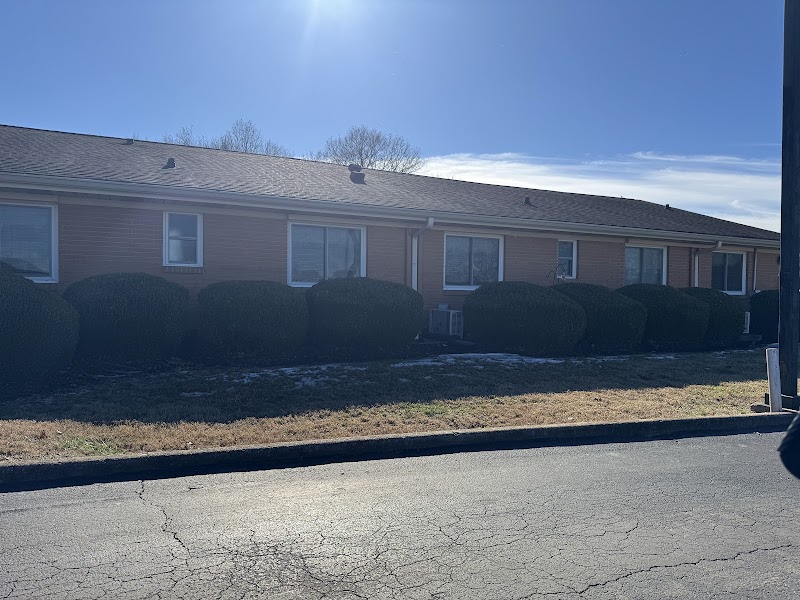
CONCERN (D) 📢 Someone Reported This

A family member, employee, or ombudsman was alarmed enough to file a formal complaint

Potential for Harm - no one hurt, but risky conditions existed

Deficiency F0578 (Tag F0578)

Could have caused harm · This affected 1 resident

**NOTE- TERMS IN BRACKETS HAVE BEEN EDITED TO PROTECT CONFIDENTIALITY** Based on facility policy review, medical record review and interview, the facility failed to obtain completed advanced directive...

Read full inspector narrative →
**NOTE- TERMS IN BRACKETS HAVE BEEN EDITED TO PROTECT CONFIDENTIALITY** Based on facility policy review, medical record review and interview, the facility failed to obtain completed advanced directives for 1 of 26 sampled residents (Resident #7) reviewed for advanced directives. The findings include: Review of the facility policy titled, Advance Directives, revised 1/2013, revealed, .Upon admission the admissions coordinator/social worker will inquire whether patient has made provisions for advance directives . Review of the medical record revealed Resident #7 was admitted to the facility on [DATE] with diagnoses which included Chronic Systolic (Congestive) Heart Failure, Type 2 Diabetes Mellitus, and Chronic Kidney Disease, Stage 3. Continued review revealed an Advanced Directive had not been addressed with Resident #7. Review of the care plan for Resident #7 dated 12/17/2021 and edited on 12/20/2021, revealed, .Advanced Directives Staff will honor advanced directives as outlined on POST [Physician's active Order Set] form [there was no POST form completed for Resident #7] .See POST form to ensure wishes are honored . Review of the Resident Orders for Resident #7 dated 12/16/2021-1/24/2022 revealed there was not an order for an advance directive or code status. Review of the Discharge Minimum Data Set (MDS) assessment dated [DATE] for Resident #7 revealed, a BIMS score of 10, which indicated moderate cognitive impairment. During an interview on 2/15/2023 at 5:45 PM the Director of Nursing (DON) stated she had reviewed Resident #7's electronic medical record and the designated book (book designated by the facility which contained residents' POST forms) at the nurses' station and confirmed the facility failed to offer/obtain an Advanced Directive decision for the resident. During an interview on 3/1/2023 at 2:42 PM, LPN #9 stated, If a resident codes [found without a pulse or respirations], I look on the computer, and their code status is listed on the chart. If nothing is there to indicate the code status, we look at the POST form (located in the designated book) at the nurse station (Resident #7 did not have a POST form completed). During an interview on 3/1/2023 at 2:20 PM, LPN #10 stated, There is a book at the nurse station that has resident POST forms. The admitting nurse completes the form on admission. If a resident is found without a heartbeat, I will look on the electronic chart and if their code status is not there, I will look at the POST form (Resident #7 did not have a POST form completed).
Feb 2020 8 deficiencies
CONCERN (D)

Potential for Harm - no one hurt, but risky conditions existed

Safe Environment (Tag F0584)

Could have caused harm · This affected 1 resident

Based on observation and interview, the facility failed to provide a comfortable and homelike environment when staff and family members were knocking loudly on the kitchen door on 2 of 6 days (1/28/20...

Read full inspector narrative →
Based on observation and interview, the facility failed to provide a comfortable and homelike environment when staff and family members were knocking loudly on the kitchen door on 2 of 6 days (1/28/2020 and 1/29/2020) of the survey. The findings include: Observation in the 100 Hall on 1/28/2020 at 8:30 AM, 9:00 AM, 9:17 AM, 9:25 AM, 9:50 AM, 1:30 PM, 3:13 PM, 4:15 PM, 4:25 PM and 6:40 PM, showed several staff members knocking loudly on the kitchen doors. Observation in the 100 Hall on 1/28/2020 at 1:27 PM, showed a family member knocking loudly on the kitchen doors. Dietary Aide #1 opened the kitchen door and the family member asked why was the kitchen door locked. Dietary Aide #1 stated, Because state is here . Observation in the 100 Hall on 1/29/2020 at 8:17 AM, showed several staff members knocking loudly on the kitchen doors. During an interview on 1/28/2020 at 9:56 AM, Resident #82 stated, They just started banging on the door while state is here .they lock it when state's [state is] in the building . During an interview on 1/30/2020 at 11:33 AM, Resident #15 stated, They lock the door when state is here . During an interview on 1/29/20 at 12:15 PM, the Regional Registered Dietitian confirmed that the staff and family members should not be knocking loudly on the kitchen doors. During an interview on 2/1/2020 at 11:26 AM, the Director of Nursing (DON) confirmed that she would not expect the staff members to be knocking loudly on the kitchen doors.
CONCERN (D)

Potential for Harm - no one hurt, but risky conditions existed

Deficiency F0637 (Tag F0637)

Could have caused harm · This affected 1 resident

**NOTE- TERMS IN BRACKETS HAVE BEEN EDITED TO PROTECT CONFIDENTIALITY** Based on medical record review and interview, the facility failed to initiate a significant change Minimum Data Set (MDS) assess...

Read full inspector narrative →
**NOTE- TERMS IN BRACKETS HAVE BEEN EDITED TO PROTECT CONFIDENTIALITY** Based on medical record review and interview, the facility failed to initiate a significant change Minimum Data Set (MDS) assessment within 14 days after hospice services were ordered for 1 of 29 sampled residents (Resident #28) reviewed. The findings include: Review of the medical record, showed Resident #28 was admitted to the facility on [DATE] with diagnoses of Dementia, Malignant Neoplasm of Bladder, Chronic Kidney Disease, and Atrial Fibrillation. Review of the [Named Hospice] PHYSICIAN ORDERS dated 9/4/19, showed, .Admit to hospice services [sign for with] primary DX [diagnosis]: Bladder CA [Cancer] . Medical record review, showed there was not a Significant Change MDS completed after Resident #28's admission to hospice services. The facility failed to complete a significant change MDS within 14 days of Resident #28's admission to hospice services. During an Interview on 1/30/2020 at 3:35 PM, the MDS Coordinator confirmed that a significant change MDS related to hospice was not completed for Resident #28.
CONCERN (D)

Potential for Harm - no one hurt, but risky conditions existed

Assessment Accuracy (Tag F0641)

Could have caused harm · This affected 1 resident

**NOTE- TERMS IN BRACKETS HAVE BEEN EDITED TO PROTECT CONFIDENTIALITY** Based on medical record review and interview, the facility failed to ensure an assessment was accurate related to dialysis and h...

Read full inspector narrative →
**NOTE- TERMS IN BRACKETS HAVE BEEN EDITED TO PROTECT CONFIDENTIALITY** Based on medical record review and interview, the facility failed to ensure an assessment was accurate related to dialysis and hospice for 2 of 29 sampled residents (Resident #28 and #55) reviewed. The findings include: 1. Review of the medical record, showed Resident #28 was admitted to the facility on [DATE] with diagnoses of Dementia, Malignant Neoplasm of Bladder, Chronic Kidney Disease, and Atrial Fibrillation. Review of the [Named Hospice] PHYSICIAN ORDERS dated 9/4/19, showed, .Admit to hospice services [sign for with] primary DX [diagnosis]: Bladder CA [Cancer] . Review of the quarterly Minimum Data Set (MDS) assessment dated [DATE], showed Resident #28 was not coded for receiving hospice services. Review of the Physician Orders dated 1/12/2020, showed, .Hospice to evaluate and treat as indicated per [Named Hospice] . During an interview on 1/30/2020 at 3:35 PM, the MDS Coordinator confirmed that the quarterly MDS dated [DATE] should have been coded for hospice services. 2. Review of the medical record, showed Resident #55 was admitted to the facility on [DATE] with diagnoses of End Stage Renal Disease, Dependence on Renal Dialysis, Diabetes, Retention of Urine, and Peripheral Vascular Disease. Review of the Physician Orders dated 10/22/2019, showed, .Dialysis [NAME] Tuesday, Thursday, and Saturday . Review of the quarterly MDS assessment dated [DATE], showed Resident #55 was not coded as receiving dialysis. During an interview on 1/30/2020 at 1:48 PM, the MDS Coordinator confirmed that the quarterly MDS dated [DATE] should have been coded for dialysis.
CONCERN (D)

Potential for Harm - no one hurt, but risky conditions existed

Comprehensive Care Plan (Tag F0656)

Could have caused harm · This affected 1 resident

**NOTE- TERMS IN BRACKETS HAVE BEEN EDITED TO PROTECT CONFIDENTIALITY** Based on medical record review and interview, the facility failed to ensure a comprehensive plan of care was developed for a dia...

Read full inspector narrative →
**NOTE- TERMS IN BRACKETS HAVE BEEN EDITED TO PROTECT CONFIDENTIALITY** Based on medical record review and interview, the facility failed to ensure a comprehensive plan of care was developed for a diagnosis of Dysphagia for 1 of 29 sampled residents (Resident #65) reviewed. The findings include: Review of the medical record, showed Resident #65 was admitted to the facility on [DATE] with diagnoses of Chronic Respiratory Failure, Morbid Obesity, Dependence on Oxygen, Dysphagia, and Gastroesophageal Reflux. Review of the Care Plan revised 1/28/2020, showed there was not a comprehensive Care Plan to reflect a diagnosis of Dysphagia. During an interview on 2/1/2020 at 10:15 AM, Patient Coordinator #1 confirmed that Resident #65 did not have a Care Plan for the diagnosis of Dysphagia.
CONCERN (D)

Potential for Harm - no one hurt, but risky conditions existed

Accident Prevention (Tag F0689)

Could have caused harm · This affected 1 resident

Based on policy review, medical record review, observation, and interview, the facility failed to ensure residents' rooms were free from accident hazards when equipment was stored unsafely and a cord ...

Read full inspector narrative →
Based on policy review, medical record review, observation, and interview, the facility failed to ensure residents' rooms were free from accident hazards when equipment was stored unsafely and a cord was hanging freely from the ceiling in 2 of 59 rooms (Resident #18's room and Resident #31's room). The findings include: Review of the facility's policy titled, DEPARTMENTAL FIRE PROCEDURES NURSING, revised 8/2018, showed that you should not place equipment into occupied patient rooms. 1. During an interview on 1/28/2020 at 4:52 PM, Life Enrichment Coordinator #1 confirmed that Life Enrichment Coordinator #2 pushed the meal cart into Resident #18's room during the fire drill. During an interview on 1/28/2020 at 7:09 PM, the Administrator confirmed that equipment should not be stored in occupied resident rooms. During an interview on 2/1/2020 at 11:33 AM, the Director of Nursing (DON) confirmed that equipment or meal carts should not have been stored in the resident's room. 2. Review of the medical record, showed Resident #31 had a diagnosis Chronic Obstructive Pulmonary Disease, Chronic Respiratory Failure with Hypoxia, Chronic Kidney Disease, Heart Failure, and Diabetes. Observation in the resident's room on 1/27/2020 at 10:30 AM, 1:20 PM, 4:55 PM, and 1/28/2020 at 7:30 AM, 12:15 PM, and 12:48 PM, showed a long black cord hanging freely from the ceiling of Resident #31's room. During an interview on 1/28/2020 at 5:45 PM, Licensed Practical Nurse (LPN) #1 stated, .I have been off 4 days .it wasn't there the last day I worked . During an interview on 1/28/2020 at 5:55 PM, the Maintenance Director confirmed that the black cord hanging from the ceiling could be an accident hazard. During an interview on 1/28/2020 at 6:00 PM, the Administrator stated, .I did not know this [cord] was hanging here .
CONCERN (D)

Potential for Harm - no one hurt, but risky conditions existed

Incontinence Care (Tag F0690)

Could have caused harm · This affected 1 resident

**NOTE- TERMS IN BRACKETS HAVE BEEN EDITED TO PROTECT CONFIDENTIALITY** Based on policy review, medical record review, observation, and interview, the facility failed to ensure that an indwelling urin...

Read full inspector narrative →
**NOTE- TERMS IN BRACKETS HAVE BEEN EDITED TO PROTECT CONFIDENTIALITY** Based on policy review, medical record review, observation, and interview, the facility failed to ensure that an indwelling urinary catheter was secured for 1 of 2 sampled residents (Resident #77) reviewed. The findings include: The facility's policy titled, CATHETER CARE, INDWELLING (MALE AND FEMALE), dated 2005, showed to secure the catheter tubing at the insertion site. Review of the medical record showed, Resident #77 was admitted to the facility on [DATE] with diagnoses of Acute Pyelonephritis, Functional Quadriplegia, Dysphagia, Chronic Kidney Disease, and Neuromuscular Dysfunction of Bladder. Review of the quarterly Minimum Data Set (MDS) assessment dated [DATE], showed that Resident #77 had an indwelling catheter. Review of the Care Plan dated 4/25/2019, showed no indication that Resident #77 refused to have his indwelling urinary catheter secured. Review of the Physician's Orders dated 5/14/2019, showed Resident #77 had an indwelling urinary catheter. Observation in the resident's room on 1/29/2020 at 9:52 AM, showed Resident #77's indwelling catheter tubing was unsecure and hanging freely. During an interview on 1/29/2020 at 10:50 AM, Patient Care Coordinator #1 stated that the resident would refuse to have his catheter secured. During an interview on 1/29/2020 at 2:29 PM, the Certified Nursing Assistant (CNA) Instructor stated, .anchor the tubing . During an interview on 1/29/2020 at 3:34 PM, the Director of Nursing (DON) stated that the resident would refuse to have his indwelling catheter secured. Medical record review showed, there was no documentation that Resident #77 would refuse to have his indwelling urinary catheter secured.
CONCERN (D)

Potential for Harm - no one hurt, but risky conditions existed

Medical Records (Tag F0842)

Could have caused harm · This affected 1 resident

**NOTE- TERMS IN BRACKETS HAVE BEEN EDITED TO PROTECT CONFIDENTIALITY** Based on policy review, medical record review, and interview, the facility failed to maintain complete and accurate weights for ...

Read full inspector narrative →
**NOTE- TERMS IN BRACKETS HAVE BEEN EDITED TO PROTECT CONFIDENTIALITY** Based on policy review, medical record review, and interview, the facility failed to maintain complete and accurate weights for 1 of 12 sampled residents (Resident #18) reviewed. The findings include: Review of the facility's undated policy titled, Weights, showed that if a discrepancy is noted with the weights the patient should be re-weighed using the same type of scale. Review of the medical record, showed Resident #18 was admitted to the facility on [DATE] with diagnoses of Down Syndrome, Dental Caries, Functional Quadriplegia, and Dysphagia. Review of the Weight Variance Report showed the following weights: 7/3/2019 - 121 lbs (pounds) 7/4/2019 - 173 lbs (52 lbs difference in 1 day) 9/12/2019 - 156 lbs 9/13/2019 - 145 lbs (11 lbs difference in 1 day) 9/19/2019 - 156 lbs 9/20/2019 - 145 lbs (11 lbs difference in 1 day) 11/20/2019 - 151 lbs 11/30/2019 - 127 lbs (24 lbs difference in 10 days) 12/1/2019 - 136 lbs 12/30/2019 - 127 lbs 1/1/2020 - 140 lbs (13 lbs difference in 2 days) 1/3/2020 - 127 lbs (13 lbs difference in 2 days) 1/3/2020 -140 lbs (13 lbs difference the same day) During an interview on 1/30/2020 at 12:50 PM, the Regional Registered Dietician (RD) confirmed that Resident #18's weights were incorrect. During an interview on 2/1/2020 at 11:35 AM, the Director of Nursing (DON) confirmed that Residents 18's weights were inaccurate.
CONCERN (E)

Potential for Harm - no one hurt, but risky conditions existed

Infection Control (Tag F0880)

Could have caused harm · This affected multiple residents

Based on policy review, observation, and interview, the facility failed to ensure practices to prevent the potential spread of infection were followed in 2 of 3 isolation rooms (Resident #55 and #73's...

Read full inspector narrative →
Based on policy review, observation, and interview, the facility failed to ensure practices to prevent the potential spread of infection were followed in 2 of 3 isolation rooms (Resident #55 and #73's rooms), failed to maintain infection control practices for respiratory therapy masks and oxygen tubing for 6 of 10 sampled residents (Resident #74, #31, #39, #28, #61, and #33) receiving respiratory services, failed to ensure linens were removed properly from a resident's room (Resident #77), failed to ensure an indwelling catheter bag and tubing were kept off of the floor for 1 of 2 sampled residents (Resident #77) reviewed with an indwelling urinary catheter, and 2 of 4 Certified Nursing Assistants (CNA #1 and #3) failed to perform hand hygiene and proper catheter care for 1 of 2 sampled residents (Resident #55) reviewed during indwelling catheter care. The findings include: Review of the facility's policy titled, STANDARD PRECAUTIONS, revised 1/10/2020, showed that appropriate Contact Precautions sign should be placed on the residents' room doors. 1. Observation outside of the resident's room on 1/27/2020 at 10:45 AM, showed no signage posted on Resident #55's door to alert the staff and visitors of isolation precautions. Observation outside of the resident's room on 1/27/2020 at 11:20 AM and 12:28 PM, showed no signage posted on Resident #73's door to alert the staff and visitors of isolation precautions. During an interview on 1/30/2020 at 7:34 AM, the Director of Nursing (DON) confirmed that the isolation rooms should have signage on the door to alert the staff and visitors of isolation precautions. Review of the facility's policy titled, DEPARTMENTAL PROCEDURES, revised 10/1/2008, showed that respiratory equipment at the beside should be covered with a plastic bag when not in use. 2. Observation in the resident's room on 1/27/2020 at 9:30 AM, 1/28/2020 at 10:09 AM, and 1/29 2020 at 8:30 AM, showed Resident #74's Bilevel Positive Airway Pressure (BIPAP) mask was uncovered. Observation in the resident's room on 1/27/2020 at 10:30 AM, 1:20 PM, and 4:55 PM, and on 1/28/2020 at 7:30 AM and 12:15 PM, showed Resident #31's BIPAP mask and nebulizer mask were uncovered. Observation in the resident's room on 1/27/2020 at 11:00 AM and 3:29 PM, and on 1/28/2020 at 7:57 AM, showed Resident #39's BIPAP mask was uncovered. Observation in the resident's room on 1/27/2020 at 12:45 PM and 4:55 PM, 1/28/2020 at 7:15 AM and 1:06 PM, and on 1/29/2020 at 8:30 AM, showed Resident #28's Continuous Positive Pressure Airway Pressure (CPAP) mask and nebulizer mask were uncovered. Observation in the resident's room on 1/28/2020 at 8:07 AM, 9:15 AM, and 12:38 PM, showed Resident #61's nebulizer mouth piece was uncovered. Observation in the resident's room on 1/29/2020 at 9:31 AM, showed Resident #33's bi-nasal cannula oxygen tubing was lying on the floor at the foot of the bed. Resident #33 activated her call light and CNA #2 entered the room and assisted Resident #33 with her oxygen tubing, placing the tubing in Resident #33's nose. During an interview on 1/30/2020 at 7:34 AM, the DON confirmed that the respiratory masks should be covered and that the oxygen tubing should be changed when found on the floor. Review of the facility's undated policy titled, Handling Linen, showed that the staff should remove soiled linen from the residents rooms in a pillowcase or a trash bag. 3. Observation in the resident's room on 1/29/2020 at 10:05 AM, showed CNA #1 exited Resident's #77 room carrying dirty linen down the hall with her gloved hand. During an interview on 1/30/2020 at 7:34 AM, the DON confirmed that the linen should be in a plastic bag or pillow case when transporting the linen through the halls. 4. Observation in the resident's room on 1/28/2020 at 7:36 AM and 3:40 PM, and on 1/29/2020 at 9:52 AM, showed that Resident #77's indwelling urinary catheter bag and tubing were lying on the floor. During an interview on 1/30/2020 at 7:34 AM, the DON confirmed that the catheter bag and tubing should not be on the floor. Review of the facility's undated policy titled, Hand Washing and Hand Sanitizer, showed that the staff should wash their hands for at least fifteen (15) seconds. 5. Observation during indwelling urinary catheter care in Resident #55's room on 1/29/2020 at 9:52 AM, showed that CNA #1 washed her hands for 10 seconds. Observation during indwelling urinary catheter care in Resident #55's room on 1/29/2020 at 1:54 PM, showed that CNA #3 washed her hands multiple times for 5-10 seconds. During an interview on 1/30/2020 at 7:34 AM, the DON confirmed that the staff should wash their hands for at least 20 seconds. Observation in the resident's room on 1/29/2020 at 2:04 PM, showed that CNA #3 cleaned, rinsed, and dried only the top half of Resident #55's penis during indwelling catheter care. During an interview on 1/30/2020 at 7:34 AM, the DON confirmed that during catheter care, the staff should cleanse the entire penis in a circular motion starting at the tip of the penis.
Understanding Severity Codes (click to expand)
Life-Threatening (Immediate Jeopardy)
J - Isolated K - Pattern L - Widespread
Actual Harm
G - Isolated H - Pattern I - Widespread
Potential for Harm
D - Isolated E - Pattern F - Widespread
No Harm (Minor)
A - Isolated B - Pattern C - Widespread

Questions to Ask on Your Visit

  • "What changes have you made since the serious inspection findings?"
  • "Can I speak with families of current residents?"
  • "What's your RN coverage like on weekends and overnight?"

Our Honest Assessment

Strengths
  • • Licensed and certified facility. Meets minimum state requirements.
Concerns
  • • Multiple safety concerns identified: 7 life-threatening violation(s), 4 harm violation(s), $581,647 in fines, Payment denial on record. Review inspection reports carefully.
  • • 27 deficiencies on record, including 7 critical (life-threatening) violations. These warrant careful review before choosing this facility.
  • • $581,647 in fines. Extremely high, among the most fined facilities in Tennessee. Major compliance failures.
  • • Grade F (0/100). Below average facility with significant concerns.
Bottom line: This facility has 7 Immediate Jeopardy findings. Serious concerns require careful evaluation.

About This Facility

What is Nhc Healthcare, Lewisburg's CMS Rating?

CMS assigns NHC HEALTHCARE, LEWISBURG an overall rating of 2 out of 5 stars, which is considered below average nationally. Within Tennessee, this rating places the facility higher than 0% of the state's 100 nursing homes. A rating at this level reflects concerns identified through health inspections, staffing assessments, or quality measures that families should carefully consider.

How is Nhc Healthcare, Lewisburg Staffed?

CMS rates NHC HEALTHCARE, LEWISBURG's staffing level at 2 out of 5 stars, which is below average compared to other nursing homes. Staff turnover is 54%, compared to the Tennessee average of 46%. RN turnover specifically is 58%, which is notably high. RNs provide skilled clinical oversight, so turnover in this role can affect medical care quality.

What Have Inspectors Found at Nhc Healthcare, Lewisburg?

State health inspectors documented 27 deficiencies at NHC HEALTHCARE, LEWISBURG during 2020 to 2024. These included: 7 Immediate Jeopardy (the most serious level, indicating potential for serious harm or death), 4 that caused actual resident harm, and 16 with potential for harm. Immediate Jeopardy findings are rare and represent the most serious regulatory concerns. They require immediate corrective action.

Who Owns and Operates Nhc Healthcare, Lewisburg?

NHC HEALTHCARE, LEWISBURG is owned by a for-profit company. For-profit facilities operate as businesses with obligations to shareholders or private owners. The facility is operated by NATIONAL HEALTHCARE CORPORATION, a chain that manages multiple nursing homes. With 100 certified beds and approximately 64 residents (about 64% occupancy), it is a mid-sized facility located in LEWISBURG, Tennessee.

How Does Nhc Healthcare, Lewisburg Compare to Other Tennessee Nursing Homes?

Compared to the 100 nursing homes in Tennessee, NHC HEALTHCARE, LEWISBURG's overall rating (2 stars) is below the state average of 2.8, staff turnover (54%) is near the state average of 46%, and health inspection rating (1 stars) is much below the national benchmark.

What Should Families Ask When Visiting Nhc Healthcare, Lewisburg?

Based on this facility's data, families visiting should ask: "What changes have been made since the serious inspection findings, and how are you preventing similar issues?" "Can you walk me through typical staffing levels on day, evening, and night shifts?" "Can I visit during a mealtime to observe dining assistance and food quality?" "How do you handle medical emergencies, and what is your hospital transfer rate?" These questions are particularly relevant given the facility's Immediate Jeopardy citations and the below-average staffing rating.

Is Nhc Healthcare, Lewisburg Safe?

Based on CMS inspection data, NHC HEALTHCARE, LEWISBURG has documented safety concerns. Inspectors have issued 7 Immediate Jeopardy citations (the most serious violation level indicating risk of serious injury or death). The facility has a 2-star overall rating and ranks #100 of 100 nursing homes in Tennessee. Families considering this facility should ask detailed questions about what corrective actions have been taken since these incidents.

Do Nurses at Nhc Healthcare, Lewisburg Stick Around?

NHC HEALTHCARE, LEWISBURG has a staff turnover rate of 54%, which is 7 percentage points above the Tennessee average of 46%. Moderate turnover is common in nursing homes, but families should still ask about staff tenure and how the facility maintains care continuity when employees leave.

Was Nhc Healthcare, Lewisburg Ever Fined?

NHC HEALTHCARE, LEWISBURG has been fined $581,647 across 3 penalty actions. This is 15.0x the Tennessee average of $38,895. Fines at this level are uncommon and typically indicate a pattern of serious deficiencies, repeated violations, or failure to correct problems promptly. CMS reserves penalties of this magnitude for facilities that pose significant, documented risk to resident health or safety. Families should request specific documentation of what issues led to these fines and what systemic changes have been implemented.

Is Nhc Healthcare, Lewisburg on Any Federal Watch List?

NHC HEALTHCARE, LEWISBURG is not on any federal watch list. The most significant is the Special Focus Facility (SFF) program, which identifies the bottom 1% of nursing homes nationally based on persistent, serious quality problems. Not being on this list means the facility has avoided the pattern of deficiencies that triggers enhanced federal oversight. This is a positive indicator, though families should still review the facility's inspection history directly.